SB 1076: Admitted insurers: residential property insurance.
- Session Year: 2025-2026
- House: Senate
- Latest Version Date: 2026-02-13
Current Status:
Failed
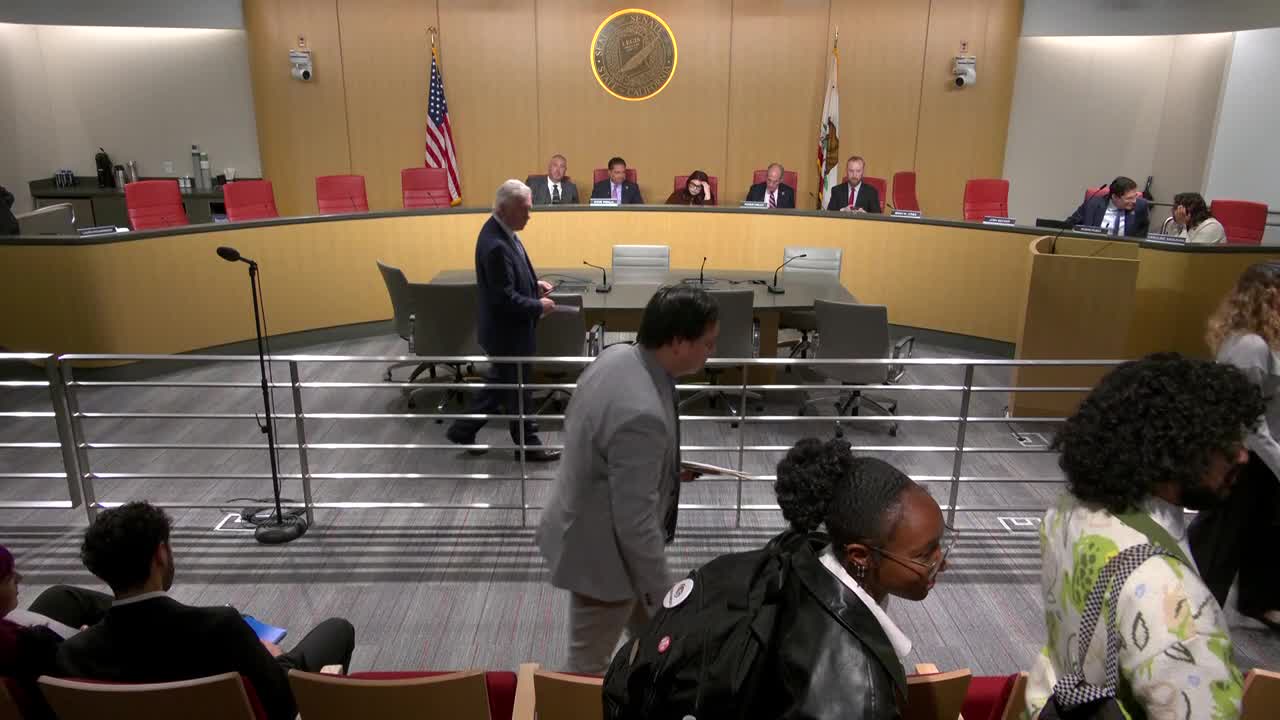
(2026-04-23: April 22 set for first hearing. Failed passage in committee. (Ayes 3. Noes 2. Page 4012.))
Introduced
In Committee
Awaiting First Chamber Vote
Passed First Chamber
In Committee
Awaiting Second Chamber Vote
Passed Second Chamber
Enacted
Existing law creates the Department of Insurance, headed by the Insurance Commissioner, and generally regulates classes of insurance, including residential property insurance. Existing department regulations prohibit an insurer from using a rating plan that does not take into account and reflect specified wildfire risk mitigation, including property-level building hardening measures.
On and after January 1, 2028, this bill would prohibit an admitted insurer that offers or sells residential property insurance in this state from refusing to offer, sell, or renew a policy of residential property insurance for an applicant or insured whose property meets minimum home hardening and wildfire mitigation standards, except as provided. The bill would authorize an admitted insurer to apply to the commissioner for a temporary waiver of that prohibition in a particular geographic area of the state, as specified. On and after January 1, 2028, the bill would also require any residential property insurance offered or sold to, at a minimum, provide coverage equivalent in scope to the residential property coverage the admitted insurer most commonly offers or sells in this state. The bill would suspend or revoke an insurers certificate of authority to offer or sell residential property insurance and automobile insurance in this state for five years if the admitted insurer habitually and as a matter of ordinary practice violates these provisions or if the admitted insurer offers residential property insurance in this state on and after January 1, 2026, but elects to cease offering that insurance rather than comply with these provisions.
(a)(1)On and after January 1, 2028, an admitted insurer that offers or sells residential property insurance in this state shall not refuse to offer, sell, or renew a policy of residential property insurance for an applicant or insured whose property meets minimum home hardening and wildfire mitigation standards, as established by the commissioner by regulation.
(2)On and after January 1, 2028, any residential property insurance offered or sold to an applicant or insured described in paragraph (1) shall, at a minimum, provide coverage equivalent in scope to the residential property insurance coverage the admitted insurer most commonly offers or sells in this state.
(b)Notwithstanding subdivision (a), on and after January 1, 2028, an admitted insurer may refuse to offer, sell, or renew a policy of residential property insurance if the applicant or insured does not meet underwriting guidelines that the insurer applies generally to all properties to determine eligibility for coverage and that are unrelated to the risk of wildfire.
(c)(1)An admitted insurer may apply to the commissioner for a temporary waiver of the requirement specified in paragraph (1) of subdivision (a) to be permitted by the commissioner to refuse to offer or sell policies of residential property insurance for property in a particular geographic area of the state on the grounds that offering new residential property insurance in that geographic area would prevent the insurer from meeting its obligations to insureds due to an overconcentration of risk in that geographic area. The commissioner shall not approve an application made pursuant to this paragraph unless the insurer has made an adequate showing of overconcentration of risk, as determined by the commissioner.
(2)The commissioner shall consider an application for a waiver under this subdivision utilizing procedures for review and approval substantially similar to those established by Sections 1861.05 to 1861.10, inclusive, including provisions for public notice, hearings, and consumer participation. The commissioner shall hold a hearing on any application upon a timely request. The commissioner shall adopt regulations establishing procedures for the purposes of this paragraph.
(3)An insurer that is granted a waiver under this subdivision shall be required to reapply for an extension of the waiver every six months until the insurer is no longer eligible for the waiver.
(4)A waiver granted under this subdivision does not authorize an insurer to refuse to renew an existing policy of residential property insurance.
(d)(1)If the commissioner determines that an admitted insurer has habitually and as a matter of ordinary practice violated subdivision (a), the insurers certificate of authority, and the certificate of authority of any affiliated insurer, to offer or sell residential property insurance and automobile insurance in this state shall be suspended or revoked for a period of five years.
(2)If an admitted insurer that offers residential property insurance in this state on or after January 1, 2026, elects to cease offering residential property insurance rather than comply with subdivision (a), the insurers certificate of authority, and the certificate of authority of any affiliated insurer, to offer or sell residential property insurance and automobile insurance in this state shall be suspended or revoked for a period of five years.
(3)All proceedings in connection with the suspension or revocation of a certificate of authority pursuant to paragraph (1) or (2) shall be conducted in accordance with the provisions of Chapter 5 (commencing with Section 11500) of Part 1 of Division 3 of Title 2 of the Government Code, and the commissioner shall have all the powers granted therein.
(e)The commissioner shall adopt regulations to implement this section in accordance with the rulemaking provisions of the Administrative Procedure Act (Chapter 3.5 (commencing with Section 11340) of Part 1 of Division 3 of Title 2 of the Government Code). The regulations shall additionally define minimum home hardening and wildfire mitigation standards for purposes of subdivision (a) and overconcentration of risk for purposes of subdivision (c).
|
Date
|
Status
|
|---|---|
| Apr 23, 2026 | April 22 set for first hearing. Failed passage in committee. (Ayes 3. Noes 2. Page 4012.) |
| Apr 23, 2026 | April 22 set for first hearing. Failed passage in committee. (Ayes 3. Noes 2.) |
| Apr 10, 2026 | Set for hearing April 22. |
| Feb 26, 2026 | Referred to Com. on INS. |
| Feb 17, 2026 | From printer. May be acted upon on or after March 16. |
| Feb 13, 2026 | Introduced. Read first time. To Com. on RLS. for assignment. To print. |
|
Date
|
Description
|
Location
|
Votes
|
|
|---|---|---|---|---|
| Apr 22, 2026 | Do pass as amended, but first amend, and re-refer to the Committee on [Appropriations] | Senate Standing Committee on Insurance |
Failed |
This list shows positions taken on this bill by organizations on the date displayed, which is linked to the original source.
Positions by individuals are not included.
|
Organization
|
Position
|
Date
|
|---|---|---|
| 350 Conejo / San Fernando Valley | ** Support | |
| 545 Individuals | ** Support | |
| AARP | ** Support | |
| Affordable Homeownership Foundation Inc | ** Support | |
| Altadena Colab | ** Support | |
| American Property Casualty Insurance Association | ** Against | |
| Americans for Financial Reform | ** Support | |
| Ballona Wetlands Institute | ** Support | |
| Bay Area System Change Not Climate Change | ** Support | |
| Bay Area-System Change Not Climate Change | ** Support | |
| Bright Operations | ** Support | |
| California Apartment Association | ** Support | |
| California Community Foundation | ** Support | |
| California Environmental Voters | ** Support | |
| California Insurance Commissioner Emeritus Dave Jones | ** Support | |
| California Nurses Association | ** Support | |
| Center For Biological Diversity | ** Support | |
| Center for Community Action and Environmental Justice (CCAEJ) | ** Support | |
| Center for Community Action & Environmental Justice | ** Support | |
| City of Whittier | ** Support | |
| Climate Defenders | ** Support | |
| Consumer Action | ** Support | |
| Consumer Attorneys Of California | ** Support | |
| Consumer Federation of America | ** Support | |
| Consumer Federation Of California | ** Support | |
| Consumer Protection Policy Center | ** Support | |
| Consumer Protection Policy Center/USD School of Law | ** Support | |
| Consumer Watchdog (Sponsor) | ** Support | |
| Courage California | ** Support | |
| Defend Ballona Wetlands | ** Support | |
| Dena Rise Up | ** Support | |
| Eaton Fire Renters Coalition | ** Support | |
| Eaton Fire Residents United | ** Support | |
| Every Fire Survivor’s Network (Co-Sponsor) | ** Support | |
| Extreme Weather Survivors | ** Support | |
| Food & Water Watch | ** Support | |
| Freeport Haven | ** Support | |
| Green America | ** Support | |
| Jewish Federation of The Greater San Gabriel and Pomona Valleys | ** Support | |
| Leap of Faith Family to Family Support | ** Support | |
| My Tribe Rise | ** Support | |
| Pacific Association Of Domestic Insurance Companies | ** Against | |
| Pasadenans Organizing for Progress | ** Support | |
| Personal Insurance Federation Of California | ** Against | |
| Public Citizen | ** Support | |
| Rise Economy | ** Support | |
| SoCal 350 Climate Action | ** Support | |
| Sunflower Alliance | ** Support | |
| Team Palisades | ** Support | |
| The American Policyholder Association | ** Support | |
| West Berkeley Alliance for Clean Air and Safe Jobs | ** Support | |
| Xtreme Athletics | ** Support |
SENATE COMMITTEE ON INSURANCE
Senator Stephen Padilla, Chair
2025 - 2026 Regular
Bill No: SB 1076 Hearing Date: April 22, 2026
Author: | Pérez | ||
Version: | February 13, 2026 Introduced | ||
Urgency: | No | Fiscal: | Yes |
Consultant: | Brandon Seto | ||
SUBJECT: Admitted insurers: residential property insurance
DIGEST:
Beginning January 1, 2028, requires residential property insurers to offer, sell, or renew such policies for applicants that meet minimum home hardening and wildfire mitigation standards, to be established by the Insurance Commissioner in regulation. Allows for certain exceptions for insurers to this requirement including a temporary waiver to avoid overconcentration of risk in a certain region. Suspends or revokes an insurer’s certificate of authority to offer or sell residential property insurance and automobile insurance if the insurer routinely violates these provisions or chooses to cease offering insurance rather than comply.
ANALYSIS:
Existing law:
- Creates the Department of Insurance, led by the Insurance Commissioner (Commissioner), for the regulation of insurers, agents and brokers, and other insurance-like organizations, as well as classes of insurance, including residential property insurance.
- Defines “policy of residential property insurance” to mean a policy insuring individually owned residential structures of not more than four dwelling units, individually owned condominium units, or individually owned mobile homes, and their contents, located in this state and used exclusively for residential purposes, or a tenant’s policy insuring personal contents of a residential unit located in this state.
- Establishes the “Safer from Wildfires” Framework within the California Code of Regulations, with the goal of reducing wildfire risk and making homes and businesses more resilient to wildfires.
This bill:
- Stipulates that beginning January 1, 2028, an admitted insurer that offers or sells residential property insurance shall not refuse to offer, sell, or renew a such a policy for an applicant or insured whose property meets minimum home hardening and wildfire mitigation standards, as established by the Commissioner through regulation. Additionally, any such coverage sold must, at a minimum, provide coverage equivalent in scope to the residential property insurance coverage the admitted insurer most commonly offers or sells in this state.
- States that on and after January 1, 2028, an admitted insurer may refuse to offer, sell, or renew a policy of residential property insurance if the applicant or insured does not meet the insurer’s general underwriting guidelines to determine eligibility for coverage, that are unrelated to the risk of wildfire.
- Allows an admitted insurer to apply to the Commissioner for a temporary waiver of the requirement above, which would exempt them from offering or selling such policies for property in a particular geographic area on the grounds that offering new policies in that area would prevent the insurer from meeting its obligations to insureds due to an overconcentration of risk there.
- Prevents the Commissioner from approving such an application for waiver unless the insurer has made an adequate showing of overconcentration of risk, as determined by the Commissioner. The Commissioner must consider an application for a waiver in a manner similar to those established for approval of insurance rates, including provisions for public notice, hearings, and consumer participation, as well as adopting regulations to do so. The Commissioner must hold a hearing on any application upon a timely request.
- Stipulates that an insurer that is granted a waiver must reapply for an extension every six months until they are no longer eligible for the waiver. Furthermore, the waiver does not authorize an insurer to refuse to renew an existing policy of residential property insurance.
- States that if the Commissioner determines that an admitted insurer has habitually and as a matter of ordinary practice refused to offer, sell, or renew a such policies for an applicant or insured whose property meets minimum home hardening and wildfire mitigation standards, the insurer’s certificate of authority, and the certificate of authority of any affiliated insurer, to offer or sell residential property insurance and automobile insurance in this state will be suspended or revoked for a period of five years, as specified.
- Specifies that if an admitted insurer that offers residential property insurance on or after January 1, 2026, elects to cease offering that insurance rather than comply with provisions above, the insurer’s certificate of authority, and the certificate of authority of any affiliated insurer, to offer or sell residential property insurance and automobile insurance shall be suspended or revoked for a period of five years, as specified.
- Requires the Commissioner to adopt regulations to implement these provisions in accordance with the Administrative Procedure Act. These regulations must define “minimum home hardening and wildfire mitigation standards” and “overconcentration of risk” for the purposes of these provisions.
Background
According to the author:
“More and more Californians are having trouble finding and keeping insurance. Over a year after the devastating LA wildfires, insurers are dropping their policyholders, refusing to write new insurance policies, and the number of people forced onto the FAIR Plan continues to grow. Unfortunately, this problem is not new. Between 2018 and 2023, over 350,000 Californians lost their home insurance, with tens of thousands more over the last two years. Even for homeowners that take precautionary measures to harden their homes to protect them from wildfires, they still fear they won’t be able to purchase insurance. Homeowners who meet or exceed safety standards should not be met with coverage denials. Being denied coverage after meeting safety standards sends the wrong message and is akin to being penalized for doing the right thing. SB 1076 will ensure that our communities’ insurance needs are met by making coverage available to them for making existing neighborhoods safer.”
Suggested Amendments
Delete the contents of the bill and replace with the following provisions:
The California Department of Insurance (CDI) shall establish a pilot program in coordination with other key state and local agencies that connects comprehensive community-scale hardening and mitigation with insurance availability. To this end, CDI will be tasked with performing the functions below.
Advisory Committee
Establish an expert advisory committee to recommend pilot project design, implementation parameters, and community hardening standards. The committee shall, among other things:
- Develop consistent, science-based criteria for evaluating wildfire risk and mitigation effectiveness
- Recommend minimum standards for parcel-level home hardening and community-scale defensible space
- Advise on how mitigation actions can be credibly incorporated into insurance underwriting and pricing
Membership shall, at a minimum, include:
- Scientific research institutions with expertise in wildfire behavior and risk modeling
- An actuarial insurance expert
- The Insurance Institute for Business and Home Safety
- A local government representative (city, county, or statewide association)
- The California Building Industry Association
- The California Fire Chiefs’ Association
Pilot Site Selection
Identify up to five pilot projects in high fire-risk communities, consistent with the existing CWMP criteria. Selection should also prioritize:
- Areas with elevated wildfire exposure and demonstrated insurance availability challenges
- Communities with local government capacity and willingness to implement and enforce mitigation measures
- A mix of geographic and community types to evaluate program effectiveness across different risk profiles
Mitigation Measurement Framework
Establish a standardized, data-driven system to measure wildfire risk reduction at both the parcel and community level. The framework shall:
- Incorporate property-level structural assessments (e.g., roofing, vents, defensible space compliance)
- Utilize Geographic Information System-based mapping and spatial analysis to assess fuel continuity, structure density, and topography
- Produce a transparent resilience scoring system capable of tracking baseline risk and post-mitigation improvements over time
Risk Reduction Targets
Define clear, measurable home hardening and community-level mitigation goals for each pilot site. These targets shall:
- Include both parcel-level compliance thresholds and community-wide participation benchmarks
- Reflect reductions in key drivers of wildfire loss, including ember intrusion and structure-to-structure ignition
- Be calibrated to achieve meaningful, modellable reductions in expected wildfire losses
Insurance Availability Trigger
Achievement and verification of the specified risk reduction targets shall trigger a requirement that insurers provide a minimum of four years of guaranteed homeowners insurance coverage for properties within designated pilot communities.
- Compliance shall be based on objective, independently verifiable metrics established under the program.
- Coverage shall be subject to standard policy terms, conditions, and underwriting criteria, except as modified by this requirement.
Program Evaluation
Develop a robust, outcomes-based evaluation framework to assess program effectiveness. At a minimum, evaluation shall include:
- Quantitative measurement of reductions in physical wildfire risk and loss drivers
- Actuarially sound analysis of the impact of mitigation on expected losses and insurance rates
- Assessment of changes in insurance availability, including new writings, renewals, and reductions in reliance on the California FAIR Plan Association
Legislative Reporting
Provide annual reports to the Legislature detailing:
- Implementation progress and pilot site performance
- Measured risk reduction outcomes and insurance market impacts
- Any recommended statutory or regulatory changes to support broader program expansion
- A final report shall evaluate overall program success and feasibility of scaling the model statewide
Funding
Funding shall be subject to appropriation in the state budget and may include federal funds, local cost-sharing contributions, and other available grant sources. Funding shall support:
- Home hardening and defensible space improvements
- Data collection, modeling, and program administration
- Technical assistance to participating communities.
Related/Prior Legislation
AB 2367 (Lorena Gonzalez and Limón, 2020). Would have required an admitted insurer that offers or sells residential property insurance to, at a minimum, offer or sell the existing residential property insurance coverage it most commonly offers or sells to an applicant or insured who owns a residence that has an estimated replacement cost consistent with the insurer’s underwriting guidelines, meets the minimum standards for fire-hardened homes and communities, as specified. Not heard in Assembly Insurance Committee.
AB 1755 (Levine, 2022). Would have required an admitted insurer that offers homeowners’ insurance policies to issue a policy to a homeowner who has hardened their home against fire, as specified, regardless of the home’s location. Would have created the Wildfire Protection Grant Program, under which the Department of Insurance would be required to award grants of up to $10,000 each to help homeowners pay for costs associated with wildfire mitigation improvements. Not heard in Assembly Insurance Committee.
SB 672 (McGuire, 2023). Would have prohibited an admitted insurer that offers residential property insurance from refusing to offer or sell residential property insurance to an applicant whose property meets specified best practices for wildfire building hardening and property-level mitigation. Not heard in Assembly Insurance Committee.
AB 1 (Connolly, Chapter 472, Statutes of 2025). Requires, by January 1, 2030, and every five years thereafter, the Department of Insurance to consider whether to update the Safer from Wildfires regulations to include additional building hardening measures for property-level mitigation efforts and community-wide wildfire mitigation programs.
SB 894 (Allen). Would establish the California Wildfire Resilience Loan Program and require the California Alternative Energy and Advanced Transportation Financing Authority to administer the program to provide financial assistance for projects and activities to reduce wildfire-related risks and losses, including home hardening and defensible space improvements. Pending in Senate Emergency Management Committee.
AB 1934 (Bennett). Requires the Office of the State Fire Marshal to develop an implementation plan for a home hardening certification program. Pending in Assembly Natural Resources Committee.
AB 1986 (Bennett). States that upon request for a premium quote for residential property insurance, a specified insurer must provide a premium quote for the property that includes the price of insurance if the property is certified as “hardened” by a home hardening certification program established or approved by the State Fire Marshal, as well as a premium quote for the residential property in its current state. Pending in Assembly Insurance Committee.
ARGUMENTS IN SUPPORT:
Consumer Watchdog, sponsor of the bill states:
“SB 1076 will require home insurance companies to cover Californians who meet state fire-safety standards. Nearly nine in ten Californians are worried they will not be able to get, or afford, insurance. By expanding access to insurance SB 1076 will increase resilience in our neighborhoods, reduce costs from wildfires and help stabilize housing in the state.
Wildfire mitigation can be expensive. Retrofitting a standing home can cost from a few
thousand to upwards of $100,000 dollars. Rebuilding to fire-safe standards is less costly, and
can be on average 2-3% of the cost of the rebuild. Yet for LA Fire survivors eager to rebuild firesafe, 2-3% remains a financial challenge for many who are forced to weigh the need for every
nail because their insurance payouts are falling far short of the cost of returning home.
To make these significant investments homeowners need assurance they will not lose the
insurance they need to stay in their homes.
The insurance industry is threatening market collapse if you require them to take back
customers who have done what’s required to make their homes safer. In fact, insurance
companies’ financial results make clear they have the capacity to cover fire-safe homes.
Rate hikes intensified in California in recent years. Every one of the top ten insurance
companies in California received multiple rate hikes between 2023 and 2025, ranging from a
low of 13.8% to a high of 81.5%. As a result, companies were well-positioned financially to
pay their claims for the LA fires.
Until the legislature requires insurers to offer coverage to homeowners who do everything they
should to protect their homes, the insurance crisis will continue. SB 1076 will finally begin getting Californians insured again by opening up the market to those whose homes meet fire safety guidelines and reduce wildfire risk for all of us.”
ARGUMENTS IN OPPOSITION:
The insurance associations known as the “Trades” state:
“SB 1076 would replace actuarial, risk‑based underwriting with a statutory eligibility mandate, fundamentally altering how insurance availability is determined in California. Forcing insurers to accept an unlimited amount of risk without any mechanism to ensure adequate rates, as mandated by this bill, is a recipe for disaster that could leave consumers with few options for either home or auto insurance.
SB 1076 would prohibit an admitted insurer, beginning January 1, 2028, from refusing to offer, sell, or renew residential property insurance for any property that meets minimum home-hardening and wildfire-mitigation standards. It also requires insurers to offer coverage equivalent to the coverage they most commonly offer statewide and authorizes the Commissioner to suspend an insurer’s authority to write both residential property and automobile insurance for five years as an enforcement mechanism. Together, these provisions compel insurers to accept new or renewed risk while simultaneously limiting their ability to tailor coverage terms to the underlying risk profile—intensifying accumulation pressure in the very areas driving market instability.
While homeowners who meet mitigation standards deserve recognition, mitigation does not eliminate correlated wildfire risk or guarantee that insurers possess the capital and reinsurance capacity to safely take on additional exposure. Insurers cannot absorb unlimited correlated risk; underwriting discipline and risk-based decision-making remain essential consumer-protection principles—not obstacles to them. When underwriting judgment and market realities are overridden by mandate, the result is not greater availability—it is reduced participation, fewer options for consumers, and accelerated movement toward the FAIR Plan. This shift places greater exposure on the FAIR Plan and increases the likelihood of cost‑shifting or assessments following the next major wildfire event—outcomes that ultimately undermine the bill’s stated goals.”
SUPPORT:
Consumer Watchdog (Sponsor)
Every Fire Survivor’s Network (Co-Sponsor)
350 Conejo / San Fernando Valley
AARP
Affordable Homeownership Foundation INC
Altadena CoLab
Americans for Financial Reform
Ballona Wetlands Institute
Bay Area System Change Not Climate Change
Bay Area-system Change Not Climate Change
Bright Operations
California Apartment Association
California Community Foundation
California Environmental Voters
California Insurance Commissioner Emeritus Dave Jones
California Nurses Association
Center for Biological Diversity
Center for Community Action & Environmental Justice
Center for Community Action and Environmental Justice (CCAEJ)
City of Whittier
Climate Defenders
Consumer Action
Consumer Attorneys of California
Consumer Federation of America
Consumer Federation of California
Consumer Protection Policy Center
Consumer Protection Policy Center/USD School of Law
Courage California
Defend Ballona Wetlands
Dena Rise Up
Eaton Fire Renters Coalition
Eaton Fire Residents United
Extreme Weather Survivors
Food & Water Watch
Freeport Haven
Green America
Jewish Federation of the Greater San Gabriel and Pomona Valleys
Leap of Faith Family to Family Support
My Tribe Rise
Pasadenans Organizing for Progress
Public Citizen
Rise Economy
SoCal 350 Climate Action
Sunflower Alliance
Team Palisades
The American Policyholder Association
West Berkeley Alliance for Clean Air and Safe Jobs
Xtreme Athletics
545 Individuals
OPPOSITION:
American Property Casualty Insurance Association
Pacific Association of Domestic Insurance Companies
Personal Insurance Federation of California
-- END --
Bill Author

Bill Co-Author(s):
