SB 1078: Gift certificates: cash redemption.
- Session Year: 2025-2026
- House: Senate
- Latest Version Date: 2026-09-20
Current Status:
Passed
(2026-09-20: Chaptered by Secretary of State. Chapter 420, Statutes of 2026.)
Introduced
In Committee
Awaiting First Chamber Vote
Passed First Chamber
In Committee
Awaiting Second Chamber Vote
Passed Second Chamber
Enacted
Existing law, commencing April 1, 2026, makes a gift certificate with a cash value of less than $15 redeemable in cash for its cash value.
This bill would authorize the issuer of a gift certificate that contains printed language on the certificate stating a cash redemption threshold that is lower than the amount described above to sell the gift certificate until December 31, 2028, if certain requirements are met, including that the gift certificate was manufactured or printed before April 1, 2026, and the issuer of the gift certificate displays at specified point-of-sale devices, a notice stating that a gift certificate with a cash value of less than $15 is redeemable in cash for its cash value, as provided.
Existing law, including the Unruh Civil Rights Act, the Ralph Civil Rights Act of 1976, and the Tom Bane Civil Rights Act, specifies various civil rights based on specified characteristics. Among these rights are the right to be free from discrimination in business establishments, right to be free from violence or intimidation, and right to be free from interference with the exercise of legal rights through threats, intimidation, or coercion. Existing law establishes liability for sexual harassment within certain professional relationships. If a violation of any of these specified civil rights is alleged or the application or construction thereof is in issue in any proceeding in the Supreme Court of California, the state court of appeal, or the appellate division of a superior court, existing law requires each party to serve a copy of the partys brief or petition and brief on the State Solicitor General at the office of the Attorney General.This bill would additionally require each party to serve a copy of the partys brief or petition and brief on the Director of the Civil Rights Department.Existing law, including the Unruh Civil Rights Act, the Ralph Civil Rights Act of 1976, and the Tom Bane Civil Rights Act, specifies various civil rights based on specified characteristics. Among these rights are the right to be free from discrimination in business establishments, right to be free from violence or intimidation, and right to be free from interference with the exercise of legal rights through threats, intimidation, or coercion. Existing law establishes liability for sexual harassment within certain professional relationships. If a violation of any of these specified civil rights is alleged or the application or construction thereof is in issue in any proceeding in the Supreme Court of California, the state court of appeal, or the appellate division of a superior court, existing law requires each party to serve a copy of the partys brief or petition and brief on the State Solicitor General at the office of the Attorney General.
This bill would additionally require each party to serve a copy of the partys brief or petition and brief on the Director of the Civil Rights Department.
Existing law authorizes various local governmental entities, subject to certain limitations and approval requirements, to levy a transactions and use tax for general or specific purposes, in accordance with the procedures and requirements set forth in the Transactions and Use Tax Law, including a requirement that the combined rate of all taxes that may be imposed in accordance with that law in any county not exceed 2%.This bill would authorize, until December 31, 2030, the County of Santa Cruz, by an ordinance adopted by the Santa Cruz County Board of Supervisors, to levy a tax pursuant to the Transactions and Use Tax Law at a rate not to exceed 0.5% for general and special purposes, subject to voter approval, as specified. The bill would authorize those taxes to exceed the 2% limit described above.This bill would make legislative findings and declarations as to the necessity of a special statute for the County of Santa Cruz.This bill would declare that it is to take effect immediately as an urgency statute.Existing law authorizes various local governmental entities, subject to certain limitations and approval requirements, to levy a transactions and use tax for general or specific purposes, in accordance with the procedures and requirements set forth in the Transactions and Use Tax Law, including a requirement that the combined rate of all taxes that may be imposed in accordance with that law in any county not exceed 2%.
This bill would authorize, until December 31, 2030, the County of Santa Cruz, by an ordinance adopted by the Santa Cruz County Board of Supervisors, to levy a tax pursuant to the Transactions and Use Tax Law at a rate not to exceed 0.5% for general and special purposes, subject to voter approval, as specified. The bill would authorize those taxes to exceed the 2% limit described above.
This bill would make legislative findings and declarations as to the necessity of a special statute for the County of Santa Cruz.
This bill would declare that it is to take effect immediately as an urgency statute.
(a)Notwithstanding paragraph (2) of subdivision (b) of Section 1749.5, the issuer of a gift certificate that contains printed language on the certificate stating a cash redemption threshold that is lower than the amount required by paragraph (2) of subdivision (b) of Section 1749.5, may sell the gift certificate until December 31, 2028, if all of the following requirements are met:
(1)The gift certificate was manufactured or printed before April 1, 2026.
(2)At each point-of-sale device at which a gift certificate may be purchased, loaded with value, or redeemed in cash, the issuer of the gift certificate displays a notice in at least 24-point font stating that a gift certificate with a cash value of less than fifteen dollars ($15) is redeemable in cash for its cash value.
(3)The issuer of the gift certificate maintains in the ordinary course of business, records reasonably demonstrating the manufacture or print date of the gift certificate.
(b)An issuer of a gift certificate that complies with this section shall not be subject to any civil or criminal penalties solely because the gift certificate contains printed language on the gift certificate stating a cash redemption threshold that is lower than the amount required by paragraph (2) of subdivision (b) of Section 1749.5.
SECTION 1.Section 51.1 of the Civil Code is amended to read:51.1.If a violation of Section 51, 51.5, 51.7, 51.9, or 52.1 is alleged or the application or construction of any of these sections is in issue in any proceeding in the Supreme Court of California, a state court of appeal, or the appellate division of a superior court, each party shall serve a copy of the partys brief or petition and brief on the State Solicitor General at the office of the Attorney General and on the Director of the Civil Rights Department. A brief shall not be accepted for filing unless the proof of service shows service on the State Solicitor General and on the Director of the Civil Rights Department. Any party failing to comply with this requirement shall be given a reasonable opportunity to cure the failure before the court imposes any sanction and, in that instance, the court shall allow the Attorney General and the Director of the Civil Rights Department reasonable additional time to file a brief in the matter.If a violation of Section 51, 51.5, 51.7, 51.9, or 52.1 is alleged or the application or construction of any of these sections is in issue in any proceeding in the Supreme Court of California, a state court of appeal, or the appellate division of a superior court, each party shall serve a copy of the partys brief or petition and brief, brief on the State Solicitor General at the Office office of the Attorney General. No General and on the Director of the Civil Rights Department. A brief may shall not be accepted for filing unless the proof of service shows service on the State Solicitor General. General and on the Director of the Civil Rights Department. Any party failing to comply with this requirement shall be given a reasonable opportunity to cure the failure before the court imposes any sanction and, in that instance, the court shall allow the Attorney General and the Director of the Civil Rights Department reasonable additional time to file a brief in the matter.
SECTION 1.Chapter 3.85 (commencing with Section 7294.7) is added to Part 1.7 of Division 2 of the Revenue and Taxation Code, to read:3.85.County of Santa Cruz Transactions and Use Tax7294.7.(a)Notwithstanding any other law, the County of Santa Cruz may impose a transactions and use tax for general or specific purposes to support countywide programs at a rate of no more than 0.5 percent that would, in combination with all taxes imposed in accordance with the Transactions and Use Tax Law (Part 1.6 (commencing with Section 7251)), exceed the limit established in Section 7251.1, if all of the following requirements are met:(1)The Santa Cruz County Board of Supervisors adopts an ordinance proposing the transactions and use tax by any applicable voting approval requirement.(2)The ordinance proposing the transactions and use tax is submitted to the electorate and is approved by the voters voting on the ordinance by the applicable voting approval requirement in accordance with Article XIII C of the California Constitution.(3)The transactions and use tax conforms to the Transactions and Use Tax Law (Part 1.6 (commencing with Section 7251)), other than Section 7251.1.(b)Notwithstanding Section 7251.1, a transactions and use tax rate imposed pursuant to subdivision (a) shall not be considered for purposes of the combined rate limitation established by Section 7251.1.(c)If, as of December 31, 2030, an ordinance proposing a transactions and use tax has not been approved in the County of Santa Cruz as authorized by subdivision (a), this chapter shall be repealed.SEC. 2.The Legislature finds and declares that a special statute is necessary and that a general statute cannot be made applicable within the meaning of Section 16 of Article IV of the California Constitution because of the unique fiscal pressures being experienced in the County of Santa Cruz in providing essential programs.SEC. 3.This act is an urgency statute necessary for the immediate preservation of the public peace, health, or safety within the meaning of Article IV of the California Constitution and shall go into immediate effect. The facts constituting the necessity are:To provide an immediate opportunity for the voters of the County of Santa Cruz to consider a local tax measure to offset reductions to social safety net services, it is necessary that this act take effect immediately.(a)Notwithstanding any other law, the County of Santa Cruz may impose a transactions and use tax for general or specific purposes to support countywide programs at a rate of no more than 0.5 percent that would, in combination with all taxes imposed in accordance with the Transactions and Use Tax Law (Part 1.6 (commencing with Section 7251)), exceed the limit established in Section 7251.1, if all of the following requirements are met:
(1)The Santa Cruz County Board of Supervisors adopts an ordinance proposing the transactions and use tax by any applicable voting approval requirement.
(2)The ordinance proposing the transactions and use tax is submitted to the electorate and is approved by the voters voting on the ordinance by the applicable voting approval requirement in accordance with Article XIII C of the California Constitution.
(3)The transactions and use tax conforms to the Transactions and Use Tax Law (Part 1.6 (commencing with Section 7251)), other than Section 7251.1.
(b)Notwithstanding Section 7251.1, a transactions and use tax rate imposed pursuant to subdivision (a) shall not be considered for purposes of the combined rate limitation established by Section 7251.1.
(c)If, as of December 31, 2030, an ordinance proposing a transactions and use tax has not been approved in the County of Santa Cruz as authorized by subdivision (a), this chapter shall be repealed.
SEC. 2.The Legislature finds and declares that a special statute is necessary and that a general statute cannot be made applicable within the meaning of Section 16 of Article IV of the California Constitution because of the unique fiscal pressures being experienced in the County of Santa Cruz in providing essential programs.
SEC. 3.This act is an urgency statute necessary for the immediate preservation of the public peace, health, or safety within the meaning of Article IV of the California Constitution and shall go into immediate effect. The facts constituting the necessity are:
To provide an immediate opportunity for the voters of the County of Santa Cruz to consider a local tax measure to offset reductions to social safety net services, it is necessary that this act take effect immediately.
|
Date
|
Status
|
|---|---|
| Sep 20, 2026 | Chaptered by Secretary of State. Chapter 420, Statutes of 2026. |
| Sep 20, 2026 | Approved by the Governor. |
| Sep 8, 2026 | Enrolled and presented to the Governor at 4 p.m. |
| Aug 30, 2026 | Assembly amendments concurred in. (Ayes 40. Noes 0. Page 6115.) Ordered to engrossing and enrolling. |
| Aug 30, 2026 | Assembly amendments concurred in. (Ayes 40. Noes 0.) Ordered to engrossing and enrolling. |
| Aug 28, 2026 | In Senate. Concurrence in Assembly amendments pending. |
| Aug 28, 2026 | Read third time. Passed. (Ayes 77. Noes 0. Page 6776.) Ordered to the Senate. |
| Aug 28, 2026 | Read third time. Passed. Ordered to the Senate. |
| Aug 27, 2026 | Read second time. Ordered to third reading. |
| Aug 27, 2026 | From committee: Do pass. (Ayes 10. Noes 0.) (August 27). |
| Aug 24, 2026 | Re-referred to Com. on P. & C.P. pursuant to Assembly Rule 77.2. |
| Aug 21, 2026 | Assembly Rule 69(b)(1) suspended. (Ayes 55. Noes 17. Page 6296.) |
| Aug 21, 2026 | Ordered to third reading. |
| Aug 21, 2026 | Read third time and amended. |
| Aug 21, 2026 | Assembly Rule 69(b)(1) suspended. |
| Aug 13, 2026 | Read second time. Ordered to third reading. |
| Aug 13, 2026 | From committee: Do pass. (Ayes 11. Noes 4.) (August 13). |
| Aug 13, 2026 | Assembly Rule 63 suspended. |
| Aug 5, 2026 | August 5 set for first hearing. Placed on suspense file. |
| Jun 23, 2026 | From committee: Do pass and re-refer to Com. on APPR. (Ayes 9. Noes 3.) (June 23). Re-referred to Com. on APPR. |
| Jun 15, 2026 | Re-referred to Com. on JUD. pursuant to Assembly Rule 96. |
| Jun 10, 2026 | From committee with author's amendments. Read second time and amended. Re-referred to Com. on L. GOV. |
| May 4, 2026 | Referred to Coms. on L. GOV. and REV. & TAX. |
| Apr 16, 2026 | In Assembly. Read first time. Held at Desk. |
| Apr 16, 2026 | Read third time. Urgency clause adopted. Passed. (Ayes 29. Noes 9. Page 3916.) Ordered to the Assembly. |
| Apr 16, 2026 | Read third time. Urgency clause adopted. Passed. (Ayes 29. Noes 9.) Ordered to the Assembly. |
| Apr 9, 2026 | Read second time. Ordered to third reading. |
| Apr 8, 2026 | From committee: Do pass. (Ayes 4. Noes 1. Page 3795.) (April 8). |
| Apr 8, 2026 | From committee: Do pass. (Ayes 4. Noes 1.) (April 8). |
| Mar 25, 2026 | Set for hearing April 8. |
| Mar 18, 2026 | From committee: Do pass and re-refer to Com. on REV. & TAX. (Ayes 5. Noes 2. Page 3601.) (March 18). Re-referred to Com. on REV. & TAX. |
| Mar 18, 2026 | From committee: Do pass and re-refer to Com. on REV. & TAX. (Ayes 5. Noes 2.) (March 18). Re-referred to Com. on REV. & TAX. |
| Mar 5, 2026 | Set for hearing March 18. |
| Feb 26, 2026 | Referred to Coms. on L. GOV. and REV. & TAX. |
| Feb 17, 2026 | From printer. May be acted upon on or after March 16. |
| Feb 13, 2026 | Introduced. Read first time. To Com. on RLS. for assignment. To print. |
|
Date
|
Description
|
Location
|
Votes
|
|
|---|---|---|---|---|
| Aug 30, 2026 | Unfinished Business SB1078 Laird et al. Concurrence | Senate Floor |
Passed |
|
| Aug 28, 2026 | SB 1078 Laird Senate Third Reading By Pellerin | Assembly Floor |
Passed |
|
| Aug 27, 2026 | Do pass. | Assembly Standing Committee on Privacy and Consumer Protection |
Passed |
|
| Aug 13, 2026 | Do pass. | Assembly Standing Committee on Appropriations |
Passed |
|
| Jun 23, 2026 | Do pass and be re-referred to the Committee on [Appropriations] | Assembly Standing Committee on Judiciary |
Passed |
|
| Apr 16, 2026 | Senate 3rd Reading SB1078 Laird et al. Urgency Clause | Senate Floor |
Passed |
|
| Apr 8, 2026 | Do pass | Senate Standing Committee on Revenue and Taxation |
Passed |
|
| Mar 18, 2026 | Do pass, but first be re-referred to the Committee on [Revenue and Taxation] | Senate Standing Committee on Local Government |
Passed |
This list shows positions taken on this bill by organizations on the date displayed, which is linked to the original source.
Positions by individuals are not included.
|
Organization
|
Position
|
Date
|
|---|---|---|
| California Attractions And Parks Association | ** Support | |
| California Taxpayers Association | ** Against | |
| California Travel Association | ** Support | |
| Central California Alliance For Health | ** Support | |
| City Of Watsonville | ** Support | |
| County of Santa Cruz | ** Support | |
| Dientes Community Dental | ** Support | |
| Encompass Community Services | ** Support | |
| Housing Authority of the County of Santa Cruz | ** Support | |
| Housing Santa Cruz County | ** Support | |
| Howard Jarvis Taxpayers Association | ** Against | |
| Salud Para La Gente | ** Support | |
| Santa Cruz County Office Of Education | ** Support | |
| SANTA CRUZ SEASIDE COMPANY | ** Support | |
| Santa Cruz Seaside Company- Santa Cruz Beach Boardwalk | ** Support |
SENATE RULES COMMITTEE Office of Senate Floor Analyses (916) 651-4171 | SB 1078 |
UNFINISHED BUSINESS
Bill No: SB 1078
Author: Laird (D), et al.
Amended: 8/21/26
Vote: 21
SENATE LOCAL GOVERNMENT COMMITTEE: 5-2, 3/18/26
AYES: Durazo, Arreguín, Ashby, Cervantes, Laird
NOES: Choi, Seyarto
SENATE REVENUE AND TAXATION COMMITTEE: 4-1, 4/8/26
AYES: McNerney, Ashby, Becker, Grayson
NOES: Alvarado-Gil
SENATE FLOOR: 29-9, 4/16/26
AYES: Allen, Archuleta, Arreguín, Ashby, Becker, Blakespear, Cabaldon, Caballero, Cervantes, Cortese, Durazo, Gonzalez, Grayson, Hurtado, Laird, Limón, McGuire, McNerney, Padilla, Pérez, Reyes, Richardson, Rubio, Smallwood-Cuevas, Stern, Umberg, Wahab, Weber Pierson, Wiener
NOES: Alvarado-Gil, Choi, Dahle, Grove, Jones, Niello, Ochoa Bogh, Strickland, Valladares
NO VOTE RECORDED: Menjivar, Seyarto
ASSEMBLY FLOOR: 77-0, 8/28/26 - See last page for vote
SUBJECT: Gift certificates: cash redemption
SOURCE: Santa Cruz Seaside Company
DIGEST:
This bill permits a business to use gift cards that state an incorrect gift card cash redemption amount until December 31, 2028, provided that the gift cards were printed or manufactured before the April 1, 2026, increase in the redemption amount and certain other conditions are met.
Assembly Amendments
gutted and amended this bill into its current form.
ANALYSIS:
Existing law:
- Defines “gift certificate” to include gift cards and electronic gift cards, but excludes:
- Any gift card useable with multiple sellers of goods or services, provided the expiration date, if any, is printed on the card; this exemption does not apply to a gift card useable only with affiliated sellers of goods or services.
- Prepaid calling cards, as defined, to the extent specified fees and practices are expressly permitted by law. (Civil (Civ.) Code, § 1749.45.)
- Provides that a gift certificate sold after January 1, 1997, is redeemable in cash for its cash value or subject to replacement with a new gift certificate at no cost to the purchaser or holder. (Civ. Code, § 1749.5(b)(1).)
- Provides, notwithstanding 2), that a gift certificate with a cash value of less than $15 is redeemable in cash for its cash value. (Civ. Code, § 1749.5(b)(2).)
- Provides that 3) does not apply to a gift certificate that is donated to a nonprofit or a charitable organization without any money or other thing of value being given in exchange if the gift certificate has a disclaimer in at least 10-point font that the card is not redeemable for cash under California state law. (Civ. Code, § 1749.5(c).)
This bill:
- Permits, notwithstanding the requirement that gift certificates with less than $15 in value be redeemable for cash, the issuer of a gift certificate that contains printed language on the certificate stating a cash redemption threshold below the legal limit to sell the gift certificate until December 31, 2028, if all of the following requirements are met:
- The gift certificate was manufactured or printed before April 1, 2026.
- At each point-of-sale device at which a gift certificate may be purchased, loaded with value, or redeemed in cash, the issuer of the gift certificate displays a notice in at least 24-point font stating that a gift certificate with a cash value of less than $15 is redeemable in cash for its cash value.
- The issuer of the gift certificate maintains, in the ordinary course of business, records reasonably demonstrating the manufacture or print date of the gift certificate.
- Provides that an issuer of a gift certificate that complies with 1) shall not be subject to any civil or criminal penalties solely because the gift certificate contains printed language on the gift certificate stating a cash redemption threshold that is lower than the legal limit.
Comments
Senate Bill 22 (Laird, Chapter 207, Statutes of 2025) raised California’s gift certificate cash-redemption threshold from any amount under $10 to any amount under $15, beginning April 1, 2026. Some businesses, however, still have gift cards manufactured or printed gift cards before the April 1, 2026, effective date that reflect the now-inaccurate $10 redemption amount. For example, the sponsors of this bill, the operators of the Santa Cruz Beach Boardwalk, still possess inventory of approximately one million pre-printed cards that incorrectly state a $10 redemption ceiling. They argue that, without legislation granting them a grace period, the Boardwalk cannot continue using the existing inventory of cards, despite fully complying with the law and honoring the under-$15 redemption right. The alternative is discarding otherwise usable inventory, creating unnecessary waste and expense without any consumer benefit.
This bill attempts to address this concern by allowing businesses with gift cards printed or manufactured before SB 22’s April 1, 2026, effective date to continue to use those gift cards until December 31, 2028, if the business posts a notice at every point of sale that clearly states that the redemption value is $15.
FISCAL EFFECT: Appropriation: No Fiscal Com.: No Local: No
SUPPORT: (Verified 8/28/26)[1]
Santa Cruz Seaside Company (source)
California Travel Association
OPPOSITION: (Verified 8/26/26)
None received
ARGUMENTS IN SUPPORT: According to the Santa Cruz Seaside Company:
The Boardwalk uses reloadable MyBoardwalk Cards for food, games, attractions, and other purchases throughout its cashless facility. The company’s existing stock of approximately one million now outdated preprinted cards represents roughly $250,000 in inventory and a two-year supply. Although the Boardwalk has purchased a limited supply of newly printed cards and fully honors the under-$15 redemption requirement at all refund locations, its remaining pre-2026 inventory still contains the former statutory language.
SB 1078 creates a narrow, temporary safe harbor allowing businesses to use gift certificates printed before April 1, 2026, through December 31, 2028, provided they: (1) maintain records demonstrating the cards were printed before April 1, 2026; (2) post clear notice at all points of sale and redemption informing consumers of their right to redeem gift certificates with a cash value under $15; and (3) otherwise comply with existing law. The bill does not change, delay, or limit any consumer rights. Consumers will continue to have a fully enforceable right to redeem gift certificates with a cash value under $15. Instead, SB 1078 simply provides a practical transition period that prevents unnecessary waste and protects businesses from liability arising solely from obsolete printed disclosures. We respectfully urge your support for SB 1078.
ASSEMBLY FLOOR: 77-0, 8/28/26
AYES: Addis, Aguiar-Curry, Ahrens, Alanis, Alvarez, Arambula, Ávila Farías, Bains, Bauer-Kahan, Bennett, Berman, Boerner, Bonta, Bryan, Calderon, Caloza, Carrillo, Castillo, Chen, Connolly, Davies, DeMaio, Dixon, Elhawary, Ellis, Flora, Fong, Gabriel, Garcia, Gipson, Jeff Gonzalez, Mark González, Hadwick, Haney, Harabedian, Hart, Hoover, Irwin, Jackson, Kalra, Krell, Lackey, Lee, Lowenthal, Macedo, Muratsuchi, Nguyen, Ortega, Pacheco, Papan, Patel, Patterson, Pellerin, Petrie-Norris, Quirk-Silva, Ramos, Ransom, Celeste Rodriguez, Michelle Rodriguez, Rogers, Blanca Rubio, Sanchez, Schiavo, Schultz, Sharp-Collins, Solache, Soria, Stefani, Ta, Tangipa, Valencia, Wallis, Ward, Wicks, Wilson, Zbur, Rivas
NO VOTE RECORDED: Johnson, McKinnor
Prepared by: Allison Whitt Meredith / JUD. / (916) 651-4113
9/21/26 11:18:56
**** END ****
Support and opposition submitted before the bill was gutted and amended on August 21, 2026, are not listed. ↑
SENATE RULES COMMITTEE Office of Senate Floor Analyses (916) 651-4171 | SB 1078 |
UNFINISHED BUSINESS
Bill No: SB 1078
Author: Laird (D), et al.
Amended: 8/21/26
Vote: 21
SENATE LOCAL GOVERNMENT COMMITTEE: 5-2, 3/18/26
AYES: Durazo, Arreguín, Ashby, Cervantes, Laird
NOES: Choi, Seyarto
SENATE REVENUE AND TAXATION COMMITTEE: 4-1, 4/8/26
AYES: McNerney, Ashby, Becker, Grayson
NOES: Alvarado-Gil
SENATE FLOOR: 29-9, 4/16/26
AYES: Allen, Archuleta, Arreguín, Ashby, Becker, Blakespear, Cabaldon, Caballero, Cervantes, Cortese, Durazo, Gonzalez, Grayson, Hurtado, Laird, Limón, McGuire, McNerney, Padilla, Pérez, Reyes, Richardson, Rubio, Smallwood-Cuevas, Stern, Umberg, Wahab, Weber Pierson, Wiener
NOES: Alvarado-Gil, Choi, Dahle, Grove, Jones, Niello, Ochoa Bogh, Strickland, Valladares
NO VOTE RECORDED: Menjivar, Seyarto
SUBJECT: Gift certificates: cash redemption
SOURCE: Santa Cruz Seaside Company
DIGEST:
This bill permits a business to use gift cards that state an incorrect gift card cash redemption amount until December 31, 2028, provided that the gift cards were printed or manufactured before the April 1, 2026, increase in the redemption amount and certain other conditions are met.
Assembly Amendments
gutted and amended this bill into its current form.
ANALYSIS:
Existing law:
- Defines “gift certificate” to include gift cards and electronic gift cards, but excludes:
- Any gift card useable with multiple sellers of goods or services, provided the expiration date, if any, is printed on the card; this exemption does not apply to a gift card useable only with affiliated sellers of goods or services.
- Prepaid calling cards, as defined, to the extent specified fees and practices are expressly permitted by law. (Civil (Civ.) Code, § 1749.45.)
- Provides that a gift certificate sold after January 1, 1997, is redeemable in cash for its cash value or subject to replacement with a new gift certificate at no cost to the purchaser or holder. (Civ. Code, § 1749.5(b)(1).)
- Provides, notwithstanding 2), that a gift certificate with a cash value of less than $15 is redeemable in cash for its cash value. (Civ. Code, § 1749.5(b)(2).)
- Provides that 3) does not apply to a gift certificate that is donated to a nonprofit or a charitable organization without any money or other thing of value being given in exchange if the gift certificate has a disclaimer in at least 10-point font that the card is not redeemable for cash under California state law. (Civ. Code, § 1749.5(c).)
This bill:
- Permits, notwithstanding the requirement that gift certificates with less than $15 in value be redeemable for cash, the issuer of a gift certificate that contains printed language on the certificate stating a cash redemption threshold below the legal limit to sell the gift certificate until December 31, 2028, if all of the following requirements are met:
- The gift certificate was manufactured or printed before April 1, 2026.
- At each point-of-sale device at which a gift certificate may be purchased, loaded with value, or redeemed in cash, the issuer of the gift certificate displays a notice in at least 24-point font stating that a gift certificate with a cash value of less than $15 is redeemable in cash for its cash value.
- The issuer of the gift certificate maintains, in the ordinary course of business, records reasonably demonstrating the manufacture or print date of the gift certificate.
- Provides that an issuer of a gift certificate that complies with 1) shall not be subject to any civil or criminal penalties solely because the gift certificate contains printed language on the gift certificate stating a cash redemption threshold that is lower than the legal limit.
Comments
Senate Bill 22 (Laird, Chapter 207, Statutes of 2025) raised California’s gift certificate cash-redemption threshold from any amount under $10 to any amount under $15, beginning April 1, 2026. Some businesses, however, still have gift cards manufactured or printed gift cards before the April 1, 2026, effective date that reflect the now-inaccurate $10 redemption amount. For example, the sponsors of this bill, the operators of the Santa Cruz Beach Boardwalk, still possess inventory of approximately one million pre-printed cards that incorrectly state a $10 redemption ceiling. They argue that, without legislation granting them a grace period, the Boardwalk cannot continue using the existing inventory of cards, despite fully complying with the law and honoring the under-$15 redemption right. The alternative is discarding otherwise usable inventory, creating unnecessary waste and expense without any consumer benefit.
This bill attempts to address this concern by allowing businesses with gift cards printed or manufactured before SB 22’s April 1, 2026, effective date to continue to use those gift cards until December 31, 2028, if the business posts a notice at every point of sale that clearly states that the redemption value is $15.
FISCAL EFFECT: Appropriation: No Fiscal Com.: No Local: No
SUPPORT: (Verified 8/28/26)[1]
Santa Cruz Seaside Company (source)
California Travel Association
OPPOSITION: (Verified 8/26/26)
None received
ARGUMENTS IN SUPPORT: According to the Santa Cruz Seaside Company:
The Boardwalk uses reloadable MyBoardwalk Cards for food, games, attractions, and other purchases throughout its cashless facility. The company’s existing stock of approximately one million now outdated preprinted cards represents roughly $250,000 in inventory and a two-year supply. Although the Boardwalk has purchased a limited supply of newly printed cards and fully honors the under-$15 redemption requirement at all refund locations, its remaining pre-2026 inventory still contains the former statutory language.
SB 1078 creates a narrow, temporary safe harbor allowing businesses to use gift certificates printed before April 1, 2026, through December 31, 2028, provided they: (1) maintain records demonstrating the cards were printed before April 1, 2026; (2) post clear notice at all points of sale and redemption informing consumers of their right to redeem gift certificates with a cash value under $15; and (3) otherwise comply with existing law. The bill does not change, delay, or limit any consumer rights. Consumers will continue to have a fully enforceable right to redeem gift certificates with a cash value under $15. Instead, SB 1078 simply provides a practical transition period that prevents unnecessary waste and protects businesses from liability arising solely from obsolete printed disclosures. We respectfully urge your support for SB 1078.
Prepared by: Allison Whitt Meredith / JUD. / (916) 651-4113
8/30/26 13:48:21
**** END ****
Support and opposition submitted before the bill was gutted and amended on August 21, 2026, are not listed. ↑
SENATE THIRD READING
STR Bill Id:SB 1078
Author:(Laird)
As Amended Ver:August 21, 2026
Majority vote
SUMMARY
This bill allows businesses that sell gift certificates that have certificates that were printed before April 1, 2026, to continue to sell those certificates even if the certificate states that the cash-redemption threshold is $10.
Major Provisions
- Provides that businesses may continue to sell gift certificates that contain printed language stating that the cash-redemption threshold is $10 until December 31, 2028, if the following requirements are met:
- The certificates were printed before April 1, 2026.
- At each point-of-sale the business displays a notice in at least 24-point font stating that the redemption value of certificates is $15.
- The business maintains records demonstrating the print date of the gift certificate.
COMMENTS
Senate Bill 22 (Laird) Chapter 207, Statutes of 2025, raised California's gift certificate cash-redemption threshold from any amount under ten dollars ($10) to any amount under fifteen dollars ($15), operative April 1, 2026 (Civ. Code sec. 1749.5(b)(2)). The new redemption right is self-executing: it applies to every gift certificate regardless of what is printed on the card.
Issuers that manufactured or printed card inventory before April 1, 2026, hold cards whose printed language accurately stated the law when printed but now understates the holder's statutory right for the updated cash-redemption value. No provision of existing law addresses this transition. An issuer that sells through its existing inventory, even while fully honoring the new under-$15 right at the register, faces potential risk based on the outdated printed language. This bill was recently gutted and amended to address these concerns.
According to the Author
Senate Bill 22, which I authored last year, enhanced consumer rights by increasing the limit for cash back on gift cards from under $10 to under $15. While businesses are not required to disclose the cash back limit, some businesses order gift cards with a cash redemption disclosure to proactively inform their consumers. Now that the limit has increased, any previously ordered cards in inventory with a $10 disclosure cannot be issued without a pathway for transitional compliance. Senate Bill 1078, therefore, will allow businesses acting in good faith to issue gift cards with outdated disclosures for a limited time if the consumer is accurately notified of their right to redeem the card for the updated cash limit at the point of sale.
Arguments in Support
Santa Cruz Seaside Company, operator of the Santa Cruz Beach Boardwalk and sponsor of the bill, writes in support:
SB 1078 proposes a technical revision of SB 22 (Laird, Chapter 207, Statutes of 2025), which increased California's gift card cash-redemption threshold from under $10 to under $15, effective April 1, 2026. While issuers are required to honor the new threshold regardless of what is printed on a gift card, the Boardwalk still possess inventory of approximately one million pre-printed cards containing the former under-$10 disclosure. These cards were manufactured and part of the Boardwalk’s inventory prior to SB 22 taking effect. Without a transition period, the Boardwalk cannot continue using the existing inventory of cards, despite fully complying with the law and honoring the under-$15 redemption right and could face litigation based solely on outdated printed language. The alternative is discarding otherwise usable inventory, creating unnecessary waste and expense without any consumer benefit.
The Boardwalk uses reloadable MyBoardwalk Cards for food, games, attractions, and other purchases throughout its cashless facility. The company’s existing stock of approximately one million now outdated preprinted cards represents roughly $250,000 in inventory and a two-year supply. Although the Boardwalk has purchased a limited supply of newly printed cards and fully honors the under-$15 redemption requirement at all refund locations, its remaining pre-2026 inventory still contains the former statutory language.
Arguments in Opposition
None on file.
FISCAL COMMENTS
As currently in print, this bill is keyed non-fiscal.
VOTES
SENATE FLOOR: 29-9-2
YES: Allen, Archuleta, Arreguín, Ashby, Becker, Blakespear, Cabaldon, Caballero, Cervantes, Cortese, Durazo, Gonzalez, Grayson, Hurtado, Laird, Limón, McGuire, McNerney, Padilla, Pérez, Reyes, Richardson, Rubio, Smallwood-Cuevas, Stern, Umberg, Wahab, Weber Pierson, Wiener
NO: Alvarado-Gil, Choi, Dahle, Grove, Jones, Niello, Ochoa Bogh, Strickland, Valladares
ABS, ABST OR NV: Menjivar, Seyarto
ASM JUDICIARY: 9-3-0
YES: Kalra, Bauer-Kahan, Bryan, Connolly, Harabedian, Pacheco, Papan, Stefani, Zbur
NO: Macedo, Dixon, Sanchez
ASM APPROPRIATIONS: 11-4-0
YES: Wicks, Arambula, Calderon, Caloza, Fong, Mark González, Krell, Pacheco, Pellerin, Sharp-Collins, Solache
NO: Hoover, Dixon, Ta, Tangipa
ASM PRIVACY AND CONSUMER PROTECTION: 10-0-5
YES: Bauer-Kahan, Bryan, Hoover, Irwin, Lowenthal, Ortega, Patterson, Petrie-Norris, Ward, Wicks
ABS, ABST OR NV: Macedo, DeMaio, McKinnor, Pellerin, Wilson
UPDATED
VERSION: August 21, 2026
CONSULTANT: Julie Salley / P. & C.P. / (916) 319-2200 FN:
Date of Hearing: August 27, 2026
Fiscal:
ASSEMBLY COMMITTEE ON PRIVACY AND CONSUMER PROTECTION
Rebecca Bauer-Kahan, Chair
SBPCA Bill Id:SB 1078
Author:(Laird) – As Amended Ver:August 21, 2026
SENATE VOTE: N/A
SUBJECT: Gift certificates: cash redemption
SYNOPSIS
Senate Bill 22 (Laird, Stats. 2025, Ch. 207) raised California’s gift certificate cash-redemption threshold from any amount under $10 to any amount under $15, as of April 1, 2026. This change has left some businesses that manufactured or printed gift cards before April 1, 2026, that included the $10 redemption amount with an inventory of cards that are inaccurate.
The sponsors of this bill, the operators of the Santa Cruz Beach Boardwalk, still possess inventory of approximately one million pre-printed cards that reflect the now-outdated under-$10 threshold. These cards were manufactured and part of the Boardwalk’s inventory prior to April 1, 2026. The sponsors argue that without a transition period, the Boardwalk cannot continue using the existing inventory of cards, despite fully complying with the law and honoring the under-$15 redemption right. The alternative is discarding otherwise usable inventory, creating unnecessary waste and expense without any consumer benefit.
This bill attempts to address this concern by allowing businesses with unused gift card inventory to continue to use those gift cards until December 31, 2028, if the business posts a notice at every point of sale that clearly states that the redemption value is $15.
This bill was recently gutted and amended on the Assembly floor. Therefore, prior votes are not applicable.
EXISTING LAW:
- Prohibits any person or entity from selling a gift certificate to a purchaser that contains any of the following:
- An expiration date.
- A service fee, including, but not limited to, a service fee for dormancy. (Civ. Code § 1749.5. (a)).
- As of April 1, 2026, states that a gift certificate with a cash value of less than $15 is redeemable in cash for its cash value. (Civ. Code § 1749.5.(b)(1))
- States that a “gift certificate” includes gift cards and electronic gift cards. (Civ. Code § 1749.45. (a)).
- Provides that any unlawful, unfair or fraudulent business act or practice and unfair, deceptive, untrue or misleading advertising constitutes unfair competition. (Bus. & Prof. Code § 17200)
THIS BILL:
- Provides that businesses may continue to sell gift certificates that contain printed language stating that the cash-redemption threshold is $10 until December 31, 2028, if the following requirements are met:
- The certificates were printed before April 1, 2026.
- At each point-of-sale the business displays a notice in at least 24-point font stating that the redemption value of certificates is $15.
- The business maintains records demonstrating the print date of the gift certificate
COMMENTS:
1) Author’s statement. According to the author:
Senate Bill 22, which I authored last year, enhanced consumer rights by increasing the limit for cash back on gift cards from under $10 to under $15. While businesses are not required to disclose the cash back limit, some businesses order gift cards with a cash redemption disclosure to proactively inform their consumers. Now that the limit has increased, any previously ordered cards in inventory with a $10 disclosure cannot be issued without a pathway for transitional compliance. Senate Bill 1078, therefore, will allow businesses acting in good faith to issue gift cards with outdated disclosures for a limited time if the consumer is accurately notified of their right to redeem the card for the updated cash limit at the point of sale.
2) Need for the bill. Senate Bill 22 (Laird; Chapter 207, Statutes of 2025), raised California's gift certificate cash-redemption threshold from any amount under $10 to any amount under $15, operative April 1, 2026.[1] The new redemption right is self-executing: it applies to every gift certificate regardless of what is printed on the card.
Issuers that manufactured or printed card inventory before April 1, 2026, hold cards whose printed language accurately stated the law when the cards were printed. But now, the figure understates the holder’s statutory right for the updated cash-redemption value. No provision of existing law addresses this transition. An issuer that sells through its existing inventory, even while fully honoring the new under-$15 right at the register, faces potential risk based on the outdated printed language.
This bill was recently gutted and amended to address these concerns. The bill provides legal certainty to businesses such as the Santa Cruz Beach Boardwalk that have made substantial investments in an inventory of now-outdated gift cards. Under the bill, so long as these businesses post a large-font notice at every point of sale and keep specified records, they can exhaust their existing inventories until December 31, 2028.
ARGUMENTS IN SUPPORT: Santa Cruz Seaside Company, operator of the Santa Cruz Beach Boardwalk and sponsor of the bill, writes in support:
SB 1078 proposes a technical revision of SB 22 (Laird, Chapter 207, Statutes of 2025), which increased California's gift card cash-redemption threshold from under $10 to under $15, effective April 1, 2026. While issuers are required to honor the new threshold regardless of what is printed on a gift card, the Boardwalk still possess inventory of approximately one million pre-printed cards containing the former under-$10 disclosure. These cards were manufactured and part of the Boardwalk’s inventory prior to SB 22 taking effect. Without a transition period, the Boardwalk cannot continue using the existing inventory of cards, despite fully complying with the law and honoring the under-$15 redemption right and could face litigation based solely on outdated printed language. The alternative is discarding otherwise usable inventory, creating unnecessary waste and expense without any consumer benefit.
The Boardwalk uses reloadable MyBoardwalk Cards for food, games, attractions, and other purchases throughout its cashless facility. The company’s existing stock of approximately one million now outdated preprinted cards represents roughly $250,000 in inventory and a two-year supply. Although the Boardwalk has purchased a limited supply of newly printed cards and fully honors the under-$15 redemption requirement at all refund locations, its remaining pre-2026 inventory still contains the former statutory language.
REGISTERED SUPPORT / OPPOSITION:
Support
Santa Cruz Seaside Company- Santa Cruz Beach Boardwalk (Sponsor)
California Attractions and Parks Association
Opposition
None on file.
Analysis Prepared by: Julie Salley / P. & C.P. / (916) 319-2200
Civ. Code sec. 1749.5(b)(2). ↑
SENATE THIRD READING
STR Bill Id:SB 1078
Author:(Laird)
As Amended Ver:August 21, 2026
Majority vote
SUMMARY
This bill allows businesses that sell gift certificates that have certificates that were printed before April 1, 2026, to continue to sell those certificates even if the certificate states that the cash-redemption threshold is $10.
Major Provisions
- Provides that businesses may continue to sell gift certificates that contain printed language stating that the cash-redemption threshold is $10 until December 31, 2028, if the following requirements are met:
- The certificates were printed before April 1, 2026.
- At each point-of-sale the business displays a notice in at least 24-point font stating that the redemption value of certificates is $15.
- The business maintains records demonstrating the print date of the gift certificate.
COMMENTS
Senate Bill 22 (Laird) Chapter 207, Statutes of 2025, raised California's gift certificate cash-redemption threshold from any amount under ten dollars ($10) to any amount under fifteen dollars ($15), operative April 1, 2026 (Civ. Code sec. 1749.5(b)(2)). The new redemption right is self-executing: it applies to every gift certificate regardless of what is printed on the card.
Issuers that manufactured or printed card inventory before April 1, 2026, hold cards whose printed language accurately stated the law when printed but now understates the holder's statutory right for the updated cash-redemption value. No provision of existing law addresses this transition. An issuer that sells through its existing inventory, even while fully honoring the new under-$15 right at the register, faces potential risk based on the outdated printed language. This bill was recently gutted and amended to address these concerns.
According to the Author
Senate Bill 22, which I authored last year, enhanced consumer rights by increasing the limit for cash back on gift cards from under $10 to under $15. While businesses are not required to disclose the cash back limit, some businesses order gift cards with a cash redemption disclosure to proactively inform their consumers. Now that the limit has increased, any previously ordered cards in inventory with a $10 disclosure cannot be issued without a pathway for transitional compliance. Senate Bill 1078, therefore, will allow businesses acting in good faith to issue gift cards with outdated disclosures for a limited time if the consumer is accurately notified of their right to redeem the card for the updated cash limit at the point of sale.
Arguments in Support
None on file.
Arguments in Opposition
None on file.
FISCAL COMMENTS
Fiscal effects unknown.
VOTES
SENATE FLOOR: 29-9-2
YES: Allen, Archuleta, Arreguín, Ashby, Becker, Blakespear, Cabaldon, Caballero, Cervantes, Cortese, Durazo, Gonzalez, Grayson, Hurtado, Laird, Limón, McGuire, McNerney, Padilla, Pérez, Reyes, Richardson, Rubio, Smallwood-Cuevas, Stern, Umberg, Wahab, Weber Pierson, Wiener
NO: Alvarado-Gil, Choi, Dahle, Grove, Jones, Niello, Ochoa Bogh, Strickland, Valladares
ABS, ABST OR NV: Menjivar, Seyarto
ASM JUDICIARY: 9-3-0
YES: Kalra, Bauer-Kahan, Bryan, Connolly, Harabedian, Pacheco, Papan, Stefani, Zbur
NO: Macedo, Dixon, Sanchez
ASM APPROPRIATIONS: 11-4-0
YES: Wicks, Arambula, Calderon, Caloza, Fong, Mark González, Krell, Pacheco, Pellerin, Sharp-Collins, Solache
NO: Hoover, Dixon, Ta, Tangipa
UPDATED
VERSION: August 21, 2026
CONSULTANT: Julie Salley / P. & C.P. / (916) 319-2200 FN: 0004028
SENATE THIRD READING
STR Bill Id:SB 1078
Author:(Laird)
As Amended Ver:June 10, 2026
Majority vote
SUMMARY
Adds the Director of the Civil Rights Department to the list of persons who must be served a copy of a party's brief or petition associated with civil actions to enforce state civil rights statutes.
According to the Author
COMMENTS
California maintains some of the most robust civil rights laws in the nation. In addition to enforcement by state civil authorities, many of these civil rights statutes can be enforced by private individuals. However, to ensure that the Attorney General maintains an awareness over the state of litigation surrounding these critical statutes, the existing law requires parties to transmit all petitions or briefs filed in specified civil rights cases with the Solicitor General within the Office of the Attorney General. Given that the Department of Justice shares responsibility for enforcing civil rights laws with the Civil Rights Department, this bill would expand these service requirements to include the Director of the Civil Rights Department.
California's robust civil rights protections are the result of a strong statutory framework and decades of supportive case law. As the chief law enforcement officer in the state, the Attorney General may bring lawsuits to enforce these laws. However, recognizing that workload constraints make it virtually impossible for the Attorney General to police every civil rights violation in the state, the existing law authorizes private rights of action to enforce the state's civil rights laws.
While private enforcement of civil rights statutes is an important tool to protect everyday Californians, it introduces the risk that adverse court decisions may undermine the state's existing civil rights protections. In order to meet their ethical obligations to vigorously advocate for their clients, some attorneys may advance novel claims or legal theories in an attempt to prevail in litigation. To the extent such arguments may fail, they introduce the risk that a court undermines the protection of existing law.
To ensure that such actions do not occur, in 2002, the Legislature enacted AB 2524 (Goldberg) Chapter 244, Statutes of 2002, which required all private litigants filing cases under specific civil rights statutes to serve the Solicitor General, within the Office of the Attorney General, a copy of all petitions or briefs. That bill then permitted the Attorney General to intervene and file brief in the matter. AB 2524 advanced two goals. First, the bill enables the Attorney General to submit a brief to prevent the court from undermining existing law should a private attorney make a questionable argument. Secondly, the bill enabled the state to support valid civil rights claims, thereby assisting aggrieved Californians to protect their rights.
The Civil Rights Department is tasked with overseeing the state's Fair Employment and Housing Act, one of the primary civil rights statutes. Although focused on employment and housing, the Civil Rights Department employs teams of highly trained civil rights attorneys. Furthermore, many of the state's foundational civil rights statutes in the Civil Code undergird the effectiveness of the Fair Employment and Housing Act.
Recognizing the expertise of the Civil Rights Department, this bill would require litigants in specified civil rights cases to serve the Director of the Civil Rights Department all briefs or petitions filed in civil rights cases. Similar to the existing authority conferred to the Attorney General, the bill would also give leave to the Civil Rights Department to submit a brief in the matter. This measure will further protect the state's civil rights laws by providing an additional layer of expertise and oversight in observing civil rights ligation undertaken in California.
According to the Author
Under current law, the Attorney General must be notified when a civil rights violation is filed with the courts. However, the Director of the Civil Rights Department, one of the state's most qualified entities whose core purpose is to protect civil rights, does not receive this same notification. With the recent rise in hate crimes, Senate Bill 1078 ensures that the Director of the Civil Rights Department, the institutional centerpiece of California's broad anti-discrimination and hate crimes policy, is made aware of any alleged violation of any civil rights.
Arguments in Support
None on file
Arguments in Opposition
None on file
FISCAL COMMENTS
According to the Assembly Appropriations Committee:
- Ongoing costs of approximately $300,000 annually, including one permanent position, to the Civil Rights Department (CRD) (General Fund) to receive and review pleadings served on the department in qualifying appellate proceedings and, at the director's discretion, to prepare and file briefs in those matters. The universe of covered filings is limited to proceedings in the Supreme Court, the courts of appeal, and the appellate divisions of the superior courts in which a violation of Civil Code Sections 51, 51.5, 51.7, 51.9, or 52.1 is alleged or the application or construction of those sections is at issue. CRD also anticipates increased call volume to the department's contact center and an increase in Public Records Act requests. Staff notes that while the bill's service requirement places intake volume outside the department's control, the decision to prepare and file a brief in any matter rests with the director; the brief-filing workload is therefore within the department's control and could be scaled to available resources, and the department's estimate reflects its intended level of participation rather than an obligation imposed by this bill.
- Minor and absorbable costs to the trial and appellate courts to verify proofs of service and administer cure periods, as these functions fall within baseline clerk operations.
VOTES
SENATE FLOOR: 29-9-2
YES: Allen, Archuleta, Arreguín, Ashby, Becker, Blakespear, Cabaldon, Caballero, Cervantes, Cortese, Durazo, Gonzalez, Grayson, Hurtado, Laird, Limón, McGuire, McNerney, Padilla, Pérez, Reyes, Richardson, Rubio, Smallwood-Cuevas, Stern, Umberg, Wahab, Weber Pierson, Wiener
NO: Alvarado-Gil, Choi, Dahle, Grove, Jones, Niello, Ochoa Bogh, Strickland, Valladares
ABS, ABST OR NV: Menjivar, Seyarto
ASM JUDICIARY: 9-3-0
YES: Kalra, Bauer-Kahan, Bryan, Connolly, Harabedian, Pacheco, Papan, Stefani, Zbur
NO: Macedo, Dixon, Sanchez
ASM APPROPRIATIONS: 11-4-0
YES: Wicks, Arambula, Calderon, Caloza, Fong, Mark González, Krell, Pacheco, Pellerin, Sharp-Collins, Solache
NO: Hoover, Dixon, Ta, Tangipa
UPDATED
VERSION: June 10, 2026
CONSULTANT: Nicholas Liedtke / JUD. / (916) 319-2334 FN: 0003462
Date of Hearing: August 5, 2026
ASSEMBLY COMMITTEE ON APPROPRIATIONS
Buffy Wicks, Chair
SBPCA Bill Id:SB 1078
Author:(Laird) – As Amended Ver:June 10, 2026
Policy Committee: | Judiciary | Vote: | 9 - 3 |
|
| ||
|
|
Urgency: No State Mandated Local Program: No Reimbursable: No
SUMMARY:
This bill requires each party in an appellate proceeding alleging a violation of specified civil rights statutes, including the Unruh Civil Rights Act and the Ralph Civil Rights Act, to serve a copy of the party’s brief or petition on the Director of the Civil Rights Department (CRD), in addition to the State Solicitor General at the Office of the Attorney General as required under existing law, and provides the director reasonable additional time to file a brief in the matter where a party fails to comply and is permitted to cure.
Specifically, this bill:
- Prohibits the court from accepting a brief for filing unless the proof of service shows service on both the State Solicitor General and the Director of CRD.
- Requires a party failing to comply to be given a reasonable opportunity to cure before the court imposes any sanction, and in that instance requires the court to allow the Attorney General and the Director of CRD reasonable additional time to file a brief in the matter.
FISCAL EFFECT:
- Ongoing costs of approximately $300,000 annually, including one permanent position, to the Civil Rights Department (CRD) (General Fund) to receive and review pleadings served on the department in qualifying appellate proceedings and, at the director’s discretion, to prepare and file briefs in those matters. The universe of covered filings is limited to proceedings in the Supreme Court, the courts of appeal, and the appellate divisions of the superior courts in which a violation of Civil Code Sections 51, 51.5, 51.7, 51.9, or 52.1 is alleged or the application or construction of those sections is at issue. CRD also anticipates increased call volume to the department’s contact center and an increase in Public Records Act requests. Staff notes that while the bill’s service requirement places intake volume outside the department’s control, the decision to prepare and file a brief in any matter rests with the director; the brief-filing workload is therefore within the department’s control and could be scaled to available resources, and the department’s estimate reflects its intended level of participation rather than an obligation imposed by this bill.
- Minor and absorbable costs to the trial and appellate courts to verify proofs of service and administer cure periods, as these functions fall within baseline clerk operations.
COMMENTS:
- Purpose. According to the author:
Under current law, the Attorney General must be notified when a civil rights violation is filed with the courts. However, the Director of the Civil Rights Department, one of the state's most qualified entities whose core purpose is to protect civil rights, does not receive this same notification. With the recent rise in hate crimes, Senate Bill 1078 ensures that the Director of the Civil Rights Department, the institutional centerpiece of California’s broad anti-discrimination and hate crimes policy, is made aware of any alleged violation of any civil rights.
- Background. AB 2524 (Goldberg), Chapter 244, Statutes of 2002, required private litigants in specified civil rights appellate matters to serve the Solicitor General with all petitions and briefs, and permitted the Attorney General to file a brief in the matter. The requirement serves two purposes: enabling the Attorney General to respond where a private litigant’s argument risks a court decision that would undermine existing civil rights law, and enabling the state to support valid civil rights claims. This bill extends that framework to CRD, which enforces the Fair Employment and Housing Act and employs attorneys with substantial civil rights litigation expertise, and confers on the department authority parallel to the Attorney General’s to file briefs in covered matters.
- Prior Legislation. SB 647 (Laird), of the 2021-2022 Legislative Session, would have required parties to serve specified papers on the Department of Fair Employment and Housing, now the Civil Rights Department, in actions alleging violations of the Unruh Civil Rights Act. SB 647 passed the Senate but was subsequently amended in the Assembly to address an unrelated public employment subject and died without further action.
Analysis Prepared by: Shiran Zohar / APPR. / (916) 319-2081
Date of Hearing: June 23, 2026
ASSEMBLY COMMITTEE ON JUDICIARY
Ash Kalra, Chair
SBPCA Bill Id:SB 1078
Author:(Laird) – As Amended Ver:June 10, 2026
SENATE VOTE: not relevant
SUBJECT: Civil rights violations: service of process: Civil Rights Department
SYNOPSIS
California maintains some of the strongest and most comprehensive civil rights laws in the nation. The state is a leader on protecting persons of color, women, LGTBQ+ individuals, and persons with disabilities. The state’s existing civil rights statutes, found in and around Section 51 of the Civil Code, provide the statutory foundation for these rights, although caselaw and the Fair Employment and Housing Act serve to buttress these laws. Because these statutes are enforceable by private individuals, in order to ensure that wayward litigation strategies do not inadvertently undermine foundational civil rights law, the existing law requires all petitions and briefs in specified civil rights matters be served upon the Solicitor General within the Office of the Attorney General. The existing law then permits the Attorney General to file a brief in the matter in support of a plaintiff or to offset the impact of a potentially harmful legal argument.
Recognizing that the attorneys within the Civil Rights Department possess significant experience and expertise in civil rights litigation, this bill would require litigants in civil rights matters to also notify the Department’s Director, in addition to the Attorney General. The bill also confers similar powers to those possessed by the Attorney General to the Civil Rights Department, thus permitting the agency to intervene in the litigation.
This author-sponsored measure is designed to bring the expertise of the Civil Rights Department to the forefront of protecting California’s robust civil rights laws. This measure was recently gutted and amended into its current form, and the measure in print has no recorded support or opposition.
SUMMARY: Adds the Director of the Civil Rights Department to the list of persons who must be served a copy of a party’s brief or petition associated with civil actions to enforce state civil rights statutes.
EXISTING LAW:
- Provides, as a part of the Unruh Civil Rights Act, that all persons within the jurisdiction of this state are free and equal, and no matter what their sex, race, color, religion, ancestry, national origin, disability, medical condition, genetic information, marital status, sexual orientation, citizenship, primary language, or immigration status are entitled to the full and equal accommodations, advantages, facilities, privileges, or services in all business establishments of every kind whatsoever. (Civil Code Section 51.)
- Prohibits a business establishment from discriminating against, boycotting or blacklisting, or refusing to buy from, contract with, sell to, or trade with any person in this state on account of any characteristic listed in 1), or of the person’s partners, members, stockholders, directors, officers, managers, superintendents, agents, employees, business associates, suppliers, or customers, because the person is perceived to have one or more of those characteristics, or because the person is associated with a person who has, or is perceived to have, any of those characteristics. (Civil Code Section 51.5.)
- Provides, as a part of the Ralph Civil Rights Act of 1976, that all persons within the jurisdiction of this state have the right to be free from any violence, or intimidation by threat of violence, committed against their persons or property because of political affiliation, or on account of any characteristic listed in 1). (Civil Code Section 51.7.)
- Provides that a person is liable in a cause of action for sexual harassment if all of the following elements can be demonstrated:
- There is a business, service, or professional relationship between the plaintiff and defendant or the defendant holds themselves out as being able to help the plaintiff establish a business, service, or professional relationship with the defendant or a third party;
- The defendant has made sexual advances, solicitations, sexual requests, demands for sexual compliance by the plaintiff, or engaged in other verbal, visual, or physical conduct of a sexual nature or of a hostile nature based on gender, that were unwelcome and pervasive or severe; and
- The plaintiff has suffered or will suffer economic loss or disadvantage or personal injury, including, but not limited to, emotional distress or the violation of a statutory or constitutional right, as a result of the conduct described in b). (Civil Code Section 51.9.)
- Provides that whoever denies, aids or incites a denial, or makes any discrimination or distinction contrary to 1) though 3) is liable for each and every offense for the actual damages, and any amount that may be determined by a jury, or a court sitting without a jury, up to a maximum of three times the amount of actual damage but in no case less than four thousand dollars ($4,000), and any attorney’s fees that may be determined by the court in addition thereto. (Civil Code Section 52.1.)
- Requires that if a violation of 1) through 5) is alleged in a cause of action, each party to serve a copy of the party’s brief or petition and brief, on the State Solicitor General at the Office of the Attorney General and that no brief may be accepted for filing unless proof of such service accompanies the filing. (Civil Code Section 51.1.)
- Establishes the Fair Employment and Housing Act to protect and safeguard the right and opportunity of all persons to seek, obtain, and hold employment without discrimination or abridgment on account of race, religious creed, color, national origin, ancestry, physical disability, mental disability, medical condition, genetic information, marital status, sex, gender, gender identity, gender expression, age, sexual orientation, reproductive health decisionmaking, or military and veteran status. (Government Code Section 12900 et seq.)
- Establishes within the Business, Consumer Services, and Housing Agency, the Civil Rights Department and tasks the Department with receiving, investigating, conciliating, mediating, and prosecuting complaints alleging violations of the state’s civil rights laws. (Government Code Sections 12901 & 12930.)
FISCAL EFFECT: As currently in print this bill is keyed fiscal.
COMMENTS: California maintains some of the most robust civil rights laws in the nation. In addition to enforcement by state civil authorities, many of these civil rights statutes can be enforced by private individuals. However, to ensure that the Attorney General maintains an awareness over the state of litigation surrounding these critical statutes, the existing law requires parties to transmit all petitions or briefs filed in specified civil rights cases with the Solicitor General within the Office of the Attorney General. Given that the Department of Justice shares responsibility for enforcing civil rights laws with the Civil Rights Department, this bill would expand these service requirements to include the Director of the Civil Rights Department. In support of this bill, the author states:
Under current law, the Attorney General must be notified when a civil rights violation is filed with the courts. However, the Director of the Civil Rights Department, one of the state’s most qualified entities whose core purpose is to protect civil rights, does not receive this same notification. With the recent rise in hate crimes, Senate Bill 1078 ensures that the Director of the Civil Rights Department, the institutional centerpiece of California’s broad anti-discrimination and hate crimes policy, is made aware of any alleged violation of any civil rights.
Notifying the Attorney General of civil rights lawsuits helps protect the underlying statute and assist litigants. California’s robust civil rights protections are the result of a strong statutory framework and decades of supportive case law. As the chief law enforcement officer in the state, the Attorney General may bring lawsuits to enforce these laws. However, recognizing that workload constraints make it virtually impossible for the Attorney General to police every civil rights violation in the state, the existing law authorizes private rights of action to enforce the state’s civil rights laws.
While private enforcement of civil rights statutes is an important tool to protect everyday Californians, it introduces the risk that adverse court decisions may undermine the state’s existing civil rights protections. In order to meet their ethical obligations to vigorously advocate for their clients, some attorneys may advance novel claims or legal theories in an attempt to prevail in litigation. To the extent such arguments may fail, they introduce the risk that a court undermines the protection of existing law.
To ensure that such actions do not occur, in 2002, the Legislature enacted AB 2524 (Goldberg) Chap. 244, Stats. 2002, which required all private litigants filing cases under specific civil rights statutes to serve the Solicitor General, within the Office of the Attorney General, a copy of all petitions or briefs. That bill then permitted the Attorney General to intervene and file brief in the matter. AB 2524 advanced two goals. First, the bill enables the Attorney General to submit a brief to prevent the court from undermining existing law should a private attorney make a questionable argument. Secondly, the bill enabled the state to support valid civil rights claims, thereby assisting aggrieved Californians to protect their rights.
This bill recognizes the Civil Rights Department’s role in overseeing California’s civil rights laws. The Civil Rights Department is tasked with overseeing the state’s Fair Employment and Housing Act, one of the primary civil rights statutes. Although focused on employment and housing, the Civil Rights Department employs teams of highly trained civil rights attorneys. Furthermore, many of the state’s foundational civil rights statutes in the Civil Code undergird the effectiveness of the Fair Employment and Housing Act.
Recognizing the expertise of the Civil Rights Department, this bill would require litigants in specified civil rights cases to serve the Director of the Civil Rights Department all briefs or petitions filed in civil rights cases. Similar to the existing authority conferred to the Attorney General, the bill would also give leave to the Civil Rights Department to submit a brief in the matter. This measure will further protect the state’s civil rights laws by providing an additional layer of expertise and oversight in observing civil rights ligation undertaken in California.
REGISTERED SUPPORT / OPPOSITION:
Support
None on file
Opposition
None on file
Analysis Prepared by: Nicholas Liedtke / JUD. / (916) 319-2334
SENATE RULES COMMITTEE Office of Senate Floor Analyses (916) 651-4171 | SB 1078 |
THIRD READING
Bill No: SB 1078
Author: Laird (D), et al.
Introduced: 2/13/26
Vote: 27 - Urgency
SENATE LOCAL GOVERNMENT COMMITTEE: 5-2, 3/18/26
AYES: Durazo, Arreguín, Ashby, Cervantes, Laird
NOES: Choi, Seyarto
SENATE REVENUE AND TAXATION COMMITTEE: 4-1, 4/8/26
AYES: McNerney, Ashby, Becker, Grayson
NOES: Alvarado-Gil
SUBJECT: Transactions and use taxes: County of Santa Cruz
SOURCE: County of Santa Cruz
DIGEST:
This bill allows the County of Santa Cruz to impose a district tax, by ordinance, of up to 0.5% even if it exceeds the 2% cap.
ANALYSIS:
Existing law:
- Imposes the sales tax on every retailer engaged in business in this state that sells tangible personal property, and requires them to remit taxes collected from purchasers to the California Department of Tax and Fee Administration (CDTFA).
- Applies whenever a retail sale is made, which is basically any sale other than one for resale in the regular course of business.
- Provides that unless the person pays the sales tax to the retailer, he or she is liable for the use tax, which is imposed on any person consuming tangible personal property in the state. The use tax rate is the same rate as the sales tax rate, and must be remitted on or before the last day of the month following the quarterly period in which the person made the purchase.
- Levies the sales and use tax at a current rate of 7.25%.
- States that taxes levied by local governments are either general taxes, subject to majority approval of its voters, or special taxes, subject to 2/3 vote (California Constitution, Article XIII C).
- Allows cities, counties, and specified special districts, including the San Francisco Bay Area Rapid Transit District (BART) and the Contra Costa County Transportation Authority, to increase the sales and use tax applied within their jurisdictions, also known as district or transactions and use taxes, for either specific or general purposes pursuant to the California Constitution’s voter approval requirements.
- Allows counties to impose a district tax solely in the unincorporated area of a county (AB 2119, Stone, Chapter 148, Statutes of 2014).
- Caps the maximum district tax rate at 2% within a county; however, allows exceptions from the cap for the Cities of El Cerrito and Santa Fe Springs, Contra Costa County, Humboldt County, San Mateo County, Sonoma County (and any city in Sonoma County), the Transportation Agency for Monterey County, and the Los Angeles Metropolitan Transportation Authority, among others.
- Provides that BART’s district tax does not count toward the 2% cap (AB 723, Quirk, Chapter 747, Statutes of 2019).
This bill:
- Allows the County of Santa Cruz to impose a district tax, by ordinance, of up to 0.5% even if it exceeds the 2% cap when combined with other district taxes imposed by local agencies.
- Requires the Santa Cruz County Board of Supervisors to adopt an ordinance proposing the tax, submit the ordinance to the electorate for approval, and be approved by voters.
- Requires the tax to conform to state district tax law.
- Sunsets the authority for the County of Santa Cruz to impose a tax in excess of the cap on January 1, 2031.
Background
Santa Cruz is a county of over 250,000 residents on the central coast. There are three countywide district taxes that combined add a total of 1.25% to the statewide rate of 7.25%. State law excludes one of the 0.5% countywide taxes from the 2% cap, meaning countywide taxes make up 0.75% of the 2% cap. The Cities of Capitola, Santa Cruz, Scotts Valley, and Watsonville all impose taxes that add up to 1.25%, meaning the County of Santa Cruz cannot add on an additional countywide tax. As a result, the highest tax rate in Santa Cruz County is 9.75%.
Comments
Purpose of this bill. According to the author, “With the severe and ongoing federal cuts to critical health care and other essential programs, cities, counties and communities across the state are struggling to maintain access to safety net services, including urgent health care, food assistance, housing and other essential services. Santa Cruz County seeks a solution to generate their own revenue to ensure county residents will continue to be able to access needed services. Senate Bill 1078 provides Santa Cruz voters an opportunity to backfill cuts and fund programs by authorizing Santa Cruz County to exceed the statutory cap on local taxes and seek voter approval of a ballot measure later this year. Without the ability to generate their own revenue, Santa Cruz County residents will lose access to the essential services that they rely on.”
Too high? While the state sales and use tax rate decreased from 7.5% to 7.25% on January 1, 2017, California’s sales and use tax rate is high compared to other states, especially when incorporating locally imposed district taxes. Tax experts generally agree that sales and use taxes are regressive, meaning the tax incidence falls more heavily on low-income individuals than on high-income individuals, because those of lesser means generally spend a greater percentage of their income on taxable sales, even if California exempts many necessities such as food and prescription medication. SB 1078 could lead to a 10.25% tax rate if the county imposes the maximum tax rate allowed under the bill. While local voters must approve any tax, the Legislature may wish to consider whether SB 1078 allows for rates that are too high.
FISCAL EFFECT: Appropriation: No Fiscal Com.: No Local: No
SUPPORT: (Verified 4/9/26)
County of Santa Cruz (Source)
Central California Alliance for Health
City of Watsonville
Dientes Community Dental
Encompass Community Services
Housing Authority of the County of Santa Cruz
Housing Santa Cruz County
Salud Para La Gente
Santa Cruz County Office of Education
OPPOSITION: (Verified 4/9/26)
California Taxpayers Association
Howard Jarvis Taxpayers Association
Prepared by: Jonathan Peterson / L. GOV. / (916) 651-4119
4/10/26 12:30:55
**** END ****
SENATE COMMITTEE ON REVENUE AND TAXATION
Senator Jerry McNerney, Chair
2025 - 2026 Regular
Bill No: | SB 1078 | Hearing Date: | 4/8/26 |
Author: | Laird | Tax Levy: | No |
Version: | 2/13/26 | Fiscal: | No |
Consultant: | Grinnell | ||
Transactions and use taxes: County of Santa Cruz
Allows the County of Santa Cruz to impose a district tax of up to 0.5%, even if it exceeds the 2% cap.
Background
Sales and use tax. State law imposes the sales tax on every retailer “engaged in business in this state” that sells tangible personal property, requiring them to register with the California Department of Fee & Tax Administration (CDTFA) and remit the taxes collected from purchasers to CDTFA. Sales tax applies whenever there is a retail sale. The current sales and use tax rate is 7.25% as noted in the table below. Additionally, cities, counties, and specified special districts may increase the sales and use tax, also known as district or transactions and use taxes.
Rate | Jurisdiction | Purpose/Authority |
|---|---|---|
3.9375% | State (General Fund) | State general purposes |
1.0625% | Local Revenue Fund (2011 Realignment) | Local governments to fund local public safety services |
0.50% | State (1991 Realignment) | Local governments to fund health and welfare programs |
0.50% | State (Proposition 172 - 1993) | Local governments to fund public safety services |
1.25% | Local (City/County) 1.00% City and County | City and county general operations. Dedicated to county transportation purposes |
7.25% | Total Statewide Rate |
CDTFA collects sales taxes from retailers, deposits the state share in the General Fund, and then allocates the local share of the Bradley-Burns sales tax and any district tax to the appropriate jurisdiction. Unless the purchaser pays the sales tax to the retailer, they are liable for the use tax, which the law imposes on any person consuming tangible personal property in the state. The use tax is assessed at the same rate as the sales tax and must be remitted on or before the last day of the month following the quarterly period in which the purchase was made.
District Taxes. The California Constitution states that taxes levied by local governments are either general taxes or special taxes. General taxes are levied to fund general governmental purposes, without being imposed for any specific purpose, and are subject to majority approval by voters. Special taxes are subject to a 2/3 vote approval by voters. Proposition 13 (1978) required a 2/3 vote of each house of the Legislature for state tax increases, and a 2/3 vote for local special taxes. Proposition 62 (1986) prohibited local agencies from imposing general taxes without majority approval of local voters or a 2/3 vote for special taxes. Proposition 218 (1996) extended those vote thresholds to charter cities and limited local agencies’ powers to levy new assessments, fees, and taxes. Local agencies generally propose to increase taxes by adopting an ordinance or a resolution at a public hearing.
State law allows cities, counties, and specified special districts to increase the sales and use tax applicable in their jurisdiction, also known as district or transactions and use taxes. As of January 1, 2026, local jurisdictions impose a combined 484 district taxes for general or special purposes. Of the 484 district taxes, 71 are imposed countywide, six are imposed in county unincorporated areas, and 407 are imposed citywide. Generally, local agencies impose these taxes across an entire jurisdiction, such as a single county, an unincorporated area within a county, or an incorporated city.
State law caps the total rate for district or transactions and use taxes in any county to 2%. The cap applies countywide, so if one agency imposes a district tax, it may limit the ability of another agency in the same county to impose an additional district tax. For example, if city x (located in county a) imposes a 1% district tax, then county a could not impose an additional county-wide district tax of 1.5% because, city x would now be subject to district taxes of 2.5%, which is above the 2% cap. Therefore, county a could only enact an additional district tax of up to 1%. Anything greater would exceed the 2% cap.
The Legislature generally enacts exceptions to the 2% cap annually. In 2024, the Legislature enacted exemptions for Solano County, any of its cities, and the Cities of Pinole and Campbell (AB 3259, Wilson); as well as for the Cities of Lancaster, Palmdale, and Victorville (AB 2443, J. Carrillo). Last year, the Legislature enacted similar exemptions for the San Luis Obispo Council of Governments (SB 333, Laird) and the Monterey-Salinas Transit District (AB 761, Addis). According to CDTFA, the Legislature has approved 25 bills granting local governments specific authority to impose district taxes that exceed the 2% cap.
Santa Cruz County. Santa Cruz is a county of over 250,000 residents on the central coast. Santa Cruz County has three countywide district taxes: a 0.5% tax for the County Transportation Commission, another 0.5% for the Metropolitan Transit District, and a 0.25% rate for libraries; however, the Legislature provided that the Transportation Commission tax does not count toward the cap (AB 723, Quirk, 2020). In November 2018, voters in unincorporated Santa Cruz County approved Measure G, which imposed an additional 0.5% general tax only in the unincorporated area, using an authority created by the Legislature for the first time (AB 2119, Stone, 2014), which became effective on April 1, 2019. Santa Cruz County voters approved another 0.5% general tax applicable in the unincorporated area, which took effect July 1, 2024.
Each of Santa Cruz County’s four incorporated cities – Capitola, Santa Cruz, Scotts Valley, and Watsonville – has imposed district taxes, with the latter three having rates that add up to 1.25%, meaning the County of Santa Cruz cannot add on an additional countywide tax. As a result, the highest tax rate in Santa Cruz County is currently 9.75%.
Santa Cruz County wants to ask its voters to approve an additional district tax which requires an exemption from the 2% cap.
Proposed Law
Senate Bill 1078 allows the County of Santa Cruz to impose a district tax, by ordinance, of up to 0.5%, even if it exceeds the 2% cap when combined with other district taxes imposed by local agencies. The Board of Supervisors must adopt an ordinance proposing the tax, submit it to the electorate for approval, and have it approved by voters according to the appropriate Constitutional voter approval threshold. Other than the 2% cap, the tax must otherwise conform to district tax law. The bill repeals the authority for the County of Santa Cruz to impose a tax in excess of the cap on January 1, 2031.
State Revenue Impact
No estimate.
Comments
1. Purpose of the bill. According to the author, “With the severe and ongoing federal cuts to critical health care and other essential programs, cities, counties and communities across the state are struggling to maintain access to safety net services, including urgent health care, food assistance, housing and other essential services. Santa Cruz County seeks a solution to generate their own revenue to ensure county residents will continue to be able to access needed services. Senate Bill 1078 provides Santa Cruz voters an opportunity to backfill cuts and fund programs by authorizing Santa Cruz County to exceed the statutory cap on local taxes and seek voter approval of a ballot measure later this year. Without the ability to generate their own revenue, Santa Cruz County residents will lose access to the essential services that they rely on.”
2. Too high? California’s sales and use tax rate is high compared to other states, especially when incorporating locally imposed district taxes. Tax experts generally agree that sales and use taxes are regressive, meaning the tax incidence falls more heavily on low-income individuals than on high-income individuals. This is because those of lesser means generally spend a greater percentage of their income on taxable sales, even if California exempts many necessities such as food and prescription medication. SB 1078 could lead to a 10.25% tax rate if the county imposes the maximum rate allowed under the bill. While local voters must approve any tax, the Committee may wish to consider whether SB 1078 allows for rates that are too high.
3. Existing cap. SB 566 (Scott, 2003) imposed the uniform 2% cap for both cities and counties in response to a multitude of jurisdiction-specific bills seeking to authorize district taxes. The cap set an upper limit on the local rate, since, as noted above, California’s sales and use tax rate is very high. In 2015, AB 464 (Mullin) attempted to raise the cap to 3%; however, Governor Brown vetoed the bill, stating:
“This bill would raise, on a blanket basis, the limit on local transactions and use tax for all counties and cities from two percent to three percent. Although I have approved raising the limit for individual counties, I am reluctant to approve this measure in view of all the taxes being discussed and proposed for the 2016 ballot.”
4. Special legislation. The California Constitution prohibits special legislation when a general law can apply (Section 16 of Article IV). SB 1078 contains findings and declarations explaining the need for legislation that applies only to transaction and use taxes imposed within the County of Santa Cruz.
5. Urgency. As an urgency statute, SB 1078 must be approved by a 2/3 vote of each house of the Legislature. Regular legislation takes effect on January 1 following its passage, but urgency bills take effect as soon as they are passed, signed, and chaptered.
6. Hello friend. The Senate Rules Committee ordered a double referral of SB 1078. The Committee on Local Government approved SB 1078 by a vote of 5 to 2 on March 18th. The Committee on Revenue & Taxation is hearing the measure as the Committee of second reference.
7. Related legislation. The Legislature is considering similar measures for other jurisdictions, including:
- AB 1768 (Bryan) allows the County of Los Angeles to impose a district tax, by ordinance, of up to 0.5% even if it exceeds the 2% cap when combined with other district taxes imposed by local agencies. The measure is currently pending in the Assembly Committee on Local Government.
- AB 1919 (Pellerin) allows voters of the Santa Cruz Metropolitan Transit District to submit district taxes via initiative. The measure is currently pending in the Assembly Committee on Rules.
- AB 2484 (Alvarez) allows voters of the San Diego Metropolitan Transit System to submit district taxes via initiative. The measure is currently pending in the Assembly Committee on Rules.
The Committee and the Senate approved SB 762 (Arreguín) in January, which allows the City of Hercules to impose a district tax, by ordinance, of up to 1% even if it exceeds the 2% cap when combined with other district taxes imposed by local agencies. The measure is currently pending on the Assembly Desk.
8. Technical. Committee staff recommends moving the measure’s sunset provision from Section One of the bill to a new adjacent code section.
Support and Opposition
(4/3/26)
Support: Central California Alliance for Health
City of Watsonville
County of Santa Cruz
Dientes Community Dental
Encompass Community Services
Housing Authority of the County of Santa Cruz
Housing Santa Cruz County
Salud Para La Gente
Santa Cruz County Board of Supervisors
Santa Cruz County Office of Education
Opposition: California Taxpayers Association
Howard Jarvis Taxpayers Association
-- END --
SENATE COMMITTEE ON LOCAL GOVERNMENT
Senator María Elena Durazo, Chair
2025 - 2026 Regular
Bill No: | SB 1078 | Hearing Date: | 3/18/26 |
Author: | Laird | Fiscal: | No |
Version: | 2/13/26 | Consultant: | Peterson |
Transactions and use taxes: County of Santa Cruz
Allows the County of Santa Cruz to impose a district tax, by ordinance, of up to 0.5% even if it exceeds the 2% cap.
Background
Sales and use tax. State law imposes the sales tax on every retailer “engaged in business in this state” that sells tangible personal property, and requires them to register with the California Department of Tax and Fee Administration (CDTFA), as well as collect and remit appropriate tax at purchase and remit the amount to CDTFA. Sales tax applies whenever a retail sale occurs, which is generally any sale other than one for resale in the regular course of business. The current rate is 7.25% as shown in the table below.
Rate | Jurisdiction | Purpose/Authority |
|---|---|---|
3.9375% | State (General Fund) | State general purposes |
1.0625% | Local Revenue Fund (2011 Realignment) | Local governments to fund local public safety services |
0.50% | State (1991 Realignment) | Local governments to fund health and welfare programs |
0.50% | State (Proposition 172 - 1993) | Local governments to fund public safety services |
1.25% | Local (City/County) 1.00% City and County | City and county general operations
|
7.25% | Total Statewide Rate |
Unless the purchaser pays the sales tax to the retailer, they are liable for the use tax, which the law imposes on any person consuming tangible personal property in the state. The use tax is the same rate as the sales tax, and like the sales tax, must be remitted on or before the last day of the month following the quarterly period in which the person made the purchase. CDTFA collects sales taxes from retailers, deposits the state share in the General Fund, and then allocates the local share of the Bradley-Burns sales tax and any district tax to the appropriate jurisdiction.
District taxes. The California Constitution states that taxes levied by local governments are either general taxes, subject to majority approval of its voters, or special taxes, subject to 2/3 vote (Article XIII C). Proposition 13 (1978) required a 2/3 vote of each house of the Legislature for state tax increases, and 2/3 vote for local special taxes. Proposition 62 (1986) prohibited local agencies from imposing general taxes without the majority approval of local voters, and a 2/3 vote for special taxes. Proposition 218 (1996) extended those vote thresholds to charter cities, and limited local agencies’ powers to levy new assessments, fees, and taxes. Local agencies generally propose to increase taxes by enacting an ordinance or adopting a resolution at a public hearing.
State law allows cities, counties, and specified special districts to increase the sales and use tax applicable in their jurisdiction, also known as district or transactions and use taxes. As of January 1, 2026, local agencies impose 484 district taxes for general or special purposes: 407 imposed citywide, 71 imposed countywide, and 6 imposed in unincorporated county areas. Generally, local agencies impose these taxes throughout the entire area of a single county, the entire unincorporated area within a single county, or a single incorporated city. However, three transportation operators in the Bay Area have regional district taxes:
- The Bay Area Rapid Transit (BART) District, which covers Alameda, Contra Costa, and San Francisco counties;
- The Peninsula Corridor Joint Powers Board (CalTrain), which covers San Francisco, San Mateo, and Santa Clara counties; and
- The Sonoma-Marin Rail Transit District, which includes Sonoma and Marin counties.
State law caps the total tax rate for any county district tax at 2%. The cap applies countywide, so if one agency imposes a district tax, it may limit the ability of another agency in the same jurisdiction to impose a district tax if there is no remaining room under 2% cap. For example, if city X imposes a 1% tax in county A, county A in which city X is located could not impose an additional district tax above 1%. The Legislature has enacted numerous exceptions to the countywide 2% cap as outlined in the table below.
Counties | Cities | Other |
Alameda | Alameda | Peninsula Corridor Joint |
Contra Costa | Berkeley | Powers Board |
Humboldt | Campbell | San Luis Obispo Council of |
Los Angeles | El Cerrito | Governments |
Monterey | Lancaster | |
San Mateo | Palmdale | |
Santa Clara | Pinole | |
Solano | Santa Fe Springs | |
Sonoma | Solano County cities | |
Ventura | Victorville |
County of Santa Cruz. Santa Cruz is a county of over 250,000 residents on the central coast. There are three countywide district taxes that combined add a total of 1.25% to the statewide rate of 7.25%. State law excludes one of the 0.5% countywide taxes from the 2% cap, meaning countywide taxes make up 0.75% of the 2% cap. The Cities of Capitola, Santa Cruz, Scotts Valley, and Watsonville all impose taxes that add up to 1.25%, meaning the County of Santa Cruz cannot add on an additional countywide tax. As a result, the highest tax rate in Santa Cruz County is 9.75%.
Citing the need to address the loss of federal funding for health programs and services, the County of Santa Cruz wants the authority to place an additional district tax measure above the 2% cap on the November 2026 ballot.
Proposed Law
Senate Bill 1078 allows the County of Santa Cruz to impose a district tax, by ordinance, of up to 0.5% even if it exceeds the 2% cap when combined with other district taxes imposed by local agencies.
The Board of Supervisors must adopt an ordinance proposing the tax, submit the ordinance to the electorate for approval, and be approved by voters. The tax must also conform to state district tax law.
The bill repeals the authority for the County of Santa Cruz to impose a tax in excess of the cap on January 1, 2031.
Comments
1. Purpose of the bill. According to the author, “With the severe and ongoing federal cuts to critical health care and other essential programs, cities, counties and communities across the state are struggling to maintain access to safety net services, including urgent health care, food assistance, housing and other essential services. Santa Cruz County seeks a solution to generate their own revenue to ensure county residents will continue to be able to access needed services. Senate Bill 1078 provides Santa Cruz voters an opportunity to backfill cuts and fund programs by authorizing Santa Cruz County to exceed the statutory cap on local taxes and seek voter approval of a ballot measure later this year. Without the ability to generate their own revenue, Santa Cruz County residents will lose access to the essential services that they rely on.”
2. Too high? While the state sales and use tax rate decreased from 7.5% to 7.25% on January 1, 2017, California’s sales and use tax rate is high compared to other states, especially when incorporating locally imposed district taxes. Tax experts generally agree that sales and use taxes are regressive, meaning the tax incidence falls more heavily on low-income individuals than on high-income individuals, because those of lesser means generally spend a greater percentage of their income on taxable sales, even if California exempts many necessities such as food and prescription medication. SB 1078 could lead to a 10.25% tax rate if the county imposes the maximum tax rate allowed under the bill. While local voters must approve any tax, the Committee may wish to consider whether SB 1078 allows for rates that are too high.
3. Existing cap. SB 566 (Scott, 2003) imposed the uniform 2% cap for both cities and counties, in response to a multitude of jurisdiction-specific bills seeking to authorize district taxes. The cap set an upper limit on the local rate, since, as noted above, California’s sales and use tax rate is very high. In 2015, AB 464 (Mullin) attempted to raise the cap to 3%, however, Governor Brown vetoed the bill, stating:
“This bill would raise, on a blanket basis, the limit on local transactions and use tax for all counties and cities from two percent to three percent. Although I have approved raising the limit for individual counties, I am reluctant to approve this measure in view of all the taxes being discussed and proposed for the 2016 ballot.”
4. Upland. On August 28, 2017, the California Supreme Court entered a decision in California Cannabis Coalition v. City of Upland, 3 Cal. 5th 924, which held that Article XIIIC, Section Two, subdivision (b)’s requirement that general taxes be submitted to the electorate at a regularly scheduled general election where members of the local governing board are subject to election did not apply to taxes proposed by voter initiative. As discussed in the Senate Governance and Finance Committee’s March 7, 2018, joint oversight hearing, “Uproar over Upland? Assessing the California Supreme Court’s Decision,” groups seeking to impose special taxes by majority vote by initiative argued if the Court held the general election requirement in subdivision (b) did not apply to initiatives, then neither did the 2/3 vote requirement for special taxes in subdivision (d). At least seven such taxes imposed by voters in various local agencies across the state have been approved, and no court thus far has invalidated them. With that said, SB 1078’s authority to exceed the 2% cap is granted solely to the Santa Cruz County Board of Supervisors, so would not apply to an initiative seeking to impose a special tax by majority vote.
5. Related legislation. The Legislature is considering similar measures for other jurisdictions, including:
- AB 1768 (Bryan) allows the County of Los Angeles to impose a district tax, by ordinance, of up to 0.5% even if it exceeds the 2% cap when combined with other district taxes imposed by local agencies. The measure is currently pending in the Assembly Committee on Local Government.
- AB 1919 (Pellerin) allows voters of the Santa Cruz Metropolitan Transit District to submit district taxes via initiative. The measure is currently pending in the Assembly Committee on Rules.
- AB 2484 (Alvarez) allows voters of the San Diego Metropolitan Transit System to submit district taxes via initiative. The measure is currently pending in the Assembly Committee on Rules.
- SB 762 (Arreguín), which this Committee approved on a 5-2 vote at its January 14, 2026, hearing, allows the City of Hercules to impose a district tax, by ordinance, of up to 1% even if it exceeds the 2% cap when combined with other district taxes imposed by local agencies. The measure is currently pending on the Assembly Desk.
6. Urgency. As an urgency statute, SB 1078 must be approved by 2/3 vote of each house of the Legislature. Regular legislation takes effect on the January 1 following its passage, but urgency bills take effect as soon as they are passed, signed, and chaptered.
7. Special legislation. The California Constitution prohibits special legislation when a general law can apply (Section 16 of Article IV). SB 1078 contains findings and declarations explaining the need for legislation that applies only to transaction and use taxes imposed within the County of Santa Cruz.
8. Coming and going. The Senate Rules Committee has ordered a double referral of SB 1078: first to the Senate Committee on Local Government to hear issues related to local government powers, and second to the Senate Committee on Revenue and Taxation.
Support and Opposition
(3/13/2026)
Support: County of Santa Cruz (Sponsor)
Central California Alliance for Health
Encompass Community Services
Opposition: California Taxpayers Association
-- END --
Discussed in Hearing
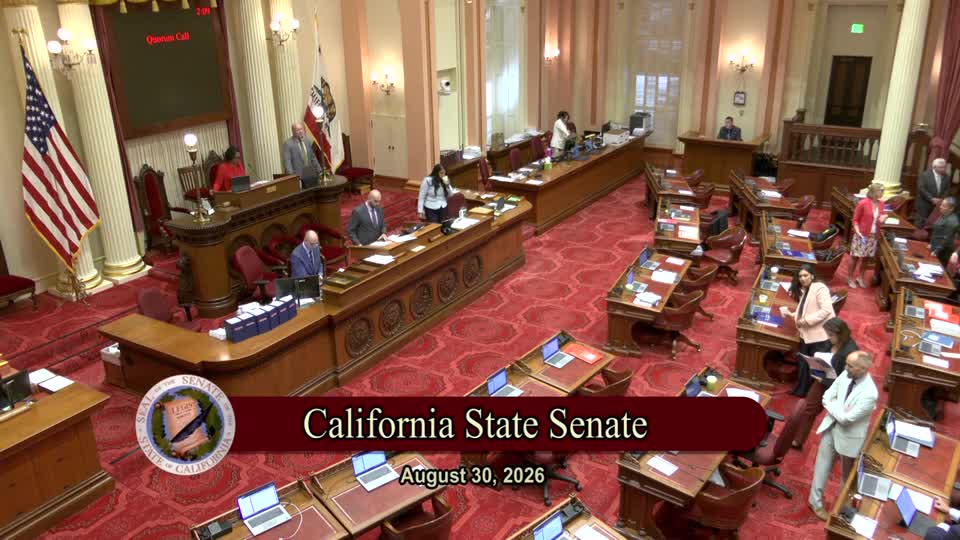 1MIN
Senate Floor
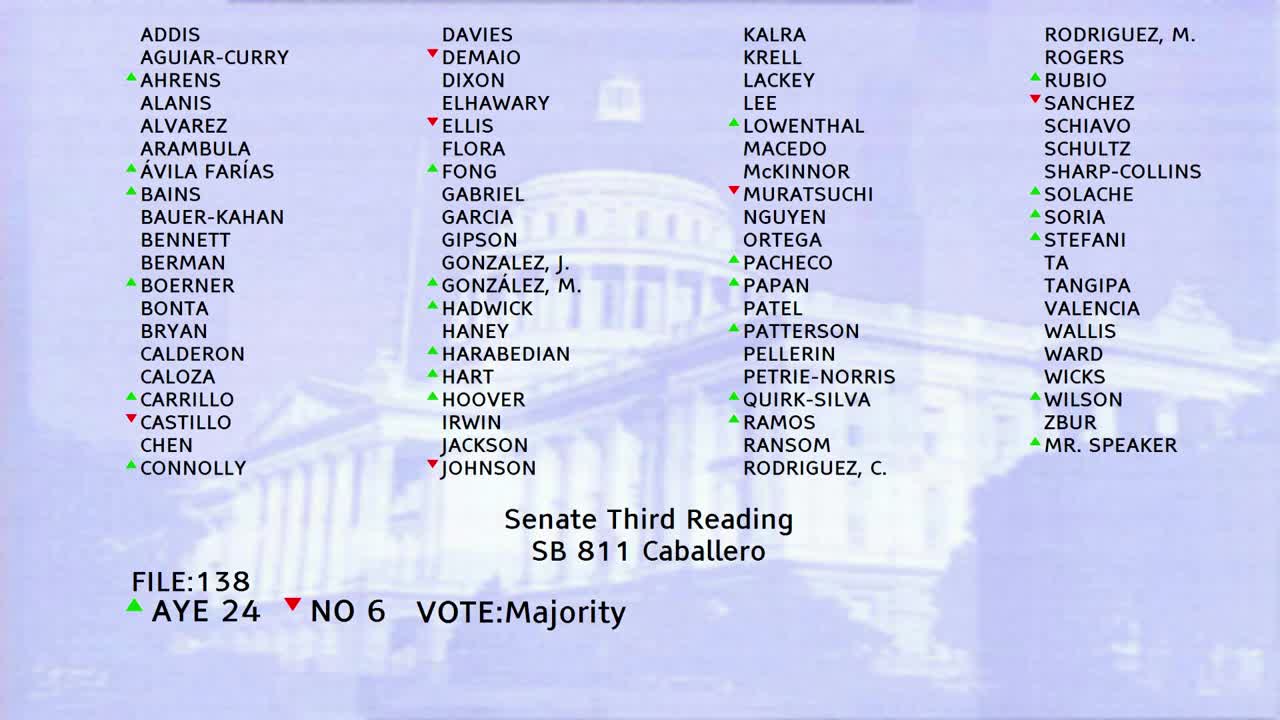 2MIN
Assembly Floor
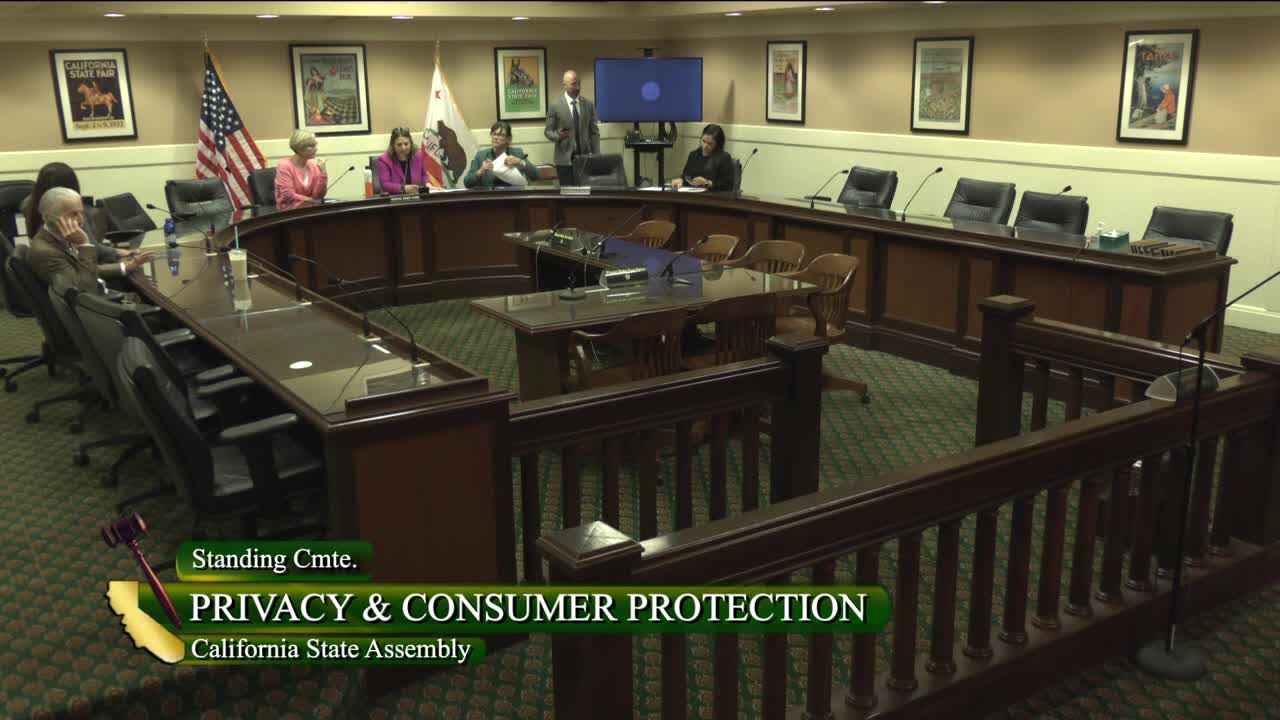 16MIN
Assembly Standing Committee on Privacy and Consumer Protection
 6MIN
Assembly Standing Committee on Judiciary
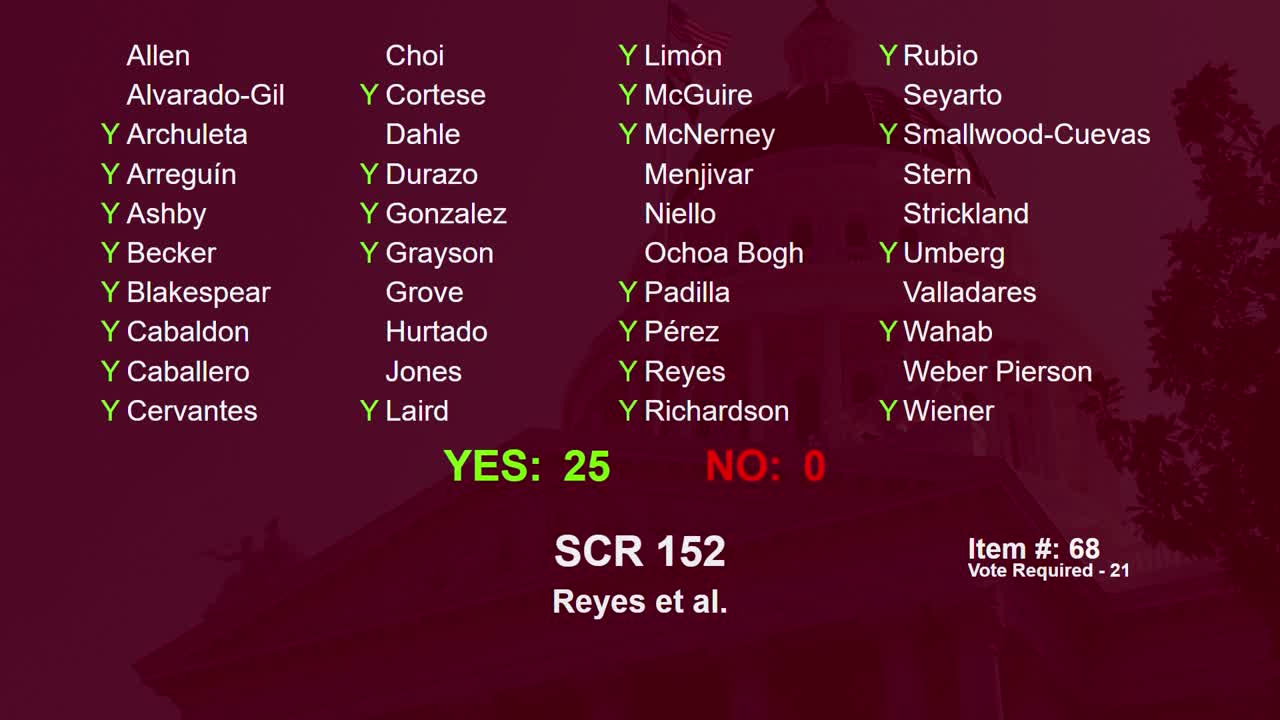 3MIN
Senate Floor
 7MIN
Senate Standing Committee on Revenue and Taxation
 11MIN
Senate Standing Committee on Local Government
Bill Author