SB 1094: Prescription drugs.
- Session Year: 2025-2026
- House: Senate
- Latest Version Date: 2026-09-30
Current Status:
Passed
(2026-09-30: Chaptered by Secretary of State. Chapter 1007, Statutes of 2026.)
Introduced
In Committee
Awaiting First Chamber Vote
Passed First Chamber
In Committee
Awaiting Second Chamber Vote
Passed Second Chamber
Enacted
(1)The Pharmacy Law governs the practice of pharmacy in this state, including the permissible duties of licensed pharmacists. A knowing violation of the Pharmacy Law is a misdemeanor. Existing law authorizes a pharmacist to select an alternative biological product when filling a prescription order for a prescribed biological product if the alternative biological product is interchangeable, as defined, and the prescriber does not personally indicate in a specified manner that a substitution is not to be made.
This bill would additionally authorize a pharmacist to select an alternative biological product when filling a prescription order for a prescribed biological product if the alternative biological product is biosimilar to, as defined, or interchangeable with, the prescribed reference product, and the prescriber does not personally indicate in a specified manner that a substitution is not to be made. Because a knowing violation of this provision would be a misdemeanor, the bill would create a new crime, thereby imposing a state-mandated local program.
(2)Existing law, the Knox-Keene Health Care Service Plan Act of 1975, provides for the licensure and regulation of health care service plans by the Department of Managed Health Care, and makes a willful violation of the act a crime. Existing law provides for the regulation of health insurers by the Department of Insurance.
Existing law prohibits a health care service plan that covers prescription drug benefits from limiting or excluding coverage for a drug that was previously approved for coverage if an enrollee continues to be prescribed that drug and that drug is appropriately prescribed and considered safe and effective for treating the enrollees medical condition. Existing law specifies that these provisions do not preclude a prescribing provider from prescribing another drug covered by the plan that is medically appropriate for the enrollee or a generic drug substitution authorized by a pharmacist, as specified.
This bill would prohibit a health insurance policy that covers prescription drug benefits from limiting or excluding coverage for a drug that was previously approved for coverage if an insured continues to be prescribed that drug and the drug is appropriately prescribed, and is considered safe and effective for treating the insureds medical condition. With respect to both health care service plans and health insurers, the bill would specify that these provisions do not prohibit a prescribing provider from prescribing a drug, biosimilar, or interchangeable biological product substitution authorized by a pharmacist, as described above. The bill would authorize a health care service plan, health insurer, or utilization review organization to require an enrollee or insured to try a biosimilar or interchangeable biological product in place of a prescribed reference product that is subject to continuing coverage by the plan or insurer if specified conditions are met. The bill would require a health care service plan contract or health insurance policy issued, amended, or renewed on or after January 1, 2027, that provides prescription drug benefits and maintains one or more drug formularies that include a reference product to include on the relevant formulary at least one biosimilar or interchangeable biological product licensed for the same reference product if the biosimilar has a lower net cost to the plan or insurer than the reference product. Because a violation of these provisions by a health care service plan would be a crime, the bill would impose a state-mandated local program.
(3)This bill would provide that its provisions are severable.
(4)The California Constitution requires the state to reimburse local agencies and school districts for certain costs mandated by the state. Statutory provisions establish procedures for making that reimbursement.
This bill would provide that no reimbursement is required by this act for a specified reason.
(1)The Pharmacy Law governs the practice of pharmacy in this state, including the permissible duties of licensed pharmacists. A knowing violation of the Pharmacy Law is a misdemeanor. Existing law authorizes a pharmacist to select an alternative biological product when filling a prescription order for a prescribed biological product if the alternative biological product is interchangeable, as defined, and the prescriber does not personally indicate in a specified manner that a substitution is not to be made.
This bill would additionally authorize a pharmacist to select an alternative biological product when filling a prescription order for a prescribed biological product if the alternative biological product is biosimilar to, as defined, or interchangeable with, the prescribed reference product, and the prescriber does not personally indicate in a specified manner that a substitution is not to be made. Because a knowing violation of this provision would be a misdemeanor, the bill would create a new crime, thereby imposing a state-mandated local program.
(2)Existing law, the Knox-Keene Health Care Service Plan Act of 1975, provides for the licensure and regulation of health care service plans by the Department of Managed Health Care, and makes a willful violation of the act a crime. Existing law provides for the regulation of health insurers by the Department of Insurance.
Existing law prohibits a health care service plan that covers prescription drug benefits from limiting or excluding coverage for a drug that was previously approved for coverage if an enrollee continues to be prescribed that drug and that drug is appropriately prescribed and considered safe and effective for treating the enrollees medical condition. Existing law specifies that these provisions do not preclude a prescribing provider from prescribing another drug covered by the plan that is medically appropriate for the enrollee or a generic drug substitution authorized by a pharmacist, as specified.
This bill would prohibit a health insurance policy that covers prescription drug benefits from limiting or excluding coverage for a drug that was previously approved for coverage if an insured continues to be prescribed that drug and the drug is appropriately prescribed, and is considered safe and effective for treating the insureds medical condition. With respect to both health care service plans and health insurers, the bill would specify that these provisions do not prohibit a prescribing provider from prescribing a drug, biosimilar, or interchangeable biological product substitution authorized by a pharmacist, as described above. The bill would authorize a health care service plan, health insurer, or utilization review organization to require an enrollee or insured to try a biosimilar or interchangeable biological product in place of a prescribed reference product that is subject to continuing coverage by the plan or insurer if specified conditions are met. The bill would require a health care service plan contract or health insurance policy issued, amended, or renewed on or after January 1, 2027, that provides prescription drug benefits and maintains one or more drug formularies that include a reference product to include on the relevant formulary at least one biosimilar or interchangeable biological product licensed for the same reference product if the biosimilar has a lower net cost to the plan or insurer than the reference product. Because a violation of these provisions by a health care service plan would be a crime, the bill would impose a state-mandated local program.
(3)This bill would provide that its provisions are severable.
(4)The California Constitution requires the state to reimburse local agencies and school districts for certain costs mandated by the state. Statutory provisions establish procedures for making that reimbursement.
This bill would provide that no reimbursement is required by this act for a specified reason.
(1)The Pharmacy Law governs the practice of pharmacy in this state, including the permissible duties of licensed pharmacists. A knowing violation of the Pharmacy Law is a misdemeanor. Existing law authorizes a pharmacist to select an alternative biological product when filling a prescription order for a prescribed biological product if the alternative biological product is interchangeable, as defined, and the prescriber does not personally indicate in a specified manner that a substitution is not to be made.
This bill would additionally authorize a pharmacist to select an alternative biological product when filling a prescription order for a prescribed biological product if the alternative biological product is biosimilar to, as defined, or interchangeable with, the prescribed reference product, and the prescriber does not personally indicate in a specified manner that a substitution is not to be made. Because a knowing violation of this provision would be a misdemeanor, the bill would create a new crime, thereby imposing a state-mandated local program.
(2)Existing law, the Knox-Keene Health Care Service Plan Act of 1975, provides for the licensure and regulation of health care service plans by the Department of Managed Health Care, and makes a willful violation of the act a crime. Existing law provides for the regulation of health insurers by the Department of Insurance.
Existing law prohibits a health care service plan that covers prescription drug benefits from limiting or excluding coverage for a drug that was previously approved for coverage if an enrollee continues to be prescribed that drug and that drug is appropriately prescribed and considered safe and effective for treating the enrollees medical condition. Existing law specifies that these provisions do not preclude a prescribing provider from prescribing another drug covered by the plan that is medically appropriate for the enrollee or a generic drug substitution authorized by a pharmacist, as specified.
This bill would prohibit a health insurance policy that covers prescription drug benefits from limiting or excluding coverage for a drug that was previously approved for coverage if an insured continues to be prescribed that drug and the drug is appropriately prescribed, and is considered safe and effective for treating the insureds medical condition. With respect to both health care service plans and health insurers, the bill would specify that these provisions do not prohibit a prescribing provider from prescribing a biosimilar drug drug, biosimilar, or interchangeable biological product substitution authorized by a pharmacist, as described above. The bill would authorize a health care service plan, health insurer, or utilization review organization to require an enrollee or insured to try a biosimilar or interchangeable biological product of a in place of a prescribed reference product that was previously approved for is subject to continuing coverage by the plan or insurer if specified conditions are met. The bill would prohibit a pharmacy benefit manager, health care service plan, health insurer, or affiliated entity from requiring utilization of only a biosimilar product in which the entity has a direct or indirect financial interest if biosimilars not affiliated with these entities may also be available. The bill would require a health care service plan contract or health insurance policy issued, amended, or renewed on or after January 1, 2027, that provides prescription drug benefits and maintains one or more drug formularies that include a reference product to include on the relevant formulary at least one biosimilar or interchangeable biological product licensed for the same reference product if the biosimilar has a lower net cost to the plan or insurer than the reference product. Because a violation of these provisions by a health care service plan would be a crime, the bill would impose a state-mandated local program.
(3)This bill would provide that its provisions are severable.
(4)The California Constitution requires the state to reimburse local agencies and school districts for certain costs mandated by the state. Statutory provisions establish procedures for making that reimbursement.
This bill would provide that no reimbursement is required by this act for a specified reason.
(1)The Pharmacy Law governs the practice of pharmacy in this state, including the permissible duties of licensed pharmacists. A knowing violation of the Pharmacy Law is a misdemeanor. Existing law authorizes a pharmacist to select an alternative biological product when filling a prescription order for a prescribed biological product if the alternative biological product is interchangeable, as defined, and the prescriber does not personally indicate in a specified manner that a substitution is not to be made.
This bill would additionally authorize a pharmacist to select an alternative biological product when filling a prescription order for a prescribed biological product if the alternative biological product is biosimilar to, as defined, or interchangeable with, the prescribed reference product, and the prescriber does not personally indicate in a specified manner that a substitution is not to be made. Because a knowing violation of this provision would be a misdemeanor, the bill would create a new crime, thereby imposing a state-mandated local program.
(2)Existing law, the Knox-Keene Health Care Service Plan Act of 1975, provides for the licensure and regulation of health care service plans by the Department of Managed Health Care, and makes a willful violation of the act a crime. Existing law provides for the regulation of health insurers by the Department of Insurance.
Existing law prohibits a health care service plan that covers prescription drug benefits from limiting or excluding coverage for a drug that was previously approved for coverage if an enrollee continues to be prescribed that drug and that drug is appropriately prescribed and considered safe and effective for treating the enrollees medical condition. Existing law specifies that these provisions do not preclude a prescribing provider from prescribing another drug covered by the plan that is medically appropriate for the enrollee or a generic drug substitution authorized by a pharmacist, as specified.
This bill would prohibit a health insurance policy that covers prescription drug benefits from limiting or excluding coverage for a drug that was previously approved for coverage if an insured continues to be prescribed that drug and the drug is appropriately prescribed, continues to be medically necessary for the treatment of the insureds medical condition, and is considered safe and effective for treating the insureds medical condition as demonstrated by evidence-based practice, as specified. condition. With respect to both health care service plans and health insurers, the bill would specify that these provisions do not prohibit a prescribing provider from prescribing a biosimilar drug substitution authorized by a pharmacist, as described above. The bill would authorize a health care service plan, health insurer, or utilization review organization to require an enrollee or insured to try an AB-rated generic equivalent of a brand name drug, a biosimilar, a biosimilar or interchangeable biological product of a reference product that was previously approved for coverage by the plan or insurer if specified conditions are met. The bill would prohibit a pharmacy benefit manager, health care service plan, health insurer, or affiliated entity from requiring utilization of only a biosimilar product in which the entity has a direct or indirect financial interest if biosimilars not affiliated with these entities may also be available. Because a violation of these provisions by a health care service plan would be a crime, the bill would impose a state-mandated local program.
(3)This bill would provide that its provisions are severable.
(3)(4)The California Constitution requires the state to reimburse local agencies and school districts for certain costs mandated by the state. Statutory provisions establish procedures for making that reimbursement.
This bill would provide that no reimbursement is required by this act for a specified reason.
(1)The Pharmacy Law governs the practice of pharmacy in this state, including the permissible duties of licensed pharmacists. A knowing violation of the Pharmacy Law is a misdemeanor. Existing law authorizes a pharmacist to select an alternative biological product when filling a prescription order for a prescribed biological product if the alternative biological product is interchangeable, as defined, and the prescriber does not personally indicate in a specified manner that a substitution is not to be made.
This bill would additionally authorize a pharmacist to select an alternative biological product when filling a prescription order for a prescribed biological product if the alternative biological product is a biosimilar, biosimilar to, as defined, or interchangeable with, the prescribed reference product, and the prescriber does not personally indicate in a specified manner that a substitution is not to be made. Because a knowing violation of this provision would be a misdemeanor, the bill would create a new crime, thereby imposing a state-mandated local program.
(2)Existing law, the Knox-Keene Health Care Service Plan Act of 1975, provides for the licensure and regulation of health care service plans by the Department of Managed Health Care, and makes a willful violation of the act a crime. Existing law provides for the regulation of health insurers by the Department of Insurance.
Existing law prohibits a health care service plan that covers prescription drug benefits from limiting or excluding coverage for a drug that was previously approved for coverage if an enrollee continues to be prescribed that drug and that drug is appropriately prescribed and considered safe and effective for treating the enrollees medical condition. Existing law specifies that these provisions do not preclude a prescribing provider from prescribing another drug covered by the plan that is medically appropriate for the enrollee or a generic drug substitution authorized by a pharmacist, as specified.
This bill would prohibit a health insurance policy that covers prescription drug benefits from limiting or excluding coverage for a drug that was previously approved for coverage if an insured continues to be prescribed that drug and the drug is appropriately prescribed, continues to be medically necessary for the treatment of the insureds medical condition, and is considered safe and effective for treating the insureds medical condition as demonstrated by evidence-based practice, as specified. With respect to both health care service plans and health insurers, the bill would specify that these provisions do not prohibit a prescribing provider from prescribing a biosimilar drug substitution authorized by a pharmacist, as described above. The bill would specify that these provisions do not prohibit authorize a health care service plan, health insurer, or utilization review organization from requiring to require an enrollee or insured to try an AB-rated generic equivalent, equivalent of a brand name drug, a biosimilar, or interchangeable biological product that is the same or similar to the brand name drug or of a reference product that was previously approved for coverage by the plan or insurer if specified conditions are met. Because a violation of these provisions by a health care service plan would be a crime, the bill would impose a state-mandated local program.
(3)The California Constitution requires the state to reimburse local agencies and school districts for certain costs mandated by the state. Statutory provisions establish procedures for making that reimbursement.
This bill would provide that no reimbursement is required by this act for a specified reason.
(1)The Pharmacy Law governs the practice of pharmacy in this state, including the permissible duties of licensed pharmacists. A knowing violation of the Pharmacy Law is a misdemeanor. Existing law authorizes a pharmacist to select an alternative biological product when filling a prescription order for a prescribed biological product if the alternative biological product is interchangeable, as defined, and the prescriber does not personally indicate in a specified manner that a substitution is not to be made.
This bill would additionally authorize a pharmacist to select an alternative biological product when filling a prescription order for a prescribed biological product if the alternative biological product is a biosimilar, as defined, and the prescriber does not personally indicate in a specified manner that a substitution is not to be made. Because a knowing violation of this provision would be a misdemeanor, the bill would create a new crime, thereby imposing a state-mandated local program.
(2)Existing law, the Knox-Keene Health Care Service Plan Act of 1975, provides for the licensure and regulation of health care service plans by the Department of Managed Health Care, and makes a willful violation of the act a crime. Existing law provides for the regulation of health insurers by the Department of Insurance.
Existing law prohibits a health care service plan that covers prescription drug benefits from limiting or excluding coverage for a drug that was previously approved for coverage if an enrollee continues to be prescribed that drug and that drug is appropriately prescribed and considered safe and effective for treating the enrollees medical condition. Existing law specifies that these provisions do not preclude a prescribing provider from prescribing another drug covered by the plan that is medically appropriate for the enrollee or a generic drug substitution authorized by a pharmacist, as specified.
This bill would prohibit a health insurance policy that covers prescription drug benefits from limiting or excluding coverage for a drug that was previously approved for coverage if an insured continues to be prescribed that drug and the drug is appropriately prescribed, continues to be medically necessary for the treatment of the insureds medical condition, and is considered safe and effective for treating the insureds medical condition as demonstrated by evidence-based practice, as specified. With respect to both health care service plans and health insurers, the bill would specify that these provisions do not prohibit a prescribing provider from prescribing a biosimilar drug substitution authorized by a pharmacist, as described above. The bill would specify that these provisions do not prohibit a health care service plan, health insurer, or utilization review organization from requiring an enrollee or insured to try an AB-rated generic equivalent, biosimilar, or interchangeable biological product that is the same or similar to the brand name drug or reference product that was previously approved for coverage by the plan or insurer if specified conditions are met. Because a violation of these provisions by a health care service plan would be a crime, the bill would impose a state-mandated local program.
(3)The California Constitution requires the state to reimburse local agencies and school districts for certain costs mandated by the state. Statutory provisions establish procedures for making that reimbursement.
This bill would provide that no reimbursement is required by this act for a specified reason.
It is the intent of the Legislature to promote the use of equally effective lower cost treatments to ensure access and affordability for Californians and to promote the coverage of equally safe and effective lower cost products within three calendar months of national availability.
SEC. 2.Section 4073.5 of the Business and Professions Code is amended to read:4073.5.(a)A pharmacist filling a prescription order for a prescribed biological product may select an alternative biological product only if all of the following:
(1)The alternative biological product is biosimilar to, or interchangeable with, the prescribed reference product.
(2)The prescriber does not personally indicate Do not substitute, or words of similar meaning, in the manner provided in subdivision (e).
(b)Within five days following the dispensing of a biological product, a dispensing pharmacist or the pharmacists designee shall make an entry of the specific biological product provided to the patient, including the name of the biological product and the manufacturer. The communication shall be conveyed by making an entry that can be electronically accessed by the prescriber through one or more of the following electronic records systems:
(1)An interoperable electronic medical records system.
(2)An electronic prescribing technology.
(3)A pharmacy benefit management system.
(4)A pharmacy record.
(c)Entry into an electronic records system as described in subdivision (b) is presumed to provide notice to the prescriber.
(d)If the pharmacy does not have access to one or more of the entry systems in subdivision (b), the pharmacist or the pharmacists designee shall communicate the name of the biological product dispensed to the prescriber using facsimile, telephone, electronic transmission, or other prevailing means, except that communication shall not be required in this instance to the prescriber when either of the following apply:
(1)There is no biosimilar or interchangeable biological product approved by the federal Food and Drug Administration for the product prescribed.
(2)A refill prescription is not changed from the product dispensed on the prior filling of the prescription.
(e)A selection shall not be made pursuant to this section if the prescriber personally indicates, either orally or in the prescribers own handwriting, Do not substitute, or words of similar meaning.
(1)This subdivision shall not prohibit a prescriber from checking a box on a prescription marked Do not substitute, provided that the prescriber personally initials the box or checkmark.
(2)To indicate that a selection shall not be made pursuant to this section for an electronic data transmission prescription, as defined in subdivision (c) of Section 4040, a prescriber may indicate Do not substitute, or words of similar meaning, in the prescription as transmitted by electronic data, or may check a box marked on the prescription Do not substitute. In either instance, it shall not be required that the prohibition on substitution be manually initialed by the prescriber.
(f)Selection pursuant to this section is within the discretion of the pharmacist, except as provided in subdivision (e). A pharmacist who selects an alternative biological product to be dispensed pursuant to this section shall assume the same responsibility for substituting the biological product as would be incurred in filling a prescription for a biological product prescribed by name. There shall be no liability on the prescriber for an act or omission by a pharmacist in selecting, preparing, or dispensing a biological product pursuant to this section. In no case shall the pharmacist select a biological product that meets the requirements of subdivision (a) unless the cost to the patient of the biological product selected is the same or less than the cost of the prescribed biological product. Cost, as used in this subdivision, includes any professional fee that may be charged by the pharmacist.
(g)This section shall apply to all prescriptions, including those presented by or on behalf of persons receiving assistance from the federal government or pursuant to the Medi-Cal Act set forth in Chapter 7 (commencing with Section 14000) of Part 3 of Division 9 of the Welfare and Institutions Code.
(h)When a selection is made pursuant to this section, the substitution of a biological product shall be communicated to the patient.
(i)The board shall maintain on its public internet website a link to the United States Food and Drug Administrations Purple Book Database of Licensed Biological Products.
(j)For purposes of this section, the following terms shall have the following meanings:
(1)Biological product has the same meaning that applies to that term under Section 351 of the federal Public Health Service Act (42 U.S.C. Sec. 262(i)).
(2)Biosimilar has the same meaning as defined in Section 262(i) of Title 42 of the United States Code.
(3)Interchangeable means a biological product that the federal Food and Drug Administration has determined meets the standards set forth in Section 262(k)(4) of Title 42 of the United States Code, or has been deemed therapeutically equivalent by the federal Food and Drug Administration as set forth in the latest addition or supplement of the Approved Drug Products with Therapeutic Equivalence Evaluations.
(4)Reference product has the same meaning as defined in Section 262(i)(4) of Title 42 of the United States Code.
(5)Prescription, with respect to a biological product, means a prescription for a product that is subject to Section 503(b) of the Federal Food, Drug, and Cosmetic Act (21 U.S.C. Sec. 353(b)).
(k)This section shall not prohibit the administration of immunizations, as permitted in Sections 4052 and 4052.8.
(l)This section shall not prohibit a disability insurer or health care service plan from requiring prior authorization or imposing other appropriate utilization controls in approving coverage for any biological product.
SEC. 3.Section 1342.77 is added to the Health and Safety Code, to read:1342.77.(a)A health care service plan contract issued, amended, or renewed on or after January 1, 2027, that provides prescription drug benefits and maintains one or more drug formularies that include a reference product shall also include, on the relevant plan formulary, at least one biosimilar or interchangeable biological product licensed for the same reference product if the biosimilar has a lower net cost to the plan than the reference product.
(b)For purposes of this section, net cost has the same meaning as defined pursuant to Section 1367.22.
SEC. 4.Section 1367.22 of the Health and Safety Code is amended to read:1367.22.(a) (1)A health care service plan contract, issued, amended, or renewed on or after July 1, 1999, that covers prescription drug benefits shall not limit or exclude coverage for a drug for an enrollee if the drug previously had been approved for coverage by the plan for a medical condition of the enrollee and the plans prescribing provider continues to prescribe the drug for the medical condition, provided that the drug is appropriately prescribed and is considered safe and effective for treating the enrollees medical condition.
(2)This section does not preclude the prescribing provider from prescribing another drug covered by the plan that is medically appropriate for the enrollee, and does not prohibit generic drug, biosimilar, or interchangeable biological product substitutions as authorized by Sections 4073 and 4073.5 of the Business and Professions Code. For purposes of this section, a prescribing provider shall include a provider authorized to write a prescription, pursuant to subdivision (a) of Section 4059 of the Business and Professions Code, to treat a medical condition of an enrollee.
(b)(1)A health care service plan or utilization review organization may require an enrollee to try a biosimilar or interchangeable biological product in place of a prescribed reference product that is subject to continuing coverage by the plan pursuant to subdivision (a), if all of the following conditions are met:
(A)The prescriber has not personally indicated Do not substitute, or words of similar meaning in the manner provided in subdivision (b) of Section 4073 or subdivision (e) of Section 4073.5 of the Business and Professions Code, as applicable.
(B)The net cost to the plan of the alternative biosimilar or interchangeable biological product is lower than the reference product.
(C)An enrollees cost sharing is based on the net cost of the proposed biosimilar or interchangeable biological product alternative.
(D)An enrollees cost sharing is the same or less than the cost sharing of the reference product.
(E)(i)The plan provides at least 60 days advance notice to the enrollee and prescribing provider of a requirement pursuant to this subdivision before requiring an enrollee to try an alternative biosimilar or interchangeable biological product. The notice to a prescribing provider and enrollee shall contain all of the following:
(I)Identification of the reference product for which the plan or utilization review organization is requiring a biosimilar or interchangeable biological product alternative.
(II)If the proposed alternative is the result of the reference product being removed from the formulary or moved to a higher cost-sharing tier, changes to prior authorization requirements, or changes to step therapy requirements.
(III)Identification of all biosimilars or interchangeable biological products in the same or a lower cost-sharing tier as the reference product and the expected cost sharing for those alternative products.
(IV)If the proposed alternative is because the reference product is nonformulary, detailed instructions on how the enrollee or provider may submit a formulary exception request pursuant to Section 1367.24.
(V)If the proposed alternative is because the reference product is subject to step therapy, detailed instructions on how the enrollee or provider may submit a step therapy exception request pursuant to Section 1367.206.
(VI)That the prescription may be reissued by the prescribing provider with Do not substitute to maintain current coverage without additional authorization.
(ii)The notice to a prescribing provider required pursuant to clause (i) shall indicate the prescribers affected plan enrollees.
(iii)A plan may fulfill this requirement through a formulary change notice that complies with the requirements of this paragraph when the requirement to try a biosimilar or interchangeable biological product is due to a formulary change.
(F)The prescribing provider is not required to seek new prior authorization for the alternative biosimilar or interchangeable biological product if prior authorization was previously approved for the prescribed reference product.
(G)A pharmacy benefit manager, health care service plan, or affiliated entity shall not require utilization of only a biosimilar product in which the pharmacy benefit manager, health care service plan, or affiliated entity has a direct or indirect financial interest if biosimilars not affiliated with these entities are also available.
(2)An enrollee required to try an alternative pursuant to paragraph (1) or the plans prescribing provider may request an exception pursuant to Section 1367.206 or 1367.24.
(3)Beginning on or before October 1, 2027, in a manner prescribed by the department in coordination with the Department of Insurance, the plan shall include with the information required to be provided to the department pursuant to Section 1367.243 all of the following information:
(A)The proportion of prescriptions filled for an alternative product resulting from the authority provided in paragraph (1) of this subdivision that resulted in reduced cost sharing as well as information about the factors affecting when an enrollees cost sharing is not reduced.
(B)The impact the authority provided in paragraph (1) has on premiums.
(C)Any other related information requested by the department.
(4)This subdivision does not authorize a health care service plan to alter or issue a prescription.
(5)No later than January 15, 2027, a plan shall notify prescribing plan providers who are appropriately licensed to prescribe prescription drugs of any reference biological product and any biosimilar or interchangeable biological product for that reference product that is already included on the plan formulary. The notification shall inform prescribing providers that, pursuant to Section 4073.5 of the Business and Professions Code, a pharmacist dispensing a prescribed biological product may substitute a biosimilar or interchangeable biological product for the prescribed reference product unless the prescriber indicates Do not substitute, or words of similar meaning, in the manner specified in subdivision (e) of Section 4073.5 of the Business and Professions Code. The notification shall also identify any of the prescribing providers enrollees whose prescribed reference biological product may be subject to that substitution.
(6)The department may adopt guidance to health care service plans to implement this section. The guidance shall not be subject to the Administrative Procedure Act (Chapter 3.5 (commencing with Section 11340) of Part 1 of Division 3 of Title 2 of the Government Code).
(c)This section does not apply to coverage for any drug that is prescribed for a use that is different from the use for which that drug has been approved for marketing by the federal Food and Drug Administration. Coverage for different-use drugs is subject to Section 1367.21.
(d)This section shall not be construed to restrict or impair the application of any other provision of this chapter, including, but not limited to, Section 1367, which includes among its requirements that plans furnish services in a manner providing continuity of care and demonstrate that medical decisions are rendered by qualified medical providers unhindered by fiscal and administrative management.
(e)This section does not prohibit a health care service plan from charging a subscriber or enrollee a copayment or a deductible for prescription drug benefits or from setting forth, by contract, limitations on maximum coverage of prescription drug benefits, provided that the copayments, deductibles, or limitations are reported to, and held unobjectionable by, the director and set forth to the subscriber or enrollee pursuant to the disclosure provisions of Section 1363.
(f)For purposes of this section, the following definitions apply:
(1)Biological product has the same meaning as defined in Section 262(i)(1) of Title 42 of the United States Code.
(2)Biosimilar has the same meaning as defined in Section 262(i)(2) of Title 42 of the United States Code.
(3)Cost sharing includes a copayment, coinsurance, deductible, or any other form of cost sharing.
(4)Interchangeable biological product has the same meaning as defined in Section 262(i)(3) of Title 42 of the United States Code.
(5)Net cost shall be defined by the department, in coordination with the Department of Insurance.
(6)Reference product has the same meaning as defined in Section 262(i)(4) of Title 42 of the United States Code.
SEC. 5.Section 10123.190 is added to the Insurance Code, to read:10123.190.(a)(1)A health insurance policy issued, amended, or renewed on or after January 1, 2027, that covers prescription drug benefits shall not limit or exclude coverage for a drug for an insured if the drug previously had been approved for coverage by the insurer for a medical condition of the insured and the insurers prescribing provider continues to prescribe the drug for the medical condition, if the drug is appropriately prescribed and is considered safe and effective for treating the insureds medical condition.
(2)This section does not preclude the prescribing provider from prescribing another drug covered by the insurer that is medically appropriate for the insured, and does not prohibit generic drug, biosimilar, or interchangeable biological product substitutions as authorized by Sections 4073 and 4073.5 of the Business and Professions Code. For purposes of this section, a prescribing provider shall include a provider authorized to write a prescription, pursuant to subdivision (a) of Section 4059 of the Business and Professions Code, to treat a medical condition of an insured.
(b)(1)A health insurer or utilization review organization may require an insured to try a biosimilar or interchangeable biological product in place of a prescribed reference product that is subject to continuing coverage by the insurer pursuant to subdivision (a) if all of the following conditions are met:
(A)The prescriber has not personally indicated Do not substitute, or words of similar meaning in the manner provided in subdivision (b) of Section 4073 or subdivision (e) of Section 4073.5 of the Business and Professions Code, as applicable.
(B)The net cost to the insurer of the biosimilar or interchangeable biological product alternative is lower than the reference product.
(C)An insureds cost sharing is based on the net cost of the proposed biosimilar or interchangeable biological product alternative.
(D)An insureds cost sharing is the same or less than the cost sharing of the reference product.
(E)(i)The insurer provides at least 60 days advance notice to the insured and prescribing provider of a requirement pursuant to this subdivision before requiring an insured to try an alternative biosimilar or interchangeable biological product. The notice to a prescribing provider and insured shall contain all of the following:
(I)Identification of the reference product for which the insurer or utilization review organization is requiring a biosimilar or interchangeable biological product alternative.
(II)If the proposed alternative is the result of the reference product being removed from the formulary or moved to a higher cost-sharing tier, changes to prior authorization requirements, or changes to step therapy requirements.
(III)Identification of all biosimilars or interchangeable biological products in the same or a lower cost-sharing tier as the reference product and the expected cost sharing for those alternative products.
(IV)If the proposed alternative is because the reference product is nonformulary, detailed instructions on how the insured or provider may submit a formulary exception request pursuant to Section 10123.201.
(V)If the proposed alternative is because the reference product is subject to step therapy, detailed instructions on how the insured or provider may submit a step therapy exception request pursuant to Section 10123.201.
(VI)That the prescription may be reissued by the prescribing provider with Do not substitute to maintain current coverage without additional authorization.
(ii)The notice to a prescribing provider required pursuant to clause (i) shall indicate the affected insureds.
(iii)An insurer may fulfill this requirement through a formulary change notice that complies with the requirements of this paragraph when the requirement to try a biosimilar or interchangeable biological product is due to a formulary change.
(F)The prescribing provider is not required to seek new prior authorization for the alternative biosimilar or interchangeable biological product if prior authorization was previously approved for the prescribed reference product.
(G)A pharmacy benefit manager, health insurer, or affiliated entity shall not require utilization of only a biosimilar product in which the pharmacy benefit manager, health care service plan, or affiliated entity has a direct or indirect financial interest if biosimilars not affiliated with these entities are also available.
(2)An insured required to try an alternative pursuant to paragraph (1) or the insurers prescribing provider may request an exception pursuant to Section 10123.201 or 10123.191.
(3)Beginning on or before October 1, 2027, in a manner prescribed by the department in coordination with the Department of Managed Health Care, the insurer shall include with the information required to be provided to the department pursuant to Section 10123.205 all of the following information:
(A)The proportion of prescriptions filled for an alternative product resulting from the authority provided in paragraph (1) of this subdivision that resulted in reduced cost sharing as well as information about the factors affecting when an insureds cost sharing is not reduced.
(B)The impact the authority provided in paragraph (1) has on premiums.
(C)Any other related information requested by the department.
(4)This subdivision does not authorize a health insurer to alter or issue a prescription.
(5)No later than January 15, 2027, an insurer shall notify prescribing insurer providers who are appropriately licensed to prescribe prescription drugs of any reference biological product and any biosimilar or interchangeable biological product for that reference product that is already included on the insurers formulary. The notification shall inform prescribing providers that, pursuant to Section 4073.5 of the Business and Professions Code, a pharmacist dispensing a prescribed biological product may substitute a biosimilar or interchangeable biological product for the prescribed reference product unless the prescriber indicates Do not substitute, or words of similar meaning, in the manner specified in subdivision (e) of Section 4073.5 of the Business and Professions Code. The notification shall also identify any of the prescribing providers insureds whose prescribed reference biological product may be subject to that substitution.
(6)The department may adopt guidance to insurers to implement this section. The guidance shall not be subject to the Administrative Procedure Act (Chapter 3.5 (commencing with Section 11340) of Part 1 of Division 3 of Title 2 of the Government Code).
(c)This section does not apply to coverage for any drug that is prescribed for a use that is different from the use for which that drug has been approved for marketing by the federal Food and Drug Administration. Coverage for different-use drugs is subject to Section 10123.195.
(d)This section shall not be construed to restrict or impair the application of any other provision of this article.
(e)This section does not prohibit a health insurer from charging an insured a copayment or a deductible for prescription drug benefits or from setting forth, by contract, limitations on maximum coverage of prescription drug benefits, if the copayments, deductibles, or limitations are reported to, and held unobjectionable by, the commissioner and disclosed to the insured.
(f)For purposes of this section, the following definitions apply:
(1)Biological product has the same meaning as defined in Section 262(i)(1) of Title 42 of the United States Code.
(2)Biosimilar has the same meaning as defined in Section 262(i)(2) of Title 42 of the United States Code.
(3)Cost sharing includes a copayment, coinsurance, deductible, or any other form of cost sharing.
(4)Interchangeable biological product has the same meaning as defined in Section 262(i)(3) of Title 42 of the United States Code.
(5)Net cost shall be defined by the department, in coordination with the Department of Managed Health Care.
(6)Reference product has the same meaning as defined in Section 262(i)(4) of Title 42 of the United States Code.
SEC. 6.Section 10123.1937 is added to the Insurance Code, to read:10123.1937.(a)A health insurance policy issued, amended, or renewed on or after January 1, 2027, that provides prescription drug benefits and maintains one or more drug formularies that include a reference product shall also include, on the relevant formulary, at least one biosimilar or interchangeable biological product licensed for the same reference product if the biosimilar has a lower net cost to the insurer than the reference product.
(b)For purposes of this section, net cost has the same meaning as defined pursuant to Section 10123.190.
SEC. 7.The provisions of this act are severable. If any provision of this act or its application is held invalid, that invalidity shall not affect other provisions or applications that can be given effect without the invalid provision or application.
SEC. 8.No reimbursement is required by this act pursuant to Section 6 of Article XIIIB of the California Constitution because the only costs that may be incurred by a local agency or school district will be incurred because this act creates a new crime or infraction, eliminates a crime or infraction, or changes the penalty for a crime or infraction, within the meaning of Section 17556 of the Government Code, or changes the definition of a crime within the meaning of Section 6 of Article XIIIB of the California Constitution.
It is the intent of the Legislature to promote the use of equally effective lower cost treatments to ensure access and affordability for Californians and to promote the coverage of equally safe and effective lower cost products within three calendar months of national availability.
SEC. 2.Section 4073.5 of the Business and Professions Code is amended to read:4073.5.(a)A pharmacist filling a prescription order for a prescribed biological product may select an alternative biological product only if all of the following:
(1)The alternative biological product is biosimilar to, or interchangeable with, the prescribed reference product.
(2)The prescriber does not personally indicate Do not substitute, or words of similar meaning, in the manner provided in subdivision (e).
(b)Within five days following the dispensing of a biological product, a dispensing pharmacist or the pharmacists designee shall make an entry of the specific biological product provided to the patient, including the name of the biological product and the manufacturer. The communication shall be conveyed by making an entry that can be electronically accessed by the prescriber through one or more of the following electronic records systems:
(1)An interoperable electronic medical records system.
(2)An electronic prescribing technology.
(3)A pharmacy benefit management system.
(4)A pharmacy record.
(c)Entry into an electronic records system as described in subdivision (b) is presumed to provide notice to the prescriber.
(d)If the pharmacy does not have access to one or more of the entry systems in subdivision (b), the pharmacist or the pharmacists designee shall communicate the name of the biological product dispensed to the prescriber using facsimile, telephone, electronic transmission, or other prevailing means, except that communication shall not be required in this instance to the prescriber when either of the following apply:
(1)There is no biosimilar or interchangeable biological product approved by the federal Food and Drug Administration for the product prescribed.
(2)A refill prescription is not changed from the product dispensed on the prior filling of the prescription.
(e)A selection shall not be made pursuant to this section if the prescriber personally indicates, either orally or in the prescribers own handwriting, Do not substitute, or words of similar meaning.
(1)This subdivision shall not prohibit a prescriber from checking a box on a prescription marked Do not substitute, provided that the prescriber personally initials the box or checkmark.
(2)To indicate that a selection shall not be made pursuant to this section for an electronic data transmission prescription, as defined in subdivision (c) of Section 4040, a prescriber may indicate Do not substitute, or words of similar meaning, in the prescription as transmitted by electronic data, or may check a box marked on the prescription Do not substitute. In either instance, it shall not be required that the prohibition on substitution be manually initialed by the prescriber.
(f)Selection pursuant to this section is within the discretion of the pharmacist, except as provided in subdivision (e). A pharmacist who selects an alternative biological product to be dispensed pursuant to this section shall assume the same responsibility for substituting the biological product as would be incurred in filling a prescription for a biological product prescribed by name. There shall be no liability on the prescriber for an act or omission by a pharmacist in selecting, preparing, or dispensing a biological product pursuant to this section. In no case shall the pharmacist select a biological product that meets the requirements of subdivision (a) unless the cost to the patient of the biological product selected is the same or less than the cost of the prescribed biological product. Cost, as used in this subdivision, includes any professional fee that may be charged by the pharmacist.
(g)This section shall apply to all prescriptions, including those presented by or on behalf of persons receiving assistance from the federal government or pursuant to the Medi-Cal Act set forth in Chapter 7 (commencing with Section 14000) of Part 3 of Division 9 of the Welfare and Institutions Code.
(h)When a selection is made pursuant to this section, the substitution of a biological product shall be communicated to the patient.
(i)The board shall maintain on its public internet website a link to the United States Food and Drug Administrations Purple Book Database of Licensed Biological Products.
(j)For purposes of this section, the following terms shall have the following meanings:
(1)Biological product has the same meaning that applies to that term under Section 351 of the federal Public Health Service Act (42 U.S.C. Sec. 262(i)).
(2)Biosimilar has the same meaning as defined in Section 262(i) of Title 42 of the United States Code.
(3)Interchangeable means a biological product that the federal Food and Drug Administration has determined meets the standards set forth in Section 262(k)(4) of Title 42 of the United States Code, or has been deemed therapeutically equivalent by the federal Food and Drug Administration as set forth in the latest addition or supplement of the Approved Drug Products with Therapeutic Equivalence Evaluations.
(4)Reference product has the same meaning as defined in Section 262(i)(4) of Title 42 of the United States Code.
(5)Prescription, with respect to a biological product, means a prescription for a product that is subject to Section 503(b) of the Federal Food, Drug, and Cosmetic Act (21 U.S.C. Sec. 353(b)).
(k)This section shall not prohibit the administration of immunizations, as permitted in Sections 4052 and 4052.8.
(l)This section shall not prohibit a disability insurer or health care service plan from requiring prior authorization or imposing other appropriate utilization controls in approving coverage for any biological product.
SEC. 3.Section 1342.77 is added to the Health and Safety Code, to read:1342.77.(a)A health care service plan contract issued, amended, or renewed on or after January 1, 2027, that provides prescription drug benefits and maintains one or more drug formularies that include a reference product shall also include, on the relevant plan formulary, at least one biosimilar or interchangeable biological product licensed for the same reference product if the biosimilar has a lower net cost to the plan than the reference product.
(b)For purposes of this section, net cost has the same meaning as defined pursuant to Section 1367.22.
SEC. 4.Section 1367.22 of the Health and Safety Code is amended to read:1367.22.(a) (1)A health care service plan contract, issued, amended, or renewed on or after July 1, 1999, that covers prescription drug benefits shall not limit or exclude coverage for a drug for an enrollee if the drug previously had been approved for coverage by the plan for a medical condition of the enrollee and the plans prescribing provider continues to prescribe the drug for the medical condition, provided that the drug is appropriately prescribed and is considered safe and effective for treating the enrollees medical condition.
(2)This section does not preclude the prescribing provider from prescribing another drug covered by the plan that is medically appropriate for the enrollee, and does not prohibit generic drug, biosimilar, or interchangeable biological product substitutions as authorized by Sections 4073 and 4073.5 of the Business and Professions Code. For purposes of this section, a prescribing provider shall include a provider authorized to write a prescription, pursuant to subdivision (a) of Section 4059 of the Business and Professions Code, to treat a medical condition of an enrollee.
(b)(1)A health care service plan or utilization review organization may require an enrollee to try a biosimilar or interchangeable biological product in place of a prescribed reference product that is subject to continuing coverage by the plan pursuant to subdivision (a), if all of the following conditions are met:
(A)The prescriber has not personally indicated Do not substitute, or words of similar meaning in the manner provided in subdivision (b) of Section 4073 or subdivision (e) of Section 4073.5 of the Business and Professions Code, as applicable.
(B)The net cost to the plan of the alternative biosimilar or interchangeable biological product is lower than the reference product.
(C)An enrollees cost sharing is based on the net cost of the proposed biosimilar or interchangeable biological product alternative.
(D)An enrollees cost sharing is the same or less than the cost sharing of the reference product.
(E)(i)The plan provides at least 60 days advance notice to the enrollee and prescribing provider of a requirement pursuant to this subdivision before requiring an enrollee to try an alternative biosimilar or interchangeable biological product. The notice to a prescribing provider and enrollee shall contain all of the following:
(I)Identification of the reference product for which the plan or utilization review organization is requiring a biosimilar or interchangeable biological product alternative.
(II)If the proposed alternative is the result of the reference product being removed from the formulary or moved to a higher cost-sharing tier, changes to prior authorization requirements, or changes to step therapy requirements.
(III)Identification of all biosimilars or interchangeable biological products in the same or a lower cost-sharing tier as the reference product and the expected cost sharing for those alternative products.
(IV)If the proposed alternative is because the reference product is nonformulary, detailed instructions on how the enrollee or provider may submit a formulary exception request pursuant to Section 1367.24.
(V)If the proposed alternative is because the reference product is subject to step therapy, detailed instructions on how the enrollee or provider may submit a step therapy exception request pursuant to Section 1367.206.
(VI)That the prescription may be reissued by the prescribing provider with Do not substitute to maintain current coverage without additional authorization.
(ii)The notice to a prescribing provider required pursuant to clause (i) shall indicate the prescribers affected plan enrollees.
(iii)A plan may fulfill this requirement through a formulary change notice that complies with the requirements of this paragraph when the requirement to try a biosimilar or interchangeable biological product is due to a formulary change.
(F)The prescribing provider is not required to seek new prior authorization for the alternative biosimilar or interchangeable biological product if prior authorization was previously approved for the prescribed reference product.
(G)A pharmacy benefit manager, health care service plan, or affiliated entity shall not require utilization of only a biosimilar product in which the pharmacy benefit manager, health care service plan, or affiliated entity has a direct or indirect financial interest if biosimilars not affiliated with these entities are also available.
(2)An enrollee required to try an alternative pursuant to paragraph (1) or the plans prescribing provider may request an exception pursuant to Section 1367.206 or 1367.24.
(3)Beginning on or before October 1, 2027, in a manner prescribed by the department in coordination with the Department of Insurance, the plan shall include with the information required to be provided to the department pursuant to Section 1367.243 all of the following information:
(A)The proportion of prescriptions filled for an alternative product resulting from the authority provided in paragraph (1) of this subdivision that resulted in reduced cost sharing as well as information about the factors affecting when an enrollees cost sharing is not reduced.
(B)The impact the authority provided in paragraph (1) has on premiums.
(C)Any other related information requested by the department.
(4)This subdivision does not authorize a health care service plan to alter or issue a prescription.
(5)No later than January 15, 2027, a plan shall notify prescribing plan providers who are appropriately licensed to prescribe prescription drugs of any reference biological product and any biosimilar or interchangeable biological product for that reference product that is already included on the plan formulary. The notification shall inform prescribing providers that, pursuant to Section 4073.5 of the Business and Professions Code, a pharmacist dispensing a prescribed biological product may substitute a biosimilar or interchangeable biological product for the prescribed reference product unless the prescriber indicates Do not substitute, or words of similar meaning, in the manner specified in subdivision (e) of Section 4073.5 of the Business and Professions Code. The notification shall also identify any of the prescribing providers enrollees whose prescribed reference biological product may be subject to that substitution.
(6)The department may adopt guidance to health care service plans to implement this section. The guidance shall not be subject to the Administrative Procedure Act (Chapter 3.5 (commencing with Section 11340) of Part 1 of Division 3 of Title 2 of the Government Code).
(c)This section does not apply to coverage for any drug that is prescribed for a use that is different from the use for which that drug has been approved for marketing by the federal Food and Drug Administration. Coverage for different-use drugs is subject to Section 1367.21.
(d)This section shall not be construed to restrict or impair the application of any other provision of this chapter, including, but not limited to, Section 1367, which includes among its requirements that plans furnish services in a manner providing continuity of care and demonstrate that medical decisions are rendered by qualified medical providers unhindered by fiscal and administrative management.
(e)This section does not prohibit a health care service plan from charging a subscriber or enrollee a copayment or a deductible for prescription drug benefits or from setting forth, by contract, limitations on maximum coverage of prescription drug benefits, provided that the copayments, deductibles, or limitations are reported to, and held unobjectionable by, the director and set forth to the subscriber or enrollee pursuant to the disclosure provisions of Section 1363.
(f)For purposes of this section, the following definitions apply:
(1)Biological product has the same meaning as defined in Section 262(i)(1) of Title 42 of the United States Code.
(2)Biosimilar has the same meaning as defined in Section 262(i)(2) of Title 42 of the United States Code.
(3)Cost sharing includes a copayment, coinsurance, deductible, or any other form of cost sharing.
(4)Interchangeable biological product has the same meaning as defined in Section 262(i)(3) of Title 42 of the United States Code.
(5)Net cost shall be defined by the department, in coordination with the Department of Insurance.
(6)Reference product has the same meaning as defined in Section 262(i)(4) of Title 42 of the United States Code.
SEC. 5.Section 10123.190 is added to the Insurance Code, to read:10123.190.(a)(1)A health insurance policy issued, amended, or renewed on or after January 1, 2027, that covers prescription drug benefits shall not limit or exclude coverage for a drug for an insured if the drug previously had been approved for coverage by the insurer for a medical condition of the insured and the insurers prescribing provider continues to prescribe the drug for the medical condition, if the drug is appropriately prescribed and is considered safe and effective for treating the insureds medical condition.
(2)This section does not preclude the prescribing provider from prescribing another drug covered by the insurer that is medically appropriate for the insured, and does not prohibit generic drug, biosimilar, or interchangeable biological product substitutions as authorized by Sections 4073 and 4073.5 of the Business and Professions Code. For purposes of this section, a prescribing provider shall include a provider authorized to write a prescription, pursuant to subdivision (a) of Section 4059 of the Business and Professions Code, to treat a medical condition of an insured.
(b)(1)A health insurer or utilization review organization may require an insured to try a biosimilar or interchangeable biological product in place of a prescribed reference product that is subject to continuing coverage by the insurer pursuant to subdivision (a) if all of the following conditions are met:
(A)The prescriber has not personally indicated Do not substitute, or words of similar meaning in the manner provided in subdivision (b) of Section 4073 or subdivision (e) of Section 4073.5 of the Business and Professions Code, as applicable.
(B)The net cost to the insurer of the biosimilar or interchangeable biological product alternative is lower than the reference product.
(C)An insureds cost sharing is based on the net cost of the proposed biosimilar or interchangeable biological product alternative.
(D)An insureds cost sharing is the same or less than the cost sharing of the reference product.
(E)(i)The insurer provides at least 60 days advance notice to the insured and prescribing provider of a requirement pursuant to this subdivision before requiring an insured to try an alternative biosimilar or interchangeable biological product. The notice to a prescribing provider and insured shall contain all of the following:
(I)Identification of the reference product for which the insurer or utilization review organization is requiring a biosimilar or interchangeable biological product alternative.
(II)If the proposed alternative is the result of the reference product being removed from the formulary or moved to a higher cost-sharing tier, changes to prior authorization requirements, or changes to step therapy requirements.
(III)Identification of all biosimilars or interchangeable biological products in the same or a lower cost-sharing tier as the reference product and the expected cost sharing for those alternative products.
(IV)If the proposed alternative is because the reference product is nonformulary, detailed instructions on how the insured or provider may submit a formulary exception request pursuant to Section 10123.201.
(V)If the proposed alternative is because the reference product is subject to step therapy, detailed instructions on how the insured or provider may submit a step therapy exception request pursuant to Section 10123.201.
(VI)That the prescription may be reissued by the prescribing provider with Do not substitute to maintain current coverage without additional authorization.
(ii)The notice to a prescribing provider required pursuant to clause (i) shall indicate the affected insureds.
(iii)An insurer may fulfill this requirement through a formulary change notice that complies with the requirements of this paragraph when the requirement to try a biosimilar or interchangeable biological product is due to a formulary change.
(F)The prescribing provider is not required to seek new prior authorization for the alternative biosimilar or interchangeable biological product if prior authorization was previously approved for the prescribed reference product.
(G)A pharmacy benefit manager, health insurer, or affiliated entity shall not require utilization of only a biosimilar product in which the pharmacy benefit manager, health care service plan, or affiliated entity has a direct or indirect financial interest if biosimilars not affiliated with these entities are also available.
(2)An insured required to try an alternative pursuant to paragraph (1) or the insurers prescribing provider may request an exception pursuant to Section 10123.201 or 10123.191.
(3)Beginning on or before October 1, 2027, in a manner prescribed by the department in coordination with the Department of Managed Health Care, the insurer shall include with the information required to be provided to the department pursuant to Section 10123.205 all of the following information:
(A)The proportion of prescriptions filled for an alternative product resulting from the authority provided in paragraph (1) of this subdivision that resulted in reduced cost sharing as well as information about the factors affecting when an insureds cost sharing is not reduced.
(B)The impact the authority provided in paragraph (1) has on premiums.
(C)Any other related information requested by the department.
(4)This subdivision does not authorize a health insurer to alter or issue a prescription.
(5)No later than January 15, 2027, an insurer shall notify prescribing insurer providers who are appropriately licensed to prescribe prescription drugs of any reference biological product and any biosimilar or interchangeable biological product for that reference product that is already included on the insurers formulary. The notification shall inform prescribing providers that, pursuant to Section 4073.5 of the Business and Professions Code, a pharmacist dispensing a prescribed biological product may substitute a biosimilar or interchangeable biological product for the prescribed reference product unless the prescriber indicates Do not substitute, or words of similar meaning, in the manner specified in subdivision (e) of Section 4073.5 of the Business and Professions Code. The notification shall also identify any of the prescribing providers insureds whose prescribed reference biological product may be subject to that substitution.
(6)The department may adopt guidance to insurers to implement this section. The guidance shall not be subject to the Administrative Procedure Act (Chapter 3.5 (commencing with Section 11340) of Part 1 of Division 3 of Title 2 of the Government Code).
(c)This section does not apply to coverage for any drug that is prescribed for a use that is different from the use for which that drug has been approved for marketing by the federal Food and Drug Administration. Coverage for different-use drugs is subject to Section 10123.195.
(d)This section shall not be construed to restrict or impair the application of any other provision of this article.
(e)This section does not prohibit a health insurer from charging an insured a copayment or a deductible for prescription drug benefits or from setting forth, by contract, limitations on maximum coverage of prescription drug benefits, if the copayments, deductibles, or limitations are reported to, and held unobjectionable by, the commissioner and disclosed to the insured.
(f)For purposes of this section, the following definitions apply:
(1)Biological product has the same meaning as defined in Section 262(i)(1) of Title 42 of the United States Code.
(2)Biosimilar has the same meaning as defined in Section 262(i)(2) of Title 42 of the United States Code.
(3)Cost sharing includes a copayment, coinsurance, deductible, or any other form of cost sharing.
(4)Interchangeable biological product has the same meaning as defined in Section 262(i)(3) of Title 42 of the United States Code.
(5)Net cost shall be defined by the department, in coordination with the Department of Managed Health Care.
(6)Reference product has the same meaning as defined in Section 262(i)(4) of Title 42 of the United States Code.
SEC. 6.Section 10123.1937 is added to the Insurance Code, to read:10123.1937.(a)A health insurance policy issued, amended, or renewed on or after January 1, 2027, that provides prescription drug benefits and maintains one or more drug formularies that include a reference product shall also include, on the relevant formulary, at least one biosimilar or interchangeable biological product licensed for the same reference product if the biosimilar has a lower net cost to the insurer than the reference product.
(b)For purposes of this section, net cost has the same meaning as defined pursuant to Section 10123.190.
SEC. 7.The provisions of this act are severable. If any provision of this act or its application is held invalid, that invalidity shall not affect other provisions or applications that can be given effect without the invalid provision or application.
SEC. 8.No reimbursement is required by this act pursuant to Section 6 of Article XIIIB of the California Constitution because the only costs that may be incurred by a local agency or school district will be incurred because this act creates a new crime or infraction, eliminates a crime or infraction, or changes the penalty for a crime or infraction, within the meaning of Section 17556 of the Government Code, or changes the definition of a crime within the meaning of Section 6 of Article XIIIB of the California Constitution.
It is the intent of the Legislature to promote the use of equally effective lower cost treatments to ensure access and affordability for Californians and to promote the coverage of equally safe and effective lower cost products within three calendar months of national availability.
SEC. 2.Section 4073.5 of the Business and Professions Code is amended to read:4073.5.(a)A pharmacist filling a prescription order for a prescribed biological product may select an alternative biological product only if all of the following:
(1)The alternative biological product is biosimilar to, or interchangeable with, the prescribed reference product.
(2)The prescriber does not personally indicate Do not substitute, or words of similar meaning, in the manner provided in subdivision (e).
(b)Within five days following the dispensing of a biological product, a dispensing pharmacist or the pharmacists designee shall make an entry of the specific biological product provided to the patient, including the name of the biological product and the manufacturer. The communication shall be conveyed by making an entry that can be electronically accessed by the prescriber through one or more of the following electronic records systems:
(1)An interoperable electronic medical records system.
(2)An electronic prescribing technology.
(3)A pharmacy benefit management system.
(4)A pharmacy record.
(c)Entry into an electronic records system as described in subdivision (b) is presumed to provide notice to the prescriber.
(d)If the pharmacy does not have access to one or more of the entry systems in subdivision (b), the pharmacist or the pharmacists designee shall communicate the name of the biological product dispensed to the prescriber using facsimile, telephone, electronic transmission, or other prevailing means, except that communication shall not be required in this instance to the prescriber when either of the following apply:
(1)There is no biosimilar or interchangeable biological product approved by the federal Food and Drug Administration for the product prescribed.
(2)A refill prescription is not changed from the product dispensed on the prior filling of the prescription.
(e)A selection shall not be made pursuant to this section if the prescriber personally indicates, either orally or in the prescribers own handwriting, Do not substitute, or words of similar meaning.
(1)This subdivision shall not prohibit a prescriber from checking a box on a prescription marked Do not substitute, provided that the prescriber personally initials the box or checkmark.
(2)To indicate that a selection shall not be made pursuant to this section for an electronic data transmission prescription, as defined in subdivision (c) of Section 4040, a prescriber may indicate Do not substitute, or words of similar meaning, in the prescription as transmitted by electronic data, or may check a box marked on the prescription Do not substitute. In either instance, it shall not be required that the prohibition on substitution be manually initialed by the prescriber.
(f)Selection pursuant to this section is within the discretion of the pharmacist, except as provided in subdivision (e). A pharmacist who selects an alternative biological product to be dispensed pursuant to this section shall assume the same responsibility for substituting the biological product as would be incurred in filling a prescription for a biological product prescribed by name. There shall be no liability on the prescriber for an act or omission by a pharmacist in selecting, preparing, or dispensing a biological product pursuant to this section. In no case shall the pharmacist select a biological product that meets the requirements of subdivision (a) unless the cost to the patient of the biological product selected is the same or less than the cost of the prescribed biological product. Cost, as used in this subdivision, includes any professional fee that may be charged by the pharmacist.
(g)This section shall apply to all prescriptions, including those presented by or on behalf of persons receiving assistance from the federal government or pursuant to the Medi-Cal Act set forth in Chapter 7 (commencing with Section 14000) of Part 3 of Division 9 of the Welfare and Institutions Code.
(h)When a selection is made pursuant to this section, the substitution of a biological product shall be communicated to the patient.
(i)The board shall maintain on its public internet website a link to the United States Food and Drug Administrations Purple Book Database of Licensed Biological Products.
(j)For purposes of this section, the following terms shall have the following meanings:
(1)Biological product has the same meaning that applies to that term under Section 351 of the federal Public Health Service Act (42 U.S.C. Sec. 262(i)).
(2)Biosimilar has the same meaning as defined in Section 262(i) of Title 42 of the United States Code.
(3)Interchangeable means a biological product that the federal Food and Drug Administration has determined meets the standards set forth in Section 262(k)(4) of Title 42 of the United States Code, or has been deemed therapeutically equivalent by the federal Food and Drug Administration as set forth in the latest addition or supplement of the Approved Drug Products with Therapeutic Equivalence Evaluations.
(4)Reference product has the same meaning as defined in Section 262(i)(4) of Title 42 of the United States Code.
(5)Prescription, with respect to a biological product, means a prescription for a product that is subject to Section 503(b) of the Federal Food, Drug, and Cosmetic Act (21 U.S.C. Sec. 353(b)).
(k)This section shall not prohibit the administration of immunizations, as permitted in Sections 4052 and 4052.8.
(l)This section shall not prohibit a disability insurer or health care service plan from requiring prior authorization or imposing other appropriate utilization controls in approving coverage for any biological product.
SEC. 3.Section 1342.77 is added to the Health and Safety Code, to read:1342.77.(a)A health care service plan contract issued, amended, or renewed on or after January 1, 2027, that provides prescription drug benefits and maintains one or more drug formularies that include a reference product shall also include, on the relevant plan formulary, at least one biosimilar or interchangeable biological product licensed for the same reference product if the biosimilar has a lower net cost to the plan than the reference product.
(b)For purposes of this section, net cost has the same meaning as defined pursuant to Section 1367.22.
SEC. 3.SEC. 4.Section 1367.22 of the Health and Safety Code is amended to read:1367.22.(a) (1)A health care service plan contract, issued, amended, or renewed on or after July 1, 1999, that covers prescription drug benefits shall not limit or exclude coverage for a drug for an enrollee if the drug previously had been approved for coverage by the plan for a medical condition of the enrollee and the enrollees plans prescribing provider continues to prescribe the drug for the medical condition, provided that the drug is appropriately prescribed and is considered safe and effective for treating the enrollees medical condition.
(2)This section does not preclude the prescribing provider from prescribing another drug covered by the plan that is medically appropriate for the enrollee, and does not prohibit generic or biosimilar drug drug, biosimilar, or interchangeable biological product substitutions as authorized by Sections 4073 and 4073.5 of the Business and Professions Code. For purposes of this section, a prescribing provider shall include a provider authorized to write a prescription, pursuant to subdivision (a) of Section 4059 of the Business and Professions Code, to treat a medical condition of an enrollee.
(b)(1)A health care service plan or utilization review organization may require an enrollee to try a biosimilar or interchangeable biological product of a in place of a prescribed reference product that was previously approved for is subject to continuing coverage by the plan pursuant to subdivision (a), if all of the following conditions are met:
(A)The prescriber has not personally indicated Do not substitute, or words of similar meaning in the manner provided in subdivision (b) of Section 4073 or subdivision (e) of Section 4073.5 of the Business and Professions Code, as applicable.
(B)The net cost to the plan of the alternative biosimilar or interchangeable biological product is lower than the brand name or reference product.
(C)An enrollees cost sharing is based on the net cost of the drug or biological product. proposed biosimilar or interchangeable biological product alternative.
(D)An enrollees cost sharing is the same or less than the cost sharing of the brand name drug or reference product.
(E)(i)The plan provides at least 60 days advance notice to the enrollee and prescribing provider of a formulary change pursuant to this paragraph prior to requirement pursuant to this subdivision before requiring an enrollee to try an alternative pursuant to this paragraph. biosimilar or interchangeable biological product. The notice to a prescribing provider and enrollee shall contain all of the following information: following:
(I)The name of the affected reference product.(II)Whether the reference product is being removed from the formulary, moved to a higher cost-sharing tier, or will have a change in prior authorization or step therapy.(III)The appropriate alternative(I)Identification of the reference product for which the plan or utilization review organization is requiring a biosimilar or interchangeable biological product alternative.
(II)If the proposed alternative is the result of the reference product being removed from the formulary or moved to a higher cost-sharing tier, changes to prior authorization requirements, or changes to step therapy requirements.
(III)Identification of all biosimilars or interchangeable biological products in the same or a lower cost-sharing tier as the reference product and the expected cost sharing for thoseproducts. those alternative products.
(IV)The means by which an enrollee may obtain an authorization for the medically necessary nonformulary reference product through a formulary exception request, if necessary.(IV)If the proposed alternative is because the reference product is nonformulary, detailed instructions on how the enrollee or provider may submit a formulary exception request pursuant to Section 1367.24.
(V)If the proposed alternative is because the reference product is subject to step therapy, detailed instructions on how the enrollee or provider may submit a step therapy exception request pursuant to Section 1367.206.
(V)(VI)That the prescription may be reissued by the prescribing provider with Do not substitute to maintain current coverage without additional authorization.
(ii)The notice to a prescribing provider required pursuant to clause (i) shall indicate the prescribers affected plan enrollees.
(iii)A plan may fulfill this requirement through a formulary change notice that complies with the requirements of this paragraph when the requirement to try a biosimilar or interchangeable biological product is due to a formulary change.
(F)The prescribing provider is not required to seek new prior authorization for the alternative biosimilar or interchangeable biological product if prior authorization was previously approved for the original prescribed reference product.
(G)A pharmacy benefit manager, health care service plan, or affiliated entity shall not require utilization of only a biosimilar product in which the pharmacy benefit manager, health care service plan, or affiliated entity has a direct or indirect financial interest if biosimilars not affiliated with these entities are also available.
(2)An enrollee required to try an alternative pursuant to paragraph (1) or the enrollees plans prescribing provider may request an exception pursuant to Section 1367.206 or 1367.24.
(3)The(3)Beginning on or before October 1, 2027, in a manner prescribed by the department in coordination with the Department of Insurance, the plan shall include with the information required to be provided to the department pursuant to Section 1367.243 both all of the following information:
(A)The proportion of prescriptions filled for an alternative product resulting from the authority provided in paragraph (1) of this subdivision that resulted in reduced cost sharing as well as information about the factors affecting when an enrollees cost sharing is not reduced.
(B)The impact the authority provided in paragraph (1) has on premiums.
(C)Any other related information requested by the department.
(4)This subdivision does not authorize a health care service plan to alter or issue a prescription.
(5)No later than January 1, 15, 2027, a plan shall notify prescribing plan providers who are appropriately licensed to prescribe prescription drugs of any reference biological product and any biosimilar or interchangeable biological product for that reference product that is already included on the plan formulary. The notification shall inform prescribing providers that, pursuant to Section 4073.5 of the Business and Professions Code, a pharmacist dispensing a prescribed biological product may substitute a biosimilar or interchangeable biological product for the prescribed reference product unless the prescriber indicates Do not substitute, or words of similar meaning, in the manner specified in subdivision (e) of Section 4073.5 of the Business and Professions Code. The notification shall also identify any of the prescribing providers enrollees whose prescribed reference biological product may be subject to that substitution.
(6)The department may adopt guidance to health care service plans to implement this section. The guidance shall not be subject to the Administrative Procedure Act (Chapter 3.5 (commencing with Section 11340) of Part 1 of Division 3 of Title 2 of the Government Code).
(c)This section does not apply to coverage for any drug that is prescribed for a use that is different from the use for which that drug has been approved for marketing by the federal Food and Drug Administration. Coverage for different-use drugs is subject to Section 1367.21.
(d)This section shall not be construed to restrict or impair the application of any other provision of this chapter, including, but not limited to, Section 1367, which includes among its requirements that plans furnish services in a manner providing continuity of care and demonstrate that medical decisions are rendered by qualified medical providers unhindered by fiscal and administrative management.
(e)This section does not prohibit a health care service plan from charging a subscriber or enrollee a copayment or a deductible for prescription drug benefits or from setting forth, by contract, limitations on maximum coverage of prescription drug benefits, provided that the copayments, deductibles, or limitations are reported to, and held unobjectionable by, the director and set forth to the subscriber or enrollee pursuant to the disclosure provisions of Section 1363.
(f)A pharmacy benefit manager, health care service plan, or affiliated entity shall not require utilization of only a biosimilar product in which the pharmacy benefit manager, health care service plan, or affiliated entity has a direct or indirect financial interest if biosimilars not affiliated with these entities may also be available. (g)(f)For purposes of this section, the following definitions apply:
(1)Biological product has the same meaning as defined in Section 262(i)(1) of Title 42 of the United States Code.
(2)Biosimilar has the same meaning as defined in Section 262(i)(2) of Title 42 of the United States Code.
(3)Cost sharing includes a copayment, coinsurance, deductible, or any other form of cost sharing.
(4)Interchangeable biological product has the same meaning as defined in Section 262(i)(3) of Title 42 of the United States Code.
(5)Net cost shall be defined by the department, in coordination with the Department of Insurance.
(5)(6)Reference product has the same meaning as defined in Section 262(i)(4) of Title 42 of the United States Code.
SEC. 4.SEC. 5.Section 10123.190 is added to the Insurance Code, to read:10123.190.(a)(1)A health insurance policy issued, amended, or renewed on or after January 1, 2027, that covers prescription drug benefits shall not limit or exclude coverage for a drug for an insured if the drug previously had been approved for coverage by the insurer for a medical condition of the insured and the insureds insurers prescribing provider continues to prescribe the drug for the medical condition, if the drug is appropriately prescribed and is considered safe and effective for treating the insureds medical condition.
(2)This section does not preclude the prescribing provider from prescribing another drug covered by the insurer that is medically appropriate for the insured, and does not prohibit generic or biosimilar drug drug, biosimilar, or interchangeable biological product substitutions as authorized by Sections 4073 and 4073.5 of the Business and Professions Code. For purposes of this section, a prescribing provider shall include a provider authorized to write a prescription, pursuant to subdivision (a) of Section 4059 of the Business and Professions Code, to treat a medical condition of an insured.
(b)(1)A health insurer or utilization review organization may require an insured to try a biosimilar or interchangeable biological product of a in place of a prescribed reference product that was previously approved for is subject to continuing coverage by the insurer pursuant to subdivision (a) if all of the following conditions are met:
(A)The prescriber has not personally indicated Do not substitute, or words of similar meaning in the manner provided in subdivision (b) of Section 4073 or subdivision (e) of Section 4073.5 of the Business and Professions Code, as applicable.
(B)The net cost to the insurer of the biosimilar or interchangeable biological product alternative is lower than the brand name or reference product.
(C)An insureds cost sharing is based on the net cost of the drug or biological product. proposed biosimilar or interchangeable biological product alternative.
(D)An insureds cost sharing is the same or less than the cost sharing of the brand name drug or reference product.
(E)(i)The insurer provides at least 60 days advance notice to the insured and prescribing provider of a formulary change pursuant to this paragraph prior to requirement pursuant to this subdivision before requiring an insured to try an alternative pursuant to this paragraph. biosimilar or interchangeable biological product. The notice to a prescribing provider and insured shall contain all of the following information: following:
(I)The name of the affected reference product.(II)Whether the reference product is being removed from the formulary, moved to a higher cost-sharing tier, or will have a change in prior authorization or step therapy.(III)The appropriate alternative(I)Identification of the reference product for which the insurer or utilization review organization is requiring a biosimilar or interchangeable biological product alternative.
(II)If the proposed alternative is the result of the reference product being removed from the formulary or moved to a higher cost-sharing tier, changes to prior authorization requirements, or changes to step therapy requirements.
(III)Identification of all biosimilars or interchangeable biological products in the same or a lower cost-sharing tier as the reference product and the expected cost sharing for those alternative products.
(IV)The means by which an insured may obtain an authorization for the medically necessary nonformulary reference product through a formulary exception request, if necessary.(IV)If the proposed alternative is because the reference product is nonformulary, detailed instructions on how the insured or provider may submit a formulary exception request pursuant to Section 10123.201.
(V)If the proposed alternative is because the reference product is subject to step therapy, detailed instructions on how the insured or provider may submit a step therapy exception request pursuant to Section 10123.201.
(V)(VI)That the prescription may be reissued by the prescribing provider with Do not substitute to maintain current coverage without additional authorization.
(ii)The notice to a prescribing provider required pursuant to clause (i) shall indicate the affected insureds.
(iii)An insurer may fulfill this requirement through a formulary change notice that complies with the requirements of this paragraph when the requirement to try a biosimilar or interchangeable biological product is due to a formulary change.
(F)The prescribing provider is not required to seek new prior authorization for the substituted alternative biosimilar or interchangeable biological product if prior authorization was previously approved for the original prescribed reference product.
(G)A pharmacy benefit manager, health insurer, or affiliated entity shall not require utilization of only a biosimilar product in which the pharmacy benefit manager, health care service plan, or affiliated entity has a direct or indirect financial interest if biosimilars not affiliated with these entities are also available.
(2)An insured required to try an alternative pursuant to paragraph (1) or the insureds insurers prescribing provider may request an exception pursuant to Section 10123.201 or 10123.191.
(3)The(3)Beginning on or before October 1, 2027, in a manner prescribed by the department in coordination with the Department of Managed Health Care, the insurer shall include with the information required to be provided to the department pursuant to Section 10123.205 both all of the following information:
(A)The proportion of prescriptions filled for an alternative product resulting from the authority provided in paragraph (1) of this subdivision that resulted in reduced cost sharing as well as information about the factors affecting when an insureds cost sharing is not reduced.
(B)The impact the authority provided in paragraph (1) has on premiums.
(C)Any other related information requested by the department.
(4)This subdivision does not authorize a health insurer to alter or issue a prescription.
(5)No later than January 1, 15, 2027, an insurer shall notify prescribing insurer providers who are appropriately licensed to prescribe prescription drugs of any reference biological product and any biosimilar or interchangeable biological product for that reference product that is already included on the insurers formulary. The notification shall inform prescribing providers that, pursuant to Section 4073.5 of the Business and Professions Code, a pharmacist dispensing a prescribed biological product may substitute a biosimilar or interchangeable biological product for the prescribed reference product unless the prescriber indicates Do not substitute, or words of similar meaning, in the manner specified in subdivision (e) of Section 4073.5 of the Business and Professions Code. The notification shall also identify any of the prescribing providers insureds whose prescribed reference biological product may be subject to that substitution.
(6)The department may adopt guidance to insurers to implement this section. The guidance shall not be subject to the Administrative Procedure Act (Chapter 3.5 (commencing with Section 11340) of Part 1 of Division 3 of Title 2 of the Government Code).
(c)This section does not apply to coverage for any drug that is prescribed for a use that is different from the use for which that drug has been approved for marketing by the federal Food and Drug Administration. Coverage for different-use drugs is subject to Section 10123.195.
(d)This section shall not be construed to restrict or impair the application of any other provision of this article.
(e)This section does not prohibit a health insurer from charging an insured a copayment or a deductible for prescription drug benefits or from setting forth, by contract, limitations on maximum coverage of prescription drug benefits, if the copayments, deductibles, or limitations are reported to, and held unobjectionable by, the commissioner and disclosed to the insured.
(f)A pharmacy benefit manager, health insurer, or affiliated entity shall not require utilization of only a biosimilar product in which the pharmacy benefit manager, health insurer, or affiliated entity has a direct or indirect financial interest if biosimilars not affiliated with these entities may also be available. (g)(f)For purposes of this section, the following definitions apply:
(1)Biological product has the same meaning as defined in Section 262(i)(1) of Title 42 of the United States Code.
(2)Biosimilar has the same meaning as defined in Section 262(i)(2) of Title 42 of the United States Code.
(3)Cost sharing includes a copayment, coinsurance, deductible, or any other form of cost sharing.
(4)Interchangeable biological product has the same meaning as defined in Section 262(i)(3) of Title 42 of the United States Code.
(5)Net cost shall be defined by the department, in coordination with the Department of Managed Health Care.
(5)(6)Reference product has the same meaning as defined in Section 262(i)(4) of Title 42 of the United States Code.
SEC. 6.Section 10123.1937 is added to the Insurance Code, to read:10123.1937.(a)A health insurance policy issued, amended, or renewed on or after January 1, 2027, that provides prescription drug benefits and maintains one or more drug formularies that include a reference product shall also include, on the relevant formulary, at least one biosimilar or interchangeable biological product licensed for the same reference product if the biosimilar has a lower net cost to the insurer than the reference product.
(b)For purposes of this section, net cost has the same meaning as defined pursuant to Section 10123.190.
SEC. 5.SEC. 7.The provisions of this act are severable. If any provision of this act or its application is held invalid, that invalidity shall not affect other provisions or applications that can be given effect without the invalid provision or application.
SEC. 6.SEC. 8.No reimbursement is required by this act pursuant to Section 6 of Article XIIIB of the California Constitution because the only costs that may be incurred by a local agency or school district will be incurred because this act creates a new crime or infraction, eliminates a crime or infraction, or changes the penalty for a crime or infraction, within the meaning of Section 17556 of the Government Code, or changes the definition of a crime within the meaning of Section 6 of Article XIIIB of the California Constitution.
It is the intent of the Legislature to promote the use of equally effective lower cost treatments to ensure access and affordability for Californians and to promote the coverage of equally safe and effective lower cost products within three calendar months of national availability.
SEC. 2.Section 4073.5 of the Business and Professions Code is amended to read:4073.5.(a)A pharmacist filling a prescription order for a prescribed biological product may select an alternative biological product only if all of the following:
(1)The alternative biological product is biosimilar to, or interchangeable with, the prescribed reference product.
(2)The prescriber does not personally indicate Do not substitute, or words of similar meaning, in the manner provided in subdivision (e).
(b)Within five days following the dispensing of a biological product, a dispensing pharmacist or the pharmacists designee shall make an entry of the specific biological product provided to the patient, including the name of the biological product and the manufacturer. The communication shall be conveyed by making an entry that can be electronically accessed by the prescriber through one or more of the following electronic records systems:
(1)An interoperable electronic medical records system.
(2)An electronic prescribing technology.
(3)A pharmacy benefit management system.
(4)A pharmacy record.
(c)Entry into an electronic records system as described in subdivision (b) is presumed to provide notice to the prescriber.
(d)If the pharmacy does not have access to one or more of the entry systems in subdivision (b), the pharmacist or the pharmacists designee shall communicate the name of the biological product dispensed to the prescriber using facsimile, telephone, electronic transmission, or other prevailing means, except that communication shall not be required in this instance to the prescriber when either of the following apply:
(1)There is no biosimilar or interchangeable biological product approved by the federal Food and Drug Administration for the product prescribed.
(2)A refill prescription is not changed from the product dispensed on the prior filling of the prescription.
(e)A selection shall not be made pursuant to this section if the prescriber personally indicates, either orally or in the prescribers own handwriting, Do not substitute, or words of similar meaning.
(1)This subdivision shall not prohibit a prescriber from checking a box on a prescription marked Do not substitute, provided that the prescriber personally initials the box or checkmark.
(2)To indicate that a selection shall not be made pursuant to this section for an electronic data transmission prescription, as defined in subdivision (c) of Section 4040, a prescriber may indicate Do not substitute, or words of similar meaning, in the prescription as transmitted by electronic data, or may check a box marked on the prescription Do not substitute. In either instance, it shall not be required that the prohibition on substitution be manually initialed by the prescriber.
(f)Selection pursuant to this section is within the discretion of the pharmacist, except as provided in subdivision (e). A pharmacist who selects an alternative biological product to be dispensed pursuant to this section shall assume the same responsibility for substituting the biological product as would be incurred in filling a prescription for a biological product prescribed by name. There shall be no liability on the prescriber for an act or omission by a pharmacist in selecting, preparing, or dispensing a biological product pursuant to this section. In no case shall the pharmacist select a biological product that meets the requirements of subdivision (a) unless the cost to the patient of the biological product selected is the same or less than the cost of the prescribed biological product. Cost, as used in this subdivision, includes any professional fee that may be charged by the pharmacist.
(g)This section shall apply to all prescriptions, including those presented by or on behalf of persons receiving assistance from the federal government or pursuant to the Medi-Cal Act set forth in Chapter 7 (commencing with Section 14000) of Part 3 of Division 9 of the Welfare and Institutions Code.
(h)When a selection is made pursuant to this section, the substitution of a biological product shall be communicated to the patient.
(i)The board shall maintain on its public internet website a link to the United States Food and Drug Administrations Purple Book Database of Licensed Biological Products.
(j)For purposes of this section, the following terms shall have the following meanings:
(1)Biological product has the same meaning that applies to that term under Section 351 of the federal Public Health Service Act (42 U.S.C. Sec. 262(i)).
(2)Biosimilar has the same meaning as defined in Section 262(i) of Title 42 of the United States Code.
(3)Interchangeable means a biological product that the federal Food and Drug Administration has determined meets the standards set forth in Section 262(k)(4) of Title 42 of the United States Code, or has been deemed therapeutically equivalent by the federal Food and Drug Administration as set forth in the latest addition or supplement of the Approved Drug Products with Therapeutic Equivalence Evaluations.
(4)Reference product has the same meaning as defined in Section 262(i)(4) of Title 42 of the United States Code.
(5)Prescription, with respect to a biological product, means a prescription for a product that is subject to Section 503(b) of the Federal Food, Drug, and Cosmetic Act (21 U.S.C. Sec. 353(b)).
(k)This section shall not prohibit the administration of immunizations, as permitted in Sections 4052 and 4052.8.
(l)This section shall not prohibit a disability insurer or health care service plan from requiring prior authorization or imposing other appropriate utilization controls in approving coverage for any biological product.
SEC. 3.Section 1367.22 of the Health and Safety Code is amended to read:1367.22.(a) (1)A health care service plan contract, issued, amended, or renewed on or after July 1, 1999, that covers prescription drug benefits shall not limit or exclude coverage for a drug for an enrollee if the drug previously had been approved for coverage by the plan for a medical condition of the enrollee and the enrollees prescribing provider continues to prescribe the drug for the medical condition, provided that the drug is appropriately prescribed and is considered safe and effective for treating the enrollees medical condition.
(2)This section does not preclude the prescribing provider from prescribing another drug covered by the plan that is medically appropriate for the enrollee, and does not prohibit generic or biosimilar drug substitutions as authorized by Sections 4073 and 4073.5 of the Business and Professions Code. For purposes of this section, a prescribing provider shall include a provider authorized to write a prescription, pursuant to subdivision (a) of Section 4059 of the Business and Professions Code, to treat a medical condition of an enrollee.
(b)(1)A health care service plan or utilization review organization may require an enrollee to try an AB-rated generic equivalent of a brand name drug, a biosimilar, a biosimilar or interchangeable biological product of a reference product that was previously approved for coverage by the plan if all of the following conditions are met:
(A)The prescriber has not personally indicated Do not substitute, or words of similar meaning in the manner provided in subdivision (b) of Section 4073 or subdivision (e) of Section 4073.5 of the Business and Professions Code, as applicable.
(B)The net cost to the plan of the substitute alternative is lower than the brand name or reference product.
(C)An enrollees cost sharing is based on the net cost of the drug or biological product.
(D)An enrollees cost sharing is the same or less than the cost sharing of the brand name drug or reference product.
(E)(i)The plan provides at least 30 60 days advance notice to the enrollee and prescribing provider of a substitution requirement formulary change pursuant to this paragraph prior to requiring an enrollee to try a substitute an alternative pursuant to this paragraph. The notice to a prescribing provider and enrollee shall contain all of the following information:
(I)The name of the affected reference product.
(II)Whether the reference product is being removed from the formulary, moved to a higher cost-sharing tier, or will have a change in prior authorization or step therapy.
(III)The appropriate alternative biological products in the same or a lower cost-sharing tier and the expected cost sharing for those products.
(IV)The means by which an enrollee may obtain an authorization for the medically necessary nonformulary reference product through a formulary exception request, if necessary.
(V)That the prescription may be reissued by the prescribing provider with Do not substitute to maintain current coverage without additional authorization.
(ii)The notice to a prescribing provider shall indicate the prescribers affected plan enrollees.
(F)The prescribing provider is not required to seek new prior authorization for the alternative biosimilar or interchangeable biological product if prior authorization was previously approved for the original product.
(2)An enrollee required to try a substitute an alternative pursuant to paragraph (1) or the enrollees prescribing provider may request an exception pursuant to Section 1367.206 or 1367.24.
(3)The plan shall include with the information required to be provided to the department pursuant to Section 1367.243 both of the following information:
(A)The proportion of prescription substitutions prescriptions filled for an alternative product resulting from the authority provided in paragraph (1) of this subdivision that resulted in reduced cost sharing as well as information about the factors affecting when an enrollees cost sharing is not reduced.
(B)The impact of substitutions resulting from the authority provided in paragraph (1) under this subdivision has on premiums.
(4)This subdivision does not authorize a health care service plan to alter or issue a prescription.
(5)No later than January 1, 2027, a plan shall notify prescribing providers of any reference biological product and any biosimilar or interchangeable biological product for that reference product that is already included on the plan formulary. The notification shall inform prescribing providers that, pursuant to Section 4073.5 of the Business and Professions Code, a pharmacist dispensing a prescribed biological product may substitute a biosimilar or interchangeable biological product for the prescribed reference product unless the prescriber indicates Do not substitute, or words of similar meaning, in the manner specified in subdivision (e) of Section 4073.5 of the Business and Professions Code. The notification shall also identify any of the prescribing providers enrollees whose prescribed reference biological product may be subject to that substitution.
(c)This section does not apply to coverage for any drug that is prescribed for a use that is different from the use for which that drug has been approved for marketing by the federal Food and Drug Administration. Coverage for different-use drugs is subject to Section 1367.21.
(d)This section shall not be construed to restrict or impair the application of any other provision of this chapter, including, but not limited to, Section 1367, which includes among its requirements that plans furnish services in a manner providing continuity of care and demonstrate that medical decisions are rendered by qualified medical providers unhindered by fiscal and administrative management.
(e)This section does not prohibit a health care service plan from charging a subscriber or enrollee a copayment or a deductible for prescription drug benefits or from setting forth, by contract, limitations on maximum coverage of prescription drug benefits, provided that the copayments, deductibles, or limitations are reported to, and held unobjectionable by, the director and set forth to the subscriber or enrollee pursuant to the disclosure provisions of Section 1363.
(f)A pharmacy benefit manager, health care service plan, or affiliated entity shall not require utilization of only a biosimilar product in which the pharmacy benefit manager, health care service plan, or affiliated entity has a direct or indirect financial interest if biosimilars not affiliated with these entities may also be available.
(f)(g)For purposes of this section, the following definitions apply:
(1)AB-rated generic equivalent means a drug product rated with an AB code in the Approved Drug Products with Therapeutic Equivalence Evaluations published by the United States Food and Drug Administration. (2)(1)Biological product has the same meaning as defined in Section 262(i)(1) of Title 42 of the United States Code.
(3)(2)Biosimilar has the same meaning as defined in Section 262(i)(2) of Title 42 of the United States Code.
(4)(3)Cost sharing includes a copayment, coinsurance, deductible, or any other form of cost sharing.
(5)(4)Interchangeable biological product has the same meaning as defined in Section 262(i)(3) of Title 42 of the United States Code.
(6)(5)Reference product has the same meaning as defined in Section 262(i)(4) of Title 42 of the United States Code.
SEC. 4.Section 10123.190 is added to the Insurance Code, to read:10123.190.(a)(1)A health insurance policy issued, amended, or renewed on or after January 1, 2027, that covers prescription drug benefits shall not limit or exclude coverage for a drug for an insured if the drug previously had been approved for coverage by the insurer for a medical condition of the insured and the insureds prescribing provider continues to prescribe the drug for the medical condition, if the drug is appropriately prescribed and is considered safe and effective for treating the insureds medical condition.
(2)This section does not preclude the prescribing provider from prescribing another drug covered by the insurer that is medically appropriate for the insured, and does not prohibit generic or biosimilar drug substitutions as authorized by Sections 4073 and 4073.5 of the Business and Professions Code. For purposes of this section, a prescribing provider shall include a provider authorized to write a prescription, pursuant to subdivision (a) of Section 4059 of the Business and Professions Code, to treat a medical condition of an insured.
(b)(1)A health insurer or utilization review organization may require an insured to try an AB-rated generic equivalent of a brand name drug, a biosimilar, a biosimilar or interchangeable biological product of a reference product that was previously approved for coverage by the insurer if all of the following conditions are met:
(A)The prescriber has not personally indicated Do not substitute, or words of similar meaning in the manner provided in subdivision (b) of Section 4073 or subdivision (e) of Section 4073.5 of the Business and Professions Code, as applicable.
(B)The net cost to the insurer of the substitute alternative is lower than the brand name or reference product.
(C)An insureds cost sharing is based on the net cost of the drug or biological product.
(D)An insureds cost sharing is the same or less than the cost sharing of the brand name drug or reference product.
(E)(i)The insurer provides at least 30 60 days advance notice to the insured and prescribing provider of a substitution requirement formulary change pursuant to this paragraph prior to requiring an insured to try a substitute an alternative pursuant to this paragraph. The notice to a prescribing provider and insured shall contain all of the following information:
(I)The name of the affected reference product.
(II)Whether the reference product is being removed from the formulary, moved to a higher cost-sharing tier, or will have a change in prior authorization or step therapy.
(III)The appropriate alternative biological products in the same or a lower cost-sharing tier and the expected cost sharing for those products.
(IV)The means by which an insured may obtain an authorization for the medically necessary nonformulary reference product through a formulary exception request, if necessary.
(V)That the prescription may be reissued by the prescribing provider with Do not substitute to maintain current coverage without additional authorization.
(ii)The notice to a prescribing provider shall indicate the affected insureds.
(F)The prescribing provider is not required to seek new prior authorization for the substituted biosimilar or interchangeable biological product if prior authorization was previously approved for the original product.
(2)An insured required to try a substitute an alternative pursuant to paragraph (1) or the insureds prescribing provider may request an exception pursuant to Section 10123.201 or 10123.191.
(3)The insurer shall include with the information required to be provided to the department pursuant to Section 10123.205 both of the following information:
(A)The proportion of prescription substitutions prescriptions filled for an alternative product resulting from the authority provided in paragraph (1) of this subdivision that resulted in reduced cost sharing as well as information about the factors affecting when an insureds cost sharing is not reduced.
(B)The impact of substitutions resulting from the authority provided in paragraph (1) under this subdivision has on premiums.
(4)This subdivision does not authorize a health insurer to alter or issue a prescription.
(5)No later than January 1, 2027, an insurer shall notify prescribing providers of any reference biological product and any biosimilar or interchangeable biological product for that reference product that is already included on the insurers formulary. The notification shall inform prescribing providers that, pursuant to Section 4073.5 of the Business and Professions Code, a pharmacist dispensing a prescribed biological product may substitute a biosimilar or interchangeable biological product for the prescribed reference product unless the prescriber indicates Do not substitute, or words of similar meaning, in the manner specified in subdivision (e) of Section 4073.5 of the Business and Professions Code. The notification shall also identify any of the prescribing providers insureds whose prescribed reference biological product may be subject to that substitution.
(c)This section does not apply to coverage for any drug that is prescribed for a use that is different from the use for which that drug has been approved for marketing by the federal Food and Drug Administration. Coverage for different-use drugs is subject to Section 10123.195.
(d)This section shall not be construed to restrict or impair the application of any other provision of this article.
(e)This section does not prohibit a health insurer from charging an insured a copayment or a deductible for prescription drug benefits or from setting forth, by contract, limitations on maximum coverage of prescription drug benefits, if the copayments, deductibles, or limitations are reported to, and held unobjectionable by, the commissioner and disclosed to the insured.
(f)A pharmacy benefit manager, health insurer, or affiliated entity shall not require utilization of only a biosimilar product in which the pharmacy benefit manager, health insurer, or affiliated entity has a direct or indirect financial interest if biosimilars not affiliated with these entities may also be available.
(f)(g)For purposes of this section, the following definitions apply:
(1)AB-rated generic equivalent means a drug product rated with an AB code in the Approved Drug Products with Therapeutic Equivalence Evaluations published by the United States Food and Drug Administration.(2)(1)Biological product has the same meaning as defined in Section 262(i)(1) of Title 42 of the United States Code.
(3)(2)Biosimilar has the same meaning as defined in Section 262(i)(2) of Title 42 of the United States Code.
(4)(3)Cost sharing includes a copayment, coinsurance, deductible, or any other form of cost sharing.
(5)(4)Interchangeable biological product has the same meaning as defined in Section 262(i)(3) of Title 42 of the United States Code.
(6)(5)Reference product has the same meaning as defined in Section 262(i)(4) of Title 42 of the United States Code.
SEC. 5.The provisions of this act are severable. If any provision of this act or its application is held invalid, that invalidity shall not affect other provisions or applications that can be given effect without the invalid provision or application.
SEC. 5.SEC. 6.No reimbursement is required by this act pursuant to Section 6 of Article XIIIB of the California Constitution because the only costs that may be incurred by a local agency or school district will be incurred because this act creates a new crime or infraction, eliminates a crime or infraction, or changes the penalty for a crime or infraction, within the meaning of Section 17556 of the Government Code, or changes the definition of a crime within the meaning of Section 6 of Article XIIIB of the California Constitution.
It is the intent of the Legislature to promote the use of equally effective lower cost treatments to ensure access and affordability for Californians and to promote the coverage of equally safe and effective lower cost products within three calendar months of national availability.
SEC. 2.Section 4073.5 of the Business and Professions Code is amended to read:4073.5.(a)A pharmacist filling a prescription order for a prescribed biological product may select an alternative biological product only if all of the following:
(1)The alternative biological product is a biosimilar or interchangeable. biosimilar to, or interchangeable with, the prescribed reference product.
(2)The prescriber does not personally indicate Do not substitute, or words of similar meaning, in the manner provided in subdivision (d). (e).
(b)Within five days following the dispensing of a biological product, a dispensing pharmacist or the pharmacists designee shall make an entry of the specific biological product provided to the patient, including the name of the biological product and the manufacturer. The communication shall be conveyed by making an entry that can be electronically accessed by the prescriber through one or more of the following electronic records systems:
(1)An interoperable electronic medical records system.
(2)An electronic prescribing technology.
(3)A pharmacy benefit management system.
(4)A pharmacy record.
(c)Entry into an electronic records system as described in subdivision (b) is presumed to provide notice to the prescriber.
(d)If the pharmacy does not have access to one or more of the entry systems in subdivision (b), the pharmacist or the pharmacists designee shall communicate the name of the biological product dispensed to the prescriber using facsimile, telephone, electronic transmission, or other prevailing means, except that communication shall not be required in this instance to the prescriber when either of the following apply:
(1)There is no biosimilar or interchangeable biological product approved by the federal Food and Drug Administration for the product prescribed.
(2)A refill prescription is not changed from the product dispensed on the prior filling of the prescription.
(e)A selection shall not be made pursuant to this section if the prescriber personally indicates, either orally or in the prescribers own handwriting, Do not substitute, or words of similar meaning.
(1)This subdivision shall not prohibit a prescriber from checking a box on a prescription marked Do not substitute, provided that the prescriber personally initials the box or checkmark.
(2)To indicate that a selection shall not be made pursuant to this section for an electronic data transmission prescription, as defined in subdivision (c) of Section 4040, a prescriber may indicate Do not substitute, or words of similar meaning, in the prescription as transmitted by electronic data, or may check a box marked on the prescription Do not substitute. In either instance, it shall not be required that the prohibition on substitution be manually initialed by the prescriber.
(f)Selection pursuant to this section is within the discretion of the pharmacist, except as provided in subdivision (e). A pharmacist who selects an alternative biological product to be dispensed pursuant to this section shall assume the same responsibility for substituting the biological product as would be incurred in filling a prescription for a biological product prescribed by name. There shall be no liability on the prescriber for an act or omission by a pharmacist in selecting, preparing, or dispensing a biological product pursuant to this section. In no case shall the pharmacist select a biological product that meets the requirements of subdivision (a) unless the cost to the patient of the biological product selected is the same or less than the cost of the prescribed biological product. Cost, as used in this subdivision, includes any professional fee that may be charged by the pharmacist.
(g)This section shall apply to all prescriptions, including those presented by or on behalf of persons receiving assistance from the federal government or pursuant to the Medi-Cal Act set forth in Chapter 7 (commencing with Section 14000) of Part 3 of Division 9 of the Welfare and Institutions Code.
(h)When a selection is made pursuant to this section, the substitution of a biological product shall be communicated to the patient.
(i)The board shall maintain on its public internet website a link to the current list, if available, of biological products determined by the federal Food and Drug Administration to be interchangeable. United States Food and Drug Administrations Purple Book Database of Licensed Biological Products.
(j)For purposes of this section, the following terms shall have the following meanings:
(1)Biological product has the same meaning that applies to that term under Section 351 of the federal Public Health Service Act (42 U.S.C. Sec. 262(i)).
(2)Biosimilar has the same meaning as defined in Section 262(i) of Title 42 of the United States Code.
(3)Interchangeable means a biological product that the federal Food and Drug Administration has determined meets the standards set forth in Section 262(k)(4) of Title 42 of the United States Code, or has been deemed therapeutically equivalent by the federal Food and Drug Administration as set forth in the latest addition or supplement of the Approved Drug Products with Therapeutic Equivalence Evaluations.
(4)Reference product has the same meaning as defined in Section 262(i)(4) of Title 42 of the United States Code.
(4)(5)Prescription, with respect to a biological product, means a prescription for a product that is subject to Section 503(b) of the Federal Food, Drug, and Cosmetic Act (21 U.S.C. Sec. 353(b)).
(k)This section shall not prohibit the administration of immunizations, as permitted in Sections 4052 and 4052.8.
(l)This section shall not prohibit a disability insurer or health care service plan from requiring prior authorization or imposing other appropriate utilization controls in approving coverage for any biological product.
SEC. 3.Section 1367.22 of the Health and Safety Code is amended to read:1367.22.(a) (1)A health care service plan contract, issued, amended, or renewed on or after July 1, 1999, that covers prescription drug benefits shall not limit or exclude coverage for a drug for an enrollee if the drug previously had been approved for coverage by the plan for a medical condition of the enrollee and the plans enrollees prescribing provider continues to prescribe the drug for the medical condition, provided that the drug is appropriately prescribed and is considered safe and effective for treating the enrollees medical condition.
(2)This section does not preclude the prescribing provider from prescribing another drug covered by the plan that is medically appropriate for the enrollee, and does not prohibit generic or biosimilar drug substitutions as authorized by Sections 4073 and 4073.5 of the Business and Professions Code. For purposes of this section, a prescribing provider shall include a provider authorized to write a prescription, pursuant to subdivision (a) of Section 4059 of the Business and Professions Code, to treat a medical condition of an enrollee.
(b)(1)This section does not prohibit a A health care service plan or utilization review organization from requiring may require an enrollee to try an AB-rated generic equivalent, equivalent of a brand name drug, a biosimilar, or interchangeable biological product that is the same or similar to the brand name drug or of a reference product that was previously approved for coverage by the plan if all of the following conditions are met:
(A)The prescriber has not personally indicated Do not substitute, or words of similar meaning. meaning in the manner provided in subdivision (b) of Section 4073 or subdivision (e) of Section 4073.5 of the Business and Professions Code, as applicable.
(B)The net cost to the plan of the substitute is lower than the brand name or reference product.
(C)The enrollee An enrollees cost sharing is based on the net cost of the drug or product and is the same or less than the cost sharing for the brand name drug or reference product. biological product.
(D)An enrollees cost sharing is the same or less than the cost sharing of the brand name drug or reference product.
(E)The plan provides at least 30 days advance notice to the enrollee and prescribing provider of a substitution requirement pursuant to this paragraph prior to requiring an enrollee to try a substitute pursuant to this paragraph.
(2)An enrollee required to try a substitute pursuant to paragraph (1) or the enrollees prescribing provider may request an exception pursuant to Section 1367.206 or 1367.24.
(2)(3)The plan shall include with the information required to be provided to the department pursuant to Section 1367.243 both of the following information:
(A)The proportion of prescription substitutions made through resulting from the authority provided in paragraph (1) of this subdivision that resulted in reduced cost sharing as well as information about the factors affecting when an enrollees cost sharing is not reduced.
(B)The impact of substitutions permitted resulting from the authority provided in paragraph (1) under this subdivision on premiums.
(4)This subdivision does not authorize a health care service plan to alter or issue a prescription.
(c)This section does not apply to coverage for any drug that is prescribed for a use that is different from the use for which that drug has been approved for marketing by the federal Food and Drug Administration. Coverage for different-use drugs is subject to Section 1367.21.
(d)This section shall not be construed to restrict or impair the application of any other provision of this chapter, including, but not limited to, Section 1367, which includes among its requirements that plans furnish services in a manner providing continuity of care and demonstrate that medical decisions are rendered by qualified medical providers unhindered by fiscal and administrative management.
(e)This section does not prohibit a health care service plan from charging a subscriber or enrollee a copayment or a deductible for prescription drug benefits or from setting forth, by contract, limitations on maximum coverage of prescription drug benefits, provided that the copayments, deductibles, or limitations are reported to, and held unobjectionable by, the director and set forth to the subscriber or enrollee pursuant to the disclosure provisions of Section 1363.
(f)For purposes of this section, the following definitions apply:
(1)AB-rated generic equivalent means a drug product rated with an AB code in the Approved Drug Products with Therapeutic Equivalence Evaluations published by the United States Food and Drug Administration.
(2)Biological product has the same meaning as defined in Section 262(i)(1) of Title 42 of the United States Code.
(1)(3)Biosimilar has the same meaning as defined in Section 262(i)(2) of Title 42 of the United States Code.
(2)(4)Cost sharing includes a copayment, coinsurance, deductible, or any other form of cost sharing.
(3)(5)Interchangeable biological product has the same meaning as defined in Section 262(i)(3) of Title 42 of the United States Code.
(4)(6)Reference product has the same meaning as defined in Section 262(i)(4) of Title 42 of the United States Code.
SEC. 4.Section 10123.190 is added to the Insurance Code, to read:10123.190.(a)(1)A health insurance policy issued, amended, or renewed on or after January 1, 2027, that covers prescription drug benefits shall not limit or exclude coverage for a drug for an insured if the drug previously had been approved for coverage by the insurer for a medical condition of the insured and the insureds prescribing provider continues to prescribe the drug for the medical condition, if the drug is appropriately prescribed and is considered safe and effective for treating the insureds medical condition.
(2)This section does not preclude the prescribing provider from prescribing another drug covered by the insurer that is medically appropriate for the insured, and does not prohibit generic or biosimilar drug substitutions as authorized by Sections 4073 and 4073.5 of the Business and Professions Code. For purposes of this section, a prescribing provider shall include a provider authorized to write a prescription, pursuant to subdivision (a) of Section 4059 of the Business and Professions Code, to treat a medical condition of an insured.
(b)(1)This section does not prohibit a A health insurer or utilization review organization from requiring may require an insured to try an AB-rated generic equivalent, equivalent of a brand name drug, a biosimilar, or interchangeable biological product that is the same or similar to the brand name drug or of a reference product that was previously approved for coverage by the insurer if all of the following conditions are met:
(A)The prescriber has not personally indicated Do not substitute, or words of similar meaning. meaning in the manner provided in subdivision (b) of Section 4073 or subdivision (e) of Section 4073.5 of the Business and Professions Code, as applicable.
(B)The net cost to the insurer of the substitute is lower than the brand name or reference product.
(C)The insured An insureds cost sharing is based on the net cost of the drug or product and is the same or less than the cost sharing for the brand name drug or reference product. biological product.
(D)An insureds cost sharing is the same or less than the cost sharing of the brand name drug or reference product.
(E)The insurer provides at least 30 days advance notice to the insured and prescribing provider of a substitution requirement pursuant to this paragraph prior to requiring an insured to try a substitute pursuant to this paragraph.
(2)An insured required to try a substitute pursuant to paragraph (1) or the insureds prescribing provider may request an exception pursuant to Section 10123.201 or 10123.191.
(2)(3)The insurer shall include with the information required to be provided to the department pursuant to Section 10123.205 both of the following information:
(A)The proportion of prescription substitutions made through resulting from the authority provided in paragraph (1) of this subdivision that resulted in reduced cost sharing as well as information about the factors affecting when an insureds cost sharing is not reduced.
(B)The impact of substitutions permitted resulting from the authority provided in paragraph (1) under this subdivision on premiums.
(4)This subdivision does not authorize a health insurer to alter or issue a prescription.
(c)This section does not apply to coverage for any drug that is prescribed for a use that is different from the use for which that drug has been approved for marketing by the federal Food and Drug Administration. Coverage for different-use drugs is subject to Section 10123.195.
(d)This section shall not be construed to restrict or impair the application of any other provision of this article.
(e)This section does not prohibit a health insurer from charging an insured a copayment or a deductible for prescription drug benefits or from setting forth, by contract, limitations on maximum coverage of prescription drug benefits, if the copayments, deductibles, or limitations are reported to, and held unobjectionable by, the commissioner and disclosed to the insured.
(f)For purposes of this section, the following definitions apply:
(1)AB-rated generic equivalent means a drug product rated with an AB code in the Approved Drug Products with Therapeutic Equivalence Evaluations published by the United States Food and Drug Administration.
(2)Biological product has the same meaning as defined in Section 262(i)(1) of Title 42 of the United States Code.
(1)(3)Biosimilar has the same meaning as defined in Section 262(i)(2) of Title 42 of the United States Code.
(2)(4)Cost sharing includes a copayment, coinsurance, deductible, or any other form of cost sharing.
(3)(5)Interchangeable biological product has the same meaning as defined in Section 262(i)(3) of Title 42 of the United States Code.
(4)(6)Reference product has the same meaning as defined in Section 262(i)(4) of Title 42 of the United States Code.
SEC. 5.No reimbursement is required by this act pursuant to Section 6 of Article XIIIB of the California Constitution because the only costs that may be incurred by a local agency or school district will be incurred because this act creates a new crime or infraction, eliminates a crime or infraction, or changes the penalty for a crime or infraction, within the meaning of Section 17556 of the Government Code, or changes the definition of a crime within the meaning of Section 6 of Article XIIIB of the California Constitution.
It is the intent of the Legislature to promote the use of equally effective lower cost treatments to ensure access and affordability for Californians and to promote the coverage of equally effective lower cost products within three calendar months of national availability.
SEC. 2.Section 4073.5 of the Business and Professions Code is amended to read:4073.5.(a)A pharmacist filling a prescription order for a prescribed biological product may select an alternative biological product only if all of the following:
(1)The alternative biological product is a biosimilar or interchangeable.
(2)The prescriber does not personally indicate Do not substitute, or words of similar meaning, in the manner provided in subdivision (d).
(b)Within five days following the dispensing of a biological product, a dispensing pharmacist or the pharmacists designee shall make an entry of the specific biological product provided to the patient, including the name of the biological product and the manufacturer. The communication shall be conveyed by making an entry that can be electronically accessed by the prescriber through one or more of the following electronic records systems:
(1)An interoperable electronic medical records system.
(2)An electronic prescribing technology.
(3)A pharmacy benefit management system.
(4)A pharmacy record.
(c)Entry into an electronic records system as described in subdivision (b) is presumed to provide notice to the prescriber.
(d)If the pharmacy does not have access to one or more of the entry systems in subdivision (b), the pharmacist or the pharmacists designee shall communicate the name of the biological product dispensed to the prescriber using facsimile, telephone, electronic transmission, or other prevailing means, except that communication shall not be required in this instance to the prescriber when either of the following apply:
(1)There is no biosimilar or interchangeable biological product approved by the federal Food and Drug Administration for the product prescribed.
(2)A refill prescription is not changed from the product dispensed on the prior filling of the prescription.
(e)In no case shall a selection A selection shall not be made pursuant to this section if the prescriber personally indicates, either orally or in his or her the prescribers own handwriting, Do not substitute, or words of similar meaning.
(1)This subdivision shall not prohibit a prescriber from checking a box on a prescription marked Do not substitute, provided that the prescriber personally initials the box or checkmark.
(2)To indicate that a selection shall not be made pursuant to this section for an electronic data transmission prescription, as defined in subdivision (c) of Section 4040, a prescriber may indicate Do not substitute, or words of similar meaning, in the prescription as transmitted by electronic data, or may check a box marked on the prescription Do not substitute. In either instance, it shall not be required that the prohibition on substitution be manually initialed by the prescriber.
(f)Selection pursuant to this section is within the discretion of the pharmacist, except as provided in subdivision (e). A pharmacist who selects an alternative biological product to be dispensed pursuant to this section shall assume the same responsibility for substituting the biological product as would be incurred in filling a prescription for a biological product prescribed by name. There shall be no liability on the prescriber for an act or omission by a pharmacist in selecting, preparing, or dispensing a biological product pursuant to this section. In no case shall the pharmacist select a biological product that meets the requirements of subdivision (a) unless the cost to the patient of the biological product selected is the same or less than the cost of the prescribed biological product. Cost, as used in this subdivision, includes any professional fee that may be charged by the pharmacist.
(g)This section shall apply to all prescriptions, including those presented by or on behalf of persons receiving assistance from the federal government or pursuant to the Medi-Cal Act set forth in Chapter 7 (commencing with Section 14000) of Part 3 of Division 9 of the Welfare and Institutions Code.
(h)When a selection is made pursuant to this section, the substitution of a biological product shall be communicated to the patient.
(i)The board shall maintain on its public Internet Web site internet website a link to the current list, if available, of biological products determined by the federal Food and Drug Administration to be interchangeable.
(j)For purposes of this section, the following terms shall have the following meanings:
(1)Biological product has the same meaning that applies to that term under Section 351 of the federal Public Health Service Act (42 U.S.C. Sec. 262(i)).
(2)Biosimilar has the same meaning as defined in Section 262(i) of Title 42 of the United States Code.
(2)(3)Interchangeable means a biological product that the federal Food and Drug Administration has determined meets the standards set forth in Section 262(k)(4) of Title 42 of the United States Code, or has been deemed therapeutically equivalent by the federal Food and Drug Administration as set forth in the latest addition or supplement of the Approved Drug Products with Therapeutic Equivalence Evaluations.
(3)(4)Prescription, with respect to a biological product, means a prescription for a product that is subject to Section 503(b) of the Federal Food, Drug, and Cosmetic Act (21 U.S.C. Sec. 353(b)).
(k)This section shall not prohibit the administration of immunizations, as permitted in Sections 4052 and 4052.8.
(l)This section shall not prohibit a disability insurer or health care service plan from requiring prior authorization or imposing other appropriate utilization controls in approving coverage for any biological product.
SEC. 3.Section 1367.22 of the Health and Safety Code is amended to read:1367.22.(a) (1)A health care service plan contract, issued, amended, or renewed on or after July 1, 1999, that covers prescription drug benefits shall not limit or exclude coverage for a drug for an enrollee if the drug previously had been approved for coverage by the plan for a medical condition of the enrollee and the plans prescribing provider continues to prescribe the drug for the medical condition, provided that the drug is appropriately prescribed and is considered safe and effective for treating the enrollees medical condition. Nothing in this section shall preclude
(2)This section does not preclude the prescribing provider from prescribing another drug covered by the plan that is medically appropriate for the enrollee, nor shall anything in this section be construed to and does not prohibit generic or biosimilar drug substitutions as authorized by Section 4073 Sections 4073 and 4073.5 of the Business and Professions Code. For purposes of this section, a prescribing provider shall include a provider authorized to write a prescription, pursuant to subdivision (a) of Section 4059 of the Business and Professions Code, to treat a medical condition of an enrollee.
(b)(1)This section does not prohibit a health care service plan or utilization review organization from requiring an enrollee to try an AB-rated generic equivalent, biosimilar, or interchangeable biological product that is the same or similar to the brand name drug or reference product that was previously approved for coverage by the plan if all of the following conditions are met:
(A)The prescriber has not personally indicated Do not substitute, or words of similar meaning.
(B)The net cost to the plan of the substitute is lower than the brand name or reference product.
(C)The enrollee cost sharing is based on the net cost of the drug or product and is the same or less than the cost sharing for the brand name drug or reference product.
(2)The plan shall include with the information required to be provided to the department pursuant to Section 1367.243 both of the following information:
(A)The proportion of prescription substitutions made through this subdivision that resulted in reduced cost sharing as well as information about the factors affecting when an enrollees cost sharing is not reduced.
(B)The impact of substitutions permitted under this subdivision on premiums.
(b)(c)This section does not apply to coverage for any drug that is prescribed for a use that is different from the use for which that drug has been approved for marketing by the federal Food and Drug Administration. Coverage for different-use drugs is subject to Section 1367.21.
(c)(d)This section shall not be construed to restrict or impair the application of any other provision of this chapter, including, but not limited to, Section 1367, which includes among its requirements that plans furnish services in a manner providing continuity of care and demonstrate that medical decisions are rendered by qualified medical providers unhindered by fiscal and administrative management.
(d)(e)This section does not prohibit a health care service plan from charging a subscriber or enrollee a copayment or a deductible for prescription drug benefits or from setting forth, by contract, limitations on maximum coverage of prescription drug benefits, provided that the copayments, deductibles, or limitations are reported to, and held unobjectionable by, the director and set forth to the subscriber or enrollee pursuant to the disclosure provisions of Section 1363.
(f)For purposes of this section, the following definitions apply:
(1)Biosimilar has the same meaning as defined in Section 262(i)(2) of Title 42 of the United States Code.
(2)Cost sharing includes a copayment, coinsurance, deductible, or any other form of cost sharing.
(3)Interchangeable biological product has the same meaning as defined in Section 262(i)(3) of Title 42 of the United States Code.
(4)Reference product has the same meaning as defined in Section 262(i)(4) of Title 42 of the United States Code.
SEC. 4.Section 10123.190 is added to the Insurance Code, to read:10123.190.(a) (1)A health insurance policy issued, amended, or renewed on or after January 1, 2027, that covers prescription drug benefits shall not limit or exclude coverage for a drug for an insured if the drug previously had been approved for coverage by the insurer for a medical condition of the insured and the insureds prescribing provider continues to prescribe the drug for the medical condition, if the drug is appropriately prescribed and is considered safe and effective for treating the insureds medical condition.
(2)This section does not preclude the prescribing provider from prescribing another drug covered by the insurer that is medically appropriate for the insured, and does not prohibit generic or biosimilar drug substitutions as authorized by Sections 4073 and 4073.5 of the Business and Professions Code. For purposes of this section, a prescribing provider shall include a provider authorized to write a prescription, pursuant to subdivision (a) of Section 4059 of the Business and Professions Code, to treat a medical condition of an insured.
(b)(1)This section does not prohibit a health insurer or utilization review organization from requiring an insured to try an AB-rated generic equivalent, biosimilar, or interchangeable biological product that is the same or similar to the brand name drug or reference product that was previously approved for coverage by the insurer if all of the following conditions are met:
(A)The prescriber has not personally indicated Do not substitute, or words of similar meaning.
(B)The net cost to the insurer of the substitute is lower than the brand name or reference product.
(C)The insured cost sharing is based on the net cost of the drug or product and is the same or less than the cost sharing for the brand name drug or reference product.
(2)The insurer shall include with the information required to be provided to the department pursuant to Section 10123.205 both of the following information:
(A)The proportion of prescription substitutions made through this subdivision that resulted in reduced cost sharing as well as information about the factors affecting when an insureds cost sharing is not reduced.
(B)The impact of substitutions permitted under this subdivision on premiums.
(c)This section does not apply to coverage for any drug that is prescribed for a use that is different from the use for which that drug has been approved for marketing by the federal Food and Drug Administration. Coverage for different-use drugs is subject to Section 10123.195.
(d)This section shall not be construed to restrict or impair the application of any other provision of this article.
(e)This section does not prohibit a health insurer from charging an insured a copayment or a deductible for prescription drug benefits or from setting forth, by contract, limitations on maximum coverage of prescription drug benefits, if the copayments, deductibles, or limitations are reported to, and held unobjectionable by, the commissioner and disclosed to the insured.
(f)For purposes of this section, the following definitions apply:
(1)Biosimilar has the same meaning as defined in Section 262(i)(2) of Title 42 of the United States Code.
(2)Cost sharing includes a copayment, coinsurance, deductible, or any other form of cost sharing.
(3)Interchangeable biological product has the same meaning as defined in Section 262(i)(3) of Title 42 of the United States Code.
(4)Reference product has the same meaning as defined in Section 262(i)(4) of Title 42 of the United States Code.
SEC. 5.No reimbursement is required by this act pursuant to Section 6 of Article XIIIB of the California Constitution because the only costs that may be incurred by a local agency or school district will be incurred because this act creates a new crime or infraction, eliminates a crime or infraction, or changes the penalty for a crime or infraction, within the meaning of Section 17556 of the Government Code, or changes the definition of a crime within the meaning of Section 6 of Article XIIIB of the California Constitution.
|
Date
|
Status
|
|---|---|
| Sep 30, 2026 | Chaptered by Secretary of State. Chapter 1007, Statutes of 2026. |
| Sep 30, 2026 | Approved by the Governor. |
| Sep 3, 2026 | Enrolled and presented to the Governor at 3 p.m. |
| Aug 27, 2026 | Assembly amendments concurred in. (Ayes 40. Noes 0. Page 6025.) Ordered to engrossing and enrolling. |
| Aug 27, 2026 | Assembly amendments concurred in. (Ayes 39. Noes 0.) Ordered to engrossing and enrolling. |
| Aug 26, 2026 | In Senate. Concurrence in Assembly amendments pending. |
| Aug 26, 2026 | Read third time. Passed. (Ayes 78. Noes 0. Page 6607.) Ordered to the Senate. |
| Aug 26, 2026 | Read third time. Passed. Ordered to the Senate. |
| Aug 19, 2026 | Ordered to third reading. |
| Aug 19, 2026 | Read third time and amended. |
| Aug 13, 2026 | From committee: Do pass. (Ayes 15. Noes 0.) (August 13). |
| Aug 13, 2026 | Read second time. Ordered to third reading. |
| Aug 13, 2026 | Assembly Rule 63 suspended. |
| Aug 5, 2026 | August 5 set for first hearing. Placed on suspense file. |
| Jul 2, 2026 | Read second time and amended. Re-referred to Com. on APPR. |
| Jul 1, 2026 | From committee: Do pass as amended and re-refer to Com. on APPR. (Ayes 14. Noes 0.) (June 30). |
| Jun 23, 2026 | From committee: Do pass and re-refer to Com. on HEALTH. (Ayes 19. Noes 0.) (June 23). Re-referred to Com. on HEALTH. |
| May 26, 2026 | Referred to Coms. on B. & P. and HEALTH. |
| May 19, 2026 | In Assembly. Read first time. Held at Desk. |
| May 18, 2026 | Read third time. Passed. (Ayes 38. Noes 0. Page 4316.) Ordered to the Assembly. |
| May 18, 2026 | Read third time. Passed. (Ayes 38. Noes 0.) Ordered to the Assembly. |
| May 5, 2026 | Read second time. Ordered to third reading. |
| May 4, 2026 | From committee: Be ordered to second reading pursuant to Senate Rule 28.8. |
| Apr 24, 2026 | Set for hearing May 4. |
| Apr 23, 2026 | From committee: Do pass and re-refer to Com. on APPR. (Ayes 10. Noes 0. Page 4010.) (April 22). Re-referred to Com. on APPR. |
| Apr 23, 2026 | From committee: Do pass and re-refer to Com. on APPR. (Ayes 10. Noes 0.) (April 22). Re-referred to Com. on APPR. |
| Apr 10, 2026 | Set for hearing April 22. |
| Apr 8, 2026 | Read second time and amended. Re-referred to Com. on HEALTH. |
| Apr 7, 2026 | From committee: Do pass as amended and re-refer to Com. on HEALTH. (Ayes 10. Noes 0. Page 3740.) (April 6). |
| Apr 7, 2026 | From committee: Do pass as amended and re-refer to Com. on HEALTH. (Ayes 10. Noes 0.) (April 6). |
| Mar 26, 2026 | Set for hearing April 6. |
| Mar 17, 2026 | March 23 hearing postponed by committee. |
| Mar 16, 2026 | Set for hearing March 23. |
| Feb 26, 2026 | Referred to Coms. on B. P. & E.D. and HEALTH. |
| Feb 17, 2026 | From printer. May be acted upon on or after March 16. |
| Feb 13, 2026 | Introduced. Read first time. To Com. on RLS. for assignment. To print. |
|
Date
|
Description
|
Location
|
Votes
|
|
|---|---|---|---|---|
| Aug 27, 2026 | Unfinished Business SB1094 Weber Pierson Concurrence | Senate Floor |
Passed |
|
| Aug 26, 2026 | SB 1094 Weber Pierson Senate Third Reading By Bonta | Assembly Floor |
Passed |
|
| Aug 13, 2026 | Do pass. | Assembly Standing Committee on Appropriations |
Passed |
|
| Jun 30, 2026 | Do pass as amended and be re-referred to the Committee on [Appropriations] | Assembly Standing Committee on Health |
Passed |
|
| Jun 23, 2026 | Do pass and be re-referred to the Committee on [Health] | Assembly Standing Committee on Business and Professions |
Passed |
|
| May 18, 2026 | Senate 3rd Reading SB1094 Weber Pierson | Senate Floor |
Passed |
|
| Apr 22, 2026 | Do pass, but first be re-referred to the Committee on [Appropriations] | Senate Standing Committee on Health |
Passed |
|
| Apr 6, 2026 | Do pass as amended, but first amend, and re-refer to the Committee on [Health] | Senate Standing Committee on Business, Professions and Economic Development |
Passed |
This list shows positions taken on this bill by organizations on the date displayed, which is linked to the original source.
Positions by individuals are not included.
|
Organization
|
Position
|
Date
|
|---|---|---|
| Alliance for Patient Access | ** Against | |
| Alliance for Safe Biologic Medicines | ** Against | |
| American Federation of State, County and Municipal Employees | ** Support | |
| American Gi Forum Education Foundation of Santa Maria, CA | ** Support | |
| American GI Forum Education Foundation of Santa Maria, California | ** Support | |
| American Muslims for Sustainability | ** Support | |
| AmericaS Health Insurance Plans | ** Support | |
| America'S Physician Groups | ** Support | |
| Amgen | ** Against | |
| Association Of California Life & Health Insurance Companies | ** Support | |
| Axis Advocates | ** Against | |
| BIO | ** Against | |
| Biocom California | ** Against | |
| Biotechnology Innovation Organization | ** Against | |
| Blue Shield California | ** Support | |
| Blue Shield Of California | ** Support | |
| California Academy Of Family Physicians | ** Support | |
| California African American Chamber Of Commerce | ** Support | |
| California Association Of Health Plans | ** Support | |
| California Association of Health Plans (sponsor) | ** Support | |
| California Association Of Physician Groups | ** Support | |
| California Chamber Of Commerce | ** Support | |
| California Chronic Care Coalition | ** Against | |
| California Dermatology Advocacy Network | ** Against | |
| California Health Collaborative | ** Against | |
| California Hispanic Chambers Of Commerce | ** Support | |
| California Pharmacists’ Association | ** Support | |
| CALIFORNIA PRIMARY CARE ASSOCIATION ADVOCATES | ** Support | |
| California Rheumatology Alliance | ** Against | |
| California Senior Alliance | ** Support | |
| California Society Of Dermatology & Dermatologic Surgery | ** Against | |
| California Society of Health System Pharmacists | ** Support | |
| California State Council of Service Employees International Union | ** Support | |
| Carrie's TOUCH | ** Against | |
| Clergy & Laity United for Economic Justice | ** Support | |
| Coalition of LA Probation Unions | ** Support | |
| Coalition of Los Angeles Probation Unions | ** Support | |
| Community Church | ** Support | |
| Community Church (Oakland) | ** Support | |
| Corinthian Baptist Church | ** Support | |
| CVS Health | ** Support | |
| Ephesian Baptist Church | ** Support | |
| Ephesian Baptist Church (Oakland) | ** Support | |
| First Union Baptist Church | ** Support | |
| Good News Missionary Baptist Church | ** Support | |
| Hardesty LLC | ** Support | |
| Hardesty, LLC. | ** Support | |
| Health Access California | ** Support | |
| Infusion Access Foundation | ** Against | |
| International Cancer Advocacy Network | ** Against | |
| International Foundation For Autoimmune & Autoinflammatory Arthritis | ** Against | |
| Looms for Lupus | ** Against | |
| Los Angeles Civil Rights Association | ** Support | |
| Lupus and Allied Disease Association, Inc. | ** Against | |
| Lupus and Allied Diseases Association, INC | ** Against | |
| Lupus and Allied Diseases Association, INC. | ** Against | |
| Lupus Los Angeles | ** Against | |
| Mahoney Entertainment | ** Support | |
| Neuropathy Action Foundation | ** Against | |
| Oakland Youth First Scotlan Youth & Family Center | ** Support | |
| Osteopathic Physicians And Surgeons Of California | ** Against | |
| Parchester First Baptist Church | ** Support | |
| Pharmaceutical Care Management Association | ** Support | |
| San Diego Regional Chamber Of Commerce | ** Support | |
| Santa Clara County Probation Peace Officer's Union | ** Support | |
| Several individuals | ** Support | |
| Shalom International Outreach | ** Support | |
| Sharp Healthcare | ** Support | |
| The Sperantia Foundation | ** Support | |
| U.S. Pain Foundation | ** Against | |
| West Oakland Job Resource Center | ** Support |
SENATE RULES COMMITTEE Office of Senate Floor Analyses (916) 651-4171 | SB 1094 |
UNFINISHED BUSINESS
Bill No: SB 1094
Author: Weber Pierson (D)
Amended: 8/19/26
Vote: 21
SENATE BUS., PROF. & ECON. DEV. COMMITTEE: 10-0, 4/6/26
AYES: Wahab, Choi, Archuleta, Arreguín, Caballero, Grayson, Menjivar, Niello, Strickland, Umberg
NO VOTE RECORDED: Smallwood-Cuevas
SENATE HEALTH COMMITTEE: 10-0, 4/22/26
AYES: Weber Pierson, Valladares, Caballero, Durazo, Gonzalez, Grove, Menjivar, Padilla, Pérez, Rubio
NO VOTE RECORDED: Smallwood-Cuevas
SENATE APPROPRIATIONS COMMITTEE: Senate Rule 28.8
SENATE FLOOR: 38-0, 5/18/26
AYES: Allen, Alvarado-Gil, Archuleta, Arreguín, Ashby, Becker, Blakespear, Cabaldon, Caballero, Cervantes, Choi, Cortese, Dahle, Durazo, Gonzalez, Grayson, Grove, Hurtado, Jones, Laird, Limón, McGuire, McNerney, Menjivar, Ochoa Bogh, Pérez, Reyes, Richardson, Rubio, Seyarto, Smallwood-Cuevas, Stern, Strickland, Umberg, Valladares, Wahab, Weber Pierson, Wiener
NO VOTE RECORDED: Niello, Padilla
ASSEMBLY FLOOR: 78-0, 8/26/26 - See last page for vote
SUBJECT: Prescription drugs
SOURCE: Author
DIGEST:
This bill requires a health plan or insurer to cover a lower-cost biosimilar if it covers a brand-name biological product. Authorizes health plans and insurers, upon 60 days’ notice to enrollees, insureds, and prescribing providers, to require enrollees/insureds currently prescribed a biological product to try a biosimilar when available at the same or lower cost-sharing unless the prescribing provider indicates not to substitute. Authorizes a pharmacist to substitute a reference product with a biosimilar when available to the patient at the same or lower cost-sharing unless the prescribing provider indicates not to substitute.
Assembly Amendments
require plans and insurers to cover at least one lower-net-cost biosimilar if they cover a reference product, restrict the ability of a plan or insurer to require an enrollee or insured to try an alternative product in which the entity has a direct or indirect financial interest, and expand regulators’ ability to implement plan and insurer reporting requirements. Assembly amendments also bolster and broaden plan and insurer notification requirements to include a detailed 60-day notice requirement before any requirement to try a biosimilar or interchangeable biological product, as specified, as well as a notice by January 15, 2027, of possible pharmacy substitutions based on current formularies.
ANALYSIS:
Existing law:
- Establishes the Department of Managed Health Care (DMHC) to regulate health plans under the Knox-Keene Health Care Service Plan Act of 1975 (Knox-Keene Act) and the California Department of Insurance (CDI) to regulate health insurance. [Health & Safety Code (HSC) §1340, et seq. and Insurance Code (INS) §106, et seq.]
- Prohibits a health plan contract from limiting or excluding coverage for a drug for an enrollee if the drug previously had been approved for coverage by the plan for a medical condition of the enrollee and the plan’s prescribing provider continues to prescribe the drug for the medical condition, provided that the drug is appropriately prescribed and is considered safe and effective for treating the enrollee’s condition. This does not preclude the prescriber from prescribing another covered drug that is medically appropriate or a generic substitution. This does not apply to off-label use of drugs. This does not prohibit a health plan from charging a subscriber or enrollee a copayment or a deductible for prescription drug benefits or from setting forth, by contract, limitations on maximum coverage of prescription drug benefits. [HSC §1367.22]
- Establishes the Pharmacy Law which provides for the licensure and regulation of pharmacies, pharmacists, and dangerous drug or device wholesalers, and establishes the Board of Pharmacy (the Board) to enforce the Pharmacy Law. [Business & Professions Code (BPC) §4000, et seq.]
- Authorizes a pharmacist filling a prescription for a drug product to select a different form of medication with the same active ingredients of equivalent strength and duration of therapy as the prescribed drug when the change will improve the ability of the patient to comply with the prescribed drug therapy unless the prescriber indicates “Do not substitute.” Specifies that the pharmacist assumes the same responsibility for selecting the dispensed drug product as would be incurred in filling a prescription for a drug product using the prescribed form of medication and specifies that there is no liability on the prescriber pursuant to this authority. Requires the patient to be informed that a different form of medication was used and requires the prescription label to include the name of the dispensed drug product. Prohibits substitution between long-acting and short-acting forms of a medication with the same chemical ingredients or between one drug product and two or more drug products with the same chemical ingredients. [BPC §4052.5]
- Authorizes a pharmacist, when filling a prescription for a drug product prescribed by its trade or brand name, to select another drug product with the same active chemical ingredients of the same strength, quantity, and dosage form, and of the same generic drug name. Outlines the same “Do not substitute” specifications, pharmacist discretion specifications, prescriber liability specifications, patient communication specifications, and prescription label specifications in 4) above. Prohibits a pharmacist from substituting if the drug selected substitution costs the patient the same or more than the prescribed drug, including any professional fee charged by the pharmacist. [BPC §4073]
- Authorizes a pharmacist filling a prescription for a prescribed biological product to select an alternative biological product if the alternative biological product is interchangeable and if the prescriber does not indicate “Do not substitute” or words of similar meaning. Requires a dispensing pharmacist or their designee to make an entry of the specific biological product provided to the patient within five days of dispensing it, including the name of the biological product and the manufacturer. [BPC §4073.5]
This bill:
- Requires health care service plan contracts and health insurance plans that provide prescription drug benefits and maintain one or more drug formularies that include a reference product to include at least one biosimilar or interchangeable biological product licensed for the same reference product on the formulary if the biosimilar has a lower net cost to the plan than the reference product.
- Authorizes health plans and insurers to require enrollees who are currently on a prescribed name brand drug or reference biological product to try a therapeutically equivalent generic, biosimilar, or interchangeable biological product to the reference product unless the prescriber has not indicated “Do not substitute.”
- Restricts the authority to require patients try an alternative product to those biological products that have a lower net cost to the plan or insurer and have the same or lower cost-sharing for the enrollee/insured, which must be based on the net cost of the drug or biological product, as defined by CDI and DMHC. Prohibits a plan or insurer from requiring the patient to try a biological product in which the pharmacy benefit manager, health care service plan, insurer, or affiliated entity has a direct or indirect financial interest, if biosimilars not affiliated with these entities are also available.
- Requires plans or insurers to provide at least 60 days’ advance notice to the enrollee/insured and prescribing provider of a requirement to try an alternative product. Clarifies that enrollees/insureds may request exceptions via existing step therapy exceptions or nonformulary drug requests, that the prescription may be reissued by the prescribing provider with “do not substitute” to maintain current coverage without additional authorization, and that health plans or insurers are not issuing or altering prescriptions. Requires the notice to a prescribing provider to indicate the prescribers affected plan enrollees. Clarifies that a plan or insurer may fulfill this requirement through a formulary change notice.
- Requires plans and insurers, by January 15 2027, to notify the plan’s or insurer’s prescribing providers of any reference biological product and any biosimilar or interchangeable biological product for that reference product that is already included on the plan formulary and notification that a pharmacist may substitute a biosimilar or interchangeable biological product for the prescribed reference product unless the prescriber indicates “Do not substitute.” The notification shall identify any of the provider’s enrollees or insureds whose prescribed reference biological product may be subject to that substitution.
- Requires health plans and insurers, on or before October 1, 2027, as part of the data included in annual prescription drug price reporting, to provide DMHC or CDI with the proportion of prescription substitutions resulting from this bill that result in reduced cost-sharing, information about the factors affecting when an enrollee’s or insured’s cost-sharing is not reduced, the impact of these substitutions on premiums, and any other related information requested by the regulating department.
- Amends Pharmacy Law to authorize a pharmacist to select an alternative biological product if the alternative product is biosimilar to or interchangeable with a prescribed reference product.
- Requires the Board of Pharmacy to maintain a link to the Food and Drug Administration (FDA)’s Database of Licensed Biological Products (the “Purple Book”) on its website.
Background
According to the author of this bill:
A majority of Californians report health care costs rising faster than their income, causing many to delay or avoid care. One driver of rising health insurance premiums is prescription drug spending. Biologics are particularly expensive: though only 5% of prescriptions, they account for about half of all drug spending. Expanding the use of lower-cost alternatives, like biosimilars, could help reduce pharmaceutical spending and lower insurance premiums. This bill promotes biosimilar adoption by requiring health plans and insurers to include at least one lower-cost biosimilar on the formulary if they cover a reference product, allowing pharmacists to substitute a biologic with a biosimilar unless otherwise indicated, and allowing health plans to require enrollees to try a generic or biosimilar when available at the same or lower cost unless otherwise indicated. It also requires insurers to report the proportion of substitutions that reduce cost-sharing and the impact on premium growth.
California Health Benefits Review Program (CHBRP) analysis. Coverage impacts and enrollees covered. Medical effectiveness. There is very strong evidence of no differences in safety or efficacy between biosimilars and their reference biologic, based on FDA regulatory standards. There is also very strong evidence that there is no difference in safety or side effects when switching between reference biologics and their biosimilar based on 31 randomized control trials and over 15 years of extensive pharmacovigilance data, derived from continuous monitoring of biosimilars after being made available to the public.
- Utilization. CHBRP estimates that 24,700 Californians would be switched from a brand name reference product to a lower-cost biosimilar, and that the impact of small molecule drug switches would be negligible due to high rates of switching already.
- Medi-Cal. Although Medi-Cal pharmacy benefits are carved out through Medi-CalRx, this bill still impacts nearly 9 million Medi-Cal enrollees through DMHC-regulated Medi-Cal managed care medical benefits. Medi-Cal premiums are expected to decrease by $1.5 million in a 50% market shift scenario ($0.01 per member per month).
- Impact on expenditures. CHBRP performed a sensitivity analysis of three different utilization scenarios: a 10%, 50%, or 90% switch from reference products to biosimilars or interchangeable biological products. All scenarios resulted in premium savings, ranging between $17.5 million (0.01%) for a 10% market shift scenario and $175 million (0.09%) for a 90% market shift scenario. In a 50% market shift scenario, premiums are expected to decrease by $87.7 million, with a $55.5 million reduction in employer or union premiums, a $14.6 million reduction in premiums for enrollees in group insurance, and a $16 million reduction in premiums for enrollees in the individual market. For those whose prescriptions are switched to a biosimilar by a pharmacist or who are required to try a biosimilar by their health plan, average savings are much greater, saving the enrollee between $92 and $310 annually in total cost-sharing, depending on their insurance market.
Biological products and biosimilars. Biological products, like monoclonal antibodies, insulin, vaccines, and allergenic products, are large, complex molecules made from living sources. Biological products are approved by the FDA under a standalone Biologics License Application (BLA) that contains all data necessary to demonstrate the product’s safety and effectiveness, including both preclinical studies and clinical trials in humans. The BLA must be approved by the FDA before the product can be legally marketed in the U.S.
The Biologics Price Competition and Innovation Act (BPCIA) of 2009 defined a biosimilar as a biological product with active components that are highly similar to a reference product that demonstrates no clinically meaningful differences in terms of safety, purity, or potency. Like generic drugs, biosimilars are approved through an abbreviated pathway that relies on the FDA’s prior approval of a reference biologic. To gain approval as a biosimilar, manufacturers must perform rigorous comparative analysis of the physicochemical and biological functional characteristics of a biosimilar to the reference product and an assessment of immunogenicity. The proposed biosimilar product must be shown to have the same mechanism of action as the reference product, the same route of administration, dosage form, and strength as the reference product, and may be licensed only for conditions that have been previously licensed for the reference product. The FDA maintains an online database of all reference products and approved biosimilars, called the Purple Book.
Biosimilar cost savings. According to a Department of Health and Human Services (HHS) fact sheet, biologics are a significant driver of prescription drug costs in the U.S., accounting for over half of total U.S. drug spending in 2024 despite comprising just 5% of prescriptions. According to a KFF report, retail prescription drug prices are the fastest growing cost in national healthcare expenditures. DMHC reports that prescription drug costs paid by California health plans have increased by 72%, or $6.2 billion, since 2017. When drug prices increase, these costs get passed on to employers and health plan enrollees via increased premiums. The 2025 California Health Benefits Survey reports that 36% of large California companies (over 200 employees) report that prescription drug prices contributed “a great deal” to higher premiums, including 63% of companies with 5,000 or more workers.
Because biosimilars are approved through an abbreviated pathway that avoids the need for as many costly and lengthy clinical trials as the reference product, biosimilars offer considerable cost savings. Since their introduction to the market, biosimilars have generated savings totaling $56.2 billion for both patients and the healthcare system, according to the Association of Accessible Medicines (AAM). Recognizing the potential for cost savings for payors, the Center for Medicare and Medicaid Services’ May 2024 Final Rule for Medicare Part D plans authorized Part D sponsors to substitute, upon 30 days' notice, a biosimilar biological product for its reference product on their formularies.
Interchangeability. Under the BPCIA, an interchangeable biosimilar may be substituted for its reference product without intervention from the prescribing health care provider. Manufacturers must apply for this designation, which historically required costly switching studies. In 2024, the FDA rescinded that requirement after a decade of evidence found no meaningful differences in safety or immunogenicity between patients who switched to biosimilars and those who did not. The FDA now states that biosimilars and interchangeable biosimilars meet the same high standards for biosimilarity, and that the comparative analytical data supporting biosimilarity can also support interchangeability. The FDA has proposed eliminating the statutory distinction by deeming all approved biosimilars interchangeable, aligning the U.S. more closely with the E.U. The bipartisan Biosimilar Red Tape Elimination Act, which would do the same, has unanimously advanced through policy committees in both chambers of Congress.
FISCAL EFFECT: Appropriation: No Fiscal Com.: Yes Local: Yes
According to the Assembly Appropriations Committee:
- The California Health Benefits Review Program (CHBRP) estimates savings of $1.5 million to the Medi-Cal program (General Fund, federal funds).
- CHBRP estimates costs savings of $4.1 million in reduced premiums for DMHC-regulated health plans offered through the California Public Employees Retirement System (CalPERS). About one-half of CalPERS members are associated with state employment, and a portion of premiums are paid by members, so the state’s share of the savings would be around $1.7 million (General Fund). In addition, there would be smaller cost reductions in CDI-regulated insurance policies offered through CalPERS.
- Minor and absorbable costs to the Board of Pharmacy, CDI, and DMHC.
- CHBRP estimates $87.7 million (0.05%) in reduced premiums paid by all payors, including employers, enrollees, and government.
SUPPORT: (Verified 8/26/26)
America's Health Insurance Plans
America's Physician Groups
American Federation of State, County and Municipal Employees
American GI Forum Education Foundation of Santa Maria, California
Association of California Life & Health Insurance Companies
Blue Shield of California
California Academy of Family Physicians
California African American Chamber of Commerce
California Association of Health Plans
California Association of Physician Groups
California Chamber of Commerce
California Pharmacists’ Association
California Primary Care Association Advocates
California Senior Alliance
California State Council of Service Employees International Union
Coalition of Los Angeles Probation Unions
CVS Health
Hardesty, LLC.
Health Access California
Pharmaceutical Care Management Association
Santa Clara County Probation Peace Officer's Union
Sharp Healthcare
Several individuals
OPPOSITION: (Verified 8/26/26)
Alliance for Patient Access
Alliance for Safe Biologic Medicines
Amgen
Axis Advocates
Biocom California
Biotechnology Innovation Organization
California Chronic Care Coalition
California Health Collaborative
California Rheumatology Alliance
California Society of Dermatology & Dermatologic Surgery
Carrie’s Touch
Infusion Access Foundation
International Cancer Advocacy Network
International Foundation for Autoimmune & Autoinflammatory Arthritis
Looms for Lupus
Lupus and Allied Diseases Association, Inc.
Lupus Los Angeles
Neuropathy Action Foundation
U.S. Pain Foundation
ARGUMENTS IN SUPPORT: The sponsor of the bill, the California Association of Health Plans (CAHP), states that this bill is a step towards addressing prescription drug prices, the fastest-growing driver of health plan premiums in California. CAHP writes that this bill modernizes outdated pharmacy substitution laws and permits health plans to make formulary changes that align with those already occurring in Medicare Part D plans, which can substitute coverage of a brand-name biologic with a biosimilar. Blue Shield of California and America’s Physician Groups point out that the Office of Health Care Affordability places all health care industry players on a budget except pharmaceutical manufacturers, and this bill is a small but important step towards making the pharmaceutical industry part of the solution, injecting competition into drug pricing that will bring down costs to the system. CVS Health reports that they’ve transferred 93% of the patients they serve to Hyrimoz, a Humira biosimilar, which has saved their members in California $33.2 million and has reduced total gross cost per prescription by almost $6,700 since 2023. CVS plans to continue transitioning patients to osteoporosis biosimilars that offer a 50% cost savings over brand-name alternatives. Sharp HealthCare saved more than $6.4 million last year through biosimilar conversions, which helped reduce overall healthcare costs and allowed Sharp to reinvest in expanded access to services, patient care programs, and critical clinical resources. California Primary Care Association (CPCA) Advocates emphasizes that the bill increases access to lower-cost biologic medication, which is critically important to the communities served by CPCA Advocates’ member community health centers and clinics, who often serve as the only source of care for lower-to-middle-class families in many rural communities. Health Access California states that six in ten Californians are skipping or delaying health care due to costs, and one-third of Americans are cutting back on daily spending, even skipping meals, due to health care costs. Ensuring Californians have access to safe alternatives like biosimilars is an important method of reducing consumer costs without risks to quality of care.
Support if amended. The California Society of Health-System Pharmacists also supports the bill if amended to state that the law can’t be construed to require a medical provider or pharmacy to stock, procure, dispense, or administer drugs from manufacturers or distributors that are not currently part of the pharmacy’s existing contractual agreements.
ARGUMENTS IN OPPOSITION: The California Rheumatology Alliance, Osteopathic Physicians and Surgeons of California, and Lupus and Allied Diseases Association argue that biosimilars may have subtle differences in efficacy that may lead to unintended consequences for patients and insist that patients should not be switched to a different biological product without advance consultation with the prescribing physician unless the product has been deemed interchangeable by the FDA. They further argue that patients on biologics are living with complex medical conditions and have often tried multiple biologics before finding an effective therapy and oppose the ability of health plans to force a patient to try a biosimilar if they are stable on their existing therapy. The Lupus and Allied Diseases Association state that lupus is an unpredictable, individualized, heterogeneous, multi-system disease that requires access to the full array of treatments. Any disruption in continuity of care as a result of payer utilization management policies, formulary or dosage changes, or other cost containment measures has detrimental consequences on patients, possibly exacerbating the disease and augmenting costs. The Osteopathic Physicians and Surgeons of California emphasize that no other state allows substitution of biosimilars not deemed interchangeable, claiming that this process is working for Californians and that it is not in the best interests of patients to allow a pharmacist to substitute a biosimilar.
Oppose unless amended. Amgen and Biocom oppose the bill unless amended to maintain the current pharmacy substitution law, which allows substitution only with interchangeable biosimilars. Biocom also proposes that the health and safety code changes be amended to preserve California’s longstanding continuity-of-care protections by preventing mid-year, non-medical switching of patients who are stable on a prescribed therapy.
ASSEMBLY FLOOR: 78-0, 8/26/26
AYES: Addis, Aguiar-Curry, Ahrens, Alanis, Alvarez, Arambula, Ávila Farías, Bains, Bauer-Kahan, Bennett, Berman, Boerner, Bonta, Bryan, Calderon, Caloza, Carrillo, Castillo, Chen, Connolly, Davies, DeMaio, Dixon, Elhawary, Ellis, Flora, Fong, Gabriel, Garcia, Gipson, Jeff Gonzalez, Mark González, Hadwick, Haney, Harabedian, Hart, Hoover, Irwin, Jackson, Kalra, Krell, Lackey, Lee, Lowenthal, Macedo, McKinnor, Muratsuchi, Nguyen, Ortega, Pacheco, Papan, Patel, Patterson, Pellerin, Petrie-Norris, Quirk-Silva, Ramos, Ransom, Celeste Rodriguez, Michelle Rodriguez, Rogers, Blanca Rubio, Sanchez, Schiavo, Schultz, Sharp-Collins, Solache, Soria, Stefani, Ta, Tangipa, Valencia, Wallis, Ward, Wicks, Wilson, Zbur, Rivas
NO VOTE RECORDED: Johnson
Prepared by: Natalie Gehred / HEALTH / (916) 651-4111
9/22/26 10:43:22
**** END ****
SENATE RULES COMMITTEE Office of Senate Floor Analyses (916) 651-4171 | SB 1094 |
UNFINISHED BUSINESS
Bill No: SB 1094
Author: Weber Pierson (D)
Amended: 8/19/26
Vote: 21
SENATE BUS., PROF. & ECON. DEV. COMMITTEE: 10-0, 4/6/26
AYES: Wahab, Choi, Archuleta, Arreguín, Caballero, Grayson, Menjivar, Niello, Strickland, Umberg
NO VOTE RECORDED: Smallwood-Cuevas
SENATE HEALTH COMMITTEE: 10-0, 4/22/26
AYES: Weber Pierson, Valladares, Caballero, Durazo, Gonzalez, Grove, Menjivar, Padilla, Pérez, Rubio
NO VOTE RECORDED: Smallwood-Cuevas
SENATE APPROPRIATIONS COMMITTEE: Senate Rule 28.8
SENATE FLOOR: 38-0, 5/18/26
AYES: Allen, Alvarado-Gil, Archuleta, Arreguín, Ashby, Becker, Blakespear, Cabaldon, Caballero, Cervantes, Choi, Cortese, Dahle, Durazo, Gonzalez, Grayson, Grove, Hurtado, Jones, Laird, Limón, McGuire, McNerney, Menjivar, Ochoa Bogh, Pérez, Reyes, Richardson, Rubio, Seyarto, Smallwood-Cuevas, Stern, Strickland, Umberg, Valladares, Wahab, Weber Pierson, Wiener
NO VOTE RECORDED: Niello, Padilla
ASSEMBLY FLOOR: Passed, 8/26/26
SUBJECT: Prescription drugs
SOURCE: Author
DIGEST:
This bill requires a health plan or insurer to cover a lower-cost biosimilar if it covers a brand-name biological product. Authorizes health plans and insurers, upon 60 days’ notice to enrollees, insureds, and prescribing providers, to require enrollees/insureds currently prescribed a biological product to try a biosimilar when available at the same or lower cost-sharing unless the prescribing provider indicates not to substitute. Authorizes a pharmacist to substitute a reference product with a biosimilar when available to the patient at the same or lower cost-sharing unless the prescribing provider indicates not to substitute.
Assembly Amendments
require plans and insurers to cover at least one lower-net-cost biosimilar if they cover a reference product, restrict the ability of a plan or insurer to require an enrollee or insured to try an alternative product in which the entity has a direct or indirect financial interest, and expand regulators’ ability to implement plan and insurer reporting requirements. Assembly amendments also bolster and broaden plan and insurer notification requirements to include a detailed 60-day notice requirement before any requirement to try a biosimilar or interchangeable biological product, as specified, as well as a notice by January 15, 2027, of possible pharmacy substitutions based on current formularies.
ANALYSIS:
Existing law:
- Establishes the Department of Managed Health Care (DMHC) to regulate health plans under the Knox-Keene Health Care Service Plan Act of 1975 (Knox-Keene Act) and the California Department of Insurance (CDI) to regulate health insurance. [Health & Safety Code (HSC) §1340, et seq. and Insurance Code (INS) §106, et seq.]
- Prohibits a health plan contract from limiting or excluding coverage for a drug for an enrollee if the drug previously had been approved for coverage by the plan for a medical condition of the enrollee and the plan’s prescribing provider continues to prescribe the drug for the medical condition, provided that the drug is appropriately prescribed and is considered safe and effective for treating the enrollee’s condition. This does not preclude the prescriber from prescribing another covered drug that is medically appropriate or a generic substitution. This does not apply to off-label use of drugs. This does not prohibit a health plan from charging a subscriber or enrollee a copayment or a deductible for prescription drug benefits or from setting forth, by contract, limitations on maximum coverage of prescription drug benefits. [HSC §1367.22]
- Establishes the Pharmacy Law which provides for the licensure and regulation of pharmacies, pharmacists, and dangerous drug or device wholesalers, and establishes the Board of Pharmacy (the Board) to enforce the Pharmacy Law. [Business & Professions Code (BPC) §4000, et seq.]
- Authorizes a pharmacist filling a prescription for a drug product to select a different form of medication with the same active ingredients of equivalent strength and duration of therapy as the prescribed drug when the change will improve the ability of the patient to comply with the prescribed drug therapy unless the prescriber indicates “Do not substitute.” Specifies that the pharmacist assumes the same responsibility for selecting the dispensed drug product as would be incurred in filling a prescription for a drug product using the prescribed form of medication and specifies that there is no liability on the prescriber pursuant to this authority. Requires the patient to be informed that a different form of medication was used and requires the prescription label to include the name of the dispensed drug product. Prohibits substitution between long-acting and short-acting forms of a medication with the same chemical ingredients or between one drug product and two or more drug products with the same chemical ingredients. [BPC §4052.5]
- Authorizes a pharmacist, when filling a prescription for a drug product prescribed by its trade or brand name, to select another drug product with the same active chemical ingredients of the same strength, quantity, and dosage form, and of the same generic drug name. Outlines the same “Do not substitute” specifications, pharmacist discretion specifications, prescriber liability specifications, patient communication specifications, and prescription label specifications in 4) above. Prohibits a pharmacist from substituting if the drug selected substitution costs the patient the same or more than the prescribed drug, including any professional fee charged by the pharmacist. [BPC §4073]
- Authorizes a pharmacist filling a prescription for a prescribed biological product to select an alternative biological product if the alternative biological product is interchangeable and if the prescriber does not indicate “Do not substitute” or words of similar meaning. Requires a dispensing pharmacist or their designee to make an entry of the specific biological product provided to the patient within five days of dispensing it, including the name of the biological product and the manufacturer. [BPC §4073.5]
This bill:
- Requires health care service plan contracts and health insurance plans that provide prescription drug benefits and maintain one or more drug formularies that include a reference product to include at least one biosimilar or interchangeable biological product licensed for the same reference product on the formulary if the biosimilar has a lower net cost to the plan than the reference product.
- Authorizes health plans and insurers to require enrollees who are currently on a prescribed name brand drug or reference biological product to try a therapeutically equivalent generic, biosimilar, or interchangeable biological product to the reference product unless the prescriber has not indicated “Do not substitute.”
- Restricts the authority to require patients try an alternative product to those biological products that have a lower net cost to the plan or insurer and have the same or lower cost-sharing for the enrollee/insured, which must be based on the net cost of the drug or biological product, as defined by CDI and DMHC. Prohibits a plan or insurer from requiring the patient to try a biological product in which the pharmacy benefit manager, health care service plan, insurer, or affiliated entity has a direct or indirect financial interest, if biosimilars not affiliated with these entities are also available.
- Requires plans or insurers to provide at least 60 days’ advance notice to the enrollee/insured and prescribing provider of a requirement to try an alternative product. Clarifies that enrollees/insureds may request exceptions via existing step therapy exceptions or nonformulary drug requests, that the prescription may be reissued by the prescribing provider with “do not substitute” to maintain current coverage without additional authorization, and that health plans or insurers are not issuing or altering prescriptions. Requires the notice to a prescribing provider to indicate the prescribers affected plan enrollees. Clarifies that a plan or insurer may fulfill this requirement through a formulary change notice.
- Requires plans and insurers, by January 15 2027, to notify the plan’s or insurer’s prescribing providers of any reference biological product and any biosimilar or interchangeable biological product for that reference product that is already included on the plan formulary and notification that a pharmacist may substitute a biosimilar or interchangeable biological product for the prescribed reference product unless the prescriber indicates “Do not substitute.” The notification shall identify any of the provider’s enrollees or insureds whose prescribed reference biological product may be subject to that substitution.
- Requires health plans and insurers, on or before October 1, 2027, as part of the data included in annual prescription drug price reporting, to provide DMHC or CDI with the proportion of prescription substitutions resulting from this bill that result in reduced cost-sharing, information about the factors affecting when an enrollee’s or insured’s cost-sharing is not reduced, the impact of these substitutions on premiums, and any other related information requested by the regulating department.
- Amends Pharmacy Law to authorize a pharmacist to select an alternative biological product if the alternative product is biosimilar to or interchangeable with a prescribed reference product.
- Requires the Board of Pharmacy to maintain a link to the Food and Drug Administration (FDA)’s Database of Licensed Biological Products (the “Purple Book”) on its website.
Background
According to the author of this bill:
A majority of Californians report health care costs rising faster than their income, causing many to delay or avoid care. One driver of rising health insurance premiums is prescription drug spending. Biologics are particularly expensive: though only 5% of prescriptions, they account for about half of all drug spending. Expanding the use of lower-cost alternatives, like biosimilars, could help reduce pharmaceutical spending and lower insurance premiums. This bill promotes biosimilar adoption by requiring health plans and insurers to include at least one lower-cost biosimilar on the formulary if they cover a reference product, allowing pharmacists to substitute a biologic with a biosimilar unless otherwise indicated, and allowing health plans to require enrollees to try a generic or biosimilar when available at the same or lower cost unless otherwise indicated. It also requires insurers to report the proportion of substitutions that reduce cost-sharing and the impact on premium growth.
California Health Benefits Review Program (CHBRP) analysis. Coverage impacts and enrollees covered. Medical effectiveness. There is very strong evidence of no differences in safety or efficacy between biosimilars and their reference biologic, based on FDA regulatory standards. There is also very strong evidence that there is no difference in safety or side effects when switching between reference biologics and their biosimilar based on 31 randomized control trials and over 15 years of extensive pharmacovigilance data, derived from continuous monitoring of biosimilars after being made available to the public.
- Utilization. CHBRP estimates that 24,700 Californians would be switched from a brand name reference product to a lower-cost biosimilar, and that the impact of small molecule drug switches would be negligible due to high rates of switching already.
- Medi-Cal. Although Medi-Cal pharmacy benefits are carved out through Medi-CalRx, this bill still impacts nearly 9 million Medi-Cal enrollees through DMHC-regulated Medi-Cal managed care medical benefits. Medi-Cal premiums are expected to decrease by $1.5 million in a 50% market shift scenario ($0.01 per member per month).
- Impact on expenditures. CHBRP performed a sensitivity analysis of three different utilization scenarios: a 10%, 50%, or 90% switch from reference products to biosimilars or interchangeable biological products. All scenarios resulted in premium savings, ranging between $17.5 million (0.01%) for a 10% market shift scenario and $175 million (0.09%) for a 90% market shift scenario. In a 50% market shift scenario, premiums are expected to decrease by $87.7 million, with a $55.5 million reduction in employer or union premiums, a $14.6 million reduction in premiums for enrollees in group insurance, and a $16 million reduction in premiums for enrollees in the individual market. For those whose prescriptions are switched to a biosimilar by a pharmacist or who are required to try a biosimilar by their health plan, average savings are much greater, saving the enrollee between $92 and $310 annually in total cost-sharing, depending on their insurance market.
Biological products and biosimilars. Biological products, like monoclonal antibodies, insulin, vaccines, and allergenic products, are large, complex molecules made from living sources. Biological products are approved by the FDA under a standalone Biologics License Application (BLA) that contains all data necessary to demonstrate the product’s safety and effectiveness, including both preclinical studies and clinical trials in humans. The BLA must be approved by the FDA before the product can be legally marketed in the U.S.
The Biologics Price Competition and Innovation Act (BPCIA) of 2009 defined a biosimilar as a biological product with active components that are highly similar to a reference product that demonstrates no clinically meaningful differences in terms of safety, purity, or potency. Like generic drugs, biosimilars are approved through an abbreviated pathway that relies on the FDA’s prior approval of a reference biologic. To gain approval as a biosimilar, manufacturers must perform rigorous comparative analysis of the physicochemical and biological functional characteristics of a biosimilar to the reference product and an assessment of immunogenicity. The proposed biosimilar product must be shown to have the same mechanism of action as the reference product, the same route of administration, dosage form, and strength as the reference product, and may be licensed only for conditions that have been previously licensed for the reference product. The FDA maintains an online database of all reference products and approved biosimilars, called the Purple Book.
Biosimilar cost savings. According to a Department of Health and Human Services (HHS) fact sheet, biologics are a significant driver of prescription drug costs in the U.S., accounting for over half of total U.S. drug spending in 2024 despite comprising just 5% of prescriptions. According to a KFF report, retail prescription drug prices are the fastest growing cost in national healthcare expenditures. DMHC reports that prescription drug costs paid by California health plans have increased by 72%, or $6.2 billion, since 2017. When drug prices increase, these costs get passed on to employers and health plan enrollees via increased premiums. The 2025 California Health Benefits Survey reports that 36% of large California companies (over 200 employees) report that prescription drug prices contributed “a great deal” to higher premiums, including 63% of companies with 5,000 or more workers.
Because biosimilars are approved through an abbreviated pathway that avoids the need for as many costly and lengthy clinical trials as the reference product, biosimilars offer considerable cost savings. Since their introduction to the market, biosimilars have generated savings totaling $56.2 billion for both patients and the healthcare system, according to the Association of Accessible Medicines (AAM). Recognizing the potential for cost savings for payors, the Center for Medicare and Medicaid Services’ May 2024 Final Rule for Medicare Part D plans authorized Part D sponsors to substitute, upon 30 days' notice, a biosimilar biological product for its reference product on their formularies.
Interchangeability. Under the BPCIA, an interchangeable biosimilar may be substituted for its reference product without intervention from the prescribing health care provider. Manufacturers must apply for this designation, which historically required costly switching studies. In 2024, the FDA rescinded that requirement after a decade of evidence found no meaningful differences in safety or immunogenicity between patients who switched to biosimilars and those who did not. The FDA now states that biosimilars and interchangeable biosimilars meet the same high standards for biosimilarity, and that the comparative analytical data supporting biosimilarity can also support interchangeability. The FDA has proposed eliminating the statutory distinction by deeming all approved biosimilars interchangeable, aligning the U.S. more closely with the E.U. The bipartisan Biosimilar Red Tape Elimination Act, which would do the same, has unanimously advanced through policy committees in both chambers of Congress.
FISCAL EFFECT: Appropriation: No Fiscal Com.: Yes Local: Yes
According to the Assembly Appropriations Committee:
- The California Health Benefits Review Program (CHBRP) estimates savings of $1.5 million to the Medi-Cal program (General Fund, federal funds).
- CHBRP estimates costs savings of $4.1 million in reduced premiums for DMHC-regulated health plans offered through the California Public Employees Retirement System (CalPERS). About one-half of CalPERS members are associated with state employment, and a portion of premiums are paid by members, so the state’s share of the savings would be around $1.7 million (General Fund). In addition, there would be smaller cost reductions in CDI-regulated insurance policies offered through CalPERS.
- Minor and absorbable costs to the Board of Pharmacy, CDI, and DMHC.
- CHBRP estimates $87.7 million (0.05%) in reduced premiums paid by all payors, including employers, enrollees, and government.
SUPPORT: (Verified 8/26/26)
America's Health Insurance Plans
America's Physician Groups
American Federation of State, County and Municipal Employees
American GI Forum Education Foundation of Santa Maria, California
Association of California Life & Health Insurance Companies
Blue Shield of California
California Academy of Family Physicians
California African American Chamber of Commerce
California Association of Health Plans
California Association of Physician Groups
California Chamber of Commerce
California Pharmacists’ Association
California Primary Care Association Advocates
California Senior Alliance
California State Council of Service Employees International Union
Coalition of Los Angeles Probation Unions
CVS Health
Hardesty, LLC.
Health Access California
Pharmaceutical Care Management Association
Santa Clara County Probation Peace Officer's Union
Sharp Healthcare
Several individuals
OPPOSITION: (Verified 8/26/26)
Alliance for Patient Access
Alliance for Safe Biologic Medicines
Amgen
Axis Advocates
Biocom California
Biotechnology Innovation Organization
California Chronic Care Coalition
California Health Collaborative
California Rheumatology Alliance
California Society of Dermatology & Dermatologic Surgery
Carrie’s Touch
Infusion Access Foundation
International Cancer Advocacy Network
International Foundation for Autoimmune & Autoinflammatory Arthritis
Looms for Lupus
Lupus and Allied Diseases Association, Inc.
Lupus Los Angeles
Neuropathy Action Foundation
U.S. Pain Foundation
ARGUMENTS IN SUPPORT: The sponsor of the bill, the California Association of Health Plans (CAHP), states that this bill is a step towards addressing prescription drug prices, the fastest-growing driver of health plan premiums in California. CAHP writes that this bill modernizes outdated pharmacy substitution laws and permits health plans to make formulary changes that align with those already occurring in Medicare Part D plans, which can substitute coverage of a brand-name biologic with a biosimilar. Blue Shield of California and America’s Physician Groups point out that the Office of Health Care Affordability places all health care industry players on a budget except pharmaceutical manufacturers, and this bill is a small but important step towards making the pharmaceutical industry part of the solution, injecting competition into drug pricing that will bring down costs to the system. CVS Health reports that they’ve transferred 93% of the patients they serve to Hyrimoz, a Humira biosimilar, which has saved their members in California $33.2 million and has reduced total gross cost per prescription by almost $6,700 since 2023. CVS plans to continue transitioning patients to osteoporosis biosimilars that offer a 50% cost savings over brand-name alternatives. Sharp HealthCare saved more than $6.4 million last year through biosimilar conversions, which helped reduce overall healthcare costs and allowed Sharp to reinvest in expanded access to services, patient care programs, and critical clinical resources. California Primary Care Association (CPCA) Advocates emphasizes that the bill increases access to lower-cost biologic medication, which is critically important to the communities served by CPCA Advocates’ member community health centers and clinics, who often serve as the only source of care for lower-to-middle-class families in many rural communities. Health Access California states that six in ten Californians are skipping or delaying health care due to costs, and one-third of Americans are cutting back on daily spending, even skipping meals, due to health care costs. Ensuring Californians have access to safe alternatives like biosimilars is an important method of reducing consumer costs without risks to quality of care.
Support if amended. The California Society of Health-System Pharmacists also supports the bill if amended to state that the law can’t be construed to require a medical provider or pharmacy to stock, procure, dispense, or administer drugs from manufacturers or distributors that are not currently part of the pharmacy’s existing contractual agreements.
ARGUMENTS IN OPPOSITION: The California Rheumatology Alliance, Osteopathic Physicians and Surgeons of California, and Lupus and Allied Diseases Association argue that biosimilars may have subtle differences in efficacy that may lead to unintended consequences for patients and insist that patients should not be switched to a different biological product without advance consultation with the prescribing physician unless the product has been deemed interchangeable by the FDA. They further argue that patients on biologics are living with complex medical conditions and have often tried multiple biologics before finding an effective therapy and oppose the ability of health plans to force a patient to try a biosimilar if they are stable on their existing therapy. The Lupus and Allied Diseases Association state that lupus is an unpredictable, individualized, heterogeneous, multi-system disease that requires access to the full array of treatments. Any disruption in continuity of care as a result of payer utilization management policies, formulary or dosage changes, or other cost containment measures has detrimental consequences on patients, possibly exacerbating the disease and augmenting costs. The Osteopathic Physicians and Surgeons of California emphasize that no other state allows substitution of biosimilars not deemed interchangeable, claiming that this process is working for Californians and that it is not in the best interests of patients to allow a pharmacist to substitute a biosimilar.
Oppose unless amended. Amgen and Biocom oppose the bill unless amended to maintain the current pharmacy substitution law, which allows substitution only with interchangeable biosimilars. Biocom also proposes that the health and safety code changes be amended to preserve California’s longstanding continuity-of-care protections by preventing mid-year, non-medical switching of patients who are stable on a prescribed therapy.
Prepared by: Natalie Gehred / HEALTH / (916) 651-4111
8/26/26 15:05:22
**** END ****
SENATE THIRD READING
STR Bill Id:SB 1094
Author:(Weber Pierson)
As Amended Ver:August 19, 2026
Majority vote
SUMMARY
Expands the authority for a pharmacist to substitute a biosimilar or interchangeable biological product in place of a prescribed biological product and authorizes health plans and insurers to require their enrollees to try a biosimilar or interchangeable biological product of a reference product that is subject to continuing coverage by the plan under specified conditions.
Major Provisions
- Authorizes a pharmacist filling a prescription order for a prescribed biological product to select an alternative biological product that is biosimilar to the prescribed reference product that has not determined to be interchangeable by the FDA.
- Defines "biosimilar" and "reference product" as having the same meaning as those terms are used in federal law.
- Updates the requirement that the Board of Pharmacy (BOP) post a link on its website to the current list of biological products determined by the FDA to be interchangeable to require a link to the FDA's Purple Book Database of Licensed Biological Products.
- Amends provisions of law that prohibit a health care service plan contract or health insurance policy from limiting or excluding coverage for an enrollee's or insured's previously covered drug to allow for a provider to prescribe another drug covered by a plan or insurer that is medically appropriate for the enrollee or insured and allows for biosimilar drug substitutions.
- Authorizes a health care service plan or insurer to require an enrollee or insured to try a biosimilar or interchangeable biological product in place of a reference product that is subject to continuing coverage by the plan if all of the following conditions are met:
- The prescriber has not personally indicated "Do not substitute," or words of similar meaning.
- The net cost to the plan or insurer of the alternative biosimilar or interchangeable biological product is lower than the reference product.
- An enrollee's or insured's cost sharing is based on the net cost of the proposed biosimilar or interchangeable biological product alternative.
- An enrollee's or insured's cost sharing is the same or less than the cost sharing of the reference product.
- The plan or insurer provides at least 60 days' advance notice to the enrollee or insured and prescribing provider of a requirement to try an alternative biosimilar or interchangeable biological product, with specific information required to be provided.
- Provides that an enrollee or insured who is required to try an alternative or the plan's prescribing provider may request an exception.
- No later than October 1, 2027, in a manner prescribed by the DMHC in coordination with the Department of Insurance, requires a plan or insurer to provide information related to the proportion of prescriptions filled for an alternative product that resulted in reduced cost sharing as well as information about the factors affecting when an enrollee's or insured's cost sharing is not reduced and the impact of the new authority on premiums.
- No later than January 15, 2027, requires a plan or insurer to notify prescribing plan providers who are appropriately licensed to prescribe prescription drugs of the following:
- Any reference biological product and any biosimilar or interchangeable biological product for that reference product that is already included on the plan formulary.
- That a pharmacist dispensing a prescribed biological product may substitute a biosimilar or interchangeable biological product for the prescribed reference product unless the prescriber indicates "Do not substitute," or words of similar meaning.
- Any of the prescribing provider's enrollees whose prescribed reference biological product may be subject to that substitution.
- Prohibits a pharmacy benefit manager, health care service plan, health insurer, or affiliated entity from requiring utilization of only a biosimilar product in which the pharmacy benefit manager, health care service plan, or affiliated entity has a direct or indirect financial interest if biosimilars not affiliated with these entities may also be available.
- Requires a health care service plan contract issued, amended, or renewed on or after January 1, 2027, that provides prescription drug benefits and maintains one or more drug formularies that include a reference product to also include, on the relevant plan formulary, at least one biosimilar or interchangeable biological product licensed for the same reference product if the biosimilar has a lower net cost to the plan than the reference product.
COMMENTS
Pharmacist Scope of Practice. California has long faced significant gaps and inequities in its health care workforce. There has historically been a persistent shortage of accessible health care providers overall, which disproportionately impacts communities with concentrated populations of immigrant families and people of color. A recent study found that between 2010 and 2019, the number of primary care physicians in proportion to population remained largely unchanged nationally. Meanwhile, counties with a higher proportion of minorities saw a decline during that period.
In response to these challenges, policymakers have repeatedly turned to pharmacists to help fill the provider gap in parts of the state where primary care providers can be inaccessible but local pharmacies are more readily available. Data cited by the BOP indicates that while 20 percent of Californians live in areas designated as primary care health professional shortage areas, only 6 percent of Californians live in areas designated as pharmacy deserts. Exercising their training and judgment, pharmacists are often relied upon to administer vaccines, furnish time-sensitive medication, and ensure that there is no delay in care. In 2013, the Legislature enacted SB 493 (Hernandez), which established an advanced practice pharmacist license and expanded the scope of practice for pharmacists to include additional acts, including independently furnishing specified nicotine replacement products, prescription medications for travel, and hormonal contraceptives.
During the BOP's prior sunset review in 2020-2021, the Committees discussed whether there should be consideration of the BOP transitioning to a standard of care model for pharmacy practice. The BOP established a Standard of Care Ad Hoc Committee, which convened seven meetings and subsequently submitted a report to the Legislature with its findings and recommendations. The BOP concluded that California patients would benefit from pharmacists gaining additional independent authority to provide patient care services, not limited to the traditional dispensing tasks performed at licensed facilities, consistent with their respective education, training, and experience.
The BOP further recommended revisions to certain provisions detailing a pharmacist's authorized scope of practice for specified clinical patient care services and transition to a standard of care model for specified patient care services, where sufficient safeguards are in place to ensure pharmacists retain autonomy to utilize professional judgment in making patient care decisions. Under those conditions, the BOP argued that transitioning to greater use of a standard of care model in the provision of specified patient care services could benefit patients by providing expanded and timely access to patient care. The BOP's Licensing Committee developed a legislative proposal to transition many provisions of pharmacist practice to a standard of care model in lieu of the existing prescriptive model.
Much of the BOP's proposed language was ultimately enacted through AB 1503 (Berman), the BOP's sunset bill, in 2025. The bill defined "accepted standard of care" for purposes of the Pharmacy Law. Consistent with that standard, current law now provides pharmacists with broader authority to engage in activities and services that they believe are in the best interest of a patient, including furnishing specified medications without a prescription, ordering and interpreting laboratory tests, and initiating and administering immunizations.
Biologics and Biosimilars. Biological products, often referred to as biologics, are therapeutic medications derived from living organisms or their components, such as proteins, cells, tissues, or microorganisms. While traditional small molecule drugs are synthesized through chemical processes, biologics are produced using complex biological systems and are often used to treat chronic, serious, or life-threatening conditions such as cancer, rheumatoid arthritis, inflammatory bowel disease, diabetes, and multiple sclerosis. Common examples include monoclonal antibodies such as Humira (adalimumab), Keytruda (pembrolizumab), and insulin products. Because biologics are manufactured from living sources, they are generally more complex and difficult to reproduce than conventional pharmaceuticals. The FDA defines biologics as products made from natural and living sources and notes that their complexity often requires specialized manufacturing and regulatory oversight.
A biosimilar is a biologic product that is highly similar to an original FDA-approved biologic, commonly referred to as the reference product. According to the FDA, "it is both normal and expected for both biosimilars and original biologics to have minor differences between batches of the same medication. This means that biologics cannot be copied exactly, and that is why biosimilars are not identical to their original biologic." The FDA further explains that "biosimilars must have no clinically meaningful differences from their original biologic, and as a result, "biosimilars provide the same treatment benefits and have the same risks as the original biologic." The FDA states that biosimilars are just as safe and effective as their reference product.
While all biosimilars are rigorously and thoroughly evaluated by the FDA to confirm that they are as safe and effective as their original biologic, some biosimilars may go through an additional process to be designated by the FDA as "interchangeable." The federal Biologics Price Competition and Innovation Act, enacted in 2010 as part of the federal Patient Protection and Affordable Care Act, authorizes the FDA to designate certain biosimilars as "interchangeable" if they meet additional statutory requirements demonstrating that it can be expected to produce the same clinical result as the reference product in any given patient and, when administered more than once, that switching between the biosimilar and reference product does not create additional risk. A company must specifically request that the FDA approve its biosimilar as interchangeable; the FDA states that in some cases, companies do not make this request for various business reasons.
Pharmacist Substitution of Biologics. The Biologics Price Competition and Innovation Act included language stating that the interchangeability designation for biosimilars was intended to mean "that the biological product may be substituted for the reference product without the intervention of the health care provider who prescribed the reference product." Legislation has since been enacted in all 50 states to allow for this manner of substitution. In 2013, AB 1139 (Lowenthal) and SB 598 (Hill) were introduced to authorize California pharmacists to substitute an interchangeable biosimilar when filling a prescription for a prescribed biologic; while SB 598 was passed by the Legislature, it was vetoed by Governor Jerry Brown.
Governor Brown's veto message declared his support for amending the Pharmacy Law to allow interchangeable biosimilars to be substituted for biologic drugs, once these interchangeable drugs are approved by the FDA. However, the Governor appeared hesitant to support language in the bill requiring pharmacists to notify prescribers when a biosimilar has been substituting, noting that "this requirement, which on its face looks reasonable, is for some reason highly controversial" and that while doctors supported the notification requirement, "CalPERS and other large purchasers warn that the requirement itself would cast doubt on the safety and desirability of more cost-effective alternatives to biologics." Governor Brown further argued that physician notification was premature given that the FDA had not yet established its standards for biosimilars to be designated as interchangeable.
In 2015, SB 671 (Hill) was introduced to authorize a pharmacist to substitute an interchangeable biosimilar when filling a prescription for a prescribed biologic. The bill expressly prohibited substitution when the prescriber indicated "do not substitute" or words to that effect on the prescription, and required information regarding the substitution to be entered into an electronic records system product within five days. The bill also required the BOP to maintain a link on its website to the list of interchangeable biological products recognized by the FDA.
SB 671 was supported by pharmaceutical manufacturers and medical specialists for its notification requirements and limited authority for substitution. However, the bill was opposed by health plans, insurers, and pharmacy benefit managers, who argued that the bill "creates doubt about the safety of biosimilar drugs by placing notification requirements on drugs that have been available in international markets for over a decade." The opposition believed that restricting the authority to substitute biosimilars and placing new administrative burdens on pharmacists would impede cost savings, discourage substitution, and cause patients to question the effectiveness and safety of biosimilars. Despite this opposition, SB 671 was signed into law.
The market for biologics and biosimilars has grown substantially in the years following the enactment of SB 671 in 2015, at which time one biosimilar had been approved by the FDA. In March 2024, the FDA announced that it had approved 50 biosimilars for 15 different biologics. Two years later, that number has grown to over 80 biosimilars approved by the FDA for use in the United States. The FDA has publicly supported efforts to increase the development and use of biosimilars as a way to reduce treatment costs and promote competition, citing statistics that biologics represent five percent of prescriptions but 51 percent of drug spending.
The FDA has issued new draft guidance intended to streamline the approval process for biosimilars. Additionally, public statements issued by the FDA have minimized the distinction between interchangeable biosimilars and biosimilars without that designation. The director of the FDA's Office of Therapeutic Biologics and Biosimilars has stated: "Both biosimilars and interchangeable biosimilars meet the same high standard of biosimilarity for FDA approval and both are as safe and effective as the reference product."
When the BOP submitted its proposed language to establish a standard of care practice model for pharmacists as part of its sunset review in 2025, it included language to expand the authority of a pharmacist to "perform therapeutic interchanges." Earlier iterations of AB 1503 would have repealed the biosimilar substitution provisions of the Pharmacy Law enacted through SB 671 and instead more broadly authorized interchanges including, but not limited to, "use of biosimilars, different dosage forms, drugs within the same drug classification, and generic substitutions intended to optimize patient care." The bill would have required patient consent and would have prohibited a pharmacist from performing a therapeutic interchange when the prescriber had indicated "do not substitute" on the prescription or when medical literature does not support the change.
The therapeutic interchange language in AB 1503 was opposed by organizations representing physicians and pharmaceutical manufacturers. Letters of opposition specifically opposed the expansion of biosimilar substitutions and the repeal of the language enacted through SB 671, arguing that "it would be a grave mistake to replace those carefully vetted and negotiated provisions with the broad language currently contained in AB 1503." The language authorizing pharmacists to perform therapeutic interchange was subsequently removed from the BOP's sunset bill in the Senate.
This bill would similarly expand the authority of a pharmacist to select an alternative biological product when filling a prescription for a prescribed biologic by removing the requirement that the biologic being substituted be designated as interchangeable by the FDA. The bill would not repeal or substantially amend the language enacted through SB 671, including provisions providing for prescriber notification. The bill would additionally update the requirement that the BOP post a link on its website to the FDA's list of approved interchangeable biosimilars to require a link to be posted to the FDA's Purple Book Database of Licensed Biological Products.
Health Plans and Insurers. In addition to the section of this bill amending the Pharmacy Law, this bill would amend the Knox-Keene Health Care Service Plan Act of 1975 and provisions of the Insurance Code related to health insurers. Existing law prohibits a health plan or insurer from limiting or excluding coverage for a previously approved drug. This bill would authorize health plans and insurers to require an enrollee or insured to try a biosimilar or interchangeable biological product of a reference product that was previously approved for coverage by the plan.
Certain conditions must be met for a health plan or insurer to require substitution of a drug; for example, the prescriber would retain the express authority to indicate "do not substitute" on the prescription. The bill would also require that the net cost to the plan or insurer of the substitute be lower than the brand name or reference product and would specify cost sharing. A health plan or insurer would additionally be required to provide at least 60 days' advance notice to the enrollee or insured and prescribing provider of a substitution requirement prior to requiring an enrollee or insured to try a substitute. Health plans and insurers would also be required to notify prescribing providers that a pharmacist dispensing a prescribed biological product may substitute a biosimilar or interchangeable biological product for the prescribed reference product unless the prescriber indicates "Do not substitute." This bill would also require health plans and insurers to submit information relating to the proportion of prescription substitutions resulting from the bill that resulted in reduced cost sharing as well as information about the factors affecting when an enrollee's cost sharing is not reduced, along with information regarding the impact on premiums.
According to the Author
"A majority of Californians report health care costs rising faster than their income, causing many to delay or avoid care. One driver of rising health insurance premiums is prescription drug spending, which has increased 72% since 2017. Biological products are particularly expensive: though only 5% of prescriptions, they account for about half of all drug spending. Expanding the use of lower-cost alternatives, like generics and biosimilars, could help reduce pharmaceutical spending and lower insurance premiums. Despite no clinically meaningful differences in safety, purity, or potency, biosimilars are often significantly cheaper than their reference biologic. Furthermore, competition between biosimilars and brand-name biologics helps drive prices down overall. Despite their potential savings, biosimilars remain underused. This bill encourages the use of lower cost biosimilars when available by: (1) allowing pharmacists to substitute a reference biologic with a biosimilar unless the prescribing provider indicates otherwise; and (2) allowing health plans to require patients currently using brand-name products to try therapeutically equivalent generics or biosimilars when those alternatives are available at the same or lower cost and the prescriber has not indicated otherwise. As Californians face a health care affordability crisis, addressing underlying cost drivers such as the high price of prescription drugs is an important step toward reducing overall health care costs."
Arguments in Support
The California Association of Health Plans (CAHP) is the sponsor of this bill. CAHP writes: "SB 1094 will remove existing barriers by allowing health plans and pharmacies to substitute lower-cost biosimilars for high-cost brand-name biologics, regardless of the 'interchangeable' designation. Furthermore, the bill ensures transparency by requiring health plans to provide data to the DMHC demonstrating the resulting consumer affordability benefits. Without this legislative change, Californians will remain locked into higher-priced brand-name products, even when safe, lower-cost alternatives are available."
Arguments in Opposition
Amgen opposes this bill, writing: "For complex biologics, a default opt-out standard does not provide the same patient protections as affirmative prescriber involvement. When a prescriber determines that continuity, device familiarity, training, or patient-specific considerations matter, the law should not place the burden on that prescriber to preemptively block automatic substitution across all cases. Patient protection is stronger when substitution without prescriber intervention is limited to products that FDA has designated interchangeable."
FISCAL COMMENTS
According to the Assembly Committee on Appropriations, the California Health Benefits Review Program (CHBRP) estimates savings of $1.5 million to the Medi-Cal program, with estimated costs savings of $4.1 million in reduced premiums for DMHC-regulated health plans offered through the California Public Employees Retirement System (CalPERS); minor and absorbable costs to the BOP, CDI, and DMHC; CHBRP estimates $87.7 million (0.05%) in reduced premiums paid by all payors, including employers, enrollees, and government.
VOTES
SENATE FLOOR: 38-0-2
YES: Allen, Alvarado-Gil, Archuleta, Arreguín, Ashby, Becker, Blakespear, Cabaldon, Caballero, Cervantes, Choi, Cortese, Dahle, Durazo, Gonzalez, Grayson, Grove, Hurtado, Jones, Laird, Limón, McGuire, McNerney, Menjivar, Ochoa Bogh, Pérez, Reyes, Richardson, Rubio, Seyarto, Smallwood-Cuevas, Stern, Strickland, Umberg, Valladares, Wahab, Weber Pierson, Wiener
ABS, ABST OR NV: Niello, Padilla
ASM BUSINESS AND PROFESSIONS: 19-0-0
YES: Berman, Addis, Ahrens, Alanis, Bains, Bauer-Kahan, Caloza, Chen, Elhawary, Hadwick, Haney, Hart, Irwin, Jackson, Patterson, Lowenthal, Macedo, Nguyen, Pellerin
ASM HEALTH: 14-0-2
YES: Bonta, Sanchez, Addis, Ahrens, Caloza, Carrillo, Jeff Gonzalez, Mark González, Johnson, Patel, Patterson, Schiavo, Sharp-Collins, Stefani
ABS, ABST OR NV: Aguiar-Curry, Celeste Rodriguez
ASM APPROPRIATIONS: 15-0-0
YES: Wicks, Hoover, Arambula, Calderon, Caloza, Dixon, Fong, Mark González, Krell, Pacheco, Pellerin, Sharp-Collins, Solache, Ta, Tangipa
UPDATED
VERSION: August 19, 2026
CONSULTANT: Robert Sumner / B. & P. / (916) 319-3301 FN: 0003809
SENATE THIRD READING
STR Bill Id:SB 1094
Author:(Weber Pierson)
As Amended Ver:July 2, 2026
Majority vote
SUMMARY
Expands the authority for a pharmacist to substitute a biosimilar for a prescribed biological product and authorizes health plans and insurers to require their enrollees to try a biosimilar or interchangeable biological product of a reference product that was previously approved for coverage by the plan under specified conditions.
Major Provisions
- Authorizes a pharmacist filling a prescription order for a prescribed biological product to select an alternative biological product that is biosimilar to the prescribed reference product that has not determined to be interchangeable by the United States Food and Drug Administration (FDA).
- Defines "biosimilar" and "reference product" as having the same meaning as those terms are used in federal law.
- Updates the requirement that the Board of Pharmacy (BOP) post a link on its website to the current list of biological products determined by the FDA to be interchangeable to require a link to the FDA's Purple Book Database of Licensed Biological Products.
- Amends provisions of law that prohibit a health care service plan contract or health insurance policy from limiting or excluding coverage for an enrollee's or insured's previously covered drug to allow for a provider to prescribe another drug covered by a plan or insurer that is medically appropriate for the enrollee or insured and allows for biosimilar drug substitutions.
- Authorizes a health care service plan or insurer to require an enrollee or insured to try a biosimilar or interchangeable biological product of a reference product that was previously approved for coverage by the plan if all of the following conditions are met:
- The prescriber has not personally indicated "Do not substitute," or words of similar meaning.
- The net cost to the plan or insurer of the alternative is lower than the brand name or reference product.
- An enrollee's or insured's cost sharing is based on the net cost of the drug or biological product.
- An enrollee's or insured's cost sharing is the same or less than the cost sharing of the brand name drug or reference product.
- The plan or insurer provides at least 60 days' advance notice to the enrollee or insured and prescribing provider of a formulary change prior to requiring an enrollee or insured to try an alternative, with specific information required to be provided.
- Provides that an enrollee or insured who is required to try an alternative or the enrollee's prescribing provider may request an exception.
- Requires a plan or insurer to provide the Department of Managed Health Care with information related to the proportion of prescriptions filled for an alternative product that resulted in reduced cost sharing as well as information about the factors affecting when an enrollee's or insured's cost sharing is not reduced and the impact of the new authority on premiums.
- No later than January 1, 2027, requires a plan or insurer to notify prescribing providers of the following:
- Any reference biological product and any biosimilar or interchangeable biological product for that reference product that is already included on the plan formulary.
- That a pharmacist dispensing a prescribed biological product may substitute a biosimilar or interchangeable biological product for the prescribed reference product unless the prescriber indicates "Do not substitute," or words of similar meaning.
- Any of the prescribing provider's enrollees whose prescribed reference biological product may be subject to that substitution.
- Prohibits a pharmacy benefit manager, health care service plan, health insurer, or affiliated entity from requiring utilization of only a biosimilar product in which the pharmacy benefit manager, health care service plan, or affiliated entity has a direct or indirect financial interest if biosimilars not affiliated with these entities may also be available.
COMMENTS
Pharmacist Scope of Practice. California has long faced significant gaps and inequities in its health care workforce. There has historically been a persistent shortage of accessible health care providers overall, which disproportionately impacts communities with concentrated populations of immigrant families and people of color. A recent study found that between 2010 and 2019, the number of primary care physicians in proportion to population remained largely unchanged nationally. Meanwhile, counties with a higher proportion of minorities saw a decline during that period.
In response to these challenges, policymakers have repeatedly turned to pharmacists to help fill the provider gap in parts of the state where primary care providers can be inaccessible but local pharmacies are more readily available. Data cited by the BOP indicates that while 20 percent of Californians live in areas designated as primary care health professional shortage areas, only 6 percent of Californians live in areas designated as pharmacy deserts. Exercising their training and judgment, pharmacists are often relied upon to administer vaccines, furnish time-sensitive medication, and ensure that there is no delay in care. In 2013, the Legislature enacted SB 493 (Hernandez), which established an advanced practice pharmacist license and expanded the scope of practice for pharmacists to include additional acts, including independently furnishing specified nicotine replacement products, prescription medications for travel, and hormonal contraceptives.
During the BOP's prior sunset review in 2020-2021, the Committees discussed whether there should be consideration of the BOP transitioning to a standard of care model for pharmacy practice. The BOP established a Standard of Care Ad Hoc Committee, which convened seven meetings and subsequently submitted a report to the Legislature with its findings and recommendations. The BOP concluded that California patients would benefit from pharmacists gaining additional independent authority to provide patient care services, not limited to the traditional dispensing tasks performed at licensed facilities, consistent with their respective education, training, and experience.
The BOP further recommended revisions to certain provisions detailing a pharmacist's authorized scope of practice for specified clinical patient care services and transition to a standard of care model for specified patient care services, where sufficient safeguards are in place to ensure pharmacists retain autonomy to utilize professional judgment in making patient care decisions. Under those conditions, the BOP argued that transitioning to greater use of a standard of care model in the provision of specified patient care services could benefit patients by providing expanded and timely access to patient care. The BOP's Licensing Committee developed a legislative proposal to transition many provisions of pharmacist practice to a standard of care model in lieu of the existing prescriptive model.
Much of the BOP's proposed language was ultimately enacted through AB 1503 (Berman) Chapter 196, Statutes of 2025, the BOP's sunset bill, in 2025. The bill defined "accepted standard of care" for purposes of the Pharmacy Law. Consistent with that standard, current law now provides pharmacists with broader authority to engage in activities and services that they believe are in the best interest of a patient, including furnishing specified medications without a prescription, ordering and interpreting laboratory tests, and initiating and administering immunizations.
Biologics and Biosimilars. Biological products, often referred to as biologics, are therapeutic medications derived from living organisms or their components, such as proteins, cells, tissues, or microorganisms. While traditional small molecule drugs are synthesized through chemical processes, biologics are produced using complex biological systems and are often used to treat chronic, serious, or life-threatening conditions such as cancer, rheumatoid arthritis, inflammatory bowel disease, diabetes, and multiple sclerosis. Common examples include monoclonal antibodies such as Humira (adalimumab), Keytruda (pembrolizumab), and insulin products. Because biologics are manufactured from living sources, they are generally more complex and difficult to reproduce than conventional pharmaceuticals. The FDA defines biologics as products made from natural and living sources and notes that their complexity often requires specialized manufacturing and regulatory oversight.
A biosimilar is a biologic product that is highly similar to an original FDA-approved biologic, commonly referred to as the reference product. According to the FDA, "it is both normal and expected for both biosimilars and original biologics to have minor differences between batches of the same medication. This means that biologics cannot be copied exactly, and that is why biosimilars are not identical to their original biologic." The FDA further explains that "biosimilars must have no clinically meaningful differences from their original biologic, and as a result, "biosimilars provide the same treatment benefits and have the same risks as the original biologic." The FDA states that biosimilars are just as safe and effective as their reference product.
While all biosimilars are rigorously and thoroughly evaluated by the FDA to confirm that they are as safe and effective as their original biologic, some biosimilars may go through an additional process to be designated by the FDA as "interchangeable." The federal Biologics Price Competition and Innovation Act, enacted in 2010 as part of the federal Patient Protection and Affordable Care Act, authorizes the FDA to designate certain biosimilars as "interchangeable" if they meet additional statutory requirements demonstrating that it can be expected to produce the same clinical result as the reference product in any given patient and, when administered more than once, that switching between the biosimilar and reference product does not create additional risk. A company must specifically request that the FDA approve its biosimilar as interchangeable; the FDA states that in some cases, companies do not make this request for various business reasons.
Pharmacist Substitution of Biologics. The Biologics Price Competition and Innovation Act included language stating that the interchangeability designation for biosimilars was intended to mean "that the biological product may be substituted for the reference product without the intervention of the health care provider who prescribed the reference product." Legislation has since been enacted in all 50 states to allow for this manner of substitution. In 2013, AB 1139 (Lowenthal) and SB 598 (Hill) were introduced to authorize California pharmacists to substitute an interchangeable biosimilar when filling a prescription for a prescribed biologic; while SB 598 was passed by the Legislature, it was vetoed by Governor Jerry Brown.
Governor Brown's veto message declared his support for amending the Pharmacy Law to allow interchangeable biosimilars to be substituted for biologic drugs, once these interchangeable drugs are approved by the FDA. However, the Governor appeared hesitant to support language in the bill requiring pharmacists to notify prescribers when a biosimilar has been substituting, noting that "this requirement, which on its face looks reasonable, is for some reason highly controversial" and that while doctors supported the notification requirement, "CalPERS and other large purchasers warn that the requirement itself would cast doubt on the safety and desirability of more cost-effective alternatives to biologics." Governor Brown further argued that physician notification was premature given that the FDA had not yet established its standards for biosimilars to be designated as interchangeable.
In 2015, SB 671 (Hill) Chapter 545, Statutes of 2015 was introduced to authorize a pharmacist to substitute an interchangeable biosimilar when filling a prescription for a prescribed biologic. The bill expressly prohibited substitution when the prescriber indicated "do not substitute" or words to that effect on the prescription, and required information regarding the substitution to be entered into an electronic records system product within five days. The bill also required the BOP to maintain a link on its website to the list of interchangeable biological products recognized by the FDA.
SB 671 was supported by pharmaceutical manufacturers and medical specialists for its notification requirements and limited authority for substitution. However, the bill was opposed by health plans, insurers, and pharmacy benefit managers, who argued that the bill "creates doubt about the safety of biosimilar drugs by placing notification requirements on drugs that have been available in international markets for over a decade." The opposition believed that restricting the authority to substitute biosimilars and placing new administrative burdens on pharmacists would impede cost savings, discourage substitution, and cause patients to question the effectiveness and safety of biosimilars. Despite this opposition, SB 671 was signed into law.
The market for biologics and biosimilars has grown substantially in the years following the enactment of SB 671 in 2015, at which time one biosimilar had been approved by the FDA. In March 2024, the FDA announced that it had approved 50 biosimilars for 15 different biologics. Two years later, that number has grown to over 80 biosimilars approved by the FDA for use in the United States. The FDA has publicly supported efforts to increase the development and use of biosimilars as a way to reduce treatment costs and promote competition, citing statistics that biologics represent five percent of prescriptions but 51 percent of drug spending.
The FDA has issued new draft guidance intended to streamline the approval process for biosimilars. Additionally, public statements issued by the FDA have minimized the distinction between interchangeable biosimilars and biosimilars without that designation. The director of the FDA's Office of Therapeutic Biologics and Biosimilars has stated: "Both biosimilars and interchangeable biosimilars meet the same high standard of biosimilarity for FDA approval and both are as safe and effective as the reference product."
When the BOP submitted its proposed language to establish a standard of care practice model for pharmacists as part of its sunset review in 2025, it included language to expand the authority of a pharmacist to "perform therapeutic interchanges." Earlier iterations of AB 1503 would have repealed the biosimilar substitution provisions of the Pharmacy Law enacted through SB 671 and instead more broadly authorized interchanges including, but not limited to, "use of biosimilars, different dosage forms, drugs within the same drug classification, and generic substitutions intended to optimize patient care." The bill would have required patient consent and would have prohibited a pharmacist from performing a therapeutic interchange when the prescriber had indicated "do not substitute" on the prescription or when medical literature does not support the change.
The therapeutic interchange language in AB 1503 was opposed by organizations representing physicians and pharmaceutical manufacturers. Letters of opposition specifically opposed the expansion of biosimilar substitutions and the repeal of the language enacted through SB 671, arguing that "it would be a grave mistake to replace those carefully vetted and negotiated provisions with the broad language currently contained in AB 1503." The language authorizing pharmacists to perform therapeutic interchange was subsequently removed from the BOP's sunset bill in the Senate.
This bill would similarly expand the authority of a pharmacist to select an alternative biological product when filling a prescription for a prescribed biologic by removing the requirement that the biologic being substituted be designated as interchangeable by the FDA. The bill would not repeal or substantially amend the language enacted through SB 671, including provisions providing for prescriber notification. The bill would additionally update the requirement that the BOP post a link on its website to the FDA's list of approved interchangeable biosimilars to require a link to be posted to the FDA's Purple Book Database of Licensed Biological Products.
Health Plans and Insurers. In addition to the section of this bill amending the Pharmacy Law, this bill would amend the Knox-Keene Health Care Service Plan Act of 1975 and provisions of the Insurance Code related to health insurers. Existing law prohibits a health plan or insurer from limiting or excluding coverage for a previously approved drug. This bill would authorize health plans and insurers to require an enrollee or insured to try a biosimilar or interchangeable biological product of a reference product that was previously approved for coverage by the plan.
Certain conditions must be met for a health plan or insurer to require substitution of a drug; for example, the prescriber would retain the express authority to indicate "do not substitute" on the prescription. The bill would also require that the net cost to the plan or insurer of the substitute be lower than the brand name or reference product and would specify cost sharing. A health plan or insurer would additionally be required to provide at least 60 days' advance notice to the enrollee or insured and prescribing provider of a substitution requirement prior to requiring an enrollee or insured to try a substitute. Health plans and insurers would also be required to notify prescribing providers that a pharmacist dispensing a prescribed biological product may substitute a biosimilar or interchangeable biological product for the prescribed reference product unless the prescriber indicates "Do not substitute." This bill would also require health plans and insurers to submit information relating to the proportion of prescription substitutions resulting from the bill that resulted in reduced cost sharing as well as information about the factors affecting when an enrollee's cost sharing is not reduced, along with information regarding the impact on premiums.
According to the Author
"A majority of Californians report health care costs rising faster than their income, causing many to delay or avoid care. One driver of rising health insurance premiums is prescription drug spending, which has increased 72% since 2017. Biological products are particularly expensive: though only 5% of prescriptions, they account for about half of all drug spending. Expanding the use of lower-cost alternatives, like generics and biosimilars, could help reduce pharmaceutical spending and lower insurance premiums. Despite no clinically meaningful differences in safety, purity, or potency, biosimilars are often significantly cheaper than their reference biologic. Furthermore, competition between biosimilars and brand-name biologics helps drive prices down overall. Despite their potential savings, biosimilars remain underused. This bill encourages the use of lower cost biosimilars when available by: (1) allowing pharmacists to substitute a reference biologic with a biosimilar unless the prescribing provider indicates otherwise; and (2) allowing health plans to require patients currently using brand-name products to try therapeutically equivalent generics or biosimilars when those alternatives are available at the same or lower cost and the prescriber has not indicated otherwise. As Californians face a health care affordability crisis, addressing underlying cost drivers such as the high price of prescription drugs is an important step toward reducing overall health care costs."
Arguments in Support
The California Association of Health Plans (CAHP) is the sponsor of this bill. CAHP writes:
"SB 1094 will remove existing barriers by allowing health plans and pharmacies to substitute lower-cost biosimilars for high-cost brand-name biologics, regardless of the 'interchangeable' designation. Furthermore, the bill ensures transparency by requiring health plans to provide data to the DMHC demonstrating the resulting consumer affordability benefits. Without this legislative change, Californians will remain locked into higher-priced brand-name products, even when safe, lower-cost alternatives are available."
Arguments in Opposition
Amgen opposes this bill, writing: "For complex biologics, a default opt-out standard does not provide the same patient protections as affirmative prescriber involvement. When a prescriber determines that continuity, device familiarity, training, or patient-specific considerations matter, the law should not place the burden on that prescriber to preemptively block automatic substitution across all cases. Patient protection is stronger when substitution without prescriber intervention is limited to products that FDA has designated interchangeable."
FISCAL COMMENTS
According to the Assembly Committee on Appropriations, the California Health Benefits Review Program (CHBRP) estimates savings of $1.5 million to the Medi-Cal program, with estimated costs savings of $4.1 million in reduced premiums for DMHC-regulated health plans offered through the California Public Employees Retirement System (CalPERS); minor and absorbable costs to the BOP, CDI, and DMHC; CHBRP estimates $87.7 million (0.05%) in reduced premiums paid by all payors, including employers, enrollees, and government.=
VOTES
SENATE FLOOR: 38-0-2
YES: Allen, Alvarado-Gil, Archuleta, Arreguín, Ashby, Becker, Blakespear, Cabaldon, Caballero, Cervantes, Choi, Cortese, Dahle, Durazo, Gonzalez, Grayson, Grove, Hurtado, Jones, Laird, Limón, McGuire, McNerney, Menjivar, Ochoa Bogh, Pérez, Reyes, Richardson, Rubio, Seyarto, Smallwood-Cuevas, Stern, Strickland, Umberg, Valladares, Wahab, Weber Pierson, Wiener
ABS, ABST OR NV: Niello, Padilla
ASM BUSINESS AND PROFESSIONS: 19-0-0
YES: Berman, Addis, Ahrens, Alanis, Bains, Bauer-Kahan, Caloza, Chen, Elhawary, Hadwick, Haney, Hart, Irwin, Jackson, Patterson, Lowenthal, Macedo, Nguyen, Pellerin
ASM HEALTH: 14-0-2
YES: Bonta, Sanchez, Addis, Ahrens, Caloza, Carrillo, Jeff Gonzalez, Mark González, Johnson, Patel, Patterson, Schiavo, Sharp-Collins, Stefani
ABS, ABST OR NV: Aguiar-Curry, Celeste Rodriguez
ASM APPROPRIATIONS: 15-0-0
YES: Wicks, Hoover, Arambula, Calderon, Caloza, Dixon, Fong, Mark González, Krell, Pacheco, Pellerin, Sharp-Collins, Solache, Ta, Tangipa
UPDATED
VERSION: July 2, 2026
CONSULTANT: Robert Sumner / B. & P. / (916) 319-3301 FN: 0003562
Date of Hearing: August 5, 2026
ASSEMBLY COMMITTEE ON APPROPRIATIONS
Buffy Wicks, Chair
SBPCA Bill Id:SB 1094
Author:(Weber Pierson) – As Amended Ver:July 2, 2026
Policy Committee: | Business and Professions | Vote: | 19 - 0 |
Health | 14 - 0 | ||
|
|
Urgency: No State Mandated Local Program: Yes Reimbursable: No
SUMMARY:
This bill allows a health care service plan or health insurer to require, under certain conditions, an enrollee to try a biosimilar or interchangeable biological product of a reference biologic product. The bill also allows a pharmacist to dispense a biosimilar product in place of a reference biologic product.
More specifically, this bill:
- Allows a health plan, health insurer, or utilization review organization (collectively, health plan) to require an enrollee to try a biosimilar or interchangeable biological product of a reference product that the plan had previously approved if all the following conditions are met:
- The prescriber has not indicated “Do not substitute” or similar words.
- The plan has provided at least 60 days’ advance notice to the enrollee and prescribing provider of a formulary change prior to requiring an enrollee to try an alternative, as specified, and the plan’s advance notice to a prescribing provider identifies the prescriber’s affected plan enrollees and provides other specified information, including how to request an exception.
- The net cost to the plan is lower than the brand name drug or reference product.
- The enrollee’s cost sharing is based on the net cost of the drug or biologic product.
- The enrollee’s cost sharing is the same as or less than the cost sharing of the brand name drug or reference product.
- The prescribing provider is not required to seek new prior authorization for the alternative biosimilar or interchangeable biological product if prior authorization was approved for the original product.
- Provides that an enrollee subject to the above biosimilar or interchangeable substitution, or their prescribing provider, may request an exception.
- Requires a health plan include in an existing report to the Department of Managed Health Care (DMHC) or the Department of Insurance (CDI) specified information related to the effect of above biosimilar or interchangeable substitutions.
- Requires a health plan notify prescribing providers of biosimilar and interchangeable biological products that are included on the plan formulary that a pharmacist may dispense a biosimilar or interchangeable biological product unless the prescriber indicates “Do not substitute” and identify the prescribing provider’s enrollees whose prescriptions may be subject to such a substitution.
- Prohibits a health plan, pharmacy benefit manager, or affiliated entity from requiring utilization of only a biosimilar product in which they have a financial interest if other biosimilar products may be available.
- Allows a pharmacist to dispense a biosimilar product in place of a reference biological product if the prescribing provider has not indicated “Do not substitute” on the prescription.
- Prohibits a health insurance policy that covers prescription drug benefits from limiting or excluding coverage for a drug that was previously approved for coverage if an insured continues to be prescribed that drug.
- Provides that its provisions are severable.
FISCAL EFFECT:
The California Health Benefits Review Program (CHBRP) estimates savings of $1.5 million to the Medi-Cal program (General Fund, federal funds).
CHBRP estimates costs savings of $4.1 million in reduced premiums for DMHC-regulated health plans offered through the California Public Employees Retirement System (CalPERS). About one-half of CalPERS members are associated with state employment, and a portion of premiums are paid by members, so the state’s share of the savings would be around $1.7 million (General Fund). In addition, there would be smaller cost reductions in CDI-regulated insurance policies offered through CalPERS.
Minor and absorbable costs to the Board of Pharmacy, CDI, and DMHC.
CHBRP estimates $87.7 million (0.05%) in reduced premiums paid by all payors, including employers, enrollees, and government.
COMMENTS:
- Purpose. This bill is sponsored by the California Association of Health Plans. According to the author:
[Although biological products make up] only 5% of prescriptions, they account for about half of all drug spending. Expanding the use of lower-cost alternatives, like generics and biosimilars, could help reduce pharmaceutical spending and lower insurance premiums. Despite no clinically meaningful differences in safety, purity, or potency, biosimilars are often significantly cheaper than their reference biologic. Furthermore, competition between biosimilars and brand-name biologics helps drive prices down overall. Despite their potential savings, biosimilars remain underused. This bill encourages the use of lower cost biosimilars when available.
- Background. DMHC reports that prescription drug costs paid by California health plans have increased by 72%, or $6.2 billion, since 2017. One of the primary drivers of these increases is the rising cost of specialty drugs, which in 2024 accounted for 63% of prescription drug spending but make up less than 2% of the total number of drugs dispensed in the state. Biological (large-molecule) drugs are a significant driver of prescription drug costs in the U.S., accounting for over half of U.S. drug spending in 2024 despite comprising 5% of prescriptions.
Biological drugs are complex products derived from living organisms like yeast, bacteria, or animal cells. California allows pharmacists to substitute lower-cost generic small-molecule drugs that are deemed therapeutically equivalent by the U.S. Food and Drug Administration (FDA) and interchangeable biologics.
A biosimilar is very similar to an already approved biological reference product. An interchangeable biological product is a biosimilar that meets additional FDA criteria such as lack of substantial immunologic adverse reactions or no changes in therapeutic effect from repeated switching. FDA has approved over 90 biosimilar products, of which 41 have been approved as interchangeable biological products. This bill expands a statute allowing pharmacists to substitute interchangeable biologics to include biosimilar products.
CHBRP found that biosimilars match the reference product’s safety profile in clinical trials and real-world use, including post switching, and experience with biosimilars over the last 15 years has confirmed that switching between reference products and biosimilars should not present significant changes in safety or effectiveness. However, CHBRP notes prescribers and patients are still hesitant to accept biosimilars because of misinformation about the differences between biosimilars and interchangeable biological products and reference products and concerns about disrupting stable treatment regimens, among other barriers.
- Opposition. The California Chronic Care Coalition (CCCC) opposes this bill, stating that when a patient is moved off a stable therapy based on cost, formulary preference, or administrative convenience rather than clinical judgment, the consequences can be dangerous. CCCC contends that even when a replacement product is safe and effective for many patients, a forced switch can create delays in care, complications in monitoring, and uncertainty for patients whose conditions require consistency and close physician supervision. CCCC argues that patients enroll in coverage, pay premiums, satisfy deductibles, and rely on plan approval decisions with the understanding that a treatment that has been approved and is working will remain available absent a true clinical reason to change course. CCCC argues that when state law allows a plan to approve a drug on paper but later redirect the patient to a different product for non-clinical reasons, the practical value of that coverage promise is diminished. CCCC continues that prescribers are in the best position to evaluate whether a patient can safely transition from one product to another and that state policy that makes substitution easier outside that clinical relationship reduces transparency and weakens accountability when problems arise.
Analysis Prepared by: Allegra Kim / APPR. / (916) 319-2081
Date of Hearing: June 30, 2026
ASSEMBLY COMMITTEE ON HEALTH
Mia Bonta, Chair
SBPCA Bill Id:SB 1094
Author:(Weber Pierson) – As Amended Ver:April 8, 2026
SENATE VOTE: 38-0
SUBJECT: Prescription drugs.
SUMMARY: Authorizes health plans and insurers, upon 30 days’ notice to enrollees, insureds, and prescribing providers, to require enrollees/insureds currently prescribed a drug or biological product to try a generic or biosimilar when available at the same or lower cost-sharing unless the prescribing provider indicates not to substitute. Authorizes a pharmacist to substitute a reference product with a biosimilar when available to the patient at the same or lower cost-sharing unless the prescribing provider indicates not to substitute. Specifically, this bill:
- Authorizes a health plan or insurer to require an enrollee or insured to try an AB-rated generic equivalent of a brand name drug, a biosimilar, or interchangeable biological product of a reference product that was previously approved for coverage by the plan if all of the following conditions are met:
- The prescriber has not personally indicated “Do not substitute,” or words of similar meaning.
- The net cost to the plan or insurer of the substitute is lower than the brand name or reference product.
- An enrollee’s or insured’s cost-sharing is based on the net cost of the drug or biological product.
- An enrollee’s or insured’s cost-sharing is the same or less than the cost-sharing of the brand name drug or reference product.
- The plan or insurer provides at least 30 days’ advance notice to the enrollee or insured and prescribing provider of a substitution requirement prior to requiring an enrollee or insured to try a substitute.
- Provides that an enrollee or insured who is required to try a substitute or the enrollee’s prescribing provider may request an exception pursuant to existing law.
- Requires a plan or insurer to provide the Department of Managed Health Care (DMHC) or the California Department of Insurance (CDI) with information related to the proportion of prescription substitutions that resulted in reduced cost-sharing as well as information about the factors affecting when an enrollee’s or insured’s cost-sharing is not reduced and the impact of substitutions resulting from that authority on premiums.
- Defines “AB-rated generic equivalent” to mean a drug product rated with an AB code in the Approved Drug Products with Therapeutic Equivalence Evaluations published by the United States Food and Drug Administration (FDA).
- Defines “biosimilar,” “biological product,” “interchangeable biological product,” and “reference product” as having the same meaning as those terms are used in federal law.
- Authorizes a pharmacist filling a prescription order for a prescribed biological product to select an alternative biological product that is biosimilar to the prescribed reference product that has not been determined to be interchangeable by the FDA.
- Updates the requirement that the Board of Pharmacy (BOP) post a link on its website to the current list of biological products determined by the FDA to be interchangeable to require a link to the FDA’s Purple Book Database of Licensed Biological Products.
EXISTING LAW:
- Establishes DMHC to regulate health plans under the Knox-Keene Health Care Service Plan Act of 1975 (Knox-Keene Act) and CDI to regulate health insurance. [Health & Safety Code (HSC) §1340, et seq. and Insurance Code (INS) § 106, et seq.]
- Prohibits a health plan contract from limiting or excluding coverage for a drug for an enrollee if the drug previously had been approved for coverage by the plan for a medical condition of the enrollee and the plan’s prescribing provider continues to prescribe the drug for the medical condition, provided that the drug is appropriately prescribed and is considered safe and effective for treating the enrollee’s condition. Does not preclude the prescriber from prescribing another covered drug that is medically appropriate or a generic substitution. Does not apply to off-label use of drugs. Does not prohibit a health plan from charging a subscriber or enrollee a copayment or a deductible for prescription drug benefits or from setting forth, by contract, limitations on maximum coverage of prescription drug benefits. [HSC § 1367.22]
- Requires health plans to maintain an expeditious process by which the prescribing provider may obtain authorization for a medically necessary nonformulary prescription drug, except the process is not required for nonformulary drugs that have been prescribed pursuant to 2) above. [HSC § 1367.24 and INS § 110123.193]
- Requires, if a health plan or health insurer that provides coverage for prescription drugs fails to respond to a prior authorization or step therapy exception request, as specified, within 72 hours for nonurgent requests, and within 24 hours if exigent circumstances exist, upon the receipt of a completed form, the request to be deemed granted. [HSC § 1367.241 and INS § 10123.191]
- Requires a health plan or insurer to expeditiously grant a request for a step therapy exception within the applicable time limit described in 4) above if a prescribing provider submits necessary justification and supporting clinical documentation that the required prescription drug is inconsistent with good professional practice for provision of medically necessary covered services, taking into consideration the enrollee’s or insured’s needs and medical history. Permits the basis of the provider’s determination to include, but not be limited to, any of the following criteria:
- The prescription drug required by the plan or insurer is contraindicated or is likely, or expected, to cause an adverse reaction or physical or mental harm in comparison to the requested prescription drug;
- The required prescription drug is expected to be ineffective based on the known clinical characteristics of the enrollee or insured and the known characteristics and history of the enrollee’s or insured’s prescription drug regimen;
- The enrollee or insured has tried the required prescription drug while covered by their current or previous health coverage or Medicaid, and that prescription drug was discontinued due to lack of efficacy or effectiveness, diminished effect, or an adverse reaction. Permits the plan or insurer to require the submission of documentation demonstrating that the enrollee or insured tried the required prescription drug before it was discontinued;
- The required prescription drug is not clinically appropriate for the enrollee or insured because the required drug is expected to do any of the following, as determined by the prescribing provider:
- Worsen a comorbid condition;
- Decrease the capacity to maintain a reasonable functional ability in performing daily activities; or,
- Pose a significant barrier to adherence to, or compliance with, the enrollee’s drug regimen or plan of care.
- The enrollee or insured is stable on a prescription drug selected by the prescribing provider for the medical condition under consideration while covered by their current or previous health coverage or Medicaid. [HSC § 1367.206 and INS § 10123.201]
- Authorizes a health care provider or prescribing provider, enrollee, insured, or their designee or guardian to appeal a denial of an exception request for coverage of a nonformulary drug, prior authorization request, or step therapy exception request consistent with the plan’s or insurer’s current utilization management process. [HSC § 1367.206 and INS § 10123.201]
- Indicates for purposes of 5) and 6) above, a health plan or insurer or utilization review organization is not prohibited from requiring an enrollee or insured to try an AB-rated generic equivalent, biosimilar or interchangeable biological product before providing coverage for the equivalent branded prescription. This does not prohibit or supersede a step therapy exception request. [HSC § 1367.206 and INS § 10123.201]
- Requires health plans and insurers to report rate information to DMHC and CDI to also report specified information related to prescription drug pricing. Requires DMHC and CDI to compile specified information into a report that demonstrates the overall impact of drug costs on health care premiums. [HSC § 1367.243 and INS § 10123.205]
- Establishes the Pharmacy Law which provides for the licensure and regulation of pharmacies, pharmacists, and dangerous drug or device wholesalers, and establishes BOP to enforce the Pharmacy Law. [Business and Professions Code (BPC) § 4000, et seq.]
- Authorizes a pharmacist filling a prescription for a drug product to select a different form of medication with the same active ingredients of equivalent strength and duration of therapy as the prescribed drug when the change will improve the ability of the patient to comply with the prescribed drug therapy unless the prescriber indicates “Do not substitute.” Specifies that the pharmacist assumes the same responsibility for selecting the dispensed drug product as would be incurred in filling a prescription for a drug product using the prescribed form of medication and specifies that there is no liability on the prescriber pursuant to this authority. Requires the patient to be informed that a different form of medication was used and requires the prescription label to include the name of the dispensed drug product. Prohibits substitution between long-acting and short-acting forms of a medication with the same chemical ingredients or between one drug product and two or more drug products with the same chemical ingredients. [BPC § 4052.5]
- Authorizes a pharmacist, when filling a prescription for a drug product prescribed by its trade or brand name, to select another drug product with the same active chemical ingredients of the same strength, quantity, and dosage form, and of the same generic drug name. Outlines the same “Do not substitute” specifications, pharmacist discretion specifications, prescriber liability specifications, patient communication specifications, and prescription label specifications in 10) above. Prohibits a pharmacist from substituting if the drug selected substitution costs the patient the same or more than the prescribed drug, including any professional fee charged by the pharmacist. [BPC § 4073]
- Authorizes a pharmacist filling a prescription for a prescribed biological product to select an alternative biological product if the alternative biological product is interchangeable and if the prescriber does not indicate “Do not substitute” or words of similar meaning. Requires a dispensing pharmacist or their designee to make an entry of the specific biological product provided to the patient within five days of dispensing it, including the name of the biological product and the manufacturer. Requires an entry that can be electronically accessed by the prescriber through various electronic records systems and specifies that entering the information into an electronic records system is presumed to provide notice to the prescriber. Outlines the same “Do not substitute” specifications, pharmacist discretion specifications, prescriber liability specifications, patient communication specifications, and prescription label specifications in 10) above. Outlines the same cost specifications in 11) above. Clarifies that the biological product substitution authority above does not prohibit a disability insurer or health care service plan from requiring prior authorization or imposing other appropriate utilization controls in approving coverage for any biological product. [BPC § 4073.5]
- Requires BOP to maintain a link on its public internet website to a list of the biological products that the FDA has determined are interchangeable. [BPC § 4073.5]
FISCAL EFFECT: According to the Senate Appropriations Committee, pursuant to Senate Rule 28.8, negligible state costs.
COMMENTS:
- PURPOSE OF THIS BILL. According to the author, a majority of Californians report health care costs rising faster than their income, causing many to delay or avoid care. One driver of rising health insurance premiums is prescription drug spending, which has increased 72% since 2017. Biological products are particularly expensive: though only 5% of prescriptions, they account for about half of all drug spending. The author argues that expanding the use of lower-cost alternatives, like generics and biosimilars, could help reduce pharmaceutical spending and lower insurance premiums. Despite no clinically meaningful differences in safety, purity, or potency, biosimilars are often significantly cheaper than their reference biologic. Furthermore, competition between biosimilars and brand-name biologics helps drive prices down overall. Despite their potential savings, biosimilars remain underused. The author states that this bill encourages the use of lower cost biosimilars when available by: (1) allowing pharmacists to substitute a reference biologic with a biosimilar unless the prescribing provider indicates otherwise; and (2) allowing health plans to require patients currently using brand-name products to try therapeutically equivalent generics or biosimilars when those alternatives are available at the same or lower cost and the prescriber has not indicated otherwise. The author concludes that as Californians face a health care affordability crisis, addressing underlying cost drivers such as the high price of prescription drugs is an important step toward reducing overall health care costs.
- BACKGROUND. Most pharmaceutical products can be broadly categorized as either small-molecule drugs, which are made from chemicals and are relatively easy to copy, or biological (large-molecule) drugs, which are complex products derived from living organisms like yeast, bacteria, or animal cells. Biological products include monoclonal antibodies, insulin, vaccines, and allergenic products, and are most often used to treat chronic skin diseases, inflammatory bowel diseases, arthritis, kidney conditions, diabetes, and cancer.
- Biosimilars. Biosimilars are large-molecule biologics that are highly similar to an already approved biological reference product. Like generic drugs, biosimilars are approved through an abbreviated pathway that relies on the FDA’s prior approval of a reference biologic. To gain approval as a biosimilar, manufacturers must perform rigorous comparative analysis of the physicochemical and biological functional characteristics of a biosimilar to the reference product and an assessment of immunogenicity (the immune response in the body). The proposed biosimilar product must be shown to have the same mechanism of action as the reference product, the same route of administration, dosage form, and strength as the reference product, and may be licensed only for conditions that have been previously licensed for the reference product. The FDA maintains an online database of all reference products and approved biosimilars, called the Purple Book.
- Interchangeable biologics. Interchangeable biological products are biosimilars that meet additional FDA criteria such as lack of substantial immunologic adverse reactions or no changes in therapeutic effect from repeated switching. There are currently over 90 biosimilar products approved by the FDA, of which less than half have been approved as interchangeable biological products. According to the FDA, both biosimilars and interchangeable biosimilars meet the same high standard of biosimilarity for approval and are equally as safe and effective as the reference product. Manufacturers must apply for the interchangeable designation, which originally required costly and lengthy clinical “switching studies” to demonstrate that alternating between the biosimilar and the reference product posed no greater risk to safety or efficacy than continued use of the reference product alone. The requirement for switching studies was rescinded in a 2024 draft guidance when the FDA found—through a decade of experience and a 2023 systematic review and meta-analysis—no difference in the safety profiles or immunogenicity rates in patients who were switched between the biosimilar and reference product and those who were not. The FDA states that “the same comparative analytical data that supports a demonstration of biosimilarity can support a demonstration of interchangeability.” Additionally, the FDA has advanced legislative proposals for fiscal years 2025, 2026, and 2027 to eliminate the statutory distinction between biosimilars and interchangeable biosimilars by deeming all approved biosimilars interchangeable. The FDA contends this would better align the U.S.’s licensing approach with other regulatory jurisdictions like the E.U., which does not have an interchangeable designation.
- Cost savings from biosimilars. According to a Department of Health and Human Services (HHS) fact sheet, biologics are a significant driver of prescription drug costs in the U.S., accounting for over half of total U.S. drug spending in 2024 despite comprising just 5% of prescriptions. According to a KFF report, retail prescription drug prices are the fastest growing cost in national healthcare expenditures. DMHC reports that prescription drug costs paid by California health plans have increased by 72%, or $6.2 billion, since 2017. One of the primary drivers of these increases is the rising cost of specialty drugs, which in 2024 accounted for 63% of prescription drug spending but make up less than 2% of the total number of drugs dispensed in the state. When drug prices increase, these costs get passed on to employers and health plan enrollees via increased premiums. The 2025 California Health Benefits Survey reports that 36% of large California companies (over 200 employees) report that prescription drug prices contributed “a great deal” to higher premiums, including 63% of companies with 5,000 or more workers.
Because biosimilars are approved through an abbreviated pathway that avoids the need for as many costly and lengthy clinical trials as the reference product, biosimilars offer considerable cost savings. Since their introduction to the market, biosimilars have generated savings totaling $56.2 billion for both patients and the healthcare system, according to the Association of Accessible Medicines (AAM). Recognizing the potential for cost savings for payors, the Center for Medicare and Medicaid Services’ May 2024 Final Rule for Medicare Part D plans authorized Part D sponsors to substitute, upon 30 days' notice, a biosimilar biological product for its reference product on their formularies. This bill aims to adopt the same standard in California.
- The California Health Benefits Review Program (CHBRP). CHBRP was created in response to AB 1996 (Thomson), Chapter 795, Statutes of 2002, which requests the University of California to assess legislation proposing a mandated benefit or service and prepare a written analysis with relevant data on the medical, economic, and public health impacts of proposed health plan and health insurance benefit mandate legislation. SB 125 (Hernandez), Chapter 9, Statutes of 2015, added an impact assessment on essential health benefits (EHBs), and legislation that impacts health insurance benefit designs, cost-sharing, premiums, and other health insurance topics to CHBRP’s purview. CHBRP reviewed this bill and included the following impact estimates in their analysis:
- Significant cost savings: CHBRP estimates SB 1094 would result in approximately 27,400 enrollees being switched from a brand-name reference product to a lower-cost biosimilar, and a $87.7 million reduction in total annual premiums paid by employers and enrollees. Cost-sharing and premiums for individuals switched from a reference product would decrease between $92 and $310 per year depending on market segment.
- No negative impact on health outcomes: CHBRP estimates that this bill would have no short-term public health impact because the evidence suggests that the switching of patients to biosimilar prescription drugs does not negatively impact health outcomes. For this reason, CHBRP concludes that this bill would also have no impact on disparities in health outcomes by gender, race/ethnicity, age, or other determinants. Despite no change in health status, there could be decreased financial burden on enrollees due to a decrease in out-of-pocket costs of prescription drugs.
- Long-term cost savings: CHBRP anticipates increased competition among biosimilar manufacturers, which may lead to a reduction in net prices for prescription drugs and substitution of lower-cost drugs may become the norm. This could lead to a decrease in prescription drug spending over the long-term and may help alleviate the financial burden on enrollees, especially those with chronic conditions treated with high-cost biologics.
- The California Health Benefits Review Program (CHBRP). CHBRP was created in response to AB 1996 (Thomson), Chapter 795, Statutes of 2002, which requests the University of California to assess legislation proposing a mandated benefit or service and prepare a written analysis with relevant data on the medical, economic, and public health impacts of proposed health plan and health insurance benefit mandate legislation. SB 125 (Hernandez), Chapter 9, Statutes of 2015, added an impact assessment on essential health benefits (EHBs), and legislation that impacts health insurance benefit designs, cost-sharing, premiums, and other health insurance topics to CHBRP’s purview. CHBRP reviewed this bill and included the following impact estimates in their analysis:
- SUPPORT. The California Association of Health Plans (CAHP) is sponsoring this bill, stating that as the Office of Health Care Affordability moves to enforce a 3.5% spending growth target, it is imperative that we find common sense ways to curb unsustainable costs, while ensuring that patients maintain the highest quality of care. CAHP continues that biosimilars are FDA-approved, safe, and effective alternatives to brand-name biologic drugs,
often offering the same clinical results at a fraction of the cost. Current California law, however, restricts the ability of health plans and pharmacists to substitute brand-name biologic drugs with lower cost biosimilars. CAHP argues that this framework was enacted over 25 years ago, long before the current biosimilar market matured, and no longer aligns with federal regulatory standards or modern clinical reality. CAHP notes that in June of 2024 the FDA declared that all biosimilar products and interchangeable biosimilar products meet its rigorous standards for approval for the indications described in product labeling. CAHP concludes that this bill will remove existing barriers by allowing health plans and pharmacies to substitute lower-cost biosimilars for high-cost brand-name biologics, regardless of the "interchangeable" designation. Furthermore, the bill ensures transparency by requiring health plans to provide data to the DMHC demonstrating the resulting consumer affordability benefits.
- SUPPORT IF AMENDED. The California Society of Health System Pharmacists (CSHP) appreciate the intent to broaden access to biosimilars, however this bill, as currently written, risks destabilizing the pharmacy supply chain and undermining patient access. CSHP requests amendments that: (1) protect pharmacies’ ability to align dispensing with their contracted acquisition pathways and from being forced to procure products off contract at higher acquisition costs; (2) prevent health plans and pharmacy benefit managers from mandating specific biosimilar National Drug Codes that conflict with pharmacy purchasing contracts; (3) address inventory burden and financial sustainability risks; and, (4) safeguard against anti-competitive effects of vertical integration. CSHP argues that absent these considerations, the bill may inadvertently accelerate pharmacy closures and reduce access to care for the very patients it seeks to protect.
- OPPOSITION. The California Chronic Care Coalition (CCCC) is opposed to this bill, citing concerns about non-medical switching. CCCC notes that when a patient is moved off a stable therapy based on cost, formulary preference, or administrative convenience rather than clinical judgment, the consequences can be dangerous. Even when a replacement product is safe and effective for many patients, CCCC argues that a forced switch can still create delays in care, complications in monitoring, and uncertainty for patients whose conditions require consistency and close physician supervision. CCCC raises a fundamental fairness concern in the relationship between patients and their health plans. CCCC continues that patients enroll in coverage, pay premiums, satisfy deductibles, and rely on plan approval decisions with the understanding that a treatment that has been approved and is working will remain available absent a true clinical reason to change course. CCCC argues that when state law allows a plan to approve a drug on paper but later redirect the patient to a different product for non-clinical reasons, the practical value of that coverage promise is diminished. CCCC states that in effect, the contract benefit begins to resemble an illusory clause: the patient pays for the security of stable access to a medically necessary therapy, while the plan retains expanded discretion to withhold the very treatment the patient reasonably believed had been secured. CCCC continues that prescribers are in the best position to evaluate whether a patient can safely transition from one product to another, taking into account diagnosis, treatment history, comorbidities, prior adverse events, adherence issues, and the patient’s own experience with therapy. CCCC concludes that state policy that makes substitution easier outside that clinical relationship reduces transparency and weakens accountability when problems arise.
- OPPOSED UNLESS AMENDED. The California Rheumatology Alliance (CRA) is opposed to this bill unless it is amended. CRA states that this bill allows insurers to demand that patients switch to a biosimilar or interchangeable product as a condition of coverage, even if they have been stable on a reference product. CRA argues that this switching ignores individual patient history and mandates that physicians spend valuable time navigating prior authorizations to maintain the treatment plan that works. CRA requests amendments that: make pharmacists liable for adverse outcomes when switching occurs, require a 30-day notification from pharmacists to the patient and prescriber when switching medication, only allow for one switch for a patient, and require health plans and insurers to direct 100% of all cost savings to reduce premiums.
- DOUBLE REFERRAL. This bill was heard in the Assembly Business and Professions Committee on June 23, 2026 and passed with a 19-0 vote.
- PREVIOUS LEGISLATION.
- SB 621 (Caballero) Chapter 495, Statutes of 2023, authorizes a health plan, health insurer, or utilization review organization to require an enrollee or insured to try a biosimilar drug, as defined, before providing coverage for the branded prescription drug. The bill also clarifies that a requirement to try a biosimilar, generic, or interchangeable drug does not prohibit or supersede a step therapy exception request.
- SB 671 (Hill) Chapter 545, Statutes of 2015, authorizes a pharmacist to select an alternative biological product when filling a prescription order for a prescribed biological product if the alternative biological product is interchangeable, costs the same or less than the cost of the prescribed biological product, and the prescriber does not personally indicate “Do not substitute.” The pharmacist must notify the patient of any substitution and record the specific biological product provided within 5 days of being dispensed in a manner accessible to the prescriber.
- SB 598 (Hill) of 2013 would have authorized pharmacists to substitute an interchangeable biosimilar for a biologic if the prescriber did not indicate “Do not substitute,” including a requirement that notification of the substitution be provided. SB 598 was vetoed by Governor Brown, who wrote:
“Senate Bill 598 would effect two changes to our state's pharmacy law. First, it would allow interchangeable "biosimilar" drugs to be substituted for biologic drugs, once these interchangeable drugs are approved by the federal Food and Drug Administration (FDA). This is a policy I strongly support. Second, it requires pharmacists to send notifications back to prescribers about which drug was dispensed. This requirement, which on its face looks reasonable, is for some reason highly controversial. Doctors with whom I have spoken would welcome this information. CalPERS and other large purchasers warn that the requirement itself would cast doubt on the safety and desirability of more cost-effective alternatives to biologics. The FDA, which has jurisdiction for approving all drugs, has not yet determined what standards will be required for biosimilars to meet the higher threshold for "interchangeability." Given this fact, to require physician notification at this point strikes me as premature.”
- AB 1139 (Lowenthal) of 2013 would have authorized a pharmacist to substitute a biosimilar for a biological product if the product is deemed by the FDA to be interchangeable with the biological product. AB 1139 was held in the Assembly Business and Professions Committee.
- AMENDMENTS. The author committed to take the following amendments in the Business and Professions Committee:
- Expand the timeline for plans to notify patients and providers of formulary changes from 30 to 60 days. Detail required information to be provided in in patient and provider notifications. Add new reporting to providers on biologics, biosimilars, and interchangeable biosimilars on the formulary.
- Prohibit a pharmacy benefit manager, health plan, or affiliated entity from requiring utilization of a biosimilar in which they have a financial interest, if there are biosimilars not affiliated with the entity also available.
The author is additionally proposing the following amendments for the committee’s consideration:
- Remove the inclusion of AB-rated generics in the HSC and INS code changes.
- Add a severability clause.
REGISTERED SUPPORT / OPPOSITION:
Support
California Association of Health Plans (sponsor)
American Federation of State, County and Municipal Employees, AFL-CIO
American GI Forum Education Foundation of Santa Maria, CA
American Muslims for Sustainability
Association of California Life & Health Insurance Companies
Blue Shield of California
California African American Chamber of Commerce
California Hispanic Chambers of Commerce
Clergy & Laity United for Economic Justice
Coalition of LA Probation Unions
Community Church (Oakland)
Corinthian Baptist Church
CVS/Caremark Corporation
Ephesian Baptist Church (Oakland)
First Union Baptist Church
Good News Missionary Baptist Church
Hardesty LLC
Health Access California
Los Angeles Civil Rights Association
Parchester First Baptist Church
Pharmaceutical Care Management Association
Santa Clara County Probation Officers - Local 1587
SEIU California
Shalom International Outreach
The Sperantia Foundation
West Oakland Job Resource Center
Several individuals
Opposition
California Chronic Care Coalition
Osteopathic Physicians and Surgeons of California
U.S. Pain Foundation
Analysis Prepared by: Riana King / HEALTH / (916) 319-2097
Date of Hearing: June 23, 2026
ASSEMBLY COMMITTEE ON BUSINESS AND PROFESSIONS
Marc Berman, Chair
SBPCA Bill Id:SB 1094
Author:(Weber Pierson) – As Amended Ver:April 8, 2026
NOTE: This bill is double referred and if passed by this Committee will be re-referred to the Assembly Committee on Health.
SENATE VOTE: 38-0
SUBJECT: Prescription drugs
SUMMARY: Expands the authority for a pharmacist to substitute a biosimilar for a prescribed biological product and authorizes health plans and insurers to require their enrollees to try an AB-rated generic equivalent, biosimilar, or interchangeable biological product of a reference product that was previously approved for coverage by the plan under specified conditions.
EXISTING LAW:
- Establishes the Pharmacy Law. (Business and Professions Code (BPC) §§ 4000 et seq.)
- Establishes the California State Board of Pharmacy (BOP) within the Department of Consumer Affairs to administer and enforce the Pharmacy Law. (BPC § 4001)
- Provides that protection of the public shall be the highest priority for the BOP in exercising its licensing, regulatory, and disciplinary functions. (BPC § 4001.1)
- Authorizes the BOP to adopt rules and regulations as may be necessary for the protection of the public. (BPC § 4005)
- Defines “pharmacist” as a natural person to whom a license has been issued by the BOP which is required for any person to manufacture, compound, furnish, sell, or dispense a dangerous drug or dangerous device, or to dispense or compound a prescription; allows a pharmacist to authorize the initiation of a prescription consistent with the accepted standard of care. (BPC § 4036; § 4051)
- Declares pharmacist practice to be a dynamic, patient-oriented health service that applies a scientific body of knowledge to improve and promote patient health by means of patient-care activities to optimize appropriate drug use, drug-related therapy, disease management and prevention, and communication for clinical and consultative purposes and that pharmacist practice is continually evolving to include more sophisticated and comprehensive patient care activities. (BPC § 4050)
- Authorizes a pharmacist to perform specified functions and provide specified services as part of their scope of practice, including furnishing certain medications, performing certain procedures, administering drugs and biological products, ordering and interpreting tests, and providing consultation, training, and education to patients. (BPC § 4052)
- Authorizes a pharmacist filling a prescription order for a drug product may select a different form of medication with the same active chemical ingredients of equivalent strength and duration of therapy as the prescribed drug product when the change will improve the ability of the patient to comply with the prescribed drug therapy. (BPC § 4052.5)
- Prohibits the furnishing of any dangerous drug or device, except upon the prescription of a physician, dentist, podiatrist, optometrist, veterinarian, or naturopathic doctor. (BPC § 4059)
- Authorizes a pharmacist to refill a prescription for a dangerous drug or dangerous device without the prescriber’s authorization if the prescriber is unavailable to authorize the refill and if, in the pharmacist’s professional judgment, failure to refill the prescription might interrupt the patient’s ongoing care and have a significant adverse effect on the patient’s well-being, subject to additional requirements. (BPC § 4064)
- Authorizes a pharmacist filling a prescription order for a drug product prescribed by its trade or brand name to select another drug product with the same active chemical ingredients of the same strength, quantity, and dosage form, and of the same generic drug name as determined by the United States Adopted Names (USAN) and accepted by the federal Food and Drug Administration (FDA), of those drug products having the same active chemical ingredients. (BPC § 4073)
- Authorizes a pharmacist filling a prescription order for a prescribed biological product may select an alternative biological product only if all of the following:
- The alternative biological product is interchangeable.
- The prescriber does not personally indicate “Do not substitute,” or words of similar meaning.
(BPC § 4073.5(a))
- Requires a pharmacist who is substituting an interchangeable biosimilar for a prescribed biological product to make an entry of the product provided to the patient, including the name of the biological product and the manufacturer, within five days. (BPC § 4073.5(b))
- Prohibits a pharmacist from substituting an interchangeable biosimilar for a prescribed biological product if the prescriber personally indicates, either orally or in his or her own handwriting, “Do not substitute,” or words of similar meaning. (BPC § 4073.5(e))
- Provides that selection of an interchangeable biosimilar is within the discretion of the pharmacist and that the pharmacist shall assume the same responsibility for substituting the biological product as would be incurred in filling a prescription for a biological product prescribed by name. (BPC § 4073.5(f))
- Defines “interchangeable” as a biological product that the FDA has determined meets certain standards, or has been deemed therapeutically equivalent by the FDA as set forth in the latest addition or supplement of the Approved Drug Products with Therapeutic Equivalence Evaluations. (BPC § 4073.5(j))
THIS BILL:
- Authorizes a pharmacist filling a prescription order for a prescribed biological product to select an alternative biological product that is biosimilar to the prescribed reference product that has not determined to be interchangeable by the FDA.
- Defines “biosimilar” and “reference product” as having the same meaning as those terms are used in federal law.
- Updates the requirement that the BOP post a link on its website to the current list of biological products determined by the FDA to be interchangeable to require a link to the FDA’s Purple Book Database of Licensed Biological Products.
- Amends provisions of law that prohibit a health care service plan contract or health insurance policy from limiting or excluding coverage for an enrollee’s or insured’s previously covered drug to allow for a provider to prescribe another drug covered by a plan or insurer that is medically appropriate for the enrollee or insured and allows for generic or biosimilar drug substitutions.
- Authorizes a health care service plan or insurer to require an enrollee or insured to try an AB-rated generic equivalent of a brand name drug, a biosimilar, or interchangeable biological product of a reference product that was previously approved for coverage by the plan if all of the following conditions are met:
- The prescriber has not personally indicated “Do not substitute,” or words of similar meaning.
- The net cost to the plan or insurer of the substitute is lower than the brand name or reference product.
- An enrollee’s or insured’s cost sharing is based on the net cost of the drug or biological product.
- An enrollee’s or insured’s cost sharing is the same or less than the cost sharing of the brand name drug or reference product.
- The plan or insurer provides at least 30 days’ advance notice to the enrollee or insured and prescribing provider of a substitution requirement prior to requiring an enrollee or insured to try a substitute.
- Provides that an enrollee or insured who is required to try a substitute or the enrollee’s prescribing provider may request an exception.
- Requires a plan or insurer to provide the Department of Managed Health Care with information related to the proportion of prescription substitutions that resulted in reduced cost sharing as well as information about the factors affecting when an enrollee’s or insured’s cost sharing is not reduced and the impact of substitutions resulting from that authority on premiums.
FISCAL EFFECT: Pursuant to Senate Rule 28.8, negligible state costs.
COMMENTS:
Purpose. This bill is sponsored by the California Association of Health Plans. According to the author:
A majority of Californians report health care costs rising faster than their income, causing many to delay or avoid care. One driver of rising health insurance premiums is prescription drug spending, which has increased 72% since 2017. Biological products are particularly expensive: though only 5% of prescriptions, they account for about half of all drug spending. Expanding the use of lower-cost alternatives, like generics and biosimilars, could help reduce pharmaceutical spending and lower insurance premiums. Despite no clinically meaningful differences in safety, purity, or potency, biosimilars are often significantly cheaper than their reference biologic. Furthermore, competition between biosimilars and brand-name biologics helps drive prices down overall. Despite their potential savings, biosimilars remain underused. This bill encourages the use of lower cost biosimilars when available by: (1) allowing pharmacists to substitute a reference biologic with a biosimilar unless the prescribing provider indicates otherwise; and (2) allowing health plans to require patients currently using brand-name products to try therapeutically equivalent generics or biosimilars when those alternatives are available at the same or lower cost and the prescriber has not indicated otherwise. As Californians face a health care affordability crisis, addressing underlying cost drivers such as the high price of prescription drugs is an important step toward reducing overall health care costs.
Background.
California State Board of Pharmacy. The BOP is the regulatory body responsible for overseeing pharmacies and pharmacist practice in California. As of 2025, the BOP is estimated to regulate over 50,700 pharmacists, 1,300 advanced practice pharmacists, 4,400 intern pharmacists, and 65,700 pharmacy technicians across 32 distinct licensing programs. In addition to regulating professionals, the BOP licenses and oversees pharmacies, clinics, wholesalers, third-party logistic providers, and automated drug delivery systems.
As one of approximately three dozen boards and bureaus under the Department of Consumer Affairs, the BOP plays an important role in the regulatory ecosystem that oversees the healing arts. In the face of persistent concerns such as the opioid crisis, the BOP is empowered to ensure that dangerous drugs and controlled substances are dispensed and furnished only under lawful circumstances. Under regulations enforced by the BOP, pharmacists are tasked with a corresponding responsibility for ensuring that the prescriptions they fill are legitimate and not for purposes of abuse.
Entrusted with administering and enforcing the state’s Pharmacy Law, statute provides that “protection of the public shall be the highest priority for the California State Board of Pharmacy in exercising its licensing, regulatory, and disciplinary functions. Whenever the protection of the public is inconsistent with other interests sought to be promoted, the protection of the public shall be paramount.”
Pharmacist Scope of Practice. California has long faced significant gaps and inequities in its health care workforce. There has historically been a persistent shortage of accessible health care providers overall, which disproportionately impacts communities with concentrated populations of immigrant families and people of color. A recent study found that between 2010 and 2019, the number of primary care physicians in proportion to population remained largely unchanged nationally. Meanwhile, counties with a higher proportion of minorities saw a decline during that period.[1]
In response to these challenges, policymakers have repeatedly turned to pharmacists to help fill the provider gap in parts of the state where primary care providers can be inaccessible but local pharmacies are more readily available. Data cited by the BOP indicates that while 20 percent of Californians live in areas designated as primary care health professional shortage areas, only 6 percent of Californians live in areas designated as pharmacy deserts. Exercising their training and judgment, pharmacists are often relied upon to administer vaccines, furnish time-sensitive medication, and ensure that there is no delay in care. In 2013, the Legislature enacted SB 493 (Hernandez), which established an advanced practice pharmacist license and expanded the scope of practice for pharmacists to include additional acts, including independently furnishing specified nicotine replacement products, prescription medications for travel, and hormonal contraceptives.
During the BOP’s prior sunset review in 2020-2021, the Committees discussed whether there should be consideration of the BOP transitioning to a standard of care model for pharmacy practice. The BOP established a Standard of Care Ad Hoc Committee, which convened seven meetings and subsequently submitted a report to the Legislature with its findings and recommendations. The BOP concluded that California patients would benefit from pharmacists gaining additional independent authority to provide patient care services, not limited to the traditional dispensing tasks performed at licensed facilities, consistent with their respective education, training, and experience.
The BOP further recommended revisions to certain provisions detailing a pharmacist’s authorized scope of practice for specified clinical patient care services and transition to a standard of care model for specified patient care services, where sufficient safeguards are in place to ensure pharmacists retain autonomy to utilize professional judgment in making patient care decisions. Under those conditions, the BOP argued that transitioning to greater use of a standard of care model in the provision of specified patient care services could benefit patients by providing expanded and timely access to patient care. The BOP’s Licensing Committee developed a legislative proposal to transition many provisions of pharmacist practice to a standard of care model in lieu of the existing prescriptive model.
Much of the BOP’s proposed language was ultimately enacted through AB 1503 (Berman), the BOP’s sunset bill, in 2025. The bill defined “accepted standard of care” for purposes of the Pharmacy Law. Consistent with that standard, current law now provides pharmacists with broader authority to engage in activities and services that they believe are in the best interest of a patient, including furnishing specified medications without a prescription, ordering and interpreting laboratory tests, and initiating and administering immunizations.
Biologics and Biosimilars. Biological products, often referred to as biologics, are therapeutic medications derived from living organisms or their components, such as proteins, cells, tissues, or microorganisms. While traditional small molecule drugs are synthesized through chemical processes, biologics are produced using complex biological systems and are often used to treat chronic, serious, or life-threatening conditions such as cancer, rheumatoid arthritis, inflammatory bowel disease, diabetes, and multiple sclerosis. Common examples include monoclonal antibodies such as Humira (adalimumab), Keytruda (pembrolizumab), and insulin products. Because biologics are manufactured from living sources, they are generally more complex and difficult to reproduce than conventional pharmaceuticals. The FDA defines biologics as products made from natural and living sources and notes that their complexity often requires specialized manufacturing and regulatory oversight.[2]
A biosimilar is a biologic product that is highly similar to an original FDA-approved biologic, referred to as the reference product. According to the FDA, “it is both normal and expected for both biosimilars and original biologics to have minor differences between batches of the same medication. This means that biologics cannot be copied exactly, and that is why biosimilars are not identical to their original biologic.” The FDA further explains that “biosimilars must have no clinically meaningful differences from their original biologic, and as a result, “biosimilars provide the same treatment benefits and have the same risks as the original biologic.” The FDA states that biosimilars are just as safe and effective as their reference product.[3]
While all biosimilars are rigorously and thoroughly evaluated by the FDA to confirm that they are as safe and effective as their original biologic, some biosimilars may go through an additional process to be designated by the FDA as “interchangeable.” The Biologics Price Competition and Innovation Act, enacted in 2010 as part of the Patient Protection and Affordable Care Act, authorizes the FDA to designate certain biosimilars as “interchangeable” if they meet additional statutory requirements demonstrating that it can be expected to produce the same clinical result as the reference product in any given patient and, when administered more than once, that switching between the biosimilar and reference product does not create additional risk. A company must specifically request that the FDA approve its biosimilar as interchangeable; the FDA states that in some cases, companies do not make this request for various business reasons.[4]
Pharmacist Substitution of Biologics. The Biologics Price Competition and Innovation Act included language stating that the interchangeability designation for biosimilars was intended to mean “that the biological product may be substituted for the reference product without the intervention of the health care provider who prescribed the reference product.” Legislation has since been enacted in all 50 states to allow for this manner of substitution. In 2013, AB 1139 (Lowenthal) and SB 598 (Hill) were introduced to authorize California pharmacists to substitute an interchangeable biosimilar when filling a prescription for a prescribed biologic; while SB 598 was passed by the Legislature, it was vetoed by Governor Jerry Brown.
Governor Brown’s veto message declared his support for amending the Pharmacy Law to allow interchangeable biosimilars to be substituted for biologic drugs, once these interchangeable drugs are approved by the FDA. However, the Governor appeared hesitant to support language in the bill requiring pharmacists to notify prescribers when a biosimilar has been substituting, noting that “this requirement, which on its face looks reasonable, is for some reason highly controversial” and that while doctors supported the notification requirement, “CalPERS and other large purchasers warn that the requirement itself would cast doubt on the safety and desirability of more cost-effective alternatives to biologics.” Governor Brown further argued that physician notification was premature given that the FDA had not yet established its standards for biosimilars to be designated as interchangeable.
In 2015, SB 671 (Hill) was introduced to authorize a pharmacist to substitute an interchangeable biosimilar when filling a prescription for a prescribed biologic. The bill expressly prohibited substitution when the prescriber indicated “do not substitute” or words to that effect on the prescription, and required information regarding the substitution to be entered into an electronic records system product within five days. The bill also required the BOP to maintain a link on its website to the list of interchangeable biological products recognized by the FDA.
SB 671 was supported by pharmaceutical manufacturers and medical specialists for its notification requirements and limited authority for substitution. However, the bill was opposed by health plans, insurers, and pharmacy benefit managers, who argued that the bill “creates doubt about the safety of biosimilar drugs by placing notification requirements on drugs that have been available in international markets for over a decade.” The opposition believed that restricting the authority to substitute biosimilars and placing new administrative burdens on pharmacists would impede cost savings, discourage substitution, and cause patients to question the effectiveness and safety of biosimilars. Despite this opposition, SB 671 was signed into law.
The market for biologics and biosimilars has grown substantially in the years following the enactment of SB 671 in 2015, at which time one biosimilar had been approved by the FDA. In March 2024, the FDA announced that it had approved 50 biosimilars for 15 different biologics.[5] Two years later, that number has grown to over 80 biosimilars approved by the FDA for use in the United States. The FDA has publicly supported efforts to increase the development and use of biosimilars as a way to reduce treatment costs and promote competition, citing statistics that biologics represent five percent of prescriptions but 51 percent of drug spending.[6]
The FDA has issued new draft guidance intended to streamline the approval process for biosimilars. Additionally, public statements issued by the FDA have minimized the distinction between interchangeable biosimilars and biosimilars without that designation. The director of the FDA’s Office of Therapeutic Biologics and Biosimilars has stated: “Both biosimilars and interchangeable biosimilars meet the same high standard of biosimilarity for FDA approval and both are as safe and effective as the reference product.”[7]
When the BOP submitted its proposed language to establish a standard of care practice model for pharmacists as part of its sunset review in 2025, it included language to expand the authority of a pharmacist to “perform therapeutic interchanges.” Earlier iterations of AB 1503 would have repealed the biosimilar substitution provisions of the Pharmacy Law enacted through SB 671 and instead more broadly authorized interchanges including, but not limited to, “use of biosimilars, different dosage forms, drugs within the same drug classification, and generic substitutions intended to optimize patient care.” The bill would have required patient consent and would have prohibited a pharmacist from performing a therapeutic interchange when the prescriber had indicated “do not substitute” on the prescription or when medical literature does not support the change.
The therapeutic interchange language in AB 1503 was opposed by organizations representing physicians and pharmaceutical manufacturers. Letters of opposition specifically opposed the expansion of biosimilar substitutions and the repeal of the language enacted through SB 671, arguing that “it would be a grave mistake to replace those carefully vetted and negotiated provisions with the broad language currently contained in AB 1503.” The language authorizing pharmacists to perform therapeutic interchange was subsequently removed from the BOP’s sunset bill in the Senate.
This bill would similarly expand the authority of a pharmacist to select an alternative biological product when filling a prescription for a prescribed biologic by removing the requirement that the biologic being substituted be designated as interchangeable by the FDA. The bill would not repeal or substantially amend the language enacted through SB 671, including provisions providing for prescriber notification. The bill would additionally update the requirement that the BOP post a link on its website to the FDA’s list of approved interchangeable biosimilars to require a link to be posted to the FDA’s Purple Book Database of Licensed Biological Products.
Health Plans and Insurers. In addition to the section of this bill amending the Pharmacy Law, this bill would amend the Knox-Keene Health Care Service Plan Act of 1975 and provisions of the Insurance Code related to health insurers. Existing law prohibits a health plan or insurer from limiting or excluding coverage for a previously approved drug. This bill would authorize health plans and insurers to require an enrollee or insured to try an AB-rated generic equivalent of a brand name drug, a biosimilar, or interchangeable biological product of a reference product that was previously approved for coverage by the plan.
Certain conditions must be met for a health plan or insurer to require substitution of a drug; for example, the prescriber would retain the express authority to indicate “do not substitute” on the prescription. The bill would also require that the net cost to the plan or insurer of the substitute be lower than the brand name or reference product and would specify cost sharing. A health plan or insurer would additionally be required to provide at least 30 days’ advance notice to the enrollee or insured and prescribing provider of a substitution requirement prior to requiring an enrollee or insured to try a substitute. Finally, this bill would require health plans and insurers to submit information relating to the proportion of prescription substitutions resulting from the bill that resulted in reduced cost sharing as well as information about the factors affecting when an enrollee’s cost sharing is not reduced, along with information regarding the impact on premiums.
Provisions in this bill relating to health plans and insurers are within the jurisdiction of the Committee on Health, which would be re-referred the bill upon passage by this Committee.
Prior Related Legislation. AB 1503 (Berman), Chapter 196, Statutes of 2025 extended the sunset date for the BOP and made additional changes to the Pharmacy Law.
SB 671 (Hill), Chapter 545, Statutes of 2015 authorized a pharmacist to substitute an alternative biological product when filling a prescription for a prescribed biological product if the biosimilar has been designated as interchangeable with the reference product by the FDA.
SB 598 (Hill) of 2023 would have authorized a pharmacist to substitute an FDA-approved interchangeable biosimilar for a prescribed biologic. This bill was vetoed by the Governor.
AB 1139 (Lowenthal) of 2013 would have authorized a pharmacist to substitute an FDA-approved interchangeable biosimilar for a prescribed biologic. This bill did not receive a hearing in this committee.
ARGUMENTS IN SUPPORT:
The California Association of Health Plans (CAHP) is the sponsor of this bill. CAHP writes:
SB 1094 will remove existing barriers by allowing health plans and pharmacies to substitute lower-cost biosimilars for high-cost brand-name biologics, regardless of the ‘interchangeable’ designation. Furthermore, the bill ensures transparency by requiring health plans to provide data to the DMHC demonstrating the resulting consumer affordability benefits. Without this legislative change, Californians will remain locked into higher-priced brand-name products, even when safe, lower-cost alternatives are available.
Blue Shield of California supports this bill, writing:
[Senate Bill 1094] will make access to lower cost, equally safe and effective biosimilar medications available to consumers right at the pharmacy, maintaining all existing consumer protections and the sanctity of the doctor-patient relationship. This is necessary because access to these medications is locked behind state law created intentionally to allow only certain types of so-called ‘interchangeable’ biosimilars to be substituted automatically, functionally creating a niche market without any benefit to consumers. The Food and Drug Administration (FDA) has repeatedly stated that there is no safety distinction between a biosimilar, an interchangeable biosimilar, or the reference (or branded) product – it’s a distinction without a difference – except it costs multiple times more than the alternative AND patients have no choice on what they must buy.
Health Access California also supports this bill, writing:
Prescription drugs are a significant driver of high health care costs for consumers. The Department of Managed Health Care recently reported that prescription drug expenses for large group health plans increased nearly 10 percent from 2024 to 2025. With prescription drug expenses making up nearly 18% of large group health care premiums, ensuring that consumers have access to more affordable prescription drugs is critical to their access to care, and controlling escalating health care premiums. That’s why ensuring that consumers have access to safe alternatives like biosimilars is important. A biosimilar and its original biologic are made from the same types of sources and have the same treatment benefits and risks. They have no clinically meaningful differences. However, biosimilars can be made available at a lower cost than the original biologics or brand name drug.
ARGUMENTS IN OPPOSITION:
The California Rheumatology Alliance opposes this bill, writing:
For many rheumatology patients, finding an effective biologic requires multiple failures of other treatments. Allowing pharmacists to make a medical decision to substitute biological products without the direct, proactive consent of the treating physician can lead to unintentional switches, increased immunogenicity, and loss of efficacy. SB 1094 would also allow insurers to demand that patients switch to a biosimilar or interchangeable product as a condition of coverage, even if they have been stable on a reference product. This switching ignores individual patient history and mandates that physicians spend valuable time navigating prior authorizations to maintain the treatment plan that works.
The Biotechnology Innovation Organization (BIO) opposes this bill unless amended to “allow automatic substitution of non-interchangeable biosimilars only upon the initial dispensing of a prescription, but not for patients on an established course of treatment.” BIO further writes:
It should also be clear that this bill would not treat biosimilars more like generic drugs. A common misconception exists that approval of a “traditional” or “small molecule” generic drug automatically means that the generic is substitutable without physician intervention at the pharmacy. That is not the case, and it conflates the standards for approval of a drug with the standard for dispensing it to patients. Even generic drugs are not substitutable by operation of law—FDA makes an assessment of therapeutic equivalence as a part of the approval process for a generic product. In fact, there are many generic drugs that were approved for marketing by the FDA without being substitutable at the pharmacy counter. To treat non-interchangeable biosimilars as interchangeable in California would be a big departure from the way FDA regulates small molecule drugs because, unlike for generic drugs, FDA would not have the flexibility to decide whether any given biosimilar should be substitutable at the pharmacy or not.
Amgen also opposes this bill, writing:
For complex biologics, a default opt-out standard does not provide the same patient protections as affirmative prescriber involvement. When a prescriber determines that continuity, device familiarity, training, or patient-specific considerations matter, the law should not place the burden on that prescriber to preemptively block automatic substitution across all cases. Patient protection is stronger when substitution without prescriber intervention is limited to products that FDA has designated interchangeable.
POLICY ISSUES:
Disruption of Effective Treatments. As articulated in opposition comments from specialist physicians, patients who use biologic therapies often live with complex conditions that require long-term management and highly individualized treatment approaches, such as Crohn’s disease, rheumatoid arthritis, and psoriasis. For these types of conditions, identifying a medication that can effectively and sustainably manage symptoms and slow disease progression can be challenging. Additionally, a biologic that works very well for one patient may not work for another patient with the same diagnosis. For example, two patients with rheumatoid arthritis may both be prescribed a TNF inhibitor such as Humira, but while one patient may experience improvement, the other may need a different biologic that targets another biological pathway.
This bill would authorize a pharmacist to substitute any biosimilar for a prescribed biologic even if the patient has been taking that prescribed biologic for a very long time and even if that biologic was prescribed after an extensive trial-and-adjustment process to identify a successful therapeutic solution for that patient. This could mean that a stable patient on a consistent treatment regimen could abruptly have their biologic switched out for a biosimilar that is less effective, or not effective at all. This interruption in therapy could have both short-term and long-term consequences; in some cases, the originally prescribed biologic may no longer be as effective even once the patient is switched back.
While there are cogent reasons to support allowing pharmacists to select an alternative biologic product for patients that would be more affordable or accessible, this conceivable benefit must be weighed against the potential impact on patients who are managing chronic conditions who could be destabilized by having their medication substituted. The author should consider amendments to ensure that prescribers are notified when a patient who is currently taking a biologic as part of an ongoing treatment regimen is subject to having that biologic substituted for a non-interchangeable biosimilar as a result of the expanded authority provided by this bill. This notification would enable those prescribers to indicate “do not substitute” on the patient’s prescription if needed and if they have not already done so.
Potential for Actions against Prescribers. This bill would fully retain the authority of a physician or other prescriber to indicate “do not substitute” on a prescription for a biologic, which ostensibly protects patients who could suffer from a substitution. However, stakeholders have raised concerns that health plans and pharmacy benefit mangers could pressure those physicians through repeated requests for prior authorization, proof of adverse reactions or failure, or submissions of the clinical rationale for decisions, which could burden physicians and delay care. The author should consider amendments to ensure that prescribers who indicate “do not substitute” on prescriptions are not subject to inappropriate consequences.
REGISTERED SUPPORT:
California Association of Health Plans (Sponsor)
AFSCME District Council 36
American GI Forum Education Foundation of Santa Maria, CA
American Muslims for Sustainability
Blue Shield of California
California Academy of Family Physicians
California African American Chamber of Commerce
California Chamber of Commerce
California Hispanic Chambers of Commerce
Clergy and Laity United for Economic Justice
Coalition of LA Probation Unions
Community Church
Corinthian Baptist Church
CPCA Advocates, Subsidiary of the California Primary Care Association
CVS/Caremark Corporation
Ephesian Baptist Church
First Union Baptist Church
Good News Missionary Baptist Church
Hardesty LLC
Health Access California
Los Angeles Civil Rights Association
Mahoney Entertainment
Oakland Youth First Scotlan Youth & Family Center
Parchester First Baptist Church
Pharmaceutical Care Management Association
San Diego Regional Chamber of Commerce
Santa Clara County Probation Peace Officer's Union, AFSCME Local 1587
SEIU California
Shalom International Outreach
The Sperantia Foundation
West Oakland Job Resource Center
Three individuals
REGISTERED OPPOSITION:
Amgen
Biocom
Biotechnology Innovation Organization
California Dermatology Advocacy Network
California Rheumatology Alliance
California Society of Dermatology & Dermatologic Surgery
Osteopathic Physicians and Surgeons of California
U.S. Pain Foundation
Analysis Prepared by: Robert Sumner / B. & P. / (916) 319-3301
Liu M, Wadhera RK. Primary Care Physician Supply by County-Level Characteristics, 2010-2019. ↑
“Biosimilars Basics for Patients.” U.S. Food and Drug Administration, https://www.fda.gov/drugs/biosimilars/biosimilars-basics-patients ↑
“Biosimilar and Interchangeable Biologics: More Treatment Choices.” U.S. Food and Drug Administration, https://www.fda.gov/consumers/consumer-updates/biosimilar-and-interchangeable-biologics-more-treatment-choices ↑
“9 Things to Know About Biosimilars and Interchangeable Biosimilars.” U.S. Food and Drug Administration, https://www.fda.gov/drugs/things-know-about/9-things-know-about-biosimilars-and-interchangeable-biosimilars ↑
Woodcock, Janet, and Sarah Yim. “A Milestone in Facilitating Development of Safe and Effective Biosimilars.” FDA Voices, U.S. Food and Drug Administration, July 2023. ↑
“FDA Proposes to Ease Testing Rules to Speed Up Biosimilar Drug Development.” Reuters, March 2026. ↑
“FDA Updates Guidance on Interchangeability.” U.S. Food and Drug Administration, https://www.fda.gov/drugs/drug-alerts-and-statements/fda-updates-guidance-interchangeability ↑
SENATE RULES COMMITTEE Office of Senate Floor Analyses (916) 651-4171 | SB 1094 |
THIRD READING
Bill No: SB 1094
Author: Weber Pierson (D)
Amended: 4/8/26
Vote: 21
SENATE BUS., PROF. & ECON. DEV. COMMITTEE: 10-0, 4/6/26
AYES: Wahab, Choi, Archuleta, Arreguín, Caballero, Grayson, Menjivar, Niello, Strickland, Umberg
NO VOTE RECORDED: Smallwood-Cuevas
SENATE APPROPRIATIONS COMMITTEE: Senate Rule 28.8
SUBJECT: Prescription drugs
SOURCE: California Association of Health Plans
DIGEST:
This bill updates Pharmacy Law to authorize a pharmacist to select an alternative biological product for a prescribed biological product if it is a biosimilar. Authorizes health plans and insurers to require enrollees to try a therapeutically equivalent generic, biosimilar, or interchangeable biological product if the prescriber has not indicated “Do not substitute” and when the generics or biosimilars are covered by the health plan or insurer and available to the enrollee at the same or lower cost.
ANALYSIS:
Existing federal law:
- Prohibits, via the Federal Food, Drug, and Cosmetic Act (FDCA), introduction of a “new drug” into interstate commerce unless a Food and Drug Administration (FDA)-approved application is in effect. (21 United States Code (U.S.C.) § 355)
- Prohibits, via the Public Health Service Act (PHSA), introduction of a biological product into interstate commerce without an approved biologics license. (42 U.S.C. § 262(a))
- Establishes drug approval pathways but does not regulate pharmacy-level substitution, leaving the regulation of prescription drug substitution to state law. (21 U.S.C. § 355; 42 U.S.C. § 262)
Existing state law establishes the Pharmacy Law which provides for the licensure and regulation of pharmacies, pharmacists, and dangerous drug or device wholesalers, and establishes the Board of Pharmacy (Board) to enforce the Pharmacy Law. (Business and Professions Code (BPC) §§ 4000 et seq.)
This bill:
- States Legislative intent to promote the use of equally effective lower cost treatments to ensure access and affordability for Californians and to promote the coverage of equally effective lower cost products within three calendar months of national availability.
- Updates Pharmacy Law to authorize a pharmacist to select an alternative biological product for a prescribed biological product if it is a biosimilar or interchangeable, rather than if the alternative biological product is interchangeable. Specifies that biosimilar has the same meaning as under BPCIA.
- Authorizes health plans and insurers to require enrollees to try a therapeutically equivalent generic, biosimilar, or interchangeable biological product if the prescriber has not indicated “Do not substitute” and when the generics or biosimilars are covered by the health plan or insurer and available to the enrollee at the same or lower cost. Requires health plans and insurers to report to Department of Managed Health Care (DMHC) or Department of Insurance (DOI) the proportion of plan-required substitutions that result in reduced cost sharing for the enrollee, information about those substitutions that did not experience reduced cost sharing, and the impact of substitutions on premiums.
Background
Pharmacists and Substitution for Generic Drugs. The FDA defines a generic drug as the same as a brand-name drug in dosage, safety, strength, route of administration, quality, performance characteristics, and intended use. Before approving a generic drug product, the FDA requires rigorous testing and review to ensure that the generic can be substituted for the brand-name drug. The FDA evaluates substitutability, or “therapeutic equivalence,” based on scientific evidence. Generic drug products must contain the same active ingredient(s), strength, dosage form, and route of administration as the brand-name product. A drug determined to be therapeutically equivalent can be expected to have the same clinical effect and safety profile when substituted for the brand-name drug. The FDA publishes Approved Drug Products with Therapeutic Equivalence Evaluations, commonly known as the “Orange Book,” which identifies drug products approved on the basis of safety and effectiveness under federal law. The FDA also provides daily electronic updates to the Orange Book to reflect new generic drug approvals and maintain a current list of therapeutically equivalent products for substitution purposes.
A prescription that includes refills authorizes a pharmacist to dispense the prescribed drug at the time of each fill, including refills, consistent with substitution authority. Pursuant to BPC § 4073, when a drug product is prescribed by its trade name, a pharmacist may select an equivalent drug product with the same active ingredient, strength, and dosage form, unless the prescriber indicates “Do not substitute.” This authority applies at the time of dispensing and permits the pharmacist, in their professional discretion, to select among therapeutically equivalent products, including substituting a generic drug for a brand-name drug or dispensing products from different manufacturers over time, provided that the substituted product complies with applicable equivalence, labeling, and cost requirements.
Pharmacies routinely dispense an FDA-approved equivalent product that is covered or preferred by a patient’s health plan, which can result in patients receiving different generic versions across refills. The pharmacist is dispensing a therapeutically equivalent drug product rather than altering the prescription itself. Therapeutic equivalence is determined based on scientific evaluations reflected in the Orange Book. Pharmacists may not substitute a product with a different active ingredient or a therapeutic alternative without prescriber authorization. This allows pharmacists to adapt to changing coverage and supply conditions at the time of each dispensing, including refills, while maintaining the requirement that the medication dispensed remains pharmaceutically and therapeutically equivalent.
Biologics. Biologic medicines are complex therapies that typically treat very serious diseases and conditions, including blood conditions, cancers, immune disorders like Rheumatoid Arthritis, Psoriasis and Crohn’s Disease, as well as neurological disorders like Multiple Sclerosis. Biologics are often administered in clinical settings such as physician offices or infusion centers, though many are also dispensed through specialty pharmacies for self-administration. Biological products are generally derived from living material, human, animal, or microorganism and FDA regulations specify that biological products include blood-derived products, vaccines, in vivo diagnostic allergenic products, immunoglobulin products, products containing cells or microorganisms, and most protein products, as defined under the Public Health Service Act.
Alternative Biological Products - Biosimilars. Biologics, often referred to as originator biological products or reference biological products, when discussing interchangeability and therapeutic equivalence, are large, complex protein molecules used in the treatment, diagnosis or prevention of disease. These are quite different from small molecule drugs, pills, which are not as structurally complex and are instead relatively simple, organic substances produced by chemical methods. Biologic medicines, on the other hand, are made in living organisms to produce proteins by genetically modifying cell constructs or cell lines. Biologics are grown, cultivated, and purified and are typically administered as injectables.
Due to the inherent complexity of biologics, biosimilars are not identical to their reference products but must be demonstrated to be highly similar, with no clinically meaningful differences in safety, purity, or potency. The molecular structure and functional characteristics of a biosimilar are expected to closely resemble those of the reference biologic, and unlike generic drugs which require the active ingredient to be identical, the exact manufacturing process of an original biologic cannot be exactly duplicated.
In response to increases in an aging population and larger numbers of patients suffering from chronic disease, there has been a rise in use of biologics, and accordingly a rise in the production efforts of biosimilars. Biosimilars go through an extensive review process, and manufacturers are required to submit immense studies and data demonstrating a products’ efficacy and ensuring it is safe for use by consumers. Manufacturers also must establish ongoing monitoring programs to ensure the safety of biosimilars.
Interchangeability and Substitution. FDA guidance on biosimilars and interchangeability addresses the evidentiary standards for product approval, not pharmacy-level substitution, which FDA has stated is outside the scope of its approval authority and instead governed by state pharmacy law. (U.S. Food and Drug Administration, Considerations in Demonstrating Interchangeability With a Reference Product (2019); 42 U.S.C. § 262(k).)
Under a 2025 final rule, the Centers for Medicaid Services (CMS) expanded how Medicare Part D plans can manage biologic drugs on their formularies. Medicare Part D, which provides outpatient prescription drug coverage to tens of millions of seniors and people with disabilities, now allows plan sponsors to treat biosimilars as therapeutically equivalent options for formulary placement and coverage, without requiring that the biosimilar be designated as interchangeable. (Medicare Program; Contract Year 2025 Policy and Technical Changes to the Medicare Advantage and Medicare Prescription Drug Benefit Programs, 89 Fed. Reg. 30448 (Apr. 23, 2024); see also CMS Fact Sheet, Apr. 2024.) While this policy does not govern pharmacy-level substitution, it reflects a shift toward treating all biosimilars as clinically appropriate alternatives.
In 2025, FDA proposed, as part of its legislative priorities, to eliminate the statutory distinction between the approval standard for biosimilar and interchangeable biosimilar products to deem that approved biosimilars are interchangeable.
Comments
The California Pharmacists Association requests that the bill be amended to “ensure that pharmacies are reimbursed at or above their cost of acquisition, along with a reasonable dispensing fee.” The group states that “this will help ensure that the intended savings for patients do not come at the expense of access.”
The Pharmaceutical Care Management Association writes that if this bill is enacted, it “would drive savings from enhanced biosimilar and generic competition, and patients would directly benefit… SB 1094 helps patients access more affordable medicines while ensuring all existing safety and clinical safeguards are kept in place. Generic and biosimilar substitutions must follow strict FDA standards and doctors always have the final say. Nothing in the bill overrides their medical judgement.” The organization notes that “As SB 1094 moves through the legislative process, PCMA would like to stress the importance of ensuring that the bill preserves the intended flexibility for substitution outlined in the original bill language.”
The California Society of Health-System Pharmacists requests that the bill be amended to clarify that “the law can’t be construed to require a medical provider or pharmacy to stock, procure, dispense, or administer drug products from manufacturers or distributors that are not part of the provider or pharmacy’s existing contractual agreements.” The group states that as the bill is currently drafted could have unintended consequences if health plans mandated a “plan-designated” biosimilar that falls outside a pharmacy’s existing contracts that could then “disrupt procurement operations, inadvertently shift costs from the health plan onto the health system, and potentially place pharmacies in breach of their existing supply agreements.”
FISCAL EFFECT: Appropriation: No Fiscal Com.: Yes Local: Yes
SUPPORT: (Verified 5/4/26)
California Association of Health Plans (sponsor)
America's Health Insurance Plans
America's Physician Groups
American Federation of State, County and Municipal Employees, Afl-cio
American Gi Forum Education Foundation of Santa Maria, CA
American Muslims for Sustainability
Association of California Life & Health Insurance Companies
Blue Shield of California
CA African American Chamber of Commerce
California Academy of Family Physicians
California Association of Health Plans
California Chamber of Commerce
California State Council of Service Employees International Union
Coalition of LA Probation Unions
Cpca Advocates, Subsidiary of the California Primary Care Association
Cvs Health
Cvs/caremark Corporation
Hardesty LLC
Health Access California
Los Angeles Civil Rights Association
Santa Clara County Probation Peace Officer's Union, Afscme Local 1587
Shalom International Outreach
Sharp Healthcare
The Sperantia Foundation
OPPOSITION: (Verified 5/4/26)
Alliance for Safe Biologic Medicines
Amgen
Biocom
Biocom California
Biotechnology Innovation Organization
California Rheumatology Alliance
Infusion Access Foundation
Lupus and Allied Diseases Association, INC
Osteopathic Physicians and Surgeons of California
ARGUMENTS IN SUPPORT:
Supporters write that “Biologics and biosimilars are designed to treat complex and serious conditions like autoimmune diseases and cancer. In addition to the emotional burden of being affected by these conditions, patients and their families are currently expected to pay top dollar for treatment. The Department of Health and Human Services reports that expensive biologic medications make up only 5% of prescriptions in the U.S. but account for 51% of total drug spending as of 2024. There has been an undue financial burden placed on a relatively small proportion of patients and families who are already working through unimaginable circumstances. SB 1094 provides an alternative, creating a pathway for patients to access lower-cost prescriptions that are still safe and effective.” According to supporters, “Brand drug manufacturers have a history of employing anti-competitive strategies to limit the availability of generics and biosimilars — such as paying to delay their release — which is estimated to drive up drug costs by nearly $12 billion per year. Increased availability of more affordable prescriptions is essential in a climate where manufacturers continue to arbitrarily push prices higher, while patients fight daily to afford their medications.”
Opposition writes that, SB 1094 would inappropriately permit third-party pharmacy level substitution of non-interchangeable biosimilars” and “support for any biosimilar substitution from the medical societies and patient advocacy organizations for any biosimilar substitution has always been contingent on the assurance that ONLY interchangeable biosimilars may be substituted by someone other than the patient’s physician.” The groups claim that the bill would “expand the ability of third parties like insurance companies and pharmacy benefit managers to drive substitution decisions based on profitability and without adequate clinical justification (non-medical switching).” Opposition further states, “that the bill would weaken patient safeguards and threaten patient wellbeing by overriding California’s prohibition on non-medical switching to prohibit a previously approved drug that is protected under non-medical switching law by allowing a switch” and “substitution should only occur when the FDA has designated a biologic product as interchangeable and proper protections are upheld including Pharmacist-Patient communication to ensure complete transparency and pharmacovigilance.” The opposition is also concerned with the health insurance provisions in this bill that give health insurance companies the authority to force a patient to try a biosimilar regardless of how stable they are on their existing therapy.
Prepared by: Sarah Mason /Anna Billy / B., P. & E.D. /
5/5/26 15:55:41
**** END ****
SENATE COMMITTEE ON HEALTH
Senator Dr. Akilah Weber Pierson, Chair
BILL NO: SB 1094
AUTHOR: | Weber Pierson | ||
VERSION: | April 8, 2026 | ||
HEARING DATE: | April 22, 2026 | ||
CONSULTANT: | Natalie Gehred | ||
SUBJECT: Prescription drugs
SUMMARY:
Authorizes health plans and insurers, upon 30 days’ notice to enrollees, insureds, and prescribing providers, to require enrollees/insureds currently prescribed a drug or biological product to try a generic or biosimilar when available at the same or lower cost-sharing unless the prescribing provider indicates not to substitute. Authorizes a pharmacist to substitute a reference product with a biosimilar when available to the patient at the same or lower cost-sharing unless the prescribing provider indicates not to substitute.
Existing law:
- Establishes the Department of Managed Health Care (DMHC) to regulate health plans under the Knox-Keene Health Care Service Plan Act of 1975 (Knox-Keene Act) and the California Department of Insurance (CDI) to regulate health insurance. [HSC §1340, et seq. and INS §106, et seq.]
- Prohibits a health plan contract from limiting or excluding coverage for a drug for an enrollee if the drug previously had been approved for coverage by the plan for a medical condition of the enrollee and the plan’s prescribing provider continues to prescribe the drug for the medical condition, provided that the drug is appropriately prescribed and is considered safe and effective for treating the enrollee’s condition. This does not preclude the prescriber from prescribing another covered drug that is medically appropriate or a generic substitution. This does not apply to off-label use of drugs. This does not prohibit a health plan from charging a subscriber or enrollee a copayment or a deductible for prescription drug benefits or from setting forth, by contract, limitations on maximum coverage of prescription drug benefits. [HSC §1367.22]
- Requires health plans to maintain an expeditious process by which the prescribing provider may obtain authorization for a medically necessary nonformulary prescription drug, except the process is not required for nonformulary drugs that have been prescribed pursuant to 2) above. [HSC §1367.24 and INS §110123.193]
- Requires, if a health plan or health insurer that provides coverage for prescription drugs fails to respond to a prior authorization or step therapy exception request, as specified, within 72 hours for nonurgent requests, and within 24 hours if exigent circumstances exist, upon the receipt of a completed form, the request to be deemed granted. [HSC §1367.241 and INS §10123.191]
- Requires a health plan or insurer to expeditiously grant a request for a step therapy exception within the applicable time limit described in 4) above if a prescribing provider submits necessary justification and supporting clinical documentation that the required prescription drug is inconsistent with good professional practice for provision of medically necessary covered services, taking into consideration the enrollee’s or insured’s needs and medical history. Permits the basis of the provider’s determination to include, but not be limited to, any of the following criteria:
- The prescription drug required by the plan or insurer is contraindicated or is likely, or expected, to cause an adverse reaction or physical or mental harm in comparison to the requested prescription drug;
- The required prescription drug is expected to be ineffective based on the known clinical characteristics of the enrollee or insured and the known characteristics and history of the enrollee’s or insured’s prescription drug regimen;
- The enrollee or insured has tried the required prescription drug while covered by their current or previous health coverage or Medicaid, and that prescription drug was discontinued due to lack of efficacy or effectiveness, diminished effect, or an adverse reaction. Permits the plan or insurer to require the submission of documentation demonstrating that the enrollee or insured tried the required prescription drug before it was discontinued;
- The required prescription drug is not clinically appropriate for the enrollee or insured because the required drug is expected to do any of the following, as determined by the prescribing provider:
- Worsen a comorbid condition;
- Decrease the capacity to maintain a reasonable functional ability in performing daily activities; or,
- Pose a significant barrier to adherence to, or compliance with, the enrollee’s drug regimen or plan of care.
- The enrollee or insured is stable on a prescription drug selected by the prescribing provider for the medical condition under consideration while covered by their current or previous health coverage or Medicaid. [HSC §1367.206 and INS §10123.201]
- Authorizes a health care provider or prescribing provider, enrollee, insured, or their designee or guardian to appeal a denial of an exception request for coverage of a nonformulary drug, prior authorization request, or step therapy exception request consistent with the plan’s or insurer’s current utilization management process. [HSC §1367.206 and INS §10123.201]
- Indicates for purposes of 5) and 6) above, a health plan or insurer or utilization review organization is not prohibited from requiring an enrollee or insured to try an AB-rated generic equivalent, biosimilar or interchangeable biological product before providing coverage for the equivalent branded prescription. This does not prohibit or supersede a step therapy exception request. [HSC §1367.206 and INS §10123.201]
- Requires health plans and insurers to report requires health plans and insurers that report rate information to DMHC and CDI to also report specified information related to prescription drug pricing. Requires DMHC and CDI to compile specified information into a report that demonstrates the overall impact of drug costs on health care premiums. [HSC §1367.243 and INS §10123.205]
- Establishes the Pharmacy Law which provides for the licensure and regulation of pharmacies, pharmacists, and dangerous drug or device wholesalers, and establishes the Board of Pharmacy (the Board) to enforce the Pharmacy Law. [BPC §4000, et seq.]
- Authorizes a pharmacist filling a prescription for a drug product to select a different form of medication with the same active ingredients of equivalent strength and duration of therapy as the prescribed drug when the change will improve the ability of the patient to comply with the prescribed drug therapy unless the prescriber indicates “Do not substitute.” Specifies that the pharmacist assumes the same responsibility for selecting the dispensed drug product as would be incurred in filling a prescription for a drug product using the prescribed form of medication and specifies that there is no liability on the prescriber pursuant to this authority. Requires the patient to be informed that a different form of medication was used and requires the prescription label to include the name of the dispensed drug product. Prohibits substitution between long-acting and short-acting forms of a medication with the same chemical ingredients or between one drug product and two or more drug products with the same chemical ingredients. [BPC §4052.5]
- Authorizes a pharmacist, when filling a prescription for a drug product prescribed by its trade or brand name, to select another drug product with the same active chemical ingredients of the same strength, quantity, and dosage form, and of the same generic drug name. Outlines the same “Do not substitute” specifications, pharmacist discretion specifications, prescriber liability specifications, patient communication specifications, and prescription label specifications in 10) above. Prohibits a pharmacist from substituting if the drug selected substitution costs the patient the same or more than the prescribed drug, including any professional fee charged by the pharmacist. [BPC §4073]
- Authorizes a pharmacist filling a prescription for a prescribed biological product to select an alternative biological product if the alternative biological product is interchangeable and if the prescriber does not indicate “Do not substitute” or words of similar meaning. Requires a dispensing pharmacist or their designee to make an entry of the specific biological product provided to the patient within five days of dispensing it, including the name of the biological product and the manufacturer. Requires an entry that can be electronically accessed by the prescriber through various electronic records systems and specifies that entering the information into an electronic records system is presumed to provide notice to the prescriber. Outlines the same “Do not substitute” specifications, pharmacist discretion specifications, prescriber liability specifications, patient communication specifications, and prescription label specifications in 10) above. Outlines the same cost specifications in 11) above. Clarifies that the biological product substitution authority above does not prohibit a disability insurer or health care service plan from requiring prior authorization or imposing other appropriate utilization controls in approving coverage for any biological product [BPC §4073.5]
- Requires the Board to maintain a link to a list of the biological products that the U.S. Food and Drug Administration (FDA) has determined are interchangeable. [BPC §4073.5]
This bill:
- Authorizes health plans and insurers to require enrollees who are currently on a prescribed name brand drug or reference biological product to try a therapeutically equivalent generic, biosimilar, or interchangeable biological product to the reference product unless the prescriber has not indicated “Do not substitute.”
- Restricts the authority to request patients try an alternative product to those drugs or biological products that have a lower net cost to the plan or insurer and have the same or lower cost-sharing for the enrollee/insured, which must be based on the net cost of the drug or biological product. Requires plans or insurers to provide at least 30 days’ advance notice to the enrollee/insured and prescribing provider of a request to try an alternative product. Clarifies that enrollees/insureds may request exceptions via existing step therapy exceptions or nonformulary drug requests and clarifies that health plans or insurers are not issuing or altering prescriptions.
- Requires health plans and insurers, as part of the data included in annual prescription drug price reporting, to provide DMHC or CDI with the proportion of prescription substitutions resulting from this bill that result in reduced cost-sharing, information about the factors affecting when an enrollee’s or insured’s cost-sharing is not reduced, and the impact of these substitutions on premiums.
- Amends Pharmacy Law to authorize a pharmacist to select an alternative biological product if the alternative product is biosimilar to or interchangeable with a prescribed reference product.
- Requires the Board of Pharmacy to maintain a link to the FDA’s Database of Licensed Biological Products (the “Purple Book”) on its website.
FISCAL EFFECT:
This bill has not been analyzed by a fiscal committee.
COMMENTS:
- Author’s statement. According to the author, a majority of Californians report health care costs rising faster than their income, causing many to delay or avoid care. One driver of rising health insurance premiums is prescription drug spending, which has increased 72% since 2017. Biologics are particularly expensive: though only 5% of prescriptions, they account for about half of all drug spending. Expanding the use of lower-cost alternatives, like generics and biosimilars, could help reduce pharmaceutical spending and lower insurance premiums. Despite no clinically meaningful differences in safety, purity, or potency, biosimilars are often significantly cheaper than their reference biologic. For example, switching from the rheumatoid arthritis and Crohn’s disease drug Humira to one of its biosimilars can reduce wholesale acquisition costs by 85%. Furthermore, competition between biosimilars and brand-name biologics helps drive prices down overall. Despite their potential savings, biosimilars remain underused. This bill promotes their adoption by allowing pharmacists to substitute a biologic with a biosimilar unless otherwise indicated, and allowing health plans to require enrollees to try a generic or biosimilar when available at the same or lower cost unless otherwise indicated. It also requires insurers to report the proportion of substitutions that reduce cost-sharing and the impact on premium growth.
- California Health Benefits Review Program (CHBRP) analysis. AB 1996 (Thomson, Chapter 795, Statutes of 2002) requests the University of California to assess legislation proposing a mandated benefit or service and prepare a written analysis with relevant data on the medical, economic, and public health impacts of proposed health plan and health insurance benefit mandate legislation. CHBRP was created in response to AB 1996 and reviewed this bill. Key findings include:
- Coverage impacts and enrollees covered. CHBRP estimates that 22.8 million Californians with state-regulated insurance (60% of the state) have plans that would be subject to this bill. All these individuals have coverage for biological products on the medical benefit and 57.6% have coverage for biological products on the pharmacy benefit. This difference is due to the Medi-Cal outpatient prescription benefit being carved out of Medi-Cal managed care and provided through Medi-CalRx as well as the 5% of CalPERS enrollees who do not have pharmacy benefit coverage in their plan.
- Medical effectiveness. There is very strong evidence of no differences in safety or efficacy between biosimilars and their reference biologic, based on FDA regulatory standards. There is also very strong evidence that there is no difference in safety or side effects when switching between reference biologics and their biosimilar based on 31 randomized control trials and over 15 years of extensive pharmacovigilance data, derived from continuous monitoring of biosimilars after being made available to the public.
- Utilization. CHBRP estimates that 24,700 Californians would be switched from a brand name reference product to a lower-cost biosimilar, and that the impact of small molecule drug switches would be negligible due to high rates of switching already.
- Medi-Cal. Although Medi-Cal pharmacy benefits are carved out through Medi-CalRx, this bill still impacts nearly 9 million Medi-Cal enrollees through DMHC-regulated Medi-Cal managed care medical benefits. Medi-Cal premiums are expected to decrease by $1.5 million in a 50% market shift scenario ($0.01 per member per month).
- Impact on expenditures. CHBRP performed a sensitivity analysis of three different utilization scenarios: a 10%, 50%, or 90% switch from reference products to biosimilars or interchangeable biological products. All scenarios resulted in premium savings, ranging between $17.5 million (0.01%) for a 10% market shift scenario and $175 million (0.09%) for a 90% market shift scenario. In a 50% market shift scenario, premiums are expected to decrease by $87.7 million, with a $55.5 million reduction in employer or union premiums, a $14.6 million reduction in premiums for enrollees in group insurance, and a $16 million reduction in premiums for enrollees in the individual market. For those whose prescriptions are switched to a biosimilar by a pharmacist or who are required to try a biosimilar by their health plan, average savings are much greater, saving the enrollee between $92 and $310 annually in total cost-sharing, depending on their insurance market.
- Public health. Because the evidence suggests switching patients to biosimilar products does not negatively impact health outcomes, no short-term public health impact is predicted. Some enrollees, however, may experience less financial burden due to a decrease in out-of-pocket costs. Long-term impacts include decreased enrollee financial burden with the normalization of lower-cost drug substitutions and increased biosimilar competition that would drive a reduction in the net prices of biological products.
- Biological products. Biological products are large, complex molecules made from living sources, like bacteria, yeast, or animal cells. Biological products include monoclonal antibodies, insulin, vaccines, and allergenic products, and are most often used to treat chronic skin diseases, inflammatory bowel diseases, arthritis, kidney conditions, diabetes, and cancer. Biological products are approved by the FDA under the Public Health Service Act’s 351(a) pathway, which consists of a standalone Biologics License Application (BLA) that contains all data necessary to demonstrate the product’s safety and effectiveness, including both preclinical studies and clinical trials in humans. The BLA must be approved by the FDA before the product can be legally marketed in the U.S.
- Biosimilars. The Biologics Price Competition and Innovation Act (BPCIA) of 2009 defined a biosimilar as a biological product with active components that are highly similar to a reference product that demonstrates no clinically meaningful differences in terms of safety, purity, or potency. Like generic drugs, biosimilars are approved through an abbreviated pathway (the Public Health Service Act’s 351(k) pathway) that relies on the FDA’s prior approval of a reference biologic. To gain approval as a biosimilar, manufacturers must perform rigorous comparative analysis of the physicochemical and biological functional characteristics of a biosimilar to the reference product and an assessment of immunogenicity. The proposed biosimilar product must be shown to have the same mechanism of action as the reference product, the same route of administration, dosage form, and strength as the reference product, and may be licensed only for conditions that have been previously licensed for the reference product. The FDA maintains an online database of all reference products and approved biosimilars, called the Purple Book.
- Biosimilar cost savings. According to a Department of Health and Human Services (HHS) fact sheet, biologics are a significant driver of prescription drug costs in the U.S., accounting for over half of total U.S. drug spending in 2024 despite comprising just 5% of prescriptions. According to a KFF report, retail prescription drug prices are the fastest growing cost in national healthcare expenditures. DMHC reports that prescription drug costs paid by California health plans have increased by 72%, or $6.2 billion, since 2017. When drug prices increase, these costs get passed on to employers and health plan enrollees via increased premiums. The 2025 California Health Benefits Survey reports that 36% of large California companies (over 200 employees) report that prescription drug prices contributed “a great deal” to higher premiums, including 63% of companies with 5,000 or more workers.
Because biosimilars are approved through an abbreviated pathway that avoids the need for as many costly and lengthy clinical trials as the reference product, biosimilars offer considerable cost savings. Since their introduction to the market, biosimilars have generated savings totaling $56.2 billion for both patients and the healthcare system, according to the Association of Accessible Medicines (AAM). Recognizing the potential for cost savings for payors, the Center for Medicare and Medicaid Services’ May 2024 Final Rule for Medicare Part D plans authorized Part D sponsors to substitute, upon 30 days' notice, a biosimilar biological product for its reference product on their formularies.
- Barriers to biosimilar development and uptake. According to the 2025 AAM report, the U.S. biosimilar market has not yet reached its full potential. A 2024 IQVIA analysis shows that 90% of the biologics with a patent expiring between 2025-2034 do not have a biosimilar in development, creating a “biosimilar void” that is estimated to cost the U.S. around $189 billion. A 2025 report from the Eastern Research Group to the Department of Health and Human Services states that patent thickets (overlapping groups of patents that extend intellectual property rights well beyond the initial expiry date) are substantial hurdles for the biosimilar development pipeline that would allow competition to drive lower-cost therapies. Beyond the research and development pipeline, limited knowledge or lack of acceptance among patients and providers may also slow uptake. Furthermore, the narrative that biosimilars are inferior to reference products has been perpetuated in name brand marketing, according to educational materials published by the FDA and Federal Trade Commission. Lastly, the AAM report also highlights that financial incentives like rebates for health plans and pharmacy benefit managers (PBMs) that favor reference product placement on formularies discourage the use of lower-cost biosimilars.
- Interchangeability. The fact that some biosimilars (about 30%) are designated “interchangeable” is another source of confusion and misunderstanding among patients and clinicians that may be contributing to lagging biosimilar uptake, according to the FDA Commissioner in a recent JAMA Network publication. Interchangeability, as defined in the BPCIA, is a designation a biosimilar can acquire if the manufacturers show that the product does not carry any increased risk of diminished safety or efficacy when switching between the use of the biosimilar and the reference product and means that the biological product may be substituted for the reference product without the intervention of the health care provider who prescribed the reference product.
According to the FDA, both biosimilars and interchangeable biosimilars meet the same high standard of biosimilarity for approval and are equally as safe and effective as the reference product. Manufacturers must apply for the interchangeable designation, which originally required costly and lengthy clinical “switching studies” to demonstrate that alternating between the biosimilar and the reference product posed no greater risk to safety or efficacy than continued use of the reference product alone. The requirement for switching studies was rescinded in a 2024 draft guidance when the FDA found—through a decade of experience and a 2023 systematic review and meta-analysis—no difference in the safety profiles or immunogenicity rates in patients who were switched between the biosimilar and reference product and those who were not. The FDA states that “the same comparative analytical data that supports a demonstration of biosimilarity can support a demonstration of interchangeability.” Additionally, the FDA has advanced legislative proposals for fiscal years 2025, 2026, and 2027 to eliminate the statutory distinction between biosimilars and interchangeable biosimilars by deeming all approved biosimilars interchangeable. The FDA contends this would better align the U.S.’s licensing approach with other regulatory jurisdictions like the E.U., which does not have an interchangeable designation.
- Double referral. This bill was heard in the Senate Business, Professions, and Economic Development Committee on April 6, 2026, and passed with a 10-0 vote.
- Related legislation. AB 2000 (Aguiar-Curry) prohibits a health plan or insurer that provides prescription drug benefits and maintains one or more drug formularies from making changes to a formulary during a plan or policy year, except under specified circumstances such as to: 1) add an additional drug to the formulary; 2) replace a covered drug with another in the same drug class or a brand name drug with a generic of the same drug or drug class, if the enrollee’s cost sharing is the same or lower; or, 3) add a biosimilar or interchangeable biologic product that is the same or similar to a previously covered drug or reference product if the net cost to the plan and the enrollee’s cost sharing is the same or lower than the reference product. AB 2000 is pending in the Assembly Appropriations Committee.
- Prior legislation. SB 621 (Caballero, Chapter 495, Statutes of 2023) authorizes a health plan, health insurer, or utilization review organization to require an enrollee or insured to try a biosimilar drug, as defined, before providing coverage for the branded prescription drug. The bill also clarifies that a requirement to try a biosimilar, generic, or interchangeable drug does not prohibit or supersede a step therapy exception request.
SB 671 (Hill, Chapter 545, Statutes of 2015) authorizes a pharmacist to select an alternative biological product when filling a prescription order for a prescribed biological product if the alternative biological product is interchangeable, costs the same or less than the cost of the prescribed biological product, and the prescriber does not personally indicate “Do not substitute.” The pharmacist must notify the patient of any substitution and record the specific biological product provided within 5 days of being dispensed in a manner accessible to the prescriber.
SB 598 (Hill of 2013) would have authorized pharmacists to substitute an interchangeable biosimilar for a biologic if the prescriber did not indicate “Do not substitute,” including a requirement that notification of the substitution be provided. SB 598 was vetoed by Governor Brown, who wrote:
Senate Bill 598 would effect two changes to our state's pharmacy law. First, it would allow interchangeable "biosimilar" drugs to be substituted for biologic drugs, once these interchangeable drugs are approved by the federal Food and Drug Administration (FDA). This is a policy I strongly support.
Second, it requires pharmacists to send notifications back to prescribers about which drug was dispensed. This requirement, which on its face looks reasonable, is for some reason highly controversial. Doctors with whom I have spoken would welcome this information. CalPERS and other large purchasers warn that the requirement itself would cast doubt on the safety and desirability of more cost-effective alternatives to biologics.
The FDA, which has jurisdiction for approving all drugs, has not yet determined what standards will be required for biosimilars to meet the higher threshold for "interchangeability." Given this fact, to require physician notification at this point strikes me as premature.
AB 1139 (Lowenthal of 2013) would have authorized a pharmacist to substitute a biosimilar for a biological product if the product is deemed by the FDA to be interchangeable with the biological product. AB 1139 was held in the Assembly Business and Professions Committee.
- Support. The sponsor of the bill, the California Association of Health Plans (CAHP), states that this bill is a step towards addressing prescription drug prices, the fastest-growing driver of health plan premiums in California. CAHP writes that this bill modernizes outdated pharmacy substitution laws and permits health plans to make formulary changes that align with those already occurring in Medicare Part D plans, which can substitute coverage of a brand-name biologic with a biosimilar. Blue Shield of California and America’s Physician Groups point out that the Office of Health Care Affordability places all health care industry players on a budget except pharmaceutical manufacturers, and this bill is a small but important step towards making the pharmaceutical industry part of the solution, injecting competition into drug pricing that will bring down costs to the system. CVS Health reports that they’ve transferred 93% of the patients they serve to Hyrimoz, a Humira biosimilar, which has saved their members in California $33.2 million and has reduced total gross cost per prescription by almost $6,700 since 2023. CVS plans to continue transitioning patients to osteoporosis biosimilars that offer a 50% cost savings over brand-name alternatives. Sharp HealthCare saved more than $6.4 million last year through biosimilar conversions, which helped reduce overall healthcare costs and allowed Sharp to reinvest in expanded access to services, patient care programs, and critical clinical resources. California Primary Care Association (CPCA) Advocates emphasizes that the bill increases access to lower-cost biologic medication, which is critically important to the communities served by CPCA Advocates’ member community health centers and clinics, who often serve as the only source of care for lower-to-middle-class families in many rural communities. The California Chamber of Commerce supports efforts to make employer-sponsored health care coverage more affordable, pointing out that health care expenses are among the most formidable expenses a business experience. SEIU California states that health care costs are top of mind when workers and unions sit down at the bargaining table to negotiate contracts. As the cost of care rises, employers are pitting a livable wage against maintaining employer-sponsored coverage, which impacts how workers spend their paychecks. Health Access California states that six in ten Californians are skipping or delaying health care due to costs, and one-third of Americans are cutting back on daily spending, even skipping meals, due to health care costs. Ensuring Californians have access to safe alternatives like biosimilars is an important method of reducing consumer costs without risks to quality of care.
- Support if amended. The California Pharmacists’ Association states that there is a need to ensure that pharmacies will be adequately reimbursed for dispensing medications, as under current practices, PBMs frequently reimburse pharmacies at rates below the cost of acquisition, leading to instability in the pharmacy supply chain and accelerating pharmacy closures. The Association will support the bill if it is amended to include fair and adequate reimbursement at or above the cost of drug acquisition, along with a reasonable dispensing fee. The California Society of Health-System Pharmacists also supports the bill if amended to state that the law can’t be construed to require a medical provider or pharmacy to stock, procure, dispense, or administer drugs from manufacturers or distributors that are not currently part of the pharmacy’s existing contractual agreements. They point out that as currently drafted, SB 1094 could allow health plans to mandate a “plan-designated” biosimilar that falls outside a pharmacy’s existing contracts and could disrupt procurement operations and potentially place pharmacies in breach of their existing supply agreements. They also note that where a reference product and a biosimilar occupy the same formulary tier, mandated substitution may not reduce the patient’s out-of-pocket burden at all, which could undermine the bill’s affordability promise.
- Oppose unless amended. Amgen and Biocom oppose the bill unless amended to maintain the current pharmacy substitution law, which allows substitution only with interchangeable biosimilars. Biocom also proposes that the health and safety code changes be amended to preserve California’s longstanding continuity-of-care protections by preventing mid-year, non-medical switching of patients who are stable on a prescribed therapy. Amgen additionally proposes a 60-day notice period before formulary or utilization management changes that would restrict coverage for a drug the patient is currently using, as well as a transition supply of the previously approved drug and coverage pending appeal or exception review. Amgen also suggests requiring that any required substitute results in verifiable, real-time patient cost sharing that is the same or lower at the pharmacy counter or administration site and shortening prescriber notification timing for biologic substitution at the pharmacy to no later than the next business day.
- Opposition. The California Rheumatology Alliance, Osteopathic Physicians and Surgeons of California, and Lupus and Allied Diseases Association argue that biosimilars may have subtle differences in efficacy that may lead to unintended consequences for patients and insist that patients should not be switched to a different biological product without advance consultation with the prescribing physician unless the product has been deemed interchangeable by the FDA. They further argue that patients on biologics are living with complex medical conditions and have often tried multiple biologics before finding an effective therapy and oppose the ability of health plans to force a patient to try a biosimilar if they are stable on their existing therapy. The Lupus and Allied Diseases Association state that lupus is an unpredictable, individualized, heterogeneous, multi-system disease that requires access to the full array of treatments. Any disruption in continuity of care as a result of payer utilization management policies, formulary or dosage changes, or other cost containment measures has detrimental consequences on patients, possibly exacerbating the disease and augmenting costs. The determination of the most optimum and appropriate medical treatment is best accomplished by open and transparent communication between the patient and the healthcare provider, who is ethically obligated to the patient and not to an insurance cost-cutting mandate. The Osteopathic Physicians and Surgeons of California emphasize that no other state allows substitution of biosimilars not deemed interchangeable, claiming that this process is working for Californians and that it is not in the best interests of patients to allow a pharmacist to substitute a biosimilar.
- Other. The Pharmaceutical Care Management Association (PCMA) writes that this bill aligns with California’s broader efforts to address rising drug costs. PCMA writes, “Competition in the pharmaceutical market exists when there are multiple brand drugs for the same conditions, and/or generic and biosimilar competition. More generics and biosimilars in the market will allow PBMs to push manufacturers and pharmacies to compete on pricing to deliver the lowest-cost products. By encouraging the appropriate use of generics and biosimilars, the bill strengthens market forces and discourages strategies that delay competition. This approach benefits not only individual patients, but also employers, labor unions, and government entities that are working to manage costs and expand access to affordable care.”
SUPPORT AND OPPOSITION:
Support: California Association of Health Plans (sponsor)
America’s Health Insurance Plans
America’s Physician Groups
American GI Forum Education Foundation of Santa Maria
Association of California Life and Health Insurance Companies
Blue Shield California
California African American Chamber of Commerce
California Chamber of Commerce
California Primary Care Association Advocates
California State Council of Service Employees International Union
Coalition of Los Angeles Probation Unions
CVS Health
Hardesty LLC
Health Access California
Santa Clara County Probation Peace Officer’s Union
SHARP Healthcare
Ten individuals
Oppose: Amgen (unless amended)
Biocom California (unless amended)
Biotechnology Innovation Organization (unless amended)
California Rheumatology Alliance
Lupus and Allied Disease Association, Inc.
Osteopathic Physicians and Surgeons of California
-- END --
SENATE COMMITTEE ON
BUSINESS, PROFESSIONS AND ECONOMIC DEVELOPMENT
Senator Dr. Aisha Wahab, Chair
2025 - 2026 Regular
Bill No: Hearing Date: April 6, 2026
Author: | |||
Version: |
| ||
Urgency: | Fiscal: | ||
Consultant: | |||
Subject:
SUMMARY: Updates Pharmacy Law to authorize a pharmacist to select an alternative biological product for a prescribed biological product if it is a biosimilar. Authorizes health plans and insurers to require enrollees to try a therapeutically equivalent generic, biosimilar, or interchangeable biological product if the prescriber has not indicated “Do not substitute” and when the generics or biosimilars are covered by the health plan or insurer and available to the enrollee at the same or lower cost.
NOTE: This bill is double-referred to the Senate Committee on Health, second.
Existing federal law:
- The Federal Food, Drug, and Cosmetic Act (FDCA) prohibits introduction of a “new drug” into interstate commerce unless a Food and Drug Administration (FDA)-approved application is in effect. (21 U.S.C. § 355)
- The Public Health Service Act (PHSA) prohibits introduction of a biological product into interstate commerce without an approved biologics license. (42 U.S.C. § 262(a))
- Establishes drug approval pathways but does not regulate pharmacy-level substitution, leaving the regulation of prescription drug substitution to state law. (21 U.S.C. § 355; 42 U.S.C. § 262)
- The Biologics Price Competition and Innovation Act of 2009 (BPCIA) establishes an abbreviated licensure pathway for biosimilar and interchangeable biological products. (42 U.S.C. § 262(k))
- Requires a biosimilar application to include analytical, animal, and clinical data, as appropriate, sufficient to demonstrate biosimilarity under a “totality of the evidence” standard. (42 U.S.C. § 262(k)(2))
- Clarifies that a product is biosimilar to a reference product under the BPCIA if it is highly similar to the reference product, notwithstanding minor differences in clinically inactive components and has no clinically meaningful differences in safety, purity, and potency. (42 U.S.C. § 262(i)(2)(A) and (B))
- Provides that new drugs may not be introduced into interstate commerce unless the application is approved, including:
- A full report of investigations to be filed with an application to the Secretary of Health and Human Services and which have been made to show:
- Whether or not the drug is safe and effective for use.
- A full list of the components and composition of the drug.
- A full description of the methods used in, and the facilities and controls used for the manufacturing, processing, and packing of the drug.
- Samples of the drug and of the articles used as components, as the Secretary may require.
- Specimens of the labelling proposed to be used for the drug.
- Any assessments required under Section 355c. (21 U.S.C § 355(b))
- An abbreviated application of a new drug to be filed with the Secretary and which must contain:
- Information to show that the conditions of use prescribed, recommended or suggested in the labeling proposed for the new drug have been previously approved.
- Information to show that the new drug has the same active ingredient(s) as the listed drug referred to.
- Information to show that the route of administration, the dosage form, and the strength of the new drug are the same as those of the listed drug referred to.
- Information to show that the new drug is bioequivalent to the listed drug, except as specified.
- Information to show that the labeling proposed for the new drug is the same as the labeling approved for the listed drug referred to unless the new drug and listed drug are produced or distributed by different manufacturers. (21 U.S.C § 355(j))
- Defines a biological product to include, among other things, viruses, vaccines, blood products, and proteins. (42 U.S.C. § 262(i)(1))
- Regulates insulin as a biological product under section 351 of PHSA, including the statutory definition of ‘biological product’ (42 U.S.C. § 262(i)) and the biologics licensure and biosimilar approval framework (42 U.S.C. § 262(a), (k))
- Provides that certain drugs must be dispensed only upon prescription where they are not safe for use without practitioner supervision. (21 U.S.C.§ 353(b))
Existing California law:
- Establishes the Pharmacy Law which provides for the licensure and regulation of pharmacies, pharmacists, and dangerous drug or device wholesalers, and establishes the Board of Pharmacy (Board) to enforce the Pharmacy Law. (Business and Professions Code (BPC) §§ 4000 et seq.)
- Authorizes a pharmacist filling a prescription for a drug product to select a different form of medication with the same active chemical ingredients of equivalent strength and duration of therapy as the prescribed drug product when the change will improve the ability of the patient to comply with the prescribed drug therapy, unless the prescriber indicates either orally or in their own handwriting, “Do not substitute” or words of similar meaning. Authorizes a prescriber to check a box on a prescription marked “Do not substitute” if the prescriber personally initials the box or checkmark. Specifies that selection of a different form of medication is within the discretion of the pharmacist and that they assume the same responsibility for selecting the dispensed drug product as would be incurred in filling a prescription for a drug product using the prescribed form of medication. Specifies that there is no liability on the prescriber for an act or omission by a pharmacist in selecting, preparing, or dispensing a drug product pursuant to this authority. In the event of substitution, requires the patient to be informed that a different form of medication is used and requires the prescription label to include the name of the dispensed drug product. Prohibits substitution between long-acting and short-acting forms of a medication with the same chemical ingredients or between one drug product and two or more drug products with the same chemical ingredients (BPC § 4052.5.)
- Further authorizes a pharmacist, when filling a prescription for a drug product prescribed by its trade brand name, to select another drug product with the same active chemical ingredients of the same strength, quantity, and dosage form, and of the same generic drug name as determined by the United States Adopted Names (USAN) and accepted by the federal FDA, of those drug products having the same active chemical ingredients. Outlines the same “Do not substitute” specifications, pharmacist discretion specifications, prescriber liability specifications, patient communication specifications, and prescription label specifications in 2) above. Prohibits a pharmacist from substituting unless the drug product the pharmacist selects costs the patient less than the prescribed drug product. Clarifies that cost includes any professional fee charged by the pharmacist. Specifies that these requirements apply to all prescriptions, including those presented by or on behalf of persons receiving assistance from the federal government or pursuant to the California Medical Assistance Program. (BPC § 4073)
- Authorizes a pharmacist filling a prescription for a prescribed biological product (as defined by federal law) to select an alternative biological product if the alternative biological product is interchangeable and if the prescriber does not indicate “Do not substitute” or words of similar meaning. Requires, within five days following the dispensing of a biological product, a dispensing pharmacist or their designee to make an entry of the specific biological product provided to the patient, including the name of the biological product and the manufacturer. Requires an entry that can be electronically accessed by the prescriber through various electronic records systems and specifies that entering the information into an electronic records system is presumed to provide notice to the prescriber. In the event a pharmacist does not have access to any of the various electronic records systems, authorizes the pharmacist or their designee to communicate the name of the biological product via fax, telephone, electronic transmission, or other means but the communication is not required if there is no FDA approved interchangeable biological product or if the refill is not changed from the product dispensed on the prior filling. Outlines the same “Do not substitute” specifications, pharmacist discretion specifications, prescriber liability specifications, patient communication specifications, and prescription label specifications in 2) above. Outlines the same cost specifications in 3) above. (BPC § 4073.5)
- Requires the Board to maintain a link to the current list of biological products the FDA has determined are interchangeable. (Id.)
- Defines interchangeable as a biological product that FDA has determined meets specified standards in federal law or a biological product that has been deemed therapeutically equivalent by the federal FDA as set forth in the latest addition or supplement of the Approved Drug Products with Therapeutic Equivalence Evaluations. (Id.)
- Clarifies that the biological product substitution authority above does not prohibit a disability insurer or health care service plan from requiring prior authorization or imposing other appropriate utilization controls in approving coverage for any biological product. (Id.)
- Establishes the Food and Drug Branch (FDB) within the California Department of Public Health (CDPH) to assure that foods, drugs, medical devices, cosmetics and certain other consumer products are safe and are not adulterated, misbranded nor falsely advertised; and that drugs and medical devices are effective.
- Defines biologics as human whole blood, human whole blood derivatives specified by regulations, serum, vaccine, live vaccine, killed vaccine, tissue vaccine, autogenous vaccine, live virus, killed virus, live bacterial culture, killed bacterial culture, bacterin, hormone, tissue extract, gland extract, gland preparation, insulin, and similar products made from human or animal tissues or micro-organisms. (Health and Safety Code (HSC) § 1600.1)
- Requires health plans to cover a patient’s drug if they previously covered it and the drug continues to be medically necessary for the patient. (HSC §1367.22)
- Allows health plans to require step therapy if there is more than one clinically appropriate drug, including requiring an enrollee to try an AB-rated generic equivalent, biosimilar, or interchangeable biological product before providing coverage for the equivalent branded prescription drug. Patients can request an exception. (HSC §1367.206)
- Requires health plans to cover at least one FDA-approved medication in several categories of opioid use disorder treatment without step therapy, prior authorization, or utilization review, and allows for these to be AB-rated generic equivalents, biosimilars, or interchangeable biological products. (HSC §1342.75)
This bill:
- States Legislative intent to promote the use of equally effective lower cost treatments to ensure access and affordability for Californians and to promote the coverage of equally effective lower cost products within three calendar months of national availability.
- Updates Pharmacy Law to authorize a pharmacist to select an alternative biological product for a prescribed biological product if it is a biosimilar or interchangeable, rather than if the alternative biological product is interchangeable. Specifies that biosimilar has the same meaning as under BPCIA.
- Authorizes health plans and insurers to require enrollees to try a therapeutically equivalent generic, biosimilar, or interchangeable biological product if the prescriber has not indicated “Do not substitute” and when the generics or biosimilars are covered by the health plan or insurer and available to the enrollee at the same or lower cost. Requires health plans and insurers to report to Department of Managed Health Care (DMHC) or Department of Insurance (DOI) the proportion of plan-required substitutions that result in reduced cost sharing for the enrollee, information about those substitutions that did not experience reduced cost sharing, and the impact of substitutions on premiums.
FISCAL EFFECT:
Unknown. This bill is keyed fiscal by Legislative Counsel.
COMMENTS:
- Purpose. This bill is sponsored by the California Association of Health Plans. According to the Author, “A majority of Californians say their health care costs have risen faster than their income over the past year, causing many to delay, avoid, or modify care. One major driver of rising costs is prescription drugs. Prescription drug prices for California health plans have increased by 72% since 2017. Biologic drugs play a disproportionate role in these costs: although they make up only 5% of prescriptions, they account for about half of all drug spending.
Encouraging the use of lower-cost alternatives such as generics and biosimilars could help reduce pharmaceutical spending and health insurance premiums. Biosimilars are FDA-approved medications that are highly similar to existing biologic drugs with no clinically meaningful differences in safety, purity, or potency, but they are often significantly cheaper. For instance, the rheumatoid arthritis and Crohn’s disease drug Humira costs nearly $7,000 for a one-month supply, while biosimilars may provide savings of up to 85%. Competition between biosimilars and brand-name biologics can also help drive prices down overall.
Despite their potential savings, biosimilars remain underused. This bill promotes their adoption by: 1) allowing pharmacists to substitute a biologic with a biosimilar unless the prescribing provider indicates “Do Not Substitute,” and 2) allowing health plans to switch enrollees from brand-name drugs or biologics to generics or biosimilars when available at the same or lower cost. It also requires insurers to report the share of substitutions that reduce cost-sharing and their impact on premium growth to encourage cost-saving substitutions for consumers.”
The Author notes that “In the U.S., one of the barriers to biosimilar uptake is the category of ‘interchangeable’ biosimilars, a legal designation manufacturers must apply for that does not exist in other regulatory jurisdictions like the E.U. In California, pharmacists may not substitute prescriptions for reference biologics for a biosimilar unless the biosimilar is designated ‘interchangeable,’ even though both biosimilars and interchangeable biosimilars are considered as safe and effective as the reference product. Therefore, this bill authorizes pharmacists to substitute a reference biologic with any of its biosimilars, whether or not they have been designated ‘interchangeable.’”
According to the Author, “current California law (HSC §1367.22) also does not allow health plans to switch patients who are currently on prescriptions for a previously-covered brand-name product to a generic or biosimilar—a drug must be covered for a patient as long as it continues to be appropriately prescribed and is considered safe and effective. This bill amends this code section to allow health care service plans or utilization review organizations to require that patients try a generic equivalent, biosimilar, or interchangeable biological product when covered by the plan at equal or lower cost-sharing to the patient. Lastly, the Health & Safety Code section discussed above does not exist in the Insurance Code. This bill adds the same section to the insurance code to harmonize current law between DMHC- and DOI-regulated plans.”
- Background.
Pharmacists and Substitution for Generic Drugs. The FDA defines a generic drug as the same as a brand-name drug in dosage, safety, strength, route of administration, quality, performance characteristics, and intended use. Before approving a generic drug product, the FDA requires rigorous testing and review to ensure that the generic can be substituted for the brand-name drug. The FDA evaluates substitutability, or “therapeutic equivalence,” based on scientific evidence. Generic drug products must contain the same active ingredient(s), strength, dosage form, and route of administration as the brand-name product. A drug determined to be therapeutically equivalent can be expected to have the same clinical effect and safety profile when substituted for the brand-name drug. The FDA publishes Approved Drug Products with Therapeutic Equivalence Evaluations, commonly known as the “Orange Book,” which identifies drug products approved on the basis of safety and effectiveness under federal law. The FDA also provides daily electronic updates to the Orange Book to reflect new generic drug approvals and maintain a current list of therapeutically equivalent products for substitution purposes.
A prescription that includes refills authorizes a pharmacist to dispense the prescribed drug at the time of each fill, including refills, consistent with substitution authority. Pursuant to BPC § 4073, when a drug product is prescribed by its trade name, a pharmacist may select an equivalent drug product with the same active ingredient, strength, and dosage form, unless the prescriber indicates “Do not substitute.” This authority applies at the time of dispensing and permits the pharmacist, in their professional discretion, to select among therapeutically equivalent products, including substituting a generic drug for a brand-name drug or dispensing products from different manufacturers over time, provided that the substituted product complies with applicable equivalence, labeling, and cost requirements.
Pharmacies routinely dispense an FDA-approved equivalent product that is covered or preferred by a patient’s health plan, which can result in patients receiving different generic versions across refills. The pharmacist is dispensing a therapeutically equivalent drug product rather than altering the prescription itself. Therapeutic equivalence is determined based on scientific evaluations reflected in the Orange Book. Pharmacists may not substitute a product with a different active ingredient or a therapeutic alternative without prescriber authorization. This allows pharmacists to adapt to changing coverage and supply conditions at the time of each dispensing, including refills, while maintaining the requirement that the medication dispensed remains pharmaceutically and therapeutically equivalent.
Biologics. Biologic medicines are complex therapies that typically treat very serious diseases and conditions, including blood conditions, cancers, immune disorders like Rheumatoid Arthritis, Psoriasis and Crohn’s Disease, as well as neurological disorders like Multiple Sclerosis. Biologics are often administered in clinical settings such as physician offices or infusion centers, though many are also dispensed through specialty pharmacies for self-administration. Biological products are generally derived from living material, human, animal, or microorganism and FDA regulations specify that biological products include blood-derived products, vaccines, in vivo diagnostic allergenic products, immunoglobulin products, products containing cells or microorganisms, and most protein products, as defined under the Public Health Service Act. Biologics represent a significant and growing share of drug spending in the United States, accounting for a disproportionate percentage of total prescription drug expenditures despite representing a smaller share of total prescriptions.
Both the FDA’s Center for Drug Evaluation and Research and Center for Biologics Evaluation and Research have regulatory responsibility for therapeutic biological products, including premarket review and oversight. Following initial laboratory and animal testing that show the use of a particular biological product in humans is reasonably safe, biological products (like other drugs), can be studied in clinical trials in humans under an investigational new drug application. If trials and studies demonstrate that a product is safe and effective for its intended use, the FDA may then approve the market of a biologic by granting a biologics license. There are some individuals who are not good candidates for use of therapeutic biological products, such as those who are immunocompromised. Individuals can also have or develop allergic or other adverse reactions to biological products.
Alternative Biological Products - Biosimilars. Biologics, often referred to as originator biological products or reference biological products, when discussing interchangeability and therapeutic equivalence, are large, complex protein molecules used in the treatment, diagnosis or prevention of disease. These are quite different from small molecule drugs, pills, which are not as structurally complex and are instead relatively simple, organic substances produced by chemical methods. Biologic medicines, on the other hand, are made in living organisms to produce proteins by genetically modifying cell constructs or cell lines. Biologics are grown, cultivated, and purified and are typically administered as injectables.
Due to the inherent complexity of biologics, biosimilars are not identical to their reference products but must be demonstrated to be highly similar, with no clinically meaningful differences in safety, purity, or potency. The molecular structure and functional characteristics of a biosimilar are expected to closely resemble those of the reference biologic, and unlike generic drugs which require the active ingredient to be identical, the exact manufacturing process of an original biologic cannot be exactly duplicated. Biosimilars have been defined by the World Health Organization as “a biotherapeutic product which is similar in terms of quality, safety and efficacy to an already licensed reference biotherapeutic product,” (World Health Organization, Guidelines on Evaluation of Similar Biotherapeutic Products, 2009) by the European Medicines Agency as “a biological medicine highly similar to another already approved biological medicine (the reference product), based on a comprehensive comparability exercise demonstrating similarity in quality, safety, and efficacy,” (European Medicines Agency, Biosimilars in the EU: Information Guide for Healthcare Professionals, 2019) and by the FDA as a biological product which is “highly similar to the reference product notwithstanding minor differences in clinically inactive components” and for which there are “no clinically meaningful differences…in terms of safety, purity and potency.” (42 U.S.C. § 262(i)(2); see also U.S. Food and Drug Administration, Scientific Considerations in Demonstrating Biosimilarity to a Reference Product, 2015)
In response to increases in an aging population and larger numbers of patients suffering from chronic disease, there has been a rise in use of biologics, and accordingly a rise in the production efforts of biosimilars. Biosimilars go through an extensive review process and manufacturers are required to submit immense studies and data demonstrating a products’ efficacy and ensuring it is safe for use by consumers. Manufacturers also have to establish ongoing monitoring programs to ensure the safety of biosimilars.
A pathway for biosimilar regulation in the U.S. was established under the Biologics Price Competition and Innovation Act, enacted as part of the 2010 Patient Protection and Affordable Care Act. The FDA has issued a series of guidance documents since 2012 outlining the evidentiary standards for demonstrating biosimilarity and interchangeability. The guidance included which types of studies manufacturers should undertake in order to ensure product safety, potency and purity. In addition to the draft guidelines for biosimilars, the FDA has also compiled a list of biological products licensed by FDA under the Public Health Service Act, including reference products, biosimilar products, and interchangeable biological products. This list, known as the “Purple Book”, includes the date a biological product was licensed under the PHSA and whether a biological product has been evaluated as a reference product, including applicable exclusivity information under section 351(k) of the PHSA. The Purple Book is analogous to the Orange Book for small-molecule drugs. It is maintained as a searchable online database identifying licensed biological products, including biosimilar and interchangeable products, along with exclusivity information. Biosimilar and interchangeable biological products licensed under section 351(k) of the PHSA are listed under the reference product to which biosimilarity or interchangeability was demonstrated. These lists are updated on an ongoing basis as FDA licenses biological products and makes determinations regarding date of first licensure for a biological product licensed under the PHSA.
Interchangeability and Substitution. FDA guidance on biosimilars and interchangeability addresses the evidentiary standards for product approval, not pharmacy-level substitution, which FDA has stated is outside the scope of its approval authority and instead governed by state pharmacy law. (U.S. Food and Drug Administration, Considerations in Demonstrating Interchangeability With a Reference Product (2019); 42 U.S.C. § 262(k).)
Under a 2025 final rule, the Centers for Medicaid Services (CMS) expanded how Medicare Part D plans can manage biologic drugs on their formularies. Medicare Part D, which provides outpatient prescription drug coverage to tens of millions of seniors and people with disabilities, now allows plan sponsors to treat biosimilars as therapeutically equivalent options for formulary placement and coverage, without requiring that the biosimilar be designated as interchangeable. (Medicare Program; Contract Year 2025 Policy and Technical Changes to the Medicare Advantage and Medicare Prescription Drug Benefit Programs, 89 Fed. Reg. 30448 (Apr. 23, 2024); see also CMS Fact Sheet, Apr. 2024.) While this policy does not govern pharmacy-level substitution, it reflects a shift toward treating all biosimilars as clinically appropriate alternatives.
In 2025, FDA proposed, as part of its legislative priorities, to eliminate the statutory distinction between the approval standard for biosimilar and interchangeable biosimilar products to deem that approved biosimilars are interchangeable. In support of the proposal, FDA stated:
“The statutory distinction between biosimilars and interchangeable biosimilars has led to confusion and misunderstanding, including among patients and healthcare providers, about the safety and effectiveness of biosimilars and about whether interchangeable biosimilars are safer or more effective than other biosimilars. FDA is seeking to amend section 351 of the [PHSA] to no longer include a separate statutory standard for a determination of interchangeability and to deem all approved biosimilars to be interchangeable with their respective reference products. This proposal would make the U.S. biosimilar program more consistent with current scientific understanding as well as with the approach adopted by other major regulatory jurisdictions such as the European Union where biosimilars are interchangeable with their respective reference products upon approval. Further, this proposal is expected to increase uptake of biosimilars, with potential downstream effects of increasing competition, access, and affordability.” (U.S. Department of Health and Human Services, Fiscal Year 2025 Budget in Brief – FDA Legislative Proposals.)
Prescription Drug Costs. According to a 2026 joint informational hearing background paper from the California State Senate Committee on Health and California State Assembly Committee on Health, affordability remains a central challenge in California’s health care system, even after major coverage expansions, impacting “ability of Californians to obtain or maintain affordable coverage” in the face of rising costs across the system. Prescription drugs are a key cost driver affecting both coverage and access, particularly for patients managing chronic conditions or requiring high-cost therapies. Public Policy Institute of California reported in its 2024 statewide survey Californians and Their Economic Well-Being that a meaningful share of Californians report delaying or forgoing needed medical care, including prescription medications, due to cost. Prescription drug affordability can serve as a barrier to access, with implications for patient adherence to treatment plans, health outcomes, and overall system costs.
According to the California Department of Managed Health Care Prescription Drug Cost Transparency Report, Measurement Year 2024, health plan spending on prescription drugs reached approximately $14.9 billion in 2024, an increase of nearly $1.3 billion in a single year, with drug costs continuing to outpace growth in other areas of health care spending and premiums. The report further finds that prescription drugs account for more than 15% of total health plan premiums and that a small share of high-cost specialty drugs, 1.8% of prescriptions, drives approximately 63% of total spending. The report also showed high-cost specialty drugs account for a disproportionate share of total prescription drug spending, contributing to rising premiums and out-of-pocket costs for consumers
Nationally, biologics are a driver of prescription drug spending despite relatively low utilization. According to the U.S. Department of Health and Human Services 2025 Fact Sheet: Bringing Lower-Cost Biosimilar Drugs to American Patients, biologic medicines account for approximately 5% of prescriptions but represent about 51% of total drug spending as of 2024, reflecting their significantly higher per-patient costs. Studies also show that specialty drugs, including many biologics, constitute roughly half or more of total drug spending while representing a small share of prescriptions.
- Prior Related Legislation. SB 671 (Hill, Chapter 545, Statutes of 2015) authorizes a pharmacist to substitute an alternative biological product when filling a prescription for a prescribed biological product if the alternative biological product is designated as interchangeable with the reference product, among other conditions, and communication is provided to the patient and physician that a substitution was made. It also requires the Board of Pharmacy to maintain a link on its Website to the list of biological products recognized as interchangeable by the federal Food and Drug Administration.
SB 598 (Hill) of 2013 would have authorized pharmacists to substitute a biosimilar for a biologic under specified circumstances, including a requirement that notification of the substitution be provided, and defined “biological product,” “biosimilar,” and “interchangeable” according to their definitions within the PHSA. (Status: The bill was vetoed by Governor Brown who noted that “CalPERS and other large purchasers warn that the requirement itself would cast doubt on the safety and desirability of more cost-effective alternatives to biologics….The FDA, which has jurisdiction for approving all drugs, has not yet determined what standards will be required for biosimilars to meet the higher threshold for “interchangeability.”)
AB 1139 (Lowenthal) of 2013 would have authorized a pharmacist to substitute a biosimilar for a biological product if the product is deemed by the FDA to be interchangeable with the biological product. (Status: The bill was never heard in a policy committee of the Legislature.)
- Arguments in Support. Supporters write that “Biologics and biosimilars are designed to treat complex and serious conditions like autoimmune diseases and cancer. In addition to the emotional burden of being affected by these conditions, patients and their families are currently expected to pay top dollar for treatment. The Department of Health and Human Services reports that expensive biologic medications make up only 5% of prescriptions in the U.S. but account for 51% of total drug spending as of 2024. There has been an undue financial burden placed on a relatively small proportion of patients and families who are already working through unimaginable circumstances. SB 1094 provides an alternative, creating a pathway for patients to access lower-cost prescriptions that are still safe and effective.” According to supporters, “Brand drug manufacturers have a history of employing anti-competitive strategies to limit the availability of generics and biosimilars — such as paying to delay their release — which is estimated to drive up drug costs by nearly $12 billion per year. Increased availability of more affordable prescriptions is essential in a climate where manufacturers continue to arbitrarily push prices higher, while patients fight daily to afford their medications.”
According to the California Chamber of Commerce, In June 2024, the Federal Food and Drug Administration (FDA) declared that all biosimilar products and interchangeable biosimilar products meet its rigorous standards for approval for the prescribed reasoning on the product labeling…California’s employers are proud to provide their employees with health coverage. Employer-sponsored health care coverage is usually some of the most formidable expenses a business experiences. SB 1094 will support the state’s efforts to make health care more affordability for Californians.”
The California Association of Health Plans writes that “Without this legislative change, Californians will remain locked into higher-priced brand-name products, even when safe, lower-cost alternatives are available.” According to the group, “The FDA further states that patients and health care providers can be as confident in the safety and effectiveness of the biosimilar and interchangeable biosimilar as they can be for the reference product.”
According to Blue Shield of California, this bill “is a small, but important step toward making the pharmaceutical industry part of the solution, not just part of the problem. In short the measure will make access to lower cost, equally safe and effective biosimlar medications available to consumers right at the pharmacy, maintaining all existing consumer protections and the sanctity of the doctor-patient relationship… SB 1094 is a critical tool to insert competition into drug pricing that will bring down costs to the system by eliminating the market protections the industry so desperately wants to maintain. In California alone, SB 1094 will save the healthcare system hundreds of millions of dollars that will go to offsetting member premiums without any impact on safety.”
CPCA Advocates notes that this bill “promotes the use of lower-cost, equally effective treatments, encourages timely coverage of more affordable therapies, and protects continuity of care for patients.”
Health Access California writes “With health care costs continuing to rise faster than wages and inflation, and losses in coverage and price hikes due to federal action, it’s critical we pass legislation and support policies to rein in rising health care costs and restore coverage.”
Sharp Healthcare states that it “saved more than $6.4 million last year through biosimilar conversions which helped reduce overall healthcare costs and allowing Sharp to reinvest in expanded access to services, patient care programs, and critical clinical resources. The use of biosimilars can also result in direct patient savings as biosimilars often have lower patient co-pays and outpatient costs. Additional savings—and patient benefits—remain unrealized due to outdated statutory barriers.”
- Comments. The California Pharmacists Association requests that the bill be amended to “ensure that pharmacies are reimbursed at or above their cost of acquisition, along with a reasonable dispensing fee.” The group states that “this will help ensure that the intended savings for patients do not come at the expense of access.”
The Pharmaceutical Care Management Association writes that if this bill is enacted, it “would drive savings from enhanced biosimilar and generic competition, and patients would directly benefit… SB 1094 helps patients access more affordable medicines while ensuring all existing safety and clinical safeguards are kept in place. Generic and biosimilar substitutions must follow strict FDA standards and doctors always have the final say. Nothing in the bill overrides their medical judgement.” The organization notes that “As SB 1094 moves through the legislative process, PCMA would like to stress the importance of ensuring that the bill preserves the intended flexibility for substitution outlined in the original bill language.”
- Arguments in Opposition. According to Amgen, “The FDA’s assessment of therapeutic equivalence for generics, which is key to pharmacy substitution of generics in California, takes into account differences in dosage form and other characteristics. By expanding the standard for pharmacy substitution beyond designated interchangeable biosimilars to all biosimilars, California would effectively hold complex biologics to a less robust standard than even less complex AB-rated generic drugs.” Amgen states that the “significant growth in biosimilar adoption has occurred in an environment in which all 50 states share California’s current requirement that a biosimilar be deemed interchangeable to permit pharmacy substitution. Indeed, many biologics are administered in a clinical setting by healthcare professionals and are not dispensed at the pharmacy.” According to Amgen, “…even as FDA reduces the circumstances in which it expects switching studies for an interchangeability designation, the federal interchangeability determination is still the tool FDA uses to assess substitution without prescriber intervention. SB 1094 would erode that patient protection function.” Amgen believes that this bill would weaken patient safeguards by authorizing pharmacy substitution of non-interchangeable biosimilars at a time when the FDA’s approach has shifted towards granting interchangeability virtually by default except where it determines further evidence is needed to address areas of potential concern, and by creating a new statutory pathway for plans and insurers to require mid-course, nonmedical switches even when a patient is stable on a therapy that was previously approved for coverage.”
Biocom writes that this bill “would undermine longstanding patient protections
and create unnecessary risk of treatment disruption… Policies that weaken prescriber oversight and continuity-of-care protections are unnecessary and could ultimately undermine patient confidence in these therapies.” Biocom requests that the bill maintain the current requirement that pharmacy substitution be limited to FDA-designated interchangeable biosimilars, or require explicit prescriber authorization for substitution of noninterchangeable products and prevent mid-year, nonmedical switching of patients who are stable on a prescribed therapy.
According to the California Rheumatology Alliance, “While biosimilars are ‘highly similar’ to their reference products, they are not identical. There may be some subtle differences leading to differences in efficacy or even reactions in individuals… When a patient is switched to a different biological product, it is crucial that the treating physician is consulted ahead of time and that the product is tracked for safety reasons. The substitution mechanisms in this bill could obscure these processes.”
The Osteopathic Physicians and Surgeons of California states that the current “process is working for California patients and that it is not in the best interest of patients to remove the interchangeable standard and allow a pharmacist to substitute all biosimilars.” The organization is also concerned with the health insurance provisions in this bill that give health insurance companies the authority to force a patient to try a biosimilar regardless of how stable they are on their existing therapy. “SB 1094, instead, gives health plans the ability to switch these patients with little to no notification, and without the intervention or approval of their treating physician.”
- Proposed Author’s Amendments.
In response to ongoing discussions with stakeholders, the Author is proposing amendments to:
- Add the word “safe” to Legislative intent provisions.
- Clarify that substitution for an alternative biological product by a pharmacist is a biosimilar to or interchangeable with the prescribed reference product.
- Require the Board to maintain a link to the Purple Book rather a list of products FDA has determined are interchangeable.
- Define reference product as having the same meaning as federal law.
- Specify, for purposes of requiring an enrollee to try a therapeutically equivalent generic, biosimilar, or interchangeable biological product, that the plan must provide at least 30 days advance notice to the enrollee and their prescribing provider prior to substitution and authorizes the enrollee or their provider to request an exception to the requirement to try an alternative product.
- Specify that a plan is not authorized to alter or issue a prescription.
- Make various technical and conforming changes.
SUPPORT AND OPPOSITION:
Support:
American Muslims for Sustainability
Association of California Life and Health Insurance Companies
Blue Shield of California
California Association of Health Plans
California Chamber of Commerce
CPCA Advocates, Subsidiary of the California Primary Care Association
CVS Health
CVS/Caremark Corporation
Health Access California
Los Angeles Civil Rights Association
SEIU California
Shalom International Outreach
Sharp Healthcare
The Sperantia Foundation
Opposition:
Amgen
BIO
Biocom California
California Rheumatology Alliance
Osteopathic Physicians and Surgeons of California
-- END --
Discussed in Hearing
 1MIN
Senate Floor
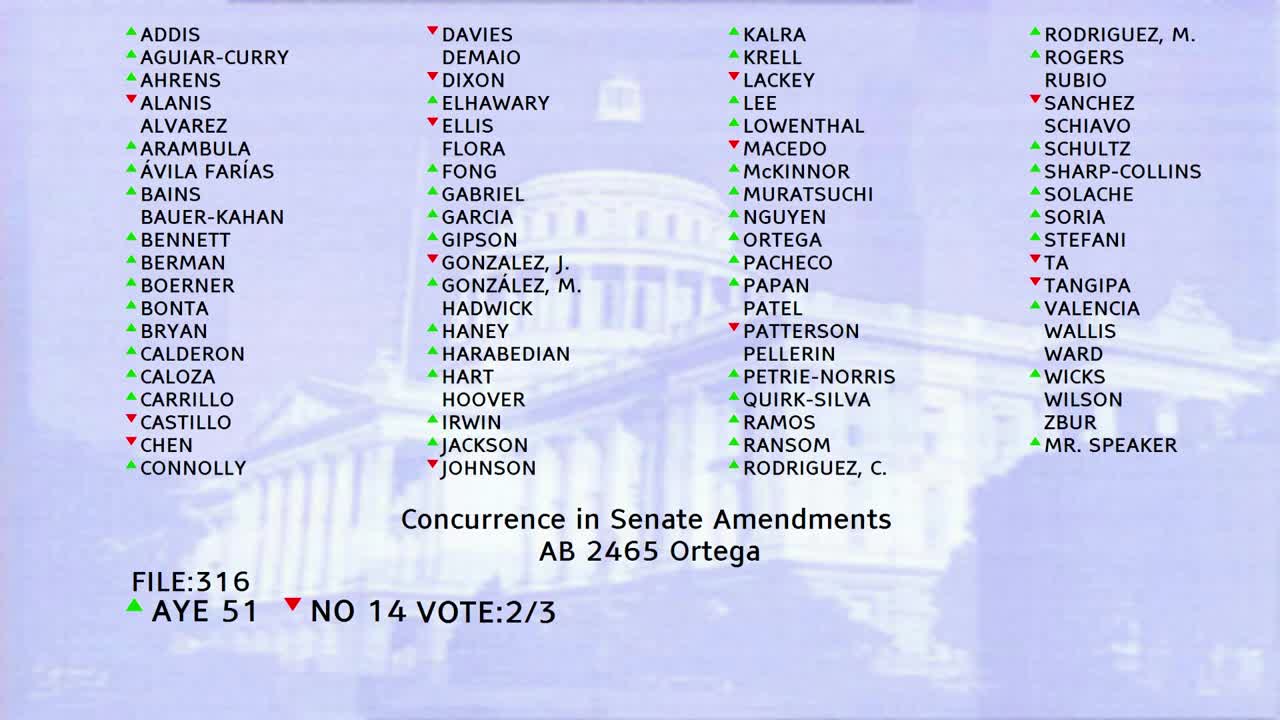 2MIN
Assembly Floor
 56MIN
Assembly Standing Committee on Health
 46MIN
Assembly Standing Committee on Business and Professions
 2MIN
Senate Floor
 26MIN
Senate Standing Committee on Health
 42MIN
Senate Standing Committee on Business, Professions and Economic Development
Bill Author

Bill Co-Author(s):