SB 1098: Public Utilities Commission: memorandum and balancing accounts.
- Session Year: 2025-2026
- House: Senate
- Latest Version Date: 2026-09-30
Current Status:
Passed
(2026-09-30: Chaptered by Secretary of State. Chapter 1008, Statutes of 2026.)
Introduced
In Committee
Awaiting First Chamber Vote
Passed First Chamber
In Committee
Awaiting Second Chamber Vote
Passed Second Chamber
Enacted
Existing law vests the Public Utilities Commission with regulatory authority over public utilities, including electrical corporations and gas corporations. Existing law authorizes the commission to fix the rates and charges for every public utility and requires that those rates and charges be just and reasonable. Existing law requires the commission, whenever the commission authorizes a change in rates reflecting and passing through to customers specific changes in costs, to require a public utility to establish and maintain a balancing account to reflect the balance between the related costs and revenues. Existing law further directs the commission to authorize public utilities to establish catastrophic event memorandum accounts, as provided. Existing law authorizes each electrical corporation to establish a memorandum account to track costs incurred for wildfire risk mitigation that are unforeseen and incremental to the wildfire risk mitigation programs and activities authorized in the electrical corporations revenue requirements, as specified.
This bill would provide that it is the policy of the state that the regularly scheduled general rate case process is the preferred and primary method of establishing authorized revenue requirements for electrical corporations and gas corporations. The bill would require the commission, in exercising its ratemaking authority, to apply specified principles and requirements, including a requirement that memorandum accounts and balancing accounts, as defined, be authorized and maintained only when necessary to address costs that cannot reasonably be anticipated in the general rate case process, as provided. The bill would require each memorandum account or balancing account authorized by statute, or by the commission, before January 1, 2027, to be included and reviewed in the subsequent general rate case proceeding cycle or at a similar cyclical review interval to the general rate case proceeding, as provided. The bill would require the commission, as part of its review, to close any memorandum account or balancing account if the commission determines that the account is no longer necessary, as specified. The bill would authorize the commission to establish exceptions to those principles and requirements for categories of costs not reviewed pursuant to that requirement, as provided. The bill would require the commission to prepare a report to post on its public website about the process and outcome of the review of each utilitys memorandum accounts and balancing accounts. The bill would further require that the ratemaking treatment of memorandum accounts or balancing accounts that are in effect on January 1, 2027, remain unchanged until the commission reviews the account pursuant to that requirement.
Under existing law, a violation of the Public Utilities Act or any order, decision, rule, direction, demand, or requirement of the commission is a crime.
Because the above requirements would be a part of the act, and a violation of a commission action implementing those requirements would be a crime, this bill would impose a state-mandated local program.
The California Constitution requires the state to reimburse local agencies and school districts for certain costs mandated by the state. Statutory provisions establish procedures for making that reimbursement.
This bill would provide that no reimbursement is required by this act for a specified reason.
Existing law vests the Public Utilities Commission with regulatory authority over public utilities, including electrical corporations and gas corporations. Existing law authorizes the commission to fix the rates and charges for every public utility and requires that those rates and charges be just and reasonable. Existing law requires the commission, whenever the commission authorizes a change in rates reflecting and passing through to customers specific changes in costs, to require a public utility to establish and maintain a balancing account to reflect the balance between the related costs and revenues. Existing law further directs the commission to authorize public utilities to establish catastrophic event memorandum accounts, as provided. Existing law authorizes each electrical corporation to establish a memorandum account to track costs incurred for wildfire risk mitigation that are unforeseen and incremental to the wildfire risk mitigation programs and activities authorized in the electrical corporations revenue requirements, as specified.
This bill would provide that it is the policy of the state that the regularly scheduled general rate case process is the preferred and primary method of establishing authorized revenue requirements for electrical corporations and gas corporations. The bill would require the commission, in exercising its ratemaking authority, to apply specified principles and requirements, including a requirement that memorandum accounts and balancing accounts, as defined, be authorized and maintained only when necessary to address costs that cannot reasonably be anticipated in the general rate case process, as provided. The bill would require each memorandum account or balancing account authorized by statute, or by the commission, before January 1, 2027, to be included and reviewed in the subsequent general rate case proceeding cycle or at a similar cyclical review interval to the general rate case proceeding, as provided. The bill would require the commission, as part of its review, to close any memorandum account or balancing account if the commission determines that the account is no longer necessary, as specified. The bill would authorize the commission to establish exceptions to those principles and requirements for categories of costs not reviewed pursuant to that requirement, as provided. The bill would require the commission to prepare a report to post on its public website about the process and outcome of the review of each utilitys memorandum accounts and balancing accounts. The bill would further require that the ratemaking treatment of memorandum accounts or balancing accounts that are in effect on January 1, 2027, remain unchanged until the commission reviews the account pursuant to that requirement.
Under existing law, a violation of the Public Utilities Act or any order, decision, rule, direction, demand, or requirement of the commission is a crime.
Because the above requirements would be a part of the act, and a violation of a commission action implementing those requirements would be a crime, this bill would impose a state-mandated local program.
The California Constitution requires the state to reimburse local agencies and school districts for certain costs mandated by the state. Statutory provisions establish procedures for making that reimbursement.
This bill would provide that no reimbursement is required by this act for a specified reason.
Existing law vests the Public Utilities Commission with regulatory authority over public utilities, including electrical corporations and gas corporations. Existing law authorizes the commission to fix the rates and charges for every public utility and requires that those rates and charges be just and reasonable. Existing law requires the commission, whenever the commission authorizes a change in rates reflecting and passing through to customers specific changes in costs, to require a public utility to establish and maintain a balancing account to reflect the balance between the related costs and revenues. Existing law further directs the commission to authorize public utilities to establish catastrophic event memorandum accounts, as provided. Existing law authorizes each electrical corporation to establish a memorandum account to track costs incurred for wildfire risk mitigation that are unforeseen and incremental to the wildfire risk mitigation programs and activities authorized in the electrical corporations revenue requirements, as specified.
This bill would provide that it is the policy of the state that forecast-based ratemaking through the regularly scheduled general rate case process is the preferred and primary method of establishing authorized revenue requirements for electrical corporations and gas corporations. The bill would require the commission, in exercising its ratemaking authority over all public utilities, authority, to adhere to apply specified principles and requirements, including requirements that forecast-based ratemaking be the default approach for establishing revenue requirements and cost recovery mechanisms and a requirement that memorandum accounts and balancing accounts, as defined, be authorized and maintained only when necessary to address costs that cannot reasonably be forecasted anticipated in the general rate case process, as provided. The bill would require each memorandum account or balancing account authorized by statute, or by the commission, before January 1, 2027, to be included and reviewed in the subsequent general rate case proceeding, and would require the commission, during its review, to consider assigning an expiration date to each memorandum account or balancing account, proceeding cycle or at a similar cyclical review interval to the general rate case proceeding, as provided. The bill would require the commission, as part of its review, to close any memorandum account or balancing account if the commission determines that the account is no longer necessary, as specified. The bill would authorize the commission to establish exceptions to those principles and requirements for categories of costs not reviewed pursuant to that requirement, as provided. The bill would require the commission to prepare a report to post on its public website about the process and outcome of the review of each utilitys memorandum accounts and balancing accounts. The bill would further require that the ratemaking treatment of memorandum accounts or balancing accounts that are in effect on January 1, 2027, remain unchanged until the commission reviews the account pursuant to that requirement.
Under existing law, a violation of the Public Utilities Act or any order, decision, rule, direction, demand, or requirement of the commission is a crime.
Because the above requirements would be a part of the act, and a violation of a commission action implementing those requirements would be a crime, this bill would impose a state-mandated local program.
The California Constitution requires the state to reimburse local agencies and school districts for certain costs mandated by the state. Statutory provisions establish procedures for making that reimbursement.
This bill would provide that no reimbursement is required by this act for a specified reason.
Existing law vests the Public Utilities Commission with regulatory authority over public utilities, including electrical corporations and gas corporations. Existing law authorizes the commission to fix the rates and charges for every public utility and requires that those rates and charges be just and reasonable. Existing law requires the commission, whenever the commission authorizes a change in rates reflecting and passing through to customers specific changes in costs, to require a public utility to establish and maintain a balancing account to reflect the balance between the related costs and revenues. Existing law further directs the commission to authorize public utilities to establish catastrophic event memorandum accounts, as provided. Existing law authorizes each electrical corporation to establish a memorandum account to track costs incurred for wildfire risk mitigation that are unforeseen and incremental to the wildfire risk mitigation programs and activities authorized in the electrical corporations revenue requirements, as specified.
This bill would provide that it is the policy of the state that forecast-based ratemaking through the regularly scheduled general rate case process is the preferred and primary method of establishing authorized revenue requirements for electrical corporations and gas corporations. The bill would require the commission, in exercising its ratemaking authority over all public utilities, to adhere to specified principles and requirements, including requirements that forecast-based ratemaking be the default approach for establishing revenue requirements and cost recovery mechanisms and that memorandum accounts and balancing accounts, as defined, be authorized and maintained only when necessary to address costs that cannot reasonably be forecasted in the general rate case process, as provided. The bill would require each memorandum account or balancing account authorized by statute, or by the commission, before January 1, 2027, to be included and reviewed in the subsequent general rate case proceeding, and would require the commission, during its review, to consider assigning an expiration date to each memorandum account or balancing account, as provided. The bill would authorize the commission to establish exceptions to those principles and requirements for categories of costs not reviewed pursuant to that requirement, as provided. The bill would further require that the ratemaking treatment of memorandum accounts or balancing accounts that are in effect on January 1, 2027, remain unchanged until the commission reviews the account pursuant to that requirement.
Under existing law, a violation of the Public Utilities Act or any order, decision, rule, direction, demand, or requirement of the commission is a crime.
Because the above requirements would be a part of the act, and a violation of a commission action implementing those requirements would be a crime, this bill would impose a state-mandated local program.
The California Constitution requires the state to reimburse local agencies and school districts for certain costs mandated by the state. Statutory provisions establish procedures for making that reimbursement.
This bill would provide that no reimbursement is required by this act for a specified reason.
Existing law vests the Public Utilities Commission with regulatory authority over public utilities, including electrical corporations and gas corporations. Existing law authorizes the commission to fix the rates and charges for every public utility and requires that those rates and charges be just and reasonable. Existing law requires the commission, whenever the commission authorizes a change in rates reflecting and passing through to customers specific changes in costs, to require a public utility to establish and maintain a balancing account to reflect the balance between the related costs and revenues. Existing law further directs the commission to authorize public utilities to establish catastrophic event memorandum accounts, as provided. Existing law authorizes each electrical corporation to establish a memorandum account to track costs incurred for wildfire risk mitigation that are unforeseen and incremental to the wildfire risk mitigation programs and activities authorized in the electrical corporations revenue requirements, as specified.
This bill would provide that it is the policy of the state that forecast-based ratemaking through the regularly scheduled general rate case process is the preferred and primary method of establishing authorized revenue requirements for electrical corporations and gas corporations. The bill would require the commission, in exercising its ratemaking authority over all public utilities, to adhere to specified principles and requirements, including requirements that forecast-based ratemaking be the default approach for establishing revenue requirements and cost recovery mechanisms and that memorandum accounts and balancing accounts, as defined, be authorized and maintained only under exceptional circumstances. when necessary to address costs that cannot reasonably be forecasted in the general rate case process, as provided. The bill would require each memorandum account or balancing account authorized by statute statute, or by the commission commission, before January 1, 2027, to include an expiration date. be included and reviewed in the subsequent general rate case proceeding, and would require the commission, during its review, to consider assigning an expiration date to each memorandum account or balancing account, as provided. The bill would authorize the commission to establish exceptions to those principles and requirements for categories of costs not reviewed in a general rate case, reviewed pursuant to that requirement, as provided. The bill would further require that the ratemaking treatment of memorandum accounts or balancing accounts that are in effect on January 1, 2027, remain unchanged until the commission reviews the account pursuant to that requirement.
Under existing law, a violation of the Public Utilities Act or any order, decision, rule, direction, demand, or requirement of the commission is a crime.
Because the above requirements would be a part of the act, and a violation of a commission action implementing those requirements would be a crime, this bill would impose a state-mandated local program.
The California Constitution requires the state to reimburse local agencies and school districts for certain costs mandated by the state. Statutory provisions establish procedures for making that reimbursement.
This bill would provide that no reimbursement is required by this act for a specified reason.
Existing law vests the Public Utilities Commission with regulatory authority over public utilities, including electrical corporations and gas corporations. Existing law authorizes the commission to fix the rates and charges for every public utility and requires that those rates and charges be just and reasonable. Existing law requires the commission, whenever the commission authorizes a change in rates reflecting and passing through to customers specific changes in costs, to require a public utility to establish and maintain a balancing account to reflect the balance between the related costs and revenues. Existing law further directs the commission to authorize public utilities to establish catastrophic event memorandum accounts, as provided. Existing law authorizes each electrical corporation to establish a memorandum account to track costs incurred for wildfire risk mitigation that are unforeseen and incremental to the wildfire risk mitigation programs and activities authorized in the electrical corporations revenue requirements, as specified.
This bill would provide that it is the policy of the state that forecast-based ratemaking through the regularly scheduled general rate case process is the preferred and primary method of establishing authorized revenue requirements for electrical corporations and gas corporations. The bill would require the commission, in exercising its ratemaking authority over all public utilities, to adhere to specified principles and requirements, including requirements that forecast-based ratemaking be the default approach for establishing revenue requirements and cost recovery mechanisms and that memorandum accounts and balancing accounts, as defined, be authorized and maintained only under exceptional circumstances. The bill would require each memorandum account or balancing account authorized by statute or by the commission to include an expiration date. The bill would authorize the commission to establish exceptions to those principles and requirements for categories of costs not reviewed in a general rate case, as provided.
Under existing law, a violation of the Public Utilities Act or any order, decision, rule, direction, demand, or requirement of the commission is a crime.
Because the above requirements would be a part of the act, and a violation of a commission action implementing those requirements would be a crime, this bill would impose a state-mandated local program.
The California Constitution requires the state to reimburse local agencies and school districts for certain costs mandated by the state. Statutory provisions establish procedures for making that reimbursement.
This bill would provide that no reimbursement is required by this act for a specified reason.
Existing law prohibits certain public utilities from beginning construction of a line, plant, or system, or of an extension thereof, without having first obtained from the Public Utilities Commission a certificate that the present or future public convenience and necessity require or will require that construction, which is referred to as a certificate of public convenience and necessity. If a complaint is filed with the commission alleging that a public utility is engaged or is about to engage in construction work without having secured a certificate of public convenience and necessity, existing law authorizes the commission to require the public utility to cease and desist from engaging in that construction work until the commission makes and files a decision on the complaint, as specified.This bill would make nonsubstantive changes to the provision related to cease and desist orders by the commission.Existing law prohibits certain public utilities from beginning construction of a line, plant, or system, or of an extension thereof, without having first obtained from the Public Utilities Commission a certificate that the present or future public convenience and necessity require or will require that construction, which is referred to as a certificate of public convenience and necessity. If a complaint is filed with the commission alleging that a public utility is engaged or is about to engage in construction work without having secured a certificate of public convenience and necessity, existing law authorizes the commission to require the public utility to cease and desist from engaging in that construction work until the commission makes and files a decision on the complaint, as specified.
This bill would make nonsubstantive changes to the provision related to cease and desist orders by the commission.
The Legislature finds and declares all of the following:
(a)California faces an affordability crisis in energy utility rates.
(b)The general rate case process, under which the Public Utilities Commission adopts forward-looking forecasts and ties cost recovery to utility management performance within those forecasts, provides essential incentives for cost containment and efficiency.
(c)Memorandum and balancing accounts are utility ratemaking mechanisms that provide an opportunity for a utility to seek recovery of incurred costs beyond amounts previously authorized by the Public Utilities Commission.
(d)The expansion of memorandum accounts and balancing accounts, particularly following the enactment of Senate Bill 901 of the 20172018 Regular Session (Chapter 626 of the Statutes of 2018), has enabled utilities to recover tens of billions of dollars in expenditures outside the general rate case process.
(e)Senate Bill 254 of the 20252026 Regular Session (Chapter 119 of the Statutes of 2025) gave the Public Utilities Commission the discretion to permit electrical utilities to establish memorandum accounts to record incremental and unforeseen wildfire mitigation costs not authorized in their general rate cases, whereas the establishment of those memorandum accounts previously had been mandatory.
SEC. 2.Section 457 is added to the Public Utilities Code, to read:457.(a)For purposes of this section, both of the following definitions apply:
(1)Balancing account means a utility regulatory accounting mechanism that tracks specific costs incurred by a utility for comparison to the level of authorized costs and may provide an opportunity for the utility to seek recovery of costs above authorized amounts or for ratepayers to receive credits for costs below authorized amounts.
(2)Memorandum account means a utility regulatory accounting mechanism that tracks specific unanticipated costs incurred by a utility that have not been previously authorized by the commission and provides an opportunity for the utility to seek recovery of tracked costs.
(b)It is the policy of the State of California that the regularly scheduled general rate case process is the preferred and primary method of establishing authorized revenue requirements for electrical corporations and gas corporations because it promotes greater oversight, transparency, and protection for ratepayers.
(c)In exercising its ratemaking authority, the commission shall apply the following principles and requirements:
(1)A memorandum account or balancing account shall be authorized and maintained only when necessary to address costs that cannot reasonably be anticipated in the general rate case process. The commission shall make a written finding explaining why that account is necessary, why the relevant costs are outside of the utilitys control, and why those relevant costs cannot be adequately anticipated.
(2)If a memorandum account or balancing account is authorized for a specific activity or program, the activity or program shall be transitioned to forecast-based ratemaking as sufficient historical data becomes available to support that approach.
(3)When the commission authorizes the creation or continuation of a memorandum account or balancing account, the commission shall consider the following, as appropriate:
(A)Pursuant to existing commission authority, cost-sharing mechanisms for costs recovered through the memorandum account, and costs above authorized amounts recovered through the balancing account, as applicable.
(B)A rate of return that is lower than the utilitys authorized rate of return on capital costs recovered through the memorandum account, and on capital costs above authorized amounts recovered through the balancing account, as applicable, to encourage the utility to rely less on the account.
(C)Assigning an expiration date to the memorandum account or balancing account.
(d)Each memorandum account or balancing account authorized by statute or by the commission before January 1, 2027, shall be included and reviewed in the subsequent general rate case proceeding cycle, or at a similar cyclical review interval to the general rate case proceeding. As part of its review, the commission shall close any memorandum account or balancing account if the commission determines that the account is no longer necessary, including, but not limited to, accounts established to record costs related to wildfire mitigation, system hardening, undergrounding, or emergency response, because the tracked costs can be adequately addressed through the general rate case.
(e)The commission may establish exceptions to the principles and requirements of subdivision (c) for categories of costs not reviewed pursuant to subdivision (d), including, but not limited to, low-income rate discounts, or if the explicit purpose of the balancing account or memorandum account is to reduce the utilitys incentive to disconnect customers for nonpayment.
(f)As part of its cyclical review process, the commission shall prepare a report to post on its public website about the process and outcome of the review of each utilitys memorandum accounts and balancing accounts.
(g)This section does not limit the commissions authority to ensure just and reasonable rates pursuant to Section 451 or to implement a memorandum account or balancing account expressly required by statute.
(h)The ratemaking treatment of a memorandum account or balancing account that is in effect on January 1, 2027, shall remain unchanged until the commission reviews the memorandum account or balancing account pursuant to subdivision (d).
SEC. 3.No reimbursement is required by this act pursuant to Section 6 of Article XIIIB of the California Constitution because the only costs that may be incurred by a local agency or school district will be incurred because this act creates a new crime or infraction, eliminates a crime or infraction, or changes the penalty for a crime or infraction, within the meaning of Section 17556 of the Government Code, or changes the definition of a crime within the meaning of Section 6 of Article XIIIB of the California Constitution.
The Legislature finds and declares all of the following:
(a)California faces an affordability crisis in energy utility rates.
(b)The general rate case process, under which the Public Utilities Commission adopts forward-looking forecasts and ties cost recovery to utility management performance within those forecasts, provides essential incentives for cost containment and efficiency.
(c)Memorandum and balancing accounts are utility ratemaking mechanisms that provide an opportunity for a utility to seek recovery of incurred costs beyond amounts previously authorized by the Public Utilities Commission.
(d)The expansion of memorandum accounts and balancing accounts, particularly following the enactment of Senate Bill 901 of the 20172018 Regular Session (Chapter 626 of the Statutes of 2018), has enabled utilities to recover tens of billions of dollars in expenditures outside the general rate case process.
(e)Senate Bill 254 of the 20252026 Regular Session (Chapter 119 of the Statutes of 2025) gave the Public Utilities Commission the discretion to permit electrical utilities to establish memorandum accounts to record incremental and unforeseen wildfire mitigation costs not authorized in their general rate cases, whereas the establishment of those memorandum accounts previously had been mandatory.
SEC. 2.Section 457 is added to the Public Utilities Code, to read:457.(a)For purposes of this section, both of the following definitions apply:
(1)Balancing account means a utility regulatory accounting mechanism that tracks specific costs incurred by a utility for comparison to the level of authorized costs and may provide an opportunity for the utility to seek recovery of costs above authorized amounts or for ratepayers to receive credits for costs below authorized amounts.
(2)Memorandum account means a utility regulatory accounting mechanism that tracks specific unanticipated costs incurred by a utility that have not been previously authorized by the commission and provides an opportunity for the utility to seek recovery of tracked costs.
(b)It is the policy of the State of California that the regularly scheduled general rate case process is the preferred and primary method of establishing authorized revenue requirements for electrical corporations and gas corporations because it promotes greater oversight, transparency, and protection for ratepayers.
(c)In exercising its ratemaking authority, the commission shall apply the following principles and requirements:
(1)A memorandum account or balancing account shall be authorized and maintained only when necessary to address costs that cannot reasonably be anticipated in the general rate case process. The commission shall make a written finding explaining why that account is necessary, why the relevant costs are outside of the utilitys control, and why those relevant costs cannot be adequately anticipated.
(2)If a memorandum account or balancing account is authorized for a specific activity or program, the activity or program shall be transitioned to forecast-based ratemaking as sufficient historical data becomes available to support that approach.
(3)When the commission authorizes the creation or continuation of a memorandum account or balancing account, the commission shall consider the following, as appropriate:
(A)Pursuant to existing commission authority, cost-sharing mechanisms for costs recovered through the memorandum account, and costs above authorized amounts recovered through the balancing account, as applicable.
(B)A rate of return that is lower than the utilitys authorized rate of return on capital costs recovered through the memorandum account, and on capital costs above authorized amounts recovered through the balancing account, as applicable, to encourage the utility to rely less on the account.
(C)Assigning an expiration date to the memorandum account or balancing account.
(d)Each memorandum account or balancing account authorized by statute or by the commission before January 1, 2027, shall be included and reviewed in the subsequent general rate case proceeding cycle, or at a similar cyclical review interval to the general rate case proceeding. As part of its review, the commission shall close any memorandum account or balancing account if the commission determines that the account is no longer necessary, including, but not limited to, accounts established to record costs related to wildfire mitigation, system hardening, undergrounding, or emergency response, because the tracked costs can be adequately addressed through the general rate case.
(e)The commission may establish exceptions to the principles and requirements of subdivision (c) for categories of costs not reviewed pursuant to subdivision (d), including, but not limited to, low-income rate discounts, or if the explicit purpose of the balancing account or memorandum account is to reduce the utilitys incentive to disconnect customers for nonpayment.
(f)As part of its cyclical review process, the commission shall prepare a report to post on its public website about the process and outcome of the review of each utilitys memorandum accounts and balancing accounts.
(g)This section does not limit the commissions authority to ensure just and reasonable rates pursuant to Section 451 or to implement a memorandum account or balancing account expressly required by statute.
(h)The ratemaking treatment of a memorandum account or balancing account that is in effect on January 1, 2027, shall remain unchanged until the commission reviews the memorandum account or balancing account pursuant to subdivision (d).
SEC. 3.No reimbursement is required by this act pursuant to Section 6 of Article XIIIB of the California Constitution because the only costs that may be incurred by a local agency or school district will be incurred because this act creates a new crime or infraction, eliminates a crime or infraction, or changes the penalty for a crime or infraction, within the meaning of Section 17556 of the Government Code, or changes the definition of a crime within the meaning of Section 6 of Article XIIIB of the California Constitution.
The Legislature finds and declares all of the following:
(a)California faces an affordability crisis in energy utility rates.
(b)The general rate case process, under which the Public Utilities Commission adopts forward-looking forecasts and ties cost recovery to utility management performance within those forecasts, provides essential incentives for cost containment and efficiency.
(c)Memorandum and balancing accounts are utility ratemaking mechanisms that provide an opportunity for a utility to seek recovery of incurred costs beyond amounts previously authorized by the Public Utilities Commission.
(d)The expansion of memorandum accounts and balancing accounts, particularly following the enactment of Senate Bill 901 of the 20172018 Regular Session (Chapter 626 of the Statutes of 2018), has enabled utilities to recover tens of billions of dollars in expenditures outside the general rate case process.
(e)Senate Bill 254 of the 20252026 Regular Session (Chapter 119 of the Statutes of 2025) gave the Public Utilities Commission the discretion to permit electrical utilities to establish memorandum accounts to record incremental and unforeseen wildfire mitigation costs not authorized in their general rate cases, whereas the establishment of those memorandum accounts previously had been mandatory.
SEC. 2.Section 457 is added to the Public Utilities Code, to read:457.(a)For purposes of this section, both of the following definitions apply:
(1)Balancing account means a utility regulatory accounting mechanism that tracks specific costs incurred by a utility for comparison to the level of authorized costs and may provide an opportunity for the utility to seek recovery of costs above authorized amounts or for ratepayers to receive credits for costs below authorized amounts.
(2)Memorandum account means a utility regulatory accounting mechanism that tracks specific unanticipated costs incurred by a utility that have not been previously authorized by the commission and provides an opportunity for the utility to seek recovery of tracked costs.
(b)It is the policy of the State of California that forecast-based ratemaking through the regularly scheduled general rate case process is the preferred and primary method of establishing authorized revenue requirements for electrical corporations and gas corporations because it promotes greater oversight, transparency, and protection for ratepayers.
(c)In exercising its ratemaking authority, the commission shall adhere to apply the following principles and requirements:
(1)Forecast-based ratemaking shall be the default approach for establishing revenue requirements and cost recovery mechanisms.(2)(1)A memorandum account or balancing account shall be authorized and maintained only when necessary to address costs that cannot reasonably be forecasted anticipated in the general rate case process. The commission shall make a written finding explaining why that account is necessary and necessary, why the relevant costs are outside of the utilitys control, and why those relevant costs cannot be adequately forecasted. anticipated.
(3)(2)If a memorandum account or balancing account is authorized for a specific activity or program, the activity or program shall be transitioned to forecast-based ratemaking at the earliest opportunity once sufficient historical data exists to support forecast-based ratemaking. as sufficient historical data becomes available to support that approach.
(4)(3)When the commission decides to authorize authorizes the creation or continuation of a memorandum account or balancing account, the commission shall, at the same time, consider taking the following actions: shall consider the following, as appropriate:
(A)Pursuant to existing commission authority, adopting cost-sharing mechanisms for costs recovered through the memorandum account, and costs above authorized amounts recovered through the balancing account, as applicable.
(B)Adopting a A rate of return that is lower than the utilitys authorized rate of return on capital costs recovered through the memorandum account, and on capital costs above authorized amounts recovered through the balancing account, as applicable, to encourage the utility to rely less on the account and more on forecast-based ratemaking. account.
(C)Assigning an expiration date to the memorandum account or balancing account.
(d)Each memorandum account or balancing account authorized by statute or by the commission before January 1, 2027, shall be included and reviewed in the subsequent general rate case proceeding. During its review, the commission shall consider assigning an expiration date to each memorandum account or balancing account. proceeding cycle, or at a similar cyclical review interval to the general rate case proceeding. As part of its review, the commission shall close any memorandum account or balancing account if the commission determines that the account is no longer necessary, including, but not limited to, accounts established to record costs related to wildfire mitigation, system hardening, undergrounding, or emergency response, because the tracked costs can be adequately addressed through the general rate case.
(e)The commission may establish exceptions to the principles and requirements of subdivision (c) for categories of costs not reviewed pursuant to subdivision (d), including, but not limited to, low-income rate discounts, or if the explicit purpose of the balancing account or memorandum account is to reduce the utilitys incentive to disconnect customers for nonpayment.
(f)As part of its cyclical review process, the commission shall prepare a report to post on its public website about the process and outcome of the review of each utilitys memorandum accounts and balancing accounts.
(f)(g)This section does not limit the commissions authority to ensure just and reasonable rates pursuant to Section 451 or to implement a memorandum account or balancing account expressly required by statute.
(g)(h)The ratemaking treatment of a memorandum account or balancing account that is in effect on January 1, 2027, shall remain unchanged until the commission reviews the memorandum account or balancing account pursuant to subdivision (d).
SEC. 3.No reimbursement is required by this act pursuant to Section 6 of Article XIIIB of the California Constitution because the only costs that may be incurred by a local agency or school district will be incurred because this act creates a new crime or infraction, eliminates a crime or infraction, or changes the penalty for a crime or infraction, within the meaning of Section 17556 of the Government Code, or changes the definition of a crime within the meaning of Section 6 of Article XIIIB of the California Constitution.
The Legislature finds and declares all of the following:
(a)California faces an affordability crisis in energy utility rates.
(b)The general rate case process, under which the Public Utilities Commission adopts forward-looking forecasts and ties cost recovery to utility management performance within those forecasts, provides essential incentives for cost containment and efficiency.
(c)Memorandum and balancing accounts are utility ratemaking mechanisms that provide an opportunity for a utility to seek recovery of incurred costs beyond amounts previously authorized by the Public Utilities Commission.
(d)The expansion of memorandum accounts and balancing accounts, particularly following the enactment of Senate Bill 901 of the 20172018 Regular Session (Chapter 626 of the Statutes of 2018), has enabled utilities to recover tens of billions of dollars in expenditures outside the general rate case process.
(e)Senate Bill 254 of the 20252026 Regular Session (Chapter 119 of the Statutes of 2025) gave the Public Utilities Commission the discretion to permit electrical utilities to establish memorandum accounts to record incremental and unforeseen wildfire mitigation costs not authorized in their general rate cases, whereas the establishment of those memorandum accounts previously had been mandatory.
SEC. 2.Section 457 is added to the Public Utilities Code, to read:457.(a)For purposes of this section, both of the following definitions apply:
(1)Balancing account means a utility regulatory accounting mechanism that tracks specific costs incurred by a utility for comparison to the level of authorized costs and may provide an opportunity for the utility to seek recovery of costs above authorized amounts or for ratepayers to receive credits for costs below authorized amounts.
(2)Memorandum account means a utility regulatory accounting mechanism that tracks specific unanticipated costs incurred by a utility that have not been authorized by the commission and provides an opportunity for the utility to seek recovery of tracked costs.
(b)It is the policy of the State of California that forecast-based ratemaking through the regularly scheduled general rate case process is the preferred and primary method of establishing authorized revenue requirements for electrical corporations and gas corporations because it promotes greater oversight, transparency, and protection for ratepayers.
(c)In exercising its ratemaking authority, the commission shall adhere to the following principles and requirements:
(1)Forecast-based ratemaking shall be the default approach for establishing revenue requirements and cost recovery mechanisms.
(2)A memorandum account or balancing account shall be authorized and maintained only when necessary to address costs that cannot reasonably be forecasted in the general rate case process. The commission shall make a written finding explaining why such an that account is necessary and why the relevant costs cannot be adequately forecasted.
(3)If a memorandum account or balancing account is authorized for a specific activity or program, the activity or program shall be transitioned to forecast-based ratemaking at the earliest opportunity once sufficient historical data exists to support forecast-based ratemaking.
(4)When the commission decides to authorize the creation or continuation of a memorandum account or balancing account, the commission shall, at the same time, consider taking the following actions:
(A)Pursuant to existing commission authority, adopting cost-sharing mechanisms for costs recovered through the memorandum account, and costs above authorized amounts recovered through the balancing account, as applicable.
(B)Adopting a rate of return that is lower than the utilitys authorized rate of return on capital costs recovered through the memorandum account, and on capital costs above authorized amounts recovered through the balancing account, as applicable, to encourage the utility to rely less on the account and more on forecast-based ratemaking.
(C)Assigning an expiration date to the memorandum account or balancing account.
(d)Each memorandum account or balancing account authorized by statute or by the commission before January 1, 2027, shall be included and reviewed in the subsequent general rate case proceeding. During its review, the commission shall consider assigning an expiration date to each memorandum account or balancing account.
(e)The commission may establish exceptions to the principles and requirements of subdivision (c) for categories of costs not reviewed pursuant to subdivision (d), including, but not limited to, low-income rate discounts, or if the explicit purpose of the balancing account or memorandum account is to reduce the utilitys incentive to disconnect customers for nonpayment.
(f)This section does not limit the commissions authority to ensure just and reasonable rates pursuant to Section 451 or to implement a memorandum account or balancing account expressly required by statute.
(g)The ratemaking treatment of a memorandum account or balancing account that is in effect on January 1, 2027, shall remain unchanged until the commission reviews the memorandum account or balancing account pursuant to subdivision (d).
SEC. 3.No reimbursement is required by this act pursuant to Section 6 of Article XIIIB of the California Constitution because the only costs that may be incurred by a local agency or school district will be incurred because this act creates a new crime or infraction, eliminates a crime or infraction, or changes the penalty for a crime or infraction, within the meaning of Section 17556 of the Government Code, or changes the definition of a crime within the meaning of Section 6 of Article XIIIB of the California Constitution.
The Legislature finds and declares all of the following:
(a)California faces an affordability crisis in energy utility rates that has been exacerbated by a shift away from forecast-based ratemaking through the general rate case process and toward retrospective recovery of recorded costs through memorandum and balancing accounts. rates.
(b)The general rate case process, under which the Public Utilities Commission adopts forward-looking forecasts and ties cost recovery to utility management performance within those forecasts, provides essential incentives for cost containment and efficiency.
(c)Memorandum and balancing accounts are utility ratemaking mechanisms that provide an opportunity for a utility to seek recovery of incurred costs beyond amounts previously authorized by the Public Utilities Commission.
(d)The expansion of memorandum accounts and balancing accounts, particularly following the enactment of Senate Bill 901 of the 20172018 Regular Session (Chapter 626 of the Statutes of 2018), has enabled utilities to recover tens of billions of dollars in expenditures above authorized forecasts, reducing the incentive to control costs and contributing to rate increases. outside the general rate case process.
(e)Senate Bill 254 of the 20252026 Regular Session (Chapter 119 of the Statutes of 2025) gave the Public Utilities Commission the discretion to permit electrical utilities to establish memorandum accounts to record incremental and unforeseen wildfire mitigation costs not authorized in their general rate cases, whereas the establishment of those memorandum accounts previously had been mandatory.
(f)Restoring forecast-based ratemaking and limiting reliance on memorandum accounts and balancing accounts will better align utility incentives with affordability and ratepayer protection.SEC. 2.Section 457 is added to the Public Utilities Code, to read:457.(a)For purposes of this section, both of the following definitions apply:
(1)Balancing account means a utility regulatory accounting mechanism that tracks specific costs incurred by a utility for comparison to the level of authorized costs and may provide an opportunity for the utility to seek recovery of costs above authorized amounts. amounts or for ratepayers to receive credits for costs below authorized amounts.
(2)Memorandum account means a utility regulatory accounting mechanism that tracks specific unanticipated costs incurred by a utility that have not been authorized by the commission and provides an opportunity for the utility to seek recovery of tracked costs.
(b)It is the policy of the State of California that forecast-based ratemaking through the regularly scheduled general rate case process is the preferred and primary method of establishing authorized revenue requirements for electrical corporations and gas corporations because it promotes greater oversight, transparency, and protection for ratepayers.
(c)In exercising its ratemaking authority, the commission shall adhere to the following principles and requirements:
(1)Forecast-based ratemaking shall be the default approach for establishing revenue requirements and cost recovery mechanisms.
(2)A memorandum account or balancing account shall be authorized and maintained only under exceptional circumstances. when necessary to address costs that cannot reasonably be forecasted in the general rate case process. The commission shall make a written finding explaining why such an account is necessary and why the relevant costs cannot be adequately forecasted.
(3)If a memorandum account or balancing account is authorized for a specific activity or program, the activity or program shall be transitioned to forecast-based ratemaking at the earliest opportunity once sufficient historical data exists to support forecast-based ratemaking.
(4)If When the commission authorizes decides to authorize the creation or continuation of a memorandum account or balancing account, the commission shall do one of the following: shall, at the same time, consider taking the following actions:
(A)Pursuant to existing commission authority, adopt adopting cost-sharing mechanisms for costs recovered through the memorandum account, and costs above authorized amounts recovered through the balancing account, as applicable.
(B)Adopt Adopting a rate of return that is lower than the utilitys authorized rate of return on capital costs recovered through the memorandum account, and on capital costs above authorized amounts recovered through the balancing account, as applicable, to encourage the utility to rely less on the account and more on forecast-based ratemaking.
(C)Assigning an expiration date to the memorandum account or balancing account.
(d)Each memorandum account or balancing account authorized by statute or by the commission shall include a specified expiration date. commission before January 1, 2027, shall be included and reviewed in the subsequent general rate case proceeding. During its review, the commission shall consider assigning an expiration date to each memorandum account or balancing account.
(e)The commission may establish exceptions to the principles and requirements of subdivision (c) for categories of costs not reviewed in a general rate case, such as pursuant to subdivision (d), including, but not limited to, low-income rate discounts, or if the explicit purpose of the balancing account or memorandum account is to reduce the utilitys incentive to disconnect customers for nonpayment.
(f)This section does not limit the commissions authority to ensure just and reasonable rates pursuant to Section 451 or to implement a memorandum account or balancing account expressly required by statute.
(g)The ratemaking treatment of a memorandum account or balancing account that is in effect on January 1, 2027, shall remain unchanged until the commission reviews the memorandum account or balancing account pursuant to subdivision (d).
SEC. 3.No reimbursement is required by this act pursuant to Section 6 of Article XIIIB of the California Constitution because the only costs that may be incurred by a local agency or school district will be incurred because this act creates a new crime or infraction, eliminates a crime or infraction, or changes the penalty for a crime or infraction, within the meaning of Section 17556 of the Government Code, or changes the definition of a crime within the meaning of Section 6 of Article XIIIB of the California Constitution.
The Legislature finds and declares all of the following:
(a)California faces an affordability crisis in energy utility rates that has been exacerbated by a shift away from forecast-based ratemaking through the general rate case process and toward retrospective recovery of recorded costs through memorandum and balancing accounts.
(b)The general rate case process, under which the Public Utilities Commission adopts forward-looking forecasts and ties cost recovery to utility management performance within those forecasts, provides essential incentives for cost containment and efficiency.
(c)Memorandum and balancing accounts are utility ratemaking mechanisms that provide an opportunity for a utility to seek recovery of incurred costs beyond amounts previously authorized by the Public Utilities Commission.
(d)The expansion of memorandum accounts and balancing accounts, particularly following the enactment of Senate Bill 901 of the 20172018 Regular Session (Chapter 626 of the Statutes of 2018), has enabled utilities to recover tens of billions of dollars in expenditures above authorized forecasts, reducing the incentive to control costs and contributing to rate increases.
(e)Senate Bill 254 of the 20252026 Regular Session (Chapter 119 of the Statutes of 2025) gave the Public Utilities Commission the discretion to permit electrical utilities to establish memorandum accounts to record incremental and unforeseen wildfire mitigation costs not authorized in their general rate cases, whereas the establishment of those memorandum accounts had been mandatory.
(f)Restoring forecast-based ratemaking and limiting reliance on memorandum accounts and balancing accounts will better align utility incentives with affordability and ratepayer protection.
SEC. 2.Section 457 is added to the Public Utilities Code, to read:457.(a)For purposes of this section, both of the following definitions apply:
(1)Balancing account means a utility regulatory accounting mechanism that tracks specific costs incurred by a utility for comparison to the level of authorized costs and may provide an opportunity for the utility to seek recovery of costs above authorized amounts.
(2)Memorandum account means a utility regulatory accounting mechanism that tracks specific unanticipated costs incurred by a utility that have not been authorized by the commission and provides an opportunity for the utility to seek recovery of tracked costs.
(b)It is the policy of the State of California that forecast-based ratemaking through the regularly scheduled general rate case process is the preferred and primary method of establishing authorized revenue requirements for electrical corporations and gas corporations because it promotes greater oversight, transparency, and protection for ratepayers.
(c)In exercising its ratemaking authority, the commission shall adhere to the following principles and requirements:
(1)Forecast-based ratemaking shall be the default approach for establishing revenue requirements and cost recovery mechanisms.
(2)A memorandum account or balancing account shall be authorized and maintained only under exceptional circumstances.
(3)If a memorandum account or balancing account is authorized for a specific activity or program, the activity or program shall be transitioned to forecast-based ratemaking at the earliest opportunity once sufficient historical data exists to support forecast-based ratemaking.
(4)If the commission authorizes the creation or continuation of a memorandum account or balancing account, the commission shall do one of the following:
(A)Pursuant to existing commission authority, adopt cost-sharing mechanisms for costs recovered through the memorandum account, and costs above authorized amounts recovered through the balancing account, as applicable.
(B)Adopt a rate of return that is lower than the utilitys authorized rate of return on capital costs recovered through the memorandum account, and on capital costs above authorized amounts recovered through the balancing account, as applicable, to encourage the utility to rely less on the account and more on forecast-based ratemaking.
(d)Each memorandum account or balancing account authorized by statute or by the commission shall include a specified expiration date.
(e)The commission may establish exceptions to the principles and requirements of subdivision (c) for categories of costs not reviewed in a general rate case, such as low-income rate discounts, or if the explicit purpose of the balancing account or memorandum account is to reduce the utilitys incentive to disconnect customers for nonpayment.
(f)This section does not limit the commissions authority to ensure just and reasonable rates pursuant to Section 451 or to implement a memorandum account or balancing account expressly required by statute.
SEC. 3.No reimbursement is required by this act pursuant to Section 6 of Article XIIIB of the California Constitution because the only costs that may be incurred by a local agency or school district will be incurred because this act creates a new crime or infraction, eliminates a crime or infraction, or changes the penalty for a crime or infraction, within the meaning of Section 17556 of the Government Code, or changes the definition of a crime within the meaning of Section 6 of Article XIIIB of the California Constitution.
SECTION 1.Section 1006 of the Public Utilities Code is amended to read:1006.When a complaint has been filed with the commission alleging that a public utility of the class specified in Section 1001 is engaged or is about to engage in construction work without having secured a certificate of public convenience and necessity from the commission, as required by this article, the commission may, with or without notice, order the public utility complained of to cease and desist from engaging in that construction work until the commission makes and files its decision on the complaint or until a further order of the commission.When a complaint has been filed with the commission alleging that a public utility of the class specified in Section 1001 is engaged or is about to engage in construction work without having secured from the commission a certificate of public convenience and necessity from the commission, as required by this article, the commission may, with or without notice, make its order requiring the public utility complained of to cease and desist from such engaging in that construction work until the commission makes and files its decision on the complaint or until the a further order of the commission.
|
Date
|
Status
|
|---|---|
| Sep 30, 2026 | Chaptered by Secretary of State. Chapter 1008, Statutes of 2026. |
| Sep 30, 2026 | Approved by the Governor. |
| Sep 9, 2026 | Enrolled and presented to the Governor at 2 p.m. |
| Aug 31, 2026 | Assembly amendments concurred in. (Ayes 30. Noes 10.) Ordered to engrossing and enrolling. |
| Aug 31, 2026 | Unanimous consent granted to take up without reference to file. |
| Aug 31, 2026 | In Senate. Concurrence in Assembly amendments pending. |
| Aug 31, 2026 | Read third time. Passed. (Ayes 50. Noes 15. Page 7071.) Ordered to the Senate. |
| Aug 31, 2026 | Read third time. Passed. Ordered to the Senate. |
| Aug 28, 2026 | Joint Rule 61(b)(16) suspended. (Ayes 57. Noes 1. Page 6819.) |
| Aug 28, 2026 | Ordered to third reading. |
| Aug 28, 2026 | Read third time and amended. |
| Aug 28, 2026 | Joint Rule 61(b)(16) suspended. |
| Aug 20, 2026 | Ordered to third reading. |
| Aug 20, 2026 | Read third time and amended. |
| Aug 13, 2026 | Read second time. Ordered to third reading. |
| Aug 13, 2026 | From committee: Do pass. (Ayes 11. Noes 3.) (August 13). |
| Aug 13, 2026 | Assembly Rule 63 suspended. |
| Aug 5, 2026 | August 5 set for first hearing. Placed on suspense file. |
| Jun 29, 2026 | Read second time and amended. Re-referred to Com. on APPR. |
| Jun 25, 2026 | From committee: Do pass as amended and re-refer to Com. on APPR. (Ayes 11. Noes 3.) (June 24). |
| Jun 4, 2026 | Referred to Com. on U. & E. |
| May 27, 2026 | In Assembly. Read first time. Held at Desk. |
| May 27, 2026 | Read third time. Passed. (Ayes 30. Noes 9. Page 4485.) Ordered to the Assembly. |
| May 27, 2026 | Read third time. Passed. (Ayes 30. Noes 9.) Ordered to the Assembly. |
| May 14, 2026 | From committee: Do pass. (Ayes 5. Noes 2. Page 4264.) (May 14). |
| May 14, 2026 | Read second time. Ordered to third reading. |
| May 14, 2026 | From committee: Do pass. (Ayes 5. Noes 2.) (May 14). |
| May 8, 2026 | Set for hearing May 14. |
| May 4, 2026 | May 4 hearing: Placed on APPR. suspense file. |
| Apr 24, 2026 | Set for hearing May 4. |
| Apr 22, 2026 | From committee: Do pass and re-refer to Com. on APPR. (Ayes 12. Noes 3. Page 3973.) (April 21). Re-referred to Com. on APPR. |
| Apr 22, 2026 | From committee: Do pass and re-refer to Com. on APPR. (Ayes 12. Noes 3.) (April 21). Re-referred to Com. on APPR. |
| Apr 16, 2026 | Set for hearing April 21. |
| Apr 8, 2026 | Re-referred to Com. on E., U & C. |
| Mar 24, 2026 | From committee with author's amendments. Read second time and amended. Re-referred to Com. on RLS. |
| Feb 26, 2026 | Referred to Com. on RLS. |
| Feb 17, 2026 | From printer. May be acted upon on or after March 16. |
| Feb 13, 2026 | Introduced. Read first time. To Com. on RLS. for assignment. To print. |
|
Date
|
Description
|
Location
|
Votes
|
|
|---|---|---|---|---|
| Aug 31, 2026 | W/O REF. TO FILE SB1098 Pérez | Senate Floor |
Passed |
|
| Aug 31, 2026 | SB 1098 Pérez Senate Third Reading By Petrie-Norris | Assembly Floor |
Passed |
|
| Aug 13, 2026 | Do pass. | Assembly Standing Committee on Appropriations |
Passed |
|
| Jun 24, 2026 | Do pass as amended and be re-referred to the Committee on [Appropriations] | Assembly Standing Committee on Utilities and Energy |
Passed |
|
| May 27, 2026 | Senate 3rd Reading SB1098 Pérez | Senate Floor |
Passed |
|
| May 14, 2026 | Do pass | Senate Standing Committee on Appropriations |
Passed |
|
| May 4, 2026 | Placed on suspense file | Senate Standing Committee on Appropriations |
Passed |
|
| Apr 21, 2026 | Do pass, but first be re-referred to the Committee on [Appropriations] | Senate Standing Committee on Energy, Utilities and Communications |
Passed |
This list shows positions taken on this bill by organizations on the date displayed, which is linked to the original source.
Positions by individuals are not included.
|
Organization
|
Position
|
Date
|
|---|---|---|
| California Chamber Of Commerce | ** Against | |
| California Coalition of Large Energy Users (CLEU) | ** Support | |
| California Environmental Voters | ** Support | |
| California Large Energy Consumers Association | ** Support | |
| Central Orange County Democratic Club | ** Support | |
| Citizens' Climate Lobby, Orange County Central Chapter | ** Support | |
| Citizens’ Climate Lobby, Orange County Central Chapter | ** Support | |
| City Of Laguna Beach | ** Support | |
| City Of San Diego | ** Support | |
| Climate Action California | ** Support | |
| Climate Action Campaign | ** Support | |
| Coalition of California Utility Employees | ** Against | |
| College Democrats at UCI | ** Support | |
| College Democrats At UC Irvine | ** Support | |
| DEMOCRATS OF GREATER IRVINE | ** Support | |
| Irvine Valley College Democrats | ** Support | |
| Natural Resources Defense Council | ** Support | |
| Orange County Climate Voter Guide | ** Support | |
| Orange County Young Democrats | ** Support | |
| Pacific Gas And Electric Company | ** Against | |
| Public Advocates Office | ** Support | |
| San Diego Gas and Electric Company | ** Against | |
| Small Business Utility Advocates | ** Support | |
| Small Business Utility Advocates (SBUA) | ** Support | |
| Southern California Edison | ** Against | |
| Southern California Gas Company | ** Against | |
| Sunrise Movement Orange County | ** Support | |
| The Utility Reform Network | ** Support | |
| United Nations Association, Orange County | ** Support | |
| WAVE – Women for American Values and Ethics | ** Support | |
| Women for American Values and Ethics | ** Support |
SENATE RULES COMMITTEE Office of Senate Floor Analyses (916) 651-4171 | SB 1098 |
UNFINISHED BUSINESS
Bill No: SB 1098
Author: Pérez (D), et al.
Amended: 8/28/26
Vote: 21
SENATE ENERGY, U. & C. COMMITTEE: 12-3, 4/21/26
AYES: Allen, Archuleta, Arreguín, Becker, Caballero, Gonzalez, Hurtado, McNerney, Reyes, Richardson, Stern, Wahab
NOES: Ochoa Bogh, Dahle, Strickland
NO VOTE RECORDED: Grove, Rubio
SENATE APPROPRIATIONS COMMITTEE: 5-2, 5/14/26
AYES: Cervantes, Cabaldon, Grayson, Richardson, Wahab
NOES: Seyarto, Dahle
SENATE FLOOR: 30-9, 5/27/26
AYES: Allen, Archuleta, Arreguín, Ashby, Becker, Blakespear, Cabaldon, Caballero, Cervantes, Cortese, Durazo, Gonzalez, Grayson, Hurtado, Laird, Limón, McGuire, McNerney, Menjivar, Padilla, Pérez, Reyes, Richardson, Rubio, Smallwood-Cuevas, Stern, Umberg, Wahab, Weber Pierson, Wiener
NOES: Alvarado-Gil, Choi, Grove, Jones, Niello, Ochoa Bogh, Seyarto, Strickland, Valladares
NO VOTE RECORDED: Dahle
ASSEMBLY FLOOR: Passed, 8/31/26
SUBJECT: Public Utilities Commission: memorandum and balancing accounts
SOURCE: The Utility Reform Network
DIGEST:
This bill requires specified actions by the California Public Utilities Commission (CPUC) to reduce electrical and gas corporations’ use of memorandum and balancing accounts, mechanisms to recover costs that are outside the primary budgets of the utility’s general rate case (GRC).
Assembly Amendments
require the CPUC to consider specified actions when authorizing a memorandum or balancing account instead of require specified actions, including assigning an expiration date and lower return on equity (ROE); requires the CPUC to review existing memorandum and balancing accounts before January 1, 2027, within the respective utility’s GRC or at a similar cyclical review interval and maintains the treatment of those accounts until that time; require the CPUC to prepare a report about the outcome of the review; authorizes the CPUC to close accounts that are no longer necessary; removes references to forecast-based ratemaking.
ANALYSIS:
Existing law:
- Establishes and vests the CPUC with regulatory authority over public utilities, including electrical corporations and gas corporations. (Article XII of the California Constitution)
- Authorizes the CPUC to fix the rates and charges for every public utility and requires that those rates and charges be just and reasonable. (Public Utilities Code (PUC) §451)
- Requires the CPUC, whenever the CPUC authorizes a change in rates reflecting and passing through to customers specific changes in costs, to require a public utility to establish and maintain a balancing account to reflect the balance between the related costs and revenues. (PUC §792.5)
- Directs the CPUC to authorize public utilities to establish catastrophic event memorandum accounts, as provided. (PUC §454.9)
- Authorizes each electrical corporation to establish a memorandum account to track costs incurred for wildfire risk mitigation that are unforeseen and incremental to the wildfire risk mitigation programs and activities authorized in the electrical corporation’s revenue requirements, as specified. (PUC §8386.4)
This bill:
- Makes various findings and declarations about the expansion of memorandum and balancing accounts and the CPUC’s authority to determine the use of memorandum accounts for wildfire mitigation costs.
- Provides that it is the policy of the state that regularly scheduled GRC process is the preferred and primary method of establishing authorized revenue requirements for electrical corporations and gas corporations.
- Requires the CPUC, in exercising its ratemaking authority, to apply specified principles and requirements, including a requirement that memorandum accounts and balancing accounts, as defined, be authorized and maintained only when necessary to address costs that cannot reasonably be anticipated in the GRC, as provided.
- Requires the CPUC to consider taking specified actions when a memorandum or balancing account is created or continued, including adopting cost-sharing mechanisms, adopting a lower rate of return, and assigning an expiration date.
- Requires each memorandum account or balancing account authorized by statute, or by the CPUC, before January 1, 2027, to be included and reviewed in the subsequent GRC proceeding cycle or at a similar cyclical review interval to the GRC proceeding, as provided.
- Requires the CPUC, as part of its review, to close any memorandum account or balancing account if the CPUC determines that the account is no longer necessary, as specified.
- Authorizes the CPUC to establish exceptions to those principles and requirements for categories of costs not reviewed pursuant to that requirement, including low-income rate discounts.
- Requires the CPUC to prepare a report to post on its public website about the process and outcome of the review of each utility’s memorandum accounts and balancing accounts.
- Requires that the ratemaking treatment of memorandum accounts or balancing accounts that are in effect on January 1, 2027, remain unchanged until the CPUC reviews the account pursuant to that requirement.
Background
General Rate Case. The CPUC addresses the costs of operating and maintaining investor-owned utility (IOU) systems through GRC proceedings. The CPUC evaluates detailed cost data from both past expenses and utility forecasts of likely future costs and establishes how much money the utilities are allowed to collect for the first year – called a test year. They then prescribe how to adjust the test year budget for inflation and other factors that may affect costs, such as additional capital projects, for the following three years, summing to a total of four years that each GRC cycle encompasses. The GRC is an adversarial proceeding occurring every four years (every three years for some IOUs) at which the IOU asserts all anticipated costs of doing business, as well as uncompensated costs the IOU incurred prior to the immediate GRC. Various parties engaged and may dispute the IOU's purported costs, particularly the Public Advocates Office (PAO) and The Utility Reform Network (TURN). The CPUC, through the administrative law judge, presiding commissioner, and ultimately vote by the commissioners, considers the evidence, authorizes an amount of budget funds the IOU may collect from its ratepayers the CPUC deems sufficient to cover all the IOU's just and reasonable costs, plus a reasonable amount of return on investment.
Balancing and memorandum accounts. An IOU may also recover costs beyond those approved by the CPUC in the IOU’s GRC. These include costs approved through the use of balancing accounts and memorandum accounts. Generally, the CPUC authorizes an IOU to use a balancing account to track costs for a defined scope of work that are foreseeable but difficult to estimate accurately (e.g. fuel costs) and authorizes the IOU to collect those costs from ratepayers. However, if the actual costs the IOU records in the balancing account differs from the amount the CPUC approved the IOU to collect, then the CPUC will adjust the IOU's rates to reflect the difference. It is important to note that the CPUC generally does not review an IOU's balancing account expenditures for reasonableness, though the CPUC may periodically audit such an account. Memorandum accounts are generally used for expenses that are unexpected (for example the catastrophic event memorandum account). The IOU tracks their costs in the memorandum account and ultimately submits those costs to the CPUC for cost recovery. The application proceeding may entail scrutiny to ensure the costs are just and reasonable and the CPUC may disallow some or all the costs. Any costs that are disallowed must necessarily be borne by shareholders.
Comments
Need for this bill. The supporters of this bill contend additional safeguards, restrictions, and incentives are needed to limit IOUs’ use of balancing and memorandum accounts. They argue that California’s current affordability crisis for energy utility rates is in part the product of a shift away from relying on the GRC to establish rates on a forecast basis for a wide array of utility operations over a multi-year period, in favor of greater utility opportunities to recover recorded costs even where dramatically higher than the adopted forecasts, through memorandum and balancing accounts. They contend that GRCs and other forecast-based rate setting (where the CPUC adopts a reasonable forward-looking forecast and the regulated utility’s cost recovery is tied to operating costs subject to that adopted forecast) is intended to provide utility management with more effective cost control incentives. The supporters state that in the last decade, and particularly since adoption of SB 901 (Dodd, Chapter 626, Statutes of 2018), which dealt with wildfire mitigation, wildfire-related liability costs, and explicitly authorized the major electric IOUs to record wildfire risk mitigation costs in a memorandum account, has resulted in tens of billions of dollars of costs in addition to GRC-authorized forecasts that have added to customer’s utility bills. According to PAO, the three largest electric IOUs have more than $2 billion in costs that have not yet been requested for recovery and are thereby not reflected in rates.[1] Supporters of this bill argue for a return to a greater reliance on GRCs and other forecast-based rate setting, and limits on the use of memorandum and balancing accounts to help curb the pace of recent utility rate increases.
Proponents’ goal is to limit the use of memorandum and balancing accounts. This bill is intended to reduce utility’s reliance on memorandum and balancing accounts. This bill requires the CPUC to review the utility’s memorandum and balancing accounts as part of the GRC, or a similar cyclical review interval, and requires the CPUC to report on the outcomes of these reviews. This bill also requires the CPUC to explain why an account is necessary and why the costs must fall outside the utility’s control and can not be adequately anticipated. When the CPUC authorizes a new account or the continuation of an account, this bill requires the CPUC to consider establishing cost-sharing arrangements for memorandum accounts and for amounts over the authorized amounts in the balancing accounts, where a portion of the costs may be paid by the IOU shareholders, and to reduce the IOUs’ return on capital costs within memorandum and balancing accounts. This bill also requires the CPUC to consider imposing expiration dates on the balancing and memorandum accounts, with the goal of shifting these costs into the GRC. Given the numerous accounts, it is difficult to know whether all costs in these accounts should be in the GRC. However, this bill provides the CPUC with authority to make exceptions to these considerations for certain costs or where the CPUC determines these accounts are necessary. This bill also authorizes the CPUC to close accounts that are no longer necessary.
Use of memorandum and balancing accounts. The use of memorandum and balancing accounts by utilities can be common, and can be required by legislation and CPUC direction, sometimes at the recommendation of IOUs and other intervenors, including PAO or TURN. An advantage of the use of balancing accounts is they allow an IOU to undertake work with uncertain costs without waiting for approval through the GRC. A disadvantage of the use of such accounts is the CPUC may scrutinize costs recorded in them less closely than it does costs asserted in the IOUs’ GRCs. In the case of memorandum accounts, in theory an IOU is tracking costs for which it is not guaranteed to receive CPUC approval to be recovered in rates and where the CPUC could disallow these costs if they are found to not be prudent (just and reasonable). However, supporters of this bill contend the expenses recorded in these accounts often receive limited scrutiny. In this regard, the supporters of this bill are likely to be concerned with the bandwidth necessary to engage in the multiple CPUC proceedings addressing the various IOU applications to recover costs outside the GRC, which can be hundreds across large IOUs.
Opponents argue against the limitations imposed by this bill. The IOUs opposed to this bill argue that the limitations of this bill could impede their ability to provide safe service and address unforeseen circumstances, including storms and other catastrophic events. They note that the wildfire-related accounts are likely to be reduced with the recent passage of SB 254 (Becker, Chapter 119, Statutes of 2025) which, among its provisions, aligns the electric IOUs’ wildfire mitigation plans with their GRC cycles, thereby affording the opportunity to include forecasted costs for these expenses in the GRC. They also take issue with the broad approach to this bill to consider expiration dates for all memoranda and balancing accounts, as they note there are many that are necessary for ongoing utility operations (e.g. fuel costs).
Related/Prior Legislation
AB 2065 (Petrie-Norris, 2026) requires the CPUC to assess specified penalties on electrical corporations, gas corporations, water corporations, sewer system corporations, or telephone corporations if they record costs in financial accounts that are prohibited from being recovered from ratepayers or the cost is already authorized for recovery through another ratemaking mechanism. The bill is pending before the full Senate.
SB 905 (Becker, 2026) includes various provisions to address electric utility bill affordability, including prohibiting a rate of return on capital costs in balancing accounts. The bill is headed to the Governor.
SB 1233 (Allen, 2026) would have required the CPUC in approving certain rate changes proposed by electrical and gas corporations regarding cost of capital to take into account, and make specific findings, including related to wildfire risk reduction efforts taken by the electric IOUs. The bill was held by the Assembly Appropriations Committee.
SB 254 (Becker, Chapter 119, Statutes of 2025) among its provisions, aligns the wildfire mitigation plans and the GRC of the electric IOUs.
FISCAL EFFECT: Appropriation: No Fiscal Com.: Yes Local: Yes
According to the Assembly Appropriations Committee, the main workload this bill creates for the CPUC is to (1) make written findings and specified considerations whenever it authorizes creation of a memorandum or balancing account, (2) increased review and consideration of existing memorandum or balancing accounts as part of each IOU’s GRC. The CPUC estimates this work to equate to $436,000 annually, which includes the cost of an additional staff attorney and other personnel (Public Utilities Commission Utilities Reimbursement Account).
SUPPORT: (Verified 8/30/26)
The Utility Reform Network (Source)
California Environmental Voters
California Large Energy Consumers Association
Central Orange County Democratic Club
Citizens’ Climate Lobby, Orange County Central Chapter
City of Laguna Beach
City of San Diego
Climate Action California
Climate Action Campaign
College Democrats at UC Irvine
Democrats of Greater Irvine
Irvine Valley College Democrats
Natural Resources Defense Council
Orange County Climate Voter Guide
Orange County Young Democrats
Public Advocates Office
Small Business Utility Advocates
Sunrise Movement Orange County
United Nations Association, Orange County
Women for American Values and Ethics
OPPOSITION: (Verified 8/30/26)
California Chamber of Commerce
Coalition of California Utility Employees
Pacific Gas and Electric Company
San Diego Gas and Electric Company
Southern California Edison
Southern California Gas Company
ARGUMENTS IN SUPPORT: According to The Utility Reform Network:
The CPUC authorizes the rates that an investor-owned electrical or gas utility corporation (IOU) may charge customers forecasted costs to provide safe, reliable, and affordable utility services, as determined through the GRC process, which takes place every four years. The GRC approach to commission can wholistically determine what a reasonable rate is. However, this only works if the utilities are motivated to stick to their authorized budgets and cannot simply raise rates to cover overspending. Over the last decade or so, there have been an increasing number of rate applications being filed outside the GRC process. These additional requests often stem from the creation of some kind of memorandum account or balancing account that provides opportunities for utilities to recover costs that exceed the budgets approved by the CPUC when authorizing current rates in the General Rate Case. …The CPUC needs clear legislative direction to not just consider saying no, but to set a higher standard of proof of reasonableness to have a balancing or memorandum account created or renewed.
ARGUMENTS IN OPPOSITION: Southern California Edison and Pacific Gas and Electric Company state:
SB 1098 constrains regulatory flexibility needed for Investor-Owned Utilities (IOUs), ratepayer advocates, and the California Public Utilities Commission (CPUC). Memorandum and balancing accounts support tracking of incremental costs that, in some cases, are difficult to forecast in advance and, in other cases, may be mandated or important for safety and reliability. Existing law already imposes a high legal standard for authorizing memorandum and balancing accounts. Generally, the costs must be incremental to costs authorized in the GRC and reasonable. Moreover, these tracking mechanisms are not only sought by IOUs, but are relied upon by intervenors and used by the Commission to set a lower forecast than would otherwise be needed to encourage spending on safety and reliability in the face of forecast uncertainty. SB 1098 ignores this and, instead, risks constraining the CPUC’s ability to respond to legitimate, cost drivers unnecessarily. Many utility costs, particularly those related to wildfire mitigation, emergency response, and safety requirements, are appropriate for memorandum accounts because they allow for prudent spending on necessary risk and safety mitigation activities regardless of initial upfront cost authorization.
Prepared by: Nidia Bautista / E., U. & C. / (916) 651-4107
8/31/26 23:37:14
**** END ****
SENATE THIRD READING
STR Bill Id:SB 1098
Author:(Pérez)
As Amended Ver:August 28, 2026
Majority vote
SUMMARY
Establishes the general rate case (GRC) process as the preferred and primary method for setting authorized revenue requirements for electrical and gas corporations (IOUs) and limits the use of memorandum and balancing accounts to circumstances where costs cannot reasonably be anticipated in the GRC process. Codifies new principles and requirements governing the California Public Utilities Commission’s (CPUC) ratemaking authority when authorizing the use of memorandum and balancing accounts, and requires CPUC review of existing accounts and closure of accounts that are no longer necessary.
Major Provisions
- Deletes the requirement that forecast-based ratemaking be the preferred and primary method for establishing revenue requirements, and instead provides that the regularly scheduled GRC process is the preferred and primary method, as it promotes greater oversight, transparency, and ratepayer protection.
- Requires the CPUC, in exercising its ratemaking authority, to apply the following principles:
- Authorize and maintain memorandum or balancing accounts only when necessary to address costs that cannot reasonably be anticipated in the GRC process, and require the CPUC to make a written finding explaining why the account is necessary, why the relevant costs are outside the IOU's control, and why the relevant costs cannot be adequately anticipated.
- Transition any activity or program tracked through a memorandum or balancing account to forecast-based as sufficient historical data becomes available to support that approach.
- Requires the CPUC, when authorizing the creation or continuation of a memorandum or balancing account, to consider as appropriate:
- Consider cost-sharing mechanisms for costs recovered through a memorandum account, and for costs above authorized amounts recovered through a balancing account.
- A rate of return lower than the IOU's authorized rate of return on capital costs recovered through a memorandum account, and on capital costs above authorized amounts recovered through a balancing account, to encourage the utility to rely less on the account.
- Assign an expiration date to the account.
- Requires that every memorandum or balancing account authorized by statute or by the CPUC before January 1, 2027, be included and reviewed in the utility's subsequent GRC proceeding cycle, or at a similar cyclical review interval to the GRC proceeding. Requires the CPUC, as part of that review, to close any memorandum or balancing account it determines is no longer necessary including, but not limited to, accounts established to track costs related to wildfire mitigation, system hardening, undergrounding, or emergency response where the tracked costs can be adequately addressed through the GRC process.
- Requires the CPUC, as part of its cyclical review process, to prepare a report to post on its public website about the process and outcome of its review of each utility's memorandum and balancing accounts.
COMMENTS
The general rate case (GRC) is the primary proceeding for determining an IOU’s revenue requirement and allocating costs among customers. Each IOU files a GRC application every four years, identifying its anticipated costs of doing business. Parties may challenge the utility’s proposed costs, and the CPUC ultimately determines the amount the IOU may collect from ratepayers to cover its just and reasonable costs, including a reasonable return on investment. In addition to the GRC, IOUs may also recover costs through balancing and memorandum accounts. Generally, balancing accounts track costs that are expected but cannot be estimated accurately. When actual costs are higher or lower than the amount authorized by the CPUC, rates may be adjusted to account for the difference.
Similarly, IOUs may incur costs that were not anticipated during the GRC, such as costs associated with restoring service after a catastrophic event or implementing new legislation. These costs may be tracked in memorandum accounts for later CPUC review. To recover the costs, a utility may file a cost recovery application, which gives interested parties an opportunity to challenge the request before the CPUC determines whether recovery is reasonable.
Therefore, SB 1098 raises the policy question of how to balance the use of memorandum and balancing accounts with the oversight provided through the GRC process. These accounts allow utilities to address costs that cannot reasonably be anticipated in a GRC, but the proliferation of these accounts can fragment oversight and make it more difficult to assess overall utility spending. This bill seeks to address this concern by limiting when these accounts may be authorized, requiring existing accounts to be reviewed on a cyclical basis, and requiring the CPUC to close accounts that are no longer necessary because the tracked costs can be adequately addressed through the GRC.
According to the Author
“SB 1098 is a critical step in addressing California’s broader affordability crisis. Families across the state are feeling the pressure of rising costs in every aspect of their daily lives, and energy bills are no exception. At a time when Californians are stretching every dollar, we must ensure that utility costs are fair, transparent, and justified. This bill brings much-needed accountability to investor-owned utilities (IOUs) by placing guardrails on how costs are recovered from ratepayers. For too long, so-called “memorandum and balancing accounts” have allowed utilities to pass through tens of billions of dollars in unexpected costs outside of the traditional regulatory review process. SB 1098 restores balance by establishing clear and responsible standards for these accounts. Specifically, the bill requires expiration dates, ensures that any rate of return applied to these costs is lower than the utility’s authorized rate of return, and introduces cost-sharing mechanisms so that ratepayers are not bearing the full burden. SB 1098 strikes the right balance by protecting consumers from unchecked cost increases while still allowing utilities the ability to manage their expenses reasonably. It is a measured, thoughtful approach that puts Californians first.”
Arguments in Support
Supporters argue that the proliferation of memorandum and balancing accounts has enabled IOUs to bypass the budget discipline of the GRC process by passing through tens of billions of dollars in retrospective cost recovery. They argue that the GRC process only works as a cost-containment mechanism if IOUs cannot simply recover overspending retrospectively through separate account applications, and that this bill restores that discipline. Supporters also note that under existing law, if an IOU spends less than its GRC-authorized amount, shareholders profit – but if costs exceed the forecast, shareholder risk is currently mitigated by passing through to ratepayers via memorandum and balancing accounts. They argue that this bill would partially rebalance this risk allocation.
Arguments in Opposition
Opponents argue that memorandum and balancing accounts do not create costs – they are accounting tools that track costs already incurred, largely pursuant to legislative mandates. They contend that restricting these accounting tools does not reduce the underlying expenditures; it simply obscures them. They also argue that reducing access to balancing mechanisms would force utilities to build larger contingency buggers into GRC forecasts, potentially increasing upfront rates, and would increase perceived investment risk, raising the cost of capital passed on to ratepayers.
FISCAL COMMENTS
According to the Assembly Committee on Appropriations, this measure will result in approximately $436,000 annually in costs for the CPUC to implement.
VOTES
SENATE FLOOR: 30-9-1
YES: Allen, Archuleta, Arreguín, Ashby, Becker, Blakespear, Cabaldon, Caballero, Cervantes, Cortese, Durazo, Gonzalez, Grayson, Hurtado, Laird, Limón, McGuire, McNerney, Menjivar, Padilla, Pérez, Reyes, Richardson, Rubio, Smallwood-Cuevas, Stern, Umberg, Wahab, Weber Pierson, Wiener
NO: Alvarado-Gil, Choi, Grove, Jones, Niello, Ochoa Bogh, Seyarto, Strickland, Valladares
ABS, ABST OR NV: Dahle
ASM UTILITIES AND ENERGY: 11-3-4
YES: Petrie-Norris, Boerner, Mark González, Harabedian, Hart, Irwin, Kalra, Papan, Rogers, Schiavo, Schultz
NO: Patterson, Calderon, Davies
ABS, ABST OR NV: Chen, Ta, Wallis, Zbur
ASM APPROPRIATIONS: 11-3-1
YES: Wicks, Arambula, Calderon, Caloza, Fong, Mark González, Krell, Pacheco, Pellerin, Sharp-Collins, Solache
NO: Hoover, Dixon, Tangipa
ABS, ABST OR NV: Ta
UPDATED
VERSION: August 28, 2026
CONSULTANT: Lina V. Malova / U. & E. / (916) 319-2083 FN: 0004454
SENATE THIRD READING
STR Bill Id:SB 1098
Author:(Pérez)
As Amended Ver:August 20, 2026
Majority vote
SUMMARY
Establishes forecast-based ratemaking as the preferred and primary method for setting authorized revenue requirements for electrical and gas corporations (IOUs), and limits the use of memorandum and balancing accounts to circumstances where costs cannot reasonably be forecasted. Codifies new principles and requirements governing the California Public Utilities Commission's (CPUC) ratemaking authority when authorizing the use of memorandum and balancing accounts, and also requires CPUC review of existing accounts already in effect.
Major Provisions
- Declares it the policy of California that forecast-based ratemaking through the general rate case (GRC) process is the preferred and primary method for establishing revenue requirements for IOUs, as it promotes greater oversight, transparency, and ratepayer protection.
- Requires the CPUC, in exercising its ratemaking authority, to adhere to the following principles:
- Treat forecast-based ratemaking as the default approach for establishing revenue requirements and cost recovery mechanisms.
- Authorize and maintain memorandum or balancing accounts only when necessary to address costs that cannot reasonably be forecasted in the GRC process, and require the CPUC to make a written finding explaining why the account is necessary and why the relevant costs cannot be adequately forecasted.
- Transition any activity or program tracked through a memorandum or balancing account to forecast-based ratemaking at the earliest opportunity once sufficient historical data exists.
- Requires the CPUC, when authorizing the creation or continuation of a memorandum or balancing account, to consider taking the following actions:
- Adopt cost-sharing mechanisms for costs recovered through the account,
- Adopt a rate of return lower than the IOU's authorized rate of return on capital costs recovered through the account, to discourage reliance on such accounts, or
- Assign an expiration date to the account.
- Requires that every memorandum or balancing account authorized by statute or by the CPUC before January 1, 2027, be included and reviewed in the utility's subsequent GRC proceeding, during which the CPUC shall consider assigning an expiration date to the account.
- Authorizes the CPUC to establish exceptions to the above principles for categories of costs not reviewed pursuant to the new review requirement described above (e.g., in a GRC), such as low-income rate discounts, or where an account's explicit purpose is to reduce the IOU’s incentive to disconnect customers for nonpayment.
- Clarifies that these new provisions do not limit the CPUC's existing authority to ensure just and reasonable rates under existing law, or to implement a memorandum or balancing account expressly required by statute.
- Provides that the ratemaking treatment of any memorandum or balancing account in effect on January 1, 2027, remains unchanged until the CPUC completes the review required by this bill.
COMMENTS
The venue for determining the revenue requirement and the cost functions and customer allocations for cost-of-service ratemaking is the GRC. Each IOU files a GRC application every four years. The GRC is an adversarial proceeding at which the IOU asserts all anticipated costs of doing business, as well as uncompensated costs the IOU incurred prior to the immediate GRC. Various parties engage and may dispute the IOU’s purported costs. The CPUC, through the administrative law judge, the presiding commissioner, and ultimately the vote by the commissioners, considers the evidence and authorizes an amount of budgeted funds the IOU may collect from its ratepayers that it deems sufficient to cover all of the IOU's just and reasonable costs, plus a reasonable return on investment.
An IOU may also recover costs beyond those approved by the CPUC in the IOU's GRC. These include through the use of balancing accounts and memorandum accounts.
Generally, the CPUC authorizes an IOU to use a balancing account to track costs that are expected and occur on a regular basis but cannot be estimated accurately. These accounts are subject to audit and adjustment, but do not automatically undergo a reasonableness review. Rather, the CPUC authorizes a scope of the recorded activity, and a maximum level of acceptable expense, before the IOU undertakes the activity. If the CPUC authorizes a forecasted amount and also a balancing account for that activity, then when actual costs are higher or lower than the authorized forecast, rates are adjusted up or down to compensate for the forecasting error.
Although utilities forecast their future costs during the GRC proceeding, the utilities may later incur costs that they did not anticipate – including, for example, restoring service after a catastrophic event, or the costs associated with new legislation enacted after its GRC proceeding. Utilities track these unauthorized costs in memorandum accounts and retain records for further review by the CPUC at a later date. To recover unanticipated costs, a utility may file a cost recovery application with the CPUC. Just as occurs during GRC proceedings, an administrative judge presides over the cost recovery proceeding, and interested parties may protest any part of the utility’s request. If the commissioners find that the costs are reasonable, the commissioners may authorize the utilities to adjust rates to recover the costs.
Before the regular use of memorandum and balancing accounts, utilities were at risk of absorbing the cost of unforeseen activities until the next GRC is authorized, a process years in the making.
SB 1098 raises the policy question of how to calibrate the use of memorandum and balancing accounts – preserving their availability where justified while preventing their proliferation to a degree that undermines ratepayer and regulatory oversight. Where costs are genuinely difficult to forecast or arise from unexpected circumstances outside a utility’s control, tracking costs in these accounts for subsequent CPUC review serves a legitimate ratemaking purpose. However, an excessive number of active accounts fragments oversight, delays reasonableness review, and obscures the true cost of utility operations – making it difficult for ratepayer advocates to meaningfully scrutinize utility spending and participate effectively in the ratemaking process
According to the Author
"SB 1098 is a critical step in addressing California's broader affordability crisis. Families across the state are feeling the pressure of rising costs in every aspect of their daily lives, and energy bills are no exception. At a time when Californians are stretching every dollar, we must ensure that utility costs are fair, transparent, and justified. This bill brings much-needed accountability to investor-owned utilities (IOUs) by placing guardrails on how costs are recovered from ratepayers. For too long, so-called "memorandum and balancing accounts" have allowed utilities to pass through tens of billions of dollars in unexpected costs outside of the traditional regulatory review process. SB 1098 restores balance by establishing clear and responsible standards for these accounts. Specifically, the bill requires expiration dates, ensures that any rate of return applied to these costs is lower than the utility’s authorized rate of return, and introduces cost-sharing mechanisms so that ratepayers are not bearing the full burden. SB 1098 strikes the right balance by protecting consumers from unchecked cost increases while still allowing utilities the ability to manage their expenses reasonably. It is a measured, thoughtful approach that puts Californians first."
Arguments in Support
Supporters argue that the proliferation of memorandum and balancing accounts has enabled IOUs to bypass the budget discipline of the GRC process by passing through tens of billions of dollars in retrospective cost recovery. They argue that the GRC process only works as a cost-containment mechanism if IOUs cannot simply recover overspending retrospectively through separate account applications, and that this bill restores that discipline. Supporters also note that under existing law, if an IOU spends less than its GRC-authorized amount, shareholders profit – but if costs exceed the forecast, shareholder risk is currently mitigated by passing through to ratepayers via memorandum and balancing accounts. They argue that this bill would partially rebalance this risk allocation.
Arguments in Opposition
Opponents argue that memorandum and balancing accounts do not create costs – they are accounting tools that track costs already incurred, largely pursuant to legislative mandates. They contend that restricting these accounting tools does not reduce the underlying expenditures; it simply obscures them. They also argue that reducing access to balancing mechanisms would force utilities to build larger contingency buggers into GRC forecasts, potentially increasing upfront rates, and would increase perceived investment risk, raising the cost of capital passed on to ratepayers.
FISCAL COMMENTS
According to the Assembly Committee on Appropriations, this bill will result in approximately $436,000 annually in costs for the CPUC to implement.
VOTES
SENATE FLOOR: 30-9-1
YES: Allen, Archuleta, Arreguín, Ashby, Becker, Blakespear, Cabaldon, Caballero, Cervantes, Cortese, Durazo, Gonzalez, Grayson, Hurtado, Laird, Limón, McGuire, McNerney, Menjivar, Padilla, Pérez, Reyes, Richardson, Rubio, Smallwood-Cuevas, Stern, Umberg, Wahab, Weber Pierson, Wiener
NO: Alvarado-Gil, Choi, Grove, Jones, Niello, Ochoa Bogh, Seyarto, Strickland, Valladares
ABS, ABST OR NV: Dahle
ASM UTILITIES AND ENERGY: 11-3-4
YES: Petrie-Norris, Boerner, Mark González, Harabedian, Hart, Irwin, Kalra, Papan, Rogers, Schiavo, Schultz
NO: Patterson, Calderon, Davies
ABS, ABST OR NV: Chen, Ta, Wallis, Zbur
ASM APPROPRIATIONS: 11-3-1
YES: Wicks, Arambula, Calderon, Caloza, Fong, Mark González, Krell, Pacheco, Pellerin, Sharp-Collins, Solache
NO: Hoover, Dixon, Tangipa
ABS, ABST OR NV: Ta
UPDATED
VERSION: August 20, 2026
CONSULTANT: Laura Shybut / U. & E. / (916) 319-2083 FN: 0003950
SENATE THIRD READING
STR Bill Id:SB 1098
Author:(Pérez)
As Amended Ver:June 29, 2026
Majority vote
SUMMARY
Establishes forecast-based ratemaking as the preferred and primary method for setting authorized revenue requirements for electrical and gas corporations (IOUs), and limits the use of memorandum and balancing accounts to circumstances where costs cannot reasonably be forecasted. Codifies new principles and requirements governing the California Public Utilities Commission's (CPUC) ratemaking authority when authorizing the use of memorandum and balancing accounts, and also requires CPUC review of existing accounts already in effect.
Major Provisions
- Declares it the policy of California that forecast-based ratemaking through the general rate case (GRC) process is the preferred and primary method for establishing revenue requirements for IOUs, as it promotes greater oversight, transparency, and ratepayer protection.
- Requires the CPUC, in exercising its ratemaking authority, to adhere to the following principles:
- Treat forecast-based ratemaking as the default approach for establishing revenue requirements and cost recovery mechanisms.
- Authorize and maintain memorandum or balancing accounts only when necessary to address costs that cannot reasonably be forecasted in the GRC process, and require the CPUC to make a written finding explaining why the account is necessary and why the relevant costs cannot be adequately forecasted.
- Transition any activity or program tracked through a memorandum or balancing account to forecast-based ratemaking at the earliest opportunity once sufficient historical data exists.
- Requires the CPUC, when authorizing the creation or continuation of a memorandum or balancing account, to consider taking the following actions:
- Adopt cost-sharing mechanisms for costs recovered through the account,
- Adopt a rate of return lower than the IOU's authorized rate of return on capital costs recovered through the account, to discourage reliance on such accounts, or
- Assign an expiration date to the account.
- Requires that every memorandum or balancing account authorized by statute or by the CPUC before January 1, 2027, be included and reviewed in the utility's subsequent GRC proceeding, during which the CPUC shall consider assigning an expiration date to the account.
- Authorizes the CPUC to establish exceptions to the above principles for categories of costs not reviewed pursuant to the new review requirement described above (e.g., in a GRC), such as low-income rate discounts, or where an account's explicit purpose is to reduce the IOU's incentive to disconnect customers for nonpayment.
- Clarifies that these new provisions do not limit the CPUC's existing authority to ensure just and reasonable rates under existing law, or to implement a memorandum or balancing account expressly required by statute.
- Provides that the ratemaking treatment of any memorandum or balancing account in effect on January 1, 2027, remains unchanged until the CPUC completes the review required by this bill.
COMMENTS
The venue for determining the revenue requirement and the cost functions and customer allocations for cost-of-service ratemaking is the GRC. Each IOU files a GRC application every four years. The GRC is an adversarial proceeding at which the IOU asserts all anticipated costs of doing business, as well as uncompensated costs the IOU incurred prior to the immediate GRC. Various parties engage and may dispute the IOU's purported costs. The CPUC, through the administrative law judge, the presiding commissioner, and ultimately the vote by the commissioners, considers the evidence and authorizes an amount of budgeted funds the IOU may collect from its ratepayers that it deems sufficient to cover all of the IOU's just and reasonable costs, plus a reasonable return on investment.
An IOU may also recover costs beyond those approved by the CPUC in the IOU's GRC. These include through the use of balancing accounts and memorandum accounts.
Generally, the CPUC authorizes an IOU to use a balancing account to track costs that are expected and occur on a regular basis but cannot be estimated accurately. These accounts are subject to audit and adjustment, but do not automatically undergo a reasonableness review. Rather, the CPUC authorizes a scope of the recorded activity, and a maximum level of acceptable expense, before the IOU undertakes the activity. If the CPUC authorizes a forecasted amount and also a balancing account for that activity, then when actual costs are higher or lower than the authorized forecast, rates are adjusted up or down to compensate for the forecasting error.
Although utilities forecast their future costs during the GRC proceeding, the utilities may later incur costs that they did not anticipate – including, for example, restoring service after a catastrophic event, or the costs associated with new legislation enacted after its GRC proceeding. Utilities track these unauthorized costs in memorandum accounts and retain records for further review by the CPUC at a later date. To recover unanticipated costs, a utility may file a cost recovery application with the CPUC. Just as occurs during GRC proceedings, an administrative judge presides over the cost recovery proceeding, and interested parties may protest any part of the utility's request. If the commissioners find that the costs are reasonable, the commissioners may authorize the utilities to adjust rates to recover the costs.
Before the regular use of memorandum and balancing accounts, utilities were at risk of absorbing the cost of unforeseen activities until the next GRC is authorized, a process years in the making.
SB 1098 raises the policy question of how to calibrate the use of memorandum and balancing accounts – preserving their availability where justified while preventing their proliferation to a degree that undermines ratepayer and regulatory oversight. Where costs are genuinely difficult to forecast or arise from unexpected circumstances outside a utility's control, tracking costs in these accounts for subsequent CPUC review serves a legitimate ratemaking purpose. However, an excessive number of active accounts fragments oversight, delays reasonableness review, and obscures the true cost of utility operations – making it difficult for ratepayer advocates to meaningfully scrutinize utility spending and participate effectively in the ratemaking process.
According to the Author
"SB 1098 is a critical step in addressing California's broader affordability crisis. Families across the state are feeling the pressure of rising costs in every aspect of their daily lives, and energy bills are no exception. At a time when Californians are stretching every dollar, we must ensure that utility costs are fair, transparent, and justified. This bill brings much-needed accountability to investor-owned utilities (IOUs) by placing guardrails on how costs are recovered from ratepayers. For too long, so-called "memorandum and balancing accounts" have allowed utilities to pass through tens of billions of dollars in unexpected costs outside of the traditional regulatory review process. SB 1098 restores balance by establishing clear and responsible standards for these accounts. Specifically, the bill requires expiration dates, ensures that any rate of return applied to these costs is lower than the utility's authorized rate of return, and introduces cost-sharing mechanisms so that ratepayers are not bearing the full burden. SB 1098 strikes the right balance by protecting consumers from unchecked cost increases while still allowing utilities the ability to manage their expenses reasonably. It is a measured, thoughtful approach that puts Californians first."
Arguments in Support
Supporters argue that the proliferation of memorandum and balancing accounts has enabled IOUs to bypass the budget discipline of the GRC process by passing through tens of billions of dollars in retrospective cost recovery. They argue that the GRC process only works as a cost-containment mechanism if IOUs cannot simply recover overspending retrospectively through separate account applications, and that this bill restores that discipline. Supporters also note that under existing law, if an IOU spends less than its GRC-authorized amount, shareholders profit – but if costs exceed the forecast, shareholder risk is currently mitigated by passing through to ratepayers via memorandum and balancing accounts. They argue that this bill would partially rebalance this risk allocation.
Arguments in Opposition
Opponents argue that memorandum and balancing accounts do not create costs – they are accounting tools that track costs already incurred, largely pursuant to legislative mandates. They contend that restricting these accounting tools does not reduce the underlying expenditures; it simply obscures them. They also argue that reducing access to balancing mechanisms would force utilities to build larger contingency buggers into GRC forecasts, potentially increasing upfront rates, and would increase perceived investment risk, raising the cost of capital passed on to ratepayers.
FISCAL COMMENTS
According to the Assembly Committee on Appropriations, this bill will result in approximately $436,000 annually in costs for the CPUC to implement.
VOTES
SENATE FLOOR: 30-9-1
YES: Allen, Archuleta, Arreguín, Ashby, Becker, Blakespear, Cabaldon, Caballero, Cervantes, Cortese, Durazo, Gonzalez, Grayson, Hurtado, Laird, Limón, McGuire, McNerney, Menjivar, Padilla, Pérez, Reyes, Richardson, Rubio, Smallwood-Cuevas, Stern, Umberg, Wahab, Weber Pierson, Wiener
NO: Alvarado-Gil, Choi, Grove, Jones, Niello, Ochoa Bogh, Seyarto, Strickland, Valladares
ABS, ABST OR NV: Dahle
ASM UTILITIES AND ENERGY: 11-3-4
YES: Petrie-Norris, Boerner, Mark González, Harabedian, Hart, Irwin, Kalra, Papan, Rogers, Schiavo, Schultz
NO: Patterson, Calderon, Davies
ABS, ABST OR NV: Chen, Ta, Wallis, Zbur
ASM APPROPRIATIONS: 11-3-1
YES: Wicks, Arambula, Calderon, Caloza, Fong, Mark González, Krell, Pacheco, Pellerin, Sharp-Collins, Solache
NO: Hoover, Dixon, Tangipa
ABS, ABST OR NV: Ta
UPDATED
VERSION: June 29, 2026
CONSULTANT: Suman Tatapudy / U. & E. / (916) 319-2083 FN: 0003477
Date of Hearing: August 5, 2026
ASSEMBLY COMMITTEE ON APPROPRIATIONS
Buffy Wicks, Chair
SBPCA Bill Id:SB 1098
Author:(Pérez) – As Amended Ver:June 29, 2026
Policy Committee: | Utilities and Energy | Vote: | 11 - 3 |
|
| ||
|
|
Urgency: No State Mandated Local Program: Yes Reimbursable: No
SUMMARY:
This bill directs the California Public Utilities Commission (CPUC) to take a number of actions in furtherance of the following state policy, which this bill declares: forecast-based ratemaking through the regularly scheduled general rate case (GRC) process is the preferred and primary method of establishing authorized revenue requirements for electrical corporations and gas corporations (IOUs) because it promotes greater oversight, transparency and protection for ratepayers.
Specifically, this bill directs the CPUC to:
- Adhere to the following principals or requirements, with specified exceptions: (a) forecast-based ratemaking shall be the default approach for establishing revenue requirements and cost recovery mechanisms, (b) the CPUC shall authorize a memorandum account or balancing account only when necessary to address costs that cannot reasonably be forecasted in the GRC process and (c) if the CPUC authorizes a memorandum account or balancing account for a specific activity or program, the activity or program shall be transitioned to forecast-based ratemaking at the earliest opportunity once sufficient historical data exists to support forecast-based ratemaking.
- Whenever CPUC authorizes creation of a memorandum account of balancing account, make a written finding explaining why such an account is necessary and why the relevant costs cannot be adequately forecasted and consider taking specified actions when the CPUC authorizes the creation of such an account, summarized here as (a) adopting mechanisms for sharing of costs between the IOU and its ratepayers, (b) adopting a rate of return that is lower than the IOU’s authorized rate of return on capital costs and (c) assigning an expiration date to the memorandum account or balancing account.
- Include in the subsequent relevant GRC proceeding each memorandum account or balancing account authorized by statute or by the CPUC before January 1, 2027, to consider assigning an expiration date to each memorandum account or balancing account.
The bill also provides that the ratemaking treatment of a memorandum account or balancing account that is in effect on January 1, 2027, shall remain unchanged until the CPUC reviews the memorandum account or balancing account during the next relevant GRC proceeding.
FISCAL EFFECT:
The main workload this bill creates for the CPUC is to (1) make written findings and specified considerations whenever it authorizes creation of a memorandum or balancing account, (2) increased review and consideration of existing memorandum or balancing accounts as part of each IOU’s GRC. The CPUC estimates this work to equate to $436,000 annually, which includes the cost of an additional staff attorney and other personnel (Public Utilities Commission Utilities Reimbursement Account).
COMMENTS:
State law charges the CPUC with setting the rates that may be charged by IOUs, with the overarching requirement being that such rates be “just and reasonable.” This means the CPUC authorizes an IOU to charge rates that enable the IOU to collect from its ratepayers (customers) an amount sufficient to cover the IOU’s cost of providing service, plus a reasonable profit. The primary venue for determining an IOU’s cost of service, and the rates that will allow the IOU to recover those costs, is the general rate case (GRC), an adversarial, multi-party proceeding through which the CPUC determines, based on IOU cost data, an IOU’s cost of service and corresponding rates for the coming years (typically four).
However, it is regularly the case that an IOU encounters costs outside of the costs the CPUC considered in the IOU’s GRC. The CPUC often authorizes the IOU to record such costs in what are known as “balancing accounts” and “memorandum accounts.” Very generally, a balancing account tracks an IOU’s actual expenditures for an approved cost category against forecast expenditures for cost the IOU anticipates but does not precisely know in advance. One typical type of expense an IOU records in a balancing account is spending on fuel. If the IOU expenditures remain with some bound of forecast expenditures, the CPUC, as a matter of course, allows the IOU to recover those costs in rates; otherwise, the IOU must petition the CPUC to allow it to recover those costs in rates. The venue for the IOU’s petition is the “advice letter” process, which is typically less thorough than the GRC process.
In contrast, a memorandum account tracks expenditures for expenses the IOU did not anticipate, such as the cost to restore service after a disaster, and which the CPUC did not approve in advance. The IOU must petition the CPUC to recover in rates costs it recorded in memorandum account, and the CPUC’s review of such a petition is more akin to the GRC process that is the CPUC’s review a balancing account petition.
The author objects to the use of balancing accounts and memorandum accounts, or, at least, what the author views as their too-frequent use, which, the author contends, has “allowed utilities to pass through tens of billions of dollars in unexpected costs outside of the traditional regulatory review process.” The author’s contention is echoed by bill sponsor The Utility Reform Network (TURN), which similarly objects to the use of such accounts:
California’s affordability crisis is driven in part by utility overspending, passed through to customers via memorandum and balancing accounts. There are currently 38 pending rate increase requests from the major investor-owned utilities at the CPUC, each of which will be considered in a separate silo with no consideration of the cumulative effect on ratepayers. SB 1098 sets important limitations on the use of balancing and memorandum accounts to require, or at least encourage, the utilities to forecast their spending and include it in their GRC, rather than seek cost recovery in separate requests.
The IOU’s disagree, describing the balancing and memorandum accounts as useful and the current oversight process as adequate and fair. For example, Pacific Gas and Electric and Southern California Edison argue:
Limiting memorandum and balancing accounts to “exceptional circumstances” undermines the current, proven standard that allows utilities to act promptly in response to unforeseen cost drivers while preserving CPUC oversight and reasonableness review over the spending.
Analysis Prepared by: Jay Dickenson / APPR. / (916) 319-2081
Date of Hearing: June 24, 2026
ASSEMBLY COMMITTEE ON UTILITIES AND ENERGY
Cottie Petrie-Norris, Chair
SBPCA Bill Id:SB 1098
Author:(Pérez) – As Amended Ver:March 24, 2026
SENATE VOTE: 30-9
SUBJECT: Public utilities: forecast-based ratemaking
SUMMARY: Establishes forecast-based ratemaking as the preferred and primary method for setting authorized revenue requirements for electrical and gas corporations (IOUs), and limits the use of memorandum and balancing accounts to exceptional circumstances. Codifies new principles and requirements governing the California Public Utilities Commission’s (CPUC) ratemaking authority when authorizing the use of memorandum and balancing accounts. Specifically, this bill:
- Makes legislative findings that the proliferation of memorandum and balancing accounts has allowed IOUs to recover tens of billions of dollars above authorized forecasts, weakening cost-containment incentives and driving up rates for ratepayers.
- Declares it the policy of California that forecast-based ratemaking through the general rate case (GRC) process is the preferred and primary method for establishing revenue requirements for IOUs, as it promotes greater oversight, transparency, and ratepayer protection.
- Requires the CPUC, in exercising its ratemaking authority, to adhere to the following principles:
- Treat forecast-based ratemaking as the default approach for establishing revenue requirements and cost recovery mechanisms.
- Authorize and maintain memorandum or balancing accounts only under exceptional circumstances.
- Transition any activity or program tracked through a memorandum or balancing account to forecast-based ratemaking at the earliest opportunity once sufficient historical data exists.
- Requires the CPUC, when authorizing the creation or continuation of a memorandum or balancing account, to do one of the following:
- Adopt cost-sharing mechanisms for costs recovered through the account, or
- Adopt a rate of return lower than the IOU’s authorized rate of return on capital costs recovered through the account, to discourage reliance on such accounts.
- Requires that every memorandum or balancing account authorized by statute or by the CPUC include a specified expiration date.
- Authorizes the CPUC to establish exceptions to the above principles for categories of costs not reviewed in a GRC, such as low-income rate discounts, or where an account’s explicit purpose is to reduce the IOU’s incentive to disconnect customers for nonpayment.
EXISTING LAW:
- Establishes and vests the CPUC with regulatory authority over public utilities, including IOUs. (Article XII of the California Constitution)
- Authorizes the CPUC to fix the rates and charges for every public utility and requires that those rates and charges be just and reasonable. (Public Utilities Code § 451)
- Requires the CPUC, whenever the CPUC authorizes a change in rates reflecting and passing through to customers specific changes in costs, to require a public utility to establish and maintain a balancing account to reflect the balance between the related costs and revenues. (Public Utilities Code § 792.5)
- Directs the CPUC to authorize public utilities to establish catastrophic event memorandum accounts, as provided. (Public Utilities Code § 454.9)
- Authorizes each electrical corporation to establish a memorandum account to track costs incurred for wildfire risk mitigation that are unforeseen and incremental to the wildfire risk mitigation programs and activities authorized in the electrical corporation’s revenue requirements, as specified. (Public Utilities Code § 8386.4)
FISCAL EFFECT: Unknown. This bill is keyed fiscal, and will be referred to the Assembly Committee on Appropriations for its review. According to the Senate Committee on Appropriations, this bill would result in a fiscal impact to the CPUC of ongoing costs of about $436,000 annually (ratepayer funds).
BACKGROUND:
Cost-of-Service Rate Regulation – Under cost-of-service regulation, the CPUC, as the economic regulator, determines the total amount of revenue that must be collected in rates (revenue requirement) for the utility to recover its costs and earn a reasonable return. The cost-of-service regulatory model is a standard model that is utilized across the country, including by the federal government. The CPUC employs different mechanisms to authorize and adjust the rates that a utility may charge its customers.[1]
General Rate Case – The venue for determining the revenue requirement and the cost functions and customer allocations for cost-of-service ratemaking is the GRC. Each IOU files a GRC application every four years. The CPUC approves a budget for the IOU based on detailed cost data (test year), and the resulting GRC decision prescribes how that budget is adjusted in subsequent years to account for inflation and other cost factors. The GRC is an adversarial proceeding at which the IOU asserts all anticipated costs of doing business, as well as uncompensated costs the IOU incurred prior to the immediate GRC. Various parties engage and may dispute the IOU’s purported costs, particularly the Public Advocates Office (Cal Advocates) and The Utility Reform Network (TURN). The CPUC, through the administrative law judge, the presiding commissioner, and ultimately the vote by the commissioners, considers the evidence and authorizes an amount of budgeted funds the IOU may collect from its ratepayers that it deems sufficient to cover all of the IOU’s just and reasonable costs, plus a reasonable return on investment.
Balancing and memorandum accounts – An IOU may also recover costs beyond those approved by the CPUC in the IOU’s GRC. These include through the use of balancing accounts and memorandum accounts.
Generally, the CPUC authorizes an IOU to use a balancing account to track costs that are expected and occur on a regular basis but cannot be estimated accurately. These accounts are subject to audit and adjustment, but do not automatically undergo a reasonableness review. Rather, the CPUC authorizes a scope of the recorded activity, and a maximum level of acceptable expense, before the IOU undertakes the activity. But forecasts are imperfect. If the CPUC authorizes a forecasted amount and also a balancing account for that activity, then when actual costs are higher or lower than the authorized forecast, rates are adjusted up or down to compensate for the forecasting error. For example, the CPUC may authorize a utility to track the actual cost of its employee pension contributions. If the actual contribution cost exceeds the amount that the utility projected it needed to charge customers, the utility can file an advice letter in accordance with the CPUC’s instructions to recover the additional costs from customers by increasing rates.[2] Utilities record billions of dollars – more than a third of their authorized revenue – in balancing accounts.[3]
Although utilities forecast their future costs during the GRC proceeding, the utilities may later incur costs that they did not anticipate. For example, a utility cannot always estimate the cost of restoring service after a catastrophic event, such as a wildfire, or the costs associated with new legislation enacted after its GRC proceeding. Although the CPUC did not authorize these costs, they may be necessary expenditures to enable the utility to ensure safe and reliable service.[4] Utilities track these unauthorized costs in memorandum accounts and retain records for further review by the CPUC at a later date.[5] To recover unanticipated costs, a utility may file a cost recovery application with the CPUC. In such an application, the utility must demonstrate that the costs are justified by providing testimony, supporting documentation, or other means. Just as occurs during GRC proceedings, an administrative judge presides over the cost recovery proceeding, and interested parties may protest any part of the utility’s request. After hearing all arguments, the administrative judge approves or denies recovery of all or some of the costs by issuing a draft decision. After reviewing this decision, the commissioners may adopt it, modify it, or set it aside. If the commissioners find that the costs are reasonable, the commissioners may authorize the utilities to adjust rates to recover the costs. Such adjustments typically occur through an advice letter.[6]
The differences in the account types lie in the timing and certainty of cost recovery. Memorandum accounts require a review of reasonableness before cost recovery is approved. Balancing accounts pre-approve the scope of activities and their associated costs because they are believed to be both certain and reasonable. This allows IOUs to incorporate the costs incurred in balancing accounts into rates as soon as it is practicable for them to do so, and provides more certainty that recorded costs will be borne by ratepayers.
Before the regular use of memorandum and balancing accounts, utilities were at risk of absorbing the cost of unforeseen activities until the next GRC is authorized, a process years in the making.
COMMENTS:
- Author’s Statement. According to the author, “SB 1098 is a critical step in addressing California’s broader affordability crisis. Families across the state are feeling the pressure of rising costs in every aspect of their daily lives, and energy bills are no exception. At a time when Californians are stretching every dollar, we must ensure that utility costs are fair, transparent, and justified. This bill brings much-needed accountability to investor-owned utilities (IOUs) by placing guardrails on how costs are recovered from ratepayers. For too long, so-called “memorandum and balancing accounts” have allowed utilities to pass through tens of billions of dollars in unexpected costs outside of the traditional regulatory review process. SB 1098 restores balance by establishing clear and responsible standards for these accounts. Specifically, the bill requires expiration dates, ensures that any rate of return applied to these costs is lower than the utility’s authorized rate of return, and introduces cost-sharing mechanisms so that ratepayers are not bearing the full burden. SB 1098 strikes the right balance by protecting consumers from unchecked cost increases while still allowing utilities the ability to manage their expenses responsibly. It is a measured, thoughtful approach that puts Californians first.”
- Purpose of the Bill. Although the CPUC currently possesses broad ratemaking authority under existing law, including the discretion to authorize memorandum and balancing accounts as mechanisms for utilities to recover costs above previously authorized levels, this bill establishes forecast-based ratemaking through the GRC process as the preferred and primary method for setting utility revenue requirements and limits the use of memorandum and balancing accounts to exceptional circumstances. To that end, the bill requires that any activity tracked through a memorandum or balancing account be transitioned to forecast-based ratemaking at the earliest opportunity once sufficient historical data is available, and – where such accounts are authorized – adopt either cost-sharing mechanisms or a reduced rate of return on capital costs recovered through the account to discourage utility reliance on retrospective cost recovery. The bill further requires that all authorized accounts include a specified expiration date, while preserving the CPUC’s existing authority to ensure just and reasonable rates and to implement accounts expressly required by statute.
- Balance in the Use of Memorandum and Balancing Accounts. This bill raises the policy question of how to calibrate the use of memorandum and balancing accounts – preserving their availability where justified while preventing their proliferation to a degree that undermines ratepayer and regulatory oversight. Where costs are genuinely difficult to forecast or arise from unexpected circumstances outside a utility’s control, tracking costs in these accounts for subsequent CPUC review serves a legitimate ratemaking purpose. However, an excessive number of active accounts fragments oversight, delays reasonableness review, and obscures the true cost of utility operations – making it difficult for ratepayer advocates to meaningfully scrutinize utility spending and participate effectively in the ratemaking process.
- Support for Legislative Findings. The Committee recommends striking some and revising other legislative findings for accuracy and supportability.
- Authorization of Memorandum and Balancing Accounts. The bill limits the CPUC to authorizing memorandum and balancing accounts only in “exceptional circumstances” – a term that is undefined and could create uncertainty in interpretation and application. To support transparency while allowing the CPUC to retain its discretion to establish these types of accounts when warranted, the Committee recommends revising this provision to remove the “exceptional circumstances” limitation and to require a written finding explaining why the account is necessary and why the relevant costs cannot be adequately forecasted through the GRC process.
- Cost-Sharing and Rate of Return for Memorandum and Balancing Accounts. Requiring the CPUC to adopt specific-cost-sharing mechanisms and rate of return adjustments for every authorized memorandum or balancing account could constitute legislative ratemaking and would improperly constrain the CPUC’s constitutional obligation to set “just and reasonable” rates based on the specific facts and circumstances of each proceeding. The Committee recommends making these considerations permissive, rather than mandatory. This would preserve the CPUC’s flexibility while expressly requiring the CPUC to consider whether adopting cost-sharing and a reduced rate of return is appropriate.
- Transition to Forecast-Based Ratemaking – Addressing Implementation Issues. The bill does not address how memorandum and balancing accounts established prior to the effective date of this bill should be treated, potentially raising retroactive ratemaking concerns. To address this issue, the Committee recommends adopting amendments so that accounts existing on the effective date of this bill shall not be changed for ratemaking treatment purposes until the CPUC reviews the account, and to require accounts be reviewed in the subsequent GRC for the relevant IOU, during which the CPUC must consider assigning an expiration date.
- Supporters’ Arguments. Supporters argue that the proliferation of memorandum and balancing accounts has enabled investor-owned utilities (IOUs) to bypass the budget discipline of the GRC process by passing through tens of billions of dollars in retrospective cost recovery. They argue that the GRC process only works as a cost-containment mechanism if IOUs cannot simply recover overspending retrospectively through separate account applications, and that this bill restores that discipline. Supporters also note that under existing law, if an IOU spends less than its GRC-authorized amount, shareholders profit – but if costs exceed the forecast, shareholder risk is currently mitigated by passing costs through to ratepayers via memorandum and balancing accounts. They argue that this bill would partially rebalance this risk allocation.
- Opponents’ Arguments. Opponents raise four primary concerns. First, they argue that memorandum and balancing accounts do not create costs – they are accounting tools that track costs already incurred, largely pursuant to legislative mandates. They contend that restricting these accounting tools does not reduce the underlying expenditures; it simply obscures them. Second, opponents argue the bill pre-determines which ratemaking tools should be used rather than allowing the CPUC to match tools to the specific characteristics of each cost category. They further note that intervenors rely on these tools as well. Third, opponents argue that mandatory cost-sharing or reduced returns applied to prudent, CPUC-authorized, or legally mandated costs could constitute confiscatory ratemaking in violation of the Fifth Amendment and Article I, Section 19 of the California Constitution. They also argue that reducing access to balancing mechanisms would force utilities to build larger contingency buffers into GRC forecasts, potentially increasing upfront rates, and would increase perceived investment risk, raising the cost of capital passed on to ratepayers. Fourth, opponents contend that legislative findings appear to rely on conclusions from the Crowe Report, which they argue misapplied CPUC ratemaking principles by evaluating incrementality at a companywide rather than activity-by-activity level, and ignored refunds already returned to customers through approved mechanisms. They note that the 2023 State Auditor report did not adopt the Crowe Report’s methodology or findings.
- Related Legislation.
AB 1677 (Boerner) would have required electrical and gas corporations seeking rate changes based on return on invested capital to submit studies demonstrating the amount of internally generated cash available to self-fund needed investment and showing that the proposed capital structure and ROE minimizes the overall revenue requirement from the ratepayer perspective. The bill also would have capped the authorized ROE for electrical and gas corporations at no more than 400 basis points above the federal long-term debt rate. Status: Pending in Committee – Assembly Committee on Utilities and Energy.
AB 2463 (Petrie-Norris) would require the CPUC to disclose its analytical methodology when determining the authorized ROE for electrical and gas corporations in CoC proceedings. It mandates that CPUC decisions identify each financial model relied upon, specify key inputs and assumptions, assign quantitative weights to each model, and provide sufficient mathematical detail for an independent expert to reproduce the result. It requires the CPUC to explain any qualitative adjustments and compare the authorized ROE against both individual model outputs and a peer group of similarly situated utilities. If the CPUC materially departs from its methodology used in a prior CoC decision for the same utility, it must identify each departure and provide a reasoned justification. It also directs the CPUC to initiate a rulemaking to update its CoC proceedings consistent with this bill’s requirements, and to provide annual legislative reports on utility credit rating trends. Status: Pending in Committee – Senate Appropriations Committee.
SB 1233 (Allen) would require electrical and gas corporations proposing rate changes based on return on invested capital to disclose internally generated cash available for self-funding and the capital structure that minimizes overall revenue requirements. It would also direct the CPUC to make specific findings on wildfire risk reduction efforts when approving such rate changes and expand the CPUC’s annual cost-and-rate report to the Legislature to include five-year comparisons of authorized versus recorded spending for both forecast and balancing account expenses and capital outlays, and require source data to be published online. Status: Pending in Committee – Assembly Appropriations Committee.
SB 905 (Becker) would make several changes to existing law governing electrical corporation performance, cost accountability, and grid utilization, with a particular focus on establishing performance-based metrics, adjusting financial incentives for utility executives, reducing returns on equity for certain capital costs, and improving grid data transparency. Status: Set to be heard in this committee on June 24, 2026.
- Prior Legislation.
AB 2054 (Bauer-Kahan, 2024) would have authorized the CPUC to further review any costs recorded in a balancing account above an authorized forecast as provided, require all proposed investor owned utility wildfire mitigation capital costs to include a cost-benefit analysis with at least one alternative, and prohibit leadership at the CPUC and the Ratepayer Advocates from receiving gifts or employment, for at least one year, from any entity subject to regulation by their body. Status: Senate-Died – Appropriations.
AB 3256 (Irwin, 2024) would have required the CPUC to conduct a comprehensive audit, with specified criteria, of each wildfire- or emergency-related memorandum accounts and balancing accounts of each electrical corporation on or before July 1, 2025, or, on or before January 1, 2027, if the CPUC is unable to review all those accounts by July 1, 2025, as provided. Status: Senate-Died – Appropriations.
REGISTERED SUPPORT / OPPOSITION:
Support
The Utility Reform Network (TURN) (sponsor)
California Coalition of Large Energy Users (CLEU)
California Environmental Voters
California Environmental Voters
California Large Energy Consumers Association (CLECA)
Central Orange County Democratic Club
Citizens' Climate Lobby, Orange County Central Chapter
City of Laguna Beach
Climate Action Campaign
College Democrats at UCI
Democrats of Greater Irvine
Irvine Valley College Democrats
Orange County Climate Voter Guide
Orange County Young Democrats
Public Advocates Office
Small Business Utility Advocates (SBUA)
Sunrise Movement Orange County
United Nations Association, Orange County
WAVE – Women for American Values and Ethics
Oppose
California Chamber of Commerce
Coalition of California Utility Employees
Edison International and Affiliates, Including Southern California Edison
Pacific Gas and Electric Company
San Diego Gas and Electric Company
Southern California Gas Company
Analysis Prepared by: Suman Tatapudy / U. & E. / (916) 319-2083
California State Auditor, The California Public Utilities Commission and Cal Advocates Can Better Ensure That Rate Increases Are Necessary, Report 2022-115 (August 2023), p. 8, available at https://information.auditor.ca.gov/pdfs/reports/2022-115.pdf. ↑
Id. at 12. ↑
Id. at 49. ↑
Id. at 10. ↑
Id. at 12. ↑
Id. ↑
SENATE RULES COMMITTEE Office of Senate Floor Analyses (916) 651-4171 | SB 1098 |
THIRD READING
Bill No: SB 1098
Author: Pérez (D)
Amended: 3/24/26
Vote: 21
SENATE ENERGY, U. & C. COMMITTEE: 12-3, 4/21/26
AYES: Allen, Archuleta, Arreguín, Becker, Caballero, Gonzalez, Hurtado, McNerney, Reyes, Richardson, Stern, Wahab
NOES: Ochoa Bogh, Dahle, Strickland
NO VOTE RECORDED: Grove, Rubio
SENATE APPROPRIATIONS COMMITTEE: 5-2, 5/14/26
AYES: Cervantes, Cabaldon, Grayson, Richardson, Wahab
NOES: Seyarto, Dahle
SUBJECT: Public utilities: forecast-based ratemaking
SOURCE: The Utility Reform Network
DIGEST:
This bill requires specified actions by the California Public Utilities Commission (CPUC) to reduce the use of memorandum and balancing accounts by electrical and gas corporations.
ANALYSIS:
Existing law:
- Establishes and vests the CPUC with regulatory authority over public utilities, including electrical corporations and gas corporations. (Article XII of the California Constitution)
- Authorizes the CPUC to fix the rates and charges for every public utility and requires that those rates and charges be just and reasonable. (Public Utilities Code (PUC) §451)
- Requires the CPUC, whenever the CPUC authorizes a change in rates reflecting and passing through to customers specific changes in costs, to require a public utility to establish and maintain a balancing account to reflect the balance between the related costs and revenues. (PUC §792.5)
- Directs the CPUC to authorize public utilities to establish catastrophic event memorandum accounts, as provided. (PUC §454.9)
- Authorizes each electrical corporation to establish a memorandum account to track costs incurred for wildfire risk mitigation that are unforeseen and incremental to the wildfire risk mitigation programs and activities authorized in the electrical corporation’s revenue requirements, as specified. (PUC §8386.4)
This bill:
- Provides that it is the policy of the state that forecast-based ratemaking through the regularly scheduled general rate case (GRC) process is the preferred and primary method of establishing authorized revenue requirements for electrical corporations and gas corporations.
- Requires the CPUC, in exercising its ratemaking authority over all public utilities, to adhere to specified principles and requirements, including requirements that forecast-based ratemaking be the default approach for establishing revenue requirements and cost recovery mechanisms and memorandum accounts and balancing accounts, as defined, be authorized and maintained only under exceptional circumstances.
- Requires the CPUC to take specific action if it authorizes the creation or continuation of a memorandum or balancing accounts, specifically:
- Adopt cost-sharing mechanisms for costs recovered through the memorandum account, and costs above authorized amounts recovered through the balancing account, as applicable.
- Adopt a rate of return that is lower than the utility’s authorized rate of return on capital costs recovered through the memorandum account, and on capital costs above authorized amounts recovered through the balancing account, as applicable, to encourage the utility to rely less on the account and more on forecast-based ratemaking.
- Requires each memorandum account or balancing account authorized by statute or by the CPUC to include an expiration date.
- Authorizes the CPUC to establish exceptions to those principles and requirements for categories of costs not reviewed in a GRC, as provided.
Background
General Rate Case (GRC). The CPUC addresses the costs of operating and maintaining investor-owned utility (IOU) systems through GRC proceedings. The CPUC evaluates detailed cost data from both past expenses and utility forecasts of likely future costs and establishes how much money the utilities are allowed to collect for the first year – called a test year. They then prescribe how to adjust the test year budget for inflation and other factors that may affect costs, such as additional capital projects, for the following three years, summing to a total of four years that each GRC cycle encompasses. The GRC is an adversarial proceeding occurring every four years (every three years for some IOUs) at which the IOU asserts all anticipated costs of doing business, as well as, uncompensated costs the IOU incurred prior to the immediate GRC. Various parties engaged and may dispute the IOU's purported costs, particularly the Public Advocates Office (PAO) and The Utility Reform Network (TURN). The CPUC through the administrative law judge, presiding commissioner, and ultimately vote by the commissioners, considers the evidence, authorizes an amount of budget funds the IOU may collect from its ratepayers the CPUC deems sufficient to cover all the IOU's just and reasonable costs, plus a reasonable amount of return on investment.
Balancing and memorandum accounts. An IOU may also recover costs beyond those approved by the CPUC in the IOU’s GRC. These include costs approved through the use of balancing accounts and memorandum accounts. Generally, the CPUC authorizes an IOU to use a balancing account to track costs for a defined scope of work that are foreseeable but difficult to estimate accurately (e.g. fuel costs) and authorizes the IOU to collect those costs from ratepayers. However, if the actual costs the IOU records in the balancing account differs from the amount the CPUC approved the IOU to collect, then the CPUC will adjust the IOU's rates to reflect the difference. It is important to note that the CPUC generally does not review an IOU's balancing account expenditures for reasonableness, though the CPUC may periodically audit such an account. Memorandum accounts are generally used for expenses that are unexpected (for example the catastrophic event memorandum account). The IOU tracks their costs in the memorandum account and ultimately submits those costs to the CPUC for cost recovery. The application proceeding may entail scrutiny to ensure the costs are just and reasonable and the CPUC may disallow some or all the costs. Any costs that are disallowed must necessarily be borne by shareholders.
Comments
Need for this bill. The supporters of this bill contend additional safeguards, restrictions, and incentives are needed to limit IOUs’ use of balancing and memorandum accounts. They argue that California’s current affordability crisis for energy utility rates is in part the product of a shift away from relying on the GRC to establish rates on a forecast basis for a wide array of utility operations over a multi-year period, in favor of greater utility opportunities to recover recorded costs even where dramatically higher than the adopted forecasts, through memorandum and balancing accounts. They contend that GRCs and other forecast-based rate setting, where the CPUC adopts a reasonable forward-looking forecast and the regulated utility’s cost recovery is tied to operating costs subject to that adopted forecast, is intended to provide utility management with more effective cost control incentives. The supporters state that in the last decade, and particularly since adoption of SB 901 (Dodd, Chapter 626, Statutes of 2018), which dealt with wildfire mitigation and liability costs and explicitly authorized the major electric IOUs to record wildfire risk mitigation costs in a memorandum account has resulted in tens of billions of dollars of costs in addition to GRC-authorized forecasts that have added to customer’s utility bills. According to PAO, the three largest electric IOUs have more than $2 billion in costs that have not yet been requested for recovery and are thereby not reflected in rates.[1] Supporters of this bill argue for a return to a greater reliance on GRCs and other forecast-based rate setting, and limits on the use of memorandum and balancing accounts to help curb the pace of recent utility rate increases.
Bill imposes limits on the use of memorandum and balancing accounts. This bill permits the CPUC to establish cost-sharing arrangements for memorandum accounts and for amounts over the authorized amounts in the balancing accounts, where a portion of the costs may be paid by the IOU shareholders, and to reduce the IOUs’ return on capital investments in within memorandum and balancing accounts. This bill also requires the CPUC to impose expiration dates on the balancing and memorandum accounts, with the goal of shifting these costs into the GRC. Given the numerous accounts, it is difficult to know whether all costs in these accounts should be in the GRC. This bill does provide the CPUC with authority to make exceptions to the financial costs imposed on IOUs by this bill. This bill requires expiration dates on all memorandum and balancing accounts, including those authorized by statute.
Use of memorandum and balancing accounts. The use of memorandum and balancing accounts is common and can be required by legislation and CPUC direction, sometimes at the recommendation of IOUs and other intervenors, including PAO or TURN. An advantage of the use of balancing accounts is they allow an IOU to undertake work with uncertain costs without waiting for approval through the GRC. A disadvantage of the use of such accounts is the CPUC may scrutinize costs recorded in them less closely than it does costs asserted in the IOUs GRCs. In the case of memorandum accounts, in theory an IOU is tracking costs for which it is not guaranteed to receive CPUC approval to be recovered in rates and where the CPUC could disallow these costs if they are found to not be prudent (just and reasonable). However, supporters of this bill contend the expenses recorded in these accounts often receive limited scrutiny. In this regard, the supporters of this bill are likely to be just as concerned about the bandwidth necessary to engage in the multiple CPUC proceedings addressing the various IOU applications to recover costs in these accounts that fall outside the GRC, which can be hundreds across large IOUs.
Opponents argue against the limitations imposed by this bill. The IOUs opposed to this bill argue that the limitations of this bill could impede their ability to provide safe service and address unforeseen circumstances, including storms and other catastrophic events. They note that the wildfire-related accounts are likely to be reduced with the recent passage of SB 254 (Becker, Chapter 119, Statutes of 2025) which, among its provisions, aligns the electric IOUs’ wildfire mitigation plans with their GRC cycles, thereby affording the opportunity to include forecasted costs for these expenses in the GRC. They also take issue with the broad approach to this bill to require expiration dates for all memoranda and balancing accounts, as they note there are many that are necessary for ongoing utility operations (e.g. fuel costs). While this bill affords the CPUC discretion to make exceptions to the incentives (or disincentives) on the use of these accounts, as this bill proceeds, the author and Legislature may wish to ensure this bill affords the CPUC with sufficient discretion to ensure safe, reliable, and affordable utility service.
Related/Prior Legislation
SB 905 of the current legislative session includes various provisions to address electric utility bill affordability, including prohibiting a rate of return on capital costs in balancing accounts. The bill is pending in the Senate.
SB 1233 of the current legislative session requires the CPUC in approving certain rate changes proposed by electrical and gas corporations regarding cost of capital to take into account, and make specific findings, including related to wildfire risk reduction efforts taken by the electric IOUs. The bill is pending in the Senate.
SB 254 (Becker, Chapter 119, Statutes of 2025) among its provisions, aligns the wildfire mitigation plans and the GRC of the electric IOUs.
AB 2054 (Bauer-Kahan) of 2024, among its provisions, would have authorized the CPUC to allocate between ratepayers and shareholders any costs recorded in a balancing account above an authorized forecast. The bill was held by the Senate Appropriations Committee.
AB 2847 (Addis, Chapter 578, Statutes of 2024) required electric and gas IOUs to provide in their request for capital expenditures their best estimation, alongside supporting documents, of the impact of the proposed expenditures on the utility’s authorized revenue for each year of the life of the capital asset, as well as the asset’s net present value.
AB 3256 (Irwin) of 2024, would have required the CPUC, before July 1, 2025, to conduct a comprehensive audit of each wildfire- or emergency-related memorandum or balancing account of each electrical corporation. The bill was held by the Senate Appropriations Committee.
FISCAL EFFECT: Appropriation: No Fiscal Com.: Yes Local: Yes
According to the Senate Appropriations Committee, the California Public Utilities Commission (CPUC) estimates ongoing costs of about $436,000 annually (ratepayer funds) for two positions to review existing accounts for large energy utilities to assess historical data, support a proceeding, research and recommend cost-sharing mechanisms as appropriate, and review and approve advice letters, among other things.
SUPPORT: (Verified 5/14/26)
The Utility Reform Network (source)
California Environmental Voters
California Large Energy Consumers Association
Climate Action Campaign
Public Advocates Office
Small Business Utility Advocates
OPPOSITION: (Verified 5/14/26)
California Chamber of Commerce
Coalition of California Utility Employees
Pacific Gas and Electric Company
San Diego Gas and Electric Company
Southern California Edison
Southern California Gas Company
ARGUMENTS IN SUPPORT: According to The Utility Reform Network:
The CPUC authorizes the rates that an investor-owned electrical or gas utility corporation (IOU) may charge customers forecasted costs to provide safe, reliable, and affordable utility services, as determined through the General Rate Case (GRC) process, which takes place every four years. The GRC approach to commission can wholistically determine what a reasonable rate is. However, this only works if the utilities are motivated to stick to their authorized budgets and cannot simply raise rates to cover overspending. Over the last decade or so, there have been an increasing number of rate applications being filed outside the GRC process. These additional requests often stem from the creation of some kind of memorandum account or balancing account that provides opportunities for utilities to recover costs that exceed the budgets approved by the CPUC when authorizing current rates in the General Rate Case. …The CPUC needs clear legislative direction to not just consider saying no, but to set a higher standard of proof of reasonableness to have a balancing or memorandum account created or renewed.
ARGUMENTS IN OPPOSITION: Southern California Edison and Pacific Gas and Electric Company state:
SB 1098 constrains regulatory flexibility needed for Investor-Owned Utilities (IOUs), ratepayer advocates, and the California Public Utilities Commission (CPUC). Memorandum and balancing accounts support tracking of incremental costs that, in some cases, are difficult to forecast in advance and, in other cases, may be mandated or important for safety and reliability. Existing law already imposes a high legal standard for authorizing memorandum and balancing accounts. Generally, the costs must be incremental to costs authorized in the GRC and reasonable. Moreover, these tracking mechanisms are not only sought by IOUs, but are relied upon by intervenors and used by the Commission to set a lower forecast than would otherwise be needed to encourage spending on safety and reliability in the face of forecast uncertainty. SB 1098 ignores this and, instead, risks constraining the CPUC’s ability to respond to legitimate, cost drivers unnecessarily. Many utility costs, particularly those related to wildfire mitigation, emergency response, and safety requirements, are appropriate for memorandum accounts because they allow for prudent spending on necessary risk and safety mitigation activities regardless of initial upfront cost authorization. Limiting memorandum and balancing accounts to “exceptional circumstances” undermines the current, proven standard that allows utilities to act promptly in response to unforeseen cost drivers while preserving CPUC oversight and reasonableness review over the spending.
Prepared by: Nidia Bautista / E., U. & C. / (916) 651-4107
5/16/26 10:31:49
**** END ****
SENATE COMMITTEE ON
Senator Sabrina Cervantes, Chair
2025 - 2026 Regular Session
SB 1098 (Pérez) - Public utilities: forecast-based ratemaking
Version: | Policy Vote: |
Urgency: | Mandate: |
Hearing Date: | Consultant: |
Bill Summary:
This bill would implement policies to reduce the use of memorandum and balancing accounts by electrical and gas corporations.
Fiscal Impact:
- The California Public Utilities Commission (CPUC) estimates ongoing costs of about $436,000 annually (ratepayer funds) for two positions to review existing accounts for large energy utilities to assess historical data, support a proceeding, research and recommend cost-sharing mechanisms as appropriate, and review and approve advice letters, among other things.
Background:
General Rate Case. The CPUC addresses the costs of operating and maintaining investor-owned utility (IOU) systems through GRC proceedings. The CPUC evaluates detailed cost data from both past expenses and utility forecasts of likely future costs, and establishes how much money the utilities are allowed to collect for the first year – called a test year. They then prescribe how to adjust the test year budget for inflation and other factors that may affect costs, such as additional capital projects, for the following three years, summing to a total of four years that each GRC cycle encompasses. The GRC is an adversarial proceeding occurring every four years (every three years in some cases) at which the IOU asserts all anticipated costs of doing business, as well as, uncompensated costs the IOU incurred prior to the immediate GRC. Various parties engaged and may dispute the IOU's purported costs, particularly the Public Advocates Office and The Utility Reform Network. The CPUC through the administrative law judge, presiding commissioner, and ultimately vote by the commissioners, considers the evidence, authorizes an amount of budgets funds the IOU may collect from its ratepayers the CPUC deems sufficient to cover all the IOU's just and reasonable costs, plus a reasonable amount of return on investment.
Balancing and memorandum accounts. An IOU may also recover costs beyond those approved by the CPUC in the IOU’s GRC. These include through the use of balancing accounts and memorandum accounts. Generally, the CPUC authorizes an IOU to use a balancing account to track costs for a defined scope of work that are foreseeable but difficult to estimate accurately (fuel costs, for example) and authorizes the IOU to collect those costs from ratepayers. However, if the actual costs the IOU records in the balancing account differs from the amount the CPUC approved the IOU to collect, then the CPUC will adjust the IOU's rates to reflect the difference. It is important to note that the CPUC generally does not review an IOU's balancing account expenditures for reasonableness, though the CPUC may periodically audit such an account. Memorandum accounts are generally used for expenses that are unexpected (for example the catastrophic even memorandum account). The IOU tracks their costs in the memorandum account and ultimately submits those costs to the CPUC for cost recovery. The application proceeding may entail scrutiny to ensure the costs are just and reasonable and the CPUC may disallow some or all of the costs. Any costs that are disallowed must necessarily be paid by shareholders.
Proposed Law:
This bill would:
- Provide that it is the policy of the state that forecast-based ratemaking through the regularly scheduled GRC process is the preferred and primary method of establishing authorized revenue requirements for electrical corporations and gas corporations.
- Require the CPUC, in exercising its ratemaking authority over all public utilities, to adhere to specified principles and requirements, including requirements that forecast-based ratemaking be the default approach for establishing revenue requirements and cost recovery mechanisms and that memorandum accounts and balancing accounts, as defined, be authorized and maintained only under exceptional circumstances.
- Require each memorandum account or balancing account authorized by statute or by the CPUC to include an expiration date.
- Authorize the CPUC to establish exceptions to those principles and requirements for categories of costs not reviewed in a GRC, as provided.
Related Legislation:
SB 905 (Becker) of 2026, would implement various policies to address electric utility bill affordability, including prohibiting a rate of return on capital costs in balancing accounts.
SB 1233 (Allen) of 2026, would require the CPUC in approving certain rate changes proposed by electrical and gas corporations regarding cost of capital to take into account, and make specific findings, including related to wildfire risk reduction efforts taken by the electrical corporation or gas corporation.
SB 254 (Becker, Chapter 119, Statutes of 2025) among its provisions, aligns the wildfire mitigation plans and the GRC of the electric IOUs.
AB 2054 (Bauer-Kahan) of 2024, among its provisions, would have authorized the CPUC to allocate between ratepayers and shareholders any costs recorded in a balancing account above an authorized forecast. The bill was held on Suspense in this committee.
AB 2847 (Addis, Chapter 578, Statutes of 2024) required electric and gas IOUs to provide in their request for capital expenditures their best estimation, alongside supporting documents, of the impact of the proposed expenditures on the utility’s authorized revenue for each year of the life of the capital asset, as well as the asset’s net present value.
AB 3256 (Irwin) of 2024, would have required the CPUC, before July 1, 2025, to conduct a comprehensive audit of each wildfire- or emergency-related memorandum or balancing account of each electrical corporation. The bill was held on Suspense in this committee.
-- END --
SENATE COMMITTEE ON ENERGY, UTILITIES AND COMMUNICATIONS
Senator Benjamin Allen, Chair
2025 - 2026 Regular
Bill No: Hearing Date: 4/21/2026
Author: | |||
Version: | Amended | ||
Urgency: | Fiscal: | ||
Consultant: | |||
SUBJECT:
DIGEST: This bill includes provisions to reduce the use of memorandum and balancing accounts by electrical and gas corporations.
ANALYSIS:
Existing law:
- Establishes and vests the California Public Utilities Commission (CPUC) with regulatory authority over public utilities, including electrical corporations and gas corporations. (Article XII of the California Constitution)
- Authorizes the CPUC to fix the rates and charges for every public utility and requires that those rates and charges be just and reasonable. (Public Utilities Code §451)
- Requires the CPUC, whenever the CPUC authorizes a change in rates reflecting and passing through to customers specific changes in costs, to require a public utility to establish and maintain a balancing account to reflect the balance between the related costs and revenues. (Public Utilities Code §792.5)
- Directs the CPUC to authorize public utilities to establish catastrophic event memorandum accounts, as provided. (Public Utilities Code §454.9)
- Authorizes each electrical corporation to establish a memorandum account to track costs incurred for wildfire risk mitigation that are unforeseen and incremental to the wildfire risk mitigation programs and activities authorized in the electrical corporation’s revenue requirements, as specified. (Public Utilities Code §8386.4)
This bill:
- Provides that it is the policy of the state that forecast-based ratemaking through the regularly scheduled general rate case (GRC) process is the preferred and primary method of establishing authorized revenue requirements for electrical corporations and gas corporations.
- Requires the CPUC, in exercising its ratemaking authority over all public utilities, to adhere to specified principles and requirements, including requirements that forecast-based ratemaking be the default approach for establishing revenue requirements and cost recovery mechanisms and that memorandum accounts and balancing accounts, as defined, be authorized and maintained only under exceptional circumstances.
- Requires each memorandum account or balancing account authorized by statute or by the CPUC to include an expiration date.
- Authorizes the CPUC to establish exceptions to those principles and requirements for categories of costs not reviewed in a GRC, as provided.
Background
General Rate Case. The CPUC addresses the costs of operating and maintaining investor-owned utility (IOU) systems through GRC proceedings. The CPUC evaluates detailed cost data from both past expenses and utility forecasts of likely future costs, and establishes how much money the utilities are allowed to collect for the first year – called a test year. They then prescribe how to adjust the test year budget for inflation and other factors that may affect costs, such as additional capital projects, for the following three years, summing to a total of four years that each GRC cycle encompasses. The GRC is an adversarial proceeding occurring every four years (every three years in some cases) at which the IOU asserts all anticipated costs of doing business, as well as, uncompensated costs the IOU incurred prior to the immediate GRC. Various parties engaged and may dispute the IOU's purported costs, particularly the Public Advocates Office and The Utility Reform Network. The CPUC through the administrative law judge, presiding commissioner, and ultimately vote by the commissioners, considers the evidence, authorizes an amount of budgets funds the IOU may collect from its ratepayers the CPUC deems sufficient to cover all the IOU's just and reasonable costs, plus a reasonable amount of return on investment.
Balancing and memorandum accounts. An IOU may also recover costs beyond those approved by the CPUC in the IOU’s GRC. These include through the use of balancing accounts and memorandum accounts. Generally, the CPUC authorizes an IOU to use a balancing account to track costs for a defined scope of work that are foreseeable but difficult to estimate accurately (fuel costs, for example) and authorizes the IOU to collect those costs from ratepayers. However, if the actual costs the IOU records in the balancing account differs from the amount the CPUC approved the IOU to collect, then the CPUC will adjust the IOU's rates to reflect the difference. It is important to note that the CPUC generally does not review an IOU's balancing account expenditures for reasonableness, though the CPUC may periodically audit such an account. Memorandum accounts are generally used for expenses that are unexpected (for example the catastrophic even memorandum account). The IOU tracks their costs in the memorandum account and ultimately submits those costs to the CPUC for cost recovery. The application proceeding may entail scrutiny to ensure the costs are just and reasonable and the CPUC may disallow some or all of the costs. Any costs that are disallowed must necessarily be paid by shareholders.
Comments
Need for this bill. The supporters of this bill contend additional safeguards, restrictions, and disincentives are needed to limit IOUs’ use of balancing and memorandum accounts. They argue that California’s current affordability crisis for energy utility rates is in part the product of a shift away from relying on the GRC to establish rates on a forecast basis for a wide array of utility operations over a multi-year period, in favor of greater utility opportunities to recover recorded costs, even where dramatically higher than the adopted forecasts, through memorandum and balancing accounts. They contend that GRCs and other forecast-based rate setting, where the CPUC adopts a reasonable forward-looking forecast and the regulated utility’s cost recovery is tied to operating subject to that adopted forecast, is intended to provide utility management with more effective cost control incentives. The supporters state that in the last decade, and particularly since adoption of SB 901 (Dodd, Chapter 626, Statutes of 2018), which dealt with wildfire mitigation and liability costs, the major electric IOUs were permitted to record wildfire risk mitigation costs in a memorandum account and that as a result tens of billions of dollars of costs in addition to GRC-authorized forecasts have become eligible for recording in memorandum or balancing accounts and added to utility rates. They argue for a return to a greater reliance on GRCs and other forecast-based rate setting and limiting use of memorandum and balancing accounts to very limited circumstances in order to help curb the pace of recent rate increases.
Bill imposes limits on the use of memorandum and balancing accounts. This bill permits the CPUC to establish cost-sharing arrangements for memorandum accounts and for amounts over the authorized amounts in the balancing accounts, where a portion of the costs may be paid by the IOU shareholders and to reduce the IOUs’ return on capital investments in these accounts. This bill also requires the CPUC to impose expiration dates on the balancing and memorandum accounts, with the goal of shifting these costs into the GRC. Given the numerous accounts, it is difficult to know whether all costs in these accounts should be in the GRC. This bill does provide the CPUC with authority to make exceptions to the financial costs imposed by this bill on IOUs of using these accounts, but does require expiration dates on all accounts.
Use of memorandum and balancing accounts. The use of memorandum and balancing accounts is common and can be required by legislation, CPUC direction, recommendations from IOUs and other stakeholders. An advantage of the use of balancing accounts is they allow an IOU to undertake work with uncertain costs without waiting for approval through the GRC. A disadvantage of the use of such accounts is the CPUC may scrutinize costs recorded in them less closely than it does costs asserted in the IOUs’ GRCs. In the case of memorandum accounts, in theory an IOU is tracking costs for which it is not guaranteed to receive CPUC approval to be recovered in rates. Even with these risks to IOUs and advantages to address uncertain costs, supporters of this bill are likely just as concerned about the bandwidth necessary to engage in the multiple CPUC proceedings in order to ensure a thorough review of the costs in these accounts, as there are hundreds across the large IOUs.
Opponents argue against the limitations imposed by this bill. The utilities opposed to this bill argue that the limitations of this bill could impede their ability to provide safety and address unforeseen circumstances, including storms and other catastrophic events. In conversations, they note that the wildfire-related accounts are likely to be reduced with the recent passage of SB 254 (Becker, Chapter 19, Statutes of 2025) which, among its provisions, aligns the electric IOUs wildfire mitigation plans with their GRC cycles, thereby affording the opportunity to include forecasted costs for these expenses in the GRC.
Prior/Related Legislation
SB 905 (Becker) of 2026, includes various provisions to address electric utility bill affordability, including prohibiting a rate of return on capital costs in balancing accounts. The bill is pending in this committee.
SB 1233 (Allen) of 2026, requires the CPUC in approving certain rate changes proposed by electrical and gas corporations regarding cost of capital to take into account, and make specific findings, including related to wildfire risk reduction efforts taken by the electrical corporation or gas corporation. The bill is pending in this committee.
SB 254 (Becker, Chapter 119, Statutes of 2025) among its provisions, aligns the wildfire mitigation plans and the GRC of the electric IOUs.
AB 2054 (Bauer-Kahan) of 2024, among its provisions, would have authorized the CPUC to allocate between ratepayers and shareholders any costs recorded in a balancing account above an authorized forecast. The bill was held in the Senate Appropriations Committee.
AB 2847 (Addis, Chapter 578, Statutes of 2024) required electric and gas IOUs to provide in their request for capital expenditures their best estimation, alongside supporting documents, of the impact of the proposed expenditures on the utility’s authorized revenue for each year of the life of the capital asset, as well as the asset’s net present value.
AB 3256 (Irwin) of 2024, would have required the CPUC, before July 1, 2025, to conduct a comprehensive audit of each wildfire- or emergency-related memorandum or balancing account of each electrical corporation. The bill was held in the Senate Appropriations Committee.
FISCAL EFFECT: Appropriation: No Fiscal Com.: Yes Local: Yes
SUPPORT:
The Utility Reform Network (Sponsor)
California Environmental Voters
Climate Action Campaign
Public Advocates Office
OPPOSITION:
California Chamber of Commerce
Pacific Gas and Electric Company
San Diego Gas and Electric Company
Southern California Edison
Southern California Gas Company
ARGUMENTS IN SUPPORT: According to The Utility Reform Network:
The CPUC authorizes the rates that an investor-owned electrical or gas utility corporation (IOU) may charge customers forecasted costs to provide safe, reliable, and affordable utility services, as determined through the General Rate Case (GRC) process, which takes place every four years. The GRC approach to commission can wholistically determine what a reasonable rate is. However, this only works if the utilities are motivated to stick to their authorized budgets and cannot simply raise rates to cover overspending. Over the last decade or so, there have been an increasing number of rate applications being filed outside the GRC process. These additional requests often stem from the creation of some kind of memorandum account or balancing account that provides opportunities for utilities to recover costs that exceed the budgets approved by the CPUC when authorizing current rates in the General Rate Case. …The CPUC needs clear legislative direction to not just consider saying no, but to set a higher standard of proof of reasonableness to have a balancing or memorandum account created or renewed.
ARGUMENTS IN OPPOSITION: Southern California Edison and Pacific Gas and Electric Company state:
SB 1098 constrains regulatory flexibility needed for Investor-Owned Utilities (IOUs), ratepayer advocates, and the California Public Utilities Commission (CPUC). Memorandum and balancing accounts support tracking of incremental costs that, in some cases, are difficult to forecast in advance and, in other cases, may be mandated or important for safety and reliability. Existing law already imposes a high legal standard for authorizing memorandum and balancing accounts. Generally, the costs must be incremental to costs authorized in the GRC and reasonable. Moreover, these tracking mechanisms are not only sought by IOUs, but are relied upon by intervenors1 and used by the Commission to set a lower forecast than would otherwise be needed to encourage spending on safety and reliability in the face of forecast uncertainty. SB 1098 ignores this and, instead, risks constraining the CPUC’s ability to respond to legitimate, cost drivers unnecessarily. Many utility costs, particularly those related to wildfire mitigation, emergency response, and safety requirements, are appropriate for memorandum accounts because they allow for prudent spending on necessary risk and safety mitigation activities regardless of initial upfront cost authorization. Limiting memorandum and balancing accounts to “exceptional circumstances” undermines the current, proven standard that allows utilities to act promptly in response to unforeseen cost drivers while preserving CPUC oversight and reasonableness review over the spending.
-- END --
Discussed in Hearing
 1MIN
Senate Floor
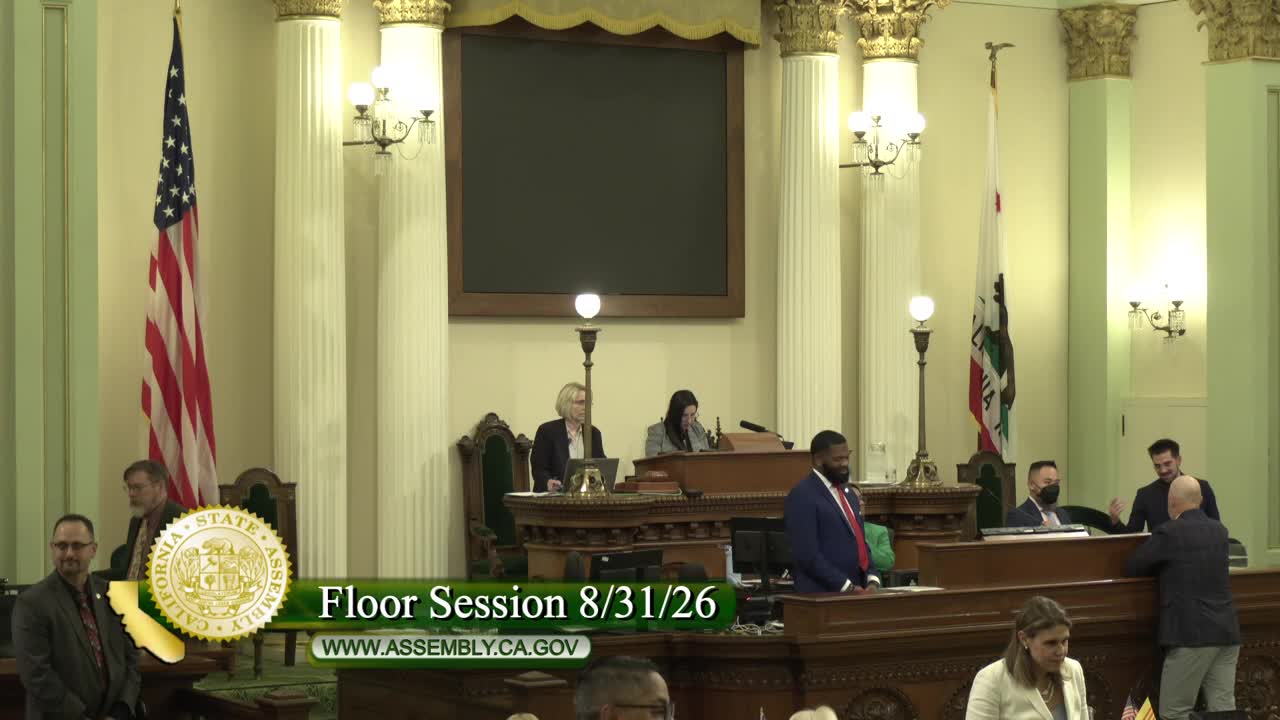 2MIN
Assembly Floor
3MIN
Assembly Floor
 15MIN
Assembly Standing Committee on Utilities and Energy
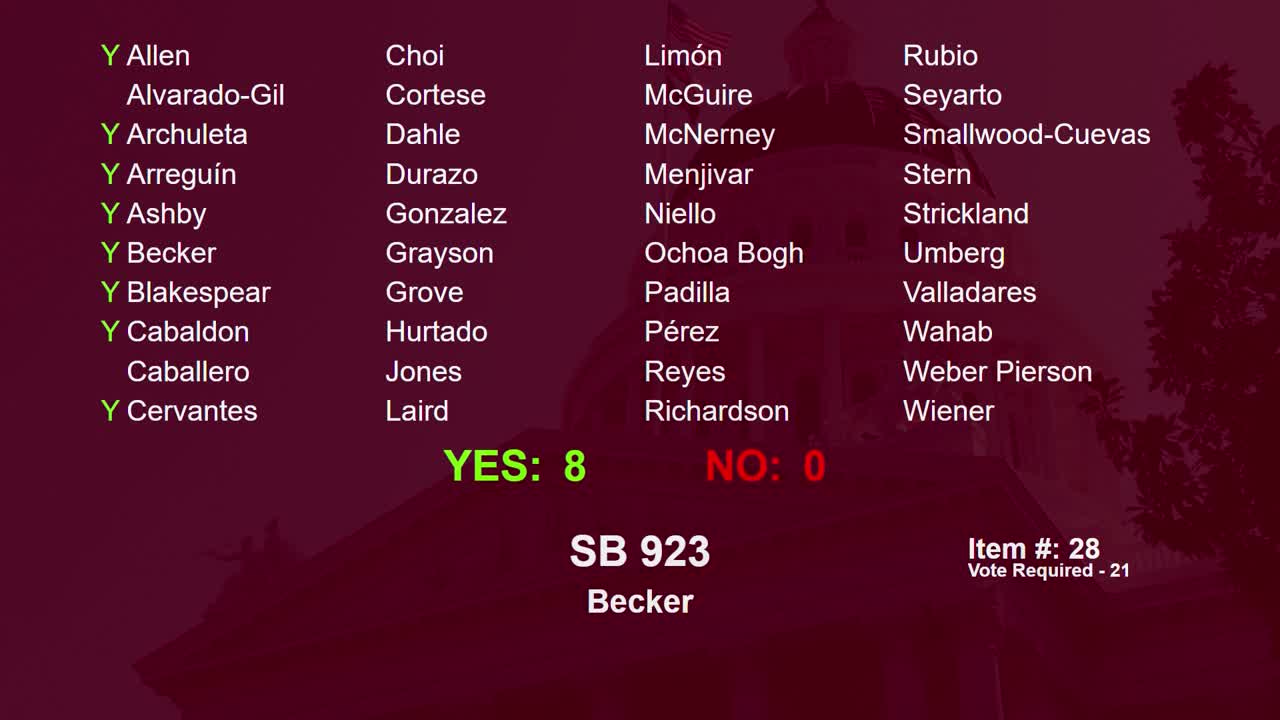 2MIN
Senate Floor
 27MIN
Senate Standing Committee on Energy, Utilities and Communications
Bill Author