SB 1124: Public health.
- Session Year: 2025-2026
- House: Senate
- Latest Version Date: 2026-09-28
Current Status:
Passed
(2026-09-28: Chaptered by Secretary of State. Chapter 726, Statutes of 2026.)
Introduced
In Committee
Awaiting First Chamber Vote
Passed First Chamber
In Committee
Awaiting Second Chamber Vote
Passed Second Chamber
Enacted
Existing law establishes, within the California Health and Human Services Agency, the State Department of Public Health, which has authority over various programs promoting public health, including the California Tobacco Control Program. Existing law requires the department to, among other things, establish a program on tobacco use and health to reduce tobacco use in California by conducting health education interventions and behavior change programs at the state level, in the community, and other nonschool settings. Existing law also requires the department to conduct statewide surveillance of tobacco-related behaviors, knowledge, and attitudes and evaluate the departments local and state tobacco control programs. Under existing law, the department funds the Kick It California program, which is a tobacco cessation program. Existing law, the California Cigarette and Tobacco Products Licensing Act of 2003, provides for the licensure by the California Department of Tax and Fee Administration of manufacturers, distributors, wholesalers, importers, and retailers of cigarette or tobacco products that are engaged in business in California. The act authorizes the department to suspend or revoke a retailers license or impose a civil penalty for a violation of the acts provisions and requires all moneys collected under the act to be deposited in the Cigarette and Tobacco Products Compliance Fund to be available for expenditure, upon appropriation by the Legislature, for specified uses. Existing law requires a retailer to conspicuously display its license to engage in the sale of cigarettes or tobacco products at each retail location in a manner visible to the public.
This bill would require the State Department of Public Health, no later than July 1, 2027, to make available signage to raise lung cancer screening awareness, as specified, which would include, among other things, eligibility criteria for lung cancer screening and the toll-free telephone number of the Kick It California tobacco cessation program. The bill would require the sign to be available at no cost on the departments internet website. The bill would require, beginning January 1, 2028, a retailer, as defined, to conspicuously display the signage at each retail location. The bill would make a retailer who violates that requirement liable for a civil penalty of $500 for each offense at a retail location and would require those penalties to be deposited into the Cigarette and Tobacco Products Compliance Fund.
Existing law establishes, within the California Health and Human Services Agency, the State Department of Public Health, which has authority over various programs promoting public health, including the California Tobacco Control Program. Existing law requires the department to, among other things, establish a program on tobacco use and health to reduce tobacco use in California by conducting health education interventions and behavior change programs at the state level, in the community, and other nonschool settings. Existing law also requires the department to conduct statewide surveillance of tobacco-related behaviors, knowledge, and attitudes and evaluate the departments local and state tobacco control programs. Under existing law, the department funds the Kick It California program, which is a tobacco cessation program. Existing law, the California Cigarette and Tobacco Products Licensing Act of 2003, provides for the licensure by the California Department of Tax and Fee Administration of manufacturers, distributors, wholesalers, importers, and retailers of cigarette or tobacco products that are engaged in business in California. The act authorizes the department to suspend or revoke a retailers license or impose a civil penalty for a violation of the acts provisions and requires all moneys collected under the act to be deposited in the Cigarette and Tobacco Products Compliance Fund to be available for expenditure, upon appropriation by the Legislature, for specified uses. Existing law requires a retailer to conspicuously display its license to engage in the sale of cigarettes or tobacco products at each retail location in a manner visible to the public.
This bill would require the State Department of Public Health, no later than July 1, 2027, to develop signage for lung cancer screening, make available signage to raise lung cancer screening awareness, as specified, which would include, among other things, eligibility criteria for lung cancer screening and the toll-free telephone number of the Kick It California tobacco cessation program. The bill would require the sign to be available at no cost on the departments internet website. The bill would require, beginning January 1, 2028, a retailer, as defined, to conspicuously display the signage at each retail location. The bill would make a retailer who violates that requirement liable for a civil penalty of $500 for each offense at a retail location and would require those penalties to be deposited into the Cigarette and Tobacco Products Compliance Fund.
Existing law establishes, within the California Health and Human Services Agency, the State Department of Public Health, which has authority over various programs promoting public health, including the California Tobacco Control Program. Existing law requires the department to, among other things, establish a program on tobacco use and health to reduce tobacco use in California by conducting health education interventions and behavior change programs at the state level, in the community, and other nonschool settings. Existing law also requires the department to conduct statewide surveillance of tobacco-related behaviors, knowledge, and attitudes and evaluate the departments local and state tobacco control programs. Under existing law, the department funds the Kick It California program, which is a tobacco cessation program. Existing law, the California Cigarette and Tobacco Products Licensing Act of 2003, provides for the licensure by the California Department of Tax and Fee Administration of manufacturers, distributors, wholesalers, importers, and retailers of cigarette or tobacco products that are engaged in business in California. The act authorizes the department to suspend or revoke a retailers license or impose a civil penalty for a violation of the acts provisions, as specified, and makes a violation of the act a misdemeanor. provisions and requires all moneys collected under the act to be deposited in the Cigarette and Tobacco Products Compliance Fund to be available for expenditure, upon appropriation by the Legislature, for specified uses. Existing law requires a retailer to conspicuously display its license to engage in the sale of cigarettes or tobacco products at each retail location in a manner visible to the public.
This bill would require the State Department of Public Health, no later than July 1, 2027, to develop signage for lung cancer screening, which would include, among other things, eligibility criteria for lung cancer screening and the toll-free telephone number of the Kick It California tobacco cessation program. The bill would require the sign to be available at no cost on the departments internet website. The bill would require, beginning January 1, 2028, a retailer, as defined, engaged in the retail sale of cigarettes or tobacco products to prominently display the signage developed by the department in its retail locations. to conspicuously display the signage at each retail location. The bill would make a retailer who violates the above-described requirement subject to suspension or revocation of their license or a $500 penalty, or guilty of a misdemeanor. Because the bill would create a new crime, the bill would impose a state-mandated local program. that requirement liable for a civil penalty of $500 for each offense at a retail location and would require those penalties to be deposited into the Cigarette and Tobacco Products Compliance Fund.
The California Constitution requires the state to reimburse local agencies and school districts for certain costs mandated by the state. Statutory provisions establish procedures for making that reimbursement.This bill would provide that no reimbursement is required by this act for a specified reason.Existing law establishes, within the California Health and Human Services Agency, the State Department of Public Health, which has authority over various programs promoting public health, including the California Tobacco Control Program. Existing law requires the department to, among other things, establish a program on tobacco use and health to reduce tobacco use in California by conducting health education interventions and behavior change programs at the state level, in the community, and other nonschool settings. Existing law also requires the department to conduct statewide surveillance of tobacco-related behaviors, knowledge, and attitudes and evaluate the departments local and state tobacco control programs. Under existing law, the department funds the Kick It California program, which is a tobacco cessation program. Existing law, the California Cigarette and Tobacco Products Licensing Act of 2003, provides for the licensure by the California Department of Tax and Fee Administration of manufacturers, distributors, wholesalers, importers, and retailers of cigarette or tobacco products that are engaged in business in California. The act authorizes the department to suspend or revoke a retailers license or impose a civil penalty for a violation of the acts provisions, as specified, and makes a violation of the act a misdemeanor. Existing law requires a retailer to conspicuously display its license to engage in the sale of cigarettes or tobacco products at each retail location in a manner visible to the public.
This bill would require the State Department of Public Health, no later than July 1, 2027, to develop signage for lung cancer screening, which would include, among other things, eligibility criteria for lung cancer screening and the toll-free telephone number of the Kick It California tobacco cessation program. The bill would require, beginning January 1, 2028, a retailer, as defined, engaged in the retail sale of cigarettes or tobacco products to prominently display the signage developed by the department in its retail locations. The bill would make a retailer who violates the above-described requirement subject to suspension or revocation of their license or a $1,000 $500 penalty, or guilty of a misdemeanor. Because the bill would create a new crime, the bill would impose a state-mandated local program.
The California Constitution requires the state to reimburse local agencies and school districts for certain costs mandated by the state. Statutory provisions establish procedures for making that reimbursement.
This bill would provide that no reimbursement is required by this act for a specified reason.
Existing law establishes, within the California Health and Human Services Agency, the State Department of Public Health, which has authority over various programs promoting public health, including the California Tobacco Control Program. Existing law requires the department to, among other things, establish a program on tobacco use and health to reduce tobacco use in California by conducting health education interventions and behavior change programs at the state level, in the community, and other nonschool settings. Existing law also requires the department to conduct statewide surveillance of tobacco-related behaviors, knowledge, and attitudes and evaluate the departments local and state tobacco control programs. Under existing law, the department funds the Kick It California program, which is a tobacco cessation program. Existing law, the California Cigarette and Tobacco Products Licensing Act of 2003, provides for the licensure by the California Department of Tax and Fee Administration of manufacturers, distributors, wholesalers, importers, and retailers of cigarette or tobacco products that are engaged in business in California. The act authorizes the department to suspend or revoke a retailers license or impose a civil penalty for a violation of the acts provisions, as specified, and makes a violation of the act a misdemeanor. Existing law requires a retailer to conspicuously display its license to engage in the sale of cigarettes or tobacco products at each retail location in a manner visible to the public.
This bill would require the department, State Department of Public Health, no later than July 1, 2027, to develop signage and a standardized written notice for lung cancer screening, which would include, among other things, eligibility criteria for lung cancer screening and the toll-free telephone number of the Kick It California tobacco cessation program. The bill would require, beginning January 1, 2028, a retailer, as defined, engaged in the retail sale of cigarettes or tobacco products to prominently display the signage developed by the department, and provide the written notice with the sale of cigarettes or tobacco products. The bill would require the department to require the Kick It California program to, among other things, evaluate lung cancer screening eligibility for individuals contacting the program. department in its retail locations. The bill would make a retailer who violates the above-described requirement subject to suspension or revocation of their license or a $1,000 penalty, or guilty of a misdemeanor. Because the bill would create a new crime, the bill would impose a state-mandated local program.
The California Constitution requires the state to reimburse local agencies and school districts for certain costs mandated by the state. Statutory provisions establish procedures for making that reimbursement.
This bill would provide that no reimbursement is required by this act for a specified reason.
Existing law establishes, within the California Health and Human Services Agency, the State Department of Public Health, which has authority over various programs promoting public health, including the California Tobacco Control Program. Existing law requires the department to, among other things, establish a program on tobacco use and health to reduce tobacco use in California by conducting health education interventions and behavior change programs at the state level, in the community, and other nonschool settings. Existing law also requires the department to conduct statewide surveillance of tobacco-related behaviors, knowledge, and attitudes and evaluate the departments local and state tobacco control programs. Under existing law, the department funds the Kick It California program, which is a tobacco cessation program.
This bill would require the department, no later than July 1, 2027, to develop signage and a standardized written notice for lung cancer screening, which would include, among other things, eligibility criteria for lung cancer screening and the toll-free telephone number of the Kick It California tobacco cessation program. The bill would require, beginning January 1, 2028, a retailer, as defined, engaged in the retail sale of cigarettes or tobacco products to prominently display the signage developed by the department, and provide the written notice with the sale of cigarettes or tobacco products. The bill would require the department to require the Kick It California program to, among other things, evaluate lung cancer screening eligibility for individuals contacting the program.
(a)(1)The State Department of Public Health shall, on or before July 1, 2027, make available signage to raise lung cancer screening awareness. The department may develop the signage, use existing materials, or partner with an existing lung cancer screening public awareness or education campaign. The signage shall include, but not be limited to, all of the following:
(A)Eligibility criteria for lung cancer screening.
(B)Information on the effectiveness of lung cancer screening.
(C)The toll-free telephone number of the Kick It California tobacco cessation program (Kick It California).
(D)A quick response (QR) code that links to the Kick It California page on the State Department of Public Healths internet website.
(2)The department may satisfy paragraph (1) by including on the signage a quick response (QR) code that links to all of the information required under paragraph (1).
(3)The signage shall not exceed 8.5 inches by 4 inches in size.
(4)The signage shall be available to order at no cost from the State Department of Public Healths internet website.
(b)Beginning January 1, 2028, a retailer shall conspicuously display the signage described in subdivision (a) at each retail location.
(c)(1)A retailer who fails to display the signage as required in subdivision (b) shall be liable for a civil penalty of five hundred dollars ($500) for each offense at a retail location.
(2)Upon discovery by the California Department of Tax and Fee Administration that a retailer failed to display the signage at a retail location as required in subdivision (b), the department shall issue the civil penalty imposed in paragraph (1) in accordance with the procedures applicable to the civil penalty authorized under Section 22974.5.
(d)A retailer shall not be subject to Section 22974.7, 22980.3, or 22981 for a violation of subdivision (b).
(e)Civil penalties collected pursuant to this section shall be deposited into the Cigarette and Tobacco Products Compliance Fund created pursuant to Section 22990.
(a)(1)The State Department of Public Health shall, on or before July 1, 2027, develop signage for lung cancer screening. make available signage to raise lung cancer screening awareness. The department may develop the signage, use existing materials, or partner with an existing lung cancer screening public awareness or education campaign. The signage shall include, but not be limited to, all of the following:
(A)Eligibility criteria for lung cancer screening.
(B)Information on the effectiveness of lung cancer screening.
(C)The toll-free telephone number of the Kick It California tobacco cessation program (Kick It California).
(D)A quick response (QR) code that links to the Kick It California page on the State Department of Public Healths internet website.
(2)The department may satisfy paragraph (1) by including on the signage a quick response (QR) code that links to all of the information required under paragraph (1).
(2)(3)The signage shall not exceed 8.5 inches by 4 inches in size.
(3)(4)The signage shall be available to order at no cost from the State Department of Public Healths internet website.
(b)Beginning January 1, 2028, a retailer shall conspicuously display the signage described in subdivision (a) at each retail location.
(c)(1)A retailer who fails to display the signage as required in subdivision (b) shall be liable for a civil penalty of five hundred dollars ($500) for each offense at a retail location.
(2)Upon discovery by the California Department of Tax and Fee Administration that a retailer failed to display the signage at a retail location as required in subdivision (b), the department shall issue the civil penalty imposed in paragraph (1) in accordance with the procedures applicable to the civil penalty authorized under Section 22974.5.
(d)A retailer shall not be subject to Section 22974.7, 22980.3, or 22981 for a violation of subdivision (b).
(e)Civil penalties collected pursuant to this section shall be deposited into the Cigarette and Tobacco Products Compliance Fund created pursuant to Section 22990.
(a)(1)The State Department of Public Health shall, on or before July 1, 2027, develop signage for lung cancer screening. The signage shall include, but not be limited to, all of the following:
(A)Eligibility criteria for lung cancer screening.
(B)Information on the effectiveness of lung cancer screening.
(C)The toll-free telephone number of the Kick It California tobacco cessation program (Kick It California).
(D)A quick response (QR) code that links to the Kick It California page on the State Department of Public Healths internet website.
(2)The signage shall not exceed 8.5 inches by 4 inches in size.
(3)The signage shall be available to order at no cost from the State Department of Public Healths internet website.
(b)Beginning January 1, 2028, a retailer shall conspicuously display the signage described in subdivision (a) at each retail location.
(c)(1)A retailer who fails to display the signage as required in subdivision (b) shall be liable for a civil penalty of five hundred dollars ($500) for each offense at a retail location.
(2)Upon discovery by the California Department of Tax and Fee Administration that a retailer failed to display the signage at a retail location as required in subdivision (b), the department shall issue the civil penalty imposed in paragraph (1) in accordance with the procedures applicable to the civil penalty authorized under Section 22974.5.
(d)A retailer shall not be subject to Section 22974.7, 22980.3, or 22981 for a violation of subdivision (b).
(e)Civil penalties collected pursuant to this section shall be deposited into the Cigarette and Tobacco Products Compliance Fund created pursuant to Section 22990.
SECTION 1.Section 22974.5 of the Business and Professions Code is amended to read:22974.5.(a)A retailer who fails to display a license as required in Section 22972 shall, in addition to any other applicable penalty, be liable for a penalty of five hundred dollars ($500).(b)A retailer who fails to display the signage as required in subdivision (b) of Section 22980.7 shall, in addition to any other applicable penalty, be liable for a penalty of five hundred dollars ($500).SEC. 2.Section 22980.7 is added to the Business and Professions Code, to read:22980.7.(a)The State Department of Public Health shall, on or before July 1, 2027, develop signage for lung cancer screening. The signage shall include, but not be limited to, all of the following:(1)Eligibility criteria for lung cancer screening.(2)Information on the effectiveness of lung cancer screening.(3)The toll-free telephone number of the Kick It California tobacco cessation program (Kick It California).(4)A quick response (QR) code that links to the Kick It California page on the departments internet website.(b)Beginning January 1, 2028, a retailer engaged in the retail sale of cigarettes or tobacco products shall prominently display the signage described in this subdivision in every retail location of the retailer.SEC. 3.No reimbursement is required by this act pursuant to Section 6 of Article XIIIB of the California Constitution because the only costs that may be incurred by a local agency or school district will be incurred because this act creates a new crime or infraction, eliminates a crime or infraction, or changes the penalty for a crime or infraction, within the meaning of Section 17556 of the Government Code, or changes the definition of a crime within the meaning of Section 6 of Article XIIIB of the California Constitution.(a)A retailer who fails to display a license as required in Section 22972 shall, in addition to any other applicable penalty, be liable for a penalty of five hundred dollars ($500).
(b)A retailer who fails to display the signage as required in subdivision (b) of Section 22980.7 shall, in addition to any other applicable penalty, be liable for a penalty of one thousand dollars ($1,000). five hundred dollars ($500).
SEC. 2.Section 22980.7 is added to the Business and Professions Code, to read:22980.7.(a)The State Department of Public Health shall, on or before July 1, 2027, develop signage for lung cancer screening. The signage shall include, but not be limited to, all of the following:
(1)Eligibility criteria for lung cancer screening.
(2)Information on the effectiveness of lung cancer screening.
(3)The toll-free telephone number of the Kick It California tobacco cessation program (Kick It California).
(4)A quick response (QR) code that links to the Kick It California page on the departments internet website.
(b)Beginning January 1, 2028, a retailer engaged in the retail sale of cigarettes or tobacco products shall prominently display the signage described in this subdivision in every retail location of the retailer.
SEC. 3.No reimbursement is required by this act pursuant to Section 6 of Article XIIIB of the California Constitution because the only costs that may be incurred by a local agency or school district will be incurred because this act creates a new crime or infraction, eliminates a crime or infraction, or changes the penalty for a crime or infraction, within the meaning of Section 17556 of the Government Code, or changes the definition of a crime within the meaning of Section 6 of Article XIIIB of the California Constitution.
Any (a)A retailer who fails to display a license as required in Section 22972 shall, in addition to any other applicable penalty, be liable for a penalty of five hundred dollars ($500).
(b)A retailer who fails to display the signage as required in subdivision (b) of Section 22980.7 shall, in addition to any other applicable penalty, be liable for a penalty of one thousand dollars ($1,000).
SEC. 2.Section 22980.7 is added to the Business and Professions Code, to read:22980.7.(a)The State Department of Public Health shall, on or before July 1, 2027, develop signage for lung cancer screening. The signage shall include, but not be limited to, all of the following:
(1)Eligibility criteria for lung cancer screening.
(2)Information on the effectiveness of lung cancer screening.
(3)The toll-free telephone number of the Kick It California tobacco cessation program (Kick It California).
(4)A quick response (QR) code that links to the Kick It California page on the departments internet website.
(b)Beginning January 1, 2028, a retailer engaged in the retail sale of cigarettes or tobacco products shall prominently display the signage described in this subdivision in every retail location of the retailer.
SEC. 3.No reimbursement is required by this act pursuant to Section 6 of Article XIIIB of the California Constitution because the only costs that may be incurred by a local agency or school district will be incurred because this act creates a new crime or infraction, eliminates a crime or infraction, or changes the penalty for a crime or infraction, within the meaning of Section 17556 of the Government Code, or changes the definition of a crime within the meaning of Section 6 of Article XIIIB of the California Constitution.
SECTION 1.Section 104496 is added to the Health and Safety Code, to read:104496.(a)For purposes of this section, the following terms have the following meanings:(1)Retailer means a person who engages in this state in the retail sale of cigarettes or tobacco products directly to the public from a retail location. Retailer includes a person who operates vending machines from which cigarettes or tobacco products are sold in this state.(2)Retail sale of cigarettes or tobacco products means a sale, as defined in Section 30006 of the Revenue and Taxation Code, of cigarettes or tobacco products by a retailer to a consumer for personal use.(b)No later than July 1, 2027, the State Department of Public Health shall develop signage and a standardized written notice for lung cancer screening. The signage and written notice shall include, but not be limited to, all of the following:(1)Eligibility criteria for lung cancer screening.(2)Information on the effectiveness of lung cancer screening.(3)The toll-free telephone number of the Kick It California tobacco cessation program (Kick It California).(c)Beginning January 1, 2028, a retailer engaged in the retail sale of cigarettes or tobacco products shall prominently display the signage and provide the written notice with the sale of cigarettes or tobacco products.(d)The department shall require the Kick It California program to do all of the following:(1)Evaluate lung cancer screening eligibility for individuals contacting the program.(2)Direct eligible individuals to lung cancer screening services via appropriate referral information.(3)Provide data and participate in evaluation and related quality improvement activities.(e)The department may adopt rules and regulations as it determines necessary to carry out this section.(a)For purposes of this section, the following terms have the following meanings:
(1)Retailer means a person who engages in this state in the retail sale of cigarettes or tobacco products directly to the public from a retail location. Retailer includes a person who operates vending machines from which cigarettes or tobacco products are sold in this state.
(2)Retail sale of cigarettes or tobacco products means a sale, as defined in Section 30006 of the Revenue and Taxation Code, of cigarettes or tobacco products by a retailer to a consumer for personal use.
(b)No later than July 1, 2027, the State Department of Public Health shall develop signage and a standardized written notice for lung cancer screening. The signage and written notice shall include, but not be limited to, all of the following:
(1)Eligibility criteria for lung cancer screening.
(2)Information on the effectiveness of lung cancer screening.
(3)The toll-free telephone number of the Kick It California tobacco cessation program (Kick It California).
(c)Beginning January 1, 2028, a retailer engaged in the retail sale of cigarettes or tobacco products shall prominently display the signage and provide the written notice with the sale of cigarettes or tobacco products.
(d)The department shall require the Kick It California program to do all of the following:
(1)Evaluate lung cancer screening eligibility for individuals contacting the program.
(2)Direct eligible individuals to lung cancer screening services via appropriate referral information.
(3)Provide data and participate in evaluation and related quality improvement activities.
(e)The department may adopt rules and regulations as it determines necessary to carry out this section.
|
Date
|
Status
|
|---|---|
| Sep 28, 2026 | Chaptered by Secretary of State. Chapter 726, Statutes of 2026. |
| Sep 28, 2026 | Approved by the Governor. |
| Sep 3, 2026 | Enrolled and presented to the Governor at 3 p.m. |
| Aug 27, 2026 | Assembly amendments concurred in. (Ayes 31. Noes 2. Page 6017.) Ordered to engrossing and enrolling. |
| Aug 27, 2026 | Assembly amendments concurred in. (Ayes 30. Noes 2.) Ordered to engrossing and enrolling. |
| Aug 25, 2026 | In Senate. Concurrence in Assembly amendments pending. |
| Aug 25, 2026 | Read third time. Passed. (Ayes 66. Noes 4. Page 6495.) Ordered to the Senate. |
| Aug 25, 2026 | Read third time. Passed. Ordered to the Senate. |
| Aug 17, 2026 | Read second time. Ordered to third reading. |
| Aug 13, 2026 | Read second time and amended. Ordered to second reading. |
| Aug 13, 2026 | From committee: Do pass as amended. (Ayes 11. Noes 1.) (August 13). |
| Aug 13, 2026 | Assembly Rule 63 suspended. |
| Aug 5, 2026 | August 5 set for first hearing. Placed on suspense file. |
| Jun 25, 2026 | Read second time and amended. Re-referred to Com. on APPR. |
| Jun 24, 2026 | From committee: Do pass as amended and re-refer to Com. on APPR. (Ayes 13. Noes 1.) (June 23). |
| Jun 4, 2026 | Referred to Com. on HEALTH. |
| May 27, 2026 | In Assembly. Read first time. Held at Desk. |
| May 27, 2026 | Read third time. Passed. (Ayes 29. Noes 4. Page 4508.) Ordered to the Assembly. |
| May 27, 2026 | Read third time. Passed. (Ayes 29. Noes 4.) Ordered to the Assembly. |
| May 14, 2026 | From committee: Do pass. (Ayes 5. Noes 1. Page 4265.) (May 14). |
| May 14, 2026 | Read second time. Ordered to third reading. |
| May 14, 2026 | From committee: Do pass. (Ayes 5. Noes 1.) (May 14). |
| May 8, 2026 | Set for hearing May 14. |
| May 4, 2026 | May 4 hearing: Placed on APPR. suspense file. |
| Apr 28, 2026 | Set for hearing May 4. |
| Apr 27, 2026 | Read second time and amended. Re-referred to Com. on APPR. |
| Apr 23, 2026 | From committee: Do pass as amended and re-refer to Com. on APPR. (Ayes 9. Noes 0. Page 4010.) (April 22). |
| Apr 23, 2026 | From committee: Do pass as amended and re-refer to Com. on APPR. (Ayes 9. Noes 0.) (April 22). |
| Apr 22, 2026 | From committee: Do pass and re-refer to Com. on HEALTH. (Ayes 4. Noes 0. Page 4015.) (April 22). Re-referred to Com. on HEALTH. |
| Apr 22, 2026 | From committee: Do pass and re-refer to Com. on HEALTH. (Ayes 4. Noes 0.) (April 22). Re-referred to Com. on HEALTH. |
| Apr 16, 2026 | Set for hearing April 22. |
| Apr 16, 2026 | Set for hearing April 22 in HEALTH pending receipt. |
| Apr 15, 2026 | Re-referred to Coms. on REV. & TAX. and HEALTH. |
| Apr 9, 2026 | Re-referred to Com. on RLS. |
| Apr 9, 2026 | Withdrawn from committee. |
| Apr 9, 2026 | April 15 hearing postponed by committee. |
| Apr 8, 2026 | From committee with author's amendments. Read second time and amended. Re-referred to Com. on HEALTH. |
| Mar 26, 2026 | Set for hearing April 15. |
| Mar 25, 2026 | April 8 set for first hearing canceled at the request of author. |
| Mar 19, 2026 | Set for hearing April 8. |
| Feb 26, 2026 | Referred to Com. on HEALTH. |
| Feb 18, 2026 | From printer. May be acted upon on or after March 20. |
| Feb 17, 2026 | Introduced. Read first time. To Com. on RLS. for assignment. To print. |
|
Date
|
Description
|
Location
|
Votes
|
|
|---|---|---|---|---|
| Aug 27, 2026 | Unfinished Business SB1124 Archuleta et al. Concurrence | Senate Floor |
Passed |
|
| Aug 25, 2026 | SB 1124 Archuleta Senate Third Reading By Garcia | Assembly Floor |
Passed |
|
| Aug 13, 2026 | Do pass as amended. | Assembly Standing Committee on Appropriations |
Passed |
|
| Jun 23, 2026 | Do pass as amended and be re-referred to the Committee on [Appropriations] | Assembly Standing Committee on Health |
Passed |
|
| May 27, 2026 | Senate 3rd Reading SB1124 Archuleta et al. | Senate Floor |
Passed |
|
| May 14, 2026 | Do pass | Senate Standing Committee on Appropriations |
Passed |
|
| May 4, 2026 | Placed on suspense file | Senate Standing Committee on Appropriations |
Passed |
|
| Apr 22, 2026 | Do pass as amended, but first amend, and re-refer to the Committee on [Appropriations] | Senate Standing Committee on Health |
Passed |
|
| Apr 22, 2026 | Do pass, but first be re-referred to the Committee on [Health] | Senate Standing Committee on Revenue and Taxation |
Passed |
This list shows positions taken on this bill by organizations on the date displayed, which is linked to the original source.
Positions by individuals are not included.
|
Organization
|
Position
|
Date
|
|---|---|---|
| African American Tobacco Control Leadership Council | ** Support | |
| American Cancer Society Cancer Action Network | ** Against | |
| American College of Surgeons, Southern California Chapter | ** Support | |
| American Lung Cancer Screening Initiative | ** Support | |
| Association Of Northern California Oncologists | ** Support | |
| Breathe Southern California | ** Support | |
| California Academy Of Family Physicians | ** Support | |
| California Fuels And Convenience Alliance | ** Against | |
| california hawaii state conference of the naacp | ** Support | |
| California-Hawai’i State Conference of the NAACP | ** Support | |
| California LGBTQ Health and Human Services Network | ** Support | |
| California Lung Cancer Coalition | ** Support | |
| California OneCare | ** Support | |
| California OneCare Education Fund | ** Support | |
| City of Alameda | ** Support | |
| cleanearth4kids.org | ** Support | |
| County of Fresno | ** Support | |
| Five individuals | ** Support | |
| Medical Oncology Association Of Southern California | ** Support | |
| San Luis Obispo County Tobacco Control Coalition | ** Support | |
| San Luis Obispo Tobacco Control Coalition | ** Support | |
| Southern California Public Health Association | ** Support | |
| UCLA Undergraduate Student Association Council | ** Support | |
| UC Student Association | ** Support |
SENATE RULES COMMITTEE Office of Senate Floor Analyses (916) 651-4171 | SB 1124 |
UNFINISHED BUSINESS
Bill No: SB 1124
Author: Archuleta (D), et al.
Amended: 8/13/26
Vote: 21
SENATE HEALTH COMMITTEE: 9-0, 4/22/26
AYES: Weber Pierson, Caballero, Durazo, Gonzalez, Menjivar, Padilla, Pérez, Rubio, Smallwood-Cuevas
NO VOTE RECORDED: Valladares, Grove
SENATE REVENUE AND TAXATION COMMITTEE: 4-0, 4/22/26
AYES: McNerney, Ashby, Becker, Grayson
NO VOTE RECORDED: Alvarado-Gil
SENATE APPROPRIATIONS COMMITTEE: 5-1, 5/14/26
AYES: Cervantes, Cabaldon, Grayson, Richardson, Wahab
NOES: Dahle
NO VOTE RECORDED: Seyarto
SENATE FLOOR: 29-4, 5/27/26
AYES: Allen, Archuleta, Arreguín, Ashby, Becker, Blakespear, Cabaldon, Caballero, Cervantes, Cortese, Durazo, Gonzalez, Grayson, Hurtado, Laird, Limón, McGuire, McNerney, Menjivar, Padilla, Pérez, Reyes, Richardson, Rubio, Stern, Umberg, Wahab, Weber Pierson, Wiener
NOES: Alvarado-Gil, Grove, Niello, Strickland
NO VOTE RECORDED: Choi, Dahle, Jones, Ochoa Bogh, Seyarto, Smallwood-Cuevas, Valladares
ASSEMBLY FLOOR: 66-4, 8/25/26 - See last page for vote
SUBJECT: Public health
SOURCE: Author
DIGEST:
This bill requires the California Department of Public Health (CDPH) to develop signage for lung cancer screening and requires licensed tobacco retailers to display the signage or be subject to a civil penalty.
Assembly Amendments
(1) Allow CDPH to make signage available to raise lung cancer awareness, instead of developing the signage; (2) Permit CDPH to develop signage using existing materials, or partner with an existing program; (3) Allow CDPH to satisfy the bill’s requirement by including a Quick Response code on the signage that links to information required by the bill; (4) Provide a maximum size for signage; (3) Require the signage to be available free of cost to retailers from website; (4) Direct retailers to post the signage conspicuously; (5) Provide that provisions in current law directing CDTFA to suspend or revoke a tobacco retail license do not apply to violations of the bill’s provisions; (6) Direct proceeds from civil penalties imposed under the bill to the Cigarette and Tobacco Products Compliance Fund; and (6) Consolidate the measure’s changes into one code section in the Cigarette and Tobacco Products Licensing Act.
ANALYSIS:
Existing law:
- Enacts the Cigarette and Tobacco Products Licensing Act, which required the Board of Equalization (BOE) to license manufacturers, distributors, wholesalers, importers, and retailers of cigarette or tobacco products who are engaged in business in California.
- Transfers duties, powers, and responsibilities related to the administration of taxes and fees from BOE to the California Department of Tax and Fee Administration (CDTFA).
- Directs CDTFA to administer the Cigarette and Tobacco Products Tax Law.
- Requires retailers, distributors, manufacturers, wholesalers, and importers to have and maintain a license, and conspicuously display the license at each retail location in a manner visible to the public or be subject to a $500 civil penalty.
- Creates two kinds of licenses for retailers: one for those who sell tobacco products subject to the Cigarette and Tobacco Products Tax, and one for those whose products are not subject to that tax, such as retailers of electronic delivery devices not containing or sold with nicotine and certain accessories, such as zero-nicotine vaporized liquids.
- Provides that licenses are valid for one year and must be renewed annually.
- Sets license fees on both sets of tobacco retailers at $450, for new or renewed licenses applied for on or after July 1, 2026, while permitting CDTFA to further increase the license fee by regulation to an amount necessary to maintain the Cigarette and Tobacco Products Compliance Fund at a level that is no more than necessary to cover its reasonable costs, not to exceed $600 (AB 573, Rogers, Chapter 269, Statutes of 2025).
- Creates the California Tobacco Control Program (CTCP) within the California Department of Public Health (CDPH) to reduce tobacco use and prevent tobacco-related diseases, and conduct health education interventions and behavior change programs at the state level, in the community, and other non-school settings, including cessation programs. Requires CDPH to conduct statewide surveillance of tobacco-related behaviors, knowledge, and attitudes, and evaluate its local and state tobacco control programs.
- Requires retailers of tobacco products, as part of the Stop Tobacco Access to Kids Enforcement (STAKE) Act, to post conspicuously a notice stating that selling tobacco products to anyone under 21 years of age is illegal and subject to penalties, that the law requires those selling tobacco products check the identification of a purchaser, and includes a toll-free telephone number to report unlawful sales of tobacco products to any person under 21 years of age.
This bill:
- Amends the Licensing Act to require CDPH to make available signage to raise lung cancer screening awareness, which must include, on or before July 1, 2027:
- Eligibility criteria for lung cancer screening.
- Information on the effectiveness of lung cancer screening.
- The toll-free telephone number of the Kick It California tobacco cessation program.
- A quick response code that links to the Kick It California page on the department’s internet website.
- Permits CDPH to develop the signage, use existing materials, or partner with an existing lung cancer screening public awareness or education campaign, and to satisfy the bill’s requirement by including a Quick Response code on the signage that links to information required above.
- Bars signage from exceeding 8.5 inches by 4 inches in size.
- Requires signage to be available to order at no cost from CDPH’s internet website.
- Amends the Licensing Act to require a retailer engaged in the retail sale of cigarettes or tobacco products to conspicuously display the signage at each retail location of the retailer beginning January 1, 2028.
- Imposes a penalty of $500 for failing to display the signage, in addition to any other applicable penalty.
- Directs CDTFA to impose the penalty in accordance with the procedures for the civil penalty in existing law for failing to display its license, upon its discovery that a retailer failed to display the signage at a retail location.
- Provides that provisions in current law directing CDTFA to suspend or revoke a tobacco retail license do not apply to violations of the bill’s provisions.
- Deposits proceeds from penalties imposed under the bill into the Cigarette and Tobacco Products Compliance Fund.
Background
Approximately 29,000 cigarette and tobacco product retail locations are licensed to sell cigarettes and tobacco products in California. CDTFA’s compliance efforts include regular inspections of businesses selling cigarettes and tobacco products, including retailers, wholesalers, and distributors, to ensure compliance with cigarette and tobacco product tax and licensing laws. CDTFA annually conducts about 3,318 inspections of licensed cigarette and tobacco product retailers to ensure compliance with the Licensing Act and applicable tax laws. Among other requirements, CDTFA enforces the current requirement under the Licensing Act that a retailer conspicuously display the license at each retail location, as well as signage requirements under the STAKE Act.
Kick It California. The Kick It California program seeks to help Californians quit cigarettes, vaping products, smokeless tobacco, and cannabis. Funded by the First 5 Commission and the California Department of Public Health (CDPH), and operated by the University of California, San Diego, Kick It seeks to help those who consume these products by connecting them with skilled “quit coaches.” Dating its commencement to 1992, Kick It states that it enrolled almost 30,000 people last year, of whom 15,824 received coaching.
FISCAL EFFECT: Appropriation: No Fiscal Com.: Yes Local: No
According to the Assembly Appropriations Committee:
- CDPH states it anticipates costs of approximately $426,000 for fiscal years (FY) 2027-28 and 2028-29, and $275,642 ongoing beginning in FY 2029-30 for one full-time staff to develop the lung cancer screening signage, manage a graphic design contract, support regulatory development, and provide relevant content information such as lung cancer eligibility criteria (General Fund). If CDPH uses existing materials or works with an existing lung cancer screening awareness campaign, costs could be significantly lower.
- Possible additional costs of an unknown amount to the University of California (UC), which administers Kick It California, to integrate new call prompts and referral pathways into existing workflows for the program's cessation activities (California Healthcare, Research and Prevention Tobacco Tax Act of 2016 Fund and Cigarette and Tobacco Products Surtax Fund).
- California Department of Tax and Fee Administration (CDTFA) estimates costs of $100,000 in 2026-27, $266,000 in 2027-28, $242,000 in 2028-29, $170,000 in 2029-30, and $141,000 in 2030-31 and ongoing for providing notifications to retail licensees, answering taxpayer inquiries, and performing related administrative functions, such as issuing and processing civil penalties and handling appeals (Cigarette and Tobacco Products Compliance Fund). CDTFA also anticipates potential revenues of an unknown amount from civil penalties.
SUPPORT: (Verified 8/24/26)
African American Tobacco Control Leadership Council
American College of Surgeons, Southern California Chapter
American Lung Cancer Screening Initiative
Association of Northern California Oncologists
Breathe Southern California
California Academy of Family Physicians
California-Hawai’i State Conference of the NAACP
California LGBTQ Health and Human Services Network
California Lung Cancer Coalition
California OneCare Education Fund
City of Alameda
CleanEarth4Kids.org
County of Fresno
Medical Oncology Association of Southern California
San Luis Obispo County Tobacco Control Coalition
Southern California Public Health Association
UC Student Association
UCLA Undergraduate Student Association Council
One Individual
OPPOSITION: (Verified 8/24/26)
None received
ARGUMENTS IN SUPPORT: According to the author, “Lung cancer is the leading cause of cancer death in California and nationally, yet California has the lowest lung cancer screening rate in the country (<1%). The primary barrier is awareness given that 62% of Americans don’t even know lung cancer screening exists. The United States Preventive Services Task Force recommends yearly lung cancer screening (LCS) for people who have a 20 pack-year (a packyear refers to smoking an average of 1 pack of cigarettes per day for 1 year) or more smoking history, smoke now, or have quit within the past 15 years, and are between the ages of 50 and 80. Although LCS are generally covered by insurance for individuals who meet these high-risk criteria, in California, only 16.8% of this population receive LCS. SB 1124 would raise awareness around eligibility for lung cancer screenings and encourage tobacco users to access health care services already available to them. To address California’s particularly low screening rates and the disparities in access across communities, SB 1124 will require signage, created by the California Department of Health, for lung cancer screening eligibility criteria at the point-of sale for tobacco products.”
ASSEMBLY FLOOR: 66-4, 8/25/26
AYES: Addis, Aguiar-Curry, Ahrens, Alanis, Alvarez, Arambula, Ávila Farías, Bains, Bauer-Kahan, Bennett, Berman, Boerner, Bonta, Bryan, Calderon, Caloza, Carrillo, Castillo, Chen, Connolly, Davies, Elhawary, Flora, Fong, Gabriel, Garcia, Gipson, Jeff Gonzalez, Mark González, Hadwick, Haney, Harabedian, Hart, Irwin, Jackson, Kalra, Krell, Lee, Lowenthal, Muratsuchi, Nguyen, Ortega, Pacheco, Papan, Patel, Pellerin, Petrie-Norris, Quirk-Silva, Ramos, Ransom, Celeste Rodriguez, Michelle Rodriguez, Rogers, Blanca Rubio, Schiavo, Schultz, Sharp-Collins, Solache, Soria, Stefani, Valencia, Ward, Wicks, Wilson, Zbur, Rivas
NOES: DeMaio, Ellis, Macedo, Tangipa
NO VOTE RECORDED: Dixon, Hoover, Johnson, Lackey, McKinnor, Patterson, Sanchez, Ta, Wallis
Prepared by: Colin Grinnell / REV. & TAX. / (916) 651-4117
9/22/26 15:32:33
**** END ****
SENATE RULES COMMITTEE Office of Senate Floor Analyses (916) 651-4171 | SB 1124 |
UNFINISHED BUSINESS
Bill No: SB 1124
Author: Archuleta (D), et al.
Amended: 8/13/26
Vote: 21
SENATE HEALTH COMMITTEE: 9-0, 4/22/26
AYES: Weber Pierson, Caballero, Durazo, Gonzalez, Menjivar, Padilla, Pérez, Rubio, Smallwood-Cuevas
NO VOTE RECORDED: Valladares, Grove
SENATE REVENUE AND TAXATION COMMITTEE: 4-0, 4/22/26
AYES: McNerney, Ashby, Becker, Grayson
NO VOTE RECORDED: Alvarado-Gil
SENATE APPROPRIATIONS COMMITTEE: 5-1, 5/14/26
AYES: Cervantes, Cabaldon, Grayson, Richardson, Wahab
NOES: Dahle
NO VOTE RECORDED: Seyarto
SENATE FLOOR: 29-4, 5/27/26
AYES: Allen, Archuleta, Arreguín, Ashby, Becker, Blakespear, Cabaldon, Caballero, Cervantes, Cortese, Durazo, Gonzalez, Grayson, Hurtado, Laird, Limón, McGuire, McNerney, Menjivar, Padilla, Pérez, Reyes, Richardson, Rubio, Stern, Umberg, Wahab, Weber Pierson, Wiener
NOES: Alvarado-Gil, Grove, Niello, Strickland
NO VOTE RECORDED: Choi, Dahle, Jones, Ochoa Bogh, Seyarto, Smallwood-Cuevas, Valladares
ASSEMBLY FLOOR: Passed, 8/25/26
SUBJECT: Public health
SOURCE: Author
DIGEST:
This bill requires the California Department of Public Health (CDPH) to develop signage for lung cancer screening and requires licensed tobacco retailers to display the signage or be subject to a civil penalty.
Assembly Amendments
(1) Allow CDPH to make signage available to raise lung cancer awareness, instead of developing the signage; (2) Permit CDPH to develop signage using existing materials, or partner with an existing program; (3) Allow CDPH to satisfy the bill’s requirement by including a Quick Response code on the signage that links to information required by the bill; (4) Provide a maximum size for signage; (3) Require the signage to be available free of cost to retailers from website; (4) Direct retailers to post the signage conspicuously; (5) Provide that provisions in current law directing CDTFA to suspend or revoke a tobacco retail license do not apply to violations of the bill’s provisions; (6) Direct proceeds from civil penalties imposed under the bill to the Cigarette and Tobacco Products Compliance Fund; and (6) Consolidate the measure’s changes into one code section in the Cigarette and Tobacco Products Licensing Act.
ANALYSIS:
Existing law:
- Enacts the Cigarette and Tobacco Products Licensing Act, which required the Board of Equalization (BOE) to license manufacturers, distributors, wholesalers, importers, and retailers of cigarette or tobacco products who are engaged in business in California.
- Transfers duties, powers, and responsibilities related to the administration of taxes and fees from BOE to the California Department of Tax and Fee Administration (CDTFA).
- Directs CDTFA to administer the Cigarette and Tobacco Products Tax Law.
- Requires retailers, distributors, manufacturers, wholesalers, and importers to have and maintain a license, and conspicuously display the license at each retail location in a manner visible to the public or be subject to a $500 civil penalty.
- Creates two kinds of licenses for retailers: one for those who sell tobacco products subject to the Cigarette and Tobacco Products Tax, and one for those whose products are not subject to that tax, such as retailers of electronic delivery devices not containing or sold with nicotine and certain accessories, such as zero-nicotine vaporized liquids.
- Provides that licenses are valid for one year and must be renewed annually.
- Sets license fees on both sets of tobacco retailers at $450, for new or renewed licenses applied for on or after July 1, 2026, while permitting CDTFA to further increase the license fee by regulation to an amount necessary to maintain the Cigarette and Tobacco Products Compliance Fund at a level that is no more than necessary to cover its reasonable costs, not to exceed $600 (AB 573, Rogers, Chapter 269, Statutes of 2025).
- Creates the California Tobacco Control Program (CTCP) within the California Department of Public Health (CDPH) to reduce tobacco use and prevent tobacco-related diseases, and conduct health education interventions and behavior change programs at the state level, in the community, and other non-school settings, including cessation programs. Requires CDPH to conduct statewide surveillance of tobacco-related behaviors, knowledge, and attitudes, and evaluate its local and state tobacco control programs.
- Requires retailers of tobacco products, as part of the Stop Tobacco Access to Kids Enforcement (STAKE) Act, to post conspicuously a notice stating that selling tobacco products to anyone under 21 years of age is illegal and subject to penalties, that the law requires those selling tobacco products check the identification of a purchaser, and includes a toll-free telephone number to report unlawful sales of tobacco products to any person under 21 years of age.
This bill:
- Amends the Licensing Act to require CDPH to make available signage to raise lung cancer screening awareness, which must include, on or before July 1, 2027:
- Eligibility criteria for lung cancer screening.
- Information on the effectiveness of lung cancer screening.
- The toll-free telephone number of the Kick It California tobacco cessation program.
- A quick response code that links to the Kick It California page on the department’s internet website.
- Permits CDPH to develop the signage, use existing materials, or partner with an existing lung cancer screening public awareness or education campaign, and to satisfy the bill’s requirement by including a Quick Response code on the signage that links to information required above.
- Bars signage from exceeding 8.5 inches by 4 inches in size.
- Requires signage to be available to order at no cost from CDPH’s internet website.
- Amends the Licensing Act to require a retailer engaged in the retail sale of cigarettes or tobacco products to conspicuously display the signage at each retail location of the retailer beginning January 1, 2028.
- Imposes a penalty of $500 for failing to display the signage, in addition to any other applicable penalty.
- Directs CDTFA to impose the penalty in accordance with the procedures for the civil penalty in existing law for failing to display its license, upon its discovery that a retailer failed to display the signage at a retail location.
- Provides that provisions in current law directing CDTFA to suspend or revoke a tobacco retail license do not apply to violations of the bill’s provisions.
- Deposits proceeds from penalties imposed under the bill into the Cigarette and Tobacco Products Compliance Fund.
Background
Approximately 29,000 cigarette and tobacco product retail locations are licensed to sell cigarettes and tobacco products in California. CDTFA’s compliance efforts include regular inspections of businesses selling cigarettes and tobacco products, including retailers, wholesalers, and distributors, to ensure compliance with cigarette and tobacco product tax and licensing laws. CDTFA annually conducts about 3,318 inspections of licensed cigarette and tobacco product retailers to ensure compliance with the Licensing Act and applicable tax laws. Among other requirements, CDTFA enforces the current requirement under the Licensing Act that a retailer conspicuously display the license at each retail location, as well as signage requirements under the STAKE Act.
Kick It California. The Kick It California program seeks to help Californians quit cigarettes, vaping products, smokeless tobacco, and cannabis. Funded by the First 5 Commission and the California Department of Public Health (CDPH), and operated by the University of California, San Diego, Kick It seeks to help those who consume these products by connecting them with skilled “quit coaches.” Dating its commencement to 1992, Kick It states that it enrolled almost 30,000 people last year, of whom 15,824 received coaching.
FISCAL EFFECT: Appropriation: No Fiscal Com.: Yes Local: No
According to the Assembly Appropriations Committee:
- CDPH states it anticipates costs of approximately $426,000 for fiscal years (FY) 2027-28 and 2028-29, and $275,642 ongoing beginning in FY 2029-30 for one full-time staff to develop the lung cancer screening signage, manage a graphic design contract, support regulatory development, and provide relevant content information such as lung cancer eligibility criteria (General Fund). If CDPH uses existing materials or works with an existing lung cancer screening awareness campaign, costs could be significantly lower.
- Possible additional costs of an unknown amount to the University of California (UC), which administers Kick It California, to integrate new call prompts and referral pathways into existing workflows for the program's cessation activities (California Healthcare, Research and Prevention Tobacco Tax Act of 2016 Fund and Cigarette and Tobacco Products Surtax Fund).
- California Department of Tax and Fee Administration (CDTFA) estimates costs of $100,000 in 2026-27, $266,000 in 2027-28, $242,000 in 2028-29, $170,000 in 2029-30, and $141,000 in 2030-31 and ongoing for providing notifications to retail licensees, answering taxpayer inquiries, and performing related administrative functions, such as issuing and processing civil penalties and handling appeals (Cigarette and Tobacco Products Compliance Fund). CDTFA also anticipates potential revenues of an unknown amount from civil penalties.
SUPPORT: (Verified 8/24/26)
African American Tobacco Control Leadership Council
American College of Surgeons, Southern California Chapter
American Lung Cancer Screening Initiative
Association of Northern California Oncologists
Breathe Southern California
California Academy of Family Physicians
California-Hawai’i State Conference of the NAACP
California LGBTQ Health and Human Services Network
California Lung Cancer Coalition
California OneCare Education Fund
City of Alameda
CleanEarth4Kids.org
County of Fresno
Medical Oncology Association of Southern California
San Luis Obispo County Tobacco Control Coalition
Southern California Public Health Association
UC Student Association
UCLA Undergraduate Student Association Council
One Individual
OPPOSITION: (Verified 8/24/26)
None received
ARGUMENTS IN SUPPORT: According to the author, “Lung cancer is the leading cause of cancer death in California and nationally, yet California has the lowest lung cancer screening rate in the country (<1%). The primary barrier is awareness given that 62% of Americans don’t even know lung cancer screening exists. The United States Preventive Services Task Force recommends yearly lung cancer screening (LCS) for people who have a 20 pack-year (a packyear refers to smoking an average of 1 pack of cigarettes per day for 1 year) or more smoking history, smoke now, or have quit within the past 15 years, and are between the ages of 50 and 80. Although LCS are generally covered by insurance for individuals who meet these high-risk criteria, in California, only 16.8% of this population receive LCS. SB 1124 would raise awareness around eligibility for lung cancer screenings and encourage tobacco users to access health care services already available to them. To address California’s particularly low screening rates and the disparities in access across communities, SB 1124 will require signage, created by the California Department of Health, for lung cancer screening eligibility criteria at the point-of sale for tobacco products.”
Prepared by: Colin Grinnell / REV. & TAX. / (916) 651-4117
8/25/26 15:48:18
**** END ****
SENATE THIRD READING
STR Bill Id:SB 1124
Author:(Archuleta)
As Amended Ver:August 13, 2026
Majority vote
SUMMARY
Requires the State Department of Public Health (DPH), no later than July 1, 2027, to make available signage to raise lung cancer screening awareness, which would include, among other things, eligibility criteria for lung cancer screening and the toll-free telephone number of the Kick It California tobacco cessation program. Authorizes DPH to satisfy this requirement by including on the signage a quick response (QR) code that links to all of the information required. Requires, beginning January 1, 2028, a retailer engaged in the retail sale of cigarettes or tobacco products to prominently display the signage in its retail locations. Makes a retailer who violates the above-described requirement subject to suspension or revocation of their license or a $500 penalty, or guilty of a misdemeanor.
Major Provisions
COMMENTS
According to the National Cancer Institute, as of 2023 an estimated 635,547 people in the U.S. were living with lung and bronchus cancer. Lung cancer is the leading cause of cancer death for both men and women, despite being the second most common cancer after prostate cancer in men and breast cancer in women. According to 2025 estimates from the American Lung Association, California has the third-lowest rate of new lung cancer diagnoses in the nation, which may be partially explained by its comparatively low smoking rate. However, just over 25% of lung cancer cases are caught at an early stage, placing California 43rd among the 50 states in terms of early detection screening. Late detection of lung cancer is deadly: compared to the 65% five-year survival rate for lung cancer caught in early stages, cancer detected after metastasis only has a 10% five-year survival rate.
The California Tobacco Control Program (CTCP). The CTCP was created by the Tobacco Tax and Health Protection Act of 1988 (presented to voters as Proposition 99), which approved an $0.87 cigarette tax to help fund the Health Education Account administered in part by the CTCP. The goal of the program is to change social norms around tobacco use by making a social and legal climate in which tobacco is less desirable, acceptable, and accessible by limiting tobacco-promoting influences, reducing exposure to secondhand smoke, limiting the availability of tobacco products, and promoting tobacco cessation. The CTCP includes the Kick It California program, the state's smoking cessation program. Kick It California offers a variety of free, evidence-based services to support cessation efforts, including a hotline, one-on-one coaching, text programs, and self-help reference materials.
Lung cancer screening. To detect lung cancer early, screening can be performed with low-dose computed tomography (CT) scans, which image a patient's lungs with low-dose x-rays and typically take 15 minutes or less. Radiologists review the scan and the patient's primary care physician will follow up with the patient for additional imaging or biopsies if needed. According to the United States Preventative Services Task Force (USPSTF), people eligible for lung cancer screenings are those who meet all three of the following criteria: 1) are 50 to 80 years old; 2) currently smoke or have quit within the past 15 years; and, 3) smoke at least 20 pack-years (the product of the packs of cigarettes smoked per day by the number of years smoked, i.e., two packs a day for ten years). The USPSTF gives lung cancer screening a B grade, meaning that they recommend the screening with high certainty that the net benefit is moderate, or moderate certainty that the benefit is moderate to substantial. Cancer screenings with USPSTF A or B grades are usually covered by insurance for those who meet USPSTF eligibility criteria. Annual low-dose CT scans for lung cancer screening are covered with no cost sharing by Medicare (for those between 50 and 77 years of age) and Medi-Cal. According to a 2011 study published in The New England Journal of Medicine examining the outcomes of lung cancer screening on individuals with a history of tobacco and/or nicotine product use, for every 320 individuals screened for lung cancer using low-dose CT scans, one premature death from lung cancer was prevented.
According to the Author
Lung cancer is the leading cause of cancer death in California and nationally, yet California has the lowest lung cancer screening rate in the country (<1%). The author states that the primary barrier is awareness given that 62% of Americans don't even know lung cancer screening exists. To address California's particularly low screening rates and the disparities in access across communities, this bill will require signage, created by DPH, for lung cancer screening eligibility criteria at the point-of sale for tobacco products. The author concludes that this bill is an opportunity for California to inform its residents of critical, life-saving, health care options.
Arguments in Support
The American Lung Cancer Screening Initiative (ALCSI) is the sponsor of this bill and states that lung cancer remains the leading cause of cancer-related death in California and across the United States, yet screening rates remain significantly lower than those of other major cancers, such as breast, cervical, and colorectal cancer. This disparity is driven largely by a lack of awareness among high-risk populations. ALCSI notes that this bill was developed to directly address this gap. The bill would require tobacco retailers to prominently display information about lung cancer screening at the point of sale, including eligibility criteria and resources surrounding Kick It California. This approach ensures that information is delivered in high-volume areas. Crucially, when detected early, lung cancer is highly treatable, with dramatically improved survival rates compared to late-stage diagnosis.
Arguments in Opposition
None on file.
FISCAL COMMENTS
According to the Assembly Appropriations Committee, DPH states it anticipates costs of approximately $426,000 for fiscal years (FY) 2027-28 and 2028-29, and $275,642 ongoing beginning in FY 2029-30 for one full-time staff to develop the lung cancer screening signage, manage a graphic design contract, support regulatory development, and provide relevant content information such as lung cancer eligibility criteria (General Fund). If DPH uses existing materials or works with an existing lung cancer screening awareness campaign, costs could be significantly lower.
Possible additional costs of an unknown amount to the University of California (UC), which administers Kick It California, to integrate new call prompts and referral pathways into existing workflows for the program's cessation activities (California Healthcare, Research and Prevention Tobacco Tax Act of 2016 Fund and Cigarette and Tobacco Products Surtax Fund).
California Department of Tax and Fee Administration (CDTFA) estimates costs of $100,000 in 2026-27, $266,000 in 2027-28, $242,000 in 2028-29, $170,000 in 2029-30, and $141,000 in 2030-31 and ongoing for providing notifications to retail licensees, answering taxpayer inquiries, and performing related administrative functions, such as issuing and processing civil penalties and handling appeals (Cigarette and Tobacco Products Compliance Fund). CDTFA also anticipates potential revenues of an unknown amount from civil penalties.
VOTES
SENATE FLOOR: 29-4-7
YES: Allen, Archuleta, Arreguín, Ashby, Becker, Blakespear, Cabaldon, Caballero, Cervantes, Cortese, Durazo, Gonzalez, Grayson, Hurtado, Laird, Limón, McGuire, McNerney, Menjivar, Padilla, Pérez, Reyes, Richardson, Rubio, Stern, Umberg, Wahab, Weber Pierson, Wiener
NO: Alvarado-Gil, Grove, Niello, Strickland
ABS, ABST OR NV: Choi, Dahle, Jones, Ochoa Bogh, Seyarto, Smallwood-Cuevas, Valladares
ASM HEALTH: 13-1-2
YES: Bonta, Addis, Aguiar-Curry, Ahrens, Caloza, Carrillo, Jeff Gonzalez, Mark González, Patel, Celeste Rodriguez, Schiavo, Sharp-Collins, Stefani
NO: Patterson
ABS, ABST OR NV: Sanchez, Johnson
ASM APPROPRIATIONS: 11-1-3
YES: Wicks, Arambula, Calderon, Caloza, Fong, Mark González, Krell, Pacheco, Pellerin, Sharp-Collins, Solache
NO: Tangipa
ABS, ABST OR NV: Hoover, Dixon, Ta
UPDATED
VERSION: August 13, 2026
CONSULTANT: Lara Flynn / HEALTH / (916) 319-2097 FN: 0003610
Date of Hearing: August 5, 2026
ASSEMBLY COMMITTEE ON APPROPRIATIONS
Buffy Wicks, Chair
SBPCA Bill Id:SB 1124
Author:(Archuleta) – As Amended Ver:June 25, 2026
Policy Committee: | Health | Vote: | 13 - 1 |
|
| ||
|
|
Urgency: No State Mandated Local Program: No Reimbursable: No
SUMMARY:
This bill requires the California Department of Public Health (CDPH) develop lung cancer screening signage and requires tobacco retailers to prominently display the signage.
More specifically, this bill:
- Requires CDPH, on or before July 1, 2027, develop lung cancer screening signage that does not exceed 8.5 inches by 4 inches and includes the following:
- Eligibility criteria for lung cancer screening.
- Information on the effectiveness of lung cancer screening.
- The toll-free telephone number of the Kick It California tobacco cessation program (KIC).
- A quick response (QR) code that links to the KIC page on CDPH’s website.
- Eligibility criteria for lung cancer screening.
- Requires CDPH make the signage available to order at no cost from its website.
- Requires a tobacco retailer, beginning January 1, 2028, conspicuously display the signage at each retail location.
- Makes a retailer who fails to display the signage as required pursuant to item 4, above, liable for a civil penalty of $500 for each offense at a retail location.
- Requires the California Department of Tax and Fee Administration (CDTFA) issue the civil penalty pursuant to item 4, above, in accordance with the procedures applicable to the civil penalty for failure to display a license.
- Requires civil penalties collected pursuant to this bill be deposited into the Cigarette and Tobacco Products Compliance Fund.
FISCAL EFFECT:
- CDPH states it anticipates costs of approximately $426,000 for fiscal years (FY) 2027-28 and 2028-29, and $275,642 ongoing beginning in FY 2029-30 for one full-time staff to develop the lung cancer screening signage, manage a graphic design contract, support regulatory development, and provide relevant content information such as lung cancer eligibility criteria (General Fund).
- Possible additional costs of an unknown amount to the University of California (UC), which administers KIC, to integrate new call prompts and referral pathways into existing workflows for the program’s cessation activities (California Healthcare, Research and Prevention Tobacco Tax Act of 2016 Fund and Cigarette and Tobacco Products Surtax Fund).
- CDTFA estimates costs of $100,000 in 2026-27, $266,000 in 2027-28, $242,000 in 2028-29, $170,000 in 2029-30, and $141,000 in 2030-31 and ongoing for providing notifications to retail licensees, answering taxpayer inquiries, and performing related administrative functions, such as issuing and processing civil penalties and handling appeals (Cigarette and Tobacco Products Compliance Fund). CDTFA also anticipates potential revenues of an unknown amount from civil penalties.
COMMENTS:
- Purpose. This bill is sponsored by the American Lung Cancer Screening Initiative. According to the author:
Lung cancer is the leading cause of cancer death in California and nationally, yet California has the lowest lung cancer screening rate in the country...The primary barrier is awareness given that 62% of Americans don’t even know lung cancer screening exists. To address California’s particularly low screening rates and the disparities in access across communities, SB 1124 will require signage, created by the California Department of Health, for lung cancer screening eligibility criteria at the point-of sale for tobacco products. SB 1124 is an opportunity for California inform it residents of critical, life-saving, health care options.
- Background. According to the U.S. Preventive Services Task Force (USPSTF), people who are 50 to 80 years old, are current smokers or quit smoking within the past 15 years, or smoked at least 20 pack-years (the number of packs of cigarettes smoked per day multiplied by the number of years smoked; for example, two packs per day for 10 years is 20 pack-years) are eligible for lung cancer screenings. USPSTF gives lung cancer screening a ‘B’ grade, as USPSTF has high certainty that lung cancer screening has a moderate net benefit. Insurance usually covers grade B screenings for those who meet eligibility criteria. Annual low-dose CT scans for lung cancer screening are generally covered with no cost sharing by Medicare and Medi-Cal.
- Concerns. The American Cancer Society Cancer Action Network writes that this bill lacks a clear pathway to meaningful screening uptake or improved patient navigation.
- Related Legislation. SB 1309 (Rubio) requires health plans and health insurance policies provide coverage without cost sharing for follow-up screenings and diagnostic services for lung cancer after an abnormal or indeterminate screening result. SB 1309 is pending in this committee.
Analysis Prepared by: Allegra Kim / APPR. / (916) 319-2081
SENATE RULES COMMITTEE Office of Senate Floor Analyses (916) 651-4171 | SB 1124 |
THIRD READING
Bill No: SB 1124
Author: Archuleta (D), et al.
Amended: 4/27/26
Vote: 21
SENATE HEALTH COMMITTEE: 9-0, 4/22/26
AYES: Weber Pierson, Caballero, Durazo, Gonzalez, Menjivar, Padilla, Pérez, Rubio, Smallwood-Cuevas
NO VOTE RECORDED: Valladares, Grove
SENATE REVENUE AND TAXATION COMMITTEE: 4-0, 4/22/26
AYES: McNerney, Ashby, Becker, Grayson
NO VOTE RECORDED: Alvarado-Gil
SENATE APPROPRIATIONS COMMITTEE: 5-1, 5/14/26
AYES: Cervantes, Cabaldon, Grayson, Richardson, Wahab
NOES: Dahle
NO VOTE RECORDED: Seyarto
SUBJECT: Public health
SOURCE: Author
DIGEST:
This bill requires the California Department of Public Health (CDPH) to develop signage for lung cancer screening and requires licensed tobacco retailers to display the signage or be subject to a civil penalty.
ANALYSIS:
Existing law:
- Enacts the Cigarette and Tobacco Products Licensing Act, which required the Board of Equalization (BOE) to license manufacturers, distributors, wholesalers, importers, and retailers of cigarette or tobacco products who are engaged in business in California.
- Transfers duties, powers, and responsibilities related to the administration of taxes and fees from BOE to the California Department of Tax and Fee Administration (CDTFA).
- Directs CDTFA to administer the Cigarette and Tobacco Products Tax Law.
- Requires retailers, distributors, manufacturers, wholesalers, and importers to have and maintain a license, and conspicuously display the license at each retail location in a manner visible to the public or be subject to a $500 civil penalty.
- Creates two kinds of licenses for retailers: one for those who sell tobacco products subject to the Cigarette and Tobacco Products Tax, and one for those whose products are not subject to that tax, such as retailers of electronic delivery devices not containing or sold with nicotine and certain accessories, such as zero-nicotine vaporized liquids.
- Provides that licenses are valid for one year and must be renewed annually.
- Sets license fees on both sets of tobacco retailers at $450, for new or renewed licenses applied for on or after July 1, 2026, while permitting CDTFA to further increase the license fee by regulation to an amount necessary to maintain the Compliance Fund at a level that is no more than necessary to cover its reasonable costs, not to exceed $600 (AB 573, Rogers, Chapter 269, Statutes of 2025).
- Creates the California Tobacco Control Program (CTCP) within the California Department of Public Health (CDPH) to reduce tobacco use and prevent tobacco-related diseases, and conduct health education interventions and behavior change programs at the state level, in the community, and other non-school settings, including cessation programs. Requires CDPH to conduct statewide surveillance of tobacco-related behaviors, knowledge, and attitudes, and evaluate its local and state tobacco control programs.
- Requires retailers of tobacco products, as part of the Stop Tobacco Access to Kids Enforcement (STAKE) Act, to post conspicuously a notice stating that selling tobacco products to anyone under 21 years of age is illegal and subject to penalties, that the law requires those selling tobacco products check the identification of a purchaser, and includes a toll-free telephone number to report unlawful sales of tobacco products to any person under 21 years of age.
This bill:
- Requires CDPH to develop signage for lung cancer screening, which must include, on or before July 1, 2027:
- Eligibility criteria for lung cancer screening.
- Information on the effectiveness of lung cancer screening.
- The toll-free telephone number of the Kick It California tobacco cessation program.
- A quick response code that links to the Kick It California page on the department’s internet website.
- Amends the Licensing Act to require a retailer engaged in the retail sale of cigarettes or tobacco products to prominently display the signage in every retail location of the retailer beginning January 1, 2028.
- Imposes a penalty of $500 for failing to display the signage, in addition to any other applicable penalty.
Background
Approximately 29,000 cigarette and tobacco product retail locations are licensed to sell cigarettes and tobacco products in California. CDTFA’s compliance efforts include regular inspections of businesses selling cigarettes and tobacco products, including retailers, wholesalers, and distributors, to ensure compliance with cigarette and tobacco product tax and licensing laws. CDTFA annually conducts about 3,318 inspections of licensed cigarette and tobacco product retailers to ensure compliance with the Licensing Act and applicable tax laws. Among other requirements, CDTFA enforces the current requirement under the Licensing Act that a retailer conspicuously display the license at each retail location, as well as signage requirements under the STAKE Act.
Kick It California. The Kick It California program seeks to help Californians quit cigarettes, vaping products, smokeless tobacco, and cannabis. Funded by the First 5 Commission and the California Department of Public Health (CDPH), and operated by the University of California, San Diego, Kick It seeks to help those who consume these products by connecting them with skilled “quit coaches.” Dating its commencement to 1992, Kick It states that it enrolled almost 30,000 people last year, of whom 15,824 received coaching.
FISCAL EFFECT: Appropriation: No Fiscal Com.: Yes Local: Yes
According to the Senate Appropriations Committee:
- Unknown one-time General Fund costs, potentially tens of thousands, for the California Department of Public Health (CDPH) to develop the signage.
- The California Department of Tax and Fee Administration (CDTFA) estimates costs (ranging from $10,000 to $50,000) for implementation and ongoing activities, including providing notifications to retail licensees, answering taxpayer inquiries, and performing related administrative functions such as issuing and processing civil penalties and handling appeals (Cigarette and Tobacco Products Compliance Fund). CDTFA indicates unknown potential revenues from civil penalties.
- Unknown, potential cost pressures to the courts related to additional enforcement penalties provided in this measure (Trial Court Trust Fund, General Fund). While the courts are not funded on a workload basis, an increase in workload could result in delayed court services and would put pressure on the General Fund to fund additional staff and resources.
SUPPORT: (Verified 5/16/26)
American College of Surgeons, Southern California Chapter
American Lung Cancer Screening Initiative
California Academy of Family Physicians
California Hawaii State Conference of the NAACP
California LGBTQ Health and Human Services Network
California OneCare Education Fund
County of Fresno
San Luis Obispo County Tobacco Control Coalition
Southern California Public Health Association
UCLA Undergraduate Student Association Council
One Individual
OPPOSITION: (Verified 5/16/26)
California Fuels and Convenience Alliance
ARGUMENTS IN SUPPORT: According to the author, “Lung cancer is the leading cause of cancer death in California and nationally, yet California has the lowest lung cancer screening rate in the country (<1%). The primary barrier is awareness given that 62% of Americans don’t even know lung cancer screening exists. The United States Preventive Services Task Force recommends yearly lung cancer screening (LCS) for people who have a 20 pack-year (a packyear refers to smoking an average of 1 pack of cigarettes per day for 1 year) or more smoking history, smoke now, or have quit within the past 15 years, and are between the ages of 50 and 80. Although LCS are generally covered by insurance for individuals who meet these high-risk criteria, in California, only 16.8% of this population receive LCS. SB 1124 would raise awareness around eligibility for lung cancer screenings and encourage tobacco users to access health care services already available to them. To address California’s particularly low screening rates and the disparities in access across communities, SB 1124 will require signage, created by the California Department of Health, for lung cancer screening eligibility criteria at the point-of sale for tobacco products.”
Prepared by: Colin Grinnell / REV. & TAX. / (916) 651-4117
6/24/26 16:23:54
**** END ****
Date of Hearing: June 23, 2026
ASSEMBLY COMMITTEE ON HEALTH
Mia Bonta, Chair
SBPCA Bill Id:SB 1124
Author:(Archuleta) – As Amended Ver:April 27, 2026
SENATE VOTE: 29-4
SUBJECT: Public health.
SUMMARY: Requires the State Department of Public Health (DPH), no later than July 1, 2027, to develop signage for lung cancer screening, which would include, among other things, eligibility criteria for lung cancer screening and the toll-free telephone number of the Kick It California tobacco cessation program. Requires, beginning January 1, 2028, a retailer engaged in the retail sale of cigarettes or tobacco products to prominently display the signage developed by the DPH in its retail locations. Makes a retailer who violates the above-described requirement subject to suspension or revocation of their license or a $500 penalty, or guilty of a misdemeanor.
EXISTING LAW:
- Creates the California Tobacco Control Program (CTCP) within DPH to reduce tobacco use and prevent tobacco-related diseases, and conduct health education interventions and behavior change programs at the state level, in the community, and other non-school settings, including cessation programs. Requires DPH to conduct statewide surveillance of tobacco-related behaviors, knowledge, and attitudes, and evaluate its local and state tobacco control programs. [Health and Safety Code § 104375]
- Establishes the Cigarette and Tobacco Products Licensing Act of 2003, which requires retailers, wholesalers, and distributors to be licensed to sell tobacco products and to conspicuously display the license in the retail location in a manner visible to the public. Imposes a $500 penalty for any retailer who fails to display a license, to be deposited in the Cigarette and Tobacco Compliance Fund. [Business and Professions Code (BPC) § 22972, § 22974.5, and § 22990]
- Authorizes any peace officer, or California Department of Tax and Fee Administration (CDTFA) employee granted limited peace officer status, upon presenting appropriate credentials, to conduct inspections and assess penalties. [BPC § 22980, et seq.]
- Requires retailers of tobacco products, as part of the Stop Tobacco Access to Kids Enforcement (STAKE) Act, to post conspicuously a notice stating that selling tobacco products to anyone under 21 years of age is illegal and subject to penalties, that the law requires those selling tobacco products check the identification of a purchaser, and includes a toll-free telephone number to report unlawful sales of tobacco products to any person under 21 years of age. [BPC § 22952]
FISCAL EFFECT: According to the Senate Appropriations Committee:
- Unknown one-time General Fund costs, potentially tens of thousands, for DPH to develop the signage.
- CDTFA estimates costs (ranging from $10,000 to $50,000) for implementation and ongoing activities, including providing notifications to retail licensees, answering taxpayer inquiries, and performing related administrative functions such as issuing and processing civil penalties and handling appeals (Cigarette and Tobacco Products Compliance Fund). CDTFA indicates unknown potential revenues from civil penalties.
- Unknown, potential cost pressures to the courts related to additional enforcement penalties provided in this measure (Trial Court Trust Fund, General Fund). While the courts are not funded on a workload basis, an increase in workload could result in delayed court services and would put pressure on the General Fund to fund additional staff and resources.
COMMENTS:
- PURPOSE OF THIS BILL. According to the author, lung cancer is the leading cause of cancer death in California and nationally, yet California has the lowest lung cancer screening rate in the country (<1%). The author states that the primary barrier is awareness given that 62% of Americans don’t even know lung cancer screening exists. To address California's particularly low screening rates and the disparities in access across communities, this bill will require signage, created by DPH, for lung cancer screening eligibility criteria at the point-of sale for tobacco products. The author concludes that this bill is an opportunity for California to inform its residents of critical, life-saving, health care options.
- BACKGROUND. According to the National Cancer Institute, as of 2023 an estimated 635,547 people in the U.S. were living with lung and bronchus cancer. Lung cancer is the leading cause of cancer death for both men and women, despite being the second most common cancer after prostate cancer in men and breast cancer in women. According to 2025 estimates from the American Lung Association, California has the third-lowest rate of new lung cancer diagnoses in the nation, which may be partially explained by its comparatively low smoking rate. However, just over 25% of lung cancer cases are caught at an early stage, placing California 43rd among the 50 states in terms of early detection screening. Late detection of lung cancer is deadly: compared to the 65% five-year survival rate for lung cancer caught in early stages, cancer detected after metastasis only has a 10% five-year survival rate.
- The CTCP. The CTCP was created by the Tobacco Tax and Health Protection Act of 1988 (presented to voters as Proposition 99), which approved an $0.87 cigarette tax to help fund the Health Education Account administered in part by the CTCP. The goal of the program is to change social norms around tobacco use by making a social and legal climate in which tobacco is less desirable, acceptable, and accessible by limiting tobacco-promoting influences, reducing exposure to secondhand smoke, limiting the availability of tobacco products, and promoting tobacco cessation. The program consists of partnerships with local health departments and nonprofits, a statewide media campaign in six different languages, and surveillance and evaluation through phone, school, and online surveys. The California Healthcare, Research, and Prevention Tobacco Tax Act of 2016 (presented to voters as Proposition 56) further increased the cigarette tax to $2.87, of which 11% of post-implementation revenue is used to bolster the CTCP, with at least 15% being used to enable efforts to eliminate tobacco-related health disparities. The CTCP includes the Kick It California program, the state’s smoking cessation program. Kick It California offers a variety of free, evidence-based services to support cessation efforts, including a hotline, one-on-one coaching, text programs, and self-help reference materials.
- Lung cancer screening. To detect lung cancer early, screening can be performed with low-dose computed tomography (CT) scans, which image a patient’s lungs with low-dose x-rays and typically take 15 minutes or less. Radiologists review the scan and the patient’s primary care physician will follow up with the patient for additional imaging or biopsies if needed. According to the United States Preventative Services Task Force (USPSTF), people eligible for lung cancer screenings are those who meet all three of the following criteria: 1) are 50 to 80 years old; 2) currently smoke or have quit within the past 15 years; and, 3) smoke at least 20 pack-years (the product of the packs of cigarettes smoked per day by the number of years smoked, i.e., two packs a day for ten years). The USPSTF gives lung cancer screening a B grade, meaning that they recommend the screening with high certainty that the net benefit is moderate, or moderate certainty that the benefit is moderate to substantial. Cancer screenings with USPSTF A or B grades are usually covered by insurance for those who meet USPSTF eligibility criteria. Annual low-dose CT scans for lung cancer screening are covered with no cost sharing by Medicare (for those between 50 and 77 years of age) and Medi-Cal. According to a 2011 study published in The New England Journal of Medicine examining the outcomes of lung cancer screening on individuals with a history of tobacco and/or nicotine product use, for every 320 individuals screened for lung cancer using low-dose CT scans, one premature death from lung cancer was prevented.
- SUPPORT. The American Lung Cancer Screening Initiative (ALCSI) is the sponsor of this bill and states that lung cancer remains the leading cause of cancer-related death in California and across the United States, yet screening rates remain significantly lower than those of other major cancers, such as breast, cervical, and colorectal cancer. This disparity is driven largely by a lack of awareness among high-risk populations. ALCSI notes that this bill was developed to directly address this gap. The bill would require tobacco retailers to prominently display information about lung cancer screening at the point of sale, including eligibility criteria and resources surrounding Kick It California. This approach ensures that information is delivered in high-volume areas. Crucially, when detected early, lung cancer is highly treatable, with dramatically improved survival rates compared to late-stage diagnosis. ALCSI argues that this bill is a low-cost, scalable, and evidence-backed health intervention that builds upon existing infrastructure to address a preventable cause of death. ALCSI concludes that by increasing awareness and facilitating access to screening, this legislation has the potential to save lives across California.
The California Hawaii State Conference of the NAACP (NAACP) supports this bill and states that there is no doubt that lung cancer screening saves lives. Large-scale randomized trials have shown that screening with low-dose CT reduces lung cancer mortality by 20-33% among individuals at high risk for lung cancer. When patients are diagnosed with lung cancer at an early stage, the five-year survival rate is 63%. However, most patients are diagnosed with lung cancer at a distant stage when the five-year survival rate is 8%—nearly ten times lower compared to patients diagnosed with early-stage disease. NAACP concludes that increasing the early detection of lung cancer through lung cancer screening is one of the best ways to improve survival and eliminate health disparities.
- OPPOSE UNLESS AMENDED. The California Fuels and Convenience Alliance and California Retailers Association note that they recognize the important public health goals this bill seeks to advance but have concerns related to implementation. They would like clear guidance on signage specifications, including size, placement, and format that would be workable in small retail environments.
- RELATED LEGISLATION. SB 1309 (Rubio) would require a health plan to provide coverage for follow-up screening or diagnostic services for lung cancer, including diagnostic imaging, tissue biopsy, and surgical consultation, with no cost sharing to the patient. SB 1309 passed the Assembly Health Committee on June 16, 2026, with a vote of 15 to 0.
- PREVIOUS LEGISLATION.
- AB 573 (Rogers), Chapter 269, Statutes of 2025 increased the fee for a license to sell tobacco products in the state for each separate license to provide additional resources for increased enforcement of tobacco law. Requires the Legislative Analyst’s Office to report to the Legislature information about the state’s enforcement activities and how they could be bolstered.
- SB 1927 (Hayden), Chapter 1009, Statutes of 1994 enacted the STAKE Act.
- AMENDMENTS. In order to address concerns raised by stakeholders, the author is proposing to amend this bill to clarify the size of the signs required to be posted, to require DPH to provide the signage to retailers at no cost, and to correct an inaccurate cross-reference.
REGISTERED SUPPORT / OPPOSITION:
Support
American Lung Cancer Screening Initiative (sponsor)
American College of Surgeons, Southern California Chapter
Association of Northern California Oncologists
California Academy of Family Physicians
California Hawaii State Conference of the NAACP
California LGBTQ Health and Human Services Network
California Lung Cancer Coalition
California OneCare
California-Hawaii State Conference of the NAACP
County of Fresno
Medical Oncology Association of Southern California
San Luis Obispo County Tobacco Control Coalition
Southern California Public Health Association
UCLA Undergraduate Student Association Council
Four individuals
Opposition
None on file
Analysis Prepared by: Lara Flynn / HEALTH / (916) 319-2097
SENATE RULES COMMITTEE Office of Senate Floor Analyses (916) 651-4171 | SB 1124 |
THIRD READING
Bill No: SB 1124
Author: Archuleta (D), et al.
Amended: 4/27/26
Vote: 21
SENATE HEALTH COMMITTEE: 9-0, 4/22/26
AYES: Weber Pierson, Caballero, Durazo, Gonzalez, Menjivar, Padilla, Pérez, Rubio, Smallwood-Cuevas
NO VOTE RECORDED: Valladares, Grove
SENATE REVENUE AND TAXATION COMMITTEE: 4-0, 4/22/26
AYES: McNerney, Ashby, Becker, Grayson
NO VOTE RECORDED: Alvarado-Gil
SENATE APPROPRIATIONS COMMITTEE: 5-1, 5/14/26
AYES: Cervantes, Cabaldon, Grayson, Richardson, Wahab
NOES: Dahle
NO VOTE RECORDED: Seyarto
SUBJECT: Public health
SOURCE: Author
DIGEST:
This bill requires the California Department of Public Health (CDPH) to develop signage for lung cancer screening and requires licensed tobacco retailers to display the signage or be subject to a civil penalty.
ANALYSIS:
Existing law:
- Enacts the Cigarette and Tobacco Products Licensing Act, which required the Board of Equalization (BOE) to license manufacturers, distributors, wholesalers, importers, and retailers of cigarette or tobacco products who are engaged in business in California.
- Transfers duties, powers, and responsibilities related to the administration of taxes and fees from BOE to the California Department of Tax and Fee Administration (CDTFA).
- Directs CDTFA to administer the Cigarette and Tobacco Products Tax Law.
- Requires retailers, distributors, manufacturers, wholesalers, and importers to have and maintain a license, and conspicuously display the license at each retail location in a manner visible to the public or be subject to a $500 civil penalty.
- Creates two kinds of licenses for retailers: one for those who sell tobacco products subject to the Cigarette and Tobacco Products Tax, and one for those whose products are not subject to that tax, such as retailers of electronic delivery devices not containing or sold with nicotine and certain accessories, such as zero-nicotine vaporized liquids.
- Provides that licenses are valid for one year and must be renewed annually.
- Sets license fees on both sets of tobacco retailers at $450, for new or renewed licenses applied for on or after July 1, 2026, while permitting CDTFA to further increase the license fee by regulation to an amount necessary to maintain the Compliance Fund at a level that is no more than necessary to cover its reasonable costs, not to exceed $600 (AB 573, Rogers, Chapter 269, Statutes of 2025).
- Creates the California Tobacco Control Program (CTCP) within the California Department of Public Health (CDPH) to reduce tobacco use and prevent tobacco-related diseases, and conduct health education interventions and behavior change programs at the state level, in the community, and other non-school settings, including cessation programs. Requires CDPH to conduct statewide surveillance of tobacco-related behaviors, knowledge, and attitudes, and evaluate its local and state tobacco control programs.
- Requires retailers of tobacco products, as part of the Stop Tobacco Access to Kids Enforcement (STAKE) Act, to post conspicuously a notice stating that selling tobacco products to anyone under 21 years of age is illegal and subject to penalties, that the law requires those selling tobacco products check the identification of a purchaser, and includes a toll-free telephone number to report unlawful sales of tobacco products to any person under 21 years of age.
This bill:
- Requires CDPH to develop signage for lung cancer screening, which must include, on or before July 1, 2027:
- Eligibility criteria for lung cancer screening.
- Information on the effectiveness of lung cancer screening.
- The toll-free telephone number of the Kick It California tobacco cessation program.
- A quick response code that links to the Kick It California page on the department’s internet website.
- Amends the Licensing Act to require a retailer engaged in the retail sale of cigarettes or tobacco products to prominently display the signage in every retail location of the retailer beginning January 1, 2028.
- Imposes a penalty of $500 for failing to display the signage, in addition to any other applicable penalty.
Background
Approximately 29,000 cigarette and tobacco product retail locations are licensed to sell cigarettes and tobacco products in California. CDTFA’s compliance efforts include regular inspections of businesses selling cigarettes and tobacco products, including retailers, wholesalers, and distributors, to ensure compliance with cigarette and tobacco product tax and licensing laws. CDTFA annually conducts about 3,318 inspections of licensed cigarette and tobacco product retailers to ensure compliance with the Licensing Act and applicable tax laws. Among other requirements, CDTFA enforces the current requirement under the Licensing Act that a retailer conspicuously display the license at each retail location, as well as signage requirements under the STAKE Act.
Kick It California. The Kick It California program seeks to help Californians quit cigarettes, vaping products, smokeless tobacco, and cannabis. Funded by the First 5 Commission and the California Department of Public Health (CDPH), and operated by the University of California, San Diego, Kick It seeks to help those who consume these products by connecting them with skilled “quit coaches.” Dating its commencement to 1992, Kick It states that it enrolled almost 30,000 people last year, of whom 15,824 received coaching.
FISCAL EFFECT: Appropriation: No Fiscal Com.: Yes Local: Yes
According to the Senate Appropriations Committee:
- Unknown one-time General Fund costs, potentially tens of thousands, for the California Department of Public Health (CDPH) to develop the signage.
- The California Department of Tax and Fee Administration (CDTFA) estimates costs (ranging from $10,000 to $50,000) for implementation and ongoing activities, including providing notifications to retail licensees, answering taxpayer inquiries, and performing related administrative functions such as issuing and processing civil penalties and handling appeals (Cigarette and Tobacco Products Compliance Fund). CDTFA indicates unknown potential revenues from civil penalties.
- Unknown, potential cost pressures to the courts related to additional enforcement penalties provided in this measure (Trial Court Trust Fund, General Fund). While the courts are not funded on a workload basis, an increase in workload could result in delayed court services and would put pressure on the General Fund to fund additional staff and resources.
SUPPORT: (Verified 5/16/26)
American College of Surgeons, Southern California Chapter
American Lung Cancer Screening Initiative
California Academy of Family Physicians
California Hawaii State Conference of the NAACP
California LGBTQ Health and Human Services Network
California OneCare Education Fund
County of Fresno
San Luis Obispo County Tobacco Control Coalition
Southern California Public Health Association
UCLA Undergraduate Student Association Council
One Individual
OPPOSITION: (Verified 5/16/26)
California Fuels and Convenience Alliance
ARGUMENTS IN SUPPORT: According to the author, “Lung cancer is the leading cause of cancer death in California and nationally, yet California has the lowest lung cancer screening rate in the country (<1%). The primary barrier is awareness given that 62% of Americans don’t even know lung cancer screening exists. The United States Preventive Services Task Force recommends yearly lung cancer screening (LCS) for people who have a 20 pack-year (a packyear refers to smoking an average of 1 pack of cigarettes per day for 1 year) or more smoking history, smoke now, or have quit within the past 15 years, and are between the ages of 50 and 80. Although LCS are generally covered by insurance for individuals who meet these high-risk criteria, in California, only 16.8% of this population receive LCS. SB 1124 would raise awareness around eligibility for lung cancer screenings and encourage tobacco users to access health care services already available to them. To address California’s particularly low screening rates and the disparities in access across communities, SB 1124 will require signage, created by the California Department of Health, for lung cancer screening eligibility criteria at the point-of sale for tobacco products.”
Prepared by: Colin Grinnell / REV. & TAX. / (916) 651-4117
5/16/26 10:33:255/16/26 10:33:25
**** END ****
SENATE COMMITTEE ON
Senator Sabrina Cervantes, Chair
2025 - 2026 Regular Session
SB 1124 (Archuleta) - Public health
Version: | Policy Vote: |
Urgency: | Mandate: |
Hearing Date: | Consultant: |
Bill Summary:
SB 1124 would require a retailer engaged in the retail sale of cigarettes or tobacco products to prominently display signage regarding lung cancer screening, as specified.
Fiscal Impact:
- Unknown one-time General Fund costs, potentially tens of thousands, for the California Department of Public Health (CDPH) to develop the signage.
- The California Department of Tax and Fee Administration (CDTFA) estimates costs (ranging from $10,000 to $50,000) for implementation and ongoing activities, including providing notifications to retail licensees, answering taxpayer inquiries, and performing related administrative functions such as issuing and processing civil penalties and handling appeals (Cigarette and Tobacco Products Compliance Fund). The CDTFA indicates unknown potential revenues from civil penalties.
- Unknown, potential cost pressures to the courts related to additional enforcement penalties provided in this measure (Trial Court Trust Fund, General Fund). While the courts are not funded on a workload basis, an increase in workload could result in delayed court services and would put pressure on the General Fund to fund additional staff and resources.
Background:
Current law establishes the California Tobacco Control Program (CTCP) within the CDPH to reduce tobacco use and prevent tobacco-related diseases, and conduct health education interventions and behavior change programs at the state level, in the community, and other non-school settings, including cessation programs. The CDPH conducts statewide surveillance of tobacco-related behaviors, knowledge, and attitudes, and evaluates its local and state tobacco control programs.
Current law establishes the Cigarette and Tobacco Products Licensing Act, which requires retailers, wholesalers, and distributors to be licensed to sell tobacco products. Retailers must conspicuously display the license in the retail location in a manner visible to the public. Current law imposes a $500 penalty for any retailer who fails to display the license as required. The CDTFA is responsible for licensing and enforcement.
Proposed Law:
Specific provisions of the bill would:
- Require CDPH to develop signage for lung cancer screening and require the signage to include, but not be limited to, all of the following:
- Eligibility criteria for lung cancer screening.
- Information on the effectiveness of lung cancer screening.
- The toll-free telephone number of the Kick It California tobacco cessation program (Kick It California).
- A quick response (QR) code that links to the Kick It California page on the department’s internet website.
- Require a retailer engaged in the retail sale of cigarettes or tobacco products to prominently display the signage described above in every retail location of the retailer.
- Impose, in addition to any other applicable penalty, a penalty of $500 on a retailer who fails to display the signage, as required.
Related Legislation:
SB 1309 (Rubio) would require health plans and insurers to provide coverage without cost-sharing for follow-up screening or diagnostic services for lung cancer. The bill is scheduled to be heard May 4, 2026 in this committee.
-- END --
SENATE COMMITTEE ON HEALTH
Senator Dr. Akilah Weber Pierson, Chair
BILL NO: SB 1124
AUTHOR: | Archuleta | ||
VERSION: | April 8, 2026 | ||
HEARING DATE: | April 22, 2026 | ||
CONSULTANT: | Natalie Gehred | ||
SUBJECT: Public health
SUMMARY:
Requires the California Department of Public Health to develop signage for lung cancer screening by July 1, 2027, and mandates that retailers prominently display this signage in retail locations beginning January 1, 2028. Creates a $1,000 penalty for failure to display the signage, enforceable by the California Department of Tax and Fee Administration.
Existing law:
- Creates the California Tobacco Control Program (CTCP) within the California Department of Public Health (CDPH) to reduce tobacco use and prevent tobacco-related diseases, and conduct health education interventions and behavior change programs at the state level, in the community, and other non-school settings, including cessation programs. Requires CDPH to conduct statewide surveillance of tobacco-related behaviors, knowledge, and attitudes, and evaluate its local and state tobacco control programs. [HSC §104375]
- Establishes the Cigarette and Tobacco Products Licensing Act of 2003, which requires retailers, wholesalers, and distributors to be licensed to sell tobacco products and to conspicuously display the license in the retail location in a manner visible to the public. Imposes a $500 penalty for any retailer who fails to display a license, to be deposited in the Cigarette and Tobacco Compliance Fund. [BPC §22972, §22974.5, and §22990]
- Authorizes any peace officer, or California Department of Tax and Fee Administration (CDTFA) employee granted limited peace officer status, upon presenting appropriate credentials, to conduct inspections and assess penalties. [BPC §22980, et seq.]
- Requires retailers of tobacco products, as part of the Stop Tobacco Access to Kids Enforcement (STAKE) Act, to post conspicuously a notice stating that selling tobacco products to anyone under 21 years of age is illegal and subject to penalties, that the law requires those selling tobacco products check the identification of a purchaser, and includes a toll-free telephone number to report unlawful sales of tobacco products to any person under 21 years of age. [BPC §22952]
This bill:
- Requires CDPH, by July 1, 2027, to develop signage for lung cancer screening, including information regarding the eligibility criteria for lung cancer screening, the effectiveness of lung cancer screening, the toll-free telephone number of the Kick It California tobacco cessation program, and a Quick Response (QR) code to the Kick It California webpage.
- Requires any retailer selling tobacco products to prominently display this signage in every retail location by January 1, 2028.
- Imposes a $1,000 penalty on any retailer who fails to display the signage as required, to be enforced by CDTFA inspections.
FISCAL EFFECT:
This bill has not been analyzed by a fiscal committee.
COMMENTS:
- Author’s statement. According to the author, lung cancer is the leading cause of cancer death both in California and nationally, yet California has the lowest lung cancer screening rate in the country—less than 1%. The primary barrier is awareness, given that 62% of Americans do not even know it exists. To address California's particularly low screening rates and the disparities in access across communities, this bill will require signage, created by CDPH, for lung cancer screening eligibility criteria at the point of sale for tobacco products. This bill creates an opportunity for California to inform its eligible residents of critical, life-saving health care options.
- The California Tobacco Control Program. The CTCP was created by the Tobacco Tax and Health Protection Act of 1988 (presented to voters as Proposition 99), which approved a $0.87 cigarette tax to help fund the Health Education Account administered in part by the CTCP. The goal of the program is to change social norms around tobacco use by making a social and legal climate in which tobacco is less desirable, acceptable, and accessible by limiting tobacco-promoting influences, reducing exposure to secondhand smoke, limiting the availability of tobacco products, and promoting tobacco cessation. The program consists of partnerships with local health departments and nonprofits, a statewide media campaign in six different languages, and surveillance and evaluation through phone, school, and online surveys. The California Healthcare, Research, and Prevention Tobacco Tax Act of 2016 (presented to voters as Proposition 56) further increased the cigarette tax to $2.87, of which 11% of post-implementation revenue is used to bolster the CTCP, with at least 15% being used to enable efforts to eliminate tobacco-related health disparities. The CTCP includes the Kick It California program, the state’s smoking cessation program. Kick It California offers a variety of free, evidence-based services to support cessation efforts, including a hotline, one-on-one coaching, text programs, and self-help reference materials.
The CTCP is associated with a reduction in tobacco product usage: according to CDPH, annual per capita cigarette pack consumption in California has decreased from 82.4 to 10.4 during the years from the passage of Proposition 99 to 2024. According to CDPH’s Tobacco-Related Data Dashboard, overall tobacco product usage rates among adults have declined from 14% in 2018 to 11% in 2024. Vape use among adults (5.2%), however, has not declined. The American Lung Association ranks the 2023 adult smoking rate in California third-lowest among all states.
- Lung cancer in California. Lung cancer is the third most common cancer and the leading cause of cancer deaths in California, according to data from a 2019 UC Davis Comprehensive Cancer Center report. Smoking and secondhand smoke are the leading risk factors, followed by radon exposure and air pollution. The California Tobacco Control Program’s estimate of lung and bronchus cancer incidence in California decreased from 41.2 to 33.8 per 100,000 adults between 2016 and 2021, although the COVID-19 pandemic is a notable confounding factor in diagnosis and screening during this period. According to 2025 estimates from the American Lung Association, California has the third-lowest rate of new lung cancer diagnoses in the nation, which may be partially explained by its comparatively low smoking rate. However, just over 25% of lung cancer cases are caught at an early stage, placing California 43rd among the 50 states in terms of early detection screening. Late detection of lung cancer is deadly: compared to the 65% five-year survival rate for lung cancer caught in early stages, cancer detected after metastasis only has a 10% five-year survival rate. While late-stage diagnoses remain high, most California counties have observed decreasing trends of late-stage diagnoses since 2009, according to a 2000-2018 study from the California Cancer Registry.
- Lung cancer screening. To detect lung cancer early, screening can be performed with low-dose CT scans, which image a patient’s lungs with low-dose x-rays and typically take 15 minutes or less. Radiologists review the scan and the patient’s primary care physician will follow up with the patient for additional imaging or biopsies if needed.
According to the United States Preventative Services Task Force (USPSTF), people eligible for lung cancer screenings are those who meet all three of the following criteria: 1) are 50 to 80 years old; 2) currently smoke or have quit within the past 15 years; and, 3) smoke at least 20 pack-years (the product of the packs of cigarettes smoked per day by the number of years smoked, i.e., two packs a day for ten years). The USPSTF gives lung cancer screening a B grade, meaning that they recommend the screening with high certainty that the net benefit is moderate, or moderate certainty that the benefit is moderate to substantial. Cancer screenings with USPSTF A or B grades are usually covered by insurance for those who meet USPSTF eligibility criteria. Annual low-dose CT scans for lung cancer screening are covered with no cost sharing by Medicare (for those between 50 and 77 years of age) and Medi-Cal.
- Double referral. This bill will be heard in the Senate Revenue and Taxation Committee on April 22, 2026.
- Related legislation. SB 1309 (Rubio) would require a health plan to provide coverage for follow-up screening or diagnostic services for lung cancer, including diagnostic imaging, tissue biopsy, and surgical consultation, with no cost sharing to the patient. SB 1309 is set for hearing in this committee on April 22, 2026.
- Prior legislation. AB 573 (Rogers, Chapter 269, Statutes of 2025) increased the fee for a license to sell tobacco products in the state for each separate license to provide additional resources for increased enforcement of tobacco law. Requires the Legislative Analyst’s Office to report to the Legislature information about the state’s enforcement activities and how they could be bolstered.
SB 1927 (Hayden, Chapter 1009, Statutes of 1994) enacted the STAKE Act.
- Support. The American Lung Cancer Screening Initiative (ALCSI), the sponsors of this bill, claim that too many individuals continue to have their lung cancer diagnosed at advanced stages simply because they were not informed about screening. They state that their members do outreach at local health and resource fairs across California, speaking directly with community members about lung cancer screening, and have seen firsthand that awareness leads to action. They assert that the bill is a low-cost, scalable, and evidence-backed health intervention to address California’s low rate of lung cancer screening. Doctors’ groups like the Southern California Chapter of the American College of Surgeons and the California Academy of Family Physicians support efforts to educate Californians about lung cancer screening, writing that early screening significantly improves lung cancer survival. The Southern California Chapter of the American College of Surgeons share that 62% of Americans are unaware that lung cancer screening exists. A coalition letter from the ALCSI, the California-Hawaii State Conference of the NAACP, the Southern California Public Health Association, and the San Luis Obispo County Tobacco Control Coalition states that only 16.8% of eligible individuals in California are screened for lung cancer every year, much lower than the about 75% screening rates for colon, cervical, and breast cancer. They claim that increasing the early detection of lung cancer through lung cancer screening is one of the best ways to improve survival and eliminate health disparities. The California-Hawaii State Conference of the NAACP emphasizes the importance of lung cancer screenings for Black communities, who continue to face disproportionate health risks due to inequitable access to health care, preventative services, and health education. They state this bill provides accessible, culturally neutral, and actionable health information in everyday environments to help address these disparities. The California LGBTQ Health and Human Services Network also states that tobacco use remains a significant driver of health inequities in LGBTQ+ communities: approximately 1 in 6 lesbian, gay, and bisexual adults smoke cigarettes, compared to 1 in 9 heterosexual adults, placing LGBTQ+ individuals at heightened risk for preventable illness and death. Barriers such as discrimination, lack of culturally competent care, limited provider knowledge, and gaps in health care access continue to prevent LGBTQ+ individuals from receiving timely screenings, so they support this bill’s effort to bridge this gap by increasing the visibility and awareness of lung cancer screening.
- Concerns. The California Fuels and Convenience Alliance and California Retailers Association assert that they recognize the important public health goals this bill seeks to advance but have two primary concerns related to implementation. First, they would like clear guidance on signage specifications, including size, placement, and format that would be workable in small retail environments. Second, they support adding a requirement that CDPH develop and distribute guidance to educate licensed tobacco retailers about their new obligations under this bill, especially given the $1,000 penalty for noncompliance, which they claim is a significant amount for smaller businesses.
SUPPORT AND OPPOSITION:
Support: American Lung Cancer Screening Initiative (sponsor)
American College of Surgeons, Southern California Chapter
California Academy of Family Physicians
California-Hawaii State Conference of the NAACP
California LGBTQ Health and Human Services Network
San Luis Obispo County Tobacco Control Coalition
Southern California Public Health Association
UCLA Undergraduate Student Association Council
Five individuals
Oppose: None received.
-- END --
SENATE COMMITTEE ON REVENUE AND TAXATION
Senator Jerry McNerney, Chair
2025 - 2026 Regular
Bill No: | SB 1124 | Hearing Date: | 4/22/26 |
Author: | Archuleta | Tax Levy: | No |
Version: | 4/8/26 | Fiscal: | Yes |
Consultant: | Grinnell | ||
Public health
Requires CDPH to develop signage for lung cancer screening; directs licensed tobacco retailers to display the signage or be subject to a civil penalty.
Background
Tobacco Products Licensing. In 2003, the Cigarette and Tobacco Products Licensing Act (AB 71, Horton, 2003) required the Board of Equalization (BOE) to license manufacturers, distributors, wholesalers, importers, and retailers of cigarette or tobacco products who are engaged in business in California. In 2017, the Legislature enacted AB 102 (Committee on Budget), which transferred duties, powers, and responsibilities related to the administration of taxes and fees from BOE to the California Department of Tax and Fee Administration (CDTFA).
Under the Licensing Act, retailers, distributors, manufacturers, wholesalers, and importers must possess and maintain a license. For retailers, there are two kinds of licenses: one for those who sell tobacco products subject to the Cigarette and Tobacco Products Tax, which is also administered by CDTFA, and one for those whose products are not subject to that tax, such as retailers of electronic delivery devices not containing or sold with nicotine and certain accessories, such as zero-nicotine vaporized liquids. Licenses are valid for one year and must be renewed annually. Retailers must conspicuously display the license at each retail location in a manner visible to the public or be subject to a $500 civil penalty. Approximately 29,000 cigarette and tobacco product retail locations are licensed to sell cigarettes and tobacco products in California.
Last year, the Legislature increased license fees on both sets of tobacco retailers from $265 to $450, for new or renewed licenses applied for on or after July 1, 2026 (AB 573, Rogers). AB 573 also permits CDTFA to increase the license fee through regulation to an amount necessary to maintain the Cigarette and Tobacco Products Compliance Fund, which funds CDTFA’s enforcement efforts, at a level that is no more than necessary to cover its reasonable costs, and not to exceed $600. These compliance efforts include regular inspections of businesses selling cigarettes and tobacco products, including retailers, wholesalers, and distributors, to ensure compliance with cigarette and tobacco product tax and licensing laws. CDTFA annually conducts about 3,318 inspections of licensed cigarette and tobacco product retailers to ensure compliance with the Licensing Act and applicable tax laws. When CDTFA discovers that a retailer, or any of its agents or employees, sells or offers to sell unstamped cigarette packages, it can seize the packages. When seized, the law treats the products as forfeited to the state.
CDTFA may suspend a retailer’s license under the Licensing Act or the Cigarette and Tobacco Products Tax Law for a first or subsequent license violation. CDTFA must provide a tobacco product licensee with at least ten days’ written notice of a pending suspension or revocation and an opportunity to appeal.
Kick It California. The Kick It California program seeks to help Californians quit cigarettes, vaping products, smokeless tobacco, and cannabis. Funded by the First 5 Commission and the California Department of Public Health (CDPH), and operated by the University of California, San Diego, Kick It seeks to help those who consume these products by connecting them with skilled “quit coaches.” Dating its commencement to 1992, Kick It states that it enrolled almost 30,000 people last year, of whom 15,824 received coaching.
The author wants the California Department of Public Health to develop signage regarding lung cancer screening and require tobacco retailers to display it.
Proposed Law
Senate Bill 1124 requires CDPH to develop signage for lung cancer screening, which must include, on or before July 1, 2027:
- Eligibility criteria for lung cancer screening.
- Information on the effectiveness of lung cancer screening.
- The toll-free telephone number of the Kick It California tobacco cessation program.
- A quick response code that links to the Kick It California page on the department’s internet website.
The bill then amends the Licensing Act to require a retailer engaged in the retail sale of cigarettes or tobacco products to prominently display the signage in every retail location of the retailer. The measure imposes a penalty of $1,000 for failing to do so in addition to any other applicable penalty.
State Revenue Impact
No estimate.
Comments
1. Purpose of the bill. According to the author, “Lung cancer is the leading cause of cancer death in California and nationally, yet California has the lowest lung cancer screening rate in the country (<1%). The primary barrier is awareness given that 62% of Americans don’t even know lung cancer screening exists. The United States Preventive Services Task Force recommends yearly lung cancer screening (LCS) for people who have a 20 pack-year (a packyear refers to smoking an average of 1 pack of cigarettes per day for 1 year) or more smoking history, smoke now, or have quit within the past 15 years, and are between the ages of 50 and 80. Although LCS are generally covered by insurance for individuals who meet these high-risk criteria, in California, only 16.8% of this population receive LCS. SB 1124 would raise awareness around eligibility for lung cancer screenings and encourage tobacco users to access health care services already available to them. To address California's particularly low screening rates and the disparities in access across communities, SB 1124 will require signage, created by the California Department of Health, for lung cancer screening eligibility criteria at the point-of sale for tobacco products.”
2. Penalties. SB 1124 seeks to improve public health by requiring tobacco retailers to display signage developed by CDPH, which hopefully increases awareness among Californians consuming tobacco products of lung cancer screening and smoking cessation options. The bill builds on current requirements under the Stop Tobacco Access to Kids Enforcement Act (STAKE Act) to post signage at each cash register that selling tobacco products to anyone under 21 years of age is illegal and subject to penalties, and the requirement under the Licensing Act that the retailer post its license in a manner visible to the public. However, SB 1124 makes violations of its requirements subject to a $1,000 penalty, while the STAKE Act penalty is $200 for a first violation and $500 for the second for each violation, or $500 under the Licensing Act. Misaligned penalty amounts imply that the Legislature wants retailers to comply with SB 1124’s requirements more than the other two.
3. How to comply? SB 1124 requires tobacco retailers to post specific signage and authorizes penalties for failing to do so. Under the STAKE Act, CDPH develops materials and makes them available to retailers free of charge. Unless CDPH makes SB 1124’s signage similarly available for free, tobacco retailers will incur additional costs to comply with the bill. If they don’t, they are subject to the bill’s penalty.
4. Related legislation. On April 8th, the Committee approved SB 1314 (Menjivar), which enacts the Youth Over Smoke Act, which limits the location and operation of smoke shops, as defined. Among other changes, the bill prohibits a smoke shop from being located within a 600-foot radius of a school or day care center that is in existence at the time CDTFA issues the smoke shop’s tobacco retailer license, restricts a smoke shop’s hours of operation, and permits CDPH or CDTFA to establish regulations and requirements for the operation of smoke shops. The measure is set for hearing in the Senate Health Committee on April 22nd.
5. Double referred. The Senate Rules Committee ordered a double-referral of SB 1124: first, to the Committee on Revenue & Taxation to consider its impacts on tobacco licensing, and second to the Committee on Health, where it will also be heard on April 22nd.
Support and Opposition
(4/16/26)
Support: American College of Surgeons, Southern California Chapter
American Lung Cancer Screening Initiative
California Academy of Family Physicians
California LGBTQ Health and Human Services Network
California-Hawaii State Conference of the NAACP
San Luis Obispo Tobacco Control Coalition
Southern California Public Health Association
UCLA Undergraduate Student Association Council
One Individual
Opposition: None received.
-- END --
Discussed in Hearing
 2MIN
Senate Floor
 1MIN
Assembly Floor
 10MIN
Assembly Standing Committee on Health
 2MIN
Senate Floor
 15MIN
Senate Standing Committee on Revenue and Taxation
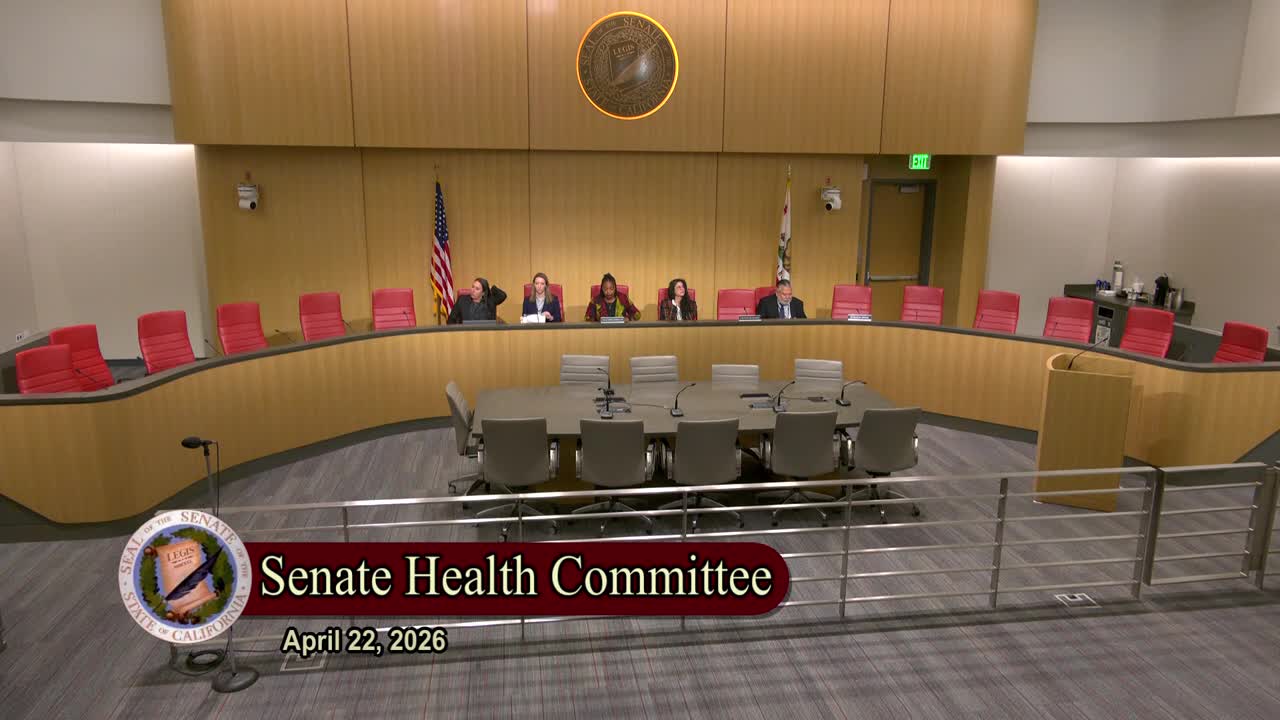 13MIN
Senate Standing Committee on Health
Bill Author