SB 1130: Invasion of privacy: wearable recording devices.
- Session Year: 2025-2026
- House: Senate
- Latest Version Date: 2026-09-04
Current Status:
In Progress
(2026-09-30: In Senate. Consideration of Governor's veto pending.)
Introduced
In Committee
Awaiting First Chamber Vote
Passed First Chamber
In Committee
Awaiting Second Chamber Vote
Passed Second Chamber
Enacted
Existing law prohibits the intentional use of an electronic amplifying or recording device to eavesdrop upon or record a confidential communication, as specified, without the consent of all parties to the communication. Existing law additionally prohibits tapping a communication wire or intercepting or recording a telephone communication, as specified, without the consent of all parties, and prohibits trespassing on property for the purpose of committing, or attempting to commit, a violation of those prohibitions. A violation of those provisions is punishable by a fine not exceeding $2,500, by imprisonment as either a misdemeanor or a felony, or by both the fine and imprisonment, unless otherwise exempted. If that person has previously been convicted of a violation of any of the above-described laws, except for the prohibition on trespassing, a violation of any of those provisions is punishable by a fine not exceeding $10,000, by imprisonment as either a misdemeanor or a felony, or by both the fine and imprisonment.
This bill would additionally prohibit a person from operating a wearable recording device, as defined, to capture sound or video of any other person in any area within a place of business, as defined, where the person has a reasonable expectation of privacy unless the person operating the device has the explicit consent of that person to capture sound or video of that person. The bill would prohibit a person from disabling any light, sound, or other indicator on a wearable recording device that indicates that the device is capturing sound or video. The bill would exempt from these provisions the use of hearing aids, augmentative and alternative communication devices, and similar devices by persons with impaired hearing or communication disorders when used for the purpose of overcoming the impairment or disorder to permit the hearing of sounds ordinarily audible to the human ear or to support communication with the person or by persons with a disability if the device or technology is used for the purpose of enabling a persons access to, or participation in, activities of daily living or to support a persons functional needs related to the disability or condition.
The bill would make a violation of these provisions punishable by a fine not exceeding $1,500, by imprisonment as a misdemeanor, or by both that fine and imprisonment. The bill would make the exemptions from the provisions described above applicable to violations of these prohibitions.
By creating new crimes, the bill would impose a state-mandated local program.
The bill would, commencing on January 1, 2028, prohibit a person or entity from manufacturing, selling, delivering, holding, or offering for sale in commerce a wearable recording device without a light, sound, or other indicator that is sufficiently prominent so that a reasonable person in the vicinity would be alerted to the capturing activity. The bill would prohibit a person or entity from manufacturing, selling, delivering, holding, or offering for sale in commerce any technology that is designed for the primary purpose of, primarily marketed for, or likely primarily used for enabling a person to disable any light, sound, or other indicator on a wearable recording device that indicates that the device is capturing sound or video and would prohibit a person from purchasing, trading for, otherwise acquiring, or using that technology, as specified. The bill would make a knowing violation of these provisions punishable by a civil penalty not exceeding $2,500 per violation.
The California Constitution requires the state to reimburse local agencies and school districts for certain costs mandated by the state. Statutory provisions establish procedures for making that reimbursement.
This bill would provide that no reimbursement is required by this act for a specified reason.
Existing law prohibits the intentional use of an electronic amplifying or recording device to eavesdrop upon or record a confidential communication, as specified, without the consent of all parties to the communication. Existing law additionally prohibits tapping a communication wire or intercepting or recording a telephone communication, as specified, without the consent of all parties, and prohibits trespassing on property for the purpose of committing, or attempting to commit, a violation of those prohibitions. A violation of those provisions is punishable by a fine not exceeding $2,500, by imprisonment as either a misdemeanor or a felony, or by both the fine and imprisonment, unless otherwise exempted. If that person has previously been convicted of a violation of any of the above-described laws, except for the prohibition on trespassing, a violation of any of those provisions is punishable by a fine not exceeding $10,000, by imprisonment as either a misdemeanor or a felony, or by both the fine and imprisonment.
This bill would additionally prohibit a person from operating a wearable recording device, as defined, to capture sound or video of any other person in any area within a place of business, as defined, where the person has a reasonable expectation of privacy unless the person operating the device has the explicit consent of that person to capture sound or video of that person. The bill would prohibit a person from disabling any light, sound, or other indicator on a wearable recording device that indicates that the device is capturing sound or video. The bill would exempt from these provisions the use of hearing aids, augmentative and alternative communication devices, and similar devices by persons with impaired hearing or communication disorders when used for the purpose of overcoming the impairment or disorder to permit the hearing of sounds ordinarily audible to the human ear or to support communication with the person or by persons with a disability if the device or technology is used for the purpose of enabling a persons access to, or participation in, activities of daily living or to support a persons functional needs related to the disability or condition.
The bill would make a violation of these provisions punishable by a fine not exceeding $1,500, by imprisonment as a misdemeanor, or by both that fine and imprisonment. The bill would make the exemptions from the provisions described above applicable to violations of these prohibitions.
By creating new crimes, the bill would impose a state-mandated local program.
The bill would, commencing on January 1, 2028, prohibit a person or entity from manufacturing, selling, delivering, holding, or offering for sale in commerce a wearable recording device without a light, sound, or other indicator that is sufficiently prominent so that a reasonable person in the vicinity would be alerted to the recording capturing activity. The bill would prohibit a person or entity from manufacturing, selling, delivering, holding, or offering for sale in commerce any technology that is designed for the primary purpose of, primarily marketed for, or likely primarily used for enabling a person to disable any light, sound, or other indicator on a wearable recording device that indicates that the device is capturing sound or video and would prohibit a person from purchasing, trading for, otherwise acquiring, or using that technology, as specified. The bill would make a knowing violation of these provisions punishable by a civil penalty not exceeding $2,500 per violation.
The California Constitution requires the state to reimburse local agencies and school districts for certain costs mandated by the state. Statutory provisions establish procedures for making that reimbursement.
This bill would provide that no reimbursement is required by this act for a specified reason.
Existing law prohibits the intentional use of an electronic amplifying or recording device to eavesdrop upon or record a confidential communication, as specified, without the consent of all parties to the communication. Existing law additionally prohibits tapping a communication wire or intercepting or recording a telephone communication, as specified, without the consent of all parties, and prohibits trespassing on property for the purpose of committing, or attempting to commit, a violation of those prohibitions. A violation of those provisions is punishable by a fine not exceeding $2,500, by imprisonment as either a misdemeanor or a felony, or by both the fine and imprisonment, unless otherwise exempted. If that person has previously been convicted of a violation of any of the above-described laws, except for the prohibition on trespassing, a violation of any of those provisions is punishable by a fine not exceeding $10,000, by imprisonment as either a misdemeanor or a felony, or by both the fine and imprisonment.
This bill would additionally prohibit a person from operating a wearable recording device, as defined, to capture sound or video of any other person in any area within a place of business, as defined, where the person has a reasonable expectation of privacy unless the person operating the device has the explicit consent of that person to capture sound or video of that person. The bill would prohibit a person from disabling any light, sound, or other indicator on a wearable recording device that indicates that the device is capturing sound or video. The bill would exempt from these provisions the use of hearing aids, augmentative and alternative communication devices, and similar devices by persons with impaired hearing or communication disorders when used for the purpose of overcoming the impairment or disorder to permit the hearing of sounds ordinarily audible to the human ear or to support communication with the person or by persons with a disability if the device or technology is used for the purpose of enabling a persons access to, or participation in, activities of daily living or to support a persons functional needs related to the disability or condition.
The bill would make a violation of these provisions punishable by a fine not exceeding $1,500, by imprisonment as a misdemeanor, or by both that fine and imprisonment. The bill would make the exemptions from the provisions described above applicable to violations of these prohibitions.
By creating new crimes, the bill would impose a state-mandated local program.
The bill would also would, commencing on January 1, 2028, prohibit a person or entity from manufacturing, selling, delivering, holding, or offering for sale in commerce a wearable recording device without a light, sound, or other indicator that is sufficiently prominent so that a reasonable person in the vicinity would be alerted to the recording activity or activity. The bill would prohibit a person or entity from manufacturing, selling, delivering, holding, or offering for sale in commerce any technology that is designed for the primary purpose of, primarily marketed for, or likely primarily used for enabling a person to disable any light, sound, or other indicator on a wearable recording device that indicates that the device is capturing sound or video. The bill video and would prohibit a person from purchasing, trading for, otherwise acquiring, or using that technology, as specified. The bill would make a knowing violation of these provisions punishable by a civil penalty not exceeding $2,500 per violation.
The California Constitution requires the state to reimburse local agencies and school districts for certain costs mandated by the state. Statutory provisions establish procedures for making that reimbursement.
This bill would provide that no reimbursement is required by this act for a specified reason.
Existing law prohibits the intentional use of an electronic amplifying or recording device to eavesdrop upon or record a confidential communication, as specified, without the consent of all parties to the communication. Existing law additionally prohibits tapping a communication wire or intercepting or recording a telephone communication, as specified, without the consent of all parties, and prohibits trespassing on property for the purpose of committing, or attempting to commit, a violation of those prohibitions. A violation of those provisions is punishable by a fine not exceeding $2,500, by imprisonment as either a misdemeanor or a felony, or by both the fine and imprisonment, unless otherwise exempted. If that person has previously been convicted of a violation of any of the above-described laws, except for the prohibition on trespassing, a violation of any of those provisions is punishable by a fine not exceeding $10,000, by imprisonment as either a misdemeanor or a felony, or by both the fine and imprisonment.
This bill would additionally prohibit a person from operating a wearable recording device, as defined, to capture sound or video of any other person in any area within a place of business, as defined, where the person has a reasonable expectation of privacy unless the person operating the device has the explicit consent of that person to capture sound or video of that person. The bill would prohibit a person from disabling any light, sound, or other indicator on a wearable recording device that indicates that the device is capturing sound or video. The bill would exempt from these provisions the use of hearing aids, augmentative and alternative communication devices, and similar devices by persons afflicted with impaired hearing or communication disorders when used for the purpose of overcoming the impairment or disorder to permit the hearing of sounds ordinarily audible to the human ear or to support communication with the person. person or by persons with a disability if the device or technology is used for the purpose of enabling a persons access to, or participation in, activities of daily living or to support a persons functional needs related to the disability or condition.
The bill would make a violation of these provisions punishable by a fine not exceeding $1,500, by imprisonment as a misdemeanor, or by both that fine and imprisonment. The bill would make the exemptions from the provisions described above applicable to violations of these prohibitions.
By creating new crimes, the bill would impose a state-mandated local program.
The bill would also prohibit a person or entity from manufacturing, selling, delivering, holding, or offering for sale in commerce a wearable recording device without a light, sound, or other indicator that is sufficiently prominent so that a reasonable person in the vicinity would be alerted to the recording activity or any technology that is designed for the primary purpose of, primarily marketed for, or likely primarily used for enabling a person to disable any light, sound, or other indicator on a wearable recording device that indicates that the device is capturing sound or video. The bill would prohibit a person from purchasing, trading for, otherwise acquiring, or using that technology, as specified. The bill would make a knowing violation of these provisions punishable by a civil penalty not exceeding $2,500 per violation.
The California Constitution requires the state to reimburse local agencies and school districts for certain costs mandated by the state. Statutory provisions establish procedures for making that reimbursement.
This bill would provide that no reimbursement is required by this act for a specified reason.
Existing law prohibits tapping a communication wire or intercepting or recording a telephone communication, as specified, without the consent of all parties, and prohibits trespassing on property for the purpose of committing, or attempting to commit, a violation of those prohibitions. A violation of those provisions is punishable by a fine not exceeding $2,500, by imprisonment as either a misdemeanor or a felony, or by both the fine and imprisonment, unless otherwise exempted. If that person has previously been convicted of a violation of any of the above-described laws, except for the prohibition on trespassing, a violation of any of those provisions is punishable by a fine not exceeding $10,000, by imprisonment as either a misdemeanor or a felony, or by both the fine and imprisonment.
This bill would additionally prohibit a person from operating a wearable recording device, as defined, to capture sound or video of any other person in any area within a place of business, as defined, where the person has a reasonable expectation of privacy unless the person operating the device has the explicit consent of that person to capture sound or video of that person. The bill would prohibit a person from disabling any light, sound, or other indicator on a wearable recording device that indicates that the device is capturing sound or video. The bill would exempt from these provisions the use of hearing aids, augmentative and alternative communication devices, and similar devices by persons afflicted with impaired hearing or communication disorders when used for the purpose of overcoming the impairment or disorder to permit the hearing of sounds ordinarily audible to the human ear or to support communication with the person.
The bill would make a violation of these provisions punishable by a fine not exceeding $1,500, by imprisonment as a misdemeanor, or by both that fine and imprisonment. The bill would make the exemptions from the provisions described above applicable to violations of these prohibitions.
By creating new crimes, the bill would impose a state-mandated local program.
The bill would also prohibit a person or entity from manufacturing, selling, delivering, holding, or offering for sale in commerce a wearable recording device without a light, sound, or other indicator that is sufficiently prominent so that a reasonable person in the vicinity would be alerted to the recording activity or any technology that is designed for the primary purpose of, primarily marketed for, or likely primarily used for enabling a person to disable any light, sound, or other indicator on a wearable recording device that indicates that the device is capturing sound or video and video. The bill would prohibit a person from purchasing, trading for, otherwise acquiring, or using that technology, as specified. The bill would make a knowing violation of these provisions punishable by a civil penalty not exceeding $2,500 per violation.
The California Constitution requires the state to reimburse local agencies and school districts for certain costs mandated by the state. Statutory provisions establish procedures for making that reimbursement.
This bill would provide that no reimbursement is required by this act for a specified reason.
Existing law prohibits tapping a communication wire or intercepting or recording a telephone communication, as specified, without the consent of all parties, and prohibits trespassing on property for the purpose of committing, or attempting to commit, a violation of those prohibitions. A violation of those provisions is punishable by a fine not exceeding $2,500, by imprisonment as either a misdemeanor or a felony, or by both the fine and imprisonment, unless otherwise exempted. If that person has previously been convicted of a violation of any of the above-described laws, except for the prohibition on trespassing, a violation of any of those provisions is punishable by a fine not exceeding $10,000, by imprisonment as either a misdemeanor or a felony, or by both the fine and imprisonment.
This bill would additionally prohibit a person from operating a wearable recording device, as defined, to capture sound or video of any other person in any area within a place of business, as defined, where the person has a reasonable expectation of privacy unless the person operating the device has the explicit consent of that person to capture sound or video of that person. The bill would prohibit a person from disabling any light or other device light, sound, or other indicator on a wearable recording device that indicates that the device is capturing sound or video. The bill would exempt from these provisions the use of hearing aids, augmentative and alternative communication devices, and similar devices by persons afflicted with impaired hearing or communication disorders when used for the purpose of overcoming the impairment or disorder to permit the hearing of sounds ordinarily audible to the human ear or to support communication with the person.
The bill would make a violation of these provisions punishable by a fine not exceeding $1,500, by imprisonment as a misdemeanor, or by both that fine and imprisonment. The bill would make the exemptions from the provisions described above applicable to violations of these prohibitions.
By creating new crimes, the bill would impose a state-mandated local program.
The bill would also prohibit a person or entity from manufacturing, selling, delivering, holding, or offering for sale in commerce any technology that is designed for the primary purpose of, primarily marketed for, or likely primarily used for enabling a person to disable any light or other device light, sound, or other indicator on a wearable recording device that indicates that the device is capturing sound or video and would prohibit a person from purchasing, trading for, otherwise acquiring, or using that technology, as specified. The bill would make a knowing violation of these provisions punishable by a civil penalty not exceeding $2,500 per violation.
The California Constitution requires the state to reimburse local agencies and school districts for certain costs mandated by the state. Statutory provisions establish procedures for making that reimbursement.
This bill would provide that no reimbursement is required by this act for a specified reason.
Existing law prohibits tapping a communication wire or intercepting or recording a telephone communication, as specified, without the consent of all parties, and prohibits trespassing on property for the purpose of committing, or attempting to commit, a violation of those prohibitions. A violation of those provisions is punishable by a fine not exceeding $2,500, by imprisonment as either a misdemeanor or a felony, or by both the fine and imprisonment, unless otherwise exempted. If that person has previously been convicted of a violation of any of the above-described laws, except for the prohibition on trespassing, a violation of any of those provisions is punishable by a fine not exceeding $10,000, by imprisonment as either a misdemeanor or a felony, or by both the fine and imprisonment.
This bill would additionally prohibit a person from operating a wearable recording device, as defined, to capture sound or video of any other person in any area within a place of business, as defined, where the person has a reasonable expectation of privacy unless the person operating the device has the explicit consent of that person to capture sound or video of that person. The bill would prohibit a person from disabling any light or other device on a wearable recording device that indicates that the device is capturing sound or video. The bill would exempt from these provisions the use of hearing aids, augmentative and alternative communication devices, and similar devices by persons afflicted with impaired hearing or communication disorders when used for the purpose of overcoming the impairment or disorder to permit the hearing of sounds ordinarily audible to the human ear or to support communication with the person.
The bill would make a violation of these provisions punishable by a fine not exceeding $1,500, by imprisonment as a misdemeanor, or by both that fine and imprisonment. The bill would make the exemptions from the provisions described above applicable to violations of these prohibitions.
By creating new crimes, the bill would impose a state-mandated local program.
The bill would also prohibit a person or entity from manufacturing, selling, delivering, holding, or offering for sale in commerce any technology that enables is designed for the purpose of, marketed for, or likely primarily used for enabling a person to disable any light or other device on a wearable recording device that indicates that the device is capturing sound or video and would prohibit a person from purchasing, trading for, otherwise acquiring, or using that technology, as specified. The bill would make a knowing violation of these provisions punishable by a civil penalty not exceeding $2,500 per violation.
The California Constitution requires the state to reimburse local agencies and school districts for certain costs mandated by the state. Statutory provisions establish procedures for making that reimbursement.
This bill would provide that no reimbursement is required by this act for a specified reason.
Existing law prohibits tapping a communication wire or intercepting or recording a telephone communication, as specified, without the consent of all parties, and prohibits trespassing on property for the purpose of committing, or attempting to commit, a violation of those prohibitions. A violation of those provisions is punishable by a fine not exceeding $2,500, by imprisonment as either a misdemeanor or a felony, or by both the fine and imprisonment, unless otherwise exempted. If that person has previously been convicted of a violation of any of the above-described laws, except for the prohibition on trespassing, a violation of any of those provisions is punishable by a fine not exceeding $10,000, by imprisonment as either a misdemeanor or a felony, or by both the fine and imprisonment.
This bill would additionally prohibit a person from operating a wearable recording device, as defined, to capture sound or video of any other person in any area within a place of business, as defined, where the person has a reasonable expectation of privacy unless the person operating the device has the explicit consent of that person to capture sound or video of that person. The bill would prohibit a person from disabling any light or other device on a wearable recording device that indicates that the device is capturing sound or video. The bill would exempt from these provisions the use of hearing aids, augmentative and alternative communication devices, and similar devices by persons afflicted with impaired hearing or communication disorders when used for the purpose of overcoming the impairment or disorder to permit the hearing of sounds ordinarily audible to the human ear or to support communication with the person.
The bill would make a violation of these provisions punishable by a fine not exceeding $1,500, by imprisonment as a misdemeanor, or by both that fine and imprisonment. The bill would make the exemptions from the provisions described above applicable to violations of these prohibitions.
By creating new crimes, the bill would impose a state-mandated local program.
The bill would also prohibit a person or entity from manufacturing, selling, delivering, holding, or offering for sale in commerce any technology that enables a person to disable any light or other device on a wearable recording device that indicates that the device is capturing sound or video and would prohibit a person from purchasing, trading for, otherwise acquiring, or using that technology, as specified. The bill would make a knowing violation of these provisions punishable by a civil penalty not exceeding $2,500 per violation.
The California Constitution requires the state to reimburse local agencies and school districts for certain costs mandated by the state. Statutory provisions establish procedures for making that reimbursement.
This bill would provide that no reimbursement is required by this act for a specified reason.
Existing law prohibits tapping a communication wire or intercepting or recording a telephone communication, as specified, without the consent of all parties, and prohibits trespassing on property for the purpose of committing, or attempting to commit, a violation of those prohibitions. A violation of those provisions is punishable by a fine not exceeding $2,500, by imprisonment as either a misdemeanor or a felony, or by both the fine and imprisonment, unless otherwise exempted. If that person has previously been convicted of a violation of any of the above-described laws, except for the prohibition on trespassing, a violation of any of those provisions is punishable by a fine not exceeding $10,000, by imprisonment as either a misdemeanor or a felony, or by both the fine and imprisonment.
This bill would additionally prohibit a person from operating a wearable recording device, as defined, to capture sound or video of any other person in any area within a place of business, as defined, where the person has a reasonable expectation of privacy unless the person operating the device has the explicit consent of that person to capture sound or video of that person. The bill would prohibit a person from disabling any light or other device on a wearable recording device that indicates that the device is capturing sound or video.
The bill would make a violation of these provisions punishable by a fine not exceeding $1,500, by imprisonment as a misdemeanor, or by both that fine and imprisonment. The bill would make the exemptions from the provisions described above applicable to violations of these prohibitions.
By creating new crimes, the bill would impose a state-mandated local program.
The bill would also prohibit a person or entity from manufacturing, selling, delivering, holding, or offering for sale in commerce any technology that enables a person to disable any light or other device on a wearable recording device that indicates that the device is capturing sound or video and would prohibit a person from purchasing, trading for, otherwise acquiring, or using that technology, as specified. The bill would make a knowing violation of these provisions punishable by a civil penalty not exceeding $2,500 per violation.
The California Constitution requires the state to reimburse local agencies and school districts for certain costs mandated by the state. Statutory provisions establish procedures for making that reimbursement.
This bill would provide that no reimbursement is required by this act for a specified reason.
Existing law prohibits tapping a communication wire or intercepting or recording a telephone communication, as specified, without the consent of all parties, and prohibits trespassing on property for the purpose of committing, or attempting to commit, a violation of those prohibitions. A violation of those provisions is punishable by a fine not exceeding $2,500, by imprisonment as either a misdemeanor or a felony, or by both the fine and imprisonment, unless otherwise exempted. If that person has previously been convicted of a violation of any of the above-described laws, except for the prohibition on trespassing, a violation of any of those provisions is punishable by a fine not exceeding $10,000, by imprisonment as either a misdemeanor or a felony, or by both the fine and imprisonment.
This bill would additionally prohibit a person from operating a wearable recording device, as defined, to capture sound or video of any other person in any area within a place of business, as defined, where the person has a reasonable expectation of privacy unless the person operating the device has the explicit consent of that person to capture sound or video of that person. The bill would prohibit a person from disabling any light or other device on a wearable recording device that indicates that the device is capturing sound or video. The bill would prohibit a person or entity from manufacturing, selling, delivering, holding, or offering for sale in commerce any technology that enables a person to disable any light or other device on a wearable recording device that indicates that the device is capturing sound or video and would prohibit a person from purchasing, trading for, otherwise acquiring, or using that technology, as specified.
The bill would make a violation of these provisions punishable by a fine not exceeding $2,500, by imprisonment as either a misdemeanor or a felony, or by both the fine and imprisonment. If that person has previously been convicted of a violation of any of the prohibitions described above, the bill would make a violation of these provisions punishable by a fine not exceeding $10,000, by imprisonment as either a misdemeanor or a felony, or by both the fine and imprisonment. The bill would make a violation of the prohibitions in this bill applicable to the enhanced fine for a subsequent violation of any of the prohibitions described above, except for the prohibition on trespassing, and would make $1,500, by imprisonment as a misdemeanor, or by both that fine and imprisonment. The bill would make the exemptions from the provisions described above applicable to violations of the bills these prohibitions.
By creating new crimes, the bill would impose a state-mandated local program.
The bill would also prohibit a person or entity from manufacturing, selling, delivering, holding, or offering for sale in commerce any technology that enables a person to disable any light or other device on a wearable recording device that indicates that the device is capturing sound or video and would prohibit a person from purchasing, trading for, otherwise acquiring, or using that technology, as specified. The bill would make a knowing violation of these provisions punishable by a civil penalty not exceeding $2,500 per violation.
The California Constitution requires the state to reimburse local agencies and school districts for certain costs mandated by the state. Statutory provisions establish procedures for making that reimbursement.
This bill would provide that no reimbursement is required by this act for a specified reason.
Existing law prohibits tapping a communication wire or intercepting or recording a telephone communication, as specified, without the consent of all parties, and prohibits trespassing on property for the purpose of committing, or attempting to commit, a violation of those prohibitions. A violation of those provisions is punishable by a fine not exceeding $2,500, by imprisonment as either a misdemeanor or a felony, or by both the fine and imprisonment, unless otherwise exempted. If that person has previously been convicted of a violation of any of the above-described laws, except for the prohibition on trespassing, a violation of any of those provisions is punishable by a fine not exceeding $10,000, by imprisonment as either a misdemeanor or a felony, or by both the fine and imprisonment.
This bill would additionally prohibit a person from operating a wearable recording device, as defined, to capture sound or video of any other person in any area within a place of business, as defined, where the person has a reasonable expectation of privacy unless the person operating the device has the explicit consent of that person to capture sound or video of that person. The bill would prohibit a person from disabling any light or other device on a wearable recording device that indicates that the device is capturing sound or video. The bill would prohibit a person or entity from manufacturing, selling, delivering, holding, or offering for sale in commerce any technology that enables a person to disable any light or other device on a wearable recording device that indicates that the device is capturing sound or video and would prohibit a person from purchasing, trading for, otherwise acquiring, or using that technology, as specified.
The bill would make a violation of these provisions punishable by a fine not exceeding $2,500, by imprisonment as either a misdemeanor or a felony, or by both the fine and imprisonment. If that person has previously been convicted of a violation of any of the prohibitions described above, the bill would make a violation of these provisions punishable by a fine not exceeding $10,000, by imprisonment as either a misdemeanor or a felony, or by both the fine and imprisonment. The bill would make a violation of the prohibitions in this bill applicable to the enhanced fine for a subsequent violation of any of the prohibitions described above, except for the prohibition on trespassing, and would make the exemptions from the provisions described above applicable to violations of the bills prohibitions.
By creating new crimes, the bill would impose a state-mandated local program.
The California Constitution requires the state to reimburse local agencies and school districts for certain costs mandated by the state. Statutory provisions establish procedures for making that reimbursement.
This bill would provide that no reimbursement is required by this act for a specified reason.
(a)For the purposes of this chapter, capture has the same meaning as defined in Section 632.8 of the Penal Code.
(b)For the purposes of this chapter, wearable recording device has the same meaning as defined in Section 632.8 of the Penal Code.
22949.86.(a)A person or entity shall not manufacture, sell, deliver, hold, or offer for sale in commerce in this state a wearable recording device without a light, sound, or other indicator that is sufficiently prominent so that a reasonable person in the vicinity would be alerted to the capturing activity.
(b)This section shall become operative on January 1, 2028.
22949.87.(a)A person or entity shall not manufacture, sell, deliver, hold, or offer for sale in commerce in this state any technology that is designed for the primary purpose of, marketed primarily for, or likely primarily used for enabling a person to disable any light, sound, or other indicator on a wearable recording device that indicates that the device is capturing sound or video.
(b)A person in this state shall not purchase, trade for, or otherwise acquire the technology described in subdivision (a).
(c)A person in this state shall not use any technology to permanently or temporarily disable any light, sound, or other indicator on a wearable recording device that indicates that the device is capturing sound or video if the device would otherwise indicate that it is capturing sound or video.
22949.88.A person who knowingly violates this chapter shall be liable for a civil penalty not exceeding two thousand five hundred dollars ($2,500) per violation.
SEC. 2.Section 632.8 is added to the Penal Code, to read:632.8.(a)For purposes of this section, the following terms have the following meanings:
(1)Capture means to collect and store sound or video of another person or to collect and transmit sound or video of another person to any other person. Capture does not include the temporary processing of sound or video that is not stored or transmitted to another person.
(2)Place of business means any physical office or retail establishment in which members of the public receive goods or services from the business.
(3)(A)Wearable recording device means any device that is designed to be worn on or attached to the body, rather than held by the user, that has the capacity to make sound or video recordings or to transmit sound or video to another device or to the internet.
(B)A wearable recording device does not include a body-worn camera when used by a public officer or peace officer in the course of their official duties.
(C)(i)A wearable recording device does not include a headset, two-way radio, or similar device that is operated by an employee during the normal course of their business duties and is provided by their employer for that purpose.
(ii)If an employer intentionally records sound or video of a customer while using a headset, two-way radio, or similar device as described in clause (i), the employer shall inform the customer that they are being recorded.
(D)A wearable recording device does not include traditional wireless headphones or earphones.
(b)(1)A person shall not operate a wearable recording device to capture sound or video of any other person in any area within a place of business where the person has a reasonable expectation of privacy unless the person operating the device has the explicit consent of that person to capture sound or video of that person.
(2)The fact that a person takes a photograph or makes an audio or video recording of a public officer or peace officer, while the officer is in a public place or the person taking the photograph or making the recording is in a place the person has the right to be, does not constitute, in and of itself, a violation of paragraph (1), nor does it constitute reasonable suspicion to detain the person or probable cause to arrest the person.
(c)A person shall not disable any light, sound, or other indicator on a wearable recording device that indicates that the device is capturing sound or video.
(d)A violation of this section is punishable by a fine not exceeding one thousand five hundred dollars ($1,500) per violation, or imprisonment in a county jail not exceeding one year, or by both that fine and imprisonment.
(e)This section does not apply to the use of hearing aids, augmentative and alternative communication devices, and similar devices by a person with impaired hearing or any communication disorder when the hearing aid or device is used for the purpose of overcoming the impairment or disorder to permit the hearing of sounds ordinarily audible to the human ear or to support communication with the person.
(f)This section does not preclude prosecution under Section 632 or any other law providing for a greater penalty.
(g)This section does not apply to the use of assistive technology, including, but not limited to, hearing aids, augmentative and alternative communication devices, and similar devices and technologies by a person with a disability, as that term is defined in Section 12102 of the federal Americans with Disabilities Act of 1990 (42 U.S.C. Sec. 12101 et seq.) if the device or technology is used for the purpose of enabling a persons access to, or participation in, activities of daily living or to support a persons functional needs related to the disability or condition.
(h)This section does not impose liability on a manufacturer of a wearable recording device or a provider of software or a service that processes, stores, or transmits recordings captured by the device solely because the entity manufactured, provided, or maintained the device, software, or service.
(i)Notwithstanding Section 637.2, this section does not create a private right of action against a person who has violated this section.
SEC. 3.Section 633 of the Penal Code is amended to read:633.(a)Nothing in Section 631, 632, 632.5, 632.6, 632.7, or 632.8 prohibits the Attorney General, any district attorney, or any assistant, deputy, or investigator of the Attorney General or any district attorney, any officer of the California Highway Patrol, any peace officer of the Office of Internal Affairs of the Department of Corrections and Rehabilitation, any chief of police, assistant chief of police, or police officer of a city or city and county, any sheriff, undersheriff, or deputy sheriff regularly employed and paid in that capacity by a county, police officer of the County of Los Angeles, or any person acting pursuant to the direction of one of these law enforcement officers acting within the scope of their authority, from overhearing or recording any communication that they could lawfully overhear or record prior to January 1, 1968.
(b)Nothing in Section 631, 632, 632.5, 632.6, 632.7, or 632.8 renders inadmissible any evidence obtained by the above-named persons by means of overhearing or recording any communication that they could lawfully overhear or record prior to January 1, 1968.
SEC. 4.Section 633.1 of the Penal Code is amended to read:633.1.(a)Nothing in Section 631, 632, 632.5, 632.6, 632.7, or 632.8 prohibits any person regularly employed as an airport law enforcement officer, as described in subdivision (d) of Section 830.33, acting within the scope of their authority, from recording any communication which is received on an incoming telephone line, for which the person initiating the call utilized a telephone number known to the public to be a means of contacting airport law enforcement officers. In order for a telephone call to be recorded under this subdivision, a series of electronic tones shall be used, placing the caller on notice that their telephone call is being recorded.
(b)Nothing in Section 631, 632, 632.5, 632.6, 632.7, or 632.8 renders inadmissible any evidence obtained by an officer described in subdivision (a) if the evidence was received by means of recording any communication which is received on an incoming public telephone line, for which the person initiating the call utilized a telephone number known to the public to be a means of contacting airport law enforcement officers.
(c)This section shall only apply to airport law enforcement officers who are employed at an airport which maintains regularly scheduled international airport service and which maintains permanent facilities of the United States Customs Service.
SEC. 5.Section 633.5 of the Penal Code is amended to read:633.5.Sections 631, 632, 632.5, 632.6, 632.7, and 632.8 do not prohibit one party to a confidential communication from recording the communication for the purpose of obtaining evidence reasonably believed to relate to the commission by another party to the communication of the crime of extortion, kidnapping, bribery, any felony involving violence against the person, including, but not limited to, human trafficking, as defined in Section 236.1, or a violation of Section 653m, or domestic violence as defined in Section 13700. Sections 631, 632, 632.5, 632.6, 632.7, and 632.8 do not render any evidence so obtained inadmissible in a prosecution for extortion, kidnapping, bribery, any felony involving violence against the person, including, but not limited to, human trafficking, as defined in Section 236.1, a violation of Section 653m, or domestic violence as defined in Section 13700, or any crime in connection therewith.
SEC. 6.No reimbursement is required by this act pursuant to Section 6 of Article XIIIB of the California Constitution because the only costs that may be incurred by a local agency or school district will be incurred because this act creates a new crime or infraction, eliminates a crime or infraction, or changes the penalty for a crime or infraction, within the meaning of Section 17556 of the Government Code, or changes the definition of a crime within the meaning of Section 6 of Article XIIIB of the California Constitution.
(a)For the purposes of this chapter, capture has the same meaning as defined in Section 632.8 of the Penal Code.
(b)For the purposes of this chapter, wearable recording device has the same meaning as defined in Section 632.8 of the Penal Code.
22949.86.(a)A person or entity shall not manufacture, sell, deliver, hold, or offer for sale in commerce in this state a wearable recording device without a light, sound, or other indicator that is sufficiently prominent so that a reasonable person in the vicinity would be alerted to the recording capturing activity.
(b)This section shall become operative on January 1, 2028.
22949.87.(a)A person or entity shall not manufacture, sell, deliver, hold, or offer for sale in commerce in this state any technology that is designed for the primary purpose of, marketed primarily for, or likely primarily used for enabling a person to disable any light, sound, or other indicator on a wearable recording device that indicates that the device is capturing sound or video.
(b)A person in this state shall not purchase, trade for, or otherwise acquire the technology described in subdivision (a).
(c)A person in this state shall not use any technology to permanently or temporarily disable any light, sound, or other indicator on a wearable recording device that indicates that the device is capturing sound or video if the device would otherwise indicate that it is capturing sound or video.
22949.88.A person who knowingly violates this chapter shall be liable for a civil penalty not exceeding two thousand five hundred dollars ($2,500) per violation.
SEC. 2.Section 632.8 is added to the Penal Code, to read:632.8.(a)For purposes of this section, the following terms have the following meanings:
(1)Capture means to collect and store sound or video of another person or to collect and transmit sound or video of another person to any other person. Capture does not include the temporary processing of sound or video that is not stored or transmitted to another person.
(2)Place of business means any physical office or retail establishment in which members of the public receive goods or services from the business.
(3)(A)Wearable recording device means any device that is designed to be worn on or attached to the body, rather than held by the user, that has the capacity to make sound or video recordings or to transmit sound or video to another device or to the internet.
(B)A wearable recording device does not include a body-worn camera when used by a public officer or peace officer in the course of their official duties.
(C)(i)A wearable recording device does not include a headset, two-way radio, or similar device that is operated by an employee during the normal course of their business duties and is provided by their employer for that purpose.
(ii)If an employer intentionally records sound or video of a customer while using a headset, two-way radio, or similar device as described in clause (i), the employer shall inform the customer that they are being recorded.
(D)A wearable recording device does not include traditional wireless headphones or earphones.
(b)(1)A person shall not operate a wearable recording device to capture sound or video of any other person in any area within a place of business where the person has a reasonable expectation of privacy unless the person operating the device has the explicit consent of that person to capture sound or video of that person.
(2)The fact that a person takes a photograph or makes an audio or video recording of a public officer or peace officer, while the officer is in a public place or the person taking the photograph or making the recording is in a place the person has the right to be, does not constitute, in and of itself, a violation of paragraph (1), nor does it constitute reasonable suspicion to detain the person or probable cause to arrest the person.
(c)A person shall not disable any light, sound, or other indicator on a wearable recording device that indicates that the device is capturing sound or video.
(d)A violation of this section is punishable by a fine not exceeding one thousand five hundred dollars ($1,500) per violation, or imprisonment in a county jail not exceeding one year, or by both that fine and imprisonment.
(e)This section does not apply to the use of hearing aids, augmentative and alternative communication devices, and similar devices by a person with impaired hearing or any communication disorder when the hearing aid or device is used for the purpose of overcoming the impairment or disorder to permit the hearing of sounds ordinarily audible to the human ear or to support communication with the person.
(f)This section does not preclude prosecution under Section 632 or any other law providing for a greater penalty.
(g)This section does not apply to the use of assistive technology, including, but not limited to, hearing aids, augmentative and alternative communication devices, and similar devices and technologies by a person with a disability, as that term is defined in Section 12102 of the federal Americans with Disabilities Act of 1990 (42 U.S.C. Sec. 12101 et seq.) if the device or technology is used for the purpose of enabling a persons access to, or participation in, activities of daily living or to support a persons functional needs related to the disability or condition.
(h)This section does not impose liability on a manufacturer of a wearable recording device or a provider of software or a service that processes, stores, or transmits recordings captured by the device solely because the entity manufactured, provided, or maintained the device, software, or service.
(i)Notwithstanding Section 637.2, this section does not create a private right of action against a person who has violated this section.
SEC. 3.Section 633 of the Penal Code is amended to read:633.(a)Nothing in Section 631, 632, 632.5, 632.6, 632.7, or 632.8 prohibits the Attorney General, any district attorney, or any assistant, deputy, or investigator of the Attorney General or any district attorney, any officer of the California Highway Patrol, any peace officer of the Office of Internal Affairs of the Department of Corrections and Rehabilitation, any chief of police, assistant chief of police, or police officer of a city or city and county, any sheriff, undersheriff, or deputy sheriff regularly employed and paid in that capacity by a county, police officer of the County of Los Angeles, or any person acting pursuant to the direction of one of these law enforcement officers acting within the scope of their authority, from overhearing or recording any communication that they could lawfully overhear or record prior to January 1, 1968.
(b)Nothing in Section 631, 632, 632.5, 632.6, 632.7, or 632.8 renders inadmissible any evidence obtained by the above-named persons by means of overhearing or recording any communication that they could lawfully overhear or record prior to January 1, 1968.
SEC. 4.Section 633.1 of the Penal Code is amended to read:633.1.(a)Nothing in Section 631, 632, 632.5, 632.6, 632.7, or 632.8 prohibits any person regularly employed as an airport law enforcement officer, as described in subdivision (d) of Section 830.33, acting within the scope of their authority, from recording any communication which is received on an incoming telephone line, for which the person initiating the call utilized a telephone number known to the public to be a means of contacting airport law enforcement officers. In order for a telephone call to be recorded under this subdivision, a series of electronic tones shall be used, placing the caller on notice that their telephone call is being recorded.
(b)Nothing in Section 631, 632, 632.5, 632.6, 632.7, or 632.8 renders inadmissible any evidence obtained by an officer described in subdivision (a) if the evidence was received by means of recording any communication which is received on an incoming public telephone line, for which the person initiating the call utilized a telephone number known to the public to be a means of contacting airport law enforcement officers.
(c)This section shall only apply to airport law enforcement officers who are employed at an airport which maintains regularly scheduled international airport service and which maintains permanent facilities of the United States Customs Service.
SEC. 5.Section 633.5 of the Penal Code is amended to read:633.5.Sections 631, 632, 632.5, 632.6, 632.7, and 632.8 do not prohibit one party to a confidential communication from recording the communication for the purpose of obtaining evidence reasonably believed to relate to the commission by another party to the communication of the crime of extortion, kidnapping, bribery, any felony involving violence against the person, including, but not limited to, human trafficking, as defined in Section 236.1, or a violation of Section 653m, or domestic violence as defined in Section 13700. Sections 631, 632, 632.5, 632.6, 632.7, and 632.8 do not render any evidence so obtained inadmissible in a prosecution for extortion, kidnapping, bribery, any felony involving violence against the person, including, but not limited to, human trafficking, as defined in Section 236.1, a violation of Section 653m, or domestic violence as defined in Section 13700, or any crime in connection therewith.
SEC. 6.No reimbursement is required by this act pursuant to Section 6 of Article XIIIB of the California Constitution because the only costs that may be incurred by a local agency or school district will be incurred because this act creates a new crime or infraction, eliminates a crime or infraction, or changes the penalty for a crime or infraction, within the meaning of Section 17556 of the Government Code, or changes the definition of a crime within the meaning of Section 6 of Article XIIIB of the California Constitution.
(a)For the purposes of this chapter, capture has the same meaning as defined in Section 632.8 of the Penal Code.
(b)For the purposes of this chapter, wearable recording device has the same meaning as defined in Section 632.8 of the Penal Code.
22949.86.(a)A person or entity shall not manufacture, sell, deliver, hold, or offer for sale in commerce in this state a wearable recording device without a light, sound, or other indicator that is sufficiently prominent so that a reasonable person in the vicinity would be alerted to the recording activity.
(b)This section shall become operative on January 1, 2028.
22949.87.(a)A person or entity shall not manufacture, sell, deliver, hold, or offer for sale in commerce in this state any technology that is designed for the primary purpose of, marketed primarily for, or likely primarily used for enabling a person to disable any light, sound, or other indicator on a wearable recording device that indicates that the device is capturing sound or video.
(b)A person in this state shall not purchase, trade for, or otherwise acquire the technology described in subdivision (a).
(c)A person in this state shall not use any technology to permanently or temporarily disable any light, sound, or other indicator on a wearable recording device that indicates that the device is capturing sound or video if the device would otherwise indicate that it is capturing sound or video.
22949.88.A person who knowingly violates this chapter shall be liable for a civil penalty not exceeding two thousand five hundred dollars ($2,500) per violation.
SEC. 2.Section 632.8 is added to the Penal Code, to read:632.8.(a)For purposes of this section, the following terms have the following meanings:
(1)Capture means to collect and store sound or video of another person or to collect and transmit sound or video of another person to any other person. Capture does not include the ephemeral temporary processing of sound or video that is not stored or transmitted to another person.
(2)Place of business means any physical office or retail establishment in which members of the public receive goods or services from the business.
(3)(A)Wearable recording device means any device that is designed to be worn on or attached to the body, rather than held by the user, that has the capacity to make sound or video recordings or to transmit sound or video to another device or to the internet.
(B)A wearable recording device does not include a body-worn camera when used by a public officer or peace officer in the course of their official duties.
(C)(i)A wearable recording device does not include a headset, two-way radio, or similar device that is operated by an employee during the normal course of their business duties and is provided by their employer for that purpose.
(ii)If an employee employer intentionally records sound or video of a customer while using a headset, two-way radio, or similar device as described in clause (i), the employee employer shall inform the customer that they are being recorded.
(D)A wearable recording device does not include traditional wireless headphones or earphones.
(b)(1)A person shall not operate a wearable recording device to capture sound or video of any other person in any area within a place of business where the person has a reasonable expectation of privacy unless the person operating the device has the explicit consent of that person to capture sound or video of that person.
(2)The fact that a person takes a photograph or makes an audio or video recording of a public officer or peace officer, while the officer is in a public place or the person taking the photograph or making the recording is in a place the person has the right to be, does not constitute, in and of itself, a violation of paragraph (1), nor does it constitute reasonable suspicion to detain the person or probable cause to arrest the person.
(c)A person shall not disable any light, sound, or other indicator on a wearable recording device that indicates that the device is capturing sound or video.
(d)A violation of this section is punishable by a fine not exceeding one thousand five hundred dollars ($1,500) per violation, or imprisonment in a county jail not exceeding one year, or by both that fine and imprisonment.
(e)This section does not apply to the use of hearing aids, augmentative and alternative communication devices, and similar devices by a person with impaired hearing or any communication disorder when the hearing aid or device is used for the purpose of overcoming the impairment or disorder to permit the hearing of sounds ordinarily audible to the human ear or to support communication with the person.
(f)This section does not preclude prosecution under Section 632 or any other law providing for a greater penalty.
(g)This section does not apply to the use of assistive technology, including, but not limited to, hearing aids, augmentative and alternative communication devices, and similar devices and technologies by a person with a disability, as that term is defined in Section 12102 of the federal Americans with Disabilities Act of 1990 (42 U.S.C. Sec. 12101 et seq.) if the device or technology is used for the purpose of enabling a persons access to, or participation in, activities of daily living or to support a persons functional needs related to the disability or condition.
(h)This section does not impose liability on a manufacturer of a wearable recording device or a provider of software or a service that processes, stores, or transmits recordings captured by the device solely because the entity manufactured, provided, or maintained the device, software, or service.
(i)Notwithstanding Section 637.2, this section does not create a private right of action against a person who has violated this section.
SEC. 3.Section 633 of the Penal Code is amended to read:633.(a)Nothing in Section 631, 632, 632.5, 632.6, 632.7, or 632.8 prohibits the Attorney General, any district attorney, or any assistant, deputy, or investigator of the Attorney General or any district attorney, any officer of the California Highway Patrol, any peace officer of the Office of Internal Affairs of the Department of Corrections and Rehabilitation, any chief of police, assistant chief of police, or police officer of a city or city and county, any sheriff, undersheriff, or deputy sheriff regularly employed and paid in that capacity by a county, police officer of the County of Los Angeles, or any person acting pursuant to the direction of one of these law enforcement officers acting within the scope of their authority, from overhearing or recording any communication that they could lawfully overhear or record prior to January 1, 1968.
(b)Nothing in Section 631, 632, 632.5, 632.6, 632.7, or 632.8 renders inadmissible any evidence obtained by the above-named persons by means of overhearing or recording any communication that they could lawfully overhear or record prior to January 1, 1968.
SEC. 4.Section 633.1 of the Penal Code is amended to read:633.1.(a)Nothing in Section 631, 632, 632.5, 632.6, 632.7, or 632.8 prohibits any person regularly employed as an airport law enforcement officer, as described in subdivision (d) of Section 830.33, acting within the scope of their authority, from recording any communication which is received on an incoming telephone line, for which the person initiating the call utilized a telephone number known to the public to be a means of contacting airport law enforcement officers. In order for a telephone call to be recorded under this subdivision, a series of electronic tones shall be used, placing the caller on notice that their telephone call is being recorded.
(b)Nothing in Section 631, 632, 632.5, 632.6, 632.7, or 632.8 renders inadmissible any evidence obtained by an officer described in subdivision (a) if the evidence was received by means of recording any communication which is received on an incoming public telephone line, for which the person initiating the call utilized a telephone number known to the public to be a means of contacting airport law enforcement officers.
(c)This section shall only apply to airport law enforcement officers who are employed at an airport which maintains regularly scheduled international airport service and which maintains permanent facilities of the United States Customs Service.
SEC. 5.Section 633.5 of the Penal Code is amended to read:633.5.Sections 631, 632, 632.5, 632.6, 632.7, and 632.8 do not prohibit one party to a confidential communication from recording the communication for the purpose of obtaining evidence reasonably believed to relate to the commission by another party to the communication of the crime of extortion, kidnapping, bribery, any felony involving violence against the person, including, but not limited to, human trafficking, as defined in Section 236.1, or a violation of Section 653m, or domestic violence as defined in Section 13700. Sections 631, 632, 632.5, 632.6, 632.7, and 632.8 do not render any evidence so obtained inadmissible in a prosecution for extortion, kidnapping, bribery, any felony involving violence against the person, including, but not limited to, human trafficking, as defined in Section 236.1, a violation of Section 653m, or domestic violence as defined in Section 13700, or any crime in connection therewith.
SEC. 6.No reimbursement is required by this act pursuant to Section 6 of Article XIIIB of the California Constitution because the only costs that may be incurred by a local agency or school district will be incurred because this act creates a new crime or infraction, eliminates a crime or infraction, or changes the penalty for a crime or infraction, within the meaning of Section 17556 of the Government Code, or changes the definition of a crime within the meaning of Section 6 of Article XIIIB of the California Constitution.
(a)For the purposes of this chapter, capture has the same meaning as defined in Section 632.8 of the Penal Code.
(b)For the purposes of this chapter, wearable recording device has the same meaning as defined in Section 632.8 of the Penal Code.
22949.86.A person or entity shall not manufacture, sell, deliver, hold, or offer for sale in commerce in this state a wearable recording device without a light, sound, or other indicator that is sufficiently prominent so that a reasonable person in the vicinity would be alerted to the recording activity.
22949.87.(a)A person or entity shall not manufacture, sell, deliver, hold, or offer for sale in commerce in this state any technology that is designed for the primary purpose of, marketed primarily for, or likely primarily used for enabling a person to disable any light, sound, or other indicator on a wearable recording device that indicates that the device is capturing sound or video.
(b)A person in this state shall not purchase, trade for, or otherwise acquire the technology described in subdivision (a).
(c)A person in this state shall not use any technology to permanently or temporarily disable any light, sound, or other indicator on a wearable recording device that indicates that the device is capturing sound or video if the device would otherwise indicate that it is capturing sound or video.
22949.88.A person who knowingly violates this chapter shall be liable for a civil penalty not exceeding two thousand five hundred dollars ($2,500) per violation.
SEC. 2.Section 632.8 is added to the Penal Code, to read:632.8.(a)For purposes of this section, the following terms have the following meanings:
(1)Capture means to collect and store sound or video of another person or to collect and transmit sound or video of another person to any other person. Capture does not include the ephemeral processing of sound or video that is not stored or transmitted to another person.
(1)(2)Place of business means any physical office or retail establishment in which members of the public receive goods or services from the business.
(2)(3)(A)Wearable recording device means any device that is designed to be worn on or attached to the body body, rather than held by the user, that has the capacity to make sound or video recordings or transmit data received by the device to transmit sound or video to another device or to the internet.
(B)A wearable recording device does not include a body-worn camera when used by a public officer or peace officer in the course of their official duties.
(C)(i)A wearable recording device does not include a headset, two-way radio, or similar device that is operated by an employee during the normal course of their business duties and is provided by their employer for that purpose.
(ii)If an employee records sound or video of a customer while using a headset, two-way radio, or similar device as described in clause (i), the employee shall inform the customer that they are being recorded.
(b)(1)A person shall not operate a wearable recording device to capture sound or video of any other person in any area within a place of business where the person has a reasonable expectation of privacy unless the person operating the device has the explicit consent of that person to capture sound or video of that person.
(2)The fact that a person takes a photograph or makes an audio or video recording of a public officer or peace officer, while the officer is in a public place or the person taking the photograph or making the recording is in a place the person has the right to be, does not constitute, in and of itself, a violation of paragraph (1), nor does it constitute reasonable suspicion to detain the person or probable cause to arrest the person.
(c)A person shall not disable any light, sound, or other indicator on a wearable recording device that indicates that the device is capturing sound or video.
(d)A violation of this section is punishable by a fine not exceeding one thousand five hundred dollars ($1,500) per violation, or imprisonment in a county jail not exceeding one year, or by both that fine and imprisonment.
(e)This section does not apply to the use of hearing aids, augmentative and alternative communication devices, and similar devices by a person afflicted with impaired hearing or any communication disorder when the hearing aid or device is used for the purpose of overcoming the impairment or disorder to permit the hearing of sounds ordinarily audible to the human ear or to support communication with the person.
(f)This section does not preclude prosecution under Section 632 or any other law providing for a greater penalty.
(g)This section does not apply to the use of assistive technology, including, but not limited to, hearing aids, augmentative and alternative communication devices, and similar devices and technologies by a person with a disability, as that term is defined in Section 12102 of the federal Americans with Disabilities Act of 1990 (42 U.S.C. Sec. 12101 et seq.) if the device or technology is used for the purpose of enabling a persons access to, or participation in, activities of daily living or to support a persons functional needs related to the disability or condition.
(h)This section does not impose liability on a manufacturer of a wearable recording device or a provider of software or a service that processes, stores, or transmits recordings captured by the device solely because the entity manufactured, provided, or maintained the device, software, or service.
SEC. 3.Section 633 of the Penal Code is amended to read:633.(a)Nothing in Section 631, 632, 632.5, 632.6, 632.7, or 632.8 prohibits the Attorney General, any district attorney, or any assistant, deputy, or investigator of the Attorney General or any district attorney, any officer of the California Highway Patrol, any peace officer of the Office of Internal Affairs of the Department of Corrections and Rehabilitation, any chief of police, assistant chief of police, or police officer of a city or city and county, any sheriff, undersheriff, or deputy sheriff regularly employed and paid in that capacity by a county, police officer of the County of Los Angeles, or any person acting pursuant to the direction of one of these law enforcement officers acting within the scope of their authority, from overhearing or recording any communication that they could lawfully overhear or record prior to January 1, 1968.
(b)Nothing in Section 631, 632, 632.5, 632.6, 632.7, or 632.8 renders inadmissible any evidence obtained by the above-named persons by means of overhearing or recording any communication that they could lawfully overhear or record prior to January 1, 1968.
SEC. 4.Section 633.1 of the Penal Code is amended to read:633.1.(a)Nothing in Section 631, 632, 632.5, 632.6, 632.7, or 632.8 prohibits any person regularly employed as an airport law enforcement officer, as described in subdivision (d) of Section 830.33, acting within the scope of their authority, from recording any communication which is received on an incoming telephone line, for which the person initiating the call utilized a telephone number known to the public to be a means of contacting airport law enforcement officers. In order for a telephone call to be recorded under this subdivision, a series of electronic tones shall be used, placing the caller on notice that their telephone call is being recorded.
(b)Nothing in Section 631, 632, 632.5, 632.6, 632.7, or 632.8 renders inadmissible any evidence obtained by an officer described in subdivision (a) if the evidence was received by means of recording any communication which is received on an incoming public telephone line, for which the person initiating the call utilized a telephone number known to the public to be a means of contacting airport law enforcement officers.
(c)This section shall only apply to airport law enforcement officers who are employed at an airport which maintains regularly scheduled international airport service and which maintains permanent facilities of the United States Customs Service.
SEC. 5.Section 633.5 of the Penal Code is amended to read:633.5.Sections 631, 632, 632.5, 632.6, 632.7, and 632.8 do not prohibit one party to a confidential communication from recording the communication for the purpose of obtaining evidence reasonably believed to relate to the commission by another party to the communication of the crime of extortion, kidnapping, bribery, any felony involving violence against the person, including, but not limited to, human trafficking, as defined in Section 236.1, or a violation of Section 653m, or domestic violence as defined in Section 13700. Sections 631, 632, 632.5, 632.6, 632.7, and 632.8 do not render any evidence so obtained inadmissible in a prosecution for extortion, kidnapping, bribery, any felony involving violence against the person, including, but not limited to, human trafficking, as defined in Section 236.1, a violation of Section 653m, or domestic violence as defined in Section 13700, or any crime in connection therewith.
SEC. 6.No reimbursement is required by this act pursuant to Section 6 of Article XIIIB of the California Constitution because the only costs that may be incurred by a local agency or school district will be incurred because this act creates a new crime or infraction, eliminates a crime or infraction, or changes the penalty for a crime or infraction, within the meaning of Section 17556 of the Government Code, or changes the definition of a crime within the meaning of Section 6 of Article XIIIB of the California Constitution.
For the purposes of this chapter, wearable recording device has the same meaning as defined in Section 632.8 of the Penal Code.
22949.86.A person or entity shall not manufacture, sell, deliver, hold, or offer for sale in commerce in this state a wearable recording device without a light, sound, or other indicator that is sufficiently prominent so that a reasonable person in the vicinity would be alerted to the recording activity.
22949.86.22949.87.(a)A person or entity shall not manufacture, sell, deliver, hold, or offer for sale in commerce in this state any technology that is designed for the primary purpose of, marketed primarily for, or likely primarily used for enabling a person to disable any light, sound, or other indicator on a wearable recording device that indicates that the device is capturing sound or video.
(b)A person in this state shall not purchase, trade for, or otherwise acquire the technology described in subdivision (a).
(c)A person in this state shall not use any technology to permanently or temporarily disable any light, sound, or other indicator on a wearable recording device that indicates that the device is capturing sound or video if the device would otherwise indicate that it is capturing sound or video.
22949.87.22949.88.A person who knowingly violates Section 22949.86 this chapter shall be liable for a civil penalty not exceeding two thousand five hundred dollars ($2,500) per violation.
SEC. 2.Section 632.8 is added to the Penal Code, to read:632.8.(a)For purposes of this section, the following terms have the following meanings:
(1)Place of business means any physical office or retail establishment in which members of the public receive goods or services from the business.
(2)(A)Wearable recording device means any device that is designed to be worn on or attached to the body that has the capacity to make sound or video recordings or transmit data received by the device to another device or to the internet.
(B)A wearable recording device does not include a body-worn camera when used by a public officer or peace officer in the course of their official duties.
(b)(1)A person shall not operate a wearable recording device to capture sound or video of any other person in any area within a place of business where the person has a reasonable expectation of privacy unless the person operating the device has the explicit consent of that person to capture sound or video of that person.
(2)The fact that a person takes a photograph or makes an audio or video recording of a public officer or peace officer, while the officer is in a public place or the person taking the photograph or making the recording is in a place the person has the right to be, does not constitute, in and of itself, a violation of paragraph (1), nor does it constitute reasonable suspicion to detain the person or probable cause to arrest the person.
(c)A person shall not disable any light, sound, or other indicator on a wearable recording device that indicates that the device is capturing sound or video.
(d)A violation of this section is punishable by a fine not exceeding one thousand five hundred dollars ($1,500) per violation, or imprisonment in a county jail not exceeding one year, or by both that fine and imprisonment.
(e)This section does not apply to the use of hearing aids, augmentative and alternative communication devices, and similar devices by a person afflicted with impaired hearing or any communication disorder when the hearing aid or device is used for the purpose of overcoming the impairment or disorder to permit the hearing of sounds ordinarily audible to the human ear or to support communication with the person.
SEC. 3.Section 633 of the Penal Code is amended to read:633.(a)Nothing in Section 631, 632, 632.5, 632.6, 632.7, or 632.8 prohibits the Attorney General, any district attorney, or any assistant, deputy, or investigator of the Attorney General or any district attorney, any officer of the California Highway Patrol, any peace officer of the Office of Internal Affairs of the Department of Corrections and Rehabilitation, any chief of police, assistant chief of police, or police officer of a city or city and county, any sheriff, undersheriff, or deputy sheriff regularly employed and paid in that capacity by a county, police officer of the County of Los Angeles, or any person acting pursuant to the direction of one of these law enforcement officers acting within the scope of their authority, from overhearing or recording any communication that they could lawfully overhear or record prior to January 1, 1968.
(b)Nothing in Section 631, 632, 632.5, 632.6, 632.7, or 632.8 renders inadmissible any evidence obtained by the above-named persons by means of overhearing or recording any communication that they could lawfully overhear or record prior to January 1, 1968.
SEC. 4.Section 633.1 of the Penal Code is amended to read:633.1.(a)Nothing in Section 631, 632, 632.5, 632.6, 632.7, or 632.8 prohibits any person regularly employed as an airport law enforcement officer, as described in subdivision (d) of Section 830.33, acting within the scope of their authority, from recording any communication which is received on an incoming telephone line, for which the person initiating the call utilized a telephone number known to the public to be a means of contacting airport law enforcement officers. In order for a telephone call to be recorded under this subdivision, a series of electronic tones shall be used, placing the caller on notice that their telephone call is being recorded.
(b)Nothing in Section 631, 632, 632.5, 632.6, 632.7, or 632.8 renders inadmissible any evidence obtained by an officer described in subdivision (a) if the evidence was received by means of recording any communication which is received on an incoming public telephone line, for which the person initiating the call utilized a telephone number known to the public to be a means of contacting airport law enforcement officers.
(c)This section shall only apply to airport law enforcement officers who are employed at an airport which maintains regularly scheduled international airport service and which maintains permanent facilities of the United States Customs Service.
SEC. 5.Section 633.5 of the Penal Code is amended to read:633.5.Sections 631, 632, 632.5, 632.6, 632.7, and 632.8 do not prohibit one party to a confidential communication from recording the communication for the purpose of obtaining evidence reasonably believed to relate to the commission by another party to the communication of the crime of extortion, kidnapping, bribery, any felony involving violence against the person, including, but not limited to, human trafficking, as defined in Section 236.1, or a violation of Section 653m, or domestic violence as defined in Section 13700. Sections 631, 632, 632.5, 632.6, 632.7, and 632.8 do not render any evidence so obtained inadmissible in a prosecution for extortion, kidnapping, bribery, any felony involving violence against the person, including, but not limited to, human trafficking, as defined in Section 236.1, a violation of Section 653m, or domestic violence as defined in Section 13700, or any crime in connection therewith.
SEC. 6.No reimbursement is required by this act pursuant to Section 6 of Article XIIIB of the California Constitution because the only costs that may be incurred by a local agency or school district will be incurred because this act creates a new crime or infraction, eliminates a crime or infraction, or changes the penalty for a crime or infraction, within the meaning of Section 17556 of the Government Code, or changes the definition of a crime within the meaning of Section 6 of Article XIIIB of the California Constitution.
For the purposes of this chapter, wearable recording device has the same meaning as defined in Section 632.8 of the Penal Code.
22949.86.(a)A person or entity shall not manufacture, sell, deliver, hold, or offer for sale in commerce in this state any technology that is designed for the primary purpose of, marketed primarily for, or likely primarily used for enabling a person to disable any light or other device light, sound, or other indicator on a wearable recording device that indicates that the device is capturing sound or video.
(b)A person in this state shall not purchase, trade for, or otherwise acquire the technology described in subdivision (a).
(c)A person in this state shall not use any technology to permanently or temporarily disable any light or other device light, sound, or other indicator on a wearable recording device that indicates that the device is capturing sound or video if the device would otherwise indicate that it is capturing sound or video.
22949.87.A person who knowingly violates Section 22949.86 shall be liable for a civil penalty not exceeding two thousand five hundred dollars ($2,500) per violation.
SEC. 2.Section 632.8 is added to the Penal Code, to read:632.8.(a)For purposes of this section, the following terms have the following meanings:
(1)Place of business means any physical office or retail establishment in which members of the public receive goods or services from the business.
(2)(A)Wearable recording device means any device that is designed to be worn on or attached to the body that has the capacity to make sound or video recordings or transmit data received by the device to another device or to the internet.
(B)A wearable recording device does not include a body-worn camera when used by a public officer or peace officer in the course of their official duties.
(b)(1)A person shall not operate a wearable recording device to capture sound or video of any other person in any area within a place of business where the person has a reasonable expectation of privacy unless the person operating the device has the explicit consent of that person to capture sound or video of that person.
(2)The fact that a person takes a photograph or makes an audio or video recording of a public officer or peace officer, while the officer is in a public place or the person taking the photograph or making the recording is in a place the person has the right to be, does not constitute, in and of itself, a violation of paragraph (1), nor does it constitute reasonable suspicion to detain the person or probable cause to arrest the person.
(c)A person shall not disable any light or other device light, sound, or other indicator on a wearable recording device that indicates that the device is capturing sound or video.
(d)A violation of this section is punishable by a fine not exceeding one thousand five hundred dollars ($1,500) per violation, or imprisonment in a county jail not exceeding one year, or by both that fine and imprisonment.
(e)This section does not apply to the use of hearing aids, augmentative and alternative communication devices, and similar devices by a person afflicted with impaired hearing or any communication disorder when the hearing aid or device is used for the purpose of overcoming the impairment or disorder to permit the hearing of sounds ordinarily audible to the human ear or to support communication with the person.
SEC. 3.Section 633 of the Penal Code is amended to read:633.(a)Nothing in Section 631, 632, 632.5, 632.6, 632.7, or 632.8 prohibits the Attorney General, any district attorney, or any assistant, deputy, or investigator of the Attorney General or any district attorney, any officer of the California Highway Patrol, any peace officer of the Office of Internal Affairs of the Department of Corrections and Rehabilitation, any chief of police, assistant chief of police, or police officer of a city or city and county, any sheriff, undersheriff, or deputy sheriff regularly employed and paid in that capacity by a county, police officer of the County of Los Angeles, or any person acting pursuant to the direction of one of these law enforcement officers acting within the scope of their authority, from overhearing or recording any communication that they could lawfully overhear or record prior to January 1, 1968.
(b)Nothing in Section 631, 632, 632.5, 632.6, 632.7, or 632.8 renders inadmissible any evidence obtained by the above-named persons by means of overhearing or recording any communication that they could lawfully overhear or record prior to January 1, 1968.
SEC. 4.Section 633.1 of the Penal Code is amended to read:633.1.(a)Nothing in Section 631, 632, 632.5, 632.6, 632.7, or 632.8 prohibits any person regularly employed as an airport law enforcement officer, as described in subdivision (d) of Section 830.33, acting within the scope of their authority, from recording any communication which is received on an incoming telephone line, for which the person initiating the call utilized a telephone number known to the public to be a means of contacting airport law enforcement officers. In order for a telephone call to be recorded under this subdivision, a series of electronic tones shall be used, placing the caller on notice that their telephone call is being recorded.
(b)Nothing in Section 631, 632, 632.5, 632.6, 632.7, or 632.8 renders inadmissible any evidence obtained by an officer described in subdivision (a) if the evidence was received by means of recording any communication which is received on an incoming public telephone line, for which the person initiating the call utilized a telephone number known to the public to be a means of contacting airport law enforcement officers.
(c)This section shall only apply to airport law enforcement officers who are employed at an airport which maintains regularly scheduled international airport service and which maintains permanent facilities of the United States Customs Service.
SEC. 5.Section 633.5 of the Penal Code is amended to read:633.5.Sections 631, 632, 632.5, 632.6, 632.7, and 632.8 do not prohibit one party to a confidential communication from recording the communication for the purpose of obtaining evidence reasonably believed to relate to the commission by another party to the communication of the crime of extortion, kidnapping, bribery, any felony involving violence against the person, including, but not limited to, human trafficking, as defined in Section 236.1, or a violation of Section 653m, or domestic violence as defined in Section 13700. Sections 631, 632, 632.5, 632.6, 632.7, and 632.8 do not render any evidence so obtained inadmissible in a prosecution for extortion, kidnapping, bribery, any felony involving violence against the person, including, but not limited to, human trafficking, as defined in Section 236.1, a violation of Section 653m, or domestic violence as defined in Section 13700, or any crime in connection therewith.
SEC. 6.No reimbursement is required by this act pursuant to Section 6 of Article XIIIB of the California Constitution because the only costs that may be incurred by a local agency or school district will be incurred because this act creates a new crime or infraction, eliminates a crime or infraction, or changes the penalty for a crime or infraction, within the meaning of Section 17556 of the Government Code, or changes the definition of a crime within the meaning of Section 6 of Article XIIIB of the California Constitution.
For the purposes of this chapter, wearable recording device has the same meaning as defined in Section 632.8 of the Penal Code.
22949.86.(a)A person or entity shall not manufacture, sell, deliver, hold, or offer for sale in commerce in this state any technology that enables is designed for the purpose of, marketed for, or likely primarily used for enabling a person to disable any light or other device on a wearable recording device that indicates that the device is capturing sound or video.
(b)A person in this state shall not purchase, trade for, or otherwise acquire the technology described in subdivision (a).
(c)A person in this state shall not use any technology to permanently or temporarily disable any light or other device on a wearable recording device that indicates that the device is capturing sound or video if the device would otherwise indicate that it is capturing sound or video.
22949.87.A person who knowingly violates Section 22949.86 shall be liable for a civil penalty not exceeding two thousand five hundred dollars ($2,500) per violation.
SEC. 2.Section 632.8 is added to the Penal Code, to read:632.8.(a)For purposes of this section, the following terms have the following meanings:
(1)Place of business means any physical office or retail establishment in which members of the public receive goods or services from the business.
(2)Wearable recording device means any device that is designed to be worn on or attached to the body that has the capacity to make sound or video recordings or transmit data received by the device to another device or to the internet.
(b)A person shall not operate a wearable recording device to capture sound or video of any other person in any area within a place of business where the person has a reasonable expectation of privacy unless the person operating the device has the explicit consent of that person to capture sound or video of that person.
(c)A person shall not disable any light or other device on a wearable recording device that indicates that the device is capturing sound or video.
(d)A violation of this section is punishable by a fine not exceeding one thousand five hundred dollars ($1,500) per violation, or imprisonment in a county jail not exceeding one year, or by both that fine and imprisonment.
(e)This section does not apply to the use of hearing aids, augmentative and alternative communication devices, and similar devices by a person afflicted with impaired hearing or any communication disorder when the hearing aid or device is used for the purpose of overcoming the impairment or disorder to permit the hearing of sounds ordinarily audible to the human ear or to support communication with the person.
SEC. 3.Section 633 of the Penal Code is amended to read:633.(a)Nothing in Section 631, 632, 632.5, 632.6, 632.7, or 632.8 prohibits the Attorney General, any district attorney, or any assistant, deputy, or investigator of the Attorney General or any district attorney, any officer of the California Highway Patrol, any peace officer of the Office of Internal Affairs of the Department of Corrections and Rehabilitation, any chief of police, assistant chief of police, or police officer of a city or city and county, any sheriff, undersheriff, or deputy sheriff regularly employed and paid in that capacity by a county, police officer of the County of Los Angeles, or any person acting pursuant to the direction of one of these law enforcement officers acting within the scope of their authority, from overhearing or recording any communication that they could lawfully overhear or record prior to January 1, 1968.
(b)Nothing in Section 631, 632, 632.5, 632.6, 632.7, or 632.8 renders inadmissible any evidence obtained by the above-named persons by means of overhearing or recording any communication that they could lawfully overhear or record prior to January 1, 1968.
SEC. 4.Section 633.1 of the Penal Code is amended to read:633.1.(a)Nothing in Section 631, 632, 632.5, 632.6, 632.7, or 632.8 prohibits any person regularly employed as an airport law enforcement officer, as described in subdivision (d) of Section 830.33, acting within the scope of their authority, from recording any communication which is received on an incoming telephone line, for which the person initiating the call utilized a telephone number known to the public to be a means of contacting airport law enforcement officers. In order for a telephone call to be recorded under this subdivision, a series of electronic tones shall be used, placing the caller on notice that their telephone call is being recorded.
(b)Nothing in Section 631, 632, 632.5, 632.6, 632.7, or 632.8 renders inadmissible any evidence obtained by an officer described in subdivision (a) if the evidence was received by means of recording any communication which is received on an incoming public telephone line, for which the person initiating the call utilized a telephone number known to the public to be a means of contacting airport law enforcement officers.
(c)This section shall only apply to airport law enforcement officers who are employed at an airport which maintains regularly scheduled international airport service and which maintains permanent facilities of the United States Customs Service.
SEC. 5.Section 633.5 of the Penal Code is amended to read:633.5.Sections 631, 632, 632.5, 632.6, 632.7, and 632.8 do not prohibit one party to a confidential communication from recording the communication for the purpose of obtaining evidence reasonably believed to relate to the commission by another party to the communication of the crime of extortion, kidnapping, bribery, any felony involving violence against the person, including, but not limited to, human trafficking, as defined in Section 236.1, or a violation of Section 653m, or domestic violence as defined in Section 13700. Sections 631, 632, 632.5, 632.6, 632.7, and 632.8 do not render any evidence so obtained inadmissible in a prosecution for extortion, kidnapping, bribery, any felony involving violence against the person, including, but not limited to, human trafficking, as defined in Section 236.1, a violation of Section 653m, or domestic violence as defined in Section 13700, or any crime in connection therewith.
SEC. 6.No reimbursement is required by this act pursuant to Section 6 of Article XIIIB of the California Constitution because the only costs that may be incurred by a local agency or school district will be incurred because this act creates a new crime or infraction, eliminates a crime or infraction, or changes the penalty for a crime or infraction, within the meaning of Section 17556 of the Government Code, or changes the definition of a crime within the meaning of Section 6 of Article XIIIB of the California Constitution.
For the purposes of this chapter, wearable recording device has the same meaning as defined in Section 632.8 of the Penal Code.
22949.86.(a)A person or entity shall not manufacture, sell, deliver, hold, or offer for sale in commerce in this state any technology that enables a person to disable any light or other device on a wearable recording device that indicates that the device is capturing sound or video.
(b)A person in this state shall not purchase, trade for, or otherwise acquire the technology described in subdivision (a).
(c)A person in this state shall not use any technology to permanently or temporarily disable any light or other device on a wearable recording device that indicates that the device is capturing sound or video if the device would otherwise indicate that it is capturing sound or video.
22949.87.A person who knowingly violates Section 22949.86 shall be liable for a civil penalty not exceeding two thousand five hundred dollars ($2,500) per violation.
SEC. 2.Section 632.8 is added to the Penal Code, to read:632.8.(a)For purposes of this section, the following terms have the following meanings:
(1)Place of business means any physical office or retail establishment in which members of the public receive goods or services from the business.
(2)Wearable recording device means any device that is designed to be worn on or attached to the body that has the capacity to make sound or video recordings or transmit data received by the device to another device or to the internet.
(b)A person shall not operate a wearable recording device to capture sound or video of any other person in any area within a place of business where the person has a reasonable expectation of privacy unless the person operating the device has the explicit consent of that person to capture sound or video of that person.
(c)A person shall not disable any light or other device on a wearable recording device that indicates that the device is capturing sound or video.
(d)A violation of this section is punishable by a fine not exceeding one thousand five hundred dollars ($1,500) per violation, or imprisonment in a county jail not exceeding one year, or by both that fine and imprisonment.
(e)This section does not apply to the use of hearing aids, augmentative and alternative communication devices, and similar devices by a person afflicted with impaired hearing or any communication disorder when the hearing aid or device is used for the purpose of overcoming the impairment or disorder to permit the hearing of sounds ordinarily audible to the human ear or to support communication with the person.
SEC. 3.Section 633 of the Penal Code is amended to read:633.(a)Nothing in Section 631, 632, 632.5, 632.6, 632.7, or 632.8 prohibits the Attorney General, any district attorney, or any assistant, deputy, or investigator of the Attorney General or any district attorney, any officer of the California Highway Patrol, any peace officer of the Office of Internal Affairs of the Department of Corrections and Rehabilitation, any chief of police, assistant chief of police, or police officer of a city or city and county, any sheriff, undersheriff, or deputy sheriff regularly employed and paid in that capacity by a county, police officer of the County of Los Angeles, or any person acting pursuant to the direction of one of these law enforcement officers acting within the scope of their authority, from overhearing or recording any communication that they could lawfully overhear or record prior to January 1, 1968.
(b)Nothing in Section 631, 632, 632.5, 632.6, 632.7, or 632.8 renders inadmissible any evidence obtained by the above-named persons by means of overhearing or recording any communication that they could lawfully overhear or record prior to January 1, 1968.
SEC. 4.Section 633.1 of the Penal Code is amended to read:633.1.(a)Nothing in Section 631, 632, 632.5, 632.6, 632.7, or 632.8 prohibits any person regularly employed as an airport law enforcement officer, as described in subdivision (d) of Section 830.33, acting within the scope of their authority, from recording any communication which is received on an incoming telephone line, for which the person initiating the call utilized a telephone number known to the public to be a means of contacting airport law enforcement officers. In order for a telephone call to be recorded under this subdivision, a series of electronic tones shall be used, placing the caller on notice that their telephone call is being recorded.
(b)Nothing in Section 631, 632, 632.5, 632.6, 632.7, or 632.8 renders inadmissible any evidence obtained by an officer described in subdivision (a) if the evidence was received by means of recording any communication which is received on an incoming public telephone line, for which the person initiating the call utilized a telephone number known to the public to be a means of contacting airport law enforcement officers.
(c)This section shall only apply to airport law enforcement officers who are employed at an airport which maintains regularly scheduled international airport service and which maintains permanent facilities of the United States Customs Service.
SEC. 5.Section 633.5 of the Penal Code is amended to read:633.5.Sections 631, 632, 632.5, 632.6, 632.7, or and 632.8 do not prohibit one party to a confidential communication from recording the communication for the purpose of obtaining evidence reasonably believed to relate to the commission by another party to the communication of the crime of extortion, kidnapping, bribery, any felony involving violence against the person, including, but not limited to, human trafficking, as defined in Section 236.1, or a violation of Section 653m, or domestic violence as defined in Section 13700. Sections 631, 632, 632.5, 632.6, 632.7, and 632.8 do not render any evidence so obtained inadmissible in a prosecution for extortion, kidnapping, bribery, any felony involving violence against the person, including, but not limited to, human trafficking, as defined in Section 236.1, a violation of Section 653m, or domestic violence as defined in Section 13700, or any crime in connection therewith.
SEC. 6.No reimbursement is required by this act pursuant to Section 6 of Article XIIIB of the California Constitution because the only costs that may be incurred by a local agency or school district will be incurred because this act creates a new crime or infraction, eliminates a crime or infraction, or changes the penalty for a crime or infraction, within the meaning of Section 17556 of the Government Code, or changes the definition of a crime within the meaning of Section 6 of Article XIIIB of the California Constitution.
For the purposes of this chapter, wearable recording device has the same meaning as defined in Section 632.8 of the Penal Code.
22949.85.22949.86.(a)A person or entity shall not manufacture, sell, deliver, hold, or offer for sale in commerce in this state any technology that enables a person to disable any light or other device on a wearable recording device that indicates that the device is capturing sound or video.
(b)A person in this state shall not purchase, trade for, or otherwise acquire the technology described in subdivision (a).
(c)A person in this state shall not use any technology to permanently or temporarily disable any light or other device on a wearable recording device that indicates that the device is capturing sound or video if the device would otherwise indicate that it is capturing sound or video.
22949.86.22949.87.A person who knowingly violates Section 22949.85 22949.86 shall be liable for a civil penalty not exceeding two thousand five hundred dollars ($2,500) per violation.
SEC. 2.Section 632.8 is added to the Penal Code, to read:632.8.(a)For purposes of this section, the following terms have the following meanings:
(1)Place of business means any physical office or retail establishment in which members of the public receive goods or services from the business.
(2)Wearable recording device means any device that can is designed to be worn on or attached to the body that has the capacity to make sound or video recordings or transmit data received by the device to another device or to the internet.
(b)A person shall not operate a wearable recording device to capture sound or video of any other person in any area within a place of business where the person has a reasonable expectation of privacy unless the person operating the device has the explicit consent of that person to capture sound or video of that person.
(c)A person shall not disable any light or other device on a wearable recording device that indicates that the device is capturing sound or video.
(d)A violation of this section is punishable by a fine not exceeding one thousand five hundred dollars ($1,500) per violation, or imprisonment in a county jail not exceeding one year, or by both that fine and imprisonment.
SEC. 3.Section 633 of the Penal Code is amended to read:633.(a)Nothing in Section 631, 632, 632.5, 632.6, 632.7, or 632.8 prohibits the Attorney General, any district attorney, or any assistant, deputy, or investigator of the Attorney General or any district attorney, any officer of the California Highway Patrol, any peace officer of the Office of Internal Affairs of the Department of Corrections and Rehabilitation, any chief of police, assistant chief of police, or police officer of a city or city and county, any sheriff, undersheriff, or deputy sheriff regularly employed and paid in that capacity by a county, police officer of the County of Los Angeles, or any person acting pursuant to the direction of one of these law enforcement officers acting within the scope of their authority, from overhearing or recording any communication that they could lawfully overhear or record prior to January 1, 1968.
(b)Nothing in Section 631, 632, 632.5, 632.6, 632.7, or 632.8 renders inadmissible any evidence obtained by the above-named persons by means of overhearing or recording any communication that they could lawfully overhear or record prior to January 1, 1968.
SEC. 4.Section 633.1 of the Penal Code is amended to read:633.1.(a)Nothing in Section 631, 632, 632.5, 632.6, 632.7, or 632.8 prohibits any person regularly employed as an airport law enforcement officer, as described in subdivision (d) of Section 830.33, acting within the scope of their authority, from recording any communication which is received on an incoming telephone line, for which the person initiating the call utilized a telephone number known to the public to be a means of contacting airport law enforcement officers. In order for a telephone call to be recorded under this subdivision, a series of electronic tones shall be used, placing the caller on notice that their telephone call is being recorded.
(b)Nothing in Section 631, 632, 632.5, 632.6, 632.7, or 632.8 renders inadmissible any evidence obtained by an officer described in subdivision (a) if the evidence was received by means of recording any communication which is received on an incoming public telephone line, for which the person initiating the call utilized a telephone number known to the public to be a means of contacting airport law enforcement officers.
(c)This section shall only apply to airport law enforcement officers who are employed at an airport which maintains regularly scheduled international airport service and which maintains permanent facilities of the United States Customs Service.
SEC. 5.Section 633.5 of the Penal Code is amended to read:633.5.Sections 631, 632, 632.5, 632.6, 632.7, or 632.8 do not prohibit one party to a confidential communication from recording the communication for the purpose of obtaining evidence reasonably believed to relate to the commission by another party to the communication of the crime of extortion, kidnapping, bribery, any felony involving violence against the person, including, but not limited to, human trafficking, as defined in Section 236.1, or a violation of Section 653m, or domestic violence as defined in Section 13700. Sections 631, 632, 632.5, 632.6, 632.7, and 632.8 do not render any evidence so obtained inadmissible in a prosecution for extortion, kidnapping, bribery, any felony involving violence against the person, including, but not limited to, human trafficking, as defined in Section 236.1, a violation of Section 653m, or domestic violence as defined in Section 13700, or any crime in connection therewith.
SEC. 6.No reimbursement is required by this act pursuant to Section 6 of Article XIIIB of the California Constitution because the only costs that may be incurred by a local agency or school district will be incurred because this act creates a new crime or infraction, eliminates a crime or infraction, or changes the penalty for a crime or infraction, within the meaning of Section 17556 of the Government Code, or changes the definition of a crime within the meaning of Section 6 of Article XIIIB of the California Constitution.
(a)A person or entity shall not manufacture, sell, deliver, hold, or offer for sale in commerce in this state any technology that enables a person to disable any light or other device on a wearable recording device that indicates that the device is capturing sound or video.
(b)A person in this state shall not purchase, trade for, or otherwise acquire the technology described in subdivision (a).
(c)A person in this state shall not use any technology to permanently or temporarily disable any light or other device on a wearable recording device that indicates that the device is capturing sound or video if the device would otherwise indicate that it is capturing sound or video.
22949.86.A person who knowingly violates Section 22949.85 shall be liable for a civil penalty not exceeding two thousand five hundred dollars ($2,500) per violation.
SEC. 6.SEC. 2.Section 632.8 is added to the Penal Code, to read:632.8.(a)For purposes of this section and Section 632.9, section, the following terms have the following meanings:
(1)Place of business means any physical office or retail establishment in which members of the public receive goods or services from the business.
(2)Wearable recording device means any device that can be worn on or attached to the body that has the capacity to make sound or video recordings or transmit data received by the device to another device or to the internet.
(b)A person shall not operate a wearable recording device to capture sound or video of any other person in any area within a place of business where the person has a reasonable expectation of privacy unless the person operating the device has the explicit consent of that person to capture sound or video of that person.
(c)A person shall not disable any light or other device on a wearable recording device that indicates that the device is capturing sound or video.
(d)A violation of this section is punishable by a fine not exceeding two thousand five hundred dollars ($2,500) one thousand five hundred dollars ($1,500) per violation, or imprisonment in a county jail not exceeding one year, or in the state prison, or by both that fine and imprisonment. If the person has previously been convicted of a violation of this section or Section 631, 632.5, 632.6, 632.7, 632.9, or 636, the person shall be punished by a fine not exceeding ten thousand dollars ($10,000) per violation, by imprisonment in a county jail not exceeding one year, or in the state prison, or by both that fine and imprisonment.
SEC. 7.Section 632.9 is added to the Penal Code, to read:632.9.(a)A person or entity shall not manufacture, sell, deliver, hold, or offer for sale in commerce in this state any technology that enables a person to disable any light or other device on a wearable recording device that indicates that the device is capturing sound or video.(b)A person in this state shall not purchase, trade for, or otherwise acquire the technology described in subdivision (a).(c)A person in this state shall not use any technology to permanently or temporarily disable any light or other device on a wearable recording device that indicates that the device is capturing sound or video if the device would otherwise indicate that it is capturing sound or video.(d)A violation of this section is punishable by a fine not exceeding two thousand five hundred dollars ($2,500) per violation, or imprisonment in a county jail not exceeding one year, or in the state prison, or by both that fine and imprisonment. If the person has previously been convicted of a violation of this section or Section 631, 632.5, 632.6, 632.7, 632.8, or 636, the person shall be punished by a fine not exceeding ten thousand dollars ($10,000) per violation, by imprisonment in a county jail not exceeding one year, or in the state prison, or by both that fine and imprisonment.SEC. 8.SEC. 3.Section 633 of the Penal Code is amended to read:633.(a)Nothing in Section 631, 632, 632.5, 632.6, 632.7, 632.8, or 632.9 or 632.8 prohibits the Attorney General, any district attorney, or any assistant, deputy, or investigator of the Attorney General or any district attorney, any officer of the California Highway Patrol, any peace officer of the Office of Internal Affairs of the Department of Corrections and Rehabilitation, any chief of police, assistant chief of police, or police officer of a city or city and county, any sheriff, undersheriff, or deputy sheriff regularly employed and paid in that capacity by a county, police officer of the County of Los Angeles, or any person acting pursuant to the direction of one of these law enforcement officers acting within the scope of their authority, from overhearing or recording any communication that they could lawfully overhear or record prior to January 1, 1968.
(b)Nothing in Section 631, 632, 632.5, 632.6, 632.7, 632.8, or 632.9 or 632.8 renders inadmissible any evidence obtained by the above-named persons by means of overhearing or recording any communication that they could lawfully overhear or record prior to January 1, 1968.
SEC. 9.SEC. 4.Section 633.1 of the Penal Code is amended to read:633.1.(a)Nothing in Section 631, 632, 632.5, 632.6, 632.7, 632.8, or 632.9 or 632.8 prohibits any person regularly employed as an airport law enforcement officer, as described in subdivision (d) of Section 830.33, acting within the scope of their authority, from recording any communication which is received on an incoming telephone line, for which the person initiating the call utilized a telephone number known to the public to be a means of contacting airport law enforcement officers. In order for a telephone call to be recorded under this subdivision, a series of electronic tones shall be used, placing the caller on notice that their telephone call is being recorded.
(b)Nothing in Section 631, 632, 632.5, 632.6, 632.7, 632.8, or 632.9 or 632.8 renders inadmissible any evidence obtained by an officer described in subdivision (a) if the evidence was received by means of recording any communication which is received on an incoming public telephone line, for which the person initiating the call utilized a telephone number known to the public to be a means of contacting airport law enforcement officers.
(c)This section shall only apply to airport law enforcement officers who are employed at an airport which maintains regularly scheduled international airport service and which maintains permanent facilities of the United States Customs Service.
SEC. 10.SEC. 5.Section 633.5 of the Penal Code is amended to read:633.5.Sections 631, 632, 632.5, 632.6, 632.7, 632.8, and 632.9 or 632.8 do not prohibit one party to a confidential communication from recording the communication for the purpose of obtaining evidence reasonably believed to relate to the commission by another party to the communication of the crime of extortion, kidnapping, bribery, any felony involving violence against the person, including, but not limited to, human trafficking, as defined in Section 236.1, or a violation of Section 653m, or domestic violence as defined in Section 13700. Sections 631, 632, 632.5, 632.6, 632.7, 632.8, and 632.9 and 632.8 do not render any evidence so obtained inadmissible in a prosecution for extortion, kidnapping, bribery, any felony involving violence against the person, including, but not limited to, human trafficking, as defined in Section 236.1, a violation of Section 653m, or domestic violence as defined in Section 13700, or any crime in connection therewith.
SEC. 11.Section 634 of the Penal Code is amended to read:634.Any person who trespasses on property for the purpose of committing any act, or attempting to commit any act, in violation of Section 631, 632, 632.5, 632.6, 632.7, 632.8, 632.9, or 636 shall be punished by a fine not exceeding two thousand five hundred dollars ($2,500), by imprisonment in the county jail not exceeding one year or in the state prison, or by both that fine and imprisonment. If the person has previously been convicted of a violation of this section or Section 631, 632, 632.5, 632.6, 632.7, 632.8, 632.9, or 636, the person shall be punished by a fine not exceeding ten thousand dollars ($10,000), by imprisonment in the county jail not exceeding one year or in the state prison, or by both that fine and imprisonment.SEC. 12.SEC. 6.No reimbursement is required by this act pursuant to Section 6 of Article XIIIB of the California Constitution because the only costs that may be incurred by a local agency or school district will be incurred because this act creates a new crime or infraction, eliminates a crime or infraction, or changes the penalty for a crime or infraction, within the meaning of Section 17556 of the Government Code, or changes the definition of a crime within the meaning of Section 6 of Article XIIIB of the California Constitution.
(a)Any person who, by means of any machine, instrument, or contrivance, or in any other manner, intentionally taps, or makes any unauthorized connection, whether physically, electrically, acoustically, inductively, or otherwise, with any telegraph or telephone wire, line, cable, or instrument, including the wire, line, cable, or instrument of any internal telephonic communication system, or who willfully and without the consent of all parties to the communication, or in any unauthorized manner, reads, or attempts to read, or to learn the contents or meaning of any message, report, or communication while the same is in transit or passing over any wire, line, or cable, or is being sent from, or received at any place within this state; or who uses, or attempts to use, in any manner, or for any purpose, or to communicate in any way, any information so obtained, or who aids, agrees with, employs, or conspires with any person or persons to unlawfully do, or permit, or cause to be done any of the acts or things mentioned above in this section, is punishable by a fine not exceeding two thousand five hundred dollars ($2,500), or by imprisonment in the county jail not exceeding one year, or by imprisonment pursuant to subdivision (h) of Section 1170, or by both a fine and imprisonment in the county jail or pursuant to subdivision (h) of Section 1170. If the person has previously been convicted of a violation of this section or Section 632, 632.5, 632.6, 632.7, 632.8, 632.9, or 636, the offense is punishable by a fine not exceeding ten thousand dollars ($10,000), or by imprisonment in the county jail not exceeding one year, or by imprisonment pursuant to subdivision (h) of Section 1170, or by both that fine and imprisonment.
(b)This section shall not apply to any of the following:
(1)Any public utility, or telephone company, engaged in the business of providing communications services and facilities, or to the officers, employees or agents thereof, where the acts otherwise prohibited herein are for the purpose of construction, maintenance, conduct or operation of the services and facilities of the public utility or telephone company.
(2)The use of any instrument, equipment, facility, or service furnished and used pursuant to the tariffs of a public utility.
(3)Any telephonic communication system used for communication exclusively within a state, county, city and county, or city correctional facility.
(c)For purposes of this section, telephone company is defined in paragraph (3) of subdivision (c) of Section 638.
(d)Except as proof in an action or prosecution for violation of this section, no evidence obtained in violation of this section shall be admissible in any judicial, administrative, legislative, or other proceeding.
SEC. 2.Section 632 of the Penal Code is amended to read:632.(a)A person who, intentionally and without the consent of all parties to a confidential communication, uses an electronic amplifying or recording device to eavesdrop upon or record the confidential communication, whether the communication is carried on among the parties in the presence of one another or by means of a telegraph, telephone, or other device, except a radio, shall be punished by a fine not exceeding two thousand five hundred dollars ($2,500) per violation, or imprisonment in a county jail not exceeding one year, or in the state prison, or by both that fine and imprisonment. If the person has previously been convicted of a violation of this section or Section 631, 632.5, 632.6, 632.7, 632.8, 632.9, or 636, the person shall be punished by a fine not exceeding ten thousand dollars ($10,000) per violation, by imprisonment in a county jail not exceeding one year, or in the state prison, or by both that fine and imprisonment.
(b)For the purposes of this section, person means an individual, business association, partnership, corporation, limited liability company, or other legal entity, and an individual acting or purporting to act for or on behalf of any government or subdivision thereof, whether federal, state, or local, but excludes an individual known by all parties to a confidential communication to be overhearing or recording the communication.
(c)For the purposes of this section, confidential communication means any communication carried on in circumstances as may reasonably indicate that any party to the communication desires it to be confined to the parties thereto, but excludes a communication made in a public gathering or in any legislative, judicial, executive, or administrative proceeding open to the public, or in any other circumstance in which the parties to the communication may reasonably expect that the communication may be overheard or recorded.
(d)Except as proof in an action or prosecution for violation of this section, evidence obtained as a result of eavesdropping upon or recording a confidential communication in violation of this section is not admissible in any judicial, administrative, legislative, or other proceeding.
(e)This section does not apply (1) to any public utility engaged in the business of providing communications services and facilities, or to the officers, employees, or agents thereof, if the acts otherwise prohibited by this section are for the purpose of construction, maintenance, conduct, or operation of the services and facilities of the public utility, (2) to the use of any instrument, equipment, facility, or service furnished and used pursuant to the tariffs of a public utility, or (3) to any telephonic communication system used for communication exclusively within a state, county, city and county, or city correctional facility.
(f)This section does not apply to the use of hearing aids and similar devices, by persons afflicted with impaired hearing, for the purpose of overcoming the impairment to permit the hearing of sounds ordinarily audible to the human ear.
SEC. 3.Section 632.5 of the Penal Code is amended to read:632.5.(a)Every person who, maliciously and without the consent of all parties to the communication, intercepts, receives, or assists in intercepting or receiving a communication transmitted between cellular radio telephones or between any cellular radio telephone and a landline telephone shall be punished by a fine not exceeding two thousand five hundred dollars ($2,500), by imprisonment in the county jail not exceeding one year or in the state prison, or by both that fine and imprisonment. If the person has been previously convicted of a violation of this section or Section 631, 632, 632.6, 632.7, 632.8, 632.9, or 636, the person shall be punished by a fine not exceeding ten thousand dollars ($10,000), by imprisonment in the county jail not exceeding one year or in the state prison, or by both that fine and imprisonment.
(b)In the following instances, this section shall not apply:
(1)To any public utility engaged in the business of providing communications services and facilities, or to the officers, employees, or agents thereof, where the acts otherwise prohibited are for the purpose of construction, maintenance, conduct, or operation of the services and facilities of the public utility.
(2)To the use of any instrument, equipment, facility, or service furnished and used pursuant to the tariffs of the public utility.
(3)To any telephonic communication system used for communication exclusively within a state, county, city and county, or city correctional facility.
(c)As used in this section and Section 635, cellular radio telephone means a wireless telephone authorized by the Federal Communications Commission to operate in the frequency bandwidth reserved for cellular radio telephones.
SEC. 4.Section 632.6 of the Penal Code is amended to read:632.6.(a)Every person who, maliciously and without the consent of all parties to the communication, intercepts, receives, or assists in intercepting or receiving a communication transmitted between cordless telephones as defined in subdivision (c), between any cordless telephone and a landline telephone, or between a cordless telephone and a cellular telephone shall be punished by a fine not exceeding two thousand five hundred dollars ($2,500), by imprisonment in the county jail not exceeding one year, or in the state prison, or by both that fine and imprisonment. If the person has been convicted previously of a violation of Section 631, 632, 632.5, 632.7, 632.8, 632.9, or 636, the person shall be punished by a fine not exceeding ten thousand dollars ($10,000), or by imprisonment in the county jail not exceeding one year, or in the state prison, or by both that fine and imprisonment.
(b)This section shall not apply in any of the following instances:
(1)To any public utility engaged in the business of providing communications services and facilities, or to the officers, employees, or agents thereof, where the acts otherwise prohibited are for the purpose of construction, maintenance, conduct, or operation of the services and facilities of the public utility.
(2)To the use of any instrument, equipment, facility, or service furnished and used pursuant to the tariffs of the public utility.
(3)To any telephonic communications system used for communication exclusively within a state, county, city and county, or city correctional facility.
(c)As used in this section and in Section 635, cordless telephone means a two-way low power communication system consisting of two partsa base unit which connects to the public switched telephone network and a handset or remote unitwhich are connected by a radio link and authorized by the Federal Communications Commission to operate in the frequency bandwidths reserved for cordless telephones.
SEC. 5.Section 632.7 of the Penal Code is amended to read:632.7.(a)Every person who, without the consent of all of the parties to a communication, intercepts or receives and intentionally records, or assists in the interception or reception and intentional recordation of, a communication transmitted between two cellular radio telephones, a cellular radio telephone and a landline telephone, two cordless telephones, a cordless telephone and a landline telephone, or a cordless telephone and a cellular radio telephone, shall be punished by a fine not exceeding two thousand five hundred dollars ($2,500), or by imprisonment in a county jail not exceeding one year, or in the state prison, or by both that fine and imprisonment. If the person has been convicted previously of a violation of this section or of Section 631, 632, 632.5, 632.6, 632.8, 632.9, or 636, the person shall be punished by a fine not exceeding ten thousand dollars ($10,000), by imprisonment in a county jail not exceeding one year, or in the state prison, or by both that fine and imprisonment.
(b)This section shall not apply to any of the following:
(1)Any public utility, or telephone company, engaged in the business of providing communications services and facilities, or to the officers, employees, or agents thereof, where the acts otherwise prohibited are for the purpose of construction, maintenance, conduct, or operation of the services and facilities of the public utility or telephone company.
(2)The use of any instrument, equipment, facility, or service furnished and used pursuant to the tariffs of the public utility.
(3)Any telephonic communication system used for communication exclusively within a state, county, city and county, or city correctional facility.
(c)For purposes of this section, telephone company is defined in paragraph (3) of subdivision (c) of Section 638.
(d)As used in this section, each of the following terms have the following meaning:
(1)Cellular radio telephone means a wireless telephone authorized by the Federal Communications Commission to operate in the frequency bandwidth reserved for cellular radio telephones.
(2)Cordless telephone means a two-way, low power communication system consisting of two parts, a base unit which connects to the public switched telephone network and a handset or remote unit, that are connected by a radio link and authorized by the Federal Communications Commission to operate in the frequency bandwidths reserved for cordless telephones.
(3)Communication includes, but is not limited to, communications transmitted by voice, data, or image, including facsimile.
SEC. 6.Section 632.8 is added to the Penal Code, to read:632.8.(a)For purposes of this section and Section 632.9, the following terms have the following meanings:
(1)Place of business means any physical office or retail establishment in which members of the public receive goods or services from the business.
(2)Wearable recording device means any device that can be worn on or attached to the body that has the capacity to make sound or video recordings or transmit data received by the device to another device or to the internet.
(b)A person shall not operate a wearable recording device to capture sound or video of any other person in any area within a place of business where the person has a reasonable expectation of privacy unless the person operating the device has the explicit consent of that person to capture sound or video of that person.
(c)A person shall not disable any light or other device on a wearable recording device that indicates that the device is capturing sound or video.
(d)A violation of this section is punishable by a fine not exceeding two thousand five hundred dollars ($2,500) per violation, or imprisonment in a county jail not exceeding one year, or in the state prison, or by both that fine and imprisonment. If the person has previously been convicted of a violation of this section or Section 631, 632.5, 632.6, 632.7, 632.9, or 636, the person shall be punished by a fine not exceeding ten thousand dollars ($10,000) per violation, by imprisonment in a county jail not exceeding one year, or in the state prison, or by both that fine and imprisonment.
SEC. 7.Section 632.9 is added to the Penal Code, to read:632.9.(a)A person or entity shall not manufacture, sell, deliver, hold, or offer for sale in commerce in this state any technology that enables a person to disable any light or other device on a wearable recording device that indicates that the device is capturing sound or video.
(b)A person in this state shall not purchase, trade for, or otherwise acquire the technology described in subdivision (a).
(c)A person in this state shall not use any technology to permanently or temporarily disable any light or other device on a wearable recording device that indicates that the device is capturing sound or video if the device would otherwise indicate that it is capturing sound or video.
(d)A violation of this section is punishable by a fine not exceeding two thousand five hundred dollars ($2,500) per violation, or imprisonment in a county jail not exceeding one year, or in the state prison, or by both that fine and imprisonment. If the person has previously been convicted of a violation of this section or Section 631, 632.5, 632.6, 632.7, 632.8, or 636, the person shall be punished by a fine not exceeding ten thousand dollars ($10,000) per violation, by imprisonment in a county jail not exceeding one year, or in the state prison, or by both that fine and imprisonment.
SEC. 8.Section 633 of the Penal Code is amended to read:633.(a)Nothing in Section 631, 632, 632.5, 632.6, or 632.7 632.7, 632.8, or 632.9 prohibits the Attorney General, any district attorney, or any assistant, deputy, or investigator of the Attorney General or any district attorney, any officer of the California Highway Patrol, any peace officer of the Office of Internal Affairs of the Department of Corrections and Rehabilitation, any chief of police, assistant chief of police, or police officer of a city or city and county, any sheriff, undersheriff, or deputy sheriff regularly employed and paid in that capacity by a county, police officer of the County of Los Angeles, or any person acting pursuant to the direction of one of these law enforcement officers acting within the scope of his or her their authority, from overhearing or recording any communication that they could lawfully overhear or record prior to January 1, 1968.
(b)Nothing in Section 631, 632, 632.5, 632.6, or 632.7 632.7, 632.8, or 632.9 renders inadmissible any evidence obtained by the above-named persons by means of overhearing or recording any communication that they could lawfully overhear or record prior to January 1, 1968.
SEC. 9.Section 633.1 of the Penal Code is amended to read:633.1.(a)Nothing in Section 631, 632, 632.5, 632.6, or 632.7 632.7, 632.8, or 632.9 prohibits any person regularly employed as an airport law enforcement officer, as described in subdivision (d) of Section 830.33, acting within the scope of his or her their authority, from recording any communication which is received on an incoming telephone line, for which the person initiating the call utilized a telephone number known to the public to be a means of contacting airport law enforcement officers. In order for a telephone call to be recorded under this subdivision, a series of electronic tones shall be used, placing the caller on notice that his or her their telephone call is being recorded.
(b)Nothing in Section 631, 632, 632.5, 632.6, or 632.7 632.7, 632.8, or 632.9 renders inadmissible any evidence obtained by an officer described in subdivision (a) if the evidence was received by means of recording any communication which is received on an incoming public telephone line, for which the person initiating the call utilized a telephone number known to the public to be a means of contacting airport law enforcement officers.
(c)This section shall only apply to airport law enforcement officers who are employed at an airport which maintains regularly scheduled international airport service and which maintains permanent facilities of the United States Customs Service.
SEC. 10.Section 633.5 of the Penal Code is amended to read:633.5.Sections 631, 632, 632.5, 632.6, and 632.7 632.7, 632.8, and 632.9 do not prohibit one party to a confidential communication from recording the communication for the purpose of obtaining evidence reasonably believed to relate to the commission by another party to the communication of the crime of extortion, kidnapping, bribery, any felony involving violence against the person, including, but not limited to, human trafficking, as defined in Section 236.1, or a violation of Section 653m, or domestic violence as defined in Section 13700. Sections 631, 632, 632.5, 632.6, and 632.7 632.7, 632.8, and 632.9 do not render any evidence so obtained inadmissible in a prosecution for extortion, kidnapping, bribery, any felony involving violence against the person, including, but not limited to, human trafficking, as defined in Section 236.1, a violation of Section 653m, or domestic violence as defined in Section 13700, or any crime in connection therewith.
SEC. 11.Section 634 of the Penal Code is amended to read:634.Any person who trespasses on property for the purpose of committing any act, or attempting to commit any act, in violation of Section 631, 632, 632.5, 632.6, 632.7, 632.8, 632.9, or 636 shall be punished by a fine not exceeding two thousand five hundred dollars ($2,500), by imprisonment in the county jail not exceeding one year or in the state prison, or by both that fine and imprisonment. If the person has previously been convicted of a violation of this section or Section 631, 632, 632.5, 632.6, 632.7, 632.8, 632.9, or 636, the person shall be punished by a fine not exceeding ten thousand dollars ($10,000), by imprisonment in the county jail not exceeding one year or in the state prison, or by both that fine and imprisonment.
SEC. 12.No reimbursement is required by this act pursuant to Section 6 of Article XIIIB of the California Constitution because the only costs that may be incurred by a local agency or school district will be incurred because this act creates a new crime or infraction, eliminates a crime or infraction, or changes the penalty for a crime or infraction, within the meaning of Section 17556 of the Government Code, or changes the definition of a crime within the meaning of Section 6 of Article XIIIB of the California Constitution.
|
Date
|
Status
|
|---|---|
| Sep 30, 2026 | In Senate. Consideration of Governor's veto pending. |
| Sep 30, 2026 | Vetoed by the Governor. |
| Sep 9, 2026 | Enrolled and presented to the Governor at 2 p.m. |
| Aug 31, 2026 | Assembly amendments concurred in. (Ayes 29. Noes 10.) Ordered to engrossing and enrolling. |
| Aug 30, 2026 | In Senate. Concurrence in Assembly amendments pending. |
| Aug 30, 2026 | Read third time. Passed. (Ayes 57. Noes 14. Page 6942.) Ordered to the Senate. |
| Aug 30, 2026 | Read third time. Passed. Ordered to the Senate. |
| Aug 26, 2026 | Joint Rule 61(b)(16) suspended. (Ayes 61. Noes 0. Page 6562.) |
| Aug 26, 2026 | Ordered to third reading. |
| Aug 26, 2026 | Read third time and amended. |
| Aug 26, 2026 | Joint Rule 61(b)(16) suspended. |
| Aug 21, 2026 | Assembly Rule 69(b)(1) suspended. (Ayes 55. Noes 17. Page 6296.) |
| Aug 21, 2026 | Ordered to third reading. |
| Aug 21, 2026 | Read third time and amended. |
| Aug 21, 2026 | Assembly Rule 69(b)(1) suspended. |
| Aug 17, 2026 | Read second time. Ordered to third reading. |
| Aug 13, 2026 | Read second time and amended. Ordered to second reading. |
| Aug 13, 2026 | From committee: Do pass as amended. (Ayes 11. Noes 1.) (August 13). |
| Aug 13, 2026 | Assembly Rule 63 suspended. |
| Aug 5, 2026 | August 5 set for first hearing. Placed on suspense file. |
| Jul 2, 2026 | From committee: Do pass and re-refer to Com. on APPR. (Ayes 8. Noes 2.) (July 1). Re-referred to Com. on APPR. |
| Jun 25, 2026 | From committee with author's amendments. Read second time and amended. Re-referred to Com. on P. & C.P. |
| Jun 24, 2026 | From committee: Do pass and re-refer to Com. on P. & C.P. (Ayes 7. Noes 2.) (June 23). Re-referred to Com. on P. & C.P. |
| Jun 16, 2026 | From committee with author's amendments. Read second time and amended. Re-referred to Com. on PUB. S. |
| Jun 4, 2026 | Referred to Coms. on PUB. S. and P. & C.P. |
| May 27, 2026 | In Assembly. Read first time. Held at Desk. |
| May 27, 2026 | Read third time. Passed. (Ayes 30. Noes 8. Page 4504.) Ordered to the Assembly. |
| May 27, 2026 | Read third time. Passed. (Ayes 30. Noes 8.) Ordered to the Assembly. |
| May 26, 2026 | Read second time. Ordered to third reading. |
| May 22, 2026 | Ordered to second reading. |
| May 22, 2026 | Read third time and amended. |
| May 18, 2026 | Read second time. Ordered to third reading. |
| May 14, 2026 | From committee: Do pass as amended. (Ayes 5. Noes 2. Page 4266.) (May 14). |
| May 14, 2026 | Read second time and amended. Ordered to second reading. |
| May 14, 2026 | From committee: Do pass as amended. (Ayes 5. Noes 2.) (May 14). |
| May 8, 2026 | Set for hearing May 14. |
| May 4, 2026 | May 4 hearing: Placed on APPR. suspense file. |
| Apr 24, 2026 | Set for hearing May 4. |
| Apr 22, 2026 | Read second time and amended. Re-referred to Com. on APPR. |
| Apr 21, 2026 | From committee: Do pass as amended and re-refer to Com. on APPR. (Ayes 7. Noes 2. Page 3958.) (April 20). |
| Apr 21, 2026 | From committee: Do pass as amended and re-refer to Com. on APPR. (Ayes 7. Noes 2.) (April 20). |
| Apr 9, 2026 | Set for hearing April 20. |
| Apr 8, 2026 | Re-referred to Com. on P., D.T., & C.P. |
| Apr 6, 2026 | Read second time and amended. Re-referred to Com. on RLS. |
| Mar 26, 2026 | From committee: Do pass as amended and re-refer to Com. on RLS. (Ayes 5. Noes 1. Page 3661.) (March 24). |
| Mar 26, 2026 | From committee: Do pass as amended and re-refer to Com. on RLS. (Ayes 5. Noes 1.) (March 24). |
| Mar 10, 2026 | Set for hearing March 24. |
| Feb 26, 2026 | Referred to Com. on PUB. S. |
| Feb 18, 2026 | From printer. May be acted upon on or after March 20. |
| Feb 17, 2026 | Introduced. Read first time. To Com. on RLS. for assignment. To print. |
|
Date
|
Description
|
Location
|
Votes
|
|
|---|---|---|---|---|
| Aug 31, 2026 | Unfinished Business SB1130 Reyes Concurrence | Senate Floor |
Passed |
|
| Aug 30, 2026 | SB 1130 Reyes Senate Third Reading By Bauer-Kahan | Assembly Floor |
Passed |
|
| Aug 13, 2026 | Do pass as amended. | Assembly Standing Committee on Appropriations |
Passed |
|
| Jul 1, 2026 | Do pass and be re-referred to the Committee on [Appropriations] | Assembly Standing Committee on Privacy and Consumer Protection |
Passed |
|
| Jun 23, 2026 | Do pass and be re-referred to the Committee on [Privacy and Consumer Protection] | Assembly Standing Committee on Public Safety |
Passed |
|
| May 27, 2026 | Senate 3rd Reading SB1130 Reyes | Senate Floor |
Passed |
|
| May 14, 2026 | Do pass as amended | Senate Standing Committee on Appropriations |
Passed |
|
| May 4, 2026 | Placed on suspense file | Senate Standing Committee on Appropriations |
Passed |
|
| Apr 20, 2026 | Do pass as amended, but first amend, and re-refer to the Committee on [Appropriations] | Senate Standing Committee on Privacy, Digital Technologies, and Consumer Protection |
Passed |
|
| Mar 24, 2026 | Do pass as amended, but first amend, and re-refer to the Committee on [Rules] | Senate Standing Committee on Public Safety |
Passed |
This list shows positions taken on this bill by organizations on the date displayed, which is linked to the original source.
Positions by individuals are not included.
|
Organization
|
Position
|
Date
|
|---|---|---|
| Cal Chamber | ** Against | |
| Cal Grocers Association | ** Against | |
| California Civil Liberties Advocacy | ** Support | |
| California Civil Libert Libert Advocacy | ** Support | |
| California Federation of Labor Unions, Afl-cio | ** Support | |
| California Restaurant Association | ** Against | |
| California Retailers Association | ** Against | |
| CFT – a Union of Educators & Classified Professionals, AFT, AFL-CIO | ** Support | |
| Computer And Communications Industry Association | ** Against | |
| Consumer Reports | ** Support | |
| Oakland Privacy | ** Support | |
| Technet | ** Against |
SENATE RULES COMMITTEE Office of Senate Floor Analyses (916) 651-4171 | SB 1130 |
VETO
Bill No: SB 1130
Author: Reyes (D)
Enrolled: 9/4/26
Vote: 27
SENATE PUBLIC SAFETY COMMITTEE: 5-1, 3/24/26
AYES: Arreguín, Caballero, Cortese, Pérez, Wiener
NOES: Seyarto
SENATE PRIV., DIGITAL TECH. & CONS. PROT. COMMITTEE: 7-2, 4/20/26
AYES: Cabaldon, Gonzalez, McNerney, Padilla, Reyes, Umberg, Wiener
NOES: Jones, Seyarto
SENATE APPROPRIATIONS COMMITTEE: 5-2, 5/14/26
AYES: Cervantes, Cabaldon, Grayson, Richardson, Wahab
NOES: Seyarto, Dahle
SENATE FLOOR: 30-8, 5/27/26
AYES: Allen, Archuleta, Arreguín, Ashby, Becker, Blakespear, Cabaldon, Caballero, Cervantes, Cortese, Durazo, Gonzalez, Grayson, Hurtado, Laird, Limón, McGuire, McNerney, Menjivar, Padilla, Pérez, Reyes, Richardson, Rubio, Smallwood-Cuevas, Stern, Umberg, Wahab, Weber Pierson, Wiener
NOES: Alvarado-Gil, Choi, Grove, Jones, Niello, Seyarto, Strickland, Valladares
NO VOTE RECORDED: Dahle, Ochoa Bogh
SENATE FLOOR: 30-10, 8/31/26
AYES: Allen, Archuleta, Arreguín, Ashby, Becker, Blakespear, Cabaldon, Caballero, Cervantes, Cortese, Durazo, Gonzalez, Grayson, Hurtado, Laird, Limón, McGuire, McNerney, Menjivar, Padilla, Pérez, Reyes, Richardson, Rubio, Smallwood-Cuevas, Stern, Umberg, Wahab, Weber Pierson, Wiener
NOES: Alvarado-Gil, Choi, Dahle, Grove, Jones, Niello, Ochoa Bogh, Seyarto, Strickland, Valladares
ASSEMBLY FLOOR: 57-14, 8/30/26 - See last page for vote
SUBJECT: Invasion of privacy: wearable recording devices
SOURCE: Author
DIGEST:
This bill makes it a misdemeanor to operate a wearable recording device to capture sound or video of any other person in any area within a place of business where the person has a reasonable expectation of privacy, except as provided; prohibits a person from using any technology to permanently or temporarily disable any light, sound, or other indicator on a wearable recording device that indicates that the device is capturing sound or video; prohibits a person or entity from manufacturing, selling, delivering, or holding any technology that enables a person to disable any light, sound, or other indicator on a wearable recording device that indicates that the device is capturing sound or video; and prohibits a person from purchasing, acquiring, or trading that technology.
ANALYSIS:
Existing law:
- Makes it a wobbler for any person to intentionally tap or make any unauthorized connection into a telephonic communication system (wiretapping) without the consent of all parties. (Penal (Pen.) Code, § 631, subdivision (subd.) (a).)
- Makes it a wobbler for a person to, intentionally and without the consent of all parties to a confidential communication, use an electronic amplifying and recording device to eavesdrop upon or record the confidential communications. (Pen. Code, § 632, subd. (a).)
- Makes it a wobbler for a person to, maliciously and without the consent of all parties to the communication, intercept, receive, or assist in intercepting or receiving a communication transmitted between cell phones or between any cell phone and a landline phone. (Pen. Code, § 632.5, subd. (a).)
- Makes it a wobbler for a person who, without the consent of all of the parties to a communication, intercepts or receives and intentionally records, or assists in the interception or reception and intentional recordation of, a communication transmitted between two cell phones, a cell phone and a landline phone, two cordless phones, a cordless phone and a landline phone, or a cordless phone and a cell phone. (Pen. Code, § 632.7, subd. (a).)
- Exempts specified law enforcement officers or any person acting pursuant to the direction a law enforcement officers acting within the scope of their authority from the wiretapping, eavesdropping, and unlawful recording statutes. (Pen. Code, §§ 633, subd. (a), 633.1, subd. (a).)
- Makes it a misdemeanor for a person to use a concealed camcorder, motion picture camera, or photographic camera of any type, to secretly videotape, film, photograph, or record by electronic means, another identifiable person who may be in a state of full or partial undress, for the purpose of viewing the body of, or the undergarments worn by, that other person, without the consent or knowledge of that other person, in the interior of a bedroom, bathroom, changing room, fitting room, dressing room, or tanning booth, or the interior of any other area in which that other person has a reasonable expectation of privacy, with the intent to invade the privacy of that other person. (Pen. Code, § 647, subd. (j)(3)(A).)
This bill:
- Makes operating a wearable recording device to capture sound or video of another person, in any area within a place of business where the person has a reasonable expectation of privacy, without that person’s explicit consent, a misdemeanor punishable by imprisonment of up to one year in county jail, a fine of up to $1,500 per violation, or both.
- Makes disabling any light, sound, or other indicator on a wearable recording device that indicates the device is capturing sound or video a misdemeanor with the same penalties.
- Prohibits the manufacture, sale, delivery, holding, or offering for sale of a wearable recording device without an indicator sufficiently prominent to alert a reasonable person in the vicinity to the recording activity.
- Prohibits the manufacture, sale, purchase, acquisition, or use of technology designed for the primary purpose of, marketed primarily for, or likely primarily used for disabling a recording indicator, and subjects a person who knowingly violates these provisions to a civil penalty of up to $2,500 per violation.
- Specifies that recording a public officer or peace officer in a public place, or from a place the person has a right to be, does not by itself constitute a violation, reasonable suspicion to detain, or probable cause to arrest.
- Exempts law enforcement body-worn cameras used in the course of official duties and hearing aids, augmentative and alternative communication devices, and similar devices used to overcome a hearing impairment or communication disorder.
- Adds the new crime to the statutes exempting specified law enforcement personnel from the wiretapping and eavesdropping prohibitions and to the recidivist penalty provisions of the existing unlawful recording statutes.
Background
Smart glasses are eyewear that can correct vision and offer additional features not present in traditional eyewear, including camera functions for photography and video recording, AI capabilities, and integration with other devices. (Hornby, What are smart glasses? Yesteryear’s ‘next big thing’ is finally finding an audience (Jul. 10, 2024). <https://www.laptopmag.com/gaming/vr/what-are-smart-glasses .) Although smart glasses have existed for years, they began to gain popularity following Meta’s release of its Ray-Ban Stories product in 2021. (Hector, The Ray-Ban Meta smart glasses are majorly popular, which is exciting and frightening in equal measure (Oct. 21, 2024) <https://www.techradar.com/computing/virtual-reality-augmented-reality/the-ray-ban-meta-smart-glasses-are-majorly-popular-which-is-exciting-and-frightening-in-equal-measure .) The increased popularity of these products and the ability to surreptitiously record others has received a significant amount of attention in recent months. (See Greenwald, Are You Being Secretly Recorded by Smart Glasses? Here’s How to Tell (Mar. 4, 2026) <https://www.pcmag.com/explainers/are-you-being-secretly-recorded-by-smart-glasses-heres-how-to-tell ; Dellinger, Dear Meta Smart Glasses Wearers: You’re Being Watched, Too
(Mar. 3, 2026) <https://gizmodo.com/dear-meta-smart-glasses-wearers-youre-being-watched-too-2000728928 ; Chun, How to Tell if Someone Is Filming You With Smart Glasses (Mar. 15, 2026) <https://www.cnet.com/tech/mobile/how-to-identify-smart-glasses/ ; Fortney, Dinner Is Being Recorded, Whether You Know It or Not (Feb. 16, 2026) <https://www.nytimes.com/2026/02/16/dining/meta-ray-ban-glasses-restaurants.html .) One notable anecdote involved an individual who realized that her esthetician was wearing smart glasses with recording capabilities during a waxing appointment. (Prada, Woman Accuses Tech of Wearing Meta Recording Glasses During Her Brazilian Wax (Sept. 2, 2025) <https://www.vice.com/en/article/woman-accuses-tech-of-wearing-meta-recording-glasses-during-her-brazilian-wax/ .)
This bill seeks to address privacy concerns related to surreptitious recordings using devices such as smart glasses, and contains two major components. The first component prohibits operating a wearable recording device to capture sound or video of any other person in any area within a place of business where the person has a reasonable expectation of privacy unless the person operating the device has the explicit consent of that person to capture sound or video of that person, and prohibits a person from disabling any light or other device on a wearable recording device that indicates that the device is capturing sound or video. The second component prohibits the manufacture and sale of any technology that enables a person to disable any light or other device on a wearable recording device that indicates that the device is capturing sound or video, and prohibits the purchase and acquisition of that technology. This bill includes criminal and civil penalties
FISCAL EFFECT: Appropriation: No Fiscal Com.: Yes Local: Yes
According to the Assembly Appropriations Committee:
Potential court cost pressures of an unknown, but potentially significant amount (Trial Court Trust Fund (TCTF), General Fund). This bill creates a new misdemeanor and new civil penalty provisions, each of which may generate additional criminal filings and civil actions. Because new Penal Code Section 632.8 is added to the Invasion of Privacy Act, existing Penal Code Section 637.2 authorizes any person injured by a violation to bring a civil action for the greater of $5,000 per violation or three times actual damages, together with injunctive relief, and does not require the plaintiff to have suffered actual damages. Actual costs would depend on the number of violations prosecuted, the volume of civil actions filed, and the court time required per action. Operating a courtroom generally costs approximately $1,000 per hour. Although courts are not funded on the basis of workload, increased pressure on the TCTF may create a demand for increased funding for courts from the General Fund. The state budget provides annual General Fund backfills to the TCTF to offset revenue reductions, totaling approximately $117.3 million in 2025-26.
SUPPORT: (Verified 10/2/26)
California Civil Liberties Advocacy
California Federation of Labor Unions, AFL-CIO
CFT – a Union of Educators & Classified Professionals, AFT, AFL-CIO
Consumer Reports
Oakland Privacy
OPPOSITION: (Verified 10/2/26)
Cal Chamber
Cal Grocers Association
California Retailers Association
Computer and Communications Industry Association
TechNet
GOVERNOR'S VETO MESSAGE:
Among other changes to the law, this bill would make it a misdemeanor to operate a wearable recording device to capture sound or video of any other person in any area within a place of business where the person has a reasonable expectation of privacy.
Wearable technology is rapidly advancing, with articles that closely resemble ordinary eyewear and other accessories containing cameras, microphones, and artificial intelligence systems. These devices can record audio and video, process information in real time, and livestream to an audience. Reports of disturbing, invasive, and potentially dangerous behavior utilizing this technology have surfaced and demand a legislative response.
While I support the author's attempt to meet that demand, we must approach this issue with precision and care. This measure defines several terms too broadly or imprecisely. For example, the bill's definition of "wearable recording device'  could include certain smartwatches or other worn devices widely used in public spaces and capable of recording, which could lead to significant confusion and unintended consequences.
Furthermore, although this bill seeks to prohibit visual and audio recording in a place of business where an individual has a reasonable expectation of privacy, existing law already makes it a crime to use an electronic device to record a person in any area in which the occupant has a reasonable expectation of privacy, as well as the recording of confidential communications without consent.
For these reasons, I cannot sign this bill.
ASSEMBLY FLOOR: 57-14, 8/30/26
AYES: Addis, Aguiar-Curry, Ahrens, Alvarez, Arambula, Ávila Farías, Bains, Bauer-Kahan, Bennett, Berman, Boerner, Bonta, Bryan, Calderon, Caloza, Carrillo, Chen, Connolly, Elhawary, Fong, Gabriel, Garcia, Mark González, Haney, Harabedian, Hart, Irwin, Jackson, Kalra, Lee, Lowenthal, McKinnor, Muratsuchi, Nguyen, Ortega, Pacheco, Papan, Patel, Pellerin, Petrie-Norris, Quirk-Silva, Ramos, Ransom, Celeste Rodriguez, Rogers, Blanca Rubio, Schiavo, Schultz, Sharp-Collins, Solache, Soria, Stefani, Valencia, Ward, Wicks, Zbur, Rivas
NOES: Alanis, Castillo, Davies, DeMaio, Dixon, Ellis, Flora, Jeff Gonzalez, Johnson, Lackey, Macedo, Sanchez, Tangipa, Wallis
NO VOTE RECORDED: Gipson, Hadwick, Hoover, Krell, Patterson, Michelle Rodriguez, Ta, Wilson
Prepared by: Stephanie Jordan / PUB. S. /
10/2/26 12:36:43
**** END ****
SENATE RULES COMMITTEE Office of Senate Floor Analyses (916) 651-4171 | SB 1130 |
UNFINISHED BUSINESS
Bill No: SB 1130
Author: Reyes (D)
Amended: 8/26/26
Vote: 21
SENATE PUBLIC SAFETY COMMITTEE: 5-1, 3/24/26
AYES: Arreguín, Caballero, Cortese, Pérez, Wiener
NOES: Seyarto
SENATE PRIV., DIGITAL TECH. & CONS. PROT. COMMITTEE: 7-2, 4/20/26
AYES: Cabaldon, Gonzalez, McNerney, Padilla, Reyes, Umberg, Wiener
NOES: Jones, Seyarto
SENATE APPROPRIATIONS COMMITTEE: 5-2, 5/14/26
AYES: Cervantes, Cabaldon, Grayson, Richardson, Wahab
NOES: Seyarto, Dahle
SENATE FLOOR: 30-8, 5/27/26
AYES: Allen, Archuleta, Arreguín, Ashby, Becker, Blakespear, Cabaldon, Caballero, Cervantes, Cortese, Durazo, Gonzalez, Grayson, Hurtado, Laird, Limón, McGuire, McNerney, Menjivar, Padilla, Pérez, Reyes, Richardson, Rubio, Smallwood-Cuevas, Stern, Umberg, Wahab, Weber Pierson, Wiener
NOES: Alvarado-Gil, Choi, Grove, Jones, Niello, Seyarto, Strickland, Valladares
NO VOTE RECORDED: Dahle, Ochoa Bogh
ASSEMBLY FLOOR: Passed, 8/30/26
SUBJECT: Invasion of privacy: wearable recording devices
SOURCE: Author
DIGEST:
This bill makes it a misdemeanor to operate a wearable recording device to capture sound or video of any other person in any area within a place of business where the person has a reasonable expectation of privacy, except as provided; prohibits a person from using any technology to permanently or temporarily disable any light, sound, or other indicator on a wearable recording device that indicates that the device is capturing sound or video; prohibits a person or entity from manufacturing, selling, delivering, or holding any technology that enables a person to disable any light, sound, or other indicator on a wearable recording device that indicates that the device is capturing sound or video; and prohibits a person from purchasing, acquiring, or trading that technology.
Assembly Amendments prohibit a person or entity from manufacturing, selling, delivering, holding, or offering for sale a wearable recording device without a light, sound, or other indicator that is sufficiently prominent so that a reasonable person in the vicinity would be alerted to the recording activity; define the term “capture”; exempt peace officer body cameras and other communication devices from the provisions of this bill; and generally exempt assistive technology such as hearing aids from this bill.
ANALYSIS:
Existing law:
- Makes it a wobbler for any person to intentionally tap or make any unauthorized connection into a telephonic communication system (wiretapping) without the consent of all parties. (Penal (Pen.) Code, § 631, subdivision (subd.) (a).)
- Makes it a wobbler for a person to, intentionally and without the consent of all parties to a confidential communication, use an electronic amplifying and recording device to eavesdrop upon or record the confidential communications. (Pen. Code, § 632, subd. (a).)
- Makes it a wobbler for a person to, maliciously and without the consent of all parties to the communication, intercept, receive, or assist in intercepting or receiving a communication transmitted between cell phones or between any cell phone and a landline phone. (Pen. Code, § 632.5, subd. (a).)
- Makes it a wobbler for a person who, without the consent of all of the parties to a communication, intercepts or receives and intentionally records, or assists in the interception or reception and intentional recordation of, a communication transmitted between two cell phones, a cell phone and a landline phone, two cordless phones, a cordless phone and a landline phone, or a cordless phone and a cell phone. (Pen. Code, § 632.7, subd. (a).)
- Exempts specified law enforcement officers or any person acting pursuant to the direction a law enforcement officers acting within the scope of their authority from the wiretapping, eavesdropping, and unlawful recording statutes. (Pen. Code, §§ 633, subd. (a), 633.1, subd. (a).)
- Makes it a misdemeanor for a person to use a concealed camcorder, motion picture camera, or photographic camera of any type, to secretly videotape, film, photograph, or record by electronic means, another identifiable person who may be in a state of full or partial undress, for the purpose of viewing the body of, or the undergarments worn by, that other person, without the consent or knowledge of that other person, in the interior of a bedroom, bathroom, changing room, fitting room, dressing room, or tanning booth, or the interior of any other area in which that other person has a reasonable expectation of privacy, with the intent to invade the privacy of that other person. (Pen. Code, § 647, subd. (j)(3)(A).)
This bill:
- Makes operating a wearable recording device to capture sound or video of another person, in any area within a place of business where the person has a reasonable expectation of privacy, without that person’s explicit consent, a misdemeanor punishable by imprisonment of up to one year in county jail, a fine of up to $1,500 per violation, or both.
- Makes disabling any light, sound, or other indicator on a wearable recording device that indicates the device is capturing sound or video a misdemeanor with the same penalties.
- Prohibits the manufacture, sale, delivery, holding, or offering for sale of a wearable recording device without an indicator sufficiently prominent to alert a reasonable person in the vicinity to the recording activity.
- Prohibits the manufacture, sale, purchase, acquisition, or use of technology designed for the primary purpose of, marketed primarily for, or likely primarily used for disabling a recording indicator, and subjects a person who knowingly violates these provisions to a civil penalty of up to $2,500 per violation.
- Specifies that recording a public officer or peace officer in a public place, or from a place the person has a right to be, does not by itself constitute a violation, reasonable suspicion to detain, or probable cause to arrest.
- Exempts law enforcement body-worn cameras used in the course of official duties and hearing aids, augmentative and alternative communication devices, and similar devices used to overcome a hearing impairment or communication disorder.
- Adds the new crime to the statutes exempting specified law enforcement personnel from the wiretapping and eavesdropping prohibitions and to the recidivist penalty provisions of the existing unlawful recording statutes.
Background
Smart glasses are eyewear that can correct vision and offer additional features not present in traditional eyewear, including camera functions for photography and video recording, AI capabilities, and integration with other devices. (Hornby, What are smart glasses? Yesteryear’s ‘next big thing’ is finally finding an audience (Jul. 10, 2024). <https://www.laptopmag.com/gaming/vr/what-are-smart-glasses .) Although smart glasses have existed for years, they began to gain popularity following Meta’s release of its Ray-Ban Stories product in 2021. (Hector, The Ray-Ban Meta smart glasses are majorly popular, which is exciting and frightening in equal measure (Oct. 21, 2024) <https://www.techradar.com/computing/virtual-reality-augmented-reality/the-ray-ban-meta-smart-glasses-are-majorly-popular-which-is-exciting-and-frightening-in-equal-measure .) The increased popularity of these products and the ability to surreptitiously record others has received a significant amount of attention in recent months. (See Greenwald, Are You Being Secretly Recorded by Smart Glasses? Here’s How to Tell (Mar. 4, 2026) <https://www.pcmag.com/explainers/are-you-being-secretly-recorded-by-smart-glasses-heres-how-to-tell ; Dellinger, Dear Meta Smart Glasses Wearers: You’re Being Watched, Too
(Mar. 3, 2026) <https://gizmodo.com/dear-meta-smart-glasses-wearers-youre-being-watched-too-2000728928 ; Chun, How to Tell if Someone Is Filming You With Smart Glasses (Mar. 15, 2026) <https://www.cnet.com/tech/mobile/how-to-identify-smart-glasses/ ; Fortney, Dinner Is Being Recorded, Whether You Know It or Not (Feb. 16, 2026) <https://www.nytimes.com/2026/02/16/dining/meta-ray-ban-glasses-restaurants.html .) One notable anecdote involved an individual who realized that her esthetician was wearing smart glasses with recording capabilities during a waxing appointment. (Prada, Woman Accuses Tech of Wearing Meta Recording Glasses During Her Brazilian Wax (Sept. 2, 2025) <https://www.vice.com/en/article/woman-accuses-tech-of-wearing-meta-recording-glasses-during-her-brazilian-wax/ .)
This bill seeks to address privacy concerns related to surreptitious recordings using devices such as smart glasses, and contains two major components. The first component prohibits operating a wearable recording device to capture sound or video of any other person in any area within a place of business where the person has a reasonable expectation of privacy unless the person operating the device has the explicit consent of that person to capture sound or video of that person, and prohibits a person from disabling any light or other device on a wearable recording device that indicates that the device is capturing sound or video. The second component prohibits the manufacture and sale of any technology that enables a person to disable any light or other device on a wearable recording device that indicates that the device is capturing sound or video, and prohibits the purchase and acquisition of that technology. This bill includes criminal and civil penalties.
FISCAL EFFECT: Appropriation: No Fiscal Com.: Yes Local: Yes
According to the Assembly Appropriations Committee:
Potential court cost pressures of an unknown, but potentially significant amount (Trial Court Trust Fund (TCTF), General Fund). This bill creates a new misdemeanor and new civil penalty provisions, each of which may generate additional criminal filings and civil actions. Because new Penal Code Section 632.8 is added to the Invasion of Privacy Act, existing Penal Code Section 637.2 authorizes any person injured by a violation to bring a civil action for the greater of $5,000 per violation or three times actual damages, together with injunctive relief, and does not require the plaintiff to have suffered actual damages. Actual costs would depend on the number of violations prosecuted, the volume of civil actions filed, and the court time required per action. Operating a courtroom generally costs approximately $1,000 per hour. Although courts are not funded on the basis of workload, increased pressure on the TCTF may create a demand for increased funding for courts from the General Fund. The state budget provides annual General Fund backfills to the TCTF to offset revenue reductions, totaling approximately $117.3 million in 2025-26.
SUPPORT: (Verified 8/28/26)
California Civil Liberties Advocacy
California Federation of Labor Unions, AFL-CIO
CFT – a Union of Educators & Classified Professionals, AFT, AFL-CIO
Consumer Reports
Oakland Privacy
OPPOSITION: (Verified 8/28/26)
Cal Chamber
Cal Grocers Association
California Retailers Association
Computer and Communications Industry Association
Prepared by: Stephanie Jordan / PUB. S. /
8/30/26 21:55:23
**** END ****
SENATE THIRD READING
STR Bill Id:SB 1130
Author:(Reyes)
As Amended Ver:August 26, 2026
Majority vote
SUMMARY
Prohibits a person from operating a wearable recording device within a place of business where a person has a reasonable expectation of privacy without consent of the person being recorded.
Major Provisions
- Prohibits a person or entity, beginning on January 1, 2028, from manufacturing, selling, delivering, holding, or offering for sale in commerce in this state a wearable recording device without a light, sound, or other indicator that is sufficiently prominent so that a reasonable person in the vicinity would be altered to the capturing activity.
- Makes it a misdemeanor, punishable by imprisonment of up to one year and a fine of up to $1,500, for a person to operate a wearable recording device to capture sound or video of any other person in any area within a place of business where the person has a reasonable expectation of privacy unless the person operating the device has the explicit consent of that person to capture sound or video of that person.
- Provides that the fact that a person takes a photograph or makes an audio or video recording of a public officer or peace officer, while the officer is in a public place or the person taking the photograph or making the recording is in a place the person has the right to be does not constitute in and of itself a violation of these provisions nor does it constitute reasonable suspicion to detain the person or probable cause to arrest the person.
- Makes it a misdemeanor, punishable by imprisonment of up to one year and a fine of up to $1,500, for a person to disable any light sound or other indicator on a wearable recording device that indicates that the device is capturing sound or video.
- Defines "capture" as collecting and storing sound or video of another person or collecting and transmitting sound or video of another person to any other person. "Capture" does not include the temporary processing of sound or video that is not stored or transmitted to another person.
- Defines "place of business" as "any physical office or retail establishment in which members of the public receive goods or services from the business."
- Defines "wearable recording device" as "any device that can be worn on or attached to the body, rather than held by the user, that has the capacity to make sound or video recordings or transmit sound or video to another device or to the internet."
- Provides that a wearable recording device does include a body-worn camera when used by a public officer or peace officer in the course of their official duties.
- Provides that a wearable recording device does not include a headset, two-way radio, or similar device that is operated by an employee during the normal course of their business duties and is provided by their employer for that purpose; but requires an employer to inform a customer that they are being recorded if the employer intentionally records sound or video of a customer while using a headset, two-way radio, or similar device, as specified.
- Provides that a wearable recording device does not include traditional wireless headphones or earphones.
- States that it does not apply to the use of hearing aids, augmentative and alternative communication devices, and similar devices by a person afflicted with impaired hearing or any communication disorder when the hearing device is used for the purpose of overcoming impairment or disorder to permit the hearing of sounds ordinarily audible to the human ear or to support communication with the person.
- Provides that the above does not preclude prosecution for eavesdropping upon or recording a confidential communication, as specified, or any other law providing for a greater penalty.
- Specifies that the above does not apply to the use of assistive technology, including, but not limited to, hearing aids, augmentative and alternative communication devices, and similar devices and technologies by a person with a disability, as specified, if the device or technology is used for the purpose of enabling a person's access to, or participation in, activities of daily living or to support a person's functional needs related to the disability or condition.
- Provides that the above does not impose liability on a manufacturer of a wearable recording device or a provider of software or a service that processes, stores, or transmits recordings captured by the device solely because the entity manufactured, provided, or maintained the device, software, or service.
- Provides that the above does not create a private right of action against a person for a violation of the above.
- Adds the crime created in the bill to the existing criminal statutes prohibiting wiretapping, eavesdropping, and unlawful recording for purposes of enhancement penalties when there are prior convictions for these crimes.
- Adds the crime created in this bill to the statutes that exempt specified individuals from the wiretapping, eavesdropping, and unlawful recording statutes.
- Prohibits a person or entity from manufacturing, selling, delivering, holding, or offering for sale in commerce in this state any technology that is designed for the purpose of, marketed for, or likely primarily used for enabling a person to disable any light or other device on a wearable recording device that indicates that the device is capturing sound or video. A violation is punishable by a civil penalty with a fine of $2,500 per violation.
- Prohibits a person from purchasing, trading for, or otherwise acquiring any technology described above. A violation is punishable by a civil penalty with a fine of $2,500 per violation.
- Prohibits a person from using any technology to permanently or temporarily disable any light or other device on a wearable recording device that indicates that the device is capturing sound or video if the device would otherwise indicate that it is capturing sound or video. A violation is punishable by a civil penalty with a fine of $2,500 per violation.
- States, for the purpose of the civil violation, "wearable recording device" has the same meaning as it does in the Penal Code.
COMMENTS
According to the Author
"Artificial intelligence and wearable technology are transforming the way we communicate and interact with the world. Devices such as smart glasses and other body-worn recording devices are becoming more common in everyday life. While innovation should be welcomed, it must not come at the expense of Californians' fundamental right to privacy.
"California has long been a national leader in privacy protections. However, many of our existing eavesdropping and recording statutes were written with traditional technologies in mind, telephones, handheld cameras, and tape recorders. Wearable devices present new challenges. They are often designed to look like ordinary eyewear or fashion accessories, making it difficult, if not impossible, for bystanders to know or consent when they are being recorded. In some cases, recording indicator lights can be subtle, disabled, or modified, increasing the risk of covert surveillance.
"SB 1130 modernizes California law to address these emerging concerns. The bill defines wearable recording devices and prohibits recording in areas within places of business where individuals have a reasonable expectation of privacy, unless explicit consent is provided. It also prohibits tampering with or disabling recording indicator lights and restricts the manufacture, sale, purchase, or use of technology intended to conceal recording activity.
"This measure does not prohibit innovation, nor does it prevent lawful recording. Instead, it reinforces core principles of transparency, consent, and accountability. As technology evolves, our laws must evolve with it to ensure that privacy protections remain meaningful.
"SB 1130 provides clear standards for businesses, consumers, and law enforcement, while protecting Californians' dignity and reasonable expectations of privacy."
Arguments in Support
According to the California Federation of Labor Unions, AFL-CIO, "Advances in wearable technology, including AI-enabled smart glasses that incorporate cameras, microphones, and real time data processing capabilities, are quickly becoming more common in everyday life. Because many of these devices resemble ordinary eyewear, individuals may be unknowingly recorded, analyzed, or surveilled without their knowledge or consent, creating serious new privacy concerns.
"Wearers of AI-enabled glasses can surreptitiously record workers, often in restaurants, retail, and hospitality, and expose their identities and interactions publicly without consent. A recent New York Times article detailed several examples of "food influencers" recording food service workers and restaurant owners without their knowledge. One video, recorded in Victorville, California without worker or customer permission, got 2 million views online.
"These incidents expose workers to potential harassment, online comments, and unwanted visibility. It also can expose individuals' location and other details of their lives without permission, not just to the person recording, but all viewers online if posted. Immigrant workers, victims of domestic violence, and those who just want privacy are all put at risk by secret recordings, especially when those videos are posted online, exposing individuals to harassment by federal authorities or abusers.
"California's existing privacy laws were developed before the emergence of these technologies and do not adequately address devices that can discreetly capture audio and video in real time. In many cases, current law assumes that recording devices are clearly visible or that individuals will receive meaningful notice that recording is occurring. However, wearable devices challenge these assumptions by embedding recording capabilities into everyday accessories that are difficult for bystanders to detect.
"SB 1130 takes an important step toward closing this gap in the law. The bill defines wearable recording devices and establishes clear rules to ensure transparency and accountability when these technologies are used. Specifically, the measure prohibits recording using these wearable devices in areas within places of business where individuals have a reasonable expectation of privacy without explicit consent. It also prohibits tampering with or disabling recording indicator lights that notify others when recording is taking place.
"These protections are especially important for communities that may already face heightened risks of harassment, stalking, or surveillance. By establishing clear standards for transparency and consent, SB 1130 helps ensure that emerging technologies do not erode Californians' fundamental right to privacy."
Arguments in Opposition
According to TechNet, "TechNet is the national, bipartisan network of technology CEOs and senior executives that promotes the growth of American innovation by advocating a targeted policy agenda at the federal and 50-state level. TechNet's diverse membership includes more than 100 dynamic American businesses ranging from startups to the most iconic companies on the planet and represents five million employees and countless customers in the fields of information technology, artificial intelligence, e-commerce, the sharing and gig economies, advanced energy, transportation, cybersecurity, venture capital, and finance.
"We appreciate the author's intent to protect individuals' privacy and prevent non-consensual recording in sensitive environments. However, as drafted, SB 1130 raises significant concerns regarding overbreadth, unclear standards, and the imposition of liability on entities that lack the ability to control user behavior.
"Overbroad Definition Creates Unintended Liability for Businesses
"SB 1130 defines a "wearable recording device" broadly to include any device worn on or attached to the body that can capture or transmit audio or video.
"In practice, this definition could encompass a wide range of everyday consumer technologies, including smartphones, tablets, and action cameras. Because existing provisions of the Penal Code define "person" to include business entities, the bill could have the unintended consequence of exposing manufacturers and other businesses to criminal and civil liability for the actions of end users.
"Further, the bill prohibits a "person" from "operating" such a device in certain contexts but does not define the term "operate." Given its broad, ordinary meaning, this could be interpreted to extend liability beyond the individual user to entities involved in the design, manufacture, or distribution of devices.
"Businesses that manufacture or sell these devices have no control over how individual consumers use them in public or private settings. For example, an action camera or tablet manufacturer cannot control whether a purchaser uses a device to capture audio or video in a location where another individual may have a reasonable expectation of privacy.
"Imposing liability under these circumstances would represent a significant departure from established principles that assign responsibility to the individual engaging in the conduct at issue.
"Unclear "Reasonable Expectation of Privacy" Standard and Increased Litigation Risk
"SB 1130 prohibits recording in areas within a place of business where a person has a "reasonable expectation of privacy," but does not clearly define which locations fall within this category.
"Places of business vary widely, and there is no clear, actionable standard for determining where such expectations apply. Without further specificity, individuals and businesses alike may struggle to understand when recording is permitted. This ambiguity creates a risk that the bill could be interpreted as prohibiting the use of commonplace devices across a broad range of everyday settings.
"Furthermore, because the bill establishes new violations tied to broadly defined conduct and ambiguous standards, it may lead to significant enforcement challenges and increased litigation. Even if liability were limited to individual users, the lack of clear boundaries could expose ordinary Californians to potential penalties for routine use of devices in public-facing environments.
"Liability Should Attach to the User, Not the Manufacturer
"The bill would be more appropriately tailored by clarifying that liability applies to the individual actually using the device to record audio or video, the wearer, rather than to a business that simply manufactures or sells the device.
"Absent this clarification, SB 1130 risks sweeping in a broad range of entities far removed from the conduct the bill seeks to regulate and lacking the practical ability to prevent misuse.
"A Targeted Approach Is Available
"California law already includes carefully tailored prohibitions addressing non-consensual recording in sensitive contexts, including specific restrictions related to recording individuals in private settings or while engaged in intimate activity. A more effective and balanced approach would be to build on these existing frameworks by clearly identifying the specific contexts in which recording is prohibited and ensuring that liability attaches to the individual engaging in the prohibited conduct.
"Providing this level of clarity would better align the bill with its stated intent while avoiding unintended consequences for consumers and businesses.
"While we share the goal of protecting individuals' privacy, SB 1130, as drafted, raises significant concerns related to overbreadth, unclear standards, and unintended liability for businesses that cannot control how their products are used."
FISCAL COMMENTS
According to the Assembly Appropriations Committee, "Potential court cost pressures of an unknown, but potentially significant amount (Trial Court Trust Fund (TCTF), General Fund). This bill creates a new misdemeanor and new civil penalty provisions, each of which may generate additional criminal filings and civil actions. Because new Penal Code Section 632.8 is added to the Invasion of Privacy Act, existing Penal Code Section 637.2 authorizes any person injured by a violation to bring a civil action for the greater of $5,000 per violation or three times actual damages, together with injunctive relief, and does not require the plaintiff to have suffered actual damages. Actual costs would depend on the number of violations prosecuted, the volume of civil actions filed, and the court time required per action. Operating a courtroom generally costs approximately $1,000 per hour. Although courts are not funded on the basis of workload, increased pressure on the TCTF may create a demand for increased funding for courts from the General Fund. The state budget provides annual General Fund backfills to the TCTF to offset revenue reductions, totaling approximately $117.3 million in 2025-26."
VOTES
SENATE FLOOR: 30-8-2
YES: Allen, Archuleta, Arreguín, Ashby, Becker, Blakespear, Cabaldon, Caballero, Cervantes, Cortese, Durazo, Gonzalez, Grayson, Hurtado, Laird, Limón, McGuire, McNerney, Menjivar, Padilla, Pérez, Reyes, Richardson, Rubio, Smallwood-Cuevas, Stern, Umberg, Wahab, Weber Pierson, Wiener
NO: Alvarado-Gil, Choi, Grove, Jones, Niello, Seyarto, Strickland, Valladares
ABS, ABST OR NV: Dahle, Ochoa Bogh
ASM PUBLIC SAFETY: 7-2-0
YES: Schultz, Mark González, Haney, Harabedian, Nguyen, Ramos, Sharp-Collins
NO: Alanis, Lackey
ASM PRIVACY AND CONSUMER PROTECTION: 8-2-5
YES: Bauer-Kahan, Lowenthal, McKinnor, Ortega, Pellerin, Petrie-Norris, Ward, Bennett
NO: Macedo, DeMaio
ABS, ABST OR NV: Bryan, Hoover, Irwin, Patterson, Wilson
ASM APPROPRIATIONS: 11-1-3
YES: Wicks, Arambula, Calderon, Caloza, Fong, Mark González, Krell, Pacheco, Pellerin, Sharp-Collins, Solache
NO: Tangipa
ABS, ABST OR NV: Hoover, Dixon, Ta
UPDATED
VERSION: August 26, 2026
CONSULTANT: Andrew Ironside / Mary Kennedy / PUB. S. / (916) 319-3744 FN: 0004244
SENATE THIRD READING
STR Bill Id:SB 1130
Author:(Reyes)
As Amended Ver:August 21, 2026
Majority vote
SUMMARY
Prohibits a person from operating a wearable recording device within a place of business where a person has a reasonable expectation of privacy without consent of the person being recorded.
Major Provisions
- Prohibits a person or entity, beginning on January 1, 2028, from manufacturing, selling, delivering, holding, or offering for sale in commerce in this state a wearable recording device without a light, sound, or other indicator that is sufficiently prominent so that a reasonable person in the vicinity would be altered to the recording activity.
- Makes it a misdemeanor, punishable by imprisonment of up to one year and a fine of up to $1,500, for a person to operate a wearable recording device to capture sound or video of any other person in any area within a place of business where the person has a reasonable expectation of privacy unless the person operating the device has the explicit consent of that person to capture sound or video of that person.
- Provides that the fact that a person takes a photograph or makes an audio or video recording of a public officer or peace officer, while the officer is in a public place or the person taking the photograph or making the recording is in a place the person has the right to be does not constitute in and of itself a violation of these provisions nor does it constitute reasonable suspicion to detain the person or probable cause to arrest the person.
- Makes it a misdemeanor, punishable by imprisonment of up to one year and a fine of up to $1,500, for a person to disable any light sound or other indicator on a wearable recording device that indicates that the device is capturing sound or video.
- Defines "capture" as collecting and storing sound or video of another person or collecting and transmitting sound or video of another person to any other person. "Capture" does not include the temporary processing of sound or video that is not stored or transmitted to another person.
- Defines "place of business" as "any physical office or retail establishment in which members of the public receive goods or services from the business."
- Defines "wearable recording device" as "any device that can be worn on or attached to the body, rather than held by the user, that has the capacity to make sound or video recordings or transmit sound or video to another device or to the internet."
- Provides that a wearable recording device does include a body-worn camera when used by a public officer or peace officer in the course of their official duties.
- Provides that a wearable recording device does not include a headset, two-way radio, or similar device that is operated by an employee during the normal course of their business duties and is provided by their employer for that purpose; but requires an employer to inform a customer that they are being recorded if the employer intentionally records sound or video of a customer while using a headset, two-way radio, or similar device, as specified.
- Provides that a wearable recording device does not include traditional wireless headphones or earphones.
- States that it does not apply to the use of hearing aids, augmentative and alternative communication devices, and similar devices by a person afflicted with impaired hearing or any communication disorder when the hearing device is used for the purpose of overcoming impairment or disorder to permit the hearing of sounds ordinarily audible to the human ear or to support communication with the person.
- Provides that the above does not preclude prosecution for eavesdropping upon or recording a confidential communication, as specified, or any other law providing for a greater penalty.
- Specifies that the above does not apply to the use of assistive technology, including, but not limited to, hearing aids, augmentative and alternative communication devices, and similar devices and technologies by a person with a disability, as specified, if the device or technology is used for the purpose of enabling a person's access to, or participation in, activities of daily living or to support a person's functional needs related to the disability or condition.
- Provides that the above does not impose liability on a manufacturer of a wearable recording device or a provider of software or a service that processes, stores, or transmits recordings captured by the device solely because the entity manufactured, provided, or maintained the device, software, or service.
- Provides that the above does not create a private right of action against a person for a violation of the above.
- Adds the crime created in the bill to the existing criminal statutes prohibiting wiretapping, eavesdropping, and unlawful recording for purposes of enhancement penalties when there are prior convictions for these crimes.
- Adds the crime created in this bill to the statutes that exempt specified individuals from the wiretapping, eavesdropping, and unlawful recording statutes.
- Prohibits a person or entity from manufacturing, selling, delivering, holding, or offering for sale in commerce in this state any technology that is designed for the purpose of, marketed for, or likely primarily used for enabling a person to disable any light or other device on a wearable recording device that indicates that the device is capturing sound or video. A violation is punishable by a civil penalty with a fine of $2,500 per violation.
- Prohibits a person from purchasing, trading for, or otherwise acquiring any technology described above. A violation is punishable by a civil penalty with a fine of $2,500 per violation.
- Prohibits a person from using any technology to permanently or temporarily disable any light or other device on a wearable recording device that indicates that the device is capturing sound or video if the device would otherwise indicate that it is capturing sound or video. A violation is punishable by a civil penalty with a fine of $2,500 per violation.
- States, for the purpose of the civil violation, "wearable recording device" has the same meaning as it does in the Penal Code.
COMMENTS
According to the Author
"Artificial intelligence and wearable technology are transforming the way we communicate and interact with the world. Devices such as smart glasses and other body-worn recording devices are becoming more common in everyday life. While innovation should be welcomed, it must not come at the expense of Californians' fundamental right to privacy.
"California has long been a national leader in privacy protections. However, many of our existing eavesdropping and recording statutes were written with traditional technologies in mind, telephones, handheld cameras, and tape recorders. Wearable devices present new challenges. They are often designed to look like ordinary eyewear or fashion accessories, making it difficult, if not impossible, for bystanders to know or consent when they are being recorded. In some cases, recording indicator lights can be subtle, disabled, or modified, increasing the risk of covert surveillance.
"SB 1130 modernizes California law to address these emerging concerns. The bill defines wearable recording devices and prohibits recording in areas within places of business where individuals have a reasonable expectation of privacy, unless explicit consent is provided. It also prohibits tampering with or disabling recording indicator lights and restricts the manufacture, sale, purchase, or use of technology intended to conceal recording activity.
"This measure does not prohibit innovation, nor does it prevent lawful recording. Instead, it reinforces core principles of transparency, consent, and accountability. As technology evolves, our laws must evolve with it to ensure that privacy protections remain meaningful.
"SB 1130 provides clear standards for businesses, consumers, and law enforcement, while protecting Californians' dignity and reasonable expectations of privacy."
Arguments in Support
According to the California Federation of Labor Unions, AFL-CIO, "Advances in wearable technology, including AI-enabled smart glasses that incorporate cameras, microphones, and real time data processing capabilities, are quickly becoming more common in everyday life. Because many of these devices resemble ordinary eyewear, individuals may be unknowingly recorded, analyzed, or surveilled without their knowledge or consent, creating serious new privacy concerns.
"Wearers of AI-enabled glasses can surreptitiously record workers, often in restaurants, retail, and hospitality, and expose their identities and interactions publicly without consent. A recent New York Times article detailed several examples of "food influencers" recording food service workers and restaurant owners without their knowledge. One video, recorded in Victorville, California without worker or customer permission, got 2 million views online.
"These incidents expose workers to potential harassment, online comments, and unwanted visibility. It also can expose individuals' location and other details of their lives without permission, not just to the person recording, but all viewers online if posted. Immigrant workers, victims of domestic violence, and those who just want privacy are all put at risk by secret recordings, especially when those videos are posted online, exposing individuals to harassment by federal authorities or abusers.
"California's existing privacy laws were developed before the emergence of these technologies and do not adequately address devices that can discreetly capture audio and video in real time. In many cases, current law assumes that recording devices are clearly visible or that individuals will receive meaningful notice that recording is occurring. However, wearable devices challenge these assumptions by embedding recording capabilities into everyday accessories that are difficult for bystanders to detect.
"SB 1130 takes an important step toward closing this gap in the law. The bill defines wearable recording devices and establishes clear rules to ensure transparency and accountability when these technologies are used. Specifically, the measure prohibits recording using these wearable devices in areas within places of business where individuals have a reasonable expectation of privacy without explicit consent. It also prohibits tampering with or disabling recording indicator lights that notify others when recording is taking place.
"These protections are especially important for communities that may already face heightened risks of harassment, stalking, or surveillance. By establishing clear standards for transparency and consent, SB 1130 helps ensure that emerging technologies do not erode Californians' fundamental right to privacy."
Arguments in Opposition
According to TechNet, "TechNet is the national, bipartisan network of technology CEOs and senior executives that promotes the growth of American innovation by advocating a targeted policy agenda at the federal and 50-state level. TechNet's diverse membership includes more than 100 dynamic American businesses ranging from startups to the most iconic companies on the planet and represents five million employees and countless customers in the fields of information technology, artificial intelligence, e-commerce, the sharing and gig economies, advanced energy, transportation, cybersecurity, venture capital, and finance.
"We appreciate the author's intent to protect individuals' privacy and prevent non-consensual recording in sensitive environments. However, as drafted, SB 1130 raises significant concerns regarding overbreadth, unclear standards, and the imposition of liability on entities that lack the ability to control user behavior.
"Overbroad Definition Creates Unintended Liability for Businesses
"SB 1130 defines a "wearable recording device" broadly to include any device worn on or attached to the body that can capture or transmit audio or video.
"In practice, this definition could encompass a wide range of everyday consumer technologies, including smartphones, tablets, and action cameras. Because existing provisions of the Penal Code define "person" to include business entities, the bill could have the unintended consequence of exposing manufacturers and other businesses to criminal and civil liability for the actions of end users.
"Further, the bill prohibits a "person" from "operating" such a device in certain contexts but does not define the term "operate." Given its broad, ordinary meaning, this could be interpreted to extend liability beyond the individual user to entities involved in the design, manufacture, or distribution of devices.
"Businesses that manufacture or sell these devices have no control over how individual consumers use them in public or private settings. For example, an action camera or tablet manufacturer cannot control whether a purchaser uses a device to capture audio or video in a location where another individual may have a reasonable expectation of privacy.
"Imposing liability under these circumstances would represent a significant departure from established principles that assign responsibility to the individual engaging in the conduct at issue.
"Unclear "Reasonable Expectation of Privacy" Standard and Increased Litigation Risk
"SB 1130 prohibits recording in areas within a place of business where a person has a "reasonable expectation of privacy," but does not clearly define which locations fall within this category.
"Places of business vary widely, and there is no clear, actionable standard for determining where such expectations apply. Without further specificity, individuals and businesses alike may struggle to understand when recording is permitted. This ambiguity creates a risk that the bill could be interpreted as prohibiting the use of commonplace devices across a broad range of everyday settings.
"Furthermore, because the bill establishes new violations tied to broadly defined conduct and ambiguous standards, it may lead to significant enforcement challenges and increased litigation. Even if liability were limited to individual users, the lack of clear boundaries could expose ordinary Californians to potential penalties for routine use of devices in public-facing environments.
"Liability Should Attach to the User, Not the Manufacturer
"The bill would be more appropriately tailored by clarifying that liability applies to the individual actually using the device to record audio or video, the wearer, rather than to a business that simply manufactures or sells the device.
"Absent this clarification, SB 1130 risks sweeping in a broad range of entities far removed from the conduct the bill seeks to regulate and lacking the practical ability to prevent misuse.
"A Targeted Approach Is Available
"California law already includes carefully tailored prohibitions addressing non-consensual recording in sensitive contexts, including specific restrictions related to recording individuals in private settings or while engaged in intimate activity. A more effective and balanced approach would be to build on these existing frameworks by clearly identifying the specific contexts in which recording is prohibited and ensuring that liability attaches to the individual engaging in the prohibited conduct.
"Providing this level of clarity would better align the bill with its stated intent while avoiding unintended consequences for consumers and businesses.
"While we share the goal of protecting individuals' privacy, SB 1130, as drafted, raises significant concerns related to overbreadth, unclear standards, and unintended liability for businesses that cannot control how their products are used."
FISCAL COMMENTS
According to the Assembly Appropriations Committee, "Potential court cost pressures of an unknown, but potentially significant amount (Trial Court Trust Fund (TCTF), General Fund). This bill creates a new misdemeanor and new civil penalty provisions, each of which may generate additional criminal filings and civil actions. Because new Penal Code Section 632.8 is added to the Invasion of Privacy Act, existing Penal Code Section 637.2 authorizes any person injured by a violation to bring a civil action for the greater of $5,000 per violation or three times actual damages, together with injunctive relief, and does not require the plaintiff to have suffered actual damages. Actual costs would depend on the number of violations prosecuted, the volume of civil actions filed, and the court time required per action. Operating a courtroom generally costs approximately $1,000 per hour. Although courts are not funded on the basis of workload, increased pressure on the TCTF may create a demand for increased funding for courts from the General Fund. The state budget provides annual General Fund backfills to the TCTF to offset revenue reductions, totaling approximately $117.3 million in 2025-26."
VOTES
SENATE FLOOR: 30-8-2
YES: Allen, Archuleta, Arreguín, Ashby, Becker, Blakespear, Cabaldon, Caballero, Cervantes, Cortese, Durazo, Gonzalez, Grayson, Hurtado, Laird, Limón, McGuire, McNerney, Menjivar, Padilla, Pérez, Reyes, Richardson, Rubio, Smallwood-Cuevas, Stern, Umberg, Wahab, Weber Pierson, Wiener
NO: Alvarado-Gil, Choi, Grove, Jones, Niello, Seyarto, Strickland, Valladares
ABS, ABST OR NV: Dahle, Ochoa Bogh
ASM PUBLIC SAFETY: 7-2-0
YES: Schultz, Mark González, Haney, Harabedian, Nguyen, Ramos, Sharp-Collins
NO: Alanis, Lackey
ASM PRIVACY AND CONSUMER PROTECTION: 8-2-5
YES: Bauer-Kahan, Lowenthal, McKinnor, Ortega, Pellerin, Petrie-Norris, Ward, Bennett
NO: Macedo, DeMaio
ABS, ABST OR NV: Bryan, Hoover, Irwin, Patterson, Wilson
ASM APPROPRIATIONS: 11-1-3
YES: Wicks, Arambula, Calderon, Caloza, Fong, Mark González, Krell, Pacheco, Pellerin, Sharp-Collins, Solache
NO: Tangipa
ABS, ABST OR NV: Hoover, Dixon, Ta
UPDATED
VERSION: August 21, 2026
CONSULTANT: Andrew Ironside / PUB. S. / (916) 319-3744 FN: 0003979
SENATE THIRD READING
STR Bill Id:SB 1130
Author:(Reyes)
As Amended Ver:August 21, 2026
Majority vote
SUMMARY
Prohibits a person from operating a wearable recording device within a place of business where a person has a reasonable expectation of privacy without consent of the person being recorded.
Major Provisions
- Prohibits a person or entity, beginning on January 1, 2028, from manufacturing, selling, delivering, holding, or offering for sale in commerce in this state a wearable recording device without a light, sound, or other indicator that is sufficiently prominent so that a reasonable person in the vicinity would be altered to the recording activity.
- Makes it a misdemeanor, punishable by imprisonment of up to one year and a fine of up to $1,500, for a person to operate a wearable recording device to capture sound or video of any other person in any area within a place of business where the person has a reasonable expectation of privacy unless the person operating the device has the explicit consent of that person to capture sound or video of that person.
- Provides that the fact that a person takes a photograph or makes an audio or video recording of a public officer or peace officer, while the officer is in a public place or the person taking the photograph or making the recording is in a place the person has the right to be does not constitute in and of itself a violation of these provisions nor does it constitute reasonable suspicion to detain the person or probable cause to arrest the person.
- Makes it a misdemeanor, punishable by imprisonment of up to one year and a fine of up to $1,500, for a person to disable any light sound or other indicator on a wearable recording device that indicates that the device is capturing sound or video.
- Defines "capture" as collecting and storing sound or video of another person or collecting and transmitting sound or video of another person to any other person. "Capture" does not include the temporary processing of sound or video that is not stored or transmitted to another person.
- Defines "place of business" as "any physical office or retail establishment in which members of the public receive goods or services from the business."
- Defines "wearable recording device" as "any device that can be worn on or attached to the body, rather than held by the user, that has the capacity to make sound or video recordings or transmit sound or video to another device or to the internet."
- Provides that a wearable recording device does include a body-worn camera when used by a public officer or peace officer in the course of their official duties.
- Provides that a wearable recording device does not include a headset, two-way radio, or similar device that is operated by an employee during the normal course of their business duties and is provided by their employer for that purpose; but requires an employer to inform a customer that they are being recorded if the employer intentionally records sound or video of a customer while using a headset, two-way radio, or similar device, as specified.
- Provides that a wearable recording device does not include traditional wireless headphones or earphones.
- States that it does not apply to the use of hearing aids, augmentative and alternative communication devices, and similar devices by a person afflicted with impaired hearing or any communication disorder when the hearing device is used for the purpose of overcoming impairment or disorder to permit the hearing of sounds ordinarily audible to the human ear or to support communication with the person.
- Provides that the above does not preclude prosecution for eavesdropping upon or recording a confidential communication, as specified, or any other law providing for a greater penalty.
- Specifies that the above does not apply to the use of assistive technology, including, but not limited to, hearing aids, augmentative and alternative communication devices, and similar devices and technologies by a person with a disability, as specified, if the device or technology is used for the purpose of enabling a person's access to, or participation in, activities of daily living or to support a person's functional needs related to the disability or condition.
- Provides that the above does not impose liability on a manufacturer of a wearable recording device or a provider of software or a service that processes, stores, or transmits recordings captured by the device solely because the entity manufactured, provided, or maintained the device, software, or service.
- Provides that the above does not create a private right of action against a person for a violation of the above.
- Adds the crime created in the bill to the existing criminal statutes prohibiting wiretapping, eavesdropping, and unlawful recording for purposes of enhancement penalties when there are prior convictions for these crimes.
- Adds the crime created in this bill to the statutes that exempt specified individuals from the wiretapping, eavesdropping, and unlawful recording statutes.
- Prohibits a person or entity from manufacturing, selling, delivering, holding, or offering for sale in commerce in this state any technology that is designed for the purpose of, marketed for, or likely primarily used for enabling a person to disable any light or other device on a wearable recording device that indicates that the device is capturing sound or video. A violation is punishable by a civil penalty with a fine of $2,500 per violation.
- Prohibits a person from purchasing, trading for, or otherwise acquiring any technology described above. A violation is punishable by a civil penalty with a fine of $2,500 per violation.
- Prohibits a person from using any technology to permanently or temporarily disable any light or other device on a wearable recording device that indicates that the device is capturing sound or video if the device would otherwise indicate that it is capturing sound or video. A violation is punishable by a civil penalty with a fine of $2,500 per violation.
- States, for the purpose of the civil violation, "wearable recording device" has the same meaning as it does in the Penal Code.
COMMENTS
According to the Author
"Artificial intelligence and wearable technology are transforming the way we communicate and interact with the world. Devices such as smart glasses and other body-worn recording devices are becoming more common in everyday life. While innovation should be welcomed, it must not come at the expense of Californians' fundamental right to privacy.
"California has long been a national leader in privacy protections. However, many of our existing eavesdropping and recording statutes were written with traditional technologies in mind, telephones, handheld cameras, and tape recorders. Wearable devices present new challenges. They are often designed to look like ordinary eyewear or fashion accessories, making it difficult, if not impossible, for bystanders to know or consent when they are being recorded. In some cases, recording indicator lights can be subtle, disabled, or modified, increasing the risk of covert surveillance.
"SB 1130 modernizes California law to address these emerging concerns. The bill defines wearable recording devices and prohibits recording in areas within places of business where individuals have a reasonable expectation of privacy, unless explicit consent is provided. It also prohibits tampering with or disabling recording indicator lights and restricts the manufacture, sale, purchase, or use of technology intended to conceal recording activity.
"This measure does not prohibit innovation, nor does it prevent lawful recording. Instead, it reinforces core principles of transparency, consent, and accountability. As technology evolves, our laws must evolve with it to ensure that privacy protections remain meaningful.
"SB 1130 provides clear standards for businesses, consumers, and law enforcement, while protecting Californians' dignity and reasonable expectations of privacy."
Arguments in Support
According to the California Federation of Labor Unions, AFL-CIO, "Advances in wearable technology, including AI-enabled smart glasses that incorporate cameras, microphones, and real time data processing capabilities, are quickly becoming more common in everyday life. Because many of these devices resemble ordinary eyewear, individuals may be unknowingly recorded, analyzed, or surveilled without their knowledge or consent, creating serious new privacy concerns.
"Wearers of AI-enabled glasses can surreptitiously record workers, often in restaurants, retail, and hospitality, and expose their identities and interactions publicly without consent. A recent New York Times article detailed several examples of "food influencers" recording food service workers and restaurant owners without their knowledge. One video, recorded in Victorville, California without worker or customer permission, got 2 million views online.
"These incidents expose workers to potential harassment, online comments, and unwanted visibility. It also can expose individuals' location and other details of their lives without permission, not just to the person recording, but all viewers online if posted. Immigrant workers, victims of domestic violence, and those who just want privacy are all put at risk by secret recordings, especially when those videos are posted online, exposing individuals to harassment by federal authorities or abusers.
"California's existing privacy laws were developed before the emergence of these technologies and do not adequately address devices that can discreetly capture audio and video in real time. In many cases, current law assumes that recording devices are clearly visible or that individuals will receive meaningful notice that recording is occurring. However, wearable devices challenge these assumptions by embedding recording capabilities into everyday accessories that are difficult for bystanders to detect.
"SB 1130 takes an important step toward closing this gap in the law. The bill defines wearable recording devices and establishes clear rules to ensure transparency and accountability when these technologies are used. Specifically, the measure prohibits recording using these wearable devices in areas within places of business where individuals have a reasonable expectation of privacy without explicit consent. It also prohibits tampering with or disabling recording indicator lights that notify others when recording is taking place.
"These protections are especially important for communities that may already face heightened risks of harassment, stalking, or surveillance. By establishing clear standards for transparency and consent, SB 1130 helps ensure that emerging technologies do not erode Californians' fundamental right to privacy."
Arguments in Opposition
According to TechNet, "TechNet is the national, bipartisan network of technology CEOs and senior executives that promotes the growth of American innovation by advocating a targeted policy agenda at the federal and 50-state level. TechNet's diverse membership includes more than 100 dynamic American businesses ranging from startups to the most iconic companies on the planet and represents five million employees and countless customers in the fields of information technology, artificial intelligence, e-commerce, the sharing and gig economies, advanced energy, transportation, cybersecurity, venture capital, and finance.
"We appreciate the author's intent to protect individuals' privacy and prevent non-consensual recording in sensitive environments. However, as drafted, SB 1130 raises significant concerns regarding overbreadth, unclear standards, and the imposition of liability on entities that lack the ability to control user behavior.
"Overbroad Definition Creates Unintended Liability for Businesses
"SB 1130 defines a "wearable recording device" broadly to include any device worn on or attached to the body that can capture or transmit audio or video.
"In practice, this definition could encompass a wide range of everyday consumer technologies, including smartphones, tablets, and action cameras. Because existing provisions of the Penal Code define "person" to include business entities, the bill could have the unintended consequence of exposing manufacturers and other businesses to criminal and civil liability for the actions of end users.
"Further, the bill prohibits a "person" from "operating" such a device in certain contexts but does not define the term "operate." Given its broad, ordinary meaning, this could be interpreted to extend liability beyond the individual user to entities involved in the design, manufacture, or distribution of devices.
"Businesses that manufacture or sell these devices have no control over how individual consumers use them in public or private settings. For example, an action camera or tablet manufacturer cannot control whether a purchaser uses a device to capture audio or video in a location where another individual may have a reasonable expectation of privacy.
"Imposing liability under these circumstances would represent a significant departure from established principles that assign responsibility to the individual engaging in the conduct at issue.
"Unclear "Reasonable Expectation of Privacy" Standard and Increased Litigation Risk
"SB 1130 prohibits recording in areas within a place of business where a person has a "reasonable expectation of privacy," but does not clearly define which locations fall within this category.
"Places of business vary widely, and there is no clear, actionable standard for determining where such expectations apply. Without further specificity, individuals and businesses alike may struggle to understand when recording is permitted. This ambiguity creates a risk that the bill could be interpreted as prohibiting the use of commonplace devices across a broad range of everyday settings.
"Furthermore, because the bill establishes new violations tied to broadly defined conduct and ambiguous standards, it may lead to significant enforcement challenges and increased litigation. Even if liability were limited to individual users, the lack of clear boundaries could expose ordinary Californians to potential penalties for routine use of devices in public-facing environments.
"Liability Should Attach to the User, Not the Manufacturer
"The bill would be more appropriately tailored by clarifying that liability applies to the individual actually using the device to record audio or video, the wearer, rather than to a business that simply manufactures or sells the device.
"Absent this clarification, SB 1130 risks sweeping in a broad range of entities far removed from the conduct the bill seeks to regulate and lacking the practical ability to prevent misuse.
"A Targeted Approach Is Available
"California law already includes carefully tailored prohibitions addressing non-consensual recording in sensitive contexts, including specific restrictions related to recording individuals in private settings or while engaged in intimate activity. A more effective and balanced approach would be to build on these existing frameworks by clearly identifying the specific contexts in which recording is prohibited and ensuring that liability attaches to the individual engaging in the prohibited conduct.
"Providing this level of clarity would better align the bill with its stated intent while avoiding unintended consequences for consumers and businesses.
"While we share the goal of protecting individuals' privacy, SB 1130, as drafted, raises significant concerns related to overbreadth, unclear standards, and unintended liability for businesses that cannot control how their products are used."
FISCAL COMMENTS
According to the Assembly Appropriations Committee, "Potential court cost pressures of an unknown, but potentially significant amount (Trial Court Trust Fund (TCTF), General Fund). This bill creates a new misdemeanor and new civil penalty provisions, each of which may generate additional criminal filings and civil actions. Because new Penal Code Section 632.8 is added to the Invasion of Privacy Act, existing Penal Code Section 637.2 authorizes any person injured by a violation to bring a civil action for the greater of $5,000 per violation or three times actual damages, together with injunctive relief, and does not require the plaintiff to have suffered actual damages. Actual costs would depend on the number of violations prosecuted, the volume of civil actions filed, and the court time required per action. Operating a courtroom generally costs approximately $1,000 per hour. Although courts are not funded on the basis of workload, increased pressure on the TCTF may create a demand for increased funding for courts from the General Fund. The state budget provides annual General Fund backfills to the TCTF to offset revenue reductions, totaling approximately $117.3 million in 2025-26."
VOTES
SENATE FLOOR: 30-8-2
YES: Allen, Archuleta, Arreguín, Ashby, Becker, Blakespear, Cabaldon, Caballero, Cervantes, Cortese, Durazo, Gonzalez, Grayson, Hurtado, Laird, Limón, McGuire, McNerney, Menjivar, Padilla, Pérez, Reyes, Richardson, Rubio, Smallwood-Cuevas, Stern, Umberg, Wahab, Weber Pierson, Wiener
NO: Alvarado-Gil, Choi, Grove, Jones, Niello, Seyarto, Strickland, Valladares
ABS, ABST OR NV: Dahle, Ochoa Bogh
ASM PUBLIC SAFETY: 7-2-0
YES: Schultz, Mark González, Haney, Harabedian, Nguyen, Ramos, Sharp-Collins
NO: Alanis, Lackey
ASM PRIVACY AND CONSUMER PROTECTION: 8-2-5
YES: Bauer-Kahan, Lowenthal, McKinnor, Ortega, Pellerin, Petrie-Norris, Ward, Bennett
NO: Macedo, DeMaio
ABS, ABST OR NV: Bryan, Hoover, Irwin, Patterson, Wilson
ASM APPROPRIATIONS: 11-1-3
YES: Wicks, Arambula, Calderon, Caloza, Fong, Mark González, Krell, Pacheco, Pellerin, Sharp-Collins, Solache
NO: Tangipa
ABS, ABST OR NV: Hoover, Dixon, Ta
UPDATED
VERSION: August 21, 2026
CONSULTANT: Andrew Ironside / PUB. S. / (916) 319-3744, / PUB. S. / (916) 319-3744 FN: 0003979
SENATE THIRD READING
STR Bill Id:SB 1130
Author:(Reyes)
As Amended Ver:August 13, 2026
Majority vote
SUMMARY
Prohibits a person from operating a wearable recording device within a place of business where a person has a reasonable expectation of privacy without consent of the person being recorded.
Major Provisions
- Makes it a misdemeanor, punishable by imprisonment of up to one year and a fine of up to $1,500, for a person to operate a wearable recording device to capture sound or video of any other person in any area within a place of business where the person has a reasonable expectation of privacy unless the person operating the device has the explicit consent of that person to capture sound or video of that person.
- Provides that the fact that a person takes a photograph or makes an audio or video recording of a public officer or peace officer, while the officer is in a public place or the person taking the photograph or making the recording is in a place the person has the right to be does not constitute in and of itself a violation of these provisions nor does it constitute reasonable suspicion to detain the person or probable cause to arrest the person.
- Makes it a misdemeanor, punishable by imprisonment of up to one year and a fine of up to $1,500, for a person to disable any light sound or other indicator on a wearable recording device that indicates that the device is capturing sound or video.
- Defines "capture" as collecting and storing sound or video of another person or collecting and transmitting sound or video of another person to any other person. "Capture" does not include the ephemeral processing of sound or video that is not stored or transmitted to another person.
- Defines "place of business" as "any physical office or retail establishment in which members of the public receive goods or services from the business."
- Defines "wearable recording device" as "any device that can be worn on or attached to the body, rather than held by the user, that has the capacity to make sound or video recordings or transmit sound or video to another device or to the internet."
- Provides that a wearable recording device does include a body-worn camera when used by a public officer or peace officer in the course of their official duties.
- Provides that a wearable recording device does not include a headset, two-way radio, or similar device that is operated by an employee during the normal course of their business duties and is provided by their employer for that purpose; but requires an employee to inform a customer that they are being recorded if the employee records sound or video of a customer while using a headset, two-way radio, or similar device, as specified.
- States that it does not apply to the use of hearing aids, augmentative and alternative communication devices, and similar devices by a person afflicted with impaired hearing or any communication disorder when the hearing device is used for the purpose of overcoming impairment or disorder to permit the hearing of sounds ordinarily audible to the human ear or to support communication with the person.
- Provides that the above does not preclude prosecution for eavesdropping upon or recording a confidential communication, as specified, or any other law providing for a greater penalty.
- Specifies that the above does not apply to the use of assistive technology, including, but not limited to, hearing aids, augmentative and alternative communication devices, and similar devices and technologies by a person with a disability, as specified, if the device or technology is used for the purpose of enabling a person's access to, or participation in, activities of daily living or to support a person's functional needs related to the disability or condition.
- Provides that the above does not impose liability on a manufacturer of a wearable recording device or a provider of software or a service that processes, stores, or transmits recordings captured by the device solely because the entity manufactured, provided, or maintained the device, software, or service.
- Adds the crime created in the bill to the existing criminal statutes prohibiting wiretapping, eavesdropping, and unlawful recording for purposes of enhancement penalties when there are prior convictions for these crimes.
- Adds the crime created in this bill to the statutes that exempt specified individuals from the wiretapping, eavesdropping, and unlawful recording statutes.
- Prohibits a person or entity from manufacturing, selling, delivering, holding, or offering for sale in commerce in this state any technology that is designed for the purpose of, marketed for, or likely primarily used for enabling a person to disable any light or other device on a wearable recording device that indicates that the device is capturing sound or video. A violation is punishable by a civil penalty with a fine of $2,500 per violation.
- Prohibits a person from purchasing, trading for, or otherwise acquiring any technology described above. A violation is punishable by a civil penalty with a fine of $2,500 per violation.
- Prohibits a person from using any technology to permanently or temporarily disable any light or other device on a wearable recording device that indicates that the device is capturing sound or video if the device would otherwise indicate that it is capturing sound or video. A violation is punishable by a civil penalty with a fine of $2,500 per violation.
- States, for the purpose of the civil violation, "wearable recording device" has the same meaning as it does in the Penal Code.
COMMENTS
According to the Author
"Artificial intelligence and wearable technology are transforming the way we communicate and interact with the world. Devices such as smart glasses and other body-worn recording devices are becoming more common in everyday life. While innovation should be welcomed, it must not come at the expense of Californians' fundamental right to privacy.
"California has long been a national leader in privacy protections. However, many of our existing eavesdropping and recording statutes were written with traditional technologies in mind, telephones, handheld cameras, and tape recorders. Wearable devices present new challenges. They are often designed to look like ordinary eyewear or fashion accessories, making it difficult, if not impossible, for bystanders to know or consent when they are being recorded. In some cases, recording indicator lights can be subtle, disabled, or modified, increasing the risk of covert surveillance.
"SB 1130 modernizes California law to address these emerging concerns. The bill defines wearable recording devices and prohibits recording in areas within places of business where individuals have a reasonable expectation of privacy, unless explicit consent is provided. It also prohibits tampering with or disabling recording indicator lights and restricts the manufacture, sale, purchase, or use of technology intended to conceal recording activity.
"This measure does not prohibit innovation, nor does it prevent lawful recording. Instead, it reinforces core principles of transparency, consent, and accountability. As technology evolves, our laws must evolve with it to ensure that privacy protections remain meaningful.
"SB 1130 provides clear standards for businesses, consumers, and law enforcement, while protecting Californians' dignity and reasonable expectations of privacy."
Arguments in Support
According to the California Federation of Labor Unions, AFL-CIO, "Advances in wearable technology, including AI-enabled smart glasses that incorporate cameras, microphones, and real time data processing capabilities, are quickly becoming more common in everyday life. Because many of these devices resemble ordinary eyewear, individuals may be unknowingly recorded, analyzed, or surveilled without their knowledge or consent, creating serious new privacy concerns.
"Wearers of AI-enabled glasses can surreptitiously record workers, often in restaurants, retail, and hospitality, and expose their identities and interactions publicly without consent. A recent New York Times article detailed several examples of "food influencers" recording food service workers and restaurant owners without their knowledge. One video, recorded in Victorville, California without worker or customer permission, got 2 million views online.
"These incidents expose workers to potential harassment, online comments, and unwanted visibility. It also can expose individuals' location and other details of their lives without permission, not just to the person recording, but all viewers online if posted. Immigrant workers, victims of domestic violence, and those who just want privacy are all put at risk by secret recordings, especially when those videos are posted online, exposing individuals to harassment by federal authorities or abusers.
"California's existing privacy laws were developed before the emergence of these technologies and do not adequately address devices that can discreetly capture audio and video in real time. In many cases, current law assumes that recording devices are clearly visible or that individuals will receive meaningful notice that recording is occurring. However, wearable devices challenge these assumptions by embedding recording capabilities into everyday accessories that are difficult for bystanders to detect.
"SB 1130 takes an important step toward closing this gap in the law. The bill defines wearable recording devices and establishes clear rules to ensure transparency and accountability when these technologies are used. Specifically, the measure prohibits recording using these wearable devices in areas within places of business where individuals have a reasonable expectation of privacy without explicit consent. It also prohibits tampering with or disabling recording indicator lights that notify others when recording is taking place.
"These protections are especially important for communities that may already face heightened risks of harassment, stalking, or surveillance. By establishing clear standards for transparency and consent, SB 1130 helps ensure that emerging technologies do not erode Californians' fundamental right to privacy."
Arguments in Opposition
According to TechNet, "TechNet is the national, bipartisan network of technology CEOs and senior executives that promotes the growth of American innovation by advocating a targeted policy agenda at the federal and 50-state level. TechNet's diverse membership includes more than 100 dynamic American businesses ranging from startups to the most iconic companies on the planet and represents five million employees and countless customers in the fields of information technology, artificial intelligence, e-commerce, the sharing and gig economies, advanced energy, transportation, cybersecurity, venture capital, and finance.
"We appreciate the author's intent to protect individuals' privacy and prevent non-consensual recording in sensitive environments. However, as drafted, SB 1130 raises significant concerns regarding overbreadth, unclear standards, and the imposition of liability on entities that lack the ability to control user behavior.
"Overbroad Definition Creates Unintended Liability for Businesses
"SB 1130 defines a "wearable recording device" broadly to include any device worn on or attached to the body that can capture or transmit audio or video.
"In practice, this definition could encompass a wide range of everyday consumer technologies, including smartphones, tablets, and action cameras. Because existing provisions of the Penal Code define "person" to include business entities, the bill could have the unintended consequence of exposing manufacturers and other businesses to criminal and civil liability for the actions of end users.
"Further, the bill prohibits a "person" from "operating" such a device in certain contexts but does not define the term "operate." Given its broad, ordinary meaning, this could be interpreted to extend liability beyond the individual user to entities involved in the design, manufacture, or distribution of devices.
"Businesses that manufacture or sell these devices have no control over how individual consumers use them in public or private settings. For example, an action camera or tablet manufacturer cannot control whether a purchaser uses a device to capture audio or video in a location where another individual may have a reasonable expectation of privacy.
"Imposing liability under these circumstances would represent a significant departure from established principles that assign responsibility to the individual engaging in the conduct at issue.
"Unclear "Reasonable Expectation of Privacy" Standard and Increased Litigation Risk
"SB 1130 prohibits recording in areas within a place of business where a person has a "reasonable expectation of privacy," but does not clearly define which locations fall within this category.
"Places of business vary widely, and there is no clear, actionable standard for determining where such expectations apply. Without further specificity, individuals and businesses alike may struggle to understand when recording is permitted. This ambiguity creates a risk that the bill could be interpreted as prohibiting the use of commonplace devices across a broad range of everyday settings.
"Furthermore, because the bill establishes new violations tied to broadly defined conduct and ambiguous standards, it may lead to significant enforcement challenges and increased litigation. Even if liability were limited to individual users, the lack of clear boundaries could expose ordinary Californians to potential penalties for routine use of devices in public-facing environments.
"Liability Should Attach to the User, Not the Manufacturer
"The bill would be more appropriately tailored by clarifying that liability applies to the individual actually using the device to record audio or video, the wearer, rather than to a business that simply manufactures or sells the device.
"Absent this clarification, SB 1130 risks sweeping in a broad range of entities far removed from the conduct the bill seeks to regulate and lacking the practical ability to prevent misuse.
"A Targeted Approach Is Available
"California law already includes carefully tailored prohibitions addressing non-consensual recording in sensitive contexts, including specific restrictions related to recording individuals in private settings or while engaged in intimate activity. A more effective and balanced approach would be to build on these existing frameworks by clearly identifying the specific contexts in which recording is prohibited and ensuring that liability attaches to the individual engaging in the prohibited conduct.
"Providing this level of clarity would better align the bill with its stated intent while avoiding unintended consequences for consumers and businesses.
"While we share the goal of protecting individuals' privacy, SB 1130, as drafted, raises significant concerns related to overbreadth, unclear standards, and unintended liability for businesses that cannot control how their products are used."
FISCAL COMMENTS
According to the Assembly Appropriations Committee, "Potential court cost pressures of an unknown, but potentially significant amount (Trial Court Trust Fund (TCTF), General Fund). This bill creates a new misdemeanor and new civil penalty provisions, each of which may generate additional criminal filings and civil actions. Because new Penal Code Section 632.8 is added to the Invasion of Privacy Act, existing Penal Code Section 637.2 authorizes any person injured by a violation to bring a civil action for the greater of $5,000 per violation or three times actual damages, together with injunctive relief, and does not require the plaintiff to have suffered actual damages. Actual costs would depend on the number of violations prosecuted, the volume of civil actions filed, and the court time required per action. Operating a courtroom generally costs approximately $1,000 per hour. Although courts are not funded on the basis of workload, increased pressure on the TCTF may create a demand for increased funding for courts from the General Fund. The state budget provides annual General Fund backfills to the TCTF to offset revenue reductions, totaling approximately $117.3 million in 2025-26."
VOTES
SENATE FLOOR: 30-8-2
YES: Allen, Archuleta, Arreguín, Ashby, Becker, Blakespear, Cabaldon, Caballero, Cervantes, Cortese, Durazo, Gonzalez, Grayson, Hurtado, Laird, Limón, McGuire, McNerney, Menjivar, Padilla, Pérez, Reyes, Richardson, Rubio, Smallwood-Cuevas, Stern, Umberg, Wahab, Weber Pierson, Wiener
NO: Alvarado-Gil, Choi, Grove, Jones, Niello, Seyarto, Strickland, Valladares
ABS, ABST OR NV: Dahle, Ochoa Bogh
ASM PUBLIC SAFETY: 7-2-0
YES: Schultz, Mark González, Haney, Harabedian, Nguyen, Ramos, Sharp-Collins
NO: Alanis, Lackey
ASM PRIVACY AND CONSUMER PROTECTION: 8-2-5
YES: Bauer-Kahan, Lowenthal, McKinnor, Ortega, Pellerin, Petrie-Norris, Ward, Bennett
NO: Macedo, DeMaio
ABS, ABST OR NV: Bryan, Hoover, Irwin, Patterson, Wilson
ASM APPROPRIATIONS: 11-1-3
YES: Wicks, Arambula, Calderon, Caloza, Fong, Mark González, Krell, Pacheco, Pellerin, Sharp-Collins, Solache
NO: Tangipa
ABS, ABST OR NV: Hoover, Dixon, Ta
UPDATED
VERSION: August 13, 2026
CONSULTANT: Andrew Ironside / PUB. S. / (916) 319-3744 FN: 0003567
Date of Hearing: August 5, 2026
ASSEMBLY COMMITTEE ON APPROPRIATIONS
Buffy Wicks, Chair
SBPCA Bill Id:SB 1130
Author:(Reyes) – As Amended Ver:June 25, 2026
Policy Committee: | Public Safety | Vote: | 7 - 2 |
Privacy and Consumer Protection | 8 - 2 | ||
|
|
Urgency: No State Mandated Local Program: Yes Reimbursable: No
SUMMARY:
This bill regulates wearable recording devices, such as AI-enabled smart glasses, by prohibiting recording without consent in areas of businesses where a person has a reasonable expectation of privacy, and by prohibiting the manufacture, sale, acquisition, and use of technology that disables recording indicators.
More specifically, this bill:
- Makes operating a wearable recording device to capture sound or video of another person, in any area within a place of business where the person has a reasonable expectation of privacy, without that person’s explicit consent, a misdemeanor punishable by imprisonment of up to one year in county jail, a fine of up to $1,500 per violation, or both.
- Makes disabling any light, sound, or other indicator on a wearable recording device that indicates the device is capturing sound or video a misdemeanor with the same penalties.
- Prohibits the manufacture, sale, delivery, holding, or offering for sale of a wearable recording device without an indicator sufficiently prominent to alert a reasonable person in the vicinity to the recording activity.
- Prohibits the manufacture, sale, purchase, acquisition, or use of technology designed for the primary purpose of, marketed primarily for, or likely primarily used for disabling a recording indicator, and subjects a person who knowingly violates these provisions to a civil penalty of up to $2,500 per violation.
- Specifies that recording a public officer or peace officer in a public place, or from a place the person has a right to be, does not by itself constitute a violation, reasonable suspicion to detain, or probable cause to arrest.
- Exempts law-enforcement body-worn cameras used in the course of official duties and hearing aids, augmentative and alternative communication devices, and similar devices used to overcome a hearing impairment or communication disorder.
- Adds the new crime to the statutes exempting specified law enforcement personnel from the wiretapping and eavesdropping prohibitions and to the recidivist penalty provisions of the existing unlawful recording statutes.
FISCAL EFFECT:
Potential court cost pressures of an unknown, but potentially significant amount (Trial Court Trust Fund (TCTF), General Fund). This bill creates a new misdemeanor and new civil penalty provisions, each of which may generate additional criminal filings and civil actions. Because new Penal Code Section 632.8 is added to the Invasion of Privacy Act, existing Penal Code Section 637.2 authorizes any person injured by a violation to bring a civil action for the greater of $5,000 per violation or three times actual damages, together with injunctive relief, and does not require the plaintiff to have suffered actual damages. Actual costs would depend on the number of violations prosecuted, the volume of civil actions filed, and the court time required per action. Operating a courtroom generally costs approximately $1,000 per hour. Although courts are not funded on the basis of workload, increased pressure on the TCTF may create a demand for increased funding for courts from the General Fund. The state budget provides annual General Fund backfills to the TCTF to offset revenue reductions, totaling approximately $117.3 million in 2025-26.
COMMENTS:
- Purpose. According to the author:
Devices such as smart glasses and other body-worn recording devices are becoming more common in everyday life. While innovation should be welcomed, it must not come at the expense of Californians’ fundamental right to privacy. . . . SB 1130 modernizes California law to address these emerging concerns.
- Background. Wearable recording devices, including AI-enabled smart glasses such as Ray-Ban Meta Smart Glasses, closely resemble ordinary eyewear while containing cameras, microphones, and AI systems capable of recording and processing information in real time. Manufacturers have incorporated indicator lights to alert bystanders to active recording, but products that obscure or disable those indicators — from dark stickers to hardware modifications — are actively offered for sale, in some cases for as little as $60. Reported incidents include surreptitious recording of a customer during a waxing appointment, recordings of restaurant and retail workers posted online without consent, and influencer accounts built on covert recordings of women in public. Meta reportedly sold several million smart-glass units in 2025 and is reportedly seeking to produce 20 to 30 million units by the end of 2026.
Existing law makes wiretapping and recording confidential communications without all-party consent a crime, and makes secretly recording an identifiable person in a state of undress in specified private areas a misdemeanor, but these statutes were written with traditional technologies in mind and do not squarely address passive, continuously capturing wearable devices. This bill adds a new Penal Code section 632.8 to the existing wiretapping and eavesdropping scheme and a new civil chapter to the Business and Professions Code.
Opponents, led by TechNet, argue the definition of wearable recording device is overbroad and could sweep in headsets, earpieces, and action cameras; that the undefined terms “operate” and “reasonable expectation of privacy” create liability uncertainty, including for manufacturers; and that the “primary purpose” standard for anti-circumvention technology is unworkable for retailers and distributors.
Analysis Prepared by: Shiran Zohar / APPR. / (916) 319-2081
Date of Hearing: July 1, 2026
Fiscal:
ASSEMBLY COMMITTEE ON PRIVACY AND CONSUMER PROTECTION
Rebecca Bauer-Kahan, Chair
SBPCA Bill Id:SB 1130
Author:(Reyes) – As Amended Ver:June 25, 2026
SENATE VOTE: 30-8
SUBJECT: Invasion of privacy: wearable recording devices
SYNOPSIS
Rapid advancements in wearable technology have exposed significant gaps in existing privacy protections. Devices such as AI-enabled smart glasses – including products like Ray-Ban Meta Smart Glasses and other emerging wearable technologies – closely resemble ordinary eyewear while containing cameras, microphones, and artificial intelligence systems capable of recording audio, capturing video, and processing information in real time. Because these devices are discreet and increasingly normalized in everyday settings, individuals may be recorded, analyzed, or surveilled without their knowledge or consent.
Intrusive encounters with people using wearable surveillance devices are becoming more common. According to a March 2026 article in Wired magazine, popular influencer accounts with millions of followers are simply men wearing Meta Ray-Ban glasses who are “prowling sun-soaked beaches and corridors of city nightlife so they can showcase their attempts to pick up women.”
This bill places limits on a person operating a wearable recording device and prohibits the manufacture and sale of devices designed to thwart the light or sound on the device that alerts someone that they are being recorded.
This bill enjoys the support of Oakland Privacy, Consumer Reports, the California Federation of Labor Unions, and California Civil Liberties Advocacy. It is opposed by the California Chamber of Commerce, the California Restaurant Association, the Computer and Communications Industry Association, and TechNet.
This bill was previously heard by the Public Safety Committee, where it passed on a 7-2 vote.
EXISTING LAW:
- Provides, pursuant to the California Constitution, that all people have inalienable rights, including the right to pursue and obtain privacy. (Cal. Const., art. I, § 1.)
- Permits a person to bring an action in tort for an invasion of privacy and provides that in order to state a claim for violation of the constitutional right to privacy, a plaintiff must establish the following three elements: (1) a legally-protected privacy interest; (2) a reasonable expectation of privacy in the circumstances; and (3) conduct by the defendant that constitutes a serious invasion of privacy. (Hill v. National Collegiate Athletic Assn. (1994) 7 Cal.4th 1, 40.)
- Renders an individual liable for constructive invasion of privacy when that individual attempts to capture, in a manner that is offensive to a reasonable person, any type of visual image, sound recording, or other physical impression of another engaging in a private, personal, or familial activity, through the use of any device, regardless of whether there is a physical trespass, if this image, sound recording, or other physical impression could not have been achieved without a trespass unless the device was used. (Civ. Code § 1708.8.)
- Prohibits a person or entity from compelling a manufacturer or other entity providing the operation of a voice recognition feature to build specific features for the purpose of allowing an investigative or law enforcement officer to monitor communications through that feature. (Bus. & Prof. Code § 22948.20(d).)
- Makes it a misdemeanor for a person to use a concealed camcorder, motion picture camera, or photographic camera of any type, to secretly videotape, film, photograph, or record by electronic means, another identifiable person who may be in a state of full or partial undress, for the purpose of viewing the body of, or the undergarments worn by, that other person, without the consent or knowledge of that other person, in the interior of a bedroom, bathroom, changing room, fitting room, dressing room, or tanning booth, or the interior of any other area in which that other person has a reasonable expectation of privacy, with the intent to invade the privacy of that other person. (Pen. Code, § 647 (j)(3)(A).)
- Defines “identifiable” as “capable of identification, or capable of being recognized, meaning that someone, including the victim, could identify or recognize the victim.” Specifies that the victim’s identity is not required to actually be established. (Ibid.)
- Makes it a crime to intentionally and without the consent of all parties eavesdrop or record a confidential communication. (Pen. Code, § 632 (a).)
- Defines “confidential communication” as “any communication carried on in circumstances as may reasonably indicate that any party to the communication desires it to be confined to the parties thereto, but excludes a communication made in a public gathering or in any legislative, judicial, executive or administrative proceeding open to the public, or in any other circumstance in which the parties to the communication may reasonably expect that the communication may be overheard or recorded.” (Pen. Code, § 632 (c).)
- Provides a right for people injured by a violation of specified provisions, in which the plaintiff may obtain the greater of $5,000 per violation or three times actual damages, as well as injunctive relief. (Pen. Code, § 631 (a).)
THIS BILL:
- Prohibits a person or entity from manufacturing, selling, delivering, holding, or offering for sale in commerce in this state either of the following:
- A wearable recording device without a light, sound, or other indicator that is prominent enough that a reasonable person in the vicinity would be aware that the device is recording.
- Any technology that is designed for the purpose of, marketed for, or likely primarily used for enabling a person to disable any light or other device on a wearable recording device that indicates that the device is capturing sound or video.
- Prohibits a person from purchasing, trading for, or otherwise acquiring any technology described in (1)(b) above.
- Prohibits a person from using any technology to permanently or temporarily disable any light or other device on a wearable recording device that indicates that the device is capturing sound or video if the device would otherwise indicate that it is capturing sound or video.
- Makes a violation of (1), (2), or (3) punishable by a civil penalty with a fine of $2,500 per violation.
- States, for the purpose of the civil violation, “wearable recording device” has the same meaning as it does in the Penal Code.
- Makes it a misdemeanor, punishable by imprisonment of up to one year and a fine of up to $1,500, for a person to do either of the following:
- Disable any light sound or other indicator on a wearable recording device that indicates that the device is capturing sound or video.
- Operate a wearable recording device to capture sound or video of any other person in any area within a place of business where the person has a reasonable expectation of privacy unless the person operating the device has the explicit consent of that person to capture sound or video of that person.
- Provides that the fact that a person takes a photograph or makes an audio or video recording of a public officer or peace officer, while the officer is in a public place or the person taking the photograph or making the recording is in a place the person has the right to be does not constitute in and of itself a violation of these provisions nor does it constitute reasonable suspicion to detain the person or probable cause to arrest the person.
- States that it does not apply to the use of hearing aids, augmentative and alternative communication devices, and similar devices by a person afflicted with impaired hearing or any communication disorder when the hearing device is used for the purpose of overcoming impairment or disorder to permit the hearing of sounds ordinarily audible to the human ear or to support communication with the person.
- Adds the crime created in this bill to the statutes that exempt specified individuals from the wiretapping, eavesdropping, and unlawful recording statutes.
- Adds the crime created in the bill to the existing criminal statutes prohibiting wiretapping, eavesdropping, and unlawful recording for purposes of enhancement penalties when there are prior convictions for these crimes.
- Defines the following:
- “Place of business” means “any physical office or retail establishment in which members of the public receive goods or services from the business.”
- “Wearable recording device” means “any device that is designed to be worn on or attached to the body that has the capacity to make sound or video recordings or transmit data received by the device to another device or to the internet..”
- Provides that a wearable recording device does include a body-worn camera when used by a public officer or peace officer in the course of their official duties.
COMMENTS:
1) Author’s statement. According to the author:
Artificial intelligence and wearable technology are transforming the way we communicate and interact with the world. Devices such as smart glasses and other body-worn recording devices are becoming more common in everyday life. While innovation should be welcomed, it must not come at the expense of Californians’ fundamental right to privacy.
California has long been a national leader in privacy protections. However, many of our existing eavesdropping and recording statutes were written with traditional technologies in mind, telephones, handheld cameras, and tape recorders. Wearable devices present new challenges. They are often designed to look like ordinary eyewear or fashion accessories, making it difficult, if not impossible, for bystanders to know or consent when they are being recorded. In some cases, recording indicator lights can be subtle, disabled, or modified, increasing the risk of covert surveillance.
SB 1130 modernizes California law to address these emerging concerns. The bill defines wearable recording devices and prohibits recording in areas within places of business where individuals have a reasonable expectation of privacy, unless explicit consent is provided. It also prohibits tampering with or disabling recording indicators and restricts the manufacture, sale, purchase, or use of technology intended to conceal recording activity.
This measure does not prohibit innovation, nor does it prevent lawful recording. Instead, it reinforces core principles of transparency, consent, and accountability. As technology evolves, our laws must evolve with it to ensure that privacy protections remain meaningful.
SB 1130 provides clear standards for businesses, consumers, and law enforcement, while protecting Californians’ dignity and reasonable expectations of privacy.
2) Privacy in public places. A major problem with US privacy laws, including California’s, is its continued embrace of the belief “that anything exposed to the public, or data available to the public, or even information shared with others lacks any privacy interest because it is not totally secret. This flawed understanding of privacy creates two common and severe limitations of privacy law—a failure to protect privacy in public or publicly-available data.”[1] A commonly repeated belief is that people in public should have no expectation of privacy. As it pertains to this bill, including being recorded by wearable surveillance technology. This secrecy paradigm misses the foundational importance of obscurity as a privacy protection.[2]
As Professor Daniel Solove notes:
Most people do not live like hermits; they engage in their life’s activities in places where other people congregate. People expect that their activities are private because they are obscure – others won’t be paying attention or watching or listening. Modern surveillance technologies, including wearable surveillance technology, have eroded this sense of obscurity. Conversations can be easily recorded, and movements meticulously tracked. As individuals use digital technologies, they leave behind a trail of personal data that previously was forgotten or never collected. [3]
The principle of obscurity emphasizes that just because someone is in a public place, that does not mean privacy is forfeited. Although their movements in public may not be secret, obscurity imposes significant limits on accessibility.[4]
As discussed in the Senate Privacy, Digital Technologies, and Consumer Protection Committee analysis, compounding the loss of obscurity is using devices to furtively record people:
Inherently, wearable devices that are able to capture images and video raise concerns about surreptitious recording. The potential privacy concerns are highlighted by a reported case involving an influencer who realized the person providing her waxing services was wearing Meta glasses during the wax. This is why manufacturers like Meta have been incorporating small LED lights or similar signals to alert bystanders that a device is actively recording, a modest but meaningful concession to privacy concerns. However, when someone physically obscures, disables, or modifies that indicator, they are not simply bending a technical rule; they are making a conscious, premeditated choice to deceive the people around them. A simple search online reveals the various products that are being actively offered for sale that allow for this obstruction, from dark stickers to place over the light indicators to hardware modifications that bypass the indicator function.
According to reports, intrusive encounters with people using wearable devices are becoming more common. According to a March 2026 article in Wired magazine, popular influencer accounts with millions of followers are simply men wearing Meta Ray-Ban glasses who are “prowling sun-soaked beaches and corridors of city nightlife so they can showcase their attempts to pick up women.”[5]
3) Need for this bill. The author provides the following context for this bill:
Rapid advancements in wearable technology have exposed significant gaps in existing privacy protections. Devices such as AI-enabled smart glasses- including products like Ray-Ban Meta Smart Glasses and other emerging wearable technologies - closely resemble ordinary eyewear while containing cameras, microphones, and artificial intelligence systems capable of recording audio, capturing video, and processing information in real time. Because these devices are discreet and increasingly normalized in everyday settings, individuals may be recorded, analyzed, or surveilled without their knowledge or consent.
California’s existing privacy laws were largely written before the emergence of wearable recording technology integrated into everyday accessories. While statutes addressing eavesdropping, recording, and expectations of privacy prohibit certain forms of non-consensual recording, they do not fully account for devices that can continuously capture and process information in a passive or unobtrusive manner. In many cases, current law relies on clear notice that recording is occurring or assumes that recording devices are visible and identifiable. Wearable technologies challenge those assumptions by embedding recording capabilities into commonplace objects that appear indistinguishable from ordinary consumer products.
For example, some wearable devices rely on small indicator lights or subtle visual cues to signal recording. However, these indicators can be difficult to notice in real-world settings and may not provide meaningful notice to individuals nearby. As a result, people may unknowingly have their conversations, images, or activities recorded and stored without an opportunity to consent or object. Existing statutes also do not adequately address situations where recording indicators are disabled, obscured, or tampered with, further undermining transparency.
Additionally, current law provides limited guidance on how to regulate devices that combine recording capabilities with artificial intelligence tools capable of analyzing or storing captured information. These technologies can transform ordinary interactions - such as conversations in public spaces or interactions in businesses- into permanent digital records that may be uploaded, processed, or shared without the knowledge of those being recorded.
This gap is particularly concerning for individuals who may already face heightened risks of harassment, stalking, or surveillance, including women, children, and other vulnerable communities. Without clearer rules governing wearable recording devices, individuals have little visibility or control over when their personal information is being captured or how it may be used.
As wearable technologies continue to evolve and become more widespread, California law must be updated to ensure that privacy protections keep pace with technological innovation. Clarifying standards for consent, transparency, and the responsible use of wearable recording devices is necessary to preserve individuals’ reasonable expectations of privacy in an increasingly connected world.
4) What this bill would do. This bill seeks to shut down the market for technology to disable the only clear signal to bystanders that a pair of sunglasses or another wearable device is actively spying on them. It prohibits manufacturing and selling any technology in this state that enables a person to disable any light or other device on a wearable recording device that indicates that the device is capturing sound or video.
In addition, at the request of the Committee, the author has amended the bill to include prohibiting the manufacturing of wearable devices that do not include an indicator that the device is recording.
On the consumer side, the bill prohibits the purchase or acquisition of such technology and the use of it to disable these indicators and imposes criminal penalties for disabling indicators or for operating a wearable recording device to capture sound or video of any other person without their consent in any area within a place of business where the person has a reasonable expectation of privacy.
Additionally, the bill is enforceable under existing law, which provides an action for persons injured by a violation of the California Invasion of Privacy Act. In such an action, the plaintiff may obtain the greater of $5,000 per violation or three times actual damages, as well as injunctive relief.
ARGUMENTS IN SUPPORT: Consumer Reports writes in support:
Today, Californians’ fundamental right to privacy is under threat by the growing proliferation of wearable recording technologies. These devices, while undoubtedly technically impressive, can facilitate the frictionless and surreptitious recording of individuals, eroding well-established norms of personal agency and informed consent. Perhaps the best-known product in the wearable category is Meta’s AI-enabled smart glasses, produced in partnership with eyewear maker EssilorLuxottica and licensed to brands such as RayBan and Oakley. Meta reportedly sold several million smart-glass units in 2025 and are reportedly seeking to produce 20-30 million units by the end of 2026.
Very quickly, these devices have generated a series of frightening incidents. Just last month, it was revealed that Meta was sending raw video collected from glasses to its Kenya-based contractors for the purpose of training and labeling for its AI systems. This practice resulted in video of consumers’ bathroom visits, sexual activities, and other intimate moments being watched by human reviewers. A recent BBC investigation surfaced numerous examples of women being secretly recorded by men in public places with the resulting videos going viral and resulting in embarrassment, unwanted attention, and online harassment. And in another recent story, a woman realized mid-appointment that her Brazilian wax technician was wearing Meta glasses — and though the technician assured her the glasses were not recording, the woman had no way of verifying that this was the case.
This last example is exactly what SB 1130 seeks to address. Under the bill, an individual would need to obtain explicit consent before recording a person in “any area within a place of business where the person has a reasonable expectation of privacy,” which include locations like restrooms, locker rooms, changing areas, and medical examination rooms. This is critical, since it is unclear whether wearable recordings would exist outside the scope of the state’s preexisting peeping-tom statute, since the wearable itself is not generally hidden.
The bill would also outlaw the practice of disabling indicators on wearable devices, or offering the means to do so. This is directly responsive to the fact that Meta’s primary safety control, a small LED that illuminates when users take photos or videos, is easily disabled. For example, recent reports have identified individuals who offer to modify Meta glasses to disable the LED for as little as $60.
[. . .]
Unfortunately, we cannot simply trust technology companies to err on the side of restraint. Despite the recent bad news, Meta reportedly plans to reintroduce a controversial facial recognition feature to its smart glasses, citing a “dynamic political environment where many civil society groups that we would expect to attack us would have their resources focused on other concerns.”10 This feature would allow any glass-wearer to instantaneously identify any other passerby, possibly associating each identified person with a tranche of other personal information, including details sourced from social media or elsewhere. Put bluntly, wearable devices equipped with such facial recognition tools would effectively obliterate any remaining semblance of privacy that Californians are able to enjoy in public places. We strongly urge the committee to consider additional legislation to address this grave threat.
Ultimately, this bill should be viewed as the important first step toward regulating a policy area in desperate need of closer attention. It would reinvigorate Californians’ right to privacy in highly intimate places for the wearable era and would ideally pave the way for a fuller discussion of the significant remaining issues.
Also writing in support, the California Federation of Labor Unions, AFL-CIO argues:
Advances in wearable technology, including AI-enabled smart glasses that incorporate cameras, microphones, and real time data processing capabilities, are quickly becoming more common in everyday life. Because many of these devices resemble ordinary eyewear, individuals may be unknowingly recorded, analyzed, or surveilled without their knowledge or consent, creating serious new privacy concerns.
Wearers of AI-enabled glasses can surreptitiously record workers, often in restaurants, retail, and hospitality, and expose their identities and interactions publicly without consent. A recent New York Times article detailed several examples of “food influencers” recording food service workers and restaurant owners without their knowledge. One video, recorded in Victorville, California without worker or customer permission, got 2 million views online.
These incidents expose workers to potential harassment, online comments, and unwanted visibility. It also can expose individuals’ location and other details of their lives without permission, not just to the person recording, but all viewers online if posted. Immigrant workers, victims of domestic violence, and those who just want privacy are all put at risk by secret recordings, especially when those videos are posted online, exposing individuals to harassment by federal authorities or abusers.
California’s existing privacy laws were developed before the emergence of these technologies and do not adequately address devices that can discreetly capture audio and video in real time. In many cases, current law assumes that recording devices are clearly visible or that individuals will receive meaningful notice that recording is occurring. However, wearable devices challenge these assumptions by embedding recording capabilities into everyday accessories that are difficult for bystanders to detect.
ARGUMENTS IN OPPOSITION: In opposition to the bill, a coalition of business associations led by TechNet argues:
Overbroad Definition Continues to Create Unintended Liability for Manufacturers
SB 1130 defines a “wearable recording device” broadly to include any device designed to be worn on or attached to the body that has the capacity to make sound or video recordings or transmit data to another device or the internet. In practice, this definition continues to encompass a wide range of everyday consumer technologies, including action cameras, body-mounted tablets, and other wearable devices, that consumers use for entirely lawful and innocuous purposes.
This concern is especially significant for the restaurant and hospitality sectors, where workers regularly use wearable communication devices like earpieces and headsets to coordinate service and communicate with colleagues across a venue. Modern devices have mostly shifted from traditional radio signals to transmitting data via WiFi or internet. According to the bill’s current wording, any device “designed to be worn on or attached to the body” that can "make sound or video recordings or transmit data ... to another device or the internet” would be classified as a wearable recording device, even if its primary use is only transmitting voice communications among staff. This could make hospitality employers and workers liable under criminal or civil law simply for using essential communication tools to serve customers, which clearly contradicts the bill’s intended purpose.
Because existing provisions of the Penal Code define “person” to include business entities, and because the bill prohibits a “person” from “operating” such a device without defining the term “operate,” the bill could have the unintended consequence of exposing device manufacturers to criminal and civil liability for the independent actions of their customers. Given the broad, ordinary meaning of “operate,” and the fact that a manufacturer may control how a device functions, including, in some cases, how recorded data is transmitted or stored, a prosecutor or private litigant could argue that the manufacturer is “operating” the device whenever a customer uses it to capture sound or video. A manufacturer of an action camera or similar device, however, has no practical ability to control whether or how a purchaser uses that device in public or private settings.
This is particularly significant given the bill’s private right of action. Imposing liability on a business for conduct it cannot control would represent a significant departure from the well-established principle that responsibility for unlawful recording should rest with the individual who chooses to engage in that conduct — the wearer — not the business that manufactured or sold the device.
Liability Should Attach to the User, Not the Manufacturer
The bill would be more appropriately tailored by clarifying that liability applies to the individual actually using the device to record audio or video, the wearer, rather than to a business that simply manufactures or sells the device.
Absent this clarification, SB 1130 risks sweeping in a broad range of entities far removed from the conduct the bill seeks to regulate and lacking the practical ability to prevent misuse.
New Anti-Circumvention Provisions Rely on an Unworkable “Primary Purpose” Standard
We recognize that the provisions addressing technology designed to disable a wearable recording device’s indicator light are intended to target a different category of conduct than the core recording prohibition, and we do not object to liability attaching broadly to those who manufacture, sell, or use such circumvention technology. However, the standard the bill uses to define this conduct is unworkable as drafted.
Section 22949.86 prohibits manufacturing, selling, or offering for sale any technology “designed for the primary purpose of, marketed primarily for, or likely primarily used for” disabling a device’s recording indicator. This “primary purpose” and “primarily marketed” framing introduces substantial uncertainty into an already difficult standard.
A retailer has no reliable way to evaluate whether a disabling feature is a primary or merely secondary design purpose of a product it sells. Similarly, a manufacturer or distributor has no practical way to determine whether a downstream retailer’s marketing of a device will “primarily” emphasize a disabling feature it did not design or control. Businesses operating in good faith should not face civil penalties based on a standard this subjective and difficult to apply in practice.
We recommend that the Legislature replace this standard with a knowledge-based requirement, for example, liability should attach only where a person knowingly manufactures, sells, or distributes a product for the specific purpose of enabling the disabling of a recording indicator. A knowledge standard would preserve the bill’s intent to prevent misuse.
“Reasonable Expectation of Privacy” Standard Remains Unclear and Unworkable
SB 1130 continues to prohibit recording in any area within a “place of business” as defined broadly as any office or retail establishment open to members of the public where a person has a “reasonable expectation of privacy.” Neither term is defined with the specificity necessary to provide fair notice of what conduct is prohibited, and the combination of an expansive “place of business” definition with an undefined privacy standard creates genuine uncertainty even for everyday, well-intentioned conduct.
Consider a few examples. A patient in a doctor’s office waiting room records a card game with a family member while waiting, and the recording incidentally captures another patient seated in the background. The waiting room is unquestionably a “place of business,” and the other patient may well believe they have a reasonable expectation of privacy there, but it is not clear whether the outcome would differ if the same recording occurred in a hallway near treatment rooms rather than the waiting room itself.
Or consider a fitness studio that conducts weigh-ins on the sidewalk outside its entrance before class. The sidewalk may be the studio’s property and thus a “place of business,” and a participant being weighed, in view of a scale display, may believe they have a reasonable expectation of privacy in that moment. Would a passerby recording their daily commute for a personal video log be liable if their device incidentally captures that participant?
These are not far-fetched hypotheticals. They are the kinds of everyday situations this bill’s current standard cannot reliably answer. This lack of clarity is especially concerning in a bill that imposes criminal penalties. California’s existing criminal laws addressing non-consensual recording in sensitive contexts are, by contrast, drafted with considerable specificity.
REGISTERED SUPPORT / OPPOSITION:
Support
California Civil Liberties Advocacy
California Federation of Labor Unions, Afl-cio
Consumer Reports
Oakland Privacy
Oppose
Calchamber
California Restaurant Association
Computer and Communications Industry Association
Technet
Analysis Prepared by: Julie Salley / P. & C.P. / (916) 319-2200
Solove, Daniel J. Privacy in Authoritarian Times: Surveillance Capitalism and Government Surveillance, George Washington University Law School (Jan. 19, 2025). https://papers.ssrn.com/sol3/papers.cfm?abstract_id=5103271. ↑
Ibid. ↑
Ibid. ↑
Solove (2025) ↑
Miles Klee, “The Rise of the Ray-Ban Meta Creep,” Wired (Mar. 23, 2026) https://www.wired.com/story/the-rise-of-the-ray-ban-meta-creep/. ↑
Date of Hearing: June 23, 2026
Counsel: Mary Kennedy
ASSEMBLY COMMITTEE ON PUBLIC SAFETY
Nick Schultz, Chair
SBPCA Bill Id:SB 1130
Author:(Reyes) – As Amended Ver:June 16, 2026
SUMMARY: Prohibits a person from operating a wearable recording device within a place of business where a person has a reasonable expectation of privacy without consent of the person being recorded. Specifically, this bill:
- Makes it a misdemeanor, punishable by imprisonment of up to one year and a fine of up to $1,500, for a person to operate a wearable recording device to capture sound or video of any other person in any area within a place of business where the person has a reasonable expectation of privacy unless the person operating the device has the explicit consent of that person to capture sound or video of that person.
- Provides that the fact that a person takes a photograph or makes an audio or video recording of a public officer or peace officer, while the officer is in a public place or the person taking the photograph or making the recording is in a place the person has the right to be does not constitute in and of itself a violation of these provisions nor does it constitute reasonable suspicion to detain the person or probable cause to arrest the person.
- Makes it a misdemeanor, punishable by imprisonment of up to one year and a fine of up to $1,500, for a person to disable any light sound or other indicator on a wearable recording device that indicates that the device is capturing sound or video.
- Defines “place of business” as “any physical office or retail establishment in which members of the public receive goods or services from the business.”
- Defines “wearable recording device” as “any device that can be worn on or attached to the body that has the capacity to make sound or video recordings or transmit data received by the device to another device or to the internet.”
- Provides that a wearable recording device does include a body-worn camera when used by a public officer or peace officer in the course of their official duties.
- States that it does not apply to the use of hearing aids, augmentative and alternative communication devices, and similar devices by a person afflicted with impaired hearing or any communication disorder when the hearing device is used for the purpose of overcoming impairment or disorder to permit the hearing of sounds ordinarily audible to the human ear or to support communication with the person.
- Adds the crime created in the bill to the existing criminal statutes prohibiting wiretapping, eavesdropping, and unlawful recording for purposes of enhancement penalties when there are prior convictions for these crimes.
- Adds the crime created in this bill to the statutes that exempt specified individuals from the wiretapping, eavesdropping, and unlawful recording statutes.
- Prohibits a person or entity from manufacturing, selling, delivering, holding, or offering for sale in commerce in this state any technology that is designed for the purpose of, marketed for, or likely primarily used for enabling a person to disable any light or other device on a wearable recording device that indicates that the device is capturing sound or video. A violation is punishable by a civil penalty with a fine of $2,500 per violation.
- Prohibits a person from purchasing, trading for, or otherwise acquiring any technology described above. A violation is punishable by a civil penalty with a fine of $2,500 per violation.
- Prohibits a person from using any technology to permanently or temporarily disable any light or other device on a wearable recording device that indicates that the device is capturing sound or video if the device would otherwise indicate that it is capturing sound or video. A violation is punishable by a civil penalty with a fine of $2,500 per violation.
- States, for the purpose of the civil violation, “wearable recording device” has the same meaning as it does in the Penal Code.
EXISTING LAW:
- Makes it an alternate felony-misdemeanor, also known as a “wobbler,” for any person to intentionally tap or make any unauthorized connection into a telephonic communication system (wiretapping) without the consent of all parties. (Pen. Code, § 631, subd. (a).)
- Makes it a wobbler for a person to, intentionally and without the consent of all parties to a confidential communication, use an electronic amplifying and recording device to eavesdrop upon or record the confidential communications. (Pen. Code, § 632, subd. (a).)
- Makes it a wobbler for a person to, maliciously and without the consent of all parties to the communication, intercept, receive, or assist in intercepting or receiving a communication transmitted between cell phones or between any cell phone and a landline phone. (Pen. Code, § 632.5, subd. (a).)
- Makes it a wobbler for a person to, maliciously and without the consent of all parties to the communication, intercept, receive, or assist in intercepting or receiving a communication transmitted between cordless phone, between any cordless phone and a landline phone, or between a cordless phone and a cell phone. (Pen. Code, § 632.6, subd. (a).)
- Makes it a wobbler for a person who, without the consent of all of the parties to a communication, intercepts or receives and intentionally records, or assists in the interception or reception and intentional recordation of, a communication transmitted between two cell phones, a cell phone and a landline phone, two cordless phones, a cordless phone and a landline phone, or a cordless phone and a cell phone. (Pen. Code, § 632.7, subd. (a).)
- Includes elevated penalties when a person is convicted under one of the wiretapping, eavesdropping, or unlawful recording statutes and has a prior conviction for violating one of the specified eavesdropping or unlawful recording statutes. (Pen. Code, §§ 631, 632, 632.5, 632.6, 632.7.)
- Provides that the wiretapping, eavesdropping, and unlawful recording statutes do not prohibit the Attorney General, any district attorney, or any assistant, deputy, or investigator of the Attorney General or any district attorney, any officer of the California Highway Patrol, any peace officer of the Office of Internal Affairs of the Department of Corrections and Rehabilitation, any chief of police, assistant chief of police, or police officer of a city or city and county, any sheriff, undersheriff, or deputy sheriff regularly employed and paid in that capacity by a county, police officer of the County of Los Angeles, or any person acting pursuant to the direction of one of these law enforcement officers acting within the scope of their authority, from overhearing or recording any communication that they could lawfully overhear or record prior to January 1, 1968. (Pen. Code, § 633, subd. (a).)
- Provides that the wiretapping, eavesdropping, and unlawful recording statutes do not prohibit any person regularly employed as an airport law enforcement officer acting within the scope of their authority from recording any communication which is received on an incoming phone line and for which the person initiating the call utilized a phone number known to the public to be a means of contacting airport law enforcement officers. (Pen. Code, § 633.1, subd. (a).)
- Provides that the wiretapping, eavesdropping, and unlawful recording statutes do not prohibit one party to a confidential communication from recording the communication for the purpose of obtaining evidence reasonably believed to relate to the commission by another party to the communication of the crime of extortion, kidnapping, bribery, or any felony involving violence against the person. (Pen. Code, § 633.5.)
- Creates a wobbler for any person who trespasses on property for the purpose of committing or attempting to commit any act, in violation of the wiretapping, eavesdropping, or unlawful recording statutes. (Pen. Code, § 634.)
- Makes it a misdemeanor for a person to use a concealed camcorder, motion picture camera, or photographic camera of any type, to secretly videotape, film, photograph, or record by electronic means, another identifiable person who may be in a state of full or partial undress, for the purpose of viewing the body of, or the undergarments worn by, that other person, without the consent or knowledge of that other person, in the interior of a bedroom, bathroom, changing room, fitting room, dressing room, or tanning booth, or the interior of any other area in which that other person has a reasonable expectation of privacy, with the intent to invade the privacy of that other person. (Pen. Code, § 647, subd. (j)(3)(A).)
- Defines “identifiable” as “capable of identification, or capable of being recognized, meaning that someone, including the victim, could identify or recognize the victim.” Specifies that the victim’s identity is not required to actually be established. (Ibid.)
FISCAL EFFECT: Unknown
COMMENTS:
- Sponsor: Author Sponsored
- Author’s statement: “Artificial intelligence and wearable technology are transforming the way we communicate and interact with the world. Devices such as smart glasses and other body-worn recording devices are becoming more common in everyday life. While innovation should be welcomed, it must not come at the expense of Californians’ fundamental right to privacy.
“California has long been a national leader in privacy protections. However, many of our existing eavesdropping and recording statutes were written with traditional technologies in mind, telephones, handheld cameras, and tape recorders. Wearable devices present new challenges. They are often designed to look like ordinary eyewear or fashion accessories, making it difficult, if not impossible, for bystanders to know or consent when they are being recorded. In some cases, recording indicator lights can be subtle, disabled, or modified, increasing the risk of covert surveillance.
“SB 1130 modernizes California law to address these emerging concerns. The bill defines wearable recording devices and prohibits recording in areas within places of business where individuals have a reasonable expectation of privacy, unless explicit consent is provided. It also prohibits tampering with or disabling recording indicator lights and restricts the manufacture, sale, purchase, or use of technology intended to conceal recording activity.
“This measure does not prohibit innovation, nor does it prevent lawful recording. Instead, it reinforces core principles of transparency, consent, and accountability. As technology evolves, our laws must evolve with it to ensure that privacy protections remain meaningful.
“SB 1130 provides clear standards for businesses, consumers, and law enforcement, while protecting Californians’ dignity and reasonable expectations of privacy.”
- Existing Laws Related to Wiretapping and Eavesdropping: Penal Code section 630 declares that “advances in science and technology have led to the development of new devices and techniques for the purpose of eavesdropping upon private communications and that the invasion of privacy resulting from the continual and increasing use of such devices and techniques has created a serious threat to the free exercise of personal liberties and cannot be tolerated in a free and civilized society.” However, existing law also “recognizes that law enforcement agencies have a legitimate need to employ modern listening devices and techniques in the investigation of criminal conduct and the apprehension of lawbreakers.” (Ibid.)
Penal Code sections 631-632.7 set forth a comprehensive statutory scheme protecting the right of privacy by prohibiting unlawful wiretapping and other forms of illegal electronic eavesdropping. Unless a specific exception applies, a person may not intercept, record, or listen to confidential communications whether on a conventional, cordless, or cell phone. Penal Code section 633 outlines a major exemption to the prohibition on unlawful wiretapping and electronic eavesdropping: [The prohibitions on wiretapping and eavesdropping] do not prohibit the Attorney General, any district attorney, or any assistant, deputy, or investigator of the Attorney General or any district attorney, any officer of the California Highway Patrol, any peace officer of the Office of Internal Affairs of the Department of Corrections and Rehabilitation, any chief of police, assistant chief of police, or police officer of a city or city and county, any sheriff, undersheriff, or deputy sheriff regularly employed and paid in that capacity by a county, police officer of the County of Los Angeles, or any person acting pursuant to the direction of one of these law enforcement officers acting within the scope of their authority, from overhearing or recording any communication that they could lawfully overhear or record prior to January 1, 1968.
Penal Code section 633.1 similarly exempts airport law enforcement officers. Finally, Penal Code section 633.5 provides that the wiretapping and eavesdropping statutes do not prohibit a party to a confidential communication from recording the communication for the purpose of obtaining evidence reasonably believed to relate to the commission by another party to the communication of extortion, kidnapping, bribery, or any felony involving violence against the person. - Emerging Technology and Consumer Products Are Creating New Privacy Concerns: Smart glasses are eyewear that can correct vision and offer additional features not present in traditional eyewear, including camera functions for photography and video recording, AI capabilities, and integration with other devices.[1] Although smart glasses have existed for years, they began to gain popularity following Meta’s release of its Ray-Ban Stories product in 2021.[2]
The increased popularity of these products and the ability to surreptitiously record others has received a significant amount of attention in recent months.[3]
One anecdote involved an individual who realized that her esthetician was wearing smart glasses with recording capabilities during a waxing appointment.[4] - Addressing Privacy Concerns: This bill seeks to address privacy concerns related to surreptitious recordings using devices such as smart glasses and contains two major components. The first component prohibits operating a wearable recording device to capture sound or video of any other person in any area within a place of business where the person has a reasonable expectation of privacy unless the person operating the device has the explicit consent of that person to capture sound or video of that person, and prohibits a person from disabling any light or other device on a wearable recording device that indicates that the device is capturing sound or video. The penalty would be an enhanced misdemeanor punishable by up to one year in jail and a fine not exceeding $1,500. The bill also makes it a misdemeanor to disable any light, sound, or other indicator on a wearable device that indicates the device is capturing sound or video.
The bill specifically provides that recording a public officer or peace officer while the office of the public place or the person is in a place they have the right to be does not in and of itself constitute a violation of these provisions nor does it provide a basis for detaining or arresting an individual.
The bill states that it does not apply to a body worn camera when used by a public officer or a peace officer in the performance of their duties nor does it apply to hearing aids, augmentative and alternative communication devices when used for overcoming hearing impairment.
The second component makes it a civil violation to manufacture, sell, deliver, hold or offer for sale any technology that enables a person to disable any light or other device on a wearable recording device that indicates that the device is capturing sound or video, and prohibits the purchase and acquisition of that technology.
This bill defines “wearable recording device” as “any device that can be worn on or attached to the body that has the capacity to make sound or video recordings or transmit data received by the device to another device or to the internet,” and “place of business” as “any physical office or retail establishment in which members of the public receive goods or services from the business.”
This bill also adds the new Penal Code section created by this bill to the provisions allowing law enforcement to surreptitiously record under specified circumstances.
The author and supporters believe that this bill protects privacy concerns in places where people have an expectation of privacy while allowing law enforcement and the public to record when appropriate.
- Argument in Support: According to the California Federation of Labor Unions, AFL-CIO, “Advances in wearable technology, including AI-enabled smart glasses that incorporate cameras, microphones, and real time data processing capabilities, are quickly becoming more common in everyday life. Because many of these devices resemble ordinary eyewear, individuals may be unknowingly recorded, analyzed, or surveilled without their knowledge or consent, creating serious new privacy concerns.
“Wearers of AI-enabled glasses can surreptitiously record workers, often in restaurants, retail, and hospitality, and expose their identities and interactions publicly without consent. A recent New York Times article detailed several examples of “food influencers” recording food service workers and restaurant owners without their knowledge. One video, recorded in Victorville, California without worker or customer permission, got 2 million views online.
“These incidents expose workers to potential harassment, online comments, and unwanted visibility. It also can expose individuals’ location and other details of their lives without permission, not just to the person recording, but all viewers online if posted. Immigrant workers, victims of domestic violence, and those who just want privacy are all put at risk by secret recordings, especially when those videos are posted online, exposing individuals to harassment by federal authorities or abusers.
“California’s existing privacy laws were developed before the emergence of these technologies and do not adequately address devices that can discreetly capture audio and video in real time. In many cases, current law assumes that recording devices are clearly visible or that individuals will receive meaningful notice that recording is occurring. However, wearable devices challenge these assumptions by embedding recording capabilities into everyday accessories that are difficult for bystanders to detect.
“SB 1130 takes an important step toward closing this gap in the law. The bill defines wearable recording devices and establishes clear rules to ensure transparency and accountability when these technologies are used. Specifically, the measure prohibits recording using these wearable devices in areas within places of business where individuals have a reasonable expectation of privacy without explicit consent. It also prohibits tampering with or disabling recording indicator lights that notify others when recording is taking place.
“These protections are especially important for communities that may already face heightened risks of harassment, stalking, or surveillance. By establishing clear standards for transparency and consent, SB 1130 helps ensure that emerging technologies do not erode Californians’ fundamental right to privacy.” - Argument in Opposition: According to TechNet, “TechNet is the national, bipartisan network of technology CEOs and senior executives that promotes the growth of American innovation by advocating a targeted policy agenda at the federal and 50-state level. TechNet’s diverse membership includes more than 100 dynamic American businesses ranging from startups to the most iconic companies on the planet and represents five million employees and countless customers in the fields of information technology, artificial intelligence, e-commerce, the sharing and gig economies, advanced energy, transportation, cybersecurity, venture capital, and finance.
“We appreciate the author’s intent to protect individuals’ privacy and prevent non-consensual recording in sensitive environments. However, as drafted, SB 1130 raises significant concerns regarding overbreadth, unclear standards, and the imposition of liability on entities that lack the ability to control user behavior.
“Overbroad Definition Creates Unintended Liability for Businesses
“SB 1130 defines a “wearable recording device” broadly to include any device worn on or attached to the body that can capture or transmit audio or video.
“In practice, this definition could encompass a wide range of everyday consumer technologies, including smartphones, tablets, and action cameras. Because existing provisions of the Penal Code define “person” to include business entities, the bill could have the unintended consequence of exposing manufacturers and other businesses to criminal and civil liability for the actions of end users.
“Further, the bill prohibits a “person” from “operating” such a device in certain contexts but does not define the term “operate.” Given its broad, ordinary meaning, this could be interpreted to extend liability beyond the individual user to entities involved in the design, manufacture, or distribution of devices.
“Businesses that manufacture or sell these devices have no control over how individual consumers use them in public or private settings. For example, an action camera or tablet manufacturer cannot control whether a purchaser uses a device to capture audio or video in a location where another individual may have a reasonable expectation of privacy.
“Imposing liability under these circumstances would represent a significant departure from established principles that assign responsibility to the individual engaging in the conduct at issue.
“Unclear “Reasonable Expectation of Privacy” Standard and Increased Litigation Risk
“SB 1130 prohibits recording in areas within a place of business where a person has a “reasonable expectation of privacy,” but does not clearly define which locations fall within this category.
“Places of business vary widely, and there is no clear, actionable standard for determining where such expectations apply. Without further specificity, individuals and businesses alike may struggle to understand when recording is permitted. This ambiguity creates a risk that the bill could be interpreted as prohibiting the use of commonplace devices across a broad range of everyday settings.
“Furthermore, because the bill establishes new violations tied to broadly defined conduct and ambiguous standards, it may lead to significant enforcement challenges and increased litigation. Even if liability were limited to individual users, the lack of clear boundaries could expose ordinary Californians to potential penalties for routine use of devices in public-facing environments.
“Liability Should Attach to the User, Not the Manufacturer
“The bill would be more appropriately tailored by clarifying that liability applies to the individual actually using the device to record audio or video, the wearer, rather than to a business that simply manufactures or sells the device.
“Absent this clarification, SB 1130 risks sweeping in a broad range of entities far removed from the conduct the bill seeks to regulate and lacking the practical ability to prevent misuse.
“A Targeted Approach Is Available
“California law already includes carefully tailored prohibitions addressing non-consensual recording in sensitive contexts, including specific restrictions related to recording individuals in private settings or while engaged in intimate activity. A more effective and balanced approach would be to build on these existing frameworks by clearly identifying the specific contexts in which recording is prohibited and ensuring that liability attaches to the individual engaging in the prohibited conduct.
“Providing this level of clarity would better align the bill with its stated intent while avoiding unintended consequences for consumers and businesses.
“While we share the goal of protecting individuals’ privacy, SB 1130, as drafted, raises significant concerns related to overbreadth, unclear standards, and unintended liability for businesses that cannot control how their products are used.”
- Prior Legislation
- AB 1962 (Berman), Chapter 367, Statutes of 2024, prohibited recordings or transcriptions of smart speaker devices.
- SB 1272 (Becker), Chapter 27, Statutes of 2022, clarified that the exemption from wiretapping for maintenance and operation purposes, applies to a telephone company as well as a utility.
- AB 2669 (Jones-Sawyer), Chapter 175, Statutes of 2018, added peace officers of the Office of Internal Affairs of the Department of Correctional and Rehabilitation to the list of law enforcement officers who may eavesdrop or record communications.
- AB 324 (Kiley), Chapter 246, Statutes of 2018, defined identifiable for the purposes of prohibiting surreptitiously recording an identifiable person under or through their clothing.
- AB 413 (Eggman), Chapter 191, Statutes of 2017, allowed a party to a confidential communication record the communication for the purpose of obtaining evidence reasonably believed to relate to domestic violence and provides that such evidence is not inadmissible in prosecution against the perpetrator of the domestic violence.
- AB 1671 (Gomez), Chapter 855, Statutes of 2016, made it a wobbler to intentionally distribute, or aid and abet the distribution of, a confidential communication with a health care provider that was obtained unlawfully.
- AB 2645 (Connelly), Chapter 298, Statutes of 1992, expanded the surreptitious recording of telephones to apply to cell phones.
- AB 860 (Unruh), Chapter 1509, Statutes of 1967, made California a two-party consent state prohibiting the recording of confidential communications without express permission of all parties.
REGISTERED SUPPORT / OPPOSITION:
Support
California Civil Liberties Advocacy
California Federation of Labor Unions, Afl-cio
Cft – a Union of Educators & Classified Professionals, Aft, Afl-cio
Consumer Reports
Oakland Privacy
Opposition
Cal Chamber
California Chamber of Commerce
California Restaurant Association
Computer & Communications Industry Association
Computer and Communications Industry Association
Technet
Analysis Prepared by: Mary Kennedy / PUB. S. / (916) 319-3744
Hornby, What are smart glasses? Yesteryear’s ‘next big thing’ is finally finding an audience (Jul. 10, 2024). <https://www.laptopmag.com/gaming/vr/what-are-smart-glasses>. ↑
Hector, The Ray-Ban Meta smart glasses are majorly popular, which is exciting and frightening in equal measure (Oct. 21, 2024) <https://www.techradar.com/computing/virtual-reality-augmented-reality/the-ray-ban-meta-smart-glasses-are-majorly-popular-which-is-exciting-and-frightening-in-equal-measure>. ↑
See Greenwald, Are You Being Secretly Recorded by Smart Glasses? Here's How to Tell (Mar. 4, 2026) <https://www.pcmag.com/explainers/are-you-being-secretly-recorded-by-smart-glasses-heres-how-to-tell>; Dellinger, Dear Meta Smart Glasses Wearers: You’re Being Watched, Too (Mar. 3, 2026) <https://gizmodo.com/dear-meta-smart-glasses-wearers-youre-being-watched-too-2000728928>; Chun, How to Tell if Someone Is Filming You With Smart Glasses (Mar. 15, 2026) <https://www.cnet.com/tech/mobile/how-to-identify-smart-glasses/>; Fortney, Dinner Is Being Recorded, Whether You Know It or Not (Feb. 16, 2026) <https://www.nytimes.com/2026/02/16/dining/meta-ray-ban-glasses-restaurants.html>. ↑
Prada, Woman Accuses Tech of Wearing Meta Recording Glasses During Her Brazilian Wax (Sept. 2, 2025) <https://www.vice.com/en/article/woman-accuses-tech-of-wearing-meta-recording-glasses-during-her-brazilian-wax/>. ↑
SENATE RULES COMMITTEE Office of Senate Floor Analyses (916) 651-4171 | SB 1130 |
THIRD READING
Bill No: SB 1130
Author: Reyes (D)
Amended: 5/22/26
Vote: 21
SENATE PUBLIC SAFETY COMMITTEE: 5-1, 3/24/26
AYES: Arreguín, Caballero, Cortese, Pérez, Wiener
NOES: Seyarto
SENATE PRIV., DIGITAL TECH. & CONS. PROT. COMMITTEE: 7-2, 4/20/26
AYES: Cabaldon, Gonzalez, McNerney, Padilla, Reyes, Umberg, Wiener
NOES: Jones, Seyarto
SENATE APPROPRIATIONS COMMITTEE: 5-2, 5/14/26
AYES: Cervantes, Cabaldon, Grayson, Richardson, Wahab
NOES: Seyarto, Dahle
SUBJECT: Invasion of privacy: wearable recording devices
SOURCE: Author
DIGEST:
This bill (1) makes it a misdemeanor to operate a wearable recording device to capture sound or video of any other person in any area within a place of business where the person has a reasonable expectation of privacy; (2) prohibits a person from using any technology to permanently or temporarily disable any light or other device on a wearable recording device that indicates that the device is capturing sound or video; and (3) prohibits a person or entity from manufacturing or selling any technology that enables a person to disable any light or other device on a wearable recording device that indicates that the device is capturing sound or video as well as (4) prohibits a person from purchasing, acquiring, or trading that technology.
Senate Floor Amendments of 5/22/26 specify that the technology prohibited by this bill is limited to technology designed for the purpose of, marketed for, or likely primarily used for enabling a person to disable a light or other device on a wearable recording device that indicates the device is recording video or sound.
ANALYSIS:
Existing law:
- Makes it a wobbler for any person to intentionally tap or make any unauthorized connection into a telephonic communication system (wiretapping) without the consent of all parties. (Penal (Pen.) Code, § 631, subdivision (subd.) (a).)
- Makes it a wobbler for a person to, intentionally and without the consent of all parties to a confidential communication, use an electronic amplifying and recording device to eavesdrop upon or record the confidential communications. (Pen. Code, § 632, subd. (a).)
- Makes it a wobbler for a person to, maliciously and without the consent of all parties to the communication, intercept, receive, or assist in intercepting or receiving a communication transmitted between cell phones or between any cell phone and a landline phone. (Pen. Code, § 632.5, subd. (a).)
- Makes it a wobbler for a person who, without the consent of all of the parties to a communication, intercepts or receives and intentionally records, or assists in the interception or reception and intentional recordation of, a communication transmitted between two cell phones, a cell phone and a landline phone, two cordless phones, a cordless phone and a landline phone, or a cordless phone and a cell phone. (Pen. Code, § 632.7, subd. (a).)
- Exempts specified law enforcement officers or any person acting pursuant to the direction a law enforcement officers acting within the scope of their authority from the wiretapping, eavesdropping, and unlawful recording statutes. (Pen. Code, §§ 633, subd. (a), 633.1, subd. (a).)
- Makes it a misdemeanor for a person to use a concealed camcorder, motion picture camera, or photographic camera of any type, to secretly videotape, film, photograph, or record by electronic means, another identifiable person who may be in a state of full or partial undress, for the purpose of viewing the body of, or the undergarments worn by, that other person, without the consent or knowledge of that other person, in the interior of a bedroom, bathroom, changing room, fitting room, dressing room, or tanning booth, or the interior of any other area in which that other person has a reasonable expectation of privacy, with the intent to invade the privacy of that other person. (Pen. Code, § 647, subd. (j)(3)(A).)
This bill:
- Makes it a misdemeanor for a person to operate a wearable recording device to capture sound or video of any other person in any area within a place of business where the person has a reasonable expectation of privacy unless the person operating the device has the explicit consent of that person to capture sound or video of that person.
- Defines “place of business” as “any physical office or retail establishment in which members of the public receive goods or services from the business.”
- Defines “wearable recording device” as “any device that is designed to be worn on or attached to the body that has the capacity to make sound or video recordings or transmit data received by the device to another device or to the internet.”
- Prohibits a person from using technology to permanently or temporarily disable any light or other device on a wearable recording device that indicates that the device is capturing sound or video.
- Prohibits a person or entity from manufacturing, selling, delivering, holding, or offering for sale any technology that enables a person to disable any light or other device on a wearable recording device that indicates that the device is capturing sound or video.
- Prohibits a person from purchasing, trading for, or otherwise acquiring the above-described technology.
- Adds the crime created in this bill to the statutes that exempt specified individuals from the wiretapping, eavesdropping, and unlawful recording statutes.
- Exempts hearing aids and augmentative and alternative communication devices used by a person afflicted with impaired hearing or any communication disorder when the hearing aid or device is used for the purpose of overcoming the impairment or disorder.
Background
Smart glasses are eyewear that can correct vision and offer additional features not present in traditional eyewear, including camera functions for photography and video recording, AI capabilities, and integration with other devices. (Hornby, What are smart glasses? Yesteryear’s ‘next big thing’ is finally finding an audience (Jul. 10, 2024). <https://www.laptopmag.com/gaming/vr/what-are-smart-glasses .) Although smart glasses have existed for years, they began to gain popularity following Meta’s release of its Ray-Ban Stories product in 2021. (Hector, The Ray-Ban Meta smart glasses are majorly popular, which is exciting and frightening in equal measure (Oct. 21, 2024) <https://www.techradar.com/computing/virtual-reality-augmented-reality/the-ray-ban-meta-smart-glasses-are-majorly-popular-which-is-exciting-and-frightening-in-equal-measure .) The increased popularity of these products and the ability to surreptitiously record others has received a significant amount of attention in recent months. (See Greenwald, Are You Being Secretly Recorded by Smart Glasses? Here's How to Tell (Mar. 4, 2026) <https://www.pcmag.com/explainers/are-you-being-secretly-recorded-by-smart-glasses-heres-how-to-tell ; Dellinger, Dear Meta Smart Glasses Wearers: You’re Being Watched, Too
(Mar. 3, 2026) <https://gizmodo.com/dear-meta-smart-glasses-wearers-youre-being-watched-too-2000728928 ; Chun, How to Tell if Someone Is Filming You With Smart Glasses (Mar. 15, 2026) <https://www.cnet.com/tech/mobile/how-to-identify-smart-glasses/ ; Fortney, Dinner Is Being Recorded, Whether You Know It or Not (Feb. 16, 2026) <https://www.nytimes.com/2026/02/16/dining/meta-ray-ban-glasses-restaurants.html .) One notable anecdote involved an individual who realized that her esthetician was wearing smart glasses with recording capabilities during a waxing appointment. (Prada, Woman Accuses Tech of Wearing Meta Recording Glasses During Her Brazilian Wax (Sept. 2, 2025) <https://www.vice.com/en/article/woman-accuses-tech-of-wearing-meta-recording-glasses-during-her-brazilian-wax/ .)
This bill seeks to address privacy concerns related to surreptitious recordings using devices such as smart glasses, and contains two major components. The first component prohibits operating a wearable recording device to capture sound or video of any other person in any area within a place of business where the person has a reasonable expectation of privacy unless the person operating the device has the explicit consent of that person to capture sound or video of that person, and prohibits a person from disabling any light or other device on a wearable recording device that indicates that the device is capturing sound or video. The second component prohibits the manufacture and sale of any technology that enables a person to disable any light or other device on a wearable recording device that indicates that the device is capturing sound or video, and prohibits the purchase and acquisition of that technology. This bill includes criminal and civil penalties.
FISCAL EFFECT: Appropriation: No Fiscal Com.: Yes Local: Yes
According to the Senate Appropriations Committee, unknown, significant to major cost pressure (Trial Court Trust Fund, General Fund) to the courts to the extent there are additional civil filings for new violations created by this bill. Actual costs would depend on the number of violations and the amount of court time required for each action, for example violations of disabling any light or other device on a wearable recording device would involve a jury trial. Judicial Council of California (JCC) data indicates only seven percent of misdemeanors go to jury trials. Processing time for misdemeanors from time of filing to time of disposition ranges from 30 days to 120 days.
SUPPORT: (Verified 5/26/26)
California Civil Liberties Advocacy
California Federation of Labor Unions, AFL-CIO
CFT – a Union of Educators & Classified Professionals, AFT, AFL-CIO
Consumer Reports
Oakland Privacy
OPPOSITION: (Verified 5/26/26)
Cal Chamber
Computer and Communications Industry Association
TechNet
ARGUMENTS IN SUPPORT:
The California Federation of Labor Unions, AFL-CIO writes:
Advances in wearable technology, including AI-enabled smart glasses that incorporate cameras, microphones, and real time data processing capabilities, are quickly becoming more common in everyday life. Because many of these devices resemble ordinary eyewear, individuals may be unknowingly recorded, analyzed, or surveilled without their knowledge or consent, creating serious new privacy concerns.
Wearers of AI-enabled glasses can surreptitiously record workers, often in restaurants, retail, and hospitality, and expose their identities and interactions publicly without consent. A recent New York Times article detailed several examples of “food influencers” recording food service workers and restaurant owners without their knowledge. One video, recorded in Victorville, California without worker or customer permission, got 2 million views online.
These incidents expose workers to potential harassment, online comments, and unwanted visibility. It also can expose individuals’ location and other details of their lives without permission, not just to the person recording, but all viewers online if posted. Immigrant workers, victims of domestic violence, and those who just want privacy are all put at risk by secret recordings, especially when those videos are posted online, exposing individuals to harassment by federal authorities or abusers.
California’s existing privacy laws were developed before the emergence of these technologies and do not adequately address devices that can discreetly capture audio and video in real time. In many cases, current law assumes that recording devices are clearly visible or that individuals will receive meaningful notice that recording is occurring. However, wearable devices challenge these assumptions by embedding recording capabilities into everyday accessories that are difficult for bystanders to detect.
SB 1130 takes an important step toward closing this gap in the law. The bill defines wearable recording devices and establishes clear rules to ensure transparency and accountability when these technologies are used. Specifically, the measure prohibits recording using these wearable devices in areas within places of business where individuals have a reasonable expectation of privacy without explicit consent. It also prohibits tampering with or disabling recording indicator lights that notify others when recording is taking place.
These protections are especially important for communities that may already face heightened risks of harassment, stalking, or surveillance. By establishing clear standards for transparency and consent, SB 1130 helps ensure that emerging technologies do not erode Californians’ fundamental right to privacy.
ARGUMENT IN OPPOSITION:
According to TechNet:
We appreciate the author’s intent to protect individuals’ privacy and prevent nonconsensual recording in sensitive environments. However, as drafted, SB 1130 raises significant concerns regarding overbreadth, unclear standards, and the imposition of liability on entities that lack the ability to control user behavior.
SB 1130 defines a “wearable recording device” broadly to include any device worn on or attached to the body that can capture or transmit audio or video.
In practice, this definition could encompass a wide range of everyday consumer technologies, including smartphones, tablets, and action cameras. Because existing provisions of the Penal Code define “person” to include business entities, the bill could have the unintended consequence of exposing manufacturers and other businesses to criminal and civil liability for the actions of end users.
Further, the bill prohibits a “person” from “operating” such a device in certain contexts but does not define the term “operate.” Given its broad, ordinary meaning, this could be interpreted to extend liability beyond the individual user to entities involved in the design, manufacture, or distribution of devices.
Businesses that manufacture or sell these devices have no control over how individual consumers use them in public or private settings. For example, an action camera or tablet manufacturer cannot control whether a purchaser uses a device to capture audio or video in a location where another individual may have a reasonable expectation of privacy.
Imposing liability under these circumstances would represent a significant departure from established principles that assign responsibility to the individual engaging in the conduct at issue.
SB 1130 prohibits recording in areas within a place of business where a person has a “reasonable expectation of privacy,” but does not clearly define which locations fall within this category.
…
Furthermore, because the bill establishes new violations tied to broadly defined conduct and ambiguous standards, it may lead to significant enforcement challenges and increased litigation. Even if liability were limited to individual users, the lack of clear boundaries could expose ordinary Californians to potential penalties for routine use of devices in public-facing environments.
The bill would be more appropriately tailored by clarifying that liability applies to the individual actually using the device to record audio or video, the wearer, rather than to a business that simply manufactures or sells the device.
Absent this clarification, SB 1130 risks sweeping in a broad range of entities far removed from the conduct the bill seeks to regulate and lacking the practical ability to prevent misuse.
California law already includes carefully tailored prohibitions addressing non-consensual recording in sensitive contexts, including specific restrictions related to recording individuals in private settings or while engaged in intimate activity. A more effective and balanced approach would be to build on these existing frameworks by clearly identifying the specific contexts in which recording is prohibited and ensuring that liability attaches to the individual engaging in the prohibited conduct.
Providing this level of clarity would better align the bill with its stated intent while avoiding unintended consequences for consumers and businesses.
While we share the goal of protecting individuals’ privacy, SB 1130, as drafted, raises significant concerns related to overbreadth, unclear standards, and unintended liability for businesses that cannot control how their products are used.
Prepared by: Stephanie Jordan / PUB. S. /
5/26/26 17:18:16
SENATE RULES COMMITTEE Office of Senate Floor Analyses (916) 651-4171 | SB 1130 |
THIRD READING
Bill No: SB 1130
Author: Reyes (D)
Amended: 5/14/26
Vote: 21
SENATE PUBLIC SAFETY COMMITTEE: 5-1, 3/24/26
AYES: Arreguín, Caballero, Cortese, Pérez, Wiener
NOES: Seyarto
SENATE PRIV., DIGITAL TECH. & CONS. PROT. COMMITTEE: 7-2, 4/20/26
AYES: Cabaldon, Gonzalez, McNerney, Padilla, Reyes, Umberg, Wiener
NOES: Jones, Seyarto
SENATE APPROPRIATIONS COMMITTEE: 5-2, 5/14/26
AYES: Cervantes, Cabaldon, Grayson, Richardson, Wahab
NOES: Seyarto, Dahle
SUBJECT: Invasion of privacy: wearable recording devices
SOURCE: Author
DIGEST:
This bill makes it a misdemeanor to operate a wearable recording device to capture sound or video of any other person in any area within a place of business where the person has a reasonable expectation of privacy; prohibits a person from using any technology to permanently or temporarily disable any light or other device on a wearable recording device that indicates that the device is capturing sound or video; and prohibits a person or entity from manufacturing or selling any technology that enables a person to disable any light or other device on a wearable recording device that indicates that the device is capturing sound or video as well as prohibits a person from purchasing, acquiring, or trading that technology.
ANALYSIS:
Existing law:
- Makes it a wobbler for any person to intentionally tap or make any unauthorized connection into a telephonic communication system (wiretapping) without the consent of all parties. (Penal (Pen.) Code, § 631, subdivision (subd.) (a))
- Makes it a wobbler for a person to, intentionally and without the consent of all parties to a confidential communication, use an electronic amplifying and recording device to eavesdrop upon or record the confidential communications. (Pen. Code, § 632, subd. (a))
- Makes it a wobbler for a person to, maliciously and without the consent of all parties to the communication, intercept, receive, or assist in intercepting or receiving a communication transmitted between cell phones or between any cell phone and a landline phone. (Pen. Code, § 632.5, subd. (a))
- Makes it a wobbler for a person who, without the consent of all of the parties to a communication, intercepts or receives and intentionally records, or assists in the interception or reception and intentional recordation of, a communication transmitted between two cell phones, a cell phone and a landline phone, two cordless phones, a cordless phone and a landline phone, or a cordless phone and a cell phone. (Pen. Code, § 632.7, subd. (a))
- Exempts specified law enforcement officers or any person acting pursuant to the direction a law enforcement officers acting within the scope of their authority from the wiretapping, eavesdropping, and unlawful recording statutes. (Pen. Code, §§ 633, subd. (a), 633.1, subd. (a))
- Makes it a misdemeanor for a person to use a concealed camcorder, motion picture camera, or photographic camera of any type, to secretly videotape, film, photograph, or record by electronic means, another identifiable person who may be in a state of full or partial undress, for the purpose of viewing the body of, or the undergarments worn by, that other person, without the consent or knowledge of that other person, in the interior of a bedroom, bathroom, changing room, fitting room, dressing room, or tanning booth, or the interior of any other area in which that other person has a reasonable expectation of privacy, with the intent to invade the privacy of that other person. (Pen. Code, § 647, subd. (j)(3)(A))
This bill:
- Makes it a misdemeanor for a person to operate a wearable recording device to capture sound or video of any other person in any area within a place of business where the person has a reasonable expectation of privacy unless the person operating the device has the explicit consent of that person to capture sound or video of that person.
- Defines “place of business” as “any physical office or retail establishment in which members of the public receive goods or services from the business.”
- Defines “wearable recording device” as “any device that is designed to be worn on or attached to the body that has the capacity to make sound or video recordings or transmit data received by the device to another device or to the internet.”
- Prohibits a person from using technology to permanently or temporarily disable any light or other device on a wearable recording device that indicates that the device is capturing sound or video.
- Prohibits a person or entity from manufacturing, selling, delivering, holding, or offering for sale any technology that enables a person to disable any light or other device on a wearable recording device that indicates that the device is capturing sound or video.
- Prohibits a person from purchasing, trading for, or otherwise acquiring the above-described technology.
- Adds the crime created in this bill to the statutes that exempt specified individuals from the wiretapping, eavesdropping, and unlawful recording statutes.
- Exempts hearing aids and augmentative and alternative communication devices used by a person afflicted with impaired hearing or any communication disorder when the hearing aid or device is used for the purpose of overcoming the impairment or disorder.
Background
Smart glasses are eyewear that can correct vision and offer additional features not present in traditional eyewear, including camera functions for photography and video recording, AI capabilities, and integration with other devices. (Hornby, What are smart glasses? Yesteryear’s ‘next big thing’ is finally finding an audience (Jul. 10, 2024). <https://www.laptopmag.com/gaming/vr/what-are-smart-glasses .) Although smart glasses have existed for years, they began to gain popularity following Meta’s release of its Ray-Ban Stories product in 2021. (Hector, The Ray-Ban Meta smart glasses are majorly popular, which is exciting and frightening in equal measure (Oct. 21, 2024) <https://www.techradar.com/computing/virtual-reality-augmented-reality/the-ray-ban-meta-smart-glasses-are-majorly-popular-which-is-exciting-and-frightening-in-equal-measure .) The increased popularity of these products and the ability to surreptitiously record others has received a significant amount of attention in recent months. (See Greenwald, Are You Being Secretly Recorded by Smart Glasses? Here's How to Tell (Mar. 4, 2026) <https://www.pcmag.com/explainers/are-you-being-secretly-recorded-by-smart-glasses-heres-how-to-tell ; Dellinger, Dear Meta Smart Glasses Wearers: You’re Being Watched, Too
(Mar. 3, 2026) <https://gizmodo.com/dear-meta-smart-glasses-wearers-youre-being-watched-too-2000728928 ; Chun, How to Tell if Someone Is Filming You With Smart Glasses (Mar. 15, 2026) <https://www.cnet.com/tech/mobile/how-to-identify-smart-glasses/ ; Fortney, Dinner Is Being Recorded, Whether You Know It or Not (Feb. 16, 2026) <https://www.nytimes.com/2026/02/16/dining/meta-ray-ban-glasses-restaurants.html .) One notable anecdote involved an individual who realized that her esthetician was wearing smart glasses with recording capabilities during a waxing appointment. (Prada, Woman Accuses Tech of Wearing Meta Recording Glasses During Her Brazilian Wax (Sept. 2, 2025) <https://www.vice.com/en/article/woman-accuses-tech-of-wearing-meta-recording-glasses-during-her-brazilian-wax/ .)
This bill seeks to address privacy concerns related to surreptitious recordings using devices such as smart glasses, and contains two major components. The first component prohibits operating a wearable recording device to capture sound or video of any other person in any area within a place of business where the person has a reasonable expectation of privacy unless the person operating the device has the explicit consent of that person to capture sound or video of that person, and prohibits a person from disabling any light or other device on a wearable recording device that indicates that the device is capturing sound or video. The second component prohibits the manufacture and sale of any technology that enables a person to disable any light or other device on a wearable recording device that indicates that the device is capturing sound or video, and prohibits the purchase and acquisition of that technology. This bill includes criminal and civil penalties.
FISCAL EFFECT: Appropriation: No Fiscal Com.: Yes Local: Yes
According to the Senate Appropriations Committee:
Unknown, significant to major cost pressure (Trial Court Trust Fund, General Fund) to the courts to the extent there are additional civil filings for new violations created by this bill. Actual costs would depend on the number of violations and the amount of court time required for each action, for example violations of disabling any light or other device on a wearable recording device would involve a jury trial. Judicial Council of California (JCC) data indicates only seven percent of misdemeanors go to jury trials. Processing time for misdemeanors from time of filing to time of disposition ranges from 30 days to 120 days.
SUPPORT: (Verified 5/14/26)
California Civil Liberties Advocacy
California Federation of Labor Unions, AFL-CIO
CFT – a Union of Educators & Classified Professionals, AFT, AFL-CIO
Consumer Reports
Oakland Privacy
OPPOSITION: (Verified 5/14/26)
Cal Chamber
Computer and Communications Industry Association
TechNet
ARGUMENT IN SUPPORT:
The California Federation of Labor Unions, AFL-CIO writes:
Advances in wearable technology, including AI-enabled smart glasses that incorporate cameras, microphones, and real time data processing capabilities, are quickly becoming more common in everyday life. Because many of these devices resemble ordinary eyewear, individuals may be unknowingly recorded, analyzed, or surveilled without their knowledge or consent, creating serious new privacy concerns.
Wearers of AI-enabled glasses can surreptitiously record workers, often in restaurants, retail, and hospitality, and expose their identities and interactions publicly without consent. A recent New York Times article detailed several examples of “food influencers” recording food service workers and restaurant owners without their knowledge. One video, recorded in Victorville, California without worker or customer permission, got 2 million views online.
These incidents expose workers to potential harassment, online comments, and unwanted visibility. It also can expose individuals’ location and other details of their lives without permission, not just to the person recording, but all viewers online if posted. Immigrant workers, victims of domestic violence, and those who just want privacy are all put at risk by secret recordings, especially when those videos are posted online, exposing individuals to harassment by federal authorities or abusers.
California’s existing privacy laws were developed before the emergence of these technologies and do not adequately address devices that can discreetly capture audio and video in real time. In many cases, current law assumes that recording devices are clearly visible or that individuals will receive meaningful notice that recording is occurring. However, wearable devices challenge these assumptions by embedding recording capabilities into everyday accessories that are difficult for bystanders to detect.
SB 1130 takes an important step toward closing this gap in the law. The bill defines wearable recording devices and establishes clear rules to ensure transparency and accountability when these technologies are used. Specifically, the measure prohibits recording using these wearable devices in areas within places of business where individuals have a reasonable expectation of privacy without explicit consent. It also prohibits tampering with or disabling recording indicator lights that notify others when recording is taking place.
These protections are especially important for communities that may already face heightened risks of harassment, stalking, or surveillance. By establishing clear standards for transparency and consent, SB 1130 helps ensure that emerging technologies do not erode Californians’ fundamental right to privacy.
ARGUMENT IN OPPOSITION:
According to TechNet:
We appreciate the author’s intent to protect individuals’ privacy and prevent nonconsensual recording in sensitive environments. However, as drafted, SB 1130 raises significant concerns regarding overbreadth, unclear standards, and the imposition of liability on entities that lack the ability to control user behavior.
SB 1130 defines a “wearable recording device” broadly to include any device worn on or attached to the body that can capture or transmit audio or video.
In practice, this definition could encompass a wide range of everyday consumer technologies, including smartphones, tablets, and action cameras. Because existing provisions of the Penal Code define “person” to include business entities, the bill could have the unintended consequence of exposing manufacturers and other businesses to criminal and civil liability for the actions of end users.
Further, the bill prohibits a “person” from “operating” such a device in certain contexts but does not define the term “operate.” Given its broad, ordinary meaning, this could be interpreted to extend liability beyond the individual user to entities involved in the design, manufacture, or distribution of devices.
Businesses that manufacture or sell these devices have no control over how individual consumers use them in public or private settings. For example, an action camera or tablet manufacturer cannot control whether a purchaser uses a device to capture audio or video in a location where another individual may have a reasonable expectation of privacy.
Imposing liability under these circumstances would represent a significant departure from established principles that assign responsibility to the individual engaging in the conduct at issue.
SB 1130 prohibits recording in areas within a place of business where a person has a “reasonable expectation of privacy,” but does not clearly define which locations fall within this category.
…
Furthermore, because the bill establishes new violations tied to broadly defined conduct and ambiguous standards, it may lead to significant enforcement challenges and increased litigation. Even if liability were limited to individual users, the lack of clear boundaries could expose ordinary Californians to potential penalties for routine use of devices in public-facing environments.
The bill would be more appropriately tailored by clarifying that liability applies to the individual actually using the device to record audio or video, the wearer, rather than to a business that simply manufactures or sells the device.
Absent this clarification, SB 1130 risks sweeping in a broad range of entities far removed from the conduct the bill seeks to regulate and lacking the practical ability to prevent misuse.
California law already includes carefully tailored prohibitions addressing non-consensual recording in sensitive contexts, including specific restrictions related to recording individuals in private settings or while engaged in intimate activity. A more effective and balanced approach would be to build on these existing frameworks by clearly identifying the specific contexts in which recording is prohibited and ensuring that liability attaches to the individual engaging in the prohibited conduct.
Providing this level of clarity would better align the bill with its stated intent while avoiding unintended consequences for consumers and businesses.
While we share the goal of protecting individuals’ privacy, SB 1130, as drafted, raises significant concerns related to overbreadth, unclear standards, and unintended liability for businesses that cannot control how their products are used.
Prepared by: Stephanie Jordan / PUB. S. /
5/18/26 15:21:09
SENATE COMMITTEE ON
Senator Sabrina Cervantes, Chair
2025 - 2026 Regular Session
SB 1130 (Reyes) - Invasion of privacy: wearable recording devices
Version: | Policy Vote: |
Urgency: | Mandate: |
Hearing Date: | Consultant: |
Bill Summary:
SB 1130 would (1) prohibit a person from operating a wearable recording device to capture sound or video of any other person, where the person has a reasonable expectation of privacy and (2) prohibit a person from disabling any light or other device on a wearable recording device that indicates the device is capturing sound or video.
*********** ANALYSIS ADDENDUM – SUSPENSE FILE ***********
The following information is revised to reflect amendments
adopted by the committee on May 14, 2026
Fiscal Impact:
Unknown, significant to major cost pressure (Trial Court Trust Fund, General Fund) to the courts to the extent there are additional civil filings for new violations created by this bill. Actual costs would depend on the number of violations and the amount of court time required for each action, for example violations of disabling any light or other device on a wearable recording device would involve a jury trial. Judicial Council of California (JCC) data indicates only seven percent of misdemeanors go to jury trials. Processing time for misdemeanors from time of filing to time of disposition ranges from 30 days to 120 days.
Although courts are not funded based on workload, increased pressure on the Trial Court Trust Fund may create a demand for increased funding for courts from the General Fund. The FY 2025-26 state budget provided $82 million ongoing General Fund support to the Trial Court Trust Fund for court operations. The proposed FY 2026-07 budget would provide $70 million ongoing General Fund support.
Author Amendments:
Amend to specify Penal Code Section 632.8 as added by the bill does not apply to the use of hearing aids, augmentative and alternative communication devices by a person afflicted with impaired hearing or any communication disorder when the hearing aid or device is used for the purpose of overcoming the impairment or disorder.
-- END --
SENATE COMMITTEE ON
Senator Sabrina Cervantes, Chair
2025 - 2026 Regular Session
SB 1130 (Reyes) - Invasion of privacy: wearable recording devices
Version: | Policy Vote: |
Urgency: | Mandate: |
Hearing Date: | Consultant: |
Bill Summary:
SB 1130 would (1) prohibit a person from operating a wearable recording device to capture sound or video of any other person, where the person has a reasonable expectation of privacy and (2) prohibit a person from disabling any light or other device on a wearable recording device that indicates the device is capturing sound or video.
Fiscal Impact:
Unknown, significant to major cost pressure (Trial Court Trust Fund, General Fund) to the courts to the extent there are additional civil filings for new violations created by this bill. Actual costs would depend on the number of violations and the amount of court time required for each action, for example violations of disabling any light or other device on a wearable recording device would involve a jury trial. Judicial Council of California (JCC) data indicates only seven percent of misdemeanors go to jury trials. Processing time for misdemeanors from time of filing to time of disposition ranges from 30 days to 120 days.
Although courts are not funded based on workload, increased pressure on the Trial Court Trust Fund may create a demand for increased funding for courts from the General Fund. The FY 2025-26 state budget provided $82 million ongoing General Fund support to the Trial Court Trust Fund for court operations. The proposed FY 2026-07 budget would provide $70 million ongoing General Fund support.
Background:
As noted in the Senate Privacy, Digital Technologies and Consumer Protection analysis of this bill, last year alone, EssilorLuxottica, the maker of Ray Bans and Oakley glasses, sold over 7 million of their Meta “smart glasses.” The companies intend to raise production to almost 20 million by the end of this year. There are numerous brands currently available, but many are AI-enabled and have the functionality to take pictures and record videos. Reports indicate that Meta intends to equip their glasses with facial recognition technology, potentially as soon as this year.
Proposed Law:
The bill would make a violation of operating a wearable recording device to capture sound or video of any other person punishable by a fine not exceeding $1,500, by imprisonment as a misdemeanor, or by both that fine and imprisonment.
The bill would make a knowing violation of disabling any light or other device on a wearable recording device that indicates the device is capturing sound or video punishable by a civil penalty not exceeding $2,500 per violation.
SENATE COMMITTEE ON
Senator Sabrina Cervantes, Chair
2025 - 2026 Regular Session
SB 1130 (Reyes) - Invasion of privacy: wearable recording devices
Version: | Policy Vote: |
Urgency: | Mandate: |
Hearing Date: | Consultant: |
Bill Summary:
SB 1130 would (2) prohibit a person from operating a wearable recording device to capture sound or video of any other person, where the person has a reasonable expectation of privacy and (2) prohibit a person from disabling any light or other device on a wearable recording device that indicates the device is capturing sound or video.
Fiscal Impact:
Unknown, significant to major cost pressure (Trial Court Trust Fund, General Fund) to the courts to the extent there are additional civil filings for new violations created by this bill. Actual costs would depend on the number of violations and the amount of court time required for each action, for example violations of disabling any light or other device on a wearable recording device would involve a jury trial. Judicial Council of California (JCC) data indicates only seven percent of misdemeanors go to jury trials. Processing time for misdemeanors from time of filing to time of disposition ranges from 30 days to 120 days.
Although courts are not funded based on workload, increased pressure on the Trial Court Trust Fund may create a demand for increased funding for courts from the General Fund. The FY 2025-26 state budget provided $82 million ongoing General Fund support to the Trial Court Trust Fund for court operations. The proposed FY 2026-07 budget would provide $70 million ongoing General Fund support.
Background:
As noted in the Senate Privacy, Digital Technologies and Consumer Protection analysis of this bill, last year alone, EssilorLuxottica, the maker of Ray Bans and Oakley glasses, sold over 7 million of their Meta “smart glasses.” The companies intend to raise production to almost 20 million by the end of this year. There are numerous brands currently available, but many are AI-enabled and have the functionality to take pictures and record videos. Reports indicate that Meta intends to equip their glasses with facial recognition technology, potentially as soon as this year.
Proposed Law:
The bill would make a violation of operating a wearable recording device to capture sound or video of any other person punishable by a fine not exceeding $1,500, by imprisonment as a misdemeanor, or by both that fine and imprisonment.
The bill would make a knowing violation of disabling any light or other device on a wearable recording device that indicates the device is capturing sound or video punishable by a civil penalty not exceeding $2,500 per violation.
SENATE PRIVACY, DIGITAL TECHNOLOGIES, AND CONSUMER PROTECTION COMMITTEE
Senator Christopher Cabaldon, Chair
2025-2026 Regular Session
Bill No: SB 1130 (Author:Reyes)
Version: April 6, 2026
Hearing Date: April 20, 2026
Fiscal: Yes
Urgency: No
Consultant: CK
SUBJECT
Invasion of privacy: wearable recording devices
DIGEST
This bill prohibits the manufacture, sale, purchase, and use of technology to disable indicators on wearable recording devices, as provided.
EXECUTIVE SUMMARY
Last year alone, EssilorLuxottica, the maker of Ray Bans and Oakley glasses, sold over 7 million of their Meta “smart glasses.” The companies intend to raise production to almost 20 million by the end of this year. There are numerous brands currently available, but many are AI-enabled and have the functionality to take pictures and record video. Reports indicate that Meta intends to equip their glasses with facial-recognition technology, potentially as soon as this year.
Such wearable recording devices, while an exciting new technology, present serious privacy risks. Especially given the increasingly sleek design, many bystanders may not realize that another person is wearing such glasses and potentially recording them, whether it be in public or in more sensitive areas. Most of the reputable brands currently include a small indicator that lights up or blinks to indicate that the glasses are recording or capturing an image. However, there is a growing market for tools and technology to disable these indicators, thereby exacerbating the privacy concerns.
This bill responds by prohibiting the manufacture, sale, and purchase of any technology that enables a person to disable any light or other device on wearable recording devices that indicate the device is capturing sound or video. The bill further prohibits the use of any technology to disable such indicators. Those knowingly violating these provisions are subject to civil penalties. The bill also prohibits operating a wearable recording device to capture sound or video of any other person in any area within a place of business where the person has a reasonable expectation of privacy, unless the person operating the device has the explicit consent of that person to capture sound or video of that person and subjects those in violation to criminal penalties. This bill is supported by Consumer Reports and Oakland Privacy. No timely opposition was received by the Committee. The bill passed out of the Senate Public Safety Committee on a vote of 5 to 1.
PROPOSED CHANGES TO THE LAW
Existing law:
- Provides, pursuant to the California Constitution, that all people have inalienable rights, including the right to pursue and obtain privacy. (Cal. Const., art. I, § 1.)
- Permits a person to bring an action in tort for an invasion of privacy and provides that in order to state a claim for violation of the constitutional right to privacy, a plaintiff must establish the following three elements: (1) a legally-protected privacy interest; (2) a reasonable expectation of privacy in the circumstances; and (3) conduct by the defendant that constitutes a serious invasion of privacy. (Hill v. National Collegiate Athletic Assn. (1994) 7 Cal.4th 1, 40.)
- Renders an individual liable for constructive invasion of privacy when that individual attempts to capture, in a manner that is offensive to a reasonable person, any type of visual image, sound recording, or other physical impression of another engaging in a private, personal, or familial activity, through the use of any device, regardless of whether there is a physical trespass, if this image, sound recording, or other physical impression could not have been achieved without a trespass unless the device was used. (Civ. Code § 1708.8.)
- Prohibits a person or entity from compelling a manufacturer or other entity providing the operation of a voice recognition feature to build specific features for the purpose of allowing an investigative or law enforcement officer to monitor communications through that feature. (Bus. & Prof. Code § 22948.20(d).)
- Establishes the California Consumer Privacy Act (CCPA), which grants consumers certain rights with regard to their personal information, including enhanced notice, access, and disclosure; the right to deletion; the right to restrict the sale of information; and protection from discrimination for exercising these rights. It places attendant obligations on businesses to respect those rights. (Civ. Code § 1798.100 et seq.)
This bill:
- Provides that a person or entity shall not manufacture, sell, deliver, hold, or offer for sale in commerce in this state any technology that enables a person to disable any light or other device on a wearable recording device that indicates that the device is capturing sound or video.
- Provides that a person in California shall not purchase, trade for, or otherwise acquire the technology described above.
- Prohibits a person in this state from using any technology to permanently or temporarily disable any light or other device on a wearable recording device that indicates that the device is capturing sound or video if the device would otherwise indicate that it is capturing sound or video.
- Subjects a person who knowingly violates the above provisions to a civil penalty not exceeding $2,500 per violation.
- Prohibits a person from operating a wearable recording device to capture sound or video of any other person in any area within a place of business where the person has a reasonable expectation of privacy unless the person operating the device has the explicit consent of that person to capture sound or video of that person. A person shall not disable any light or other device on a wearable recording device that indicates that the device is capturing sound or video. Violations are subject to criminal penalties.
COMMENTS
- Addressing privacy concerns with wearable recording devices
Inherently, wearable devices that are able to capture images and video raise concerns about surreptitious recording. The potential privacy concerns are highlighted by a reported case involving an influencer who realized the person providing her waxing services was wearing Meta glasses during the wax.[1] This is why manufacturers like Meta have been incorporating small LED lights or similar signals to alert bystanders that a device is actively recording, a modest but meaningful concession to privacy concerns. However, when someone physically obscures, disables, or modifies that indicator, they are not simply bending a technical rule; they are making a conscious, premeditated choice to deceive the people around them. A simple search online reveals the various products that are being actively offered for sale that allow for this obstruction, from dark stickers to place over the light indicators to hardware modifications that bypass the indicator function.
Rather than regulating the design of these products, this bill simply seeks to shut down the market for technology to disable the only clear signal to bystanders that a pair of sunglasses or other wearable device is actively spying on them. The bill prohibits manufacturing and selling any technology in this state that enables a person to disable any light or other device on a wearable recording device that indicates that the device is capturing sound or video. On the consumer side, it prohibits the purchase or acquisition of such technology and the use of it to disable these indicators. As more thoroughly discussed in the Senate Public Safety analysis, the bill also imposes criminal penalties for disabling indicators or for operating a wearable recording device to capture sound or video of any other person without their consent in any area within a place of business where the person has a reasonable expectation of privacy.
Some concerns were raised about how the definition of “wearable recording device” could be interpreted. To ensure clarity, the author has agreed to the following amendment:
(2) “Wearable recording device” means any device that can be is designed to be worn on or attached to the body that has the capacity to make sound or video recordings or transmit data received by the device to another device or to the internet.
- Stakeholder positions
According to the author:
Artificial intelligence and wearable technology are transforming the way we communicate and interact with the world. Devices such as smart glasses and other body-worn recording tools are becoming more common in everyday life. While innovation should be welcomed, it must not come at the expense of Californians’ fundamental right to privacy.
California has long been a national leader in privacy protections. However, many of our existing eavesdropping and recording statutes were written with traditional technologies in mind, telephones, handheld cameras, and tape recorders. Wearable devices present new challenges. They are often designed to look like ordinary eyewear or fashion accessories, making it difficult, if not impossible, for bystanders to know when they are being recorded. In some cases, recording indicator lights can be subtle, disabled, or modified, increasing the risk of covert surveillance.
SB 1130 modernizes California law to address these emerging concerns. The bill defines wearable recording devices and prohibits recording in areas within places of business where individuals have a reasonable expectation of privacy, unless explicit consent is provided. It also prohibits tampering with or disabling recording indicator lights and restricts the manufacture, sale, purchase, or use of technology intended to conceal recording activity.
This measure does not prohibit innovation, nor does it prevent lawful recording. Instead, it reinforces core principles of transparency, consent, and accountability. As technology evolves, our laws must evolve with it to ensure that privacy protections remain meaningful.
SB 1130 provides clear standards for businesses, consumers, and law enforcement, while protecting Californians’ dignity and reasonable expectations of privacy.
Writing in support, Consumer Reports explains the problem:
Today, Californians’ fundamental right to privacy is under threat by the growing proliferation of wearable recording technologies. These devices, while undoubtedly technically impressive, can facilitate the frictionless and surreptitious recording of individuals, eroding well-established norms of personal agency and informed consent. …
Very quickly, these devices have generated a series of frightening incidents. Just last month, it was revealed that Meta was sending raw video collected from glasses to its Kenya-based contractors for the purpose of training and labeling for its AI systems. This practice resulted in video of consumers’ bathroom visits, sexual activities, and other intimate moments being watched by human reviewers. A recent BBC investigation surfaced numerous examples of women being secretly recorded by men in public places with the resulting videos going viral and resulting in embarrassment, unwanted attention, and online harassment. And in another recent story, a woman realized mid-appointment that her Brazilian wax technician was wearing Meta glasses — and though the technician assured her the glasses were not recording, the woman had no way of verifying that this was the case.…
The bill [outlaws] the practice of disabling indicators on wearable devices, or offering the means to do so. This is directly responsive to the fact that Meta’s primary safety control, a small LED that illuminates when users take photos or videos, is easily disabled. For example, recent reports have identified individuals who offer to modify Meta glasses to disable the LED for as little as $60.[2]
SUPPORT
Consumer Reports
Oakland Privacy
OPPOSITION
None received
RELATED LEGISLATION
SB 296 (Dodd, Ch. 864, Stats. 2023) requires the disclosure of in-vehicle cameras installed by the manufacturer and places restrictions on what can be done with video recordings from such cameras and where such recordings can be retained. The bill prohibits compelling an entity to build specific features for the purpose of allowing the monitoring of communications.
AB 1262 (Cunningham, 2022) would have implemented consumer protections in connection with the use of voice recognition features on smart speaker devices and associated transcripts or recordings, including limitations on the sharing and retention of the information, as specified. Consumers would have been required to be properly notified of the features and what activates those features. Companies would have been required to receive affirmative consent before sharing or selling transcriptions or recordings, except as provided. Where a speaker retains voice recordings, the user would have been required to be provided the opportunity to review and delete those recordings. AB 1262 was vetoed by Governor Newsom, who argued it risked unintended consequences and consumer confusion.
PRIOR VOTES:
Senate Public Safety Committee (Ayes 5, Noes 1)
**************
Luis Prada, Woman Accuses Tech of Wearing Meta Recording Glasses During Her Brazilian Wax (September 2, 2025) Vice, https://www.vice.com/en/article/woman-accuses-tech-of-wearing-meta-recording-glasses-during-her-brazilian-wax/. All internet citations are current as of April 13, 2026. ↑
Supporting citations: Daniele Lepido and Antonio Vanuzzo, Meta Seeks to Double Ray-Ban Glasses Output After Surge in Demand (January 13, 2026) Bloomberg, www.bloomberg.com/news/articles/2026-01-13/meta-said-to-discuss-doubling-ray-ban-glasses-output-after-surge-in-demand; Joesph Cox and Jason Koebler, A $60 Mod to Meta’s Ray-Bans Disables Its Privacy-Protecting Recording Light (October 23, 2025) 404Media, www.404media.co/how-to-disable-meta-rayban-led-light/; Noor Al-Sibai, Woman Goes to Get Brazilian Wax, Alarmed to Notice Waxer Is Wearing Meta’s Video Recording Glasses (August 31, 2025) Futurism, futurism.com/wax-center-meta-glasses; Georgia Poncia, 'I was secretly filmed with smart glasses and then trolled online' (January 8, 2026) BBC, www.bbc.com/news/articles/cx23ke7rm7go; Naipanoi Lepapa, Ahmed Abdigadir, & Julia Lindblom, She Came Out of the Bathroom Naked, Employee Says (February 27, 2026),Svenska Dagbladet, www.svd.se/a/K8nrV4/metas-ai-smart-glasses-and-data-privacy-concerns-workers-say-we-see-everything. ↑
SENATE COMMITTEE ON PUBLIC SAFETY
Senator Jesse Arreguín, Chair
2025 - 2026 Regular
Bill No: SB 1130 Hearing Date: March 24, 2026
Author: | Reyes | ||
Version: | February 17, 2026 | ||
Urgency: | No | Fiscal: | Yes |
Consultant: | SJ | ||
Subject: Crimes: invasion of privacy: wearable recording devices
HISTORY
Source: Author
Prior Legislation: SB 926 (Wahab), Ch. 289, Stats, of 2024
AB 1962 (Berman), Ch. 367, Stats. of 2024
SB 1272 (Becker), Ch. 27, Stats. of 2022
SB 1081 (Rubio), Ch. 882, Stats. of 2022
AB 2669 (Jones-Sawyer), Ch. 175, Stats. of 2018
AB 324 (Kiley), Ch. 246, Stats. of 2018
AB 413 (Eggman), Ch. 191, Stats. of 2017
AB 1671 (Gomez), Ch. 855, Stats. of 2016
SB 1255 (Cannella), Ch. 863, Stats. of 2014
AB 2645 (Connelly), Ch. 298, Stats. of 1992
AB 860 (Unruh), Ch. 1509, Stats. of 1967
Support: California Civil Liberties Advocacy; California Federation of Labor Unions, AFL-CIO; CFT – a Union of Educators & Classified Professionals, AFT, AFL-CIO; Oakland Privacy
Opposition: Cal Chamber; Computer and Communications Industry Association; TechNet
PURPOSE
The purpose of this bill is to create wobblers to prohibit a person from operating a wearable recording device to capture sound or video of any other person in any area within a place of business where the person has a reasonable expectation of privacy; to prohibit a person from disabling any light or other device on a wearable recording device that indicates that the device is capturing sound or video; to prohibit a person or entity from manufacturing or selling any technology that enables a person to disable any light or other device on a wearable recording device that indicates that the device is capturing sound or video; and to prohibit a person from purchasing, acquiring, or using that technology.
Existing law makes it a wobbler for any person to intentionally tap or make any unauthorized connection into a telephonic communication system (wiretapping) without the consent of all parties. (Pen. Code, § 631, subd. (a).)
Existing law makes it a wobbler for a person to, intentionally and without the consent of all parties to a confidential communication, use an electronic amplifying and recording device to eavesdrop upon or record the confidential communications. (Pen. Code, § 632, subd. (a).)
Existing law makes it a wobbler for a person to, maliciously and without the consent of all parties to the communication, intercept, receive, or assist in intercepting or receiving a communication transmitted between cell phones or between any cell phone and a landline phone. (Pen. Code, § 632.5, subd. (a).)
Existing law makes it a wobbler for a person to, maliciously and without the consent of all parties to the communication, intercept, receive, or assist in intercepting or receiving a communication transmitted between cordless phone, between any cordless phone and a landline phone, or between a cordless phone and a cell phone. (Pen. Code, § 632.6, subd. (a).)
Existing law makes it a wobbler for a person who, without the consent of all of the parties to a communication, intercepts or receives and intentionally records, or assists in the interception or reception and intentional recordation of, a communication transmitted between two cell phones, a cell phone and a landline phone, two cordless phones, a cordless phone and a landline phone, or a cordless phone and a cell phone. (Pen. Code, § 632.7, subd. (a).)
Existing law includes elevated penalties when a person is convicted under one of the wiretapping, eavesdropping, or unlawful recording statutes and has a prior conviction for violating one of the specified eavesdropping or unlawful recording statutes. (Pen. Code, §§ 631, 632, 632.5, 632.6, 632.7.)
Existing law provides that the wiretapping, eavesdropping, and unlawful recording statutes do not prohibit the Attorney General, any district attorney, or any assistant, deputy, or investigator of the Attorney General or any district attorney, any officer of the California Highway Patrol, any peace officer of the Office of Internal Affairs of the Department of Corrections and Rehabilitation, any chief of police, assistant chief of police, or police officer of a city or city and county, any sheriff, undersheriff, or deputy sheriff regularly employed and paid in that capacity by a county, police officer of the County of Los Angeles, or any person acting pursuant to the direction of one of these law enforcement officers acting within the scope of their authority, from overhearing or recording any communication that they could lawfully overhear or record prior to January 1, 1968. (Pen. Code, § 633, subd. (a).)
Existing law provides that the wiretapping, eavesdropping, and unlawful recording statutes do not prohibit any person regularly employed as an airport law enforcement officer acting within the scope of their authority from recording any communication which is received on an incoming phone line and for which the person initiating the call utilized a phone number known to the public to be a means of contacting airport law enforcement officers. (Pen. Code, § 633.1, subd. (a).)
Existing law provides that the wiretapping, eavesdropping, and unlawful recording statutes do not prohibit one party to a confidential communication from recording the communication for the purpose of obtaining evidence reasonably believed to relate to the commission by another party to the communication of the crime of extortion, kidnapping, bribery, or any felony involving violence against the person. (Pen. Code, § 633.5.)
Existing law creates a wobbler for any person who trespasses on property for the purpose of committing or attempting to commit any act, in violation of the wiretapping, eavesdropping, or unlawful recording statutes. (Pen. Code, § 634.)
Existing law makes it a misdemeanor for a person to use a concealed camcorder, motion picture camera, or photographic camera of any type, to secretly videotape, film, photograph, or record by electronic means, another identifiable person who may be in a state of full or partial undress, for the purpose of viewing the body of, or the undergarments worn by, that other person, without the consent or knowledge of that other person, in the interior of a bedroom, bathroom, changing room, fitting room, dressing room, or tanning booth, or the interior of any other area in which that other person has a reasonable expectation of privacy, with the intent to invade the privacy of that other person. (Pen. Code, § 647, subd. (j)(3)(A).)
Existing law defines “identifiable” as “capable of identification, or capable of being recognized, meaning that someone, including the victim, could identify or recognize the victim.” Specifies that the victim’s identity is not required to actually be established. (Ibid.)
This bill makes it a wobbler for a person to operate a wearable recording device to capture sound or video of any other person in any area within a place of business where the person has a reasonable expectation of privacy unless the person operating the device has the explicit consent of that person to capture sound or video of that person.
This bill makes it a wobbler for a person to disable any light or other device on a wearable recording device that indicates that the device is capturing sound or video.
This bill defines “place of business” as “any physical office or retail establishment in which members of the public receive goods or services from the business.”
This bill defines “wearable recording device” as “any device that can be worn on or attached to the body that has the capacity to make sound or video recordings or transmit data received by the device to another device or to the internet.”
This bill provides that a violation of the above provisions is punishable by a fine not exceeding $2,500 per violation, or imprisonment in a county jail not exceeding one year, or in the state prison, or by both that fine and imprisonment. Provides that if the person has previously been convicted of a violation of this section or Section 631, 632.5, 632.6, 632.7, 632.9, or 636, the person shall be punished by a fine not exceeding $10,000 per violation, by imprisonment in a county jail not exceeding one year, or in the state prison, or by both that fine and imprisonment.
This bill makes it a wobbler for a person or entity to manufacture, sell, deliver, hold, or offer for sale in commerce in this state any technology that enables a person to disable any light or other device on a wearable recording device that indicates that the device is capturing sound or video.
This bill makes it a wobbler for a person to purchase, trade for, or otherwise acquire any technology that enables a person to disable any light or other device on a wearable recording device that indicates that the device is capturing sound or video.
This bill makes it a wobbler for a person to use any technology to permanently or temporarily disable any light or other device on a wearable recording device that indicates that the device is
capturing sound or video if the device would otherwise indicate that it is capturing sound or video.
This bill provides that a violation of the above provisions is punishable by a fine not exceeding $2,500 per violation, or imprisonment in a county jail not exceeding one year, or in the state prison, or by both that fine and imprisonment. Provides that if the person has previously been convicted of a violation of this section or Section 631, 632.5, 632.6, 632.7, 632.8, or 636, the person shall be punished by a fine not exceeding $10,000 per violation, by imprisonment in a county jail not exceeding one year, or in the state prison, or by both that fine and imprisonment.
This bill adds the crimes created in the bill to the existing criminal statutes prohibiting wiretapping, eavesdropping, and unlawful recording for purposes of enhancement penalties when there are prior convictions for these crimes.
This bill adds the crimes created in this bill to the statutes that exempt specified individuals from the wiretapping, eavesdropping, and unlawful recording statutes.
COMMENTS
- Need For This Bill
According to the author:
Artificial intelligence and wearable technology are transforming the way we communicate and interact with the world. Devices such as smart glasses and other body-worn recording tools are becoming more common in everyday life. While innovation should be welcomed, it must not come at the expense of Californians’ fundamental right to privacy.
California has long been a national leader in privacy protections. However, many of our existing eavesdropping and recording statutes were written with traditional technologies in mind, telephones, handheld cameras, and tape recorders. Wearable devices present new challenges. They are often designed to look like ordinary eyewear or fashion accessories, making it difficult, if not impossible, for bystanders to know when they are being recorded. In some cases, recording indicator lights can be subtle, disabled, or modified, increasing the risk of covert surveillance.
SB 1130 modernizes California laws to address these emerging concerns. The bill defines wearable recording devices and prohibits recording in areas within places of business where individuals have a reasonable expectation of privacy, unless explicit consent is provided. It also prohibits tampering with or disabling recording indicator lights and restricts the manufacture, sale, purchase, or use of technology intended to conceal recording activity.
- Existing Laws Related to Wiretapping and Eavesdropping
Penal Code section 630 declares that “advances in science and technology have led to the development of new devices and techniques for the purpose of eavesdropping upon private communications and that the invasion of privacy resulting from the continual and increasing use of such devices and techniques has created a serious threat to the free exercise of personal liberties and cannot be tolerated in a free and civilized society.” However, existing law also “recognizes that law enforcement agencies have a legitimate need to employ modern listening devices and techniques in the investigation of criminal conduct and the apprehension of lawbreakers.” (Ibid.)
Penal Code sections 631-632.7 set forth a comprehensive statutory scheme protecting the right of privacy by prohibiting unlawful wiretapping and other forms of illegal electronic eavesdropping. Unless a specific exception applies, a person may not intercept, record, or listen to confidential communications whether on a conventional, cordless, or cell phone. Penal Code section 633 outlines a major exemption to the prohibition on unlawful wiretapping and electronic eavesdropping:
[The prohibitions on wiretapping and eavesdropping] do not prohibit the Attorney General, any district attorney, or any assistant, deputy, or investigator of the Attorney General or any district attorney, any officer of the California Highway Patrol, any peace officer of the Office of Internal Affairs of the Department of Corrections and Rehabilitation, any chief of police, assistant chief of police, or police officer of a city or city and county, any sheriff, undersheriff, or deputy sheriff regularly employed and paid in that capacity by a county, police officer of the County of Los Angeles, or any person acting pursuant to the direction of one of these law enforcement officers acting within the scope of their authority, from overhearing or recording any communication that they could lawfully overhear or record prior to January 1, 1968.
Penal Code section 633.1 similarly exempts airport law enforcement officers. Finally, Penal Code section 633.5 provides that the wiretapping and eavesdropping statutes do not prohibit a party to a confidential communication from recording the communication for the purpose of obtaining evidence reasonably believed to relate to the commission by another party to the communication of extortion, kidnapping, bribery, or any felony involving violence against the person.
- Emerging Technology and Consumer Products Are Creating New Privacy Concerns
Smart glasses are eyewear that can correct vision and offer additional features not present in traditional eyewear, including camera functions for photography and video recording, AI capabilities, and integration with other devices. (Hornby, What are smart glasses? Yesteryear’s ‘next big thing’ is finally finding an audience (Jul. 10, 2024). <https://www.laptopmag.com/gaming/vr/what-are-smart-glasses>.) Although smart glasses have existed for years, they began to gain popularity following Meta’s release of its Ray-Ban Stories product in 2021. (Hector, The Ray-Ban Meta smart glasses are majorly popular, which is exciting and frightening in equal measure (Oct. 21, 2024) <https://www.techradar.com/computing/virtual-reality-augmented-reality/the-ray-ban-meta-smart-glasses-are-majorly-popular-which-is-exciting-and-frightening-in-equal-measure>.) The increased popularity of these products and the ability to surreptitiously record others has received a significant amount of attention in recent months. (See Greenwald, Are You Being Secretly Recorded by Smart Glasses? Here's How to Tell (Mar. 4, 2026) <https://www.pcmag.com/explainers/are-you-being-secretly-recorded-by-smart-glasses-heres-how-to-tell>; Dellinger, Dear Meta Smart Glasses Wearers: You’re Being Watched, Too
(Mar. 3, 2026) <https://gizmodo.com/dear-meta-smart-glasses-wearers-youre-being-watched-too-2000728928>; Chun, How to Tell if Someone Is Filming You With Smart Glasses (Mar. 15, 2026) <https://www.cnet.com/tech/mobile/how-to-identify-smart-glasses/>; Fortney, Dinner Is Being Recorded, Whether You Know It or Not (Feb. 16, 2026) <https://www.nytimes.com/2026/02/16/dining/meta-ray-ban-glasses-restaurants.html>.) One notable anecdote involved an individual who realized that her esthetician was wearing smart glasses with recording capabilities during a waxing appointment. (Prada, Woman Accuses Tech of Wearing Meta Recording Glasses During Her Brazilian Wax (Sept. 2, 2025) <https://www.vice.com/en/article/woman-accuses-tech-of-wearing-meta-recording-glasses-during-her-brazilian-wax/>.)
This bill seeks to address privacy concerns related to surreptitious recordings using devices such as smart glasses, and contains two major components. The first component prohibits operating a wearable recording device to capture sound or video of any other person in any area within a place of business where the person has a reasonable expectation of privacy unless the person operating the device has the explicit consent of that person to capture sound or video of that person, and prohibits a person from disabling any light or other device on a wearable recording device that indicates that the device is capturing sound or video. The second component prohibits the manufacture and sale of any technology that enables a person to disable any light or other device on a wearable recording device that indicates that the device is capturing sound or video, and prohibits the purchase and acquisition of that technology. Specifically, this bill makes it a wobbler to:
- Operate a wearable recording device to capture sound or video of any other person in any area within a place of business where the person has a reasonable expectation of privacy unless the person operating the device has the explicit consent of that person to capture sound or video of that person.
- Disable any light or other device on a wearable recording device that indicates that the device is capturing sound or video.
- Manufacture, sell, deliver, hold, or offer for sale in commerce in this state any technology that enables a person to disable any light or other device on a wearable recording device that indicates that the device is capturing sound or video.
- Purchase, trade for, or otherwise acquire any technology that enables a person to disable any light or other device on a wearable recording device that indicates that the device is capturing sound or video.
- Use any technology to permanently or temporarily disable any light or other device on a wearable recording device that indicates that the device is capturing sound or video if the device would otherwise indicate that it is capturing sound or video.
This bill defines “wearable recording device” as “any device that can be worn on or attached to the body that has the capacity to make sound or video recordings or transmit data received by the device to another device or to the internet,” and “place of business” as “any physical office or retail establishment in which members of the public receive goods or services from the business.”
This bill creates new code sections that are grouped with the wiretapping, eavesdropping, and unlawful recording statutes and amends the existing statutes to include cross references to the newly created code sections. In doing so, violations of the provisions of this bill would count as prior offenses that allow for higher penalties in the wiretapping and eavesdropping statutes to apply.
- Related Offense
The impetus for this bill’s introduction is the increasing prevalence of new technology that enables secret recordings. Existing law provides that it is unlawful for a person “to use a concealed camcorder, motion picture camera, or photographic camera of any type, to secretly videotape, film, photograph, or record by electronic means, another identifiable person who may be in a state of full or partial undress, for the purpose of viewing the body of, or the undergarments worn by, that other person, without the consent or knowledge of that other person, in the interior of a bedroom, bathroom, changing room, fitting room, dressing room, or tanning booth, or the interior of any other area in which that other person has a reasonable expectation of privacy, with the intent to invade the privacy of that other person.” (Pen. Code, § 647, subd. (j)(3)(A).) Penal Code section 647 defines “identifiable” as “capable of identification, or capable of being recognized, meaning that someone, including the victim, could identify or recognize the victim,” and specifies that the victim’s identity is not required to actually be established. A violation of Penal Code section 647 is a misdemeanor.
Penal Code section 647 requires that a recording occur in a location where a person has a reasonable expectation of privacy. Similarly, this bill limits the prohibition on the use of wearable recording devices to “any area within a place of business where the person has a reasonable expectation of privacy unless the person operating the device has the explicit consent of that person” to record. In Hill v. National Collegiate Athletic Association (1994) 7 Cal.4th 1, 36-37, the California Supreme Court described the analysis that must be undertaken when considering whether a reasonable expectation of privacy existed in a particular case:
Even when a legally cognizable privacy interest is present, other factors may affect a person’s reasonable expectation of privacy. For example, advance notice of an impending action may serve to “ ‘limit [an] intrusion upon personal dignity and security’ ” that would otherwise be regarded as serious.
In addition, customs, practices, and physical settings surrounding particular activities may create or inhibit reasonable expectations of privacy.
A “reasonable” expectation of privacy is an objective entitlement founded on broadly based and widely accepted community norms.
Finally, the presence or absence of opportunities to consent voluntarily to activities impacting privacy interests obviously affects the expectations of the participant. (Internal citations omitted.)
As mentioned in Section 3 of this analysis, this bill creates new code sections that are grouped with the wiretapping, eavesdropping, and unlawful recording statutes and amends the existing statutes to include cross references to the newly created code sections. The penalties in this bill are consistent with those found in the eavesdropping and unlawful recording statutes which are all wobblers that can be punished by a fine, or imprisonment in a county jail not exceeding one year, or in the state prison, or by both a fine and imprisonment. The author and the Committee may wish to consider whether it would be more appropriate to incorporate the bill’s language into Penal Code section 647, subdivision (j), which more closely resembles the intent of the bill’s prohibition on wearing recording devices in an area of a business where a person has a reasonable expectation of privacy.
The component of the bill that prohibits the manufacture and sale of any technology that enables a person to disable any light or other device on a wearable recording device that indicates that the device is capturing sound or video as well as the purchase and acquisition of that technology raises other questions. Should the actions of businesses creating this technology be criminalized or should the focus be on bad actors using this technology? Should the term “technology” be defined to limit its application?
- Argument in Support
The California Federation of Labor Unions, AFL-CIO writes:
Advances in wearable technology, including AI-enabled smart glasses that incorporate cameras, microphones, and real time data processing capabilities, are quickly becoming more common in everyday life. Because many of these devices resemble ordinary eyewear, individuals may be unknowingly recorded, analyzed, or surveilled without their knowledge or consent, creating serious new privacy concerns.
Wearers of AI-enabled glasses can surreptitiously record workers, often in restaurants, retail, and hospitality, and expose their identities and interactions publicly without consent. A recent New York Times article detailed several examples of “food influencers” recording food service workers and restaurant owners without their knowledge. One video, recorded in Victorville, California without worker or customer permission, got 2 million views online.
These incidents expose workers to potential harassment, online comments, and unwanted visibility. It also can expose individuals’ location and other details of their lives without permission, not just to the person recording, but all viewers online if posted. Immigrant workers, victims of domestic violence, and those who just want privacy are all put at risk by secret recordings, especially when those videos are posted online, exposing individuals to harassment by federal authorities or abusers.
California’s existing privacy laws were developed before the emergence of these technologies and do not adequately address devices that can discreetly capture audio and video in real time. In many cases, current law assumes that recording devices are clearly visible or that individuals will receive meaningful notice that recording is occurring. However, wearable devices challenge these assumptions by embedding recording capabilities into everyday accessories that are difficult for bystanders to detect.
SB 1130 takes an important step toward closing this gap in the law. The bill defines wearable recording devices and establishes clear rules to ensure transparency and accountability when these technologies are used. Specifically, the measure prohibits recording using these wearable devices in areas within places of business where individuals have a reasonable expectation of privacy without explicit consent. It also prohibits tampering with or disabling recording indicator lights that notify others when recording is taking place.
These protections are especially important for communities that may already face heightened risks of harassment, stalking, or surveillance. By establishing clear standards for transparency and consent, SB 1130 helps ensure that emerging technologies do not erode Californians’ fundamental right to privacy.
- Argument in Opposition
According to TechNet:
We appreciate the author’s intent to protect individuals’ privacy and prevent nonconsensual recording in sensitive environments. However, as drafted, SB 1130 raises significant concerns regarding overbreadth, unclear standards, and the imposition of liability on entities that lack the ability to control user behavior.
SB 1130 defines a “wearable recording device” broadly to include any device worn on or attached to the body that can capture or transmit audio or video.
In practice, this definition could encompass a wide range of everyday consumer
technologies, including smartphones, tablets, and action cameras. Because existing provisions of the Penal Code define “person” to include business entities, the bill could have the unintended consequence of exposing manufacturers and other businesses to criminal and civil liability for the actions of end users.
Further, the bill prohibits a “person” from “operating” such a device in certain contexts but does not define the term “operate.” Given its broad, ordinary meaning, this could be interpreted to extend liability beyond the individual user to entities involved in the design, manufacture, or distribution of devices.
Businesses that manufacture or sell these devices have no control over how individual consumers use them in public or private settings. For example, an action camera or tablet manufacturer cannot control whether a purchaser uses a device to capture audio or video in a location where another individual may have a reasonable expectation of privacy.
Imposing liability under these circumstances would represent a significant departure from established principles that assign responsibility to the individual engaging in the conduct at issue.
SB 1130 prohibits recording in areas within a place of business where a person has a “reasonable expectation of privacy,” but does not clearly define which locations fall within this category.
Places of business vary widely, and there is no clear, actionable standard for
determining where such expectations apply. Without further specificity, individuals and businesses alike may struggle to understand when recording is permitted. This ambiguity creates a risk that the bill could be interpreted as prohibiting the use of commonplace devices across a broad range of everyday settings.
Furthermore, because the bill establishes new violations tied to broadly defined conduct and ambiguous standards, it may lead to significant enforcement challenges and increased litigation. Even if liability were limited to individual users, the lack of clear boundaries could expose ordinary Californians to potential penalties for routine use of devices in public-facing environments.
The bill would be more appropriately tailored by clarifying that liability applies to the individual actually using the device to record audio or video, the wearer, rather than to a business that simply manufactures or sells the device.
Absent this clarification, SB 1130 risks sweeping in a broad range of entities far
removed from the conduct the bill seeks to regulate and lacking the practical ability to prevent misuse.
California law already includes carefully tailored prohibitions addressing non-consensual recording in sensitive contexts, including specific restrictions related to recording individuals in private settings or while engaged in intimate activity. A more effective and balanced approach would be to build on these existing frameworks by clearly identifying the specific contexts in which recording is prohibited and ensuring that liability attaches to the individual engaging in the prohibited conduct.
Providing this level of clarity would better align the bill with its stated intent while avoiding unintended consequences for consumers and businesses.
While we share the goal of protecting individuals’ privacy, SB 1130, as drafted, raises significant concerns related to overbreadth, unclear standards, and unintended liability for businesses that cannot control how their products are used.
-- END --
Discussed in Hearing
 2MIN
Senate Floor
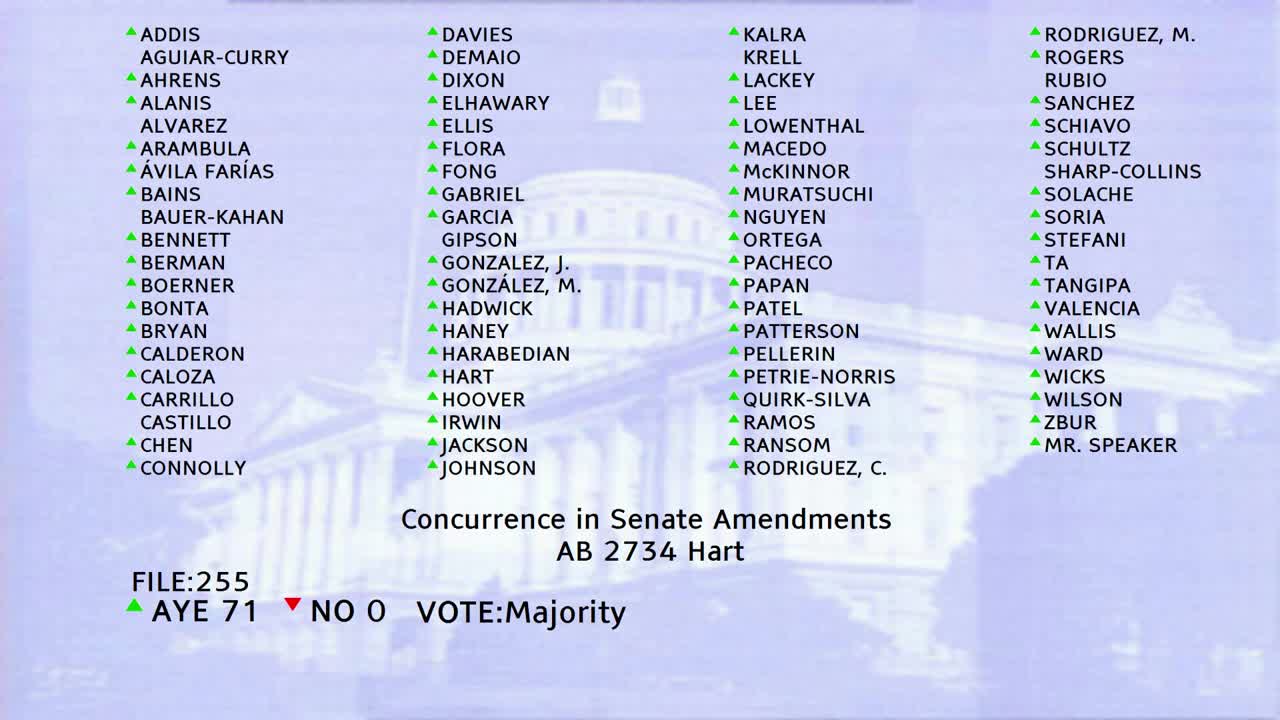 58SEC
Assembly Floor
 36MIN
Assembly Standing Committee on Privacy and Consumer Protection
 9MIN
Assembly Standing Committee on Public Safety
 3MIN
Senate Floor
 14MIN
Senate Standing Committee on Privacy, Digital Technologies, and Consumer Protection
 19MIN
Senate Standing Committee on Public Safety
Bill Author

Bill Co-Author(s):