SB 1140: Pupil safety: limiting school access to unauthorized individuals.
- Session Year: 2025-2026
- House: Senate
- Latest Version Date: 2026-09-20
Current Status:
Passed
(2026-09-20: Chaptered by Secretary of State. Chapter 421, Statutes of 2026.)
Introduced
In Committee
Awaiting First Chamber Vote
Passed First Chamber
In Committee
Awaiting Second Chamber Vote
Passed Second Chamber
Enacted
Existing law requires the governing board of a school district to determine the method of payment for construction contracts, including progress payments for completed portions of the work or for materials delivered on the ground or stored subject to the control of the board and unused.
This bill would require the governing board or body of a local educational agency, as defined, to ensure that the contract or contracts for any construction project, as defined, taking place during school hours include security provisions that limit access to the construction site and keep unauthorized individuals off school property. To the extent the additional contract terms would impose additional duties on local educational agencies or other local entities or officials, the bill would impose a state-mandated local program.
The California Constitution requires the state to reimburse local agencies and school districts for certain costs mandated by the state. Statutory provisions establish procedures for making that reimbursement.
This bill would provide that, if the Commission on State Mandates determines that the bill contains costs mandated by the state, reimbursement for those costs shall be made pursuant to the statutory provisions noted above.
Under existing law, each school district and county office of education is responsible for the overall development, as specified, of a comprehensive school safety plan for each of its schools operating kindergarten or any of grades 1 to 12, inclusive. Existing law requires that the plan include, among other things, procedures for safe ingress and egress of pupils, parents, and school employees to and from school.Existing law prohibits a chartering authority from denying a petition for the establishment of a charter school unless it makes written factual findings supporting at least one of specified bases for denial. One of those bases for denying a petition is if the petition does not contain a reasonably comprehensive description of the development of a school safety plan that includes the same safety topics required in the comprehensive school safety plan of a school district or county office of education.This bill would require a comprehensive school plan to include plans to exclude unauthorized individuals from school property by limiting access points during construction, facilities maintenance, and repair projects. By imposing additional duties on local educational agencies, the bill would impose a state-mandated local program.The California Constitution requires the state to reimburse local agencies and school districts for certain costs mandated by the state. Statutory provisions establish procedures for making that reimbursement.This bill would provide that, if the Commission on State Mandates determines that the bill contains costs mandated by the state, reimbursement for those costs shall be made pursuant to the statutory provisions noted above.Under existing law, each school district and county office of education is responsible for the overall development, as specified, of a comprehensive school safety plan for each of its schools operating kindergarten or any of grades 1 to 12, inclusive. Existing law requires that the plan include, among other things, procedures for safe ingress and egress of pupils, parents, and school employees to and from school.
Existing law prohibits a chartering authority from denying a petition for the establishment of a charter school unless it makes written factual findings supporting at least one of specified bases for denial. One of those bases for denying a petition is if the petition does not contain a reasonably comprehensive description of the development of a school safety plan that includes the same safety topics required in the comprehensive school safety plan of a school district or county office of education.
This bill would require a comprehensive school plan to include plans to exclude unauthorized individuals from school property by limiting access points during construction, facilities maintenance, and repair projects. By imposing additional duties on local educational agencies, the bill would impose a state-mandated local program.
The California Constitution requires the state to reimburse local agencies and school districts for certain costs mandated by the state. Statutory provisions establish procedures for making that reimbursement.
This bill would provide that, if the Commission on State Mandates determines that the bill contains costs mandated by the state, reimbursement for those costs shall be made pursuant to the statutory provisions noted above.
(a)The governing board or body of a local educational agency shall ensure that the contract or contracts for any construction project taking place during school hours include security provisions that limit access to the construction site and keep unauthorized individuals off school property.
(b)Nothing in this section shall prevent otherwise lawful access to a construction project.
(c)For purposes of this section, the following definitions apply:
(1)Construction project means all construction, alteration, demolition, installation, repair, and maintenance work performed on a schoolsite.
(2)Local educational agency means a school district, county office of education, or a charter school.
SEC. 2.If the Commission on State Mandates determines that this act contains costs mandated by the state, reimbursement to local agencies and school districts for those costs shall be made pursuant to Part 7 (commencing with Section 17500) of Division 4 of Title 2 of the Government Code.
(a)The governing board or body of a local educational agency shall ensure that the contract or contracts for any construction project taking place during school hours include security provisions that limit access to the construction site and keep unauthorized individuals off school property.
(b)Nothing in this section shall prevent otherwise lawful access to a construction project.
(b)(c)For purposes of this section, the following definitions apply:
(1)Construction project means all construction, alteration, demolition, installation, repair, and maintenance work performed on a schoolsite.
(2)Local educational agency means a school district, county office of education, or a charter school.
SEC. 2.If the Commission on State Mandates determines that this act contains costs mandated by the state, reimbursement to local agencies and school districts for those costs shall be made pursuant to Part 7 (commencing with Section 17500) of Division 4 of Title 2 of the Government Code.
(a)The governing board or body of a local educational agency shall ensure that the contract or contracts for any construction project taking place during school hours include security provisions that limit access to the construction site and keep unauthorized individuals off school property.
(b)For purposes of this section, the following definitions apply:
(1)Construction project means all construction, alteration, demolition, installation, repair, and maintenance work performed on a schoolsite.
(2)Local educational agency means a school district, county office of education, or a charter school.
SEC. 2.If the Commission on State Mandates determines that this act contains costs mandated by the state, reimbursement to local agencies and school districts for those costs shall be made pursuant to Part 7 (commencing with Section 17500) of Division 4 of Title 2 of the Government Code.
SECTION 1.Section 32282 of the Education Code, as amended by Section 4 of Chapter 460 of the Statutes of 2025, is amended to read:32282.(a)The comprehensive school safety plan shall include, but not be limited to, all of the following:(1)Assessing the current status of crime committed on school campuses and at school-related functions.(2)Identifying appropriate strategies and programs that will provide or maintain a high level of school safety and address the schools procedures for complying with existing laws related to school safety, which shall include the development of all of the following:(A)(i)Child abuse or neglect reporting procedures consistent with Article 2.5 (commencing with Section 11164) of Chapter 2 of Title 1 of Part 4 of the Penal Code.(ii)When a comprehensive school safety plan is next reviewed and updated, or by no later than July 1, 2026, procedures specifically designed to address the supervision and protection of children from child abuse or neglect or sex offenses.(B)(i)Disaster procedures, routine and emergency, including adaptations for pupils with disabilities in accordance with the federal Americans with Disabilities Act of 1990 (42 U.S.C. Sec. 12101 et seq.), the federal Individuals with Disabilities Education Act (20 U.S.C. Sec. 1400 et seq.), and Section 504 of the federal Rehabilitation Act of 1973 (29 U.S.C. Sec. 794(a)). The disaster procedures shall also include, but not be limited to, all of the following:(I)Establishing an earthquake emergency procedure system in every public school building having an occupant capacity of 50 or more pupils or more than one classroom. A school district or county office of education may work with the Office of Emergency Services and the Alfred E. Alquist Seismic Safety Commission to develop and establish the earthquake emergency procedure system. The system shall include, but not be limited to, all of the following:(ia)A school building disaster plan, ready for implementation at any time, for maintaining the safety and care of pupils and staff. The department shall provide general direction to school districts and county offices of education on what to include in the school building disaster plan.(ib)A drop procedure whereby each pupil and staff member takes cover under a table or desk, dropping to their knees, with the head protected by the arms, and the back to the windows. A drop procedure practice shall be held at least once a school quarter in elementary schools and at least once a semester in secondary schools.(ic)Protective measures to be taken before, during, and following an earthquake.(id)A program to ensure that pupils and both the certificated and classified staff are aware of, and properly trained in, the earthquake emergency procedure system.(II)Establishing a procedure to allow a public agency, including the American Red Cross, to use school buildings, grounds, and equipment for mass care and welfare shelters during disasters or other emergencies affecting the public health and welfare. The school district or county office of education shall cooperate with the public agency in furnishing and maintaining the services as the school district or county office of education may deem necessary to meet the needs of the community.(III)(ia)Commencing with the 202627 fiscal year, establishing a procedure to identify appropriate refuge shelter for all pupils and staff to be used in the event of an evacuation order by local authorities and notify the operational area having jurisdiction within the schools boundaries of this identified refuge, in order to first prioritize the safety of pupils and staff, and then the defense of that structure in the event of a fire. Each public school, including a charter school, serving more than 50 pupils in kindergarten or any of grades 1 to 12, inclusive, that is in a high or very high fire hazard severity zone, identified pursuant to Section 51178 of the Government Code or Section 4204 of the Public Resources Code, shall coordinate the procedure with the operational area having jurisdiction within the schools boundaries. For those schools under the jurisdiction of a school district or county office of education, the school district or county office of education shall be the entity that coordinates with the operational area having jurisdiction within each of the schools boundaries.(ib)Commencing with the 202627 fiscal year, the development by each public school, including a charter school, serving more than 50 pupils in kindergarten or any of grades 1 to 12, inclusive, that is in a high or very high fire hazard severity zone, identified pursuant to Section 51178 of the Government Code or Section 4204 of the Public Resources Code, of a communication and evacuation plan, to be used in the event of an early notice evacuation warning, that allows enough time to evacuate all pupils and staff. These plans shall clearly identify a decision process to determine whether an evacuation order is appropriate.(ic)For purposes of this subclause, operational area means an intermediate level of the state emergency services organization, consisting of a county and all political subdivisions within the county area, that serves as a link in the system of communication and coordination between the states emergency operation centers and the operating centers of the political subdivisions that make up the operational area, as described in subdivision (b) of Section 8559 of the Government Code and Section 8605 of the Government Code.(ii)The evaluation of a comprehensive school safety plan pursuant to subdivision (d) and the review of a school safety plan pursuant to clause (iii) of subparagraph (F) of paragraph (5) of subdivision (c) of Section 47605 or clause (iii) of subparagraph (G) of paragraph (5) of subdivision (b) of Section 47605.6, as applicable, shall include ensuring that the plan includes appropriate adaptations for pupils with disabilities, as required pursuant to clause (i).(iii)(I)After the first evaluation or review, as applicable, for purposes of subdivision (d) and clause (ii) is conducted, and after each annual evaluation or review thereafter, a school employee, a pupils parent, guardian, or educational rights holder, or a pupil themselves may bring concerns about an individual pupils ability to access disaster safety procedures described in the comprehensive school safety plan or the school safety plan to the school principal. If the school principal determines there is merit to a concern, the principal shall direct the schoolsite council, school safety planning committee, or charter school, as applicable, to make appropriate modifications to the comprehensive school safety plan or school safety plan, as applicable, during the evaluation of the comprehensive school safety plan pursuant to subdivision (d) or the review of the school safety plan pursuant to clause (iii) of subparagraph (F) of paragraph (5) of subdivision (c) of Section 47605 or clause (iii) of subparagraph (G) of paragraph (5) of subdivision (b) of Section 47605.6, as applicable. The school principal may direct the schoolsite council, the school safety planning committee, or the charter school, as applicable, to make such modifications before the evaluation of the comprehensive school safety plan pursuant to subdivision (d) or the review of the school safety plan pursuant to clause (iii) of subparagraph (F) of paragraph (5) of subdivision (c) of Section 47605 or clause (iii) of subparagraph (G) of paragraph (5) of subdivision (b) of Section 47605.6, as applicable.(II)Subclause (I) does not prohibit a school employee, a pupils parent, guardian, or educational rights holder, or a pupil themselves from bringing their concerns to the school principal before an evaluation or review, as applicable, for purposes of subdivision (d) and clause (ii) is conducted.(iv)All deliberations of the schoolsite council, school safety planning committee, or charter school, as applicable, related to individual pupils with disabilities for purposes of the requirements of clauses (i) to (iii), inclusive, shall be subject to applicable state and federal laws regarding the privacy of pupil information.(C)Policies pursuant to subdivision (d) of Section 48915 for pupils who committed an act listed in subdivision (c) of Section 48915 and other school-designated serious acts that would lead to suspension, expulsion, or mandatory expulsion recommendations pursuant to Article 1 (commencing with Section 48900) of Chapter 6 of Part 27 of Division 4 of Title 2.(D)Procedures to notify teachers of dangerous pupils pursuant to Section 49079.(E)A discrimination and harassment policy consistent with the prohibition against discrimination contained in Chapter 2 (commencing with Section 200) of Part 1.(F)The provisions of any schoolwide dress code, pursuant to Section 35183, that prohibits pupils from wearing gang-related apparel, if the school has adopted that type of a dress code. For those purposes, the comprehensive school safety plan shall define gang-related apparel. The definition shall be limited to apparel that, if worn or displayed on a school campus, reasonably could be determined to threaten the health and safety of the school environment. A schoolwide dress code established pursuant to this section and Section 35183 shall be enforced on the school campus and at any school-sponsored activity by the principal of the school or the person designated by the principal. For purposes of this subparagraph, gang-related apparel shall not be considered a protected form of speech pursuant to Section 48950.(G)Procedures for safe ingress and egress of pupils, parents, and school employees to and from school and plans to exclude unauthorized individuals from school property by limiting access points during construction, facilities maintenance, and repair projects.(H)A safe and orderly environment conducive to learning at the school.(I)The rules and procedures on school discipline adopted pursuant to Sections 35291, 35291.5, 47605, and 47605.6.(J)Procedures for conducting tactical responses to criminal incidents, including procedures related to individuals with guns on school campuses and at school-related functions. The procedures to prepare for active shooters or other armed assailants shall be based on the specific needs and context of each school and community.(K)If a comprehensive school safety plan includes procedures to prepare for active shooters or other armed assailants by conducting a drill, a school shall comply with all of the following relating to the drill:(i)(I)The school shall not conduct a high-intensity drill.(II)For purposes of this clause, high-intensity drill means a drill that includes simulations that mimic an actual school shooter or other armed assailant incident, including, but not limited to, theatrical makeup or other materials to give an image of blood or gunshot wounds, acting by an individual posing to be the assailant, acting by individuals posing as victims, or simulations that instruct pupils to actively resist an assailant by throwing objects, attacking, or swarming the assailant.(ii)The school shall not include the use of real weapons, gunfire blanks, or explosions in the conducting of the drill.(iii)The school shall ensure a trauma-informed approach to the design and execution of any drill, which shall include all of the following:(I)Age-appropriate and developmentally appropriate drill content and terminology developed with the involvement of school personnel, including school-based mental health professionals.(II)Notice to all parents and guardians of pupils, teachers, administrators, and school personnel subject to the drills in advance of the drill and of the drills expected length of time.(III)The ability for parents or guardians to opt their child or children out of the drills.(IV)An announcement to pupils and educators immediately before the start of the drills and an announcement to pupils and educators immediately after the drills have concluded.(V)A notice to all parents and guardians after the drill has concluded.(VI)The provision of contact information for community-based resources, including local organizations with objectives to reduce gun violence or provide mental health counseling, to parents or guardians, pupils, and staff who are negatively impacted by the drills, and, where available, prioritizing school-based resources.(L)Procedures to assess and respond to reports of any dangerous, violent, or unlawful activity that is being conducted or threatened to be conducted at the school, at an activity sponsored by the school, or on a schoolbus serving the school.(M)(i)When a comprehensive school safety plan is next reviewed and updated on or after July 1, 2025, procedures to respond to incidents involving an individual experiencing a sudden cardiac arrest or a similar life-threatening medical emergency while on school grounds.(ii)The procedures described in clause (i) are encouraged to integrate evidence-based core elements, including any cardiopulmonary resuscitation training offered and the placement of any automated external defibrillator available on the schoolsite in accordance with nationally recognized evidence-based emergency cardiac care guidelines, as dictated by the school safety plan.(N)For schools that serve pupils in any of grades 7 to 12, inclusive, a protocol in the event a pupil is suffering or is reasonably believed to be suffering from an opioid overdose.(3)(A)Beginning July 1, 2025, an instructional continuity plan to establish communication with pupils and their families and provide instruction to pupils when in-person instruction is disrupted due to an emergency pursuant to Section 41422 or subdivision (a) of Section 46392. The plan shall include all the following:(i)Procedures for pupil engagement, as soon as practicable, and no later than five calendar days following the emergency. Procedures shall be designed to establish two-way communication with pupils and their families and identify and provide supports for pupils social-emotional, mental health, and academic needs.(ii)A plan to provide access to in-person instruction or remote instruction pursuant to Sections 51747 and 51749.5, as soon as practicable, but no later than 10 instructional days following the emergency. The plan may include support to pupils and families to enroll in or be temporarily reassigned to another school district, county office of education, or charter school.(B)Local educational agencies are encouraged to plan to meet instructional standards that are at least equivalent to those applicable to independent study programs.(C)(i)For purposes of this paragraph, temporarily reassigned means temporarily reassigned to another local educational agency outside of the school district, but within the county or an immediately adjacent county, in which the pupils parent or guardian resides. Notwithstanding Section 48200 or any other law, a pupil who is temporarily reassigned shall be deemed to have complied with the residency requirements for attendance in the local educational agency that is temporarily serving the pupil pursuant to this section.(ii)Notwithstanding Section 48200 or any other law, a school district, county office of education, or charter school may continue to enroll a pupil who is temporarily reassigned to another school district, county office of education, or charter school pursuant to this section in order to facilitate the timely reentry of the pupil in their prior school after the emergency event has ended.(D)This paragraph applies to school districts, county offices of education, and charter schools.(b)It is the intent of the Legislature that schools develop comprehensive school safety plans using existing resources, including the materials and services of the partnership, pursuant to this chapter. It is also the intent of the Legislature that schools use the handbook developed and distributed in partnership by the departments Safe Schools and Violence Prevention Center and the Attorney Generals Crime and Violence Prevention Center entitled Safe Schools: A Planning Guide for Action in conjunction with developing their plan for school safety.(c)Each schoolsite council or school safety planning committee, in developing and updating a comprehensive school safety plan, shall, where practical, consult, cooperate, and coordinate with other schoolsite councils or school safety planning committees.(d)The comprehensive school safety plan may be evaluated and amended, as needed, by the school safety planning committee, but shall be evaluated at least once a year, to ensure that the comprehensive school safety plan is properly implemented. An updated file of all safety-related plans and materials shall be readily available for inspection by the public.(e)As comprehensive school safety plans are reviewed and updated, the Legislature encourages all plans, to the extent that resources are available, to include policies and procedures aimed at the prevention of bullying.(f)The comprehensive school safety plan, as written and updated by the schoolsite council or school safety planning committee, shall be submitted for approval pursuant to subdivision (a) of Section 32288.(g)The department shall maintain and conspicuously post on its internet website a compliance checklist for developing a comprehensive school safety plan, and shall update the checklist when necessary.(h)On or before March 1, 2025, the Superintendent shall develop and post on the departments internet website instructional continuity plan guidance, including guidance for continued academic and school engagement strategies during disruptions in instruction due to emergencies.SEC. 2.Section 32282 of the Education Code, as amended by Section 4.5 of Chapter 460 of the Statutes of 2025, is amended to read:32282.(a)The comprehensive school safety plan shall include, but not be limited to, all of the following:(1)Assessing the current status of crime committed on school campuses and at school-related functions.(2)Identifying appropriate strategies and programs that will provide or maintain a high level of school safety and address the schools procedures for complying with existing laws related to school safety, which shall include the development of all of the following:(A)(i)Child abuse or neglect reporting procedures consistent with Article 2.5 (commencing with Section 11164) of Chapter 2 of Title 1 of Part 4 of the Penal Code.(ii)When a comprehensive school safety plan is next reviewed and updated, or by no later than July 1, 2026, procedures specifically designed to address the supervision and protection of children from child abuse or neglect or sex offenses.(B)(i)Disaster procedures, routine and emergency, including adaptations for pupils with disabilities in accordance with the federal Americans with Disabilities Act of 1990 (42 U.S.C. Sec. 12101 et seq.), the federal Individuals with Disabilities Education Act (20 U.S.C. Sec. 1400 et seq.), and Section 504 of the federal Rehabilitation Act of 1973 (29 U.S.C. Sec. 794(a)). The disaster procedures shall also include, but not be limited to, all of the following:(I)Establishing an earthquake emergency procedure system in every public school building having an occupant capacity of 50 or more pupils or more than one classroom. A school district or county office of education may work with the Office of Emergency Services and the Alfred E. Alquist Seismic Safety Commission to develop and establish the earthquake emergency procedure system. The system shall include, but not be limited to, all of the following:(ia)A school building disaster plan, ready for implementation at any time, for maintaining the safety and care of pupils and staff. The department shall provide general direction to school districts and county offices of education on what to include in the school building disaster plan.(ib)A drop procedure whereby each pupil and staff member takes cover under a table or desk, dropping to their knees, with the head protected by the arms, and the back to the windows. A drop procedure practice shall be held at least once a school quarter in elementary schools and at least once a semester in secondary schools.(ic)Protective measures to be taken before, during, and following an earthquake.(id)A program to ensure that pupils and both the certificated and classified staff are aware of, and properly trained in, the earthquake emergency procedure system.(II)Establishing a procedure to allow a public agency, including the American Red Cross, to use school buildings, grounds, and equipment for mass care and welfare shelters during disasters or other emergencies affecting the public health and welfare. The school district or county office of education shall cooperate with the public agency in furnishing and maintaining the services as the school district or county office of education may deem necessary to meet the needs of the community.(III)(ia)Commencing with the 202627 fiscal year, establishing a procedure to identify appropriate refuge shelter for all pupils and staff to be used in the event of an evacuation order by local authorities and notify the operational area having jurisdiction within the schools boundaries of this identified refuge, in order to first prioritize the safety of pupils and staff, and then the defense of that structure in the event of a fire. Each public school, including a charter school, serving more than 50 pupils in kindergarten or any of grades 1 to 12, inclusive, that is in a high or very high fire hazard severity zone, identified pursuant to Section 51178 of the Government Code or Section 4204 of the Public Resources Code, shall coordinate the procedure with the operational area having jurisdiction within the schools boundaries. For those schools under the jurisdiction of a school district or county office of education, the school district or county office of education shall be the entity that coordinates with the operational area having jurisdiction within each of the schools boundaries.(ib)Commencing with the 202627 fiscal year, the development by each public school, including a charter school, serving more than 50 pupils in kindergarten or any of grades 1 to 12, inclusive, that is in a high or very high fire hazard severity zone, identified pursuant to Section 51178 of the Government Code or Section 4204 of the Public Resources Code, of a communication and evacuation plan, to be used in the event of an early notice evacuation warning, that allows enough time to evacuate all pupils and staff. These plans shall clearly identify a decision process to determine whether an evacuation order is appropriate.(ic)For purposes of this subclause, operational area means an intermediate level of the state emergency services organization, consisting of a county and all political subdivisions within the county area, that serves as a link in the system of communication and coordination between the states emergency operation centers and the operating centers of the political subdivisions that make up the operational area, as described in subdivision (b) of Section 8559 of the Government Code and Section 8605 of the Government Code.(ii)The evaluation of a comprehensive school safety plan pursuant to subdivision (d) and the review of a school safety plan pursuant to clause (iii) of subparagraph (F) of paragraph (5) of subdivision (c) of Section 47605 or clause (iii) of subparagraph (G) of paragraph (5) of subdivision (b) of Section 47605.6, as applicable, shall include ensuring that the plan includes appropriate adaptations for pupils with disabilities, as required pursuant to clause (i).(iii)(I)After the first evaluation or review, as applicable, for purposes of subdivision (d) and clause (ii) is conducted, and after each annual evaluation or review thereafter, a school employee, a pupils parent, guardian, or educational rights holder, or a pupil themselves may bring concerns about an individual pupils ability to access disaster safety procedures described in the comprehensive school safety plan or the school safety plan to the school principal. If the school principal determines there is merit to a concern, the principal shall direct the schoolsite council, school safety planning committee, or charter school, as applicable, to make appropriate modifications to the comprehensive school safety plan or school safety plan, as applicable, during the evaluation of the comprehensive school safety plan pursuant to subdivision (d) or the review of the school safety plan pursuant to clause (iii) of subparagraph (F) of paragraph (5) of subdivision (c) of Section 47605 or clause (iii) of subparagraph (G) of paragraph (5) of subdivision (b) of Section 47605.6, as applicable. The school principal may direct the schoolsite council, the school safety planning committee, or the charter school, as applicable, to make such modifications before the evaluation of the comprehensive school safety plan pursuant to subdivision (d) or the review of the school safety plan pursuant to clause (iii) of subparagraph (F) of paragraph (5) of subdivision (c) of Section 47605 or clause (iii) of subparagraph (G) of paragraph (5) of subdivision (b) of Section 47605.6, as applicable.(II)Subclause (I) does not prohibit a school employee, a pupils parent, guardian, or educational rights holder, or a pupil themselves from bringing their concerns to the school principal before an evaluation or review, as applicable, for purposes of subdivision (d) and clause (ii) is conducted.(iv)All deliberations of the schoolsite council, school safety planning committee, or charter school, as applicable, related to individual pupils with disabilities for purposes of the requirements of clauses (i) to (iii), inclusive, shall be subject to applicable state and federal laws regarding the privacy of pupil information.(C)Policies pursuant to subdivision (d) of Section 48915 for pupils who committed an act listed in subdivision (c) of Section 48915 and other school-designated serious acts that would lead to suspension, expulsion, or mandatory expulsion recommendations pursuant to Article 1 (commencing with Section 48900) of Chapter 6 of Part 27 of Division 4 of Title 2.(D)Procedures to notify teachers of dangerous pupils pursuant to Section 49079.(E)A discrimination and harassment policy consistent with the prohibition against discrimination contained in Chapter 2 (commencing with Section 200) of Part 1.(F)The provisions of any schoolwide dress code, pursuant to Section 35183, that prohibits pupils from wearing gang-related apparel, if the school has adopted that type of a dress code. For those purposes, the comprehensive school safety plan shall define gang-related apparel. The definition shall be limited to apparel that, if worn or displayed on a school campus, reasonably could be determined to threaten the health and safety of the school environment. A schoolwide dress code established pursuant to this section and Section 35183 shall be enforced on the school campus and at any school-sponsored activity by the principal of the school or the person designated by the principal. For purposes of this subparagraph, gang-related apparel shall not be considered a protected form of speech pursuant to Section 48950.(G)Procedures for safe ingress and egress of pupils, parents, and school employees to and from school and plans to exclude unauthorized individuals from school property by limiting access points during construction, facilities maintenance, and repair projects.(H)A safe and orderly environment conducive to learning at the school.(I)The rules and procedures on school discipline adopted pursuant to Sections 35291, 35291.5, 47605, and 47605.6.(J)Procedures for conducting tactical responses to criminal incidents, including procedures related to individuals with guns on school campuses and at school-related functions. The procedures to prepare for active shooters or other armed assailants shall be based on the specific needs and context of each school and community.(K)If a comprehensive school safety plan includes procedures to prepare for active shooters or other armed assailants by conducting a drill, a school shall comply with all of the following relating to the drill:(i)(I)The school shall not conduct a high-intensity drill.(II)For purposes of this clause, high-intensity drill means a drill that includes simulations that mimic an actual school shooter or other armed assailant incident, including, but not limited to, theatrical makeup or other materials to give an image of blood or gunshot wounds, acting by an individual posing to be the assailant, acting by individuals posing as victims, or simulations that instruct pupils to actively resist an assailant by throwing objects, attacking, or swarming the assailant.(ii)The school shall not include the use of real weapons, gunfire blanks, or explosions in the conducting of the drill.(iii)The school shall ensure a trauma-informed approach to the design and execution of any drill, which shall include all of the following:(I)Age-appropriate and developmentally appropriate drill content and terminology developed with the involvement of school personnel, including school-based mental health professionals.(II)Notice to all parents and guardians of pupils, teachers, administrators, and school personnel subject to the drills in advance of the drill and of the drills expected length of time.(III)The ability for parents or guardians to opt their child or children out of the drills.(IV)An announcement to pupils and educators immediately before the start of the drills and an announcement to pupils and educators immediately after the drills have concluded.(V)A notice to all parents and guardians after the drill has concluded.(VI)The provision of contact information for community-based resources, including local organizations with objectives to reduce gun violence or provide mental health counseling, to parents or guardians, pupils, and staff who are negatively impacted by the drills, and, where available, prioritizing school-based resources.(L)Procedures to assess and respond to reports of any dangerous, violent, or unlawful activity that is being conducted or threatened to be conducted at the school, at an activity sponsored by the school, or on a schoolbus serving the school.(M)(i)When a comprehensive school safety plan is next reviewed and updated on or after July 1, 2025, procedures to respond to incidents involving an individual experiencing a sudden cardiac arrest or a similar life-threatening medical emergency while on school grounds.(ii)The procedures described in clause (i) are encouraged to integrate evidence-based core elements, including any cardiopulmonary resuscitation training offered and the placement of any automated external defibrillator available on the schoolsite in accordance with nationally recognized evidence-based emergency cardiac care guidelines, as dictated by the school safety plan.(N)(i)When a comprehensive school safety plan is next reviewed and updated, but by no later than March 1, 2026, procedures specifically designed to notify parents and guardians of pupils, teachers, administrators, and school personnel when the school confirms the presence of immigration enforcement on the schoolsite.(ii)The content and timing of a notification provided under the procedures in clause (i) shall consider the safety and well-being of the pupils, employees, and community members of the schoolsite when determining when and how to issue the notification to parents and guardians of pupils, teachers, administrators, and school personnel.(iii)The notification provided under the procedures in clause (i) may also include a hyperlink to additional resources for families with information about their educational rights, state laws that protects parents and students privacy and confidentiality, and, if available, counseling or support services, which may include services that support families impacted by immigration enforcement and model policies adopted by the local educational agency pursuant to subdivision (g) of Section 234.7.(iv)A notification provided under the procedures in clause (i) shall not include any personally identifiable information.(v)For purposes of this subparagraph, immigration enforcement includes any and all efforts to investigate, enforce, or assist in the investigation or enforcement of any federal civil immigration law, and also includes any and all efforts to investigate, enforce, or assist in the investigation or enforcement of any federal criminal immigration law that penalizes a persons presence in, entry, or reentry to, or employment in, the United States.(O)For schools that serve pupils in any of grades 7 to 12, inclusive, a protocol in the event a pupil is suffering or is reasonably believed to be suffering from an opioid overdose.(3)(A)Beginning July 1, 2025, an instructional continuity plan to establish communication with pupils and their families and provide instruction to pupils when in-person instruction is disrupted due to an emergency pursuant to Section 41422 or subdivision (a) of Section 46392. The plan shall include all the following:(i)Procedures for pupil engagement, as soon as practicable, and no later than five calendar days following the emergency. Procedures shall be designed to establish two-way communication with pupils and their families and identify and provide supports for pupils social-emotional, mental health, and academic needs.(ii)A plan to provide access to in-person instruction or remote instruction pursuant to Sections 51747 and 51749.5, as soon as practicable, but no later than 10 instructional days following the emergency. The plan may include support to pupils and families to enroll in or be temporarily reassigned to another school district, county office of education, or charter school.(B)Local educational agencies are encouraged to plan to meet instructional standards that are at least equivalent to those applicable to independent study programs.(C)(i)For purposes of this paragraph, temporarily reassigned means temporarily reassigned to another local educational agency outside of the school district, but within the county or an immediately adjacent county, in which the pupils parent or guardian resides. Notwithstanding Section 48200 or any other law, a pupil who is temporarily reassigned shall be deemed to have complied with the residency requirements for attendance in the local educational agency that is temporarily serving the pupil pursuant to this section.(ii)Notwithstanding Section 48200 or any other law, a school district, county office of education, or charter school may continue to enroll a pupil who is temporarily reassigned to another school district, county office of education, or charter school pursuant to this section in order to facilitate the timely reentry of the pupil in their prior school after the emergency event has ended.(D)This paragraph applies to school districts, county offices of education, and charter schools.(b)It is the intent of the Legislature that schools develop comprehensive school safety plans using existing resources, including the materials and services of the partnership, pursuant to this chapter. It is also the intent of the Legislature that schools use the handbook developed and distributed in partnership by the departments Safe Schools and Violence Prevention Center and the Attorney Generals Crime and Violence Prevention Center entitled Safe Schools: A Planning Guide for Action in conjunction with developing their plan for school safety.(c)Each schoolsite council or school safety planning committee, in developing and updating a comprehensive school safety plan, shall, where practical, consult, cooperate, and coordinate with other schoolsite councils or school safety planning committees.(d)The comprehensive school safety plan may be evaluated and amended, as needed, by the school safety planning committee, but shall be evaluated at least once a year, to ensure that the comprehensive school safety plan is properly implemented. An updated file of all safety-related plans and materials shall be readily available for inspection by the public.(e)As comprehensive school safety plans are reviewed and updated, the Legislature encourages all plans, to the extent that resources are available, to include policies and procedures aimed at the prevention of bullying.(f)The comprehensive school safety plan, as written and updated by the schoolsite council or school safety planning committee, shall be submitted for approval pursuant to subdivision (a) of Section 32288.(g)The department shall maintain and conspicuously post on its internet website a compliance checklist for developing a comprehensive school safety plan, and shall update the checklist when necessary.(h)On or before March 1, 2025, the Superintendent shall develop and post on the departments internet website instructional continuity plan guidance, including guidance for continued academic and school engagement strategies during disruptions in instruction due to emergencies.(i)This section shall remain in effect only until January 1, 2031, and as of that date is repealed.SEC. 3.If the Commission on State Mandates determines that this act contains costs mandated by the state, reimbursement to local agencies and school districts for those costs shall be made pursuant to Part 7 (commencing with Section 17500) of Division 4 of Title 2 of the Government Code.(a)The comprehensive school safety plan shall include, but not be limited to, all of the following:
(1)Assessing the current status of crime committed on school campuses and at school-related functions.
(2)Identifying appropriate strategies and programs that will provide or maintain a high level of school safety and address the schools procedures for complying with existing laws related to school safety, which shall include the development of all of the following:
(A)(i)Child abuse or neglect reporting procedures consistent with Article 2.5 (commencing with Section 11164) of Chapter 2 of Title 1 of Part 4 of the Penal Code.
(ii)When a comprehensive school safety plan is next reviewed and updated, or by no later than July 1, 2026, procedures specifically designed to address the supervision and protection of children from child abuse or neglect or sex offenses.
(B)(i)Disaster procedures, routine and emergency, including adaptations for pupils with disabilities in accordance with the federal Americans with Disabilities Act of 1990 (42 U.S.C. Sec. 12101 et seq.), the federal Individuals with Disabilities Education Act (20 U.S.C. Sec. 1400 et seq.), and Section 504 of the federal Rehabilitation Act of 1973 (29 U.S.C. Sec. 794(a)). The disaster procedures shall also include, but not be limited to, all of the following:
(I)Establishing an earthquake emergency procedure system in every public school building having an occupant capacity of 50 or more pupils or more than one classroom. A school district or county office of education may work with the Office of Emergency Services and the Alfred E. Alquist Seismic Safety Commission to develop and establish the earthquake emergency procedure system. The system shall include, but not be limited to, all of the following:
(ia)A school building disaster plan, ready for implementation at any time, for maintaining the safety and care of pupils and staff. The department shall provide general direction to school districts and county offices of education on what to include in the school building disaster plan.
(ib)A drop procedure whereby each pupil and staff member takes cover under a table or desk, dropping to their knees, with the head protected by the arms, and the back to the windows. A drop procedure practice shall be held at least once a school quarter in elementary schools and at least once a semester in secondary schools.
(ic)Protective measures to be taken before, during, and following an earthquake.
(id)A program to ensure that pupils and both the certificated and classified staff are aware of, and properly trained in, the earthquake emergency procedure system.
(II)Establishing a procedure to allow a public agency, including the American Red Cross, to use school buildings, grounds, and equipment for mass care and welfare shelters during disasters or other emergencies affecting the public health and welfare. The school district or county office of education shall cooperate with the public agency in furnishing and maintaining the services as the school district or county office of education may deem necessary to meet the needs of the community.
(III)(ia)Commencing with the 202627 fiscal year, establishing a procedure to identify appropriate refuge shelter for all pupils and staff to be used in the event of an evacuation order by local authorities and notify the operational area having jurisdiction within the schools boundaries of this identified refuge, in order to first prioritize the safety of pupils and staff, and then the defense of that structure in the event of a fire. Each public school, including a charter school, serving more than 50 pupils in kindergarten or any of grades 1 to 12, inclusive, that is in a high or very high fire hazard severity zone, identified pursuant to Section 51178 of the Government Code or Section 4204 of the Public Resources Code, shall coordinate the procedure with the operational area having jurisdiction within the schools boundaries. For those schools under the jurisdiction of a school district or county office of education, the school district or county office of education shall be the entity that coordinates with the operational area having jurisdiction within each of the schools boundaries.
(ib)Commencing with the 202627 fiscal year, the development by each public school, including a charter school, serving more than 50 pupils in kindergarten or any of grades 1 to 12, inclusive, that is in a high or very high fire hazard severity zone, identified pursuant to Section 51178 of the Government Code or Section 4204 of the Public Resources Code, of a communication and evacuation plan, to be used in the event of an early notice evacuation warning, that allows enough time to evacuate all pupils and staff. These plans shall clearly identify a decision process to determine whether an evacuation order is appropriate.
(ic)For purposes of this subclause, operational area means an intermediate level of the state emergency services organization, consisting of a county and all political subdivisions within the county area, that serves as a link in the system of communication and coordination between the states emergency operation centers and the operating centers of the political subdivisions that make up the operational area, as described in subdivision (b) of Section 8559 of the Government Code and Section 8605 of the Government Code.
(ii)The evaluation of a comprehensive school safety plan pursuant to subdivision (d) and the review of a school safety plan pursuant to clause (iii) of subparagraph (F) of paragraph (5) of subdivision (c) of Section 47605 or clause (iii) of subparagraph (G) of paragraph (5) of subdivision (b) of Section 47605.6, as applicable, shall include ensuring that the plan includes appropriate adaptations for pupils with disabilities, as required pursuant to clause (i).
(iii)(I)After the first evaluation or review, as applicable, for purposes of subdivision (d) and clause (ii) is conducted, and after each annual evaluation or review thereafter, a school employee, a pupils parent, guardian, or educational rights holder, or a pupil themselves may bring concerns about an individual pupils ability to access disaster safety procedures described in the comprehensive school safety plan or the school safety plan to the school principal. If the school principal determines there is merit to a concern, the principal shall direct the schoolsite council, school safety planning committee, or charter school, as applicable, to make appropriate modifications to the comprehensive school safety plan or school safety plan, as applicable, during the evaluation of the comprehensive school safety plan pursuant to subdivision (d) or the review of the school safety plan pursuant to clause (iii) of subparagraph (F) of paragraph (5) of subdivision (c) of Section 47605 or clause (iii) of subparagraph (G) of paragraph (5) of subdivision (b) of Section 47605.6, as applicable. The school principal may direct the schoolsite council, the school safety planning committee, or the charter school, as applicable, to make such modifications before the evaluation of the comprehensive school safety plan pursuant to subdivision (d) or the review of the school safety plan pursuant to clause (iii) of subparagraph (F) of paragraph (5) of subdivision (c) of Section 47605 or clause (iii) of subparagraph (G) of paragraph (5) of subdivision (b) of Section 47605.6, as applicable.
(II)Subclause (I) does not prohibit a school employee, a pupils parent, guardian, or educational rights holder, or a pupil themselves from bringing their concerns to the school principal before an evaluation or review, as applicable, for purposes of subdivision (d) and clause (ii) is conducted.
(iv)All deliberations of the schoolsite council, school safety planning committee, or charter school, as applicable, related to individual pupils with disabilities for purposes of the requirements of clauses (i) to (iii), inclusive, shall be subject to applicable state and federal laws regarding the privacy of pupil information.
(C)Policies pursuant to subdivision (d) of Section 48915 for pupils who committed an act listed in subdivision (c) of Section 48915 and other school-designated serious acts that would lead to suspension, expulsion, or mandatory expulsion recommendations pursuant to Article 1 (commencing with Section 48900) of Chapter 6 of Part 27 of Division 4 of Title 2.
(D)Procedures to notify teachers of dangerous pupils pursuant to Section 49079.
(E)A discrimination and harassment policy consistent with the prohibition against discrimination contained in Chapter 2 (commencing with Section 200) of Part 1.
(F)The provisions of any schoolwide dress code, pursuant to Section 35183, that prohibits pupils from wearing gang-related apparel, if the school has adopted that type of a dress code. For those purposes, the comprehensive school safety plan shall define gang-related apparel. The definition shall be limited to apparel that, if worn or displayed on a school campus, reasonably could be determined to threaten the health and safety of the school environment. A schoolwide dress code established pursuant to this section and Section 35183 shall be enforced on the school campus and at any school-sponsored activity by the principal of the school or the person designated by the principal. For purposes of this subparagraph, gang-related apparel shall not be considered a protected form of speech pursuant to Section 48950.
(G)Procedures for safe ingress and egress of pupils, parents, and school employees to and from school. school and plans to exclude unauthorized individuals from school property by limiting access points during construction, facilities maintenance, and repair projects.
(H)A safe and orderly environment conducive to learning at the school.
(I)The rules and procedures on school discipline adopted pursuant to Sections 35291, 35291.5, 47605, and 47605.6.
(J)Procedures for conducting tactical responses to criminal incidents, including procedures related to individuals with guns on school campuses and at school-related functions. The procedures to prepare for active shooters or other armed assailants shall be based on the specific needs and context of each school and community.
(K)If a comprehensive school safety plan includes procedures to prepare for active shooters or other armed assailants by conducting a drill, a school shall comply with all of the following relating to the drill:
(i)(I)The school shall not conduct a high-intensity drill.
(II)For purposes of this clause, high-intensity drill means a drill that includes simulations that mimic an actual school shooter or other armed assailant incident, including, but not limited to, theatrical makeup or other materials to give an image of blood or gunshot wounds, acting by an individual posing to be the assailant, acting by individuals posing as victims, or simulations that instruct pupils to actively resist an assailant by throwing objects, attacking, or swarming the assailant.
(ii)The school shall not include the use of real weapons, gunfire blanks, or explosions in the conducting of the drill.
(iii)The school shall ensure a trauma-informed approach to the design and execution of any drill, which shall include all of the following:
(I)Age-appropriate and developmentally appropriate drill content and terminology developed with the involvement of school personnel, including school-based mental health professionals.
(II)Notice to all parents and guardians of pupils, teachers, administrators, and school personnel subject to the drills in advance of the drill and of the drills expected length of time.
(III)The ability for parents or guardians to opt their child or children out of the drills.
(IV)An announcement to pupils and educators immediately before the start of the drills and an announcement to pupils and educators immediately after the drills have concluded.
(V)A notice to all parents and guardians after the drill has concluded.
(VI)The provision of contact information for community-based resources, including local organizations with objectives to reduce gun violence or provide mental health counseling, to parents or guardians, pupils, and staff who are negatively impacted by the drills, and, where available, prioritizing school-based resources.
(L)Procedures to assess and respond to reports of any dangerous, violent, or unlawful activity that is being conducted or threatened to be conducted at the school, at an activity sponsored by the school, or on a schoolbus serving the school.
(M)(i)When a comprehensive school safety plan is next reviewed and updated on or after July 1, 2025, procedures to respond to incidents involving an individual experiencing a sudden cardiac arrest or a similar life-threatening medical emergency while on school grounds.
(ii)The procedures described in clause (i) are encouraged to integrate evidence-based core elements, including any cardiopulmonary resuscitation training offered and the placement of any automated external defibrillator available on the schoolsite in accordance with nationally recognized evidence-based emergency cardiac care guidelines, as dictated by the school safety plan.
(N)For schools that serve pupils in any of grades 7 to 12, inclusive, a protocol in the event a pupil is suffering or is reasonably believed to be suffering from an opioid overdose.
(3)(A)Beginning July 1, 2025, an instructional continuity plan to establish communication with pupils and their families and provide instruction to pupils when in-person instruction is disrupted due to an emergency pursuant to Section 41422 or subdivision (a) of Section 46392. The plan shall include all the following:
(i)Procedures for pupil engagement, as soon as practicable, and no later than five calendar days following the emergency. Procedures shall be designed to establish two-way communication with pupils and their families and identify and provide supports for pupils social-emotional, mental health, and academic needs.
(ii)A plan to provide access to in-person instruction or remote instruction pursuant to Sections 51747 and 51749.5, as soon as practicable, but no later than 10 instructional days following the emergency. The plan may include support to pupils and families to enroll in or be temporarily reassigned to another school district, county office of education, or charter school.
(B)Local educational agencies are encouraged to plan to meet instructional standards that are at least equivalent to those applicable to independent study programs.
(C)(i)For purposes of this paragraph, temporarily reassigned means temporarily reassigned to another local educational agency outside of the school district, but within the county or an immediately adjacent county, in which the pupils parent or guardian resides. Notwithstanding Section 48200 or any other law, a pupil who is temporarily reassigned shall be deemed to have complied with the residency requirements for attendance in the local educational agency that is temporarily serving the pupil pursuant to this section.
(ii)Notwithstanding Section 48200 or any other law, a school district, county office of education, or charter school may continue to enroll a pupil who is temporarily reassigned to another school district, county office of education, or charter school pursuant to this section in order to facilitate the timely reentry of the pupil in their prior school after the emergency event has ended.
(D)This paragraph applies to school districts, county offices of education, and charter schools.
(b)It is the intent of the Legislature that schools develop comprehensive school safety plans using existing resources, including the materials and services of the partnership, pursuant to this chapter. It is also the intent of the Legislature that schools use the handbook developed and distributed in partnership by the departments Safe Schools and Violence Prevention Center and the Attorney Generals Crime and Violence Prevention Center entitled Safe Schools: A Planning Guide for Action in conjunction with developing their plan for school safety.
(c)Each schoolsite council or school safety planning committee, in developing and updating a comprehensive school safety plan, shall, where practical, consult, cooperate, and coordinate with other schoolsite councils or school safety planning committees.
(d)The comprehensive school safety plan may be evaluated and amended, as needed, by the school safety planning committee, but shall be evaluated at least once a year, to ensure that the comprehensive school safety plan is properly implemented. An updated file of all safety-related plans and materials shall be readily available for inspection by the public.
(e)As comprehensive school safety plans are reviewed and updated, the Legislature encourages all plans, to the extent that resources are available, to include policies and procedures aimed at the prevention of bullying.
(f)The comprehensive school safety plan, as written and updated by the schoolsite council or school safety planning committee, shall be submitted for approval pursuant to subdivision (a) of Section 32288.
(g)The department shall maintain and conspicuously post on its internet website a compliance checklist for developing a comprehensive school safety plan, and shall update the checklist when necessary.
(h)On or before March 1, 2025, the Superintendent shall develop and post on the departments internet website instructional continuity plan guidance, including guidance for continued academic and school engagement strategies during disruptions in instruction due to emergencies.
SEC. 2.Section 32282 of the Education Code, as amended by Section 4.5 of Chapter 460 of the Statutes of 2025, is amended to read:32282.(a)The comprehensive school safety plan shall include, but not be limited to, all of the following:
(1)Assessing the current status of crime committed on school campuses and at school-related functions.
(2)Identifying appropriate strategies and programs that will provide or maintain a high level of school safety and address the schools procedures for complying with existing laws related to school safety, which shall include the development of all of the following:
(A)(i)Child abuse or neglect reporting procedures consistent with Article 2.5 (commencing with Section 11164) of Chapter 2 of Title 1 of Part 4 of the Penal Code.
(ii)When a comprehensive school safety plan is next reviewed and updated, or by no later than July 1, 2026, procedures specifically designed to address the supervision and protection of children from child abuse or neglect or sex offenses.
(B)(i)Disaster procedures, routine and emergency, including adaptations for pupils with disabilities in accordance with the federal Americans with Disabilities Act of 1990 (42 U.S.C. Sec. 12101 et seq.), the federal Individuals with Disabilities Education Act (20 U.S.C. Sec. 1400 et seq.), and Section 504 of the federal Rehabilitation Act of 1973 (29 U.S.C. Sec. 794(a)). The disaster procedures shall also include, but not be limited to, all of the following:
(I)Establishing an earthquake emergency procedure system in every public school building having an occupant capacity of 50 or more pupils or more than one classroom. A school district or county office of education may work with the Office of Emergency Services and the Alfred E. Alquist Seismic Safety Commission to develop and establish the earthquake emergency procedure system. The system shall include, but not be limited to, all of the following:
(ia)A school building disaster plan, ready for implementation at any time, for maintaining the safety and care of pupils and staff. The department shall provide general direction to school districts and county offices of education on what to include in the school building disaster plan.
(ib)A drop procedure whereby each pupil and staff member takes cover under a table or desk, dropping to their knees, with the head protected by the arms, and the back to the windows. A drop procedure practice shall be held at least once a school quarter in elementary schools and at least once a semester in secondary schools.
(ic)Protective measures to be taken before, during, and following an earthquake.
(id)A program to ensure that pupils and both the certificated and classified staff are aware of, and properly trained in, the earthquake emergency procedure system.
(II)Establishing a procedure to allow a public agency, including the American Red Cross, to use school buildings, grounds, and equipment for mass care and welfare shelters during disasters or other emergencies affecting the public health and welfare. The school district or county office of education shall cooperate with the public agency in furnishing and maintaining the services as the school district or county office of education may deem necessary to meet the needs of the community.
(III)(ia)Commencing with the 202627 fiscal year, establishing a procedure to identify appropriate refuge shelter for all pupils and staff to be used in the event of an evacuation order by local authorities and notify the operational area having jurisdiction within the schools boundaries of this identified refuge, in order to first prioritize the safety of pupils and staff, and then the defense of that structure in the event of a fire. Each public school, including a charter school, serving more than 50 pupils in kindergarten or any of grades 1 to 12, inclusive, that is in a high or very high fire hazard severity zone, identified pursuant to Section 51178 of the Government Code or Section 4204 of the Public Resources Code, shall coordinate the procedure with the operational area having jurisdiction within the schools boundaries. For those schools under the jurisdiction of a school district or county office of education, the school district or county office of education shall be the entity that coordinates with the operational area having jurisdiction within each of the schools boundaries.
(ib)Commencing with the 202627 fiscal year, the development by each public school, including a charter school, serving more than 50 pupils in kindergarten or any of grades 1 to 12, inclusive, that is in a high or very high fire hazard severity zone, identified pursuant to Section 51178 of the Government Code or Section 4204 of the Public Resources Code, of a communication and evacuation plan, to be used in the event of an early notice evacuation warning, that allows enough time to evacuate all pupils and staff. These plans shall clearly identify a decision process to determine whether an evacuation order is appropriate.
(ic)For purposes of this subclause, operational area means an intermediate level of the state emergency services organization, consisting of a county and all political subdivisions within the county area, that serves as a link in the system of communication and coordination between the states emergency operation centers and the operating centers of the political subdivisions that make up the operational area, as described in subdivision (b) of Section 8559 of the Government Code and Section 8605 of the Government Code.
(ii)The evaluation of a comprehensive school safety plan pursuant to subdivision (d) and the review of a school safety plan pursuant to clause (iii) of subparagraph (F) of paragraph (5) of subdivision (c) of Section 47605 or clause (iii) of subparagraph (G) of paragraph (5) of subdivision (b) of Section 47605.6, as applicable, shall include ensuring that the plan includes appropriate adaptations for pupils with disabilities, as required pursuant to clause (i).
(iii)(I)After the first evaluation or review, as applicable, for purposes of subdivision (d) and clause (ii) is conducted, and after each annual evaluation or review thereafter, a school employee, a pupils parent, guardian, or educational rights holder, or a pupil themselves may bring concerns about an individual pupils ability to access disaster safety procedures described in the comprehensive school safety plan or the school safety plan to the school principal. If the school principal determines there is merit to a concern, the principal shall direct the schoolsite council, school safety planning committee, or charter school, as applicable, to make appropriate modifications to the comprehensive school safety plan or school safety plan, as applicable, during the evaluation of the comprehensive school safety plan pursuant to subdivision (d) or the review of the school safety plan pursuant to clause (iii) of subparagraph (F) of paragraph (5) of subdivision (c) of Section 47605 or clause (iii) of subparagraph (G) of paragraph (5) of subdivision (b) of Section 47605.6, as applicable. The school principal may direct the schoolsite council, the school safety planning committee, or the charter school, as applicable, to make such modifications before the evaluation of the comprehensive school safety plan pursuant to subdivision (d) or the review of the school safety plan pursuant to clause (iii) of subparagraph (F) of paragraph (5) of subdivision (c) of Section 47605 or clause (iii) of subparagraph (G) of paragraph (5) of subdivision (b) of Section 47605.6, as applicable.
(II)Subclause (I) does not prohibit a school employee, a pupils parent, guardian, or educational rights holder, or a pupil themselves from bringing their concerns to the school principal before an evaluation or review, as applicable, for purposes of subdivision (d) and clause (ii) is conducted.
(iv)All deliberations of the schoolsite council, school safety planning committee, or charter school, as applicable, related to individual pupils with disabilities for purposes of the requirements of clauses (i) to (iii), inclusive, shall be subject to applicable state and federal laws regarding the privacy of pupil information.
(C)Policies pursuant to subdivision (d) of Section 48915 for pupils who committed an act listed in subdivision (c) of Section 48915 and other school-designated serious acts that would lead to suspension, expulsion, or mandatory expulsion recommendations pursuant to Article 1 (commencing with Section 48900) of Chapter 6 of Part 27 of Division 4 of Title 2.
(D)Procedures to notify teachers of dangerous pupils pursuant to Section 49079.
(E)A discrimination and harassment policy consistent with the prohibition against discrimination contained in Chapter 2 (commencing with Section 200) of Part 1.
(F)The provisions of any schoolwide dress code, pursuant to Section 35183, that prohibits pupils from wearing gang-related apparel, if the school has adopted that type of a dress code. For those purposes, the comprehensive school safety plan shall define gang-related apparel. The definition shall be limited to apparel that, if worn or displayed on a school campus, reasonably could be determined to threaten the health and safety of the school environment. A schoolwide dress code established pursuant to this section and Section 35183 shall be enforced on the school campus and at any school-sponsored activity by the principal of the school or the person designated by the principal. For purposes of this subparagraph, gang-related apparel shall not be considered a protected form of speech pursuant to Section 48950.
(G)Procedures for safe ingress and egress of pupils, parents, and school employees to and from school. school and plans to exclude unauthorized individuals from school property by limiting access points during construction, facilities maintenance, and repair projects.
(H)A safe and orderly environment conducive to learning at the school.
(I)The rules and procedures on school discipline adopted pursuant to Sections 35291, 35291.5, 47605, and 47605.6.
(J)Procedures for conducting tactical responses to criminal incidents, including procedures related to individuals with guns on school campuses and at school-related functions. The procedures to prepare for active shooters or other armed assailants shall be based on the specific needs and context of each school and community.
(K)If a comprehensive school safety plan includes procedures to prepare for active shooters or other armed assailants by conducting a drill, a school shall comply with all of the following relating to the drill:
(i)(I)The school shall not conduct a high-intensity drill.
(II)For purposes of this clause, high-intensity drill means a drill that includes simulations that mimic an actual school shooter or other armed assailant incident, including, but not limited to, theatrical makeup or other materials to give an image of blood or gunshot wounds, acting by an individual posing to be the assailant, acting by individuals posing as victims, or simulations that instruct pupils to actively resist an assailant by throwing objects, attacking, or swarming the assailant.
(ii)The school shall not include the use of real weapons, gunfire blanks, or explosions in the conducting of the drill.
(iii)The school shall ensure a trauma-informed approach to the design and execution of any drill, which shall include all of the following:
(I)Age-appropriate and developmentally appropriate drill content and terminology developed with the involvement of school personnel, including school-based mental health professionals.
(II)Notice to all parents and guardians of pupils, teachers, administrators, and school personnel subject to the drills in advance of the drill and of the drills expected length of time.
(III)The ability for parents or guardians to opt their child or children out of the drills.
(IV)An announcement to pupils and educators immediately before the start of the drills and an announcement to pupils and educators immediately after the drills have concluded.
(V)A notice to all parents and guardians after the drill has concluded.
(VI)The provision of contact information for community-based resources, including local organizations with objectives to reduce gun violence or provide mental health counseling, to parents or guardians, pupils, and staff who are negatively impacted by the drills, and, where available, prioritizing school-based resources.
(L)Procedures to assess and respond to reports of any dangerous, violent, or unlawful activity that is being conducted or threatened to be conducted at the school, at an activity sponsored by the school, or on a schoolbus serving the school.
(M)(i)When a comprehensive school safety plan is next reviewed and updated on or after July 1, 2025, procedures to respond to incidents involving an individual experiencing a sudden cardiac arrest or a similar life-threatening medical emergency while on school grounds.
(ii)The procedures described in clause (i) are encouraged to integrate evidence-based core elements, including any cardiopulmonary resuscitation training offered and the placement of any automated external defibrillator available on the schoolsite in accordance with nationally recognized evidence-based emergency cardiac care guidelines, as dictated by the school safety plan.
(N)(i)When a comprehensive school safety plan is next reviewed and updated, but by no later than March 1, 2026, procedures specifically designed to notify parents and guardians of pupils, teachers, administrators, and school personnel when the school confirms the presence of immigration enforcement on the schoolsite.
(ii)The content and timing of a notification provided under the procedures in clause (i) shall consider the safety and well-being of the pupils, employees, and community members of the schoolsite when determining when and how to issue the notification to parents and guardians of pupils, teachers, administrators, and school personnel.
(iii)The notification provided under the procedures in clause (i) may also include a hyperlink to additional resources for families with information about their educational rights, state laws that protects parents and students privacy and confidentiality, and, if available, counseling or support services, which may include services that support families impacted by immigration enforcement and model policies adopted by the local educational agency pursuant to subdivision (g) of Section 234.7.
(iv)A notification provided under the procedures in clause (i) shall not include any personally identifiable information.
(v)For purposes of this subparagraph, immigration enforcement includes any and all efforts to investigate, enforce, or assist in the investigation or enforcement of any federal civil immigration law, and also includes any and all efforts to investigate, enforce, or assist in the investigation or enforcement of any federal criminal immigration law that penalizes a persons presence in, entry, or reentry to, or employment in, the United States.
(O)For schools that serve pupils in any of grades 7 to 12, inclusive, a protocol in the event a pupil is suffering or is reasonably believed to be suffering from an opioid overdose.
(3)(A)Beginning July 1, 2025, an instructional continuity plan to establish communication with pupils and their families and provide instruction to pupils when in-person instruction is disrupted due to an emergency pursuant to Section 41422 or subdivision (a) of Section 46392. The plan shall include all the following:
(i)Procedures for pupil engagement, as soon as practicable, and no later than five calendar days following the emergency. Procedures shall be designed to establish two-way communication with pupils and their families and identify and provide supports for pupils social-emotional, mental health, and academic needs.
(ii)A plan to provide access to in-person instruction or remote instruction pursuant to Sections 51747 and 51749.5, as soon as practicable, but no later than 10 instructional days following the emergency. The plan may include support to pupils and families to enroll in or be temporarily reassigned to another school district, county office of education, or charter school.
(B)Local educational agencies are encouraged to plan to meet instructional standards that are at least equivalent to those applicable to independent study programs.
(C)(i)For purposes of this paragraph, temporarily reassigned means temporarily reassigned to another local educational agency outside of the school district, but within the county or an immediately adjacent county, in which the pupils parent or guardian resides. Notwithstanding Section 48200 or any other law, a pupil who is temporarily reassigned shall be deemed to have complied with the residency requirements for attendance in the local educational agency that is temporarily serving the pupil pursuant to this section.
(ii)Notwithstanding Section 48200 or any other law, a school district, county office of education, or charter school may continue to enroll a pupil who is temporarily reassigned to another school district, county office of education, or charter school pursuant to this section in order to facilitate the timely reentry of the pupil in their prior school after the emergency event has ended.
(D)This paragraph applies to school districts, county offices of education, and charter schools.
(b)It is the intent of the Legislature that schools develop comprehensive school safety plans using existing resources, including the materials and services of the partnership, pursuant to this chapter. It is also the intent of the Legislature that schools use the handbook developed and distributed in partnership by the departments Safe Schools and Violence Prevention Center and the Attorney Generals Crime and Violence Prevention Center entitled Safe Schools: A Planning Guide for Action in conjunction with developing their plan for school safety.
(c)Each schoolsite council or school safety planning committee, in developing and updating a comprehensive school safety plan, shall, where practical, consult, cooperate, and coordinate with other schoolsite councils or school safety planning committees.
(d)The comprehensive school safety plan may be evaluated and amended, as needed, by the school safety planning committee, but shall be evaluated at least once a year, to ensure that the comprehensive school safety plan is properly implemented. An updated file of all safety-related plans and materials shall be readily available for inspection by the public.
(e)As comprehensive school safety plans are reviewed and updated, the Legislature encourages all plans, to the extent that resources are available, to include policies and procedures aimed at the prevention of bullying.
(f)The comprehensive school safety plan, as written and updated by the schoolsite council or school safety planning committee, shall be submitted for approval pursuant to subdivision (a) of Section 32288.
(g)The department shall maintain and conspicuously post on its internet website a compliance checklist for developing a comprehensive school safety plan, and shall update the checklist when necessary.
(h)On or before March 1, 2025, the Superintendent shall develop and post on the departments internet website instructional continuity plan guidance, including guidance for continued academic and school engagement strategies during disruptions in instruction due to emergencies.
(i)This section shall remain in effect only until January 1, 2031, and as of that date is repealed.
SEC. 3.If the Commission on State Mandates determines that this act contains costs mandated by the state, reimbursement to local agencies and school districts for those costs shall be made pursuant to Part 7 (commencing with Section 17500) of Division 4 of Title 2 of the Government Code.
|
Date
|
Status
|
|---|---|
| Sep 20, 2026 | Chaptered by Secretary of State. Chapter 421, Statutes of 2026. |
| Sep 20, 2026 | Approved by the Governor. |
| Sep 4, 2026 | Enrolled and presented to the Governor at 2 p.m. |
| Aug 28, 2026 | Assembly amendments concurred in. (Ayes 40. Noes 0. Page 6061.) Ordered to engrossing and enrolling. |
| Aug 28, 2026 | Assembly amendments concurred in. (Ayes 40. Noes 0.) Ordered to engrossing and enrolling. |
| Aug 27, 2026 | In Senate. Concurrence in Assembly amendments pending. |
| Aug 26, 2026 | Read third time. Passed. (Ayes 79. Noes 0. Page 6619.) Ordered to the Senate. |
| Aug 26, 2026 | Read third time. Passed. Ordered to the Senate. |
| Aug 17, 2026 | Read second time. Ordered to third reading. |
| Aug 13, 2026 | Read second time and amended. Ordered to second reading. |
| Aug 13, 2026 | From committee: Do pass as amended. (Ayes 11. Noes 0.) (August 13). |
| Aug 13, 2026 | Assembly Rule 63 suspended. |
| Aug 5, 2026 | August 5 set for first hearing. Placed on suspense file. |
| Jul 2, 2026 | Read second time and amended. Re-referred to Com. on APPR. |
| Jul 2, 2026 | From committee: Do pass as amended and re-refer to Com. on APPR. (Ayes 8. Noes 0.) (July 1). |
| May 26, 2026 | Referred to Com. on ED. |
| May 19, 2026 | In Assembly. Read first time. Held at Desk. |
| May 18, 2026 | Read third time. Passed. (Ayes 38. Noes 0. Page 4313.) Ordered to the Assembly. |
| May 18, 2026 | Read third time. Passed. (Ayes 37. Noes 0.) Ordered to the Assembly. |
| May 14, 2026 | From committee: Do pass. (Ayes 7. Noes 0. Page 4266.) (May 14). |
| May 14, 2026 | Read second time. Ordered to third reading. |
| May 14, 2026 | From committee: Do pass. (Ayes 7. Noes 0.) (May 14). |
| May 8, 2026 | Set for hearing May 14. |
| Apr 13, 2026 | April 13 hearing: Placed on APPR. suspense file. |
| Mar 27, 2026 | Set for hearing April 13. |
| Mar 25, 2026 | From committee: Do pass and re-refer to Com. on APPR. (Ayes 7. Noes 0. Page 3688.) (March 25). Re-referred to Com. on APPR. |
| Mar 25, 2026 | From committee: Do pass and re-refer to Com. on APPR. (Ayes 7. Noes 0.) (March 25). Re-referred to Com. on APPR. |
| Mar 12, 2026 | Set for hearing March 25. |
| Feb 26, 2026 | Referred to Com. on ED. |
| Feb 19, 2026 | From printer. May be acted upon on or after March 21. |
| Feb 18, 2026 | Introduced. Read first time. To Com. on RLS. for assignment. To print. |
|
Date
|
Description
|
Location
|
Votes
|
|
|---|---|---|---|---|
| Aug 28, 2026 | Unfinished Business SB1140 Ashby Concurrence | Senate Floor |
Passed |
|
| Aug 26, 2026 | SB 1140 Ashby Senate Third Reading By Bonta | Assembly Floor |
Passed |
|
| Aug 13, 2026 | Do pass as amended. | Assembly Standing Committee on Appropriations |
Passed |
|
| Jul 1, 2026 | Do pass as amended and be re-referred to the Committee on [Appropriations] | Assembly Standing Committee on Education |
Passed |
|
| May 18, 2026 | Senate 3rd Reading SB1140 Ashby | Senate Floor |
Passed |
|
| May 14, 2026 | Do pass | Senate Standing Committee on Appropriations |
Passed |
|
| Apr 13, 2026 | Placed on suspense file | Senate Standing Committee on Appropriations |
Passed |
|
| Mar 25, 2026 | Do pass, but first be re-referred to the Committee on [Appropriations] | Senate Standing Committee on Education |
Passed |
This list shows positions taken on this bill by organizations on the date displayed, which is linked to the original source.
Positions by individuals are not included.
|
Organization
|
Position
|
Date
|
|---|---|---|
| AFL-CIO | ** Support | |
| Brady United Against Gun Violence | ** Support | |
| California Catholic Conference | ** Support | |
| California Federation of Labor Unions, Afl-cio | ** Support | |
| California School Employees Association | ** Support | |
| California Teachers Association | ** Support | |
| CFT | ** Support | |
| CFT– a Union of Educators & Classified Professionals, AFT, AFL-CIO | ** Support | |
| Everytown for Gun Safety Action Fund | ** Support | |
| GENup | ** Support | |
| Moms Demand Action for Gun Sense in America | ** Support | |
| Public Risk Innovation, Solutions, and Management | ** Support | |
| Students Demand Action for Gun Sense in America | ** Support |
SENATE RULES COMMITTEE Office of Senate Floor Analyses (916) 651-4171 | SB 1140 |
UNFINISHED BUSINESS
Bill No: SB 1140
Author: Ashby (D)
Amended: 8/13/26
Vote: 21
SENATE EDUCATION COMMITTEE: 7-0, 3/25/26
AYES: Pérez, Ochoa Bogh, Cabaldon, Choi, Cortese, Gonzalez, Reyes
SENATE APPROPRIATIONS COMMITTEE: 7-0, 5/14/26
AYES: Cervantes, Seyarto, Cabaldon, Dahle, Grayson, Richardson, Wahab
SENATE FLOOR: 38-0, 5/18/26
AYES: Allen, Alvarado-Gil, Archuleta, Arreguín, Ashby, Becker, Blakespear, Cabaldon, Caballero, Cervantes, Choi, Cortese, Dahle, Durazo, Gonzalez, Grayson, Grove, Hurtado, Jones, Laird, Limón, McGuire, McNerney, Menjivar, Ochoa Bogh, Pérez, Reyes, Richardson, Rubio, Seyarto, Smallwood-Cuevas, Stern, Strickland, Umberg, Valladares, Wahab, Weber Pierson, Wiener
NO VOTE RECORDED: Niello, Padilla
ASSEMBLY FLOOR: Passed, 8/26/26
SUBJECT: Pupil safety: limiting school access to unauthorized individuals
SOURCE: CFT– A Union of Educators & Classified Professionals, AFT, AFL-
CIO
DIGEST:
This bill requires the governing board or body of a local educational agency (LEA) to ensure that the contract or contracts for any construction project taking place during school hours include security provisions that limit access to the construction site and keep unauthorized individuals off school property.
Assembly Amendments
strike and replace the contents of the bill with current provisions on construction contracts and security.
ANALYSIS:
Existing law:
- Requires each school district or county office of education (COE) to be responsible for the overall development of all Comprehensive School Safety Plans (CSSPs) for its schools operating kindergarten or any of grades 1 through 12. (Education Code (EC) § 32281)
- Requires the Superintendent of Public Instruction (SPI) to develop and distribute to each governing board of a school district a model policy for the reduction and control of classroom interruptions, including but not limited to intercom and public address system use. (EC § 32212)
- Requires any person who is not a pupil of the public school, a parent or guardian of a pupil of the public school, or an officer or employee of the school district maintaining the public school, or who is not required by his or her employment to be in a public school building or on the grounds of the public school, and who has entered any public school building or the grounds of any public school, during school hours, and who is requested either by the principal of the public school or by the designee of the principal to leave a public school building or public school grounds to promptly depart from said school buildings or grounds and prohibits said person from returning for at least seven days. (EC § 32211)
- States that any person who fails to leave a public school building or public school grounds pursuant to the above request or returns within the seven days is guilty of a misdemeanor and shall be punished pursuant to Section 626.8 of the Penal Code. (EC § 32211)
- States that any person who willfully disturbs any public school or any public school meeting is guilty of a misdemeanor, and shall be punished by a fine of not more than five hundred dollars. (EC § 32210)
- Requires the governing board of a school district to post at every entrance to each school and grounds of a district a notice which shall set forth “school hours,” defined as the period commencing one hour before classes begin and one hour after classes end at any school, or as otherwise defined by the governing board of the school district. (EC § 32211)
This bill:
- Requires the governing board or body of an LEA to ensure that the contract or contracts for any construction project taking place during school hours include security provisions that limit access to the construction site and keep unauthorized individuals off school property.
- Specifies that nothing in this bill shall prevent otherwise lawful access to a construction project.
- Defines the following terms:
- “Construction project” means all construction, alteration, demolition, installation, repair, and maintenance work performed on a schoolsite.
- “Local educational agency” means a school district, COE, or a charter school.
Comment
- Need for this bill. According to the author, “California schools work hard to keep their faculty and students safe, and fortunately, there is no known example of an active shooter breaching a locked door. However, unauthorized individuals have gained access to school campuses through open doors, propped-open gates, and other unsecured entry points. That is why we must ensure entry points are secure during construction, maintenance, and repair projects on school campuses.”
- Existing school authority to exclude unauthorized individuals. Schools have the authority to request the removal of unauthorized individuals who have entered any school buildings or grounds during school hours, if it appears that the continued presence of the unauthorized individual would be disruptive of, or would interfere with, classes or other activities of the school program. Such unauthorized individuals include any individual who is not among the following:
- a pupil of the school;
- a parent or guardian of a pupil of the school; or
- an officer or employee of the school district maintaining the school who is required by their employment to be in a school building or its grounds.
If a principal or their designee requests that an unauthorized individual leave the school or its grounds, the individual is prohibited from returning to campus for at least seven days. If said individual fails to leave and remains after being directed to leave, or returns within seven days after being directed to leave, they may be charged with a misdemeanor pursuant to Section 626.8 of the Penal Code.
This bill requires the governing board or body of an LEA to ensure that the contract or contracts for any construction project taking place during school hours include security provisions that limit access to the construction site and keep unauthorized individuals off school property. It also specifies that otherwise lawful access to a construction project shall not be prevented.
FISCAL EFFECT: Appropriation: No Fiscal Com.: Yes Local: Yes
According to the Assembly Appropriations Committee:
- Potential one-time Proposition 98 General Fund costs of an unknown but potentially significant amount, possibly in the hundreds of thousands of dollars, for LEAs, cumulatively statewide, to update policies as needed to reflect inclusion of campus security and access limitation provisions required by this bill. To the extent that an LEA already includes such provisions in its governing board- or body-adopted policies, costs would be lower.
- If the Commission on State Mandates determines the bill’s requirements to be a reimbursable state mandate, the state would need to reimburse these costs to LEAs or provide funding through the K-12 Mandate Block Grant.
SUPPORT: (Verified 8/26/26)
CFT– A Union of Educators & Classified Professionals, AFT, AFL-CIO (source)
Brady United Against Gun Violence
California Catholic Conference
California Federation of Labor Unions, AFL-CIO
California School Employees Association
Everytown for Gun Safety Action Fund
GenUp
Moms Demand Action for Gun Sense in America
Students Demand Action for Gun Sense in America
OPPOSITION: (Verified 8/26/26)
Prepared by: Therresa Austin / ED. / (916) 651-4105
8/26/26 15:37:15
SENATE THIRD READING
STR Bill Id:SB 1140
Author:(Ashby)
As Amended Ver:August 13, 2026
Majority vote
SUMMARY
Requires a local educational agency (LEA) governing board or body to ensure that any construction contract or contracts taking place during school hours includes security provisions limiting access to the construction site and keeping unauthorized individuals off school property.
Major Provisions
- Requires an LEA governing board or body to ensure that any construction contract or contracts taking place during school hours includes security provisions limiting access to the construction site and keeping unauthorized individuals off school property.
- Specifies that nothing in this section prevents otherwise lawful access to a construction project.
- Defines ″construction project″ as all construction, alteration, demolition, installation, repair, and maintenance work performed on a schoolsite.
COMMENTS
Increasing incidence of violent incidents on K-12 school campuses. The U.S. Secret Service and the U.S. Federal Bureau of Investigation (FBI) define a targeted attack or targeted violence as an attack that was planned for days, weeks, or months, serves a purpose, and seeks to accomplish objectives set by the attacker. Prior to 1998, targeted attacks were rare in the U.S. Over the last 20 years, almost all targeted attacks at schools have been perpetrated by students or former students. (Marjory Stoneman Douglas High School Public Safety Commission Report, 2019).
Since April 20, 1999, when two high school students killed 12 students and 1 teacher and wounded 23 others before committing suicide at Columbine High School in Colorado, school safety has been a major concern in schools across the country. Since then, more shootings have taken place at schoolsites, including Sandy Hook Elementary School in Newtown, Connecticut in 2012, in which 26 students and educators were killed; the 2018 shooting at Marjory Stoneman Douglas High School in Parkland, Florida with 17 casualties; and the Uvalde, Texas school shooting in 2022, in which 19 children and 2 adults were killed.
The K-12 School Shooting Database, maintained by the Center for Homeland Defense and Security at the Naval Postgraduate School, documents when a gun is brandished, is fired, or a bullet hits school property for any reason. The database has tracked the number of times a gun is fired or brandished with intent at a K-12 school or when a bullet hits school property since 1970. The number of such incidents has increased drastically in recent years, from less than 50 in 2000 to 349 in 2023 and 331 in 2024.
According to the Author
″California schools work hard to keep their faculty and students safe, and fortunately, there is no known example of an active shooter breaching a locked door. However, unauthorized individuals have gained access to school campuses through open doors, propped-open gates, and other unsecured entry points. That is why we must ensure entry points are secure during construction, maintenance, and repair projects on school campuses.″
Arguments in Support
According to CFT, ″Every public school in California struggles to keep unauthorized individuals off of school property, and the problem takes many forms: persons in addiction or mental health crisis seeking access to the facility, dangerous spouses or acquaintances seeking to commit domestic violence against a specific person, or the worst-case scenario, an active shooter planning a catastrophic event.
Ideally, schools are safe places for all students, workers, volunteers and authorized visitors, but that safety remains elusive when anyone can enter campus unimpeded. While virtually all schools work hard to limit who can access school grounds, these efforts demand more dedicated attention during infrastructure projects such as construction, facilities maintenance or repair.
Such work inherently involves repeatedly opening doors, driveway gates, and other points of access, often over the course of several days or weeks. And, given the size and scope of many school facilities, it is not unheard of for such contractors to be onsite for the majority of the school year, sometimes with multiple contractors performing work simultaneously. While it is very possible to keep the school site secure during all of this work, doing so requires careful planning and coordination between school officials, contracting entities, and affected workers.″
Arguments in Opposition
An individual writes, ″California schools have protocols for shooters, natural disasters, bullying, etc. ″Unauthorized″ access or sufficient limiting measures could vary widely.″
FISCAL COMMENTS
According to the Assembly Appropriations Committee:
Potential one-time Proposition 98 General Fund costs of an unknown but potentially significant amount, possibly in the hundreds of thousands of dollars, for LEAs, cumulatively statewide, to update policies as needed to reflect inclusion of campus security and access limitation provisions required by this bill. To the extent that an LEA already includes such provisions in its governing board- or body-adopted policies, costs would be lower.
If the Commission on State Mandates determines the bill′s requirements to be a reimbursable state mandate, the state would need to reimburse these costs to LEAs or provide funding through the K-12 Mandate Block Grant.
VOTES
SENATE FLOOR: 38-0-2
YES: Allen, Alvarado-Gil, Archuleta, Arreguín, Ashby, Becker, Blakespear, Cabaldon, Caballero, Cervantes, Choi, Cortese, Dahle, Durazo, Gonzalez, Grayson, Grove, Hurtado, Jones, Laird, Limón, McGuire, McNerney, Menjivar, Ochoa Bogh, Pérez, Reyes, Richardson, Rubio, Seyarto, Smallwood-Cuevas, Stern, Strickland, Umberg, Valladares, Wahab, Weber Pierson, Wiener
ABS, ABST OR NV: Niello, Padilla
ASM EDUCATION: 8-0-1
YES: Patel, Hoover, Alvarez, Bonta, Castillo, Lowenthal, Pellerin, Zbur
ABS, ABST OR NV: Garcia
ASM APPROPRIATIONS: 11-0-4
YES: Wicks, Arambula, Calderon, Caloza, Fong, Mark González, Krell, Pacheco, Pellerin, Sharp-Collins, Solache
ABS, ABST OR NV: Hoover, Dixon, Ta, Tangipa
UPDATED
VERSION: August 13, 2026
CONSULTANT: Debbie Look / ED. / (916) 319-2087 FN: 0003520
Date of Hearing: August 5, 2026
ASSEMBLY COMMITTEE ON APPROPRIATIONS
Buffy Wicks, Chair
SBPCA Bill Id:SB 1140
Author:(Ashby) – As Amended Ver:July 2, 2026
Policy Committee: | Education | Vote: | 8 - 0 |
|
| ||
|
|
Urgency: No State Mandated Local Program: Yes Reimbursable: Yes
SUMMARY:
This bill requires a local educational agency (LEA) governing board or body to ensure that any construction contract or contracts taking place during school hours includes security provisions limiting access to the construction site and keeping unauthorized individuals off school property.
FISCAL EFFECT:
Potential one-time Proposition 98 General Fund costs of an unknown but potentially significant amount, possibly in the hundreds of thousands of dollars, for LEAs, cumulatively statewide, to update policies as needed to reflect inclusion of campus security and access limitation provisions required by this bill. To the extent that an LEA already includes such provisions in its governing board- or body-adopted policies, costs would be lower.
If the Commission on State Mandates determines the bill’s requirements to be a reimbursable state mandate, the state would need to reimburse these costs to LEAs or provide funding through the K-12 Mandate Block Grant.
COMMENTS:
- Purpose. According to the author:
California schools work hard to keep their faculty and students safe, and fortunately, there is no known example of an active shooter breaching a locked door. However, unauthorized individuals have gained access to school campuses through open doors, propped-open gates, and other unsecured entry points. That is why we must ensure entry points are secure during construction, maintenance, and repair projects on school campuses.
SB 1140 addresses this issue by requiring schools to enhance their safety plans with measures that limit entry points and prevent unauthorized access during projects. This bill ensures California can continue to protect our students and schools from unauthorized individuals and dangerous events.
- Background. Unfortunately, violence targeted at schools has increased significantly in recent decades. According to the K-12 School Shooting Database, maintained by the Center for Homeland Defense and Security at the Naval Postgraduate School, the number of times a gun was fired or brandished with intent at a K-12 school or when a bullet hit school property rose from fewer than 50 in 2000 to nearly 350 in both 2023 and 2024. For this reason, maintaining secure and safe campuses by limiting which individuals may gain access to the campus grounds is of paramount importance and LEAs must be intentional to address potential security risks. According to the California Federation of Teachers, writing in support of this bill:
Ideally, schools are safe places for all students, workers, volunteers and authorized visitors, but that safety remains elusive when anyone can enter campus unimpeded. While virtually all schools work hard to limit who can access school grounds, these efforts demand more dedicated attention during infrastructure projects such as construction, facilities maintenance or repair.
Such work inherently involves repeatedly opening doors, driveway gates, and other points of access, often over the course of several days or weeks. And, given the size and scope of many school facilities, it is not unheard of for such contractors to be onsite for the majority of the school year, sometimes with multiple contractors performing work simultaneously. While it is very possible to keep the school site secure during all of this work, doing so requires careful planning and coordination between school officials, contracting entities, and affected workers.
This bill requires an LEA governing board or body to ensure that construction projects occurring during school hours include security protocols to limit access and keep unauthorized individuals off school property.
Analysis Prepared by: Aaron Heredia / APPR. / (916) 319-2081
Date of Hearing: July 1, 2026
ASSEMBLY COMMITTEE ON EDUCATION
Darshana R. Patel, Chair
SBPCA Bill Id:SB 1140
Author:(Ashby) – As Introduced Ver:February 18, 2026
SENATE VOTE:
SUBJECT: Pupil safety: limiting school access to unauthorized individuals
SUMMARY: Requires that comprehensive school safety plans include plans to exclude unauthorized individuals from school property by limiting access points during construction, facilities maintenance, and repair projects. Specifically, this bill:
- Requires that comprehensive school safety plans include plans to exclude unauthorized individuals from school property by limiting access points during construction, facilities maintenance, and repair projects.
EXISTING LAW:
- Requires each school district or county office of education (COE) to be responsible for the overall development of all comprehensive school safety plans for its schools operating kindergarten or any of grades 1 through 12. (Education Code (EC) 32281)
- Requires the schoolsite council or a school safety planning committee to be responsible for developing the comprehensive school safety plan in consultation with representatives from law enforcement agencies, fire departments, and other first responder entities, and requires that the comprehensive school safety plan be shared with law enforcement, the fire department, and other first responder entities. (EC 32281)
- Requires each school to adopt its school safety plan by March 1 and review and update its plan annually by March 1. Each school is required to annually report, in July, on the status of its school safety plan, including a description of key elements of the plan, in the annual school accountability report card (SARC). (EC 32286)
- Specifies that the comprehensive school safety plan must include:
- An assessment of the current status of school crime committed on school campuses and at school-related functions;
- Identification of appropriate strategies and programs to provide or maintain a high level of school safety;
- Child abuse reporting procedures;
- Disaster procedures, including adaptations for pupils with disabilities;
- An earthquake emergency procedure system;
- Accommodations related to relevant federal disability laws; a requirement that the annual evaluation of plans ensure appropriate adaptations; and allow parents and others to bring a concern about a student's safety to the principal;
- Policies regarding pupils who commit specified acts that would lead to suspension or expulsion;
- Procedures to notify teachers of dangerous pupils;
- A discrimination and harassment policy;
- Any schoolwide dress code;
- Procedures for safe ingress and egress of pupils, parents, and school employees to and from school;
- A safe and orderly environment conducive to learning;
- Rules and procedures on school discipline;
- Procedures for conducting tactical responses to criminal incidents, including procedures related to individuals with guns on school campuses and at school-related functions;
- Procedures to assess and respond to reports of any dangerous, violent, or unlawful activity that is being conducted or threatened to be conducted at the school, at an activity sponsored by the school, or on a school bus serving the school;
- Accommodations for students with special needs in case of emergency;
- Procedures related to severe fires, including a communication, refuge, and evacuation plan;
- Procedures to respond to incidents involving an individual experiencing a sudden cardiac arrest or a similar life-threatening medical emergency while on school grounds; and
- A protocol for responding to a student suffering from an opioid overdose. (EC 32282)
- Beginning July 1, 2025, an instructional continuity plan to establish communication with pupils and their families and provide instruction to pupils when in-person instruction is disrupted due to an emergency, including procedures for pupil engagement and a plan to provide access to in-person instruction or remote instruction, as soon as practicable. (EC 32282)
- Commencing with the 2026–27 fiscal year, establish a procedure to identify appropriate refuge shelter for all pupils and staff to be used in the event of an evacuation order in the event of a fire. Also requires each public school serving more than 50 pupils in a high or very high fire hazard severity zone to coordinate the procedure with the operational area having jurisdiction within the school’s boundaries. (EC 32282)
- Requires the comprehensive school safety plan to be evaluated at least once a year. (EC 32282)
- Encourages that, as school safety plans are reviewed, plans be updated to include clear guidelines for the roles and responsibilities of mental health professionals, community intervention professionals, school counselors, school resource officers, and police officers on school campuses if the school district uses these people. (EC 32282.1)
- Authorizes the portions of a school safety plan that include tactical responses to criminal incidents to be developed by school district or COE administrators in consultation with law enforcement officials and with a representative of an exclusive bargaining unit of school district or COE employees if they choose to participate. Authorizes the school district or COE to elect not to disclose those portions of the comprehensive school safety plan that include tactical responses to criminal incidents. (EC 32281)
- Encourages public schools, including charter schools, with an enrollment of 100 pupils or more, on or before July 1, 2030, to implement a web-based or app-based school safety program that includes specified parameters, including remote access to schoolsites' surveillance systems. (EC 32280.5)
- Requires the petition to establish a charter school to include the development of a school safety plan with specified safety topics aligned with the requirements for a school district’s comprehensive school safety plan. (EC 47605 and 47605.5)
FISCAL EFFECT: According to the Senate Appropriations Committee:
By requiring LEAs to add new components to their school safety plans, this bill could result in a reimbursable state mandate. The extent of these costs is unknown, but based on the existing Comprehensive School Safety Plan I and II mandates, Proposition 98 General Fund costs could be in the tens of thousands of dollars each year. A precise amount would ultimately depend on the scope of the activities that LEAs elect to comply with the bill’s requirements, with more costly activities increasing this estimate. The bill could create additional, unknown cost pressure on the K-12 Mandate Block Grant.
COMMENTS:
Need for the bill. According to the author, “California schools work hard to keep their faculty and students safe, and fortunately, there is no known example of an active shooter breaching a locked door. However, unauthorized individuals have gained access to school campuses through open doors, propped-open gates, and other unsecured entry points. That is why we must ensure entry points are secure during construction, maintenance, and repair projects on school campuses.
SB 1140 addresses this issue by requiring schools to enhance their safety plans with measures that limit entry points and prevent unauthorized access during projects. This bill ensures California can continue to protect our students and schools from unauthorized individuals and dangerous events.”
School safety plans as a key component of school safety. Comprehensive school safety plans are a key component of school safety and are required by state law. Safety plans are a collection of procedures for schools to use in the event of an emergency, as well as policies to promote a safe learning environment. School districts and COEs are responsible for the overall development of safety plans for schools that operate kindergarten or any grades 1 through 12. The comprehensive school safety plan is developed by the schoolsite council or a safety committee. A charter school’s petition is required to include the development of a school safety plan, which largely mirrors the requirements for the school district and COE plans.
School safety plans have become unwieldy and less effective due to frequent changes. In addition to a requirement to include new content and procedures in comprehensive school safety plans, AB 1747 (Rodriguez), Chapter 806, Statutes of 2018, required the California Department of Education (CDE) to develop and post on its website best practices for reviewing and approving school safety plans. Among other resources, the CDE developed and posted a Compliance Tool for a Comprehensive School Safety Plan which includes more than 30 items to be considered. This bill would add another required element to school safety plans.
This committee passed AB 1721 (Muratsuchi) earlier this year which would require the Superintendent of Public Instruction (SPI), in consultation with the State Board of Education (SBE), to convene a work group to review existing comprehensive school safety plans (CSSP) and make recommendations on the development, approval, and statutorily required elements of the CSSP. In a statement of support for that bill the Association of California School Administrators writes, “Since 2013, 15 bills have been signed into law amending the CSSP's required content and procedures. In the 2023-24 legislative session alone, nine new measures were adopted, significantly impacting the required content and procedures that must be developed in a district’s CSSP. While these changes reflect a growing recognition of the need for comprehensive support and safety procedures in educational environments, the rapid introduction of these new requirements has led to increasing concerns among administrators and stakeholders regarding the overall effectiveness and practicality of a district's CSSP.” The Committee may wish to consider whether the multitude of requirements to be included in the content and related procedures of the CSSP required for California public schools have led to documents that are unwieldy and may compromise school safety. The Los Angeles Unified School District (LAUSD) notes that their current school safety plan is 197 pages long.
Key elements of school safety. SchoolSafety.gov, a collaborative, interagency website created by the federal government to provide schools and districts with actionable recommendations to create safe and supportive learning environments for students and educators, identifies the foundational elements of school safety as:
- Designated staff means an individual or group of individuals responsible for emergency management and effective implementation of safety and security policies, programs, directives, and training within their district or school;
- Reporting systems allow members of the school community to share concerns regarding student and school safety and student wellness. Mechanisms for reporting range from systems that encourage reporting information to a trusted adult at school to more formal systems with anonymous reporting capabilities, like tip lines;
- Emergency operations plan is a document that describes the actions students, teachers, and school staff should take before, during, and after emergency events;
- Staff training familiarizes staff with emergency policies and procedures, their role during an emergency, and how to train students;
- Exercises and drills provide a low-risk environment to test capabilities and familiarize staff, faculty, students, and community partners with their roles and responsibilities in the school’s Emergency Operations Plan;
- School climate reflects how members of the school community experience the school, including interpersonal relationships, teacher and staff practices, and the physical environment. School climate includes factors that serve as conditions for learning and that support physical and emotional safety, connection, support, and engagement;
- Threat assessment is the process of identifying, assessing, and managing individuals of concern, including students or staff. A threat assessment team is a group of trained, multidisciplinary school personnel that are tasked with early identification and intervention with at-risk students and staff;
- Site assessment examines the safety, accessibility, and emergency preparedness of school buildings and grounds. Critical aspects of an assessment include a review of building access and egress control measures, visibility around the exterior of the building, structural integrity of the building, and emergency vehicle access;
- Student training is training that’s developmentally appropriate, trauma-informed, and designed for a student’s specific grade level. Training may include presentations, seminars, instructional training, or informal discussions; and
- Recovery plans make up a section of a school’s Emergency Operations Plan (EOP) and are tailored to a school’s facilities, population, and geographical area. The EOP planning team should develop plans for academic, physical, and fiscal, recovery. They should also develop plans for psychological and emotional recovery, such as social, emotional, and behavioral recovery. Recovery plans describe what happens in the hours, days, weeks, and months after an incident occurs.
Increasing incidence of violent incidents on K-12 school campuses. The U.S. Secret Service and the U.S. Federal Bureau of Investigation (FBI) define a targeted attack or targeted violence as an attack that was planned for days, weeks, or months, serves a purpose, and seeks to accomplish objectives set by the attacker. Prior to 1998, targeted attacks were rare in the U.S. Over the last 20 years, almost all targeted attacks at schools have been perpetrated by students or former students. (Marjory Stoneman Douglas High School Public Safety Commission Report, 2019).
Since April 20, 1999, when two high school students killed 12 students and 1 teacher and wounded 23 others before committing suicide at Columbine High School in Colorado, school safety has been a major concern in schools across the country. Since then, more shootings have taken place at schoolsites, including Sandy Hook Elementary School in Newtown, Connecticut in 2012, in which 26 students and educators were killed; the 2018 shooting at Marjory Stoneman Douglas High School in Parkland, Florida with 17 casualties; and the Uvalde, Texas school shooting in 2022, in which 19 children and 2 adults were killed.
The K-12 School Shooting Database, maintained by the Center for Homeland Defense and Security at the Naval Postgraduate School, documents when a gun is brandished, is fired, or a bullet hits school property for any reason. The database has tracked the number of times a gun is fired or brandished with intent at a K-12 school or when a bullet hits school property since 1970. The number of such incidents has increased drastically in recent years, from less than 50 in 2000 to 349 in 2023 and 331 in 2024.
Recommended Committee Amendments. Staff recommends that the bill be amended as follows:
- Remove the contents of the bill and instead require a governing board or body of a local educational agency to ensure that the contract or contracts for any construction project taking place during school hours include security provisions that limit access to the construction site and keep unauthorized individuals off school property.
- Define “local educational agency” to include a school district, COE, or charter school.
- Define “project” to include all construction, alteration, demolition, installation, repair, and maintenance work on a schoolsite.
Arguments in support. CFT, a Union of Educators and Classified Professionals writes,
“Every public school in California struggles to keep unauthorized individuals off school property, and the problem takes many forms: persons in addiction or mental health crisis seeking access to the facility, dangerous spouses or acquaintances seeking to commit domestic violence against a specific person, or the worst-case scenario, an active shooter planning a catastrophic event.
Ideally, schools are safe places for all students, workers, volunteers and authorized visitors, but that safety remains elusive when anyone can enter campus unimpeded. While virtually all schools work hard to limit who can access school grounds, these efforts demand more dedicated attention during infrastructure projects such as construction, facilities maintenance or repair.
Such work inherently involves repeatedly opening doors, driveway gates, and other points of access, often over the course of several days or weeks. And, given the size and scope of many school facilities, it is not unheard of for such contractors to be onsite for the majority of the school year, sometimes with multiple contractors performing work simultaneously. While it is very possible to keep the school site secure during all of this work, doing so requires careful planning and coordination between school officials, contracting entities, and affected workers.
SB 1140 (Ashby) codifies such efforts by simply adding this topic as one that must be considered in school safety plans. All TK-12 schools are currently required to update these plans by March 1 of every year; SB 1140 (Ashby) directs that these documents express how the school will ensure campus security during such work. As every campus is different, this bill allows each to develop the solution that best works for them, helping preserve the safety of students and workers without creating any new burdensome mandates or confusing direction.”
Related legislation. AB 1721 (Muratsuchi) of the 2025-26 Session requires the State Superintendent of Public Instruction (SPI), in consultation with the State Board of Education (SBE), to convene a stakeholder workgroup on school safety by July 1, 2027, and for the workgroup to make recommendations on the development and approval process as well as the required elements of a comprehensive school safety plan.
AB 453 (Muratsuchi) of the 2023-24 Session would have required the SPI, in consultation with the SBE, to convene a stakeholder workgroup on school safety by July 1, 2026, and for the workgroup to make recommendations on the development and approval process as well as the required elements of a comprehensive school safety plan. This bill was held in the Assembly Appropriations Committee.
AB 598 (Gipson) of the 2025-26 Session would have established the School Mapping Grant Program, under the administration of the Office of Emergency Services (OES), to provide one-time grants to local education agencies (LEAs) to contract with vendors for school mapping data, subject to an appropriation for this purpose. This bill was held in the Senate Appropriations Committee.
AB 2887 (Mainschein) Chapter 419, Statutes of 2024, requires an LEA, COE, and charter school to add to their comprehensive school safety plan, on or after July 1, 2025, procedures to respond to incidents involving an individual experiencing a sudden cardiac arrest or a similar life-threatening medical emergency while on school grounds.
AB 2968 (Connolly) Chapter 582, Statutes of 2024, requires, commencing in the 2026-27 fiscal year, LEAs in high or very high fire severity zones to include in their comprehensive school safety plan procedures related to severe fires, including a communication, refuge, and evacuation plan.
AB 3262 (Mainschein) Chapter 19, Statutes of 2024, requires that when an automated external defibrillator (AED) is placed in a public or private school serving grades 6-12, the principal notify pupils, in addition to school staff, of the location of all AED units on the campus at least annually.
AB 960 (Mathis) Chapter 528, Statutes of 2024, encourages public schools, including charter schools, with an enrollment of 100 pupils or more, on or before July 1, 2030, to implement a web-based or app-based school safety program that includes specified parameters, including remote access to schoolsites' surveillance systems.
SB 671 (Portantino) Chapter 626, Statutes of 2023, requires an LEA, COE, and charter school safety plans to include procedures to assess and respond to reports of any dangerous, violent, or unlawful activity that is being conducted or threatened to be conducted at the school, at an activity sponsored by the school, or on a school bus serving the school.
SB 323 (Portantino) Chapter 599, Statutes of 2023, requires that comprehensive school safety plans address accommodations related to relevant federal disability laws; (2) requires that the annual evaluation of those plans ensure appropriate adaptations; and (3) authorizes parents and others to bring a concern about a student's safety to the principal.
AB 1858 (Ward) Chapter 530, Statutes of 2024, prohibits an LEA, COE, or charter school from conducting high-intensity active shooter drills and requires an LEA, COE, or charter school to use a trauma-informed approach in the design and execution of any drill, in addition to requiring the CDE to curate and post on its website best practices pertaining to school shooter or other armed assailant drills on or before June 15, 2025.
AB 2565 (McCarty) Chapter 531, Statutes of 2024, requires a school district, COE, or charter school making an addition, alteration, reconstruction, rehabilitation, or retrofit of a school building, to install interior locks on each door of any room with an occupancy of five or more persons in that school building, contingent upon an appropriation.
AB 2816 (Gipson) of the 2023-24 Session would have established the School Mapping Data Grant Program, under the administration of the CalOES, to provide one-time grants to participating LEAs to enter into contracts with qualified vendors providing school mapping data for purposes of assisting public safety agencies in efficiently responding to on-campus emergencies at schools. This bill was held in the Senate Appropriations Committee.
SB 541 (Bates), Chapter 786, Statutes of 2019, requires the CDE to collect, and LEAs to provide, data pertaining to lockdown or multi-option response drills conducted at schoolsites within school districts, COEs, and charter schools serving students in kindergarten or grades 1 to 12 and requires the CDE to submit a report to the Legislature by November 1, 2021, relative to that data.
AB 2009 (Mainschein) Chapter 646, Statutes of 2018, requires a school district or charter school that elects to offer any interscholastic athletic program to ensure that there is a written emergency action plan in place and acquire at least one AED for each school for the purpose of emergency care in the event of cardiac arrest and other related medical emergencies. Clarifies that existing law providing conditional liability protections to those acquiring or using these AEDs would apply.
AB 1747 (Rodriguez), Chapter 806, Statutes of 2018, requires charter schools to develop a school safety plan, including procedures for conducting tactical responses to criminal incidents; requires comprehensive school safety plans to include procedures for conducting tactical responses to criminal incidents; increases the CDE’s responsibilities relating to school safety plans; and requires schoolsite councils to also consult with the fire department and other first responder entities in the writing and development of the comprehensive school safety plan.
AB 3205 (O’Donnell), Chapter 401, Statutes of 2018, requires a school district seeking state school facilities bond funds to include, as part of a modernization project, locks that allow doors to classrooms and any room with an occupancy of five or more persons to be locked from the inside of the room.
AB 58 (Rodriguez) of the 2015-16 Session would have made each COE the entity responsible for the overall development of all comprehensive school safety plans and required school safety plans to include procedures in response to individuals with guns on school campuses. This bill was held in the Senate Appropriations Committee.
AB 1639 (Mainschein) Chapter 792, Statutes of 2016, requires the CDE to make available specified guidelines and materials on sudden cardiac arrest; requires students and parents to sign informational materials before athletic participation; requires training of coaches; and sets requirements for action in the event a pupil experiences specified symptoms.
AB 1271 (Bonta) Chapter 794, Statutes of 2014, encourages the guidelines in a school safety plan for the roles and responsibilities of mental health professionals, community intervention professionals, school counselors, school resource officers, and police officers on school campuses to include protocols to address the mental health care of pupils who have witnessed a violent act at any time, including, but not limited to, any of the following: while on school grounds; while going to or coming from school; during a lunch period whether on or off campus; and, during, or while going to or coming from, a school-sponsored activity.
AB 549 (Jones-Sawyer), Chapter 422, Statutes of 2013, encourages all school safety plans, to the extent that resources are available, to include clear guidelines for the roles and responsibilities of mental health professionals, community intervention professionals, school counselors, school resource officers, and police officers on school campus, if the school district uses these people.
AB 680 (Block), Chapter 438, Statutes of 2011, authorizes a school district or COE, in consultation with law enforcement officials, to choose not to have its schoolsite council develop and write those portions of its comprehensive school safety plan that include tactical responses to criminal incidents that may result in death or serious bodily injury at the schoolsite and authorizes, instead, school district and COE administrators to write those portions of the school safety plan.
REGISTERED SUPPORT / OPPOSITION:
Support
Brady United Against Gun Violence
California Catholic Conference
California Federation of Labor Unions
California School Employees Association
California Teachers Association
California Federation of Teachers – a Union of Educators & Classified Professionals
Everytown for Gun Safety Action Fund
GenUp
Moms Demand Action for Gun Sense in America
Public Risk Innovation, Solutions, and Management
Students Demand Action for Gun Sense in America
Opposition
None on file
Analysis Prepared by: Debbie Look / ED. / (916) 319-2087
SENATE RULES COMMITTEE Office of Senate Floor Analyses (916) 651-4171 | SB 1140 |
THIRD READING
Bill No: SB 1140
Author: Ashby (D)
Introduced: 2/18/26
Vote: 21
SENATE EDUCATION COMMITTEE: 7-0, 3/25/26
AYES: Pérez, Ochoa Bogh, Cabaldon, Choi, Cortese, Gonzalez, Reyes
SENATE APPROPRIATIONS COMMITTEE: 7-0, 5/14/26
AYES: Cervantes, Seyarto, Cabaldon, Dahle, Grayson, Richardson, Wahab
SUBJECT: Pupil safety: limiting school access to unauthorized individuals
SOURCE: CFT– A Union of Educators & Classified Professionals, AFT, AFL-CIO
DIGEST:
This bill adds to the required components of a Comprehensive School Safety Plan (CSSP) by requiring school districts, county offices of education (COE), and charter schools to include plans to exclude unauthorized individuals from school property during construction, facilities maintenance, and repair projects.
ANALYSIS:
Existing law:
- Requires each school district or COE to be responsible for the overall development of all CSSPs for its schools operating kindergarten or any of grades 1 through 12. (Education Code (EC) § 32281)
- Requires the school site council or a school safety planning committee to be responsible for developing the CSSP in consultation with representatives from law enforcement agencies, fire departments, and other first responder entities, and requires that the CSSP be shared with law enforcement, the fire department, and other first responder entities. (EC § 32281)
- Requires each school to adopt its school safety plan by March 1 and review and update its plan annually by March 1. Requires each school to annually report, in July, on the status of its school safety plan, including a description of key elements of the plan, in the annual school accountability report card (SARC). (EC § 32286)
- Establishes the intent of the Legislature that each governing board of a school district formally address the problem of classroom interference and adopt a policy to control those interruptions, consistent with local circumstances and practices. (EC § 32212)
- Requires the Superintendent of Public Instruction (SPI) to develop and distribute to each governing board of a school district a model policy for the reduction and control of classroom interruptions, including but not limited to intercom and public address system use. (EC § 32212)
- Requires any person who is not a pupil of the public school, a parent or guardian of a pupil of the public school, or an officer or employee of the school district maintaining the public school, or who is not required by his or her employment to be in a public school building or on the grounds of the public school, and who has entered any public school building or the grounds of any public school, during school hours, and who is requested either by the principal of the public school or by the designee of the principal to leave a public school building or public school grounds to promptly depart from said school buildings or grounds and prohibits said person from returning for at least seven days. (EC § 32211)
- States that any person who fails to leave a public school building or public school grounds pursuant to the above request or returns within the seven days is guilty of a misdemeanor and shall be punished pursuant to Section 626.8 of the Penal Code. (EC § 32211)
- States that any person who willfully disturbs any public school or any public school meeting is guilty of a misdemeanor, and shall be punished by a fine of not more than five hundred dollars. (EC § 32210)
- Requires the governing board of a school district to post at every entrance to each school and grounds of a district a notice which shall set forth “school hours,” defined as the period commencing one hour before classes begin and one hour after classes end at any school, or as otherwise defined by the governing board of the school district. (EC § 32211)
This bill requires schools to add plans to exclude unauthorized individuals from school property by limiting points of access during construction, facilities maintenance, and repair projects, as part of the safe ingress and egress procedures of their CSSP.
Comments
- Need for this bill. According to the author, “California schools work hard to keep their faculty and students safe, and fortunately, there is no known example of an active shooter breaching a locked door. However, unauthorized individuals have gained access to school campuses through open doors, propped-open gates, and other unsecured entry points. That is why we must ensure entry points are secure during construction, maintenance, and repair projects on school campuses.
“SB 1140 addresses this issue by requiring schools to enhance their safety plans with measures that limit entry points and prevent unauthorized access during projects. This bill ensures California can continue to protect our students and schools from unauthorized individuals and dangerous events.”
- Comprehensive School Safety Plans. School districts, COEs, and charter schools serving students in grades kindergarten through 12 are required to develop and maintain a CSSP designed to address campus risks, prepare for emergencies, and create a safe, secure learning environment for students and school personnel.
The law requires designated stakeholders to annually engage in a systematic planning process to develop strategies, policies, and procedures to prevent and respond to potential incidents involving emergencies, natural and other disasters, hate crimes, violence, active assailants/intruders, bullying and cyberbullying, discrimination, and harassment, child abuse and neglect, discipline, suspension and expulsion, and other safety aspects.
Once the public meeting has been held and the CSSP is adopted, the school must submit its CSSP to its respective local educational agency (LEA) or COE for approval. LEAs and COEs must annually notify the California Department of Education (CDE) by October 15 of any schools that have not complied with requirements. Statutes also require the CDE to develop and post on its website best practices for reviewing and approving school safety plans.
- Existing school authority to exclude unauthorized individuals. Schools have the authority to request the removal of unauthorized individuals who have entered any school buildings or grounds during school hours, if it appears that the continued presence of the unauthorized individual would be disruptive of, or would interfere with, classes or other activities of the school program. Such unauthorized individuals include any individual who is not among the following:
- a pupil of the school;
- a parent or guardian of a pupil of the school; or
- an officer or employee of the school district maintaining the school who is required by their employment to be in a school building or its grounds
If a principal or their designee requests that an unauthorized individual leave the school or its grounds, the individual is prohibited from returning to campus for at least seven days. If said individual fails to leave and remains after being directed to leave, or returns within seven days after being directed to leave, they may be charged with a misdemeanor pursuant to Section 626.8 of the Penal Code.
- Safe Ingress and Egress. This bill requires LEAs to include in their safe ingress and egress plans, plans intended to exclude unauthorized individuals from school property by limiting points of access during construction, facilities maintenance, and repair projects. This is in response to concerns voiced by educators, classified employees, and gun violence prevention organizations surrounding the vulnerabilities that may present themselves when school campuses undergo such projects. According to the California School Employees Association:
“Construction can make a hectic situation on a school site much more dangerous. Bad actors can take advantage of the vulnerabilities in security that construction and repair projects expose. There may be unfamiliar adults on campus, heavy equipment, and the general chaos that any disruption to routine can cause. It is important that our school staff are informed on how best to secure or even limit these entry points to keep students safe through a variety of circumstances.”
As part of a CSSP, schools are required to include procedures for the safe ingress and egress of students, parents/guardians, and school employees to and from a school site. In order to meet this requirement, the CDE’s Compliance Tool for CSSPs encourages schools to reference their campus visitor and registration policies as well as information on crossing guard programs, safe routes to school, pedestrian, vehicle and bicycle policies, and traffic safety policies. For many schools, this component of their safety plan also includes information about official school hours of operation, gate locations and access hours, and other points of entry.
In other sections of the CSSP beyond safe ingress and egress, schools often include information on campus security responsibilities, as well as specific roles for administrators and staff in maintaining a secure campus. These may include monitoring responsibilities around campus perimeters, known trouble spots, and general building and gate entrances during the school day.
While existing law establishes baseline requirements for what must be included in the CSSP, schools are authorized to include additional provisions and components to further tailor plans to their campus and community. To this end, it is possible that schools may already have components of their CSSP that speak to these construction-related vulnerabilities—either explicitly or implicitly. This bill would require CSSPs to specifically develop plans to address them.
FISCAL EFFECT: Appropriation: No Fiscal Com.: Yes Local: Yes
According to the Senate Appropriations Committee:
- By requiring LEAs to add new components to their school safety plans, this bill could result in a reimbursable state mandate. The extent of these costs is unknown but based on the existing Comprehensive School Safety Plan I and II mandates, Proposition 98 General Fund costs could be in the tens of thousands of dollars each year. A precise amount would ultimately depend on the scope of the activities that LEAs elect to comply with the bill’s requirements, with more costly activities increasing this estimate. The bill could create additional, unknown cost pressure on the K-12 Mandate Block Grant.
SUPPORT: (Verified 5/14/26)
CFT– A Union of Educators & Classified Professionals, AFT, AFL-CIO (source)
Brady United Against Gun Violence
California Catholic Conference
California Federation of Labor Unions, AFL-CIO
California School Employees Association
Everytown for Gun Safety Action Fund
GenUp
Moms Demand Action for Gun Sense in America
Students Demand Action for Gun Sense in America
OPPOSITION: (Verified 5/14/26)
Prepared by: Therresa Austin / ED. / (916) 651-4105
5/16/26 10:34:38
**** END ****
SENATE COMMITTEE ON
Senator Sabrina Cervantes, Chair
2025 - 2026 Regular Session
SB 1140 (Ashby) - Pupil safety: limiting school access to unauthorized individuals
Version: | Policy Vote: |
Urgency: | Mandate: |
Hearing Date: | Consultant: |
Bill Summary:
This bill expands the components of a Comprehensive School Safety Plan (CSSP) by requiring local educational agencies (LEAs) to include a plan to exclude unauthorized individuals from school property during construction, facilities maintenance, and repair projects.
Fiscal Impact:
By requiring LEAs to add new components to their school safety plans, this bill could result in a reimbursable state mandate. The extent of these costs is unknown but based on the existing Comprehensive School Safety Plan I and II mandates, Proposition 98 General Fund costs could be in the tens of thousands of dollars each year. A precise amount would ultimately depend on the scope of the activities that LEAs elect to comply with the bill’s requirements, with more costly activities increasing this estimate. The bill could create additional, unknown cost pressure on the K-12 Mandate Block Grant.
Background: Existing law requires each LEA to be responsible for the overall development of all CSSPs for its schools operating kindergarten or any of grades 1 through 12. The CSSPs are intended to address campus risks, prepare for emergencies, and create a safe, secure learning environment for students and school personnel. Specifically, the law requires designated stakeholders to annually engage in a planning process to develop strategies, policies, and procedures to prevent and respond to potential incidents involving emergencies, natural and other disasters, hate crimes, violence, active assailants/intruders, bullying and cyberbullying, discrimination, and harassment, child abuse and neglect, discipline, suspension and expulsion, and other safety aspects.
Existing law requires each school to update and adopt its CSSP by March 1 each year. Before an LEA adopts its CSSP, the schoolsite council or school safety planning committee must hold a public meeting at the schoolsite to allow members of the public to express their opinions about the school safety plan. The schoolsite council or school safety planning committee must also notify the local mayor and specified representatives, including the local school employee organization, the parent organization at the school site, including the parent-teacher association and parent-teacher clubs, and each teacher organization at the school site. Once the public meeting has been held and the CSSP is adopted, the school must submit its CSSP to its respective LEA or COE for approval. LEAs and COEs must annually notify the California Department of Education by October 15 of any schools that have not complied with requirements.
Proposed Law:
This bill requires schools to add plans to exclude unauthorized individuals from school property by limiting points of access during construction, facilities maintenance, and repair projects, as part of the safe ingress and egress procedures of their CSSP.
Staff Comments:
This bill requires LEAs to add to their comprehensive school safety plans a plan to exclude unauthorized individuals from school property by limiting points of access during school facilities construction and maintenance projects. Consistent with previous determinations by the Commission on State Mandates regarding school safety plans, the Commission is likely to determine the activities required by this bill to be a higher level of service and therefore a reimbursable state mandate. The associated costs could be significant, potentially in the tens of thousands of dollars each year, but it would ultimately depend on how an LEA elects to comply with the bill’s requirements. Alternatively, if school districts elect not to submit mandate claims to the Commission, there could be pressure for the state to increase the K-12 Mandates Block Grant. The amount of funding provided through the block grant is tied to the mandates that the Commission has approved as well as the costs for those mandates. School districts that choose to participate in the block grant receive a per-student amount to cover the cost of the various state mandated activities in lieu of submitting mandate claims for reimbursement. Charter schools may participate in the block grant but are not eligible to submit mandate claims nor receive reimbursement from the state.
-- END --
SENATE COMMITTEE ON EDUCATION
Senator Sasha Renée Pérez, Chair
2025 - 2026 Regular
Bill No: Hearing Date: March 25, 2026
Author: | |||
Version: |
| ||
Urgency: | Fiscal: | ||
Consultant: | |||
Subject: .
SUMMARY
This bill adds to the required components of a Comprehensive School Safety Plan (CSSP) by requiring school districts, county offices of education (COE), and charter schools to include plans to exclude unauthorized individuals from school property during construction, facilities maintenance, and repair projects.
BACKGROUND
Existing law:
- Requires each school district or COE to be responsible for the overall development of all CSSPs for its schools operating kindergarten or any of grades 1 through 12. (Education Code (EC) § 32281)
- Requires the schoolsite council or a school safety planning committee to be responsible for developing the CSSP in consultation with representatives from law enforcement agencies, fire departments, and other first responder entities, and requires that the CSSP be shared with law enforcement, the fire department, and other first responder entities. (EC § 32281)
- Requires each school to adopt its school safety plan by March 1 and review and update its plan annually by March 1. Requires each school to annually report, in July, on the status of its school safety plan, including a description of key elements of the plan, in the annual school accountability report card (SARC). (EC § 32286)
- Specifies that the CSSP must include:
- An assessment of the current status of school crime committed on school campuses and at school-related functions;
- Identification of appropriate strategies and programs to provide or maintain a high level of school safety;
- Child abuse reporting procedures;
- Disaster procedures, including adaptations for pupils with disabilities;
- An earthquake emergency procedure system;
- Accommodations related to relevant federal disability laws; a requirement that the annual evaluation of plans ensure appropriate adaptations; and allow parents and others to bring a concern about a student’s safety to the principal;
- Policies regarding pupils who commit specified acts that would lead to suspension or expulsion;
- Procedures to notify teachers of dangerous pupils;
- A discrimination and harassment policy;
- Any schoolwide dress code;
- Procedures for safe ingress and egress of pupils, parents, and school employees to and from school;
- A safe and orderly environment conducive to learning;
- Rules and procedures on school discipline;
- Procedures for conducting tactical responses to criminal incidents, including procedures related to individuals with guns on school campuses and at school-related functions;
- Procedures to assess and respond to reports of any dangerous, violent, or unlawful activity that is being conducted or threatened to be conducted at the school, at an activity sponsored by the school, or on a school bus serving the school;
- Accommodations for students with special needs in case of emergency;
- Procedures related to severe fires, including a communication, refuge, and evacuation plan;
- Procedures to respond to incidents involving an individual experiencing a sudden cardiac arrest or a similar life-threatening medical emergency while on school grounds;
- A protocol for responding to a student suffering from an opioid overdose;
- An instructional continuity plan to establish communication with pupils and their families and provide instruction to pupils when in-person instruction is disrupted due to an emergency, including procedures for pupil engagement and a plan to provide access to in-person instruction or remote instruction, as soon as practicable; and
- Commencing with the 2026–27 fiscal year, a procedure to identify appropriate refuge shelter for all pupils and staff to be used in the event of an evacuation order in the event of a fire. Also requires each public school serving more than 50 pupils that is in a high or very high fire hazard severity zone to coordinate the procedure with the operational area having jurisdiction within the school’s boundaries. (EC § 32282)
- Establishes the intent of the Legislature that each governing board of a school district formally address the problem of classroom interference and adopt a policy to control those interruptions, consistent with local circumstances and practices. (EC § 32212)
- Requires the Superintendent of Public Instruction (SPI) to develop and distribute to each governing board of a school district a model policy for the reduction and control of classroom interruptions, including but not limited to, intercom and public address system use. (EC § 32212)
- Requires any person who is not a pupil of the public school, a parent or guardian of a pupil of the public school, or an officer or employee of the school district maintaining the public school, or who is not required by his or her employment to be in a public school building or on the grounds of the public school, and who has entered any public school building or the grounds of any public school, during school hours, and who is requested either by the principal of the public school or by the designee of the principal to leave a public school building or public school grounds to promptly depart from said school buildings or grounds and prohibits said person from returning for at least seven days. Specifies that a request that a person depart from a public school building or public school grounds shall be made by the principal, or the designee of the principal, exclusively on the basis that it appears reasonable to the principal, or the designee of the principal to conclude that the continued presence of the person requested to depart would be disruptive of, or would interfere with, classes or other activities of the public school program. (EC § 32211)
- States that any person who fails to leave a public school building or public school grounds pursuant to the above request or returns within the seven days is guilty of a misdemeanor and shall be punished pursuant to Section 626.8 of the Penal Code. (EC § 32211)
- States that any person who willfully disturbs any public school or any public school meeting is guilty of a misdemeanor, and shall be punished by a fine of not more than five hundred dollars. (EC § 32210)
- Requires the governing board of a school district to post at every entrance to each school and grounds of a district a notice which shall set forth “school hours,” defined as the period commencing one hour before classes begin and one hour after classes end at any school, or as otherwise defined by the governing board of the school district. (EC § 32211)
ANALYSIS
This bill requires schools to add plans to exclude unauthorized individuals from school property by limiting points of access during construction, facilities maintenance, and repair projects, as part of the safe ingress and egress procedures of their CSSP.
STAFF COMMENTS
- Need for the bill. According to the author, “California schools work hard to keep their faculty and students safe, and fortunately, there is no known example of an active shooter breaching a locked door. However, unauthorized individuals have gained access to school campuses through open doors, propped-open gates, and other unsecured entry points. That is why we must ensure entry points are secure during construction, maintenance, and repair projects on school campuses.
SB 1140 addresses this issue by requiring schools to enhance their safety plans with measures that limit entry points and prevent unauthorized access during projects. This bill ensures California can continue to protect our students and schools from unauthorized individuals and dangerous events.”
- Comprehensive School Safety Plans. School districts, COEs, and charter schools serving students in grades kindergarten through 12 are required to develop and maintain a CSSP designed to address campus risks, prepare for emergencies, and create a safe, secure learning environment for students and school personnel.
The law requires designated stakeholders to annually engage in a systematic planning process to develop strategies, policies, and procedures to prevent and respond to potential incidents involving emergencies, natural and other disasters, hate crimes, violence, active assailants/intruders, bullying and cyberbullying, discrimination, and harassment, child abuse and neglect, discipline, suspension and expulsion, and other safety aspects.
The law requires each school to update and adopt its CSSP by March 1 each year. Before a school district, COE, or charter school adopts its CSSP, the schoolsite council or school safety planning committee must hold a public meeting at the schoolsite to allow members of the public to express their opinions about the school safety plan. The schoolsite council or school safety planning committee must also notify the local mayor and representatives of the following:
- The local school employee organization.
- The parent organization at the school site, including the parent-teacher association and parent-teacher clubs.
- Each teacher organization at the school site.
- The student body government.
- All persons who have indicated they want to be notified.
Once the public meeting has been held and the CSSP is adopted, the school must submit its CSSP to its respective local educational agency (LEA) or COE for approval. LEAs and COEs must annually notify the California Department of Education (CDE) by October 15 of any schools that have not complied with requirements. Statutes also require the CDE to develop and post on its website best practices for reviewing and approving school safety plans.
- Existing school authority to exclude unauthorized individuals. Schools have the authority to request the removal of unauthorized individuals who have entered any school buildings or grounds during school hours, if it appears that the continued presence of the unauthorized individual would be disruptive of, or would interfere with, classes or other activities of the school program. Such unauthorized individuals include any individual who is not among the following:
- a pupil of the school;
- a parent or guardian of a pupil of the school; or
- an officer or employee of the school district maintaining the school who is required by their employment to be in a school building or its grounds
If a principal or their designee requests that an unauthorized individual leave the school or its grounds, the individual is prohibited from returning to campus for at least seven days. If said individual fails to leave and remains after being directed to leave, or returns within seven days after being directed to leave, they may be charged with a misdemeanor pursuant to Section 626.8 of the Penal Code.
- Safe Ingress and Egress. This bill requires LEAs to include in their safe ingress and egress plans, plans intended to exclude unauthorized individuals from school property by limiting points of access during construction, facilities maintenance, and repair projects. This is in response to concerns voiced by educators, classified employees, and gun violence prevention organizations surrounding the vulnerabilities that may present themselves when school campuses undergo such projects. According to the California School Employees Association:
“Construction can make a hectic situation on a school site much more dangerous. Bad actors can take advantage of the vulnerabilities in security that construction and repair projects expose. There may be unfamiliar adults on campus, heavy equipment, and the general chaos that any disruption to routine can cause. It is important that our school staff are informed on how best to secure or even limit these entry points to keep students safe through a variety of circumstances.”
As part of a CSSP, schools are required to include procedures for the safe ingress and egress of students, parents/guardians, and school employees to and from a school site. In order to meet this requirement, the CDE’s Compliance Tool for Comprehensive School Safety Plans encourages schools to reference their campus visitor and registration policies as well as information on crossing guard programs, safe routes to school, pedestrian, vehicle and bicycle policies, and traffic safety policies. For many schools, this component of their safety plan also includes information about official school hours of operation, gate locations and access hours, and other points of entry.
In other sections of the CSSP beyond safe ingress and egress, schools often include information on campus security responsibilities, as well as specific roles for administrators and staff in maintaining a secure campus. These may include monitoring responsibilities around campus perimeters, known trouble spots, and general building and gate entrances during the school day.
While existing law establishes baseline requirements for what must be included in the CSSP, schools are authorized to include additional provisions and components to further tailor plans to their campus and community. To this end, it is possible that schools may already have components of their CSSP that speak to these construction-related vulnerabilities—either explicitly or implicitly. This bill would require CSSPs to specifically develop plans to address them.
- Prior and related legislation.
AB 1721 (Muratsuchi, 2026) requires the SPI, in consultation with the State Board of Education (SBE), to convene a stakeholder workgroup on school safety by July 1, 2027, and for the workgroup to make recommendations on the development and approval process, as well as the required elements of a CSSP. This bill is currently in the Assembly Appropriations Committee.
AB 49 (Muratsuchi, Chapter 122, Statutes of 2025) prohibits school officials and employees of LEAs from allowing an officer or employee of an agency conducting immigration enforcement to enter a nonpublic area of a schoolsite for any purpose without being presented with a valid judicial warrant, judicial subpoena, or court order. Requires school officials or employees of a LEA, to the extent practicable, to request a valid identification from an officer or employee of an agency conducting immigration enforcement seeking to enter a nonpublic area of a schoolsite.
AB 1747 (Rodriguez, Chapter 806, Statutes of 2018) requires charter schools to develop a school safety plan, including procedures for conducting tactical responses to criminal incidents; requires CSSPs to include procedures for conducting tactical responses to criminal incidents; increases the CDE’s responsibilities relating to school safety plans; and requires schoolsite councils to also consult with the fire department and other first responder entities in the writing and development of the comprehensive school safety plan.
SUPPORT
CFT– A Union of Educators & Classified Professionals, AFT, AFL-CIO (sponsor)
Brady United Against Gun Violence
California Federation of Labor Unions, AFL-CIO
California School Employees Association
Everytown for Gun Safety Action Fund
Moms Demand Action for Gun Sense in America
Students Demand Action for Gun Sense in America
OPPOSITION
None received
-- END --
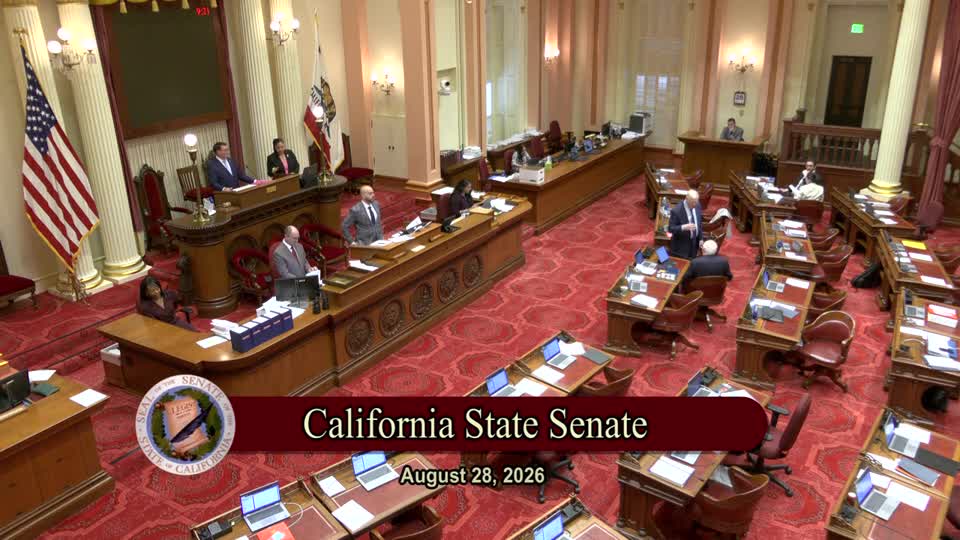
Bill Author
Bill Co-Author(s):