SB 1149: Employees: bereavement leave.
- Session Year: 2025-2026
- House: Senate
- Latest Version Date: 2026-09-27
Current Status:
Passed
(2026-09-27: Chaptered by Secretary of State. Chapter 679, Statutes of 2026.)
Introduced
In Committee
Awaiting First Chamber Vote
Passed First Chamber
In Committee
Awaiting Second Chamber Vote
Passed Second Chamber
Enacted
Existing law makes it an unlawful employment practice for an employer to refuse to grant a request by any employee to take up to 5 days of bereavement leave upon the death of a family member, as defined, to refuse to hire, or to discharge, demote, fine, suspend, expel, or discriminate against, an individual because of the individuals exercise of the right to bereavement leave or because of the individuals giving information or testimony as to their own or another persons bereavement leave, or to interfere with, restrain, or deny the exercise of, or the attempt to exercise, any of these rights, as specified.
This bill would include a designated person identified by the employee, as specified, in the definition of family member and authorize an employer to limit an employee to one designated person per 12-month period for purposes of these provisions relating to bereavement leave.
Existing law makes it an unlawful employment practice for an employer to refuse to grant a request by any employee to take up to 5 days of bereavement leave upon the death of a family member, as defined, to refuse to hire, or to discharge, demote, fine, suspend, expel, or discriminate against, an individual because of the individuals exercise of the right to bereavement leave or because of the individuals giving information or testimony as to their own or another persons bereavement leave, or to interfere with, restrain, or deny the exercise of, or the attempt to exercise, any of these rights, as specified.
This bill would include a designated person in the definition of family member for purposes of these provisions relating to bereavement leave.
(a)As used in this section:
(1)Designated person means any individual related to the employee by blood or whose association with the employee is the equivalent of a family relationship. This designated person may be identified by the employee at the time the employee requests the leave. An employer may limit an employee to one designated person per 12-month period for bereavement leave.
(2)(A)Employee means a person employed by the employer for at least 30 days prior to the commencement of the leave.
(B)Employee does not include a person who is covered by Section 19859.3.
(3)Employer means either of the following:
(A)A person who employs five or more persons to perform services for a wage or salary.
(B)The state and any political or civil subdivision of the state, including, but not limited to, cities and counties.
(4)Family member means either of the following:
(A)A spouse or a child, parent, sibling, grandparent, grandchild, or domestic partner as defined in Section 12945.2.
(B)A designated person as defined in paragraph (1).
(b)It shall be an unlawful employment practice for an employer to refuse to grant a request by any employee to take up to five days of bereavement leave upon the death of a family member.
(c)The days of bereavement leave need not be consecutive.
(d)The bereavement leave shall be completed within three months of the date of death of the family member.
(e)(1)The bereavement leave shall be taken pursuant to any existing bereavement leave policy of the employer.
(2)If there is no existing bereavement leave policy, the bereavement leave may be unpaid, except that an employee may use vacation, personal leave, accrued and available sick leave, or compensatory time off that is otherwise available to the employee.
(3)If an existing leave policy provides for less than five days of paid bereavement leave, the employee shall be entitled to no less than a total of five days of bereavement leave, consisting of the number of days of paid leave under the existing policy, and the remainder of days of leave may be unpaid, except that an employee may use vacation, personal leave, accrued and available sick leave, or compensatory time off that is otherwise available to the employee.
(4)If an existing leave policy provides for less than five days of unpaid bereavement leave, the employee shall be entitled to no less than five days of unpaid bereavement leave, except that an employee may use vacation, personal leave, accrued and available sick leave, or compensatory time off that is otherwise available to the employee.
(f)The employee, if requested by the employer, within 30 days of the first day of the leave, shall provide documentation of the death of the family member. As used in this subdivision, documentation includes, but is not limited to, a death certificate, a published obituary, or written verification of death, burial, or memorial services from a mortuary, funeral home, burial society, crematorium, religious institution, or governmental agency.
(g)It shall be an unlawful employment practice for an employer to refuse to hire, or to discharge, demote, fine, suspend, expel, or discriminate against, an individual because of either of the following:
(1)An individuals exercise of the right to bereavement leave provided by subdivision (b).
(2)An individuals giving information or testimony as to their own bereavement leave, or another persons bereavement leave, in an inquiry or proceeding related to rights guaranteed under this section.
(h)It shall be an unlawful employment practice for an employer to interfere with, restrain, or deny the exercise of, or the attempt to exercise, any right provided under this section.
(i)The employer shall maintain the confidentiality of any employee requesting leave under this section. Any documentation provided to the employer pursuant to subdivision (f) or (g) shall be maintained as confidential and shall not be disclosed except to internal personnel or counsel, as necessary, or as required by law.
(j)An employees right to leave under this section shall be construed as separate and distinct from any right under Section 12945.2.
(k)The section does not apply to an employee who is covered by a valid collective bargaining agreement if the agreement expressly provides for bereavement leave equivalent to that required by this section and for the wages, hours of work, and working conditions of the employees, and if the agreement provides premium wage rates for all overtime hours worked, where applicable, and a regular hourly rate of pay for those employees of not less than 30 percent above the state minimum wage.
(a)As used in this section:
(1)Designated person means any individual related to the employee by blood or whose association with the employee is the equivalent of a family relationship. This designated person may be identified by the employee at the time the employee requests the leave. An employer may limit an employee to one designated person per 12-month period for bereavement leave.
(2)(A)Employee means a person employed by the employer for at least 30 days prior to the commencement of the leave.
(B)Employee does not include a person who is covered by Section 19859.3.
(3)Employer means either of the following:
(A)A person who employs five or more persons to perform services for a wage or salary.
(B)The state and any political or civil subdivision of the state, including, but not limited to, cities and counties.
(4)Family member means either of the following:
(A)A spouse or a child, parent, sibling, grandparent, grandchild, or domestic partner as defined in Section 12945.2.
(B)A designated person as defined in paragraph (1).
(b)It shall be an unlawful employment practice for an employer to refuse to grant a request by any employee to take up to five days of bereavement leave upon the death of a family member.
(c)The days of bereavement leave need not be consecutive.
(d)The bereavement leave shall be completed within three months of the date of death of the family member.
(e)(1)The bereavement leave shall be taken pursuant to any existing bereavement leave policy of the employer.
(2)If there is no existing bereavement leave policy, the bereavement leave may be unpaid, except that an employee may use vacation, personal leave, accrued and available sick leave, or compensatory time off that is otherwise available to the employee.
(3)If an existing leave policy provides for less than five days of paid bereavement leave, the employee shall be entitled to no less than a total of five days of bereavement leave, consisting of the number of days of paid leave under the existing policy, and the remainder of days of leave may be unpaid, except that an employee may use vacation, personal leave, accrued and available sick leave, or compensatory time off that is otherwise available to the employee.
(4)If an existing leave policy provides for less than five days of unpaid bereavement leave, the employee shall be entitled to no less than five days of unpaid bereavement leave, except that an employee may use vacation, personal leave, accrued and available sick leave, or compensatory time off that is otherwise available to the employee.
(f)The employee, if requested by the employer, within 30 days of the first day of the leave, shall provide documentation of the death of the family member. As used in this subdivision, documentation includes, but is not limited to, a death certificate, a published obituary, or written verification of death, burial, or memorial services from a mortuary, funeral home, burial society, crematorium, religious institution, or governmental agency.
(g)It shall be an unlawful employment practice for an employer to refuse to hire, or to discharge, demote, fine, suspend, expel, or discriminate against, an individual because of either of the following:
(1)An individuals exercise of the right to bereavement leave provided by subdivision (b).
(2)An individuals giving information or testimony as to their own bereavement leave, or another persons bereavement leave, in an inquiry or proceeding related to rights guaranteed under this section.
(h)It shall be an unlawful employment practice for an employer to interfere with, restrain, or deny the exercise of, or the attempt to exercise, any right provided under this section.
(i)The employer shall maintain the confidentiality of any employee requesting leave under this section. Any documentation provided to the employer pursuant to subdivision (f) or subdivision (g) subdivision (f) or (g) shall be maintained as confidential and shall not be disclosed except to internal personnel or counsel, as necessary, or as required by law.
(j)An employees right to leave under this section shall be construed as separate and distinct from any right under Section 12945.2.
(k)The section does not apply to an employee who is covered by a valid collective bargaining agreement if the agreement expressly provides for bereavement leave equivalent to that required by this section and for the wages, hours of work, and working conditions of the employees, and if the agreement provides premium wage rates for all overtime hours worked, where applicable, and a regular hourly rate of pay for those employees of not less than 30 percent above the state minimum wage.
REVISIONS: HeadingLine 3.(a)As used in this section:
(1)Designated person means any individual related to the employee by blood or whose association with the employee is the equivalent of a family relationship. This designated person may be identified by the employee at the time the employee requests the leave. An employer may limit an employee to one designated person per 12-month period for bereavement leave.
(1)(2)(A)Employee means a person employed by the employer for at least 30 days prior to the commencement of the leave.
(B)Employee does not include a person who is covered by Section 19859.3.
(2)(3)Employer means either of the following:
(A)A person who employs five or more persons to perform services for a wage or salary.
(B)The state and any political or civil subdivision of the state, including, but not limited to, cities and counties.
(3)(4)Family member means a spouse either of the following:
(A)A spouse or a child, parent, sibling, grandparent, grandchild, domestic partner, parent-in-law, or designated person or domestic partner as defined in Section 12945.2.
(B)A designated person as defined in paragraph (1).
(b)It shall be an unlawful employment practice for an employer to refuse to grant a request by any employee to take up to five days of bereavement leave upon the death of a family member.
(c)The days of bereavement leave need not be consecutive.
(d)The bereavement leave shall be completed within three months of the date of death of the family member.
(e)(1)The bereavement leave shall be taken pursuant to any existing bereavement leave policy of the employer.
(2)If there is no existing bereavement leave policy, the bereavement leave may be unpaid, except that an employee may use vacation, personal leave, accrued and available sick leave, or compensatory time off that is otherwise available to the employee.
(3)If an existing leave policy provides for less than five days of paid bereavement leave, the employee shall be entitled to no less than a total of five days of bereavement leave, consisting of the number of days of paid leave under the existing policy, and the remainder of days of leave may be unpaid, except that an employee may use vacation, personal leave, accrued and available sick leave, or compensatory time off that is otherwise available to the employee.
(4)If an existing leave policy provides for less than five days of unpaid bereavement leave, the employee shall be entitled to no less than five days of unpaid bereavement leave, except that an employee may use vacation, personal leave, accrued and available sick leave, or compensatory time off that is otherwise available to the employee.
(f)The employee, if requested by the employer, within 30 days of the first day of the leave, shall provide documentation of the death of the family member. As used in this subdivision, documentation includes, but is not limited to, a death certificate, a published obituary, or written verification of death, burial, or memorial services from a mortuary, funeral home, burial society, crematorium, religious institution, or governmental agency.
(g)It shall be an unlawful employment practice for an employer to refuse to hire, or to discharge, demote, fine, suspend, expel, or discriminate against, an individual because of either of the following:
(1)An individuals exercise of the right to bereavement leave provided by subdivision (b).
(2)An individuals giving information or testimony as to their own bereavement leave, or another persons bereavement leave, in an inquiry or proceeding related to rights guaranteed under this section.
(h)It shall be an unlawful employment practice for an employer to interfere with, restrain, or deny the exercise of, or the attempt to exercise, any right provided under this section.
(i)The employer shall maintain the confidentiality of any employee requesting leave under this section. Any documentation provided to the employer pursuant to subdivision (f) or subdivision (g) shall be maintained as confidential and shall not be disclosed except to internal personnel or counsel, as necessary, or as required by law.
(j)An employees right to leave under this section shall be construed as separate and distinct from any right under Section 12945.2.
(k)The section does not apply to an employee who is covered by a valid collective bargaining agreement if the agreement expressly provides for bereavement leave equivalent to that required by this section and for the wages, hours of work, and working conditions of the employees, and if the agreement provides premium wage rates for all overtime hours worked, where applicable, and a regular hourly rate of pay for those employees of not less than 30 percent above the state minimum wage.
(a)As used in this section:
(1)(A)Employee means a person employed by the employer for at least 30 days prior to the commencement of the leave.
(B)Employee does not include a person who is covered by Section 19859.3.
(2)Employer means either of the following:
(A)A person who employs five or more persons to perform services for a wage or salary.
(B)The state and any political or civil subdivision of the state, including, but not limited to, cities and counties.
(3)Family member means a spouse or a child, parent, sibling, grandparent, grandchild, domestic partner, or parent-in-law parent-in-law, or designated person as defined in Section 12945.2.
(b)It shall be an unlawful employment practice for an employer to refuse to grant a request by any employee to take up to five days of bereavement leave upon the death of a family member.
(c)The days of bereavement leave need not be consecutive.
(d)The bereavement leave shall be completed within three months of the date of death of the family member.
(e)(1)The bereavement leave shall be taken pursuant to any existing bereavement leave policy of the employer.
(2)If there is no existing bereavement leave policy, the bereavement leave may be unpaid, except that an employee may use vacation, personal leave, accrued and available sick leave, or compensatory time off that is otherwise available to the employee.
(3)If an existing leave policy provides for less than five days of paid bereavement leave, the employee shall be entitled to no less than a total of five days of bereavement leave, consisting of the number of days of paid leave under the existing policy, and the remainder of days of leave may be unpaid, except that an employee may use vacation, personal leave, accrued and available sick leave, or compensatory time off that is otherwise available to the employee.
(4)If an existing leave policy provides for less than five days of unpaid bereavement leave, the employee shall be entitled to no less than five days of unpaid bereavement leave, except that an employee may use vacation, personal leave, accrued and available sick leave, or compensatory time off that is otherwise available to the employee.
(f)The employee, if requested by the employer, within 30 days of the first day of the leave, shall provide documentation of the death of the family member. As used in this subdivision, documentation includes, but is not limited to, a death certificate, a published obituary, or written verification of death, burial, or memorial services from a mortuary, funeral home, burial society, crematorium, religious institution, or governmental agency.
(g)It shall be an unlawful employment practice for an employer to refuse to hire, or to discharge, demote, fine, suspend, expel, or discriminate against, an individual because of either of the following:
(1)An individuals exercise of the right to bereavement leave provided by subdivision (b).
(2)An individuals giving information or testimony as to their own bereavement leave, or another persons bereavement leave, in an inquiry or proceeding related to rights guaranteed under this section.
(h)It shall be an unlawful employment practice for an employer to interfere with, restrain, or deny the exercise of, or the attempt to exercise, any right provided under this section.
(i)The employer shall maintain the confidentiality of any employee requesting leave under this section. Any documentation provided to the employer pursuant to subdivision (f) or subdivision (g) shall be maintained as confidential and shall not be disclosed except to internal personnel or counsel, as necessary, or as required by law.
(j)An employees right to leave under this section shall be construed as separate and distinct from any right under Section 12945.2.
(k)The section does not apply to an employee who is covered by a valid collective bargaining agreement if the agreement expressly provides for bereavement leave equivalent to that required by this section and for the wages, hours of work, and working conditions of the employees, and if the agreement provides premium wage rates for all overtime hours worked, where applicable, and a regular hourly rate of pay for those employees of not less than 30 percent above the state minimum wage.
|
Date
|
Status
|
|---|---|
| Sep 27, 2026 | Chaptered by Secretary of State. Chapter 679, Statutes of 2026. |
| Sep 27, 2026 | Approved by the Governor. |
| Aug 24, 2026 | Enrolled and presented to the Governor at 3 p.m. |
| Aug 19, 2026 | In Senate. Ordered to engrossing and enrolling. |
| Aug 19, 2026 | Read third time. Passed. (Ayes 76. Noes 0. Page 6273.) Ordered to the Senate. |
| Aug 19, 2026 | Read third time. Passed. Ordered to the Senate. |
| Aug 13, 2026 | Read second time. Ordered to third reading. |
| Aug 13, 2026 | From committee: Do pass. (Ayes 15. Noes 0.) (August 13). |
| Aug 13, 2026 | Coauthors revised. |
| Aug 13, 2026 | Assembly Rule 63 suspended. |
| Jul 1, 2026 | July 1 set for first hearing. Placed on suspense file. |
| Jun 11, 2026 | From committee: Do pass and re-refer to Com. on APPR. (Ayes 7. Noes 0.) (June 10). Re-referred to Com. on APPR. |
| Jun 11, 2026 | Coauthors revised. |
| May 26, 2026 | Referred to Com. on L. & E. |
| May 20, 2026 | In Assembly. Read first time. Held at Desk. |
| May 19, 2026 | Read third time. Passed. (Ayes 39. Noes 0. Page 4352.) Ordered to the Assembly. |
| May 19, 2026 | Read third time. Passed. (Ayes 39. Noes 0.) Ordered to the Assembly. |
| May 18, 2026 | Read second time. Ordered to third reading. |
| May 14, 2026 | From committee: Do pass as amended. (Ayes 7. Noes 0. Page 4266.) (May 14). |
| May 14, 2026 | Read second time and amended. Ordered to second reading. |
| May 14, 2026 | From committee: Do pass as amended. (Ayes 7. Noes 0.) (May 14). |
| May 8, 2026 | Set for hearing May 14. |
| Apr 20, 2026 | April 20 hearing: Placed on APPR. suspense file. |
| Apr 10, 2026 | Set for hearing April 20. |
| Apr 9, 2026 | April 13 hearing postponed by committee. |
| Apr 2, 2026 | Set for hearing April 13. |
| Mar 26, 2026 | Read second time and amended. Re-referred to Com. on APPR. |
| Mar 25, 2026 | From committee: Do pass as amended and re-refer to Com. on APPR. (Ayes 5. Noes 0. Page 3690.) (March 25). |
| Mar 25, 2026 | From committee: Do pass as amended and re-refer to Com. on APPR. (Ayes 5. Noes 0.) (March 25). |
| Mar 16, 2026 | Set for hearing March 25. |
| Feb 26, 2026 | Referred to Com. on L., P.E. & R. |
| Feb 19, 2026 | From printer. May be acted upon on or after March 21. |
| Feb 18, 2026 | Introduced. Read first time. To Com. on RLS. for assignment. To print. |
|
Date
|
Description
|
Location
|
Votes
|
|
|---|---|---|---|---|
| Aug 19, 2026 | SB 1149 Durazo Senate Third Reading By Wicks | Assembly Floor |
Passed |
|
| Aug 13, 2026 | Do pass. | Assembly Standing Committee on Appropriations |
Passed |
|
| Jun 10, 2026 | Do pass and be re-referred to the Committee on [Appropriations] | Assembly Standing Committee on Labor and Employment |
Passed |
|
| May 19, 2026 | Senate 3rd Reading SB1149 Durazo et al. | Senate Floor |
Passed |
|
| May 14, 2026 | Do pass as amended | Senate Standing Committee on Appropriations |
Passed |
|
| Apr 20, 2026 | Placed on suspense file | Senate Standing Committee on Appropriations |
Passed |
|
| Mar 25, 2026 | Do pass as amended, but first amend, and re-refer to the Committee on [Appropriations] | Senate Standing Committee on Labor, Public Employment and Retirement |
Passed |
This list shows positions taken on this bill by organizations on the date displayed, which is linked to the original source.
Positions by individuals are not included.
|
Organization
|
Position
|
Date
|
|---|---|---|
| AAUW California | ** Support | |
| A Better Balance | ** Support | |
| Access Reproductive Justice | ** Support | |
| Aging Services Collaborative of Santa Clara County | ** Support | |
| Aids Project Los Angeles Health | ** Support | |
| Alzheimer's Association | ** Support | |
| Alzheimer’s Association | ** Support | |
| Alzheimer's Los Angeles | ** Support | |
| Alzheimer’s Los Angeles | ** Support | |
| alzheimer's orange county | ** Support | |
| Alzheimer’s Orange County | ** Support | |
| Alzheimer’s San Diego | ** Support | |
| Alzheimer'S San Diego | ** Support | |
| American Association of Retired Persons California | ** Support | |
| American Association of Retired Persons (Co-Sponsor) | ** Support | |
| APLA Health | ** Support | |
| Asian Americans Advancing Justice Southern California | ** Support | |
| Asian Law Alliance | ** Support | |
| Asian Law Caucus | ** Support | |
| Association of California Caregiver Resource Centers | ** Support | |
| Black Californians United for Early Care and Education | ** Support | |
| BreastfeedLA | ** Support | |
| California Alliance For Retired Americans | ** Support | |
| California Association Of Area Agencies On Aging | ** Support | |
| California Breastfeeding Coalition | ** Support | |
| California Children and Families Commission (First 5 California) | ** Support | |
| California Coalition on Family Caregiving | ** Support | |
| California Commission on the Status of Women and Girls | ** Support | |
| California Domestic Workers Coalition | ** Support | |
| California Elder Justice Coalition | ** Support | |
| California Employment Lawyers Association | ** Support | |
| California Federation Business and Professional Women | ** Support | |
| California Federation of Labor Unions | ** Support | |
| California for Safety and Justice | ** Support | |
| California Immigrant Policy Center | ** Support | |
| California Landscape Contractors Association | ** Against | |
| California Latinas for Reproductive Justice | ** Support | |
| California Legislative LGBTQ Caucus | ** Support | |
| California LGBTQ Health and Human Services Network | ** Support | |
| California National Organization For Women | ** Support | |
| Californians for Safety and Justice | ** Support | |
| California PACE Association | ** Support | |
| California Partnership To End Domestic Violence | ** Support | |
| California Rural Legal Assistance Foundation | ** Support | |
| California School Employees Association | ** Support | |
| California Teachers Association | ** Support | |
| California Teachers Association- a Union of Educators & Classified Professionals | ** Support | |
| California Teachers Association– a Union of Educators & Classified Professionals, AFT, AFL-CIO | ** Support | |
| California Women's Law Center | ** Support | |
| California Work and Family Coalition | ** Support | |
| Calpride Valle Central | ** Support | |
| CAMEO Network | ** Support | |
| Caring Across Generations | ** Support | |
| Center for Community Action and Environmental Justice | ** Support | |
| Center for Law and Social Policy | ** Support | |
| CFT – A Union of Educators & Classified Professionals | ** Support | |
| Child Care Law Center | ** Support | |
| Children Now | ** Support | |
| Church State Council | ** Support | |
| Community Legal Services in East Palo Alto | ** Support | |
| Consumer Attorneys Of California | ** Support | |
| Courage California | ** Support | |
| Disability Rights California | ** Support | |
| D.legacy Pace Setters | ** Support | |
| D. Legacy Pace Setters | ** Support | |
| East Bay Sanctuary Covenant | ** Support | |
| El/La Para TransLatinas | ** Support | |
| End Child Poverty CA | ** Support | |
| Engineers and Scientists of California, IFPTE Local 20 | ** Support | |
| Equality California | ** Support | |
| Equal Rights Advocates | ** Support | |
| evolve california | ** Support | |
| Family Caregiver Alliance | ** Support | |
| Family Values @ Work | ** Support | |
| Food Empowerment Project | ** Support | |
| Friends Committee On Legislation Of California | ** Support | |
| Gender Affirming Professionals | ** Support | |
| Gender Alchemy | ** Support | |
| Gender Justice Los Angeles | ** Support | |
| Hand in Hand: The Domestic Employers Network | ** Support | |
| Health in Partnership | ** Support | |
| Hmong Innovating Politics | ** Support | |
| Instituto de Educacion Popular del Sur de California | ** Support | |
| Jewish Center for Justice | ** Support | |
| LA Best Babies Network | ** Support | |
| Leeza's Care Connection | ** Support | |
| Legal Aid At Work | ** Support | |
| LGBTQ Center OC | ** Support | |
| LGBTQ+ Inclusivity, Visibility, and Empowerment | ** Support | |
| LOCD IN DOULA | ** Support | |
| Los Angeles Best Babies Network | ** Support | |
| Love Lactation | ** Support | |
| Lyon-Martin Community Health Services | ** Support | |
| MicroEnterprise Collaborative of Inland Southern California | ** Support | |
| Mujeres Unidas Y Activas | ** Support | |
| National Council of Jewish Women-California | ** Support | |
| National Employment Law Project | ** Support | |
| National Harm Reduction Coalition | ** Support | |
| Nevada County Citizens for Choice | ** Support | |
| Nourishing Justly | ** Support | |
| Oasis Legal Services | ** Support | |
| One Institute | ** Support | |
| Orange County Equality Coalition | ** Support | |
| Our Family Coalition | ** Support | |
| Parent Voices California | ** Support | |
| ParivarBayArea | ** Support | |
| PFLAG Oakland-East Bay | ** Support | |
| PFLAG San Diego County | ** Support | |
| PFLAG San Francisco | ** Support | |
| Planned Parenthood Affiliates Of California | ** Support | |
| Poder Latinx | ** Support | |
| Pomona Economic Opportunity Center | ** Support | |
| Prevention Institute | ** Support | |
| Sacramento Breastfeeding Coalition | ** Support | |
| San Diego County Breastfeeding Coalition | ** Support | |
| San Diego Pride | ** Support | |
| Santa Clara County Wage Theft Coalition | ** Support | |
| Senior Services Coalition of Alameda County | ** Support | |
| Small Business Majority | ** Support | |
| Star Doula International | ** Support | |
| Thai Community Development Center | ** Support | |
| The California Child Care Resource & Referral Network | ** Support | |
| The Source Lgbt+ Center | ** Support | |
| The Translatin@ Coalition | ** Support | |
| The Wage Justice Center | ** Support | |
| TransCanWork | ** Support | |
| UAW Region 6 | ** Support | |
| Universidad Popular | ** Support | |
| Valorus | ** Support | |
| Village Movement California | ** Support | |
| Warehouse Worker Resource Center | ** Support | |
| western center on law and poverty | ** Support | |
| Women'S Foundation California | ** Support | |
| Working Partnerships USA | ** Support | |
| WorkLife Law | ** Support | |
| Worksafe | ** Support | |
| Zeri Health, Inc | ** Support |
SENATE THIRD READING
STR Bill Id:SB 1149
Author:(Durazo)
As Amended Ver:May 14, 2026
Majority vote
SUMMARY
Adds "designated person" to the definition of family member for purposes of taking bereavement leave. "Designated person" means any individual related to the employee by blood or whose association with the employee is the equivalent of a family relationship. The designated person may be identified by the employee at the time the employee requests the leave and the employee may be limited to one designated person per 12-month period.
Major Provisions
See the above summary.
COMMENTS
This bill builds upon prior legislation expanding the definition of "family" under state leave laws. For example, in 2022, the state's family medical leave law—the California Family Rights Act—was amended to provide that a worker can take job-protected leave to care for a designated person. (AB 1041 (Wicks) Chapter 748, Statutes of 2022). Similarly, SB 590 (Durazo) Chapter 772, Statutes of 2025 will allow, beginning in 2028, wage replacement for a qualified worker to care for a designated person.
A recent study surveying women in the workplace reveals that women in particular assign a high value to bereavement leave among employee benefits. The study surveyed employee experiences from over 27,000 workers at 33 companies. A quarter of women respondents reported bereavement leave as a top employee benefit, even over parental leave and caregiver benefits.[1] Over thirty percent of female respondents with traditionally marginalized identities such as black women, women with disabilities, and LGBTQ women reported that bereavement leave is a critical benefit.[2]
Similarly, leave usage to care for "chosen" family members is high among LGBT workers and workers with disabilities compared to other workers. In fact, forty-two percent of LGBT individuals report taking leave for a chosen family member, a significantly higher rate than non-LGBT individuals at 31 percent.[3] Among people with disabilities, 42 percent reported taking time off to care for chosen family, compared with 30 percent of people without disabilities.[4] These numbers indicate a significant need to expand the definition of "family" for leave-related purposes for a number of worker populations.
According to the Author
"Current law provides up to five days of bereavement leave, but only for a limited list of close family members such as a spouse, child, parent, sibling, grandparent, grandchild, domestic partner, or parent-in-law. But for many Californians, family is broader than biology or legal status. It includes chosen family, extended relatives, and individuals who provide the same love, care, and support as immediate family.
SB 1149 expands bereavement leave to include a "designated person" – someone the employee identifies as having a family-like relationship – recognizing the reality of how families are formed across our state. This definition is already reflected in other California workplace and family leave policies and ensures California workers are supported in their most difficult moments, consistent with how families actually live and care for one another."
Arguments in Support
A coalition of work and family organizations, including the California Coalition on Family Caregiving, are cosponsors of the bill and state, "SB 1149 will also ensure that California remains a leader in workplace protections. States like Minnesota and Oregon already protect the right of workers to take job-protected bereavement leave for a chosen or extended family member. It is essential for California to keep pace.
Notably, in 1968, when the Vietnam War death toll was at its peak, the U.S. government passed funeral leave for federal employees to take time off for the combat-related deaths of family or "any individual related by blood or affinity whose close association with the employee is the equivalent of a family relationship." We must act with the same kind of compassion to protect Californians who have experienced loss."
Arguments in Opposition
None on file.
FISCAL COMMENTS
According to the Assembly Appropriations Committee,
- Minor and absorbable costs to the Civil Rights Department (CRD), which enforces an employee's right to bereavement leave.
- Minor and absorbable costs to the Department of Human Resources to update bereavement leave policies and provide notice to state employee bargaining units.
- Ongoing costs of an unknown amount, potentially in excess of $150,000, across state departments (particularly those with operations requiring 24-hour coverage) for increased staffing costs to the extent expanding the definition of a family member results in more employees taking bereavement leave (General Fund or special fund).
Similarly, potential ongoing staffing costs across local government employers. However, such costs would not need to be reimbursed by the state because this bill's requirements for local agencies equally apply to the private sector.
VOTES
SENATE FLOOR: 39-0-1
YES: Allen, Alvarado-Gil, Archuleta, Arreguín, Ashby, Becker, Blakespear, Cabaldon, Caballero, Cervantes, Choi, Cortese, Dahle, Durazo, Gonzalez, Grayson, Grove, Hurtado, Jones, Laird, Limón, McGuire, McNerney, Menjivar, Ochoa Bogh, Padilla, Pérez, Reyes, Richardson, Rubio, Seyarto, Smallwood-Cuevas, Stern, Strickland, Umberg, Valladares, Wahab, Weber Pierson, Wiener
ABS, ABST OR NV: Niello
ASM LABOR AND EMPLOYMENT: 7-0-0
YES: Ortega, Alanis, Chen, Arambula, Kalra, Lee, Ward
ASM APPROPRIATIONS: 15-0-0
YES: Wicks, Hoover, Arambula, Calderon, Caloza, Dixon, Fong, Mark González, Krell, Pacheco, Pellerin, Sharp-Collins, Solache, Ta, Tangipa
UPDATED
VERSION: May 14, 2026
CONSULTANT: Megan Lane / L. & E. / (916) 319-2091 FN: 0003524
"A surprising employee benefit that often tops the list for women with marginalized identities: Bereavement Leave." LeanIn, 2024. The study was conducted by LeanIn and McKinsey & Company in 2023. ↑
Ibid. ↑
"People Need Paid Leave Policies that Cover Chosen Family," Center for American Progress, October 30, 2017. ↑
Ibid. ↑
Date of Hearing: July 1, 2026
ASSEMBLY COMMITTEE ON APPROPRIATIONS
Buffy Wicks, Chair
SBPCA Bill Id:SB 1149
Author:(Durazo) – As Amended Ver:May 14, 2026
Policy Committee: | Labor and Employment | Vote: | 7 - 0 |
|
| ||
|
|
Urgency: No State Mandated Local Program: No Reimbursable: No
SUMMARY:
This bill adds a “designated person” to the definition of a family member, for whom an employee may take up to five days of unpaid bereavement leave pursuant to existing law.
This bill defines a “designated person” as an individual related to the employee by blood or whose association with the employee is the equivalent of a family relationship. This bill allows the employee to identify the designated person at the time the employee requests bereavement leave and allows the employer to limit the employee to one designated person per 12-month period for bereavement leave.
FISCAL EFFECT:
- Minor and absorbable costs to the Civil Rights Department (CRD), which enforces an employee’s right to bereavement leave.
- Minor and absorbable costs to the Department of Human Resources to update bereavement leave policies and provide notice to state employee bargaining units.
- Ongoing costs of an unknown amount, potentially in excess of $150,000, across state departments (particularly those with operations requiring 24-hour coverage) for increased staffing costs to the extent expanding the definition of a family member results in more employees taking bereavement leave (General Fund or special fund).
Similarly, potential ongoing staffing costs across local government employers. However, such costs would not need to be reimbursed by the state because this bill’s requirements for local agencies equally apply to the private sector.
COMMENTS:
- Purpose. According to the author:
Current law provides up to five days of bereavement leave, but only for a limited list of close family members such as a spouse, child, parent, sibling, grandparent, grandchild, domestic partner, or parent-in-law. But for many Californians, family is broader than biology or legal status. It includes chosen family, extended relatives, and individuals who provide the same love, care, and support as immediate family.
SB 1149 expands bereavement leave to include a “designated person” – someone the employee identifies as having a family-like relationship – recognizing the reality of how families are formed across our state. This definition is already reflected in other California workplace and family leave policies and ensures California workers are supported in their most difficult moments, consistent with how families actually live and care for one another.
- Background. Designated Person. AB 1041 (Wicks), Chapter 748, Statutes of 2022, expanded California Family Rights Act (CFRA) job protections and paid sick leave to an employee caring for a “designated person,” defined as any individual related by blood or whose association with the employee is the equivalent of a family relationship. The employee may identify the designated person at the time leave is requested and the employer may limit an employee to one designated person per 12-month period for CFRA and paid sick leave, respectively.
Bereavement Leave. AB 1949 (Low), Chapter 767, Statutes of 2022, required employers to provide employees with up to five days of unpaid bereavement leave, making it an unlawful employment practice for an employer to refuse to grant an employee’s request to take such leave, or to discharge, demote, suspend, or discriminate against an employee who exercises their right to take such leave. Existing law also requires CRD to mediate alleged violations of an employee’s right to bereavement leave through CRD’s small employer family leave mediation pilot program, applicable to employers with five to 19 employees. This bill adds a “designated person” to the definition of a family member for purposes of bereavement leave.
- Support and Opposition. This bill is co-sponsored by nine organizations, including the California Work and Family Coalition, which argues, “Under current California law, workers can take job-protected leave to care for a chosen or extended family member, but they do not have the right to take bereavement leave if that family member dies.” This bill is also supported by a large coalition of community groups, economic and social justice organizations, and workers’ rights groups.
This bill is opposed by the California Landscape Contractors Association, which argues, “Creating a broad, undefined category of bereavement eligibility disrupts workforce management and could create operational challenges.”
- Related Legislation. SB 590 (Durazo), Chapter 772, Statutes of 2025, expands Paid Family Leave benefits, beginning July 1, 2028, to a person who takes time off work to care for a seriously ill “designated person.”
Analysis Prepared by: Irene Ho / APPR. / (916) 319-2081
Date of Hearing: June 10, 2026
ASSEMBLY COMMITTEE ON LABOR AND EMPLOYMENT
Liz Ortega, Chair
SBPCA Bill Id:SB 1149
Author:(Durazo) – As Amended Ver:May 14, 2026
SENATE VOTE: 39-0
SUBJECT: Employees: bereavement leave
SUMMARY: Adds “designated person” to the definition of family member for purposes of taking bereavement leave. “Designated person” means any individual related to the employee by blood or whose association with the employee is the equivalent of a family relationship. The designated person may be identified by the employee at the time the employee requests the leave and the employee may be limited to one designated person per 12-month period.
EXISTING LAW:
- Defines“employee” to mean a person employed by the employer for at least 30 days prior to the commencement of the leave but excludes certain nonelected officers or employees of the executive branch. Government Code §12945.7(a)(1)(A).
- Defines “employer” to mean either of the following:
- A person who employs five or more persons to perform services for a wage or salary.
- The state and any political or civil subdivision of the state, including, but not limited to, cities and counties. Government Code §12945.7(a)(2).
- Defines “family member” to mean a spouse or a child, parent, sibling, grandparent, grandchild, domestic partner, or parent-in-law, as defined. Government Code §12945.7(a)(3).
- Provides that it shall be an unlawful employment practice for an employer to refuse to grant a request by any employee to take up to five days of bereavement leave upon the death of a family member. Government Code §12945.7(b).
- Requires the bereavement leave to be completed within three months of the date of death of the family member. Government Code §12945.7(d).
- States that it shall be an unlawful employment practice for an employer to refuse to hire, or to discharge, demote, fine, suspend, expel, or discriminate against, an individual because of either of the following:
- An individual’s exercise of the right to bereavement leave.
- An individual’s giving information or testimony as to their own bereavement leave, or another person’s bereavement leave, in an inquiry or proceeding related to rights guaranteed under this section. Government Code §12945.7(g).
- States that it shall be an unlawful employment practice for an employer to interfere with, restrain, or deny the exercise of, or the attempt to exercise, any right provided under state bereavement law. Government Code §12945.7(h).
- Exempts an employee who is covered by a valid collective bargaining agreement if the agreement expressly provides for bereavement leave equivalent to that required by this section and for the wages, hours of work, and working conditions of the employees, and if the agreement provides premium wage rates for all overtime hours worked, where applicable, and a regular hourly rate of pay for those employees of not less than 30 percent above the state minimum wage. Government Code §12945.7(k).
FISCAL EFFECT: According to the Senate Appropriations Committee,
- The California Civil Rights Department (CRD) anticipates minor and absorbable administrative costs.
- The California Department of Human Resources (CalHR) has yet to determine the bill’s fiscal impact to the State. However, the department’s costs to (1) notice the bill’s proposed changes to bereavement leave for the 21 bargaining units that represent state employees, and (2) update policies, would probably be minor.
- The bill potentially could result in increased staffing costs for state departments relative to current law. The aggregate annual magnitude is unknown, but potentially significant (General and special funds.)
COMMENTS: This bill builds upon prior legislation expanding the definition of “family” under state leave laws. For example, in 2022, the state’s family medical leave law—the California Family Rights Act—was amended to provide that a worker can take job-protected leave to care for a designated person. (AB 1041 (Wicks)). Similarly, SB 590 (Durazo) from 2025 will allow, beginning in 2028, wage replacement for a qualified worker to care for a designated person.
A recent study surveying women in the workplace reveals that women in particular assign a high value to bereavement leave among employee benefits. The study surveyed employee experiences from over 27,000 workers at 33 companies. A quarter of women respondents reported bereavement leave as a top employee benefit, even over parental leave and caregiver benefits.[1] Over thirty percent of female respondents with traditionally marginalized identities such as black women, women with disabilities, and LGBTQ women reported that bereavement leave is a critical benefit.[2]
Similarly, leave usage to care for “chosen” family members is high among LGBT workers and workers with disabilities compared to other workers. In fact, forty-two percent of LGBT individuals report taking leave for a chosen family member, a significantly higher rate than non-LGBT individuals at 31 percent.[3] Among people with disabilities, 42 percent reported taking time off to care for chosen family, compared with 30 percent of people without disabilities.[4] These numbers indicate a significant need to expand the definition of “family” for leave-related purposes for a number of worker populations.
According to the author, “Current law provides up to five days of bereavement leave, but only for a limited list of close family members such as a spouse, child, parent, sibling, grandparent, grandchild, domestic partner, or parent-in-law. But for many Californians, family is broader than biology or legal status. It includes chosen family, extended relatives, and individuals who provide the same love, care, and support as immediate family.
SB 1149 expands bereavement leave to include a “designated person” – someone the employee identifies as having a family-like relationship – recognizing the reality of how families are formed across our state. This definition is already reflected in other California workplace and family leave policies and ensures California workers are supported in their most difficult moments, consistent with how families actually live and care for one another.”
The author further states that the bill will promote equity solutions because “under current California law, workers can take job-protected leave to care for a chosen or extended family member, but they do not have the right to take bereavement leave if that family member dies. This particularly impacts immigrants, older adults, LGBTQ+ people, and other communities who are more likely to have close ties to chosen and extended family. Bereavement leave is an important protection that allows workers time to grieve and to participate in culturally-specific mourning practices.
SB 1149 will make California bereavement leave more equitable by allowing workers to take job-protected leave following the death of a “designated person” who is a chosen or extended family member. This simple change will align California’s bereavement leave with other state sick and family leave laws.”
Arguments in Support
A coalition of work and family organizations, including the California Coalition on Family Caregiving, are cosponsors of the bill and state, “SB 1149 will also ensure that California remains a leader in workplace protections. States like Minnesota and Oregon already protect the right of workers to take job-protected bereavement leave for a chosen or extended family member. It is essential for California to keep pace.
Notably, in 1968, when the Vietnam War death toll was at its peak, the U.S. government passed
funeral leave for federal employees to take time off for the combat-related deaths of family or
“any individual related by blood or affinity whose close association with the employee is the
equivalent of a family relationship.” We must act with the same kind of compassion to
protect Californians who have experienced loss.”
Arguments in Opposition
None on file.
Prior Legislation
SB 590 (Durazo), Chapter 772, Statutes of 2025, expands, commencing on July 1, 2028, eligibility for benefits under the Paid Family Leave program to include individuals who take time off work to care for a seriously ill designated person, as defined.
AB 1041 (Wicks) Chapter 748, Statutes of 2022 expanded the list of individuals for which an employee can take leave under the California Family Rights Act and the Healthy Workplaces, Healthy Families Act of 2014 to include a designated person.
AB 1949 (Low), Chapter 767, Statutes of 2022 requires private employers with five or more employees and public sector employers to provide employees with at least 30 days of service up to five unpaid days of bereavement leave upon the death of a family member defined as: a spouse or a child, parent, sibling, grandparent, grandchild, domestic partner, or parent-in-law.
AB 95 (Low) of 2021 would have required that employers with 25 or more employees provide up to ten business days of unpaid bereavement leave and those with fewer than 25 employees provide up to three days of unpaid bereavement leave. AB 95 died in the Assembly Appropriations Committee.
REGISTERED SUPPORT / OPPOSITION:
Support
American Association of Retired Persons (Co-Sponsor)
A Better Balance
Aauw California
Access Reproductive Justice
Aging Services Collaborative of Santa Clara County
Aids Project Los Angeles Health
Alzheimer's Association
Alzheimer's Los Angeles
Alzheimer's Orange County
Alzheimer's San Diego
American Association of Retired Persons California
Asian Americans Advancing Justice Southern California
Asian Law Alliance
Asian Law Caucus
Association of California Caregiver Resource Centers
Black Californians United for Early Care and Education
Breastfeedla
California Alliance for Retired Americans
California Alliance for Retired Americans
California Association of Area Agencies on Aging
California Breastfeeding Coalition
California Coalition on Family Caregiving
California Commission on the Status of Women and Girls
California Domestic Workers Coalition
California Elder Justice Coalition
California Elder Justice Coalition
California Employment Lawyers Association
California Federation Business and Professional Women
California Federation of Labor Unions
California for Safety and Justice
California Immigrant Policy Center
California Latinas for Reproductive Justice
California LGBTQ Health and Human Services Network
California National Organization for Women
California PACE Association
California Partnership to End Domestic Violence
California Rural Legal Assistance Foundation
California School Employees Association
California Teachers Association– a Union of Educators & Classified Professionals, AFT, AFL-CIO
California Teachers Association
California Teachers Association- a Union of Educators & Classified Professionals
California Women's Law Center
California Work & Family Coalition
California Work and Family Coalition
Californians for Safety and Justice
Californians for Safety and Justice
Calpride Valle Central
Cameo Network
Caring Across Generations
Center for Community Action and Environmental Justice
Center for Law and Social Policy
Child Care Law Center
Children Now
Community Legal Services in East Palo Alto
Courage California
D.legacy Pace Setters
Disability Rights California
East Bay Sanctuary Covenant
El/la Para Translatinas
End Child Poverty CA
Equal Rights Advocates
Equality California
Evolve California
Family Caregiver Alliance
Family Values @ Work
Friends Committee on Legislation of California
Gender Affirming Professionals
Gender Alchemy
Gender Justice Los Angeles
Hand in Hand: the Domestic Employers Network
Health in Partnership
Hmong Innovating Politics
Instituto De Educacion Popular Del Sur De California
Jewish Center for Justice
Leeza's Care Connection
Legal Aid At Work
Lgbtq Center Oc
Lgbtq+ Inclusivity, Visibility, and Empowerment
Locd in Doula
Los Angeles Best Babies Network
Love Lactation
Lyon-martin Community Health Services
Microenterprise Collaborative of Inland Southern California
Mujeres Unidas Y Activas
National Council of Jewish Women-california
National Employment Law Project
National Harm Reduction Coalition
Nevada County Citizens for Choice
Nourishing Justly
Oasis Legal Services
One Institute
Orange County Equality Coalition
Our Family Coalition
Parent Voices California
Parivarbayarea
Pflag Oakland-east Bay
Pflag San Diego County
Pflag San Francisco
Planned Parenthood Affiliates of California
Poder Latinx
Pomona Economic Opportunity Center
Prevention Institute
Sacramento Breastfeeding Coalition
San Diego County Breastfeeding Coalition
San Diego Pride
Santa Clara County Wage Theft Coalition
Senior Services Coalition of Alameda County
Small Business Majority
STAR Doula International
Thai Community Development Center
The California Child Care Resource & Referral Network
The Source Lgbt+ Center
The Translatin@ Coalition
The Wage Justice Center
Transcanwork
UAW Region 6
Universidad Popular
Valorus
Village Movement California
Warehouse Worker Resource Center
Western Center on Law and Poverty
Women's Foundation California
Working Partnerships USA
Worklife Law
Worksafe
Zeri Health, INC
Opposition
None of file.
Analysis Prepared by: Megan Lane / L. & E. / (916) 319-2091
“A surprising employee benefit that often tops the list for women with marginalized identities: Bereavement Leave.” LeanIn, 2024. The study was conducted by LeanIn and McKinsey & Company in 2023. ↑
Ibid. ↑
“People Need Paid Leave Policies that Cover Chosen Family,” Center for American Progress, October 30, 2017. ↑
Ibid. ↑
SENATE RULES COMMITTEE Office of Senate Floor Analyses (916) 651-4171 | SB 1149 |
THIRD READING
Bill No: SB 1149
Author: Durazo (D), et al.
Amended: 5/14/26
Vote: 21
SENATE LABOR, PUB. EMP. & RET. COMMITTEE: 5-0, 3/25/26
AYES: Smallwood-Cuevas, Strickland, Cortese, Durazo, Laird
SENATE APPROPRIATIONS COMMITTEE: 7-0, 5/14/26
AYES: Cervantes, Seyarto, Cabaldon, Dahle, Grayson, Richardson, Wahab
SUBJECT: Employees: bereavement leave
SOURCE: California Coalition on Family Caregiving
California Employment Lawyers Association
California Work & Family Coalition
Californians for Safety and Justice
Equal Rights Advocates
Equality California
Our Family Coalition
DIGEST:
This bill adds a “designated person,” defined as any individual related by blood or whose association with the employee is the equivalent of a family relationship, to the list of individuals for whom an employee may take up to five days of bereavement leave upon the death of such family member.
ANALYSIS:
Existing law:
- Makes it an unlawful employment practice for an employer to refuse to grant a request by any employee to take up to five days of bereavement leave upon the death of a family member. (Government Code § 12945.7)
- Regarding bereavement leave, specifies:
- The days of bereavement leave need not be consecutive.
- The bereavement leave shall be completed within three months of the date of death of the family member.
- The bereavement leave shall be taken pursuant to any existing bereavement leave policy of the employer, as specified.
- The employee, if requested by the employer, within 30 days of the first day of the leave, shall provide documentation of the death of the family member.
- As used in this subdivision, “documentation” includes, but is not limited to, a death certificate, a published obituary, or written verification of death, burial, or memorial services from a mortuary, funeral home, burial society, crematorium, religious institution, or governmental agency. (Government Code § 12945.7)
- Makes it an unlawful employment practice for an employer to:
- Refuse to hire, or to discharge, demote, fine, suspend, expel, or discriminate against, an individual because of either of the following:
- An individual’s exercise of the right to bereavement leave.
- An individual’s giving information or testimony as to their own, or another person’s, bereavement leave in an inquiry or proceeding related to these guaranteed rights.
- Interfere with, restrain, or deny the exercise of, or the attempt to exercise, any right provided under these provisions.
- Refuse to hire, or to discharge, demote, fine, suspend, expel, or discriminate against, an individual because of either of the following:
(Government Code § 12945.7)
- Provides an exemption from these requirements for an employee who is covered by a valid collective bargaining agreement if the agreement expressly provides for bereavement leave equivalent to that required by these provisions and for the wages, hours of work, and working conditions of the employees, and if the agreement provides premium wage rates for all overtime hours worked, where applicable, and a regular hourly rate of pay for those employees of not less than 30 percent above the state minimum wage. (Government Code § 12945.7)
- For purposes of these provisions, defines the following:
- “Employee” means a person employed by the employer for at least 30 days prior to the commencement of the leave, as specified.
- “Employer” means either of the following:
- A person who employs five or more persons to perform services for a wage or salary.
- The state and any political or civil subdivision of the state, including, but not limited to, cities and counties.
- “Family member” to mean a spouse or a child, parent, sibling, grandparent, grandchild, domestic partner, or parent-in-law as defined in Government Code Section 12945.2.
(Government Code § 12945.7)
This bill:
- Expands the definition of “family member” to additionally extend bereavement leave rights to “designated persons,” as defined.
- Defines “designated person” to mean any individual related to the employee by blood or whose association with the employee is the equivalent of a family relationship. This designated person may be identified by the employee at the time the employee requests the leave. An employer may limit an employee to one designated person per 12-month period for bereavement leave.
Background
The importance of the “Chosen Family” and Designated Persons in Existing Law:
As noted above, existing bereavement leave authorizes workers to take time off from work to grieve the death of a spouse, child, parent, sibling, grandparent, grandchild, domestic partner, or parent-in-law. This definition does not reflect the changing structure of households in California. According to U.S. Census Bureau data, the number of households in the United States that follow the traditional nuclear family structure with two married parents are declining, while the number of other types of households are increasing.[1]
The U.S. Census Bureau data shows that California has a higher percentage of multigenerational households than average. Therefore, it is not uncommon for individuals in California to be living with other relatives. Additionally, California’s LGBTQ+ community is more likely to be impacted by current definitions. Many LGBTQ+ adults, especially older adults, do not have any relationship with biological relatives. According to data from a study by the Center for American Progress, fewer than 1 in 3 respondents over age 55 reported that they would be likely to turn to biological or legally recognized family members for support when sick and would instead call upon a partner they were not married to, chosen family, or friends.[2]
In recognition of the uniqueness of California households, the Legislature has taken action in recent years to expand access to other protected leaves to “designated persons” identified by employees when taking leave. Most recently, SB 590 (Durazo, Chapter 772, Statutes of 2025) expanded, commencing on July 1, 2028, eligibility for benefits under the Paid Family Leave program to include individuals who take time off work to care for a seriously ill designated person, as defined. Prior to that, AB 1041 (Wicks, Chapter 748, Statutes of 2022) added a designated person to the list of individuals for whom an employee may take leave to care for under the California Family Rights Act (CFRA) and the Healthy Workplaces, Healthy Families Act of 2014 (Paid Sick Days).
This bill proposes to add the “designated person” provisions to allow individuals to use bereavement leave following the death of a chosen family member for which they already have the right to take other family care leaves for.
Prior/Related Legislation
SB 590 (Durazo, Chapter 772, Statutes of 2025) expands, commencing on July 1, 2028, eligibility for benefits under the Paid Family Leave program to include individuals who take time off work to care for a seriously ill designated person, as defined.
AB 1041 (Wicks, Chapter 748, Statutes of 2022), among other things, added a “designated person” to the list of individuals for whom an employee may take leave to care for under the California Family Rights Act (CFRA) and the Healthy Workplaces, Healthy Families Act of 2014 (Paid Sick Days).
AB 1949 (Low, Chapter 767, Statues of 2022) adopted the original bereavement leave provisions granting workers up to five days of job-protected leave from work to grieve and to attend to logistical matters in the event of the death of a close family member, as defined.
FISCAL EFFECT: Appropriation: No Fiscal Com.: Yes Local: No
According to the Senate Appropriations Committee:
- The California Civil Rights Department (CRD) anticipates minor and absorbable administrative costs.
- The California Department of Human Resources (CalHR) has yet to determine the bill’s fiscal impact to the State. However, the department’s costs to (1) notice the bill’s proposed changes to bereavement leave for the 21 bargaining units that represent state employees, and (2) update policies, would probably be minor.
- The bill potentially could result in increased staffing costs for state departments relative to current law. The aggregate annual magnitude is unknown, but potentially significant (General and special funds.
SUPPORT: (Verified 5/14/26)
California Coalition on Family Caregiving (Co-source)
California Employment Lawyers Association (Co-source)
California Work & Family Coalition (Co-source)
Californians for Safety and Justice (Co-Sponsor)
Equal Rights Advocates (Co-source)
Equality California (Co-source)
Our Family Coalition (Co-source)
A Better Balance
AARP
AAUW California
Access Reproductive Justice
Aging Services Collaborative of Santa Clara County
Alzheimer's Association
Alzheimer's Los Angeles
Alzheimer’s Orange County
Alzheimer's San Diego
American Association of University Women
APLA Health
Asian Americans Advancing Justice Southern California
Asian Law Alliance
Asian Law Caucus
Association of California Caregiver Resource Centers
Black Californians United for Early Care and Education
BreastfeedLA
California Alliance for Retired Americans
California Association of Area Agencies on Aging
CA Commission on the Status of Women and Girls
California Breastfeeding Coalition
California Children and Families Commission (First 5 California)
California Domestic Workers Coalition
California Elder Justice Coalition
California Federation Business and Professional Women
California Federation of Labor Unions
California Immigrant Policy Center
California Latinas for Reproductive Justice
California Legislative LGBTQ Caucus
California LGBTQ Health and Human Services Network
California National Organization for Women
California PACE Association
California Partnership to End Domestic Violence
California Rural Legal Assistance Foundation
California Women's Law Center
CAMEO Network
CalPride Valle Central
Caring Across Generations
Center for Community Action and Environmental Justice
Center for Law and Social Policy
CFT – A Union of Educators & Classified Professionals
Child Care Law Center
Children Now
Church State Council
Community Legal Services in East Palo Alto
Consumer Attorneys of California
Courage California
D. Legacy Pace Setters
Disability Rights California
East Bay Sanctuary Covenant
El/La Para TransLatinas
End Child Poverty CA
Engineers and Scientists of California, IFPTE Local 20
Evolve California
Family Caregiver Alliance
Family Values @ Work
Food Empowerment Project
Friends Committee on Legislation of California
Gender Affirming Professionals
Gender Alchemy
Gender Justice LA
Hand in Hand: the Domestic Employers Network
Health in Partnership
Hmong Innovating Politics
Instituto De Educacion Popular Del Sur De California
Jewish Center for Justice
LA Best Babies Network
Leeza's Care Connection
Legal Aid At Work
LGBTQ Center OC
LGBTQ+ Inclusivity, Visibility, and Empowerment
LOCD IN DOULA
Love Lactation
Lyon-Martin Community Health Services
Microenterprise Collaborative of Inland Southern California
Mujeres Unidas Y Activas
National Council of Jewish Women California
National Employment Law Project
National Harm Reduction Coalition
Nevada County Citizens for Choice
Nourishing Justly
Oasis Legal Services
One Institute
Orange County Equality Coalition
Parent Voices California
ParivarBayArea
PFLAG Oakland/East Bay
PFLAG San Diego County
PFLAG San Francisco
Planned Parenthood Affiliates of California
Poder Latinx
Pomona Economic Opportunity Center
Prevention Institute
Sacramento Breastfeeding Coalition
San Diego County Breastfeeding Coalition
San Diego Pride
Santa Clara County Wage Theft Coalition
Senior Services Coalition of Alameda County
Star Doula International
Thai Community Development Center
The California Child Care Resource & Referral Network
The Source LGBT+ Center
The TransLatin@ Coalition
The Wage Justice Center
TransCanWork
UAW Region 6
Universidad Popular
ValorUS
Village Movement California
Warehouse Worker Resource Center
Western Center on Law and Poverty
Women's Foundation California
Working Partnerships USA
WorkLife Law
Worksafe
Zeri Health, Inc
OPPOSITION: (Verified 5/14/26)
California Landscape Contractor's Association
ARGUMENTS IN SUPPORT: According to a coalition of sponsors, “No worker should be denied time to grieve simply because their family relationship is not recognized by the law. SB 1149 will make California bereavement leave more equitable by allowing workers to take job-protected leave following the death of a “designated person” who is a chosen or extended family member. This simple change will align California’s bereavement leave with other state sick and family leave laws and ensure California remains at the forefront of inclusive leave policies.”
ARGUMENTS IN OPPOSITION: The California Landscape Contractors Association is opposed to the bill and argue: “Our members understand the importance of providing bereavement leave so employees may mourn the loss of family loved ones. However, we oppose SB 1149 because adding a “designated person” to the existing eligible leave list would essentially allow employees to designate anyone to claim this leave. All employers, especially smaller ones, need the ability to manage their workforce to keep projects on schedule, and to provide the service customers expect. Creating a broad, undefined category of bereavement eligibility disrupts workforce management and could create operational challenges."
Prepared by: Alma Perez-Schwab / L., P.E. & R. / (916) 651-1556
5/18/26 15:21:10
**** END ****
“Making the Case for Chosen Family in Paid Family Leave and Medical Policies,” Lindsey Mahowald and Diana Boesch, Center for American Progress (February 16, 2021) https://www.americanprogress.org/article/making-case-chosen-family-paid-family-medical-leave-policies/ ↑
SENATE COMMITTEE ON
Senator Sabrina Cervantes, Chair
2025 - 2026 Regular Session
SB 1149 (Durazo) - Employees: bereavement leave
Version: | Policy Vote: |
Urgency: | Mandate: |
Hearing Date: | Consultant: |
Bill Summary:
SB 1149 would add a “designated person,” as specified, to the list of individuals for whom an employee may take up to five days of bereavement leave upon the death of such family member.
*********** ANALYSIS ADDENDUM – SUSPENSE FILE ***********
The following information is revised to reflect amendments
adopted by the committee on May 14, 2026
Fiscal Impact:
- The California Civil Rights Department (CRD) anticipates minor and absorbable administrative costs.
- The California Department of Human Resources (CalHR) has yet to determine the bill’s fiscal impact to the State. However, the department’s costs to (1) notice the bill’s proposed changes to bereavement leave for the 21 bargaining units that represent state employees, and (2) update policies, would probably be minor.
- The bill potentially could result in increased staffing costs for state departments relative to current law. The aggregate annual magnitude is unknown, but potentially significant (General and special funds.
Committee Amendments:
Add Senator Cervantes as a principal coauthor.
-- END --
SENATE COMMITTEE ON
Senator Sabrina Cervantes, Chair
2025 - 2026 Regular Session
SB 1149 (Durazo) - Employees: bereavement leave
Version: | Policy Vote: |
Urgency: | Mandate: |
Hearing Date: | Consultant: |
Bill Summary:
SB 1149 would add a “designated person,” as specified, to the list of individuals for whom an employee may take up to five days of bereavement leave upon the death of such family member.
Fiscal Impact:
- The California Civil Rights Department (CRD) anticipates minor and absorbable administrative costs.
- The California Department of Human Resources (CalHR) has yet to determine the bill’s fiscal impact to the State. However, the department’s costs to (1) notice the bill’s proposed changes to bereavement leave for the 21 bargaining units that represent state employees, and (2) update policies, would probably be minor.
- The bill potentially could result in increased staffing costs for state departments relative to current law. The aggregate annual magnitude is unknown, but potentially significant (General and special funds, see Staff Comments).
Background:
Under current law (AB 1949, 2022), most employees are guaranteed up to five days of unpaid, job-protected bereavement leave from work following the death of a family member. Existing law authorizes employees to take this leave following the death of a spouse, child, parent, sibling, grandparent, grandchild, domestic partner, or parent-in-law. Specifically, this leave is available to employees working for employers of five or more employees who have worked at least 30 days prior to the commencement of the leave.
Although covered employers are required to grant up to five days of bereavement leave, current law does not require that employers pay for this leave time. However, many employers have paid bereavement leave policies that may be available to workers. Additionally, employees may be able to use available sick leave, vacation, personal leave, or other types of paid time off during their bereavement leave. The State of California as a direct employer generally offers its employees up to five paid days of bereavement leave. Employees who are denied access to bereavement leave, or have been subjected to discrimination, harassment, or retaliation for requesting or using bereavement leave, may file a complaint with CRD.
The Legislature has recently expanded access to other protected leaves to “designated persons” identified by employees when taking leave. Most recently, SB 590 (Durazo, 2025) expanded, commencing on July 1, 2028, eligibility for benefits under the Paid Family Leave program to include individuals who take time off work to care for a seriously ill designated person, as defined. In 2022, AB 1041 (Wicks) added a designated person to the list of individuals for whom an employee may take leave to care for under the California Family Rights Act and the Healthy Workplaces, Healthy Families Act of 2014 (Paid Sick Days).
Proposed Law:
This bill would (1) include a designated person identified by the employee, as specified, in the definition of “family member,” and (2) authorize an employer to limit an employee to one designated person per 12-month period, for purposes of provisions relating to bereavement leave.
Related Legislation:
- SB 590 (Durazo, Chapter 772, Statutes of 2025) expands, commencing on July 1, 2028, eligibility for benefits under the Paid Family Leave program to include individuals who take time off work to care for a seriously ill designated person, as defined.
- AB 1041 (Wicks, Chapter 748, Statutes of 2022), among other things, added a “designated person” to the list of individuals for whom an employee may take leave to care for under the California Family Rights Act (CFRA) and the Healthy Workplaces, Healthy Families Act of 2014 (Paid Sick Days).
- AB 1949 (Low, Chapter 767, Statues of 2022) adopted the original bereavement leave provisions granting workers up to five days of job-protected leave from work to grieve and to attend to logistical matters in the event of the death of a close family member, as defined.
Staff Comments:
As noted above, this bill’s administrative costs to affected state departments would likely be minor and absorbable. However, to the extent that the bill resulted in increased bereavement time by individuals in positions requiring 24/7 coverage (e.g. those related to corrections, public safety or public health), it could potentially result in increased costs to backfill the departmental workload. The magnitude is unknown, but could potentially reach $50,000 (across all departments) in a fiscal year.
-- END --
SENATE COMMITTEE ON LABOR, PUBLIC EMPLOYMENT AND RETIREMENT
Senator Lola Smallwood-Cuevas, Chair
2025 - 2026 Regular
Bill No: SB 1149 Hearing Date: March 25, 2026
Author: | Durazo | ||
Version: | February 18, 2026 | ||
Urgency: | No | Fiscal: | Yes |
Consultant: | Alma Perez | ||
SUBJECT: Employees: bereavement leave
KEY ISSUE
This bill adds a “designated person,” defined as any individual related by blood or whose association with the employee is the equivalent of a family relationship, to the list of individuals for whom an employee may take up to five days of bereavement leave upon the death of such family member.
ANALYSIS
Existing law:
- Makes it an unlawful employment practice for an employer to refuse to grant a request by any employee to take up to five days of bereavement leave upon the death of a family member. (Government Code § 12945.7)
- Regarding bereavement leave, specifies:
- The days of bereavement leave need not be consecutive.
- The bereavement leave shall be completed within three months of the date of death of the family member.
- The bereavement leave shall be taken pursuant to any existing bereavement leave policy of the employer, as specified.
- The employee, if requested by the employer, within 30 days of the first day of the leave, shall provide documentation of the death of the family member.
- As used in this subdivision, “documentation” includes, but is not limited to, a death certificate, a published obituary, or written verification of death, burial, or memorial services from a mortuary, funeral home, burial society, crematorium, religious institution, or governmental agency. (Government Code § 12945.7)
- Makes it an unlawful employment practice for an employer to:
- Refuse to hire, or to discharge, demote, fine, suspend, expel, or discriminate against, an individual because of either of the following:
- An individual’s exercise of the right to bereavement leave.
- An individual’s giving information or testimony as to their own, or another person’s, bereavement leave in an inquiry or proceeding related to these guaranteed rights.
- Interfere with, restrain, or deny the exercise of, or the attempt to exercise, any right provided under these provisions.
- Refuse to hire, or to discharge, demote, fine, suspend, expel, or discriminate against, an individual because of either of the following:
(Government Code § 12945.7)
- Provides an exemption from these requirements for an employee who is covered by a valid collective bargaining agreement if the agreement expressly provides for bereavement leave equivalent to that required by these provisions and for the wages, hours of work, and working conditions of the employees, and if the agreement provides premium wage rates for all overtime hours worked, where applicable, and a regular hourly rate of pay for those employees of not less than 30 percent above the state minimum wage. (Government Code § 12945.7)
- For purposes of these provisions, defines the following:
- “Employee” means a person employed by the employer for at least 30 days prior to the commencement of the leave, as specified.
- “Employer” means either of the following:
- A person who employs five or more persons to perform services for a wage or salary.
- The state and any political or civil subdivision of the state, including, but not limited to, cities and counties.
- “Family member” to mean a spouse or a child, parent, sibling, grandparent, grandchild, domestic partner, or parent-in-law as defined in Government Code Section 12945.2.
(Government Code § 12945.7)
This bill:
- Expands the definition of “family member” to additionally extend bereavement leave rights to “designated persons,” as that term is defined under Government Code Section 12945.2.
- Defines “designated person,” pursuant Government Code Section 12945.2, as follows:
- Any individual related by blood or whose association with the employee is the equivalent of a family relationship.
- The designated person may be identified by the employee at the time the employee requests the leave.
- An employer may limit an employee to one designated person per 12-month period for family care and medical leave.
COMMENTS
1. Background:
Bereavement Leave:
Through the passage of AB 1949 (Low, Chapter 767, Statutes of 2022), beginning on January 1, 2023, California law guarantees most employees up to five days of unpaid, job-protected bereavement leave from work following the death of a family member. Existing law authorizes employees to take this leave following the death of a spouse, child, parent, sibling, grandparent, grandchild, domestic partner, or parent-in-law. As noted above, this leave is available to employees working for employers of five or more employees who have worked at least 30 days prior to the commencement of the leave.
Although covered employers are required to grant up to five days of bereavement leave, the law does not require that employers pay for this leave time. However, many employers have paid bereavement leave policies that may be available to workers. Additionally, employees may be able to use available sick leave, vacation, personal leave, or other types of paid time off during their bereavement leave. Employees who are denied access to bereavement leave, or have been subjected to discrimination, harassment, or retaliation for requesting or using bereavement leave, may file a complaint with the California Civil Rights Department.
The importance of the “Chosen Family” and Designated Persons in Existing Law:
As noted above, existing bereavement leave authorizes workers to take time off from work to grieve the death of a spouse, child, parent, sibling, grandparent, grandchild, domestic partner, or parent-in-law. This definition does not reflect the changing structure of households in California. According to U.S. Census Bureau data, the number of households in the United States that follow the traditional nuclear family structure with two married parents are declining, while the number of other types of households are increasing.[1]
The U.S. Census Bureau data shows that California has a higher percentage of multigenerational households than average. Therefore, it is not uncommon for individuals in California to be living with other relatives. Additionally, California’s LGBTQ+ community is more likely to be impacted by current definitions. Many LGBTQ+ adults, especially older adults, do not have any relationship with biological relatives. According to data from a study by the Center for American Progress, fewer than 1 in 3 respondents over age 55 reported that they would be likely to turn to biological or legally recognized family members for support when sick and would instead call upon a partner they were not married to, chosen family, or friends.[2]
In recognition of the uniqueness of California households, the Legislature has taken action in recent years to expand access to other protected leaves to “designated persons” identified by employees when taking leave. Most recently, SB 590 (Durazo, Chapter 772, Statutes of 2025) expanded, commencing on July 1, 2028, eligibility for benefits under the Paid Family Leave program to include individuals who take time off work to care for a seriously ill designated person, as defined. Prior to that, AB 1041 (Wicks, Chapter 748, Statutes of 2022) added a designated person to the list of individuals for whom an employee may take leave to care for under the California Family Rights Act (CFRA) and the Healthy Workplaces, Healthy Families Act of 2014 (Paid Sick Days). Similarly, AB 1041 authorized the employee to identify the designated person at the time of the request for leave. AB 1041 additionally authorized employers to limit the employee to one designated person per 12-month period.
This bill proposes to add the “designated person” provisions to allow individuals to use bereavement leave following the death of a chosen family member for which they already have the right to take other family care leaves for.
2. Need for this bill?
According to the author:
“Grief affects our mental, emotional, and physical health. However, some workers are currently unable to take leave to grieve simply because their family member is not recognized by California’s bereavement leave law. Under current California law, workers can take job-protected leave to care for a chosen or extended family member, but they do not have the right to take bereavement leave if that family member dies. This particularly impacts immigrants, older adults, LGBTQ+ people, and other communities who are more likely to have close ties to chosen and extended family. Bereavement leave is an important protection that allows workers time to grieve and to participate in culturally-specific mourning practices. Furthermore, differing legal definitions of family create confusion for both workers and employers.
SB 1149 will make California’s existing bereavement leave law more equitable by expanding it to allow workers to take job-protected leave following the death of a “designated person” who is a chosen or extended family member. This simple change will align California’s bereavement leave with other state sick and family leave laws.”
3. Amendments:
As currently in print, this bill simply adds “designated person” to the existing “family member” definition in the bereavement leave provisions of existing law. The existing definition cross references to Government Code Section 12945.2 for more detailed definitions of the specified family members.
Government Code Section 12945.2 governs the California Family Rights Act (CFRA) and grants eligible employees up to 12 weeks of unpaid, job-protected leave per year to bond with a new child, care for a family members with a serious health condition, or attend to their own serious health condition. CFRA includes expanded definitions for “parent,” “parent-in-law,” “grandchild,” “grandparent,” “sibling,” and “designated person.”
CFRA defines “designated person” to mean “any individual related by blood or whose association with the employee is the equivalent of a family relationship. The designated person may be identified by the employee at the time the employee requests the leave. An employer may limit an employee to one designated person per 12-month period for family care and medical leave.” This definition is specifically targeted for CFRA and could create some confusion with how it fits into bereavement leave.
To provide more clarity and avoid any confusion, the author would like to amend the bill to add the following definition of “designated person” directly into the bereavement provisions:
“Designated person” means any individual related to the employee by blood or whose association with the employee is the equivalent of a family relationship. This designated person may be identified by the employee at the time the employee requests the leave. An employer may limit an employee to one designated person per 12-month period for bereavement leave.
Additionally, the author would like to remove “parent-in-law” from the existing bereavement leave definition of “family member” since the definition of “parent” already includes a “parent-in-law”and is therefore redundant and unnecessary.
4. Proponent Arguments:
According to a coalition of sponsors that includes the California Coalition on Family Caregiving, California Employment Lawyers Association, California Work & Family Coalition, Californians for Safety and Justice, Equal Rights Advocates, Equality California, and Our Family Coalition:
“Under current California law, workers can take job-protected leave to care for a chosen or
extended family member, but they do not have the right to take bereavement leave if that
family member dies. This policy gap particularly impacts older adults, people with disabilities, and members of LGBTQ+ and immigrant communities, who are more likely to have close ties to chosen and extended family.
Older adults often depend on chosen family members for care as they age, especially “solo
agers” who are living alone and do not have a partner or adult children they can rely on. An
estimated 28% of older adults in the US live alone and are childless, and 57% of solo agers rely on friends for support. By 2038, the majority of Americans 80 and older are expected to live alone. LGBTQ+ people and people with disabilities also disproportionately rely on and care for chosen family. California has relatively high percentages of people living in multigenerational households; immigrants, people of color, and those families with financial concerns are more likely to live in multigenerational homes. In addition to trying to manage financial pressures, adults living in multigenerational homes are providing care. More than 25% of adults in multigenerational homes care for another adult or for a minor child who is not theirs. Access to bereavement leave is also a gender justice issue, particularly for marginalized women. A quarter of all women, and roughly 1 in 3 black women, women with disabilities, and LGBTQ+ women, report bereavement leave as a top employee benefit, even over parental leave and caregiver benefits…
No worker should be denied time to grieve simply because their family relationship is not
recognized by the law. SB 1149 will make California bereavement leave more equitable by allowing workers to take job-protected leave following the death of a “designated person” who is a chosen or extended family member. This simple change will align California’s bereavement leave with other state sick and family leave laws and ensure California remains at the forefront of inclusive leave policies.”
5. Opponent Arguments:
The California Landscape Contractors Association is opposed to the bill and argue:
“Our members understand the importance of providing bereavement leave so employees may mourn the loss of family loved ones. However, we oppose SB 1149 because adding a “designated person” to the existing eligible leave list would essentially allow employees to designate anyone to claim this leave. All employers, especially smaller ones, need the ability to manage their workforce to keep projects on schedule, and to provide the service customers expect. Creating a broad, undefined category of bereavement eligibility disrupts workforce management and could create operational challenges."
6. Prior/Related Legislation:
SB 590 (Durazo, Chapter 772, Statutes of 2025) expands, commencing on July 1, 2028, eligibility for benefits under the Paid Family Leave program to include individuals who take time off work to care for a seriously ill designated person, as defined.
AB 1041 (Wicks, Chapter 748, Statutes of 2022), among other things, added a “designated person” to the list of individuals for whom an employee may take leave to care for under the California Family Rights Act (CFRA) and the Healthy Workplaces, Healthy Families Act of 2014 (Paid Sick Days).
AB 1949 (Low, Chapter 767, Statues of 2022) adopted the original bereavement leave provisions granting workers up to five days of job-protected leave from work to grieve and to attend to logistical matters in the event of the death of a close family member, as defined.
SUPPORT
California Coalition on Family Caregiving (Co-Sponsor)
California Employment Lawyers Association (Co-Sponsor)
California Work & Family Coalition (Co-Sponsor)
Californians for Safety and Justice (Co-Sponsor)
Equal Rights Advocates (Co-Sponsor)
Equality California (Co-Sponsor)
Our Family Coalition (Co-Sponsor)
A Better Balance
AARP
AAUW California
Access Reproductive Justice
Aging Services Collaborative of Santa Clara County
Alzheimer's Association
Alzheimer's Los Angeles
Alzheimer's San Diego
APLA Health
Asian Law Alliance
Asian Law Caucus
Black Californians United for Early Care and Education
BreastfeedLA
CA Commission on the Status of Women and Girls
California Breastfeeding Coalition
California Elder Justice Coalition
California Federation Business and Professional Women
California Federation of Labor Unions
California Immigrant Policy Center
California Latinas for Reproductive Justice
California LGBTQ Health and Human Services Network
California National Organization for Women
California Partnership to End Domestic Violence
California Rural Legal Assistance Foundation
California Women's Law Center
CalPride Valle Central
Caring Across Generations
Center for Community Action and Environmental Justice
Center for Law and Social Policy
CFT – A Union of Educators & Classified Professionals
Child Care Law Center
Church State Council
Courage California
D. Legacy Pace Setters
Disability Rights California
East Bay Sanctuary Covenant
El/La Para TransLatinas
End Child Poverty CA
Engineers and Scientists of California, IFPTE Local 20
Evolve California
Family Caregiver Alliance
Family Values @ Work
Food Empowerment Project
Friends Committee on Legislation of California
Gender Affirming Professionals
Gender Alchemy
Gender Justice LA
Hand in Hand: the Domestic Employers Network
Health in Partnership
Hmong Innovating Politics
Instituto De Educacion Popular Del Sur De California (IDEPSCA)
Jewish Center for Justice
LA Best Babies Network
Leeza's Care Connection
Legal Aid At Work
LGBTQ Center OC
LGBTQ+ Inclusivity, Visibility, and Empowerment
LOCD IN DOULA
Love Lactation
Microenterprise Collaborative of Inland Southern California
National Harm Reduction Coalition
Nevada County Citizens for Choice
Nourishing Justly
Oasis Legal Services
One Institute
Orange County Equality Coalition
Parent Voices California
ParivarBayArea
PFLAG Oakland/East Bay
PFLAG San Diego County
PFLAG San Francisco
Prevention Institute
San Diego County Breastfeeding Coalition
San Diego Pride
Santa Clara County Wage Theft Coalition
Star Doula International
Thai Community Development Center
The California Child Care Resource & Referral Network
The Source LGBT+ Center
The TransLatin@ Coalition
Trans Can Work
UAW Region 6
Universidad Popular
ValorUS
Village Movement California
Western Center on Law and Poverty
Women's Foundation California
Working Partnerships USA
WorkLife Law
Worksafe
Zeri Health, Inc
OPPOSITION
California Landscape Contractor's Association
-- END --
“Making the Case for Chosen Family in Paid Family Leave and Medical Policies,” Lindsey Mahowald and Diana Boesch, Center for American Progress (February 16, 2021) https://www.americanprogress.org/article/making-case-chosen-family-paid-family-medical-leave-policies/ ↑
Discussed in Hearing
 1MIN
Assembly Floor
 17MIN
Assembly Standing Committee on Labor and Employment
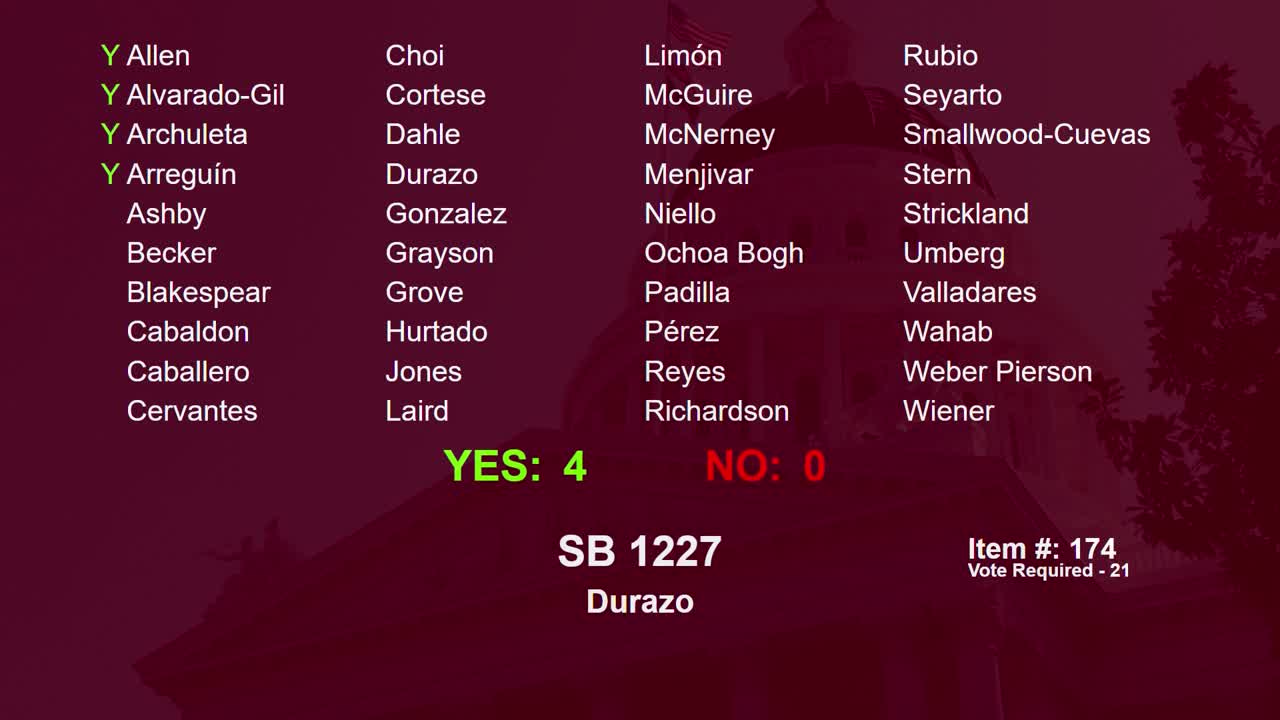 58SEC
Senate Floor
 12MIN