SB 1166: Alameda-Contra Costa Transit District: employee relations.
- Session Year: 2025-2026
- House: Senate
- Latest Version Date: 2026-09-20
Current Status:
Passed
(2026-09-20: Chaptered by Secretary of State. Chapter 422, Statutes of 2026.)
Introduced
In Committee
Awaiting First Chamber Vote
Passed First Chamber
In Committee
Awaiting Second Chamber Vote
Passed Second Chamber
Enacted
Existing law, the Transit District Law, establishes the Alameda-Contra Costa Transit District with various powers and duties relative to transportation projects and services and the operation of public transit in the Counties of Alameda and Contra Costa.
Existing law establishes the Public Employment Relations Board (PERB) in state government as a means of resolving disputes and enforcing the statutory duties and rights of specified public employers and employees under various acts regulating collective bargaining, including the Meyers-Milias-Brown Act. Existing law includes within PERBs jurisdiction the resolution of disputes alleging violation of rules and regulations adopted by a public agency, as defined, concerning unit determinations, representations, recognition, and elections, as specified. Existing law authorizes PERB to adopt rules and regulations to carry out its purposes, as provided.
This bill would vest PERB with jurisdiction to enforce certain provisions related to the districts employees over charges of unfair practices for represented district employees, subject to a selection by an exclusive representative. The bill, in the case of such a selection, would give PERB jurisdiction over the initial determination as to whether those charges are justified and, if so, the appropriate remedy, subject to certain restrictions. The bill would require that PERBs regulations apply, as appropriate, to the district, and authorize PERB to make additional emergency regulations applicable to the district. The bill would require the district to give reasonable written notice to an exclusive representative of its employees of its intent to make any change to matters within the scope of representation of the employees represented by the exclusive representative, as specified. The bill would make it unlawful for the district or an employee organization to engage in certain acts, including imposing or threatening to impose reprisals on employees, refusing to meet and negotiate in good faith, or refusing to participate in good faith in mutually agreed upon impasse procedures. This bill would authorize any charging party, respondent, or intervenor aggrieved by a final decision or order of PERB in an unfair practice case, except a decision of PERB not to issue a complaint in such a case, to petition for a writ of extraordinary relief from that decision or order, as specified. The bill, if the time to petition for extraordinary relief from a PERB decision or order has expired, would authorize PERB to seek enforcement of any final decision or order in a district court of appeal or superior court having jurisdiction over the county where the events giving rise to the decision or order occurred, as specified. By imposing new duties on the district, the bill would impose a state-mandated local program.
This bill would make legislative findings and declarations as to the necessity of a special statute for the district.
The California Constitution requires the state to reimburse local agencies and school districts for certain costs mandated by the state. Statutory provisions establish procedures for making that reimbursement.
This bill would provide that, if the Commission on State Mandates determines that the bill contains costs mandated by the state, reimbursement for those costs shall be made pursuant to the statutory provisions noted above.
Existing law, the Transit District Law, establishes the Alameda-Contra Costa Transit District with various powers and duties relative to transportation projects and services and the operation of public transit in the Counties of Alameda and Contra Costa.
Existing law establishes the Public Employment Relations Board (PERB) in state government as a means of resolving disputes and enforcing the statutory duties and rights of specified public employers and employees under various acts regulating collective bargaining, including the Meyers-Milias-Brown Act. Existing law includes within PERBs jurisdiction the resolution of disputes alleging violation of rules and regulations adopted by a public agency, as defined, concerning unit determinations, representations, recognition, and elections, as specified. Existing law authorizes PERB to adopt rules and regulations to carry out its purposes, as provided.
This bill would vest PERB with jurisdiction to enforce certain provisions related to the districts employees over charges of unfair practices for represented district employees, subject to a selection by an exclusive representative. The bill, in the case of such a selection, would give PERB jurisdiction over the initial determination as to whether those charges are justified and, if so, the appropriate remedy, subject to certain restrictions. The bill would require that PERBs regulations apply, as appropriate, to the district, and authorize PERB to make additional emergency regulations applicable to the district. The bill would require the district to give reasonable written notice to an exclusive representative of its employees of its intent to make any change to matters within the scope of representation of the employees represented by the exclusive representative, as specified. The bill would make it unlawful for the district or an employee organization to engage in certain acts, including imposing or threatening to impose reprisals on employees, or refusing to meet and negotiate in good faith in mutually agreed upon impasse procedures. This bill would authorize any charging party, respondent, or intervenor aggrieved by a final decision or order of PERB in an unfair practice case, except a decision of PERB not to issue a complaint in such a case, to petition for a writ of extraordinary relief from that decision or order, as specified. The bill, if the time to petition for extraordinary relief from a PERB decision or order has expired, would authorize PERB to seek enforcement of any final decision or order in a district court of appeal or superior court having jurisdiction over the county where the events giving rise to the decision or order occurred, as specified. By imposing new duties on the district, the bill would impose a state-mandated local program.
This bill would make legislative findings and declarations as to the necessity of a special statute for the district.
The California Constitution requires the state to reimburse local agencies and school districts for certain costs mandated by the state. Statutory provisions establish procedures for making that reimbursement.
This bill would provide that, if the Commission on State Mandates determines that the bill contains costs mandated by the state, reimbursement for those costs shall be made pursuant to the statutory provisions noted above.
Existing law, the Transit District Law, establishes the Alameda-Contra Costa Transit District with various powers and duties relative to transportation projects and services and the operation of public transit in the Counties of Alameda and Contra Costa.
Existing law establishes the Public Employment Relations Board (PERB) in state government as a means of resolving disputes and enforcing the statutory duties and rights of specified public employers and employees under various acts regulating collective bargaining, including the Meyers-Milias-Brown Act. Existing law includes within PERBs jurisdiction the resolution of disputes alleging violation of rules and regulations adopted by a public agency, as defined, concerning unit determinations, representations, recognition, and elections, as specified. Existing law authorizes PERB to adopt rules and regulations to carry out its purposes, as provided.
This bill would vest PERB with jurisdiction to enforce certain provisions related to the districts employees over charges of unfair practices for represented district employees, subject to a selection by an exclusive representative. The bill, in the case of such a selection, would give PERB jurisdiction over the initial determination as to whether those charges are justified and, if so, the appropriate remedy, subject to certain restrictions. The bill would require that PERBs regulations apply, as appropriate, to the district, and authorize PERB to make additional emergency regulations applicable to the district. The bill would require the district to give reasonable written notice to an exclusive representative of its employees of its intent to make any change to matters within the scope of representation of the employees represented by the exclusive representative, as specified. This bill would authorize any charging party, respondent, or intervenor aggrieved by a final decision or order of PERB in an unfair practice case, except a decision of PERB not to issue a complaint in such a case, to petition for a writ of extraordinary relief from that decision or order, as specified. The bill, if the time to petition for extraordinary relief from a PERB decision or order has expired, would authorize PERB to seek enforcement of any final decision or order in a district court of appeal or superior court having jurisdiction over the county where the events giving rise to the decision or order occurred, as specified. By imposing new duties on the district, the bill would impose a state-mandated local program.
This bill would make legislative findings and declarations as to the necessity of a special statute for the district.
The California Constitution requires the state to reimburse local agencies and school districts for certain costs mandated by the state. Statutory provisions establish procedures for making that reimbursement.
This bill would provide that, if the Commission on State Mandates determines that the bill contains costs mandated by the state, reimbursement for those costs shall be made pursuant to the statutory provisions noted above.
(a)It is a primary purpose of this chapter to promote the improvement of personnel management and employer-employee relations within the district by providing a uniform basis for recognizing the right of employees to join employee organizations of their own choice, to be represented, to select one employee organization as the exclusive representative of the employees in an appropriate unit, and to afford employees a voice at work.
(b)The Public Employment Relations Board established pursuant to Section 3541 of the Government Code, and the powers and duties of the Public Employment Relations Board as described in Section 3541.3 of the Government Code, shall have jurisdiction pursuant to subdivision (b) of Section 25059 to enforce this chapter and the regulations of the Public Employment Relations Board shall apply to this chapter. The Public Employment Relations Board shall perform its duties under this section consistent with its regulations and may make additional regulations. The Public Employment Relations Board may also adopt, amend, or repeal all rules and regulations necessary to carry out this chapter as emergency regulations in accordance with the rulemaking provisions of the Administrative Procedure Act (Chapter 3.5 (commencing with Section 11340) of Part 1 of Division 3 of Title 2 of the Government Code). The adoption, amendment, or repeal of regulations pursuant to this subdivision is conclusively presumed to be necessary for the immediate preservation of the public peace, health, safety, or general welfare within the meaning of Section 11346.1 of the Government Code.
SEC. 2.Section 25059 is added to the Public Utilities Code, to read:25059.(a)This chapter shall not displace or supplant the requirements of Chapter 3 (commencing with Section 3610) of Division 4.5 of Title 1 of the Government Code, and the impasse resolution and injunctive relief procedures provided for pursuant to Sections 3612 to 3614, inclusive, of the Government Code shall remain exclusive.
(b)(1)An exclusive representative for employees of the district may select to move one or more of its represented bargaining units to the jurisdiction of the Public Employment Relations Board for unfair practice charges. A selection for Public Employment Relations Board jurisdiction pursuant to this paragraph with regard to a bargaining unit shall be irrevocable for that unit. The exclusive representative shall file notification of such a selection with the general counsel of the Public Employment Relations Board, or a designee, and serve one or more of the following:
(A)The general manager, chief executive officer, or the equivalent, of the district.
(B)The general legal counsel, or the equivalent, of the district.
(C)The district, pursuant to applicable regulations.
(2)If a selection is made pursuant to paragraph (1) for Public Employment Relations Board jurisdiction over unfair practice charges, the initial determination as to whether the charge of unfair practice is justified and, if so, the appropriate remedy necessary to effectuate the purposes of this chapter, is a matter within the exclusive jurisdiction of the Public Employment Relations Board, except that in an action to recover damages due to an unlawful strike, the Public Employment Relations Board shall not award strike-preparation expenses as damages and shall not award damages for costs, expenses, or revenue losses incurred during, or as a consequence of, an unlawful strike.
SEC. 3.Section 25060 is added to the Public Utilities Code, to read:25060.The district shall give reasonable written notice to an exclusive representative of its intent to make any change to matters within the scope of representation of the employees represented by the exclusive representative for purposes of providing the exclusive representative a reasonable amount of time to negotiate with the district regarding the proposed changes.
SEC. 4.Section 25061 is added to the Public Utilities Code, to read:25061.It is unlawful for the district to do any of the following:
(a)Impose or threaten to impose reprisals on employees, to discriminate or threaten to discriminate against employees, or otherwise to interfere with, restrain, or coerce employees because of their exercise of rights guaranteed to them by this chapter. As used in this subdivision, employee includes an applicant for employment or reemployment with the district.
(b)Deny employee organizations rights guaranteed to them by this chapter.
(c)Refuse or fail to meet and negotiate in good faith with an exclusive representative. Knowingly providing an exclusive representative with inaccurate information, whether or not it is in response to a request for information, constitutes a refusal or failure of the district to meet and negotiate in good faith with the exclusive representative.
(d)Dominate or interfere with the formation or administration of any employee organization, or contribute financial or other support to it, or in any way encourage employees to join any employee organization in preference to another.
(e)Refuse to participate in good faith in mutually agreed upon impasse procedures.
SEC. 5.Section 25062 is added to the Public Utilities Code, to read:25062.It is unlawful for an employee organization to do any of the following:
(a)Impose or threaten to impose reprisals on employees, discriminate or threaten to discriminate against employees, or otherwise interfere with, restrain, or coerce employees because of their exercise of rights guaranteed to them by this chapter.
(b)Refuse or fail to meet and negotiate in good faith with the district concerning any of the employees of which it is the exclusive representative.
(c)Refuse to participate in good faith in mutually agreed upon impasse procedures.
SEC. 6.Section 25063 is added to the Public Utilities Code, to read:25063.(a)Any charging party, respondent, or intervenor aggrieved by a final decision or order of the Public Employment Relations Board in an unfair practice case, except a decision of that board not to issue a complaint in such a case, may petition for a writ of extraordinary relief from that decision or order.
(b)A petition for a writ of extraordinary relief shall be filed in the district court of appeal having jurisdiction over any county in which the district operates. The petition shall be filed within 30 days from the date of the issuance of the Public Employment Relations Boards final decision or order, or order denying reconsideration, as applicable. Upon the filing of the petition, the court shall cause notice to be served upon the Public Employment Relations Board and thereafter shall have jurisdiction of the proceeding. The Public Employment Relations Board shall file in the court the record of the proceeding, certified by that board, within 10 days after the clerks notice unless that time is extended by the court for good cause shown. The court shall have jurisdiction to grant any temporary relief or restraining order it deems just and proper, and in like manner to make and enter a decree enforcing, modifying, and enforcing as modified, or setting aside in whole or in part, the decision or order of the Public Employment Relations Board. The findings of the Public Employment Relations Board with respect to questions of fact, including ultimate facts, if supported by substantial evidence on the record considered as a whole, shall be conclusive. Title 1 (commencing with Section 1067) of Part 3 of the Code of Civil Procedure relating to writs shall, except where specifically superseded by this section, apply to proceedings pursuant to this section.
(c)If the time to petition for extraordinary relief from a Public Employment Relations Board decision or order has expired, the Public Employment Relations Board may seek enforcement of any final decision or order in a district court of appeal or superior court having jurisdiction over the county where the events giving rise to the decision or order occurred. The Public Employment Relations Board shall respond within 10 days to any inquiry from a party to the action as to why the Public Employment Relations Board has not sought court enforcement of the final decision or order. If the response does not indicate that there has been compliance with the Public Employment Relations Boards final decision or order, the Public Employment Relations Board shall seek enforcement of the final decision or order upon the request of the party. The Public Employment Relations Board shall file in the court the record of the proceeding, certified by that board, and appropriate evidence disclosing the failure to comply with the decision or order. If, after the hearing, the court determines that the order was issued pursuant to the procedures established by the Public Employment Relations Board and that the person or entity refuses to comply with the order, the court shall enforce the order by writ of mandamus or other proper process. The court may not review the merits of the order.
SEC. 7.The Legislature finds and declares that a special statute is necessary and that a general statute cannot be made applicable within the meaning of Section 16 of Article IV of the California Constitution because of the unique need of the Alameda-Contra Costa Transit District to efficiently and cost-effectively adjudicate unfair labor practice complaints.
SEC. 8.If the Commission on State Mandates determines that this act contains costs mandated by the state, reimbursement to local agencies and school districts for those costs shall be made pursuant to Part 7 (commencing with Section 17500) of Division 4 of Title 2 of the Government Code.
(a)It is a primary purpose of this chapter to promote the improvement of personnel management and employer-employee relations within the district by providing a uniform basis for recognizing the right of employees to join employee organizations of their own choice, to be represented, to select one employee organization as the exclusive representative of the employees in an appropriate unit, and to afford employees a voice at work.
(b)The Public Employment Relations Board established pursuant to Section 3541 of the Government Code, and the powers and duties of the Public Employment Relations Board as described in Section 3541.3 of the Government Code, shall have jurisdiction pursuant to subdivision (b) of Section 25059 to enforce this chapter and the regulations of the Public Employment Relations Board shall apply to this chapter. The Public Employment Relations Board shall perform its duties under this section consistent with its regulations and may make additional regulations. The Public Employment Relations Board may also adopt, amend, or repeal all rules and regulations necessary to carry out this chapter as emergency regulations in accordance with the rulemaking provisions of the Administrative Procedure Act (Chapter 3.5 (commencing with Section 11340) of Part 1 of Division 3 of Title 2 of the Government Code). The adoption, amendment, or repeal of regulations pursuant to this subdivision is conclusively presumed to be necessary for the immediate preservation of the public peace, health, safety, or general welfare within the meaning of Section 11346.1 of the Government Code.
SEC. 2.Section 25059 is added to the Public Utilities Code, to read:25059.(a)This chapter shall not displace or supplant the requirements of Chapter 3 (commencing with Section 3610) of Division 4.5 of Title 1 of the Government Code, and the impasse resolution and injunctive relief procedures provided for pursuant to Sections 3612 to 3614, inclusive, of the Government Code shall remain exclusive.
(b)(1)An exclusive representative for employees of the district may select to move one or more of its represented bargaining units to the jurisdiction of the Public Employment Relations Board for unfair practice charges. A selection for Public Employment Relations Board jurisdiction pursuant to this paragraph with regard to a bargaining unit shall be irrevocable for that unit. The exclusive representative shall file notification of such a selection with the general counsel of the Public Employment Relations Board, or a designee, and serve one or more of the following:
(A)The general manager, chief executive officer, or the equivalent, of the district.
(B)The general legal counsel, or the equivalent, of the district.
(C)The district, pursuant to applicable regulations.
(2)If a selection is made pursuant to paragraph (1) for Public Employment Relations Board jurisdiction over unfair practice charges, the initial determination as to whether the charge of unfair practice is justified and, if so, the appropriate remedy necessary to effectuate the purposes of this chapter, is a matter within the exclusive jurisdiction of the Public Employment Relations Board, except that in an action to recover damages due to an unlawful strike, the Public Employment Relations Board shall not award strike-preparation expenses as damages and shall not award damages for costs, expenses, or revenue losses incurred during, or as a consequence of, an unlawful strike.
SEC. 3.Section 25060 is added to the Public Utilities Code, to read:25060.The district shall give reasonable written notice to an exclusive representative of its intent to make any change to matters within the scope of representation of the employees represented by the exclusive representative for purposes of providing the exclusive representative a reasonable amount of time to negotiate with the district regarding the proposed changes.
SEC. 4.Section 25061 is added to the Public Utilities Code, to read:25061.It is unlawful for the district to do any of the following:
(a)Impose or threaten to impose reprisals on employees, to discriminate or threaten to discriminate against employees, or otherwise to interfere with, restrain, or coerce employees because of their exercise of rights guaranteed to them by this chapter. As used in this subdivision, employee includes an applicant for employment or reemployment with the district.
(b)Deny employee organizations rights guaranteed to them by this chapter.
(c)Refuse or fail to meet and negotiate in good faith with an exclusive representative. Knowingly providing an exclusive representative with inaccurate information, whether or not it is in response to a request for information, constitutes a refusal or failure of the district to meet and negotiate in good faith with the exclusive representative.
(d)Dominate or interfere with the formation or administration of any employee organization, or contribute financial or other support to it, or in any way encourage employees to join any employee organization in preference to another.
(e)Refuse to participate in good faith in mutually agreed upon impasse procedures.
SEC. 5.Section 25062 is added to the Public Utilities Code, to read:25062.It is unlawful for an employee organization to do any of the following:
(a)Impose or threaten to impose reprisals on employees, discriminate or threaten to discriminate against employees, or otherwise interfere with, restrain, or coerce employees because of their exercise of rights guaranteed to them by this chapter.
(b)Refuse or fail to meet and negotiate in good faith with the district concerning any of the employees of which it is the exclusive representative.
(c)Refuse to participate in good faith in mutually agreed upon impasse procedures.
SEC. 4.Section 25061 is added to the Public Utilities Code, to read:25061.SEC. 6.Section 25063 is added to the Public Utilities Code, to read:25063.(a)Any charging party, respondent, or intervenor aggrieved by a final decision or order of the Public Employment Relations Board in an unfair practice case, except a decision of that board not to issue a complaint in such a case, may petition for a writ of extraordinary relief from that decision or order.
(b)A petition for a writ of extraordinary relief shall be filed in the district court of appeal having jurisdiction over any county in which the district operates. The petition shall be filed within 30 days from the date of the issuance of the Public Employment Relations Boards final decision or order, or order denying reconsideration, as applicable. Upon the filing of the petition, the court shall cause notice to be served upon the Public Employment Relations Board and thereafter shall have jurisdiction of the proceeding. The Public Employment Relations Board shall file in the court the record of the proceeding, certified by that board, within 10 days after the clerks notice unless that time is extended by the court for good cause shown. The court shall have jurisdiction to grant any temporary relief or restraining order it deems just and proper, and in like manner to make and enter a decree enforcing, modifying, and enforcing as modified, or setting aside in whole or in part, the decision or order of the Public Employment Relations Board. The findings of the Public Employment Relations Board with respect to questions of fact, including ultimate facts, if supported by substantial evidence on the record considered as a whole, shall be conclusive. Title 1 (commencing with Section 1067) of Part 3 of the Code of Civil Procedure relating to writs shall, except where specifically superseded by this section, apply to proceedings pursuant to this section.
(c)If the time to petition for extraordinary relief from a Public Employment Relations Board decision or order has expired, the Public Employment Relations Board may seek enforcement of any final decision or order in a district court of appeal or superior court having jurisdiction over the county where the events giving rise to the decision or order occurred. The Public Employment Relations Board shall respond within 10 days to any inquiry from a party to the action as to why the Public Employment Relations Board has not sought court enforcement of the final decision or order. If the response does not indicate that there has been compliance with the Public Employment Relations Boards final decision or order, the Public Employment Relations Board shall seek enforcement of the final decision or order upon the request of the party. The Public Employment Relations Board shall file in the court the record of the proceeding, certified by that board, and appropriate evidence disclosing the failure to comply with the decision or order. If, after the hearing, the court determines that the order was issued pursuant to the procedures established by the Public Employment Relations Board and that the person or entity refuses to comply with the order, the court shall enforce the order by writ of mandamus or other proper process. The court may not review the merits of the order.
SEC. 5.SEC. 7.The Legislature finds and declares that a special statute is necessary and that a general statute cannot be made applicable within the meaning of Section 16 of Article IV of the California Constitution because of the unique need of the Alameda-Contra Costa Transit District to efficiently and cost-effectively adjudicate unfair labor practice complaints.
SEC. 6.SEC. 8.If the Commission on State Mandates determines that this act contains costs mandated by the state, reimbursement to local agencies and school districts for those costs shall be made pursuant to Part 7 (commencing with Section 17500) of Division 4 of Title 2 of the Government Code.
(a)It is a primary purpose of this chapter to promote the improvement of personnel management and employer-employee relations within the district by providing a uniform basis for recognizing the right of employees to join employee organizations of their own choice, to be represented, to select one employee organization as the exclusive representative of the employees in an appropriate unit, and to afford employees a voice at work.
(b)The Public Employment Relations Board established pursuant to Section 3541 of the Government Code, and the powers and duties of the Public Employment Relations Board as described in Section 3541.3 of the Government Code, shall have jurisdiction pursuant to subdivision (b) of Section 25059 to enforce this chapter and the regulations of the Public Employment Relations Board shall apply to this chapter. The Public Employment Relations Board shall perform its duties under this section consistent with its regulations and may make additional regulations. The Public Employment Relations Board may also adopt, amend, or repeal all rules and regulations necessary to carry out this chapter as emergency regulations in accordance with the rulemaking provisions of the Administrative Procedure Act (Chapter 3.5 (commencing with Section 11340) of Part 1 of Division 3 of Title 2 of the Government Code). The adoption, amendment, or repeal of regulations pursuant to this subdivision is conclusively presumed to be necessary for the immediate preservation of the public peace, health, safety, or general welfare within the meaning of Section 11346.1 of the Government Code.
SEC. 2.Section 25059 is added to the Public Utilities Code, to read:25059.(a)This chapter shall not displace or supplant the requirements of Chapter 3 (commencing with Section 3610) of Division 4.5 of Title 1 of the Government Code, and the impasse resolution and injunctive relief procedures provided for pursuant to Sections 3612 to 3614, inclusive, of the Government Code shall remain exclusive.
(b)(1)An exclusive representative for employees of the district may select to move one or more of its represented bargaining units to the jurisdiction of the Public Employment Relations Board for unfair practice charges. A selection for Public Employment Relations Board jurisdiction pursuant to this paragraph with regard to a bargaining unit shall be irrevocable for that unit. The exclusive representative shall file notification of such a selection with the general counsel of the Public Employment Relations Board, or a designee, and serve one or more of the following:
(A)The general manager, chief executive officer, or the equivalent, of the district.
(B)The general legal counsel, or the equivalent, of the district.
(C)The district, pursuant to applicable regulations.
(2)If a selection is made pursuant to paragraph (1) for Public Employment Relations Board jurisdiction over unfair practice charges, the initial determination as to whether the charge of unfair practice is justified and, if so, the appropriate remedy necessary to effectuate the purposes of this chapter, is a matter within the exclusive jurisdiction of the Public Employment Relations Board, except that in an action to recover damages due to an unlawful strike, the Public Employment Relations Board shall not award strike-preparation expenses as damages and shall not award damages for costs, expenses, or revenue losses incurred during, or as a consequence of, an unlawful strike.
SEC. 3.Section 25060 is added to the Public Utilities Code, to read:25060.The district shall give reasonable written notice to an exclusive representative of its intent to make any change to matters within the scope of representation of the employees represented by the exclusive representative for purposes of providing the exclusive representative a reasonable amount of time to negotiate with the district regarding the proposed changes.
SEC. 4.Section 25061 is added to the Public Utilities Code, to read:25061.(a)Any charging party, respondent, or intervenor aggrieved by a final decision or order of the Public Employment Relations Board in an unfair practice case, except a decision of that board not to issue a complaint in such a case, may petition for a writ of extraordinary relief from that decision or order.
(b)A petition for a writ of extraordinary relief shall be filed in the district court of appeal having jurisdiction over any county in which the district operates. The petition shall be filed within 30 days from the date of the issuance of the Public Employment Relations Boards final decision or order, or order denying reconsideration, as applicable. Upon the filing of the petition, the court shall cause notice to be served upon the Public Employment Relations Board and thereafter shall have jurisdiction of the proceeding. The Public Employment Relations Board shall file in the court the record of the proceeding, certified by that board, within 10 days after the clerks notice unless that time is extended by the court for good cause shown. The court shall have jurisdiction to grant any temporary relief or restraining order it deems just and proper, and in like manner to make and enter a decree enforcing, modifying, and enforcing as modified, or setting aside in whole or in part, the decision or order of the Public Employment Relations Board. The findings of the Public Employment Relations Board with respect to questions of fact, including ultimate facts, if supported by substantial evidence on the record considered as a whole, shall be conclusive. Title 1 (commencing with Section 1067) of Part 3 of the Code of Civil Procedure relating to writs shall, except where specifically superseded by this section, apply to proceedings pursuant to this section.
(c)If the time to petition for extraordinary relief from a Public Employment Relations Board decision or order has expired, the Public Employment Relations Board may seek enforcement of any final decision or order in a district court of appeal or superior court having jurisdiction over the county where the events giving rise to the decision or order occurred. The Public Employment Relations Board shall respond within 10 days to any inquiry from a party to the action as to why the Public Employment Relations Board has not sought court enforcement of the final decision or order. If the response does not indicate that there has been compliance with the Public Employment Relations Boards final decision or order, the Public Employment Relations Board shall seek enforcement of the final decision or order upon the request of the party. The Public Employment Relations Board shall file in the court the record of the proceeding, certified by that board, and appropriate evidence disclosing the failure to comply with the decision or order. If, after the hearing, the court determines that the order was issued pursuant to the procedures established by the Public Employment Relations Board and that the person or entity refuses to comply with the order, the court shall enforce the order by writ of mandamus or other proper process. The court may not review the merits of the order.
SEC. 5.The Legislature finds and declares that a special statute is necessary and that a general statute cannot be made applicable within the meaning of Section 16 of Article IV of the California Constitution because of the unique need of the Alameda-Contra Costa Transit District to efficiently and cost-effectively adjudicate unfair labor practice complaints.
SEC. 6.If the Commission on State Mandates determines that this act contains costs mandated by the state, reimbursement to local agencies and school districts for those costs shall be made pursuant to Part 7 (commencing with Section 17500) of Division 4 of Title 2 of the Government Code.
|
Date
|
Status
|
|---|---|
| Sep 20, 2026 | Chaptered by Secretary of State. Chapter 422, Statutes of 2026. |
| Sep 20, 2026 | Approved by the Governor. |
| Aug 30, 2026 | Enrolled and presented to the Governor at 6 p.m. |
| Aug 25, 2026 | Assembly amendments concurred in. (Ayes 30. Noes 10. Page 5738.) Ordered to engrossing and enrolling. |
| Aug 25, 2026 | Assembly amendments concurred in. (Ayes 30. Noes 10.) Ordered to engrossing and enrolling. |
| Aug 20, 2026 | In Senate. Concurrence in Assembly amendments pending. |
| Aug 20, 2026 | Read third time. Passed. (Ayes 62. Noes 12. Page 6306.) Ordered to the Senate. |
| Aug 20, 2026 | Read third time. Passed. Ordered to the Senate. |
| Aug 17, 2026 | Read second time. Ordered to third reading. |
| Aug 13, 2026 | Read second time and amended. Ordered to second reading. |
| Aug 13, 2026 | From committee: Do pass as amended. (Ayes 11. Noes 2.) (August 13). |
| Aug 13, 2026 | Assembly Rule 63 suspended. |
| Aug 5, 2026 | August 5 set for first hearing. Placed on suspense file. |
| Jun 24, 2026 | From committee: Do pass and re-refer to Com. on APPR. (Ayes 6. Noes 0.) (June 24). Re-referred to Com. on APPR. |
| Jun 8, 2026 | Referred to Com. on P. E. & R. |
| May 27, 2026 | In Assembly. Read first time. Held at Desk. |
| May 27, 2026 | Read third time. Passed. (Ayes 30. Noes 9. Page 4492.) Ordered to the Assembly. |
| May 27, 2026 | Amendments by Senator Valladares tabled on motion of Senator Ashby. (Ayes 30. Noes 9. Page 4491.) |
| May 27, 2026 | Read third time. Passed. (Ayes 30. Noes 9.) Ordered to the Assembly. |
| May 27, 2026 | Amendments by Senator Valladares tabled on motion of Senator Ashby. (Ayes 30. Noes 9.) |
| May 14, 2026 | From committee: Do pass. (Ayes 5. Noes 2. Page 4267.) (May 14). |
| May 14, 2026 | Read second time. Ordered to third reading. |
| May 14, 2026 | From committee: Do pass. (Ayes 5. Noes 2.) (May 14). |
| May 8, 2026 | Set for hearing May 14. |
| Apr 20, 2026 | April 20 hearing: Placed on APPR. suspense file. |
| Apr 10, 2026 | Set for hearing April 20. |
| Apr 8, 2026 | From committee: Do pass and re-refer to Com. on APPR. (Ayes 10. Noes 2. Page 3757.) (April 7). Re-referred to Com. on APPR. |
| Apr 8, 2026 | From committee: Do pass and re-refer to Com. on APPR. (Ayes 10. Noes 2.) (April 7). Re-referred to Com. on APPR. |
| Mar 27, 2026 | Set for hearing April 7. |
| Mar 25, 2026 | From committee: Do pass and re-refer to Com. on JUD. (Ayes 4. Noes 1. Page 3690.) (March 25). Re-referred to Com. on JUD. |
| Mar 25, 2026 | From committee: Do pass and re-refer to Com. on JUD. (Ayes 4. Noes 1.) (March 25). Re-referred to Com. on JUD. |
| Mar 16, 2026 | Set for hearing March 25. |
| Feb 26, 2026 | Referred to Coms. on L., P.E. & R. and JUD. |
| Feb 19, 2026 | From printer. May be acted upon on or after March 21. |
| Feb 18, 2026 | Introduced. Read first time. To Com. on RLS. for assignment. To print. |
|
Date
|
Description
|
Location
|
Votes
|
|
|---|---|---|---|---|
| Aug 25, 2026 | Unfinished Business SB1166 Arreguín et al. Concurrence | Senate Floor |
Passed |
|
| Aug 20, 2026 | SB 1166 Arreguín Senate Third Reading By Lee | Assembly Floor |
Passed |
|
| Aug 13, 2026 | Do pass as amended. | Assembly Standing Committee on Appropriations |
Passed |
|
| Jun 24, 2026 | Do pass and be re-referred to the Committee on [Appropriations] | Assembly Standing Committee on Public Employment and Retirement |
Passed |
|
| May 27, 2026 | Senate 3rd Reading SB1166 Arreguín et al. | Senate Floor |
Passed |
|
| May 14, 2026 | Do pass | Senate Standing Committee on Appropriations |
Passed |
|
| Apr 20, 2026 | Placed on suspense file | Senate Standing Committee on Appropriations |
Passed |
|
| Apr 7, 2026 | Do pass, but first be re-referred to the Committee on [Appropriations] | Senate Standing Committee on Judiciary |
Passed |
|
| Mar 25, 2026 | Do pass, but first be re-referred to the Committee on [Judiciary] | Senate Standing Committee on Labor, Public Employment and Retirement |
Passed |
This list shows positions taken on this bill by organizations on the date displayed, which is linked to the original source.
Positions by individuals are not included.
|
Organization
|
Position
|
Date
|
|---|---|---|
| AFL-CIO | ** Support | |
| AFSCME Local 57 | ** Support | |
| American Federation of State, County and Municipal, Council 57 | ** Support | |
| American Federation of State, County and Municipal Employees | ** Support | |
| American Federation of State, County and Municipal Employees, Local 3916 | ** Support | |
| International Brotherhood Of Electrical Workers, Local 1245 | ** Support | |
| International Brotherhood of Electrical Workers, Local Union 1245 | ** Support | |
| The International Brotherhood of Electrica Workers, Local 1245 | ** Support |
SENATE RULES COMMITTEE Office of Senate Floor Analyses (916) 651-4171 | SB 1166 |
UNFINISHED BUSINESS
Bill No: SB 1166
Author: Arreguín (D), et al.
Amended: 8/13/26
Vote: 21
SENATE LABOR, PUB. EMP. & RET. COMMITTEE: 4-1, 3/25/26
AYES: Smallwood-Cuevas, Cortese, Durazo, Laird
NOES: Strickland
SENATE JUDICIARY COMMITTEE: 10-2, 4/7/26
AYES: Umberg, Allen, Ashby, Caballero, Durazo, Reyes, Stern, Wahab, Weber Pierson, Wiener
NOES: Niello, Valladares
NO VOTE RECORDED: Laird
SENATE APPROPRIATIONS COMMITTEE: 5-2, 5/14/26
AYES: Cervantes, Cabaldon, Grayson, Richardson, Wahab
NOES: Seyarto, Dahle
SENATE FLOOR: 30-9, 5/27/26
AYES: Allen, Archuleta, Arreguín, Ashby, Becker, Blakespear, Cabaldon, Caballero, Cervantes, Cortese, Durazo, Gonzalez, Grayson, Hurtado, Laird, Limón, McGuire, McNerney, Menjivar, Padilla, Pérez, Reyes, Richardson, Rubio, Smallwood-Cuevas, Stern, Umberg, Wahab, Weber Pierson, Wiener
NOES: Alvarado-Gil, Choi, Grove, Jones, Niello, Ochoa Bogh, Seyarto, Strickland, Valladares
NO VOTE RECORDED: Dahle
ASSEMBLY FLOOR: 62-12, 8/20/26 - See last page for vote
SUBJECT: Alameda-Contra Costa Transit District: employee relations
SOURCE: American Federation of State, County and Municipal Employees
American Federation of State, County and Municipal, Council 57
American Federation of State, County and Municipal Employees, Local 3916
DIGEST:
This bill transfers jurisdiction for unfair labor practice complaints involving the Alameda-Contra Costa Transit District (ACTD) from the court system to the Public Employment Relations Board (PERB).
Assembly Amendments
- Recasts and restates prior version provisions of the bill related to filing a petition for a writ of extraordinary relief.
- Makes it unlawful for ACTD to:
- Impose or threaten to impose reprisals on employees, including applicants; to discriminate or threaten to discriminate against employees; or otherwise to interfere with, restrain, or coerce employees because of their exercise of rights guaranteed to them, as specified.
- Deny employee organizations rights guaranteed to them, as specified.
- Refuse or fail to meet and negotiate in good faith with an exclusive representative. Knowingly providing an exclusive representative with inaccurate information, whether or not it is in response to a request for information, constitutes a refusal or failure of the district to meet and negotiate in good faith with the exclusive representative.
- Dominate or interfere with the formation or administration of any employee organization, or contribute financial or other support to it, or in any way encourage employees to join any employee organization in preference to another.
- Refuse to participate in good faith in mutually agreed upon impasse procedures.
- Makes it unlawful for an employee organization to
- Impose or threaten to impose reprisals on employees, including applicants; to discriminate or threaten to discriminate against employees; or otherwise to interfere with, restrain, or coerce employees because of their exercise of rights guaranteed to them, as specified.
- Refuse or fail to meet and negotiate in good faith with the district concerning any of the employees of which it is the exclusive representative.
- Refuse to participate in good faith in mutually agreed upon impasse procedures.
ANALYSIS: Existing law:
1) Governs collective bargaining in the private sector under the federal National Labor Relations Act (NLRA) but leaves to the states the regulation of collective bargaining in their respective public sectors. While the NLRA and the decisions of its National Labor Relations Board (NLRB) often provide persuasive precedent in interpreting state collective bargaining law, public employees generally have no collective bargaining rights absent specific statutory authority establishing those rights (29 United State Code § 151 et seq.)
2) Provides several statutory frameworks under California law to provide public employees collective bargaining rights, govern public employer-employee relations, and limit labor strife and economic disruption in the public sector through a reasonable method of resolving disputes regarding wages, hours and other terms and conditions of employment between public employers and recognized public employee organizations or their exclusive representatives. These include the Meyers-Milias-Brown Act (MMBA) which provides for public employer-employee relations between local government employers and their employees, including some, but not all public transit districts. (Government Code (GC) § 3500 et seq.)
3) Establishes PERB, a quasi-judicial administrative agency charged with administering certain statutory frameworks governing employer-employee relations, resolving disputes, and enforcing the statutory duties and rights of public agency employers and employee organizations, but provides the City and County of Los Angeles, respectively, local alternatives to PERB oversight. (GC § 3541)
4) Does not cover California’s public transit districts by a common collective bargaining statute. Instead, while some transit agencies are subject to the MMBA, many transit agencies are instead still subject to labor relations provisions found in each district’s specific Public Utilities Code (PUC) enabling statute, in joint powers agreements, or in articles of incorporation and bylaws. (e.g., Public Utilities Code (PUC) § 28500)
5) Provides transit employees not under the MMBA with basic rights to organization and representation but does not define or prohibit unfair labor practices. Unlike other California public agencies and employees, these transit agencies and their employees generally must rely upon the courts to remedy alleged violations. Additionally, they may be subject to provisions of the federal Labor Management Relations Act of 1947 (Taft-Hartley) and the 1964 Urban Mass Transit Act, now known as the Federal Transit Act. (PUC § 24501 et seq.; 49 United State Code § 5333 (b))
6) Provides that the following provisions shall govern disputes between exclusive bargaining representatives of public transit employees and local agencies not covered by the MMBA:
- The disputes shall not be subject to any fact-finding procedure otherwise provided by law.
- Each party shall exchange contract proposals not less than 90 days before the expiration of a contract and shall be in formal collective bargaining not less than 60 days before that expiration.
- Each party shall supply to the other party all reasonable data as requested by the other party.
- At the request of either party to a dispute, the California State Mediation and Conciliation Service shall assign a conciliator to mediate the dispute and shall have access to all formal negotiations. (GC § 3611)
7) Authorizes the Governor to appoint a committee to investigate a transit district’s labor dispute relating to an impasse in bargaining that results in a threatened or actual strike and provides a process to resolve the dispute. (GC § 3612 to § 3616)
8) Provides for the continuance of the Alameda-Contra Costa Transit District (ACTD), as specified. (PUC § 24561 et seq.)
9) Requires the ACTD transit board to bargain in good faith with the district employees’ accredited representatives, as specified, and requires both parties to bargain in good faith and make all reasonable efforts to reach agreement on the terms of a written contract governing wages, salaries, hours, working conditions, and grievance procedures. (PUC § 25051)
10) Authorizes the district and the union to submit unresolved disputes over contract term governing wages, salaries, hours, or working conditions an arbitration board, as specified, whose decision shall be final. (PUC § 25051 (a) (1))
11) Requires the parties to submit questions regarding whether a union represents a majority of employees or whether a proposed bargaining unit is or is not appropriate to the State Conciliation Service for disposition. (PUC § 25052)
This bill:
- State’s that this bill’s primary purpose is to promote the improvement of personnel management and employer-employee relations within the district by providing a uniform basis for recognizing the right of employees to join employee organizations of their own choice, to be represented, to select one employee organization as the exclusive representative of the employees in an appropriate unit, and to afford employees a voice at work.
- Grants PERB jurisdiction to enforce this bill’s provisions.
- Provides that the requirements and impasse resolution and injunctive relief procedures of Chapter 3 (commencing with Section 3610) of Division 4.5 of Title 1 of the Government Code shall remain exclusive and this bill shall not displace or supplant them.
- Authorizes the employees’ union to select to move one or more of its represented bargaining units to PERB’s jurisdiction unfair practice charges and provides that that a selection for PERB jurisdiction is irrevocable for that unit.
- Requires the union to file notification of such a selection with PERB’s general counsel or designee, and provide service to the district, as specified.
- Requires the district to give reasonable written notice to the union of its intent to make any change to matters within the scope of representation to allow the union a reasonable amount of time to negotiate with the district regarding the proposed changes.
- Makes it unlawful for ACTD to:
- Impose or threaten to impose reprisals on employees, including applicants; to discriminate or threaten to discriminate against employees; or otherwise to interfere with, restrain, or coerce employees because of their exercise of rights guaranteed to them, as specified.
- Deny employee organizations rights guaranteed to them, as specified.
- Refuse or fail to meet and negotiate in good faith with an exclusive representative. Knowingly providing an exclusive representative with inaccurate information, whether or not it is in response to a request for information, constitutes a refusal or failure of the district to meet and negotiate in good faith with the exclusive representative.
- Dominate or interfere with the formation or administration of any employee organization, or contribute financial or other support to it, or in any way encourage employees to join any employee organization in preference to another.
- Refuse to participate in good faith in mutually agreed upon impasse procedures.
- Makes it unlawful for an employee organization to
- Impose or threaten to impose reprisals on employees, including applicants; to discriminate or threaten to discriminate against employees; or otherwise to interfere with, restrain, or coerce employees because of their exercise of rights guaranteed to them, as specified.
- Refuse or fail to meet and negotiate in good faith with the district concerning any of the employees of which it is the exclusive representative.
- Refuse to participate in good faith in mutually agreed upon impasse procedures.
- Authorizes any charging party, respondent, or intervenor aggrieved by a final PERB decision or order in an unfair practice case, except a PERB decision not to issue a complaint, to petition for a writ of extraordinary relief from that decision or order.
- Requires the aggrieved party to file the petition for a writ of extraordinary relief in the district court of appeal having jurisdiction over any county in which the district operates.
- Requires the petitioner to file within 30 days from the date of PERB’s issuance of its final decision or order, or order denying reconsideration, as applicable.
- Requires, upon the filing of the petition, the court to cause the relevant party to serve notice on PERB and thereafter the court shall have jurisdiction of the proceeding.
- Requires PERB to certify and file in court, the record of PERB’s proceeding within 10 days after the clerk’s notice unless the court extends that time for good cause shown.
- Authorizes the court to grant any temporary relief or restraining order it deems just and proper, and in like manner to make and enter a decree enforcing, modifying, and enforcing as modified, or setting aside in whole or in part, PERB’s decision or order.
- Makes PERB’s findings with respect to questions of fact, including ultimate facts, if supported by substantial evidence on the record considered as a whole, conclusive. Provides that Title 1 (commencing with Section 1067) of Part 3 of the Code of Civil Procedure relating to writs shall, except where specifically superseded by this bill’s relevant provision, apply to these proceedings.
- Authorizes PERB to seek enforcement of any final decision or order in a district court of appeal or superior court having jurisdiction over the county where the events giving rise to the decision or order occurred if the time to petition for extraordinary relief from a PERB decision or order has expired.
- Requires PERB to respond within 10 days to any inquiry from a party to the action as to why PERB has not sought court enforcement of the final decision or order.
- Requires PERB to seek enforcement of the final decision or order upon the request of the party if PERB’s response to the party’s inquiry does not indicate that there has been compliance PERB’s final decision or order.
- Requires PERB to certify and file in court the record of PERB’s proceeding and appropriate evidence disclosing the failure to comply with PERB’s decision or order. If, after hearing, the court determines that PERB issued the order pursuant to its established procedures and that the person or entity refuses to comply with the order, the court shall enforce the order by writ of mandamus or other proper process. The court may not review the merits of the order.
- Declares that a special statute is necessary and that the Legislature cannot make a general statute applicable within the meaning of Section 16 of Article IV of the California Constitution because of the unique need of the Alameda-Contra Costa Transit District to efficiently and cost-effectively adjudicate unfair labor practice complaints.
- Requires state mandated local costs to be made pursuant to Part 7 (commencing with Section 17500) of Division 4 of Title 2 of the Government Code.
Comments
Need for this bill? According to the author: “The vast majority of local government labor relations are governed by the Meyers-Milias-Brown Act (MMBA) (e.g., cities, counties, municipalities, most special districts). PERB resolves unfair labor practice charges and representation disputes for employers and employees under the MMBA.”
“However, public transit districts have collective bargaining statutes governed by individual codes under Public Utilities Code, meaning by default, that public transit districts and their employees must rely upon the courts to remedy any alleged labor disputes. Courts often go without expertise in public sector labor relations. To address this disparity, the Legislature has brought several public transit districts under PERB’s jurisdiction to adjudicate labor disputes (e.g., BART, OCTA, SacRT, SCMTD, VTA).”
“AC Transit is one of the remaining public transit districts whose unionized employees do not have the opportunity to access to PERB’s expertise on labor law or its provision of expeditious and cost-effective alternatives to processing labor disputes, which means claims of unfair labor practices currently must go through superior court.”
Dual Referral: The Senate Rules Committee referred this bill to both the Senate Labor, Public Employment and Retirement Committee and to the Senate Judiciary Committee.
Related/Prior Legislation
SB 957 (Laird, Chapter 240, Statutes of 2022) transferred jurisdiction for unfair labor practice complaints involving Santa Cruz Metropolitan Transit District (SCMTD) from the court system to the Public Employment Relations Board (PERB).
SB 598 (Pan, Chapter 492, Statutes of 2021) granted unions the option of transferring jurisdiction over unfair labor practices for their represented bargaining units within the Sacramento Regional Transit District from the judicial system to PERB.
AB 2850 (Low, Chapter 293, Statutes of 2020) granted PERB jurisdiction over disputes relating to employer-employee relations between the San Francisco Bay Area Rapid Transit District and its employees, among other provisions.
AB 355 (Daly, Chapter 713, Statutes of 2019) transferred jurisdiction over unfair labor practice charges at the Orange County Transportation Authority from the judicial system to PERB; and authorizes parties to a labor dispute to appeal PERB decisions and orders to the courts through a petition for a writ of extraordinary relief filed within 30 days of the PERB ruling.
AB 2305 (Rodriguez, 2018) would have expanded PERB’s jurisdiction to include disputes between public agencies and peace officer employee organizations other than those employers and employees under the jurisdiction of employee relations commissions for the City and County of Los Angeles. Disputes between public agencies and individual peace officers would have remained outside of PERB’s jurisdiction. The Governor vetoed the bill.
AB 2886 (Daly, 2018) would have transferred jurisdiction over unfair labor practices for the Orange County Transportation Authority and the San Joaquin Regional Transit District to PERB, effective January 1, 2020. The Governor vetoed the bill.
AB 3034 (Low, 2018) would have amended the PUC by including BART’s supervisory, professional, and technical employee units under MMBA’s provisions; thereby granting them certain statutory rights related to the employer-employee relationship and bringing them under PERB’s jurisdiction. The Governor vetoed the bill.
FISCAL EFFECT: Appropriation: No Fiscal Com.: Yes Local: Yes
According to the Assembly Appropriations Committee:
“One-time General Fund costs of $150,000 and $100,000 ongoing annually for PERB to promulgate regulations and pay for attorney time for unfair practice charges resulting from this bill.”
SUPPORT: (Verified 8/20/26)
American Federation of State, County and Municipal Employees
American Federation of State, County and Municipal, Council 57
American Federation of State, County and Municipal Employees, Local 3916
International Brotherhood of Electrical Workers, Local Union 1245
OPPOSITION: (Verified 8/20/26)
None received.
ARGUMENTS IN SUPPORT:
According to the American Federation of State, County, and Municipal Employees:
“Alameda-Contra Costa Transit District’s (AC Transit) establishing statute lies within the Public Utilities Code and therefore AC Transit does not fall under PERB’s jurisdiction by default. To seek resolution for an unfair labor practice (ULP), AC Transit or its employees must file a writ in Superior Court. This process can be time-consuming, prohibitively expensive, and may involve a judge who has no experience with public sector employer-employee relations. Furthermore, California’s chronically under-resourced court system has a severe backlog. Delays wrought by the existing process can carry on for years, contribute to labor tension, and complicate contract negotiations.
PERB is a more timely, accessible, and labor-focused venue to resolve any future ULP conflicts that may arise. Transit agencies should have access to the same well-regarded employer-employee conflict resolution process as most California public employees. Senate Bill 1166 permits AC Transit employee organizations to move to the jurisdiction of PERB for ULP complaints. In moving to PERB, AC Transit will join Santa Clara Valley Transit Authority, San Francisco Bay Area Rapid Transit District, and Sacramento Regional Transit District. Additionally, if AC Transit or its employees are aggrieved by a PERB decision, SB 1166 authorizes them to petition for a writ of extraordinary relief.”
ASSEMBLY FLOOR: 62-12, 8/20/26
AYES: Addis, Aguiar-Curry, Ahrens, Alanis, Alvarez, Arambula, Ávila Farías, Bains, Bauer-Kahan, Bennett, Berman, Boerner, Bonta, Bryan, Calderon, Caloza, Carrillo, Connolly, Davies, Elhawary, Fong, Gabriel, Garcia, Gipson, Mark González, Haney, Harabedian, Hart, Irwin, Jackson, Kalra, Krell, Lee, Lowenthal, McKinnor, Muratsuchi, Nguyen, Ortega, Pacheco, Papan, Patel, Pellerin, Petrie-Norris, Quirk-Silva, Ramos, Ransom, Celeste Rodriguez, Michelle Rodriguez, Rogers, Blanca Rubio, Schiavo, Schultz, Sharp-Collins, Solache, Soria, Stefani, Valencia, Ward, Wicks, Wilson, Zbur, Rivas
NOES: Castillo, DeMaio, Dixon, Ellis, Jeff Gonzalez, Hadwick, Johnson, Lackey, Macedo, Patterson, Sanchez, Tangipa
NO VOTE RECORDED: Chen, Flora, Hoover, Ta, Wallis
Prepared by: Glenn Miles / L., P.E. & R. / (916) 651-1556
8/20/26 13:54:18
**** END ****
SENATE THIRD READING
STR Bill Id:SB 1166
Author:(Arreguín)
As Amended Ver:August 13, 2026
Majority vote
SUMMARY
Vests the Public Employment Relations Board (PERB) with jurisdiction to enforce certain provisions related to the Alameda-Contra Costa Transit District's (AC Transit) employees over unfair practice charges (UPC) for represented employees, subject to a selection by an exclusive representative, among other provisions.
Major Provisions
- Establish the primary purpose is to promote improvement of personnel management and employer-employee relations within the district by providing a uniform basis for recognizing the right of employees to join employee organizations of their own choice, be represented, and select one organization as the exclusive organization as the exclusive representative in an appropriate unit, and to afford employees a voice at work.
- Establish that the PERB's powers, duties, and existing or new regulations, including emergency regulations as necessary, to enforce the provisions of this proposed statute must apply, and that its actions regarding such regulations is conclusively presumed to be necessary for the immediate preservation of public peace, health, safety, or general welfare, as provided.
- Establish that the provisions of this proposed statute must not displace or supplant the requirements of existing law, as specified, and impasse resolution and injunctive relief procedures provided under existing law must remain exclusive.
- Authorize an exclusive representative of AC Transit employees to irrevocably select one or more of its represented bargaining units (BU) to the PERB's jurisdiction for UPCs, but must file notice of the selection with the PERB's general counsel, or designees, and either: i) AC Transit's general manager, chief executive officer, or equivalent; ii) general counsel or equivalent, or iii) AC Transit, pursuant to applicable regulations.
- Provide that if the above-described selection is made, the PERB has exclusive jurisdiction as to the initial determination on whether a UPC is justified and, if so, the appropriate remedy to effectuate the purposes of this statute. However, in actions to recover damages due to an unlawful strike, the PERB must not award strike-preparation expenses as damages or damages for costs, expenses, or revenue losses incurred during, or as a consequence of, an unlawful strike.
- Require the AC Transit to give reasonable written notice to an exclusive representative of its intent to make any change to matters within the scope of representation to provide the exclusive representative a reasonable amount of time to negotiate regarding the proposed changes.
- Expressly make it unlawful for the AC Transit or an employee organization to engage in certain acts, including imposing or threatening to impost reprisals on employees, or refusing to meet and negotiate in good faith in mutually agreed upon impasse procedures.
- Prescribe the process and procedures to petition a court for a writ of extraordinary relief by a charging party, respondent, or intervenor aggrieved by a final decision or order of the PERB in a UPC case.
COMMENTS
Public Transit Districts and Continued Migration from Courts to the PERB to Adjudicate Workplace Violation Allegations. The history of public transit districts migrating from the courts to the PERB to adjudicate workplace violation allegations continues, and this bill follows that trend.
Some public transit districts are subject to specific employer-employee relations statutes; whereas, the majority of transit districts are subject to labor relations provisions found in each district's specific Public Utilities Code enabling statute, joint powers agreements, or in articles of incorporation and bylaws. As such, existing law does not cover all public transit districts by common collective statute. For these transit districts, the PERB is not the venue for recourse relating to alleged workplace violations. Instead, resolution of such matters are adjudicated in court. This jurisdictional variation, i.e., courts vs. the PERB, for handling allegations of workplace violations in public transit employment relations may be considered as a public policy inequity that can result in inconsistent decisions among those venues.
This bill seeks to resolve this matter with respect to the AC Transit in a manner similar to prior enacted statutes that migrated certain matters of other public transit districts to the PERB's jurisdiction, and where the PERB was specifically established to timely and objectively resolve such matters and is the subject matter expert in public sector employment relations.
Please see the respective policy committee analyses for a full discussion of this bill.
According to the Author
To [address the disparity among public transit districts], the Legislature has brought several [of them] under the PERB's jurisdiction to adjudicate labor disputes [… and,] AC Transit is one of the remaining public transit districts whose unionized employees do not have the opportunity to access the PERB's expertise on labor law or its provision of expeditious and cost-effective alternatives to processing labor disputes, which means claims of unfair labor practices currently must go through superior court."
Arguments in Support
A coalition of the American Federation of State, County and Municipal Employees (AFSCME), AFL-CIO and states, "[the AC Transit] establishing statute lies within the [PUC] and therefore AC Transit does not fall under [the] PERB's jurisdiction by default. To seek resolution for [a UPC], AC Transit or its employees must file a writ in Superior Court. This process can be time-consuming, prohibitively expensive, and may involve a judge who has no experience with public sector employer-employee relations. Furthermore, California's chronically under-resourced court system has a severe backlog. Delays wrought by the existing process can carry on for years, contribute to labor tension, and complicate contract negotiations. [The] PERB is a more timely, accessible, and labor-focused venue to resolve any future [UPC] conflicts that may arise. Transit agencies should have access to the same well-regarded employer-employee conflict resolution process as most California public employees. [This bill] permits AC Transit employee organizations to move to the jurisdiction of [the] PERB for [UPC]. In moving to [the] PERB, AC Transit will join Santa Clara Valley Transit Authority, San Francisco Bay Area Rapid Transit District, and Sacramento Regional Transit District. Additionally, if AC Transit or its employees are aggrieved by a PERB decision, [this bill] authorizes them to petition for a writ of extraordinary relief. [We believe] that a more efficient conflict resolution process benefits the employees, the employer and those who rely on public transit."
The International Brotherhood of Electrica Workers, Local 1245 offers similar statements in support of this bill.
Arguments in Opposition
None.
FISCAL COMMENTS
According to the Assembly Committee on Appropriations, this bill would result in one-time General Fund costs of $150,000 and $100,000 ongoing annually for the PERB to promulgate regulations and pay for attorney time for unfair practice charges resulting from this bill.
VOTES
SENATE FLOOR: 30-9-1
YES: Allen, Archuleta, Arreguín, Ashby, Becker, Blakespear, Cabaldon, Caballero, Cervantes, Cortese, Durazo, Gonzalez, Grayson, Hurtado, Laird, Limón, McGuire, McNerney, Menjivar, Padilla, Pérez, Reyes, Richardson, Rubio, Smallwood-Cuevas, Stern, Umberg, Wahab, Weber Pierson, Wiener
NO: Alvarado-Gil, Choi, Grove, Jones, Niello, Ochoa Bogh, Seyarto, Strickland, Valladares
ABS, ABST OR NV: Dahle
ASM PUBLIC EMPLOYMENT AND RETIREMENT: 6-0-1
YES: McKinnor, Alanis, Boerner, Garcia, Nguyen, Michelle Rodriguez
ABS, ABST OR NV: Lackey
ASM APPROPRIATIONS: 11-2-2
YES: Wicks, Arambula, Calderon, Caloza, Fong, Mark González, Krell, Pacheco, Pellerin, Sharp-Collins, Solache
NO: Dixon, Tangipa
ABS, ABST OR NV: Hoover, Ta
UPDATED
VERSION: August 13, 2026
CONSULTANT: Michael Bolden / P. E. & R. / (916) 319-3957 FN: 0003573
Date of Hearing: August 5, 2026
ASSEMBLY COMMITTEE ON APPROPRIATIONS
Buffy Wicks, Chair
SBPCA Bill Id:SB 1166
Author:(Arreguín) – As Introduced Ver:February 18, 2026
Policy Committee: | Public Employment and Retirement | Vote: | 6 - 0 |
|
| ||
|
|
Urgency: No State Mandated Local Program: Yes Reimbursable: Yes
SUMMARY:
This bill provides authority to the Public Employment Relations Board (PERB) to enforce certain provisions related to the Alameda-Contra Costa Transit District’s (AC Transit) and unfair practice charges (UPC) for represented employees should an exclusive representative for AC Transit employees select to move one or more of its represented bargaining units to PERB’s jurisdiction.
FISCAL EFFECT:
One-time General Fund costs of $150,000 and $100,000 ongoing annually for PERB to promulgate regulations and pay for attorney time for unfair practice charges resulting from this bill.
COMMENTS:
- Purpose. According to the author:
The vast majority of local government labor relations are governed by the Meyers-Milias-Brown Act (MMBA) (e.g., cities, counties, municipalities, most special districts). PERB resolves unfair labor practice charges and representation disputes for employers and employees under the MMBA. However, public transit districts have collective bargaining statutes governed by individual codes under Public Utilities Code, meaning by default, that public transit districts and their employees must rely upon the courts to remedy any alleged labor disputes. Courts often go without expertise in public sector labor relations. To address this disparity, the Legislature has brought several public transit districts under PERB’s jurisdiction to adjudicate labor disputes. AC Transit is one of the remaining public transit districts whose unionized employees do not have the opportunity to access PERB’s expertise on labor law or its provision of expeditious and cost-effective alternatives to processing labor disputes, which means claims of unfair labor practices currently must go through superior court.
- Background. Current law does not prescribe labor relations that cover all public transit districts by one common set of statutes, rather, resolution of workplace violation allegations are adjudicated by the courts, pursuant to AC Transit’s specific enabling statute in Public Utilities Code. However, in some instances, the Legislature has enacted legislation to vest authority within PERB to adjudicate such cases. According to AFSCME Local 57, the court adjudication process is “a costly and slow process that can delay resolution, increase labor tensions, and further complicate the collective bargaining process” whereas a process overseen by PERB provides a more timely, accessible, and labor-focused forum.
This bill provides the authority for PERB to have jurisdiction of UPC for AC Transit employees.
- Related Legislation. AB 1510 (Committee on Public Employment and Retirement), Chapter 454, Statutes of 2025, amends the Valley Transit Authority (VTA) employment relations statute relating to authorizing the appeal of a final decision or order of the PERB for purposes of equity and parity to various other public employment relations statutes administered by the PERB.
- Prior Legislation. AB 2524 (Kalra), Chapter 789, Statutes of 2022, gave PERB jurisdiction over disputes relating to employer-employee relations of the VTA for those exclusive representatives that have elected to move one or more of its bargaining units to the jurisdiction of the PERB for unfair practice charges.
AB 598 (Pan), Chapter 492, Statutes of 2021, gave exclusive employee organizations the option of transferring jurisdiction over unfair labor practices for their represented bargaining units within the Sacramento Regional Transit from the judicial system to the PERB.
Analysis Prepared by: Aaron Heredia / APPR. / (916) 319-2081
Date of Hearing: June 24, 2026
ASSEMBLY COMMITTEE ON PUBLIC EMPLOYMENT AND RETIREMENT
Tina S. McKinnor, Chair
SBPCA Bill Id:SB 1166
Author:(Arreguín) – As Introduced Ver:February 18, 2026
SENATE VOTE: 30-9
SUBJECT: Alameda-Contra Costa Transit District: employee relations
SUMMARY: Vests the Public Employment Relations Board (PERB) with jurisdiction to enforce certain provisions related to the Alameda-Contra Costa Transit District’s (AC Transit) over unfair practice charges (UPC) for represented employees subject to a selection by the exclusive representative, among other provisions. Specifically, this bill:
- Establishes the primary purpose is to promote improvement of personnel management and employer-employee relations within the district by providing a uniform basis for recognizing the right of employees to join employee organizations of their own choice, be represented, and select one organization as the exclusive organization as the exclusive representative in an appropriate unit, and to afford employees a voice at work.
- Establishes that the PERB’s powers, duties, and existing or new regulations, including emergency regulations as necessary, to enforce the provisions of this proposed statute must apply, and that its actions regarding such regulations is conclusively presumed to be necessary for the immediate preservation of public peace, health, safety, or general welfare, as provided.
- Establishes that the provisions of this proposed statute must not displace or supplant the requirements of existing law, as specified, and impasse resolution and injunctive relief procedures provided under existing law must remain exclusive.
- Authorizes an exclusive representative of AC Transit employees to irrevocably select one or more of its represented bargaining units (BU) to the PERB’s jurisdiction for UPCs, but must file notice of the selection with the PERB’s general counsel, or designees, and either: i) AC Transit’s general manager, chief executive officer, or equivalent; ii) general counsel or equivalent, or iii) AC Transit, pursuant to applicable regulations.
- Provides that if the above-described selection is made, the PERB has exclusive jurisdiction as to the initial determination on whether a UPC is justified and, if so, the appropriate remedy to effectuate the purposes of this statute. However, in actions to recover damages due to an unlawful strike, the PERB must not award strike-preparation expenses as damages or damages for costs, expenses, or revenue losses incurred during, or as a consequence of, an unlawful strike.
- Requires AC Transit to give reasonable written notice to an exclusive representative of its intent to make any change to matters within the scope of representation to provide the exclusive representative a reasonable amount of time to negotiate regarding the proposed changes.
- Prescribes the process and procedures to petition a court for a writ of extraordinary relief by a charging party, respondent, or intervenor aggrieved by a final decision or order of the PERB in a UPC case.
- Includes a legislative finding and declaration that a special statute is necessary with respect to AC Transit and pro forma provisions regarding reimbursement of costs to local agencies and school districts, if the Commission on State Mandates determines that this proposed statute contains state-mandated costs.
EXISTING LAW:
- Governs collective bargaining in the private sector under the federal National Labor Relations Act (NLRA), but leaves it to the states to regulate collective bargaining in their respective public sectors. (Sections 151 et seq., Title 29, United States Code.) While the NLRA and the decisions of its National Labor Relations Board often provide persuasive precedent in interpreting state collective bargaining law, public employees have no collective bargaining rights absent specific statutory authority establishing those rights.
- Establishes the PERB, a quasi-judicial administrative agency charged with administering certain statutory frameworks governing employer-employee relations, resolving disputes, and enforcing the statutory duties and rights of public agency employers, employees, and employee organizations, but provides the City and County of Los Angeles a certain local alternative to PERB oversight. (Sections 3541 et seq., Gov. Code.)
- Provides several statutory frameworks under California law to provide public employees collective bargaining rights, govern public employer-employee relations, and limit labor strife and economic disruption in the public sector through a reasonable method of resolving disputes regarding wages, hours, and other terms and conditions of employment between public employers and recognized public employee organizations or their exclusive representatives. These include the Santa Clara Valley Transportation Authority (VTA) employment relations statute (Sections 100300, et seq., Gov. Code.); the Orange County Transit (OC Transit) Act (Sections 40000 et seq., (PUC)); San Francisco Bay Area Rapid Transit (SF BART) District Act (Sections 28848 et seq., PUC); the Santa Cruz Metropolitan (SC Metro) Act (Sections 98160 et seq., PUC), and the Sacramento Regional Transit District (SacRT) Act (Sections 102398 et seq., PUC).
- Does not cover California’s public transit districts by a common employer-employee relations statute. Instead, while some transit districts are subject to specific employer-employee relations statutes, the majority of transit districts are subject to labor relations provisions found in each district’s specific PUC enabling statute, joint powers agreements, or in articles of incorporation, and bylaws.
Generally, these provisions provide employees with basic rights to organization and representation, but do not define or prohibit unfair labor practices. Unlike other California public agencies and employees, public transit districts and their employees not within the jurisdiction of the PERB have no recourse to the PERB. Instead, they must rely upon the courts to remedy alleged violations. Additionally, they may be subject to provisions of the federal Labor Management Relations Act of 1947 and the 1964 Urban Mass Transit Act (modernly referred to as the Federal Transit Act).
- Vests the PERB with jurisdiction to enforce certain provisions relating to employer-employee relations between the above-described transportation district acts and their respective employees, among other provisions. (Sections 100300, ibid.)
- Authorizes a party aggrieved by a final decision or order of the PERB in an unfair practice case, except as specified, to petition a court of competent jurisdiction for a writ of extraordinary relief from such decisions or orders. (Sections 3509.5 (local public employment relations); 3542 (K-14 education employment relations); 3524.73 (Judicial Council employment relations); 3564 (higher education employment relations); 71639.4 (trial court employment relations), and 71825.1 (court interpreter employment relations) of the Gov. Code; Sections 40122.2 (OC Transit employment relations); 28861 (SF BART employment relations); 98172 (SC Metro employment relations); 99562 (Los Angeles County transit supervisory employment relations ); 102409 (SacRT employment relations), and 100312 (VTA employment relations) of the PUC, and Section 10428.5 (childcare providers employment relations) of the Welfare and Institutions Code.
- Provides that the following provisions must govern disputes between exclusive bargaining representatives of public transit employees and local agencies not covered by the MMBA (Section 3611, Gov. Code):
- The disputes must not be subject to any fact-finding procedure otherwise provided by law.
- Each party must exchange contract proposals not less than 90 days before the expiration of a contract and shall be in formal collective bargaining not less than 60 days before that expiration.
- Each party must supply to the other all reasonable data as requested by the other party.
- At the request of either party to a dispute, the California State Mediation and Conciliation Service must assign a conciliator to mediate the dispute and shall have access to all formal negotiations.
- Authorizes the Governor to appoint a committee to investigate a transit district’s labor dispute relating to an impasse in bargaining that results in a threatened or actual strike and provides a process to resolve the dispute. (Sections 3612 and 3616, Gov. Code.)
- Provides for the continuance of the AC Transit, as specified. (Sections 24561 et seq. Pub. Util. Code (PUC) Code.)
- Requires the AC Transit board to bargain in good faith with the district employees’ accredited representatives, as specified, and requires both parties to bargain in good faith and make all reasonable efforts to reach agreement on the terms of a written contract governing wages, salaries, hours, working conditions, and grievance procedures. (Section 25051, PUC. Code.)
- Authorizes the district and the union to submit unresolved disputes over contract term governing wages, salaries, hours, or working conditions an arbitration board, as specified, whose decision shall be final. (Section 25051(a)(1), PUC. Code.)
- Requires the parties to submit questions regarding whether a union represents a majority of employees or whether a proposed bargaining unit is or is not appropriate to the State Conciliation Service for disposition. (Section 25052, PUC. Code.)
FISCAL EFFECT: According to the Senate Committee on Appropriations, the [PERB] estimates that it would incur first-year costs of $150,000, and $100,000 annually thereafter, to implement the provisions of the bill (General Fund). By requiring AC Transit to represent itself before the PERB, this bill creates a state-mandated local program. To the extent the Commission on State Mandates determines that the provisions of this bill create a new program or impose a higher level of service on local agencies, local agencies could claim reimbursement of those costs (General Fund). The magnitude is unknown, but could exceed $50,000 per year (General Fund).
COMMENTS:
Information provided by the author states, “[t]he vast majority of local government labor relations are governed by the Meyers-Milias-Brown Act (MMBA) (e.g., cities, counties, municipalities, most special districts). [The] PERB resolves unfair labor practice charges and representation disputes for employers and employees under the MMBA. However, public transit districts have collective bargaining statutes governed by individual codes under Public Utilities Code, meaning by default, that public transit districts and their employees must rely upon the courts to remedy any alleged labor disputes. Courts often go without expertise in public sector labor relations. To address this disparity, the Legislature has brought several public transit districts under PERB’s jurisdiction to adjudicate labor disputes [… and,] AC Transit is one of the remaining public transit districts whose unionized employees do not have the opportunity to access [the] PERB’s expertise on labor law or its provision of expeditious and cost-effective alternatives to processing labor disputes, which means claims of unfair labor practices currently must go through superior court.”
Public Transit Districts and Continued Migration from Courts to the PERB to Adjudicate Workplace Violation Allegations
Itemized under “Prior or Related Legislation” below, the history of public transit districts migrating from the courts to the PERB to adjudicate workplace violation allegations continues, and this bill follows that trend.
As enumerated under “Existing Law,” some transit districts are subject to specific employer-employee relations statutes, whereas, the majority of transit districts are subject to labor relations provisions found in each district’s specific PUC enabling statute, joint powers agreements, or in articles of incorporation, and bylaws. As such, existing law does not cover all public transit districts by common collective statute. For these transit districts, the PERB is not the venue for recourse relating to alleged workplace violations. Instead, resolution of such matters are adjudicated in court. This jurisdictional variation, i.e., courts vs. the PERB, for handling workplace violations in public transit employment relations may be considered as a public policy inequity that can result in inconsistent decisions among those venues when workplace violation allegations in the public sector are raised.
This bill seeks to resolve this matter with respect to AC Transit in a manner similar to prior enacted statutes that migrated certain matters to the PERB’s jurisdiction, and where the PERB was specifically established to timely and objectively resolve such matters and is the subject matter expert in public sector employment relations.[1]
Comments by Supporters
A coalition of the American Federation of State, County and Municipal Employees (AFSCME), AFL-CIO and states, “[the AC Transit] establishing statute lies within the [PUC] and therefore AC Transit does not fall under [the] PERB’s jurisdiction by default. To seek resolution for [a UPC], AC Transit or its employees must file a writ in Superior Court. This process can be time-consuming, prohibitively expensive, and may involve a judge who has no experience with public sector employer-employee relations. Furthermore, California’s chronically under-resourced court system has a severe backlog. Delays wrought by the existing process can carry on for years, contribute to labor tension, and complicate contract negotiations. [The] PERB is a more timely, accessible, and labor-focused venue to resolve any future [UPC] conflicts that may arise. Transit agencies should have access to the same well-regarded employer-employee conflict resolution process as most California public employees. [This bill] permits AC Transit employee organizations to move to the jurisdiction of [the] PERB for [UPC]. In moving to [the] PERB, AC Transit will join Santa Clara Valley Transit Authority, San Francisco Bay Area Rapid Transit District, and Sacramento Regional Transit District. Additionally, if AC Transit or its employees are aggrieved by a PERB decision, [this bill] authorizes them to petition for a writ of extraordinary relief. [We believe] that a more efficient conflict resolution process benefits the employees, the employer and those who rely on public transit.”
The International Brotherhood of Electrica Workers, Local 1245 offers similar statements in support of this bill.
Comments by Opponents
None on file.
Prior or Related Legislation
Chapter 454, Statutes of 2025 (Assembly Bill 1510, Committee on Public Employment and Retirement) made a change to the VTA employment relations statute relating to authorize the appeal of a final decision or order of the PERB for purposes of equity and parity to various other public employment relations statutes administered by the PERB.
Chapter 789, Statutes of 2022 (Assembly Bill 2524, Kalra) gives PERB jurisdiction over disputes relating to employer-employee relations of the VTA for those exclusive representatives that have elected to move one or more of its bargaining units to the jurisdiction of the PERB for unfair practice charges.
Chapter 492, Statutes of 2021 (Senate Bill 598, Pan) gives exclusive employee organizations the option of transferring jurisdiction over unfair labor practices for their represented bargaining units within the SacRT from the judicial system to the PERB.
Chapter 293, Statutes of 2020 (Assembly Bill 2850, Low) granted the PERB jurisdiction over disputes relating to employer-employee relations between the San Francisco Bay Area Rapid Transit District (BART) and its employees, among other provisions.
Chapter 713, Statutes of 2019 (Assembly Bill 355, Daly) requires employers and employees of the Orange County Transit District Authority (OCTDA) to adjudicate charges of unfair practice before the PERB, among other provisions.
Assembly Bill 2305 (Rodriguez, 2018) proposed to expand the jurisdiction of the PERB to include disputes between public agencies and peace officer employee organizations other than those employers and employees under the jurisdiction of employee relations commissions for the City and County of Los Angeles. Disputes between public agencies and individual peace officers would remain outside of the jurisdiction of the PERB. This bill was vetoed by the Governor who stated:
“Over the years, the Legislature has expanded the Board’s jurisdiction, but the necessary funding for the increased workload has not kept pace. This has resulted in significant backlogs at the Board – both labor and employers have complained about this problem. This Administration has recently increased the Board’s funding to help correct this problem. The Board’s jurisdiction should not be expanded again until the Board’s ability to handle its previously expanded caseload is established.”
Assembly Bill 2886 (Daly, 2018) proposed to transfer jurisdiction over the adjudication of unfair labor practices for the Orange County Transportation Authority (OCTA) and San Joaquin Regional Transit District (SJRTD) from the judicial system to the PERB, effective January 1, 2020. This bill was vetoed by the Governor who stated the same rationale as provided for the veto of Assembly Bill 2305 (Rodriguez, 2018).
Assembly Bill 530 (Cooper, 2017) proposed to expand the jurisdiction of the PERB to include Penal Code Section 830 peace officers; authorized a peace officer or labor union representing these peace officers to bring certain actions in court and, excluded employers and employees of the City and County of Los Angeles from its provisions. The Governor vetoed this bill and stated:
“This bill authorizes peace officers to bring unfair practice charges to the Public Employment Relations Board while preserving their existing right to directly petition a superior court for injunctive relief. No other group has both of these rights and I'm unconvinced that providing such a unique procedure is warranted.”
Assembly Bill 3034 (Low, 2018) proposed to amend the Pub. Util. Code by placing supervisory, professional, and technical employee units of the BART under the MMBA; thereby, granting them certain statutory rights related to the employer-employee relationship. The Governor vetoed this bill by stating the same rationale provided for with Assembly Bills 2305 (Rodriguez, 2018) and 2886 (Daly, 2018).
REGISTERED SUPPORT / OPPOSITION:
Support
American Federation of State, County and Municipal Employees, AFL-CIO (Cosponsor)
American Federation of State, County and Municipal Employees, Council 57, AFL-CIO
(Cosponsor)
American Federation of State, County and Municipal Employees, Local 3916, AFL-CIO
(Cosponsor)
International Brotherhood of Electrical Workers, Local 1245
Opposition
None on file.
Analysis Prepared by: Michael Bolden / P. E. & R. / (916) 319-3957
Ref. No. 3 under “Existing Law” and “Prior or Related Legislation,” below. ↑
SENATE RULES COMMITTEE Office of Senate Floor Analyses (916) 651-4171 | SB 1166 |
THIRD READING
Bill No: SB 1166
Author: Arreguín (D), et al.
Introduced: 2/18/26
Vote: 21
SENATE LABOR, PUB. EMP. & RET. COMMITTEE: 4-1, 3/25/26
AYES: Smallwood-Cuevas, Cortese, Durazo, Laird
NOES: Strickland
SENATE JUDICIARY COMMITTEE: 10-2, 4/7/26
AYES: Umberg, Allen, Ashby, Caballero, Durazo, Reyes, Stern, Wahab, Weber Pierson, Wiener
NOES: Niello, Valladares
NO VOTE RECORDED: Laird
SENATE APPROPRIATIONS COMMITTEE: 5-2, 5/14/26
AYES: Cervantes, Cabaldon, Grayson, Richardson, Wahab
NOES: Seyarto, Dahle
SUBJECT: Alameda-Contra Costa Transit District: employee relations
SOURCE: American Federation of State, County and Municipal Employees
American Federation of State, County and Municipal, Council 57
American Federation of State, County and Municipal Employees, Local 3916
DIGEST:
This bill transfers jurisdiction for unfair labor practice complaints involving the Alameda-Contra Costa Transit District (ACTD) from the court system to the Public Employment Relations Board (PERB).
ANALYSIS:
Existing law:
1) Governs collective bargaining in the private sector under the federal National Labor Relations Act (NLRA) but leaves to the states the regulation of collective bargaining in their respective public sectors. While the NLRA and the decisions of its National Labor Relations Board (NLRB) often provide persuasive precedent in interpreting state collective bargaining law, public employees generally have no collective bargaining rights absent specific statutory authority establishing those rights (29 United State Code § 151 et seq.)
2) Provides several statutory frameworks under California law to provide public employees collective bargaining rights, govern public employer-employee relations, and limit labor strife and economic disruption in the public sector through a reasonable method of resolving disputes regarding wages, hours and other terms and conditions of employment between public employers and recognized public employee organizations or their exclusive representatives. These include the Meyers-Milias-Brown Act (MMBA) which provides for public employer-employee relations between local government employers and their employees, including some, but not all public transit districts. (Government Code (GC) § 3500 et seq.)
3) Establishes PERB, a quasi-judicial administrative agency charged with administering certain statutory frameworks governing employer-employee relations, resolving disputes, and enforcing the statutory duties and rights of public agency employers and employee organizations, but provides the City and County of Los Angeles, respectively, local alternatives to PERB oversight. (GC § 3541)
4) Does not cover California’s public transit districts by a common collective bargaining statute. Instead, while some transit agencies are subject to the MMBA, many transit agencies are instead still subject to labor relations provisions found in each district’s specific Public Utilities Code (PUC) enabling statute, in joint powers agreements, or in articles of incorporation and bylaws. (e.g., Public Utilities Code (PUC) § 28500)
5) Provides transit employees not under the MMBA with basic rights to organization and representation but does not define or prohibit unfair labor practices. Unlike other California public agencies and employees, these transit agencies and their employees generally must rely upon the courts to remedy alleged violations. Additionally, they may be subject to provisions of the federal Labor Management Relations Act of 1947 (Taft-Hartley) and the 1964 Urban Mass Transit Act, now known as the Federal Transit Act. (PUC § 24501 et seq.; 49 United State Code § 5333 (b))
6) Provides that the following provisions shall govern disputes between exclusive bargaining representatives of public transit employees and local agencies not covered by the MMBA:
- The disputes shall not be subject to any fact-finding procedure otherwise provided by law.
- Each party shall exchange contract proposals not less than 90 days before the expiration of a contract and shall be in formal collective bargaining not less than 60 days before that expiration.
- Each party shall supply to the other party all reasonable data as requested by the other party.
- At the request of either party to a dispute, the California State Mediation and Conciliation Service shall assign a conciliator to mediate the dispute and shall have access to all formal negotiations. (GC § 3611)
7) Authorizes the Governor to appoint a committee to investigate a transit district’s labor dispute relating to an impasse in bargaining that results in a threatened or actual strike and provides a process to resolve the dispute. (GC § 3612 to § 3616)
8) Provides for the continuance of the Alameda-Contra Costa Transit District (ACTD), as specified. (PUC § 24561 et seq.)
9) Requires the ACTD transit board to bargain in good faith with the district employees’ accredited representatives, as specified, and requires both parties to bargain in good faith and make all reasonable efforts to reach agreement on the terms of a written contract governing wages, salaries, hours, working conditions, and grievance procedures. (PUC § 25051)
10) Authorizes the district and the union to submit unresolved disputes over contract term governing wages, salaries, hours, or working conditions an arbitration board, as specified, whose decision shall be final. (PUC § 25051 (a) (1))
11) Requires the parties to submit questions regarding whether a union represents a majority of employees or whether a proposed bargaining unit is or is not appropriate to the State Conciliation Service for disposition. (PUC § 25052)
This bill:
- State’s that this bill’s primary purpose is to promote the improvement of personnel management and employer-employee relations within the district by providing a uniform basis for recognizing the right of employees to join employee organizations of their own choice, to be represented, to select one employee organization as the exclusive representative of the employees in an appropriate unit, and to afford employees a voice at work.
- Grants PERB jurisdiction to enforce this bill’s provisions.
- Provides that the requirements and impasse resolution and injunctive relief procedures of Chapter 3 (commencing with Section 3610) of Division 4.5 of Title 1 of the Government Code shall remain exclusive and this bill shall not displace or supplant them.
- Authorizes the employees’ union to select to move one or more of its represented bargaining units to PERB’s jurisdiction unfair practice charges and provides that that a selection for PERB jurisdiction is irrevocable for that unit.
- Requires the union to file notification of such a selection with PERB’s general counsel or designee, and provide service to the district, as specified.
- Requires the district to give reasonable written notice to the union of its intent to make any change to matters within the scope of representation to allow the union a reasonable amount of time to negotiate with the district regarding the proposed changes.
- Authorizes any charging party, respondent, or intervenor aggrieved by a final PERB decision or order in an unfair practice case, except a PERB decision not to issue a complaint, to petition for a writ of extraordinary relief from that decision or order.
- Requires the aggrieved party to file the petition for a writ of extraordinary relief in the district court of appeal having jurisdiction over any county in which the district operates.
- Requires the petitioner to file within 30 days from the date of PERB’s issuance of its final decision or order, or order denying reconsideration, as applicable.
- Requires, upon the filing of the petition, the court to cause the relevant party to serve notice on PERB and thereafter the court shall have jurisdiction of the proceeding.
- Requires PERB to certify and file in court, the record of PERB’s proceeding within 10 days after the clerk’s notice unless the court extends that time for good cause shown.
- Authorizes the court to grant any temporary relief or restraining order it deems just and proper, and in like manner to make and enter a decree enforcing, modifying, and enforcing as modified, or setting aside in whole or in part, PERB’s decision or order.
- Makes PERB’s findings with respect to questions of fact, including ultimate facts, if supported by substantial evidence on the record considered as a whole, conclusive. Provides that Title 1 (commencing with Section 1067) of Part 3 of the Code of Civil Procedure relating to writs shall, except where specifically superseded by this bill’s relevant provision, apply to these proceedings.
- Authorizes PERB to seek enforcement of any final decision or order in a district court of appeal or superior court having jurisdiction over the county where the events giving rise to the decision or order occurred if the time to petition for extraordinary relief from a PERB decision or order has expired.
- Requires PERB to respond within 10 days to any inquiry from a party to the action as to why PERB has not sought court enforcement of the final decision or order.
- Requires PERB to seek enforcement of the final decision or order upon the request of the party if PERB’s response to the party’s inquiry does not indicate that there has been compliance PERB’s final decision or order.
- Requires PERB to certify and file in court the record of PERB’s proceeding and appropriate evidence disclosing the failure to comply with PERB’s decision or order. If, after hearing, the court determines that PERB issued the order pursuant to its established procedures and that the person or entity refuses to comply with the order, the court shall enforce the order by writ of mandamus or other proper process. The court may not review the merits of the order.
- Declares that a special statute is necessary and that the Legislature cannot make a general statute applicable within the meaning of Section 16 of Article IV of the California Constitution because of the unique need of the Alameda-Contra Costa Transit District to efficiently and cost-effectively adjudicate unfair labor practice complaints.
- Requires state mandated local costs to be made pursuant to Part 7 (commencing with Section 17500) of Division 4 of Title 2 of the Government Code.
Comments
Need for this bill? According to the author: “The vast majority of local government labor relations are governed by the Meyers-Milias-Brown Act (MMBA) (e.g., cities, counties, municipalities, most special districts). PERB resolves unfair labor practice charges and representation disputes for employers and employees under the MMBA.”
“However, public transit districts have collective bargaining statutes governed by individual codes under Public Utilities Code, meaning by default, that public transit districts and their employees must rely upon the courts to remedy any alleged labor disputes. Courts often go without expertise in public sector labor relations. To address this disparity, the Legislature has brought several public transit districts under PERB’s jurisdiction to adjudicate labor disputes (e.g., BART, OCTA, SacRT, SCMTD, VTA).”
“AC Transit is one of the remaining public transit districts whose unionized employees do not have the opportunity to access to PERB’s expertise on labor law or its provision of expeditious and cost-effective alternatives to processing labor disputes, which means claims of unfair labor practices currently must go through superior court.”
Dual Referral: The Senate Rules Committee referred this bill to both the Senate Labor, Public Employment and Retirement Committee and to the Senate Judiciary Committee.
Related/Prior Legislation
SB 957 (Laird, Chapter 240, Statutes of 2022) transferred jurisdiction for unfair labor practice complaints involving Santa Cruz Metropolitan Transit District (SCMTD) from the court system to the Public Employment Relations Board (PERB).
SB 598 (Pan, Chapter 492, Statutes of 2021) granted unions the option of transferring jurisdiction over unfair labor practices for their represented bargaining units within the Sacramento Regional Transit District from the judicial system to PERB.
AB 2850 (Low, Chapter 293, Statutes of 2020) granted PERB jurisdiction over disputes relating to employer-employee relations between the San Francisco Bay Area Rapid Transit District and its employees, among other provisions.
AB 355 (Daly, Chapter 713, Statutes of 2019) transferred jurisdiction over unfair labor practice charges at the Orange County Transportation Authority from the judicial system to PERB; and authorizes parties to a labor dispute to appeal PERB decisions and orders to the courts through a petition for a writ of extraordinary relief filed within 30 days of the PERB ruling.
AB 2305 (Rodriguez, 2018) would have expanded PERB’s jurisdiction to include disputes between public agencies and peace officer employee organizations other than those employers and employees under the jurisdiction of employee relations commissions for the City and County of Los Angeles. Disputes between public agencies and individual peace officers would have remained outside of PERB’s jurisdiction. The Governor vetoed the bill.
AB 2886 (Daly, 2018) would have transferred jurisdiction over unfair labor practices for the Orange County Transportation Authority and the San Joaquin Regional Transit District to PERB, effective January 1, 2020. The Governor vetoed the bill.
AB 3034 (Low, 2018) would have amended the PUC by including BART’s supervisory, professional, and technical employee units under MMBA’s provisions; thereby granting them certain statutory rights related to the employer-employee relationship and bringing them under PERB’s jurisdiction. The Governor vetoed the bill.
FISCAL EFFECT: Appropriation: No Fiscal Com.: Yes Local: Yes
SUPPORT: (Verified 05/13/26)
American Federation of State, County and Municipal Employees (co-source)
American Federation of State, County and Municipal, Council 57 (co-source)
American Federation of State, County and Municipal Employees, Local 3916 (co-source)
OPPOSITION: (Verified 05/13/26)
None received
ARGUMENTS IN SUPPORT: According to the American Federation of State, County and Municipal Employees:
“Alameda-Contra Costa Transit District’s (AC Transit) establishing statute lies within the Public Utilities Code and therefore AC Transit does not fall under PERB’s jurisdiction by default. To seek resolution for an unfair labor practice (ULP), AC Transit or its employees must file a writ in Superior Court. This process can be time-consuming, prohibitively expensive, and may involve a judge who has no experience with public sector employer-employee relations. Furthermore, California’s chronically under-resourced court system has a severe backlog. Delays wrought by the existing process can carry on for years, contribute to labor tension, and complicate contract negotiations.”
“PERB is a more timely, accessible, and labor-focused venue to resolve any future ULP conflicts that may arise. Transit agencies should have access to the same well-regarded employer-employee conflict resolution process as most California public employees.”
Prepared by: Glenn Miles / L., P.E. & R. / (916) 651-1556
5/16/26 10:38:58
**** END ****
SENATE COMMITTEE ON
Senator Sabrina Cervantes, Chair
2025 - 2026 Regular Session
SB 1166 (Arreguín) - Alameda-Contra Costa Transit District: employee relations
Version: | Policy Vote: |
Urgency: | Mandate: |
Hearing Date: | Consultant: |
Bill Summary:
SB 1166 would transfer jurisdiction for unfair labor practice complaints involving the Alameda-Contra Costa Transit District (ACTD) from the court system to the Public Employment Relations Board (PERB).
Fiscal Impact:
- PERS estimates that it would incur first-year costs of $150,000, and $100,000 annually thereafter, to implement the provisions of the bill (General Fund).
- By requiring ACTD to represent itself before PERB, this bill creates a state-mandated local program. To the extent the Commission on State Mandates determines that the provisions of this bill create a new program or impose a higher level of service on local agencies, local agencies could claim reimbursement of those costs (General Fund). The magnitude is unknown, but could exceed $50,000 per year (General Fund).
Background:
PERB is a quasi-judicial agency that oversees public sector collective bargaining in the State. Its major functions involve the evaluation and adjudication of unfair practice charges filed, and the administration of the collective bargaining process through which employees select organizations to represent them in their labor relations with their employer.
Covered employees may file an unfair practice charge with PERB within six months of the alleged unfair practice. Once the charge has been properly filed, a Board agent reviews it to determine if a complaint should be issued, or dismisses it if there is insufficient factual evidence. A dismissal may be appealed. If a complaint is filed, the case proceeds to an informal settlement conference, or may proceed to a formal hearing conducted by an administrative law judge if no settlement can be reached.
Public transit districts in many cases have historical antecedents as private sector companies that were taken over by public agencies following World War II. Federal legislation linked transportation project funding to the preservation of transit district employees’ collective bargaining rights at a time when public sector employees had not yet attained collective bargaining. Consequently, transit district employees often enjoyed collective bargaining protections earlier than other state and local public employees. When the State authorized collective bargaining for state and local public employees through various labor relations statutes, many transit districts already were governed by collective bargaining arrangements and were not included in the new labor relations statutes. Those districts retain the traditional method of resolving labor disputes through litigation in the court system. In contrast, the statutory frameworks for most public sector labor relations regimes now provide for disputes to be resolved by PERB.
ACTD is one such public entity that handles labor disputes outside of the PERB process. ACTD provides and operates public transit in Alameda and Contra Costa counties as the largest bus-only transit system in the state. AC Transit was established as a transit district in 1956 pursuant to its own enabling statute. As a transit district, AC Transit is an independent special district separate from the county and any city government, with its own elected governing board. Its enabling statute specifies its operation and governance, and also includes its own labor relations provisions. However, these provisions do not include provisions regarding the disposition of unfair labor practice claims. Consequently, Currently, when ACTD is unable to resolve unfair labor practice disputes through negotiation or arbitration, the matter winds up in the courts.
Proposed Law:
This bill, among other things, would do the following:
- Permit an exclusive representative for employees of ACTD to select or move one or more of its represented bargaining units to the jurisdiction of PERB for unfair practices charges, as specified.
- Provide PERB with the exclusive jurisdiction over the initial determination of whether an unfair practice charge is justified, and if so the appropriate remedy, if a selection is made to provide PERB with jurisdiction over unfair practice charges. Prohibit PERB from, in an action to recover damages due to an unlawful strike, awarding strike-preparation expenses as damages or awarding damages for costs, expenses, or revenue losses incurred during or as a consequence of an unlawful strike.
- Require ACTD to give reasonable written notice to an exclusive representative of its intent to make any changes to matters within the scope of representation of employees represented by the exclusive representative, for the purposes of providing the exclusive representative a reasonable amount of time to negotiate with the district regarding the changes.
- Specify that PERB shall have jurisdiction to enforce the labor provisions of the Transit District Law, and that the regulations of PERB apply to those provisions. Require PERB to perform its duties consistent with its regulations, and may make additional regulations to carry out those provisions as emergency regulations.
- Permit a charging party aggrieved by a final decision of PERB regarding an unfair practice charge pursuant to the bill's provisions, except where PERB decides not issue a complaint, to petition for a writ of extraordinary relief from the decision with the district court of appeal with jurisdiction over any county in which the district operates, as specified.
- Specify that, if the time to appeal PERB's decision has passed, PERB may seek enforcement of any final decision or order in a district court of appeal or superior court with jurisdiction over the county where the events giving rise to the decision occurred. Require PERB to respond within 10 days to any inquiry from a party to the action as to why PERB has not sought court enforcement. Require that, if PERB's response does not indicate that there has been compliance with the decision or order, it must seek enforcement upon request of the party.
Related Legislation:
- SB 957 (Laird, Chapter 240, Statutes of 2022) transferred jurisdiction for unfair labor practice complaints involving Santa Cruz Metropolitan Transit District (SCMTD) from the court system to the Public Employment Relations Board (PERB).
- SB 598 (Pan, Chapter 492, Statutes of 2021) granted unions the option of transferring jurisdiction over unfair labor practices for their represented bargaining units within the Sacramento Regional Transit District from the judicial system to PERB.
- AB 2850 (Low, Chapter 293, Statutes of 2020) granted PERB jurisdiction over disputes relating to employer-employee relations between the San Francisco Bay Area Rapid Transit District and its employees, among other provisions.
- AB 355 (Daly, Chapter 713, Statutes of 2019) transferred jurisdiction over unfair labor practice charges at the Orange County Transportation Authority from the judicial system to PERB; and authorizes parties to a labor dispute to appeal PERB decisions and orders to the courts through a petition for a writ of extraordinary relief filed within 30 days of the PERB ruling.
- AB 2886 (Daly, 2018) would have transferred jurisdiction over unfair labor practices for the Orange County Transportation Authority and the San Joaquin Regional Transit District to PERB, effective January 1, 2020. The bill was vetoed by the Governor.
- AB 3034 (Low, 2018) would have amended the PUC by including BART’s supervisory, professional, and technical employee units under MMBA’s provisions; thereby, granting them certain statutory rights related to the employer-employee relationship, and bringing them under PERB’s jurisdiction. The bill was vetoed by the Governor.
Staff Comments:
PERB assumes (consistent with its experience with similar bills impacting other transit agencies in the State) that less than five disputes annually would result from this bill, requiring a half-position of staff time to perform the resulting workload. PERB would also need to promulgate regulations to add ACTD to its case processing regulations, at a one-time cost of $50,000.
-- END --
Senator Thomas Umberg, Chair
2025-2026 Regular Session
Bill No: SB 1166 (Author:Arreguín)
Version: February 18, 2026
Hearing Date: April 7, 2026
Fiscal: Yes
Urgency: No
Consultant: ID
SUBJECT
Alameda-Contra Costa Transit District: employee relations
DIGEST
This bill permits the exclusive representative of a bargaining unit of employees of the Alameda-Contra Costa Transit District to select for the Public Employment Relations Board to have jurisdiction over unfair practices claims, and provides a process for the appeal and enforcement of the board’s decision on such claims.
EXECUTIVE SUMMARY
The Alameda-Contra Costa Transit District (AC Transit) provides and operates public transit in Alameda and Contra Costa counties as the largest bus-only transit system in the state. AC Transit was established as a transit district in 1956 pursuant to its own enabling statute, the Transit District Law (SB 987 (Breed, Ch. 1036, Stats. 1955)). As a transit district, AC Transit is an independent special district separate from the county and any city government, with its own elected governing board. Its enabling statute specifies its operation and governance, and also includes its own labor relations provisions. However, these provisions do not include provisions regarding the disposition of unfair labor practice claims. As a consequence, any unfair labor practice claims made regarding the collective bargaining process or representation of AC Transit’s employees must primarily go through the courts. SB 1166 would permit an exclusive representative of a bargaining unit of AC Transit employees to select for unfair labor practice charges to be adjudicated by the Public Employment Relations Board (PERB), and would provide a process by which PERB’s decision could be appealed and enforced.
SB 1166 is sponsored by AFSCME, AFSCME District Council 57, and AFSCME Local 3916, and the Committee has received no timely opposition. It passed the Senate Labor, Public Employment and Retirement Committee by a vote of 4 to 1.
PROPOSED CHANGES TO THE LAW
Existing law:
- Creates the Transit District Law to authorize the establishment of a transit district within the counties of Alameda and Contra Costa, and provides for the operation and management of such a transit district, including by the election and of a board of directors. (Pub. Utilities Code §§ 24501 et seq.)
- Establishes PERB, a quasi-judicial administrative agency charged with administering certain statutory frameworks governing employer-employee relations, resolving disputes, and enforcing the statutory duties and rights of public agency employers and employee organizations. (Gov. Code § 3541.)
- Establishes, within PERB, the California State Mediation and Conciliation Service to investigate and mediate labor disputes, including of impasses and strikes, and provides requirements for any dispute between a local agency, including a transit district, and their employees, in public transportation labor disputes, including that the State Mediation and Conciliation Service will mediate the dispute if requested by either party. (Gov. Code §§ 3610 et seq.)
- Provides several statutory frameworks under California law to provide public employees collective bargaining rights, govern public employer-employee relations, and limit labor strife and economic disruption in the public sector through a reasonable method of resolving disputes regarding wages, hours, and other terms and conditions of employment between public employers and recognized public employee organizations or their exclusive representatives. These include the Meyers-Milias-Brown Act (MMBA), which provides for public employer-employee relations between local government employers and their employees, including some, but not all, public transit districts. (Gov. Code §§ 3500 et seq.)
- Provides PERB with authority to resolve disputes and claims of unfair practices between local government employers and their employees. (Gov. Code § 3509.)
- Permits a party aggrieved by a decision of PERB in an unfair practice claim between a local government employer and their employees to appeal the decision to the district court of appeal within 30 days, and includes provisions for PERB to enforce its decisions that are not appealed. (Gov. Code § 3509.5.)
- Contains various employer-employee relations statutes for most public transit districts in the state in each district’s enabling statute in the Public Utilities Code, including for AC Transit. Provides provisions governing labor relations between AC Transit and its employees that provide for labor organization and representation, bargaining unit determination, collective bargaining, and various provisions relating to the incorporation of employee representatives and pensions for employees of acquired facilities or public utilities. (Pub. Util. Code §§ 25051 et seq.)
- Provides that, if a majority of employees employed by AC Transit in an appropriate unit for collective bargaining indicate a desire to be represented by a labor organization, AC Transit must bargain with the representative of those employees, and requires that both parties bargain in good faith and make all reasonable efforts to reach an agreement regarding wages, salaries, hours, working conditions, and grievance procedures. Permits the board of the transit district and the employee representative to submit a dispute regarding wages, salaries, hours, working conditions, and grievance procedures to an arbitration board upon agreement of both parties, as specified. (Pub. Util. Code § 25051.)
- Specifies that, if there is a question regarding whether a labor organization represents a majority of the employees of a bargaining unit, or whether the bargaining unit is not appropriate, the matter must be submitted to the State Conciliation Service for resolution. Requires the State Conciliation Service to promptly hold a public hearing on the dispute, and authorizes it to establish the boundaries of any collective bargaining unit and provide for an election. (Pub. Utilities Code § 25052.)
This bill:
- States that the primary purpose of labor-related provisions of the Transit District Law is to promote the improvement of personnel management and employer-employee relations within the district by providing a uniform basis for recognizing the right of employees to join employee organizations of their own choice, to be represented, to select one employee organization as their exclusive representative, and to afford employees a voice at work.
- Specifies that the labor-related provisions of the Transit District Law do not displace or supplant the provisions related to the public transportation labor disputes and the State Mediation and Conciliation Service, as described in (9), above.
- Permits an exclusive representative for employees of AC Transit to select or move one or more of its represented bargaining units to the jurisdiction of PERB for unfair practices charges, and specifies that such a selection is irrevocable. To make such a selection, it requires the exclusive representative to file notification of such selection with the general counsel of PERB, or their designee, and to serve AC Transit, as specified.
- Provides PERB with the exclusive jurisdiction over the initial determination of whether an unfair practice charge is justified, and if so the appropriate remedy, if a selection is made to provide PERB with jurisdiction over unfair practice charges. Prohibits PERB from, in an action to recover damages due to an unlawful strike, awarding strike-preparation expenses as damages or awarding damages for costs, expenses, or revenue losses incurred during or as a consequence of an unlawful strike.
- Requires AC Transit to give reasonable written notice to an exclusive representative of its intent to make any changes to matters within the scope of representation of employees represented by the exclusive representative, for the purposes of providing the exclusive representative a reasonable amount of time to negotiate with the district regarding the changes.
- Specifies that PERB shall have jurisdiction to enforce the labor provisions of the Transit District Law, and that the regulations of PERB apply to those provisions. Requires PERB to perform its duties consistent with its regulations, and may make additional regulations to carry out those provisions as emergency regulations.
- Permits a charging party aggrieved by a final decision of PERB regarding an unfair practice charge pursuant to the bill’s provisions, except where PERB decides not issue a complaint, to petition for a writ of extraordinary relief from the decision with the district court of appeal with jurisdiction over any county in which the district operates. Requires this petition to be filed within 30 days of the issuance of PERB’s decision.
- Requires the court, upon the filing of such a petition appealing PERB’s decision, to serve notice of the appeal upon PERB, and requires PERB to file with the court the record of its proceeding within 10 days after receiving notice from the court, unless the court extends this time for good cause. Provides the court with jurisdiction to grant any temporary relief or restraining order it deems proper, and to enforce, modify, modify and enforce, or set aside in whole or in part, PERB’s decision. Specifies that the findings of PERB regarding questions of fact shall be conclusive if they are supported by substantial evidence on the record considered as a whole.
- Specifies that, if the time to appeal PERB’s decision has passed, PERB may seek enforcement of any final decision or order in a district court of appeal or superior court with jurisdiction over the county where the events giving rise to the decision occurred. Requires PERB to respond within 10 days to any inquiry from a party to the action as to why PERB has not sought court enforcement. Requires that, if PERB’s response does not indicate that there has been compliance with the decision or order, it must seek enforcement upon request of the party.
- Requires PERB, in a court proceeding to enforce its decision, to file the record of the proceeding certified by PERB and appropriate evidence disclosing the failure to comply with its decision. Requires the court, if it determines after a hearing that PERB’s decision was issued pursuant to the procedures established by PERB and that the person or entity refuses to comply with the decision, to enforce the decision by writ of mandamus or other proper process. Prohibits the court in such a proceeding from reviewing the merits of PERB’s decision.
COMMENTS
- Author’s statement
According to the author:
Like many transit agency employees across California, Alameda-Contra Costa Transit (AC Transit) employees deserve the same impartiality at the Public Employees Relations Board (PERB) in resolving labor disputes. AC Transit remains one of the few public transit districts whose unionized employees do not have access to PERB’s expertise on labor law. Instead, unfair labor practice claims must proceed through the superior court, which can be costly and time-consuming for the employees and the agency. AB 1166 simply provides parity and consistency in labor matters for both parties.
- Labor relations for public employees and their employers
California has multiple laws that provide public employees with collective bargaining rights and govern public employer-employee relations. One of these laws is the Meyers-Milias-Brown Act (MMBA), which governs employer-employee relations between local government employers and their employees. (Gov. Code §§ 3500 et seq.) The MMBA provides employees of these public employers with the right to form and join unions, and specifies how matters of a union’s representation of the public employees are to be resolved. Additionally, the MMBA provides the Public Employment Relations Board (PERB) with authority to resolve disputes and claims of unfair practices (practices that constitute a violation of various employer-employee relations provisions or an employee’s right to collectively bargain) between local government employers and their employees. (Gov. Code § 3509.)
PERB is a quasi-judicial administrative agency of the state that administers various employer-employee relations statutes that cover various public entities including public schools and colleges, the state, local public agencies, trial courts, the Judicial Council, and specified transportation agencies. PERB resolves disputes between employee organizations and their public employer, certifies union elections, adjudicates unfair labor practice claims, and enforces various statutory duties and rights of public employers and employee organizations. The MMBA permits a party aggrieved by a decision of PERB in an unfair practice claim to appeal the decision to the district court of appeal within 30 days, and includes provisions for PERB to enforce its decisions that are not appealed. (Gov. Code § 3509.5.)
While the MMBA covers many local government employers, it covers only specified transit authorities. This is in part because every regional transit authority is established through its own enabling statute.[1] Thus, the employer-employee relations of most transit authorities are governed by specific labor relations provisions included in the transit authority’s enabling statute.
- The Alameda-Contra Costa Transit District
The Alameda-Contra Costa Transit District (AC Transit) provides and operates public transit in Alameda and Contra Costa counties, including 14 transbay bus lines to the San Francisco peninsula.[2] As the largest bus-only transit system in the state, it serves more than 40 million riders annually.[3] While AC Transit can trace its roots back to 1869, it was formally established as a transit district in 1956 pursuant to its own enabling statute, the Transit District Law (Stats. 1955, Ch. 1036), that permitted the cities and unincorporated areas of Alameda and Contra Costa counties to create a transit district.
As a transit district, AC Transit is an independent special district separate from the county and any city government. It has its own governing board and holds elections for board members. Its enabling statute specifies its operation and governance, and also includes its own labor relations provisions. These provisions require AC Transit’s board to determine whether a union is selected by a majority of employees in an appropriate unit to be their labor representative, and requires the AC Transit board to bargain in good faith with that union as the employee’s representative if so. (Pub. Util. Code § 25051.) Any question regarding whether the union represents a majority of the employees or whether the bargaining unit is appropriate must be resolved by the State Conciliation Service. (Pub. Util. Code § 25052.) The labor provisions of AC Transit’s enabling statute also include a variety of provisions relating to when the district acquires additional facilities with employees with union representation and existing pensions, as well as provisions permitting the AC Transit board to make deductions from employees’ paychecks for union dues and benefit contributions. (Pub. Utilities Code §§ 25053-25057.)
- SB 1166 would provide AC Transit employees with the ability to have their Unfair labor practices adjudicated by PERB
The AC Transit’s enabling statute does not address unfair labor practices nor provide a process for such unfair labor practices claims to be adjudicated. Moreover, AC Transit is not governed by the MMBA, as it was established before the enactment of the MMBA. Thus, the MMBA’s provisions that otherwise address unfair labor practices and provide PERB with authority to adjudicate unfair labor practice claims do not apply to AC Transit. Because of this, employees of AC Transit have limited options when AC Transit violates the labor provisions of AC Transit’s enabling statute or interferes with employees’ labor rights. Instead of adjudicating their claim before PERB, they must attempt to resolve it through contractual grievance procedures, arbitration under AC Transit’s enabling statute provisions, or through a petition before the superior court. The author asserts that pursuing these claims in court rather than before PERB is costly and can take time, and denies AC Transit employees access to PERB’s expertise in public employee-employer relations law.
To correct this, SB 1166 creates provisions in AC Transit’s enabling statute that provide PERB with jurisdiction over unfair labor practice charges, if selected by the labor representative of a bargaining unit of AC Transit employees. Once a bargaining unit has elected to have their unfair labor practices adjudicated by PERB, PERB would have the exclusive jurisdiction over the initial determinations of whether the charge is justified and of the appropriate remedy. AB 1166 provides PERB with the authority to enforce AC Transit’s labor provisions of its enabling statute, requires PERB to do so consistent with its regulations, and permits PERB to make additional regulations. In an action to recover damages due to an unlawful strike, PERB would be prohibited from awarding damages for costs, expenses, or revenue losses incurred by AC Transit during, or as a consequence of, that unlawful strike. In addition, SB 1166 requires AC Transit to give a labor representative reasonable written notice of its intent to make any change to matters within the scope of the representative’s representation of its employees, so that the labor representative has a reasonable amount of time to negotiate with AC Transit regarding the changes.
SB 1166 also provides a process by which an aggrieved party can appeal a final decision of PERB on an unfair labor practice. It permits the aggrieved party, except in the case where PERB decides not to issue a complaint for an unfair labor practice charge, to petition to the district court of appeal with jurisdiction over any county in which AC Transit operates. The aggrieved party must do so within 30 days of the issuance of the decision in order to be able to appeal. SB 1166 requires the court to serve the appeal upon PERB, and requires PERB to file with the court the record of the PERB proceeding within 10 days of receiving notice of the appeal. The court would then have authority to grant temporary relief from PERB’s decision, and to enforce, modify, or modify and enforce, or set aside all or any part of PERB’s decision. However, the court would have to determine PERB’s factual findings are conclusive, if they are supported by substantial evidence.
If no party appeals PERB’s final decision, PERB would be empowered to enforce its decision in court. If a party makes an inquiry to PERB as to why it has not taken action to enforce its decision, SB 1166 would require PERB to respond within 10 days, and would require PERB to enforce the decision upon request of the party if the liable party has not complied with the decision.
- Other transit districts have enacted similar provisions
SB 1166’s provisions are substantially similar to the provisions related to unfair labor practices and appeals of PERB decisions in the MMBA. In addition, they are identical to the provisions added to the enabling statutes of various other transit districts over the years, including for the Santa Clara Valley Transportation Authority (AB 2524 (Kalra) Ch. 789, Stats. 2022; AB 1510 (Committee on Public Employment and Retirement) Ch. 454, Stats. 2025; Pub. Util. Code §§ 100300 et seq.), the Sacramento Regional Transit District (SB 598 (Pan) Ch. 492, Stats. 2021; Pub. Util. Code §§ 102398 et seq.), and the San Francisco Bay Area Rapid Transit District (AB 2850 (Low) Ch. 293, Stats. 2020; Pub. Util. Code §§ 28848 et seq.).
SUPPORT
American Federation of State, County, and Municipal Employees, AFL-CIO (AFSCME) (co-sponsor)
American Federation of State, County, and Municipal Employees, AFL-CIO (AFSCME) District Council 57 (co-sponsor)
American Federation of State, County, and Municipal Employees, AFL-CIO (AFSCME) Local 3916 (co-sponsor)
OPPOSITION
None received
RELATED LEGISLATION
Pending Legislation: None.
Prior Legislation:
AB 1510 (Committee on Public Employment and Retirement, Ch. 454, Stats. 2025) permitted an aggrieved party of a decision or order of PERB relating to an unfair labor practice involving the Santa Clara Valley Transportation Authority to appeal the decision or order to a district court of appeal, and provided provisions for the enforcement of a final decision or order of the board that is not appealed.
AB 2524 (Kalra, Ch. 789, Stats. 2022) authorized PERB jurisdiction over disputes relating to employer-employee relations of the Santa Clara Valley Transportation Authority for those exclusive representatives that have elected to move one or more of its bargaining units to the jurisdiction of the PERB for unfair practice charges.
SB 957 (Laird, Ch. 240, Stats. 2022) transferred jurisdiction over unfair labor practice charges involving the Santa Cruz Metropolitan Transit District from the judicial system to PERB.
SB 598 (Pan, Ch. 492, Stats. 2021) provided exclusive employee organizations with the option of transferring jurisdiction over unfair labor practice charges for their represented bargaining units within Sacramento Regional Transit from the judicial system to PERB.
AB 2850 (Low, Ch. 293, Stats. 2020) gave PERB jurisdiction over unfair labor practices involving employees of the Bay Area Rapid Transit District.
SB 987 (Breed, Ch. 1036, Stats. 1955) created the Transit District Law that permitted the cities and unincorporated areas of Alameda and Contra Costa counties to create a transit district, and specified the operation and management of such a transit district, including with regard to labor relations with its employees.
PRIOR VOTES:
Senate Labor, Public Employment and Retirement Committee (4 Ayes, 1 Noes)
**************
See, Rae v. Bay Area Rapid Transit Supervisory and Professional Association (1980) 114 Cal. App. 3d 147 (ruling that the MMBA did not apply to the Bay Area Rapid Transit District because it was governed by its own statute that existed before the enactment of the MMBA, and the MMBA did not intend to supplant such existing statutes). ↑
AC Transit, “About AC Transit,” (accessed Mar. 19, 2026), https://www.actransit.org/about. ↑
AC Transit, “Ridership, Buses, and Service,” (Accessed Mar. 19, 2026), https://www.actransit.org/ridership. ↑
SENATE COMMITTEE ON LABOR, PUBLIC EMPLOYMENT AND RETIREMENT
Senator Lola Smallwood-Cuevas, Chair
2025 - 2026 Regular
Bill No: SB 1166 Hearing Date: March 25, 2026
Author: | Arreguín | ||
Version: | February 18, 2026 | ||
Urgency: | No | Fiscal: | Yes |
Consultant: | Glenn Miles | ||
SUBJECT: Alameda-Contra Costa Transit District: employee relations
KEY ISSUE
This bill transfers jurisdiction for unfair labor practice complaints involving the Alameda-Contra Costa Transit District (ACTD) from the court system to the Public Employment Relations Board (PERB).
ANALYSIS
Existing law:
1) Governs collective bargaining in the private sector under the federal National Labor Relations Act (NLRA) but leaves to the states the regulation of collective bargaining in their respective public sectors. While the NLRA and the decisions of its National Labor Relations Board (NLRB) often provide persuasive precedent in interpreting state collective bargaining law, public employees generally have no collective bargaining rights absent specific statutory authority establishing those rights (29 United State Code § 151 et seq.)
2) Provides several statutory frameworks under California law to provide public employees collective bargaining rights, govern public employer-employee relations, and limit labor strife and economic disruption in the public sector through a reasonable method of resolving disputes regarding wages, hours and other terms and conditions of employment between public employers and recognized public employee organizations or their exclusive representatives. These include the Meyers-Milias-Brown Act (MMBA) which provides for public employer-employee relations between local government employers and their employees, including some, but not all public transit districts. (Government Code § 3500 et seq.)
3) Establishes PERB, a quasi-judicial administrative agency charged with administering certain statutory frameworks governing employer-employee relations, resolving disputes, and enforcing the statutory duties and rights of public agency employers and employee organizations, but provides the City and County of Los Angeles, respectively, local alternatives to PERB oversight. (GC § 3541)
4) Does not cover California’s public transit districts by a common collective bargaining statute. Instead, while some transit agencies are subject to the MMBA, many transit agencies are instead still subject to labor relations provisions found in each district’s specific Public Utilities Code (PUC) enabling statute, in joint powers agreements, or in articles of incorporation and bylaws. (e.g., Public Utilities Code § 28500)
5) Provides transit employees not under the MMBA with basic rights to organization and representation but does not define or prohibit unfair labor practices. Unlike other California public agencies and employees, these transit agencies and their employees generally must rely upon the courts to remedy alleged violations. Additionally, they may be subject to provisions of the federal Labor Management Relations Act of 1947 (Taft-Hartley) and the 1964 Urban Mass Transit Act, now known as the Federal Transit Act. (PUC § 24501 et seq.; 49 United State Code § 5333 (b) )
6) Provides that the following provisions shall govern disputes between exclusive bargaining representatives of public transit employees and local agencies not covered by the MMBA:
- The disputes shall not be subject to any fact-finding procedure otherwise provided by law.
- Each party shall exchange contract proposals not less than 90 days before the expiration of a contract and shall be in formal collective bargaining not less than 60 days before that expiration.
- Each party shall supply to the other party all reasonable data as requested by the other party.
- At the request of either party to a dispute, the California State Mediation and Conciliation Service shall assign a conciliator to mediate the dispute and shall have access to all formal negotiations. (GC § 3611)
7) Authorizes the Governor to appoint a committee to investigate a transit district’s labor dispute relating to an impasse in bargaining that results in a threatened or actual strike and provides a process to resolve the dispute. (GC § 3612 to § 3616)
8) Provides for the continuance of the Alameda-Contra Costa Transit District (ACTD), as specified. (PUC § 24561 et seq.)
9) Requires the ACTD transit board to bargain in good faith with the district employees’ accredited representatives, as specified, and requires both parties to bargain in good faith and make all reasonable efforts to reach agreement on the terms of a written contract governing wages, salaries, hours, working conditions, and grievance procedures. (PUC § 25051)
10) Authorizes the district and the union to submit unresolved disputes over contract term governing wages, salaries, hours, or working conditions an arbitration board, as specified, whose decision shall be final. (PUC § 25051 (a) (1))
11) Requires the parties to submit questions regarding whether a union represents a majority of employees or whether a proposed bargaining unit is or is not appropriate to the State Conciliation Service for disposition. (PUC § 25052)
This bill:
- State’s that the bill’s primary purpose is to promote the improvement of personnel management and employer-employee relations within the district by providing a uniform basis for recognizing the right of employees to join employee organizations of their own choice, to be represented, to select one employee organization as the exclusive representative of the employees in an appropriate unit, and to afford employees a voice at work.
- Grants PERB jurisdiction to enforce the bill’s provisions.
- Provides that the requirements and impasse resolution and injunctive relief procedures of Chapter 3 (commencing with Section 3610) of Division 4.5 of Title 1 of the Government Code shall remain exclusive and this bill shall not displace or supplant them.
- Authorizes the employees’ union to select to move one or more of its represented bargaining units to PERB’s jurisdiction unfair practice charges and provides that that a selection for PERB jurisdiction is irrevocable for that unit.
- Requires the union to file notification of such a selection with PERB’s general counsel or designee, and provide service to the district, as specified.
- Requires the district to give reasonable written notice to the union of its intent to make any change to matters within the scope of representation to allow the union a reasonable amount of time to negotiate with the district regarding the proposed changes.
- Authorizes any charging party, respondent, or intervenor aggrieved by a final PERB decision or order in an unfair practice case, except a PERB decision not to issue a complaint, to petition for a writ of extraordinary relief from that decision or order.
- Requires the aggrieved party to file the petition for a writ of extraordinary relief in the district court of appeal having jurisdiction over any county in which the district operates.
- Requires the petitioner to file within 30 days from the date of PERB’s issuance of its final decision or order, or order denying reconsideration, as applicable.
- Requires, upon the filing of the petition, the court to cause the relevant party to serve notice on PERB and thereafter the court shall have jurisdiction of the proceeding.
- Requires PERB to certify and file in the court, the record of PERB’s proceeding within 10 days after the clerk’s notice unless the court extends that time for good cause shown.
- Authorizes the court to grant any temporary relief or restraining order it deems just and proper, and in like manner to make and enter a decree enforcing, modifying, and enforcing as modified, or setting aside in whole or in part, PERB’s decision or order.
- Makes PERB’s findings with respect to questions of fact, including ultimate facts, if supported by substantial evidence on the record considered as a whole, conclusive. Provides that Title 1 (commencing with Section 1067) of Part 3 of the Code of Civil Procedure relating to writs shall, except where specifically superseded by the bill’s relevant provision, apply to these proceedings.
- Authorizes PERB to seek enforcement of any final decision or order in a district court of appeal or superior court having jurisdiction over the county where the events giving rise to the decision or order occurred if the time to petition for extraordinary relief from a PERB decision or order has expired.
- Requires PERB to respond within 10 days to any inquiry from a party to the action as to why PERB has not sought court enforcement of the final decision or order.
- Requires PERB to seek enforcement of the final decision or order upon the request of the party if PERB’s response to the party’s inquiry does not indicate that there has been compliance PERB’s final decision or order.
- Requires PERB to certify and file in the court the record of PERB’s proceeding and appropriate evidence disclosing the failure to comply with PERB’s decision or order. If, after hearing, the court determines that PERB issued the order pursuant to its established procedures and that the person or entity refuses to comply with the order, the court shall enforce the order by writ of mandamus or other proper process. The court may not review the merits of the order.
- Declares that a special statute is necessary and that the Legislature cannot make a general statute applicable within the meaning of Section 16 of Article IV of the California Constitution because of the unique need of the Alameda-Contra Costa Transit District to efficiently and cost-effectively adjudicate unfair labor practice complaints.
- Requires state mandated local costs to be made pursuant to Part 7 (commencing with Section 17500) of Division 4 of Title 2 of the Government Code.
COMMENTS
1. Need for this bill?
According to the author:
“The vast majority of local government labor relations are governed by the Meyers-Milias-Brown Act (MMBA) (e.g., cities, counties, municipalities, most special districts). PERB resolves unfair labor practice charges and representation disputes for employers and employees under the MMBA.”
“However, public transit districts have collective bargaining statutes governed by individual codes under Public Utilities Code, meaning by default, that public transit districts and their employees must rely upon the courts to remedy any alleged labor disputes. Courts often go without expertise in public sector labor relations. To address this disparity, the Legislature has brought several public transit districts under PERB’s jurisdiction to adjudicate labor disputes (e.g., BART, OCTA, SacRT, SCMTD, VTA).”
“AC Transit is one of the remaining public transit districts whose unionized employees do not have the opportunity to access to PERB’s expertise on labor law or its provision of expeditious and cost-effective alternatives to processing labor disputes, which means claims of unfair labor practices currently must go through superior court.”
2. Proponent Arguments
According to the American Federation of State, County and Municipal Employees:
“Alameda-Contra Costa Transit District’s (AC Transit) establishing statute lies within the Public Utilities Code and therefore AC Transit does not fall under PERB’s jurisdiction by default. To seek resolution for an unfair labor practice (ULP), AC Transit or its employees must file a writ in Superior Court. This process can be time-consuming, prohibitively expensive, and may involve a judge who has no experience with public sector employer-employee relations. Furthermore, California’s chronically under-resourced court system has a severe backlog. Delays wrought by the existing process can carry on for years, contribute to labor tension, and complicate contract negotiations.”
“PERB is a more timely, accessible, and labor-focused venue to resolve any future ULP conflicts that may arise. Transit agencies should have access to the same well-regarded employer-employee conflict resolution process as most California public employees.”
3. Opponent Arguments:
None received.
4. Dual Referral:
The Senate Rules Committee referred this bill to both the Senate Labor, Public Employment and Retirement Committee and to the Senate Judiciary Committee.
5. Prior Legislation:
SB 957 (Laird, Chapter 240, Statutes of 2022) transferred jurisdiction for unfair labor practice complaints involving Santa Cruz Metropolitan Transit District (SCMTD) from the court system to the Public Employment Relations Board (PERB).
SB 598 (Pan, Chapter 492, Statutes of 2021) granted unions the option of transferring jurisdiction over unfair labor practices for their represented bargaining units within the Sacramento Regional Transit District from the judicial system to PERB.
AB 2850 (Low, Chapter 293, Statutes of 2020) granted PERB jurisdiction over disputes relating to employer-employee relations between the San Francisco Bay Area Rapid Transit District and its employees, among other provisions.
AB 355 (Daly, Chapter 713, Statutes of 2019) transferred jurisdiction over unfair labor practice charges at the Orange County Transportation Authority from the judicial system to PERB; and authorizes parties to a labor dispute to appeal PERB decisions and orders to the courts through a petition for a writ of extraordinary relief filed within 30 days of the PERB ruling.
AB 2305 (Rodriguez, 2018) would have expanded PERB’s jurisdiction to include disputes between public agencies and peace officer employee organizations other than those employers and employees under the jurisdiction of employee relations commissions for the City and County of Los Angeles. Disputes between public agencies and individual peace officers would have remained outside of PERB’s jurisdiction. The Governor vetoed the bill.
AB 2886 (Daly, 2018) would have transferred jurisdiction over unfair labor practices for the Orange County Transportation Authority and the San Joaquin Regional Transit District to PERB, effective January 1, 2020. The Governor vetoed the bill.
AB 3034 (Low, 2018) would have amended the PUC by including BART’s supervisory, professional, and technical employee units under MMBA’s provisions; thereby, granting them certain statutory rights related to the employer-employee relationship, and bringing them under PERB’s jurisdiction. The Governor vetoed the bill.
SUPPORT
American Federation of State, County and Municipal Employees
American Federation of State, County and Municipal Employees, Council 57
American Federation of State, County and Municipal Employees, Local 3916
OPPOSITION
None received.
-- END --
Discussed in Hearing
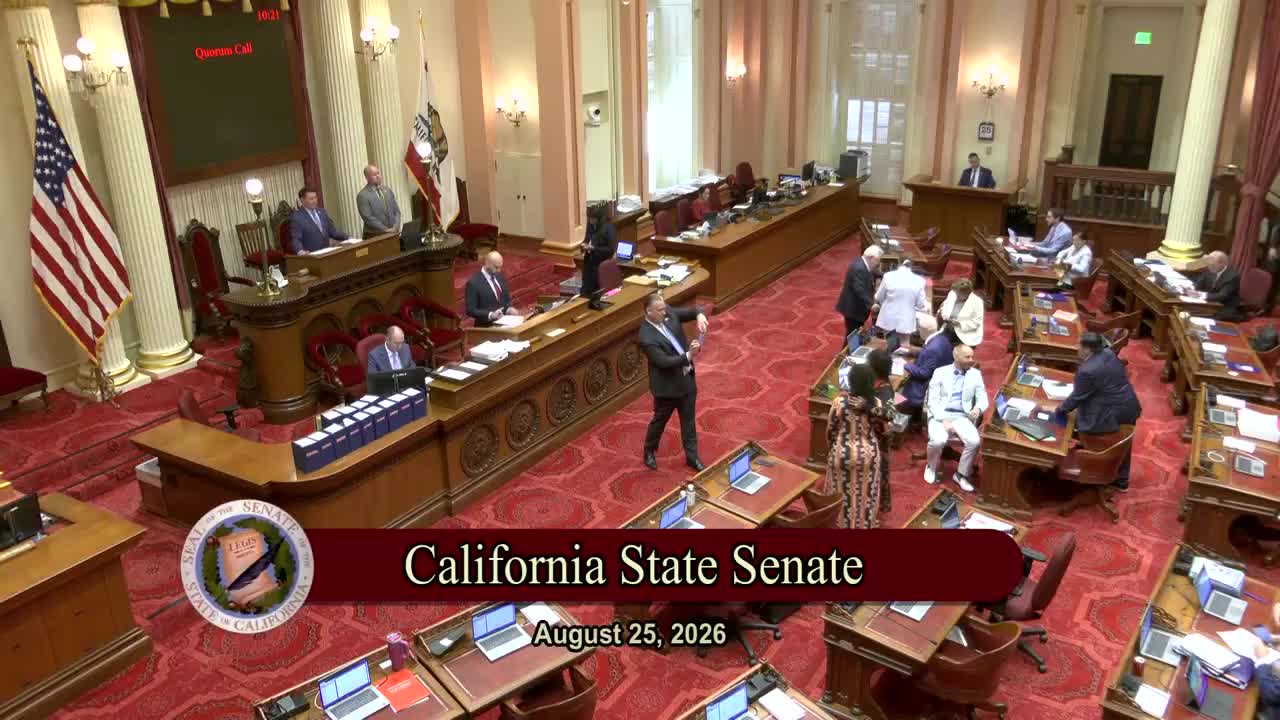 1MIN
Senate Floor
 2MIN
Assembly Floor
 7MIN
Assembly Standing Committee on Public Employment and Retirement
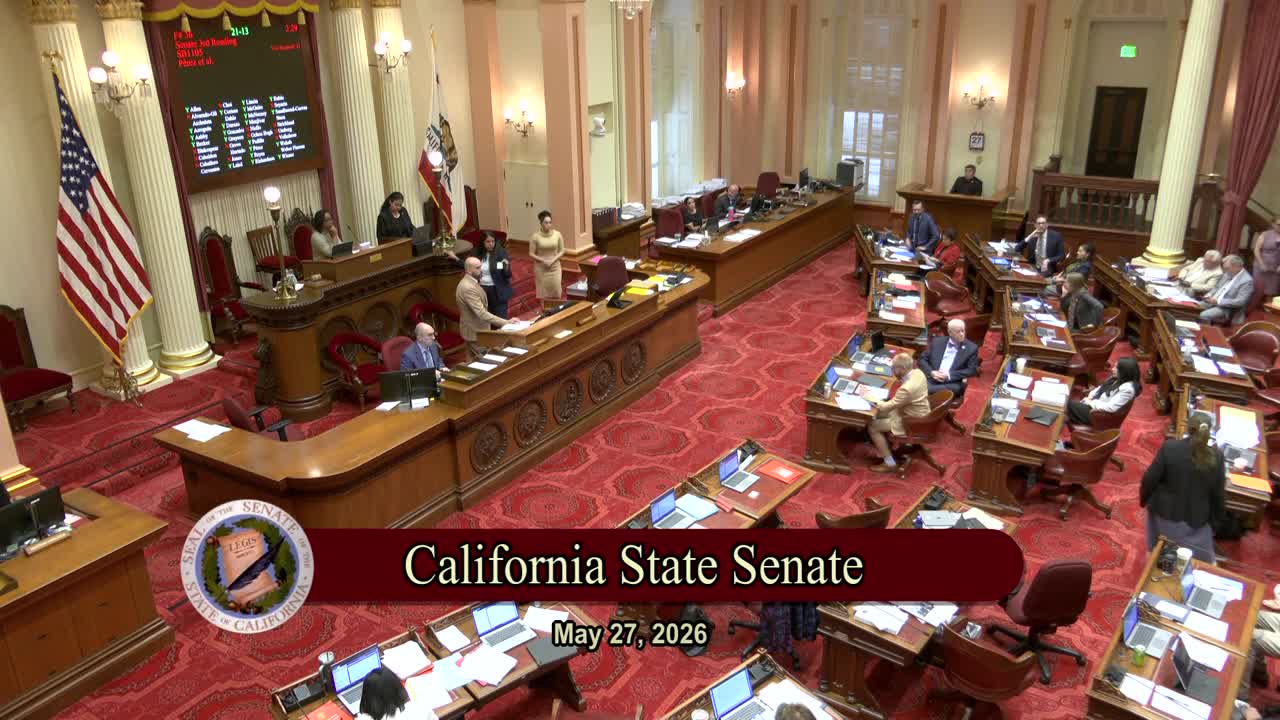 6MIN
Senate Floor
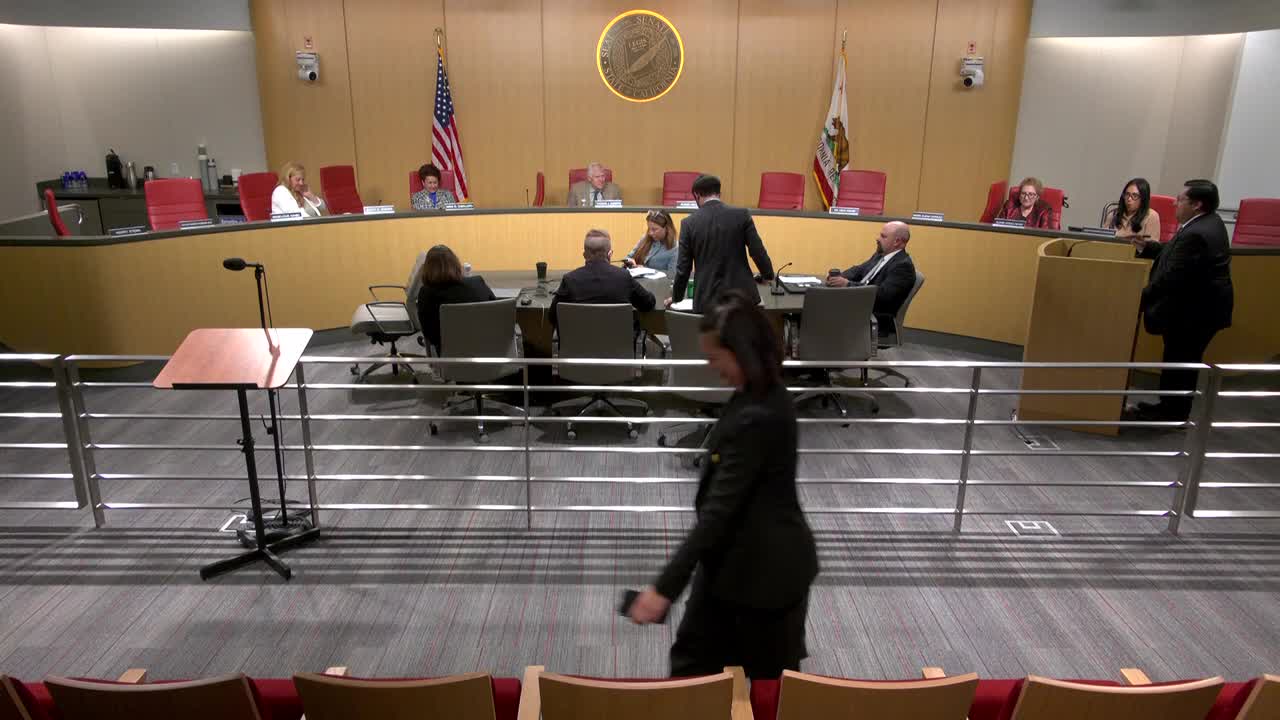 8MIN
Senate Standing Committee on Judiciary
 9MIN
Senate Standing Committee on Labor, Public Employment and Retirement
Bill Author

Bill Co-Author(s):
