SB 1169: Subdivision Map Act: tentative maps: expiration dates.
- Session Year: 2025-2026
- House: Senate
- Latest Version Date: 2026-09-20
Current Status:
Passed
(2026-09-20: Chaptered by Secretary of State. Chapter 423, Statutes of 2026.)
Introduced
In Committee
Awaiting First Chamber Vote
Passed First Chamber
In Committee
Awaiting Second Chamber Vote
Passed Second Chamber
Enacted
Existing law, the Subdivision Map Act (act), vests the authority to regulate and control the design and improvement of subdivisions in the legislative body of a local agency and sets forth procedures governing the processing, approval, conditional approval or disapproval, and filing of tentative maps, among other maps. Existing law requires a vesting tentative map to be filed and processed in the same manner as a tentative map, except as specified.
The act generally requires a subdivider to file a tentative map with the local agency, as specified, and the local agency, in turn, to approve, conditionally approve, or disapprove the map within a specified time period. Under existing law, an approved tentative map expires 24 months after its approval or conditional approval. Existing law authorizes the approval or conditional approval to be extended up to 24 months pursuant to local ordinance, and by 48 months, as provided, if the subdivider is required to expend more than a certain amount of money to construct, improve, or finance the construction or improvement of public improvements outside the property boundaries of the tentative map, as provided, except as specified.
This bill would extend the initial expiration period of an approved or conditionally approved tentative map to 48 months and the extension pursuant to local ordinance to 36 months, except as provided. The bill would also apply all of the above-described timelines to any approved or conditionally approved tentative map that is not expired as of December 31, 2026.
The bill would include findings that changes proposed by this bill address a matter of statewide concern rather than a municipal affair and, therefore, apply to all cities, including charter cities.
By adding to the duties of local planning officials, this bill would impose a state-mandated local program.
The California Constitution requires the state to reimburse local agencies and school districts for certain costs mandated by the state. Statutory provisions establish procedures for making that reimbursement.
This bill would provide that no reimbursement is required by this act for a specified reason.
Existing law, the Subdivision Map Act, (act) vests the authority to regulate and control the design and improvement of subdivisions in the legislative body of a local agency and sets forth procedures governing the processing, approval, conditional approval or disapproval, and filing of tentative maps, among other maps. Existing law requires a vesting tentative map to be filed and processed in the same manner as a tentative map, except as specified.
The act generally requires a subdivider to file a tentative map with the local agency, as specified, and the local agency, in turn, to approve, conditionally approve, or disapprove the map within a specified time period. Under existing law, an approved tentative map expires 24 months after its approval or conditional approval. Existing law authorizes the approval or conditional approval to be extended up to 24 months pursuant to local ordinance, and by 48 months, as provided, if the subdivider is required to expend more than a certain amount of money to construct, improve, or finance the construction or improvement of public improvements outside the property boundaries of the tentative map, as provided. provided, except as specified.
This bill would extend the initial expiration period of an approved or conditionally approved tentative map to 48 months and the extension pursuant to local ordinance to 36 months, except as provided. The bill would also apply all of the above-described timelines to any approved or conditionally approved tentative map that is not expired as of December 31, 2026.
The bill would include findings that changes proposed by this bill address a matter of statewide concern rather than a municipal affair and, therefore, apply to all cities, including charter cities.
By adding to the duties of local planning officials, this bill would impose a state-mandated local program.
The California Constitution requires the state to reimburse local agencies and school districts for certain costs mandated by the state. Statutory provisions establish procedures for making that reimbursement.
This bill would provide that no reimbursement is required by this act for a specified reason.
Existing law, the Subdivision Map Act, (act) vests the authority to regulate and control the design and improvement of subdivisions in the legislative body of a local agency and sets forth procedures governing the processing, approval, conditional approval or disapproval, and filing of tentative maps, among other maps. Existing law requires a vesting tentative map to be filed and processed in the same manner as a tentative map, except as specified.
The act generally requires a subdivider to file a tentative map with the local agency, as specified, and the local agency, in turn, to approve, conditionally approve, or disapprove the map within a specified time period. Under existing law, an approved tentative map expires 24 months after its approval or conditional approval. Existing law authorizes the approval or conditional approval to be extended up to 24 months pursuant to local ordinance, and by 48 months, as provided, if the subdivider is required to expend more than a certain amount of money to construct, improve, or finance the construction or improvement of public improvements outside the property boundaries of the tentative map, as provided.
This bill would extend the initial expiration period of an approved or conditionally approved tentative map to 8 years, 48 months and the extension pursuant to local ordinance to 36 months, except as provided. The bill would limit the authorization for the above-described 48-month extension only to applications submitted prior to January 1, 2027, as specified.
The bill would include findings that changes proposed by this bill address a matter of statewide concern rather than a municipal affair and, therefore, apply to all cities, including charter cities.
By adding to the duties of local planning officials, this bill would impose a state-mandated local program.
The California Constitution requires the state to reimburse local agencies and school districts for certain costs mandated by the state. Statutory provisions establish procedures for making that reimbursement.
This bill would provide that no reimbursement is required by this act for a specified reason.
Existing law, the Subdivision Map Act, (act) vests the authority to regulate and control the design and improvement of subdivisions in the legislative body of a local agency and sets forth procedures governing the processing, approval, conditional approval or disapproval, and filing of tentative maps, among other maps. Existing law requires a vesting tentative map to be filed and processed in the same manner as a tentative map, except as specified.
The act generally requires a subdivider to file a tentative map with the local agency, as specified, and the local agency, in turn, to approve, conditionally approve, or disapprove the map within a specified time period. Under existing law, an approved tentative map expires 24 months after its approval or conditional approval. Existing law authorizes the approval or conditional approval to be extended up to 24 months pursuant to local ordinance, and by 48 months, as provided, if the subdivider is required to expend more than a certain amount of money to construct, improve, or finance the construction or improvement of public improvements outside the property boundaries of the tentative map, as provided. Existing law prohibits those extensions from extending the tentative map more than 10 years from its approval or conditional approval, except as specified.
This bill would extend the initial expiration period of an approved or conditionally approved tentative map to 8 years, except as provided. The bill would remove the authorization to extend the approval or conditional approval by 48 months if the subdivider is required to expend more than a certain amount of money to construct, improve, or finance the construction or improvement of public improvements outside the property boundaries of the tentative map. The bill would limit the authorization for the above-described 48-month extension only to applications submitted prior to January 1, 2027, as specified.
The bill would include findings that changes proposed by this bill address a matter of statewide concern rather than a municipal affair and, therefore, apply to all cities, including charter cities.
By adding to the duties of local planning officials, this bill would impose a state-mandated local program.
The California Constitution requires the state to reimburse local agencies and school districts for certain costs mandated by the state. Statutory provisions establish procedures for making that reimbursement.
This bill would provide that no reimbursement is required by this act for a specified reason.
Existing law, the Subdivision Map Act, (act) vests the authority to regulate and control the design and improvement of subdivisions in the legislative body of a local agency and sets forth procedures governing the processing, approval, conditional approval or disapproval, and filing of tentative maps, among other maps. Existing law requires a vesting tentative map to be filed and processed in the same manner as a tentative map, except as specified.
The act generally requires a subdivider to file a tentative map with the local agency, as specified, and the local agency, in turn, to approve, conditionally approve, or disapprove the map within a specified time period. Under existing law, an approved tentative map expires 24 months after its approval or conditional approval. Existing law authorizes the approval or conditional approval to be extended up to 24 months pursuant to local ordinance, and by 48 months, as provided, if the subdivider is required to expend more than a certain amount of money to construct, improve, or finance the construction or improvement of public improvements outside the property boundaries of the tentative map, as provided. Existing law prohibits those extensions from extending the tentative map more than 10 years from its approval or conditional approval, except as specified.
This bill would extend the initial expiration period of an approved or conditionally approved tentative map to 8 years and would extend the maximum expiration period to 16 years, years, except as provided. The bill would remove the authorization to extend the approval or conditional approval by 48 months if the subdivider is required to expend more than a certain amount of money to construct, improve, or finance the construction or improvement of public improvements outside the property boundaries of the tentative map.
The act prohibits a local agency from approving a tentative map, or a parcel map for which a tentative map was not required, unless the legislative body finds that the proposed subdivision is consistent with the general plan or any specific plan, as provided.This bill would require, notwithstanding that prohibition, that a parcel map for which a tentative map was not required be approved through a nondiscretionary ministerial process pursuant to applicable standards.The bill would include findings that changes proposed by this bill address a matter of statewide concern rather than a municipal affair and, therefore, apply to all cities, including charter cities.
By adding to the duties of local planning officials, this bill would impose a state-mandated local program.
The California Constitution requires the state to reimburse local agencies and school districts for certain costs mandated by the state. Statutory provisions establish procedures for making that reimbursement.
This bill would provide that no reimbursement is required by this act for a specified reason.
Existing law, the Subdivision Map Act, (act) vests the authority to regulate and control the design and improvement of subdivisions in the legislative body of a local agency and sets forth procedures governing the processing, approval, conditional approval or disapproval, and filing of tentative maps, among other maps. Existing law requires a vesting tentative map to be filed and processed in the same manner as a tentative map, except as specified.
The act generally requires a subdivider to file a tentative map with the local agency, as specified, and the local agency, in turn, to approve, conditionally approve, or disapprove the map within a specified time period. Under existing law, an approved tentative map expires 24 months after its approval or conditional approval. Existing law authorizes the approval or conditional approval to be extended up to 24 months pursuant to local ordinance, and by 48 months, as provided, if the subdivider is required to expend more than a certain amount of money to construct, improve, or finance the construction or improvement of public improvements outside the property boundaries of the tentative map, as provided. Existing law prohibits those extensions from extending the tentative map more than 10 years from its approval or conditional approval, except as specified.
This bill would extend the initial expiration period of an approved or conditionally approved tentative map to 8 years and would extend the maximum expiration period to 16 years, except as provided.
The act prohibits a local agency from approving a tentative map, or a parcel map for which a tentative map was not required, unless the legislative body finds that the proposed subdivision is consistent with the general plan or any specific plan, as provided.
This bill would require, notwithstanding that prohibition, that a parcel map for which a tentative map was not required be approved through a nondiscretionary ministerial process pursuant to applicable standards.
The bill would include findings that changes proposed by this bill address a matter of statewide concern rather than a municipal affair and, therefore, apply to all cities, including charter cities.
By adding to the duties of local planning officials, this bill would impose a state-mandated local program.
The California Constitution requires the state to reimburse local agencies and school districts for certain costs mandated by the state. Statutory provisions establish procedures for making that reimbursement.
This bill would provide that no reimbursement is required by this act for a specified reason.
Existing law, the Planning and Zoning Law, among other things, requires the legislative body of each county and city to adopt a comprehensive, long-term general plan for the physical development of the county or city and of any land outside its boundaries that relates to its planning, and provides for the adoption and administration of zoning laws, ordinances, rules, and regulations by counties and cities. Existing law, the Subdivision Map Act, within the Planning and Zoning Law, generally requires local agencies to control and regulate the subdivision of parcels of real property.This bill would make nonsubstantive changes to the provision establishing the title of the Subdivision Map Act.Existing law, the Planning and Zoning Law, among other things, requires the legislative body of each county and city to adopt a comprehensive, long-term general plan for the physical development of the county or city and of any land outside its boundaries that relates to its planning, and provides for the adoption and administration of zoning laws, ordinances, rules, and regulations by counties and cities. Existing law, the Subdivision Map Act, within the Planning and Zoning Law, generally requires local agencies to control and regulate the subdivision of parcels of real property.
This bill would make nonsubstantive changes to the provision establishing the title of the Subdivision Map Act.
(a)(1)(A)An approved or conditionally approved tentative map shall expire 48 months after its approval or conditional approval, or after any additional period of time as may be prescribed by local ordinance, not to exceed an additional 36 months. However, if the subdivider is required to expend two hundred thirty-six thousand seven hundred ninety dollars ($236,790) or more to construct, improve, or finance the construction or improvement of public improvements outside the property boundaries of the tentative map, excluding improvements of public rights-of-way that abut the boundary of the property to be subdivided and that are reasonably related to the development of that property, each filing of a final map authorized by Section 66456.1 shall extend the expiration of the approved or conditionally approved tentative map by 48 months from the date of its expiration, as provided in this section, or the date of the previously filed final map, whichever is later. The extensions shall not extend the tentative map more than 10 years from its approval or conditional approval. However, a tentative map on property subject to a development agreement authorized by Article 2.5 (commencing with Section 65864) of Chapter 4 of Division 1 may be extended for the period of time provided for in the agreement, but not beyond the duration of the agreement. The number of phased final maps that may be filed shall be determined by the advisory agency at the time of the approval or conditional approval of the tentative map.
(B)The timelines in this paragraph shall apply to any approved or conditionally approved tentative map that is not expired as of December 31, 2026.
(2)Commencing January 1, 2012, and each calendar year thereafter, the amount of two hundred thirty-six thousand seven hundred ninety dollars ($236,790) shall be annually increased by operation of law according to the adjustment for inflation set forth in the statewide cost index for class B construction, as determined by the State Allocation Board at its January meeting. The effective date of each annual adjustment shall be March 1. The adjusted amount shall apply to tentative and vesting tentative maps whose applications were received after the effective date of the adjustment.
(3)Public improvements, as used in this subdivision, include traffic controls, streets, roads, highways, freeways, bridges, overcrossings, street interchanges, flood control or storm drain facilities, sewer facilities, water facilities, and lighting facilities.
(b)(1)The period of time specified in subdivision (a), including any extension granted pursuant to subdivision (e), shall not include any period of time during which a development moratorium, imposed after approval of the tentative map, is in existence. However, the length of the moratorium shall not exceed five years.
(2)The length of time specified in paragraph (1) shall be extended for up to three years, but in no event beyond January 1, 1992, during the pendency of any lawsuit in which the subdivider asserts, and the local agency that approved or conditionally approved the tentative map denies, the existence or application of a development moratorium to the tentative map.
(3)Once a development moratorium is terminated, the map shall be valid for the same period of time as was left to run on the map at the time that the moratorium was imposed. However, if the remaining time is less than 120 days, the map shall be valid for 120 days following the termination of the moratorium.
(c)The period of time specified in subdivision (a), including any extension granted pursuant to subdivision (e), shall not include the period of time during which a lawsuit involving the approval or conditional approval of the tentative map is or was pending in a court of competent jurisdiction, if the stay of the time period is approved by the local agency pursuant to this section. After service of the initial petition or complaint in the lawsuit upon the local agency, the subdivider may apply to the local agency for a stay pursuant to the local agencys adopted procedures. Within 40 days after receiving the application, the local agency shall either stay the time period for up to five years or deny the requested stay. The local agency may, by ordinance, establish procedures for reviewing the requests, including, but not limited to, notice and hearing requirements, appeal procedures, and other administrative requirements.
(d)The expiration of the approved or conditionally approved tentative map shall terminate all proceedings and a final map or parcel map of all or any portion of the real property included within the tentative map shall not be filed with the legislative body without first processing a new tentative map. Once a timely filing is made, subsequent actions of the local agency, including, but not limited to, processing, approving, and recording, may lawfully occur after the date of expiration of the tentative map. Delivery to the county surveyor or city engineer shall be deemed a timely filing for purposes of this section.
(e)Upon application of the subdivider filed before the expiration of the approved or conditionally approved tentative map, the time at which the map expires pursuant to subdivision (a) may be extended by the legislative body or by an advisory agency authorized to approve or conditionally approve tentative maps for a period or periods not exceeding a total of six years. The period of extension specified in this subdivision shall be in addition to the period of time provided by subdivision (a). Before the expiration of an approved or conditionally approved tentative map, upon an application by the subdivider to extend that map, the map shall automatically be extended for 60 days or until the application for the extension is approved, conditionally approved, or denied, whichever occurs first. If the advisory agency denies a subdividers application for an extension, the subdivider may appeal to the legislative body within 15 days after the advisory agency has denied the extension.
(f)For purposes of this section, a development moratorium includes a water or sewer moratorium, or a water and sewer moratorium, as well as other actions of public agencies that regulate land use, development, or the provision of services to the land, including the public agency with the authority to approve or conditionally approve the tentative map, which thereafter prevents, prohibits, or delays the approval of a final or parcel map. A development moratorium shall also be deemed to exist for purposes of this section for any period of time during which a condition imposed by the city or county could not be satisfied because of either of the following:
(1)The condition was one that, by its nature, necessitated action by the city or county, and the city or county either did not take the necessary action or by its own action or inaction was prevented or delayed in taking the necessary action before expiration of the tentative map.
(2)The condition necessitates acquisition of real property or any interest in real property from a public agency, other than the city or county that approved or conditionally approved the tentative map, and that other public agency fails or refuses to convey the property interest necessary to satisfy the condition. However, nothing in this subdivision shall be construed to require any public agency to convey any interest in real property owned by it. A development moratorium specified in this paragraph shall be deemed to have been imposed either on the date of approval or conditional approval of the tentative map, if evidence was included in the public record that the public agency that owns or controls the real property or any interest in the real property may refuse to convey that property or interest, or on the date that the public agency that owns or controls the real property or any interest in the real property receives an offer by the subdivider to purchase that property or interest for fair market value, whichever is later. A development moratorium specified in this paragraph shall extend the tentative map up to the maximum period as set forth in subdivision (b), but not later than January 1, 1992, so long as the public agency that owns or controls the real property or any interest in the real property fails or refuses to convey the necessary property interest, regardless of the reason for the failure or refusal, except that the development moratorium shall be deemed to terminate 60 days after the public agency has officially made, and communicated to the subdivider, a written offer or commitment binding on the agency to convey the necessary property interest for a fair market value, paid in a reasonable time and manner.
SEC. 2.The Legislature finds and declares that Section 1 of this act amending Section 66452.6 of the Government Code addresses a matter of statewide concern rather than a municipal affair as that term is used in Section 5 of Article XI of the California Constitution. Therefore, Section 1 of this act applies to all cities, including charter cities.
SEC. 3.No reimbursement is required by this act pursuant to Section 6 of Article XIIIB of the California Constitution because a local agency or school district has the authority to levy service charges, fees, or assessments sufficient to pay for the program or level of service mandated by this act, within the meaning of Section 17556 of the Government Code.
(a)(1)An approved or conditionally approved tentative map shall expire eight years 48 months after its approval or conditional approval, or after any additional period of time as may be prescribed by local ordinance, not to exceed an additional 24 36 months. However, for any application for a tentative subdivision map submitted prior to January 1, 2027, if the subdivider is required to expend two hundred thirty-six thousand seven hundred ninety dollars ($236,790) or more to construct, improve, or finance the construction or improvement of public improvements outside the property boundaries of the tentative map, excluding improvements of public rights-of-way that abut the boundary of the property to be subdivided and that are reasonably related to the development of that property, each filing of a final map authorized by Section 66456.1 shall extend the expiration of the approved or conditionally approved tentative map by 48 months from the date of its expiration, as provided in this section, or the date of the previously filed final map, whichever is later. The extensions shall not extend the tentative map more than 10 years from its approval or conditional approval. However, a tentative map on property subject to a development agreement authorized by Article 2.5 (commencing with Section 65864) of Chapter 4 of Division 1 may be extended for the period of time provided for in the agreement, but not beyond the duration of the agreement. The number of phased final maps that may be filed shall be determined by the advisory agency at the time of the approval or conditional approval of the tentative map.
(2)Commencing January 1, 2012, and each calendar year thereafter, the amount of two hundred thirty-six thousand seven hundred ninety dollars ($236,790) shall be annually increased by operation of law according to the adjustment for inflation set forth in the statewide cost index for class B construction, as determined by the State Allocation Board at its January meeting. The effective date of each annual adjustment shall be March 1. The adjusted amount shall apply to tentative and vesting tentative maps whose applications were received after the effective date of the adjustment.
(3)Public improvements, as used in this subdivision, include traffic controls, streets, roads, highways, freeways, bridges, overcrossings, street interchanges, flood control or storm drain facilities, sewer facilities, water facilities, and lighting facilities.
(b)(1)The period of time specified in subdivision (a), including any extension granted pursuant to subdivision (e), shall not include any period of time during which a development moratorium, imposed after approval of the tentative map, is in existence. However, the length of the moratorium shall not exceed five years.
(2)The length of time specified in paragraph (1) shall be extended for up to three years, but in no event beyond January 1, 1992, during the pendency of any lawsuit in which the subdivider asserts, and the local agency that approved or conditionally approved the tentative map denies, the existence or application of a development moratorium to the tentative map.
(3)Once a development moratorium is terminated, the map shall be valid for the same period of time as was left to run on the map at the time that the moratorium was imposed. However, if the remaining time is less than 120 days, the map shall be valid for 120 days following the termination of the moratorium.
(c)The period of time specified in subdivision (a), including any extension granted pursuant to subdivision (e), shall not include the period of time during which a lawsuit involving the approval or conditional approval of the tentative map is or was pending in a court of competent jurisdiction, if the stay of the time period is approved by the local agency pursuant to this section. After service of the initial petition or complaint in the lawsuit upon the local agency, the subdivider may apply to the local agency for a stay pursuant to the local agencys adopted procedures. Within 40 days after receiving the application, the local agency shall either stay the time period for up to five years or deny the requested stay. The local agency may, by ordinance, establish procedures for reviewing the requests, including, but not limited to, notice and hearing requirements, appeal procedures, and other administrative requirements.
(d)The expiration of the approved or conditionally approved tentative map shall terminate all proceedings and a final map or parcel map of all or any portion of the real property included within the tentative map shall not be filed with the legislative body without first processing a new tentative map. Once a timely filing is made, subsequent actions of the local agency, including, but not limited to, processing, approving, and recording, may lawfully occur after the date of expiration of the tentative map. Delivery to the county surveyor or city engineer shall be deemed a timely filing for purposes of this section.
(e)Upon application of the subdivider filed before the expiration of the approved or conditionally approved tentative map, the time at which the map expires pursuant to subdivision (a) may be extended by the legislative body or by an advisory agency authorized to approve or conditionally approve tentative maps for a period or periods not exceeding a total of six years. The period of extension specified in this subdivision shall be in addition to the period of time provided by subdivision (a). Before the expiration of an approved or conditionally approved tentative map, upon an application by the subdivider to extend that map, the map shall automatically be extended for 60 days or until the application for the extension is approved, conditionally approved, or denied, whichever occurs first. If the advisory agency denies a subdividers application for an extension, the subdivider may appeal to the legislative body within 15 days after the advisory agency has denied the extension.
(f)For purposes of this section, a development moratorium includes a water or sewer moratorium, or a water and sewer moratorium, as well as other actions of public agencies that regulate land use, development, or the provision of services to the land, including the public agency with the authority to approve or conditionally approve the tentative map, which thereafter prevents, prohibits, or delays the approval of a final or parcel map. A development moratorium shall also be deemed to exist for purposes of this section for any period of time during which a condition imposed by the city or county could not be satisfied because of either of the following:
(1)The condition was one that, by its nature, necessitated action by the city or county, and the city or county either did not take the necessary action or by its own action or inaction was prevented or delayed in taking the necessary action before expiration of the tentative map.
(2)The condition necessitates acquisition of real property or any interest in real property from a public agency, other than the city or county that approved or conditionally approved the tentative map, and that other public agency fails or refuses to convey the property interest necessary to satisfy the condition. However, nothing in this subdivision shall be construed to require any public agency to convey any interest in real property owned by it. A development moratorium specified in this paragraph shall be deemed to have been imposed either on the date of approval or conditional approval of the tentative map, if evidence was included in the public record that the public agency that owns or controls the real property or any interest in the real property may refuse to convey that property or interest, or on the date that the public agency that owns or controls the real property or any interest in the real property receives an offer by the subdivider to purchase that property or interest for fair market value, whichever is later. A development moratorium specified in this paragraph shall extend the tentative map up to the maximum period as set forth in subdivision (b), but not later than January 1, 1992, so long as the public agency that owns or controls the real property or any interest in the real property fails or refuses to convey the necessary property interest, regardless of the reason for the failure or refusal, except that the development moratorium shall be deemed to terminate 60 days after the public agency has officially made, and communicated to the subdivider, a written offer or commitment binding on the agency to convey the necessary property interest for a fair market value, paid in a reasonable time and manner.
SEC. 2.The Legislature finds and declares that Section 1 of this act amending Section 66452.6 of the Government Code addresses a matter of statewide concern rather than a municipal affair as that term is used in Section 5 of Article XI of the California Constitution. Therefore, Section 1 of this act applies to all cities, including charter cities.
SEC. 3.No reimbursement is required by this act pursuant to Section 6 of Article XIIIB of the California Constitution because a local agency or school district has the authority to levy service charges, fees, or assessments sufficient to pay for the program or level of service mandated by this act, within the meaning of Section 17556 of the Government Code.
(a)(1)An approved or conditionally approved tentative map shall expire eight years after its approval or conditional approval, or after any additional period of time as may be prescribed by local ordinance, not to exceed an additional 24 months. However, for any application for a tentative subdivision map submitted prior to January 1, 2027, if the subdivider is required to expend two hundred thirty-six thousand seven hundred ninety dollars ($236,790) or more to construct, improve, or finance the construction or improvement of public improvements outside the property boundaries of the tentative map, excluding improvements of public rights-of-way that abut the boundary of the property to be subdivided and that are reasonably related to the development of that property, each filing of a final map authorized by Section 66456.1 shall extend the expiration of the approved or conditionally approved tentative map by 48 months from the date of its expiration, as provided in this section, or the date of the previously filed final map, whichever is later. The extensions shall not extend the tentative map more than 10 years from its approval or conditional approval. However, a tentative map on property subject to a development agreement authorized by Article 2.5 (commencing with Section 65864) of Chapter 4 of Division 1 may be extended for the period of time provided for in the agreement, but not beyond the duration of the agreement. The extension shall not extend the tentative map more than 10 years from its approval or conditional approval. The number of phased final maps that may be filed shall be determined by the advisory agency at the time of the approval or conditional approval of the tentative map.
(2)Commencing January 1, 2012, and each calendar year thereafter, the amount of two hundred thirty-six thousand seven hundred ninety dollars ($236,790) shall be annually increased by operation of law according to the adjustment for inflation set forth in the statewide cost index for class B construction, as determined by the State Allocation Board at its January meeting. The effective date of each annual adjustment shall be March 1. The adjusted amount shall apply to tentative and vesting tentative maps whose applications were received after the effective date of the adjustment.
(3)Public improvements, as used in this subdivision, include traffic controls, streets, roads, highways, freeways, bridges, overcrossings, street interchanges, flood control or storm drain facilities, sewer facilities, water facilities, and lighting facilities.
(b)(1)The period of time specified in subdivision (a), including any extension granted pursuant to subdivision (e), shall not include any period of time during which a development moratorium, imposed after approval of the tentative map, is in existence. However, the length of the moratorium shall not exceed five years.
(2)The length of time specified in paragraph (1) shall be extended for up to three years, but in no event beyond January 1, 1992, during the pendency of any lawsuit in which the subdivider asserts, and the local agency that approved or conditionally approved the tentative map denies, the existence or application of a development moratorium to the tentative map.
(3)Once a development moratorium is terminated, the map shall be valid for the same period of time as was left to run on the map at the time that the moratorium was imposed. However, if the remaining time is less than 120 days, the map shall be valid for 120 days following the termination of the moratorium.
(c)The period of time specified in subdivision (a), including any extension granted pursuant to subdivision (e), shall not include the period of time during which a lawsuit involving the approval or conditional approval of the tentative map is or was pending in a court of competent jurisdiction, if the stay of the time period is approved by the local agency pursuant to this section. After service of the initial petition or complaint in the lawsuit upon the local agency, the subdivider may apply to the local agency for a stay pursuant to the local agencys adopted procedures. Within 40 days after receiving the application, the local agency shall either stay the time period for up to five years or deny the requested stay. The local agency may, by ordinance, establish procedures for reviewing the requests, including, but not limited to, notice and hearing requirements, appeal procedures, and other administrative requirements.
(d)The expiration of the approved or conditionally approved tentative map shall terminate all proceedings and a final map or parcel map of all or any portion of the real property included within the tentative map shall not be filed with the legislative body without first processing a new tentative map. Once a timely filing is made, subsequent actions of the local agency, including, but not limited to, processing, approving, and recording, may lawfully occur after the date of expiration of the tentative map. Delivery to the county surveyor or city engineer shall be deemed a timely filing for purposes of this section.
(e)Upon application of the subdivider filed before the expiration of the approved or conditionally approved tentative map, the time at which the map expires pursuant to subdivision (a) may be extended by the legislative body or by an advisory agency authorized to approve or conditionally approve tentative maps for a period or periods not exceeding a total of six years. The period of extension specified in this subdivision shall be in addition to the period of time provided by subdivision (a). Before the expiration of an approved or conditionally approved tentative map, upon an application by the subdivider to extend that map, the map shall automatically be extended for 60 days or until the application for the extension is approved, conditionally approved, or denied, whichever occurs first. If the advisory agency denies a subdividers application for an extension, the subdivider may appeal to the legislative body within 15 days after the advisory agency has denied the extension.
(f)For purposes of this section, a development moratorium includes a water or sewer moratorium, or a water and sewer moratorium, as well as other actions of public agencies that regulate land use, development, or the provision of services to the land, including the public agency with the authority to approve or conditionally approve the tentative map, which thereafter prevents, prohibits, or delays the approval of a final or parcel map. A development moratorium shall also be deemed to exist for purposes of this section for any period of time during which a condition imposed by the city or county could not be satisfied because of either of the following:
(1)The condition was one that, by its nature, necessitated action by the city or county, and the city or county either did not take the necessary action or by its own action or inaction was prevented or delayed in taking the necessary action before expiration of the tentative map.
(2)The condition necessitates acquisition of real property or any interest in real property from a public agency, other than the city or county that approved or conditionally approved the tentative map, and that other public agency fails or refuses to convey the property interest necessary to satisfy the condition. However, nothing in this subdivision shall be construed to require any public agency to convey any interest in real property owned by it. A development moratorium specified in this paragraph shall be deemed to have been imposed either on the date of approval or conditional approval of the tentative map, if evidence was included in the public record that the public agency that owns or controls the real property or any interest in the real property may refuse to convey that property or interest, or on the date that the public agency that owns or controls the real property or any interest in the real property receives an offer by the subdivider to purchase that property or interest for fair market value, whichever is later. A development moratorium specified in this paragraph shall extend the tentative map up to the maximum period as set forth in subdivision (b), but not later than January 1, 1992, so long as the public agency that owns or controls the real property or any interest in the real property fails or refuses to convey the necessary property interest, regardless of the reason for the failure or refusal, except that the development moratorium shall be deemed to terminate 60 days after the public agency has officially made, and communicated to the subdivider, a written offer or commitment binding on the agency to convey the necessary property interest for a fair market value, paid in a reasonable time and manner.
SEC. 2.The Legislature finds and declares that Section 1 of this act amending Section 66452.6 of the Government Code addresses a matter of statewide concern rather than a municipal affair as that term is used in Section 5 of Article XI of the California Constitution. Therefore, Section 1 of this act applies to all cities, including charter cities.
SEC. 3.No reimbursement is required by this act pursuant to Section 6 of Article XIIIB of the California Constitution because a local agency or school district has the authority to levy service charges, fees, or assessments sufficient to pay for the program or level of service mandated by this act, within the meaning of Section 17556 of the Government Code.
(a)(1)An approved or conditionally approved tentative map shall expire eight years after its approval or conditional approval, or after any additional period of time as may be prescribed by local ordinance, not to exceed an additional 24 months. However, if the subdivider is required to expend two hundred thirty-six thousand seven hundred ninety dollars ($236,790) or more to construct, improve, or finance the construction or improvement of public improvements outside the property boundaries of the tentative map, excluding improvements of public rights-of-way that abut the boundary of the property to be subdivided and that are reasonably related to the development of that property, each filing of a final map authorized by Section 66456.1 shall extend the expiration of the approved or conditionally approved tentative map by 48 months from the date of its expiration, as provided in this section, or the date of the previously filed final map, whichever is later. The extensions shall not extend the tentative map more than 16 years from its approval or conditional approval. However, a tentative map on property subject to a development agreement authorized by Article 2.5 (commencing with Section 65864) of Chapter 4 of Division 1 may be extended for the period of time provided for in the agreement, but not beyond the duration of the agreement. The extension shall not extend the tentative map more than 10 years from its approval or conditional approval. The number of phased final maps that may be filed shall be determined by the advisory agency at the time of the approval or conditional approval of the tentative map.
(2)Commencing January 1, 2012, and each calendar year thereafter, the amount of two hundred thirty-six thousand seven hundred ninety dollars ($236,790) shall be annually increased by operation of law according to the adjustment for inflation set forth in the statewide cost index for class B construction, as determined by the State Allocation Board at its January meeting. The effective date of each annual adjustment shall be March 1. The adjusted amount shall apply to tentative and vesting tentative maps whose applications were received after the effective date of the adjustment.(3)Public improvements, as used in this subdivision, include traffic controls, streets, roads, highways, freeways, bridges, overcrossings, street interchanges, flood control or storm drain facilities, sewer facilities, water facilities, and lighting facilities.(b)(1)The period of time specified in subdivision (a), including any extension granted pursuant to subdivision (e), shall not include any period of time during which a development moratorium, imposed after approval of the tentative map, is in existence. However, the length of the moratorium shall not exceed five years.
(2)The length of time specified in paragraph (1) shall be extended for up to three years, but in no event beyond January 1, 1992, during the pendency of any lawsuit in which the subdivider asserts, and the local agency that approved or conditionally approved the tentative map denies, the existence or application of a development moratorium to the tentative map.
(3)Once a development moratorium is terminated, the map shall be valid for the same period of time as was left to run on the map at the time that the moratorium was imposed. However, if the remaining time is less than 120 days, the map shall be valid for 120 days following the termination of the moratorium.
(c)The period of time specified in subdivision (a), including any extension granted pursuant to subdivision (e), shall not include the period of time during which a lawsuit involving the approval or conditional approval of the tentative map is or was pending in a court of competent jurisdiction, if the stay of the time period is approved by the local agency pursuant to this section. After service of the initial petition or complaint in the lawsuit upon the local agency, the subdivider may apply to the local agency for a stay pursuant to the local agencys adopted procedures. Within 40 days after receiving the application, the local agency shall either stay the time period for up to five years or deny the requested stay. The local agency may, by ordinance, establish procedures for reviewing the requests, including, but not limited to, notice and hearing requirements, appeal procedures, and other administrative requirements.
(d)The expiration of the approved or conditionally approved tentative map shall terminate all proceedings and a final map or parcel map of all or any portion of the real property included within the tentative map shall not be filed with the legislative body without first processing a new tentative map. Once a timely filing is made, subsequent actions of the local agency, including, but not limited to, processing, approving, and recording, may lawfully occur after the date of expiration of the tentative map. Delivery to the county surveyor or city engineer shall be deemed a timely filing for purposes of this section.
(e)Upon application of the subdivider filed before the expiration of the approved or conditionally approved tentative map, the time at which the map expires pursuant to subdivision (a) may be extended by the legislative body or by an advisory agency authorized to approve or conditionally approve tentative maps for a period or periods not exceeding a total of six years. The period of extension specified in this subdivision shall be in addition to the period of time provided by subdivision (a). Before the expiration of an approved or conditionally approved tentative map, upon an application by the subdivider to extend that map, the map shall automatically be extended for 60 days or until the application for the extension is approved, conditionally approved, or denied, whichever occurs first. If the advisory agency denies a subdividers application for an extension, the subdivider may appeal to the legislative body within 15 days after the advisory agency has denied the extension.
(f)For purposes of this section, a development moratorium includes a water or sewer moratorium, or a water and sewer moratorium, as well as other actions of public agencies that regulate land use, development, or the provision of services to the land, including the public agency with the authority to approve or conditionally approve the tentative map, which thereafter prevents, prohibits, or delays the approval of a final or parcel map. A development moratorium shall also be deemed to exist for purposes of this section for any period of time during which a condition imposed by the city or county could not be satisfied because of either of the following:
(1)The condition was one that, by its nature, necessitated action by the city or county, and the city or county either did not take the necessary action or by its own action or inaction was prevented or delayed in taking the necessary action before expiration of the tentative map.
(2)The condition necessitates acquisition of real property or any interest in real property from a public agency, other than the city or county that approved or conditionally approved the tentative map, and that other public agency fails or refuses to convey the property interest necessary to satisfy the condition. However, nothing in this subdivision shall be construed to require any public agency to convey any interest in real property owned by it. A development moratorium specified in this paragraph shall be deemed to have been imposed either on the date of approval or conditional approval of the tentative map, if evidence was included in the public record that the public agency that owns or controls the real property or any interest in the real property may refuse to convey that property or interest, or on the date that the public agency that owns or controls the real property or any interest in the real property receives an offer by the subdivider to purchase that property or interest for fair market value, whichever is later. A development moratorium specified in this paragraph shall extend the tentative map up to the maximum period as set forth in subdivision (b), but not later than January 1, 1992, so long as the public agency that owns or controls the real property or any interest therein in the real property fails or refuses to convey the necessary property interest, regardless of the reason for the failure or refusal, except that the development moratorium shall be deemed to terminate 60 days after the public agency has officially made, and communicated to the subdivider, a written offer or commitment binding on the agency to convey the necessary property interest for a fair market value, paid in a reasonable time and manner.
SEC. 2.Section 66473.5 of the Government Code is amended to read:66473.5.(a)(1)A local agency shall not approve a tentative map, or a parcel map for which a tentative map was not required, unless the legislative body finds that the proposed subdivision, together with the provisions for its design and improvement, is consistent with the general plan required by Article 5 (commencing with Section 65300) of Chapter 3 of Division 1, or any specific plan adopted pursuant to Article 8 (commencing with Section 65450) of Chapter 3 of Division 1.(2)A proposed subdivision shall be consistent with a general plan or a specific plan only if the local agency has officially adopted such a plan and the proposed subdivision or land use is compatible with the objectives, policies, general land uses, and programs specified in such a plan.(b)Notwithstanding subdivision (a), a parcel map for which a tentative map was not required shall be approved through a nondiscretionary ministerial process pursuant to applicable objective standards.SEC. 3.SEC. 2.The Legislature finds and declares that Sections 1 and 2 Section 1 of this act amending Sections 66452.6 and 66473.5 Section 66452.6 of the Government Code address addresses a matter of statewide concern rather than a municipal affair as that term is used in Section 5 of Article XI of the California Constitution. Therefore, Sections 1 and 2 Section 1 of this act apply applies to all cities, including charter cities.
SEC. 4.SEC. 3.No reimbursement is required by this act pursuant to Section 6 of Article XIIIB of the California Constitution because a local agency or school district has the authority to levy service charges, fees, or assessments sufficient to pay for the program or level of service mandated by this act, within the meaning of Section 17556 of the Government Code.
(a)(1)An approved or conditionally approved tentative map shall expire 24 months eight years after its approval or conditional approval, or after any additional period of time as may be prescribed by local ordinance, not to exceed an additional 24 months. However, if the subdivider is required to expend two hundred thirty-six thousand seven hundred ninety dollars ($236,790) or more to construct, improve, or finance the construction or improvement of public improvements outside the property boundaries of the tentative map, excluding improvements of public rights-of-way that abut the boundary of the property to be subdivided and that are reasonably related to the development of that property, each filing of a final map authorized by Section 66456.1 shall extend the expiration of the approved or conditionally approved tentative map by 48 months from the date of its expiration, as provided in this section, or the date of the previously filed final map, whichever is later. The extensions shall not extend the tentative map more than 10 16 years from its approval or conditional approval. However, a tentative map on property subject to a development agreement authorized by Article 2.5 (commencing with Section 65864) of Chapter 4 of Division 1 may be extended for the period of time provided for in the agreement, but not beyond the duration of the agreement. The number of phased final maps that may be filed shall be determined by the advisory agency at the time of the approval or conditional approval of the tentative map.
(2)Commencing January 1, 2012, and each calendar year thereafter, the amount of two hundred thirty-six thousand seven hundred ninety dollars ($236,790) shall be annually increased by operation of law according to the adjustment for inflation set forth in the statewide cost index for class B construction, as determined by the State Allocation Board at its January meeting. The effective date of each annual adjustment shall be March 1. The adjusted amount shall apply to tentative and vesting tentative maps whose applications were received after the effective date of the adjustment.
(3)Public improvements, as used in this subdivision, include traffic controls, streets, roads, highways, freeways, bridges, overcrossings, street interchanges, flood control or storm drain facilities, sewer facilities, water facilities, and lighting facilities.
(b)(1)The period of time specified in subdivision (a), including any extension thereof granted pursuant to subdivision (e), shall not include any period of time during which a development moratorium, imposed after approval of the tentative map, is in existence. However, the length of the moratorium shall not exceed five years.
(2)The length of time specified in paragraph (1) shall be extended for up to three years, but in no event beyond January 1, 1992, during the pendency of any lawsuit in which the subdivider asserts, and the local agency that approved or conditionally approved the tentative map denies, the existence or application of a development moratorium to the tentative map.
(3)Once a development moratorium is terminated, the map shall be valid for the same period of time as was left to run on the map at the time that the moratorium was imposed. However, if the remaining time is less than 120 days, the map shall be valid for 120 days following the termination of the moratorium.
(c)The period of time specified in subdivision (a), including any extension thereof granted pursuant to subdivision (e), shall not include the period of time during which a lawsuit involving the approval or conditional approval of the tentative map is or was pending in a court of competent jurisdiction, if the stay of the time period is approved by the local agency pursuant to this section. After service of the initial petition or complaint in the lawsuit upon the local agency, the subdivider may apply to the local agency for a stay pursuant to the local agencys adopted procedures. Within 40 days after receiving the application, the local agency shall either stay the time period for up to five years or deny the requested stay. The local agency may, by ordinance, establish procedures for reviewing the requests, including, but not limited to, notice and hearing requirements, appeal procedures, and other administrative requirements.
(d)The expiration of the approved or conditionally approved tentative map shall terminate all proceedings and no a final map or parcel map of all or any portion of the real property included within the tentative map shall not be filed with the legislative body without first processing a new tentative map. Once a timely filing is made, subsequent actions of the local agency, including, but not limited to, processing, approving, and recording, may lawfully occur after the date of expiration of the tentative map. Delivery to the county surveyor or city engineer shall be deemed a timely filing for purposes of this section.
(e)Upon application of the subdivider filed before the expiration of the approved or conditionally approved tentative map, the time at which the map expires pursuant to subdivision (a) may be extended by the legislative body or by an advisory agency authorized to approve or conditionally approve tentative maps for a period or periods not exceeding a total of six years. The period of extension specified in this subdivision shall be in addition to the period of time provided by subdivision (a). Before the expiration of an approved or conditionally approved tentative map, upon an application by the subdivider to extend that map, the map shall automatically be extended for 60 days or until the application for the extension is approved, conditionally approved, or denied, whichever occurs first. If the advisory agency denies a subdividers application for an extension, the subdivider may appeal to the legislative body within 15 days after the advisory agency has denied the extension.
(f)For purposes of this section, a development moratorium includes a water or sewer moratorium, or a water and sewer moratorium, as well as other actions of public agencies that regulate land use, development, or the provision of services to the land, including the public agency with the authority to approve or conditionally approve the tentative map, which thereafter prevents, prohibits, or delays the approval of a final or parcel map. A development moratorium shall also be deemed to exist for purposes of this section for any period of time during which a condition imposed by the city or county could not be satisfied because of either of the following:
(1)The condition was one that, by its nature, necessitated action by the city or county, and the city or county either did not take the necessary action or by its own action or inaction was prevented or delayed in taking the necessary action before expiration of the tentative map.
(2)The condition necessitates acquisition of real property or any interest in real property from a public agency, other than the city or county that approved or conditionally approved the tentative map, and that other public agency fails or refuses to convey the property interest necessary to satisfy the condition. However, nothing in this subdivision shall be construed to require any public agency to convey any interest in real property owned by it. A development moratorium specified in this paragraph shall be deemed to have been imposed either on the date of approval or conditional approval of the tentative map, if evidence was included in the public record that the public agency that owns or controls the real property or any interest therein in the real property may refuse to convey that property or interest, or on the date that the public agency that owns or controls the real property or any interest therein in the real property receives an offer by the subdivider to purchase that property or interest for fair market value, whichever is later. A development moratorium specified in this paragraph shall extend the tentative map up to the maximum period as set forth in subdivision (b), but not later than January 1, 1992, so long as the public agency that owns or controls the real property or any interest therein fails or refuses to convey the necessary property interest, regardless of the reason for the failure or refusal, except that the development moratorium shall be deemed to terminate 60 days after the public agency has officially made, and communicated to the subdivider, a written offer or commitment binding on the agency to convey the necessary property interest for a fair market value, paid in a reasonable time and manner.
SEC. 2.Section 66473.5 of the Government Code is amended to read:66473.5.No (a)(1)A local agency shall not approve a tentative map, or a parcel map for which a tentative map was not required, unless the legislative body finds that the proposed subdivision, together with the provisions for its design and improvement, is consistent with the general plan required by Article 5 (commencing with Section 65300) of Chapter 3 of Division 1, or any specific plan adopted pursuant to Article 8 (commencing with Section 65450) of Chapter 3 of Division 1.
A(2)A proposed subdivision shall be consistent with a general plan or a specific plan only if the local agency has officially adopted such a plan and the proposed subdivision or land use is compatible with the objectives, policies, general land uses, and programs specified in such a plan.
(b)Notwithstanding subdivision (a), a parcel map for which a tentative map was not required shall be approved through a nondiscretionary ministerial process pursuant to applicable objective standards.
SEC. 3.The Legislature finds and declares that Sections 1 and 2 of this act amending Sections 66452.6 and 66473.5 of the Government Code address a matter of statewide concern rather than a municipal affair as that term is used in Section 5 of Article XI of the California Constitution. Therefore, Sections 1 and 2 of this act apply to all cities, including charter cities.
SEC. 4.No reimbursement is required by this act pursuant to Section 6 of Article XIIIB of the California Constitution because a local agency or school district has the authority to levy service charges, fees, or assessments sufficient to pay for the program or level of service mandated by this act, within the meaning of Section 17556 of the Government Code.
SECTION 1.Section 66410 of the Government Code is amended to read:66410.This division shall be known, and may be cited, as the Subdivision Map Act.This division may be cited shall be known, and may be cited, as the Subdivision Map Act.
|
Date
|
Status
|
|---|---|
| Sep 20, 2026 | Chaptered by Secretary of State. Chapter 423, Statutes of 2026. |
| Sep 20, 2026 | Approved by the Governor. |
| Sep 3, 2026 | Enrolled and presented to the Governor at 3 p.m. |
| Aug 27, 2026 | Assembly amendments concurred in. (Ayes 40. Noes 0. Page 5982.) Ordered to engrossing and enrolling. |
| Aug 27, 2026 | Assembly amendments concurred in. (Ayes 39. Noes 0.) Ordered to engrossing and enrolling. |
| Aug 25, 2026 | Ordered to special consent calendar. |
| Aug 18, 2026 | In Senate. Concurrence in Assembly amendments pending. |
| Aug 17, 2026 | Read third time. Passed. (Ayes 75. Noes 0. Page 6203.) Ordered to the Senate. |
| Aug 17, 2026 | Read third time. Passed. Ordered to the Senate. |
| Aug 12, 2026 | Ordered to third reading. |
| Aug 12, 2026 | Read third time and amended. |
| Jul 2, 2026 | Read second time. Ordered to third reading. |
| Jul 1, 2026 | From committee: Do pass. (Ayes 11. Noes 0.) (July 1). |
| Jun 22, 2026 | Read second time and amended. Re-referred to Com. on APPR. |
| Jun 18, 2026 | From committee: Do pass as amended and re-refer to Com. on APPR. (Ayes 10. Noes 0.) (June 17). |
| Jun 8, 2026 | From committee with author's amendments. Read second time and amended. Re-referred to Com. on L. GOV. |
| May 18, 2026 | Referred to Com. on L. GOV. |
| Apr 30, 2026 | In Assembly. Read first time. Held at Desk. |
| Apr 30, 2026 | Read third time. Passed. (Ayes 36. Noes 0. Page 4114.) Ordered to the Assembly. |
| Apr 30, 2026 | Read third time. Passed. (Ayes 36. Noes 0.) Ordered to the Assembly. |
| Apr 28, 2026 | Read second time. Ordered to consent calendar. |
| Apr 27, 2026 | From committee: Be ordered to second reading pursuant to Senate Rule 28.8 and ordered to consent calendar. |
| Apr 17, 2026 | Set for hearing April 27. |
| Apr 15, 2026 | From committee: Do pass and re-refer to Com. on APPR. with recommendation: To consent calendar. (Ayes 7. Noes 0. Page 3904.) (April 15). Re-referred to Com. on APPR. |
| Apr 15, 2026 | From committee: Do pass and re-refer to Com. on APPR. with recommendation: To consent calendar. (Ayes 7. Noes 0.) (April 15). Re-referred to Com. on APPR. |
| Apr 9, 2026 | Set for hearing April 15. |
| Apr 8, 2026 | From committee with author's amendments. Read second time and amended. Re-referred to Com. on L. GOV. |
| Apr 8, 2026 | Re-referred to Com. on L. GOV. |
| Mar 23, 2026 | From committee with author's amendments. Read second time and amended. Re-referred to Com. on RLS. |
| Feb 26, 2026 | Referred to Com. on RLS. |
| Feb 19, 2026 | From printer. May be acted upon on or after March 21. |
| Feb 18, 2026 | Introduced. Read first time. To Com. on RLS. for assignment. To print. |
|
Date
|
Description
|
Location
|
Votes
|
|
|---|---|---|---|---|
| Aug 27, 2026 | Special Consent SB1169 Grayson | Senate Floor |
Passed |
|
| Aug 17, 2026 | SB 1169 Grayson Senate Third Reading By Carrillo | Assembly Floor |
Passed |
|
| Jul 1, 2026 | Do pass. | Assembly Standing Committee on Appropriations |
Passed |
|
| Jun 17, 2026 | Do pass as amended and be re-referred to the Committee on [Appropriations] | Assembly Standing Committee on Local Government |
Passed |
|
| Apr 30, 2026 | Consent Calendar 2nd SB1169 Grayson | Senate Floor |
Passed |
|
| Apr 15, 2026 | Do pass, but first be re-referred to the Committee on [Appropriations] with the recommendation: To Consent Calendar | Senate Standing Committee on Local Government |
Passed |
This list shows positions taken on this bill by organizations on the date displayed, which is linked to the original source.
Positions by individuals are not included.
|
Organization
|
Position
|
Date
|
|---|---|---|
| Abundant Housing Los Angeles | ** Support | |
| Bay Area Council | ** Support | |
| California Apartment Association | ** Support | |
| California Council For Affordable Housing | ** Support | |
| California YIMBY | ** Support | |
| Casita Coalition | ** Support | |
| East Bay YIMBY | ** Support | |
| Grow the Richmond | ** Support | |
| Habitat For Humanity California | ** Support | |
| Housing Action Coalition | ** Support | |
| Mountain View YIMBY | ** Support | |
| Napa-Solano for Everyone | ** Support | |
| Northern Neighbors Sf | ** Support | |
| Peninsula for Everyone | ** Support | |
| San Francisco Yimby | ** Support | |
| San Jose Yimby | ** Support | |
| San Mateo Forward | ** Support | |
| Santa Cruz Yimby | ** Support | |
| Santa Rosa Yimby | ** Support | |
| South Bay Yimby | ** Support | |
| SPUR | ** Support | |
| Ventura County YIMBY | ** Support | |
| Yes! in Redwood City | ** Support | |
| Yimby Action | ** Support | |
| YIMBY Los Angeles | ** Support | |
| Yimby Monterey Peninsula | ** Support | |
| Yimby SLO | ** Support |
SENATE RULES COMMITTEE Office of Senate Floor Analyses (916) 651-4171 | SB 1169 |
UNFINISHED BUSINESS
Bill No: SB 1169
Author: Grayson (D)
Amended: 8/12/26
Vote: 21
SENATE LOCAL GOVERNMENT COMMITTEE: 7-0, 4/15/26
AYES: Durazo, Choi, Arreguín, Ashby, Cervantes, Laird, Seyarto
SENATE APPROPRIATIONS COMMITTEE: Senate Rule 28.8
SENATE FLOOR: 36-0, 4/30/26 (Consent)
AYES: Allen, Alvarado-Gil, Archuleta, Ashby, Becker, Blakespear, Cabaldon, Cervantes, Choi, Cortese, Dahle, Durazo, Gonzalez, Grayson, Grove, Hurtado, Jones, Laird, Limón, McGuire, McNerney, Menjivar, Niello, Ochoa Bogh, Padilla, Pérez, Reyes, Richardson, Rubio, Seyarto, Smallwood-Cuevas, Stern, Strickland, Umberg, Weber Pierson, Wiener
NO VOTE RECORDED: Arreguín, Caballero, Valladares, Wahab
ASSEMBLY FLOOR: 75-0, 8/17/26 - See last page for vote
SUBJECT: Subdivision Map Act: tentative maps: expiration dates
SOURCE: Bay Area Council
DIGEST:
This bill extends the life of tentative maps under the Subdivision Map Act.
Assembly Amendments
shorten the extension provided by the bill to three years instead of four and restore the ability to use phased maps to extend a tentative map’s life.
ANALYSIS:
Existing law:
- Allows, under the California Constitution, cities and counties to “make and enforce within its limits, all local, police, sanitary and other ordinances and regulations not in conflict with general laws.”
- Requires every county and city to adopt a general plan that sets out planned uses for all of the area covered by the plan. A general plan must include specified mandatory “elements,” including a housing element that establishes the locations and densities of housing, among other requirements.
- Requires cities’ and counties’ major land use decisions—including zoning ordinances and other aspects of development permitting—must be consistent with their general plans.
- Governs, pursuant to the Subdivision Map Act, how local officials regulate the division of real property into smaller parcels for sale, lease, or financing.
- Authorizes local governments to impose a wide variety of conditions on subdivision maps.
- Provides that a tentative map expires 24 months after its approval, but if a subdivider expends $236,790 on public improvements, then filing of a final map extends the validity of the map by 48 months.
- Allows additional extensions for a tentative map of up to a total life of 16 years, absent extensions granted in other laws.
This bill:
- Extends the initial life of a map to four years, instead of two.
- Allows local ordinances to extend subdivision maps by three years, instead of two.
- States that the extensions apply to an approved or conditionally approved tentative map that is not expired as of December 31, 2026.
- Makes technical and conforming changes.
Background
Validity of tentative maps. The initial life of a tentative map is two years. At the option of the city or county, a map’s initial life can be extended to four years. However, tentative maps can be valid for up to 16 years absent special extensions granted by the Legislature, through a combination of extensions that a local government must grant and voluntary extensions. Specifically, if the subdivider spends substantial funds and files phased final maps, the remaining tentative map is automatically extended by four years or more, up to a maximum of ten years. A local government can further extend this 10 years by another six years, at its discretion. These deadlines don’t apply during development moratoria (up to five years) or during pending litigation (up to five years).
The Legislature has periodically allowed local governments to offer, or explicitly granted, additional extensions to unexpired maps that meet specified conditions or are located in specific areas. These measures often responded to economic conditions or natural disasters that affected the ability of subdividers to complete improvements and finalize them.
While many of these extensions are granted at the discretion of cities and counties, they may not impose new conditions other than the life of those maps at the time they extend them, except in limited cases where the Legislature has specifically authorized new conditions.
In good economic times, an experienced subdivider can comply with a tentative map’s conditions in a few years. Scarce financing, complex settings, and inexperience can drag out the time between a tentative map’s approval and the filing of a final map. If a tentative map expires, the subdivider must start over, complying with any new required conditions. The Bay Area Council wants to extend the life of subdivision maps.
Comments
Purpose of the bill. According to the author, “The Subdivision Map Act (SMA) governs how land is divided into parcels for development, sale, or financing. Under the SMA, there are three main tiers of subdivision maps: parcel maps, tentative maps, and final maps. Tentative Vesting Maps are valid for 24 months, although, certain local jurisdictions may allow these maps to be valid for longer periods of time. The mapping process under the Subdivision Map Act can further constrain the state’s already limited housing supply. Tentative vesting maps require discretionary approvals, that have additional requirements, leading to longer timelines and increasing costs. These longer timelines may also require projects to seek re-entitlement even if the project remains consistent with adopted plans and zoning, only further increases project costs, delays housing, and puts financing at risk. To help prevent construction delays and unlock housing faster, SB 1169 would increase the length of an entitlement under the Subdivision Map Act. By aligning tentative vesting maps with local planning cycles, SB 1169 will help provide greater project certainty and reduce overall costs for housing development, making homeownership much more feasible for all.”
FISCAL EFFECT: Appropriation: No Fiscal Com.: Yes Local: Yes
According to the Assembly Appropriations Committee:
- No state costs. Local costs resulting from this bill are not reimbursable by the state because local agencies have general authority to levy fees or charges to cover the administrative costs of new planning mandates.
SUPPORT: (Verified 8/17/26)
Bay Area Council (source)
Abundant Housing Los Angeles
California Apartment Association
California Council for Affordable Housing
California Yimby
Casita Coalition
East Bay Yimby
Grow the Richmond
Habitat for Humanity California
Housing Action Coalition
Mountain View Yimby
Napa-solano for Everyone
Northern Neighbors Sf
Peninsula for Everyone
San Francisco Yimby
San Jose Yimby
San Mateo Forward
Santa Cruz Yimby
Santa Rosa Yimby
South Bay Yimby
Spur
Ventura County Yimby
Yes! in Redwood City
Yimby Action
Yimby Los Angeles
Yimby Monterey Peninsula
Yimby Slo
OPPOSITION: (Verified 8/17/26)
None received
ASSEMBLY FLOOR: 75-0, 8/17/26
AYES: Addis, Aguiar-Curry, Ahrens, Alanis, Alvarez, Arambula, Ávila Farías, Bains, Bauer-Kahan, Bennett, Berman, Boerner, Calderon, Caloza, Carrillo, Castillo, Chen, Connolly, Davies, DeMaio, Dixon, Elhawary, Ellis, Flora, Fong, Gabriel, Garcia, Gipson, Jeff Gonzalez, Mark González, Hadwick, Haney, Harabedian, Hoover, Irwin, Jackson, Johnson, Kalra, Krell, Lackey, Lee, Lowenthal, Macedo, McKinnor, Muratsuchi, Nguyen, Ortega, Pacheco, Papan, Patel, Patterson, Pellerin, Petrie-Norris, Quirk-Silva, Ramos, Ransom, Celeste Rodriguez, Michelle Rodriguez, Rogers, Blanca Rubio, Sanchez, Schiavo, Schultz, Sharp-Collins, Solache, Soria, Stefani, Ta, Tangipa, Valencia, Wallis, Ward, Wilson, Zbur, Rivas
NO VOTE RECORDED: Bonta, Bryan, Hart, Wicks
Prepared by: Anton Favorini-Csorba / L. GOV. / (916) 651-4119
8/17/26 17:11:45
**** END ****
SENATE THIRD READING
STR Bill Id:SB 1169
Author:(Grayson)
As Amended Ver:August 12, 2026
Majority vote
SUMMARY
Extends the life of tentative maps under the Subdivision Map Act (SMA).
Major Provisions
- Extends the expiration date on an approved or conditionally approved tentative map from 24 months to 48 months after its approval, conditional approval, or after any additional period of time as may be prescribed by local ordinance, not to exceed an additional 36 months.
- Provides that the timelines described above apply to any approved or conditionally approved tentative map that is not expired as of December 31, 2026.
- Finds and declares that the bill addresses a matter of statewide concerns rather than a municipal affair as that term is used in Section 5 of Article XI of the California Constitution. Therefore, the bill applies to all cities, including charter cities.
- Provides that no reimbursement is required by this bill pursuant to Section 6 of Article XIII B of the California Constitution because a local agency or school district has the authority to levy service charges, fees, or assessments sufficient to pay for the program or level of service mandated by this bill, within the meaning of Section 17556 of the Government Code.
- Makes technical and conforming changes.
COMMENTS
- Police Powers and Land Use Authority. Planning for and approving new development is mainly a local responsibility. The California Constitution allows cities and counties to "make and enforce within its limits, all local, police, sanitary and other ordinances and regulations not in conflict with general laws." It is from this fundamental power, commonly called the police power, that cities and counties derive their authority to regulate behavior to preserve the health, safety, and welfare of the public – including land use authority. Cities and counties enforce this land use authority through zoning regulations, as well as through an "entitlement process" for obtaining discretionary as well as ministerial approvals.
The scale of the proposed development, as well as the existing environmental setting determine the degree of local review that occurs. For larger developments, the local entitlement process commonly requires multiple discretionary decisions regarding the subdivision of land, environmental review pursuant to the California Environmental Quality Act, and project review by the local agency's legislative body (city council or county board) or by a planning commission delegated by the legislative body.
- Subdivision Map Act. The SMA governs how local officials regulate the division of real property into smaller parcels for sale, lease, or financing. Cities and counties adopt local subdivision ordinances to carry out the SMA and local requirements. City councils and county boards of supervisors use the SMA to control a subdivision's design and improvements. Local subdivision approvals must be consistent with city and county general plans.
Under the SMA, cities and counties can attach scores of conditions. The SMA allows local officials to require, as a condition of approving a proposed subdivision, the dedication of property within a subdivision for streets, alleys, drainage, utility easements, and other public easements and improvements. An applicant who agrees to these conditions and meets the other requirements in the SMA and local subdivision ordinances may be granted a tentative map. Once subdividers comply with those conditions, local officials must issue final maps. For smaller subdivisions that create four or fewer parcels, local officials usually use parcel maps, but they can require tentative parcel maps followed by final parcel maps. The SMA also constrains the dedications and improvements that local cities and counties can require as a condition of a subdivision of four or fewer lots to only the dedication of rights-of-way, easements, and the construction of reasonable offsite and onsite improvements for the parcels being created.
The SMA exempts a subdivision creating five or more parcels from the requirement to obtain a tentative and final map if any of the following apply:
- Each parcel created is over 40 acres in size.
- Each parcel created is 20 or more acres and has approved access to a maintained public street or highway.
- The land before division contains less than five acres, each parcel created by the division abuts upon a maintained public street or highway, and no dedications or improvements are required by the legislative body.
- The land before division consists of a parcel or parcels of land zoned for industrial or commercial development that have approved access to a road.
- The subdivision is solely for the creation of habitat, as specified.
- Legislative Efforts to Streamline Subdivisions. In recent years, the Legislature has passed measures to streamline and simplify the process to subdivide existing residential properties and to build smaller homes. These efforts include:
- SB 9. In 2021, the Governor signed SB 9 (Atkins), Chapter 162, Statutes of 2021, which allowed up to four homes on lots where currently only one exists. It did so by allowing existing single-family homes to be converted into duplexes. It also allowed single-family parcels to be subdivided into two lots, while allowing for a new two-unit building to be constructed on the newly formed lot. Under SB 9, the total number of units that can be built on a formerly single-family zoned lot is capped at four. Under existing law, accessory dwelling units (ADUs) may be built in combination with SB 9 so long as the total number of units on a lot does not exceed four. Property owners may use both SB 9 and ADUs to achieve the maximum allowed density in a configuration that best suits their site and circumstances, for example, two primary units under SB 9 and one ADU per unit. Furthermore, SB 9 explicitly prohibits the owner of the parcel being subdivided from also subdividing the adjacent parcels under SB 9 in order to limit its applicability to a two-lot, four-unit cap.
- SB 684/ SB 1123. SB 684 (Caballero), Chapter 783, Statutes of 2023, and SB 1123 (Caballero), Chapter 294, Statutes of 2024, established a streamlined, ministerial pathway for small-scale housing development on subdivided lots. Specifically, these laws require local agencies to ministerially approve qualifying subdivisions of up to 10 parcels and associated housing development projects of up to 10 units on lots zoned for multifamily or on lots that are vacant and zoned for single-family residential developments. SB 684/1123 projects are required to meet specified objective standards related to site eligibility, density, affordability (if it is located on a site identified for lower-income housing in the most recent housing element), and environmental constraints. The statutes limit local discretion to objective zoning, subdivision, and design standards, prohibit standards that would physically preclude development at required densities, and impose firm timelines for approval. Together, these provisions are intended to facilitate "missing middle" housing by enabling smaller, by-right projects in urbanized areas.
According to the Author
"Tentative Vesting Maps are valid for 24 months, although certain local jurisdictions may allow these maps to be valid for longer periods of time. The mapping process under the Subdivision Map Act can further constrain the state's already limited housing supply. Tentative vesting maps require discretionary approvals, that have additional requirements, leading to longer timelines and increasing costs. These longer timelines may also require projects to seek re-entitlement even if the project remains consistent with adopted plans and zoning, only further increases project costs, delays housing, and puts financing at risk. To help prevent construction delays and unlock housing faster, SB 1169 would increase the length of an entitlement under the Subdivision Map Act."
Arguments in Support
Bay Area Council, the sponsor of the bill, writes in support, "By modernizing the [SMA], this bill addresses a critical regulatory bottleneck that currently stifles the development of housing at all income levels. SB 1169 will increase development feasibility and encourage project completion by extending the validity of tentative vesting maps. Current law typically limits tentative vesting maps to 24 months; SB 1169 extends this validity to eight years, better aligning entitlements with local planning cycles and protecting projects from the risk of re-entitlement during market fluctuations.
"By providing greater certainty and reducing risk on new subdivisions, SB 1169 will help yield housing faster and make homeownership more accessible for all Californians."
Arguments in Opposition
None on file.
FISCAL COMMENTS
According to the Assembly Appropriations Committee, "No state costs. Local costs resulting from this bill are not reimbursable by the state because local agencies have general authority to levy fees or charges to cover the administrative costs of new planning mandates."
VOTES
SENATE FLOOR: 36-0-4
YES: Allen, Alvarado-Gil, Archuleta, Ashby, Becker, Blakespear, Cabaldon, Cervantes, Choi, Cortese, Dahle, Durazo, Gonzalez, Grayson, Grove, Hurtado, Jones, Laird, Limón, McGuire, McNerney, Menjivar, Niello, Ochoa Bogh, Padilla, Pérez, Reyes, Richardson, Rubio, Seyarto, Smallwood-Cuevas, Stern, Strickland, Umberg, Weber Pierson, Wiener
ABS, ABST OR NV: Arreguín, Caballero, Valladares, Wahab
ASM LOCAL GOVERNMENT: 10-0-0
YES: Carrillo, Ta, Alanis, Pacheco, Fong, Ransom, Blanca Rubio, Stefani, Ward, Wilson
ASM APPROPRIATIONS: 11-0-4
YES: Wicks, Hoover, Arambula, Caloza, Dixon, Fong, Mark González, Krell, Pacheco, Solache, Ta
ABS, ABST OR NV: Calderon, Pellerin, Sharp-Collins, Tangipa
UPDATED
VERSION: August 12, 2026
CONSULTANT: Linda Rios / L. GOV. / (916) 319-3958 FN: 0003452
SENATE THIRD READING
STR Bill Id:SB 1169
Author:(Grayson)
As Amended Ver:June 22, 2026
Majority vote
SUMMARY
Extends the life of tentative maps under the Subdivision Map Act (SMA).
Major Provisions
- Extends the expiration date on an approved or conditionally approved tentative map from 24 months to 48 months after its approval, conditional approval, or after any additional period of time as may be prescribed by local ordinance, not to exceed an additional 36 months.
- Finds and declares that the bill addresses a matter of statewide concerns rather than a municipal affair as that term is used in Section 5 of Article XI of the California Constitution. Therefore, the bill applies to all cities, including charter cities.
- Provides that no reimbursement is required by this bill pursuant to Section 6 of Article XIII B of the California Constitution because a local agency or school district has the authority to levy service charges, fees, or assessments sufficient to pay for the program or level of service mandated by this bill, within the meaning of Section 17556 of the Government Code.
- Makes technical and conforming changes.
COMMENTS
- Police Powers and Land Use Authority. Planning for and approving new development is mainly a local responsibility. The California Constitution allows cities and counties to "make and enforce within its limits, all local, police, sanitary and other ordinances and regulations not in conflict with general laws." It is from this fundamental power, commonly called the police power, that cities and counties derive their authority to regulate behavior to preserve the health, safety, and welfare of the public – including land use authority. Cities and counties enforce this land use authority through zoning regulations, as well as through an "entitlement process" for obtaining discretionary as well as ministerial approvals.
The scale of the proposed development, as well as the existing environmental setting determine the degree of local review that occurs. For larger developments, the local entitlement process commonly requires multiple discretionary decisions regarding the subdivision of land, environmental review pursuant to the California Environmental Quality Act, and project review by the local agency's legislative body (city council or county board) or by a planning commission delegated by the legislative body.
- Subdivision Map Act. The SMA governs how local officials regulate the division of real property into smaller parcels for sale, lease, or financing. Cities and counties adopt local subdivision ordinances to carry out the SMA and local requirements. City councils and county boards of supervisors use the SMA to control a subdivision's design and improvements. Local subdivision approvals must be consistent with city and county general plans.
Under the SMA, cities and counties can attach scores of conditions. The SMA allows local officials to require, as a condition of approving a proposed subdivision, the dedication of property within a subdivision for streets, alleys, drainage, utility easements, and other public easements and improvements. An applicant who agrees to these conditions and meets the other requirements in the SMA and local subdivision ordinances may be granted a tentative map. Once subdividers comply with those conditions, local officials must issue final maps. For smaller subdivisions that create four or fewer parcels, local officials usually use parcel maps, but they can require tentative parcel maps followed by final parcel maps. The SMA also constrains the dedications and improvements that local cities and counties can require as a condition of a subdivision of four or fewer lots to only the dedication of rights-of-way, easements, and the construction of reasonable offsite and onsite improvements for the parcels being created.
The SMA exempts a subdivision creating five or more parcels from the requirement to obtain a tentative and final map if any of the following apply:
- Each parcel created is over 40 acres in size.
- Each parcel created is 20 or more acres and has approved access to a maintained public street or highway.
- The land before division contains less than five acres, each parcel created by the division abuts upon a maintained public street or highway, and no dedications or improvements are required by the legislative body.
- The land before division consists of a parcel or parcels of land zoned for industrial or commercial development that have approved access to a road.
- The subdivision is solely for the creation of habitat, as specified.
- Legislative Efforts to Streamline Subdivisions. In recent years, the Legislature has passed measures to streamline and simplify the process to subdivide existing residential properties and to build smaller homes. These efforts include:
- SB 9. In 2021, the Governor signed SB 9 (Atkins), Chapter 162, Statutes of 2021 which allowed up to four homes on lots where currently only one exists. It did so by allowing existing single-family homes to be converted into duplexes. It also allowed single-family parcels to be subdivided into two lots, while allowing for a new two-unit building to be constructed on the newly formed lot. Under SB 9, the total number of units that can be built on a formerly single-family zoned lot is capped at four. Under existing law, accessory dwelling units (ADUs) may be built in combination with SB 9 so long as the total number of units on a lot does not exceed four. Property owners may use both SB 9 and ADUs to achieve the maximum allowed density in a configuration that best suits their site and circumstances, for example, two primary units under SB 9 and one ADU per unit. Furthermore, SB 9 explicitly prohibits the owner of the parcel being subdivided from also subdividing the adjacent parcels under SB 9 in order to limit its applicability to a two-lot, four-unit cap.
- SB 684/ SB 1123. SB 684 (Caballero), Chapter 783, Statutes of 2023, and SB 1123 (Caballero), Chapter 294, Statutes of 2024, established a streamlined, ministerial pathway for small-scale housing development on subdivided lots. Specifically, these laws require local agencies to ministerially approve qualifying subdivisions of up to 10 parcels and associated housing development projects of up to 10 units on lots zoned for multifamily or on lots that are vacant and zoned for single-family residential developments. SB 684/1123 projects are required to meet specified objective standards related to site eligibility, density, affordability (if it is located on a site identified for lower-income housing in the most recent housing element), and environmental constraints. The statutes limit local discretion to objective zoning, subdivision, and design standards, prohibit standards that would physically preclude development at required densities, and impose firm timelines for approval. Together, these provisions are intended to facilitate "missing middle" housing by enabling smaller, by-right projects in urbanized areas.
According to the Author
"Tentative Vesting Maps are valid for 24 months, although certain local jurisdictions may allow these maps to be valid for longer periods of time. The mapping process under the Subdivision Map Act can further constrain the state's already limited housing supply. Tentative vesting maps require discretionary approvals, that have additional requirements, leading to longer timelines and increasing costs. These longer timelines may also require projects to seek re-entitlement even if the project remains consistent with adopted plans and zoning, only further increases project costs, delays housing, and puts financing at risk. To help prevent construction delays and unlock housing faster, [this bill] would increase the length of an entitlement under the Subdivision Map Act."
Arguments in Support
Bay Area Council, the sponsor of the bill, writes in support, "By modernizing the [SMA], this bill addresses a critical regulatory bottleneck that currently stifles the development of housing at all income levels. SB 1169 will increase development feasibility and encourage project completion by extending the validity of tentative vesting maps. Current law typically limits tentative vesting maps to 24 months; SB 1169 extends this validity to eight years, better aligning entitlements with local planning cycles and protecting projects from the risk of re-entitlement during market fluctuations."
"By providing greater certainty and reducing risk on new subdivisions, SB 1169 will help yield housing faster and make homeownership more accessible for all Californians."
Arguments in Opposition
None on file.
FISCAL COMMENTS
According to the Assembly Appropriations Committee, "No state costs. Local costs resulting from this bill are not reimbursable by the state because local agencies have general authority to levy fees or charges to cover the administrative costs of new planning mandates."
VOTES
SENATE FLOOR: 36-0-4
YES: Allen, Alvarado-Gil, Archuleta, Ashby, Becker, Blakespear, Cabaldon, Cervantes, Choi, Cortese, Dahle, Durazo, Gonzalez, Grayson, Grove, Hurtado, Jones, Laird, Limón, McGuire, McNerney, Menjivar, Niello, Ochoa Bogh, Padilla, Pérez, Reyes, Richardson, Rubio, Seyarto, Smallwood-Cuevas, Stern, Strickland, Umberg, Weber Pierson, Wiener
ABS, ABST OR NV: Arreguín, Caballero, Valladares, Wahab
ASM LOCAL GOVERNMENT: 10-0-0
YES: Carrillo, Ta, Alanis, Pacheco, Fong, Ransom, Blanca Rubio, Stefani, Ward, Wilson
ASM APPROPRIATIONS: 11-0-4
YES: Wicks, Hoover, Arambula, Caloza, Dixon, Fong, Mark González, Krell, Pacheco, Solache, Ta
ABS, ABST OR NV: Calderon, Pellerin, Sharp-Collins, Tangipa
UPDATED
VERSION: June 22, 2026
CONSULTANT: Linda Rios / L. GOV. / (916) 319-3958 FN: 0003301
Date of Hearing: July 1, 2026
ASSEMBLY COMMITTEE ON APPROPRIATIONS
Buffy Wicks, Chair
SBPCA Bill Id:SB 1169
Author:(Grayson) – As Amended Ver:June 22, 2026
Policy Committee: | Local Government | Vote: | 10 - 0 |
|
| ||
|
|
Urgency: No State Mandated Local Program: Yes Reimbursable: No
SUMMARY:
This bill extends the expiration date of an approved or conditionally approved tentative map under the Subdivision Map Act (SMA) from 24 months to 48 months after its approval or conditional approval, and any extension pursuant to local ordinance to an additional 36 months. The bill includes charter cities in the application of these changes.
FISCAL EFFECT:
No state costs. Local costs resulting from this bill are not reimbursable by the state because local agencies have general authority to levy fees or charges to cover the administrative costs of new planning mandates.
COMMENTS:
- Purpose. According to the author:
Tentative Vesting Maps are valid for 24 months, although certain local jurisdictions may allow these maps to be valid for longer periods of time. The mapping process under the Subdivision Map Act can further constrain the state’s already limited housing supply. Tentative vesting maps require discretionary approvals, that have additional requirements, leading to longer timelines and increasing costs. These longer timelines may also require projects to seek re-entitlement even if the project remains consistent with adopted plans and zoning, only further increases project costs, delays housing, and puts financing at risk. To help prevent construction delays and unlock housing faster, [this bill] would increase the length of an entitlement under the Subdivision Map Act.
This bill is sponsored by the Bay Area Council and supported by numerous affordable housing advocates. There is no known opposition.
- Background. Existing law establishes the SMA, which governs how local officials regulate the division of real property into smaller parcels for sale, lease, or financing. Cities and counties adopt local subdivision ordinances to carry out the SMA and local requirements. City councils and county boards of supervisors use the SMA to control a subdivision's design and improvements. Local subdivision approvals must be consistent with city and county general plans. The SMA, among other provisions, requires an approved or conditionally approved tentative map to expire 24 months after its approval or conditional approval, or after any additional period of time prescribed by local ordinance, not to exceed an additional 24 months.
The author and sponsor assert the current time frames create a “regulatory bottleneck that currently stifles the development of housing at all income levels.” They contend this bill, by extending the expiration period to 48 months will “increase development feasibility and encourage project completion” and help “yield housing faster and make homeownership more accessible for all Californians.”
Analysis Prepared by: Jennifer Swenson / APPR. / (916) 319-2081
Date of Hearing: June 17, 2026
ASSEMBLY COMMITTEE ON LOCAL GOVERNMENT
Juan Carrillo, Chair
SBPCA Bill Id:SB 1169
Author:(Grayson) – As Amended Ver: June 8, 2026
SENATE VOTE: 36-0
SUBJECT: Subdivision Map Act: tentative maps: expiration dates
SUMMARY: Extends the life of tentative maps under the Subdivision Map Act (SMA). Specifically, this bill:
- Extends the expiration date on an approved or conditionally approved tentative map from 24 months to 8 years after its approval, conditional approval, or after any additional period of time as may be prescribed by local ordinance, not to exceed an additional 24 months.
- Limits the 48-month extension of an approved or conditionally approved tentative map where the subdivider was required to spend $236,790 on specified public improvements in existing law to apply only to applications for a tentative subdivision map submitted prior to January 1, 2027.
- Finds and declares that the bill addresses a matter of statewide concerns rather than a municipal affair as that term is used in Section 5 of Article XI of the California Constitution. Therefore, the bill applies to all cities, including charter cities.
- Provides that no reimbursement is required by this bill pursuant to Section 6 of Article XIII B of the California Constitution because a local agency or school district has the authority to levy service charges, fees, or assessments sufficient to pay for the program or level of service mandated by this bill, within the meaning of Section 17556 of the Government Code.
- Makes technical and conforming changes.
EXISTING LAW:
Establishes the Subdivision Map Act, which amongst other provisions includes:
- Requires an approved or tentatively approved tentative map to expire 24 months after its approval or conditional approval, or after any additional period of time as may be prescribe by local ordinance, not to exceed an additional 24 months. [Government (GOV) Code § 66452.6]
- Provides that if a subdivider is required to spend $236,790 or more to construct, improve, or finance the construction or improvement of public improvements outside property boundaries of the tentative map, excluding improvements of public rights-of-way that abut the boundary of the property to be subdivided and that are reasonably related to the development of that property, each filing of a final map shall extend the expiration of the approved or conditionally approved tentative map by 48 months from the date of its expiration, as specified, or the date of the previously filed final map, whichever is later. (GOV § 66452.6)
- Prohibits extension of the tenative maps from being extended for more than 10 years from its approval or conditional approval. However, a tentative map on property subject to a development agreement may be extended for the period of time provided for in the agreement, but not beyond the duration of the agreement. The number of phased final maps that may be filed shall be determined by the advisory agency at the time of the approval or conditional approval of the tentative map. (GOV § 66452.6)
- Provides that the life of a tentative map, inluding the extensions, does not inlcude any period of time when a development moratorium is imposed after the approval of the tentative map. However, the length of the moratium shall not exceed 5 years. (GOV § 66452.6)
- Provides, once a development moratorium is terminated, the map shall be valid for the same period of time as was left to run on the map at the time the moratorium was imposed or 120 days following the termination of the moratorium, whichever is later. (GOV § 66452.6)
- Provides that the life of a tentative map shall not include the period during which a lawsuit involving the approval or conditional approval of the tentative map is or was pending in a court of competent jurisdiction, not to exceed 5 years, if the stay of time period is approved by the local agency. Provides further that:
- After service of the initial petition or complaint in the lawsuit upon the local agency, the subdivider may apply to the local agency for a stay pursuant to the local agency’s adopted procedures.
- Within 40 days after receiving the application, the local agency shall either stay the time period for up to five years or deny the requested stay. The local agency may, by ordinance, establish procedures for reviewing the requests, including, but not limited to, notice and hearing requirements, appeal procedures, and other administrative requirements. (GOV § 66452.6)
- Requires a new tentative map to be processed if the approved or conditionally approved tentative map expires. In the case that a tentative map expires, all proceedings shall be terminated and no final map or parcel map of all or any portion of the real property included within the tentative map shall be filed with the legislative body without first processing a new tentative map. Once a timely filing is made, subsequent actions of the local agency, including, but not limited to, processing, approving, and recording may lawfully occur after the date of expiration of the tentative map. Provides that delivery to the county surveyor or city engineer shall be deemed a timely filing. (GOV § 66452.6)
- Allows, upon application of the subdivider filed before the expiration of the approved or conditionally approved tentative map, the tentative map to be extended by the legislative body or by an advisory agency authorized to approve or conditionally approve tentative maps for a period or periods not exceeding a total of six years. The extension shall be in addition to the period of time provided by 1)-3). Before the expiration of an approved or conditionally approved tentative map, upon an application by the subdivider to extend that map, the map shall automatically be extended for 60 days or until the application for the extension is approved, conditionally approved, or denied, whichever occurs first. If the advisory agency denies a subdivider’s application for an extension, the subdivider may appeal to the legislative body within 15 days after the advisory agency has denied the extension. (GOV § 66452.6)
FISCAL EFFECT: According to the Senate Appropriations Committee, pursuant to Senate Rule 28.8, negligible state costs.
COMMENTS:
- Bill Summary. This bill extends the initial life of a tentative map from 2 years to 8 years. Existing law authorizes a 48-month extension of an approved or conditionally approved tentative map, if the subdivider was required to spend $236,790 on certain public improvements outside the property boundaries of the tentative map. This bill limits this extension to applications submitted prior to January 1, 2027.
This bill is sponsored by the Bay Area Council. - Author’s Statement. According to the author, “The [SMA] governs how land is divided into parcels for development, sale, or financing. Under the SMA, there are three main tiers of subdivision maps: parcel maps, tentative maps, and final maps. Tentative Vesting Maps are valid for 24 months, although certain local jurisdictions may allow these maps to be valid for longer periods of time. The mapping process under the Subdivision Map Act can further constrain the state’s already limited housing supply. Tentative vesting maps require discretionary approvals, that have additional requirements, leading to longer timelines and increasing costs. These longer timelines may also require projects to seek re-entitlement even if the project remains consistent with adopted plans and zoning, only further increases project costs, delays housing, and puts financing at risk. To help prevent construction delays and unlock housing faster, SB 1169 would increase the length of an entitlement under the Subdivision Map Act. By aligning tentative vesting maps with local planning cycles, SB 1169 will help provide greater project certainty and reduce overall costs for housing development, making homeownership much more feasible for all.”
- Police Powers and Land Use Authority. Planning for and approving new development is mainly a local responsibility. The California Constitution allows cities and counties to “make and enforce within its limits, all local, police, sanitary and other ordinances and regulations not in conflict with general laws.” It is from this fundamental power, commonly called the police power, that cities and counties derive their authority to regulate behavior to preserve the health, safety, and welfare of the public – including land use authority. Cities and counties enforce this land use authority through zoning regulations, as well as through an “entitlement process” for obtaining discretionary as well as ministerial approvals.
The scale of the proposed development, as well as the existing environmental setting determine the degree of local review that occurs. For larger developments, the local entitlement process commonly requires multiple discretionary decisions regarding the subdivision of land, environmental review pursuant to the California Environmental Quality Act, and project review by the local agency’s legislative body (city council or county board) or by a planning commission delegated by the legislative body. - Subdivision Map Act. The SMA governs how local officials regulate the division of real property into smaller parcels for sale, lease, or financing. Cities and counties adopt local subdivision ordinances to carry out the SMA and local requirements. City councils and county boards of supervisors use the SMA to control a subdivision's design and improvements. Local subdivision approvals must be consistent with city and county general plans.
Under the SMA, cities and counties can attach scores of conditions. The SMA allows local officials to require, as a condition of approving a proposed subdivision, the dedication of property within a subdivision for streets, alleys, drainage, utility easements, and other public easements and improvements. An applicant who agrees to these conditions and meets the other requirements in the SMA and local subdivision ordinances may be granted a tentative map. Once subdividers comply with those conditions, local officials must issue final maps. For smaller subdivisions that create four or fewer parcels, local officials usually use parcel maps, but they can require tentative parcel maps followed by final parcel maps. The SMA also constrains the dedications and improvements that local cities and counties can require as a condition of a subdivision of four or fewer lots to only the dedication of rights-of-way, easements, and the construction of reasonable offsite and onsite improvements for the parcels being created.
The SMA exempts a subdivision creating five or more parcels from the requirement to obtain a tentative and final map if any of the following apply:
- Each parcel created is over 40 acres in size.
- Each parcel created is 20 or more acres and has approved access to a maintained public street or highway.
- The land before division contains less than five acres, each parcel created by the division abuts upon a maintained public street or highway, and no dedications or improvements are required by the legislative body.
- The land before division consists of a parcel or parcels of land zoned for industrial or commercial development that have approved access to a road.
- The subdivision is solely for the creation of habitat, as specified.
- Legislative Efforts to Streamline Subdivisions. In recent years, the Legislature has passed measures to streamline and simplify the process to subdivide existing residential properties and to build smaller homes. These efforts include:
- SB 9. In 2021, the Governor signed SB 9 (Atkins), Chapter 162, which allowed up to four homes on lots where currently only one exists. It did so by allowing existing single-family homes to be converted into duplexes. It also allowed single-family parcels to be subdivided into two lots, while allowing for a new two-unit building to be constructed on the newly formed lot. Under SB 9, the total number of units that can be built on a formerly single-family zoned lot is capped at four. Under existing law, accessory dwelling units (ADUs) may be built in combination with SB 9 so long as the total number of units on a lot does not exceed four. Property owners may use both SB 9 and ADUs to achieve the maximum allowed density in a configuration that best suits their site and circumstances, for example, two primary units under SB 9 and one ADU per unit. Furthermore, SB 9 explicitly prohibits the owner of the parcel being subdivided from also subdividing the adjacent parcels under SB 9 in order to limit its applicability to a two-lot, four-unit cap.
- SB 684/ SB 1123. SB 684 (Caballero), Chapter 783, Statutes of 2023, and SB 1123 (Caballero), Chapter 294, Statutes of 2024, established a streamlined, ministerial pathway for small-scale housing development on subdivided lots. Specifically, these laws require local agencies to ministerially approve qualifying subdivisions of up to 10 parcels and associated housing development projects of up to 10 units on lots zoned for multifamily or on lots that are vacant and zoned for single-family residential developments. SB 684/1123 projects are required to meet specified objective standards related to site eligibility, density, affordability (if it is located on a site identified for lower-income housing in the most recent housing element), and environmental constraints. The statutes limit local discretion to objective zoning, subdivision, and design standards, prohibit standards that would physically preclude development at required densities, and impose firm timelines for approval. Together, these provisions are intended to facilitate “missing middle” housing by enabling smaller, by-right projects in urbanized areas.
- Policy Considerations. This bill extends the current base lifespan, or “validity”, of a tentative map from 2 years to 8 years. Proponents of the bill state that the extension of a tentative map’s lifespan from 2 years to 8 years will better align the bill with local planning cycles, protect projects from re-entitlement during market fluctuations, and reduce risk for new subdivisions. While longer validity periods on tentative maps could provide developers with more flexibility during stormy market conditions, longer validity periods could also slow down the delivery of critical projects, such as housing development projects. The Committee may wish to consider if this bill strikes the right balance between reducing risk for developers and ensuring that critical projects are delivered as early as feasible.
- Committee Amendments. In order to address the concerns stated above, the Committee may wish to consider the following amendments:
- Require that a tentative map expire after 48 months from its approval or conditional approve date, instead of 8 years.
- Allow a local agency to extend the base validity of the tentative map for up to 36 months instead of 24 months.
- Related Legislation. AB 1751 (Quirk-Silva) establishes the Missing Middle Townhome Ownership Act, which creates a streamlined, ministerial approval process for townhome development on residentially zoned lots. This bill is pending in the Senate Rules Committee.
AB 1834 (Patel) exempts specified land zoned for mixed-use development from the requirement to have a tentative and final map for subdivisions of five or more parcels. This bill is on the Senate Floor.
AB 2005 (Ahrens) revises owner-occupancy requirements for an urban lot split. This bill is pending in the Senate Housing Committee.
AB 2601 (Lee) makes several changes to the permitting and subdivision processes for small-scale and missing middle housing developments, which amongst other provisions includes establishing concurrent processing of ministerial housing development and building permit application with an application for parcel map or tentative and final map. This bill is pending in the Senate Housing Committee.
SB 1014 (Grayson) allows development proponents to request and receive additional information on offsite and onsite improvements at the preliminary application phase, and when processing post-entitlement permits. This bill is pending in this committee.
SB 1116 (Caballero) makes a series of changes regarding the scope of zoning provisions and subdivision provisions of the Starter Home Revitalization Act, and voids specified types of covenants that would prohibit SHRA projects. This bill is pending in the Assembly Housing and Community Development Committee. - Arguments in Support. Bay Area Council, the sponsor of the bill, writes in support, “By modernizing the [SMA], this bill addresses a critical regulatory bottleneck that currently stifles the development of housing at all income levels. SB 1169 will increase development feasibility and encourage project completion by extending the validity of tentative vesting maps. Current law typically limits tentative vesting maps to 24 months; SB 1169 extends this validity to eight years, better aligning entitlements with local planning cycles and protecting projects from the risk of re-entitlement during market fluctuations.
“By providing greater certainty and reducing risk on new subdivisions, SB 1169 will help yield housing faster and make homeownership more accessible for all Californians
- Arguments in Opposition. None on file.
REGISTERED SUPPORT / OPPOSITION:
Support
Abundant Housing Los Angeles
Bay Area Council
California Apartment Association
California Council for Affordable Housing
East Bay Yimby
Grow the Richmond
Habitat for Humanity California
Mountain View Yimby
Napa-Solano for Everyone
Northern Neighbors SF
Peninsula for Everyone
San Francisco Yimby
San Jose Yimby
San Mateo Forward
Santa Cruz Yimby
Santa Rosa Yimby
South Bay Yimby
SPUR
Ventura County Yimby
Yes! in Redwood City
Yimby Action
Yimby Los Angeles
Yimby Monterey Peninsula
Yimby SLO
Opposition
None
Analysis Prepared by: Linda Rios / L. GOV. / (916) 319-3958
116SENATE RULES COMMITTEE Office of Senate Floor Analyses (916) 651-4171 | SB 1169 |
CONSENT
Bill No: SB 1169
Author: Grayson (D)
Amended: 4/8/26
Vote: 21
SENATE LOCAL GOVERNMENT COMMITTEE: 7-0, 4/15/26
AYES: Durazo, Choi, Arreguín, Ashby, Cervantes, Laird, Seyarto
SENATE APPROPRIATIONS COMMITTEE: Senate Rule 28.8
SUBJECT: Subdivision Map Act: tentative maps: expiration dates
SOURCE: Bay Area Council
DIGEST:
This bill extends the life of tentative maps under the Subdivision Map Act.
ANALYSIS:
Existing law:
- Allows, under the California Constitution, cities and counties to “make and enforce within its limits, all local, police, sanitary and other ordinances and regulations not in conflict with general laws.”
- Requires every county and city to adopt a general plan that sets out planned uses for all of the area covered by the plan. A general plan must include specified mandatory “elements,” including a housing element that establishes the locations and densities of housing, among other requirements.
- Requires cities’ and counties’ major land use decisions—including zoning ordinances and other aspects of development permitting—must be consistent with their general plans.
- Governs, pursuant to the Subdivision Map Act, how local officials regulate the division of real property into smaller parcels for sale, lease, or financing.
- Authorizes local governments to impose a wide variety of conditions on subdivision maps.
- Provides that a tentative map expires 24 months after its approval, but if a subdivider expends $236,790 on public improvements, then filing of a final map extends the validity of the map by 48 months.
- Allows additional extensions for a tentative map of up to a total life of 16 years, absent extensions granted in other laws.
This bill:
- Extends the initial life of a map to eight years.
- Repeals the extension of 48 months if the subdivider expends the required amount.
- Extends the total life of a tentative map to 18 years, from 16.
- Makes technical and conforming changes.
Background
Validity of tentative maps. The initial life of a tentative map is two years. At the option of the city or county, a map’s initial life can be extended to four years. However, tentative maps can be valid for up to 16 years absent special extensions granted by the Legislature, through a combination of extensions that a local government must grant and voluntary extensions. Specifically, if the subdivider spends substantial funds and files phased final maps, the remaining tentative map is automatically extended by four years or more, up to a maximum of ten years. A local government can further extend this 10 years by another six years, at its discretion. These deadlines don’t apply during development moratoria (up to five years) or during pending litigation (up to five years).
The Legislature has periodically allowed local governments to offer, or explicitly granted, additional extensions to unexpired maps that meet specified conditions or are located in specific areas. These measures often responded to economic conditions or natural disasters that affected the ability of subdividers to complete improvements and finalize them.
While many of these extensions are granted at the discretion of cities and counties, they may not impose new conditions other than the life of those maps at the time they extend them, except in limited cases where the Legislature has specifically authorized new conditions.
In good economic times, an experienced subdivider can comply with a tentative map’s conditions in a few years. Scarce financing, complex settings, and inexperience can drag out the time between a tentative map’s approval and the filing of a final map. If a tentative map expires, the subdivider must start over, complying with any new required conditions. The Bay Area Council wants to extend the life of subdivision maps.
Comments
Purpose of this bill. According to the author, “The Subdivision Map Act (SMA) governs how land is divided into parcels for development, sale, or financing. Under the SMA, there are three main tiers of subdivision maps: parcel maps, tentative maps, and final maps. Tentative Vesting Maps are valid for 24 months, although, certain local jurisdictions may allow these maps to be valid for longer periods of time. The mapping process under the Subdivision Map Act can further constrain the state’s already limited housing supply. Tentative vesting maps require discretionary approvals, that have additional requirements, leading to longer timelines and increasing costs. These longer timelines may also require projects to seek re-entitlement even if the project remains consistent with adopted plans and zoning, only further increases project costs, delays housing, and puts financing at risk. To help prevent construction delays and unlock housing faster, SB 1169 would increase the length of an entitlement under the Subdivision Map Act. By aligning tentative vesting maps with local planning cycles, SB 1169 will help provide greater project certainty and reduce overall costs for housing development, making homeownership much more feasible for all.”
FISCAL EFFECT: Appropriation: No Fiscal Com.: Yes Local: Yes
SUPPORT: (Verified 4/28/28)
Bay Area Council (source)
Housing Action Coalition
OPPOSITION: (Verified 4/28/28)
Prepared by: Anton Favorini-Csorba / L. GOV. / (916) 651-4119
4/28/26 16:33:36
**** END ****
SENATE COMMITTEE ON LOCAL GOVERNMENT
Senator María Elena Durazo, Chair
2025 - 2026 Regular
Bill No: | SB 1169 | Hearing Date: | 4/15/26 |
Author: | Grayson | Fiscal: | Yes |
Version: | 4/8/26 | Consultant: | Favorini-Csorba |
Subdivision Map Act: tentative maps: expiration dates
Extends the life of tentative maps under the Subdivision Map Act.
Background
Subdivision Map Act. The Subdivision Map Act (Map Act) governs how local officials regulate the division of real property into smaller parcels for sale, lease, or financing. Cities and counties adopt local subdivision ordinances to carry out the Map Act and local requirements. City councils and county boards of supervisors use the Map Act to control a subdivision’s design and improvements. Local subdivision approvals must be consistent with city and county general plans.
In general, all subdivisions creating five or more parcels require a city or county to approve a tentative map, followed by a final map. Under the Subdivision Map Act, cities and counties can attach scores of conditions to map approvals. The Map Act allows local officials to require, as a condition of approving a proposed subdivision, the dedication of property within a subdivision for streets, alleys, drainage, utility easements, and other public easements and improvements. An applicant who agrees to the conditions and meets the other requirements in the Map Act and local subdivision ordinances may be granted a tentative map. Once subdividers comply with those conditions, local officials must issue final maps. For smaller subdivisions that create four or fewer parcels, local officials usually use parcel maps, but they can instead require tentative parcel maps followed by final parcel maps.
The Map Act also constrains the dedications and improvements that local cities and counties can require as a condition of a subdivision of four or fewer lots to only the dedication of rights-of-way, easements, and the construction of reasonable offsite and onsite improvements for the parcels being created.
Validity of tentative maps. The initial life of a tentative map is two years. At the option of the city or county, a map’s initial life can be extended to four years. However, tentative maps can be valid for up to 16 years absent special extensions granted by the Legislature, through a combination of extensions that a local government must grant and voluntary extensions. Specifically, if the subdivider spends substantial funds and files phased final maps, the remaining tentative map is automatically extended by four years or more, up to a maximum of ten years. A local government can further extend this 10 years by another six years, at its discretion. These deadlines don’t apply during development moratoria (up to five years) or during pending litigation (up to five years).
The Legislature has periodically allowed local governments to offer, or explicitly granted, additional extensions to unexpired maps that meet specified conditions or are located in specific areas. These measures often responded to economic conditions or natural disasters that affected the ability of subdividers to complete improvements and finalize them.
While many of these extensions are granted at the discretion of cities and counties, they may not impose new conditions other than the life of those maps at the time they extend them, except in limited cases where the Legislature has specifically authorized new conditions.
In good economic times, an experienced subdivider can comply with a tentative map’s conditions in a few years. Scarce financing, complex settings, and inexperience can drag out the time between a tentative map’s approval and the filing of a final map. If a tentative map expires, the subdivider must start over, complying with any new required conditions. The Bay Area Council wants to extend the life of subdivision maps.
Proposed Law
Senate Bill 1169 extends the initial expiration period of a tentative map to eight years, from the current two years, but repeals the automatic extension of four years granted when a subdivider has made significant expenditures on improvements. The bill also extends the maximum life of a tentative map, absent extensions granted in other law, to 18 years. SB 1169 includes findings and declarations to support its purposes.
Comments
1. Purpose of the bill. According to the author, “The Subdivision Map Act (SMA) governs how land is divided into parcels for development, sale, or financing. Under the SMA, there are three main tiers of subdivision maps: parcel maps, tentative maps, and final maps. Tentative Vesting Maps are valid for 24 months, although, certain local jurisdictions may allow these maps to be valid for longer periods of time. The mapping process under the Subdivision Map Act can further constrain the state’s already limited housing supply. Tentative vesting maps require discretionary approvals, that have additional requirements, leading to longer timelines and increasing costs. These longer timelines may also require projects to seek re-entitlement even if the project remains consistent with adopted plans and zoning, only further increases project costs, delays housing, and puts financing at risk. To help prevent construction delays and unlock housing faster, SB 1169 would increase the length of an entitlement under the Subdivision Map Act. By aligning tentative vesting maps with local planning cycles, SB 1169 will help provide greater project certainty and reduce overall costs for housing development, making homeownership much more feasible for all.”
2. Mandate. The California Constitution requires the state to reimburse local governments for the costs of new or expanded state mandated local programs. Because SB 1169 requires local officials to extend the life of tentative maps, Legislative Counsel says that the bill imposes a new state mandate. SB 1169 disclaims the state's responsibility for providing reimbursement by citing local governments’ authority to charge for the costs of implementing the bill’s provisions.
3. Charter city. The California Constitution allows cities that adopt charters to control their own “municipal affairs.” In all other matters, charter cities must follow the general, statewide laws. Because the Constitution doesn’t define “municipal affairs,” the courts determine whether a topic is a municipal affair or whether it’s an issue of statewide concern. SB 1169 says that it applies to all cities, including charter cities. To support this assertion, the bill includes a legislative finding and declaration that it addresses a matter of statewide concern.
Support and Opposition
(4/10/2026)
Support: Bay Area Council (Sponsor)
Housing Action Coalition
Opposition: None Submitted
-- END --
Discussed in Hearing
View Older Hearings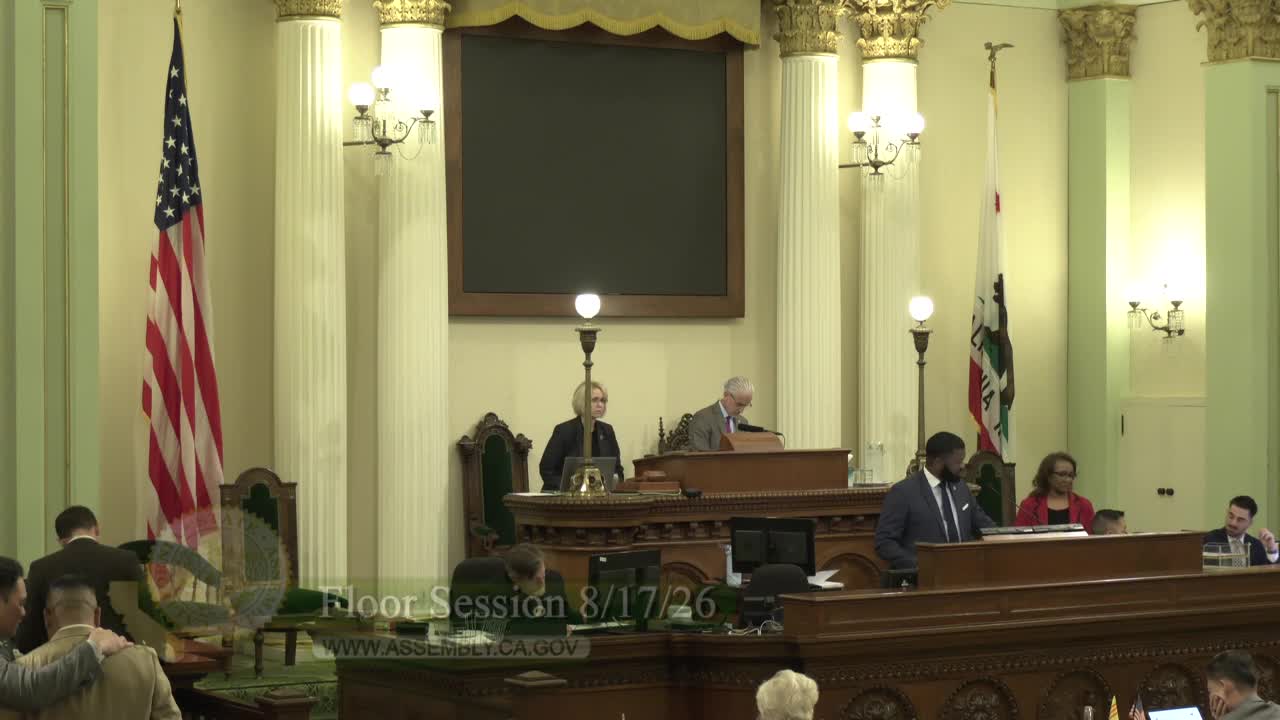
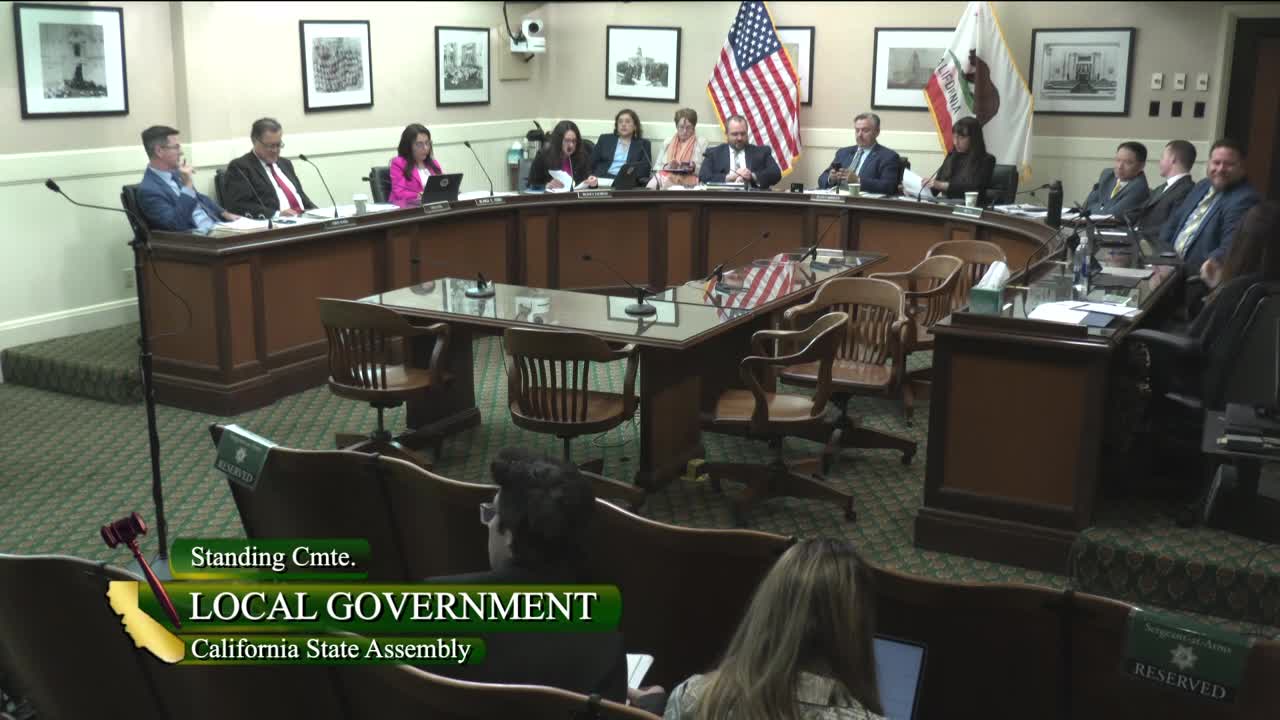
Bill Author

Bill Co-Author(s):