SB 1170: Joint powers agreements: nonprofit housing developers.
- Session Year: 2025-2026
- House: Senate
- Latest Version Date: 2026-09-29
Current Status:
Passed
(2026-09-29: Chaptered by Secretary of State. Chapter 810, Statutes of 2026.)
Introduced
In Committee
Awaiting First Chamber Vote
Passed First Chamber
In Committee
Awaiting Second Chamber Vote
Passed Second Chamber
Enacted
Existing law, the Joint Exercise of Powers Act, authorizes 2 or more public agencies, as defined, to jointly exercise any power common to the contracting parties, as provided. Among other things, that act also authorizes a mutual water company to enter into a joint powers agreement with any public agency for the purposes of risk pooling, as specified. Existing law, the Government Claims Act, among other things, authorizes public entities, mutual water companies, public agencies, water corporations, and mutual water companies to provide insurance under that act by a joint powers agreement, as specified.
This bill would additionally authorize a nonprofit housing developer to enter into a joint powers agreement with any public agency for the purpose of risk pooling, and would expand the list of entities authorized to provide insurance by a joint powers agreement to include nonprofit housing developers. The bill would require that, if a nonprofit housing developer enters into a joint powers agreement with one or more public agencies, that the agreement ensure that no participating public agency becomes responsible for the underlying debts or liabilities of the joint powers agreement and that any participating public agency be indemnified against those debts and liabilities. The bill would require a joint powers agreement established pursuant to this authorization to solely utilize any revenues it generates to provide technical support, continuing education, safety engineering, and operational and managerial advisory assistance to its members for the purpose of reducing risk liabilities and furthering the technical managerial and financial capacity of those members.
Existing law also authorizes 2 or more local public entities having the same governing board, a mutual water company and a public agency, or a water corporation, a mutual water company, and one or more public agencies, as specified, to be coinsured under a master policy and the total premium prorated among them.
This bill would recast the provisions described above, provide that the affected entities are those authorized pursuant to specified provisions, and include among those entities nonprofit housing developers.
Existing law, the Joint Exercise of Powers Act, authorizes 2 or more public agencies, as defined, to jointly exercise any power common to the contracting parties, as provided. Among other things, that act also authorizes a mutual water company to enter into a joint powers agreement with any public agency for the purposes of risk pooling, as specified. Existing law, the Government Claims Act, among other things, authorizes public entities, mutual water companies, public agencies, water corporations, and mutual water companies to provide insurance under that act by a joint powers agreement, as specified.
This bill would additionally authorize a nonprofit housing developer to enter into a joint powers agreement with any public agency for the purpose of risk pooling, and would expand the list of entities authorized to provide insurance by a joint powers agreement to include nonprofit housing developers. The bill would require that, if a nonprofit housing developer enters into a joint powers agreement with one or more public agencies, that the agreement ensure that no participating public agency becomes responsible for the underlying debts or liabilities of the joint powers agreement and that any participating public agency be indemnified against those debts and liabilities. The bill would require a joint powers agreement established pursuant to this authorization to solely utilize any revenues it generates to provide technical support, continuing education, safety engineering, and operational and managerial advisory assistance to its members for the purpose of reducing risk liabilities and furthering the technical managerial and financial capacity of those members.
Existing law also authorizes 2 or more local public entities having the same governing board, a mutual water company and a public agency, or a water corporation, a mutual water company, and one or more public agencies, as specified, to be coinsured under a master policy and the total premium prorated among them.
This bill would recast the provisions described above, provide that the affected entities are those authorized pursuant to specified provisions, and include among those entities nonprofit housing developers.
Existing law, the Joint Exercise of Powers Act, authorizes 2 or more public agencies, as defined, to jointly exercise any power common to the contracting parties, as provided. Among other things, that act also authorizes a mutual water company to enter into a joint powers agreement with any public agency for the purposes of risk pooling, as specified. Existing law, the Government Claims Act, among other things, authorizes public entities, mutual water companies, public agencies, water corporations, and mutual water companies to provide insurance under that act by a joint powers agreement, as specified.
This bill would additionally authorize a nonprofit housing developer to enter into a joint powers agreement with any public agency for the purpose of risk pooling, and would expand the list of entities authorized to provide insurance by a joint powers agreement to include nonprofit housing developers. The bill would require that, if a nonprofit housing developer enters into a joint powers agreement with one or more public agencies, that the agreement ensure that no participating public agency becomes responsible for the underlying debts or liabilities of the joint powers agreement and that any participating public agency be indemnified against those debts and liabilities. The bill would require a joint powers agreement established pursuant to this authorization to solely utilize any revenues it generates to provide technical support, continuing education, safety engineering, and operational and managerial advisory assistance to its members for the purpose of reducing risk liabilities and furthering the technical managerial and financial capacity of those members.
Existing law also authorizes 2 or more local public entities having the same governing board, a mutual water company and a public agency, or a water corporation, a mutual water company, and one or more public agencies, as specified, to be coinsured under a master policy and the total premium prorated among them.
This bill would recast the provisions described above, provide that the affected entities are those authorized pursuant to specified provisions, and include among those entities nonprofit housing developers.
(a)(1)Any of the following may provide insurance authorized by this part or for any other purpose by any one or more of the methods specified in Section 990.4 by a joint powers agreement made pursuant to Article 1 (commencing with Section 6500) of Chapter 5 of Division 7:
(A)Two or more local public entities.
(B)A mutual water company and a public agency, as authorized under subdivision (b) of Section 6525.
(C)A water corporation, a mutual water company, and one or more public agencies, as authorized under subdivision (b) of Section 6525.
(D)A nonprofit housing developer.
(2)If two or more hospital districts have joined together to pool their self-insurance claims or losses, any nonprofit corporation created pursuant to subdivision (p) of Section 32121 of the Health and Safety Code, and affiliated with a hospital district that is a party to the pool may participate in the pool.
(b)Any of the following, as authorized pursuant to subdivision (b) of Section 6525 or Section 6525.5, may be coinsured under a master policy and the total premium may be prorated among those entities:
(1)Two or more local public entities having the same governing board.
(2)A mutual water company and a public agency.
(3)A water corporation, a mutual water company, and one or more public agencies.
(4)A nonprofit housing developer.
(c)The pooling of self-insured claims or losses among entities as authorized in subdivision (a) of Section 990.4 shall not be considered insurance nor be subject to regulation under the Insurance Code.
(d)Any liability or loss under a joint powers agreement for the pooling of self-insured claims or losses authorized by this part and provided pursuant to this section may, notwithstanding Section 620 of the Insurance Code or any other provision of law, be reinsured to the same extent and the same manner as insurance provided by an insurer.
(e)If a joint powers agreement authorized by this part or authorized pursuant to Section 6516 provides for the pooling of self-insured claims or losses among entities, if any peril insured or covered under contract has existed, and the joint powers authority or other parties to the pool have been liable for any period, however short, the agreement may provide that the party insured or covered under contract is not entitled to the return of premiums, contributions, payments, or advances so far as that particular risk is concerned.
(f)For purposes of this section:
(1)Mutual water company has the same meaning as defined in Section 14300 of the Corporations Code.
(2)Water corporation has the same meaning as defined in Section 241 of the Public Utilities Code.
SEC. 2.Section 6525.5 is added to the Government Code, to read:6525.5.(a)Notwithstanding any other provision of this chapter, a nonprofit housing developer may enter into a joint powers agreement with any public agency for the purpose of jointly exercising any power common to the contracting parties.
(b)(1)Notwithstanding any other provision of this chapter, a nonprofit housing developer and one or more public agencies may enter into a joint powers agreement for the purpose of risk pooling in accordance with Section 990.8, provided that the agreement shall ensure that no participating public agency becomes responsible for the underlying debts or liabilities of the joint powers agency, and any participating public agency shall be indemnified against those debts and liabilities.
(2)A joint powers agency established pursuant to this subdivision shall solely utilize any revenues it generates through the insurance provided to its members under this section for its necessary operating expenses, and to provide technical support, continuing education, safety engineering, and operational and managerial advisory assistance to its members for the purpose of reducing risk liabilities and furthering the technical managerial and financial capacity of those members.
(a)(1)Any of the following may provide insurance authorized by this part or for any other purpose by any one or more of the methods specified in Section 990.4 by a joint powers agreement made pursuant to Article 1 (commencing with Section 6500) of Chapter 5 of Division 7:
(A)Two or more local public entities.
(B)A mutual water company and a public agency, as authorized under subdivision (b) of Section 6525.
(C)A water corporation, a mutual water company, and one or more public agencies, as authorized under subdivision (b) of Section 6525.
(D)A nonprofit housing developer.
(2)If two or more hospital districts have joined together to pool their self-insurance claims or losses, any nonprofit corporation created pursuant to subdivision (p) of Section 32121 of the Health and Safety Code, and affiliated with a hospital district that is a party to the pool may participate in the pool.
(b)Any of the following, as authorized pursuant to subdivision (b) of Section 6525 or Section 6525.5, may be coinsured under a master policy and the total premium may be prorated among those entities:
(1)Two or more local public entities having the same governing board.
(2)A mutual water company and a public agency.
(3)A water corporation, a mutual water company, and one or more public agencies.
(4)A nonprofit housing developer.
(c)The pooling of self-insured claims or losses among entities as authorized in subdivision (a) of Section 990.4 shall not be considered insurance nor be subject to regulation under the Insurance Code.
(d)Any liability or loss under a joint powers agreement for the pooling of self-insured claims or losses authorized by this part and provided pursuant to this section may, notwithstanding Section 620 of the Insurance Code or any other provision of law, be reinsured to the same extent and the same manner as insurance provided by an insurer.
(e)If a joint powers agreement authorized by this part or authorized pursuant to Section 6516 provides for the pooling of self-insured claims or losses among entities, if any peril insured or covered under contract has existed, and the joint powers authority or other parties to the pool have been liable for any period, however short, the agreement may provide that the party insured or covered under contract is not entitled to the return of premiums, contributions, payments, or advances so far as that particular risk is concerned.
(f)For purposes of this section:
(1)Mutual water company has the same meaning as defined in Section 14300 of the Corporations Code.
(2)Water corporation has the same meaning as defined in Section 241 of the Public Utilities Code.
SEC. 2.Section 6525.5 is added to the Government Code, to read:6525.5.(a)Notwithstanding any other provision of this chapter, a nonprofit housing developer may enter into a joint powers agreement with any public agency for the purpose of jointly exercising any power common to the contracting parties.
(b)(1)Notwithstanding any other provision of this chapter, a nonprofit housing developer and one or more public agencies may enter into a joint powers agreement for the purpose of risk pooling in accordance with Section 990.8, provided that the agreement shall ensure that no participating public agency becomes responsible for the underlying debts or liabilities of the joint powers agency, and any participating public agency shall be indemnified against those debts and liabilities.
(2)A joint powers agency established pursuant to this subdivision shall solely utilize any revenues it generates through the insurance provided to its members under this section for its necessary operating expenses, and to provide technical support, continuing education, safety engineering, and operational and managerial advisory assistance to its members for the purpose of reducing risk liabilities and furthering the technical managerial and financial capacity of those members.
(a)(1)Any of the following may provide insurance authorized by this part or for any other purpose by any one or more of the methods specified in Section 990.4 by a joint powers agreement made pursuant to Article 1 (commencing with Section 6500) of Chapter 5 of Division 7:
(A)Two or more local public entities.
(B)A mutual water company and a public agency, as authorized under subdivision (b) of Section 6525.
(C)A water corporation, a mutual water company, and one or more public agencies, as authorized under subdivision (b) of Section 6525.
(D)A nonprofit housing developer.
(2)If two or more hospital districts have joined together to pool their self-insurance claims or losses, any nonprofit corporation created pursuant to subdivision (p) of Section 32121 of the Health and Safety Code, and affiliated with a hospital district that is a party to the pool may participate in the pool.
(b)Two or more local public entities having the same governing board, a mutual water company and a public agency, or a water corporation, a mutual water company, and one or more public agencies, as authorized under subdivision (b) of Section 6525, may be coinsured under a master policy and the total premium may be prorated among those entities.(b)Any of the following, as authorized pursuant to subdivision (b) of Section 6525 or Section 6525.5, may be coinsured under a master policy and the total premium may be prorated among those entities:
(1)Two or more local public entities having the same governing board.
(2)A mutual water company and a public agency.
(3)A water corporation, a mutual water company, and one or more public agencies.
(4)A nonprofit housing developer.
(c)The pooling of self-insured claims or losses among entities as authorized in subdivision (a) of Section 990.4 shall not be considered insurance nor be subject to regulation under the Insurance Code.
(d)Any liability or loss under a joint powers agreement for the pooling of self-insured claims or losses authorized by this part and provided pursuant to this section may, notwithstanding Section 620 of the Insurance Code or any other provision of law, be reinsured to the same extent and the same manner as insurance provided by an insurer.
(e)If a joint powers agreement authorized by this part or authorized pursuant to Section 6516 provides for the pooling of self-insured claims or losses among entities, if any peril insured or covered under contract has existed, and the joint powers authority or other parties to the pool have been liable for any period, however short, the agreement may provide that the party insured or covered under contract is not entitled to the return of premiums, contributions, payments, or advances so far as that particular risk is concerned.
(f)For purposes of this section:
(1)Mutual water company has the same meaning as defined in Section 14300 of the Corporations Code.
(2)Water corporation has the same meaning as defined in Section 241 of the Public Utilities Code.
SEC. 2.Section 6525.5 is added to the Government Code, to read:6525.5.(a)Notwithstanding any other provision of this chapter, a nonprofit housing developer may enter into a joint powers agreement with any public agency for the purpose of jointly exercising any power common to the contracting parties.
(b)(1)Notwithstanding any other provision of this chapter, a nonprofit housing developer and one or more public agencies may enter into a joint powers agreement for the purpose of risk pooling in accordance with Section 990.8, provided that the agreement shall ensure that no participating public agency becomes responsible for the underlying debts or liabilities of the joint powers agency, and any participating public agency shall be indemnified against those debts and liabilities.
(2)A joint powers agency established pursuant to this subdivision shall solely utilize any revenues it generates through the insurance provided to its members under this section for its necessary operating expenses, and to provide technical support, continuing education, safety engineering, and operational and managerial advisory assistance to its members for the purpose of reducing risk liabilities and furthering the technical managerial and financial capacity of those members.
|
Date
|
Status
|
|---|---|
| Sep 29, 2026 | Chaptered by Secretary of State. Chapter 810, Statutes of 2026. |
| Sep 29, 2026 | Approved by the Governor. |
| Aug 30, 2026 | Enrolled and presented to the Governor at 6 p.m. |
| Aug 25, 2026 | In Senate. Ordered to engrossing and enrolling. |
| Aug 25, 2026 | Read third time. Passed. (Ayes 77. Noes 0. Page 6513.) Ordered to the Senate. |
| Aug 25, 2026 | Read third time. Passed. Ordered to the Senate. |
| Aug 3, 2026 | Read second time. Ordered to third reading. |
| Jul 2, 2026 | From committee: Do pass. (Ayes 10. Noes 0.) (July 1). |
| Jun 22, 2026 | From committee: Do pass and re-refer to Com. on L. GOV. with recommendation: To consent calendar. (Ayes 17. Noes 0.) (June 17). Re-referred to Com. on L. GOV. |
| May 18, 2026 | Referred to Coms. on INS. and L. GOV. |
| Apr 30, 2026 | In Assembly. Read first time. Held at Desk. |
| Apr 30, 2026 | Read third time. Passed. (Ayes 36. Noes 0. Page 4113.) Ordered to the Assembly. |
| Apr 30, 2026 | Read third time. Passed. (Ayes 36. Noes 0.) Ordered to the Assembly. |
| Apr 23, 2026 | Read second time. Ordered to consent calendar. |
| Apr 22, 2026 | From committee: Do pass. Ordered to consent calendar. (Ayes 7. Noes 0. Page 4014.) (April 22). |
| Apr 22, 2026 | From committee: Do pass. Ordered to consent calendar. (Ayes 7. Noes 0.) (April 22). |
| Apr 9, 2026 | Set for hearing April 22. |
| Feb 26, 2026 | Referred to Com. on L. GOV. |
| Feb 19, 2026 | From printer. May be acted upon on or after March 21. |
| Feb 18, 2026 | Introduced. Read first time. To Com. on RLS. for assignment. To print. |
|
Date
|
Description
|
Location
|
Votes
|
|
|---|---|---|---|---|
| Aug 25, 2026 | SB 1170 Durazo Senate Third Reading By Caloza | Assembly Floor |
Passed |
|
| Jul 1, 2026 | Do pass. | Assembly Standing Committee on Local Government |
Passed |
|
| Jun 17, 2026 | Do pass and be re-referred to the Committee on [Local Government] with recommendation: To Consent Calendar | Assembly Standing Committee on Insurance |
Passed |
|
| Jun 17, 2026 | Do pass as amended, and be re-referred to the Committee on [Local Government] with recommendation: To Consent Calendar | Assembly Standing Committee on Insurance |
Passed |
|
| Apr 30, 2026 | Consent Calendar 2nd SB1170 Durazo | Senate Floor |
Passed |
|
| Apr 22, 2026 | Do pass and be ordered to the Consent Calendar | Senate Standing Committee on Local Government |
Passed |
This list shows positions taken on this bill by organizations on the date displayed, which is linked to the original source.
Positions by individuals are not included.
|
Organization
|
Position
|
Date
|
|---|---|---|
| California Housing Partnership | ** Support | |
| City and County of San Francisco | ** Support | |
| Downtown Women's Center | ** Support | |
| Enterprise Community Partners | ** Support | |
| Little Tokyo Service Center | ** Support | |
| Southern California Association of Nonprofit Housing | ** Support | |
| the city and county of san francisco | ** Support |
SENATE THIRD READING
STR Bill Id:SB 1170
Author:(Durazo)
As Introduced Ver:February 18, 2026
Majority vote
SUMMARY
Authorizes nonprofit housing developers to enter into joint powers agreements (JPAs) with public agencies for purposes of insurance risk pooling.
Major Provisions
- Authorizes a nonprofit housing developer to enter into a JPA with one or more public agencies for the purpose of insurance risk pooling, and to be coinsured under a master policy with the total premium prorated among coinsured entities, as specified.
- Specifies that a nonprofit housing developer may enter into a JPA with any public agency for the purpose of jointly exercising any power common to the contracting parties.
- Specifies that a nonprofit housing developer may only enter into a JPA with a public agency if the agreement specifies that no participating public agency may become responsible for the underlying debts or liabilities of the joint powers agency and that the public agency is indemnified against those debts and liabilities.
- Specifies that a JPA established pursuant to the provisions of the bill shall solely use revenues it generates through the insurance it provides to its members for its necessary operating expenses, and to provide technical support, continuing education, safety engineering, and operational and managerial advisory assistance to its members for the purpose of reducing risk liabilities and furthering the technical managerial and financial capacity of those members.
COMMENTS
- JPAs, risk pooling, and affordable housing developers: Under existing law, public agencies may form JPAs to jointly exercise any power common to all members. JPAs offer self-insurance coverage on a pooled basis for a variety of purposes, including liability (malpractice and officers and directors' coverage), workers' compensation, health insurance, and property coverage. Pooling of self-insured claims or losses among local public entities is not considered insurance and is not subject to regulation under the Insurance Code.
As property and liability insurance rates continue to rise in California, alternative risk-financing mechanisms have become increasingly attractive, particularly among entities less capable of recouping costs through price increases.
As Enterprise Community Partners, a national non-profit dedicated to affordable housing development, explains in support of the bill, this includes affordable housing developers:
California is facing a severe insurance crisis that has significantly impacted the affordable housing sector in California. Between 2020 and 2022, insurance costs for affordable housing providers increased by 56% on average, with some providers experiencing rate hikes as high as 500% from 2022 to 2024. These increases, coupled with reductions in coverage availability and scope, threaten the financial viability of affordable housing developments that the state has invested billions of dollars to build and operate. Unlike market-rate housing, where costs can be offset through rent increases or profit margins, affordable housing providers operate under strict regulations on rents as well as significant financial constraints as mission-driven organizations. As a result, many are being forced to implement coping strategies, including using operational reserves meant for one time uses, deferring necessary property maintenance and improvements, cutting services and staff, and reducing insurance coverage, which increases financial vulnerability. Even these coping strategies, however, only provide short-term relief.
Over the past several years, California has authorized similar categories of private entities operating in the public interest to enter into JPAs with public agencies for the purpose of risk pooling. These include non-profit hospitals and other non-profit organizations providing health care services, non-profit corporations that provide services for zero-emission transportation, non-profit charter schools, water corporations, and private childcare providers.
This bill would authorize non-profit housing developers to enter into JPAs with public agencies for the purpose of pooling self-insurance claims or losses. Considering the state's substantial investments in housing development, providing new tools for obtaining more affordable coverage against potential loss in this domain is arguably appropriate.
- Overlap with existing law: Division 4 of the Insurance Code (commencing with Section 13900) authorizes an affordable housing entity to join with one or more other affordable housing entities in an arrangement providing for the pooling of self-insured claims or losses with respect to insurance covering liability or property, but prohibits such a pool from providing workers' compensation insurance. That statute further provides that such a pooling arrangement shall not be considered insurance, and shall not be subject to regulation under the Insurance Code.
That provision defines "affordable housing" to mean developments in which some of the dwelling units may be purchased or rented, with or without government assistance, on a basis that is affordable to persons or families of low or moderate income. It also defines "affordable housing entity" to mean any of the following: a housing authority created under the laws of this state or another jurisdiction and any agency or instrumentality of a housing authority; a nonprofit corporation organized under the laws of this state or another state that is engaged in providing affordable housing; or a partnership, general or limited, or limited liability company that is engaged in providing affordable housing that is affiliated with a housing authority, as specified.
The JPA-based risk-pooling authority provided by this bill is somewhat broader than what is provided under existing law. While existing law applies only to "affordable" housing entities, this bill would apply to any non-profit housing developer, regardless of whether the housing developed is intended to be affordable to persons or families of low or moderate income. Additionally, while existing law authorizes affordable housing entities to enter into risk-pools for the purposes of insuring against liability and property loss (and explicitly prohibits risk-pooling for workers' compensation insurance), this bill provides broader authority to pool self-insurance claims or losses, potentially including workers' compensation insurance and health insurance, among others. Rising insurance costs in any of these domains stands to reduce the capacity of non-profit housing developers to develop and maintain additional housing, and accordingly, this expansion of risk-pooling authority through the JPA mechanism provided by this bill could prove more valuable in facilitating more robust housing development in the state.
Regardless of overlap between existing law and this bill, this bill clearly provides additional tools beyond existing law for non-profit housing developers to more affordably insure against losses of all types.
According to the Author
I am proud to author Senate Bill 1170, which allows affordable housing developers and public agencies to partner on self-insuring affordable housing developments through a risk-pooling Joint Powers Authority (JPA). This measure aims to address the significant increases in insurance costs for 100% affordable housing developers, as well as a lack of available insurance altogether.
California is struggling with an affordable housing crisis, with over half of Californians considered rent-burdened. At the same time, the affordable housing supply in California cannot meet current demand, exacerbating the affordable housing crisis in the most populous and second most expensive state in country. As affordable housing developers are working on addressing the urgent need for housing, they are seeing insurance premiums rise, if they can get insurance at all. Many affordable housing developers are reporting over 100% insurance premiums increases.
By allowing non-profit developers to join a risk-pooling JPA that pools self-insurance claims and losses, SB 1170 will help reduce affordable housing insurance costs and lower affordable housing production costs. This will help preserve existing affordable housing developments and encourage the production of more affordable housing.
Arguments in Support
The City and County of San Francisco argues in support of the bill:
San Francisco has more than 28,700 units of affordable housing that are owned and operated by nonprofit affordable housing developers. These projects provide stable housing for families, seniors, people with disabilities, and people exiting homelessness, but are increasingly challenged by rising operating costs, including significant increases in insurance premiums and reduced availability of coverage.
SB 1170 would provide nonprofit affordable housing developers with an additional tool to address insurance availability and affordability by allowing them to participate in risk-pooling joint powers agreements. By enabling nonprofit housing developers and public agencies to partner on self-insurance models, SB 1170 could help stabilize costs, preserve existing affordable housing, and support the production of new affordable homes.
Arguments in Opposition
None on file.
FISCAL COMMENTS
This bill was keyed non-fiscal by Legislative Counsel.
VOTES
SENATE FLOOR: 36-0-4
YES: Allen, Alvarado-Gil, Archuleta, Ashby, Becker, Blakespear, Cabaldon, Cervantes, Choi, Cortese, Dahle, Durazo, Gonzalez, Grayson, Grove, Hurtado, Jones, Laird, Limón, McGuire, McNerney, Menjivar, Niello, Ochoa Bogh, Padilla, Pérez, Reyes, Richardson, Rubio, Seyarto, Smallwood-Cuevas, Stern, Strickland, Umberg, Weber Pierson, Wiener
ABS, ABST OR NV: Arreguín, Caballero, Valladares, Wahab
ASM INSURANCE: 17-0-0
YES: Calderon, Wallis, Addis, Papan, Ávila Farías, Berman, Chen, Ellis, Gipson, Hadwick, Harabedian, Krell, Nguyen, Ortega, Petrie-Norris, Michelle Rodriguez, Valencia
ASM LOCAL GOVERNMENT: 10-0-0
YES: Carrillo, Ta, Johnson, Pacheco, Ramos, Ransom, Blanca Rubio, Stefani, Ward, Wilson
UPDATED
VERSION: February 18, 2026
CONSULTANT: Landon Klein / INS. / (916) 319-2086 FN: 0003297
SENATE THIRD READING
STR Bill Id:SB 1170
Author:(Durazo)
As Introduced Ver:February 18, 2026
Majority vote
SUMMARY
Authorizes nonprofit housing developers to enter into joint powers agreements (JPAs) with public agencies for purposes of insurance risk pooling.
Major Provisions
- Authorizes a nonprofit housing developer to enter into a JPA with one or more public agencies for the purpose of insurance risk pooling, and to be coinsured under a master policy with the total premium prorated among coinsured entities, as specified.
- Specifies that a nonprofit housing developer may enter into a JPA with any public agency for the purpose of jointly exercising any power common to the contracting parties.
- Specifies that a nonprofit housing developer may only enter into a JPA with a public agency if the agreement specifies that no participating public agency may become responsible for the underlying debts or liabilities of the joint powers agency and that the public agency is indemnified against those debts and liabilities.
- Specifies that a JPA established pursuant to the provisions of the bill shall solely use revenues it generates through the insurance it provides to its members for its necessary operating expenses, and to provide technical support, continuing education, safety engineering, and operational and managerial advisory assistance to its members for the purpose of reducing risk liabilities and furthering the technical managerial and financial capacity of those members.
COMMENTS
- JPAs, risk pooling, and affordable housing developers: Under existing law, public agencies may form JPAs to jointly exercise any power common to all members. JPAs offer self-insurance coverage on a pooled basis for a variety of purposes, including liability (malpractice and officers and directors' coverage), workers' compensation, health insurance, and property coverage. Pooling of self-insured claims or losses among local public entities is not considered insurance and is not subject to regulation under the Insurance Code.
As property and liability insurance rates continue to rise in California, alternative risk-financing mechanisms have become increasingly attractive, particularly among entities less capable of recouping costs through price increases.
As Enterprise Community Partners, a national non-profit dedicated to affordable housing development, explains in support of the bill, this includes affordable housing developers:
California is facing a severe insurance crisis that has significantly impacted the affordable housing sector in California. Between 2020 and 2022, insurance costs for affordable housing providers increased by 56% on average, with some providers experiencing rate hikes as high as 500% from 2022 to 2024. These increases, coupled with reductions in coverage availability and scope, threaten the financial viability of affordable housing developments that the state has invested billions of dollars to build and operate. Unlike market-rate housing, where costs can be offset through rent increases or profit margins, affordable housing providers operate under strict regulations on rents as well as significant financial constraints as mission-driven organizations. As a result, many are being forced to implement coping strategies, including using operational reserves meant for one time uses, deferring necessary property maintenance and improvements, cutting services and staff, and reducing insurance coverage, which increases financial vulnerability. Even these coping strategies, however, only provide short-term relief.
Over the past several years, California has authorized similar categories of private entities operating in the public interest to enter into JPAs with public agencies for the purpose of risk pooling. These include non-profit hospitals and other non-profit organizations providing health care services, non-profit corporations that provide services for zero-emission transportation, non-profit charter schools, water corporations, and private childcare providers.
This bill would authorize non-profit housing developers to enter into JPAs with public agencies for the purpose of pooling self-insurance claims or losses. Considering the state's substantial investments in housing development, providing new tools for obtaining more affordable coverage against potential loss in this domain is arguably appropriate.
- Overlap with existing law: Division 4 of the Insurance Code (commencing with Section 13900) authorizes an affordable housing entity to join with one or more other affordable housing entities in an arrangement providing for the pooling of self-insured claims or losses with respect to insurance covering liability or property, but prohibits such a pool from providing workers' compensation insurance. That statute further provides that such a pooling arrangement shall not be considered insurance, and shall not be subject to regulation under the Insurance Code.
That provision defines "affordable housing" to mean developments in which some of the dwelling units may be purchased or rented, with or without government assistance, on a basis that is affordable to persons or families of low or moderate income. It also defines "affordable housing entity" to mean any of the following: a housing authority created under the laws of this state or another jurisdiction and any agency or instrumentality of a housing authority; a nonprofit corporation organized under the laws of this state or another state that is engaged in providing affordable housing; or a partnership, general or limited, or limited liability company that is engaged in providing affordable housing that is affiliated with a housing authority, as specified.
The JPA-based risk-pooling authority provided by this bill is somewhat broader than what is provided under existing law. While existing law applies only to "affordable" housing entities, this bill would apply to any non-profit housing developer, regardless of whether the housing developed is intended to be affordable to persons or families of low or moderate income. Additionally, while existing law authorizes affordable housing entities to enter into risk-pools for the purposes of insuring against liability and property loss (and explicitly prohibits risk-pooling for workers' compensation insurance), this bill provides broader authority to pool self-insurance claims or losses, potentially including workers' compensation insurance and health insurance, among others. Rising insurance costs in any of these domains stands to reduce the capacity of non-profit housing developers to develop and maintain additional housing, and accordingly, this expansion of risk-pooling authority through the JPA mechanism provided by this bill could prove more valuable in facilitating more robust housing development in the state.
Regardless of overlap between existing law and this bill, this bill clearly provides additional tools beyond existing law for non-profit housing developers to more affordably insure against losses of all types.
According to the Author
I am proud to author Senate Bill 1170, which allows affordable housing developers and public agencies to partner on self-insuring affordable housing developments through a risk-pooling Joint Powers Authority (JPA). This measure aims to address the significant increases in insurance costs for 100% affordable housing developers, as well as a lack of available insurance altogether.
California is struggling with an affordable housing crisis, with over half of Californians considered rent-burdened. At the same time, the affordable housing supply in California cannot meet current demand, exacerbating the affordable housing crisis in the most populous and second most expensive state in country. As affordable housing developers are working on addressing the urgent need for housing, they are seeing insurance premiums rise, if they can get insurance at all. Many affordable housing developers are reporting over 100% insurance premiums increases.
By allowing non-profit developers to join a risk-pooling JPA that pools self-insurance claims and losses, SB 1170 will help reduce affordable housing insurance costs and lower affordable housing production costs. This will help preserve existing affordable housing developments and encourage the production of more affordable housing.
Arguments in Support
The City and County of San Francisco argues in support of the bill:
San Francisco has more than 28,700 units of affordable housing that are owned and operated by nonprofit affordable housing developers. These projects provide stable housing for families, seniors, people with disabilities, and people exiting homelessness, but are increasingly challenged by rising operating costs, including significant increases in insurance premiums and reduced availability of coverage.
SB 1170 would provide nonprofit affordable housing developers with an additional tool to address insurance availability and affordability by allowing them to participate in risk-pooling joint powers agreements. By enabling nonprofit housing developers and public agencies to partner on self-insurance models, SB 1170 could help stabilize costs, preserve existing affordable housing, and support the production of new affordable homes.
Arguments in Opposition
None on file.
FISCAL COMMENTS
This bill was keyed non-fiscal by Legislative Counsel.
VOTES
SENATE FLOOR: 36-0-4
YES: Allen, Alvarado-Gil, Archuleta, Ashby, Becker, Blakespear, Cabaldon, Cervantes, Choi, Cortese, Dahle, Durazo, Gonzalez, Grayson, Grove, Hurtado, Jones, Laird, Limón, McGuire, McNerney, Menjivar, Niello, Ochoa Bogh, Padilla, Pérez, Reyes, Richardson, Rubio, Seyarto, Smallwood-Cuevas, Stern, Strickland, Umberg, Weber Pierson, Wiener
ABS, ABST OR NV: Arreguín, Caballero, Valladares, Wahab
ASM INSURANCE: 17-0-0
YES: Calderon, Wallis, Addis, Papan, Ávila Farías, Berman, Chen, Ellis, Gipson, Hadwick, Harabedian, Krell, Nguyen, Ortega, Petrie-Norris, Michelle Rodriguez, Valencia
ASM LOCAL GOVERNMENT: 10-0-0
YES: Carrillo, Ta, Johnson, Pacheco, Ramos, Ransom, Blanca Rubio, Stefani, Ward, Wilson
UPDATED
VERSION: February 18, 2026
CONSULTANT: Landon Klein / INS. / (916) 319-2086 FN: 0003297
SENATE THIRD READING
STR Bill Id:SB 1170
Author:(Durazo)
As Introduced Ver:February 18, 2026
Majority vote
SUMMARY
Authorizes nonprofit housing developers to enter into joint powers agreements (JPAs) with public agencies for purposes of insurance risk pooling.
Major Provisions
- Authorizes a nonprofit housing developer to enter into a JPA with one or more public agencies for the purpose of insurance risk pooling, and to be coinsured under a master policy with the total premium prorated among coinsured entities, as specified.
- Specifies that a nonprofit housing developer may enter into a JPA with any public agency for the purpose of jointly exercising any power common to the contracting parties.
- Specifies that a nonprofit housing developer may only enter into a JPA with a public agency if the agreement specifies that no participating public agency may become responsible for the underlying debts or liabilities of the joint powers agency and that the public agency is indemnified against those debts and liabilities.
- Specifies that a JPA established pursuant to the provisions of the bill shall solely use revenues it generates through the insurance it provides to its members for its necessary operating expenses, and to provide technical support, continuing education, safety engineering, and operational and managerial advisory assistance to its members for the purpose of reducing risk liabilities and furthering the technical managerial and financial capacity of those members.
COMMENTS
- JPAs, risk pooling, and affordable housing developers: Under existing law, public agencies may form JPAs to jointly exercise any power common to all members. JPAs offer self-insurance coverage on a pooled basis for a variety of purposes, including liability (malpractice and officers and directors' coverage), workers' compensation, health insurance, and property coverage. Pooling of self-insured claims or losses among local public entities is not considered insurance and is not subject to regulation under the Insurance Code.
As property and liability insurance rates continue to rise in California, alternative risk-financing mechanisms have become increasingly attractive, particularly among entities less capable of recouping costs through price increases.
As Enterprise Community Partners, a national non-profit dedicated to affordable housing development, explains in support of the bill, this includes affordable housing developers:
California is facing a severe insurance crisis that has significantly impacted the affordable housing sector in California. Between 2020 and 2022, insurance costs for affordable housing providers increased by 56% on average, with some providers experiencing rate hikes as high as 500% from 2022 to 2024. These increases, coupled with reductions in coverage availability and scope, threaten the financial viability of affordable housing developments that the state has invested billions of dollars to build and operate. Unlike market-rate housing, where costs can be offset through rent increases or profit margins, affordable housing providers operate under strict regulations on rents as well as significant financial constraints as mission-driven organizations. As a result, many are being forced to implement coping strategies, including using operational reserves meant for one time uses, deferring necessary property maintenance and improvements, cutting services and staff, and reducing insurance coverage, which increases financial vulnerability. Even these coping strategies, however, only provide short-term relief.
Over the past several years, California has authorized similar categories of private entities operating in the public interest to enter into JPAs with public agencies for the purpose of risk pooling. These include non-profit hospitals and other non-profit organizations providing health care services, non-profit corporations that provide services for zero-emission transportation, non-profit charter schools, water corporations, and private childcare providers.
This bill would authorize non-profit housing developers to enter into JPAs with public agencies for the purpose of pooling self-insurance claims or losses. Considering the state's substantial investments in housing development, providing new tools for obtaining more affordable coverage against potential loss in this domain is arguably appropriate.
- Overlap with existing law: Division 4 of the Insurance Code (commencing with Section 13900) authorizes an affordable housing entity to join with one or more other affordable housing entities in an arrangement providing for the pooling of self-insured claims or losses with respect to insurance covering liability or property, but prohibits such a pool from providing workers' compensation insurance. That statute further provides that such a pooling arrangement shall not be considered insurance, and shall not be subject to regulation under the Insurance Code.
That provision defines "affordable housing" to mean developments in which some of the dwelling units may be purchased or rented, with or without government assistance, on a basis that is affordable to persons or families of low or moderate income. It also defines "affordable housing entity" to mean any of the following: a housing authority created under the laws of this state or another jurisdiction and any agency or instrumentality of a housing authority; a nonprofit corporation organized under the laws of this state or another state that is engaged in providing affordable housing; or a partnership, general or limited, or limited liability company that is engaged in providing affordable housing that is affiliated with a housing authority, as specified.
The JPA-based risk-pooling authority provided by this bill is somewhat broader than what is provided under existing law. While existing law applies only to "affordable" housing entities, this bill would apply to any non-profit housing developer, regardless of whether the housing developed is intended to be affordable to persons or families of low or moderate income. Additionally, while existing law authorizes affordable housing entities to enter into risk-pools for the purposes of insuring against liability and property loss (and explicitly prohibits risk-pooling for workers' compensation insurance), this bill provides broader authority to pool self-insurance claims or losses, potentially including workers' compensation insurance and health insurance, among others. Rising insurance costs in any of these domains stands to reduce the capacity of non-profit housing developers to develop and maintain additional housing, and accordingly, this expansion of risk-pooling authority through the JPA mechanism provided by this bill could prove more valuable in facilitating more robust housing development in the state.
Regardless of overlap between existing law and this bill, this bill clearly provides additional tools beyond existing law for non-profit housing developers to more affordably insure against losses of all types.
According to the Author
I am proud to author Senate Bill 1170, which allows affordable housing developers and public agencies to partner on self-insuring affordable housing developments through a risk-pooling Joint Powers Authority (JPA). This measure aims to address the significant increases in insurance costs for 100% affordable housing developers, as well as a lack of available insurance altogether.
California is struggling with an affordable housing crisis, with over half of Californians considered rent-burdened. At the same time, the affordable housing supply in California cannot meet current demand, exacerbating the affordable housing crisis in the most populous and second most expensive state in country. As affordable housing developers are working on addressing the urgent need for housing, they are seeing insurance premiums rise, if they can get insurance at all. Many affordable housing developers are reporting over 100% insurance premiums increases.
By allowing non-profit developers to join a risk-pooling JPA that pools self-insurance claims and losses, SB 1170 will help reduce affordable housing insurance costs and lower affordable housing production costs. This will help preserve existing affordable housing developments and encourage the production of more affordable housing.
Arguments in Support
The City and County of San Francisco argues in support of the bill:
San Francisco has more than 28,700 units of affordable housing that are owned and operated by nonprofit affordable housing developers. These projects provide stable housing for families, seniors, people with disabilities, and people exiting homelessness, but are increasingly challenged by rising operating costs, including significant increases in insurance premiums and reduced availability of coverage.
SB 1170 would provide nonprofit affordable housing developers with an additional tool to address insurance availability and affordability by allowing them to participate in risk-pooling joint powers agreements. By enabling nonprofit housing developers and public agencies to partner on self-insurance models, SB 1170 could help stabilize costs, preserve existing affordable housing, and support the production of new affordable homes.
Arguments in Opposition
None on file.
FISCAL COMMENTS
This bill was keyed non-fiscal by Legislative Counsel.
VOTES
SENATE FLOOR: 36-0-4
YES: Allen, Alvarado-Gil, Archuleta, Ashby, Becker, Blakespear, Cabaldon, Cervantes, Choi, Cortese, Dahle, Durazo, Gonzalez, Grayson, Grove, Hurtado, Jones, Laird, Limón, McGuire, McNerney, Menjivar, Niello, Ochoa Bogh, Padilla, Pérez, Reyes, Richardson, Rubio, Seyarto, Smallwood-Cuevas, Stern, Strickland, Umberg, Weber Pierson, Wiener
ABS, ABST OR NV: Arreguín, Caballero, Valladares, Wahab
ASM INSURANCE: 17-0-0
YES: Calderon, Wallis, Addis, Papan, Ávila Farías, Berman, Chen, Ellis, Gipson, Hadwick, Harabedian, Krell, Nguyen, Ortega, Petrie-Norris, Michelle Rodriguez, Valencia
ASM LOCAL GOVERNMENT: 10-0-0
YES: Carrillo, Ta, Johnson, Pacheco, Ramos, Ransom, Blanca Rubio, Stefani, Ward, Wilson
UPDATED
VERSION: February 18, 2026
CONSULTANT: Landon Klein / INS. / (916) 319-2086 FN: 0003297
SENATE THIRD READING
STR Bill Id:SB 1170
Author:(Durazo)
As Introduced Ver:February 18, 2026
Majority vote
SUMMARY
Authorizes nonprofit housing developers to enter into joint powers agreements (JPAs) with public agencies for purposes of insurance risk pooling.
Major Provisions
- Authorizes a nonprofit housing developer to enter into a JPA with one or more public agencies for the purpose of insurance risk pooling, and to be coinsured under a master policy with the total premium prorated among coinsured entities, as specified.
- Specifies that a nonprofit housing developer may enter into a JPA with any public agency for the purpose of jointly exercising any power common to the contracting parties.
- Specifies that a nonprofit housing developer may only enter into a JPA with a public agency if the agreement specifies that no participating public agency may become responsible for the underlying debts or liabilities of the joint powers agency and that the public agency is indemnified against those debts and liabilities.
- Specifies that a JPA established pursuant to the provisions of the bill shall solely use revenues it generates through the insurance it provides to its members for its necessary operating expenses, and to provide technical support, continuing education, safety engineering, and operational and managerial advisory assistance to its members for the purpose of reducing risk liabilities and furthering the technical managerial and financial capacity of those members.
COMMENTS
- JPAs, risk pooling, and affordable housing developers: Under existing law, public agencies may form JPAs to jointly exercise any power common to all members. JPAs offer self-insurance coverage on a pooled basis for a variety of purposes, including liability (malpractice and officers and directors' coverage), workers' compensation, health insurance, and property coverage. Pooling of self-insured claims or losses among local public entities is not considered insurance and is not subject to regulation under the Insurance Code.
As property and liability insurance rates continue to rise in California, alternative risk-financing mechanisms have become increasingly attractive, particularly among entities less capable of recouping costs through price increases.
As Enterprise Community Partners, a national non-profit dedicated to affordable housing development, explains in support of the bill, this includes affordable housing developers:
California is facing a severe insurance crisis that has significantly impacted the affordable housing sector in California. Between 2020 and 2022, insurance costs for affordable housing providers increased by 56% on average, with some providers experiencing rate hikes as high as 500% from 2022 to 2024. These increases, coupled with reductions in coverage availability and scope, threaten the financial viability of affordable housing developments that the state has invested billions of dollars to build and operate. Unlike market-rate housing, where costs can be offset through rent increases or profit margins, affordable housing providers operate under strict regulations on rents as well as significant financial constraints as mission-driven organizations. As a result, many are being forced to implement coping strategies, including using operational reserves meant for one time uses, deferring necessary property maintenance and improvements, cutting services and staff, and reducing insurance coverage, which increases financial vulnerability. Even these coping strategies, however, only provide short-term relief.
Over the past several years, California has authorized similar categories of private entities operating in the public interest to enter into JPAs with public agencies for the purpose of risk pooling. These include non-profit hospitals and other non-profit organizations providing health care services, non-profit corporations that provide services for zero-emission transportation, non-profit charter schools, water corporations, and private childcare providers.
This bill would authorize non-profit housing developers to enter into JPAs with public agencies for the purpose of pooling self-insurance claims or losses. Considering the state's substantial investments in housing development, providing new tools for obtaining more affordable coverage against potential loss in this domain is arguably appropriate.
- Overlap with existing law: Division 4 of the Insurance Code (commencing with Section 13900) authorizes an affordable housing entity to join with one or more other affordable housing entities in an arrangement providing for the pooling of self-insured claims or losses with respect to insurance covering liability or property, but prohibits such a pool from providing workers' compensation insurance. That statute further provides that such a pooling arrangement shall not be considered insurance, and shall not be subject to regulation under the Insurance Code.
That provision defines "affordable housing" to mean developments in which some of the dwelling units may be purchased or rented, with or without government assistance, on a basis that is affordable to persons or families of low or moderate income. It also defines "affordable housing entity" to mean any of the following: a housing authority created under the laws of this state or another jurisdiction and any agency or instrumentality of a housing authority; a nonprofit corporation organized under the laws of this state or another state that is engaged in providing affordable housing; or a partnership, general or limited, or limited liability company that is engaged in providing affordable housing that is affiliated with a housing authority, as specified.
The JPA-based risk-pooling authority provided by this bill is somewhat broader than what is provided under existing law. While existing law applies only to "affordable" housing entities, this bill would apply to any non-profit housing developer, regardless of whether the housing developed is intended to be affordable to persons or families of low or moderate income. Additionally, while existing law authorizes affordable housing entities to enter into risk-pools for the purposes of insuring against liability and property loss (and explicitly prohibits risk-pooling for workers' compensation insurance), this bill provides broader authority to pool self-insurance claims or losses, potentially including workers' compensation insurance and health insurance, among others. Rising insurance costs in any of these domains stands to reduce the capacity of non-profit housing developers to develop and maintain additional housing, and accordingly, this expansion of risk-pooling authority through the JPA mechanism provided by this bill could prove more valuable in facilitating more robust housing development in the state.
Regardless of overlap between existing law and this bill, this bill clearly provides additional tools beyond existing law for non-profit housing developers to more affordably insure against losses of all types.
According to the Author
I am proud to author Senate Bill 1170, which allows affordable housing developers and public agencies to partner on self-insuring affordable housing developments through a risk-pooling Joint Powers Authority (JPA). This measure aims to address the significant increases in insurance costs for 100% affordable housing developers, as well as a lack of available insurance altogether.
California is struggling with an affordable housing crisis, with over half of Californians considered rent-burdened. At the same time, the affordable housing supply in California cannot meet current demand, exacerbating the affordable housing crisis in the most populous and second most expensive state in country. As affordable housing developers are working on addressing the urgent need for housing, they are seeing insurance premiums rise, if they can get insurance at all. Many affordable housing developers are reporting over 100% insurance premiums increases.
By allowing non-profit developers to join a risk-pooling JPA that pools self-insurance claims and losses, SB 1170 will help reduce affordable housing insurance costs and lower affordable housing production costs. This will help preserve existing affordable housing developments and encourage the production of more affordable housing.
Arguments in Support
The City and County of San Francisco argues in support of the bill:
San Francisco has more than 28,700 units of affordable housing that are owned and operated by nonprofit affordable housing developers. These projects provide stable housing for families, seniors, people with disabilities, and people exiting homelessness, but are increasingly challenged by rising operating costs, including significant increases in insurance premiums and reduced availability of coverage.
SB 1170 would provide nonprofit affordable housing developers with an additional tool to address insurance availability and affordability by allowing them to participate in risk-pooling joint powers agreements. By enabling nonprofit housing developers and public agencies to partner on self-insurance models, SB 1170 could help stabilize costs, preserve existing affordable housing, and support the production of new affordable homes.
Arguments in Opposition
None on file.
FISCAL COMMENTS
This bill was keyed non-fiscal by Legislative Counsel.
VOTES
SENATE FLOOR: 36-0-4
YES: Allen, Alvarado-Gil, Archuleta, Ashby, Becker, Blakespear, Cabaldon, Cervantes, Choi, Cortese, Dahle, Durazo, Gonzalez, Grayson, Grove, Hurtado, Jones, Laird, Limón, McGuire, McNerney, Menjivar, Niello, Ochoa Bogh, Padilla, Pérez, Reyes, Richardson, Rubio, Seyarto, Smallwood-Cuevas, Stern, Strickland, Umberg, Weber Pierson, Wiener
ABS, ABST OR NV: Arreguín, Caballero, Valladares, Wahab
ASM INSURANCE: 17-0-0
YES: Calderon, Wallis, Addis, Papan, Ávila Farías, Berman, Chen, Ellis, Gipson, Hadwick, Harabedian, Krell, Nguyen, Ortega, Petrie-Norris, Michelle Rodriguez, Valencia
ASM LOCAL GOVERNMENT: 10-0-0
YES: Carrillo, Ta, Johnson, Pacheco, Ramos, Ransom, Blanca Rubio, Stefani, Ward, Wilson
UPDATED
VERSION: February 18, 2026
CONSULTANT: Landon Klein / INS. / (916) 319-2086 FN: 0003297
Date of Hearing: July 1, 2026
ASSEMBLY COMMITTEE ON LOCAL GOVERNMENT
Juan Carrillo, Chair
SBPCA Bill Id:SB 1170
Author:(Durazo) – As Introduced Ver:February 18, 2026
SENATE VOTE: 36-0
SUBJECT: Joint powers agreements: nonprofit housing developers
SUMMARY: Authorizes nonprofit housing developers to enter into joint powers agreements (JPAs) with public agencies for purposes of insurance risk pooling. Specifically, this bill:
- Authorizes a nonprofit housing developer to enter into a JPA with one or more public agencies for the purpose of insurance risk pooling, and to be coinsured under a master policy with the total premium prorated among coinsured entities, as specified.
- Specifies that a nonprofit housing developer may enter into a JPA with any public agency for the purpose of jointly exercising any power common to the contracting parties.
- Specifies that a nonprofit housing developer may only enter into a JPA with a public agency if the agreement specifies that no participating public agency may become responsible for the underlying debts or liabilities of the joint powers agency and that the public agency is indemnified against those debts and liabilities.
- Specifies that a JPA established pursuant to the provisions of the bill shall solely use revenues it generates through the insurance it provides to its members for its necessary operating expenses, and to provide technical support, continuing education, safety engineering, and operational and managerial advisory assistance to its members for the purpose of reducing risk liabilities and furthering the technical managerial and financial capacity of those members.
EXISTING LAW:
- Allows, pursuant to the Joint Exercise of Powers Act (JPA Act), two or more public agencies by agreement to jointly exercise any power common to the contracting parties, as specified,
if authorized by their legislative or other governing bodies. (Government Code (GOV) Section 6500, et seq.) - Defines, for purposes of the JPA Act, “public agency” to mean "the federal government or any federal department or agency, this state, another state or any state department or agency, a county, county board of education, county superintendent of schools, city, public corporation, public district, regional transportation commission of this state or another state, a federally recognized Indian tribe, or any joint powers authority formed pursuant to the JPA Act by any of these agencies." (GOV Section 6500)
- Allows two or more local public entities, by a JPA, to provide insurance coverage or self-insurance, or to obtain insurance coverage by means of a reciprocal or inter-insurance exchange. JPAs offer self-insurance coverage on a pooled basis for a variety of purposes, including liability (malpractice and officers and directors coverage), workers' compensation, health insurance, and property coverage. (GOV Section 6512.2)
- Provides that the pooling of self-insured claims or losses among entities participating in a JPA are not subject to regulation under the Insurance Code, as provided. (GOV Section 990.8(c))
- Authorizes affordable housing entities, as defined, to join with one or more other affordable housing entities in an arrangement providing for the pooling of self-insured claims or losses with respect to insurance covering liability and insurance covering losses arising from physical damage to motor vehicles, personal property, real property, or other property owned or operated by the affordable housing entity; and specifies that the pooling arrangement shall not be considered insurance, and shall not be subject to regulation under the Insurance Code. (Insurance Code (INS) Section 13900, et seq.)
- Defines “affordable housing entity,” for the purposes of 5), above, to mean a housing authority created under the laws of this state or another jurisdiction and any agency or instrumentality of a housing authority, a nonprofit corporation organized under the laws of this state or another state that is engaged in providing affordable housing, or a partnership, general or limited, or limited liability company that is engaged in providing affordable housing that is affiliated with a housing authority, as specified. (INS Code Section 13907)
- Allows specified private, non-profit hospitals to enter into JPAs with public agencies, as specified. (GOV Sections 6523.4 – 6524)
- Allows private, non-profit corporations that provide services for zero-emission transportation to enter into JPAs with public agencies to facilitate the development, construction, and operation of zero-emission transportation systems or facilities, as specified. (GOV Section 6538.5)
- Allows private, non-profit corporations that provide health care services to enter into JPAs with public agencies for the purposes of providing health care services, as specified. (GOV Section 6538.6)
- Allows various specified local agencies to enter into JPAs to fund housing to assist the homeless population and persons and families of extremely low, very low, and low income, as specified. (GOV Sections 6539.1 – 6539.9)
FISCAL EFFECT: None
COMMENTS:
- Author’s Statement. According to the author, “I am proud to author Senate Bill 1170, which allows affordable housing developers and public agencies to partner on self-insuring affordable housing developments through a risk-pooling Joint Powers Authority (JPA). This measure aims to address the significant increases in insurance costs for 100% affordable housing developers, as well as a lack of available insurance altogether.
“California is struggling with an affordable housing crisis, with over half of Californians considered rent-burdened. At the same time, the affordable housing supply in California cannot meet current demand, exacerbating the affordable housing crisis in the most populous and second most expensive state in country. As affordable housing developers are working on addressing the urgent need for housing, they are seeing insurance premiums rise, if they can get insurance at all. Many affordable housing developers are reporting over 100 percent insurance premiums increases.
“By allowing non-profit developers to join a risk-pooling JPA that pools self-insurance claims and losses, SB 1170 will help reduce affordable housing insurance costs and lower affordable housing production costs. This will help preserve existing affordable housing developments and encourage the production of more affordable housing.”
- Joint Exercise of Powers Act. JPAs have existed in California for nearly 100 years, and were originally created to allow multiple local governments in a region to pool resources to meet common needs. The Act authorizes federal, state and local agencies to create and use a JPA, which is a legal document that allows the contracting parties to exercise powers that are common to all of the contracting parties. A JPA can be administered by one of the contracting agencies, or it can be carried out by a new, separate public entity called a joint powers authority.
Public agencies can also use the JPA law and the related Marks-Roos Local Bond Pooling Act to form bond pools to finance public works, working capital, insurance needs, and other public benefit projects. JPAs can issue one large Marks-Roos Act bond and then loan the capital to local agencies, thus creating a “bond pool.” Bond pooling saves money on interest rates and finance charges. It also allows smaller local agencies to enter the bond market. Because JPAs are entities separate from its members and are not bound by the same limitations on debt issuance, voters need not approve bonds JPAs issue.
State law generally limits membership in JPAs to public agencies: federal, state, and local governments. However, legislation has authorized some types of private entities to enter into joint powers agreements with public agencies for specified purposes.
JPA law also allows nonprofit hospitals to enter into JPAs to provide health care services in Fresno County (AB 1785, Reyes, 2002); Contra Costa County (AB 3097, Campbell, 1996); Tulare, Kings, and San Diego Counties (SB 850, Kelley, 1997); and Tuolumne County (AB 2717, House, 2000). These JPAs specify a nonprofit hospital that participates in one of these JPAs cannot levy any tax or assessment.
More recently, the Legislature enacted AB 1403 (Maienschein, 2015), which, until January 1, 2024, allowed one or more private, nonprofit 501(c)(3) corporations that provide services to homeless persons to form a JPA, or enter into a joint powers agreement with one or more public agencies. The JPA exists as a public entity, but cannot have the power to incur debt. JPAs formed under this provision are to encourage and ease information sharing between public agencies and nonprofit corporations to identify the most costly and frequent users of publicly funded emergency services, provide frequent user coordinated care housing services, and prevent homelessness. The participating public agencies must determine the composition of the board of directors, but the representation of nonprofit 501(c)(3) corporations cannot exceed 50% of the board membership.
Using the model of AB 1403, SB 1226 (Durazo, 2022), allows, until January 1, 2032, a private, non-profit corporation that provides services for zero-emission transportation to enter into a joint powers agreement with a public agency to facilitate the development, construction, and operation of zero-emission transportation systems or facilities. Like AB 1403, these JPAs cannot incur debt, and nonprofit representation on the board must not exceed 50%.
- Risk-pooling JPAs. Among the common powers public agencies can exercise jointly through a JPA is the power to insure against specified liabilities. State law allows two or more local public entities to form a JPA to provide insurance authorized by specified statutes. Insurance these JPAs provide is different from traditional insurance. For example, public entities can be co-insured under a master policy and prorate their premiums among the different entities. This pooling of self-insured claims or losses is not subject to state regulation like private insurance. Local agencies can also reinsure liabilities. These JPAs are subject to additional requirements, including that the agreement ensures no participating public agency becomes responsible for the underlying debts or liabilities of the JPA, and indemnifies any participating public agency against those debts and liabilities.
State law allows a mutual water company to enter into a joint powers agreement with any public agency to jointly exercise any power common to the contracting parties provided the agreement ensures no participating public agency becomes responsible for the underlying debts or liabilities of the joint powers agency (AB 2014, Cortese, 1994). However, mutual water companies are not public agencies with the power to offer insurance, so they could not join a JPA for insurance purposes. AB 656 (Cristina Garcia, 2015) addressed this issue by allowing mutual water companies to join a JPA for risk-pooling and providing technical support, continuing education, safety engineering, and operational and managerial advisory assistance to JPA members to reduce risk liabilities.
Prior to AB 656, mutual water companies had to purchase insurance in the open market. Because the pooling of self-insurance among entities participating in a JPA is not subject to insurance premium taxes, a risk-pooling JPA can generally set lower premiums and offer broader coverage than would be available through the private marketplace. By allowing mutual water companies to realize some of these savings through membership in a mutual water company insurance JPA, AB 656 made residual funding available to help mutual water companies meet their customers’ needs. AB 428 (Blanca Rubio, 2025) granted private water corporations the same authority as mutual water companies to enter into a risk-pooling JPA or agreement.
- Affordable Housing Insurance. Like other types of development, affordable housing developers need insurance policies to cover losses from property damage or injury claims. Recently, affordable housing developers have reported significant insurance premium increases, or trouble purchasing insurance policies altogether. According to the Little Tokyo Service Center, an affordable housing provider, “Rising insurance costs and lack of coverage is a common headline in California and across the country these days, but the acute challenges for affordable housing—and the state’s most vulnerable residents who live there—have received far less attention. Between 2020 and 2022, insurance costs for California’s affordable housing providers increased by an average of 56%, with some facing hikes as high as 500% between 2022 and 2024. At the same time, coverage options have narrowed, further jeopardizing the long-term viability of these essential homes.”
- Bill Summary. This bill allows a nonprofit housing developer to enter into a JPA with one or more public agencies for the purpose of insurance risk pooling and to be coinsured under a master policy with the total premium prorated among coinsured entities.
This bill also allows a nonprofit housing developer to enter into a JPA with any public agency for the purpose of jointly exercising any power common to the contracting parties. A nonprofit housing developer may only enter into a JPA with a public agency if the agreement specifies that no participating public agency may become responsible for the underlying debts or liabilities of the joint powers agency and that the public agency is indemnified against those debts and liabilities.
A JPA established pursuant to this bill must solely use revenues it generates through the insurance it provides to its members for its necessary operating expenses, and to provide technical support, continuing education, safety engineering, and operational and managerial advisory assistance to its members for the purpose of reducing risk liabilities and furthering the technical managerial and financial capacity of those members.
This bill is sponsored by the author.
- Previous Legislation. AB 428 (Blanca Rubio), Chapter 151, Statutes of 2025, authorized water corporations to enter into JPAs with public agencies and mutual water companies for purposes of insurance risk pooling.
AB 2735 (Blanca Rubio) of 2024 was substantially similar to AB 428. AB 2735 was vetoed with the following message: “Authorizing investor-owned, private water corporations to participate in public risk pools could transfer financial risks of decisions by for-profit entities to public entities, which has the potential to shift costs to public entities and their ratepayers. Absent a more robust analysis of the nature and extent of this potential cost-shifting, I am not convinced the benefit of this proposal outweighs the risk at this time.”
AB 2293 (Mathis), Chapter 710, Statutes of 2024, allowed nonprofits formed to provide health care services to join a joint powers authority or enter into a joint powers agreement with one or more public agencies.
AB 656 (Christina Garcia), Chapter 250, Statutes of 2015, allowed a mutual water company and a public agency to enter into a JPA for the provision of insurance and risk-pooling.
AB 1077 (Holden), Chapter 669, Statutes of 2015, made a number of changes to the Mutual Water Company Open Meeting Act, including allowing the use of teleconferencing to provide access for eligible persons to attend meetings, and specifying requirements for executive sessions.
AB 2046 (Gomez) of 2014 would have authorized a JPA to issue bonds and enter into loan agreements for the financing or refinancing of a private project located outside of the state under specified conditions, until January 1, 2021. This bill raised a number of concerns regarding the appropriate purposes and activities of JPAs, such as allowing the issuance of tax-exempt bonds for private projects outside of the state, severing the geographical nexus between a bond-issuing JPA and the jurisdiction in which a local agency project is located, and others. AB 2046 was held in the Senate Appropriations Committee.
AB 240 (Rendon), Chapter 633, Statutes of 2013, increased transparency requirements for mutual water companies by enacting the Mutual Water Company Open Meeting Act.
AB 54 (Solorio), Chapter 512, Statutes of 2011, established training requirements for mutual water companies’ board members regarding their duties, made mutual water companies liable for specified fines and penalties for violating the California Safe Drinking Water Act, and expanded LAFCOs’ authority to review matters related to mutual water companies.
- Arguments in Support. The California Housing Partnership writes, “There is an urgent need for additional affordable housing development to provide relief to many Californians who are rent-burdened or experiencing the risk of homelessness, and address the affordable housing crisis in California, the most populous and second most expensive state in the country. The cost for affordable housing development is increasing, though, with affordable housing developers seeing insurance premiums rise, if they can get insurance at all. For example, in 2023, one in three affordable housing providers experienced insurance premium increases of 25 percent or higher, according to a national report. In California, many affordable housing developers are reporting over 100 percent insurance premiums increases. This not only prevents affordable housing developers from building more affordable housing. It could also prevent them from preserving the affordable housing units they already have.
The Joint Exercise of Powers Act authorizes two or more public agencies to enter a risk-pooling JPA to pool their shared risk to reduce insurance costs. Currently, however, there is no established mechanism in California law that would formally enable public agencies and affordable housing developers to partner and self-insure housing developments through a JPA.
SB 1170 opens the door to more affordable housing by permitting public agencies and nonprofit developers to partner on self-insuring affordable housing developments. The measure addresses the significant increases in insurance costs for 100% affordable housing developers and the lack of insurance availability. For these reasons, we support SB 963 and thank you and your staff for advancing this constructive, thoughtful bill.
- Arguments in Opposition. None on file.
- Double-Referral. This bill is double-referred to the Assembly Insurance Committee, where it passed on a 17-0 vote on June 17, 2026.
REGISTERED SUPPORT / OPPOSITION:
Support
California Housing Partnership
City and County of San Francisco
Downtown Women's Center
Enterprise Community Partners, INC.
Little Tokyo Service Center
Southern California Association of Nonprofit Housing
Opposition
None on file
Analysis Prepared by: Angela Mapp / L. GOV. / (916) 319-3958
Date of Hearing: June 17, 2026
ASSEMBLY COMMITTEE ON INSURANCE
Lisa Calderon, Chair
SBPCA Bill Id:SB 1170
Author:(Durazo) – As Introduced Ver:February 18, 2026
SENATE VOTE: 36-0
SUBJECT: Joint powers agreements: nonprofit housing developers
SUMMARY: Authorizes nonprofit housing developers to enter into joint powers agreements (JPAs) with public agencies for purposes of insurance risk pooling. Specifically, this bill:
- Authorizes a nonprofit housing developer to enter into a JPA with one or more public agencies for the purpose of insurance risk pooling, and to be coinsured under a master policy with the total premium prorated among coinsured entities, as specified.
- Specifies that a nonprofit housing developer may enter into a JPA with any public agency for the purpose of jointly exercising any power common to the contracting parties.
- Specifies that a nonprofit housing developer may only enter into a JPA with a public agency if the agreement specifies that no participating public agency may become responsible for the underlying debts or liabilities of the joint powers agency and that the public agency is indemnified against those debts and liabilities.
- Specifies that a JPA established pursuant to the provisions of the bill shall solely use revenues it generates through the insurance it provides to its members for its necessary operating expenses, and to provide technical support, continuing education, safety engineering, and operational and managerial advisory assistance to its members for the purpose of reducing risk liabilities and furthering the technical managerial and financial capacity of those members.
EXISTING LAW:
- Allows, pursuant to the Joint Exercise of Powers Act (JPA Act), two or more public agencies by agreement to jointly exercise any power common to the contracting parties, as specified,
if authorized by their legislative or other governing bodies. (Government Code (GOV) Section 6500, et seq.) - Defines, for purposes of the JPA Act, “public agency” to mean "the federal government or any federal department or agency, this state, another state or any state department or agency, a county, county board of education, county superintendent of schools, city, public corporation, public district, regional transportation commission of this state or another state, a federally recognized Indian tribe, or any joint powers authority formed pursuant to the JPA Act by any of these agencies." (GOV Section 6500)
- Allows two or more local public entities, by a JPA, to provide insurance coverage or self-insurance, or to obtain insurance coverage by means of a reciprocal or inter-insurance exchange. JPAs offer self-insurance coverage on a pooled basis for a variety of purposes, including liability (malpractice and officers and directors coverage), workers' compensation, health insurance, and property coverage. (GOV Section 6512.2)
- Provides that the pooling of self-insured claims or losses among entities participating in a JPA are not subject to regulation under the Insurance Code, as provided. (GOV Section 990.8(c))
- Authorizes affordable housing entities, as defined, to join with one or more other affordable housing entities in an arrangement providing for the pooling of self-insured claims or losses with respect to insurance covering liability and insurance covering losses arising from physical damage to motor vehicles, personal property, real property, or other property owned or operated by the affordable housing entity; and specifies that the pooling arrangement shall not be considered insurance, and shall not be subject to regulation under the Insurance Code. (Insurance Code (INS) Section 13900, et seq.)
- Defines “affordable housing entity,” for the purposes of 5), above, to mean a housing authority created under the laws of this state or another jurisdiction and any agency or instrumentality of a housing authority, a nonprofit corporation organized under the laws of this state or another state that is engaged in providing affordable housing, or a partnership, general or limited, or limited liability company that is engaged in providing affordable housing that is affiliated with a housing authority, as specified. (INS Code Section 13907)
- Allows specified private, non-profit hospitals to enter into JPAs with public agencies, as specified. (GOV Sections 6523.4 – 6524)
- Allows private, non-profit corporations that provide services for zero-emission transportation to enter into JPAs with public agencies to facilitate the development, construction, and operation of zero-emission transportation systems or facilities, as specified. (GOV Section 6538.5)
- Allows private, non-profit corporations that provide health care services to enter into JPAs with public agencies for the purposes of providing health care services, as specified. (GOV Section 6538.6)
- Allows various specified local agencies to enter into JPAs to fund housing to assist the homeless population and persons and families of extremely low, very low, and low income, as specified. (GOV Sections 6539.1 – 6539.9)
FISCAL EFFECT: Unknown.
COMMENTS:
- Purpose: According to the author:
I am proud to author Senate Bill 1170, which allows affordable housing developers and public agencies to partner on self-insuring affordable housing developments through a risk-pooling Joint Powers Authority (JPA). This measure aims to address the significant increases in insurance costs for 100% affordable housing developers, as well as a lack of available insurance altogether.
California is struggling with an affordable housing crisis, with over half of Californians considered rent-burdened. At the same time, the affordable housing supply in California cannot meet current demand, exacerbating the affordable housing crisis in the most populous and second most expensive state in country. As affordable housing developers are working on addressing the urgent need for housing, they are seeing insurance premiums rise, if they can get insurance at all. Many affordable housing developers are reporting over 100 percent insurance premiums increases.
By allowing non-profit developers to join a risk-pooling JPA that pools self-insurance claims and losses, SB 1170 will help reduce affordable housing insurance costs and lower affordable housing production costs. This will help preserve existing affordable housing developments and encourage the production of more affordable housing.
This bill is author-sponsored.
- JPAs, risk pooling, and affordable housing developers: Under existing law, public agencies may form JPAs to jointly exercise any power common to all members. JPAs offer self-insurance coverage on a pooled basis for a variety of purposes, including liability (malpractice and officers and directors coverage), workers’ compensation, health insurance, and property coverage. Pooling of self-insured claims or losses among local public entities is not considered insurance and is not subject to regulation under the Insurance Code.
As property and liability insurance rates continue to rise in California, alternative risk-financing mechanisms have become increasingly attractive, particularly among entities less capable of recouping costs through price increases.
As Enterprise Community Partners, a national non-profit dedicated to affordable housing development, explains in support of the bill, this includes affordable housing developers:
California is facing a severe insurance crisis that has significantly impacted the affordable housing sector in California. Between 2020 and 2022, insurance costs for affordable housing providers increased by 56% on average, with some providers experiencing rate hikes as high as 500% from 2022 to 2024. These increases, coupled with reductions in coverage availability and scope, threaten the financial viability of affordable housing developments that the state has invested billions of dollars to build and operate. Unlike market-rate housing, where costs can be offset through rent increases or profit margins, affordable housing providers operate under strict regulations on rents as well as significant financial constraints as mission-driven organizations. As a result, many are being forced to implement coping strategies, including using operational reserves meant for one time uses, deferring necessary property maintenance and improvements, cutting services and staff, and reducing insurance coverage, which increases financial vulnerability. Even these coping strategies, however, only provide short-term relief.
Over the past several years, California has authorized similar categories of private entities operating in the public interest to enter into JPAs with public agencies for the purpose of risk pooling. These include non-profit hospitals and other non-profit organizations providing health care services, non-profit corporations that provide services for zero-emission transportation, non-profit charter schools, water corporations, and private childcare providers.
This bill would authorize non-profit housing developers to enter into JPAs with public agencies for the purpose of pooling self-insurance claims or losses. Considering the state’s substantial investments in housing development, providing new tools for obtaining more affordable coverage against potential loss in this domain is arguably appropriate.
- Overlap with existing law: Division 4 of the Insurance Code (commencing with Section 13900) authorizes an affordable housing entity to join with one or more other affordable housing entities in an arrangement providing for the pooling of self-insured claims or losses with respect to insurance covering liability or property, but prohibits such a pool from providing workers’ compensation insurance. That statute further provides that such a pooling arrangement shall not be considered insurance, and shall not be subject to regulation under the Insurance Code.
That provision defines “affordable housing” to mean developments in which some of the dwelling units may be purchased or rented, with or without government assistance, on a basis that is affordable to persons or families of low or moderate income. It also defines “affordable housing entity” to mean any of the following: a housing authority created under the laws of this state or another jurisdiction and any agency or instrumentality of a housing authority; a nonprofit corporation organized under the laws of this state or another state that is engaged in providing affordable housing; or a partnership, general or limited, or limited liability company that is engaged in providing affordable housing that is affiliated with a housing authority, as specified.
The JPA-based risk-pooling authority provided by this bill is somewhat broader than what is provided under existing law. While existing law applies only to “affordable” housing entities, this bill would apply to any non-profit housing developer, regardless of whether the housing developed is intended to be affordable to persons or families of low or moderate income. Additionally, while existing law authorizes affordable housing entities to enter into risk-pools for the purposes of insuring against liability and property loss (and explicitly prohibits risk-pooling for workers’ compensation insurance), this bill provides broader authority to pool self-insurance claims or losses, potentially including workers’ compensation insurance and health insurance, among others. Rising insurance costs in any of these domains stands to reduce the capacity of non-profit housing developers to develop and maintain additional housing, and accordingly, this expansion of risk-pooling authority through the JPA mechanism provided by this bill could prove more valuable in facilitating more robust housing development in the state.
Regardless of overlap between existing law and this bill, this bill clearly provides additional tools beyond existing law for non-profit housing developers to more affordably insure against losses of all types.
- Double referral: This bill is double-referred to the Assembly Committee on Local government.
- Prior legislation:
AB 428 (B. Rubio, Ch. 151, Stats. 2025) authorizes water corporations to enter into a JPA with public agencies and mutual water corporations for the purposes of insurance risk pooling.
AB 2735 (B. Rubio, 2024) would have authorized water corporations to join JPAs that include a public entity and a mutual water company, should the water corporation meet specified criteria in doing so. AB 2735 was substantially similar to AB 428, and was vetoed by the Governor
SB 1226 (Durazo, Ch. 423, Stats. 2022) allows a private, non-profit corporation that provides services for zero-emission transportation to enter into a JPA with a public agency to facilitate the development, construction, and operation of zero-emission transportation systems or facilities.
AB 1403 (Maienschein, Ch. 188, Stats. 2015) allows a private, non-profit corporation that provides services to homeless persons for the prevention of homelessness to form a JPA or enter into a JPA with a public agency.
AB 2327 (Harkey, Ch. 384, Stats. 2010) authorizes an affordable housing entity, as defined, to join with one or more affordable housing entities in an arrangement providing for the pooling of self-insured claims or losses, and specifies that such an arrangement is not considered insurance and is not subject to regulation under the Insurance Code.
AB 101 (Steinberg, Ch. 14, Stats. 2000) allows a private (non-profit or for-profit) charter school to be considered a public agency for membership in a JPA for insurance risk pooling.
AB 1486 (Speier, Ch. 726, Stats. 1993), among other things, allows private childcare providers to enter into a JPA with a public agency for insurance risk pooling.
REGISTERED SUPPORT / OPPOSITION:
Support
City and County of San Francisco
Enterprise Community Partners, INC.
Little Tokyo Service Center
Southern California Association of Nonprofit Housing
Opposition
None on file.
Analysis Prepared by: Ryan Dolan and Landon Klein / INS. / (916) 319-2086
SENATE RULES COMMITTEE Office of Senate Floor Analyses (916) 651-4171 | SB 1170 |
CONSENT
Bill No: SB 1170
Author: Durazo (D)
Introduced: 2/18/26
Vote: 21
SENATE LOCAL GOVERNMENT COMMITTEE: 7-0, 4/22/26
AYES: Durazo, Choi, Arreguín, Ashby, Cervantes, Laird, Seyarto
SUBJECT: Joint powers agreements: nonprofit housing developers
SOURCE: Author
DIGEST:
This bill allows nonprofit housing developers to join risk pooling joint powers authorities.
ANALYSIS:
Existing law:
- Allows two or more public agencies to use their powers in common if they sign a joint powers agreement under the Joint Exercise of Powers Act. Each public agency must independently possess the authority to perform the activity that is to be performed jointly pursuant to a joint powers agreement. Sometimes an agreement creates a new, separate government called a joint powers authority (JPA).
- Allows public agencies to use the JPA law and the related Marks-Roos Local Bond Pooling Act to form bond pools to finance public works, working capital, insurance needs, and other public benefit projects.
- Generally limits membership in JPAs to public agencies: federal, state, and local governments. However, legislation has authorized some types of private entities to enter into joint powers agreements with public agencies for specified purposes, including:
- Allows mutual water companies and private water companies to join a JPA for risk-pooling and providing technical support, continuing education, safety engineering, and operational and managerial advisory assistance to JPA members to reduce risk liabilities.
This bill allows nonprofit housing developers to join risk pooling joint powers authorities.
Background
Risk pooling JPAs. State law allows a mutual water company to enter into a joint powers agreement with any public agency to jointly exercise any power common to the contracting parties provided the agreement ensures no participating public agency becomes responsible for the underlying debts or liabilities of the joint powers agency (AB 2014 (Cortese, Chapter 250, Statutes of 1994)). However, mutual water companies do not have the independent power to offer insurance, so they could not join a JPA for insurance purposes. AB 656 (Cristina Garcia, Chapter 250, Statutes of 2015) addressed this issue by allowing mutual water companies to join a JPA for risk-pooling and providing technical support, continuing education, safety engineering, and operational and managerial advisory assistance to JPA members to reduce risk liabilities.
Prior to AB 656, mutual water companies had to purchase insurance in the open market. Because the pooling of self-insurance among entities participating in a JPA is not subject to insurance premium taxes, a risk-pooling JPA can generally set lower premiums and offer broader coverage than would be available through the private marketplace. By allowing mutual water companies to realize some of these savings through membership in a mutual water company insurance JPA, AB 656 made residual funding available to help mutual water companies. AB 428 (Blanca Rubio, Chapter 151, Statutes of 2025) extended SB 656 to private water companies.
Affordable housing insurance. Just like other types of development, affordable housing developers need insurance policies to cover losses from property damage or injury claims. Recently, affordable housing developers have reported significant insurance premium increases, or trouble purchasing insurance policies altogether.
Comments
Purpose of the bill. According to the author, “I am proud to author Senate Bill 1170, which allows affordable housing developers and public agencies to partner on self-insuring affordable housing developments through a risk-pooling Joint Powers Authority (JPA). This measure aims to address the significant increases in insurance costs for 100% affordable housing developers, as well as a lack of available insurance altogether. California is struggling with an affordable housing crisis, with over half of Californians considered rent-burdened. At the same time, the affordable housing supply in California cannot meet current demand, exacerbating the affordable housing crisis in the most populous and second most expensive state in country. As affordable housing developers are working on addressing the urgent need for housing, they are seeing insurance premiums rise, if they can get insurance at all. Many affordable housing developers are reporting over 100 percent insurance premiums increases. By allowing non-profit developers to join a risk-pooling JPA that pools self-insurance claims and losses, SB 1170 will help reduce affordable housing insurance costs and lower affordable housing production costs. This will help preserve existing affordable housing developments and encourage the production of more affordable housing.”
Public agency in name only. The beauty of the Joint Exercise of Powers Act is its flexibility: local agencies can come together to form an agreement of their own design to carry out any power common to each of its members. As such, local agencies do not need legislative authority to form a JPA unless it requires powers not common to all its members, or when statutory certainty and specificity is preferable to the agreement’s details. The Legislature has seldom offered private entities the opportunity to join JPAs because they are not public agencies: unlike public agencies, private companies are not subject to laws regarding public meetings, their records are not always public. SB 1170 opens up the Joint Exercise of Powers Act to more private entities, but it does so in an effort to protect and produce affordable housing.
Something different? The problems affordable housing developers face getting insurance is not a new problem, nor is the proposed risk-pooling strategy a new potential solution. Public housing authorities have had a risk pool since 1987, but that did not cover nonpublic entities. AB 2327 (Harkey, Chapter 384, Statutes of 2010) authorized an affordable housing entity to join with others in an arrangement providing for the pooling of self-insured claims or losses. Despite these existing risk pools, insurance for affordable housing remains an issue. SB 1170 creates another option for affordable housing developers to pursue lower insurance premiums, but it remains to be seen whether a JPA model can help in ways these previous efforts have not. SB 1170 does not mandate its formation, or limit exactly who governs it, or specify how it provides insurance. Figuring out how to model a JPA to fill in gaps in the affordable housing insurance market will come down to each JPA.
Related/Prior legislation
AB 1339 (Mark González, Chapter 728, Statutes of 2025) requires, upon appropriation, the California Department of Insurance (CDI) to conduct a study on the availability of property, liability, and builders’ risk insurance coverage for certain affordable housing entities within one-year of such an appropriation. CDI has not released this report yet.
FISCAL EFFECT: Appropriation: No Fiscal Com.: No Local: No
SUPPORT: (Verified 4/23/26)
None received
OPPOSITION: (Verified 4/23/26)
None received
Prepared by: Jonathan Peterson / L. GOV. / (916) 651-4119
4/24/26 11:07:15
**** END ****
SENATE COMMITTEE ON LOCAL GOVERNMENT
Senator María Elena Durazo, Chair
2025 - 2026 Regular
Bill No: | SB 1170 | Hearing Date: | 4/22/26 |
Author: | Durazo | Fiscal: | No |
Version: | 2/18/26 | Consultant: | Peterson |
Joint powers agreements: nonprofit housing developers
Allows nonprofit housing developers to join risk pooling joint powers authorities.
Background
Joint Exercise of Powers Act. The Joint Exercise of Powers Act allows two or more public agencies to use their powers in common if they sign a joint powers agreement. Each public agency must independently possess the authority to perform the activity that is to be performed jointly pursuant to a joint powers agreement. Sometimes an agreement creates a new, separate government called a joint powers authority (JPA).
Public agencies can also use the JPA law and the related Marks-Roos Local Bond Pooling Act to form bond pools to finance public works, working capital, insurance needs, and other public benefit projects. JPAs can issue one large Marks-Roos Act bond and then loan the capital to local agencies, thus creating a “bond pool.” Bond pooling saves money on interest rates and finance charges. It also lets smaller local agencies enter the bond market. Because JPAs are entities separate from its members, and are not bound by the same limitations on debt issuance, voters need not approve bonds JPAs issue.
State law generally limits membership in JPAs to public agencies: federal, state, and local governments. However, legislation has authorized some types of private entities to enter into joint powers agreements with public agencies for specified purposes.
Similarly, state law allows nonprofit hospitals to enter into JPAs to provide health care services in Fresno County (AB 1785, Reyes, 2002); Contra Costa County (AB 3097, Campbell, 1996); Tulare, Kings, and San Diego Counties (SB 850, Kelley, 1997); and Tuolumne County (AB 2717, House, 2000). These JPAs specify a nonprofit hospital that participates in one of these JPAs cannot levy any tax or assessment.
More recently, the Legislature enacted AB 1403 (Maienschein, 2015), which, until January 1, 2024, allowed one or more private, nonprofit 501(c)(3) corporations that provide services to homeless persons to form a JPA, or enter into a joint powers agreement with one or more public agencies. The JPA exists as a public entity, but cannot have the power to incur debt. JPAs formed under this provision are to encourage and ease information sharing between public agencies and nonprofit corporations to identify the most costly and frequent users of publicly funded emergency services, provide frequent user coordinated care housing services, and prevent homelessness. The participating public agencies must determine the composition of the board of directors, but the representation of nonprofit 501(c)(3) corporations cannot exceed 50% of the board membership.
Using the model of AB 1403, SB 1226 (Durazo, 2022), allows, until January 1, 2032, a private, non-profit corporation that provides services for zero-emission transportation to enter into a joint powers agreement with a public agency to facilitate the development, construction, and operation of zero-emission transportation systems or facilities. Like AB 1403, these JPAs cannot incur debt, and nonprofit representation on the board must not exceed 50%.
Risk pooling JPAs. Among the common powers public agencies can exercise jointly through a JPA is the power to insure against specified liabilities. State law allows two or more local public entities to form a JPA to provide insurance authorized by specified statutes. Insurance these JPAs provide is different from traditional insurance. For example, public entities can be co-insured under a master policy and prorate their premiums among the different entities. This pooling of self-insured claims or losses is not subject to state regulation like private insurance. Local agencies can also reinsure liabilities. These JPAs are subject to additional requirements, including that the agreement ensures no participating public agency becomes responsible for the underlying debts or liabilities of the JPA, and indemnifies any participating public agency against those debts and liabilities.
State law allows a mutual water company to enter into a joint powers agreement with any public agency to jointly exercise any power common to the contracting parties provided the agreement ensures no participating public agency becomes responsible for the underlying debts or liabilities of the joint powers agency (AB 2014, Cortese, 1994). However, mutual water companies are not public agencies with the power to offer insurance, so they could not join a JPA for insurance purposes. AB 656 (Cristina Garcia, 2015) addressed this issue by allowing mutual water companies to join a JPA for risk-pooling and providing technical support, continuing education, safety engineering, and operational and managerial advisory assistance to JPA members to reduce risk liabilities.
Prior to AB 656, mutual water companies had to purchase insurance in the open market. Because the pooling of self-insurance among entities participating in a JPA is not subject to insurance premium taxes, a risk-pooling JPA can generally set lower premiums and offer broader coverage than would be available through the private marketplace. By allowing mutual water companies to realize some of these savings through membership in a mutual water company insurance JPA, AB 656 made residual funding available to help mutual water companies meet their customers’ needs. AB 428 (Blanca Rubio, 2025) granted private water corporations the same authority as mutual water companies to enter into a risk-pooling JPA or agreement.
Affordable housing insurance. Just like other types of development, affordable housing developers need insurance policies to cover losses from property damage or injury claims. Recently, affordable housing developers have reported significant insurance premium increases, or trouble purchasing insurance policies altogether. According to the Little Tokyo Service Center, an affordable housing provider:
“Rising insurance costs and lack of coverage is a common headline in California and across the country these days, but the acute challenges for affordable housing—and the state’s most vulnerable residents who live there—have received far less attention. Between 2020 and 2022, insurance costs for California’s affordable housing providers increased by an average of 56%, with some facing hikes as high as 500% between 2022 and 2024. At the same time, coverage options have narrowed, further jeopardizing the long-term viability of these essential homes.”[1]
To help address the challenges that affordable housing developers have faced when it comes to increasing insurance premiums, and lack of available insurance, the author wants to allow affordable housing developers to join risk-pooling JPAs.
Proposed Law
Senate Bill 1170 allows nonprofit housing developers to join risk pooling JPAs.
Comments
1. Purpose of the bill. According to the author, “I am proud to author Senate Bill 1170, which allows affordable housing developers and public agencies to partner on self-insuring affordable housing developments through a risk-pooling Joint Powers Authority (JPA). This measure aims to address the significant increases in insurance costs for 100% affordable housing developers, as well as a lack of available insurance altogether.
“California is struggling with an affordable housing crisis, with over half of Californians considered rent-burdened. At the same time, the affordable housing supply in California cannot meet current demand, exacerbating the affordable housing crisis in the most populous and second most expensive state in country. As affordable housing developers are working on addressing the urgent need for housing, they are seeing insurance premiums rise, if they can get insurance at all. Many affordable housing developers are reporting over 100 percent insurance premiums increases.
“By allowing non-profit developers to join a risk-pooling JPA that pools self-insurance claims and losses, SB 1170 will help reduce affordable housing insurance costs and lower affordable housing production costs. This will help preserve existing affordable housing developments and encourage the production of more affordable housing.”
2. Public agency in name only. The beauty of the Joint Exercise of Powers Act is its flexibility: local agencies can come together to form an agreement of their own design to carry out any power common to each of its members. As such, local agencies do not need legislative authority to form a JPA unless it requires powers not common to all its members, or when statutory certainty and specificity is preferable to the agreement’s details. The Legislature has seldom offered private entities the opportunity to join JPAs because they are not public agencies: unlike public agencies, private companies are not subject to laws regarding public meetings, their records are not always public. SB 1170 opens up the Joint Exercise of Powers Act to more private entities, but it does so in an effort to protect and produce affordable housing.
3. Something different? The problems affordable housing developers face getting insurance is not a new problem, nor is the proposed risk-pooling strategy a new potential solution. Public housing authorities have had a risk pool since 1987, but that did not cover nonpublic entities. AB 2327 (Harkey, 2010) authorized an affordable housing entity to join with others in an arrangement providing for the pooling of self-insured claims or losses. Despite these existing risk pools, insurance for affordable housing remains an issue. SB 1170 creates another option for affordable housing developers to pursue lower insurance premiums, but it remains to be seen whether a JPA model can help in ways these previous efforts have not. SB 1170 does not mandate its formation, or limit exactly who governs it, or specify how it provides insurance. Figuring out how to model a JPA to fill in gaps in the affordable housing insurance market will come down to each JPA.
4. Related legislation. AB 1339 (Mark González, 2025) requires, upon appropriation, the California Department of Insurance (CDI) to conduct a study on the availability of property, liability, and builders’ risk insurance coverage for certain affordable housing entities within one-year of such an appropriation. CDI has not released this report yet.
Support and Opposition
(4/17/2026)
Support: None Submitted
Opposition: None Submitted
-- END --
https://www.ltsc.org/the-insurance-crisis-ab-1339/ ↑
Discussed in Hearing
View Older Hearings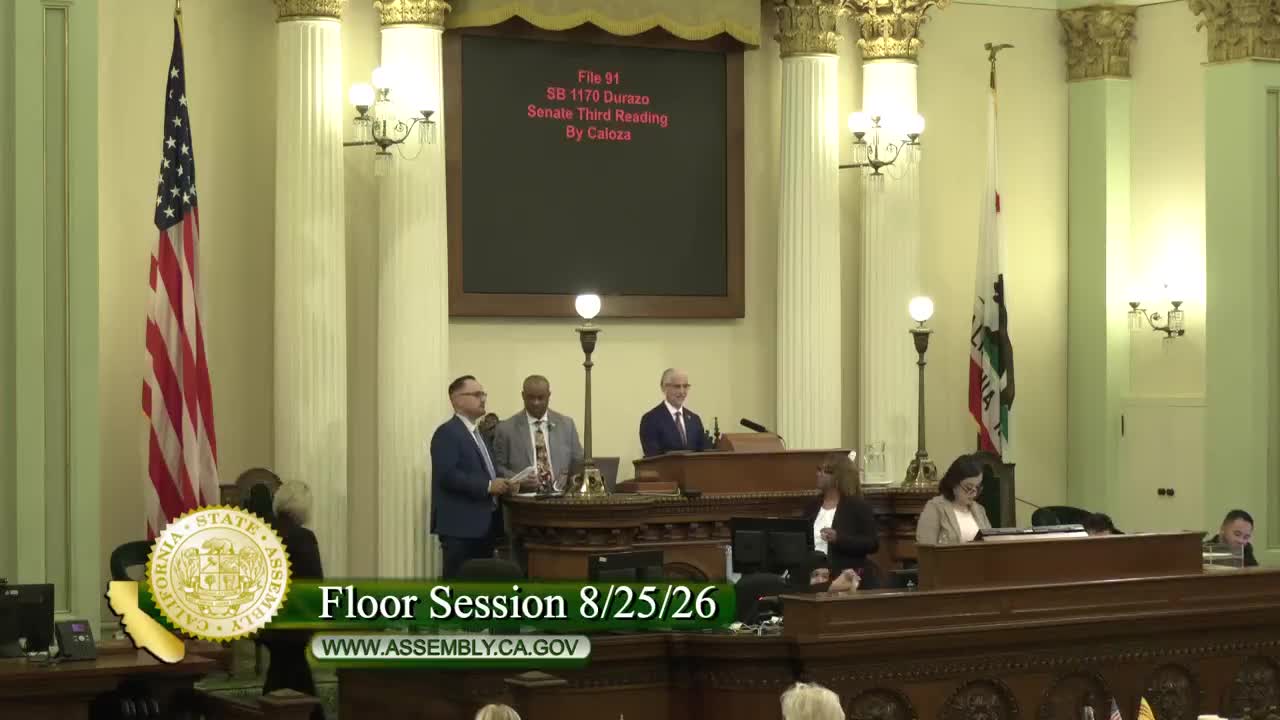
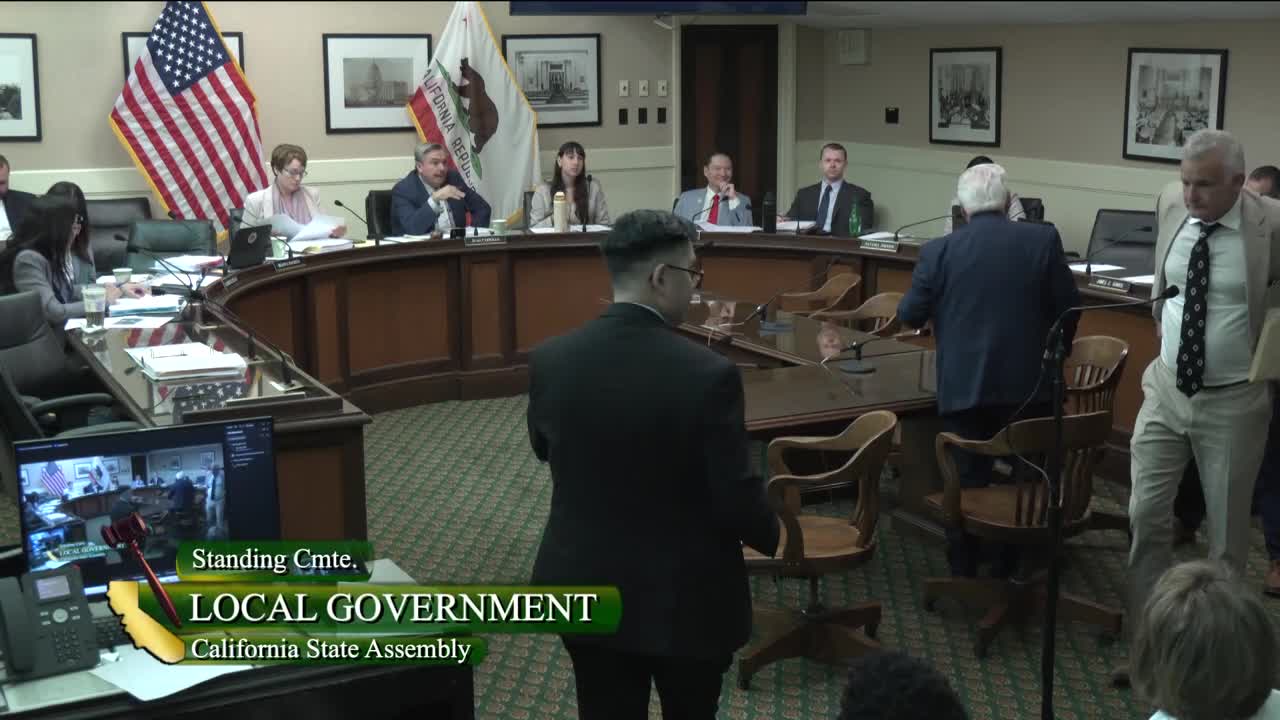
Bill Author

Bill Co-Author(s):