SB 1172: Bradley-Burns Uniform Local Sales and Use Tax Law: tax sharing agreements.
- Session Year: 2025-2026
- House: Senate
- Latest Version Date: 2026-09-30
Current Status:
Passed
(2026-09-30: Chaptered by Secretary of State. Chapter 1013, Statutes of 2026.)
Introduced
In Committee
Awaiting First Chamber Vote
Passed First Chamber
In Committee
Awaiting Second Chamber Vote
Passed Second Chamber
Enacted
Existing law prohibits a local agency from entering into any form of agreement that would result, directly or indirectly, in the payment, transfer, diversion, or rebate of any tax revenue resulting from the imposition of a sales and use tax under the Bradley-Burns Uniform Local Sales and Use Tax Law to any person for any purpose when the agreement results in a reduction in the amount of revenue under the Bradley-Burns Uniform Local Sales and Use Tax Law that, in the absence of the agreement, would be received by another local agency and the retailer continues to maintain a physical presence within the territorial jurisdiction of that other local agency. Existing law also requires a local agency entering into an agreement that results in a reduction of the amount of revenue under the Bradley-Burns Uniform Local Sales and Use Tax Law that, in the absence of the agreement, would be received by another local agency to take certain actions with respect to that agreement, including posting the proposed agreement on its internet website for at least 30 days prior to ratification or approval of that agreement by its governing body.
This bill would prohibit a person from paying compensation to a consultant with respect to a specific tax sharing agreement, as defined, that exceeds the lower of 5% of the total tax revenues shared pursuant to the tax sharing agreement and $250,000. The bill would define a tax sharing agreement for this purpose to mean any agreement that would result, directly or indirectly, in the payment, transfer, diversion, or rebate of any tax revenue resulting from the imposition of a sales and use tax under the Bradley-Burns Uniform Local Sales and Use Tax Law to any person for any purpose. The bill would exclude from these provisions agreements between a local agency and a member of the agencys staff directly employed by the jurisdiction or technical consultants providing noncompensated advisory services. The bill would apply these provisions only to agreements entered into on and after January 1, 2027.
The bill would include findings that changes proposed by this bill address a matter of statewide concern rather than a municipal affair and, therefore, apply to all cities, including charter cities.
Existing law prohibits a local agency from entering into any form of agreement that would result, directly or indirectly, in the payment, transfer, diversion, or rebate of any tax revenue resulting from the imposition of a sales and use tax under the Bradley-Burns Uniform Local Sales and Use Tax Law to any person for any purpose when the agreement results in a reduction in the amount of revenue under the Bradley-Burns Uniform Local Sales and Use Tax Law that, in the absence of the agreement, would be received by another local agency and the retailer continues to maintain a physical presence within the territorial jurisdiction of that other local agency. Existing law also requires a local agency entering into an agreement that results in a reduction of the amount of revenue under the Bradley-Burns Uniform Local Sales and Use Tax Law that, in the absence of the agreement, would be received by another local agency to take certain actions with respect to that agreement, including posting the proposed agreement on its internet website for at least 30 days prior to ratification or approval of that agreement by its governing body.
This bill would prohibit a person from paying compensation to a consultant with respect to a specific tax sharing agreement, as defined, that exceeds the lower of 5% of the total tax revenues shared pursuant to the tax sharing agreement and $250,000. The bill would define a tax sharing agreement for this purpose to mean any agreement that would result, directly or indirectly, in the payment, transfer, diversion, or rebate of any tax revenue resulting from the imposition of a sales and use tax under the Bradley-Burns Uniform Local Sales and Use Tax Law to any person for any purpose. The bill would exclude from these provisions agreements between a local agency and a member of the agencys staff directly employed by the jurisdiction or technical consultants providing noncompensated advisory services. The bill would apply these provisions only to agreements entered into on and after January 1, 2027.
The bill would include findings that changes proposed by this bill address a matter of statewide concern rather than a municipal affair and, therefore, apply to all cities, including charter cities.
Existing law prohibits a local agency from entering into any form of agreement that would result, directly or indirectly, in the payment, transfer, diversion, or rebate of any tax revenue resulting from the imposition of a sales and use tax under the Bradley-Burns Uniform Local Sales and Use Tax Law to any person for any purpose when the agreement results in a reduction in the amount of revenue under the Bradley-Burns Uniform Local Sales and Use Tax Law that, in the absence of the agreement, would be received by another local agency and the retailer continues to maintain a physical presence within the territorial jurisdiction of that other local agency. Existing law also requires a local agency entering into an agreement that results in a reduction of the amount of revenue under the Bradley-Burns Uniform Local Sales and Use Tax Law that, in the absence of the agreement, would be received by another local agency to take certain actions with respect to that agreement, including posting the proposed agreement on its internet website for at least 30 days prior to ratification or approval of that agreement by its governing body.
This bill would prohibit a person from paying compensation to a consultant with respect to a specific tax sharing agreement, as defined, that exceeds the lower of 5% of the total tax revenues shared pursuant to the tax sharing agreement and $250,000. The bill would define a tax sharing agreement for this purpose to mean any agreement that would result, directly or indirectly, in the payment, transfer, diversion, or rebate of any tax revenue resulting from the imposition of a sales and use tax under the Bradley-Burns Uniform Local Sales and Use Tax Law to any person for any purpose. The bill would exclude from these provisions agreements between a local agency and a member of the agencys staff directly employed by the jurisdiction or technical consultants providing noncompensated advisory services. The bill would apply these provisions only to agreements entered into on and after January 1, 2027.
The bill would include findings that changes proposed by this bill address a matter of statewide concern rather than a municipal affair and, therefore, apply to all cities, including charter cities.
Existing law prohibits a local agency from entering into any form of agreement that would result, directly or indirectly, in the payment, transfer, diversion, or rebate of any tax revenue resulting from the imposition of a sales and use tax under the Bradley-Burns Uniform Local Sales and Use Tax Law to any person for any purpose when the agreement results in a reduction in the amount of revenue under the Bradley-Burns Uniform Local Sales and Use Tax Law that, in the absence of the agreement, would be received by another local agency and the retailer continues to maintain a physical presence within the territorial jurisdiction of that other local agency. Existing law also requires a local agency entering into an agreement that results in a reduction of the amount of revenue under the Bradley-Burns Uniform Local Sales and Use Tax Law that, in the absence of the agreement, would be received by another local agency to take certain actions with respect to that agreement, including posting the proposed agreement on its internet website for at least 30 days prior to ratification or approval of that agreement by its governing body.
This bill would prohibit a person from paying compensation to a consultant with respect to a specific tax sharing agreement, as defined, that exceeds the lower of 5% of the total tax revenues shared pursuant to the tax sharing agreement and $250,000. The bill would define a tax sharing agreement for this purpose to mean any agreement that would result, directly or indirectly, in the payment, transfer, diversion, or rebate of any tax revenue resulting from the imposition of a sales and use tax under the Bradley-Burns Uniform Local Sales and Use Tax Law to any person for any purpose. The bill would exclude from these provisions agreements between a local agency and a member of the agencys staff directly employed by the jurisdiction or technical consultants providing noncompensated advisory services. The bill would apply these provisions only to agreements entered into on and after January 1, 2027.
The bill would include findings that changes proposed by this bill address a matter of statewide concern rather than a municipal affair and, therefore, apply to all cities, including charter cities.
Existing law prohibits a local agency from entering into any form of agreement that would result, directly or indirectly, in the payment, transfer, diversion, or rebate of any tax revenue resulting from the imposition of a sales and use tax under the Bradley-Burns Uniform Local Sales and Use Tax Law to any person for any purpose when the agreement results in a reduction in the amount of revenue under the Bradley-Burns Uniform Local Sales and Use Tax Law that, in the absence of the agreement, would be received by another local agency and the retailer continues to maintain a physical presence within the territorial jurisdiction of that other local agency. Existing law also requires a local agency entering into an agreement that results in a reduction of the amount of revenue under the Bradley-Burns Uniform Local Sales and Use Tax Law that, in the absence of the agreement, would be received by another local agency to take certain actions with respect to that agreement, including posting the proposed agreement on its internet website for at least 30 days prior to ratification or approval of that agreement by its governing body.
This bill would prohibit a person from paying compensation to a consultant with respect to a specific tax sharing agreement, as defined, that exceeds the lower of 5% of the total tax revenues shared pursuant to the tax sharing agreement and $250,000. The bill would define a tax sharing agreement for this purpose to mean any agreement under which a local agency, as defined, agrees to rebate, refund, or otherwise share a portion of locally generated tax revenues with a private party. The bill would require a local agency to publish on its internet website and submit to the Controller certain information with respect to any tax sharing agreement. By imposing new duties on local agencies regarding publication and submission of information, the bill would impose a state-mandated local program. that would result, directly or indirectly, in the payment, transfer, diversion, or rebate of any tax revenue resulting from the imposition of a sales and use tax under the Bradley-Burns Uniform Local Sales and Use Tax Law to any person for any purpose. The bill would exclude from these provisions agreements between a local agency and a member of the agencys staff directly employed by the jurisdiction or technical consultants providing noncompensated advisory services. The bill would apply these provisions only to agreements entered into on and after January 1, 2027.
The California Constitution requires the state to reimburse local agencies and school districts for certain costs mandated by the state. Statutory provisions establish procedures for making that reimbursement.This bill would provide that no reimbursement shall be made pursuant to these statutory provisions for costs mandated by the state pursuant to this act, but would recognize that a local agency or school district may pursue any available remedies to seek reimbursement for these costs.The bill would include findings that changes proposed by this bill address a matter of statewide concern rather than a municipal affair and, therefore, apply to all cities, including charter cities.
Existing law prohibits a local agency from entering into any form of agreement that would result, directly or indirectly, in the payment, transfer, diversion, or rebate of any tax revenue resulting from the imposition of a sales and use tax under the Bradley-Burns Uniform Local Sales and Use Tax Law to any person for any purpose when the agreement results in a reduction in the amount of revenue under the Bradley-Burns Uniform Local Sales and Use Tax Law that, in the absence of the agreement, would be received by another local agency and the retailer continues to maintain a physical presence within the territorial jurisdiction of that other local agency. Existing law also requires a local agency entering into an agreement that results in a reduction of the amount of revenue under the Bradley-Burns Uniform Local Sales and Use Tax Law that, in the absence of the agreement, would be received by another local agency to take certain actions with respect to that agreement, including posting the proposed agreement on its internet website for at least 30 days prior to ratification or approval of that agreement by its governing body.
This bill would prohibit a person from paying compensation to a consultant with respect to a specific tax sharing agreement, as defined, that exceeds the lower of 5% of the total tax revenues shared pursuant to the tax sharing agreement and $250,000. The bill would define a tax sharing agreement for this purpose to mean any agreement under which a local agency, as defined, agrees to rebate, refund, or otherwise share a portion of locally generated tax revenues with a private party. The bill would require a local agency to publish on its internet website and submit to the Controller certain information with respect to any tax sharing agreement. By imposing new duties on local agencies regarding publication and submission of information, the bill would impose a state-mandated local program. The bill would exclude from these provisions agreements between a local agency and a member of the agencys staff directly employed by the jurisdiction or technical consultants providing noncompensated advisory services. The bill would apply these provisions only to agreements entered into on and after January 1, 2027.
The California Constitution requires the state to reimburse local agencies and school districts for certain costs mandated by the state. Statutory provisions establish procedures for making that reimbursement.
This bill would provide that no reimbursement shall be made pursuant to these statutory provisions for costs mandated by the state pursuant to this act, but would recognize that a local agency or school district may pursue any available remedies to seek reimbursement for these costs.
The Sales and Use Tax Law imposes a tax on retailers measured by the gross receipts from the sale of tangible personal property sold at retail in this state, or on the storage, use, or other consumption in this state of tangible personal property purchased from a retailer for storage, use, or other consumption in this state. The Bradley-Burns Uniform Local Sales and Use Tax Law authorizes cities and counties to impose local sales and use taxes in conformity with the Sales and Use Tax Law. These local taxes, as defined, are administered by the California Department of Tax and Fee Administration pursuant to a contract with a local jurisdiction, as specified. The term local tax is defined as any tax imposed by a local jurisdiction under specified law or in conformity with that law. This bill would make a nonsubstantive change to this definition.The Sales and Use Tax Law imposes a tax on retailers measured by the gross receipts from the sale of tangible personal property sold at retail in this state, or on the storage, use, or other consumption in this state of tangible personal property purchased from a retailer for storage, use, or other consumption in this state. The Bradley-Burns Uniform Local Sales and Use Tax Law authorizes cities and counties to impose local sales and use taxes in conformity with the Sales and Use Tax Law. These local taxes, as defined, are administered by the California Department of Tax and Fee Administration pursuant to a contract with a local jurisdiction, as specified. The term local tax is defined as any tax imposed by a local jurisdiction under specified law or in conformity with that law.
This bill would make a nonsubstantive change to this definition.
(a)As used in this section:
(1)Consultant means a person or a business that provides services, including, but not limited to, legal, lobbying, or financial services, for facilitating, negotiating, and advising on a tax sharing agreement.
(2)Local agency means a city, county, city and county, or special district.
(3)(A)Tax sharing agreement means any form of agreement that would result, directly or indirectly, in the payment, transfer, diversion, or rebate of any tax revenue resulting from the imposition of a sales and use tax under the Bradley-Burns Uniform Local Sales and Use Tax Law (Part 1.5 (commencing with Section 7200) of Division 2 of the Revenue and Taxation Code) to any person for any purpose.
(B)Tax sharing agreement shall not include an agreement between a local agency and a consultant to identify and recover tax revenues that have been incorrectly allocated and distributed to another local agency.
(b)A local agency shall not pay compensation to a consultant with respect to a specific tax sharing agreement that exceeds the lower of the following:
(1)Five percent of the total tax revenues shared pursuant to the tax sharing agreement.
(2)Two hundred fifty thousand dollars ($250,000).
(c)A consultant shall not receive compensation from proceeds of a tax sharing agreement more than three years after the effective date, or completion of the project phase that directly benefits from the agreement, whichever occurs first.
(d)This section shall not apply to the following:
(1)Local agency staff directly employed by the jurisdiction executing the agreement.
(2)Technical consultants providing noncompensated advisory services.
(e)The Legislature finds and declares that ensuring fairness in tax sharing agreements across the state is a matter of statewide concern and is not a municipal affair as that term is used in Section 5 of Article XI of the California Constitution. Therefore, this section applies to all cities, including charter cities.
(f)This section shall only apply to tax sharing agreements entered into on or after January 1, 2027.
(a)As used in this section:
(1)Consultant means a person or a business that provides services, including, but not limited to, legal, lobbying, or financial services, for facilitating, negotiating, and advising on a tax sharing agreement.
(2)Local agency means a city, county, city and county, or special district.
(3)(A)Tax sharing agreement means any form of agreement that would result, directly or indirectly, in the payment, transfer, diversion, or rebate of any tax revenue resulting from the imposition of a sales and use tax under the Bradley-Burns Uniform Local Sales and Use Tax Law (Part 1.5 (commencing with Section 7200) of Division 2 of the Revenue and Taxation Code) to any person for any purpose.
(B)Tax sharing agreement shall not include an agreement between a local agency and a consultant to identify and recover tax revenues that have been incorrectly allocated and distributed to another local agency.
(b)A local agency shall not pay compensation to a consultant with respect to a specific tax sharing agreement that exceeds the lower of the following:
(1)Five percent of the total tax revenues shared pursuant to the tax sharing agreement.
(2)Two hundred fifty thousand dollars ($250,000).
(c)A consultant shall not receive compensation from proceeds of a tax sharing agreement more than three years after the effective date, or completion of the project phase that directly benefits from the agreement, whichever occurs first.
(d)This section shall not apply to the following:
(1)Local agency staff directly employed by the jurisdiction executing the agreement.
(2)Technical consultants providing noncompensated advisory services.
(e)The Legislature finds and declares that ensuring fairness in tax sharing agreements across the state is a matter of statewide concern and is not a municipal affair as that term is used in Section 5 of Article XI of the California Constitution. Therefore, this section applies to all cities, including charter cities.
(f)This section shall only apply to tax sharing agreements entered into on or after January 1, 2027.
(a)As used in this section:
(1)Consultant means a person or a business that provides services, including, but not limited to, legal, lobbying, or financial services, for facilitating, negotiating, and advising on a tax sharing agreement.
(2)Local agency means a city, county, city and county, or special district.
(3)(A)Tax sharing agreement means any form of agreement that would result, directly or indirectly, in the payment, transfer, diversion, or rebate of any tax revenue resulting from the imposition of a sales and use tax under the Bradley-Burns Uniform Local Sales and Use Tax Law (Part 1.5 (commencing with Section 7200) of Division 2 of the Revenue and Taxation Code) to any person for any purpose.
(B)Tax sharing agreement shall not include an agreement between a local agency and a consultant to identify and recover tax revenues that have been incorrectly allocated and distributed to another local agency.
(b)A local agency shall not pay compensation to a consultant with respect to a specific tax sharing agreement that exceeds the lower of the following:
(1)Five percent of the total tax revenues shared pursuant to the tax sharing agreement.
(2)Two hundred fifty thousand dollars ($250,000).
(c)A consultant shall not receive compensation from proceeds of a tax sharing agreement more than three years after the effective date, or completion of the project phase that directly benefits from the agreement, whichever occurs first.
(d)This section shall not apply to the following:
(1)Local agency staff directly employed by the jurisdiction executing the agreement.
(2)Technical consultants providing noncompensated advisory services.
(e)The Legislature finds and declares that ensuring fairness in tax sharing agreements across the state is a matter of statewide concern and is not a municipal affair as that term is used in Section 5 of Article XI of the California Constitution. Therefore, this section applies to all cities, including charter cities.
(f)This section shall only apply to tax sharing agreements entered into on or after January 1, 2027.
(a)As used in this section:
(1)Consultant means a person or a business that provides services, including, but not limited to, legal, lobbying, or financial services, for facilitating, negotiating, and advising on a tax sharing agreement.
(2)Local agency means a city, county, city and county, or special district.
(3)Tax sharing agreement means any form of agreement that would result, directly or indirectly, in the payment, transfer, diversion, or rebate of any tax revenue resulting from the imposition of a sales and use tax under the Bradley-Burns Uniform Local Sales and Use Tax Law (Part 1.5 (commencing with Section 7200) of Division 2 of the Revenue and Taxation Code) to any person for any purpose.
(b)A person local agency shall not pay compensation to a consultant with respect to a specific tax sharing agreement that exceeds the lower of the following:
(1)Five percent of the total tax revenues shared pursuant to the tax sharing agreement.
(2)Two hundred fifty thousand dollars ($250,000).
(c)A consultant shall not receive compensation from proceeds of a tax sharing agreement more than three years after the effective date, or completion of the project phase that directly benefits from the agreement, whichever occurs first.
(d)This section shall not apply to the following:
(1)Local agency staff directly employed by the jurisdiction executing the agreement.
(2)Technical consultants providing noncompensated advisory services.
(e)The Legislature finds and declares that ensuring fairness in tax sharing agreements across the state is a matter of statewide concern and is not a municipal affair as that term is used in Section 5 of Article XI of the California Constitution. Therefore, this section applies to all cities, including charter cities.
(f)This section shall only apply to tax sharing agreements entered into on or after January 1, 2027.
(a)As used in this section:
(1)Consultant means a person or a business that provides services, including, but not limited to, legal, lobbying, or financial services, for facilitating, negotiating, and advising on a tax sharing agreement.
(2)Local agency means a city, county, city and county, or special district.
(3)Tax sharing agreement means any arrangement under which a local agency agrees to rebate, refund, or otherwise share a portion of locally generated tax revenues with a private entity. form of agreement that would result, directly or indirectly, in the payment, transfer, diversion, or rebate of any tax revenue resulting from the imposition of a sales and use tax under the Bradley-Burns Uniform Local Sales and Use Tax Law (Part 1.5 (commencing with Section 7200) of Division 2 of the Revenue and Taxation Code) to any person for any purpose.
(b)A person shall not pay compensation to a consultant with respect to a specific tax sharing agreement that exceeds the lower of the following:
(1)Five percent of the total tax revenues shared pursuant to the tax sharing agreement.
(2)Two hundred fifty thousand dollars ($250,000).
(c)A consultant shall not receive compensation from proceeds of a tax sharing agreement more than three years after the effective date, or completion of the project phase that directly benefits from the agreement, whichever occurs first.
(d)A local agency shall, within 30 days of entering a tax sharing agreement, publish on its internet website and report to the Controller, in the form and manner prescribed by the Controller, all of the following:(1)The names of all consultants engaged by the local agency for purposes of the agreement.(2)The total amount and structure of compensation to be received by the consultant.(3)The form of compensation paid to the consultant, such as by flat fee, success fee, or percentage-based arrangement.(4)A copy of any consultant contract or agreement related to the tax sharing agreement. (e)(d)This section shall not apply to the following:
(1)Local agency staff directly employed by the jurisdiction executing the agreement.
(2)Technical consultants providing noncompensated advisory services.
(e)The Legislature finds and declares that ensuring fairness in tax sharing agreements across the state is a matter of statewide concern and is not a municipal affair as that term is used in Section 5 of Article XI of the California Constitution. Therefore, this section applies to all cities, including charter cities.
(f)This section shall only apply to tax sharing agreements entered into on or after January 1, 2027.
SEC. 2.No reimbursement shall be made pursuant to Part 7 (commencing with Section 17500) of Division 4 of Title 2 of the Government Code for costs mandated by the state pursuant to this act. It is recognized, however, that a local agency or school district may pursue any remedies to obtain reimbursement available to it under Part 7 (commencing with Section 17500) and any other law.(a)As used in this section:
(1)Consultant means a person or a business that provides services, including, but not limited to, legal, lobbying, or financial services, for facilitating, negotiating, and advising on a tax sharing agreement.
(2)Local agency means a city, county, city and county, or special district.
(3)Tax sharing agreement means any arrangement under which a local agency agrees to rebate, refund, or otherwise share a portion of locally generated tax revenues with a private entity.
(b)A person shall not pay compensation to a consultant with respect to a specific tax sharing agreement that exceeds the lower of the following:
(1)Five percent of the total tax revenues shared pursuant to the tax sharing agreement.
(2)Two hundred fifty thousand dollars ($250,000).
(c)A consultant shall not receive compensation from proceeds of a tax sharing agreement more than three years after the effective date, or completion of the project phase that directly benefits from the agreement, whichever occurs first.
(d)A local agency shall, within 30 days of entering a tax sharing agreement, publish on its internet website and report to the Controller, in the form and manner prescribed by the Controller, all of the following:
(1)The names of all consultants engaged by the local agency for purposes of the agreement.
(2)The total amount and structure of compensation to be received by the consultant.
(3)The form of compensation paid to the consultant, such as by flat fee, success fee, or percentage-based arrangement.
(4)A copy of any consultant contract or agreement related to the tax sharing agreement.
(e)This section shall not apply to the following:
(1)Local agency staff directly employed by the jurisdiction executing the agreement.
(2)Technical consultants providing noncompensated advisory services.
(f)This section shall only apply to tax sharing agreements entered into on or after January 1, 2027.
SEC. 2.No reimbursement shall be made pursuant to Part 7 (commencing with Section 17500) of Division 4 of Title 2 of the Government Code for costs mandated by the state pursuant to this act. It is recognized, however, that a local agency or school district may pursue any remedies to obtain reimbursement available to it under Part 7 (commencing with Section 17500) and any other law.
SECTION 1.Section 7222 of the Revenue and Taxation Code is amended to read:7222.For purposes of this chapter:(a)Contract means any agreement for state administration of local sales and use taxes.(b)Local jurisdiction means any local agency authorized to impose a tax under this part or in conformity with this part.(c)Local tax means any tax imposed by a local jurisdiction under this part or in conformity with this part.For purposes of this chapter:
(a)Contract means any agreement for state administration of local sales and use taxes.
(b)Local jurisdiction means any local agency authorized to impose a tax under this part or in conformity with this part.
(c)Local tax means any tax imposed by a local jurisdiction under this part or any tax imposed in conformity with this part.
|
Date
|
Status
|
|---|---|
| Sep 30, 2026 | Chaptered by Secretary of State. Chapter 1013, Statutes of 2026. |
| Sep 30, 2026 | Approved by the Governor. |
| Aug 28, 2026 | Enrolled and presented to the Governor at 4 p.m. |
| Aug 24, 2026 | Assembly amendments concurred in. (Ayes 40. Noes 0. Page 5680.) Ordered to engrossing and enrolling. |
| Aug 24, 2026 | Assembly amendments concurred in. (Ayes 40. Noes 0.) Ordered to engrossing and enrolling. |
| Aug 24, 2026 | Assembly amendments concurred in. (Ayes 38. Noes 0.) Ordered to engrossing and enrolling. |
| Aug 13, 2026 | In Senate. Concurrence in Assembly amendments pending. |
| Aug 13, 2026 | Read third time. Passed. (Ayes 71. Noes 0. Page 6147.) Ordered to the Senate. |
| Aug 13, 2026 | Read third time. Passed. Ordered to the Senate. |
| Jul 2, 2026 | Read second time. Ordered to third reading. |
| Jul 1, 2026 | Read second time and amended. Ordered to second reading. |
| Jun 30, 2026 | From committee: Do pass as amended. (Ayes 7. Noes 0.) (June 29). |
| Jun 18, 2026 | From committee: Do pass and re-refer to Com. on REV. & TAX. (Ayes 10. Noes 0.) (June 17). Re-referred to Com. on REV. & TAX. |
| Jun 1, 2026 | Referred to Coms. on L. GOV. and REV. & TAX. |
| May 20, 2026 | In Assembly. Read first time. Held at Desk. |
| May 19, 2026 | Read third time. Passed. (Ayes 36. Noes 0. Page 4336.) Ordered to the Assembly. |
| May 19, 2026 | Read third time. Passed. (Ayes 36. Noes 0.) Ordered to the Assembly. |
| Apr 28, 2026 | Read second time. Ordered to third reading. |
| Apr 27, 2026 | Ordered to second reading. |
| Apr 27, 2026 | Withdrawn from committee. |
| Apr 23, 2026 | Read second time and amended. Re-referred to Com. on APPR. |
| Apr 22, 2026 | From committee: Do pass as amended and re-refer to Com. on APPR. (Ayes 4. Noes 0. Page 4015.) (April 22). |
| Apr 22, 2026 | From committee: Do pass as amended and re-refer to Com. on APPR. (Ayes 4. Noes 0.) (April 22). |
| Apr 16, 2026 | From committee with author's amendments. Read second time and amended. Re-referred to Com. on REV. & TAX. |
| Apr 16, 2026 | Set for hearing April 22. |
| Apr 15, 2026 | From committee: Do pass and re-refer to Com. on REV. & TAX. (Ayes 6. Noes 0. Page 3904.) (April 15). Re-referred to Com. on REV. & TAX. |
| Apr 15, 2026 | From committee: Do pass and re-refer to Com. on REV. & TAX. (Ayes 6. Noes 0.) (April 15). Re-referred to Com. on REV. & TAX. |
| Apr 9, 2026 | Set for hearing April 15. |
| Apr 8, 2026 | Re-referred to Coms. on L. GOV. and REV. & TAX. |
| Mar 23, 2026 | From committee with author's amendments. Read second time and amended. Re-referred to Com. on RLS. |
| Feb 26, 2026 | Referred to Com. on RLS. |
| Feb 19, 2026 | From printer. May be acted upon on or after March 21. |
| Feb 18, 2026 | Introduced. Read first time. To Com. on RLS. for assignment. To print. |
|
Date
|
Description
|
Location
|
Votes
|
|
|---|---|---|---|---|
| Aug 24, 2026 | Unfinished Business SB1172 Hurtado Concurrence | Senate Floor |
Passed |
|
| Aug 13, 2026 | SB 1172 Hurtado Senate Third Reading By Stefani | Assembly Floor |
Passed |
|
| Jun 29, 2026 | Do pass as amended. | Assembly Standing Committee on Revenue and Taxation |
Passed |
|
| Jun 17, 2026 | Do pass and be re-referred to the Committee on [Revenue and Taxation] | Assembly Standing Committee on Local Government |
Passed |
|
| May 19, 2026 | Senate 3rd Reading SB1172 Hurtado | Senate Floor |
Passed |
|
| Apr 22, 2026 | Do pass as amended, but first amend, and re-refer to the Committee on [Appropriations] | Senate Standing Committee on Revenue and Taxation |
Passed |
|
| Apr 15, 2026 | Do pass, but first be re-referred to the Committee on [Revenue and Taxation] | Senate Standing Committee on Local Government |
Passed |
This list shows positions taken on this bill by organizations on the date displayed, which is linked to the original source.
Positions by individuals are not included.
|
Organization
|
Position
|
Date
|
|---|---|---|
| California Retailers Association | ** Support | |
| City of Milpitas | ** Support | |
| City of Shafter | ** Support | |
| City of Thousand Oaks | ** Support | |
| HdL Companies | ** Against | |
| League Of California Cities | ** Support | |
| Neumo | ** Against |
SENATE RULES COMMITTEE Office of Senate Floor Analyses (916) 651-4171 | SB 1172 |
UNFINISHED BUSINESS
Bill No: SB 1172
Author: Hurtado (D)
Amended: 7/1/26
Vote: 21
SENATE LOCAL GOVERNMENT COMMITTEE: 6-0, 4/15/26
AYES: Durazo, Choi, Arreguín, Ashby, Cervantes, Laird
NO VOTE RECORDED: Seyarto
SENATE REVENUE AND TAXATION COMMITTEE: 4-0, 4/22/26
AYES: McNerney, Ashby, Becker, Grayson
NO VOTE RECORDED: Alvarado-Gil
SENATE FLOOR: 36-0, 5/19/26
AYES: Allen, Archuleta, Arreguín, Ashby, Becker, Blakespear, Cabaldon, Caballero, Cervantes, Choi, Cortese, Dahle, Durazo, Gonzalez, Grayson, Hurtado, Laird, Limón, McGuire, McNerney, Menjivar, Ochoa Bogh, Padilla, Pérez, Reyes, Richardson, Rubio, Seyarto, Smallwood-Cuevas, Stern, Strickland, Umberg, Valladares, Wahab, Weber Pierson, Wiener
NO VOTE RECORDED: Alvarado-Gil, Grove, Jones, Niello
ASSEMBLY FLOOR: 71-0, 8/13/26 - See last page for vote
SUBJECT: Bradley-Burns Uniform Local Sales and Use Tax Law: location of transaction: genuine human interaction
SOURCE: City of Shafter
DIGEST:
This bill prohibits a person from paying compensation to a consultant with respect to a tax sharing agreement that exceeds either 5% of total revenues or $250,000.
Assembly Amendments
provide that the measure does not affect an agreement between a local agency and a consultant to identify and recover tax revenues that have been incorrectly allocated and distributed to another local agency.
ANALYSIS:
Existing law:
- Imposes the sales tax on every retailer engaged in business in this state that sells tangible personal property, and requires them to remit taxes collected from purchasers to the California Department of Tax and Fee Administration (CDTFA).
- Provides that unless the person pays the sales tax to the retailer, they are liable for the use tax, which is imposed on any person consuming tangible personal property in the state. The use tax rate is the same rate as the sales tax rate, and must be remitted on or before the last day of the month following the quarterly period in which the person made the purchase.
- Levies the sales and use tax at a current rate of 7.25%.
- Allows CDTFA to collect sales taxes from retailers, deposit the state share in the General Fund, and then allocate the local share of the Bradley-Burns sales tax and any district tax to the appropriate jurisdiction.
- Allows cities, counties, and specified special districts to increase the sales and use tax, also known as district or transactions and use taxes.
- States that taxes levied by local governments are either general taxes, subject to majority approval of its voters, or special taxes, subject to 2/3 vote (California Constitution, Article XIII C).
- Specifies the “place of sale” for purposes of the local sales tax. Bradley-Burns sales taxes are allocated to the place of business of the retailer, unless the property sold is delivered by the retailer or his or her agent to an out-of-state destination or to a common carrier for delivery to an out-of-state destination, in which case no tax is collected. CDTFA must consider specific characteristics of the retailer to correctly determine the “place of sale,” and therefore correctly allocate the local share of Bradley-Burns sales tax.
- Bans cities and counties from subsidizing the relocation of big box retailers and auto malls within the same market area (SB 114, Torlakson, Chapter 781, Statutes of 2003).
- Prohibits a local agency from entering into an agreement that would result in the payment, transfer, diversion, or rebate of Bradley-Burns local tax proceeds to a retailer if the agreement results in a reduction of revenue that is received by another local agency when the retailer continues to maintain a physical presence and location within that other local agency (SB 533, Pan, Chapter 717, Statutes of 2015).
This bill:
- Prohibits a person from paying compensation to a consultant with respect to a tax sharing agreement that exceeds either 5% of total revenues or $250,000, whichever is less.
- Provides that a consultant cannot receive compensation more than three years after the effective date or completion of the project phase that directly benefits from the agreement, whichever occurs first.
- Provides that the measure does not apply to local agency staff directly employed by a jurisdiction executing the agreement, or technical consultants providing non-compensated advisory services.
- Provides that the measure only applies to tax sharing agreements entered into on or after January 1, 2027, defines several terms, and applies its provisions to charter cities.
- Provides that the measure does not affect an agreement between a local agency and a consultant to identify and recover tax revenues that have been incorrectly allocated and distributed to another local agency.
Background
Economic development incentives local agencies offer range in terms of (1) the level of rebate, (2) how long the retailer receives the benefit, (3) the types of jobs or services the retailer must provide in return, and (4) how long the retailer must promise to stay in the jurisdiction. Some agreements offer over half of the Bradley-Burns revenue generated by the facility, for periods of time ranging from one year to 30 years. The City of Fresno has recently entered into long-term agreements with Amazon, Nordstrom, and the Gap, and the City of Dinuba has done the same with Best Buy.
One aspect of the controversy behind these tax sharing agreements is the compensation that consultants who help broker the agreement between the city and the retailer.
In an effort to generate additional public information about agreements between local agencies and retailers to refund Bradley-Burns sales taxes, AB 2854 (Irwin, Chapter 842, Statutes of 2024) required local agencies to publish specified information on tax sharing agreements, and provide it to CDTFA. This includes information on the compensation of all parties to the agreement.
Comments
Purpose of the bill. According to the author, “SB 1172 is about protecting the integrity of taxpayer dollars and ensuring they are used for their intended purpose, investing back into communities. Local tax-sharing agreements can play an important role in attracting business, but when those agreements lack clear guardrails, they can unintentionally divert public funds away from essential services. In some cases, consultant compensation is tied directly to the amount of tax revenue rebated, creating incentives that prioritize larger or longer revenue diversions rather than sustainable, community-focused outcomes. This is especially significant for small and rural communities, where limited tax bases mean fewer resources for public safety, infrastructure, and long-term economic stability. Without transparency and accountability, these communities are at greater risk of losing critical funding with little visibility into how decisions are made. SB 1172 addresses this problem by establishing reasonable limits and transparency requirements that ensure public funds are protected and decisions are made in the open. The bill does not eliminate tax-sharing agreements, but it reinforces their purpose by aligning incentives with genuine economic development and requiring clear disclosure of how taxpayer dollars are used. By putting these safeguards in place, SB 1172 strengthens public trust and ensures that economic development tools support, rather than undermine, the long-term health of California’s communities, particularly those that can least afford to lose scarce public resources.”
Treating the symptom, not the disease. Both the State Auditor and the Legislative Analyst’s Office (LAO) have suggested replacing situs-based allocation with a population-based allocation system to reduce incentives for local governments to use their economic development powers to promote retail developments. The LAO also suggested that replacing local government sales tax revenues with a different tax base could achieve similar results. Yet, because Section 25.5 of Article XIII of the California Constitution prohibits the Legislature from enacting a statute that would change the method of distributing revenues derived under Bradley-Burns Uniform Local Sales and Use Tax Law, as it read on November 3, 2004, except to comply with federal law or to allow the state to participate in an interstate compact, moving away from a situs-based sales tax allocation system would require a Constitutional Amendment or enacting a new local tax scheme. While SB 1172 reduces compensation outside consultants can receive from these agreements, broad tax reform is needed to address the underlying problem.
FISCAL EFFECT: Appropriation: No Fiscal Com.: No Local: No
SUPPORT: (Verified 8/13/26)
City of Shafter (source)
City of Milpitas
City of Thousand Oaks
League of California Cities
OPPOSITION: (Verified 8/13/26)
None received
ASSEMBLY FLOOR: 71-0, 8/13/26
AYES: Addis, Aguiar-Curry, Ahrens, Arambula, Ávila Farías, Bains, Bauer-Kahan, Bennett, Boerner, Bryan, Calderon, Caloza, Carrillo, Castillo, Chen, Connolly, Davies, DeMaio, Dixon, Elhawary, Flora, Fong, Gabriel, Garcia, Gipson, Jeff Gonzalez, Mark González, Hadwick, Haney, Harabedian, Hart, Hoover, Irwin, Jackson, Johnson, Kalra, Krell, Lackey, Lee, Lowenthal, Macedo, McKinnor, Muratsuchi, Nguyen, Ortega, Pacheco, Papan, Patel, Patterson, Pellerin, Quirk-Silva, Ramos, Ransom, Celeste Rodriguez, Michelle Rodriguez, Rogers, Blanca Rubio, Sanchez, Schiavo, Sharp-Collins, Solache, Soria, Stefani, Ta, Valencia, Wallis, Ward, Wicks, Wilson, Zbur, Rivas
NO VOTE RECORDED: Alanis, Alvarez, Berman, Bonta, Ellis, Petrie-Norris, Schultz, Tangipa
Prepared by: Jonathan Peterson / L. GOV. / (916) 651-4119
8/14/26 17:04:31
**** END ****
SENATE THIRD READING
STR Bill Id:SB 1172
Author:(Hurtado)
As Amended Ver:July 1, 2026
Majority vote
SUMMARY
Prohibits a local agency from paying certain amounts of compensation to a consultant with respect to tax sharing agreements, as specified.
Major Provisions
- Defines the following terms:
- "Consultant" to mean a person or a business that provides services, including, but not limited to, legal, lobbying, or financial services, for facilitating, negotiating, and advising on a tax sharing agreement.
- "Local agency" to mean a city, county, city and county, or special district.
- "Tax sharing agreement" to mean any form of agreement that would result, directly or indirectly, in the payment, transfer, diversion, or rebate of any tax revenue resulting from the imposition of a sales and use tax under the Bradley-Burns Uniform Sales Tax Law to any person for any purpose. "Tax sharing agreement" shall not include an agreement between a local agency and a consultant to identify and recover tax revenues that have been incorrectly allocated and distributed to another local agency."
- Specifies that a local agency shall not pay compensation to a consultant with respect to a specific tax sharing agreement that exceeds the lower of the following:
- 5% of the total tax revenues shared pursuant to the tax sharing agreement.
- $250,000.
- Provides that a consultant shall not receive compensation from proceeds of a tax sharing agreement more than three years after the effective date, or completion of the project phase that directly benefits from the agreement, whichever occurs first.
- Specifies that this bill shall not apply to the following:
- Local agency staff directly employed by the jurisdiction executing the agreement.
- Technical consultants providing noncompensated advisory services.
- Provides that this bill only applies to tax sharing agreements entered into on or after January 1, 2027.
COMMENTS
Sales and Use Tax. State law imposes the sales tax on every retailer "engaged in business in this state" that sells tangible personal property, requiring them to register with the California Department of Fee & Tax Administration (CDTFA) and remit the taxes collected from purchasers to CDTFA. Sales tax applies whenever there is a retail sale. The current sales and use tax rate is 7.25%. Additionally, cities, counties, and specified special districts may increase the sales and use tax rate that applies in its jurisdiction, also known as district, or transactions and use, taxes.
CDTFA collects sales taxes from retailers, deposits the state share in the General Fund, and then allocates the local share of the Bradley-Burns sales tax and any district tax to the appropriate jurisdiction. Unless the purchaser pays the sales tax to the retailer, they are liable for the use tax, which the law imposes on any person consuming tangible personal property in the state. The use tax is assessed at the same rate as the sales tax and must be remitted on or before the last day of the month following the quarterly period in which the purchase was made.
Bradley-Burns. The Bradley-Burns Uniform Sales Tax Act allows all local agencies to apply their own sales and use tax on the same base of tangible personal property. This tax rate is currently fixed at 1.25% of the sales price of tangible personal property sold at retail in the local jurisdiction or purchased outside the jurisdiction for use within the jurisdiction. Cities and counties use 1% of this tax to support general operations, while the remaining 0.25% is used for county transportation purposes. In California, all cities and counties impose Bradley-Burns local taxes.
Bradley-Burns law specifies the "place of sale" for purposes of the local sales tax. Bradley-Burns sales taxes are allocated to the place of business of the retailer, unless the property sold is delivered by the retailer, or his or her agent, to an out-of-state destination or to a common carrier for delivery to an out-of-state destination, in which case no tax is collected. CDTFA must consider specific characteristics of the retailer to correctly determine the "place of sale," and therefore correctly allocate the local share of Bradley-Burns sales tax as follows:
- For a retailer that has one location in the state, that location is determined to be the place of sale for all of its sales. CDTFA does so even if title to sold property passed from seller to buyer outside of the jurisdiction of the seller, or if the property never entered the jurisdiction of the seller. For example, CDTFA would determine that all local taxes attributable to a furniture store in the City of Sacramento would be sourced to that city, regardless of where the store delivered furniture to the buyer.
- For a retailer that has more than one location in the state, CDTFA determines the location based on the location where principal negotiations occurred. In the above example, if a retailer has more than one location, CDTFA considers the place of business the location where the retailer takes the order, regardless of whether they subsequently forward it to another location for delivery. For example, if a resident of the City of Davis called a furniture store in Sacramento to order a lamp, which the store shipped to Davis from its Vacaville location, CDTFA would consider Sacramento the place of business for purposes of allocating the local tax.
- For a retailer that has no location in the state, but has a stock of property in the state from which it fills orders, CDTFA considers the place of sale as the location from which the property is shipped. If a resident of the City of Davis ordered a lamp from an internet retailer that did not have a retail location in the state but filled the order from its Vacaville warehouse, CDTFA would consider Vacaville the place of sale.
Economic Development Incentives. Counties and cities engage in a wide variety of economic development activities to build their tax bases. Local officials can use various tactics to influence where, when, and how the private sector invests capital and improves real property, including:
- Regulatory tools, including general plans, zoning, and subdivision standards.
- Direct spending, including building public works projects like dams, water systems, sewers, levees, and roads, as well as grants and loans, and site preparation.
- Tax policies, including lower rates on local taxes (such as sales taxes or property taxes) for selected taxpayers and tax abatements where officials return the revenues to the taxpayers.
Local officials sometimes use their economic development powers to induce businesses to relocate to their communities. State law bans cities and counties from subsidizing the relocation of big box retailers and auto malls within the same market area [SB 114 (Torlakson), Chapter 781, Statutes of 2003]. State law also prohibits a local agency from entering into an agreement that would result in the payment, transfer, diversion, or rebate of Bradley-Burns local tax proceeds to a retailer if the agreement results in a reduction of revenue that is received by another local agency when the retailer continues to maintain a physical presence and location within that other local agency [SB 533 (Pan), Chapter 717, Statutes of 2015].
Economic development incentives local agencies offer range in terms of 1) the level of rebate, 2) how long the retailer receives the benefit, 3) the types of jobs or services the retailer must provide in return, and 4) how long the retailer must promise to stay in the jurisdiction. Some agreements offer over half of the Bradley-Burns revenue generated by the facility, for periods of time ranging from one year to 30 years. For example, the City of Fresno has recently entered into long-term agreements with Amazon, Nordstrom, and the Gap, and the City of Dinuba has done the same with Best Buy.
According to the Author
According to the author, "SB 1172 is about protecting the integrity of taxpayer dollars and ensuring they are used for their intended purpose, investing back into communities. Local tax-sharing agreements can play an important role in attracting business, but when those agreements lack clear guardrails, they can unintentionally divert public funds away from essential services. In some cases, consultant compensation is tied directly to the amount of tax revenue rebated, creating incentives that prioritize larger or longer revenue diversions rather than sustainable, community-focused outcomes. This is especially significant for small and rural communities, where limited tax bases mean fewer resources for public safety, infrastructure, and long-term economic stability. Without transparency and accountability, these communities are at greater risk of losing critical funding with little visibility into how decisions are made."
"SB 1172 addresses this problem by establishing reasonable limits and transparency requirements that ensure public funds are protected and decisions are made in the open. The bill does not eliminate tax-sharing agreements, but it reinforces their purpose by aligning incentives with genuine economic development and requiring clear disclosure of how taxpayer dollars are used. By putting these safeguards in place, SB 1172 strengthens public trust and ensures that economic development tools support, rather than undermine, the long-term health of California's communities, particularly those that can least afford to lose scarce public resources."
Arguments in Support
According to the City of Shafter, the sponsors of this bill, "These tax-sharing agreements are arrangements under which a local agency agrees to rebate, refund, or otherwise share a portion of locally generated tax revenues with a private entity.
"Concerns have grown over the proliferation of local tax-sharing agreements. Some agreements involve excessive consultant compensation or rebate structures that divert revenues away from public purposes.
"This bill would establish guardrails on consultant compensation in local tax-sharing agreements. The City of Shafter believes that limiting the duration and amount of revenue-based payments would promote transparency and accountability, aligning incentives with genuine economic development. The compensation cap is to ensure that no more excess consultant fees are paid by local jurisdictions, nor are they to be paid for an overly lengthy period of time.
"Exempted from this bill are public agency staff members and any technical consultants who are not paid for their advisory services. This ensures that those individuals employed by the local agency, and who are acting in the public interest, can complete the necessary tasks for their local agency employer."
Arguments in Opposition
According to Neumo, opposed to a previous version of this bill, "Neumo appreciates the stated intent of SB 1172 to promote fairness, transparency, and public accountability in tax sharing agreements. Local tax sharing agreements that rebate, divert, or transfer future sales tax revenues as part of an economic development arrangement raise policy questions that the Legislature may appropriately examine. However, as currently drafted, SB 1172 is broader than that purpose. The bill defines "tax sharing agreement" to include any agreement that results, directly or indirectly, in the payment, transfer, diversion, or rebate of Bradley-Burns sales and use tax revenue to any person for any purpose. That definition could inadvertently sweep in ordinary agreements between local agencies and revenue consultants who help identify and recover tax revenues that were legally owed to one jurisdiction but mistakenly allocated to another.
"That work is fundamentally different from a tax sharing agreement. A tax sharing agreement typically involves a negotiated arrangement to share future tax proceeds. By contrast, misallocation and reallocation petition work is a corrective process used to ensure that existing sales and use tax revenues are allocated to the local agency legally entitled to receive them under California law. These agreements do not create a new incentive, rebate, diversion, or negotiated split of future revenue. They simply help local governments recover revenues that were incorrectly distributed."
FISCAL COMMENTS
None.
VOTES
SENATE FLOOR: 36-0-4
YES: Allen, Archuleta, Arreguín, Ashby, Becker, Blakespear, Cabaldon, Caballero, Cervantes, Choi, Cortese, Dahle, Durazo, Gonzalez, Grayson, Hurtado, Laird, Limón, McGuire, McNerney, Menjivar, Ochoa Bogh, Padilla, Pérez, Reyes, Richardson, Rubio, Seyarto, Smallwood-Cuevas, Stern, Strickland, Umberg, Valladares, Wahab, Weber Pierson, Wiener
ABS, ABST OR NV: Alvarado-Gil, Grove, Jones, Niello
ASM LOCAL GOVERNMENT: 10-0-0
YES: Carrillo, Ta, Alanis, Pacheco, Fong, Ransom, Blanca Rubio, Stefani, Ward, Wilson
ASM REVENUE AND TAXATION: 7-0-0
YES: Gipson, Sanchez, Carrillo, DeMaio, McKinnor, Quirk-Silva, Michelle Rodriguez
UPDATED
VERSION: July 1, 2026
CONSULTANT: Jimmy MacDonald / L. GOV. / (916) 319-3958 FN: 0003275
Date of Hearing: June 29, 2026
ASSEMBLY COMMITTEE ON REVENUE AND TAXATION
Mike Gipson, Chair
SBPCA Bill Id:SB 1172
Author:(Hurtado) – As Amended Ver:April 23, 2026
Majority vote.
SENATE VOTE: 36-0
SUBJECT: Bradley-Burns Uniform Local Sales and Use Tax Law: tax sharing agreements
SUMMARY: Limits the amount of compensation a local agency can pay a "consultant" who brokers "tax sharing agreements", as specified. Specifically, this bill:
- Defines the following terms:
- "Consultant" means a person or a business that provides services, including, but not limited to, legal, lobbying, or financial services, for facilitating, negotiating, and advising on a "tax sharing agreement";
- "Local agency" means a city, county, city and county, or special district; and,
- "Tax sharing agreement" means any form of agreement that would result, directly or indirectly, in the payment, transfer, diversion, or rebate of any tax revenue resulting from the imposition of a sales and use tax (SUT) under the Bradley-Burns Uniform Local SUT Law (Bradley-Burns) to any person for any purpose.
- Provides that a local agency shall not pay compensation to a consultant with respect to a specific tax sharing agreement that exceeds the lower of the following:
- 5% of the total tax revenues shared pursuant to the tax sharing agreement; or,
- $250,000.
- Provides that a consultant shall not receive compensation from proceeds of a tax sharing agreement more than three years after the effective date, or completion of the project phase that directly benefits from the agreement, whichever occurs first.
- Provides that this bill shall not apply to the following:
- Local agency staff directly employed by the jurisdiction executing the agreement; or,
- Technical consultants providing noncompensated advisory services.
- Provides that this restriction only applies to tax sharing agreements entered into on or after January 1, 2027.
- Finds and declares that ensuring fairness in tax sharing agreements across the state is a matter of statewide concern and is not a municipal affair. Therefore, this bill applies to all cities, including charter cities.
EXISTING LAW:
- Authorizes counties and cities, under Bradley-Burns, to impose a local SUT for tangible personal property (TPP) sold at retail in the county or city, or purchased for storage, use, or other consumption in the county or city. (Revenue and Taxation Code (R&TC) Section 7202 et seq.)
- Requires the county or city to contract with the California Department of Tax and Fee Administration (CDTFA) for the administration of the taxes and requires CDTFA, in turn, to transmit those taxes to the city or county. (R&TC Section 7202(d).)
- Provides that, for purposes of a local Bradley-Burns sales tax, all retail sales are consummated at the place of business of the retailer, unless otherwise specified. (R&TC Section 7205.)
- Defines "rebated sales and use tax revenues" as any direct or indirect payment, transfer, diversion, or rebate of any tax revenue resulting from the imposition of a SUT under Bradley-Burns. (R&TC Section 7213(a)(2).)
- Requires, on or before April 30th of each year, local agencies to report to the CDTFA all of the following information on each agreement resulting in rebated SUT revenues:
- The name or names of any parties to the agreement;
- The total dollar amount of rebated SUT revenues received by each party to the agreement on or after the date of the execution of the agreement through and including December 31 of the calendar year immediately preceding the date of the report;
- The total dollar amount of rebated SUT revenues received by each party to the agreement during the calendar year immediately preceding the date of the report;
- The date on which the agreement was originally executed, and the date on which the agreement will terminate, absent any renewal;
- The percentage of a retailer's SUTs, if any, used to calculate or otherwise determine the rebated SUT revenues received by each party to the agreement; and,
- The percentage of a retailer's SUTs, if any, used to calculate or otherwise determine the rebated SUT revenues received by any other person that is not a party to the agreement. (R&TC Section 7213(d).)
- Exempts any local agency that has not directly or indirectly paid, transferred, diverted, or rebated any SUT revenues from providing the above information to the CDTFA and posting the information on its internet website. Instead, such local agencies must attest to this fact in a form and manner prescribed by the CDTFA. (R&TC Section 7213(c).)
- Provides that, in any case where a local agency fails to provide the information above in a timely manner to the CDTFA or fails to post the information on its internet website, the department must notify the local agency that it has 30 days to provide or publish the required information. If a local agency fails to provide or publish the information within 30 days of the date the department provides notice, the CDTFA may impose a penalty in an amount equal to the greater of the following:
- 20% of any rebated SUT revenues during the applicable calendar year; or,
- $1,000 for each day the local agency fails to provide or publish the required information after receipt of the 30-day notice from the CDTFA. (R&TC Section 7213(e).)
- Requires the CDTFA, on or before June 1, 2025, and annually thereafter, to publish on its internet website the information submitted by local agencies. (R&TC Section 7213(f).)
- Prohibits a local agency from entering into any agreement that would result in the payment, transfer, diversion, or rebate of any Bradley-Burns revenues to any person when both of the following conditions apply:
- The agreement reduces the amount of Bradley-Burns revenue that, absent the agreement, would be received by another local agency; and,
- The retailer continues to maintain a physical presence within the territorial jurisdiction of that other local agency. (Government Code (GC) Section 53084.5(a).)
- Requires any local agency entering into an agreement that reduces the amount of Bradley-Burns revenues that would otherwise be received by another local agency to:
- Post the proposed agreement on its internet website for at least 30 days before ratification or approval; and,
- Notify the other local agency by certified mail, as specified, at least 60 days before ratification or approval. (GC Section 53084.5(b).)
- Requires a local agency to post any such agreement on its internet website. (GC Section 53084.5(b)(3).)
- Requires each local agency to provide specified information to the public before approving an economic development subsidy within its jurisdiction, and to, among other things, hold hearings and report on those subsidies. For these purposes, "economic development subsidy" is defined as any expenditure of public funds or loss of revenue to a local agency in an amount of $100,000 or more. (GC Section 53083 et seq.)
FISCAL EFFECT: This bill does not impact state revenues.
COMMENTS:
- The author has provided the following statement in support of this bill:
SB 1172 is about protecting the integrity of taxpayer dollars and ensuring they are used for their intended purpose, investing in communities. Local tax-sharing agreements can play an important role in attracting businesses, but when those agreements lack clear guardrails, they can unintentionally divert public funds away from essential services. In some cases, consultant compensation is tied directly to the amount of tax revenue rebated, creating incentives that prioritize larger or longer revenue diversions rather than sustainable, community-focused outcomes. This is especially significant for small and rural communities, where limited tax bases mean fewer resources for public safety, infrastructure, and long-term economic stability. Without transparency and accountability, these communities are at greater risk of losing critical funding.
Senate Bill 1172 addresses this problem by establishing reasonable limits and transparency requirements that ensure public funds are protected and decisions are made in the public view. The bill does not eliminate tax-sharing agreements but rather reinforces their purpose by aligning incentives with genuine economic development. This bill also requires clear disclosures of how taxpayer dollars are used. By establishing these safeguards, SB 1172 strengthens public trust and ensures that economic development tools support, rather than undermine, the long-term health of California's communities.
- The City of Shafter, the sponsor of the measure, writing in support, notes, in part:
Concerns have grown over the proliferation of local tax-sharing agreements. Some agreements involve excessive consultant compensation that diverts revenues away from public purposes. This bill would establish guardrails on consultant compensation in local tax-sharing agreements. The City of Shafter believes that limiting the duration and amount of revenue-based payments would promote transparency and accountability, aligning incentives with genuine economic development. The compensation cap is to ensure that no more excess consultant fees are paid by local jurisdictions, nor are they to be paid for an overly lengthy period of time. Exempted from this bill are public agency staff members and any technical consultants who are not paid for their advisory services. This ensures that those individuals employed by the local agency, and who are acting in the public interest, can complete the necessary tasks for their local agency employer.
- HdL Companies, writing in opposition to this bill unless it is amended, notes, in part:
On behalf of the HdL Companies, I write to respectfully oppose SB 1172 by Senator Hurtado unless it is amended to clarify the definition of a tax sharing agreement does not include agreements pertaining to reallocation petitions. We believe SB 1172’s stated goals are to be commended; the drafting of the bill goes beyond tax sharing agreements. It captures the work we do to help local governments petition the California Department of Tax and Fee Administration for the recovery of misallocated or erroneously disturbed sales and use tax revenues to which they are legally entitled. This work is unrelated to the formation of a tax sharing agreement. The HdL Companies is a leader of auditing, operations and revenue solutions for public agencies. We partner with over 700 government agencies across the U.S. and have recovered more than $3 billion in revenue for our clients.
- Committee Staff Comments:
- Overview of Bradley-Burns: In 1955, the Legislature enacted Bradley-Burns, which authorized counties and cities to impose a local SUT and required them to contract with the State Board of Equalization (BOE) to perform all administrative functions, including tax collection and revenue allocation to the appropriate local governments. Bradley-Burns was enacted to provide an additional source of revenue for local governments, to promote a uniform and integrated SUT regime throughout the state, and to avoid retailers having to pay different taxes to different governmental entities by having the integrated SUT program administered by the state.
Responsibility for administering Bradley-Burns was shifted from the BOE to the CDTFA as part of the Taxpayer Transparency and Fairness Act of 2017. The tax rate is fixed at 1.25% of the sales price of TPP sold at retail in the county or purchased outside the county for use within the county. Current law authorizes cities to impose a local Bradley-Burns SUT rate of up to 1%. The city SUT rate is "credited" against the county rate so that the combined rate does not exceed 1.25%.
Of the 1.25%, cities and counties use 1% to support general operations. The remaining 0.25% is designated by statute for county transportation purposes and restricted to road maintenance or the operation of transit systems. Counties receive the 0.25% tax for transportation purposes regardless of whether the sale occurs in a city or in the unincorporated area of the county. In California, all counties impose Bradley-Burns local taxes at a total uniform rate of 1.25%, and most cities impose Bradley-Burns local taxes at a rate of 1.00%. Certain cities impose the tax at a slightly lower rate than 1.00% via agreement with their respective counties.  Place of sale: Bradley-Burns tax allocation varies depending on whether the transaction is subject to sales tax or use tax. The transaction is subject to sales tax if the retailer's place of business in California participates in the transaction and the sale takes place (i.e., title to the goods passes to the customer) in California. Unless both of these conditions are met, the use tax applies.
- Overview of Bradley-Burns: In 1955, the Legislature enacted Bradley-Burns, which authorized counties and cities to impose a local SUT and required them to contract with the State Board of Equalization (BOE) to perform all administrative functions, including tax collection and revenue allocation to the appropriate local governments. Bradley-Burns was enacted to provide an additional source of revenue for local governments, to promote a uniform and integrated SUT regime throughout the state, and to avoid retailers having to pay different taxes to different governmental entities by having the integrated SUT program administered by the state.
As noted above, the local sales tax is allocated to the place of sale. For purposes of local sales tax, the place of sale is a place of business of the retailer.[1] The term "sale" means "[a]ny transfer of title or possession, exchange, or barter, conditional or otherwise, in any manner or by any means whatsoever, of [TPP] for a consideration."[2] If a retailer has only one place of business in California, all California retail sales in which that place of business participates occur at that place of business. If a retailer has more than one place of business in this state participating in the sale, the place of sale is where the principal negotiations occur.[3]
Local use tax is generally allocated to local jurisdictions through a countywide pool. Each local jurisdiction within a county, including the county itself, receives a prorated amount of the countywide pool (based on its proportion of the local tax that is directly allocated to jurisdictions within the county).[4]
- Let's make a deal: The rather complicated sourcing rules described above have given many retailers a powerful negotiating tool vis-à-vis local governments. For example, imagine a concrete manufacturer with production and sales offices located throughout the state. This manufacturer could decide to restructure by consolidating all statewide sales into one California office. This sales office, as the place of principal negotiation, could then serve as the retailer's "place of sale" for Bradley-Burns purposes on all of its California sales. Before deciding where to locate its one sales office, the concrete manufacturer could negotiate with an array of cities to see which is willing to rebate the largest percentage of any new Bradley-Burns revenues back to the retailer.[5]
Many cities have reportedly offered large companies over one-half of their new revenues in such negotiations in the hopes of bringing jobs and economic development to their regions.[6] Retailers are the obvious beneficiaries of such arrangements. It is less clear, however, whether cities similarly benefit given the nature of the jobs created and the revenues siphoned from essential public services. Critics contend that the biggest losers are the many local agencies throughout California that previously received Bradley-Burns taxes from the retailer's sales.
- Redirected revenues: In 2007, the Legislative Analyst's Office (LAO) published a report on the allocation of local sales tax, which focused on agreements between cities and private businesses involving diversions of local sales taxes to lure businesses to remain or move into a particular jurisdiction.[7] The report concluded that the use of such financial incentives does not result in a net benefit to a broader economic region within the state, but rather simply shifts existing sales tax from one jurisdiction to another at the cost of government resources that could be used for other purposes.
On November 15, 2023, this Committee held an informational hearing on the topic of Bradley-Burns revenues and the impacts of rebate agreements. The hearing featured presentations from the CDTFA, the LAO, and Michael Colantuono, a distinguished attorney that has represented local agencies on related matters. Additionally, the hearing featured a panel of municipal leaders from the cities of Fresno, Simi Valley, and Placentia, as well as public comment from representatives from various other California cities.[8] Stakeholders expressed frustration at the secrecy and lack of transparency surrounding these agreements, noting that although some cities post the agreements on their websites, the amounts paid to the companies and consultants brokering the deals are not typically disclosed.
- Is sunlight the best disinfectant? Unlike other economic development incentives that are advertised widely to attract new businesses, information regarding Bradley-Burns rebate agreements has historically been hard to find. Several cities have previously invoked taxpayer confidentiality to deny requests from journalists for payment information concerning the agreements. For example, Bloomberg Tax noted that the City of San Bruno did not include payments to Walmart.com on its public check registers, which are approved by city councils during regular public meetings. Ultimately, San Bruno complied with a request made under the California Public Records Act.[9]
While reporting revealed some information regarding some of the largest rebate agreements, the state lacked a comprehensive understanding of the total amount of revenues being rebated to retailers and the number of agreements in effect. In response, AB 2854 (Irwin), Chapter 842, Statutes of 2024, required cities and counties to annually provide specified information to the CDTFA and on their website relating to each agreement that results in the direct or indirect payment, transfer, diversion, or rebate of Bradley-Burns SUT revenues. Notably, AB 2854 required cities and counties to disclose amounts paid to all parties to the agreement, including consultants who brokered the deals, and any percentages used to calculate the amounts rebated to either the retailer or consultant. - Notable examples: The initial deadline to submit information pursuant to AB 2854 was April 30, 2025. In total, 79 California jurisdictions have paid $877 million in sales tax revenue over more than three decades to companies ranging from large multinationals such as Apple Inc. and Walmart.com to local restaurants and car dealerships.
- Is sunlight the best disinfectant? Unlike other economic development incentives that are advertised widely to attract new businesses, information regarding Bradley-Burns rebate agreements has historically been hard to find. Several cities have previously invoked taxpayer confidentiality to deny requests from journalists for payment information concerning the agreements. For example, Bloomberg Tax noted that the City of San Bruno did not include payments to Walmart.com on its public check registers, which are approved by city councils during regular public meetings. Ultimately, San Bruno complied with a request made under the California Public Records Act.[9]
Apple is the largest beneficiary of Bradley-Burns rebate agreements, receiving $64.7 million since 2013 from its hometown of Cupertino according to the disclosures required by AB 2854. This total applies to the company's current agreement, negotiated in 2013 to replace a previous agreement that began in 1998. Cupertino has paid Apple nearly $120 million since then according to records compiled by Bloomberg Tax.[10] Others getting the most from local jurisdictions are building materials company Edison Materials Supply LLC, with $73.5 million in payments from Long Beach since 1999, and consulting firm Cooperative Sourcing, which has received $66 million for tax-sharing agreements it brokered between the city of Shafter and two companies—retailer Williams-Sonoma, and concrete company Cemex.
 The city of Ontario, in San Bernardino County, has the most agreements with 14, and has paid a total of $63.5 million to companies including Home Depot USA Inc., Nike Retail Services Inc., QVC Inc., and two car dealers. The Black Bear Diner in Menifee, Riverside County, has received one of the smallest totals at $5,658. While e-commerce represents the largest amount of revenues being rebated, automotive dealerships have a greater number of total rebate agreements:
Source: Bloomberg Tax.[11]
- What about petitions for misallocations? Local jurisdictions and districts are encouraged to notify the CDTFA's Local Revenue Branch (LRB) as soon as possible when local and district tax allocations are questioned or potentially inaccurate. The LRB's Allocation Group is responsible for processing inquiries of incorrect distributions of local or district tax (otherwise known as "petitions"). These petitions are written requests submitted by local jurisdictions and district officials or their representatives to question or dispute local and district tax allocations. The petition must contain sufficient factual data to support the probability that local or district tax was incorrectly distributed, including the taxpayer's name, seller's permit number, business address, description of the business' activities, specific reasons and evidence why the taxpayer's allocation is questioned, and the tax reporting periods involved.[12]
Two businesses that regularly file petitions on behalf of local governments in California currently oppose this bill unless it is amended to clarify that these misallocation petition revenues are not subject to the 5% limit established by this bill for tax-sharing agreements. These businesses have historically used a percentage-based contingency fee model, meaning that they only receive money from their client if they succeed in discovering a misallocation of revenues. - Suggested amendment: To clarify that petitions for reallocation are not subject to the restrictions imposed on tax-sharing agreements by this bill, the Chair is recommending an amendment clarifying that:
- What about petitions for misallocations? Local jurisdictions and districts are encouraged to notify the CDTFA's Local Revenue Branch (LRB) as soon as possible when local and district tax allocations are questioned or potentially inaccurate. The LRB's Allocation Group is responsible for processing inquiries of incorrect distributions of local or district tax (otherwise known as "petitions"). These petitions are written requests submitted by local jurisdictions and district officials or their representatives to question or dispute local and district tax allocations. The petition must contain sufficient factual data to support the probability that local or district tax was incorrectly distributed, including the taxpayer's name, seller's permit number, business address, description of the business' activities, specific reasons and evidence why the taxpayer's allocation is questioned, and the tax reporting periods involved.[12]
"Tax sharing agreement" shall not include an agreement between a local agency and a consultant to identify and recover tax revenues that have been incorrectly allocated and distributed to another local agency.
- Prior legislation:
- AB 2854 (Irwin), Chapter 842, Statutes of 2024, required cities and counties to annually provide specified information to the CDTFA and on their website relating to each agreement that results in the direct or indirect payment, transfer, diversion, or rebate of Bradley-Burns SUT revenues.
- SB 1494 (Glazer), of the 2023-24 Legislative Session, would have prohibited a local agency from entering into, renewing, or extending any form of agreement that would result, directly or indirectly, in the payment, transfer, diversion or rebate of Bradley-Burns revenues to any retailer, as specified. Additionally, SB 1494 would have made those forms of agreements existing before January 1, 2024, void and unenforceable as of January 1, 2030. SB 1494 did not pass the Senate by the Constitutional deadline.
- SB 792 (Glazer), of the 2021-22 Legislative Session, would have required qualified retailers to include with each SUT return a schedule that reports for each local jurisdiction the gross receipts from the qualified sale of TPP shipped or delivered to a purchaser in that jurisdiction. Governor Newsom vetoed SB 792, noting the following in his veto message:
- AB 2854 (Irwin), Chapter 842, Statutes of 2024, required cities and counties to annually provide specified information to the CDTFA and on their website relating to each agreement that results in the direct or indirect payment, transfer, diversion, or rebate of Bradley-Burns SUT revenues.
- Prior legislation:
This bill requires certain online retailers to include with their tax returns an additional schedule that reports the gross receipts for each local jurisdiction that qualified goods were delivered to a purchaser.
This duplicates extensive sales and use tax information that is already accessible on the California Department of Tax and Fee Administration's online portal, and results in General Fund costs that are not included in the Budget Act.
I support increased transparency and oversight of the use of local government tax related economic development agreements, which is why I signed AB 485 (Chapter 803, Statutes of 2019). However, this bill creates a burdensome and costly new reporting requirement for many retailers that is unrelated to their tax obligations.
- SB 531 (Glazer), of the 2019-20 Legislative Session, would have prohibited a local agency from entering into an agreement that would result in the rebate of Bradley-Burns revenues to any retailer in exchange for the retailer locating or continuing to maintain a place of business within the local agency, as specified. Governor Newsom vetoed SB 531, noting the following in his veto message:
This bill would prohibit a local agency from entering into any agreement that would result, directly or indirectly, in a rebate of the Bradley-Burns Uniform Local Sales and Use Tax revenues to a retailer that locates or maintains a place of sale within the jurisdiction of that local agency.
Current use of these tax agreements are limited but also an important local tool that captures additional economic activity, particularly in rural and inland California cities that continue to face significant economic challenges like high unemployment rates. Therefore, completely removing these tax options from local decision makers is the wrong approach.
I do support greater oversight with respect to the use of these tax agreements and have signed Assembly Bill 485, which will increase transparency regarding the economic outcomes that result from these types of agreements. This will allow the state to better understand the nature of the agreements between local jurisdictions and businesses, as well as the challenges and obstacles to inclusive growth.
- SB 1466 (Glazer), of the 2017-18 Legislative Session, would have provided that the place of sale for certain online transactions is the point of delivery for the TPP, as specified. SB 1466 was not heard by the Senate Governance and Finance Committee.
- SB 533 (Pan), Chapter 717, Statutes of 2015, added additional restrictions on local agencies that entered into agreements that result in the payment, transfer, diversion or rebate of any Bradley-Burns local tax revenues and required cities to post the agreements on their internet websites at least 60 days prior to approval by their governing body.
- SB 27 (Hancock), Chapter 4, Statutes of 2009, prohibited a local agency from entering into an agreement that results in the payment, transfer, diversion, or rebate of any Bradley-Burns local tax revenues, as specified.
REGISTERED SUPPORT / OPPOSITION:
Support
City of Shafter
City of Thousand Oaks
League of California Cities
Oppose Unless Amended
HdL Companies
Neumo (formerly Muniservices LLC)
Analysis Prepared by: Wesley Whitaker / REV. & TAX. / (916) 319-2098
R&TC Section 7205. ↑
R&TC Section 6006. ↑
Cal. Code Regs., tit. 18, § (Regulation) 1802, subd. (a). ↑
Local and District Tax Guide for Retailers, California Department of Tax and Fee Administration. https://www.cdtfa.ca.gov/industry/localanddistricttaxes.htm#Local-Tax. ↑
How BestBuy, Apple, Nike, and Other Online Retailers Make Millions from California Tax Deals. Bloomberg Tax (August 28, 2024), https://www.youtube.com/watch?v=mMQaI5fSyoo. ↑
Mahoney, Apple's 22-year Tax Break Part of Billions in California Bounty", Bloomberg Tax (April 24, 2019). https://news.bloombergtax.com/daily-tax-report-state/apples-22-year-tax-break-part-of-billions-in-california-bounty. ↑
Williams, Allocating Local Sales Taxes: Issues and Options, Legislative Analyst's Office (January 12, 2007). https://lao.ca.gov/2007/sales_tax/sales_tax_012407.aspx. ↑
Following the Money: How Local Sales Tax Revenues Are Allocated Among California Cities, California Assembly Committee on Revenue and Taxation (November 15, 2023). https://arev.assembly.ca.gov/media/817. ↑
Mahoney, Walmart's California Sales Tax Deal is Successful but Vulnerable. Bloomberg Tax (October 11, 2023). https://news.bloombergtax.com/daily-tax-report-state/walmarts-california-sales-tax-deal-is-successful-but-vulnerable. ↑
Mahoney, Who benefits from cities' tax-sharing deals. Bloomberg Tax (June 25, 2025). https://news.bloomberglaw.com/california-brief/who-benefits-from-cities-tax-sharing-deals. ↑
Mahoney and Nichols, Car Dealers Outpace Retail Giants With California Tax Deals, Bloomberg Tax (June 25, 2025). https://news.bloombergtax.com/daily-tax-report-state/car-dealers-outpace-retail-giants-with-california-tax-deals. ↑
Local and District Tax Petitions for Local Jurisdictions and Districts. CDTFA. https://cdtfa.ca.gov/industry/local-jurisdictions-and-districts/local-and-district-tax-petitions.htm. ↑
Date of Hearing: June 17, 2026
ASSEMBLY COMMITTEE ON LOCAL GOVERNMENT
Juan Carrillo, Chair
SBPCA Bill Id:SB 1172
Author:(Hurtado) – As Amended Ver:April 23, 2026
SENATE VOTE: 36-0
SUBJECT: Bradley-Burns Uniform Local Sales and Use Tax Law: tax sharing agreements.
SUMMARY: Prohibits a local agency from paying certain amounts of compensation to a consultant with respect to tax sharing agreements. Specifically, this bill:
- Defines the following terms:
- “Consultant” to mean a person or a business that provides services, including, but not limited to, legal, lobbying, or financial services, for facilitating, negotiating, and advising on a tax sharing agreement.
- “Local agency” to mean a city, county, city and county, or special district.
- “Tax sharing agreement” to mean any form of agreement that would result, directly or indirectly, in the payment, transfer, diversion, or rebate of any tax revenue resulting from the imposition of a sales and use tax under the Bradley-Burns Uniform Sales Tax Law to any person for any purpose.
- Specifies that a local agency shall not pay compensation to a consultant with respect to a specific tax sharing agreement that exceeds the lower of the following:
- 5% of the total tax revenues shared pursuant to the tax sharing agreement.
- $250,000.
- Provides that a consultant shall not receive compensation from proceeds of a tax sharing agreement more than three years after the effective date, or completion of the project phase that directly benefits from the agreement, whichever occurs first.
- Specifies that this bill shall not apply to the following:
- Local agency staff directly employed by the jurisdiction executing the agreement.
- Technical consultants providing noncompensated advisory services.
- Provides that this bill only applies to tax sharing agreements entered into on or after January 1, 2027.
- Finds and declares that ensuring fairness in tax sharing agreements across the state is a matter of statewide concern and is not a municipal affair. Therefore, this bill applies to all cities, including charter cities.
FISCAL EFFECT: None.
COMMENTS:
- Bill Summary. This bill prohibits a local agency from paying compensation to a consultant with respect to a tax sharing agreement that exceeds either 5% of total revenues or $250,000, whichever is less. This bill also prohibits a consultant from receiving proceeds of a tax sharing agreement for more than three years after the effective date of the agreement, or completion of the project phase that directly benefits from the agreement, whichever occurs first. The City of Shafter is the sponsor of this bill.
- Author’s Statement. According to the author, “SB 1172 is about protecting the integrity of taxpayer dollars and ensuring they are used for their intended purpose, investing back into communities. Local tax-sharing agreements can play an important role in attracting business, but when those agreements lack clear guardrails, they can unintentionally divert public funds away from essential services. In some cases, consultant compensation is tied directly to the amount of tax revenue rebated, creating incentives that prioritize larger or longer revenue diversions rather than sustainable, community-focused outcomes. This is especially significant for small and rural communities, where limited tax bases mean fewer resources for public safety, infrastructure, and long-term economic stability. Without transparency and accountability, these communities are at greater risk of losing critical funding with little visibility into how decisions are made.
“SB 1172 addresses this problem by establishing reasonable limits and transparency requirements that ensure public funds are protected and decisions are made in the open. The bill does not eliminate tax-sharing agreements, but it reinforces their purpose by aligning incentives with genuine economic development and requiring clear disclosure of how taxpayer dollars are used. By putting these safeguards in place, SB 1172 strengthens public trust and ensures that economic development tools support, rather than undermine, the long-term health of California’s communities, particularly those that can least afford to lose scarce public resources.”
- Sales and Use Tax. State law imposes the sales tax on every retailer “engaged in business in this state” that sells tangible personal property, requiring them to register with the California Department of Fee & Tax Administration (CDTFA) and remit the taxes collected from purchasers to CDTFA. Sales tax applies whenever there is a retail sale. The current sales and use tax rate is 7.25%, as noted in the table below. Additionally, cities, counties, and specified special districts may increase the sales and use tax rate that applies in its jurisdiction, also known as district, or transactions and use, taxes.
Rate | Jurisdiction | Purpose/Authority |
|---|---|---|
3.9375% | State (General Fund) | State general purposes |
1.0625% | Local Revenue Fund (2011 Realignment) | Local governments to fund local public safety services |
0.50% | State (1991 Realignment) | Local governments to fund health and welfare programs |
0.50% | State (Proposition 172 - 1993) | Local governments to fund public safety services |
1.25% | Local (City/County) 1.00% City and County | City and county general operations. (Bradley-Burns) Dedicated to county transportation purposes |
7.25% | Total Statewide Rate |
CDTFA collects sales taxes from retailers, deposits the state share in the General Fund, and then allocates the local share of the Bradley-Burns sales tax and any district tax to the appropriate jurisdiction. Unless the purchaser pays the sales tax to the retailer, they are liable for the use tax, which the law imposes on any person consuming tangible personal property in the state. The use tax is assessed at the same rate as the sales tax and must be remitted on or before the last day of the month following the quarterly period in which the purchase was made.
- Bradley-Burns. The Bradley-Burns Uniform Sales Tax Act allows all local agencies to apply their own sales and use tax on the same base of tangible personal property. This tax rate is currently fixed at 1.25% of the sales price of tangible personal property sold at retail in the local jurisdiction or purchased outside the jurisdiction for use within the jurisdiction. Cities and counties use 1% of this tax to support general operations, while the remaining 0.25% is used for county transportation purposes. In California, all cities and counties impose Bradley-Burns local taxes.
Bradley-Burns law specifies the “place of sale” for purposes of the local sales tax. Bradley-Burns sales taxes are allocated to the place of business of the retailer, unless the property sold is delivered by the retailer, or his or her agent, to an out-of-state destination or to a common carrier for delivery to an out-of-state destination, in which case no tax is collected. CDTFA must consider specific characteristics of the retailer to correctly determine the “place of sale,” and therefore correctly allocate the local share of Bradley-Burns sales tax as follows:
- For a retailer that has one location in the state, that location is determined to be the place of sale for all of its sales. CDTFA does so even if title to sold property passed from seller to buyer outside of the jurisdiction of the seller, or if the property never entered the jurisdiction of the seller. For example, CDTFA would determine that all local taxes attributable to a furniture store in the City of Sacramento would be sourced to that city, regardless of where the store delivered furniture to the buyer.
- For a retailer that has more than one location in the state, CDTFA determines the location based on the location where principal negotiations occurred. In the above example, if a retailer has more than one location, CDTFA considers the place of business the location where the retailer takes the order, regardless of whether they subsequently forward it to another location for delivery. For example, if a resident of the City of Davis called a furniture store in Sacramento to order a lamp, which the store shipped to Davis from its Vacaville location, CDTFA would consider Sacramento the place of business for purposes of allocating the local tax.
- For a retailer that has no location in the state, but has a stock of property in the state from which it fills orders, CDTFA considers the place of sale as the location from which the property is shipped. If a resident of the City of Davis ordered a lamp from an internet retailer that did not have a retail location in the state but filled the order from its Vacaville warehouse, CDTFA would consider Vacaville the place of sale.
- Economic Development Incentives. Counties and cities engage in a wide variety of economic development activities to build their tax bases. Local officials can use various tactics to influence where, when, and how the private sector invests capital and improves real property, including:
- Regulatory tools, including general plans, zoning, and subdivision standards.
- Direct spending, including building public works projects like dams, water systems, sewers, levees, and roads, as well as grants and loans, and site preparation.
- Tax policies, including lower rates on local taxes (such as sales taxes or property taxes) for selected taxpayers and tax abatements where officials return the revenues to the taxpayers.
Local officials sometimes use their economic development powers to induce businesses to relocate to their communities. State law bans cities and counties from subsidizing the relocation of big box retailers and auto malls within the same market area [SB 114 (Torlakson), Chapter 781, Statutes of 2003]. State law also prohibits a local agency from entering into an agreement that would result in the payment, transfer, diversion, or rebate of Bradley-Burns local tax proceeds to a retailer if the agreement results in a reduction of revenue that is received by another local agency when the retailer continues to maintain a physical presence and location within that other local agency [SB 533 (Pan), Chapter 717, Statutes of 2015].
Economic development incentives local agencies offer range in terms of (1) the level of rebate, (2) how long the retailer receives the benefit, (3) the types of jobs or services the retailer must provide in return, and (4) how long the retailer must promise to stay in the jurisdiction. Some agreements offer over half of the Bradley-Burns revenue generated by the facility, for periods of time ranging from one year to 30 years. For example, the City of Fresno has recently entered into long-term agreements with Amazon, Nordstrom, and the Gap, and the City of Dinuba has done the same with Best Buy.
- State Auditor and Legislative Analyst Reports. Both the California State Auditor and the Legislative Analyst’s Office (LAO) have issued reports questioning the statewide benefit of economic development incentives local agencies offer to retailers for locating in their jurisdiction. The November 2017 report from the California State Auditor entitled, “The Bradley-Burns Tax and Local Transportation Funds: Changing the Allocation Structure for the Bradley-Burns Tax Would Result in a More Equitable Distribution of Local Transportation Funding,” states:
“Some counties may benefit disproportionately from the Bradley‑Burns tax because of the way state law currently directs the allocation of the funds. Retailers generally allocate Bradley‑Burns tax revenue based on the place of sale, which they identify according to their business structure. However, retailers that make sales over the Internet may allocate sales to various locations, including their warehouses, distribution center, or sales offices. This approach tends to concentrate Bradley‑Burns tax revenue into the warehouses’ or sales offices’ respective jurisdictions. Consequently, counties with a relatively large amount of industrial space may receive disproportionately larger amounts of Bradley‑Burns tax, and therefore Local Transportation Fund, revenue. The State could make its distribution of Bradley‑Burns tax revenue derived from online sales more equitable if it based allocations of the tax on the destinations to which goods are shipped rather than on place of sale.”
Similarly, a 2007 LAO report entitled, “Allocating Local Sales Taxes,” states:
“The use of financial incentives does not result in net benefits to a broader economic region within the state. It simply shifts existing sales taxes from one jurisdiction to another – at the cost of government resources that could be used for other purposes. The counterproductive aspects of the current system could be addressed through major reforms involving either the local sales tax allocation methodology or changes in local government’s system of taxes. Both of these options would involve significant public policy trade-offs and would require changes to the state’s Constitution.”
- Recent Developments with Tax Sharing Agreements. Bradley-Burns tax sharing agreements have come under renewed scrutiny. According to an article published in 2023 in Bloomberg Tax:
“A few dozen California cities have cut deals with retail giants like Apple, Best Buy, and Walmart, which assign in-state online sales to those cities based on the presence of a warehouse or sales office. The arrangements often last decades. In return, the cities give a share—typically half—of the resulting sales tax revenue back to the companies in the name of economic development. Sometimes the cities also give a portion of the annual proceeds to consultants and lawyers who broker the deals.
“The deals create losses for two-thirds of cities and a bonanza for fewer than 30, according to a recent CDTFA report.
“Bloomberg Tax has found that the Central Valley city of Dinuba paid Best Buy $42.6 million between 2016 and the first quarter of 2023 under the terms of its deal. A lawyer who brokered the deal earned $9 million over the same time. Apple’s deal with Cupertino has resulted in one of the world’s richest companies getting $107.7 million from its hometown between 1998 and the end of 2022, although the validity of the deal is in doubt.”[1]
Bloomberg Tax also noted some local agencies have made information about agreements difficult to find. The City of San Bruno didn’t include payments to Walmart.com on its public check registers, which are approved by city councils during regular meetings.[2] San Bruno initially denied a request from Bloomberg Tax to provide information about payments to Walmart.com, citing taxpayer confidentiality rules, but released it following a request under the California Public Records Act.[3]
One aspect of the controversy behind these tax sharing agreements is the compensation paid to consultants who help broker the agreement between the city and the retailer. Bloomberg reporter Laura Mahoney published a series of articles looking at the details of these agreements. For example, in the City of Dinuba’s deal with Best Buy:
“Best Buy opened the warehouse in Dinuba in 2009. The 2015 tax-sharing agreement didn’t change the company’s operations in the city, but it did change the flow of sales tax revenue from online sales to California customers.
“Since then, Dinuba’s total sales tax revenue has increased from $4.9 million a year to a peak of $30.8 million in 2020, according to data from the California Department of Tax and Fee Administration. Most of that increase is due to the tax-sharing agreement, according to city budget documents.
“City-issued checks and other public records show Dinuba has paid Best Buy $37.9 million and Cendejas $8.2 million through the third quarter of 2022—meaning Dinuba has kept somewhere around $30 million since 2016.”[4]
In an effort to generate additional public information about agreements between local agencies and retailers to refund Bradley-Burns sales taxes, AB 2854 (Irwin), Chapter 842, Statutes of 2024, required local agencies to publish specified information on tax sharing agreements and provide it to CDTFA. This includes information on the compensation of all parties to the agreement.
- Policy Consideration. Both the State Auditor and the LAO have suggested replacing situs-based allocation with a population-based allocation system to reduce incentives for local governments to use their economic development powers to promote retail developments. Specifically, Internet retailers may identify their warehouses or distribution centers as their places of sale when remitting Bradley‑Burns tax, even though they may ship their taxable goods to locations across the state. As a result, local jurisdictions with relatively more warehouses or distribution centers receive Bradley‑Burns tax allocations that are disproportionate to their purchases.
SB 531 (Glazer) of 2019 would have prohibited a local agency from entering into any agreement that results in a rebate of Bradley-Burns local tax revenues to a retailer in exchange for that retailer locating within that agency’s jurisdiction. However, Governor Newsom vetoed the bill saying:
“Current use of these tax agreements are limited but also an important local tool that captures additional economic activity, particularly in rural and inland California cities that continue to face significant economic challenges like high unemployment rates. Therefore, completely removing these tax options from local decision makers is the wrong approach.
“I do support greater oversight with respect to the use of these tax agreements and have signed Assembly Bill 485, which will increase transparency regarding the economic outcomes that result from these types of agreements. This will allow the state to better understand the nature of the agreements between local jurisdictions and businesses, as well as the challenges and obstacles to inclusive growth.”
Although this bill reduces the compensation that outside consultants can receive from these agreements, it does not address whether these agreements should continue to exist in California. Given the extensive questions raised regarding sales tax incentive agreements, the Committee may wish to consider if broader tax reform is needed to address the larger, more fundamental problems with the existing tax allocation system.
- Previous Legislation. SCA 20 (Glazer) of 2018 would have amended the California Constitution’s current prohibition on the Legislature’s ability to reallocate Bradley-Burns sales tax revenues to provide that the retail sale of tangible personal property transacted online is consummated at the point of delivery. SCA 20 died on the Senate Appropriations Committee’s Suspense File.
AB 485 (Medina), Chapter 803, Statutes of 2019, required local agencies to take specified actions to inform the public before approving or granting economic development subsidies of $100,000 or more for warehouse distribution centers, and during the term of such subsidies.
SB 792 (Glazer) of 2022 would have required specified retailers to include with their sales tax returns a schedule that reports the gross receipts from sales of property for each local jurisdiction where it was shipped or delivered to a purchaser in that jurisdiction. Governor Newsom vetoed the bill saying:
“This bill requires certain online retailers to include with their tax returns an additional schedule that reports the gross receipts for each local jurisdiction that qualified goods were delivered to a purchaser. This duplicates extensive sales and use tax information that is already accessible on the California Department of Tax and Fee Administration's online portal, and results in General Fund costs that are not included in the Budget Act.
“I support increased transparency and oversight of the use of local government tax related economic development agreements, which is why I signed AB 485 (Chapter 803, Statutes of 2019). However, this bill creates a burdensome and costly new reporting requirement for many retailers that is unrelated to their tax obligations.”
SB 1494 (Glazer) of 2024 would have prohibited a local agency from entering into, renewing, or extending sales and use tax rebate agreements with retailers in exchange for locating in their jurisdiction, and would have voided agreements entered into before that date on January 1, 2030. SB 1494 died on the Senate Floor.
- Arguments in Support. According to the City of Shafter, the sponsors of this bill, “These tax-sharing agreements are arrangements under which a local agency agrees to rebate, refund, or otherwise share a portion of locally generated tax revenues with a private entity.
“Concerns have grown over the proliferation of local tax-sharing agreements. Some agreements involve excessive consultant compensation or rebate structures that divert revenues away from public purposes.
“This bill would establish guardrails on consultant compensation in local tax-sharing agreements. The City of Shafter believes that limiting the duration and amount of revenue-based payments would promote transparency and accountability, aligning incentives with genuine economic development. The compensation cap is to ensure that no more excess consultant fees are paid by local jurisdictions, nor are they to be paid for an overly lengthy period of time.
“Exempted from this bill are public agency staff members and any technical consultants who are not paid for their advisory services. This ensures that those individuals employed by the local agency, and who are acting in the public interest, can complete the necessary tasks for their local agency employer.”
- Arguments in Opposition. None on file.
- Double-Referral. This bill is double-referred to the Assembly Revenue and Taxation Committee.
REGISTERED SUPPORT / OPPOSITION:
Support
City of Shafter [SPONSOR]
California Retailers Association
City of Thousand Oaks
League of California Cities
Opposition
None on file
Analysis Prepared by: Jimmy MacDonald / L. GOV. / (916) 319-3958
Laura Mahoney, “California Cities Agree to Rein in Apple-Like Tax Windfalls.” Bloomberg Tax Report, August 17, 2023. ↑
Laura Mahoney, “Walmart’s California Sales Tax Deal is Successful but Vulnerable.” Bloomberg Tax Report, October 11, 2023. ↑
Ibid. ↑
Laura Mahoney, “California Watchdog Clears Lawyer at Center of Tax-Sharing Deals.” Bloomberg Tax Report, February 16, 2023. ↑
SENATE RULES COMMITTEE Office of Senate Floor Analyses (916) 651-4171 | SB 1172 |
THIRD READING
Bill No: SB 1172
Author: Hurtado (D)
Amended: 4/23/26
Vote: 21
SENATE LOCAL GOVERNMENT COMMITTEE: 6-0, 4/15/26
AYES: Durazo, Choi, Arreguín, Ashby, Cervantes, Laird
NO VOTE RECORDED: Seyarto
SENATE REVENUE AND TAXATION COMMITTEE: 4-0, 4/22/26
AYES: McNerney, Ashby, Becker, Grayson
NO VOTE RECORDED: Alvarado-Gil
SUBJECT: Bradley-Burns Uniform Local Sales and Use Tax Law: location of transaction: genuine human interaction
SOURCE: City of Shafter
DIGEST:
This bill prohibits a person from paying compensation to a consultant with respect to a tax sharing agreement that exceeds either 5% of total revenues or $250,000.
ANALYSIS:
Existing law:
- Imposes the sales tax on every retailer engaged in business in this state that sells tangible personal property, and requires them to remit taxes collected from purchasers to the California Department of Tax and Fee Administration (CDTFA).
- Provides that unless the person pays the sales tax to the retailer, they are liable for the use tax, which is imposed on any person consuming tangible personal property in the state. The use tax rate is the same rate as the sales tax rate, and must be remitted on or before the last day of the month following the quarterly period in which the person made the purchase.
- Levies the sales and use tax at a current rate of 7.25%.
- Allows CDTFA to collect sales taxes from retailers, deposit the state share in the General Fund, and then allocate the local share of the Bradley-Burns sales tax and any district tax to the appropriate jurisdiction.
- Allows cities, counties, and specified special districts to increase the sales and use tax, also known as district or transactions and use taxes.
- States that taxes levied by local governments are either general taxes, subject to majority approval of its voters, or special taxes, subject to 2/3 vote (California Constitution, Article XIII C).
- Specifies the “place of sale” for purposes of the local sales tax. Bradley-Burns sales taxes are allocated to the place of business of the retailer, unless the property sold is delivered by the retailer or his or her agent to an out-of-state destination or to a common carrier for delivery to an out-of-state destination, in which case no tax is collected. CDTFA must consider specific characteristics of the retailer to correctly determine the “place of sale,” and therefore correctly allocate the local share of Bradley-Burns sales tax.
- Bans cities and counties from subsidizing the relocation of big box retailers and auto malls within the same market area (SB 114, Torlakson, Chapter 781, Statutes of 2003).
- Prohibits a local agency from entering into an agreement that would result in the payment, transfer, diversion, or rebate of Bradley-Burns local tax proceeds to a retailer if the agreement results in a reduction of revenue that is received by another local agency when the retailer continues to maintain a physical presence and location within that other local agency (SB 533, Pan, Chapter 717, Statutes of 2015).
This bill:
- Prohibits a person from paying compensation to a consultant with respect to a tax sharing agreement that exceeds either 5% of total revenues or $250,000, whichever is less.
- Provides that a consultant cannot receive compensation more than three years after the effective date or completion of the project phase that directly benefits from the agreement, whichever occurs first.
- Provides that the measure does not apply to local agency staff directly employed by a jurisdiction executing the agreement, or technical consultants providing non-compensated advisory services.
- Provides that the measure only applies to tax sharing agreements entered into on or after January 1, 2027, defines several terms, and applies its provisions to charter cities.
Background
Economic development incentives local agencies offer range in terms of (1) the level of rebate, (2) how long the retailer receives the benefit, (3) the types of jobs or services the retailer must provide in return, and (4) how long the retailer must promise to stay in the jurisdiction. Some agreements offer over half of the Bradley-Burns revenue generated by the facility, for periods of time ranging from one year to 30 years. The City of Fresno has recently entered into long-term agreements with Amazon, Nordstrom, and the Gap, and the City of Dinuba has done the same with Best Buy.
One aspect of the controversy behind these tax sharing agreements is the compensation that consultants who help broker the agreement between the city and the retailer.
In an effort to generate additional public information about agreements between local agencies and retailers to refund Bradley-Burns sales taxes, AB 2854 (Irwin, Chapter 842, Statutes of 2024) required local agencies to publish specified information on tax sharing agreements, and provide it to CDTFA. This includes information on the compensation of all parties to the agreement.
Comments
- Purpose of the bill. According to the author, “SB 1172 is about protecting the integrity of taxpayer dollars and ensuring they are used for their intended purpose, investing back into communities. Local tax-sharing agreements can play an important role in attracting business, but when those agreements lack clear guardrails, they can unintentionally divert public funds away from essential services. In some cases, consultant compensation is tied directly to the amount of tax revenue rebated, creating incentives that prioritize larger or longer revenue diversions rather than sustainable, community-focused outcomes. This is especially significant for small and rural communities, where limited tax bases mean fewer resources for public safety, infrastructure, and long-term economic stability. Without transparency and accountability, these communities are at greater risk of losing critical funding with little visibility into how decisions are made. SB 1172 addresses this problem by establishing reasonable limits and transparency requirements that ensure public funds are protected and decisions are made in the open. The bill does not eliminate tax-sharing agreements, but it reinforces their purpose by aligning incentives with genuine economic development and requiring clear disclosure of how taxpayer dollars are used. By putting these safeguards in place, SB 1172 strengthens public trust and ensures that economic development tools support, rather than undermine, the long-term health of California’s communities, particularly those that can least afford to lose scarce public resources.”
- Treating the symptom, not the disease. Both the State Auditor and the Legislative Analyst’s Office have suggested replacing situs-based allocation with a population-based allocation system to reduce incentives for local governments to use their economic development powers to promote retail developments. The LAO also suggested that replacing local government sales tax revenues with a different tax base could achieve similar results. Yet, because Section 25.5 of Article XIII of the California Constitution prohibits the Legislature from enacting a statute that would change the method of distributing revenues derived under Bradley-Burns Uniform Local Sales and Use Tax Law, as it read on November 3, 2004, except to comply with federal law or to allow the state to participate in an interstate compact, moving away from a situs-based sales tax allocation system would require a Constitutional Amendment or enacting a new local tax scheme. While SB 1172 reduces compensation outside consultants can receive from these agreements, broad tax reform is needed to address the underlying problem.
FISCAL EFFECT: Appropriation: No Fiscal Com.: No Local: No
SUPPORT: (Verified 4/27/26)
City of Shafter (source)
League of California Cities
OPPOSITION: (Verified 4/27/26)
None received
Prepared by: Jonathan Peterson / L. GOV. / (916) 651-4119
4/28/26 16:33:36
**** END ****
SENATE COMMITTEE ON REVENUE AND TAXATION
Senator Jerry McNerney, Chair
2025 - 2026 Regular
Bill No: | SB 1172 | Hearing Date: | 4/22/26 |
Author: | Hurtado | Tax Levy: | No |
Version: | 4/16/26 Amended | Fiscal: | Yes |
Consultant: | Grinnell | ||
Bradley-Burns Uniform Local Sales and Use Tax Law
Prohibits a person from paying compensation to a consultant with respect to a tax sharing agreement that exceeds either 5% of total revenues or $250,000.
Background
Sales and use tax. State law imposes the sales tax on every retailer “engaged in business in this state” that sells tangible personal property, requiring them to register with the California Department of Fee & Tax Administration (CDTFA) and remit the taxes collected from purchasers to CDTFA. Sales tax applies whenever there is a retail sale. The current sales and use tax rate is 7.25%, as noted in the table below. Additionally, cities, counties, and specified special districts may increase the sales and use tax rate that applies in its jurisdiction, also known as district, or transactions and use, taxes.
Rate | Jurisdiction | Purpose/Authority |
|---|---|---|
3.9375% | State (General Fund) | State general purposes |
1.0625% | Local Revenue Fund (2011 Realignment) | Local governments to fund local public safety services |
0.50% | State (1991 Realignment) | Local governments to fund health and welfare programs |
0.50% | State (Proposition 172 - 1993) | Local governments to fund public safety services |
1.25% | Local (City/County) 1.00% City and County | City and county general operations. (Bradley-Burns) Dedicated to county transportation purposes |
7.25% | Total Statewide Rate |
CDTFA collects sales taxes from retailers, deposits the state share in the General Fund, and then allocates the local share of the Bradley-Burns sales tax and any district tax to the appropriate jurisdiction. Unless the purchaser pays the sales tax to the retailer, they are liable for the use tax, which the law imposes on any person consuming tangible personal property in the state. The use tax is assessed at the same rate as the sales tax and must be remitted on or before the last day of the month following the quarterly period in which the purchase was made.
The Bradley-Burns Uniform Sales Tax Act allows all local agencies to apply their own sales and use tax on the same base of tangible personal property. This tax rate is currently fixed at 1.25% of the sales price of tangible personal property sold at retail in the local jurisdiction or purchased outside the jurisdiction for use within the jurisdiction. Cities and counties use this 1% tax to support general operations, while the remaining 0.25% is used for county transportation purposes. In California, all cities and counties impose Bradley-Burns local taxes.
Bradley-Burns law specifies the “place of sale” for purposes of the local sales tax. Bradley-Burns sales taxes are allocated to the place of business of the retailer, unless the property sold is delivered by the retailer, or his or her agent, to an out-of-state destination or to a common carrier for delivery to an out-of-state destination, in which case no tax is collected. CDTFA must consider specific characteristics of the retailer to correctly determine the “place of sale,” and therefore correctly allocate the local share of Bradley-Burns sales tax:
- For a retailer that has one location in the state, that location is determined to be the place of sale for all of its sales. CDTFA does so even if title to sold property passed from seller to buyer outside of the jurisdiction of the seller, or if the property never entered the jurisdiction of the seller. For example, CDTFA would determine that all local taxes attributable to a furniture store in the City of Sacramento would be sourced to that city, regardless of where the store delivered furniture to the buyer.
- For a retailer that has more than one location in the state, CDTFA determines the location based on the location where principal negotiations occurred. In the above example, if a retailer has more than one location, CDTFA considers the place of business the location where the retailer takes the order, regardless of whether they subsequently forward it to another location for delivery. For example, if a resident of the City of Davis called a furniture store in Sacramento to order a lamp, which the store shipped to Davis from its Vacaville location, CDTFA would consider Sacramento the place of business for purposes of allocating the local tax.
- For a retailer that has no location in the state, but has a stock of property in the state from which it fills orders, CDTFA considers the place of sale as the location from which the property is shipped. If a resident of the City of Davis ordered a lamp from an internet retailer that did not have a retail location in the state but filled the order from its Vacaville warehouse, CDTFA would consider Vacaville the place of sale.
Kickback agreements. Allocating Bradley-Burns sales taxes at the place of sale leads to competition among cities and counties to attract land uses that generate local revenues. While the Legislature has limited local agencies in some ways, the current system gives large retailers a powerful negotiating tool. Some local agencies have entered into agreements, known as sales tax “kickbacks,” where the retailer agrees to source all its statewide or regionwide sales into one California office or distribution center within the local agency’s borders, resulting in potentially significant increases in that local agency’s Bradley-Burns sales tax revenues. The city then returns, or “kicks back,” some share of the sales tax revenues to the retailer that would have flowed to other local agencies but for the agreement. Generally, the retailer then agrees to specified economic development outcomes, such as tangible investment, maintenance of employment levels, and payment of specified wages, in exchange for the sales tax kickback.
For example, imagine a manufacturer with production and sales offices located throughout the state. This manufacturer could decide to restructure by consolidating all statewide sales into one California office. This sales office, as the place of principal negotiation, could then serve as the retailer’s “place of sale” for Bradley-Burns purposes on all California sales, or sales to residents located in a particular region. Before deciding where to locate its one sales office, the manufacturer could negotiate with several cities to see which is willing to rebate the largest percentage of any new Bradley-Burns revenues.
These agreements vary in terms of (1) the level of rebate, (2) how long the retailer receives the benefit, (3) the types of jobs or services the retailer must provide in return, and (4) how long the retailer must promise to stay in the jurisdiction. Some agreements offer over half of the Bradley-Burns revenue generated by the facility, for periods of time ranging from one year to 30 years.
Both the California State Auditor and the Legislative Analyst’s Office (LAO) have issued reports questioning the statewide benefits of economic development incentives local agencies offer to retailers for locating in their jurisdiction.[1] In recent years, Bradley-Burns tax sharing agreements have come under renewed scrutiny. Many cities have reportedly offered large companies more than half of their new revenues in such negotiations in hopes of attracting jobs and economic development to their regions.
According to an article published in Bloomberg Tax:
“Bloomberg Tax investigations into some of the agreements found that Apple has received $107.7 million from its hometown Cupertino, eBay Inc. has received more than $97 million from its home base of San Jose, Walmart.com has received more than $15 million from San Bruno tied to an e-commerce office, Best Buy Co. Inc. has received $49.3 million from Dinuba tied to a warehouse, and Williams-Sonoma Inc. has received $58.7 million from Shafter tied to a call center.”[2]
Critics contend that the biggest losers are the many local agencies throughout California that previously received Bradley-Burns taxes from the retailer’s sales. In recent years, the Legislature has considered, but not enacted, the following measures:
- SCA 20 (Glazer, 2018): Would have amended the California Constitution’s current prohibition on the Legislature’s ability to reallocate Bradley-Burns sales tax revenues to provide that the retail sale of tangible personal property transacted online is consummated at the point of delivery. The bill died on the Senate Appropriations Committee’s Suspense File.
- SB 531 (Glazer, 2019): Would have prohibited a local agency from entering into any agreement that results in a rebate of Bradley-Burns local tax revenues to a retailer in exchange for that retailer locating within that agency’s jurisdiction. Governor Newsom vetoed the bill.
- SB 792 (Glazer, 2022): Would have required specified retailers to include with their sales tax returns a schedule that reports the gross receipts from sales of property for each local jurisdiction where it was shipped or delivered to a purchaser in that jurisdiction. Governor Newsom vetoed the bill.
- SB 1494 (Glazer, 2024): Would have prohibited a local agency from entering into, renewing, or extending sales and use tax rebate agreements with retailers in exchange for locating in their jurisdiction, and void agreements entered into before that date on January 1, 2030. The bill died on the Senate Floor.
AB 2854 (Irwin). On November 15, 2023, the Assembly Revenue & Taxation Committee held an informational hearing on the topic of Bradley-Burns revenues and the impacts of rebate agreements. The hearing featured presentations from CDTFA, LAO, and Michael Colantuono, a distinguished attorney who has represented local agencies on related matters. Additionally, the hearing featured a panel of municipal leaders from Fresno, Simi Valley, and Placentia, as well as public comment from representatives of various other California cities.
Following the hearing, the Legislature enacted AB 2854 (Irwin, 2024), which required local agencies to publish specified information on tax sharing agreements and provide it to CDTFA. AB 2854 sought to generate additional public information about agreements between local agencies and retailers to refund Bradley-Burns sales taxes. Under AB 2854, local agencies must send agreements to CDTFA or pay a penalty by April 30, 2025, and each April 30th thereafter. The bill also directed CDTFA to publish the agreements on its website, which can be found here: https://cdtfa.ca.gov/dataportal/dataset.htm?url=RevenueTaxSharingAgreementReportedByJurisdictions
Consultant compensation. One aspect of the controversy behind these tax-sharing agreements is the compensation that consultants receive for helping broker the agreement between the city and the retailer. Bloomberg Tax published a series of articles looking at the details of these agreements. For example, in the City of Dinuba’s deal with Best Buy:
“…the city keeps 40% of annual tax proceeds, Best Buy gets half and the tax lawyer who brokered the agreement and several others around the state, Robert E. Cendejas, gets the remaining 10%...Best Buy isn’t required to do anything for its money; the only expectation is that it retain at least 285 jobs at the warehouse. Since 2016, Dinuba’s total sales tax revenue has increased from $4.9 million a year to a peak of $30.8 million in 2020, with most of that increase coming from Best Buy as e-commerce took off during the Covid pandemic.”
Cendejas brokered many similar agreements in jurisdictions across the state.[3] The compensation paid to Cendejas was the subject of an ethics investigation by the Fair Political Practices Commission (FPPC). Despite earning over $8 million from the Dinuba deal, FPPC did not find sufficient evidence of any wrongdoing.
The City of Shafter wants to limit the compensation that outside consultants can receive from tax sharing agreements
Proposed Law
Senate Bill 1172 prohibits a person from paying compensation to a consultant with respect to a tax sharing agreement that exceeds either 5% of total revenues or $250,000. SB 1172 also provides that a consultant cannot receive compensation more than three years after the effective date or completion of the project phase that directly benefits from the agreement, whichever occurs first. The measure does not apply to local agency staff directly employed by a jurisdiction executing the agreement, or technical consultants providing non-compensated advisory services.
The bill applies to tax sharing agreements entered into on or after January 1, 2027, defines several terms, and applies its provisions to charter cities.
State Revenue Impact
No estimate.
Comments
1. Purpose of the bill. According to the author, “SB 1172 is about protecting the integrity of taxpayer dollars and ensuring they are used for their intended purpose, investing back into communities. Local tax-sharing agreements can play an important role in attracting business, but when those agreements lack clear guardrails, they can unintentionally divert public funds away from essential services. In some cases, consultant compensation is tied directly to the amount of tax revenue rebated, creating incentives that prioritize larger or longer revenue diversions rather than sustainable, community-focused outcomes. This is especially significant for small and rural communities, where limited tax bases mean fewer resources for public safety, infrastructure, and long-term economic stability. Without transparency and accountability, these communities are at greater risk of losing critical funding with little visibility into how decisions are made.”
2. What’s the problem? According to a brief filed by CDTFA and several cities, the City of Shafter entered into a tax sharing agreement with Cooperative Sourcing LLC in 2008 for a term of 20 years, subsequently extended to December 31, 2036.[4] Under the agreement, the City pays Cooperative Sourcing 75% of the tax attributable to the agreement. Cooperative Sourcing sends 50% of that amount to William Sonoma Inc. and its subsidiaries in exchange for setting up its sales office for all California sales in Shafter. Pursuant to a separate agreement entered into in 2002, Shafter agreed to send 5% of the net sales amount from any business that designates Shafter as its taxable point of sale to Robert Cendejas, which the City increased to 20% in 2005; however, this agreement ended after 2023. In total, 50% of revenue went to William Sonoma, 25% to Cooperative Sourcing, and 5% to Cendejas. Shafter entered into these agreements voluntarily with the goal of furthering the City’s economic development; if it wants to pay consultants less, it is free to do so when negotiating future agreements. With that said, SB 1172 hopefully ensures that broker/consultants do not excessively enrich themselves under agreements that can endure for years if not decades.
3. Public loss, private gain. Tax-sharing agreements divert public tax dollars to private entities; in their absence, those tax dollars flow to other local agencies to support public services. In agreements that provide compensation to the broker/consultant, one individual can make millions of dollars from a single agreement. Those resources could have gone towards hiring more firefighters, expanding services to individuals experiencing homelessness, or other public services. These agreements have been scrutinized by LAO, the State Auditor, and even the New York Times,[5] but no reform effort beyond AB 2854’s disclosure requirements has yet been enacted. While SB 1172 would limit consultant compensation, it does not affect the ability of specific local agencies to funnel limitless shares of otherwise public revenues to some of the world’s largest retailers.
4. Only future contracts. SB 1172 only applies to agreements entered into after the bill’s effective date of January 1, 2027. As a result, it would not affect compensation paid to consultants under existing agreements.
5. Double-referred. The Senate Rules Committee has ordered a double referral of SB 1172. The Committee on Local Government approved the bill by a vote of 6 to 0 on April 15th. The Committee on Revenue and Taxation is hearing the measure as the Committee of second reference.
6. Technical. To ensure clarity, committee staff recommends amending SB 1172 to strike the reference to “person,” in subdivision (b) and instead use “local agency.”
Support and Opposition
(4/16/26)
Support: City of Shafter
League of California Cities
Opposition: None received.
-- END --
https://information.auditor.ca.gov/pdfs/reports/2017-106.pdf and https://lao.ca.gov/Publications/Detail/1540 ↑
Laura Mahoney, “California Cities Agree to Rein in Apple-Like Tax Windfalls.” Bloomberg Tax Report, August 17, 2023. ↑
Laura Mahoney, “Lawyer Reaping Millions Over Decades as a Cut of Tax Incentives,” Bloomberg Tax Report, May 8, 2019. ↑
New York Times Editorial Board, “A Very Modern Waste of Money,” May 2, 2019. https://www.nytimes.com/2019/05/02/opinion/california-sales-tax.html ↑
SENATE COMMITTEE ON LOCAL GOVERNMENT
Senator María Elena Durazo, Chair
2025 - 2026 Regular
Bill No: | SB 1172 | Hearing Date: | 4/15/26 |
Author: | Hurtado | Fiscal: | Yes |
Version: | 3/23/26 | Consultant: | Peterson |
Bradley-Burns Uniform Local Sales and Use Tax Law: location of transaction: genuine human interaction
Prohibits local agencies from paying consultants certain levels of compensation on tax sharing agreements.
Background
Sales and use tax. State law imposes the sales tax on every retailer “engaged in business in this state” that sells tangible personal property, and requires them to register with the California Department of Tax and Fee Administration (CDTFA), as well as collect and remit appropriate tax at purchase and remit the amount to CDTFA. Sales tax applies whenever a retail sale occurs, which is generally any sale other than one for resale in the regular course of business. The current rate is 7.25% as shown in the table below.
Rate | Jurisdiction | Purpose/Authority |
|---|---|---|
3.9375% | State (General Fund) | State general purposes |
1.0625% | Local Revenue Fund (2011 Realignment) | Local governments to fund local public safety services |
0.50% | State (1991 Realignment) | Local governments to fund health and welfare programs |
0.50% | State (Proposition 172 - 1993) | Local governments to fund public safety services |
1.25% | Local (City/County) 1.00% City and County | City and county general operations
|
7.25% | Total Statewide Rate |
Unless the purchaser pays the sales tax to the retailer, they are liable for the use tax, which the law imposes on any person consuming tangible personal property in the state. The use tax is the same rate as the sales tax, and like the sales tax, must be remitted on or before the last day of the month following the quarterly period in which the person made the purchase. CDTFA collects sales taxes from retailers, deposits the state share in the General Fund, and then allocates the local share of the Bradley-Burns sales tax and any district tax to the appropriate jurisdiction.
Bradley-Burns. The Bradley-Burns Uniform Sales Tax Act allows all local agencies to apply its own sales and use tax on the same base of tangible personal property. This tax rate currently is fixed at 1.25% of the sales price of tangible personal property sold at retail in the local jurisdiction, or purchased outside the jurisdiction for use within the jurisdiction. Cities and counties use this 1% tax to support general operations, while the remaining 0.25% is used for county transportation purposes. In California, all cities and counties impose Bradley-Burns local taxes.
Bradley-Burns law specifies the "place of sale" for purposes of the local sales tax. Bradley-Burns sales taxes are allocated to the place of business of the retailer, unless the property sold is delivered by the retailer or his or her agent to an out-of-state destination or to a common carrier for delivery to an out-of-state destination, in which case no tax is collected. CDTFA must consider specific characteristics of the retailer to correctly determine the “place of sale,” and therefore correctly allocate the local share of Bradley-Burns sales tax:
- For a retailer that has one location in the state, that location is determined to be the place of sale for all of its sales. CDTFA does so even if title to the property passes from seller to buyer outside of the jurisdiction of the seller, or if the property never enters the jurisdiction of the seller. For example, CDTFA would determine that all local taxes attributable to a furniture store in the City of Sacramento would be sourced to that city, regardless of where the store delivered furniture to the buyer.
- For a retailer that has more than one location in the state, CDTFA determines the location based on the location where principal negotiations occurred. In the above example, if a retailer has more than one location, CDTFA considers the place of business the location where the retailer takes the order, regardless of whether they subsequently forward it to another location for delivery. For example, if a resident of the City of Davis called a furniture store in Sacramento to order a lamp, which the store shipped to Davis from its location in Vacaville, CDTFA would consider Sacramento the place of business for purposes of allocating the local tax.
- For a retailer that has no location in the state, but has a stock of property in the state from which it fills orders, CDTFA considers the place of sale as the location from which the property is shipped. If a resident of the City of Davis ordered a lamp from an internet retailer that did not have a retail location in the state, but filled the order from its warehouse in Vacaville, CDTFA would consider Vacaville the place of sale.
Allocating Bradley-Burns sales taxes at the place of sale leads to competition among cities and counties to attract land uses that generate local revenues.
Economic development incentives. Counties and cities engage in a wide variety of economic development activities to build their tax bases. Local officials use various tactics to influence where, when, and how the private sector invests capital and improves real property:
- Regulatory tools, including general plans, zoning, and subdivision standards;
- Direct spending, including building public works projects like dams, water systems, sewers, levees, and roads, as well as grants and loans, and site preparation; and
- Tax policies, including lower rates on local taxes (such as sales taxes or property taxes) for selected taxpayers and tax abatements where officials return the revenues to the taxpayers.
Local officials sometimes use their economic development powers to induce businesses to relocate to their communities. State law bans cities and counties from subsidizing the relocation of big box retailers and auto malls within the same market area (SB 114, Torlakson, 2003). State law also prohibits a local agency from entering into an agreement that would result in the payment, transfer, diversion, or rebate of Bradley-Burns local tax proceeds to a retailer if the agreement results in a reduction of revenue that is received by another local agency when the retailer continues to maintain a physical presence and location within that other local agency (SB 533, Pan, 2015).
Even with these restrictions on economic development incentives, local agencies can still offer the following types of agreements:
- A reduction in the use tax proceeds that are distributed to the originating local agency through one or more countywide pools;
- Any agreement to pay or rebate any local use tax revenue related to a use tax direct payment permit;
- Any mutual tax revenue sharing agreement between local agencies to pay, transfer, or divert tax revenues that would be received by one local agency to another local agency, and where the agreement would not result in a rebate of those tax revenues to a retailer; and
- An agreement where a retailer expands its operations into another jurisdiction, but the originating local agency receives no less revenue than if the expansion did not occur.
Economic development incentives local agencies offer range in terms of (1) the level of rebate, (2) how long the retailer receives the benefit, (3) the types of jobs or services the retailer must provide in return, and (4) how long the retailer must promise to stay in the jurisdiction. Some agreements offer over half of the Bradley-Burns revenue generated by the facility, for periods of time ranging from one year to 30 years. The City of Fresno has recently entered into long-term agreements with Amazon, Nordstrom, and the Gap, and the City of Dinuba has done the same with Best Buy.
State Auditor and Legislative Analyst Reports. Both the California State Auditor and the Legislative Analyst’s Office (LAO) have issued reports questioning the statewide benefit of economic development incentives local agencies offer to retailers for locating in their jurisdiction. The November 2017 report from the California State Auditor entitled, “The Bradley-Burns Tax and Local Transportation Funds: Changing the Allocation Structure for the Bradley-Burns Tax Would Result in a More Equitable Distribution of Local Transportation Funding,” states:
“Some counties may benefit disproportionately from the Bradley‑Burns tax because of the way state law currently directs the allocation of the funds. Retailers generally allocate Bradley‑Burns tax revenue based on the place of sale, which they identify according to their business structure. However, retailers that make sales over the Internet may allocate sales to various locations, including their warehouses, distribution center, or sales offices. This approach tends to concentrate Bradley‑Burns tax revenue into the warehouses’ or sales offices’ respective jurisdictions. Consequently, counties with a relatively large amount of industrial space may receive disproportionately larger amounts of Bradley‑Burns tax, and therefore Local Transportation Fund, revenue. The State could make its distribution of Bradley‑Burns tax revenue derived from online sales more equitable if it based allocations of the tax on the destinations to which goods are shipped rather than on place of sale.”
Similarly, a 2007 LAO report entitled, “Allocating Local Sales Taxes,” states:
“The use of financial incentive does not result in net benefits to a broader economic region within the state. It simply shifts existing sales taxes from one jurisdiction to another—at the cost of government resources that could be used for other purposes. The counterproductive aspects of the current system could be addressed through major reforms involving either the local sales tax allocation methodology or changes in local government’s system of taxes. Both of these options would involve significant public policy trade-offs and would require changes to the state’s Constitution.”
Recent developments with tax sharing agreements. Bradley-Burns tax sharing agreements have come under renewed scrutiny. According to an article published in Bloomberg Tax:
“Bloomberg Tax investigations into some of the agreements found that Apple has received $107.7 million from its hometown Cupertino, eBay Inc. has received more than $97 million from its home base of San Jose, Walmart.com has received more than $15 million from San Bruno tied to an e-commerce office, Best Buy Co. Inc. has received $49.3 million from Dinuba tied to a warehouse, and Williams-Sonoma Inc. has received $58.7 million from Shafter tied to a call center.”[1]
Bloomberg Tax also noted some local agencies made information about agreements difficult to find. The City of San Bruno didn’t include payments to Walmart.com on its public check registers, which are approved by city councils during regular meetings.[2] San Bruno initially denied a request from Bloomberg Tax to provide information about payments to Walmart.com, citing taxpayer confidentiality rules, but released it following a request under the California Public Records Act.[3]
One aspect of the controversy behind these tax sharing agreements is the compensation that consultants who help broker the agreement between the city and the retailer. Bloomberg reporter Laura Mahoney published a series of articles looking at the details of these agreements. For example, in the City of Dinuba’s deal with Best Buy:
“…the city keeps 40% of annual tax proceeds, Best Buy gets half and the tax lawyer who brokered the agreement and several others around the state, Robert E. Cendejas, gets the remaining 10%...Best Buy isn’t required to do anything for its money; the only expectation is that it retain at least 285 jobs at the warehouse. Since 2016, Dinuba’s total sales tax revenue has increased from $4.9 million a year to a peak of $30.8 million in 2020, with most of that increase coming from Best Buy as e-commerce took off during the Covid pandemic.”[4]
The compensation paid to Robert E. Cendejas was the subject of an ethics investigation by the Fair Political Practices Commission (FPPC). Despite earning over $8 million from the Dinuba deal, FPPC did not find sufficient evidence of any wrongdoing.[5]
In an effort to generate additional public information about agreements between local agencies and retailers to refund Bradley-Burns sales taxes, AB 2854 (Irwin, 2024) required local agencies to publish specified information on tax sharing agreements, and provide it to CDTFA. This includes information on the compensation of all parties to the agreement.
The City of Shafter wants to limit the compensation that outside consultants can receive from tax sharing agreements.
Proposed Law
Senate Bill 1172 prohibits paying consultants on tax sharing agreements in an amount that exceeds the lower of the following:
- 5% of the total tax revenues shared pursuant to the tax sharing agreement; or
- $250,000.
SB 1172 also requires local agencies to, within 30 days of entering into a tax sharing agreement, publish on its internet website and report to the State Controller all the following:
- Names of all consultants involved;
- Total amount and compensation structure to be received by the consultants;
- Form of compensation paid; and
- Include a copy of any consultant contract.
The measure does not apply to local agency staff the jurisdiction employs or technical consultants providing non-compensated advisory services.
SB 1172 only applies to tax sharing agreements entered into on or after January 1, 2027.
The measure also defines its terms.
Comments
1. Purpose of the bill. According to the author, “SB 1172 is about protecting the integrity of taxpayer dollars and ensuring they are used for their intended purpose, investing back into communities. Local tax-sharing agreements can play an important role in attracting business, but when those agreements lack clear guardrails, they can unintentionally divert public funds away from essential services. In some cases, consultant compensation is tied directly to the amount of tax revenue rebated, creating incentives that prioritize larger or longer revenue diversions rather than sustainable, community-focused outcomes. This is especially significant for small and rural communities, where limited tax bases mean fewer resources for public safety, infrastructure, and long-term economic stability. Without transparency and accountability, these communities are at greater risk of losing critical funding with little visibility into how decisions are made.
“SB 1172 addresses this problem by establishing reasonable limits and transparency requirements that ensure public funds are protected and decisions are made in the open. The bill does not eliminate tax-sharing agreements, but it reinforces their purpose by aligning incentives with genuine economic development and requiring clear disclosure of how taxpayer dollars are used. By putting these safeguards in place, SB 1172 strengthens public trust and ensures that economic development tools support, rather than undermine, the long-term health of California’s communities, particularly those that can least afford to lose scarce public resources.”
2. Just because it’s not illegal, doesn’t make it right. Tax-sharing agreements divert public tax dollars to private entities—in the absence of them, those tax dollars flow to public entities to support services. In the case of agreements that provide compensation to the broker, one individual can make millions of dollars off a single agreement. Those resources could have gone towards hiring more firefighters, expanding services to individuals experiencing homelessness, or other public services. SB 1172 puts significant limitations on compensation, but because it does not prohibit it entirely or limit compensation derived from past agreements, public funds will continue to be funneled to private individuals.
3. Race to the bottom. Allowing communities to take advantage of their sales tax revenue to offer huge rebates, sometimes more than half of the total sales tax revenue received, often results in shifting economic activity from one jurisdiction that needs more economic growth to another. As the rebates grow larger and larger, the benefits accrue more and more to the company receiving the rebate, not the local agency providing it. As this race to the bottom continues, more and more tax dollars go to retailers, not to local jurisdictions. Taxpayers pay sales tax under the supposition that the revenue goes to the state and local agencies to provide services, not to provide a rebate to a corporation. Instead, retailers often receive a significant portion of the benefits of this sales tax revenue. Local agencies are pitted against each other to attract retailers with these incentives in exchange for a promise of jobs and economic activity. However, both local agencies end up on the losing end. The local agency that loses the competition loses jobs and economic activity. The local agency that wins the competition ends up sacrificing a portion of sales tax revenue they may have generated if the retailer had plans to locate in that jurisdiction anyway.
In 2019, the Legislature passed SB 531 (Glazer) which would have prohibited a local agency from entering into any agreement that results in a rebate of Bradley-Burns local tax revenues to a retailer in exchange for that retailer locating within that agency’s jurisdiction. Governor Newsom vetoed the legislation stating in his veto message:
“I am returning Senate Bill 531 without my signature.
“This bill would prohibit a local agency from entering into any agreement that would result, directly or indirectly, in a rebate of the Bradley-Burns Uniform Local Sales and Use Tax revenues to a retailer that locates or maintains a place of sale within the jurisdiction of that local agency.
“Current use of these tax agreements are limited but also an important local tool that captures additional economic activity, particularly in rural and inland California cities that continue to face significant economic challenges like high unemployment rates. Therefore, completely removing these tax options from local decision makers is the wrong approach.
“I do support greater oversight with respect to the use of these tax agreements and have signed Assembly Bill 485, which will increase transparency regarding the economic outcomes that result from these types of agreements. This will allow the state to better understand the nature of the agreements between local jurisdictions and businesses, as well as the challenges and obstacles to inclusive growth.”
SB 1172 does not address whether these agreements should continue to exist in California, meaning further agreements that shift sales tax revenue from jurisdictions without these agreements to those who do will continue to take place. Should the Legislature revisit whether these agreements should exist at all?
6. Treating the symptom, not the disease. Both the Auditor and the LAO have suggested replacing situs-based allocation with a population-based allocation system to reduce incentives for local governments to use their economic development powers to promote retail developments. The LAO also suggested that replacing local government sales tax revenues with a different tax base could achieve similar results. Yet, because Section 25.5 of Article XIII of the California Constitution prohibits the Legislature from enacting a statute that would change the method of distributing revenues derived under Bradley-Burns Uniform Local Sales and Use Tax Law, as it read on November 3, 2004, except to comply with federal law or to allow the state to participate in an interstate compact, moving away from a situs-based sales tax allocation system would require a Constitutional Amendment or enacting a new local tax scheme. While SB 1172 reduces compensation outside consultants can receive from these agreements, broad tax reform is needed to address the underlying problem.
7. It’s all been done before. AB 2854 required local agencies to post information on tax sharing agreements on their website, and send information to CDTFA. This information includes the parties to the agreement and their compensation. The measure also included fines for local agencies that do not comply. SB 1172 requires local agencies to post similar information on these agreements on their website, which may duplicate the information AB 2854 already requires. The Committee may wish to consider amending the bill to remove SB 1172’s reporting requirement.
8. Charter city. The California Constitution allows cities that adopt charters to control their own “municipal affairs.” In all other matters, charter cities must follow the general, statewide laws. Because the Constitution doesn’t define “municipal affairs,” the courts determine whether a topic is a municipal affair or whether it’s an issue of statewide concern. SB 1172 does not include language the identifies its provisions as matters of statewide concern, which means charter cities may not be subject to its provisions. The Committee may wish to consider amending the bill to ensure it applies to all cities, not just general law cities.
9. Let’s be clear. Committee staff recommend the following clarifying amendments:
- The tax sharing agreement definition that SB 1172 uses is not consistent with how the Legislature has defined these agreements in previous legislation. The Committee may wish to consider amending the bill to use a more consistent definition of tax sharing agreements; and
- The California Constitution requires the state to reimburse local governments for the costs of new or expanded state mandated local programs. Because SB 1172 imposes new duties on local officials with respect to posting additional information on tax sharing agreements on their websites, Legislative Counsel says it imposes a new state mandate. The measure states that no reimbursement has to be made, but does not provide a reason disclaiming the state’s responsibility. The Committee may wish to consider amending the bill to clarify the state’s mandate responsibility.
- SB 1172’s content deals with tax sharing agreements, but the bill’s title refers to determining where sales take place for purposes of distributing sales and use tax revenue. The Committee may wish to consider amending the bill to match the bill’s title to its contents.
10. Coming and going. The Senate Rules Committee has ordered a double referral of SB 1172: first to the Committee on Local Government to hear issues related to local government powers, and second to the Committee on Revenue and Taxation.
Support and Opposition
(4/10/2026)
Support: City of Shafter (Sponsor)
League of California Cities
Opposition: None Submitted
-- END --
Laura Mahoney, “California Cities Agree to Rein in Apple-Like Tax Windfalls.” Bloomberg Tax Report, August 17, 2023. ↑
Laura Mahoney, “Walmart’s California Sales Tax Deal is Successful but Vulnerable.” Bloomberg Tax Report, October 11, 2023. ↑
Ibid. ↑
Laura Mahoney, “E-Commerce Tax Deals Pit California Cities Against Each Other.” Bloomberg CityLab, February 23, 2023. ↑
Laura Mahoney, “California Watchdog Clears Lawyer at Center of Tax-Sharing Deals.” Bloomberg Tax Report, February 16, 2023. ↑
Discussed in Hearing
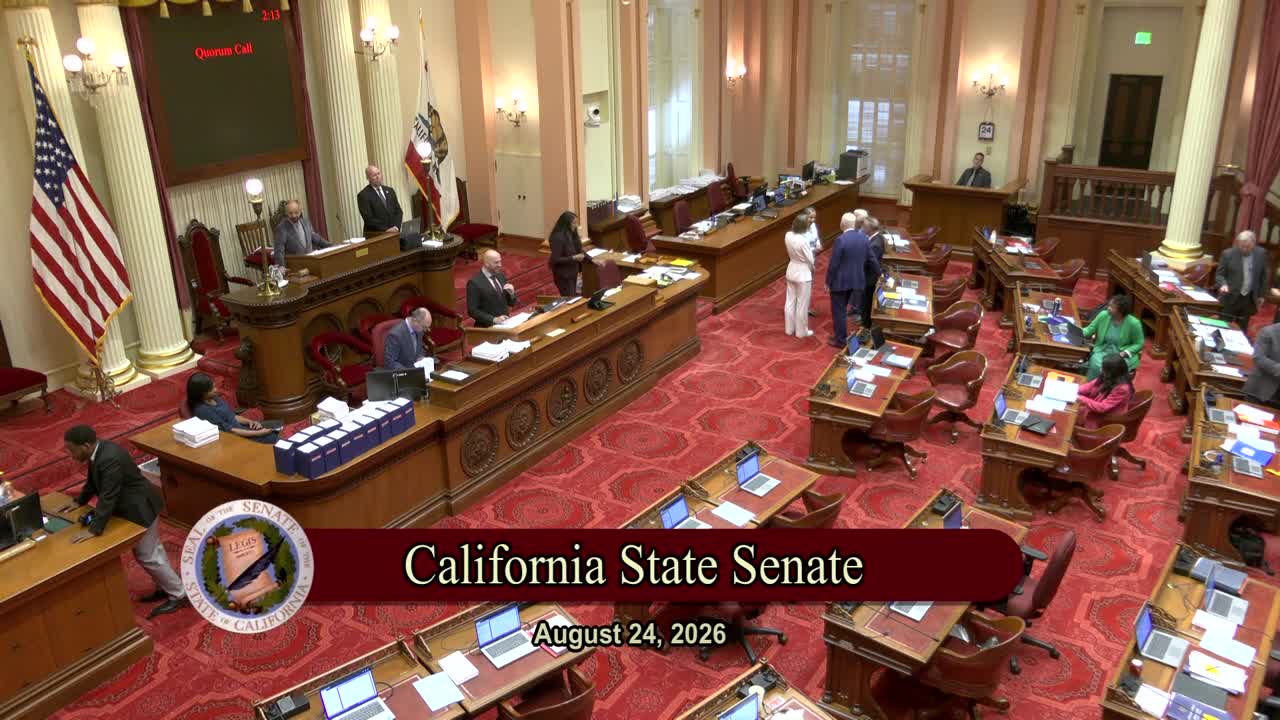 2MIN
Senate Floor
 1MIN
Assembly Floor
 1MIN
Assembly Standing Committee on Education
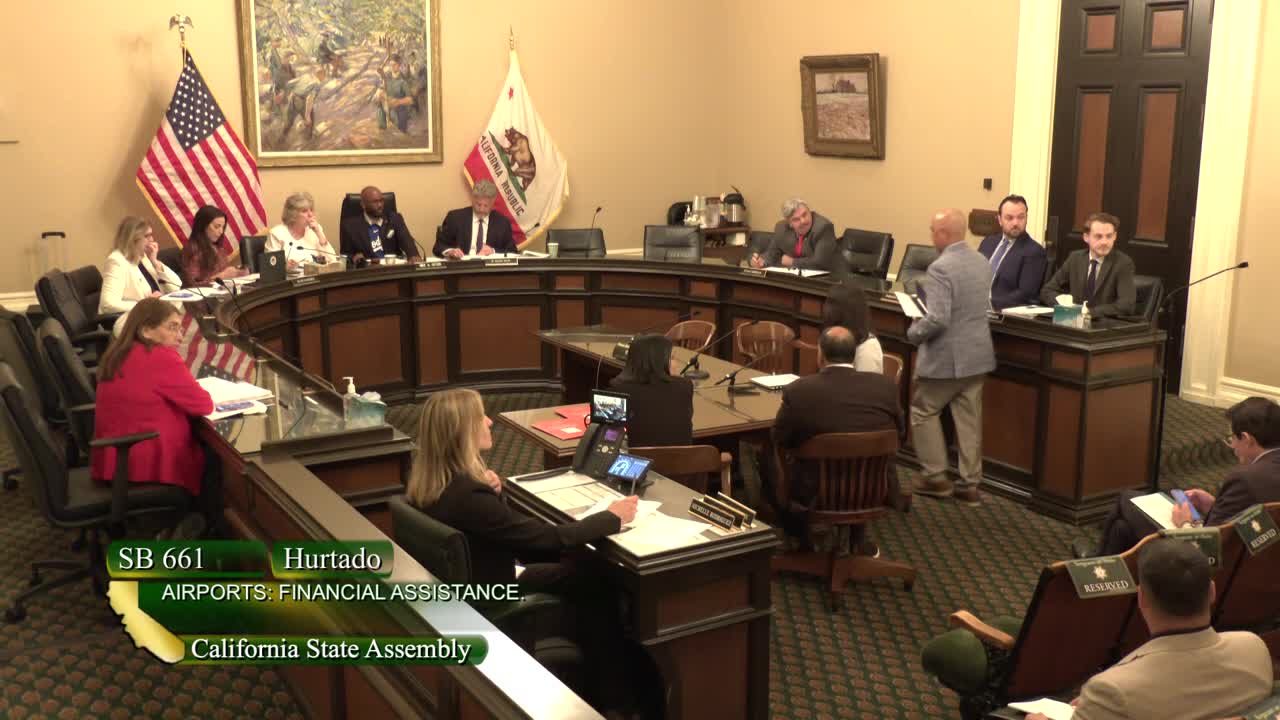 4MIN
Assembly Standing Committee on Revenue and Taxation
 4MIN
Assembly Standing Committee on Local Government
 2MIN
Senate Floor
 10MIN
Senate Standing Committee on Revenue and Taxation
 5MIN
Senate Standing Committee on Local Government
Bill Author

Bill Co-Author(s):