SB 1175: Lobbyist registration and termination.
- Session Year: 2025-2026
- House: Senate
- Latest Version Date: 2026-09-27
Current Status:
Passed
(2026-09-27: Chaptered by Secretary of State. Chapter 682, Statutes of 2026.)
Introduced
In Committee
Awaiting First Chamber Vote
Passed First Chamber
In Committee
Awaiting Second Chamber Vote
Passed Second Chamber
Enacted
The Political Reform Act of 1974 requires individual lobbyists to prepare certifications, as specified, for filing with the Secretary of State. If any change occurs in the information contained in a lobbyist certification, or if a lobbyist terminates all activity that required certification, existing law requires the lobbyist to submit an amended certification or notice of termination to the lobbyists lobbying firm or lobbyist employer for filing with the Secretary of State within specified timelines. Existing law also requires lobbyist employers and other persons who make specified payments to influence legislative or administrative action to file reports containing information about themselves and about the type and amount of payments, as specified. Existing law requires the Secretary of State to develop an online filing and disclosure system that, once operative, must be used for the filing of these reports.
This bill would instead require the lobbyist to submit the amended certification or notice of termination directly to the Secretary of State. The bill would make conforming changes to the filing requirements for lobbyist employers and other persons that will become operative when the Secretary of State certifies that the online filing and disclosure system is functional and additional conforming changes that will become operative one year after this certification.
The Political Reform Act of 1974, an initiative measure, provides that the Legislature may amend the act to further the acts purposes upon a 2/3 vote of each house of the Legislature and compliance with specified procedural requirements.
This bill would declare that it furthers the purposes of the act.
This bill would declare that it is to take effect immediately as an urgency statute.
The Political Reform Act of 1974 requires individual lobbyists to prepare certifications, as specified, for filing with the Secretary of State. If any change occurs in the information contained in a lobbyist certification, or if a lobbyist terminates all activity that required certification, existing law requires the lobbyist to submit an amended certification or notice of termination to the lobbyists lobbying firm or lobbyist employer for filing with the Secretary of State within specified timelines.
This bill would instead require the lobbyist to submit the amended certification or notice of termination directly to the Secretary of State.
The Political Reform Act of 1974, an initiative measure, provides that the Legislature may amend the act to further the acts purposes upon a 2/3 vote of each house of the Legislature and compliance with specified procedural requirements.
This bill would declare that it furthers the purposes of the act.
(a)If any change occurs in any of the information contained in a registration statement, an appropriate amendment shall be filed both by online or electronic means and physically, submitting the original one copy of the amendment, in paper format, with the Secretary of State within 20 days after the change. However, if the change includes the name of a person by whom a lobbying firm is retained, the registration statement of the lobbying firm shall be amended and filed to show that change prior to the lobbying firms attempting to influence any legislative or administrative action on behalf of that person. Lobbying firms and lobbyist employers that, during a regular session of the Legislature, cease all activity that required registration shall file a notice of termination within 20 days after the cessation. Lobbying firms and lobbyist employers that, at the close of a regular session of the Legislature, cease all activity that required registration are not required to file a notice of termination.
(b)If any change occurs in any of the information contained in a lobbyist certification or if a lobbyist terminates all activity that required the certification, the lobbyist shall submit an amended certification or notice of termination to the Secretary of State within the time limits specified in subdivision (a). A lobbyist who, at the close of a regular session of the Legislature, ceases all activity that required certification is not required to file a notice of termination.
(c)Lobbyists and lobbying firms are subject to Section 86203 for the earlier of six months after filing a notice of termination or six months after the close of a regular session of the Legislature at the close of which the lobbyist or lobbying firm ceased all activity that required certification or registration.
SEC. 2.Section 86107 of the Government Code, as amended by Section 184 of Chapter 50 of the Statutes of 2021, is amended to read:86107.(a)If any information in a registration statement changes, an appropriate amendment shall be filed online or electronically with the Secretary of State within 20 days after the change. However, if the change includes the name of a person by whom a lobbying firm is retained, the registration statement of the lobbying firm shall be amended and filed to show that change prior to the lobbying firms attempting to influence any legislative or administrative action on behalf of that person. Lobbying firms and lobbyist employers that, during a regular session of the Legislature, cease all activity that required registration shall file a notice of termination within 20 days after the cessation. Lobbying firms and lobbyist employers that, at the close of a regular session of the Legislature, cease all activity that required registration are not required to file a notice of termination.
(b)If any information in a lobbyist certification changes, or if a lobbyist terminates all activity that required the certification, the lobbyist shall submit an amended certification or notice of termination to the Secretary of State within the time limits specified in subdivision (a). A lobbyist who, at the close of a regular session of the Legislature, ceases all activity that required certification is not required to file a notice of termination.
(c)Lobbyists and lobbying firms are subject to the gift limits in Section 86203 for the earlier of six months after either of the following:
(1)The filing of a notice of termination.
(2)The close of a regular session of the Legislature if the lobbyist or lobbying firm ceased all activity that required certification or registration when the session closed.
SEC. 3.Section 86116 of the Government Code, as amended by Section 186 of Chapter 50 of the Statutes of 2021, is amended to read:86116.Every person described in Section 86115 shall file periodic reports containing the following information:
(a)The name, business address, email address, and telephone number of the lobbyist employer or other person filing the report.
(b)The total amount of payments to each lobbying firm.
(c)The total amount of all payments to lobbyists employed by the filer.
(d)A description of the specific lobbying interests of the filer.
(e)A periodic report completed and verified by each lobbyist employed by a lobbyist employer pursuant to Section 86113.
(f)Each activity expense of the filer. A total of all activity expenses of the filer shall be included.
(g)The date, amount, and the name of the recipient of any contribution of one hundred dollars ($100) or more made by the filer to an elected state officer, a state candidate, or a committee controlled by an elected state officer or state candidate, or a committee primarily formed to support or oppose the officer or candidate. If this contribution is reported by the filer or by a committee sponsored by the filer in a campaign report filed pursuant to Chapter 4 which is required to be filed with the Secretary of State, the filer may report only the name of the committee, and the identification number of the committee.
(h)(1)Except as set forth in paragraph (2), the total of all other payments to influence legislative or administrative action including overhead expenses and all payments to employees who spend 10 percent or more of their compensated time in any one month in activities related to influencing legislative or administrative action.
(2)A filer that makes payments to influence a ratemaking or quasi-legislative proceeding before the Public Utilities Commission, as defined in subdivision (b) or (c), respectively, of Section 82002, may, in lieu of reporting those payments pursuant to paragraph (1), report only the portion of those payments made to or for the filers attorneys for time spent appearing as counsel and preparing to appear as counsel, or to or for the filers witnesses for time spent testifying and preparing to testify, in this type of Public Utilities Commission proceeding. This alternative reporting of these payments made during a calendar month is not required to include payments made to an attorney or witness who is an employee of the filer if less than 10 percent of the attorney or witnesss compensated time in that month was spent in appearing, testifying, or preparing to appear or testify before the Public Utilities Commission in a ratemaking or quasi-legislative proceeding. For the purposes of this paragraph, time spent preparing to appear or preparing to testify does not include time spent preparing written testimony.
(i)Any other information required by the commission consistent with the purposes and provisions of this chapter.
SEC. 4.Section 86116 of the Government Code, as amended by Section 2 of Chapter 873 of the Statutes of 2022, is amended to read:86116.Every person described in Section 86115 shall file periodic reports containing the following information:
(a)The name, business address, email address, and telephone number of the lobbyist employer or other person filing the report.
(b)The total amount of payments to each lobbying firm.
(c)The total amount of all payments to lobbyists employed by the filer.
(d)The information required by subparagraph (B) of paragraph (2) of subdivision (a) of Section 86114. A person described in Section 86115 may, in a manner authorized by the commission, refer to and incorporate by reference the information contained in a report filed by the persons lobbying firm pursuant to Section 86114 to meet the requirement of this subdivision.
(e)A periodic report completed and verified by each lobbyist employed by a lobbyist employer pursuant to Section 86113.
(f)Each activity expense of the filer. A total of all activity expenses of the filer shall be included.
(g)The date, amount, and the name of the recipient of any contribution of one hundred dollars ($100) or more made by the filer to an elected state officer, a state candidate, or a committee controlled by an elected state officer or state candidate, or a committee primarily formed to support or oppose the officer or candidate. If this contribution is reported by the filer or by a committee sponsored by the filer in a campaign report filed pursuant to Chapter 4 which is required to be filed with the Secretary of State, the filer may report only the name of the committee, and the identification number of the committee.
(h)(1)Except as set forth in paragraph (2), the total of all other payments to influence legislative or administrative action including overhead expenses and all payments to employees who spend more than 10 percent of their compensated time in any one month in activities related to influencing legislative or administrative action. Any payment to influence legislative or administrative action totaling two thousand five hundred dollars ($2,500) or more to a payee during a reporting period that was made in connection with an issue lobbying advertisement must include the identification number or, if none exists, the official title, popular name, or description of any legislative or administrative action clearly referred to in the issue lobbying advertisement as well as one of the following descriptions of the position of the filer who paid for the advertisement: support, oppose, support if amended, oppose unless amended, neutral, neutral seeking amendment, neutral expressing concerns, no position, or similar description.
(2)A filer that makes payments to influence a ratemaking or quasi-legislative proceeding before the Public Utilities Commission, as defined in subdivision (b) or (c), respectively, of Section 82002, may, in lieu of reporting those payments pursuant to paragraph (1), report only the portion of those payments made to or for the filers attorneys for time spent appearing as counsel and preparing to appear as counsel, or to or for the filers witnesses for time spent testifying and preparing to testify, in this type of Public Utilities Commission proceeding. This alternative reporting of these payments made during a calendar month is not required to include payments made to an attorney or witness who is an employee of the filer if 10 percent or less of the attorneys or witnesss compensated time in that month was spent appearing, testifying, or preparing to appear or testify before the Public Utilities Commission in a ratemaking or quasi-legislative proceeding. For the purposes of this paragraph, time spent preparing to appear or preparing to testify does not include time spent preparing written testimony.
(i)Any other information required by the commission consistent with the purposes and provisions of this chapter.
SEC. 5.Section 86116 of the Government Code, as amended by Section 63 of Chapter 278 of the Statutes of 2025, is repealed.SEC. 6.(a)Section 3 of this act shall not become operative until the Secretary of State certifies an online filing and disclosure system pursuant to paragraph (7) of subdivision (b) of Section 84602 of the Government Code.
(b)Section 4 of this act shall not become operative until one year after the date the Secretary of State certifies an online filing and disclosure system pursuant to paragraph (7) of subdivision (b) of Section 84602 of the Government Code.
SEC. 7.The Legislature finds and declares that this bill furthers the purposes of the Political Reform Act of 1974 within the meaning of subdivision (a) of Section 81012 of the Government Code.
SEC. 8.This act is an urgency statute necessary for the immediate preservation of the public peace, health, or safety within the meaning of Article IV of the California Constitution and shall go into immediate effect. The facts constituting the necessity are:
The CAL-ACCESS Replacement System (CARS) is scheduled to launch in November 2026 and will modernize Californias lobbying and campaign finance disclosure system by replacing the outdated CAL-ACCESS platform. This act will allow individual lobbyists to file registration amendments and termination notices directly with the Secretary of State rather than through their employer. This act must take effect immediately for this change to be incorporated into the CARS system before its final development and completion, which will avoid having the system built under outdated statutory requirements that would require costly retrofitting after launch. Immediate effect of this act also ensures clear guidance for lobbyists, prevents compliance confusion during the transition to the new system, supports uninterrupted public disclosure of lobbying activity, and protects state resources by avoiding unnecessary programming and system modification costs.
(a)If any change occurs in any of the information contained in a registration statement, an appropriate amendment shall be filed both by online or electronic means and physically, submitting the original one copy of the amendment, in paper format, with the Secretary of State within 20 days after the change. However, if the change includes the name of a person by whom a lobbying firm is retained, the registration statement of the lobbying firm shall be amended and filed to show that change prior to the lobbying firms attempting to influence any legislative or administrative action on behalf of that person. Lobbying firms and lobbyist employers that, during a regular session of the Legislature, cease all activity that required registration shall file a notice of termination within 20 days after the cessation. Lobbying firms and lobbyist employers that, at the close of a regular session of the Legislature, cease all activity that required registration are not required to file a notice of termination.
(b)If any change occurs in any of the information contained in a lobbyist certification or if a lobbyist terminates all activity that required the certification, the lobbyist shall submit an amended certification or notice of termination to the Secretary of State within the time limits specified in subdivision (a). A lobbyist who, at the close of a regular session of the Legislature, ceases all activity that required certification is not required to file a notice of termination.
(c)Lobbyists and lobbying firms are subject to Section 86203 for the earlier of six months after filing a notice of termination or six months after the close of a regular session of the Legislature at the close of which the lobbyist or lobbying firm ceased all activity that required certification or registration.
SEC. 2.Section 86107 of the Government Code, as amended by Section 184 of Chapter 50 of the Statutes of 2021, is amended to read:86107.(a)If any information in a registration statement changes, an appropriate amendment shall be filed online or electronically with the Secretary of State within 20 days after the change. However, if the change includes the name of a person by whom a lobbying firm is retained, the registration statement of the lobbying firm shall be amended and filed to show that change prior to the lobbying firms attempting to influence any legislative or administrative action on behalf of that person. Lobbying firms and lobbyist employers that, during a regular session of the Legislature, cease all activity that required registration shall file a notice of termination within 20 days after the cessation. Lobbying firms and lobbyist employers that, at the close of a regular session of the Legislature, cease all activity that required registration are not required to file a notice of termination.
(b)If any information in a lobbyist certification changes, or if a lobbyist terminates all activity that required the certification, the lobbyist shall submit an amended certification or notice of termination to the Secretary of State within the time limits specified in subdivision (a). A lobbyist who, at the close of a regular session of the Legislature, ceases all activity that required certification is not required to file a notice of termination.
(c)Lobbyists and lobbying firms are subject to the gift limits in Section 86203 for the earlier of six months after either of the following:
(1)The filing of a notice of termination.
(2)The close of a regular session of the Legislature if the lobbyist or lobbying firm ceased all activity that required certification or registration when the session closed.
SEC. 3.Section 86116 of the Government Code, as amended by Section 186 of Chapter 50 of the Statutes of 2021, is amended to read:86116.Every person described in Section 86115 shall file periodic reports containing the following information:
(a)The name, business address, email address, and telephone number of the lobbyist employer or other person filing the report.
(b)The total amount of payments to each lobbying firm.
(c)The total amount of all payments to lobbyists employed by the filer.
(d)A description of the specific lobbying interests of the filer.
(e)A periodic report completed and verified by each lobbyist employed by a lobbyist employer pursuant to Section 86113.
(f)Each activity expense of the filer. A total of all activity expenses of the filer shall be included.
(g)The date, amount, and the name of the recipient of any contribution of one hundred dollars ($100) or more made by the filer to an elected state officer, a state candidate, or a committee controlled by an elected state officer or state candidate, or a committee primarily formed to support or oppose the officer or candidate. If this contribution is reported by the filer or by a committee sponsored by the filer in a campaign statement report filed pursuant to Chapter 4 which is required to be filed with the Secretary of State, the filer may report only the name of the committee, and the identification number of the committee.
(h)(1)Except as set forth in paragraph (2), the total of all other payments to influence legislative or administrative action including overhead expenses and all payments to employees who spend 10 percent or more of their compensated time in any one month in activities related to influencing legislative or administrative action.
(2)A filer that makes payments to influence a ratemaking or quasi-legislative proceeding before the Public Utilities Commission, as defined in subdivision (b) or (c), respectively, of Section 82002, may, in lieu of reporting those payments pursuant to paragraph (1), report only the portion of those payments made to or for the filers attorneys for time spent appearing as counsel and preparing to appear as counsel, or to or for the filers witnesses for time spent testifying and preparing to testify, in this type of Public Utilities Commission proceeding. This alternative reporting of these payments made during a calendar month is not required to include payments made to an attorney or witness who is an employee of the filer if less than 10 percent of the attorney or witnesss compensated time in that month was spent in appearing, testifying, or preparing to appear or testify before the Public Utilities Commission in a ratemaking or quasi-legislative proceeding. For the purposes of this paragraph, time spent preparing to appear or preparing to testify does not include time spent preparing written testimony.
(i)Any other information required by the commission consistent with the purposes and provisions of this chapter.
SEC. 4.Section 86116 of the Government Code, as amended by Section 2 of Chapter 873 of the Statutes of 2022, is amended to read:86116.Every person described in Section 86115 shall file periodic reports containing the following information:
(a)The name, business address, email address, and telephone number of the lobbyist employer or other person filing the report.
(b)The total amount of payments to each lobbying firm.
(c)The total amount of all payments to lobbyists employed by the filer.
(d)The information required by subparagraph (B) of paragraph (2) of subdivision (a) of Section 86114. A person described in Section 86115 may, in a manner authorized by the commission, refer to and incorporate by reference the information contained in a report filed by the persons lobbying firm pursuant to Section 86114 to meet the requirement of this subdivision.
(e)A periodic report completed and verified by each lobbyist employed by a lobbyist employer pursuant to Section 86113.
(f)Each activity expense of the filer. A total of all activity expenses of the filer shall be included.
(g)The date, amount, and the name of the recipient of any contribution of one hundred dollars ($100) or more made by the filer to an elected state officer, a state candidate, or a committee controlled by an elected state officer or state candidate, or a committee primarily formed to support or oppose the officer or candidate. If this contribution is reported by the filer or by a committee sponsored by the filer in a campaign statement report filed pursuant to Chapter 4 which is required to be filed with the Secretary of State, the filer may report only the name of the committee, and the identification number of the committee.
(h)(1)Except as set forth in paragraph (2), the total of all other payments to influence legislative or administrative action including overhead expenses and all payments to employees who spend more than 10 percent of their compensated time in any one month in activities related to influencing legislative or administrative action. Any payment to influence legislative or administrative action totaling two thousand five hundred dollars ($2,500) or more to a payee during a reporting period that was made in connection with an issue lobbying advertisement must include the identification number or, if none exists, the official title, popular name, or description of any legislative or administrative action clearly referred to in the issue lobbying advertisement as well as one of the following descriptions of the position of the filer who paid for the advertisement: support, oppose, support if amended, oppose unless amended, neutral, neutral seeking amendment, neutral expressing concerns, no position, or similar description.
(2)A filer that makes payments to influence a ratemaking or quasi-legislative proceeding before the Public Utilities Commission, as defined in subdivision (b) or (c), respectively, of Section 82002, may, in lieu of reporting those payments pursuant to paragraph (1), report only the portion of those payments made to or for the filers attorneys for time spent appearing as counsel and preparing to appear as counsel, or to or for the filers witnesses for time spent testifying and preparing to testify, in this type of Public Utilities Commission proceeding. This alternative reporting of these payments made during a calendar month is not required to include payments made to an attorney or witness who is an employee of the filer if 10 percent or less of the attorneys or witnesss compensated time in that month was spent appearing, testifying, or preparing to appear or testify before the Public Utilities Commission in a ratemaking or quasi-legislative proceeding. For the purposes of this paragraph, time spent preparing to appear or preparing to testify does not include time spent preparing written testimony.
(i)Any other information required by the commission consistent with the purposes and provisions of this chapter.
SEC. 5.Section 86116 of the Government Code, as amended by Section 63 of Chapter 278 of the Statutes of 2025, is repealed.86116.Every person described in Section 86115 shall file periodic reports containing the following information:(a)The name, business address, email address, and telephone number of the lobbyist employer or other person filing the report.(b)The total amount of payments to each lobbying firm.(c)The total amount of all payments to lobbyists employed by the filer.(d)The information required by subparagraph (B) of paragraph (2) of subdivision (a) of Section 86114. A person described in Section 86115 may, in a manner authorized by the commission, refer to and incorporate by reference the information contained in a report filed by the persons lobbying firm pursuant to Section 86114 to meet the requirement of this subdivision.(e)A periodic report completed and verified by each lobbyist employed by a lobbyist employer pursuant to Section 86113.(f)Each activity expense of the filer. A total of all activity expenses of the filer shall be included.(g)The date, amount, and the name of the recipient of any contribution of one hundred dollars ($100) or more made by the filer to an elected state officer, a state candidate, or a committee controlled by an elected state officer or state candidate, or a committee primarily formed to support or oppose the officer or candidate. If this contribution is reported by the filer or by a committee sponsored by the filer in a campaign report filed pursuant to Chapter 4 which is required to be filed with the Secretary of State, the filer may report only the name of the committee, and the identification number of the committee.(h)(1)Except as set forth in paragraph (2), the total of all other payments to influence legislative or administrative action including overhead expenses and all payments to employees who spend more than 10 percent of their compensated time in any one month in activities related to influencing legislative or administrative action. Any payment to influence legislative or administrative action totaling two thousand five hundred dollars ($2,500) or more to a payee during a reporting period that was made in connection with an issue lobbying advertisement must include the identification number or, if none exists, the official title, popular name, or description of any legislative or administrative action clearly referred to in the issue lobbying advertisement as well as one of the following descriptions of the position of the filer who paid for the advertisement: support, oppose, support if amended, oppose unless amended, neutral, neutral seeking amendment, neutral expressing concerns, no position, or similar description.(2)A filer that makes payments to influence a ratemaking or quasi-legislative proceeding before the Public Utilities Commission, as defined in subdivision (b) or (c), respectively, of Section 82002, may, in lieu of reporting those payments pursuant to paragraph (1), report only the portion of those payments made to or for the filers attorneys for time spent appearing as counsel and preparing to appear as counsel, or to or for the filers witnesses for time spent testifying and preparing to testify, in this type of Public Utilities Commission proceeding. This alternative reporting of these payments made during a calendar month is not required to include payments made to an attorney or witness who is an employee of the filer if 10 percent or less of the attorneys or witnesss compensated time in that month was spent appearing, testifying, or preparing to appear or testify before the Public Utilities Commission in a ratemaking or quasi-legislative proceeding. For the purposes of this paragraph, time spent preparing to appear or preparing to testify does not include time spent preparing written testimony.(i)Any other information required by the commission consistent with the purposes and provisions of this chapter.SEC. 6.(a)Section 3 of this act shall not become operative until the Secretary of State certifies an online filing and disclosure system pursuant to paragraph (7) of subdivision (b) of Section 84602 of the Government Code.
(b)Section 4 of this act shall not become operative until one year after the date the Secretary of State certifies an online filing and disclosure system pursuant to paragraph (7) of subdivision (b) of Section 84602 of the Government Code.
SEC. 3.SEC. 7.The Legislature finds and declares that this bill furthers the purposes of the Political Reform Act of 1974 within the meaning of subdivision (a) of Section 81012 of the Government Code.
SEC. 4.SEC. 8.This act is an urgency statute necessary for the immediate preservation of the public peace, health, or safety within the meaning of Article IV of the California Constitution and shall go into immediate effect. The facts constituting the necessity are:
The CAL-ACCESS Replacement System (CARS) is scheduled to launch in November 2026 and will modernize Californias lobbying and campaign finance disclosure system by replacing the outdated CAL-ACCESS platform. This act will allow individual lobbyists to file registration amendments and termination notices directly with the Secretary of State rather than through their employer. This act must take effect immediately for this change to be incorporated into the CARS system before its final development and completion, which will avoid having the system built under outdated statutory requirements that would require costly retrofitting after launch. Immediate effect of this act also ensures clear guidance for lobbyists, prevents compliance confusion during the transition to the new system, supports uninterrupted public disclosure of lobbying activity, and protects state resources by avoiding unnecessary programming and system modification costs.
(a)If any change occurs in any of the information contained in a registration statement, an appropriate amendment shall be filed both by online or electronic means and physically, submitting the original one copy of the amendment, in paper format, with the Secretary of State within 20 days after the change. However, if the change includes the name of a person by whom a lobbying firm is retained, the registration statement of the lobbying firm shall be amended and filed to show that change prior to the lobbying firms attempting to influence any legislative or administrative action on behalf of that person. Lobbying firms and lobbyist employers that, during a regular session of the Legislature, cease all activity that required registration shall file a notice of termination within 20 days after the cessation. Lobbying firms and lobbyist employers that, at the close of a regular session of the Legislature, cease all activity that required registration are not required to file a notice of termination.
(b)If any change occurs in any of the information contained in a lobbyist certification or if a lobbyist terminates all activity that required the certification, the lobbyist shall submit an amended certification or notice of termination to the Secretary of State within the time limits specified in subdivision (a). A lobbyist who, at the close of a regular session of the Legislature, ceases all activity that required certification is not required to file a notice of termination.
(c)Lobbyists and lobbying firms are subject to Section 86203 for the earlier of six months after filing a notice of termination or six months after the close of a regular session of the Legislature at the close of which the lobbyist or lobbying firm ceased all activity that required certification or registration.
SEC. 2.Section 86107 of the Government Code, as amended by Section 184 of Chapter 50 of the Statutes of 2021, is amended to read:86107.(a)If any information in a registration statement changes, an appropriate amendment shall be filed online or electronically with the Secretary of State within 20 days after the change. However, if the change includes the name of a person by whom a lobbying firm is retained, the registration statement of the lobbying firm shall be amended and filed to show that change prior to the lobbying firms attempting to influence any legislative or administrative action on behalf of that person. Lobbying firms and lobbyist employers that, during a regular session of the Legislature, cease all activity that required registration shall file a notice of termination within 20 days after the cessation. Lobbying firms and lobbyist employers that, at the close of a regular session of the Legislature, cease all activity that required registration are not required to file a notice of termination.
(b)If any information in a lobbyist certification changes, or if a lobbyist terminates all activity that required the certification, the lobbyist shall submit an amended certification or notice of termination to the Secretary of State within the time limits specified in subdivision (a). A lobbyist who, at the close of a regular session of the Legislature, ceases all activity that required certification is not required to file a notice of termination.
(c)Lobbyists and lobbying firms are subject to the gift limits in Section 86203 for the earlier of six months after either of the following:
(1)The filing of a notice of termination.
(2)The close of a regular session of the Legislature if the lobbyist or lobbying firm ceased all activity that required certification or registration when the session closed.
SEC. 3.The Legislature finds and declares that this bill furthers the purposes of the Political Reform Act of 1974 within the meaning of subdivision (a) of Section 81012 of the Government Code.
SEC. 4.This act is an urgency statute necessary for the immediate preservation of the public peace, health, or safety within the meaning of Article IV of the California Constitution and shall go into immediate effect. The facts constituting the necessity are:
The CAL-ACCESS Replacement System (CARS) is scheduled to launch in November 2026 and will modernize Californias lobbying and campaign finance disclosure system by replacing the outdated CAL-ACCESS platform. This act will allow individual lobbyists to file registration amendments and termination notices directly with the Secretary of State rather than through their employer. This act must take effect immediately for this change to be incorporated into the CARS system before its final development and completion, which will avoid having the system built under outdated statutory requirements that would require costly retrofitting after launch. Immediate effect of this act also ensures clear guidance for lobbyists, prevents compliance confusion during the transition to the new system, supports uninterrupted public disclosure of lobbying activity, and protects state resources by avoiding unnecessary programming and system modification costs.
(a)If any change occurs in any of the information contained in a registration statement, an appropriate amendment shall be filed both by online or electronic means and physically, submitting the original one copy of the amendment, in paper format, with the Secretary of State within 20 days after the change. However, if the change includes the name of a person by whom a lobbying firm is retained, the registration statement of the lobbying firm shall be amended and filed to show that change prior to the lobbying firms attempting to influence any legislative or administrative action on behalf of that person. Lobbying firms and lobbyist employers that, during a regular session of the Legislature, cease all activity that required registration shall file a notice of termination within 20 days after the cessation. Lobbying firms and lobbyist employers that, at the close of a regular session of the Legislature, cease all activity that required registration are not required to file a notice of termination.
(b)If any change occurs in any of the information contained in a lobbyist certification or if a lobbyist terminates all activity that required the certification, the lobbyist shall submit an amended certification or notice of termination to the lobbyists lobbying firm or lobbyist employer for filing with the Secretary of State within the time limits specified in subdivision (a). A lobbyist who, at the close of a regular session of the Legislature, ceases all activity that required certification is not required to file a notice of termination.
(c)Lobbyists and lobbying firms are subject to Section 86203 for the earlier of six months after filing a notice of termination or six months after the close of a regular session of the Legislature at the close of which the lobbyist or lobbying firm ceased all activity that required certification or registration.
SEC. 2.Section 86107 of the Government Code, as amended by Section 184 of Chapter 50 of the Statutes of 2021, is amended to read:86107.(a)If any information in a registration statement changes, an appropriate amendment shall be filed online or electronically with the Secretary of State within 20 days after the change. However, if the change includes the name of a person by whom a lobbying firm is retained, the registration statement of the lobbying firm shall be amended and filed to show that change prior to the lobbying firms attempting to influence any legislative or administrative action on behalf of that person. Lobbying firms and lobbyist employers that, during a regular session of the Legislature, cease all activity that required registration shall file a notice of termination within 20 days after the cessation. Lobbying firms and lobbyist employers that, at the close of a regular session of the Legislature, cease all activity that required registration are not required to file a notice of termination.
(b)If any information in a lobbyist certification changes, or if a lobbyist terminates all activity that required the certification, the lobbyist shall submit an amended certification or notice of termination to the lobbyists lobbying firm or lobbyist employer for filing with the Secretary of State within the time limits specified in subdivision (a). A lobbyist who, at the close of a regular session of the Legislature, ceases all activity that required certification is not required to file a notice of termination.
(c)Lobbyists and lobbying firms are subject to the gift limits in Section 86203 for the earlier of six months after either of the following:
(1)The filing of a notice of termination.
(2)The close of a regular session of the Legislature if the lobbyist or lobbying firm ceased all activity that required certification or registration when the session closed.
SEC. 3.The Legislature finds and declares that this bill furthers the purposes of the Political Reform Act of 1974 within the meaning of subdivision (a) of Section 81012 of the Government Code.
|
Date
|
Status
|
|---|---|
| Sep 27, 2026 | Chaptered by Secretary of State. Chapter 682, Statutes of 2026. |
| Sep 27, 2026 | Approved by the Governor. |
| Aug 21, 2026 | Enrolled and presented to the Governor at 3 p.m. |
| Aug 18, 2026 | Assembly amendments concurred in. (Ayes 40. Noes 0. Page 5513.) Ordered to engrossing and enrolling. |
| Aug 18, 2026 | Assembly amendments concurred in. (Ayes 40. Noes 0.) Ordered to engrossing and enrolling. |
| Aug 18, 2026 | Assembly amendments concurred in. (Ayes 39. Noes 0.) Ordered to engrossing and enrolling. |
| Jun 30, 2026 | In Senate. Concurrence in Assembly amendments pending. |
| Jun 29, 2026 | Read third time. Urgency clause adopted. Passed. (Ayes 73. Noes 0. Page 5925.) Ordered to the Senate. |
| Jun 29, 2026 | Read third time. Urgency clause adopted. Passed. Ordered to the Senate. |
| Jun 22, 2026 | Read second time. Ordered to consent calendar. |
| Jun 22, 2026 | Read second time. Ordered to third reading. |
| Jun 18, 2026 | Read second time and amended. Ordered to second reading. |
| Jun 17, 2026 | From committee: Do pass as amended. Ordered to consent calendar. (Ayes 7. Noes 0.) (June 17). |
| May 18, 2026 | Referred to Com. on ELECTIONS. |
| May 7, 2026 | In Assembly. Read first time. Held at Desk. |
| May 7, 2026 | Read third time. Urgency clause adopted. Passed. (Ayes 36. Noes 0. Page 4165.) Ordered to the Assembly. |
| May 7, 2026 | Read third time. Urgency clause adopted. Passed. (Ayes 36. Noes 0.) Ordered to the Assembly. |
| Apr 8, 2026 | Read second time. Ordered to third reading. |
| Apr 7, 2026 | From committee: Do pass. (Ayes 5. Noes 0. Page 3755.) (April 7). |
| Apr 7, 2026 | From committee: Do pass. (Ayes 5. Noes 0.) (April 7). |
| Mar 24, 2026 | From committee with author's amendments. Read second time and amended. Re-referred to Com. on E. & C.A. |
| Mar 16, 2026 | Set for hearing April 7. |
| Feb 26, 2026 | Referred to Com. on E. & C.A. |
| Feb 19, 2026 | From printer. May be acted upon on or after March 21. |
| Feb 18, 2026 | Introduced. Read first time. To Com. on RLS. for assignment. To print. |
|
Date
|
Description
|
Location
|
Votes
|
|
|---|---|---|---|---|
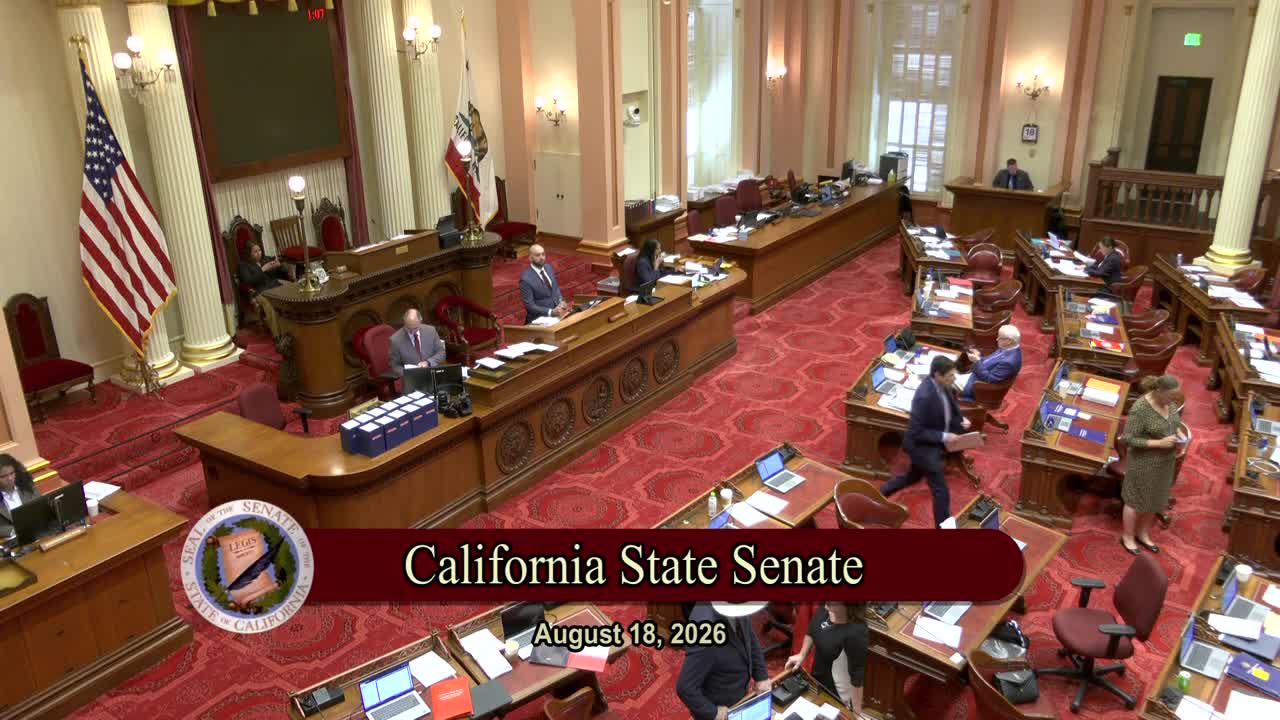
| Aug 18, 2026 | Unfinished Business SB1175 Rubio et al. Urgency Clause Concurrence | Senate Floor |
Passed |
|
| Jun 29, 2026 | SB 1175 Rubio Consent Calendar Second Day | Assembly Floor |
Passed |
|
| Jun 17, 2026 | Do pass as amended. To Consent Calendar. | Assembly Standing Committee on Elections |
Passed |
|
| May 7, 2026 | Senate 3rd Reading SB1175 Rubio et al. Urgency Clause | Senate Floor |
Passed |
|
| Apr 7, 2026 | Do pass | Senate Standing Committee on Elections and Constitutional Amendments |
Passed |
This list shows positions taken on this bill by organizations on the date displayed, which is linked to the original source.
Positions by individuals are not included.
|
Organization
|
Position
|
Date
|
|---|---|---|
| California FAIR Political Practices Commission | ** Support | |
| California Political Treasurer’s Association | ** Support | |
| California Political Treasurers’ Association | ** Support | |
| California Political TreasurerS Association | ** Support | |
| California Secretary of State Shirley N. Weber, Ph.D. | ** Support | |
| Secretary of State Shirley N. Weber, Ph.D. | ** Support |
SENATE RULES COMMITTEE Office of Senate Floor Analyses (916) 651-4171 | SB 1175 |
UNFINISHED BUSINESS
Bill No: SB 1175
Author: Rubio (D), et al.
Amended: 6/18/26
Vote: 27 - Urgency
SENATE ELECTIONS & C.A. COMMITTEE: 5-0, 4/7/26
AYES: Wiener, Choi, Allen, Cervantes, Umberg
SENATE FLOOR: 36-0, 5/7/26
AYES: Allen, Archuleta, Arreguín, Ashby, Becker, Blakespear, Cabaldon, Caballero, Cervantes, Choi, Cortese, Dahle, Durazo, Grayson, Hurtado, Jones, Laird, Limón, McGuire, McNerney, Menjivar, Ochoa Bogh, Padilla, Pérez, Reyes, Richardson, Rubio, Seyarto, Smallwood-Cuevas, Stern, Strickland, Umberg, Valladares, Wahab, Weber Pierson, Wiener
NO VOTE RECORDED: Alvarado-Gil, Gonzalez, Grove, Niello
ASSEMBLY FLOOR: 73-0, 6/29/26 (Consent) - See last page for vote
SUBJECT: Lobbyist registration and termination
SOURCE: California Secretary of State Shirley N. Weber, Ph.D.
DIGEST:
This bill requires a lobbyist to file an amended lobbyist certification or a notice of lobbying termination directly with the Secretary of State (SOS), rather than with the lobbying firm or the lobbyist employer.
Assembly Amendments
of 6/18/26 restore the effective date to law governing the contents of lobbying reports.
ANALYSIS:
Existing law:
- Requires lobbying firms and lobbyist employers to register with the SOS.
- Requires each individual lobbyist to submit a lobbyist certification to the SOS. This certification shall include:
- A recent photograph;
- The full name, business address, and telephone number of the lobbyist;
- A statement that the lobbyist understands the statutory gift limit; and
- A statement that the lobbyist has or will complete an ethics course.
- Requires, when any of the information in the lobbyist certification changes or if the lobbyist terminates all lobbying activity, the lobbyist to submit an amended certification or a notice of termination to the lobbying firm or lobbyist employer, who shall submit it to the SOS.
This bill requires the lobbyist to submit changes in certification or a notice of termination directly to the SOS.
Background
Proposition 9, which appeared on the June 1974 ballot, created the California Political Reform Act (PRA) and established California’s system of regulating lobbying activity, campaign finance, and conflicts of interest for public officials. Proposition 9 created the Fair Political Practices Commission (FPPC) to implement, administer, and enforce the PRA. The PRA regulates lobbyists, including requiring lobbyists to register with the SOS and file periodic reports disclosing their activities.
Comments
- Author’s statement. Transparency and accountability are foundational to public trust, and this is especially true for California’s lobbyist registration system. Current law requires lobbyists to submit registration amendments or termination notices to their lobbying employer or firm if there are any changes in their certification information. The lobbyist’s employer or firm then files with the SOS.
This current lobbyist registration system can create significant delays and transparency issues when lobbyists change employers or need to update their registration. Because employers have 20 days to file certification changes with the state, and because lobbyists can only be registered with one employer or firm at a time, lobbyists may have to wait weeks for their former employer to file termination paperwork before they can register with a new employer. This delay can result in lobbyists filing late disclosure reports through no fault of their own, and the lobbyist’s relationship with their new employer remaining undisclosed to the public.
This bill modernizes our lobbying disclosure system by requiring lobbyists to file terminations, employment changes, and registration amendments directly with the SOS, instead of going through their employer or firm. In doing so, it eliminates unnecessary delays, and ensures Californians have clear and timely information about who is advocating before their government.
- Cal-Access and CARS. In 2000, the SOS deployed, pursuant to SB 49 (Karnette, Chapter 866, Statutes of 1997), the California Automated Lobby Activity and Campaign Contribution and Expenditure Search System, or Cal-Access. Cal-Access replaced the paper-based system and provides on-line filing of reports and statements required by the PRA. It also provides online access to these statements and reports for the public.
SB 1349 (Hertzberg, Chapter 845, Statutes of 2016) directed the SOS, in consultation with the FPPC, to replace Cal-Access with a new disclosure system, the Cal-Access Replacement System or CARS. The SOS expects to fully deploy CARS by the end of 2026.
- Same code section twice? The PRA includes various sections that exist in two different versions with the same code section number. The existence of multiple versions of the code with the same code section number reflects a technical mechanism to allow certain changes to state law to go into effect when the SOS certifies CARS.
- Fixing a timing issue. SB 459 (Allen, Chapter 873, Statutes of 2022) requires lobbying disclosure reports to include additional information about items that were lobbied. Because implementation of those provisions required modifications to the state’s lobbying disclosure database, SB 459 provided that its provisions become operative one year after the SOS certifies CARS. This delayed operative date allowed the SOS to incorporate the bill’s requirements when designing CARS.
Last year, AB 808 (Addis, Chapter 278, Statutes of 2025) made various minor and technical changes to prepare for CARS and becomes operative upon SOS’ certification of the system. AB 808 amended a code section SB 459 had added. Because AB 808 takes effect upon the SOS certification of CARS, this drafting error had the unintended effect of accelerating the operative date of one SB 459 provision by a year.
As discussed above, the SOS expects to certify CARS later this year. If the drafting error in AB 808 is not corrected before certification, one provision of SB 459 will become operative one year earlier than intended. Accordingly, the assembly Elections Committee amended this bill, which includes an urgency clause, to correct the technical drafting error in AB 808 before CARS takes effect later this year.
- Urgency. Should it become law, this bill needs to take effect immediately so the change it makes to lobbyist certification can be incorporated into CARS before it is completed this fall. Without the urgency clause, the system would be built under outdated statutory requirements and require costly retrofitting after the launch.
FISCAL EFFECT: Appropriation: No Fiscal Com.: No Local: No
SUPPORT: (Verified 6/30/26)
California Secretary of State Shirley N. Weber, Ph.D. (source)
California Fair Political Practices Commission
California Political Treasurers’ Association
OPPOSITION: (Verified 6/30/26)
None received
ARGUMENTS IN SUPPORT:
Writing as the sponsor of the bill, the SOS states that by “making this change, greater responsibility is placed directly on lobbyists for maintaining accurate registration status, allowing government efficiency and transparency to be upheld in the process for the public.”
ASSEMBLY FLOOR: 73-0, 6/29/26
AYES: Addis, Aguiar-Curry, Ahrens, Alanis, Alvarez, Arambula, Ávila Farías, Bauer-Kahan, Bennett, Berman, Bonta, Bryan, Calderon, Caloza, Castillo, Chen, Connolly, Davies, DeMaio, Dixon, Elhawary, Ellis, Flora, Fong, Gabriel, Garcia, Gipson, Jeff Gonzalez, Mark González, Hadwick, Haney, Harabedian, Hart, Hoover, Irwin, Jackson, Johnson, Kalra, Krell, Lee, Macedo, McKinnor, Nguyen, Ortega, Pacheco, Papan, Patel, Patterson, Pellerin, Petrie-Norris, Quirk-Silva, Ramos, Ransom, Celeste Rodriguez, Michelle Rodriguez, Rogers, Blanca Rubio, Sanchez, Schiavo, Schultz, Sharp-Collins, Solache, Soria, Stefani, Ta, Tangipa, Valencia, Wallis, Ward, Wicks, Wilson, Zbur, Rivas
NO VOTE RECORDED: Bains, Boerner, Carrillo, Lackey, Lowenthal, Muratsuchi
Prepared by: Carrie Cornwell / E. & C.A. / (916) 651-4106
7/1/26 16:55:32
**** END ****
Date of Hearing: June 17, 2026
ASSEMBLY COMMITTEE ON ELECTIONS
Gail Pellerin, Chair
SBPCA Bill Id:SB 1175
Author:(Rubio) – As Amended Ver:March 24, 2026
SENATE VOTE: 36-0
SUBJECT: Lobbyist registration and termination.
SUMMARY: Requires a lobbyist to file an amended lobbyist certification or a notice of lobbying termination directly with the Secretary of State (SOS), instead of with their lobbying firm or lobbyist employer. Contains an urgency clause, allowing this bill to take effect immediately upon enactment.
EXISTING LAW:
- Creates the Fair Political Practices Commission (FPPC), and makes it responsible for the impartial, effective administration and implementation of the Political Reform Act (PRA). (Government Code §§83100, 83111)
- Requires lobbing firms and lobbyist employers to register with the SOS. (Government Code §86100(a))
- Requires each individual lobbyist to submit a lobbyist certification for filing with the SOS as part of the registration of the lobbying firm in which the lobbyist is a partner, owner, officer, or employee, or as part of the registration of the lobbyist employer that employs the lobbyist. Requires the lobbyist certification to include all the following:
- A recent photograph of the lobbyist.
- The full name, business address, and telephone number of the lobbyist.
- A statement that the lobbyist has read and understands specified legal prohibitions on the conduct of lobbyists.
- A statement regarding the lobbyist’s completion, or planned completion, of required lobbyist ethics training.
- Other information required by the FPPC consistent with the PRA. (Government Code §§86100(b), 86103)
- A recent photograph of the lobbyist.
- Requires a lobbyist to submit an amended certification or notice of termination to the lobbyist’s firm or employer if any information in the lobbyist certification changes or if the lobbyist terminates all activity that required the certification. Requires the firm or employer to submit that updated information to the SOS within 20 days after the change. (Government Code §86107)
- Requires the SOS, in consultation with the FPPC, to develop and certify a new online filing and disclosure system for public use that provides public disclosure of campaign finance and lobbying information in a user-friendly, easily understandable format, as specified. This system commonly is referred to as the Cal-Access Replacement System (CARS). (Government Code §84602(b))
FISCAL EFFECT: None. This bill is keyed non-fiscal by the Legislative Counsel.
COMMENTS:
- Purpose of the Bill: According to the author:
As an elected official, I know that transparency and accountability are foundational to public trust, and this is especially true for our lobbyist registration system. Current law requires lobbyists to submit registration amendments or termination notices to their lobbying employer or firm if there are any changes in their certification information. The lobbyist’s employer or firm then files directly with the Secretary of State. However, the current lobbyist registration system creates significant delays and transparency issues when lobbyists change employers or need to update their registration. Because employers have 20 days to file certification changes with the state, and because lobbyists can only be registered with one employer or firm at a time, lobbyists may have to wait weeks for their former employer to file termination paperwork before they can register with a new employer. This delay can result in lobbyists filing late disclosure reports through no fault of their own, and the lobbyist’s relationship with their new employer remaining undisclosed to the public.
SB 1175 modernizes our lobbying disclosure system by requiring lobbyists to file terminations, employment changes, and registration amendments directly with the Secretary of State’s office, instead of going through their employer or firm. The bill eliminates unnecessary delays, and ensures Californians have clear and timely information about who is advocating before their government. Good governance requires systems that are efficient, transparent, and responsive.
- Cal-Access and CARS: In 1997, the Legislature passed and Governor Pete Wilson signed SB 49 (Karnette), Chapter 866, Statutes of 1997, which amended the PRA and established the Online Disclosure Act of 1997. SB 49 required the SOS, in consultation with the FPPC, to develop and implement, by the year 2000, an online filing and disclosure system for reports and statements required to be filed under the PRA, as specified. As a result, the SOS created and deployed a system called the California Automated Lobby Activity and Campaign Contribution and Expenditure Search System, commonly referred to as Cal-Access.
Cal-Access is now 27 years old, and the SOS reports that components of the system are no longer supported by their vendor. As a result the system has periodically crashed and denied public access. Additionally, the SOS has indicated that the ability to make modifications to the existing Cal-Access system is very limited. The Legislature has taken steps to replace the Cal-Access system with a new disclosure system commonly referred to as CARS. CARS is scheduled to be deployed toward the end of this year. - Political Reform Act Regulation of Lobbying: In the aftermath of the Watergate scandal, California was the first state to adopt a comprehensive political reform package through the enactment of the PRA. Voters approved the measure as Proposition 9 at the June 1974 statewide primary election. One of the PRA’s stated purposes is that “[t]he activities of lobbyists should be regulated and their finances disclosed in order that improper influences will not be directed at public officials.”
The PRA regulates lobbying activities related to legislative bills and state agency regulations. It does not apply to lobbying of the federal government or of city, county, or other local government agencies.
As originally enacted, the PRA required lobbyists to register directly with the SOS. To improve disclosure and streamline reporting, the FPPC sponsored SB 659 (Bergeson), Chapter 1183, Statutes of 1985. Among other provisions, that bill defined the terms “lobbying firm” and “lobbyist employer,” and established a legal framework for regulating those entities. According to legislative analyses, SB 659 was the product of an advisory panel sponsored by the FPPC, and the bill’s regulation of lobbying firms and lobbyist employers as entities was intended to reflect that most lobbying at the time was done by lobbying firms or full-time employees of businesses or associations.
Among other changes, SB 659 eliminated direct lobbyist registration with the SOS. Instead lobbyists complete certifications that their firm or employer submits as part of the firm’s or employer’s own registration. Amendments or terminations of a lobbyist’s certification likewise must be submitted through the firm or employer, which is responsible for updating its registration to reflect the change.
According to this bill’s author and sponsor, this indirect filing process has created challenges when lobbyists change employers. Because a lobbyist can be registered with only one employer or firm at a time, a lobbyist who changes jobs must wait for their former employer to file termination paperwork with the SOS before the lobbyist can register with their new employer.
This bill instead requires a lobbyist to file any amendment to their lobbyist certification—or the termination of such a certification—directly with the SOS. According to the SOS, the functionality to allow lobbyists to file these certifications directly is being incorporated into the design of CARS. SOS staff indicates that when the CARS system has launched, a newly hired lobbyist will be able to create an account with CARS to submit the required information as part of the lobbyist’s certification. That certification will be held in a pending state until the lobbyist’s firm or employer updates its registration to reflect the lobbyist’s affiliation with that firm or employer. When a lobbyist leaves the employment of that employer or firm, the lobbyist will be able to log-in to the CARS system and submit an updated certification to reflect that change. While the lobbying firm or lobbyist employer will also need to update its registration to reflect that they no longer employ that lobbyist, the lobbyist will not need to wait for that action before they can register with a new firm or employer.
- Seeing Double: The PRA includes various sections that exist in two different versions with the same code section number. The existence of multiple versions of the code with the same code section number reflects a technical mechanism to allow certain changes to state law to go into effect when CARS is deployed.
Specifically, for those sections of the PRA that exist in two different versions, one version is operative now, and the second version will become operative when the SOS certifies that the CARS system meets specified requirements of state law (at which point, the currently operative version of the section becomes inoperative). Accordingly, this bill amends both versions of Government Code Section 86107. - Proposed Technical Amendments: SB 459 (Allen), Chapter 873, Statutes of 2022, requires lobbying disclosure reports to include additional information about items that were lobbied. Because implementation of those provisions required modifications to the state’s lobbying disclosure database, SB 459 provided that its provisions become operative one year after the SOS certifies CARS. This delayed operative date allowed the SOS to incorporate the bill’s requirements when designing CARS.
Last year, AB 808 (Addis), Chapter 278, Statutes of 2025, made various minor and technical changes to prepare for CARS and becomes operative upon SOS certification of the system. However, AB 808 inadvertently amended a code section that had been added by SB 459. Because AB 808 takes effect upon SOS certification of CARS, this drafting error had the unintended effect of accelerating the operative date of one SB 459 provision by one year.
As discussed above, the SOS is expected to certify CARS later this year. If the drafting error in AB 808 is not corrected before certification, one provision of SB 459 will become operative one year earlier than intended. Accordingly, committee staff recommends amendments to this bill to correct the technical drafting error in AB 808.
- Arguments in Support: The sponsor of this bill, Secretary of State Shirley N. Weber, Ph.D., writes in support:
SB 1175 modernizes California's lobbying registration system by allowing individual lobbyists to file registration amendments and termination notices directly with the Secretary of State, rather than requiring their lobbying firm or employer to file on their behalf.
The current lobbyist registration system lacks transparency and creates significant delays when lobbyists change employers or need to update their registration information. Under existing law, lobbyists cannot file their own termination or amendment paperwork directly with the Secretary of State. Instead, they must submit documents to their lobbying firm or employer, who then file with the state…
By making this change, greater responsibility is placed directly on lobbyists for maintaining accurate registration status, allowing government efficiency and transparency to be upheld in the process for the public.
- Political Reform Act of 1974: California voters passed an initiative, Proposition 9, in 1974 that created the FPPC and codified significant restrictions and prohibitions on candidates, officeholders, and lobbyists. That initiative is commonly known as the PRA. Amendments to the PRA that are not submitted to the voters, such as those contained in this bill, must further the purposes of the initiative and require a two-thirds vote of both houses of the Legislature.
REGISTERED SUPPORT / OPPOSITION:
Support
Secretary of State Shirley N. Weber, Ph.D. (Sponsor)
California Political Treasurers Association
Fair Political Practices Commission
Opposition
None on file.
Analysis Prepared by: Ethan Jones / ELECTIONS / (916) 319-2094
SENATE RULES COMMITTEE Office of Senate Floor Analyses (916) 651-4171 | SB 1175 |
THIRD READING
Bill No: SB 1175
Author: Rubio (D), et al.
Amended: 3/24/26
Vote: 27 - Urgency
SENATE ELECTIONS & C.A. COMMITTEE: 5-0, 4/7/26
AYES: Wiener, Choi, Allen, Cervantes, Umberg
SUBJECT: Lobbyist registration and termination
SOURCE: California Secretary of State Shirley N. Weber, Ph.D.
DIGEST:
This bill requires a lobbyist to file an amended lobbyist certification or a notice of lobbying termination directly with the Secretary of State (SOS), rather than with the lobbying firm or the lobbyist employer.
ANALYSIS:
Existing law:
- Requires lobbying firms and lobbyist employers to register with the SOS.
- Requires each individual lobbyist to submit a lobbyist certification to the SOS. This certification shall include:
- A recent photograph;
- The full name, business address, and telephone number of the lobbyist;
- A statement that the lobbyist understands the statutory gift limit; and
- A statement that the lobbyist has completed an ethics course or will do so.
- Requires, when any of the information in the lobbyist certification changes or if the lobbyist terminates all lobbying activity, the lobbyist to submit an amended certification or a notice of termination to the lobbying firm or lobbyist employer, who shall submit it to the SOS.
This bill requires the lobbyist to submit changes in certification or a notice of termination directly to the SOS.
Background
Proposition 9, which appeared on the June 1974 ballot, created the California Political Reform Act (PRA) and established California’s system of regulating lobbying activity, campaign finance, and conflicts of interest for public officials. Proposition 9 created the Fair Political Practices Commission (FPPC) to implement, administer, and enforce the PRA. The PRA regulates lobbyists, including requiring lobbyists to register with the SOS and file periodic reports disclosing their activities.
Comments
Author’s statement. Transparency and accountability are foundational to public trust, and this is especially true for California’s lobbyist registration system. Current law requires lobbyists to submit registration amendments or termination notices to their lobbying employer or firm if there are any changes in their certification information. The lobbyist’s employer or firm then files with the SOS.
This current lobbyist registration system can create significant delays and transparency issues when lobbyists change employers or need to update their registration. Because employers have 20 days to file certification changes with the state, and because lobbyists can only be registered with one employer or firm at a time, lobbyists may have to wait weeks for their former employer to file termination paperwork before they can register with a new employer. This delay can result in lobbyists filing late disclosure reports through no fault of their own, and the lobbyist’s relationship with their new employer remaining undisclosed to the public.
This bill modernizes our lobbying disclosure system by requiring lobbyists to file terminations, employment changes, and registration amendments directly with the SOS, instead of going through their employer or firm. In doing so, it eliminates unnecessary delays, and ensures Californians have clear and timely information about who is advocating before their government.
Cal-Access and CARS. In 2000, the SOS deployed, pursuant to SB 49 (Karnette, Chapter 866, Statutes of 1997), the California Automated Lobby Activity and Campaign Contribution and Expenditure Search System, or Cal-Access. Cal-Access replaced the paper-based system and provides on-line filing of reports and statements required by the PRA. It also provides online access to these statements and reports for the public.
Due to its age and associated shortcomings, SB 1349 (Hertzberg, Chapter 845, Statutes of 2016) directed the SOS, in consultation with the FPPC, to replace Cal-Access with a new disclosure system, the Cal-Access Replacement System or CARS. The SOS expects to fully deploy CARS by the end of 2026.
Same code section twice? The PRA includes various sections that exist in two different versions with the same code section number. The existence of multiple versions of the code with the same code section number reflects a technical mechanism to allow certain changes to state law to go into effect when CARS is deployed.
In anticipation of the deployment of CARS, SB 1239 (Hertzberg, Chapter 662, Statutes of 2018) made numerous substantive and technical changes to provisions of the PRA governing the filing of campaign and lobbying reports. Because CARS was in development at the time, SB 1239 made changes to campaign and lobbying disclosure rules that were incorporated into the design of CARS but specified those changes would not go into effect until the SOS certified that CARS was functional and met the requirements of state law. As a result, various provisions of the PRA exist in two different versions: one version is operative now, and a second version becoming operative when the SOS certifies that CARS meets specified requirements of state law (at which point, the currently operative version of the section will become inoperative). As a result, this bill amends both the versions of Government Code Section 86107.
Urgency. Should it become law, this bill needs to take effect immediately so the change it makes to lobbyist certification can be incorporated into CARS before it is completed this fall. Without the urgency clause, the system would be built under outdated statutory requirements and require costly retrofitting after the launch.
FISCAL EFFECT: Appropriation: No Fiscal Com.: No Local: No
SUPPORT: (Verified 4/7/26)
California Secretary of State Shirley N. Weber, Ph.D. (source)
California Political Treasurer’s Association
Fair Political Practices Commission
OPPOSITION: (Verified 4/7/26)
None received
ARGUMENTS IN SUPPORT:
Writing as the sponsor of the bill, the SOS states that by “making this change, greater responsibility is placed directly on lobbyists for maintaining accurate registration status, allowing government efficiency and transparency to be upheld in the process for the public.”
Prepared by: Carrie Cornwell / E. & C.A. / (916) 651-4106
4/8/26 16:35:55
**** END ****
SENATE COMMITTEE ON
ELECTIONS AND CONSTITUTIONAL AMENDMENTS
Senator Scott Wiener, Chair
2025 - 2026 Regular
Bill No: Hearing Date: 4/7/26
Author: | |||
Version: |
| ||
Urgency: | Yes | Fiscal: | |
Consultant: | |||
Subject:
DIGEST
This bill requires a lobbyist to file an amended lobbyist certification or a notice of lobbying termination directly with the Secretary of State (SOS), rather than with the lobbying firm or the lobbyist employer.
ANALYSIS
Existing law:
- Requires lobbying firms and lobbyist employers to register with the SOS.
- Requires each individual lobbyist to submit a lobbyist certification to the SOS. This certification shall include:
- A recent photograph;
- The full name, business address, and telephone number of the lobbyist;
- A statement that the lobbyist understands the statutory gift limit; and
- A statement that the lobbyist has or will complete an ethics course.
- Requires, when any of the information in the lobbyist certification changes or if the lobbyist terminates all lobbying activity, the lobbyist to submit an amended certification or a notice of termination to the lobbying firm or lobbyist employer, who shall submit it to the SOS.
This bill requires the lobbyist to submit changes in certification or a notice of termination directly to the SOS.
BACKGROUND
Proposition 9, which appeared on the June 1974 ballot, created the California Political Reform Act (PRA) and established California’s system of regulating lobbying activity, campaign finance, and conflicts of interest for public officials. Proposition 9 created the Fair Political Practices Commission (FPPC) to implement, administer, and enforce the PRA. The PRA regulates lobbyists, including requiring lobbyists to register with the SOS and file periodic reports disclosing their activities.
COMMENTS
- Author’s statement. Transparency and accountability are foundational to public trust, and this is especially true for California’s lobbyist registration system. Current law requires lobbyists to submit registration amendments or termination notices to their lobbying employer or firm if there are any changes in their certification information. The lobbyist’s employer or firm then files with the SOS.
This current lobbyist registration system can create significant delays and transparency issues when lobbyists change employers or need to update their registration. Because employers have 20 days to file certification changes with the state, and because lobbyists can only be registered with one employer or firm at a time, lobbyists may have to wait weeks for their former employer to file termination paperwork before they can register with a new employer. This delay can result in lobbyists filing late disclosure reports through no fault of their own, and the lobbyist’s relationship with their new employer remaining undisclosed to the public.
This bill modernizes our lobbying disclosure system by requiring lobbyists to file terminations, employment changes, and registration amendments directly with the SOS, instead of going through their employer or firm. In doing so, it eliminates unnecessary delays, and ensures Californians have clear and timely information about who is advocating before their government.
- Cal-Access and CARS. In 2000, the SOS deployed, pursuant to SB 49 (Karnette), Chapter 866, Statutes of 1997, the California Automated Lobby Activity and Campaign Contribution and Expenditure Search System, or Cal-Access. Cal-Access replaced the paper-based system and provides on-line filing of reports and statements required by the PRA. It also provides online access to these statements and reports for the public.
Cal-Access is now 26 years old, and the SOS reports that components of the system are no longer supported by its vendor. As a result, the system has periodically crashed and denied public access. Additionally, the SOS has indicated that its ability to make modifications to Cal-Access is very limited.
SB 1349 (Hertzberg), Chapter 845, Statutes of 2016, directed the SOS, in consultation with the FPPC, to replace Cal-Access with a new disclosure system, the Cal-Access Replacement System or CARS. The SOS expects to fully deploy CARS by the end of 2026.
- Same code section twice? The PRA includes various sections that exist in two different versions with the same code section number. The existence of multiple versions of the code with the same code section number reflects a technical mechanism to allow certain changes to state law to go into effect when CARS is deployed.
In anticipation of the deployment of CARS, SB 1239 (Hertzberg), Chapter 662, Statutes of 2018, made numerous substantive and technical changes to provisions of the PRA governing the filing of campaign and lobbying reports. Because CARS was in development at the time, SB 1239 made changes to campaign and lobbying disclosure rules that were incorporated into the design of CARS but specified those changes would not go into effect until the SOS certified that CARS was functional and met the requirements of state law. As a result, various provisions of the PRA exist in two different versions: one version is operative now, and a second version becoming operative when the SOS certifies that CARS meets specified requirements of state law (at which point, the currently operative version of the section will become inoperative). As a result, this bill amends both the versions of Government Code Section 86107.
- Urgency. Should it become law, this bill needs to take effect immediately so the change it makes to lobbyist certification can be incorporated into CARS before it is completed this fall. Without the urgency clause, the system would be built under outdated statutory requirements and require costly retrofitting after the launch.
- Arguments in support. Writing as the sponsor of the bill, the SOS states that by “making this change, greater responsibility is placed directly on lobbyists for
maintaining accurate registration status, allowing government efficiency and
transparency to be upheld in the process for the public.”
POSITIONS
Sponsor: California Secretary of State Shirley N. Weber, Ph.D.
Support: Fair Political Practices Commission
Oppose: None received.
-- END --
Discussed in Hearing
 2MIN
Senate Floor
 2MIN
Senate Floor
 7MIN
Senate Standing Committee on Elections and Constitutional Amendments
Bill Author