SB 1176: Agricultural land: prohibited foreign actors.
- Session Year: 2025-2026
- House: Senate
- Latest Version Date: 2026-03-23
Current Status:
Failed
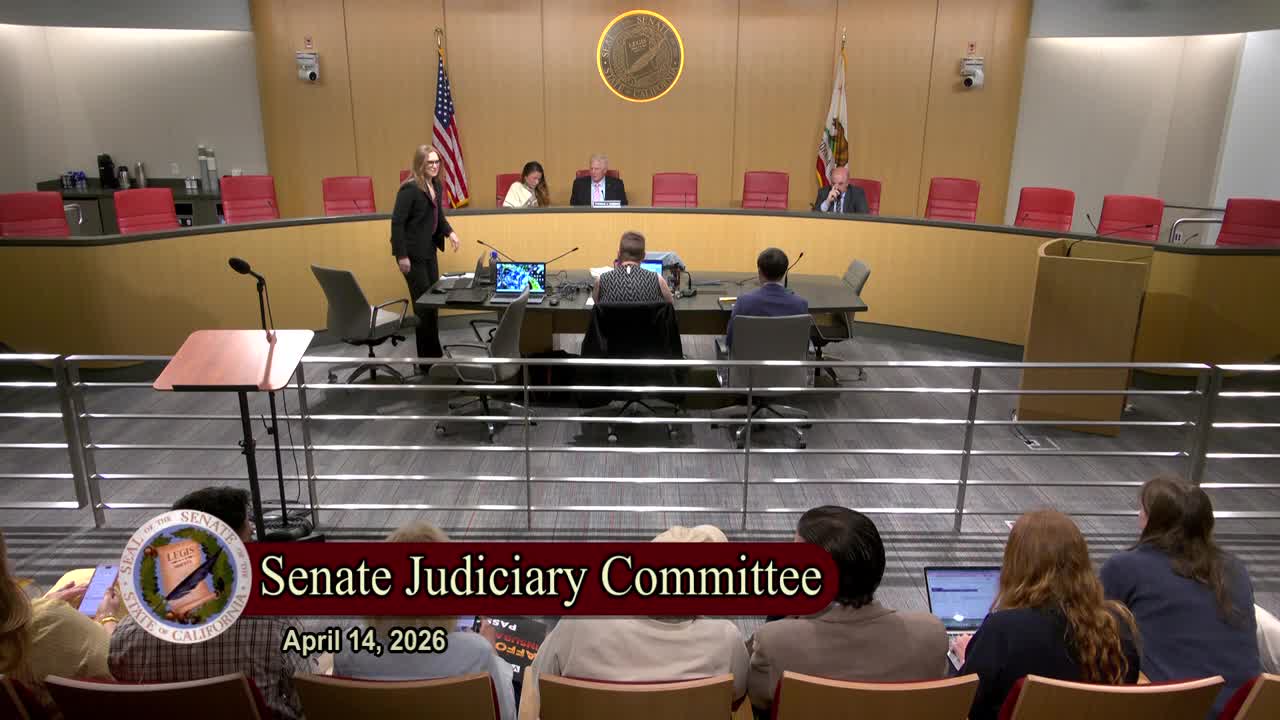
(2026-04-15: April 14 set for first hearing. Failed passage in committee. (Ayes 2. Noes 6. Page 3868.))
Introduced
In Committee
Awaiting First Chamber Vote
Passed First Chamber
In Committee
Awaiting Second Chamber Vote
Passed Second Chamber
Enacted
Existing law provides that all property has an owner, whether that owner is the state, and the property is public, or the owner is an individual, and the property is private.
This bill would prohibit a foreign actor from purchasing, acquiring, leasing, or holding a controlling interest, as defined, in agricultural land within the State of California. The bill, among other things, would exempt land held by prohibited foreign actors before January 1, 2027, from that provision. The bill would provide that land transferred in violation of these provisions would be subject to divestiture, as specified.
The bill would make its provisions operative upon appropriation by the Legislature.
For purposes of this chapter, the following definitions apply:
(a)Agricultural land has the same meaning as defined in Section 3508 of Title 7 of the United States Code.
(b)Controlling interest means either of the following:
(1)Possession of 51 percent or more of the ownership interests in an entity.
(2)A percentage ownership interest in an entity of less than 51 percent, if the foreign actor actually directs the business and affairs of the entity without the requirement or consent of any other party.
(c)Interest means any estate, remainder, or reversion enumerated in Chapter 1 (commencing with Section 761) of Title 2 of Part 2, or portion of the estate, remainder, or reversion, or an option pursuant to which one party has a right to cause legal or equitable title to agricultural land to be transferred.
(d)(1)Prohibited foreign actor means a business, government, or an agent, trustee, or fiduciary of a business or government from a country that is either of the following:
(A)Designated as a nonmarket economy country pursuant to Section 771(18) of the Tariff Act of 1930 (19 U.S.C. Sec. 1677(18)).
(B)Identified as a country that poses a risk to the national security of the United States in the most recent annual report on worldwide threats issued by the Director of National Intelligence pursuant to Section 108B of the National Security Act of 1947 (50 U.S.C. 3043b), commonly known as the Annual Threat Assessment.
(2)A prohibited foreign actor is not a corporation, professional corporation, nonprofit corporation, limited liability company, partnership, or limited partnership that is organized under the laws of a country other than the United States and that is not identified in subparagraphs (A) or (B) of paragraph (1).
746.(a)Notwithstanding any other law, on and after January 1, 2027, a prohibited foreign actor shall not purchase, acquire, lease, or hold any controlling interest in agricultural land in the State of California.
(b)This section does not apply to any of the following:
(1)Any controlling interest in agricultural land held by a prohibited foreign actor before January 1, 2027.
(2)Agricultural land dedicated to agricultural research, development, and demonstration, including, but not limited to, testing, developing, or producing seeds, plans, plants, crop protection products, or crop nutrients.
(3)Any federally recognized tribe.
(c)A transfer of an interest in land in violation of this section shall be subject to divestiture, as set forth in Section 746.5.
(d)This section shall not be applied in a manner inconsistent with any provision of any treaty between the United States and another country.
746.5.(a)The Attorney General, upon the request of any person or upon receipt of any information which leads the Attorney General to believe that a violation of Section 746 may have occurred, may issue subpoenas requiring the appearance of witnesses, the production of relevant records, and the giving of relevant testimony.
(b)(1)If, after examining the evidence, the Attorney General concludes that a violation of Section 746 has occurred, the Attorney General shall order the prohibited foreign actor to divest itself of all interests in the land within 90 days after service of the order upon the prohibited foreign actor.
(2)The order of divestiture, described in paragraph (1), shall be served personally or by mail.
(c)(1)If the holder of the interest that is ordered to be divested disputes the determination of the Attorney General that a violation of Section 746 has occurred, the holder may submit a written request for a judicial determination to the Attorney General.
(2)The written request, described in paragraph (1), shall be delivered to the Attorney General within 60 days after service of the order of divestiture. If no written request is received within this time, the determination of the Attorney General shall become final.
(d)(1)If the prohibited foreign actor fails to divest itself of all interests pursuant to subdivision (b), or if a holder of the interest submits a written request pursuant to subdivision (c), the Attorney General shall bring an action in superior court to divest the interest.
(2)Venue for the action described in paragraph (1) shall either be the County of Sacramento or a county in which a portion of the subject land is located, as determined by the Attorney General.
(3)The Attorney General shall promptly record with the county recorder of each county in which any portion of the land is located a notice of pendency of the action pursuant to Title 4.5 (commencing with Section 405) of Part 2 of the Code of Civil Procedure.
(e)If the holder of the interest has submitted a written request pursuant to subdivision (c), the court shall conduct an evidentiary hearing to determine, by a preponderance of the evidence, if a violation of Section 746 has occurred, prior to taking any other action. If the court determines that there has been no violation, the court shall dismiss the action and expunge the notice of pending action.
(f)(1)If the court determines that a violation of Section 746 occurred, the court shall order that the land be sold. Unless the court determines for good cause that another procedure for conducting the sale is appropriate, the court shall appoint a referee pursuant to Article 1 (commencing with Section 873.010) of Chapter 4 of Title 10.5 of Part 2 of the Code of Civil Procedure.
(2)The referee shall make a sale of the property and convey the interest to the purchaser.
(3)The proceeds from the sale shall be distributed in the following order:
(A)The payment of authorized costs of the sale, including all approved fees and expenses of the referee and any taxes and assessments due.
(B)The payment, in an amount approved by the court, to the Attorney General for reimbursement of investigation and litigation costs and expenses.
(C)The payment to lienholders who did not have actual knowledge of a violation of Section 746 in their order of priority, except for liens which under the terms of the sale are to remain on the property.
(D)The payment of a penalty, in an amount determined by the court, not to exceed 10 percent of the sales price of the property, to be paid to the fund designated by the Attorney General for enforcement of this chapter.
(E)The payment to any lienholders not included in subparagraph (C) in their order of priority.
(F)All remaining proceeds to the prohibited foreign actor, in an amount that shall not exceed the original amount paid by the prohibited foreign actor for the property, payable to the person or entity that held the interest.
747.This chapter shall become operative upon appropriation by the Legislature for the purpose of implementing the provisions of this chapter.
For purposes of this chapter, the following definitions apply:
(a)Agricultural land has the same meaning as defined in Section 3508 of Title 7 of the United States Code.
(b)Controlling interest means either of the following:
(1)Possession of 51 percent or more of the ownership interests in an entity.
(2)A percentage ownership interest in an entity of less than 51 percent, if the foreign actor actually directs the business and affairs of the entity without the requirement or consent of any other party.
(c)Interest means any estate, remainder, or reversion enumerated in Chapter 1 (commencing with Section 761) of Title 2 of Part 2, or portion of the estate, remainder, or reversion, or an option pursuant to which one party has a right to cause legal or equitable title to agricultural land to be transferred.
(d)(1)Prohibited foreign actor means a business, government, or an agent, trustee, or fiduciary of a business or government from a country that is either of the following:
(A)Designated as a nonmarket economy country pursuant to Section 771(18) of the Tariff Act of 1930 (19 U.S.C. Sec. 1677(18)).
(B)Identified as a country that poses a risk to the national security of the United States in the most recent annual report on worldwide threats issued by the Director of National Intelligence pursuant to Section 108B of the National Security Act of 1947 (50 U.S.C. 3043b), commonly known as the Annual Threat Assessment.
(2)A prohibited foreign actor is not a corporation, professional corporation, nonprofit corporation, limited liability company, partnership, or limited partnership that is organized under the laws of a country other than the United States and that is not identified in subparagraphs (A) or (B) of paragraph (1).
746.(a)Notwithstanding any other law, on and after January 1, 2027, a prohibited foreign actor shall not purchase, acquire, lease, or hold any controlling interest in agricultural land in the State of California.
(b)This section does not apply to any of the following:
(1)Any controlling interest in agricultural land held by a prohibited foreign actor before January 1, 2027.
(2)Agricultural land dedicated to agricultural research, development, and demonstration, including, but not limited to, testing, developing, or producing seeds, plans, crop protection products, or crop nutrients.
(3)Any federally recognized tribe.
(c)A transfer of an interest in land in violation of this section shall be subject to divestiture, as set forth in Section 746.5.
(d)This section shall not be applied in a manner inconsistent with any provision of any treaty between the United States and another country.
746.5.(a)The Attorney General, upon the request of any person or upon receipt of any information which leads the Attorney General to believe that a violation of Section 746 may have occurred, may issue subpoenas requiring the appearance of witnesses, the production of relevant records, and the giving of relevant testimony.
(b)(1)If, after examining the evidence, the Attorney General concludes that a violation of Section 746 has occurred, the Attorney General shall order the prohibited foreign actor to divest itself of all interests in the land within 90 days after service of the order upon the prohibited foreign actor.
(2)The order of divestiture, described in paragraph (1), shall be served personally or by mail.
(c)(1)If the holder of the interest that is ordered to be divested disputes the determination of the Attorney General that a violation of Section 746 has occurred, the holder may submit a written request for a judicial determination to the Attorney General.
(2)The written request, described in paragraph (1), shall be delivered to the Attorney General within 60 days after service of the order of divestiture. If no written request is received within this time, the determination of the Attorney General shall become final.
(d)(1)If the prohibited foreign actor fails to divest itself of all interests pursuant to subdivision (b), or if a holder of the interest submits a written request pursuant to subdivision (c), the Attorney General shall bring an action in superior court to divest the interest.
(2)Venue for the action described in paragraph (1) shall either be the County of Sacramento or a county in which a portion of the subject land is located, as determined by the Attorney General.
(3)The Attorney General shall promptly record with the county recorder of each county in which any portion of the land is located a notice of pendency of the action pursuant to Title 4.5 (commencing with Section 405) of Part 2 of the Code of Civil Procedure.
(e)If the holder of the interest has submitted a written request pursuant to subdivision (c), the court shall conduct an evidentiary hearing to determine, by a preponderance of the evidence, if a violation of Section 746 has occurred, prior to taking any other action. If the court determines that there has been no violation, the court shall dismiss the action and expunge the notice of pending action.
(f)(1)If the court determines that a violation of Section 746 occurred, the court shall order that the land be sold. Unless the court determines for good cause that another procedure for conducting the sale is appropriate, the court shall appoint a referee pursuant to Article 1 (commencing with Section 873.010) of Chapter 4 of Title 10.5 of Part 2 of the Code of Civil Procedure.
(2)The referee shall make a sale of the property and convey the interest to the purchaser.
(3)The proceeds from the sale shall be distributed in the following order:
(A)The payment of authorized costs of the sale, including all approved fees and expenses of the referee and any taxes and assessments due.
(B)The payment, in an amount approved by the court, to the Attorney General for reimbursement of investigation and litigation costs and expenses.
(C)The payment to lienholders who did not have actual knowledge of a violation of Section 746 in their order of priority, except for liens which under the terms of the sale are to remain on the property.
(D)The payment of a penalty, in an amount determined by the court, not to exceed 10 percent of the sales price of the property, to be paid to the fund designated by the Attorney General for enforcement of this chapter.
(E)The payment to any lienholders not included in subparagraph (C) in their order of priority.
(F)All remaining proceeds to the prohibited foreign actor, in an amount that shall not exceed the original amount paid by the prohibited foreign actor for the property, payable to the person or entity that held the interest.
747.This chapter shall become operative upon appropriation by the Legislature for the purpose of implementing the provisions of this chapter.
|
Date
|
Status
|
|---|---|
| Apr 15, 2026 | April 14 set for first hearing. Failed passage in committee. (Ayes 2. Noes 6. Page 3868.) |
| Apr 15, 2026 | April 14 set for first hearing. Failed passage in committee. (Ayes 2. Noes 6.) |
| Apr 8, 2026 | Set for hearing April 14. |
| Mar 23, 2026 | From committee with author's amendments. Read second time and amended. Re-referred to Com. on JUD. |
| Feb 26, 2026 | Referred to Coms. on JUD. and AGRI. |
| Feb 19, 2026 | From printer. May be acted upon on or after March 21. |
| Feb 18, 2026 | Introduced. Read first time. To Com. on RLS. for assignment. To print. |
|
Date
|
Description
|
Location
|
Votes
|
|
|---|---|---|---|---|
| Apr 14, 2026 | Do pass, but first be re-referred to the Committee on [Agriculture] | Senate Standing Committee on Judiciary |
Failed |
This list shows positions taken on this bill by organizations on the date displayed, which is linked to the original source.
Positions by individuals are not included.
|
Organization
|
Position
|
Date
|
|---|---|---|
| California State Grange | ** Support | |
| Placer County Board of Supervisors | ** Support | |
| Rural County Representatives of California (RCRC) | ** Support |
Senator Thomas Umberg, Chair
2025-2026 Regular Session
Bill No: SB 1176 (Author:Choi)
Version: March 23, 2026
Hearing Date: April 14, 2026
Fiscal: Yes
Urgency: No
Consultant: ID
SUBJECT
Agricultural land: prohibited foreign actors
DIGEST
This bill prohibits companies and governments of specified countries, and agents, trustees, and fiduciaries of such companies and governments, from holding, acquiring, or leasing agricultural land in the state, and makes land held or transferred in violation of this prohibition subject to divestiture, as specified.
EXECUTIVE SUMMARY
This bill would prohibit specified “prohibited foreign actors” from holding, acquiring, purchasing, or leasing agricultural land in the state. It exempts some entities and types of agricultural land, and any agricultural land held by a prohibited foreign actor before January 1, 2027. It defines “prohibited foreign actor” to mean a business, government, or an agent, trustee, or fiduciary of such business or government, from a country that is either designated as a nonmarket economy country or identified as posing a risk to national security by the federal government. This bill makes any holding or acquisition of land in violation of its provisions subject to divestiture, and requires the Attorney General to order divestment if they conclude, upon examination of the evidence, that there has been a violation. It also permits a holder of the land ordered divested to request a judicial determination, and provides a process by which a superior court is to hold a hearing to determine if a violation has occurred. If a violation is deemed to have occurred, it requires the court to appoint a referee to sell the land and distribute the proceeds as specified.
SB 1176 is author-sponsored, and is supported by California State Grange, the Placer County Board of Supervisors, and Rural County Representatives of California. The Committee has received no timely letters of opposition. Should the bill pass out of this Committee, it will then be referred to the Senate Agriculture Committee.
PROPOSED CHANGES TO THE LAW
Existing federal law:
- Prohibits the government from depriving a person of life, liberty, or property without due process of law, and from taking private property for public use without just compensation. (U.S. Const., Amend. V.)
- Establishes the U.S. Agricultural Foreign Investment Disclosure Act to require foreign persons, as part of the Act, to report information regarding current and future acquisitions of U.S. agricultural land, including the name of the owner, the total acreage, and the intended use of the land, among other specified things. (7 U.S.C. §§ 3501 et seq.)
- Defines a “nonmarket economy country” as any foreign country that the administering authority determines does not operate on market principles of cost or pricing structures, so that sales of merchandise in such country do not reflect the fair value of the merchandise. (19 U.S.C. § 1677(18).)
- Requires the President to transmit to Congress each year a comprehensive report on the national security strategy of the United States, and requires that this report contain specified information related to national security. (50 U.S.C. § 3043(a)-(b).)
- Defines “agricultural land” as any land located in one or more states that is used for agricultural, forestry, or timber production purposes as determined by the Secretary of Agriculture under regulations to be prescribed by them. (7 U.S.C. § 3508.)
Existing state law:
- Establishes that noncitizens have the same property rights as citizens. (Cal. Const., Art. I, § 20.)
- Provides that any person, whether citizen or alien, may take, hold, and dispose of property, real or personal, within this State. (Civ. Code § 671.)
- Specifies that a court shall appoint a referee to divide or sell property as ordered by the court, and permits the court to: determine whether a referee’s bond is necessary and fix the amount of such bond; instruct the referee; fix the reasonable compensation for the services of the referee and provide for payment of the referee’s reasonable expenses; provide for the date of commencement of the lien of the referee allowed by law; require the filing of interim or final accounts of the referee, settle the accounts of the referee, and discharge the referee; remove the referee; and appoint a new referee. (Code Civ. Proc. § 873.010.)
This bill:
- Prohibits, notwithstanding any other law, a prohibited foreign actor from purchasing, acquiring, leasing, or holding any controlling interest in agricultural land in the state.
- Specifies that a transfer in land in violation of its provisions shall be subject to divestiture, as specified.
- Exempts from this prohibition:
- Any controlling interest in agricultural land held by a prohibited foreign actor before January 1, 2027;
- Agricultural land dedicated to agricultural research, development, and demonstration, including, but not limited to, testing, development, or producing seeds, plants, crop protection products, or crop nutrients; and
- Any federally recognized tribe.
- Specifies that its prohibition may not be applied in a manner inconsistent with any provision of any treaty between the United States and another country.
- Permits the Attorney General, upon request of any person or upon receipt of any information which leads the Attorney General to believe that a violation of the prohibition in 1) may have occurred, to issue subpoenas requiring the appearance of witnesses, the production of relevant records, and the giving of relevant testimony.
- Specifies that, if after examining the evidence, the Attorney General concludes that a violation of the prohibition in 1) has occurred, they must order the prohibited foreign actor to divest itself of all interests in the land within 90 days after service of the order, which shall be served upon the prohibited foreign actor personally or by mail.
- Permits the holder of the interest that is ordered to be divested, if they dispute the Attorney General’s determination, to submit a written request for a judicial determination to the Attorney General, which shall be delivered to the Attorney General within 60 days after service of the order of divestiture. Specifies that the Attorney General’s order becomes final if no written request is received within 60 days.
- If a written request for a judicial determination is submitted within the 60-day timeline, or if the prohibited foreign actor fails to divest itself of all interests, requires the Attorney General to bring an action in superior court to divest the prohibited foreign actor’s interest.
- Specifies that the venue for such an action shall be the County of Sacramento, or a county in which a portion of the subject land is located, as determined by the Attorney General. Requires the Attorney General to promptly record with the county recorder of each county in which any portion of the land is located a notice of pendency of the action, pursuant to specified provisions of the Code of Civil Procedure.
- Requires the court, if the a written request for a judicial determination is submitted, to conduct an evidentiary hearing to determine, by a preponderance of the evidence, if a violation of the prohibition in 1) has occurred, and specifies that, if the court determines that there has been no violation, the court must dismiss the action and expunge the notice of pending action.
- Specifies that, if the court determines in an evidentiary hearing that a violation of 1) has occurred, it must order that the land be sold, and requires the court to appoint a referee to conduct this sale, unless the court determines there is good cause that another procedure for conducting the sale is appropriate.
- Requires the referee to sell the property and convey the interest in the property to the purchaser, and specifies that the proceeds from the sale shall be distributed in the following order:
- payment of authorized costs of the sale, including all approved fees and expenses of the referee and any taxes and assessments due;
- payment, in an amount approved by the court, to the Attorney General for reimbursement of investigation and litigation costs and expenses;
- payment to lienholders who did not have actual knowledge of a violation of the prohibition in 1), in their order of priority, except for liens which under the terms of the sale are to remain on the property;
- payment of a penalty, in an amount determined by the court, not to exceed 10 percent of the sales price of the property, to be paid to the fund designated by the Attorney General for enforcement of these provisions;
- payment to any lienholders not included in c), above, in the order of priority; and
- payment the prohibited foreign actor, in an amount that shall not exceed the original amount paid by the prohibited foreign actor for the property, payable to the person or entity that held the interest.
- Specifies that its provisions become operative upon appropriation by the Legislature for the purpose of implementing these provisions.
- Defines, for the purposes of its provisions, the following terms:
- “controlling interest” to mean possession of 51 percent or more of the ownership interests in an entity, or a percentage of ownership interest less than 51 percent where the foreign actor actually directs the business and affairs of the entity without the requirement or consent of any other party;
- “interest” to mean any estate, remainder, or reversion enumerated in Civil Code section 761 et seq., or a portion of the estate, remainder, or reversion, or an option pursuant to which one party has a right to cause legal or equitable title to agricultural land to be transferred;
- “prohibited foreign actor” to mean a business, government, or an agent, trustee, or fiduciary of a business or government from a country that is either of the following:
- A designated nonmarket economy country, pursuant to the Tariff Act of 1930 (19 U.S.C. § 1677(18)); or
- A country identified as a country that poses a risk to the national security of the United States in the most recent annual report on worldwide threats issued by the Director of National Intelligence, pursuant to the “Annual Threat Assessment” created by the National Security Act of 1947.
- Specifies that a “prohibited foreign actor” is not a corporation, professional corporation, nonprofit corporation, limited liability company, partnership, or limited partnership that is organized under the laws of a country other than the United States or a country identified in c).
COMMENTS
- Author’s statement
According to the author:
The 2024 USDA Foreign Holdings of U.S. Agricultural Land report indicated that over 46 million acres of U.S. agricultural land was owned by foreign entities, including 1,357,750 acres of California agricultural land. The percentage of privately-held agricultural land in California owned by foreign entities has risen from 2.7% (1,136,206 acres) in 2020 to 3.9% (1,357,750) in 2024.
In California, agricultural land often surrounds critical infrastructure, military bases, and water systems. SB 1176 will protect California agriculture by prohibiting adversarial foreign entities, identified by the U.S. Director of National Intelligence in their Annual Threat Assessment from purchasing or controlling agricultural land.
- Nonmarket economies and the “Annual Threat Assessment”
Under the Smoot-Hawley Act of 1930, the U.S. Department of Commerce identifies countries that do not operate on market principles of cost or pricing structures as non-market economy countries (NMEs). (19 U.S.C. §§ 1671 et seq.) The purpose of designating countries as NMEs is for the imposition of anti-dumping and countervailing duties meant to offset any unfair pricing of goods imported from an NME that are unfairly subsidized or sold at a price below its normal value.[1] The countries currently designated as an NME by the federal government are: Angola, Armenia, Azerbaijan, Belarus, China, Georgia, Kyrgyzstan, Laos, Moldova, Russia, Tajikistan, Turkmenistan, Uzbekistan, and Vietnam.[2]
Under the National Security Act of 1947 (P.L. 235 (1947), 6 Stat. 496), the Director of National Intelligence provides Congress an annual assessment of global threats to U.S. national security. This “annual threat assessment” includes a list of countries designated as a threat to the country’s national security. The 2026 annual threat assessment issued by Director Gabbard largely focuses on the national security threats posed by the following countries: Russia, China, Iran, and North Korea.[3]
- SB 1176 prohibits governments, companies, and agents, trustees, or fiduciaries of companies or governments from certain countries from owning, acquiring, or leasing agricultural land in the state
SB 1176 would prohibit a company or government from specified foreign actors from acquiring, leasing, or holding a controlling interest in agricultural land in the state. In addition, it prohibits any agent, trustee, or fiduciary of any company or government from such foreign actors from owning, acquiring, or leasing agricultural land. The foreign actors prohibited under its provisions are those designated as NMEs by the U.S. Department of Commerce, and those countries identified as a national security threat in the DNI’s Annual Threat Assessment. Currently, these foreign actors include: Angola, Armenia, Azerbaijan, Belarus, China, Georgia, Iran, Kyrgyzstan, Laos, Moldova, North Korea, Russia, Tajikistan, Turkmenistan, Uzbekistan, and Vietnam.
SB 1176 would require the Attorney General to order any foreign actor holding or leasing agricultural land in violation of this prohibition to divest itself of all interests in the land within 90 days, if the Attorney General concludes after examining the evidence that a violation of this prohibition has occurred. The foreign actor would be permitted to appeal the Attorney General’s finding to a superior court, and the court would be required to hold an investigatory hearing. If the court finds a violation, it must order divestment, and SB 1176 then specifies how the proceeds from a sale of the property must be distributed. It requires payment for costs of the sale, payment to the Attorney General for reimbursement of their costs and expenses, payment to lienholders without actual knowledge of the violation, a payment of a penalty set by the court of up to ten percent of the sales price, and payment of other lienholders, before the foreign actor is paid any amount of the proceeds of the sale.
- Constitutional questions
The U.S. Constitution vests in the federal government the power to conduct the foreign affairs of the nation. As a result, “at some point an exercise of state power that touches on foreign relations must yield to the National Government's policy […].” (American Ins. Assn. v. Garamendi (2003) 539 U.S. 396, 413.) This bill raises questions regarding whether it impermissibly invades the arena of foreign policy and international relations. While the United States has limited diplomatic relations with a number of the countries that would be included as a prohibited foreign actor under this bill, it maintains diplomatic relationships and various treaties with numerous others included.
In addition, both the U.S. and California constitutions guarantee all persons equal protection under the law. (U.S. Const., art. XIV, Sec. 1.; Cal. Const., art. 1, Sec. 7(a).) The California Constitution is also definitive in its rule that “[n]oncitizens have the same property rights as citizens.” (Cal. Const., art. 1, Sec. 20.) While SB 1176 does not explicitly prohibit land ownership by an individual based on their national origin, it does prohibit an agent, trustee, or fiduciary of a company from specified countries from owning land. Thus, it may ultimately discriminate against individuals on the basis of their national origin.
SUPPORT
California State Grange
Placer County Board of Supervisors
Rural County Representatives of California (RCRC)
OPPOSITION
None received
RELATED LEGISLATION
Pending Legislation: None known.
Prior Legislation:
SB 1153 (Hurtado, 2024) would have prohibited a hedge fund, as defined, from purchasing, acquiring, leasing, or holding a controlling interest in agricultural land in the state, and would have required the Attorney General to order divestiture if they conclude, after examining the evidence, that this prohibition has been violated, as specified. SB 1153 died in this Committee.
SB 224 (Hurtado, 2023) would have prohibited a foreign government from purchasing, acquiring, leasing, or holding a controlling interest, as defined, in agricultural land within the State of California, and would have made any land transferred in violation of this prohibition subject to divestiture. SB 224 died in the Senate Appropriations Committee.
AB 475 (Mathis, 2023) would have prohibited a prohibited foreign actor, as defined, from purchasing, acquiring, leasing, or holding an interest, as defined, in any land that is located within 50 miles of a United States military base or California National Guard base within the State of California, and would have made land transferred in violation of these provisions subject to divestiture, as specified. AB 475 died in the Assembly Judiciary Committee.
SB 1084 (Hurtado, 2022) would have prohibited foreign governments from newly acquiring an interest in agricultural land in California after January 1, 2023, and would have required foreign governments that own agricultural land in California to report specified information about their ownership to the California Department of Food and Agriculture. SB 1084 was vetoed by Governor Brown, who stated: “[f]ederal law requires foreign governments to report interests in agricultural land to the United States Department of Agriculture (USDA), and USDA compiles this information annually into a public report. The additional data reporting required by this bill is beyond [the California Department of Food and Agriculture’s] purview and would create new and arduous responsibilities for the department.”
**************
Int’l Trade Adm., “U.S. Antidumping & Countervailing Duties,” U.S. Dept. of Commerce (accessed Apr. 11, 2026), https://www.trade.gov/nme-countries-list. ↑
Id. ↑
Office of Dir. of Nat’l Intelligence, 2026 Annual Threat Assessment (Mar. 2026), available at https://www.intelligence.gov/annual-threat-assessment. ↑
Bill Author