SB 1183: Large-scale solar: Central Valley: study.
- Session Year: 2025-2026
- House: Senate
- Latest Version Date: 2026-04-28
Current Status:
In Progress
(2026-05-14: May 14 hearing: Held in committee and under submission.)
Introduced
In Committee
Awaiting First Chamber Vote
Passed First Chamber
In Committee
Awaiting Second Chamber Vote
Passed Second Chamber
Enacted
Existing law establishes the California Environmental Protection Agency to enhance the states protection of the environment. Office of Land Use and Climate Innovation in state government in the Governors office to serve the Governor and Governors Cabinet as staff for long-range planning and research, and constitute the comprehensive state planning agency.
Existing law provides state goals for the installation of solar energy systems through, among other programs, the California Solar Initiative.
This bill would require, on or before January 1, 2029, and upon appropriation by the Legislature, the agency Office of Land Use and Climate Change to complete a study on the impacts of large-scale solar on the land use planning, the environment, and the economy of the central valley Central Valley region. The bill would require the agency, Office of Land Use and Climate Change, in conducting the study, to consult interested parties, as specified. The bill would require the study to include an analysis of the impacts of large-scale solar on regional land use planning, the regional environment, and the regional economy. The bill would require the study to include recommendations on how to mitigate impacts of large-scale solar through changes to existing or the adoption of new state, regional, and local policy, as provided.
This bill would make legislative findings and declarations as to the necessity of a special statute for the central valley Central Valley region.
Existing law establishes the California Environmental Protection Agency to enhance the states protection of the environment.
Existing law provides state goals for the installation of solar energy systems through, among other programs, the California Solar Initiative.
This bill would require, on or before January 1, 2029, and upon appropriation by the Legislature, the agency to complete a study on the impacts of large-scale solar on land use planning, the environment, and the economy of the central valley region. The bill would require the agency, in conducting the study, to consult interested parties, as specified. The bill would require the study to include an analysis of the impacts of large-scale solar on regional land use planning, the regional environment, and the regional economy. The bill would require the study to include recommendations on how to mitigate impacts of large-scale solar through changes to existing or the adoption of new state, regional, and local policy, as provided.
This bill would make legislative findings and declarations as to the necessity of a special statute for the central valley region.
Existing law establishes the Department of Parks and Recreation in the Natural Resources Agency, under the control of the Director of Parks and Recreation. Existing law defines department as the Department of Parks and Recreation and director as the Director of Parks and Recreation for purposes of the law related to the organization, authority, and duty of the department.This bill would make a nonsubstantive change to those definitions.Existing law establishes the Department of Parks and Recreation in the Natural Resources Agency, under the control of the Director of Parks and Recreation. Existing law defines department as the Department of Parks and Recreation and director as the Director of Parks and Recreation for purposes of the law related to the organization, authority, and duty of the department.
This bill would make a nonsubstantive change to those definitions.
(a)(1)On or before January 1, 2029, the California Environmental Protection Agency, Office of Land Use and Climate Change, upon appropriation by the Legislature, shall complete a study on the impacts of large-scale solar on the land use planning, the environment, and the economy of the central valley Central Valley region.
(2)The study shall be posted, upon completion, on the internet website of the California Environmental Protection Agency Office of Land Use and Climate Change and submitted to the Legislature, pursuant to Section 9795 of the Government Code.
(b)In conducting the study required by this section, the California Environmental Protection Agency Office of Land Use and Climate Change shall consult interested parties, including, but not limited to, all of the following entities:
(1)Relevant state agencies.
(2)Relevant local agencies.
(3)Industry organizations, including solar and agricultural organizations.
(4)Nongovernmental organizations and community groups focused on the environment or land use.
(c)The study required by this section shall include both of the following:
(1)An analysis of the impacts of large-scale solar on each of the following:
(A)Regional land use planning, including, but not limited to, impacts on alternative land uses, such as housing and agriculture, and impacts once the large-scale solar is out of use.
(B)The regional environment, including, but not limited to, impacts on air quality, water quality, wildlife, habitat, and open space.
(C)The regional economy, including impacts on employment, wages, high road jobs, affordability, and economic growth in comparison to other land uses.
(2)Recommendations to mitigate impacts of large-scale solar, other than mitigation through the California Environmental Protection Quality Act (Division 13 (commencing with Section 21000)), that include all of the following:
(A)Changes to existing or adoption of new state, regional, and local policies, including, but not limited to, each of the following:
(i)Regional land use planning policies, including policies to mitigate impacts once large-scale solar is out of use.
(ii)Regional environmental policies.
(iii)Regional economic policies, including policies to mitigate impacts on employment wages, high road jobs, affordability, and economic growth.
(B)Locations The identification of locations in the region for large-scale solar that most exceed the benefits of alternative land uses. other land uses that are not large-scale solar.
(C)Community benefit programs for large-scale solar, including the potential for a standardized community benefits framework at the regional level.
SEC. 2.The Legislature finds and declares that a special statute is necessary and that a general statute cannot be made applicable within the meaning of Section 16 of Article IV of the California Constitution because of the unique circumstances in the central valley, Central Valley, which contains a significant amount of the states industrial solar that is planned or constructed.
(a)(1)On or before January 1, 2029, the California Environmental Protection Agency, upon appropriation by the Legislature, shall complete a study on the impacts of large-scale solar on land use planning, the environment, and the economy of the central valley region.
(2)The study shall be posted, upon completion, on the internet website of the California Environmental Protection Agency and submitted to the Legislature, pursuant to Section 9795 of the Government Code.
(b)In conducting the study required by this section, the California Environmental Protection Agency shall consult interested parties, including, but not limited to, all of the following entities:
(1)Relevant state agencies.
(2)Relevant local agencies.
(3)Industry organizations, including solar and agricultural organizations.
(4)Nongovernmental organizations and community groups focused on the environment or land use.
(c)The study required by this section shall include both of the following:
(1)An analysis of the impacts of large-scale solar on each of the following:
(A)Regional land use planning, including, but not limited to, impacts on alternative land uses, such as housing and agriculture, and impacts once the large-scale solar is out of use.
(B)The regional environment, including, but not limited to, impacts on air quality, water quality, wildlife, habitat, and open space.
(C)The regional economy, including impacts on employment, wages, high road jobs, affordability, and economic growth in comparison to other land uses.
(2)Recommendations to mitigate impacts of large-scale solar, other than mitigation through the California Environmental Protection Act (Division 13 (commencing with Section 21000)), that include all of the following:
(A)Changes to existing or adoption of new state, regional, and local policies, including, but not limited to, each of the following:
(i)Regional land use planning policies, including policies to mitigate impacts once large-scale solar is out of use.
(ii)Regional environmental policies.
(iii)Regional economic policies, including policies to mitigate impacts on employment wages, high road jobs, affordability, and economic growth.
(B)Locations in the region for large-scale solar that most exceed the benefits of alternative land uses.
(C)Community benefit programs for large-scale solar, including the potential for a standardized community benefits framework at the regional level.
SEC. 2.The Legislature finds and declares that a special statute is necessary and that a general statute cannot be made applicable within the meaning of Section 16 of Article IV of the California Constitution because of the unique circumstances in the central valley, which contains a significant amount of the states industrial solar that is planned or constructed.
SECTION 1.Section 500 of the Public Resources Code is amended to read:500.As used in this chapter, department means the Department of Parks and Recreation, and director means the Director of Parks and Recreation.As used in this chapter, department means the Department of Parks and Recreation Recreation, and director means the Director of Parks and Recreation.
|
Date
|
Status
|
|---|---|
| May 14, 2026 | May 14 hearing: Held in committee and under submission. |
| May 12, 2026 | Set for hearing May 14. |
| May 11, 2026 | May 11 hearing: Placed on APPR. suspense file. |
| May 4, 2026 | Set for hearing May 11. |
| Apr 28, 2026 | Read second time and amended. Re-referred to Com. on APPR. |
| Apr 27, 2026 | From committee: Do pass as amended and re-refer to Com. on APPR. (Ayes 7. Noes 0. Page 4009.) (April 22). |
| Apr 27, 2026 | From committee: Do pass as amended and re-refer to Com. on APPR. (Ayes 7. Noes 0.) (April 22). |
| Apr 17, 2026 | Set for hearing April 22. |
| Apr 8, 2026 | Re-referred to Com. on E.Q. |
| Mar 23, 2026 | From committee with author's amendments. Read second time and amended. Re-referred to Com. on RLS. |
| Feb 26, 2026 | Referred to Com. on RLS. |
| Feb 19, 2026 | From printer. May be acted upon on or after March 21. |
| Feb 18, 2026 | Introduced. Read first time. To Com. on RLS. for assignment. To print. |
|
Date
|
Description
|
Location
|
Votes
|
|
|---|---|---|---|---|
| May 11, 2026 | Placed on suspense file | Senate Standing Committee on Appropriations |
Passed |
|
| Apr 22, 2026 | Do pass as amended, but first amend, and re-refer to the Committee on [Appropriations] | Senate Standing Committee on Environmental Quality |
Passed |
This list shows positions taken on this bill by organizations on the date displayed, which is linked to the original source.
Positions by individuals are not included.
|
Organization
|
Position
|
Date
|
|---|---|---|
| American Clean Power- California | ** Against | |
| California Energy Storage Alliance | ** Against | |
| California Farm Bureau Federation | ** Support | |
| Independent Energy Producers Association | ** Against | |
| Large-Scale Solar Association | ** Against | |
| Solar Energy Industries Association | ** Against |
SENATE COMMITTEE ON
Senator Sabrina Cervantes, Chair
2025 - 2026 Regular Session
SB 1183 (Caballero) - Large-scale solar: Central Valley: study
Version: | Policy Vote: |
Urgency: | Mandate: |
Hearing Date: | Consultant: |
Bill Summary:
This bill would require the Governor’s Office of Land Use and Climate Innovation (LCI) to, upon appropriation, study impacts of large-scale solar on the land use planning, environment, and economy of the Central Valley.
Fiscal Impact:
- LCI estimates one-time costs of $408,000 spread over two years (General Fund) for staff to serve as a subject matter expert on large-scale solar, facilitate engagement, conduct research, and lead development of the required study.
- The State Water Board estimates one-time costs of $750,000 spread over three years (General Fund) to consult with LCI, support completion of the study, and make recommendations to mitigate the impacts of large-scale solar projects on the regional environment in the Central Valley, including water quality impacts.
Background:
The Central Valley is dominated by agriculture, which is the major land use and economic driver in the region. There are roughly 7 million acres of irrigated farmland within the valley, representing the majority of its developed land base, and about three-quarters of all irrigated cropland in California lies in the Central Valley. California’s irrigated crops use about 40% of the state’s water, or 80% of all water used by homes and businesses. These crops generate over $40 billion in farm revenue annually, and California’s Central Valley produces about 25% of the USA’s overall food supply.
California’s total water supply is on track to shrink by 12–25% by 2050, a loss of up to 9 million acre-feet per year, severely affecting water availability and agriculture in the Central Valley. To replenish diminished groundwater supplies, California has advanced the Sustainable Groundwater Management Act (SGMA). SGMA was established in 2014 through Legislation (AB 1739 (Dickinson), SB 1168 (Pavley), and SB 1319 (Pavley) and established a statewide framework to help protect groundwater resources over the long-term. Fundamentally, SGMA requires groundwater users to bring their basins into balance over the next two decades.
According to the Public Policy Institute of California, an estimated 500,000 acres of farmland in the San Joaquin Valley will be fallowed when the groundwater law is fully implemented. Even more significantly, a 2025 UC Davis report found that SMGA and the water stress underlying that law could lead to 1.5 million to 3 million acres of agricultural land losing their water supply in California by 2050.
According to the CEC, about half of the nearly 100,000 acres of industrial solar developed in California is located in the San Joaquin Valley, often on water-deprived farmland.
In pursuit of achieving 100% electricity from clean energy sources by 2045, California has introduced numerous policies, including grants and rebate programs, to advance the deployment of residential and commercial solar energy. California is the highest solar power generating state in the nation, with approximately 13% of the State’s electric generation coming from solar arrays in 2018 according to the CEC. The growing solar energy industry supports an increasing number of businesses and workers. According to the Solar Energy Industries Association, there were 403 manufacturers, 1103 installers/developers, 874 other solar businesses in California in the first quarter of 2023.
Proposed Law:
This bill would require LCI, by January 1, 2029, to complete and post on its website a study on the impacts of large-scale solar on land use planning, the environment, and the economy of the central valley region. It would specify that:
- LCI can consult with stakeholders in conducting the study, including relevant state and local agencies, industry organizations, non-profits, and community based organizations focused on the environment or land use;
- The study will analyze the impacts of large-scale solar on regional land uses, the environment, and the economy, and make recommendations to mitigate impacts of large-scale solar, make recommendations to change state, regional, and local policies.
- The study should identify both the areas within the central valley where large-scale solar may be the most beneficial land use, and community benefit programs for large-scale solar, including the potential for a standardized community benefits framework at the regional level.
Related Legislation:
AB 443 (Bennett, 2026) would require the California Energy Commission (CEC) to include an assessment of the availability, location, and transmission constraints associated with potential renewable resources for hydrogen production in the next Integrated Energy Policy Report.
AB 1156 (Wicks, 2026) would makes a number of changes to law governing the conversion of a Williamson Act contract into a solar-use easement to expand what projects can go onto an SUE, what areas are eligible for SUE, and waiving the current fee associated with entering into an SUE on land contracted under the Williamson Act, among numerous other changes.
-- END --
SENATE COMMITTEE ON ENVIRONMENTAL QUALITY
Senator Blakespear, Chair
2025 - 2026 Regular
Bill No: SB 1183
Author: | Caballero | ||
Version: | 3/23/2026 | Hearing Date: | 4/22/2026 |
Urgency: | No | Fiscal: | Yes |
Consultant: | Brynn Cook | ||
SUBJECT: Large-scale solar: central valley: study
DIGEST: This bill tasks the California Environmental Protection Agency (CalEPA) with conducting a study on the impacts of large-scale solar on land use planning, the environment, and the economy of the Central Valley region, as prescribed, by January 1, 2029.
ANALYSIS:
Existing law:
- Establishes a state goal that renewable energy and zero-carbon resources supply 90% of all retail sales of electricity by the end of 2025, 95% by the end of 2040, and 100% by end of 2045 (SB 1020, Laird, 2022). Existing law requires state agencies, including California Public Utilities Commission (CPUC), California Energy Commission (CEC), and the California Air Resources Board (CARB), to take certain actions to support the state’s clean energy goals. (Public Utilities Code (PUC) § 454.53)
- Creates the Williamson Act, also known as the California Land Conservation Act of 1965, which authorizes cities and counties to enter into agricultural land preservation contracts with landowners who agree to restrict the use of their land for a minimum of 10 years in exchange for lower assessed valuations for property tax purposes. (Government Code (Gov Code) § 51200- 51297)
- Establishes the Office of Land Use and Climate Innovation (LCI, formerly the Office of Planning and research) to coordinate state agency planning, guide land use, and assist with California Environmental Quality Act (CEQA) implementation, among other powers and duties (Gov Code § 65025–65059.3)
This bill:
- Requires CalEPA, by January 1, 2029, to complete and post on its website a study on the impacts of large-scale solar on land use planning, the environment, and the economy of the central valley region. Specifies that:
- CalEPA can consult with stakeholders in conducting the study, including relevant state and local agencies, industry organizations, non-profits, and community based organizations focused on the environment or land use;
- The study will analyze the impacts of large-scale solar on regional land uses, the environment, and the economy, and make recommendations to mitigate impacts of large-scale solar, make recommendations to change state, regional, and local policies.
- The study should identify both the areas within the central valley where large-scale solar may be the most beneficial land use, and community benefit programs for large-scale solar, including the potential for a standardized community benefits framework at the regional level.
Background
- California Clean Energy Goals. California has ambitious targets for renewable energy: specifically, that renewable energy and zero-carbon resources should supply 100% of all retail sales of electricity by December 31, 2045. The law also sets interim milestones to this goal (SB 1020), reaching 90% renewable by the end of 2035 and 95% by the end of 2040 for retail electricity sales. The Renewable Portfolio Standard (RPS) further requires load-serving entities to procure 60% of total retail sales from eligible renewable resources by 2030.
- Solar by the Numbers. In pursuit of achieving 100% electricity from clean energy sources by 2045, California has introduced numerous policies, including grants and rebate programs, to advance the deployment of residential and commercial solar energy. In 1978, the state passed the Solar Energy Development Act, which established a goal of generating 20% of the state's electricity from solar by 2020. In 2006, California passed the Solar Initiative, which provided a number of incentives for the installation of solar panels. These incentives helped to make solar panels more affordable and accessible and led to a surge in solar panel installations. In 2018, California passed the Self-Generation Incentive Program (SGIP), which provides financial incentives for homeowners and businesses to generate their own electricity, including from solar panels. In 2017, California passed AB 1414 (Friedman, Chapter 849, Statutes of 2017), which requires all new homes be constructed with the proper infrastructure for solar installation.
About 1.5 million homes and businesses have installed rooftop solar systems in California. California is the highest solar power generating state in the nation, with approximately 13% of the State’s electric generation coming from solar arrays in 2018 according to the CEC. The growing solar energy industry supports an increasing number of businesses and workers. According to the Solar Energy Industries Association (SEIA), there were 403 manufacturers, 1103 installers/developers, 874 other solar businesses in California in the first quarter of 2023.
- Central valley Land Usage and SGMA. The Central Valley is dominated by agricultural, which is the major land use and economic driver in the region. There are roughly 7 million acres of irrigated farmland within the valley, representing the majority of its developed land base, and about three-quarters of all irrigated cropland in California lies in the Central Valley. California’s irrigated crops use about 40% of the state’s water, or 80% of all water used by homes and businesses. These crops generate over $40 billion in farm revenue annually,[1] and California’s Central Valley produces about 25% of the USA’s overall food supply.[2]
However, California’s total water supply is on track to shrink by 12–25% by 2050, a loss of up to 9 million acre-feet per year,[3] severely affecting water availability and agriculture in the Central Valley. To replenish diminished groundwater supplies, California has advanced the Sustainable Groundwater Management Act (SGMA). SGMA was established in 2014 through Legislation (AB 1739 (Dickinson), SB 1168 (Pavley), and SB 1319 (Pavley)) and established a statewide framework to help protect groundwater resources over the long-term. Fundamentally, SGMA requires groundwater users to bring their basins into balance over the next two decades.
According to the Public Policy Institute of California, an estimated 500,000 acres of farmland in the San Joaquin Valley will be fallowed when the groundwater law is fully implemented.[4] Even more significantly, a 2025 UC Davis report found that SMGA and the water stress underlying that law could lead to 1.5 million to 3 million acres of agricultural land losing their water supply in California by 2050.[5]
According to the CEC, about half of the nearly 100,000 acres of industrial solar developed in California is located in the San Joaquin Valley, often on water-deprived farmland.
- CalEPA: environmental umbrella organization. CalEPA was formally established on July 17, 1991, and serves as a secretary-level organization coordinating and overseeing multiple boards, departments, and organizations (BDOs). Today’s CalEPA consists of the California Air Resources Board (CARB), the Department of Pesticide Regulation (DPR), the Department of Resources Recycling and Recovery (CalRecycle), the Department of Toxic Substances Control (DTSC), the Office of Environmental Health Hazard Assessment (OEHHA), and the State Water Resources Control Board (SWRCB).
- Land Use and Planning at the State. The office of Land Use and Climate Innovation (LCI) is tasked with, among other functions, working with state agencies and departments, regional planning organizations, and local jurisdictions on topics related to land use planning. LCI is designated in statute as the state’s comprehensive planning agency. Accordingly, it is responsible for the following programs and activities among others:
- Formulate long-range goals and policies for land use, population growth and distribution, urban expansion, land development, resource preservation, and other factors affecting statewide development patterns.
- Assist in the preparation of functional plans by state agencies and departments which relate to protection and enhancement of the state's environment.
- Ensure that all state policies and programs conform to the state's adopted land use planning goals and programs.
- Create regional planning districts.
- Establish a Planning Advisory and Assistance Council.
- Prepare the state's Environmental Goals and Policy Report (EGPR) every four years.
- Develop and adopt guidelines for the preparation of city and county general plans.
- Provide general planning assistance to local governments.
Comments
- Purpose of Bill. According to the author, “Large-scale solar in California’s Central valley continues to grow and reshape the region’s environment and economy. According to the California Energy Commission, based on a federal database, about half of the nearly 100,000 acres of industrial solar developed in California is located in the San Joaquin Valley, often on water-deprived farmland. As the presence of industrial solar in the Central Valley continues to increase, there is a need for careful planning by state and local governments to ensure that industrial solar projects directly benefit the residents and environment of the Valley without causing generational damage to viable agricultural lands, small communities, and the personal assets of families that call the Central Valley home. SB 1183 requires the California Environmental Protection Agency (CalEPA) to study the environmental, land use, and economic impacts of industrial solar in the Central Valley, and make recommendations to ensure that the installation of industrial solar in the Valley directly benefits its residents, businesses and local government.”
- The future is bright. California has set ambitious clean energy targets: at the same time, large portions of the agricultural land in the San Joaquin Valley are becoming water restricted. Proponents and opponents of solar deployment in the San Joaquin Valley both agree: more solar is likely incoming for the San Joaquin Valley. As the presence of industrial solar in the Central Valley continues to increase, it makes sense for the local agencies and the state to develop a framework and evaluate which sites are good candidates for large-scale solar development. Careful planning by state and local governments at this juncture can ensure that industrial solar projects directly benefit the residents and environment of the Valley without causing generational damage to viable agricultural lands and Californians who call the Central Valley home. A state-sponsored study could facilitate such planning, while making policy recommendations to minimize any harmful impacts of large-scale solar deployment while ensuring that it delivers economic benefits to the region.
- Tap in the planning experts. SB 1183 proposes to task CalEPA with spearheading this study on the land use and its impacts in the Central Valley and making recommendations on where best to site large-scale solar (and make recommendations on any policies that need to change based on the findings in the study). It is worth considering if CalEPA has the staff and expertise to conduct a study like this. LCI, on the other hand, is the state’s planning and land use experts, and are likely the best agency to identify where large-scale solar use would be the most beneficial land use from an environmental and economic perspective. The author and committee may wish to remove CalEPA as the lead agency on this study and instead task LCI as the lead agency, in consultation with other BDO’s at CalEPA.
- Regional CBA framework. SB 1183 tasks CalEPA not only with developing a study evaluating large-scale solar deployment in the Central Valley, but also with considering a region-wide community benefits framework for large-scale solar projects. A CBA is a legally enforceable contract, which sets forth a range of community benefits that a project proponent agrees to provide as part of a project. While a uniform checklist for forming a CBA could be a useful tool for large-scale solar developers and local agencies to follow when considering CBA’s for large scale solar projects, it is important to consider that CBAs work best when the stakeholders at the table are trusted local organizations affected by the project and the CBA promotes community-driven solutions to address impacts from the project and reflect community goals. As such, any formulaic region-wide CBA could potentially lock in policies that are not tailored to the individual communities where large scale solar will be deployed.
As the bill continues through the process, the author may wish to clarify if the CBA framework established as part of this study would be focused on processes that agencies could follow in formulating CBAs, or what further non-prescriptive guidance the framework could include.
- Committee amendments. Staff recommends the committee adopt the bolded amendments contained in comment 3 above.
Related/Prior Legislation
AB 443 (Bennett): This bill would require the California Energy Commission (CEC) to include an assessment of the availability, location, and transmission constraints associated with potential renewable resources for hydrogen production in the next Integrated Energy Policy Report (IEPR). Currently in the Senate Appropriations Committee.
AB 1156 (Wicks): This bill makes a number of changes to law governing the conversion of a Williamson Act contract into a solar-use easement (SUE) to expand what projects can go onto an SUE, what areas are eligible for SUE, and waiving the current fee associated with entering into an SUE on land contracted under the Williamson Act, among numerous other changes. Currently on the Assembly Floor.
SOURCE:
Author
SUPPORT:
California Farm Bureau Federation
OPPOSITION:
American Clean Power- California
California Energy Storage Alliance
Independent Energy Producers Association
Large-scale Solar Association
Solar Energy Industries Association
-- END --
https://www.ppic.org/publication/agricultural-land-use-in-california/?utm_source=chatgpt.com ↑
The University of California feeds America | University of California ↑
Economic+Cost+of+Inaction+in+Managing+California+FINAL.pdf ↑
Managing Water and Farmland Transitions in the San Joaquin Valley - Public Policy Institute of California ↑
California Risks Billions in Economic Losses Without Water Supply Action | UC Davis ↑
Discussed in Hearing
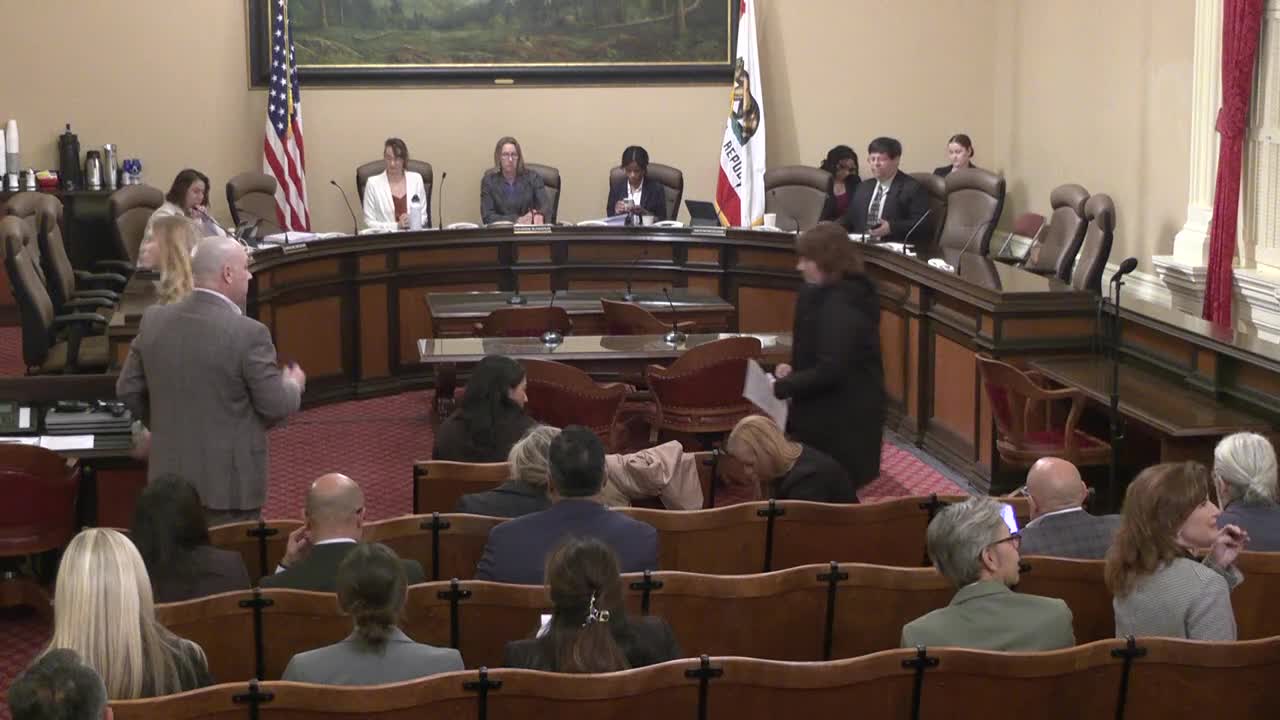 15MIN
Senate Standing Committee on Environmental Quality
Bill Author

Bill Co-Author(s):