SB 1187: Open meetings.
- Session Year: 2025-2026
- House: Senate
- Latest Version Date: 2026-09-18
Current Status:
Passed
(2026-09-18: Chaptered by Secretary of State. Chapter 324, Statutes of 2026.)
Introduced
In Committee
Awaiting First Chamber Vote
Passed First Chamber
In Committee
Awaiting Second Chamber Vote
Passed Second Chamber
Enacted
Existing law, the Ralph M. Brown Act, requires, with specified exceptions, that all meetings of a legislative body, as defined, of a local agency be open and public and that all persons be permitted to attend and participate.
Existing law, beginning July 1, 2026, requires eligible legislative bodies, as defined, to have in place a system for electronically accepting and fulfilling requests for meeting agendas and documents. Existing law additionally requires these legislative bodies to translate the agenda for each meeting of that body and to reasonably assist members of the public who wish to translate a public meeting or receive interpretation, as specified.
This bill would instead delete the above-described requirements on eligible legislative bodies.
Existing constitutional provisions require that a statute that limits the right of access to the meetings of public bodies or the writings of public officials and agencies be adopted with findings demonstrating the interest protected by the limitation and the need for protecting that interest.
This bill would make legislative findings to that effect.
The California Constitution requires local agencies, for the purpose of ensuring public access to the meetings of public bodies and the writings of public officials and agencies, to comply with a statutory enactment that amends or enacts laws relating to public records or open meetings and contains findings demonstrating that the enactment furthers the constitutional requirements relating to this purpose.
This bill would make legislative findings to that effect.
This bill would declare that it is to take effect immediately as an urgency statute.
Existing law, the Ralph M. Brown Act, requires, with specified exceptions, that all meetings of a legislative body, as defined, of a local agency be open and public and that all persons be permitted to attend and participate. Existing law defines meetings for these purposes to mean any congregation of a majority of the members of a legislative body at the same time and location, as specified, to hear, discuss, deliberate, or take action on any item that is within the subject matter jurisdiction of the legislative body.
This bill would define majority for purposes of the act to mean the number of members of the legislative body equaling more than half of the total number of seats on the legislative body. The bill would specify that if a seat on the legislative body is vacant, that seat is to still be counted as a seat on the legislative body.Existing law, beginning July 1, 2026, requires eligible legislative bodies, as defined, to have in place a system for electronically accepting and fulfilling requests for meeting agendas and documents. Existing law additionally requires these legislative bodies to translate the agenda for each meeting of that body and to reasonably assist members of the public who wish to translate a public meeting or receive interpretation, as specified.
This bill would instead delete the above-described requirements on eligible legislative bodies.
Existing constitutional provisions require that a statute that limits the right of access to the meetings of public bodies or the writings of public officials and agencies be adopted with findings demonstrating the interest protected by the limitation and the need for protecting that interest.
This bill would make legislative findings to that effect.
The California Constitution requires local agencies, for the purpose of ensuring public access to the meetings of public bodies and the writings of public officials and agencies, to comply with a statutory enactment that amends or enacts laws relating to public records or open meetings and contains findings demonstrating that the enactment furthers the constitutional requirements relating to this purpose.
This bill would make legislative findings to that effect.
Existing law, the Ralph M. Brown Act, requires, with specified exceptions, that all meetings of a legislative body, as defined, of a local agency be open and public and that all persons be permitted to attend and participate. Existing law defines meetings for these purposes to mean any congregation of a majority of the members of a legislative body at the same time and location, as specified, to hear, discuss, deliberate, or take action on any item that is within the subject matter jurisdiction of the legislative body.
This bill would define majority for purposes of the act to mean the number of members of the legislative body equaling more than half of the total number of seats on the legislative body. The bill would specify that if a seat on the legislative body is vacant, that seat is to still be counted as a seat on the legislative body.
Existing constitutional provisions require that a statute that limits the right of access to the meetings of public bodies or the writings of public officials and agencies be adopted with findings demonstrating the interest protected by the limitation and the need for protecting that interest.
This bill would make legislative findings to that effect.
The California Constitution requires local agencies, for the purpose of ensuring public access to the meetings of public bodies and the writings of public officials and agencies, to comply with a statutory enactment that amends or enacts laws relating to public records or open meetings and contains findings demonstrating that the enactment furthers the constitutional requirements relating to this purpose.
This bill would make legislative findings to that effect.
(a)The Legislature finds and declares that public access is necessary for an informed populace. The Legislature encourages local agencies to adopt public access requirements that exceed the requirements of this chapter.
(b)(1)In addition to any other applicable requirements of this chapter, a meeting held by an eligible legislative body pursuant to this chapter shall comply with both of the following requirements:
(A)(i)(I)(ia)All open and public meetings shall include an opportunity for members of the public to attend via a two-way telephonic service or a two-way audiovisual platform, except if adequate telephonic or internet service is not operational at the meeting location. If adequate telephonic or internet service is operational at the meeting location during only a portion of the meeting, the legislative body shall include an opportunity for members of the public to attend via a two-way telephonic service or a two-way audiovisual platform during that portion of the meeting.
(ib)(Ia)On or before July 1, 2026, an eligible legislative body shall approve at a noticed public meeting in open session, not on the consent calendar, a policy regarding disruption of telephonic or internet service occurring during meetings subject to this sub-subclause. The policy shall address the procedures for recessing and reconvening a meeting in the event of disruption and the efforts that the eligible legislative body shall make to attempt to restore the service.
(Ib)If a disruption of telephonic or internet service that prevents members of the public from attending or observing the meeting via the two-way telephonic service or two-way audiovisual platform occurs during the meeting, the eligible legislative body shall recess the open session of the meeting for at least one hour and make a good faith attempt to restore the service. The eligible legislative body may meet in closed session during this period. The eligible legislative body shall not reconvene the open session of the meeting until at least one hour following the disruption, or until telephonic or internet service is restored, whichever is earlier.
(Ic)Upon reconvening the open session, if telephonic or internet service has not been restored, the eligible legislative body shall adopt a finding by rollcall vote that good faith efforts to restore the telephonic or internet service have been made in accordance with the policy adopted pursuant to sub-sub-subclause (Ia) and that the public interest in continuing the meeting outweighs the public interest in remote public access.
(II)Subclause (I) does not apply to a meeting that is held to do any of the following:
(ia)Attend a judicial or administrative proceeding to which the local agency is a party.
(ib)Inspect real or personal property provided that the topic of the meeting is limited to items directly related to the real or personal property.
(ic)Meet with elected or appointed officials of the United States or the State of California, solely to discuss a legislative or regulatory issue affecting the local agency and over which the federal or state officials have jurisdiction.
(id)Meet in or nearby a facility owned by the agency, provided that the topic of the meeting is limited to items directly related to the facility.
(ie)Meet in an emergency situation pursuant to Section 54956.5.
(ii)If an eligible legislative body elects to provide a two-way audiovisual platform, the eligible legislative body shall publicly post and provide a call-in option, and activate any automatic captioning function during the meeting if an automatic captioning function is included with the two-way audiovisual platform. If an eligible legislative body does not elect to provide a two-way audiovisual platform, the eligible legislative body shall provide a two-way telephonic service for the public to participate in the meeting, pursuant to subclause (I).
(B)All open and public meetings for which attendance via a two-way telephonic service or a two-way audiovisual platform is provided in accordance with subparagraph (A) shall provide the public with an opportunity to provide public comment in accordance with Section 54954.3 via the two-way telephonic or two-way audiovisual platform, and ensure the opportunity for the members of the public participating via a two-way telephonic or two-way audiovisual platform to provide public comment with the same time allotment as a person attending a meeting in person.
(2)(A)An eligible legislative body shall make reasonable efforts, as determined by the legislative body, to invite groups that do not traditionally participate in public meetings to attend those meetings, which may include, but are not limited to, all the following:
(i)Media organizations that provide news coverage in the jurisdiction of the eligible legislative body, including media organizations that serve non-English-speaking communities.
(ii)Good government, civil rights, civic engagement, neighborhood, and community group organizations, or similar organizations that are active in the jurisdiction of the eligible legislative body, including organizations active in non-English-speaking communities.
(B)Legislative bodies shall have broad discretion in the choice of reasonable efforts they make under this subparagraph. No action shall be commenced or maintained against an eligible legislative body arising from failing to provide public meeting information to any specific group pursuant to this subparagraph.
(c)For purposes of this section, all of the following definitions apply:
(1)Eligible legislative body means any of the following:
(A)A city council of a city with a population of 30,000 or more.
(B)A county board of supervisors of a county, or city and county, with a population of 30,000 or more.
(C)A city council of a city located in a county with a population of 600,000 or more.
(D)The board of directors of a special district that has an internet website and meets any of the following conditions:
(i)The boundaries of the special district include the entirety of a county with a population of 600,000 or more, and the special district has over 200 full-time equivalent employees.
(ii)The special district has over 1,000 full-time equivalent employees.
(iii)The special district has annual revenues, based on the most recent Financial Transaction Report data published by the California State Controller, that exceed four hundred million dollars ($400,000,000), adjusted annually for inflation commencing January 1, 2027, as measured by the percentage change in the California Consumer Price Index from January 1 of the prior year to January 1 of the current year, and the special district employs over 200 full-time equivalent employees.
(2)Two-way audiovisual platform means an online platform that provides participants with the ability to participate in a meeting via both an interactive video conference and a two-way telephonic service.
(3)Two-way telephonic service means a telephone service that does not require internet access and allows participants to dial a telephone number to listen and verbally participate.
(d)This section shall become operative on July 1, 2026.
(e)This section shall remain in effect only until January 1, 2030, and as of that date is repealed.
SEC. 2.The Legislature finds and declares that Section 1 of this act, which amends Section 54953.4 of the Government Code, imposes a limitation on the publics right of access to the meetings of public bodies or the writings of public officials and agencies within the meaning of Section 3 of Article I of the California Constitution. Pursuant to that constitutional provision, the Legislature makes the following findings to demonstrate the interest protected by this limitation and the need for protecting that interest:
This act is necessary to ensure minimum standards for public participation and notice requirements allowing for greater public participation in meetings.
SEC. 3.The Legislature finds and declares that Section 1 of this act, which amends Section 54953.4 of the Government Code, furthers, within the meaning of paragraph (7) of subdivision (b) of Section 3 of Article I of the California Constitution, the purposes of that constitutional section as it relates to the right of public access to the meetings of local public bodies or the writings of local public officials and local agencies. Pursuant to paragraph (7) of subdivision (b) of Section 3 of Article I of the California Constitution, the Legislature makes the following findings:
This act is necessary to ensure minimum standards for public participation and notice requirements allowing for greater public participation in meetings.
SEC. 4.This act is an urgency statute necessary for the immediate preservation of the public peace, health, or safety within the meaning of Article IV of the California Constitution and shall go into immediate effect. The facts constituting the necessity are:
In order to ensure minimum standards for public participation and notice requirements allowing for greater public participation in meetings, it is necessary for this act to take effect immediately.
(a)The Legislature finds and declares that public access is necessary for an informed populace. The Legislature encourages local agencies to adopt public access requirements that exceed the requirements of this chapter.
(b)(1)In addition to any other applicable requirements of this chapter, a meeting held by an eligible legislative body pursuant to this chapter shall comply with both of the following requirements:
(A)(i)(I)(ia)All open and public meetings shall include an opportunity for members of the public to attend via a two-way telephonic service or a two-way audiovisual platform, except if adequate telephonic or internet service is not operational at the meeting location. If adequate telephonic or internet service is operational at the meeting location during only a portion of the meeting, the legislative body shall include an opportunity for members of the public to attend via a two-way telephonic service or a two-way audiovisual platform during that portion of the meeting.
(ib)(Ia)On or before July 1, 2026, an eligible legislative body shall approve at a noticed public meeting in open session, not on the consent calendar, a policy regarding disruption of telephonic or internet service occurring during meetings subject to this sub-subclause. The policy shall address the procedures for recessing and reconvening a meeting in the event of disruption and the efforts that the eligible legislative body shall make to attempt to restore the service.
(Ib)If a disruption of telephonic or internet service that prevents members of the public from attending or observing the meeting via the two-way telephonic service or two-way audiovisual platform occurs during the meeting, the eligible legislative body shall recess the open session of the meeting for at least one hour and make a good faith attempt to restore the service. The eligible legislative body may meet in closed session during this period. The eligible legislative body shall not reconvene the open session of the meeting until at least one hour following the disruption, or until telephonic or internet service is restored, whichever is earlier.
(Ic)Upon reconvening the open session, if telephonic or internet service has not been restored, the eligible legislative body shall adopt a finding by rollcall vote that good faith efforts to restore the telephonic or internet service have been made in accordance with the policy adopted pursuant to sub-sub-subclause (Ia) and that the public interest in continuing the meeting outweighs the public interest in remote public access.
(II)Subclause (I) does not apply to a meeting that is held to do any of the following:
(ia)Attend a judicial or administrative proceeding to which the local agency is a party.
(ib)Inspect real or personal property provided that the topic of the meeting is limited to items directly related to the real or personal property.
(ic)Meet with elected or appointed officials of the United States or the State of California, solely to discuss a legislative or regulatory issue affecting the local agency and over which the federal or state officials have jurisdiction.
(id)Meet in or nearby a facility owned by the agency, provided that the topic of the meeting is limited to items directly related to the facility.
(ie)Meet in an emergency situation pursuant to Section 54956.5.
(ii)If an eligible legislative body elects to provide a two-way audiovisual platform, the eligible legislative body shall publicly post and provide a call-in option, and activate any automatic captioning function during the meeting if an automatic captioning function is included with the two-way audiovisual platform. If an eligible legislative body does not elect to provide a two-way audiovisual platform, the eligible legislative body shall provide a two-way telephonic service for the public to participate in the meeting, pursuant to subclause (I).
(B)(i)All open and public meetings for which attendance via a two-way telephonic service or a two-way audiovisual platform is provided in accordance with subparagraph (A) shall provide the public with an opportunity to provide public comment in accordance with Section 54954.3 via the two-way telephonic or two-way audiovisual platform, and ensure the opportunity for the members of the public participating via a two-way telephonic or two-way audiovisual platform to provide public comment with the same time allotment as a person attending a meeting in person.
(2)(A)An eligible legislative body shall make reasonable efforts, as determined by the legislative body, to invite groups that do not traditionally participate in public meetings to attend those meetings, which may include, but are not limited to, all the following:
(i)Media organizations that provide news coverage in the jurisdiction of the eligible legislative body, including media organizations that serve non-English-speaking communities.
(ii)Good government, civil rights, civic engagement, neighborhood, and community group organizations, or similar organizations that are active in the jurisdiction of the eligible legislative body, including organizations active in non-English-speaking communities.
(B)Legislative bodies shall have broad discretion in the choice of reasonable efforts they make under this subparagraph. No action shall be commenced or maintained against an eligible legislative body arising from failing to provide public meeting information to any specific group pursuant to this subparagraph.
(c)For purposes of this section, all of the following definitions apply:
(1)Eligible legislative body means any of the following:
(A)A city council of a city with a population of 30,000 or more.
(B)A county board of supervisors of a county, or city and county, with a population of 30,000 or more.
(C)A city council of a city located in a county with a population of 600,000 or more.
(D)The board of directors of a special district that has an internet website and meets any of the following conditions:
(i)The boundaries of the special district include the entirety of a county with a population of 600,000 or more, and the special district has over 200 full-time equivalent employees.
(ii)The special district has over 1,000 full-time equivalent employees.
(iii)The special district has annual revenues, based on the most recent Financial Transaction Report data published by the California State Controller, that exceed four hundred million dollars ($400,000,000), adjusted annually for inflation commencing January 1, 2027, as measured by the percentage change in the California Consumer Price Index from January 1 of the prior year to January 1 of the current year, and the special district employs over 200 full-time equivalent employees.
(2)Two-way audiovisual platform means an online platform that provides participants with the ability to participate in a meeting via both an interactive video conference and a two-way telephonic service.
(3)Two-way telephonic service means a telephone service that does not require internet access and allows participants to dial a telephone number to listen and verbally participate.
(d)This section shall become operative on July 1, 2026.
(e)This section shall remain in effect only until January 1, 2030, and as of that date is repealed.
SEC. 2.The Legislature finds and declares that Section 1 of this act, which amends Section 54953.4 of the Government Code, imposes a limitation on the publics right of access to the meetings of public bodies or the writings of public officials and agencies within the meaning of Section 3 of Article I of the California Constitution. Pursuant to that constitutional provision, the Legislature makes the following findings to demonstrate the interest protected by this limitation and the need for protecting that interest:
This act is necessary to ensure minimum standards for public participation and notice requirements allowing for greater public participation in meetings.
SEC. 3.The Legislature finds and declares that Section 1 of this act, which amends Section 54953.4 of the Government Code, furthers, within the meaning of paragraph (7) of subdivision (b) of Section 3 of Article I of the California Constitution, the purposes of that constitutional section as it relates to the right of public access to the meetings of local public bodies or the writings of local public officials and local agencies. Pursuant to paragraph (7) of subdivision (b) of Section 3 of Article I of the California Constitution, the Legislature makes the following findings:
This act is necessary to ensure minimum standards for public participation and notice requirements allowing for greater public participation in meetings.
SEC. 4.This act is an urgency statute necessary for the immediate preservation of the public peace, health, or safety within the meaning of Article IV of the California Constitution and shall go into immediate effect. The facts constituting the necessity are:
In order to ensure minimum standards for public participation and notice requirements allowing for greater public participation in meetings, it is necessary for this act to take effect immediately.
(a)The Legislature finds and declares that public access, including through translation of agendas as required by this section, access is necessary for an informed populace. The Legislature encourages local agencies to adopt public access requirements that exceed the requirements of this chapter by translating additional languages, employing human translators, and conducting additional outreach. chapter.
(b)(1)In addition to any other applicable requirements of this chapter, a meeting held by a an eligible legislative body pursuant to this chapter shall comply with both of the following requirements:
(A)(i)(I)(ia)All open and public meetings shall include an opportunity for members of the public to attend via a two-way telephonic service or a two-way audiovisual platform, except if adequate telephonic or internet service is not operational at the meeting location. If adequate telephonic or internet service is operational at the meeting location during only a portion of the meeting, the legislative body shall include an opportunity for members of the public to attend via a two-way telephonic service or a two-way audiovisual platform during that portion of the meeting.
(ib)(Ia)On or before July 1, 2026, an eligible legislative body shall approve at a noticed public meeting in open session, not on the consent calendar, a policy regarding disruption of telephonic or internet service occurring during meetings subject to this sub-subclause. The policy shall address the procedures for recessing and reconvening a meeting in the event of disruption and the efforts that the eligible legislative body shall make to attempt to restore the service.
(Ib)If a disruption of telephonic or internet service that prevents members of the public from attending or observing the meeting via the two-way telephonic service or two-way audiovisual platform occurs during the meeting, the eligible legislative body shall recess the open session of the meeting for at least one hour and make a good faith attempt to restore the service. The eligible legislative body may meet in closed session during this period. The eligible legislative body shall not reconvene the open session of the meeting until at least one hour following the disruption, or until telephonic or internet service is restored, whichever is earlier.
(Ic)Upon reconvening the open session, if telephonic or internet service has not been restored, the eligible legislative body shall adopt a finding by rollcall vote that good faith efforts to restore the telephonic or internet service have been made in accordance with the policy adopted pursuant to sub-sub-subclause (Ia) and that the public interest in continuing the meeting outweighs the public interest in remote public access.
(II)Subclause (I) does not apply to a meeting that is held to do any of the following:
(ia)Attend a judicial or administrative proceeding to which the local agency is a party.
(ib)Inspect real or personal property provided that the topic of the meeting is limited to items directly related to the real or personal property.
(ic)Meet with elected or appointed officials of the United States or the State of California, solely to discuss a legislative or regulatory issue affecting the local agency and over which the federal or state officials have jurisdiction.
(id)Meet in or nearby a facility owned by the agency, provided that the topic of the meeting is limited to items directly related to the facility.
(ie)Meet in an emergency situation pursuant to Section 54956.5.
(ii)If an eligible legislative body elects to provide a two-way audiovisual platform, the eligible legislative body shall publicly post and provide a call-in option, and activate any automatic captioning function during the meeting if an automatic captioning function is included with the two-way audiovisual platform. If an eligible legislative body does not elect to provide a two-way audiovisual platform, the eligible legislative body shall provide a two-way telephonic service for the public to participate in the meeting, pursuant to subclause (I).
(B)(i)All open and public meetings for which attendance via a two-way telephonic service or a two-way audiovisual platform is provided in accordance with paragraph (1) subparagraph (A) shall provide the public with an opportunity to provide public comment in accordance with Section 54954.3 via the two-way telephonic or two-way audiovisual platform, and ensure the opportunity for the members of the public participating via a two-way telephonic or two-way audiovisual platform to provide public comment with the same time allotment as a person attending a meeting in person.
(2)(A)An eligible legislative body shall reasonably assist members of the public who wish to translate a public meeting into any language or wish to receive interpretation provided by another member of the public, so long as the interpretation is not disrupting to the meeting, as defined in Section 54957.95. The eligible legislative body shall publicize instructions on how to request assistance under this subdivision. Assistance may include any of the following, as determined by the eligible legislative body:(i)Arranging space for one or more interpreters at the meeting location.(ii)Allowing extra time during the meeting for interpretation to occur.(iii)Ensuring participants may utilize their personal equipment or reasonably access facilities for participants to access commercially available interpretation services.(B)This section does not require an eligible legislative body to provide interpretation of any public meeting, however, an eligible legislative body may elect to provide interpretation of any public meeting.(C)The eligible legislative body is not responsible for the content or accuracy of any interpretation facilitated, assisted with, or provided under this subdivision. An action shall not be commenced or maintained against the eligible legislative body arising from the content or accuracy of any interpretation facilitated, assisted with, or provided under this subdivision.(3)An eligible legislative body shall take the following actions to encourage residents, including those in underrepresented communities and non-English-speaking communities, to participate in public meetings:(A)Have in place a system for electronically accepting and fulfilling requests for meeting agendas and documents pursuant to Section 54954.1 through email or through an integrated agenda management platform. Information about how to make a request using this system shall be accessible through a prominent direct link posted on the primary internet website home page of the eligible legislative body.(B)(i)Create and maintain an accessible internet webpage dedicated to public meetings that includes, or provides a link to, all of the following information:(I)A general explanation of the public meeting process for the eligible legislative body.(II)An explanation of the procedures for a member of the public to provide in-person or remote oral public comment during a public meeting or to submit written public comment.(III)A calendar of all public meeting dates with calendar listings that include the date, time, and location of each public meeting.(IV)The agenda posted online pursuant to paragraph (2) of subdivision (a) of Section 54954.2.(ii)The eligible legislative body shall include a link to the webpage required by subparagraph (A) on the home page of the eligible legislative bodys internet website. (C)(i)Make(2)(A)An eligible legislative body shall make reasonable efforts, as determined by the legislative body, to invite groups that do not traditionally participate in public meetings to attend those meetings, which may include, but are not limited to, all the following:
(I)(i)Media organizations that provide news coverage in the jurisdiction of the eligible legislative body, including media organizations that serve non-English-speaking communities.
(II)(ii)Good government, civil rights, civic engagement, neighborhood, and community group organizations, or similar organizations that are active in the jurisdiction of the eligible legislative body, including organizations active in non-English-speaking communities.
(ii)(B)Legislative bodies shall have broad discretion in the choice of reasonable efforts they make under this subparagraph. No action shall be commenced or maintained against an eligible legislative body arising from failing to provide public meeting information to any specific group pursuant to this subparagraph.
(c)(1)(A)The agenda for each meeting of an eligible legislative body shall be translated into all applicable languages, and each translation shall be posted in accordance with Section 54954.2. Each translation shall include instructions in the applicable language describing how to join the meeting by the telephonic or internet-based service option, including any requirements for registration for public comment.(B)The accessible internet webpage provided under subparagraph (B) of paragraph (3) of subdivision (b) shall be translated into all applicable languages, and each translation shall be accessible through a prominent direct link posted on the primary internet website home page of the eligible legislative body.(2)A translation made using a digital translation service shall satisfy the requirements of paragraph (1).(3)The eligible legislative body shall make available a physical location that is freely accessible to the public in reasonable proximity to the physical location in which the agenda and translations are posted as described in paragraph (1), and shall allow members of the public to post additional translations of the agenda in that location.(4)The eligible legislative body is not responsible for the content or accuracy of any translation provided pursuant to this subdivision. No action shall be commenced or maintained against an eligible legislative body arising from the content, accuracy, posting, or removal of any translation provided by the eligible legislative body or posted by any person pursuant to this subdivision. (5)For the purposes of this section, the agenda does not include the entire agenda packet.(d)This section shall not be construed to affect or supersede any other applicable civil rights, nondiscrimination, or public access laws.(e)(c)For purposes of this section, all of the following definitions apply:
(1)(A)Applicable languages means languages, according to data from the most recent American Community Survey, spoken jointly by 20 percent or more of the applicable population, provided that 20 percent or more of the population that speaks that language in that city or county speaks English less than very well.(B)For the purposes of subparagraph (A), the applicable population shall be determined as follows:(i)For an eligible legislative body that is a city council or county board of supervisors, the applicable population shall be the population of the city or county.(ii)For an eligible legislative body of a special district, the applicable population shall be either of the following, at the discretion of the board of directors of the special district:(I)The population of the county with the greatest population within the boundaries of the special district.(II)The population of the service area of the special district, if the special district has the data to determine what languages spoken by the population within its service area meet the requirements of paragraph (A).(C)If more than three languages meet the criteria set forth in subparagraph (A), applicable languages shall mean the three languages described in subparagraph (A) that are spoken by the largest percentage of the population.(D)An eligible legislative body may elect to determine the applicable languages based upon a source other than the most recent American Community Survey if it makes a finding, based upon substantial evidence, that the other source provides equally or more reliable data for the territory over which the eligible legislative body exercises jurisdiction. (2)(1)Eligible legislative body means any of the following:
(A)A city council of a city with a population of 30,000 or more.
(B)A county board of supervisors of a county, or city and county, with a population of 30,000 or more.
(C)A city council of a city located in a county with a population of 600,000 or more.
(D)The board of directors of a special district that has an internet website and meets any of the following conditions:
(i)The boundaries of the special district include the entirety of a county with a population of 600,000 or more, and the special district has over 200 full-time equivalent employees.
(ii)The special district has over 1,000 full-time equivalent employees.
(iii)The special district has annual revenues, based on the most recent Financial Transaction Report data published by the California State Controller, that exceed four hundred million dollars ($400,000,000), adjusted annually for inflation commencing January 1, 2027, as measured by the percentage change in the California Consumer Price Index from January 1 of the prior year to January 1 of the current year, and the special district employs over 200 full-time equivalent employees.
(3)(2)Two-way audiovisual platform means an online platform that provides participants with the ability to participate in a meeting via both an interactive video conference and a two-way telephonic service.
(4)(3)Two-way telephonic service means a telephone service that does not require internet access and allows participants to dial a telephone number to listen and verbally participate.
(f)(d)This section shall become operative on July 1, 2026.
(g)(e)This section shall remain in effect only until January 1, 2030, and as of that date is repealed.
SEC. 2.The Legislature finds and declares that Section 1 of this act, which adds Section 54952.65 to amends Section 54953.4 of the Government Code, imposes a limitation on the publics right of access to the meetings of public bodies or the writings of public officials and agencies within the meaning of Section 3 of Article I of the California Constitution. Pursuant to that constitutional provision, the Legislature makes the following findings to demonstrate the interest protected by this limitation and the need for protecting that interest:
Ensuring that legislative bodies do not take actions unless a sufficient number of members are present at the meeting ensures that actions take place with sufficient public scrutiny.This act is necessary to ensure minimum standards for public participation and notice requirements allowing for greater public participation in meetings.
SEC. 3.The Legislature finds and declares that Section 1 of this act, which adds Section 54952.65 to amends Section 54953.4 of the Government Code, furthers, within the meaning of paragraph (7) of subdivision (b) of Section 3 of Article I of the California Constitution, the purposes of that constitutional section as it relates to the right of public access to the meetings of local public bodies or the writings of local public officials and local agencies. Pursuant to paragraph (7) of subdivision (b) of Section 3 of Article I of the California Constitution, the Legislature makes the following findings:
Ensuring that legislative bodies do not take actions unless a sufficient number of members are present at the meeting ensures that actions take place with sufficient public scrutiny.This act is necessary to ensure minimum standards for public participation and notice requirements allowing for greater public participation in meetings.
As used in this chapter, majority means the number of members of the legislative body equaling more than half of the total number of seats on the legislative body. If a seat on the legislative body is vacant, that seat shall still be counted as a seat on the legislative body.
SEC. 2.The Legislature finds and declares that Section 1 of this act, which adds Section 54952.65 to the Government Code, imposes a limitation on the publics right of access to the meetings of public bodies or the writings of public officials and agencies within the meaning of Section 3 of Article I of the California Constitution. Pursuant to that constitutional provision, the Legislature makes the following findings to demonstrate the interest protected by this limitation and the need for protecting that interest:
Ensuring that legislative bodies do not take actions unless a sufficient number of members are present at the meeting ensures that actions take place with sufficient public scrutiny.
SEC. 3.The Legislature finds and declares that Section 1 of this act, which adds Section 54952.65 to the Government Code, furthers, within the meaning of paragraph (7) of subdivision (b) of Section 3 of Article I of the California Constitution, the purposes of that constitutional section as it relates to the right of public access to the meetings of local public bodies or the writings of local public officials and local agencies. Pursuant to paragraph (7) of subdivision (b) of Section 3 of Article I of the California Constitution, the Legislature makes the following findings:
Ensuring that legislative bodies do not take actions unless a sufficient number of members are present at the meeting ensures that actions take place with sufficient public scrutiny.
|
Date
|
Status
|
|---|---|
| Sep 18, 2026 | Chaptered by Secretary of State. Chapter 324, Statutes of 2026. |
| Sep 18, 2026 | Approved by the Governor. |
| Aug 28, 2026 | Enrolled and presented to the Governor at 4 p.m. |
| Aug 24, 2026 | Assembly amendments concurred in. (Ayes 40. Noes 0. Page 5686.) Ordered to engrossing and enrolling. |
| Aug 24, 2026 | Assembly amendments concurred in. (Ayes 40. Noes 0.) Ordered to engrossing and enrolling. |
| Aug 24, 2026 | Assembly amendments concurred in. (Ayes 39. Noes 0.) Ordered to engrossing and enrolling. |
| Aug 24, 2026 | Urgency clause adopted. |
| Aug 19, 2026 | From committee: That the Assembly amendments be concurred in. (Ayes 6. Noes 0. Page 5570.) |
| Aug 19, 2026 | From committee: That the Assembly amendments be concurred in. (Ayes 6. Noes 0.) |
| Aug 19, 2026 | Set for hearing August 19. |
| Aug 18, 2026 | From committee: Be re-referred to Com. on L. GOV. pursuant to Senate Rule 29.10(d). (Ayes 5. Noes 0. Page 5522.) Re-referred to Com. on L. GOV. |
| Aug 18, 2026 | From committee: Be re-referred to Com. on L. GOV. pursuant to Senate Rule 29.10(d). (Ayes 5. Noes 0.) Re-referred to Com. on L. GOV. |
| Aug 18, 2026 | Re-referred to Com. on RLS. pursuant to Senate Rule 29.10(d). |
| Aug 18, 2026 | In Senate. Concurrence in Assembly amendments pending. |
| Aug 17, 2026 | Read third time. Urgency clause adopted. Passed. (Ayes 73. Noes 0. Page 6205.) Ordered to the Senate. |
| Aug 17, 2026 | Read third time. Urgency clause adopted. Passed. Ordered to the Senate. |
| Aug 3, 2026 | Read second time. Ordered to third reading. |
| Jul 6, 2026 | Read second time and amended. Ordered to second reading. |
| Jul 6, 2026 | From committee: Do pass as amended. (Ayes 10. Noes 0.) (July 1). |
| Jun 22, 2026 | From committee with author's amendments. Read second time and amended. Re-referred to Com. on L. GOV. |
| May 18, 2026 | Referred to Com. on L. GOV. |
| May 7, 2026 | In Assembly. Read first time. Held at Desk. |
| May 7, 2026 | Read third time. Passed. (Ayes 36. Noes 0. Page 4167.) Ordered to the Assembly. |
| May 7, 2026 | Read third time. Passed. (Ayes 36. Noes 0.) Ordered to the Assembly. |
| Apr 30, 2026 | Read second time. Ordered to consent calendar. |
| Apr 29, 2026 | From committee: Do pass. Ordered to consent calendar. (Ayes 7. Noes 0. Page 4095.) (April 29). |
| Apr 29, 2026 | From committee: Do pass. Ordered to consent calendar. (Ayes 7. Noes 0.) (April 29). |
| Apr 9, 2026 | Set for hearing April 29. |
| Mar 4, 2026 | Referred to Com. on L. GOV. |
| Feb 20, 2026 | From printer. May be acted upon on or after March 22. |
| Feb 19, 2026 | Introduced. Read first time. To Com. on RLS. for assignment. To print. |
|
Date
|
Description
|
Location
|
Votes
|
|
|---|---|---|---|---|
| Aug 24, 2026 | Unfinished Business SB1187 Durazo Urgency Clause Concurrence | Senate Floor |
Passed |
|
| Aug 19, 2026 | That the Assembly amendments be concurred in | Senate Standing Committee on Local Government |
Passed |
|
| Aug 17, 2026 | SB 1187 Durazo Third Reading Urgency By Fong | Assembly Floor |
Passed |
|
| Jul 1, 2026 | Do pass as amended. | Assembly Standing Committee on Local Government |
Passed |
|
| May 7, 2026 | Consent Calendar 2nd SB1187 Durazo | Senate Floor |
Passed |
|
| Apr 29, 2026 | Do pass and be ordered to the Consent Calendar | Senate Standing Committee on Local Government |
Passed |
This list shows positions taken on this bill by organizations on the date displayed, which is linked to the original source.
Positions by individuals are not included.
|
Organization
|
Position
|
Date
|
|---|---|---|
| California Municipal Clerks Association | ** Support | |
| California Municipal Clerks Association (CMCA) | ** Support | |
| California State Association Of Counties | ** Support | |
| California State Association of Counties (CSAC) | ** Support | |
| City of Chino Hills | ** Support | |
| City of Chino Hills | ** Support | |
| City of Lakewood | ** Support | |
| City of Lakewood | ** Support | |
| City of Rohnert Park | ** Support | |
| City of Rohnert Park | ** Support | |
| League Of California Cities | ** Support | |
| League Of California Cities | ** Support | |
| League of California Cities (CalCities) | ** Support | |
| Marin County Council of Mayors and Council Members | ** Support | |
| Marin County Council of Mayors and Council Members | ** Support | |
| Rural County Representatives of California | ** Support | |
| Rural County Representatives of California (RCRC) | ** Support | |
| San Bernardino County | ** Support | |
| San Bernardino County | ** Support | |
| the California Municipal Clerks Association (CMCA) | ** Support | |
| The California State Association of Counties (CSAC) | ** Support | |
| The California State Association of Counties (CSAC) | ** Support | |
| Urban Counties of California | ** Support | |
| Urban Counties of California (UCC) | ** Support |
SENATE COMMITTEE ON LOCAL GOVERNMENT
Senator María Elena Durazo, Chair
2025 - 2026 Regular
Pursuant to Rule 29.10(d)
Bill No: | SB 1187 | Hearing Date: | 8/19/26 |
Author: | Durazo | Fiscal: | No |
Version: | 7/6/26 | Consultant: | Vargas, Peterson |
Open meetings.
Repeals language access requirements for local government meetings.
Background
Brown Act. The Ralph M. Brown Act establishes requirements for how local agencies must hold public meetings. Among other provisions, the Act requires meetings of the legislative body of a local agency be open and public. The Legislature originally enacted the Brown Act in 1953 and has since amended it numerous times. The Legislature expressly declared the intent of the Brown Act in its original statute, which remains unchanged today:
The Legislature finds and declares that the public commissions, boards and councils and other public agencies in this State exist to aid in the conduct of the people’s business. It is the intent of the law that their actions be taken openly and that their deliberations be conducted openly. The people of this State do not yield their sovereignty to the agencies which serve them. The people, in delegating authority, do not give their public servants the right to decide what is good for the people to know and what is not good for them to know. The people insist on remaining informed so that they may retain control over the instruments they have created.
The Brown Act generally requires local agencies to notice meetings in advance, including the posting of an agenda, and requires these meetings to be open and accessible to the public. The Brown Act defines a “meeting” as “any congregation of a majority of the members of a legislative body at the same time and location (including teleconference locations) to hear, discuss, deliberate, or take action on any item that is within the subject matter jurisdiction of the legislative body.” The Brown Act applies not just to governing bodies of local agencies like a city council or county board of supervisors. It also applies to these other legislative bodies of a local agency:
- Bodies of a local agency, whether permanent or temporary, decisionmaking or advisory, created by charter, ordinance, resolution, or formal action of a legislative body;
- Standing committees of a legislative body, regardless of their composition, that have a continuing subject matter jurisdiction, or a meeting schedule fixed by charter, ordinance, resolution, or formal action of a legislative body; and
- Boards, commissions, committees, or other multimember bodies that govern a private corporation, limited liability company, or other entity that either is created by an elected legislative body to exercise authority delegated to it, or receives funds from a local agency and the membership includes a full voting member from that legislative body.
The Brown Act lays out certain requirements for public participation. The legislative body cannot require members of the public to register or provide information as a condition of participation. The Brown Act also generally requires every agenda for meetings to provide an opportunity for the public to directly address the legislative body on any item of public interest, before or during its consideration of the item, within its jurisdiction. While the Brown Act requires local agencies to provide opportunities for public comment, it also allows local agencies to adopt reasonable regulations to carry out public participation requirements, such as limiting the amount of time for public testimony on each item and for each speaker. These restrictions must be content-neutral. For example, the local agency cannot restrict public criticism of its actions.
If a member of the public, including the respective district attorney, believes a local agency violated the Brown Act, they must first send an order to the local agency to correct the violation. If the local agency disagrees with the complaint and does not correct it, the submitter can pursue the complaint through the courts. If the court agrees with the complaint, outcomes range from invalidating certain actions of the local agency to a misdemeanor criminal conviction.
The Brown Act establishes minimum standards for public participation. It does not preclude a local agency from adopting procedures that provide greater opportunities for public comment or otherwise exceed those minimum requirements.
SB 707 (Durazo, 2025). SB 707 made various changes to modernize the Brown Act that expand teleconferencing flexibility for local officials, increase public participation, and expand language access.
Teleconferencing flexibility. SB 707 expands teleconferencing options for a legislative body of a local agency. SB 707 broadens the scope under which members may participate remotely without requiring a quorum to participate from locations within the local agency’s jurisdiction, and authorizes subsidiary and multijurisdictional bodies to meet remotely on a recurring basis provided they maintain a physical location where the public can attend. SB 707 also establishes separate procedures for remote participation for just cause and during emergencies.
Public participation. SB 707 placed additional requirements on eligible legislative bodies for public participation and language access. Under SB 707, an eligible legislative body is:
- A city council or county board of supervisors with a city or county population of 30,000 or more;
- A city council of a city located within a county with a population of 600,000 or more;
- A board of directors of a special district that has over 200 full-time employees, has an internet website, and (1) covers the entirety of a county with a population of 600,000 or more; (2) has over 1,000 full-time employees; or (3) has annual revenues that exceed $400 million dollars.
SB 707 requires an eligible legislative body to take the following actions to encourage residents, including those in underrepresented communities and non-English-speaking communities, to participate in public meetings:
- Provide remote participation options to the public. This must include either two-way telephonic service combined with live webcasting of the meeting, or a two-way audiovisual platform;
- Make a reasonable effort to invite groups that do not traditionally participate in public meetings, which may include media organizations, neighborhood, and community group organizations, among others;
- Have a system in place for electronically accepting and fulfilling requests for meeting agendas and documents pursuant to specified provisions of the Brown Act through email or through an integrated agenda management platform; and
- Create and maintain an accessible internet webpage dedicated to public meetings that includes and provides a link to a calendar of all public meetings, an explanation of the procedures for a member of the public to provide in person or remote oral public comment during a public meeting, and the agenda posted.
Language access. SB 707 also establishes minimum requirements for eligible legislative bodies to increase language access for non-English-speaking residents. Those requirements for eligible legislative bodies include:
- Reasonably assist members of the public who wish to translate a public meeting into any language or wish to receive interpretation provided by another member of the public, so long as the interpretation is not disruptive to the meeting;
- Arrange space for one or more interpreters at a meeting location;
- Allow extra time during the meeting for interpretation to occur;
- Ensure participants may use their personal equipment or reasonably access facilities for participants to access commercially available interpretation services;
- Translate meeting agendas into all applicable languages, and post each translation, including instructions on how to join the meeting by telephonic or internet based service and any requirements to register for public comment; and
- Provide a physical location that is freely accessible to the public in reasonable proximity to the physical location in which the agenda and translations are posted and allow members of the public to post additional translations of the agenda in that location.
SB 707 defines “applicable languages” to mean languages, according to data from the most recent American Community Survey, spoken jointly by 20% or more of the applicable population, provided that 20% or more of the population that speaks that language in that city or county speaks English less than “very well”, up to a maximum of three languages spoken in the jurisdiction.
SB 707’s provisions expanding language access and public participation became effective July 1, 2026.
Language access advocates have raised concerns that SB 707 imposes new uniform language access requirements on local agencies without sufficient consideration of local agency discretion and community-specific, language access needs. To address their concerns, the author wants to remove the language access provisions in the Brown Act.
Proposed Law
Senate Bill 1187 repeals SB 707’s language access provisions.
Comments
1. Purpose of the bill. According to the author, “Last year, I authored SB 707, which comprehensively modernized Ralph Brown Act rules for government bodies to improve transparency and allow public access to their governments. The bill allowed governments to better serve their communities, and increase the public’s access to meetings, especially for disabled, working, and non-English speaking communities.
“SB 707 included language access provisions related to the translation of agendas, additional languages, employed human translators, and conducting additional outreach, that became effective on July 1, 2026. Due to concerns from language access advocates, SB 1187 as recently amended removes the language access provisions, adds findings, and adds an urgency clause. Additionally, the recent amendments reduce costs for local governments.
“I am grateful to all the stakeholders who were a part of these critical historic conversations to ensure government bodies better serve their communities. Together, these legislative efforts took steps to strengthen our governments by creating robust meetings and empower our community members to be engaged and increase participation across the state.”
2. Home rule. SB 707 established a new statewide minimum standard for language access in public meetings. Language access advocates raised concerns about establishing a one-size-fits-all minimum for translation and interpretation services because it may not reflect local community needs. After conversations with language access advocates and local governments, stakeholders agreed on removing SB 707’s language access provisions, while retaining the other parts of SB 707 that expand public access to local agency meetings, such as the requirement for remote participation options for the public and outreach efforts to underrepresented communities. This approach returns decisions regarding translating agenda, interpretation, and related language-access services to the discretion of individual local governments. While this provides jurisdictions with flexibility to tailor language-access programs to local demographics and community needs, it would no longer ensure that eligible legislative bodies all meet or exceed a new, minimum standard for language access across the state.
3. Urgency. As an urgency statute, SB 1187 must be approved by 2/3 vote of each house of the Legislature. Regular legislation takes effect on January 1 following its passage, but urgency bills take effect as soon as they are passed, signed, and chaptered.
4. Senate Rule 29.10(d). As introduced in February 2026, SB 1187 defined the term “majority’ for the purposes of local agency meeting laws. On June 22, 2026, the author amended the bill to remove those contents and rewrite the bill to remove the specified language access requirements from SB 707. Because this topic was never heard in the Senate, the Senate Rules Committee referred the amended bill under Senate Rule 29.10(d) to the Senate Local Government Committee for a hearing on the Assembly’s amendments. At its hearing, the Committee has four choices:
- Send the bill back to the Senate Floor, recommending concurrence.
- Send the bill back to the Senate Floor, recommending nonconcurrence.
- Send the bill back to the Senate Floor, without recommendation.
- Hold the bill.
Assembly Actions
Assembly Local Government Committee: 10-0
Assembly Floor: 73-0
Support and Opposition
(8/19/26)
Support: California Municipal Clerks Association (CMCA)
California State Association of Counties (CSAC)
City of Chino Hills
City of Lakewood
City of Rohnert Park
League of California Cities
Marin County Council of Mayors and Council Members
Rural County Representatives of California (RCRC)
San Bernardino County
Urban Counties of California (UCC)
Opposition: None Submitted
-- END --
SENATE RULES COMMITTEE Office of Senate Floor Analyses (916) 651-4171 | SB 1187 |
UNFINISHED BUSINESS
Bill No: SB 1187
Author: Durazo (D)
Amended: 7/6/26
Vote: 27 - Urgency
SENATE LOCAL GOVERNMENT COMMITTEE: 7-0, 4/29/26
AYES: Durazo, Choi, Arreguín, Ashby, Cervantes, Laird, Seyarto
SENATE FLOOR: 36-0, 5/7/26 (Consent)
AYES: Allen, Archuleta, Arreguín, Ashby, Becker, Blakespear, Cabaldon, Caballero, Cervantes, Choi, Cortese, Dahle, Durazo, Grayson, Hurtado, Jones, Laird, Limón, McGuire, McNerney, Menjivar, Ochoa Bogh, Padilla, Pérez, Reyes, Richardson, Rubio, Seyarto, Smallwood-Cuevas, Stern, Strickland, Umberg, Valladares, Wahab, Weber Pierson, Wiener
NO VOTE RECORDED: Alvarado-Gil, Gonzalez, Grove, Niello
ASSEMBLY FLOOR: 73-0, 8/17/26 - See last page for vote
SUBJECT: Open meetings
SOURCE: Author
DIGEST:
This bill repeals language access requirements for local government meetings.
Assembly Amendments
repeal SB 707’s language access provisions.
ANALYSIS:
Existing law:
- Guarantees, pursuant to Article I, Section 3 of the California Constitution, that “the people have the right to instruct their representatives, petition government for redress of grievances, and assemble freely to consult for the common good.” This includes a right to access information concerning the meetings and writings of public officials.
- Requires, pursuant to the Constitution, local agencies to comply with certain state laws that outline the basic requirements for public access to meetings and public records. If a subsequent bill modifies these laws, it must include findings demonstrating how it furthers the public’s access to local agencies and their officials.
- Provides, pursuant to SB 707 (Durazo, Chapter 327, Statutes of 2025), numerous consolidations, updates and requirements for the purposes of the Brown Act. Among these many provisions, provides the following:
- A definition of “eligible legislative bodies” for the purposes of the provisions outlined in b) through h), below, to mean any of the following:
- A city council of a city with a population of 30,000 or more.
- A county board of supervisors of a county, or city and county, with a population of 30,000 or more.
- A city council of a city located in a county with a population of 600,000 or more.
- The board of directors of a special district that has an internet website and meets any of the following conditions:
- The boundaries of the special district include the entirety of a county with a population of 600,000 or more, and the special district has over 200 full-time equivalent employees.
- The special district has over 1,000 full-time equivalent employees.
- The special district has annual revenues, based on the most recent Financial Transaction Report data published by the California State Controller, that exceed $400 million adjusted annually for inflation commencing January 1, 2027, as measured by the percentage change in the California Consumer Price Index from January 1 of the prior year to January 1 of the current year, and the special district employs over 200 full-time equivalent employees.
- A requirement that an eligible legislative body reasonably assist members of the public who wish to translate a public meeting into any language or wish to receive interpretation provided by another member of the public, so long as the interpretation is not disrupting to the meeting. This includes a requirement that the eligible legislative body publicize instructions on how to request assistance, as determined by the eligible legislative body, as specified.
- A requirement that an eligible legislative body take the following actions to encourage residents, including those in underrepresented communities and non-English-speaking communities, to participate in public meetings:
- Have in place a system for electronically accepting and fulfilling requests for meeting agendas and documents pursuant to specified provisions of the Brown Act through email or through an integrated agenda management platform, including a requirement that information about how to make a request using this system be accessible through a prominent direct link posted on the primary internet website home page of the eligible legislative body.
- Create and maintain an accessible internet webpage dedicated to public meetings that includes, or provides a link to, all of the following information:
- A general explanation of the public meeting process for the eligible legislative body.
- An explanation of the procedures for a member of the public to provide in-person or remote oral public comment during a public meeting or to submit written public comment.
- A calendar of all public meeting dates with calendar listings that include the date, time, and location of each public meeting.
- The agenda posted online pursuant to specified provisions of the Brown Act.
- A requirement that the eligible legislative body include a link to the webpage required by b) ii), above, on the home page of the eligible legislative body’s internet website.
- A requirement that the agenda for each meeting of an eligible legislative body be translated into all applicable languages, and that each translation be posted in accordance with specified provisions of the Brown Act, including instructions in the applicable language describing how to join the meeting by the telephonic or internet-based service option, including any requirements for registration for public comment.
- A requirement that the accessible internet webpage provided required by b) ii), above, be translated into all applicable languages, and that each translation be accessible through a prominent direct link posted on the primary internet website home page of the eligible legislative body, as specified.
- A requirement that the eligible legislative body make available a physical location that is freely accessible to the public in reasonable proximity to the physical location in which the agenda and translations are posted and allow members of the public to post additional translations of the agenda in that location, as specified.
- A definition of “applicable languages” that means languages, according to data from the most recent American Community Survey, spoken jointly by 20% or more of the applicable population, provided that 20% or more of the population that speaks that language in that city or county speaks English less than “very well.” The applicable population shall be determined as follows:
- For an eligible legislative body that is a city council or county board of supervisors, the applicable population shall be the population of the city or county.
- For an eligible legislative body of a special district, the applicable population shall be either of the following, at the discretion of the board of directors of the special district:
- The population of the county with the greatest population within the boundaries of the special district.
- The population of the service area of the special district, if the special district has the data to determine what languages spoken by the population within its service area meet the requirements of g), above.
- If more than three languages meet the criteria set forth above, “applicable languages” shall mean the three languages described above that are spoken by the largest percentage of the population.
- An eligible legislative body may elect to determine the applicable languages based upon a source other than the most recent American Community Survey if it makes a finding, based upon substantial evidence, that the other source provides equally or more reliable data for the territory over which the eligible legislative body exercises jurisdiction.
- A definition of “eligible legislative bodies” for the purposes of the provisions outlined in b) through h), below, to mean any of the following:
This bill repeals SB 707’s language access provisions.
FISCAL EFFECT: Appropriation: No Fiscal Com.: No Local: No
SUPPORT: (Verified 8/19/26)
California Municipal Clerks Association
California State Association of Counties
City of Chino Hills
City of Lakewood
City of Rohnert Park
League of California Cities
Marin County Council of Mayors and Council Members
Rural County Representatives of California
San Bernardino County
Urban Counties of California
OPPOSITION: (Verified 8/19/26)
None received
ARGUMENTS IN SUPPORT:
The California State Association of Counties (CSAC), Urban Counties of California (UCC), Rural County Representatives of California (RCRC), the League of California Cities (CalCities), and the California Municipal Clerks Association (CMCA) write in support, "SB 1187 directly addresses concerns raised by both local agencies and language access advocates. While prescriptive requirements for agenda translation and general requirements for accommodation of language accessibility would be struck by this bill, nothing prevents local agencies from pursuing their own efforts to improve meeting accessibility through translation or interpretation services."
"To ensure SB 1187 (Durazo) can provide relief for local agencies, we believe it is critical to pass the legislation with an urgency clause so it will take effect immediately."
ASSEMBLY FLOOR: 73-0, 8/17/26
AYES: Addis, Aguiar-Curry, Ahrens, Alanis, Alvarez, Arambula, Ávila Farías, Bains, Bauer-Kahan, Bennett, Berman, Boerner, Calderon, Caloza, Carrillo, Castillo, Chen, Connolly, Davies, DeMaio, Dixon, Elhawary, Ellis, Flora, Fong, Gabriel, Garcia, Gipson, Jeff Gonzalez, Mark González, Hadwick, Haney, Harabedian, Hoover, Irwin, Jackson, Johnson, Kalra, Krell, Lackey, Lee, Lowenthal, Macedo, McKinnor, Muratsuchi, Nguyen, Ortega, Pacheco, Papan, Patel, Pellerin, Petrie-Norris, Ramos, Ransom, Celeste Rodriguez, Michelle Rodriguez, Rogers, Blanca Rubio, Sanchez, Schiavo, Schultz, Sharp-Collins, Solache, Soria, Stefani, Ta, Tangipa, Valencia, Wallis, Ward, Wilson, Zbur, Rivas
NO VOTE RECORDED: Bonta, Bryan, Hart, Patterson, Quirk-Silva, Wicks
Prepared by: Itzel Vargas / L. GOV. / (916) 651-4119
8/19/26 21:32:35
**** END ****
SENATE THIRD READING
STR Bill Id:SB 1187
Author:(Durazo)
As Amended Ver:July 6, 2026
2/3 vote. Urgency
SUMMARY
Removes specified language access requirements for the purposes of the Ralph M. Brown Act (Brown Act) that were established by SB 707 (Durazo), Chapter 327, Statutes of 2025.
Major Provisions
- Removes provisions of law, outlined below, established by SB 707 that apply to "eligible legislative bodies" as defined to mean any of the following:
- A city council of a city with a population of 30,000 or more.
- A county board of supervisors of a county, or city and county, with a population of 30,000 or more.
- A city council of a city located in a county with a population of 600,000 or more.
- The board of directors of a special district that has an internet website and meets any of the following conditions:
- The boundaries of the special district include the entirety of a county with a population of 600,000 or more, and the special district has over 200 full-time equivalent employees.
- The special district has over 1,000 full-time equivalent employees.
- The special district has annual revenues, based on the most recent Financial Transaction Report data published by the California State Controller, that exceed $400 million adjusted annually for inflation commencing January 1, 2027, as measured by the percentage change in the California Consumer Price Index from January 1 of the prior year to January 1 of the current year, and the special district employs over 200 full-time equivalent employees.
- Removes all of the following provisions from existing law as established by SB 707:
- A requirement that an eligible legislative body reasonably assist members of the public who wish to translate a public meeting into any language or wish to receive interpretation provided by another member of the public, as specified.
- A requirement that an eligible legislative body take certain actions to encourage residents, including those in underrepresented communities and non-English-speaking communities, to participate in public meetings, as specified.
- A requirement that the agenda for each meeting of an eligible legislative body be translated into all applicable languages, and that each translation be posted in accordance with specified provisions of the Brown Act, as specified.
- A requirement that the accessible internet webpage required by SB 707 be translated into all applicable languages, and that each translation be accessible through a prominent direct link posted on the primary internet website home page of the eligible legislative body, as specified.
- A requirement that the eligible legislative body make available a physical location that is freely accessible to the public in reasonable proximity to the physical location in which the agenda and translations are posted and allow members of the public to post additional translations of the agenda in that location, as specified.
COMMENTS
The Brown Act was enacted in 1953 and has been amended numerous times since then. The Brown Act generally requires meetings to be noticed in advance, including the posting of an agenda, and generally requires meetings to be open and accessible to the public. The Brown Act also generally requires members of the public to have an opportunity to comment on agenda items and generally prohibits deliberation or action on items not listed on the agenda.
Following numerous changes to the Brown Act prompted primarily by the COVID epidemic, SB 707 was an extensive and comprehensive update to the Brown Act to reorganize and consolidate those changes as well as implement additional changes sought by the author. Among the many provisions of SB 707 were new language access requirements that were created for "eligible legislative bodies," which were defined to include the governing bodies of counties or cities with a population of 30,000 or more, a city council of a city in a county with a population of 600,000 or more, and the boards of larger special districts, as defined. These language access requirements of SB 707 included translations of public meetings and agendas and actions to encourage public participation, as specified.
According to the Author
"Last year, I authored SB 707 (Chaptered, 2025), which comprehensively modernized Ralph Brown Act rules for government bodies to improve transparency and allow public access to their governments. The bill allowed governments to better serve their communities, and increase the public's access to meetings, especially for disabled, working, and non-English speaking communities."
"SB 707 included language access provisions related to the translation of agendas, additional languages, employed human translators, and conducting additional outreach, that are slated to go into effect immediately on July 1, 2026. Due to concerns from language access advocates, SB 1187 as recently amended removes the language access provisions, adds findings, and adds an urgency clause. Additionally, the recent amendments reduce costs for local governments."
"I am grateful to all the stakeholders who were a part of these critical historic conversations to ensure government bodies better serve their communities. Together, these legislative efforts took steps to strengthen our governments by creating robust meetings and empower our community members to be engaged and increase participation across the state."
Arguments in Support
The California State Association of Counties (CSAC), Urban Counties of California (UCC), Rural County Representatives of California (RCRC), the League of California Cities (CalCities), and the California Municipal Clerks Association (CMCA) write in support, "SB 1187 directly addresses concerns raised by both local agencies and language access advocates. While prescriptive requirements for agenda translation and general requirements for accommodation of language accessibility would be struck by this bill, nothing prevents local agencies from pursuing their own efforts to improve meeting accessibility through translation or interpretation services."
"To ensure SB 1187 (Durazo) can provide relief for local agencies, we believe it is critical to pass the legislation with an urgency clause so it will take effect immediately."
Arguments in Opposition
None on file
FISCAL COMMENTS
None
VOTES
SENATE FLOOR: 36-0-4
YES: Allen, Archuleta, Arreguín, Ashby, Becker, Blakespear, Cabaldon, Caballero, Cervantes, Choi, Cortese, Dahle, Durazo, Grayson, Hurtado, Jones, Laird, Limón, McGuire, McNerney, Menjivar, Ochoa Bogh, Padilla, Pérez, Reyes, Richardson, Rubio, Seyarto, Smallwood-Cuevas, Stern, Strickland, Umberg, Valladares, Wahab, Weber Pierson, Wiener
ABS, ABST OR NV: Alvarado-Gil, Gonzalez, Grove, Niello
ASM LOCAL GOVERNMENT: 10-0-0
YES: Carrillo, Ta, Johnson, Pacheco, Ramos, Ransom, Blanca Rubio, Stefani, Ward, Wilson
UPDATED
VERSION: July 6, 2026
CONSULTANT: Angela Mapp / L. GOV. / (916) 319-3958 FN: 0003308
Date of Hearing: July 1, 2026
ASSEMBLY COMMITTEE ON LOCAL GOVERNMENT
Juan Carrillo, Chair
SBPCA Bill Id:SB 1187
Author:(Durazo) – As Amended Ver:June 22, 2026
SENATE VOTE: 36-0
SUBJECT: Open meetings
SUMMARY: Removes specified language access requirements for the purposes of the Ralph M. Brown Act (Brown Act) established by SB 707 (Durazo), Chapter 327, Statutes of 2025. Specifically, this bill:
- Removes provisions of law, outlined below, established by SB 707 that apply to “eligible legislative bodies” as defined to mean any of the following:
- A city council of a city with a population of 30,000 or more.
- A county board of supervisors of a county, or city and county, with a population of 30,000 or more.
- A city council of a city located in a county with a population of 600,000 or more.
- The board of directors of a special district that has an internet website and meets any of the following conditions:
- The boundaries of the special district include the entirety of a county with a population of 600,000 or more, and the special district has over 200 full-time equivalent employees.
- The special district has over 1,000 full-time equivalent employees.
- The special district has annual revenues, based on the most recent Financial Transaction Report data published by the California State Controller, that exceed $400 million adjusted annually for inflation commencing January 1, 2027, as measured by the percentage change in the California Consumer Price Index from January 1 of the prior year to January 1 of the current year, and the special district employs over 200 full-time equivalent employees.
- Removes all of the following provisions from existing law as established by SB 707:
- A requirement that an eligible legislative body reasonably assist members of the public who wish to translate a public meeting into any language or wish to receive interpretation provided by another member of the public, so long as the interpretation is not disrupting to the meeting. This includes a requirement that the eligible legislative body publicize instructions on how to request assistance, as determined by the eligible legislative body, as specified.
- A requirement that an eligible legislative body take the following actions to encourage residents, including those in underrepresented communities and non-English-speaking communities, to participate in public meetings:
- Have in place a system for electronically accepting and fulfilling requests for meeting agendas and documents pursuant to specified provisions of the Brown Act through email or through an integrated agenda management platform, including a requirement that information about how to make a request using this system be accessible through a prominent direct link posted on the primary internet website home page of the eligible legislative body.
- Create and maintain an accessible internet webpage dedicated to public meetings that includes, or provides a link to, all of the following information:
- A general explanation of the public meeting process for the eligible legislative body.
- An explanation of the procedures for a member of the public to provide in-person or remote oral public comment during a public meeting or to submit written public comment.
- A calendar of all public meeting dates with calendar listings that include the date, time, and location of each public meeting.
- The agenda posted online pursuant to specified provisions of the Brown Act.
- A requirement that the eligible legislative body include a link to the webpage required by b) ii), above, on the home page of the eligible legislative body’s internet website.
- A requirement that the agenda for each meeting of an eligible legislative body be translated into all applicable languages, and that each translation be posted in accordance with specified provisions of the Brown Act, including instructions in the applicable language describing how to join the meeting by the telephonic or internet-based service option, including any requirements for registration for public comment.
- A requirement that the accessible internet webpage provided required by b) ii), above, be translated into all applicable languages, and that each translation be accessible through a prominent direct link posted on the primary internet website home page of the eligible legislative body, as specified.
- A requirement that the eligible legislative body make available a physical location that is freely accessible to the public in reasonable proximity to the physical location in which the agenda and translations are posted and allow members of the public to post additional translations of the agenda in that location, as specified.
- The definition of “applicable languages” provided for the purposes of the provisions outlined above.
- Finds and declares that this bill imposes a limitation on the public’s right of access to the meetings of public bodies or the writings of public officials and agencies within the meaning of Section 3 of Article I of the California Constitution. Pursuant to that constitutional provision, the Legislature makes the following findings to demonstrate the interest protected by this limitation and the need for protecting that interest: This act is necessary to ensure minimum standards for public participation and notice requirements allowing for greater public participation in meetings.
- Finds and declares that this bill furthers, within the meaning of paragraph (7) of subdivision (b) of Section 3 of Article I of the California Constitution, the purposes of that constitutional section as it relates to the right of public access to the meetings of local public bodies or the writings of local public officials and local agencies. Pursuant to paragraph (7) of subdivision (b) of Section 3 of Article I of the California Constitution, the Legislature makes the following findings: This act is necessary to ensure minimum standards for public participation and notice requirements allowing for greater public participation in meetings.
EXISTING LAW:
- Provides, pursuant to Article I, Section 3 of the California Constitution, the following:
- The people have the right to instruct their representatives, petition government for redress of grievances, and assemble freely to consult for the common good.
- The people have the right of access to information concerning the conduct of the people’s business, and, therefore, the meetings of public bodies and the writings of public officials and agencies shall be open to public scrutiny.
- In order to ensure public access to the meetings of public bodies and the writings of public officials and agencies, as specified in b), above, each local agency is required to comply with the California Public Records Act, the Brown Act, and with any subsequent statutory enactment amending either act, enacting a successor act, or amending any successor act that contains findings demonstrating that the statutory enactment furthers the purposes of these constitutional provisions.
- Provides, pursuant to the Brown Act, requirements for local agency meetings. [Government Code (GOV) §§ 54950 – 54963]
- Provides, pursuant to SB 707, numerous consolidations, updates and requirements for the purposes of the Brown Act. Among these many provisions, provides the following:
- A definition of “eligible legislative bodies” for the purposes of the provisions outlined in b) through h), below, to mean any of the following:
- A city council of a city with a population of 30,000 or more.
- A county board of supervisors of a county, or city and county, with a population of 30,000 or more.
- A city council of a city located in a county with a population of 600,000 or more.
- The board of directors of a special district that has an internet website and meets any of the following conditions:
- The boundaries of the special district include the entirety of a county with a population of 600,000 or more, and the special district has over 200 full-time equivalent employees.
- The special district has over 1,000 full-time equivalent employees.
- The special district has annual revenues, based on the most recent Financial Transaction Report data published by the California State Controller, that exceed $400 million adjusted annually for inflation commencing January 1, 2027, as measured by the percentage change in the California Consumer Price Index from January 1 of the prior year to January 1 of the current year, and the special district employs over 200 full-time equivalent employees.
- A requirement that an eligible legislative body reasonably assist members of the public who wish to translate a public meeting into any language or wish to receive interpretation provided by another member of the public, so long as the interpretation is not disrupting to the meeting. This includes a requirement that the eligible legislative body publicize instructions on how to request assistance, as determined by the eligible legislative body, as specified.
- A requirement that an eligible legislative body take the following actions to encourage residents, including those in underrepresented communities and non-English-speaking communities, to participate in public meetings:
- Have in place a system for electronically accepting and fulfilling requests for meeting agendas and documents pursuant to specified provisions of the Brown Act through email or through an integrated agenda management platform, including a requirement that information about how to make a request using this system be accessible through a prominent direct link posted on the primary internet website home page of the eligible legislative body.
- Create and maintain an accessible internet webpage dedicated to public meetings that includes, or provides a link to, all of the following information:
- A general explanation of the public meeting process for the eligible legislative body.
- An explanation of the procedures for a member of the public to provide in-person or remote oral public comment during a public meeting or to submit written public comment.
- A calendar of all public meeting dates with calendar listings that include the date, time, and location of each public meeting.
- The agenda posted online pursuant to specified provisions of the Brown Act.
- A requirement that the eligible legislative body include a link to the webpage required by b) ii), above, on the home page of the eligible legislative body’s internet website.
- A requirement that the agenda for each meeting of an eligible legislative body be translated into all applicable languages, and that each translation be posted in accordance with specified provisions of the Brown Act, including instructions in the applicable language describing how to join the meeting by the telephonic or internet-based service option, including any requirements for registration for public comment.
- A requirement that the accessible internet webpage provided required by b) ii), above, be translated into all applicable languages, and that each translation be accessible through a prominent direct link posted on the primary internet website home page of the eligible legislative body, as specified.
- A requirement that the eligible legislative body make available a physical location that is freely accessible to the public in reasonable proximity to the physical location in which the agenda and translations are posted and allow members of the public to post additional translations of the agenda in that location, as specified.
- A definition of “applicable languages” that means languages, according to data from the most recent American Community Survey, spoken jointly by 20% or more of the applicable population, provided that 20% or more of the population that speaks that language in that city or county speaks English less than “very well.” The applicable population shall be determined as follows:
- For an eligible legislative body that is a city council or county board of supervisors, the applicable population shall be the population of the city or county.
- For an eligible legislative body of a special district, the applicable population shall be either of the following, at the discretion of the board of directors of the special district:
- The population of the county with the greatest population within the boundaries of the special district.
- The population of the service area of the special district, if the special district has the data to determine what languages spoken by the population within its service area meet the requirements of g), above.
- If more than three languages meet the criteria set forth above, “applicable languages” shall mean the three languages described above that are spoken by the largest percentage of the population.
- An eligible legislative body may elect to determine the applicable languages based upon a source other than the most recent American Community Survey if it makes a finding, based upon substantial evidence, that the other source provides equally or more reliable data for the territory over which the eligible legislative body exercises jurisdiction. (GOV § 54953.4)
- A definition of “eligible legislative bodies” for the purposes of the provisions outlined in b) through h), below, to mean any of the following:
FISCAL EFFECT: None
COMMENTS:
- Author’s Statement. According to the author, “Last year, I authored SB 707 (Chaptered, 2025), which comprehensively modernized Ralph Brown Act rules for government bodies to improve transparency and allow public access to their governments. The bill allowed governments to better serve their communities, and increase the public’s access to meetings, especially for disabled, working, and non-English speaking communities.
“SB 707 included language access provisions related to the translation of agendas, additional languages, employed human translators, and conducting additional outreach, that are slated to go into effect immediately on July 1, 2026. Due to concerns from language access advocates, SB 1187 as recently amended removes the language access provisions, adds findings, and adds an urgency clause. Additionally, the recent amendments reduce costs for local governments.
“I am grateful to all the stakeholders who were a part of these critical historic conversations to ensure government bodies better serve their communities. Together, these legislative efforts took steps to strengthen our governments by creating robust meetings and empower our community members to be engaged and increase participation across the state.”
- Background. The Brown Act was enacted in 1953 and has been amended numerous times since then. The legislative intent of the Brown Act was expressly declared in its original statute, which remains unchanged:
“The Legislature finds and declares that the public commissions, boards and councils and other public agencies in this State exist to aid in the conduct of the people’s business. It is the intent of the law that their actions be taken openly and that their deliberations be conducted openly. The people of this State do not yield their sovereignty to the agencies which serve them. The people, in delegating authority, do not give their public servants the right to decide what is good for the people to know and what is not good for them to know. The people insist on remaining informed so that they may retain control over the instruments they have created.”
The Brown Act generally requires meetings to be noticed in advance, including the posting of an agenda, and generally requires meetings to be open and accessible to the public. The Brown Act also generally requires members of the public to have an opportunity to comment on agenda items and generally prohibits deliberation or action on items not listed on the agenda.
- SB 707 of 2025. Following numerous changes to the Brown Act prompted primarily by the COVID epidemic, SB 707 was an extensive and comprehensive update to the Brown Act to reorganize and consolidate those changes as well as implement additional changes sought by the author. Among the many provisions of SB 707 were new language access requirements that were created for “eligible legislative bodies,” which were defined to mean:
- A city council of a city with a population of 30,000 or more.
- A county board of supervisors of a county, or city and county, with a population of 30,000 or more.
- A city council of a city located in a county with a population of 600,000 or more.
- The board of directors of a special district that has an internet website and meets any of the following conditions:
- The boundaries of the special district include the entirety of a county with a population of 600,000 or more, and the special district has over 200 full-time equivalent employees.
- The special district has over 1,000 full-time equivalent employees.
- The special district has annual revenues, based on the most recent Financial Transaction Report data published by the California State Controller, that exceed $400 million adjusted annually for inflation commencing January 1, 2027, as measured by the percentage change in the California Consumer Price Index from January 1 of the prior year to January 1 of the current year, and the special district employs over 200 full-time equivalent employees.
These language access requirements of SB 707 included the following provisions:
- A requirement that an eligible legislative body reasonably assist members of the public who wish to translate a public meeting into any language or wish to receive interpretation provided by another member of the public, so long as the interpretation is not disrupting to the meeting, including a requirement that the eligible legislative body publicize instructions on how to request assistance, as specified.
- A requirement that an eligible legislative body take numerous actions to encourage residents, including those in underrepresented communities and non-English-speaking communities, to participate in public meetings, as specified
- A requirement that the agenda for each meeting of an eligible legislative body be translated into all applicable languages, and that each translation be posted in accordance with specified provisions of the Brown Act, including instructions in the applicable language describing how to join the meeting by the telephonic or internet-based service option, as specified.
- A requirement that an accessible internet webpage required by SB 707 to encourage public participation be translated into all applicable languages, and that each translation be accessible through a prominent direct link posted on the primary internet website home page of the eligible legislative body, as specified.
- A requirement that the eligible legislative body make available a physical location that is freely accessible to the public in reasonable proximity to the physical location in which the agenda and translations are posted and allow members of the public to post additional translations of the agenda in that location, as specified.
- A definition of “applicable languages” that means languages, according to data from the most recent American Community Survey, spoken jointly by 20% or more of the applicable population, provided that 20% or more of the population that speaks that language in that city or county speaks English less than “very well,” to be determined according to specified criteria for each type of eligible legislative body, as specified.
- Bill Summary. This bill removes all language access requirements of SB 707 outlined in 5), above. This bill is sponsored by the author.
- Urgency Clause. The Assembly Rules Committee approved an urgency clause for this bill on June 22, 2026, which will be adopted should this bill be approved by this Committee.
- Arguments in Support. The California State Association of Counties (CSAC), Urban Counties of California (UCC), Rural County Representatives of California (RCRC), the League of California Cities (CalCities), and the California Municipal Clerks Association (CMCA) write in support, “SB 1187 directly addresses concerns raised by both local agencies and language access advocates. While prescriptive requirements for agenda translation and general requirements for accommodation of language accessibility would be struck by this bill, nothing prevents local agencies from pursuing their own efforts to improve meeting accessibility through translation or interpretation services.
“To ensure SB 1187 (Durazo) can provide relief for local agencies, we believe it is critical to pass the legislation with an urgency clause so it will take effect immediately.”
- Arguments in Opposition. None on file.
REGISTERED SUPPORT / OPPOSITION:
Support
California Municipal Clerks Association (CMCA)
California State Association of Counties (CSAC)
League of California Cities
Rural County Representatives of California (RCRC)
Urban Counties of California (UCC)
Opposition
None on file
Analysis Prepared by: Angela Mapp / L. GOV. / (916) 319-3958
SENATE RULES COMMITTEE Office of Senate Floor Analyses (916) 651-4171 | SB 1187 |
CONSENT
Bill No: SB 1187
Author: Durazo (D)
Introduced: 2/19/26
Vote: 21
SENATE LOCAL GOVERNMENT COMMITTEE: 7-0, 4/29/26
AYES: Durazo, Choi, Arreguín, Ashby, Cervantes, Laird, Seyarto
SUBJECT: Open meetings: majority
SOURCE: Author
DIGEST:
This bill defines “majority” for the purposes of local agency meeting laws.
ANALYSIS:
Existing law:
- Guarantees, pursuant to Article I, Section 3 of the California Constitution, that “the people have the right to instruct their representatives, petition government for redress of grievances, and assemble freely to consult for the common good.” This includes a right to access information concerning the meetings and writings of public officials.
- Requires, pursuant to the Constitution, local agencies to comply with certain state laws that outline the basic requirements for public access to meetings and public records. If a subsequent bill modifies these laws, it must include findings demonstrating how it furthers the public’s access to local agencies and their officials.
- Provides, under the Ralph M. Brown Act, guidelines for how local agencies must hold public meetings:
- Defines a “meeting” as “any congregation of a majority of the members of a legislative body at the same time and location, including teleconference locations, to hear, discuss, deliberate, or take action on any item that is within the subject matter jurisdiction of the legislative body.”
- Requires local agencies to notice meetings in advance, including the posting of an agenda, and requires these meetings to be open and accessible to the public.
- Requires members of the public to have an opportunity to comment on agenda items, and generally prohibits deliberation or action on items not listed on the agenda.
- If a member of the public, including the respective district attorney, believes a local agency violated the Brown Act, it must first send an order to the local agency to correct the violation. If the local agency disagrees with the complaint and does not correct it, the submitter can pursue the complaint through the courts. If the court agrees with the complaint, outcomes range from invalidating certain actions of the local agency to a misdemeanor.
This bill defines “majority” in the Brown Act to mean the number of members of the legislative body equaling one more than half of the total number of seats on the legislative body. If a seat on the legislative body is vacant, that seat shall still be counted as a seat on the legislative body.
FISCAL EFFECT: Appropriation: No Fiscal Com.: No Local: No
SUPPORT: (Verified 4/28/26)
None received
OPPOSITION: (Verified 4/28/26)
None received
ARGUMENTS IN SUPPORT: According to the author, “SB 1187 is needed to bring clarity and stability to how a “majority” is defined under the Brown Act, cutting through the confusion that has, at times, disrupted local governance. When rules are open to interpretation, they can be stretched, challenged, or even ignored. Californians have seen firsthand during the Central Basin Municipal Water District dispute, where disagreement over what counted as a majority led to a prolonged stalemate and public frustration. That kind of uncertainty doesn’t just slow down decision-making; it chips away at trust in the institutions meant to serve the public. By firmly defining a majority as more than half of all authorized seats even when some are vacant, SB 1187 restores a clear, reliable standard that every legislative body must follow. In doing so, it reinforces the spirit of transparency and accountability at the heart of the Brown Act, ensuring that decisions carry real legitimacy and reflect the true will of the governing body.”
Prepared by: Jonathan Peterson / L. GOV. / (916) 651-4119
5/1/26 13:13:04
**** END ****
SENATE COMMITTEE ON LOCAL GOVERNMENT
Senator María Elena Durazo, Chair
2025 - 2026 Regular
Bill No: | SB 1187 | Hearing Date: | 4/29/26 |
Author: | Durazo | Fiscal: | No |
Version: | 2/19/26 | Consultant: | Peterson |
Open meetings: majority
Defines “majority” for the purposes of local agency meeting laws.
Background
Brown Act. The Ralph M. Brown Act provides guidelines for how local agencies must hold public meetings. Among other provisions, the Act requires meetings of the legislative body of a local agency be open and public. The Legislature originally enacted the Brown Act in 1953 and has since amended it numerous times. The Legislature expressly declared the intent of the Brown Act in its original statute, which remains unchanged today:
The Legislature finds and declares that the public commissions, boards and councils and other public agencies in this State exist to aid in the conduct of the people’s business. It is the intent of the law that their actions be taken openly and that their deliberations be conducted openly. The people of this State do not yield their sovereignty to the agencies which serve them. The people, in delegating authority, do not give their public servants the right to decide what is good for the people to know and what is not good for them to know. The people insist on remaining informed so that they may retain control over the instruments they have created.
The Brown Act generally requires local agencies to notice meetings in advance, including the posting of an agenda, and requires these meetings to be open and accessible to the public. The Brown Act defines a “meeting” as “any congregation of a majority of the members of a legislative body at the same time and location, including teleconference locations, to hear, discuss, deliberate, or take action on any item that is within the subject matter jurisdiction of the legislative body.” The Brown Act applies not just to governing bodies of local agencies like a city council or county board of supervisors. It also applies to these other legislative bodies of a local agency:
- Bodies of a local agency, whether permanent or temporary, decisionmaking or advisory, created by charter, ordinance, resolution, or formal action of a legislative body;
- Standing committees of a legislative body, regardless of their composition, that have a continuing subject matter jurisdiction, or a meeting schedule fixed by charter, ordinance, resolution, or formal action of a legislative body; and
- Boards, commissions, committees, or other multimember bodies that govern a private corporation, limited liability company, or other entity that either is created by an elected legislative body to exercise authority delegated to it, or receives funds from a local agency and the membership includes a full voting member from that legislative body.
The Brown Act lays out certain requirements for public participation. The legislative body cannot require members of the public to register or provide information as a condition of participation. The Brown Act also generally requires every agenda for meetings to provide an opportunity for the public to directly address the legislative body on any item of public interest, before or during its consideration of the item, within its jurisdiction. While the Brown Act requires local agencies to provide opportunities for public comment, it also allows local agencies to adopt reasonable regulations to carry out public participation requirements, such as limiting the amount of time for public testimony on each item and for each speaker. These restrictions must be content-neutral. For example, the local agency cannot restrict public criticism of its actions.
If a member of the public, including the respective district attorney, believes a local agency violated the Brown Act, they must first send an order to the local agency to correct the violation. If the local agency disagrees with the complaint and does not correct it, the submitter can pursue the complaint through the courts. If the court agrees with the complaint, outcomes range from invalidating certain actions of the local agency to a misdemeanor criminal conviction.
Brown Act controversies. For a legislative body to take action, the Brown Act requires majority approval. However, there is no definition of majority. From time to time, this lack of definition has led to controversy. A recent story in the San Gabriel Valley Tribune highlights one example regarding Central Basin Municipal Water District:
“State law and Central Basin’s administrative code required five affirmative votes, a majority of the board, to pass anything, but with only seven board members left and a stalemate on hiring a new general manager, four of the elected officials took the stance that the vacant board seat also reduced the number of votes necessary to qualify as a majority…Under the premise they constituted a majority, the four members hired an interim general manager…and replaced the district’s lawyer, against the warnings of staff and their past legal counsel. Board members pushed forward even after the Los Angeles County District Attorney’s Office told them their votes were invalid and the Metropolitan Water District refused to seat Central Basin’s appointees for the same reason.”[1]
To avoid any such issues in the future, the author wants to define majority for purposes of the Brown Act.
Proposed Law
Senate Bill 1187 defines “majority” in the Brown Act to mean the number of members of the legislative body equaling one more than half of the total number of seats on the legislative body. If a seat on the legislative body is vacant, that seat shall still be counted as a seat on the legislative body.
The measure also makes findings and declarations to further its intent.
Comments
1. Purpose of the bill. According to the author, “SB 1187 is needed to bring clarity and stability to how a “majority” is defined under the Brown Act, cutting through the confusion that has, at times, disrupted local governance. When rules are open to interpretation, they can be stretched, challenged, or even ignored. Californians have seen firsthand during the Central Basin Municipal Water District dispute, where disagreement over what counted as a majority led to a prolonged stalemate and public frustration. That kind of uncertainty doesn’t just slow down decision-making; it chips away at trust in the institutions meant to serve the public.
“By firmly defining a majority as more than half of all authorized seats even when some are vacant, SB 1187 restores a clear, reliable standard that every legislative body must follow. In doing so, it reinforces the spirit of transparency and accountability at the heart of the Brown Act, ensuring that decisions carry real legitimacy and reflect the true will of the governing body.”
Support and Opposition
(4/24/2026)
Support: None Submitted
Opposition: None Submitted
-- END --
https://www.sgvtribune.com/2020/08/30/water-district-fires-nearly-all-of-its-employees-after-they-refuse-to-follow-boards-illegal-votes/ ↑
Discussed in Hearing
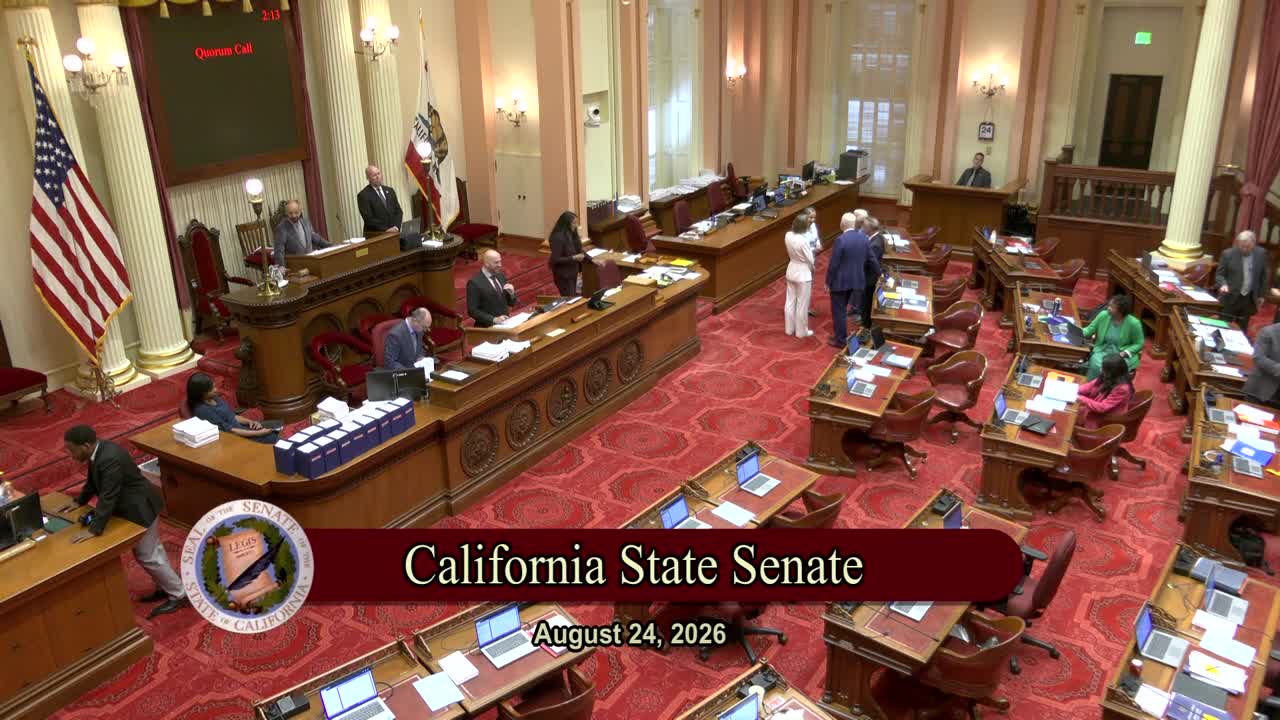 1MIN
Senate Floor
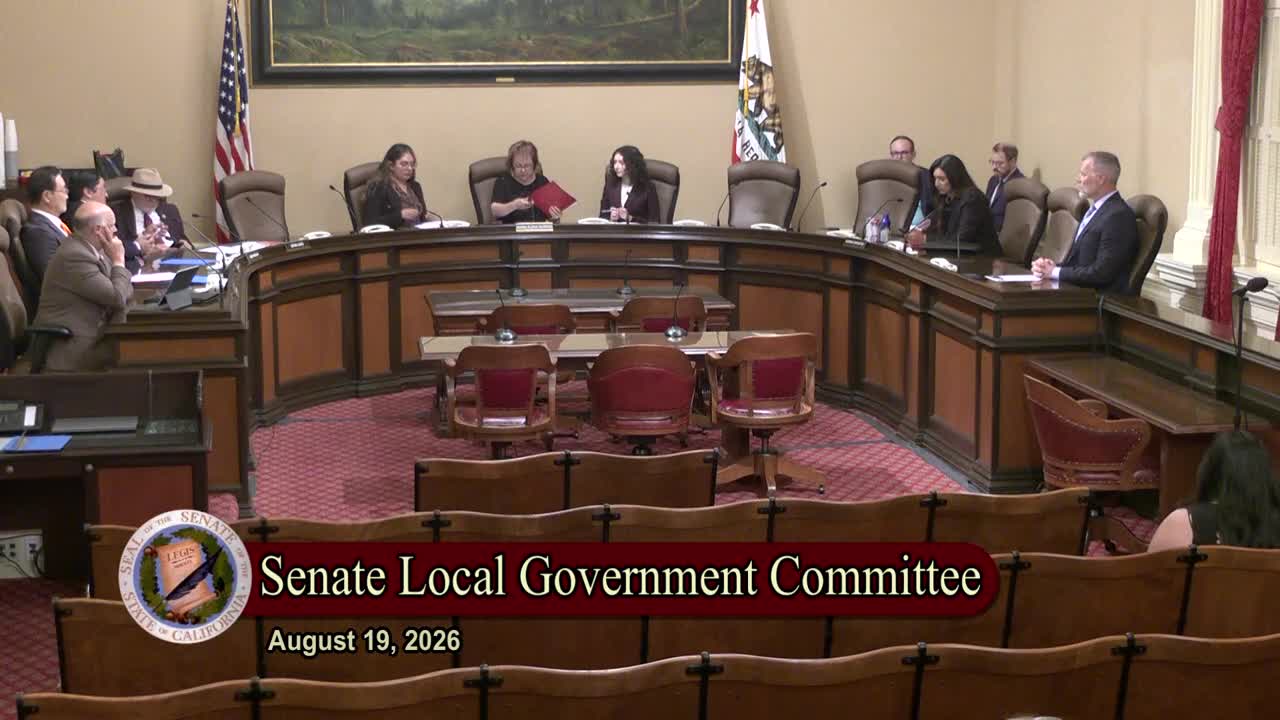 6MIN
Senate Standing Committee on Local Government
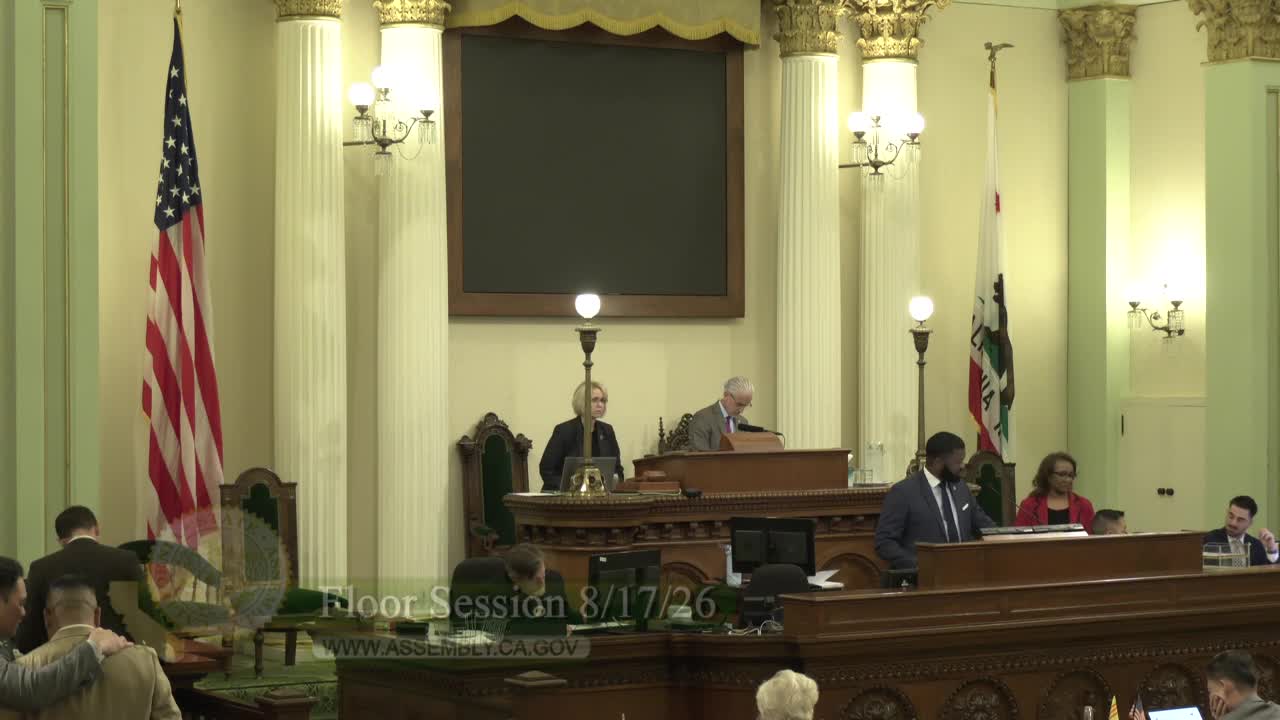 1MIN
Assembly Floor
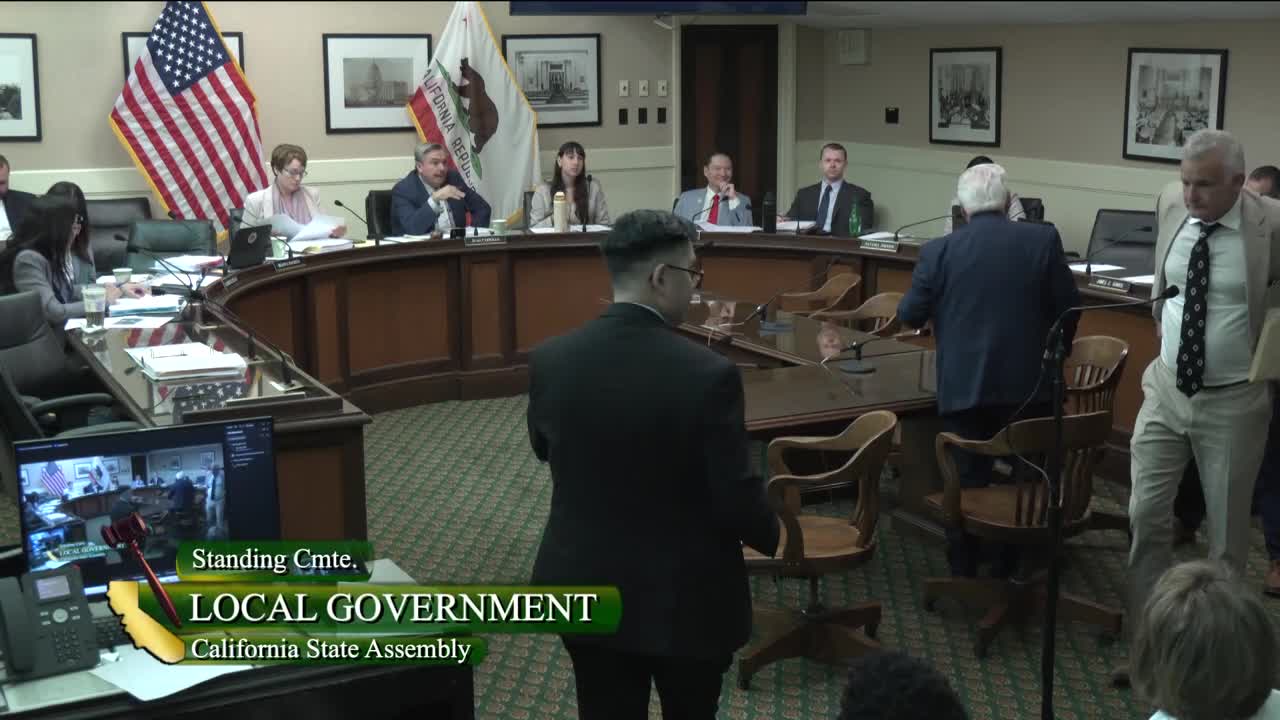 5MIN
Assembly Standing Committee on Local Government
Bill Author

Bill Co-Author(s):