SB 1200: Family daycare homes.
- Session Year: 2025-2026
- House: Senate
- Latest Version Date: 2026-02-19
Current Status:
In Progress
(2026-08-13: August 13 hearing: Held in committee and under submission.)
Introduced
In Committee
Awaiting First Chamber Vote
Passed First Chamber
In Committee
Awaiting Second Chamber Vote
Passed Second Chamber
Enacted
Existing law, the California Child Day Care Facilities Act, provides for the licensing and regulation of child daycare facilities, including family daycare homes, by the State Department of Social Services. Existing law authorizes a small family daycare home to provide daycare for more than 6 and up to 8 children, including infants, if certain conditions are met. Existing law also authorizes a large family daycare home to provide daycare for more than 12 children and up to and including 14 children, including infants, if certain conditions are met. Existing regulations define infant for these purposes as a child under 2 years of age.
This bill would instead define infant for these purposes as a child under 18 months of age.
The Legislature finds and declares all of the following:
(a)The Legislature reaffirms the findings and declarations set forth in Section 1597.30 of the Health and Safety Code:
(1)The Legislature has a responsibility to ensure the health and safety of children in family homes that provide daycare.
(2)There is an extreme shortage of regulated family daycare homes in California, and the number has decreased significantly since 2008.
(3)There continues to be a growing need for child daycare facilities due to the increased number of working parents. Parents need childcare so they can work and attend school, and so their children can thrive.
(4)Many parents prefer childcare located in their neighborhoods in family homes.
(5)There should be a variety of childcare settings, including regulated family daycare homes, as suitable choices for parents.
(6)The licensing program to be operated by the state should be cost effective, streamlined, and simple to administer in order to ensure adequate care for children placed in family daycare homes, while not placing undue burdens on the providers.
(7)The state should maintain an efficient program of regulating family daycare homes that ensures the provision of adequate protection, supervision, and guidance to children in their homes.
(8)The state has a responsibility to promote the development and expansion of regulated family daycare homes to care for children in residential settings.
(b)Mixed-age group care found in family daycare homes achieves social, emotional, and developmental advantages for children through continuity of care in a small group setting.
(c)The department is encouraged to regularly examine family childcare home regulations to promote cogency.
SEC. 2.Section 1597.31 is added to the Health and Safety Code, to read:1597.31.For purposes of this chapter, infant means a child under 18 months of age.
|
Date
|
Status
|
|---|---|
| Aug 13, 2026 | August 13 hearing: Held in committee and under submission. |
| Aug 5, 2026 | August 5 set for first hearing. Placed on suspense file. |
| Jul 1, 2026 | From committee: Do pass and re-refer to Com. on APPR. (Ayes 7. Noes 0.) (June 30). Re-referred to Com. on APPR. |
| Jun 1, 2026 | Referred to Com. on HUM. S. |
| May 22, 2026 | In Assembly. Read first time. Held at Desk. |
| May 22, 2026 | Read third time. Passed. (Ayes 33. Noes 0. Page 4420.) Ordered to the Assembly. |
| May 22, 2026 | Read third time. Passed. (Ayes 33. Noes 0.) Ordered to the Assembly. |
| May 20, 2026 | Ordered to special consent calendar. |
| May 14, 2026 | From committee: Do pass. (Ayes 7. Noes 0. Page 4269.) (May 14). |
| May 14, 2026 | Read second time. Ordered to third reading. |
| May 14, 2026 | From committee: Do pass. (Ayes 7. Noes 0.) (May 14). |
| May 8, 2026 | Set for hearing May 14. |
| May 4, 2026 | May 4 hearing: Placed on APPR. suspense file. |
| Apr 24, 2026 | Set for hearing May 4. |
| Apr 21, 2026 | From committee: Do pass and re-refer to Com. on APPR. (Ayes 4. Noes 0. Page 3955.) (April 20). Re-referred to Com. on APPR. |
| Apr 21, 2026 | From committee: Do pass and re-refer to Com. on APPR. (Ayes 4. Noes 0.) (April 20). Re-referred to Com. on APPR. |
| Apr 9, 2026 | Set for hearing April 20. |
| Mar 4, 2026 | Referred to Com. on HUMAN S. |
| Feb 20, 2026 | From printer. May be acted upon on or after March 22. |
| Feb 19, 2026 | Introduced. Read first time. To Com. on RLS. for assignment. To print. |
|
Date
|
Description
|
Location
|
Votes
|
|
|---|---|---|---|---|
| Jun 30, 2026 | Do pass and be re-referred to the Committee on [Appropriations] | Assembly Standing Committee on Human Services |
Passed |
|
| May 22, 2026 | Special Consent SB1200 Menjivar et al. | Senate Floor |
Passed |
|
| May 14, 2026 | Do pass | Senate Standing Committee on Appropriations |
Passed |
|
| May 4, 2026 | Placed on suspense file | Senate Standing Committee on Appropriations |
Passed |
|
| Apr 20, 2026 | Do pass, but first be re-referred to the Committee on [Appropriations] | Senate Standing Committee on Human Services |
Passed |
This list shows positions taken on this bill by organizations on the date displayed, which is linked to the original source.
Positions by individuals are not included.
|
Organization
|
Position
|
Date
|
|---|---|---|
| Alicia Rich Ceeshas Childcare | ** Support | |
| Aljanabi Family Child Care | ** Support | |
| All Through a Child's Eye | ** Support | |
| Angel Day Care | ** Support | |
| Caterpillar Daycare | ** Support | |
| Cleide Lopes Family Child Care | ** Support | |
| Eliana Moore Family Child Care | ** Support | |
| Fannie’s Family Child Care | ** Support | |
| Foursha Family Daycare | ** Support | |
| Growing Minds | ** Support | |
| Jacobson Family Child Care | ** Support | |
| Ladybug Childcare | ** Support | |
| Les Petit Papillons | ** Support | |
| Little Blue Dolphins | ** Support | |
| Little Bubbles Daycare | ** Support | |
| Little Lion Preschool and Childcare | ** Support | |
| Little Monkey Preschool and Daycare | ** Support | |
| Little Shop of Learning | ** Support | |
| Little Sprouts Family Child Care | ** Support | |
| Littlesteps/bigsteps Family Daycare | ** Support | |
| Magic Time Daycare | ** Support | |
| Marin Family Child Care Association | ** Support | |
| Mika Little Cottage | ** Support | |
| Miller’s Preschool | ** Support | |
| New Look Painting and Decorating INC | ** Support | |
| Paco FamilyChildcare Home | ** Support | |
| Parkview Daycare and Preschool | ** Support | |
| Perfect Start Learning | ** Support | |
| Precious Treasures Daycare | ** Support | |
| Re’optima Family Child Care | ** Support | |
| San Francisco Child Care Planning and Advisory Council | ** Support | |
| Save California Family Child Care | ** Support | |
| Save California Family Child Care (Sponsor) | ** Support | |
| Shaver Family Child Care | ** Support | |
| Stacia Watson’s Family Child Care | ** Support | |
| Teeny Tots Preschool | ** Support | |
| Thriving Families CA Foundation | ** Support | |
| Tui Daycare | ** Support | |
| Vanessa Kahn Family Child Care | ** Support | |
| Woodcreek Montessori | ** Support | |
| Yaya's Daycare | ** Support |
Date of Hearing: August 5, 2026
ASSEMBLY COMMITTEE ON APPROPRIATIONS
Buffy Wicks, Chair
SBPCA Bill Id:SB 1200
Author:(Menjivar) – As Introduced Ver:February 19, 2026
Policy Committee: | Human Services | Vote: | 7 - 0 |
|
| ||
|
|
Urgency: No State Mandated Local Program: No Reimbursable: No
SUMMARY:
This bill defines “infant” for purposes of family childcare home licensing as a child under 18 months of age, rather than as a child under two years of age.
FISCAL EFFECT:
CDSS estimates General Fund costs of $3.68 million in the first year and $3.61 million annually ongoing for additional permanent staff positions for licensing and enforcement activities. These positions include:
- 13 licensing program analysts located throughout the state’s regional offices to review child files and applications for capacity changes, provide technical support, and manage the potential increase in enrollment. Should this bill pass, CDSS anticipates an increase in the number of incidents involving infants. These positions would also help support comprehensive prevention and enforcement activities more effectively.
- One supervisor and two analyst positions to strengthen preventative oversight and help maintain the availability and stability of family childcare homes statewide.
- Two attorney positions to help update and revise forms, regulations, templates, training, inspection tools, data systems, and operational guidance. These positions would also support additional cases requiring consultations, hearing representation, and other legal support services, including responding to subpoenas and Public Records Act requests.
COMMENTS:
- Purpose. This bill is supported by a broad coalition of childcare providers. According to the author:
California is in a childcare crisis with parents of the youngest children having the hardest time acquiring childcare. Oftentimes this is attributed to lack of funding and while funding plays a key role so do our regulations. Our current regulations only allow family child care providers to care for up to four infants and our State’s misaligned definition of infant has left children on waitlists for childcare that will outlive us all. By redefining the age range for ‘infants’ in family child care homes to be developmentally accurate like 44 other states do, [this bill] will allow providers to utilize their infant slots for children who are truly infants and their empty slots for children 18 months and older.
- Background. CDSS is responsible for licensing family childcare homes. Existing law authorizes a small family daycare home to provide daycare for up to eight children, including infants, if certain conditions are met. Existing law authorizes a large family daycare home to provide daycare for up to 14 children, including infants, if certain conditions are met. Existing state regulations define “infant” for these purposes as a child under 2 years of age.
State regulations provide a small family childcare home may care for, at any one time, a maximum of four infants; or six children, with no more than three infants; or more than six children, up to eight, if specified criteria are met.
For a large family childcare home, state regulations provide the home may care for, at any one time, when there is an assistant provider in the home, a maximum of 12 children, with no more than four infants; or more than 12 children, up to 14, if certain criteria are met.
In addition, a family childcare home must meet minimum adult-to-child ratios, which depend on the age of the child, who is classified as an infant (up to two years), school-age (enrolled in transitional kindergarten (TK), kindergarten, or elementary school or who is at least six years old) or toddler/preschooler (between two years and school age). Ratios are generally less stringent when older children are present. California’s current regulations comply with or exceed the federal Administration of Children and Families’ recommended adult-to-child ratios.
Provider advocates assert the statewide shift to TK has left many family childcare home providers with chronically empty spaces, creating financial challenges for these providers. They note, because older children require less supervision than infants, providers cannot immediately shift to caring for younger children due to licensing requirements.
This bill addresses this issue by reclassifying older infants – aged 18 to 24 months, as toddlers to allow this age group to fill vacant non-infant slots, thus freeing up “infant” slots for younger infants. Because “toddlers” require less supervision than “infants” under current regulations, this change allows a family childcare provider to fill vacant slots by accepting more children under the age of two without changing staffing ratios.
Analysis Prepared by: Jennifer Swenson / APPR. / (916) 319-2081
Date of Hearing: June 30, 2026
ASSEMBLY COMMITTEE ON HUMAN SERVICES
Alex Lee, Chair
SBPCA Bill Id:SB 1200
Author:(Menjivar) – As Introduced Ver:February 19, 2026
SENATE VOTE: 33-0
SUBJECT: Family daycare homes
SUMMARY: Defines an “infant” for purposes of family childcare home licensing, as a child under 18 months of age.
EXISTING LAW:
- Establishes the California Child Day Care Facilities Act to create a separate licensing category for child day care centers and family day care homes within the existing licensing structure at the California Department of Social Services (CDSS). (Health and Safety Code [HSC] 1596.70 § et seq.)
- Defines “family daycare home” to mean a facility that regularly provides care, protection, and supervision for 14 or fewer children, in the provider’s own home, for periods of less than 24 hours per day, while the parents or guardians are away, and is either a large family daycare home or a small family daycare home.
- Defines “large family daycare home” to mean a facility that provides care, protection, and supervision for seven to 14 children, inclusive, as specified.
- Defines “small family daycare home” to mean a facility that provides care, protection, and supervision for eight or fewer children, including children under 10 years of age who reside at the home, as specified. (HSC § 1596.78)
- Authorizes a small family daycare home to provide care for more than six and up to eight children, without an additional adult, if all of the following conditions are met:
- At least one child is enrolled in and attending kindergarten or elementary school and a second child is at least six years of age.
- No more than two infants are cared for during any time when more than six children are cared for.
- The licensee notifies each parent that the facility cares for two additional schoolage children and that there may be up to seven or eight children in the home at one time.
- The licensee obtains the written consent of the property owner when the family daycare home is operated on property that is leased or rented. (HSC § 1597.44)
- Provides that, for a small family daycare home, the maximum number of children for whom care may be provided at any one time, including children under 10 years of age who reside at the licensee’s home, shall be one of the following:
- Four infants;
- Six children, no more than three of whom may be infants; or,
- More than six and up to eight children, without an additional adult attendant, a specified in HSC 1597.44. (22 California Code of Regulations [CCR] § 102416.5(b))
- Authorizes a large family daycare home to provide care for more than 12 children and up to and including 14 children if all of the following conditions are met:
- At least one child is enrolled in and attending kindergarten or elementary school and a second child is at least six years of age.
- No more than three infants are cared for during any time when more than 12 children are cared for.
- The licensee notifies each parent that the facility is caring for two additional schoolage children and that there may be up to 13 or 14 children in the home at one time.
- The licensee obtains the written consent of the property owner when the family daycare home is operated on property that is leased or rented. (HSC § 1597.465)
- Provides that, for the purpose of meeting the criteria for family daycare home ratios and capacity, “school age child” means a child who meets one of the following:
- Is enrolled in and attending kindergarten, including transitional kindergarten (TK), or elementary school; or,
- Is at least six years of age. (22 CCR § 102416.5(i))
FISCAL EFFECT: According to the Senate Committee on Appropriations:
Unknown ongoing General Fund costs, potentially hundreds of thousands, for the California Department of Social Services (CDSS) for licensing administration.
COMMENTS:
Background: Family Child Care Homes. State law requires family child care homes to be licensed by CDSS to operate. To become licensed, an applicant is required to have training in preventative health practices (first aid/CPR), and obtain a California criminal record clearance or exemption, fire safety clearance, and specified immunizations. A licensee must be 18 years of age or older, and an assistant must be at least 14 years of age. Licensees are not required to have education in early childhood development; however, large family child care home licensees are required to have one year of experience. There are no requirements for square footage or space per child; however, family child care homes must comply with rules related to the physical characteristics of a property, such as a gate for stairs when serving young children and pool safety features.
After becoming licensed, a small family child care home licensee may provide care for up to eight children and a large family child care home licensee may provide care for up to 14 children, depending on the ages of enrolled children. Licensees must also adhere to ongoing requirements, such as reporting requirements, staffing ratios, liability insurance, and annual licensing fees, among others. These requirements apply to all family childcare homes, regardless of whether a provider accepts reimbursement from a federal or state subsidized child care program.
Regulations define age ranges for children in various child care settings. There are three age ranges for family childcare. The infant age range is defined as a child under 2 years old. School-age is defined as either a child who is enrolled in TK, kindergarten, or elementary school; or who is at least six years old. While the age range between infant and school-age, representing children between 2 years old and school-age, does not have a formal name, these children are generally referred to as toddlers and preschoolers. This analysis will use the term “preschool age” for simplicity. These age classifications affect other parts of family childcare home administration, including reimbursement per child and adult-to-child staffing ratios.
This bill changes the definition of an infant in a family childcare home from a child under two years of age to be a child under 18 months old.
Family Child Care Ratios and Capacity. Requirements for minimum adult-to-child ratios and total licensed capacity are outlined in the Health and Safety Code and Title 22 regulations. The law establishes two types of family childcare home licenses, each with different standards. A small family childcare home may care for up to eight children under one of the following adult-to-child ratios:
- One adult to four infants.
- One adult to six children, with up to three infants.
- One adult to six children, two infants.
- One adult to eight children, with two school-age children and up to two infants.
A large family childcare home may care for up to 14 children under one of the following adult-to-child ratios:
- Two adults to 12 children, with up to four infants.
- Three adults, with up to four infants and six toddlers.
- Two adults to 14 children, with two school-age children and up to three infants.
A family childcare provider’s own children who are under 10 years old and reside at the home are counted toward adult-to-child ratios. Additionally, if no assistant provider is present at a large family childcare home, the licensee must comply with the capacity requirements for a small family childcare home.
This bill would effectively lower the starting age for the preschool-age category to include 18- to 24-month-old children.
Family Child Care Ratios and Group Sizes Report. Zero To Three and the National Association for Family Child Care published a report entitled Ratios and Group Sizes Matter for Babies: Spotlight on Family Child Care[1] in 2025. The report acknowledged that many family child care educators (providers) are leaving the field due to low compensation. The report emphasized that changing ratio and group size requirements compromises quality and does not address the underlying challenges faced by family child care educators. According to the report, family child care settings have nuances that make low ratios and small group sizes especially important:
- Small, family-like environments give educators more opportunities for one-on-one interactions, which support long-term language, social-emotional, and academic skill development.
- Extra supervision may be needed in home settings such as kitchens, family bathrooms, and yards that may not be specifically designed for children.
- Tailored activities in mixed-age groups with older children present ensure enrichment for each child’s development.
The federal Administration of Children and Families issued a report[2] which recommended the following adult-to-child ratios: 1:6 for mixed-age groups, with no more than two children under 24 months old, and a maximum group size of 12 children; and 1:4 when all children are under 36 months old, with no more than two children under 18 months old, and a maximum group size of four children. The provider’s own children under 6 years old should be included in the ratio. California’s current regulations comply with or exceed these recommended ratios.
Transitional Kindergarten is the first year of California's two-year kindergarten program and is available at no cost to all 4-year-olds, regardless of family income. While the expansion of TK has benefited families by increasing access to free early education, it has also created financial challenges for many family childcare home providers. As older children leave family child care homes to enroll in TK and other early education programs, providers often lose a source of revenue. Older children require less supervision than infants and toddlers, allowing providers to care for more children while remaining within staffing ratios. As a result, family child care homes are generally more financially sustainable when they serve a mix of younger and older children rather than primarily infants and toddlers.
A 2025 report by the Public Policy Institute of California (PPIC) found that "providers indicated that [Transitional Kindergarten] was hurting enrollment and affecting their bottom lines." The report further explained that providers "could not immediately shift their focus to younger children due to licensing regulations. In other words, they could not simply trade a four-year-old slot for an infant due to differing staffing and training requirements for each population. Plus, even if providers were able to expand their infant programs, there would be a cost associated with doing so."[3]
This bill seeks to address this issue by allowing providers to serve more children under two years of age, which could offset the loss of TK age children.
Author’s Statement: According to the Author, “California is in a childcare crisis with parents of the youngest children having the hardest time acquiring childcare. Oftentimes this is attributed to lack of funding and while funding plays a key role so do our regulations. Our current regulations only allow family child care providers to care for up to four infants and our State’s misaligned definition of infant has left children on waitlists for childcare that will outlive us all. By redefining the age range for ‘infants’ in family child care homes to be developmentally accurate like 44 other states do, [this bill] will allow providers to utilize their infant slots for children who are truly infants and their empty slots for children 18 months and older. Families shouldn’t have to wait forever to receive childcare. This bill does something now”
Equity Implications: Research has found that expanding subsidized care to all income- and work-eligible families of preschoolers could lower child poverty by 12% (Danielson and Thorman 2019). California has made concerted efforts to expand slots in the past six years. According to the California Budget and Policy Center, licensed family childcare homes have the largest share of enrollment in publicly funded child care.[4] Meaning, our state’s low-income population, which includes recipients of the California Work Opportunity and Responsibility to Kids (CalWORKs) Stage 1, CalWORKs Stage 2, CalWORKs Stage 3, Alternative Payment Program, General Child Care, Migrant Child Care, and Children with Severe Disabilities, is utilizing family child care options the most. As noted above, ratios do matter in the quality of care. If the state increases the ratio in these settings, and disproportionately impact families receiving subsidies.
Policy Considerations: Can providers maintain or increase quality care and increase ratios for children under two years of age? This bill would not allow a family childcare provider to serve more children in total. Instead, changing the infant age cutoff would reconfigure the maximum number of children allowed within each age bracket. This would increase the proportion of young children in a family childcare home within existing capacity limits.
According to the bill sponsor, moving 18- to 24-month-olds out of the infant age category would be more developmentally appropriate for these children. Whereas childcare centers have designated classrooms and activities for children of various age groups, family child care homes care for all children in a group setting. Family child care homes are considered more flexible because providers can better individualize learning activities, naptime, mealtime, and toilet training when there are fewer children in care. A child’s development informs how a provider interacts with and cares for a child. A child’s age informs how many other children a provider may supervise at the same time. The key distinction is not curriculum, but the level of caregiving required, which is determined by ratios and the ages of other children. As ratios increase, individualized care could become secondary to group management. This bill may address system-level pressures—low supply of infant care and loss of revenue due to competition with other programs for serving older children rather than children’s developmental needs.
Arguments in Support: Coalitions of supporters write: “[This bill's] recategorization of "infant" in FCCH regulations to children under 18 months will produce cascading benefits… Freeing slots currently occupied by older toddlers gives parents of newborns real options instead of waitlists… The statewide shift to Transitional Kindergarten (TK) has left FCCHs with chronically empty spaces. Correcting the age definition allows providers to fill those slots and remain solvent without relying on additional subsidies. FCCHs are the most affordable, accessible, and culturally responsive option for working families. A 20% closure rate — driven in part by this misalignment — disproportionately harms low-income and minority communities, rural child care deserts, and families who depend on non-traditional hours and continuity of care… When licensed care is inaccessible, families turn to illegal arrangements like nanny shares that lack the safety protections FCCHs provide.
Arguments in Opposition: None on file.
REGISTERED SUPPORT / OPPOSITION:
Support
Save California Family Child Care (Sponsor)
Alicia Rich Ceeshas Childcare
Aljanabi Family Child Care
All Through a Child's Eye
Angel Day Care
Caterpillar Daycare
Cleide Lopes Family Child Care
Eliana Moore Family Child Care
Fannie’s Family Child Care
Foursha Family Daycare
Growing Minds
Jacobson Family Child Care
Ladybug Childcare
Les Petit Papillons
Little Blue Dolphins
Little Bubbles Daycare
Little Lion Preschool and Childcare
Little Monkey Preschool and Daycare
Little Shop of Learning
Little Sprouts Family Child Care
LittleSteps/BigSteps Family Daycare
Magic Time Daycare
Marin Family Child Care Association
Mika Little Cottage
Miller’s Preschool
New Look Painting and Decorating INC
Paco Family Childcare Home
Parkview Daycare and Preschool
Perfect Start Learning
Precious Treasures Daycare
Re’Optima Family Child Care
San Francisco Child Care Planning and Advisory Council
Shaver Family Child Care
Stacia Watson’s Family Child Care
Teeny Tots Preschool
Thriving Families CA Foundation
Tui Daycare
Vanessa Kahn Family Child Care
Woodcreek Montessori
Yaya's Daycare
Opposition
None on file.
Analysis Prepared by: Alexandria Smith / HUM. S. / (916) 319-2089
https://www.zerotothree.org/wp-content/uploads/2025/02/ZTT-FCC-Ratios-Brief-Draft-9-25-25-2.pdf ↑
https://acf.gov/sites/default/files/documents/ecd/caring_for_our_children_basics.pdf ↑
https://www.ppic.org/publication/californias-changing-child-care-landscape-understanding-costs-and-supply/ ↑
https://calbudgetcenter.org/resources/california-families-need-a-variety-of-child-care-settings/?utm_source=mailchimp&utm_medium=email&utm_campaign=child_care_enrollment_by_setting&utm_source=General&utm_campaign=b1c411b6dd-EMAIL_CAMPAIGN_2026_06_16_07_37&utm_medium=email&utm_term=0_5dab1124f3-25c19794fc-610422091 ↑
SENATE RULES COMMITTEE Office of Senate Floor Analyses (916) 651-4171 | SB 1200 |
THIRD READING
Bill No: SB 1200
Author: Menjivar (D), et al.
Introduced: 2/19/26
Vote: 21
SENATE HUMAN SERVICES COMMITTEE: 4-0, 4/20/26
AYES: Becker, Niello, Laird, Weber Pierson
NO VOTE RECORDED: Pérez
SENATE APPROPRIATIONS COMMITTEE: 7-0, 5/14/26
AYES: Cervantes, Seyarto, Cabaldon, Dahle, Grayson, Richardson, Wahab
SUBJECT: Family daycare homes
SOURCE: Save California Family Child Care
DIGEST:
This bill defines an “infant” in a family child care home as a child under 18 months of age.
ANALYSIS:
Existing law:
- Establishes the California Child Day Care Facilities Act to create a separate licensing category for child day care centers and family day care homes within the existing licensing structure at the California Department of Social Services (CDSS). (Health and Safety Code [HSC] § 1596.70 et seq.)
- Defines “family daycare home” to mean a facility that regularly provides care, protection, and supervision for 14 or fewer children, in the provider’s own home, for periods of less than 24 hours per day, while the parents or guardians are away, and is either a large family daycare home or a small family daycare home. (HSC § 1596.78)
- Establishes requirements related to licensure for family daycare homes including, but not limited to, the following: licensure application processes, health and safety precautions, and liability insurance. (HSC § 1597.30 et seq.)
- Defines the following terms for family daycare homes:
- “Adult” or “substitute adult” means a person who is 18 years of age or older.
- “Assistant provider” means a person at least 14 years of age who is primarily involved in caring for children during the hours that the home provides care.
- “Capacity” means the maximum number of children for whom care is authorized at any one time.
- “Infant” means a child under two years of age. (22 California Code of Regulations [CCR] § 102352(i))
- Authorizes a small family daycare home to provide care for more than six and up to eight children, without an additional adult, if certain conditions are met. Specifies the maximum number of children for whom care may be provided based on age classifications. (HSC § 1597.44; 22 CCR § 102416.5(b))
- Authorizes a large family daycare home to provide care for more than 12 children and up to and including 14 children if certain conditions are met. (HSC § 1597.465)
- Provides that, for the purpose of meeting the criteria for family daycare home ratios and capacity, “school age child” means a child who is enrolled in and attending kindergarten, including transitional kindergarten, or elementary school; or is at least six years of age. (22 CCR § 102416.5(i))
This bill defines “infant” in a family child care home as a child under 18 months of age.
Background
Purpose of this Bill. According to the author, “California is in a childcare crisis with parents of the youngest children having the hardest time acquiring childcare. Oftentimes this is attributed to lack of funding and while funding plays a key role so do our regulations. Our current regulations only allow family child care providers to care for up to four infants and our State’s misaligned definition of infant has left children on waitlists for childcare that will outlive us all. By redefining the age range for ‘infants’ in family child care homes to be developmentally accurate like 44 other states do, SB 1200 will allow providers to utilize their infant slots for children who are truly infants and their empty slots for children 18 months and older. Families shouldn’t have to wait forever to receive childcare. This bill does something now.”
Family Child Care Home Licensure. Family child care, formerly called family daycare, is regularly provided care, protection, and supervision of children in the licensee’s own home, known as a family child care home. Families who choose family child care for their child might do so because the family child care home is close to where they live, the provider speaks their home language, they prefer a home-like setting over a child care center, or their child is more comfortable with smaller group sizes.
State law requires family child care homes to be licensed by the CDSS to operate. To become licensed, an applicant is required to have training in preventative health practices (first aid/CPR), and obtain a California criminal record clearance or exemption, fire safety clearance, and specified immunizations. A licensee must be 18 years of age or older and an assistant must be 14 years or older. Licensees are not required to have education in early childhood development; however large family child care home licensees are required to have one year of experience. There are no requirements for square footage or space per child; however, family child care homes must comply with rules related to the physical characteristics of a property, such as a gate for stairs when serving young children and pool safety features.
After becoming licensed, a small family child care home licensee may provide care for up to eight children and a large family child care home licensee may provide care for up to 14 children, depending on the ages of enrolled children. Licensees must also adhere to ongoing requirements, such as reporting requirements, staffing ratios, liability insurance, and annual licensing fees, among others. These requirements apply to all family child care homes, regardless of whether a provider accepts reimbursement from a federal or state subsidized child care program.
Age Definitions in Family Child Care. Regulations define age ranges for children in various child care settings. There are three age ranges for family child care. The infant age range is defined as a child under 2 years old. School-age is defined as either a child who is enrolled in transitional kindergarten, kindergarten, or elementary school; or who is at least six years old. While the age range between infant and school-age representing a child between 2 years old and school-age does not have a formal name, these children are generally referred to as toddlers and preschoolers. This analysis will use the term “preschool age” for simplicity. These age classifications affect other parts of family child care home administration, including reimbursement per child and adult-to-child staffing ratios. This bill would change the definition of “infant” in a family child care home to be a child under 18 months old.
Family Child Care Ratios and Capacity. Requirements for minimum adult-to-child ratios and total licensed capacity are outlined in Health and Safety Code and Title 22 regulations. The law establishes two types of family child care home licenses, each with different standards. A small family child care home may care for up to eight children under one of the following adult-to-child ratios:
- One adult to four infants.
- One adult to six children, with up to three infants.
- One adult to eight children, with two school-age children and up to two infants.
A large family child care home may care for up to 14 children under one of the following adult-to-child ratios:
- Two adults to 12 children, with up to four infants.
- Two adults to 14 children, with two school-age children and up to three infants.
This bill would change the definition of “infant” in a family child care home to mean a child under 18 months old. This would effectively lower the starting age for the preschool-age category to include 18- to 24-month-old children.
Example: Large Family Child Care Home with Empty Spaces. In this hypothetical posed by the bill sponsor (see following page), a large family child care home is operating with a capacity of 12 children to maximize the number of infants the home can serve. The home’s infant slots (light gray boxes) are fully enrolled, but the home has three empty spaces (white boxes with dashed border) representing children who have left to enroll in Transitional Kindergarten. The home is caring for two infants who are between 18 and 24 months old (bold dotted border).

This bill reclassifies the two 18- to 24-month-olds as preschoolers (dark gray boxes) rather than infants. This results in higher overall enrollment for family child care providers by helping providers fill more of their preschool-age spaces and making room for younger children ages 0 to 18 months old to access infant care spaces, which are in high demand.
Effects of Transitional Kindergarten. Transitional Kindergarten is the first year of a two-year kindergarten program available to all 4-year-olds, regardless of family income. Transitional Kindergarten has benefited families by serving more 4-year-olds at no cost. However, when older children leave child care settings—such as family child care homes—to enroll in other early care and education programs, providers may have difficulty recouping their lost revenue. As children grow older they require less supervision, which means one adult can supervise a larger group of older children. Family child care homes typically serve a mix of older and younger children, which is more profitable than serving only the youngest children. According to a 2025 report by Public Policy Institute of California (PPIC), “providers indicated that [Transitional Kindergarten] was hurting enrollment and affecting their bottom lines.” The PPIC continued. “These providers could not immediately shift their focus to younger children due to licensing regulations. In other words, they could not simply trade a four-year-old slot for an infant due to differing staffing and training requirements for each population. Plus, even if providers were able to expand their infant programs, there would be a cost associated with doing so.”
According to the PPIC report, younger children have the highest unmet child care needs. This bill would allow family child care homes to serve a greater number of younger children by reclassifying 18- to 24-month-olds as preschool-age, which would make infant spaces available for 0- to 18-month-olds. If a family child care home has unused preschool-age spaces due to the shift of 4-year-old children moving into Transitional Kindergarten, this bill could result in homes enrolling closer to their licensed capacity and maximizing their earnings.
Family Child Care Ratios and Group Sizes Report. Zero To Three and National Association for Family Child Care published a report entitled Ratios and Group Sizes Matter for Babies: Spotlight on Family Child Care in 2025. The report emphasized that changing ratio and group size requirements compromises quality and does not address the underlying challenges faced by family child care educators. According to the report, family child care settings have nuances that make low ratios and small group sizes especially important, including: small environments that provide more opportunities for one-on-one interactions; the need for extra supervision in home settings such as kitchens, family bathrooms, and yards that may not specifically designed for children; and tailored activities in mixed-age groups to ensure enrichment for each child’s development.
The federal Administration of Children and Families recommends the following adult-to-child ratios: 1:6 for mixed-age groups, with no more than two children under 24 months old, and a maximum group size of 12 children; and 1:4 when all children are under 36 months old, with no more than two children under 18 months old, and a maximum group size of four children. California’s current regulations comply with or exceed these recommended ratios.
Related/Prior Legislation
AB 51 (Bonta, Chapter 618, Statutes of 2024) required the California Department of Education to provide prospective State Preschool program contractors an equitable opportunity to establish a trained workforce and administrative systems, among other things. An earlier version of the bill, as heard by this Committee, would have required the CDSS, in collaboration with the California Department of Education, to consider adopting regulations to support child care providers impacted by the expansion of Transitional Kindergarten and would have requested the University of California to study the impact of Transitional Kindergarten on the early child care and education ecosystem.
AB 22 (McCarty, Chapter 901, Statutes of 2022) required the California Department of Education to collect specified student-level data relative to enrollment in State Preschool Programs. An earlier version of the bill, as heard by this Committee, would have established a phased in eligibility schedule for 4-year-olds to enroll in Transitional Kindergarten. This proposal was adopted in the state budget.
Comments
This bill seeks to address the shrinking population of children enrolling in child care programs and families’ need for more infant care spaces. This bill allows a family child care provider to repurpose infant slots serving children 18- to 24-month-olds to instead serve more 0- to 18-month-olds. The 18- to 24-month-olds would be counted toward the preschool-age ratio. This helps providers fill their preschool-age spaces and open up infant spaces for very young children. Filling unused spaces would maximize enrollment, which would result in higher reimbursement for providers. This bill does not allow a family child care provider to serve more children in total. Instead, changing the infant age cutoff reconfigures the maximum number of children allowed within each age bracket. This increases the proportion of young children in a family child care home within existing capacity limits.
FISCAL EFFECT: Appropriation: No Fiscal Com.: Yes Local: No
SUPPORT: (5/14/26)
Save California Family Child Care (Sponsor)
Alicia Rich Ceeshas Childcare
Aljanabi Family Child Care
All Through a Child's Eye
Angel Day Care
Caterpillar Daycare
Cleide Lopes Family Child Care
Eliana Moore Family Child Care
Fannie’s Family Child Care
Foursha Family Daycare
Growing Minds
Jacobson Family Child Care
Ladybug Childcare
Les Petit Papillons
Little Blue Dolphins
Little Bubbles Daycare
Little Lion Preschool and Childcare
Little Monkey Preschool and Daycare
Little Shop of Learning
Little Sprouts Family Child Care
Littlesteps/bigsteps Family Daycare
Magic Time Daycare
Marin Family Child Care Association
Mika Little Cottage
Miller’s Preschool
New Look Painting and Decorating INC
Paco Family Childcare Home
Parkview Daycare and Preschool
Perfect Start Learning
Precious Treasures Daycare
Re’optima Family Child Care
San Francisco Child Care Planning & Advisory Council
San Francisco Child Care Planning and Advisory Council
Shaver Family Child Care
Stacia Watson’s Family Child Care
Teeny Tots Preschool
Thriving Families CA Foundation
Tui Daycare
Vanessa Kahn Family Child Care
Woodcreek Montessori
Yaya's Daycare
OPPOSITION: (5/14/26)
None received
Prepared by: Diana Dominguez / HUMAN S. / (916) 651-1524
5/16/26 10:44:46
**** END ****
SENATE COMMITTEE ON
Senator Sabrina Cervantes, Chair
2025 - 2026 Regular Session
SB 1200 (Menjivar) - Family daycare homes
Version: | Policy Vote: |
Urgency: | Mandate: |
Hearing Date: | Consultant: |
Bill Summary:
SB 1200 would require that “infant” for purposes of family child care home licensing, means a child under 18 months of age.
Fiscal Impact:
Unknown ongoing General Fund costs, potentially hundreds of thousands, for the California Department of Social Services (CDSS) for licensing administration.
Background:
The CDSS is responsible for licensing family child care homes. Existing state regulations define “infant” for these purposes as a child under 2 years of age. State regulations provide that:
- For a small family child care home, the maximum number of children for whom care may be provided at any one time, including children under age 10 who reside at the licensee's home, must be one of the following:
- Four infants; or
- Six children, no more than three of whom may be infants; or
- More than six and up to eight children, without an additional adult attendant, only if certain criteria in existing law are met (including that no more than two infants are cared for during any time when more than six children are cared for).
- For a large family child care home, the maximum number of children for whom care may be provided at any one time when there is an assistant provider in the home, including children under age 10 who reside at the licensee's home and the assistant provider's children under age 10, must be either:
- Twelve children, no more than four of whom may be infants; or
- More than twelve and up to fourteen children only if certain criteria in existing law are met (including that no more than three infants are cared for during any time when more than 12 children are being cared for).
Proposed Law:
SB 1200 would define “infant” for purposes of family child care home licensing, as a child under 18 months of age.
-- END --
SENATE COMMITTEE ON HUMAN SERVICES
Senator Becker, Chair
2025 - 2026 Regular
Bill No: | SB 1200 | ||
Author: | Menjivar | ||
Version: | February 19, 2026 | Hearing Date: | April 20, 2026 |
Urgency: | No | Fiscal: | Yes |
Consultant: | Diana Dominguez | ||
Subject: Family daycare homes
SUMMARY
This bill would define an “infant” in a family child care home as a child under 18 months of age.
ABSTRACT
Existing Law:
- Establishes the California Child Day Care Facilities Act to create a separate licensing category for child day care centers and family day care homes within the existing licensing structure at the California Department of Social Services (CDSS). (Health and Safety Code [HSC] 1596.70 et seq.)
- Defines “family daycare home” to mean a facility that regularly provides care, protection, and supervision for 14 or fewer children, in the provider’s own home, for periods of less than 24 hours per day, while the parents or guardians are away, and is either a large family daycare home or a small family daycare home.
- Defines “large family daycare home” to mean a facility that provides care, protection, and supervision for seven to 14 children, inclusive, as specified.
- Defines “small family daycare home” to mean a facility that provides care, protection, and supervision for eight or fewer children, including children under 10 years of age who reside at the home, as specified. (HSC 1596.78)
- Makes the following legislative finding and declarations related to family daycare homes:
- The Legislature has a responsibility to ensure the health and safety of children in family homes that provide daycare.
- There is an extreme shortage of regulated family daycare homes in California, and the number has decreased significantly since 2008.
- There continues to be a growing need for child daycare facilities due to the increased number of working parents. Parents need child care so they can work and attend school, and so their children can thrive.
- Many parents prefer child care located in their neighborhoods in family homes.
- There should be a variety of child care settings, including regulated family daycare homes, as suitable choices for parents.
- The licensing program to be operated by the state should be cost effective, streamlined, and simple to administer in order to ensure adequate care for children placed in family daycare homes, while not placing undue burdens on the providers.
- The state should maintain an efficient program of regulating family daycare homes that ensures the provision of adequate protection, supervision, and guidance to children in their homes.
- The state has a responsibility to promote the development and expansion of regulated family daycare homes to care for children in residential settings. (HSC 1597.30)
- Establishes requirements related to licensure for family daycare homes including, but not limited to, the following:
- CDSS processes related to the licensure application form and timeliness of granting or denying an application for licensure;
- CDSS processes related to licensee noncompliance and civil penalties subsequent to noncompliance;
- Information to be reported by applicants for licensure;
- The maximum number of children that may be served, depending on children’s ages;
- Health and safety precautions, including availability of a fire extinguisher and smoke detector, installation of carbon monoxide detectors, and immunizations for enrolled children and employees or volunteers, as specified;
- Unannounced inspections by CDSS;
- Liability insurance, as specified;
- CDSS processes related to documentation of needed repairs or renovations;
- Use of real property. (HSC 1597.30 et seq.)
- Defines the following terms for family daycare homes:
- “Adult” or “substitute adult” means a person who is 18 years of age or older.
- “Assistant provider” means a person at least 14 years of age who is primarily involved in caring for children during the hours that the home provides care.
- “Capacity” means the maximum number of children for whom care is authorized at any one time.
- “Infant” means a child under two years of age.
- “Licensee” means an adult licensed to operate a family daycare home and who is primarily involved in providing care for the children during the hours that the home provides care.
- “Provider” means anyone providing care to children as authorized by regulations and includes the licensee, assistant provider, or substitute adult. (22 California Code of Regulations [CCR] 102352(i))
- Authorizes a small family daycare home to provide care for more than six and up to eight children, without an additional adult, if all of the following conditions are met:
- At least one child is enrolled in and attending kindergarten or elementary school and a second child is at least six years of age.
- No more than two infants are cared for during any time when more than six children are cared for.
- The licensee notifies each parent that the facility is caring for two additional schoolage children and that there may be up to seven or eight children in the home at one time.
- The licensee obtains the written consent of the property owner when the family daycare home is operated on property that is leased or rented. (HSC 1597.44)
- Provides that, for a small family daycare home, the maximum number of children for whom care may be provided at any one time, including children under age 10 who reside at the licensee’s home, shall be one of the following:
- Four infants; or
- Six children, no more than three of whom may be infants; or
- More than six and up to eight children, without an additional adult attendant, as specified in HSC 1597.44. (22 CCR 102416.5(b))
- Authorizes a large family daycare home to provide care for more than 12 children and up to and including 14 children if all of the following conditions are met:
- At least one child is enrolled in and attending kindergarten or elementary school and a second child is at least six years of age.
- No more than three infants are cared for during any time when more than 12 children are cared for.
- The licensee notifies each parent that the facility is caring for two additional schoolage children and that there may be up to 13 or 14 children in the home at one time.
- The licensee obtains the written consent of the property owner when the family daycare home is operated on property that is leased or rented. (HSC 1597.465)
- Provides that, for the purpose of meeting the criteria for family daycare home ratios and capacity, “school age child” means a child who meets one of the following:
- Is enrolled in and attending kindergarten, including transitional kindergarten, or elementary school; or
- Is at least six years of age. (22 CCR 102416.5(i))
- Prohibits a family daycare home from being licensed or registered as a large family daycare home unless the provider has at least one year’s experience as a regulated small family daycare home operator or as an administrator of a licensed day care center. (HSC 1597.52)
- Requires all family daycare homes for children to maintain in force either liability insurance, as specified, or a bond, as specified. In lieu of the liability insurance or the bond, the family daycare home may maintain a file of affidavits signed by each parent with a child enrolled in the home, as specified. Requires a family daycare home that maintains liability insurance or a bond and that provides care in premises that are rented or leased to name the owner of the property or the homeowners’ association, as appropriate, as an additional insured party on the liability insurance policy or bond, under specified conditions. (HSC 1597.531)
- Defines “child day care facility” to mean a facility that provides nonmedical care to children under 18 years of age in need of personal services, supervision, or assistance essential for sustaining the activities of daily living or for the protection of the individual on less than a 24-hour basis. Child day care facilities include day care centers, employer-sponsored child care centers, and family day care homes. (HSC 1596.750)
- Defines the following terms for child care centers:
- “Infant” means a child under two years of age.
- “Preschool-age child” means a child who is enrolled in a child daycare center licensed by CDSS and who is not enrolled in either an infant care center or a schoolage child daycare center.”
- “School-age child” means any child who meets one of the following:
- Has entered the first grade or above;
- Is in a child care program providing care and supervision exclusively to children enrolled in kindergarten and above.
- “Toddler component” means the component of a preschool or infant care program designed for children between the ages of 18 months and 30 months. (22 CCR 101152; HSC 1597.059)
This Bill:
- Defines “infant” in a family child care home as a child under 18 months of age.
FISCAL IMPACT
This bill has not yet been analyzed by a fiscal committee.
BACKGROUND AND DISCUSSION
Purpose of the Bill:
According to the author, “California is in a childcare crisis with parents of the youngest children having the hardest time acquiring childcare. Oftentimes this is attributed to lack of funding and while funding plays a key role so do our regulations. Our current regulations only allow family child care providers to care for up to four infants and our State’s misaligned definition of infant has left children on waitlists for childcare that will outlive us all. By redefining the age range for ‘infants’ in family child care homes to be developmentally accurate like 44 other states do, SB 1200 will allow providers to utilize their infant slots for children who are truly infants and their empty slots for children 18 months and older. Families shouldn’t have to wait forever to receive childcare. This bill does something now.”
Family Child Care Home Licensure
Family child care, formerly called family daycare, is regularly provided care, protection, and supervision of children in the licensee’s own home, known as a family child care home. Families who choose family child care for their child might do so because the family child care home is close to where they live, the provider speaks their home language, they prefer a home-like setting over a child care center, or their child is more comfortable with smaller group sizes.
State law requires family child care homes to be licensed by the CDSS to operate. To become licensed, an applicant is required to have training in preventative health practices (first aid/CPR), and obtain a California criminal record clearance or exemption, fire safety clearance, and specified immunizations. A licensee must be 18 years of age or older and an assistant must be 14 years or older. Licensees are not required to have education in early childhood development; however large family child care home licensees are required to have one year of experience. There are no requirements for square footage or space per child; however, family child care homes must comply with rules related to the physical characteristics of a property, such as a gate for stairs when serving young children and pool safety features.
After becoming licensed, a small family child care home licensee may provide care for up to eight children and a large family child care home licensee may provide care for up to 14 children, depending on the ages of enrolled children. Licensees must also adhere to ongoing requirements, such as reporting requirements, staffing ratios, liability insurance, and annual licensing fees, among others. These requirements apply to all family child care homes, regardless of whether a provider accepts reimbursement from a federal or state subsidized child care program.
Age Definitions in Family Child Care
Regulations define age ranges for children in various child care settings. There are three age ranges for family child care. The infant age range is defined as a child under 2 years old. School-age is defined as either a child who is enrolled in transitional kindergarten, kindergarten, or elementary school; or who is at least six years old. While the age range between infant and school-age representing a child between 2 years old and school-age does not have a formal name, these children are generally referred to as toddlers and preschoolers. This analysis will use the term “preschool age” for simplicity. These age classifications affect other parts of family child care home administration, including reimbursement per child and adult-to-child staffing ratios. This bill would change the definition of “infant” in a family child care home to be a child under 18 months old.
Family Child Care Ratios and Capacity
Requirements for minimum adult-to-child ratios and total licensed capacity are outlined in Health and Safety Code and Title 22 regulations. The law establishes two types of family child care home licenses, each with different standards. A small family child care home may care for up to eight children under one of the following adult-to-child ratios:
- One adult to four infants.
- One adult to six children, with up to three infants.
- One adult to eight children, with two school-age children and up to two infants.
A large family child care home may care for up to 14 children under one of the following adult-to-child ratios:
- Two adults to 12 children, with up to four infants.
- Two adults to 14 children, with two school-age children and up to three infants.
This bill would change the definition of “infant” in a family child care home to mean a child under 18 months old. This would effectively lower the starting age for the preschool-age category to include 18- to 24-month-old children.
Example: Large Family Child Care Home with Empty Spaces
In this hypothetical posed by the bill sponsor, a large family child care home is operating with a capacity of 12 children to maximize the number of infants the home can serve. The home’s infant slots (light gray boxes) are fully enrolled, but the home has three empty spaces (white boxes with dashed border) representing children who have left to enroll in Transitional Kindergarten. The home is caring for two infants who are between 18 and 24 months old (bold dotted border).
This bill would reclassify the two 18- to 24-month-olds as preschoolers (dark gray boxes) rather than infants. This would result in higher overall enrollment for family child care providers by helping providers fill more of their preschool-age spaces and making room for younger children ages 0 to 18 months old to access infant care spaces, which are in high demand.
Effects of Transitional Kindergarten
Transitional Kindergarten is the first year of a two-year kindergarten program available to all 4-year-olds, regardless of family income. Transitional Kindergarten has benefited families by serving more 4-year-olds at no cost. However, when older children leave child care settings—such as family child care homes—to enroll in other early care and education programs, providers may have difficulty recouping their lost revenue. As children grow older they require less supervision, which means one adult can supervise a larger group of older children. Family child care homes typically serve a mix of older and younger children, which is more profitable than serving only the youngest children. According to a 2025 report by Public Policy Institute of California (PPIC), “providers indicated that [Transitional Kindergarten] was hurting enrollment and affecting their bottom lines.”[1] The PPIC continued. “These providers could not immediately shift their focus to younger children due to licensing regulations. In other words, they could not simply trade a four-year-old slot for an infant due to differing staffing and training requirements for each population. Plus, even if providers were able to expand their infant programs, there would be a cost associated with doing so.”
According to the PPIC report, younger children have the highest unmet child care needs. This bill would allow family child care homes to serve a greater number of younger children by reclassifying 18- to 24-month-olds as preschool-age, which would make infant spaces available for 0- to 18-month-olds. If a family child care home has unused preschool-age spaces due to the shift of 4-year-old children moving into Transitional Kindergarten, this bill could result in homes enrolling closer to their licensed capacity and maximizing their earnings.
Family Child Care Ratios and Group Sizes Report
Zero To Three and National Association for Family Child Care published a report entitled Ratios and Group Sizes Matter for Babies: Spotlight on Family Child Care[2] in 2025. The report emphasized that changing ratio and group size requirements compromises quality and does not address the underlying challenges faced by family child care educators. According to the report, family child care settings have nuances that make low ratios and small group sizes especially important, including: small environments that provide more opportunities for one-on-one interactions; the need for extra supervision in home settings such as kitchens, family bathrooms, and yards that may not specifically designed for children; and tailored activities in mixed-age groups to ensure enrichment for each child’s development.
The federal Administration of Children and Families recommends the following adult-to-child ratios: 1:6 for mixed-age groups, with no more than two children under 24 months old, and a maximum group size of 12 children; and 1:4 when all children are under 36 months old, with no more than two children under 18 months old, and a maximum group size of four children[3]. California’s current regulations comply with or exceed these recommended ratios.
Related/Prior Legislation:
AB 51 (Bonta, Chapter 618, Statutes of 2024) required the California Department of Education to provide prospective State Preschool program contractors an equitable opportunity to establish a trained workforce and administrative systems, among other things. An earlier version of the bill, as heard by this Committee, would have required the CDSS, in collaboration with the California Department of Education, to consider adopting regulations to support child care providers impacted by the expansion of Transitional Kindergarten and would have requested the University of California to study the impact of Transitional Kindergarten on the early child care and education ecosystem.
AB 22 (McCarty, Chapter 901, Statutes of 2022) required the California Department of Education to collect specified student-level data relative to enrollment in State Preschool Programs. An earlier version of the bill, as heard by this Committee, would have established a phased in eligibility schedule for 4-year-olds to enroll in Transitional Kindergarten. This proposal was adopted in the state budget.
COMMENTS
This bill seeks to address the shrinking population of children enrolling in child care programs and families’ need for more infant care spaces. This bill would allow a family child care provider to repurpose infant slots serving children 18- to 24-month-olds to instead serve more 0- to 18-month-olds. The 18- to 24-month-olds would be counted toward the preschool-age ratio. This would help providers fill their preschool-age spaces and open up infant spaces for very young children. Filling unused spaces would maximize enrollment, which would result in higher reimbursement for providers. This bill would not allow a family child care provider to serve more children in total. Instead, changing the infant age cutoff would reconfigure the maximum number of children allowed within each age bracket. This would increase the proportion of young children in a family child care home within existing capacity limits.
POSITIONS
Support:
Save California Family Child Care
Oppose:
None Received
-- END --
Discussed in Hearing
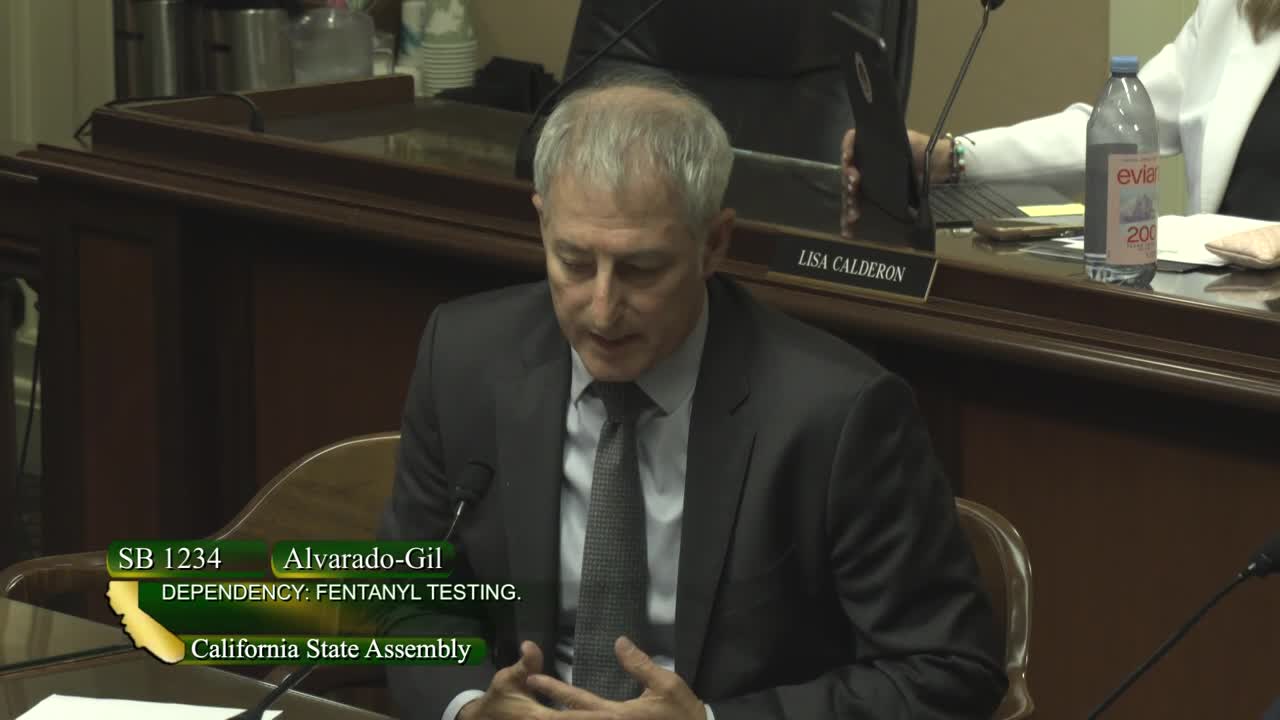 10MIN
Assembly Standing Committee on Human Services
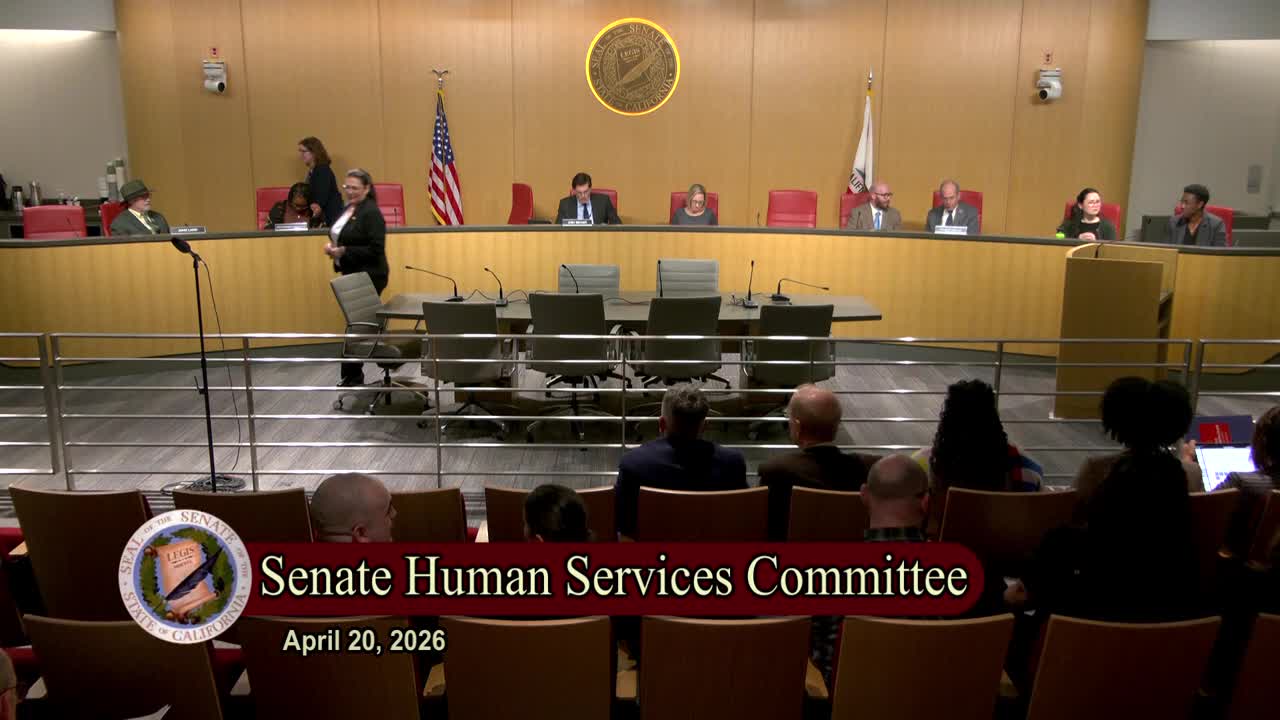 10MIN
Senate Standing Committee on Human Services
Bill Author
Bill Co-Author(s):
