SB 1212: Endangered wildlife: kangaroos.
- Session Year: 2025-2026
- House: Senate
- Latest Version Date: 2026-03-25
Current Status:
Failed
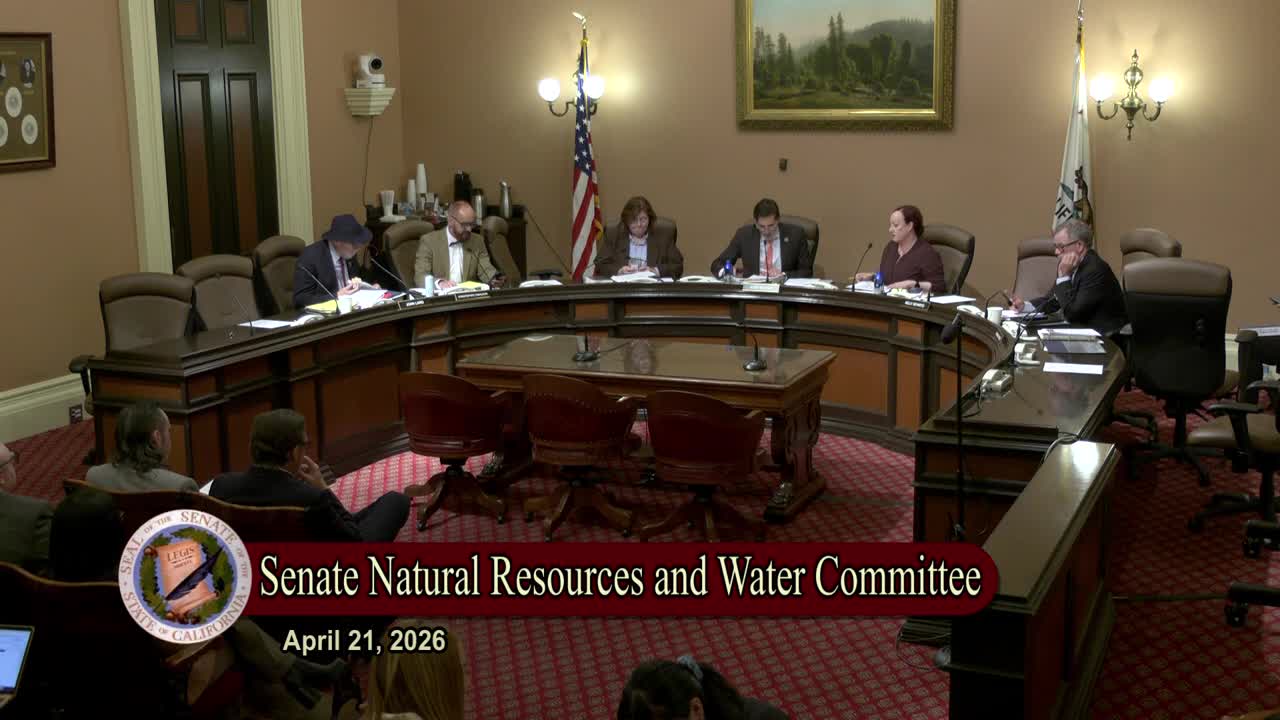
(2026-04-23: April 21 set for first hearing. Failed passage in committee. (Ayes 1. Noes 2. Page 3981.))
Introduced
In Committee
Awaiting First Chamber Vote
Passed First Chamber
In Committee
Awaiting Second Chamber Vote
Passed Second Chamber
Enacted
Existing law makes it a misdemeanor to import into the state for commercial purposes, to possess with intent to sell, or to sell within the state the dead body, or a part or product thereof, of a polar bear, leopard, ocelot, tiger, cheetah, jaguar, sable antelope, wolf, zebra, whale, cobra, python, sea turtle, colobus monkey, kangaroo, vicuna, sea otter, free-roaming feral horse, dolphin or porpoise, Spanish lynx, or elephant.
This bill would exempt from that prohibition the import into the state for commercial purposes, possession with intent to sell, or sale within the state of kangaroos if they are harvested in accordance with Australian law, the federal Endangered Species Act, and applicable international conventions, as specified.
Existing law specifies that crimes and public offenses include felonies, misdemeanors, and infractions.This bill would make technical, nonsubstantive changes to that provision.Existing law specifies that crimes and public offenses include felonies, misdemeanors, and infractions.
This bill would make technical, nonsubstantive changes to that provision.
(a)(1) It is unlawful to import into this state for commercial purposes, to possess with intent to sell, or to sell within the state, the dead body, or a part or product thereof, of a polar bear, leopard, ocelot, tiger, cheetah, jaguar, sable antelope, wolf (Canis lupus), zebra, whale, cobra, python, sea turtle, colobus monkey, kangaroo, except as provided in paragraph (2), vicuna, sea otter, free-roaming feral horse, dolphin or porpoise (Delphinidae), Spanish lynx, or elephant.
(2)Kangaroos exempted under this paragraph shall be wild harvested pursuant to Australian federal, state, and territory law, the federal Endangered Species Act (16 U.S.C. Sec. 1531 et seq.), and applicable international conventions.
(b)(1)Commencing January 1, 2020, it is unlawful to import into this state for commercial purposes, to possess with intent to sell, or to sell within the state, the dead body, or a part or product thereof, of a crocodile or alligator.
(2)This subdivision does not authorize the importation or sale of any alligator or crocodilian species, or products thereof, that are listed as endangered under the federal Endangered Species Act, or to allow the importation or sale of any alligator or crocodilian species, or products thereof, in violation of federal law or international treaty to which the United States is a party.
(c)Commencing January 1, 2022, it is unlawful to import into this state for commercial purposes, to possess with intent to sell, or to sell within the state, the dead body, or any part or product thereof, of an iguana, skink, caiman, hippopotamus, or a Teju, Ring, or Nile lizard.
(d)A person who violates this section is guilty of a misdemeanor and shall be subject to a fine of not less than one thousand dollars ($1,000) and not to exceed five thousand dollars ($5,000) or imprisonment in the county jail not to exceed six months, or both that fine and imprisonment, for each violation.
(e)The prohibitions against importation for commercial purposes, possession with intent to sell, and sale of the species listed in this section are severable. A finding of the invalidity of any one or more prohibitions shall not affect the validity of any remaining prohibitions.
SECTION 1.Section 16 of the Penal Code is amended to read:16.Crimes and public offenses include all of the following:(a)Felonies.(b)Misdemeanors.(c)Infractions.Crimes and public offenses include: include all of the following:
1.Felonies;2.Misdemeanors; and3.Infractions.(a)Felonies.
(b)Misdemeanors.
(c)Infractions.
|
Date
|
Status
|
|---|---|
| Apr 23, 2026 | April 21 set for first hearing. Failed passage in committee. (Ayes 1. Noes 2. Page 3981.) |
| Apr 23, 2026 | April 21 set for first hearing. Failed passage in committee. (Ayes 1. Noes 2.) |
| Apr 10, 2026 | Set for hearing April 21. |
| Apr 8, 2026 | Re-referred to Com. on N.R. & W. |
| Mar 25, 2026 | From committee with author's amendments. Read second time and amended. Re-referred to Com. on RLS. |
| Mar 4, 2026 | Referred to Com. on RLS. |
| Feb 20, 2026 | From printer. May be acted upon on or after March 22. |
| Feb 19, 2026 | Introduced. Read first time. To Com. on RLS. for assignment. To print. |
|
Date
|
Description
|
Location
|
Votes
|
|
|---|---|---|---|---|
| Apr 21, 2026 | Do pass, but first be re-referred to the Committee on [Appropriations] | Senate Standing Committee on Natural Resources and Water |
Failed |
This list shows positions taken on this bill by organizations on the date displayed, which is linked to the original source.
Positions by individuals are not included.
|
Organization
|
Position
|
Date
|
|---|---|---|
| 1000s of individuals | ** Against | |
| Adelaide Processors Pty Ltd. | ** Support | |
| AI Topper | ** Support | |
| Angel’s Furry Friends Rescue | ** Against | |
| Animal Cruelty Club, Hueneme High School | ** Against | |
| Animal Legal Defense Fund | ** Against | |
| Animal Rescue Mission | ** Against | |
| Animal Rescuers for Change | ** Against | |
| Animals Australia | ** Against | |
| Animal Welfare Institute | ** Against | |
| ANIMAL WELLNESS ACTION | ** Against | |
| Australian Hide, Skin and Leather Exporter Association | ** Support | |
| Australian Kangaroo Alliance | ** Against | |
| Australia Wild Game Industry Council | ** Support | |
| Back to Country | ** Against | |
| Berkeley Animal Rights Center | ** Against | |
| betterTogether Forever | ** Against | |
| Biologists without Borders | ** Against | |
| Blackinkk | ** Support | |
| Born Again Animal Rescue and Adoption | ** Against | |
| Born Free USA | ** Against | |
| cleanearth4kids.org | ** Against | |
| Collective Fashion Justice | ** Against | |
| Compassionate Bay | ** Against | |
| Concerned Citizens Animal Rescue, Inc. | ** Against | |
| Conservation and Wildlife Research Trust | ** Support | |
| Consul-General Tanya Bennett, Australian Consulate-General, Los Angeles | ** Support | |
| Cool Off (Australia) | ** Support | |
| EarthHeart | ** Against | |
| Fayman International Pty Ltd | ** Support | |
| Feline Lucky Adventures | ** Against | |
| Field Game Suppliers | ** Support | |
| Fossil Farms | ** Support | |
| FOUR PAWS USA | ** Against | |
| Gaia | ** Against | |
| Giantmecha Syndicate | ** Against | |
| Greater Los Angeles Animal Spay Neuter Collaborative | ** Against | |
| Hugs and Kisses Animal Fund | ** Against | |
| Humane Veterinary Medical Alliance | ** Against | |
| Humane World for Animals | ** Against | |
| In Defense of Animals | ** Against | |
| Jamie Brianna’s Legacy Fund | ** Against | |
| Kangaroos Alive | ** Against | |
| Latino Alliance for Animal Care Foundation | ** Against | |
| LAV | ** Against | |
| Long Beach Spay & Neuter Foundation | ** Against | |
| Loris H Hassall Trading Pty Ltd | ** Support | |
| Los Angeles Democrats for the Protection of Animals | ** Against | |
| Macro Group Australia | ** Support | |
| Marin Humane | ** Against | |
| National Farmers‘ Federation of Australia | ** Support | |
| Nature Knowledge Channel | ** Against | |
| NY4Whales | ** Against | |
| One individual | ** Support | |
| Pet Loss Support Group | ** Against | |
| Pibbles N Kibbles Animal Rescue | ** Against | |
| Plant-based Advocates | ** Against | |
| Premium Pet Meats Pty Ltd. | ** Support | |
| Project Coyote | ** Against | |
| Project Minnie | ** Against | |
| Rabbit Savior | ** Against | |
| Real Good Rescue | ** Against | |
| San Francisco Spca | ** Against | |
| Seeds 4 Change Now | ** Against | |
| Senior Citizens for Humane Education and Legislation | ** Against | |
| Social Compassion In Legislation | ** Against | |
| START Rescue | ** Against | |
| Tech Trade LLC | ** Support | |
| The Canine Condition | ** Against | |
| The Honorable Emma Hurst MLC, Member, Australian Parliament | ** Against | |
| The Honorable Georgie Purcell, Member, Victorian Legislative Council, Australia | ** Against | |
| The Spayce Project | ** Against | |
| Underdog Heroes, INC. | ** Against | |
| Victorian Kangaroo Alliance | ** Against | |
| Voiceless: the animal protection institute | ** Against | |
| Women for Wolves | ** Against | |
| Women United for Animal Welfare | ** Against | |
| World Animal Protection | ** Against |
SENATE COMMITTEE ON NATURAL RESOURCES AND WATER
Senator Josh Becker, Chair
2025 - 2026 Regular
Bill No: SB Hearing Date: April 21, 2026
Author: | |||
Version: | Amended | ||
Urgency: | Fiscal: | ||
Consultant: | |||
Subject: Endangered wildlife: kangaroos
SUMMARY
This bill would allow the importation for commercial purposes, to possess with intent to sell, or to sell within the state, the dead body or a part or product of wild kangaroos harvested pursuant to Australian federal, state, and territory law, the federal Endangered Species Act, and applicable international conventions.
BACKGROUND AND EXISTING LAW
Kangaroos.
Kangaroos are one of the iconic indigenous species of Australia and appear on the Australian coat of arms. They are marsupials from the subfamily macropodinae and are characterized by powerful hind legs, large feet, a long muscular tail for balance, and the pouch that females carry and nurse the young in. Kangaroos are the larger species in this subfamily where males may be over 6 feet tall and weigh over 200 pounds. Wallaroos and wallabies are the smaller animals in this subfamily, and may be as small as a few pounds and 18” long.
While many species of kangaroo are relatively abundant, such as the western gray kangaroo (Macropus fuliginosus), eastern gray kangaroo (macropus giganteus), and the red kangaroo (macropus rufus), not all are. The crescent nail-tailed wallaby (onychogalea lunata), the brindled nail-tailed wallaby (onychogalea fraenata), Tasmanian forester kangaroo (macropus giganteus tasmaniensis), and the parma wallaby (macropus parma), among others, are considered endangered.
The mainland Australian populations of the eastern gray kangaroo, the red kangaroo, and the western gray kangaroo (macropus fuliginosus) were previously listed as threatened under the federal Endangered Species Act, and were delisted in 1995, although at least one subspecies retained its classification.
Wild populations of kangaroos and related species face risk from predation by non-native feral species, competition, habitat destruction, drought, climate change, and wildfire. Wild kangaroos are shot for meat, leather hides, and to protect grazing land.
Wild kangaroo hunt.
According to an Australian government fact sheet supplied by the author, kangaroos in Australia are abundant and their populations have remained stable over 40 years of carefully regulated management, guided by the best available science and rigorous oversight to protect biodiversity, people, property, and animal welfare. Only widespread wild kangaroo and wallaby species are approved for limited commercial population management by harvesting. An overabundance of kangaroos disrupts ecological balance and threatens animal welfare. There are strict government requirements for the harvesting of wild species with an approved management plan with stringent government oversight. The wild kangaroo harvest employs thousands of Australians, including indigenous peoples. Five or six[1] species of wild kangaroo or wallaby were allowed for harvest in 2023, none of which were endangered. Approximately 1.4 million animals out of an allowed quota of 5.1 million were killed that year.
Opponents of the wild kangaroo hunt argue that kangaroo populations can vary widely based upon conditions, such as drought, climate change, wildfire, among others. They question the government’s population and allowable wild kangaroo harvest estimates which they state are based upon very limited data and flawed methodology. They argue that the lack of government oversight and monitoring of the wild harvest, due in part to its being conducted at night, results in lax compliance with the ostensibly strict hunt requirements. They argue that the commercial hunt results in widespread animal suffering, particularly of the dependent young who are often not killed outright as required. In addition, carcass handling – including field dressing – can result in food safety concerns. Further, they argue that the wild kangaroo harvest would be uneconomic without government subsidy. Opponents cite multiple studies and data that support their arguments.
The federal Endangered Species Act (ESA) and the Convention on International Trade in Endangered Species of Wild Flora and Fauna.
According to the US Fish and Wildlife Service, ESA establishes protections for fish, wildlife, and plants that are listed as threatened or endangered; provides for adding species to and removing them from the list of threatened and endangered species, and for preparing and implementing recovery plans for these species; provides for interagency cooperation to avoid take of listed species and for issuing permits for otherwise prohibited activities; provides for cooperation with states, including authorization of financial assistance; and implements the provisions of the Convention on International Trade in Endangered Species of Wild Flora and Fauna (CITES). Under the ESA, an endangered species is defined as any species in danger of extinction throughout all or a significant portion of its range. A threatened species is any species which is likely to become an endangered species within the foreseeable future through all or a significant portion of its range. CITES regulates the international trade of many species. The United States is a party to CITES. Animals listed in CITES’ Appendices are subject to varying levels of trade restriction:
- Appendix I species are the most endangered species among CITES-listed animals and international trade in those species is prohibited.
- Appendix II species are “not now threatened with extinction, but may become so if trade is not controlled.” Appendix II species include “look-alike” species for those species that appear similar when traded.
Three species of wallaby are listed in CITES Appendix I, and two species of tree kangaroo are listed in CITES Appendix II. Implicit in the listing of look-alike species is that the gain from protecting biodiversity and the different species of animal outweighs other considerations.
Prohibition on the importation of certain species for commercial purposes.
State law prohibits the importation of multiple species into the state for commercial purposes. While many of these animals are threatened or endangered, some are not. For example, zebras are one of the animals prohibited. There are several species of zebra, and the Plains zebra (equus quagga) has a decreasing population, but is not listed as threatened. Another zebra, Grevy’s Zebra (equus grevyi), is endangered. State law further prohibits the possession and trade of ivory to reduce demand and reduce pressure on the populations of elephants and other animals from which ivory is derived. State law further prohibits the trade in new fur from fur-bearing animals. Trade in “look-alikes” of endangered species is often prohibited due to the difficulty in discerning whether a finished product or animal part is derived from an endangered or common species.
Use of kangaroo in commercial products.
NIKE, Adidas, Umbro, Diadora, Puma, ASICS, Mizuno, and New Balance no longer use kangaroo leather in sport shoes. At least one major sporting good retailer no longer carries kangaroo-based products. In addition, major fashion brands, including Gucci, Chanel, Prada, Versace, and Victoria Beckham, do not use kangaroo products. Some commercially-available pet food brands include kangaroo meat.
Existing law:
Existing federal law:
- Establishes the ESA (Title 16, United States Code, §§1531 et seq.) to protect animals at risk of extinction, including some not native to the United States, as provided.
Existing state law:
- Makes it a misdemeanor to import into this state for commercial purposes, to possess with intent to sell, or to sell within the state, the dead body, or a part or product thereof, of a polar bear, leopard, ocelot, tiger, cheetah, jaguar, sable antelope, wolf (Canis lupus), zebra, whale, cobra, python, sea turtle, colobus monkey, kangaroo, vicuna, sea otter, free-roaming feral horse, dolphin or porpoise (Delphinidae), Spanish lynx, iguana, skink, caiman, hippopotamus, Teju lizard, Ring lizard, Nile lizard, or elephant, any crocodile or alligator species that are listed as endangered or protected by an international treaty to which the United State is a party.
- Provides that the penalty for a violation is a fine of not less than one thousand dollars ($1,000) and not to exceed five thousand dollars ($5,000) or imprisonment in the county jail not to exceed six months, or both that fine and imprisonment, for each violation. (Penal Code §653o).
- Makes it unlawful, with certain limited exception, to purchase, sell, offer for sale, possess with intent to sell, or import with intent to sell ivory, as provided (Fish and Game Code (FGC) §2022).
- Makes it unlawful for any person to trap any fur-bearing mammal for purposes of recreation or commerce in fur. Prohibits the sale of the raw fur of a legally-taken fur-bearing mammal. (FGC §4001).
PROPOSED LAW
This bill would allow the importation for commercial purposes, to possess with intent to sell, or to sell within the state, the dead body or a part or product of wild kangaroos harvested pursuant to Australian federal, state, and territory law, the ESA, and applicable international conventions.
ARGUMENTS IN SUPPORT
According to the author, “This bill will not impact the life of a single kangaroo.”
“Commercial kangaroo harvesting is regulated under Australia’s wildlife management system, which is grounded in conservation principles. The system was established in consultation with that nation’s top two animal welfare organizations, the Australian Veterinary Association and the Royal Society for the Prevention of Cruelty to Animals and is widely accepted as the most stringent and human wildlife harvesting management regulatory structure. Harvesting is limited to found abundant, non-endangered species – the eastern grey kangaroo, western grey kangaroo, red kangaroo, and common wallaroo – the only species currently subject to Australia’s wildlife management framework.”
“Nothing in this bill alters or supersedes Australian or American federal wildlife protections or international treaty obligations governing wildlife trade. Further in Australia, kangaroo harvest quotas are set by Australian state governments based on ecological sustainability and landscape carrying capacity, not market demand. Permitting imports to California will not increase the number of kangaroos harvested in Australia; rather, if anything, prohibiting the commercial sale of kangaroo products can lead to non-commercial culling by government authorities, with carcasses disposed of in landfills.”
“This bill will simply shift tax and business revenue to the California economy that currently goes out of state through internet sales and other means of out-of-state commerce. It will also allow consumers to buy prescription dog foods, tactical gear, PPE, and other kangaroo products in person. Importantly, it will not lead to the additional humane harvest of a single animal under Australia’s world-leading wildlife management structure. It will raise California revenues and aid California consumers in acquiring the products they desire.”
ARGUMENTS IN OPPOSITION
According to Humane World for Animals writing in a joint opposition letter note that over a million wild kangaroos and wallaroos are killed annually for commercial purposes, and that Australian government estimates show that wild kangaroo populations fluctuate widely over time driven largely by rainfall and drought rather than stable long-term trends. They question the validity of using population estimation methods used to determine the annual available cull as kangaroos are slow-growing and slow-reproducing animals.
“Due to the remote nature of macropod shooting, and because it takes place at night, there is little to no independent monitoring of compliance with animal welfare standards. The Australian National Code of Practice sets only minimum standards, requiring shooters to aim for a single shot to the brain to achieve instantaneous death. However, the Code of Practice itself acknowledges that animals must be clearly visible, stationary, and within range for an accurate shot – conditions that are difficult to guarantee in real-world night time field settings. There is no routine, independent verification that these standards are met, and because heads are removed during processing, it is not possible to confirm whether animals were killed humanely.”
“The scale of this suffering is significant and unavoidable. Millions of kangaroos are killed each year, and many dependent young are either directly killed or left to die as a result. Importantly, there is no requirement to report the number of joeys killed or orphaned, and no effective monitoring of compliance. This means the true extent of harm remains unknown. These impacts are not incidental – they are inherent and unavoidable consequences of the commercial kangaroo industry.”
“Since the California legislature last rejected this type of proposal a decade ago, the shoe industry has moved even further away from using kangaroo skin for soccer cleats. Technological advancements in synthetic materials demonstrate that kangaroo leather is not necessary for enhanced athletic performance.”
COMMENTS
The state has restricted the commercial trade in multiple animal-derived products over the years. The state has restricted the trade in multiple animal-derived products – most recently adding numerous species to the prohibitions in Penal Code section 653o (AB 1260 (Maienschein, Chapter 767, Statutes of 2019)). There may be multiple reasons for doing so, such as to protect and/or re-establish populations of species threatened with extinction, including by limiting the trade in “look alike” species. The blanket prohibition helps enforcement as it is often difficult or impossible to readily distinguish between a consumer product made with an endangered species and one made legally.
Particularly with respect to enforcement by the California Department of Fish and Wildlife, there are long-standing funding concerns. Data for Fiscal Year 2024 – 2025 obtained from CDFW suggest that CDFW receives only 1/3 of the resources necessary to complete its enforcement mission. In the absence of additional resources, it is unlikely that CDFW would have resources readily-available for enforcement.
Australian support and largely Californian opposition. Of the 17 organizations listed in support, all but two are Australian. The two that are not Australian are US-based, but not California-based, businesses. In contrast, most of the organizations listed in opposition to this bill are either California-based or have Californian membership. A petition submitted by opponents included numerous individuals with California addresses.
Unique protein-based pet food. A standard method to address food-based allergies in pets, such as dogs, is to switch the pet to a diet based upon a “unique protein” – in other words, a protein other than the commonly-used beef or chicken. Kangaroo meat is one such unique protein used in dog food. However, a review of advertised dog foods found no fewer than 32 unique animal-based proteins other than kangaroo available. In addition, there are additional pet foods available that utilize “hydrolysed” proteins which is a process to breakdown the proteins to reduce the risk of allergic reaction. Opponents, as noted above, also cite food safety risks associated with the handling of wild kangaroo carcasses and note the 2014 recall of kangaroo-based dog food due to the risk of Salmonella contamination.
Repeated efforts at legalization of the commercial kangaroo trade. According to this Committee’s bill analysis for SB 880 (Calderon, Chapter 576, Statutes of 2007), commercial trade in kangaroo had been prohibited in the state for approximately 35 years at that time the bill analysis was written. As shown in the “Related legislation” section below, there have been at least 9 bills introduced since 2000 to legalize the commercial trade in kangaroo in California. Almost all of the efforts failed, although the commercial trade was legal for 8 years starting on January 1, 2008. These efforts have been controversial. Similar controversy has surrounded efforts to provide for the commercial importation of crocodiles and alligators in the state.[2] Many of these skins are from farmed animals, and those animals are farmed in Louisiana, among other states. In contrast, kangaroos subject to commercial trafficking are all wild harvested.
Related legislation
AB 1260 (Maienschein, Chapter 767, Statutes of 2019) added iguana, skink, caiman, hippopotamus, or a Teju, Ring, or Nile lizard to the list of species it is unlawful to import into the state for commercial purposes, as provided.
AB 1188 (Gipson, 2015) would have eliminated the prohibition on the importation of kangaroo into the state for commercial purposes effective after the January 1, 2016, sunset, as provided. (This bill was held without hearing in this Committee.)
SB 1345 (Calderon, Chapter 412, Statutes of 2010) extended the sunset clause of January 1, 2011, on the authorization to import kangaroo into the state for commercial purposes to January 1, 2016.
SB 753 (Cedillo, 2009) would have deleted the sunset of January 1, 2011, and authorized the important into the state for commercial purposes of any kangaroo. (This bill was held without hearing in this Committee.)
SB 880 (Calderon, Chapter 576, Statutes of 2008) authorized the importation of kangaroo into the state for commercial purposes beginning on January 1, 2008, with a sunset of January 1, 2011, conditioned on annual reporting by the Australian government on its kangaroo hunt, as specified.
AB 734 (Dymally, 2005) would have prohibited only the importation of kangaroo parts from protected species into the state for commercial purposes, as provided. (This bill failed passage in this Committee twice.)
SB 1207 (Hollingsworth, 2004) would have limited the prohibition on the importation into the state for commercial purposes of certain animals, including kangaroos, to only those species protected by the federal or state Endangered Species Act, listed as endangered under other federal law or by any international treaty that the United State is a signatory of, as provided. (This bill was held without hearing in this Committee.)
AB 2915 (Firebaugh, 2004) would have authorized the importation of kangaroo parts for commercial purposes into the state so long as the species of kangaroos were not protected by the state or federal Endangered Species Acts, or CITES, as provided. (This bill failed passage in this Committee twice.)
AB 1331 (Firebaugh, 2004) would have authorized the importation of kangaroo parts for commercial purposes if the CDFW Director made a finding printed in the California Register that the Australian hunt of kangaroos complied with certain requirements such as not knowingly taking a female kangaroo with large pouch young, among other requirements. (This bill was held without hearing in this Committee.)
SB 233 (Hollingsworth, 2003) would have authorized the importation of kangaroo, crocodile, and alligator parts into the state for commercial purposes, as provided. (This bill failed passage in this Committee.)
SUGGESTED AMENDMENTS: none
SUPPORT
Adelaide Processors Pty Ltd.
AI Topper
Australia Wild Game Industry Council
Australian Hide, Skin and Leather Exporter Association
Blackinkk
Conservation and Wildlife Research Trust
Cool Off (Australia)
Fayman International Pty Ltd
Field Game Suppliers
Fossil Farms
Loris H Hassall Trading Pty Ltd
Macro Group Australia
National Farmers‘ Federation of Australia
Premium Pet Meats Pty Ltd.
Consul-General Tanya Bennett, Australian Consulate-General, Los Angeles
Tech Trade LLC
One individual
OPPOSITION
Angel’s Furry Friends Rescue
Animal Cruelty Club, Hueneme High School
Animal Legal Defense Fund
Animal Rescue Mission
Animal Rescuers for Change
Animal Welfare Institute
Animal Wellness Action
Animals Australia
Australian Kangaroo Alliance
Back to Country
Berkeley Animal Rights Center
betterTogether Forever
Biologists without Borders
Born Again Animal Rescue and Adoption
Born Free USA
CleanEarth4Kids.org
Collective Fashion Justice
Compassionate Bay
Concerned Citizens Animal Rescue, Inc.
EartHeart
Feline Lucky Adventures
FOUR PAWS USA
GAIA
Giantmecha Syndicate
Greater Los Angeles Animal Spay Neuter Collaborative
Hugs and Kisses animal Fund
Humane Veterinary Medical Alliance
Humane World for Animals
In Defense of Animals
Jamie Brianna’s Legacy Fund
Kangaroos Alive
Latino Alliance for Animal Care Foundation
LAV
Long Beach Spay & Neuter Foundation
Los Angeles Democrats for the Protection of Animals
Marin Humane
Nature Knowledge Channel
NY4Whales
Pet Loss Support Group
Pibbles n Kibbles Animal Rescue
Plant-Based Advocates
Project Coyote
Project Minnie
RABBIT SAVIOR
Real Good Rescue
San Francisco SPCA
Seeds 4 Change Now
Senior Citizens for Humane Education and Legislation
Social Compassion in Legislation
START Rescue
The Canine Condition
The Honorable Emma Hurst MLC, Member, Australian Parliament
The Honorable Georgie Purcell, Member, Victorian Legislative Council, Australia
The Spayce Project
Underdog Heroes, Inc.
Victorian Kangaroo Alliance
Voiceless: the animal protection institute
Women for Wolves
Women United for Animal Welfare
World Animal Protection
1000s of individuals
-- END --
Discussed in Hearing
 12MIN
Senate Standing Committee on Natural Resources and Water
Bill Author

Bill Co-Author(s):