SB 1218: Vehicle immobilization: illegal dumping violation penalties.
- Session Year: 2025-2026
- House: Senate
- Latest Version Date: 2026-09-20
Current Status:
Passed
(2026-09-20: Chaptered by Secretary of State. Chapter 425, Statutes of 2026.)
Introduced
In Committee
Awaiting First Chamber Vote
Passed First Chamber
In Committee
Awaiting Second Chamber Vote
Passed Second Chamber
Enacted
Existing law authorizes a peace officer, as defined, or a regularly employed and salaried employee who is engaged in directing traffic or enforcing parking laws and regulations, as specified, to immobilize a vehicle with a device made for that purpose, if the vehicle is found upon a highway or public lands within the officer or employees jurisdiction, and the vehicle has been issued 5 or more notices of parking violations that are delinquent because the owner or person in control of the vehicle has not responded within the prescribed time period, or the registered owner has been issued 5 or more notices for failure to pay or failure to appear in court for traffic violations, as specified. Existing law allows a vehicle to be immobilized until the owner or person in control of the vehicle presents the immobilizing law enforcement agency with specified information, including evidence that all outstanding parking penalties have been paid.
Existing law makes it unlawful and punishable as an infraction for a person to dump or cause to be dumped waste matter upon a public or private highway or road, upon private property without the consent of the owner, or in or upon a public park or other public property, as specified. Existing law also makes it unlawful and punishable as a misdemeanor for a person to place, deposit, or dump, or cause to be placed, deposited, or dumped, waste matter in commercial quantities, as specified.
This bill would similarly authorize the immobilization of a vehicle with a device made for that purpose if the registered owner of the vehicle has been issued a certain number of notices of illegal dumping violation that are delinquent, or is known to have been issued a certain number notices for failure to pay or failure to appear in court for an illegal dumping violation, as specified.
Existing law authorizes a peace officer, as defined, or a regularly employed and salaried employee who is engaged in directing traffic or enforcing parking laws and regulations, as specified, to immobilize a vehicle with a device made for that purpose, if the vehicle is found upon a highway or public lands within the officer or employees jurisdiction, and the vehicle has been issued 5 or more notices of parking violations that are delinquent because the owner or person in control of the vehicle has not responded within the prescribed time period, or the registered owner has been issued 5 or more notices for failure to pay or failure to appear in court for traffic violations, as specified. Existing law allows a vehicle to be immobilized until the owner or person in control of the vehicle presents the immobilizing law enforcement agency with specified information, including evidence that all outstanding parking penalties have been paid.
Existing law makes it unlawful and punishable as an infraction for a person to dump or caused cause to be dumped waste matter upon a public or private highway or road, upon private property without the consent of the owner, or in or upon a public park or other public property, as specified. Existing law also makes it unlawful and punishable as a misdemeanor for a person to place, deposit, or dump, or cause to be placed, deposited, or dumped, waste matter in commercial quantities, as specified.
This bill would similarly require the DMV to refuse to renew the registration of a vehicle if the registered owner or lessee has been mailed a notice of delinquent illegal dumping violation.This bill would similarly authorize the immobilization of a vehicle with a device made for that purpose if the registered owner of the vehicle has been issued a certain number of notices of illegal dumping violation that are delinquent, or is known to have been issued a certain number notices for failure to pay or failure to appear in court for an illegal dumping violation, as specified.
Existing law requires, except as specified, the Department of Motor Vehicles (DMV) to refuse to renew the registration of a vehicle upon various grounds, including if the registered owner or lessee has been mailed a notice of a delinquent parking violation relating to standing or parking, the processing agency has filed or electronically transmitted to the department an itemization of unpaid parking penalties, and the owner or lessee has not paid the parking penalties.
Existing law makes it unlawful and punishable as an infraction for a person to dump or caused to be dumped waste matter upon a public or private highway or road, upon private property without the consent of the owner, or in or upon a public park or other public property, as specified. Existing law also makes it unlawful and punishable as a misdemeanor for a person to place, deposit, or dump, or cause to be placed, deposited, or dumped, waste matter in commercial quantities, as specified.
This bill would similarly require the DMV to refuse to renew the registration of a vehicle if the registered owner or lessee has been mailed a notice of delinquent illegal dumping violation.
(a)A peace officer, as defined in Chapter 4.5 (commencing with Section 830) of Title 3 of Part 2 of the Penal Code, or a regularly employed and salaried employee who is engaged in code enforcement, of a jurisdiction in which a vehicle is located may immobilize the vehicle with a device designed and manufactured for the immobilization of vehicles, on a highway or any public lands located within the territorial limits in which the officer or employee may act if the vehicle is found upon a highway or public lands and the registered owner of the vehicle has been issued five or more notices of a violation of subdivision (a) or (b) of Section 374.3 of the Penal Code, or two or more notices of a violation of subdivision (h) of Section 374.3 of the Penal Code, that are delinquent, or is known to have been issued five or more notices for failure to pay or failure to appear in court for a violation of subdivision (a) or (b) of Section 374.3 of the Penal Code or two or more notices for failure to pay or failure to appear in court for a violation of subdivision (h) of Section 374.3 of the Penal Code, for which the court record shows the case has not been disposed.
(b)The vehicle may be immobilized until that person furnishes to the immobilizing code or law enforcement agency all of the following:
(1)Evidence of their identity.
(2)An address within this state at which they can be located.
(3)Satisfactory evidence that the full amount of penalties for violations of Section 374.3 of the Penal Code has been deposited for all notices of violation issued to the person and that bail has been deposited for all violations of Section 374.3 of the Penal Code that have not been cleared, or proof of an active payment plan for those issued penalties. Evidence of current registration shall be produced after a vehicle has been immobilized or, at the discretion of the immobilizing code or law enforcement agency, a notice to appear for violation of subdivision (a) of Section 4000 shall be issued to that person.
(c)(1)A registered owner or person lawfully entitled to possession of a vehicle that has been immobilized pursuant to this section who believes the vehicle was immobilized in error may request an administrative review by the immobilizing code or law enforcement agency.
(2)The immobilizing code or law enforcement agency shall conduct the administrative review as soon as practicable, but no later than two business days after receiving the request. The review may be conducted in person, by telephone, or by other means established by the immobilizing code or law enforcement agency.
(3)During the administrative review, the registered owner or person lawfully entitled to possession of the vehicle may present evidence that the vehicle was immobilized in error, including, but not limited to, evidence that the vehicle or registered owner was incorrectly identified, that the registered owner or person lawfully entitled to possession of the vehicle is not the person subject to the delinquent notices of violation described in subdivision (a), or that the requirements for immobilization under this section were otherwise not satisfied.
(4)(A)If the immobilizing code or law enforcement agency determines that the vehicle was immobilized in error or that the requirements of subdivision (a) were not satisfied, the agency shall order the immediate removal of the immobilization device at no cost to the registered owner or person lawfully entitled to possession of the vehicle.
(B)If the immobilizing code or law enforcement agency determines that the immobilization was valid, the agency shall provide the registered owner or person lawfully entitled to possession of the vehicle with a written decision stating the basis for that determination.
(5)This subdivision does not limit any other remedy available under law or affect the authority to immobilize a vehicle when the requirements of subdivision (a) have been satisfied.
(d)A person, other than a person authorized under subdivision (a), shall not immobilize a vehicle.
(a)A peace officer, as defined in Chapter 4.5 (commencing with Section 830) of Title 3 of Part 2 of the Penal Code, or a regularly employed and salaried employee who is engaged in code enforcement, of a jurisdiction in which a vehicle is located may immobilize the vehicle with a device designed and manufactured for the immobilization of vehicles, on a highway or any public lands located within the territorial limits in which the officer or employee may act if the vehicle is found upon a highway or public lands and the registered owner of the vehicle has been issued five or more notices of a violation of subdivision (a) or (b) of Section 374.3 of the Penal Code, or two or more notices of a violation of subdivision (h) of Section 374.3 of the Penal Code, that are delinquent, or is known to have been issued five or more notices for failure to pay or failure to appear in court for a violation of subdivision (a) or (b) of Section 374.3 of the Penal Code or two or more notices for failure to pay or failure to appear in court for a violation of subdivision (h) of Section 374.3 of the Penal Code, for which no certificate has been issued by the magistrate or clerk of the court hearing the case showing that the case has been adjudicated or concerning which the registered owners record has not been cleared. The the court record shows the case has not been disposed.
(b)The vehicle may be immobilized until that person furnishes to the immobilizing code or law enforcement agency all of the following:
(1)Evidence of their identity.
(2)An address within this state at which they can be located.
(3)Satisfactory evidence that the full amount of penalties for violations of Section 374.3 of the Penal Code has been deposited for all notices of violation issued to the person and that bail has been deposited for all violations of Section 374.3 of the Penal Code that have not been cleared. In lieu of furnishing satisfactory evidence that the full amount of penalties or bail, or both, have been deposited, the person may demand to be taken without unnecessary delay before a magistrate, for violations of Section 374.3 of the Penal Code, within the county in which the offenses charged are alleged to have been committed and who has jurisdiction of the offenses and is nearest or most accessible with reference to the place where the vehicle is immobilized. cleared, or proof of an active payment plan for those issued penalties. Evidence of current registration shall be produced after a vehicle has been immobilized or, at the discretion of the immobilizing code or law enforcement agency, a notice to appear for violation of subdivision (a) of Section 4000 shall be issued to that person.
(c)(1)A registered owner or person lawfully entitled to possession of a vehicle that has been immobilized pursuant to this section who believes the vehicle was immobilized in error may request an administrative review by the immobilizing code or law enforcement agency.
(2)The immobilizing code or law enforcement agency shall conduct the administrative review as soon as practicable, but no later than two business days after receiving the request. The review may be conducted in person, by telephone, or by other means established by the immobilizing code or law enforcement agency.
(3)During the administrative review, the registered owner or person lawfully entitled to possession of the vehicle may present evidence that the vehicle was immobilized in error, including, but not limited to, evidence that the vehicle or registered owner was incorrectly identified, that the registered owner or person lawfully entitled to possession of the vehicle is not the person subject to the delinquent notices of violation described in subdivision (a), or that the requirements for immobilization under this section were otherwise not satisfied.
(4)(A)If the immobilizing code or law enforcement agency determines that the vehicle was immobilized in error or that the requirements of subdivision (a) were not satisfied, the agency shall order the immediate removal of the immobilization device at no cost to the registered owner or person lawfully entitled to possession of the vehicle.
(B)If the immobilizing code or law enforcement agency determines that the immobilization was valid, the agency shall provide the registered owner or person lawfully entitled to possession of the vehicle with a written decision stating the basis for that determination.
(5)This subdivision does not limit any other remedy available under law or affect the authority to immobilize a vehicle when the requirements of subdivision (a) have been satisfied.
(b)(d)A person, other than a person authorized under subdivision (a), shall not immobilize a vehicle.
(a)A peace officer, as defined in Chapter 4.5 (commencing with Section 830) of Title 3 of Part 2 of the Penal Code, or a regularly employed and salaried employee who is engaged in code enforcement, of a jurisdiction in which a vehicle is located may immobilize the vehicle with a device designed and manufactured for the immobilization of vehicles, on a highway or any public lands located within the territorial limits in which the officer or employee may act if the vehicle is found upon a highway or public lands and the registered owner of the vehicle has been issued five or more notices of a violation of subdivision (a) or (b) of Section 374.3 of the Penal Code, or two or more notices of a violation of subdivision (h) of Section 374.3 of the Penal Code, that are delinquent, or is known to have been issued five or more notices for failure to pay or failure to appear in court for a violation of subdivision (a) or (b) of Section 374.3 of the Penal Code or two or more notices for failure to pay or failure to appear in court for a violation of subdivision (h) of Section 374.3 of the Penal Code, for which no certificate has been issued by the magistrate or clerk of the court hearing the case showing that the case has been adjudicated or concerning which the registered owners record has not been cleared. The vehicle may be immobilized until that person furnishes to the immobilizing law enforcement agency all of the following:
(1)Evidence of their identity.
(2)An address within this state at which they can be located.
(3)Satisfactory evidence that the full amount of penalties for violations of Section 374.3 of the Penal Code has been deposited for all notices of violation issued to the person and that bail has been deposited for all violations of Section 374.3 of the Penal Code that have not been cleared. In lieu of furnishing satisfactory evidence that the full amount of penalties or bail, or both, have been deposited, the person may demand to be taken without unnecessary delay before a magistrate, for violations of Section 374.3 of the Penal Code, within the county in which the offenses charged are alleged to have been committed and who has jurisdiction of the offenses and is nearest or most accessible with reference to the place where the vehicle is immobilized. Evidence of current registration shall be produced after a vehicle has been immobilized or, at the discretion of the immobilizing law enforcement agency, a notice to appear for violation of subdivision (a) of Section 4000 shall be issued to that person.
(b)A person, other than a person authorized under subdivision (a), shall not immobilize a vehicle.
SECTION 1.Section 4760.2 is added to the Vehicle Code, to read:4760.2.(a)(1)Except as provided in subdivision (b) or (d), the department shall refuse to renew the registration of a vehicle if the registered owner or lessee has been mailed a notice of delinquent illegal dumping violation relating to a violation of Section 374.3 of the Penal Code, the court has filed or electronically transmitted to the department an itemization of unpaid illegal dumping penalties, including administrative fees, and the owner or lessee has not paid the illegal dumping penalties and administrative fees, unless the registrant pays to the department, at the time of application for renewal, the full amount of all illegal dumping penalties and administrative fees, as shown by records of the department.(2)When the department receives the full amount of all outstanding illegal dumping penalties and administrative fees pursuant to paragraph (1), it shall issue a receipt showing each illegal dumping penalty and administrative fee that has been paid, the court for that penalty and fee, and a description of the vehicle involved in the illegal dumping violations.(3)After deducting its administrative costs incurred in implementing this section, but no more than 5 percent of the collected funds, the department shall transmit the remaining funds to the appropriate court.(b)The department shall not refuse to renew the registration of a vehicle owned by a renter or lessor if the applicant provides the department with the abstract or notice of disposition of the illegal dumping violation issued pursuant to subdivision (c) for clearing all outstanding penalties and administrative fees as shown by the records of the department.(c)The court shall issue an abstract or notice of disposition of the illegal dumping violation to the renter or lessor of a vehicle issued a notice of delinquent illegal dumping violation relating to a violation of Section 374.3 of the Penal Code if the renter or lessor provides the court with the name, address, and drivers license number of the rentee or lessee at the time of occurrence of the illegal dumping violation.(d)The department shall not refuse to renew the registration of a vehicle if the illegal dumping violation citation was issued prior to the registered owner taking possession of the vehicle.(e)The department shall allow a registered owner or lessee to file a certification that the vehicle will not be operated, moved, or left standing upon a highway pursuant to Section 4604, if the registered owner or lessee currently owes illegal dumping penalties and administrative fees for that vehicle, regardless of whether or not that registered owner or lessee is currently on an active payment plan.(a)(1)Except as provided in subdivision (b) or (d), the department shall refuse to renew the registration of a vehicle if the registered owner or lessee has been mailed a notice of delinquent illegal dumping violation relating to a violation of Section 374.3 of the Penal Code, the court has filed or electronically transmitted to the department an itemization of unpaid illegal dumping penalties, including administrative fees, and the owner or lessee has not paid the illegal dumping penalties and administrative fees, unless the registrant pays to the department, at the time of application for renewal, the full amount of all illegal dumping penalties and administrative fees, as shown by records of the department.
(2)When the department receives the full amount of all outstanding illegal dumping penalties and administrative fees pursuant to paragraph (1), it shall issue a receipt showing each illegal dumping penalty and administrative fee that has been paid, the court for that penalty and fee, and a description of the vehicle involved in the illegal dumping violations.
(3)After deducting its administrative costs incurred in implementing this section, but no more than 5 percent of the collected funds, the department shall transmit the remaining funds to the appropriate court.
(b)The department shall not refuse to renew the registration of a vehicle owned by a renter or lessor if the applicant provides the department with the abstract or notice of disposition of the illegal dumping violation issued pursuant to subdivision (c) for clearing all outstanding penalties and administrative fees as shown by the records of the department.
(c)The court shall issue an abstract or notice of disposition of the illegal dumping violation to the renter or lessor of a vehicle issued a notice of delinquent illegal dumping violation relating to a violation of Section 374.3 of the Penal Code if the renter or lessor provides the court with the name, address, and drivers license number of the rentee or lessee at the time of occurrence of the illegal dumping violation.
(d)The department shall not refuse to renew the registration of a vehicle if the illegal dumping violation citation was issued prior to the registered owner taking possession of the vehicle.
(e)The department shall allow a registered owner or lessee to file a certification that the vehicle will not be operated, moved, or left standing upon a highway pursuant to Section 4604, if the registered owner or lessee currently owes illegal dumping penalties and administrative fees for that vehicle, regardless of whether or not that registered owner or lessee is currently on an active payment plan.
(a)(1)Except as provided in subdivision (b) or (d), the department shall refuse to renew the registration of a vehicle if the registered owner or lessee has been mailed a notice of delinquent illegal dumping violation relating to a violation of Section 374.3 of the Penal Code, the court has filed or electronically transmitted to the department an itemization of unpaid illegal dumping penalties, including administrative fees, and the owner or lessee has not paid the illegal dumping penalties and administrative fees, unless the registrant pays to the department, at the time of application for renewal, the full amount of all illegal dumping penalties and administrative fees, as shown by records of the department.
(2)When the department receives the full amount of all outstanding illegal dumping penalties and administrative fees pursuant to paragraph (1), it shall issue a receipt showing each illegal dumping penalty and administrative fee that has been paid, the court for that penalty and fee, and a description of the vehicle involved in the illegal dumping violations.
(b)The department shall not refuse to renew the registration of a vehicle owned by a renter or lessor if the applicant provides the department with the abstract or notice of disposition of the illegal dumping violation issued pursuant to subdivision (c) for clearing all outstanding penalties and administrative fees as shown by the records of the department.
(c)The court shall issue an abstract or notice of disposition of the illegal dumping violation to the renter or lessor of a vehicle issued a notice of delinquent illegal dumping violation relating to a violation of Section 374.3 of the Penal Code if the renter or lessor provides the court with the name, address, and drivers license number of the rentee or lessee at the time of occurrence of the illegal dumping violation.
(d)The department shall not refuse to renew the registration of a vehicle if the illegal dumping violation citation was issued prior to the registered owner taking possession of the vehicle.
(e)The department shall allow a registered owner or lessee to file a certification that the vehicle will not be operated, moved, or left standing upon a highway pursuant to Section 4604, if the registered owner or lessee currently owes illegal dumping penalties and administrative fees for that vehicle, regardless of whether or not that registered owner or lessee is currently on an active payment plan.
|
Date
|
Status
|
|---|---|
| Sep 20, 2026 | Chaptered by Secretary of State. Chapter 425, Statutes of 2026. |
| Sep 20, 2026 | Approved by the Governor. |
| Aug 30, 2026 | Enrolled and presented to the Governor at 6 p.m. |
| Aug 25, 2026 | Assembly amendments concurred in. (Ayes 40. Noes 0. Page 5741.) Ordered to engrossing and enrolling. |
| Aug 25, 2026 | Assembly amendments concurred in. (Ayes 40. Noes 0.) Ordered to engrossing and enrolling. |
| Aug 24, 2026 | In Senate. Concurrence in Assembly amendments pending. |
| Aug 24, 2026 | Read third time. Passed. (Ayes 77. Noes 0. Page 6375.) Ordered to the Senate. |
| Aug 24, 2026 | Read third time. Passed. Ordered to the Senate. |
| Aug 17, 2026 | Ordered to third reading. |
| Aug 17, 2026 | Read third time and amended. |
| Aug 6, 2026 | Read second time. Ordered to third reading. |
| Aug 5, 2026 | From committee: Do pass. (Ayes 15. Noes 0.) (August 5). |
| Jul 1, 2026 | Read second time and amended. Re-referred to Com. on APPR. |
| Jun 30, 2026 | From committee: Do pass as amended and re-refer to Com. on APPR. (Ayes 15. Noes 0.) (June 29). |
| Jun 8, 2026 | Referred to Com. on TRANS. |
| May 20, 2026 | In Assembly. Read first time. Held at Desk. |
| May 20, 2026 | Read third time. Passed. (Ayes 37. Noes 0. Page 4378.) Ordered to the Assembly. |
| May 20, 2026 | Read third time. Passed. (Ayes 37. Noes 0.) Ordered to the Assembly. |
| May 18, 2026 | Read second time. Ordered to third reading. |
| May 14, 2026 | From committee: Do pass as amended. (Ayes 7. Noes 0. Page 4269.) (May 14). |
| May 14, 2026 | Read second time and amended. Ordered to second reading. |
| May 14, 2026 | From committee: Do pass as amended. (Ayes 7. Noes 0.) (May 14). |
| May 8, 2026 | Set for hearing May 14. |
| Apr 27, 2026 | April 27 hearing: Placed on APPR. suspense file. |
| Apr 17, 2026 | Set for hearing April 27. |
| Apr 15, 2026 | From committee: Do pass and re-refer to Com. on APPR. (Ayes 12. Noes 0. Page 3873.) (April 14). Re-referred to Com. on APPR. |
| Apr 15, 2026 | From committee: Do pass and re-refer to Com. on APPR. (Ayes 12. Noes 0.) (April 14). Re-referred to Com. on APPR. |
| Mar 26, 2026 | Set for hearing April 14. |
| Mar 4, 2026 | Referred to Com. on TRANS. |
| Feb 20, 2026 | From printer. May be acted upon on or after March 22. |
| Feb 19, 2026 | Introduced. Read first time. To Com. on RLS. for assignment. To print. |
|
Date
|
Description
|
Location
|
Votes
|
|
|---|---|---|---|---|
| Aug 25, 2026 | Unfinished Business SB1218 Arreguín et al. Concurrence | Senate Floor |
Passed |
|
| Aug 24, 2026 | SB 1218 Arreguín Senate Third Reading By Bonta | Assembly Floor |
Passed |
|
| Aug 5, 2026 | Do pass. | Assembly Standing Committee on Appropriations |
Passed |
|
| Jun 29, 2026 | Do pass as amended and be re-referred to the Committee on [Appropriations] | Assembly Standing Committee on Transportation |
Passed |
|
| May 20, 2026 | Senate 3rd Reading SB1218 Arreguín et al. | Senate Floor |
Passed |
|
| May 14, 2026 | Do pass as amended | Senate Standing Committee on Appropriations |
Passed |
|
| Apr 27, 2026 | Placed on suspense file | Senate Standing Committee on Appropriations |
Passed |
|
| Apr 14, 2026 | Do pass, but first be re-referred to the Committee on [Appropriations] | Senate Standing Committee on Transportation |
Passed |
This list shows positions taken on this bill by organizations on the date displayed, which is linked to the original source.
Positions by individuals are not included.
|
Organization
|
Position
|
Date
|
|---|---|---|
| Aclu California Action | ** Against | |
| Alameda-Contra Costa Transit District (Ac Transit) | ** Support | |
| Alameda County | ** Support | |
| Alameda County Waste Management Authority | ** Support | |
| American Civil Liberties Union California Action (ACLU) | ** Against | |
| Antioch Police Department | ** Support | |
| Black Women Organized for Political Action | ** Support | |
| Block By Block Organizing Network (BBBON) | ** Support | |
| Californians Against Waste | ** Support | |
| City of Alameda | ** Support | |
| City of El Cerrito | ** Support | |
| City of Emeryville | ** Support | |
| City of Hesperia | ** Support | |
| City Of Oakland | ** Support | |
| City of Oakland (Sponsor) | ** Support | |
| City of Thousand Oaks | ** Support | |
| City of Union City | ** Support | |
| County Of Alameda | ** Support | |
| East Bay Asian Local Development Corporation | ** Support | |
| Easy Bay Asian Local Development Corporation (EBALDC) | ** Support | |
| La Clinica de la Raza | ** Support | |
| Lawyers Committee for Civil Rights of the San Francisco Bay Area | ** Against | |
| Lawyers’ Committee for Civil Rights of the San Francisco Bay Area | ** Against | |
| League Of California Cities | ** Support | |
| NAACP Oakland | ** Support | |
| Native American Health Center | ** Support | |
| Oakland Metropolitan Chamber of Commerce | ** Support | |
| Port Of Oakland | ** Support | |
| Recology | ** Support | |
| San Francisco Board of Supervisors | ** Support | |
| Solid Waste Association Of North America, California Chapters | ** Support | |
| StopWaste | ** Support | |
| The Lawyers Committee for Civil Rights of the San Francisco Bay Area | ** Against | |
| Waste Management (WM) | ** Support |
SENATE RULES COMMITTEE Office of Senate Floor Analyses (916) 651-4171 | SB 1218 |
UNFINISHED BUSINESS
Bill No: SB 1218
Author: Arreguín (D), et al.
Amended: 8/17/26
Vote: 21
SENATE TRANSPORTATION COMMITTEE: 12-0, 4/14/26
AYES: Cortese, Strickland, Archuleta, Arreguín, Blakespear, Dahle, Gonzalez, Grayson, Menjivar, Richardson, Seyarto, Wiener
NO VOTE RECORDED: Valladares
SENATE APPROPRIATIONS COMMITTEE: 7-0, 5/14/26
AYES: Cervantes, Seyarto, Cabaldon, Dahle, Grayson, Richardson, Wahab
SENATE FLOOR: 37-0, 5/20/26
AYES: Allen, Alvarado-Gil, Archuleta, Arreguín, Ashby, Blakespear, Cabaldon, Caballero, Cervantes, Choi, Cortese, Dahle, Durazo, Grayson, Hurtado, Jones, Laird, Limón, McGuire, McNerney, Menjivar, Niello, Ochoa Bogh, Padilla, Pérez, Reyes, Richardson, Rubio, Seyarto, Smallwood-Cuevas, Stern, Strickland, Umberg, Valladares, Wahab, Weber Pierson, Wiener
NO VOTE RECORDED: Becker, Gonzalez, Grove
ASSEMBLY FLOOR: Passed, 8/24/26
SUBJECT: Vehicle immobilization: illegal dumping violation penalties
SOURCE: Author
DIGEST:
This bill authorizes a peace officer to immobilize a vehicle if the registered owner has unpaid illegal dumping citations or failure to appear notices for illegal dumping.
Assembly Amendments
struck the existing bill provisions and instead authorized local authorities to immobilize a vehicle for a person who has five or more unpaid citations, or failure to appear notices for illegal dumping, or two or more unpaid citations, or failure to appear notices for illegal dumping in commercial quantities.
ANALYSIS:
Existing law:
- Prohibits dumping or causing to be dumped waste matter on any public or private roadway. (Penal Code (PEN) §374.3)
- Imposes a fine between $250 and $1,000 for a first violation, a fine between $500 and $1,500 for a second violation, and a fine between $750 and $3,000 for a third or subsequent violation of illegal dumping. All fines are doubled if the waste matter was tires. (PEN §374.3 (e))
- Imposes higher fines and additional penalties for waste matter dumped in “commercial quantities”, defined as waste matter generated in the course of business that has a volume of at least one cubic yard. (PEN §374.3(h))
- Requires the court to consider the defendant’s ability to pay when issuing fines for illegal dumping. (PEN §374.3(j))
- Authorizes a peace officer, as defined, or regularly employed employee engaged in code enforcement, to immobilize a vehicle on a highway or any public lands, if the registered owner has been issued five or more delinquent parking violations or five more failures to appear for traffic violations. (Vehicle Code (VEH) §22651.7)
This bill:
- Authorizes, exclusively, a peace officer, as defined, or regularly employed employee engaged in code enforcement, to immobilize a vehicle on a highway or any public lands, if the registered owner has been issued:
- Five or more unpaid notices of an illegal dumping violation, or five or more notices of failure to appear; or,
- Two or more unpaid notices of an illegal dumping in commercial quantities violation, or two or more notices of failure to appear.
- Five or more unpaid notices of an illegal dumping violation, or five or more notices of failure to appear; or,
- Allows the vehicle to be immobilized until the owner provides:
- Evidence of their identity;
- An address within the State where they can be located; and,
- Evidence that the full amount of penalties for the violations has been paid or that the owner is enrolled in an active payment plan.
- Evidence of their identity;
- Allows the registered owner to request an administrative review if they believe the vehicle was immobilized in error, that must occur within two business days.
- Requires that the registered owner be allowed to present evidence at the administrative hearing.
- Requires the immediate removal of the immobilization device at no cost to the registered owner, if the immobilization was found to have been in error, or, if found to be valid, requires a written decision be provided to the registered owner.
Comments
- Purpose of the bill. According to the author “Illegal dumping remains a persistent problem throughout California communities, yet local governments lack effective enforcement tools to ensure that individuals cited for dumping actually pay their fines. Current law allows citations and penalties for illegal dumping, but many offenders simply ignore them. For example, between 2021 and 2024 the City of Oakland issued nearly 3,000 illegal dumping citations totaling approximately $1.3 million, yet only about $109,000, roughly 11%, has been collected. Similarly, local governments across the Bay Area continue to struggle with enforcement even as they expand cleanup and prevention programs. In San José, illegal dumping persists despite increased bulky-item pickup services and additional “dumpster days,” illustrating that cleanup programs alone cannot solve the problem without stronger accountability measures. SB 1218 addresses this enforcement gap by linking unpaid illegal dumping citations to vehicle registration renewal through the Department of Motor Vehicles”
- The problem of illegal dumping. Illegal dumping is the unauthorized disposal of solid waste matter on public or private property. It is often done to avoid the inconvenience and costs associated with taking trash to proper waste disposal sites. Illegal dumping ranges from individuals leaving unwanted furniture on the sidewalk, to businesses dumping large quantities of waste matter on the outskirts of town, to contractors leaving construction materials near worksites.
Regardless of the source, the effects of dumping are costly, generating social, environmental, and economic impacts. Illegal dumping can contribute to a sense that an area is deteriorating. Dumped materials block properties or roadways and contaminate the local environment. Furthermore, many of these effects are felt disproportionately by low-income communities and communities of color. Effects are also seen across urban, suburban, and rural communities. As a result, local governments and private property owners across the state spend millions of dollars annually to clean up illegal dump sites.
Although the problem of illegal dumping has existed for decades, amounts of illegal dumping have surged in recent years. Nowhere perhaps illustrates this more clearly than the City of Oakland, where illegal dumping increased 20% between 2023 and 2024 alone. In 2025, the city reported spending $12 million on clean-up efforts, picking up 12,000 tons of illegally dumped material. On the enforcement side, since 2021 the city has issued over 3,000 illegal dumping citations totaling roughly $1.3 million. - Combating illegal dumping. Many different strategies have been employed across California to curtail illegal dumping. At the state level, state law defines illegal dumping as a crime and outlines an escalating fine structure for illegal dumping violations (PEN 374.3). The law also provides for cases in which the dumping is punishable by jail time, requires the violator to pay for the removal of the dumped material, and lays out actions professional licensing boards may take against violators.
Many strategies also exist to deter and remediate illegal dumping activity. In 2019, Alameda County (in which Oakland resides) released a report detailing the results of a pilot program they ran aimed at addressing illegal dumping. The pilot focused on the implementation of the “Three E’s” strategy: Education, Eradication, and Enforcement. Under these efforts, the county, among other tactics, used cameras to identify violators in common dumping areas, provided free waste disposal sites, put up bollards to physically block dumping activity, engaged in public education campaigns about the harms of illegal dumping, assisted community clean-up efforts, and increased monitoring and enforcement activity around dumping violations.
Ultimately, based on the experience with the pilot, the report recommended a number of strategies for tackling illegal dumping, including more focus on enforcing existing laws, utilizing camera-based enforcement, and reducing barriers to eradication. - Issues in implementation. Despite the promising findings from the Alameda County report and others like it, illegal dumping remains an issue. In Alameda County in particular, illegal dumping continues to worsen. This has led many to question the effectiveness of the strategies used to date. For instance, camera enforcement was once seen as a silver bullet for tackling the issue by deterring would be dumpers due to the certainty of being identified. However, in recent years the effectiveness of cameras has plateaued, as repeat dumpers have started obscuring or removing license plates, or simply moving to dump in areas without cameras.
Issues have also been raised about fines and fees, which remain the bedrock of illegal dumping enforcement. Equity concerns regarding the ability of low‑income individuals to pay increasingly steep fines have led cities such as Oakland to adopt pay deferral programs, allowing for people to challenge fines, enroll in payment plans, or pay off fines with community service. On top of rampant fine evasion by many offenders, this has created a situation where the city was only able to collect roughly 11% of all fines issued in 2025. - SB 1218 seeks a new path. SB 1218 provides a new enforcement mechanism modeled after existing mechanisms for enforcing parking violations. This bill would authorize a peace officer to immobilize any vehicle registered to an individual with multiple unpaid illegal dumping violations. A similar provision already exist in state law for unpaid parking violations (VEH §22651.7). In fact, this bill’s language is nearly an exact mirror of the statute regarding unpaid parking violations, however SB 1218 includes additional procedural protections for violators, such as the right to speedy administrative hearing.
FISCAL EFFECT: Appropriation: No Fiscal Com.: Yes Local: No
According to the Senate Appropriations Committee SB 1218 incurs no state costs.
SUPPORT: (Verified 8/24/26)
Alameda County Waste Management Authority
Alameda-Contra Costa Transit District (AC Transit)
Californians Against Waste
City of Alameda
City of El Cerrito
League of California Cities
Solid Waste Association of North America, California Chapters
OPPOSITION: (Verified 8/24/26)
ACLU California Action
Prepared by: Samuel Myers / TRANS. / (916) 651-4121
8/24/26 16:14:41
SENATE THIRD READING
STR Bill Id:SB 1218
Author:(Arreguín)
As Amended Ver:August 17, 2026
Majority vote
SUMMARY
Authorizes a peace officer or code enforcement officer to immobilize ("boot") a vehicle for which the registered owner has five or more unpaid citations, or failure to appear notices for illegal dumping, or two or more unpaid citations for illegal dumping in commercial quantities, as specified.
Major Provisions
- Allow the vehicle to be immobilized until the owner or person in control of the vehicle presents the law enforcement agency with specified information, including evidence that all outstanding illegal dumping penalties have been paid.
- Only permit a peace officer or a code enforcement officer to immobilize a vehicle for these purposes.
- Authorizes an individual to appeal the decision to immobilize the vehicle to the agency that immobilized the vehicle.
COMMENTS
According to the Judicial Council of California's Report on Statewide Collection of Court-Ordered Debt for Fiscal Year 2024–25, the total outstanding delinquent court-ordered debt balance in California was $5.4 billion at the end of FY 2024–25.
This balance reflects a 2% increase from the previous fiscal year's ending balance ($5.3 billion), which the Judicial Council attributed to a 49% drop in the amount of uncollectible debt discharged from accountability. Despite this incremental rise, the current balance remains roughly 49% lower than its historic peak of $10.6 billion in FY 2018–19—a long-term decline driven largely by legislative changes, statutory fee eliminations, and the expansion of non-cash debt resolutions like the statewide MyCitations ability-to-pay program.
When a citation becomes delinquent (usually 90 days past due), local court and county collections programs rely on a mix of in-house personnel and private, state-approved collection agencies to initiate contact:
- Civil Judgments: Under Penal Code Section 1214, once a criminal fine or infraction becomes delinquent, the order to pay acts as a civil judgment. This allows the collecting entity to pursue standard civil remedies without filing a new lawsuit.
- State-Level Intercepts: The Franchise Tax Board (FTB).
One of the state's most powerful tools is referring debt to the FTB's Court-Ordered Debt (COD) Collections Program. Once an account is referred to the FTB, the state treats the delinquent citation exactly like an unpaid personal income tax liability. The FTB possesses aggressive administrative powers that do not require a separate court order:
- Orders to Withhold (OTW / Bank Levies): A legal command sent to California financial institutions or escrow companies to seize up to 100% of available funds in a debtor's account (minus basic statutory exemptions) to satisfy the balance.
- Earnings Withholding Orders (EWO / Wage Garnishment): An administrative levy served to a debtor's employer, mandating that a portion of their disposable earnings (typically up to 25%) be diverted directly to the state.
- Tax Refund & Asset Intercepts: Automated cross-referencing that intercepts state income tax refunds, California Lottery winnings, or unclaimed property payouts before they can reach the individual.
- State Tax Liens: The FTB can record a lien against a debtor's real or personal property, effectively blocking them from selling or refinancing assets until the debt is cleared.
This bill would additionally allow local authorities to immobilize vehicles for outstanding unpaid debt illegal dumping fines, a collections method currently available for unpaid traffic fines and parking tickets.
Illegal dumping in Oakland: According to the April 2026 Performance Audit of Illegal Dumping, Oakland faces a severe illegal dumping crisis driven by systemic gaps in local prevention, commercial compliance, and enforcement. The auditor identifies a primary root cause is that legal waste disposal is significantly more expensive and less convenient in Oakland than in neighboring jurisdictions, pushing a high volume of residential waste onto the streets. Furthermore, commercial enforcement remains weak, as an estimated 2,500 to 6,800 businesses operate without mandatory garbage collection contracts, heavily compounding the risk of illegal hauling.
The auditor highlights that the city's citation and collection process is deeply inefficient and structurally vulnerable. In Fiscal Year 2024–25, Oakland spent over $2 million on environmental enforcement, yet paid citations generated a meager $16,000 in revenue. Approximately 73% of all issued citations received absolutely no response from violators. This financial and operational failure is exacerbated by poor interdepartmental coordination—slow and deficient documentation transfers between the Public Works Department and the Finance Department's Collections Unit have caused the city to miss statutory deadlines, rendering thousands of dollars in delinquent citations completely uncollectible. Furthermore, while the city deployed mobile surveillance camera units equipped with license plate readers (LPRs) to track illegal hauling vehicles, poor enforcement workflows have resulted in low citation and collection rates.
To address these structural and collection failures, the auditor recommends that the city implement significant operational and strategic improvements:
- Establish Service-Level Agreements: The Public Works Department and the Finance Department should establish formalized service-level agreements to eliminate slow documentation transfers and prevent missing statutory collection deadlines.
- Standardize Evidence Collection: The city needs to standardize and improve its internal documentation and evidence gathering protocols to ensure citations from surveillance cameras and LPR data can be successfully processed and collected.
- Target Commercial Non-Compliance: The city should strengthen its commercial enforcement strategies to identify and penalize the thousands of local businesses currently operating without mandatory garbage collection contracts.
- Address Cost and Convenience Gaps: The city must address the underlying economic drivers of the crisis by making legal waste disposal less expensive and more convenient for residents to deter the displacement of waste onto public streets.
According to the Author
"Illegal dumping remains a persistent problem throughout California communities, yet local governments lack effective enforcement tools to ensure that individuals cited for dumping actually pay their fines. Current law allows citations and penalties for illegal dumping, but many offenders simply ignore them. For example, between 2021 and 2024 the City of Oakland issued nearly 3,000 illegal dumping citations totaling approximately $1.3 million, yet only about $109,000, roughly 11%, has been collected. Similarly, local governments across the Bay Area continue to struggle with enforcement even as they expand cleanup and prevention programs. In San José, illegal dumping persists despite increased bulky-item pickup services and additional "dumpster days," illustrating that cleanup programs alone cannot solve the problem without stronger accountability measures."
Arguments in Support
The League of Cities, writing in support of this bill, argues, "Cities are the backbone of California's solid waste and recycling management efforts to ensure clean, safe neighborhoods from public health concerns. However, cities are often faced with having to clean up illegal dumping sites without a reliable source of revenue, which can place a strain on city resources and local budgets. Although existing law establishes penalties for illegal dumping, cities often face challenges in ensuring those penalties are collected. In many cases, violators do not pay fines, and local agencies are left without effective tools to enforce compliance. As a result, cities must absorb the costs of repeated cleanups and ongoing enforcement, diverting limited resources away from other critical public services.
SB 1218 would provide a practical enforcement mechanism by allowing local enforcement personnel to immobilize or "boot" a vehicle in cases involving repeated outstanding illegal dumping violations. By preventing the vehicle from being driven until the owner provides required identifying information that outstanding penalties or bail have been paid or deposited, the bill would create a strong incentive for compliance and improve the collection of fines owed to local jurisdictions."
Arguments in Opposition
According to ACLU California Action, "The ACLU understands the bills intent to address illegal dumping due to public health concerns. However, as drafted, the bill proposes an approach that would waste local authorities time and resources to enforce a law that would not effectively resolve the underlying problem. A more fiscally prudent approach to addressing illegal dumping is to invest in improving access to convenient and affordable waste disposal options, which is a recommendation from a recent performance audit conducted by Oakland. The city's own audit provides a number of economically-viable solutions to address illegal dumping that do not resort to punishing low-income drivers.
The ACLU recommends exhausting all non-enforcement mechanisms against community members as a case study to learn if this will improve reducing illegal dumping. For example, the city should strengthen its commercial enforcement strategies to identify and penalize the thousands of local businesses currently operating without mandatory garbage collection contracts.3 The city should also address the underlying economic drivers of the crisis by making legal waste disposal less expensive and more convenient for residents to deter the displacement of waste onto public streets."
FISCAL COMMENTS
According to Assembly Appropriations Committee, no state costs.
VOTES
SENATE FLOOR: 37-0-3
YES: Allen, Alvarado-Gil, Archuleta, Arreguín, Ashby, Blakespear, Cabaldon, Caballero, Cervantes, Choi, Cortese, Dahle, Durazo, Grayson, Hurtado, Jones, Laird, Limón, McGuire, McNerney, Menjivar, Niello, Ochoa Bogh, Padilla, Pérez, Reyes, Richardson, Rubio, Seyarto, Smallwood-Cuevas, Stern, Strickland, Umberg, Valladares, Wahab, Weber Pierson, Wiener
ABS, ABST OR NV: Becker, Gonzalez, Grove
ASM TRANSPORTATION: 15-0-1
YES: Wilson, Davies, Aguiar-Curry, Ahrens, Carrillo, Harabedian, Hart, Hoover, Jackson, Macedo, Papan, Ransom, Rogers, Sharp-Collins, Ward
ABS, ABST OR NV: Lackey
ASM APPROPRIATIONS: 15-0-0
YES: Wicks, Hoover, Arambula, Calderon, Caloza, Dixon, Fong, Mark González, Krell, Pacheco, Pellerin, Sharp-Collins, Solache, Ta, Tangipa
UPDATED
VERSION: Augst 17, 2026
CONSULTANT: David Sforza / TRANS. / (916) 319-2093 FN: 0003653
SENATE THIRD READING
STR Bill Id:SB 1218
Author:(Arreguín)
As Amended Ver: July 01, 2026
Majority vote
SUMMARY
Authorizes a peace officer or code enforcement officer to immobilize ("boot") a vehicle for which the registered owner has five or more unpaid citations, or failure to appear notices for illegal dumping, or two or more unpaid citations for illegal dumping in commercial quantities, as specified.
Major Provisions
- Allow the vehicle to be immobilized until the owner or person in control of the vehicle presents the law enforcement agency with specified information, including evidence that all outstanding illegal dumping penalties have been paid.
- Only permits a peace officer or a code enforcement officer to immobilize a vehicle for these purposes.
COMMENTS
According to the Judicial Council of California's Report on Statewide Collection of Court-Ordered Debt for Fiscal Year 2024–25, the total outstanding delinquent court-ordered debt balance in California was $5.4 billion at the end of FY 2024–25.
This balance reflects a 2% increase from the previous fiscal year's ending balance ($5.3 billion), which the Judicial Council attributed to a 49% drop in the amount of uncollectible debt discharged from accountability. Despite this incremental rise, the current balance remains roughly 49% lower than its historic peak of $10.6 billion in FY 2018–19—a long-term decline driven largely by legislative changes, statutory fee eliminations, and the expansion of non-cash debt resolutions like the statewide MyCitations ability-to-pay program.
When a citation becomes delinquent (usually 90 days past due), local court and county collections programs rely on a mix of in-house personnel and private, state-approved collection agencies to initiate contact:
- Civil Judgments: Under Penal Code Section 1214, once a criminal fine or infraction becomes delinquent, the order to pay acts as a civil judgment. This allows the collecting entity to pursue standard civil remedies without filing a new lawsuit.
- State-Level Intercepts: The Franchise Tax Board (FTB).
One of the state's most powerful tools is referring debt to the FTB's Court-Ordered Debt (COD) Collections Program. Once an account is referred to the FTB, the state treats the delinquent citation exactly like an unpaid personal income tax liability. The FTB possesses aggressive administrative powers that do not require a separate court order:
- Orders to Withhold (OTW / Bank Levies): A legal command sent to California financial institutions or escrow companies to seize up to 100% of available funds in a debtor's account (minus basic statutory exemptions) to satisfy the balance.
- Earnings Withholding Orders (EWO / Wage Garnishment): An administrative levy served to a debtor's employer, mandating that a portion of their disposable earnings (typically up to 25%) be diverted directly to the state.
- Tax Refund & Asset Intercepts: Automated cross-referencing that intercepts state income tax refunds, California Lottery winnings, or unclaimed property payouts before they can reach the individual.
- State Tax Liens: The FTB can record a lien against a debtor's real or personal property, effectively blocking them from selling or refinancing assets until the debt is cleared.
This bill would additionally allow local authorities to immobilize a vehicle for outstanding unpaid debt illegal dumping fines, a collections method currently available for unpaid traffic fines and parking tickets.
Illegal dumping in Oakland: According to the April 2026 Performance Audit of Illegal Dumping, Oakland faces a severe illegal dumping crisis driven by systemic gaps in local prevention, commercial compliance, and enforcement. The auditor identifies a primary root cause is that legal waste disposal is significantly more expensive and less convenient in Oakland than in neighboring jurisdictions, pushing a high volume of residential waste onto the streets. Furthermore, commercial enforcement remains weak, as an estimated 2,500 to 6,800 businesses operate without mandatory garbage collection contracts, heavily compounding the risk of illegal hauling.
The auditor highlights that the city's citation and collection process is deeply inefficient and structurally vulnerable. In Fiscal Year 2024–25, Oakland spent over $2 million on environmental enforcement, yet paid citations generated a meager $16,000 in revenue. Approximately 73% of all issued citations received absolutely no response from violators. This financial and operational failure is exacerbated by poor interdepartmental coordination—slow and deficient documentation transfers between the Public Works Department and the Finance Department's Collections Unit have caused the city to miss statutory deadlines, rendering thousands of dollars in delinquent citations completely uncollectible. Furthermore, while the city deployed mobile surveillance camera units equipped with license plate readers (LPRs) to track illegal hauling vehicles, poor enforcement workflows have resulted in low citation and collection rates.
To address these structural and collection failures, the auditor recommends that the city implement significant operational and strategic improvements:
- Establish Service-Level Agreements: The Public Works Department and the Finance Department should establish formalized service-level agreements to eliminate slow documentation transfers and prevent missing statutory collection deadlines.
- Standardize Evidence Collection: The city needs to standardize and improve its internal documentation and evidence gathering protocols to ensure citations from surveillance cameras and LPR data can be successfully processed and collected.
- Target Commercial Non-Compliance: The city should strengthen its commercial enforcement strategies to identify and penalize the thousands of local businesses currently operating without mandatory garbage collection contracts.
- Address Cost and Convenience Gaps: The city must address the underlying economic drivers of the crisis by making legal waste disposal less expensive and more convenient for residents to deter the displacement of waste onto public streets.
According to the Author
"Illegal dumping remains a persistent problem throughout California communities, yet local governments lack effective enforcement tools to ensure that individuals cited for dumping actually pay their fines. Current law allows citations and penalties for illegal dumping, but many offenders simply ignore them. For example, between 2021 and 2024 the City of Oakland issued nearly 3,000 illegal dumping citations totaling approximately $1.3 million, yet only about $109,000, roughly 11%, has been collected. Similarly, local governments across the Bay Area continue to struggle with enforcement even as they expand cleanup and prevention programs. In San José, illegal dumping persists despite increased bulky-item pickup services and additional "dumpster days," illustrating that cleanup programs alone cannot solve the problem without stronger accountability measures."
Arguments in Support
The League of Cities, writing in support of this bill, argues, "Cities are the backbone of California's solid waste and recycling management efforts to ensure clean, safe neighborhoods from public health concerns. However, cities are often faced with having to clean up illegal dumping sites without a reliable source of revenue, which can place a strain on city resources and local budgets. Although existing law establishes penalties for illegal dumping, cities often face challenges in ensuring those penalties are collected. In many cases, violators do not pay fines, and local agencies are left without effective tools to enforce compliance. As a result, cities must absorb the costs of repeated cleanups and ongoing enforcement, diverting limited resources away from other critical public services.
SB 1218 would provide a practical enforcement mechanism by allowing local enforcement personnel to immobilize or "boot" a vehicle in cases involving repeated outstanding illegal dumping violations. By preventing the vehicle from being driven until the owner provides required identifying information that outstanding penalties or bail have been paid or deposited, the bill would create a strong incentive for compliance and improve the collection of fines owed to local jurisdictions."
Arguments in Opposition
According to ACLU California Action, "The ACLU understands the bills intent to address illegal dumping due to public health concerns. However, as drafted, the bill proposes an approach that would waste local authorities time and resources to enforce a law that would not effectively resolve the underlying problem. A more fiscally prudent approach to addressing illegal dumping is to invest in improving access to convenient and affordable waste disposal options, which is a recommendation from a recent performance audit conducted by Oakland.1 The city's own audit provides a number of economically-viable solutions to address illegal dumping that do not resort to punishing low-income drivers.
The ACLU recommends exhausting all non-enforcement mechanisms against community members as a case study to learn if this will improve reducing illegal dumping. For example, the city should strengthen its commercial enforcement strategies to identify and penalize the thousands of local businesses currently operating without mandatory garbage collection contracts.3 The city should also address the underlying economic drivers of the crisis by making legal waste disposal less expensive and more convenient for residents to deter the displacement of waste onto public streets."
FISCAL COMMENTS
According to Assembly Appropriations Committee, no state costs.
VOTES
SENATE FLOOR: 37-0-3
YES: Allen, Alvarado-Gil, Archuleta, Arreguín, Ashby, Blakespear, Cabaldon, Caballero, Cervantes, Choi, Cortese, Dahle, Durazo, Grayson, Hurtado, Jones, Laird, Limón, McGuire, McNerney, Menjivar, Niello, Ochoa Bogh, Padilla, Pérez, Reyes, Richardson, Rubio, Seyarto, Smallwood-Cuevas, Stern, Strickland, Umberg, Valladares, Wahab, Weber Pierson, Wiener
ABS, ABST OR NV: Becker, Gonzalez, Grove
ASM TRANSPORTATION: 15-0-1
YES: Wilson, Davies, Aguiar-Curry, Ahrens, Carrillo, Harabedian, Hart, Hoover, Jackson, Macedo, Papan, Ransom, Rogers, Sharp-Collins, Ward
ABS, ABST OR NV: Lackey
UPDATED
VERSION: July 01, 2026
CONSULTANT: David Sforza / TRANS. / (916) 319-2093 FN: 0003356
Date of Hearing: August 5, 2026
ASSEMBLY COMMITTEE ON APPROPRIATIONS
Buffy Wicks, Chair
SBPCA Bill Id:SB 1218
Author:(Arreguín) – As Amended Ver:July 1, 2026
Policy Committee: | Transportation | Vote: | 15 - 0 |
|
| ||
|
|
Urgency: No State Mandated Local Program: No Reimbursable: No
SUMMARY:
This bill authorizes a peace officer or code enforcement officer to immobilize (“boot”) a vehicle for which the registered owner has five or more unpaid citations, or failure to appear notices for illegal dumping, or two or more unpaid citations for illegal dumping in commercial quantities, as specified.
FISCAL EFFECT:
No state costs.
COMMENTS:
Illegal dumping has been a problem in Oakland. An audit report released in April of 2026 by the Oakland Office of the City Auditor, found, among other things, that illegal dumping in Oakland:
was mostly residential in origin, and legal waste removal should be more convenient and affordable to Oaklanders to reduce illegal dumping…multi-family units underused free bulky pickup services. The City can strengthen its enforcement of illegal dumping through legislation to align enforcement of the City’s municipal waste requirements for commercial buildings, and to increase penalties to be consistent with other jurisdictions in the region…improve regional collaboration…311 reporting should be more accessible, and environmental enforcement needs established procedures, interdepartmental coordination, and performance management to support administrative enforcement.
The audit report made 17 recommendations to reduce illegal dumping. Not among those recommendations was restricting the ability of the Department of Motor Vehicles (DMV) to renew a vehicle registration if the registered owner has outstanding illegal dumping fines. Yet that is what earlier versions of this bill proposed. Subsequently, the bill was amended in the Assembly Committee on Transportation to, instead, allow a peace officer or code enforcement officer to boot a vehicle for which the registered owner has unpaid citations for illegal dumping, as described in the summary, above.
The amendments have removed all state costs. Both the American Civil Liberties Union California Action (ACLU) and the Lawyers’ Committee for Civil Rights of the San Francisco Bary Area opposed previous versions of the bill. Neither has submitted a letter indicating a change in their positions, and the arguments put forth by the ACLU, for example, seem to still hold:
A better fiscally prudent solution to the illegal dumping issue…is for the state to be more strategic in targeted investments in waste disposal in the most affected communities. Another fiscally sound solution…would be for the city of Oakland to implement the recommendations made in the April 2026 auditors’ report…such as fully utilizing Waste Management dumpsters provided to the city…increasing outreach and education on how to legally dump since legal waste disposal appears to be inaccessible, either due to cost or inconvenience to many Oakland residents…[and] numerous economically viable solutions to prevent illegal dumping that is not economically punitive to Oakland residents.
The bill is supported by the City of Oakland, Alameda County and the League of California Cities, among others.
Analysis Prepared by: Jay Dickenson / APPR. / (916) 319-2081
Date of Hearing: June 29, 2026
ASSEMBLY COMMITTEE ON TRANSPORTATION
Lori D. Wilson, Chair
SBPCA Bill Id:SB 1218
Author:(Arreguín) – As Amended Ver:May 14, 2026
SENATE VOTE: 37-0
SUBJECT: Refusal of registration: illegal dumping violation penalties
SUMMARY: Requires the California Department of Motor Vehicles (DMV) to refuse to renew a vehicle registration if the registered owner has outstanding illegal dumping fines. Specifically, this bill:
- Requires DMV to refuse to renew the registration of a vehicle if the registered owner or lessee of the vehicle has outstanding illegal dumping fines and has been notified as such.
- Allows the registered owner or lessee to pay the outstanding illegal dumping fines as part of their registration application.
- Requires DMV to allow vehicle registration by a renter or lessor if they provide DMV with a notice of disposition of the illegal dumping violations.
- Requires the court to issue a notice of disposition of the illegal dumping violation if the renter or lessor provides information to the court showing that a rentee or lessee was operating the vehicle when the violation was issued.
- Requires DMV to allow the vehicle registration if the illegal dumping violation was issued before the registered owner took possession of the vehicle.
- Requires DMV to allow a registered owner or lessee who has outstanding illegal dumping fines to file a certificate of non-operation, even if they are currently on an active payment plan to repay the fines.
- Allows DMV to recover their administrative costs incurred from implementing this requirement, up to 5% of the collected funds.
EXISTING LAW:
- Prohibits dumping or causing waste matter to be dumped on any public or private roadway. (Penal Code (PEN) section 374.3)
- Imposes a fine between $250 and $1,000 for a first violation, a fine between $500 and $1,500 for a second violation, and a fine between $750 and $3,000 for a third or subsequent violation of illegal dumping. All fines are doubled if the waste matter was tires. (PEN 374.3 (e))
- Defines “commercial quantities” of waste matter as waste matter generated in the course of business that has a volume of at least one cubic yard. (PEN 374.3(h)(5))
- Imposes a misdemeanor if the waste matter dumped was in commercial quantities, including imprisonment in county jail for at least six months, and a fine of between $1,000 and $3,000 for a first violation, a fine between $3,000 and $6,000 for a second violation, and a fine between $6,000 and $10,000 for a third or subsequent violation. (PEN 374.3(h)(1))
- Imposes a misdemeanor if the waste matter dumped was in commercial quantities and the violator was the owner of a business involved in the dumping and establishes fines between $1,000 and $5,000 for a first violation, between $3,000 and $10,000 for a second violation, and between $6,000 and $20,000 for a third or subsequent violation. (PEN 374.3(h)(2))
- Requires a person convicted of illegal dumping in commercial quantities to pay for the removal of the waste matter. (PEN 374.3(h)(3))
- Requires the court to notify the relevant licensing or permitting entity, if the violator holds a business license or permit and if the waste matter dumped was in commercial quantities, and requires the entity to make that information publicly available. (PEN 374.3(h)(4))
- Requires the court to consider the defendant’s ability to pay when issuing fines for illegal dumping. (PEN 374.3(j))
- Requires DMV to renew vehicle registrations on an annual basis. (Vehicle Code (VEH) section 4601.5)
- Imposes various fees for purposes including the registration of vehicles which must be paid in-full at the time of registration. (VEH 4602)
- Requires DMV to refuse to renew the registration of a vehicle if the owner has not paid relevant fees and taxes. (VEH 4750)
- Requires DMV to refuse to renew the registration of a vehicle if the registered owner or lessee of the vehicle has outstanding parking violation fines and has been notified as such, unless the registered owner or lessee can meet certain qualifications. (VEH 4760)
- Requires DMV to refuse to renew the registration of a vehicle if the registered owner or lessee of the vehicle has outstanding toll evasion violations and has been notified as such, unless the registered owner or lessee can meet certain qualifications. (VEH 4770)
FISCAL EFFECT:
According to the Senate Appropriations Committee:
- The DMV would incur unknown one-time costs, likely in the low hundreds of thousands of dollars, to make necessary IT programming changes to create a new vehicle registration hold for unpaid illegal dumping violation penalties and fees. DMV is currently unable to provide a precise cost estimate because implementation efforts would overlap with the rollout of current IT modernization efforts. DMV indicates that it is unable to complete this workload in advance of the January 1, 2027 implementation date. (Motor Vehicle Account)
- The DMV may also incur ongoing likely minor to moderate administrative costs. While the department would charge an administrative service fee to reporting jurisdictions to recover the costs of placing vehicle registration holds, it may also have additional unfunded staffing costs to address customer complaints, depending on the volume of violations reported. (Motor Vehicle Account)
- Unknown ongoing revenue gains, likely to at least partially offset DMV’s ongoing administrative costs, related to the authority to retain up to five percent of collected illegal dumping penalties and fees. (Motor Vehicle Account)
COMMENTS: According to the Judicial Council of California’s Report on Statewide Collection of Court-Ordered Debt for Fiscal Year 2024–25, the total outstanding delinquent court-ordered debt balance in California was $5.4 billion at the end of FY 2024–25.
This balance reflects a 2% increase from the previous fiscal year's ending balance ($5.3 billion), which the Judicial Council attributed to a 49% drop in the amount of uncollectible debt discharged from accountability. Despite this incremental rise, the current balance remains roughly 49% lower than its historic peak of $10.6 billion in FY 2018–19—a long-term decline driven largely by legislative changes, statutory fee eliminations, and the expansion of non-cash debt resolutions like the statewide MyCitations ability-to-pay program.
When a citation becomes delinquent (usually 90 days past due), local court and county collections programs rely on a mix of in-house personnel and private, state-approved collection agencies to initiate contact:
- Civil Judgments: Under Penal Code Section 1214, once a criminal fine or infraction becomes delinquent, the order to pay acts as a civil judgment. This allows the collecting entity to pursue standard civil remedies without filing a new lawsuit.
- State-Level Intercepts: The Franchise Tax Board (FTB).
One of the state’s most powerful tools is referring debt to the FTB’s Court-Ordered Debt (COD) Collections Program. Once an account is referred to the FTB, the state treats the delinquent citation exactly like an unpaid personal income tax liability. The FTB possesses aggressive administrative powers that do not require a separate court order:
- Orders to Withhold (OTW / Bank Levies): A legal command sent to California financial institutions or escrow companies to seize up to 100% of available funds in a debtor's account (minus basic statutory exemptions) to satisfy the balance.
- Earnings Withholding Orders (EWO / Wage Garnishment): An administrative levy served to a debtor’s employer, mandating that a portion of their disposable earnings (typically up to 25%) be diverted directly to the state.
- Tax Refund & Asset Intercepts: Automated cross-referencing that intercepts state income tax refunds, California Lottery winnings, or unclaimed property payouts before they can reach the individual.
- State Tax Liens: The FTB can record a lien against a debtor's real or personal property, effectively blocking them from selling or refinancing assets until the debt is cleared.
DMV registration withheld until outstanding fines paid. Under this bill, unpaid citations from illegal dumping would be added to the list of penalties that can use DMV as a collection method for unpaid debt. When a motorist does not pay local parking tickets or toll violations, the issuing municipal agency or toll operator transmits an itemized list of these delinquent accounts to the DMV which attaches the unpaid fines directly to the vehicle’s profile. When the annual registration renewal notice is generated, the outstanding citation penalties and administrative service fees are itemized alongside standard registration fees, and the DMV is statutorily mandated to withhold the new registration until the entire combined balance is paid in full. Once collected, the DMV retains a small portion of the funds to cover its administrative overhead and remits the remaining citation and toll revenue back to the local jurisdictions that originally issued the violations.
If a person is unable to pay for their vehicle registration, after six months California law authorizes their vehicle to be towed. The report Towed into Debt: How Towing Practices in California Punish Poor People" details how government-ordered towing policies across California function as punitive debt-collection mechanisms rather than tools for public safety.
Retrieving an impounded vehicle is prohibitively expensive for most residents; the average base tow fee in California is $189. When combined with an average administrative fee of $150 and daily storage fees of $53, the minimum cost rapidly increases to $499 after just three days. Furthermore, for a debt-collection tow, the average price people must pay to recover their vehicle skyrockets to over $1,100. Because many low-income drivers cannot afford these sudden expenses, their vehicles are ultimately sold at lien sales. These auctions are highly inefficient and counterproductive; vehicles typically sell for far less than the accrued fees, costing cities thousands of dollars per sale while leaving the original owners trapped in debt from residual deficiency bills.
Illegal dumping in Oakland: According to the April 2026 Performance Audit of Illegal Dumping, Oakland faces a severe illegal dumping crisis driven by systemic gaps in local prevention, commercial compliance, and enforcement. The auditor identifies a primary root cause is that legal waste disposal is significantly more expensive and less convenient in Oakland than in neighboring jurisdictions, pushing a high volume of residential waste onto the streets. Furthermore, commercial enforcement remains weak, as an estimated 2,500 to 6,800 businesses operate without mandatory garbage collection contracts, heavily compounding the risk of illegal hauling.
The auditor highlights that the city's citation and collection process is deeply inefficient and structurally vulnerable. In Fiscal Year 2024–25, Oakland spent over $2 million on environmental enforcement, yet paid citations generated a meager $16,000 in revenue. Approximately 73% of all issued citations received absolutely no response from violators. This financial and operational failure is exacerbated by poor interdepartmental coordination—slow and deficient documentation transfers between the Public Works Department and the Finance Department's Collections Unit have caused the city to miss statutory deadlines, rendering thousands of dollars in delinquent citations completely uncollectible. Furthermore, while the city deployed mobile surveillance camera units equipped with license plate readers (LPRs) to track illegal hauling vehicles, poor enforcement workflows have resulted in low citation and collection rates.
To address these structural and collection failures, the auditor recommends that the city implement significant operational and strategic improvements:
- Establish Service-Level Agreements: The Public Works Department and the Finance Department should establish formalized service-level agreements to eliminate slow documentation transfers and prevent missing statutory collection deadlines.
- Standardize Evidence Collection: The city needs to standardize and improve its internal documentation and evidence gathering protocols to ensure citations from surveillance cameras and LPR data can be successfully processed and collected.
- Target Commercial Non-Compliance: The city should strengthen its commercial enforcement strategies to identify and penalize the thousands of local businesses currently operating without mandatory garbage collection contracts.
- Address Cost and Convenience Gaps: The city must address the underlying economic drivers of the crisis by making legal waste disposal less expensive and more convenient for residents to deter the displacement of waste onto public streets.
According to the author, “Illegal dumping remains a persistent problem throughout California communities, yet local governments lack effective enforcement tools to ensure that individuals cited for dumping actually pay their fines. Current law allows citations and penalties for illegal dumping, but many offenders simply ignore them. For example, between 2021 and 2024 the City of Oakland issued nearly 3,000 illegal dumping citations totaling approximately $1.3 million, yet only about $109,000, roughly 11%, has been collected. Similarly, local governments across the Bay Area continue to struggle with enforcement even as they expand cleanup and prevention programs. In San José, illegal dumping persists despite increased bulky-item pickup services and additional “dumpster days,” illustrating that cleanup programs alone cannot solve the problem without stronger accountability measures. SB 1218 addresses this enforcement gap by linking unpaid illegal dumping citations to vehicle registration renewal through the Department of Motor Vehicles”
The League of Cities, writing in support of this bill, argues “ Cities are the backbone of California’s solid waste and recycling management efforts to ensure clean, safe neighborhoods from public health concerns. However, cities are often faced with having to clean up illegal dumping sites without a reliable source of revenue, which can place a strain on city resources and local budgets. Although existing law establishes penalties for illegal dumping, cities often face challenges in ensuring those penalties are collected. In many cases, violators do not pay fines, and local agencies are left without effective tools to enforce compliance. As a result, cities must absorb the costs of repeated cleanups and ongoing enforcement, diverting limited resources away from other critical public services.
“SB 1218 would provide a meaningful and practical enforcement mechanism by linking unpaid illegal dumping violations to vehicle registration renewal. By requiring the DMV to withhold vehicle registration until outstanding penalties and administrative fees are paid, the bill would create a strong incentive for compliance and improve the collection of fines owed to local jurisdictions.”
The Lawyers Committee for Civil Rights of the San Francisco Bay Area, writing in opposition to this bill, argues “A more fiscally prudent approach to addressing illegal dumping is to invest in improving access to convenient and affordable waste disposal options, which is the top recommendation from a recent performance audit conducted by Oakland. The city’s own audit provides a number of economically-viable solutions to address illegal dumping that do not resort to punishing low-income drivers.
“Issuing registration holds for failure to pay unrelated fees is also antithetical to the purpose of the vehicle registration system. As courts have recognized, the registration system’s purposes include allowing the “identification of vehicles and persons responsible in cases of accident and injury,”4 and enabling “the state and its cities and counties to regulate, police, build and maintain roads.”5 Refusing to renew vehicle registration for unpaid illegal dumping fees—which may have no nexus to the vehicle at all—undermines the integrity of the registration system and makes our roads less safe.
“Finally, SB 1218 has grave implications for low-income Californians. Unregistered vehicles are often towed, with devastating effects. As described in our 2019 report, “the economic ripple effect of a tow and the resulting loss of a vehicle too often means the owner and their family lose access to employment, school, medical care, and even housing.”6 Penalizing Californians with the loss of their vehicle—and the attendant consequences—for failure to pay unrelated fees is counterproductive and risks imposing additional costs on already-strained public systems.”
Committee concerns. Parking tickets and tolls are inherently related to vehicle use on public roads. In contrast, illegal dumping is an environmental property crime. Using a vehicle registration hold for a non-vehicular crime sets a policy precedent that could harm state funds.
California vehicle registration relies on a multi-layered stack of fees that fund different state and local operations, with a central repository known as the Motor Vehicle Account (MVA). Flat charges, including the base registration fee and a mandatory California Highway Patrol (CHP) fee, are deposited directly into the MVA to primarily fund the administration and enforcement activities of the DMV and the CHP. Added to these are value-based assessments that bypass the MVA for other specific uses: the Vehicle License Fee (VLF) acts as a 0.65% tax on a vehicle's current market value to support local city and county programs, while the tiered Transportation Improvement Fee (TIF) is constitutionally protected for road maintenance, bridge repairs, and public transit infrastructure. Finally, newer vehicles exempt from regular emissions testing incur a smog abatement fee to support state environmental programs, and owners may pay localized county and district fees to fund regional air quality and transit initiatives.
This bill poses several fiscal challenges for the state. First, by adding local penalties to the cost of vehicle registration, this bill prioritizes local debt over the collection of state fees. If a person cannot afford to pay the fees, they will likely avoid paying vehicle registration altogether, and the state will be unable to collect on the money owed and as noted earlier these dollars fund the MVA, VLF and TIF. Second, it causes programming challenges to DMV, who will have to program this new penalty into their registration system.
According to the Legislative Analyst's Office (LAO), the MVA, has been experiencing a structural imbalance for many years, with expenditures consistently outpacing revenues. The state has been able to delay the account’s insolvency through various budget adjustments, policy changes, and temporary transfers from other special funds. Several underlying causes of the MVA’s structural deficit remain unaddressed, and the account is projected to become insolvent from the 2028-29 budget year onward. Moreover, given the scale of the state’s projected budget shortfall in the coming years, relying on the General Fund or other special funds to help cover the MVA expenditure will be challenging. The LAO argues that every new expenditure from the account—especially those that are comparatively large—should be well justified and clear a high bar for approval.
In the Governor’s proposed 2026-2027 budget, the Governor warned that “the Budget currently projects that the MVA will be insolvent as soon as 2028-29. Given the ongoing fiscal constraints in the MVA, the Administration will continue to limit new workload or initiatives, including those with delayed implementation dates that would create additional cost pressures over time.”
Cities have other collection methods available to them, including the use of the Franchise Tax Board (FTB), for unpaid debt, that would not cost the state additional dollars or hamper its ability to collect taxes. Further, the use of the FTB will not result in a potential spiral where a person unable to pay those fees has their car towed and ultimately sold in a lien sale that benefits no one financially except the tow yard.
To avoid creating a fiscal impact on the DMV, the committee proposes to strike the contents of the existing bill and instead give local authorities the authority to immobilize a vehicle for a person who has five or more unpaid citations, or failure to appear notices for illegal dumping, or two or more unpaid citations for illegal dumping in commercial quantities. This is consistent with local authority to do this for parking tickets or traffic citations.
Previous and Related legislation. AB 2310 (Carrillo) of 2026 would make it a crime to transport waste matter for the purposes of illegal dumping. The bill would add “construction debris” to the list of waste matter that is illegal to dump. The bill would add additional penalties for persons guilty of a fourth illegal dumping violation and for dumping in commercial quantities in excess of 25 and 50 cubic yards. This bill is pending before Senate Appropriations Committee.
SB 1230 (Valladares) would increase the fines for all illegal dumping penalties and require the Department of Resources Recycling and Recovery to establish a website with resources to help cities combat illegal dumping. This bill is pending before Senate Natural Resources Committee.
AB 1153 (Bonta) of 2025 would, among other things, allow the Department of Resources Recycling and Recovery to spend funds on illegal dumping enforcement officers. This bill is pending in Appropriations Committee.
SB 1359 (Wilk) of 2024 would have, across different iterations, increased fines for illegal dumping and/or made it a crime to transport waste matter for the purposes of illegal dumping. This bill was held in Assembly Public Safety Committee.
AB 2374 (Bauer-Kahan) Chapter 784, Statutes of 2022 increased the maximum fine for the dumping of commercial quantities of waste by a business that employs more than 10 employees; required the court to order a person convicted of dumping commercial quantities of waste to pay for the removal of the waste matter that was illegally dumped; and required the court to notify the relevant licensing or permitting entity, if the violator holds a business license or permit, and required the entity to make that information publicly available.
AB 215 (Mathis) of 2019 would have made a fourth violation of illegal dumping on private property a misdemeanor punishable by up to 30 days in the county jail and created a fine of not less than $750 nor more than $3,000. This bill was held in the Assembly Appropriations Committee.
SB 409 (Wilk) of 2019 would have increased the fines for the dumping of waste in non-commercial quantities and made it a crime to transport waste matter for the purposes of illegal dumping. This bill was held in the Assembly Appropriations Committee.
AB 1216 (Bauer-Kahan) of 2019 would have created a pilot program to employ a single law enforcement officer in both Alameda and Contra Costa counties to enforce laws prohibiting dumping. This bill was held in the Assembly Appropriations Committee.
AB 1992 (Canciamilla) Chapter 416, Statutes of 2006 imposed the graduated penalties and increased fines for second and third violations of illegal dumping offenses.
REGISTERED SUPPORT / OPPOSITION:
Support
Black Women Organized for Political Action
California Chapters of the Solid Waste Association of North America's Legislative Task Force
Californians Against Waste
City of El Cerrito
City of Emeryville
City of Hesperia
City of Oakland
City of Union City
LA Clinica De LA Raza
League of California Cities
NAACP Oakland
Native American Health Center
Recology
San Francisco Board of Supervisors
Stopwaste
Opposition
None on file
Analysis Prepared by: David Sforza / TRANS. / (916) 319-2093
SENATE RULES COMMITTEE Office of Senate Floor Analyses (916) 651-4171 | SB 1218 |
THIRD READING
Bill No: SB 1218
Author: Arreguín (D), et al.
Amended: 5/14/25
Vote: 21
SENATE TRANSPORTATION COMMITTEE: 12-0, 4/14/26
AYES: Cortese, Strickland, Archuleta, Arreguín, Blakespear, Dahle, Gonzalez, Grayson, Menjivar, Richardson, Seyarto, Wiener
NO VOTE RECORDED: Valladares
SENATE APPROPRIATIONS COMMITTEE: 7-0, 5/14/26
AYES: Cervantes, Seyarto, Cabaldon, Dahle, Grayson, Richardson, Wahab
SUBJECT: Refusal of registration: illegal dumping violation penalties
SOURCE: City of Oakland
DIGEST:
This bill requires the California Department of Motor Vehicles (DMV) to refuse to renew a vehicle registration if the registered owner has outstanding illegal dumping fines.
ANALYSIS:
Existing law:
- Prohibits dumping or causing to be dumped waste matter on any public or private roadway. (Penal Code (PEN) Section 374.3)
- Imposes a fine between $250 and $1,000 for a first violation, a fine between $500 and $1,500 for a second violation, and a fine between $750 and $3,000 for a third or subsequent violation of illegal dumping. All fines are doubled if the waste matter was tires. (PEN Section 374.3 (e))
- Imposes higher fines and additional penalties for waste matter dumped in “commercial quantities”, defined as waste matter generated in the course of business that has a volume of at least one cubic yard. (PEN Section 374.3(h))
- Requires the court to consider the defendant’s ability to pay when issuing fines for illegal dumping. (PEN Section 374.3(j))
- Requires DMV to renew vehicle registrations on an annual basis. (Vehicle Code (VEH) Section 4601.5)
- Requires DMV to refuse to renew the registration of a vehicle if the owner has not paid relevant fees and taxes, including outstanding parking violation fines or toll evasion fines. (VEH Section 4760, VEH Section 4770)
This bill:
- Requires DMV to refuse to renew the registration of a vehicle if the registered owner or lessee of the vehicle has outstanding illegal dumping fines and has been notified as such.
- Allows the registered owner or lessee to pay the outstanding illegal dumping fines as part of their registration application.
- Allows DMV to recover their administrative costs incurred from implementing this requirement, up to 5% of the collected funds.
- Requires DMV to allow vehicle registration by a renter or lessor if they provide DMV with a notice of disposition of the illegal dumping violations.
- Requires the court to issue a notice of disposition of the illegal dumping violation if the renter or lessor provides information to the court showing that a rentee or lessee was operating the vehicle when the violation was issued.
- Requires DMV to allow the vehicle registration if the illegal dumping violation was issued before the registered owner took possession of the vehicle.
- Requires DMV to allow a registered owner or lessee who has outstanding illegal dumping fines to file a certificate of non-operation, even if they are currently on an active payment plan to repay the fines.
Comments
- Purpose of the bill. According to the author “Illegal dumping remains a persistent problem throughout California communities, yet local governments lack effective enforcement tools to ensure that individuals cited for dumping actually pay their fines. Current law allows citations and penalties for illegal dumping, but many offenders simply ignore them. For example, between 2021 and 2024 the City of Oakland issued nearly 3,000 illegal dumping citations totaling approximately $1.3 million, yet only about $109,000, roughly 11%, has been collected. Similarly, local governments across the Bay Area continue to struggle with enforcement even as they expand cleanup and prevention programs. In San José, illegal dumping persists despite increased bulky-item pickup services and additional “dumpster days,” illustrating that cleanup programs alone cannot solve the problem without stronger accountability measures. SB 1218 addresses this enforcement gap by linking unpaid illegal dumping citations to vehicle registration renewal through the Department of Motor Vehicles”
- The problem of illegal dumping. Illegal dumping is the unauthorized disposal of solid waste matter on public or private property. It is often done to avoid the inconvenience and costs associated with taking trash to proper waste disposal sites. Illegal dumping ranges from individuals leaving unwanted furniture on the sidewalk, to businesses dumping large quantities of waste matter on the outskirts of town, to contractors leaving construction materials near worksites.
Regardless of the source, the effects of dumping are costly, generating social, environmental, and economic impacts. Illegal dumping can contribute to a sense that an area is deteriorating. Dumped materials block properties or roadways and contaminate the local environment. Furthermore, many of these effects are felt disproportionately by low-income communities and communities of color. Effects are also seen across urban, suburban, and rural communities. As a result, local governments and private property owners across the state spend millions of dollars annually to clean up illegal dump sites.
Although the problem of illegal dumping has existed for decades, amounts of illegal dumping have surged in recent years. Nowhere perhaps illustrates this more clearly than the City of Oakland, where illegal dumping increased 20% between 2023 and 2024 alone. In 2025, the city reported spending $12 million on clean-up efforts, picking up 12,000 tons of illegally dumped material. On the enforcement side, since 2021 the city has issued over 3,000 illegal dumping citations totaling roughly $1.3 million. - Combating illegal dumping. Many different strategies have been employed across California to curtail illegal dumping. At the state level, state law defines illegal dumping as a crime and outlines an escalating fine structure for illegal dumping violations (PEN Section 374.3). The law also provides for cases in which the dumping is punishable by jail time, requires the violator to pay for the removal of the dumped material, and lays out actions professional licensing boards may take against violators.
Many strategies also exist to deter and remediate illegal dumping activity. In 2019, Alameda County (in which Oakland resides) released a report detailing the results of a pilot program they ran aimed at addressing illegal dumping. The pilot focused on the implementation of the “Three E’s” strategy: Education, Eradication, and Enforcement. Under these efforts, the county, among other tactics, used cameras to identify violators in common dumping areas, provided free waste disposal sites, put up bollards to physically block dumping activity, engaged in public education campaigns about the harms of illegal dumping, assisted community clean-up efforts, and increased monitoring and enforcement activity around dumping violations.
Ultimately, based on the experience with the pilot, the report recommended a number of strategies for tackling illegal dumping, including more focus on enforcing existing laws, utilizing camera-based enforcement, and reducing barriers to eradication. - Issues in implementation. Despite the promising findings from the Alameda County report and others like it, illegal dumping remains an issue. In Alameda County in particular, illegal dumping continues to worsen. This has led many to question the effectiveness of the strategies used to date. For instance, camera enforcement was once seen as a silver bullet for tackling the issue by deterring would be dumpers due to the certainty of being identified. However, in recent years the effectiveness of cameras has plateaued, as repeat dumpers have started obscuring or removing license plates, or simply moving to dump in areas without cameras.
Issues have also been raised about fines and fees, which remain the bedrock of illegal dumping enforcement. Equity concerns regarding the ability of low‑income individuals to pay increasingly steep fines have led cities such as Oakland to adopt pay deferral programs, allowing for people to challenge fines, enroll in payment plans, or pay off fines with community service. On top of rampant fine evasion by many offenders, this has created a situation where the city was only able to collect roughly 11% of all fines issued in 2025.
As a result, local governments have been looking at other strategies for combating illegal dumpling, however many of these come with their own downsides. Increased patrols by law enforcement are costly and have the potential to provoke escalatory situations in the community. Towing and vehicle seizures risk jeopardizing the livelihoods of low-income individuals for whom a vehicle is their lifeline. Increased criminal penalties are difficult to implement and often highly controversial. - SB 1218 seeks to strike a balance. This bill provides a new enforcement mechanism modeled after existing mechanisms for enforcing parking violations. This bill would require DMV to refuse to renew a vehicle registration if the registered owner has outstanding illegal dumping fines. Similar provisions already exist in state law for unpaid parking violations (VEH Section 4760) and toll fees (VEH Section 4770). In fact, this bill’s language is nearly an exact mirror of the statute regarding unpaid parking violations.
- Deterrence or fee recovery? A key question about this bill is whether the primary impact will be to deter illegal dumping, or increase the illegal dumping fee recovery rate for cities like Oakland. As noted above, only a small percentage of illegal dumping fees are typically recovered. This bill would theoretically increase that rate by further incentivizing fee payment through the link to vehicle registration. Additionally, this bill would authorize DMV to collect these fees, potentially reducing issues with actual fee collection. However, these solutions may not necessarily deter further illegal dumping activity.
For instance, the mechanism proposed in this bill may not target the worst offenders. Those who engage in the most illegal dumping are already routinely avoiding fee payment, racking up fees of several thousands of dollars, and are currently engaging in long-term campaigns of fee avoidance. Thus, in these cases, the prospect of either increased vehicle registration cost or illegally operating an unregistered vehicle may not be an effective deterrent. Therefore, it is unclear the exact effect on illegal dumping that this bill will have.
FISCAL EFFECT: Appropriation: No Fiscal Com.: Yes Local: No
According to the Senate Appropriations Committee:
- The DMV would incur unknown one-time costs, likely in the low hundreds of thousands of dollars, to make necessary IT programming changes to create a new vehicle registration hold for unpaid illegal dumping violation penalties and fees. DMV is currently unable to provide a precise cost estimate because implementation efforts would overlap with the rollout of current IT modernization efforts. DMV indicates that it is unable to complete this workload in advance of the January 1, 2027 implementation date. (Motor Vehicle Account)
- The DMV may also incur ongoing likely minor to moderate administrative costs. While the department would charge an administrative service fee to reporting jurisdictions to recover the costs of placing vehicle registration holds, it may also have additional unfunded staffing costs to address customer complaints, depending on the volume of violations reported. (Motor Vehicle Account)
- Unknown ongoing revenue gains, likely to at least partially offset DMV’s ongoing administrative costs, related to the authority to retain up to five percent of collected illegal dumping penalties and fees. (Motor Vehicle Account)
SUPPORT: (Verified 5/14/2026)
City of Oakland (Source)
Antioch Police Department
Black Women Organized for Political Action
Board of Supervisors for the City and County of San Francisco
Californians Against Waste
City of Thousand Oaks
City of Union City
County of Alameda
East Bay Asian Local Development Corporation
League of California Cities
Oakland Metropolitan Chamber of Commerce
Port of Oakland
Stopwaste
Waste Management (WM)
OPPOSITION: (Verified 5/14/2026)
ACLU California Action
Lawyers Committee for Civil Rights of the San Francisco Bay Area
ARGUMENTS IN SUPPORT: Writing in support of this bill, the City of Oakland notes “[Illegal dumping] is a persistent public health, environmental, and quality-of-life crisis in Oakland and across California. Abandoned debris attracts additional dumping, creates fire hazards, blocks sidewalks, harms local businesses, and disproportionately impacts low-income communities and communities of color. SB 1218 provides a straightforward and proven solution.”
ARGUMENTS IN OPPOSITION: Writing in opposition of this bill, the ACLU notes “The ACLU understands the bills intent to address illegal dumping due to public health concerns. However, as drafted, the bill proposes a costly approach that would not effectively resolve the underlying problem. A better fiscally prudent solution to the illegal dumping issue the bill is aiming to address is for the state to be more strategic in targeted investments in waste disposal in the most affected communities.”
Prepared by: Samuel Myers / TRANS. / (916) 651-4121, Isabelle LaSalle / TRANS. / (916) 651-4121
5/18/26 15:24:05
**** END ****
SENATE COMMITTEE ON
Senator Sabrina Cervantes, Chair
2025 - 2026 Regular Session
SB 1218 (Arreguín) - Refusal of registration: illegal dumping violation penalties
Version: | Policy Vote: |
Urgency: | Mandate: |
Hearing Date: | Consultant: |
Bill Summary:
SB 1218 would require the Department of Motor Vehicles (DMV) to refuse to renew a vehicle registration if the registered owner or lessee has unpaid illegal dumping penalties, as specified.
*********** ANALYSIS ADDENDUM – SUSPENSE FILE ***********
The following information is revised to reflect amendments
adopted by the committee on May 14, 2026
Fiscal Impact:
- The DMV would incur unknown one-time costs, likely in the low hundreds of thousands of dollars, to make necessary IT programming changes to create a new vehicle registration hold for unpaid illegal dumping violation penalties and fees. DMV is currently unable to provide a precise cost estimate because implementation efforts would overlap with the rollout of current IT modernization efforts. DMV indicates that it is unable to complete this workload in advance of the January 1, 2027 implementation date. (Motor Vehicle Account)
- The DMV may also incur ongoing likely minor to moderate administrative costs. While the department would charge an administrative service fee to reporting jurisdictions to recover the costs of placing vehicle registration holds, it may also have additional unfunded staffing costs to address customer complaints, depending on the volume of violations reported. (Motor Vehicle Account)
- Unknown ongoing revenue gains, likely to at least partially offset DMV’s ongoing administrative costs, related to the authority to retain up to five percent of collected illegal dumping penalties and fees. (Motor Vehicle Account)
Author Amendments:
Require DMV to deduct up to five percent of funds collected for its administrative costs and transmit the remaining funds to the appropriate court.
-- END --
SENATE COMMITTEE ON
Senator Sabrina Cervantes, Chair
2025 - 2026 Regular Session
SB 1218 (Arreguín) - Refusal of registration: illegal dumping violation penalties
Version: | Policy Vote: |
Urgency: | Mandate: |
Hearing Date: | Consultant: |
Bill Summary:
SB 1218 would require the Department of Motor Vehicles (DMV) to refuse to renew a vehicle registration if the registered owner or lessee has unpaid illegal dumping penalties, as specified.
Fiscal Impact:
- The DMV would incur unknown one-time costs, likely in the low hundreds of thousands of dollars, to make necessary IT programming changes to create a new vehicle registration hold for unpaid illegal dumping violation penalties and fees. DMV is currently unable to provide a precise cost estimate because implementation efforts would overlap with the rollout of current IT modernization efforts. See Staff Comments. (Motor Vehicle Account)
- The DMV may also incur ongoing likely minor to moderate administrative costs. While the department would charge an administrative service fee to reporting jurisdictions to recover the costs of placing vehicle registration holds, it may also have additional unfunded staffing costs to address customer complaints, depending on the volume of violations reported. (Motor Vehicle Account)
Background:
Existing law authorizes an agency that processes notices of parking violations and delinquent parking violations, after completing specified collection efforts, to file an itemized list of unpaid parking penalties and service fees with the DMV for collection when a vehicle owner attempts to register his or her vehicle. Existing law requires DMV, after receiving an itemized list of a person’s unpaid parking penalties and fees, to refuse to renew his or her vehicle registration until all outstanding penalties and fees are paid. After collecting payments for unpaid parking penalties and fees, DMV forwards the revenues to the local jurisdictions that filed the itemized list of unpaid tickets, after deducting its administrative costs. Existing law prohibits a processing agency from referring an itemized list of unpaid tickets to DMV to collect on delinquent amounts unless a payment plan is provided for indigent persons, as specified. Existing law also specifies a similar process for the collection of unpaid toll violations through a vehicle registration hold.
Existing law (Penal Code Section 374.3) makes it unlawful and punishable as an infraction to dump or cause to be dumped waste matter in or upon a public or private highway or road, upon private property without the consent of the owner, or in or upon a public park or other public property. Existing law imposes the following penalties for convictions for illegal dumping:
- For non-commercial quantities of waste, a mandatory fine of $250 - $1,000 for a first conviction, a mandatory fine of $500 - $1,500 for a second conviction, and a mandatory fine of $750 - $3,000 for a third and subsequent conviction. These fines would be doubled if the waste matter was used tires.
- For commercial quantities of waste (one cubic yard or more, as specified), violations are a misdemeanor punishable by imprisonment in a county jail for up to six months and the following mandatory fines: $1,000 - $3000 for a first conviction, $3,000 - $6,000 for a second conviction, and $6,000 - $10,000 for a third and subsequent conviction.
- For a person who is the owner or operator of a business involved in illegal dumping that employs more than 10 full-time employees, the fine would be $1,000 - $5,000 for a first conviction, $3,000 - $10,000 for a second conviction, and $6,000 to $20,000 for a third and subsequent conviction.
When setting fines for convictions, existing law requires the court to consider the defendant’s ability to pay, including consideration of the defendant’s present financial position, their reasonably discernable future financial position, the likelihood that the defendant will be able to obtain employment within one year of the hearing, and any other factor that may impact the defendant’s financial capacity to pay the fine.
Illegal dumping is the unauthorized disposal of solid waste matter such as mattresses, tires, appliances, or construction debris, on public or private property. It is often done to avoid the inconvenience and costs associated with taking trash, especially large, bulky items, to proper waste disposal sites. Illegal dumping ranges from individuals leaving unwanted furniture on the sidewalk, to businesses dumping large quantities of waste matter on the outskirts of town, to contractors leaving unwanted or unused construction materials near worksites. Regardless of the source, the effects of dumping are costly, generating significant social, environmental, and economic impacts. Illegal dumping contributes to a sense that an area is deteriorating, often prompting concerns from business owners and residents about increases in other forms of crime in the area. Dumped materials also block properties or roadways, contaminate the local environment, and contribute to general pollution in the area. Furthermore, many of these effects are felt disproportionately by low-income communities and communities of color. Effects are also not relegated to any single part of California, as illegal dumping is a persistent problem in urban, suburban, and rural communities. As a result, local governments and private property owners across the state spend millions of dollars annually to clean up illegal dump sites.
Beyond state law, many local jurisdictions have adopted ordinances to address illegal dumping. Most often these simply implement state law, but some provide for additional punishments including further administrative or clean-up fees, or the seizure of vehicles involved in repeat offenses. Despite these efforts, the problems related to illegal dumping persist.
Proposed Law:
SB 1218 would require DMV to refuse to renew a vehicle registration if the registered owner or lessee has unpaid illegal dumping penalties. Specifically, this bill would:
- Require DMV to refuse to renew the registration of a vehicle if the registered owner or lessee has been mailed a notice of delinquent illegal dumping violation related to a specified Penal Code violation, the court has sent DMV an itemization of unpaid illegal dumping penalties, including administrative fees, and the owner or lessee has not paid the penalties and fees.
- Authorize the vehicle owner or lessee to renew their registration if they pay the full amount of all outstanding illegal dumping penalties and fees at the time of application for renewal.
- Require DMV to issue a receipt showing each penalty and fee that has been paid, the court for that penalty ad fee, and a description of the vehicle.
- Require the court to issue an abstract or notice of disposition of the illegal dumping violation to the renter or lessor of a vehicle issued a notice of delinquent illegal dumping violation if the person provides information to the court showing that a rentee or lessee was operating the vehicle when the violation was issued.
- Prohibit DMV from refusing to renew the registration of a vehicle owned by a renter or lessor if they provide DMV with a notice of disposition of the illegal dumping violations, as specified.
- Prohibit DMV from refusing to renew the registration of a vehicle if the illegal dumping violation citation was issued prior to the registered owner taking possession of the vehicle.
- Require DMV to allow a registered owner or lessee to file a certification of planned non-operation if the person currently owes illegal dumping penalties and fees for that vehicle, regardless of whether they are on an active payment plan.
Related Legislation:
SB 1230 (Valladares), which is currently pending in this Committee, would increase the fines for all illegal dumping penalties and require the Department of Resources Recycling and Recovery to establish a website with resources to help cities and counties combat, prevent, and clean up illegal dumping as specified.
Staff Comments:
The DMV indicates that it would not be able to complete the necessary automation workload in advance of the bill’s January 1, 2027 operative date given its current modernization priorities. Specifically, the vehicle registration component of the Digital eXperience Platform Project (DXP) is expected to be ready for rollout in the fall of 2026 and there would be insufficient time before this bill’s effective date to complete necessary programming to allow for vehicle registration holds related to unpaid illegal dumping penalties. As noted above, DMV is unable to predict the costs of this effort given the overlap in timeframes with the systems rollout, and this project is not within the scope of the DXP.
The Motor Vehicle Account (MVA) is the primary funding source for the California Highway Patrol and DMV. The MVA has had a structural deficit since the 2021-22 fiscal year, with expenditures exceeding revenues by approximately $60 million in the current year, and approximately $112 million in the budget year (projected). Absent further actions to address the MVA fund condition, approving any new proposals that increase MVA expenditures would exacerbate the current structural imbalance of the fund. The Budget Summary published for the Governor’s proposed 2026-27 Budget notes that “the MVA will be insolvent as soon as 2028-29. Given the ongoing fiscal constraints in the MVA, the Administration will continue to limit new workload or initiatives, including those with delayed implementation dates that would create additional cost pressures over time.”
-- END --
SENATE COMMITTEE ON TRANSPORTATION
Senator Dave Cortese, Chair
2025 - 2026 Regular
Bill No: Hearing Date: 4/14/2026
Author: | Arreguín | ||
Version: | 2/19/2026 Introduced | ||
Urgency: | No | Fiscal: | Yes |
Consultant: | Samuel Myers | ||
SUBJECT:
DIGEST: This bill would require the California Department of Motor Vehicles (DMV) to refuse to renew a vehicle registration if the registered owner has outstanding illegal dumping fines.
ANALYSIS:
Existing law:
- Prohibits dumping or causing to be dumped waste matter on any public or private roadway. (PEN 374.3)
- Imposes a fine between $250 and $1,000 for a first violation, a fine between $500 and $1,500 for a second violation, and a fine between $750 and $3,000 for a third or subsequent violation of illegal dumping. All fines are doubled if the waste matter was tires. (PEN 374.3 (e))
- Defines “commercial quantities” of waste matter as waste matter generated in the course of business that has a volume of at least one cubic yard. (PEN 374.3(h)(5))
- Imposes a misdemeanor if the waste matter dumped was in commercial quantities, including imprisonment in county jail for at least six months, and a fine of between $1,000 and $3,000 for a first violation, a fine between $3,000 and $6,000 for a second violation, and a fine between $6,000 and $10,000 for a third or subsequent violation. (PEN 374.3(h)(1))
- Imposes a misdemeanor if the waste matter dumped was in commercial quantities and the violator was the owner of a business involved in the dumping, and establishes fines between $1,000 and $5,000 for a first violation, between $3,000 and $10,000 for a second violation, and between $6,000 and $20,000 for a third or subsequent violation. (PEN 374.3(h)(2))
- Requires a person convicted of illegal dumping in commercial quantities to pay for the removal of the waste matter. (PEN 374.3(h)(3))
- Requires the court to notify the relevant licensing or permitting entity, if the violator holds a business license or permit and if the waste matter dumped was in commercial quantities, and requires the entity to make that information publicly available. (PEN 374.3(h)(4))
- Requires the court to consider the defendant’s ability to pay when issuing fines for illegal dumping. (PEN 374.3(j))
- Requires DMV to renew vehicle registrations on an annual basis. (VEH 4601.5)
- Imposes various fees for purposes including the registration of vehicles which must be paid in-full at the time of registration. (VEH 4602)
- Requires DMV to refuse to renew the registration of a vehicle if the owner has not paid relevant fees and taxes. (VEH 4750)
- Requires DMV to refuse to renew the registration of a vehicle if the registered owner or lessee of the vehicle has outstanding parking violation fines and has been notified as such, unless the registered owner or lessee can meet certain qualifications. (VEH 4760)
- Requires DMV to refuse to renew the registration of a vehicle if the registered owner or lessee of the vehicle has outstanding toll evasion violations and has been notified as such, unless the registered owner or lessee can meet certain qualifications. (VEH 4770)
This bill:
- Requires DMV to refuse to renew the registration of a vehicle if the registered owner or lessee of the vehicle has outstanding illegal dumping fines and has been notified as such.
- Allows the registered owner or lessee to pay the outstanding illegal dumping fines as part of their registration application.
- Requires DMV to allow vehicle registration by a renter or lessor if they provide DMV with a notice of disposition of the illegal dumping violations.
- Requires the court to issue a notice of disposition of the illegal dumping violation if the renter or lessor provides information to the court showing that a rentee or lessee was operating the vehicle when the violation was issued.
- Requires DMV to allow the vehicle registration if the illegal dumping violation was issued before the registered owner took possession of the vehicle.
- Requires DMV to allow a registered owner or lessee who has outstanding illegal dumping fines to file a certificate of non-operation, even if they are currently on an active payment plan to repay the fines.
COMMENTS:
- Purpose of the bill. According to the author “Illegal dumping remains a persistent problem throughout California communities, yet local governments lack effective enforcement tools to ensure that individuals cited for dumping actually pay their fines. Current law allows citations and penalties for illegal dumping, but many offenders simply ignore them. For example, between 2021 and 2024 the City of Oakland issued nearly 3,000 illegal dumping citations totaling approximately $1.3 million, yet only about $109,000, roughly 11%, has been collected. Similarly, local governments across the Bay Area continue to struggle with enforcement even as they expand cleanup and prevention programs. In San José, illegal dumping persists despite increased bulky-item pickup services and additional “dumpster days,” illustrating that cleanup programs alone cannot solve the problem without stronger accountability measures. SB 1218 addresses this enforcement gap by linking unpaid illegal dumping citations to vehicle registration renewal through the Department of Motor Vehicles”
- The problem of illegal dumping. Illegal dumping is the unauthorized disposal of solid waste matter such as mattresses, tires, appliances, or construction debris, on public or private property. It is often done to avoid the inconvenience and costs associated with taking trash, especially large, bulky items, to proper waste disposal sites. Illegal dumping ranges from individuals leaving unwanted furniture on the sidewalk, to businesses dumping large quantities of waste matter on the outskirts of town, to contractors leaving unwanted or unused construction materials near worksites.
Regardless of the source, the effects of dumping are costly, generating significant social, environmental, and economic impacts. Illegal dumping contributes to a sense that an area is deteriorating, often prompting concerns from business owners and residents about increases in other forms of crime in the area. Dumped materials also block properties or roadways, contaminate the local environment, and contribute to general pollution in the area. Furthermore, many of these effects are felt disproportionately by low-income communities and communities of color. Effects are also not relegated to any single part of California, as illegal dumping is a persistent problem in urban, suburban, and rural communities. As a result, local governments and private property owners across the state spend millions of dollars annually to clean up illegal dump sites.[1]
Although the problem of illegal dumping has existed for decades, amounts of illegal dumping have surged in recent years. Nowhere perhaps illustrates this more clearly than the City of Oakland, where illegal dumping increased 20% between 2023 and 2024 alone.[2] In 2025, the city reported spending $12 million on clean-up efforts, picking up 12,000 tons of illegally dumped material.[3] On the enforcement side, since 2021 the city has issued over 3,000 illegal dumping citations totaling roughly $1.3 million.[4] - Combating illegal dumping. Many different strategies have been employed across California to curtail illegal dumping. At the state level, state law defines illegal dumping as a crime and outlines an escalating fine structure for illegal dumping violations (PEN 374.3). Depending on the quantities of material disposed, the types of material disposed, and whether or not the dumping is done in association with a business, the law also provides for cases in which the dumping is a misdemeanor punishable by jail time, requires the violator to pay for the removal of the dumped material, and lays out actions professional licensing boards may take against violators.
Beyond state law, many local jurisdictions have their own ordinances that deal with illegal dumping. Most often these simply implement state law, but some provide for additional punishments including further administrative or clean-up fees, or the seizure of vehicles involved in repeat offenses.
Many strategies also exist to deter and remediate illegal dumping activity. In 2019, Alameda County (in which Oakland resides) released a report[5] detailing the results of a pilot program they ran aimed at addressing illegal dumping. The pilot focused on the implementation of the “Three E’s” strategy: Education, Eradication, and Enforcement. Under these efforts, the county, among other tactics, used cameras to identify violators in common dumping areas, provided free waste disposal sites, put up bollards to physically block dumping activity, engaged in public education campaigns about the harms of illegal dumping, assisted community clean-up efforts, and increased monitoring and enforcement activity around dumping violations.
Ultimately, based on the experience with the pilot, the report recommended a number of strategies for tackling illegal dumping, including more focus on enforcing existing laws, utilizing camera-based enforcement, and reducing barriers to eradication. - Issues in implementation. Despite the promising findings from the Alameda County report and others like it, illegal dumping remains an issue. In Alameda County in particular, illegal dumping continues to worsen. This has led many to question the effectiveness of the strategies used to date. For instance, camera enforcement was once seen as a silver bullet for tackling the issue by deterring would be dumpers due to the certainty of being identified. However, in recent years the effectiveness of cameras has plateaued, as repeat dumpers have started obscuring or removing license plates, or simply moving to dump in areas without cameras.
Issues have also been raised about fines and fees, which remain the bedrock of illegal dumping enforcement. Equity concerns regarding the ability of low‑income individuals to pay increasingly steep fines have led cities such as Oakland to adopt pay deferral programs, allowing for people to challenge fines, enroll in payment plans, or pay off fines with community service. On top of rampant fine evasion by many offenders, this has created a situation where the city was only able to collect roughly 11% of all fines issued in 2025.[6]
As a result, local governments have been looking at other strategies for combating illegal dumpling, however many of these come with their own downsides. Increased patrols by law enforcement are costly and have the potential to provoke escalatory situations in the community. Towing and vehicle seizures risk jeopardizing the livelihoods of low-income individuals for whom a vehicle is their lifeline. Increased criminal penalties are difficult to implement and often highly controversial. - SB 1218 seeks to strike a balance. SB 1218 provides a new enforcement mechanism modeled after existing mechanisms for enforcing parking violations. This bill would require DMV to refuse to renew a vehicle registration if the registered owner has outstanding illegal dumping fines. Similar provisions already exist in state law for unpaid parking violations (VEH 4760) and toll fees (VEH 4770). In fact, this bill’s language is nearly an exact mirror of the statute regarding unpaid parking violations.
Writing in support of this bill, the City of Oakland notes “[Illegal dumping] is a persistent public health, environmental, and quality-of-life crisis in Oakland and across California. Abandoned debris attracts additional dumping, creates fire hazards, blocks sidewalks, harms local businesses, and disproportionately impacts low-income communities and communities of color. SB 1218 provides a straightforward and proven solution.” - Deterrence or fee recovery? A key question about this bill is whether the primary impact will be to deter illegal dumping, or increase the illegal dumping fee recovery rate for cities like Oakland. As noted above, only a small percentage of illegal dumping fees are typically recovered. This bill would theoretically increase that rate by further incentivizing fee payment through the link to vehicle registration. Additionally, this bill would authorize DMV to collect these fees, potentially reducing issues with actual fee collection. However, these solutions may not necessarily deter further illegal dumping activity.
For instance, the mechanism proposed in this bill may not target the worst offenders. Those who engage in the most illegal dumping are already routinely avoiding fee payment, racking up fees of several thousands of dollars, and are currently engaging in long-term campaigns of fee avoidance. Thus, in these cases, the prospect of either increased vehicle registration cost or illegally operating an unregistered vehicle may not be an effective deterrent. Therefore, it is unclear the exact effect on illegal dumping that this bill will have.
Related/previous Legislation:
AB 2310 (Carrillo, 2026) – Would make it a crime to transport waste matter for the purposes of illegal dumping. The bill would add “construction debris” to the list of waste matter that is illegal to dump. The bill would add additional penalties for persons guilty of a fourth illegal dumping violation and for dumping in commercial quantities in excess of 25 and 50 cubic yards. This bill is pending in Assembly Public Safety Committee.
SB 1230 (Valladares, 2026) – Would increase the fines for all illegal dumping penalties and require the Department of Resources Recycling and Recovery to establish a website with resources to help cities combat illegal dumping. This bill is pending in Senate Public Safety Committee.
AB 1153 (Bonta, 2025) – Would, among other things, allow the Department of Resources Recycling and Recovery to spend funds on illegal dumping enforcement officers. This bill is pending in Senate Rules Committee.
SB 1359 (Wilk, 2024) – Would have, across different iterations, increased fines for illegal dumping and/or made it a crime to transport waste matter for the purposes of illegal dumping. This bill was held in Assembly Public Safety Committee.
AB 2374 (Bauer-Kahan, Chapter 784, Statutes of 2022) – Increased the maximum fine for the dumping of commercial quantities of waste by a business that employs more than 10 employees; required the court to order a person convicted of dumping commercial quantities of waste to pay for the removal of the waste matter that was illegally dumped; and required the court to notify the relevant licensing or permitting entity, if the violator holds a business license or permit, and required the entity to make that information publicly available.
AB 215 (Mathis, 2019) – Would have made a fourth violation of illegal dumping on private property a misdemeanor punishable by up to 30 days in the county jail and created a fine of not less than $750 nor more than $3,000. This bill was held in the Assembly Appropriations Committee.
SB 409 (Wilk, 2019) – Would have increased the fines for the dumping of waste in non-commercial quantities and made it a crime to transport waste matter for the purposes of illegal dumping. This bill was held in the Assembly Appropriations Committee.
AB 1216 (Bauer-Kahan, 2019) – Would have created a pilot program to employ a single law enforcement officer in both Alameda and Contra Costa counties to enforce laws prohibiting dumping. This bill was held in the Assembly Appropriations Committee.
AB 1992 (Canciamilla, Chapter 416, Statutes of 2006) – Imposed the graduated penalties and increased fines for second and third violations of illegal dumping offenses.
FISCAL EFFECT: Appropriation: Fiscal Com.: Local:
POSITIONS: (Communicated to the committee before noon on Wednesday,
April 8, 2026.)
SUPPORT:
City of Oakland (Sponsor)
Antioch Police Department
Black Women Organized for Political Action (BWOPA)
Block By Block Organizing Network (BBBON)
Californians Against Waste
City of Union City
Easy Bay Asian Local Development Corporation (EBALDC)
League of California Cities
Stopwaste
Waste Management (WM)
OPPOSITION:
None received
-- END --
https://www.ktvu.com/news/new-state-bill-could-curb-illegal-dumping ↑
https://district4.alamedacountyca.gov/wp-content/uploads/sites/14/2025/10/Illegal-Dumping-Solutions-Report_FINAL.pdf ↑
https://www.ktvu.com/news/new-state-bill-could-curb-illegal-dumping ↑
https://www.ktvu.com/news/oakland-issued-1-3m-illegal-dumping-citations-collected-hardly-anything ↑
https://district4.acgov.org/wp-content/uploads/sites/14/2021/07/ACID-FinalReport_2020_NateMiley.pdf ↑
https://www.ktvu.com/news/oakland-issued-1-3m-illegal-dumping-citations-collected-hardly-anything ↑
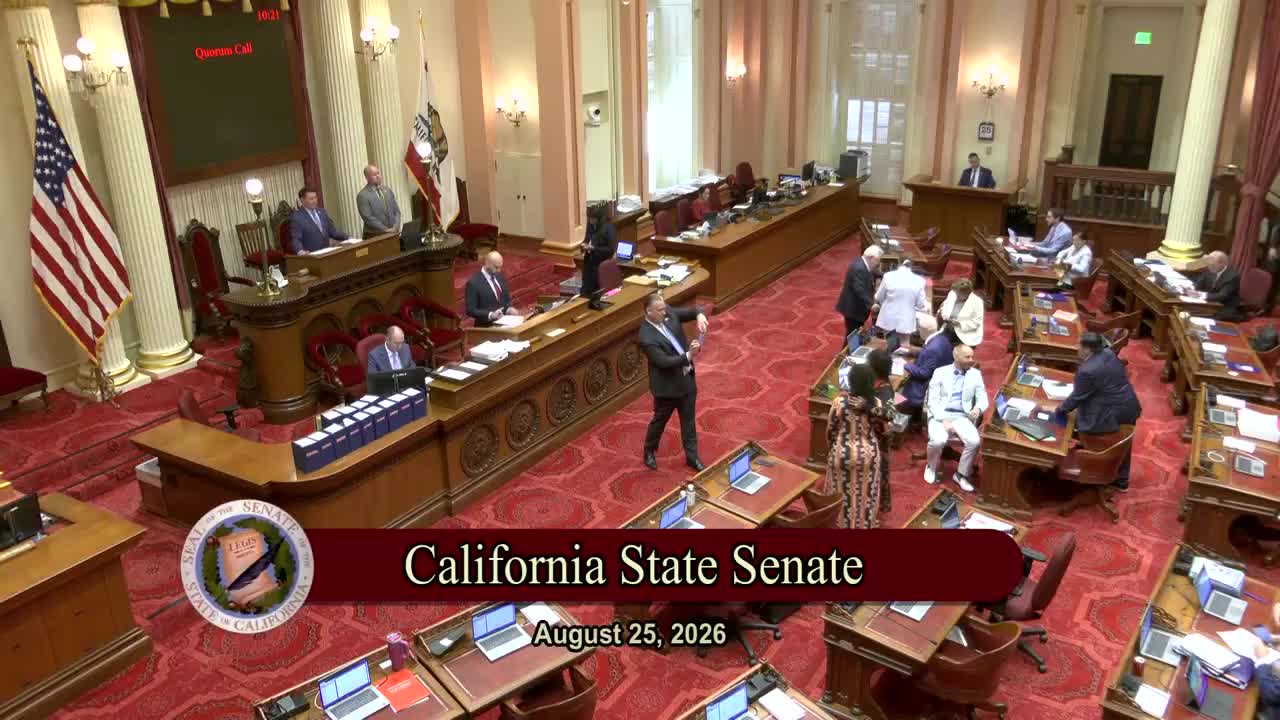
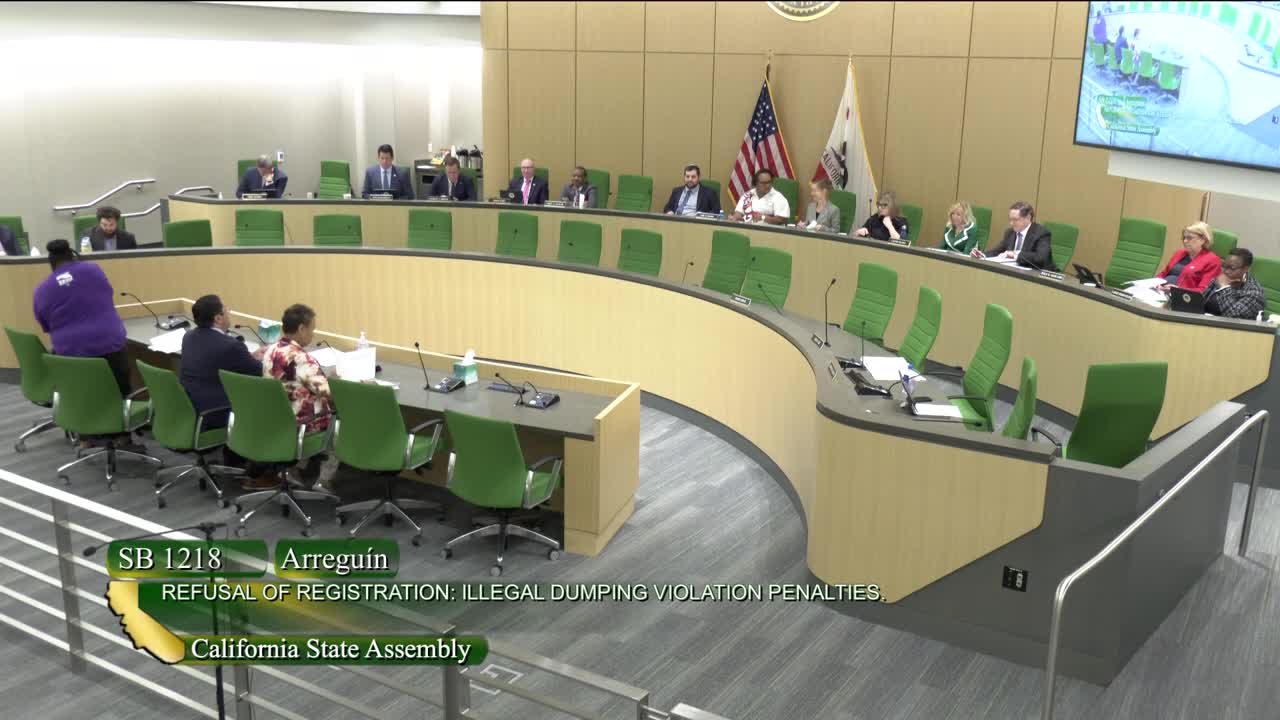
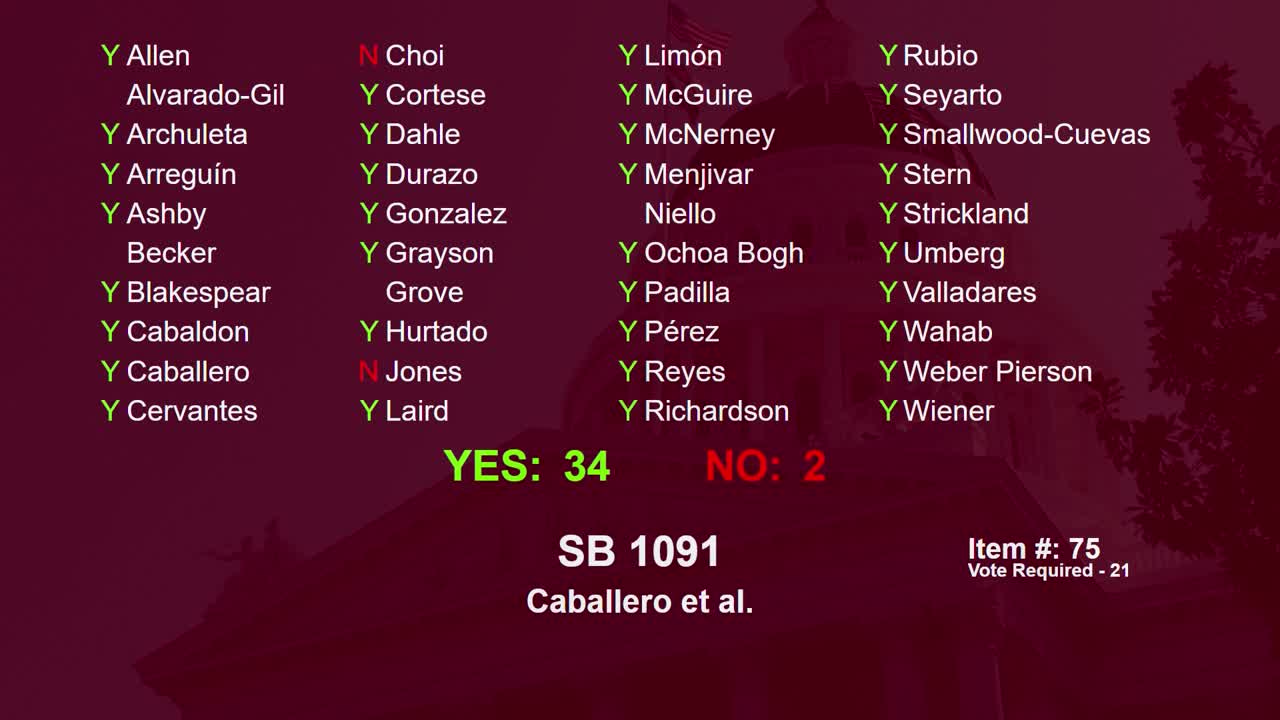
Bill Author