SB 1230: Solid waste: illegal dumping: penalties: resources.
- Session Year: 2025-2026
- House: Senate
- Latest Version Date: 2026-06-25
Current Status:
In Progress
(2026-08-13: August 13 hearing: Held in committee and under submission.)
Introduced
In Committee
Awaiting First Chamber Vote
Passed First Chamber
In Committee
Awaiting Second Chamber Vote
Passed Second Chamber
Enacted
(1)Existing law prohibits the dumping of waste matter upon a road or highway or in other locations, as specified. A violation of this prohibition, generally, is an infraction punishable by specified fines that escalate for subsequent convictions. Under existing law, the dumping of commercial quantities of waste, as defined, is punishable as a misdemeanor and also includes escalating fines. Under existing law, each day that waste is placed, deposited, or dumped in violation of these provisions is a separate violation.
This bill would increase the fine for the dumping of waste matter from not less than $500 nor more than $1,500 to not less than $1,500 nor more than $3,000 for the 2nd conviction, and from not less than $750 nor more than $3,000 to not less than $3,000 nor more than $5,000 for the 3rd and any subsequent convictions. repeal that latter provision making each day a separate violation. The bill would increase the fine for the dumping of commercial quantities of waste from not less than $3,000 nor more than $6,000 to not less than $6,000 $4,500 nor more than $10,000 $8,000 for the 2nd conviction and from not less than $6,000 nor more than $10,000 to not less than $10,000 $8,000 nor more than $15,000 $10,000 for the 3rd and any subsequent convictions. The bill would increase the fine for the dumping of commercial quantities of waste by a business that employs more than 10 employees from not less than $3,000 nor more than $10,000 to not less than $6,000 nor more than $10,000 for the 2nd conviction and from not less than $6,000 nor more than $20,000 to not less than $15,000 nor more than $25,000 for the 3rd and any subsequent convictions.
(2)Existing law establishes the Department of Resources Recycling and Recovery and vests the department with all of the authority, duties, powers, purposes, responsibilities, and jurisdiction of the former California Integrated Waste Management Board, except as specified.
This bill would require the department to be the lead state agency to act as a resource for cities and counties to address illegal dumping and would require the department to create an internet website with resources to help cities and counties combat, prevent, and clean up illegal dumping, as specified.
(1)Existing law prohibits the dumping of waste matter upon a road or highway or in other locations, as specified. A violation of this prohibition, generally, is an infraction punishable by specified fines that escalate for subsequent convictions. Under existing law, the dumping of commercial quantities of waste, as defined, is punishable as a misdemeanor and also includes escalating fines.
This bill would increase the fine for the dumping of waste matter from not less than $500 nor more than $1,500 to not less than $1,500 nor more than $3,000 for the 2nd conviction, and from not less than $750 nor more than $3,000 to not less than $3,000 nor more than $5,000 for the 3rd and any subsequent convictions. The bill would increase the fine for the dumping of commercial quantities of waste from not less than $3,000 nor more than $6,000 to not less than $6,000 nor more than $10,000 for the 2nd conviction and from not less than $6,000 nor more than $10,000 to not less than $10,000 nor more than $15,000 for the 3rd and any subsequent convictions. The bill would increase the fine for the dumping of commercial quantities of waste by a business that employs more than 10 employees from not less than $3,000 nor more than $10,000 to not less than $6,000 nor more than $10,000 for the 2nd conviction and from not less than $6,000 nor more than $20,000 to not less than $15,000 nor more than $25,000 for the 3rd and any subsequent convictions.
(2)Existing law establishes the Department of Resources Recycling and Recovery and vests the department with all of the authority, duties, powers, purposes, responsibilities, and jurisdiction of the former California Integrated Waste Management Board, except as specified.
This bill would require the department to be the lead state agency to act as a resource for cities and counties to address illegal dumping and would require the department to create an internet website with resources to help cities and counties combat, prevent, and clean up illegal dumping, as specified.
(a)It is unlawful to dump or cause to be dumped waste matter in or upon a public or private highway or road, including any portion of the right-of-way thereof, or in or upon private property into or upon which the public is admitted by easement or license, or upon private property without the consent of the owner, or in or upon a public park or other public property other than property designated or set aside for that purpose by the governing board or body having charge of that property.
(b)It is unlawful to place, deposit, or dump, or cause to be placed, deposited, or dumped, rocks, concrete, asphalt, or dirt in or upon a private highway or road, including any portion of the right-of-way of the private highway or road, or private property, without the consent of the owner or a contractor under contract with the owner for the materials, or in or upon a public park or other public property, without the consent of the state or local agency having jurisdiction over the highway, road, or property.
(c)A person violating this section is guilty of an infraction. Each day that waste placed, deposited, or dumped in violation of subdivision (a) or (b) remains is a separate violation.
(d)This section does not restrict a private owner in the use of their own private property, unless the placing, depositing, or dumping of the waste matter on the property creates a public health and safety hazard, a public nuisance, or a fire hazard, as determined by a local health department, local fire department or district providing fire protection services, or the Department of Forestry and Fire Protection, in which case this section applies.
(e)A person convicted of a violation of this section shall be punished by a mandatory fine of not less than two hundred fifty dollars ($250) nor more than one thousand dollars ($1,000) upon a first conviction, by a mandatory fine of not less than one thousand five hundred dollars ($1,500) ($500) nor more than three thousand dollars ($3,000) one thousand five hundred dollars ($1,500) upon a second conviction, and by a mandatory fine of not less than three thousand dollars ($3,000) seven hundred fifty ($750) nor more than five thousand dollars ($5,000) three thousand dollars ($3,000) upon a third or subsequent conviction. If the court finds that the waste matter placed, deposited, or dumped was used tires, the fine prescribed in this subdivision shall be doubled.
(f)The court may require, in addition to any fine imposed upon a conviction, that a person convicted under this section remove, or pay the cost of removing, any waste matter that the convicted person dumped or caused to be dumped upon public or private property.
(g)The court may, in addition to the fine imposed upon a conviction, require that a person convicted of a violation of this section pick up waste matter at a time and place within the jurisdiction of the court for not less than 12 hours.
(h)(1)Except as otherwise provided in paragraph (2), a person who places, deposits, or dumps, or causes to be placed, deposited, or dumped, waste matter in violation of this section in commercial quantities shall be guilty of a misdemeanor punishable by imprisonment in a county jail for not more than six months and by a fine. The fine is mandatory and shall amount to not less than one thousand dollars ($1,000) nor more than three thousand dollars ($3,000) upon a first conviction, not less than six thousand dollars ($6,000) four thousand five hundred dollars ($4,500) nor more than ten thousand dollars ($10,000) eight thousand dollars ($8,000) upon a second conviction, and not less than ten thousand dollars ($10,000) eight thousand dollars ($8,000) nor more than fifteen thousand dollars ($15,000) ten thousand dollars ($10,000) upon a third or subsequent conviction.
(2)If a person convicted under paragraph (1) is the owner or operator of the business involved in the illegal dumping, and that business employs more than 10 full-time employees, the fine shall amount to not less than one thousand dollars ($1,000) nor more than five thousand dollars ($5,000) upon a first conviction, not less than six thousand dollars ($6,000) nor more than ten thousand dollars ($10,000) upon a second conviction, and not less than fifteen thousand dollars ($15,000) nor more than twenty-five thousand dollars ($25,000) upon a third or subsequent conviction.
(3)The court shall require, in addition to the fine imposed upon a conviction, that a person convicted under this subdivision remove, or pay the cost of removing, any waste matter that the convicted person dumped or caused to be dumped upon public or private property.
(4)(A)If a person convicted under this subdivision holds a license or permit to conduct business that is substantially related to the illegal dumping for which the person was convicted, the court shall notify the applicable licensing or permitting entity subject to the jurisdiction of the Department of Consumer Affairs as set forth in Section 101 of the Business and Professions Code, if any, of the conviction.
(B)The licensing or permitting entity shall record and post the offense on the public profile of the license or permitholder on the internet website of the entity.
(5)Commercial quantities means an amount of waste matter generated in the course of a trade, business, profession, or occupation, or an amount equal to or in excess of one cubic yard. This subdivision does not apply to the dumping of household waste at a persons own residence.
(i)For purposes of this section, person means an individual, trust, firm, partnership, joint stock company, joint venture, or corporation.
(j)When setting fines pursuant to this section, the court shall consider the defendants ability to pay, including consideration of, without limitation, all of the following:
(1)The defendants present financial position.
(2)The defendants reasonably discernible future financial position, provided that the court shall not consider a period of more than one year from the date of the hearing for purposes of determining the reasonably discernible future financial position of the defendant.
(3)The likelihood that the defendant will be able to obtain employment within one year from the date of the hearing.
(4)Any other factor that may bear upon the defendants financial capability to pay the fine.
SEC. 2.Section 40509.5 is added to the Public Resources Code, to read:40509.5.(a)The department shall be the lead state agency to act as a resource for cities and counties to address illegal dumping.
(b)The department shall create an internet website with resources to help cities and counties combat, prevent, and clean up illegal dumping. The internet website may include, but shall not be limited to, educational outreach materials, best practices, enforcement tools, and grant opportunities available to cities and counties. The department may collaborate with other state agencies for the internet website.
(a)It is unlawful to dump or cause to be dumped waste matter in or upon a public or private highway or road, including any portion of the right-of-way thereof, or in or upon private property into or upon which the public is admitted by easement or license, or upon private property without the consent of the owner, or in or upon a public park or other public property other than property designated or set aside for that purpose by the governing board or body having charge of that property.
(b)It is unlawful to place, deposit, or dump, or cause to be placed, deposited, or dumped, rocks, concrete, asphalt, or dirt in or upon a private highway or road, including any portion of the right-of-way of the private highway or road, or private property, without the consent of the owner or a contractor under contract with the owner for the materials, or in or upon a public park or other public property, without the consent of the state or local agency having jurisdiction over the highway, road, or property.
(c)A person violating this section is guilty of an infraction. Each day that waste placed, deposited, or dumped in violation of subdivision (a) or (b) remains is a separate violation.
(d)This section does not restrict a private owner in the use of their own private property, unless the placing, depositing, or dumping of the waste matter on the property creates a public health and safety hazard, a public nuisance, or a fire hazard, as determined by a local health department, local fire department or district providing fire protection services, or the Department of Forestry and Fire Protection, in which case this section applies.
(e)A person convicted of a violation of this section shall be punished by a mandatory fine of not less than two hundred fifty dollars ($250) nor more than one thousand dollars ($1,000) upon a first conviction, by a mandatory fine of not less than five hundred dollars ($500) nor more than one thousand five hundred dollars ($1,500) nor more than three thousand dollars ($3,000) upon a second conviction, and by a mandatory fine of not less than seven hundred fifty dollars ($750) nor more than three thousand dollars ($3,000) nor more than five thousand dollars ($5,000) upon a third or subsequent conviction. If the court finds that the waste matter placed, deposited, or dumped was used tires, the fine prescribed in this subdivision shall be doubled.
(f)The court may require, in addition to any fine imposed upon a conviction, that a person convicted under this section remove, or pay the cost of removing, any waste matter which that the convicted person dumped or caused to be dumped upon public or private property.
(g)The court may, in addition to the fine imposed upon a conviction, require that a person convicted of a violation of this section pick up waste matter at a time and place within the jurisdiction of the court for not less than 12 hours.
(h)(1)Except as otherwise provided in paragraph (2), a person who places, deposits, or dumps, or causes to be placed, deposited, or dumped, waste matter in violation of this section in commercial quantities shall be guilty of a misdemeanor punishable by imprisonment in a county jail for not more than six months and by a fine. The fine is mandatory and shall amount to not less than one thousand dollars ($1,000) nor more than three thousand dollars ($3,000) upon a first conviction, not less than three thousand dollars ($3,000) nor more than six thousand dollars ($6,000) nor more than ten thousand dollars ($10,000) upon a second conviction, and not less than six thousand dollars ($6,000) nor more than ten thousand dollars ($10,000) nor more than fifteen thousand dollars ($15,000) upon a third or subsequent conviction.
(2)If a person convicted under paragraph (1) is the owner or operator of the business involved in the illegal dumping, and that business employs more than 10 full-time employees, the fine shall amount to not less than one thousand dollars ($1,000) nor more than five thousand dollars ($5,000) upon a first conviction, not less than three thousand dollars ($3,000) nor more than ten thousand dollars ($10,000) six thousand dollars ($6,000) nor more than ten thousand dollars ($10,000) upon a second conviction, and not less than six thousand dollars ($6,000) nor more than twenty thousand dollars ($20,000) fifteen thousand dollars ($15,000) nor more than twenty-five thousand dollars ($25,000) upon a third or subsequent conviction.
(3)The court shall require, in addition to the fine imposed upon a conviction, that a person convicted under this subdivision remove, or pay the cost of removing, any waste matter which that the convicted person dumped or caused to be dumped upon public or private property.
(4)(A)If a person convicted under this subdivision holds a license or permit to conduct business that is substantially related to the illegal dumping for which the person was convicted, the court shall notify the applicable licensing or permitting entity subject to the jurisdiction of the Department of Consumer Affairs as set forth in Section 101 of the Business and Professions Code, if any, of the conviction.
(B)The licensing or permitting entity shall record and post the offense on the public profile of the license or permitholder on the internet website of the entity.
(5)Commercial quantities means an amount of waste matter generated in the course of a trade, business, profession, or occupation, or an amount equal to or in excess of one cubic yard. This subdivision does not apply to the dumping of household waste at a persons own residence.
(i)For purposes of this section, person means an individual, trust, firm, partnership, joint stock company, joint venture, or corporation.
(j)When setting fines pursuant to this section, the court shall consider the defendants ability to pay, including consideration of, without limitation, all of the following:
(1)The defendants present financial position.
(2)The defendants reasonably discernible future financial position, provided that the court shall not consider a period of more than one year from the date of the hearing for purposes of determining the reasonably discernible future financial position of the defendant.
(3)The likelihood that the defendant will be able to obtain employment within one year from the date of the hearing.
(4)Any other factor that may bear upon the defendants financial capability to pay the fine.
SEC. 2.Section 40509.5 is added to the Public Resources Code, to read:40509.5.(a)The department shall be the lead state agency to act as a resource for cities and counties to address illegal dumping.
(b)The department shall create an internet website with resources to help cities and counties combat, prevent, and clean up illegal dumping. The internet website may include, but shall not be limited to, educational outreach materials, best practices, enforcement tools, and grant opportunities available to cities and counties. The department may collaborate with other state agencies for the internet website.
|
Date
|
Status
|
|---|---|
| Aug 13, 2026 | August 13 hearing: Held in committee and under submission. |
| Aug 5, 2026 | August 5 set for first hearing. Placed on suspense file. |
| Jun 30, 2026 | From committee: Do pass and re-refer to Com. on APPR. (Ayes 12. Noes 0.) (June 29). Re-referred to Com. on APPR. |
| Jun 25, 2026 | Read second time and amended. Re-referred to Com. on NAT. RES. |
| Jun 24, 2026 | From committee: Do pass as amended and re-refer to Com. on NAT. RES. (Ayes 9. Noes 0.) (June 23). |
| Jun 22, 2026 | Assembly Rule 56 suspended. |
| Jun 4, 2026 | Referred to Coms. on PUB. S. and NAT. RES. |
| May 27, 2026 | In Assembly. Read first time. Held at Desk. |
| May 27, 2026 | Read third time. Passed. (Ayes 36. Noes 2. Page 4503.) Ordered to the Assembly. |
| May 27, 2026 | Read third time. Passed. (Ayes 36. Noes 2.) Ordered to the Assembly. |
| May 22, 2026 | Ordered to third reading. |
| May 22, 2026 | From special consent calendar on motion of Senator Durazo. |
| May 20, 2026 | Ordered to special consent calendar. |
| May 14, 2026 | From committee: Do pass. (Ayes 7. Noes 0. Page 4270.) (May 14). |
| May 14, 2026 | Read second time. Ordered to third reading. |
| May 14, 2026 | From committee: Do pass. (Ayes 7. Noes 0.) (May 14). |
| May 8, 2026 | Set for hearing May 14. |
| May 4, 2026 | May 4 hearing: Placed on APPR. suspense file. |
| Apr 24, 2026 | Set for hearing May 4. |
| Apr 22, 2026 | From committee: Do pass and re-refer to Com. on APPR. (Ayes 7. Noes 0. Page 4009.) (April 22). Re-referred to Com. on APPR. |
| Apr 22, 2026 | From committee: Do pass and re-refer to Com. on APPR. (Ayes 7. Noes 0.) (April 22). Re-referred to Com. on APPR. |
| Apr 17, 2026 | Set for hearing April 22. |
| Apr 7, 2026 | From committee: Do pass and re-refer to Com. on E.Q. (Ayes 6. Noes 0. Page 3759.) (April 7). Re-referred to Com. on E.Q. |
| Apr 7, 2026 | From committee: Do pass and re-refer to Com. on E.Q. (Ayes 6. Noes 0.) (April 7). Re-referred to Com. on E.Q. |
| Mar 23, 2026 | Set for hearing April 7. |
| Mar 4, 2026 | Referred to Coms. on PUB. S. and E.Q. |
| Feb 20, 2026 | From printer. May be acted upon on or after March 22. |
| Feb 19, 2026 | Introduced. Read first time. To Com. on RLS. for assignment. To print. |
|
Date
|
Description
|
Location
|
Votes
|
|
|---|---|---|---|---|
| Jun 29, 2026 | Do pass and be re-referred to the Committee on [Appropriations] | Assembly Standing Committee on Natural Resources |
Passed |
|
| Jun 23, 2026 | Do pass as amended and be re-referred to the Committee on [Natural Resources] | Assembly Standing Committee on Public Safety |
Passed |
|
| May 27, 2026 | Senate 3rd Reading SB1230 Valladares | Senate Floor |
Passed |
|
| May 14, 2026 | Do pass | Senate Standing Committee on Appropriations |
Passed |
|
| May 4, 2026 | Placed on suspense file | Senate Standing Committee on Appropriations |
Passed |
|
| Apr 22, 2026 | Do pass, but first be re-referred to the Committee on [Appropriations] | Senate Standing Committee on Environmental Quality |
Passed |
|
| Apr 7, 2026 | Do pass, but first be re-referred to the Committee on [Environmental Quality] | Senate Standing Committee on Public Safety |
Passed |
This list shows positions taken on this bill by organizations on the date displayed, which is linked to the original source.
Positions by individuals are not included.
|
Organization
|
Position
|
Date
|
|---|---|---|
| Aclu California Action | ** Against | |
| Alameda County | ** Support | |
| All of US or None (HQ) | ** Against | |
| California Association Of Highway Patrolmen | ** Support | |
| California Chapters of the Solid Waste Association of North America’s Legislative Task Force | ** Support | |
| California Chapters of The Solid Waste Association of North America's Legislative Task Force | ** Support | |
| California Public Defenders Association | ** Against | |
| City of Hesperia | ** Support | |
| County Of Alameda | ** Support | |
| Debt Free Justice California | ** Against | |
| Indivisible Ca Statestrong | ** Against | |
| Legal Services for Prisoners with Children | ** Against | |
| Rural County Representatives of California | ** Support | |
| Shasta County Board of Supervisors | ** Support | |
| Solid Waste Association of North America's Legislative Task Force, California Chapters | ** Support |
Date of Hearing: August 5, 2026
ASSEMBLY COMMITTEE ON APPROPRIATIONS
Buffy Wicks, Chair
SBPCA Bill Id:SB 1230
Author:(Valladares) – As Amended Ver:June 25, 2026
Policy Committee: | Public Safety | Vote: | 9 - 0 |
Natural Resources | 12 - 0 | ||
|
|
Urgency: No State Mandated Local Program: No Reimbursable: No
SUMMARY:
This bill increases the mandatory fines for second and subsequent convictions for illegal dumping of commercial quantities of waste, repeals the provision making each day that dumped waste remains a separate violation, and designates the Department of Resources Recycling and Recovery (CalRecycle) as the lead state agency to serve as a resource for cities and counties addressing illegal dumping.
More specifically, this bill:
- Increases the mandatory fine for a second conviction for dumping commercial quantities of waste from a range of $3,000-$6,000 to a range of $4,500-$8,000, and for a third or subsequent conviction from a range of $6,000-$10,000 to a range of $8,000-$10,000.
- Increases the mandatory fine, where the convicted person owns or operates a business with more than 10 full-time employees, from a range of $3,000-$10,000 to a range of $6,000-$10,000 for a second conviction, and from a range of $6,000-$20,000 to a range of $15,000-$25,000 for a third or subsequent conviction.
- Repeals the provision of existing law specifying that each day illegally dumped waste remains in place constitutes a separate violation.
- Designates CalRecycle as the lead state agency to act as a resource for cities and counties to address illegal dumping, and requires CalRecycle to create an internet website with resources, which may include educational outreach materials, best practices, enforcement tools, and grant opportunities, to help cities and counties combat, prevent, and clean up illegal dumping.
FISCAL EFFECT:
Ongoing annual costs of $155,000 for one staff position beginning in fiscal year 2027-28 (Solid Waste Disposal Site Cleanup Trust Fund). CalRecycle states that an additional resource is necessary in order to provide ongoing updates to the website, coordinate with local jurisdictions, and provide technical assistance, education, and outreach.
COMMENTS:
- Purpose. According to the author:
Illegal dumping is a persistent and costly problem affecting communities throughout California, particularly in rural, desert, and lower-income areas where enforcement resources are most limited... The non-commercial repeat offender fine ranges and commercial minimum thresholds have not been substantively updated since AB 1802 in 2004... By raising the penalty thresholds, this bill creates a stronger deterrent for chronic violators, including those dumping in commercial quantities.
- Background. Illegal dumping is the unauthorized disposal of solid waste on public or private property, punishable as an infraction with escalating mandatory fines for non-commercial quantities, and as a misdemeanor with escalating mandatory fines for commercial quantities, defined as waste generated in the course of a trade or business or an amount of one cubic yard or more. According to CalRecycle, local governments spend tens of millions of dollars annually removing illegally dumped material. Los Angeles County’s cleanup costs grew from $2.3 million in fiscal year 2019-20 to $6.8 million in fiscal year 2023-24, and rural areas including the Antelope Valley report more than 100 unauthorized dump sites, some of which have sparked fires costing taxpayers more than $1.6 million to extinguish. The Assembly Public Safety Committee analysis notes research finding that increased penalty severity generally has a limited deterrent effect relative to the likelihood of apprehension, and that penalty assessments can substantially multiply base fines — a $1,000 base fine can exceed $4,100 with assessments.
- Support and Opposition. Supporters, including Alameda County, the Rural County Representatives of California, and solid waste industry representatives, argue current penalties are too low to deter dumping when illegal disposal can cost a fraction of lawful disposal fees. Opponents, including ACLU California Action and Debt Free Justice California, argue increased fines do not deter, fall hardest on low-income individuals, and generate little net revenue, citing Oakland’s collection of roughly 11% of $1.3 million in illegal dumping fines issued from 2021 through 2024.
- Related Legislation. AB 2310 (Carrillo), of this legislative session, increases fines and penalties for defined acts of illegal dumping, including elevating a fourth or subsequent offense to a misdemeanor, and is pending in the Senate Appropriations Committee.
SB 1218 (Arreguin), of this legislative session, authorizes a peace officer or code enforcement officer to immobilize a vehicle whose registered owner has five or more unpaid citations or failure-to-appear notices for illegal dumping, or two or more unpaid citations for illegal dumping in commercial quantities. SB 1218 is pending in this committee.
- Prior Legislation. AB 2374 (Bauer-Kahan), Chapter 784, Statutes of 2022, increased maximum fines for commercial dumping by businesses with more than 10 employees.
Analysis Prepared by: Shiran Zohar / APPR. / (916) 319-2081
Date of Hearing: June 29, 2026
ASSEMBLY COMMITTEE ON NATURAL RESOURCES
Isaac G. Bryan, Chair
SBPCA Bill Id:SB 1230
Author:(Valladares) – As Amended Ver:June 25, 2026
SENATE VOTE: 36-2
SUBJECT: Solid waste: illegal dumping: penalties: resources
SUMMARY: Increases penalties for illegal dumping and declares the Department of Resources Recycling and Recovery (CalRecycle) as the lead state agency to act as a resource for cities and counties to address illegal dumping.
EXISTING LAW:
- Establishes the California Integrated Waste Management Act of 1989, administered by CalRecycle, to regulate solid waste disposal, management, and recycling. (Public Resources Code (PRC) 40050 et seq.)
- Authorizes local governmental agencies to determine aspects of solid waste handling that are of local concern, including fees and the extent of providing solid waste handling services. (PRC 40058-4006)
- Prohibits dumping waste on public or private highways or roads, including any portion of the right-of-way thereof, or on private property without consent, or in a public park or other public property (Penal Code (PC) 374.3)
- Specifies that every day that waste placed, deposited, or dumped in violation of PC 374.3 remains a separate violation.
- Establishes penalties for the illegal dumping of commercial and non-commercial quantities of waste:
- A person convicted of dumping non-commercial quantities of waste may be required to pay the cost of cleanup or cleanup themselves for 12 hours, in addition to a mandatory fine of the following amounts:
- First offense: $250-$1,000;
- Second offense: $500-$1,500; and
- Third offense: $750-$3,000.
- Doubles the fines for used tires (PC 374.3)
- A person convicted of illegally dumping commercial quantities is guilty of a misdemeanor punishable by imprisonment in a county jail for not more than six months and by a fine. Provides that the fine is mandatory at the following amounts:
- First offense: $1,000-$3,000;
- Second offense: $3,000-$6,000; and
- Third offense: $6,000-$10,000. (PC 374.3)
- Provides that if a person convicted for a violation of illegal dumping in commercial quantities is the owner or operator of the business involved in the illegal dumping, and that business employs more than 10 full-time employees, the mandatory fine is as follows:
- First offense: $1,000-$5,000;
- Second offense: $3,000-$10,000; and
- Third offense: $6,000-$20,000. (PC 374.3)
- A person convicted of dumping non-commercial quantities of waste may be required to pay the cost of cleanup or cleanup themselves for 12 hours, in addition to a mandatory fine of the following amounts:
- States that the court shall require, in addition to the fine imposed upon a conviction, that a person convicted of illegal dumping in commercial quantities to remove, or pay the cost of removing, any waste matter that the convicted person dumped or caused to be dumped upon the public or private property. (PC 374.3)
- Requires the court, if a person convicted of illegal dumping in commercial quantities holds a license or permit to conduct business that is substantially related to the illegal dumping for which the person was convicted, to notify the applicable licensing or permitting entity subject to the jurisdiction of the Department of Consumer Affairs of the conviction, as specified. (PC 374.3)
- Requires the licensing or permitting entity to record and post the offense on the public profile of the license or permit holder on the internet website of the entity. (PC 374.3)
- Defines “commercial quantities” as an amount of waste matter generated in the course of a trade, business, profession, or occupation, or an amount equal to or in excess of one cubic yard. Specifies that it does not apply to the dumping of household waste at a person’s own residence. (PC 374.3)
- Requires the court, when setting fines pursuant to the above violations, to consider the defendant’s ability to pay, including consideration of several specified factors. (PC 374.3)
THIS BILL:
- Repeals the provision that specifies that every day that waste is placed, deposited, or dumped is a separate violation.
- Increases the fine for the dumping of commercial quantities of waste to not less than $4,500 nor more than $8,000 for the second conviction and to not less than $8,000 nor more than $10,000 for the third and any subsequent convictions.
- Increases the fine for the dumping of commercial quantities of waste by a business that employs more than 10 employees to not less than $6,000 nor more than $10,000 for the second conviction and to not less than $15,000 nor more than $25,000 for the third and any subsequent convictions.
- Declares CalRecycle as the lead state agency to act as a resource for cities and counties to address illegal dumping. Requires CalRecycle to create a website with resources to help cities and counties combat, prevent, and clean up illegal dumping.
FISCAL EFFECT: According to the Senate Appropriations Committee, annual costs of $155,000 beginning 2027-28 to implement the provisions of this bill (Solid Waste Disposal Site Cleanup Trust Fund).
COMMENTS:
- Illegal dumping. Illegal dumping is the act of disposing of solid waste at a location that is not a permitted solid waste facility. In California, illegal dumping is often done for economic gain, either by individuals who opt to dump their own waste illegally to avoid paying disposal fees or by illegitimate “junk hauling” entities that collect waste for disposal for a fee, but don’t haul the material to a permitted facility. Illegal dumping poses significant social, environmental, and economic impacts statewide. According to CalRecycle, local governments spend tens of millions of dollars annually to remove illegally dumped materials, and private property owners incur significant costs to clean up illegal dumping on private lands. Once a site has illegally dumped material, the site tends to grow in size and becomes more difficult to abate.
Most local governments treat illegal dumping as a nuisance/litter issue rather than a violation of solid waste laws. The methods used by local governments to manage illegal dumping vary widely. Local and state law enforcement entities will cite people caught illegally dumping, but those agencies are not responsible for cleanup programs. No single state or local agency is given responsibility for a comprehensive program to combat littering and illegal dumping. CalRecycle is responsible for investigation, cleanup, and enforcement of sites that qualify as illegal solid waste disposal sites and shares this responsibility with local enforcement agencies.
In recent years, many urban areas have experienced an increase in illegal dumping activity. For example, in Oakland, the amount of illegally dumped trash collected by the city has increased sixfold since 2015. Los Angeles County’s illegal dumping cleanup costs grew from $2.3 million in fiscal year (FY) 2019-2020 to $6.8 million in FY 2023-2024, a nearly threefold increase. Los Angeles County also projected a 15% increase in reported illegal dumping cases from 2023 to 2024, to over 15,800 cases. According to data compiled by Crosstown LA, there were 22,046 reports of trash, furniture, and other debris illegally disposed in the months of January and February of 2025, compared to 16,212 the previous year over the same two-month period.
Rural areas also grapple with illegal dumping. There are reports of pervasive dumping in the Antelope Valley. Residents say that more than 100 dump sites are scattered throughout the valley—from Lake Los Angeles to the Antelope Valley California Poppy Reserve and north to the Mojave. One site is alleged to contain more than 182,000 tons of debris left over from the processing of construction and demolition material.
Illegal dump sites undermine the quality of life of nearby residents and are environmental and public health hazards. From 2020 to 2024, self-combustible wood chips and organic materials used to camouflage garbage as mulch sparked 42 fires, costing taxpayers more than $1.6 million to extinguish and exposing downwind Antelope Valley residents to toxic smoke, contaminated dust, and airborne particulates. The Bravo fire ignited at an illegal 80-acre dump site in 2024, and cost the LA County Fire Department more than $288,000, took four days to extinguish, and exposed residents to toxic smoke.
- Illegal dumping technical advisory committee (IDTAC). CalRecycle established a state and local technical advisory committee in 2006 to assess the extent of illegal dumping and to develop recommendations to improve the effectiveness of local and regional responses to the problem. Originally established as a task force, the group developed recommendations that were presented to the former California Integrated Waste Management Board in 2007. IDTAC is comprised of local government entities, state government entities, nonprofit organizations, and others. The Illegal Dumping Toolbox was created by the IDTAC to provide resources to local governments to help combat illegal dumping.
In 2020, IDTAC completed a Work Plan to develop new and expanded resources and objectives to address illegal dumping. The Work Plan includes priorities and objectives in three areas: enforcement, outreach, and standards. In addition to the Work Plan, the IDTAC has focused on, and provides information to local governments and the public about, the topics of homeless encampments and abandoned vehicles. - Solid Waste Disposal and Codisposal Site Cleanup Program. The cleanup program allocates $1 million annually for public entities to fund illegally disposed waste removal and disposal, security measures (i.e., fences, signs, etc.), and health and safety measures associated with the cleanup. Grant awards are limited to $50,000 per applicant per year.
- Farm and Ranch Solid Waste Cleanup and Abatement Program. CalRecycle administers a grant program to eligible cities, counties, resource conservation districts, and Native American tribes for the cleanup and abatement of illegal dumping on farm and ranch properties. Funding for this program is limited to $1 million each fiscal year. Grants are limited to $50,000 per site and $200,000 per applicant per year.
- Author’s statement:
Illegal dumping is a persistent and costly problem affecting communities throughout California, particularly in rural, desert, and lower-income areas where enforcement resources are most limited. In Senate District 23, residents of the Victor Valley and surrounding high-desert communities have documented hundreds of unauthorized dump sites containing construction debris, household waste, plastics, and other discarded materials. These sites degrade natural habitats, create fire risks, and impose significant financial burdens on local governments that are often already stretched thin.
SB 1230 takes two targeted, practical steps to address this ongoing problem. First, it increases fines for repeat illegal dumping offenders under California Penal Code Section 374.3. The non-commercial repeat offender fine ranges and commercial minimum thresholds have not been substantively updated since AB 1802 in 2004. Although AB 2374 in 2022 raised maximum fines for larger businesses, it did not address the fine minimums or non-commercial infraction ranges, leaving those penalty floors unchanged for over two decades and well below the true cost of cleanup and environmental remediation. By raising the penalty thresholds, this bill creates a stronger deterrent for chronic violators, including those dumping in commercial quantities.
Second, SB 1230 designates the Department of Resources Recycling and Recovery (CalRecycle) as the lead state agency for supporting cities and counties in combating illegal dumping. It requires CalRecycle to create a publicly accessible website offering enforcement tools, best practices, educational outreach materials, and information on available grant funding. Cities and counties, particularly smaller and rural jurisdictions, currently lack a centralized state resource for this guidance.
- This bill. This bill is intended to combat illegal dumping by increasing the penalties for repeated violations. However, the amended version of this bill weakens existing law by removing the provisions that declares that each day that illegally dumped waste remains in place is a separate violation. Further, this bill is intended to provide assistance and guidance to local governments by requiring CalRecycle to provide information and maintain a website to support local efforts to stop illegal dumping.
- Double referral. This bill was heard by the Assembly Public Safety Committee on June 23, and passed 9-0.
- Related legislation. AB 2310 (Carillo) increases penalties for a fourth or subsequent illegal dumping offense from an infraction to a misdemeanor, with a fine of up to $5,000, and increases penalties for commercial quantities of illegal dumping with fines of up to $50,000. This bill has been referred to the Senate Appropriations Committee.
REGISTERED SUPPORT / OPPOSITION:
Support
Alameda County
California Association of Highway Patrolmen
California Chapters of the Solid Waste Association of North America’s Legislative Task Force
City of Hesperia
Rural County Representatives of California
Opposition
ACLU California Action
Analysis Prepared by: Elizabeth MacMillan / NAT. RES. /
Date of Hearing: June 23, 2026
Counsel: Dustin Weber
ASSEMBLY COMMITTEE ON PUBLIC SAFETY
Nick Schultz, Chair
SBPCA Bill Id:SB 1230
Author:(Valladares) – As Introduced Ver:February 19, 2026
SUMMARY: Increases fines for illegal dumping violations and designates the Department of Resources Recycling and Recovery (CalRecycle) as the lead agency to work with localities in combatting illegal dumping. Specifically, this bill:
- Increases the fine for illegal dumping of non-commercial quantities of waste from not less than $500 nor more than $1,500 to not less than $1,500 nor more than $3,000 for the second conviction.
- Increases the fine for illegal dumping of non-commercial quantities of waste from not less than $750 nor more than $3,000 to not less than $3,000 nor more than $5,000 for the third and any subsequent convictions.
- Increases the fine for illegal dumping of commercial quantities of waste from not less than $3,000 nor more than $6,000 to not less than $6,000 nor more than $10,000 for the second conviction.
- Increases the fine for illegal dumping of commercial quantities of waste from not less than $6,000 nor more than $10,000 to not less than $10,000 nor more than $15,000 for the third and any subsequent convictions.
- Increases the fine for the dumping of commercial quantities of waste by a business that employs more than 10 employees from not less than $3,000 nor more than $10,000 to not less than $6,000 nor more than $10,000 for the second conviction.
- Increases the fine for the dumping of commercial quantities of waste by a business that employs more than 10 employees from not less than $6,000 nor more than $20,000 to not less than $15,000 nor more than $25,000 for the third and any subsequent convictions.
- States that CalRecycle shall be the lead state agency to act as a resource for cities and counties to address illegal dumping.
- Requires CalRecycle to create an internet website with resources to help cities and counties combat, prevent, and clean up illegal dumping.
- Provides that the CalRecycle internet website may include, but shall not be limited to, educational outreach materials, best practices, enforcement tools, and grant opportunities available to cities and counties.
- Provides that CalRecycle may collaborate with other state agencies for the internet website.
EXISTING LAW:
- States that it is unlawful to dump or cause to be dumped waste matter in or upon a public or private highway or road, including any portion of the right-of-way thereof, or in or upon private property into or upon which the public is admitted by easement or license, or upon private property without the consent of the owner, or in or upon a public park or other public property other than property designated for that purpose. (Pen. Code, § 374.3, subd. (a).)
- Provides it is unlawful to place, deposit, or dump, or cause to be placed, deposited, or dumped, rocks, concrete, asphalt, or dirt in or upon a private highway or road, including any portion of the right-of-way of the private highway or road, or private property, without the consent of the owner or a contractor under contract with the owner for the materials, or in or upon a public park or other public property, without the consent of the state or local agency having jurisdiction over the highway, road, or property. (Pen. Code, § 374.3, subd. (b).)
- States that a person violating dumping provisions is guilty of an infraction. Each day that waste is placed, deposited, or dumped in violation the law is a separate violation. (Pen. Code, § 374.3, subd. (c).)
- Provides that illegal dumping prohibitions do not restrict a private owner in the use of his or her own private property, unless the placing, depositing, or dumping of the waste matter on the property creates a public health and safety hazard, a public nuisance, or a fire hazard, as determined by a local health department, local fire department or district providing fire protection services, or the Department of Forestry and Fire Protection, in which case this section applies. (Pen. Code, § 374.3, subd. (d).)
- Punishes a person convicted of dumping shall by a mandatory fine of not less than $250 nor more than $1,000 upon a first conviction, by a mandatory fine of not less than $500 nor more than $1,500 upon a second conviction, and by a mandatory fine of not less than $750 nor more than $3,000 upon a third or subsequent conviction. If the court finds that the waste matter placed, deposited, or dumped was used tires, the fine prescribed in this subdivision shall be doubled. (Pen. Code, § 374.3, subd. (e).)
- Provides that the court may require, in addition to any fine imposed upon a conviction, that, as a condition of probation the probationer remove, or pay the cost of removing, any waste matter which the convicted person dumped or caused to be dumped upon public or private property. (Pen. Code, § 374.3, subd. (f).)
- States that except when the court requires the convicted person to remove waste matter for which he or she is responsible for dumping as a condition of probation, the court may require the probationer to pick up waste matter at a time and place within the jurisdiction of the court for not less than 12 hours. (Pen. Code, § 374.3, subd. (g).)
- States that a person who illegally dumps waste matter in commercial quantities is guilty of a misdemeanor punishable by imprisonment in a county jail for not more than six months and by a fine. The fine is mandatory and shall amount to not less than $1,000 nor more than $3,000 upon a first conviction, not less than $3,000 nor more than $6,000 upon a second conviction, and not less than $6,000 nor more than $10,000 upon a third or subsequent conviction. (Pen. Code, § 374.3, subd. (h)(1).)
- Provides that if the person is the owner or operator of a business involved in the illegal dumping and the business employs more than 10 full-time employees, higher fine ranges apply, increasing to up to $5,000 for a first conviction, $10,000 for a second conviction, and $20,000 for a third or subsequent conviction. (Pen. Code, § 374.3, subd. (h)(2).)
- Defines “commercial quantities” as an amount of waste matter generated in the course of a trade, business, profession, or occupation, or an amount equal to or in excess of one cubic yard. (Pen. Code, § 374.3, subd. (h)(5).)
FISCAL EFFECT: Unknown
COMMENTS:
- Sponsor: Author-sponsored
- Author's Statement: According to the author, “Illegal dumping is a persistent and costly problem affecting communities throughout California, particularly in rural, desert, and lower-income areas where enforcement resources are most limited. In Senate District 23, residents of the Victor Valley and surrounding high-desert communities have documented hundreds of unauthorized dump sites containing construction debris, household waste, plastics, and other discarded materials. These sites degrade natural habitats, create fire risks, and impose significant financial burdens on local governments that are often already stretched thin.
“SB 1230 takes two targeted, practical steps to address this ongoing problem. First, it increases fines for repeat illegal dumping offenders under California Penal Code Section 374.3. The non-commercial repeat offender fine ranges and commercial minimum thresholds have not been substantively updated since AB 1802 in 2004. Although AB 2374 in 2022 raised maximum fines for larger businesses, it did not address the fine minimums or non-commercial infraction ranges, leaving those penalty floors unchanged for over two decades and well below the true cost of cleanup and environmental remediation. By raising the penalty thresholds, this bill creates a stronger deterrent for chronic violators, including those dumping in commercial quantities.
“Second, SB 1230 designates the Department of Resources Recycling and Recovery (CalRecycle) as the lead state agency for supporting cities and counties in combating illegal dumping. It requires CalRecycle to create a publicly accessible website offering enforcement tools, best practices, educational outreach materials, and information on available grant funding. Cities and counties, particularly smaller and rural jurisdictions, currently lack a centralized state resource for this guidance. This bill provides that infrastructure without creating a new state mandate on local governments.”
- Effect of the Bill: SB 1230 purports to address illegal dumping by increasing fines on violators. This bill also would make CalRecycle the lead agency for supporting localities in their efforts to stop illegal dumping.
Illegal dumping is the unauthorized disposal of solid waste matter on public or private property. Illegal dumping generates significant social, environmental, and economic costs. Remedying issues stemming from illegal dumping are primarily the responsibility of local governments. Private property owners are impacted, as well.
In recent years, several urban areas have experienced an increase in illegal dumping activity. In Oakland, the amount of illegally dumped trash collected by the city has increased sixfold since 2015.[1] Los Angeles County’s illegal dumping cleanup costs grew from $2.3 million in FY 2019-2020 to $6.8 million in FY 2023-2024, a nearly threefold increase.[2] Los Angeles County also projected a 15 percent increase in reported illegal dumping cases from 2023 to 2024, to over 15,800 cases.[3]
Urban areas, however, are not the only ones grappling with illegal dumping issues. There are reports of pervasive dumping in the Antelope Valley.[4] Residents say there are more than 100 dump sites scattered throughout the valley—from Lake Los Angeles to the Antelope Valley California Poppy Reserve and north to the Mojave—that are unauthorized.[5] For example, one site is alleged to contain more than 182,000 tons of debris left over from the processing of construction and demolition material.[6]
Illegal dump sites undermine the quality of life of nearby residents and are environmental and public health hazards. From 2020 to 2024, self-combustible wood chips and organic materials used to camouflage garbage as mulch sparked 42 fires, costing taxpayers more than $1.6 million to extinguish and exposing downwind Antelope Valley residents to toxic smoke, contaminated dust, and airborne particulates.[7] The Bravo fire ignited in 2024, at an 80-acre dump site, cost the LA County Fire Department more than $288,000, took four days to extinguish, and exposed residents to toxic smoke.[8]
Disposing of waste legally is often more costly than illegal dumping, due to the fees charged at waste disposal facilities. Some sources allege that waste haulers choose to pay as little as $4 per ton to dump at an illegal site instead of $60 to $120 per ton at a licensed facility.[9] With such incentives, local enforcement action may sometimes be insufficient to deter illegal dumping by repeat bad actors.[10]
Another bill this year aimed to increase penalties for certain illegal dumping violators. AB 2310 (Carrillo), which would also increase penalties for illegal dumping violations, was passed out of the Assembly Public Safety Committee earlier this year. SB 1220 would amend illegal dumping laws in similar, though distinguishable ways from AB 2310. While AB 2310 focuses on increasing penalties for repeat offenders and more serious commercial offenders, SB 1220 largely increases financial penalties across the board, excepting a first offense for an individual. SB 1220’s maximum penalties do not exceed those maximum penalties permitted by AB 2310 in terms of dollar amounts, however, unlike AB 2310, SB 1220 mostly would authorize higher fines for first, second, and third offenses. AB 2310 authorizes a greater cumulative penalty for individuals than SB 1220 but only upon a fourth offense. Greater cumulative penalties are additionally authorized by AB 2310 specifically for large-scale commercial violators, as well. AB 2310, however, does not authorize stacking penalties against individuals for a single act of dumping based on the days the illegally dumped waste goes undiscovered, while that provision remains in SB 1220. Ultimately, both AB 2310 and SB 1220 increase penalties for illegal dumping violators, however, AB 2310 seems targeted at specific offenders while SB 1220 appears directed at nearly all offenders.
- Intersection with Existing Law: SB 1230 would increase fines for various acts of illegal dumping. While increased fines may be justified in some cases, there are potential concerns.
For example, each day that waste is left at a dumped location is a separate violation. (Pen. Code, § 374.3, subd. (c).) So, under this bill, if someone dumps waste and leaves it for three days, on the third day they would be immediately subject to the maximum fine for a single act of non-commercial dumping. This may create perverse incentives for enforcement authorities, who could collect higher fees the longer they wait to bring an enforcement action against an offender.
This intersection raises practical and legal concerns regarding fairness and the prohibition against excessive fines. (U.S. Const., 8th Amend.) The combination of new and existing laws quickly could subject a person to exorbitant fines. For example, someone who dumps a non-commercial amount of waste, such as a small piece of furniture or sleeping bag left out on the sidewalk, could accrue fines totaling $9,000 the third day after the item is dumped. This is before any additional assessments.
- Deterrence: SB 1230 would increase the fines available generally for illegal dumping. It is unclear whether increasing penalties has a deterrent effect. There is reliable evidence showing increased penalties generally fail to deter criminal behavior.[11] Data shows greater deterrent effects as the likelihood of being caught and the perception that one will get caught rises.[12] In contrast, the act of punishment and the length of punishment largely do not increase deterrence.[13]
Fines and the collection of those fines are commonly misunderstood. The actual cost to a defendant can be much higher than the base fine amount. The breakdown and supporting information below can be illustrative.
Example: Penalty assessments and fees on a base fine of $1,000:
Pen. Code, § 1464 state penalty on fines: 1,000 ($10 for every $10)
Pen. Code, § 1465.7 state surcharge: 200 (20% surcharge)
Pen. Code, § 1465.8 court operation assessment: 40 ($40 fee per criminal offense)
Gov. Code, § 70372 court construction penalty: 500 ($5 for every $10)
Gov. Code, § 70373 assessment: 30 ($30 for felony or misdemeanor)
Gov. Code, § 76000 penalty: 700 ($7 for every $10)
Gov. Code, § 76000.5 EMS penalty: 200 ($2 for every $10)
Gov. Code, § 76104.6 DNA fund penalty: 100 ($1 for every $10)
Gov. Code, § 76104.7 additional DNA fund penalty:400 ($4 for every $10)
Total Fine with Assessments: $4,170
Fines can rapidly balloon into unpayable amounts for most of the population, which create downstream economic consequences for impacted individuals and society. Unsurprisingly, the judicial branch reported that $8.6 billion in fines and fees remained unpaid at the end of 2019-20.[14]
With evidence also showing that growing fines increases felony recidivism, specifically among a population that historically has faced disproportionate punishment in the criminal justice system,[15] it remains questionable whether increasing fines, as this bill does, would produce the desired impact.
- Argument in Support: According to the Alameda County Board of Supervisors, “Illegal dumping is not simply a local inconvenience. It creates serious environmental hazards, fire risks, and public health concerns, while draining already limited public resources. Dumped waste contributes to neighborhood blight, attracts additional illegal activity, creates unsafe and unsanitary conditions, and places a significant financial burden on local governments responsible for cleanup and enforcement. These impacts are often felt most heavily in underserved communities, where illegal dumping undermines broader efforts to improve neighborhood safety, accessibility, and environmental justice.
“For years, Alameda County and stakeholders have worked to address this issue through a best-practice framework known as the Three E’s: Education, Eradication, and Enforcement. This approach focuses on preventing illegal dumping before it happens, removing waste quickly when it does occur, and ensuring there are real consequences for those who violate the law. While progress has been made, current penalties remain outdated and too low to serve as an effective deterrent. In many cases, it is simply cheaper for bad actors to dump illegally than to dispose of waste properly. As a result, enforcement becomes more difficult, and prosecutors often deprioritize these cases given limited resources and minimal consequences.
“SB 1230 takes a practical and targeted approach to addressing this problem. The bill increases fines for repeat violations of illegal dumping laws, including stronger penalties for the dumping of commercial quantities of waste and for businesses with more than 10 employees that repeatedly violate these laws. These increased penalties create meaningful accountability and strengthen the enforcement component of the Three E’s framework. 1
“In addition to stronger penalties, SB 1230 would designate the Department of Resources Recycling and Recovery (CalRecycle) as the lead state agency to serve as a resource for cities and counties addressing illegal dumping. The bill also requires the creation of an online resource hub to provide local governments with tools, guidance, and best practices for prevention, cleanup, and enforcement efforts. This coordinated statewide approach will strengthen local capacity and improve consistency in how jurisdictions respond to illegal dumping challenges across California.”
- Argument in Opposition: According to Debt Free Justice California, “we write to respectfully oppose SB 1230. DFJC is a statewide coalition focused on ending the ways in which the criminal legal system extracts wealth and resources from people and communities.
“Despite extensive research concluding that increasing the severity of punishment does little to deter crime while posing significant costs to California, and that fines are linked to higher recidivism rates, SB 1230 misguidedly increases incarceration and financial liability for individuals convicted of illegal dumping.
“SB 1230 will aggravate cycles of poverty for vulnerable Californians at a time when affordability and economic security are top priorities for constituents.
“SB 1230 exponentially increases the fines associated with illegal dumping. Of particular concern is the fine increase for dumping “commercial quantities” of waste for repeat offenses. “Commercial quantities” is defined in statute as “an amount of waste matter generated in the course of a trade, business, profession, or occupation, or an amount equal to or in excess of one cubic yard.” One cubic yard is roughly the size of a standard washing machine – in fact, quite small.
“Assessing a fine on a person convicted of illegal dumping is particularly cruel given that over 80 percent of the people in the criminal legal system were poor before they entered it. If they are incarcerated, they will lose many of their possessions and assets and if they work while incarcerated, they will earn pennies per hour. Once they exit, people with prior convictions face significant barriers to employment. Studies have found that criminal legal system debt compounds precarious finances and limits social mobility. These negative outcomes only make reentry harder. An analysis by researchers at U.C. Berkeley found criminal court debt can cause families to spend less on positive social goods, such as education and preventative healthcare, which imposes long-term costs on families, communities, and society by prolonging and exacerbating poverty.
“Further, fines, like the fines included in SB 1230, are an ineffective and costly source of revenue. Counties net little to no revenue from fines. For example, from 2021 through 2024, the City of Oakland issued almost 3,000 illegal dumping citations, totaling $1.3 million in fines, but collected only $109,000 or 11%. Because of the high costs and low returns associated with trying to collect fines from low-income people, most of the revenue pays for administrative costs and collection activities.
“Instead, we urge the Legislature to invest into measures to prevent illegal dumping from occurring in the first place. Contra Costa County has published 22 preventative measures that the County is implementing in various phases – none of these prevention measures include increased criminal penalties. Instead, the County is planning on contracting with waste companies that offer bulk waste pick ups to residents, requiring certain businesses to accept products at the end of the product life, funding additional electronic waste options, launching free disposal days, establishing disposal vouchers in lieu of on-call bulk waste disposal, creating local disposal options for treated wood, creating disposal options for recreational vehicles, offering free mattress and boxspring recycling sites, and educating the public about these options. The Legislature can solve the issue of illegal dumping through target investments in the most affected communities.
“For these reasons, we are opposed to SB 1230 unless it is amended to specify that only commercial entities, and not individuals, may be charged with illegal dumping of commercial quantities of waste.”
- Related Legislation: AB 2310 (Carrillo) would increase fines and penalties for defined acts of illegal dumping. AB 2310 is pending hearing in the Senate Public Safety Committee.
- Prior Legislation:
- SB 1359 (Wilk), of the 2023-2024 Legislative Session, would have prohibited the dumping of waste matter and other specified materials on private property even with the owner’s consent if a permit or license was required and not obtained. The hearing on SB 1359 in this committee was canceled at the request of the author.
- AB 2374 (Bauer-Kahan), Chapter 784, Statutes of 2022, increased the maximum fine for the dumping of commercial quantities of waste by a business that employs more than 10 employees from $3,000 to $5,000 for the first conviction, from $6,000 to $10,000 for the second conviction, and from $10,000 to $20,000 for the third and any subsequent convictions.
- AB 215 (Mathis), 2019-2020 Legislative Session, would have made a fourth violation of illegal dumping on private property a misdemeanor punishable by up to 30 days in the county jail created a fine of not less than $750 nor more than $3,000. AB 215 was held in the Assembly Appropriations Committee.
- AB 1216 (Bauer-Kahan), 2019-2020 Legislative Session, would have created a pilot program to employ a single law enforcement officer in both Alameda and Contra Costa counties to enforce laws prohibiting dumping. AB 1216 was held in the Assembly Appropriations Committee.
- SB 409 (Wilk), 2019-2020 Legislative Session, would have increased the fines for dumping of waste in non-commercial quantities and made it a crime to transport and dump waste. SB 409 was held in the Assembly Appropriations Committee.
- AB 144 (Mathis), 2015-2016 Legislative Session, would have made a fourth violation of illegal dumping on private property a misdemeanor punishable by up to 30 days in the county jail. AB 144 was vetoed by the Governor.
- AB 1992 (Canciamilla), Chapter 416, Statutes of 2006, imposed graduated penalties and increased fines for second and third violations of illegal dumping offenses.
- SB 1359 (Wilk), of the 2023-2024 Legislative Session, would have prohibited the dumping of waste matter and other specified materials on private property even with the owner’s consent if a permit or license was required and not obtained. The hearing on SB 1359 in this committee was canceled at the request of the author.
REGISTERED SUPPORT / OPPOSITION:
Support
California Association of Highway Patrolmen
California Chapters of the Solid Waste Association of North America's Legislative Task Force
City of Hesperia
County of Alameda
Rural County Representatives of California (RCRC)
Shasta County Board of Supervisors
Oppose
ACLU California Action
All of US or None (HQ)
California Public Defenders Association
Debt Free Justice California
Indivisible CA Statestrong
Legal Services for Prisoners With Children
Analysis Prepared by: Dustin Weber / PUB. S. / (916) 319-3744
Karlamangla, How a City Awash in Garbage is Trying to Take Out the Trash, N.Y. Times (Oct. 8, 2025) <https://www.nytimes.com/2025/10/08/us/oakland-california-trash-garbage.html> [as of June 11, 2026]. ↑
Eng et al., Major trash haulers accused of illegal dumping at a dozen Southern California sites: Investigation, Spectrum News 1 (Apr. 3, 2025) <https://spectrumnews1.com/ca/southern-california/public-safety/2025/03/19/illegal-dumping-concerns> [as of June 11, 2026]. ↑
Ibid. ↑
Margolis, Diapers, concrete and acres of construction debris—how illegal dumping in the desert got so bad, LAist (May 19, 2025) <https://laist.com/news/climate-environment/waste-dumping-antelope-valley-high-desert>; Rust, Antelope Valley residents say they are fed up with rampant dumping, official inaction, L.A. Times (May 11, 2025) <https://www.latimes.com/science/story/2025-05-11/illegal-dumping-in-antelope-valley> [as June 11, 2026]. ↑
Rust, supra, at note 4. ↑
Margolis, supra, at note 4. ↑
Schwebke, Antelope Valley residents waging battle against massive illegal dumping campaign, L.A. Daily News (Aug. 17, 2025) <https://www.dailynews.com/2025/08/17/antelope-valley-residents-waging-battle-against-massive-illegal-dumping/> [as June 11, 2026]. ↑
Ibid. ↑
Ibid. ↑
Margolis, supra, at note 4. ↑
National Institute of Justice, Five Things About Deterrence (May 2016) <https://www.ojp.gov/pdffiles1/nij/247350.pdf> [as of May 29, 2026]. ↑
Ibid. ↑
Ibid. ↑
Legis. Analyst, Overview of Criminal Fine and Fee System (May 13, 2021) <https://lao.ca.gov/Publications/Detail/4427> [as of May 29, 2026]. ↑
Giles, The Government Revenue, Recidivism, and Financial Health Effects of Criminal Fines and Fees (Feb. 19, 2025) Wellesley College <http://dx.doi.org/10.2139/ssrn.4568724> [as of May 29, 2026]. ↑
SENATE RULES COMMITTEE Office of Senate Floor Analyses (916) 651-4171 | SB 1230 |
THIRD READING
Bill No: SB 1230
Author: Valladares (R)
Introduced: 2/19/26
Vote: 21
SENATE PUBLIC SAFETY COMMITTEE: 6-0, 4/7/26
AYES: Arreguín, Seyarto, Caballero, Cortese, Pérez, Wiener
SENATE ENVIRONMENTAL QUALITY COMMITTEE: 7-0, 4/22/26
AYES: Blakespear, Valladares, Allen, Dahle, Gonzalez, Hurtado, Menjivar
SENATE APPROPRIATIONS COMMITTEE: 7-0, 5/14/26
AYES: Cervantes, Seyarto, Cabaldon, Dahle, Grayson, Richardson, Wahab
SUBJECT: Solid waste: illegal dumping: penalties: resources
SOURCE: Author
DIGEST:
This bill increases the fines for the illegal dumping of waste matter for repeat offenders and requires the Department of Resources Recycling and Recovery (CalRecycle) to act as a resource for cities and counties to address illegal dumping through the creation of a website.
ANALYSIS:
Existing law:
- States that it is unlawful to dump or cause to be dumped waste matter in or upon a public or private highway or road, including any portion of the right-of-way thereof, or in or upon private property into or upon which the public is admitted by easement or license, or upon private property without the consent of the owner, or in or upon a public park or other public property other than property designated or set aside for that purpose by the governing board or body having charge of that property. (Penal (Pen.) Code, § 374.3, subd. (a).)
- Provides it is unlawful to place, deposit, or dump, or cause to be placed, deposited, or dumped, rocks, concrete, asphalt, or dirt in or upon a private highway or road, including any portion of the right-of-way of the private highway or road, or private property, without the consent of the owner or a contractor under contract with the owner for the materials, or in or upon a public park or other public property, without the consent of the state or local agency having jurisdiction over the highway, road, or property. (Pen. Code, § 374.3, subd. (b).)
- States that a person violating these dumping provisions is guilty of an infraction and that each day that waste is placed, deposited, or dumped in violation of the law is a separate violation. (Pen. Code, § 374.3, subd. (c).)
- Provides that illegal dumping prohibitions do not restrict a private owner in the use of their own private property, unless the placing, depositing, or dumping of the waste matter on the property creates a public health and safety hazard, a public nuisance, or a fire hazard, as determined by a local health department, local fire department or district providing fire protection services, or the Department of Forestry and Fire Protection, in which case this section applies. (Pen. Code, § 374.3, subd. (d).)
- Punishes a person convicted of dumping non-commercial quantities of waste by a mandatory fine of the following amounts:
- First offense: $250 - $1,000
- Second offense: $500 - $1,500
- Third offense: $750 - $3,000. (Pen. Code, § 374.3, subd. (e).)
- Doubles the fines above if the court finds that the waste matter placed, deposited, or dumped was used tires. (Pen. Code, § 374.3, subd. (e).)
- Provides that the court may require, in addition to any fine imposed upon a conviction, that the person convicted remove, or pay the cost of removing, any waste matter which the convicted person dumped or caused to be dumped upon public or private property. (Pen. Code, § 374.3, subd. (f).)
- Allows that the court may, in addition to the fine imposed upon a conviction, require that a person convicted of a violation described above pick up waste matter at a time and place within the jurisdiction of the court for not less than 12 hours. (Pen. Code, § 374.3, subd. (g).)
- Provides that a person who places, deposits, or dumps, or causes to be placed, deposited, or dumped, waste matter in violation of the provisions above in commercial quantities is guilty of a misdemeanor punishable by imprisonment in a county jail for not more than six months and by a fine of the following amounts:
- First offense: $1,000 - $3,000
- Second offense: $3,000 - $6,000
- Third offense: $6,000 - $10,000. (Pen. Code, § 374.3, subd. (h)(1).)
- Provides that if a person convicted for a violation of illegal dumping in commercial quantities per the immediately preceding provision is the owner or operator of the business involved in the illegal dumping, and that business employs more than 10 full-time employees, the mandatory fine is as follows:
- First offense: $1,000 - $5,000
- Second offense: $3,000 - $10,000
- Third offense: $6,000 - $20,000 (Pen. Code, § 374.3, subd. (h)(2).)
- States that the court shall require, in addition to the fine imposed upon a conviction, that a person convicted for illegal dumping in commercial quantities remove, or pay the cost of removing, any waste matter which the convicted person dumped or caused to be dumped upon the public or private property. (Pen. Code, § 374.3, subd. (h)(3).)
- Requires the court, if a person convicted for illegal dumping in commercial quantities holds a license or permit to conduct business that is substantially related to the illegal dumping for which the person was convicted, to notify the applicable licensing or permitting entity subject to the jurisdiction of the Department of Consumer Affairs of the conviction, as specified. (Pen. Code, § 374.3, subd. (h)(4)(A).)
- Requires the licensing or permitting entity to record and post the offense on the public profile of the license or permit holder on the internet website of the entity. (Pen. Code, § 374.3, subd. (h)(4)(B).)
- Defines “commercial quantities” as an amount of waste matter generated in the course of a trade, business, profession, or occupation, or an amount equal to or in excess of one cubic yard. Specifies that it does not apply to the dumping of household waste at a person’s own residence. (Pen. Code, § 374.3, subd. (h)(5).)
- Requires the court, when setting fines pursuant to the above violations, to consider the defendant’s ability to pay, including consideration of several specified factors. (Pen. Code, § 374.3, subd. (j).)
This bill:
- Increases the fine for the dumping of non-commercial amounts of waste to the following amounts:
- First offense: $250 - $1,000
- Second offense: $1,500 - $3,000
- Third offense: $3,000 - $5,000
- Increases the fine for the dumping of commercial quantities of waste to the following amounts:
- First offense: $1,000 - $3,000
- Second offense: $6,000 - $10,000
- Third offense: $10,000 - $15,000
- Increases the fine for the dumping of commercial quantities of waste by a business that employs more than 10 employees to the following amounts:
- First offense: $1,000 - $5,000
- Second offense: $6,000 - $10,000
- Third offense: $15,000 - $25,000
- Requires CalRecycle to be the lead state agency to act as a resource for cities and counties to address illegal dumping.
- Requires the CalRecycle to create an internet website with resources to help cities and counties combat, prevent, and clean up illegal dumping, as specified. Provides that the website may include, but is not limited to, educational outreach materials, best practices, enforcement tools, and grant opportunities available to cities and counties.
Background
Illegal dumping is the unauthorized disposal of solid waste matter—commonly mattresses, tires, appliances, and construction debris—on public or private property. Often done out of convenience or for economic gain, illegal dumping generates significant social, environmental, and economic costs statewide. Illegal dumping issues are primarily the responsibility of local governments, which spend tens of millions of dollars each year to remove illegally disposed materials; private property owners also incur significant costs for the removal of illegally dumped waste.
Disposing of waste legally is often more costly than illegal dumping, due to the fees charged at waste disposal facilities. Some sources allege that waste haulers choose to pay as little as $4 per ton to dump at an illegal site instead of $60 to $120 per ton at a licensed facility. With such incentives, local enforcement action may sometimes be insufficient to deter illegal dumping by repeat bad actors, such as some waste hauler companies.
Under existing law, it is a crime for a person to dump waste matter upon a public or private road, on private property accessible to the public by easement, on private property without the consent of the owner, or in a public park or other public property other than property designated for the purpose of dumping. Existing law also prohibits dumping rocks, concrete, asphalt and dirt on those types of property. Illegal dumping is punishable as an infraction, with increasing fines for a second, third, and subsequent offense:
- First offense: $250 - $1,000
- Second offense: $500 - $1,500
- Third offense: $750 - $3,000
Existing law imposes a misdemeanor with up to six months of jail time and higher fines for the illegal dumping of “commercial quantities” of waste matter:
- First offense: $1,000 - $3,000
- Second offense: $3,000 - $6,000
- Third offense: $6,000 - $10,000
“Commercial quantities” is defined as an “amount of waste matter generated in the course of a trade, business, profession, or occupation, or an amount equal to or in excess of one cubic yard.” If a person convicted of illegal dumping in commercial quantities holds a license or permit to conduct business that is substantially related to the illegal dumping for which the person was convicted, the licensing or permitting entity must post the offense on the public profile of the license or permit holder on its website. Additionally, there are higher penalties for dumping commercial quantities of waste if the offender is the owner or operator of the business involved in the illegal dumping and that business employs more than 10 employees:
- First offense: $1,000 - $5,000
- Second offense: $3,000 - $10,000
- Third offense: $6,000 - $20,000
A court is required to consider the ability of the defendant to pay when setting any fines under any of the above offenses. Each day waste is placed, deposited, or dumped in violation of the provisions above constitutes a separate violation. Further, in addition to these fines, a court may require that the person convicted remove, or pay the cost of removing, any waste matter which the convicted person dumped or caused to be dumped upon public or private property. For purposes of this section, “person” means “an individual, trust, firm, partnership, joint stock company, joint venture, or corporation,” and any of those entities can be found guilty of the above offenses.
This bill increases fines for repeat offenders of the illegal dumping offense above. This bill increases the fine for the dumping of non-commercial amounts of waste to the following amounts:
- First offense: $250 - $1,000
- Second offense: $1,500 - $3,000
- Third offense: $3000 - $5000
This bill increases the fine for the dumping of commercial quantities of waste to the following amounts:
- First offense: $1,000 - $3,000
- Second offense: $6,000 - $10,000
- Third offense: $10,000 - $15,000
This bill increases the fine for the dumping of commercial quantities of waste by a business that employs more than 10 employees to the following amounts:
- First offense: $1,000 - $5,000
- Second offense: $6,000 - $10,000
- Third offense: $15,000 - $25,000
Importantly, the fines in statute provide a base figure, subject to statutorily-imposed penalty assessments, such as fees and surcharges. While the fines governing illegal dumping have not been increased since 2004, the penalty assessments have increased, thus increasing the amount that a person actually pays. Current penalty assessments total at least 240 percent of the initial fine plus $79, so a fine of $1,000 for a first offense, for instance, will actually cost an individual a total of $3,479.
This bill separately designates CalRecycle to be the lead state agency to act as a resource for cities and counties to address illegal dumping. Under this bill, the department would be required to create a website with resources to help cities and counties combat, prevent, and clean up illegal dumping. The website may include, but is not limited to, educational outreach materials, best practices, enforcement tools, and grant opportunities available to cities and counties. This bill allows the department to collaborate with other state agencies for the creation of the website.
FISCAL EFFECT: Appropriation: No Fiscal Com.: Yes Local: No
According to the Senate Appropriations Committee:
Annual costs of $155,000 beginning 2027-28 to implement the provisions of this bill (Solid Waste Disposal Site Cleanup Trust Fund).
SUPPORT: (Verified 5/14/26)
Alameda County
California Association of Highway Patrolmen
California Chapters of the Solid Waste Association of North America’s Legislative Task Force
Rural County Representatives of California
OPPOSITION: (Verified 5/14/26)
ACLU California Action
All of Us or None
California Public Defenders Association
Debt Free Justice Coalition
Indivisible CA StateStrong
Legal Services for Prisoners with Children
ARGUMENTS IN SUPPORT:
The Rural County Representatives of California write:
Illegal dumping continues to be a serious problem in many parts of the state, especially in unincorporated rural areas. Local governments spend a considerable amount of money each year responding to and cleaning up illegally disposed waste. Illegal dumping is not confined to local government rights-of-way and private lands, but has become more and more of a problem on state and federal lands. SB 1230 seeks to address this problem by increasing the penalties for repeated violations of the state’s illegal dumping laws. Existing penalties are long-overdue for even inflation-related increases, as they were last adjusted in 2006. This means that the penalties are currently low enough for violators to consider it cheaper to offend the law than comply with it. Importantly, SB 1230 only increases penalties for the second or subsequent convictions, leaving intact the existing $250-$1000 fine for a first violation. Even so, the increased maximum fines contained in SB 1230 are only slightly higher than what the existing amounts would be if adjusted for inflation.
ARGUMENTS IN OPPOSITION:
The American Civil Liberties Union California Action writes:
Local governments’ experiences tell us that these fines will fail to materialize into revenue. For example, take Oakland, which suffers from some of the worst illegal dumping issues in the state. From 2021-2024, the city issues nearly 3,000 fines for illegal dumping – but only collected 11% of those fines. The same story repeated last year, when Oakland issued citations totaling around $228,000 in fines, but only collected approximately $21,500. Given the costs to chase down these fines, the City likely lost revenue attempting to address illegal dumping through fines. The Legislature should not set every other local government’s budget down this course.
Moreover, SB 1230 drastic increases of criminal fines imposed on individuals will not improve public safety or public health. Even the federal Department of Justice discourages SB 1230’s approach of increased punishments, noting that such strategies do little to deter crime.
Instead, we urge the Legislature to invest into measures to prevent illegal dumping from occurring in the first place. Contra Costa County has published 22 preventative measures that the County is implementing in various phases – none of these prevention measures include increased criminal penalties.
Prepared by: Marshal Lawler / PUB. S. /
5/16/26 10:49:06
**** END ****
SENATE COMMITTEE ON
Senator Sabrina Cervantes, Chair
2025 - 2026 Regular Session
SB 1230 (Valladares) - Solid waste: illegal dumping: penalties: resources
Version: | Policy Vote: |
Urgency: | Mandate: |
Hearing Date: | Consultant: |
Bill Summary:
SB 1230 would increase the fines for the illegal dumping of waste matter. This bill requires the California Department of Resources, Recycling and Recovery (CalRecycle) to be the lead agency to act as a resource for cities and counties to address illegal dumping.
Fiscal Impact:
Annual costs of $155,000 beginning 2027-28 to implement the provisions of this bill (Solid Waste Disposal Site Cleanup Trust Fund).
Background:
Illegal dumping, an increasing problem throughout the state, is punishable as an infraction, with increasing fines for a second, third, and subsequent offense. The dumping of commercial quantities of waste is punishable as a misdemeanor and also includes escalating fines.
These fines, authorized by Penal Code 374.3 are not allocated to CalRecycle; instead, they are deposited with the county treasurer in the jurisdiction where the dumping case is adjudicated. Of the total revenue, 50 percent is earmarked for litter‑cleanup activities, and the other 50 percent is treated as an ordinary criminal fine and distributed pursuant to Penal Code 1463.001. Thus, all fine revenue stays within the impacted community, but only 50 percent is available for cleanup.
Proposed Law:
This bill requires CalRecycle to create an internet website with resources to help cities and counties combat, prevent, and clean up illegal dumping. The internet website may include, but shall not be limited to, educational outreach materials, best practices, enforcement tools, and grant opportunities available to cities and counties. The department may collaborate with other state agencies for the internet website.
Staff Comments:
The CalRecycle website has an Illegal Dumping Resources page which is a joint effort with the Illegal Dumping Technical Advisory Committee. CalRecycle would improve visibility of resources for local jurisdictions, ensure greater accessibility and add supporting content. The additional workload, including any IT workload, is estimated to be absorbable. See https://calrecycle.ca.gov/IllegalDump/
Related Legislation:
AB 2374 (Bauer-Kahan) Chapter 784/2022 increased fines for individuals and businesses who are illegally dumping commercial quantities of waste.
SENATE COMMITTEE ON ENVIRONMENTAL QUALITY
Senator Blakespear, Chair
2025 - 2026 Regular
Bill No: SB 1230
Author: | Valladares | ||
Version: | 2/19/2026 | Hearing Date: | 4/22/2026 |
Urgency: | No | Fiscal: | Yes |
Consultant: | Brynn Cook | ||
SUBJECT: Solid waste: illegal dumping: penalties: resources
DIGEST: This bill increases the penalties associated with illegal dumping and requires the California Department of Resources Recycling and Recovery to provide specified information on their internet website.
ANALYSIS:
Existing law:
- Establishes the California Integrated Waste Management Act of 1989, administered by the Department of Resources Recycling and Recovery (CalRecycle), generally regulates solid waste disposal, management, and recycling. (Public Resources Code (PRC) § 40050 et seq.)
- Authorizes a local governmental agency to determine aspects of solid waste handling that are of local concern, including, but not limited to, fees to charge and the extent of providing solid waste handling services. (PRC § 40058-4006)
- Makes it illegal to dump waste on a public or private highway or road, including any portion of the right-of-way thereof, or on private property without consent, or in a public park or other public property (Pen. Code, § 374.3, subd. (a))
- Establishes penalties for illegal dumping of commercial and non-commercial quantities of waste, including:
- A person convicted of dumping non-commercial quantities of waste may be required to pay the cost of cleanup or cleanup themselves for 12 hours, in addition to a mandatory fine of the following amounts:
- First offense: $250-$1,000;
- Second offense: $500-$1,500; and
- Third offense: $750-$3,000.
- Doubles the fines above if the court finds that the waste matter placed, deposited, or dumped was used tires (Pen. Code, § 374.3)
- A person convicted of illegally dumping commercial quantities is guilty of a misdemeanor punishable by imprisonment in a county jail for not more than six months and by a fine. Provides that the fine is mandatory at the following amounts:
- First offense: $1,000-$3,000;
- Second offense: $3,000-$6,000; and
- Third offense: $6,000-$10,000. (Pen. Code, § 374.3, subd. (h)(1).)
- Provides that if a person convicted for a violation of illegal dumping in commercial quantities is the owner or operator of the business involved in the illegal dumping, and that business employs more than 10 full-time employees, the mandatory fine is as follows:
- First offense: $1,000-$5,000;
- Second offense: $3,000-$10,000; and
- Third offense: $6,000-$20,000. (Pen. Code, § 374.3, subd. (h)(2).)
- A person convicted of dumping non-commercial quantities of waste may be required to pay the cost of cleanup or cleanup themselves for 12 hours, in addition to a mandatory fine of the following amounts:
- States that the court shall require, in addition to the fine imposed upon a conviction, that a person convicted for illegal dumping in commercial quantities remove, or pay the cost of removing, any waste matter which the convicted person dumped or caused to be dumped upon the public or private property. (Pen. Code, § 374.3, subd. (h)(3).)
- Requires the court, if a person convicted for illegal dumping in commercial quantities holds a license or permit to conduct business that is substantially related to the illegal dumping for which the person was convicted, to notify the applicable licensing or permitting entity subject to the jurisdiction of the Department of Consumer Affairs of the conviction, as specified. (Pen. Code, § 374.3, subd. (h)(4)(A).)
- Requires the licensing or permitting entity to record and post the offense on the public profile of the license or permit holder on the internet website of the entity. (Pen. Code, § 374.3, subd. (h)(4)(B).)
- Defines “commercial quantities” as an amount of waste matter generated in the course of a trade, business, profession, or occupation, or an amount equal to or in excess of one cubic yard. Specifies that it does not apply to the dumping of household waste at a person’s own residence. (Pen. Code, § 374.3, subd. (h)(5).)
- Requires the court, when setting fines pursuant to the above violations, to consider the defendant’s ability to pay, including consideration of several specified factors. (Pen. Code, § 374.3, subd. (j).
This bill:
- Requires CalRecycle to create an internet website with resources to help cities and counties combat, prevent, and clean up illegal dumping, as specified. Further:
- Specifies that the website may include educational outreach materials, best practices, enforcement tools, and grant opportunities available to cities and counties; and
- Allows the department to collaborate with other state agencies for the internet website.
- Increases the fine for the dumping of non-commercial amounts of waste to not less than $1,500 nor more than $3,000 for the second conviction, and to not less than $3,000 nor more than $5,000 for the third and any subsequent convictions.
- Increases the fine for the dumping of commercial quantities of waste to not less than $6,000 nor more than $10,000 for the second conviction and to not less than $10,000 nor more than $15,000 for the third and any subsequent convictions.
- Increases the fine for the dumping of commercial quantities of waste by a business that employs more than 10 employees to not less than $6,000 nor more than $10,000 for the second conviction and to not less than $15,000 nor more than $25,000 for the third and any subsequent convictions.
Background
- What is Illegal Dumping? Illegal dumping is the act of disposing of solid waste at a location that is not a permitted solid waste disposal facility. Illegal dumping has significant negative environmental, social, and economic impacts statewide.
Environmentally, illegal dumping can lead to soil and water contamination as plastic, heavy metals, and other waste materials leach into the ground. In landfills, this waste would be properly contained to stop it from leaking into soil and water. Moreover, landfills are subject to continuous environmental monitoring to ensure they are not polluting the adjacent environment.
In addition to environmental costs, illegal dumping has financial costs. Local governments spend tens of millions of dollars annually to remove illegally dumped materials. The cost of cleaning illegally dumped material can also fall on the shoulders of private property owners who own the land where the waste is dumped, or who want to beautify and protect their community.
Illegal dumping happens in both rural and urban areas. For example, in Oakland, the amount of illegally dumped trash collected by the city has increased sixfold since 2015.[1] Los Angeles County’s illegal dumping cleanup costs grew from $2.3 million in FY 2019-2020 to $6.8 million in FY 2023-2024, a nearly threefold increase.[2] Los Angeles County also projected a 15 percent increase in reported illegal dumping cases from 2023 to 2024, to over 15,800 cases.[3]
Rural areas may be even more severely impacted by illegal dumping. There are reports of pervasive dumping in the desert of the Antelope Valley.[4] Residents there say there are more than 100 dump sites scattered throughout the valley—from Lake Los Angeles to the Antelope Valley California Poppy Reserve and north to the Mojave.[5] One site is alleged to contain more than 182,000 tons of debris left over from the processing of construction and demolition material.[6]
Illegal dump sites undermine the quality of life of nearby residents and are environmental and public health hazards. From 2020 to 2024, self-combustible wood chips and organic materials used to camouflage garbage as mulch have sparked 42 fires, costing taxpayers more than $1.6 million to extinguish and exposing downwind Antelope Valley residents to toxic smoke, contaminated dust, and airborne particulates.[7] The Bravo fire—ignited in 2024 at an 80-acre illegal dump site—cost the LA County Fire Department more than $288,000, took four days to extinguish, and wafted toxic smoke over residences.[8]
- Why does illegal dumping happen? Materials are often illegally dumped because individuals do not want to pay tip fees at landfills. This is especially true for materials that are challenging to dump or have high fees associated with them, such as bulky mattresses or electronic waste. While the cost of tip fees varies enormously across the State, Waste Management Sacramento Recycling and Transfer charges the following per item:
- Bulky Items Furniture - (Each Piece) $22.98
- Each Mattress or Box Spring (Each Piece) - $25.54
- Each Appliance without Freon - $31.50
- Each Appliance with Freon - $39.94
Some sources allege that waste haulers choose to pay as little as $4 per ton to dump at an illegal site instead of $60 to $120 per ton at a licensed facility.[9] With such incentives, local enforcement action may sometimes be insufficient to deter illegal dumping by repeat bad actors, such as some waste hauler companies.[10]
- Government Responsibility for Illegal Dumping? Local and State policing agencies cite individuals that are caught illegally dumping, but those agencies are not usually responsible for cleanup programs. Instead, different branches of local governments may be responsible for abating and cleaning up illegal dump sites.
Local governments’ capacities and strategies to address illegal dumping are highly varied across the State. For example, Los Angeles County has created a web portal for residents to report illegal dumping[11] and prioritizes cleanups of dump sites based in part on the number of residents who report a given site. However, many more counties or cities have no system in place for residents to report illegal dump sites. In some local jurisdictions, local code enforcement is the primary mechanism for abating litter and enforcing cleanups: in others, public work departments have the primary role in organizing cleanups.
However they approach abatement and cleanup activities, local entities are supported in their efforts by CalRecycle, which provides direction, training, and certification of Local Enforcement Agencies (LEAs) that carry out many CalRecycle directives. CalRecycle also administers some limited funding for litter and illegal dumping cleanup projects. These funding opportunities include the Farm and Ranch Grant Program and grants for California Conservation Corps.
Comments
- Purpose of Bill. According to the author, “Illegal dumping is a persistent and costly problem affecting communities throughout California, particularly in rural, desert, and lower-income areas where enforcement resources are most limited. In Senate District 23, residents of Victorville and surrounding high-desert communities have documented hundreds of unauthorized dump sites containing construction debris, household waste, plastics, and other discarded materials. These sites degrade natural habitats, create fire risks, and impose significant financial burdens on local governments that are often already stretched thin.
“SB 1230 takes two targeted, practical steps to address this ongoing problem. First, it increases fines for repeat illegal dumping offenders under California Penal Code Section 374.3. Second, SB 1230 designates the Department of Resources Recycling and Recovery (CalRecycle) as the lead state agency for supporting cities and counties in combating illegal dumping. It requires CalRecycle to create a publicly accessible website offering enforcement tools, best practices, educational outreach materials, and information on available grant funding. Cities and counties, particularly smaller and rural jurisdictions, currently lack a centralized state resource for this guidance. This bill provides that infrastructure without creating a new state mandate on local governments.”
- More fines and more resources. SB 1230 takes a two-prong approach to try and prevent and mitigate illegal dumping in California. Firstly, it increases penalties for illegally dumping material (increasing fines for repeat offenders and commercial dumpers). Secondly, it tasks CalRecycle with leading coordination and developing a website where local agencies and individuals can find all the answers they might need to deal with an illegal dumping incident they are concerned with. This includes collating outreach and education tools, information on enforcement options, and grants that could be relevant for litter abatement and cleanup. Given the prevalence and increase of illegal dumping, and the cost to human health and the environment, requiring additional supports from CalRecycle as outlined in SB 1230 is a step towards solving a significant problem.
DOUBLE REFERRAL:
This measure was heard in Senate Public Safety Committee on April 7, 2026, and passed out of committee with a vote of 6-0.
Related/Prior Legislation
AB 2374 (Bauer-Kahan, Chapter 784, Statutes of 2022) increases fines for individuals and businesses who are illegally dumping commercial quantities of waste. Signed into law: Chapter 784, Statutes of 2022.
SOURCE:
Author
SUPPORT:
California Chapters of the Solid Waste Association of North America's Legislative Task Force
Rural County Representatives of California (RCRC)
OPPOSITION:
All of US or None (HQ)
California Public Defenders Association
Indivisible CA Statestrong
ACLU California Action
Debt Free Justice California
Legal Services for Prisoners With Children
-- END --
Soumya Karlamangla, How a City Awash in Garbage is Trying to Take Out the Trash, New York Times (Oct. 8, 2025) <https://www.nytimes.com/2025/10/08/us/oakland-california-trash-garbage.html>. ↑
Renee Eng & Cory Minderhout, Major trash haulers accused of illegal dumping at a dozen Southern California sites: Investigation, Spectrum News 1 (Apr. 3, 2025) <https://spectrumnews1.com/ca/southern-california/public-safety/2025/03/19/illegal-dumping-concerns> [hereafter Spectrum News Article]. ↑
Ibid. ↑
Jacob Margolis, Diapers, concrete and acres of construction debris—how illegal dumping in the desert got so bad, LAist (May 19, 2025) <https://laist.com/news/climate-environment/waste-dumping-antelope-valley-high-desert> [hereafter LAist Article]; Susanne Rust, Antelope Valley residents say they are fed up with rampant dumping, official inaction, Los Angeles Times (May 11, 2025) <https://www.latimes.com/science/story/2025-05-11/illegal-dumping-in-antelope-valley> [hereafter LA Times Article]. ↑
LA Times Article, supra. ↑
LAist Article, supra. ↑
Scott Schwebke, Antelope Valley residents waging battle against massive illegal dumping campaign, Los Angeles Daily News (Aug. 17, 2025) <https://www.dailynews.com/2025/08/17/antelope-valley-residents-waging-battle-against-massive-illegal-dumping/> [hereafter Los Angeles Daily News Article]. ↑
Ibid. ↑
Ibid. ↑
LAist Article, supra. ↑
https://cleanla.lacounty.gov/illegal-dumping/ ↑
SENATE COMMITTEE ON PUBLIC SAFETY
Senator Jesse Arreguín, Chair
2025 - 2026 Regular
Bill No: SB 1230 Hearing Date: April 7, 2026
Author: | Valladares | ||
Version: | February 19, 2026 | ||
Urgency: | No | Fiscal: | Yes |
Consultant: | ML | ||
Subject: Solid waste: illegal dumping: penalties: resources
HISTORY
Source: Author
Prior Legislation: SB 1359 (Wilk), not heard in Assembly Public Safety, 2024
AB 659 (Mathis), not heard in Assembly Public Safety, 2022
AB 2374 (Bauer-Kahan), Ch. 784, Stats. of 2022
SB 409 (Wilk), held in Assembly Appropriations, 2019
AB 215 (Mathis) held in Assembly Appropriations, 2019
AB 1216 (Bauer-Kahan) held in Assembly Appropriations, 2019
AB 144 (Mathis), vetoed, 2015
AB 1992 (Canciamilla), Ch. 416, Stats. of 2006
AB 1802 (Bogh), Ch. 137, Stats. of 2004
AB 1799 (Migden), Ch. 50, Stats. of 1998
Support: California Association of Highway Patrolmen; Rural County Representatives of California; Solid Waste Association of North America's Legislative Task Force, California Chapters
Opposition: ACLU California Action; California Public Defenders Association
PURPOSE
The purpose of this bill is to increase the fines for the illegal dumping of waste matter for repeat offenders and to require the Department of Resources Recycling and Recovery (CalRecycle) to act as a resource for cities and counties to address illegal dumping through the creation of a website.
Existing law states that it is unlawful to dump or cause to be dumped waste matter in or upon a public or private highway or road, including any portion of the right-of-way thereof, or in or upon private property into or upon which the public is admitted by easement or license, or upon private property without the consent of the owner, or in or upon a public park or other public property other than property designated or set aside for that purpose by the governing board or body having charge of that property. (Pen. Code, § 374.3, subd. (a).)
Existing law provides it is unlawful to place, deposit, or dump, or cause to be placed, deposited, or dumped, rocks, concrete, asphalt, or dirt in or upon a private highway or road, including any
portion of the right-of-way of the private highway or road, or private property, without the consent of the owner or a contractor under contract with the owner for the materials, or in or upon a public park or other public property, without the consent of the state or local agency having jurisdiction over the highway, road, or property. (Pen. Code, § 374.3, subd. (b).)
Existing law states that a person violating dumping provisions is guilty of an infraction. Provides that each day that waste is placed, deposited, or dumped in violation of the law is a separate violation. (Pen. Code, § 374.3, subd. (c).)
Existing law provides that illegal dumping prohibitions do not restrict a private owner in the use of their own private property, unless the placing, depositing, or dumping of the waste matter on the property creates a public health and safety hazard, a public nuisance, or a fire hazard, as determined by a local health department, local fire department or district providing fire protection services, or the Department of Forestry and Fire Protection, in which case this section applies. (Pen. Code § 374.3, subd. (d).)
Existing law punishes a person convicted of dumping non-commercial quantities of waste by a mandatory fine of the following amounts:
- First offense: $250-$1,000
- Second offense: $500-$1,500
- Third offense: $750-$3,000. (Pen. Code, § 374.3, subd. (e).)
Existing law doubles the fines above if the court finds that the waste matter placed, deposited, or dumped was used tires. (Pen. Code, § 374.3, subd. (e).)
Existing law provides that the court may require, in addition to any fine imposed upon a conviction, that the person convicted remove, or pay the cost of removing, any waste matter which the convicted person dumped or caused to be dumped upon public or private property. (Pen. Code, § 374.3, subd. (f).)
Existing law states that the court may, in addition to the fine imposed upon a conviction, require that a person convicted of a violation described above pick up waste matter at a time and place within the jurisdiction of the court for not less than 12 hours. (Pen. Code, § 374.3, subd. (g).)
Existing law provides that a person who places, deposits, or dumps, or causes to be placed, deposited, or dumped, waste matter in violation of the provisions above in commercial quantities is guilty of a misdemeanor punishable by imprisonment in a county jail for not more than six months and by a fine. Provides that the fine is mandatory at the following amounts:
- First offense: $1,000-$3,000
- Second offense: $3,000-$6,000
- Third offense: $6,000-$10,000. (Pen. Code, § 374.3, subd. (h)(1).)
Existing law provides that if a person convicted for a violation of illegal dumping in commercial quantities per the immediately preceding provision is the owner or operator of the business involved in the illegal dumping, and that business employs more than 10 full-time employees, the mandatory fine is as follows:
- First offense: $1,000-$5,000
- Second offense: $3,000-$10,000
- Third offense: $6,000-$20,000 (Pen. Code, § 374.3, subd. (h)(2).)
Existing law states that the court shall require, in addition to the fine imposed upon a conviction, that a person convicted for illegal dumping in commercial quantities remove, or pay the cost of removing, any waste matter which the convicted person dumped or caused to be dumped upon the public or private property. (Pen. Code, § 374.3, subd. (h)(3).)
Existing law requires the court, if a person convicted for illegal dumping in commercial quantities holds a license or permit to conduct business that is substantially related to the illegal dumping for which the person was convicted, to notify the applicable licensing or permitting entity subject to the jurisdiction of the Department of Consumer Affairs of the conviction, as specified. (Pen. Code, § 374.3, subd. (h)(4)(A).)
Existing law requires the licensing or permitting entity to record and post the offense on the public profile of the license or permit holder on the internet website of the entity. (Pen. Code, § 374.3, subd. (h)(4)(B).)
Existing law defines “commercial quantities” as an amount of waste matter generated in the course of a trade, business, profession, or occupation, or an amount equal to or in excess of one cubic yard. Specifies that it does not apply to the dumping of household waste at a person’s own residence. (Pen. Code, § 374.3, subd. (h)(5).)
Existing law requires the court, when setting fines pursuant to the above violations, to consider the defendant’s ability to pay, including consideration of several specified factors. (Pen. Code, § 374.3, subd. (j).)
This bill increases the fine for the dumping of non-commercial amounts of waste to not less than $1,500 nor more than $3,000 for the second conviction, and to not less than $3,000 nor more than $5,000 for the third and any subsequent convictions.
This bill increases the fine for the dumping of commercial quantities of waste to not less than $6,000 nor more than $10,000 for the second conviction and to not less than $10,000 nor more than $15,000 for the third and any subsequent convictions.
This bill increases the fine for the dumping of commercial quantities of waste by a business that employs more than 10 employees to not less than $6,000 nor more than $10,000 for the second conviction and to not less than $15,000 nor more than $25,000 for the third and any subsequent convictions.
This bill requires Cal Recycle to be the lead state agency to act as a resource for cities and counties to address illegal dumping. Requires the department to create an internet website with resources to help cities and counties combat, prevent, and clean up illegal dumping, as specified. Provides that the website may include, but is not limited to, educational outreach materials, best practices, enforcement tools, and grant opportunities available to cities and counties. Allows the department to collaborate with other state agencies for the internet website.
COMMENTS
- Need for This Bill
According to the author:
Illegal dumping is a persistent and costly problem affecting communities throughout California, particularly in rural, desert, and lower-income areas where enforcement resources are most limited. In Senate District 23, residents of the Victor Valley and surrounding high-desert communities have documented hundreds of unauthorized dump sites containing construction debris, household waste, plastics, and other discarded materials. These sites degrade natural habitats, create fire risks, and impose significant financial burdens on local governments that are often already stretched thin.
SB 1230 takes two targeted, practical steps to address this ongoing problem. First, it increases fines for repeat illegal dumping offenders under California Pen. Code, Section 374.3. The non-commercial repeat offender fine ranges and commercial minimum thresholds have not been substantively updated since AB 1802 in 2004. Although AB 2374 in 2022 raised maximum fines for larger businesses, it did not address the fine minimums or non-commercial infraction ranges, leaving those penalty floors unchanged for over two decades and well below the true cost of cleanup and environmental remediation. By raising the penalty thresholds, this bill creates a stronger deterrent for chronic violators, including those dumping in commercial quantities.
Second, SB 1230 designates the Department of Resources Recycling and Recovery (CalRecycle) as the lead state agency for supporting cities and counties in combating illegal dumping. It requires CalRecycle to create a publicly accessible website offering enforcement tools, best practices, educational outreach materials, and information on available grant funding. Cities and counties, particularly smaller and rural jurisdictions, currently lack a centralized state resource for this guidance. This bill provides that infrastructure without creating a new state mandate on local governments.
- The Problem of Illegal Dumping
Illegal dumping is the unauthorized disposal of solid waste matter—commonly mattresses, tires, appliances, and construction debris—on public or private property. Often done out of convenience or for economic gain, illegal dumping generates significant social, environmental, and economic costs statewide. Illegal dumping issues are primarily the responsibility of local governments, which spend tens of millions of dollars each year to remove illegally disposed materials; private property owners also incur significant costs for the removal of illegally dumped waste.
In recent years, several urban areas have experienced an increase in illegal dumping activity. In Oakland, the amount of illegally dumped trash collected by the city has increased sixfold since 2015.[1] Los Angeles County’s illegal dumping cleanup costs grew from $2.3 million in FY 2019-2020 to $6.8 million in FY 2023-2024, a nearly threefold increase.[2] Los Angeles County also projected a 15 percent increase in reported illegal dumping cases from 2023 to 2024, to over 15,800 cases.[3]
However, urban areas are not the only ones grappling with illegal dumping issues. There are reports of pervasive dumping in the desert of the Antelope Valley.[4] Residents there say there are more than 100 dump sites scattered throughout the valley—from Lake Los Angeles to the Antelope Valley California Poppy Reserve and north to the Mojave—that they contend are unauthorized.[5] For example, one site is alleged to contain more than 182,000 tons of debris left over from the processing of construction and demolition material.[6]
Illegal dump sites undermine the quality of life of nearby residents and are environmental and public health hazards. From 2020 to 2024, self-combustible wood chips and organic materials used to camouflage garbage as mulch have sparked 42 fires, costing taxpayers more than $1.6 million to extinguish and exposing downwind Antelope Valley residents to toxic smoke, contaminated dust, and airborne particulates.[7] The Bravo fire ignited in 2024, at an 80-acre dump site, cost the LA County Fire Department more than $288,000, took four days to extinguish, and wafted toxic smoke over residences.[8]
Disposing of waste legally is often more costly than illegal dumping, due to the fees charged at waste disposal facilities. Some sources allege that waste haulers choose to pay as little as $4 per ton to dump at an illegal site instead of $60 to $120 per ton at a licensed facility.[9] With such incentives, local enforcement action may sometimes be insufficient to deter illegal dumping by repeat bad actors, such as some waste hauler companies.[10]
- Existing Penalties for Illegal Dumping of Waste
Under existing law, it is a crime for a person to dump waste matter upon a public or private road, on private property accessible to the public by easement, on private property without the consent of the owner, or in a public park or other public property other than property designated for the purpose of dumping.[11] Existing law also prohibits dumping rocks, concrete, asphalt and dirt on those types of property.[12] Illegal dumping is punishable as an infraction, with increasing fines for a second, third, and subsequent offense:
- First offense: $250-$1,000
- Second offense: $500-$1,500
- Third offense: $750-$3,000[13]
Existing law imposes a misdemeanor with up to six months of jail time and higher fines for the illegal dumping of “commercial quantities” of waste matter:
- First offense: $1,000-$3,000
- Second offense: $3,000-$6,000
- Third offense: $6,000-$10,000[14]
“Commercial quantities” is defined as an “amount of waste matter generated in the course of a trade, business, profession, or occupation, or an amount equal to or in excess of one cubic yard.”[15] If a person convicted of illegal dumping in commercial quantities holds a license or permit to conduct business that is substantially related to the illegal dumping for which the person was convicted, the licensing or permitting entity must post the offense on the public profile of the license or permitholder on its website.[16] Additionally, there are higher penalties for dumping commercial quantities of waste if the offender is the owner or operator of the business involved in the illegal dumping and that business employs more than 10 employees:
- First offense: $1,000-$5,000
- Second offense: $3,000-$10,000
- Third offense: $6,000-$20,000[17]
A court is required to consider the ability of the defendant to pay when setting any fines under any of the above offenses.[18] Each day waste is placed, deposited, or dumped in violation of the provisions above constitutes a separate violation.[19] Further, in addition to these fines, a court may require that the person convicted remove, or pay the cost of removing, any waste matter which the convicted person dumped or caused to be dumped upon public or private property.[20] For purposes of this section, “person” means “an individual, trust, firm, partnership, joint stock company, joint venture, or corporation,” and any of those entities can be found guilty of the above offenses.[21]
- Fine Increases Under This Bill
This bill would increase fines for repeat offenders of the illegal dumping offense above. The charts below show the fines under existing law (left) compared with the fines proposed under this bill (right):
Existing Fine for Non-Commercial Dumping (Infraction)[22] | Fine Proposed in This Bill |
First offense: $250 - $1,000 | First offense: $250 - $1,000 |
Second offense: $500 - $1,500 | Second offense: $1,500 - $3,000 |
Third offense: $750 - $3,000 | Third offense: $3,000 - $5,000 |
Existing Fine for Commercial Dumping (Misdemeanor)[23] | Fine Proposed in This Bill |
First offense: $1,000 - $3,000 | First offense: $1,000 - $3,000 |
Second offense: $3,000 - $6,000 | Second offense: $6,000 - $10,000 |
Third offense: $6,000 - $10,000 | Third offense: $10,000 - $15,000 |
Existing Fine for Commercial Dumping as a Business with More Than 10 Employees (Misdemeanor)[24] | Fine Proposed in This Bill |
First offense: $1,000 - $5,000 | First offense: $1,000 - $5,000 |
Second offense: $3,000 - $10,000 | Second offense: $6,000 - $10,000 |
Third offense: $6,000 - $20,000 | Third offense: $15,000 - $25,000 |
For comparison, under existing law, littering on public or private property carries the same penalties for a first, second, and third offense as dumping non-commercial quantities of waste.[25] A person who disposes of hazardous waste at a facility which does not have a permit for such waste is guilty of a misdemeanor and can be fined $5,000-$100,000 per day and jailed for up to one year.[26]
Proponents of the bill note that costs to dispose of waste legally at designated facilities have increased substantially in recent years, while the penalties for illegal dumping have not been updated for non-businesses or businesses with 10 or fewer employees since 2004.[27] Meanwhile, the average statewide fee to dispose of waste at legal disposal sites has increased from approximately $30-$45 per ton in the early 2000s to $83.76 per ton in 2024,[28] representing an 86 percent increase. This may exacerbate incentives to engage in illegal dumping.
Importantly, however, the fines in statute provide a base figure, subject to statutorily-imposed penalty assessments, such as fees and surcharges. While the fines governing illegal dumping have not been increased since 2004, the penalty assessments have increased, thus increasing the amount that a person actually pays. Current penalty assessments total at least 240 percent of the initial fine plus $79, so a fine of $1,000 for a first offense, for instance, will actually cost an individual a total of $3,479.[29]
Furthermore, as discussed earlier in this analysis, each day that waste is left at a dumped location is a separate violation. Therefore, if someone dumps waste and leaves it for three days, on the third day, they would be eligible to be assessed the fines under the tier for third offenses outlined above. This raises concern because it opens the possibility that someone could be assessed with the highest penalties for taking no affirmative conduct beyond one act of illegal dumping. This provision also may create perverse incentives for enforcement authorities, who stand to collect higher fees the longer they wait to bring an enforcement action against an offender.
While increased financial penalties may be a necessary deterrent for serious and serial offenders, they also run the risk of being financially ruinous to individuals who are not serial offenders. For example, under this bill, someone who dumps a non-commercial amount of waste, such as a small piece of furniture or sleeping bag left out on the sidewalk, could accrue the following fines: up to $1,000 for the first day, up to $3,000 for the second day, and up to $5,000 for the third day, totaling $9,000 in fines. On top of this, they could be charged an additional 240 percent ($21,600) in assessed penalties, plus $79, which would be added to the original $9,000 fine, meaning they could ultimately owe as much as $30,679.
To prevent unduly punitive outcomes, the Committee may consider leaving the fines for individuals dumping non-commercial amounts of waste unchanged. If the Committee members are comfortable increasing the fines for such individuals, the Committee may consider modifying the provision of existing law that provides that each day that waste is left out is a separate violation of this section, particularly for non-commercial amounts of waste. The Committee could clarify that the person convicted would be eligible for the fine tier matching the number of incidents of affirmative conduct the person has actually performed, rather than the number of days the waste has been left out; thus, a person could not be fined under the third tier for just one act of conduct. With this change, fines would still accrue each day the waste is left out, just at the appropriate tier.
- Designation of CalRecycle as Lead Agency on Illegal Dumping
This bill separately designates CalRecycle to be the lead state agency to act as a resource for cities and counties to address illegal dumping. Under the bill, the department would be required to create a website with resources to help cities and counties combat, prevent, and clean up illegal dumping. The website may include, but is not limited to, educational outreach materials, best practices, enforcement tools, and grant opportunities available to cities and counties. The bill allows the department to collaborate with other state agencies for the creation of the website.
- Prior Legislation
Most of the fines for illegal dumping have not been increased since 2004 by AB 1802 (Bogh).[30] However, in 2022, AB 2374 (Bauer-Kahan) created a separate fine schedule for dumping commercial quantities of waste by a business that employs more than 10 employees—increasing fines for that category of business.[31]
In 2024, SB 1359 (Wilk) attempted to change dumping of non-commercial quantities of waste from an infraction to a misdemeanor, with increased fines, among other provisions. That bill was held in Assembly Appropriations.
- Argument in Support
The Rural County Representatives of California write:
Illegal dumping continues to be a serious problem in many parts of the state, especially in unincorporated rural areas. Local governments spend a considerable amount of money each year responding to and cleaning up illegally disposed waste. Illegal dumping is not confined to local government rights-of-way and private lands, but has become more and more of a problem on state and federal lands. SB 1230 seeks to address this problem by increasing the penalties for repeated violations of the state’s illegal dumping laws. Existing penalties are long-overdue for even inflation-related increases, as they were last adjusted in 2006. This means that the penalties are currently low enough for violators to consider it cheaper to offend the law than comply with it. Importantly, SB 1230 only increases penalties for the second or subsequent convictions, leaving intact the existing $250-$1000 fine for a first violation. Even so, the increased maximum fines contained in SB 1230 are only slightly higher than what the existing amounts would be if adjusted for inflation.
SB 1230’s provisions related to local assistance are complimentary to authority, CalRecycle is currently seeking through its “Landfill Support, Response and Enforcement” Budget Change Proposal (BCP). That BCP seeks funding to assist local governments, NGO’s (non-governmental organizations), and private landowners in addressing illegal dumping; to host a statewide illegal dumping conference; and to increase support for the Illegal Dumping Technical Advisory Committee that serves as a forum for local governments to work together to address illegal dumping.
- Argument in Opposition
California Public Defenders Association writes:
SB 1230 by double and tripling the fines for illegal dumping, does nothing to address the underlying problems. What it will do is further impoverish individuals who are already struggling under unsustainable amounts of debt.
It is well established that criminal defendants often become ensnared in a never-ending cycle of debt. The Legislature has been aware of how hard court-ordered debt hits poor people and has eliminated some court-ordered fines and fees over the past few years. Not only were 42 fines and fees repealed but specified fines and fees were rendered unenforceable and uncollectable.
In 2021, AB 177 (Committee on the Budget) in the Budget trailer bill explained how debt resulting from court ordered criminal fines and fees affected California communities.
….
- “According to a report by the Ella Baker Center for Human Rights, the average debt incurred for court-ordered fines and fees was roughly equal to the annual income for respondents in the survey.
- A national survey of formerly incarcerated people found that families often bear the burden of fees, and that 83 percent of the people responsible for paying these costs are women.
- Because these fees are often assigned to people who simply cannot afford to pay them, they make poor people, their families, and their communities poorer.
- Criminal administrative fees have no formal punitive or public safety function. Instead, they undermine public safety because the debt they cause can limit access to employment, housing, education, and public benefits, which creates additional barriers to successful reentry. Research also shows that criminal administrative fees can push individuals into underground economies and can result in individuals turning to criminal activity or predatory lending to pay their debts.
- Research shows that criminal administrative fees are difficult to collect and typically cost counties almost as much or more than they end up collecting in revenue.”
-- END --
Soumya Karlamangla, How a City Awash in Garbage is Trying to Take Out the Trash, New York Times (Oct. 8, 2025) <https://www.nytimes.com/2025/10/08/us/oakland-california-trash-garbage.html>. ↑
Renee Eng & Cory Minderhout, Major trash haulers accused of illegal dumping at a dozen Southern California sites: Investigation, Spectrum News 1 (Apr. 3, 2025) <https://spectrumnews1.com/ca/southern-california/public-safety/2025/03/19/illegal-dumping-concerns> [hereafter Spectrum News Article]. ↑
Ibid. ↑
Jacob Margolis, Diapers, concrete and acres of construction debris—how illegal dumping in the desert got so bad, LAist (May 19, 2025) <https://laist.com/news/climate-environment/waste-dumping-antelope-valley-high-desert> [hereafter LAist Article]; Susanne Rust, Antelope Valley residents say they are fed up with rampant dumping, official inaction, Los Angeles Times (May 11, 2025) <https://www.latimes.com/science/story/2025-05-11/illegal-dumping-in-antelope-valley> [hereafter LA Times Article]. ↑
LA Times Article, supra. ↑
LAist Article, supra. ↑
Scott Schwebke, Antelope Valley residents waging battle against massive illegal dumping campaign, Los Angeles Daily News (Aug. 17, 2025) <https://www.dailynews.com/2025/08/17/antelope-valley-residents-waging-battle-against-massive-illegal-dumping/> [hereafter Los Angeles Daily News Article]. ↑
Ibid. ↑
Ibid. ↑
LAist Article, supra. ↑
Pen. Code, §374.3, subd. (a). ↑
Pen. Code, §374.3, subd. (b). ↑
Pen. Code, §374.3, subd. (e); also note that the fines for non-commercial quantities of waste are doubled if the waste dumped in question is used tires. ↑
Pen. Code, §374.3, subd. (h)(1). ↑
Pen. Code, § 374.3. subd. (h)(5). ↑
Pen. Code, § 374.3, subd. (h)(4)(A). ↑
Pen. Code, §374.3, subd. (h)(2). ↑
Pen. Code, § 374.3, subd. (j). ↑
Pen Code, §374.3, subd. (c). ↑
Pen. Code, § 374.3, subd. (f). ↑
Pen. Code, §374.3, subd. (i). ↑
Pen. Code, §374.3, subd. (e). ↑
Pen. Code, §374.3, subd. (h)(1). ↑
Pen. Code, §374.3, subd. (h)(2). ↑
Pen. Code, § 374.4. “Litter” means the discarding, dropping, or scattering of small quantities of waste matter ordinarily carried on or about the person. ↑
Health & Saf. Code, § 25189.5. ↑
AB 1802 (Bogh), Chapter 401, Statutes of 2004. ↑
CalRecycle, Landfill Tipping Fees in California (Feb. 2015) [as of Mar. 26, 2026]
< https://www2.calrecycle.ca.gov/Docs/Publications/Details/1520>; Environmental Research & Education Foundation, 2024 Analysis of Municipal Solid Waste Landfill Tipping Fees (July 2025) <https://erefdn.org/product/2024-analysis-of-municipal-solid-waste-msw-landfill-tipping-fees/> [as of Mar. 26, 2026]. ↑
Until the budget year 2002-2003, there was 170% in penalty assessments applied to every fine; the current penalty assessments are approximately 240% plus a flat fee of $79. (See Pen. Code, § 1464; Pen. Code, § 1465.7; Pen. Code, § 1465.8; Gov. Code § 70373; Gov. Code § 76000 et seq; Gov. Code § 76104.6; Gov. Code §76104.7. ↑
Chapter 401, Statutes of 2004. ↑
Chapter 784, Statutes of 2022. ↑
Discussed in Hearing
 3MIN
Assembly Standing Committee on Natural Resources
 18MIN
Assembly Standing Committee on Public Safety
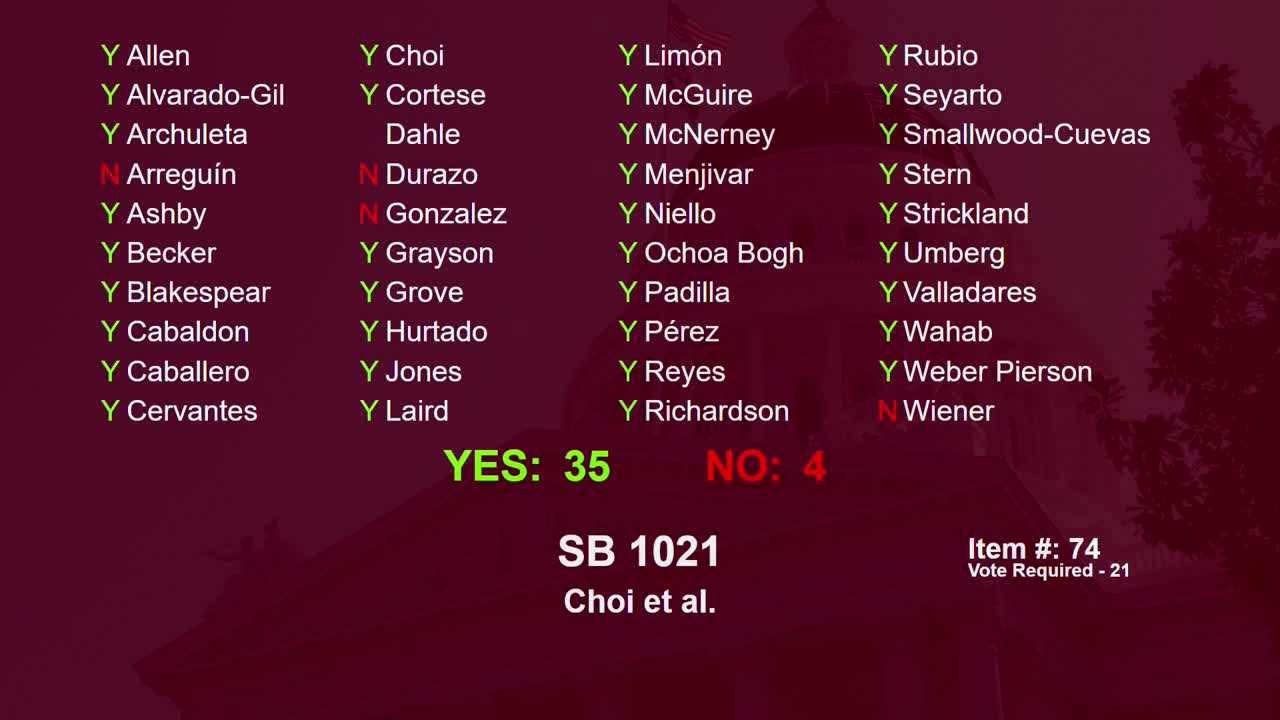 2MIN
Senate Floor
 7MIN
Senate Standing Committee on Environmental Quality
 29MIN
Senate Standing Committee on Public Safety
Bill Author

Bill Co-Author(s):