SB 1262: Education finance: community colleges: general fund balance.
- Session Year: 2025-2026
- House: Senate
- Latest Version Date: 2026-02-19
Current Status:
In Progress
(2026-05-14: May 14 hearing: Held in committee and under submission.)
Introduced
In Committee
Awaiting First Chamber Vote
Passed First Chamber
In Committee
Awaiting Second Chamber Vote
Passed Second Chamber
Enacted
Existing law establishes the California Community Colleges, under the administration of the Board of Governors of the California Community Colleges, as one of the segments of public postsecondary education in this state. Existing law establishes community college districts throughout the state, and authorizes these districts to provide instruction at the community college campuses they operate and maintain.
This bill would prohibit, commencing with the 202728 fiscal year, a community college districts annual unrestricted general fund balance, as specified, for a fiscal year from exceeding 50% of its unrestricted general fund expenditures for that year, unless the community college district meets specified conditions. The bill would prohibit a community college district from transferring unrestricted general funds to another fund if the receiving fund has an existing balance of 33% or more of the community college districts unrestricted general fund expenditures for that fiscal year or if the transfer would cause the receiving fund to have a balance of 33% or more of the community college districts unrestricted general fund expenditures for that fiscal year. For a community college district that violates the above-described prohibitions, the bill would require the community college district to distribute the amount of the annual unrestricted general fund balance that exceeds 50% to nonsupervisory and nonmanagement employees of the community college district, as provided. To the extent that the bill would impose new duties on community college districts, the bill would impose a state-mandated local program.
The California Constitution requires the state to reimburse local agencies and school districts for certain costs mandated by the state. Statutory provisions establish procedures for making that reimbursement.
This bill would provide that, if the Commission on State Mandates determines that the bill contains costs mandated by the state, reimbursement for those costs shall be made pursuant to the statutory provisions noted above.
(a)Commencing with the 202728 fiscal year, a community college districts annual unrestricted general fund balance for a fiscal year, as reported on its annual report filed in compliance with regulations adopted pursuant to Section 84040, shall not exceed 50 percent of its unrestricted general fund expenditures for that year, unless the community college district does all of the following:
(1)Participates in the Part-Time Community College Faculty Health Insurance Program, as described in Article 9 (commencing with Section 87860) of Chapter 3 of Part 51.
(2)Participates in the Community College Part-Time Faculty Office Hours Program, as described in Article 10 (commencing with Section 87880) of Chapter 3 of Part 51.
(3)Has at least 75 percent of hours of credit instruction taught by full-time instructors, as described in subdivision (a) of Section 87482.6.
(b)A community college district shall not transfer unrestricted general funds to another fund for the purpose of complying with subdivision (a) if either of the following applies:
(1)The receiving fund has an existing balance of 33 percent or more of the community college districts unrestricted general fund expenditures for that fiscal year.
(2)The transfer of the unrestricted general funds would cause the receiving fund to have a balance of 33 percent or more of the community college districts unrestricted general fund expenditures for that fiscal year.
(c)For a community college district that violates subdivision (a) or (b), the amount of the annual unrestricted general fund balance that exceeds 50 percent shall be proportionally distributed to the nonsupervisory and nonmanagement employees of the community college district based solely on the number of hours worked by those employees in the preceding fiscal year, as determined by a collective bargaining agreement between those employees and the governing board of the community college district.
SEC. 2.If the Commission on State Mandates determines that this act contains costs mandated by the state, reimbursement to local agencies and school districts for those costs shall be made pursuant to Part 7 (commencing with Section 17500) of Division 4 of Title 2 of the Government Code.
|
Date
|
Status
|
|---|---|
| May 14, 2026 | May 14 hearing: Held in committee and under submission. |
| May 8, 2026 | Set for hearing May 14. |
| Apr 20, 2026 | April 20 hearing: Placed on APPR. suspense file. |
| Apr 10, 2026 | Set for hearing April 20. |
| Apr 8, 2026 | From committee: Do pass and re-refer to Com. on APPR. (Ayes 5. Noes 0. Page 3791.) (April 8). Re-referred to Com. on APPR. |
| Apr 8, 2026 | From committee: Do pass and re-refer to Com. on APPR. (Ayes 5. Noes 0.) (April 8). Re-referred to Com. on APPR. |
| Mar 23, 2026 | Set for hearing April 8. |
| Mar 4, 2026 | Referred to Com. on ED. |
| Feb 20, 2026 | From printer. May be acted upon on or after March 22. |
| Feb 19, 2026 | Introduced. Read first time. To Com. on RLS. for assignment. To print. |
|
Date
|
Description
|
Location
|
Votes
|
|
|---|---|---|---|---|
| Apr 20, 2026 | Placed on suspense file | Senate Standing Committee on Appropriations |
Passed |
|
| Apr 8, 2026 | Do pass, but first be re-referred to the Committee on [Appropriations] | Senate Standing Committee on Education |
Passed |
This list shows positions taken on this bill by organizations on the date displayed, which is linked to the original source.
Positions by individuals are not included.
|
Organization
|
Position
|
Date
|
|---|---|---|
| American Federation Of State, County And Municipal Employees, Afl-Cio | ** Support | |
| Association Of California Community College Administrators | ** Against | |
| California Federation Of Teachers | ** Support | |
| California School Employees Association | ** Support | |
| Chief Executive Officers of the California Community Colleges Board | ** Against | |
| miracosta community college district | ** Against | |
| Sierra Community College District | ** Against | |
| Teamsters California | ** Support |
SENATE COMMITTEE ON
Senator Sabrina Cervantes, Chair
2025 - 2026 Regular Session
SB 1262 (Archuleta) - Education finance: community colleges: general fund balance
Version: | Policy Vote: |
Urgency: | Mandate: |
Hearing Date: | Consultant: |
Bill Summary:
This bill establishes an annual 50 percent reserve cap for a community college district unless it participates in specified employee benefit programs and has at least 75 percent of instruction taught by full-time faculty.
Fiscal Impact:
- By imposing an annual reserve cap for community college districts, this bill could hamper a district’s ability to maintain adequate reserve levels and meet both current and future financial obligations. The Chancellor’s Office indicates that districts would need to spend down potentially hundreds of millions of dollars statewide to ensure compliance with this measure. Additionally, once the reserve cap is met and to the extent there is insufficient general apportionment funding to cover actual enrollment growth or there are deferrals in state apportionment, districts may need to spend down their remaining reserves. This could jeopardize a district’s institutional accreditation, necessitating state intervention and compromising federal eligibility to award student financial aid. The Chancellor’s Office estimates additional expenses if it must appoint a special trustee to manage a district’s finances as a result of fiscal mismanagement.
- Assuming community college districts elect to comply with the bill by participating in the specified faculty programs, the Chancellor’s Office estimates that the state would need to increase the amount of funding for the Part-Time Faculty Office Hours Program and Part-Time Faculty Health Insurance Program in the hundreds of millions of dollars each year to cover the costs of increased participation. The 2025-26 Budget Act funds Part-Time Faculty Office Hours at $23.6 million; the Part-Time Faculty Health Insurance Program at $200.5 million; and Full-Time Faculty Hiring at $150 million. In addition, because these programs do not necessarily provide 100 percent reimbursement, districts will need to use local resources to provide compensation.
- The Chancellor’s Office indicates that distributing general fund reserves to non-supervisory and non-management employees would be considered a "bonus" payment beyond the salary they receive for actually doing their work, which may be considered a "gift of public funds” under California’s Constitution. This also violates the Rodda Act which requires collective bargaining for wages and circumvents local boards’ authority.
- The Chancellor’s office estimates one-time General Fund workload costs of $33,000 to $53,000 to issue guidance and update its training materials related to fiscal health and resiliency, and ongoing General Fund costs of $519,000 and 3.0 positions to monitor district health and provide technical assistance regarding the bill’s implementation.
Background:
Existing law establishes the Public School System Stabilization Account (Proposition 98 Reserve), a state reserve specifically for school and community college districts.
Existing law establishes a 10 percent reserve cap for a K-12 school district only in years when the amount of money in the Proposition 98 Reserve is equal to or exceeds 3 percent of the combined total of General Fund revenues appropriated for school districts and allocated local proceeds of taxes for that fiscal year. The reserve cap requirement does not apply to small school districts or basic aid school districts. Additionally, a county superintendent of schools may grant a school district under its jurisdiction an exemption from the reserve cap for up to two consecutive fiscal years within a three-year period if the school district provides documentation indicating that extraordinary fiscal circumstances, including, but not limited to, multiyear infrastructure or technology projects, substantiate the need for a combined assigned or unassigned ending general fund balance that is in excess of 10 percent.
Existing law establishes the Part-Time Community College Faculty Health Insurance Program to encourage community college districts to offer health insurance for part-time faculty. Community college districts that establish a program must negotiate with the exclusive bargaining representative the share of the premium payments not covered by the state.
Existing law establishes the Community College Part-Time Faculty Office Hours Program to encourage community college districts to compensate part-time faculty who hold office hours related to their teaching load. To establish a program, a district must negotiate with the exclusive bargaining representative or with faculty, if there is no bargaining unit.
Existing law requires the Board of Governors of the California Community Colleges to adopt regulations regarding the percent of credit instruction taught by full-time faculty and authorizes districts with less than 75 percent full-time instructors to apply a portion of their “program improvement” funds toward reaching a 75 percent goal. However, the state has stopped providing program improvement funds and the Board has since required community college districts to provide a portion of their growth funds to hire more full-time faculty.
Proposed Law:
This bill prohibits a community college district’s annual unrestricted general fund balance for a fiscal year from exceeding 50 percent of its unrestricted general fund expenditures for that year, unless the CCD does all of the following:
- Participates in the Part-Time Community College Faculty Health Insurance Program;
- Participates in the Community College Part-Time Faculty Office Hours Program;
- Has at least 75 percent of hours of credit instruction taught by full-time faculty.
This bill prohibits a district from transferring unrestricted general funds to another fund for the purpose of complying with this bill if either of the following applies: the receiving fund has an existing balance of 33 percent or more of the district’s unrestricted general fund expenditures for that fiscal year; or the transfer of the unrestricted general funds would cause the receiving fund to have a balance of 33 percent or more of the district’s unrestricted general fund expenditures for that fiscal year.
This bill specifies that, for a community college district that violates these provisions, the amount of the annual unrestricted general fund balance that exceeds 50 percent shall be proportionally distributed to the nonsupervisory and nonmanagement employees of the district based solely on the number of hours worked by those employees in the preceding fiscal year, as determined by a collective bargaining agreement between those employees and the governing board of the community college district.
Related Legislation:
SB 1388 (Archuleta, 2024) would have established an annual 16.7 percent reserve cap for a community college district, unless the district participates in specified employee benefit programs and has at least 75 percent of instruction taught by full-time instructors. SB 1388 was held on the Suspense File in this committee.
Staff Comments:
Local reserves allow community colleges to sustain their operations even if their annual funding drops due to economic recessions. Local reserves also allow them to handle lower-than-budgeted local property tax receipts or unexpected drops in enrollment. Further, local reserves help colleges manage their cash flow and pay their bills while awaiting receipt of funds which is especially helpful during times when the state is deferring payments, as colleges might not receive their state funding until many months after they have incurred operating costs. Reserves can help cover unexpected costs as well. However, according to the author, in spite of the state providing “significant financial support for community college districts to provide part-time faculty health insurance, to provide part-time faculty compensation for providing students office hours, and to ensure that most teaching hours are being performed by full time faculty… the programs which provide community college districts these financial resources or reimbursements are undersubscribed or under-utilized.” At the same time, “in 2021, several districts had over 70% of their annual budget in reserve. These unused funds, or unrestricted balance, indicate that community colleges are not fully utilizing their funding to benefit student learning and faculty stability, a determinative component to student learning.”
-- END --
SENATE COMMITTEE ON EDUCATION
Senator Sasha Renée Pérez, Chair
2025 - 2026 Regular
Bill No: Hearing Date: April 8, 2026
Author: | |||
Version: |
| ||
Urgency: | Fiscal: | ||
Consultant: | |||
Subject: .
SUMMARY
This bill establishes an annual 50% reserve cap for a community college district (CCD), unless the district participates in specified employee benefit programs and has at least 75% of instruction taught by full-time faculty.
BACKGROUND
Existing law:
- Establishes the Part-Time Community College Faculty Health Insurance Program to encourage CCDs to offer health insurance for part-time faculty. CCDs that establish a program must negotiate with the exclusive bargaining representative on the share of the premium payments not covered by the state. (Education Code (EC) § 87860.5 and 87866)
- Establishes the Community College Part-Time Faculty Office Hours Program to encourage CCDs to compensate part-time faculty who hold office hours related to their teaching load. To establish a program, a district must negotiate with the exclusive bargaining representative or with faculty, if there is no bargaining unit. (EC § 87881 and 87884)
- Requires the Board of Governors (BOG) of the California Community Colleges (CCCs) to adopt regulations regarding the percent of credit instruction taught by full-time faculty and authorizes districts with less than 75% of credit instruction hours taught by full-time instructors to apply a portion of their “program improvement” funds toward reaching a 75% goal. Although the state has stopped providing program improvement funds, the BOG requires CCDs to provide a portion of their growth funds to hiring more full-time faculty when it is determined that sufficient funding has been provided in the state budget for full implementation of districts’ full-time faculty hiring obligations. (EC § 87482.6 and California Code of Regulations § 51025)
ANALYSIS
This bill:
- Prohibits a CCD’s annual unrestricted general fund balance for a fiscal year from exceeding 50% of its unrestricted general fund expenditures for that year, unless the CCD does all of the following:
- Participates in the Part-Time Community College Faculty Health Insurance Program;
- Participates in the Community College Part-Time Faculty Office Hours Program;
- Has at least 75% of hours of credit instruction taught by full-time faculty.
- Prohibits a CCD from transferring unrestricted general funds to another fund for the purpose of complying with this bill if either of the following applies:
- The receiving fund has an existing balance of 33% or more of the CCD’s unrestricted general fund expenditures for that fiscal year.
- The transfer of the unrestricted general funds would cause the receiving fund to have a balance of 33% or more of the CCD’s unrestricted general fund expenditures for that fiscal year.
- Specifies that, for a CCD that violates the provisions of this bill, the amount of the annual unrestricted general fund balance that exceeds 50% shall be proportionally distributed to the nonsupervisory and nonmanagement employees of the CCD based solely on the number of hours worked by those employees in the preceding fiscal year, as determined by a collective bargaining agreement between those employees and the governing board of the CCD.
STAFF COMMENTS
- Need for the bill. According to the author, in spite of the state providing “significant financial support for community college districts to provide part-time faculty health insurance, to provide part-time faculty compensation for providing students office hours, and to ensure that most teaching hours are being performed by full time faculty… the programs which provide community college districts these financial resources or reimbursements are undersubscribed or under-utilized.” At the same time, “in 2021, several districts had over 70% of their annual budget in reserve. These unused funds, or unrestricted balance, indicate that community colleges are not fully utilizing their funding to benefit student learning and faculty stability, a determinative component to student learning.”
- Local reserves remain important for CCDs to hedge against uncertainty. A Legislative Analyst’s Office (LAO) report from 2021 describes why local reserves for community colleges are critical:
“Local reserves allow community colleges (as they do other local agencies) to sustain their operations even if their annual funding drops due to economic recessions. Local reserves also allow colleges to handle lower-than-budgeted local property tax receipts or unexpected drops in enrollment. Additionally, local reserves help colleges manage their cash flow and pay their bills while awaiting receipt of funds… especially helpful during times when the state is deferring payments, as colleges might not receive their state funding until many months after they have incurred operating costs. … Reserves help too in covering unexpected costs. For example, [when] campuses moved to remote operations [during the pandemic], they have incurred higher technology and professional development costs. Though campuses in some cases ultimately might be reimbursed for certain costs, they might need to cover costs upfront. Colleges also use reserves to pay for large, planned, one-time purchases (such as a large-scale upgrade of instructional equipment).”
Many factors mentioned in the LAO’s 2021 report remain relevant for CCDs planning for uncertainty and potential loss of funding, including:
- The state has seen persistent General Fund deficits in recent years, and the Administration and the LAO both project outyear deficits in their multi-year forecasts, with the deficits ranging between $22 billion and $35 billion for each year of 2027-28, 2028-29, and 2029-30.
- Actions taken by the federal government have created uncertainty at CCDs and on their campuses, including the sudden termination of certain discretionary federal grants in September 2025, including Hispanic Serving Institution (HSI) Grants, Minority Serving Institution (MSI) Grants, and Asian American and Native American Pacific Islander-Serving Institutions (AANAPISI) Grants. These grants had been provided to selected colleges and are projected to be a loss of $60 million statewide over the next 5 years.
- In February 2026, Long Beach Community College District (LBCCD) agreed to pay $18 million in a settlement for a class-action lawsuit filed by more than 1,450 part-time faculty who alleged they were forced to work unpaid hours outside the classroom, grading papers and tests, meeting with students, preparing lessons, and other duties. Though this settlement still needs to be approved by the judge overseeing the matter, news outlets expect that the judge will approve the deal during a hearing scheduled for July 1. This expected settlement would reduce LBCCD’s reserves by 10 percentage points. There are multiple districts facing similar litigation or who are expecting to face similar litigation to be filed by part-time faculty in their districts.
Finally, in accordance with guidelines from the Government Finance Officers Association, the California Community Colleges Chancellor’s Office (CCCCO) recommends that colleges maintain a minimum reserve level of two months of operating expenses, which is 16.7%. The CCCCO does not provide a recommendation for a maximum reserve level. However, as noted in the section below, many districts have reserves that are much higher than two months of operating expenses.
- An influx of recent federal and state funding has boosted reserve levels for CCDs. CCDs are primarily funded with general purpose apportionment funding earned based on the state’s Student Centered Funding Formula (SCFF), which considers factors like enrollment and student outcomes. Since the pandemic, unrestricted reserves have grown substantially, from nearly $2 billion (23% of statewide expenditures) in 2019-20 to an estimated $3.8 billion (34% of expenditures) in 2024-25. This increase has come from an influx of federal COVID relief funds as well as increased state funding since 2021-22, including a base increase to the SCFF in 2022-23, significant cost-of-living adjustments (COLAs), and funding provided through the SCFF’s hold harmless / funding floor provision.
Data supports the argument that the pandemic has likely had a lasting impact on unrestricted reserves, even now. In 2019-20, there were three CCDs with unrestricted reserves over 50%. In each year since 2020-21, there have been 12 to 15 CCDs each year with unrestricted reserves over 50%. There have been 12 CCDs with reserves above 50% for at least three consecutive years during this period. In 2024-25 specifically, there were 15 CCDs with unrestricted reserve levels over 50% and six CCDs with unrestricted reserve levels in excess of 80%.
In the early years of the pandemic, it is likely that CCDs were spending down their federal pandemic relief funds first, given an expenditure deadline for these funds of June 30, 2023, and this likely created larger than normal state fund balances. In the years since this deadline, it seems fair to conclude that the source of swelling district reserves likely comes from prior years of built-up reserves, as well as the significant revenue growth and state investment in the CCCs through growth in the Proposition 98 guarantee.
- CCDs’ true reserve balances may be somewhat overstated in the data. CCDs report data on both unrestricted and restricted general fund reserves to the CCCCO, this data is publicly available on the CCCCO’s website once finalized. Restricted reserves typically consist of categorical program funds and other one-time funding from the state, both of which are allocated for a specific purpose. In contrast, unrestricted reserves are, by definition, funds that are not allocated for a specific purpose and largely consist of ongoing general purpose apportionment funding from the SCFF, and these funds are used for general district operations and educational programming. This also includes recent federal COVID relief funds that were not allocated for a specific purpose, as well as unrestricted lottery funds.
An important nuance to note is that unrestricted resources may be designated by the board for an intended purpose (such as for capital outlay for academic buildings or student housing), but these funds continue to be considered unrestricted because the board can change that designation at any point. In addition, unrestricted general funds that are encumbered for a specific purpose or contract are still considered unrestricted, which could make reserves seem higher than they are if the district intends to spend the encumbered funds on a multi-year basis.
As a hypothetical example, a district with significant unrestricted reserves may have plans to build several capital outlay projects on its campus. Though these projects may be receiving state bond funds through Proposition 2, the district must provide a local match for each project, and the state dollars are planned to be allocated to the district over a three-year period. As a result, the district must keep unrestricted reserves on its ledger for the next several years, thereby significantly inflating that district’s unrestricted reserves.
Staff notes that because the unrestricted reserves data does not separate out funds that may be designated or encumbered for a specific purpose, districts’ true reserve balances may be overstated in the current data and would require additional information from districts to better explain and understand their balances. Though the author’s intent to address high reserve levels is understandable, staff notes concerns that this bill—which could potentially have significant punitive fiscal consequences for CCDs in the millions of dollars—relies on data that may be potentially overstating reserve levels. Would it make more sense to focus instead on reserves that are specifically designated by the district’s governing board as reserves for economic uncertainties?
- Part-time Community College Faculty Health Insurance and Office Hours Programs: questionable reserve cap triggers. Existing law establishes two programs aimed at supporting part-time faculty in community colleges: the Part-Time Community College Faculty Health Insurance Program and the Part-Time Faculty Office Hours Program. This bill seeks to mandate CCDs’ participation in these programs, under the threat of a reserve cap.
- The Part-Time Community College Faculty Health Insurance Program incentivizes districts to offer health coverage for part-time faculty. Districts receiving allocations negotiate with bargaining representatives regarding premium payment shares not covered by the state. Since the 2022 Budget Act, the state has appropriated $200.5 million on an ongoing basis for this program. In 2024-25, 49 out of 73 CCDs participated in this program, with $69.5 million disbursed to districts out of $200.5 million.
- Similarly, the Part-Time Faculty Office Hours Program encourages districts to compensate part-time faculty for office hours related to their teaching load. Compensation negotiations occur either with bargaining representatives or directly with faculty if no bargaining unit exists. Part-time faculty participating in the program must be compensated for a minimum of one office hour per every two classes taught per week or 40% of the district-defined full-time load. Additionally, compensation is provided for each 20% of the district-defined full-time faculty load. The annual budget act has typically provided roughly $23.6 million for this program, though there have occasionally been one-time appropriations for this purpose, including $90 million one-time appropriated in the 2021 Budget Act. In 2024-25, 60 out of 73 CCDs participated in this program, with $84.9 million disbursed to districts, with the amount in excess of the state appropriation of $23.6 million covered by the leftover funds from the 2021 Budget Act’s one-time appropriation.
Staff notes that participation in these programs entails ongoing costs, unlike reserve balances, which are one-time in nature, and the state funding allocated for these programs does not reimburse all district costs. Should districts have the autonomy to evaluate their financial priorities and make decisions accordingly, ensuring fiscal sustainability and flexibility given uncertain budgetary and fiscal circumstances? Would maintaining local bargaining as the forum for considering district participation in these programs make more sense?
- Goal for full-time faculty to teach 75% of credit instruction: not being met, yet also a questionable reserve cap trigger. Since 1988, AB 1725 (Vasconcellos, Chapter 973, Statutes of 1988) has aimed for community colleges to have full-time faculty teach 75% of credit instruction hours. Recent state funding initiatives have infused a total of $900 million thus far (with $150 million ongoing) into bolstering full-time faculty hiring since 2018-19, which is allocated based on student enrollment to aid districts in reaching the 75% target.
Despite these initiatives, districts have grappled with meeting the 75% goal. Tracking progress through the percentage of full-time-equivalent faculty, the CCCCO noted in 2023 that only 18 districts have hit the 75% mark since 1999, with none sustaining this level for more than five years. According to fall 2025 data, only one district met this goal. To address this, the trailer bill language from the 2023 Budget Act mandated the CCCCO to compile an annual report starting in 2024 on CCDs’ progress towards the goal.
Like the part-time faculty programs discussed previously, this bill also seeks to mandate CCDs meet the 75% target, under the threat of a reserve cap. Because only one district meets this target, nearly every district in the state with reserves over 50% would currently be subject to the reserve cap proposed by this bill.
Similarly, staff notes that using the 75% goal as a reserve cap trigger is questionable. An ongoing reporting process has been established to address progress towards the 75% goal, suggesting that the issue is being actively monitored and managed through channels that are more appropriate than the proposed reserve cap.
- Though this bill may be identifying a problem, concerns about this bill’s impact on community college fiscal management. Though local reserves are important for districts’ fiscal planning and management, concerns about excessive reserve levels are legitimate. This is especially true if high reserve levels persist over multiple years without a plan to spend down these balances. In the face of growing unaffordability in this state, supporters of this bill may view high balances as a signal that districts can accommodate increased employee benefits or compensation. As noted above, the pandemic has had a lasting impact on unrestricted reserves, and since 2020-21, there have been 12 districts with reserves above 50% for at least three consecutive years during this five-year period. In 2024-25, there were 15 districts with unrestricted reserve levels over 50% and six districts with unrestricted reserve levels in excess of 80%. These reserve levels should be examined, given their magnitude.
However, as currently drafted, this bill raises several concerns that could impact the operational flexibility and financial stability of CCDs. First, including the “unrestricted general fund balance” as reserves subject to the cap is broad. Districts rely on these funds for day-to-day operations and to address various financial obligations, such as unfunded retirement liabilities, other post-employment benefits (OPEB) liabilities, capital outlay, deferred maintenance, and IT projects. A more prudent approach would be to only consider the unrestricted general fund balance that has been specifically designated by the district’s governing board as reserves for economic uncertainties. This targeted approach would ensure that essential operational needs are not compromised while still addressing the intent of the bill. However, as noted in the comments above, this data is not readily publicly available, and the current data overstates what true reserve levels are.
Second, the bill’s restriction on transfers of unrestricted general fund dollars could inadvertently hinder the operational capacity of districts acting responsibly. By limiting transfers to receiving funds with existing balances of 33% or more of the district’s unrestricted general fund expenditures, even when these transfers are transparent and necessary for operational purposes, districts may face unnecessary constraints. This limitation could impede districts from efficiently managing their finances and responding to evolving needs, potentially hindering their ability to provide quality education and support services to students.
Third, allocating any reserves beyond the cap to nonsupervisory and nonmanagement employees based solely on the number of hours worked raises questions about the efficacy and alignment with the overall goals of the district. Though employee recognition and retention are important, distributing excess reserves as one-time bonuses may not necessarily address the underlying financial challenges facing the district, and it may not further initiatives and investments aimed at improving educational outcomes and institutional effectiveness.
- Prior and Related Legislation.
SB 1388 (Archuleta, 2024) would have established an annual 16.7% reserve cap for a CCD, unless the district participates in specified employee benefit programs and has at least 75% of instruction taught by full-time instructors. The text for SB 1388 is the same as the text for SB 1262, except that the annual reserve cap was 16.7% for SB 1388. SB 1388 was held in the Senate Appropriations Committee.
SUPPORT
California Federation of Teachers (sponsor)
American Federation of State, County and Municipal Employees, AFL-CIO
California School Employees Association
Teamsters California
OPPOSITION
Association of California Community College Administrators
Chief Executive Officers of the California Community Colleges Board
MiraCosta Community College District
Sierra Community College District
-- END --
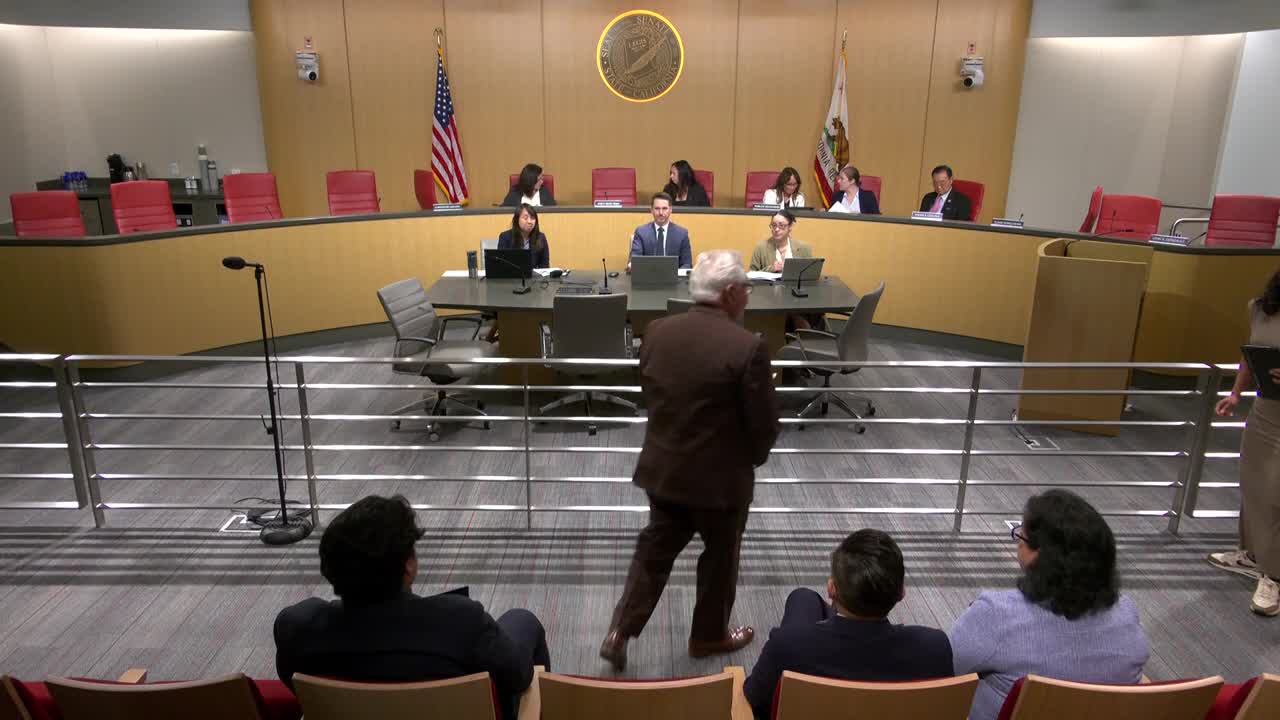
Bill Author

Bill Co-Author(s):