SB 1264: Probate: notice of death for child support obligations.
- Session Year: 2025-2026
- House: Senate
- Latest Version Date: 2026-09-20
Current Status:
Passed
(2026-09-20: Chaptered by Secretary of State. Chapter 427, Statutes of 2026.)
Introduced
In Committee
Awaiting First Chamber Vote
Passed First Chamber
In Committee
Awaiting Second Chamber Vote
Passed Second Chamber
Enacted
Existing law sets forth the rules of practice applicable to probate. For estates for which letters testamentary or letters of administration are issued on or after January 1, 2026, existing law requires the general personal representative or the estate attorney of a decedents estate to provide notice of the decedents death to the Director of the Department of Child Support Services within 90 days after the date letters are first issued, if the general personal representative or estate attorney knows or has reason to believe the decedent has a child support obligation under an order issued by a court of competent jurisdiction. Existing law authorizes a local child support agency to assert a claim on the estate no later than 4 months after receiving this notice.
This bill would instead require that notice to be provided for estates for which letters are issued on or after January 1, 2027, if the general personal representative or estate attorney has actual knowledge that the decedent has a child support obligation under an order issued by a court of competent jurisdiction or that an heir or a beneficiary of the estate has a child support obligation under an order issued by a court of competent jurisdiction. The bill would specify that it does not impose a duty to investigate whether or not a decedent or an heir or beneficiary of the estate is subject to a child support order. For a notice that the decedent is a child support obligor, the bill would authorize a local child support agency to assert a claim no later than 4 months after delivery of this notice. The bill would make its provisions inapplicable to the manner or timeframe for a local child support agency to pursue collection of a child support obligation.
Existing law sets forth the rules of practice applicable to probate. For estates for which letters testamentary or letters of administration are issued on or after January 1, 2026, existing law requires the general personal representative or the estate attorney of a decedents estate to provide notice of the decedents death to the Director of the Department of Child Support Services within 90 days after the date letters are first issued, if the general personal representative or estate attorney knows or has reason to believe the decedent has a child support obligation under an order issued by a court of competent jurisdiction. Existing law authorizes a local child support agency to assert a claim on the estate no later than 4 months after receiving this notice.
This bill would instead require that notice to be provided for estates for which letters are issued on or after January 1, 2027, if the general personal representative or estate attorney has actual knowledge that the decedent has a child support obligation under an order issued by a court of competent jurisdiction or that a child of the decedent who is an heir or a beneficiary of the estate has a child support obligation under an order issued by a court of competent jurisdiction. The bill would specify that it does not impose a duty to investigate whether or not a decedent or a child of the decedent an heir or beneficiary of the estate is subject to a child support order. The For a notice that the decedent is a child support obligor, the bill would authorize a local child support agency to pursue collection assert a claim no later than 4 months after delivery of this notice. The bill would make its provisions inapplicable to the manner or timeframe for a local child support agency to pursue collection of a child support obligation.
Existing law sets forth the rules of practice applicable to probate. For estates for which letters testamentary or letters of administration are issued on or after January 1, 2026, existing law requires the general personal representative or the estate attorney of a decedents estate to provide notice of the decedents death to the Director of the Department of Child Support Services within 90 days after the date letters are first issued, if the general personal representative or estate attorney knows or has reason to believe the decedent has a child support obligation under an order issued by a court of competent jurisdiction. Existing law authorizes a local child support agency to assert a claim on the estate no later than 4 months after receiving this notice.
This bill would instead require that notice to be provided for estates for which letters are issued on or after January 1, 2027, if the general personal representative or estate attorney has actual knowledge that the decedent has a child support obligation under an order issued by a court of competent jurisdiction or that a child of the decedent who is an heir or a beneficiary of the estate has a child support obligation under an order issued by a court of competent jurisdiction. The bill would specify that it does not impose a duty to investigate whether or not a decedent or a child of the decedent is subject to a child support order. The bill would authorize a local child support agency to pursue collection no later than 4 months after delivery of this notice.
Existing law relating to conservation easements defines a conservation easement to mean any limitation in a deed, will, or other instrument in the form of an easement, restriction, covenant, or condition, executed by or on behalf of the owner of the land subject to the easement and binding upon successive owners of the land, for the purpose of retaining land predominantly in its natural, scenic, historical, agricultural, forested, or open-space condition.This bill would make nonsubstantive changes to that definition.Existing law relating to conservation easements defines a conservation easement to mean any limitation in a deed, will, or other instrument in the form of an easement, restriction, covenant, or condition, executed by or on behalf of the owner of the land subject to the easement and binding upon successive owners of the land, for the purpose of retaining land predominantly in its natural, scenic, historical, agricultural, forested, or open-space condition.
This bill would make nonsubstantive changes to that definition.
(a)Not later than 90 days after the date letters are first issued to a general personal representative, the general personal representative or estate attorney shall give the Director of Health Care Services notice of the decedents death in the manner provided in Section 215, or submitted electronically to the director through the departments official internet website using the online notice of death form, if the general personal representative knows or has reason to believe that the decedent received health care under Chapter 7 (commencing with Section 14000) or Chapter 8 (commencing with Section 14200) of Part 3 of Division 9 of the Welfare and Institutions Code, or was the surviving spouse of a person who received that health care. The director has four months after notice is given in which to file a claim.
(b)Not later than 90 days after the date letters are first issued to a general personal representative, the general personal representative or estate attorney shall give the director of the California Victim Compensation Board notice of the decedents death in the manner provided in Section 216 if the general personal representative or estate attorney knows that an heir or beneficiary is or has previously been confined in a prison or facility under the jurisdiction of the Department of Corrections and Rehabilitation or confined in any county or city jail, road camp, industrial farm, or other local correctional facility. The director of the board shall have four months after that notice is received in which to pursue collection of any outstanding restitution fines or orders.
(c)(1)Not later than 90 days after the date letters are first issued to a general personal representative, the general personal representative or estate attorney shall give the Franchise Tax Board notice of the administration of the estate. The notice shall be given as provided in Section 1215.
(2)The provisions of this subdivision shall apply to estates for which letters are first issued on or after July 1, 2008.
(d)Nothing in this section shall be interpreted as requiring the estate attorney, the beneficiary, the personal representative, or the person in possession of property of the decedent to conduct an additional investigation to determine whether a decedent has an heir or beneficiary who has been confined in a prison or facility under the jurisdiction of the Department of Corrections and Rehabilitation, or its Division of Juvenile Facilities, or confined in any county or city jail, road camp, industrial farm, or other local correctional facility.
(e)(1)Not later than 90 days after the date letters are first issued to a general personal representative, the general personal representative or estate attorney shall give notice of the decedents death to the Director of the Department of Child Support Services, in the manner provided by Section 1215, or submitted electronically to the director through the departments official internet website in a manner to be determined by the department, if the general personal representative or estate attorney has actual knowledge that the decedent had a child support obligation under an order issued by a court of competent jurisdiction or that an heir or a beneficiary of the estate has a child support obligation under an order issued by a court of competent jurisdiction.
(2)This subdivision does not impose a duty on a personal representative or estate attorney to investigate whether or not a decedent or an heir or beneficiary of the estate is subject to a child support order.
(3)For a notice that the decedent is a child support obligor, a local child support agency providing services pursuant to Division 17 (commencing with Section 17000) of the Family Code may assert a claim no later than four months after delivery of notice under this subdivision.
(4)For a notice that a child support obligor is an heir or beneficiary of the estate, this subdivision does not alter, limit, or affect the manner or timeframe for a local child support agency to pursue collection of the child support obligation as provided under any other law.
(5)This subdivision applies to estates for which letters are first issued on or after January 1, 2027.
(a)Not later than 90 days after the date letters are first issued to a general personal representative, the general personal representative or estate attorney shall give the Director of the State Department of Health Care Services notice of the decedents death in the manner provided in Section 215, or submitted electronically to the director through the departments official internet website using the online notice of death form, if the general personal representative knows or has reason to believe that the decedent received health care under Chapter 7 (commencing with Section 14000) or Chapter 8 (commencing with Section 14200) of Part 3 of Division 9 of the Welfare and Institutions Code, or was the surviving spouse of a person who received that health care. The director has four months after notice is given in which to file a claim.
(b)Not later than 90 days after the date letters are first issued to a general personal representative, the general personal representative or estate attorney shall give the Director director of the California Victim Compensation Board notice of the decedents death in the manner provided in Section 216 if the general personal representative or estate attorney knows that an heir or beneficiary is or has previously been confined in a prison or facility under the jurisdiction of the Department of Corrections and Rehabilitation or confined in any county or city jail, road camp, industrial farm, or other local correctional facility. The director of the board shall have four months after that notice is received in which to pursue collection of any outstanding restitution fines or orders.
(c)(1)Not later than 90 days after the date letters are first issued to a general personal representative, the general personal representative or estate attorney shall give the Franchise Tax Board notice of the administration of the estate. The notice shall be given as provided in Section 1215.
(2)The provisions of this subdivision shall apply to estates for which letters are first issued on or after July 1, 2008.
(d)Nothing in this section shall be interpreted as requiring the estate attorney, the beneficiary, the personal representative, or the person in possession of property of the decedent to conduct an additional investigation to determine whether a decedent has an heir or beneficiary who has been confined in a prison or facility under the jurisdiction of the Department of Corrections and Rehabilitation, or its Division of Juvenile Facilities, or confined in any county or city jail, road camp, industrial farm, or other local correctional facility.
(e)(1)Not later than 90 days after the date letters are first issued to a general personal representative, the general personal representative or estate attorney shall give notice of the decedents death to the Director of the Department of Child Support Services, in the manner provided by Section 1215, or submitted electronically to the director through the departments official internet website in a manner to be determined by the department, if the general personal representative or estate attorney has actual knowledge that the decedent had a child support obligation under an order issued by a court of competent jurisdiction or that a child of the decedent who is an heir or a beneficiary of the estate has a child support obligation under an order issued by a court of competent jurisdiction.
(2)This subdivision does not impose a duty on a personal representative or estate attorney to investigate whether or not a decedent or a child of the decedent an heir or beneficiary of the estate is subject to a child support order.
(3)A For a notice that the decedent is a child support obligor, a local child support agency providing services pursuant to Division 17 (commencing with Section 17000) of the Family Code may pursue collection assert a claim no later than four months after delivery of notice under this subdivision.
(4)For a notice that a child support obligor is an heir or beneficiary of the estate, this subdivision does not alter, limit, or affect the manner or timeframe for a local child support agency to pursue collection of the child support obligation as provided under any other law.
(4)(5)This subdivision applies to estates for which letters are first issued on or after January 1, 2027.
(a)Not later than 90 days after the date letters are first issued to a general personal representative, the general personal representative or estate attorney shall give the Director of the State Department of Health Care Services notice of the decedents death in the manner provided in Section 215, or submitted electronically to the director through the departments official internet website using the online notice of death form, if the general personal representative knows or has reason to believe that the decedent received health care under Chapter 7 (commencing with Section 14000) or Chapter 8 (commencing with Section 14200) of Part 3 of Division 9 of the Welfare and Institutions Code, or was the surviving spouse of a person who received that health care. The director has four months after notice is given in which to file a claim.
(b)Not later than 90 days after the date letters are first issued to a general personal representative, the general personal representative or estate attorney shall give the Director of the California Victim Compensation Board notice of the decedents death in the manner provided in Section 216 if the general personal representative or estate attorney knows that an heir or beneficiary is or has previously been confined in a prison or facility under the jurisdiction of the Department of Corrections and Rehabilitation or confined in any county or city jail, road camp, industrial farm, or other local correctional facility. The director of the board shall have four months after that notice is received in which to pursue collection of any outstanding restitution fines or orders.
(c)(1)Not later than 90 days after the date letters are first issued to a general personal representative, the general personal representative or estate attorney shall give the Franchise Tax Board notice of the administration of the estate. The notice shall be given as provided in Section 1215.
(2)The provisions of this subdivision shall apply to estates for which letters are first issued on or after July 1, 2008.
(d)Nothing in this section shall be interpreted as requiring the estate attorney, the beneficiary, the personal representative, or the person in possession of property of the decedent to conduct an additional investigation to determine whether a decedent has an heir or beneficiary who has been confined in a prison or facility under the jurisdiction of the Department of Corrections and Rehabilitation, or its Division of Juvenile Facilities, or confined in any county or city jail, road camp, industrial farm, or other local correctional facility.
(e)(1)Not later than 90 days after the date letters are first issued to a general personal representative, the general personal representative or estate attorney shall give notice of the decedents death to the Director of the California Department of Child Support Services, in the manner provided by Section 1215, or submitted electronically to the director through the departments official internet website in a manner to be determined by the department, if the general personal representative or estate attorney knows or has reason to believe has actual knowledge that the decedent had a child support obligation under an order issued by a court of competent jurisdiction. jurisdiction or that a child of the decedent who is an heir or a beneficiary of the estate has a child support obligation under an order issued by a court of competent jurisdiction.
(2)This subdivision does not impose a duty on a personal representative or estate attorney to investigate whether or not a decedent or a child of the decedent is subject to a child support order.
(2)(3)A local child support agency providing services pursuant to Division 17 (commencing with Section 17000) of the Family Code may assert a claim pursue collection no later than four months after receiving delivery of notice under this subdivision.
(3)(4)This subdivision applies to estates for which letters are first issued on or after January 1, 2026. 2027.
SECTION 1.Section 815.1 of the Civil Code is amended to read:815.1.For the purposes of this chapter, conservation easement means any limitation in a deed, will, or other instrument in the form of an easement, restriction, covenant, or condition, that is or has been executed by or on behalf of the owner of the land subject to the easement and is binding upon successive owners of that land, for the purpose of retaining land predominantly in its natural, scenic, historical, agricultural, forested, or open-space condition.For the purposes of this chapter, conservation easement means any limitation in a deed, will, or other instrument in the form of an easement, restriction, covenant, or condition, which that is or has been executed by or on behalf of the owner of the land subject to such the easement and is binding upon successive owners of such that land, and the purpose of which is to retain for the purpose of retaining land predominantly in its natural, scenic, historical, agricultural, forested, or open-space condition.
|
Date
|
Status
|
|---|---|
| Sep 20, 2026 | Chaptered by Secretary of State. Chapter 427, Statutes of 2026. |
| Sep 20, 2026 | Approved by the Governor. |
| Aug 28, 2026 | Enrolled and presented to the Governor at 4 p.m. |
| Aug 24, 2026 | Assembly amendments concurred in. (Ayes 40. Noes 0. Page 5685.) Ordered to engrossing and enrolling. |
| Aug 24, 2026 | Assembly amendments concurred in. (Ayes 40. Noes 0.) Ordered to engrossing and enrolling. |
| Aug 24, 2026 | Assembly amendments concurred in. (Ayes 39. Noes 0.) Ordered to engrossing and enrolling. |
| Aug 19, 2026 | In Senate. Concurrence in Assembly amendments pending. |
| Aug 19, 2026 | Read third time. Passed. (Ayes 76. Noes 0. Page 6260.) Ordered to the Senate. |
| Aug 19, 2026 | Read third time. Passed. Ordered to the Senate. |
| Aug 6, 2026 | Ordered to third reading. |
| Aug 6, 2026 | Read third time and amended. |
| Jun 29, 2026 | Ordered to third reading. |
| Jun 29, 2026 | From consent calendar on motion of Assembly Member Aguiar-Curry. |
| Jun 25, 2026 | Read second time. Ordered to consent calendar. |
| Jun 24, 2026 | From committee: Do pass. Ordered to consent calendar. (Ayes 15. Noes 0.) (June 24). |
| Jun 9, 2026 | From committee: Do pass and re-refer to Com. on APPR. with recommendation: To consent calendar. (Ayes 12. Noes 0.) (June 9). Re-referred to Com. on APPR. |
| May 11, 2026 | Referred to Com. on JUD. |
| Apr 30, 2026 | In Assembly. Read first time. Held at Desk. |
| Apr 30, 2026 | Read third time. Passed. (Ayes 36. Noes 0. Page 4114.) Ordered to the Assembly. |
| Apr 30, 2026 | Read third time. Passed. (Ayes 36. Noes 0.) Ordered to the Assembly. |
| Apr 28, 2026 | Read second time. Ordered to consent calendar. |
| Apr 27, 2026 | From committee: Be ordered to second reading pursuant to Senate Rule 28.8 and ordered to consent calendar. |
| Apr 17, 2026 | Set for hearing April 27. |
| Apr 15, 2026 | From committee: Do pass and re-refer to Com. on APPR. with recommendation: To consent calendar. (Ayes 12. Noes 0. Page 3869.) (April 14). Re-referred to Com. on APPR. |
| Apr 15, 2026 | From committee: Do pass and re-refer to Com. on APPR. with recommendation: To consent calendar. (Ayes 12. Noes 0.) (April 14). Re-referred to Com. on APPR. |
| Apr 9, 2026 | Set for hearing April 14. |
| Apr 8, 2026 | Re-referred to Com. on JUD. |
| Mar 23, 2026 | From committee with author's amendments. Read second time and amended. Re-referred to Com. on RLS. |
| Mar 4, 2026 | Referred to Com. on RLS. |
| Feb 20, 2026 | From printer. May be acted upon on or after March 22. |
| Feb 19, 2026 | Introduced. Read first time. To Com. on RLS. for assignment. To print. |
|
Date
|
Description
|
Location
|
Votes
|
|
|---|---|---|---|---|
| Aug 24, 2026 | Unfinished Business SB1264 Valladares Concurrence | Senate Floor |
Passed |
|
| Aug 19, 2026 | SB 1264 Valladares Senate Third Reading By Dixon | Assembly Floor |
Passed |
|
| Jun 24, 2026 | Do pass. To Consent Calendar. | Assembly Standing Committee on Appropriations |
Passed |
|
| Jun 9, 2026 | Do pass and be re-referred to the Committee on [Appropriations] with recommendation: To Consent Calendar | Assembly Standing Committee on Judiciary |
Passed |
|
| Apr 30, 2026 | Consent Calendar 2nd SB1264 Valladares | Senate Floor |
Passed |
|
| Apr 14, 2026 | Do pass, but first be re-referred to the Committee on [Appropriations] with the recommendation: To Consent Calendar | Senate Standing Committee on Judiciary |
Passed |
This list shows positions taken on this bill by organizations on the date displayed, which is linked to the original source.
Positions by individuals are not included.
|
Organization
|
Position
|
Date
|
|---|---|---|
| Alameda County Board of Supervisors | ** Support | |
| California Child Support Association | ** Support | |
| California Child Support Association (CalCSA) | ** Support |
SENATE RULES COMMITTEE Office of Senate Floor Analyses (916) 651-4171 | SB 1264 |
UNFINISHED BUSINESS
Bill No: SB 1264
Author: Valladares (R)
Amended: 8/6/26
Vote: 21
SENATE JUDICIARY COMMITTEE: 12-0, 4/14/26
AYES: Umberg, Niello, Allen, Ashby, Caballero, Durazo, McNerney, Reyes, Stern, Wahab, Weber Pierson, Wiener
NO VOTE RECORDED: Valladares
SENATE APPROPRIATIONS COMMITTEE: Senate Rule 28.8
SENATE FLOOR: 36-0, 4/30/26 (Consent)
AYES: Allen, Alvarado-Gil, Archuleta, Ashby, Becker, Blakespear, Cabaldon, Cervantes, Choi, Cortese, Dahle, Durazo, Gonzalez, Grayson, Grove, Hurtado, Jones, Laird, Limón, McGuire, McNerney, Menjivar, Niello, Ochoa Bogh, Padilla, Pérez, Reyes, Richardson, Rubio, Seyarto, Smallwood-Cuevas, Stern, Strickland, Umberg, Weber Pierson, Wiener
NO VOTE RECORDED: Arreguín, Caballero, Valladares, Wahab
ASSEMBLY FLOOR: 76-0, 8/19/26 - See last page for vote
SUBJECT: Probate: notice of death for child support obligations
SOURCE: California Child Support Association
DIGEST:
This bill requires a general representative or estate attorney who has actual knowledge that a child of the decedent, who is an heir or a beneficiary of the estate, has a child support obligation under a court order of competent jurisdiction to report this fact to the Director of the Department of Child Support Services (DCSS) within 90 days after the date letters are first issued to a general personal representative. This bill specifies that it does not impose a duty on a personal representative or estate attorney to investigate whether or not an heir or beneficiary of the decedent is subject to a child support order.
Assembly Amendments
make clarifying amendments to refer to an heir or beneficiary instead of a child of the decedent, and provides that this bill does not alter, limit, or affect the manner or timeframe for a local child support agency to pursue collection of the child support obligation as provided under any other law.
ANALYSIS:
Existing law:
- Provides that each parent of a child has an equal responsibility to support their child in the manner suitable to the child’s circumstances, and that if a parent willfully fails to so provide that support, the other parent may bring an action to enforce the duty to provide support. (Family (Fam.) Code, §§ 3900, 4000.)
- Establishes DCSS as the single statewide agency responsible for the administration and management of California’s child support enforcement program and administers the state plan for securing child support and determining paternity. (Fam. Code, § 17202.)
- Requires that each county maintain a local child support agency (LCSA), which has the responsibility for promptly and effectively establishing, modifying, and enforcing child support obligations and spousal support orders, a s well as determining paternity, as provided. Requires that LCSAs take all appropriate action to establish, modify, and enforce child support and, if appropriate, enforce spousal support orders, if the child is receiving public assistance, and, if requested, to take the same actions on behalf of a child who is not receiving public assistance. (Fam. Code § 17400.)
- Requires the general personal representative or estate attorney to give notice of the decedent’s death to the Director of the DCSS, as provided, or submitted electronically to the Director through the website of DCSS no later than 90 days after the date letters are first issued to a general representative if the general personal representative or estate attorney knows or has reason to believe that the decedent had a child support obligation under an order issued by the court of competent jurisdiction. (Probate (Prob.) Code § 9202(e)(1).)
- Specifies that a claim by a public entity is to be filed within the time specified, and that a claim not so filed is barred, including any lien imposed for the claim. (Prob. Code § 9200.)
- Authorizes a local child support agency to assert a claim no later than four months after receiving notice under 4), above. (Prob. Code § 9202(e)(2).)
This bill:
- Requires a general representative or estate attorney to notify the Director of DCSS when they have actual knowledge that the decedent has a child support obligation under a court order of competent jurisdiction.
- Requires a general representative or estate attorney to notify the Director of DCSS when they have actual knowledge that an heir or a beneficiary of the estate has a child support obligation under a court order of competent jurisdiction.
- Specifies that these provisions do not impose a duty on a personal representative or estate attorney to investigate whether or not an heir or beneficiary of the decedent is subject to a child support order.
- Authorizes an LCSA to pursue collection not later than four months after delivery of the notice under 1 or 2.
- Provides that these provisions apply to estates for which letters are first issued on or after January 1, 2027.
- Provides that this bill does not alter, limit, or affect the manner or timeframe for a local child support agency to pursue collection of the child support obligation as provided under any other law.
Comments
When a person dies (referred to as the decedent) their assets are generally distributed through a will or by intestate succession and are usually subject to probate administration. Probate administration involves a court proceeding to administer the decedent’s estate by: deciding if a will exists, and if so, if it is valid; who are the decedent’s heirs or beneficiaries; how much the decedent’s estate is worth; taking care of the decedent’s unresolved debts; and transferring the decedent’s property to the heirs or beneficiaries. A personal representative, which can be an estate attorney, is appointed by the court to handle these matters who then is required to send out letters to interested parties via form DE-150.[1]
Last year, the Legislature required a general representative or estate attorney to provide notice to the Director of DCSS if the general representative or estate attorney knows or has reason to believe the decedent had a child support obligation order issued by a court of competent jurisdiction, and authorized an LCSA to assert a claim no later than four months after receiving such notice. (AB 1521 (Committee On Judiciary, Chapter 200, Statutes of 2025.))
Under existing law there are two main ways in which a custodial parent may collect child support. The first is where the parent ordered to pay child support provides the monthly payments directly to the custodial parent. The second path is through enrollment in the custodial parent’s LCSA directed by DCSS. LCSAs are authorized to engage in a number of actions in cases involving child support orders including collection and disbursement of child support payments.
Last year, the Legislature enacted AB 1521 (Com. On Judiciary, Ch. 200, Stats. 2025). which, among other things, required a general representative of estate attorney to provide notice to the Director of DCSS if the general representative or estate attorney knows or has reason to believe the decedent had a child support obligation order issued by a court of competent jurisdiction, and authorized an LCSA to assert a claim no later than four months after receiving such notice. Existing law already had similar reporting requirements for notice of a decedent’s death to the State Department of Health Care Services if the general representative or estate attorney knew or had reason to believe that the decedent was enrolled in Medi-Cal or the Waxman-Duffy Prepaid Health Plan Act. (Prob. Code § 9202(a).)
This bill seeks to go a step further and require reporting to the Director of DCSS if the general representative or estate attorney has actual knowledge that an heir or beneficiary of the estate has a child support obligation under an order issued by a court of competent jurisdiction. This provision is similar to existing law that requires a general representative or estate attorney to notify the California Victim Compensation Board if the an heir or beneficiary of the decedent is or has previously been confined in a prison or facility under the jurisdiction of the Department of Corrections and Rehabilitation or confined in any county or city jail, road camp, industrial farm, or other local correctional facility. (Prop. Code § 9202(b).)
This bill makes it clear that its provisions do not impose a duty on a personal representative or estate attorney to investigate whether or not an heir or beneficiary is subject to a child support order and that its provisions apply to estates for which letters are issued on and after January 1, 2027.
FISCAL EFFECT: Appropriation: No Fiscal Com.: Yes Local: No
California Child Support Association (source)
Alameda County Board of Supervisors
OPPOSITION: (Verified 8/19/26)
None received
ARGUMENTS IN SUPPORT: The author writes:
Senate Bill 1264 ensures that child support owed to California’s children is not lost during probate proceedings by requiring notice to the Department of Child Support Services (DCSS) when a decedent—or a child beneficiary of the estate—is known to have a child support obligation. Current law does not explicitly require this notice, and as a result, children miss out on financial support that is legally owed to them. SB 1264 builds on the 2025 omnibus reform and closes this loophole.
The California Child Support Association, the sponsor of the bill, writes in support stating:
[…] Under current law, notice is required in certain cases when a decedent owed child support. However, there is no comparable process to provide notice when a beneficiary of an estate, such as an adult child of the decedent, has an existing child support obligation. As a result, a local child support agency may have no awareness of the probate matter and no meaningful opportunity to pursue past-due support that may be owed to a child.
SB 1264 addresses that gap in a measured and practical way. The bill requires notice only where there is actual knowledge of a child support obligation and makes clear that personal representatives and estate attorneys have no affirmative duty to investigate. It also establishes a defined timeframe for local child support agencies to assert a claim and includes a delayed implementation date to support outreach, coordination, and smooth administration.[…]
ASSEMBLY FLOOR: 76-0, 8/19/26
AYES: Addis, Aguiar-Curry, Ahrens, Alanis, Alvarez, Arambula, Ávila Farías, Bains, Bauer-Kahan, Bennett, Berman, Boerner, Bonta, Bryan, Calderon, Caloza, Carrillo, Castillo, Chen, Connolly, Davies, DeMaio, Dixon, Elhawary, Ellis, Flora, Fong, Gabriel, Garcia, Gipson, Jeff Gonzalez, Mark González, Hadwick, Haney, Harabedian, Hart, Hoover, Irwin, Johnson, Kalra, Krell, Lackey, Lowenthal, Macedo, McKinnor, Muratsuchi, Nguyen, Ortega, Pacheco, Papan, Patel, Patterson, Pellerin, Petrie-Norris, Quirk-Silva, Ramos, Ransom, Celeste Rodriguez, Michelle Rodriguez, Rogers, Sanchez, Schiavo, Schultz, Sharp-Collins, Solache, Soria, Stefani, Ta, Tangipa, Valencia, Wallis, Ward, Wicks, Wilson, Zbur, Rivas
NO VOTE RECORDED: Jackson, Lee, Blanca Rubio
Prepared by: Amanda Mattson / JUD. / (916) 651-4113
8/19/26 14:08:52
**** END ****
Jud. Branch of Cal., Letters (DE-150), available at https://selfhelp.courts.ca.gov/jcc-form/DE-150#:~:text=Letters%20(DE%2D150)&text=Persons%20who%20are%20appointed%20as,officially%20appointed%20by%20the%20court. ↑
SENATE THIRD READING
STR Bill Id:SB 1264
Author:(Valladares)
As Amended Ver:August 6, 2026
Majority vote
SUMMARY
Expands existing obligations of a personal representative or estate attorney to provide notice to the Department of Child Support Services of the death of an individual with a child support obligation to include notice when an heir or beneficiary of the estate is subject to a child support order.
Major Provisions
- Modifies the standard that triggers the requirement for a personal representative or estate attorney to provide notice to the Director of the Department of Child Support Services (DCSS) of the death of a decedent with a child support obligation from knowledge or reason to believe to actual knowledge.
- Extends the obligation to provide the same notice to include where the personal representative or estate attorney has actual knowledge that an heir or beneficiary of the state has a child support obligation under an order issued by a court of competent jurisdiction.
- Clarifies that the modifications do not impose a duty on a personal representative or estate attorney to investigate whether or not a decedent or an heir or beneficiary of the estate is subject to a child support order.
COMMENTS
A probate petition refers to the formal court adjudication of someone's estate when they pass away, and results in the distribution of property identified in the estate. When a probate petition is filed, existing law requires notice to be provided to various public entities, such as the California Victim Compensation Board and the Franchise Tax Board, when the estate representative knows or has reason to believe that the decedent received a benefit or had a financial obligation to one of the agencies. Last year the Legislature approved AB 1521 (Assembly Committee on Judiciary) Chapter 200, Statutes of 2025, which included the Department of Child Support Services (DCSS) among the agencies entitled to notice of a filed probate petition. The 2025 changes to the statute also provided local child support agencies (LCSAs) four months after receiving notice of a decedent's passing to assert a claim on the estate.
In its original version, AB 1521 also incorporated a requirement to provide notice to DCSS when the representative knew or had reason to believe that a beneficiary of the decedent was subject to a child support order. The justification underlying both the general notice to the DCSS regarding the decedent as well as any beneficiary was to bolster the ability of the DCSS to recover money owed to California's children entitled to child support payments. However, stakeholders raised concerns about implementation and a potentially unwieldy new duty for estate attorneys and representatives as it relates to the decedent's children. While an estate attorney may know of the decedent's own children and potential support obligations, the decedent may have several descendants and determining which of those individuals may or may not have children and the status or existence of any relevant support obligations could pose significant challenges to an attorney tasked specifically with administering the estate of the decedent. In response, the bill's original language was pared back to only require notice to the DCSS where the representative was aware, or had reason to know of, of the decedent's own child support obligation.
This bill modifies the law in two principal ways. First, it raises the knowledge requirement triggering notice to the DCSS from circumstances where the estate representative knows or has reason to believe the decedent has an active child support obligation to an actual knowledge standard. In effect it seems this change would limit when the DCSS would receive notice of a decedent's estate to only those situations where the representative is actively aware of a child support obligation, and excludes situations where the representative may suspect one exists but does not have conclusive knowledge of a child support obligation.
Second, the bill extends the notice requirement with the same actual knowledge standard to the decedent's beneficiaries. The bill requires a representative or attorney that has actual knowledge that one or more of the decedent's heir or beneficiary has a child support order to provide notice to DCSS of the probate petition. As with the other statutory notice provisions, this language would theoretically grant the DCSS greater opportunity to collect on outstanding child support orders. The bill also clarifies that the bill does not impose a duty on the decedent's representative to investigate whether they or their descendent is subject to a child support order.
According to the Author
Senate Bill 1264 ensures that child support owed to California's children is not lost during probate proceedings by requiring notice to the Department of Child Support Services (DCSS) when a decedent—or a child beneficiary of the estate—is known to have a child support obligation. Current law does not explicitly require this notice, and as a result, children miss out on financial support that is legally owed to them. SB 1264 builds on the 2025 omnibus reform and closes this loophole.
Arguments in Support
This bill is sponsored by the California Child Support Association (CalCSA) and enjoys support from the Alameda County Board of Supervisors. In support of their bill, CalCSA submits:
Under current law, notice is required in certain cases when a decedent owed child support. However, there is no comparable process to provide notice when a beneficiary of an estate, such as an adult child of the decedent, has an existing child support obligation. As a result, a local child support agency may have no awareness of the probate matter and no meaningful opportunity to pursue past-due support that may be owed to a child.
SB 1264 addresses that gap in a measured and practical way. The bill requires notice only where there is actual knowledge of a child support obligation and makes clear that personal representatives and estate attorneys have no affirmative duty to investigate. It also establishes a defined timeframe for local child support agencies to assert a claim and includes a delayed implementation date to support outreach, coordination, and smooth administration.
Arguments in Opposition
None on file
FISCAL COMMENTS
According to the Assembly Appropriations Committee, minor and absorbable costs to DCSS. DCSS reports that local child support agencies and DCSS may require additional resources if there is a significant increase in probate notifications delivered to DCSS. However, such an increase is unlikely.
VOTES
SENATE FLOOR: 36-0-4
YES: Allen, Alvarado-Gil, Archuleta, Ashby, Becker, Blakespear, Cabaldon, Cervantes, Choi, Cortese, Dahle, Durazo, Gonzalez, Grayson, Grove, Hurtado, Jones, Laird, Limón, McGuire, McNerney, Menjivar, Niello, Ochoa Bogh, Padilla, Pérez, Reyes, Richardson, Rubio, Seyarto, Smallwood-Cuevas, Stern, Strickland, Umberg, Weber Pierson, Wiener
ABS, ABST OR NV: Arreguín, Caballero, Valladares, Wahab
ASM JUDICIARY: 12-0-0
YES: Kalra, Macedo, Bauer-Kahan, Bryan, Connolly, Dixon, Harabedian, Pacheco, Papan, Sanchez, Stefani, Zbur
ASM APPROPRIATIONS: 15-0-0
YES: Wicks, Hoover, Aguiar-Curry, Calderon, Caloza, Dixon, Fong, Mark González, Krell, Pacheco, Pellerin, Sharp-Collins, Solache, Ta, Tangipa
UPDATED
VERSION: August 6, 2026
CONSULTANT: Manuela Boucher / JUD. / (916) 319-2334 FN: 0003388
SENATE THIRD READING
STR Bill Id:SB 1264
Author:(Valladares)
As Amended Ver:March 23, 2026
Majority vote
SUMMARY
Expands existing obligations of a personal representative or estate attorney to provide notice to the Department of Child Support Services of the death of an individual with a child support obligation to include notice when a child of the decedent is subject to a child support order.
Major Provisions
- Modifies the standard that triggers the requirement for a personal representative or estate attorney to provide notice to the Director of the Department of Child Support Services (DCSS) of the death of a decedent with a child support obligation from knowledge or reason to believe to actual knowledge.
- Extends the obligation to provide the same notice to include where the personal representative or estate attorney has actual knowledge that a child of the decedent who is an heir or beneficiary of the state has a child support obligation under an order issued by a court of competent jurisdiction.
- Clarifies that the modifications do not impose a duty on a personal representative or estate attorney to investigate whether or not a decedent or a child of the decedent is subject to a child support order.
COMMENTS
A probate petition refers to the formal court adjudication of someone's estate when they pass away, and results in the distribution of property identified in the estate. When a probate petition is filed, existing law requires notice to be provided to various public entities, such as the California Victim Compensation Board and the Franchise Tax Board, when the estate representative knows or has reason to believe that the decedent received a benefit or had a financial obligation to one of the agencies. Last year the Legislature approved AB 1521 (Assembly Committee on Judiciary) Chapter 200, Statutes of 2025, which included the Department of Child Support Services (DCSS) among the agencies entitled to notice of a filed probate petition. The 2025 changes to the statute also provided local child support agencies (LCSAs) four months after receiving notice of a decedent's passing to assert a claim on the estate.
In its original version, AB 1521 also incorporated a requirement to provide notice to DCSS when the representative knew or had reason to believe that a beneficiary of the decedent was subject to a child support order. The justification underlying both the general notice to the DCSS regarding the decedent as well as any beneficiary was to bolster the ability of the DCSS to recover money owed to California's children entitled to child support payments. However, stakeholders raised concerns about implementation and a potentially unwieldy new duty for estate attorneys and representatives as it relates to the decedent's children. While an estate attorney may know of the decedent's own children and potential support obligations, the decedent may have several descendants and determining which of those individuals may or may not have children and the status or existence of any relevant support obligations could pose significant challenges to an attorney tasked specifically with administering the estate of the decedent. In response, the bill's original language was pared back to only require notice to the DCSS where the representative was aware, or had reason to know of, of the decedent's own child support obligation.
This bill modifies the law in two principal ways. First, it raises the knowledge requirement triggering notice to the DCSS from circumstances where the estate representative knows or has reason to believe the decedent has an active child support obligation to an actual knowledge standard. In effect it seems this change would limit when the DCSS would receive notice of a decedent's estate to only those situations where the representative is actively aware of a child support obligation, and excludes situations where the representative may suspect one exists but does not have conclusive knowledge of a child support obligation.
Second, the bill extends the notice requirement with the same actual knowledge standard to the decedent's beneficiaries. The bill requires a representative or attorney that has actual knowledge that one or more of the decedent's children that are a beneficiary has a child support order to provide notice to DCSS of the probate petition. As with the other statutory notice provisions, this language would theoretically grant the DCSS greater opportunity to collect on outstanding child support orders. The bill also clarifies that the bill does not impose a duty on the decedent's representative to investigate whether they or their descendent is subject to a child support order.
Finally, the bill makes minor clarifying changes to the four-month time frame for local child support agencies (LCSAs) to make claims on the estate to clearly establish that an LCSA may "pursue collection" within four months of "delivery" of the notice.
According to the Author
Senate Bill 1264 ensures that child support owed to California's children is not lost during probate proceedings by requiring notice to the Department of Child Support Services (DCSS) when a decedent—or a child beneficiary of the estate—is known to have a child support obligation. Current law does not explicitly require this notice, and as a result, children miss out on financial support that is legally owed to them. SB 1264 builds on the 2025 omnibus reform and closes this loophole.
Arguments in Support
This bill is sponsored by the California Child Support Association (CalCSA) and enjoys support from the Alameda County Board of Supervisors. In support of their bill, CalCSA submits:
Under current law, notice is required in certain cases when a decedent owed child support. However, there is no comparable process to provide notice when a beneficiary of an estate, such as an adult child of the decedent, has an existing child support obligation. As a result, a local child support agency may have no awareness of the probate matter and no meaningful opportunity to pursue past-due support that may be owed to a child.
SB 1264 addresses that gap in a measured and practical way. The bill requires notice only where there is actual knowledge of a child support obligation and makes clear that personal representatives and estate attorneys have no affirmative duty to investigate. It also establishes a defined timeframe for local child support agencies to assert a claim and includes a delayed implementation date to support outreach, coordination, and smooth administration.
Arguments in Opposition
None on file
FISCAL COMMENTS
According to the Assembly Appropriations Committee, minor and absorbable costs to DCSS. DCSS reports that local child support agencies and DCSS may require additional resources if there is a significant increase in probate notifications delivered to DCSS. However, such an increase is unlikely.
VOTES
SENATE FLOOR: 36-0-4
YES: Allen, Alvarado-Gil, Archuleta, Ashby, Becker, Blakespear, Cabaldon, Cervantes, Choi, Cortese, Dahle, Durazo, Gonzalez, Grayson, Grove, Hurtado, Jones, Laird, Limón, McGuire, McNerney, Menjivar, Niello, Ochoa Bogh, Padilla, Pérez, Reyes, Richardson, Rubio, Seyarto, Smallwood-Cuevas, Stern, Strickland, Umberg, Weber Pierson, Wiener
ABS, ABST OR NV: Arreguín, Caballero, Valladares, Wahab
ASM JUDICIARY: 12-0-0
YES: Kalra, Macedo, Bauer-Kahan, Bryan, Connolly, Dixon, Harabedian, Pacheco, Papan, Sanchez, Stefani, Zbur
ASM APPROPRIATIONS: 15-0-0
YES: Wicks, Hoover, Aguiar-Curry, Calderon, Caloza, Dixon, Fong, Mark González, Krell, Pacheco, Pellerin, Sharp-Collins, Solache, Ta, Tangipa
UPDATED
VERSION: March 23, 2026
CONSULTANT: Manuela Boucher / JUD. / (916) 319-2334 FN: 0003259
Date of Hearing: June 24, 2026
ASSEMBLY COMMITTEE ON APPROPRIATIONS
Buffy Wicks, Chair
SBPCA Bill Id:SB 1264
Author:(Valladares) – As Amended Ver:March 23, 2026
Policy Committee: | Judiciary | Vote: | 12 - 0 |
|
| ||
|
|
Urgency: No State Mandated Local Program: No Reimbursable: No
SUMMARY:
This bill requires a general personal representative or estate attorney with actual knowledge that a child of the decedent, who is an heir or a beneficiary of the estate, has a child support obligation under a court order of competent jurisdiction to report that obligation to the Department of Child Support Services (DCSS) director. The representative or attorney must report within 90 days after the court issues letters appointing a general personal representative. The bill specifies that it does not impose a duty on a personal representative or estate attorney to investigate whether a decedent or a child of the decedent is subject to a child support order.
FISCAL EFFECT:
Minor and absorbable costs to DCSS. DCSS reports that local child support agencies and DCSS may require additional resources if there is a significant increase in probate notifications delivered to DCSS. However, such an increase is unlikely.
COMMENTS:
A probate petition refers to the formal court adjudication of someone’s estate when they pass away, and results in the distribution of property identified in the estate. When a probate petition is filed, existing law requires notice to be provided to various public entities, such as the California Victim Compensation Board and the Franchise Tax Board, when the estate representative knows or has reason to believe that the decedent received a benefit or had a financial obligation to an agency.
Last year the Legislature enacted a law requiring a personal representative or estate attorney to also provide notice to DCSS when a probate petition is filed after the passing of an individual with a valid child support order (AB 1521 (Assembly Committee on the Judiciary), Chapter 200, Statutes of 2025). An earlier version of that bill included a notice requirement when a beneficiary of the decedent has a valid child support order. Stakeholders raised implementation concerns regarding the beneficiary notice provision, and the provision was removed from the enacted version of that bill. This bill, sponsored by the California Child Support Association (CalCSA), enacts the notice requirement while resolving previous concerns; it requires a personal representative or estate attorney to provide notice to the DCSS when filing a probate petition if the representative has actual knowledge that a child of the decedent who is a beneficiary of the estate has a valid child support order. This bill provides DCSS greater opportunity to collect on outstanding child support orders.
Analysis Prepared by: Shiran Zohar / APPR. / (916) 319-2081
Date of Hearing: June 9, 2026
ASSEMBLY COMMITTEE ON JUDICIARY
Ash Kalra, Chair
SBPCA Bill Id:SB 1264
Author:(Valladares) – As Amended Ver:March 23, 2026
SENATE VOTE: 36-0
SUBJECT: PROBATE: NOTICE OF DEATH FOR CHILD SUPPORT OBLIGATIONS
SYNOPSIS
Existing law requires a personal representative or estate attorney to provide notice to the Department of Child Support Services when a probate petition is filed after the passing of an individual with a valid child support order. This requirement was enacted last year via AB 1521 (Assembly Committee on Judiciary) Chap. 200, Stats. 2025, which included in its original iteration the same notice requirement when a beneficiary of the decedent had a valid child support order. However, after stakeholders raised implementation concerns, the provision was removed to allow time for discussion on how best to extend that notice requirement without imposing unwieldy new duties on estate representatives. This measure represents the fruit of those discussions. In an effort to bolster the Department of Child Support Services’ ability to collect on unpaid support orders for California’s children, this bill requires a personal representative or estate attorney to provide notice to the Department when a probate petition is filed when the representative has actual knowledge that a child of the decedent who is a beneficiary has a valid child support order.
The bill is sponsored by the California Child Support Association (CalCSA) and is supported by the Alameda County Board of Supervisors. There is no known opposition.
SUMMARY: Expands existing obligations of a personal representative or estate attorney to provide notice to the Department of Child Support Services of the death of an individual with a child support obligation to include notice when a child of the decedent is subject to a child support order. Specifically, this bill:
- Modifies the standard that triggers the requirement for a personal representative or estate attorney to provide notice to the Director of the Department of Child Support Services (DCSS) of the death of a decedent with a child support obligation from knowledge or reason to believe to actual knowledge.
- Extends the obligation to provide the same notice to include where the personal representative or estate attorney has actual knowledge that a child of the decedent who is an heir or beneficiary of the state has a child support obligation under an order issued by a court of competent jurisdiction.
- Clarifies that the modifications do not impose a duty on a personal representative or estate attorney to investigate whether or not a decedent or a child of the decedent is subject to a child support order.
EXISTING LAW:
- Provides that each parent of a child has an equal responsibility to support their child in the manner suitable to the child’s circumstances, and that if a parent willfully fails to so provide that support, the other parent may bring an action to enforce the duty to provide support. (Family Code Sections 3900, 4000.)
- Establishes the Department of Child Support Services (DCSS) as the single statewide agency responsible for the administration and management of California’s child support enforcement program and administers the state plan for securing child support and determining paternity. (Family Code Section 17202.)
- Requires that each county maintain a local child support agency (LCSA), which has the responsibility for promptly and effectively establishing, modifying, and enforcing child support obligations and spousal support orders, as well as determining paternity, as provided. Requires that LCSAs take all appropriate action to establish, modify, and enforce child support and, if appropriate, enforce spousal support orders, if the child is receiving public assistance, and, if requested, to take the same actions on behalf of a child who is not receiving public assistance. (Family Code Section 17400.)
- Requires the general personal representative or estate attorney to give notice of the decedent’s death to the Director of the DCSS, as provided, or submitted electronically to the Director through the website of DCSS no later than 90 days after the date letters are first issued to a general representative if the general personal representative or estate attorney knows or has reason to believe that the decedent had a child support obligation under an order issued by the court of competent jurisdiction. (Probate Code Section 9202 (e)(1).)
- Specifies that a claim by a public entity is to be filed within the time specified, and that a claim not so filed is barred, including any lien imposed for the claim. (Probate Code Section 9200.)
- Authorizes a local child support agency to assert a claim no later than four months after receiving notice of a decedent’s death where the decedent had a child support obligation, as specified. (Probate Code Section 9202 (e)(2).)
FISCAL EFFECT: As currently in print this bill is keyed fiscal.
COMMENTS: A probate petition refers to the formal court adjudication of someone’s estate when they pass away, and results in the distribution of property identified in the estate. When a probate petition is filed, existing law requires notice to be provided to various public entities, such as the California Victim Compensation Board and the Franchise Tax Board, when the estate representative knows or has reason to believe that the decedent received a benefit or had a financial obligation to one of the agencies. Last year the Legislature approved AB 1521 (Assembly Committee on Judiciary) Chap. 200, Stats. 2025, which included the Department of Child Support Services (DCSS) among the agencies entitled to notice of a filed probate petition. The 2025 changes to the statute also provided local child support agencies (LCSAs) four months after receiving notice of a decedent’s passing to assert a claim on the estate.
In its original version, AB 1521 also incorporated a requirement to provide notice to DCSS when the representative knew or had reason to believe that a beneficiary of the decedent was subject to a child support order. The justification underlying both the general notice to the DCSS regarding the decedent as well as any beneficiary was to bolster the ability of the DCSS to recover money owed to California’s children entitled to child support payments. However, stakeholders raised concerns about implementation and a potentially unwieldy new duty for estate attorneys and representatives as it relates to the decedent’s children. While an estate attorney may know of the decedent’s own children and potential support obligations, the decedent may have several descendants and determining which of those individuals may or may not have children and the status or existence of any relevant support obligations could pose significant challenges to an attorney tasked specifically with administering the estate of the decedent. In response, the bill’s original language was pared back to only require notice to the DCSS where the representative was aware, or had reason to know of, of the decedent’s own child support obligation.
This bill modifies the law in two principal ways. First, it raises the knowledge requirement triggering notice to the DCSS from circumstances where the estate representative knows or has reason to believe the decedent has an active child support obligation to an actual knowledge standard. In effect it seems this change would limit when the DCSS would receive notice of a decedent’s estate to only those situations where the representative is actively aware of a child support obligation, and excludes situations where the representative may suspect one exists but does not have conclusive knowledge of a child support obligation.
Second, the bill extends the notice requirement with the same actual knowledge standard to the decedent’s beneficiaries. The bill requires a representative or attorney that has actual knowledge that one or more of the decedent’s children that are a beneficiary has a child support order to provide notice to DCSS of the probate petition. As with the other statutory notice provisions, this language would theoretically grant the DCSS greater opportunity to collect on outstanding child support orders. The bill also clarifies that the bill does not impose a duty on the decedent’s representative to investigate whether they or their descendent is subject to a child support order.
Finally, the bill makes minor clarifying changes to the four-month time frame for LCSAs to make claims on the estate to clearly establish that an LCSA may “pursue collection” within four months of “delivery” of the notice.
ARGUMENTS IN SUPPORT: This bill is sponsored by the California Child Support Association (CalCSA) and enjoys support from the Alameda County Board of Supervisors. In support of their bill, CalCSA submits:
Under current law, notice is required in certain cases when a decedent owed child support. However, there is no comparable process to provide notice when a beneficiary of an estate, such as an adult child of the decedent, has an existing child support obligation. As a result, a local child support agency may have no awareness of the probate matter and no meaningful opportunity to pursue past-due support that may be owed to a child.
SB 1264 addresses that gap in a measured and practical way. The bill requires notice only where there is actual knowledge of a child support obligation and makes clear that personal representatives and estate attorneys have no affirmative duty to investigate. It also establishes a defined timeframe for local child support agencies to assert a claim and includes a delayed implementation date to support outreach, coordination, and smooth administration.
REGISTERED SUPPORT / OPPOSITION:
Support
Child Support Directors Association of California (sponsor)
Alameda County Board of Supervisors
Opposition
None on file
Analysis Prepared by: Manuela Boucher-de la Cadena / JUD. / (916) 319-2334
SENATE RULES COMMITTEE Office of Senate Floor Analyses (916) 651-4171 | SB 1264 |
CONSENT
Bill No: SB 1264
Author: Valladares (R)
Amended: 3/23/26
Vote: 21
SENATE JUDICIARY COMMITTEE: 12-0, 4/14/26
AYES: Umberg, Niello, Allen, Ashby, Caballero, Durazo, McNerney, Reyes, Stern, Wahab, Weber Pierson, Wiener
NO VOTE RECORDED: Valladares
SENATE APPROPRIATIONS COMMITTEE: Senate Rule 28.8
SUBJECT: Probate: notice of death for child support obligations
SOURCE: California Child Support Association
DIGEST:
This bill requires a general representative or estate attorney who has actual knowledge that a child of the decedent, who is an heir or a beneficiary of the estate, has a child support obligation under a court order of competent jurisdiction to report this fact to the Director of the Department of Child Support Services (DCSS) within 90 days after the date letters are first issued to a general personal representative. The bill specifies that it does not impose a duty on a personal representative or estate attorney to investigate whether or not a decedent or a child of the decedent is subject to a child support order.
ANALYSIS:
Existing law:
- Provides that each parent of a child has an equal responsibility to support their child in the manner suitable to the child’s circumstances, and that if a parent willfully fails to so provide that support, the other parent may bring an action to enforce the duty to provide support. (Family (Fam.) Code, §§ 3900, 4000.)
- Establishes DCSS as the single statewide agency responsible for the administration and management of California’s child support enforcement program and administers the state plan for securing child support and determining paternity. (Fam. Code, § 17202.)
- Requires that each county maintain a local child support agency (LCSA), which has the responsibility for promptly and effectively establishing, modifying, and enforcing child support obligations and spousal support orders, a s well as determining paternity, as provided. Requires that LCSAs take all appropriate action to establish, modify, and enforce child support and, if appropriate, enforce spousal support orders, if the child is receiving public assistance, and, if requested, to take the same actions on behalf of a child who is not receiving public assistance. (Fam. Code § 17400.)
- Requires the general personal representative or estate attorney to give notice of the decedent’s death to the Director of the DCSS, as provided, or submitted electronically to the Director through the website of DCSS no later than 90 days after the date letters are first issued to a general representative if the general personal representative or estate attorney knows or has reason to believe that the decedent had a child support obligation under an order issued by the court of competent jurisdiction. (Prob. Code § 9202(e)(1).)
- Specifies that a claim by a public entity is to be filed within the time specified, and that a claim not so filed is barred, including any lien imposed for the claim. (Prob. Code § 9200.)
- Authorizes a local child support agency to assert a claim no later than four months after receiving notice under 4), above. (Prob. Code § 9202(e)(2).)
This bill:
- Requires a general representative or estate attorney to notify the Director of DCSS when they have actual knowledge that the decedent has a child support obligation under a court order of competent jurisdiction.
- Requires a general representative or estate attorney to notify the Director of DCSS when they have actual knowledge that a child of the decedent, who is an heir or a beneficiary of the estate, has a child support obligation under a court order of competent jurisdiction.
- Specifies that these provisions do not impose a duty on a personal representative or estate attorney to investigate whether or not a decedent or a child of the decedent is subject to a child support order.
- Authorizes an LCSA to pursue collection not later than four months after delivery of the notice under 1 or 2.
- Provides that these provisions apply to estates for which letters are first issued on or after January 1, 2027.
Comments
- Probate. When a person dies (referred to as the decedent) their assets are generally distributed through a will or by intestate succession and are usually subject to probate administration. Probate administration involves a court proceeding to administer the decedent’s estate by: deciding if a will exists, and if so, if it is valid; who are the decedent’s heirs or beneficiaries; how much the decedent’s estate is worth; taking care of the decedent’s unresolved debts; and transferring the decedent’s property to the heirs or beneficiaries. A personal representative, which can be an estate attorney, is appointed by the court to handle these matters who then is required to send out letters to interested parties via form DE-150.[1]
Last year, the Legislature required a general representative or estate attorney to provide notice to the Director of DCSS if the general representative or estate attorney knows or has reason to believe the decedent had a child support obligation order issued by a court of competent jurisdiction, and authorized an LCSA to assert a claim no later than four months after receiving such notice. (AB 1521 (Com. On Judiciary, Chapter 200, Statutes of 2025.))
- DCSS and LCSAs. Under existing law there are two main ways in which a custodial parent may collect child support. The first is where the parent ordered to pay child support provides the monthly payments directly to the custodial parent. The second path is through enrollment in the custodial parent’s LCSA directed by DCSS. LCSAs are authorized to engage in a number of actions in cases involving child support orders including collection and disbursement of child support payments.
- AB 1521 (Com. On Judiciary, Ch. 200, Stats. 2025). Last year, the Legislature enacted AB 1521 which, among other things, required a general representative of estate attorney to provide notice to the Director of DCSS if the general representative or estate attorney knows or has reason to believe the decedent had a child support obligation order issued by a court of competent jurisdiction, and authorized an LCSA to assert a claim no later than four months after receiving such notice. Existing law already had similar reporting requirements for notice of a decedent’s death to the State Department of Health Care Services if the general representative or estate attorney knew or had reason to believe that the decedent was enrolled in Medi-Cal or the Waxman-Duffy Prepaid Health Plan Act. (Prob. Code § 9202(a).)
This bill seeks to go a step further and require reporting to the Director of DCSS if the general representative or estate attorney has actual knowledge that a child of the decedent, who is an heir or beneficiary of the estate, has a child support obligation under an order issued by a court of competent jurisdiction. This provision is similar to existing law that requires a general representative or estate attorney to notify the California Victim Compensation Board if the an heir or beneficiary of the decedent is or has previously been confined in a prison or facility under the jurisdiction of the Department of Corrections and Rehabilitation or confined in any county or city jail, road camp, industrial farm, or other local correctional facility. (Prop. Code § 9202(b).)
This bill makes it clear that its provisions do not impose a duty on a personal representative or estate attorney to investigate whether or not a decedent or a child of the decedent is subject to a child support order and that its provisions apply to estates for which letters are issued on and after January 1, 2027.
FISCAL EFFECT: Appropriation: No Fiscal Com.: Yes Local: No
SUPPORT: (Verified 4/27/26)
California Child Support Association (source)
OPPOSITION: (Verified 4/27/26)
None received
ARGUMENTS IN SUPPORT: The author writes:
Senate Bill 1264 ensures that child support owed to California’s children is not lost during probate proceedings by requiring notice to the Department of Child Support Services (DCSS) when a decedent—or a child beneficiary of the estate—is known to have a child support obligation. Current law does not explicitly require this notice, and as a result, children miss out on financial support that is legally owed to them. SB 1264 builds on the 2025 omnibus reform and closes this loophole.
The California Child Support Association, the sponsor of the bill, writes in support stating:
[…] Under current law, notice is required in certain cases when a decedent owed child support. However, there is no comparable process to provide notice when a beneficiary of an estate, such as an adult child of the decedent, has an existing child support obligation. As a result, a local child support agency may have no awareness of the probate matter and no meaningful opportunity to pursue past-due support that may be owed to a child.
SB 1264 addresses that gap in a measured and practical way. The bill requires notice only where there is actual knowledge of a child support obligation and makes clear that personal representatives and estate attorneys have no affirmative duty to investigate. It also establishes a defined timeframe for local child support agencies to assert a claim and includes a delayed implementation date to support outreach, coordination, and smooth administration.[…]
Prepared by: Amanda Mattson / JUD. / (916) 651-4113
4/28/26 16:33:39
**** END ****
Jud. Branch of Cal., Letters (DE-150), available at https://selfhelp.courts.ca.gov/jcc-form/DE-150#:~:text=Letters%20(DE%2D150)&text=Persons%20who%20are%20appointed%20as,officially%20appointed%20by%20the%20court. ↑
Senator Thomas Umberg, Chair
2025-2026 Regular Session
Bill No: SB 1264 (Author:Valladares)
Version: March 23, 2026
Hearing Date: April 14, 2026
Fiscal: Yes
Urgency: No
Consultant: AM
SUBJECT
Probate: notice of death for child support obligations
DIGEST
This bill requires a general representative or estate attorney who has actual knowledge that a child of the decedent, who is an heir or a beneficiary of the estate, has a child support obligation under a court order of competent jurisdiction to report this fact to the Director of the Department of Child Support Services (DCSS) within 90 days after the date letters are first issued to a general personal representative. The bill specifies that it does not impose a duty on a personal representative or estate attorney to investigate whether or not a decedent or a child of the decedent is subject to a child support order.
EXECUTIVE SUMMARY
Last year, the Legislature passed AB 1521 (Com. On Judiciary, Ch. 200, Stats. 2025.), which required a general representative or estate attorney to provide notice to the Director of the DCSS if the general representative or estate attorney knows or has reason to believe the decedent had a child support obligation order issued by a court of competent jurisdiction, and authorized a local child support agency to assert a claim no later than four months after receiving such notice. This bill amends this provision to apply only when a general representative or estate attorney has actual knowledge that the decedent has a child support obligation under a court order and also expands it to apply in the scenario when a general representative or estate attorney has actual knowledge that a child of the decedent who is an heir or a beneficiary of the estate has a child support obligation under a court order. The bill specifies that it does not impose a duty on a personal representative or estate attorney to investigate whether or not a decedent or a child of the decedent is subject to a child support order. The author and sponsor argue that by expanding this notice requirement California will continue to lead in ensuring that child support obligations are not overlooked during probate proceedings. The bill is sponsored by the California Child Support Association. There is no known support or opposition.
PROPOSED CHANGES TO THE LAW
Existing law:
- Provides that each parent of a child has an equal responsibility to support their child in the manner suitable to the child’s circumstances, and that if a parent willfully fails to so provide that support, the other parent may bring an action to enforce the duty to provide support. (Fam. Code, §§ 3900, 4000.)
- Establishes DCSS as the single statewide agency responsible for the administration and management of California’s child support enforcement program and administers the state plan for securing child support and determining paternity. (Fam. Code, § 17202.)
- Requires that each county maintain a local child support agency (LCSA), which has the responsibility for promptly and effectively establishing, modifying, and enforcing child support obligations and spousal support orders, a s well as determining paternity, as provided. Requires that LCSAs take all appropriate action to establish, modify, and enforce child support and, if appropriate, enforce spousal support orders, if the child is receiving public assistance, and, if requested, to take the same actions on behalf of a child who is not receiving public assistance. (Fam. Code § 17400.)
- Requires the general personal representative or estate attorney to give notice of the decedent’s death to the Director of the DCSS, as provided, or submitted electronically to the Director through the website of DCSS no later than 90 days after the date letters are first issued to a general representative if the general personal representative or estate attorney knows or has reason to believe that the decedent had a child support obligation under an order issued by the court of competent jurisdiction. (Prob. Code § 9202(e)(1).)
- Specifies that a claim by a public entity is to be filed within the time specified, and that a claim not so filed is barred, including any lien imposed for the claim. (Prob. Code § 9200.)
- Authorizes a local child support agency to assert a claim no later than four months after receiving notice under 4), above. (Prob. Code § 9202(e)(2).)
This bill:
- Requires a general representative or estate attorney to notify the Director of DCSS when they have actual knowledge that the decedent has a child support obligation under a court order of competent jurisdiction.
- Requires a general representative or estate attorney to notify the Director of DCSS when they have actual knowledge that a child of the decedent, who is an heir or a beneficiary of the estate, has a child support obligation under a court order of competent jurisdiction.
- Specifies that these provisions do not impose a duty on a personal representative or estate attorney to investigate whether or not a decedent or a child of the decedent is subject to a child support order.
- Authorizes an LCSA to pursue collection not later than four months after delivery of the notice under 1 or 2.
- Provides that these provisions apply to estates for which letters are first issued on or after January 1, 2027.
COMMENTS
- First Comment About the Bill
The author writes:
Senate Bill 1264 ensures that child support owed to California’s children is not lost during probate proceedings by requiring notice to the Department of Child Support Services (DCSS) when a decedent—or a child beneficiary of the estate—is known to have a child support obligation. Current law does not explicitly require this notice, and as a result, children miss out on financial support that is legally owed to them. SB 1264 builds on the 2025 omnibus reform and closes this loophole.
- Background
- Probate
When a person dies (referred to as the decedent) their assets are generally distributed through a will or by intestate succession and are usually subject to probate administration. Probate administration involves a court proceeding to administer the decedent’s estate by: deciding if a will exists, and if so, if it is valid; who are the decedent’s heirs or beneficiaries; how much the decedent’s estate is worth; taking care of the decedent’s unresolved debts; and transferring the decedent’s property to the heirs or beneficiaries. A personal representative, which can be an estate attorney, is appointed by the court to handle these matters who then is required to send out letters to interested parties via form DE-150.[1]
Last year, the Legislature required a general representative or estate attorney to provide notice to the Director of DCSS if the general representative or estate attorney knows or has reason to believe the decedent had a child support obligation order issued by a court of competent jurisdiction, and authorized an LCSA to assert a claim no later than four months after receiving such notice. (AB 1521 (Com. On Judiciary, Ch. 200, Stats. 2025.))
- DCSS and LCSAs
Under existing law there are two main ways in which a custodial parent may collect child support. The first is where the parent ordered to pay child support provides the monthly payments directly to the custodial parent. The second path is through enrollment in the custodial parent’s LCSA directed by DCSS. LCSAs are authorized to engage in a number of actions in cases involving child support orders including collection and disbursement of child support payments.
- AB 1521 (Com. On Judiciary, Ch. 200, Stats. 2025)
Last year, the Legislature enacted AB 1521 which, among other things, required a general representative of estate attorney to provide notice to the Director of DCSS if the general representative or estate attorney knows or has reason to believe the decedent had a child support obligation order issued by a court of competent jurisdiction, and authorized an LCSA to assert a claim no later than four months after receiving such notice. Existing law already had similar reporting requirements for notice of a decedent’s death to the State Department of Health Care Services if the general representative or estate attorney knew or had reason to believe that the decedent was enrolled in Medi-Cal or the Waxman-Duffy Prepaid Health Plan Act. (Prob. Code § 9202(a).)
This bill seeks to go a step further and require reporting to the Director of DCSS if the general representative or estate attorney has actual knowledge that a child of the decedent, who is an heir or beneficiary of the estate, has a child support obligation under an order issued by a court of competent jurisdiction. This provision is similar to existing law that requires a general representative or estate attorney to notify the California Victim Compensation Board if the an heir or beneficiary of the decedent is or has previously been confined in a prison or facility under the jurisdiction of the Department of Corrections and Rehabilitation or confined in any county or city jail, road camp, industrial farm, or other local correctional facility. (Prop. Code § 9202(b).)
The bill makes it clear that its provisions do not impose a duty on a personal representative or estate attorney to investigate whether or not a decedent or a child of the decedent is subject to a child support order and that its provisions apply to estates for which letters are issued on and after January 1, 2027.
- Statements in support
The California Child Support Association, the sponsor of the bill, writes in support stating:
[…] Under current law, notice is required in certain cases when a decedent owed child support. However, there is no comparable process to provide notice when a beneficiary of an estate, such as an adult child of the decedent, has an existing child support obligation. As a result, a local child support agency may have no awareness of the probate matter and no meaningful opportunity to pursue past-due support that may be owed to a child.
SB 1264 addresses that gap in a measured and practical way. The bill requires notice only where there is actual knowledge of a child support obligation and makes clear that personal representatives and estate attorneys have no affirmative duty to investigate. It also establishes a defined timeframe for local child support agencies to assert a claim and includes a delayed implementation date to support outreach, coordination, and smooth administration.[…]
SUPPORT
California Child Support Association (sponsor)
OPPOSITION
None known
RELATED LEGISLATION
Pending Legislation: None known
Prior Legislation: AB 1521 (Com. On Judiciary, Ch. 200, Stats. 2025) see Comment 2 above.
**************
Jud. Branch of Cal., Letters (DE-150), available at https://selfhelp.courts.ca.gov/jcc-form/DE-150#:~:text=Letters%20(DE%2D150)&text=Persons%20who%20are%20appointed%20as,officially%20appointed%20by%20the%20court. ↑
Discussed in Hearing
View Older Hearings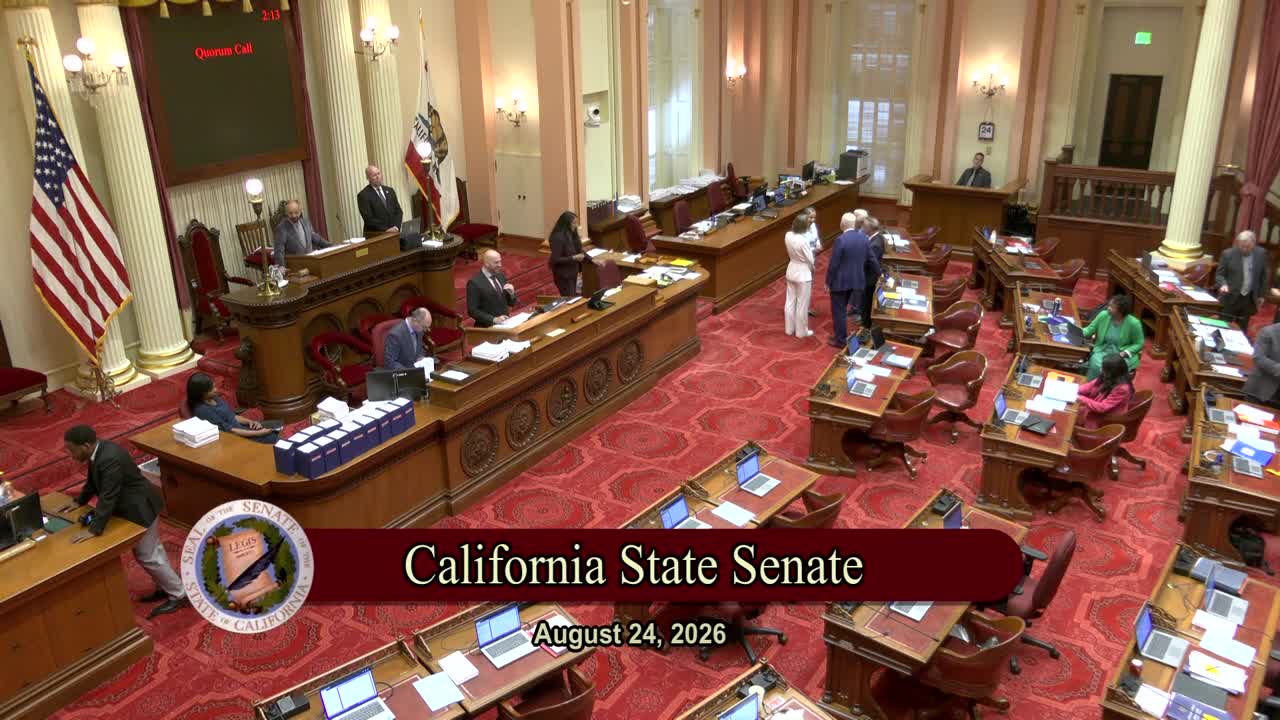
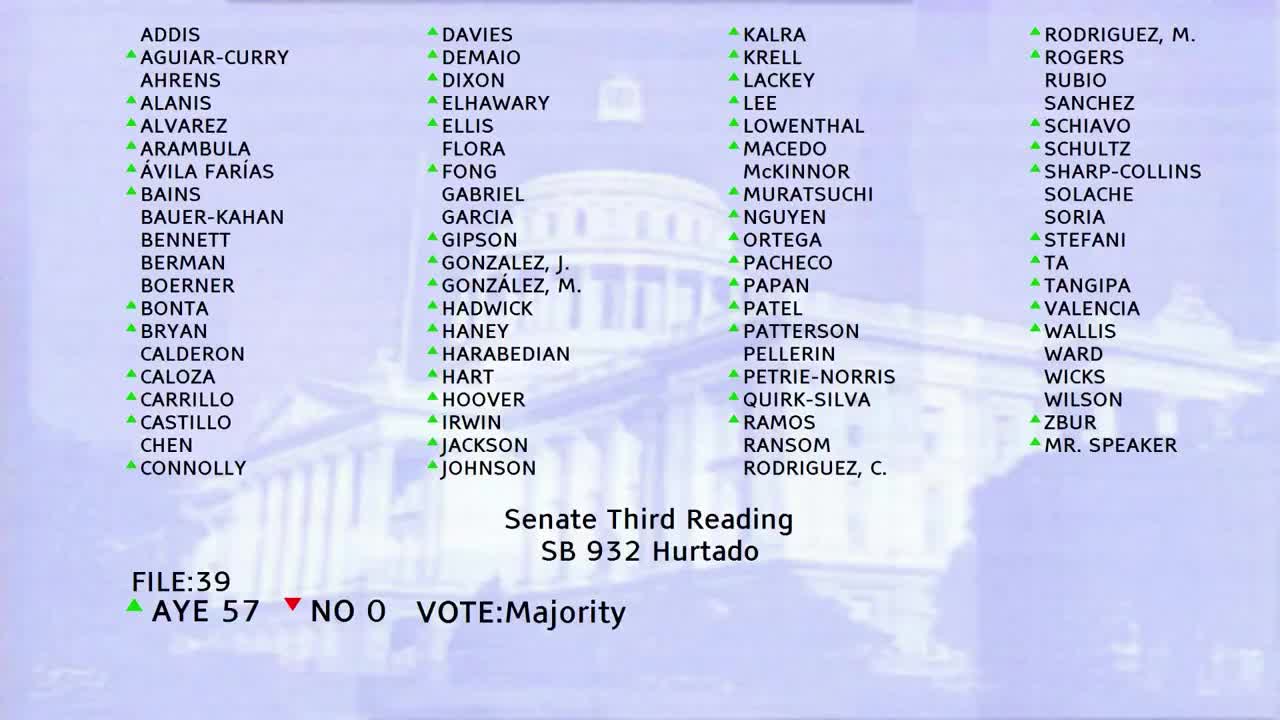
Bill Author
Bill Co-Author(s):