SB 1266: Crimes: theft.
- Session Year: 2025-2026
- House: Senate
- Latest Version Date: 2026-07-02
Current Status:
In Progress
(2026-08-13: August 13 hearing: Held in committee and under submission.)
Introduced
In Committee
Awaiting First Chamber Vote
Passed First Chamber
In Committee
Awaiting Second Chamber Vote
Passed Second Chamber
Enacted
Existing law, the Safe Neighborhoods and Schools Act, enacted by Proposition 47, as approved by the voters at the November 4, 2014, statewide general election, requires the theft of property that does not exceed $950 to be punished as a misdemeanor, except as specified. Proposition 47 authorizes amendment of its provisions by a 2/3 vote of the Members of each house of the Legislature so long as the amendments are consistent with and further the intent of the act.
Under existing law, it is grand theft to steal, take, or carry away copper materials of another valued at more than $950.
This bill would amend Proposition 47 to require, for the purposes of this provision, value to be calculated as the full cost to the victim to repair and replace the stolen materials, including labor and equipment, rather than the fair market scrap value. equipment that was damaged or destroyed by the stealing, taking, or carrying away, as specified. Because this bill would expand the scope of a crime, this bill would impose a state-mandated local program.
The California Constitution requires the state to reimburse local agencies and school districts for certain costs mandated by the state. Statutory provisions establish procedures for making that reimbursement.
This bill would provide that no reimbursement is required by this act for a specified reason.
Existing law, the Safe Neighborhoods and Schools Act, enacted by Proposition 47, as approved by the voters at the November 4, 2014, statewide general election, requires the theft of property that does not exceed $950 to be punished as a misdemeanor, except as specified. Proposition 47 authorizes amendment of its provisions by a 2/3 vote of the Members of each house of the Legislature so long as the amendments are consistent with and further the intent of the act.
Under existing law, it is grand theft to steal, take, or carry away copper materials of another valued at more than $950.
This bill would amend Proposition 47 to require, for the purposes of this provision, value to be calculated as the full cost to the victim to repair and replace the stolen materials, including labor and equipment, rather than the fair market scrap value. Because this bill would expand the scope of a crime, this bill would impose a state-mandated local program.
Existing law, the Safe Neighborhoods and Schools Act, enacted by Proposition 47, as approved by the voters at the November 4, 2014, statewide general election, requires the receipt of stolen property that does not exceed $950 to be punished as a misdemeanor, except in cases when the defendant has previously been convicted of one or more specified serious or violent felonies or an offense requiring registration as a sex offender. Proposition 47 authorizes amendment of its provisions by a 2/3 vote of the Members of each house of the Legislature so long as the amendments are consistent with and further the intent of the act.This bill would amend Proposition 47 and require, for the purposes of this provision, value to be calculated as the full cost to the victim to repair and replace the stolen materials, including labor and equipment, rather than the fair market scrap value. Because this bill would expand the scope of a crime, this bill would impose a state-mandated local program.The California Constitution requires the state to reimburse local agencies and school districts for certain costs mandated by the state. Statutory provisions establish procedures for making that reimbursement.
This bill would provide that no reimbursement is required by this act for a specified reason.
Under existing law, it is grand theft to steal, take, or carry away copper materials of another valued at more than $950.
This bill would require, for the purposes of this provision, value to be calculated as the full cost to the victim to repair and replace the stolen materials, including labor and equipment, rather than the fair market scrap value. The bill would also authorize the value of thefts committed against critical infrastructure within a 90-day period to be aggregated to meet the $950 threshold. Because this bill would expand the scope of a crime, this bill would impose a state-mandated local program.
Existing law, the Safe Neighborhoods and Schools Act, enacted by Proposition 47, as approved by the voters at the November 4, 2014, statewide general election, requires the receipt of stolen property that does not exceed $950 to be punished as a misdemeanor, except in cases when the defendant has previously been convicted of one or more specified serious or violent felonies or an offense requiring registration as a sex offender. Proposition 47 authorizes amendment of its provisions by a 2/3 vote of the Members of each house of the Legislature so long as the amendments are consistent with and further the intent of the act.
This bill would amend Proposition 47 and require, for the purposes of this provision, value to be calculated as the full cost to the victim to repair and replace the stolen materials, including labor and equipment, rather than the fair market scrap value. Because this bill would expand the scope of a crime, this bill would impose a state-mandated local program.
The California Constitution requires the state to reimburse local agencies and school districts for certain costs mandated by the state. Statutory provisions establish procedures for making that reimbursement.
This bill would provide that no reimbursement is required by this act for a specified reason.
The California Global Warming Solutions Act of 2006 requires the State Air Resources Board to adopt regulations for greenhouse gas emissions limits and emissions reduction measures to achieve the maximum technologically feasible and cost-effective reductions in greenhouse gas emissions, as provided.This bill would state that greenhouse gases are air pollutants that endanger public health and welfare and would, to the extent authorized by federal law, require state agencies implementing or enforcing statutes relating to air quality, climate change, transportation, energy, or public health to implement or enforce those statutes consistent with that endangerment statement.The California Global Warming Solutions Act of 2006 requires the State Air Resources Board to adopt regulations for greenhouse gas emissions limits and emissions reduction measures to achieve the maximum technologically feasible and cost-effective reductions in greenhouse gas emissions, as provided.
This bill would state that greenhouse gases are air pollutants that endanger public health and welfare and would, to the extent authorized by federal law, require state agencies implementing or enforcing statutes relating to air quality, climate change, transportation, energy, or public health to implement or enforce those statutes consistent with that endangerment statement.
(a)Every person who steals, takes, or carries away copper materials of another, including, but not limited to, copper wire, copper cable, copper tubing, and copper piping, which are of a value exceeding nine hundred fifty dollars ($950) is guilty of grand theft. Grand theft of copper shall be punishable by a fine not exceeding two thousand five hundred dollars ($2,500), by imprisonment in a county jail not exceeding one year, or by both that fine and imprisonment, or by imprisonment pursuant to subdivision (h) of Section 1170 and a fine not exceeding ten thousand dollars ($10,000).
(b)For purposes of this section, value instead of using fair market scrap value, value shall be calculated as the full cost to the victim to repair and replace the stolen materials, including labor and equipment, rather than the fair market scrap value. equipment that was damaged or destroyed by the stealing, taking, or carrying away. Value shall not include the cost of labor.
SEC. 2.No reimbursement is required by this act pursuant to Section 6 of Article XIIIB of the California Constitution because the only costs that may be incurred by a local agency or school district will be incurred because this act creates a new crime or infraction, eliminates a crime or infraction, or changes the penalty for a crime or infraction, within the meaning of Section 17556 of the Government Code, or changes the definition of a crime within the meaning of Section 6 of Article XIIIB of the California Constitution.
(a)Every person who steals, takes, or carries away copper materials of another, including, but not limited to, copper wire, copper cable, copper tubing, and copper piping, which are of a value exceeding nine hundred fifty dollars ($950) is guilty of grand theft. Grand theft of copper shall be punishable by a fine not exceeding two thousand five hundred dollars ($2,500), by imprisonment in a county jail not exceeding one year, or by both that fine and imprisonment, or by imprisonment pursuant to subdivision (h) of Section 1170 and a fine not exceeding ten thousand dollars ($10,000).
(b)For purposes of this section, value shall be calculated as the full cost to the victim to repair and replace the stolen materials, including labor and equipment, rather than the fair market scrap value.
SEC. 2.Section 496 of the Penal Code is amended to read:496.(a)Every person who buys or receives any property that has been stolen or that has been obtained in any manner constituting theft or extortion, knowing the property to be so stolen or obtained, or who conceals, sells, withholds, or aids in concealing, selling, or withholding any property from the owner, knowing the property to be so stolen or obtained, shall be punished by imprisonment in a county jail for not more than one year, or imprisonment pursuant to subdivision (h) of Section 1170. However, if the value of the property does not exceed nine hundred fifty dollars ($950), the offense shall be a misdemeanor, punishable only by imprisonment in a county jail not exceeding one year, if such person has no prior convictions for an offense specified in clause (iv) of subparagraph (C) of paragraph (2) of subdivision (e) of Section 667 or for an offense requiring registration pursuant to subdivision (c) of Section 290.A principal in the actual theft of the property may be convicted pursuant to this section. However, no person may be convicted both pursuant to this section and of the theft of the same property.(b)Every swap meet vendor, as defined in Section 21661 of the Business and Professions Code, and every person whose principal business is dealing in, or collecting, merchandise or personal property, and every agent, employee, or representative of that person, who buys or receives any property of a value in excess of nine hundred fifty dollars ($950) that has been stolen or obtained in any manner constituting theft or extortion, under circumstances that should cause the person, agent, employee, or representative to make reasonable inquiry to ascertain that the person from whom the property was bought or received had the legal right to sell or deliver it, without making a reasonable inquiry, shall be punished by imprisonment in a county jail for not more than one year, or imprisonment pursuant to subdivision (h) of Section 1170.Every swap meet vendor, as defined in Section 21661 of the Business and Professions Code, and every person whose principal business is dealing in, or collecting, merchandise or personal property, and every agent, employee, or representative of that person, who buys or receives any property of a value of nine hundred fifty dollars ($950) or less that has been stolen or obtained in any manner constituting theft or extortion, under circumstances that should cause the person, agent, employee, or representative to make reasonable inquiry to ascertain that the person from whom the property was bought or received had the legal right to sell or deliver it, without making a reasonable inquiry, shall be guilty of a misdemeanor.(c)Any person who has been injured by a violation of subdivision (a) or (b) may bring an action for three times the amount of actual damages, if any, sustained by the plaintiff, costs of suit, and reasonable attorneys fees.(d)For purposes of this section, value shall be calculated as the full cost to the victim to repair and replace the stolen materials, including labor and equipment, rather than the fair market scrap value. (e)Notwithstanding Section 664, any attempt to commit any act prohibited by this section, except an offense specified in the accusatory pleading as a misdemeanor, is punishable by imprisonment in a county jail for not more than one year, or by imprisonment pursuant to subdivision (h) of Section 1170.SEC. 3.SEC. 2.No reimbursement is required by this act pursuant to Section 6 of Article XIIIB of the California Constitution because the only costs that may be incurred by a local agency or school district will be incurred because this act creates a new crime or infraction, eliminates a crime or infraction, or changes the penalty for a crime or infraction, within the meaning of Section 17556 of the Government Code, or changes the definition of a crime within the meaning of Section 6 of Article XIIIB of the California Constitution.
(a)Every person who steals, takes, or carries away copper materials of another, including, but not limited to, copper wire, copper cable, copper tubing, and copper piping, which are of a value exceeding nine hundred fifty dollars ($950) is guilty of grand theft. Grand theft of copper shall be punishable by a fine not exceeding two thousand five hundred dollars ($2,500), by imprisonment in a county jail not exceeding one year, or by both that fine and imprisonment, or by imprisonment pursuant to subdivision (h) of Section 1170 and a fine not exceeding ten thousand dollars ($10,000).
(b)For purposes of this section, value shall be calculated as the full cost to the victim to repair and replace the stolen materials, including labor and equipment, rather than the fair market scrap value.
(c)The value of thefts committed against critical infrastructure within a 90-day period may be aggregated to meet the threshold specified in subdivision (a).SEC. 2.Section 496 of the Penal Code is amended to read:496.(a)Every person who buys or receives any property that has been stolen or that has been obtained in any manner constituting theft or extortion, knowing the property to be so stolen or obtained, or who conceals, sells, withholds, or aids in concealing, selling, or withholding any property from the owner, knowing the property to be so stolen or obtained, shall be punished by imprisonment in a county jail for not more than one year, or imprisonment pursuant to subdivision (h) of Section 1170. However, if the value of the property does not exceed nine hundred fifty dollars ($950), the offense shall be a misdemeanor, punishable only by imprisonment in a county jail not exceeding one year, if such person has no prior convictions for an offense specified in clause (iv) of subparagraph (C) of paragraph (2) of subdivision (e) of Section 667 or for an offense requiring registration pursuant to subdivision (c) of Section 290.
A principal in the actual theft of the property may be convicted pursuant to this section. However, no person may be convicted both pursuant to this section and of the theft of the same property.
(b)Every swap meet vendor, as defined in Section 21661 of the Business and Professions Code, and every person whose principal business is dealing in, or collecting, merchandise or personal property, and every agent, employee, or representative of that person, who buys or receives any property of a value in excess of nine hundred fifty dollars ($950) that has been stolen or obtained in any manner constituting theft or extortion, under circumstances that should cause the person, agent, employee, or representative to make reasonable inquiry to ascertain that the person from whom the property was bought or received had the legal right to sell or deliver it, without making a reasonable inquiry, shall be punished by imprisonment in a county jail for not more than one year, or imprisonment pursuant to subdivision (h) of Section 1170.
Every swap meet vendor, as defined in Section 21661 of the Business and Professions Code, and every person whose principal business is dealing in, or collecting, merchandise or personal property, and every agent, employee, or representative of that person, who buys or receives any property of a value of nine hundred fifty dollars ($950) or less that has been stolen or obtained in any manner constituting theft or extortion, under circumstances that should cause the person, agent, employee, or representative to make reasonable inquiry to ascertain that the person from whom the property was bought or received had the legal right to sell or deliver it, without making a reasonable inquiry, shall be guilty of a misdemeanor.
(c)Any person who has been injured by a violation of subdivision (a) or (b) may bring an action for three times the amount of actual damages, if any, sustained by the plaintiff, costs of suit, and reasonable attorneys fees.
(d)For purposes of this section, value shall be calculated as the full cost to the victim to repair and replace the stolen materials, including labor and equipment, rather than the fair market scrap value.
(e)Notwithstanding Section 664, any attempt to commit any act prohibited by this section, except an offense specified in the accusatory pleading as a misdemeanor, is punishable by imprisonment in a county jail for not more than one year, or by imprisonment pursuant to subdivision (h) of Section 1170.
SEC. 3.No reimbursement is required by this act pursuant to Section 6 of Article XIIIB of the California Constitution because the only costs that may be incurred by a local agency or school district will be incurred because this act creates a new crime or infraction, eliminates a crime or infraction, or changes the penalty for a crime or infraction, within the meaning of Section 17556 of the Government Code, or changes the definition of a crime within the meaning of Section 6 of Article XIIIB of the California Constitution.
(a)Every person who steals, takes, or carries away copper materials of another, including, but not limited to, copper wire, copper cable, copper tubing, and copper piping, which are of a value exceeding nine hundred fifty dollars ($950) is guilty of grand theft. Grand theft of copper shall be punishable by a fine not exceeding two thousand five hundred dollars ($2,500), by imprisonment in a county jail not exceeding one year, or by both that fine and imprisonment, or by imprisonment pursuant to subdivision (h) of Section 1170 and a fine not exceeding ten thousand dollars ($10,000).
(b)For purposes of this section, value shall be calculated as the full cost to the victim to repair and replace the stolen materials, including labor and equipment, rather than the fair market scrap value.
(c)The value of thefts committed against critical infrastructure within a 90-day period may be aggregated to meet the threshold specified in subdivision (a).
SEC. 2.Section 496 of the Penal Code is amended to read:496.(a)Every person who buys or receives any property that has been stolen or that has been obtained in any manner constituting theft or extortion, knowing the property to be so stolen or obtained, or who conceals, sells, withholds, or aids in concealing, selling, or withholding any property from the owner, knowing the property to be so stolen or obtained, shall be punished by imprisonment in a county jail for not more than one year, or imprisonment pursuant to subdivision (h) of Section 1170. However, if the value of the property does not exceed nine hundred fifty dollars ($950), the offense shall be a misdemeanor, punishable only by imprisonment in a county jail not exceeding one year, if such person has no prior convictions for an offense specified in clause (iv) of subparagraph (C) of paragraph (2) of subdivision (e) of Section 667 or for an offense requiring registration pursuant to subdivision (c) of Section 290.
A principal in the actual theft of the property may be convicted pursuant to this section. However, no person may be convicted both pursuant to this section and of the theft of the same property.
(b)Every swap meet vendor, as defined in Section 21661 of the Business and Professions Code, and every person whose principal business is dealing in, or collecting, merchandise or personal property, and every agent, employee, or representative of that person, who buys or receives any property of a value in excess of nine hundred fifty dollars ($950) that has been stolen or obtained in any manner constituting theft or extortion, under circumstances that should cause the person, agent, employee, or representative to make reasonable inquiry to ascertain that the person from whom the property was bought or received had the legal right to sell or deliver it, without making a reasonable inquiry, shall be punished by imprisonment in a county jail for not more than one year, or imprisonment pursuant to subdivision (h) of Section 1170.
Every swap meet vendor, as defined in Section 21661 of the Business and Professions Code, and every person whose principal business is dealing in, or collecting, merchandise or personal property, and every agent, employee, or representative of that person, who buys or receives any property of a value of nine hundred fifty dollars ($950) or less that has been stolen or obtained in any manner constituting theft or extortion, under circumstances that should cause the person, agent, employee, or representative to make reasonable inquiry to ascertain that the person from whom the property was bought or received had the legal right to sell or deliver it, without making a reasonable inquiry, shall be guilty of a misdemeanor.
(c)Any person who has been injured by a violation of subdivision (a) or (b) may bring an action for three times the amount of actual damages, if any, sustained by the plaintiff, costs of suit, and reasonable attorneys fees.
(d)For purposes of this section, value shall be calculated as the full cost to the victim to repair and replace the stolen materials, including labor and equipment, rather than the fair market scrap value.
(d)(e)Notwithstanding Section 664, any attempt to commit any act prohibited by this section, except an offense specified in the accusatory pleading as a misdemeanor, is punishable by imprisonment in a county jail for not more than one year, or by imprisonment pursuant to subdivision (h) of Section 1170.
SEC. 3.No reimbursement is required by this act pursuant to Section 6 of Article XIIIB of the California Constitution because the only costs that may be incurred by a local agency or school district will be incurred because this act creates a new crime or infraction, eliminates a crime or infraction, or changes the penalty for a crime or infraction, within the meaning of Section 17556 of the Government Code, or changes the definition of a crime within the meaning of Section 6 of Article XIIIB of the California Constitution.
SECTION 1.(a)The Legislature finds and declares that greenhouse gases, including carbon dioxide, methane, nitrous oxide, and hydrofluorocarbons, endanger public health and welfare within the meaning of Division 26 (commencing with Section 38500) of the Health and Safety Code.(b)It is the intent of the Legislature that all state agencies interpret and implement statutes within their jurisdiction consistent with this finding.(c)This act is declaratory of existing state authority and is independent of federal determinations under the federal Clean Air Act (42 U.S.C. Sec. 7401 et seq.).SEC. 2.Section 38502 is added to the Health and Safety Code, to read:38502.For purposes of state law, to the extent authorized by federal law, greenhouse gases are air pollutants that endanger public health and welfare. A state agency implementing or enforcing statutes relating to air quality, climate change, transportation, energy, or public health shall implement or enforce those statutes within its jurisdiction in a manner consistent with this section.SEC. 3.This act shall not be construed to conflict with federal law but shall be construed as an exercise of the independent authority reserved to the State of California under the Tenth Amendment of the United States Constitution.(a)The Legislature finds and declares that greenhouse gases, including carbon dioxide, methane, nitrous oxide, and hydrofluorocarbons, endanger public health and welfare within the meaning of Division 26 (commencing with Section 38500) of the Health and Safety Code.
(b)It is the intent of the Legislature that all state agencies interpret and implement statutes within their jurisdiction consistent with this finding.
(c)This act is declaratory of existing state authority and is independent of federal determinations under the federal Clean Air Act (42 U.S.C. Sec. 7401 et seq.).
SEC. 2.Section 38502 is added to the Health and Safety Code, to read:38502.For purposes of state law, to the extent authorized by federal law, greenhouse gases are air pollutants that endanger public health and welfare. A state agency implementing or enforcing statutes relating to air quality, climate change, transportation, energy, or public health shall implement or enforce those statutes within its jurisdiction in a manner consistent with this section.
SEC. 3.This act shall not be construed to conflict with federal law but shall be construed as an exercise of the independent authority reserved to the State of California under the Tenth Amendment of the United States Constitution.
|
Date
|
Status
|
|---|---|
| Aug 13, 2026 | August 13 hearing: Held in committee and under submission. |
| Aug 5, 2026 | August 5 set for first hearing. Placed on suspense file. |
| Jul 2, 2026 | Read second time and amended. Re-referred to Com. on APPR. |
| Jul 1, 2026 | From committee: Do pass as amended and re-refer to Com. on APPR. (Ayes 8. Noes 0.) (June 30). |
| Jun 23, 2026 | June 23 set for first hearing canceled at the request of author. |
| Jun 4, 2026 | Referred to Com. on PUB. S. |
| May 28, 2026 | In Assembly. Read first time. Held at Desk. |
| May 28, 2026 | Read third time. Passed. (Ayes 39. Noes 0. Page 4523.) Ordered to the Assembly. |
| May 28, 2026 | Read third time. Passed. (Ayes 39. Noes 0.) Ordered to the Assembly. |
| May 19, 2026 | Read second time. Ordered to third reading. |
| May 18, 2026 | From committee: Do pass as amended. (Ayes 5. Noes 0. Page 4271.) (May 14). |
| May 18, 2026 | Read second time and amended. Ordered to second reading. |
| May 18, 2026 | From committee: Do pass as amended. (Ayes 5. Noes 0.) (May 14). |
| May 12, 2026 | Set for hearing May 14. |
| May 11, 2026 | May 11 hearing: Placed on APPR. suspense file. |
| May 4, 2026 | Set for hearing May 11. |
| Apr 23, 2026 | Read second time and amended. Re-referred to Com. on APPR. |
| Apr 22, 2026 | From committee: Do pass as amended and re-refer to Com. on APPR. (Ayes 6. Noes 0. Page 3984.) (April 21). |
| Apr 22, 2026 | From committee: Do pass as amended and re-refer to Com. on APPR. (Ayes 6. Noes 0.) (April 21). |
| Apr 10, 2026 | Set for hearing April 21. |
| Apr 8, 2026 | Re-referred to Com. on PUB. S. |
| Mar 26, 2026 | Re-referred to Com. on RLS. |
| Mar 26, 2026 | Withdrawn from committee. |
| Mar 26, 2026 | April 8 hearing postponed by committee. |
| Mar 25, 2026 | From committee with author's amendments. Read second time and amended. Re-referred to Com. on E.Q. |
| Mar 10, 2026 | Set for hearing April 8. |
| Mar 4, 2026 | Referred to Coms. on E.Q. and G.O. |
| Feb 20, 2026 | From printer. May be acted upon on or after March 22. |
| Feb 19, 2026 | Introduced. Read first time. To Com. on RLS. for assignment. To print. |
|
Date
|
Description
|
Location
|
Votes
|
|
|---|---|---|---|---|
| Jun 30, 2026 | Do pass as amended and be re-referred to the Committee on [Appropriations] | Assembly Standing Committee on Public Safety |
Passed |
|
| May 28, 2026 | Senate 3rd Reading SB1266 Stern | Senate Floor |
Passed |
|
| May 14, 2026 | Do pass as amended | Senate Standing Committee on Appropriations |
Passed |
|
| May 11, 2026 | Placed on suspense file | Senate Standing Committee on Appropriations |
Passed |
|
| Apr 21, 2026 | Do pass as amended, but first amend, and re-refer to the Committee on [Appropriations] | Senate Standing Committee on Public Safety |
Passed |
This list shows positions taken on this bill by organizations on the date displayed, which is linked to the original source.
Positions by individuals are not included.
|
Organization
|
Position
|
Date
|
|---|---|---|
| Aclu California Action | ** Against | |
| All of US or None (HQ) | ** Against | |
| At&T | ** Support | |
| Audobon California | ** Support | |
| California Contract Cities Association | ** Support | |
| California District Attorneys Association | ** Support | |
| California Municipal Utilities Association | ** Support | |
| Californians for Safety and Justice (CSJ) | ** Against | |
| Californians United for a Responsible Budget | ** Against | |
| California Police Chiefs Association | ** Support | |
| California Public Defenders Association | ** Against | |
| California Water Association | ** Support | |
| City of Norwalk | ** Support | |
| City of Pico Rivera | ** Support | |
| City of Roseville | ** Support | |
| CTIA | ** Support | |
| ELECTRIFY AMERICA, LLC | ** Support | |
| Ella Baker Center For Human Rights | ** Against | |
| Felony Murder Elimination Project | ** Against | |
| Friends Committee On Legislation Of California | ** Against | |
| Initiate Justice | ** Against | |
| Justice2jobs Coalition | ** Against | |
| LA Defensa | ** Against | |
| League Of California Cities | ** Support | |
| Legal Services for Prisoners with Children | ** Against | |
| Local 148 Los Angeles County Public Defender's Union | ** Against | |
| Los Angeles County District Attorney'S Office | ** Support | |
| National Audubon Society | ** Support | |
| Peace Officers Research Association of California (PORAC) | ** Support | |
| San Francisco Public Defender | ** Against | |
| Smart Justice California, a Project of Beyond Impact | ** Against | |
| town of portola valley | ** Support | |
| UNITED STATES TELECOM ASSOCIATION DBA USTELECOM - THE BROADBAND ASSOCIATION | ** Support | |
| Vera Institute Of Justice | ** Against | |
| Verizon Communications, Inc. And Its Affiliates | ** Support |
Date of Hearing: August 5, 2026
ASSEMBLY COMMITTEE ON APPROPRIATIONS
Buffy Wicks, Chair
SBPCA Bill Id:SB 1266
Author:(Stern) – As Amended Ver:July 2, 2026
Policy Committee: | Public Safety | Vote: | 8 - 0 |
|
| ||
|
|
Urgency: No State Mandated Local Program: Yes Reimbursable: No
SUMMARY:
This bill changes how the value of stolen copper materials is calculated for purposes of the grand theft of copper statute from the fair market scrap value to the cost to the victim to repair and replace the stolen materials, including equipment damaged or destroyed in the course of the theft.
FISCAL EFFECT:
- Significant increase in county incarceration costs (local funds) and potential state incarceration costs (General Fund (GF), California Department of Corrections and Rehabilitation (CDCR)) to the extent the revised valuation methodology reclassifies thefts currently prosecuted as petty theft into felony grand theft of copper. Because repair and replacement costs routinely exceed the scrap value of stolen copper by large multiples, the bill could convert a substantial share of copper thefts into wobblers (meaning the offense may be charged as either a misdemeanor or as a felony) carrying county jail terms of 16 months, two years, or three years. County jail costs average approximately $29,000 per person per year; each additional 10 individuals serving a one-year term would cost counties roughly $290,000.
- Cost pressures (Trial Court Trust Fund, General Fund) of an unknown but potentially significant amount to the courts to adjudicate any additional filings. Actual costs will depend on the number of cases filed and the amount of court time needed to resolve each case. It generally costs approximately $1,000 to operate a courtroom for one hour. Although courts are not funded on the basis of workload, increased pressure on the Trial Court Trust Fund may create a demand for increased funding for courts from the General Fund. The state budget provides annual General Fund backfills to the Trial Court Trust Fund to offset revenue reductions, totaling approximately $117.3 million in 2025-26.
COMMENTS:
- Purpose. According to the author:
SB 1266 strengthens protections for both public and private infrastructure by closing the gap between scrap value and real-world impact by ensuring our legal framework reflects the true cost of infrastructure damage... giving law enforcement and prosecutors the tools they need to respond proportionately and deter future harm.
- Background. Copper Theft. Existing law makes theft of copper materials valued over $950 grand theft, a wobbler punishable by up to one year in county jail and a $2,500 fine, or by 16 months, two, or three years and a fine of up to $10,000. Industry sources report substantial and growing losses: AT&T reported more than 7,300 copper theft incidents in California in 2025, with losses exceeding $54 million, and the Attorney General issued a bulletin to law enforcement in June 2025 detailing the statutes applicable to copper wire theft and to junk dealer and recycler obligations.
Measurement of Value under Existing Theft Law. The $950 threshold separating petty theft from grand theft, reinforced statewide by Proposition 47 (2014), is conventionally measured by the fair market value of the property taken; for copper, the scrap value the material would command. Under this framework, the extensive collateral damage a copper theft inflicts on infrastructure is addressed through avenues other than the theft charge itself: vandalism charges, for which “damages” expressly include damage caused to public transit, utility, and water facilities in the course of stealing nonferrous material; sentencing enhancements keyed to aggregate loss exceeding $50,000; victim restitution, which since AB 844 (Berryhill), Chapter 731, Statutes of 2009, must cover both the stolen materials and any collateral damage caused during a metal theft; and treble civil damages for injury to utility property.
How this Bill Departs from that Framework. This bill takes a different approach: rather than addressing collateral damage through parallel charges, enhancements, or restitution, the bill folds the victim’s repair and replacement costs, including damaged or destroyed equipment, but excluding labor, into the definition of “value” for purposes of grading the theft offense itself. This valuation methodology would be unique in California theft law. No other theft offense grades severity by the victim’s cost of repair rather than the market value of what was taken. The practical significance lies in the wide gap between the two measures: as the opposition notes, individuals who stole $11,000 in scrap-value copper from a Los Angeles bridge caused an estimated $2.5 million in repairs, a ratio approaching 250:1. Because repair costs so consistently dwarf scrap value, the change would cause many, and potentially most, copper thefts that currently fall below the $950 threshold to qualify as felony grand theft. Supporters characterize this as the central purpose. The League of California Cities writes that the change “would make more copper thefts exceed the $950 threshold and thus increase the eligibility for a felony charge,” while opponents argue the same feature effectively felonizes nearly all copper theft regardless of the amount taken.
- Related Legislation. AB 1941 (M. Gonzalez) criminalizes repeat and organized metal theft offenders and is pending in Senate Appropriations.
Analysis Prepared by: Shiran Zohar / APPR. / (916) 319-2081
Date of Hearing: June 30, 2026
Counsel: Mary Kennedy
ASSEMBLY COMMITTEE ON PUBLIC SAFETY
Nick Schultz, Chair
SBPCA Bill Id:SB 1266
Author:(Stern) – As Amended Ver:May 18, 2026
SUMMARY: Changes how copper is to be valued in a copper theft case. Specifically, this bill: requires that for the crime of grand theft of copper, “value” shall be calculated as the full cost to the victim to repair and replace the stolen copper materials, including labor and equipment, rather than the fair market scrap value.
EXISTING LAW:
- Defines “junk” to mean all secondhand and used machinery and all ferrous and nonferrous scrap metals and alloys, including any secondhand and used furniture, pallets, or other personal property, other than livestock or parts or portions thereof. (Bus. & Prof. Code, § 21600.)
- States scrap metals and alloys includes but is not limited to materials and equipment commonly used in construction, electrical power generation, railroad equipment, and nonferrous materials, which are offered for sale to any junk dealer or recycler, but does not include scrap iron, household generated waste, or aluminum beverage containers, as specified. (Bus. & Prof. Code, § 21600.)
- States that every person who feloniously steals, takes, carries, leads, or drives away the personal property of another, or who fraudulently appropriates property which has been entrusted to them, or who knowingly and designedly, by any false or fraudulent representation or pretense, defrauds any other person of money, labor or real or personal property, is guilty of theft, and divides theft into two degrees, petty theft and grand theft. (Pen. Code §§ 484, subd. (a), 486.)
- Punishes petty theft as a misdemeanor, punishable by fine not exceeding $1,000, or by imprisonment in the county jail not exceeding six months, or both. (Pen. Code, § 490.)
- Defines “grand theft” as theft of money, labor, real or personal property of a value exceeding $950, and punishes grand theft as a “wobbler” – subject to imprisonment in county jail not exceeding one year, or by imprisonment in county jail for 16 months, two years, or three years (Pen. Code, §§ 487, 489.)
- Makes it a crime to buy or receive stolen property, and provides that if the value of the property is less than $950, the offense is a misdemeanor punishable by imprisonment in county jail for one year, but if the value of the property is over $950, the offense is punishable as an alternate misdemeanor-felony (wobbler) – subject to imprisonment in a county jail not exceeding one year, or by imprisonment in county jail for 16 months, two years, or three years (Pen. Code, §§ 487, 489, 496.)
- Provides that every person who is a dealer in or collector of junk, metals, or secondhand materials, or the agent, employee, or representative of such dealer or collector, and who buys or receives any wire, cable, copper, lead, solder, mercury, iron, or brass which he or she knows or reasonably should know is ordinarily used by, or ordinarily belongs, to a railroad or other transportation, telephone, telegraph, gas, water, or electric light company, or a county, city, city and county, or other political subdivision of this state engaged in furnishing public utility service, without using due diligence to ascertain that the person selling or delivering the same has a legal right to do so, is guilty of criminally receiving that property. This crime is punishable as an alternate felony-misdemeanor, also known as a “wobbler.” (Pen. Code, § 496a, subd. (a).)
- Makes it a wobbler, punishable by a fine not exceeding $2,500 or imprisonment in a county jail not exceeding one year, or by 16 months, or two, or three years in county jail, and a $10,000 fine, for any person to steal, carry, or take away copper materials of another, including, but not limited to, copper wire, copper cable, copper tubing and copper piping, which are of a value exceeding $950. (Pen. Code, § 487j.)
- Provides that a person who has two or more prior convictions for specified theft offenses and who is convicted of petty theft or shoplifting, is punishable by imprisonment in county jail for up to one year, or by 16 months, or two or three years, and makes a second or subsequent conviction of petty theft with two priors punishable by imprisonment in the county jail not exceeding one year or by imprisonment in state prison. (Pen. Code, § 666.1, subd. (a).)
- Allows that in any case involving one or more acts of theft the value of property stolen may be aggregated into a single count or charge, with the sum of the value of all property being the value considered in determining the degree of theft. (Pen. Code, § 490.3)
- Provides that if a person takes, damages, or destroys property in the commission or attempted commission of a felony, as specified, the court shall impose an additional and consecutive term of imprisonment, as follows:
- If the loss or property value exceeds $50,000, the court shall impose an additional term of one year.
- If the loss or property value exceeds $200,000, the court shall impose an additional term of two years.
- If the loss or property value exceeds $1,000,000, the court shall impose an additional term of three years.
- If the loss or property value exceeds $3,000,000, the court shall impose an additional term of four years.
- For each additional loss or property value of $3,000,000, the court shall impose a term of one year in addition to the term specified immediately above. (Pen. Code, § 12022.6, subd. (a).)
- Provides that in an accusatory pleading involving multiple charges of taking, damage, or destruction, or multiple violations of the receiving stolen property statute, the additional terms provided in the provision above may be imposed if the aggregate losses to the victims or aggregate property values from all felonies exceed the amounts specified in this above and arise from a common scheme or plan. (Pen. Code, § 12022.6, subd. (b).)
- Makes it a wobbler, punishable by imprisonment in a county jail not exceeding one year, by a fine not exceeding $1,000, or by both that imprisonment and fine, or by imprisonment in a county jail for 16 months, two years, or three years, for any person who unlawfully and maliciously takes down, removes, injures, disconnects, cuts, or obstructs a line of telegraph, telephone, or cable television, or any line used to conduct electricity. (Pen. Code, § 591.)
- States that every person who maliciously damages or destroys the real or personal property of another is guilty of vandalism. (Pen. Code, § 594, subd. (a).)
- Makes it a misdemeanor, punishable by imprisonment in a county jail not exceeding one year, or by a fine of not more than $1,000, or by both that fine and imprisonment, for every person guilty of vandalism if the amount damaged is less than $400, but if the amount damaged is $400 or more, it is a wobbler offense. (Pen. Code, § 594, subd. (b).)
- Provides that for the purposes of Section 594, “damages” includes damage caused to public transit property and facilities, and public utilities and water property facilities, in the course of stealing or attempting to steal nonferrous material, as defined. (Pen. Code, § 594.05.)
- Provides that any person who willfully and maliciously does any injury to telegraph or telephone or electric power or gas property is liable to the corporation for three times the amount of actual damages sustained thereby. (Pub. Util. Code, § 7951.)
FISCAL EFFECT: Unknown.
COMMENTS:
- Sponsor: Author-Sponsored
- Author’s statement: “SB 1266 strengthens protections for both public and private infrastructure by closing the gap between scrap value and real-world impact by ensuring our legal framework reflects the true cost of infrastructure damage, including full repair, replacement, and service restoration, giving law enforcement and prosecutors the tools they need to respond proportionately and deter future harm before it disrupts the services our communities rely on. These services include street lights, public schools, libraries, public charging systems and telecommunication networks.”
- Metal Theft: According to a white paper from the Internet & Television Association (NCTA) and other entities in the U.S. wireless communications industry, crimes related to copper theft not only disrupt essential services, but they also impose millions of dollars in repair costs, and endanger public safety by threatening emergency communications, hospitals, airports, military installations, and other public safety institutions. [1]
AT&T has stated that as a company, it experienced “more than 10,400 copper theft incidents, with a weekly average of 200 incidents reported nationwide at the end of 2025,” and that losses for 2025 exceeded $82 million. The company also noted that “in California alone, we are experienced more than 7,300 copper theft incidents in 2025, with losses exceeding $54 million.”[2]
In June 2025, California’s Attorney General addressed mental theft with a bulletin to California law enforcement noting the spike in metal theft and detailing relevant criminal statutes applicable to the theft of copper wire; the receipt, purchase, and sale of stolen copper wire; and statutes related to junk dealers and recyclers’ obligations to collect and report certain information related to the receipt, purchase, and sale of copper wire.[3]
- Proposition 47: In November of 2014, Proposition 47 was approved by the voters, and reclassified certain nonviolent property and drug crimes from felonies to misdemeanors. Specifically, Proposition 47 provided that various theft-related offenses for which the value of the property does not exceed $950 are generally punished as misdemeanors. Proposition 47 additionally allowed certain offenders who had previously been convicted of such crimes to petition for resentencing.
- Changing how theft is valued: This bill provides that the value of copper materials in a copper theft case shall be calculated as the full cost to the victim to repair and replace the stolen material including labor and equipment, rather than the fair market scrap value. As noted in the author’s background information, the scrap cost of copper wire may not be high but the repairs to fix the damage caused by removing wire can be excessive.
- Argument in support: According to the League of California Cities, “Metal theft has become a costly issue for cities across California and the nation, severely impacting critical infrastructure components such as streetlights, fire hydrants and fire department connections, manhole covers, electric vehicle (EV) charging stations, and backflow prevention devices. Thieves often target these public assets due to the high value of precious metal, specifically copper, leaving behind significant damage that endangers public safety and imposes burdensome repair costs on local governments and businesses.
“Local governments are not the only entity plagued by this issue. Telecommunication companies are also facing the devastating consequences of metal theft crime. AT&T reported 2,200 separate incidents of copper wire theft in 2024, more than a 3000% increase since 2021. They have also spent millions on copper wire theft repairs due to theft and vandalism to their network.
“SB 1266 would help restore some of the damage done from metal theft by allowing for infrastructure cost recovery of the actual value and labor it takes to repair stolen metal. This change would make more copper thefts exceed the $950 threshold and thus increase the eligibility for a felony charge.
“The financial burden of repairing and replacing stolen infrastructure components falls on taxpayers, utility providers, and municipalities, draining resources that could otherwise be used for community development and essential services This bill would shift the financial burden onto those causing the damage, rather than those left to pick up the pieces.”
- Argument in opposition: According to the Vera Institute of Justice, “Copper metal theft, by an individual or a group, is already criminalized under existing law. Under the copper theft statute, any theft of copper materials whose value exceeds $950 is punishable up to three years in prison and a fine of $10,000. Theft of less than $950 in materials is punishable as a misdemeanor carrying up to six months of incarcerations and $1000 fine. If multiple misdemeanor petty thefts occur in line with one intention, impulse, or plan, the thefts may be aggregated into a grand theft charge. When this theft is in concert with others, everyone faces the full punishment available under the relevant statute for aiding and abetting the crime. The circumstances that motivate SB 1266 are already criminalized by existing law.
“SB 1266’s use of “cost of replacement” to determine how a theft should be categorized will lead to nearly every copper theft being prosecuted as a felony, with no benefit to public safety. For example, last year, individuals stole $11,000 of copper from a bridge in LA and the city estimated that the repairs would cost $2.5 million, a ratio of nearly 250:1. Assuming a similar ratio applies to lower-level thefts, prosecutors may argue that any theft of more than four dollars' worth of copper should be punished as a felony. To the extent that SB 1266 will increase existing criminal punishments, the bill goes against existing research which demonstrates that increased sentences do not deter or prevent crime.
“In addition to not improving public safety, the Legislature cannot ignore the fiscal cost of increased incarceration. For example, incarcerating a person for one year in Los Angeles County Jail costs approximately $90,000. If a person is sentenced to three years of incarceration for felony copper theft under SB 1266 instead of a six-month misdemeanor petty theft sentence under current law, this will cost LA County $225,000.
“Instead of throwing millions of dollars into ineffective carceral approaches, the Legislature should invest in increased oversight over the recycling companies making a profit from stolen copper in order to tamper down the illegal market driving these thefts.”
- Related Legislation: AB 1941 (M. Gonzalez) focuses on repeat and organized offenders who steal, or traffic prohibited metal materials. AB 1941 has been referred to the Senate Public Safety Committee.
- Prior Legislation:
- AB 476 (M.González), Chapter 694, Statutes of 2025, put dealers and recyclers buying various scrap metal items to keep additional records.
- AB 1218 (Soria), of the 2025-2026 Legislative Session, would have made it a crime to possess copper materials which are a value in excess of $950, without proof of lawful possession, among other changes. AB 1218 died in the Assembly Public Safety Committee.
- SB 1387 (Berryhill), Chapter 656, Statutes of 2012, this bill prohibits junk dealers and recyclers from possessing fire hydrants, manhole covers or backflow devices without proper certification, as specified; and provides that possession of stolen fire hydrants, manhole covers or backflow devices by persons engaged in the salvage, recycling, purchase or sale of scrap metal, shall be punishable by an additional fine up to $3000.
- AB 1971 (Buchana), Chapter 82, Statutes of 2012, increases the maximum fine for junk and second-hand dealers who knowingly purchase metals used in transportation or public utility services without due diligence from $250 to $1,000, among other changes.
- AB 316 (Carter), Chapter 317, Statutes of 2011, creates a separate section for grand theft of copper materials and adds a fine of up to $2,500 on to the existing penalties as specified.
- SB 447 (Maldonado), Chapter 732, Statutes of 2009, assists local law enforcement officials in quickly investigating stolen metal and apprehending thieves by requiring scrap metal dealers and recyclers to report what materials are being scraped at their facilities and by whom on a daily basis. These rules already apply to pawn shop dealers.
- SB 691 (Calderon), Chapter 720, Statutes of 2009, requires junk dealers and recyclers to take thumbprints of individuals selling copper, copper alloys, aluminum and stainless steel. Sellers must also show a government identification (ID) and proof of their current address. Recyclers who violate the law face suspension or revocation of their business license and increased fines and jail time.
- AB 1859 (Adams), Chapter 659, Statutes of 2008, creates a fine of not more than $3,000 for any person who knowingly receives any part of a fire hydrant, including bronze or brass fittings and parts.
- AB 844 (Berryhill), Chapter 731, Statutes of 2009, requires recyclers to hold payment for three days, check a photo ID and take a thumbprint of anyone selling scrap metals. AB 844 also requires any person convicted of metal theft to pay restitution for the materials stolen and for any collateral damage caused during the theft.
- AB 2724 (Benoit), of the 2007-2008 Legislative Session, required any person convicted of grand theft involving the theft of wire, cable, copper, lead, solder, mercury, iron or brass of a kind ordinarily used by, or that ordinarily belongs to a railroad or other transportation, telephone, telegraph, gas, water, or electric light company or county, city, city and county, or other political subdivision of this state engaged in furnishing public utility service, or farm, ranch or industrial facility or other commercial or residential building, to pay a fine of $100 for a first offense and $200 for any subsequent offense. AB 2724 failed passage in the Senate Committee on Public Safety.
REGISTERED SUPPORT / OPPOSITION:
Support
At&t
Audobon California
California Contract Cities Association
California District Attorneys Association
California Municipal Utilities Association
California Police Chiefs Association
California Water Association
City of Norwalk
City of Pico Rivera
City of Roseville
CTIA
Electrify America, LLC
League of California Cities
Los Angeles Council Member Adrin Nazarian
Los Angeles County District Attorney's Office
National Audubon Society
Peace Officers Research Association of California (PORAC)
Town of Portola Valley
United States Telecom Association Dba Ustelecom - the Broadband Association
Verizon Communications, INC. and its Affiliates
Opposition
ACLU California Action
All of US or None (HQ)
California Public Defenders Association
Californians for Safety and Justice (CSJ)
Californians United for a Responsible Budget
Ella Baker Center for Human Rights
Felony Murder Elimination Project
Friends Committee on Legislation of California
Initiate Justice
Justice2jobs Coalition
LA Defensa
Legal Services for Prisoners With Children
Local 148 Los Angeles County Public Defender's Union
San Francisco Public Defender
Smart Justice California, a Project of Beyond Impact
Vera Institute of Justice
Analysis Prepared by: Mary Kennedy / PUB. S. / (916) 319-3744
NCTA, CTIA, U.S. Telecom, and WIA, “Protecting The Nation’s Critical Communications Infrastructure From Theft & Vandalism – Fall ,” Broadband Breakfast, white paper, <https://broadbandbreakfast.com/protecting-the- nations-critical-communications-infrastructure-from-theft-vandalism-fall-2025-2/?submissionGuid=89682ec3-87ff-4da9-b474-92b97c96b3d8>. ↑
Rahdeese Alcutt, lead investigator, AT&T Global Security, “Copper Theft – What We’re Missing,” AT&T, blog, https://about.att.com/blogs/2026/copper-theft.html?source=EC00EM0000000000E&wtExtndSource=04032026&wtExtndSource=04032026 ↑
California Attorney General, State Statutes Applicable to Copper Wire Theft, Information Bulletin No. 2025-DLE-12 (Jun. 5, 2025) <https://oag.ca.gov/system/files/media/2025-dle-12.pdf>. ↑
SENATE RULES COMMITTEE Office of Senate Floor Analyses (916) 651-4171 | SB 1266 |
THIRD READING
Bill No: SB 1266
Author: Stern (D)
Amended: 4/23/26
Vote: 27
SENATE PUBLIC SAFETY COMMITTEE: 6-0, 4/21/26
AYES: Arreguín, Seyarto, Caballero, Cortese, Pérez, Wiener
SENATE APPROPRIATIONS COMMITTEE: 5-0, 5/14/26
AYES: Cervantes, Cabaldon, Grayson, Richardson, Wahab
NO VOTE RECORDED: Seyarto, Dahle
SUBJECT: Crimes: theft
SOURCE: Los Angeles City Councilmember Adrin Nazarian
DIGEST:
This bill redefines how value is calculated for crimes related to the theft of copper materials or the purchase or receipt of stolen property.
ANALYSIS:
Existing law:
- Defines “junk” to mean all secondhand and used machinery and all ferrous and nonferrous scrap metals and alloys, including any secondhand and used furniture, pallets, or other personal property, other than livestock or parts or portions thereof. (Business and Professions (Bus. & Prof.) Code, § 21600.)
- States that “scrap metals and alloys” includes but is not limited to materials and equipment commonly used in construction, electrical power generation, railroad equipment, and nonferrous materials, which are offered for sale to any junk dealer or recycler, but does not include scrap iron, household generated waste, or aluminum beverage containers, as specified. (Bus. & Prof. Code, § 21600.)
- States that every person who feloniously steals, takes, carries, leads, or drives away the personal property of another, or who fraudulently appropriates property which has been entrusted to them, or who knowingly and designedly, by any false or fraudulent representation or pretense, defrauds any other person of money, labor or real or personal property, is guilty of theft, and divides theft into two degrees, petty theft and grand theft. (Penal (Pen.) Code §§ 484, subd. (a), 486.)
- Punishes petty theft as a misdemeanor, punishable by fine not exceeding $1,000, or by imprisonment in the county jail not exceeding six months, or both. (Pen. Code, § 490.)
- Defines “grand theft” as theft of money, labor, real or personal property of a value exceeding $950, and punishes grand theft as a “wobbler” – subject to imprisonment in county jail not exceeding one year, or by imprisonment in county jail for 16 months, two years, or three years (Pen. Code, §§ 487, 489.)
- Makes it a crime to buy or receive stolen property, and provides that if the value of the property is less than $950, the offense is a misdemeanor punishable by imprisonment in county jail for one year, but if the value of the property is over $950, the offense is punishable as an alternate misdemeanor-felony (wobbler) – subject to imprisonment in a county jail not exceeding one year, or by imprisonment in county jail for 16 months, two years, or three years (Pen. Code, §§ 487, 489, 496.)
- Provides that every person who is a dealer in or collector of junk, metals, or secondhand materials, or the agent, employee, or representative of such dealer or collector, and who buys or receives any wire, cable, copper, lead, solder, mercury, iron, or brass which he or she knows or reasonably should know is ordinarily used by, or ordinarily belongs, to a railroad or other transportation, telephone, telegraph, gas, water, or electric light company, or a county, city, city and county, or other political subdivision of this state engaged in furnishing public utility service, without using due diligence to ascertain that the person selling or delivering the same has a legal right to do so, is guilty of criminally receiving that property. This crime is punishable as a wobbler. (Pen. Code, § 496a, subd. (a).)
- Makes it a wobbler, punishable by a fine not exceeding $2,500 or imprisonment in a county jail not exceeding one year, or by 16 months, or two, or three years in county jail, and a $10,000 fine, for any person to steal, carry, or take away copper materials of another, including, but not limited to, copper wire, copper cable, copper tubing and copper piping, which are of a value exceeding $950. (Pen. Code, § 487j.)
- Provides that a person who has two or more prior convictions for specified theft offenses and who is convicted of petty theft or shoplifting, is punishable by imprisonment in county jail for up to one year, or by 16 months, or two or three years, and makes a second or subsequent conviction of petty theft with two priors punishable by imprisonment in the county jail not exceeding one year or by imprisonment in state prison. (Pen. Code, § 666.1, subd. (a).)
- Allows that in any case involving one or more acts of theft the value of property stolen may be aggregated into a single count or charge, with the sum of the value of all property being the value considered in determining the degree of theft. (Pen. Code, § 490.3.)
- Provides that if a person takes, damages, or destroys property in the commission or attempted commission of a felony, as specified, the court shall impose an additional and consecutive term of imprisonment, as follows:
- If the loss or property value exceeds $50,000, the court shall impose an additional term of one year.
- If the loss or property value exceeds $200,000, the court shall impose an additional term of two years.
- If the loss or property value exceeds $1,000,000, the court shall impose an additional term of three years.
- If the loss or property value exceeds $3,000,000, the court shall impose an additional term of four years.
- For each additional loss or property value of $3,000,000, the court shall impose a term of one year in addition to the term specified immediately above. (Pen. Code, § 12022.6, subd. (a).)
- Provides that in an accusatory pleading involving multiple charges of taking, damage, or destruction, or multiple violations of the receiving stolen property statute, the additional terms provided in the provision above may be imposed if the aggregate losses to the victims or aggregate property values from all felonies exceed the amounts specified in this above and arise from a common scheme or plan. (Pen. Code, § 12022.6, subd. (b).)
- Makes it a wobbler, punishable by imprisonment in a county jail not exceeding one year, by a fine not exceeding $1,000, or by both that imprisonment and fine, or by imprisonment in a county jail for 16 months, two years, or three years, for any person who unlawfully and maliciously takes down, removes, injures, disconnects, cuts, or obstructs a line of telegraph, telephone, or cable television, or any line used to conduct electricity. (Pen. Code, § 591.)
- States that every person who maliciously damages or destroys the real or personal property of another is guilty of vandalism. (Pen. Code, § 594, subd. (a).)
- Makes it a misdemeanor, punishable by imprisonment in a county jail not exceeding one year, or by a fine of not more than $1,000, or by both that fine and imprisonment, for every person guilty of vandalism if the amount damaged is less than $400, but if the amount damaged is $400 or more, it is a wobbler offense. (Pen. Code, § 594, subd. (b).)
- Provides that for the purposes of Section 594, “damages” includes damage caused to public transit property and facilities, and public utilities and water property facilities, in the course of stealing or attempting to steal nonferrous material, as defined. (Pen. Code, § 594.05.)
- Provides that any person who willfully and maliciously does any injury to telegraph or telephone or electric power or gas property is liable to the corporation for three times the amount of actual damages sustained thereby. (Pub. Util. Code, § 7951.)
This bill:
- Provides that for the crime of grand theft of copper, “value” shall be calculated as the full cost to the victim to repair and replace the stolen copper materials, including labor and equipment, rather than the fair market scrap value.
Comments
Recent reports suggest that despite legislative efforts to deter copper theft by increasing penalties and regulating scrap metal dealers, incidents of copper theft are becoming more frequent. Because of the widespread use of copper in telecommunications, electric utilities, HVAC, railroads and transit systems, transportation and roadway infrastructure, and public utility services such as city lighting services, copper theft poses a serious problem in California and across the country.
According to a white paper from the Internet & Television Association (NCTA) and other entities in the U.S. wireless communications industry, crimes related to copper theft not only disrupt essential services, but they also impose millions of dollars in repair costs, and endanger public safety by threatening emergency communications, hospitals, airports, military installations, and other public safety institutions. AT&T noted that as a company, it experienced “more than 10,400 copper theft incidents, with a weekly average of 200 incidents reported nationwide at the end of 2025,” and that losses for 2025 exceeded $82 million. The company also noted that “in California alone, we are experienced more than 7,300 copper theft incidents in 2025, with losses exceeding $54 million.”
Cities across the country have experienced a spike in metal theft, In response to mushrooming incidents of metal theft, some residents in the city of Los Angeles have taken it upon themselves to combat the epidemic. In June 2025, California’s attorney general responded by issuing a bulletin to California law enforcement noting the spike in metal theft and detailing relevant criminal statutes applicable to the theft of copper wire; the receipt, purchase, and sale of stolen copper wire; and statutes related to junk dealers and recyclers’ obligations to collect and report certain information related to the receipt, purchase, and sale of copper wire.
In response to the prevalence of metal thefts, including copper wire from construction sites, public utility facilities, and other locations, the Legislature passed AB 316 (Carter, Chapter 317, Statutes of 2011), which created the crime of grand theft of copper materials which is punishable as a wobbler.
In November of 2014, Proposition 47 was approved by the voters, and reclassified certain nonviolent property and drug crimes from felonies to misdemeanors. Specifically, Proposition 47 provided that various theft-related offenses for which the value of the property does not exceed $950 are generally punished as misdemeanors. Proposition 47 additionally allowed certain offenders who had previously been convicted of such crimes to petition for resentencing.
This bill seeks to deter theft of copper wire from critical public infrastructure by redefining how value is calculated. Specifically, rather than defining value as the fair market scrap value of the stolen material, the bill alters the definition of value, for the purposes of the crimes of copper theft to include the full cost to the victim to repair and replace stolen copper materials, including labor and equipment.
FISCAL EFFECT: Appropriation: No Fiscal Com.: Yes Local: Yes
According to the Senate Appropriations Committee:
Major trial court cost pressure (Trail Court Trust Fund). Major incarceration costs to the counties and to California Department of Corrections and Rehabilitation (CDCR) (General Fund).
SUPPORT: (Verified 5/14/26)
Los Angeles City Councilmember Adrin Nazarian (Source)
AT&T
Audubon California
California District Attorneys Association
California Police Chiefs Association
California Water Association
City of Roseville
CTIA
League of California Cities
National Audubon Society
Peace Officers Research Association of California
United States Telecom Association Dba Ustelecom - the Broadband Association
OPPOSITION: (Verified 5/14/26)
ACLU California Action
All of Us or None
California Public Defenders Association
Californians United for a Responsible Budget
Ella Baker Center for Human Rights
Initiate Justice
Justice2Jobs Coalition
La Defensa
Legal Services for Prisoners With Children
Los Angeles County Public Defender's Union, Local 148
San Francisco Public Defender
Smart Justice California
Vera Institute of Justice
Prepared by: Alex Barnett / PUB. S. /
5/18/26 15:25:40
**** END ****
SENATE COMMITTEE ON
Senator Sabrina Cervantes, Chair
2025 - 2026 Regular Session
SB 1266 (Stern) - Crimes: theft
Version: | Policy Vote: |
Urgency: | Mandate: |
Hearing Date: | Consultant: |
Bill Summary:
SB 1266 would (1) redefine how value is calculated for crimes related to the theft of copper materials, (2) to redefine how value is calculated for crimes related to the purchase or possession of stolen copper materials, and (3) authorize the value of the thefts of copper materials committed against critical infrastructure within a specified period to be aggregated to match a specified threshold.
*********** ANALYSIS ADDENDUM – SUSPENSE FILE ***********
The following information is revised to reflect amendments
adopted by the committee on May 14, 2026
Fiscal Impact:
Major trial court cost pressure (Trail Court Trust Fund).
Major incarceration costs to the counties and to California Department of Corrections and Rehabilitation (CDCR) (General Fund).
Committee Amendments:
Strike Section 2 of the bill (Penal Code 496).
-- END --
SENATE COMMITTEE ON
Senator Sabrina Cervantes, Chair
2025 - 2026 Regular Session
SB 1266 (Stern) - Crimes: theft
Version: | Policy Vote: |
Urgency: | Mandate: |
Hearing Date: | Consultant: |
Bill Summary:
SB 1266 would (1) redefine how value is calculated for crimes related to the theft of copper materials, (2) to redefine how value is calculated for crimes related to the purchase or possession of stolen copper materials, and (3) authorize the value of the thefts of copper materials committed against critical infrastructure within a specified period to be aggregated to match a specified threshold.
Fiscal Impact:
Major trial court cost pressure (Trail Court Trust Fund).
Major incarceration costs to the counties and to California Department of Corrections and Rehabilitation (CDCR) (General Fund).
Background:
Recent reports suggest that despite legislative efforts to deter copper theft by increasing penalties and regulating scrap metal dealers, incidents of copper theft are becoming more frequent. Because of the widespread use of copper in telecommunications, electric utilities, HVAC, railroads and transit systems, transportation and roadway infrastructure, and public utility services such as city lighting services, copper theft poses a serious problem in California and across the country.
Under current law, a person who steals, takes, or carries away copper materials of another, including, but not limited to, copper wire, copper cable, copper tubing, and copper piping, which are of a value exceeding nine hundred fifty dollars ($950) is guilty of grand theft. Grand theft of copper is punishable by a fine not exceeding two thousand five hundred dollars ($2,500), by imprisonment in a county jail not exceeding one year, or by both that fine and imprisonment, or by imprisonment pursuant to Penal Code 1170 (h) and a fine not exceeding ten thousand dollars ($10,000). PC 1170 (h) provides for a term of imprisonment in a county jail for 16 months, or two or three years in prison. At the same time, two “alternative sentencing schemes” that can come into play with this offense: (1) Three Strikes, which would make this a 32-4-6 felony punishable in CDCR and now (2) Proposition 36 which creates PC 666.1, which would make someone with two or more prior theft offenses punished in county jail with a 16-2-3 felony, regardless of whether the value of the copper fitting was less than $950.
Proposed Law:
This bill requires that for the crime of grand theft of copper ”value” shall be calculated as the full cost to the victim to repair and replace the stolen materials, including labor and equipment, rather than the fair market scrap value.
Related Legislation:
AB 316 (Carter), Chapter 3172011 created the crime of grand theft of copper materials which is punishable as a wobbler.
SENATE COMMITTEE ON PUBLIC SAFETY
Senator Jesse Arreguín, Chair
2025 - 2026 Regular
Bill No: SB 1266 Hearing Date: April 21, 2026
Author: | Stern | ||
Version: | March 25, 2026 | ||
Urgency: | No | Fiscal: | Yes |
Consultant: | PW | ||
Subject: Crimes: theft
HISTORY
Source: City of Los Angeles Councilmember Adrin Nazarian
Prior Legislation: AB 476 (M. Gonzalez), Ch. 694, Stats. of 2025
Proposition 36, as approved by the voters on November 5, 2024
Proposition 47, as approved by the voters on November 4, 2014
AB 1782 (Chesbro), Ch. 332, Stats. of 2014
AB 1971 (Buchanan), Ch. 82, Stats. of 2012
AB 316 (Carter), Ch. 317, Stats. of 2011
AB 109 (Comm. on Budget), Ch. 15, Stats. of 2011
Support: AT&T; California District Attorneys Association; California Police Chiefs Association; City of Roseville; Peace Officers Research Association of California
Opposition: ACLU California Action; All of Us or None; California Public Defenders Association; Justice2Jobs Coalition; La Defensa; Legal Services for Prisoners With Children; Los Angeles County Public Defender’s Union, Local 148; Smart Justice California; Vera Institute of Justice
PURPOSE
The purpose of this bill is to redefine how value is calculated for crimes related to the theft of copper materials; to redefine how value is calculated for crimes related to the purchase or possession of stolen copper materials; and to authorize the value of thefts of copper materials committed against critical infrastructure within a specified period to be aggregated to meet a specified threshold.
Existing law defines “junk” to mean all secondhand and used machinery and all ferrous and nonferrous scrap metals and alloys, including any secondhand and used furniture, pallets, or other personal property, other than livestock or parts or portions thereof. (Bus. & Prof. Code, § 21600.)
Existing law states scrap metals and alloys includes but is not limited to materials and equipment commonly used in construction, electrical power generation, railroad equipment, and nonferrous materials, which are offered for sale to any junk dealer or recycler, but does not include scrap iron, household generated waste, or aluminum beverage containers, as specified. (Bus. & Prof. Code, § 21600.)
Existing law states that every person who feloniously steals, takes, carries, leads, or drives away the personal property of another, or who fraudulently appropriates property which has been entrusted to them, or who knowingly and designedly, by any false or fraudulent representation or pretense, defrauds any other person of money, labor or real or personal property, is guilty of theft, and divides theft into two degrees, petty theft and grand theft. (Pen. Code §§ 484, subd. (a), 486.)
Existing law punishes petty theft as a misdemeanor, punishable by fine not exceeding $1,000, or by imprisonment in the county jail not exceeding six months, or both. (Pen. Code, § 490.)
Existing law defines “grand theft” as theft of money, labor, real or personal property of a value exceeding $950, and punishes grand theft as a “wobbler” – subject to imprisonment in county jail not exceeding one year, or by imprisonment in county jail for 16 months, two years, or three years (Pen. Code, §§ 487, 489.)
Existing law makes it a crime to buy or receive stolen property, and provides that if the value of the property is less than $950, the offense is a misdemeanor punishable by imprisonment in county jail for one year, but if the value of the property is over $950, the offense is punishable as an alternate misdemeanor-felony (wobbler) – subject to imprisonment in a county jail not exceeding one year, or by imprisonment in county jail for 16 months, two years, or three years (Pen. Code, §§ 487, 489, 496.)
Existing law provides that every person who is a dealer in or collector of junk, metals, or secondhand materials, or the agent, employee, or representative of such dealer or collector, and who buys or receives any wire, cable, copper, lead, solder, mercury, iron, or brass which he or she knows or reasonably should know is ordinarily used by, or ordinarily belongs, to a railroad or other transportation, telephone, telegraph, gas, water, or electric light company, or a county, city, city and county, or other political subdivision of this state engaged in furnishing public utility service, without using due diligence to ascertain that the person selling or delivering the same has a legal right to do so, is guilty of criminally receiving that property. This crime is punishable as a wobbler. (Pen. Code, § 496a, subd. (a).)
Existing law makes it a wobbler, punishable by a fine not exceeding $2,500 or imprisonment in a county jail not exceeding one year, or by 16 months, or two, or three years in county jail, and a $10,000 fine, for any person to steal, carry, or take away copper materials of another, including, but not limited to, copper wire, copper cable, copper tubing and copper piping, which are of a value exceeding $950. (Pen. Code, § 487j.)
Existing law provides that a person who has two or more prior convictions for specified theft offenses and who is convicted of petty theft or shoplifting, is punishable by imprisonment in county jail for up to one year, or by 16 months, or two or three years, and makes a second or subsequent conviction of petty theft with two priors punishable by imprisonment in the county jail not exceeding one year or by imprisonment in state prison. (Pen. Code, § 666.1, subd. (a).)
Existing law allows that in any case involving one or more acts of theft the value of property stolen may be aggregated into a single count or charge, with the sum of the value of all property being the value considered in determining the degree of theft. (Pen. Code, § 490.3.)
Existing law provides that if a person takes, damages, or destroys property in the commission or attempted commission of a felony, as specified, the court shall impose an additional and consecutive term of imprisonment, as follows:
- If the loss or property value exceeds $50,000, the court shall impose an additional term of one year.
- If the loss or property value exceeds $200,000, the court shall impose an additional term of two years.
- If the loss or property value exceeds $1,000,000, the court shall impose an additional term of three years.
- If the loss or property value exceeds $3,000,000, the court shall impose an additional term of four years.
- For each additional loss or property value of $3,000,000, the court shall impose a term of one year in addition to the term specified immediately above. (Pen. Code, § 12022.6, subd. (a).)
Existing law provides that in an accusatory pleading involving multiple charges of taking, damage, or destruction, or multiple violations of the receiving stolen property statute, the additional terms provided in the provision above may be imposed if the aggregate losses to the victims or aggregate property values from all felonies exceed the amounts specified in this above and arise from a common scheme or plan. (Pen. Code, § 12022.6, subd. (b).)
Existing law makes it a wobbler, punishable by imprisonment in a county jail not exceeding one year, by a fine not exceeding $1,000, or by both that imprisonment and fine, or by imprisonment in a county jail for 16 months, two years, or three years, for any person who unlawfully and maliciously takes down, removes, injures, disconnects, cuts, or obstructs a line of telegraph, telephone, or cable television, or any line used to conduct electricity. (Pen. Code, § 591.)
Existing law states that every person who maliciously damages or destroys the real or personal property of another is guilty of vandalism. (Pen. Code, § 594, subd. (a).)
Existing law makes it a misdemeanor, punishable by imprisonment in a county jail not exceeding one year, or by a fine of not more than $1,000, or by both that fine and imprisonment, for every person guilty of vandalism if the amount damaged is less than $400, but if the amount damaged is $400 or more, it is a wobbler offense. (Pen. Code, § 594, subd. (b).)
Existing law provides that for the purposes of Section 594, “damages” includes damage caused to public transit property and facilities, and public utilities and water property facilities, in the course of stealing or attempting to steal nonferrous material, as defined. (Pen. Code, § 594.05.)
Existing law provides that any person who willfully and maliciously does any injury to telegraph or telephone or electric power or gas property is liable to the corporation for three times the amount of actual damages sustained thereby. (Pub. Util. Code, § 7951.)
This bill requires that for the crime of grand theft of copper, “value” shall be calculated as the full cost to the victim to repair and replace the stolen copper materials, including labor and equipment, rather than the fair market scrap value.
This bill provides that the value of thefts committed against critical infrastructure within a 90-day period may be aggregated to meet the $950 threshold for the crime of grand theft of copper materials.
This bill requires that, for the crime of receiving stolen property, the “value” of the stolen property received shall be calculated as the full cost to the victim to repair and replace the stolen materials, including labor and equipment, rather than the fair market scrap value.
COMMENTS
- Need For This Bill
According to the author:
SB 1266 provides responsive public policy to deal with the brazen theft of copper wiring, which has quickly grown from a nuisance crime to a direct attack on our infrastructure and public safety. By modernizing the definition of theft to include the full cost of repair and replacement, rather than just scrap value, we are finally aligning our legal framework with the true financial damage inflicted on small businesses, homes, schools, utilities and electric vehicle charging stations. This policy ensures that the destruction caused by ripping out copper wiring is appropriately recognized as a serious, costly offense, not merely petty larceny.
- Metal Theft
Recent reports suggest that despite legislative efforts to deter copper theft by increasing penalties and regulating scrap metal dealers, incidents of copper theft are becoming more frequent. Because of the widespread use of copper in telecommunications, electric utilities, HVAC, railroads and transit systems, transportation and roadway infrastructure, and public utility services such as city lighting services, copper theft poses a serious problem in California and across the country.
According to a white paper from the Internet & Television Association (NCTA) and other entities in the U.S. wireless communications industry, crimes related to copper theft not only disrupt essential services, but they also impose millions of dollars in repair costs, and endanger public safety by threatening emergency communications, hospitals, airports, military installations, and other public safety institutions.[1] AT&T noted that as a company, it experienced “more than 10,400 copper theft incidents, with a weekly average of 200 incidents reported nationwide at the end of 2025,” and that losses for 2025 exceeded $82 million. The company also noted that “in California alone, we are experienced more than 7,300 copper theft incidents in 2025, with losses exceeding $54 million.”[2]
Cities across the country have experienced a spike in metal theft,[3] In response to mushrooming incidents of metal theft, some residents in the city of Los Angeles have taken it upon themselves to combat the epidemic.[4] In June 2025, California’s attorney general responded by issuing a bulletin to California law enforcement noting the spike in metal theft and detailing relevant criminal statutes applicable to the theft of copper wire; the receipt, purchase, and sale of stolen copper wire; and statutes related to junk dealers and recyclers’ obligations to collect and report certain information related to the receipt, purchase, and sale of copper wire.[5]
- Proposition 47
In November of 2014, Proposition 47 was approved by the voters, and reclassified certain nonviolent property and drug crimes from felonies to misdemeanors. Specifically, Proposition 47 provided that various theft-related offenses for which the value of the property does not exceed $950 are generally punished as misdemeanors. Proposition 47 additionally allowed certain offenders who had previously been convicted of such crimes to petition for resentencing.
- Effect of This Bill
In response to the prevalence of metal thefts, including copper wire from construction sites, public utility facilities, and other locations, the Legislature passed AB 316 (Carter), Chapter 317, Statutes of 2011, which created the crime of grand theft of copper materials which is punishable as a wobbler.
This bill seeks to deter theft of copper wire from critical public infrastructure by redefining how value is calculated. First, rather than defining value as the fair market scrap value of the stolen material, the bill alters the definition of value to include the full cost to the victim to repair and replace stolen copper materials, including labor and equipment. Second, the bill authorizes the aggregation of thefts against critical infrastructure over a 90-day period to meet the $950 threshold.
It should be noted that existing law, enacted by Proposition 36 in 2024, provides that notwithstanding any other law, in any case involving one or more acts of theft or shoplifting, the value of property or merchandise stolen may be aggregated into a single count or charge, with the sum of the value of all property or merchandise being the values considered in determining the degree of theft. Given that the crime of copper theft falls under the purview of this aggregation statute, it is unclear why the aggregation provision in this bill is needed.
Additionally, the bill does not define the term “critical infrastructure.” Because this bill expands the scope of a crime and imposes a criminal penalty, the author may wish to define “critical infrastructure,” or strike the term and replace it with a term that is defined in existing law.
- Argument in Support
According to the California Police Chiefs Association:
Senate Bill 1266 … provides important and needed reforms to California law governing copper theft and related property crimes that cause serious harm to businesses, public agencies, and critical infrastructure.
Copper theft is not a minor property offense. These crimes frequently target utility systems, communications lines, transportation infrastructure, and construction sites, leaving victims with damages that far exceed the scrap value of the stolen materials. In many cases, the true harm lies not in the resale value of the copper itself, but in the substantial cost of repairing and replacing the damaged systems, restoring service, and deploying labor and equipment to address the loss. SB 1266 appropriately recognizes that reality by requiring that value be calculated based on the full cost to the victim to repair and replace the stolen materials, including labor and equipment, rather than merely the fair market scrap value.
This is a significant and necessary improvement. Under current practice, the narrow valuation of stolen copper based only on scrap value can understate the seriousness of the offense and fail to reflect the real-world impact on victims and the community. When copper is stripped from public or private infrastructure, the resulting disruption can interfere with power, communications, transportation operations, and essential services. The law should account for the full extent of that harm.
SB 1266 also addresses another major challenge in prosecuting these offenses by allowing thefts committed against critical infrastructure within a 90-day period to be aggregated to meet the grand theft threshold. This is especially important because copper theft is often committed as a repeated pattern of conduct, with offenders targeting the same systems or areas over time in a way that creates cumulative and substantial damage. Allowing aggregation better reflects how these crimes actually occur and provides law enforcement and prosecutors with a more practical tool to address serial offenders.
In addition, the bill makes corresponding changes to receiving stolen property by applying the same full repair-and-replacement valuation standard. This is important because the market for stolen property are held accountable based on the full impact of the crime.
From a law enforcement perspective, SB 1266 is a common-sense measure that will improve accountability, better align charging decisions with actual victim losses, and strengthen efforts to combat thefts that threaten public safety and critical infrastructure. These crimes impose real costs on communities and often require immediate emergency response, repair coordination, and follow-up investigation. This bill gives the justice system a more accurate framework for addressing them.
SB 1266 represents a targeted and practical reform that responds directly to the growing harm caused by copper theft and related property crimes. By modernizing how value is calculated and allowing repeated thefts from critical infrastructure to be treated in a more realistic manner, the bill will help protect victims, support infrastructure security, and improve public safety outcomes across California.
- Argument in Opposition
The ACLU California writes:
SB 1266 … would unnecessarily change how copper theft is aggregated for purposes of prosecution. While we understand the author’s intent to address recent copper thefts in Los Angeles, the answer is not further criminalization.
Copper metal theft, by an individual or a group, is already criminalized under existing law. Under the copper theft statute, any theft of copper materials whose value exceeds $950 is punishable up to three years in prison and a fine of $10,000. Theft of less than $950 in materials would lead to a petty theft charge, carrying up to six months of incarcerations and $1000 fine. If multiple petty thefts occur in line with one intention, impulse, or plan, the thefts may be aggregated into a grand theft charge. When this theft is in concert with others, each individual faces the full punishment available under the relevant statute for aiding and abetting the crime. The situations that motivate SB 1266’s changes to the aggregation scheme are already criminalized by existing law.
To the extent that SB 1266 will increase existing criminal punishments, the bill goes against existing research which demonstrates that increased sentences do not deter or prevent crime. This is a sentiment reflected by the U.S Department of Justice’s National Institute of Justice guidance that “laws and policies designed to deter crime by focusing mainly on increasing the severity of punishment are ineffective partly because criminals know little about the sanctions for specific crimes.”
In addition to not improving public safety, the Legislature cannot ignore the fiscal cost of increased incarceration. Incarcerating an individual costs the state approximately $133,000 per year. The Legislature should not drive up costs in pursuit of an ineffective carceral approach.
-- END --
NCTA, CTIA, U.S. Telecom, and WIA, “Protecting The Nation’s Critical Communications Infrastructure From Theft & Vandalism – Fall ,” Broadband Breakfast, white paper, <https://broadbandbreakfast.com/protecting-the-nations-critical-communications-infrastructure-from-theft-vandalism-fall-2025-2/?submissionGuid=89682ec3-87ff-4da9-b474-92b97c96b3d8>. ↑
Rahdeese Alcutt, lead investigator, AT&T Global Security, “Copper Theft – What We’re Missing,” AT&T, blog, https://about.att.com/blogs/2026/copper-theft.html?source=EC00EM0000000000E&wtExtndSource=04032026&wtExtndSource=04032026. ↑
Nazy Javid, Rail riders react after multiple copper wire thefts disrupt Sacramento light rail service, Jan. 14, 2026 <https://www.abc10.com/article/news/local/sacramento/rail-riders-react-after-multiple-copper-wire-thefts-disrupt-sacramento-light-rail-service/103-aee2f81a-b6ee-4717-b4ca-a2f0af30ee0b>; City of Santa Rosa, Copper Wire Theft <https://www.srcity.org/1438/Copper-Wire-Theft>. ↑
Gavin J. Quinton, Copper thefts turned these upscale L.A. streets pitch dark. Frustrated residents are fighting back (Jan. 21, 2026) <https://www.latimes.com/california/story/2026-01-21/copper-thefts-no-streetlights-hancock-park-residents-fighting-back>. ↑
California Attorney General, State Statutes Applicable to Copper Wire Theft, Information Bulletin No. 2025-DLE-12 (Jun. 5, 2025) <https://oag.ca.gov/system/files/media/2025-dle-12.pdf>. ↑
Discussed in Hearing
 17MIN
Assembly Standing Committee on Public Safety
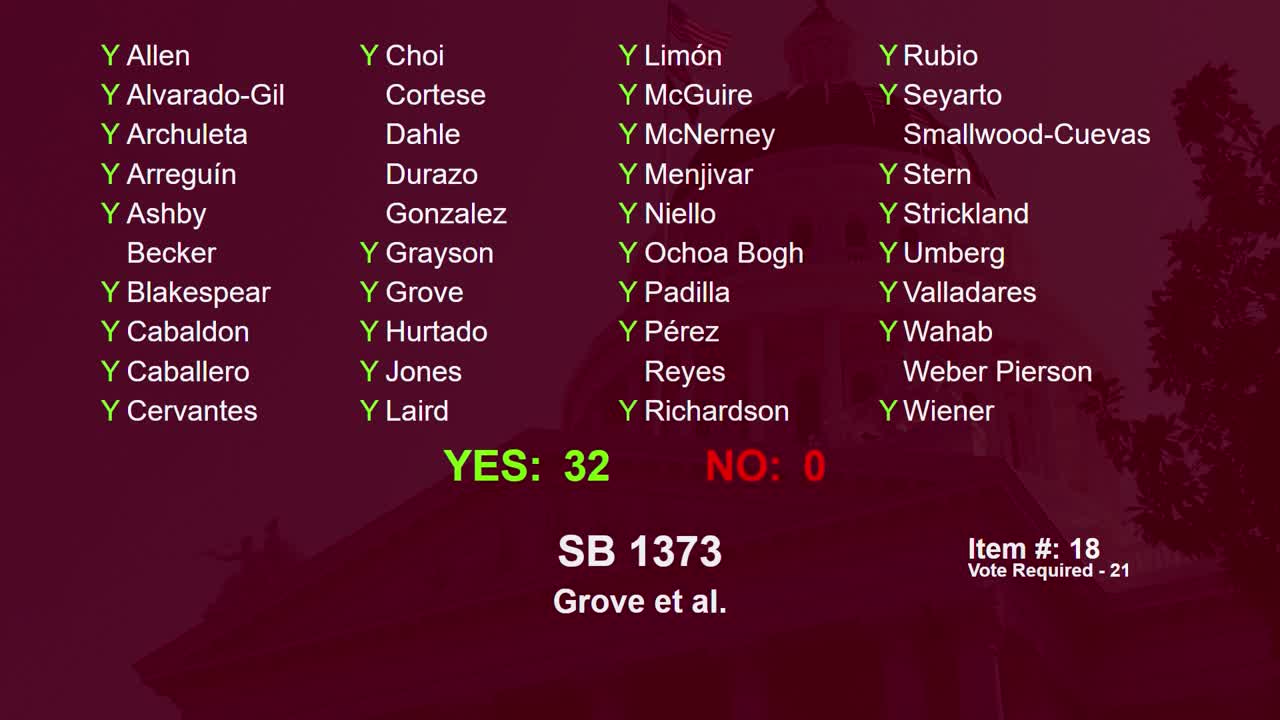 42SEC
Senate Floor
 17MIN
Senate Standing Committee on Public Safety
Bill Author

Bill Co-Author(s):