SB 1268: Outdoor public recreation spaces: equitable access.
- Session Year: 2025-2026
- House: Senate
- Latest Version Date: 2026-09-29
Current Status:
Passed
(2026-09-29: Chaptered by Secretary of State. Chapter 822, Statutes of 2026.)
Introduced
In Committee
Awaiting First Chamber Vote
Passed First Chamber
In Committee
Awaiting Second Chamber Vote
Passed Second Chamber
Enacted
Existing law establishes the Natural Resources Agency, which consists of various departments, including the Department of Conservation, the Department of Fish and Wildlife, and the Department of Parks and Recreation. Existing law vests in the Natural Resources Agency various powers, including those related to conservation of lands.
By Executive Order No. N-82-20, Governor Gavin Newsom directed the Natural Resources Agency to combat the biodiversity and climate crises by, among other things, establishing the California Biodiversity Collaborative and conserving at least 30% of the states lands and coastal waters by 2030. Existing law requires the Secretary of the Natural Resources Agency to prepare and submit, on or before March 31, 2024, and annually thereafter, a report to the Legislature on the progress made in the prior calendar year toward achieving the goal to conserve 30% of Californias lands and coastal waters by 2030. Existing law provides that it is the goal of the state to conserve at least 30% of Californias lands and coastal waters by 2030, known as the 30x30 goal.
Existing law establishes the Equitable Outdoor Access Act (act), which sets forth the states commitment to ensuring all Californians can benefit from, and have meaningful access to, the states rich cultural and natural resources. Existing law declares that it is state policy, among other things, to ensure that all Californians have equitable opportunities to safe and affordable access to nature and access to the benefits of nature, and to prevent and minimize the intentional and unwarranted limitation of sustainable public access to public lands, where appropriate, including, but not limited to, local, regional, state, and federal parks, rivers, lakes, beaches, forests, mountain ranges, deserts, and other natural landscapes. Existing law requires specified state agencies to consider and incorporate, as appropriate, the state policy when revising, adopting, or establishing policies, regulations, or grant criteria, or making expenditures, as specified. Existing law requires all state agencies implementing the above-described state policy to do so in a manner consistent with the mission of their agency and that protects the health and safety of the public and conserves natural and cultural resources.
This bill would establish the Outdoors for All initiative, to be administered by the Natural Resources Agency, in consultation with specified state entities, to advance the objectives of the act and to implement and update specified priorities, including, among other related priorities, establishing outdoor public recreation spaces, as defined, connecting people and the outdoors, and aligning funding to achieve the initiatives goals, as specified. The bill would require the agency to report, on or before January 1, 2028, and annually thereafter, to the appropriate policy and fiscal committees of the Legislature on the progress made to achieve the initiatives goals, as specified.
Existing law establishes the Natural Resources Agency, which consists of various departments, including the Department of Conservation, the Department of Fish and Wildlife, and the Department of Parks and Recreation. Existing law vests in the Natural Resources Agency various powers, including those related to conservation of lands.
By Executive Order No. N-82-20, Governor Gavin Newsom directed the Natural Resources Agency to combat the biodiversity and climate crises by, among other things, establishing the California Biodiversity Collaborative and conserving at least 30% of the states lands and coastal waters by 2030. Existing law requires the Secretary of the Natural Resources Agency to prepare and submit, on or before March 31, 2024, and annually thereafter, a report to the Legislature on the progress made in the prior calendar year toward achieving the goal to conserve 30% of Californias lands and coastal waters by 2030. Existing law provides that it is the goal of the state to conserve at least 30% of Californias lands and coastal waters by 2030, known as the 30x30 goal.
Existing law establishes the Equitable Outdoor Access Act, Act (act), which sets forth the states commitment to ensuring all Californians can benefit from, and have meaningful access to, the states rich cultural and natural resources. Existing law declares that it is state policy, among other things, to ensure that all Californians have equitable opportunities to safe and affordable access to nature and access to the benefits of nature, and to prevent and minimize the intentional and unwarranted limitation of sustainable public access to public lands, where appropriate, including, but not limited to, local, regional, state, and federal parks, rivers, lakes, beaches, forests, mountain ranges, deserts, and other natural landscapes. Existing law requires specified state agencies to consider and incorporate, as appropriate, the state policy when revising, adopting, or establishing policies, regulations, or grant criteria, or making expenditures, as specified. Existing law requires all state agencies implementing the above-described state policy to do so in a manner consistent with the mission of their agency and that protects the health and safety of the public and conserves natural and cultural resources.
This bill would establish an the Outdoors for All initiative, to be administered by the agency, Natural Resources Agency, in consultation with specified state entities, to advance specified goals, the objectives of the act and to implement and update specified priorities, including, among other related goals, achieving equitable access to outdoor public recreation spaces, as defined, and aligning these goals with the states outdoor equity goals and the above-described 30x30 goal to ensure conservation strategies enhance public access and benefits for disadvantaged and low-income communities, as defined. priorities, establishing outdoor public recreation spaces, as defined, connecting people and the outdoors, and aligning funding to achieve the initiatives goals, as specified. The bill would require the agency to report, on or before January 1, 2028, and annually thereafter, to the appropriate policy and fiscal committees of the Legislature on the progress made to achieve the initiatives goals, as specified.
Existing law establishes the Natural Resources Agency, which consists of various departments, including the Department of Conservation, the Department of Fish and Wildlife, and the Department of Parks and Recreation. Existing law vests in the Natural Resources Agency various powers, including those related to conservation of lands.
By Executive Order No. N-82-20, Governor Gavin Newsom directed the Natural Resources Agency to combat the biodiversity and climate crises by, among other things, establishing the California Biodiversity Collaborative and conserving at least 30% of the states lands and coastal waters by 2030. Existing law requires the Secretary of the Natural Resources Agency to prepare and submit, on or before March 31, 2024, and annually thereafter, a report to the Legislature on the progress made in the prior calendar year toward achieving the goal to conserve 30% of Californias lands and coastal waters by 2030. Existing law provides that it is the goal of the state to conserve at least 30% of Californias lands and coastal waters by 2030, known as the 30x30 goal.
Existing law establishes the Equitable Outdoor Access Act, which sets forth the states commitment to ensuring all Californians can benefit from, and have meaningful access to, the states rich cultural and natural resources. Existing law declares that it is state policy, among other things, to ensure that all Californians have equitable opportunities to safe and affordable access to nature and access to the benefits of nature, and to prevent and minimize the intentional and unwarranted limitation of sustainable public access to public lands, where appropriate, including, but not limited to, local, regional, state, and federal parks, rivers, lakes, beaches, forests, mountain ranges, deserts, and other natural landscapes. Existing law requires specified state agencies to consider and incorporate, as appropriate, the state policy when revising, adopting, or establishing policies, regulations, or grant criteria, or making expenditures, as specified. Existing law requires all state agencies implementing the above-described state policy to do so in a manner consistent with the mission of their agency and that protects the health and safety of the public and conserves natural and cultural resources.
This bill would establish an initiative, to be administered by the agency, in consultation with state entities, to advance specified goals, including, among other related goals, achieving equitable access to outdoor public recreation spaces, as defined, and aligning these goals with the states outdoor equity goals and the above-described 30x30 goal to ensure conservation strategies enhance public access and benefits for disadvantaged and low-income communities, as defined. The bill would require the agency to report, on or before January 1, 2028, and annually thereafter, to the appropriate policy and fiscal committees of the Legislature on the progress made to achieve the initiatives goals, as specified.
The Coastal Resources and Energy Assistance Act requires the Secretary of the Natural Resources Agency, after consulting with the California Coastal Commission and the State Lands Commission, to award grants to coastal counties and cities for specified purposes, including mitigation and permitting, consistent with the requirements of the states coastal management program. Existing law authorizes the secretary to award specified funds not expended for those specified purposes for technical and financial assistance to coastal counties and cities with approved local coastal programs to help those counties and cities effectively exercise their responsibility for improving the management of the states coastal resources, as specified.This bill would make nonsubstantive changes to that authorization.The Coastal Resources and Energy Assistance Act requires the Secretary of the Natural Resources Agency, after consulting with the California Coastal Commission and the State Lands Commission, to award grants to coastal counties and cities for specified purposes, including mitigation and permitting, consistent with the requirements of the states coastal management program. Existing law authorizes the secretary to award specified funds not expended for those specified purposes for technical and financial assistance to coastal counties and cities with approved local coastal programs to help those counties and cities effectively exercise their responsibility for improving the management of the states coastal resources, as specified.
This bill would make nonsubstantive changes to that authorization.
(a)For purposes of this section, outdoor public recreation spaces or spaces include, but are not limited to, parks, open spaces, trails, beaches, forests, and other natural areas.
(b)The Legislature finds and declares all of the following:
(1)Outdoor public recreation spaces are a public good and provide significant health, educational, economic, and environmental benefits to all Californians.
(2)Many communities, particularly disadvantaged and low-income communities and communities of color, face barriers to accessing outdoor public recreation spaces, including the lack of nearby parks; transportation, financial, cultural, and informational barriers; and safety concerns.
(3)All Californians, regardless of their ages or characteristic backgrounds, deserve access to outdoor public recreation spaces with well-maintained public facilities that offer multiple ways to enjoy these spaces.
(4)In expanding access to outdoor public recreation spaces, the state must maintain and manage these spaces to ensure that both people and nature thrive long term, to protect these spaces, and to design these spaces to withstand and adapt to climate change.
(5)Outdoor public recreation spaces must respect the historical and current connections between the land and all Californians, including California Native American tribes, people of color, people with disabilities, women, and members of the lesbian, gay, bisexual, transgender, queer, and questioning (LGBTQ+) communities. To ensure that these communities feel safe and celebrated in outdoor public recreation spaces, stories must be told that honor all Californians, historical inaccuracies in such storytelling must be corrected, access to outdoor public recreation spaces must expand for the benefit of people who speak different languages, trust must be built between the visitors of these spaces and the residents of communities that surround these spaces, and the emotional and physical safety of all Californians must be prioritized.
(6)The characteristic backgrounds of Californians who make up the environmental and outdoor workforce affect where outdoor public recreation spaces are located, who these spaces are designed for, and where funding for these spaces is distributed. An environmental and outdoor workforce that reflects the diversity of the people of California promotes a sense of safety and belonging.
(7)As the current federal administration takes actions that endanger conservation goals and undermine the safety and access to outdoor public recreation spaces by, among other things, opening up public lands to sale and oil drilling leases, promoting offshore drilling in the state, conducting immigration enforcement activities at public parks, and differentiating the National Park Services entrance fees based on citizenship status, it is necessary for the state to reaffirm its commitment to protect its cultural and natural resources and expand equitable access to outdoor public recreation spaces.
(8)The Outdoors for All initiative established pursuant to Section 1005 of the Public Resources Code advances equitable access to nature, conservation, biodiversity protection, and more. This initiative is critical for maintaining progress to meet the states goals, including the states outdoor equity goals, and the 30x30 goal established by Governor Gavin Newsoms Executive Order No. N-82-20, to conserve at least 30 percent of Californias lands and coastal waters by 2030.
SEC. 2.Section 1005 is added to the Public Resources Code, immediately following Section 1003, to read:1005.(a)For purposes of this section, the following definitions apply:
(1)30x30 goal means the goal, established by subdivision (b) of Section 71450 and Governor Gavin Newsoms Executive Order No. N-82-20, to conserve at least 30 percent of Californias lands and coastal waters by 2030.
(2)Agency means the Natural Resources Agency.
(3)Outdoors for All initiative or initiative means the initiative established pursuant to subdivision (b).
(4)Outdoor public recreation spaces include, but are not limited to, parks, open spaces, trails, beaches, forests, and other natural areas.
(b)The Outdoors for All initiative is hereby established, to be administered by the agency, in consultation with the Department of Parks and Recreation and other relevant state entities, to advance the objectives of this division.
(c)As part of the initiative, the agency shall implement all of the following priorities provided in the Outdoors for All Strategy published by the agency on November 15, 2023:
(1)Establish outdoor public recreation spaces for people and nature to thrive.
(2)Foster belonging.
(3)Connect people and the outdoors.
(4)Cocreate with communities.
(5)Build equitable career pathways and a representative workforce.
(6)Align funding from federal, state, regional, and private sources to achieve the initiatives goals.
(d)The agency shall maintain the position of Deputy Secretary for Access within the agency to coordinate the initiatives implementation.
(e)(1)On or before December 31, 2031, and at least every eight years thereafter, the agency shall update the Outdoors for All Strategy to advance the objectives of this division, to align with relevant goals of the state, including the states outdoor equity goals and the 30x30 goal, and to ensure conservation strategies enhance public access and benefits for disadvantaged and low-income communities.
(2)In implementing paragraph (1), the agency shall consult with diverse stakeholders, including community-based organizations, local governments, and environmental justice advocates, to ensure inclusive decisionmaking and prevent loopholes.
(3)The agency shall host at least three public meetings during the update process. These meetings may be in-person, virtual, or hybrid.
(4)The agency shall provide at least one 30-day public comment period on the update.
(5)The agency shall post the final update on its internet website in a publicly accessible location.
(f)(1)On or before January 1, 2028, and annually thereafter, the agency shall submit a report to the appropriate policy and fiscal committees of the Legislature detailing the progress made to achieve the initiatives goals, including implementing and updating the Outdoors for All Strategy.
(2)A report submitted pursuant to paragraph (1) shall be submitted in compliance with Section 9795 of the Government Code.
(a)For purposes of this section, outdoor public recreation spaces or spaces include, but are not limited to, parks, open spaces, trails, beaches, forests, and other natural areas.
(b)The Legislature finds and declares all of the following:
(1)Outdoor public recreation spaces are a public good and provide significant health, educational, economic, and environmental benefits to all Californians.
(2)Many communities, particularly disadvantaged and low-income communities and communities of color, face barriers to accessing outdoor public recreation spaces, including the lack of nearby parks; transportation, financial, cultural, and informational barriers; and safety concerns.
(3)All Californians, regardless of their ages or characteristic backgrounds, deserve access to outdoor public recreation spaces with well-maintained public facilities that offer multiple ways to enjoy these spaces.
(4)In expanding access to outdoor public recreation spaces, the state must maintain and manage these spaces to ensure that both people and nature thrive long term, to protect these spaces, and to design these spaces to withstand and adapt to climate change.
(5)Outdoor public recreation spaces must respect the historical and current connections between the land and all Californians, including California Native American tribes, people of color, people with disabilities, women, and members of the lesbian, gay, bisexual, transgender, queer, and questioning (LGBTQ+) communities. To ensure that these communities feel safe and celebrated in outdoor public recreation spaces, stories must be told that honor all Californians, historical inaccuracies in such storytelling must be corrected, access to outdoor public recreation spaces must expand for the benefit of people who speak different languages, trust must be built between the visitors of these spaces and the residents of communities that surround these spaces, and the emotional and physical safety of all Californians must be prioritized.
(6)The characteristic backgrounds of Californians who make up the environmental and outdoor workforce affect where outdoor public recreation spaces are located, who these spaces are designed for, and where funding for these spaces is distributed. An environmental and outdoor workforce that reflects the diversity of the people of California promotes a sense of safety and belonging.
(7)As the current federal administration takes actions that endanger conservation goals and undermine the safety and access to outdoor public recreation spaces by, among other things, opening up public lands to sale and oil drilling leases, promoting offshore drilling in the state, conducting immigration enforcement activities at public parks, and differentiating the National Park Services entrance fees based on citizenship status, it is necessary for the state to reaffirm its commitment to protect its cultural and natural resources and expand equitable access to outdoor public recreation spaces.
(8)The Outdoors for All initiative established pursuant to Section 1005 of the Public Resources Code advances equitable access to nature, conservation, biodiversity protection, and more. This initiative is critical for maintaining progress to meet the states goals, including the states outdoor equity goals, and the 30x30 goal established by Governor Gavin Newsoms Executive Order No. N-82-20, to conserve at least 30 percent of Californias lands and coastal waters by 2030.
SEC. 2.Section 1005 is added to the Public Resources Code, immediately following Section 1003, to read:1005.(a)For purposes of this section, the following definitions apply:
(1)30x30 goal means the goal, established by subdivision (b) of Section 71450 and Governor Gavin Newsoms Executive Order No. N-82-20, to conserve at least 30 percent of Californias lands and coastal waters by 2030.
(2)Agency means the Natural Resources Agency.
(3)Outdoors for All initiative or initiative means the initiative established pursuant to subdivision (b).
(4)Outdoor public recreation spaces include, but are not limited to, parks, open spaces, trails, beaches, forests, and other natural areas.
(b)The Outdoors for All initiative is hereby established, to be administered by the agency, in consultation with the Department of Parks and Recreation and other relevant state entities, to advance the objectives of this division.
(c)As part of the initiative, the agency shall implement all of the following priorities provided in the Outdoors for All Strategy published by the agency on November 15, 2023:
(1)Establish outdoor public recreation spaces for people and nature to thrive.
(2)Foster belonging.
(3)Connect people and the outdoors.
(4)Cocreate with communities.
(5)Build equitable career pathways and a representative workforce.
(6)Align funding from federal, state, regional, and private sources to achieve the initiatives goals.
(d)The agency shall maintain the position of Deputy Secretary for Access within the agency to coordinate the initiatives implementation.
(e)(1)On or before December 31, 2028, 2031, and at least every five eight years thereafter, the agency shall update the Outdoors for All Strategy to advance the objectives of this division, to align with relevant goals of the state, including the states outdoor equity goals and the 30x30 goal, and to ensure conservation strategies enhance public access and benefits for disadvantaged and low-income communities.
(2)In implementing paragraph (1), the agency shall consult with diverse stakeholders, including community-based organizations, local governments, and environmental justice advocates, to ensure inclusive decisionmaking and prevent loopholes.
(3)The agency shall host at least three public meetings during the update process. These meetings may be in-person, virtual, or hybrid.
(4)The agency shall provide at least one 30-day public comment period on the update.
(5)The agency shall post the final update on its internet website in a publicly accessible location.
(f)(1)On or before January 1, 2028, and annually thereafter, the agency shall submit a report to the appropriate policy and fiscal committees of the Legislature detailing the progress made to achieve the initiatives goals, including implementing and updating the Outdoors for All Strategy.
(2)A report submitted pursuant to paragraph (1) shall be submitted in compliance with Section 9795 of the Government Code.
(a)For purposes of this section, outdoor public recreation spaces or spaces include, but are not limited to, parks, open spaces, trails, beaches, forests, and other natural areas.
(b)The Legislature finds and declares all of the following:
(1)Outdoor public recreation spaces are a public good and provide significant health, educational, economic, and environmental benefits to all Californians.
(2)Many communities, particularly disadvantaged and low-income communities and communities of color, face barriers to access accessing outdoor public recreation spaces, including the lack of access to nearby parks, parks; transportation, financial, cultural, and informational barriers, barriers; and safety concerns.
(3)All Californians, regardless of their ages or characteristic backgrounds, deserve access to outdoor public recreation spaces with well-maintained public facilities that offer multiple ways to enjoy these spaces.
(4)In expanding access to outdoor public recreation spaces, the state must maintain and manage these spaces to ensure that both people and nature thrive long term, to protect these spaces, and to design these spaces to withstand and adapt to climate change.
(5)Outdoor public recreation spaces must respect the historical and current connections between the land and all Californians, including California Native American tribes, people of color, people with disabilities, women, and members of the lesbian, gay, bisexual, transgender, queer, and questioning (LGBTQ+) communities. To ensure that these communities feel safe and celebrated in outdoor public recreation spaces, stories must be told that honor all Californians, historical inaccuracies in such storytelling must be corrected, access to outdoor public recreation spaces must expand for the benefit of people who speak different languages, trust must be built between the visitors of these spaces and the residents of communities that surround these spaces, and the emotional and physical safety of all Californians must be prioritized.
(6)The characteristic backgrounds of Californians who make up the environmental and outdoor workforce affect where outdoor public recreation spaces are located, who these spaces are designed for, and where funding for these spaces is distributed. An environmental and outdoor workforce that reflects the diversity of the people of California promotes a sense of safety and belonging.
(7)As the current federal administration takes actions that endanger conservation goals and undermine the safety and access to outdoor public recreation spaces by, among other things, opening up public lands to sale and oil drilling leases, promoting offshore drilling in the state, conducting immigration enforcement activities at public parks, and differentiating the National Park Services entrance fees based on citizenship status, it is necessary for the state to reaffirm its commitment to protect its cultural and natural resources and expand equitable access to outdoor public recreation spaces.
(8)The Outdoors for All initiative established pursuant to Section 1031 1005 of the Public Resources Code advances equitable access to nature, conservation, biodiversity protection, and more. This initiative is critical for maintaining progress to meet the states goals, including the states outdoor equity goals, and the 30x30 goal established by Governor Gavin Newsoms Executive Order No. N-82-20, known as the 30x30 goal, to conserve at least 30 percent of Californias lands and coastal waters by 2030.
SEC. 2.Division 1.7 (commencing with Section 1030) is added to the Public Resources Code, to read:1.7.Outdoors For All Initiative1030.For purposes of this division, the following definitions apply:(a)30x30 goal means the goal established by Governor Gavin Newsoms Executive Order No. N-82-20, known as the 30x30 goal, to conserve at least 30 percent of Californias lands and coastal waters by 2030.(b)Agency means the Natural Resources Agency.(c)Barriers include, but are not limited to, those concerning financial costs, including park entry fees and equipment costs, transportation limitations, the lack of access to information, the lack of parks and open spaces, safety concerns, physical accessibility issues, and discriminatory practices and policies.(d)Disadvantaged communities means communities identified as disadvantaged communities pursuant to Section 39711 of the Health and Safety Code.(e)Low-income communities has the same meaning as defined in Section 39713 of the Health and Safety Code.(f)Outdoors for All initiative or initiative means the initiative established pursuant to Section 1031.(g)Outdoor public recreation spaces or spaces include, but are not limited to, parks, open spaces, trails, beaches, forests, and other natural areas.1031.The Outdoors for All initiative is hereby established, to be administered by the agency, in consultation with the Department of Parks and Recreation and other relevant state entities, to advance all of the following goals:(a)Achieving equitable access to outdoor public recreation spaces for all Californians to enjoy, regardless of their income, race, ethnicity, geography, age, disability, or other characteristic background.(b)Identifying, reducing, and eliminating barriers to access outdoor public recreation spaces and to connect with nature.(c)Providing opportunities, investments, grants, programs, and park expansions in disadvantaged and low-income communities to address historical and ongoing inequities to access outdoor public recreation spaces.(d)Aligning the goals described in subdivisions (a) to (c), inclusive, with relevant goals of the state, including the states outdoor equity goals and the 30x30 goal, to ensure conservation strategies enhance public access and benefits for disadvantaged and low-income communities.1032.(a)The agency, in consultation with the Department of Parks and Recreation and other relevant state entities, shall implement the initiative to accomplish all of the initiatives goals described in Section 1031.(b)In complying with subdivision (a), the agency shall consult with diverse stakeholders, including community-based organizations, local governments, and environmental justice advocates, to ensure inclusive decisionmaking and prevent loopholes.(c)In complying with subdivision (a), the agency shall provide mechanisms for public input and transparency, and consider public feedback, in accordance with the Bagley-Keene Open Meeting Act (Article 9 (commencing with Section 11120) of Chapter 1 of Part 1 of Division 3 of Title 2 of the Government Code).(d)(1)On or before January 1, 2028, and annually thereafter, the agency shall submit a report to the appropriate policy and fiscal committees of the Legislature detailing the progress made to achieve the initiatives goals described in Section 1031.(2)A report submitted pursuant to paragraph (1) shall be submitted in compliance with Section 9795 of the Government Code.SEC. 2.Section 1005 is added to the Public Resources Code, immediately following Section 1003, to read:1005.(a)For purposes of this section, the following definitions apply:
(1)30x30 goal means the goal, established by subdivision (b) of Section 71450 and Governor Gavin Newsoms Executive Order No. N-82-20, to conserve at least 30 percent of Californias lands and coastal waters by 2030.
(2)Agency means the Natural Resources Agency.
(3)Outdoors for All initiative or initiative means the initiative established pursuant to subdivision (b).
(4)Outdoor public recreation spaces include, but are not limited to, parks, open spaces, trails, beaches, forests, and other natural areas.
(b)The Outdoors for All initiative is hereby established, to be administered by the agency, in consultation with the Department of Parks and Recreation and other relevant state entities, to advance the objectives of this division.
(c)As part of the initiative, the agency shall implement all of the following priorities provided in the Outdoors for All Strategy published by the agency on November 15, 2023:
(1)Establish outdoor public recreation spaces for people and nature to thrive.
(2)Foster belonging.
(3)Connect people and the outdoors.
(4)Cocreate with communities.
(5)Build equitable career pathways and a representative workforce.
(6)Align funding from federal, state, regional, and private sources to achieve the initiatives goals.
(d)The agency shall maintain the position of Deputy Secretary for Access within the agency to coordinate the initiatives implementation.
(e)(1)On or before December 31, 2028, and every five years thereafter, the agency shall update the Outdoors for All Strategy to advance the objectives of this division, to align with relevant goals of the state, including the states outdoor equity goals and the 30x30 goal, and to ensure conservation strategies enhance public access and benefits for disadvantaged and low-income communities.
(2)In implementing paragraph (1), the agency shall consult with diverse stakeholders, including community-based organizations, local governments, and environmental justice advocates, to ensure inclusive decisionmaking and prevent loopholes.
(3)The agency shall host at least three public meetings during the update process. These meetings may be in-person, virtual, or hybrid.
(4)The agency shall provide at least one 30-day public comment period on the update.
(5)The agency shall post the final update on its internet website in a publicly accessible location.
(f)(1)On or before January 1, 2028, and annually thereafter, the agency shall submit a report to the appropriate policy and fiscal committees of the Legislature detailing the progress made to achieve the initiatives goals, including implementing and updating the Outdoors for All Strategy.
(2)A report submitted pursuant to paragraph (1) shall be submitted in compliance with Section 9795 of the Government Code.
REVISIONS: HeadingLines 2 and 3.(a)For purposes of this section, outdoor public recreation spaces or spaces include, but are not limited to, parks, open spaces, trails, beaches, forests, and other natural areas.
(b)The Legislature finds and declares all of the following:
(1)Outdoor public recreation spaces are a public good and provide significant health, educational, economic, and environmental benefits to all Californians.
(2)Many communities, particularly disadvantaged and low-income communities and communities of color, face barriers to access outdoor public recreation spaces, including the lack of access to nearby parks, transportation, financial, cultural, and informational barriers, and safety concerns.
(3)All Californians, regardless of their ages or characteristic backgrounds, deserve access to outdoor public recreation spaces with well-maintained public facilities that offer multiple ways to enjoy these spaces.
(4)In expanding access to outdoor public recreation spaces, the state must maintain and manage these spaces to ensure that both people and nature thrive long term, to protect these spaces, and to design these spaces to withstand and adapt to climate change.
(5)Outdoor public recreation spaces must respect the historical and current connections between the land and all Californians, including California Native American tribes, people of color, people with disabilities, women, and members of the lesbian, gay, bisexual, transgender, queer, and questioning (LGBTQ+) communities. To ensure that these communities feel safe and celebrated in outdoor public recreation spaces, stories must be told that honor all Californians, historical inaccuracies in such storytelling must be corrected, access to outdoor public recreation spaces must expand for the benefit of people who speak different languages, trust must be built between the visitors of these spaces and the residents of communities that surround these spaces, and the emotional and physical safety of all Californians must be prioritized.
(6)The characteristic backgrounds of Californians who make up the environmental and outdoor workforce affect where outdoor public recreation spaces are located, who these spaces are designed for, and where funding for these spaces is distributed. An environmental and outdoor workforce that reflects the diversity of the people of California promotes a sense of safety and belonging.
(7)As the current federal administration takes actions that endanger conservation goals and undermine the safety and access to outdoor public recreation spaces by, among other things, opening up public lands to sale and oil drilling leases, promoting offshore drilling in the state, conducting immigration enforcement activities at public parks, and differentiating the National Park Services entrance fees based on citizenship status, it is necessary for the state to reaffirm its commitment to protect its cultural and natural resources and expand equitable access to outdoor public recreation spaces.
(8)The Outdoors for All initiative established pursuant to Section 1031 of the Public Resources Code advances equitable access to nature, conservation, biodiversity protection, and more. This initiative is critical for maintaining progress to meet the states goals, including the states outdoor equity goals, and the goal established by Governor Gavin Newsoms Executive Order No. N-82-20, known as the 30x30 goal, to conserve at least 30 percent of Californias lands and coastal waters by 2030.
SEC. 2.Division 1.7 (commencing with Section 1030) is added to the Public Resources Code, to read:1.7.Outdoors For All Initiative1030.For purposes of this division, the following definitions apply:
(a)30x30 goal means the goal established by Governor Gavin Newsoms Executive Order No. N-82-20, known as the 30x30 goal, to conserve at least 30 percent of Californias lands and coastal waters by 2030.
(b)Agency means the Natural Resources Agency.
(c)Barriers include, but are not limited to, those concerning financial costs, including park entry fees and equipment costs, transportation limitations, the lack of access to information, the lack of parks and open spaces, safety concerns, physical accessibility issues, and discriminatory practices and policies.
(d)Disadvantaged communities means communities identified as disadvantaged communities pursuant to Section 39711 of the Health and Safety Code.
(e)Low-income communities has the same meaning as defined in Section 39713 of the Health and Safety Code.
(f)Outdoors for All initiative or initiative means the initiative established pursuant to Section 1031.
(g)Outdoor public recreation spaces or spaces include, but are not limited to, parks, open spaces, trails, beaches, forests, and other natural areas.
1031.The Outdoors for All initiative is hereby established, to be administered by the agency, in consultation with the Department of Parks and Recreation and other relevant state entities, to advance all of the following goals:
(a)Achieving equitable access to outdoor public recreation spaces for all Californians to enjoy, regardless of their income, race, ethnicity, geography, age, disability, or other characteristic background.
(b)Identifying, reducing, and eliminating barriers to access outdoor public recreation spaces and to connect with nature.
(c)Providing opportunities, investments, grants, programs, and park expansions in disadvantaged and low-income communities to address historical and ongoing inequities to access outdoor public recreation spaces.
(d)Aligning the goals described in subdivisions (a) to (c), inclusive, with relevant goals of the state, including the states outdoor equity goals and the 30x30 goal, to ensure conservation strategies enhance public access and benefits for disadvantaged and low-income communities.
1032.(a)The agency, in consultation with the Department of Parks and Recreation and other relevant state entities, shall implement the initiative to accomplish all of the initiatives goals described in Section 1031.
(b)In complying with subdivision (a), the agency shall consult with diverse stakeholders, including community-based organizations, local governments, and environmental justice advocates, to ensure inclusive decisionmaking and prevent loopholes.
(c)In complying with subdivision (a), the agency shall provide mechanisms for public input and transparency, and consider public feedback, in accordance with the Bagley-Keene Open Meeting Act (Article 9 (commencing with Section 11120) of Chapter 1 of Part 1 of Division 3 of Title 2 of the Government Code).
(d)(1)On or before January 1, 2028, and annually thereafter, the agency shall submit a report to the appropriate policy and fiscal committees of the Legislature detailing the progress made to achieve the initiatives goals described in Section 1031.
(2)A report submitted pursuant to paragraph (1) shall be submitted in compliance with Section 9795 of the Government Code.
SECTION 1.Section 35031 of the Public Resources Code is amended to read:35031.Any funds appropriated in accordance with this chapter and not expended as described in Section 35030, may be awarded by the secretary for technical and financial assistance to coastal counties and cities with approved local coastal programs to help them effectively exercise their responsibility for improving the management of the states coastal resources. Technical and financial assistance shall be made available to coastal counties and cities to do any of the following:(a)Protect wetlands, flood plains, estuaries, beaches, dunes, and fish and wildlife and their habitat within coastal areas.(b)Minimize the loss of life and property in coastal flood-prone, storm surge, geologic hazard, and erosion-prone areas.(c)Provide public access to the coast for recreational purposes, acquire coastal view sheds, and preserve, maintain, and restore historic, cultural, and aesthetic coastal sites.(d)Facilitate the process for siting major facilities along the coast related to fisheries, recreation, and ports and other coastal dependent commercial uses, giving full consideration to environmental concerns and the need for economic development.(e)Promote other coastal management improvements determined by the secretary to be consistent with the states coastal management program.Any funds appropriated in accordance with this chapter and not expended as described in Section 35030, may be awarded by the secretary for technical and financial assistance to coastal counties and cities with approved local coastal programs to help them effectively exercise effectively their responsibility for improving the management of the states coastal resources. Technical and financial assistance shall be made available to coastal counties and cities to do any of the following:
(a)Protect wetlands, flood plains, estuaries, beaches, dunes, and fish and wildlife and their habitat within coastal areas.
(b)Minimize the loss of life and property in coastal flood-prone, storm surge, geologic hazard, and erosion-prone areas.
(c)Provide public access to the coast for recreational purposes, to acquire coastal view sheds, and to preserve, maintain, and restore historic, cultural, and aesthetic coastal sites.
(d)Facilitate the process for siting major facilities along the coast related to fisheries, recreation, and ports and other coastal dependent commercial uses, giving full consideration to environmental concerns as well as and the need for economic development.
(e)Promote other coastal management improvements determined by the secretary to be consistent with the states coastal management program.
|
Date
|
Status
|
|---|---|
| Sep 29, 2026 | Chaptered by Secretary of State. Chapter 822, Statutes of 2026. |
| Sep 29, 2026 | Approved by the Governor. |
| Sep 3, 2026 | Enrolled and presented to the Governor at 3 p.m. |
| Aug 27, 2026 | Assembly amendments concurred in. (Ayes 40. Noes 0. Page 5945.) Ordered to engrossing and enrolling. |
| Aug 27, 2026 | Assembly amendments concurred in. (Ayes 39. Noes 0.) Ordered to engrossing and enrolling. |
| Aug 26, 2026 | In Senate. Concurrence in Assembly amendments pending. |
| Aug 26, 2026 | Read third time. Passed. (Ayes 77. Noes 1. Page 6612.) Ordered to the Senate. |
| Aug 26, 2026 | Read third time. Passed. Ordered to the Senate. |
| Aug 17, 2026 | Read second time. Ordered to third reading. |
| Aug 13, 2026 | Read second time and amended. Ordered to second reading. |
| Aug 13, 2026 | From committee: Do pass as amended. (Ayes 11. Noes 0.) (August 13). |
| Aug 13, 2026 | Assembly Rule 63 suspended. |
| Aug 5, 2026 | August 5 set for first hearing. Placed on suspense file. |
| Jun 30, 2026 | From committee: Do pass and re-refer to Com. on APPR. (Ayes 12. Noes 0.) (June 29). Re-referred to Com. on APPR. |
| Jun 30, 2026 | Coauthors revised. |
| Jun 16, 2026 | Coauthors revised. |
| Jun 16, 2026 | From committee: Do pass and re-refer to Com. on NAT. RES. (Ayes 11. Noes 0.) (June 16). Re-referred to Com. on NAT. RES. |
| May 26, 2026 | Referred to Coms. on W., P., & W. and NAT. RES. |
| May 19, 2026 | In Assembly. Read first time. Held at Desk. |
| May 18, 2026 | Read third time. Passed. (Ayes 37. Noes 0. Page 4320.) Ordered to the Assembly. |
| May 18, 2026 | Read third time. Passed. (Ayes 37. Noes 0.) Ordered to the Assembly. |
| May 14, 2026 | From committee: Do pass. (Ayes 7. Noes 0. Page 4271.) (May 14). |
| May 14, 2026 | Read second time. Ordered to third reading. |
| May 14, 2026 | From committee: Do pass. (Ayes 7. Noes 0.) (May 14). |
| May 12, 2026 | Set for hearing May 14. |
| May 11, 2026 | May 11 hearing: Placed on APPR. suspense file. |
| May 4, 2026 | Set for hearing May 11. |
| Apr 23, 2026 | Read second time and amended. Re-referred to Com. on APPR. |
| Apr 22, 2026 | From committee: Do pass as amended and re-refer to Com. on APPR. (Ayes 5. Noes 0. Page 3981.) (April 21). |
| Apr 22, 2026 | From committee: Do pass as amended and re-refer to Com. on APPR. (Ayes 5. Noes 0.) (April 21). |
| Apr 10, 2026 | Set for hearing April 21. |
| Apr 8, 2026 | Re-referred to Com. on N.R. & W. |
| Mar 23, 2026 | From committee with author's amendments. Read second time and amended. Re-referred to Com. on RLS. |
| Mar 4, 2026 | Referred to Com. on RLS. |
| Feb 23, 2026 | Read first time. |
| Feb 23, 2026 | From printer. May be acted upon on or after March 23. |
| Feb 20, 2026 | Introduced. To Com. on RLS. for assignment. To print. |
|
Date
|
Description
|
Location
|
Votes
|
|
|---|---|---|---|---|
| Aug 27, 2026 | Unfinished Business SB1268 Gonzalez et al. Concurrence | Senate Floor |
Passed |
|
| Aug 26, 2026 | SB 1268 Gonzalez Senate Third Reading By Bryan | Assembly Floor |
Passed |
|
| Aug 13, 2026 | Do pass as amended. | Assembly Standing Committee on Appropriations |
Passed |
|
| Jun 29, 2026 | Do pass and be re-referred to the Committee on [Appropriations] | Assembly Standing Committee on Natural Resources |
Passed |
|
| Jun 16, 2026 | Do pass and be re-referred to the Committee on [Natural Resources] | Assembly Standing Committee on Water, Parks, and Wildlife |
Passed |
|
| May 18, 2026 | Senate 3rd Reading SB1268 Gonzalez | Senate Floor |
Passed |
|
| May 14, 2026 | Do pass | Senate Standing Committee on Appropriations |
Passed |
|
| May 11, 2026 | Placed on suspense file | Senate Standing Committee on Appropriations |
Passed |
|
| Apr 21, 2026 | Do pass as amended, but first amend, and re-refer to the Committee on [Appropriations] | Senate Standing Committee on Natural Resources and Water |
Passed |
This list shows positions taken on this bill by organizations on the date displayed, which is linked to the original source.
Positions by individuals are not included.
|
Organization
|
Position
|
Date
|
|---|---|---|
| Active San Gabriel Valley | ** Support | |
| All About Owls | ** Support | |
| Allensworth Progressive Association | ** Support | |
| Alta Peak Chapter, California Native Plant Society | ** Support | |
| Amigos de los Rios | ** Support | |
| asian pacific islander forward movement | ** Support | |
| Audobon California | ** Support | |
| Audubon California | ** Support | |
| Azul | ** Support | |
| Bay Area Ridge Trail Council | ** Support | |
| CactusToCloud Institute | ** Support | |
| California Academy Of Sciences | ** Support | |
| California Association Of Local Conservation Corps | ** Support | |
| California Association Of Recreation & Park Districts | ** Support | |
| California Environmental Voters | ** Support | |
| California Native Plant Society | ** Support | |
| Californians for Western Wilderness | ** Support | |
| California Outdoor Recreation Partnership | ** Support | |
| California Outdoors Recreation Partnership (Corp) | ** Support | |
| California Park & Recreation Society | ** Support | |
| California State Parks Foundation | ** Support | |
| Calwild | ** Support | |
| Center For Biological Diversity | ** Support | |
| Center for Progressive Reform | ** Support | |
| Central Valley Partnership | ** Support | |
| Children And Nature Network | ** Support | |
| Children & Nature Network | ** Support | |
| City Of Huron | ** Support | |
| Clean Earth 4 Kids | ** Support | |
| Clockshop | ** Support | |
| COFEM | ** Support | |
| Conservation Corps of Long Beach | ** Support | |
| Conservation Lands Foundation | ** Support | |
| Day One | ** Support | |
| East Bay Regional Park District | ** Support | |
| Endangered Habitats League | ** Support | |
| Environmental Action Committee of West Marin | ** Support | |
| Environmental Council of Sacramento | ** Support | |
| Environmental Information Protection Center | ** Support | |
| Fish On | ** Support | |
| Friends of Harbors, Beaches and Parks | ** Support | |
| Friends of the Dunes | ** Support | |
| Friends of the Lost Coast | ** Support | |
| Friends of the River | ** Support | |
| GreenLatinos | ** Support | |
| Habitat 2020 | ** Support | |
| Hispanic Access Foundation | ** Support | |
| Justice Outside | ** Support | |
| Kaboom! | ** Support | |
| Latino Outdoors | ** Support | |
| League Of California Cities | ** Support | |
| Los Angeles County | ** Support | |
| Los Angeles Neighborhood Land Trust | ** Support | |
| Los Angeles United Methodist Urban Foundation | ** Support | |
| Los Cerritos Wetlands Land Trust | ** Support | |
| Los Padres ForestWatch | ** Support | |
| Midpeninsula Open Space Trust | ** Support | |
| Midpeninsula Regional Open Space District | ** Support | |
| Mono Lake Committee | ** Support | |
| Mount Shasta Bioregional Ecology Center | ** Support | |
| National Parks Conservation Association | ** Support | |
| Nature For All | ** Support | |
| Outdoor Outreach | ** Support | |
| Outward Bound Adventures | ** Support | |
| Peninsula Open Space Trust | ** Support | |
| pogo park | ** Support | |
| Prevention Institute | ** Support | |
| Resource Renewal Institute | ** Support | |
| River Partners | ** Support | |
| Salted Roots | ** Support | |
| Santa Clara Valley Open Space Authority | ** Support | |
| Save Mount Diablo | ** Support | |
| Save the Redwoods League | ** Support | |
| Sea And Sage Audubon Society | ** Support | |
| Sempervirens Fund | ** Support | |
| Sequoia Riverlands Trust | ** Support | |
| Sierra Business Council | ** Support | |
| Sierra Club | ** Support | |
| Sierra Nevada Alliance | ** Support | |
| Siskiyou Crest Coalition | ** Support | |
| Sonoma Ecology Center | ** Support | |
| South Yuba River Citizens League | ** Support | |
| Surfrider Foundation | ** Support | |
| The Leap Institute | ** Support | |
| Tias on Trails | ** Support | |
| Trout Unlimited | ** Support | |
| Trust for Public Land | ** Support | |
| Trust For Public Land; The | ** Support | |
| Tuleyome | ** Support | |
| Wildlands Network | ** Support | |
| Winter Wildlands Alliance | ** Support | |
| Yes Nature to Neighborhoods | ** Support |
SENATE RULES COMMITTEE Office of Senate Floor Analyses (916) 651-4171 | SB 1268 |
UNFINISHED BUSINESS
Bill No: SB 1268
Author: Gonzalez (D), et al.
Amended: 8/13/26
Vote: 21
SENATE NATURAL RES. & WATER COMMITTEE: 5-0, 4/21/26
AYES: Becker, Seyarto, Cabaldon, Laird, Stern
NO VOTE RECORDED: Allen, Grove
SENATE APPROPRIATIONS COMMITTEE: 7-0, 5/14/26
AYES: Cervantes, Seyarto, Cabaldon, Dahle, Grayson, Richardson, Wahab
SENATE FLOOR: 37-0, 5/18/26
AYES: Allen, Alvarado-Gil, Archuleta, Arreguín, Ashby, Becker, Blakespear, Cabaldon, Caballero, Cervantes, Choi, Cortese, Dahle, Durazo, Gonzalez, Grayson, Grove, Hurtado, Laird, Limón, McGuire, McNerney, Menjivar, Ochoa Bogh, Pérez, Reyes, Richardson, Rubio, Seyarto, Smallwood-Cuevas, Stern, Strickland, Umberg, Valladares, Wahab, Weber Pierson, Wiener
NO VOTE RECORDED: Jones, Niello, Padilla
ASSEMBLY FLOOR: Passed, 8/26/26
SUBJECT: Outdoor public recreation spaces: equitable access
SOURCE: Author
DIGEST:
This bill establishes the Outdoors for All initiative, to be administered by the California Natural Resources Agency (CNRA).
Assembly Amendments
change the frequency of the reporting required by this bill.
ANALYSIS:
Existing law:
- Establishes CNRA and vests it with the responsibility to restore, protect, and manage the state’s natural, historical, and cultural resources for current and future generations (Government Code (GOV) § 12805).
- Establishes a goal to conserve 30 percent of California’s land and coastal waters by 2030 (“30x30”) (Public Resources Code (PRC) § 71450 and Executive Order No. N-82-20).
- Requires relevant state agencies, including CNRA and its departments, boards, offices, conservancies, and commissions, and the Department of Transportation to consider and incorporate state policy regarding equitable outdoor access when revising, adopting, or establishing policies, regulations, or grant criteria, or making expenditures (PRC § 1002).
- Establishes the Equitable Outdoor Access Act, and sets forth the state’s commitment to ensuring all Californians can benefit from, and have meaningful and sustainable access to, the state’s rich cultural and natural resources (PRC § 1000).
- Requires CNRA to submit a report to the Legislature regarding the implementation of the Equitable Outdoor Access Act by January 1, 2024 (PRC § 1003).
- Requires meetings of state bodies be open and public, and all person permitted to attend any meeting, except as provided (GOV § 11123).
This bill:
- Establishes common definitions for relevant terms in the bill, including:
- “30x30 goal.”
- “Agency.”
- “Outdoors for All initiative.”
- “Outdoor public recreation spaces.”
- Establishes the Outdoors for All initiative to be administered by CNRA in consultation with the Department of Parks and Recreations (State Parks) and other relevant state agencies.
- Requires CNRA to implement the priorities in the Outdoors for All Strategy published on November 15, 2023.
- Requires CNRA to maintain the position of Deputy Secretary for Access to coordinate the initiative’s implementation.
- Requires CNRA to update the Outdoors for All Strategy on or before December 31, 2031, and every eight years thereafter. The update shall:
- Align with relevant goals of the statute, including the state’s outdoor equity goals and the 30x30 goal
- Ensure conservation strategies enhance public access and benefits for disadvantaged and low-income communities.
- Requires CNRA, in implementing updates to the Strategy, to:
- Consult with diverse stakeholders, including community-based organizations, local governments, and environmental justice advocates, to ensure inclusive decisionmaking and prevent loopholes.
- host at least three public meetings during the update process. These meetings may be in-person, virtual, or hybrid.
- provide at least one 30-day public comment period on the update.
- post the final update on its internet website in a publicly accessible location.
- Requires CNRA to submit a report to the relevant policy and fiscal committees of the Legislature detailing the progress made to achieve the initiative’s goals on or before January 1, 2028, and annually thereafter.
- Makes relevant findings and declarations.
Comments
Outdoors for All Initiative. The CNRA administers the Outdoors for All initiative championed by Governor Gavin Newsom and First Partner Jennifer Siebel Newsom. CNRA published a strategy (Strategy) for the initiative in November 2023 identifying six priorities:
- Establish Spaces for People and Nature to Thrive.
- Foster Belonging.
- Connect People and the Outdoors.
- Co-Create with Communities.
- Build Equitable Career Pathways and a Representative Workforce.
- Align Funding to Achieve Outdoors for All.
Equitable Outdoor Access Act. The Equitable Outdoor Access Act (AB 30, Kalra, Chapter 939, Statutes of 2022) established that it is the policy of the state to 1) ensure all Californians have equitable opportunities to the benefits of nature; 2) maximize public access to public lands; and 3) prevent and minimize the intentional and unwarranted limitation of sustainable public access to public lands.
The Outdoors for All initiative is championed by Governor Gavin Newsom and First Partner Jennifer Siebel Newsom to implement the Equitable Outdoor Access Act.
FISCAL EFFECT: Appropriation: No Fiscal Com.: Yes Local: No
According to the Senate Appropriations Committee analysis of a previous version, CNRA estimates ongoing costs of $250,000 annually (General Fund) for staff support and potential consulting costs to develop and produce strategy updates and progress reports as required by this bill.
SUPPORT: (Verified 8/24/26)
Active San Gabriel Valley
All About Owls
Allensworth Progressive Association
Alta Peak Chapter, California Native Plant Society
Amigos De Los Rios
Asian Pacific Islander Forward Movement
Audobon California
Audubon California
Azul
Bay Area Ridge Trail Council
Cactustocloud Institute
California Academy of Sciences
California Association of Local Conservation Corps
California Association of Recreation & Park Districts
California Environmental Voters
California Native Plant Society
California Outdoor Recreation Partnership
California Outdoors Recreation Partnership (CORP)
California Park & Recreation Society
California State Parks Foundation
Californians for Western Wilderness
Calwild
Center for Biological Diversity
Center for Progressive Reform
Central Valley Partnership
Children & Nature Network
City of Huron
Clockshop
Cofem
Conservation Corps of Long Beach
Conservation Lands Foundation
Day One
East Bay Regional Park District
Endangered Habitats League
Environmental Information Protection Center
Fish on
Friends of Harbors, Beaches and Parks
Friends of the Dunes
Friends of the Lost Coast
Friends of the River
Greenlatinos
Habitat 2020
Hispanic Access Foundation
Justice Outside
Kaboom!
Latino Outdoors
League of California Cities
Los Angeles County
Los Angeles Neighborhood Land Trust
Los Angeles United Methodist Urban Foundation
Los Cerritos Wetlands Land Trust
Los Padres Forestwatch
Midpeninsula Open Space Trust
Midpeninsula Regional Open Space District
Mono Lake Committee
Mount Shasta Bioregional Ecology Center
Nature for All
Outdoor Outreach
Outward Bound Adventures
Peninsula Open Space Trust
Pogo Park
Prevention Institute
Resource Renewal Institute
River Partners
Salted Roots
Save Mount Diablo
Save the Redwoods League
Sea and Sage Audubon Society
Sempervirens Fund
Sequoia Riverlands Trust
Sierra Business Council
Sierra Club
Sierra Nevada Alliance
Siskiyou Crest Coalition
Sonoma Ecology Center
South Yuba River Citizens League
Surfrider Foundation
The Leap Institute
Tias on Trails
Trout Unlimited
Trust for Public Land; the
Wildlands Network
Winter Wildlands Alliance
Yes Nature to Neighborhoods
OPPOSITION: (Verified 8/24/26)
None received
ARGUMENTS IN SUPPORT: According to the author, “California is one of the world’s premier destinations for outdoor recreation, home to hundreds of national and state parks along with countless regional, county[,] and city parks and open spaces. Outdoor recreation has clear benefits not only for California’s economy, but also for public health – research shows that people who visit outdoor spaces for 30 minutes or more during a week have lower rates of depression and high blood pressure, and higher rates of community connection.”
Prepared by: Edith Hannigan / N.R. & W. / (916) 651-4116
8/26/26 15:29:42
**** END ****
SENATE THIRD READING
STR Bill Id:SB 1268
Author:(Gonzalez)
As Amended Ver:August 13, 2026
Majority vote
SUMMARY
Codifies the Outdoors for All initiative, administered by the Natural Resources Agency (CNRA) and coordinated by a Deputy Secretary for Access, and provides for updates to the Outdoors for All Strategy.
Major Provisions
- Establishes the Outdoors for All initiative, administered by CNRA in consultation with the Department of Parks and Recreation and other relevant state entities.
- Requires CNRA, as part of the initiative, to implement the priorities identified in the Outdoors for All Strategy published on November 15, 2023, including:
- Establish outdoor public recreation spaces for people and nature to thrive;
- Foster belonging;
- Connect people and the outdoors;
- Co-create with communities;
- Build equitable career pathways and a representative workforce; and
- Align funding from federal, state, regional, and private sources to achieve the initiative's goals.
- Requires CNRA to maintain the position of Deputy Secretary for Access within the agency to coordinate the initiative's implementation.
- Requires CNRA to update the Outdoors for All Strategy on or before December 31, 2031, and every eight years thereafter to:
- Advance the objectives of the Equitable Outdoor Access Act (Division 1.5 of the Public Resources Code);
- Align with relevant goals of the state, including the state's outdoor equity goals and the 30x30 conservation goal; and
- Ensure conservation strategies enhance public access and benefits for disadvantaged and low-income communities.
- Provides that when CNRA updates the Outdoors for All Strategy, CNRA must:
- Consult with diverse stakeholders, including community-based organizations, local governments, and environmental justice advocates, to ensure inclusive decision-making and prevent loopholes;
- Host at least three public meetings, which may be in-person, virtual, or hybrid;
- Provide at least one 30-day public comment period; and
- Post the final update on its website in a publicly accessible location.
- Requires CNRA to submit a report to the Legislature on the implementation of the initiative on or before January 1, 2028, and annually thereafter.
- Defines "outdoor public recreation spaces" for the purposes of this bill as parks, open spaces, trails, beaches, forests, and other natural areas.
- Makes various findings and declarations about the value of outdoor public recreation spaces to Californians and the importance of expanding access to outdoor public recreation spaces.
COMMENTS
Spending time in nature benefits mental and physical health, but outdoor access is not equitably distributed across all communities. A history of discriminatory policies and exclusionary zoning have led to long-term disinvestment, fewer parks and outdoor spaces, and less coastal access for many communities. The practice of redlining led to neighborhoods with far fewer trees and parks and more paved surfaces for lower-income residents and communities of color. The Outdoors for All initiative is intended to expand access to parks and nature for communities with little outdoor space.
In the Equitable Outdoor Access Act, the Legislature stated its intent to provide for the fair treatment and meaningful involvement of people of all races, cultures, incomes, and national origins, and to solicit, account for, and respond to the voices, needs, and priorities of communities of color, indigenous communities, and economically disadvantaged communities. The Outdoors for All initiative has supported these commitments, developing the Outdoors for All Strategy through workshops, meetings, listening sessions, and consultations with thousands of community advocates, tribes, and federal and regional partners. One of the six priorities of the Outdoors for All initiative is to co-create with communities, recognizing that parks and other outdoor places are a public good that should serve the diverse needs of all Californians.
However, without these priorities and activities codified in statute, changes in the Executive Branch can result in major changes in the fair treatment and meaningful involvement of communities. As an example, under President Trump, the federal government has used parks for immigration enforcement, sanitized interpretive information at national parks, and charged park entrance fees based on citizenship status. This represents a substantial departure from federal policy under President Biden, illustrating the potential lack of continuity with uncodified initiatives. This bill would require CNRA to implement the Outdoors for All initiative and to align the Outdoors for All Strategy with the state's outdoor equity and 30x30 goals.
In 2021, Governor Newsom appointed the first CNRA Deputy Secretary for Access, to spearhead the Outdoors for All initiative across all CNRA departments, commissions, and conservancies, as well as through an interagency working group and partnerships with federal, tribal, and local governments. Having a single leader accountable for Outdoors for All across CNRA has supported the development of outdoor access by providing a consistent guiding vision and a unified point of contact for diverse stakeholders across the state. This bill would codify the role of the CNRA Deputy Secretary for Access.
According to the Author
"California is one of the world's premier destinations for outdoor recreation, home to hundreds of national and state parks along with countless regional, county and city parks, and open spaces. Outdoor recreation has clear benefits not only for California's economy, but also for public health – research shows that people who visit outdoor spaces for 30 minutes or more during a week have lower rates of depression and high blood pressure, and higher rates of community connection. However, despite California's nation-leading outdoor recreation industry, many Californians lack access to the benefits of outdoor spaces. A history of exclusionary zoning, discriminatory policies, and underinvestment has resulted in fewer parks and less outdoor access for urban communities, communities of color, and lower-income communities. Barriers including limited facilities for people with disabilities, the cost of equipment, transportation, and fees, and racial and ethnic discrimination exacerbate these historical inequalities. As the federal government repeatedly attacks public lands, deploys federal immigration agents to stage raids in public parks, and rolls back equity programs, it is more important than ever to strengthen the state's commitment to outdoor equity and conservation. The Outdoors for All initiative provides enormous benefits to Californians and the state's environment but is not currently codified in state law – meaning it could be easily altered or undone by a different state administration. [This bill] will codify this important, successful initiative and ensure that the state will maintain momentum on our outdoor equity goals regardless of actions at the federal level or changes in state leadership."
Arguments in Support
GreenLatinos, a co-sponsor of this bill, writes, "California is home to 280 state park units, in addition to thousands of regional, county, and city parks. Yet access to outdoor recreation remains highly unequal across geographic regions, racial and ethnic groups, income levels, and other demographic factors. Decades of exclusionary zoning, discriminatory policies, and chronic underinvestment have left many communities with fewer parks and limited opportunities to access nature. These inequities are further compounded by barriers such as inadequate facilities for people with disabilities, transportation challenges, equipment and entry costs, and experiences of racial and ethnic discrimination. . . . [This bill] would ensure that the Outdoors for All initiative is permanently embedded in state law, helping to sustain the momentum, accountability, and cross-agency coordination necessary to advance outdoor equity regardless of changes in federal or state leadership."
Arguments in Opposition
None on file.
FISCAL COMMENTS
According to the Assembly Appropriations Committee, this bill has the following fiscal impact:
- Ongoing costs of an unknown amount, likely in the low hundreds of thousands of dollars (General Fund or special fund) for CNRA to implement this bill. CNRA asserts this bill formalizes and expands the agency's role in the Outdoors for All initiative, requiring it to administer, consult, plan, and update the strategy, conduct public engagement, and report annually to the Legislature. Most of the bill's requirements largely align with existing CNRA efforts and staffing and are likely absorbable within existing resources. However, codifying the Deputy Secretary for Access position (which, according to CNRA, does not currently have dedicated baseline funding) and requiring recurring progress reports and strategy updates (with prescribed public processes) will create ongoing workload and costs for the agency.
- While implementation of Outdoors for All is already underway, codifying the initiative in statute creates potential cost pressures on state agencies to effectuate the priorities of the initiative (General Fund, special fund such as the Greenhouse Gas Reduction Fund, bond funds such as Proposition 4, and other funds).
VOTES
SENATE FLOOR: 37-0-3
YES: Allen, Alvarado-Gil, Archuleta, Arreguín, Ashby, Becker, Blakespear, Cabaldon, Caballero, Cervantes, Choi, Cortese, Dahle, Durazo, Gonzalez, Grayson, Grove, Hurtado, Laird, Limón, McGuire, McNerney, Menjivar, Ochoa Bogh, Pérez, Reyes, Richardson, Rubio, Seyarto, Smallwood-Cuevas, Stern, Strickland, Umberg, Valladares, Wahab, Weber Pierson, Wiener
ABS, ABST OR NV: Jones, Niello, Padilla
ASM WATER, PARKS, AND WILDLIFE: 11-0-1
YES: Papan, Jeff Gonzalez, Alanis, Alvarez, Ávila Farías, Bennett, Boerner, Caloza, Hart, Celeste Rodriguez, Rogers
ABS, ABST OR NV: Bains
ASM NATURAL RESOURCES: 12-0-2
YES: Bryan, Alanis, Connolly, Garcia, Haney, Hoover, Kalra, Macedo, Pellerin, Schultz, Wicks, Zbur
ABS, ABST OR NV: Ellis, Muratsuchi
ASM APPROPRIATIONS: 11-0-4
YES: Wicks, Arambula, Calderon, Caloza, Fong, Mark González, Krell, Pacheco, Pellerin, Sharp-Collins, Solache
ABS, ABST OR NV: Hoover, Dixon, Ta, Tangipa
UPDATED
VERSION: August 13, 2026
CONSULTANT: Sean Clair / W., P., & W. / (916) 319-2096 FN: 0003645
Date of Hearing: August 5, 2026
ASSEMBLY COMMITTEE ON APPROPRIATIONS
Buffy Wicks, Chair
SBPCA Bill Id:SB 1268
Author:(Gonzalez) – As Amended Ver:April 23, 2026
Policy Committee: | Water, Parks and Wildlife | Vote: | 11 - 0 |
Natural Resources | 12 - 0 | ||
|
|
Urgency: No State Mandated Local Program: No Reimbursable: No
SUMMARY:
This bill codifies the Outdoors for All initiative within the California Natural Resources Agency (CNRA) and requires CNRA to maintain a Deputy Secretary for Access position.
Specifically, this bill, among other things:
- Establishes the Outdoors for All initiative to be administered by CNRA, in consultation with the Department of Parks and Recreation (State Parks) and other relevant state entities, to advance the objectives of the initiative.
- Requires CNRA to implement the following priorities provided in the Outdoors for All Strategy published by CNRA on November 15, 2023: establish outdoor public recreation spaces for people and nature to thrive; foster belonging; connect people and the outdoors; co-create with communities; build equitable career pathways and a representative workforce; and align funding from federal, state, regional, and private sources to achieve the initiative’s goals.
- Requires CNRA to maintain the position of Deputy Secretary for Access to coordinate the initiative’s implementation.
- Requires, on or before December 31, 2028, and every five years thereafter, CNRA to update the Outdoors for All Strategy to advance specified objectives, to align with relevant goals of the state, including the state’s outdoor equity goals and the 30x30 goal, and to ensure conservation strategies enhance public access and benefits for disadvantaged and low-income communities.
- Requires CNRA to consult with diverse stakeholders, including community-based organizations, local governments, and environmental justice advocates, to ensure inclusive decisionmaking and prevent loopholes.
- Requires CNRA to host at least three in-person, virtual, or hybrid public meetings during the update process; provide at least one 30-day public comment period on the update; and post the final update on its website in a publicly accessible location.
- Requires, on or before January 1, 2028, and annually thereafter, CNRA to submit a report to the appropriate policy and fiscal committees of the Legislature detailing the progress made to achieve the initiative’s goals, including implementing and updating the Outdoors for All Strategy.
FISCAL EFFECT:
1) CNRA estimates ongoing annual costs of approximately $530,000 (General Fund or special fund) to implement this bill. CNRA asserts this bill formalizes and expands the agency’s role in the Outdoors for All initiative, requiring it to administer, consult, plan, and update the strategy, conduct public engagement, and report annually to the Legislature. Most of the bill’s requirements largely align with existing CNRA efforts and staffing and are likely absorbable within existing resources. However, codifying the Deputy Secretary for Access position (which, according to CNRA, does not currently have dedicated baseline funding) and requiring recurring progress reports and strategy updates (with prescribed public processes) will create ongoing workload and costs for the agency.
2) While implementation of Outdoors for All is already underway, codifying the initiative in statute creates potential cost pressures on state agencies to effectuate the priorities of the initiative (General Fund, special fund such as the Greenhouse Gas Reduction Fund, bond funds such as Proposition 4, and other funds). For more details on outdoor access funding, see background.
COMMENTS:
1) Purpose. According to the author:
As the federal government repeatedly attacks public lands, deploys federal immigration agents to stage raids in public parks, and rolls back equity programs, it is more important than ever to strengthen the state’s commitment to outdoor equity and conservation. The Outdoors for All initiative provides enormous benefits to Californians and the state’s environment but is not currently codified in state law – meaning it could be easily altered or undone by a different state administration. SB 1268 will codify this important, successful initiative and ensure that the state will maintain momentum on our outdoor equity goals regardless of actions at the federal level or changes in state leadership.
2) Background. The administration’s Outdoors for All initiative seeks to expand park and nature access in communities with little outdoor space. In October 2020, Governor Newsom issued Executive Order N-82-20, which establishes a state goal of conserving 30% of California’s lands and coastal waters by 2030. The 30x30 goal was codified by SB 337 (Min), Chapter 392, Statutes of 2023. As of November 2025, the state has conserved 26.1% of its lands (26.5 million acres) and 21.9% of its coastal waters (737.61 acres), which includes a network of 124 marine protected areas. The Outdoors for All initiative is complementary and a companion strategy to 30x30. This bill codifies Outdoors for All.
In 2021, Governor Newsom appointed the first CNRA Deputy Secretary for Access, to spearhead the Outdoors for All initiative across all CNRA departments, commissions, and conservancies, as well as through an interagency working group and partnerships with federal, tribal, and local governments. This bill codifies the position of the Deputy Secretary for Access. As described in the Assembly Water, Parks, and Wildlife Committee’s analysis of this bill:
Without these priorities and activities codified in statute, changes in the Executive Branch can result in major changes in the fair treatment and meaningful involvement of communities. As an example, under President Trump, the federal government has used parks for immigration enforcement, sanitized interpretive information at national parks, and charged park entrance fees based on citizenship status. This represents a substantial departure from federal policy under President Biden, illustrating the potential lack of continuity with uncodified initiatives.
According to a 2024 CNRA report to the Legislature, as of the publication of the report, “the Newsom Administration has invested over $1 billion to advance equitable outdoor access.” Numerous programs, initiatives, and grants across multiple state agencies fall under the Outdoors for All umbrella, some of which have dedicated ongoing funding and others of which are funded on an ad hoc basis. For example, one of the state’s largest programs that creates new parks or renovates existing ones is State Parks’ Statewide Park Development and Community Revitalization Grant Program. Since 2008, this local assistance program has awarded nearly $1.2 billion in grants – funding the creation of 182 new parks and the expansion and renovation of 125 existing parks. Similarly, other grant programs administered by State Parks, the California Department of Fish and Wildlife, the Coastal Commission, the State Coastal Conservancy, the Wildlife Conservation Board, and each of the state’s regional conservancies provide funding to increase outdoor access. Similarly, State Parks administers numerous discounted park pass programs under the purview of Outdoors of All. For example, the 2026 Budget Act includes $6.75 million ongoing General Fund for the State Parks Library Pass Program.
3) Related Legislation. AB 946 (Bryan) of the current legislative session requires the Governor’s office, state agencies, and the Legislature, when distributing resources, to aspire to recognize the coequal goals and benefits of the 30x30 goal and the Outdoors for All initiative, and, to the extent practical, maximize investment in historically underserved urban communities consistent with those initiatives. AB 946 is pending on the Senate Appropriations Committee’s suspense file.
Analysis Prepared by: Nikita Koraddi / APPR. / (916) 319-2081
Date of Hearing: June 29, 2026
ASSEMBLY COMMITTEE ON NATURAL RESOURCES
Isaac G. Bryan, Chair
SBPCA Bill Id:SB 1268
Author:(Gonzalez) – As Amended Ver:April 23, 2026
SENATE VOTE: 73-0
SUBJECT: Outdoor public recreation spaces: equitable access
SUMMARY: Codifies the Outdoors for All initiative within the Natural Resources Agency (NRA).
EXISTING LAW:
- Establishes the Equitable Outdoor Access Act, which sets forth the state’s commitment to ensuring all Californians can benefit from, and have meaningful access to, the state’s rich cultural and natural resources. (Public Resources Code (PRC) 1000)
- Requires all relevant state agencies, including NRA, and each department, board, office, conservancy, and commission within the agency, and state departments, including the Department of Transportation, to consider and incorporate, as appropriate, the state policy under the Equitable Outdoor Access Act when revising, adopting, or establishing policies, regulations, or grant criteria, or making expenditures, to the extent the policies, regulations, grant criteria, or expenditures are not in conflict with an appropriation. (PRC 1002 (b))
- Directs NRA to combat the biodiversity and climate crisis by, among other things, establishing the California Biodiversity Collaborative and establishing the 30x30 goal. (Executive Order No. N-82-20)
- Codifies the 30x30 goal. Requires NRA, in implementing actions to achieve the 30x30 goal, to prioritize specified actions. (PRC 71451-71452)
THIS BILL:
- Establishes the Outdoors for All initiative to be administered by NRA, in consultation with the Department of Parks and Recreation (State Parks) and other relevant state entities, to advance the objectives of the initiative.
- Requires NRA to implement all of the following priorities provided in the Outdoors for All Strategy published by NRA on November 15, 2023:
- Establish outdoor public recreation spaces for people and nature to thrive;
- Foster belonging;
- Connect people and the outdoors;
- Cocreate with communities;
- Build equitable career pathways and a representative workforce; and,
- Align funding from federal, state, regional, and private sources to achieve the initiative’s goals.
- Requires NRA to maintain the position of Deputy Secretary for Access to coordinate the initiative’s implementation.
- Requires, on or before December 31, 2028, and every five years thereafter, NRA to update the Outdoors for All Strategy to advance the specified objectives to align with relevant goals of the state, including the state’s outdoor equity goals and the 30x30 goal, and to ensure conservation strategies enhance public access and benefits for disadvantaged and low-income communities.
- Requires NRA to consult with diverse stakeholders, including community-based organizations, local governments, and environmental justice advocates, to ensure inclusive decisionmaking and prevent loopholes.
- Requires NRA to host at least three public meetings during the update process. These meetings may be in-person, virtual, or hybrid.
- Requires NRA to provide at least one 30-day public comment period on the update.
- Requires NRA to post the final update on its internet website in a publicly accessible location.
- Requires, on or before January 1, 2028, and annually thereafter, NRA to submit a report to the appropriate policy and fiscal committees of the Legislature detailing the progress made to achieve the initiative’s goals, including implementing and updating the Outdoors for All Strategy.
FISCAL EFFECT: According to the Senate Appropriations Committee, NRA estimates ongoing costs of $250,000 annually (General Fund) for staff support and potential consulting costs to develop and produce strategy updates and progress reports as required by this bill.
COMMENTS:
- 30x30. In October 2020, Governor Newsom issued EO N-82-20 to establish a state goal of conserving 30% of California’s lands and coastal waters by 2030 – known as 30x30. The 30x30 goal is intended to help conserve our lands and coastal waters through voluntary, collaborative action with partners across the state to meet three objectives: conserve and restore biodiversity, expand access to nature, and mitigate and build resilience to climate change. The 30x30 goal was codified by SB 337 (Min), Chapter 392, Statutes of 2023.
As of July 2025, the state has conserved 26.1% of lands and 21.9% of coastal waters for 30x30, adding approximately 1.044 million acres to lands conserved over the previous year and identifying concrete strategies to strengthen conservation in coastal waters. California has a strategy to conserve an additional four million acres of land and 283,000 acres of coastal waters.
 Outdoors for All. The Outdoors for All initiative is intended to expand parks and nature access in communities with little outdoor space, supporting programs to connect people who lack access.
Spending time outdoors directly benefits mental and physical health. It improves mood and happiness, lowers stress, and strengthens people’s sense of meaning. Research shows that people who visit outdoor spaces for 30 minutes or more during a week have lower rates of depression and high blood pressure. Access to outdoor spaces also facilitates exercise, which improves long-term physical health. Many healthcare professionals recognize these benefits, and in some places have started to issue medical prescriptions to spend time in nature to improve health outcomes.
Photo: https://sfchildrennature.org/discover/explore/
Outdoor access is not equitably distributed to all communities. A history of discriminatory policies and exclusionary zoning have led to long-term disinvestment, fewer parks and outdoor spaces, and less coastal access for many communities. The practice of redlining led to neighborhoods with far fewer trees and parks that provide shade and clean the air for lower-income residents and communities of color. Instead, these neighborhoods have more paved surfaces that absorb and radiate heat. During extreme heat events some cities experience differences of up to 12 degrees between formally red- and green-lined areas.
Establishing welcoming places where all people feel safe and have a sense of belonging is essential to building an Outdoors for All. AB 30 (Kalra), Chapter 939, Statutes of 2022, codified the state’s commitment to ensuring all Californians can benefit from, and have meaningful access to, the state’s rich cultural and natural resources as the Equitable Outdoor Access Act.
Outdoors for All also furthers two other NRA priorities, Nature Based Solutions and 30x30, by investing in California’s public lands and natural resources. Tying it all together, the Pathways to 30x30 Annual Progress Report (May 2023) notes,
By increasing both the variety and accessibility of outdoor recreation, California’s 30x30 initiative is working to enable everyone in California to enjoy and connect with nature. Seizing opportunities to expand conservation that also increase access has been a priority over the past year and will remain so going forward. The Outdoors for All strategy will guide this facet of its 30x30 work.
- Equitable Outdoor Access Act. The Equitable Outdoor Access Act sets the requirement for California to prioritize outdoor equity, expand access to public lands, and promote opportunities for underserved communities, and the Outdoors for All Initiative is the policy vehicle to make those established goals a reality.
This bill codifies the Outdoors for All initiative and the Deputy Secretary for Access within NRA. By doing so, this preserves the goals of the initiative, the stakeholder engagement, and the periodic updates to the initiative, which all help the state achieve the priorities laid out in the Equitable Outdoor Access Act.
- Author’s statement:
Despite California’s nation-leading outdoor recreation industry, many Californians lack access to the benefits of outdoor spaces. A history of exclusionary zoning, discriminatory policies, and underinvestment has resulted in fewer parks and less outdoor access for urban communities, communities of color, and lower-income communities. Barriers including limited facilities for people with disabilities, the cost of equipment, transportation, and fees, and racial and ethnic discrimination exacerbate these historical inequalities.
As the federal government repeatedly attacks public lands, deploys federal immigration agents to stage raids in public parks, and rolls back equity programs, it is more important than ever to strengthen the state’s commitment to outdoor equity and conservation. The Outdoors for All initiative provides enormous benefits to Californians and the state’s environment but is not currently codified in state law – meaning it could be easily altered or undone by a different state administration. SB 1268 will codify this important, successful initiative and ensure that the state will maintain momentum on our outdoor equity goals regardless of actions at the federal level or changes in state leadership.
- Double referral. This bill was heard in the Assembly Water, Parks, and Wildlife Committee on June 16 and approved 11-0.
- Related legislation:
AB 946 (Bryan) requires the Governor’s office, state agencies, and the Legislature, when distributing resources, to aspire to recognize the coequal goals and benefits of the 30x30 goal and the Outdoors for All initiative, and, to the extent practical, maximize investment in historically underserved urban communities consistent with those initiatives. This bill is referred to the Senate Natural Resources & Water Committee.
AB 2285 (Rendon, 2024) Encourages the Governor’s office, state agencies, and the Legislature, when distributing resources towards conservation and restoration goals during future budgetary deliberations, to ensure parity in allocations toward urban nature-based investments and requires state funding agencies to amend guidelines as necessary to meet the 30x30 goal to allow for urban nature-based projects on degraded lands to be eligible and competitive for state funds. This bill was held in the Senate Appropriations Committee.
REGISTERED SUPPORT / OPPOSITION:
Support
Active San Gabriel Valley
All About Owls
Allensworth Progressive Association
Alta Peak Chapter, California Native Plant Society
Amigos De Los Rios
Asian Pacific Islander Forward Movement
Audubon California
Azul
Bay Area Ridge Trail Council
Cactustocloud Institute
California Academy of Sciences
California Association of Local Conservation Corps
California Association of Recreation & Park Districts
California Environmental Voters
California Native Plant Society
California Outdoors Recreation Partnership (CORP)
California Park & Recreation Society
California State Parks Foundation
Californians for Western Wilderness
Calwild
Center for Biological Diversity
Center for Progressive Reform
Central Valley Partnership
Children & Nature Network
City of Huron
Clockshop
Cofem
Conservation Corps of Long Beach
Conservation Lands Foundation
Day One
East Bay Regional Park District
Endangered Habitats League
Environmental Protection Information Center
Fish on
Friends of Harbors, Beaches and Parks
Friends of the Dunes
Friends of the Lost Coast
Greenlatinos
Habitat 2020
Hispanic Access Foundation
Justice Outside
Kaboom!
Latino Outdoors
League of California Cities
Los Angeles County
Los Angeles Neighborhood Land Trust
Los Angeles United Methodist Urban Foundation
Los Cerritos Wetlands Land Trust
Los Padres Forestwatch
Midpeninsula Open Space Trust
Mono Lake Committee
Mount Shasta Bioregional Ecology Center
Nature for All
Outdoor Outreach
Outward Bound Adventures
Pogo Park
Prevention Institute
Resource Renewal Institute
River Partners
Salted Roots
Save Mount Diablo
Save the Redwoods League
Sea and Sage Audubon Society
Sempervirens Fund
Sequoia Riverlands Trust
Sierra Business Council
Sierra Club
Sierra Nevada Alliance
Siskiyou Crest Coalition
Sonoma Ecology Center
South Yuba River Citizens League
Surfrider Foundation
The Leap Institute
Trout Unlimited
Trust for Public Land; the
Wildlands Network
Yes Nature to Neighborhoods
Opposition
None on file
Analysis Prepared by: Paige Brokaw / NAT. RES. /
Date of Hearing: June 16, 2026
ASSEMBLY COMMITTEE ON WATER, PARKS, AND WILDLIFE
Diane Papan, Chair
SBPCA Bill Id:SB 1268
Author:(Gonzalez) – As Amended Ver:April 23, 2026
SENATE VOTE: 37-0
SUBJECT: Outdoor public recreation spaces: equitable access
SUMMARY: Establishes the Outdoors for All initiative, administered by the Natural Resources Agency (CNRA), coordinated by a Deputy Secretary for Access, and provides for updates to the Outdoors for All Strategy. Specifically, this bill:
- Establishes the Outdoors for All initiative, administered by CNRA in consultation with the Department of Parks and Recreation (State Parks) and other relevant state entities.
- Requires CNRA, as part of the initiative, to implement the priorities identified in the Outdoors for All Strategy published on November 15, 2023, including:
- Establish outdoor public recreation spaces for people and nature to thrive;
- Foster belonging;
- Connect people and the outdoors;
- Co-create with communities;
- Build equitable career pathways and a representative workforce; and
- Align funding from federal, state, regional, and private sources to achieve the initiative’s goals.
- Requires CNRA to maintain the position of Deputy Secretary for Access within the agency to coordinate the initiative’s implementation.
- Requires CNRA to update the Outdoors for All Strategy on or before December 31, 2028, and every five years thereafter to:
- Advance the objectives of the Equitable Outdoor Access Act [Division 1.5 of the Public Resources Code (PRC)];
- Align with relevant goals of the state, including the state’s outdoor equity goals and the 30x30 conservation goal; and
- Ensure conservation strategies enhance public access and benefits for disadvantaged and low-income communities.
- Provides that when CNRA updates the Outdoors for All Strategy, CNRA must:
- Consult with diverse stakeholders, including community-based organizations, local governments, and environmental justice advocates, to ensure inclusive decision-making and prevent loopholes;
- Host at least three public meetings, which may be in-person, virtual, or hybrid;
- Provide at least one 30-day public comment period; and
- Post the final update on its website in a publicly accessible location.
- Requires CNRA to submit a report to the Legislature on the implementation of the initiative on or before January 1, 2028, and annually thereafter.
- Defines “outdoor public recreation spaces” for the purposes of this bill as parks, open spaces, trails, beaches, forests, and other natural areas.
- Makes various findings and declarations about the value of outdoor public recreation spaces to Californians and the importance of expanding access to outdoor public recreation spaces.
EXISTING LAW:
- Establishes the Equitable Outdoor Access Act and sets forth the state’s commitment to ensure all Californians can benefit from, and have meaningful and sustainable access to, the state’s rich cultural and natural resources (PRC § 1000 et seq.).
- Declares that it is the policy of the state to:
- Ensure that all Californians have equitable opportunities to safe and affordable access to nature and the benefits of nature;
- Maximize public access to public lands, including the state’s cultural and natural resources, in a sustainable manner, where appropriate, with a special emphasis on creating and promoting opportunities for people and communities that face disproportionate barriers to access, including, but not limited to, communities of color, indigenous communities, and economically disadvantaged communities; and
- Prevent and minimize the intentional and unwarranted limitation of sustainable public access to public lands, where appropriate, including, but not limited to, local, regional, state, and federal parks, rivers, lakes, beaches, forests, mountain ranges, deserts, and other natural landscapes [PRC § 1002 (a)].
- Requires CNRA and all other relevant state agencies to consider and incorporate, as appropriate, the policy in Existing Law #2 when revising, adopting, or establishing policies, regulations, or grant criteria, or making expenditures, to the extent the policies, regulations, grant criteria, or expenditures are not in conflict with an appropriation [PRC § 1002 (b)].
- Codifies the state’s 30x30 goal to conserve 30% of California’s lands and coastal waters by 2030 (PRC § 71450).
FISCAL EFFECT: Unknown. This bill is keyed fiscal.
COMMENTS:
- Purpose of this bill. According to the author:
California is one of the world’s premier destinations for outdoor recreation, home to hundreds of national and state parks along with countless regional, county and city parks, and open spaces. Outdoor recreation has clear benefits not only for California’s economy, but also for public health – research shows that people who visit outdoor spaces for 30 minutes or more during a week have lower rates of depression and high blood pressure, and higher rates of community connection. However, despite California’s nation-leading outdoor recreation industry, many Californians lack access to the benefits of outdoor spaces. A history of exclusionary zoning, discriminatory policies, and underinvestment has resulted in fewer parks and less outdoor access for urban communities, communities of color, and lower-income communities. Barriers including limited facilities for people with disabilities, the cost of equipment, transportation, and fees, and racial and ethnic discrimination exacerbate these historical inequalities. As the federal government repeatedly attacks public lands, deploys federal immigration agents to stage raids in public parks, and rolls back equity programs, it is more important than ever to strengthen the state’s commitment to outdoor equity and conservation. The Outdoors for All initiative provides enormous benefits to Californians and the state’s environment but is not currently codified in state law – meaning it could be easily altered or undone by a different state administration. [This bill] will codify this important, successful initiative and ensure that the state will maintain momentum on our outdoor equity goals regardless of actions at the federal level or changes in state leadership.
- Background. Spending time in nature benefits mental[1] and physical health,[2] but outdoor access is not equitably distributed across all communities.[3] A history of discriminatory policies and exclusionary zoning have led to long-term disinvestment, fewer parks and outdoor spaces, and less coastal access for many communities. The practice of redlining led to neighborhoods with far fewer trees and parks and more paved surfaces for lower-income residents and communities of color. The Outdoors for All initiative is intended to expand access to parks and nature for communities with little outdoor space.
CNRA’s 2023 “Outdoors for All: Providing Equitable Access to Parks and Nature” report has several strategies regarding urban and/or park-poor communities including:
Develop, improve, and maintain local and regional outdoor spaces, which includes: (1) prioritize funding programs for park and open space development in park-poor communities such as the Statewide Park Development and Community Revitalization Program, and the Urban Waterways Program; (2) create priorities for park-poor communities within existing funding sources for open space acquisition, development, enhancement, and/or maintenance; (3) assist local and regional entities to bring federal investments to California for outdoor space renovation and acquisition, especially in underserved communities; and (4) collaborate with tribal, local, and regional disability organizations, aging and elder councils to ensure nearby outdoor spaces have features to meet the specific needs of people with disabilities and older adults.
30x30. In October 2020, Governor Newsom issued Executive Order N-82-20, which establishes a state goal of conserving 30% of California’s lands and coastal waters by 2030. The 30x30 goal is intended to help conserve state lands and coastal waters through voluntary, collaborative action with partners across the state to meet three objectives: conserve and restore biodiversity, expand access to nature, and mitigate and build resilience to climate change. As of June 2025, the state has conserved 26.1% of lands and 21.9% of coastal waters for 30x30.
The “30x30 Annual Progress Report” (July 2025) recognizes that the Outdoors for All initiative is a companion strategy to 30x30:
Being outdoors strengthens our connection to and appreciation for the natural world and each other. It increases physical activity, improves health, and lowers stress levels. Unfortunately, natural spaces are inaccessible to many due to a lack of transportation, limited nearby public outdoor areas, and systematic exclusion. Expanding nature access is a crucial step in righting historical wrongs and improving people’s lives while creating stewards.
Not all areas conserved for biodiversity will be open to the public, especially those with sensitive species or undergoing restoration. Nevertheless, we know that ecosystem protection paired with well-managed public access bridges the gap between people and nature, improving lives and communities. State efforts to increase outdoor recreation opportunities are guided by the [CNRA] Outdoors for All Strategy.
Fair treatment and meaningful involvement. In the Equitable Outdoor Access Act, the Legislature stated its intent to provide for the fair treatment and meaningful involvement of people of all races, cultures, incomes, and national origins, and to solicit, account for, and respond to the voices, needs, and priorities of communities of color, indigenous communities, and economically disadvantaged communities [PRC § 1002 (c)]. The Outdoors for All initiative has supported these commitments, developing the Outdoors for All Strategy through workshops, meetings, listening sessions, and consultations with thousands of community advocates, tribes, and federal and regional partners. One of the six priorities of the Outdoors for All initiative is to co-create with communities, recognizing that parks and other outdoor places are a public good that should serve the diverse needs of all Californians.
However, without these priorities and activities codified in statute, changes in the Executive Branch can result in major changes in the fair treatment and meaningful involvement of communities. As an example, under President Trump, the federal government has used parks for immigration enforcement,[4] sanitized interpretive information at national parks,[5] and charged park entrance fees based on citizenship status.[6] This represents a substantial departure from federal policy under President Biden,[7] illustrating the potential lack of continuity with uncodified initiatives. This bill would require CNRA to implement the Outdoors for All initiative and to align the Outdoors for All Strategy with the state’s outdoor equity and 30x30 goals.
Deputy Secretary for Access. In 2021, Governor Newsom appointed the first CNRA Deputy Secretary for Access, to spearhead the Outdoors for All initiative across all CNRA departments, commissions, and conservancies, as well as through an interagency working group and partnerships with federal, tribal, and local governments. Having a single leader accountable for Outdoors for All across CNRA has supported the development of outdoor access by providing a consistent guiding vision and a unified point of contact for diverse stakeholders across the state. This bill would codify the role of the CNRA Deputy Secretary for Access.
- Arguments in support. Writing in support, the California Association of Recreation and Parks Districts writes, “California is home to thousands of local parks, yet access to outdoor recreation remains deeply unequal. Decades of underinvestment have left many communities with limited park space and fewer opportunities to enjoy the outdoors. These disparities are compounded by additional barriers, including inadequate accessibility for people with disabilities, exclusionary zoning and discriminatory policies, the cost of equipment and fees, transportation challenges, and experiences of racial and ethnic discrimination.” Los Padres ForestWatch, a co-sponsor of this bill, adds, “[This bill] directly addresses the gaps in outdoor access by establishing clear, mandatory goals for equitable access, barrier reduction, and prioritization of disadvantaged and low-income communities.”
- Double referral. This bill has also been referred to the Assembly Natural Resources Committee.
- Related legislation. AB 946 (Bryan) of the current legislative session encourages the Governor’s office, state agencies, and the legislature, when distributing resources, to aspire to recognize the coequal goals and benefits of the 30x30 goal and the Outdoors for All initiative, and, to the extent practical, maximize investment in historically underserved urban communities consistent with those initiatives. AB 946 is pending in the Senate Appropriations Committee.
AB 2285 (Rendon) of 2024 was substantially similar to AB 946. AB 2285 was held in the Senate Appropriations Committee.
AB 2440 (Reyes), Chapter 716, Statutes of 2024, requires CNRA, in implementing the strategies to achieve the 30x30 goal, to promote and support partnering state agencies and departments, including State Parks, in the acquisition and responsible stewardship of state land.
AB 30 (Kalra), Chapter 939, Statutes of 2022, established the Equitable Outdoor Access Act.
AB 2278 (Kalra), Chapter 349, Statutes of 2022, requires CNRA to annually report to the Legislature the progress made toward accomplishing the 30x30 goal.
AB 3030 (Kalra) of 2020 would have established new land, water, and ocean protection goals, including to protect 30% of the state’s land areas and water by 2030. AB 3030 was held in Senate Appropriations Committee.
REGISTERED SUPPORT / OPPOSITION:
Support
Audubon California (co-sponsor)
GreenLatinos (co-sponsor)
Los Padres ForestWatch (co-sponsor)
Active San Gabriel Valley
All About Owls
Allensworth Progressive Association
Alta Peak Chapter, California Native Plant Society
Amigos De Los Rios
Asian Pacific Islander Forward Movement
Audubon California
Azul
Bay Area Ridge Trail Council
CactusToCloud Institute
California Academy of Sciences
California Association of Local Conservation Corps
California Association of Recreation & Park Districts
California Environmental Voters
California Outdoor Recreation Partnership
California Outdoors Recreation Partnership (CORP)
California Park & Recreation Society
California State Parks Foundation
Californians for Western Wilderness
Calwild
Center for Biological Diversity
Center for Progressive Reform
Central Valley Partnership
Children & Nature Network
City of Huron
Clockshop
COFEM
Conservation Corps of Long Beach
Conservation Lands Foundation
Day One
Endangered Habitats League
Environmental Information Protection Center
Environmental Protection Information Center
Fish On
Friends of Harbors, Beaches and Parks
Friends of the Dunes
Friends of the Lost Coast
Habitat 2020
Justice Outside
Kaboom!
Latino Outdoors
League of California Cities
Los Angeles County
Los Angeles Neighborhood Land Trust
Los Angeles United Methodist Urban Foundation
Los Cerritos Wetlands Land Trust
Midpeninsula Open Space Trust
Mono Lake Committee
Mount Shasta Bioregional Ecology Center
Nature for All
Outdoor Outreach
Outward Bound Adventures
Pogo Park
Prevention Institute
Resource Renewal Institute
River Partners
Salted Roots
Save Mount Diablo
Save the Redwoods League
Sea and Sage Audubon Society
Sequoia Riverlands Trust
Sierra Business Council
Sierra Club
Sierra Nevada Alliance
Siskiyou Crest Coalition
Sonoma Ecology Center
South Yuba River Citizens League
Surfrider Foundation
The Leap Institute
Trust for Public Land; the
Wildlands Network
Yes Nature to Neighborhoods
Opposition
None on file
Analysis Prepared by: Sean Clair / W., P., & W. / (916) 319-2096
Claire Wicks, Jo Barton, Sheina Orbell, and Leanne Andrews, “Psychological Benefits of Outdoor Physical Activity in Natural Versus Urban Environments: A Systematic Review and Meta-Analysis of Experimental Studies,” Applied Psychology: Health and Wellbeing 14, no. 3 (2022), 1037-1061. ↑
Valerie Gladwell, Daniel Brown, Carly Wood, Gavin Sandercock, and Jo Barton, “The Great Outdoors: How a Green Exercise Environment Can Benefit All,” Extreme Physiology & Medicine 2, no. 3 (2013). ↑
Richelle Winkler et al., “Unequal Access to Social, Environmental, and Health Amenities in US Urban Parks,” Nature Cities 1 (2024), 861-870. ↑
Tara Copp and Christopher Weber, “Troops and Federal Agents Briefly Descend on Los Angeles’ MacArthur Park in Largely Immigrant Neighborhood,” PBS News, July 7, 2025. ↑
Kanishka Singh, “Trump Administration Says All Interpretive Signage in National Parks Under Review,” Reuters, September 16, 2025. ↑
Karen Garcia, “National Park Staff are Asking About the Citizenship Status of Visitors,” Los Angeles Times, January 14, 2026. ↑
“Interior Department Releases Action Plan, Outlines Steps to Advance Equity,” U.S. Department of the Interior, April 14, 2022. ↑
SENATE RULES COMMITTEE Office of Senate Floor Analyses (916) 651-4171 | SB 1268 |
THIRD READING
Bill No: SB 1268
Author: Gonzalez (D)
Amended: 4/23/26
Vote: 21
SENATE NATURAL RES. & WATER COMMITTEE: 5-0, 4/21/26
AYES: Becker, Seyarto, Cabaldon, Laird, Stern
NO VOTE RECORDED: Allen, Grove
SENATE APPROPRIATIONS COMMITTEE: 7-0, 5/14/26
AYES: Cervantes, Seyarto, Cabaldon, Dahle, Grayson, Richardson, Wahab
SUBJECT: Outdoor public recreation spaces: equitable access
SOURCE: Author
DIGEST:
This bill establishes the Outdoors for All initiative, to be administered by the California Natural Resources Agency (CNRA).
ANALYSIS:
Existing law:
- Establishes CNRA and vests it with the responsibility to restore, protect, and manage the state’s natural, historical, and cultural resources for current and future generations (Government Code (GOV) § 12805).
- Establishes a goal to conserve 30 percent of California’s land and coastal waters by 2030 (“30x30”) (Public Resources Code (PRC) § 71450 and Executive Order No. N-82-20).
- Requires relevant state agencies, including CNRA and its departments, boards, offices, conservancies, and commissions, and the Department of Transportation to consider and incorporate state policy regarding equitable outdoor access when revising, adopting, or establishing policies, regulations, or grant criteria, or making expenditures (PRC § 1002).
- Establishes the Equitable Outdoor Access Act, and sets forth the state’s commitment to ensuring all Californians can benefit from, and have meaningful and sustainable access to, the state’s rich cultural and natural resources (PRC § 1000).
- Requires CNRA to submit a report to the Legislature regarding the implementation of the Equitable Outdoor Access Act by January 1, 2024 (PRC § 1003).
- Requires meetings of state bodies be open and public, and all person permitted to attend any meeting, except as provided (GOV § 11123).
This bill:
- Establishes common definitions for relevant terms in the bill, including:
- “30x30 goal.”
- “Agency.”
- “Outdoors for All initiative.”
- “Outdoor public recreation spaces.”
- Establishes the Outdoors for All initiative to be administered by CNRA in consultation with the Department of Parks and Recreations (State Parks) and other relevant state agencies.
- Requires CNRA to implement the priorities in the Outdoors for All Strategy published on November 15, 2023.
- Requires CNRA to maintain the position of Deputy Secretary for Access to coordinate the initiative’s implementation.
- Requires CNRA to update the Outdoors for All Strategy on or before December 31, 2028, and every five years thereafter. The update shall:
- Align with relevant goals of the statute, including the state’s outdoor equity goals and the 30x30 goal
- Ensure conservation strategies enhance public access and benefits for disadvantaged and low-income communities.
- Requires CNRA, in implementing updates to the Strategy, to:
- Consult with diverse stakeholders, including community-based organizations, local governments, and environmental justice advocates, to ensure inclusive decision making and prevent loopholes.
- Host at least three public meetings during the update process. These meetings may be in-person, virtual, or hybrid.
- Provide at least one 30-day public comment period on the update.
- Post the final update on its internet website in a publicly accessible location.
- Requires CNRA to submit a report to the relevant policy and fiscal committees of the Legislature detailing the progress made to achieve the initiative’s goals on or before January 1, 2028, and annually thereafter.
- Makes relevant findings and declarations.
Background
Outdoors for All Initiative. The California Natural Resources Agency (CNRA) administers the Outdoors for All initiative championed by Governor Gavin Newsom and First Partner Jennifer Siebel Newsom. CNRA published a strategy (Strategy) for the initiative in November 2023 identifying six priorities:
- Establish Spaces for People and Nature to Thrive.
- Foster Belonging.
- Connect People and the Outdoors.
- Co-Create with Communities.
- Build Equitable Career Pathways and a Representative Workforce.
- Align Funding to Achieve Outdoors for All.
Equitable Outdoor Access Act. The Equitable Outdoor Access Act (AB 30, Kalra, Chapter 939, Statutes of 2022) established that it is the policy of the state to 1) ensure all Californians have equitable opportunities to the benefits of nature; 2) maximize public access to public lands; and 3) prevent and minimize the intentional and unwarranted limitation of sustainable public access to public lands.
The Outdoors for All initiative is championed by Governor Gavin Newsom and First Partner Jennifer Siebel Newsom to implement the Equitable Outdoor Access Act.
Related/Prior Legislation
AB 900 (Papan, Chapter 385, Statutes of 2025) required CNRA to develop strategies to reduce barriers and increase support for stewardship of conserved lands.
AB 2440 (Reyes, Chapter 716, Statutes of 2024) required CNRA to prioritize promoting and supporting partnering state agencies and departments that acquire and steward state land, and requires the 30x30 progress report include information on the amount of funding expended by each partnering state agency and department for land and water conservation, science and research, public outreach and engagement, and managing, monitoring, and restoring conserved lands and water, as well as information on state funding invested in equitable outdoor access.
AB 30 (Kalra, Chapter 939, Statutes of 2022) established the Equitable Outdoor Access Act.
FISCAL EFFECT: Appropriation: No Fiscal Com.: Yes Local: No
According to the Senate Appropriations Committee analysis:
CNRA estimates ongoing costs of $250,000 annually (General Fund) for staff support and potential consulting costs to develop and produce strategy updates and progress reports as required by this bill.
SUPPORT: (Verified 5/14/26)
Active San Gabriel Valley
Allensworth Progressive Association
Amigos de los Rios
Asian Pacific Islander Forward Movement
Audubon California
Azul
Bay Area Ridge Trail Council
CactusToCloud Institute
California Association of Local Conservation Corps
California Association of Recreation and Parks Districts
California Environmental Voters
California Native Plant Society
California Native Plant Society, Alta Peak Chapter
California Outdoor Recreation Partnership
California Park and Recreation Society
California State Parks Foundation
Californians for Western Wilderness
CalWild
Center for Biological Diversity
Center for Progressive Reform
Central Valley Partnership
Children and Nature Network
City of Huron
Clean Earth 4 Kids
COFEM
Conservation Corps of Long Beach
Day One
Endangered Habitats League
Environmental Action Committee of West Marin
Environmental Council of Sacramento
Environmental Protection Information Center
Friends of Harbors, Beaches, and Parks
Friends of the Dunes
Friends of the River
GreenLatinos
Habitat 2020
Hispanic Access Foundation
Justice Outside
KABOOM!
Latino Outdoors
League of California Cities
Los Angeles Neighborhood Land Trust
Los Angeles United Methodist Urban Foundation
Los Cerritos Wetlands Land Trust
Los Padres ForestWatch
Mono Lake Committee
Mount Shasta Bioregional Ecology Center
National Parks Conservation Association
Nature for All
Outdoor Outreach
Prevention Institute
Resource Renewal Institute
River Partners
Salted Roots
Santa Clara Valley Open Space Authority
Save Mount Diablo
Save the Redwoods League
Sequoia Riverlands Trust
Sierra Club
Sierra Nevada Alliance
Siskiyou Crest Coalition
South Yuba River Citizens League
Surfrider Foundation
The LEAP Institute
Tias on Trails
Tuleyome
Wildlands Network
Winter Wildlands Alliance
OPPOSITION: (Verified 5/14/26)
None received
ARGUMENTS IN SUPPORT: According to the author, “California is one of the world’s premier destinations for outdoor recreation, home to hundreds of national and state parks along with countless regional, county[,] and city parks and open spaces. Outdoor recreation has clear benefits not only for California’s economy, but also for public health – research shows that people who visit outdoor spaces for
30 minutes or more during a week have lower rates of depression and high blood pressure, and higher rates of community connection.”
Prepared by: Edith Hannigan / N.R. & W. / (916) 651-4116
5/16/26 11:00:38
**** END ****
SENATE COMMITTEE ON
Senator Sabrina Cervantes, Chair
2025 - 2026 Regular Session
SB 1268 (Gonzalez) - Outdoor public recreation spaces: equitable access
Version: | Policy Vote: |
Urgency: | Mandate: |
Hearing Date: | Consultant: |
Bill Summary:
This bill would establish the Outdoors for All initiative, to be administered by the California Natural Resources Agency (CNRA).
Fiscal Impact:
- CNRA estimates ongoing costs of $250,000 annually (General Fund) for staff support and potential consulting costs to develop and produce strategy updates and progress reports as required by this bill.
Background:
CNRA administers the Outdoors for All initiative championed by Governor Gavin Newsom and First Partner Jennifer Siebel Newsom. CNRA published a strategy (Strategy) for the initiative in November 2023 identifying six priorities:
- Establish Spaces for People and Nature to Thrive.
- Foster Belonging.
- Connect People and the Outdoors.
- Co-Create with Communities.
- Build Equitable Career Pathways and a Representative Workforce.
- Align Funding to Achieve Outdoors for All.
30x30. California’s 30x30 initiative to conserve 30% of the state’s land and coastal waters by 2030 is part of an international movement to conserve natural areas across our planet, through which scores of countries have established their own 30x30 commitments. California’s initiative seeks to protect and restore biodiversity, expand access to nature, and mitigate and build resilience to climate change.
Equitable Outdoor Access Act. The Equitable Outdoor Access Act (AB 30, Kalra, Chapter 939, Statutes of 2022) established that it is the policy of the state to 1) ensure all Californians have equitable opportunities to the benefits of nature; 2) maximize public access to public lands; and 3) prevent and minimize the intentional and unwarranted limitation of sustainable public access to public lands.
Proposed Law: This bill would:
- Establish common definitions for relevant terms in the bill, including:
- “30x30 goal.”
- “Agency.”
- “Outdoors for All initiative”
- “Outdoor public recreation spaces.”
- Establish the Outdoors for All initiative to be administered by CNRA in consultation with State Parks and other relevant state agencies.
- Require CNRA to implement all of the following priorities provided in the Outdoors for All Strategy published by the agency on November 15, 2023:
- Establish outdoor public recreation spaces for people and nature to thrive.
- Foster belonging.
- Connect people and the outdoors.
- Cocreate with communities.
- Build equitable career pathways and a representative workforce.
- Align funding from federal, state, regional, and private sources to achieve the initiative’s goals.
- Codify the position of Deputy Secretary for Access at CNRA.
- Require CNRA, on or before December 31, 2028, and every five years thereafter, to update the Outdoors for All Strategy, as provided.
- Require CNRA to consult with diverse stakeholders, including community-based organizations, local governments, and environmental justice advocates, to ensure inclusive decisionmaking and prevent loopholes.
- Require CNRA to host at least three public meetings as part of the update process.
- Provide at least one 30-day public comment period on the update.
- Post the final update on its website.
- Require CNRA, on or before January 1, 2028, and annually thereafter, to submit a report to the Legislature detailing the progress made to achieve the initiative’s goals, including implementing and updating the Outdoors for All Strategy.
- Make relevant findings and declarations.
Related Legislation:
AB 900 (Papan, Chapter 385, Statutes of 2025) requires CNRA to develop strategies to reduce barriers and increase support for stewardship of conserved lands.
AB 2440 (Reyes, Chapter 716, Statutes of 2024) requires CNRA to prioritize promoting and supporting partnering state agencies and departments that acquire and steward state land, and requires the 30x30 progress report include information on the amount of funding expended by each partnering state agency and department for land and water conservation, science and research, public outreach and engagement, and managing, monitoring, and restoring conserved lands and water, as well as information on state funding invested in equitable outdoor access.
SB 1402 (Min, 2024) would have required all state agencies, departments, boards, offices, commissions, and conservancies to consider the 30x30 goal when adopting, revising, or establishing plans, policies, or regulations that directly affect the use of coastal waters or land, management of natural resources, or biodiversity conservation. This bill was held on the Assembly Appropriations suspense file.
AB 30 (Kalra, Chapter 939, Statutes of 2022) established the Equitable Outdoor Access Act.
Staff Comments:
This bill would formalize and expand CNRA’s role in the Outdoors for All initiative, requiring CNRA to administer, consult, plan and update strategy, conduct public engagement, and report annually to the Legislature. Most requirements largely align with existing CNRA policy focus and staffing and, according to CNRA, many activities appear to be absorbable. However, this bill would add recurring statutory deliverables (progress reports and a 5-year strategy updates with prescribed public processes) that would likely require staff support and potential consulting costs.
-- END --
SENATE COMMITTEE ON NATURAL RESOURCES AND WATER
Senator Josh Becker, Chair
2025 - 2026 Regular
Bill No: SB Hearing Date: April 21, 2026
Author: | |||
Version: | Amended | ||
Urgency: | Fiscal: | ||
Consultant: | |||
Subject: Outdoor public recreation spaces: equitable access
SUMMARY
This bill would establish the Outdoors for All initiative, to be administered by the California Natural Resources Agency.
BACKGROUND AND EXISTING LAW
Outdoors for All Initiative. The California Natural Resources Agency (CNRA) administers the Outdoors for All initiative championed by Governor Gavin Newsom and First Partner Jennifer Siebel Newsom. CNRA published a strategy (Strategy) for the initiative in November 2023 identifying six priorities:
- Establish Spaces for People and Nature to Thrive.
- Foster Belonging.
- Connect People and the Outdoors.
- Co-Create with Communities.
- Build Equitable Career Pathways and a Representative Workforce.
- Align Funding to Achieve Outdoors for All.
30x30. California’s 30x30 initiative to conserve 30% of the state’s land and coastal waters by 2030 is part of an international movement to conserve natural areas across our planet, through which scores of countries have established their own 30x30 commitments. California’s initiative seeks to protect and restore biodiversity, expand access to nature, and mitigate and build resilience to climate change.
Equitable Outdoor Access Act. The Equitable Outdoor Access Act (AB 30, Kalra, Chapter 939, Statutes of 2022) established that it is the policy of the state to 1) ensure all Californians have equitable opportunities to the benefits of nature; 2) maximize public access to public lands; and 3) prevent and minimize the intentional and unwarranted limitation of sustainable public access to public lands.
Bagley-Keene Open Meeting Act. Modeled after the “Brown Act” for local governments, the Bagley-Keene Open Meeting Act directs that state body meetings are open and public and all persons are permitted to attend any state body meeting except for certain circumstances. The Bagley-Keene Open Meeting Act provides for the public’s right to access information about public business, as enshrined in the California Constitution (Cal. Const., art. I, § 3, subd. (b)(1); Article 9, Chapter 1, Part 1, Division 3 of Title 2 of the Government (GOV) Code, § 11120 et seq.). The Bagley-Keene Open Meeting Act defines a “state body” and a “meeting” for the purposes of the Act (GOV §§ 11121; 11121.1; 11122.5).
Existing law:
- Establishes CNRA and vests it with the responsibility to restore, protect, and manage the state’s natural, historical, and cultural resources for current and future generations (GOV § 12805).
- Establishes a goal to conserve 30 percent of California’s land and coastal waters by 2030 (“30x30”) (Public Resources Code (PRC) § 71450 and Executive Order No. N-82-20).
- Requires relevant state agencies, including CNRA and its departments, boards, offices, conservancies, and commissions, and the Department of Transportation to consider and incorporate state policy regarding equitable outdoor access when revising, adopting, or establishing policies, regulations, or grant criteria, or making expenditures (PRC § 1002).
- Establishes the Equitable Outdoor Access Act, and sets forth the state’s commitment to ensuring all Californians can benefit from, and have meaningful and sustainable access to, the state’s rich cultural and natural resources (PRC § 1000).
- Requires CNRA to submit a report to the Legislature regarding the implementation of the Equitable Outdoor Access Act by January 1, 2024 (PRC § 1003).
- Requires meetings of state bodies be open and public, and all person permitted to attend any meeting, except as provided (GOV § 11123).
PROPOSED LAW
This bill would:
- Establish common definitions for relevant terms in the bill, including:
- “30x30 goal.”
- “Agency.”
- “Barriers.”
- “Disadvantaged communities.”
- “Low-income communities.”
- “Outdoors for All initiative.”
- “Outdoor public recreation spaces.”
- Establish the Outdoors for All initiative to be administered by CNRA in consultation with the Department of Parks and Recreations (State Parks) and other relevant state agencies.
- Establish the goals of the initiative:
- Achieve equitable access to outdoor public recreation spaces for all Californians to enjoy, regardless of their income, race, ethnicity, geography, age, disability, or other characteristic background.
- Identify, reduce, and eliminate barriers to access outdoor public recreation spaces and to connect with nature.
- Provide opportunities, investments, grants, programs, and park expansions in disadvantaged and low-income communities to address historical and ongoing inequities to access outdoor public recreation spaces.
- Align the goals described above with relevant goals of the state, including the state’s outdoor equity goals and the 30x30 goal, to ensure conservation strategies enhance public access and benefits for disadvantaged and low-income communities.
- Require CNRA, in consultation with State Parks and other relevant state entities, to implement the initiative to accomplish its goals.
- Require CNRA to consult diverse stakeholders, including community-based organizations, local governments, and environmental justice advocates, to ensure inclusive decisionmaking and prevent loopholes.
- Require CNRA to provide mechanisms for public input and transparency and consider public feedback in accordance with the Bagley-Keene Open Meeting Act.
- Require CNRA to submit a report to the relevant policy and fiscal committees of the Legislature detailing the progress made to achieve the initiative’s goals on or before January 1, 2028, and annually thereafter.
- Make relevant findings and declarations.
ARGUMENTS IN SUPPORT
According to the author, “California is one of the world’s premier destinations for outdoor recreation, home to hundreds of national and state parks along with countless regional, county[,] and city parks and open spaces. Outdoor recreation has clear benefits not only for California’s economy, but also for public health – research shows that people who visit outdoor spaces for 30 minutes or more during a week have lower rates of depression and high blood pressure, and higher rates of community connection.”
“However, despite California’s nation-leading outdoor recreation industry, many Californians lack access to the benefits of outdoor spaces. A history of exclusionary zoning, discriminatory policies, and underinvestment has resulted in fewer parks and less outdoor access for urban communities, communities of color, and lower-income communities. Barriers including limited facilities for people with disabilities, the cost of equipment, transportation, and fees, and racial and ethnic discrimination exacerbate these historical inequalities.”
ARGUMENTS IN OPPOSITION
None received.
COMMENTS
30x30 progress. According to the CNRA July 2025 annual progress report, the state has conserved 26.1% of lands and 21.9% of coastal waters for 30x30, adding approximately 1.044 million acres to lands and coastal waters conserved over the past year. In order to reach the 30x30 goal, the report indicates the state must conserve approximately 4 million more acres of land and 283,000 acres of coastal waters.
Implementing Existing Statute. The Outdoors for All initiative is championed by Governor Gavin Newsom and First Partner Jennifer Siebel Newsom to implement the Equitable Outdoor Access Act, created by the passage of AB 30 (Kalra, 2022, Chapter 939, Statutes of 2022) and the subsequent signature of Governor Newsom.
This bill has many overlaps with the Equitable Outdoor Access Act. Both pieces of legislation address the importance of access to nature for all Californians and the value of California’s biodiversity; acknowledge the historical context of Native American stewardship of California landscapes prior to European contact; and establish that the policy and goals of the state are to achieve equitable access to outdoor public recreation for all Californians, to reduce barriers to public access to public lands, and for state agencies to incorporate these policies and goals into policies, regulations, and grant programs, as those are revised, adopted, or established.
Aligning the existing Equitable Outdoor Access Act with this proposed bill. To address the overlap between these pieces of Legislation, the Committee may wish to recommend amendments to incorporate the Outdoors for All initiative and Strategy into the existing Equitable Outdoor Access Act, rather than creating a new division within the PRC [SEE AMENDMENT #1].
Codifying the initiative to implement the Act. The Committee may wish to recommend amendments to:
- Establish relevant definitions.
- Establish the Outdoors for All initiative, to be administered by CNRA, to advance the objectives of the Equitable Outdoor Access Act.
- Require CNRA to implement the priorities of the Strategy.
- Establish a Deputy Secretary for Access in CNRA.
- Require CNRA to review and amend, if necessary, the Strategy no later than December 31, 2028, and every five years thereafter.
- Require CNRA consult with diverse stakeholders.
- Require CNRA to host at least three public meetings.
- Require CNRA to provide at least one 30-day comment period on the draft revised Strategy.
- Require CNRA to post the final Strategy on its website in a place that is publicly accessible.
- Require CNRA to submit a report, on or before January 1, 2028, and annually thereafter, to submit a report to the Legislature detailing the progress made to achieve the Strategy.
- Make technical changes to the findings and declarations. [SEE AMENDMENTS # 1 and 2]
Improper reference to the Bagley-Keene Open Meeting Act. The Bagley-Keene Open Meeting Act is only relevant to meetings of state bodies (GOV § 11121). There is no “state body” established to implement the Outdoors for All initiative, so it would be impossible for the agency to meet the requirements of the Act. The Committee may wish to recommend amendments to the bill that are inspired by the Act, such as public meetings, public comment periods, and public postings, but that do not cause confusion regarding “state bodies.” [SEE AMENDMENT #1]
Related Legislation
AB 900 (Papan, Chapter 385, Statutes of 2025) requires CNRA to develop strategies to reduce barriers and increase support for stewardship of conserved lands.
AB 2440 (Reyes, Chapter 716, Statutes of 2024) requires CNRA to prioritize promoting and supporting partnering state agencies and departments that acquire and steward state land, and requires the 30x30 progress report include information on the amount of funding expended by each partnering state agency and department for land and water conservation, science and research, public outreach and engagement, and managing, monitoring, and restoring conserved lands and water, as well as information on state funding invested in equitable outdoor access.
SB 1402 (Min, 2024) would have required all state agencies, departments, boards, offices, commissions, and conservancies to consider the 30x30 goal when adopting, revising, or establishing plans, policies, or regulations that directly affect the use of coastal waters or land, management of natural resources, or biodiversity conservation. This bill was held on the Assembly Appropriations suspense file.
AB 30 (Kalra, Chapter 939, Statutes of 2022) established the Equitable Outdoor Access Act.
SUGGESTED AMENDMENTS
AMENDMENT 1
Revise proposed section 2 of the bill as follows:
SEC. 2. Section 1005 is added to the Public Resources Code, to read: Division 1.7 (commencing with Section 1030) is added to the Public Resources Code, to read:
DIVISION 1.7. Outdoors For All Initiative
1030. 1005. (a) For purposes of this section division, the following definitions apply:
(1) “30x30 goal” means the goal, established by subdivision (b) of Section 71450 and Governor Gavin Newsom’s Executive Order No. N-82-20, known as the 30x30 goal, to conserve at least 30 percent of California’s lands and coastal waters by 2030.
(2) “Agency” means the Natural Resources Agency.
(3) “Barriers” include, but are not limited to, those concerning financial costs, including park entry fees and equipment costs, transportation limitations, the lack of access to information, the lack of parks and open spaces, safety concerns, physical accessibility issues, and discriminatory practices and policies.
(d) “Disadvantaged communities” means communities identified as disadvantaged communities pursuant to Section 39711 of the Health and Safety Code.
(e) “Low-income communities” has the same meaning as defined in Section 39713 of the Health and Safety Code.
“Outdoors for All initiative” or “initiative” means the initiative established pursuant to subdivision (b).
(g)(4) “Outdoor public recreation spaces” or “spaces” include, but are not limited to, parks, open spaces, trails, beaches, forests, and other natural areas.
(b) The Outdoors for All initiative is hereby established, to be administered by the agency, in consultation with the Department of Parks and Recreation and other relevant state entities to advance the objectives of the Equitable Outdoor Access Act.
(c) As part of the initiative, the agency shall implement all of the following priorities provided in the Outdoors for All Strategy, published November 2023:
(1) Establish spaces for people and nature to thrive.
(2) Foster belonging.
(3) Connect people and the outdoors.
(4) Cocreate with communities.
(5) Build equitable career pathways and a representative workforce.
(6) Align funding from federal, state, regional, and private sources to achieve the goals of the Outdoors for All initiative.
(d) The agency shall maintain the position of Deputy Secretary for Access within the agency to coordinate the implementation of the Outdoors for All initiative.
(e) (1) On or before December 31, 2028, and every five years thereafter, the agency shall update the Outdoors for All Strategy to advance the directives of this division, align with relevant goals of the state, including the state’s outdoor equity goals and the 30x30 goal, and to ensure conservation strategies enhance public access and benefits for disadvantaged and low-income communities.
(2) In implementing paragraph (1), the agency shall consult with diverse stakeholders, including community-based organizations, local governments, and environmental justice advocates, to ensure inclusive decisionmaking and prevent loopholes.
(3) The agency shall host at least three public meetings during the update process. The meetings may be in-person, virtual, or hybrid.
(4) The agency shall provide at least one 30-day public comment period on the draft revised Outdoors for All Strategy.
(5) The agency shall post the final Outdoors for All Strategy on its website in a place that is publicly accessible.
(f) (1) On or before January 1, 2028, and annually thereafter, the agency shall submit a report to the appropriate policy and fiscal committees of the Legislature detailing the progress made to achieve the initiative’s strategy.
(2) A report submitted pursuant to paragraph (1) shall be submitted in compliance with Section 9795 of the Government Code.
Strike proposed sections 1031 and 1032 of the proposed bill.
AMENDMENT 2
SECTION 1. (a) For purposes of this section, “outdoor public recreation spaces” or “spaces” include, but are not limited to, parks, open spaces, trails, beaches, forests, and other natural areas.
(b) The Legislature finds and declares all of the following:
(1) Outdoor public recreation spaces are a public good and provide significant health, educational, economic, and environmental benefits to all Californians.
(2) Many communities, particularly disadvantaged and low-income communities and communities of color, face barriers to accessing access outdoor public recreation spaces, including the lack of access to nearby parks;, transportation, financial, cultural, and informational barriers;, and safety concerns.
(3) All Californians, regardless of their ages or characteristic backgrounds, deserve access to outdoor public recreation spaces with well-maintained public facilities that offer multiple ways to enjoy these spaces.
[…]
(8) The Outdoors for All initiative established pursuant to Section 1005 1031 of the Public Resources Code advances equitable access to nature, conservation, biodiversity protection, and more. This initiative is critical for maintaining progress to meet the state’s goals, including the state’s outdoor equity goals, and the 30x30 goal established by Governor Gavin Newsom’s Executive Order No. N-82-20, known as the 30x30 goal, to conserve at least 30 percent of California’s lands and coastal waters by 2030.
SUPPORT
Active San Gabriel Valley
Allensworth Progressive Association
Amigos de los Rios
Asian Pacific Islander Forward Movement
Audubon California
Azul
Bay Area Ridge Trail Council
CactusToCloud Institute
California Association of Local Conservation Corps
California Association of Recreation and Parks Districts
California Environmental Voters
California Native Plant Society, Alta Peak Chapter
California Outdoor Recreation Partnership
Californians for Western Wilderness
CalWild
Center for Biological Diversity
Center for Progressive Reform
Central Valley Partnership
Children and Nature Network
City of Huron
Clean Earth 4 Kids
COFEM
Day One
Endangered Habitats League
Environmental Action Committee of West Marin
Environmental Council of Sacramento
Environmental Protection Information Center
Friends of Harbors, Beaches, and Parks
Friends of the Dunes
Friends of the River
GreenLatinos
Habitat 2020
Hispanic Access Foundation
Justice Outside
KABOOM!
Latino Outdoors
Los Angeles Neighborhood Land Trust
Los Angeles United Methodist Urban Foundation
Los Cerritos Wetlands Land Trust
Los Padres ForestWatch
Mono Lake Committee
Mount Shasta Bioregional Ecology Center
National Parks Conservation Association
Nature for All
Outdoor Outreach
Prevention Institute
Resource Renewal Institute
River Partners
Salted Roots
Santa Clara Valley Open Space Authority
Save Mount Diablo
Save the Redwoods League
Sequoia Riverlands Trust
Sierra Club
Sierra Nevada Alliance
Siskiyou Crest Coalition
South Yuba River Citizens League
The LEAP Institute
Tias on Trails
Tuleyome
Wildlands Network
Winter Wildlands Alliance
OPPOSITION
None Received.
-- END --
Discussed in Hearing
 1MIN
Senate Floor
 54SEC
Assembly Floor
 7MIN
Assembly Standing Committee on Natural Resources
 7MIN
Assembly Standing Committee on Water, Parks, and Wildlife
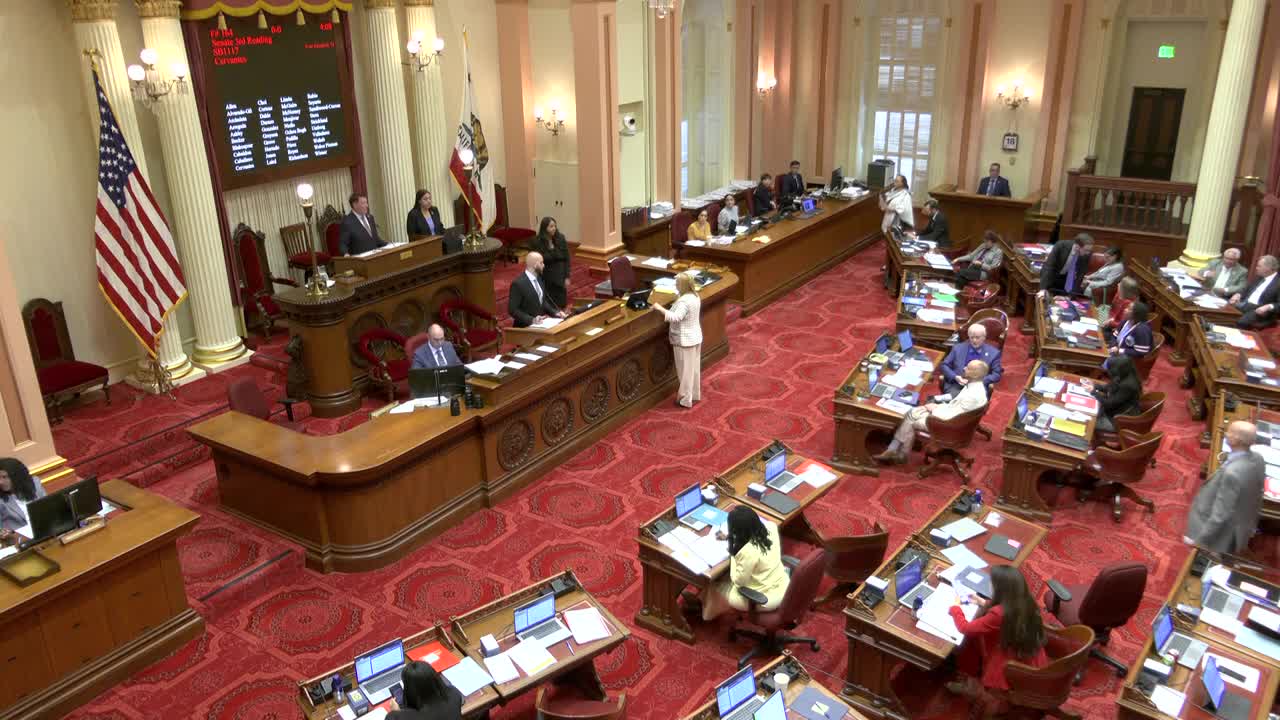 1MIN
Senate Floor
 6MIN
Senate Standing Committee on Natural Resources and Water
Bill Author