SB 1275: Sales and use tax exemption: vehicle license fee imposition: motor vehicles.
- Session Year: 2025-2026
- House: Senate
- Latest Version Date: 2026-04-09
Current Status:
In Progress
(2026-05-14: May 14 hearing: Held in committee and under submission.)
Introduced
In Committee
Awaiting First Chamber Vote
Passed First Chamber
In Committee
Awaiting Second Chamber Vote
Passed Second Chamber
Enacted
(1)Existing state sales and use tax laws impose a tax on retailers measured by the gross receipts from the sale of tangible personal property sold at retail in this state or on the storage, use, or other consumption in this state of tangible personal property purchased from a retailer for storage, use, or other consumption in this state. The Sales and Use Tax Law provides various exemptions from those taxes.
This bill would, on and after January July 1, 2027, and before January July 1, 2032, exempt from those taxes the gross receipts from the sale of, and the storage, use, or other consumption of a used motor vehicle sold by specified dealers or their affiliates or a new motor vehicle.
Existing law requires a bill authorizing a new tax expenditure to contain, among other things, specific goals the tax expenditure will achieve, detailed performance indicators, and data collection requirements.
This bill would exclude the exemption from that requirement.
The Bradley-Burns Uniform Local Sales and Use Tax Law authorizes counties and cities to impose local sales and use taxes in conformity with the Sales and Use Tax Law, and existing laws authorize districts, as specified, to impose transactions and use taxes in accordance with the Transactions and Use Tax Law, which generally conforms to the Sales and Use Tax Law. Amendments to the Sales and Use Tax Law are automatically incorporated into the local tax laws.
This bill would provide that the exemption created by this bill does not apply to local sales and use taxes or transactions and use taxes.
Existing law imposes or dedicates certain state sales and use tax rates for local funding, including through the Local Revenue Fund 2011.
This bill would provide that the exemption created by this bill does not apply to those state sales and use tax rates imposed or dedicated for local government funding, including those rates for which revenues are deposited into the Local Revenue Fund 2011.
(2)The Vehicle License Fee Law imposes a license fee for the privilege of operating upon the public highways in this state of specified vehicles, including any vehicle of a type which is subject to registration under the Vehicle Code.
This bill would impose, on and after January July 1, 2027, and before January July 1, 2032, upon the sale of a used motor vehicle sold by specified dealers or their affiliates or the first sale of a new motor vehicle to a consumer, an additional license fee equal to the amount of tax the purchaser would have paid but for the sales and use tax exemption provided for in this act. 3.9375% of the gross receipts from the sale. The bill would require the dealer to collect the license fee, as described, and remit the funds. The bill would require the Department of Motor Vehicles to report the amounts collected to the California Department of Tax and Fee Administration and deposit those moneys in the General Fund.
This bill would include a change in state statute that would result in a taxpayer paying a higher tax within the meaning of Section 3 of Article XIIIA of the California Constitution, and thus would require for passage the approval of 2/3 of the membership of each house of the Legislature.
(3)This bill would take effect immediately as a tax levy.
(1)Existing state sales and use tax laws impose a tax on retailers measured by the gross receipts from the sale of tangible personal property sold at retail in this state or on the storage, use, or other consumption in this state of tangible personal property purchased from a retailer for storage, use, or other consumption in this state. The Sales and Use Tax Law provides various exemptions from those taxes.
This bill would, on and after January 1, 2027, and before January 1, 2032, exempt from those taxes the gross receipts from the sale of, and the storage, use, or other consumption of a new motor vehicle.
Existing law requires a bill authorizing a new tax expenditure to contain, among other things, specific goals the tax expenditure will achieve, detailed performance indicators, and data collection requirements.
This bill would exclude the exemption from that requirement.
The Bradley-Burns Uniform Local Sales and Use Tax Law authorizes counties and cities to impose local sales and use taxes in conformity with the Sales and Use Tax Law, and existing laws authorize districts, as specified, to impose transactions and use taxes in accordance with the Transactions and Use Tax Law, which generally conforms to the Sales and Use Tax Law. Amendments to the Sales and Use Tax Law are automatically incorporated into the local tax laws.
This bill would provide that the exemption created by this bill does not apply to local sales and use taxes or transactions and use taxes.
Existing law imposes or dedicates certain state sales and use tax rates for local funding, including through the Local Revenue Fund 2011.
This bill would provide that the exemption created by this bill does not apply to those state sales and use tax rates imposed or dedicated for local government funding, including those rates for which revenues are deposited into the Local Revenue Fund 2011.
(2)The Vehicle License Fee Law imposes a license fee for the privilege of operating upon the public highways in this state of specified vehicles, including any vehicle of a type which is subject to registration under the Vehicle Code.
This bill would impose, on and after January 1, 2027, and before January 1, 2032, upon the first sale of a new motor vehicle to a consumer, an additional license fee equal to the amount of tax the purchaser would have paid but for the sales and use tax exemption provided for in this act. The bill would require the dealer to collect the license fee, as described, and remit the funds. The bill would require the Department of Motor Vehicles to report the amounts collected to the California Department of Tax and Fee Administration and deposit those moneys in the General Fund.
This bill would include a change in state statute that would result in a taxpayer paying a higher tax within the meaning of Section 3 of Article XIIIA of the California Constitution, and thus would require for passage the approval of 2/3 of the membership of each house of the Legislature.
(3)This bill would take effect immediately as a tax levy.
(a)On and after January July 1, 2027, and before January July 1, 2032, there are exempted from the taxes imposed by this part the gross receipts from the sale in this state of, and the storage, use, or other consumption in this state of, a used motor vehicle sold by a dealer or its affiliate that is exempt under subdivision (h) of Section 6295 or a new motor vehicle.
(b)(1)Notwithstanding the Bradley-Burns Uniform Local Sales and Use Tax Law (Part 1.5 (commencing with Section 7200)) and the Transactions and Use Tax Law (Part 1.6 (commencing with Section 7251)), the exemption established by this section shall not apply with respect to any tax levied by a city, county, or district pursuant to, or in accordance with, either of those laws.
(2)Notwithstanding subdivision (a), the exemption established by this section shall not apply with respect to any tax levied pursuant to Section 6051.2 or 6201.2, pursuant to Section 35 of Article XIII of the California Constitution, or any tax levied pursuant to Section 6051 or 6201 that is deposited in the State Treasury to the credit of the Local Revenue Fund 2011 pursuant to Section 6051.15 or 6201.15.
(c)Section 41 shall not apply to this exemption.
(d)This section shall remain in effect only until January 1, 2032, 2033, and as of that date is repealed.
SEC. 2.Section 10752.3 is added to the Revenue and Taxation Code, to read:10752.3.(a)On and after January July 1, 2027, and before January July 1, 2032, upon the sale of a used motor vehicle sold by a dealer or its affiliate that is exempt under subdivision (h) of Section 6295 or the first sale of a new motor vehicle to a consumer, in addition to the license fees imposed by this part, there shall be an additional license fee equal to the amount of the tax the purchaser would have paid but for Section 6368.4 of the Revenue and Taxation Code. 3.9375 percent of the gross receipts from the sale.
(b)The dealer shall collect the license fee imposed by subdivision (a) as a separate line item, and remit the funds in the same manner as fees imposed pursuant to this article.
(c)The Department of Motor Vehicles shall report amounts collected pursuant to this section to the California Department of Tax and Fee Administration and deposited in the General Fund pursuant to subdivision (d) on or before the last month following the close of a calendar quarter.
(d)Notwithstanding Chapter 5 (commencing with Section 11001) or any other law to the contrary, all revenues, including penalties, less refunds, derived from fees collected pursuant to subdivision (a) shall be deposited in the General Fund.
(e)This section shall not be construed to alter the rates of other license fees imposed under this chapter, including, but not limited to, Section 10752.
(e)(f)This section shall remain in effect only until January 1, 2032, 2033, and as of that date is repealed.
SEC. 3.This act provides for a tax levy within the meaning of Article IV of the California Constitution and shall go into immediate effect.
(a)On and after January 1, 2027, and before January 1, 2032, there are exempted from the taxes imposed by this part the gross receipts from the sale in this state of, and the storage, use, or other consumption in this state of, a new motor vehicle.
(b)(1)Notwithstanding the Bradley-Burns Uniform Local Sales and Use Tax Law (Part 1.5 (commencing with Section 7200)) and the Transactions and Use Tax Law (Part 1.6 (commencing with Section 7251)), the exemption established by this section shall not apply with respect to any tax levied by a city, county, or district pursuant to, or in accordance with, either of those laws.
(2)Notwithstanding subdivision (a), the exemption established by this section shall not apply with respect to any tax levied pursuant to Section 6051.2 or 6201.2, pursuant to Section 35 of Article XIII of the California Constitution, or any tax levied pursuant to Section 6051 or 6201 that is deposited in the State Treasury to the credit of the Local Revenue Fund 2011 pursuant to Section 6051.15 or 6201.15.
(c)Section 41 shall not apply to this exemption.
(d)This section shall remain in effect only until January 1, 2032, and as of that date is repealed.
SEC. 2.Section 10752.3 is added to the Revenue and Taxation Code, to read:10752.3.(a)On and after January 1, 2027, and before January 1, 2032, upon the first sale of a new motor vehicle to a consumer, in addition to the license fees imposed by this part, there shall be an additional license fee equal to the amount of the tax the purchaser would have paid but for Section 6368.4 of the Revenue and Taxation Code.
(b)The dealer shall collect the license fee imposed by subdivision (a) as a separate line item, and remit the funds in the same manner as fees imposed pursuant to this article.
(c)The Department of Motor Vehicles shall report amounts collected pursuant to this section to the California Department of Tax and Fee Administration and deposited in the General Fund pursuant to subdivision (d) on or before the last month following the close of a calendar quarter.
(d)Notwithstanding Chapter 5 (commencing with Section 11001) or any other law to the contrary, all revenues, including penalties, less refunds, derived from fees collected pursuant to subdivision (a) shall be deposited in the General Fund.
(e)This section shall remain in effect only until January 1, 2032, and as of that date is repealed.
SEC. 3.This act provides for a tax levy within the meaning of Article IV of the California Constitution and shall go into immediate effect.
|
Date
|
Status
|
|---|---|
| May 14, 2026 | May 14 hearing: Held in committee and under submission. |
| May 8, 2026 | Set for hearing May 14. |
| May 4, 2026 | May 4 hearing: Placed on APPR. suspense file. |
| Apr 24, 2026 | Set for hearing May 4. |
| Apr 22, 2026 | From committee: Do pass and re-refer to Com. on APPR. (Ayes 9. Noes 1. Page 3985.) (April 21). Re-referred to Com. on APPR. |
| Apr 22, 2026 | From committee: Do pass and re-refer to Com. on APPR. (Ayes 9. Noes 1.) (April 21). Re-referred to Com. on APPR. |
| Apr 14, 2026 | Set for hearing April 21. |
| Apr 9, 2026 | Read second time and amended. Re-referred to Com. on TRANS. |
| Apr 8, 2026 | From committee: Do pass as amended and re-refer to Com. on TRANS. (Ayes 4. Noes 0. Page 3795.) (April 8). |
| Apr 8, 2026 | From committee: Do pass as amended and re-refer to Com. on TRANS. (Ayes 4. Noes 0.) (April 8). |
| Mar 25, 2026 | Set for hearing April 8. |
| Mar 4, 2026 | Referred to Coms. on REV. & TAX. and TRANS. |
| Feb 23, 2026 | Read first time. |
| Feb 23, 2026 | From printer. May be acted upon on or after March 23. |
| Feb 20, 2026 | Introduced. To Com. on RLS. for assignment. To print. |
|
Date
|
Description
|
Location
|
Votes
|
|
|---|---|---|---|---|
| May 4, 2026 | Placed on suspense file | Senate Standing Committee on Appropriations |
Passed |
|
| Apr 21, 2026 | Do pass, but first be re-referred to the Committee on [Appropriations] | Senate Standing Committee on Transportation |
Passed |
|
| Apr 8, 2026 | Do pass as amended, but first amend, and re-refer to the Committee on [Transportation] | Senate Standing Committee on Revenue and Taxation |
Passed |
This list shows positions taken on this bill by organizations on the date displayed, which is linked to the original source.
Positions by individuals are not included.
SENATE COMMITTEE ON
Senator Sabrina Cervantes, Chair
2025 - 2026 Regular Session
SB 1275 (McNerney) - Sales and use tax exemption: vehicle license fee imposition: motor vehicles
Version: | Policy Vote: |
Urgency: | Mandate: |
Hearing Date: | Consultant: |
Bill Summary:
SB 1275 would (1) enact a state General Fund-only sales tax exemption for the purchase of specified vehicles, and (2) impose a new Vehicle License Fee (VLF) of an equivalent amount.
Fiscal Impact:
- The California Department of Tax and Fee Administration (CDTFA) estimates that this bill would reduce General Fund sales tax revenues by $4.1 billion in 2027–28 and $4.2 billion in 2028–29. However, this loss would be offset by the imposition of an additional VLF on each vehicle sold, with proceeds deposited into the General Fund and set equal to the amount of sales tax exempted. As a result, the combined effect of these two actions would be revenue neutral for the General Fund.
- The bill would result in reduced General Fund personal income tax revenue to the extent that taxpayers deduct the newly imposed VLF as a property tax on their state income returns. The magnitude is unknown, but could, at a minimum, reach the millions of dollars annually (see Staff Comments).
- Additionally, automobile purchasers who pay the higher first-year VLF and later have their vehicles declared a constructive total loss may be eligible to claim refunds of the unused portion of the fee, which would reduce General Fund revenues. The overall magnitude also is unknown, but could reach the millions of dollars annually (see Staff Comments).
- CDTFA’s implementation costs would be minor and absorbable. The Department of Motor Vehicles (DMV) has not yet identified its administrative costs, but is likely to incur significant expenses due to the bill’s impact on information technology and associated workload (Motor Vehicle Account).
Background:
Except where a specific exemption or exclusion is provided, current law imposes SUT on all retailers for the privilege of selling tangible personal property (TPP) at retail in California, or on the storage, use, or other consumption in this state of TPP purchased from a retailer. Unless purchasers pay the sales tax to the retailer, they are liable for the use tax, which the law imposes on any person consuming tangible personal property in the state. The use tax is the same rate as the sales tax.
After CDTFA collects SUT revenue ($79 billion in 2023-24), it allocates the money to various state and local funds. Roughly half—collected from an approximately 3.9 percent rate—goes to the General Fund and can be spent on any state program, such as education, health care, and criminal justice. Another 1.25 percent, known as the Bradley-Burns rate, goes to cities and counties for general purposes. Three sales tax funds have uniform state rates and support specified programs—a 1.0625 percent rate for 2011 realignment (county-administered criminal justice, mental health, and social service programs); a 0.5 percent rate for 1991 realignment (county-administered health and social services programs); and a 0.5 percent rate for city and county public safety programs pursuant to Proposition 172 (1993). Additionally, some local governments levy optional local rates—known as Transactions and Use Taxes (TUTs)—and a small portion of these funds are used for general purposes. As of December 31, 2025, the average statewide SUT rate was 8.84 percent.
Many items, such as prescription drugs, food, and poultry litter, are fully exempt from the SUT. Other items are exempted only from the state sales tax of 3.9375%, but not the local share, such as farm equipment and machinery, diesel fuel used for farming and food processing, teleproduction and postproduction equipment, timber harvesting equipment and machinery, and racehorse breeding stock.
The Legislature established the VLF in 1935 in lieu of a personal property tax on vehicles. Distinct from vehicle registration fees, the VLF is an ad valorem state tax levied on the purchase price of a vehicle and subsequently assessed annually against the vehicle’s value, adjusted by a statutory depreciation schedule.
Current federal law generally allows individuals to deduct specified state and local taxes (SALT) from taxable income as an itemized deduction in lieu of the standard deduction. Currently, the annual limits are (1) $40,400 for 2026, (2) increases of one percentage point for taxable years 2027 through 2029, and (3) $10,000 effective taxable year 3030. Congress also created a phasedown adjustment based on modified adjusted gross income (MAGI), which reduces the limit by 30 percent of the excess of the taxpayer’s MAGI over the threshold amount (half the threshold amount in the case of a married couple filing separately). The threshold amount is $500,000 for 2025 and 2026, and increases 1 percent annually until 2030.
Subject to the above limits, taxpayers can deduct state income taxes, as well as local real and personal property taxes, from federal taxable income. Taxpayers can deduct sales taxes; however, they can only do so when electing not to deduct income taxes. Consequently, few Californians deduct sales taxes because of the state’s relatively high income tax rates.
Proposed Law:
This bill, among other things, would do the following:
- Enact a General Fund-only (3.9375 percent) sales tax exemption for the purchase of a new or used motor vehicle sold by certain dealers or their affiliates, as specified, on or after July 1, 2027, and before July 1, 2032.
- Impose an additional VLF upon the first sale of a new motor vehicle or a used motor vehicle sold by certain dealers or their affiliates, as specified, on or after July 1, 2027, and before July 1, 2032. The amount would be equal to the amount of exempted sales tax.
- Require the dealer to collect VLF as a separate line item, and remit the funds in the same manner as the existing VLF.
- Require DMV to report the amounts collected to CDTFA, as specified.
Staff Comments: This bill would likely not result in annual General Fund neutrality. While the sales tax reduction/offsetting VLF increase component would likely have a negligible combined impact, annual General Fund revenues under the bill would likely be lower relative to current law, for two reasons: (1) increased VLF deductions on state income tax returns, and (2) increased VLF refunds for automobiles that are totaled in their first year.
Increasing VLF deductions reduces taxable income, which in turn lowers a taxpayer’s federal tax liability because a smaller portion of income is subject to federal income tax. At the same time, however, because California’s income tax also allows deductions tied to VLF, the same increase can reduce state taxable income as well. The combined effect is a decrease in both federal and state income tax liabilities (and a corresponding reduction in General Fund revenue from the state personal income tax). The magnitude would depend on taxpayers’ income levels, applicable tax rates, and whether they itemize deductions.
Under current state law, when a vehicle is declared a constructive total loss, the owner may be eligible for a partial refund of the VLF paid as part of the registration. The refund is generally prorated based on the unused portion of the registration period following the date the vehicle was totaled or permanently removed from use. To receive the refund, the owner must notify DMV and submit the appropriate documentation, such as proof of total loss from the insurer, and a request for cancellation of registration. Once processed, the State issues a refund for the remaining eligible portion of the fee. If VLF fees were to increase significantly (as they would under the bill), the amount eligible for refund would also rise proportionally, meaning that owners of totaled vehicles could receive larger refunds for the unused portion of their registration period. This would likely result in reduced General Fund revenue. As an order of magnitude, if 0.1 percent of purchased cars were declared a total loss in the first year, then potentially $2 million could be refunded from the General Fund.
Currently, CDTFA and DMV exchange information to ensure compliance with both the sales tax and the Vehicle Code. This bill would require further coordination between the two agencies to ensure effective implementation, which could result in additional costs. Additionally, DMV is currently updating and replacing information technology software, hardware, and programming languages for its legacy systems. In the meantime, any additional implementation costs could cause additional cost pressure on DMV, the magnitude of which is still being determined. The MVA, which is the primary funding source for DMV, has been experiencing a structural imbalance for many years, with expenditures consistently outpacing revenues.
CDTFA would incur minor, absorbable administrative costs to update its website, revise publications, update the sales and use tax return, notify taxpayers, and respond to taxpayer and public inquiries.
-- END --
SENATE COMMITTEE ON TRANSPORTATION
Senator Dave Cortese, Chair
2025 - 2026 Regular
Bill No: Hearing Date: 4/21/2026
Author: | McNerney | ||
Version: | 4/9/2026 Amended | ||
Urgency: | Yes | Fiscal: | Yes |
Consultant: | Melissa White | ||
SUBJECT:
DIGEST: This bill enacts a State General Fund-only sales tax exemption for the purchase of a new motor vehicle, and in lieu imposes a new Vehicle License Fee (VLF) in an amount equal to the exempted sales tax.
ANALYSIS:
Existing law:
- Imposes a tax on retailers measured by the gross receipts from the sale of tangible personal property sold at retail in this state or on the storage, use, or other consumption in this state of tangible personal property purchased from a retailer for storage, use, or other consumption in this state, and provides various exemptions from those taxes.
- Authorizes, through the Bradley-Burns Uniform Local Sales and Use Tax Law, counties and cities to impose local sales and use taxes in conformity with the Sales and Use Tax Law,
- Authorizes districts, as specified, to impose transactions and use taxes in accordance with the Transactions and Use Tax Law, which generally conforms to the Sales and Use Tax Law.
- Imposes or dedicates certain state sales and use tax rates for local funding, including through the Local Revenue Fund 2011.
- Imposes, through the Vehicle License Fee Law, a license fee for the privilege of operating upon the public highways in this state of specified vehicles, including any vehicle of a type which is subject to registration.
- Authorizes the California Department of Tax and Fee Administration (CDTFA), in consultation with the Department of Motor Vehicles (DMV), to exempt any dealer from requirements to remit collected funds first to DMV, as specified, if the dealer sold 1,000 or more vehicles at retail in the current or preceding calendar year and the dealer’s account is in good standing with CDTFA.
This bill:
- Exempts from certain state sales and use taxes, the gross receipts from the sale of, and the storage, use, or other consumption of a new or used motor vehicle sold by certain dealers or their affiliates, as specified, on or after July 1, 2027, and before July 1, 2032.
- Provides that the exemption created by the bill does not apply to local sales and use taxes or transaction and use taxes.
- Provides that the exemption created by the bill does not apply to those state sales and use tax rates imposed or dedicated for local government funding, including those rates for which revenues are deposited into the Local Revenue Fund 2011.
- Imposes an additional VLF upon the first sale of a new motor vehicle or a used motor vehicle sold by certain dealers or their affiliates, as specified, on or after July 1, 2027, and before July 1, 2032.
- Requires the additional VLF to be equal to 3.9375% of the gross receipts from the sale.
- Requires the dealer to collect VLF as a separate line item, and remit the funds in the same manner as the existing VLF.
- Requires DMV to report the amounts collected to CDTFA, as specified.
- Requires all revenues, including penalties, less refunds, derived from the fees collected be deposited in the General Fund.
- Declares that provisions of the bill will not be construed to alter the rates of other VLFs imposed.
- Repeals the provisions on January 1, 2033.
COMMENTS:
- Purpose of the bill. According to the author, “California has long been a ‘donor’ state – that is, California taxpayers pay billions of dollars a year more to the federal government than the state receives in return. SB 1275 is a creative approach to help address that problem, and it will save California taxpayers money. Under SB 1275, Californians who buy a car or truck would get a federal tax break that they don’t currently receive. The legislation, as a result, would reduce Californians’ federal tax burden and could boost vehicle sales in the state, and it won’t cost consumers, the state, or car dealers a penny.”
- Sales and use tax. State law imposes the sales tax on every retailer selling tangible personal property in this state. Retailers must register with CDTFA and remit sales tax amounts collected at sale to CDTFA. If the purchaser does not pay the sales tax to the retailer, the purchaser is liable for paying use tax to CDTFA. The use tax is imposed on any person consuming tangible personal property in the state and must be remitted on or before the last day of the month following the quarterly period in which the person made the purchase. The use tax rate is the same as the sales tax rate.
The table below shows the incremental structure of the sales and use tax at its current statewide rate of 7.25%. Additionally, cities and counties may increase the sales and use tax rate up to 2% with voter approval for specific or general purposes pursuant to the California Constitution’s vote requirements.
Rate | Jurisdiction | Purpose/Authority |
|---|---|---|
3.9375% | State (General Fund) | State general purposes |
1.0625% | Local Revenue Fund (2011 Realignment) | Local governments to fund local public safety services |
0.50% | State (1991 Realignment) | Local governments to fund health and welfare programs |
0.50% | State (Proposition 172 - 1993) | Local governments to fund public safety services |
1.25% | Local (City/County) 1.00% City and County | City and county general operations. Dedicated to county transportation purposes (TDA) |
7.25% | Total Statewide Rate |
CDTFA collects sales taxes from retailers, deposits the state share in the General Fund, and then allocates the local share of the Bradley-Burns sales tax and any district tax to the appropriate jurisdiction.
- Vehicle License Fees. The Legislature established VLF in 1935 in lieu of a personal property tax on vehicles. Distinct from vehicle registration fees, the 0.65% VLF is an ad valorem state tax levied on the purchase price of a vehicle and subsequently assessed annually against the vehicle’s value, adjusted by a statutory depreciation schedule. Typically, vehicle owners pay the VLF to DMV. Proposition 1A (2004) guarantees that revenue derived from the 0.65% VLF rate flows to cities and counties.
Motor vehicle purchasers pay the first year of VLF at the time of purchase as part of the original registration and titling process, along with other fees and charges. According to DMV Fee Calculator, purchasing a new 2026 gasoline-powered vehicle on April 1, 2026, in the City of Sacramento for $34,000 results in the following:
- Sales tax: $2,975
- Current Registration: $73
- California Highway Patrol: $34
- Vehicle License Fee: $222
- Other Fees: $166
- State and local tax deductions. Federal law generally allows individuals to deduct specified state and local taxes (SALT) from taxable income as an itemized deduction in lieu of the standard deduction. Beginning in 2018, the Tax Cuts and Jobs Act (TCJA) changed several itemized deductions, including limiting the total deduction for SALT to $10,000 ($5,000 if married filing separately) for personal income taxpayers. Last year, Congress revised limits for forthcoming taxable years:
- $40,000 for 2025.
- $40,400 for 2026.
- For taxable years 2027 through taxable year 2029, the limit is increased by 1% each taxable year, with taxable year 2026 as the base year.
- For taxable year 2030 and after, $10,000.
Congress also created a phasedown adjustment based on modified adjusted gross income (MAGI), which reduces the limit by 30% of the excess of the taxpayer’s MAGI over the threshold amount (half the threshold amount in the case of a married couple filing separately). The threshold amount is $500,000 for 2025 and 2026, and increases 1% annually until 2030.
Subject to the above limits, taxpayers can deduct state income taxes, as well as local real and personal property taxes, from federal taxable income. Taxpayers can deduct sales taxes; however, they can only do so when electing not to deduct income taxes, so few Californians deduct sales taxes because of the state’s relatively high-income tax rates.
As noted above, purchasers pay several fees and taxes when purchasing a new motor vehicle. While VLF is deductible as a personal property tax, California taxpayers generally do not deduct sales taxes.
- SB 1275 swaps the state portion of the sales tax with an equivalent new VLF. SB 1275 enacts a State General Fund-only sales tax exemption for the purchase of a new motor vehicle, and in lieu, imposes a new VLF in an amount equal to the exempted sales tax. The bill calls for the exemption and equivalent new VLF to apply beginning on July 1, 2027, and end July 1, 2032.
Additionally, SB 1275 requires car dealers to collect the new VLF as a separate line item and remit the funds in the same manner as the current VLF. Finally, the bill requires DMV to report amounts collected under the bill to CDTFA and deposit them in the General Fund.
- Who would benefit? According to the author, SB 1275 enacts a mechanism to reduce federal taxes paid by Californians, while also providing an incentive to purchase a new vehicle. However, its beneficiaries may be limited to relatively higher-income taxpayers. Around 15% of California taxpayers itemize their federal taxes, with the rest claiming the standard deduction, which in 2025 is worth $31,500 for married filing jointly filers, or $15,750 for single or married filing separately. However, the share of new car buyers who itemize is likely higher.
Additionally, those who pay more than $40,000 in combined state and local taxes likely won’t benefit from SB 1275’s additional deductible VLF. However, for those who qualify, the benefits can be considerable. According to the California New Car Dealers Association, car sales totaled roughly $96 billion in 2025, for a total of 3.3 million new and used vehicles sold. For example, there were 1.8 million new cars purchased in California last year with an average sales price of $50,000. On a $50,000 car purchase, the buyer currently pays $2,000 in non-deductible State General Fund sales tax, which would be deductible from their federal income taxes under SB 1275. For a married filing jointly taxpayer who itemizes their federal taxes, this change would reduce their federal taxes by about $500 that year. SB 1275 also includes used cars as sold by specified dealers, as determined by CDTFA, and that sell more than 1,000 used vehicles annually. This would include mainly new car dealers that also sell used cars and newer online car merchants, such as Carvana.
- Implementation challenges. Car dealers must complete at least two procedures when selling a new motor vehicle. First, they must provide DMV with registration information for the purchaser, accompanied by payment of registration fees and the VLF, among other charges. Second, they must remit appropriate sales tax to CDTFA. SB 1275 would require car dealers to change their accounting and payment systems, which could be costly and cumbersome. Specifically, car dealers would have to maintain two separate reporting systems, track which portion of the transaction goes to which agency, and ensure proper reconciliation across two tax collections systems. Additionally, dealers would still remit local shares of the sales tax to CDTFA, because SB 1275 does not apply to those incremental rates.
There could also be complications with vehicle returns. Last year the Legislature passed, and Governor Newsom signed into law, the California Combating Auto Retail Scams (CARS) Act (SB 766, Chapter 354, Statutes of 2025), to improve transparency, prohibit deceptive practices, and enhance consumer protections in the sale and lease of motor vehicles. One of the provisions of the bill requires car dealers, as of October 1, 2026, to provide a 3-day right to return a vehicle. SB 1275 could lead to operational challenges for processing returns. Under current law, unwinding a transaction is straightforward as the sales tax is refunded and adjusted through the normal tax reporting process. As mentioned above, SB 1275 requires dealers to maintain two separate reporting systems, with part of the transaction being a partial sales tax and the other being a VLF. If a vehicle is returned, the dealer would need to unwind payments across two agencies with multiple VLF amounts.
Finally, CDTFA and DMV exchange information to ensure compliance with both the sales tax and the Vehicle Code. SB 1275 requires further reconciliation between the two agencies to ensure effective implementation, which could result in additional costs. Additionally, DMV is currently implementing the Digital eXperience Platform (DXP) project to update and replace software, hardware, and programming languages for its legacy systems. The Legislature appropriated $193.5 million over a three-year period to implement several components of the project in the 2021 Budget, which was followed by $60.3 million in the 2024 Budget Act. While the project is likely to be finished soon, any additional implementation changes could cause additional cost pressure on DMV, potentially affecting its ability to deliver services. For example, to report a separate line item for the newly created VLF, DMV would have to change its internal fee codes in its system to remit funds to CDTFA and account for how much is remitted.
- Motor vehicle account is nearly insolvent. According to the Legislative Analyst’s Office (LAO), the Motor Vehicle Account (MVA), which is the primary funding source for DMV, has been experiencing a structural imbalance for many years, with expenditures consistently outpacing revenues. The state has been able to delay the account’s insolvency through various budget adjustments, policy changes, and temporary transfers from other special funds. LAO argues that every new expenditure from the account—especially those that are comparatively large—should be well justified and clear a high bar for approval. In the Governor’s 2026-27 Proposed Budget, the Governor warned that “the Budget currently projects that the MVA will be insolvent as soon as 2028-29. Given the ongoing fiscal constraints in the MVA, the Administration will continue to limit new workload or initiatives, including those with delayed implementation dates that would create additional cost pressures over time.”
- Double referral. This bill was double referred to the Senate Revenue and Taxation Committee where it passed out on a 4-0 vote on April 8, 2026.
FISCAL EFFECT: Appropriation: Fiscal Com.: Local:
POSITIONS: (Communicated to the committee before noon on Wednesday,
April, 15, 2026.)
SUPPORT:
None received
OPPOSITION:
None received
-- END --
SENATE COMMITTEE ON REVENUE AND TAXATION
Senator Jerry McNerney, Chair
2025 - 2026 Regular
Bill No: | SB 1275 | Hearing Date: | 4/8/26 |
Author: | McNerney | Tax Levy: | Yes |
Version: | 2/20/26 | Fiscal: | Yes |
Consultant: | Grinnell | ||
Sales and use tax exemption: vehicle license fee imposition: motor vehicles
Enacts a State General Fund-only sales tax exemption for the purchase of a new motor vehicle, and in lieu imposes a new Vehicle License Fee in an amount equal to the exempted sales tax.
Background
Sales and use tax (SUT). State law imposes the sales tax on every retailer selling tangible personal property in this state. Retailers must register with the California Department of Tax and Fee Administration (CDTFA) and remit sales tax amounts collected at sale to CDTFA. If the purchaser does not pay the sales tax to the retailer, the purchaser is liable for paying use tax to CDTFA. The use tax is imposed on any person consuming tangible personal property in the state, and must be remitted on or before the last day of the month following the quarterly period in which the person made the purchase. The use tax rate is the same as the sales tax rate.
The table below shows the incremental structure of the sales and use tax at its current statewide rate of 7.25%. Additionally, cities and counties may increase the sales and use tax rate up to 2% with voter approval for specific or general purposes pursuant to the California Constitution’s vote requirements.
Rate | Jurisdiction | Purpose/Authority |
|---|---|---|
3.9375% | State (General Fund) | State general purposes |
1.0625% | Local Revenue Fund (2011 Realignment) | Local governments to fund local public safety services |
0.50% | State (1991 Realignment) | Local governments to fund health and welfare programs |
0.50% | State (Proposition 172 - 1993) | Local governments to fund public safety services |
1.25% | Local (City/County) 1.00% City and County | City and county general operations. Dedicated to county transportation purposes |
7.25% | Total Statewide Rate |
CDTFA collects sales taxes from retailers, deposits the state share in the General Fund, and then allocates the local share of the Bradley-Burns sales tax and any district tax to the appropriate jurisdiction.
Vehicle License Fees. The Legislature established the Vehicle License Free (VLF) in 1935 in lieu of a personal property tax on vehicles. Distinct from vehicle registration fees, the VLF is an ad valorem state tax levied on the purchase price of a vehicle and subsequently assessed annually against the vehicle’s value, adjusted by a statutory depreciation schedule. Typically, vehicle owners pay the VLF to the Department of Motor Vehicles (DMV). Proposition 1A (2004) guarantees that revenue derived from the 0.65% VLF rate flows to cities and counties.
Motor vehicle purchasers pay the first year of VLF at the time of purchase as part of the original registration and titling process, along with other fees and charges. According to the DMV Fee Calculator, purchasing a new 2026 gasoline-powered vehicle on April 1, 2026, in the City of Sacramento for $34,000 results in the following:
- Sales tax: $2,975
- Current Registration: $73
- California Highway Patrol: $34
- Vehicle License Fee: $222
- Other Fees: $166
State and local tax deduction. Federal law generally allows individuals to deduct specified state and local taxes (SALT) from taxable income as an itemized deduction in lieu of the standard deduction. Beginning in 2018, the Tax Cuts and Jobs Act (TCJA) changed several itemized deductions, including limiting the total deduction for SALT to $10,000 ($5,000 if married filing separately) for personal income taxpayers. Last year, Congress revised limits for forthcoming taxable years:
- $40,000 for 2025.
- $40,400 for 2026.
- For taxable years 2027 through taxable year 2029, the limit is increased by 1% each taxable year, with taxable year 2026 as the base year.
- For taxable year 2030 and after, $10,000.
Congress also created a phasedown adjustment based on modified adjusted gross income (MAGI), which reduces the limit by 30% of the excess of the taxpayer’s MAGI over the threshold amount (half the threshold amount in the case of a married couple filing separately). The threshold amount is $500,000 for 2025 and 2026, and increases 1% annually until 2030.
Subject to the above limits, taxpayers can deduct state income taxes, as well as local real and personal property taxes, from federal taxable income. Taxpayers can deduct sales taxes; however, they can only do so when electing not to deduct income taxes, so few Californians deduct sales taxes because of the state’s relatively high income tax rates.
As noted above, purchasers pay several fees and taxes when purchasing a new motor vehicle. While the VLF is deductible as a personal property tax, California taxpayers generally do not deduct sales taxes. The author wants to lower federal tax obligations for Californians purchasing new motor vehicles.
Proposed Law
Senate Bill 1275 enacts a State General Fund-only sales tax exemption for the purchase of a new motor vehicle, and in lieu imposes a new Vehicle License Fee in an amount equal to the exempted sales tax. The exemption and equivalent new VLF apply beginning on January 1, 2027, and end January 1, 2032.
The measure requires dealers to collect the license fee as a separate line item and remit the funds in the same manner as the current VLF. DMV must report amounts collected under the bill to CDTFA and deposit them in the General Fund on or before the last month following the close of a calendar quarter.
The bill also makes legislative findings and declarations to comply with Section 41 of the Revenue & Taxation Code.
State Revenue Impact
No estimate.
Comments
1. Purpose of the bill. According to the author, “California has the highest cost of living in the U.S., and Californians have one of the highest federal tax burdens in the nation. SB 1275 is innovative legislation that reduces Californians’ federal tax burden, while providing an incentive for motor vehicle sales. The bill eliminates the state sales tax on motor vehicles for five years and replaces it with a vehicle license fee of the same amount that can be deducted from federal taxes.”
2. Who benefits? SB 1275 enacts a creative mechanism to reduce federal taxes paid by Californians, while also providing an incentive to purchase a new vehicle. However, its beneficiaries may be limited to relatively higher-income taxpayers. Around 15% of California taxpayers itemize their federal taxes, with the rest claiming the standard deduction, which in 2025 is worth $31,500 for married filing jointly filers, or $15,750 for single or married filing separately. However, the share of new car buyers who itemize is likely higher. Additionally, those who pay more than $40,000 in combined state and local taxes likely won’t benefit from SB 1275’s additional deductible VLF. However, for those who qualify, the benefits can be considerable. According to CDTFA, new-car dealers reported about $85 billion in taxable sales in 2025, implying about 1.8 million new vehicles purchased in California annually at an average sales price of $50,000. On a $50,000 car purchase, the buyer currently pays $2,000 in non-deductible State General Fund sales tax, which would be deductible from their federal income taxes under SB 1275. For a married filing jointly taxpayer who itemizes their federal taxes, this change would reduce their federal taxes by about $500 that year. In aggregate, assuming 30% of new car buyers itemize, California taxpayers could reduce their federal taxable income by about $1 billion per year and their federal taxes paid by about $250 million per year.
3. Compliance. Car dealers must complete at least two procedures when selling a new motor vehicle. First, they must provide DMV with registration information for the purchaser, accompanied by payment of registration fees and the VLF, among other charges. Second, they must remit appropriate sales tax to CDTFA. As a result, SB 1275 would require new car dealers to change their accounting and payment systems, which could be costly and cumbersome. Additionally, dealers would still remit local shares of the sales tax to CDTFA, because SB 1275 does not apply to those incremental rates. While many used car dealers must pay sales tax directly to DMV (AB 85, Committee on Budget, 2020), the change could be particularly troublesome for dealers that sell both used and new cars; these dealers would still remit all sales taxes on used cars to CDTFA, but would instead send SB 1275’s equivalent VLF to DMV for new ones. The Committee may wish to consider amending SB 1275 to apply its provisions to used car dealers with more than 1,000 car sales in the current or preceding calendar year.
4. Implementation. Currently, CDTFA and DMV exchange information to ensure compliance with both the sales tax and the Vehicle Code. SB 1275 requires further reconciliation between the two agencies to ensure effective implementation, which could result in additional costs. Additionally, DMV is currently implementing the Digital eXperience Platform (DXP) project to update and replace software, hardware, and programming languages for its legacy systems. The Legislature appropriated $193.5 million over a three-year period to implement several components of the project in the 2021 Budget, which was followed by $60.3 million in the 2024 Budget Act. While the project is likely to be finished soon, any additional implementation costs could cause additional cost pressure on DMV, potentially affecting its ability to deliver services. According to the Legislative Analyst’s Office (LAO), the Motor Vehicle Account (MVA), which is the primary funding source for DMV, has been experiencing a structural imbalance for many years, with expenditures consistently outpacing revenues. The state has been able to delay the account’s insolvency through various budget adjustments, policy changes, and temporary transfers from other special funds. LAO argues that every new expenditure from the account—especially those that are comparatively large—should be well justified and clear a high bar for approval. In the Governor’s 2026-27 Proposed Budget, the Governor warned that “the Budget currently projects that the MVA will be insolvent as soon as 2028-29. Given the ongoing fiscal constraints in the MVA, the Administration will continue to limit new workload or initiatives, including those with delayed implementation dates that would create additional cost pressures over time.” The Committee may wish to consider amending SB 1275 to delay implementation to July 1, 2027, to ease implementation for DMV and CDTFA.
5. Two for the road. The Senate Rules Committee ordered a double referral of SB 1275, first to the Committee on Revenue & Taxation, and second to the Committee on Transportation.
6. Technical. Committee staff recommends amending SB 1275 to explicitly set the amount of its equivalent VLF, instead of referencing its sales tax exemption.
Support and Opposition
(4/3/26)
Support: None received.
Opposition: None received.
-- END --
Discussed in Hearing
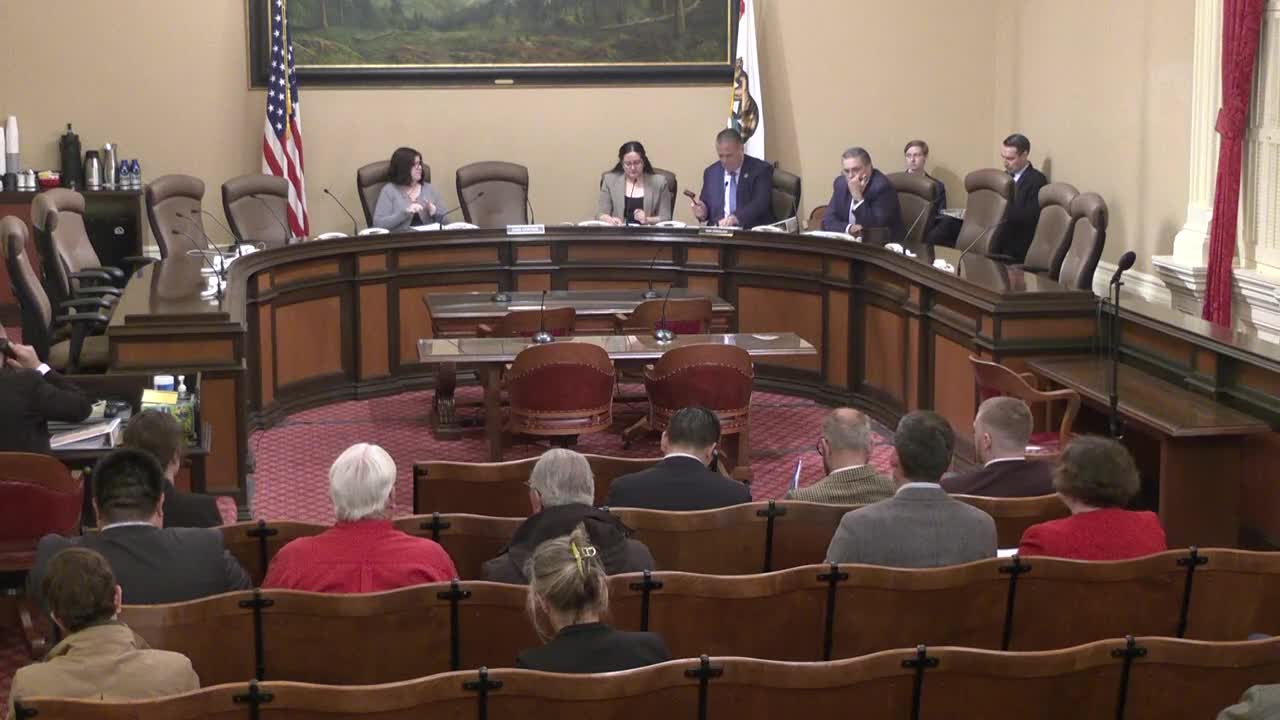 6MIN
Senate Standing Committee on Transportation
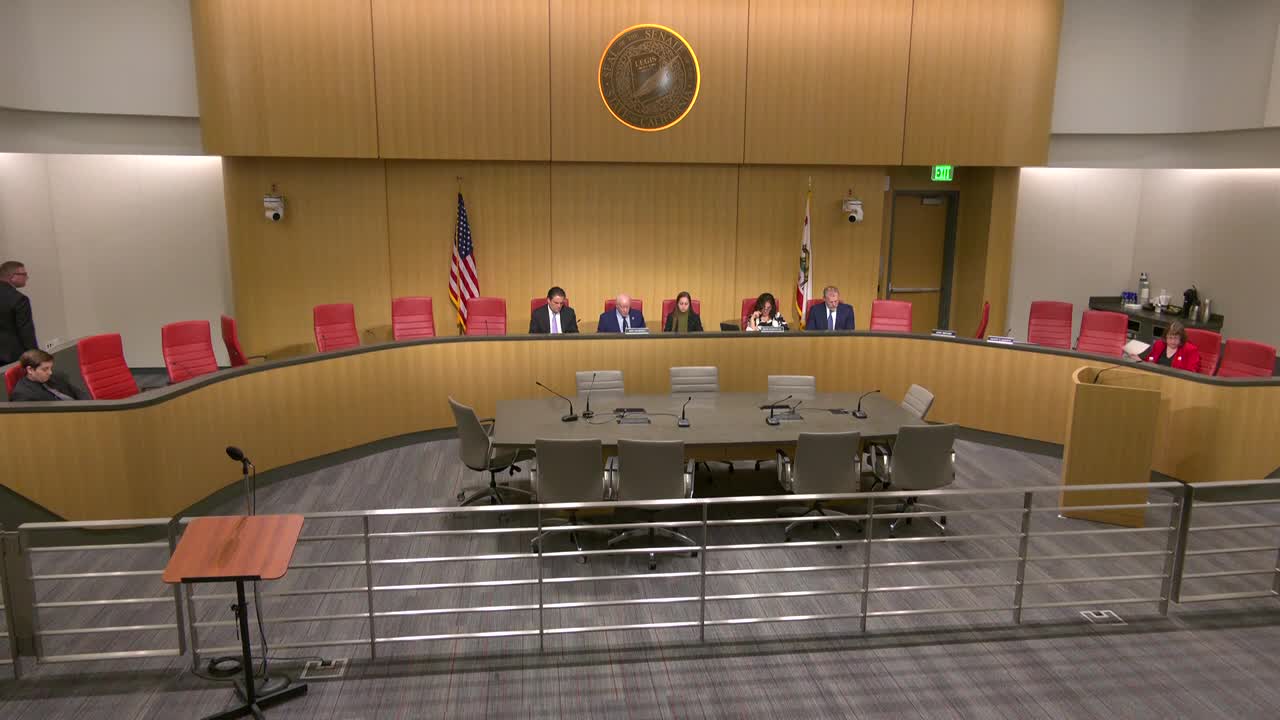 8MIN
Senate Standing Committee on Revenue and Taxation
Bill Author
Bill Co-Author(s):
