SB 1291: Mutual water companies.
- Session Year: 2025-2026
- House: Senate
- Latest Version Date: 2026-03-24
Current Status:
In Progress
(2026-05-14: May 14 hearing: Held in committee and under submission.)
Introduced
In Committee
Awaiting First Chamber Vote
Passed First Chamber
In Committee
Awaiting Second Chamber Vote
Passed Second Chamber
Enacted
Under existing law, a mutual water company is defined as a corporation organized for or engaged in the business of selling, distributing, supplying, or delivering water for irrigation or domestic purposes that provides in its articles or bylaws that the water shall be sold, distributed, supplied, or delivered only to owners of its shares, as specified.
The Mutual Water Company Open Meeting Act requires a board of directors of a mutual water company that operates a public water system to allow an eligible person, as defined, to personally attend a meeting of the board, if the eligible person gave the board at least 24 hours advance written notice of their intent to personally attend the meeting. Existing law authorizes the board to allow an eligible person who was denied attendance at a meeting for failure to provide this notice, or because the number of eligible persons having already provided notice of attendance exceeds the room capacity of the place of the meeting, to attend the meeting by teleconference. Existing law requires the board to provide to an eligible person attending a meeting by teleconference a copy of the documents to be discussed at the meeting, except as specified.
This bill would eliminate the 24-hour notice requirement for an eligible person to personally attend a meeting. The bill would authorize the board of directors of a mutual water company with less than 50 connections to use teleconferencing to provide any eligible person access to the meeting and would require a board of directors of a mutual water company with 50 or more connections to use teleconferencing to provide any eligible person access to the meeting.
Existing law requires the board of a mutual water company that operates a public water system to adopt an annual budget, as specified, and also requires the board to contract with a public accountant, as specified, to conduct an annual review of the financial records and reports of the mutual water company. Existing law requires the minutes of a board meeting, as specified, the annual budget, the accounting report, and other specified documents to be provided to an eligible person upon request and upon reimbursement of the mutual water companys costs for providing the document.
This bill would require those documents to be provided to an eligible person upon request in an electronic form or in a hard copy. The bill would authorize a mutual water company to require an eligible person who requests a hard copy of those documents to pay a fee for the direct costs of duplication, but would prohibit a mutual water company from charging a fee for providing those documents electronically. The bill would require the mutual water company to display on the mutual water companys internet website detailed information on how an eligible person can request those documents, as specified.
Existing law requires eligible persons to be given notice of the time and place of a meeting of the board of directors at least 4 days prior to the meeting, except as specified.
This bill would also require the notice of the meeting to be posted on the mutual water companys internet website, as specified, and would require notice of the meeting and the agenda to be distributed by electronic means to specified eligible persons 4 days prior to the meeting.
Existing law defines eligible persons for purposes of these provisions to include various persons, including an elected official of a city or county who represents people who receive drinking water directly from the mutual water company on a retail basis.
This bill would also include within that definition, a federal or state official who represents people who receive drinking water directly from the mutual water company on a retail basis, and would include a representative of any of those elected officials.
Existing law requires every public water system, as a condition of its operating permit, to annually prepare a consumer confidence report and mail or deliver a copy of that report to each customer, except as specified.
This bill would require a mutual water company to make a downloadable electronic copy of its consumer confidence report available to the public on its internet website. The bill would also require the mutual water company to make a good faith effort to notify a consumer who is served by the public water system, but who is not a bill-paying customer of the report using a mix of methods appropriate to the particular public water system, as specified. The bill would require a mutual water company to annually send a summary to the State Water Resources Control Board summarizing its efforts to provide notice of the report to those consumers and would also require the mutual water company to post that summary on its internet website, as provided.
The California Safe Drinking Water Act provides for the operation of public water systems and imposes on the State Water Resources Control Board various responsibilities and duties relating to the regulation of drinking water to protect public health.
This bill would require the board to, on or before December 31, 2027, complete an assessment of mutual water companies that operate a public water system, with a focus on those serving disadvantaged and low-income communities. The bill would require the assessment to include, among other things, an assessment of compliance history with state drinking water standards by a representative sample of mutual water companies serving disadvantaged and low-income communities. The bill would also require the board to, among other things, host public hearings in disadvantaged and low-income communities served by mutual water companies to receive community input to inform the assessment, as provided. The bill would require mutual water companies to cooperate with the board in completing the assessment and to reasonably attempt to furnish all information and feedback requested by the board, as provided. The bill would require the board to post the assessment on its internet website and to provide the assessment to the Legislature.
Existing law, the California Safe Drinking Water Act, provides for the operation of public water systems and imposes on the State Water Resources Control Board various responsibilities and duties. The act authorizes the state board to order consolidation with, or extension of service from, a receiving water system if a public water system or state small water system serving a disadvantaged community consistently fails to provide an adequate supply of safe drinking water or if a disadvantaged community is substantially reliant on domestic wells that consistently fail to provide an adequate supply of safe drinking water. Existing law makes related findings and declarations.This bill would make a nonsubstantive change to those findings and declarations.Existing law, the California Safe Drinking Water Act, provides for the operation of public water systems and imposes on the State Water Resources Control Board various responsibilities and duties. The act authorizes the state board to order consolidation with, or extension of service from, a receiving water system if a public water system or state small water system serving a disadvantaged community consistently fails to provide an adequate supply of safe drinking water or if a disadvantaged community is substantially reliant on domestic wells that consistently fail to provide an adequate supply of safe drinking water. Existing law makes related findings and declarations.
This bill would make a nonsubstantive change to those findings and declarations.
(a)(1)This section shall be known known, and may be cited cited, as the Mutual Water Company Open Meeting Act.
(2)This section shall only apply to a mutual water company that operates a public water system.
(b)(1)(A)A board of directors of a mutual water company shall allow an eligible person to personally attend a meeting of the board, if the eligible person gave the board at least 24 hours advance written notice of his or her intent to personally attend the meeting. board.
(B)Notwithstanding any other law, the board of directors of a mutual water company with less than 50 connections may use teleconferencing to provide any eligible person access to the meeting that otherwise would be denied attendance at a meeting of the board for failure to provide this notice, or because the number of eligible persons having already provided notice of attendance exceeds the room capacity of the place of the meeting described in the notice issued pursuant to subdivision (f). The meeting. A board of directors of a mutual water company with 50 or more connections shall use teleconferencing to provide any eligible person access to the meeting. A teleconferenced meeting or proceeding shall comply with this section and all other applicable provisions of law relating to a specific type of meeting or proceeding conducted by a mutual water company. If the board uses teleconferencing, Upon request, the board shall provide to an eligible person attending a meeting by teleconference, before the meeting begins, an electronic copy or photocopy of all documents not related to an executive session to be discussed at the meeting. If the eligible person requests a photocopy of the documents, the board may require the eligible person to pay a fee to cover the direct costs of duplication. The board shall not charge a fee for providing an electronic copy of the documents. A board of directors of a mutual water company shall not prohibit an eligible person from attending a meeting of the board either in person, so long as the eligible person has complied with the notice requirement of paragraph (A), person or by teleconference except as provided by paragraph (2). A board of directors may allow an eligible person to attend the meeting personally in lieu of using teleconferencing pursuant to this paragraph.
(C)For purposes of this subdivision, the term teleconference means, to the extent it is technologically feasible, any electronic means, that includes either audio or video or both, that allows an eligible person to hear a meeting and verbally interact with the board, including, but not limited to, a telephone, cellular telephone with speaker phone technology, or computer, or a device using internet-based video or audio conference technology.
(2)A board of directors of a mutual water company shall only meet in executive session during a meeting. A board may prohibit an eligible person from attending an executive session to consider pending or potential litigation, matters relating to the formation of contracts with third parties, including matters relating to the potential acquisition of real property or water rights, member or shareholder discipline, personnel matters, or to meet with a member or shareholder, upon the member or shareholders request, regarding the member or shareholders payment of assessments, as specified in Section 14303.
(3)The board of directors of a mutual water company shall meet in executive session, if requested by a member or shareholder who may be subject to a fine, penalty, or other form of discipline, and the member shall be entitled to attend the executive session.
(4)An eligible person shall be entitled to attend a teleconference meeting, as specified in paragraph (3) of subdivision (o), or the portion of the teleconference meeting that is open to eligible persons, and shall be entitled to attend with or without fulfilling the notice requirement in paragraph (1). persons. The teleconference meeting or portion of the meeting that is open to eligible persons shall be audible to the eligible person in a location specified in the notice of the meeting.
(c)Any matter discussed in executive session shall be generally noted in the minutes of the meeting at which the executive session occurred.
(d)The minutes, minutes proposed for adoption that are marked to indicate draft status, or a summary of the minutes, of any meeting of the board of directors of a mutual water company, conducted on or after January 1, 2014, other than an executive session, shall be available to eligible persons within 30 days of the meeting. The minutes, proposed minutes, or summary minutes shall be provided to any eligible person upon request and upon reimbursement of the mutual water companys costs for providing the minutes. in an electronic form or in a hard copy pursuant to Section 14307.
(e)The pro forma annual budget required in Section 14306 shall be available to eligible persons within 30 days of the meeting at which the budget was adopted. The budget shall be provided to any eligible person upon request and upon reimbursement of the mutual water companys costs. in an electronic form or in a hard copy pursuant to Section 14307.
(f)(1)Unless the bylaws provide for a longer period of notice, eligible persons shall be given notice of the time and place of a meeting as defined in subdivision (o), except for an emergency meeting, at least four days prior to the meeting. Notice shall be given by posting the notice on the mutual water companys internet website in a clear manner and in an easily navigable location, and by posting the notice in a prominent, publicly accessible place or places within the territory served by the mutual water company and company. Notice shall also be given by mail or electronic means to any eligible person who had requested notification of board meetings by mail, meetings, at the address or email address requested by the eligible person. Eligible The board may require eligible persons requesting notice by mail shall to pay the direct costs of reproduction and mailing of the notice in advance. The board shall not charge a fee for providing the notice by electronic means. Notice may also be given by mail, by delivery of the notice to each unit served by the mutual water company, or, with the consent of the eligible person, by electronic means. The notice shall contain the agenda for the meeting.
(2)Detailed information on how an eligible person can request to receive notification of board meetings and agendas prior to the meetings shall be displayed on the mutual water companys internet website in a clear manner and in an easily navigable location.
(3)The notice and agenda described in paragraph (1) shall be distributed by electronic means to eligible persons defined in subparagraph (C) of paragraph (1) of subdivision (o), four days prior to the meeting.
(g)An emergency meeting of the board may be called by the chief executive officer of the mutual water company, or by any two members of the board of directors other than the chief executive officer, if there are circumstances that could not have been reasonably foreseen which require immediate attention and possible action by the board, and which of necessity make it impracticable to provide notice as required by this section.
(h)The board of directors of a mutual water company shall permit any eligible person to speak at any meeting of the mutual water company or the board of directors, except for any portion of a meeting that is held in executive session outside the presence of eligible persons. A reasonable time limit for all eligible persons to speak to the board of directors or before a meeting of the mutual water company shall be established by the board of directors.
(i)(1)Except as described in paragraphs (2) to (4), inclusive, the board of directors of the mutual water company shall not discuss or take action on any item at a nonemergency meeting unless the item was placed on the agenda included in the notice that was posted and distributed pursuant to subdivision (f). This subdivision does not prohibit an eligible person who is not a member of the board from speaking on issues not on the agenda.
(2)Notwithstanding paragraph (1), a member of the board of directors, mutual water company officers, or a member of the staff of the mutual water company, may do any of the following:
(A)Briefly respond to statements made or questions posed by a person speaking at a meeting as described in subdivision (h).
(B)Ask a question for clarification, make an announcement, or make a brief report on his or her own activities, whether in response to questions posed by an eligible person or based upon his or her own initiative.
(3)Notwithstanding paragraph (1), the board of directors or a member of the board of directors, subject to rules or procedures of the board of directors, may do any of the following:
(A)Provide a reference to, or provide other resources for factual information to, the mutual water companys officers or staff.
(B)Request the mutual water companys officers or staff to report back to the board of directors at a subsequent meeting concerning any matter, or take action to direct the mutual water companys officers or staff to place a matter of business on a future agenda.
(C)Direct the mutual water companys officers or staff to perform administrative tasks that are necessary to carry out this subdivision.
(4)(A)Notwithstanding paragraph (1), the board of directors may take action on any item of business not appearing on the agenda posted and distributed pursuant to subdivision (f) under any of the following conditions:
(i)Upon a determination made by a majority of the board of directors present at the meeting that an emergency situation exists. An emergency situation exists if there are circumstances that could not have been reasonably foreseen by the board, that require immediate attention and possible action by the board, and that, of necessity, make it impracticable to provide notice.
(ii)Upon a determination made by the board by a vote of two-thirds of the members present at the meeting, or, if less than two-thirds of total membership of the board is present at the meeting, by a unanimous vote of the members present, that there is a need to take immediate action and that the need for action came to the attention of the board after the agenda was posted and distributed pursuant to subdivision (f).
(iii)The item appeared on an agenda that was posted and distributed pursuant to subdivision (f) for a prior meeting of the board of directors that occurred not more than 30 calendar days before the date that action is taken on the item and, at the prior meeting, action on the item was continued to the meeting at which the action is taken.
(B)Before discussing any item pursuant to this paragraph, the board of directors shall openly identify the item to the members in attendance at the meeting.
(j)(1)Notwithstanding any other law, the board of directors shall not take action on any item of business outside of a meeting.
(2)(A)Notwithstanding any other provision of law, the board of directors shall not conduct a meeting via a series of electronic transmissions, including, but not limited to, electronic mail, except as specified in subparagraph (B).
(B)Electronic transmissions may be used as a method of conducting an emergency meeting if all members of the board, individually or collectively, consent in writing to that action, and if the written consent or consents are filed with the minutes of the meeting of the board. These written consents may be transmitted electronically.
(k)(1)An eligible person may bring a civil action for declaratory or equitable relief for a violation of this section by a mutual water company for which he or she is they are defined as an eligible person for a judicial determination that an action taken by the board is null and void under this section.
(2)Prior to the commencement of an action pursuant to paragraph (1), the eligible person shall make a demand on the board to cure or correct the action alleged to be taken in violation of this section. The demand shall be in writing, and submitted within 90 days from the date the action was taken. The demand shall state the challenged action of the board and the nature of the alleged violation.
(3)Within 30 days of receipt of the demand, the board shall cure or correct the challenged action and inform the demanding party in writing of its actions to cure or correct, or inform the demanding party in writing of its decision not to cure or correct the challenged action.
(4)Within 15 days of receipt of the written notice of the boards decision to cure or correct or not to cure or correct, or within 15 days of the expiration of the 30-day period to cure or correct, whichever is earlier, the demanding party shall commence the action pursuant to paragraph (1). If the demanding party fails to commence the action pursuant to paragraph (1), that party shall be barred from commencing the action thereafter.
(l)A board action that is alleged to have been taken in violation of this section shall not be determined to be void if the action taken was in substantial compliance with this section.
(m)The fact that the board of directors of a mutual water company takes subsequent action to cure or correct an action taken pursuant to this section shall not be construed as, or admissible as evidence of, a violation of this section.
(n)An eligible person who prevails in a civil action to enforce his or her their rights pursuant to this section shall be entitled to reasonable attorneys fees and court costs. A prevailing mutual water company shall not recover any costs, unless the court finds the action to be frivolous, unreasonable, or without foundation.
(o)As used in this section:
(1)Eligible person means a person who is any of the following:
(A)A shareholder or member of the mutual water company.
(B)A person who is an occupant, pursuant to a lease or a rental agreement, of commercial space or a dwelling unit to which the mutual water company sells, distributes, supplies, or delivers drinking water.
(C)An elected official of a city or county A federal, state, county, or city elected official, or their representative, who represents people who receive drinking water directly from the mutual water company on a retail basis.
(D)Any other person eligible to participate in the mutual water companys meetings under provisions of the companys articles or bylaws.
(2)Item of business means any action within the authority of the board, except those actions that the board has validly delegated to any other person or persons, officer of the mutual water company, or committee of the board comprising less than a majority of the directors.
(3)Meeting means either of the following:
(A)A congregation of a majority of the members of the board at the same time and place to hear, discuss, or deliberate upon any item of business that is within the authority of the board.
(B)A teleconference in which a majority of the members of the board, in different locations, are connected by electronic means, through audio or video or both. A teleconference meeting shall be conducted in a manner that protects the rights of members of the mutual water company and otherwise complies with the requirements of this title. The notice of the teleconference meeting shall identify at least one physical location so that members of the mutual water company may attend and at least one member of the board of directors or a person designated by the board shall be present at that location. Participation by board members in a teleconference meeting constitutes presence at that meeting as long as all board members participating in the meeting are able to hear one another and members of the mutual water company speaking on matters before the board.
(4)Mutual water company means a mutual water company, as defined in Section 14300, that operates a public water system, as defined in Section 14300.5.
SEC. 2.Section 14306 of the Corporations Code is amended to read:14306.(a)The board of a mutual water company that operates a public water system shall adopt, in an open meeting, an annual budget on or before the start of each fiscal year of the mutual water company.
(b)The board of a mutual water company that operates a public water system shall contract with a certified public accountant or public accountant to conduct an annual review of the financial records and reports of the mutual water company. The review shall be subject to generally accepted accounting standards.
(c)Eligible persons In accordance with Section 14307, an eligible person may request a an electronic copy or hard copy of the report, and shall reimburse the mutual water company for the costs of providing the report. accounting report prepared pursuant to subdivision (b).
(d)For purposes of this section, the term eligible persons person has the same meaning as that term is defined in subdivision (o) of Section 14305.
SEC. 3.Section 14307 of the Corporations Code is amended to read:14307.(a)(1)Unless its governing documents impose more stringent standards, a mutual water company that operates a public water system shall make the following records promptly available upon written request to an eligible person upon payment of fees covering direct costs of duplication: in an electronic form or in a hard copy:
(A)Agendas and minutes of board meetings conducted on or after January 1, 2014.
(B)A copy of an annual budget adopted pursuant to subdivision (a) of Section 14306.
(C)A copy of an accounting report prepared pursuant to subdivision (b) of Section 14306.
(D)A copy of any records reporting the results of a water quality test.
(E)A copy of an annual report that has been distributed to the mutual water companys shareholder or members.
(F)A copy of the complaint log maintained pursuant to subdivision (a) of Section 64470 of Title 22 of the California Code of Regulations.
(2)Any request for records pursuant to this subdivision shall be limited to the three calendar years preceding the written request for the records.
(3)A mutual water company may require an eligible person who requests a hard copy of the documents described in paragraph (1) to pay a fee to the mutual water company for the direct costs of duplication. A mutual water company shall not charge a fee for providing the documents electronically.
(4)Detailed information on how an eligible person can request to receive a copy of the documents described in paragraph (1) shall be displayed on the mutual water companys internet website in a clear manner and in an easily navigable location.
(b)For the purposes of this section, eligible person means a person who is any of the following:
(1)A stockholder or member of the mutual water company.
(2)A person who is an occupant, pursuant to a lease or a rental agreement, of commercial space or a dwelling unit to which the mutual water company sells, distributes, supplies, or delivers drinking water.
(3)An elected official of a city or county A federal, state, county, or city elected official, or their representative who represents people who receive drinking water directly from the mutual water company on a retail basis.
(4)Any other person eligible to obtain copies of the records listed in subdivision (a) under provisions of the mutual water companys articles or bylaws.
SEC. 4.Section 14308 is added to the Corporations Code, to read:14308.(a)A mutual water company that operates a public water system shall make available on its internet website a downloadable electronic copy of the mutual water companys annual consumer confidence report prepared pursuant to Section 116470 of the Health and Safety Code.
(b)A mutual water company shall annually mail or directly deliver one copy of the consumer confidence report to each customer.
(c)(1)A mutual water company shall make a good faith effort to notify a consumer who is served by the public water system, but who is not a bill-paying customer, including renters or workers, of the report using a mix of methods appropriate to the particular public water system. These methods may include, but are not limited to, any of the following:
(A)Mailing the report to postal patrons in metropolitan areas.
(B)Advertising the availability of the report in the news media.
(C)Publishing the report in a local newspaper.
(D)Posting the report in public places, including cafeterias or lunchrooms of public buildings.
(E)Delivering multiple copies of the report for distribution by single-biller customers, including apartment buildings or large private employers.
(F)Delivery of the report to community organizations.
(2)The mutual water company shall annually send a summary to the State Water Resources Control Board summarizing its efforts to provide notice of the report to consumers who are not bill-paying customers as required by paragraph (1). The mutual water company shall also post the summary on its internet website in a clear manner and in an easily navigable location.
SEC. 5.Section 116351 is added to the Health and Safety Code, to read:116351.(a)The board shall, on or before December 31, 2027, conduct an assessment of mutual water companies that operate a public water system, with a focus on those serving disadvantaged and low-income communities. The assessment shall generally review compliance with drinking water standards, governance, transparency, quality of service, affordability, and adherence to the human right to water as provided in Section 106.3 of the Water Code. The assessment shall include, but is not limited to, the following:
(1)An assessment of compliance history with state drinking water standards by a representative sample of mutual water companies serving disadvantaged and low-income communities.
(2)After conferring or contracting with appropriate experts, an assessment of the effectiveness of the Mutual Water Company Open Meeting Act (Section 14305 of the Corporations Code) in allowing public water systems end users to engage with decisionmakers, stay informed about water quality, and voice concerns about water quality or affordability.
(3)For a representative sample of mutual water companies serving disadvantaged and low-income communities, an assessment of the frequency that eligible persons, as defined in Section 14305 of the Corporations Code, use the provisions of the Mutual Water Company Open Meeting Act, and whether barriers exist within the act for eligible persons to engage with the mutual water company.
(4)An assessment of whether eligible persons have successfully enforced the requirements of the Mutual Water Company Open Meeting Act pursuant to paragraph (1) of subdivision (k) of Section 14305 of the Corporations Code. In assessing this enforcement mechanism, the board shall provide recommendations for alternative enforcement options that may be more effective for eligible persons.
(5)After conferring or contracting with appropriate experts, an assessment of the efficacy, frequency of communication, and oversight history of mutual water companies by local area formation commissions as authorized by existing law.
(6)For a representative sample of mutual water companies serving disadvantaged and low-income communities, an assessment of compliance with subdivision (b) of Section 14301.3 of the Corporations Code.
(7)(A)A comparative analysis of the effectiveness, transparency, and oversight of mutual water companies with other current governance models operating public water systems, with an emphasis on those mutual water companies serving disadvantaged and low-income communities.
(B)If the board finds, through the comparative analysis pursuant to subparagraph (A), that public water systems operated by mutual water companies are not in the best long-term interests of the drinking water end users, the board shall provide recommendations for possible governance alternatives and recommendations on how to transition to a possible successor public water system.
(C)The board may include an assessment of whether the technical, managerial, and financial standards pursuant to Section 116600 may address any issues identified in the comparative analysis pursuant to subparagraph (A).
(b)In completing the assessment pursuant to subdivision (a), the board shall do all of the following:
(1)Engage a diverse group of issue area experts and stakeholders that reflect the geographic and climate diversity of the state, including community-based organizations.
(2)Consult with mutual water companies and their member shareholders and statewide associations composed of mutual water companies.
(3)Consult with, and survey, tenants, workers, and other end users who drink the water provided by mutual water companies serving disadvantaged and low-income communities.
(4)Host at least three public hearings in disadvantaged and low-income communities served by mutual water companies, held at various times to accommodate different work schedules, to receive community input to inform the assessment.
(c)Upon completing the assessment pursuant to subdivision (a), the board shall post the assessment on its internet website and shall provide the assessment to the Legislature. The assessment shall be submitted to the Legislature in compliance with Section 9795 of the Government Code.
(d)Mutual water companies shall cooperate with the board in completing the assessment and shall reasonably attempt to furnish all information and feedback requested by the board to the extent permitted by law.
(e)For purposes of this section, mutual water company means a mutual water company, as defined in Section 14300 of the Corporations Code, that operates a public water system, as defined in Section 14300.5 of the Corporations Code.
SECTION 1.Section 116680 of the Health and Safety Code is amended to read:116680.The Legislature finds and declares all of the following:(a)It is the policy of the state to encourage orderly growth and development, which are essential to the social, fiscal, and economic well-being of the state. The Legislature recognizes that the logical formation, consolidation, and operation of water systems is an important factor in promoting orderly development and in balancing that development against sometimes competing state interests of discouraging urban sprawl, preserving open space and prime agricultural lands, and efficiently extending other government services. Therefore, the policy of the state should be affected by the logical formation, consolidation, and operation of water systems.(b)The powers set forth in Section 116682 for consolidation of water systems are consistent with the intent of promoting orderly growth.The Legislature finds and declares as follows: all of the following:
(a)It is the policy of the state to encourage orderly growth and development, which are essential to the social, fiscal, and economic well-being of the state. The Legislature recognizes that the logical formation, consolidation, and operation of water systems is an important factor in promoting orderly development and in balancing that development against sometimes competing state interests of discouraging urban sprawl, preserving open space and prime agricultural lands, and efficiently extending other government services. Therefore, the policy of the state should be affected by the logical formation, consolidation, and operation of water systems.
(b)The powers set forth in Section 116682 for consolidation of water systems are consistent with the intent of promoting orderly growth.
|
Date
|
Status
|
|---|---|
| May 14, 2026 | May 14 hearing: Held in committee and under submission. |
| May 8, 2026 | Set for hearing May 14. |
| May 4, 2026 | May 4 hearing: Placed on APPR. suspense file. |
| Apr 24, 2026 | Set for hearing May 4. |
| Apr 22, 2026 | From committee: Do pass and re-refer to Com. on APPR. (Ayes 6. Noes 0. Page 4009.) (April 22). Re-referred to Com. on APPR. |
| Apr 22, 2026 | From committee: Do pass and re-refer to Com. on APPR. (Ayes 6. Noes 0.) (April 22). Re-referred to Com. on APPR. |
| Apr 17, 2026 | Set for hearing April 22. |
| Apr 15, 2026 | From committee: Do pass and re-refer to Com. on E.Q. (Ayes 7. Noes 0. Page 3898.) (April 15). Re-referred to Com. on E.Q. |
| Apr 15, 2026 | From committee: Do pass and re-refer to Com. on E.Q. (Ayes 7. Noes 0.) (April 15). Re-referred to Com. on E.Q. |
| Apr 9, 2026 | Set for hearing April 15. |
| Apr 8, 2026 | Re-referred to Coms. on B. & F.I. and E.Q. |
| Mar 24, 2026 | From committee with author's amendments. Read second time and amended. Re-referred to Com. on RLS. |
| Mar 4, 2026 | Referred to Com. on RLS. |
| Feb 23, 2026 | Read first time. |
| Feb 23, 2026 | From printer. May be acted upon on or after March 23. |
| Feb 20, 2026 | Introduced. To Com. on RLS. for assignment. To print. |
|
Date
|
Description
|
Location
|
Votes
|
|
|---|---|---|---|---|
| May 4, 2026 | Placed on suspense file | Senate Standing Committee on Appropriations |
Passed |
|
| Apr 22, 2026 | Do pass, but first be re-referred to the Committee on [Appropriations] | Senate Standing Committee on Environmental Quality |
Passed |
|
| Apr 15, 2026 | Do pass, but first be re-referred to the Committee on [Environmental Quality] | Senate Standing Committee on Banking and Financial Institutions |
Passed |
This list shows positions taken on this bill by organizations on the date displayed, which is linked to the original source.
Positions by individuals are not included.
|
Organization
|
Position
|
Date
|
|---|---|---|
| Bellflower-Somerset Mutual Water Company | ** Against | |
| California Association Of Mutual Water Companies | ** Against | |
| California Domestic Water Company | ** Against | |
| city of cudahy | ** Support | |
| City of Maywood | ** Support | |
| Clean Water Action | ** Support | |
| Communities for a Better Environment | ** Support | |
| Community Water Center | ** Support | |
| Covina Valley Mutual Water Company | ** Against | |
| Fairway Mutual Water Company | ** Against | |
| Jubilee Mutual Water Co, INC | ** Against | |
| Krista Mutual Water Company | ** Against | |
| LA Cumbre Mutual Water Company | ** Against | |
| Leadership Counsel Action | ** Support | |
| Marygold Mutual Water Co | ** Against | |
| Muscoy Mutual Water Company #1 | ** Against | |
| North Shore Mutual Water Company | ** Against | |
| Physicians for Social Responsibility - Los Angeles | ** Support | |
| Physicians for Social Responsibility – Los Angeles | ** Support | |
| Rubio Canon Land And Water Association | ** Against | |
| San Antonio Water Company | ** Against | |
| South Mesa Water Company | ** Against | |
| SunnySlope Water | ** Against | |
| Terrace Water Company | ** Against | |
| Western Heights Water Co | ** Against | |
| Willo Glen Water Company | ** Against | |
| Wini Mutual Water Company | ** Against |
SENATE COMMITTEE ON
Senator Sabrina Cervantes, Chair
2025 - 2026 Regular Session
SB 1291 (Gonzalez) - Mutual water companies
Version: | Policy Vote: |
Urgency: | Mandate: |
Hearing Date: | Consultant: |
Bill Summary:
SB 1291 establishes stronger transparency requirements for mutual water companies, particularly related to board meetings, and requires the State Water Resources Control Board (State Water Board) to conduct a study of mutual water companies related to their compliance with drinking water standards, transparency, governance, quality of service, affordability, and adherence to the human right to water.
Fiscal Impact:
The State Water Board estimates:
- One-time costs of $2,250,000 to assess mutual water companies and update the Safe and Affordable Funding for Equity and Resilience (SAFER) dashboard. The State Water Board notes costs would be incurred in the 2026-27 Fiscal Year to meet the bill’s December 31, 2027, deadline.
- Ongoing costs of $250,000 to oversee compliance with annual reporting requirements (Safe Drinking Water Fund).
Background:
Mutual water companies deliver water to 1.3 million Californians who are not served by municipal-owned (i.e., city, county, or special district) water departments or investor-owned utilities. Under state law, mutual water companies are often organized as nonprofit mutual benefit corporations owned by their members or as corporations owned by their shareholders. Mutual water companies are limited to serving only their shareholders or members, whose shares are linked to land they own in the service area of the mutual water company. There are approximately one thousand mutual water companies operating in California, more often in rural areas but also in smaller pockets of urban communities.
Although there are dozens of mutual water companies within large metropolitan areas, like in Los Angeles County, they were not originally designed for urban communities. The number of mutual water companies throughout Los Angeles County has significantly declined since 1955, from 283 mutual water companies to an estimated 47 by 2020.
With mutual water companies, shareholder status is typically determined by homeownership, and the governance structure and decision-making process was designed to serve homeowners.3 Over the decades, the demographics of those served by many mutual water companies have evolved to include renters, in many cases people of color. Because of the governance rules of mutual water companies, landlords, not tenants, are the primary decisionmakers over the water system. This disconnect between the governance boards and the water customers whose water systems they govern has at times led to corruption, disenfranchisement of residents, and the provision of poor drinking water quality.1 This dynamic has occurred with multiple mutual water companies in Los Angeles County, including the cities of Cudahy and Maywood.
This bill was crafted in response to long-standing issues with mutual water companies in Los Angeles County, in particular, mutual water companies serving the cities of Cudahy and Maywood.
Proposed Law:
- Removes the requirement that an eligible person provide at least 24 hours advance written notice prior to personally attending a meeting of the board of a mutual water company.
- Requires a board of directors of a mutual water company with 50 or more connection to use teleconferencing to provide any eligible person access to a board meeting.
- Authorizes a board of directors of a mutual water company with less than 50 connections to use teleconferencing to provide any eligible person access to a board meeting.
- Requires a board of directors of a mutual water company to provide to an eligible person, upon request, an electronic copy or photocopy of all documents not related to an executive session to be discussed at a board meeting. Authorizes the board to charge a fee to cover the direct costs of duplication for photocopied document. Prohibits the board from charging a fee for electronic copies of documents.
- Requires the notice required in advance of a board meeting be posted on the mutual water company’s website in a clear manner and in an easily navigable location. Requires the notice be given by mail or electronic means to any eligible person who had requested such notification. Allows the board to charge a fee for the direct costs of reproduction and mailing. Prohibits the board from charging a fee for electronic notice. Requires detailed information on how an eligible person can request to receive such notifications to be displayed on the mutual water company’s website in a clear manner and easily navigable location.
- Requires the notice and agenda of a board meeting be distributed by electronic means, four days prior to the meeting, to federal, state, county, or city elected officials, or their
- representative, who represent people who receive drinking water directly from the mutual water company on a retail basis.
- Requires a mutual water company that operates a public water system to make specified records promptly available in an electronic form or in a hard copy. Adds to the specified list of records a copy of the log related to water quality and system water outage complaints maintained according to state regulations. Authorizes the mutual water company to charge a fee for the direct costs of duplication. Prohibits the mutual water company from paying a fee for electronic documents. Requires the mutual water company to maintain on its website detailed information on how an eligible person can request to receive such records.
- Adds to the definition of “eligible person” a federal or state official (or the representative of a federal, state, county, or city elected official) who represents people who receive drinking water directly from the mutual water company on a retail basis.
- Requires a mutual water company that operates a public water system to make available on its website a downloadable electronic copy of the company’s annual consumer confidence report, as specified, and to annually deliver a copy of the report to each customer. Requires the mutual water company to make a good faith effort to notify non-bill-paying customers, including renters or workers, of the report, as specified.
- Requires the State Water Board, by December 31, 2027, to conduct an assessment, as specified, of mutual water companies that operate a public water system related to compliance with drinking water standards, governance, transparency, quality of service, affordability, and adherence to the human right to water.
-- END --
SENATE COMMITTEE ON ENVIRONMENTAL QUALITY
Senator Blakespear, Chair
2025 - 2026 Regular
Bill No: SB 1291
Author: | Gonzalez | ||
Version: | 3/24/2026 | Hearing Date: | 4/22/2026 |
Urgency: | No | Fiscal: | Yes |
Consultant: | Taylor McKie | ||
SUBJECT: Mutual water companies
DIGEST: This bill establishes stronger transparency requirements for mutual water companies, particularly related to board meetings, and requires the State Water Resources Control Board (State Water Board) to conduct a study of mutual water companies related to their compliance with drinking water standards, transparency, governance, quality of service, affordability, and adherence to the human right to water.
ANALYSIS:
Existing federal law:
- Authorizes the United States Environmental Protection Agency (US EPA), pursuant to the federal Safe Drinking Water Act (SDWA), to set standards for drinking water quality and to oversee the states, localities, and water suppliers who implement those standards. (42 United States Code (USC) § 300(f) et seq.)
Existing state law:
- Requires, pursuant to the California SDWA, the State Water Board to regulate drinking water and to enforce the federal SDWA and other regulations. (Health and Safety Code (HSC) § 116275 et seq.)
- Declares that it is the established policy of the state that every human being has the right to safe, clean, affordable, and accessible water adequate for human consumption, cooking, and sanitary purposes. (Water Code (WC) § 106.3)
- Authorizes the State Water Board, where a public water system or a state small water system serving a disadvantaged community consistently fails to provide an adequate supply of safe drinking water or where a disadvantaged community is reliant on a domestic well that consistently fails to provide an adequate supply of safe drinking water, to order consolidation, either physical or operational, with a receiving water system. (HSC § 116682 (a)(1))
- Provides for the establishment of a corporation as a mutual water company, where such a corporation is organized for or engaged in the business of delivering water for irrigation or domestic use only to the owners of the company’s shares, which are appurtenant to certain lands described in the share certificate. (Corporations Code (CORP) § 14300)
- Establishes, pursuant to the Mutual Water Company Open Meeting Act, increased transparency requirements for mutual water companies that operate a public water system. (CORP § 14305)
- Pursuant to the Mutual Water Company Open Meeting Act:
- Requires an eligible person to provide at least 24 hours advance written notice of their intent to personally attend a board meeting;
- Authorizes the board of directors (board) of a mutual water company to use teleconferencing to provide any eligible person access to the meeting that otherwise would be denied attendance at a board meeting for failure to provide the 24-hour notice or due to insufficient room capacity, as specified;
- Prohibits the board from prohibiting a person from attending a board meeting either in person, so long as the eligible person has complied with the 24-hour notice requirement, or by teleconference;
- Authorizes the board to allow an eligible person to attend the meeting personally in lieu of using teleconferencing;
- Requires the board to maintain meeting minutes and to make those minutes available to eligible persons, as specified;
- Requires the board to give notice to eligible persons of the time and place of a board meeting at least four days prior to the meeting (except for an emergency meeting) by posting the notice in a prominent, publicly accessible place and by mail to any eligible person who requested such notification;
- Requires the board to permit any eligible person to speak at a board meeting, subject to a reasonable time limit established by the board; and
- Authorizes an eligible person to bring a civil action for declaratory or equitable relief for a violation, subject first to a demand to cure or correct, as specified. (CORP § 14305)
- Requires a board of a mutual water company that operates a public water system to make the following records available to eligible persons upon request, as specified: agendas and meeting minutes, annual budget, accounting statements, records related to water quality tests, and annual shareholder reports. (CORP § 14307)
- Requires an eligible person to reimburse a mutual water company the costs of providing specified documents and reports. (CORP § 14305 et seq.)
- Defines “eligible person” to mean all of the following:
- A shareholder or member of a mutual water company;
- A person who is an occupant, pursuant to a lease or rental agreement, of commercial space or dwelling unit to which the mutual water company sells, distributes, supplies, or delivers drinking water;
- An elected official of a city or county who represents people who receive drinking water directly from the mutual water company on a retail basis; and
- Any other person eligible to participate in the mutual water company’s meetings under the provisions of its articles or bylaws. (CORP § 14305(o)(1))
This bill:
- Requires a board of a mutual water company to allow an eligible person to attend a board meeting without advance written notice.
- Authorizes a board of a mutual water company with less than 50 connections to use teleconferencing to provide access to a board meeting.
- Requires a board of a mutual water company with 50 or more connections to use teleconferencing to provide access to a board meeting.
- Requires a board to provide an electronic copy or photocopy of all documents to be discussed at the meeting to an eligible person upon request and authorizes the board to require a fee to cover the costs of duplication.
- Requires that the minutes of a board meeting and annual budget be provided in an electronic form or hard copy without reimbursement of costs.
- Requires that the notice for board meetings be posted on the mutual water company’s internet website and through electronic means, including email.
- Authorizes the board to require eligible persons that request notice for board meetings by mail to pay direct costs of reproduction and mailing in advance.
- Prohibits the board from charging a fee for providing the notice for board meetings through electronic means.
- Requires detailed information on how eligible persons can request notification of board meetings, agendas, and copies of specified documents to be displayed on the mutual water company’s internet website.
- Requires notice for board meetings and the agenda to be distributed by electronic means to a federal, state, county, or city elected official or representative that represents the people who receive drinking water directly from the mutual water company, four days prior to the meeting.
- Expands an elected official who is considered to be an “eligible person” to include federal and state elected officials or a representative of any specified elected official.
- Authorizes an eligible person to request an electronic or hard copy of an annual review of the financial records and reports of the mutual water company, without reimbursement of the costs.
- Requires a mutual water company that operates a public water system to make specified records promptly available in an electronic form or hard copy upon a written request from an eligible person.
- Authorizes a mutual water company to require a fee for providing hard copies of specified documents and prohibits a fee for providing the specified documents in an electronic form.
- Includes a copy of the water quality and outage complaint log in the records that a mutual water company are to make available upon request from an eligible person.
- Requires a mutual water company that operates a public water system to make its annual consumer confidence report available on its internet website.
- Requires a mutual water company to annually mail or deliver the consumer confidence report to each customer.
- Requires a mutual water company to make a good faith effort to notify a non-bill-paying consumer of the consumer confidence report through specified means.
- Requires the mutual water company to send a summary of its efforts to provide notice to non-bill-paying consumers of the consumer confidence report annually to the State Water Board and post the summary on its internet website.
- Requires the State Water Board, in cooperation with mutual water companies, to conduct an assessment of mutual water companies that operate a public water system on or before December 31, 2027. The assessment is required to include, but not be limited to, all of the following:
- Compliance history with state drinking water standards;
- The effectiveness of the Mutual Water Company Open Meeting Act;
- The frequency that eligible persons use the provisions of the Mutual Water Company Open Meeting Act and associated barriers;
- The success of enforcement through civil actions brought against violations of the Mutual Water Company Open Meeting Act;
- The efficacy, frequency of communication, and oversight history by Local Agency Formation Commissions (LAFCOs).
- A comparative analysis of the effectiveness, transparency, and oversight of mutual water companies with other current governance models that operate public water systems; and
- Recommendations on alternative enforcement options and possible governance alternatives.
- Requires the State Water Board, in completing the assessment, to engage and consult with a diverse group of issue area experts, stakeholders, mutual water companies, member shareholders, statewide associations, and non-bill-paying consumers, and host at least three public hearings.
- Requires the State Water Board to post the assessment on its internet website and provide the assessment to the Legislature.
Background
- Mutual water companies. Mutual water companies deliver water to 1.3 million Californians who are not served by municipal-owned (i.e., city, county, or special district) water departments or investor-owned utilities. Under state law, mutual water companies are often organized as nonprofit mutual benefit corporations owned by their members or as corporations owned by their shareholders. Mutual water companies are limited to serving only their shareholders or members, whose shares are linked to land they own in the service area of the mutual water company. There are approximately one thousand mutual water companies operating in California, more often in rural areas but also in smaller pockets of urban communities.
Although there are dozens of mutual water companies within large metropolitan areas, like in Los Angeles County, they were not originally designed for urban communities.[1] The number of mutual water companies throughout Los Angeles County has significantly declined since 1955, from 283 mutual water companies to an estimated 47 by 2020.1,[2]
With mutual water companies, shareholder status is typically determined by homeownership, and the governance structure and decision-making process was designed to serve homeowners.[3] Over the decades, the demographics of those served by many mutual water companies have evolved to include renters, in many cases people of color. Because of the governance rules of mutual water companies, landlords, not tenants, are the primary decisionmakers over the water system. This disconnect between the governance boards and the water customers whose water systems they govern has at times led to corruption, disenfranchisement of residents, and the provision of poor drinking water quality.1 This dynamic has occurred with multiple mutual water companies in Los Angeles County, including the cities of Cudahy and Maywood.
This bill was crafted in response to long-standing issues with mutual water companies in Los Angeles County, in particular, mutual water companies serving the cities of Cudahy and Maywood.
- The regulation of mutual water companies. Mutual water companies are subject to several areas of state and federal law. The organization and governance of a mutual water company is specified by provisions of the Corporations Code. They are required to report to the LAFCO in the county of their service area. They are also regulated under the federal Safe Drinking Water Act, and those mutual water companies that operate a public water system must comply with requirements of the State Water Board and pertinent Regional Water Boards. However, mutual water companies tend to have relatively less oversight compared to larger public water systems and investor-owned utilities.3
In several ways, mutual water companies’ governance resembles homeowner associations (HOAs). State law provides the bedrock for how the organization is legally created and specifies certain duties and responsibilities. Many of the specific decisions for how the organization operates, however, are left to the organization. Mutual water companies, like HOAs, are largely self-governing, and how mutual water companies self-govern is a fundamental issue addressed by this bill.
- Addressing water quality issues. While issues of governance are directly addressed by this bill, the desire for stronger governance is rooted in the human right to safe, clean, and affordable drinking water: governance is but a means to the end goal of realizing that human right. Since the enactment of the Human Right to Water law in 2012, California continues to struggle towards full realization of the state’s goal. According to the State Water Board, 411 water systems serving 556,607 Californians are deemed “failing” under the Safe and Affordable Funding for Equity and Resilience (SAFER) framework, driven primarily by water quality and accessibility.[4] An additional 661 water systems serving almost 2 million Californians are deemed “at-risk.”
Smaller water systems, including mutual water systems are most at risk for low technical, managerial, and financial capacity and poor performance in water quality, affordability, and accessibility.2 Failing and at-risk water systems are located throughout the state and across each type of water system: municipally-owned, investor-owned, mutual water companies, and private systems. According to the California Association of Mutual Water Companies, 20% of the systems on the “failing” or “at-risk” list are mutual water companies, indicating that mutuals are not alone when it comes to water problems.
The author’s office provides several examples of problems related to mutual water companies, including:
- A homeowner was charged a $20,000 “impact fee” related to a remodel. The water company shut water off and forced the homeowner into a payment plan that added $200/month to their bill in order to resume service.[5]
- Black, brown, or yellow water intermittently ran from residential faucets for years.[6]
- Arsenic contamination issues led to the consolidation of a mutual water company near Tulare.[7]
These examples are not an indictment of the mutual water company model, as similar issues arise in other water delivery models. Rather, these stories help to illustrate the underlying issues that motivate the desire for governance mechanisms that can help shareholders or members address deficiencies at a mutual water company.
Some mutual water companies have addressed water quality issues through consolidation. Consolidation is the formal merging of some or all of the governance, management, and financial functions of drinking water provision between two or more water providers or communities. This can occur with or without the physical interconnection of water infrastructure. With the support of the State Water Board, consolidations have been integral in addressing the challenges of small water systems and achieving the human right to water.3
The bill includes a state-wide assessment of mutual water companies that operate a public water system, conducted by the State Water Board, to review their compliance, governance, transparency, quality of service, affordability, and adherence to the Human Right to Water law. The assessment is proposed to include a comparative analysis of mutual water companies with other governance models of public water systems and recommendations for possible governance alternatives or transitions to successor water systems, which may imply consolidation.
Comments
- Purpose of Bill. According to the author, “California made history as the first state to formalize the Human Right to Water in statute in 2014, establishing a clear policy that every individual deserves safe, clean, and affordable water. Unfortunately, more than a decade after the passage, over 1,000 water systems are failing or are at risk of failing in our state resulting in reduced access to drinking water. Specifically, this includes decades of water discoloration in Southeast Los Angeles, and arsenic contamination in the Central Valley, Nearly a million Californians, more than two-thirds of whom are people of color, are suffering due to these persistent governance challenges. SB 1291, the SHINE Water Act, seeks to address these problems by updating the Mutual Water Company Open Meeting Act to reflect the needs of our communities and the capabilities of today's technology, including ensuring virtual access to board meetings and electronic copies of water quality records at no cost. Furthermore, by directing the State Water Resources Control Board to conduct a comprehensive assessment of these governance models by 2027, SB 1291 provides the state with the necessary analysis to ensure our water systems remain effective, accountable, and resilient. This measure is a vital step toward fully actualizing our state’s water policy goals and the health and dignity of every Californian.”
- The landscape of mutual water companies. This bill responds to many issues experienced with mutual water companies in an urban area. Because there is a knowledge gap with many aspects of the performance of mutual water companies across the state, the assessment could help inform future decisions with the aim of achieving the human right to water for all of those served by mutual water companies.
A state-wide assessment of mutual water companies would allow the State Water Board to identify various differences of mutual water companies in rural and urban areas. The assessment includes a review of the governance structures and transparency, including the effectiveness, limitations, and enforcement of the Mutual Water Company Open Meeting Act. This bill simultaneously seeks to address disparities identified with urban mutual water systems within the Mutual Water Company Open Meeting Act. Those opposed to this bill have noted that some of the amendments to the Mutual Water Company Open Meeting Act fall short of considering the needs and constraints of mutual water companies in the rural parts of the state. While some provisions are necessary to increase transparency, it may be important to consider the findings of the State Water Board’s assessment before making certain changes to the Mutual Water Company Open Meeting Act, especially if those changes will present challenges for mutual water companies in rural areas.
The author has been amenable to the consideration of rural mutual water companies with regards to provisions on teleconferencing by making provisions contingent on the number of service connections. There may be other considerations regarding the technical, managerial, and financial capacity of rural water systems and their ability to comply with the proposed provisions. The author may wish to consider assessing the exact pain points for rural mutual water companies and authorize the State Water Board to review the associated disparities prior to amending the law.
Related/Prior Legislation
AB 1077 (Holden, Chapter 669, Statutes of 2015) allows a mutual water company to use teleconferencing as a means to allow eligible persons to access board meetings, pursuant to the Mutual Water Company Open Meeting Act.
AB 240 (Rendon, Chapter 633, Statutes of 2013) increased transparency requirements for those mutual water companies that operate a public water system by enacting the Mutual Water Company Open Meeting Act and authorized mutual water companies to impose liens to collect unpaid charges.
AB 54 (Solorio, Chapter 512, Statutes 2011) established training requirements for board members of a mutual water company regarding the duties of board members, made mutual water companies liable for specified fines and penalties for violating the California Safe Drinking Water Act, and expanded the authority of a LAFCO to review matters related to mutual water companies.
SOURCE:
Author
SUPPORT:
City of Cudahy
City of Maywood
Clean Water Action
Communities for a Better Environment
Community Water Center
Leadership Counsel Action
Physicians for Social Responsibility - Los Angeles
OPPOSITION:
Bellflower-somerset Mutual Water Company
California Association of Mutual Water Companies
California Domestic Water Company
Covina Valley Mutual Water Company
Fairway Mutual Water Company
Jubilee Mutual Water Co, INC
Krista Mutual Water Company
LA Cumbre Mutual Water Company
Marygold Mutual Water Co
Muscoy Mutual Water Company #1
North Shore Mutual Water Company
Rubio Canon Land and Water Association
San Antonio Water Company
South Mesa Water Company
Sunnyslope Water
Terrace Water Company
Western Heights Water Co
Willo Glen Water Company
Wini Mutual Water Company
-- END --
McBride, J. (2022). Mutual Water Systems and the Formation of Racial Inequality in Los Angeles County. ↑
Pierce, G. and Gmoser-Daskalakis, K. (2020). Community Water Systems in Los Angeles County: A Performance Policy Guide. ↑
Dobbin, K., et. al. (2022). Designing Water System Consolidation Projects. ↑
State Water Board. (2025). SAFER Dashboard. ↑
Bradshaw, K. (2019). Troubled Water. ↑
Wilson, J. (2011). Maywood Pollution: After Years of Illnesses, Family Looks for Answers. ↑
U.S. Environmental Protection Agency. (2022). City of Tulare & Pratt Mutual Water Company: Mandatory Consolidation & California SB 88. ↑
SENATE COMMITTEE ON
BANKING AND FINANCIAL INSTITUTIONS
Senator Timothy Grayson, Chair
2025 - 2026 Regular
Bill No: SB 1291 Hearing Date: April 15, 2026
Author: | Gonzalez | ||
Version: | March 24, 2026 Amended | ||
Urgency: | No | Fiscal: | Yes |
Consultant: | Michael Burdick | ||
Subject: Mutual water companies
SUMMARY
This bill establishes stronger transparency requirements for mutual water companies, particularly related to board meetings, and requires the Water Board to conduct a study of mutual water companies related to their compliance with drinking water standards, transparency, governance, quality of service, affordability, and adherence to the human right to water.
EXISTING LAW
- Provides for the establishment of a corporation as a mutual water company, where such a corporation is organized for or engaged in the business of delivering water for irrigation or domestic use only to the owners of the company’s shares, which are appurtenant to certain lands described in the share certificate. (Corporations Code Section 14300)
- Provides the Mutual Water Company Open Meeting Act (Corporations Code Section 14305) which allows an “eligible person” to attend board meetings and to receive notice of such meetings. Defines “eligible person” to mean any of the following:
- A stockholder or member of the mutual water company.
- A person who is an occupant, pursuant to a lease or rental agreement, of commercial space or a dwelling unit to which the mutual water company sells, distributes, supplies, or delivers drinking water.
- An elected official of a city or county who represents people who receive drinking water directly from the mutual water company on a retail basis.
- Any other person eligible to obtain copies of specified record under provisions of the mutual water company’s articles or bylaws.
- Pursuant to the Mutual Water Company Open Meeting Act:
- Requires an eligible person to provide at least 24 hours advance written notice of their intent to personally attend a board meeting.
- Authorizes the board to use teleconferencing to provide any eligible person access to the meeting that otherwise would be denied attendance at a board meeting for failure to provide the 24-hour notice or due to insufficient room capacity, as specified.
- Prohibits the board from prohibiting a person from attending a board meeting either in person, so long as the eligible person has complied with the 24 hour notice requirement, or by teleconference. Authorizes the board to allow an eligible person to attend the meeting personally in lieu of using teleconferencing.
- Requires the board to maintain meeting minutes and to make those minutes available to eligible persons, as specified.
- Requires the board to given notice to eligible persons of the time and place of a board meeting at least four days prior to the meeting (except for an emergency meeting) by posting the notice in a prominent, publicly accessible place and by mail to any eligible person who requested such notification.
- Requires the board to permit any eligible person to speak at a board meeting, subject to a reasonable time limit established by the board.
- Authorizes an eligible person to bring a civil action for declaratory or equitable relief for a violation, subject first to a demand to cure or correct, as specified.
- Requires a board of a mutual water company that operates a public water system to make the following records available to eligible persons upon request, as specified: agendas and meeting minutes, annual budget, accounting statements, records related to water quality tests, and annual shareholder reports. (Corporations Code Section 14307)
THIS BILL
- Removes the requirement that an eligible person provide at least 24 hours advance written notice prior to personally attending a meeting of the board of a mutual water company.
- Requires a board of directors of a mutual water company with 50 or more connection to use teleconferencing to provide any eligible person access to a board meeting.
- Authorizes a board of directors of a mutual water company with less than 50 connections to use teleconferencing to provide any eligible person access to a board meeting.
- Requires a board of directors of a mutual water company to provide to an eligible person, upon request, an electronic copy or photocopy of all documents not related to an executive session to be discussed at a board meeting. Authorizes the board to charge a fee to cover the direct costs of duplication for photocopied document. Prohibits the board from charging a fee for electronic copies of documents.
- Requires the notice required in advance of a board meeting be posted on the mutual water company’s website in a clear manner and in an easily navigable location. Requires the notice be given by mail or electronic means to any eligible person who had requested such notification. Allows the board to charge a fee for the direct costs of reproduction and mailing. Prohibits the board from charging a fee for electronic notice. Requires detailed information on how an eligible person can request to receive such notifications to be displayed on the mutual water company’s website in a clear manner and easily navigable location.
- Requires the notice and agenda of a board meeting be distributed by electronic means, four days prior to the meeting, to federal, state, county, or city elected officials, or their representative, who represent people who receive drinking water directly from the mutual water company on a retail basis.
- Requires a mutual water company that operates a public water system to make specified records promptly available in an electronic form or in a hard copy. Adds to the specified list of records a copy of the log related to water quality and system water outage complaints maintained according to state regulations. Authorizes the mutual water company to charge a fee for the direct costs of duplication. Prohibits the mutual water company from paying a fee for electronic documents. Requires the mutual water company to maintain on its website detailed information on how an eligible person can request to receive such records.
- Adds to the definition of “eligible person” a federal or state official (or the representative of a federal, state, county, or city elected official) who represents people who receive drinking water directly from the mutual water company on a retail basis.
- Requires a mutual water company that operates a public water system to make available on its website a downloadable electronic copy of the company’s annual consumer confidence report, as specified, and to annually deliver a copy of the report to each customer. Requires the mutual water company to make a good faith effort to notify non-bill-paying customers, including renters or workers, of the report, as specified.
- Requires the Water Board, by December 31, 2027, to conduct an assessment, as specified, of mutual water companies that operate a public water system related to compliance with drinking water standards, governance, transparency, quality of service, affordability, and adherence to the human right to water.
COMMENTS
- Purpose
According to the author:
Low-income and disadvantaged communities in California, including Cudahy and Maywood in Senate District 33, have had decades of well-documented problems with their mutual water companies, from being served brown water for upwards of twenty years to being shut out of board meetings when election time comes. Our office has engaged directly with the City of Cudahy on these issues for years and seen firsthand the problems our constituents are facing.
SB 1291 has two sections to address these issues. The first section strengthens existing transparency requirements for mutual water companies, requiring water end users and other eligible persons such as their elected officials be allowed to attend board meetings without providing written notice and request pertinent documents virtually without being charged. The second section requests the State Water Board do a comparative analysis on mutual water companies serving disadvantaged and low-income communities, determining their effectiveness in engaging communities and meeting standards for water quality.
- Background
Mutual water companies deliver water to 1.3 million Californians who are not served by municipal-owned (i.e., city, county, or special district) water departments or investor-owned utilities. Under state law, mutual water companies are often organized as nonprofit mutual benefit corporations owned by their members or as corporations owned by their shareholders. Mutual water companies are limited to serving only their shareholders or members, whose shares are linked to land they own in the service area of the mutual water company. There are approximately one thousand mutual water companies operating in California, more often in rural areas but also in smaller pockets of urban communities.
Mutual water companies are subject to several areas of state and federal law. The organization and governance of a mutual water company is specified by provisions of the Corporations Code. They are required to report to the Local Agency Formation Commission (LAFCO) in the county of their service area. They are regulated under the federal Safe Drinking Water Act, and those mutual water companies that operate a public water system are subject to regulation by the California Department of Public Health and must comply with requirements of the State Water Resources Control Board and pertinent Regional Water Quality Control Boards.
In several ways, mutual water companies are governed similarly as homeowner associations (HOAs). State law provides the bedrock for how the organization is legally created and specifies certain duties and responsibilities. Many of the specific decisions for how the organization operates, however, are left to the organization. Mutual water companies, like HOAs, are largely self-governing, and how mutual water companies self-govern is a fundamental issue addressed by this bill.
- Water problems
While issues of governance are directly addressed by this bill, the desire for stronger governance is rooted in the human right to safe, clean, and affordable drinking water: governance is but a means to the end goal of realizing that human right. Since the enactment of the Human Right to Water law in 2012, California continues to struggle towards full realization of the state’s goal. According to the State Water Resources Control Board, 411 water systems serving 556,607 Californians are deemed “failing” under the SAFER framework, driven primarily by water quality and accessibility.[1] An additional 661 water systems serving almost 2 million Californians are deemed “at-risk.”
Failing and at-risk water systems are located throughout the state and across each type of water system: municipally-owned, investor-owned, mutual water companies, and private systems. According to the California Association of Mutual Water Companies, 20% of the systems on the “failing” or “at-risk” list are mutual water companies, indicating that mutuals are not alone when it comes to water problems.
The author’s office provides a several examples of problems related to mutual water companies, including:
- A homeowner was charged $20,000 “impact fee” related to a remodel. Water company shut water off and forced homeowner into payment plan that added $200/month to bill in order to resume service.[2]
- Black, brown, or yellow water intermittently ran from residential faucets for years.[3]
- Arsenic contamination issues led to the consolidation of a mutual water company near Tulare.[4]
These examples are not an indictment of the mutual water company model, as similar issues arise in other water delivery models. Rather, these stories help to illustrate the underlying issues that motivate the desire for governance mechanisms that can help shareholders or members address deficiencies at a mutual water company.
- Principals and their agents
The fundamental purpose of the corporation is to serve the interests of its shareholders or members, but in most cases, members are not involved in the day-to-day management and administration of the corporation. The members rely on agents – the managers and employees of the corporation – to conduct the business of the organization. This structure introduces the risk of misaligned incentives between the principals of the organization (i.e., the members or shareholders of a mutual water company) and their agents (i.e., the people who manage the mutual water company and conduct its business activities).
Certain governance mechanisms are required by law to facilitate accountability and transparency within a corporation, with the aim of reducing the risk that agents act against the interest of principals. A corporation organized under California law is required to have a board of directors who are elected by the shareholders, and the board is expected to exert influence and issue direction to managers of the corporation. Thus, the board is the primary mechanism through which the shareholders hold management responsible for their actions and the performance of the corporation.
Corporate governance is important in the realm of for-profit enterprise, but governance takes on a heightened role in the case of mutual water companies. If the shareholder of a for-profit company disagrees with the actions of management or the board, the shareholder has the option to simply sell their shares in the corporation and invest elsewhere. But members or shareholders of a mutual water company do not have such a simple option. To switch water utility providers, the member is left with the disruptive option of selling their home and moving to a different area. Because the member cannot “exit” the corporation in a traditional way by selling its shares, there is a greater need for governance mechanisms that empower that member to exert influence on the board and management to effect change in the activities of the mutual water company.
This bill strives to empower shareholders or members of mutual water companies by making board meetings more accessible and by providing enhanced transparency of board and company activities. By making it easier to participate in board meetings and to obtain electronic copies of company records, the bill gives more power to members and shareholders to exert influence over the board of a mutual water company. The underlying theory of change rests on the assumption that empowering members or shareholders can lead to positive outcomes related to the quality, accessibility, and affordability of drinking water in areas served by mutual water companies.
- Arguments in Support
Clean Water Action, Leadership Counsel Action, Community Water Center, and Physicians for Social Responsibility – Los Angeles write in support:
[Mutual water companies (MWCs)] were developed with the best of intentions, allowing neighbors to come together to address a shared need for safe drinking water. Over time, that relationship often changes; property owners develop or rent their property and are no longer direct customers, yet still retain authority over the water system. These non-profit mutual benefit corporations are governed by boards that are beholden to their shareholders (property owners the MWC serves) and are not subject to public transparency laws like the Brown Act or the California Public Records Act. This can result in serious problems for customers of the water system, including lack of access to records, inaccessible governance and difficulties accessing safe drinking water. Our organizations have found that some mutual water companies are so averse to transparency that they refuse to apply for grant funding for needed improvements because of the reporting requirements. When the Legislature made $1 billion available in 2021-23 to address pandemic water debt, approximately 90% of mutual water companies chose not to request funds to assist their customers. One is left to question whether these companies have the best interest of their ratepayers in mind…SB 1291 will ensure community access to MWC board meetings and key records at no cost, strengthen notice requirements, and direct the State Water Board to assess how well these systems are serving vulnerable communities. For these reasons, our organizations support SB 1291.
- Arguments in Opposition
The California Association of Mutual Water Companies writes in opposition:
We appreciate the author’s office for their willingness to engage in discussions regarding potential amendments to AB 1291. However, we must respectfully oppose the bill as currently written because it imposes new administrative and operational mandates…
Teleconferencing involves far more than simply posting a phone number or Zoom link; meaningful public access requires reliable technology, adequate staffing, and clear administrative protocols. Any right-sized solution must account for the operational capacity and the structure of the organization…Mutual water companies, like other water providers, vary significantly in their resources, access to technology, and community needs. A blanket mandate that fails to account for these operational realities risks creating compliance obligations that are difficult to implement effectively…
Many mutual water companies already maintain websites and provide public notices online. However, others face genuine economic hardship and technological barriers, including the costs of website development, maintenance, accessibility compliance (including the ever-growing threat of ADA compliance lawsuits), and the staff time required for regular updates. If online posting requirements are to remain in the bill, they should include hardship exemptions and alternative compliance pathways.
- Double Referral
This bill is double referred to the Committee on Environmental Quality.
- Prior and Related Legislation
AB 1077 (Holden, Chapter 669, Statutes of 2015) allows a mutual water company to use teleconferencing as a means to allow eligible persons to access board meetings, pursuant to the Mutual Water Company Open Meeting Act.
AB 240 (Rendon, Chapter 633, Statutes of 2013) increased transparency requirements for those mutual water companies that operate a public water system by enacting the Mutual Water Company Open Meeting Act and authorized mutual water companies to impose liens to collect unpaid charges.
AB 54 (Solorio, Chapter 512, Statutes 2011) established training requirements for board members of a mutual water company regarding the duties of board members, made mutual water companies liable for specified fines and penalties for violating the California Safe Drinking Water Act, and expanded the authority of a LAFCO to review matters related to mutual water companies.
LIST OF REGISTERED SUPPORT/OPPOSITION
Support
City of Cudahy
City of Maywood
Clean Water Action
Communities for a Better Environment
Community Water Center
Leadership Counsel Action
Physicians for Social Responsibility - Los Angeles
Opposition
Bellflower-somerset Mutual Water Company
California Association of Mutual Water Companies
California Domestic Water Company
Covina Valley Mutual Water Company
Fairway Mutual Water Company
Jubilee Mutual Water Co, INC
Krista Mutual Water Company
LA Cumbre Mutual Water Company
Marygold Mutual Water Co
Muscoy Mutual Water Company #1
North Shore Mutual Water Company
Rubio Canon Land and Water Association
San Antonio Water Company
South Mesa Water Company
Sunnyslope Water
Terrace Water Company
Western Heights Water Co
Willo Glen Water Company
Wini Mutual Water Company
-- END --
https://www.waterboards.ca.gov/drinking_water/certlic/drinkingwater/saferdashboard.html, accessed on April 8, 2026. ↑
https://www.paloaltoonline.com/news/2019/07/17/troubledwater/ ↑
https://www.huffpost.com/entry/maywood-pollution_n_1073960 ↑
https://www.epa.gov/system/files/documents/2022-06/WSP_Pratt%20Mutual_Case%20Study_508.pdf ↑
Discussed in Hearing
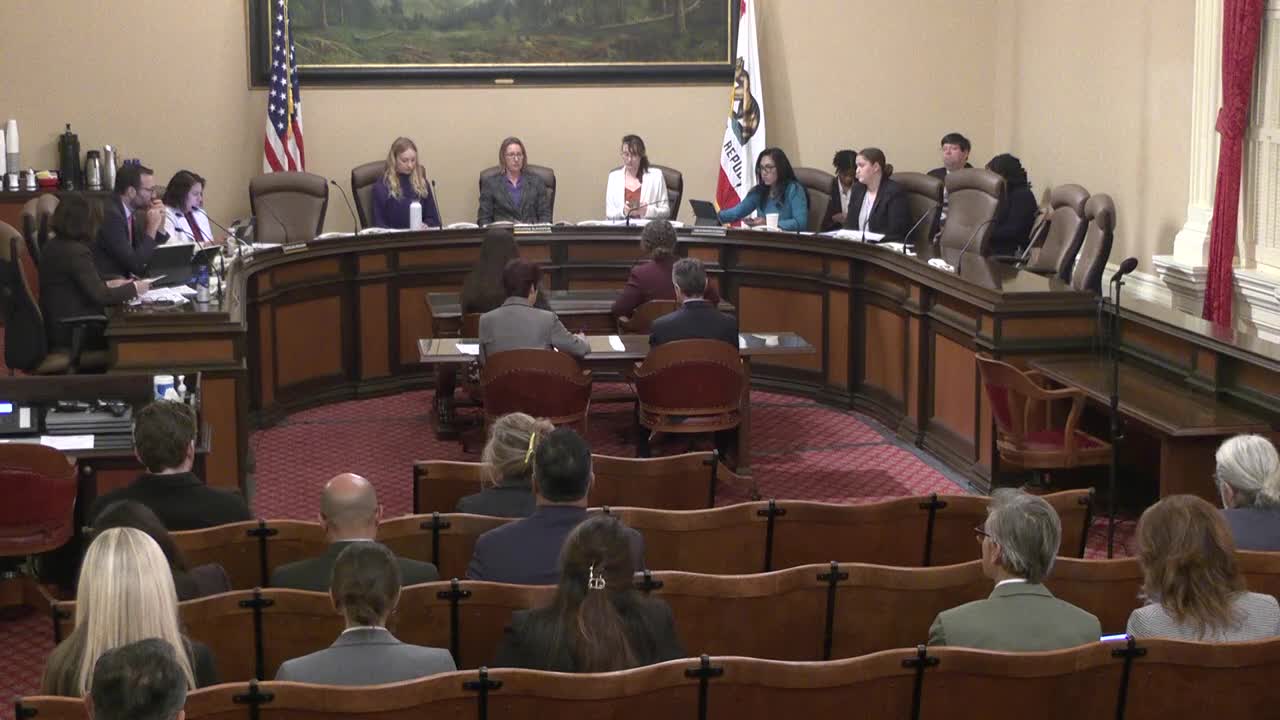 16MIN
Senate Standing Committee on Environmental Quality
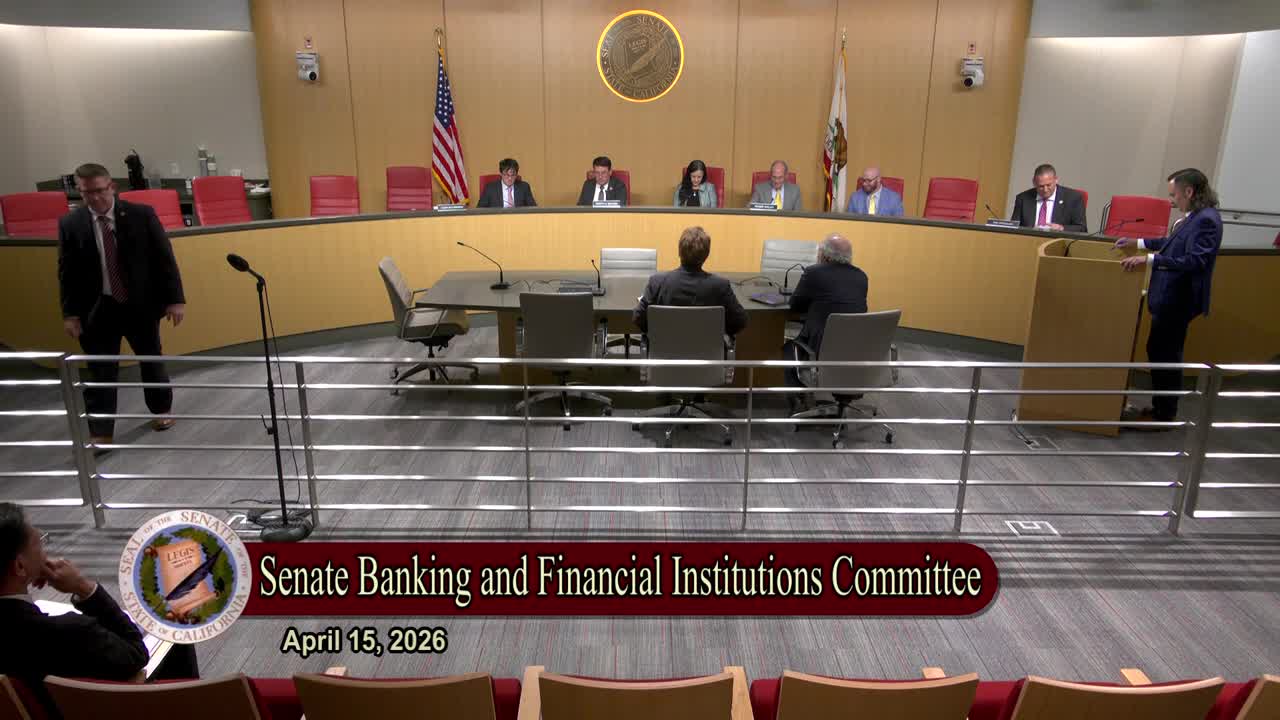 23MIN
Senate Standing Committee on Banking and Financial Institutions
Bill Author

Bill Co-Author(s):