SB 1303: Naturopathic Doctors Act.
- Session Year: 2025-2026
- House: Senate
- Latest Version Date: 2026-09-20
Current Status:
Passed
(2026-09-20: Chaptered by Secretary of State. Chapter 430, Statutes of 2026.)
Introduced
In Committee
Awaiting First Chamber Vote
Passed First Chamber
In Committee
Awaiting Second Chamber Vote
Passed Second Chamber
Enacted
Existing law, the Naturopathic Doctors Act, which is repealed on January 1, 2027, establishes the California Board of Naturopathic Medicine within the Department of Consumer Affairs to license and regulate naturopathic doctors. The act requires the board to consist of 9 members, appointed by the Governor, Speaker of the Assembly, or the Senate Committee on Rules, as specified, and requires each member of the board be appointed to a 4-year term.
This bill would instead repeal those provisions on January 1, 2031. The bill would specify that the 4-year term expires 4 years after the date of the appointment. To ensure staggered terms, the bill would require that specified members appointed by the Governor after the effective date of this bill be appointed for prescribed term lengths and thereafter would require all appointments be for four-year terms. The bill would also make nonsubstantive changes to the provisions specifying the appointment authorities for the board members.
Existing law sets forth fees associated with the application and renewal of a license, including a renewal fee of $1,000 and authorizing an increase to not more than $1,200.
This bill would, instead, specify that this fee range applies to the renewal of an active license and would require the renewal fee for an inactive license to be one-half of the current renewal fee for an active license. The bill would authorize the board to accept the voluntary cancellation of a naturopathic doctors license, as prescribed, upon the written request of the licensee, provided that the cancellation is not in lieu of an administrative enforcement action.
Existing law requires an applicant to have received a degree in naturopathic medicine from an approved naturopathic medical school, as specified. Existing law requires the board to approve a naturopathic medical school program that is accredited by the Council on Naturopathic Medical Education (CNME) or another federally recognized accrediting body if the program meets specified admission and program requirements.
This bill would, instead, require the board to approve a program that is accredited by either the CNME or a substantially equivalent accreditor, or that is housed in an accredited institution and meets standards substantially equivalent to those required by CNME, if the program meets the above-described admission and program requirements and other specified requirements.
Existing law, the Medical Practice Act, makes it a crime to practice or hold oneself out as practicing medicine, as specified, without having a certificate to do so. Under existing law, providing services other than those specified is not a violation of that crime if the person providing those services discloses that they are not a licensed physician, among other things, and obtains a written acknowledgment from the client before providing those services.
The Naturopathic Doctors Act makes it a crime to claim to be a naturopathic doctor without a valid license under the act but does not restrict use of the title naturopath. The Naturopathic Doctors Act also does not limit activity otherwise allowed by law, including the practice of naturopathy, and authorizes an unlicensed person who engages in specified activities to represent that they practice naturopathy, if they comply with the above-described provisions of the Medical Practice Act.
This bill would revise and recast those provisions. Specifically, the bill would make it a crime to practice or hold oneself out as practicing naturopathic medicine, as specified, without having a license to do so. The bill would specify that engaging in activity that is otherwise allowed by law or using the title naturopath is a not a violation of this crime if the person complies with the above-described provisions of the Medical Practice Act and discloses they are not a naturopathic doctor, as provided. By establishing a new crime, this bill would impose a state-mandated local program.
Existing law, the Medical Practice Act, prohibits use of any fictitious, false, or assumed name by a physician and surgeon or any doctor of podiatric medicine, as specified, in any public communication, advertisement, sign, or announcement of a practice without a fictitious-name permit. Existing law requires the Medical Board of California or the Division of Licensing to issue a fictitious-name permit if the applicant for the permit satisfies certain conditions, including having a name that includes specified designations.
This bill would prohibit the use of any fictitious, false, or assumed name by a naturopathic doctor, as specified, in any public communication, advertisement, sign, or announcement of a practice without a fictitious-name permit. The bill would require the California Board of Naturopathic Medicine to issue a fictitious-name permit if the applicant for the permit satisfies certain conditions. The bill would require the application fee for a fictitious name permit to be $100 and would require the renewal fee for a fictitious-name permit to be $50.
The Naturopathic Doctors Act authorizes the board to grant a license to an applicant who meets specified requirements, but who graduated before 1986, and passed a state or Canadian Province naturopathic licensing examination, as specified. The act requires that applications under this provision be received no later than December 31, 2007.
This bill would repeal those provisions.
The California Constitution requires the state to reimburse local agencies and school districts for certain costs mandated by the state. Statutory provisions establish procedures for making that reimbursement.
This bill would provide that no reimbursement is required by this act for a specified reason.
Existing law, the Naturopathic Doctors Act, which is repealed on January 1, 2027, establishes the California Board of Naturopathic Medicine within the Department of Consumer Affairs to license and regulate naturopathic doctors. The act requires the board to consist of 9 members, appointed by the Governor, Speaker of the Assembly, or the Senate Committee on Rules, as specified, and requires each member of the board be appointed to a 4-year term.
This bill would instead repeal those provisions on January 1, 2031. The bill would specify that the 4-year term expires 4 years after the date of the appointment. To ensure staggered terms, the bill would require that specified members appointed by the Governor after the effective date of this bill be appointed for prescribed term lengths and thereafter would require all appointments be for four-year terms. The bill would also make nonsubstantive changes to the provisions specifying the appointment authorities for the board members.
Existing law sets forth fees associated with the application and renewal of a license, including a renewal fee of $1,000 and authorizing an increase to not more than $1,200.
This bill would, instead, specify that this fee range applies to the renewal of an active license and would require the renewal fee for an inactive license to be one-half of the current renewal fee for an active license. The bill would authorize the board to accept the voluntary cancellation of a naturopathic doctors license, as prescribed, upon the written request of the licensee, provided that the cancellation is not in lieu of an administrative enforcement action.
Existing law requires an applicant to have received a degree in naturopathic medicine from an approved naturopathic medical school, as specified. Existing law requires the board to approve a naturopathic medical school program that is accredited by the Council on Naturopathic Medical Education (CNME) or another federally recognized accrediting body if the program meets specified admission and program requirements.
This bill would, instead, require the board to approve a program that is accredited by either the CNME or a substantially equivalent accreditor, or that is housed in an accredited institution and meets standards substantially equivalent to those required by CNME, if the program meets the above-described admission and program requirements and other specified requirements.
Existing law, the Medical Practice Act, makes it a crime to practice or hold oneself out as practicing medicine, as specified, without having a certificate to do so. Under existing law, providing services other than those specified is not a violation of that crime if the person providing those services discloses that they are not a licensed physician, among other things, and obtains a written acknowledgment from the client before providing those services.
The Naturopathic Doctors Act makes it a crime to claim to be a naturopathic doctor without a valid license under the act but does not restrict use of the title naturopath. The Naturopathic Doctors Act also does not limit activity otherwise allowed by law, including the practice of naturopathy, and authorizes an unlicensed person who engages in specified activities to represent that they practice naturopathy, if they comply with the above-described provisions of the Medical Practice Act.
This bill would revise and recast those provisions. Specifically, the bill would make it a crime to practice or hold oneself out as practicing naturopathic medicine, as specified, without having a license to do so. The bill would specify that engaging in activity that is otherwise allowed by law or using the title naturopath is a not a violation of this crime if the person complies with the above-described provisions of the Medical Practice Act and discloses they are not a naturopathic doctor, as provided. By establishing a new crime, this bill would impose a state-mandated local program.
Existing law defines naturopathic medicine and authorizes a naturopathic doctor to perform specific health care functions. Existing law authorizes a naturopathic doctor to dispense, administer, order, prescribe, and furnish or perform, among other things, repair and care incidental to superficial lacerations and abrasions, except suturing, and the removal of foreign bodies located in the superficial tissues.This bill would, instead, authorize a naturopathic doctor to dispense, administer, order, prescribe, and furnish or perform minor office procedures, defined, in part, to mean care and operative procedures relative to lacerations, skin lesions, and abrasions, the incision and drainage of abscesses, and the trephination of subungual hematomas, among other specified procedures.Existing law authorizes a naturopathic doctor to furnish or order drugs, including Schedule III to Schedule V, inclusive, controlled substances, under specified circumstances, including, among others, that the drugs are furnished or ordered under the supervision of a physician and surgeon and in accordance with standardized procedures or protocols developed by the naturopathic doctor and their supervising physician and surgeon and that the board has certified that the naturopathic doctor has completed coursework in pharmacology, as specified. Existing law authorizes a naturopathic doctor to independently prescribe and administer other specified drugs.This bill would revise and recast the above-described authorizations to instead authorize a naturopathic doctor to prescribe Schedule II controlled substances pursuant to standardized procedures and under the supervision of a physician and surgeon, as specified, and to independently furnish, order, or prescribe any other drug or device except Schedule I controlled substances and any drug classes identified by the board by regulation, as specified. The bill would make conforming changes.Existing law, the Medical Practice Act, prohibits use of any fictitious, false, or assumed name by a physician and surgeon or any doctor of podiatric medicine, as specified, in any public communication, advertisement, sign, or announcement of a practice without a fictitious-name permit. Existing law requires the Medical Board of California or the Division of Licensing to issue a fictitious-name permit if the applicant for the permit satisfies certain conditions, including having a name that includes specified designations.
This bill would prohibit the use of any fictitious, false, or assumed name by a naturopathic doctor, as specified, in any public communication, advertisement, sign, or announcement of a practice without a fictitious-name permit. The bill would require the California Board of Naturopathic Medicine to issue a fictitious-name permit if the applicant for the permit satisfies certain conditions. The bill would require the application fee for a fictitious name permit to be $100 and would require the renewal fee for a fictitious-name permit to be $50.
The Naturopathic Doctors Act authorizes the board to grant a license to an applicant who meets specified requirements, but who graduated before 1986, and passed a state or Canadian Province naturopathic licensing examination, as specified. The act requires that applications under this provision be received no later than December 31, 2007.
This bill would repeal those provisions.
Existing workers compensation law generally requires employers to secure the payment of workers compensation, including medical treatment, for injuries incurred by their employees that arise out of, or in the course of, employment. Existing law defines physician for this purpose to include, among others, physician and surgeons, acupuncturists, and chiropractic practitioners.This bill would additionally define physician for purposes of workers compensation law to include naturopathic doctors.Existing law provides for the issuance of a special license plate for disabled persons, as specified, and requires submission of a certificate substantiating the disability before issuing the plate. Existing law requires the certificate to be signed by a physician and surgeon, or, to the extent that it does not reduce federal aid highway funds, other specified health care providers.This bill would additionally authorize naturopathic doctors to sign the above-described certificate to the extent it does not reduce federal aid highway funds and would make conforming changes.The California Constitution requires the state to reimburse local agencies and school districts for certain costs mandated by the state. Statutory provisions establish procedures for making that reimbursement.
This bill would provide that no reimbursement is required by this act for a specified reason.
Existing law, the Naturopathic Doctors Act, which is repealed on January 1, 2027, establishes the California Board of Naturopathic Medicine within the Department of Consumer Affairs to license and regulate naturopathic doctors. The act requires the board to consist of 9 members, appointed by the Governor, Speaker of the Assembly, or the Senate Committee on Rules, as specified, and requires each member of the board be appointed to a 4-year term.
This bill would instead repeal those provisions on January 1, 2031. The bill would specify that the 4-year term expires 4 years after the date of the appointment. To ensure staggered terms, the bill would require that specified members appointed by the Governor after the effective date of this bill be appointed for prescribed term lengths and thereafter would require all appointments be for four-year terms. The bill would also make nonsubstantive changes to the provisions specifying the appointment authorities for the board members.
Existing law sets forth fees associated with the application and renewal of a license, including a renewal fee of $1,000 and authorizing an increase to not more than $1,200.
This bill would, instead, specify that this fee range applies to the renewal of an active license and would require the renewal fee for an inactive license to be one-half of the current renewal fee for an active license. The bill would authorize the board to accept the voluntary cancellation of a naturopathic doctors license, as prescribed, upon the written request of the licensee, provided that the cancellation is not in lieu of an administrative enforcement action.
Existing law requires an applicant to have received a degree in naturopathic medicine from an approved naturopathic medical school, as specified. Existing law requires the board to approve a naturopathic medical school program that is accredited by the Council on Naturopathic Medical Education (CNME) or another federally recognized accrediting body if the program meets specified admission and program requirements.
This bill would, instead, require the board to approve a program that is accredited by either the CNME or a substantially equivalent accreditor, or that is housed in an accredited institution and meets standards substantially equivalent to those required by CNME, if the program meets the above-described admission and program requirements and other specified requirements.
Existing law, the Medical Practice Act, makes it a crime to practice or hold oneself out as practicing medicine, as specified, without having a certificate to do so. Under existing law, providing services other than those specified is not a violation of that crime if the person providing those services discloses that they are not a licensed physician, among other things, and obtains a written acknowledgment from the client before providing those services.
The Naturopathic Doctors Act makes it a crime to claim to be a naturopathic doctor without a valid license under the act but does not restrict use of the title naturopath. The Naturopathic Doctors Act also does not limit activity otherwise allowed by law, including the practice of naturopathy, and authorizes an unlicensed person who engages in specified activities to represent that they practice naturopathy, if they comply with the above-described provisions of the Medical Practice Act.
This bill would revise and recast those provisions. Specifically, the bill would make it a crime to practice or hold oneself out as practicing naturopathic medicine, as specified, without having a license to do so. The bill would specify that engaging in activity that is otherwise allowed by law or using the title naturopath is a not a violation of this crime if the person complies with the above-described provisions of the Medical Practice Act and discloses they are not a naturopathic doctor, as provided. By establishing a new crime, this bill would impose a state-mandated local program.
Existing law defines naturopathic medicine and authorizes a naturopathic doctor to perform specific health care functions. Existing law authorizes a naturopathic doctor to dispense, administer, order, prescribe, and furnish or perform, among other things, repair and care incidental to superficial lacerations and abrasions, except suturing, and the removal of foreign bodies located in the superficial tissues.
This bill would, instead, authorize a naturopathic doctor to dispense, administer, order, prescribe, and furnish or perform minor office procedures, defined, in part, to mean care and operative procedures relative to lacerations, skin lesions, and abrasions, the incision and drainage of abscesses, and the trephination of subungual hematomas, among other specified procedures.
Existing law authorizes a naturopathic doctor to furnish or order drugs, including Schedule III to Schedule V, inclusive, controlled substances, under specified circumstances, including, among others, that the drugs are furnished or ordered under the supervision of a physician and surgeon and in accordance with standardized procedures or protocols developed by the naturopathic doctor and their supervising physician and surgeon and that the board has certified that the naturopathic doctor has completed coursework in pharmacology, as specified. Existing law authorizes a naturopathic doctor to independently prescribe and administer other specified drugs.
This bill would revise and recast the above-described authorizations to instead authorize a naturopathic doctor to prescribe Schedule II controlled substances pursuant to standardized procedures and under the supervision of a physician and surgeon, as specified, and to independently furnish, order, or prescribe any other drug or device except Schedule I controlled substances and any drug classes identified by the board by regulation, as specified. The bill would make conforming changes.
Existing law, the Medical Practice Act, prohibits use of any fictitious, false, or assumed name by a physician and surgeon or any doctor of podiatric medicine, as specified, in any public communication, advertisement, sign, or announcement of a practice without a fictitious-name permit. Existing law requires the Medical Board of California or the Division of Licensing to issue a fictitious-name permit if the applicant for the permit satisfies certain conditions, including having a name that includes specified designations.
This bill would prohibit the use of any fictitious, false, or assumed name by a naturopathic doctor, as specified, in any public communication, advertisement, sign, or announcement of a practice without a fictitious-name permit. The bill would require the California Board of Naturopathic Medicine to issue a fictitious-name permit if the applicant for the permit satisfies certain conditions. The bill would require the application fee for a fictitious name permit to be $100 and would require the renewal fee for a fictitious-name permit to be $50.
The Naturopathic Doctors Act authorizes the board to grant a license to an applicant who meets specified requirements, but who graduated before 1986, and passed a state or Canadian Province naturopathic licensing examination, as specified. The act requires that applications under this provision be received no later than December 31, 2007.
This bill would repeal those provisions.
Existing workers compensation law generally requires employers to secure the payment of workers compensation, including medical treatment, for injuries incurred by their employees that arise out of, or in the course of, employment. Existing law defines physician for this purpose to include, among others, physician and surgeons, acupuncturists, and chiropractic practitioners.
This bill would additionally define physician for purposes of workers compensation law to include naturopathic doctors.
Existing law provides for the issuance of a special license plate for disabled persons, as specified, and requires submission of a certificate substantiating the disability before issuing the plate. Existing law requires the certificate to be signed by a physician and surgeon, or, to the extent that it does not reduce federal aid highway funds, other specified health care providers.
This bill would additionally authorize naturopathic doctors to sign the above-described certificate to the extent it does not reduce federal aid highway funds and would make conforming changes.
The California Constitution requires the state to reimburse local agencies and school districts for certain costs mandated by the state. Statutory provisions establish procedures for making that reimbursement.
This bill would provide that no reimbursement is required by this act for a specified reason.
Existing law, the Naturopathic Doctors Act, which is repealed on January 1, 2027, establishes the California Board of Naturopathic Medicine within the Department of Consumer Affairs to license and regulate naturopathic doctors. The act requires the board to consist of 9 members, appointed by the Governor, Speaker of the Assembly, or the Senate Committee on Rules, as specified, and requires each member of the board be appointed to a 4-year term.
This bill would instead repeal those provisions on January 1, 2031. The bill would specify that the 4-year term expires 4 years after the date of the appointment. To ensure staggered terms, the bill would require that specified members appointed by the Governor after the effective date of this bill be appointed for prescribed term lengths and thereafter would require all appointments be for four-year terms. The bill would also make nonsubstantive changes to the provisions specifying the appointment authorities for the board members.
Existing law sets forth fees associated with the application and renewal of a license, including a renewal fee of $1,000 and authorizing an increase to not more than $1,200.
This bill would, instead, specify that this fee range applies to the renewal of an active license and would require the renewal fee for an inactive license to be one-half of the current renewal fee for an active license. The bill would authorize the board to accept the voluntary cancellation of a naturopathic doctors license, as prescribed, upon the written request of the licensee, provided that the cancellation is not in lieu of an administrative enforcement action.
Existing law, the Medical Practice Act, prohibits use of any fictitious, false, or assumed name by a physician and surgeon or any doctor of podiatric medicine, as specified, in any public communication, advertisement, sign, or announcement of a practice without a fictitious-name permit. Existing law requires the Medical Board of California or the Division of Licensing to issue a fictitious-name permit if the applicant for the permit satisfies certain conditions, including having a name that includes specified designations.
This bill would prohibit the use of any fictitious, false, or assumed name by a naturopathic doctor, as specified, in any public communication, advertisement, sign, or announcement of a practice without a fictitious-name permit. The bill would require the California Board of Naturopathic Medicine to issue a fictitious-name permit if the applicant for the permit satisfies certain conditions. The bill would require the application fee for a fictitious name permit to be $100 and would require the renewal fee for a fictitious-name permit to be $50.
The Naturopathic Doctors Act authorizes the board to grant a license to an applicant who meets specified requirements, but who graduated before 1986, and passed a state or Canadian Province naturopathic licensing examination, as specified. The act requires that applications under this provision be received no later than December 31, 2007.
This bill would repeal those provisions.
Existing law, the Naturopathic Doctors Act, which is repealed on January 1, 2027, establishes the California Board of Naturopathic Medicine within the Department of Consumer Affairs to license and regulate naturopathic doctors. The act requires the board to consist of 9 members, appointed by the Governor, Speaker of the Assembly, or the Senate Committee on Rules, as specified, and requires each member of the board be appointed to a 4-year term.
This bill would specify that the 4-year term expires 4 years after the date of the appointment. The bill would also make nonsubstantive changes to the provisions specifying the appointment authorities for the board members.
The Naturopathic Doctors Act authorizes the board to grant a license to an applicant who meets specified requirements, but who graduated before 1986, and passed a state or Canadian Province naturopathic licensing examination, as specified. The act requires that applications under this provision be received no later than December 31, 2007.
This bill would repeal those provisions.
It is the intent of the Legislature to work with stakeholders and the California Board of Naturopathic Medicine to evaluate opportunities to authorize naturopathic doctors to provide additional services to patients for which they are trained, educated, and qualified and that will expand access to safe, holistic, and preventive care for Californias consumers.
SEC. 2.Section 3621 of the Business and Professions Code is amended to read:3621.(a)The board shall consist of nine members. Seven members shall be appointed by the Governor, one public member shall be appointed by the Senate Committee on Rules, and one public member shall be appointed by the Speaker of the Assembly. Members of the board shall include five members who are California-licensed naturopathic doctors, two members who are California-licensed physicians and surgeons, and two public members.
(b)(1)A member of the board shall be appointed for a four-year term that shall expire four years after the date of the appointment. A person shall not serve as a member of the board for more than two consecutive terms. A member shall hold office until the appointment and qualification of the members successor, or until one year from the expiration of the term for which the member was appointed, whichever first occurs. Vacancies shall be filled by appointment for unexpired terms.
(2)Notwithstanding paragraph (1), to ensure staggered terms, the terms for a member appointed by the Governor after the effective date of the act adding this subdivision shall be as follows:
(A)Two members shall serve an initial term of two years.
(B)Two members shall serve an initial term of three years.
(C)Three members shall serve an initial term of four years.
(D)Thereafter, all appointments shall be for four-year terms.
(c)(1)A public member of the board shall be a resident of this state for at least five years preceding the public members appointment.
(2)A person shall not be appointed as a public member if the person or the persons immediate family in any manner owns an interest in a college, school, or institution engaged in naturopathic education, or the person or the persons immediate family has an economic interest in naturopathy or has any other conflict of interest. Immediate family means the public members spouse, domestic partner, parents, children, or childrens spouses or domestic partners.
(d)Each member of the board shall receive a per diem and expenses as provided in Section 103.
(e)The board may appoint a person exempt from civil service who shall be designated as an executive officer and who shall exercise the powers and perform the duties delegated by the board and vested in the executive officer by this chapter.
(f)Each appointing authority has power to remove from office at any time any member of the board appointed by that authority pursuant to Section 106.
SEC. 3.Section 3623 of the Business and Professions Code is amended to read:3623.(a)The board shall approve a naturopathic medical education program that has the following minimum requirements:
(1)Admission requirements that include a minimum of three-quarters of the credits required for a bachelors degree from a regionally accredited or preaccredited college or university or the equivalency, as determined by the council.
(2)Program requirements for its degree or diploma of a minimum of 4,100 total hours in basic and clinical sciences, naturopathic philosophy, naturopathic modalities, and naturopathic medicine. Of the total requisite hours, not less than 2,500 hours shall consist of academic instruction, and not less than 1,200 hours shall consist of supervised clinical training approved by the naturopathic medical school.
(3)The program is offered by an institution located in the United States or Canada.
(4)The program offers a full-time, doctoral level, naturopathic medical education program with didactic and supervised clinical training with live patient encounters. A program offered entirely or primarily online shall not qualify.
(5)The programs graduates are eligible to apply to the North American Board of Naturopathic Examiners that administers the naturopathic licensing examination and to the board for licensure.
(6)The program meets either of the following criteria:
(A)The program is accredited by the Council on Naturopathic Medical Education (CNME) or another accreditor that is substantially equivalent to CNME, as determined by the board.
(B)The program is housed in an institution that is accredited by an agency recognized by either the federal Department of Education or the Council for Higher Education Accreditation and the program meets standards substantially equivalent to those required by CNME, including supervised clinical training and outcomes.
(b)The naturopathic medical program shall evaluate an applicants education, training, and experience obtained in the armed services, pursuant to Section 35, and provide course credit where applicable.
SEC. 4.Section 3633.1 of the Business and Professions Code is repealed.SEC. 5.Section 3636.1 is added to the Business and Professions Code, to read:3636.1.(a)The board may accept the voluntary cancellation of a naturopathic doctors license upon the written request of the licensee, provided that the cancellation is not in lieu of an administrative enforcement action.
(b)A license that has been voluntarily canceled under this section shall be deemed surrendered and shall not be reinstated. A former licensee who wishes to resume practice shall be required to apply for a new license and meet all current requirements for licensure.
(c)The board may adopt regulations as necessary to implement this section, including the process for submitting a written request for voluntary cancellation.
SEC. 6.Section 3638 is added to the Business and Professions Code, to read:3638.(a)Any naturopathic doctor who as a sole proprietor, or in a partnership, group, or professional corporation, desires to practice under any name that would otherwise be a violation of Section 3661.5 may practice under that name if the proprietor, partnership, group, or corporation obtains and maintains in current status a fictitious-name permit issued by the board, under the provisions of this section.
(b)The board shall issue a fictitious-name permit authorizing the holder thereof to use the name specified in the permit in connection with their practice if the division or the board finds to its satisfaction that:
(1)The applicant or applicants or shareholders of the professional corporation hold valid and current licenses as naturopathic doctors.
(2)The professional practice of the applicant or applicants is wholly owned and entirely controlled by one or more naturopathic doctors, except as otherwise permitted by law.
(3)The name under which the applicant or applicants propose to practice is not deceptive, misleading, or confusing.
(c)Each permit shall be accompanied by a notice that shall be displayed in a location readily visible to patients and staff. The notice shall be displayed at each place of business identified in the permit.
(d)This section shall not apply to licensees who contract with, are employed by, or are on the staff of, any clinic licensed by the State Department of Health Care Services under Chapter 1 (commencing with Section 1200) of Division 2 of the Health and Safety Code or any naturopathic medical education program approved by the board, or a faculty practice plan affiliated with that program.
(e)Fictitious-name permits issued under this section shall be subject to renewal and shall expire concurrently with the license of the naturopathic doctor, unless otherwise specified by the board by regulation.
(f)The board may revoke or suspend any permit issued if it finds that the holder or holders of the permit are not in compliance with the provisions of this section or any regulations adopted pursuant to this section. Proceedings to revoke or suspend a fictitious-name permit shall be conducted in accordance with the Administrative Procedure Act (Chapter 5 (commencing with Section 11500) of Part 1 of Division 3 of Title 2 of the Government Code).
(g)A fictitious-name permit issued to any licensee in a sole practice is automatically revoked in the event the licensees certificate to practice naturopathic medicine is revoked.
(h)The board may delegate to the executive officer, or to another official of the board, its authority to review and approve applications for fictitious-name permits and to issue those permits.
(i)The board shall adopt and administer regulations to implement this section, including, but not limited to, specifying appropriate naturopathic medical name designations and standards to ensure that the public is not misled regarding the nature of services provided.
SEC. 7.Section 3643.5 of the Business and Professions Code is amended to read:3643.5.This chapter may not be construed to limit the practice of a person licensed, certified, or registered under any other provision of law relating to the healing arts when the person is engaged in their authorized and licensed practice.
SEC. 8.Section 3644 of the Business and Professions Code is amended to read:3644.This chapter does not prevent or restrict the practice, services, or activities of any of the following:
(a)A person licensed, certified, or otherwise recognized in this state by any other law or regulation if that person is engaged in the profession or occupation for which they are licensed, certified, or otherwise recognized.
(b)A person employed by the federal government in the practice of naturopathic medicine while the person is engaged in the performance of duties prescribed by laws and regulations of the United States.
(c)A person rendering aid to a family member or in an emergency, if no fee or other consideration for the service is charged, received, expected, or contemplated.
(d)A person who makes recommendations regarding or is engaged in the sale of food, extracts of food, nutraceuticals, vitamins, amino acids, minerals, enzymes, botanicals and their extracts, botanical medicines, homeopathic medicines, dietary supplements, and nonprescription drugs or other products of nature, the sale of which is not otherwise prohibited under state or federal law.
(e)A person engaged in good faith in the practice of the religious tenets of any church or religious belief without using prescription drugs.
(f)A person acting in good faith for religious reasons as a matter of conscience or based on a personal belief, while obtaining or providing information regarding health care and the use of any product described in subdivision (d).
(g)A person who provides the following recommendations regarding the human body and its function:
(1)Nonprescription products.
(2)Natural elements such as air, heat, water, and light.
(3)Class I or class II nonprescription, approved medical devices, as defined in Section 360c of Title 21 of the United States Code.
(4)Vitamins, minerals, herbs, homeopathics, natural food products and their extracts, and nutritional supplements.
(h)A person who is licensed in another state, territory, or the District of Columbia to practice naturopathic medicine if the person is incidentally called into this state for consultation with a naturopathic doctor.
(i)A student enrolled in an approved naturopathic medical program whose services are performed pursuant to a course of instruction under the supervision of a naturopathic doctor.
SEC. 9.Section 3660.5 is added to the Business and Professions Code, to read:3660.5.(a)(1)Notwithstanding Section 146, any person who practices or attempts to practice, or who advertises or holds themself out as practicing naturopathic medicine for the treatment of the sick or afflicted in this state, or who diagnoses, treats, or prescribes for any ailment, blemish, deformity, disease, disfigurement, disorder, injury, or other physical or mental condition of any person, without having at the time of so doing a valid, unrevoked, or unsuspended certificate as provided in this chapter or without being authorized to perform the act pursuant to a certificate obtained in accordance with some other provision of law is guilty of a public offense, punishable by a fine not exceeding ten thousand dollars ($10,000), by imprisonment pursuant to subdivision (h) of Section 1170 of the Penal Code, by imprisonment in a county jail not exceeding one year, or by both the fine and either imprisonment.
(2)Any person who conspires with or aids or abets another to commit any act described in paragraph (1) is guilty of a public offense, subject to the punishment described in that paragraph.
(3)The remedy provided in this subdivision shall not preclude any other remedy provided by law.
(b)Notwithstanding any other law, a person who engages in activity that does not require licensure or is otherwise allowed by law, including the practice of naturopathy, or who uses a title in compliance with Section 3645 shall not be in violation of subdivision (a) if that person does all of the following:
(1)Complies with Section 2053.5.
(2)Discloses in all advertisements that they are not licensed by the state as a naturopathic doctor.
(3)Provides a prospective client, before providing services, a statement written in plain language that complies with Section 2053.6 and discloses that the person is not a licensed naturopathic doctor.
(4)Obtains a written acknowledgment, provided in a language preferred by the client, stating that the client has been provided with the information required by paragraph (3). The client shall be provided with a copy of the written acknowledgment and the written acknowledgment shall be maintained by the person for three years.
SEC. 10.Section 3661.5 is added to the Business and Professions Code, to read:3661.5.The use of any fictitious, false, or assumed name, or any name other than their own by a licensee either alone, in conjunction with a partnership or group, or as the name of a professional corporation, in any public communication, advertisement, sign, or announcement of their practice without a fictitious-name permit obtained pursuant to Section 3638 constitutes unprofessional conduct. This section shall not apply to either of the following:
(a)Licensees who are employed by a partnership, a group, or a professional corporation that holds a fictitious name permit.
(b)Licensees who contract with, are employed by, or are on the staff of, any clinic licensed by the State Department of Health Care Services under Chapter 1 (commencing with Section 1200) of Division 2 of the Health and Safety Code.
SEC. 11.Section 3680 of the Business and Professions Code is amended to read:3680.(a)The application fee for a doctor of naturopathic medicine shall be no more than five hundred dollars ($500) and may be increased to not more than six hundred dollars ($600).
(b)The initial license fee shall be one thousand dollars ($1,000) and may be increased to not more than one thousand two hundred dollars ($1,200).
(c)(1)The renewal fee for an active license shall be one thousand dollars ($1,000) and may be increased to not more than one thousand two hundred dollars ($1,200).
(2)The renewal fee for an inactive license shall be one-half of the current renewal fee for an active license.
(d)The late renewal fee for a license shall be two hundred twenty-five dollars ($225).
(e)The fee for processing fingerprint cards shall be the current fee charged by the Department of Justice.
(f)The fee for a duplicate or replacement license shall be thirty-eight dollars ($38).
(g)The fee for a certified license verification shall be thirty dollars ($30).
(h)The application fee for a fictitious name permit shall be one hundred dollars ($100).
(i)The renewal fee for a fictitious name permit shall be fifty dollars ($50).
SEC. 12.Section 3686 of the Business and Professions Code is amended to read:3686.This chapter shall remain in effect only until January 1, 2031, and as of that date is repealed.
SEC. 13.No reimbursement is required by this act pursuant to Section 6 of Article XIIIB of the California Constitution because the only costs that may be incurred by a local agency or school district will be incurred because this act creates a new crime or infraction, eliminates a crime or infraction, or changes the penalty for a crime or infraction, within the meaning of Section 17556 of the Government Code, or changes the definition of a crime within the meaning of Section 6 of Article XIIIB of the California Constitution.
It is the intent of the Legislature to work with stakeholders and the California Board of Naturopathic Medicine to evaluate opportunities to authorize naturopathic doctors to provide additional services to patients for which they are trained, educated, and qualified and that will expand access to safe, holistic, and preventive care for Californias consumers.
SEC. 2.Section 3621 of the Business and Professions Code is amended to read:3621.(a)The board shall consist of nine members. Seven members shall be appointed by the Governor, one public member shall be appointed by the Senate Committee on Rules, and one public member shall be appointed by the Speaker of the Assembly. Members of the board shall include five members who are California-licensed naturopathic doctors, two members who are California-licensed physicians and surgeons, and two public members.
(b)(1)A member of the board shall be appointed for a four-year term that shall expire four years after the date of the appointment. A person shall not serve as a member of the board for more than two consecutive terms. A member shall hold office until the appointment and qualification of the members successor, or until one year from the expiration of the term for which the member was appointed, whichever first occurs. Vacancies shall be filled by appointment for unexpired terms.
(2)Notwithstanding paragraph (1), to ensure staggered terms, the terms for a member appointed by the Governor after the effective date of the act adding this subdivision shall be as follows:
(A)Two members shall serve an initial term of two years.
(B)Two members shall serve an initial term of three years.
(C)Three members shall serve an initial term of four years.
(D)Thereafter, all appointments shall be for four-year terms.
(c)(1)A public member of the board shall be a resident of this state for at least five years preceding the public members appointment.
(2)A person shall not be appointed as a public member if the person or the persons immediate family in any manner owns an interest in a college, school, or institution engaged in naturopathic education, or the person or the persons immediate family has an economic interest in naturopathy or has any other conflict of interest. Immediate family means the public members spouse, domestic partner, parents, children, or childrens spouses or domestic partners.
(d)Each member of the board shall receive a per diem and expenses as provided in Section 103.
(e)The board may appoint a person exempt from civil service who shall be designated as an executive officer and who shall exercise the powers and perform the duties delegated by the board and vested in the executive officer by this chapter.
(f)Each appointing authority has power to remove from office at any time any member of the board appointed by that authority pursuant to Section 106.
SEC. 3.Section 3623 of the Business and Professions Code is amended to read:3623.(a)The board shall approve a naturopathic medical education program that has the following minimum requirements:
(1)Admission requirements that include a minimum of three-quarters of the credits required for a bachelors degree from a regionally accredited or preaccredited college or university or the equivalency, as determined by the council.
(2)Program requirements for its degree or diploma of a minimum of 4,100 total hours in basic and clinical sciences, naturopathic philosophy, naturopathic modalities, and naturopathic medicine. Of the total requisite hours, not less than 2,500 hours shall consist of academic instruction, and not less than 1,200 hours shall consist of supervised clinical training approved by the naturopathic medical school.
(3)The program is offered by an institution located in the United States or Canada.
(4)The program offers a full-time, doctoral level, naturopathic medical education program with didactic and supervised clinical training with live patient encounters. A program offered entirely or primarily online shall not qualify.
(5)The programs graduates are eligible to apply to the North American Board of Naturopathic Examiners that administers the naturopathic licensing examination and to the board for licensure.
(6)The program meets either of the following criteria:
(A)The program is accredited by the Council on Naturopathic Medical Education (CNME) or another accreditor that is substantially equivalent to CNME, as determined by the board.
(B)The program is housed in an institution that is accredited by an agency recognized by either the federal Department of Education or the Council for Higher Education Accreditation and the program meets standards substantially equivalent to those required by CNME, including supervised clinical training and outcomes.
(b)The naturopathic medical program shall evaluate an applicants education, training, and experience obtained in the armed services, pursuant to Section 35, and provide course credit where applicable.
SEC. 4.Section 3633.1 of the Business and Professions Code is repealed.SEC. 5.Section 3636.1 is added to the Business and Professions Code, to read:3636.1.(a)The board may accept the voluntary cancellation of a naturopathic doctors license upon the written request of the licensee, provided that the cancellation is not in lieu of an administrative enforcement action.
(b)A license that has been voluntarily canceled under this section shall be deemed surrendered and shall not be reinstated. A former licensee who wishes to resume practice shall be required to apply for a new license and meet all current requirements for licensure.
(c)The board may adopt regulations as necessary to implement this section, including the process for submitting a written request for voluntary cancellation.
SEC. 6.Section 3638 is added to the Business and Professions Code, to read:3638.(a)Any naturopathic doctor who as a sole proprietor, or in a partnership, group, or professional corporation, desires to practice under any name that would otherwise be a violation of Section 3661.5 may practice under that name if the proprietor, partnership, group, or corporation obtains and maintains in current status a fictitious-name permit issued by the board, under the provisions of this section.
(b)The board shall issue a fictitious-name permit authorizing the holder thereof to use the name specified in the permit in connection with their practice if the division or the board finds to its satisfaction that:
(1)The applicant or applicants or shareholders of the professional corporation hold valid and current licenses as naturopathic doctors.
(2)The professional practice of the applicant or applicants is wholly owned and entirely controlled by one or more naturopathic doctors, except as otherwise permitted by law.
(3)The name under which the applicant or applicants propose to practice is not deceptive, misleading, or confusing.
(c)Each permit shall be accompanied by a notice that shall be displayed in a location readily visible to patients and staff. The notice shall be displayed at each place of business identified in the permit.
(d)This section shall not apply to licensees who contract with, are employed by, or are on the staff of, any clinic licensed by the State Department of Health Care Services under Chapter 1 (commencing with Section 1200) of Division 2 of the Health and Safety Code or any naturopathic medical education program approved by the board, or a faculty practice plan affiliated with that program.
(e)Fictitious-name permits issued under this section shall be subject to renewal and shall expire concurrently with the license of the naturopathic doctor, unless otherwise specified by the board by regulation.
(f)The board may revoke or suspend any permit issued if it finds that the holder or holders of the permit are not in compliance with the provisions of this section or any regulations adopted pursuant to this section. Proceedings to revoke or suspend a fictitious-name permit shall be conducted in accordance with the Administrative Procedure Act (Chapter 5 (commencing with Section 11500) of Part 1 of Division 3 of Title 2 of the Government Code).
(g)A fictitious-name permit issued to any licensee in a sole practice is automatically revoked in the event the licensees certificate to practice naturopathic medicine is revoked.
(h)The board may delegate to the executive officer, or to another official of the board, its authority to review and approve applications for fictitious-name permits and to issue those permits.
(i)The board shall adopt and administer regulations to implement this section, including, but not limited to, specifying appropriate naturopathic medical name designations and standards to ensure that the public is not misled regarding the nature of services provided.
SEC. 7.Section 3640 of the Business and Professions Code is amended to read:3640.(a)A naturopathic doctor may order and perform physical and laboratory examinations for diagnostic purposes, including, but not limited to, phlebotomy, clinical laboratory tests, speculum examinations, orificial examinations, and physiological function tests.(b)A naturopathic doctor may order diagnostic imaging studies, including X-ray, ultrasound, mammogram, bone densitometry, and others, consistent with naturopathic training as determined by the board, but shall refer the studies to an appropriately licensed health care professional to conduct the study and interpret the results.(c)A naturopathic doctor may dispense, administer, order, prescribe, and furnish or perform the following:(1)Food, extracts of food, nutraceuticals, vitamins, amino acids, minerals, enzymes, botanicals and their extracts, botanical medicines, homeopathic medicines, all dietary supplements, and nonprescription drugs as defined by the Federal Food, Drug, and Cosmetic Act (21 U.S.C. Sec. 301 et seq.) consistent with the routes of administration identified in subdivision (d).(2)Hot or cold hydrotherapy; naturopathic physical medicine inclusive of the manual use of massage, stretching, resistance, or joint play examination but exclusive of small amplitude movement at or beyond the end range of normal joint motion; electromagnetic energy; colon hydrotherapy; and therapeutic exercise.(3)Devices, including, but not limited to, therapeutic devices, barrier contraception, and durable medical equipment.(4)Health education and health counseling.(5)Minor office procedures, including the following:(A)Care and operative procedures relative to lacerations, skin lesions, and abrasions.(B)Incision and drainage of abscesses.(C)Trephination of subungual hematomas.(D)Removal of foreign bodies.(E)Topical and parenteral use of local anesthetic solutions, their adjuncts, and diluents.(F)Obtaining samples of superficial human tissue by means of biopsy, consistent with the practice of naturopathic medicine.(d)A naturopathic doctor may utilize the following routes of administration:(1)Oral.(2)Nasal.(3)Auricular.(4)Ocular.(5)Rectal.(6)Vaginal.(7)Transdermal.(8)Intradermal.(9)Subcutaneous.(10)Intravenous.(11)Intramuscular.(e)The board may establish regulations regarding ocular or intravenous routes of administration consistent with the education and training of a naturopathic doctor.(f)This section does not exempt a naturopathic doctor from meeting applicable licensure requirements for the performance of clinical laboratory tests.SEC. 8.Section 3640.5 of the Business and Professions Code is repealed.SEC. 9.Section 3640.5 is added to the Business and Professions Code, to read:3640.5.(a)For purposes of this code and the Health and Safety Code, the following shall apply:(1)Drug order includes an order for medication issued by a naturopathic doctor to or for an ultimate user.(2)A drug order issued by a naturopathic doctor shall be treated in the same manner as a prescription.(3)The signature of a naturopathic doctor on a drug order or a prescription shall be deemed to be the signature of a prescriber.(b)A naturopathic doctor may independently furnish, order, or prescribe any drug or device that is not any of the following:(1)A Schedule I controlled substance under the California Uniform Controlled Substances Act (Division 10 (commencing with Section 11000) of the Health and Safety Code).(2)A Schedule II controlled substance California Uniform Controlled Substances Act (Division 10 (commencing with Section 11000) of the Health and Safety Code), except as authorized in subdivision (c).(3)Listed on the exclusionary drug formulary adopted by the board pursuant to subdivision (f).(c)A naturopathic doctor may furnish, order, or prescribe a Schedule II controlled substance only pursuant to standardized procedures or protocols developed jointly with, and approved by, a supervising physician and surgeon. The standardized procedures and protocols shall include patient-specific authorization. The physical presence of the supervising physician and surgeon is not required but the physician and surgeon shall be available by telephonic or electronic contact at the time of the patient examination.(d)A naturopathic doctor issuing a drug order or prescription for any controlled substance shall hold a valid federal Drug Enforcement Administration registration and shall comply with all applicable requirements of the Controlled Substance Utilization Review and Evaluation System.(e)A naturopathic doctor shall not furnish, order, or prescribe any drug unless the board has certified that the naturopathic doctor has satisfactorily completed pharmacology coursework covering the drugs authorized under this section. The board shall establish the requirements for satisfactory completion by regulation.(f)(1)The board shall adopt by regulation an exclusionary drug formulary identifying drug classes that a naturopathic doctor shall not independently furnish, order, or prescribe pursuant to this chapter.(2)The exclusionary drug formulary shall, at minimum, exclude:(A)Chemotherapeutic agents, including, but not limited to, cytotoxic drugs, targeted biologics, and immunotherapies.(B)Antipsychotic medications and mood stabilizers.(C)Immunosuppresants, including calcineurin inhibitors and biologic disease-modifying antirheumatic drugs.(D)Antiarrhythmics and intravenous vasodilators or inotropes.(E)General anesthetics and neuromuscular blockers.(3)The board shall review and update the exclusionary drug formulary on a regular basis to reflect changes in clinical practice, education, and patient safety standards.(g)This section does not limit the authority of a naturopathic doctor under Section 3640 to administer or prescribe natural substances, natural and synthetic hormones, or epinephrine for anaphylaxis unless explicitly excluded by the formulary adopted pursuant to subdivision (f) or otherwise prohibited by law.SEC. 10.Section 3640.7 of the Business and Professions Code is repealed.SEC. 11.SEC. 7.Section 3643.5 of the Business and Professions Code is amended to read:3643.5.This chapter may not be construed to limit the practice of a person licensed, certified, or registered under any other provision of law relating to the healing arts when the person is engaged in their authorized and licensed practice.
SEC. 12.SEC. 8.Section 3644 of the Business and Professions Code is amended to read:3644.This chapter does not prevent or restrict the practice, services, or activities of any of the following:
(a)A person licensed, certified, or otherwise recognized in this state by any other law or regulation if that person is engaged in the profession or occupation for which they are licensed, certified, or otherwise recognized.
(b)A person employed by the federal government in the practice of naturopathic medicine while the person is engaged in the performance of duties prescribed by laws and regulations of the United States.
(c)A person rendering aid to a family member or in an emergency, if no fee or other consideration for the service is charged, received, expected, or contemplated.
(d)A person who makes recommendations regarding or is engaged in the sale of food, extracts of food, nutraceuticals, vitamins, amino acids, minerals, enzymes, botanicals and their extracts, botanical medicines, homeopathic medicines, dietary supplements, and nonprescription drugs or other products of nature, the sale of which is not otherwise prohibited under state or federal law.
(e)A person engaged in good faith in the practice of the religious tenets of any church or religious belief without using prescription drugs.
(f)A person acting in good faith for religious reasons as a matter of conscience or based on a personal belief, while obtaining or providing information regarding health care and the use of any product described in subdivision (d).
(g)A person who provides the following recommendations regarding the human body and its function:
(1)Nonprescription products.
(2)Natural elements such as air, heat, water, and light.
(3)Class I or class II nonprescription, approved medical devices, as defined in Section 360c of Title 21 of the United States Code.
(4)Vitamins, minerals, herbs, homeopathics, natural food products and their extracts, and nutritional supplements.
(h)A person who is licensed in another state, territory, or the District of Columbia to practice naturopathic medicine if the person is incidentally called into this state for consultation with a naturopathic doctor.
(i)A student enrolled in an approved naturopathic medical program whose services are performed pursuant to a course of instruction under the supervision of a naturopathic doctor.
SEC. 13.SEC. 9.Section 3660.5 is added to the Business and Professions Code, to read:3660.5.(a)(1)Notwithstanding Section 146, any person who practices or attempts to practice, or who advertises or holds themself out as practicing naturopathic medicine for the treatment of the sick or afflicted in this state, or who diagnoses, treats, or prescribes for any ailment, blemish, deformity, disease, disfigurement, disorder, injury, or other physical or mental condition of any person, without having at the time of so doing a valid, unrevoked, or unsuspended certificate as provided in this chapter or without being authorized to perform the act pursuant to a certificate obtained in accordance with some other provision of law is guilty of a public offense, punishable by a fine not exceeding ten thousand dollars ($10,000), by imprisonment pursuant to subdivision (h) of Section 1170 of the Penal Code, by imprisonment in a county jail not exceeding one year, or by both the fine and either imprisonment.
(2)Any person who conspires with or aids or abets another to commit any act described in paragraph (1) is guilty of a public offense, subject to the punishment described in that paragraph.
(3)The remedy provided in this subdivision shall not preclude any other remedy provided by law.
(b)Notwithstanding any other law, a person who engages in activity that does not require licensure or is otherwise allowed by law, including the practice of naturopathy, or who uses a title in compliance with Section 3645 shall not be in violation of subdivision (a) if that person does all of the following:
(1)Complies with Section 2053.5.
(2)Discloses in all advertisements that they are not licensed by the state as a naturopathic doctor.
(3)Provides a prospective client, before providing services, a statement written in plain language that complies with Section 2053.6 and discloses that the person is not a licensed naturopathic doctor.
(4)Obtains a written acknowledgment, provided in a language preferred by the client, stating that the client has been provided with the information required by paragraph (3). The client shall be provided with a copy of the written acknowledgment and the written acknowledgment shall be maintained by the person for three years.
SEC. 14.SEC. 10.Section 3661.5 is added to the Business and Professions Code, to read:3661.5.The use of any fictitious, false, or assumed name, or any name other than their own by a licensee either alone, in conjunction with a partnership or group, or as the name of a professional corporation, in any public communication, advertisement, sign, or announcement of their practice without a fictitious-name permit obtained pursuant to Section 3638 constitutes unprofessional conduct. This section shall not apply to either of the following:
(a)Licensees who are employed by a partnership, a group, or a professional corporation that holds a fictitious name permit.
(b)Licensees who contract with, are employed by, or are on the staff of, any clinic licensed by the State Department of Health Care Services under Chapter 1 (commencing with Section 1200) of Division 2 of the Health and Safety Code.
SEC. 15.SEC. 11.Section 3680 of the Business and Professions Code is amended to read:3680.(a)The application fee for a doctor of naturopathic medicine shall be no more than five hundred dollars ($500) and may be increased to not more than six hundred dollars ($600).
(b)The initial license fee shall be one thousand dollars ($1,000) and may be increased to not more than one thousand two hundred dollars ($1,200).
(c)(1)The renewal fee for an active license shall be one thousand dollars ($1,000) and may be increased to not more than one thousand two hundred dollars ($1,200).
(2)The renewal fee for an inactive license shall be one-half of the current renewal fee for an active license.
(d)The late renewal fee for a license shall be two hundred twenty-five dollars ($225).
(e)The fee for processing fingerprint cards shall be the current fee charged by the Department of Justice.
(f)The fee for a duplicate or replacement license shall be thirty-eight dollars ($38).
(g)The fee for a certified license verification shall be thirty dollars ($30).
(h)The application fee for a fictitious name permit shall be one hundred dollars ($100).
(i)The renewal fee for a fictitious name permit shall be fifty dollars ($50).
SEC. 16.SEC. 12.Section 3686 of the Business and Professions Code is amended to read:3686.This chapter shall remain in effect only until January 1, 2031, and as of that date is repealed.
SEC. 17.Section 11150 of the Health and Safety Code is amended to read:11150.No person other than a physician, dentist, podiatrist, veterinarian, or naturopathic doctor acting within the scope of Section 3640.5 of the Business and Professions Code, or pharmacist acting within the scope of a project authorized under Article 1 (commencing with Section 128125) of Chapter 3 of Part 3 of Division 107 or within the scope of Section 4052.1, 4052.2, or 4052.6 of the Business and Professions Code, a registered nurse acting within the scope of a project authorized under Article 1 (commencing with Section 128125) of Chapter 3 of Part 3 of Division 107, a certified nurse-midwife acting within the scope of Section 2746.51 of the Business and Professions Code, a nurse practitioner acting within the scope of Section 2836.1 of the Business and Professions Code, a physician assistant acting within the scope of a project authorized under Article 1 (commencing with Section 128125) of Chapter 3 of Part 3 of Division 107 or Section 3502.1 of the Business and Professions Code, or an optometrist acting within the scope of Section 3041 of the Business and Professions Code, or an out-of-state prescriber acting pursuant to Section 4005 of the Business and Professions Code shall write or issue a prescription.SEC. 18.Section 3209.3 of the Labor Code is amended to read:3209.3.(a)Physician includes physicians and surgeons holding an M.D. or D.O. degree, naturopathic doctors, psychologists, acupuncturists, optometrists, dentists, podiatrists, and chiropractic practitioners licensed by California state law and within the scope of their practice as defined by California state law.(b)Psychologist means a licensed psychologist with a doctoral degree in psychology, or a doctoral degree deemed equivalent for licensure by the Board of Psychology pursuant to Section 2914 of the Business and Professions Code, and who either has at least two years of clinical experience in a recognized health setting or has met the standards of the National Register of the Health Service Providers in Psychology.(c)When treatment or evaluation for an injury is provided by a psychologist, provision shall be made for appropriate medical collaboration when requested by the employer or the insurer.(d)Acupuncturist means a person who holds an acupuncturists certificate issued pursuant to Chapter 12 (commencing with Section 4925) of Division 2 of the Business and Professions Code.(e)This section shall not be construed to authorize acupuncturists to determine disability for the purposes of Article 3 (commencing with Section 4650) of Chapter 2 of Part 2, or under Section 2708 of the Unemployment Insurance Code.SEC. 19.Section 5007 of the Vehicle Code is amended to read:5007.(a)The department shall, upon application and without additional fees, issue a special license plate or plates pursuant to procedures adopted by the department to all of the following:(1)A disabled person.(2)A disabled veteran.(3)An organization or agency involved in the transportation of disabled persons or disabled veterans if the motor vehicle that will have the special license plate is used solely for the purpose of transporting those persons.(b)The special license plates issued under subdivision (a) shall run in a regular numerical series that shall include one or more unique two-letter codes reserved for disabled person license plates or disabled veteran license plates. The International Symbol of Access adopted pursuant to Section 3 of Public Law 100-641, commonly known as the wheelchair symbol shall be depicted on each plate.(c)(1)Except as provided in paragraph (3), before issuing a special license plate to a disabled person or disabled veteran, the department shall require the submission of a certificate, in accordance with paragraph (2), signed by the physician and surgeon, or to the extent that it does not cause a reduction in the receipt of federal aid highway funds, by a naturopathic doctor, nurse practitioner, certified nurse-midwife, or physician assistant, substantiating the disability, unless the applicants disability is readily observable and uncontested. The disability of a person who has lost, or has lost the use of, one or more lower extremities or one hand, for a disabled veteran, or both hands for a disabled person, or who has significant limitation in the use of lower extremities, may also be certified by a licensed chiropractor. The disability of a person related to the foot or ankle may be certified by a licensed podiatrist. The blindness of an applicant shall be certified by a licensed physician and surgeon who specializes in diseases of the eye or a licensed optometrist. The physician and surgeon, naturopathic doctor, nurse practitioner, certified nurse-midwife, physician assistant, chiropractor, or optometrist certifying the qualifying disability shall provide a full description of the illness or disability on the form submitted to the department.(2)The physician and surgeon, naturopathic doctor, nurse practitioner, certified nurse midwife, physician assistant, chiropractor, podiatrist, or optometrist who signs a certificate submitted under this subdivision shall retain information sufficient to substantiate that certificate and, upon request of the department, shall make that information available for inspection by the Medical Board of California or the appropriate regulatory board.(3)For a disabled veteran, the department shall accept, in lieu of the certificate described in paragraph (1), a certificate from a county veterans service officer, the Department of Veterans Affairs, or the United States Department of Veterans Affairs that certifies that the applicant is a disabled veteran as described in Section 295.7.(d)A disabled person or disabled veteran who is issued a license plate or plates under this section shall, upon request, present to a peace officer, or person authorized to enforce parking laws, ordinances, or regulations, a certification form that substantiates the eligibility of the disabled person or veteran to possess the plate or plates. The certification shall be on a form prescribed by the department and contain the name of the disabled person or disabled veteran to whom the plate or plates were issued, and the name, address, and telephone number of the medical professional described in subdivision (c) who certified the eligibility of the person or veteran for the plate or plates.(e)The certification requirements of subdivisions (c) and (d) do not apply to an organization or agency that is issued a special license plate or plates under paragraph (3) of subdivision (a).(f)The special license plate shall, upon the death of the disabled person or disabled veteran, be returned to the department within 60 days or upon the expiration of the vehicle registration, whichever occurs first.(g)When a motor vehicle subject to paragraph (3) of subdivision (a) is sold or transferred, the special license plate or plates issued to an organization or agency under paragraph (3) of subdivision (a) for that motor vehicle shall be immediately returned to the department.(h)The department shall require a person who applies for a special license plate pursuant to this section to provide proof of the applicants true full name and date of birth that shall be established by submitting one of the following to the department:(1)A copy or facsimile of the applicants state issued drivers license or identification card.(2)A copy or facsimile of the document required for an applicant for a drivers license or identification card to establish the applicants true full name.(3)An applicant unable to establish legal presence in the United States may fulfill the true full name and date of birth requirement by providing the department a copy or facsimile of the documents used to establish identity pursuant to Section 12801.9.SEC. 20.SEC. 13.No reimbursement is required by this act pursuant to Section 6 of Article XIIIB of the California Constitution because the only costs that may be incurred by a local agency or school district will be incurred because this act creates a new crime or infraction, eliminates a crime or infraction, or changes the penalty for a crime or infraction, within the meaning of Section 17556 of the Government Code, or changes the definition of a crime within the meaning of Section 6 of Article XIIIB of the California Constitution.
It is the intent of the Legislature to work with stakeholders and the California Board of Naturopathic Medicine to evaluate opportunities to authorize naturopathic doctors to provide additional services to patients for which they are trained, educated, and qualified and that will expand access to safe, holistic, and preventive care for Californias consumers.
SEC. 2.Section 3621 of the Business and Professions Code is amended to read:3621.(a)The board shall consist of nine members. Seven members shall be appointed by the Governor, one public member shall be appointed by the Senate Committee on Rules, and one public member shall be appointed by the Speaker of the Assembly. Members of the board shall include five members who are California-licensed naturopathic doctors, two members who are California-licensed physicians and surgeons, and two public members.
(b)(1)A member of the board shall be appointed for a four-year term that shall expire four years after the date of the appointment. A person shall not serve as a member of the board for more than two consecutive terms. A member shall hold office until the appointment and qualification of the members successor, or until one year from the expiration of the term for which the member was appointed, whichever first occurs. Vacancies shall be filled by appointment for unexpired terms.
(2)Notwithstanding paragraph (1), to ensure staggered terms, the terms for a member appointed by the Governor after the effective date of the act adding this subdivision shall be as follows:
(A)Two members shall serve an initial term of two years.
(B)Two members shall serve an initial term of three years.
(C)Three members shall serve an initial term of four years.
(D)Thereafter, all appointments shall be for four-year terms.
(c)(1)A public member of the board shall be a resident of this state for at least five years preceding the public members appointment.
(2)A person shall not be appointed as a public member if the person or the persons immediate family in any manner owns an interest in a college, school, or institution engaged in naturopathic education, or the person or the persons immediate family has an economic interest in naturopathy or has any other conflict of interest. Immediate family means the public members spouse, domestic partner, parents, children, or childrens spouses or domestic partners.
(d)Each member of the board shall receive a per diem and expenses as provided in Section 103.
(e)The board may appoint a person exempt from civil service who shall be designated as an executive officer and who shall exercise the powers and perform the duties delegated by the board and vested in the executive officer by this chapter.
(f)Each appointing authority has power to remove from office at any time any member of the board appointed by that authority pursuant to Section 106.
SEC. 3.Section 3623 of the Business and Professions Code is amended to read:3623.(a)The board shall approve a naturopathic medical education program accredited by the Council on Naturopathic Medical Education or an equivalent federally recognized accrediting body for the naturopathic medical profession that has the following minimum requirements:
(1)Admission requirements that include a minimum of three-quarters of the credits required for a bachelors degree from a regionally accredited or preaccredited college or university or the equivalency, as determined by the council.
(2)Program requirements for its degree or diploma of a minimum of 4,100 total hours in basic and clinical sciences, naturopathic philosophy, naturopathic modalities, and naturopathic medicine. Of the total requisite hours, not less than 2,500 hours shall consist of academic instruction, and not less than 1,200 hours shall consist of supervised clinical training approved by the naturopathic medical school.
(b)A naturopathic medical education program in the United States shall offer graduate-level full-time studies and training leading to the degree of Doctor of Naturopathy or Doctor of Naturopathic Medicine. The program shall be an institution, or part of an institution of, higher education that is either accredited or is a candidate for accreditation by a regional institutional accrediting agency recognized by the United States Secretary of Education and the Council on Naturopathic Medical Education, or an equivalent federally recognized accrediting body for naturopathic doctor education.(c)To qualify as an approved naturopathic medical school, a naturopathic medical program located in Canada or the United States shall offer a full-time, doctoral-level, naturopathic medical education program with its graduates being eligible to apply to the board for licensure and to the North American Board of Naturopathic Examiners that administers the naturopathic licensing examination.(3)The program is offered by an institution located in the United States or Canada.
(4)The program offers a full-time, doctoral level, naturopathic medical education program with didactic and supervised clinical training with live patient encounters. A program offered entirely or primarily online shall not qualify.
(5)The programs graduates are eligible to apply to the North American Board of Naturopathic Examiners that administers the naturopathic licensing examination and to the board for licensure.
(6)The program meets either of the following criteria:
(A)The program is accredited by the Council on Naturopathic Medical Education (CNME) or another accreditor that is substantially equivalent to CNME, as determined by the board.
(B)The program is housed in an institution that is accredited by an agency recognized by either the federal Department of Education or the Council for Higher Education Accreditation and the program meets standards substantially equivalent to those required by CNME, including supervised clinical training and outcomes.
(d)(b)The naturopathic medical program shall evaluate an applicants education, training, and experience obtained in the armed services, pursuant to Section 35, and provide course credit where applicable.
SEC. 3.SEC. 4.Section 3633.1 of the Business and Professions Code is repealed.SEC. 4.SEC. 5.Section 3636.1 is added to the Business and Professions Code, to read:3636.1.(a)The board may accept the voluntary cancellation of a naturopathic doctors license upon the written request of the licensee, provided that the cancellation is not in lieu of an administrative enforcement action.
(b)A license that has been voluntarily canceled under this section shall be deemed surrendered and shall not be reinstated. A former licensee who wishes to resume practice shall be required to apply for a new license and meet all current requirements for licensure.
(c)The board may adopt regulations as necessary to implement this section, including the process for submitting a written request for voluntary cancellation.
SEC. 5.SEC. 6.Section 3638 is added to the Business and Professions Code, to read:3638.(a)Any naturopathic doctor who as a sole proprietor, or in a partnership, group, or professional corporation, desires to practice under any name that would otherwise be a violation of Section 3661.5 may practice under that name if the proprietor, partnership, group, or corporation obtains and maintains in current status a fictitious-name permit issued by the board, under the provisions of this section.
(b)The board shall issue a fictitious-name permit authorizing the holder thereof to use the name specified in the permit in connection with their practice if the division or the board finds to its satisfaction that:
(1)The applicant or applicants or shareholders of the professional corporation hold valid and current licenses as naturopathic doctors.
(2)The professional practice of the applicant or applicants is wholly owned and entirely controlled by one or more naturopathic doctors, except as otherwise permitted by law.
(3)The name under which the applicant or applicants propose to practice is not deceptive, misleading, or confusing.
(c)Each permit shall be accompanied by a notice that shall be displayed in a location readily visible to patients and staff. The notice shall be displayed at each place of business identified in the permit.
(d)This section shall not apply to licensees who contract with, are employed by, or are on the staff of, any clinic licensed by the State Department of Health Care Services under Chapter 1 (commencing with Section 1200) of Division 2 of the Health and Safety Code or any naturopathic medical education program approved by the board, or a faculty practice plan affiliated with that program.
(e)Fictitious-name permits issued under this section shall be subject to renewal and shall expire concurrently with the license of the naturopathic doctor, unless otherwise specified by the board by regulation.
(f)The board may revoke or suspend any permit issued if it finds that the holder or holders of the permit are not in compliance with the provisions of this section or any regulations adopted pursuant to this section. Proceedings to revoke or suspend a fictitious-name permit shall be conducted in accordance with the Administrative Procedure Act (Chapter 5 (commencing with Section 11500) of Part 1 of Division 3 of Title 2 of the Government Code).
(g)A fictitious-name permit issued to any licensee in a sole practice is automatically revoked in the event the licensees certificate to practice naturopathic medicine is revoked.
(h)The board may delegate to the executive officer, or to another official of the board, its authority to review and approve applications for fictitious-name permits and to issue those permits.
(i)The board shall adopt and administer regulations to implement this section, including, but not limited to, specifying appropriate naturopathic medical name designations and standards to ensure that the public is not misled regarding the nature of services provided.
SEC. 7.Section 3640 of the Business and Professions Code is amended to read:3640.(a)A naturopathic doctor may order and perform physical and laboratory examinations for diagnostic purposes, including, but not limited to, phlebotomy, clinical laboratory tests, speculum examinations, orificial examinations, and physiological function tests.
(b)A naturopathic doctor may order diagnostic imaging studies, including X-ray, ultrasound, mammogram, bone densitometry, and others, consistent with naturopathic training as determined by the board, but shall refer the studies to an appropriately licensed health care professional to conduct the study and interpret the results.
(c)A naturopathic doctor may dispense, administer, order, prescribe, and furnish or perform the following:
(1)Food, extracts of food, nutraceuticals, vitamins, amino acids, minerals, enzymes, botanicals and their extracts, botanical medicines, homeopathic medicines, all dietary supplements, and nonprescription drugs as defined by the Federal Food, Drug, and Cosmetic Act (21 U.S.C. Sec. 301 et seq.) consistent with the routes of administration identified in subdivision (d).
(2)Hot or cold hydrotherapy; naturopathic physical medicine inclusive of the manual use of massage, stretching, resistance, or joint play examination but exclusive of small amplitude movement at or beyond the end range of normal joint motion; electromagnetic energy; colon hydrotherapy; and therapeutic exercise.
(3)Devices, including, but not limited to, therapeutic devices, barrier contraception, and durable medical equipment.
(4)Health education and health counseling.
(5)Repair and care incidental to superficial lacerations and abrasions, except suturing.(6)Removal of foreign bodies located in the superficial tissues.(5)Minor office procedures, including the following:
(A)Care and operative procedures relative to lacerations, skin lesions, and abrasions.
(B)Incision and drainage of abscesses.
(C)Trephination of subungual hematomas.
(D)Removal of foreign bodies.
(E)Topical and parenteral use of local anesthetic solutions, their adjuncts, and diluents.
(F)Obtaining samples of superficial human tissue by means of biopsy, consistent with the practice of naturopathic medicine.
(d)A naturopathic doctor may utilize the following routes of administration that include oral, nasal, auricular, ocular, rectal, vaginal, transdermal, intradermal, subcutaneous, intravenous, and intramuscular. administration:
(1)Oral.
(2)Nasal.
(3)Auricular.
(4)Ocular.
(5)Rectal.
(6)Vaginal.
(7)Transdermal.
(8)Intradermal.
(9)Subcutaneous.
(10)Intravenous.
(11)Intramuscular.
(e)The board may establish regulations regarding ocular or intravenous routes of administration that are consistent with the education and training of a naturopathic doctor.
(f)Nothing in this section shall This section does not exempt a naturopathic doctor from meeting applicable licensure requirements for the performance of clinical laboratory tests, including the requirements imposed under Chapter 3 (commencing with Section 1200). tests.
SEC. 8.Section 3640.5 of the Business and Professions Code is repealed.3640.5.Nothing in this chapter or any other law shall be construed to prohibit a naturopathic doctor from furnishing or ordering drugs when all of the following apply:(a)The drugs are furnished or ordered by a naturopathic doctor in accordance with standardized procedures or protocols developed by the naturopathic doctor and their supervising physician and surgeon.(b)The naturopathic doctor is functioning pursuant to standardized procedure, as defined by subdivisions (a), (b), (d), (e), (h), and (i) of Section 2836.1 and paragraph (1) of subdivision (c) of Section 2836.1, or protocol. The standardized procedure or protocol shall be developed and approved by the supervising physician and surgeon, the naturopathic doctor, and, where applicable, the facility administrator or their designee.(c)The standardized procedure or protocol covering the furnishing of drugs shall specify which naturopathic doctors may furnish or order drugs, which drugs may be furnished or ordered under what circumstances, the extent of physician and surgeon supervision, the method of periodic review of the naturopathic doctors competence, including peer review, and review of the standardized procedure.(d)The furnishing or ordering of drugs by a naturopathic doctor occurs under physician and surgeon supervision. Physician and surgeon supervision shall not be construed to require the physical presence of the physician, but does include all of the following:(1)Collaboration on the development of the standardized procedure.(2)Approval of the standardized procedure.(3)Availability by telephonic contact at the time of patient examination by the naturopathic doctor.(e)For purposes of this section, a physician and surgeon shall not supervise more than four naturopathic doctors at one time.(f)Drugs furnished or ordered by a naturopathic doctor may include Schedule III through Schedule V controlled substances under the California Uniform Controlled Substances Act (Division 10 (commencing with Section 11000) of the Health and Safety Code) and shall be further limited to those drugs agreed upon by the naturopathic doctor and physician and surgeon as specified in the standardized procedure. When Schedule III controlled substances, as defined in Section 11056 of the Health and Safety Code, are furnished or ordered by a naturopathic doctor, the controlled substances shall be furnished or ordered in accordance with a patient-specific protocol approved by the treating or supervising physician. A copy of the section of the naturopathic doctors standardized procedure relating to controlled substances shall be provided upon request, to a licensed pharmacist who dispenses drugs, when there is uncertainty about the naturopathic doctor furnishing the order.(g)The board has certified that the naturopathic doctor has satisfactorily completed adequate coursework in pharmacology covering the drugs to be furnished or ordered under this section. The board shall establish the requirements for satisfactory completion of this subdivision.(h)Use of the term furnishing in this section, in health facilities defined in subdivisions (b), (c), (d), (e), and (i) of Section 1250 of the Health and Safety Code, shall include both of the following:(1)Ordering a drug in accordance with the standardized procedure.(2)Transmitting an order of a supervising physician and surgeon.(i)For purposes of this section, drug order or order means an order for medication which is dispensed to or for an ultimate user, issued by a naturopathic doctor as an individual practitioner, within the meaning of Section 1306.02 of Title 21 of the Code of Federal Regulations.(j)Notwithstanding any other law, the following apply:(1)A drug order issued pursuant to this section shall be treated in the same manner as a prescription of the supervising physician.(2)All references to prescription in this code and the Health and Safety Code shall include drug orders issued by naturopathic doctors.(3)The signature of a naturopathic doctor on a drug order issued in accordance with this section shall be deemed to be the signature of a prescriber for purposes of this code and the Health and Safety Code.SEC. 9.Section 3640.5 is added to the Business and Professions Code, to read:3640.5.(a)For purposes of this code and the Health and Safety Code, the following shall apply:
(1)Drug order includes an order for medication issued by a naturopathic doctor to or for an ultimate user.
(2)A drug order issued by a naturopathic doctor shall be treated in the same manner as a prescription.
(3)The signature of a naturopathic doctor on a drug order or a prescription shall be deemed to be the signature of a prescriber.
(b)A naturopathic doctor may independently furnish, order, or prescribe any drug or device that is not any of the following:
(1)A Schedule I controlled substance under the California Uniform Controlled Substances Act (Division 10 (commencing with Section 11000) of the Health and Safety Code).
(2)A Schedule II controlled substance California Uniform Controlled Substances Act (Division 10 (commencing with Section 11000) of the Health and Safety Code), except as authorized in subdivision (c).
(3)Listed on the exclusionary drug formulary adopted by the board pursuant to subdivision (f).
(c)A naturopathic doctor may furnish, order, or prescribe a Schedule II controlled substance only pursuant to standardized procedures or protocols developed jointly with, and approved by, a supervising physician and surgeon. The standardized procedures and protocols shall include patient-specific authorization. The physical presence of the supervising physician and surgeon is not required but the physician and surgeon shall be available by telephonic or electronic contact at the time of the patient examination.
(d)A naturopathic doctor issuing a drug order or prescription for any controlled substance shall hold a valid federal Drug Enforcement Administration registration and shall comply with all applicable requirements of the Controlled Substance Utilization Review and Evaluation System.
(e)A naturopathic doctor shall not furnish, order, or prescribe any drug unless the board has certified that the naturopathic doctor has satisfactorily completed pharmacology coursework covering the drugs authorized under this section. The board shall establish the requirements for satisfactory completion by regulation.
(f)(1)The board shall adopt by regulation an exclusionary drug formulary identifying drug classes that a naturopathic doctor shall not independently furnish, order, or prescribe pursuant to this chapter.
(2)The exclusionary drug formulary shall, at minimum, exclude:
(A)Chemotherapeutic agents, including, but not limited to, cytotoxic drugs, targeted biologics, and immunotherapies.
(B)Antipsychotic medications and mood stabilizers.
(C)Immunosuppresants, including calcineurin inhibitors and biologic disease-modifying antirheumatic drugs.
(D)Antiarrhythmics and intravenous vasodilators or inotropes.
(E)General anesthetics and neuromuscular blockers.
(3)The board shall review and update the exclusionary drug formulary on a regular basis to reflect changes in clinical practice, education, and patient safety standards.
(g)This section does not limit the authority of a naturopathic doctor under Section 3640 to administer or prescribe natural substances, natural and synthetic hormones, or epinephrine for anaphylaxis unless explicitly excluded by the formulary adopted pursuant to subdivision (f) or otherwise prohibited by law.
SEC. 10.Section 3640.7 of the Business and Professions Code is repealed.3640.7.Notwithstanding the requirements of Section 3640.5 or any other provision of this chapter, a naturopathic doctor may independently prescribe and administer the following:(a)Epinephrine to treat anaphylaxis.(b)Natural and synthetic hormones.(c)Vitamins, minerals, amino acids, glutathione, botanicals and their extracts, homeopathic medicines, electrolytes, sugars, and diluents that may be administered utilizing routes of administration, pursuant to subdivision (d) of Section 3640, only when such substances are chemically identical to those for sale without a prescription.SEC. 11.Section 3643.5 of the Business and Professions Code is amended to read:3643.5.(a)This chapter may not be construed to limit the practice of a person licensed, certified, or registered under any other provision of law relating to the healing arts when the person is engaged in his or her their authorized and licensed practice.
(b)This chapter may not be construed to limit an activity that does not require licensure or is otherwise allowed by law, including the practice of naturopathy, when performed consistent with Sections 2053.5 and 2053.6.SEC. 12.Section 3644 of the Business and Professions Code is amended to read:3644.This chapter does not prevent or restrict the practice, services, or activities of any of the following:
(a)A person licensed, certified, or otherwise recognized in this state by any other law or regulation if that person is engaged in the profession or occupation for which they are licensed, certified, or otherwise recognized.
(b)A person employed by the federal government in the practice of naturopathic medicine while the person is engaged in the performance of duties prescribed by laws and regulations of the United States.
(c)A person rendering aid to a family member or in an emergency, if no fee or other consideration for the service is charged, received, expected, or contemplated.
(d)(1)A person who makes recommendations regarding or is engaged in the sale of food, extracts of food, nutraceuticals, vitamins, amino acids, minerals, enzymes, botanicals and their extracts, botanical medicines, homeopathic medicines, dietary supplements, and nonprescription drugs or other products of nature, the sale of which is not otherwise prohibited under state or federal law.
(2)An unlicensed person described in this subdivision may represent that they practice naturopathy if they comply with Section 2053.6. However, an unlicensed person may not use the title naturopathic doctor unless they have been issued a license by the board.(e)A person engaged in good faith in the practice of the religious tenets of any church or religious belief without using prescription drugs.
(f)A person acting in good faith for religious reasons as a matter of conscience or based on a personal belief, while obtaining or providing information regarding health care and the use of any product described in subdivision (d).
(g)A person who provides the following recommendations regarding the human body and its function:
(1)Nonprescription products.
(2)Natural elements such as air, heat, water, and light.
(3)Class I or class II nonprescription, approved medical devices, as defined in Section 360c of Title 21 of the United States Code.
(4)Vitamins, minerals, herbs, homeopathics, natural food products and their extracts, and nutritional supplements.
(h)A person who is licensed in another state, territory, or the District of Columbia to practice naturopathic medicine if the person is incidentally called into this state for consultation with a naturopathic doctor.
(i)A student enrolled in an approved naturopathic medical program whose services are performed pursuant to a course of instruction under the supervision of a naturopathic doctor.
SEC. 13.Section 3660.5 is added to the Business and Professions Code, to read:3660.5.(a)(1)Notwithstanding Section 146, any person who practices or attempts to practice, or who advertises or holds themself out as practicing naturopathic medicine for the treatment of the sick or afflicted in this state, or who diagnoses, treats, or prescribes for any ailment, blemish, deformity, disease, disfigurement, disorder, injury, or other physical or mental condition of any person, without having at the time of so doing a valid, unrevoked, or unsuspended certificate as provided in this chapter or without being authorized to perform the act pursuant to a certificate obtained in accordance with some other provision of law is guilty of a public offense, punishable by a fine not exceeding ten thousand dollars ($10,000), by imprisonment pursuant to subdivision (h) of Section 1170 of the Penal Code, by imprisonment in a county jail not exceeding one year, or by both the fine and either imprisonment.
(2)Any person who conspires with or aids or abets another to commit any act described in paragraph (1) is guilty of a public offense, subject to the punishment described in that paragraph.
(3)The remedy provided in this subdivision shall not preclude any other remedy provided by law.
(b)Notwithstanding any other law, a person who engages in activity that does not require licensure or is otherwise allowed by law, including the practice of naturopathy, or who uses a title in compliance with Section 3645 shall not be in violation of subdivision (a) if that person does all of the following:
(1)Complies with Section 2053.5.
(2)Discloses in all advertisements that they are not licensed by the state as a naturopathic doctor.
(3)Provides a prospective client, before providing services, a statement written in plain language that complies with Section 2053.6 and discloses that the person is not a licensed naturopathic doctor.
(4)Obtains a written acknowledgment, provided in a language preferred by the client, stating that the client has been provided with the information required by paragraph (3). The client shall be provided with a copy of the written acknowledgment and the written acknowledgment shall be maintained by the person for three years.
SEC. 6.SEC. 14.Section 3661.5 is added to the Business and Professions Code, to read:3661.5.The use of any fictitious, false, or assumed name, or any name other than their own by a licensee either alone, in conjunction with a partnership or group, or as the name of a professional corporation, in any public communication, advertisement, sign, or announcement of their practice without a fictitious-name permit obtained pursuant to Section 3638 constitutes unprofessional conduct. This section shall not apply to either of the following:
(a)Licensees who are employed by a partnership, a group, or a professional corporation that holds a fictitious name permit.
(b)Licensees who contract with, are employed by, or are on the staff of, any clinic licensed by the State Department of Health Care Services under Chapter 1 (commencing with Section 1200) of Division 2 of the Health and Safety Code.
SEC. 7.SEC. 15.Section 3680 of the Business and Professions Code is amended to read:3680.(a)The application fee for a doctor of naturopathic medicine shall be no more than five hundred dollars ($500) and may be increased to not more than six hundred dollars ($600).
(b)The initial license fee shall be one thousand dollars ($1,000) and may be increased to not more than one thousand two hundred dollars ($1,200).
(c)(1)The renewal fee for an active license shall be one thousand dollars ($1,000) and may be increased to not more than one thousand two hundred dollars ($1,200).
(2)The renewal fee for an inactive license shall be one-half of the current renewal fee for an active license.
(d)The late renewal fee for a license shall be two hundred twenty-five dollars ($225).
(e)The fee for processing fingerprint cards shall be the current fee charged by the Department of Justice.
(f)The fee for a duplicate or replacement license shall be thirty-eight dollars ($38).
(g)The fee for a certified license verification shall be thirty dollars ($30).
(h)The application fee for a fictitious name permit shall be one hundred dollars ($100).
(i)The renewal fee for a fictitious name permit shall be fifty dollars ($50).
SEC. 8.SEC. 16.Section 3686 of the Business and Professions Code is amended to read:3686.This chapter shall remain in effect only until January 1, 2031, and as of that date is repealed.
SEC. 17.Section 11150 of the Health and Safety Code is amended to read:11150.No person other than a physician, dentist, podiatrist, or veterinarian, or naturopathic doctor acting pursuant to within the scope of Section 3640.7 3640.5 of the Business and Professions Code, or pharmacist acting within the scope of a project authorized under Article 1 (commencing with Section 128125) of Chapter 3 of Part 3 of Division 107 or within the scope of Section 4052.1, 4052.2, or 4052.6 of the Business and Professions Code, a registered nurse acting within the scope of a project authorized under Article 1 (commencing with Section 128125) of Chapter 3 of Part 3 of Division 107, a certified nurse-midwife acting within the scope of Section 2746.51 of the Business and Professions Code, a nurse practitioner acting within the scope of Section 2836.1 of the Business and Professions Code, a physician assistant acting within the scope of a project authorized under Article 1 (commencing with Section 128125) of Chapter 3 of Part 3 of Division 107 or Section 3502.1 of the Business and Professions Code, a naturopathic doctor acting within the scope of Section 3640.5 of the Business and Professions Code, or an optometrist acting within the scope of Section 3041 of the Business and Professions Code, or an out-of-state prescriber acting pursuant to Section 4005 of the Business and Professions Code shall write or issue a prescription.
SEC. 18.Section 3209.3 of the Labor Code is amended to read:3209.3.(a)Physician includes physicians and surgeons holding an M.D. or D.O. degree, naturopathic doctors, psychologists, acupuncturists, optometrists, dentists, podiatrists, and chiropractic practitioners licensed by California state law and within the scope of their practice as defined by California state law.
(b)Psychologist means a licensed psychologist with a doctoral degree in psychology, or a doctoral degree deemed equivalent for licensure by the Board of Psychology pursuant to Section 2914 of the Business and Professions Code, and who either has at least two years of clinical experience in a recognized health setting or has met the standards of the National Register of the Health Service Providers in Psychology.
(c)When treatment or evaluation for an injury is provided by a psychologist, provision shall be made for appropriate medical collaboration when requested by the employer or the insurer.
(d)Acupuncturist means a person who holds an acupuncturists certificate issued pursuant to Chapter 12 (commencing with Section 4925) of Division 2 of the Business and Professions Code.
(e)Nothing in this This section shall not be construed to authorize acupuncturists to determine disability for the purposes of Article 3 (commencing with Section 4650) of Chapter 2 of Part 2, or under Section 2708 of the Unemployment Insurance Code.
SEC. 19.Section 5007 of the Vehicle Code is amended to read:5007.(a)The department shall, upon application and without additional fees, issue a special license plate or plates pursuant to procedures adopted by the department to all of the following:
(1)A disabled person.
(2)A disabled veteran.
(3)An organization or agency involved in the transportation of disabled persons or disabled veterans if the motor vehicle that will have the special license plate is used solely for the purpose of transporting those persons.
(b)The special license plates issued under subdivision (a) shall run in a regular numerical series that shall include one or more unique two-letter codes reserved for disabled person license plates or disabled veteran license plates. The International Symbol of Access adopted pursuant to Section 3 of Public Law 100-641, commonly known as the wheelchair symbol shall be depicted on each plate.
(c)(1)Except as provided in paragraph (3), before issuing a special license plate to a disabled person or disabled veteran, the department shall require the submission of a certificate, in accordance with paragraph (2), signed by the physician and surgeon, or to the extent that it does not cause a reduction in the receipt of federal aid highway funds, by a naturopathic doctor, nurse practitioner, certified nurse-midwife, or physician assistant, substantiating the disability, unless the applicants disability is readily observable and uncontested. The disability of a person who has lost, or has lost the use of, one or more lower extremities or one hand, for a disabled veteran, or both hands for a disabled person, or who has significant limitation in the use of lower extremities, may also be certified by a licensed chiropractor. The disability of a person related to the foot or ankle may be certified by a licensed podiatrist. The blindness of an applicant shall be certified by a licensed physician and surgeon who specializes in diseases of the eye or a licensed optometrist. The physician and surgeon, naturopathic doctor, nurse practitioner, certified nurse-midwife, physician assistant, chiropractor, or optometrist certifying the qualifying disability shall provide a full description of the illness or disability on the form submitted to the department.
(2)The physician and surgeon, naturopathic doctor, nurse practitioner, certified nurse midwife, physician assistant, chiropractor, podiatrist, or optometrist who signs a certificate submitted under this subdivision shall retain information sufficient to substantiate that certificate and, upon request of the department, shall make that information available for inspection by the Medical Board of California or the appropriate regulatory board.
(3)For a disabled veteran, the department shall accept, in lieu of the certificate described in paragraph (1), a certificate from a county veterans service officer, the Department of Veterans Affairs, or the United States Department of Veterans Affairs that certifies that the applicant is a disabled veteran as described in Section 295.7.
(d)A disabled person or disabled veteran who is issued a license plate or plates under this section shall, upon request, present to a peace officer, or person authorized to enforce parking laws, ordinances, or regulations, a certification form that substantiates the eligibility of the disabled person or veteran to possess the plate or plates. The certification shall be on a form prescribed by the department and contain the name of the disabled person or disabled veteran to whom the plate or plates were issued, and the name, address, and telephone number of the medical professional described in subdivision (c) who certified the eligibility of the person or veteran for the plate or plates.
(e)The certification requirements of subdivisions (c) and (d) do not apply to an organization or agency that is issued a special license plate or plates under paragraph (3) of subdivision (a).
(f)The special license plate shall, upon the death of the disabled person or disabled veteran, be returned to the department within 60 days or upon the expiration of the vehicle registration, whichever occurs first.
(g)When a motor vehicle subject to paragraph (3) of subdivision (a) is sold or transferred, the special license plate or plates issued to an organization or agency under paragraph (3) of subdivision (a) for that motor vehicle shall be immediately returned to the department.
(h)The department shall require a person who applies for a special license plate pursuant to this section to provide proof of the applicants true full name and date of birth that shall be established by submitting one of the following to the department:
(1)A copy or facsimile of the applicants state issued drivers license or identification card.
(2)A copy or facsimile of the document required for an applicant for a drivers license or identification card to establish the applicants true full name.
(3)An applicant unable to establish legal presence in the United States may fulfill the true full name and date of birth requirement by providing the department a copy or facsimile of the documents used to establish identity pursuant to Section 12801.9.
SEC. 20.No reimbursement is required by this act pursuant to Section 6 of Article XIIIB of the California Constitution because the only costs that may be incurred by a local agency or school district will be incurred because this act creates a new crime or infraction, eliminates a crime or infraction, or changes the penalty for a crime or infraction, within the meaning of Section 17556 of the Government Code, or changes the definition of a crime within the meaning of Section 6 of Article XIIIB of the California Constitution.
It is the intent of the Legislature to work with stakeholders and the California Board of Naturopathic Medicine to evaluate opportunities to authorize naturopathic doctors to provide additional services to patients for which they are trained, educated, and qualified and that will expand access to safe, holistic, and preventive care for Californias consumers.
SECTION 1.SEC. 2.Section 3621 of the Business and Professions Code is amended to read:3621.(a)The board shall consist of nine members. Seven members shall be appointed by the Governor, one public member shall be appointed by the Senate Committee on Rules, and one public member shall be appointed by the Speaker of the Assembly. Members of the board shall include five members who are California-licensed naturopathic doctors, two members who are California-licensed physicians and surgeons, and two public members.
(b)(1)A member of the board shall be appointed for a four-year term that shall expire four years after the date of the appointment. A person shall not serve as a member of the board for more than two consecutive terms. A member shall hold office until the appointment and qualification of the members successor, or until one year from the expiration of the term for which the member was appointed, whichever first occurs. Vacancies shall be filled by appointment for unexpired terms.
(2)Notwithstanding paragraph (1), to ensure staggered terms, the terms for a member appointed by the Governor after the effective date of the act adding this subdivision shall be as follows:
(A)Two members shall serve an initial term of two years.
(B)Two members shall serve an initial term of three years.
(C)Three members shall serve an initial term of four years.
(D)Thereafter, all appointments shall be for four-year terms.
(c)(1)A public member of the board shall be a resident of this state for at least five years preceding the public members appointment.
(2)A person shall not be appointed as a public member if the person or the persons immediate family in any manner owns an interest in a college, school, or institution engaged in naturopathic education, or the person or the persons immediate family has an economic interest in naturopathy or has any other conflict of interest. Immediate family means the public members spouse, domestic partner, parents, children, or childrens spouses or domestic partners.
(d)Each member of the board shall receive a per diem and expenses as provided in Section 103.
(e)The board may appoint a person exempt from civil service who shall be designated as an executive officer and who shall exercise the powers and perform the duties delegated by the board and vested in the executive officer by this chapter.
(f)Each appointing authority has power to remove from office at any time any member of the board appointed by that authority pursuant to Section 106.
SEC. 2.SEC. 3.Section 3633.1 of the Business and Professions Code is repealed.SEC. 3.SEC. 4.Section 3636.1 is added to the Business and Professions Code, to read:3636.1.(a)The board may accept the voluntary cancellation of a naturopathic doctors license upon the written request of the licensee, provided that the cancellation is not in lieu of an administrative enforcement action.
(b)A license that has been voluntarily canceled under this section shall be deemed surrendered and shall not be reinstated. A former licensee who wishes to resume practice shall be required to apply for a new license and meet all current requirements for licensure.
(c)The board may adopt regulations as necessary to implement this section, including the process for submitting a written request for voluntary cancellation.
SEC. 4.SEC. 5.Section 3638 is added to the Business and Professions Code, to read:3638.(a)Any naturopathic doctor who as a sole proprietor, or in a partnership, group, or professional corporation, desires to practice under any name that would otherwise be a violation of Section 3661.5 may practice under that name if the proprietor, partnership, group, or corporation obtains and maintains in current status a fictitious-name permit issued by the board, under the provisions of this section.
(b)The board shall issue a fictitious-name permit authorizing the holder thereof to use the name specified in the permit in connection with their practice if the division or the board finds to its satisfaction that:
(1)The applicant or applicants or shareholders of the professional corporation hold valid and current licenses as naturopathic doctors.
(2)The professional practice of the applicant or applicants is wholly owned and entirely controlled by one or more naturopathic doctors, except as otherwise permitted by law.
(3)The name under which the applicant or applicants propose to practice is not deceptive, misleading, or confusing.
(c)Each permit shall be accompanied by a notice that shall be displayed in a location readily visible to patients and staff. The notice shall be displayed at each place of business identified in the permit.
(d)This section shall not apply to licensees who contract with, are employed by, or are on the staff of, any clinic licensed by the State Department of Health Care Services under Chapter 1 (commencing with Section 1200) of Division 2 of the Health and Safety Code or any naturopathic medical education program approved by the board, or a faculty practice plan affiliated with that program.
(e)Fictitious-name permits issued under this section shall be subject to renewal and shall expire concurrently with the license of the naturopathic doctor, unless otherwise specified by the board by regulation.
(f)The board may revoke or suspend any permit issued if it finds that the holder or holders of the permit are not in compliance with the provisions of this section or any regulations adopted pursuant to this section. Proceedings to revoke or suspend a fictitious-name permit shall be conducted in accordance with the Administrative Procedure Act (Chapter 5 (commencing with Section 11500) of Part 1 of Division 3 of Title 2 of the Government Code).
(g)A fictitious-name permit issued to any licensee in a sole practice is automatically revoked in the event the licensees certificate to practice naturopathic medicine is revoked.
(h)The board may delegate to the executive officer, or to another official of the board, its authority to review and approve applications for fictitious-name permits and to issue those permits.
(i)The board shall adopt and administer regulations to implement this section, including, but not limited to, specifying appropriate naturopathic medical name designations and standards to ensure that the public is not misled regarding the nature of services provided.
SEC. 5.SEC. 6.Section 3661.5 is added to the Business and Professions Code, to read:3661.5.The use of any fictitious, false, or assumed name, or any name other than their own by a licensee either alone, in conjunction with a partnership or group, or as the name of a professional corporation, in any public communication, advertisement, sign, or announcement of their practice without a fictitious-name permit obtained pursuant to Section 3638 constitutes unprofessional conduct. This section shall not apply to either of the following:
(a)Licensees who are employed by a partnership, a group, or a professional corporation that holds a fictitious name permit.
(b)Licensees who contract with, are employed by, or are on the staff of, any clinic licensed by the State Department of Health Services under Chapter 1 (commencing with Section 1200) of Division 2 of the Health and Safety Code.
SEC. 6.SEC. 7.Section 3680 of the Business and Professions Code is amended to read:3680.(a)The application fee for a doctor of naturopathic medicine shall be no more than five hundred dollars ($500) and may be increased to not more than six hundred dollars ($600).
(b)The initial license fee shall be one thousand dollars ($1,000) and may be increased to not more than one thousand two hundred dollars ($1,200).
(c)(1)The renewal fee for an active license shall be one thousand dollars ($1,000) and may be increased to not more than one thousand two hundred dollars ($1,200).
(2)The renewal fee for an inactive license shall be one-half of the current renewal fee for an active license.
(d)The late renewal fee for a license shall be two hundred twenty-five dollars ($225).
(e)The fee for processing fingerprint cards shall be the current fee charged by the Department of Justice.
(f)The fee for a duplicate or replacement license shall be thirty-eight dollars ($38).
(g)The fee for a certified license verification shall be thirty dollars ($30).
(h)The application fee for a fictitious name permit shall be one hundred dollars ($100).
(i)The renewal fee for a fictitious name permit shall be fifty dollars ($50).
SEC. 7.SEC. 8.Section 3686 of the Business and Professions Code is amended to read:3686.This chapter shall remain in effect only until January 1, 2031, and as of that date is repealed.
(a)The board shall consist of nine members. Seven members shall be appointed by the Governor, one public member shall be appointed by the Senate Committee on Rules, and one public member shall be appointed by the Speaker of the Assembly. Members of the board shall include five members who are California-licensed naturopathic doctors, two members who are California-licensed physicians and surgeons, and two public members.
(b)(1)A member of the board shall be appointed for a four-year term that shall expire four years after the date of the appointment. A person shall not serve as a member of the board for more than two consecutive terms. A member shall hold office until the appointment and qualification of the members successor, or until one year from the expiration of the term for which the member was appointed, whichever first occurs. Vacancies shall be filled by appointment for unexpired terms.
(2)Notwithstanding paragraph (1), to ensure staggered terms, the terms for a member appointed by the Governor after the effective date of the act adding this subdivision shall be as follows:
(A)Two members shall serve an initial term of two years.
(B)Two members shall serve an initial term of three years.
(C)Three members shall serve an initial term of four years.
(D)Thereafter, all appointments shall be for four-year terms.
(c)(1)A public member of the board shall be a resident of this state for at least five years preceding the public members appointment.
(2)A person shall not be appointed as a public member if the person or the persons immediate family in any manner owns an interest in a college, school, or institution engaged in naturopathic education, or the person or the persons immediate family has an economic interest in naturopathy or has any other conflict of interest. Immediate family means the public members spouse, domestic partner, parents, children, or childrens spouses or domestic partners.
(d)Each member of the board shall receive a per diem and expenses as provided in Section 103.
(e)The board may appoint a person exempt from civil service who shall be designated as an executive officer and who shall exercise the powers and perform the duties delegated by the board and vested in the executive officer by this chapter.
(f)Each appointing authority has power to remove from office at any time any member of the board appointed by that authority pursuant to Section 106.
SEC. 2.Section 3633.1 of the Business and Professions Code is repealed.SEC. 3.Section 3636.1 is added to the Business and Professions Code, to read:3636.1.(a)The board may accept the voluntary cancellation of a naturopathic doctors license upon the written request of the licensee, provided that the cancellation is not in lieu of an administrative enforcement action.
(b)A license that has been voluntarily canceled under this section shall be deemed surrendered and shall not be reinstated. A former licensee who wishes to resume practice shall be required to apply for a new license and meet all current requirements for licensure.
(c)The board may adopt regulations as necessary to implement this section, including the process for submitting a written request for voluntary cancellation.
SEC. 4.Section 3638 is added to the Business and Professions Code, to read:3638.(a)Any naturopathic doctor who as a sole proprietor, or in a partnership, group, or professional corporation, desires to practice under any name that would otherwise be a violation of Section 3661.5 may practice under that name if the proprietor, partnership, group, or corporation obtains and maintains in current status a fictitious-name permit issued by the board, under the provisions of this section.
(b)The board shall issue a fictitious-name permit authorizing the holder thereof to use the name specified in the permit in connection with their practice if the division or the board finds to its satisfaction that:
(1)The applicant or applicants or shareholders of the professional corporation hold valid and current licenses as naturopathic doctors.
(2)The professional practice of the applicant or applicants is wholly owned and entirely controlled by one or more naturopathic doctors, except as otherwise permitted by law.
(3)The name under which the applicant or applicants propose to practice is not deceptive, misleading, or confusing.
(c)Each permit shall be accompanied by a notice that shall be displayed in a location readily visible to patients and staff. The notice shall be displayed at each place of business identified in the permit.
(d)This section shall not apply to licensees who contract with, are employed by, or are on the staff of, any clinic licensed by the State Department of Health Care Services under Chapter 1 (commencing with Section 1200) of Division 2 of the Health and Safety Code or any naturopathic medical education program approved by the board, or a faculty practice plan affiliated with that program.
(e)Fictitious-name permits issued under this section shall be subject to renewal and shall expire concurrently with the license of the naturopathic doctor, unless otherwise specified by the board by regulation.
(f)The board may revoke or suspend any permit issued if it finds that the holder or holders of the permit are not in compliance with the provisions of this section or any regulations adopted pursuant to this section. Proceedings to revoke or suspend a fictitious-name permit shall be conducted in accordance with the Administrative Procedure Act (Chapter 5 (commencing with Section 11500) of Part 1 of Division 3 of Title 2 of the Government Code).
(g)A fictitious-name permit issued to any licensee in a sole practice is automatically revoked in the event the licensees certificate to practice naturopathic medicine is revoked.
(h)The board may delegate to the executive officer, or to another official of the board, its authority to review and approve applications for fictitious-name permits and to issue those permits.
(i)The board shall adopt and administer regulations to implement this section, including, but not limited to, specifying appropriate naturopathic medical name designations and standards to ensure that the public is not misled regarding the nature of services provided.
SEC. 5.Section 3661.5 is added to the Business and Professions Code, to read:3661.5.The use of any fictitious, false, or assumed name, or any name other than their own by a licensee either alone, in conjunction with a partnership or group, or as the name of a professional corporation, in any public communication, advertisement, sign, or announcement of their practice without a fictitious-name permit obtained pursuant to Section 3638 constitutes unprofessional conduct. This section shall not apply to either of the following:
(a)Licensees who are employed by a partnership, a group, or a professional corporation that holds a fictitious name permit.
(b)Licensees who contract with, are employed by, or are on the staff of, any clinic licensed by the State Department of Health Services under Chapter 1 (commencing with Section 1200) of Division 2 of the Health and Safety Code.
SEC. 6.Section 3680 of the Business and Professions Code is amended to read:3680.(a)The application fee for a doctor of naturopathic medicine shall be no more than five hundred dollars ($500) and may be increased to not more than six hundred dollars ($600).
(b)The initial license fee shall be one thousand dollars ($1,000) and may be increased to not more than one thousand two hundred dollars ($1,200).
(c)(1)The renewal fee for a an active license shall be one thousand dollars ($1,000) and may be increased to not more than one thousand two hundred dollars ($1,200).
(2)The renewal fee for an inactive license shall be one-half of the current renewal fee for an active license.
(d)The late renewal fee for a license shall be two hundred twenty-five dollars ($225).
(e)The fee for processing fingerprint cards shall be the current fee charged by the Department of Justice.
(f)The fee for a duplicate or replacement license shall be thirty-eight dollars ($38).
(g)The fee for a certified license verification shall be thirty dollars ($30).
(h)The application fee for a fictitious name permit shall be one hundred dollars ($100).
(i)The renewal fee for a fictitious name permit shall be fifty dollars ($50).
SEC. 7.Section 3686 of the Business and Professions Code is amended to read:3686.This chapter shall remain in effect only until January 1, 2027, 2031, and as of that date is repealed.
(a)The board shall consist of nine members, consisting of seven members. Seven members shall be appointed by the Governor, one public member shall be appointed by the Senate Committee on Rules, and one public member shall be appointed by the Speaker of the Assembly. Members of the board shall include five members who are California-licensed naturopathic doctors, two members who are California-licensed physicians and surgeons, and two public members.
(b)A member of the board shall be appointed for a four-year term. term that shall expire four years after the date of the appointment. A person shall not serve as a member of the board for more than two consecutive terms. A member shall hold office until the appointment and qualification of the members successor, or until one year from the expiration of the term for which the member was appointed, whichever first occurs. Vacancies shall be filled by appointment for unexpired terms.
(c)(1)A public member of the board shall be a resident of this state for at least five years preceding the public members appointment.
(2)A person shall not be appointed as a public member if the person or the persons immediate family in any manner owns an interest in a college, school, or institution engaged in naturopathic education, or the person or the persons immediate family has an economic interest in naturopathy or has any other conflict of interest. Immediate family means the public members spouse, domestic partner, parents, children, or childrens spouses or domestic partners.
(d)Each member of the board shall receive a per diem and expenses as provided in Section 103.
(e)The board may appoint a person exempt from civil service who shall be designated as an executive officer and who shall exercise the powers and perform the duties delegated by the board and vested in the executive officer by this chapter.
(f)Each appointing authority has power to remove from office at any time any member of the board appointed by that authority pursuant to Section 106.
SEC. 2.Section 3633.1 of the Business and Professions Code is repealed.3633.1.The board may grant a license to an applicant who meets the requirements of Section 3630, but who graduated before 1986, before the Naturopathic Physicians Licensing Examinations, or NPLEX, and passed a state or Canadian Province naturopathic licensing examination. Applications under this section shall be received no later than December 31, 2007.|
Date
|
Status
|
|---|---|
| Sep 20, 2026 | Chaptered by Secretary of State. Chapter 430, Statutes of 2026. |
| Sep 20, 2026 | Approved by the Governor. |
| Aug 31, 2026 | Enrolled and presented to the Governor at 6 p.m. |
| Aug 30, 2026 | Assembly amendments concurred in. (Ayes 40. Noes 0. Page 6153.) Ordered to engrossing and enrolling. |
| Aug 30, 2026 | Assembly amendments concurred in. (Ayes 39. Noes 0.) Ordered to engrossing and enrolling. |
| Aug 30, 2026 | In Senate. Concurrence in Assembly amendments pending. |
| Aug 30, 2026 | Read third time. Passed. (Ayes 74. Noes 0. Page 6858.) Ordered to the Senate. |
| Aug 30, 2026 | Read third time. Passed. Ordered to the Senate. |
| Aug 27, 2026 | Read second time. Ordered to third reading. |
| Aug 26, 2026 | Read second time and amended. Ordered to second reading. |
| Aug 25, 2026 | From committee: Do pass as amended. (Ayes 17. Noes 0.) (August 25). |
| Aug 24, 2026 | Joint Rule 62(a) suspended. |
| Aug 24, 2026 | Re-referred to Com. on B. & P. pursuant to Assembly Rule 77.2. |
| Aug 20, 2026 | Ordered to third reading. |
| Aug 20, 2026 | Read third time and amended. |
| Aug 13, 2026 | Read second time. Ordered to third reading. |
| Aug 13, 2026 | From committee: Do pass. (Ayes 14. Noes 0.) (August 13). |
| Aug 13, 2026 | Assembly Rule 63 suspended. |
| Aug 5, 2026 | August 5 set for first hearing. Placed on suspense file. |
| Jun 30, 2026 | From committee: Do pass and re-refer to Com. on APPR. (Ayes 17. Noes 0.) (June 30). Re-referred to Com. on APPR. |
| Jun 4, 2026 | Referred to Com. on B. & P. |
| May 27, 2026 | In Assembly. Read first time. Held at Desk. |
| May 27, 2026 | Read third time. Passed. (Ayes 39. Noes 0. Page 4494.) Ordered to the Assembly. |
| May 27, 2026 | Read third time. Passed. (Ayes 39. Noes 0.) Ordered to the Assembly. |
| May 14, 2026 | From committee: Do pass. (Ayes 7. Noes 0. Page 4272.) (May 14). |
| May 14, 2026 | Read second time. Ordered to third reading. |
| May 14, 2026 | From committee: Do pass. (Ayes 7. Noes 0.) (May 14). |
| May 12, 2026 | Set for hearing May 14. |
| May 11, 2026 | May 11 hearing: Placed on APPR. suspense file. |
| May 4, 2026 | Set for hearing May 11. |
| Apr 28, 2026 | Read second time and amended. Re-referred to Com. on APPR. |
| Apr 27, 2026 | From committee: Do pass as amended and re-refer to Com. on APPR. (Ayes 10. Noes 0. Page 3954.) (April 20). |
| Apr 27, 2026 | From committee: Do pass as amended and re-refer to Com. on APPR. (Ayes 10. Noes 0.) (April 20). |
| Apr 15, 2026 | From committee with author's amendments. Read second time and amended. Re-referred to Com. on B. P. & E.D. |
| Apr 15, 2026 | Set for hearing April 20. |
| Mar 4, 2026 | Referred to Com. on B. P. & E.D. |
| Feb 23, 2026 | Read first time. |
| Feb 23, 2026 | From printer. May be acted upon on or after March 23. |
| Feb 20, 2026 | Introduced. To Com. on RLS. for assignment. To print. |
|
Date
|
Description
|
Location
|
Votes
|
|
|---|---|---|---|---|
| Aug 30, 2026 | Unfinished Business SB1303 Wahab Concurrence | Senate Floor |
Passed |
|
| Aug 30, 2026 | SB 1303 Wahab Senate Third Reading By Berman | Assembly Floor |
Passed |
|
| Aug 25, 2026 | Do pass as amended. | Assembly Standing Committee on Business and Professions |
Passed |
|
| Aug 13, 2026 | Do pass. | Assembly Standing Committee on Appropriations |
Passed |
|
| Jun 30, 2026 | Do pass and be re-referred to the Committee on [Appropriations] | Assembly Standing Committee on Business and Professions |
Passed |
|
| May 27, 2026 | Senate 3rd Reading SB1303 Wahab | Senate Floor |
Passed |
|
| May 14, 2026 | Do pass | Senate Standing Committee on Appropriations |
Passed |
|
| May 11, 2026 | Placed on suspense file | Senate Standing Committee on Appropriations |
Passed |
|
| Apr 20, 2026 | Do pass as amended, but first amend, and re-refer to the Committee on [Appropriations] | Senate Standing Committee on Business, Professions and Economic Development |
Passed |
This list shows positions taken on this bill by organizations on the date displayed, which is linked to the original source.
Positions by individuals are not included.
|
Organization
|
Position
|
Date
|
|---|---|---|
| American Association of Naturopathic Physicians | ** Support | |
| American Association Of Payers Administrators And Networks | ** Against | |
| AMERICAN COLLEGE OF OBSTETRICIANS & GYNECOLOGISTS - DISTRICT IX | ** Against | |
| American Naturopathic Association | ** Against | |
| American Property Casualty Insurance Association | ** Against | |
| Associated Naturopathic Schools and Colleges of America | ** Against | |
| Association of Accredited Naturopathic Medical Colleges | ** Support | |
| Association of California Healthcare Districts | ** Against | |
| California Academy of Child and Adolescent Psychiatry | ** Against | |
| California Academy Of Family Physicians | ** Against | |
| California Association Of Joint Powers Authorities | ** Against | |
| California Board of Naturopathic Medicine | ** Support | |
| California Chamber Of Commerce | ** Against | |
| California Chapter American College Of Cardiology | ** Against | |
| California Coalition On Workers Compensation | ** Against | |
| California Medical Association | ** Against | |
| California Naturopathic Certification Board | ** Support | |
| California Naturopathic Doctors Association | ** Support | |
| California Naturopathic Medicine Board | ** Support | |
| California Orthopaedic Association | ** Against | |
| California Podiatric Medical Association | ** Against | |
| California Radiological Society | ** Against | |
| California Rheumatology Alliance | ** Against | |
| California Society Of Anesthesiologists | ** Against | |
| California Society Of Dermatology & Dermatologic Surgery | ** Against | |
| California Society Of Pathologists | ** Against | |
| California Society Of Plastic Surgeons | ** Against | |
| California Special Districts Association | ** Against | |
| California State Association Of Counties | ** Against | |
| Council on Naturopathic Medical Education | ** Support | |
| Federation of Naturopathic Medicine Regulatory Authorities | ** Support | |
| National Board of Naturopathic Examiners | ** Against | |
| Osteopathic Physicians And Surgeons Of California | ** Against | |
| Public Risk Innovation, Solutions, and Management | ** Against | |
| Rural County Representatives of California | ** Against | |
| Urban Counties of California | ** Against | |
| Water’s Edge Natural Medicine | ** Support |
SENATE RULES COMMITTEE Office of Senate Floor Analyses (916) 651-4171 | SB 1303 |
UNFINISHED BUSINESS
Bill No: SB 1303
Author: Wahab (D)
Amended: 8/26/26
Vote: 21
SENATE BUS., PROF. & ECON. DEV. COMMITTEE: 10-0, 4/20/26
AYES: Wahab, Choi, Archuleta, Caballero, Grayson, Menjivar, Niello, Smallwood-Cuevas, Strickland, Umberg
NO VOTE RECORDED: Arreguín
SENATE APPROPRIATIONS COMMITTEE: 7-0, 5/14/26
AYES: Cervantes, Seyarto, Cabaldon, Dahle, Grayson, Richardson, Wahab
SENATE FLOOR: 39-0, 5/27/26
AYES: Allen, Alvarado-Gil, Archuleta, Arreguín, Ashby, Becker, Blakespear, Cabaldon, Caballero, Cervantes, Choi, Cortese, Durazo, Gonzalez, Grayson, Grove, Hurtado, Jones, Laird, Limón, McGuire, McNerney, Menjivar, Niello, Ochoa Bogh, Padilla, Pérez, Reyes, Richardson, Rubio, Seyarto, Smallwood-Cuevas, Stern, Strickland, Umberg, Valladares, Wahab, Weber Pierson, Wiener
NO VOTE RECORDED: Dahle
ASSEMBLY FLOOR: 74-0, 8/30/26 - See last page for vote
SUBJECT: Naturopathic Doctors Act
SOURCE: Author
DIGEST:
This bill extends operations of the California Board of Naturopathic Medicine (CBNM or Board) to January 1, 2031; staggers board member terms; permits the Board to accept voluntary cancelation of a naturopathic doctor’s (ND) license; authorizes CBNM to establish a fictitious name permit program; expands accreditation options available to approved naturopathic medical education programs; requires unlicensed naturopaths who use protected titles to disclose their unlicensed status to their clients; authorizes the Board to cite and fine any person who practices or advertises to practice as an ND without a valid license; and makes technical and clarifying changes to the Naturopathic Doctors Act (Act).
Assembly Amendments
authorize the Board to approve schools accredited by entities other than the U.S. Department of Education; require unlicensed naturopaths who use protected titles to disclose their unlicensed status to their clients, as specified, and state that they are not naturopathic doctors in advertisements; and subjects a person who practices, attempts to practice, advertises, or holds themselves out to practice as an ND without a valid license to a fine of up to $10,000, up to a year in county jail, or both.
ANALYSIS:
Existing law:
1) Establishes the Act for the purpose of licensing and regulating NDs. (Business and Professions Code (BPC) §§ 3610 et seq.)
2) Empowers the Board with sole responsibility for enforcing and administering the provisions of the Act. (BPC § 3620)
3) Provides that the board shall consist of nine members – seven members appointed by the Governor, one public member appointed by the Senate Committee on Rules, and one public member appointed by the Speaker of the Assembly. Specifies that members of the board shall include five members who are California-licensed naturopathic doctors, two members who are California-licensed physicians and surgeons, and two public members and board members shall be appointed for a four-year term. (BPC § 3621(a), (b))
4) Requires applicants for licensure to pass the Naturopathic Physicians Licensing Examination (NPLEX) or an equivalent examination approved by the North American Board of Naturopathic Examiners or a substantially equivalent examination in the absence of an examination approved by the North American Board of Naturopathic Examiners. (BPC § 3631)
5) Authorizes the Board to grant a license to an applicant who has received a degree in naturopathic medicine from an approved naturopathic medical school where the degree substantially meets the current curriculum requirements of an approved program and has not committed an act or crime that constitutes grounds for denial under BPC § 480, but who graduated before 1986, before the Naturopathic Physicians Licensing Examinations, or NPLEX, and passed a state or Canadian Province naturopathic licensing examination, and submitted an application no later than December 31, 2007. (BPC § 3633.1)
6) Authorizes the Board to charge fees for application processing and licensing issuance. (BPC § 3680)
7) Provides that the Act shall remain in effect only until January 1, 2027. (BPC § 3686)
This bill:
1) States Legislative intent to work with stakeholders and the Board to evaluate opportunities to authorize naturopathic doctors to provide additional services to patients for which they are trained, educated, and qualified and that will expand access to safe, holistic, and preventive care for California’s consumers.
2) Clarifies that board member appointments expire four years from the date of appointment.
3) Staggers Governor-appointed board member terms with two members serving an initial term of two years, two members serving an initial term of three years, and three members serving and initial term of four years.
4) Allows graduates from naturopathic medical education programs that meet either of the following to apply for licensure:
a) The program is accredited by the Council on Naturopathic Medical Education (CNME) or another accreditor that is substantially equivalent to CNME, as determined by the board.
b) The program is housed in an institution that is accredited by an agency recognized by either the federal Department of Education or the Council for Higher Education Accreditation and the program meets standards substantially equivalent to those required by CNME, including supervised clinical training and outcomes.
5) Repeals board authority to grant a license to an applicant who graduated before 1986, before the NPLEX, and passed a state or Canadian province naturopathic licensing examination.
6) Authorizes the Board to accept voluntary license cancelation provided the request is not in lieu of administrative enforcement action.
7) States any person who practices, attempts to practice, or advertises as practicing naturopathic medicine without being licensed by the Board is guilty of a public offense, punishable by a fine of up to $10,000, imprisonment up to a year in county jail, or both.
8) Requires a person who practices unlicensed naturopathy, and uses a protected title, to disclose in advertisements that they are not an ND, provide their clients with a statement in plain language that complies with BPC § 2053.6 and that discloses they are not an ND, obtain a written acknowledgement that the client was provided with the required information, provide a copy to the client, and maintain a copy of the written acknowledgement for three years.
9) Implements a fictitious name permit program, including eligibility criteria, causes for disciplinary action, and authority to adopt regulations.
10) Specifies that misuse of a fictitious name is unprofessional conduct.
11) Authorizes the Board to charge the following: 1) a fee of one half the current active license fee for an inactive license, 2) a fee for a fictitious name permit, and 3) a fictitious name permit renewal fee.
12) Extends the sunset date for the CBNM by four years, until January 1, 2031.
Background
Oversight Hearings and Sunset Review of the California Board of Naturopathic Medicine. The Board protects the health and safety of California consumers through licensing and regulating NDs. Its statutory authority is derived from the Act, a practice act governing both the use of the “naturopathic doctor” title and the scope of clinical services NDs are permitted to provide under California law. This includes diagnosing and treating patients using a variety of natural and conventional therapies, ordering diagnostic tests, performing minor office procedures, and in some cases, prescribing certain classes of pharmaceuticals, subject to specific statutory conditions.
In March 2026, the Senate Business, Professions and Economic Development Committee and the Assembly Committee on Business and Professions (Committees) began their comprehensive sunset review oversight of ten regulatory entities including the CBNM. The Committees conducted three oversight hearings. This bill and the accompanying sunset bills are intended to implement legislative changes as recommended by staff of the Committees, and which are reflected in the Background Papers prepared by Committee staff for each agency and program reviewed this year.
Board Expiration Dates. The Board currently has two vacancies and five of its seven appointed members serving in their second term or ineligible for a second term and serving in their grace year, including the Board President. Without staggering member terms, the Board could effectively be left with two remaining Board members. Without amending member terms, nearly the entire Board roster may need to be replaced at one time, which would place undue pressure on the appointments process and introduce instability to program operations that would be avoidable under a coordinated term expiration calendar. This bill modifies the next Governor board member appointment terms as follows: two members shall serve two-year terms, two members shall serve three-year terms, and three members shall serve four-year terms. Thereafter, all terms return to four-year terms.
Unlicensed Activity. Placement of title protection for an unregulated population within the Act is the primary reason consumers file complaints against unlicensed naturopaths with the Board. Equally cause of confusion for consumers is the similarly phrased titles – the licensed “naturopathic doctor” and unlicensed and unregulated “naturopath” – that lead consumers to file complaints with the Board.
Naturopathy is a broadly used term encompassing approximately 50 types of complementary and alternative health‑care practitioners. Practitioners who might use a naturopath title include those practicing homeopathy, hydrotherapy, reflexology, iridology, nutritional therapy, acupressure, and others. These practitioners may lawfully provide services that do not require medical training or credentials, so long as they comply with the requirements of the Medical Practice Act (BPC § 2053.6). Specifically, naturopaths must disclose to a client in writing: 1) that the practitioner is not a licensed physician; 2) the treatment is alternative or complementary to healing arts services licensed by the state; 3) the services to be provided are not licensed by the state; 4) the nature of the services to be provided; 5) the theory of treatment upon which the services are based; and 6) the practitioner’s educational, training, experience, and other qualifications regarding the services to be provided.
In addition to being protected from violating the Medical Practice Act if the above requirements are met, complementary and alternative health care practitioners are permitted to use the titles of “Naturopath,” “Naturopathic practitioner,” or “Traditional naturopathic practitioner,” by the Act if the person using the title is educated and trained as the title suggests. However, the requisite education and training are not prescribed, and Board licensure is not required (BPC § 3645).
This bill requires a person who practices unlicensed naturopathy, and uses a protected title, to disclose in advertisements that they are not an ND, provide their clients with a statement in plain language that complies with BPC § 2053.6 and that discloses they are not an ND, obtain a written acknowledgement that the client was provided with the required information, provide a copy to the client, and maintain a copy of the written acknowledgement for three years.
Fictitious name permit program. A fictitious name, also known as a “DBA” (doing business as), is a business name that differs from the legal name of the individual or entity that owns the business and who is licensed by the Board. Currently, consumers may only know a practice by its business or fictitious name. When a consumer files a complaint, this lack of transparency adds a level of complexity to investigations that are meant to be filed against the responsible doctor in the corporation. According to the Board, an FNP program would improve the Board’s ability to protect the public by enhancing ownership transparency, allowing the consumer and the Board to identify the naturopathic doctor who is responsible for the corporation.
Additionally, BPC § 3674 prescribes naming conventions of naturopathic corporations, requiring they contain the words, “naturopathic” or “naturopathic doctor” and words to communicate its status as a corporation. Absent an FNP program, the Board is unable to proactively ensure BPC § 3674 compliance during the licensure process and instead, must enforce naming conventions on a reactive basis while investigating a complaint. The process of investigating and educating or citing and issuing an order of abatement for the licensee to correct the deficiency is less effective and more costly for the Board and licensees alike. Several healing arts programs within the Department already have this authority and successfully implemented fictitious name permit programs. This bill authorizes the CBNM to implement a fictitious name permit program for any naturopathic doctor, as a sole proprietor, or in a partnership, group, or professional corporation who wants to practice under a fictious name, including setting application and renewal fees. This bill also establishes causes for discipline and designates misuse of a fictitious name as unprofessional conduct for that purpose.
Continued Regulation by the CBNM. The welfare of consumers is best preserved under the presence of a strong licensing and regulatory program to oversee NDs that can sustain its existence through license fees. Since its last sunset review, the Board has implemented significant policy changes that improve the Board’s effectiveness in protecting consumers and taken steps to maintain a stable fund condition while increasing its enforcement presence. This bill extends the Board’s existence by four years to January 1, 2031.
FISCAL EFFECT: Appropriation: No Fiscal Com.: Yes Local: Yes
Costs of approximately $761,000 per year to continue operation of the Board. The Board anticipates minor and absorbable costs for an increase in workload to create and implement retired status, as well as increases in revenue. DCA anticipates absorbable costs for system updates to support the new fictitious name permit program.
SUPPORT: (Verified 8/26/26)
California Naturopathic Doctors Association
California Naturopathic Medicine Board
OPPOSITION: (Verified 8/26/26)
None received on this version of the bill.
ARGUMENTS IN SUPPORT: The California Naturopathic Doctors Association writes, “Licensure and regulation ensure that only individuals who meet California’s education and competency standards (SB 907) are eligible to practice as licensed naturopathic doctors. The CBNM verifies compliance with continuing medical education requirements, enforces applicable scope-of-practice standards as outlined in SB 907, and provides an appropriate regulatory structure to protect the public. Continued regulation by the CBNM, therefore, ensures Californians have safe access to a qualified and accountable workforce that contributes to primary and preventive care.”
The California Naturopathic Medicine Board writes, “SB 1303 makes targeted, meaningful updates to the Business and Professions Code to improve clarity, transparency, and enforcement efficiency. Collectively, these amendments modernize the regulatory framework, improve transparency, and enhance public safety while maintaining efficient and practical oversight tools. SB 1303 updates outdated statutory language, aligns licensing processes with current standards, and strengthens consumer protection in areas where clarity and accountability are most needed.”
Assembly Floor 74 0 5 Ayes: Addis, Aguiar-Curry, Ahrens, Alanis, Alvarez, Ávila Farías, Bains, Bauer-Kahan, Bennett, Berman, Boerner, Bonta, Bryan, Calderon, Caloza, Carrillo, Castillo, Connolly, Davies, Dixon, Elhawary, Ellis, Flora, Fong, Gabriel, Garcia, Gipson, Jeff Gonzalez, Mark González, Hadwick, Haney, Harabedian, Hart, Hoover, Irwin, Jackson, Johnson, Kalra, Krell, Lackey, Lee, Lowenthal, Macedo, McKinnor, Muratsuchi, Nguyen, Ortega, Pacheco, Papan, Patel, Patterson, Pellerin, Petrie-Norris, Quirk-Silva, Ramos, Ransom, Celeste Rodriguez, Michelle Rodriguez, Rogers, Blanca Rubio, Sanchez, Schiavo, Schultz, Solache, Soria, Stefani, Tangipa, Valencia, Wallis, Ward, Wicks, Wilson, Zbur, Rivas Noes: No Vote Recorded: Arambula, Chen, DeMaio, Sharp-Collins, Ta
Prepared by: Yeaphana LaMarr / B. P., & E. D. / (916) 651-4104
11/6/26 10:59:34
**** END ****
SENATE RULES COMMITTEE Office of Senate Floor Analyses (916) 651-4171 | SB 1303 |
UNFINISHED BUSINESS
Bill No: SB 1303
Author: Wahab (D)
Amended: 8/26/26
Vote: 21
SENATE BUS., PROF. & ECON. DEV. COMMITTEE: 10-0, 4/20/26
AYES: Wahab, Choi, Archuleta, Caballero, Grayson, Menjivar, Niello, Smallwood-Cuevas, Strickland, Umberg
NO VOTE RECORDED: Arreguín
SENATE APPROPRIATIONS COMMITTEE: 7-0, 5/14/26
AYES: Cervantes, Seyarto, Cabaldon, Dahle, Grayson, Richardson, Wahab
SENATE FLOOR: 39-0, 5/27/26
AYES: Allen, Alvarado-Gil, Archuleta, Arreguín, Ashby, Becker, Blakespear, Cabaldon, Caballero, Cervantes, Choi, Cortese, Durazo, Gonzalez, Grayson, Grove, Hurtado, Jones, Laird, Limón, McGuire, McNerney, Menjivar, Niello, Ochoa Bogh, Padilla, Pérez, Reyes, Richardson, Rubio, Seyarto, Smallwood-Cuevas, Stern, Strickland, Umberg, Valladares, Wahab, Weber Pierson, Wiener
NO VOTE RECORDED: Dahle
ASSEMBLY FLOOR: Passed, 8/30/26
SUBJECT: Naturopathic Doctors Act
SOURCE: Author
DIGEST:
This bill extends operations of the California Board of Naturopathic Medicine (CBNM or Board) to January 1, 2031; staggers board member terms; permits the Board to accept voluntary cancelation of a naturopathic doctor’s (ND) license; authorizes CBNM to establish a fictitious name permit program; expands accreditation options available to approved naturopathic medical education programs; requires unlicensed naturopaths who use protected titles to disclose their unlicensed status to their clients; authorizes the Board to cite and fine any person who practices or advertises to practice as an ND without a valid license; and makes technical and clarifying changes to the Naturopathic Doctors Act (Act).
Assembly Amendments
authorize the Board to approve schools accredited by entities other than the U.S. Department of Education; require unlicensed naturopaths who use protected titles to disclose their unlicensed status to their clients, as specified, and state that they are not naturopathic doctors in advertisements; and subjects a person who practices, attempts to practice, advertises, or holds themselves out to practice as an ND without a valid license to a fine of up to $10,000, up to a year in county jail, or both.
ANALYSIS:
Existing law:
1) Establishes the Act for the purpose of licensing and regulating NDs. (Business and Professions Code (BPC) §§ 3610 et seq.)
2) Empowers the Board with sole responsibility for enforcing and administering the provisions of the Act. (BPC § 3620)
3) Provides that the board shall consist of nine members – seven members appointed by the Governor, one public member appointed by the Senate Committee on Rules, and one public member appointed by the Speaker of the Assembly. Specifies that members of the board shall include five members who are California-licensed naturopathic doctors, two members who are California-licensed physicians and surgeons, and two public members and board members shall be appointed for a four-year term. (BPC § 3621(a), (b))
4) Requires applicants for licensure to pass the Naturopathic Physicians Licensing Examination (NPLEX) or an equivalent examination approved by the North American Board of Naturopathic Examiners or a substantially equivalent examination in the absence of an examination approved by the North American Board of Naturopathic Examiners. (BPC § 3631)
5) Authorizes the Board to grant a license to an applicant who has received a degree in naturopathic medicine from an approved naturopathic medical school where the degree substantially meets the current curriculum requirements of an approved program and has not committed an act or crime that constitutes grounds for denial under BPC § 480, but who graduated before 1986, before the Naturopathic Physicians Licensing Examinations, or NPLEX, and passed a state or Canadian Province naturopathic licensing examination, and submitted an application no later than December 31, 2007. (BPC § 3633.1)
6) Authorizes the Board to charge fees for application processing and licensing issuance. (BPC § 3680)
7) Provides that the Act shall remain in effect only until January 1, 2027. (BPC § 3686)
This bill:
1) States Legislative intent to work with stakeholders and the Board to evaluate opportunities to authorize naturopathic doctors to provide additional services to patients for which they are trained, educated, and qualified and that will expand access to safe, holistic, and preventive care for California’s consumers.
2) Clarifies that board member appointments expire four years from the date of appointment.
3) Staggers Governor-appointed board member terms with two members serving an initial term of two years, two members serving an initial term of three years, and three members serving and initial term of four years.
4) Allows graduates from naturopathic medical education programs that meet either of the following to apply for licensure:
a) The program is accredited by the Council on Naturopathic Medical Education (CNME) or another accreditor that is substantially equivalent to CNME, as determined by the board.
b) The program is housed in an institution that is accredited by an agency recognized by either the federal Department of Education or the Council for Higher Education Accreditation and the program meets standards substantially equivalent to those required by CNME, including supervised clinical training and outcomes.
5) Repeals board authority to grant a license to an applicant who graduated before 1986, before the NPLEX, and passed a state or Canadian province naturopathic licensing examination.
6) Authorizes the Board to accept voluntary license cancelation provided the request is not in lieu of administrative enforcement action.
7) States any person who practices, attempts to practice, or advertises as practicing naturopathic medicine without being licensed by the Board is guilty of a public offense, punishable by a fine of up to $10,000, imprisonment up to a year in county jail, or both.
8) Requires a person who practices unlicensed naturopathy, and uses a protected title, to disclose in advertisements that they are not an ND, provide their clients with a statement in plain language that complies with BPC § 2053.6 and that discloses they are not an ND, obtain a written acknowledgement that the client was provided with the required information, provide a copy to the client, and maintain a copy of the written acknowledgement for three years.
9) Implements a fictitious name permit program, including eligibility criteria, causes for disciplinary action, and authority to adopt regulations.
10) Specifies that misuse of a fictitious name is unprofessional conduct.
11) Authorizes the Board to charge the following: 1) a fee of one half the current active license fee for an inactive license, 2) a fee for a fictitious name permit, and 3) a fictitious name permit renewal fee.
12) Extends the sunset date for the CBNM by four years, until January 1, 2031.
Background
Oversight Hearings and Sunset Review of the California Board of Naturopathic Medicine. The Board protects the health and safety of California consumers through licensing and regulating NDs. Its statutory authority is derived from the Act, a practice act governing both the use of the “naturopathic doctor” title and the scope of clinical services NDs are permitted to provide under California law. This includes diagnosing and treating patients using a variety of natural and conventional therapies, ordering diagnostic tests, performing minor office procedures, and in some cases, prescribing certain classes of pharmaceuticals, subject to specific statutory conditions.
In March 2026, the Senate Business, Professions and Economic Development Committee and the Assembly Committee on Business and Professions (Committees) began their comprehensive sunset review oversight of ten regulatory entities including the CBNM. The Committees conducted three oversight hearings. This bill and the accompanying sunset bills are intended to implement legislative changes as recommended by staff of the Committees, and which are reflected in the Background Papers prepared by Committee staff for each agency and program reviewed this year.
Board Expiration Dates. The Board currently has two vacancies and five of its seven appointed members serving in their second term or ineligible for a second term and serving in their grace year, including the Board President. Without staggering member terms, the Board could effectively be left with two remaining Board members. Without amending member terms, nearly the entire Board roster may need to be replaced at one time, which would place undue pressure on the appointments process and introduce instability to program operations that would be avoidable under a coordinated term expiration calendar. This bill modifies the next Governor board member appointment terms as follows: two members shall serve two-year terms, two members shall serve three-year terms, and three members shall serve four-year terms. Thereafter, all terms return to four-year terms.
Unlicensed Activity. Placement of title protection for an unregulated population within the Act is the primary reason consumers file complaints against unlicensed naturopaths with the Board. Equally cause of confusion for consumers is the similarly phrased titles – the licensed “naturopathic doctor” and unlicensed and unregulated “naturopath” – that lead consumers to file complaints with the Board.
Naturopathy is a broadly used term encompassing approximately 50 types of complementary and alternative health‑care practitioners. Practitioners who might use a naturopath title include those practicing homeopathy, hydrotherapy, reflexology, iridology, nutritional therapy, acupressure, and others. These practitioners may lawfully provide services that do not require medical training or credentials, so long as they comply with the requirements of the Medical Practice Act (BPC § 2053.6). Specifically, naturopaths must disclose to a client in writing: 1) that the practitioner is not a licensed physician; 2) the treatment is alternative or complementary to healing arts services licensed by the state; 3) the services to be provided are not licensed by the state; 4) the nature of the services to be provided; 5) the theory of treatment upon which the services are based; and 6) the practitioner’s educational, training, experience, and other qualifications regarding the services to be provided.
In addition to being protected from violating the Medical Practice Act if the above requirements are met, complementary and alternative health care practitioners are permitted to use the titles of “Naturopath,” “Naturopathic practitioner,” or “Traditional naturopathic practitioner,” by the Act if the person using the title is educated and trained as the title suggests. However, the requisite education and training are not prescribed, and Board licensure is not required (BPC § 3645).
This bill requires a person who practices unlicensed naturopathy, and uses a protected title, to disclose in advertisements that they are not an ND, provide their clients with a statement in plain language that complies with BPC § 2053.6 and that discloses they are not an ND, obtain a written acknowledgement that the client was provided with the required information, provide a copy to the client, and maintain a copy of the written acknowledgement for three years.
Fictitious name permit program. A fictitious name, also known as a “DBA” (doing business as), is a business name that differs from the legal name of the individual or entity that owns the business and who is licensed by the Board. Currently, consumers may only know a practice by its business or fictitious name. When a consumer files a complaint, this lack of transparency adds a level of complexity to investigations that are meant to be filed against the responsible doctor in the corporation. According to the Board, an FNP program would improve the Board’s ability to protect the public by enhancing ownership transparency, allowing the consumer and the Board to identify the naturopathic doctor who is responsible for the corporation.
Additionally, BPC § 3674 prescribes naming conventions of naturopathic corporations, requiring they contain the words, “naturopathic” or “naturopathic doctor” and words to communicate its status as a corporation. Absent an FNP program, the Board is unable to proactively ensure BPC § 3674 compliance during the licensure process and instead, must enforce naming conventions on a reactive basis while investigating a complaint. The process of investigating and educating or citing and issuing an order of abatement for the licensee to correct the deficiency is less effective and more costly for the Board and licensees alike. Several healing arts programs within the Department already have this authority and successfully implemented fictitious name permit programs. This bill authorizes the CBNM to implement a fictitious name permit program for any naturopathic doctor, as a sole proprietor, or in a partnership, group, or professional corporation who wants to practice under a fictious name, including setting application and renewal fees. This bill also establishes causes for discipline and designates misuse of a fictitious name as unprofessional conduct for that purpose.
Continued Regulation by the CBNM. The welfare of consumers is best preserved under the presence of a strong licensing and regulatory program to oversee NDs that can sustain its existence through license fees. Since its last sunset review, the Board has implemented significant policy changes that improve the Board’s effectiveness in protecting consumers and taken steps to maintain a stable fund condition while increasing its enforcement presence. This bill extends the Board’s existence by four years to January 1, 2031.
FISCAL EFFECT: Appropriation: No Fiscal Com.: Yes Local: Yes
Costs of approximately $761,000 per year to continue operation of the Board. The Board anticipates minor and absorbable costs for an increase in workload to create and implement retired status, as well as increases in revenue. DCA anticipates absorbable costs for system updates to support the new fictitious name permit program.
SUPPORT: (Verified 8/26/26)
California Naturopathic Doctors Association
California Naturopathic Medicine Board
OPPOSITION: (Verified 8/26/26)
None received on this version of the bill.
ARGUMENTS IN SUPPORT: The California Naturopathic Doctors Association writes, “Licensure and regulation ensure that only individuals who meet California’s education and competency standards (SB 907) are eligible to practice as licensed naturopathic doctors. The CBNM verifies compliance with continuing medical education requirements, enforces applicable scope-of-practice standards as outlined in SB 907, and provides an appropriate regulatory structure to protect the public. Continued regulation by the CBNM, therefore, ensures Californians have safe access to a qualified and accountable workforce that contributes to primary and preventive care.”
The California Naturopathic Medicine Board writes, “SB 1303 makes targeted, meaningful updates to the Business and Professions Code to improve clarity, transparency, and enforcement efficiency. Collectively, these amendments modernize the regulatory framework, improve transparency, and enhance public safety while maintaining efficient and practical oversight tools. SB 1303 updates outdated statutory language, aligns licensing processes with current standards, and strengthens consumer protection in areas where clarity and accountability are most needed.”
Prepared by: Yeaphana La Marr / B., P. & E.D. /
8/30/26 15:45:10
**** END ****
SENATE THIRD READING
STR Bill Id:SB 1303
Author:(Wahab)
As Amended Ver:August 26, 2026
Majority vote
SUMMARY
Extends the sunset date for the California Board of Naturopathic Medicine (Board) until January 1, 2031 and makes additional technical changes, statutory improvements, and policy reforms in response to issues raised during the Board's sunset review oversight process.
Major Provisions
- Extends the Board's sunset date until January 1, 2031.
- Staggers the terms of members appointed by the Governor after the bill’s effective date as follows:
- Two members shall serve an initial term of two years.
- Two members shall serve an initial term of three years.
- Three members shall serve an initial term of four years.
- Thereafter, all appointments shall be for four-year terms.
- Repeals obsolete language exempting applicants who graduated prior to 1986 from specified application requirements for applications received prior to December 31, 2007.
- Authorizes the Board to accept the voluntary cancellation of a naturopathic doctor (ND) license upon the written request of the licensee, provided that the cancellation is not in lieu of an administrative enforcement action.
- Establishes a process for an ND to obtain a fictitious-name permit, which would allow for ND to practice under a name other than their own.
- Provides that the use of any fictitious, false, or assumed name, or any name other than their own by a licensee either alone, in conjunction with a partnership or group, or as the name of a professional corporation, in any public communication, advertisement, sign, or announcement of their practice without a fictitious-name permit constitutes unprofessional conduct.
- Revises the requirements for a naturopathic medical education program to obtain approval from the Board.
- Establishes new penalties for the unlicensed practice or advertising of naturopathic medicine, or the aiding or abetting thereof.
- Provides that an unlicensed person may provide authorized services not within the reserved scope of practice of an ND and may use the title "naturopath" in conjunction with those services under the existing framework for alternative and complementary care.
COMMENTS
Sunset review. In order to ensure that California's myriad professional oversight entities are meeting the state's public protection priorities, authorizing statutes for these regulatory bodies are subject to statutory dates of repeal, at which point the entity "sunsets" unless the date is extended by the Legislature. The sunset process provides for a regular forum for discussion around the successes and challenges of various programs and the consideration of proposed changes to laws governing the regulation of professionals. Currently, the sunset review process applies to approximately three dozen different boards, bureaus, and commissions housed within the DCA, as well as the Department of Real Estate and three nongovernmental nonprofit councils.
On a schedule averaging every four years, each entity is required to present a report to the Legislature's policy committees, which in return prepare a comprehensive background paper on the efficacy and efficiency of their licensing and enforcement programs. Both the Administration and regulated professional stakeholders actively engage in this process. Legislation is then subsequently introduced extending the repeal date for the entity along with any reforms identified during the sunset review process.
California Board of Naturopathic Medicine. The Board is responsible for licensing and regulating NDs under the Naturopathic Doctors Act. The foundational principle of naturopathy is a belief that the human body is capable of healing itself with the assistance of natural therapies and treatments. Naturopathic medicine is a system of primary health care that integrates the values and practices of traditional naturopathy with modern methods and modalities for the diagnosing, treating, and preventing of health conditions, injuries, and disease. As of June 30, 2025, there were 1,057 active ND licensees in California. NDs provide care in a variety of settings, including solo practices, integrative clinics, and academic institutions.
Issues Raised during Sunset Review. The background paper for Board's sunset review oversight hearing contained a total of 16 issues and recommendations, each of which is eligible to result in statutory changes enacted through Board's sunset bill.
Board Expiration Dates. Issue #2 in the sunset background paper for the Board noted that four of the seven members' terms expired on January 1, 2026, and those members are serving their grace year. The sunset background paper considered whether Board member terms need to be staggered. Board members serve four-year terms, and members may not serve more than two consecutive terms. Members may continue to serve after their term's expiration date until a replacement is appointed or one year has elapsed, whichever occurs sooner. Appointments for prematurely vacated positions are initially for the remainder of the term only.
At the time that the sunset background paper was published, the Board had two vacancies and six of its seven appointed members serving in their second term or ineligible for a second term and serving in their grace year, including the Board President. Without staggering member terms, the Board could have effectively been left with one remaining Board member. Without amending member terms, nearly the entire Board roster could need to be replaced at one time, which would place undue pressure on the appointments process and introduce instability to program operations that would be avoidable under a coordinated term expiration calendar. This bill would stagger the terms of future members of the Board to ensure greater stability and continuity in the future.
Fictitious Name Permit Program. Issue #6 in the sunset background paper for the Board posed the question of whether the Board should be authorized to issue fictitious name permits to ensure naturopathic practices are complying with Naturopathic Doctors Act naming requirements for corporations. The Board has requested authority to establish a fictitious name permit program during two prior sunset reviews and submitted this request in its current sunset report. During the 2021 sunset review, legislative staff recommended that the Board expand upon its request, providing a clear rationale for how the program would better serve the public.
A fictitious name, also known as a "DBA" (doing business as), is a business name that differs from the legal name of the individual or entity that owns the business and who is licensed by the Board. Currently, consumers may only know a practice by its business or fictitious name. When a consumer files a complaint, this lack of transparency adds a level of complexity to investigations that are meant to be filed against the responsible doctor in the corporation.
For example, if Dr. Jane Smith operates a clinic under the name "Wellness First Medical Group," a consumer will likely file a complaint against the Wellness First Medical Group, not Dr. Smith. According to the Board, a fictitious name permit program would improve the Board's ability to protect the public by enhancing ownership transparency. Establishing a fictitious name permit program would allow both the consumer and the Board to identify the naturopathic doctor who is responsible for the corporation.
Additionally, statute prescribes naming conventions of naturopathic corporations, requiring they contain the words, "naturopathic" or "naturopathic doctor" and words to communicate its status as a corporation. Absent a fictitious name permit program, the Board is unable to proactively ensure compliance with that law during the licensure process and instead, must enforce naming conventions on a reactive basis while investigating a complaint. The process of investigating and educating or citing and issuing an order of abatement for the licensee to correct the deficiency is less effective and more costly for the Board and licensees alike.
Based on the above, the Board strongly believes there is a demonstrated need for a fictitious name permit program. The Board additionally cites the benefit to consumers from preventing misleading or deceptive names, such as those: referring to an individual practice as a "center" or "institute"; referencing a type or scope of practice, including implying a board certification when none exists; using names that are nearly identical to well reputed practices, which is intended to fraudulently siphon off clients; among other forms of deceptive practices that can lead to consumer harm. This bill would establish a framework for the Board to implement a fictitious name permit program.
Naturopath Title Protection. Issue #8 in the sunset background paper for the Board noted that the Board reports that complaints about unlicensed activity accounts for 71 percent of its complaints received. Complainants frequently report confusion when individuals use these titles without licensure, leading consumers to mistakenly believe they are receiving care from a licensed naturopathic doctor. Unlicensed naturopaths contend that they do not fall within the jurisdiction of the Board and therefore, the Board should not be expending resources to investigate these complaints. The sunset background paper considered whether the Board have regulatory authority over unlicensed naturopaths.
As discussed in the sunset background paper, naturopathy is a broadly used term encompassing approximately 50 types of complementary and alternative health care practitioners. Practitioners who might use the title "naturopath" may include those practicing homeopathy, hydrotherapy, reflexology, iridology, nutritional therapy, acupressure, and others. These practitioners may lawfully provide services that do not require medical training or credentials, so long as they comply with the requirements of the Medical Practice Act.
The Medical Practice Act broadly prohibits the unlicensed practice of medicine, which is punishable as a misdemeanor. However, in 2002, the Legislature enacted SB 577 (Burton), which was intended "to allow access by California residents to complementary and alternative health care practitioners who are not providing services that require medical training and credentials." The legislation cited a report by the National Institute of Medicine and other studies that found that “millions of Californians, perhaps more than five million, are presently receiving a substantial volume of health care services from complementary and alternative health care practitioners" but that "the provision of many of these services may be in technical violation of the Medical Practice Act."
SB 577 established an exception to the Medical Practice Act's prohibitions on the unlicensed practice of medicine for practitioners who provide alternative or complementary care. Those practitioners may not imply that they are licensed physicians, and must disclose in any advertisements that they are not licensed by the state. Additionally, alternative and complementary care practitioners must provide patients with various specified disclosures prior to providing services, which must be acknowledged in writing by the patient.
In addition to being protected from violating the Medical Practice Act if the above requirements are met, complementary and alternative health care practitioners are permitted to use the titles of "Naturopath," "Naturopathic practitioner," or "Traditional naturopathic practitioner" if the person using the title is educated and trained as the title suggests. However, the requisite education and training are not prescribed, and Board licensure is not required. Additionally, the Medical Practice Act does not require specified education or training. Placement of title protection for an unlicensed population within the Naturopathic Doctors Act seems to be cause for consumers who file complaints against unlicensed naturopaths with the Board. Equally a cause of confusion for consumers is the similarly phrased protected titles – "naturopathic doctor" and "naturopath" – that may lead consumers to file complaints with the Board.
The sunset background paper recommended that the Board advise the Committees of necessary changes to increase its efficacy in protecting the public from the complaints about unlicensed naturopaths and unlicensed activity in general while simultaneously reducing its enforcement expenditures. The Board was also urged to advise the Committees if consumers would be better served if the terms "naturopath," "naturopathic practitioner," and "traditional naturopathic practitioner" were replaced with terms more specific to the actual service being provided or another less confusing term. The Board was directed to update the Committees on whether requiring registration would benefit consumers, naturopaths, and the Board.
This bill would revise the Board's authority to take action against individuals engaged in, or aiding or abetting, the unlicensed practice or advertising of naturopathic medicine. The bill would codify specific penalties that may be imposed for violations of the Naturopathic Doctors Act. The bill would then specifically exempt the provision of services authorized by SB 577 and the use of the title “naturopath” when the unlicensed individual is complying with the disclosure and consent requirements for alternative and complementary care providers. This language is intended to ensure that consumers who receive unlicensed "naturopathy" services are aware they are not receiving services from an ND and the Board does not have oversight over those services.
Technical Changes. Issue #15 in the sunset background paper for the Board suggested that there may be instances where nonsubstantive and technical changes to the Naturopathic Doctors Act are needed to correct deficiencies or other inconsistencies in the law. Because of numerous statutory changes, code sections can become confusing, contain provisions that are no longer applicable, make references to outdated report requirements, and cross-reference code sections that are no longer relevant. The Board’s sunset review is an appropriate time to review, recommend, and make necessary statutory changes. This bill includes changes of this nature.
Continued Regulation. Issue #16 in the sunset background paper for the Board considered whether the licensing and regulation of NDs should be continued and regulated by the Board. The sunset background paper concluded that the welfare of consumers is best preserved under the presence of a strong licensing and regulatory program to oversee NDs that can sustain its existence through license fees. The sunset background paper recommended that the Board should be continued and reviewed again on a future date to be determined. This bill would extend the Board’s sunset date by an additional four years.
According to the Author
"The bill extends the sunset date for the Board and enacts technical changes, statutory improvements, and policy reforms in response to issues raised during the Board's sunset review oversight process."
Arguments in Support
The California Naturopathic Doctors Association (CNDA) supports this bill, writing: "Licensure and regulation of naturopathic doctors ensure that only individuals who meet all the education and competency standards set forth in law (SB 907) are eligible for licensure. The CBNM also verifies that those granted a license continue to meet the ongoing continuing medical education requirements outlined in statute, as well as practice naturopathic medicine in accordance with the scope requirements of SB 907, thereby assuring public safety. Licensure and regulation of the California naturopathic doctor profession by the California Board of Naturopathic Medicine provides California citizens with safe access to a licensed and regulated workforce that helps expand access to primary and preventive care, and an appropriate regulatory structure for the profession."
Arguments in Opposition
While there is no opposition to the current version of this bill, the American Naturopathic Association (ANA) previously submitted a letter opposing the Board's proposed amendment to expand title protection for NDs, which is similar to language now contained in this bill. The ANA letter states: "The proposed amendment contradicts the Legislature's original intent and would retroactively alter the balance struck in 2003. Existing consumer protection, disclosure, and advertising laws already address misrepresentation. Further title restriction would not enhance public safety, but would instead eliminate lawful drugless professions, reduce consumer choice, and expand regulatory authority beyond what was originally contemplated."
FISCAL COMMENTS
According to the Assembly Committee on Appropriations, costs of approximately $761,000 per year to continue operation of the Board; the Board anticipates minor and absorbable costs for an increase in workload to create and implement retired status, as well as increases in revenue; the Department of Consumer Affairs (DCA) anticipates absorbable costs for system updates to support the new fictitious name permit program.
VOTES
SENATE FLOOR: 39-0-1
YES: Allen, Alvarado-Gil, Archuleta, Arreguín, Ashby, Becker, Blakespear, Cabaldon, Caballero, Cervantes, Choi, Cortese, Durazo, Gonzalez, Grayson, Grove, Hurtado, Jones, Laird, Limón, McGuire, McNerney, Menjivar, Niello, Ochoa Bogh, Padilla, Pérez, Reyes, Richardson, Rubio, Seyarto, Smallwood-Cuevas, Stern, Strickland, Umberg, Valladares, Wahab, Weber Pierson, Wiener
ABS, ABST OR NV: Dahle
ASM BUSINESS AND PROFESSIONS: 17-0-2
YES: Berman, Johnson, Addis, Ahrens, Alanis, Bauer-Kahan, Chen, Elhawary, Hadwick, Haney, Hart, Irwin, Jackson, Lowenthal, Macedo, Nguyen, Pellerin
ABS, ABST OR NV: Bains, Caloza
ASM APPROPRIATIONS: 14-0-1
YES: Wicks, Hoover, Arambula, Calderon, Caloza, Dixon, Fong, Mark González, Krell, Pacheco, Pellerin, Sharp-Collins, Solache, Tangipa
ABS, ABST OR NV: Ta
ASM BUSINESS AND PROFESSIONS: 17-0-2
YES: Berman, Johnson, Addis, Ahrens, Alanis, Bauer-Kahan, Caloza, Chen, Elhawary, Haney, Hart, Irwin, Jackson, Lowenthal, Macedo, Nguyen, Pellerin
ABS, ABST OR NV: Bains, Hadwick
UPDATED
VERSION: August 26, 2026
CONSULTANT: Robert Sumner / B. & P. / (916) 319-3301 FN: 0004209
Date of Hearing: August 25, 2026
ASSEMBLY COMMITTEE ON BUSINESS AND PROFESSIONS
Marc Berman, Chair
SBPCA Bill Id:SB 1303
Author:(Wahab) – As Amended Ver:August 20, 2026
NOTE: This bill is being heard pursuant to Assembly Rule 77.2.
SENATE VOTE: 39-0
SUBJECT: Naturopathic Doctors Act
SUMMARY: Extends the sunset date for the California Board of Naturopathic Medicine (Board) until January 1, 2031 and makes additional technical changes, statutory improvements, and policy reforms in response to issues raised during the Board’s sunset review oversight process.
EXISTING LAW:
- Establishes the Naturopathic Doctors Act for the purpose of licensing and regulating naturopathic doctors (NDs). (Business and Professions Code (BPC) §§ 3610 et seq.)
- Establishes the Board to administer and enforce the Naturopathic Doctors Act. (BPC § 3612)
- Provides that the Board shall consist of five NDs, two physicians and surgeons, and two public members, with members appointed by the Governor, the Senate Committee on Rules, and the Speaker of the Assembly. (BPC § 3621)
- Establishes minimum requirements for naturopathic medical education programs approved by the Board. (BPC § 3623)
- Authorizes the Board to employ officers and employees as necessary to discharge its duties. (BPC § 3626)
- Provides that NDs may engage in specified activities and provide specified services as part of their scope of practice, including the following:
- Order and perform physical and laboratory examinations for diagnostic purposes.
- Order diagnostic imaging studies, including X-ray, ultrasound, mammogram, bone densitometry, and others, consistent with naturopathic training.
- Dispense, administer, order, prescribe, and furnish or perform dietary supplements and nonprescription drugs; hot or cold hydrotherapy; devices, as provided; health education and counseling; repair and care incidental to superficial lacerations and abrasions, except suturing; and removal of foreign bodies located in the superficial tissues.
(BPC § 3640)
- Authorizes an ND to furnish or order drugs, including Schedule III through Schedule V controlled substances, in accordance with standardized procedures or protocols and subject to specified requirements and limitations. (BPC § 3640.5)
- Additionally authorizes an ND to independently prescribe and administer epinephrine to treat anaphylaxis, natural and synthetic hormones, and specified substances that are chemically identical to those for sale without a prescription. (BPC § 3640.7)
- Provides that the Naturopathic Doctors Act does not prevent or restrict the practice, services, or activities by specified individuals, and specifies that an unlicensed person may represent that they “practice naturopathy” but may not use the title “naturopathic doctor” unless they have been issued a license by the Board. (BPC § 3644)
- Specifies various fees that may be charged by the Board to its applicants and licensees. (BPC § 3680)
- Provides that the Naturopathic Doctors Act shall be repealed on January 1, 2027 unless extended by the Legislature. (BPC § 3686)
- Defines “physician” for purposes of workers’ compensation laws. (Labor Code § 3209.3)
- Requires applicants for a special license plate for disabled persons or veterans to submit a certificate to the Department of Motor Vehicles (DMV) signed by an eligible health care provider. (Vehicle Code § 5007)
THIS BILL:
- Extends the Board’s sunset date until January 1, 2031.
- Staggers the terms of members appointed by the Governor after the bill’s effective date as follows:
- Two members shall serve an initial term of two years.
- Two members shall serve an initial term of three years.
- Three members shall serve an initial term of four years.
- Thereafter, all appointments shall be for four-year terms.
- Repeals obsolete language exempting applicants who graduated prior to 1986 from specified application requirements for applications received prior to December 31, 2007.
- Authorizes the Board to accept the voluntary cancellation of an ND license upon the written request of the licensee, provided that the cancellation is not in lieu of an administrative enforcement action.
- Establishes a process for an ND to obtain a fictitious-name permit, which would allow for ND to practice under a name other than their own.
- Provides that it is unprofessional conduct to use any fictitious, false, or assumed name, or any name other than their own by a licensee either alone, in conjunction with a partnership or group, or as the name of a professional corporation, in any public communication, advertisement, sign, or announcement of their practice without a fictitious-name permit.
- Revises the requirements for a naturopathic medical education program to obtain approval.
- Authorizes NDs to perform minor office procedures as part of their scope of practice, including the following:
- Care and operative procedures relative to lacerations, skin lesions, and abrasions.
- Incision and drainage of abscesses.
- Trephination of subungual hematomas.
- Removal of foreign bodies beyond the superficial tissues.
- Topical and parenteral use of local anesthetic solutions, their adjuncts, and diluents.
- Obtaining samples of superficial human tissue by means of biopsy, consistent with the practice of naturopathic medicine.
- Expands the authority for an ND to furnish, order, or prescribe controlled substances to include Schedule II controlled substances under specified circumstances.
- Limits the authority of an ND to furnish, order, or prescribe controlled substances to require standardized procedures or protocols to be developed jointly with, and approved by, a physician and surgeon, and requires any standardized procedures or protocols to include patient-specific authorization.
- Requires the Board to adopt an exclusionary drug formulary identifying drug classes that shall not be independently furnished, ordered, or prescribed by an ND, including but not limited to chemotherapeutic agents, antipsychotic medications and mood stabilizers, immunosuppressants, antiarrhythmics and intravenous vasolidators or inotropes, and general anesthetics and neuromuscular blockers.
- Revises provisions of the Labor Code to include NDs as an eligible practitioner for purposes of workers’ compensation laws.
- Authorizes NDs to sign certificates submitted to the DMV as part of the application for a special license plate for disabled persons.
- Establishes new penalties for the unlicensed practice or advertising of naturopathic medicine, or the aiding or abetting thereof.
- Provides that an unlicensed person may provide authorized services not within the reserved scope of practice of an ND and may use the title “naturopath” in conjunction with those services under the existing framework for alternative and complementary care.
FISCAL EFFECT: According to the Assembly Committee on Appropriations, costs of approximately $761,000 per year to continue operation of the Board; the Board anticipates minor and absorbable costs for an increase in workload to create and implement retired status, as well as increases in revenue; the Department of Consumer Affairs (DCA) anticipates absorbable costs for system updates to support the new fictitious name permit program.
COMMENTS:
Purpose. This bill is the sunset review vehicle for the California Board of Naturopathic Medicine, authored by the Chair of the Senate Committee on Business, Professions, and Economic Development. The bill extends the sunset date for the Board and enacts technical changes, statutory improvements, and policy reforms in response to issues raised during the Board’s sunset review oversight process.
Background.
Sunset review. To ensure that California’s myriad professional oversight entities are meeting the state’s public protection priorities, authorizing statutes for these regulatory bodies are subject to statutory dates of repeal, at which point the entity “sunsets” unless the date is extended by the Legislature. The sunset process provides for a regular forum for discussion around the successes and challenges of various programs and the consideration of proposed changes to laws governing the regulation of professionals. Currently, the sunset review process applies to approximately three dozen different boards, bureaus, and commissions housed within the DCA, as well as the Department of Real Estate and three nongovernmental nonprofit councils.
On a schedule averaging every four years, each entity is required to present a report to the Legislature’s policy committees, which in return prepare a comprehensive background paper on the efficacy and efficiency of their licensing and enforcement programs. Both the Administration and regulated professional stakeholders actively engage in this process. Legislation is then subsequently introduced extending the repeal date for the entity along with any reforms identified during the sunset review process.
California Board of Naturopathic Medicine. The Board is responsible for licensing and regulating NDs under the Naturopathic Doctors Act. The foundational principle of naturopathy is a belief that the human body is capable of healing itself with the assistance of natural therapies and treatments. Naturopathic medicine is a system of primary health care that integrates the values and practices of traditional naturopathy with modern methods and modalities for the diagnosing, treating, and preventing of health conditions, injuries, and disease. As of June 30, 2025, there were 1,057 active ND licensees in California. NDs provide care in a variety of settings, including solo practices, integrative clinics, and academic institutions.
Issues Raised during Sunset Review. The background paper for Board’s sunset review oversight hearing contained a total of 16 issues and recommendations, each of which is eligible to result in statutory changes enacted through Board’s sunset bill.[1]
Board Expiration Dates. Issue #2 in the sunset background paper for the Board noted that four of the seven members’ terms expired on January 1, 2026, and those members are serving their grace year. The sunset background paper considered whether Board member terms need to be staggered. Board members serve four-year terms, and members may not serve more than two consecutive terms. Members may continue to serve after their term’s expiration date until a replacement is appointed or one year has elapsed, whichever occurs sooner. Appointments for prematurely vacated positions are initially for the remainder of the term only.
At the time that the sunset background paper was published, the Board had two vacancies and six of its seven appointed members serving in their second term or ineligible for a second term and serving in their grace year, including the Board President. Without staggering member terms, the Board could have effectively been left with one remaining Board member. Without amending member terms, nearly the entire Board roster could need to be replaced at one time, which would place undue pressure on the appointments process and introduce instability to program operations that would be avoidable under a coordinated term expiration calendar. This bill would stagger the terms of future members of the Board to ensure greater stability and continuity in the future.
Fictitious Name Permit Program. Issue #6 in the sunset background paper for the Board posed the question of whether the Board should be authorized to issue fictitious name permits to ensure naturopathic practices are complying with Naturopathic Doctors Act naming requirements for corporations. The Board has requested authority to establish a fictitious name permit program during two prior sunset reviews and submitted this request in its current sunset report. During the 2021 sunset review, legislative staff recommended that the Board expand upon its request, providing a clear rationale for how the program would better serve the public.
A fictitious name, also known as a “DBA” (doing business as), is a business name that differs from the legal name of the individual or entity that owns the business and who is licensed by the Board. Currently, consumers may only know a practice by its business or fictitious name. When a consumer files a complaint, this lack of transparency adds a level of complexity to investigations that are meant to be filed against the responsible doctor in the corporation.
For example, if Dr. Jane Smith operates a clinic under the name “Wellness First Medical Group,” a consumer will likely file a complaint against the Wellness First Medical Group, not Dr. Smith. According to the Board, a fictitious name permit program would improve the Board’s ability to protect the public by enhancing ownership transparency. Establishing a fictitious name permit program would allow both the consumer and the Board to identify the naturopathic doctor who is responsible for the corporation.
Additionally, statute prescribes naming conventions of naturopathic corporations, requiring they contain the words, “naturopathic” or “naturopathic doctor” and words to communicate its status as a corporation. Absent a fictitious name permit program, the Board is unable to proactively ensure compliance with that law during the licensure process and instead, must enforce naming conventions on a reactive basis while investigating a complaint. The process of investigating and educating or citing and issuing an order of abatement for the licensee to correct the deficiency is less effective and more costly for the Board and licensees alike.
Based on the above, the Board strongly believes there is a demonstrated need for a fictitious name permit program. The Board additionally cites the benefit to consumers from preventing misleading or deceptive names, such as those: referring to an individual practice as a “center” or “institute”; referencing a type or scope of practice, including implying a board certification when none exists; using names that are nearly identical to well reputed practices, which is intended to fraudulently siphon off clients; among other forms of deceptive practices that can lead to consumer harm. This bill would establish a framework for the Board to implement a fictitious name permit program.
Naturopath Title Protection. Issue #8 in the sunset background paper for the Board noted that the Board reports that complaints about unlicensed activity accounts for 71 percent of its complaints received. Complainants frequently report confusion when individuals use these titles without licensure, leading consumers to mistakenly believe they are receiving care from a licensed naturopathic doctor. Unlicensed naturopaths contend that they do not fall within the jurisdiction of the Board and therefore, the Board should not be expending resources to investigate these complaints. The sunset background paper considered whether the Board has regulatory authority over unlicensed naturopaths.
As discussed in the sunset background paper, naturopathy is a broadly used term encompassing approximately 50 types of complementary and alternative health care practitioners. Practitioners who might use the title “naturopath” may include those practicing homeopathy, hydrotherapy, reflexology, iridology, nutritional therapy, acupressure, and others. These practitioners may lawfully provide services that do not require medical training or credentials, so long as they comply with the requirements of the Medical Practice Act.
The Medical Practice Act broadly prohibits the unlicensed practice of medicine, which is punishable as a misdemeanor. However, in 2002, the Legislature enacted SB 577 (Burton), which was intended “to allow access by California residents to complementary and alternative health care practitioners who are not providing services that require medical training and credentials.” The legislation cited a report by the National Institute of Medicine and other studies that found that “millions of Californians, perhaps more than five million, are presently receiving a substantial volume of health care services from complementary and alternative health care practitioners” but that “the provision of many of these services may be in technical violation of the Medical Practice Act.”
SB 577 established an exception to the Medical Practice Act’s prohibitions on the unlicensed practice of medicine for practitioners who provide alternative or complementary care. Those practitioners may not imply that they are licensed physicians, and must disclose in any advertisements that they are not licensed by the state. Additionally, alternative and complementary care practitioners must provide patients with various specified disclosures prior to providing services, which must be acknowledged in writing by the patient.
In addition to being protected from violating the Medical Practice Act if the above requirements are met, complementary and alternative health care practitioners are permitted to use the titles of “Naturopath,” “Naturopathic practitioner,” or “Traditional naturopathic practitioner,” by the Naturopathic Doctors Act if the person using the title is educated and trained as the title suggests. However, the requisite education and training are not prescribed, and Board licensure is not required. Additionally, the Medical Practice Act does not require specified education or training. Placement of title protection for an unlicensed population within the Naturopathic Doctors Act seems to be cause for consumers who file complaints against unlicensed naturopaths with the Board. Equally a cause of confusion for consumers is the similarly phrased protected titles – “naturopathic doctor” and “naturopath” – that may lead consumers to file complaints with the Board.
The sunset background paper recommended that the Board advise the Committees of necessary changes to increase its efficacy in protecting the public from the complaints about unlicensed naturopaths and unlicensed activity in general while simultaneously reducing its enforcement expenditures. The Board was also urged to advise the Committees if consumers would be better served if the terms “naturopath,” “naturopathic practitioner,” and “traditional naturopathic practitioner” were replaced with terms more specific to the actual service being provided or another less confusing term. The Board was directed to update the Committees on whether requiring registration would benefit consumers, naturopaths, and the Board.
This bill would revise the authority of the Board to take action against individuals engaged in, or aiding or abetting, the unlicensed practice or advertising of naturopathic medicine. The bill would codify specific penalties that may be imposed for violations of the Naturopathic Doctors Act. The bill would then specifically exempt the provision of services authorized by SB 577 and the use of the title “naturopath” when the unlicensed individual is complying with the disclosure and consent requirements for alternative and complementary care providers. This language is intended to ensure that consumers who receive unlicensed “naturopathy” services are aware that they are not receiving services from an ND and that the Board does not have oversight over those services.
Expanded Authority. Issue #12 in the sunset background paper for the Board noted that when the Naturopathic Doctors Act was enacted through SB 907 (Burton), the Board was directed to review naturopathic doctor education and training and make recommendations to the Legislature regarding the naturopathic doctor scope, but that those recommendations have not yet been adopted. The Committees considered whether it is time to align California’s naturopathic doctor scope with their education and training.
Despite being highly trained in primary care and integrative medicine, licensed NDs may be limited from practicing to the full extent of their education and clinical training. The limited independent pharmaceutical formulary, requirement for a supervisory protocol agreement, and restrictions on performing minor procedures like suturing may hinder their ability to provide comprehensive care. In response to the evolving nature of the profession, the Board’s Drug Formulary Advisory Committee convened meetings on May 5, 2025, and November 17, 2025, to consider revising its formulary recommendations. Rather than recommend an inclusive list of drugs similar to the previous Committee, the updated recommendations used an exclusionary methodology, taking into account regulatory scope, clinical setting, and collaborative care considerations. The Board now recommends excluding certain classes of drugs, specifically chemotherapeutic agents, controlled substances, advanced psychiatric medications, immunosuppressants, advanced cardiovascular agents, injectable biologics and monoclonal antibodies, and general anesthetics and neuromuscular blockers.
This bill would expand the licensed scope of practice for naturopathic medicine. First, it would allow NDs to perform minor office procedures, including the following:
A) Care and operative procedures relative to lacerations, skin lesions, and abrasions.
B) Incision and drainage of abscesses.
C) Trephination of subungual hematomas.
D) Removal of foreign bodies.
Further, this bill would broaden the authority for NDs to furnish, order, or prescribe controlled substances. NDs would only be allowed to furnish, order, or prescribe Schedule II drugs pursuant to standardized procedures or protocols developed jointly with, and approved by, a supervising physician and surgeon, which would be required to include patient-specific authorization. The supervising physician and surgeon would be required to be available at the time of the patient examination.
The Board would additionally be required to adopt an exclusionary drug formulary identifying drug classes that shall not be independently furnished, ordered, or prescribed by an ND. This exclusionary drug formulary would include but not be limited to chemotherapeutic agents, antipsychotic medications and mood stabilizers, immunosuppressants, antiarrhythmics and intravenous vasolidators or inotropes, and general anesthetics and neuromuscular blockers. The Board would be required to regularly review and update the exclusionary drug formulary to reflect changes in clinical practice, education, and patient safety standards.
Recognition of Naturopathic Doctors in Public Health Documentation. Issue #14 in the sunset background paper for the Board posed the question of whether NDs should be authorized to submit injury and disability certifications for the purposes of workers’ compensation and disability license plates on behalf of their patients. NDs are recognized as primary care providers in California. Additionally, statute provides that NDs, “shall have the same authority and responsibility as a licensed physician and surgeon with regard to public health laws, including laws governing reportable diseases and conditions, communicable disease control and prevention, recording vital statistics, and performing health and physical examinations consistent with their education and training.”
Provisions of the Labor Code define the health care practitioners who are authorized to evaluate injury or disease arising out of employment for the purposes of determining eligibility for compensation from workers’ compensation insurance. However, this definition does not currently include NDs. Psychologists, acupuncturists, optometrists, dentists, podiatrists, and chiropractic practitioners are all included in the Labor Code definition, despite not possessing the same authority and responsibility as a licensed physician and surgeon regarding public health laws.
Additionally, NDs are not authorized to complete paperwork certifying a patient’s disability for special license plates issued by the Department of Motor Vehicles. Vehicle Code designates a physician and surgeon, nurse practitioner, certified nurse midwife, physician assistant, podiatrist, chiropractor, and optometrist as the healthcare practitioners who may certify the qualifying disability. NDs are not currently authorized to sign the required certificates.
Because NDs frequently work in underserved and rural communities where they are often the first, and sometimes only, line of healthcare available, lack of recognition in the Labor Code and Vehicle Code can be disruptive to the continuity of care for many vulnerable patients, cause the patient to seek out multiple practitioners, or may prevent patients from receiving the services they need altogether, creating inequities not intended by this Legislature. The sunset background paper suggested that the Committees may wish to resolve these gaps in authorization. This bill would add NDs to both the Labor Code and the Vehicle Code for these purposes.
Technical Changes. Issue #15 in the sunset background paper for the Board suggested that there may be instances where nonsubstantive and technical changes to the Naturopathic Doctors Act are needed to correct deficiencies or other inconsistencies in the law. Because of numerous statutory changes, code sections can become confusing, contain provisions that are no longer applicable, make references to outdated report requirements, and cross-reference code sections that are no longer relevant. The Board’s sunset review is an appropriate time to review, recommend, and make necessary statutory changes. This bill includes changes of this nature.
Continued Regulation. Issue #16 in the sunset background paper for the Board considered whether the licensing and regulation of NDs should be continued and regulated by the Board. The sunset background paper concluded that the welfare of consumers is best preserved under the presence of a strong licensing and regulatory program to oversee NDs that can sustain its existence through license fees. The sunset background paper recommended that the Board should be continued and reviewed again on a future date to be determined. This bill would extend the Board’s sunset date by an additional four years.
Current Related Legislation. AB 2771 (Berman) is the sunset review vehicle for the California Board of Private Postsecondary Education. This bill is currently pending on the Senate Floor.
AB 2772 (Berman) is the sunset review vehicle for the California Council for Interior Design Certification. This bill is currently pending on the Senate Floor.
AB 2773 (Committee on Business and Professions) is the sunset review vehicle for the California Board of Occupational Therapy. This bill is currently pending on the Senate Floor.
AB 2774 (Berman) is the sunset review vehicle for the Physical Therapy Board of California. This bill is currently pending on the Senate Floor.
AB 2775 (Berman) is the sunset review vehicle for the State Board of Chiropractic Examiners. This bill is currently pending on the Senate Floor.
SB 1302 (Wahab) is the sunset review vehicle for the California Board of Registered Nursing. This bill is currently pending on the Assembly Floor.
SB 1304 (Wahab) is the sunset review vehicle for the California Respiratory Care Board. This bill is currently pending on the Assembly Floor.
SB 1363 (Wahab) is the sunset review vehicle for the Board of Barbering and Cosmetology. This bill is currently pending on the Assembly Floor.
SB 1368 (Wahab) is the sunset review vehicle for the California Speech-Language Pathology & Audiology & Hearing Aid Dispensers Board. This bill is currently pending on the Assembly Floor.
SB 1333 (Jones) would have expanded the scope of an ND licensed by the Board by authorizing an ND to perform minor office procedures, as defined, as well as furnish, order, or prescribe legend drugs, including Schedule II to Schedule V drugs inclusive and controlled substances under the California Uniform Controlled Substances Act independent of physician and surgeon supervision. This bill did not receive a hearing in the Senate Business, Professions & Economic Development Committee.
Prior Related Legislation. AB 2485 (Committee on Business and Professions) extended the sunset date for the Board until January 1, 2027 and made additional technical changes, statutory improvements, and policy reforms in response to issues raised during the Board’s sunset review oversight process.
ARGUMENTS IN SUPPORT:
The California Naturopathic Doctors Association (CNDA) writes in support of this bill: “Most naturopathic doctors practice in primary care, yet current law creates unnecessary barriers for the patients who depend on them. Patients are often required to seek outside referrals for medication management or minor procedures, such as wound suturing, even when their ND is trained and qualified to provide those services. These inefficiencies increase health care costs, delay treatment, and may expose patients to preventable complications when acute conditions (such as streptococcal infections or urinary tract infections) are not addressed promptly.” The CNDA further writes: “We agree with the CBNM that modernizing the naturopathic doctor scope of practice to better reflect both their education and training, as well as standards in other states that license naturopathic doctors, can improve access to care, reduce unnecessary health system burden, and help California attract and retain more primary care providers.”
ARGUMENTS IN OPPOSITION:
The California Medical Association (CMA) writes in opposition to this bill in a letter co-signed by a coalition of physician specialty organizations: “While we share the Legislature’s commitment to improving access to care and strengthening California’s health care system, SB 1303 raises significant concerns regarding patient safety, clinical education and training standards, and the integrity of medical practice.” The CMA specifically opposes recent amendments to the bill that would expand the authority of NDs to prescribe controlled substances and perform minor office procedures, as well as the language authorizing NDs to certify disabilities for purposes of the DMV or make disability determinations within the workers’ compensation system. The CMA letter further states: “Additionally, this bill risks further fragmenting care by creating ambiguity in clinical roles and accountability. High-quality care depends on coordinated, physician-led teams in which each member practices within a clearly defined, evidence-based scope. Although improving access, particularly in underserved communities, is an important goal, there is insufficient evidence that expanding ND scope in this manner will meaningfully improve access without creating additional risks to patient safety, continuity, and follow-up care.”
POLICY ISSUES:
Consideration of Scope of Practice Expansions. Recent amendments to this bill would revise and augment the current scope of practice for NDs, including by extending the authority of an ND to prescribe controlled substances or perform minor office procedures. Proposals to provide for a more extensive scope of practice for naturopathic medicine were thoroughly discussed both in the Board’s sunset review background paper and during the joint sunset oversight hearing held earlier this year. Additionally, intent language was amended into this bill in April 2026 stating: “It is the intent of the Legislature to work with stakeholders and the California Board of Naturopathic Medicine to evaluate opportunities to authorize naturopathic doctors to provide additional services to patients for which they are trained, educated, and qualified and that will expand access to safe, holistic, and preventive care for California’s consumers.”
While proposals to enhance ND scope of practice have been subject to public discussion for several months, the language itself was only amended into this bill. The current legislative timeline allows for only minimal discussion of these proposals, which have received significant opposition. There may be cogent arguments in favor of the expanding the scope of practice for NDs; nevertheless, consideration of these proposals would benefit from further deliberation and discussion on a less accelerated timeline than is currently possible through this bill.
AMENDMENTS:
To remove provisions of the bill expanding the ND scope of practice, strike the entirety of Sections 7, 8, 9, 10, 17, 18, and 19 from the bill.
REGISTERED SUPPORT:
American Association of Naturopathic Physicians
Association of Accredited Naturopathic Medical Colleges
California Board of Naturopathic Medicine
California Naturopathic Certification Board
California Naturopathic Doctors Association
Council on Naturopathic Medical Education
Federation of Naturopathic Medicine Regulatory Authorities
Water’s Edge Natural Medicine
REGISTERED OPPOSITION:
American Association of Payers Administrators and Networks
American College of Obstetricians & Gynecologists - District IX
American Naturopathic Association
American Property Casualty Insurance Association
Associated Naturopathic Schools and Colleges of America
Association of California Healthcare Districts
California Academy of Child and Adolescent Psychiatry
California Academy of Family Physicians
California Association of Joint Powers Authorities
California Chamber of Commerce
California Chapter American College of Cardiology
California Coalition on Workers Compensation
California Medical Association
California Orthopaedic Association
California Podiatric Medical Association
California Radiological Society
California Rheumatology Alliance
California Society of Anesthesiologists
California Society of Dermatology & Dermatologic Surgery
California Society of Pathologists
California Society of Plastic Surgeons
California Special Districts Association
California State Association of Counties
National Board of Naturopathic Examiners
Osteopathic Physicians and Surgeons of California
Public Risk Innovation, Solutions, and Management
Rural County Representatives of California
Urban Counties of California
Analysis Prepared by: Robert Sumner / B. & P. / (916) 319-3301
https://abp.assembly.ca.gov/media/1284 ↑
SENATE THIRD READING
STR Bill Id:SB 1303
Author:(Wahab)
As Amended Ver:August 20, 2026
Majority vote
SUMMARY
Extends the sunset date for the California Board of Naturopathic Medicine (Board) until January 1, 2031 and makes additional technical changes, statutory improvements, and policy reforms in response to issues raised during the Board′s sunset review oversight process.
Major Provisions
- Extends the Board′s sunset date until January 1, 2031.
- Staggers the terms of members appointed by the Governor after the bill′s effective date as follows:
- Two members shall serve an initial term of two years.
- Two members shall serve an initial term of three years.
- Three members shall serve an initial term of four years.
- Thereafter, all appointments shall be for four-year terms.
- Repeals obsolete language exempting applicants who graduated prior to 1986 from specified application requirements for applications received prior to December 31, 2007.
- Authorizes the Board to accept the voluntary cancellation of a naturopathic doctor (ND) license upon the written request of the licensee, provided that the cancellation is not in lieu of an administrative enforcement action.
- Establishes a process for an ND to obtain a fictitious-name permit, which would allow for ND to practice under a name other than their own.
- Provides that the use of any fictitious, false, or assumed name, or any name other than their own by a licensee either alone, in conjunction with a partnership or group, or as the name of a professional corporation, in any public communication, advertisement, sign, or announcement of their practice without a fictitious-name permit constitutes unprofessional conduct.
- Revises the requirements for a naturopathic medical education program to obtain approval from the Board.
- Authorizes NDs to perform specified minor office procedures as part of their scope of practice.
- Expands the authority for an ND to furnish, order, or prescribe controlled substances to include Schedule II controlled substances under specified circumstances.
- Limits the authority of an ND to furnish, order, or prescribe controlled substances to require standardized procedures or protocols to be developed jointly with, and approved by, a physician and surgeon, and requires any standardized procedures or protocols to include patient-specific authorization.
- Requires the Board to adopt an exclusionary drug formulary identifying drug classes that shall not be independently furnished, ordered, or prescribed by an ND, including but not limited to chemotherapeutic agents, antipsychotic medications and mood stabilizers, immunosuppressants, antiarrhythmics and intravenous vasolidators or inotropes, and general anesthetics and neuromuscular blockers.
- Revises provisions of the Labor Code to include NDs as an eligible practitioner for purposes of workers′ compensation laws.
- Authorizes NDs to sign certificates submitted to the Department of Motor Vehicles (DMV) as part of the application for a special license plate for disabled persons.
- Establishes new penalties for the unlicensed practice or advertising of naturopathic medicine, or the aiding or abetting thereof.
- Provides that an unlicensed person may provide authorized services not within the reserved scope of practice of an ND and may use the title ″naturopath″ in conjunction with those services under the existing framework for alternative and complementary care.
COMMENTS
Sunset review. In order to ensure that California′s myriad professional oversight entities are meeting the state′s public protection priorities, authorizing statutes for these regulatory bodies are subject to statutory dates of repeal, at which point the entity ″sunsets″ unless the date is extended by the Legislature. The sunset process provides for a regular forum for discussion around the successes and challenges of various programs and the consideration of proposed changes to laws governing the regulation of professionals. Currently, the sunset review process applies to approximately three dozen different boards, bureaus, and commissions housed within the DCA, as well as the Department of Real Estate and three nongovernmental nonprofit councils.
On a schedule averaging every four years, each entity is required to present a report to the Legislature′s policy committees, which in return prepare a comprehensive background paper on the efficacy and efficiency of their licensing and enforcement programs. Both the Administration and regulated professional stakeholders actively engage in this process. Legislation is then subsequently introduced extending the repeal date for the entity along with any reforms identified during the sunset review process.
California Board of Naturopathic Medicine. The Board is responsible for licensing and regulating NDs under the Naturopathic Doctors Act. The foundational principle of naturopathy is a belief that the human body is capable of healing itself with the assistance of natural therapies and treatments. Naturopathic medicine is a system of primary health care that integrates the values and practices of traditional naturopathy with modern methods and modalities for the diagnosing, treating, and preventing of health conditions, injuries, and disease. As of June 30, 2025, there were 1,057 active ND licensees in California. NDs provide care in a variety of settings, including solo practices, integrative clinics, and academic institutions.
Issues Raised during Sunset Review. The background paper for Board′s sunset review oversight hearing contained a total of 16 issues and recommendations, each of which is eligible to result in statutory changes enacted through Board′s sunset bill.
Board Expiration Dates. Issue #2 in the sunset background paper for the Board noted that four of the seven members′ terms expired on January 1, 2026, and those members are serving their grace year. The sunset background paper considered whether Board member terms need to be staggered. Board members serve four-year terms, and members may not serve more than two consecutive terms. Members may continue to serve after their term′s expiration date until a replacement is appointed or one year has elapsed, whichever occurs sooner. Appointments for prematurely vacated positions are initially for the remainder of the term only.
At the time that the sunset background paper was published, the Board had two vacancies and six of its seven appointed members serving in their second term or ineligible for a second term and serving in their grace year, including the Board President. Without staggering member terms, the Board could have effectively been left with one remaining Board member. Without amending member terms, nearly the entire Board roster could need to be replaced at one time, which would place undue pressure on the appointments process and introduce instability to program operations that would be avoidable under a coordinated term expiration calendar. This bill would stagger the terms of future members of the Board to ensure greater stability and continuity in the future.
Fictitious Name Permit Program. Issue #6 in the sunset background paper for the Board posed the question of whether the Board should be authorized to issue fictitious name permits to ensure naturopathic practices are complying with Naturopathic Doctors Act naming requirements for corporations. The Board has requested authority to establish a fictitious name permit program during two prior sunset reviews and submitted this request in its current sunset report. During the 2021 sunset review, legislative staff recommended that the Board expand upon its request, providing a clear rationale for how the program would better serve the public.
A fictitious name, also known as a ″DBA″ (doing business as), is a business name that differs from the legal name of the individual or entity that owns the business and who is licensed by the Board. Currently, consumers may only know a practice by its business or fictitious name. When a consumer files a complaint, this lack of transparency adds a level of complexity to investigations that are meant to be filed against the responsible doctor in the corporation.
For example, if Dr. Jane Smith operates a clinic under the name ″Wellness First Medical Group,″ a consumer will likely file a complaint against the Wellness First Medical Group, not Dr. Smith. According to the Board, a fictitious name permit program would improve the Board′s ability to protect the public by enhancing ownership transparency. Establishing a fictitious name permit program would allow both the consumer and the Board to identify the naturopathic doctor who is responsible for the corporation.
Additionally, statute prescribes naming conventions of naturopathic corporations, requiring they contain the words, ″naturopathic″ or ″naturopathic doctor″ and words to communicate its status as a corporation. Absent a fictitious name permit program, the Board is unable to proactively ensure compliance with that law during the licensure process and instead, must enforce naming conventions on a reactive basis while investigating a complaint. The process of investigating and educating or citing and issuing an order of abatement for the licensee to correct the deficiency is less effective and more costly for the Board and licensees alike.
Based on the above, the Board strongly believes there is a demonstrated need for a fictitious name permit program. The Board additionally cites the benefit to consumers from preventing misleading or deceptive names, such as those: referring to an individual practice as a ″center″ or ″institute″; referencing a type or scope of practice, including implying a board certification when none exists; using names that are nearly identical to well reputed practices, which is intended to fraudulently siphon off clients; among other forms of deceptive practices that can lead to consumer harm. This bill would establish a framework for the Board to implement a fictitious name permit program.
Naturopath Title Protection. Issue #8 in the sunset background paper for the Board noted that the Board reports that complaints about unlicensed activity accounts for 71 percent of its complaints received. Complainants frequently report confusion when individuals use these titles without licensure, leading consumers to mistakenly believe they are receiving care from a licensed naturopathic doctor. Unlicensed naturopaths contend that they do not fall within the jurisdiction of the Board and therefore, the Board should not be expending resources to investigate these complaints. The sunset background paper considered whether the Board have regulatory authority over unlicensed naturopaths.
As discussed in the sunset background paper, naturopathy is a broadly used term encompassing approximately 50 types of complementary and alternative health care practitioners. Practitioners who might use the title ″naturopath″ may include those practicing homeopathy, hydrotherapy, reflexology, iridology, nutritional therapy, acupressure, and others. These practitioners may lawfully provide services that do not require medical training or credentials, so long as they comply with the requirements of the Medical Practice Act.
The Medical Practice Act broadly prohibits the unlicensed practice of medicine, which is punishable as a misdemeanor. However, in 2002, the Legislature enacted SB 577 (Burton), which was intended ″to allow access by California residents to complementary and alternative health care practitioners who are not providing services that require medical training and credentials.″ The legislation cited a report by the National Institute of Medicine and other studies that found that ″millions of Californians, perhaps more than five million, are presently receiving a substantial volume of health care services from complementary and alternative health care practitioners″ but that ″the provision of many of these services may be in technical violation of the Medical Practice Act.″
SB 577 established an exception to the Medical Practice Act′s prohibitions on the unlicensed practice of medicine for practitioners who provide alternative or complementary care. Those practitioners may not imply that they are licensed physicians, and must disclose in any advertisements that they are not licensed by the state. Additionally, alternative and complementary care practitioners must provide patients with various specified disclosures prior to providing services, which must be acknowledged in writing by the patient.
In addition to being protected from violating the Medical Practice Act if the above requirements are met, complementary and alternative health care practitioners are permitted to use the titles of ″Naturopath,″ ″Naturopathic practitioner,″ or ″Traditional naturopathic practitioner,″ by the Naturopathic Doctors Act if the person using the title is educated and trained as the title suggests. However, the requisite education and training are not prescribed, and Board licensure is not required. Additionally, the Medical Practice Act does not require specified education or training. Placement of title protection for an unlicensed population within the Naturopathic Doctors Act seems to be cause for consumers who file complaints against unlicensed naturopaths with the Board. Equally a cause of confusion for consumers is the similarly phrased protected titles – ″naturopathic doctor″ and ″naturopath″ – that may lead consumers to file complaints with the Board.
The sunset background paper recommended that the Board advise the Committees of necessary changes to increase its efficacy in protecting the public from the complaints about unlicensed naturopaths and unlicensed activity in general while simultaneously reducing its enforcement expenditures. The Board was also urged to advise the Committees if consumers would be better served if the terms ″naturopath,″ ″naturopathic practitioner,″ and ″traditional naturopathic practitioner″ were replaced with terms more specific to the actual service being provided or another less confusing term. The Board was directed to update the Committees on whether requiring registration would benefit consumers, naturopaths, and the Board.
This bill would revise the authority of the Board to take action against individuals engaged in, or aiding or abetting, the unlicensed practice or advertising of naturopathic medicine. The bill would codify specific penalties that may be imposed for violations of the Naturopathic Doctors Act. The bill would then specifically exempt the provision of services authorized by SB 577 and the use of the title ″naturopath″ when the unlicensed individual is complying with the disclosure and consent requirements for alternative and complementary care providers. This language is intended to ensure that consumers who receive unlicensed ″naturopathy″ services are aware that they are not receiving services from an ND and that the Board does not have oversight over those services.
Expanded Authority. Issue #12 in the sunset background paper for the Board noted that when the Naturopathic Doctors Act was enacted through SB 907 (Burton), the Board was directed to review naturopathic doctor education and training and make recommendations to the Legislature regarding the naturopathic doctor scope, but that those recommendations have not yet been adopted. The Committees considered whether it is time to align California′s naturopathic doctor scope with their education and training.
Despite being highly trained in primary care and integrative medicine, licensed NDs may be limited from practicing to the full extent of their education and clinical training. The limited independent pharmaceutical formulary, requirement for a supervisory protocol agreement, and restrictions on performing minor procedures like suturing may hinder their ability to provide comprehensive care. In response to the evolving nature of the profession, the Board′s Drug Formulary Advisory Committee convened meetings on May 5, 2025, and November 17, 2025, to consider revising its formulary recommendations. Rather than recommend an inclusive list of drugs similar to the previous Committee, the updated recommendations used an exclusionary methodology, taking into account regulatory scope, clinical setting, and collaborative care considerations. The Board now recommends excluding certain classes of drugs, specifically chemotherapeutic agents, controlled substances, advanced psychiatric medications, immunosuppressants, advanced cardiovascular agents, injectable biologics and monoclonal antibodies, and general anesthetics and neuromuscular blockers.
This bill would expand the licensed scope of practice for naturopathic medicine. First, it would allow NDs to perform minor office procedures, including the following:
A) Care and operative procedures relative to lacerations, skin lesions, and abrasions.
B) Incision and drainage of abscesses.
C) Trephination of subungual hematomas.
D) Removal of foreign bodies.
Further, this bill would broaden the authority for NDs to furnish, order, or prescribe controlled substances. NDs would only be allowed to furnish, order, or prescribe Schedule II drugs pursuant to standardized procedures or protocols developed jointly with, and approved by, a supervising physician and surgeon, which would be required to include patient-specific authorization. The supervising physician and surgeon would be required to be available at the time of the patient examination.
The Board would additionally be required to adopt an exclusionary drug formulary identifying drug classes that shall not be independently furnished, ordered, or prescribed by an ND. This exclusionary drug formulary would include but not be limited to chemotherapeutic agents, antipsychotic medications and mood stabilizers, immunosuppressants, antiarrhythmics and intravenous vasolidators or inotropes, and general anesthetics and neuromuscular blockers. The Board would be required to regularly review and update the exclusionary drug formulary to reflect changes in clinical practice, education, and patient safety standards.
Recognition of Naturopathic Doctors in Public Health Documentation. Issue #14 in the sunset background paper for the Board posed the question of whether NDs should be authorized to submit injury and disability certifications for the purposes of workers′ compensation and disability license plates on behalf of their patients. NDs are recognized as primary care providers in California, and statute provides that NDs, ″shall have the same authority and responsibility as a licensed physician and surgeon with regard to public health laws, including laws governing reportable diseases and conditions, communicable disease control and prevention, recording vital statistics, and performing health and physical examinations consistent with their education and training.″ However, provisions of the Labor Code defining the health care practitioners who are authorized to evaluate injury or disease arising out of employment for the purposes of determining eligibility for compensation from workers′ compensation insurance do not include NDs. Psychologists, acupuncturists, optometrists, dentists, podiatrists, and chiropractic practitioners are all included in the Labor Code definition, despite not possessing the same authority and responsibility as a licensed physician and surgeon regarding public health laws.
Additionally, NDs are not authorized to complete paperwork certifying a patient′s disability for special license plates issued by the Department of Motor Vehicles. Vehicle Code designates a physician and surgeon, nurse practitioner, certified nurse midwife, physician assistant, podiatrist, chiropractor, and optometrist as the healthcare practitioners who may certify the qualifying disability. NDs are not currently authorized to sign the required certificates.
Because NDs frequently work in underserved and rural communities where they are often the first, and sometimes only, line of healthcare available, lack of recognition in the Labor Code and Vehicle Code can be disruptive to the continuity of care for many vulnerable patients, cause the patient to seek out multiple practitioners, or may prevent patients from receiving the services they need altogether, creating inequities not intended by this Legislature. The sunset background paper suggested that the Committees may wish to resolve these gaps in authorization. This bill would add NDs to both the Labor Code and the Vehicle Code for these purposes.
Technical Changes. Issue #15 in the sunset background paper for the Board suggested that there may be instances where nonsubstantive and technical changes to the Naturopathic Doctors Act are needed to correct deficiencies or other inconsistencies in the law. Because of numerous statutory changes, code sections can become confusing, contain provisions that are no longer applicable, make references to outdated report requirements, and cross-reference code sections that are no longer relevant. The Board′s sunset review is an appropriate time to review, recommend, and make necessary statutory changes. This bill includes changes of this nature.
Continued Regulation. Issue #16 in the sunset background paper for the Board considered whether the licensing and regulation of NDs should be continued and regulated by the Board. The sunset background paper concluded that the welfare of consumers is best preserved under the presence of a strong licensing and regulatory program to oversee NDs that can sustain its existence through license fees. The sunset background paper recommended that the Board should be continued and reviewed again on a future date to be determined. This bill would extend the Board′s sunset date by an additional four years.
According to the Author
″The bill extends the sunset date for the Board and enacts technical changes, statutory improvements, and policy reforms in response to issues raised during the Board′s sunset review oversight process.″
Arguments in Support
The California Naturopathic Doctors Association (CNDA) supports this bill, writing: ″Licensure and regulation of naturopathic doctors ensure that only individuals who meet all the education and competency standards set forth in law (SB 907) are eligible for licensure. The CBNM also verifies that those granted a license continue to meet the ongoing continuing medical education requirements outlined in statute, as well as practice naturopathic medicine in accordance with the scope requirements of SB 907, thereby assuring public safety. Licensure and regulation of the California naturopathic doctor profession by the California Board of Naturopathic Medicine provides California citizens with safe access to a licensed and regulated workforce that helps expand access to primary and preventive care, and an appropriate regulatory structure for the profession.″
Arguments in Opposition
While there is no opposition to the current version of this bill, the American Naturopathic Association (ANA) previously submitted a letter opposing the Board′s proposed amendment to expand title protection for NDs, which is similar to language now contained in this bill. The ANA letter states: ″The proposed amendment contradicts the Legislature′s original intent and would retroactively alter the balance struck in 2003. Existing consumer protection, disclosure, and advertising laws already address misrepresentation. Further title restriction would not enhance public safety, but would instead eliminate lawful drugless professions, reduce consumer choice, and expand regulatory authority beyond what was originally contemplated.″
FISCAL COMMENTS
According to the Assembly Committee on Appropriations, costs of approximately $761,000 per year to continue operation of the Board; the Board anticipates minor and absorbable costs for an increase in workload to create and implement retired status, as well as increases in revenue; the Department of Consumer Affairs (DCA) anticipates absorbable costs for system updates to support the new fictitious name permit program.
VOTES
SENATE FLOOR: 39-0-1
YES: Allen, Alvarado-Gil, Archuleta, Arreguín, Ashby, Becker, Blakespear, Cabaldon, Caballero, Cervantes, Choi, Cortese, Durazo, Gonzalez, Grayson, Grove, Hurtado, Jones, Laird, Limón, McGuire, McNerney, Menjivar, Niello, Ochoa Bogh, Padilla, Pérez, Reyes, Richardson, Rubio, Seyarto, Smallwood-Cuevas, Stern, Strickland, Umberg, Valladares, Wahab, Weber Pierson, Wiener
ABS, ABST OR NV: Dahle
ASM BUSINESS AND PROFESSIONS: 17-0-2
YES: Berman, Johnson, Addis, Ahrens, Alanis, Bauer-Kahan, Chen, Elhawary, Hadwick, Haney, Hart, Irwin, Jackson, Lowenthal, Macedo, Nguyen, Pellerin
ABS, ABST OR NV: Bains, Caloza
ASM APPROPRIATIONS: 14-0-1
YES: Wicks, Hoover, Arambula, Calderon, Caloza, Dixon, Fong, Mark González, Krell, Pacheco, Pellerin, Sharp-Collins, Solache, Tangipa
ABS, ABST OR NV: Ta
UPDATED
VERSION: August 20, 2026
CONSULTANT: Robert Sumner / B. & P. / (916) 319-3301 FN: 0003959
SENATE THIRD READING
STR Bill Id:SB 1303
Author:(Wahab)
As Amended Ver:April 28, 2026
Majority vote
SUMMARY
Extends the sunset date for the California Board of Naturopathic Medicine (Board) until January 1, 2031 and makes additional technical changes, statutory improvements, and policy reforms in response to issues raised during the Board's sunset review oversight process.
Major Provisions
- Extends the Board's sunset date until January 1, 2031.
- Staggers the terms of members appointed by the Governor after the bill's effective date as follows:
- Two members shall serve an initial term of two years.
- Two members shall serve an initial term of three years.
- Three members shall serve an initial term of four years.
- Thereafter, all appointments shall be for four-year terms.
- Repeals obsolete language exempting applicants who graduated prior to 1986 from specified application requirements for applications received prior to December 31, 2007.
- Authorizes the Board to accept the voluntary cancellation of a naturopathic doctor (ND) license upon the written request of the licensee, provided that the cancellation is not in lieu of an administrative enforcement action.
- Establishes a process for an ND to obtain a fictitious-name permit, which would allow for ND to practice under a name other than their own.
- Provides that the use of any fictitious, false, or assumed name, or any name other than their own by a licensee either alone, in conjunction with a partnership or group, or as the name of a professional corporation, in any public communication, advertisement, sign, or announcement of their practice without a fictitious-name permit constitutes unprofessional conduct.
COMMENTS
Sunset review. In order to ensure that California's myriad professional oversight entities are meeting the state's public protection priorities, authorizing statutes for these regulatory bodies are subject to statutory dates of repeal, at which point the entity "sunsets" unless the date is extended by the Legislature. The sunset process provides for a regular forum for discussion around the successes and challenges of various programs and the consideration of proposed changes to laws governing the regulation of professionals. Currently, the sunset review process applies to approximately three dozen different boards, bureaus, and commissions housed within the DCA, as well as the Department of Real Estate and three nongovernmental nonprofit councils.
On a schedule averaging every four years, each entity is required to present a report to the Legislature's policy committees, which in return prepare a comprehensive background paper on the efficacy and efficiency of their licensing and enforcement programs. Both the Administration and regulated professional stakeholders actively engage in this process. Legislation is then subsequently introduced extending the repeal date for the entity along with any reforms identified during the sunset review process.
California Board of Naturopathic Medicine. The Board is responsible for licensing and regulating NDs under the Naturopathic Doctors Act. The foundational principle of naturopathy is a belief that the human body is capable of healing itself with the assistance of natural therapies and treatments. Naturopathic medicine is a system of primary health care that integrates the values and practices of traditional naturopathy with modern methods and modalities for the diagnosing, treating, and preventing of health conditions, injuries, and disease. As of June 30, 2025, there were 1,057 active ND licensees in California. NDs provide care in a variety of settings, including solo practices, integrative clinics, and academic institutions.
Issues Raised during Sunset Review. The background paper for Board's sunset review oversight hearing contained a total of 16 issues and recommendations, each of which is eligible to result in statutory changes enacted through Board's sunset bill.
Board Expiration Dates. Issue #2 in the sunset background paper for the Board noted that four of the seven members' terms expired on January 1, 2026, and those members are serving their grace year. The sunset background paper considered whether Board member terms need to be staggered. Board members serve four-year terms, and members may not serve more than two consecutive terms. Members may continue to serve after their term's expiration date until a replacement is appointed or one year has elapsed, whichever occurs sooner. Appointments for prematurely vacated positions are initially for the remainder of the term only.
At the time that the sunset background paper was published, the Board had two vacancies and six of its seven appointed members serving in their second term or ineligible for a second term and serving in their grace year, including the Board President. Without staggering member terms, the Board could have effectively been left with one remaining Board member. Without amending member terms, nearly the entire Board roster could need to be replaced at one time, which would place undue pressure on the appointments process and introduce instability to program operations that would be avoidable under a coordinated term expiration calendar. This bill would stagger the terms of future members of the Board to ensure greater stability and continuity in the future.
Fictitious Name Permit Program. Issue #6 in the sunset background paper for the Board posed the question of whether the Board should be authorized to issue fictitious name permits to ensure naturopathic practices are complying with Naturopathic Doctors Act naming requirements for corporations. The Board has requested authority to establish a fictitious name permit program during two prior sunset reviews and submitted this request in its current sunset report. During the 2021 sunset review, legislative staff recommended that the Board expand upon its request, providing a clear rationale for how the program would better serve the public.
A fictitious name, also known as a "DBA" (doing business as), is a business name that differs from the legal name of the individual or entity that owns the business and who is licensed by the Board. Currently, consumers may only know a practice by its business or fictitious name. When a consumer files a complaint, this lack of transparency adds a level of complexity to investigations that are meant to be filed against the responsible doctor in the corporation.
For example, if Dr. Jane Smith operates a clinic under the name "Wellness First Medical Group," a consumer will likely file a complaint against the Wellness First Medical Group, not Dr. Smith. According to the Board, a fictitious name permit program would improve the Board's ability to protect the public by enhancing ownership transparency. Establishing a fictitious name permit program would allow both the consumer and the Board to identify the naturopathic doctor who is responsible for the corporation.
Additionally, statute prescribes naming conventions of naturopathic corporations, requiring they contain the words, "naturopathic" or "naturopathic doctor" and words to communicate its status as a corporation. Absent a fictitious name permit program, the Board is unable to proactively ensure compliance with that law during the licensure process and instead, must enforce naming conventions on a reactive basis while investigating a complaint. The process of investigating and educating or citing and issuing an order of abatement for the licensee to correct the deficiency is less effective and more costly for the Board and licensees alike.
Based on the above, the Board strongly believes there is a demonstrated need for a fictitious name permit program. The Board additionally cites the benefit to consumers from preventing misleading or deceptive names, such as those: referring to an individual practice as a "center" or "institute"; referencing a type or scope of practice, including implying a board certification when none exists; using names that are nearly identical to well reputed practices, which is intended to fraudulently siphon off clients; among other forms of deceptive practices that can lead to consumer harm. This bill would establish a framework for the Board to implement a fictitious name permit program.
Technical Changes. Issue #15 in the sunset background paper for the Board suggested that there may be instances where nonsubstantive and technical changes to the Naturopathic Doctors Act are needed to correct deficiencies or other inconsistencies in the law. Because of numerous statutory changes, code sections can become confusing, contain provisions that are no longer applicable, make references to outdated report requirements, and cross-reference code sections that are no longer relevant. The Board’s sunset review is an appropriate time to review, recommend, and make necessary statutory changes. This bill includes changes of this nature.
Continued Regulation. Issue #16 in the sunset background paper for the Board considered whether the licensing and regulation of NDs should be continued and regulated by the Board. The sunset background paper concluded that the welfare of consumers is best preserved under the presence of a strong licensing and regulatory program to oversee NDs that can sustain its existence through license fees. The sunset background paper recommended that the Board should be continued and reviewed again on a future date to be determined. This bill would extend the Board’s sunset date by an additional four years.
According to the Author
"The bill extends the sunset date for the Board and enacts technical changes, statutory improvements, and policy reforms in response to issues raised during the Board's sunset review oversight process."
Arguments in Support
The California Naturopathic Doctors Association (CNDA) supports this bill, writing: "Licensure and regulation of naturopathic doctors ensure that only individuals who meet all the education and competency standards set forth in law (SB 907) are eligible for licensure. The CBNM also verifies that those granted a license continue to meet the ongoing continuing medical education requirements outlined in statute, as well as practice naturopathic medicine in accordance with the scope requirements of SB 907, thereby assuring public safety. Licensure and regulation of the California naturopathic doctor profession by the California Board of Naturopathic Medicine provides California citizens with safe access to a licensed and regulated workforce that helps expand access to primary and preventive care, and an appropriate regulatory structure for the profession."
Arguments in Opposition
There is no opposition on file to the current version of this bill.
FISCAL COMMENTS
According to the Assembly Committee on Appropriations, costs of approximately $761,000 per year to continue operation of the Board; the Board anticipates minor and absorbable costs for an increase in workload to create and implement retired status, as well as increases in revenue; the Department of Consumer Affairs (DCA) anticipates absorbable costs for system updates to support the new fictitious name permit program.
VOTES
SENATE FLOOR: 39-0-1
YES: Allen, Alvarado-Gil, Archuleta, Arreguín, Ashby, Becker, Blakespear, Cabaldon, Caballero, Cervantes, Choi, Cortese, Durazo, Gonzalez, Grayson, Grove, Hurtado, Jones, Laird, Limón, McGuire, McNerney, Menjivar, Niello, Ochoa Bogh, Padilla, Pérez, Reyes, Richardson, Rubio, Seyarto, Smallwood-Cuevas, Stern, Strickland, Umberg, Valladares, Wahab, Weber Pierson, Wiener
ABS, ABST OR NV: Dahle
ASM BUSINESS AND PROFESSIONS: 17-0-2
YES: Berman, Johnson, Addis, Ahrens, Alanis, Bauer-Kahan, Chen, Elhawary, Hadwick, Haney, Hart, Irwin, Jackson, Lowenthal, Macedo, Nguyen, Pellerin
ABS, ABST OR NV: Bains, Caloza
ASM APPROPRIATIONS: 14-0-1
YES: Wicks, Hoover, Arambula, Calderon, Caloza, Dixon, Fong, Mark González, Krell, Pacheco, Pellerin, Sharp-Collins, Solache, Tangipa
ABS, ABST OR NV: Ta
UPDATED
VERSION: April 28, 2026
CONSULTANT: Robert Sumner / B. & P. / (916) 319-3301 FN: 0003566
Date of Hearing: August 5, 2026
ASSEMBLY COMMITTEE ON APPROPRIATIONS
Buffy Wicks, Chair
SBPCA Bill Id:SB 1303
Author:(Wahab) – As Amended Ver:April 28, 2026
Policy Committee: | Business and Professions | Vote: | 17 - 0 |
|
| ||
|
|
Urgency: No State Mandated Local Program: No Reimbursable: No
SUMMARY:
This bill extends, until January 1, 2031, the sunset date for the California Board of Naturopathic Medicine (Board) and makes additional policy and technical changes in response to issues raised during the Board’s sunset review oversight process.
More specifically, this bill:
- Extends the Board’s sunset date until January 1, 2031.
- Staggers the terms of Board members appointed by the Governor after the bill’s effective date and specifies appointments last four years.
- Repeals obsolete language related to applications received prior to December 31, 2007.
- Authorizes the Board to accept the voluntary cancellation of a Naturopathic Doctor (ND) license upon the written request of the licensee, provided the cancellation is not in lieu of an administrative enforcement action.
- Establishes a process for an ND to obtain a fictitious-name permit to allow the ND to practice under a name other than their own, also known as a “DBA” (doing business as).
- Provides that any of the following constitutes unprofessional conduct: the use of any fictitious, false, or assumed name, or any name other than their own by a licensee either alone, in conjunction with a partnership or group, or as the name of a professional corporation, in any public communication, advertisement, sign, or announcement of their practice without a fictitious-name permit.
FISCAL EFFECT:
Costs of approximately $761,000 per year to continue operation of the Board (Naturopathic Doctors Fund).
The Board anticipates minor and absorbable costs for an increase in workload to create and implement retired status, as well as increases in revenue, as follows:
- 96 additional applications and $7,200 in revenue in fiscal year (FY) 2026–27.
- 222 applications and $16,650 in revenue in FY 2027–28.
- 403 applications and $30,225 annually thereafter (Naturopathic Doctors Fund).
The Department of Consumer Affairs (DCA) anticipates absorbable costs for system updates to support the new fictitious name permit program.
COMMENTS:
- Purpose. This bill is the sunset review vehicle for the California Board of Naturopathic Medicine, authored by the chair of the Senate Committee on Business, Professions, and Economic Development. The bill extends the sunset date for the Board and enacts technical changes and statutory improvements in response to issues raised during the Board’s sunset review oversight process.
- Background. California Board of Naturopathic Medicine. The Board is responsible for licensing and regulating NDs under the Naturopathic Doctors Act. The foundational principle of naturopathy is a belief that the human body is capable of healing itself with the assistance of natural therapies and treatments. Naturopathic medicine is a system of primary health care that integrates the values and practices of traditional naturopathy with modern methods and modalities for diagnosing, treating, and preventing health conditions, injuries, and disease. NDs provide care in a variety of settings, including solo practices, integrative clinics, and academic institutions. As of June 30, 2025, there were 1,057 active ND licensees in California.
Sunset Review. Each year, the Assembly Committee on Business and Professions and the Senate Committee on Business, Professions, and Economic Development hold joint sunset review oversight hearings to review the licensing entities under DCA. The DCA boards, bureaus, and other entities are responsible for protecting consumers and the public and regulating the professionals they license. The sunset review process provides an opportunity for the Legislature, DCA, licensing entities, and stakeholders to discuss the entities’ performance and make recommendations for improvements.
Each licensing entity subject to review has an enacting statute with a repeal date, meaning their authority must be extended by the Legislature before the repeal date; otherwise, the entity loses its statutory mandate. This bill is a “sunset” bill, intended to extend the repeal date of the BRN, as well as incorporate the recommendations from the sunset review oversight hearings.
Issues Raised during Sunset Review. The background paper for the Board’s sunset review oversight hearing contained a total of 16 issues and recommendations, each of which is eligible to result in statutory changes enacted through Board’s sunset bill. Some of the issues raised in the sunset review are addressed in this bill. Two issues raised during sunset review are not addressed in this bill: expanding the types of services an ND may provide, and title protection. The Board reports that complaints about unlicensed activity account for 71% of the complaints it receives.
Analysis Prepared by: Allegra Kim / APPR. / (916) 319-2081
Date of Hearing: June 30, 2026
ASSEMBLY COMMITTEE ON BUSINESS AND PROFESSIONS
Marc Berman, Chair
SBPCA Bill Id:SB 1303
Author:(Wahab) – As Amended Ver:April 28, 2026
SENATE VOTE: 39-0
SUBJECT: Naturopathic Doctors Act
SUMMARY: Extends the sunset date for the California Board of Naturopathic Medicine (Board) until January 1, 2031 and makes additional technical changes, statutory improvements, and policy reforms in response to issues raised during the Board’s sunset review oversight process.
EXISTING LAW:
- Establishes the Naturopathic Doctors Act for the purpose of licensing and regulating naturopathic doctors (NDs). (Business and Professions Code (BPC) §§ 3610 et seq.)
- Establishes the Board to administer and enforce the Naturopathic Doctors Act. (BPC § 3612)
- Provides that the Board shall consist of five NDs, two physicians and surgeons, and two public members, with members appointed by the Governor, the Senate Committee on Rules, and the Speaker of the Assembly. (BPC § 3621)
- Authorizes the Board to employ officers and employees as necessary to discharge its duties. (BPC § 3626)
- Specifies various fees that may be charged by the Board to applicants and licensees. (BPC § 3680)
- Provides that the Naturopathic Doctors Act shall be repealed on January 1, 2027 unless extended by the Legislature. (BPC § 3686)
THIS BILL:
- Extends the Board’s sunset date until January 1, 2031.
- Staggers the terms of members appointed by the Governor after the bill’s effective date as follows:
- Two members shall serve an initial term of two years.
- Two members shall serve an initial term of three years.
- Three members shall serve an initial term of four years.
- Thereafter, all appointments shall be for four-year terms.
- Repeals obsolete language exempting applicants who graduated prior to 1986 from specified application requirements for applications received prior to December 31, 2007.
- Authorizes the Board to accept the voluntary cancellation of an ND license upon the written request of the licensee, provided that the cancellation is not in lieu of an administrative enforcement action.
- Establishes a process for an ND to obtain a fictitious-name permit, which would allow for ND to practice under a name other than their own.
- Provides that the use of any fictitious, false, or assumed name, or any name other than their own by a licensee either alone, in conjunction with a partnership or group, or as the name of a professional corporation, in any public communication, advertisement, sign, or announcement of their practice without a fictitious-name permit constitutes unprofessional conduct.
FISCAL EFFECT: According to the Senate Committee on Appropriations, extending the operation of the Board would maintain approximately $679,000 in ongoing costs to support the continued operation of the Board’s licensing and enforcement activities; the Board projects a revenue increase, from $727,000 to $805,000, from biennial license renewal cycles and the new fictitious name permit; the DCA’s Office of Information Services notes absorbable IT costs.
COMMENTS:
Purpose. This bill is the sunset review vehicle for the California Board of Naturopathic Medicine, authored by the Chair of the Senate Committee on Business, Professions, and Economic Development. The bill extends the sunset date for the Board and enacts technical changes, statutory improvements, and policy reforms in response to issues raised during the Board’s sunset review oversight process.
Background.
Sunset review. In order to ensure that California’s myriad professional oversight entities are meeting the state’s public protection priorities, authorizing statutes for these regulatory bodies are subject to statutory dates of repeal, at which point the entity “sunsets” unless the date is extended by the Legislature. The sunset process provides for a regular forum for discussion around the successes and challenges of various programs and the consideration of proposed changes to laws governing the regulation of professionals. Currently, the sunset review process applies to approximately three dozen different boards, bureaus, and commissions housed within the DCA, as well as the Department of Real Estate and three nongovernmental nonprofit councils.
On a schedule averaging every four years, each entity is required to present a report to the Legislature’s policy committees, which in return prepare a comprehensive background paper on the efficacy and efficiency of their licensing and enforcement programs. Both the Administration and regulated professional stakeholders actively engage in this process. Legislation is then subsequently introduced extending the repeal date for the entity along with any reforms identified during the sunset review process.
California Board of Naturopathic Medicine. The Board is responsible for licensing and regulating NDs under the Naturopathic Doctors Act. The foundational principle of naturopathy is a belief that the human body is capable of healing itself with the assistance of natural therapies and treatments. Naturopathic medicine is a system of primary health care that integrates the values and practices of traditional naturopathy with modern methods and modalities for the diagnosing, treating, and preventing of health conditions, injuries, and disease. As of June 30, 2025, there were 1,057 active ND licensees in California. NDs provide care in a variety of settings, including solo practices, integrative clinics, and academic institutions.
Issues Raised during Sunset Review. The background paper for Board’s sunset review oversight hearing contained a total of 16 issues and recommendations, each of which is eligible to result in statutory changes enacted through Board’s sunset bill.[1]
Board Expiration Dates. Issue #2 in the sunset background paper for the Board noted that four of the seven members’ terms expired on January 1, 2026, and those members are serving their grace year. The sunset background paper considered whether Board member terms need to be staggered. Board members serve four-year terms, and members may not serve more than two consecutive terms. Members may continue to serve after their term’s expiration date until a replacement is appointed or one year has elapsed, whichever occurs sooner. Appointments for prematurely vacated positions are initially for the remainder of the term only.
At the time that the sunset background paper was published, the Board had two vacancies and six of its seven appointed members serving in their second term or ineligible for a second term and serving in their grace year, including the Board President. Without staggering member terms, the Board could have effectively been left with one remaining Board member. Without amending member terms, nearly the entire Board roster could need to be replaced at one time, which would place undue pressure on the appointments process and introduce instability to program operations that would be avoidable under a coordinated term expiration calendar. This bill would stagger the terms of future members of the Board to ensure greater stability and continuity in the future.
Fictitious Name Permit Program. Issue #6 in the sunset background paper for the Board posed the question of whether the Board should be authorized to issue fictitious name permits to ensure naturopathic practices are complying with Naturopathic Doctors Act naming requirements for corporations. The Board has requested authority to establish a fictitious name permit program during two prior sunset reviews and submitted this request in its current sunset report. During the 2021 sunset review, legislative staff recommended that the Board expand upon its request, providing a clear rationale for how the program would better serve the public.
A fictitious name, also known as a “DBA” (doing business as), is a business name that differs from the legal name of the individual or entity that owns the business and who is licensed by the Board. Currently, consumers may only know a practice by its business or fictitious name. When a consumer files a complaint, this lack of transparency adds a level of complexity to investigations that are meant to be filed against the responsible doctor in the corporation.
For example, if Dr. Jane Smith operates a clinic under the name “Wellness First Medical Group,” a consumer will likely file a complaint against the Wellness First Medical Group, not Dr. Smith. According to the Board, a fictitious name permit program would improve the Board’s ability to protect the public by enhancing ownership transparency. Establishing a fictitious name permit program would allow both the consumer and the Board to identify the naturopathic doctor who is responsible for the corporation.
Additionally, statute prescribes naming conventions of naturopathic corporations, requiring they contain the words, “naturopathic” or “naturopathic doctor” and words to communicate its status as a corporation. Absent a fictitious name permit program, the Board is unable to proactively ensure compliance with that law during the licensure process and instead, must enforce naming conventions on a reactive basis while investigating a complaint. The process of investigating and educating or citing and issuing an order of abatement for the licensee to correct the deficiency is less effective and more costly for the Board and licensees alike.
Based on the above, the Board strongly believes there is a demonstrated need for a fictitious name permit program. The Board additionally cites the benefit to consumers from preventing misleading or deceptive names, such as those: referring to an individual practice as a “center” or “institute”; referencing a type or scope of practice, including implying a board certification when none exists; using names that are nearly identical to well reputed practices, which is intended to fraudulently siphon off clients; among other forms of deceptive practices that can lead to consumer harm. This bill would establish a framework for the Board to implement a fictitious name permit program.
Technical Changes. Issue #15 in the sunset background paper for the Board suggested that there may be instances where nonsubstantive and technical changes to the Naturopathic Doctors Act are needed to correct deficiencies or other inconsistencies in the law. Because of numerous statutory changes, code sections can become confusing, contain provisions that are no longer applicable, make references to outdated report requirements, and cross-reference code sections that are no longer relevant. The Board’s sunset review is an appropriate time to review, recommend, and make necessary statutory changes. This bill includes changes of this nature.
Continued Regulation. Issue #16 in the sunset background paper for the Board considered whether the licensing and regulation of NDs should be continued and regulated by the Board. The sunset background paper concluded that the welfare of consumers is best preserved under the presence of a strong licensing and regulatory program to oversee NDs that can sustain its existence through license fees. The sunset background paper recommended that the Board should be continued and reviewed again on a future date to be determined. This bill would extend the Board’s sunset date by an additional four years.
Current Related Legislation. AB 2771 (Committee on Business and Professions) is the sunset review vehicle for the California Board of Private Postsecondary Education. This bill is currently pending in the Senate Business, Professions & Economic Development Committee.
AB 2772 (Committee on Business and Professions) is the sunset review vehicle for the California Council for Interior Design Certification. This bill is currently pending in the Senate Business, Professions & Economic Development Committee.
AB 2773 (Committee on Business and Professions) is the sunset review vehicle for the California Board of Occupational Therapy. This bill is currently pending in the Senate Business, Professions & Economic Development Committee.
AB 2774 (Committee on Business and Professions) is the sunset review vehicle for the Physical Therapy Board of California. This bill is currently pending in the Senate Business, Professions & Economic Development Committee.
AB 2775 (Committee on Business and Professions) is the sunset review vehicle for the State Board of Chiropractic Examiners. This bill is currently pending in the Senate Business, Professions & Economic Development Committee.
SB 1302 (Wahab) is the sunset review vehicle for the California Board of Registered Nursing. This bill is currently pending in this committee.
SB 1304 (Wahab) is the sunset review vehicle for the California Respiratory Care Board. This bill is currently pending in this committee.
SB 1363 (Wahab) is the sunset review vehicle for the Board of Barbering and Cosmetology. This bill is currently pending in this committee.
SB 1368 (Wahab) is the sunset review vehicle for the California Speech-Language Pathology & Audiology & Hearing Aid Dispensers Board. This bill is currently pending in this committee.
SB 1333 (Jones) would expand the scope of an ND licensed by the Board by authorizing an ND to perform minor office procedures, as defined, as well as furnish, order, or prescribe legend drugs, including Schedule II to Schedule V drugs inclusive and controlled substances under the California Uniform Controlled Substances Act independent of physician and surgeon supervision. This bill is currently pending in the Senate Business, Professions & Economic Development Committee.
Prior Related Legislation. AB 2485 (Committee on Business and Professions) extended the sunset date for the Board until January 1, 2027 and made additional technical changes, statutory improvements, and policy reforms in response to issues raised during the Board’s sunset review oversight process.
ARGUMENTS IN SUPPORT:
The California Naturopathic Doctors Association (CNDA) supports this bill, writing: “Licensure and regulation of naturopathic doctors ensure that only individuals who meet all the education and competency standards set forth in law (SB 907) are eligible for licensure. The CBNM also verifies that those granted a license continue to meet the ongoing continuing medical education requirements outlined in statute, as well as practice naturopathic medicine in accordance with the scope requirements of SB 907, thereby assuring public safety. Licensure and regulation of the California naturopathic doctor profession by the California Board of Naturopathic Medicine provides California citizens with safe access to a licensed and regulated workforce that helps expand access to primary and preventive care, and an appropriate regulatory structure for the profession.”
ARGUMENTS IN OPPOSITION:
There is no opposition on file to the most recent version of this bill.
POLICY ISSUES:
Authorization of Additional Services. Uncodified language contained in this bill declares that it is the intent of the Legislature “to work with stakeholders and the California Board of Naturopathic Medicine to evaluate opportunities to authorize naturopathic doctors to provide additional services to patients for which they are trained, educated, and qualified and that will expand access to safe, holistic, and preventive care for California’s consumers.” However, there is no language on this topic currently contained in this bill. If there is subsequent agreement among legislative and professional stakeholders to expand the types of services that may be provided by an ND, that language may be amended into this bill.
Naturopath Title Protection. Issue #8 in the sunset background paper for the Board noted that the Board reports that complaints about unlicensed activity accounts for 71 percent of its complaints received. Complainants frequently report confusion when individuals use these titles without licensure, leading consumers to mistakenly believe they are receiving care from a licensed naturopathic doctor. The sunset background paper concluded that the Board should advise the Committees of necessary changes to increase its efficacy in protecting the public from the complaints about unlicensed naturopaths and unlicensed activity in general while simultaneously reducing its enforcement expenditures. The author has indicated that language on this topic is currently in development, which may subsequently be amended into this bill.
REGISTERED SUPPORT:
California Naturopathic Doctors Association
REGISTERED OPPOSITION:
None on file
Analysis Prepared by: Robert Sumner / B. & P. / (916) 319-3301
https://abp.assembly.ca.gov/media/1284 ↑
SENATE RULES COMMITTEE Office of Senate Floor Analyses (916) 651-4171 | SB 1303 |
THIRD READING
Bill No: SB 1303
Author: Wahab (D)
Amended: 4/28/26
Vote: 21
SENATE BUS., PROF. & ECON. DEV. COMMITTEE: 10-0, 4/20/26
AYES: Wahab, Choi, Archuleta, Caballero, Grayson, Menjivar, Niello, Smallwood-Cuevas, Strickland, Umberg
NO VOTE RECORDED: Arreguín
SENATE APPROPRIATIONS COMMITTEE: 7-0, 5/14/26
AYES: Cervantes, Seyarto, Cabaldon, Dahle, Grayson, Richardson, Wahab
SUBJECT: Naturopathic Doctors Act
SOURCE: Author
DIGEST:
This bill extends operations of the California Board of Naturopathic Medicine (CBNM or Board) to January 1, 2031; staggers board member terms; permits the Board to accept voluntary cancelation of a naturopathic doctor’s (ND) license; authorizes CBNM to establish a fictitious name permit program; states Legislative intent to evaluate opportunities to expand services ND may provide; and makes technical and clarifying changes to the Naturopathic Doctors Act (Act).
ANALYSIS:
Existing law:
1) Establishes the Act for the purpose of licensing and regulating NDs. (Business and Professions Code (BPC) §§ 3610 et seq.)
2) Empowers the Board with sole responsibility for enforcing and administering the provisions of the Act. (BPC § 3620)
3) Provides that the Board shall consist of nine members – seven members appointed by the Governor, one public member appointed by the Senate Committee on Rules, and one public member appointed by the Speaker of the Assembly. Specifies that members of the board shall include five members who are California-licensed naturopathic doctors, two members who are California-licensed physicians and surgeons, and two public members and board members shall be appointed for a four-year term. (BPC § 3621(a), (b))
4) Requires applicants for licensure to pass the Naturopathic Physicians Licensing Examination (NPLEX) or an equivalent examination approved by the North American Board of Naturopathic Examiners or a substantially equivalent examination in the absence of an examination approved by the North American Board of Naturopathic Examiners. (BPC § 3631)
5) Authorizes the Board to grant a license to an applicant who has received a degree in naturopathic medicine from an approved naturopathic medical school where the degree substantially meets the current curriculum requirements of an approved program and has not committed an act or crime that constitutes grounds for denial under BPC § 480, but who graduated before 1986, before the Naturopathic Physicians Licensing Examinations, or NPLEX, and passed a state or Canadian Province naturopathic licensing examination, and submitted an application no later than December 31, 2007. (BPC § 3633.1)
6) Authorizes the Board to charge fees for application processing and licensing issuance. (BPC § 3680)
7) Provides that the Act shall remain in effect only until January 1, 2027. (BPC § 3686)
This bill:
- States Legislative intent to work with stakeholders and the Board to evaluate opportunities to authorize naturopathic doctors to provide additional services to patients for which they are trained, educated, and qualified and that will expand access to safe, holistic, and preventive care for California’s consumers.
- Clarifies that board member appointments expire four years from the date of appointment.
- Staggers Governor-appointed board member terms with two members serving an initial term of two years, two members serving an initial term of three years, and three members serving and initial term of four years.
- Repeals board authority to grant a license to an applicant who graduated before 1986, before the NPLEX, and passed a state or Canadian province naturopathic licensing examination.
- Authorizes the Board to accept voluntary license cancelation provided the request is not in lieu of administrative enforcement action.
- Implements a fictitious name permit program, including eligibility criteria, causes for disciplinary action, and authority to adopt regulations.
- Specifies that misuse of a fictitious name is unprofessional conduct.
- Authorizes the Board to charge the following: 1) a fee of one half the current active license fee for an inactive license, 2) a fee for a fictitious name permit, and 3) a fictitious name permit renewal fee.
- Extends the sunset date for the CBNM by four years, until January 1, 2031.
Background
Oversight Hearings and Sunset Review of the California Board of Naturopathic Medicine. The Board protects the health and safety of California consumers through licensing and regulating NDs. Its statutory authority is derived from the Act, a practice act governing both the use of the “naturopathic doctor” title and the scope of clinical services NDs are permitted to provide under California law. This includes diagnosing and treating patients using a variety of natural and conventional therapies, ordering diagnostic tests, performing minor office procedures, and in some cases, prescribing certain classes of pharmaceuticals, subject to specific statutory conditions.
In March 2026, the Senate Business, Professions and Economic Development Committee and the Assembly Committee on Business and Professions (Committees) began their comprehensive sunset review oversight of ten regulatory entities including the CBNM. The Committees conducted three oversight hearings. This bill and the accompanying sunset bills are intended to implement legislative changes as recommended by staff of the Committees, and which are reflected in the Background Papers prepared by Committee staff for each agency and program reviewed this year.
Board Expiration Dates. The Board currently has two vacancies and five of its seven appointed members serving in their second term or ineligible for a second term and serving in their grace year, including the Board President. Without staggering member terms, the Board could effectively be left with two remaining board members. Without amending member terms, nearly the entire Board roster may need to be replaced at one time, which would place undue pressure on the appointments process and introduce instability to program operations that would be avoidable under a coordinated term expiration calendar. This bill modifies the next Governor board member appointment terms as follows: two members shall serve two-year terms, two members shall serve three-year terms, and three members shall serve four-year terms. Thereafter, all terms return to four-year terms.
Fictitious name permit program. A fictitious name, also known as a “DBA” (doing business as), is a business name that differs from the legal name of the individual or entity that owns the business and who is licensed by the Board. Currently, consumers may only know a practice by its business or fictitious name. When a consumer files a complaint, this lack of transparency adds a level of complexity to investigations that are meant to be filed against the responsible doctor in the corporation. According to the Board:
A Fictitious Name Permit (FNP) Program would improve the Board’s ability to protect the public by enhancing ownership transparency, allowing the consumer and the Board to identify the naturopathic doctor who is responsible for the corporation.
Additionally, BPC § 3674 prescribes naming conventions of naturopathic corporations, requiring they contain the words, “naturopathic” or “naturopathic doctor” and words to communicate its status as a corporation. Absent an FNP program, the Board is unable to proactively ensure BPC § 3674 compliance during the licensure process and instead, must enforce naming conventions on a reactive basis while investigating a complaint. The process of investigating and educating or citing and issuing an order of abatement for the licensee to correct the deficiency is less effective and more costly for the Board and licensees alike. Several healing arts programs within the Department already have this authority and successfully implemented fictitious name permit programs. This bill authorizes the CBNM to implement a fictitious name permit program for any naturopathic doctor, as a sole proprietor, or in a partnership, group, or professional corporation who wants to practice under a fictious name, including setting application and renewal fees. This bill also establishes causes for discipline and designates misuse of a fictitious name as unprofessional conduct for that purpose.
Continued Regulation by the CBNM. The welfare of consumers is best preserved under the presence of a strong licensing and regulatory program to oversee NDs that can sustain its existence through license fees. Since its last sunset review, the Board has implemented significant policy changes that improve the Board’s effectiveness in protecting consumers and taken steps to maintain a stable fund condition while increasing its enforcement presence. At the same time, the Board is experiencing instability in its pro rata payments, which increases the level of difficulty in managing its budget that larger programs with investigative staff are not required to navigate.
The profession should be recognized in statute by agencies that accept diagnoses from primary care providers and specialists about their patients’ conditions to determine eligibility for state programs. This is especially importantly considering the majority of licensees are women who work in underserved communities whose residents may not have access to other providers. Finally, strong consideration should be given to removing barriers that prevent licensees from continuing practice in California, including reforms that promote legitimacy of the profession as highly trained primary care providers who deliver safe, effective, and comprehensive health care and integral contributors to California’s health care system. This bill extends the Board’s existence by four years to January 1, 2031.
FISCAL EFFECT: Appropriation: No Fiscal Com.: Yes Local: No
According to the Senate Committee on Appropriations, “The 2026-27 Governor’s Budget provides approximately $679,000 (Naturopathic Doctors Fund) and 3.0 positions to support the continued operation of the board’s licensing and enforcement activities.
CBNM projects a revenue increase, from $727,000 to $805,000, from biennial license renewal cycles and the new Fictitious Name Permit (FNP) application and renewal fees. CBNM anticipates the FNP program is expected to generate approximately $203,000 over four years. Any associated regulatory updates are anticipated to result in minimal, absorbable workload.
The Office of Information Services notes absorbable IT costs of $16,000 to make updates to support the new FNP program.”
SUPPORT: (Verified 5/15/26)
American Association of Naturopathic Physicians
Association of Accredited Naturopathic Medical Colleges
California Board of Naturopathic Medicine
Council on Naturopathic Medical Education
Federation of Naturopathic Medicine Regulatory Authorities
The California Naturopathic Doctors Association
OPPOSITION: (Verified 5/15/26)
American Naturopathic Association
Associated Naturopathic Schools and Colleges of America
National Board of Naturopathic Examiners
ARGUMENTS IN SUPPORT: The American Association of Naturopathic Physicians writes, “Allowing this regulatory structure to lapse would create gaps in oversight, weaken enforcement of title and practice protections, and undermine both patient safety and the Legislature’s ability to monitor and improve naturopathic regulation over time. Continued authorization of the Board through the sunset review process maintains public protection, licensing, enforcement, and scope oversight for safe, regulated naturopathic medical care.”
The Association of Accredited Naturopathic Medical Colleges (AANMC) notes, “California is home to a growing population with increasing demand for preventive care, chronic disease management, and integrative approaches to health. It is also home to an AANMC member, the San Diego campus of Bastyr University. Licensed naturopathic doctors are trained to meet these needs, and maintaining a stable regulatory framework is essential to ensuring that patients have access to qualified providers. We respectfully urge your support of SB 1303 to ensure the continued oversight and stability of naturopathic medical practice in California.”
The California Board of Naturopathic Medicine writes that the Senate Bill (SB) 1303 amendments “makes a series of targeted updates to the Business and Professions Code, specifically the Naturopathic Doctors Act, to improve the effectiveness and clarity of the California Board of Naturopathic Medicine’s licensing and regulatory authority…These amendments collectively enhance transparency, regulatory efficiency, and public safety, while ensuring the board maintains modernized tools to oversee naturopathic medical practice in California. By updating outdated statutory provisions and aligning licensing processes with current standards, SB 1303 provides meaningful improvements that benefit both licensees and the consumers they serve.”
The Council on Naturopathic Medical Education writes in support, “Naturopathic doctors are well-positioned to help California with its ongoing challenges related to provider shortages, rising healthcare costs, and increasing rates of chronic disease. SB 1303 will allow naturopathic doctors to continue contributing their valuable services to the residents of California. We respectfully urge your support of SB 1303 to ensure the continued oversight and stability of naturopathic medical practice in California.”
The California Naturopathic Doctors Association states, “Licensure and regulation of the California naturopathic doctor profession by the California Board of Naturopathic Medicine provides California citizens with safe access to a licensed and regulated workforce that helps expand access to primary and preventive care, and an appropriate regulatory structure for the profession.”
The Federation of Naturopathic Medicine Regulatory Authorities (FNMRA) states it “supports for modernized regulation of naturopathic medicine in California. Reasonable regulation is integral to the safe practice of naturopathic medicine and protection of the public.” Additionally, “modernizing naturopathic medical regulation will effectively increase the number of safe primary care prescribers by improving access and efficient delivery of healthcare.”
ARGUMENTS IN OPPOSITION: The American Naturopathic Association (ANA) writes, “Rather than expanding title protection in violation of these reliance interests, the Legislature should reconsider whether continued licensure and regulatory expansion under the Act serves the public interest. Amending the act to clear up the board purview would solve all the issues the board is currently facing. For these reasons, we at the ANA respectfully Oppose SB 1303 unless amended.”
The Associated Naturopathic Schools and Colleges of America (ANSCA) writes that it “opposes SB 1303 unless amended. ANSCA respectfully urges the Legislature to recognize the distinction in education within both Naturopathy and Naturopathic Medicine, amendments such as the one we shall propose will maintain current statutory framework which has worked for over 25 years.”
The National Board of Naturopathic Examiners state, “we respectfully recommend that any legislative action include clear amendments to: (1) Preserve the lawful use of established professional titles by practitioners of naturopathy. (2) Clarify that regulatory authority over unlicensed complementary and alternative health care practices remains with the appropriate entities under existing law. (3) Ensure that the jurisdiction of the California Board of Naturopathic Medicine is limited to its licensed population. We oppose SB 1303 unless amended”
Prepared by: Yeaphana La Marr / B., P. & E.D. /
5/16/26 11:08:21
**** END ****
SENATE COMMITTEE ON
Senator Sabrina Cervantes, Chair
2025 - 2026 Regular Session
SB 1303 (Wahab) - Naturopathic Doctors Act
Version: | Policy Vote: |
Urgency: | Mandate: |
Hearing Date: | Consultant: |
Bill Summary:
SB 1303 is the sunset bill for the California Board of Naturopathic Medicine (CBNM) and is intended to make changes recommended during the joint sunset review of the board.
Fiscal Impact:
The 2026-27 Governor’s Budget provides approximately $679,000 (Naturopathic Doctors Fund) and 3.0 positions to support the continued operation of the board’s licensing and enforcement activities.
CBNM projects a revenue increase, from $727,000 to $805,000, from biennial license renewal cycles and the new Fictitious Name Permit (FNP) application and renewal fees. CBNM anticipates the FNP program is expected to generate approximately $203,000 over four years. Any associated regulatory updates are anticipated to result in minimal, absorbable workload.
The Office of Information Services notes absorbable IT costs of $16,000 to make updates to support the new FNP program.
Background:
In March 2026, the Senate Business, Professions and Economic Development Committee and the Assembly Committee on Business and Professions (Committees) began their comprehensive sunset review oversight of 10 regulatory entities, including the board. The Committees conducted three oversight hearings. This bill and the accompanying sunset bills are intended to implement legislative changes as recommended by staff of the Committees, and which are reflected in the Background Papers prepared by Committee staff for each agency and program reviewed this year.
Proposed Law:
- Clarifies that board member appointments expire four years from the date of appointment.
- Staggers Governor-appointed board member terms with two members serving an initial term of two years, two members serving an initial term of three years, and three members serving and initial term of four years.
- Repeals board authority to grant a license to an applicant who graduated before 1986, before the NPLEX, and passed a state or Canadian province naturopathic licensing examination.
- Authorizes the Board to accept voluntary license cancelation provided the request is not in lieu of administrative enforcement action.
- Implements a fictitious name permit program, including eligibility criteria, causes for disciplinary action, and authority to adopt regulations.
- Specifies that misuse of a fictitious name is unprofessional conduct.
- Authorizes the Board to charge the following:
- Aee of one half the current active license fee for an inactive license.
- A fee for a fictitious name permit.
- A fictitious name permit renewal fee.
- States legislative intent to work with stakeholders and the CBNM to evaluate opportunities to authorize naturopathic doctors to provide additional services to patients for which they are trained, educated, and qualified and that will expand access to safe, holistic, and preventive care for California’s consumers.
- Extends the sunset date for the CBNM by four years, until January 1, 2031.
Related Legislation:
SB 1302 (Wahab, 2026) is the Board of Registered Nursing sunset bill. SB 1302 is pending in this committee.
SB 1304 (Wahab, 2026) is the Board of Respiratory Care sunset bill. SB 1304 is pending in this committee.
SB 1363 (Wahab, 2026) is the State Board of Barbering and Cosmetology sunset bill. SB 1363 is pending in this committee.
SB 1368 (Wahab, 2026) is the Speech-Language Pathologists and Audiologists and Hearing Aid Dispensers Board sunset bill. SB 1368 is pending in this committee.
AB 2771 (Committee on Business and Professions, 2026) is the Bureau for Private Postsecondary Education sunset bill. AB 2771 is pending in the Assembly Appropriations Committee.
AB 2772 (Committee on Business and Professions, 2026) is the California Council for Interior Design Certification sunset bill. AB 2772 is pending in the Assembly Appropriations Committee.
AB 2773 (Committee on Business and Professions, 2026) is the California Board of Occupational Therapy sunset bill. AB 2773 is pending in the Assembly Appropriations Committee.
AB 2774 (Committee on Business and Professions, 2026) is the Physical Therapy Board of California sunset bill. AB 2774 is pending in the Assembly Appropriations Committee.
AB 2775 (Committee on Business and Professions, 2026) is the State Board of Chiropractic Examiners sunset bill. AB 2775 is pending in the Assembly Appropriations Committee.
-- END --
SENATE COMMITTEE ON
BUSINESS, PROFESSIONS AND ECONOMIC DEVELOPMENT
Senator Dr. Aisha Wahab, Chair
2025 - 2026 Regular
Bill No: Hearing Date: April 20, 2026
Author: | |||
Version: |
| ||
Urgency: | Fiscal: | ||
Consultant: | |||
Subject:
SUMMARY:
Makes various changes to the operations of the California Board of Naturopathic Medicine (CBNM or Board) based on the sunset review oversight efforts of the Board. Extends the Board’s sunset date by four years to January 1, 2031.
Existing law:
- Establishes the Naturopathic Doctors Act (Act) for the purpose of licensing and regulating naturopathic doctors (NDs). (Business and Professions Code (BPC) §§ 3610 et seq.)
- Establishes the Board within the Department of Consumer Affairs (Department of DCA). (BPC § 3612)
- Empowers the Board with sole responsibility for enforcing and administering the provisions of the Naturopathic Doctors Act. (BPC § 3620)
- Provides that the board shall consist of nine members – seven members appointed by the Governor, one public member appointed by the Senate Committee on Rules, and one public member appointed by the Speaker of the Assembly. Specifies that members of the board shall include five members who are California-licensed naturopathic doctors, two members who are California-licensed physicians and surgeons, and two public members and board members shall be appointed for a four-year term. (BPC § 3621(a), (b))
- Requires applicants for licensure to pass the Naturopathic Physicians Licensing Examination (NPLEX) or an equivalent examination approved by the North American Board of Naturopathic Examiners or a substantially equivalent examination in the absence of an examination approved by the North American Board of Naturopathic Examiners. (BPC § 3631)
- Authorizes the Board to grant a license to an applicant who has received a degree in naturopathic medicine from an approved naturopathic medical school where the degree substantially meets the current curriculum requirements of an approved program and has not committed an act or crime that constitutes grounds for denial under BPC § 480, but who graduated before 1986, before the Naturopathic Physicians Licensing Examinations, or NPLEX, and passed a state or Canadian Province naturopathic licensing examination, and submitted an application no later than December 31, 2007. (BPC § 3633.1)
- Authorizes the Board to charge fees for application processing and licensing issuance. (BPC § 3680)
- Provides that the Naturopathic Doctors Act shall remain in effect only until January 1, 2027, and is as of that date repealed. (BPC § 3686)
This bill:
- Clarifies that board member appointments expire four years from the date of appointment.
- Staggers Governor-appointed board member terms with two members serving an initial term of two years, two members serving an initial term of three years, and three members serving and initial term of four years.
- Repeals board authority to grant a license to an applicant who graduated before 1986, before the NPLEX, and passed a state or Canadian province naturopathic licensing examination.
- Authorizes the Board to accept voluntary license cancelation provided the request is not in lieu of administrative enforcement action.
- Implements a fictitious name permit program, including eligibility criteria, causes for disciplinary action, and authority to adopt regulations.
- Specifies that misuse of a fictitious name is unprofessional conduct.
- Authorizes the Board to charge the following: 1) a fee of one half the current active license fee for an inactive license, 2) a fee for a fictitious name permit, and 3) a fictitious name permit renewal fee.
- Extends the sunset date for the CBNM by four years, until January 1, 2031.
FISCAL EFFECT:
Unknown. This bill is keyed as fiscal by Legislative Counsel.
COMMENTS:
- Purpose. This bill makes various technical updates and revisions along with policy changes to enhance operations and efficiencies at the CBNM stemming from the Board’s participation in the Committee’s 2026 sunset review process. This bill is one of five sunset bills sponsored by the Author. According to the Author, “this bill is necessary to make changes to the CBNM to improve oversight of the regulated professions under its jurisdiction.”
- Oversight Hearings and Sunset Review of Licensing Boards and Programs. In March 2026, the Senate Business, Professions and Economic Development Committee and the Assembly Committee on Business and Professions (Committees) began their comprehensive sunset review oversight of ten regulatory entities, including CBNM. The Committees conducted three oversight hearings. This bill and the accompanying sunset bills are intended to implement legislative changes as recommended by staff of the Committees, and which are reflected in the Background Papers prepared by Committee staff for each agency and program reviewed this year.
- Background on CBNM. The Board protects the health and safety of California consumers through licensing and regulating naturopathic doctors. Its statutory authority is derived from the Naturopathic Doctors Act (Act), a practice act governing both the use of the “naturopathic doctor” title and the scope of clinical services NDs are permitted to provide under California law. This includes diagnosing and treating patients using a variety of natural and conventional therapies, ordering diagnostic tests, performing minor office procedures, and in some cases, prescribing certain classes of pharmaceuticals, subject to specific statutory conditions.
Naturopathic medicine is a distinct system of primary health care that emphasizes prevention, the self-healing process, and the use of natural therapies. NDs are trained to diagnose, treat, and manage patients using a combination of modern science and traditional healing methods. As the profession evolves, the Board is committed to modernizing regulations, improving public awareness, and supporting licensees in delivering safe, effective, and comprehensive naturopathic care.
The Board ensures licensees meet educational and ethical standards, comply with continuing education requirements, and practice within the scope defined by the Act. The Board also investigates complaints, enforces disciplinary actions, and protects the public from unlicensed or unsafe practice.
As of June 30, 2025, there were 1,057 active naturopathic doctor licensees in California. NDs in California provide care in a variety of settings, including solo practices, integrative clinics, and academic institutions. They often collaborate with MDs, DOs, chiropractors, and acupuncturists to deliver patient-centered care.
- Sunset Review Oversight of the Board. The CBNM was last reviewed as part of the sunset review program in 2022. Following are select issues pertaining to the CBNM, along with background information concerning the particular issue. As the Committees, the CBNM, and stakeholders continue to discuss statutory changes necessary to improve operations at the Board, following are issues that may be addressed through legislation or continued discussion, as raised during the Sunset Review Oversight Hearing of the Board, and those contained in the staff background paper:
- Board Expiration Dates.
Background: The Board currently has two vacancies and five of its seven appointed members serving in their second term or ineligible for a second term and serving in their grace year, including the Board President. Without staggering member terms, the Board could effectively be left with two remaining Board members. Without amending member terms, nearly the entire Board roster may need to be replaced at one time, which would place undue pressure on the appointments process and introduce instability to program operations that would be avoidable under a coordinated term expiration calendar.
Recommendations and Proposed Statutory Changes: The Committees may wish to amend the law to stagger Board member terms.
To address a) above, this bill proposes to modify the next Governor board member appointment terms as follows: two members shall serve two-year terms, two members shall serve three-year terms, and three members shall serve four-year terms. Thereafter, all terms return to four-year terms.
b) Board composition.
Background: The Naturopathic Doctors Act requires the Board to be comprised of nine members, including five NDs, two physicians and surgeons, and two public members (BPC § 3621(a)). Statute considers physician and surgeon members as “professional members” alongside the ND representatives, although the physician and surgeon members are licensed and regulated by the Medical Board of California and/or the Osteopathic Medical Board of California.
The Board’s sunset report states that one of the physician and surgeon Board member seats has been vacant since 2019. While the vacancy has not impacted the Board’s ability to establish a quorum and hold regular meetings, certain advisory committee activity is hindered. For example, the Minor Office Procedure Advisory Committee (committee) and Drug Formulary Advisory Committee require participation from the physician and surgeon members. Due to the vacancy, the physician and surgeon member on the Board must serve on both committees in addition to the other committees that require professional membership participation. The Drug Formulary Advisory Committee is also comprised of a pharmacist member, who is not a Board member, but is a consultant subject matter expert. Conceivably, the Board could obtain a physician and surgeon subject matter expert to serve in a similar capacity for its committees if the physician and surgeon board member seat were to be transitioned into a public member or different licensee.
It does not benefit the Board or the consumers of the state of California for a Board member position to continue to remain vacant for years. It may be in the best interest of the Board, its licensees, and the public to amend the Board’s membership with the intent of filling vacancies with members who will provide meaningful input into the Board’s operations and role in protecting consumers. Consideration should be given to whether one of the physician and surgeon Board member positions should be transitioned to a public member.
Alternatively, the Committees and Board may wish to transition the vacant position to another licensee who may benefit the Board’s discourse and decision-making processes, as well as contribute to the Board’s advisory committee activity, such as a pharmacist.
Recommendations: The Board should provide information about how a change to its composition would make it more effective and successful.
c) Fee maximum increase.
Background: The Board requested an increase to its statutory fee caps to ensure long-term fiscal sustainability. The Board states that while it has managed its fund responsibly, it faces growing financial pressures due to a small licensee population, rising operational costs, and external economic factors. Without the flexibility to adjust fees in the future, the Board may be unable to support essential regulatory functions, staffing, and enforcement activities.
Effective January 1, 2025, the following fees were increased to their statutory maximum:
- Application fees increased from $400 to $600
- Initial license fees increased from $1,000 to $1,200
- Renewal fees for both active and inactive licenses were increased from $1,000 to $1,200
- Delinquent renewal fees increased from $175 to $225
- Duplicate license fees increased from $35 to $38
The Board states it has no plans to pursue a fee increase in the immediate future, but it needs to have flexibility in the event of a future shock to its revenue or expenditures. With only three full-time staff and a relatively small spending authority, cost-saving methods that larger programs use to preserve the health of their funds are not available to the Board as those strategies are dependent on economies of scale. Additionally, the Board’s fluctuating and high percentage DCA pro rata charges that are a direct result of unlicensed enforcement workload each year, adds to the uncertainty in projected expenditures.
Recommendations: The Board should provide the Committees with at least two fiscal years of projected revenue based on proposed updates. The Committees should evaluate the Board’s near term fiscal health if other fees were to be implemented and may wish to provide the Board the resources it needs to fulfill its responsibilities.
d) Fictitious name permit program.
Background: A fictitious name, also known as a “DBA” (doing business as), is a business name that differs from the legal name of the individual or entity that owns the business and who is licensed by the Board. Currently, consumers may only know a practice by its business or fictitious name. When a consumer files a complaint, this lack of transparency adds a level of complexity to investigations that are meant to be filed against the responsible doctor in the corporation. According to the Board, an FNP program would improve the Board’s ability to protect the public by enhancing ownership transparency, allowing the consumer and the Board to identify the naturopathic doctor who is responsible for the corporation.
Additionally, BPC § 3674 prescribes naming conventions of naturopathic corporations, requiring they contain the words, “naturopathic” or “naturopathic doctor” and words to communicate its status as a corporation. Absent an FNP program, the Board is unable to proactively ensure BPC § 3674 compliance during the licensure process and instead, must enforce naming conventions on a reactive basis while investigating a complaint. The process of investigating and educating or citing and issuing an order of abatement for the licensee to correct the deficiency is less effective and more costly for the Board and licensees alike. Several healing arts programs within the Department already have this authority and successfully implemented fictitious name permit programs.
Recommendations and Proposed Statutory Amendments: The Board should provide an update on barriers to this change being made and impacts the lack of this statutory update has on patients, licensees, and the public. The Committees may wish to authorize the Board to establish a FNP program. The Board should advise the Committees of any costs it may incur to do this.
To address d), this bill proposes to authorize the CBNM to implement a fictitious name permit program for any naturopathic doctor, as a sole proprietor, or in a partnership, group, or professional corporation who wants to practice under a fictious name, including setting application and renewal fees. This bill proposes to establish causes for discipline and designate misuse of a fictitious name as unprofessional conduct for those purposes.
e) Continuing education reforms.
Background: Naturopathic doctors are required to complete 60 hours of approved continuing education every two years, as specified. Qualifying courses must be approved by the Board, the California Naturopathic Doctors Association, the North American Naturopathic Continuing Education Accreditation Council, the American Association of Naturopathic Physicians, the California State Board of Pharmacy, or the State Board of Chiropractic Examiners, or other courses that meet the standards for continuing education for licensed physicians and surgeons in California (BPC § 3635). The Board suggested several reforms that may provide efficiencies to the Board’s CE approval and enforcement processes:
- CE Provider Fees: Although authorized to approve courses, the Board is unable to charge a fee to compensate for workload associated with course review and approval because it lacks the necessary statutory authority. Consequently, when the Board receives a request to review and approve CE courses, it must absorb the associated workload without dedicated funding.
- Audit and enforcement: While CE providers are required to obtain approval from one of the above approvers, providers also must meet course content and conflict of interest mandates of BPC § 3635.2. However, the Board lacks authority to enforce compliance with those provisions. The Board requested enforcement authority similar to other DCA healing arts programs to ensure course providers continue to meet requirements after approval.
- Board directed CE coursework: While developing regulations to require passage of the NPLEX Parenteral Therapeutics elective exam as a condition to qualify to perform IV Therapy, the Board identified a gap in its CE approval authority. Specifically, the Board cannot require ongoing CE specific to this area of practice so while the Board intends to require licensees to pass an elective examination to qualify, it does not have authority to require licensees to maintain currency of knowledge once certified.
Recommendations: The Board should inform the Committees of workload impacts and costs the CE proposals will have on the Board. The Committees may wish to implement CE reforms that may enhance the Board’s administration of its CE program.
f) Naturopath title protection.
Background: Naturopathy is a broadly used term encompassing approximately 50 types of complementary and alternative health‑care practitioners. Among those who might use a naturopath title include those who practice homeopathy, hydrotherapy, reflexology, iridology, nutritional therapy, and acupressure. These practitioners may lawfully provide services that do not require medical training or credentials, so long as they comply with disclosure requirements of the Medical Practice Act, as specified by BPC §§ 2053.5 and 2053.6.
Additionally, complementary and alternative health care practitioners are permitted to use the titles, “Naturopath,” “Naturopathic practitioner,” or “Traditional naturopathic practitioner,” by the Naturopathic Doctors Act if the person using the title is educated and trained as the title suggests.
However, the requisite education and training are not prescribed, and Board licensure is not required (BPC § 3645). Placement of title protection for an unlicensed population within the Naturopathic Doctors Act seems to be cause for consumers who file complaints against unlicensed naturopaths with the Board. Equally a cause of confusion for consumers is the similarly phrased protected titles – “naturopathic doctor” and “naturopath” – that may lead consumers to file complaints with the Board.
Although unlicensed naturopaths believe the Board should not investigate complaints received about them because the complaints are not jurisdictional,
BPC § 3643.5(b) of the Act states, “This chapter may not be construed to limit an activity that does not require licensure or is otherwise allowed by law, including the practice of naturopathy, when performed consistent with Sections 2053.5 and 2053.6.” [Emphasis added.] Therefore, in order to establish that the naturopath is practicing outside the jurisdiction of the Board, the naturopath must be compliant with the disclosure requirements of BPC § 2053.5 and § 2053.6 and the Board must establish that the naturopath did not perform any regulated activity under the Act. The Board does this through investigation.
Recommendations: The Board should advise the Committees of necessary changes to increase its efficacy in protecting the public from the complaints about unlicensed naturopaths and unlicensed activity in general while simultaneously reducing its enforcement expenditures. The Board should advise the Committees if consumers would be better served if the terms “naturopath,’ “naturopathic practitioner,” and “traditional naturopathic practitioner,” were replaced with terms more specific to the actual service being provided or another less confusing term. The Board should update the Committees on whether requiring registration would benefit consumers, naturopaths, and the Board.
g) Emerging technology.
Background: The rapid advancement of technology, and in particular, Artificial Intelligence (AI), has created opportunities to automate routine and common tasks that once needed humans to complete. As AI has incorporated increasingly complex algorithms that allow machine learning, the possibility of replacing less routine or mundane tasks has become an option. Consequently, proliferation of AI could lead to disruptions to industries that rely on analyzing data.
On September 6, 2023, the Governor issued Executive Order N-12-23, to address challenges and opportunities arising from the advancement of AI, which the order references as generative artificial intelligence (GenAI).
The amount of wellness information and misinformation on the internet and social media can be overwhelming. Consumers are increasingly turning to AI for advice on how to prevent disease or improve existing health conditions using natural remedies. Issues arise when licensees, who consumers trust to be held to the highest professional standards, misuse AI. While AI can be an invaluable tool to conduct research on health trends, evolving treatments and other information that can enhance the naturopathic doctor’s practice, it should not take the place of the naturopathic doctor’s education, judgement, and knowledge of the individual patient’s history and health goals.
Recommendations: The Board should inform the Committees of whether it is equipped to investigate misuse of AI or other technology. The Board should discuss actions it has already taken, if any, to protect consumers, update regulations, and enable proper enforcement in cases using telehealth via AI, while simultaneously keeping up with changes in the safe delivery of services. Finally, the Board should inform the Committees of whether it needs legislative authority to address any concerns stemming from the use of AI.
h) Online unlicensed activity.
Background: The Board suggested in its sunset report that many aspects of online practice are increasingly difficult to manage under its existing enforcement authority. Specifically, the prevalence of websites, mobile apps, and social media platforms that offer regulated services marketed to California residents has steadily increased over the past 10 years.
There have been recent high-profile cases where social media influencers with substantial followings whose advice had destructive, and sometimes deadly, effects on the health of their followers. Documented cases showed social media influencers made recommendations based on brand partnerships rather than on product efficacy, made controversial recommendations to increase engagement, and made false claims to generate confidence in their abilities to help their followers. The most notorious cases were not in California but demonstrate worst-case scenarios and underscore the gaps in authority state regulators have when enforcing minimum qualifications and practice standards when practitioners can easily access California’s consumers from worldwide platforms.
Recommendations: The Board should inform the Committees of the extent of online practice complaints and its efforts to ensure compliance with the Naturopathic Doctors Act. The Board should advise the Committees if there are solutions to close gaps in enforcement authority that would enhance its ability to protect consumers from online unlicensed practice.
- Plateauing license population.
Background: The Board has observed a consistent trend among graduates of Bastyr University in San Diego, who become licensed in California upon graduation but do not renew their licenses. Instead, many relocate to neighboring states such as Oregon, Washington, or Arizona, where they are able to practice to the full extent of their training. This trend represents a significant loss of potential healthcare providers for California and a missed opportunity to expand access to safe, holistic, and preventive care for consumers.
To determine the causes that lead licensees to leave a practice in California, the Board conducted a survey of current licensees. The responses overwhelmingly pointed to scope limitations. Scope has been a longstanding point of contention. Naturopathic doctors are trained as primary care providers with a strong foundation in biomedical sciences, clinical diagnosis, pharmacology, and integrative therapies. Their education includes four years of graduate-level medical training from accredited institutions, followed by national board examinations. In many states, NDs are authorized to prescribe medications, administer vaccines, and perform minor office procedures independently. This disparity has been found to place California at a competitive disadvantage in attracting and retaining qualified NDs.
Recommendations: The Board should advise the Committees of lessons learned from the survey that can influence strategies to attract and retain naturopathic doctors to California. The Committees may wish to evaluate statutory changes that may lead to increased retention of licensees.
j) Expanded authority.
Background: Despite being highly trained in primary care and integrative medicine, licensed NDs may be limited from practicing to the full extent of their education and clinical training. The limited independent pharmaceutical formulary, requirement for a supervisory protocol agreement, and restrictions on performing minor procedures like suturing may hinder their ability to provide comprehensive care.
When the Naturopathic Doctors Act was first enacted by SB 907 (Burton, Chapter 485, Statutes of 2003), BPC § 3627 required the then named Bureau of Naturopathic Medicine (Bureau) to establish a formulary advisory committee (Committee) composed of equal numbers of physicians and surgeons, pharmacists, and naturopathic doctors. The Committee was charged with reviewing naturopathic education, training, and practice and making recommendations regarding naturopathic doctor scope, specifically, prescribing, ordering, and furnishing authority and supervision protocols for those functions, including those for intravenous and ocular routes of prescription drug administration.
The Committee was comprised of three licensed pharmacists, three licensed physicians and surgeons, and three licensed naturopathic doctors. The Committee was chaired by a pharmacist. The Bureau submitted the Findings and Recommendations Regarding the Prescribing and Furnishing Authority of a Naturopathic Doctor to the Legislature in 2007. The Committee recommended several amendments to the Act, including changes to allow NDs to independently prescribe, without supervision or protocol, from a recommended formulary that contained specified antibiotics, pain control agents, dermatologicals, ophthalmic agents, respiratory agents, gastrointestinal agents, cardiovascular agents, renal and genitourinary agents, diagnostic agents, vaccines, and anti-diabetic agents, as well as an IV formulary.
In the years that followed submission of the findings and recommendations, several minor amendments were made to the Act, but none to implement the above recommendation of the Committee, as intended by SB 907. Finally, in 2015, SB 538 (Hueso) would have expanded the scope of naturopathic doctors by authorizing specified procedures and removing physician and surgeon collaboration and supervision requirements for furnishing and ordering drugs.
The bill was amended several times until it eventually would have authorized an ND to independently administer, furnish, order, or prescribe Schedule V controlled substances under the California Uniform Controlled Substances Act and any drug approved by the federal Food and Drug Administration and labeled “for prescription only,” except chemotherapeutics, after completing 12 consecutive months of supervision by a physician and surgeon. This bill eventually died on the Assembly Floor.
Recommendations and Statutory Amendments: The Board should update the Committees on the discussions it has had with stakeholders and the feasibility of expanded practice authority for the profession.
To address j) above, this bill proposes language to express the Committee’s intent to evaluate opportunities for naturopathic doctors to provide additional services to patients for which they are trained, educated, and qualified.
k) Recognition of Naturopathic Doctors in Public Health documentation.
Background: Naturopathic doctors are recognized as primary care providers in California. The Act provides that NDs, “shall have the same authority and responsibility as a licensed physician and surgeon with regard to public health laws, including laws governing reportable diseases and conditions, communicable disease control and prevention, recording vital statistics, and performing health and physical examinations consistent with their education and training.” (BPC § 3641).
However, Labor Code § 3209.3, which defines the healthcare practitioners who are authorized to evaluate injury or disease arising out of employment for the purposes of determining eligibility for compensation from workers’ compensation insurance, does not include naturopathic doctors. Curiously, health care practitioners that are authorized (in addition to licensed physicians) include psychologists, acupuncturists, optometrists, dentists, podiatrists, and chiropractic practitioners, which do not have the same authority and responsibility as a licensed physician and surgeon regarding public health laws.
Additionally, NDs are not authorized to complete paperwork certifying a patient’s disability for special license plates issued by the Department of Motor Vehicles. Vehicle Code § 5007(c) designates a physician and surgeon, nurse practitioner, optometrist, physician assistant, podiatrist, chiropractor, and certified nurse midwife, as the healthcare practitioners who may certify the qualifying disability.
Because NDs frequently work in underserved and rural communities where they are often the first, and sometimes only, line of healthcare available, lack of recognition in the Labor Code and Vehicle Code can be disruptive to the continuity of care for many vulnerable patients, cause the patient to seek out multiple practitioners, or may prevent patients from receiving the services they need altogether, creating inequities not intended by this Legislature.
Recommendations: The Committees may wish to work with the Labor and Transportation Committees to resolve these gaps in authorization.
l) Technical cleanup.
Background: There may be instances where non-substantive and technical changes to the Act are needed to correct deficiencies or other inconsistencies in the law. Because of numerous statutory changes, code sections can become confusing, contain provisions that are no longer applicable, make references to outdated report requirements, and cross-reference code sections that are no longer relevant. The Board’s sunset review is an appropriate time to review, recommend, and make necessary statutory changes.
Recommendations and Statutory Amendments: The Committees may wish to amend the Act to include technical clarifications.
To address l), this bill proposes technical changes to improve CBNM operations and enforcement of the Act.
m) Continued regulation by the CBNM.
Background: The welfare of consumers is best preserved under the presence of a strong licensing and regulatory program to oversee naturopathic doctors that can sustain its existence through license fees. Since its last sunset review, the Board has implemented significant policy changes that improve the Board’s effectiveness in protecting consumers and taken steps to maintain a stable fund condition while increasing its enforcement presence. At the same time, the Board is experiencing instability in its pro rata payments, which increases the level of difficulty in managing its budget that larger programs with investigative staff are not required to navigate.
The profession should be recognized in statute by agencies that accept diagnoses from primary care providers and specialists about their patients’ conditions to determine eligibility for state programs. This is especially importantly considering the majority of licensees are women who work in underserved communities whose residents may not have access to other providers. Finally, strong consideration should be given to removing barriers that prevent licensees from continuing practice in California, including reforms that promote legitimacy of the profession as highly trained primary care providers who deliver safe, effective, and comprehensive health care and integral contributors to California’s health care system.
Recommendations and Statutory Amendments: CBNM should be continued and reviewed again on a future date to be determined.
To address m), this bill proposes to extend the Board’s existence by four years to January 1, 2031.
- Related Legislation. SB 1333 (Jones of 2026) would expand the scope of an ND by authorizing an ND to perform minor office procedures, as defined, as well as furnish, order, or prescribe legend drugs, including Schedule II to Schedule V drugs inclusive and controlled substances under the California Uniform Controlled Substances Act independent of physician and surgeon supervision. This bill would also repeal the Board’s sunset date and replace it with a yet to be determined date. This bill is pending in the Senate Committee on Business, Professions and Economic Development.
SB 538 (Hueso of 2015) would have expanded the scope of naturopathic doctors by authorizing specified procedures and removing physician and surgeon collaboration and supervision requirements for furnishing and ordering drugs. This bill died on the Assembly Floor.
- Arguments in Support. The American Association of Naturopathic Physicians writes, “Allowing this regulatory structure to lapse would create gaps in oversight, weaken enforcement of title and practice protections, and undermine both patient safety and the Legislature’s ability to monitor and improve naturopathic regulation over time. Continued authorization of the Board through the sunset review process maintains public protection, licensing, enforcement, and scope oversight for safe, regulated naturopathic medical care.”
The Association of Accredited Naturopathic Medical Colleges (AANMC) notes, “California is home to a growing population with increasing demand for preventive care, chronic disease management, and integrative approaches to health. It is also home to an AANMC member, the San Diego campus of Bastyr University. Licensed naturopathic doctors are trained to meet these needs, and maintaining a stable regulatory framework is essential to ensuring that patients have access to qualified providers. We respectfully urge your support of SB 1303 to ensure the continued oversight and stability of naturopathic medical practice in California.”
The California Board of Naturopathic Medicine writes that the SB 1303 amendments “makes a series of targeted updates to the Business and Professions Code, specifically the Naturopathic Doctors Act, to improve the effectiveness and clarity of the California Board of Naturopathic Medicine’s licensing and regulatory authority…These amendments collectively enhance transparency, regulatory efficiency, and public safety, while ensuring the board maintains modernized tools to oversee naturopathic medical practice in California. By updating outdated statutory provisions and aligning licensing processes with current standards, SB 1303 provides meaningful improvements that benefit both licensees and the consumers they serve.”
The Council on Naturopathic Medical Education writes in support, “Naturopathic doctors are well-positioned to help California with its ongoing challenges related to provider shortages, rising healthcare costs, and increasing rates of chronic disease. SB 1303 will allow naturopathic doctors to continue contributing their valuable services to the residents of California. We respectfully urge your support of SB 1303 to ensure the continued oversight and stability of naturopathic medical practice in California.”
The California Naturopathic Doctors Association states, “Licensure and regulation of the California naturopathic doctor profession by the California Board of Naturopathic Medicine provides California citizens with safe access to a licensed and regulated workforce that helps expand access to primary and preventive care, and an appropriate regulatory structure for the profession.”
The Federation of Naturopathic Medicine Regulatory Authorities (FNMRA) states it “supports for modernized regulation of naturopathic medicine in California. Reasonable regulation is integral to the safe practice of naturopathic medicine and protection of the public.” Additionally, “modernizing naturopathic medical regulation will effectively increase the number of safe primary care prescribers by improving access and efficient delivery of healthcare.”
- Proposed Author’s Amendments. The Author proposes amendments to add legislative intent to work with stakeholders and the Board to evaluate opportunities to authorize NDs to provide additional services to patients for which they are trained, educated, and qualified and that will expand access to safe, holistic, and preventive care for California’s consumers.
SUPPORT AND OPPOSITION:
Support:
American Association of Naturopathic Physicians
Association of Accredited Naturopathic Medical Colleges
California Board of Naturopathic Medicine
Council on Naturopathic Medical Education
Federation of Naturopathic Medicine Regulatory Authorities
The California Naturopathic Doctors Association
Opposition:
None received
-- END --
Discussed in Hearing
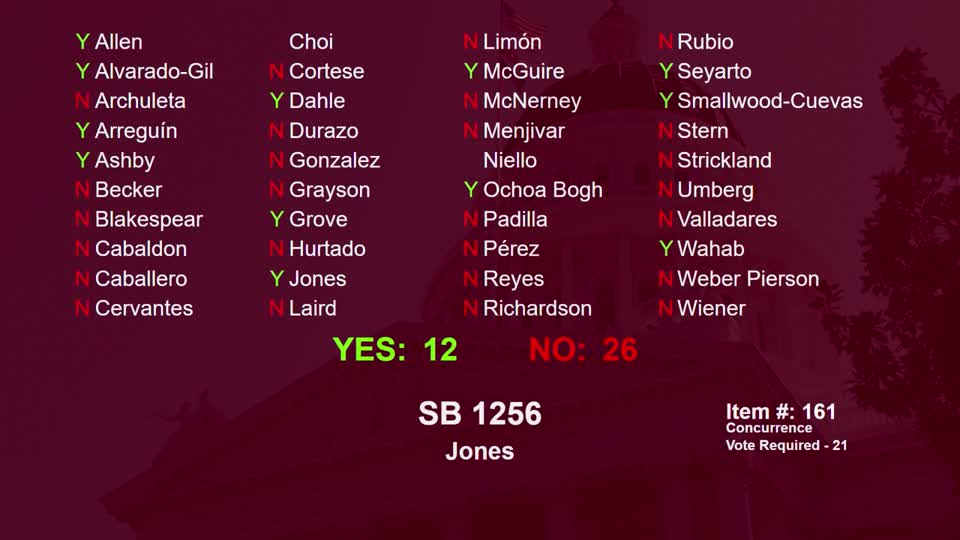 1MIN
Senate Floor
 10MIN
Assembly Standing Committee on Business and Professions
 2MIN
Assembly Standing Committee on Business and Professions
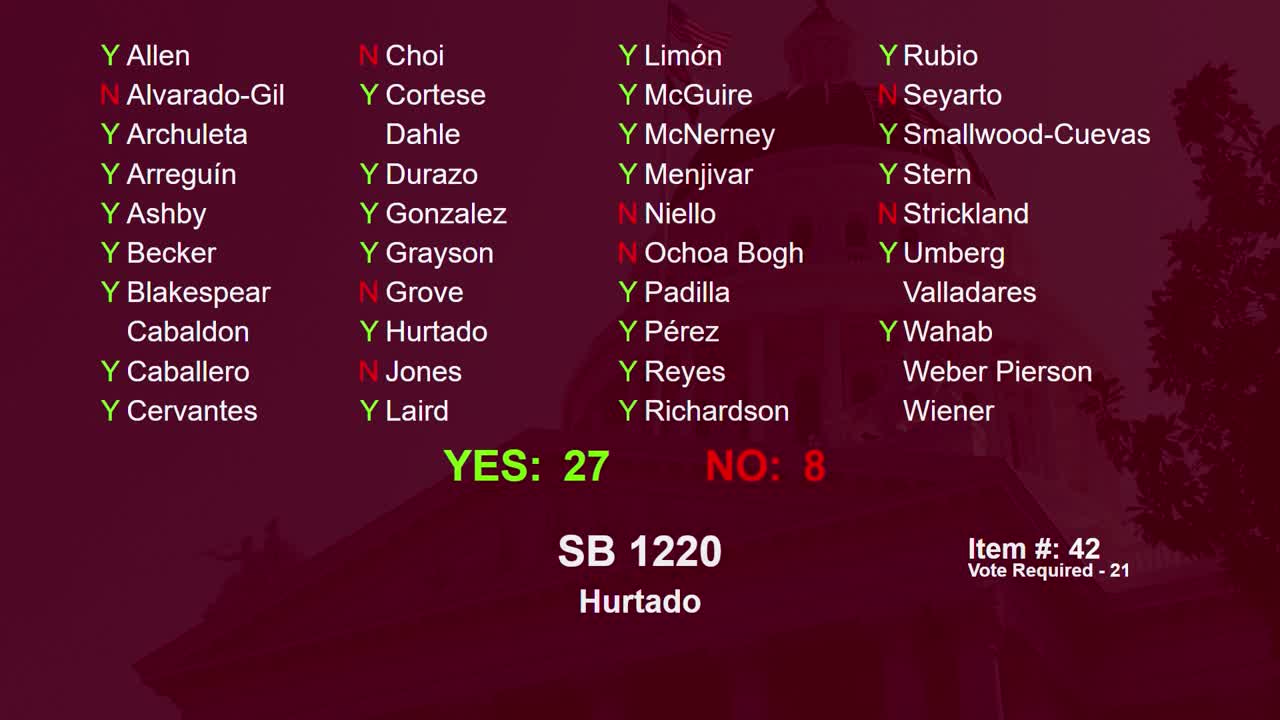 55SEC
Senate Floor
 39SEC
Senate Standing Committee on Appropriations
 3MIN
Senate Standing Committee on Business, Professions and Economic Development
Bill Author

Bill Co-Author(s):