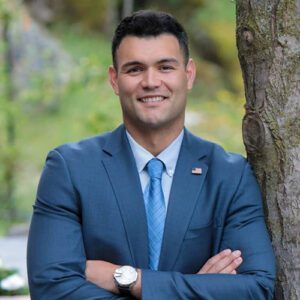
SB 1310: Voter registration: prospective jurors.
- Session Year: 2025-2026
- House: Senate
- Latest Version Date: 2026-04-08
Current Status:
In Progress
(2026-04-22: April 21 set for first hearing. Failed passage in committee. (Ayes 2. Noes 9. Page 3980.) Reconsideration granted.)
Introduced
In Committee
Awaiting First Chamber Vote
Passed First Chamber
In Committee
Awaiting Second Chamber Vote
Passed Second Chamber
Enacted
Existing law permits a United States citizen who is 18 years of age, a resident of California, and not imprisoned for a felony to register to vote and to vote. Existing law provides procedures for the Secretary of State and a county elections official to register a person to vote, and to update and to cancel the persons voter registration.
Existing law provides criteria that disqualify a person from serving on a jury, including if the person is not a United States citizen or not a resident of the jurisdiction where they are summoned. Existing law requires prospective jurors to be selected at random from sources that represent cross sections of the population of the area served by the court. Existing law provides that voter registration lists are appropriate source lists for the selection of jurors.
This bill would require a jury commissioner to provide notice to the Secretary of State and the county elections official if the jury commissioner receives information from a juror affidavit that contains an attestation by the prospective juror under penalty of perjury that they are not qualified for jury service for a reason that would also make them ineligible to vote. because they are not a United States citizen or not a resident of the county. The bill would require the elections official who receives this information and determines the person is ineligible to vote to inactivate the persons voter registration and send notice to the person that provides them an opportunity to confirm their eligibility, as specified. The bill would require an elections official to update the voter registration for a prospective juror person who is registered to vote but whose residence address is if the jury commissioner provides a current residence address for the person that is in a county other than the county in which they were summoned.
By establishing new duties for local elections officials, the bill would create a state-mandated local program.
The California Constitution requires the state to reimburse local agencies and school districts for certain costs mandated by the state. Statutory provisions establish procedures for making that reimbursement.
This bill would provide that, if the Commission on State Mandates determines that the bill contains costs mandated by the state, reimbursement for those costs shall be made pursuant to the statutory provisions noted above.
Existing law permits a United States citizen who is 18 years of age, a resident of California, and not imprisoned for a felony to register to vote and to vote. Existing law provides procedures for the Secretary of State and a county elections official to register a person to vote, and to update and to cancel the persons voter registration.
Existing law provides criteria that disqualify a person from serving on a jury, including if the person is not a United States citizen or not a resident of the jurisdiction where they are summoned. Existing law requires prospective jurors to be selected at random from sources that represent cross sections of the population of the area served by the court. Existing law provides that voter registration lists are appropriate source lists for the selection of jurors.
This bill would require a jury commissioner to provide notice to the Secretary of State and the county elections official if the jury commissioner receives information from a juror affidavit that contains an attestation by the prospective juror under penalty of perjury that they are not qualified for jury service for a reason that would also make them ineligible to vote. The bill would require the elections official who receives this information and determines the person is ineligible to vote to inactivate the persons voter registration and send notice to the person that provides them an opportunity to confirm their eligibility. eligibility, as specified. The bill would require an elections official to update the voter registration for a prospective juror who is registered to vote but whose residence address is in a county other than the county in which they were summoned.
By establishing new duties for local elections officials, the bill would create a state-mandated local program.
The California Constitution requires the state to reimburse local agencies and school districts for certain costs mandated by the state. Statutory provisions establish procedures for making that reimbursement.
This bill would provide that, if the Commission on State Mandates determines that the bill contains costs mandated by the state, reimbursement for those costs shall be made pursuant to the statutory provisions noted above.
Existing law permits a United States citizen who is 18 years of age, a resident of California, and not imprisoned for a felony to register to vote and to vote. Existing law provides procedures for the Secretary of State and a county elections official to register a person to vote, and to update and to cancel the persons voter registration.
Existing law provides criteria that disqualify a person from serving on a jury, including if the person is not a United States citizen or not a resident of the jurisdiction where they are summoned. Existing law requires prospective jurors to be selected at random from sources that represent cross sections of the population of the area served by the court. Existing law provides that voter registration lists are appropriate source lists for the selection of jurors.
This bill would require a jury commissioner to provide notice to the Secretary of State and the county elections official if the jury commissioner receives information from a juror affidavit that contains an attestation by the prospective juror under penalty of perjury that they are not qualified for jury service for a reason that would also make them ineligible to vote. The bill would require the elections official who receives this information and determines the person is ineligible to vote to inactivate the persons voter registration and send notice to the person that provides them an opportunity to confirm their eligibility. The bill would require an elections official to update the voter registration for a prospective juror who is registered to vote but whose residence address is in a county other than the county in which they were summoned.
By establishing new duties for local elections officials, the bill would create a state-mandated local program.
The California Constitution requires the state to reimburse local agencies and school districts for certain costs mandated by the state. Statutory provisions establish procedures for making that reimbursement.
This bill would provide that, if the Commission on State Mandates determines that the bill contains costs mandated by the state, reimbursement for those costs shall be made pursuant to the statutory provisions noted above.
Notwithstanding any other law, a jury commissioner shall provide information to the Secretary of State and the county elections official about a prospective juror who provides information in a juror affidavit that contains an attestation by the prospective juror under penalty of perjury that they are not qualified for jury service for a reason that would also make them ineligible to vote. because the prospective juror is not a United States citizen or not a resident of the county.
SEC. 2.Section 2215 is added to the Elections Code, to read:2215.(a)Notwithstanding any other law, a jury commissioner shall provide notice to the Secretary of State and the county elections official if the jury commissioner receives information from a juror affidavit that contains an attestation by the prospective juror under penalty of perjury that they are not qualified for jury service for a reason that would also make them ineligible to vote. because the prospective juror is not a United States citizen or not a resident of the county. The notice shall include the information received by the jury commissioner demonstrating that the prospective juror is ineligible to vote.
(b)(1)An elections official who receives information about a registered voter pursuant to subdivision (a) shall determine if the person is ineligible to vote. If the elections official makes this determination, the elections official shall inactivate the voters registration and send a notice to the voter that provides them an opportunity to confirm their eligibility to vote. If the elections official does not receive a response from the voter within 15 days of the date the notice is sent that demonstrates their eligibility to vote, the elections official shall cancel the voters registration.
(c)If the jury commissioner provides information to the elections official that a prospective juror who is a registered voter is not a resident of the county in which they are summoned, along with a current residence address for the prospective juror in another county in California, and if the jury commissioner provides no other information demonstrating that the prospective juror is ineligible to vote, the elections official shall update the prospective jurors voter registration with their current address.(2)Notwithstanding paragraph (1), if all of the following requirements are met, the elections official shall not cancel a persons voter registration and shall instead update the persons registration with the persons current address:
(A)The person is a United States citizen.
(B)The jury commissioner informs the elections official that the person is not a resident of the county in which they are summoned.
(C)The jury commissioner provides a current residence address for the person in another county.
SEC. 3.If the Commission on State Mandates determines that this act contains costs mandated by the state, reimbursement to local agencies and school districts for those costs shall be made pursuant to Part 7 (commencing with Section 17500) of Division 4 of Title 2 of the Government Code.
Notwithstanding any other law, a jury commissioner shall provide information to the Secretary of State and the county elections official about a prospective juror who provides information in a juror affidavit that contains an attestation by the prospective juror under penalty of perjury that they are not qualified for jury service for a reason that would also make them ineligible to vote.
SEC. 2.Section 2215 is added to the Elections Code, to read:2215.(a)Notwithstanding any other law, a jury commissioner shall provide notice to the Secretary of State and the county elections official if the jury commissioner receives information from a juror affidavit that contains an attestation by the prospective juror under penalty of perjury that they are not qualified for jury service for a reason that would also make them ineligible to vote. The notice shall include the information received by the jury commissioner demonstrating that the prospective juror is ineligible to vote.
(b)An elections official who receives information about a registered voter pursuant to subdivision (a) shall determine if the person is ineligible to vote. If the elections official makes this determination, the elections official shall inactivate the voters registration and send a notice to the voter that provides them an opportunity to confirm their eligibility to vote. If the elections official does not receive a response from the voter within 15 days of the date the notice is sent that demonstrates their eligibility to vote, the elections official shall cancel the voters registration.
(c)If the jury commissioner provides information to the elections official that a prospective juror who is a registered voter is not a resident of the county in which they are summoned, along with a current residence address for the prospective juror in another county in California, and if the jury commissioner provides no other information demonstrating that the prospective juror is ineligible to vote, the elections official shall update the prospective jurors voter registration with their current address.
SEC. 3.If the Commission on State Mandates determines that this act contains costs mandated by the state, reimbursement to local agencies and school districts for those costs shall be made pursuant to Part 7 (commencing with Section 17500) of Division 4 of Title 2 of the Government Code.
Notwithstanding any other law, a jury commissioner shall provide information to the Secretary of State and the county elections official about a prospective juror who provides information in a juror affidavit that contains an attestation by the prospective juror under penalty of perjury that they are not qualified for jury service for a reason that would also make them ineligible to vote.
SEC. 2.Section 2215 is added to the Elections Code, to read:2215.(a)Notwithstanding any other law, a jury commissioner shall provide notice to the Secretary of State and the county elections official if the jury commissioner receives information from a juror affidavit that contains an attestation by the prospective juror under penalty of perjury that they are not qualified for jury service for a reason that would also make them ineligible to vote. The notice shall include the information received by the jury commissioner demonstrating that the prospective juror is ineligible to vote.
(b)An elections official who receives information about a registered voter pursuant to subdivision (a) shall determine if the person is ineligible to vote. If the elections official makes this determination, the elections official shall inactivate the voters registration and send a notice to the voter that provides them an opportunity to confirm their eligibility to vote. If the elections official does not receive a response from the voter that demonstrates their eligibility to vote, the elections official shall cancel the voters registration.
(c)If the jury commissioner provides information to the elections official that a prospective juror who is a registered voter is not a resident of the county in which they are summoned, along with a current residence address for the prospective juror in another county in California, and if the jury commissioner provides no other information demonstrating that the prospective juror is ineligible to vote, the elections official shall update the prospective jurors voter registration with their current address.
SEC. 3.If the Commission on State Mandates determines that this act contains costs mandated by the state, reimbursement to local agencies and school districts for those costs shall be made pursuant to Part 7 (commencing with Section 17500) of Division 4 of Title 2 of the Government Code.
|
Date
|
Status
|
|---|---|
| Apr 22, 2026 | April 21 set for first hearing. Failed passage in committee. (Ayes 2. Noes 9. Page 3980.) Reconsideration granted. |
| Apr 22, 2026 | April 21 set for first hearing. Failed passage in committee. (Ayes 2. Noes 9.) Reconsideration granted. |
| Apr 9, 2026 | Set for hearing April 21. |
| Apr 8, 2026 | From committee with author's amendments. Read second time and amended. Re-referred to Com. on JUD. |
| Apr 7, 2026 | From committee: Do pass and re-refer to Com. on JUD. (Ayes 4. Noes 0. Page 3755.) (April 7). Re-referred to Com. on JUD. |
| Apr 7, 2026 | From committee: Do pass and re-refer to Com. on JUD. (Ayes 4. Noes 0.) (April 7). Re-referred to Com. on JUD. |
| Mar 26, 2026 | From committee with author's amendments. Read second time and amended. Re-referred to Com. on E. & C.A. |
| Mar 16, 2026 | Set for hearing April 7. |
| Mar 4, 2026 | Referred to Coms. on E. & C.A. and JUD. |
| Feb 23, 2026 | Read first time. |
| Feb 23, 2026 | From printer. May be acted upon on or after March 23. |
| Feb 20, 2026 | Introduced. To Com. on RLS. for assignment. To print. |
|
Date
|
Description
|
Location
|
Votes
|
|
|---|---|---|---|---|
| Apr 21, 2026 | [First] hearing set for [04-22-2026]: Failed passage in Committee. Reconsideration granted | Senate Standing Committee on Judiciary |
Passed |
|
| Apr 21, 2026 | Do pass, but first be re-referred to the Committee on [Appropriations] | Senate Standing Committee on Judiciary |
Failed |
|
| Apr 7, 2026 | Do pass, but first be re-referred to the Committee on [Judiciary] | Senate Standing Committee on Elections and Constitutional Amendments |
Passed |
This list shows positions taken on this bill by organizations on the date displayed, which is linked to the original source.
Positions by individuals are not included.
|
Organization
|
Position
|
Date
|
|---|---|---|
| American Civil Liberties Union California Action | ** Against | |
| Asian Law Caucus | ** Against | |
| Common Cause California | ** Against | |
| Disability Rights California | ** Against | |
| League of Women Voters | ** Against | |
| Orange County Board of Supervisors | ** Support |
Senator Thomas Umberg, Chair
2025-2026 Regular Session
Bill No: SB 1310 (Author:Choi)
Version: April 8, 2026
Hearing Date: April 21, 2026
Fiscal: Yes
Urgency: No
Consultant: ME
SUBJECT
Voter registration: prospective jurors
DIGEST
This bill would require jury commissioners to make determinations about people’s citizenship and legal right to vote and to share that information with elections officials without privacy protections and without a meaningful process for a person to contest the determination.
EXECUTIVE SUMMARY
This bill would disenfranchise some Californians who are eligible to vote. Voting is a right of the people enshrined in our Constitution and affirmed through amendments to the Constitution because of this country’s shameful history of trying to disenfranchise people. This Committee has not been provided with evidence that the stated problem which this bill seeks to remedy actually exists.[1] A substantially similar bill was introduced in 2020 as SB 994 (Bates) and died without a hearing in the Senate Judiciary Committee. This bill was introduced again in 2021 as SB 511 (Bates) and died without a hearing in the Senate Elections and Constitutional Amendments Committee. A similar bill, AB 301 (Wagner) failed passage in the Assembly Judiciary Committee in 2013. The narrative that noncitizen immigrants are voting in elections has been a talking point in recent elections. The attempted overthrow of the United States Capitol on January 6, 2021 and attempted overturning of that presidential election was premised on false assertions of voter fraud. The violence that took place on January 6, 2021 led to serious injuries and death.
This bill would remove eligible voters from voting rolls without an appeals process. There is no process to verify that there are no errors in the information the jury commissioners would be required to forward to the elections officials. Erroneous information can be shared and lead to a voter wrongfully losing the opportunity to vote. There is no meaningful process for the voter to appeal the decision. There is no description of how notice must be given and no requirement that the notice needs to be received. This bill would, in essence, allow a person to be denied a constitutional right administratively and erroneously without a meaningful opportunity to receive notice of the decision or contest it. Jury commissioners are tasked with ensuring prospective jurors qualify for jury service not voting. This bill expands the role of jury commissioners with no training or guidance.
The bill is sponsored by Orange County Board of Supervisors. The bill is opposed by the American Civil Liberties Union California Action, Asian Law Caucus, Common Cause California, and the League of Women Voters. This bill passed the Senate Elections and Constitutional Amendments Committee with a vote of 4 to 0.
PROPOSED CHANGES TO THE LAW
Existing law:
- Entitles a person to register to vote if that person is a United States citizen, a resident of California, not in prison for the conviction of a felony, not found mentally incompetent to vote by a court, and at least 18 years of age at the time of the next election. Provides that any person may prove they are a citizen by their certification under penalty of perjury on the affidavit of registration. (Elec. Code § 2101, § 2111.)
- Prescribes processes to maintain the voter rolls, through which election officials receive death notices from the Department of Public Health, conservatorship information from the superior courts, incarceration information from the state prisons, and change of address information from the United States Postal Service, their own mailings, and credit reporting agencies. (Elec. Code § 2208, § 2212, § 2222.)
- Allows a jury commissioner to require a person to complete a questionnaire that asks questions related to, among other things, juror qualification, and permits this questionnaire to be used solely for qualifying prospective jurors and for management of the jury system. (Civ. Proc. Code § 205.)
- Establishes that the jury commissioner shall be primarily responsible for managing the jury system under the general supervision of the court in conformance with the purpose and scope of this act. He or she shall have authority to establish policies and procedures necessary to fulfill this responsibility. (Civ. Proc. Code § 195, § 196.)
- Provides that all persons are eligible and qualified to be prospective trial jurors, except the following:
- Persons who are not citizens of the United States.
- Persons who are less than 18 years of age.
- Persons who are not domiciliaries of the State of California, as specified.
- Persons who are not residents of the jurisdiction wherein they are summoned to serve.
- Persons who have been convicted of malfeasance in office and whose civil rights have not been restored.
- Persons who are not possessed of sufficient knowledge of the English language, as specified.
- Persons who are serving as a grand or trial juror in any court of this state.
- Persons who are the subject of a conservatorship.
- Persons while they are incarcerated in any prison or jail.
- Persons who have been convicted of a felony and are currently on parole, postrelease community supervision, felony probation, or mandated supervision for the conviction of a felony.
- Persons who are currently required to register as a sex offender pursuant to Section 290 of the Penal Code based on a felony conviction.
(Civ. Proc. Code § 203.)
This bill:
- Requires a jury commissioner to provide information to the Secretary of State and the county elections official about a prospective juror who provides information in a juror affidavit that contains an attestation by the prospective juror under penalty of perjury that they are not qualified for jury service because the prospective juror is not a United States citizen or not a resident of the county.
- Requires a jury commissioner to provide notice to the Secretary of State and the county elections official if the jury commissioner receives information from a juror affidavit that contains an attestation by the prospective juror under penalty of perjury that they are not qualified for jury service because the prospective juror is not a United States citizen or not a resident of the county.
- Requires the notice to the Secretary of State to include the information received by the jury commissioner demonstrating that the prospective juror is ineligible to vote.
- Requires an elections official who receives information about a registered voter pursuant to the above to determine if the person is ineligible to vote.
- Requires the elections official to inactivate the voter’s registration if the elections official makes the determination that the person is ineligible to vote. The elections official must also send a notice to the voter that provides them an opportunity to confirm their eligibility to vote.
- Provides that if the elections official does not receive a response from the voter within 15 days of the date the notice is sent that demonstrates their eligibility to vote, the elections official shall cancel the voter’s registration.
- Provides that an elections official shall not cancel the voter’s registration if all of the following requirements are met and shall instead update the person’s registration with the person’s current address: a) the person is a United States citizen; b) the jury commissioner informs the elections official that the person is not a resident of the county in which they are summoned; and c) the jury commissioner provides a current residence address for the person in another county.
COMMENTS
- Stated need for the bill
According to the author:
Free and fair elections depend on accurate and reliable voter registration rolls. Currently, information provided during jury eligibility screening, often given under penalty of perjury, is not consistently shared with election officials even when it indicates a person may be ineligible to vote. SB 1310 establishes a commonsense process to ensure that relevant information from jury records can be used to help keep voter rolls up to date. By improving coordination between courts, the Secretary of State and election officials, this bill strengthens the integrity and public trust in California’s elections. SB 1310 uses existing information more effectively while maintaining appropriate safeguards.
This bill is sponsored by the Orange County Board of Supervisors. The bill is the fourth attempt to pass this legislation. A substantially similar bill was introduced in 2020 as SB 994 (Bates) and died without a hearing in the Senate Judiciary Committee. This bill was introduced again in 2021 as SB 511 (Bates) and died without a hearing in the Senate Elections and Constitutional Amendments Committee.[2] According to the Orange County Board of Supervisors:
Jury questionnaires are utilized as an initial screening tool to gather preliminary information on potential jurors. The California Code of Civil Procedure (CCP) provides that if a jury commissioner requires a person to complete a questionnaire, the questionnaire shall only ask questions related to juror identification, qualification, and ability to serve as a prospective juror. Under CCP Section 203, there are 11 circumstances that can make a person ineligible for jury duty, including people who are not residents of the jurisdiction where they are summoned to serve.
Currently, when potential jurors attest that they are eligible to vote on a voter registration affidavit and subsequently attest on a juror questionnaire that they are not qualified to serve on a jury for a reason that would also affect their voter registration, the California Secretary of State and county elections officials are not required to be notified. As a result, potential inconsistencies in voter eligibility may go unnoticed.
SB 1310 would establish a data sharing process between jury commissioners, the Secretary of State, and county elections officials about registered voters who, when summoned for jury service, attest information on a juror questionnaire that could also affect their voter registration status.
After confirmation of a voter match, county elections officials would be required to update voter registration records when a voter has moved within California, initiate a verification process when eligibility is in question, and follow-up with voters to assist or update their voter registration. SB 1310 provides county elections officials with an additional tool to maintain accurate voter files, reduce potential errors, and reduce the risk that people not eligible to vote could cast a ballot in a local, state, or federal election.
2. Concerns
Before the passage of the federal Voting Rights Act of 1965, voters faced disenfranchisement through poll taxes, literacy tests, and other tactics intended to keep African Americans from the polls on election day. Because of the country’s vile history of disenfranchising people of color and women, it is essential that decisionmakers be wary of proposals that would raise barriers for those eligible to vote to exercise their constitutional right to vote.
Indeed, a jury commissioner is not trained to determine whether a person is eligible to vote or is in fact a citizen of the United States. A jury commissioner is responsible for ensuring a person’s qualification to serve on a jury. Under current statute there are several reasons a person would be rendered unqualified to serve on a jury. They are not the same criteria used to determine if a person is eligible to vote. For example, people who are subject to conservatorship are disqualified from jury service but may be able to vote if their conservatorship is due to a disability and if they have been permitted to register to vote. (Code Civ. Proc. § 203(a)(8).) A robust court process exists to ensure the conservatee’s right to vote is not wrongly taken away. A person who has been convicted of a felony and is on parole, probation, or other type of supervised release may not serve as a juror but may be able to vote. (Code, Civ. Proc. § 203(a)(10).) This bill would require jury commissioners to expand their roles and make determinations they are not trained to make with no guidance or criteria that may result in a person being wrongfully removed from voting rolls.
There are no privacy protections in the bill to protect the privacy of people’s information. Additionally, there are no systems in place to ensure the information shared matches that of the person who will be removed from voter rolls. There is no court process in which to appeal the determination to remove the person from the voter rolls. There are no guidelines in the bill in which the jury commissioner would know how to adequately verify a person’s citizenship. Disqualifying factors may change, such as a person turning 18 years old, a person returning from a short term move, a person becoming a citizen, as well as other situations.
The League of Women Voters writes the following in opposition to this bill:
California already has established voter registration list maintenance tools that are specifically designed for this purpose and already used by elections officials in compliance with state and federal law. Counties and the state rely on address confirmation mailers, National Change of Address data, Department of Motor Vehicles address updates, statewide duplicate checks and cross-county data sharing through VoteCal, and other established sources to maintain accurate voter rolls. This bill creates a new and unnecessary cancellation pathway based on court collected information even though California already has established tools for maintaining accurate voter rolls. SB 1310 is built on a source of information that is poorly suited to voter registration maintenance. Information provided in connection with jury service is not collected for election administration purposes, and it can reflect mistakes, misunderstandings, stale information, or assertions made for reasons unrelated to actual voter eligibility. [ . . . ] Requiring election officials to use jury affidavit information to trigger voter registration inactivation and cancellation means eligible voters could be flagged in error and forced to navigate a burdensome process just to remain registered.
That problem is especially serious for naturalized citizens and voters with limited English proficiency. A person may truthfully indicate on a jury form that they are not yet a citizen, later naturalize, and lawfully register to vote, yet still be drawn into a cancellation process based on outdated information. Jury materials can also be difficult to understand, making mistakes more likely -- particularly for voters with limited English proficiency, whose misunderstandings may then be treated as evidence of ineligibility. This approach threatens to burden voters who are already more vulnerable to erroneous removal.
SB 1310 would also impose new burdens on the courts. Similar proposals have raised concerns that courts do not currently have an automated system for identifying, tracking, and transmitting this information for election purposes, and that requiring them to do so would create new administrative and fiscal burdens on an already strained branch. This bill again asks the courts to serve as a feeder system for voter roll maintenance even though that function properly belongs in election administration. The League is also concerned about privacy.
Jury records may contain sensitive personal information collected for purposes wholly unrelated to voter registration. SB 1310 would unnecessarily repurpose that court collected information for voter list maintenance even though California already has more appropriate tools for that purpose.
In their letter of opposition to a previous similar bill, the California Public Defenders Association wrote:
Jury commissioners receive information from election officials, and others, in order to create juror summons. This bill would require jury commissioners to send information from juror questionnaires (which potential jurors are required to answer by law and under penalty of perjury) to elections officials. This information is supposed to be used for “voter roll maintenance”, which is simply an attempt to cull the voter rolls. Any voter with conflicting information would be disenfranchised, even for something as simple as a mistake or typo.
It is critical to the entire criminal justice system that jurors present themselves
for service. Our membership interacts with jurors and juror selection process
on a daily basis and we know the comfort jurors take in having their
information remain confidential and private. A basic and ubiquitous portion of
a court’s jury welcome is telling them that their information is protected.
Reducing these protections will only result in fewer jurors and a distrust of
one of the most respected and proud American traditions ever created.
The American Civil Liberties Union California Action writes the following in opposition to the bill:
[ . . . ] SB 1310 raises serious concerns under federal voting rights law. Federal law requires voter list maintenance to be conducted in a uniform, nondiscriminatory manner and with safeguards to ensure that eligible voters are not removed in error. SB 1310 moves in the opposite direction by using jury affidavit information data collected for a different purpose and not designed for election administration – as a basis for voter registration action. That approach invites error and creates a substantial danger of wrongful disenfranchisement.
In opposition to a similar bill (AB 301 (Wagner) 2013) that failed passage in the Assembly Judiciary Committee, the Judicial Council of California wrote the following in opposition:
AB 301 would be financially and administratively burdensome on the courts, as it would require court clerks to manually review each juror questionnaire filled out by prospective juror to identify individuals who identify themselves as noncitizens. Courts do not currently have an automated process that captures information on jury questionnaires so this information is not quickly ascertainable. As a result, AB 301 would require courts to establish a new data tracking mechanism to identify individuals who state that they are not citizens on jury questionnaires in order to report that information to the chief elections official. AB 301 would require the court to divert scarce resources to support a function that is within the purview of the county elections official and not the Judicial Branch.
Common Cause California and the Asian Law Caucus write the following in opposition of this bill:
Accurate voter list maintenance is critical to elections. However, list maintenance must rest on reliable source data and meaningful safeguards. Bad data and infirm process wrongly purge eligible voters from the rolls. In recent years, the Legislature has moved carefully in the opposite direction from SB 1310. SB 504 (Becker, 2022) addressed wrongful cancellations caused by overinclusive court data by shifting felony imprisonment reporting to CDCR, the agency best positioned to know who is imprisoned and who is released. AB 2841 (Low, 2022) built a broader notice and cure framework so that voters receive notice and have a chance to correct the record before cancellation for mental incompetency, felony imprisonment, death, or certain address changes.
Taken together, these bills reflect a consistent, prudent legislative judgment to improve the source data, provide meaningful notice, and reduce the risk of erroneous removal. SB 1310 moves away from that approach by opening a new cancellation pathway built on juror affidavits — a source that was never designed for election administration. Furthermore, it pairs the use of this flawed source with a cure process that is weaker than the protections California applies elsewhere.
Juror affidavits are not a reliable source for voter list maintenance. They are collected for jury administration, using different forms, review procedures, and legal standards than election materials. Even when signed under penalty of perjury, they can reflect mistake, misunderstanding, stale citizenship information, or matching errors when names, addresses, and dates of birth are transferred from the courts to elections officials. A prospective juror may check the wrong box on a form that lists several disqualifiers. Some prospective jurors may also falsely claim noncitizenship to avoid jury duty: the Brennan Center for Justice has reported that election officials told its researchers eligible voters have been known to assert they are noncitizens solely to evade jury service. While this behavior is unfortunate, such declarations are not good evidence that a noncitizen is actually on the voter rolls. Clerks transcribing and forwarding that information may confuse similar names and addresses across large voter files. The citizenship information itself may simply be out of date by the time an elections official acts on it. When California last considered a similar proposal in AB 301 (Wagner, 2013), the Assembly Judiciary Committee identified each of these failure modes, and none of them has been solved by SB 1310.
SUPPORT
Orange County Board of Supervisors (sponsor)
OPPOSITION
American Civil Liberties Union California Action
Asian Law Caucus
Common Cause California
League of Women Voters
RELATED LEGISLATION
Pending Legislation: None known.
Prior Legislation:
SB 511 (Bates, 2021) Was substantially similar to SB 994, below. The bill died in the Senate Elections and Constitutional Amendments Committee without a hearing.
SB 994 (Bates, 2020) Was substantially similar to SB 1310. The bill died in the Senate Judiciary Committee without a hearing.
AB 301 (Wagner, 2013) Among other things, would have required the clerk of the superior court to report the name, address, and date of birth of each person who has declared in response to a jury summons from the superior court that they are not qualified to serve as a juror because they are not a citizen of the United States. The bill would have required the cancelling of the affidavit of registration of each person listed by the clerk. This bill failed passage in the Assembly Judiciary Committee.
PRIOR VOTES:
Senate Elections and Constitutional Amendments Committee (Ayes 4, Noes 0)
**************
Fact checking Trump’s false allegations of undocumented immigrants voting in L.A., Los Angeles Times (June 18, 2025) Karen Garcia. (available at: https://www.latimes.com/california/story/2025-06-18/fact-checking-trumps-false-accusations-of-undocumented-immigrants-and-voting-in-los-angeles). ↑
AB 310 (Wagner) was similar to these bills and failed passage in the Assembly Judiciary Committee in 2013. ↑
SENATE COMMITTEE ON
ELECTIONS AND CONSTITUTIONAL AMENDMENTS
Senator Scott Wiener, Chair
2025 - 2026 Regular
Bill No: Hearing Date: 4/7/26
Author: | |||
Version: |
| ||
Urgency: | Fiscal: | ||
Consultant: | |||
Subject:
DIGEST
This bill requires a jury commissioner, who receives information from a perspective juror indicating that the juror is ineligible for jury duty for a reason that would also make them ineligible to vote, to share this information with state and local election officials so that the person can be removed from the voter rolls.
ANALYSIS
Existing law:
- Entitles a person to register to vote if that person is a United States citizen, a resident of California, not in prison for the conviction of a felony, not found mentally incompetent to vote by a court, and at least 18 years of age at the time of the next election.
- Prescribes processes to maintain the voter rolls, through which election officials receive death notices from the Department of Public Health, conservatorship information from the superior courts, incarceration information from the state prisons, and change of address information from the United States Postal Service, their own mailings, and credit reporting agencies.
- Makes any person ineligible to serve as a trial juror if the person:
- Is not citizen of the United States.
- Is less than 18 years of age.
- Does not have a domicile in the State of California.
- Is not a resident of the jurisdiction wherein they are summoned to serve.
- Has been convicted of malfeasance in office and whose civil rights have not been restored.
- Is not possessed of sufficient knowledge of the English language.
- Is serving as a grand or trial juror in any court of this state.
- Is the subject of a conservatorship.
- Is incarcerated in any prison or jail.
- Has been convicted of a felony and is currently on parole, probation, or mandated supervision for the conviction of a felony.
- Is currently required to register as a sex offender pursuant to Section 290 of the Penal Code based on a felony conviction.
- Allows a jury commissioner to require a person to complete a questionnaire that asks questions related to, among other things, juror qualification, and permits this questionnaire to be used solely for qualifying prospective jurors and for management of the jury system.
This bill:
- Requires a jury commissioner to provide notice to the Secretary of State (SOS) and the county elections official if the jury commissioner receives information on a juror affidavit attesting under penalty of perjury that the prospective juror is not qualified for jury service for a reason that would make them ineligible to vote.
- Requires an elections official who receives the information in 1) to determine if the person is ineligible to vote and, if so, to invalidate the person’s voter registration. The elections official must send a notice to the voter to confirm their eligibility to vote. If the voter does not respond to this notice within 15 days, then the elections official cancels the person’s voter registration.
- Requires an elections official to update the prospective juror’s voter registration with their current address, when the elections official receives information from a jury commissioner indicating that a prospective juror’s current residence address is in another California county.
COMMENTS
- Author’s Statement. Free and fair elections depend on accurate and reliable voter registration rolls. Currently, information provided during jury eligibility screening, often given under penalty of perjury, is not consistently shared with election officials even when it indicates a person may be ineligible to vote. This bill establishes a commonsense process to ensure that relevant information from jury records can be used to help keep voter rolls up to date. By improving coordination between courts, the Secretary of State, and election officials, this bill strengthens the integrity and public trust in California’s elections. This bill uses existing information more effectively while maintaining appropriate safeguards.
- Voter Roll Maintenance. On a regular basis, the SOS performs voter file maintenance. It receives monthly files from the California Department of Public Health of death notices, from the courts of conservatorships, and from the California Department of Corrections and Rehabilitation (CDCR) of incarcerations. In each of these cases, voters are provided a notice that their registration will be canceled in 15 days, unless the voter contacts their county registrar of voters with information showing that the death notice, conservatorship notice, or incarceration notice is incorrect. CDCR also informs the SOS of individuals released from incarceration and then the county registrars reach out to those individuals to let them know they are eligible to register to vote again. For changes of address, the SOS each month provides a copy of the entire California voter file to the California Employment Development Department (EDD), who compares it to information it receives from the United States Postal Service called the National Change of Address (NCOA) list. The EDD sends the SOS a file showing matches between the voter file and the NCOA list. SOS shares these with the relevant county election officials. County election officials follow up directly with the voters who have changed addresses. For voters that have moved to a new address in California, county election officials update these voter registrations to the new addresses. For voters that have moved out of state, election officials begin the process of cancelling their voter registrations.
- Jury Commissioner Duties. Jury commissioners, typically using some sort of software based jury management system, select a pool of potential jurors to report to court for a given time period, vet those potential jurors through a questionnaire, and then provide potential jurors to individual courts so that they may conduct trials. The job of a jury commissioner is focused solely on the administration of justice. Election officials are, among other duties, charged with maintaining voter rolls and collect information from various sources to do so, as described above. This bill makes the jury commissioner an additional source of information for election officials, but in doing so, this bill would put costs, duties, and burdens on the jury commissioner.
- Support if Amended. The California Association of Clerks and Election Officials (CACEO) supports this bill if it is amended to include a 15-day timeframe for a voter to respond to a notice before the elections official cancels the voter registration. CACEO states it supports this legislation “because it improves information sharing that will facilitate updated voter files.” CACEO appreciates the bill’s aim to prevent ineligible voters from casting ballots but makes its support conditional on the addition of a timeframe. The author made this amendment to the bill on March 26th.
- Arguments in Opposition. Opponents express concern that the information collected by jury commissioners does not correspond well to the eligibility to vote. As an example, Disability Rights California notes that conservatorship is always a basis for disqualification from jury service, but only a disqualification from voting when the judge in the conservatorship case finds that the conservatorship should result in a loss of voting for specified reasons. Opponents further note that sometimes individuals wishing to be excused from jury service may not answer truthfully in their juror questionnaire, which could under this bill result in a suspended voter registration. Finally, due to time lags, someone in the naturalization process could indicate that they are not a citizen but then have their voter registration suspended after they became a citizen.
- Double Referral. Should this bill pass this committee, it will next be heard in the Committee on Judiciary.
RELATED/PRIOR LEGISLATION
SB 511 (Bates) of 2021, a similar bill, would have required each jury commissioner every six months to share information about potential jurors with their county elections official, who would use information received to cancel voter registrations where appropriate. This bill was set for hearing in this committee but never heard at the request of the author.
POSITIONS
Sponsor: County of Orange
Support: None received
Oppose: ACLU California Action
Disability Rights California
League of Women Voters of California
-- END --
Discussed in Hearing
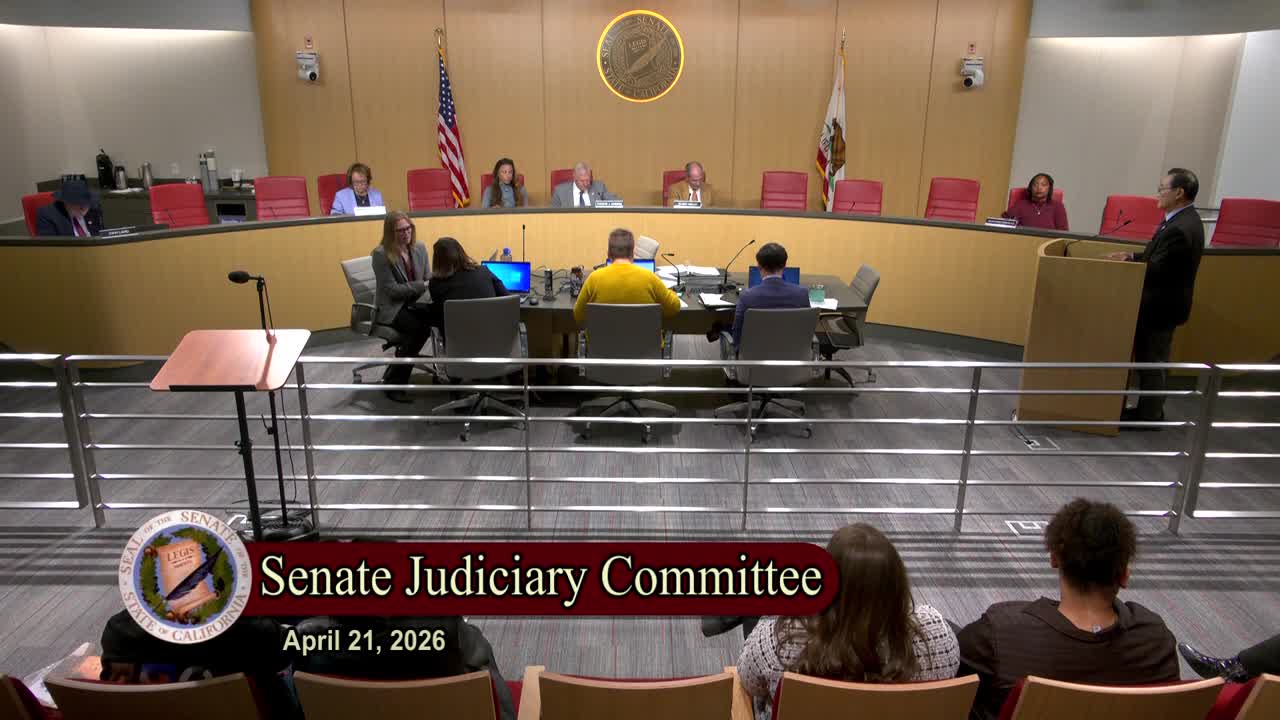 23MIN
Senate Standing Committee on Judiciary
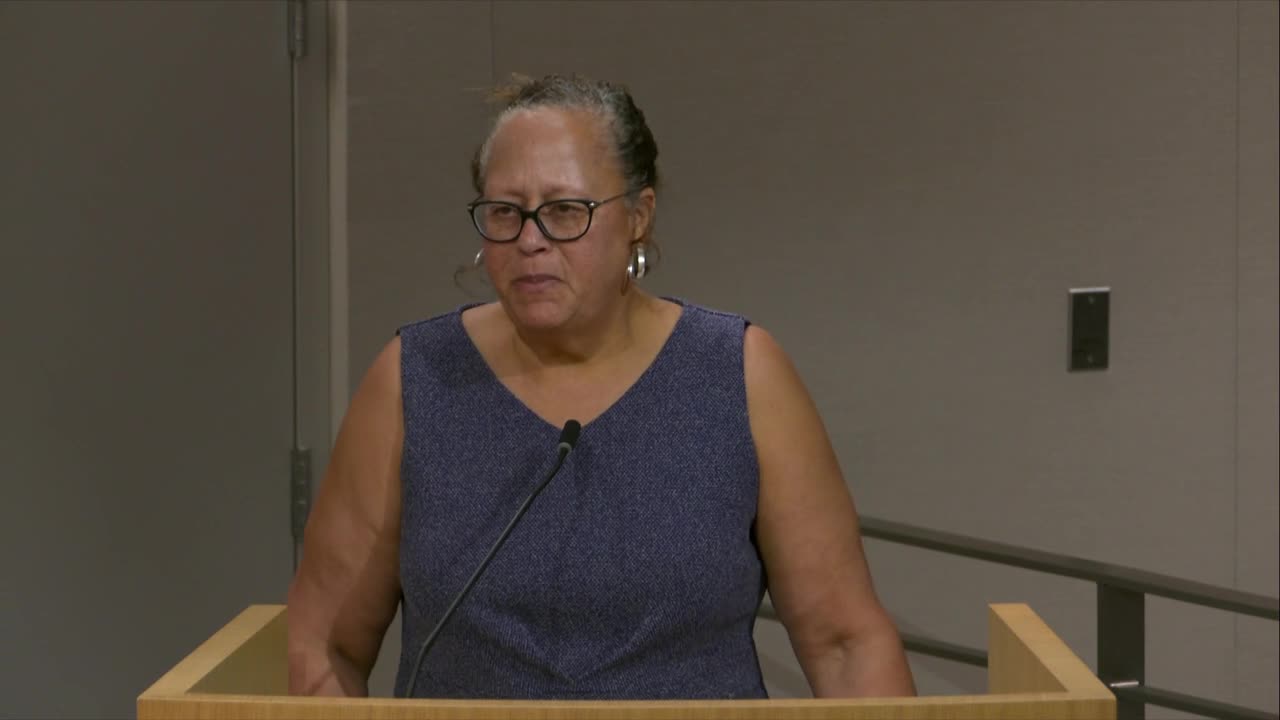 18MIN
Senate Standing Committee on Elections and Constitutional Amendments
Bill Author