SB 1318: Coastal resources: local coastal program: coastal development permit: non-owner-occupied short-term rentals.
- Session Year: 2025-2026
- House: Senate
- Latest Version Date: 2026-04-27
Current Status:
In Progress
(2026-05-14: May 14 hearing: Held in committee and under submission.)
Introduced
In Committee
Awaiting First Chamber Vote
Passed First Chamber
In Committee
Awaiting Second Chamber Vote
Passed Second Chamber
Enacted
The California Coastal Act of 1976 generally requires each local government lying in whole or in part within the coastal zone to prepare a local coastal program for that portion of the coastal zone within its jurisdiction. The act establishes the California Coastal Commission and prescribes procedures for the preparation, approval, and certification of local coastal programs. Existing law The act requires any proposed amendments to a certified local coastal program to be submitted to, and processed by, the commission in accordance with specified procedures. The act generally requires anyone wishing to perform or undertake any development in the coastal zone to obtain a coastal development permit from the commission before certification of the local coastal program or to a local government after certification of a local coastal program, as provided. The act finds and declares that it is important for the commission to encourage the protection of existing and the provision of new affordable housing opportunities for persons of low and moderate income in the coastal zone and requires the commission to encourage housing opportunities for persons of low and moderate income.
This bill would would, notwithstanding specific provisions of the act, require the commission to approve a coastal development permit or a local coastal program amendment submitted by a local government restricting or prohibiting non-owner-occupied short-term rentals, regardless of the availability of other visitor-serving accommodations, as provided. accommodations, if the local agency made findings that it was necessary to address significant local housing needs and the commission determines that the permit or amendment strikes a reasonable balance between local housing needs and public access to the coast.
The California Coastal Act of 1976 generally requires each local government lying in whole or in part within the coastal zone to prepare a local coastal program for that portion of the coastal zone within its jurisdiction. The act establishes the California Coastal Commission and prescribes procedures for the preparation, approval, and certification of local coastal programs. Existing law requires any proposed amendments to a certified local coastal program to be submitted to, and processed by, the commission in accordance with specified procedures. The act generally requires anyone wishing to perform or undertake any development in the coastal zone to obtain a coastal development permit from the commission before certification of the local coastal program or to a local government after certification of a local coastal program, as provided. The act finds and declares that it is important for the commission to encourage the protection of existing and the provision of new affordable housing opportunities for persons of low and moderate income in the coastal zone and requires the commission to encourage housing opportunities for persons of low and moderate income.
This bill would require the commission to approve a coastal development permit or a local coastal program amendment restricting or prohibiting non-owner-occupied short-term rentals, regardless of the availability of other visitor-serving accommodations, as provided.
The California Coastal Act of 1976 establishes the California Coastal Commission, and prescribes procedures for the preparation, approval, and certification of local coastal programs that regulate development in the coastal zone, as defined, in jurisdictions that have a certified local coastal program. Existing law provides options to be used by a local government when submitting and processing a local coastal program, as specified.This bill would make nonsubstantive changes to the provision relating to the submission of the local coastal program.The California Coastal Act of 1976 establishes the California Coastal Commission, and prescribes procedures for the preparation, approval, and certification of local coastal programs that regulate development in the coastal zone, as defined, in jurisdictions that have a certified local coastal program. Existing law provides options to be used by a local government when submitting and processing a local coastal program, as specified.
This bill would make nonsubstantive changes to the provision relating to the submission of the local coastal program.
(a)Before certification of the local coastal program, a coastal development permit shall be issued if the issuing agency, or the commission on appeal, finds that the proposed development is in conformity with Chapter 3 (commencing with Section 30200) and that the permitted development will not prejudice the ability of the local government to prepare a local coastal program that is in conformity with Chapter 3 (commencing with Section 30200). A denial of a coastal development permit on grounds it would prejudice the ability of the local government to prepare a local coastal program that is in conformity with Chapter 3 (commencing with Section 30200) shall be accompanied by a specific finding that sets forth the basis for that conclusion.
(b)After certification of the local coastal program, a coastal development permit shall be issued if the issuing agency, or the commission on appeal, finds that the proposed development is in conformity with the certified local coastal program.
(c)Every coastal development permit issued for any development between the nearest public road and the sea or the shoreline of any body of water located within the coastal zone shall include a specific finding that the development is in conformity with the public access and public recreation policies of Chapter 3 (commencing with Section 30200).
(d)A development or any portion of a development that is outside the coastal zone shall not be subject to the coastal development permit requirements of this division, nor shall anything in this division authorize the denial of a coastal development permit by the commission on the grounds the proposed development within the coastal zone will have an adverse environmental effect outside the coastal zone.
(e)A coastal development permit shall not be denied under this division on the grounds that a public agency is planning or contemplating to acquire the property, or property adjacent to the property, on which the proposed development is to be located, unless the public agency has been specifically authorized to acquire the property and there are funds available, or funds that could reasonably be expected to be made available within one year, for the acquisition. If a permit has been denied for that reason and the property has not been acquired by a public agency within a reasonable period of time, a permit shall not be denied for the development on grounds that the property, or adjacent property, is to be acquired by a public agency when the application for that development is resubmitted.
(f)The commission shall encourage housing opportunities for persons of low and moderate income. In reviewing residential development applications for low- and moderate-income housing, as defined in paragraph (3) of subdivision (h) of Section 65589.5 of the Government Code, the issuing agency, or the commission on appeal, shall not require measures that reduce residential densities below the density sought by an applicant if the density sought is within the permitted density or range of density established by local zoning plus the additional density permitted under Section 65915 of the Government Code, unless the issuing agency or the commission on appeal makes a finding, based on substantial evidence in the record, that the density sought by the applicant cannot feasibly be accommodated on the site in a manner that is in conformity with Chapter 3 (commencing with Section 30200) or the certified local coastal program.
(g)(1)The Legislature finds and declares that it is important for the commission to encourage the protection of existing and the provision of new affordable housing opportunities for persons of low and moderate income in the coastal zone.
(2)It is the intent of the Legislature to provide guidance to the commission on the standards of review to consider when approving, approving with modifications, or disapproving a coastal development permit or local coastal program amendment submitted by a local government for non-owner-occupied short-term rentals to establish a reasonable balance between protecting public access to the coast and the goals of the state to address affordability, housing, and equity.
(2)The commission(3)Notwithstanding Sections 30210, 30213, and 30222, the commission shall approve a coastal development permit or local coastal program amendment submitted by a local government restricting or prohibiting non-owner-occupied short-term rentals, regardless of the availability of other visitor-serving accommodations to meet demand. demand, if the local agency made findings that it was necessary to address significant local housing needs and the commission determines that the permit or amendment strikes a reasonable balance between local housing needs and public access to the coast.
(h)When acting on a coastal development permit, the issuing agency, or the commission on appeal, may consider environmental justice, or the equitable distribution of environmental benefits throughout the state.
(a)Prior to Before certification of the local coastal program, a coastal development permit shall be issued if the issuing agency, or the commission on appeal, finds that the proposed development is in conformity with Chapter 3 (commencing with Section 30200) and that the permitted development will not prejudice the ability of the local government to prepare a local coastal program that is in conformity with Chapter 3 (commencing with Section 30200). A denial of a coastal development permit on grounds it would prejudice the ability of the local government to prepare a local coastal program that is in conformity with Chapter 3 (commencing with Section 30200) shall be accompanied by a specific finding that sets forth the basis for that conclusion.
(b)After certification of the local coastal program, a coastal development permit shall be issued if the issuing agency, or the commission on appeal, finds that the proposed development is in conformity with the certified local coastal program.
(c)Every coastal development permit issued for any development between the nearest public road and the sea or the shoreline of any body of water located within the coastal zone shall include a specific finding that the development is in conformity with the public access and public recreation policies of Chapter 3 (commencing with Section 30200).
(d)No A development or any portion thereof of a development that is outside the coastal zone shall not be subject to the coastal development permit requirements of this division, nor shall anything in this division authorize the denial of a coastal development permit by the commission on the grounds the proposed development within the coastal zone will have an adverse environmental effect outside the coastal zone.
(e)No A coastal development permit may shall not be denied under this division on the grounds that a public agency is planning or contemplating to acquire the property, or property adjacent to the property, on which the proposed development is to be located, unless the public agency has been specifically authorized to acquire the property and there are funds available, or funds that could reasonably be expected to be made available within one year, for the acquisition. If a permit has been denied for that reason and the property has not been acquired by a public agency within a reasonable period of time, a permit may shall not be denied for the development on grounds that the property, or adjacent property, is to be acquired by a public agency when the application for such a that development is resubmitted.
(f)The commission shall encourage housing opportunities for persons of low and moderate income. In reviewing residential development applications for low- and moderate-income housing, as defined in paragraph (3) of subdivision (h) of Section 65589.5 of the Government Code, the issuing agency, or the commission on appeal, may shall not require measures that reduce residential densities below the density sought by an applicant if the density sought is within the permitted density or range of density established by local zoning plus the additional density permitted under Section 65915 of the Government Code, unless the issuing agency or the commission on appeal makes a finding, based on substantial evidence in the record, that the density sought by the applicant cannot feasibly be accommodated on the site in a manner that is in conformity with Chapter 3 (commencing with Section 30200) or the certified local coastal program.
(g)(1)The Legislature finds and declares that it is important for the commission to encourage the protection of existing and the provision of new affordable housing opportunities for persons of low and moderate income in the coastal zone.
(2)The commission shall approve a coastal development permit or local coastal program amendment restricting or prohibiting non-owner-occupied short-term rentals, regardless of the availability of other visitor-serving accommodations to meet demand.
(h)When acting on a coastal development permit, the issuing agency, or the commission on appeal, may consider environmental justice, or the equitable distribution of environmental benefits throughout the state.
SECTION 1.Section 30511 of the Public Resources Code is amended to read:30511.A local coastal program shall be submitted in accordance with the schedule established pursuant to Section 30517.5. At the option of the local government, the local coastal program may be submitted and processed in any of the following ways:(a)At one time, in which event Section 30512 with respect to time limits, resubmission, approval, and certification shall apply. However, the zoning ordinances, zoning district maps, and, if required, other implementing actions included in the local coastal program shall be approved and certified pursuant to the standards of Section 30513.(b)In two phases, in which event the land use plans shall be processed first pursuant to Section 30512, and the zoning ordinances, zoning district maps, and, if required, other implementing actions, shall be processed thereafter pursuant to Section 30513.(c)In separate geographic units consisting of less than the local governments jurisdiction lying within the coastal zone, each submitted pursuant to subdivision (a) or (b), if the commission finds that the area or areas proposed for separate review can be analyzed for the potential cumulative impacts of development on coastal resources and access independently of the remainder of the affected jurisdiction.Local A local coastal programs program shall be submitted in accordance with the schedule established pursuant to Section 30517.5. At the option of the local government, this the local coastal program may be submitted and processed in any of the following ways:
(a)At one time, in which event Section 30512 with respect to time limits, resubmission, approval, and certification shall apply. However, the zoning ordinances, zoning district maps, and, if required, other implementing actions included in the local coastal program shall be approved and certified pursuant to the standards of Section 30513.
(b)In two phases, in which event the land use plans shall be processed first pursuant to Section 30512, and the zoning ordinances, zoning district maps, and, if required, other implementing actions, shall be processed thereafter pursuant to Section 30513.
(c)In separate geographic units consisting of less than the local governments jurisdiction lying within the coastal zone, each submitted pursuant to subdivision (a) or (b), if the commission finds that the area or areas proposed for separate review can be analyzed for the potential cumulative impacts of development on coastal resources and access independently of the remainder of the affected jurisdiction.
|
Date
|
Status
|
|---|---|
| May 14, 2026 | May 14 hearing: Held in committee and under submission. |
| May 12, 2026 | Set for hearing May 14. |
| May 11, 2026 | May 11 hearing: Placed on APPR. suspense file. |
| May 4, 2026 | Set for hearing May 11. |
| Apr 27, 2026 | Read second time and amended. Re-referred to Com. on APPR. |
| Apr 23, 2026 | From committee: Do pass as amended and re-refer to Com. on APPR. (Ayes 5. Noes 1. Page 3982.) (April 21). |
| Apr 23, 2026 | From committee: Do pass as amended and re-refer to Com. on APPR. (Ayes 5. Noes 1.) (April 21). |
| Apr 10, 2026 | Set for hearing April 21. |
| Apr 8, 2026 | Re-referred to Com. on N.R. & W. |
| Mar 25, 2026 | From committee with author's amendments. Read second time and amended. Re-referred to Com. on RLS. |
| Mar 4, 2026 | Referred to Com. on RLS. |
| Feb 23, 2026 | Read first time. |
| Feb 23, 2026 | From printer. May be acted upon on or after March 23. |
| Feb 20, 2026 | Introduced. To Com. on RLS. for assignment. To print. |
|
Date
|
Description
|
Location
|
Votes
|
|
|---|---|---|---|---|
| May 11, 2026 | Placed on suspense file | Senate Standing Committee on Appropriations |
Passed |
|
| Apr 21, 2026 | Do pass as amended, but first amend, and re-refer to the Committee on [Appropriations] | Senate Standing Committee on Natural Resources and Water |
Passed |
This list shows positions taken on this bill by organizations on the date displayed, which is linked to the original source.
Positions by individuals are not included.
|
Organization
|
Position
|
Date
|
|---|---|---|
| Airbnb, Inc. | ** Against | |
| Azul | ** Against | |
| Better Neighbors LA | ** Support | |
| California Asian Pacific Chamber Of Commerce | ** Against | |
| California Association Of Realtors | ** Against | |
| California Chamber Of Commerce | ** Against | |
| California Coastal Protection Network | ** Against | |
| California Federation of Labor Unions (AFL-CIO) | ** Support | |
| California Short Term Rental Association | ** Against | |
| California Travel Association | ** Against | |
| Clergy and Laity United for Economic Justice | ** Support | |
| Environmental Action Committee of West Marin | ** Against | |
| Expedia Group | ** Against | |
| League Of California Cities | ** Support | |
| painters & allied trades district council 36 | ** Against | |
| Rural County Representatives of California | ** Support | |
| Sacramento Metropolitan Chamber of Commerce | ** Against | |
| Sprinkler Fitters U.A. Local 709 Los Angeles | ** Against | |
| Tenants Together | ** Support | |
| UNITE HERE International Union | ** Support | |
| UNITE HERE Local 11 | ** Support |
SENATE COMMITTEE ON
Senator Sabrina Cervantes, Chair
2025 - 2026 Regular Session
SB 1318 (Allen) - Coastal resources: local coastal program: coastal development permit: non-owner-occupied short-term rentals
Version: | Policy Vote: |
Urgency: | Mandate: |
Hearing Date: | Consultant: |
Bill Summary:
This bill would require the California Coastal Commission to approve a coastal development permit (CDP) or local coastal plan (LCP) amendment submitted by a local government restricting or prohibiting non-owner-occupied short-term rentals if (1) the local agency made certain findings and (2) the commission determines that the permit or amendment strikes a reasonable balance between local housing needs and public access to the coast.
Fiscal Impact:
- The Coastal Commission estimates costs of about $1 million per year for a period of about five years and $340,000 annually thereafter (General Fund or special fund) to address additional workload and to review and analyze local government findings in order to determine whether proposed policies strike a “reasonable balance” between housing needs and public access to the coast. The Coastal Commission anticipates that this bill would likely initiate an immediate increase in the number of LCP amendments and CDP applications to prohibit non-owner-occupied short-term rentals, resulting in higher costs for a period of about five years that would eventually drop off.
Background:
Development activities in the coastal zone generally require a CDP issued by the commission or by a local government with a LCP certified by the commission. Coastal Act policies are the standards the commission uses to determine the permissibility of proposed developments subject to its jurisdiction.
In 1977, the Coastal Act’s policy provisions included the protection of affordable housing. In implementing this policy, the commission prohibited the demolition of low- and moderate-income housing for reasons other than health and safety. The commission also included density bonuses and reduced parking requirements in their development guidelines to prioritize new affordable housing opportunities. Those guidelines were later revised to include in-lieu fees, land dedication, and housing credits in certain circumstances. In addition, the commission required that specified percentages of proposed housing units be set aside for low- and moderate-income households. For the four years between 1977 and 1981, the commission’s inclusionary housing program resulted in the approval of 5,000 affordable units. During that same time period, the commission also prohibited the demolition of more than 1,100 existing affordable housing units and collected approximately $2 million in in-lieu fees for affordable housing. In 1981, SB 626 (Mello, Chapter 1007, Statutes of 1981) removed the commission’s authority to protect and provide affordable housing.
Short-term rentals have long been popular along the coast. Since the creation of online platforms, such as AirBnB and VRBO, that make readily-available and accessible obtaining a short-term rental of someone’s home or a room in someone’s home, the popularity and availability of non-hotel coastal short-term rentals have increased. Tourism is often an important contributor to local coastal economies.
The spread of short-term rentals in local communities has generated considerable controversy – particularly for non-owner-occupied or “unhosted” short-term rentals. Opponents report that once quiet, residential neighborhoods have become plagued by loud and disruptive parties at unhosted short-term rentals. Proponents argue that the ability to rent out their homes periodically makes their homes affordable or pays for much needed repairs and upkeep. Efforts by local jurisdictions to place limits on short-term rentals – both owner-occupied and non-owner-occupied – by local ordinance can be long, very fraught, and controversial undertakings.
In the coastal zone, a local ordinance implementing any requirements on short-term rentals does not go into effect until the commission issues a CDP or certifies a LCP amendment. Just as at the local jurisdiction level, the CDP or LCP amendment process at the commission for short-term rentals can be very controversial. Correspondence from the public associated with applications for short-term rental CDPs or LCP amendments can exceed 1,000 pages. Data obtained from the commission shows that it has approved or approved with modifications approximately 50 LCP amendments since 1992 implementing requirements on short-term rentals including both owner-occupied and non-owner-occupied rentals. When the commission approves a LCP amendment with modifications, those modifications may include mitigation for the loss of low-cost visitor accommodations, or provisions for off-street parking to reduce the impact on public access, among others.
Where there have been denials, such as in 2022 when Malibu’s LCP amendment was denied, the basis, at least in part, was the impact the prohibition or severe restriction on non-owner-occupied short-term rentals would have on low-cost coastal accommodations. Some jurisdictions that were denied were subsequently able to obtain LCP amendments through the modification of the original submittal.
Recently, the commission has approved LCP amendments for Encinitas, Del Mar, Ventura, and Monterey County that authorize severe restrictions or prohibitions on non-owner-occupied short-term rentals.
Proposed Law:
This bill would require the Coastal Commission to approve a CDP or LCP amendment submitted by a local government restricting or prohibiting non-owner-occupied short-term rentals, regardless of the availability of other visitor-serving accommodations to meet demand if the local agency made findings that it was necessary to address significant local housing needs and the commission determines that the permit or amendment strikes a reasonable balance between local housing needs and public access to the coast.
Related Legislation:
SB 1229 (Allen, 2026) would seek to limit the applicability of the CDP waiver for rebuilding a structure destroyed in a disaster to the property owner of record at the time of the disaster, as provided.
SB 963 (Laird, 2026) would provide additional deadlines for the commission’s appeals process for local CDPs appealed to them, as provided.
SCR 136 (Laird, 2026) would recognize 50 years of coastal protection and affirm the state’s longstanding commitment to protecting its coastal waters, as specified.
ACR 149 (Hart, 2026) would recognize 50 years of coastal protection and affirm the state’s longstanding commitment to protecting its coastal waters, as specified.
SB 484 (Laird, Chapter 416, Statutes of 2025) requires the commission to identify coastal zone infill areas in three jurisdictions where the commission retains coastal development permitting authority for a 10 year categorical exclusion from that permitting requirement for residential housing projects comprised entirely of very low, low, and moderate income housing units, as provided.
SB 346 (Durazo, Chapter 751, Statutes of 2025) enacts the Short-Term Rental Facilitator Act of 2025, which permits local agencies to enact ordinances to require short-term rental facilitators to provide specified information on their platform’s rentals to the local agency.
AB 2202 (Rendon, Chapter 510, Statutes of 2024) requires property owners and short-term lodging platforms to disclose cleaning tasks that guests must complete while staying at a place of short-term lodging to avoid an additional fee or penalty, as provided.
SB 272 (Laird, Chapter 384, Statutes of 2023) requires a local government in the coastal zone or within the San Francisco Bay to develop a sea level rise plan as part of either a LCP or a shoreline resiliency plan that includes certain information, including sea level rise adaptation strategies and recommended projects, requires local governments to comply by January 1, 2034, as specified, and prioritizes funding for implementation of sea level rise adaptation strategies in approved plans, among other things.
AB 500 (Ward, 2021) would have required local governments in the coastal zone to amend their local coastal programs by January 1, 2024, to provide streamlined permitting procedures for certain housing projects, including affordable housing units, as specified, among other things. (This bill died on the Senate floor inactive file.)
-- END --
SENATE COMMITTEE ON NATURAL RESOURCES AND WATER
Senator Josh Becker, Chair
2025 - 2026 Regular
Bill No: SB Hearing Date: April 21, 2026
Author: | |||
Version: | Amended | ||
Urgency: | Fiscal: | ||
Consultant: | |||
Subject: Coastal resources: local coastal program: coastal development permit: non-owner-occupied short-term rentals
SUMMARY
This bill would require the California Coastal Commission to approve a coastal development permit or local coastal plan amendment restricting or prohibiting non-owner-occupied short-term rentals, regardless of the availability of other visitor-serving accommodations to meet demand.
BACKGROUND AND EXISTING LAW
The California Coastal Commission (commission)
The commission was established by voter initiative, Proposition 20, in 1972. The Legislature later made the commission permanent through the adoption of the California Coastal Act of 1976 (Coastal Act) (Public Resources Code (PRC) §§30000 et seq.). The commission plans for and regulates the use of land and water in the coastal zone (which excludes the San Francisco Bay).
Ballot arguments in favor of Proposition 20 included that “We need a coastal plan, but responsibility is fragmented among 45 cities, 15 counties and dozens of government agencies without the resources to evaluate and prevent developments whose destructive effects may overlap local boundaries.” Proponents also argued that Proposition 20’s passage would result in “a fair Statewide Plan for balanced development of our coast” and “increase public access to the coast.”
The commission is composed of 12 voting members appointed by the Governor, the Senate Rules Committee, and the Speaker of the Assembly (four each). Six members are public members, and six are locally elected officials from specified coastal areas. There are also three additional ex officio non-voting members of the commission.
The commission is an independent, quasi-judicial state agency, and its mission statement states that it “is committed to protecting and enhancing California’s coast and ocean for present and future generations.” The commission does so “through careful planning and regulation of environmentally sustainable development, rigorous use of science, strong public participation, education, and effective intergovernmental coordination.”
Development activities in the coastal zone generally require a coastal development permit (CDP) issued by the commission or by a local government with a local coastal program (LCP) certified by the commission. Coastal Act policies are the standards the commission uses to determine the permissibility of proposed developments subject to its jurisdiction.
In 1977, the Coastal Act’s policy provisions included the protection of affordable housing. In implementing this policy, the commission prohibited the demolition of low- and moderate-income housing for reasons other than health and safety. The commission also included density bonuses and reduced parking requirements in their development guidelines to prioritize new affordable housing opportunities. Those guidelines were later revised to include in-lieu fees, land dedication, and housing credits in certain circumstances. In addition, the commission required that specified percentages of proposed housing units be set aside for low- and moderate-income households. For the four years between 1977 and 1981, the commission’s inclusionary housing program resulted in the approval of 5,000 affordable units. During that same time period, the commission also prohibited the demolition of more than 1,100 existing affordable housing units and collected approximately $2 million in in-lieu fees for affordable housing. In 1981, SB 626 (Mello, Chapter 1007, Statutes of 1981) removed the commission’s authority to protect and provide affordable housing.
Short-term rentals in the coastal zone.
Short-term rentals have long been popular along the coast. Since the creation of online platforms, such as AirBnB and VRBO, that make readily-available and accessible obtaining a short-term rental of someone’s home or a room in someone’s home, the popularity and availability of non-hotel coastal short-term rentals have increased.[1] In some California cities, the percentage of short-term rentals in the coastal zone exceeds the percentage of short-term rentals outside the coastal zone.[2] Tourism is often an important contributor to local coastal economies.
The spread of short-term rentals in local communities has generated considerable controversy – particularly for non-owner-occupied or “unhosted” short-term rentals. Opponents report that once quiet, residential neighborhoods have become plagued by loud and disruptive parties at unhosted short-term rentals. Proponents argue that the ability to rent out their homes periodically makes their homes affordable or pays for much needed repairs and upkeep. Efforts by local jurisdictions to place limits on short-term rentals – both owner-occupied and non-owner-occupied – by local ordinance can be long, very fraught, and controversial undertakings.
In the coastal zone, a local ordinance implementing any requirements on short-term rentals does not go into effect until the commission issues a CDP or certifies a LCP amendment. Just as at the local jurisdiction level, the CDP or LCP amendment process at the commission for short-term rentals can be very controversial. Correspondence from the public associated with applications for short-term rental CDPs or LCP amendments can exceed 1,000 pages. Data obtained from the commission shows that it has approved or approved with modifications approximately 50 LCP amendments since 1992 implementing requirements on short-term rentals including both owner-occupied and non-owner-occupied rentals. When the commission approves a LCP amendment with modifications, those modifications may include mitigation for the loss of low-cost visitor accommodations, or provisions for off-street parking to reduce the impact on public access, among others.
Where there have been denials, such as in 2022 when Malibu’s LCP amendment was denied, the basis, at least in part, was the impact the prohibition or severe restriction on non-owner-occupied short-term rentals would have on low-cost coastal accommodations.[3] Some jurisdictions that were denied were subsequently able to obtain LCP amendments through the modification of the original submittal.
Recently, the commission has approved LCP amendments for Encinitas, Del Mar, Ventura, and Monterey County that authorize severe restrictions or prohibitions on non-owner-occupied short-term rentals.
With respect to long-term rentals and affordability, research in various locations in the US and elsewhere has shown an association with a growth in short-term rental listings and increases in long-term rents and housing prices. A supporter of this bill that advocates for hosted short-term rentals to balance coastal access and local housing needs states that less than 10% of unhosted coastal short-term rentals meet the threshold for a low cost accommodation, and unhosted short-term rental are too expensive for most Californians. Additionally, they write that unhosted short-term rentals contribute to rising rents and displacement. They report data from Los Angeles that suggest that a 1% increase in AirBnB listings correlates with a 4.9% increase in rent and that short-term rental regulations decrease rent by 2%. The letter also notes that the commission has lately “generally refrained from weakening [LCP amendments] that regulate [short term rentals], and has even directed jurisdictions, such as Pacifica in 2014, to strengthen their ordinances.”[4]
Existing law, pursuant to the Coastal Act:
- Establishes the commission in the California Natural Resources Agency (PRC §30004).
- Includes legislative findings and declarations that:
- The coastal zone is a distinct and valuable natural resource of vital and enduring interest to all the people, the permanent protection of the state’s natural and scenic resources is a paramount concern to present and future residents, and existing uses and future developments that are carefully planned and developed consistent with the Coastal Act are essential to the economic and social well-of the people of the state (PRC §30001).
- The basic goals of the state for the coastal zone include to:
- Protect, maintain, and, where feasible, enhance and restore the overall quality of the coastal zone environment and its natural and artificial resources,
- Ensure orderly, balanced utilization and conservation of coastal zone resources taking into account the social and economic needs of the people of the state, and
- Maximize public access to and along the coast and maximize public recreational opportunities in the coastal zone consistent with sound resources conservation principles and constitutionally protected rights of private property owners, among other things (PRC §30001.5).
- Establishes numerous Coastal Act policies that include, among others:
- Provides maximum access to the coast, and provide coastal recreational opportunities for all the people, as provided (PRC §30210).
- Protects, encourages, and, where feasible, provides lower cost visitor and recreational facilities. Developments providing public recreational opportunities are preferred. (PRC §30213).
- Prioritizes the use of private lands suitable for visitor-serving commercial recreational facilities designed to enhance public opportunities for coastal recreation over private residential, general industrial, or general commercial development, but not over agriculture or coastal-dependent industry (PRC §30222).
- Provides for the planning and regulation of development within the coastal zone, as defined.
- A person planning to perform or undertake any development in the coastal zone is required to obtain a CDP from the Coastal Commission or local government enforcing a certified LCP (PRC §30600). A LCP cannot be required to include housing programs and policies.
- Development means, among other things, the placement or erection of any solid material or structure on land or in water. Structure means building, road, pipe, flume, conduit, and electrical power transmission and distribution lines, among other things (PRC §30106).
- The coastal zone means the coastal land and waters of California, and includes the lands that extend inland generally 1,000 yards from the mean high tide line, as specified, with various exceptions including the San Francisco Bay (PRC §30103).
- A person planning to perform or undertake any development in the coastal zone is required to obtain a CDP from the Coastal Commission or local government enforcing a certified LCP (PRC §30600). A LCP cannot be required to include housing programs and policies.
- Requires a local government in the coastal zone to prepare a LCP. Requires the precise content of the LCP to be determined by the local government in full consultation with the Coastal Commission and with full public participation. (PRC §30500). Provides for LCPs to be amended by the local government, but the amendment does not take effect until certified by the Coastal Commission (PRC §30514).
- Prohibits the Coastal Commission from exercising its review authority over any new development within the area to which the certified LCP, or any portion thereof, applies (PRC §30519).
- Authorizes an appeal to the Coastal Commission of only the following developments approved by a local government with a certified LCP:
- Development between the sea and the first public road paralleling the sea or within 300 feet of the beach or mean high tideline, as provided.
- Development on certain tidelands, submerged lands, or public trust lands within 100 feet of any wetland, estuary or stream, or within 300 feet of the top of the seaward face of any coastal bluff.
- Developments in sensitive coastal areas other than those described in a) and b), as provided.
- Development approved by a coastal county that is not designated as a principal permitted use, as provided.
- Development that is a major public works or a major energy facility (PRC §30603).
- Requires that the standard of review used by the Coastal Commission for the appeal of certain local CDPs is the applicable certified LCP or public access policies, as provided (PRC §30603).
PROPOSED LAW
This bill would:
- Require the commission to approve a CDP or LCP amendment restricting or prohibiting non-owner-occupied short-term rentals, regardless of the availability of other visitor-serving accommodations to meet demand.
- Make minor and technical changes to statute.
ARGUMENTS IN SUPPORT
According to the author, “Senate Bill 1318 strengthens local authority to address the growing impacts of non-owner-occupied short-term rentals in California’s coastal communities. Under existing law, local governments must obtain approval from the California Coastal Commission for amendments to their Local Coastal Programs, and such proposals are often modified or denied if they are perceived to reduce visitor-serving accommodations. As a result, many communities have been constrained in their ability to respond to the loss of long-term housing and neighborhood stability caused by the proliferation of investor-owned short-term rentals. SB 1318 provides clarity by requiring the Commission to approve local coastal program amendments and coastal development permits that restrict or prohibit non-owner-occupied short-term rentals. This targeted reform preserves access to the coast while recognizing that whole-home short-term rentals can remove critical housing from the long-term market and drive up costs for residents. By affirming local control, SB 1318 empowers coastal jurisdictions to balance housing needs, community character, and coastal access in a manner that reflects local conditions.”
ARGUMENTS IN OPPOSITION
AirBNB, writing in opposition, states that “this bill is a solution in search of a problem” as “local agencies do not need further help in severely restricting [short term rentals] in the coastal zone.” Additionally, they state that “economy hotels are closing, which means that [short term rentals] provide essential housing for everyday visitors,” and that “SB 1318 sets an alarming precedent by undermining the Coastal Act.”
AirBnB further writes “Short term rentals are often inaccurately blamed for the high cost of housing in the California Coastal Zone, a claim frequently used by local opponents looking for an excuse to ban outsiders from visiting their city. This is evident in the City of Santa Monica, where a ban on most short-term rentals, enacted in 2015, has failed to curb rising rent and home prices.”
The Sprinkler Fitters Local 79 also oppose and write that “For many of our members, an affordable unhosted vacation rental is the only practical way for their families to take a coastal vacation together. They cannot afford multiple hotel rooms.”
Azul, taking an “oppose unless amended” position “are grateful that [the author] is bringing to the forefront a complicated issue that is deeply affecting many communities in the Coastal Zone.” They find that the bill’s current approach is “counterproductive” and recommend amending the bill to remove the mandate.
COMMENTS
Author amendments The author has proposed late amendments in an effort to address opposition concerns.
The Committee may wish to accept the author’s amendments and take them in Committee. [Amendment #1]
These amendments do the following:
- Add legislative intent language to provide guidance to the commission on standards of review to consider when approving, approving with modifications, or disapproving a CDP or LCP amendment (presumably for short-term rentals and/or unhosted short-term rentals) to establish a reasonable balance between protecting public access to the coast and the goals of the state to address affordability, housing, and equity.
- Revise the commission’s required approval as follows:
- If the commission determines that the CDP or LCP amendment to restrict or prohibit non-owner-occupied short term rentals strikes a reasonable balance between local housing needs and public access to the coast, regardless of existing Coastal Act policies related to low-cost visitor accommodation, visitor-serving commercial recreational facilities, providing maximum access to the coast, and providing coastal recreational opportunities; and if the local agency has made findings that the restriction or prohibition is necessary to address significant local housing needs, the commission is required to approve a CDP or LCP amendment restricting or prohibiting non-owner-occupied short-term rentals.
This bill is a work-in-progress. While the new legislative intent language signals the direction the author wishes to take the bill in, there will be additional work required to develop language with input from stakeholders – including additional legislative policy committees with jurisdiction – to meet that goal. For example, the author may wish to develop a suitable definition of “short-term rental,” or use one of the existing definitions available in statute (see, for example, Government Code sections 36900(d) or 50991, or Civil Code section 1748.80). In addition, the author may wish to put limits on what is or is not included in a short-term rental ordinance in order to be explicit regarding what is or is not subject to the proposed provisions.
The Committee may wish to direct staff to continue working with the author and stakeholders as the bill moves forward.
Ongoing litigation. There is litigation at both the state and federal level that may affect the commission’s authority to regulate short-term rentals. Of particular note, there are decisions in conflict at the state appeals court level regarding what constitutes development in the coastal zone with respect to short-term rentals. Resolution would require the California Supreme Court to weigh in. It may be that the proposed language in the bill will need to be revised as the bill moves forward in response to the litigation. The Legislature may further wish to respond to any future decision by the California Supreme Court.
Recent related legislation
SB 1229 (Allen, 2026) would seek to limit the applicability of the CDP waiver for rebuilding a structure destroyed in a disaster to the property owner of record at the time of the disaster, as provided. (This bill is pending before the Senate Appropriations Committee.)
SB 963 (Laird, 2026) would provide additional deadlines for the commission’s appeals process for local CDPs appealed to them, as provided. (This bill is pending before the Senate Appropriations Committee.)
SCR 136 (Laird, 2026) would recognize 50 years of coastal protection and affirm the state’s longstanding commitment to protecting its coastal waters, as specified. (This resolution is pending on the Senate Floor.)
ACR 149 (Hart, 2026) would recognize 50 years of coastal protection and affirm the state’s longstanding commitment to protecting its coastal waters, as specified. (This resolution is pending before the Assembly Natural Resources Committee.)
SB 484 (Laird, Chapter 416, Statutes of 2025) requires the commission to identify coastal zone infill areas in three jurisdictions where the commission retains coastal development permitting authority for a 10 year categorical exclusion from that permitting requirement for residential housing projects comprised entirely of very low, low, and moderate income housing units, as provided.
SB 346 (Durazo, Chapter 751, Statutes of 2025) enacts the Short-Term Rental Facilitator Act of 2025, which permits local agencies to enact ordinances to require short-term rental facilitators to provide specified information on their platform’s rentals to the local agency.
AB 2202 (Rendon, Chapter 510, Statutes of 2024) requires property owners and short-term lodging platforms to disclose cleaning tasks that guests must complete while staying at a place of short-term lodging to avoid an additional fee or penalty, as provided.
SB 272 (Laird, Chapter 384, Statutes of 2023) requires a local government in the coastal zone or within the San Francisco Bay to develop a sea level rise plan as part of either a LCP or a shoreline resiliency plan that includes certain information, including sea level rise adaptation strategies and recommended projects, requires local governments to comply by January 1, 2034, as specified, and prioritizes funding for implementation of sea level rise adaptation strategies in approved plans, among other things.
AB 500 (Ward, 2021) would have required local governments in the coastal zone to amend their local coastal programs by January 1, 2024, to provide streamlined permitting procedures for certain housing projects, including affordable housing units, as specified, among other things. (This bill died on the Senate floor inactive file.)
SUGGESTED AMENDMENTS
AMENDMENT 1
Please revise proposed PRC §30604(g) as follows:
(g) (1) The Legislature finds and declares that it is important for the commission to encourage the protection of existing and the provision of new affordable housing opportunities for persons of low and moderate income in the coastal zone.
(2) The intent of the legislature is to provide guidance to the commission on standards of review to consider when approving, approving with modifications, or disapproving a coastal development permit or local coastal program amendment submitted by a local government to establish a reasonable balance between protecting public access to the coast and the goals of state to address affordability, housing, and equity.
(3) (2) Notwithstanding Sections 30210, 30213, 30222, the The commission shall approve a coastal development permit or local coastal program amendment submitted by a local government restricting or prohibiting non-owner-occupied short-term rentals, regardless of the availability of other visitor-serving accommodations to meet demand, if the local agency made findings that it was necessary to address significant local housing needs and the commission determines that the permit or amendment strikes a reasonable balance between local housing needs and public access to the coast.
SUPPORT
Better Neighbors LA
California Federation of Labor Unions (AFL-CIO)
Clergy and Laity United for Economic Justice
League of California Cities
Rural County Representatives of California
Tenants Together
UNITE HERE International Union
UNITE HERE Local 11
OPPOSITION
AirBnB, Inc.
Azul (unless amended)
California Asian Pacific Chamber of Commerce
California Association of Realtors
California Chamber of Commerce
California Coastal Protection Network (unless amended)
California Short Term Rental Association
California Travel Association
Environmental Action Committee of West Marin (unless amended)
Painters & Allied Trades District Council 36
Sacramento Metropolitan Chamber of Commerce
Sprinkler Fitters U.A. Local 709 Los Angeles
Expedia Group
Two individuals
-- END --
Not all parts of a home are available for use as a short-term rental. There are existing general prohibitions on the use of Accessory Dwelling Units (ADUs) as short-term rentals. ↑
In absolute numbers, as the area of a jurisdiction outside the coastal zone is typically considerably larger, the number of short-term rentals outside the coastal zone is much larger. ↑
Low-cost accommodations are generally taken to mean those priced to allow use for lower- and middle-income coastal visitors. ↑
Support letter from Better Neighbors LA, dated April 3, 2026. ↑
Discussed in Hearing
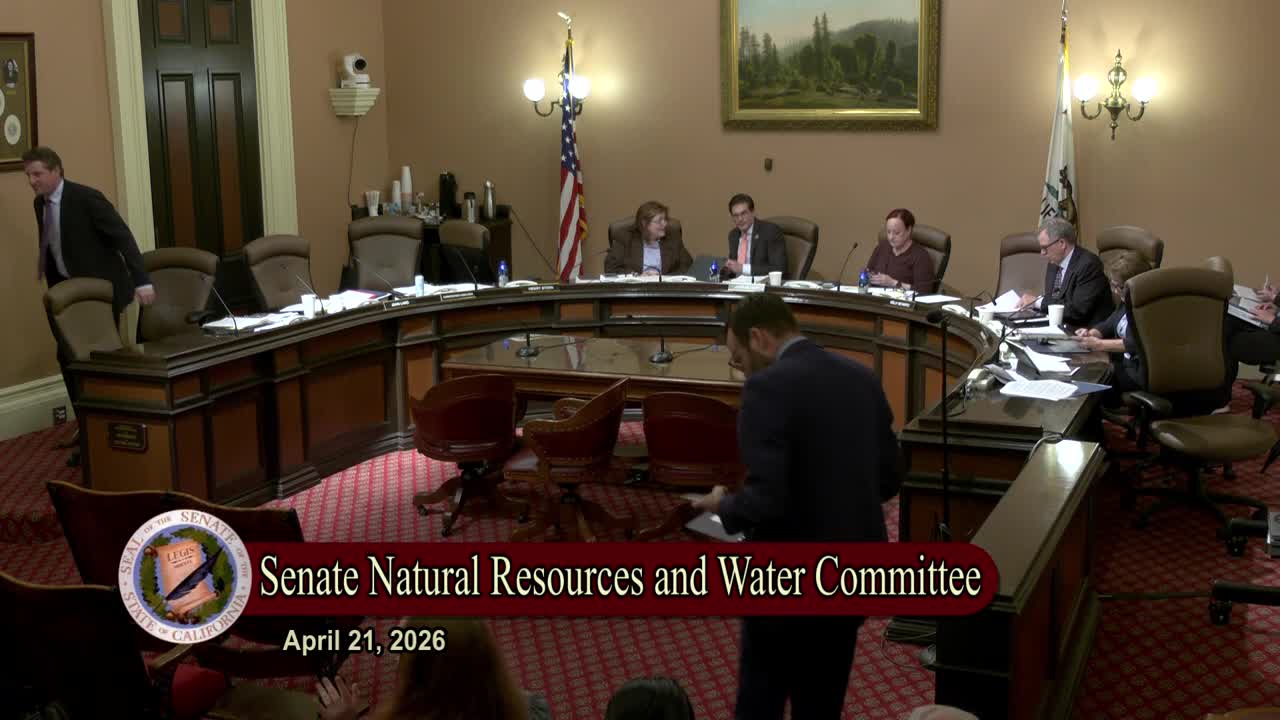 44MIN
Senate Standing Committee on Natural Resources and Water
Bill Author

Bill Co-Author(s):