SB 1322: Community Care Expansion Program.
- Session Year: 2025-2026
- House: Senate
- Latest Version Date: 2026-09-27
Current Status:
Passed
(2026-09-27: Chaptered by Secretary of State. Chapter 697, Statutes of 2026.)
Introduced
In Committee
Awaiting First Chamber Vote
Passed First Chamber
In Committee
Awaiting Second Chamber Vote
Passed Second Chamber
Enacted
Existing law establishes the Community Care Expansion Program, under the administration of the State Department of Social Services. Under the program, subject to appropriation by the Legislature, the department awards grants to qualified grantees to administer projects for the acquisition, construction, or rehabilitation of property to be operated as residential adult and senior care facilities, or to promote the sustainability of existing licensed residential adult and senior care facilities through the provision of capitalized operating subsidy reserves. Existing law authorizes the department to enter into an agreement with one or more entities to facilitate the grant awards. Existing law requires the contracting entity to act as a third-party administrator to provide operational services under the contract, including, but not limited to, developing an online application portal and processing invoices and making grant payments.
This bill would require the department to develop the grant application for tribes in consultation with tribes in the event the program obtains additional funding available to tribes. The bill would require the department to include its existing tribal liaison or their designee in discussions throughout the grant process to ensure tribal sovereignty is honored. The bill would also require that, if additional funds are appropriated, an agreement between the department and a tribe align with federal tribal housing grant agreements to the extent practicable and consistent with the program.
Existing law requires, subject to an appropriation, the department to award grants to preserve or expand the capacity of residential adult and senior care facilities through the acquisition, construction, or rehabilitation of property and requires counties and tribes receiving funds for this purpose to provide matching funds or real property.
This bill would exempt a tribe from providing real property if federal restrictions limit tribal property ownership.
Existing law establishes the Community Care Expansion Program, under the administration of the State Department of Social Services. Under the program, subject to appropriation by the Legislature, the department awards grants to qualified grantees to administer projects for the acquisition, construction, or rehabilitation of property to be operated as residential adult and senior care facilities, or to promote the sustainability of existing licensed residential adult and senior care facilities through the provision of capitalized operating subsidy reserves. Existing law authorizes the department to enter into an agreement with one or more entities to facilitate the grant awards. Existing law requires the contracting entity to act as a third-party administrator to provide operational services under the contract, including, but not limited to, developing an online application portal and processing invoices and making grant payments.
This bill would revise and recast the departments authorization to enter into an agreement with one or more entities to facilitate the grant application, awards, and implementation and require the department to be responsible for selected operational services previously done by a third-party administrator. If the grant is awarded to a tribe, the bill would require the department to administer the contract and award process directly with the tribal applicant and require the require the department to develop the grant application for tribes in consultation with tribes in the event the program obtains additional funding available to tribes. The bill would require the department to include its existing tribal liaison to be included or their designee in discussions throughout the grant process to ensure tribal sovereignty is honored. The bill would also require that that, if additional funds are appropriated, an agreement between the department and a tribe align with federal tribal housing grant agreements. agreements to the extent practicable and consistent with the program.
Existing law requires, subject to an appropriation, the department to award grants to preserve or expand the capacity of residential adult and senior care facilities through the acquisition, construction, or rehabilitation of property and requires counties and tribes receiving funds for this purpose to provide matching funds or real property.
This bill would exempt a tribe from providing real property if federal restrictions limit tribal property ownership.
Existing law establishes the Community Care Expansion Program, under the administration of the State Department of Social Services. Under the program, subject to appropriation by the Legislature, the department awards grants to qualified grantees to administer projects for the acquisition, construction, or rehabilitation of property to be operated as residential adult and senior care facilities, or to promote the sustainability of existing licensed residential adult and senior care facilities through the provision of capitalized operating subsidy reserves. Existing law authorizes the department to enter into an agreement with one or more entities to facilitate the grant awards. Existing law requires the contracting entity to act as a third-party administrator to provide operational services under the contract, including, but not limited to, developing an online application portal and processing invoices and making grant payments.
This bill would revise and recast the departments authorization to enter into an agreement with one or more entities to facilitate the grant application, awards, and implementation and require the department to be responsible for selected operational services previously done by a third-party administrator. If the grant is awarded to a tribe, the bill would require the department to administer the contract and award process directly with the tribal applicant and require the existing tribal liaison to be included throughout the grant process to ensure tribal sovereignty is honored. The bill would also require that an agreement between the department and a tribe align with federal tribal housing grant agreements.
Existing law requires, subject to an appropriation, the department to award grants to preserve or expand the capacity of residential adult and senior care facilities through the acquisition, construction, or rehabilitation of property and requires counties and tribes receiving funds for this purpose to provide matching funds or real property.
This bill would exempt a tribe from providing real property if federal restrictions limit tribal property ownership.
Existing law creates the Tribal Housing Grant Program Trust Fund, administered by the Department of Housing and Community Development. Existing law requires any moneys appropriated and made available by the Legislature through the annual Budget Act for purposes of the fund and 10% of any moneys that will be appropriated and made available by the Legislature to the department through the annual Budget Act for specified housing programs to be paid and deposited in the fund. Existing law requires the department to monitor the balance of the fund and, when the department determines that sufficient moneys are available in the fund, existing law requires the moneys in the fund to be allocated in accordance with a specified formula, as provided, and for specific purposes, including, among others, housing and housing-related program services for affordable housing, housing and community development project costs, and management services for affordable housing for the benefit of eligible beneficiaries, including, among others, Indian and essential families and individuals residing in an Indian area, as specified.Existing law requires the department, in close consultation with California tribes and a tribal housing grant program trust fund advisory committee, to adopt guidelines to implement the above-described provisions, including determining allocation methodologies.This bill would require the department, in close consultation with California tribes and a tribal housing grant program trust fund advisory committee, to adopt guidelines for grant applications due after January 1, 2028, streamlining and aligning the grant application process with federal tribal grant application requirements. The bill would require the department to include a tribal liaison designated by the department in discussions with tribes throughout the grant process to ensure that tribal sovereignty is honored.Existing law creates the Tribal Housing Grant Program Trust Fund, administered by the Department of Housing and Community Development. Existing law requires any moneys appropriated and made available by the Legislature through the annual Budget Act for purposes of the fund and 10% of any moneys that will be appropriated and made available by the Legislature to the department through the annual Budget Act for specified housing programs to be paid and deposited in the fund. Existing law requires the department to monitor the balance of the fund and, when the department determines that sufficient moneys are available in the fund, existing law requires the moneys in the fund to be allocated in accordance with a specified formula, as provided, and for specific purposes, including, among others, housing and housing-related program services for affordable housing, housing and community development project costs, and management services for affordable housing for the benefit of eligible beneficiaries, including, among others, Indian and essential families and individuals residing in an Indian area, as specified.
Existing law requires the department, in close consultation with California tribes and a tribal housing grant program trust fund advisory committee, to adopt guidelines to implement the above-described provisions, including determining allocation methodologies.
This bill would require the department, in close consultation with California tribes and a tribal housing grant program trust fund advisory committee, to adopt guidelines for grant applications due after January 1, 2028, streamlining and aligning the grant application process with federal tribal grant application requirements. The bill would require the department to include a tribal liaison designated by the department in discussions with tribes throughout the grant process to ensure that tribal sovereignty is honored.
Existing law, the Government-to-Government Consultation Act, encourages the state and its agencies to consult on a government-to-government basis with federally recognized and, as specified, with nonfederally recognized tribes and tribal organizations. Existing law designates state officials authorized to represent the state in government-to-government consultations, as provided.This bill, at the request of a California tribe, as defined, or a federally recognized tribe for a government-to-government consultation on a specified agency action, would require the state and its agencies to consult with the tribe as to the specified agency action within 60 days of the request, as specified. The bill would remove references to nonfederally recognized tribes and tribal organizations.Existing law, the Government-to-Government Consultation Act, encourages the state and its agencies to consult on a government-to-government basis with federally recognized and, as specified, with nonfederally recognized tribes and tribal organizations. Existing law designates state officials authorized to represent the state in government-to-government consultations, as provided.
This bill, at the request of a California tribe, as defined, or a federally recognized tribe for a government-to-government consultation on a specified agency action, would require the state and its agencies to consult with the tribe as to the specified agency action within 60 days of the request, as specified. The bill would remove references to nonfederally recognized tribes and tribal organizations.
(a)The Community Care Expansion Program is hereby established. Under the program, qualified grantees shall administer projects for the acquisition, construction, or rehabilitation of property to be operated as residential adult and senior care facilities, or to promote the sustainability of existing licensed residential adult and senior care facilities through the provision of capitalized operating subsidy reserves.
(b)(1)The department may enter into an agreement with one or more entities to facilitate the grant awards. A contracting entity shall act as a third-party administrator to provide operational services under the contract with the department. The services may include, but are not limited to, all of the following:
(A)Supporting the development of the notice of funding availability.
(B)Developing an online application portal.
(C)Executing contracts.
(D)Processing invoices and making grant payments.
(E)Providing technical assistance via webinars, learning collaboratives, application assistance, and other methods.
(F)Reporting.
(2)In the event that the program obtains additional funding available to tribes, the department shall develop the grant application for tribes in consultation with tribes. Any additional funds appropriated for the program shall be available to the department to implement this program.
(3)Funds appropriated for the purposes of this section shall be awarded, at the discretion of the department, to qualified grantees that include, but are not limited to, counties, tribes, or jointly applying counties and tribes.
(4)Qualified grantees may award grant funds to one or more subgrantees for projects consistent with the requirements of this chapter.
(c)Subject to an appropriation of funds in the annual Budget Act for the following purposes, the department shall award grants for one or both of the following as specified in the annual Budget Act:
(1)To preserve or expand capacity of residential adult and senior care facilities through the acquisition, construction, or rehabilitation of property.
(A)Qualified grantees may also use a portion of grant funds to establish capitalized operating subsidy reserves.
(B)Counties and tribes receiving funds under this paragraph shall provide matching funds or real property. A tribe is exempt from providing real property if federal restrictions limit tribal property ownership.
(C)The department, at its discretion, may award grants in a manner that takes into consideration the prioritization of qualified residents who are experiencing homelessness or who are at risk of homelessness.
(2)To provide capitalized operating subsidy reserves to existing licensed residential adult and senior care facilities that serve at least one qualified resident, in order to avoid the closure of facilities and to increase the acceptance of new qualified residents, consistent with Provision 19 of Item 5180-151-0001 of the Budget Act of 2021 (Ch. 69, Stats. 2021).
(A)The department shall award grants in a manner that prioritizes preserving the placement of qualified residents currently residing within a licensed residential adult or senior care facility that is at risk of closure and facilities with the highest percentage of qualified residents.
(B)As a condition of accepting funds, facilities are required to prioritize applications from prospective qualified residents, including those who are currently or formerly homeless or who are at risk of homelessness.
(C)The department shall report to the Legislature at the midpoint of program implementation and within six months after program completion on outcome monitoring, the use of funds, and the impact on retention of current capacity and additional capacity as a result of receiving operating subsidies. The report shall include data on the capacity of facilities serving individuals with a serious mental illness.
(d)If the applicant is a tribe, the department shall include its existing tribal liaison or their designee in discussions throughout the grant process to ensure tribal sovereignty is honored.
(e)The department shall develop criteria for the program, including, but not limited to, all of the following:
(1)The methodology and distribution of the funds awarded to qualified grantees under paragraphs (1) and (2) of subdivision (c). The department shall consider the distribution of adult and senior care facilities in counties across the state, the share of the latest homeless point-in-time count across the counties, and the relative cost of construction, acquisition, and rehabilitation between counties. The department shall set aside 8 percent of funds for a competitive program for small counties with a population of less than 200,000, and shall redistribute any unexpended funds.
(2)The proportion of funds that may be expended on capitalized operating subsidy reserves pursuant to subparagraph (A) of paragraph (1) of subdivision (c).
(3)Allowable use of funds awarded under paragraphs (1) and (2) of subdivision (c).
(4)Tracking and reporting procedures.
(f)Qualified resident for the purpose of this section means applicants or recipients of the Supplementary Security Income/State Supplemental Program (SSI/SSP) pursuant to Subchapter 16 (commencing with Section 1381) of Chapter 7 of Title 42 of the United States Code and Chapter 3 (commencing with Section 12000), and applicants or recipients of the Cash Assistance Program for Immigrants (CAPI) pursuant to Chapter 10.3 (commencing with Section 18937), who need the care and supervision that is provided by the licensed facility that receives the grant. Qualified resident shall not include SSI/SSP or CAPI applicants or recipients who are receiving services through a regional center.
(g)Capitalized operating subsidy reserve for the purpose of this section means an interest bearing account maintained by the qualified grantee, the residential adult or senior care facility, or a third-party entity and created to cover potential or projected operating deficits on a facility that provides licensed residential care for at least the term of the reserve, as demonstrated by a deed restriction or, at the discretion of the department, a legally enforceable agreement. The department shall develop guidelines on the qualified grantees use of capitalized operating subsidy reserves to ensure safeguards for those reserves, based on use in other state programs.
(h)Funds awarded pursuant to this section shall be used to supplement, and not supplant, other funding available from existing local, state, or federal programs or grants with similar purposes.
(i)A qualified grantee or entity operating a program pursuant to this chapter shall be exempt from any data entry or reporting requirements pursuant to Chapter 6.5 (commencing with Section 8255) of Division 8.
(j)Utilizing the funds appropriated for purposes of this section, the department shall, in consultation with legislative staff and relevant stakeholders, enter into a contract with an independent evaluation and research agency to evaluate the impacts of the program, collect data, and provide technical assistance.
(k)For purposes of implementing this section, if additional funds are appropriated for the program and available to the tribes, agreements between the department and a tribe shall be aligned with the United States Department of Housing and Urban Development tribal housing grant agreements, to the extent practicable and consistent with the program.
(l)For purposes of implementing this section, contracts entered into or amended pursuant to this section shall be exempt from the following:
(1)Chapter 6 (commencing with Section 14825) of Part 5.5 of Division 3 of Title 2 of the Government Code.
(2)The personal services contracting requirements of Article 4 (commencing with Section 19130) of Chapter 5 of Part 2 of Division 5 of Title 2 of the Government Code.
(3)Part 2 (commencing with Section 10100) of Division 2 of the Public Contract Code and the State Contracting Manual.
(4)Notwithstanding Section 11546 of the Government Code, from review or approval of any division of the Department of Technology, upon approval from the Department of Finance.
(5)From the review or approval of any division of the Department of General Services.
(m)Notwithstanding the rulemaking provisions of the Administrative Procedure Act (Chapter 3.5 (commencing with Section 11340) of Part 1 of Division 3 of Title 2 of the Government Code), the department may implement and administer this chapter through all-county letters or similar instruction that shall have the same force and effect as regulations.
(n)Any project that receives funds pursuant to this section shall be deemed consistent and in conformity with any applicable local plan, standard, or requirement, and any applicable coastal plan, local or otherwise, shall be allowed as a permitted use, within the zone in which the structure is located, shall not be subject to a conditional use permit, discretionary permit, or any other discretionary reviews or approvals, and shall be deemed as a ministerial action under Section 15268 of Title 14 of the California Code of Regulations.
(o)The state shall be immune from any liability resulting from the implementation of this chapter.
(a)The Community Care Expansion Program is hereby established. Under the program, qualified grantees shall administer projects for the acquisition, construction, or rehabilitation of property to be operated as residential adult and senior care facilities, or to promote the sustainability of existing licensed residential adult and senior care facilities through the provision of capitalized operating subsidy reserves.
(b)(1)The department may enter into an agreement with one or more entities to facilitate the grant application, awards, and implementation. awards. A contracting entity shall act as a third-party administrator to provide operational services under the contract with the department, including both of the following: department. The services may include, but are not limited to, all of the following:
(A)Providing technical assistance via webinars, learning collaboratives, application assistance, and other methods.(B)Reporting.(2)The department is responsible for all of the following:(A)Supporting the development of the notice of funding availability.
(B)Developing an online application portal.
(C)Executing contracts.
(D)Processing invoices and making grant payments.
(E)Providing technical assistance via webinars, learning collaboratives, application assistance, and other methods.
(F)Reporting.
(2)In the event that the program obtains additional funding available to tribes, the department shall develop the grant application for tribes in consultation with tribes. Any additional funds appropriated for the program shall be available to the department to implement this program.
(3)If the grant is awarded to a tribe, the department will administer the contract and award process directly with the tribal applicant.(4)(3)Funds appropriated for the purposes of this section shall be awarded, at the discretion of the department, to qualified grantees that include, but are not limited to, counties, tribes, or jointly applying counties and tribes.
(5)(4)Qualified grantees may award grant funds to one or more subgrantees for projects consistent with the requirements of this chapter.
(c)Subject to an appropriation of funds in the annual Budget Act for the following purposes, the department shall award grants for one or both of the following as specified in the annual Budget Act:
(1)To preserve or expand capacity of residential adult and senior care facilities through the acquisition, construction, or rehabilitation of property.
(A)Qualified grantees may also use a portion of grant funds to establish capitalized operating subsidy reserves.
(B)Counties and tribes receiving funds under this paragraph shall provide matching funds or real property. A tribe is exempt from providing real property if federal restrictions limit tribal property ownership.
(C)The department, at its discretion, may award grants in a manner that takes into consideration the prioritization of qualified residents who are experiencing homelessness or who are at risk of homelessness.
(2)To provide capitalized operating subsidy reserves to existing licensed residential adult and senior care facilities that serve at least one qualified resident, in order to avoid the closure of facilities and to increase the acceptance of new qualified residents, consistent with Provision 19 of Item 5180-151-0001 of the Budget Act of 2021 (Ch. 69, Stats. 2021).
(A)The department shall award grants in a manner that prioritizes preserving the placement of qualified residents currently residing within a licensed residential adult or senior care facility that is at risk of closure and facilities with the highest percentage of qualified residents.
(B)As a condition of accepting funds, facilities are required to prioritize applications from prospective qualified residents, including those who are currently or formerly homeless or who are at risk of homelessness.
(C)The department shall report to the Legislature at the midpoint of program implementation and within six months after program completion on outcome monitoring, the use of funds, and the impact on retention of current capacity and additional capacity as a result of receiving operating subsidies. The report shall include data on the capacity of facilities serving individuals with a serious mental illness.
(d)If the applicant is a tribe, the department shall include its existing tribal liaison or their designee in discussions throughout the grant process to ensure tribal sovereignty is honored.
(e)The department shall develop criteria for the program, including, but not limited to, all of the following:
(1)The methodology and distribution of the funds awarded to qualified grantees under paragraphs (1) and (2) of subdivision (c). The department shall consider the distribution of adult and senior care facilities in counties across the state, the share of the latest homeless point-in-time count across the counties, and the relative cost of construction, acquisition, and rehabilitation between counties. The department shall set aside 8 percent of funds for a competitive program for small counties with a population of less than 200,000, and shall redistribute any unexpended funds.
(2)The proportion of funds that may be expended on capitalized operating subsidy reserves pursuant to subparagraph (A) of paragraph (1) of subdivision (c).
(3)Allowable use of funds awarded under paragraphs (1) and (2) of subdivision (c).
(4)Tracking and reporting procedures.
(f)Qualified resident for the purpose of this section means applicants or recipients of the Supplementary Security Income/State Supplemental Program (SSI/SSP) pursuant to Subchapter 16 (commencing with Section 1381) of Chapter 7 of Title 42 of the United States Code and Chapter 3 (commencing with Section 12000), and applicants or recipients of the Cash Assistance Program for Immigrants (CAPI) pursuant to Chapter 10.3 (commencing with Section 18937), who need the care and supervision that is provided by the licensed facility that receives the grant. Qualified resident shall not include SSI/SSP or CAPI applicants or recipients who are receiving services through a regional center.
(g)Capitalized operating subsidy reserve for the purpose of this section means an interest bearing account maintained by the qualified grantee, the residential adult or senior care facility, or a third-party entity and created to cover potential or projected operating deficits on a facility that provides licensed residential care for at least the term of the reserve, as demonstrated by a deed restriction or, at the discretion of the department, a legally enforceable agreement. The department shall develop guidelines on the qualified grantees use of capitalized operating subsidy reserves to ensure safeguards for those reserves, based on use in other state programs.
(h)Funds awarded pursuant to this section shall be used to supplement, and not supplant, other funding available from existing local, state, or federal programs or grants with similar purposes.
(i)A qualified grantee or entity operating a program pursuant to this chapter shall be exempt from any data entry or reporting requirements pursuant to Chapter 6.5 (commencing with Section 8255) of Division 8.
(j)Utilizing the funds appropriated for purposes of this section, the department shall, in consultation with legislative staff and relevant stakeholders, enter into a contract with an independent evaluation and research agency to evaluate the impacts of the program, collect data, and provide technical assistance.
(k)For purposes of implementing this section, contracts if additional funds are appropriated for the program and available to the tribes, agreements between the department and a tribe shall be aligned with the federal United States Department of Housing and Urban Development tribal housing grant agreements. agreements, to the extent practicable and consistent with the program.
(l)For purposes of implementing this section, contracts entered into or amended pursuant to this section shall be exempt from the following:
(1)Chapter 6 (commencing with Section 14825) of Part 5.5 of Division 3 of Title 2 of the Government Code.
(2)The personal services contracting requirements of Article 4 (commencing with Section 19130) of Chapter 5 of Part 2 of Division 5 of Title 2 of the Government Code.
(3)Part 2 (commencing with Section 10100) of Division 2 of the Public Contract Code and the State Contracting Manual.
(4)Notwithstanding Section 11546 of the Government Code, from review or approval of any division of the Department of Technology, upon approval from the Department of Finance.
(5)From the review or approval of any division of the Department of General Services.
(m)Notwithstanding the rulemaking provisions of the Administrative Procedure Act (Chapter 3.5 (commencing with Section 11340) of Part 1 of Division 3 of Title 2 of the Government Code), the department may implement and administer this chapter through all-county letters or similar instruction that shall have the same force and effect as regulations.
(n)Any project that receives funds pursuant to this section shall be deemed consistent and in conformity with any applicable local plan, standard, or requirement, and any applicable coastal plan, local or otherwise, shall be allowed as a permitted use, within the zone in which the structure is located, shall not be subject to a conditional use permit, discretionary permit, or any other discretionary reviews or approvals, and shall be deemed as a ministerial action under Section 15268 of Title 14 of the California Code of Regulations.
(o)The state shall be immune from any liability resulting from the implementation of this chapter.
(a)The Community Care Expansion Program is hereby established. Under the program, qualified grantees shall administer projects for the acquisition, construction, or rehabilitation of property to be operated as residential adult and senior care facilities, or to promote the sustainability of existing licensed residential adult and senior care facilities through the provision of capitalized operating subsidy reserves.
(b)(1)The department may enter into an agreement with one or more entities to facilitate the grant awards. A contracting entity shall act as a third-party administrator to provide operational services under the contract with the department. The services may include, but are not limited to, all of the following:(A)Supporting the development of the notice of funding availability.(B)Developing an online application portal.(C)Executing contracts.(D)Processing invoices and making grant payments.(E)Providing technical assistance via webinars, learning collaboratives, application assistance, and other methods.(F)Reporting.(b)(1)The department may enter into an agreement with one or more entities to facilitate the grant application, awards, and implementation. A contracting entity shall act as a third-party administrator to provide operational services under the contract with the department, including both of the following:
(A)Providing technical assistance via webinars, learning collaboratives, application assistance, and other methods.
(B)Reporting.
(2)The department is responsible for all of the following:
(A)Supporting the development of the notice of funding availability.
(B)Developing an online application portal.
(C)Executing contracts.
(D)Processing invoices and making grant payments.
(3)If the grant is awarded to a tribe, the department will administer the contract and award process directly with the tribal applicant.
(2)(4)Funds appropriated for the purposes of this section shall be awarded, at the discretion of the department, to qualified grantees that include, but are not limited to, counties, tribes, or jointly applying counties and tribes.
(3)(5)Qualified grantees may award grant funds to one or more subgrantees for projects consistent with the requirements of this chapter.
(c)Subject to an appropriation of funds in the annual Budget Act for the following purposes, the department shall award grants for one or both of the following as specified in the annual Budget Act:
(1)To preserve or expand capacity of residential adult and senior care facilities through the acquisition, construction, or rehabilitation of property.
(A)Qualified grantees may also use a portion of grant funds to establish capitalized operating subsidy reserves.
(B)Counties and tribes receiving funds under this paragraph shall provide matching funds or real property. A tribe is exempt from providing real property if federal restrictions limit tribal property ownership.
(C)The department, at its discretion, may award grants in a manner that takes into consideration the prioritization of qualified residents who are experiencing homelessness or who are at risk of homelessness.
(2)To provide capitalized operating subsidy reserves to existing licensed residential adult and senior care facilities that serve at least one qualified resident, in order to avoid the closure of facilities and to increase the acceptance of new qualified residents, consistent with Provision 19 of Item 5180-151-0001 of the Budget Act of 2021 (Ch. 69, Stats. 2021).
(A)The department shall award grants in a manner that prioritizes preserving the placement of qualified residents currently residing within a licensed residential adult or senior care facility that is at risk of closure and facilities with the highest percentage of qualified residents.
(B)As a condition of accepting funds, facilities are required to prioritize applications from prospective qualified residents, including those who are currently or formerly homeless or who are at risk of homelessness.
(C)The department shall report to the Legislature at the midpoint of program implementation and within six months after program completion on outcome monitoring, the use of funds, and the impact on retention of current capacity and additional capacity as a result of receiving operating subsidies. The report shall include data on the capacity of facilities serving individuals with a serious mental illness.
(d)If the applicant is a tribe, the department shall include its existing tribal liaison in discussions throughout the grant process to ensure tribal sovereignty is honored.
(d)(e)The department shall develop criteria for the program, including, but not limited to, all of the following:
(1)The methodology and distribution of the funds awarded to qualified grantees under paragraphs (1) and (2) of subdivision (c). The department shall consider the distribution of adult and senior care facilities in counties across the state, the share of the latest homeless point-in-time count across the counties, and the relative cost of construction, acquisition, and rehabilitation between counties. The department shall set aside 8 percent of funds for a competitive program for small counties with a population of less than 200,000, and shall redistribute any unexpended funds.
(2)The proportion of funds that may be expended on capitalized operating subsidy reserves pursuant to subparagraph (A) of paragraph (1) of subdivision (c).
(3)Allowable use of funds awarded under paragraphs (1) and (2) of subdivision (c).
(4)Tracking and reporting procedures.
(e)(f)Qualified resident for the purpose of this section means applicants or recipients of the Supplementary Security Income/State Supplemental Program (SSI/SSP) pursuant to Subchapter 16 (commencing with Section 1381) of Chapter 7 of Title 42 of the United States Code and Chapter 3 (commencing with Section 12000), and applicants or recipients the Cash Assistance Program for Immigrants (CAPI) pursuant to Chapter 10.3 (commencing with Section 18937), who need the care and supervision that is provided by the licensed facility that receives the grant. Qualified resident shall not include SSI/SSP or CAPI applicants or recipients who are receiving services through a regional center.
(f)(g)Capitalized operating subsidy reserve for the purpose of this section means an interest bearing account maintained by the qualified grantee, the residential adult or senior care facility, or a third-party entity and created to cover potential or projected operating deficits on a facility that provides licensed residential care for at least the term of the reserve, as demonstrated by a deed restriction or, at the discretion of the department, a legally enforceable agreement. The department shall develop guidelines on the qualified grantees use of capitalized operating subsidy reserves to ensure safeguards for those reserves, based on use in other state programs.
(g)(h)Funds awarded pursuant to this section shall be used to supplement, and not supplant, other funding available from existing local, state, or federal programs or grants with similar purposes.
(h)(i)A qualified grantee or entity operating a program pursuant to this chapter shall be exempt from any data entry or reporting requirements pursuant to Chapter 6.5 (commencing with Section 8255) of Division 8.
(i)(j)Utilizing the funds appropriated for purposes of this section, the department shall, in consultation with legislative staff and relevant stakeholders, enter into a contract with an independent evaluation and research agency to evaluate the impacts of the program, collect data, and provide technical assistance.
(k)For purposes of implementing this section, contracts between the department and a tribe shall be aligned with the federal Department of Housing and Urban Development tribal housing grant agreements.
(j)(l)For purposes of implementing this section, contracts entered into or amended pursuant to this section shall be exempt from the following:
(1)Chapter 6 (commencing with Section 14825) of Part 5.5 of Division 3 of Title 2 of the Government Code.
(2)The personal services contracting requirements of Article 4 (commencing with Section 19130) of Chapter 5 of Part 2 of Division 5 of Title 2 of the Government Code.
(3)Part 2 (commencing with Section 10100) of Division 2 of the Public Contract Code and the State Contracting Manual.
(4)Notwithstanding Section 11546 of the Government Code, from review or approval of any division of the Department of Technology, upon approval from the Department of Finance.
(5)From the review or approval of any division of the Department of General Services.
(k)(m)Notwithstanding the rulemaking provisions of the Administrative Procedure Act (Chapter 3.5 (commencing with Section 11340) of Part 1 of Division 3 of Title 2 of the Government Code), the department may implement and administer this chapter through all-county letters or similar instruction that shall have the same force and effect as regulations.
(l)(n)Any project that receives funds pursuant to this section shall be deemed consistent and in conformity with any applicable local plan, standard, or requirement, and any applicable coastal plan, local or otherwise, shall be allowed as a permitted use, within the zone in which the structure is located, shall not be subject to a conditional use permit, discretionary permit, or any other discretionary reviews or approvals, and shall be deemed as a ministerial action under Section 15268 of Title 14 of the California Code of Regulations.
(m)(o)The state shall be immune from any liability resulting from the implementation of this chapter.
SECTION 1.Section 50651.1 of the Health and Safety Code is amended to read:50651.1.There is hereby created in the State Treasury the Tribal Housing Grant Program Trust Fund to be administered by the department. All interest or other increments resulting from the investment of moneys in the fund shall be deposited in the fund, notwithstanding Section 16305.7 of the Government Code.(a)Moneys in the Tribal Housing Grant Program Trust Fund shall not be subject to transfer to any other fund pursuant to any provision of Part 2 (commencing with Section 16300) of Division 4 of Title 2 of the Government Code, except to the Surplus Money Investment Fund.(b)Both of the following shall be paid and deposited in the fund:(1)Any moneys appropriated and made available by the Legislature through the annual Budget Act for purposes of the fund.(2)Ten percent of any moneys that will be appropriated and made available by the Legislature to the department through the annual Budget Act for the Multifamily Housing Program (Chapter 6.7 (commencing with Section 50675)), Infill Infrastructure Grant Program of 2019 (Part 12.5 (commencing with Section 53559)), Veterans Housing and Homeless Prevention Act of 2014 (Article 3.2 (commencing with Section 987.001) of Chapter 6 of Division 4 of the Military and Veterans Code), and Joe Serna, Jr. Farmworker Housing Grant Program (Chapter 3.2 (commencing with Section 50515.2)). The use of moneys deposited into the fund pursuant to this subdivision shall only be subject to this chapter, regardless of any other law governing the use of the balance of the funds appropriated to programs governed by this division.(c)Separate from the fund, and subject to appropriation by the Legislature, moneys made available to the department through voter-approved bonds for the Multifamily Housing Program, Infill Infrastructure Grant Program of 2019, Veterans Housing and Homelessness Prevention Program, and Joe Serna, Jr. Farmworker Housing Grant Program may be made available as tribal set-asides in alignment with the eligible uses of those funds.(d)The department shall monitor the balance of the fund. When the department determines that sufficient moneys are available in the fund to allocate, the department shall allocate the moneys as follows:(1)Ninety-five percent of deposits into the fund pursuant to subdivision (b) shall be made available on an entitlement basis to the duly constituted governing body of a California-based federally recognized Indian reservation or rancheria in accordance with a formula allocation to be determined by the department. The formula shall be based on input and guidance from Indian tribes and the tribal housing grant program trust fund advisory committee, which may include, but not be limited to, a specific formula or factors to be used in a formula for allocation. Funds shall be provided in the form of multipurpose block grants for eligible uses in support of housing and housing-related planning, program, project predevelopment, operating subsidies, staffing, and administrative activities as specified in this chapter.(2)Five percent of deposits into the fund shall be available for technical assistance to eligible tribes and tribally designated housing entities to build their capacity to independently plan, design, apply for, implement, and operate affordable housing programs and projects.(e)Recipients that receive an allocation pursuant to paragraph (1) of subdivision (d) shall use no more than 20 percent of that allocation for costs related to the administration of funds received on an entitlement basis, unless the recipient receives approval by the department.(f)To receive moneys pursuant to this section, tribal governments shall do both of the following:(1)Annually submit a plan to the department detailing the way allocated funds will be used by the tribe in a manner consistent with this section.(2)Submit an annual report to the department that provides ongoing tracking of the uses and expenditures of any allocated funds.(g)The department shall ensure geographic equity in the distribution and expenditure of funds allocated pursuant to this section.(h)(1)In close consultation with California tribes and a tribal housing grant program trust fund advisory committee, the department shall adopt guidelines to implement this section, including guidelines for both of the following: (A)Determining allocation methodologies.(B)For grant applications due after January 1, 2028, streamlining and aligning the grant application process with federal tribal grant application requirements.(2)The department may adopt, amend, or repeal guidelines for the administration and implementation of this chapter, in consultation with California tribes and a tribal housing grant program trust fund advisory committee.(i)The department shall include a tribal liaison designated by the department in discussions with tribes throughout the grant process to ensure that tribal sovereignty is honored.There is hereby created in the State Treasury the Tribal Housing Grant Program Trust Fund to be administered by the department. All interest or other increments resulting from the investment of moneys in the fund shall be deposited in the fund, notwithstanding Section 16305.7 of the Government Code.
(a)Moneys in the Tribal Housing Grant Program Trust Fund shall not be subject to transfer to any other fund pursuant to any provision of Part 2 (commencing with Section 16300) of Division 4 of Title 2 of the Government Code, except to the Surplus Money Investment Fund.
(b)Both of the following shall be paid and deposited in the fund:
(1)Any moneys appropriated and made available by the Legislature through the annual Budget Act for purposes of the fund.
(2)Ten percent of any moneys that will be appropriated and made available by the Legislature to the department through the annual Budget Act for the Multifamily Housing Program (Chapter 6.7 (commencing with Section 50675)), Infill Infrastructure Grant Program of 2019 (Part 12.5 (commencing with Section 53559)), Veterans Housing and Homeless Prevention Act of 2014 (Article 3.2 (commencing with Section 987.001) of Chapter 6 of Division 4 of the Military and Veterans Code), and Joe Serna, Jr. Farmworker Housing Grant Program (Chapter 3.2 (commencing with Section 50515.2)). The use of moneys deposited into the fund pursuant to this subdivision shall only be subject to this chapter, regardless of any other law governing the use of the balance of the funds appropriated to programs governed by this division.
(c)Separate from the fund, and subject to appropriation by the Legislature, moneys made available to the department through voter-approved bonds for the Multifamily Housing Program, Infill Infrastructure Grant Program of 2019, Veterans Housing and Homelessness Prevention Program, and Joe Serna, Jr. Farmworker Housing Grant Program may be made available as tribal set-asides in alignment with the eligible uses of those funds.
(d)The department shall monitor the balance of the fund. When the department determines that sufficient moneys are available in the fund to allocate, the department shall allocate the moneys as follows:
(1)Ninety-five percent of deposits into the fund pursuant to subdivision (b) shall be made available on an entitlement basis to the duly constituted governing body of a California-based federally recognized Indian reservation or rancheria in accordance with a formula allocation to be determined by the department. The formula shall be based on input and guidance from Indian tribes and the tribal housing grant program trust fund advisory committee, which may include, but not be limited to, a specific formula or factors to be used in a formula for allocation. Funds shall be provided in the form of multipurpose block grants for eligible uses in support of housing and housing-related planning, program, project predevelopment, operating subsidies, staffing, and administrative activities as specified in this chapter.
(2)Five percent of deposits into the fund shall be available for technical assistance to eligible tribes and tribally designated housing entities to build their capacity to independently plan, design, apply for, implement, and operate affordable housing programs and projects.
(e)Recipients that receive an allocation pursuant to paragraph (1) of subdivision (d) shall use no more than 20 percent of that allocation for costs related to the administration of funds received on an entitlement basis, unless the recipient receives approval by the department.
(f)To receive moneys pursuant to this section, tribal governments shall do both of the following:
(1)Annually submit a plan to the department detailing the way allocated funds will be used by the tribe in a manner consistent with this section.
(2)Submit an annual report to the department that provides ongoing tracking of the uses and expenditures of any allocated funds.
(g)The department shall ensure geographic equity in the distribution and expenditure of funds allocated pursuant to this section.
(h)(1)In close consultation with California tribes and a tribal housing grant program trust fund advisory committee, the department shall adopt guidelines to implement this section, including determining guidelines for both of the following:
(A)Determining allocation methodologies. Thereafter, the
(B)For grant applications due after January 1, 2028, streamlining and aligning the grant application process with federal tribal grant application requirements.
(2)The department may adopt, amend, or repeal guidelines for the administration and implementation of this chapter, in consultation with California tribes and a tribal housing grant program trust fund advisory committee.
(i)The department shall include a tribal liaison designated by the department in discussions with tribes throughout the grant process to ensure that tribal sovereignty is honored.
SECTION 1.Section 11019.81 of the Government Code is amended to read:11019.81.(a)This section shall be known and may be cited as the Government-to-Government Consultation Act.(b)For purposes of this section, all of the following shall apply:(1)Agency action includes, but is not limited to, agency development of policies, regulations, guidelines, processes, programs, and projects with tribal implications.(2)California tribe means a Native American tribe located in California that is on the contact list maintained by the Native American Heritage Commission for the purposes of Chapter 905 of the Statutes of 2004.(3)Federally recognized tribe means a tribe located in the state and acknowledged by the federal government pursuant to the annual list published under the Federally Recognized Indian Tribe List Act of 1994 (25 U.S.C. Sec. 5131) in the Federal Register.(4)Tribal implications are agency actions that impact one or more California tribes or federally recognized tribes or tribal organizations, the government-to-government relationship between the state and federally recognized tribes, or the distribution of power and responsibilities between the state and federally recognized tribes.(c)The Legislature encourages the State of California and its agencies to consult on a government-to-government basis with California tribes and federally recognized tribes, in order to allow tribal officials the opportunity to provide meaningful and timely input in the development of policies, processes, programs, and projects that have tribal implications.(d)(1)At the request of a California tribe or a federally recognized tribe for a government-to-government consultation on a specified agency action, the state and its agencies shall consult with the tribe as to the specified agency action within 60 days of the request.(2)For purposes of this subdivision, a consult shall include both of the following:(A)Clear, simple, understandable, and positive communications and documents that meet the needs of individuals across diverse cultures and education levels.(B)The state or its agencies makes multiple attempts to engage with tribes in various formats.(e)Each agency director is encouraged to consider the need for tribal consultation before approving an agency action.(f)(1)Within the executive branch, the following officials shall have authority to represent the state in a tribal government-to-government consultation:(A)The Governor.(B)The Attorney General.(C)Each constitutional officer and statewide elected official.(D)The director of each state agency and department.(E)The chair and the executive officer of each state commission and task force.(F)The chief counsel of any state agency.(2)Each official authorized by this subdivision may formally designate another agency official to conduct preliminary tribal consultations, and each designated official may have the authority to act on behalf of the state during a government-to-government consultation.(g)(1)On or before June 1, 2024, the Department of Human Resources, in consultation with state entities experienced in tribal issues and with tribal governments, shall develop a training regarding the required elements of training on government-to-government consultations for the officials specified in subdivision (f).(2)The training shall include details on government-to-government consultation, including, but not limited to, all of the following elements:(A)Timing and notice.(B)Form, including, but not limited to, in-person meetings, video conferences, teleconferences, and written correspondence.(C)Principles.(D)Resolution.(E)Tribal sovereignty.(F)Sacred sites.(G)Changes or updates to state law that affect California tribes and that would require government-to-government consultation.(h)All officials listed in subdivision (f) shall complete the training on government-to-government consultation by January 1, 2025, or, for officials appointed after that date, within six months of their appointment or confirmation of appointment, whichever is later. Each official shall retake the training annually.(a)This section shall be known and may be cited as the Government-to-Government Consultation Act.
(b)For purposes of this section, all of the following shall apply:
(1)Agency action includes, but is not limited to, agency development of policies, regulations, guidelines, processes, programs, and projects with tribal implications.
(2)California tribe means a Native American tribe located in California that is on the contact list maintained by the Native American Heritage Commission for the purposes of Chapter 905 of the Statutes of 2004.
(2)(3)Federally recognized tribe means a tribe located in the state and acknowledged by the federal government pursuant to the annual list published under the Federally Recognized Indian Tribe List Act of 1994 (25 U.S.C. Sec. 5131) in the Federal Register.
(3)(4)Tribal implications are agency actions that impact one or more California tribes or federally recognized tribes or nonfederally recognized tribes or tribal organizations, the government-to-government relationship between the state and federally recognized tribes, or the distribution of power and responsibilities between the state and federally recognized tribes.
(c)The Legislature encourages the State of California and its agencies to consult on a government-to-government basis with California tribes and federally recognized tribes, and to consult with nonfederally recognized tribes and tribal organizations, as appropriate, in order to allow tribal officials the opportunity to provide meaningful and timely input in the development of policies, processes, programs, and projects that have tribal implications.
(d)(1)At the request of a California tribe or a federally recognized tribe for a government-to-government consultation on a specified agency action, the Legislature encourages the state and its agencies to shall consult with the tribe as to the specified agency action within 60 days of the request.
(2)For purposes of this subdivision, a consult shall include both of the following:
(A)Clear, simple, understandable, and positive communications and documents that meet the needs of individuals across diverse cultures and education levels.
(B)The state or its agencies makes multiple attempts to engage with tribes in various formats.
(e)Each agency director is encouraged to consider the need for tribal consultation before approving an agency action.
(f)(1)Within the executive branch, the following officials shall have authority to represent the state in a tribal government-to-government consultation:
(A)The Governor.
(B)The Attorney General.
(C)Each constitutional officer and statewide elected official.
(D)The director of each state agency and department.
(E)The chair and the executive officer of each state commission and task force.
(F)The chief counsel of any state agency.
(2)Each official authorized by this subdivision may formally designate another agency official to conduct preliminary tribal consultations, and each designated official may have the authority to act on behalf of the state during a government-to-government consultation.
(g)(1)On or before June 1, 2024, the Department of Human Resources, in consultation with state entities experienced in tribal issues and with tribal governments, shall develop a training regarding the required elements of training on government-to-government consultations for the officials specified in subdivision (f).
(2)The training shall include details on government-to-government consultation, including, but not limited to, all of the following elements:
(A)Timing and notice.
(B)Form, including, but not limited to, in-person meetings, video conferences, teleconferences, and written correspondence.
(C)Principles.
(D)Resolution.
(E)Tribal sovereignty.
(F)Sacred sites.
(G)Changes or updates to state law that affect California tribes and that would require government-to-government consultation.
(h)All officials listed in subdivision (f) shall complete the training on government-to-government consultation by January 1, 2025, or, for officials appointed after that date, within six months of their appointment or confirmation of appointment, whichever is later. Each official shall retake the training annually.
|
Date
|
Status
|
|---|---|
| Sep 27, 2026 | Chaptered by Secretary of State. Chapter 697, Statutes of 2026. |
| Sep 27, 2026 | Approved by the Governor. |
| Sep 8, 2026 | Enrolled and presented to the Governor at 4 p.m. |
| Aug 30, 2026 | Assembly amendments concurred in. (Ayes 40. Noes 0. Page 6136.) Ordered to engrossing and enrolling. |
| Aug 30, 2026 | Assembly amendments concurred in. (Ayes 40. Noes 0.) Ordered to engrossing and enrolling. |
| Aug 30, 2026 | Ordered to special consent calendar. |
| Aug 27, 2026 | From committee: That the Assembly amendments be concurred in. (Ayes 4. Noes 0. Page 6046.) |
| Aug 27, 2026 | From committee: That the Assembly amendments be concurred in. (Ayes 4. Noes 0.) |
| Aug 26, 2026 | From committee: Be re-referred to Com. on HUMAN S. pursuant to Senate Rule 29.10(d). (Ayes 5. Noes 0. Page 5823.) Re-referred to Com. on HUMAN S. |
| Aug 26, 2026 | From committee: Be re-referred to Com. on HUMAN S. pursuant to Senate Rule 29.10(d). (Ayes 5. Noes 0.) Re-referred to Com. on HUMAN S. |
| Aug 26, 2026 | Re-referred to Com. on RLS. pursuant to Senate Rule 29.10(d). |
| Aug 25, 2026 | In Senate. Concurrence in Assembly amendments pending. |
| Aug 25, 2026 | Read third time. Passed. (Ayes 78. Noes 0. Page 6476.) Ordered to the Senate. |
| Aug 25, 2026 | Read third time. Passed. Ordered to the Senate. |
| Aug 17, 2026 | Read second time. Ordered to third reading. |
| Aug 13, 2026 | Assembly Rule 63 suspended. |
| Aug 13, 2026 | Read second time and amended. Ordered to second reading. |
| Aug 13, 2026 | From committee: Do pass as amended. (Ayes 11. Noes 0.) (August 13). |
| Aug 5, 2026 | August 5 set for first hearing. Placed on suspense file. |
| Jul 1, 2026 | From committee: Do pass and re-refer to Com. on APPR. (Ayes 7. Noes 0.) (June 30). Re-referred to Com. on APPR. |
| Jun 15, 2026 | Re-referred to Com. on HUM. S. pursuant to Assembly Rule 96. |
| Jun 11, 2026 | From committee with author's amendments. Read second time and amended. Re-referred to Com. on H. & C.D. |
| Jun 1, 2026 | Referred to Com. on H. & C.D. |
| May 22, 2026 | In Assembly. Read first time. Held at Desk. |
| May 22, 2026 | Read third time. Passed. (Ayes 33. Noes 0. Page 4420.) Ordered to the Assembly. |
| May 22, 2026 | Read third time. Passed. (Ayes 33. Noes 0.) Ordered to the Assembly. |
| May 20, 2026 | Ordered to special consent calendar. |
| May 14, 2026 | From committee: Do pass. (Ayes 7. Noes 0. Page 4273.) (May 14). |
| May 14, 2026 | Read second time. Ordered to third reading. |
| May 14, 2026 | From committee: Do pass. (Ayes 7. Noes 0.) (May 14). |
| May 8, 2026 | Set for hearing May 14. |
| Apr 27, 2026 | April 27 hearing: Placed on APPR. suspense file. |
| Apr 17, 2026 | Set for hearing April 27. |
| Apr 16, 2026 | From committee: Do pass and re-refer to Com. on APPR. with recommendation: To consent calendar. (Ayes 9. Noes 0. Page 3902.) (April 15). Re-referred to Com. on APPR. |
| Apr 16, 2026 | From committee: Do pass and re-refer to Com. on APPR. with recommendation: To consent calendar. (Ayes 9. Noes 0.) (April 15). Re-referred to Com. on APPR. |
| Apr 9, 2026 | Set for hearing April 15. |
| Apr 8, 2026 | Re-referred to Com. on HOUSING. |
| Mar 26, 2026 | Re-referred to Com. on RLS. |
| Mar 26, 2026 | Withdrawn from committee. |
| Mar 25, 2026 | From committee with author's amendments. Read second time and amended. Re-referred to Com. on G.O. |
| Mar 4, 2026 | Referred to Com. on G.O. |
| Feb 23, 2026 | Read first time. |
| Feb 23, 2026 | From printer. May be acted upon on or after March 23. |
| Feb 20, 2026 | Introduced. To Com. on RLS. for assignment. To print. |
|
Date
|
Description
|
Location
|
Votes
|
|
|---|---|---|---|---|
| Aug 30, 2026 | Unfinished Business SB1322 Richardson Concurrence | Senate Floor |
Passed |
|
| Aug 27, 2026 | That the Assembly amendments be concurred in | Senate Standing Committee on Human Services |
Passed |
|
| Aug 25, 2026 | SB 1322 Richardson Senate Third Reading By Blanca Rubio | Assembly Floor |
Passed |
|
| Aug 13, 2026 | Do pass as amended. | Assembly Standing Committee on Appropriations |
Passed |
|
| Jun 30, 2026 | Do pass and be re-referred to the Committee on [Appropriations] | Assembly Standing Committee on Human Services |
Passed |
|
| May 22, 2026 | Special Consent SB1322 Richardson | Senate Floor |
Passed |
|
| May 14, 2026 | Do pass | Senate Standing Committee on Appropriations |
Passed |
|
| Apr 27, 2026 | Placed on suspense file | Senate Standing Committee on Appropriations |
Passed |
|
| Apr 15, 2026 | Do pass, but first be re-referred to the Committee on [Appropriations] with the recommendation: To Consent Calendar | Senate Standing Committee on Housing |
Passed |
This list shows positions taken on this bill by organizations on the date displayed, which is linked to the original source.
Positions by individuals are not included.
|
Organization
|
Position
|
Date
|
|---|---|---|
| California Tribal Business Alliance | ** Support | |
| Habematolel Pomo Of Upper Lake | ** Support | |
| Pala Band Of Mission Indians | ** Support | |
| Yurok Tribe | ** Support |
SENATE RULES COMMITTEE Office of Senate Floor Analyses (916) 651-4171 | SB 1322 |
UNFINISHED BUSINESS
Bill No: SB 1322
Author: Richardson (D)
Amended: 8/13/26
Vote: 21
PRIOR SENATE VOTES NOT RELEVANT
SENATE HUMAN SERVICES COMMITTEE: 4-0, 8/27/26
AYES: Becker, Ochoa Bogh, Laird, Pérez
NO VOTE RECORDED: Weber Pierson
ASSEMBLY FLOOR: 78-0, 8/25/26 - See last page for vote
SUBJECT: Community Care Expansion Program
SOURCE: Pala Band of Mission Indians
DIGEST:
This bill requires the California Department of Social Services (CDSS) to take certain actions related to grant administration of the Community Care Expansion Program should the program obtain additional funding made available to tribes.
Assembly Amendments
delete previous language and replaces with current language.
ANALYSIS:
Existing Law:
- Establishes the California Community Care Facilities Act. Defines “residential facility” as any family home, group care facility, or similar facility determined by CDSS, for 24-hour nonmedical care of persons in need of personal services, supervision, or assistance essential for sustaining the activities of daily living or for the protection of the individual. (Health and Safety Code (HSC) 1500 et seq.)
- Establishes the Community Care Expansion Program. Under the program, qualified grantees shall administer projects for the acquisition, construction, or rehabilitation of property to be operated as residential adult and senior care facilities, or to promote the sustainability of existing licensed residential adult and senior care facilities through the provision of capitalized operating subsidy reserves. (Welfare and Institutions Code [WIC] §18999.97(a))
- Authorizes CDSS to enter into an agreement with one or more entities to facilitate Community Care Expansion Program grant awards. Requires a contracting entity to act as a third-party administrator to provide operational services under the contract with CDSS, which may include, but are not limited to, all of the following:
- Supporting the development of the notice of funding availability.
- Developing an online application portal.
- Executing contracts.
- Processing invoices and making grant payments.
- Providing technical assistance, as specified.
- Reporting. (WIC §18999.97(b)(1))
- Provides that funds appropriated for the Community Care Expansion Program shall be awarded, at the discretion of CDSS, to qualified grantees that include, but are not limited to, counties, tribes, or jointly applying counties and tribes. (WIC §18999.97(b)(2))
- Requires CDSS, subject to an appropriation of funds, to award grants for one or both of the following, as specified in the annual Budget Act:
- To preserve or expand capacity of residential adult and senior care facilities through the acquisition, construction, or rehabilitation of property.
- To provide capitalized operating subsidy reserves to existing licensed residential adult and senior care facilities that serve at least one qualified resident, in order to avoid the closure of facilities and to increase the acceptance of new qualified residents. (WIC §18999.97(c))
- Requires CDSS to develop criteria for the Community Care Expansion Program, including, but not limited to: the methodology and distribution of the funds awarded to qualified grantees; the proportion of funds that may be expended on capitalized operating subsidy reserves; allowable use of funds awarded; and tracking and reporting procedures. (WIC §18999.97(d))
This bill:
- Requires CDSS, in the event that the Community Care Expansion Program obtains additional funding available to tribes, to develop the grant application for tribes in consultation with tribes. Requires any additional appropriated funds to be available to CDSS to implement this program.
- Specifies that a tribe is exempt from providing real property if federal restrictions limit tribal property ownership.
- Requires CDSS, if a program applicant is a tribe, to include its existing tribal liaison or their designee in discussions throughout the grant process to ensure tribal sovereignty is honored.
- Requires agreements between CDSS and a tribe, if additional funds are appropriated for the program and available to the tribes, to be aligned with the U.S. Department of Housing and Urban Development tribal housing grant agreements, to the extent practicable and consistent with the program.
Background
Purpose of the Bill. According to the author, “California has demonstrated a strong commitment to supporting Native American tribes through the establishment of the Community Care Expansion Program within the Department of Social Services (CDSS). However, CDSS’ grant process remains intricate and cumbersome for applicants. Tribes continue to face ongoing challenges in the lengthy grant process, including navigating complex state funding requirements and reconciling state regulations with tribal sovereignty. SB 1322 would require CDSS to streamline and improve its grant process, while strengthening the tribal liaison role as a designated point of contact for effective government-to-government communication. By increasing access to funding and ensuring applicants are better supported throughout the process, this bill helps tribal grantees apply for crucial funds with ease without compromising their sovereignty.”
Residential Adult and Senior Care Facilities. Adult residential facilities provide 24-hour, non-medical care and varying levels of supervision for clients ages 18–59 or any person 60 years of age or older if they require the same level of care and supervision as other clients in the facility. Clients may have a mental, physical, or developmental disability. Care and supervision may include, but is not limited to: assistance in dressing, grooming, bathing, and other personal hygiene; assistance with taking medication; central storing and distribution of medications; arrangement of and assistance with medical and dental care; and maintenance and supervision of client cash resources or property. As of June 2025, the Community Care Licensing Division oversees 6,161 adult residential facilities across the state, with a total licensed capacity of 40,296.
Residential Care Facilities for the Elderly (RCFE) provide 24-hour, non-medical care and supervision for clients 60 years of age or older. This level of care and supervision is for people who are unable to live by themselves but who do not need 24-hour nursing care. Assistance with activities of daily living may include, but is not limited to: assistance with hygiene, dressing, eating, and walking. As of June 2025, the Community Care Licensing Division oversees 7,889 RCFEs across the state, with a total licensed capacity of 174,458.
Community Care Expansion Program. The Community Care Expansion Program was established in 2021 as a component of California’s COVID-19 Recovery Plan. The program funds the creation, expansion, and preservation of housing with care and supportive services for older adults and people with disabilities who are at risk of or experiencing homelessness. The Community Care Expansion Program consists of two sub-programs: the Capital Expansion program and the Preservation program.
The Capital Expansion program provides capital project funds and capitalized operating subsidy reserve funds to support the acquisition, construction, and rehabilitation of housing that includes care and supportive services. As of September 2024, CDSS had completed the process of awarding all available Capital Expansion program funding to 61 projects throughout the state. According to the Community Care Expansion Program Midpoint Implementation Report by CDSS, published in April 2026, these awards are anticipated to create 3,170 beds/units available to the Community Care Expansion Program population, as shown in the table below. Funding for the Capital Expansion program included a $28.5 million set aside for tribal entities.
The Preservation program provides capital project and operating subsidy payment funding to immediately preserve and prevent the closure of existing licensed residential adult and senior care facilities that serve older adults and people with disabilities who are at risk of or experiencing homelessness. Eligible facilities include adult residential facilities, RCFEs, and RCFEs for the Chronically Ill. Of those counties, 22 have entered into contracts with a total of 163 facilities at risk of closure, resulting in the preservation of 4,467 beds committed for the Community Care Expansion Program population.
The Community Care Expansion Program Midpoint Implementation Report acknowledges that, as the Preservation program proceeds toward full implementation, counties have had to navigate challenges similar to those experienced by Capital Expansion program projects. These include financial strain from rising operational costs without corresponding increases in revenue; risk of closure due to deferment of necessary maintenance; and the need to braid funding sources to offer the services necessary to meet the complex needs of residents. The report closes with potential solutions to continue making tangible differences in communities across California. The report does not mention the possibility of future Community Care Expansion Program funding.
Community Care Expansion Program Funding. Community Care Expansion Program grant funding comes from one-time funding appropriations from the State General Fund, State Fiscal Recovery Fund, and California’s Home and Community Based Services spending plan. The State Fiscal Recovery Fund represents federal American Rescue Plan Act (ARPA) funding received by the state during the COVID-19 pandemic. The Home and Community Based Services spending plan also represents federal funding. There are different obligation and liquidation deadlines associated with each funding source, shown in the table below.
Funding Source | Obligation Deadline | Liquidation Deadline |
State General Fund | June 30, 2027 | March 31, 2029 |
State Fiscal Recovery Fund | December 31, 2026 | September 30, 2028 |
California’s Home and Community Based Services Spending Plan | October 31, 2024 | December 31, 2024 |
Related/Prior Legislation
AB 161 (Committee on Budget, Chapter 46, Statutes of 2024), a budget trailer bill, authorized CDSS to accept an alternative legally enforceable agreement in lieu of a deed restriction for a facility awarded Community Care Expansion Program funds.
AB 178 (Committee on Budget, Chapter 45, Statutes of 2022), a budget trailer bill, extended the period to encumber or expend funds for the Community Care Expansion Program until June 30, 2027.
AB 172 (Committee on Budget, Chapter 696, Statutes of 2021), a budget trailer bill, established the Community Care Expansion Program.
SB 129 (Committee on Budget and Fiscal Review, Chapter 69, Statutes of 2021), a budget trailer bill, made $352.5 million available for the Community Care Expansion Program for encumbrance or expenditure until June 30, 2024. Availability of these funds was contingent upon the passage of related legislation detailing program objectives and implementation design, among other things.
Comments
This bill seeks to establish additional consultation with tribes for the Community Care Expansion Program in the event that the program receives additional funds made available to tribes. According to the bill sponsor, the Pala Band of Mission Indians, the Community Care Expansion Program has presented challenges to tribal communities such as a grant contract that was over 100 pages, infrequent involvement by CDSS’s tribal liaison, and concerns about honoring tribal sovereignty. This bill requires CDSS to develop a new grant application for tribal entity applicants and require CDSS to include its tribal liaison in discussions throughout the grant process. This bill additionally specifies that a tribe is exempt from providing real property in lieu of matching funds.
The Community Care Expansion Program was established during the COVID-19 pandemic with one-time funding from the state General Fund and federal funds. According to a program update in November 2023, CDSS received overwhelming interest in the Capital Expansion Program, with 374 applicants requesting $3.8 billion in funding. While the demand for the Community Care Expansion Program is evident, it is unclear whether the program will receive additional funding.
FISCAL EFFECT: Appropriation: No Fiscal Com.: Yes Local: No
According to the Assembly Appropriations Committee:
CDSS estimates ongoing General Fund costs of approximately $27.9 million in the first year and $27.2 million annually thereafter for multiple positions to develop and implement the operational services of the third-party administrator.
CDSS has allocated over $30 million to the third-party administrator, who has sufficient staffing resources to facilitate the grant application, maintain an online application portal, execute contracts, process grant payments, and more. This bill requires CDSS to rebuild an online portal and assume all other responsibilities of the third-party administrator, resulting in the need for over 100 additional positions. CDSS indicates there are approximately 95 remaining contracts that have not yet been executed by the third-party administrator and would require CDSS to help execute.
All prior funding for the CCE program has been allocated and the Budget Act of 2026 does not provide additional funding for the program.
SUPPORT: (Verified 8/27/26)
Pala Band of Mission Indians (source)
California Tribal Business Alliance
OPPOSITION: (Verified 8/27/26)
None received
ASSEMBLY FLOOR: 78-0, 8/25/26
AYES: Addis, Aguiar-Curry, Ahrens, Alanis, Alvarez, Arambula, Ávila Farías, Bains, Bauer-Kahan, Bennett, Berman, Boerner, Bonta, Bryan, Calderon, Caloza, Carrillo, Castillo, Chen, Connolly, Davies, DeMaio, Dixon, Elhawary, Ellis, Flora, Fong, Gabriel, Garcia, Gipson, Jeff Gonzalez, Mark González, Hadwick, Haney, Harabedian, Hart, Hoover, Irwin, Jackson, Johnson, Kalra, Krell, Lackey, Lee, Lowenthal, Macedo, Muratsuchi, Nguyen, Ortega, Pacheco, Papan, Patel, Patterson, Pellerin, Petrie-Norris, Quirk-Silva, Ramos, Ransom, Celeste Rodriguez, Michelle Rodriguez, Rogers, Blanca Rubio, Sanchez, Schiavo, Schultz, Sharp-Collins, Solache, Soria, Stefani, Ta, Tangipa, Valencia, Wallis, Ward, Wicks, Wilson, Zbur, Rivas
NO VOTE RECORDED: McKinnor
Prepared by: Diana Dominguez / HUMAN S. / (916) 651-1524
8/27/26 11:33:13
**** END ****
SENATE COMMITTEE ON HUMAN SERVICES
Senator Becker, Chair
2025 - 2026 Regular
Bill No: | SB 1322 | ||
Author: | Richardson | ||
Version: | August 13, 2026 | Hearing Date: | August 27, 2026 |
Urgency: | No | Fiscal: | Yes |
Consultant: | Diana Dominguez | ||
Subject: Community Care Expansion Program
SUMMARY
This bill would require the California Department of Social Services (CDSS) to take certain actions related to grant administration of the Community Care Expansion Program should the program obtain additional funding made available to tribes.
ABSTRACT
Existing Law:
- Establishes the California Community Care Facilities Act. Defines “residential facility” as any family home, group care facility, or similar facility determined by CDSS, for 24-hour nonmedical care of persons in need of personal services, supervision, or assistance essential for sustaining the activities of daily living or for the protection of the individual. (Health and Safety Code (HSC) 1500 et seq.)
- Establishes the Community Care Expansion Program. Under the program, qualified grantees shall administer projects for the acquisition, construction, or rehabilitation of property to be operated as residential adult and senior care facilities, or to promote the sustainability of existing licensed residential adult and senior care facilities through the provision of capitalized operating subsidy reserves. (WIC 18999.97(a))
- Authorizes CDSS to enter into an agreement with one or more entities to facilitate Community Care Expansion Program grant awards. Requires a contracting entity to act as a third-party administrator to provide operational services under the contract with CDSS, which may include, but are not limited to, all of the following:
- Supporting the development of the notice of funding availability.
- Developing an online application portal.
- Executing contracts.
- Processing invoices and making grant payments.
- Providing technical assistance, as specified.
- Reporting. (WIC 18999.97(b)(1))
- Provides that funds appropriated for the Community Care Expansion Program shall be awarded, at the discretion of CDSS, to qualified grantees that include, but are not limited to, counties, tribes, or jointly applying counties and tribes. (WIC 18999.97(b)(2))
- Requires CDSS, subject to an appropriation of funds, to award grants for one or both of the following, as specified in the annual Budget Act:
- To preserve or expand capacity of residential adult and senior care facilities through the acquisition, construction, or rehabilitation of property.
- To provide capitalized operating subsidy reserves to existing licensed residential adult and senior care facilities that serve at least one qualified resident, in order to avoid the closure of facilities and to increase the acceptance of new qualified residents. (WIC 18999.97(c))
- Requires CDSS to develop criteria for the Community Care Expansion Program, including, but not limited to: the methodology and distribution of the funds awarded to qualified grantees; the proportion of funds that may be expended on capitalized operating subsidy reserves; allowable use of funds awarded; and tracking and reporting procedures. (WIC 18999.97(d))
This Bill:
- Requires CDSS, in the event that the Community Care Expansion Program obtains additional funding available to tribes, to develop the grant application for tribes in consultation with tribes. Requires any additional appropriated funds to be available to CDSS to implement this program.
- Specifies that a tribe is exempt from providing real property if federal restrictions limit tribal property ownership.
- Requires CDSS, if a program applicant is a tribe, to include its existing tribal liaison or their designee in discussions throughout the grant process to ensure tribal sovereignty is honored.
- Requires agreements between CDSS and a tribe, if additional funds are appropriated for the program and available to the tribes, to be aligned with the U.S. Department of Housing and Urban Development tribal housing grant agreements, to the extent practicable and consistent with the program.
FISCAL IMPACT
According to the Assembly Appropriations Committee:
CDSS estimates ongoing General Fund costs of approximately $27.9 million in the first year and $27.2 million annually thereafter for multiple positions to develop and implement the operational services of the third-party administrator.
CDSS has allocated over $30 million to the third-party administrator, who has sufficient staffing resources to facilitate the grant application, maintain an online application portal, execute contracts, process grant payments, and more. This bill requires CDSS to rebuild an online portal and assume all other responsibilities of the third-party administrator, resulting in the need for over 100 additional positions. CDSS indicates there are approximately 95 remaining contracts that have not yet been executed by the third-party administrator and would require CDSS to help execute.
All prior funding for the CCE program has been allocated and the Budget Act of 2026 does not provide additional funding for the program.
BACKGROUND AND DISCUSSION
Purpose of the Bill:
According to the author, “California has demonstrated a strong commitment to supporting Native American tribes through the establishment of the Community Care Expansion Program within the Department of Social Services (CDSS). However, CDSS’ grant process remains intricate and cumbersome for applicants. Tribes continue to face ongoing challenges in the lengthy grant process, including navigating complex state funding requirements and reconciling state regulations with tribal sovereignty. SB 1322 would require CDSS to streamline and improve its grant process, while strengthening the tribal liaison role as a designated point of contact for effective government-to-government communication. By increasing access to funding and ensuring applicants are better supported throughout the process, this bill would help tribal grantees apply for crucial funds with ease without compromising their sovereignty.”
Residential Adult and Senior Care Facilities
Adult residential facilities provide 24-hour, non-medical care and varying levels of supervision for clients ages 18–59 or any person 60 years of age or older if they require the same level of care and supervision as other clients in the facility. Clients may have a mental, physical, or developmental disability. Care and supervision may include, but is not limited to: assistance in dressing, grooming, bathing, and other personal hygiene; assistance with taking medication; central storing and distribution of medications; arrangement of and assistance with medical and dental care; and maintenance and supervision of client cash resources or property. As of June 2025, the Community Care Licensing Division oversees 6,161 adult residential facilities across the state, with a total licensed capacity of 40,296.[1]
Residential Care Facilities for the Elderly (RCFE) provide 24-hour, non-medical care and supervision for clients 60 years of age or older. This level of care and supervision is for people who are unable to live by themselves but who do not need 24-hour nursing care. Assistance with activities of daily living may include, but is not limited to: assistance with hygiene, dressing, eating, and walking. As of June 2025, the Community Care Licensing Division oversees 7,889 RCFEs across the state, with a total licensed capacity of 174,458.[2]
Community Care Expansion Program
The Community Care Expansion Program was established in 2021 as a component of California’s COVID-19 Recovery Plan[3]. The program funds the creation, expansion, and preservation of housing with care and supportive services for older adults and people with disabilities who are at risk of or experiencing homelessness. The Community Care Expansion Program consists of two sub-programs: the Capital Expansion program and the Preservation program.
The Capital Expansion program provides capital project funds and capitalized operating subsidy reserve funds to support the acquisition, construction, and rehabilitation of housing that includes care and supportive services. As of September 2024, CDSS had completed the process of awarding all available Capital Expansion program funding to 61 projects throughout the state[4]. According to the Community Care Expansion Program Midpoint Implementation Report by CDSS, published in April 2026, these awards are anticipated to create 3,170 beds/units available to the Community Care Expansion Program population, as shown in the table below[5]. Funding for the Capital Expansion program included a $28.5 million set aside for tribal entities.
The Preservation program provides capital project and operating subsidy payment funding to immediately preserve and prevent the closure of existing licensed residential adult and senior care facilities that serve older adults and people with disabilities who are at risk of or experiencing homelessness. Eligible facilities include adult residential facilities, RCFEs, and RCFEs for the Chronically Ill. Of those counties, 22 have entered into contracts with a total of 163 facilities at risk of closure, resulting in the preservation of 4,467 beds committed for the Community Care Expansion Program population[6].
The Community Care Expansion Program Midpoint Implementation Report acknowledges that, as the Preservation program proceeds toward full implementation, counties have had to navigate challenges similar to those experienced by Capital Expansion program projects. These include financial strain from rising operational costs without corresponding increases in revenue; risk of closure due to deferment of necessary maintenance; and the need to braid funding sources to offer the services necessary to meet the complex needs of residents. The report closes with potential solutions to continue making tangible differences in communities across California. The report does not mention the possibility of future Community Care Expansion Program funding.
Community Care Expansion Program Funding
Community Care Expansion Program grant funding comes from one-time funding appropriations from the State General Fund, State Fiscal Recovery Fund, and California’s Home and Community Based Services spending plan[7]. The State Fiscal Recovery Fund represents federal American Rescue Plan Act (ARPA) funding received by the state during the COVID-19 pandemic. The Home and Community Based Services spending plan also represents federal funding. There are different obligation and liquidation deadlines associated with each funding source, shown in the table below[8].
Funding Source | Obligation Deadline | Liquidation Deadline |
State General Fund | June 30, 2027 | March 31, 2029 |
State Fiscal Recovery Fund | December 31, 2026 | September 30, 2028 |
California’s Home and Community Based Services Spending Plan | October 31, 2024 | December 31, 2024 |
Related/Prior Legislation:
AB 161 (Committee on Budget, Chapter 46, Statutes of 2024), a budget trailer bill, authorized CDSS to accept an alternative legally enforceable agreement in lieu of a deed restriction for a facility awarded Community Care Expansion Program funds.
AB 178 (Committee on Budget, Chapter 45, Statutes of 2022), a budget trailer bill, extended the period to encumber or expend funds for the Community Care Expansion Program until June 30, 2027.
AB 172 (Committee on Budget, Chapter 696, Statutes of 2021), a budget trailer bill, established the Community Care Expansion Program.
SB 129 (Committee on Budget and Fiscal Review, Chapter 69, Statutes of 2021), a budget trailer bill, made $352.5 million available for the Community Care Expansion Program for encumbrance or expenditure until June 30, 2024. Availability of these funds was contingent upon the passage of related legislation detailing program objectives and implementation design, among other things.
COMMENTS
This bill seeks to establish additional consultation with tribes for the Community Care Expansion Program in the event that the program receives additional funds made available to tribes. According to the bill sponsor, the Pala Band of Mission Indians, the Community Care Expansion Program has presented challenges to tribal communities such as a grant contract that was over 100 pages, infrequent involvement by CDSS’s tribal liaison, and concerns about honoring tribal sovereignty. This bill would require CDSS to develop a new grant application for tribal entity applicants and require CDSS to include its tribal liaison in discussions throughout the grant process. This bill would additionally specify that a tribe is exempt from providing real property in lieu of matching funds.
The Community Care Expansion Program was established during the COVID-19 pandemic with one-time funding from the state General Fund and federal funds. According to a program update in November 2023, CDSS received overwhelming interest in the Capital Expansion Program, with 374 applicants requesting $3.8 billion in funding[9]. While the demand for the Community Care Expansion Program is evident, it is unclear whether the program will receive additional funding.
PRIOR VOTES
This bill was gutted and amended on June 11, 2026, and subsequently referred to the Assembly Human Services Committee. All votes prior to June 11 are based on the bill before it was gutted and amended.
Assembly Floor: | 78 - 0 |
Assembly Appropriations Committee: | 11 - 0 |
Assembly Human Services Committee: | 7 - 0 |
POSITIONS
Support:
Pala Band of Mission Indians (Sponsor)
California Tribal Business Alliance
Oppose:
None received
-- END --
https://www.cdss.ca.gov/Portals/9/CCLD/CCLD-Facility-and-Capacity-Data-2017-25.pdf ↑
Ibid. ↑
https://dof.ca.gov/media/docs/budget/state-fiscal-recovery-fund/2021-Recovery-Plan-Performance-Report.pdf ↑
https://www.cdss.ca.gov/Portals/9/Housing/CCE%20Midpoint%20Report%20PDF.pdf?ver=KHbtLes5BwJpHBV VNTs55Q%3d%3d ↑
Ibid. ↑
Ibid. ↑
https://ccegrant.com/cce-funding-overview/ ↑
Ibid. ↑
https://ccegrant.com/state-set-aside-funding-criteria-for-cce-applicants/ ↑
SENATE THIRD READING
STR Bill Id:SB 1322
Author:(Richardson)
As Amended Ver:August 13, 2026
Majority vote
SUMMARY
Revises the Community Care Expansion (CCE) Program to require the California Department of Social Services (CDSS) to develop the grant application for tribes in the event additional funding is available. Requires agreements between CDSS and a tribe to be aligned with the federal Department of Housing and Urban Development (HUD) tribal housing grant agreements.
Major Provisions
- Requires CDSS to develop the grant application for tribes in consultation with tribes in the event that the CCE Program obtains additional funding available to tribes, and requires any additional funds appropriated for the CCE Program to be available to CDSS to implement this Program.
- Specifies that a tribe is exempt from providing real property if federal restrictions limit tribal property ownership.
- Requires CDSS to include its existing tribal liaison or their designee in discussions throughout the grant process to ensure tribal sovereignty is honored, if the applicant is a tribe.
- Requires, for purposes of implementing these provisions, if additional funds are appropriated for the CCE Program and available to the tribes, agreements between the CDSS and a tribe to be aligned with HUD tribal housing grant agreements, to the extent practicable and consistent with the CCE Program.
COMMENTS
The Community Care Expansion Program was established through the Budget Act, AB 172 (Committee on Budget), Chapter 696, Statutes of 2021, as a one-time, primarily non-federal investment to expand and preserve California’s adult and senior residential care continuum to require qualified grantees to administer projects for the acquisition, construction, or rehabilitation of property to be operated as residential adult and senior care facilities, or to promote the sustainability of existing licensed residential adult and senior care facilities through the provision of capitalized operating subsidy reserves. The CCE Program was subsequently amended by AB 161 (Committee on Budget), Chapter 46, Statutes of 2024, as a part of the human services budget trailer bill to make a technical amendment to revise the definition of "capitalized operating subsidy reserve" so that the required term of licensed residential care may be demonstrated either by a deed restriction or, at CDSS’ discretion, by a legal enforceable agreement rather than solely through a deed restriction. No additional funds were appropriated.
The CCE Program is administered by CDSS and was funded at a total of $805 million for the acquisition, construction, and rehabilitation of adult and senior care facilities that serve applicants and recipients of Supplemental Security Income/State Supplemental Payment (SSI/SSP) and the Cash Assistance Program for Immigrants (CAPI), including those experiencing or at risk of homelessness. The CCE Program was designed as a companion effort to the Department of Health Care Services' (DHCS) Behavioral Health Continuum Infrastructure Program (BHCIP) to address gaps in the long-term care continuum.
The CCE Program operates through two tracks. The preservation track provides operating subsidy payments and capital project funds, allocated to counties, to keep existing licensed facilities from closing. Closures of these facilities would risk pushing low-income residents into homelessness because these facilities accept the SSI Non-Medical Board and Care rate, which is well below market rate. The capital expansion track provides infrastructure grants for acquisition, construction, and rehabilitation of residential care settings, and permits grantees to set aside a portion of funds as a capitalized operating subsidy reserve for up to five years.[1]
Tribal Participation in the CCE Program. Tribes are eligible grantees under CCE, and the program has funded tribal projects directly. CDSS has reported that the CCE Program is supporting tribal communities by funding projects that allow elders to receive housing and care in a familiar location, surrounded by family, while incorporating each tribe's cultural values, citing, for example, an award of $8,309,610 to the Pala Band of Mission Indians for a 32-bed residential care facility for the elderly providing 24-hour care and supervision.[2] Tribal participation has been a feature of the broader combined efforts of CDSS/DHCS from the outset. According to DHCS, in the companion BHCIP planning round, nine of 36 early planning-grant awardees were tribes. [3]
Tribes Report Issues with Access. While the CCE Program provides significant assistance with housing and homelessness, the Author and sponsor assert that the tribal grant agreement is lengthy and cumbersome. They state that compared to a similar federal grant contract, which is approximately four pages long, the CCE agreement can reach 128 pages in length. Further, the CCE Program poses ongoing challenges for tribes relating to the infrequent involvement of a tribal liaison, including navigating complex state funding requirements and reconciling state regulations with tribal sovereignty. This bill requires CDSS to develop the grant application for tribes in consultation with tribes.
Additionally, the CCE Program requires tribal grantees to provide matching funds or real property when awarded funds. This condition creates a significant barrier for tribes as federal restrictions often limit tribal property ownership leading to severe shortages of developable land and infrastructure. While California has made significant steps to increase housing resources for tribal communities in recent years, the Author and sponsor state that many tribes report ongoing difficulties when applying for grant funds under the CCE Program and has presented challenges to tribal communities such as navigating complex grant agreements/contracts and honoring tribal sovereignty throughout the grant process. This bill exempts a tribe from providing real property if federal restrictions limit tribal property ownership.
Alignment with Federal Housing and Urban Development Agreements. Federal tribal housing assistance runs primarily through the Native American Housing Assistance and Self-Determination Act, under which the Indian Housing Block Grant flows directly to tribes and tribally designated housing entities and is governed by tribally prepared Indian Housing Plans and HUD's implementing framework at 24 CFR Part 1000.[4] Currently, a tribe pursuing CCE funds and a tribe administering federal housing funds operate under two separate sets of state and federal contracting terms. This bill requires agreements between CDSS and a tribe align with the federal HUD tribal housing grant agreements to reduce duplicative or conflicting obligations by conforming the state’s approach to the federal one tribes already use, to the extent practicable and consistent with the CCE Program.
According to the Author
"Native Americans face substantially higher rates of housing insecurity in California. Over the last decade, California has demonstrated a strong commitment to addressing homelessness in Native American tribes through the establishment of the Community Care Expansion (CCE) Program within the Department of Social Services' (CDSS). However, the CCE Program grant process remains intricate and cumbersome for many tribal applicants. Tribes continue to face challenges when applying for CCE Program funds, including navigating complex state funding requirements and reconciling state regulations with tribal sovereignty. Additionally, upon awarding a CCE grant, tribes are often asked to provide real property as matching funds. However, due to federal restrictions limiting tribal ownership and usage of land, this requirement creates a significant barrier to developing safe housing in tribal communities. [This bill] would require CDSS to streamline its grant process and allow tribes to receive exemptions from providing real property when federal restrictions prevent tribal ownership, while strengthening the tribal liaison role for effective government-to-government communication. By removing ongoing challenges and ensuring applicants are better supported throughout the CCE grant process, this bill will increase access to crucial housing support with ease and without compromising tribal sovereignty."
Arguments in Support
Pala Band of Mission Indians, sponsor, writes, "While the August 13 amendments were not developed through tribal consultation, Pala supports them as a workable step forward that preserves the bill's cord objectives and provides a foundation for continued improvement. Earlier tribal engagement and greater reliance on proven federal practices can reduce administrative delays, unnecessary legal revie, and associated costs while improving program performance."
Arguments in Opposition
None on file.
FISCAL COMMENTS
According to the Assembly Appropriations Committee on August 13, 2026, CDSS estimates ongoing General Fund costs of approximately $4.7 million in the first year and $4.6 million annually thereafter for 20 additional positions, including analysts, supervisors and attorneys, to develop a grant application for tribes in consultation with other tribes, to align tribal contracts with HUD agreements, and to execute tribal contracts over multiple years.
All prior funding for the CCE program has been allocated and the Budget Act of 2026 does not provide additional funding for the program.
VOTES
SENATE FLOOR: 33-0-7
YES: Archuleta, Arreguín, Ashby, Blakespear, Cabaldon, Caballero, Cervantes, Choi, Cortese, Dahle, Durazo, Gonzalez, Grayson, Grove, Jones, Laird, Limón, McGuire, McNerney, Menjivar, Ochoa Bogh, Pérez, Reyes, Richardson, Rubio, Seyarto, Smallwood-Cuevas, Strickland, Umberg, Valladares, Wahab, Weber Pierson, Wiener
ABS, ABST OR NV: Allen, Alvarado-Gil, Becker, Hurtado, Niello, Padilla, Stern
ASM HUMAN SERVICES: 7-0-0
YES: Lee, Tangipa, Calderon, Elhawary, Jackson, Celeste Rodriguez, Sanchez
ASM APPROPRIATIONS: 11-0-4
YES: Wicks, Arambula, Calderon, Caloza, Fong, Mark González, Krell, Pacheco, Pellerin, Sharp-Collins, Solache
ABS, ABST OR NV: Hoover, Dixon, Ta, Tangipa
UPDATED
VERSION: August 13, 2026
CONSULTANT: Jessica Langtry / HUM. S. / (916) 319-2089 FN: 0003673
https://ccegrant.com/ ↑
https://ccegrant.com/cdss-nearly-570-million-invested-to-expand-housing-with-care-for-older-adults-adults-with-disabilities-facing-homelessness/ ↑
https://www.dhcs.ca.gov/newsroom-office-of-communications/program-updates-february2022scu-program-updates/ ↑
https://www.hud.gov/helping-americans/public-indian-housing-nahasda ↑
Date of Hearing: August 5, 2026
ASSEMBLY COMMITTEE ON APPROPRIATIONS
Buffy Wicks, Chair
SBPCA Bill Id:SB 1322
Author:(Richardson) – As Amended Ver:June 11, 2026
Policy Committee: | Human Services | Vote: | 7 - 0 |
|
| ||
|
|
Urgency: No State Mandated Local Program: No Reimbursable: No
SUMMARY:
This bill requires the California Department of Social Services (CDSS), in its role as administrator of the Community Care Expansion (CCE) Program, to provide operational services previously provided by a third-party administrator. The bill further requires, if a grant is awarded to a tribe under the program, CDSS to administer the contract directly with the tribal applicant.
Specifically, this bill:
- Narrows the third-party administrator role in the CCE Program to providing technical assistance and reporting.
- Requires CDSS, rather than the contracting entity, to be responsible for supporting the development of the notice of funding availability (NOFA), developing an online application portal, executing contracts, processing invoices, and making grant payments.
- If a grant is awarded to a tribe, requires CDSS to administer the contract and award process directly with the tribal applicant, and exempts the tribe from the requirement to provide real property if federal restrictions limit tribal property ownership, as applicable.
- If the grant applicant is a tribe, requires CDSS to include its existing tribal liaison in discussions throughout the grant process to ensure tribal sovereignty is honored.
- For purposes of the CCE Program, requires contracts between CDSS and a tribe to be aligned with the federal Department of Housing and Urban Development (HUD) tribal housing grant agreements.
FISCAL EFFECT:
CDSS estimates ongoing General Fund costs of approximately $27.9 million in the first year and $27.2 million annually thereafter for multiple positions to develop and implement the operational services of the third-party administrator.
CDSS has allocated over $30 million to the third-party administrator, who has sufficient staffing resources to facilitate the grant application, maintain an online application portal, execute contracts, process grant payments, and more. This bill requires CDSS to rebuild an online portal and assume all other responsibilities of the third-party administrator, resulting in the need for over 100 additional positions. CDSS indicates there are approximately 95 remaining contracts that have not yet been executed by the third-party administrator and would require CDSS to help execute.
All prior funding for the CCE program has been allocated and the Budget Act of 2026 does not provide additional funding for the program.
COMMENTS:
- Purpose. According to the author:
California has demonstrated a strong commitment to supporting Native American tribes through the establishment of the CEC Program within the CDSS. However, CDSS' grant process remains intricate and cumbersome for applicants. Tribes continue to face ongoing challenges in the lengthy grant process, including navigating complex state funding requirements and reconciling state regulations with tribal sovereignty. By increasing access to funding and ensuring applicants are better supported throughout the process, this bill would help tribal grantees apply for crucial funds with ease without compromising their sovereignty.
This bill is sponsored by the Pala Band of Mission Indians and has no known opposition.
- Background. In 2021, AB 172 (Committee on Budget), Chapter 696, Statutes of 2021, the human services budget trailer bill, established the CCE Program to address the shortage of adult and senior care facilities serving vulnerable populations who are at risk of or experiencing homelessness. The program was part of a larger statewide effort alongside the Department of Health Care Services’ Behavioral Health Continuum Infrastructure Program to expand housing and treatment options, prevent homelessness, and reduce unnecessary institutionalization.
The CCE Program authorizes CDSS to award grants to qualified grantees for the acquisition, construction, or rehabilitation of residential adult and senior care facilities, or to provide capitalized operating subsidies to preserve existing facilities that serve at least one low-income resident, to avoid the closure of facilities, and to increase the acceptance of new qualified residents. Qualified grantees include, but are not limited to, counties, tribes, or jointly applying counties and tribes.
The CCE Program authorizes CDSS to enter into an agreement with one or more entities to facilitate grant awards. The program requires a contracting entity to act as a third-party administrator to provide operational services, including supporting the development of the NOFA, developing an online application portal, executing contracts, processing invoices and grant payments, providing technical assistance, and reporting.
The Budget Act of 2021 appropriated $805 million over multiple years to the program, with an additional $55 million allocated in the Budget Act of 2022 for additional operating subsidies. CDSS indicates all grant funds have been awarded, and no additional funding has been appropriated for the program.
According to the author and sponsor, although tribes have received project funding, the CCE Program poses ongoing challenges for tribes when applying for grant funds, including navigating complex grant agreements and contracts and honoring tribal sovereignty throughout the grant process.
To address these issues, this bill requires CDSS to administer a tribal contract and award process directly with the tribal applicant rather than through a third-party administrator, requires tribal liaison involvement, exempts a tribe from providing real property, and requires contracts be aligned with the federal HUD tribal housing grant agreements.
Further, this bill limits the third-party administrator services to technical assistance and reporting and requires CDSS to take on the remaining operational services. This change impacts all program applicants, not only tribes.
Analysis Prepared by: Jennifer Swenson / APPR. / (916) 319-2081
Date of Hearing: June 30, 2026
ASSEMBLY COMMITTEE ON HUMAN SERVICES
Alex Lee, Chair
SBPCA Bill Id:SB 1322
Author:(Richardson) – As Amended Ver:June 11, 2026
SENATE VOTE: 33-0
SUBJECT: Community Care Expansion Program
SUMMARY: Specifies exemptions and requirements for tribal applicants under the Community Care Expansion (CCE) Program which is administered by the California Department of Social Services (CDSS). Requires contracts between CDSS and a tribe to be aligned with the federal Department of Housing and Urban Development (HUD) tribal housing grant agreements. Specifically, this bill:
- Expands CDSS’ authority to enter into an agreement with one or more entities to facilitate the grant application and implementation, in addition to the grant awards it already facilitates under the CCE Program.
- Narrows the third-party administrator role in the CCE Program to technical assistance and reporting only.
- Requires CDSS, instead of the contracting entity, to be responsible for all of the following:
- Supporting the development of the notice of funding availability;
- Developing an online application portal;
- Executing contracts; and,
- Processing invoices and making grant payments.
- Requires CDSS to administer the contract and award process directly with the tribal applicant if the grant is awarded to a tribe.
- Provides that a tribe is exempt from providing real property if federal restrictions limit tribal property ownership.
- Requires CDSS to include its existing tribal liaison in discussions throughout the grant process to ensure tribal sovereignty is honored if the applicant is a tribe.
EXISTING LAW:
- Establishes the CCE Program under which qualified grantees administer projects for the acquisition, construction, or rehabilitation of property to be operated as residential adult and senior care facilities, or to promote the sustainability of existing licensed residential adult and senior care facilities through the provision of capitalized operating subsidy reserves. (Welfare and Insitutions Code [WIC] § 18999.97(a))
- Authorizes CDSS to enter into an agreement with one or more entities to facilitate the grant awards and requires a contracting entity to act as a third-party adminisstrator to provide operational services under the contract with CDSS. Requires funds appropriated for the purposes of the CCE Program to be awarded, at the discretion of CDSS, to qualified grantees that include, but are not limited to, counties, tribes, or jointly applying counties and tribes. Permits the services to include, but not be limited to, all of the following:
- Supporting the development of the notice of funding availability;
- Developing an online application portal;
- Executing contracts;
- Processing invoices and making grant payments;
- Providing technical assistance via webinars, learning collaboratives, application assistance, and other methods; and,
- Reporting. (WIC § 18999.97(b))
- Authorizes qualified grantees to use a portion of grant funds to establish capitalized operating subsidy reserves, and permits CDSS, at its discretion, to award grants in a manner that takes into consideration the prioritization of qualified residents who are experiencing homelessness or who are at risk of homelessness. (WIC § 18999.97(c)(1))
- Requires CDSS, subject to an appropriation, to award grants to provide capitalized operating subsidy reserves to existing licensed residential adult and senior care facilities that serve at least one qualified resident, in order to avoid the closure of facilities and to increase the acceptance of new qualified residents. Requires CDSS to award these grants in a manner that prioritizes preserving the placement of qualified residents currently residing in a facility at risk of closure and facilities with the highest percentage of qualified residents. Requires facilities, as a condition of accepting funds, to prioritize applications from prospective qualified residents, including those currently or formerly homeless or at risk of homelessness. (WIC § 18999.97(c)(2))
- Requires CDSS to develop criteria for the program, including the methodology and distribution of funds, the proportion of funds that may be expended on capitalized operating subsidy reserves, allowable uses of funds, and tracking and reporting procedures. Requires CDSS, in developing the distribution methodology, to consider the distribution of adult and senior care facilities across the state, each county’s share of the latest homeless point-in-time count, and the relative cost of construction, acquisition, and rehabilitation between counties. Requires CDSS to set aside 8% of funds for a competitive program for small counties with a population of less than 200,000, and to redistribute any unexpended funds. (WIC § 18999.97(e))
- Defines “qualified resident” to mean applicants or recipients of the Supplemental Security Income/State Supplementary Program (SSI/SSP) and applicants or recipients of the Cash Assistance Program for Immigrants (CAPI) who need the care and supervision provided by the licensed facility that receives the grant and excludes SSI/SSP or CAPI applicants or recipients who are receiving services through a regional center. (WIC § 18999.97(f))
- Defines “capitalized operating subsidy reserve” to mean an interest-bearing account maintained by the qualified grantee, the facility, or a third-party entity, created to cover potential or projected operating deficits on a facility that provides licensed residential care for at least the term of the reserve, as demonstrated by a deed restriction or, at the discretion of CDSS, a legally enforceable agreement. (WIC § 18999.97(g))
- Requires funds awarded under the program to be used to supplement, and not supplant, other funding available from existing local, state, or federal programs or grants with similar purposes. (WIC § 18999.97(h))
- Requires CDSS, utilizing the funds appropriated for the program, to enter into a contract with an independent evaluation and research agency to evaluate the impacts of the program, collect data, and provide technical assistance. (WIC § 18999.97(i))
- Establishes CAPI to provide cash assistance to aged, blind, and disabled noncitizens who are ineligible for SSI/SSP solely due to their immigration status. (WIC § 18937 et seq.)
Federal law:
- Establishes the SSI program, a national program providing income support to individuals who are 65 years of age or older, blind, or disabled, administered by the Social Security Administration. (42 United States Code [U.S.C]. § 1381 et seq.)
- Establishes, through the Native American Housing Assistance and Self-Determination Act of 1996 (NAHASDA), the Indian Housing Block Grant program, under which federal housing funds flow directly from HUD to federally recognized tribes and tribally designated housing entities, which administer their own housing programs pursuant to tribally prepared Indian Housing Plans, reflecting tribal sovereignty and self-determination. (25 U.S.C. § 4101 et seq.; 24 Code of Federal Regulations [C.F.R.] Part 1000)
FISCAL EFFECT: Unknown, the bill in print has not been analyzed by a fiscal committee.
COMMENTS:
Background: The Community Care Expansion Program was established through the Budget Act, AB 172 (Committee on Budget), Chapter 696, Statutes of 2021, as a one-time, primarily non-federal investment to expand and preserve California’s adult and senior residential care continuum to require qualified grantees to administer projects for the acquisition, construction, or rehabilitation of property to be operated as residential adult and senior care facilities, or to promote the sustainability of existing licensed residential adult and senior care facilities through the provision of capitalized operating subsidy reserves. The CCE Program was subsequently amended by AB 161 (Committee on Budget), Chapter 46, Statutes of 2024, as a part of the human services budget trailer bill to make a technical amendment to revise the definition of “capitalized operating subsidy reserve” so that the required term of licensed residential care may be demonstrated either by a deed restriction or, at CDSS’ discretion, by a legal enforceable agreement rather than solely through a deed restriction. No additional funds were appropriated.
The CCE Program is administered by CDSS and was funded at a total of $805 million for the acquisition, construction, and rehabilitation of adult and senior care facilities that serve applicants and recipients of SSI/SSP and CAPI, including those experiencing or at risk of homelessness. The CCE Program was designed as a companion effort to the Department of Health Care Services’ (DHCS) Behavioral Health Continuum Infrastructure Program (BHCIP) to address gaps in the long-term care continuum.
The CCE Program operates through two tracks. The preservation track provides operating subsidy payments and capital project funds, allocated to counties, to keep existing licensed facilities from closing. Closures of these facilities would risk pushing low-income residents into homelessness because these facilities accept the SSI Non-Medical Board and Care rate, which is well below market rate. The capital expansion track provides infrastructure grants for acquisition, construction, and rehabilitation of residential care settings, and permits grantees to set aside a portion of funds as a capitalized operating subsidy reserve for up to five years.[1]
By the program’s own accounting, all CCE grant funds have now been awarded. CDSS reports that more than $570 million has been invested across 61 capital expansion projects, producing over 3,000 new beds/units of housing with care and supportive services; CDSS has also awarded $247 million to 34 participating counties through the CCE Preservation program to conserve existing adult and senior care facilities.[2]
Completed and in-progress projects include a 97-unit transit-oriented development in Oakland’s Chinatown supported by a $10.9 million CCE investment[3] to the rehabilitation of previously closed adult residential facilities in Los Angeles County and new construction in Kern County. CDSS frames these investments as advancing Goal One of California’s Master Plan for Aging, which targets new housing options for older adults and people with disabilities by 2030.[4]
Tribal Participation in the CCE Program. Tribes are eligible grantees under CCE, and the program has funded tribal projects directly. CDSS has reported that the CCE Program is supporting tribal communities by funding projects that allow elders to receive housing and care in a familiar location, surrounded by family, while incorporating each tribe’s cultural values, citing, for example, an award of $8,309,610 to the Pala Band of Mission Indians for a 32-bed residential care facility for the elderly providing 24-hour care and supervision.[5] Tribal participation has been a feature of the broader combined efforts of CDSS/DHCS from the outset. According to DHCS, in the companion BHCIP planning round, 9 of 36 early planning-grant awardees were tribes. [6]
Tribes Report Issues with Access. While the CCE Program provides significant assistance with housing and homelessness, the Author and sponsor assert that the tribal grant agreement is lengthy and cumbersome. They state that compared to a similar federal grant contract, which is approximately four pages long, the CCE agreement can reach 128 pages in length. Further, the CCE Program poses ongoing challenges for tribes relating to the infrequent involvement of a tribal liaison, including navigating complex state funding requirements and reconciling state regulations with tribal sovereignty.
Additionally, the CCE Program requires tribal grantees to provide matching funds or real property when awarded funds. This condition creates a significant barrier for tribes as federal restrictions often limit tribal property ownership leading to severe shortages of developable land and infrastructure. While California has made significant steps to increase housing resources for tribal communities in recent years, the Author and sponsor state that many tribes report ongoing difficulties when applying for grant funds under the CCE Program and has presented challenges to tribal communities such as navigating complex grant agreements/contracts and honoring tribal sovereignty throughout the grant process.
Alignment with Federal Housing and Urban Development Agreements. Federal tribal housing assistance runs primarily through NAHASDA, under which the Indian Housing Block Grant flows directly to tribes and tribally designated housing entities and is governed by tribally prepared Indian Housing Plans and HUD’s implementing framework at 24 CFR Part 1000.[7] Currently, a tribe pursuing CCE funds and a tribe administering federal housing funds operate under two separate sets of state and federal contracting terms. This bill requires that contracts between CDSS and a tribe align with the federal HUD tribal housing grant agreements to reduce duplicative or conflicting obligations by conforming the state’s contracting approach to the federal one tribes already use.
This Bill in Practice. The provisions of this bill seek to move the core grant administration to CDSS instead of a third-party administrator. Currently, an outside third-party administrator builds the application portal, executes contracts, and processes payments. Under this bill, CDSS would perform those functions and the administrator would be left with technical assistance and reporting. Consolidating these functions could create efficiencies for tribal grantees, who would contract with CDSS directly rather than through an intermediary.
The bill would exempt a tribe from the matching real-property requirement where federal restrictions limit tribal land ownership, seeking to remove a barrier that could disqualify or delay an otherwise-eligible tribal applicant. The Author and sponsor assert that aligning department-tribe contracts with federal HUD tribal housing grant agreements, and formalizing the tribal liaison’s role, reduces duplicative processes for tribes already navigating federal housing programs. Because these funds are already fully awarded, absent a new appropriation, this bill’s administrative and tribal-access changes would apply to future rounds.
Author’s Statement: According to the Author, “California has demonstrated a strong commitment to supporting Native American tribes through the establishment of the Community Care Expansion Program within the Department of Social Services' (CDSS. However, CDSS' grant process remains intricate and cumbersome for applicants. Tribes continue to face ongoing challenges in the lengthy grant process, including navigating complex state funding requirements and reconciling state regulations with tribal sovereignty. [This bill] would require CDSS to streamline and improve its grant process, while strengthening the tribal liaison role as a designated point of contact for effective government-to-government communication. By increasing access to funding and ensuring applicants are better supported throughout the process, this bill would help tribal grantees apply for crucial funds with ease without compromising their sovereignty.”
Equity Implications: Native Americans in California are two times more likely to experience poverty and homelessness than the rest of the state's population. The provisions of this bill seek to ensure that future CCE grant processes will be streamlined and will ensure the involvement of CDSS’ existing tribal liaison throughout the entire grant process. This bill could meaningfully ease the grant experience for tribal applicants and clarify CDSS’ administrative role, while leaving the process for non-tribal grantees substantially unchanged.
Arguments in Support: The Pala Band of Mission Indians, sponsor of this bill, states this bill is “a natural next step that builds on the prior work at the state level and continues to expand the collaboration among governments. The alignment of the state’s tribal housing grant programs with proven federal tribal housing practices will benefit the administration and performance of the state’s programs and the tribal communities they are intended to serve.”
Arguments in Opposition: None on file.
RELATED AND PRIOR LEGISLATION:
AB 172, (Committee on Budget), Chapter 696, Statutes of 2021, see comments above.
AB 1878 (Garcia), Chapter 660, Statutes of 2024, created the Tribal Housing Grant Program Fund Advisory Committee within the Department of Housing and Community Development (HCD), upon appropriation; makes changes to tribal liaison and technical assistance requirements that apply to HCD; and limits HCD’s ability to require tribes to waive sovereign immunity to access funding, as specified.
AB 1010 (Garcia), Chapter 660, Statutes of 2019, made the governing body of Indian reservations and Rancherias eligible to receive funding from various state affordable housing programs.
REGISTERED SUPPORT / OPPOSITION:
Support
Pala Band of Mission Indians (Sponsor)
Habematolel Pomo of Upper Lake
Yurok Tribe
Opposition
None on file.
Analysis Prepared by: Jessica Langtry / HUM. S. / (916) 319-2089
https://ccegrant.com/ ↑
https://ccegrant.com/cdss-construction-begins-on-two-senior-care-residences-with-help-of-state-investments/ ↑
https://ccegrant.com/the-new-97-unit-development-received-funding-through-the-community-care-expansion-program-to-provide-housing-for-older-adults-and-individuals-experiencing-homelessness/ ↑
https://www.escalontimes.com/news/community-care-expansion-grants-support-61-projects/ ↑
https://ccegrant.com/cdss-nearly-570-million-invested-to-expand-housing-with-care-for-older-adults-adults-with-disabilities-facing-homelessness/ ↑
https://www.dhcs.ca.gov/newsroom-office-of-communications/program-updates-february2022scu-program-updates/ ↑
https://www.hud.gov/helping-americans/public-indian-housing-nahasda ↑
SENATE RULES COMMITTEE Office of Senate Floor Analyses (916) 651-4171 | SB 1322 |
THIRD READING
Bill No: SB 1322
Author: Richardson (D)
Amended: 3/25/26
Vote: 21
SENATE HOUSING COMMITTEE: 9-0, 4/15/26
AYES: Arreguín, Cabaldon, Caballero, Cortese, Durazo, Gonzalez, Grayson, Ochoa Bogh, Padilla
NO VOTE RECORDED: Seyarto
SENATE APPROPRIATIONS COMMITTEE: 7-0, 5/14/26
AYES: Cervantes, Seyarto, Cabaldon, Dahle, Grayson, Richardson, Wahab
SUBJECT: Tribal Housing Grant Program Trust Fund: tribal liaison
SOURCE: California Tribal Business Alliance
DIGEST:
This bill requires the California Department of Housing and Community Development (HCD) to streamline the application for the Tribal Housing Grant Program (TGHP) to align with federal tribal grant application requirements, and requires HCD to include a tribal liaison to honor tribal sovereignty throughout the grant process.
ANALYSIS:
Existing law:
- Requires HCD to provide comprehensive technical assistance to tribal housing authorities, housing sponsors, and governmental agencies on reservations, rancherias, and on public domain to facilitate the planning and orderly development of suitable, decent, safe, and sanitary housing for Native Americans residing in those areas.
- Includes a tribally-designated housing entity or a duly constituted governing body of an Indian reservation or rancheria as a qualifying applicant to a variety of state housing programs.
- Creates the TGHP Fund to be administered by HCD, to provide flexible, culturally appropriate funding to support the construction, rehabilitation, and management of affordable housing in Tribal communities. Acknowledges the historical marginalization of Tribes in state housing programs and seeks to rectify these disparities.
- Upon appropriation, allocates money to the TGHP Fund as follows:
- 80% on an entitlement basis for a federally recognized Indian reservation or Rancheria, in the form of multipurpose block grants for housing and housing-related planning, programming, project predevelopment, operating subsidies, staffing, and administrative activities, as specified;
- 15% on a competitive basis for a federally recognized Indian reservation, Rancheria, or tribally designated housing entity for the construction, reconstruction, rehabilitation, or acquisition and rehabilitation of housing and infrastructure improvements, as specified; and,
- 5% for technical assistance to eligible tribes and tribally designated housing entities for capacity building.
- Establishes the THGP Advisory Committee within HCD to provide outreach, education, and comprehensive technical assistance to Tribes and various Tribal housing entities throughout the development and application processes for housing grant programs.
This bill:
- Requires HCD, for THGP applications due after January 1, 2028, to streamline and align the grant application process with federal tribal grant application requirements.
- Requires HCD to include a tribal liaison designated by HCD in discussions with tribes throughout the TGHP grant process to ensure that tribal sovereignty is honored.
Comments
- Author’s statement. “California has demonstrated a strong commitment to supporting Native American tribes through the establishment of the California Indian Assistance Program (CIAP) and the Tribal Homeless Housing Assistance and Prevention (THHAP) program, both of which play a critical role in addressing homelessness in tribal communities. However, despite the substantial funding and application assistance provided by these programs, the Department of Housing and Community Development’s grant application process remains intricate and cumbersome for applicants. Tribes continue to face ongoing challenges in this lengthy process, including navigating complex state funding requirements and reconciling state regulations with tribal sovereignty. SB 1322 would require the Department of Housing and Community Development to streamline and improve its application process, while strengthening the tribal liaison role as a designated point of contact for effective government-to-government communication. By increasing access to funding and ensuring applicants are better supported throughout the process, this bill would help tribal applicants apply for crucial grants with ease without compromising their sovereignty.”
 Disparities in access and outcomes. Among the over 630,000 Californians who identify in whole or part as Native American or American Indian, or both, the rate of poverty is more than twice that of the rest of California's population and one third of tribal residents live below the federal poverty line. Further, Native Americans in California experience disparate rates of homelessness, at a likelihood of more than two times the general population. The 2024 Point-in-Time (PIT) Count data illustrate these disparities.[1]
Prior to Executive Orders issued by Governors Brown and Newsom, and recent changes to state law, tribal communities had been excluded from benefiting from state housing programs. Over time, this led to worsened inequities in safe, affordable housing access, which is known to be negatively correlated with rates of homelessness and housing insecurity. While state actions in the past handful of years have made measurable progress toward connecting tribal communities to state housing resources, including through the TGHP Fund, tribes have identified difficulties with applying for and receiving funds.
- Legislative action to ensure government-to-government coordination. In recent years, California has taken steps to improve coordination with and support of tribal governments. For instance, SB 1187 created the TGHP Fund to provide targeted housing funding to tribes and AB 1878 established the TGHP Advisory Committee to ensure HCD provides outreach, education, and comprehensive technical assistance to tribes applying for funds. This bill seeks to further improve the process of tribes receiving the housing resources they need by streamlining the application and providing a tribal liaison.
- An onerous application. This bill seeks to address the concerns raised by tribes in two primary ways: aligning the TGHP application with a federal application that is much shorter and simpler, and designating a tribal liaison to honor tribal sovereignty in all stages of the process. The Habematolel Pomo of Upper Lake wrote the following in support of the bill: “The grant application process [is] lengthy and intricate compared to federal tribal housing programs. Tribes face ongoing issues when navigating complex state funding requirements, reconciling state regulations with tribal sovereignty, and addressing severe shortages of land when developing infrastructure… By strengthening tribal liaison responsibilities to enhance necessary communication and coordination for effective government-to-government relations, this bill helps ensure that tribes are adequately equipped to apply for and receive crucial funding with ease while simultaneously protecting sovereignty.”
FISCAL EFFECT: Appropriation: No Fiscal Com.: Yes Local: No
According to the Senate Appropriations Committee:
- HCD estimates ongoing costs of approximately $250,000 for 1.0 PY of new staff to serve as a dedicated resource supporting tribal engagement, application streamlining, and program implementation to ensure consistent coordination with tribal partners. (General Fund)
SUPPORT: (Verified 5/15/2026)
California Tribal Business Alliance (Source)
California Teachers Association
Habematolel Pomo of Upper Lake
Pala Band of Mission Indians
OPPOSITION: (Verified 5/15/2026)
None received.
ARGUMENTS IN SUPPORT: According to the California Tribal Business Alliance, “CTBA strongly supports SB 1322 that builds on the prior work and progress. By aligning the state’s tribal housing grant process with proven federal tribal housing practices, the bill will enhance the performance of the state’s tribal housing programs to achieve intended policy goals.”
Prepared by: Ryan Hardmeyer / HOUSING / (916) 651-4124
5/16/26 11:10:26
**** END ****
California Business, Consumer, and Housing Agency. Acting to Prevent, Reduce and End Homelessness. Accessible here: https://bcsh.ca.gov/calich/hdis.html. ↑
SENATE COMMITTEE ON
Senator Sabrina Cervantes, Chair
2025 - 2026 Regular Session
SB 1322 (Richardson) - Tribal Housing Grant Program Trust Fund: tribal liaison
Version: | Policy Vote: |
Urgency: | Mandate: |
Hearing Date: | Consultant: |
Bill Summary:
SB 1322 would require the Department of Housing and Community Development (HCD) to adopt guidelines for the for the Tribal Housing Grant Program (THGP) that streamline and align the grant application process with federal tribal grant application requirements, as specified. The bill would also require HCD to include a tribal liaison in discussions with tribes throughout the grant process to ensure tribal sovereignty is honored.
Fiscal Impact:
- HCD estimates ongoing costs of approximately $250,000 for 1.0 PY of new staff to serve as a dedicated resource supporting tribal engagement, application streamlining, and program implementation to ensure consistent coordination with tribal partners. (General Fund)
Background:
California has taken meaningful steps in recent years, through legislation and executive orders, to address the continuing challenges and structural obstacles experienced by tribes and tribally designated housing entities as they have attempted to access and compete for funding in state housing programs.
Existing law, as enacted by AB 1010 (E.Garcia), Chap. 660/2019, expressly includes a duly constituted governing body of an Indian reservation or Rancheria, and tribally designated housing entities, as eligible applicants under numerous state housing programs. AB 1010 also reconstituted the “G. David Singleton California Indian Assistance Program” (CIAP), which requires HCD to provide comprehensive technical assistance to tribal housing authorities, housing sponsors, and governmental agencies on reservations, Rancherias, and on public domain to facilitate the planning and orderly development of suitable, decent, safe, and sanitary housing for American Indians residing in such areas. Existing law authorizes HCD to modify or waive various requirements of state financing provided to a housing development if the provisions of tribal law, governance, charter, or legal structure would cause a violation or not satisfy the requirements of any state funding being provided by HCD. Where inconsistencies exist, existing law authorizes HCD to waive financing requirements, as it deems necessary to avoid any unnecessary administrative burden, as specified.
Existing law, as enacted by SB 1178 (McGuire), Chap. 295/2024, establishes the THGP and requires HCD to allocate grant funds, upon appropriation by the Legislature, to federally-recognized Indian reservations and Rancherias, and tribally designated housing entities, for specified affordable housing projects and purposes. Existing law requires HCD, in close consultation with California tribes and a tribal equity advisory committee, to adopt guidelines to implement the THGP bill, including determining allocation methodologies, and authorizes HCD, in consultation with California tribes and a tribal equity advisory committee, to amend the guidelines thereafter.
Existing law, as enacted by AB 1878 (E. Garcia), Chap. 660/2024, established the THGP Advisory Committee within HCD to provide outreach, education, and comprehensive technical assistance to tribes and various tribal housing entities throughout the development and application processes for state-funded housing grant programs. AB 1878 also revised HCD’s tribal liaison and technical assistance requirements under the CIAP, including requirements for HCD to create tribal set-asides within each funding program, to include its designated tribal liaison or a designee in all discussions with tribes who are eligible recipients, and prohibiting HCD from requiring a tribe that is an eligible recipient of state funding to waive tribal sovereignty as a condition of accessing funds. AB 1878 also requires HCD to provide outreach, education, and comprehensive technical assistance to specified tribal entities in the development of tribal housing grant programs, and before, during, and after the grant application process.
Staff notes that the THGP Advisory Committee was recently formed and is expected to hold its first committee hearing in the next few months. Dedicated funding has not been provided for the THGP to date as part of the state budget. However, HCD recently released a Tribal Multifamily Finance Super Notice of Funding Availability for approximately $50 million in dedicated funding for tribal applicants under the Multifamily Housing Program and the Infill Infrastructure Grant Program. Applications are being accepted on an over-the-counter basis until June 30, 2026.
Proposed Law:
SB 1322 would require HCD, when adopting guidelines for the THGP, for grant applications due after January 1, 2028, to streamline and align the grant application process with federal tribal grant application requirements. The bill would also require HCD to include a tribal liaison in discussions with tribes throughout the grant process to ensure tribal sovereignty is honored.
Related Legislation:
SB 1187 (McGuire), Chap. 295/2024, established the THGP and requires HCD to allocate grant funds, upon appropriation by the Legislature, to federally-recognized Indian reservations and Rancherias, and tribally designated housing entities, for specified affordable housing projects and purposes.
AB 1878 (E.Garcia), Chap. 266/2024, included a provision creating a THGP trust fund advisory committee within HCD to provide outreach, education, and comprehensive technical assistance to tribes and various tribal housing entities throughout he development and application processes for state-funded housing grant programs.
AB 1010 (E.Garcia), Chap. 660/2019, expanded applicant eligibility for numerous state housing programs to include a duly constituted governing body of an Indian reservation or Rancheria, or a tribally designated housing entity, and required HCD to provide technical assistance to specified tribal entities to facilitate housing development for American Indians.
Staff Comments:
Despite progress in recent years, the author and sponsors assert that HCD’s grant application process remains intricate and cumbersome for some applicants. This bill is intended to help tribal applicants apply for state grant funding without compromising tribal sovereignty. HCD indicates that its staff resources that provide technical assistance and tribal liaison duties are operating at full capacity. HCD anticipates the need for 1.0 PY of new staff to serve as a dedicated resource supporting tribal engagement and related workload required under this bill. Staff assumes that the requirements to streamline the THGP grant application process to align with the more streamlined federal application process can be managed through the guideline adoption process.
-- END --
SENATE COMMITTEE ON HOUSING
Senator Jesse Arreguín, Chair
2025 - 2026 Regular
Bill No: SB 1322 Hearing Date: 4/15/2026
Author: | Richardson | ||
Version: | 3/25/2026 Amended | ||
Urgency: | No | Fiscal: | Yes |
Consultant: | Ryan Hardmeyer | ||
SUBJECT: Tribal Housing Grant Program Trust Fund: tribal liaison
DIGEST: This bill requires the California Department of Housing and Community Development (HCD) to streamline the application for the Tribal Housing Grant Program (TGHP) to align with federal tribal grant application requirements, and requires HCD to include a tribal liaison to honor tribal sovereignty throughout the grant process.
ANALYSIS:
Existing law:
- Requires HCD to provide comprehensive technical assistance to tribal housing authorities, housing sponsors, and governmental agencies on reservations, rancherias, and on public domain to facilitate the planning and orderly development of suitable, decent, safe, and sanitary housing for Native Americans residing in those areas.
- Includes a tribally-designated housing entity or a duly constituted governing body of an Indian reservation or rancheria as a qualifying applicant to a variety of state housing programs.
- Creates the TGHP Fund to be administered by HCD, to provide flexible, culturally appropriate funding to support the construction, rehabilitation, and management of affordable housing in Tribal communities. Acknowledges the historical marginalization of Tribes in state housing programs and seeks to rectify these disparities.
- Upon appropriation, allocates money to the TGHP Fund as follows:
- 80% on an entitlement basis for a federally recognized Indian reservation or Rancheria, in the form of multipurpose block grants for housing and housing-related planning, programming, project predevelopment, operating subsidies, staffing, and administrative activities, as specified;
- 15% on a competitive basis for a federally recognized Indian reservation, Rancheria, or tribally designated housing entity for the construction, reconstruction, rehabilitation, or acquisition and rehabilitation of housing and infrastructure improvements, as specified; and,
- 5% for technical assistance to eligible tribes and tribally designated housing entities for capacity building.
- Establishes the THGP Advisory Committee within HCD to provide outreach, education, and comprehensive technical assistance to Tribes and various Tribal housing entities throughout the development and application processes for housing grant programs.
This bill:
- Requires HCD, for THGP applications due after January 1, 2028, to streamline and align the grant application process with federal tribal grant application requirements.
- Requires HCD to include a tribal liaison designated by HCD in discussions with tribes throughout the TGHP grant process to ensure that tribal sovereignty is honored.
Comments
- Author’s statement. “California has demonstrated a strong commitment to supporting Native American tribes through the establishment of the California Indian Assistance Program (CIAP) and the Tribal Homeless Housing Assistance and Prevention (THHAP) program, both of which play a critical role in addressing homelessness in tribal communities. However, despite the substantial funding and application assistance provided by these programs, the Department of Housing and Community Development’s grant application process remains intricate and cumbersome for applicants. Tribes continue to face ongoing challenges in this lengthy process, including navigating complex state funding requirements and reconciling state regulations with tribal sovereignty. SB 1322 would require the Department of Housing and Community Development to streamline and improve its application process, while strengthening the tribal liaison role as a designated point of contact for effective government-to-government communication. By increasing access to funding and ensuring applicants are better supported throughout the process, this bill would help tribal applicants apply for crucial grants with ease without compromising their sovereignty.”
- Disparities in access and outcomes. Among the over 630,000 Californians who identify in whole or part as Native American or American Indian, or both, the rate of poverty is more than twice that of the rest of California's population and one third of tribal residents live below the federal poverty line. Further, Native Americans in California experience disparate rates of homelessness, at a likelihood of more than two times the general population. The 2024 Point-in-Time (PIT) Count data illustrate these disparities.[1]
Prior to Executive Orders issued by Governors Brown and Newsom, and recent changes to state law, tribal communities had been excluded from benefiting from state housing programs. Over time, this led to worsened inequities in safe, affordable housing access, which is known to be negatively correlated with rates of homelessness and housing insecurity. While state actions in the past handful of years have made measurable progress toward connecting tribal communities to state housing resources, including through the TGHP Fund, tribes have identified difficulties with applying for and receiving funds.
- Legislative action to ensure government-to-government coordination. In recent years, California has taken steps to improve coordination with and support of tribal governments. For instance, SB 1187 created the TGHP Fund to provide targeted housing funding to tribes and AB 1878 established the TGHP Advisory Committee to ensure HCD provides outreach, education, and comprehensive technical assistance to tribes applying for funds. This bill seeks to further improve the process of tribes receiving the housing resources they need by streamlining the application and providing a tribal liaison.
- An onerous application. This bill seeks to address the concerns raised by tribes in two primary ways: aligning the TGHP application with a federal application that is much shorter and simpler, and designating a tribal liaison to honor tribal sovereignty in all stages of the process. The Habematolel Pomo of Upper Lake wrote the following in support of the bill: “The grant application process [is] lengthy and intricate compared to federal tribal housing programs. Tribes face ongoing issues when navigating complex state funding requirements, reconciling state regulations with tribal sovereignty, and addressing severe shortages of land when developing infrastructure… By strengthening tribal liaison responsibilities to enhance necessary communication and coordination for effective government-to-government relations, this bill helps ensure that tribes are adequately equipped to apply for and receive crucial funding with ease while simultaneously protecting sovereignty.”
Related/Prior Legislation
SB 1187 (McGuire, Chapter 295, Statutes of 2024) – created the TGHP Fund, administered by HCD, with specific requirements for appropriation of funds and eligible recipients.
AB 1878 (E. Garcia, Chapter 266, Statutes of 2024) – established the Tribal Housing Grant Program Trust Fund (THGP) Advisory Committee within the Department of Housing and Community Development (HCD) and mandated HCD to provide outreach, education, and comprehensive technical assistance to Tribes and various Tribal housing entities throughout the development and application processes for Tribal housing grant programs.
AB 371 (E. Garcia, 2023) – would have created a Tribal Housing Advisory Committee in the Business, Consumer Services, and Housing Agency. This bill was vetoed by the Governor.
AB 1010 (E. Garcia, Chapter 660, Statutes of 2019) – made the governing body of Indian reservations and Rancherias eligible to receive funding from various state affordable housing programs.
FISCAL EFFECT: Appropriation: Fiscal Com.: Local:
POSITIONS: (Communicated to the committee before noon on Wednesday,
April 8th , 2026.)
SUPPORT:
California Tribal Business Alliance (Sponsor)
Habematolel Pomo of Upper Lake
Pala Band of Mission Indians
OPPOSITION:
None received.
-- END --
California Business, Consumer, and Housing Agency. Acting to Prevent, Reduce and End Homelessness. Accessible here: https://bcsh.ca.gov/calich/hdis.html. ↑
Discussed in Hearing
 4MIN
Senate Standing Committee on Human Services
 2MIN
Assembly Floor
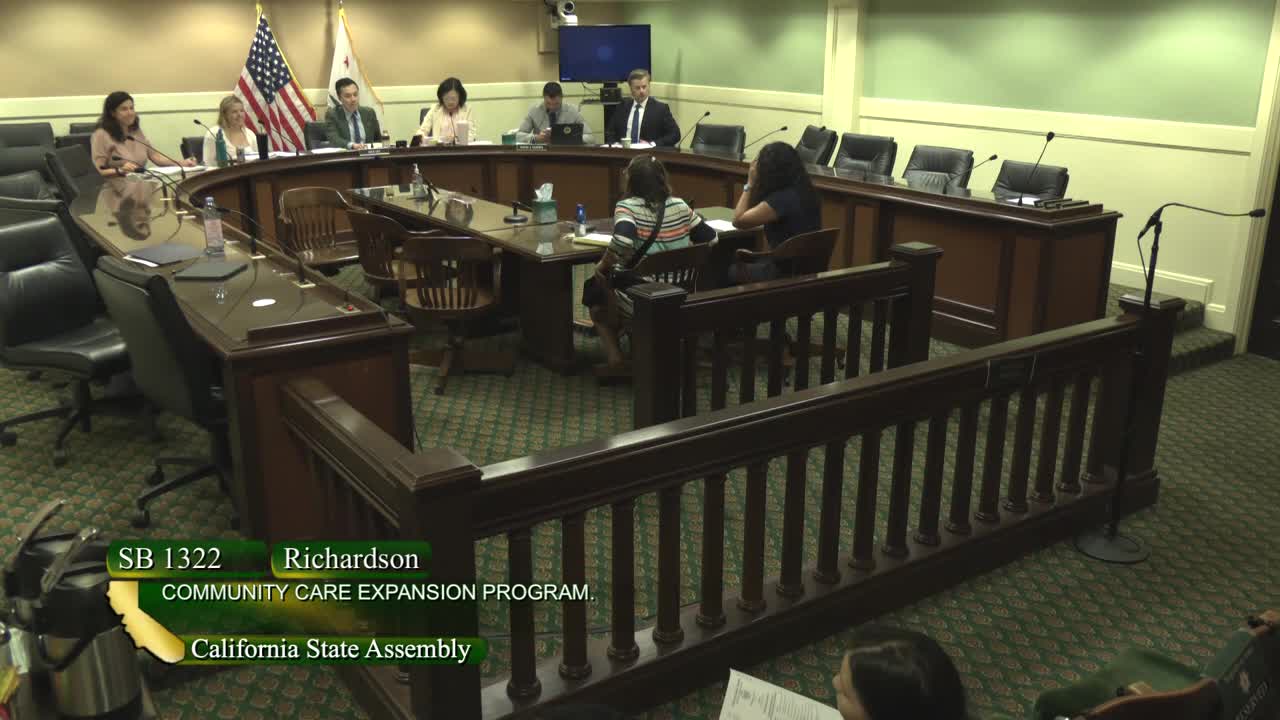 7MIN
Assembly Standing Committee on Human Services
Bill Author

Bill Co-Author(s):