AB 1288: Air resources.
- Session Year: 2015-2016
- House: Assembly
- Latest Version Date: 2015-10-08
Existing law establishes the State Air Resources Board, consisting of 12 members appointed by the Governor and confirmed by the Senate. Existing law requires the State Air Resources Board to take certain actions regarding air pollution.
This bill would increase the membership of the state board to 14, with the Senate Committee on Rules and the Speaker of the Assembly each appointing one member, as provided.
The California Global Warming Solutions Act of 2006 designates the State Air Resources Board as the state agency charged with monitoring and regulating sources of emissions of greenhouse gases. The state board is required to adopt a statewide greenhouse gas emissions limit equivalent to the statewide greenhouse gas emissions level in 1990 to be achieved by 2020.
The act authorizes the state board to include the use of market-based compliance mechanisms and to adopt a regulation that establishes a system of market-based declining annual aggregate emissions limits for sources or categories of sources that emit greenhouse gases, applicable from January 1, 2012, to December 31, 2020, inclusive, as specified.
This bill would no longer limit the applicability of a regulation that establishes a system of market-based declining annual aggregate emissions limits for sources or categories of sources that emit greenhouse gases from January 1, 2012, to December 31, 2020.
(a)The State Air Resources Board is continued in existence in the California Environmental Protection Agency. The state board shall consist of 14 members.
(b)Twelve members shall be appointed by the Governor, with the consent of the Senate, on the basis of their demonstrated interest and proven ability in the field of air pollution control and their understanding of the needs of the general public in connection with air pollution problems.
(c)Of the members appointed pursuant to subdivision (b), six members shall have the following qualifications:
(1)One member shall have training and experience in automotive engineering or closely related fields.
(2)One member shall have training and experience in chemistry, meteorology, or related scientific fields, including agriculture or law.
(3)One member shall be a physician and surgeon or an authority on health effects of air pollution.
(4)Two members shall be public members.
(5)One member shall have the qualifications specified in paragraph (1), (2), or (3) or shall have experience in the field of air pollution control.
(d)Of the members appointed pursuant to subdivision (b), six members shall be board members from districts who shall reflect the qualitative requirements of subdivision (c) to the extent practicable. Of these members:
(1)One shall be a board member from the south coast district.
(2)One shall be a board member from the bay district.
(3)One shall be a board member from the San Joaquin Valley Unified Air Pollution Control District.
(4)One shall be a board member from the San Diego County Air Pollution Control District.
(5)One shall be a board member from the Sacramento district, the Placer County Air Pollution Control District, the Yolo-Solano Air Quality Management District, the Feather River Air Quality Management District, or the El Dorado County Air Pollution Control District.
(6)One shall be a board member of any other district.
(e)The Senate Committee on Rules and the Speaker of the Assembly shall each appoint one member to the state board who shall be a person who works directly with communities in the state that are most significantly burdened by, and vulnerable to, high levels of pollution, including, but not limited to, communities with diverse racial and ethnic populations and communities with low-income populations.
(f)Any vacancy shall be filled by the appointing authority within 30 days of the date on which it occurs. If the Governor fails to make an appointment for any vacancy within the 30-day period, the Senate Committee on Rules may make the appointment to fill the vacancy in accordance with this section.
(g)While serving on the state board, all members shall exercise their independent judgment as officers of the state on behalf of the interests of the entire state in furthering the purposes of this division. A member of the state board shall not be precluded from voting or otherwise acting upon any matter solely because that member has voted or acted upon the matter in his or her capacity as a member of a district board, except that a member of the state board who is also a member of a district board shall not participate in any action regarding his or her district taken by the state board pursuant to Sections 41503 to 41505, inclusive.
(a)The State Air Resources Board is continued in existence in the California Environmental Protection Agency. The state board shall consist of 12 14 members.
(b)The Twelve members shall be appointed by the Governor, with the consent of the Senate, on the basis of their demonstrated interest and proven ability in the field of air pollution control and their understanding of the needs of the general public in connection with air pollution problems.
(c)Six Of the members appointed pursuant to subdivision (b), six members shall have the following qualifications:
(1)One member shall have training and experience in automotive engineering or closely related fields.
(2)One member shall have training and experience in chemistry, meteorology, or related scientific fields, including agriculture or law.
(3)One member shall be a physician and surgeon or an authority on health effects of air pollution.
(4)Two members shall be public members.
(5)One member shall have the qualifications specified in paragraph (1), (2), or (3) or shall have experience in the field of air pollution control.
(d)Six Of the members appointed pursuant to subdivision (b), six members shall be board members from districts who shall reflect the qualitative requirements of subdivision (c) to the extent practicable. Of these members:
(1)One shall be a board member from the south coast district.
(2)One shall be a board member from the bay district.
(3)One shall be a board member from the San Joaquin Valley Unified Air Pollution Control District.
(4)One shall be a board member from the San Diego County Air Pollution Control District.
(5)One shall be a board member from the Sacramento district, the Placer County Air Pollution Control District, the Yolo-Solano Air Quality Management District, the Feather River Air Quality Management District, or the El Dorado County Air Pollution Control District.
(6)One shall be a board member of any other district.
(e)The Senate Committee on Rules and the Speaker of the Assembly shall each appoint one member to the state board who shall be a person who works directly with communities in the state that are most significantly burdened by, and vulnerable to, high levels of pollution, including, but not limited to, communities with diverse racial and ethnic populations and communities with low-income populations.
(e)
(f)Any vacancy shall be filled by the Governor appointing authority within 30 days of the date on which it occurs. If the Governor fails to make an appointment for any vacancy within the 30-day period, the Senate Committee on Rules may make the appointment to fill the vacancy in accordance with this section.
(f)
(g)While serving on the state board, all members shall exercise their independent judgment as officers of the state on behalf of the interests of the entire state in furthering the purposes of this division. A member of the state board shall not be precluded from voting or otherwise acting upon any matter solely because that member has voted or acted upon the matter in his or her capacity as a member of a district board, except that a member of the state board who is also a member of a district board shall not participate in any action regarding his or her district taken by the state board pursuant to Sections 41503 to 41505, inclusive.
SECTION 1.It is the intent of the Legislature to ensure that disadvantaged communities, identified pursuant to Section 39711 of the Health and Safety Code, continue to receive moneys from market-based compliance mechanisms that may be adopted by the State Air Resources Board beyond the year 2020, pursuant to Section 39713 of the Health and Safety Code.
SEC. 2.Section 38562 of the Health and Safety Code is amended to read:38562.(a)On or before January 1, 2011, the state board shall adopt greenhouse gas emissions limits and emissions reduction measures by regulation to achieve the maximum technologically feasible and cost-effective reductions in greenhouse gas emissions in furtherance of achieving the statewide greenhouse gas emissions limit, to become operative beginning on January 1, 2012.
(b)In adopting regulations pursuant to this section and Part 5 (commencing with Section 38570), to the extent feasible and in furtherance of achieving the statewide greenhouse gas emissions limit, the state board shall do all of the following:
(1)Design the regulations, including distribution of emissions allowances where appropriate, in a manner that is equitable, seeks to minimize costs and maximize the total benefits to California, and encourages early action to reduce greenhouse gas emissions.
(2)Ensure that activities undertaken to comply with the regulations do not disproportionately impact low-income communities.
(3)Ensure that entities that have voluntarily reduced their greenhouse gas emissions prior to the implementation of this section receive appropriate credit for early voluntary reductions.
(4)Ensure that activities undertaken pursuant to the regulations complement, and do not interfere with, efforts to achieve and maintain federal and state ambient air quality standards and to reduce toxic air contaminant emissions.
(5)Consider cost-effectiveness of these regulations.
(6)Consider overall societal benefits, including reductions in other air pollutants, diversification of energy sources, and other benefits to the economy, environment, and public health.
(7)Minimize the administrative burden of implementing and complying with these regulations.
(8)Minimize leakage.
(9)Consider the significance of the contribution of each source or category of sources to statewide emissions of greenhouse gases.
(c)In furtherance of achieving the statewide greenhouse gas emissions limit, the state board may adopt a regulation that establishes a system of market-based declining annual aggregate emissions limits for sources or categories of sources that emit greenhouse gases that the state board determines will achieve the maximum technologically feasible and cost-effective reductions in greenhouse gas emissions, in the aggregate, from those sources or categories of sources.
(d)Any regulation adopted by the state board pursuant to this part or Part 5 (commencing with Section 38570) shall ensure all of the following:
(1)The greenhouse gas emissions reductions achieved are real, permanent, quantifiable, verifiable, and enforceable by the state board.
(2)For regulations pursuant to Part 5 (commencing with Section 38570), the reduction is in addition to any greenhouse gas emissions reduction otherwise required by law or regulation, and any other greenhouse gas emissions reduction that otherwise would occur.
(3)If applicable, the greenhouse gas emissions reduction occurs over the same time period and is equivalent in amount to any direct emission reduction required pursuant to this division.
(e)The state board shall rely upon the best available economic and scientific information and its assessment of existing and projected technological capabilities when adopting the regulations required by this section.
(f)The state board shall consult with the Public Utilities Commission in the development of the regulations as they affect electricity and natural gas providers in order to minimize duplicative or inconsistent regulatory requirements.
(g)The state board may revise regulations adopted pursuant to this section and adopt additional regulations to further the provisions of this division.
It is the intent of the Legislature to ensure that disadvantaged communities, identified pursuant to Section 39711 of the Health and Safety Code, continue to receive moneys from market-based compliance mechanisms that may be adopted by the State Air Resources Board beyond the year 2020, pursuant to Section 39713 of the Health and Safety Code.
SECTION 1.SEC. 2.Section 38562 of the Health and Safety Code is amended to read:38562.(a)On or before January 1, 2011, the state board shall adopt greenhouse gas emissions limits and emissions reduction measures by regulation to achieve the maximum technologically feasible and cost-effective reductions in greenhouse gas emissions in furtherance of achieving the statewide greenhouse gas emissions limit, to become operative beginning on January 1, 2012.
(b)In adopting regulations pursuant to this section and Part 5 (commencing with Section 38570), to the extent feasible and in furtherance of achieving the statewide greenhouse gas emissions limit, the state board shall do all of the following:
(1)Design the regulations, including distribution of emissions allowances where appropriate, in a manner that is equitable, seeks to minimize costs and maximize the total benefits to California, and encourages early action to reduce greenhouse gas emissions.
(2)Ensure that activities undertaken to comply with the regulations do not disproportionately impact low-income communities.
(3)Ensure that entities that have voluntarily reduced their greenhouse gas emissions prior to the implementation of this section receive appropriate credit for early voluntary reductions.
(4)Ensure that activities undertaken pursuant to the regulations complement, and do not interfere with, efforts to achieve and maintain federal and state ambient air quality standards and to reduce toxic air contaminant emissions.
(5)Consider cost-effectiveness of these regulations.
(6)Consider overall societal benefits, including reductions in other air pollutants, diversification of energy sources, and other benefits to the economy, environment, and public health.
(7)Minimize the administrative burden of implementing and complying with these regulations.
(8)Minimize leakage.
(9)Consider the significance of the contribution of each source or category of sources to statewide emissions of greenhouse gases.
(c)In furtherance of achieving the statewide greenhouse gas emissions limit, the state board may adopt a regulation that establishes a system of market-based declining annual aggregate emissions limits for sources or categories of sources that emit greenhouse gases that the state board determines will achieve the maximum technologically feasible and cost-effective reductions in greenhouse gas emissions, in the aggregate, from those sources or categories of sources.
(d)Any regulation adopted by the state board pursuant to this part or Part 5 (commencing with Section 38570) shall ensure all of the following:
(1)The greenhouse gas emissions reductions achieved are real, permanent, quantifiable, verifiable, and enforceable by the state board.
(2)For regulations pursuant to Part 5 (commencing with Section 38570), the reduction is in addition to any greenhouse gas emissions reduction otherwise required by law or regulation, and any other greenhouse gas emissions reduction that otherwise would occur.
(3)If applicable, the greenhouse gas emissions reduction occurs over the same time period and is equivalent in amount to any direct emission reduction required pursuant to this division.
(e)The state board shall rely upon the best available economic and scientific information and its assessment of existing and projected technological capabilities when adopting the regulations required by this section.
(f)The state board shall consult with the Public Utilities Commission in the development of the regulations as they affect electricity and natural gas providers in order to minimize duplicative or inconsistent regulatory requirements.
(g)The state board may revise regulations adopted pursuant to this section and adopt additional regulations to further the provisions of this division.
(a)On or before January 1, 2011, the state board shall adopt greenhouse gas emission emissions limits and emission emissions reduction measures by regulation to achieve the maximum technologically feasible and cost-effective reductions in greenhouse gas emissions in furtherance of achieving the statewide greenhouse gas emissions limit, to become operative beginning on January 1, 2012.
(b)In adopting regulations pursuant to this section and Part 5 (commencing with Section 38570), to the extent feasible and in furtherance of achieving the statewide greenhouse gas emissions limit, the state board shall do all of the following:
(1)Design the regulations, including distribution of emissions allowances where appropriate, in a manner that is equitable, seeks to minimize costs and maximize the total benefits to California, and encourages early action to reduce greenhouse gas emissions.
(2)Ensure that activities undertaken to comply with the regulations do not disproportionately impact low-income communities.
(3)Ensure that entities that have voluntarily reduced their greenhouse gas emissions prior to the implementation of this section receive appropriate credit for early voluntary reductions.
(4)Ensure that activities undertaken pursuant to the regulations complement, and do not interfere with, efforts to achieve and maintain federal and state ambient air quality standards and to reduce toxic air contaminant emissions.
(5)Consider cost-effectiveness of these regulations.
(6)Consider overall societal benefits, including reductions in other air pollutants, diversification of energy sources, and other benefits to the economy, environment, and public health.
(7)Minimize the administrative burden of implementing and complying with these regulations.
(8)Minimize leakage.
(9)Consider the significance of the contribution of each source or category of sources to statewide emissions of greenhouse gases.
(c)In furtherance of achieving the statewide greenhouse gas emissions limit, by January 1, 2011, the state board may adopt a regulation that establishes a system of market-based declining annual aggregate emission emissions limits for sources or categories of sources that emit greenhouse gas emissions, applicable from January 1, 2012, to December 31, 2020, inclusive, gases that the state board determines will achieve the maximum technologically feasible and cost-effective reductions in greenhouse gas emissions, in the aggregate, from those sources or categories of sources.
(d)Any regulation adopted by the state board pursuant to this part or Part 5 (commencing with Section 38570) shall ensure all of the following:
(1)The greenhouse gas emission emissions reductions achieved are real, permanent, quantifiable, verifiable, and enforceable by the state board.
(2)For regulations pursuant to Part 5 (commencing with Section 38570), the reduction is in addition to any greenhouse gas emission emissions reduction otherwise required by law or regulation, and any other greenhouse gas emission emissions reduction that otherwise would occur.
(3)If applicable, the greenhouse gas emission emissions reduction occurs over the same time period and is equivalent in amount to any direct emission reduction required pursuant to this division.
(e)The state board shall rely upon the best available economic and scientific information and its assessment of existing and projected technological capabilities when adopting the regulations required by this section.
(f)The state board shall consult with the Public Utilities Commission in the development of the regulations as they affect electricity and natural gas providers in order to minimize duplicative or inconsistent regulatory requirements.
(g)After January 1, 2011, the The state board may revise regulations adopted pursuant to this section and adopt additional regulations to further the provisions of this division.
|
Date
|
Status
|
|---|---|
| Oct 8, 2015 | Chaptered by Secretary of State - Chapter 586, Statutes of 2015. |
| Oct 8, 2015 | Approved by the Governor. |
| Sep 25, 2015 | Enrolled and presented to the Governor at 2 p.m. |
| Sep 12, 2015 | Senate amendments concurred in. To Engrossing and Enrolling. (Ayes 52. Noes 26. Page 3213.). |
| Sep 12, 2015 | Assembly Rule 63 suspended. (Page 3211.) |
| Sep 12, 2015 | Senate amendments concurred in. To Engrossing and Enrolling. (Ayes 52. Noes 26.). |
| Sep 12, 2015 | Senate amendments concurred in. To Engrossing and Enrolling. |
| Sep 12, 2015 | Assembly Rule 63 suspended. |
| Sep 11, 2015 | Read third time. Passed. Ordered to the Assembly. (Ayes 28. Noes 10. Page 2765.). |
| Sep 11, 2015 | Joint Rules 61(a) and 62(a) suspended. (Ayes 27. Noes 3. Page 2747.) |
| Sep 11, 2015 | In Assembly. Concurrence in Senate amendments pending. |
| Sep 11, 2015 | Read third time. Passed. Ordered to the Assembly. |
| Sep 11, 2015 | Ordered to third reading. |
| Sep 11, 2015 | From committee: Do pass. (Ayes 5. Noes 0.) (September 11). |
| Sep 11, 2015 | Re-referred to Com. on E.Q. |
| Sep 11, 2015 | Joint Rule 62(a) suspended. (Ayes 27. Noes 3.) |
| Sep 11, 2015 | Joint Rule 61(a) suspended. (Ayes 27. Noes 3.) |
| Sep 10, 2015 | Senate Rule 29.3(b) suspended. (Ayes 26. Noes 1. Page 2715.) |
| Sep 10, 2015 | From committee chair, with author's amendments: Amend, and re-refer to committee. Read second time, amended, and re-referred to Com. on RLS. |
| Sep 10, 2015 | Senate Rule 29.3(b) suspended. (Ayes 26. Noes 1.) |
| Sep 8, 2015 | Re-referred to Com. on RLS. |
| Sep 8, 2015 | Read second time. Ordered to third reading. |
| Sep 4, 2015 | Read third time and amended. Ordered to second reading. |
| Aug 31, 2015 | Read second time. Ordered to third reading. |
| Aug 27, 2015 | From committee: Do pass. (Ayes 5. Noes 2.) (August 27). |
| Aug 17, 2015 | In committee: Referred to APPR. suspense file. |
| Jul 16, 2015 | From committee: Do pass and re-refer to Com. on APPR. (Ayes 5. Noes 2.) (July 15). Re-referred to Com. on APPR. |
| Jun 18, 2015 | Referred to Com. on E.Q. |
| Jun 3, 2015 | In Senate. Read first time. To Com. on RLS. for assignment. |
| Jun 3, 2015 | Read third time. Passed. Ordered to the Senate. (Ayes 51. Noes 28. Page 1845.) |
| Jun 3, 2015 | Read third time. Passed. Ordered to the Senate. |
| May 28, 2015 | Read second time. Ordered to third reading. |
| May 27, 2015 | From committee: Do pass. (Ayes 12. Noes 5.) (May 27). |
| Apr 28, 2015 | From committee: Do pass and re-refer to Com. on APPR. (Ayes 6. Noes 3.) (April 27). Re-referred to Com. on APPR. |
| Mar 23, 2015 | Referred to Com. on NAT. RES. |
| Mar 2, 2015 | Read first time. |
| Mar 1, 2015 | From printer. May be heard in committee March 31. |
| Feb 27, 2015 | Introduced. To print. |
|
Date
|
Description
|
Location
|
Votes
|
|
|---|---|---|---|---|
| Sep 12, 2015 | AB 1288 ATKINS Concurrence in Senate Amendments | Assembly Floor |
Passed |
|
| Sep 11, 2015 | Assembly 3rd Reading (Supplemental File 3) AB1288 Atkins By Pavley | Senate Floor |
Passed |
|
| Sep 11, 2015 | Do pass | Senate Standing Committee on Environmental Quality |
Passed |
|
| Aug 27, 2015 | Do pass | Senate Standing Committee on Appropriations |
Passed |
|
| Aug 17, 2015 | Placed on suspense file | Senate Standing Committee on Appropriations |
Passed |
|
| Jul 15, 2015 | Do pass, but first be re-referred to the Committee on [Appropriations] | Senate Standing Committee on Environmental Quality |
Passed |
|
| Jun 3, 2015 | AB 1288 ATKINS Assembly Third Reading | Assembly Floor |
Passed |
|
| May 27, 2015 | Do pass. | Assembly Standing Committee on Appropriations |
Passed |
|
| Apr 27, 2015 | Do pass and be re-referred to the Committee on [Appropriations] | Assembly Standing Committee on Natural Resources |
Passed |
This list shows positions taken on this bill by organizations on the date displayed, which is linked to the original source.
Positions by individuals are not included.
AB 1288
Page 3
(Without Reference to File)
CONCURRENCE IN SENATE AMENDMENTS
AB 1288
(Atkins)
As Amended September 10, 2015
Majority vote
ASSEMBLY: |
|
(June 3, 2015) |
SENATE: |
|
(September 11, 2015) |
(vote not relevant) (vote not available)
Original Committee Reference: NAT. RES.
SUMMARY: Add two appointments to the Air Resources Board (ARB) to represent environmental justice communities.
The Senate amendments delete the Assembly version of this bill, and instead require the Senate Rules Committee and the Speaker of the Assembly to each appoint one member to the ARB. The appointees must work directly with communities in the state that are most significantly burdened by, and vulnerable to, high levels of pollution, including communities with diverse racial and ethnic populations and low-income populations.
EXISTING LAW:
Establishes ARB and provides for appointment of 12 members by the Governor on the basis of interest and ability in the field of air pollution control, understanding of the needs of the general public in connection with air pollution problems, and additional specific qualifications. All members serve at the pleasure of the Governor and are subject to confirmation by the Senate. Members serve part-time, with the exception of the Chair, who is appointed by the Governor and serves full-time. ARB's primary duties are controlling motor vehicle emissions, coordinating activities of air districts for the purposes of the federal Clean Air Act, and implementing the California Global Warming Solutions Act (AB 32 (Núñez, Chapter 488, Statutes of 2006).
Establishes the following specific qualifications for board members:
One with training and experience in automotive engineering or a closely related field.
One with training and experience in science, agriculture, or law.
One who is a physician and surgeon, or health effects expert.
One with experience in air pollution control, or meeting the qualifications of one of the three categories listed above.
Two public members.
One board member from each of the following air districts:
South Coast Air Quality Management District (SCAQMD);
Bay Area Quality Management District (BAAQMD);
San Joaquin Valley Air Pollution Control District (SJVAPCD);
San Diego County Air Pollution Control District (SDAPCD);
A district in the Sacramento federal nonattainment area; and,
Any other district.
Establishes county air pollution control districts in every county, unless the entire county is included within the Antelope Valley Air Quality Management District, the BAAQMD, the Mojave Desert Air Quality Management District, the SCAQMD, the SJVAPCD, a regional district, or a unified district. Requires air districts to adopt and enforce rules and regulations to achieve and maintain the state and federal ambient air quality standards in all areas affected by non-vehicular emission sources under their jurisdiction.
FISCAL EFFECT: Unknown
COMMENTS: According to the Office of Environmental Health Hazard Assessment (OEHHA), approximately eight million Californians (21%) live in zip codes that are considered "highly impacted" by environmental, public health, and socioeconomic stressors. Nearly half of all Californians live within six miles of a facility that is a significant greenhouse gas emitter (46%), and are disproportionately people of color (62%). Throughout California, people of color face a 50% higher risk of cancer from ambient concentrations of air pollutants listed under the Clean Air Act. These impacts are felt by all Californians. ARB estimates that air pollution exposure accounts for 19,000 premature deaths, 280,000 cases of asthma, and 1.9 million lost work days every year.
Current law provides primary responsibility for control of air pollution, other than from vehicular sources, to local air districts. These districts include county air pollution control districts (APCDs), unified APCDs (two or more contiguous counties that are part of county districts are merged), and regional APCDs (two or more counties become part of a regional district), and sets requirements for governing board membership that generally includes members who are mayors or city council members, or both, and members who are county supervisors. The number of members and composition must be determined jointly by the county (or counties) and cities within a district, with certain exceptions.
Control of vehicular sources is generally the responsibility of the ARB. The ARB is the state agency charged with coordinating efforts to attain and maintain ambient air quality standards, to conduct research in air pollution issues, “and to systematically attack the serious problem caused by motor vehicles, which is the major source of air pollution in many areas of the state.” The ARB also has responsibilities for implementing the California Global Warming Solutions Act of 2006. The ARB consists of 12 members, and 6 of those members must have certain qualifications (e.g., automotive engineering; chemistry, meteorology, or related field; surgeon or an authority on health effects). The other 6 members must be board members from the following entities: SCAQMD, BAAQMD, SJVAQMD, SDAPCD, a board member from a district located within the Sacramento federal nonattainment area, and a board member from any other district.
This bill is intended to ensure that ARB is able to effectively integrate the needs and perspectives of California's diverse residents by adding two new members to the ARB that are appointed by the Speaker of the Assembly and the Senate Rules Committee who work directly with communities in the state that are most effected by high levels of pollution, including communities with diverse racial and ethnic populations and low-income populations.
Analysis Prepared by: Lawrence Lingbloom / NAT. RES. / (916) 319-2092 FN: 0002440
AB 1288 (Atkins) Page 3 of 3
SENATE COMMITTEE ON ENVIRONMENTAL QUALITY
Senator Wieckowski, Chair
2015 - 2016 Regular
Bill No: AB 1288
Author: |
Atkins |
||
Version: |
9/10/2015 |
Hearing Date: |
9/11/2015 |
Urgency: |
No |
Fiscal: |
Yes |
Consultant: |
Rebecca Newhouse |
||
SUBJECT: California Air Resources Board.
ANALYSIS:
Existing law establishes the Air Resources Board (ARB) with 12 members appointed by the Governor with consent of the Senate. Of the 12 members, six must have specified qualifications and six must be board members from air districts.
This bill expands the membership of ARB from 12 to 14 members, and requires:
Two members of ARB be appointed by the Senate Committee on Rules and the Speaker of the Assembly, respectively; and
Those members work directly with communities in the state that are most significantly burdened by, and vulnerable to, high levels of pollution, including, but not limited to, racially and ethnically diverse communities and low-income communities.
Background
Air Resources Board. The Air Resources Board was created in 1967 through the Mulford-Carrell Act, which combined two Department of Health bureaus, the Bureau of Air Sanitation and the Motor Vehicle Pollution Control Board.
AB 1062 (Costa, Chapter 579, Statutes of 1993) added a public member and a permanent member representing the San Joaquin Valley Unified Air District, to increase the board’s membership from 9 to 11.
In 2012, AB 146 (Dickinson, Chapter 522, Statutes of 2012) expanded the board membership from 11 to 12, adding a requirement that one member represent an air district in the Sacramento region.
Six of the board members must have certain qualifications (e.g., automotive engineering; chemistry, meteorology, or related field; surgeon or an authority on health effects). The other 6 members must be board members from the following entities: South Coast AQMD, Bay Area AQMD, San Joaquin Valley AQMD, San Diego APCD, one of six Sacramento region air districts, and a board member from any other district. These board members must reflect the “qualitative requirements” of the other 6 members to the extent practicable.
The Board members serve part-time, except the Chairperson, who serves full-time.
Comments
Expertise in air quality? Current law requires all 12 members of the ARB to be appointed by the Governor, “on the basis of their demonstrated interest and proven ability in the field of air pollution control and their understanding of the needs for the general public in connection with air pollution problems.”
As noted in the background, current law also requires that six of the board members have certain specified qualifications or expertise that relate to ARB’s mission and regulatory charge and requires that the other six members representing air districts reflect those qualifications to the extent practicable.
AB 1288 expands the membership by two, and requires that those members be persons who work directly with pollution burdened and vulnerable populations, but does not require those persons have any experience, interest, or proven ability, in the field of air pollution control.
Furthermore, AB 1288 does not require the two members added to the board to have any expertise, but only that they be persons who work directly with pollution burdened and vulnerable communities. It is unclear in what capacity they are required to work with these communities. For example, a question arises whether a person who operates a business in one of these communities, but has no expertise in air quality, public health, or impacts of pollution, could qualify for board membership.
As ARB’s stated mission is “To promote and protect public health, welfare and ecological resources through the effective and efficient reduction of air pollutants while recognizing and considering the effects on the economy of the state,” should the two board members added by AB 1288 also be subject to the same general requirements regarding interest and ability in the field of air pollution control as the current 12 members?
SOURCE:
Author
SUPPORT:
Asian Pacific Environmental Network
California Environmental Justice Alliance
Center for Race Poverty and the Environment
Communities for a Better Environment
OPPOSITION:
None received
-- END --
AB 1288
Page 3
Date of Hearing: September 11, 2015
ASSEMBLY COMMITTEE ON NATURAL RESOURCES
Das Williams, Chair
AB 1288 (
Atkins) – As Amended September 10, 2015
SUBJECT: Air resources
SUMMARY: Add two appointments to the Air Resources Board (ARB) to represent environmental justice communities.
EXISTING LAW:
Establishes ARB and provides for appointment of 12 members by the Governor on the basis of interest and ability in the field of air pollution control, understanding of the needs of the general public in connection with air pollution problems, and additional specific qualifications. All members serve at the pleasure of the Governor and are subject to confirmation by the Senate. Members serve part-time, with the exception of the Chair, who is appointed by the Governor and serves full-time. ARB's primary duties are controlling motor vehicle emissions, coordinating activities of air districts for the purposes of the federal Clean Air Act, and implementing the California Global Warming Solutions Act (AB 32).
Establishes the following specific qualifications for board members:
One with training and experience in automotive engineering or a closely related field.
One with training and experience in science, agriculture, or law.
One who is a physician and surgeon, or health effects expert.
One with experience in air pollution control, or meeting the qualifications of one of the three categories listed above.
Two public members.
One board member from each of the following air districts:
South Coast Air Quality Management District (SCAQMD);
Bay Area Quality Management District (BAAQMD);
San Joaquin Valley Air Pollution Control District (SJVAPCD);
San Diego County Air Pollution Control District (SDAPCD);
A district in the Sacramento federal nonattainment area; and,
Any other district.
Establishes county air pollution control districts in every county, unless the entire county is included within the Antelope Valley Air Quality Management District, the BAAQMD, the Mojave Desert Air Quality Management District, the SCAQMD, the SJVAPCD, a regional district, or a unified district. Requires air districts to adopt and enforce rules and regulations to achieve and maintain the state and federal ambient air quality standards in all areas affected by non-vehicular emission sources under their jurisdiction.
THIS BILL requires the Senate Committee on Rules and the Speaker of the Assembly to each appoint one member to the ARB. The appointees must work directly with communities in the state that are most significantly burdened by, and vulnerable to, high levels of pollution, including communities with diverse racial and ethnic populations and low-income populations.
FISCAL EFFECT: Unknown
COMMENTS: According to the Office of Environmental Health Hazard Assessment (OEHHA), approximately eight million Californians (21%) live in zip codes that are considered "highly impacted" by environmental, public health, and socioeconomic stressors. Nearly half of all Californians live within six miles of a facility that is a significant greenhouse gas emitter (46%), and are disproportionately people of color (62%). Throughout California, people of color face a 50% higher risk of cancer from ambient concentrations of air pollutants listed under the Clean Air Act. These impacts are felt by all Californians. ARB estimates that air pollution exposure accounts for 19,000 premature deaths, 280,000 cases of asthma, and 1.9 million lost work days every year.
Current
law provides primary responsibility for control of air pollution,
other than from vehicular sources, to local air districts. These
districts include county air pollution control districts (APCDs),
unified APCDs (two or more contiguous counties that are part of
county districts are merged), and regional APCDs (two or more
counties become part of a regional district), and sets requirements
for governing board membership that generally includes members who
are mayors or city council members, or both, and members who are
county supervisors. The number of members and composition must be
determined jointly by the county (or counties) and cities within a
district, with certain exceptions.
Control of vehicular
sources is generally the responsibility of the ARB. The ARB is the
state agency charged with coordinating efforts to attain and maintain
ambient air quality standards, to conduct research in air pollution
issues, “and to systematically attack the serious problem caused by
motor vehicles, which is the major source of air pollution in many
areas of the state.” The ARB also has responsibilities for
implementing the California Global Warming Solutions Act of 2006.
The ARB consists of 12 members, and 6 of those members must have
certain qualifications (e.g., automotive engineering; chemistry,
meteorology, or related field; surgeon or an authority on health
effects). The other 6 members must be board members from the
following entities: SCAQMD, BAAQMD, SJVAQMD, SDAPCD, a board member
from a district located within the Sacramento federal nonattainment
area, and a board member from any other district.
This
bill is intended to ensure that ARB is able to effectively integrate
the needs and perspectives of California's diverse residents by
adding two new members to the ARB that are appointed by the Speaker
of the Assembly and the Senate Rules Committee who work directly with
communities in the state that are most effected by high levels of
pollution, including communities with diverse racial and ethnic
populations and low-income populations.
REGISTERED SUPPORT / OPPOSITION:
Support
None on file (current version)
Opposition
None on file (current version)
Analysis Prepared by: Lawrence Lingbloom / NAT. RES. / (916) 319-2092
AB 1288
Page 3
|
Office of Senate Floor Analyses (916) 651-1520 Fax: (916) 327-4478 |
THIRD READING
Bill No: AB 1288
Amended: 9/10/15 in Senate
SENATE ENVIRONMENTAL QUAL. COMMITTEE: 5-0, 9/11/15
AYES: Wieckowski, Hill, Jackson, Leno, Pavley
NO VOTE RECORDED: Gaines, Bates
DIGEST: This bill expands the membership of Air Resources Board (ARB) from 12 to 14 members, and requires that those members be persons who work directly with pollution-burdened and vulnerable communities.
ANALYSIS: Existing law establishes ARB with 12 members appointed by the Governor with consent of the Senate. Of the 12 members, six must have specified qualifications and six must be board members from air districts.
This bill expands the membership of ARB from 12 to 14 members, and requires:
Two members of ARB be appointed by the Senate Committee on Rules and the Speaker of the Assembly, respectively; and
Those members work directly with communities in the state that are most significantly burdened by, and vulnerable to, high levels of pollution, including, but not limited to, racially and ethnically diverse communities and low-income communities.
Background
Air Resources Board. ARB was created in 1967 through the Mulford-Carrell Act, which combined two Department of Health bureaus, the Bureau of Air Sanitation and the Motor Vehicle Pollution Control Board.
AB 1062 (Costa, Chapter 579, Statutes of 1993) added a public member and a permanent member representing the San Joaquin Valley Unified Air District, to increase the ARB’s membership from 9 to 11.
In 2012, AB 146 (Dickinson, Chapter 522, Statutes of 2012) expanded ARB’s membership from 11 to 12, adding a requirement that one member represent an air district in the Sacramento region.
Six of the board members must have certain qualifications (e.g., automotive engineering; chemistry, meteorology, or related field; surgeon or an authority on health effects). The other six members must be board members from the following entities: South Coast Air Quality Management District (AQMD), Bay Area AQMD, San Joaquin Valley AQMD, San Diego APCD, one of six Sacramento region air districts, and a board member from any other district. These board members must reflect the “qualitative requirements” of the other six members to the extent practicable.
The board members serve part-time, except the Chairperson, who serves full-time.
Comments
Expertise in air quality? Current law requires all 12 members of the ARB to be appointed by the Governor, “on the basis of their demonstrated interest and proven ability in the field of air pollution control and their understanding of the needs for the general public in connection with air pollution problems.”
As noted in the background, current law also requires that six of the board members have certain specified qualifications or expertise that relate to ARB’s mission and regulatory charge and requires that the other six members representing air districts reflect those qualifications to the extent practicable.
AB 1288 expands the membership by two, and requires that those members be persons who work directly with pollution burdened and vulnerable populations, but does not require those persons have any experience, interest, or proven ability, in the field of air pollution control.
Furthermore, AB 1288 does not require the two members added to the board to have any expertise, but only that they be persons who work directly with pollution burdened and vulnerable communities. It is unclear in what capacity they are required to work with these communities. For example, a question arises whether a person who operates a business in one of these communities, but has no expertise in air quality, public health, or impacts of pollution, could qualify for board membership.
ARB’s stated mission is “To promote and protect public health, welfare and ecological resources through the effective and efficient reduction of air pollutants while recognizing and considering the effects on the economy of the state.” A question arises as to whether the two new members added by AB 1288 should also be subjected to the same general requirements as the current12 members concerning demonstrated interest and proven ability in the field of air pollution control.
FISCAL EFFECT: Appropriation: No Fiscal Com.: Yes Local: No
Unknown
Asian Pacific Environmental Network
California Environmental Justice Alliance
Center for Race Poverty and the Environment
Communities for a Better Environment
OPPOSITION: (Verified 9/11/15)
None received
Prepared by: Rebecca Newhouse / E.Q. / (916) 651-4108
9/11/15 19:19:57
**** END ****
AB 1288
Page 8
|
Office of Senate Floor Analyses (916) 651-1520 Fax: (916) 327-4478 |
THIRD READING
Bill No: AB 1288
Amended: 9/4/15 in Senate
SENATE ENVIRONMENTAL QUALITY COMMITTEE: 5-2, 7/15/15
AYES: Wieckowski, Hill, Jackson, Leno, Pavley
NOES: Gaines, Bates
SENATE APPROPRIATIONS COMMITTEE: 5-2, 8/27/15
AYES: Lara, Beall, Hill, Leyva, Mendoza
NOES: Bates, Nielsen
ASSEMBLY FLOOR: 51-28, 6/3/15 - See last page for vote
SUBJECT: California Global Warming Solutions Act of 2006: regulations
DIGEST: This bill eliminates the December 31, 2020 limit on applicability of a market-based mechanism for greenhouse gas (GHG) emissions reductions that may be adopted by California Air Resources Control Board (ARB).
Senate Floor Amendments of 9/4/15 express the intent of the Legislature to ensure that disadvantaged communities continue to receive moneys from the state’s cap-and-trade program beyond 2020.
ANALYSIS: Existing law, under the California Global Warming Solutions Act of 2006 (Health and Safety Code §38500 et seq.):
Requires the ARB to determine the 1990 statewide GHG emissions level and approve a statewide GHG emissions limit that is equivalent to that level, to be achieved by 2020, and to adopt GHG emissions reductions measures by regulation.
Authorizes the ARB to adopt a regulation that establishes a system of market-based declining annual aggregate emission limits for sources or categories of sources that emit GHGs, applicable from January 1, 2012, to December 31, 2020, inclusive.
This bill:
Eliminates the December 31, 2020 limit on applicability of a market-based mechanism for GHG emissions reductions that may be adopted by the ARB.
Expresses the intent of the Legislature to ensure that disadvantaged communities continue to receive moneys beyond 2020 from market-based compliance mechanisms that may be adopted by ARB.
Background
The Global Warming Solutions Act of 2006. In 2006, the Global Warming Solutions Act of 2006, AB 32 (Núñez, Pavley, Chapter 488, Statutes of 2006) established a statewide GHG emissions limit by 2020. AB 32 defines GHGs as carbon dioxide (CO2), methane, nitrous oxide, hydrofluorocarbons, perfluorocarbons, and sulfur hexafluoride and requires the ARB to determine the 1990 statewide GHG emissions level and approve a statewide GHG emissions limit that is equivalent to that level, to be achieved by 2020.
AB 32 also requires the ARB, among other things, to inventory GHGs in California, outline a Scoping Plan for achieving the 2020 GHG emission limit, and implement regulations that achieve the maximum technologically feasible and cost-effective reduction of GHG emissions.
The statute also specifies that the ARB may include market-based compliance mechanisms in the AB 32 regulations, after considering the potential for direct, indirect, and cumulative emission impacts from these mechanisms, including localized impacts in communities that are already adversely impacted by air pollution, and must design any market-based compliance mechanisms to prevent any increase in the emissions of toxic air contaminants or criteria air pollutants. The statute also specifies that market-based compliance mechanisms must also maximize additional environmental and economic benefits for California, as appropriate.
AB 32 Scoping Plan. Pursuant to AB 32, the ARB approved the first Scoping Plan in 2008. The Scoping Plan outlined a suite of measures aimed at achieving 1990-level emissions, a reduction of 80 million metric tons of CO2 (MMT CO2e). Average emission data in the Scoping Plan reveal that transportation accounts for almost 40% of statewide GHG emissions, and electricity and commercial and residential energy sector account for over 30% of statewide GHG emissions. The industrial sector, including refineries, oil and gas production, cement plants, and food processors, was shown to contribute 20% of California’s total GHG emissions.
The 2008 Scoping Plan recommended that reducing GHG emissions from the wide variety of sources that make up the state’s emissions profile could best be accomplished through a cap-and-trade program along with a mix of other strategies including, among other measures, a low carbon fuel standard, light-duty vehicle GHG standards, expanding energy efficiency programs, and achieving a 33% renewable portfolio standard.
Cap-and-trade overview. Beginning on January 1, 2013, the cap-and-trade regulations set a firm, declining cap on total GHG emissions from sources that make up approximately 85% of all statewide GHG emissions. Sources included under the cap are termed “covered” entities. The cap is enforced by requiring each covered entity to surrender one “compliance instrument” for every metric ton of CO2 equivalent that it emits at the end of a compliance period. Over time, the cap declines, resulting in GHG emissions reductions. Based on the first update to the Climate Change Scoping Plan, the cap-and-trade program will be responsible for approximately 30% of the required GHG emission reductions to meet the AB 32 goal of reducing GHG emissions to 1990 levels by 2020.
Compliance instruments include allowances and offsets, where allowances are generated by the state in an amount equal to the cap, and offsets result from emissions reductions achieved in an uncapped sector and are quantified and verified using an ARB-approved compliance offset protocol. The inclusion of offsets in the cap-and-trade program is intended to help reduce entities’ compliance costs.
For the first compliance period (2013-14), the capped sector includes the electricity and industrial sectors. Uncapped sectors throughout the course of the program include small businesses (with annual emissions under 25,000 metric tons CO2e), agriculture, and forestry.
In the second compliance period beginning in 2015, distributors of transportation fuels, natural gas, and other fuels also come under the cap. Once under the cap, an entity covered by the regulation must periodically submit to the ARB allowances sufficient to match its GHG emissions during the period.
The ARB is allocating most allowances for free in order to provide transition assistance and to minimize leakage for trade-exposed industries (leakage refers to increased GHG emissions outside California either from entities leaving the state and producing emissions elsewhere, or by reduction of economic activity within the state that is offset by increased production outside the state). The remaining allowances (apart from a small amount set aside in a price containment reserve) are auctioned off. Electric and natural gas utilities are provided free allocation of allowances for the benefit of ratepayers.
Offsets. Under the cap-and-trade regulation, offsets may be used to satisfy up to 8% of a covered entity’s compliance obligation. The inclusion of offsets in the cap-and-trade program is designed to help reduce entities’ compliance costs. To date, the ARB has adopted protocols for the following project types:
Livestock manure management
Ozone depleting substances
Urban forestry
U.S. forestry
Coal mine methane
An offset protocol for rice cultivation is currently being developed. The cap-and-trade regulation establishes that offset projects must be located in the United States and its territories, Canada, or Mexico. However, all current offset protocols require that they be generated within the United States.
Linkage. The cap-and-trade regulations approved on December 13, 2011, include general requirements for linking to other trading programs, where linkage refers to the use of compliance instruments from a GHG emissions trading system outside California to meet compliance obligations under California’s cap-and-trade regulation and the reciprocal approval of compliance instruments issued by California to meet compliance obligations in the external trading program. In April of 2013, the ARB approved the regulatory amendments to link with Quebec beginning on January 1, 2014.
Comments
Purpose of bill. According to the author, “In 2006, the Legislature passed AB 32 – the California Global Warming Solutions Act – which requires California to reduce greenhouse gas emissions to 1990 levels by 2020. AB 32 tasked the Air Resources Board with developing a comprehensive Scoping Plan to serve as the state’s blueprint for meeting the 1990 limit.
“One of the tools identified in the Scoping Plan of regulatory, programmatic, and market-based measures to achieve GHG emission reductions is a cap and trade program. The cap and trade program, which was officially launched in 2013, provides a mechanism for specific industry sectors with high GHG emissions to meet their GHG reduction requirements in a cost-effective manner. Since its launch, the cap and trade program has proven to be an effective and complementary strategy for meeting our greenhouse gas reduction goals.
“California’s climate programs continue to serve as the national
and international gold standard for tackling climate change in a
manner that maintains our economic vibrancy. While we have made
great strides in meeting our GHG reduction goals, there is more work
to be done.
“Recognizing California's commitment to setting new statewide greenhouse gas limits beyond 2020, AB 1288 clarifies that market-based mechanisms should continue to play a key role in achieving those reductions.”
Statewide GHG emissions in 2013. The cap-and-trade program has been operating since January 1, 2013. However, because of the time it takes for regulated entities to report emissions, and for the state to verify and analyze that information, an ARB summary of 2013 GHG emissions became available earlier this year. Therefore, at this time, the state only has one year of GHG emissions data with which to access the efficacy of the cap-and-trade program.
The summary states that total 2013 statewide GHG reported emissions
decreased by approximately 2.7 MMT CO2e, or 0.6%. The
statewide reduction is attributed mostly to a decrease in emissions
in the electricity sector due to efficiency improvements and
decreases in cogeneration activity. However, some sectors showed
emissions increases, such as cement plants and oil and gas
production. According to the ARB, the increase in emissions for
cement plants were due to increased production.
Related/Prior Legislation
SB 32 (Pavley, 2015) requires the ARB to approve statewide GHG emissions limits of 40% below the 1990 GHG emissions level, to be achieved by 2030, and 80% below the 1990 GHG emissions level, to be achieved by 2040. SB 32 is currently on the Assembly Floor.
FISCAL EFFECT: Appropriation: No Fiscal Com.: Yes Local: No
According to the Senate Appropriations Committee:
Potential ongoing costs of $6.5 million annually beginning in 2020 from the Cost of Implementation Account (special) for the ARB to continue to administer the cap-and-trade program beyond 2020.
Potential ongoing costs in the low millions of dollars to the Cost of Implementation Account (special) for the contract with the Western Climate Initiative, Inc. to support the cap-and-trade auctions.
Potential ongoing auction revenues in the billions of dollars to the GHG Reduction Fund (special)
American Lung Association, California
Audubon California
California League of Conservation Voters
California Trout
Californians Against Waste
Calpine Corporation
CALSTART
Environmental Defense Fund
EtaGen
Natural Resources Defense Council
ReLeaf
Sierra Club California
Silicon Valley Leadership Group
The Nature Conservancy
Union of Concerned Scientists
California Manufacturers & Technology Association
Center for Community Action and Environmental Justice
Center on Race, Poverty & the Environment
Communities for a Better Environment
PODER
ARGUMENTS IN SUPPORT: Supporters state that California’s cap-and-trade program is a cornerstone of the state’s strategy to achieve the emissions limits established by AB 32 and it acts as an insurance policy to ensure the goals are met by providing a firm limit on the GHGs emitted by the state’s largest polluters. Silicon Valley Leadership Group states that AB 1288 is critical to maintain the state’s leadership on climate action, and provide businesses with regulatory certainty and continue to drive innovation. They note that cap-and-trade is an effective way to send clear market signals by creating a financial incentive for reducing pollution and a profit motive for developing clean technologies.
ARGUMENTS IN OPPOSITION: The Center for Race, Poverty and the Environment states that cap-and-trade allows major polluters to pay their way out of making real, on-site reductions at the expense of low-income communities, communities of color and indigenous communities. They note that reductions in GHGs also lead to reductions in co-pollutants, such as PM 2.5 and air toxics, emitted into the surrounding community, which is a benefit that is foregone when that facility buys allowances or offsets. They also argue that AB 1288 has been improperly designated as a majority vote bill, and should instead require a two-thirds vote, due to Proposition 26 requirements. California Manufacturers & Technology Association argues that, before establishing any post-2020 plan, it is critical that California understand the full extent of the current program, address necessary pre-2020 reforms and establish robust, enforceable economic impact analysis requirements going forward, which they note the state has yet to do.
ASSEMBLY FLOOR: 51-28, 6/3/15
AYES: Alejo, Bloom, Bonilla, Bonta, Brown, Burke, Calderon, Campos, Chau, Chiu, Chu, Cooley, Cooper, Dababneh, Daly, Dodd, Eggman, Frazier, Cristina Garcia, Eduardo Garcia, Gipson, Gomez, Gonzalez, Gordon, Gray, Roger Hernández, Holden, Irwin, Jones-Sawyer, Levine, Lopez, Low, McCarty, Medina, Mullin, Nazarian, O'Donnell, Perea, Quirk, Rendon, Ridley-Thomas, Rodriguez, Salas, Santiago, Mark Stone, Thurmond, Ting, Weber, Williams, Wood, Atkins
NOES: Achadjian, Travis Allen, Baker, Bigelow, Brough, Chang, Chávez, Dahle, Beth Gaines, Gallagher, Gatto, Grove, Hadley, Harper, Jones, Kim, Lackey, Linder, Maienschein, Mathis, Mayes, Melendez, Obernolte, Patterson, Steinorth, Wagner, Waldron, Wilk
NO VOTE RECORDED: Olsen
Prepared by: Rebecca Newhouse / E.Q. / (916) 651-4108
9/8/15 21:01:44
**** END ****
AB 1288
Page 7
|
Office of Senate Floor Analyses (916) 651-1520 Fax: (916) 327-4478 |
THIRD READING
Bill No: AB 1288
Introduced: 2/27/15
SENATE ENVIRONMENTAL QUALITY COMMITTEE: 5-2, 7/15/15
AYES: Wieckowski, Hill, Jackson, Leno, Pavley
NOES: Gaines, Bates
SENATE APPROPRIATIONS COMMITTEE: 5-2, 8/27/15
AYES: Lara, Beall, Hill, Leyva, Mendoza
NOES: Bates, Nielsen
ASSEMBLY FLOOR: 51-28, 6/3/15 - See last page for vote
SUBJECT: California Global Warming Solutions Act of 2006: regulations
DIGEST: This bill eliminates the December 31, 2020 limit on applicability of a market-based mechanism for greenhouse gas (GHG) emissions reductions that may be adopted by California Air Resources Control Board (ARB).
ANALYSIS: Existing law, under the California Global Warming Solutions Act of 2006 (Health and Safety Code §38500 et seq.):
Requires the ARB to determine the 1990 statewide GHG emissions level and approve a statewide GHG emissions limit that is equivalent to that level, to be achieved by 2020, and to adopt GHG emissions reductions measures by regulation.
Authorizes the ARB to adopt a regulation that establishes a system of market-based declining annual aggregate emission limits for sources or categories of sources that emit GHGs, applicable from January 1, 2012, to December 31, 2020, inclusive.
This bill eliminates the December 31, 2020 limit on applicability of a market-based mechanism for GHG emissions reductions that may be adopted by the ARB.
Background
The Global Warming Solutions Act of 2006. In 2006, the Global Warming Solutions Act of 2006, AB 32 (Núñez, Pavley, Chapter 488, Statutes of 2006) established a statewide GHG emissions limit by 2020. AB 32 defines GHGs as carbon dioxide (CO2), methane, nitrous oxide, hydrofluorocarbons, perfluorocarbons, and sulfur hexafluoride and requires the ARB to determine the 1990 statewide GHG emissions level and approve a statewide GHG emissions limit that is equivalent to that level, to be achieved by 2020.
AB 32 also requires the ARB, among other things, to inventory GHGs in California, outline a Scoping Plan for achieving the 2020 GHG emission limit, and implement regulations that achieve the maximum technologically feasible and cost-effective reduction of GHG emissions.
The statute also specifies that the ARB may include market-based compliance mechanisms in the AB 32 regulations, after considering the potential for direct, indirect, and cumulative emission impacts from these mechanisms, including localized impacts in communities that are already adversely impacted by air pollution, and must design any market-based compliance mechanisms to prevent any increase in the emissions of toxic air contaminants or criteria air pollutants. The statute also specifies that market-based compliance mechanisms must also maximize additional environmental and economic benefits for California, as appropriate.
AB 32 Scoping Plan. Pursuant to AB 32, the ARB approved the first Scoping Plan in 2008. The Scoping Plan outlined a suite of measures aimed at achieving 1990-level emissions, a reduction of 80 million metric tons of CO2 (MMT CO2e). Average emission data in the Scoping Plan reveal that transportation accounts for almost 40% of statewide GHG emissions, and electricity and commercial and residential energy sector account for over 30% of statewide GHG emissions. The industrial sector, including refineries, oil and gas production, cement plants, and food processors, was shown to contribute 20% of California’s total GHG emissions.
The 2008 Scoping Plan recommended that reducing GHG emissions from the wide variety of sources that make up the state’s emissions profile could best be accomplished through a cap-and-trade program along with a mix of other strategies including, among other measures, a low carbon fuel standard, light-duty vehicle GHG standards, expanding energy efficiency programs, and achieving a 33% renewable portfolio standard.
Cap-and-trade overview. Beginning on January 1, 2013, the cap-and-trade regulations set a firm, declining cap on total GHG emissions from sources that make up approximately 85% of all statewide GHG emissions. Sources included under the cap are termed “covered” entities. The cap is enforced by requiring each covered entity to surrender one “compliance instrument” for every metric ton of CO2 equivalent that it emits at the end of a compliance period. Over time, the cap declines, resulting in GHG emissions reductions. Based on the first update to the Climate Change Scoping Plan, the cap-and-trade program will be responsible for approximately 30% of the required GHG emission reductions to meet the AB 32 goal of reducing GHG emissions to 1990 levels by 2020.
Compliance instruments include allowances and offsets, where allowances are generated by the state in an amount equal to the cap, and offsets result from emissions reductions achieved in an uncapped sector and are quantified and verified using an ARB-approved compliance offset protocol. The inclusion of offsets in the cap-and-trade program is intended to help reduce entities’ compliance costs.
For the first compliance period (2013-14), the capped sector includes the electricity and industrial sectors. Uncapped sectors throughout the course of the program include small businesses (with annual emissions under 25,000 metric tons CO2e), agriculture, and forestry.
In the second compliance period beginning in 2015, distributors of transportation fuels, natural gas, and other fuels also come under the cap. Once under the cap, an entity covered by the regulation must periodically submit to the ARB allowances sufficient to match its GHG emissions during the period.
The ARB is allocating most allowances for free in order to provide transition assistance and to minimize leakage for trade-exposed industries (leakage refers to increased GHG emissions outside California either from entities leaving the state and producing emissions elsewhere, or by reduction of economic activity within the state that is offset by increased production outside the state). The remaining allowances (apart from a small amount set aside in a price containment reserve) are auctioned off. Electric and natural gas utilities are provided free allocation of allowances for the benefit of ratepayers.
Offsets. Under the cap-and-trade regulation, offsets may be used to satisfy up to 8% of a covered entity’s compliance obligation. The inclusion of offsets in the cap-and-trade program is designed to help reduce entities’ compliance costs. To date, the ARB has adopted protocols for the following project types:
Livestock manure management
Ozone depleting substances
Urban forestry
U.S. forestry
Coal mine methane
An offset protocol for rice cultivation is currently being developed. The cap-and-trade regulation establishes that offset projects must be located in the United States and its territories, Canada, or Mexico. However, all current offset protocols require that they be generated within the United States.
Linkage. The cap-and-trade regulations approved on December 13, 2011, include general requirements for linking to other trading programs, where linkage refers to the use of compliance instruments from a GHG emissions trading system outside California to meet compliance obligations under California’s cap-and-trade regulation and the reciprocal approval of compliance instruments issued by California to meet compliance obligations in the external trading program. In April of 2013, the ARB approved the regulatory amendments to link with Quebec beginning on January 1, 2014.
Comments
Purpose of bill. According to the author, “In 2006, the Legislature passed AB 32 – the California Global Warming Solutions Act – which requires California to reduce greenhouse gas emissions to 1990 levels by 2020. AB 32 tasked the Air Resources Board with developing a comprehensive Scoping Plan to serve as the state’s blueprint for meeting the 1990 limit.
“One of the tools identified in the Scoping Plan of regulatory, programmatic, and market-based measures to achieve GHG emission reductions is a cap and trade program. The cap and trade program, which was officially launched in 2013, provides a mechanism for specific industry sectors with high GHG emissions to meet their GHG reduction requirements in a cost-effective manner. Since its launch, the cap and trade program has proven to be an effective and complementary strategy for meeting our greenhouse gas reduction goals.
“California’s climate programs continue to serve as the national
and international gold standard for tackling climate change in a
manner that maintains our economic vibrancy. While we have made
great strides in meeting our GHG reduction goals, there is more work
to be done.
“Recognizing California's commitment to setting new statewide greenhouse gas limits beyond 2020, AB 1288 clarifies that market-based mechanisms should continue to play a key role in achieving those reductions.”
Statewide GHG emissions in 2013. The cap-and-trade program has been operating since January 1, 2013. However, because of the time it takes for regulated entities to report emissions, and for the state to verify and analyze that information, an ARB summary of 2013 GHG emissions became available earlier this year. Therefore, at this time, the state only has one year of GHG emissions data with which to access the efficacy of the cap-and-trade program.
The summary states that total 2013 statewide GHG reported emissions
decreased by approximately 2.7 MMT CO2e, or 0.6%. The
statewide reduction is attributed mostly to a decrease in emissions
in the electricity sector due to efficiency improvements and
decreases in cogeneration activity. However, some sectors showed
emissions increases, such as cement plants and oil and gas
production. According to the ARB, the increase in emissions for
cement plants were due to increased production.
Related/Prior Legislation
SB 32 (Pavley, 2015) requires the ARB to approve statewide GHG emissions limits of 40% below the 1990 GHG emissions level, to be achieved by 2030, and 80% below the 1990 GHG emissions level, to be achieved by 2040. SB 32 is currently on the Assembly Floor.
FISCAL EFFECT: Appropriation: No Fiscal Com.: Yes Local: No
According to the Senate Appropriations Committee:
Potential ongoing costs of $6.5 million annually beginning in 2020 from the Cost of Implementation Account (special) for the ARB to continue to administer the cap-and-trade program beyond 2020.
Potential ongoing costs in the low millions of dollars to the Cost of Implementation Account (special) for the contract with the Western Climate Initiative, Inc. to support the cap-and-trade auctions.
Potential ongoing auction revenues in the billions of dollars to the GHG Reduction Fund (special)
American Lung Association, California
Audubon California
California League of Conservation Voters
California Trout
Californians Against Waste
Calpine Corporation
CALSTART
Environmental Defense Fund
EtaGen
Natural Resources Defense Council
ReLeaf
Sierra Club California
Silicon Valley Leadership Group
The Nature Conservancy
Union of Concerned Scientists
OPPOSITION: (Verified 8/28/15)
California Manufacturers & Technology Association
Center on Race, Poverty & the Environment
ARGUMENTS IN SUPPORT: Supporters state that California’s cap-and-trade program is a cornerstone of the state’s strategy to achieve the emissions limits established by AB 32 and it acts as an insurance policy to ensure the goals are met by providing a firm limit on the GHGs emitted by the state’s largest polluters. Silicon Valley Leadership Group states that AB 1288 is critical to maintain the state’s leadership on climate action, provide businesses with regulatory certainty and continue to drive innovation. They note that cap-and-trade is an effective way to send clear market signals by creating a financial incentive for reducing pollution and a profit motive for developing clean technologies.
ARGUMENTS IN OPPOSITION: The Center for Race, Poverty and the Environment states that cap-and-trade allows major polluters to pay their way out of making real, on-site reductions at the expense of low-income communities, communities of color and indigenous communities. They note that reductions in GHGs also lead to reductions in co-pollutants, such as PM 2.5 and air toxics, emitted into the surrounding community, which is a benefit that is foregone when that facility buys allowances or offsets. They also argue that AB 1288 has been improperly designated as a majority vote bill, and should instead require a two-thirds vote, due to Proposition 26 requirements. California Manufacturers & Technology Association argues that, before establishing any post-2020 plan, it is critical that California understand the full extent of the current program, address necessary pre-2020 reforms and establish robust, enforceable economic impact analysis requirements going forward, which they note the state has yet to do.
ASSEMBLY FLOOR: 51-28, 6/3/15
AYES: Alejo, Bloom, Bonilla, Bonta, Brown, Burke, Calderon, Campos, Chau, Chiu, Chu, Cooley, Cooper, Dababneh, Daly, Dodd, Eggman, Frazier, Cristina Garcia, Eduardo Garcia, Gipson, Gomez, Gonzalez, Gordon, Gray, Roger Hernández, Holden, Irwin, Jones-Sawyer, Levine, Lopez, Low, McCarty, Medina, Mullin, Nazarian, O'Donnell, Perea, Quirk, Rendon, Ridley-Thomas, Rodriguez, Salas, Santiago, Mark Stone, Thurmond, Ting, Weber, Williams, Wood, Atkins
NOES: Achadjian, Travis Allen, Baker, Bigelow, Brough, Chang, Chávez, Dahle, Beth Gaines, Gallagher, Gatto, Grove, Hadley, Harper, Jones, Kim, Lackey, Linder, Maienschein, Mathis, Mayes, Melendez, Obernolte, Patterson, Steinorth, Wagner, Waldron, Wilk
NO VOTE RECORDED: Olsen
Prepared by: Rebecca Newhouse / E.Q. / (916) 651-4108
8/31/15 17:25:51
**** END ****
AB 1288
Page 7
|
Office of Senate Floor Analyses (916) 651-1520 Fax: (916) 327-4478 |
THIRD READING
Bill No: AB 1288
Introduced: 2/27/15
SENATE ENVIRONMENTAL QUALITY COMMITTEE: 5-2, 7/15/15
AYES: Wieckowski, Hill, Jackson, Leno, Pavley
NOES: Gaines, Bates
SENATE APPROPRIATIONS COMMITTEE: 5-2, 8/27/15
AYES: Lara, Beall, Hill, Leyva, Mendoza
NOES: Bates, Nielsen
ASSEMBLY FLOOR: 51-28, 6/3/15 - See last page for vote
SUBJECT: California Global Warming Solutions Act of 2006: regulations
DIGEST: This bill eliminates the December 31, 2020, limit on applicability of a market-based mechanism for greenhouse gas (GHG) emissions reductions that may be adopted by California Air Resources Control Board (ARB).
ANALYSIS: Existing law, under the California Global Warming Solutions Act of 2006 (Health and Safety Code §38500 et seq.):
Requires the ARB to determine the 1990 statewide GHG emissions level and approve a statewide GHG emissions limit that is equivalent to that level, to be achieved by 2020, and to adopt GHG emissions reductions measures by regulation.
Authorizes the ARB, in furtherance of achieving the statewide GHG emissions limit to adopt a regulation, by January 1, 2011, that establishes a system of market-based declining annual aggregate emission limits for sources or categories of sources that emit GHGs, applicable from January 1, 2012, to December 31, 2020, inclusive.
This bill eliminates the December 31, 2020, limit on applicability of a market-based mechanism for GHG emissions reductions that may be adopted by the ARB.
Background
The Global Warming Solutions Act of 2006. In 2006, the Global Warming Solutions Act of 2006, AB 32 (Núñez, Pavley, Chapter 488, Statutes of 2006) established a statewide GHG emissions limit by 2020. AB 32 defines GHGs as carbon dioxide (CO2), methane, nitrous oxide, hydrofluorocarbons, perfluorocarbons, and sulfur hexafluoride and requires the ARB to determine the 1990 statewide GHG emissions level and approve a statewide GHG emissions limit that is equivalent to that level, to be achieved by 2020.
AB 32 also requires the ARB, among other things, to inventory GHGs in California, outline a Scoping Plan for achieving the 2020 GHG emission limit, and implement regulations that achieve the maximum technologically feasible and cost-effective reduction of GHG emissions.
The statute also specifies that the ARB may include market-based compliance mechanisms in the AB 32 regulations, after considering the potential for direct, indirect, and cumulative emission impacts from these mechanisms, including localized impacts in communities that are already adversely impacted by air pollution, and must design any market-based compliance mechanisms to prevent any increase in the emissions of toxic air contaminants or criteria air pollutants. The statute also specifies that market-based compliance mechanisms must also maximize additional environmental and economic benefits for California, as appropriate.
AB 32 Scoping Plan. Pursuant to AB 32, the ARB approved the first Scoping Plan in 2008. The Scoping Plan outlined a suite of measures aimed at achieving 1990-level emissions, a reduction of 80 million metric tons of CO2 (MMT CO2e). Average emission data in the Scoping Plan reveal that transportation accounts for almost 40% of statewide GHG emissions, and electricity and commercial and residential energy sector account for over 30% of statewide GHG emissions. The industrial sector, including refineries, oil and gas production, cement plants, and food processors, was shown to contribute 20% of California’s total GHG emissions.
The 2008 Scoping Plan recommended that reducing GHG emissions from the wide variety of sources that make up the state’s emissions profile could best be accomplished through a cap-and-trade program along with a mix of other strategies including, among other measures, a low carbon fuel standard, light-duty vehicle GHG standards, expanding energy efficiency programs, and achieving a 33% renewable portfolio standard.
Cap-and-trade overview. Beginning on January 1, 2013, the cap-and-trade regulations set a firm, declining cap on total GHG emissions from sources that make up approximately 85% of all statewide GHG emissions. Sources included under the cap are termed “covered” entities. The cap is enforced by requiring each covered entity to surrender one “compliance instrument” for every metric ton of CO2 equivalent that it emits at the end of a compliance period. Over time, the cap declines, resulting in GHG emissions reductions. Based on the first update to the Climate Change Scoping Plan, the cap-and-trade program will be responsible for approximately 30% of the required GHG emission reductions to meet the AB 32 goal of reducing GHG emissions to 1990 levels by 2020.
Compliance instruments include allowances and offsets, where allowances are generated by the state in an amount equal to the cap, and offsets result from emissions reductions achieved in an uncapped sector and are quantified and verified using an ARB-approved compliance offset protocol. The inclusion of offsets in the cap-and-trade program is intended to help reduce entities’ compliance costs.
For the first compliance period (2013-14), the capped sector includes the electricity and industrial sectors. Uncapped sectors throughout the course of the program include small businesses (with annual emissions under 25,000 metric tons CO2e), agriculture, and forestry.
In the second compliance period beginning in 2015, distributors of transportation fuels, natural gas, and other fuels also come under the cap. Once under the cap, an entity covered by the regulation must periodically submit to the ARB allowances sufficient to match its GHG emissions during the period.
The ARB is allocating most allowances for free in order to provide transition assistance and to minimize leakage for trade-exposed industries (leakage refers to increased GHG emissions outside California either from entities leaving the state and producing emissions elsewhere, or by reduction of economic activity within the state that is offset by increased production outside the state). The remaining allowances (apart from a small amount set aside in a price containment reserve) are auctioned off. Electric and natural gas utilities are provided free allocation of allowances for the benefit of ratepayers.
Offsets. Under the cap-and-trade regulation, offsets may be used to satisfy up to 8% of a covered entity’s compliance obligation. The inclusion of offsets in the cap-and-trade program is designed to help reduce entities’ compliance costs. To date, the ARB has adopted protocols for the following project types:
Livestock manure management
Ozone depleting substances
Urban forestry
U.S. forestry
Coal mine methane
An offset protocol for rice cultivation is currently being developed. The cap-and-trade regulation establishes that offset projects must be located in the United States and its territories, Canada, or Mexico. However, all current offset protocols require that they be generated within the United States.
Linkage. The cap-and-trade regulations approved on December 13, 2011, include general requirements for linking to other trading programs, where linkage refers to the use of compliance instruments from a GHG emissions trading system outside California to meet compliance obligations under California’s cap-and-trade regulation and the reciprocal approval of compliance instruments issued by California to meet compliance obligations in the external trading program. In April of 2013, the ARB approved the regulatory amendments to link with Quebec beginning on January 1, 2014.
Comments
Purpose of bill. According to the author, “In 2006, the Legislature passed AB 32 – the California Global Warming Solutions Act – which requires California to reduce greenhouse gas emissions to 1990 levels by 2020. AB 32 tasked the Air Resources Board with developing a comprehensive Scoping Plan to serve as the state’s blueprint for meeting the 1990 limit.
“One of the tools identified in the Scoping Plan of regulatory, programmatic, and market-based measures to achieve GHG emission reductions is a cap and trade program. The cap and trade program, which was officially launched in 2013, provides a mechanism for specific industry sectors with high GHG emissions to meet their GHG reduction requirements in a cost-effective manner. Since its launch, the cap and trade program has proven to be an effective and complementary strategy for meeting our greenhouse gas reduction goals.
“California’s climate programs continue to serve as the national
and international gold standard for tackling climate change in a
manner that maintains our economic vibrancy. While we have made
great strides in meeting our GHG reduction goals, there is more work
to be done.
“Recognizing California's commitment to setting new statewide greenhouse gas limits beyond 2020, AB 1288 clarifies that market-based mechanisms should continue to play a key role in achieving those reductions.”
Statewide GHG emissions in 2013. The cap-and-trade program has been operating since January 1, 2013. However, because of the time it takes for regulated entities to report emissions, and for the state to verify and analyze that information, an ARB summary of 2013 GHG emissions became available earlier this year. Therefore, at this time, the state only has one year of GHG emissions data with which to access the efficacy of the cap-and-trade program.
The summary states that total 2013 statewide GHG reported emissions
decreased by approximately 2.7 MMT CO2e, or 0.6%. The
statewide reduction is attributed mostly to a decrease in emissions
in the electricity sector due to efficiency improvements and
decreases in cogeneration activity. However, some sectors showed
emissions increases, such as cement plants and oil and gas
production. According to the ARB, the increase in emissions for
cement plants were due to increased production.
Related/Prior Legislation
SB 32 (Pavley, 2015) requires the ARB to approve statewide GHG emissions limits of 40% below the 1990 GHG emissions level, to be achieved by 2030, and 80% below the 1990 GHG emissions level, to be achieved by 2040. SB 32 is currently on the Assembly Floor.
FISCAL EFFECT: Appropriation: No Fiscal Com.: Yes Local: No
According to the Senate Appropriations Committee:
Potential ongoing costs of $6.5 million annually beginning in 2020 from the Cost of Implementation Account (special) for the ARB to continue to administer the cap-and-trade program beyond 2020.
Potential ongoing costs in the low millions of dollars to the Cost of Implementation Account (special) for the contract with the Western Climate Initiative, Inc. to support the cap-and-trade auctions.
Potential ongoing auction revenues in the billions of dollars to the GHG Reduction Fund (special)
American Lung Association, California
Audubon California
California League of Conservation Voters
California Trout
Californians Against Waste
Calpine Corporation
CALSTART
Environmental Defense Fund
EtaGen
Natural Resources Defense Council
ReLeaf
Sierra Club California
Silicon Valley Leadership Group
The Nature Conservancy
Union of Concerned Scientists
OPPOSITION: (Verified 8/28/15)
California Manufacturers & Technology Association
Center on Race, Poverty & the Environment
ARGUMENTS IN SUPPORT: Supporters state that California’s cap-and-trade program is a cornerstone of the state’s strategy to achieve the emissions limits established by AB 32 and it acts as an insurance policy to ensure the goals are met by providing a firm limit on the GHGs emitted by the state’s largest polluters. Silicon Valley Leadership Group states that AB 1288 is critical to maintain the state’s leadership on climate action, provide businesses with regulatory certainty and continue to drive innovation. They note that cap-and-trade is an effective way to send clear market signals by creating a financial incentive for reducing pollution and a profit motive for developing clean technologies.
ARGUMENTS IN OPPOSITION: The Center for Race, Poverty and the Environment states that cap-and-trade allows major polluters to pay their way out of making real, on-site reductions at the expense of low-income communities, communities of color and indigenous communities. They note that reductions in GHGs also lead to reductions in co-pollutants, such as PM 2.5 and air toxics, emitted into the surrounding community, which is a benefit that is foregone when that facility buys allowances or offsets. They also argue that AB 1288 has been improperly designated as a majority vote bill, and should instead require a two-thirds vote, due to Proposition 26 requirements. California Manufacturers & Technology Association argues that, before establishing any post-2020 plan, it is critical that California understand the full extent of the current program, address necessary pre-2020 reforms and establish robust, enforceable economic impact analysis requirements going forward, which they note the state has yet to do.
ASSEMBLY FLOOR: 51-28, 6/3/15
AYES: Alejo, Bloom, Bonilla, Bonta, Brown, Burke, Calderon, Campos, Chau, Chiu, Chu, Cooley, Cooper, Dababneh, Daly, Dodd, Eggman, Frazier, Cristina Garcia, Eduardo Garcia, Gipson, Gomez, Gonzalez, Gordon, Gray, Roger Hernández, Holden, Irwin, Jones-Sawyer, Levine, Lopez, Low, McCarty, Medina, Mullin, Nazarian, O'Donnell, Perea, Quirk, Rendon, Ridley-Thomas, Rodriguez, Salas, Santiago, Mark Stone, Thurmond, Ting, Weber, Williams, Wood, Atkins
NOES: Achadjian, Travis Allen, Baker, Bigelow, Brough, Chang, Chávez, Dahle, Beth Gaines, Gallagher, Gatto, Grove, Hadley, Harper, Jones, Kim, Lackey, Linder, Maienschein, Mathis, Mayes, Melendez, Obernolte, Patterson, Steinorth, Wagner, Waldron, Wilk
NO VOTE RECORDED: Olsen
Prepared by: Rebecca Newhouse / E.Q. / (916) 651-4108
8/30/15 19:27:46
**** END ****
AB 1288 (Atkins) Page 2 of 2
SENATE COMMITTEE ON APPROPRIATIONS
Senator Ricardo Lara, Chair
2015 - 2016 Regular Session
AB 1288 (Atkins) - California Global Warming Solutions Act of 2006: regulations
|
|
Version: February 27, 2015 |
Policy Vote: E.Q. 5 - 2 |
Urgency: No |
Mandate: No |
Hearing Date: August 17, 2015 |
Consultant: Marie Liu |
This bill meets the criteria for referral to the Suspense File.
Bill Summary:
AB 1288 would explicitly allow the Air Resources Board (ARB) to continue using market-based regulations to reduce greenhouse gas (GHG) emissions beyond 2020.
Fiscal Impact:
Potential ongoing costs of $6.5 million annually beginning in 2020 from the Cost of Implementation Account (special) for the ARB to continue to administer the Cap-and-Trade program beyond 2020.
Potential ongoing costs in the low millions of dollars to the Cost of Implementation Account (special) for the contract with the Western Climate Initiative, Inc. to support the cap-and-trade auctions.
Potential ongoing auction revenues in the billions of dollars to the GHG Reduction Fund (special)
Background:
The California Global Warming Solutions Act of 2006 (referred to as AB 32, HSC §38500 et seq.) requires the California Air Resources Board (ARB) to determine the 1990 statewide greenhouse gas (GHG) emissions level, to approve a statewide GHG emissions limit equivalent to that level that will be achieved by 2020, and to adopt GHG emissions reductions measures by regulation. ARB is also authorized to adopt a system of market-based declining annual aggregate emission limits for sources or categories of sources that emit GHGs, applicable from January 1, 2012, to December 31, 2020, inclusive. This program is known as the cap-and-trade program (HSC §38562).
AB 32 specifies that the statewide GHG emissions limit remains in effect unless otherwise amended or repealed and that it is the Legislature’s intent that the emissions limit be used to maintain and continue in GHG emissions reductions beyond 2020.
Proposed Law:
This bill would delete the specification that the cap-and-trade program regulations are to be applicable from January 1, 2012 to December 31, 2020.
Related Legislation:
SB 32 (Pavley) would require the ARB to approve a GHG emission limit that is equivalent to 80% below the 1990 level to be achieved by 2050. SB 32 is awaiting consideration by the Assembly Appropriations Committee.
Staff Comments:
While existing law clearly allows the AB 32 GHG emissions limits to remain in effect beyond 2020, the language in HSC §38562 is unclear on whether the cap-and-trade program can exist past 2020. This bill would explicitly give ARB the authority to continue the cap-and-trade program.
Staff notes that ARB in 2014-15 had approximately $6.5 million in personnel and operations costs to run the cap-and-trade program. Additionally, the state contracts with the Western Climate Initiative, Inc. (WCI) to administer the compliance tracking system, the auction platform, financial services necessary to support the auction, and market monitoring. The WCI contract was $4 million total for 2014 and 2015. By clarifying ARB’s authority to run the cap-and-trade program past 2020, this bill would make these costs permanent.
The assured continuance of the cap-and-trade program also will lead to future revenues to the GGRF. There is a high degree of uncertainty regarding future revenues; however, as a reference point, in this year’s May Revision, the administration assumed $1.35 billion in auction revenues in FY 2014-15 and $2 billion in FY 2015-16. These revenues are deposited into the Greenhouse Gas Reduction Fund and must be spent in to reduce GHG emissions consistent with AB 32.
-- END --
AB 1288 (Atkins) Page 6 of 6
SENATE COMMITTEE ON ENVIRONMENTAL QUALITY
Senator Wieckowski, Chair
2015 - 2016 Regular
Bill No: AB 1288
Author: |
Atkins |
||
Version: |
2/27/2015 |
Hearing Date: |
7/15/2015 |
Urgency: |
No |
Fiscal: |
Yes |
Consultant: |
Rebecca Newhouse |
||
SUBJECT: California Global Warming Solutions Act of 2006: regulations.
ANALYSIS:
Existing law, under the California Global Warming Solutions Act of 2006 (Health and Safety Code §38500 et seq.):
Requires the California Air Resources Control Board (ARB) to determine the 1990 statewide greenhouse gas (GHG) emissions level and approve a statewide GHG emissions limit that is equivalent to that level, to be achieved by 2020, and to adopt GHG emissions reductions measures by regulation.
Authorizes ARB, in furtherance of achieving the statewide GHG emissions limit to adopt a regulation, by January 1, 2011, that establishes a system of market-based declining annual aggregate emission limits for sources or categories of sources that emit GHGs, applicable from January 1, 2012, to December 31, 2020, inclusive.
This bill eliminates the December 31, 2020 limit on applicability of a market-based mechanism to reduce GHG emissions that may be adopted by ARB.
Background
The Global Warming Solutions Act of 2006. In 2006, the Global Warming Solutions Act of 2006, AB 32 (Núñez, Pavley, Chapter 488, Statutes of 2006) established a statewide GHG emissions limit by 2020. AB 32 defines GHGs as carbon dioxide (CO2), methane, nitrous oxide, hydrofluorocarbons, perfluorocarbons, and sulfur hexafluoride and requires ARB to determine the 1990 statewide GHG emissions level and approve a statewide GHG emissions limit that is equivalent to that level, to be achieved by 2020.
AB 32 also requires ARB, among other things, to inventory GHGs in California, outline a Scoping Plan for achieving the 2020 GHG emission limit, and implement regulations that achieve the maximum technologically feasible and cost-effective reduction of GHG emissions.
The statute also specifies that ARB may include market-based compliance mechanisms in the AB 32 regulations, after considering the potential for direct, indirect, and cumulative emission impacts from these mechanisms, including localized impacts in communities that are already adversely impacted by air pollution, and must design any market-based compliance mechanisms to prevent any increase in the emissions of toxic air contaminants or criteria air pollutants. The statute also specifies that market-based compliance mechanisms must also maximize additional environmental and economic benefits for California, as appropriate.
AB 32 Scoping Plan. Pursuant to AB 32, ARB approved the first Scoping Plan in 2008. The Scoping Plan outlined a suite of measures aimed at achieving 1990-level emissions, a reduction of 80 million metric tons of CO2 (MMT CO2e). Average emission data in the Scoping Plan reveal that transportation accounts for almost 40% of statewide GHG emissions, and electricity and commercial and residential energy sector account for over 30% of statewide GHG emissions. The industrial sector, including refineries, oil and gas production, cement plants, and food processors, was shown to contribute 20% of California’s total GHG emissions.
The 2008 Scoping Plan recommended that reducing GHG emissions from the wide variety of sources that make up the state’s emissions profile could best be accomplished through a cap-and-trade program along with a mix of other strategies including, among other measures, a low carbon fuel standard, light-duty vehicle GHG standards, expanding energy efficiency programs, and achieving a 33% renewable portfolio standard.
Cap and trade overview. Beginning on January 1, 2013, the cap-and-trade regulations set a firm, declining cap on total GHG emissions from sources that make up approximately 85% of all statewide GHG emissions. Sources included under the cap are termed “covered” entities. The cap is enforced by requiring each covered entity to surrender one “compliance instrument” for every metric ton of carbon dioxide equivalent that it emits at the end of a compliance period. Over time, the cap declines, resulting in GHG emissions reductions. Based on the first update to the Climate Change Scoping Plan, the cap-and-trade program will be responsible for approximately 30% of the required GHG emission reductions to meet the AB 32 goal of reducing GHG emissions to 1990 levels by 2020.
Compliance instruments include allowances and offsets, where allowances are generated by the state in an amount equal to the cap, and offsets result from emissions reductions achieved in an uncapped sector and are quantified and verified using an ARB-approved compliance offset protocol. The inclusion of offsets in the cap-and-trade program is intended to help reduce entities’ compliance costs.
For the first compliance period (2013-14), the capped sector includes the electricity and industrial sectors. Uncapped sectors throughout the course of the program include small businesses (with annual emissions under 25,000 metric tons CO2e), agriculture, and forestry.
In the second compliance period beginning in 2015, distributors of transportation fuels, natural gas, and other fuels also come under the cap. Once under the cap, an entity covered by the regulation must periodically submit to ARB allowances sufficient to match its GHG emissions during the period.
ARB is allocating most allowances for free in order to provide transition assistance and to minimize leakage for trade-exposed industries (leakage refers to increased GHG emissions outside California either from entities leaving the state and producing emissions elsewhere, or by reduction of economic activity within the state that is offset by increased production outside the state). The remaining allowances (apart from a small amount set aside in a price containment reserve) are auctioned off. Electric and natural gas utilities are provided free allocation of allowances for the benefit of ratepayers.
Offsets: Under the cap-and-trade regulation, offsets may be used to satisfy up to 8% of a covered entity’s compliance obligation. The inclusion of offsets in the cap-and-trade program is designed to help reduce entities’ compliance costs. To date, ARB has adopted protocols for the following project types:
Livestock manure management
Ozone depleting substances
Urban forestry
U.S. forestry
Coal mine methane
An offset protocol for rice cultivation is currently being developed. The cap-and-trade regulation establishes that offset projects must be located in the United States and its territories, Canada, or Mexico. However, all current offset protocols require that they be generated within the United States.
Linkage: The cap-and-trade regulations approved on December 13, 2011, include general requirements for linking to other trading programs, where linkage refers to the use of compliance instruments from a GHG emissions trading system outside California to meet compliance obligations under California’s cap-and-trade regulation and the reciprocal approval of compliance instruments issued by California to meet compliance obligations in the external trading program. In April of 2013, the ARB approved the regulatory amendments to link with Quebec beginning on January 1, 2014.
Comments
Purpose of Bill. According to the author, “In 2006, the Legislature passed AB 32 – the California Global Warming Solutions Act – which requires California to reduce greenhouse gas emissions to 1990 levels by 2020. AB 32 tasked the Air Resources Board with developing a comprehensive Scoping Plan to serve as the state’s blueprint for meeting the 1990 limit.
“One of the tools identified in the Scoping Plan of regulatory, programmatic, and market-based measures to achieve GHG emission reductions is a cap and trade program. The cap and trade program, which was officially launched in 2013, provides a mechanism for specific industry sectors with high GHG emissions to meet their GHG reduction requirements in a cost-effective manner. Since its launch, the cap and trade program has proven to be an effective and complementary strategy for meeting our greenhouse gas reduction goals.
“California’s
climate programs continue to serve as the national and international
gold standard for tackling climate change in a manner that maintains
our economic vibrancy. While we have made great strides in meeting
our GHG reduction goals, there is more work to be done.
“Recognizing California's commitment to setting new statewide greenhouse gas limits beyond 2020, AB 1288 clarifies that market-based mechanisms should continue to play a key role in achieving those reductions.”
What is the status on emissions reductions from cap-and-trade? It may be too soon to tell. The cap-and-trade program has been operating since January 1, 2013. However, because of the time it takes for regulated entities to report emissions, and for the state to verify and analyze that information, an ARB summary of 2013 GHG emissions became available only last month. Therefore, at this time, the state only has one year of GHG emissions data with which to access the efficacy of the cap-and-trade program.
The
summary states that total 2013 statewide GHG reported emissions
decreased by approximately 2.7 million metric tons of CO2e,
or 0.6%. The statewide reduction is attributed mostly to a decrease
in emissions in the electricity sector due to efficiency improvements
and decreases in cogeneration activity. However, some sectors showed
emissions increases, such as cement plants and oil and gas
production. According to ARB, the increase in emissions for cement
plant was due to increased production.
Related/Prior Legislation
SB 32 (Pavley) of 2015 requires ARB to approve statewide GHG emissions limits
of 40% below the 1990 GHG emissions level, to be achieved by 2030, and 80%
below the 1990 GHG emissions level, to be achieved by 2040. SB 32 is currently
in the Assembly Natural Resources Committee.
SOURCE:
Author
SUPPORT:
American Lung Association, California
Audubon California
California League of Conservation Voters
California Trout
Californians Against Waste
Calpine Corporation
CALSTART
Environmental Defense Fund
EtaGen
Natural Resources Defense Council
ReLeaf
Sierra Club California
Silicon Valley Leadership Group
The Nature Conservancy
Union of Concerned Scientists
OPPOSITION:
California Manufacturers & Technology Association
Center on Race, Poverty & the Environment
ARGUMENTS IN SUPPORT:
Supporters state that California’s cap-and-trade
program is a cornerstone of the state’s strategy to achieve the emissions limits
established by AB 32 and it acts as an insurance policy to ensure we meet our
goals by providing a firm limit on the GHGs emitted by the state’s largest
polluters. Silicon Valley Leadership Group states that AB1288 is critical to
maintain the state’s leadership on climate action, provide businesses with
regulatory certainty and continue to drive innovation. They note that Cap and trade is an effective way to send clear market signals by creating a financial incentive for reducing pollution and a profit motive for developing clean technologies.
ARGUMENTS IN OPPOSITION:
The Center for Race, Poverty and the
Environment states that cap and trade allows major polluters to pay their way out
of making real, on-site reductions at the expense of low-income communities,
communities of color and indigenous communities. They note that reductions in
GHGs also lead to reductions in co-pollutants, such as PM 2.5 and air toxics,
emitted into the surrounding community, which is a benefit that is foregone when
that facility buys allowances or offsets. They also argue that AB 1288 has been
improperly designated as a majority vote bill, and should instead require a two-
thirds vote, due to Proposition 26 requirements. California Manufacturers and
Technology Association argues that, before establishing any post-2020 plan, it is
critical that California understand the full extent of the current program, address
necessary pre-2020 reforms and establish robust, enforceable economic impact
analysis requirements going forward, which they note the state has yet to do.
-- END --
AB 1288
Page 2
ASSEMBLY THIRD READING
AB 1288
(Atkins)
As Introduced February 27, 2015
Majority vote
Committee |
Votes |
Ayes |
Noes |
Natural Resources |
6-3 |
Williams, Cristina Garcia, McCarty, Rendon, Mark Stone, Wood |
Dahle, Hadley, Harper |
Appropriations |
12-5 |
Gomez, Bonta, Calderon, Daly, Eggman, Eduardo Garcia, Gordon, Holden, Quirk, Rendon, Weber, Wood |
Bigelow, Chang, Gallagher, Jones, Wagner |
SUMMARY: Eliminates the December 31, 2020, limit on applicability of a market-based mechanism to reduce greenhouse gas (GHG) emissions that may be adopted by the Air Resources Board (ARB).
EXISTING LAW, pursuant to the California Global Warming Solutions Act [AB 32 (Núñez), Chapter 488, Statutes of 2006]:
Requires ARB to adopt a statewide GHG emissions limit equivalent to 1990 levels by 2020 and to adopt rules and regulations to achieve maximum technologically feasible and cost-effective GHG emission reductions.
Authorizes ARB to permit the use of market-based compliance mechanisms, applicable from January 1, 2012, to December 31, 2020, to comply with GHG reduction regulations, once specified conditions are met. ARB has adopted a cap-and-trade regulation which applies to large industrial facilities and electricity generators emitting more than 25,000 metric tons of carbon dioxide (CO2) equivalent per year, as well as distributors of fuels, including gasoline, diesel and natural gas.
FISCAL EFFECT: According to the Assembly Appropriations Committee, minor, absorbable costs for ARB to continue its cap-and-trade program beyond 2020.
COMMENTS:
According to ARB, a total reduction of 80 million metric tons (MMT), or 16% compared to business as usual, is necessary to achieve AB 32's 2020 statewide limit. Approximately 78% of the reductions will be achieved through identified direct regulations. ARB proposes to achieve the balance of reductions necessary to meet the 2020 limit (approximately 18 MMT) through the cap-and-trade regulation. Transportation fuels are included in cap-and-trade beginning January 1, 2015.
The cap and trade program was officially launched in 2013. The cap and trade program provides a mechanism for specific industry sectors with high GHG emissions to meet their GHG reduction requirements in a cost-effective manner. Through the program, an overall limit is placed on carbon emissions (the cap) and, in turn, regulated entities can acquire allowances through a variety of mechanisms including participating in carbon auctions to purchase allowances. Entities can use allowances to help meet their GHG reduction requirements or trade allowances to others if they are able to cost-effectively lower their own emissions (the trade).
Each year the cap is reduced and only a specific amount of allowances are available for purchase. Funding generated from the sale of allowances is invested into programs that reduce GHG emissions. Currently, the cap and trade program developed by ARB only includes emissions reduction requirements through 2020.
Analysis Prepared by: Lawrence Lingbloom / NAT. RES. / (916) 319-2092 FN: 0000725
AB 1288
Page 2
Date of Hearing: May 27, 2015
ASSEMBLY COMMITTEE ON APPROPRIATIONS
Jimmy Gomez, Chair
AB 1288
(Atkins) – As Introduced February 27, 2015
Policy Committee: |
Natural Resources |
Vote: |
6-3 |
|
|
|
|
|
|
|
|
Urgency: No State Mandated Local Program: No Reimbursable: No
SUMMARY:
This bill allows AB 32 market-based regulations adopted by the Air Resources Board (ARB) to remain operable beyond December 31, 2020.
FISCAL EFFECT:
Minor, absorbable costs for ARB to continue its cap-and trade program beyond 2020.
COMMENTS:
Rationale. According to the author, through the AB 32 cap-and-trade program, an overall limit is placed on carbon emissions (the cap) and, in turn, regulated entities can acquire allowances through a variety of mechanisms including participating in carbon auctions to purchase allowances. Entities can use allowances to help meet their GHG reduction requirements or trade allowances to others if they are able to cost-effectively lower their own emissions (the trade).
The cap is reduced each year and only a specific amount of allowances are available for purchase. Funding generated from the sale of allowances is invested into programs that reduce GHG emissions.
Currently, the cap and trade program developed by ARB only includes emissions reduction requirements through 2020.
This bill recognizes and clarifies the importance of continuing ambitious GHG emissions reductions beyond 2020 and the important on-going role of market-based mechanisms in that effort.
Background. The California Global Warming Solutions Act of 2006 (AB 32) requires ARB to adopt a statewide GHG emissions limit equivalent to 1990 levels by 2020 and adopt regulations, including market-based compliance mechanisms, to achieve maximum technologically feasible and cost-effective GHG emission reductions.
As part of the implementation of AB 32 market-based compliance measures, ARB adopted a cap-and-trade program that caps the allowable statewide emissions and provides for the auctioning of emission credits, the proceeds of which are quarterly deposited into the GGRF available for appropriation by the Legislature.
Cap-and-Trade Revenues. The 2014-15 Budget Act allocates cap-and-trade revenues for the 2014-15 fiscal year and establishes a long-term plan for the allocation of cap-and-trade revenues beginning in fiscal year 2015-16.
The Budget continuously appropriates 35% of cap-and-trade funds for investments in transit, affordable housing, and sustainable communities. Twenty-five percent of the revenues are continuously appropriated to continue the construction of high-speed rail. The remaining 40% will be appropriated annually by the Legislature for investments in programs that include low-carbon transportation, energy efficiency and renewable energy, and natural resources and waste diversion.
The Governor’s 2015-16 budget assumes the receipt of $650 million in state revenue from cap–and–trade auctions in 2014–15 and $1 billion in 2015–16.
Analysis Prepared by: Jennifer Galehouse / APPR. / (916) 319-2081
AB 1288
Page 2
Date of Hearing: April 27, 2015
ASSEMBLY COMMITTEE ON NATURAL RESOURCES
Das Williams, Chair
AB 1288
(Atkins) – As Introduced February 27, 2015
SUBJECT: California Global Warming Solutions Act of 2006: regulations
SUMMARY: Eliminates the December 31, 2020 limit on applicability of a market-based mechanism to reduce greenhouse gas (GHG) emissions that may be adopted by the Air Resources Board (ARB).
EXISTING LAW, pursuant to the California Global Warming Solutions Act (AB 32):
Requires ARB to adopt a statewide GHG emissions limit equivalent to 1990 levels by 2020 and to adopt rules and regulations to achieve maximum technologically feasible and cost-effective GHG emission reductions.
Authorizes ARB to permit the use of market-based compliance mechanisms, applicable from January 1, 2012 to December 31, 2020, to comply with GHG reduction regulations, once specified conditions are met. ARB has adopted a cap-and-trade regulation which applies to large industrial facilities and electricity generators emitting more than 25,000 metric tons of CO2 equivalent per year, as well as distributors of fuels, including gasoline, diesel and natural gas.
FISCAL EFFECT: Unknown
COMMENTS:
Background. According to ARB, a total reduction of 80 million metric tons (MMT), or 16% compared to business as usual, is necessary to achieve AB 32's 2020 statewide limit. Approximately 78% of the reductions will be achieved through identified direct regulations. ARB proposes to achieve the balance of reductions necessary to meet the 2020 limit (approximately 18 MMT) through the cap-and-trade regulation. Transportation fuels are included in cap-and-trade beginning January 1, 2015.
Author's statement:
The cap and trade program was officially launched in 2013. The cap and trade program provides a mechanism for specific industry sectors with high GHG emissions to meet their GHG reduction requirements in a cost-effective manner. Through the program, an overall limit is placed on carbon emissions (the cap) and, in turn, regulated entities can acquire allowances through a variety of mechanisms including participating in carbon auctions to purchase allowances. Entities can use allowances to help meet their GHG reduction requirements or trade allowances to others if they are able to cost-effectively lower their own emissions (the trade).
Each year the cap is reduced and only a specific amount of allowances are available for purchase. Funding generated from the sale of allowances is invested into programs that reduce GHG emissions.
Currently, the cap and trade program developed by ARB only includes emissions reduction requirements through 2020.
California has made great strides in meeting its GHG reduction targets; however, there is still more work to be done. The cap and trade program has proven to be an effective and complementary strategy for meeting the state’s GHG reduction targets.
AB 1288 recognizes and clarifies the importance of continuing ambitious GHG emissions reductions beyond 2020 and the important on-going role of market-based mechanisms in that effort.
REGISTERED SUPPORT / OPPOSITION:
Support
American Lung Association in California
Audubon California
California League of Conservation Voters
Californians Against Waste
Environment California
Environmental Defense Fund
Natural Resources Defense Council
ReLeaf
Sierra Club California
The Nature Conservancy
Union of Concerned Scientists
Opposition
Central Coast Forest Association
Analysis Prepared by: Lawrence Lingbloom / NAT. RES. / (916) 319-2092
Discussed in Hearing
 25MIN
Senate Standing Committee on Environmental Quality
 1MIN
Assembly Floor
 5MIN
Senate Floor
 59SEC
Senate Standing Committee on Appropriations
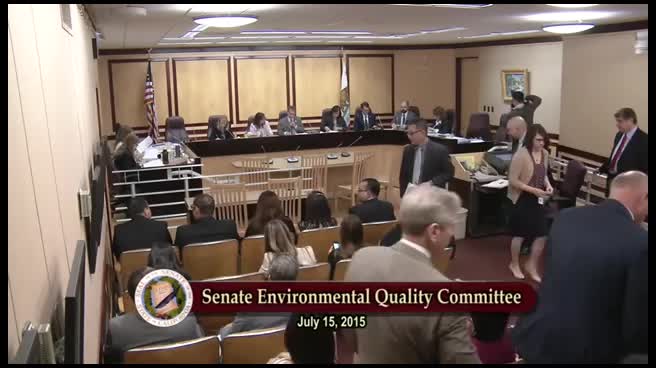 12MIN
Senate Standing Committee on Environmental Quality
 9MIN
Assembly Floor
 6MIN
Assembly Standing Committee on Appropriations
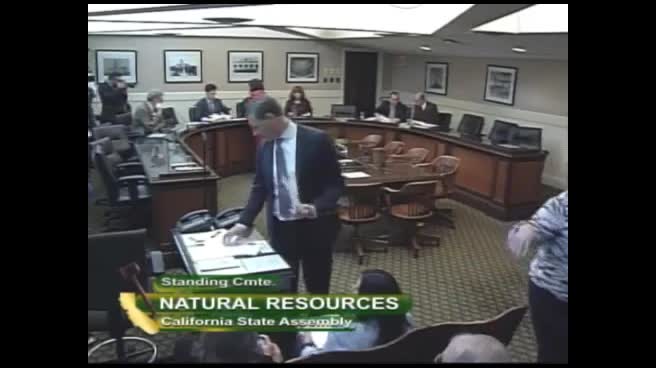 11MIN
Assembly Standing Committee on Natural Resources
Bill Author

Bill Co-Author(s):