SB 1345: Foster children: rights of foster youth.
- Session Year: 2025-2026
- House: Senate
- Latest Version Date: 2026-09-20
Current Status:
Passed
(2026-09-20: Chaptered by Secretary of State. Chapter 432, Statutes of 2026.)
Introduced
In Committee
Awaiting First Chamber Vote
Passed First Chamber
In Committee
Awaiting Second Chamber Vote
Passed Second Chamber
Enacted
Existing law generally provides for the placement of foster youth in various settings and governs the provision of child welfare services, which is defined to mean public social services that are directed toward the accomplishment of specified purposes, including protecting and promoting the welfare of all children, preventing the unnecessary separation of children from their families, and restoring to their families children who have been removed. Existing law provides that it is the policy of the state that all minors and nonminors in foster care have specified rights, including, among others, the right to have storage space for private use, the right to be free from unreasonable searches of personal belongings, the right to be informed of these rights in an age-appropriate and developmentally appropriate manner, and the right to receive a copy of these rights, at specified intervals.
Under this bill, the foster youth would have an additional right to have their personal belongings transported during placement changes and other moves in a manner preserving the youths property and dignity, including the use of suitcases, duffel bags, backpacks, and moving boxes rather than trash bags or other inappropriate receptacles. The bill would also include the right to maintain reasonable access to and use of personal belongings, clothing, and personal items.
Existing law generally provides for the placement of foster youth in various settings and governs the provision of child welfare services, which is defined to mean public social services that are directed toward the accomplishment of specified purposes, including protecting and promoting the welfare of all children, preventing the unnecessary separation of children from their families, and restoring to their families children who have been removed. Existing law provides that it is the policy of the state that all minors and nonminors in foster care have specified rights, including, among others, the right to have storage space for private use, the right to be free from unreasonable searches of personal belongings, the right to be informed of these rights in an age-appropriate and developmentally appropriate manner, and the right to receive a copy of these rights, at specified intervals.
Under this bill, the foster youth would have an additional right to have their personal belongings transported during placement changes and other moves in a manner preserving the youths property and dignity, including the use of suitcases, duffel bags, backpacks, and moving boxes rather than trash bags or other inappropriate receptacles.
Existing law makes legislative findings and declarations regarding the need to provide resources and support to dependent minor parents. Existing law encourages the State Department of Social Services and local child welfare agencies to collect data on the number of minors in foster care who give birth and the number of minor parents who remain in placement with their minor children, and to collect information to be used to develop a more cost-effective infant supplemental payment rate structure to more adequately reimburse caregivers.This bill would make technical, nonsubstantive changes to those provisions.Existing law makes legislative findings and declarations regarding the need to provide resources and support to dependent minor parents. Existing law encourages the State Department of Social Services and local child welfare agencies to collect data on the number of minors in foster care who give birth and the number of minor parents who remain in placement with their minor children, and to collect information to be used to develop a more cost-effective infant supplemental payment rate structure to more adequately reimburse caregivers.
This bill would make technical, nonsubstantive changes to those provisions.
(a)All children placed in foster care, either voluntarily or after being adjudged a ward or dependent of the juvenile court pursuant to Section 300, 601, or 602, shall have the rights specified in this section. These rights also apply to nonminor dependents in foster care, except when they conflict with nonminor dependents retention of all their legal decisionmaking authority as an adult. The rights are as follows:
(1)(A)To live in a safe, healthy, and comfortable home where they are treated with respect. If the child is an Indian child, to live in a home that upholds the prevailing social and cultural standards of the childs Indian community, including, but not limited to, family, social, and political ties.
(B)To have their personal belongings transported during placement changes and other moves in a manner that preserves the youths property and dignity. This includes the use of suitcases, duffel bags, backpacks, and moving boxes rather than trash bags or other inappropriate receptacles.
(2)To be free from physical, sexual, emotional, or other abuse, corporal punishment, and exploitation.
(3)To receive adequate and healthy food, adequate clothing, grooming and hygiene products, and an age-appropriate allowance. Clothing and grooming and hygiene products shall respect the childs culture, ethnicity, and gender identity and expression.
(4)To be placed in the least restrictive setting possible, regardless of age, physical health, mental health, sexual orientation, and gender identity and expression, juvenile court record, or status as a pregnant or parenting youth, unless a court orders otherwise.
(5)To be placed with a relative or nonrelative extended family member if an appropriate and willing individual is available.
(6)To not be locked in any portion of their foster care placement, unless placed in a community treatment facility.
(7)To have a placement that utilizes trauma-informed and evidence-based deescalation and intervention techniques, to have law enforcement intervention requested only when there is an imminent threat to the life or safety of a child or another person or as a last resort after other diversion and deescalation techniques have been utilized, and to not have law enforcement intervention used as a threat or in retaliation against the child.
(8)To not be detained in a juvenile detention facility based on their status as a dependent of the juvenile court or the child welfare services departments inability to provide a foster care placement. If they are detained, to have all the rights afforded under the United States Constitution, the California Constitution, and all applicable state and federal laws.
(9)To have storage space for private use and to maintain reasonable access to and use of personal belongings, clothing, and personal items.
(10)To be free from unreasonable searches of personal belongings.
(11)To be provided the names and contact information for social workers, probation officers, attorneys, service providers, foster youth advocates and supporters, Court-Appointed Special Advocates (CASAs), and education rights holder if other than the parent or parents, and when applicable, representatives designated by the childs Indian tribe to participate in the juvenile court proceeding, and to communicate with these individuals privately.
(12)To visit and contact siblings, family members, and relatives privately, unless prohibited by court order, and to ask the court for visitation with the childs siblings.
(13)To make, send, and receive confidential telephone calls and other electronic communications, and to send and receive unopened mail, unless prohibited by court order.
(14)To have social contacts with people outside of the foster care system, including, but not limited to, teachers, coaches, religious or spiritual community members, mentors, and friends. If the child is an Indian child, to have the right to have contact with tribal members and members of their Indian community consistent with the prevailing social and cultural conditions and way of life of the Indian childs tribe.
(15)To attend religious services, activities, and ceremonies of the childs choice, including, but not limited to, engaging in traditional Native American religious practices.
(16)To participate in extracurricular, cultural, racial, ethnic, personal enrichment, and social activities, including, but not limited to, access to computer technology and the internet, consistent with the childs age, maturity, developmental level, sexual orientation, and gender identity and expression.
(17)To have fair and equal access to all available services, placement, care, treatment, and benefits, and to not be subjected to discrimination or harassment on the basis of actual or perceived race, ethnic group identification, ancestry, national origin, color, religion, sex, sexual orientation, gender identity and expression, mental or physical disability, or HIV status.
(18)To have caregivers, child welfare and probation personnel, and legal counsel who have received instruction on cultural competency and sensitivity relating to sexual orientation, gender identity and expression, and best practices for providing adequate care to lesbian, gay, bisexual, and transgender children in out-of-home care.
(19)To be placed in out-of-home care according to their gender identity, regardless of the gender or sex listed in their court, child welfare, medical, or vital records, to be referred to by the childs preferred name and gender pronoun, and to maintain privacy regarding sexual orientation and gender identity and expression, unless the child permits the information to be disclosed, or disclosure is required to protect their health and safety, or disclosure is compelled by law or a court order.
(20)To have child welfare and probation personnel and legal counsel who have received instruction on the federal Indian Child Welfare Act of 1978 (25 U.S.C. Sec. 1901 et seq.) and on cultural competency and sensitivity relating to, and best practices for, providing adequate care to Indian children in out-of-home care.
(21)To have recognition of the childs political affiliation with an Indian tribe or Alaskan village, including a determination of the childs membership or citizenship in an Indian tribe or Alaskan village; to receive assistance in becoming a member of an Indian tribe or Alaskan village in which the child is eligible for membership or citizenship; to receive all benefits and privileges that flow from membership or citizenship in an Indian tribe or Alaskan village; and to be free from discrimination based on the childs political affiliation with an Indian tribe or Alaskan village.
(22)(A)To access and receive medical, dental, vision, mental health, and substance use disorder services, and reproductive and sexual health care, with reasonable promptness that meets the needs of the child, to have diagnoses and services explained in an understandable manner, and to participate in decisions regarding health care treatment and services. This right includes covered gender-affirming health care and gender-affirming mental health care, and is subject to existing laws governing consent to health care for minors and nonminors and does not limit, add, or otherwise affect applicable laws governing consent to health care.
(B)To view and receive a copy of their medical records to the extent they have the right to consent to the treatment provided in the medical record and at no cost to the child until they are 26 years of age.
(23)Except in an emergency, to be free of the administration of medication or chemical substances, and to be free of all psychotropic medications unless prescribed by a physician, and in the case of children, authorized by a judge, without consequences or retaliation. The child has the right to consult with and be represented by counsel in opposing a request for the administration of psychotropic medication and to provide input to the court about the request to authorize medication. The child also has the right to report to the court the positive and adverse effects of the medication and to request that the court reconsider, revoke, or modify the authorization at any time.
(24)(A)To have access to age-appropriate, medically accurate information about reproductive health care, the prevention of unplanned pregnancy, and the prevention and treatment of sexually transmitted infections.
(B)At any age, to consent to or decline services regarding contraception, pregnancy care, and perinatal care, including, but not limited to, abortion services and health care services for sexual assault without the knowledge or consent of any adult.
(C)At 12 years of age or older, to consent to or decline health care services to prevent, test for, or treat sexually transmitted diseases, including HIV, and mental health services, without the consent or knowledge of any adult.
(25)At 12 years of age or older, to choose, whenever feasible and in accordance with applicable law, their own health care provider for medical, dental, vision, mental health, substance use disorder services, and sexual and reproductive health care, if payment for the service is authorized under applicable federal Medicaid law or other approved insurance, and to communicate with that health care provider regarding any treatment concerns or needs and to request a second opinion before being required to undergo invasive medical, dental, or psychiatric treatment.
(26)To confidentiality of medical and mental health records, including, but not limited to, HIV status, substance use disorder history and treatment, and sexual and reproductive health care, consistent with existing law.
(27)To attend school, to remain in the childs school of origin, to immediate enrollment upon a change of school, to partial credits for any coursework completed, and to priority enrollment in preschool, after school programs, a California State University, and each community college district, and to receive all other necessary educational supports and benefits, as described in the Education Code.
(28)To have access to existing information regarding the educational options available, including, but not limited to, the coursework necessary for career, technical, and postsecondary educational programs, and information regarding financial aid for postsecondary education, and specialized programs for current and former foster children available at the University of California, the California State University, and the California Community Colleges.
(29)To attend Independent Living Program classes and activities, if the child meets the age requirements, and to not be prevented by caregivers from attending as a consequence or punishment.
(30)To maintain a bank account and manage personal income, consistent with the childs age and developmental level, unless prohibited by the case plan.
(31)To work and develop job skills at an age-appropriate level, consistent with state law.
(32)For children 14 to 17 years of age, inclusive, to receive a consumer credit report provided to the child by the social worker or probation officer on an annual basis from each of the three major credit reporting agencies, and to receive assistance with interpreting and resolving any inaccuracies.
(33)To be represented by an attorney in juvenile court; to have an attorney appointed to advise the court of the childs wishes, to advocate for the childs protection, safety, and well-being, and to investigate and report to the court on legal interests beyond the scope of the juvenile proceeding; to speak to the attorney confidentially; and to request a hearing if the child feels their appointed counsel is not acting in their best interest or adequately representing their legal interests.
(34)(A)To receive a notice of court hearings, to attend court hearings, to speak to the judge, to view and receive a copy of the court file, subject to existing federal and state confidentiality laws, and to object to or request the presence of interested persons during court hearings. If the child is an Indian child, to have a representative designated by the childs Indian tribe be in attendance during hearings.
(B)When a child is entitled to receive a copy of the court report, case plan, and transitional independent living plan (TILP), those items shall be provided in the childs primary language.
(35)To the confidentiality of all juvenile court records consistent with existing law.
(36)To view and receive a copy of their child welfare records, juvenile court records, and educational records at no cost to the child until the child is 26 years of age, subject to existing federal and state confidentiality laws.
(37)To be involved in the development of their own case plan, including placement decisions and placement transition planning, and plan for permanency. This involvement includes, but is not limited to, the development of case plan elements related to placement and gender-affirming health care, with consideration of the childs gender identity. If the child is an Indian child, the case plan shall include protecting the essential tribal relations and best interests of the Indian child by assisting the child in establishing, developing, and maintaining political, cultural, and social relationships with the childs Indian tribe and Indian community.
(38)To review the childs own case plan and plan for permanent placement if the child is 10 years of age or older, and to receive information about their out-of-home placement and case plan, including being told of changes to the plan.
(39)To request and participate in a child and family team meeting, as follows:
(A)Within 60 days of entering foster care, and every six months thereafter.
(B)If placed in a short-term residential therapeutic program, or receiving intensive home-based services or intensive case coordination, or receiving therapeutic foster care services, to have a child and family team meeting at least every 90 days.
(C)To request additional child and family team meetings to address concerns, including, but not limited to, placement disruption, change in service needs, addressing barriers to sibling or family visits, and addressing difficulties in coordinating services.
(D)To have both informal and formal support people participate, consistent with state law.
(40)(A)To be informed of these rights in an age and developmentally appropriate manner by the social worker or probation officer and to be provided a copy of the rights in this section at the time of placement, any placement change, and at least once every six months or at the time of a regularly scheduled contact with the social worker or probation officer.
(B)For a child who speaks a primary language other than English, to be provided a copy of the childs rights in the childs primary language.
(41)To be provided with contact information for the Community Care Licensing Division of the State Department of Social Services, the tribal authority approving a tribally approved home, and the State Foster Care Ombudsperson, at the time of each placement, and to contact any or all of these offices immediately upon request regarding violations of rights, to speak to representatives of these offices confidentially, and to be free from threats or punishment for making complaints.
(b)The rights described in this section are broad expressions of the rights of children in foster care and are not exhaustive of all rights set forth in the United States Constitution and the California Constitution, federal and California statutes, and case law.
(c)This section does not require, and shall not be interpreted to require, a foster care provider to take any action that would impair the health and safety of children in out-of-home placement.
(d)The State Department of Social Services and each county welfare department are encouraged to work with the Student Aid Commission, the University of California, the California State University, and the California Community Colleges to receive information pursuant to paragraph (28) of subdivision (a).
(a)All children placed in foster care, either voluntarily or after being adjudged a ward or dependent of the juvenile court pursuant to Section 300, 601, or 602, shall have the rights specified in this section. These rights also apply to nonminor dependents in foster care, except when they conflict with nonminor dependents retention of all their legal decisionmaking authority as an adult. The rights are as follows:
(1)(A)To live in a safe, healthy, and comfortable home where they are treated with respect. If the child is an Indian child, to live in a home that upholds the prevailing social and cultural standards of the childs Indian community, including, but not limited to, family, social, and political ties.
(B)To have their personal belongings transported during placement changes and other moves in a manner that preserves the youths property and dignity. This includes the use of suitcases, duffel bags, backpacks, and moving boxes rather than trash bags or other inappropriate receptacles.
(2)To be free from physical, sexual, emotional, or other abuse, corporal punishment, and exploitation.
(3)To receive adequate and healthy food, adequate clothing, grooming and hygiene products, and an age-appropriate allowance. Clothing and grooming and hygiene products shall respect the childs culture, ethnicity, and gender identity and expression.
(4)To be placed in the least restrictive setting possible, regardless of age, physical health, mental health, sexual orientation, and gender identity and expression, juvenile court record, or status as a pregnant or parenting youth, unless a court orders otherwise.
(5)To be placed with a relative or nonrelative extended family member if an appropriate and willing individual is available.
(6)To not be locked in any portion of their foster care placement, unless placed in a community treatment facility.
(7)To have a placement that utilizes trauma-informed and evidence-based deescalation and intervention techniques, to have law enforcement intervention requested only when there is an imminent threat to the life or safety of a child or another person or as a last resort after other diversion and deescalation techniques have been utilized, and to not have law enforcement intervention used as a threat or in retaliation against the child.
(8)To not be detained in a juvenile detention facility based on their status as a dependent of the juvenile court or the child welfare services departments inability to provide a foster care placement. If they are detained, to have all the rights afforded under the United States Constitution, the California Constitution, and all applicable state and federal laws.
(9)To have storage space for private use and to maintain reasonable access to and use of personal belongings, clothing, and personal items.
(10)To have their personal belongings transported during placement changes and other moves in a manner that preserves the youths property and dignity. This includes the use of suitcases, duffel bags, backpacks, and moving boxes rather than trash bags or other inappropriate receptacles.(11)(10)To be free from unreasonable searches of personal belongings.
(12)(11)To be provided the names and contact information for social workers, probation officers, attorneys, service providers, foster youth advocates and supporters, Court-Appointed Special Advocates (CASAs), and education rights holder if other than the parent or parents, and when applicable, representatives designated by the childs Indian tribe to participate in the juvenile court proceeding, and to communicate with these individuals privately.
(13)(12)To visit and contact siblings, family members, and relatives privately, unless prohibited by court order, and to ask the court for visitation with the childs siblings.
(14)(13)To make, send, and receive confidential telephone calls and other electronic communications, and to send and receive unopened mail, unless prohibited by court order.
(15)(14)To have social contacts with people outside of the foster care system, including, but not limited to, teachers, coaches, religious or spiritual community members, mentors, and friends. If the child is an Indian child, to have the right to have contact with tribal members and members of their Indian community consistent with the prevailing social and cultural conditions and way of life of the Indian childs tribe.
(16)(15)To attend religious services, activities, and ceremonies of the childs choice, including, but not limited to, engaging in traditional Native American religious practices.
(17)(16)To participate in extracurricular, cultural, racial, ethnic, personal enrichment, and social activities, including, but not limited to, access to computer technology and the internet, consistent with the childs age, maturity, developmental level, sexual orientation, and gender identity and expression.
(18)(17)To have fair and equal access to all available services, placement, care, treatment, and benefits, and to not be subjected to discrimination or harassment on the basis of actual or perceived race, ethnic group identification, ancestry, national origin, color, religion, sex, sexual orientation, gender identity and expression, mental or physical disability, or HIV status.
(19)(18)To have caregivers, child welfare and probation personnel, and legal counsel who have received instruction on cultural competency and sensitivity relating to sexual orientation, gender identity and expression, and best practices for providing adequate care to lesbian, gay, bisexual, and transgender children in out-of-home care.
(20)(19)To be placed in out-of-home care according to their gender identity, regardless of the gender or sex listed in their court, child welfare, medical, or vital records, to be referred to by the childs preferred name and gender pronoun, and to maintain privacy regarding sexual orientation and gender identity and expression, unless the child permits the information to be disclosed, or disclosure is required to protect their health and safety, or disclosure is compelled by law or a court order.
(21)(20)To have child welfare and probation personnel and legal counsel who have received instruction on the federal Indian Child Welfare Act of 1978 (25 U.S.C. Sec. 1901 et seq.) and on cultural competency and sensitivity relating to, and best practices for, providing adequate care to Indian children in out-of-home care.
(22)(21)To have recognition of the childs political affiliation with an Indian tribe or Alaskan village, including a determination of the childs membership or citizenship in an Indian tribe or Alaskan village; to receive assistance in becoming a member of an Indian tribe or Alaskan village in which the child is eligible for membership or citizenship; to receive all benefits and privileges that flow from membership or citizenship in an Indian tribe or Alaskan village; and to be free from discrimination based on the childs political affiliation with an Indian tribe or Alaskan village.
(23)(22)(A)To access and receive medical, dental, vision, mental health, and substance use disorder services, and reproductive and sexual health care, with reasonable promptness that meets the needs of the child, to have diagnoses and services explained in an understandable manner, and to participate in decisions regarding health care treatment and services. This right includes covered gender-affirming health care and gender-affirming mental health care, and is subject to existing laws governing consent to health care for minors and nonminors and does not limit, add, or otherwise affect applicable laws governing consent to health care.
(B)To view and receive a copy of their medical records to the extent they have the right to consent to the treatment provided in the medical record and at no cost to the child until they are 26 years of age.
(24)(23)Except in an emergency, to be free of the administration of medication or chemical substances, and to be free of all psychotropic medications unless prescribed by a physician, and in the case of children, authorized by a judge, without consequences or retaliation. The child has the right to consult with and be represented by counsel in opposing a request for the administration of psychotropic medication and to provide input to the court about the request to authorize medication. The child also has the right to report to the court the positive and adverse effects of the medication and to request that the court reconsider, revoke, or modify the authorization at any time.
(25)(24)(A)To have access to age-appropriate, medically accurate information about reproductive health care, the prevention of unplanned pregnancy, and the prevention and treatment of sexually transmitted infections.
(B)At any age, to consent to or decline services regarding contraception, pregnancy care, and perinatal care, including, but not limited to, abortion services and health care services for sexual assault without the knowledge or consent of any adult.
(C)At 12 years of age or older, to consent to or decline health care services to prevent, test for, or treat sexually transmitted diseases, including HIV, and mental health services, without the consent or knowledge of any adult.
(26)(25)At 12 years of age or older, to choose, whenever feasible and in accordance with applicable law, their own health care provider for medical, dental, vision, mental health, substance use disorder services, and sexual and reproductive health care, if payment for the service is authorized under applicable federal Medicaid law or other approved insurance, and to communicate with that health care provider regarding any treatment concerns or needs and to request a second opinion before being required to undergo invasive medical, dental, or psychiatric treatment.
(27)(26)To confidentiality of medical and mental health records, including, but not limited to, HIV status, substance use disorder history and treatment, and sexual and reproductive health care, consistent with existing law.
(28)(27)To attend school, to remain in the childs school of origin, to immediate enrollment upon a change of school, to partial credits for any coursework completed, and to priority enrollment in preschool, after school programs, a California State University, and each community college district, and to receive all other necessary educational supports and benefits, as described in the Education Code.
(29)(28)To have access to existing information regarding the educational options available, including, but not limited to, the coursework necessary for career, technical, and postsecondary educational programs, and information regarding financial aid for postsecondary education, and specialized programs for current and former foster children available at the University of California, the California State University, and the California Community Colleges.
(30)(29)To attend Independent Living Program classes and activities, if the child meets the age requirements, and to not be prevented by caregivers from attending as a consequence or punishment.
(31)(30)To maintain a bank account and manage personal income, consistent with the childs age and developmental level, unless prohibited by the case plan.
(32)(31)To work and develop job skills at an age-appropriate level, consistent with state law.
(33)(32)For children 14 to 17 years of age, inclusive, to receive a consumer credit report provided to the child by the social worker or probation officer on an annual basis from each of the three major credit reporting agencies, and to receive assistance with interpreting and resolving any inaccuracies.
(34)(33)To be represented by an attorney in juvenile court; to have an attorney appointed to advise the court of the childs wishes, to advocate for the childs protection, safety, and well-being, and to investigate and report to the court on legal interests beyond the scope of the juvenile proceeding; to speak to the attorney confidentially; and to request a hearing if the child feels their appointed counsel is not acting in their best interest or adequately representing their legal interests.
(35)(34)(A)To receive a notice of court hearings, to attend court hearings, to speak to the judge, to view and receive a copy of the court file, subject to existing federal and state confidentiality laws, and to object to or request the presence of interested persons during court hearings. If the child is an Indian child, to have a representative designated by the childs Indian tribe be in attendance during hearings.
(B)When a child is entitled to receive a copy of the court report, case plan, and transitional independent living plan (TILP), those items shall be provided in the childs primary language.
(36)(35)To the confidentiality of all juvenile court records consistent with existing law.
(37)(36)To view and receive a copy of their child welfare records, juvenile court records, and educational records at no cost to the child until the child is 26 years of age, subject to existing federal and state confidentiality laws.
(38)(37)To be involved in the development of their own case plan, including placement decisions and placement transition planning, and plan for permanency. This involvement includes, but is not limited to, the development of case plan elements related to placement and gender-affirming health care, with consideration of the childs gender identity. If the child is an Indian child, the case plan shall include protecting the essential tribal relations and best interests of the Indian child by assisting the child in establishing, developing, and maintaining political, cultural, and social relationships with the childs Indian tribe and Indian community.
(39)(38)To review the childs own case plan and plan for permanent placement if the child is 10 years of age or older, and to receive information about their out-of-home placement and case plan, including being told of changes to the plan.
(40)(39)To request and participate in a child and family team meeting, as follows:
(A)Within 60 days of entering foster care, and every six months thereafter.
(B)If placed in a short-term residential therapeutic program, or receiving intensive home-based services or intensive case coordination, or receiving therapeutic foster care services, to have a child and family team meeting at least every 90 days.
(C)To request additional child and family team meetings to address concerns, including, but not limited to, placement disruption, change in service needs, addressing barriers to sibling or family visits, and addressing difficulties in coordinating services.
(D)To have both informal and formal support people participate, consistent with state law.
(41)(40)(A)To be informed of these rights in an age and developmentally appropriate manner by the social worker or probation officer and to be provided a copy of the rights in this section at the time of placement, any placement change, and at least once every six months or at the time of a regularly scheduled contact with the social worker or probation officer.
(B)For a child who speaks a primary language other than English, to be provided a copy of the childs rights in the childs primary language.
(42)(41)To be provided with contact information for the Community Care Licensing Division of the State Department of Social Services, the tribal authority approving a tribally approved home, and the State Foster Care Ombudsperson, at the time of each placement, and to contact any or all of these offices immediately upon request regarding violations of rights, to speak to representatives of these offices confidentially, and to be free from threats or punishment for making complaints.
(b)The rights described in this section are broad expressions of the rights of children in foster care and are not exhaustive of all rights set forth in the United States Constitution and the California Constitution, federal and California statutes, and case law.
(c)This section does not require, and shall not be interpreted to require, a foster care provider to take any action that would impair the health and safety of children in out-of-home placement.
(d)The State Department of Social Services and each county welfare department are encouraged to work with the Student Aid Commission, the University of California, the California State University, and the California Community Colleges to receive information pursuant to paragraph (28) of subdivision (a).
(a)All children placed in foster care, either voluntarily or after being adjudged a ward or dependent of the juvenile court pursuant to Section 300, 601, or 602, shall have the rights specified in this section. These rights also apply to nonminor dependents in foster care, except when they conflict with nonminor dependents retention of all their legal decisionmaking authority as an adult. The rights are as follows:
(1)To live in a safe, healthy, and comfortable home where they are treated with respect. If the child is an Indian child, to live in a home that upholds the prevailing social and cultural standards of the childs Indian community, including, but not limited to, family, social, and political ties.
(2)To be free from physical, sexual, emotional, or other abuse, corporal punishment, and exploitation.
(3)To receive adequate and healthy food, adequate clothing, grooming and hygiene products, and an age-appropriate allowance. Clothing and grooming and hygiene products shall respect the childs culture, ethnicity, and gender identity and expression.
(4)To be placed in the least restrictive setting possible, regardless of age, physical health, mental health, sexual orientation, and gender identity and expression, juvenile court record, or status as a pregnant or parenting youth, unless a court orders otherwise.
(5)To be placed with a relative or nonrelative extended family member if an appropriate and willing individual is available.
(6)To not be locked in any portion of their foster care placement, unless placed in a community treatment facility.
(7)To have a placement that utilizes trauma-informed and evidence-based deescalation and intervention techniques, to have law enforcement intervention requested only when there is an imminent threat to the life or safety of a child or another person or as a last resort after other diversion and deescalation techniques have been utilized, and to not have law enforcement intervention used as a threat or in retaliation against the child.
(8)To not be detained in a juvenile detention facility based on their status as a dependent of the juvenile court or the child welfare services departments inability to provide a foster care placement. If they are detained, to have all the rights afforded under the United States Constitution, the California Constitution, and all applicable state and federal laws.
(9)To have storage space for private use. use and to maintain reasonable access to and use of personal belongings, clothing, and personal items.
(10)To have their personal belongings transported during placement changes and other moves in a manner that preserves the youths property and dignity. This includes the use of suitcases, duffel bags, backpacks, and moving boxes rather than trash bags or other inappropriate receptacles.
(11)To be free from unreasonable searches of personal belongings.
(12)To be provided the names and contact information for social workers, probation officers, attorneys, service providers, foster youth advocates and supporters, Court Appointed Court-Appointed Special Advocates (CASAs), and education rights holder if other than the parent or parents, and when applicable, representatives designated by the childs Indian tribe to participate in the juvenile court proceeding, and to communicate with these individuals privately.
(13)To visit and contact siblings, family members, and relatives privately, unless prohibited by court order, and to ask the court for visitation with the childs siblings.
(14)To make, send, and receive confidential telephone calls and other electronic communications, and to send and receive unopened mail, unless prohibited by court order.
(15)To have social contacts with people outside of the foster care system, including, but not limited to, teachers, coaches, religious or spiritual community members, mentors, and friends. If the child is an Indian child, to have the right to have contact with tribal members and members of their Indian community consistent with the prevailing social and cultural conditions and way of life of the Indian childs tribe.
(16)To attend religious services, activities, and ceremonies of the childs choice, including, but not limited to, engaging in traditional Native American religious practices.
(17)To participate in extracurricular, cultural, racial, ethnic, personal enrichment, and social activities, including, but not limited to, access to computer technology and the internet, consistent with the childs age, maturity, developmental level, sexual orientation, and gender identity and expression.
(18)To have fair and equal access to all available services, placement, care, treatment, and benefits, and to not be subjected to discrimination or harassment on the basis of actual or perceived race, ethnic group identification, ancestry, national origin, color, religion, sex, sexual orientation, gender identity and expression, mental or physical disability, or HIV status.
(19)To have caregivers, child welfare and probation personnel, and legal counsel who have received instruction on cultural competency and sensitivity relating to sexual orientation, gender identity and expression, and best practices for providing adequate care to lesbian, gay, bisexual, and transgender children in out-of-home care.
(20)To be placed in out-of-home care according to their gender identity, regardless of the gender or sex listed in their court, child welfare, medical, or vital records, to be referred to by the childs preferred name and gender pronoun, and to maintain privacy regarding sexual orientation and gender identity and expression, unless the child permits the information to be disclosed, or disclosure is required to protect their health and safety, or disclosure is compelled by law or a court order.
(21)To have child welfare and probation personnel and legal counsel who have received instruction on the federal Indian Child Welfare Act of 1978 (25 U.S.C. Sec. 1901 et seq.) and on cultural competency and sensitivity relating to, and best practices for, providing adequate care to Indian children in out-of-home care.
(22)To have recognition of the childs political affiliation with an Indian tribe or Alaskan village, including a determination of the childs membership or citizenship in an Indian tribe or Alaskan village; to receive assistance in becoming a member of an Indian tribe or Alaskan village in which the child is eligible for membership or citizenship; to receive all benefits and privileges that flow from membership or citizenship in an Indian tribe or Alaskan village; and to be free from discrimination based on the childs political affiliation with an Indian tribe or Alaskan village.
(23)(A)To access and receive medical, dental, vision, mental health, and substance use disorder services, and reproductive and sexual health care, with reasonable promptness that meets the needs of the child, to have diagnoses and services explained in an understandable manner, and to participate in decisions regarding health care treatment and services. This right includes covered gender-affirming health care and gender-affirming mental health care, and is subject to existing laws governing consent to health care for minors and nonminors and does not limit, add, or otherwise affect applicable laws governing consent to health care.
(B)To view and receive a copy of their medical records to the extent they have the right to consent to the treatment provided in the medical record and at no cost to the child until they are 26 years of age.
(24)Except in an emergency, to be free of the administration of medication or chemical substances, and to be free of all psychotropic medications unless prescribed by a physician, and in the case of children, authorized by a judge, without consequences or retaliation. The child has the right to consult with and be represented by counsel in opposing a request for the administration of psychotropic medication and to provide input to the court about the request to authorize medication. The child also has the right to report to the court the positive and adverse effects of the medication and to request that the court reconsider, revoke, or modify the authorization at any time.
(25)(A)To have access to age-appropriate, medically accurate information about reproductive health care, the prevention of unplanned pregnancy, and the prevention and treatment of sexually transmitted infections.
(B)At any age, to consent to or decline services regarding contraception, pregnancy care, and perinatal care, including, but not limited to, abortion services and health care services for sexual assault without the knowledge or consent of any adult.
(C)At 12 years of age or older, to consent to or decline health care services to prevent, test for, or treat sexually transmitted diseases, including HIV, and mental health services, without the consent or knowledge of any adult.
(26)At 12 years of age or older, to choose, whenever feasible and in accordance with applicable law, their own health care provider for medical, dental, vision, mental health, substance use disorder services, and sexual and reproductive health care, if payment for the service is authorized under applicable federal Medicaid law or other approved insurance, and to communicate with that health care provider regarding any treatment concerns or needs and to request a second opinion before being required to undergo invasive medical, dental, or psychiatric treatment.
(27)To confidentiality of medical and mental health records, including, but not limited to, HIV status, substance use disorder history and treatment, and sexual and reproductive health care, consistent with existing law.
(28)To attend school, to remain in the childs school of origin, to immediate enrollment upon a change of school, to partial credits for any coursework completed, and to priority enrollment in preschool, after school programs, a California State University, and each community college district, and to receive all other necessary educational supports and benefits, as described in the Education Code.
(29)To have access to existing information regarding the educational options available, including, but not limited to, the coursework necessary for career, technical, and postsecondary educational programs, and information regarding financial aid for postsecondary education, and specialized programs for current and former foster children available at the University of California, the California State University, and the California Community Colleges.
(30)To attend Independent Living Program classes and activities, if the child meets the age requirements, and to not be prevented by caregivers from attending as a consequence or punishment.
(31)To maintain a bank account and manage personal income, consistent with the childs age and developmental level, unless prohibited by the case plan.
(32)To work and develop job skills at an age-appropriate level, consistent with state law.
(33)For children 14 to 17 years of age, inclusive, to receive a consumer credit report provided to the child by the social worker or probation officer on an annual basis from each of the three major credit reporting agencies, and to receive assistance with interpreting and resolving any inaccuracies.
(34)To be represented by an attorney in juvenile court; to have an attorney appointed to advise the court of the childs wishes, to advocate for the childs protection, safety, and well-being, and to investigate and report to the court on legal interests beyond the scope of the juvenile proceeding; to speak to the attorney confidentially; and to request a hearing if the child feels their appointed counsel is not acting in their best interest or adequately representing their legal interests.
(35)(A)To receive a notice of court hearings, to attend court hearings, to speak to the judge, to view and receive a copy of the court file, subject to existing federal and state confidentiality laws, and to object to or request the presence of interested persons during court hearings. If the child is an Indian child, to have a representative designated by the childs Indian tribe be in attendance during hearings.
(B)When a child is entitled to receive a copy of the court report, case plan, and transition to transitional independent living plan (TILP), those items shall be provided in the childs primary language.
(36)To the confidentiality of all juvenile court records consistent with existing law.
(37)To view and receive a copy of their child welfare records, juvenile court records, and educational records at no cost to the child until the child is 26 years of age, subject to existing federal and state confidentiality laws.
(38)To be involved in the development of their own case plan, including placement decisions and placement transition planning, and plan for permanency. This involvement includes, but is not limited to, the development of case plan elements related to placement and gender-affirming health care, with consideration of the childs gender identity. If the child is an Indian child, the case plan shall include protecting the essential tribal relations and best interests of the Indian child by assisting the child in establishing, developing, and maintaining political, cultural, and social relationships with the childs Indian tribe and Indian community.
(39)To review the childs own case plan and plan for permanent placement if the child is 10 years of age or older, and to receive information about their out-of-home placement and case plan, including being told of changes to the plan.
(40)To request and participate in a child and family team meeting, as follows:
(A)Within 60 days of entering foster care, and every six months thereafter.
(B)If placed in a short-term residential therapeutic program, or receiving intensive home-based services or intensive case coordination, or receiving therapeutic foster care services, to have a child and family team meeting at least every 90 days.
(C)To request additional child and family team meetings to address concerns, including, but not limited to, placement disruption, change in service needs, addressing barriers to sibling or family visits, and addressing difficulties in coordinating services.
(D)To have both informal and formal support people participate, consistent with state law.
(41)(A)To be informed of these rights in an age and developmentally appropriate manner by the social worker or probation officer and to be provided a copy of the rights in this section at the time of placement, any placement change, and at least once every six months or at the time of a regularly scheduled contact with the social worker or probation officer.
(B)For a child who speaks a primary language other than English, to be provided a copy of the childs rights in the childs primary language.
(42)To be provided with contact information for the Community Care Licensing Division of the State Department of Social Services, the tribal authority approving a tribally approved home, and the State Foster Care Ombudsperson, at the time of each placement, and to contact any or all of these offices immediately upon request regarding violations of rights, to speak to representatives of these offices confidentially, and to be free from threats or punishment for making complaints.
(b)The rights described in this section are broad expressions of the rights of children in foster care and are not exhaustive of all rights set forth in the United States Constitution and the California Constitution, federal and California statutes, and case law.
(c)This section does not require, and shall not be interpreted to require, a foster care provider to take any action that would impair the health and safety of children in out-of-home placement.
(d)The State Department of Social Services and each county welfare department are encouraged to work with the Student Aid Commission, the University of California, the California State University, and the California Community Colleges to receive information pursuant to paragraph (28) of subdivision (a).
(a)All children placed in foster care, either voluntarily or after being adjudged a ward or dependent of the juvenile court pursuant to Section 300, 601, or 602, shall have the rights specified in this section. These rights also apply to nonminor dependents in foster care, except when they conflict with nonminor dependents retention of all their legal decisionmaking authority as an adult. The rights are as follows:
(1)To live in a safe, healthy, and comfortable home where they are treated with respect. If the child is an Indian child, to live in a home that upholds the prevailing social and cultural standards of the childs Indian community, including, but not limited to, family, social, and political ties.
(2)To be free from physical, sexual, emotional, or other abuse, corporal punishment, and exploitation.
(3)To receive adequate and healthy food, adequate clothing, grooming and hygiene products, and an age-appropriate allowance. Clothing and grooming and hygiene products shall respect the childs culture, ethnicity, and gender identity and expression.
(4)To be placed in the least restrictive setting possible, regardless of age, physical health, mental health, sexual orientation, and gender identity and expression, juvenile court record, or status as a pregnant or parenting youth, unless a court orders otherwise.
(5)To be placed with a relative or nonrelative extended family member if an appropriate and willing individual is available.
(6)To not be locked in any portion of their foster care placement, unless placed in a community treatment facility.
(7)To have a placement that utilizes trauma-informed and evidence-based deescalation and intervention techniques, to have law enforcement intervention requested only when there is an imminent threat to the life or safety of a child or another person or as a last resort after other diversion and deescalation techniques have been utilized, and to not have law enforcement intervention used as a threat or in retaliation against the child.
(8)To not be detained in a juvenile detention facility based on their status as a dependent of the juvenile court or the child welfare services departments inability to provide a foster care placement. If they are detained, to have all the rights afforded under the United States Constitution, the California Constitution, and all applicable state and federal laws.
(9)To have storage space for private use.
(10)To have their personal belongings transported during placement changes and other moves in a manner that preserves the youths property and dignity. This includes the use of suitcases, duffel bags, backpacks, and moving boxes rather than trash bags or other inappropriate receptacles.
(10)(11)To be free from unreasonable searches of personal belongings.
(11)(12)To be provided the names and contact information for social workers, probation officers, attorneys, service providers, foster youth advocates and supporters, Court Appointed Special Advocates (CASAs), and education rights holder if other than the parent or parents, and when applicable, representatives designated by the childs Indian tribe to participate in the juvenile court proceeding, and to communicate with these individuals privately.
(12)(13)To visit and contact siblings, family members, and relatives privately, unless prohibited by court order, and to ask the court for visitation with the childs siblings.
(13)(14)To make, send, and receive confidential telephone calls and other electronic communications, and to send and receive unopened mail, unless prohibited by court order.
(14)(15)To have social contacts with people outside of the foster care system, including, but not limited to, teachers, coaches, religious or spiritual community members, mentors, and friends. If the child is an Indian child, to have the right to have contact with tribal members and members of their Indian community consistent with the prevailing social and cultural conditions and way of life of the Indian childs tribe.
(15)(16)To attend religious services, activities, and ceremonies of the childs choice, including, but not limited to, engaging in traditional Native American religious practices.
(16)(17)To participate in extracurricular, cultural, racial, ethnic, personal enrichment, and social activities, including, but not limited to, access to computer technology and the internet, consistent with the childs age, maturity, developmental level, sexual orientation, and gender identity and expression.
(17)(18)To have fair and equal access to all available services, placement, care, treatment, and benefits, and to not be subjected to discrimination or harassment on the basis of actual or perceived race, ethnic group identification, ancestry, national origin, color, religion, sex, sexual orientation, gender identity and expression, mental or physical disability, or HIV status.
(18)(19)To have caregivers, child welfare and probation personnel, and legal counsel who have received instruction on cultural competency and sensitivity relating to sexual orientation, gender identity and expression, and best practices for providing adequate care to lesbian, gay, bisexual, and transgender children in out-of-home care.
(19)(20)To be placed in out-of-home care according to their gender identity, regardless of the gender or sex listed in their court, child welfare, medical, or vital records, to be referred to by the childs preferred name and gender pronoun, and to maintain privacy regarding sexual orientation and gender identity and expression, unless the child permits the information to be disclosed, or disclosure is required to protect their health and safety, or disclosure is compelled by law or a court order.
(20)(21)To have child welfare and probation personnel and legal counsel who have received instruction on the federal Indian Child Welfare Act of 1978 (25 U.S.C. Sec. 1901 et seq.) and on cultural competency and sensitivity relating to, and best practices for, providing adequate care to Indian children in out-of-home care.
(21)(22)To have recognition of the childs political affiliation with an Indian tribe or Alaskan village, including a determination of the childs membership or citizenship in an Indian tribe or Alaskan village; to receive assistance in becoming a member of an Indian tribe or Alaskan village in which the child is eligible for membership or citizenship; to receive all benefits and privileges that flow from membership or citizenship in an Indian tribe or Alaskan village; and to be free from discrimination based on the childs political affiliation with an Indian tribe or Alaskan village.
(22)(23)(A)To access and receive medical, dental, vision, mental health, and substance use disorder services, and reproductive and sexual health care, with reasonable promptness that meets the needs of the child, to have diagnoses and services explained in an understandable manner, and to participate in decisions regarding health care treatment and services. This right includes covered gender-affirming health care and gender-affirming mental health care, and is subject to existing laws governing consent to health care for minors and nonminors and does not limit, add, or otherwise affect applicable laws governing consent to health care.
(B)To view and receive a copy of their medical records to the extent they have the right to consent to the treatment provided in the medical record and at no cost to the child until they are 26 years of age.
(23)(24)Except in an emergency, to be free of the administration of medication or chemical substances, and to be free of all psychotropic medications unless prescribed by a physician, and in the case of children, authorized by a judge, without consequences or retaliation. The child has the right to consult with and be represented by counsel in opposing a request for the administration of psychotropic medication and to provide input to the court about the request to authorize medication. The child also has the right to report to the court the positive and adverse effects of the medication and to request that the court reconsider, revoke, or modify the authorization at any time.
(24)(25)(A)To have access to age-appropriate, medically accurate information about reproductive health care, the prevention of unplanned pregnancy, and the prevention and treatment of sexually transmitted infections.
(B)At any age, to consent to or decline services regarding contraception, pregnancy care, and perinatal care, including, but not limited to, abortion services and health care services for sexual assault without the knowledge or consent of any adult.
(C)At 12 years of age or older, to consent to or decline health care services to prevent, test for, or treat sexually transmitted diseases, including HIV, and mental health services, without the consent or knowledge of any adult.
(25)(26)At 12 years of age or older, to choose, whenever feasible and in accordance with applicable law, their own health care provider for medical, dental, vision, mental health, substance use disorder services, and sexual and reproductive health care, if payment for the service is authorized under applicable federal Medicaid law or other approved insurance, and to communicate with that health care provider regarding any treatment concerns or needs and to request a second opinion before being required to undergo invasive medical, dental, or psychiatric treatment.
(26)(27)To confidentiality of medical and mental health records, including, but not limited to, HIV status, substance use disorder history and treatment, and sexual and reproductive health care, consistent with existing law.
(27)(28)To attend school, to remain in the childs school of origin, to immediate enrollment upon a change of school, to partial credits for any coursework completed, and to priority enrollment in preschool, after school programs, a California State University, and each community college district, and to receive all other necessary educational supports and benefits, as described in the Education Code.
(28)(29)To have access to existing information regarding the educational options available, including, but not limited to, the coursework necessary for career, technical, and postsecondary educational programs, and information regarding financial aid for postsecondary education, and specialized programs for current and former foster children available at the University of California, the California State University, and the California Community Colleges.
(29)(30)To attend Independent Living Program classes and activities, if the child meets the age requirements, and to not be prevented by caregivers from attending as a consequence or punishment.
(30)(31)To maintain a bank account and manage personal income, consistent with the childs age and developmental level, unless prohibited by the case plan.
(31)(32)To work and develop job skills at an age-appropriate level, consistent with state law.
(32)(33)For children 14 to 17 years of age, inclusive, to receive a consumer credit report provided to the child by the social worker or probation officer on an annual basis from each of the three major credit reporting agencies, and to receive assistance with interpreting and resolving any inaccuracies.
(33)(34)To be represented by an attorney in juvenile court; to have an attorney appointed to advise the court of the childs wishes, to advocate for the childs protection, safety, and well-being, and to investigate and report to the court on legal interests beyond the scope of the juvenile proceeding; to speak to the attorney confidentially; and to request a hearing if the child feels their appointed counsel is not acting in their best interest or adequately representing their legal interests.
(34)(35)(A)To receive a notice of court hearings, to attend court hearings, to speak to the judge, to view and receive a copy of the court file, subject to existing federal and state confidentiality laws, and to object to or request the presence of interested persons during court hearings. If the child is an Indian child, to have a representative designated by the childs Indian tribe be in attendance during hearings.
(B)When a child is entitled to receive a copy of the court report, case plan, and transition to independent living plan (TILP), those items shall be provided in the childs primary language.
(35)(36)To the confidentiality of all juvenile court records consistent with existing law.
(36)(37)To view and receive a copy of their child welfare records, juvenile court records, and educational records at no cost to the child until the child is 26 years of age, subject to existing federal and state confidentiality laws.
(37)(38)To be involved in the development of their own case plan, including placement decisions and placement transition planning, and plan for permanency. This involvement includes, but is not limited to, the development of case plan elements related to placement and gender-affirming health care, with consideration of the childs gender identity. If the child is an Indian child, the case plan shall include protecting the essential tribal relations and best interests of the Indian child by assisting the child in establishing, developing, and maintaining political, cultural, and social relationships with the childs Indian tribe and Indian community.
(38)(39)To review the childs own case plan and plan for permanent placement if the child is 10 years of age or older, and to receive information about their out-of-home placement and case plan, including being told of changes to the plan.
(39)(40)To request and participate in a child and family team meeting, as follows:
(A)Within 60 days of entering foster care, and every six months thereafter.
(B)If placed in a short-term residential therapeutic program, or receiving intensive home-based services or intensive case coordination, or receiving therapeutic foster care services, to have a child and family team meeting at least every 90 days.
(C)To request additional child and family team meetings to address concerns, including, but not limited to, placement disruption, change in service needs, addressing barriers to sibling or family visits, and addressing difficulties in coordinating services.
(D)To have both informal and formal support people participate, consistent with state law.
(40)(41)(A)To be informed of these rights in an age and developmentally appropriate manner by the social worker or probation officer and to be provided a copy of the rights in this section at the time of placement, any placement change, and at least once every six months or at the time of a regularly scheduled contact with the social worker or probation officer.
(B)For a child who speaks a primary language other than English, to be provided a copy of the childs rights in the childs primary language.
(41)(42)To be provided with contact information for the Community Care Licensing Division of the State Department of Social Services, the tribal authority approving a tribally approved home, and the State Foster Care Ombudsperson, at the time of each placement, and to contact any or all of these offices immediately upon request regarding violations of rights, to speak to representatives of these offices confidentially, and to be free from threats or punishment for making complaints.
(b)The rights described in this section are broad expressions of the rights of children in foster care and are not exhaustive of all rights set forth in the United States Constitution and the California Constitution, federal and California statutes, and case law.
(c)This section does not require, and shall not be interpreted to require, a foster care provider to take any action that would impair the health and safety of children in out-of-home placement.
(d)The State Department of Social Services and each county welfare department are encouraged to work with the Student Aid Commission, the University of California, the California State University, and the California Community Colleges to receive information pursuant to paragraph (28) of subdivision (a).
SECTION 1.Section 16004.5 of the Welfare and Institutions Code is amended to read:16004.5.(a)The Legislature finds and declares that there is an urgent need to develop placement resources to permit minor parents and their children to remain together in out-of-home care when the minor parent is removed from the custody of their parents due to abuse or neglect.(b)To the greatest extent possible, child welfare agencies, in conjunction with providers and the state, and in conjunction with the ongoing development of placements and the allocation of existing placement resources, shall identify and utilize whole family placements and other placement models that provide supportive family focused care for dependent teens and their children. In identifying these placements, child welfare agencies shall work with providers and stakeholders to identify and develop programs and program models designed to meet these goals.(c)In order to effectively plan, identify, and develop needed resources, and effectively address the needs of this population, the department and local child welfare agencies are encouraged to collect data on the number of minors in foster care who give birth and the number of minor parents who remain in placement with their minor children. The department shall aggregate the data annually.(d)In order to recruit, train, and retain qualified and supportive foster care providers for this population, the department and local child welfare agencies, in consultation with other interested stakeholders, are encouraged to collect information to be used to develop a more cost-effective infant supplemental payment rate structure that more adequately reimburses caregivers for the costs of infant care and teen parent mentoring.(a)The Legislature finds and declares that there is an urgent need to develop placement resources to permit minor parents and their children to remain together in out-of-home care when the minor parent is removed from the custody of his or her their parents due to abuse or neglect.
(b)To the greatest extent possible, child welfare agencies, in conjunction with providers and the state, and in conjunction with the ongoing development of placements and the allocation of existing placement resources, shall identify and utilize whole family placements and other placement models that provide supportive family focused care for dependent teens and their children. In identifying these placements, child welfare agencies shall work with providers and stakeholders to identify and develop programs and program models designed to meet these goals.
(c)In order to effectively plan, identify, and develop needed resources, and effectively address the needs of this population, the department and local child welfare agencies are encouraged to collect data on the number of minors in foster care who give birth and the number of minor parents who remain in placement with their minor children. The department shall aggregate the data annually.
(d)In order to recruit, train, and retain qualified and supportive foster care providers for this population, the department and local child welfare agencies, in consultation with other interested stakeholders, are encouraged to collect information to be used to develop a more cost-effective infant supplemental payment rate structure that more adequately reimburses caregivers for the costs of infant care and teen parent mentoring.
|
Date
|
Status
|
|---|---|
| Sep 20, 2026 | Chaptered by Secretary of State. Chapter 432, Statutes of 2026. |
| Sep 20, 2026 | Approved by the Governor. |
| Aug 31, 2026 | Enrolled and presented to the Governor at 6 p.m. |
| Aug 31, 2026 | Assembly amendments concurred in. (Ayes 39. Noes 0.) Ordered to engrossing and enrolling. |
| Aug 31, 2026 | In Senate. Concurrence in Assembly amendments pending. |
| Aug 31, 2026 | Read third time. Passed. (Ayes 79. Noes 0. Page 6978.) Ordered to the Senate. |
| Aug 31, 2026 | Read third time. Passed. Ordered to the Senate. |
| Aug 17, 2026 | Read second time. Ordered to third reading. |
| Aug 13, 2026 | Read second time and amended. Ordered to second reading. |
| Aug 13, 2026 | From committee: Do pass as amended. (Ayes 11. Noes 0.) (August 13). |
| Aug 13, 2026 | Assembly Rule 63 suspended. |
| Aug 5, 2026 | August 5 set for first hearing. Placed on suspense file. |
| Jul 1, 2026 | From committee: Do pass and re-refer to Com. on APPR. (Ayes 7. Noes 0.) (June 30). Re-referred to Com. on APPR. |
| Jun 1, 2026 | Referred to Com. on HUM. S. |
| May 22, 2026 | In Assembly. Read first time. Held at Desk. |
| May 22, 2026 | Read third time. Passed. (Ayes 33. Noes 0. Page 4420.) Ordered to the Assembly. |
| May 22, 2026 | Read third time. Passed. (Ayes 33. Noes 0.) Ordered to the Assembly. |
| May 20, 2026 | Ordered to special consent calendar. |
| May 14, 2026 | From committee: Do pass. (Ayes 7. Noes 0. Page 4274.) (May 14). |
| May 14, 2026 | From committee: Do pass. (Ayes 7. Noes 0.) (May 14). |
| May 14, 2026 | Read second time. Ordered to third reading. |
| May 8, 2026 | Set for hearing May 14. |
| May 4, 2026 | May 4 hearing: Placed on APPR. suspense file. |
| Apr 24, 2026 | Set for hearing May 4. |
| Apr 21, 2026 | From committee: Do pass and re-refer to Com. on APPR. with recommendation: To consent calendar. (Ayes 4. Noes 0. Page 3955.) (April 20). Re-referred to Com. on APPR. |
| Apr 21, 2026 | From committee: Do pass and re-refer to Com. on APPR. with recommendation: To consent calendar. (Ayes 4. Noes 0.) (April 20). Re-referred to Com. on APPR. |
| Apr 9, 2026 | From committee with author's amendments. Read second time and amended. Re-referred to Com. on HUMAN S. |
| Apr 9, 2026 | Set for hearing April 20. |
| Apr 8, 2026 | Re-referred to Coms. on HUMAN S. and APPR. |
| Mar 23, 2026 | From committee with author's amendments. Read second time and amended. Re-referred to Com. on RLS. |
| Mar 4, 2026 | Referred to Com. on RLS. |
| Feb 23, 2026 | Read first time. |
| Feb 23, 2026 | From printer. May be acted upon on or after March 23. |
| Feb 20, 2026 | Introduced. To Com. on RLS. for assignment. To print. |
|
Date
|
Description
|
Location
|
Votes
|
|
|---|---|---|---|---|
| Aug 31, 2026 | Unfinished Business SB1345 Wahab Concurrence | Senate Floor |
Passed |
|
| Aug 31, 2026 | SB 1345 Wahab Senate Third Reading By Bryan | Assembly Floor |
Passed |
|
| Aug 13, 2026 | Do pass as amended. | Assembly Standing Committee on Appropriations |
Passed |
|
| Jun 30, 2026 | Do pass and be re-referred to the Committee on [Appropriations] | Assembly Standing Committee on Human Services |
Passed |
|
| May 22, 2026 | Special Consent SB1345 Wahab | Senate Floor |
Passed |
|
| May 14, 2026 | Do pass | Senate Standing Committee on Appropriations |
Passed |
|
| May 4, 2026 | Placed on suspense file | Senate Standing Committee on Appropriations |
Passed |
|
| Apr 20, 2026 | Do pass, but first be re-referred to the Committee on [Appropriations] with the recommendation: To Consent Calendar | Senate Standing Committee on Human Services |
Passed |
This list shows positions taken on this bill by organizations on the date displayed, which is linked to the original source.
Positions by individuals are not included.
|
Organization
|
Position
|
Date
|
|---|---|---|
| Alameda County Democratic Party | ** Support | |
| Alliance for Children's Rights | ** Support | |
| California Court Appointed Special Advocate Association | ** Support | |
| California State PTA | ** Support | |
| California Youth Empowerment Network | ** Support | |
| Community Legal Services in East Palo Alto | ** Support | |
| County Welfare Directors Association of California | ** Support | |
| Law Foundation of Silicon Valley | ** Support | |
| Youth Law Center | ** Support |
SENATE RULES COMMITTEE Office of Senate Floor Analyses (916) 651-4171 | SB 1345 |
UNFINISHED BUSINESS
Bill No: SB 1345
Author: Wahab (D)
Amended: 8/13/26
Vote: 21
SENATE HUMAN SERVICES COMMITTEE: 4-0, 4/20/26
AYES: Becker, Niello, Laird, Weber Pierson
NO VOTE RECORDED: Pérez
SENATE APPROPRIATIONS COMMITTEE: 7-0, 5/14/26
AYES: Cervantes, Seyarto, Cabaldon, Dahle, Grayson, Richardson, Wahab
SENATE FLOOR: 33-0, 5/22/26
AYES: Archuleta, Arreguín, Ashby, Blakespear, Cabaldon, Caballero, Cervantes, Choi, Cortese, Dahle, Durazo, Gonzalez, Grayson, Grove, Jones, Laird, Limón, McGuire, McNerney, Menjivar, Ochoa Bogh, Pérez, Reyes, Richardson, Rubio, Seyarto, Smallwood-Cuevas, Strickland, Umberg, Valladares, Wahab, Weber Pierson, Wiener
NO VOTE RECORDED: Allen, Alvarado-Gil, Becker, Hurtado, Niello, Padilla, Stern
ASSEMBLY FLOOR: 79-0, 8/31/26 - See last page for vote
SUBJECT: Foster children: rights of foster youth
SOURCE: Youth Law Center
DIGEST:
This bill adds and clarifies rights within the Foster Youth Bill of Rights. First, it creates the right to have their personal belongings transported during placement changes and other moves in a matter that preserves the youth’s property and dignity. This bill also clarifies that the right to have storage space for private use also includes the right to maintain reasonable access to and use of personal belongings, clothing, and personal items.
Assembly Amendments
make technical changes.
ANALYSIS:
Existing law:
- Establishes the Foster Youth Bill of Rights which enumerates 41 separate rights of minors and nonminors in foster care. (Welfare and Institutions Code [WIC] § 16001.9)
- Establishes a state and local system of child welfare services, including foster care, for children who have been adjudged by the court to be at risk of abuse and neglect or who have been abused or neglected, as specified. (WIC § 202)
- Establishes a system of juvenile dependency for children for specific reasons and designates that a child who meets certain criteria is within the jurisdiction of the juvenile court and may be adjudged as a dependent child of the court, as specified. (WIC § 300 et seq.)
- Requires the status of every minor or nonminor dependent in foster care to be reviewed by the court at least once every six months, as specified. (WIC § 366)
This bill:
- Adds to the Foster Youth Bill of Rights the right to have a foster youth’s personal belongings transported during placement changes and other moves in a manner that preserves the youth’s property and dignity.
- Provides that this includes the use of suitcases, duffel bags, backpacks, and moving boxes rather than trash bags or other inappropriate receptacles.
- Clarifies that the right to have storage space for personal use includes the right to maintain reasonable access to and use of personal belongings, clothing, and personal items.
Background
Author’s Statement. According to the author, “In California, more than 35,000 children live in the foster care system. When a youth enters foster care, the experience is accompanied by profound mental and emotional trauma that disrupts relationships, schooling, and a child’s sense of identity. Placement instability is a significant issue for foster youth, and research shows that unplanned or poorly managed transitions can exacerbate the trauma and loss that children in foster care already experience.”
“Across the state, reports have revealed how some foster youth are unable to access their clothing and personal belongings, often forced to wear the same clothes for extended periods, while others experience moves where their belongings are hastily packed into trash bags, with items lost, damaged, or left behind. These practices, both unacceptable and damaging, send a harmful message to foster youth that their belongings, and by extension their identity and experiences, do not matter.
“As dependents of the state, youth in foster care rely upon California to ensure not only their safety, but their dignity. Restricting access to personal items and handling belongings in a manner associated with refuse undermines that obligation. Establishing a clear and enforceable right to reasonable access and dignified transportation of belongings provides foster youth with the dignity they deserve. SB 1345 reinforces the responsibility of county welfare agencies to prevent unnecessary trauma, promotes consistent practice across California, and emphasizes that foster youth deserve respect like any other child.”
Youth in Foster Care. Youth in foster care face many challenges including; education disruptions due to changing foster care placements and schools, grappling with the emotional trauma and stress of past maltreatment, removal from home, and relationship instability. As youth near adulthood, additional obstacles often include unstable housing, loss of foster care financial support and limited access to mentoring or guidance. Youth who age out of foster care often struggle with housing instability, joblessness, academic difficulties, early parenthood, and substance use.
While in the system, children often have many placements. In 2025, children with at least 8 days in care averaged 3.76 moves per 1,000 days. This number varies by age, with the total number of moves generally increasing as the children age—infants under one average 2.62 moves per 1,000 days and 16–17-year-olds average 4.52 moves per 1,000 days. The stress and trauma of these moves can be exacerbated by how the youth and their possessions are moved.
Numerous states have moved to prohibit use of trash bags to move youth and require luggage be provided to youth. Additionally, numerous nonprofit organizations across the nation collect luggage and other bags to provide to foster youth. Hope in a Suitcase, located in Los Angeles, serves 3,000 foster youth every year providing them with a suitcase filled with essentials. Mikey’s Luggage works with Koinonia Family Services to help foster youth in California and Nevada by providing youth with new luggage. The founder of Mikey’s Luggage, Mike Ellis, was system involved as a youth and remembers moving his own possessions in trash bags. Of his program he says, “If I could grant one wish for foster kids today, it would probably be to give them some dignity, and I think the first place we can start is through luggage.” He recalls his own luggage he had while in the foster care system, saying “That’s kind of my rock, you can’t touch it, it’s the one thing you can’t take from me.” My Bag My Story, a program in Tennessee that makes and donates bags to children in foster care, notes “the benefits of providing new bags to foster children extend beyond the practicality of moving belongings.” Those benefits include elevating self-worth and dignity, fostering stability and a sense of belonging, supporting positive mental health and well-being and encouraging empowerment and future orientation.
Related/Prior Legislation
AB 1735 (Bryan, Chapter 405, Statutes of 2022) clarified in the Foster Youth Bill of Rights that youth have the right to be provided a copy of the Foster Youth Bill of Rights in their primary language. Added to the Foster Youth Bill of Rights, the right of foster youth to receive a copy of the court report, case plan, and transition to independent living plan in their primary language.
AB 317 (Patterson, Chapter 293, Statutes of 2021) clarified the role of the Foster Care Ombudsperson and allowed the Ombudsperson to notify the dependency counsel of a complaint; limited investigations to those reasonably related to the complaint and to foster care; and added other lawful court orders to ways the Ombudsperson may access sealed records for the purpose of an investigation.
FISCAL EFFECT: Appropriation: No Fiscal Com.: No Local: No
According to the Assembly Appropriations Committee:
The California Department of Social Services (CDSS) estimates one-time General Fund costs of $453,000 in fiscal year 2027-28. These costs include $185,000 for one limited-term analyst position in the Office of the Foster Care Ombudsperson to oversee updating the Foster Youth Bill of Rights, ensuring accessibility requirements are met, providing tribal review, working with focus groups, updating web content, administering forms, and tracking translations; and $268,000 to print and distribute updated copies of the Foster Youth Bill of Rights.
SUPPORT: (Verified 8/31/26)
Youth Law Center (Source)
Alliance for Children's Rights
California Court Appointed Special Advocate Association
California State Pta
California Youth Empowerment Network
Community Legal Services in East Palo Alto
County Welfare Directors Association of California
Law Foundation of Silicon Valley
OPPOSITION: (Verified 8/31/26)
None received
Assembly Floor 79 0 0 SB 1345 Wahab Senate Third Reading By Bryan
Ayes: Addis, Aguiar-Curry, Ahrens, Alanis, Alvarez, Arambula, Ávila Farías, Bains, Bauer-Kahan, Bennett, Berman, Boerner, Bonta, Bryan, Calderon, Caloza, Carrillo, Castillo, Chen, Connolly, Davies, DeMaio, Dixon, Elhawary, Ellis, Flora, Fong, Gabriel, Garcia, Gipson, Jeff Gonzalez, Mark González, Hadwick, Haney, Harabedian, Hart, Hoover, Irwin, Jackson, Johnson, Kalra, Krell, Lackey, Lee, Lowenthal, Macedo, McKinnor, Muratsuchi, Nguyen, Ortega, Pacheco, Papan, Patel, Patterson, Pellerin, Petrie-Norris, Quirk-Silva, Ramos, Ransom, Celeste Rodriguez, Michelle Rodriguez, Rogers, Blanca Rubio, Sanchez, Schiavo, Schultz, Sharp-Collins, Solache, Soria, Stefani, Ta, Tangipa, Valencia, Wallis, Ward, Wicks, Wilson, Zbur, Rivas
Noes:
No Vote Recorded:
Prepared by: Heather Hopkins / HUM. S. / (916) 651-4171
11/6/26 14:22:59
**** END ****
SENATE RULES COMMITTEE Office of Senate Floor Analyses (916) 651-4171 | SB 1345 |
UNFINISHED BUSINESS
Bill No: SB 1345
Author: Wahab (D)
Amended: 8/13/26
Vote: 21
SENATE HUMAN SERVICES COMMITTEE: 4-0, 4/20/26
AYES: Becker, Niello, Laird, Weber Pierson
NO VOTE RECORDED: Pérez
SENATE APPROPRIATIONS COMMITTEE: 7-0, 5/14/26
AYES: Cervantes, Seyarto, Cabaldon, Dahle, Grayson, Richardson, Wahab
SENATE FLOOR: 33-0, 5/22/26
AYES: Archuleta, Arreguín, Ashby, Blakespear, Cabaldon, Caballero, Cervantes, Choi, Cortese, Dahle, Durazo, Gonzalez, Grayson, Grove, Jones, Laird, Limón, McGuire, McNerney, Menjivar, Ochoa Bogh, Pérez, Reyes, Richardson, Rubio, Seyarto, Smallwood-Cuevas, Strickland, Umberg, Valladares, Wahab, Weber Pierson, Wiener
NO VOTE RECORDED: Allen, Alvarado-Gil, Becker, Hurtado, Niello, Padilla, Stern
ASSEMBLY FLOOR: Passed, 8/31/26
SUBJECT: Foster children: rights of foster youth
SOURCE: Youth Law Center
DIGEST:
This bill adds and clarifies rights within the Foster Youth Bill of Rights. First, it creates the right to have their personal belongings transported during placement changes and other moves in a matter that preserves the youth’s property and dignity. This bill also clarifies that the right to have storage space for private use also includes the right to maintain reasonable access to and use of personal belongings, clothing, and personal items.
Assembly Amendments
make technical changes
ANALYSIS:
Existing law:
- Establishes the Foster Youth Bill of Rights which enumerates 41 separate rights of minors and nonminors in foster care. (Welfare and Institutions Code [WIC] § 16001.9)
- Establishes a state and local system of child welfare services, including foster care, for children who have been adjudged by the court to be at risk of abuse and neglect or who have been abused or neglected, as specified. (WIC § 202)
- Establishes a system of juvenile dependency for children for specific reasons and designates that a child who meets certain criteria is within the jurisdiction of the juvenile court and may be adjudged as a dependent child of the court, as specified. (WIC § 300 et seq.)
- Requires the status of every minor or nonminor dependent in foster care to be reviewed by the court at least once every six months, as specified. (WIC § 366)
This bill:
- Adds to the Foster Youth Bill of Rights the right to have a foster youth’s personal belongings transported during placement changes and other moves in a manner that preserves the youth’s property and dignity.
- Provides that this includes the use of suitcases, duffel bags, backpacks, and moving boxes rather than trash bags or other inappropriate receptacles.
- Clarifies that the right to have storage space for personal use includes the right to maintain reasonable access to and use of personal belongings, clothing, and personal items.
Background
Author’s Statement. According to the author, “In California, more than 35,000 children live in the foster care system. When a youth enters foster care, the experience is accompanied by profound mental and emotional trauma that disrupts relationships, schooling, and a child’s sense of identity. Placement instability is a significant issue for foster youth, and research shows that unplanned or poorly managed transitions can exacerbate the trauma and loss that children in foster care already experience.”
“Across the state, reports have revealed how some foster youth are unable to access their clothing and personal belongings, often forced to wear the same clothes for extended periods, while others experience moves where their belongings are hastily packed into trash bags, with items lost, damaged, or left behind. These practices, both unacceptable and damaging, send a harmful message to foster youth that their belongings, and by extension their identity and experiences, do not matter.
“As dependents of the state, youth in foster care rely upon California to ensure not only their safety, but their dignity. Restricting access to personal items and handling belongings in a manner associated with refuse undermines that obligation. Establishing a clear and enforceable right to reasonable access and dignified transportation of belongings provides foster youth with the dignity they deserve. SB 1345 reinforces the responsibility of county welfare agencies to prevent unnecessary trauma, promotes consistent practice across California, and emphasizes that foster youth deserve respect like any other child.”
Youth in Foster Care. Youth in foster care face many challenges including; education disruptions due to changing foster care placements and schools, grappling with the emotional trauma and stress of past maltreatment, removal from home, and relationship instability. As youth near adulthood, additional obstacles often include unstable housing, loss of foster care financial support and limited access to mentoring or guidance. Youth who age out of foster care often struggle with housing instability, joblessness, academic difficulties, early parenthood, and substance use.
While in the system, children often have many placements. In 2025, children with at least 8 days in care averaged 3.76 moves per 1,000 days. This number varies by age, with the total number of moves generally increasing as the children age—infants under one average 2.62 moves per 1,000 days and 16–17-year-olds average 4.52 moves per 1,000 days. The stress and trauma of these moves can be exacerbated by how the youth and their possessions are moved.
Numerous states have moved to prohibit use of trash bags to move youth and require luggage be provided to youth. Additionally, numerous nonprofit organizations across the nation collect luggage and other bags to provide to foster youth. Hope in a Suitcase, located in Los Angeles, serves 3,000 foster youth every year providing them with a suitcase filled with essentials. Mikey’s Luggage works with Koinonia Family Services to help foster youth in California and Nevada by providing youth with new luggage. The founder of Mikey’s Luggage, Mike Ellis, was system involved as a youth and remembers moving his own possessions in trash bags. Of his program he says, “If I could grant one wish for foster kids today, it would probably be to give them some dignity, and I think the first place we can start is through luggage.” He recalls his own luggage he had while in the foster care system, saying “That’s kind of my rock, you can’t touch it, it’s the one thing you can’t take from me.” My Bag My Story, a program in Tennessee that makes and donates bags to children in foster care, notes “the benefits of providing new bags to foster children extend beyond the practicality of moving belongings.” Those benefits include elevating self-worth and dignity, fostering stability and a sense of belonging, supporting positive mental health and well-being and encouraging empowerment and future orientation.
Related/Prior Legislation
AB 1735 (Bryan, Chapter 405, Statutes of 2022) clarified in the Foster Youth Bill of Rights that youth have the right to be provided a copy of the Foster Youth Bill of Rights in their primary language. Added to the Foster Youth Bill of Rights, the right of foster youth to receive a copy of the court report, case plan, and transition to independent living plan in their primary language.
AB 317 (Patterson, Chapter 293, Statutes of 2021) clarified the role of the Foster Care Ombudsperson and allowed the Ombudsperson to notify the dependency counsel of a complaint; limited investigations to those reasonably related to the complaint and to foster care; and added other lawful court orders to ways the Ombudsperson may access sealed records for the purpose of an investigation.
FISCAL EFFECT: Appropriation: No Fiscal Com.: No Local: No
According to the Assembly Appropriations Committee:
The California Department of Social Services (CDSS) estimates one-time General Fund costs of $453,000 in fiscal year 2027-28. These costs include $185,000 for one limited-term analyst position in the Office of the Foster Care Ombudsperson to oversee updating the Foster Youth Bill of Rights, ensuring accessibility requirements are met, providing tribal review, working with focus groups, updating web content, administering forms, and tracking translations; and $268,000 to print and distribute updated copies of the Foster Youth Bill of Rights.
SUPPORT: (Verified 8/31/26)
Youth Law Center (Sponsor)
Alliance for Children's Rights
California Court Appointed Special Advocate Association
California State Pta
California Youth Empowerment Network
Community Legal Services in East Palo Alto
County Welfare Directors Association of California
Law Foundation of Silicon Valley
OPPOSITION: (Verified 8/31/26)
None received
Prepared by: Heather Hopkins / HUMAN S. / (916) 651-1524
8/31/26 12:33:32
**** END ****
SENATE THIRD READING
STR Bill Id:SB 1345
Author:(Wahab)
As Amended Ver:August 13, 2026
Majority vote
SUMMARY
Expands the Foster Youth Bill of Rights to guarantee a foster child or nonminor dependent (NMD) reasonable access to and use of their personal belongings, and to require that belongings be transported during placement changes in a manner that preserves the youth’s property and dignity, including through the use of suitcases, duffel bags, backpacks, or moving boxes rather than trash bags.
Major Provisions
- Expand the existing right to private storage space to also guarantee a foster child or NMD reasonable access to, and use of, their personal belongings, clothing, and personal items.
- Establish the right to have personal belongings transported during placement changes and other moves in a manner that preserves the youth's property and dignity, including the use of suitcases, duffel bags, backpacks, and moving boxes rather than trash bags or other inappropriate receptacles.
COMMENTS
History and Evolution of the Foster Youth Bill of Rights. The Foster Youth Bill of Rights codifies an enumerated list of rights held by every child and NMD in foster care. The concept began as a comparatively short statement of basic guarantees for a safe and respectful home, freedom from abuse, contact with family, and access to education, and has been amended repeatedly over the past two decades to add population- and harm-specific rights.
Subsequent iterations of these rights over the past two decades have been codified in response to documented, recurring failures in practice as it relates to rights tied to gender identity, preferred name and pronoun use, and culturally competent care for LGBTQ youth. Specific rights for Indian children were added to conform with the federal Indian Child Welfare Act and tribal affiliation; reproductive and sexual health access has been addressed; educational stability and school-of-origin protections were included, as well as the right of a foster youth to access their own records. These rights are intended to both provide an enforceable standard for foster youth and serve as a directive to caregivers, social workers, and probation officers, who are required to provide each child a copy of these rights at placement and at every placement change.
This bill builds on that premise by specifically guaranteeing a foster youth reasonable access to and use of their personal belongings, clothing, and personal items and establishing the right to have personal belongings transported during placement changes and other moves in a manner that preserves the youth’s property and dignity, including through the use of suitcases, duffel bags, backpacks, and moving boxes rather than trash bags or other inappropriate receptacles.
The Role of the Office of the Foster Care Ombudsperson (Office). The Office is an autonomous entity within CDSS and is required to translate the Foster Youth Bill of Rights into an accessible format to ensure they reach foster youth. Since the enactment of the Foster Youth Bill of Rights in 2001, the Office has disseminated information on the rights and, in consultation with the County Welfare Directors Association, the Chief Probation Officers of California, tribes, foster youth advocates, and others, has developed standardized, age-appropriate materials explaining them. The Office also provides training and technical assistance on the rights of foster youth, social workers, probation officers, and tribal child welfare agencies, and at the end of each two-year legislative session, reviews amendments to foster youth law and determines whether the compiled list of rights should be updated. The Office also designs the Bill of Rights posters that facilities licensed for six or more children must post, which include the Office's toll-free number. The Office also investigates and attempts to resolve complaints regarding whether those rights have been violated. The materials the Office develops are the ones counties, probation officers, and care providers use to inform each child of their rights and are required to provide to youth via written copy at placement, at every placement change, and at least once every six months.
Equity Implications: The Foster Youth Bill of Rights includes rights related to dignity, personal belongings, and participation in case planning. Existing law also requires counties to develop placement transition planning protocols, including consideration of the child’s needs and relationships during placement changes. However, current law does not specifically ensure that youth can maintain access to and use of their belongings in daily life, nor does it clearly define expectations for how belongings are handled during placement changes. Placement instability is not evenly distributed across the foster care population, and children with more placement changes have an increased possibility of experiencing the loss of their belongings more frequently.
This bill may address inequity between foster children and their peers who are not in care. A child living with their family is not typically handed a trash bag when the household relocates. By guaranteeing both continued access to belongings and dignified transport during moves, the bill extends to foster youth a standard of treatment their non-system peers likely take for granted.
According to the Author
"In California, more than 35,000 children live in the foster care system. When a youth enters foster care, the experience is accompanied by profound mental and emotional trauma that disrupts relationships, schooling, and a child’s sense of identity. Placement instability is a significant issue for foster youth, and research shows that unplanned or poorly managed transitions can exacerbate the trauma and loss that children in foster care already experience.
"Across the state, reports have revealed how some foster youth are unable to access their clothing and personal belongings, often forced to wear the same clothes for extended periods, while others experience moves where their belongings are hastily packed into trash bags, with items lost, damaged, or left behind. These practices, both unacceptable and damaging, send a harmful message to foster youth that their belongings, and by extension their identity and experiences, do not matter.
"As dependents of the state, youth in foster care rely upon California to ensure not only their safety, but their dignity. Restricting access to personal items and handling belongings in a manner associated with refuse undermines that obligation. Establishing a clear and enforceable right to reasonable access and dignified transportation of belongings provides foster youth with the dignity they deserve. [This bill] reinforces the responsibility of county welfare agencies to prevent unnecessary trauma, promotes consistent practice across California, and emphasizes that foster youth deserve respect like any other child."
Arguments in Support
Youth Law Center, sponsor, writes, "Research confirms what youth have long told us: stability, continuity, and a strong sense of identity are critical to healthy development. Disruptions to daily stability and lack of access to personal belongings can negatively affect mental health, relationships, and long-term outcomes. Even when placement changes are necessary, the way those transitions are handled, and whether youth can maintain access to their belongings, can either mitigate or compound harm. [This bill] addresses these issues in a targeted and practical way by clarifying that youth have the right to maintain reasonable access to and use of their personal belongings, clothing, and personal items, and that those belongings must be transported in a manner that preserves dignity. This bill establishes a clear standard that aligns policy with developmental science and the lived experience of youth."
Arguments in Opposition
None on file.
FISCAL COMMENTS
According to the Assembly Appropriations Committee on August 13, 2026, the California Department of Social Services (CDSS) estimates one-time General Fund costs of $453,000 in fiscal year 2027-28. These costs include $185,000 for one limited-term analyst position in the Office of the Foster Care Ombudsperson to oversee updating the Foster Youth Bill of Rights, ensuring accessibility requirements are met, providing tribal review, working with focus groups, updating web content, administering forms, and tracking translations; and $268,000 to print and distribute updated copies of the Foster Youth Bill of Rights.
VOTES
SENATE FLOOR: 33-0-7
YES: Archuleta, Arreguín, Ashby, Blakespear, Cabaldon, Caballero, Cervantes, Choi, Cortese, Dahle, Durazo, Gonzalez, Grayson, Grove, Jones, Laird, Limón, McGuire, McNerney, Menjivar, Ochoa Bogh, Pérez, Reyes, Richardson, Rubio, Seyarto, Smallwood-Cuevas, Strickland, Umberg, Valladares, Wahab, Weber Pierson, Wiener
ABS, ABST OR NV: Allen, Alvarado-Gil, Becker, Hurtado, Niello, Padilla, Stern
ASM HUMAN SERVICES: 7-0-0
YES: Lee, Tangipa, Calderon, Elhawary, Jackson, Celeste Rodriguez, Sanchez
ASM APPROPRIATIONS: 11-0-4
YES: Wicks, Arambula, Calderon, Caloza, Fong, Mark González, Krell, Pacheco, Pellerin, Sharp-Collins, Solache
ABS, ABST OR NV: Hoover, Dixon, Ta, Tangipa
UPDATED
VERSION: August 13, 2026
CONSULTANT: Jessica Langtry / HUM. S. / (916) 319-2089 FN: 0003641
Date of Hearing: August 5, 2026
ASSEMBLY COMMITTEE ON APPROPRIATIONS
Buffy Wicks, Chair
SBPCA Bill Id:SB 1345
Author:(Wahab) – As Amended Ver:April 9, 2026
Policy Committee: | Human Services | Vote: | 7 - 0 |
|
| ||
|
|
Urgency: No State Mandated Local Program: No Reimbursable: No
SUMMARY:
This bill adds rights regarding personal belongings to the Foster Youth Bill of Rights.
Specifically, this bill:
- Expands the existing right to storage space for private use to also guarantee a foster child or nonminor dependent reasonable access to and use of personal belongings, clothing, and personal items.
- Establishes the right to have personal belongings transported during placement changes and other moves in a manner that preserves the youth’s property and dignity, and specifies this includes the use of suitcases, duffel bags, backpacks, and moving boxes rather than trash bags or other inappropriate receptacles.
FISCAL EFFECT:
The California Department of Social Services (CDSS) estimates one-time General Fund costs of $453,000 in fiscal year 2027-28. These costs include $185,000 for one limited-term analyst position in the Office of the Foster Care Ombudsperson to oversee updating the Foster Youth Bill of Rights, ensuring accessibility requirements are met, providing tribal review, working with focus groups, updating web content, administering forms, and tracking translations; and $268,000 to print and distribute updated copies of the Foster Youth Bill of Rights.
COMMENTS:
- Purpose. This bill is sponsored by the Youth Law Center. According to the author:
Placement instability is a significant issue for foster youth, and research shows that unplanned or poorly managed transitions can exacerbate the trauma and loss that children in foster care already experience. Across the state, reports have revealed how some foster youth are unable to access their clothing and personal belongings, often forced to wear the same clothes for extended periods, while others experience moves where their belongings are hastily packed into trash bags, with items lost, damaged, or left behind. These practices, both unacceptable and damaging, send a harmful message to foster youth that their belongings, and by extension their identity and experiences, do not matter. Establishing a clear and enforceable right to reasonable access and dignified transportation of belongings provides foster youth with the dignity they deserve.
- Background. The Foster Youth Bill of Rights enumerates rights for all minors and nonminors in foster care, such as the right to live in a safe, healthy, and comfortable home where they are treated with respect; to be free from physical, sexual, emotional, or other abuse; and to be placed in the least restrictive setting possible. Among the 41 enumerated rights is the right to have storage space for private use and the right to be free from unreasonable searches of personal belongings.
This bill expands the rights regarding personal belongings to include maintaining reasonable access to personal belongings and having personal belongings transported in a dignified manner.
Existing law requires the Office of the Foster Care Ombudsperson, within CDSS, among other duties, to translate the Foster Youth Bill of Rights into an accessible format to ensure all foster youth can receive a copy. After each two-year legislative session, the office reviews amendments to foster youth law and determines whether the compiled list of rights should be updated.
Analysis Prepared by: Jennifer Swenson / APPR. / (916) 319-2081
Date of Hearing: June 30, 2026
ASSEMBLY COMMITTEE ON HUMAN SERVICES
Alex Lee, Chair
SBPCA Bill Id:SB 1345
Author:(Wahab) – As Amended Ver:April 9, 2026
SENATE VOTE: 33-0
SUBJECT: Foster children: rights of foster youth
SUMMARY: Expands the Foster Youth Bill of Rights to guarantee a foster child or nonminor dependent (NMD) reasonable access to and use of their personal belongings, and to require that belongings be transported during placement changes in a manner that preserves the youth’s property and dignity, including through the use of suitcases, duffel bags, backpacks, or moving boxes rather than trash bags. Specifically, this bill:
- Expands the existing right to private storage space to also guarantee a foster child or NMD reasonable access to and use of their personal belongings, clothing, and personal items.
- Establishes the right to have personal belongings transported during placement changes and other moves in a manner that preserves the youth’s property and dignity, including through the use of suitcases, duffel bags, backpacks, and moving boxes rather than trash bags or other inappropriate receptacles.
EXISTING LAW:
- Establishes a bill of rights for all children placed in foster care, whether placed voluntarily or after being adjudged a dependent or ward of the juvenile court. (Welfare and Institutions Code [WIC] § 16001.9(a))
- Extends those rights to NMDs in foster care, except where a right conflicts with a NMD’s retention of their legal decision-making authority as an adult. (WIC § 16001.9(a))
- Provides that a foster child has the right to live in a safe, healthy, and comfortable home where they are treated with respect. (WIC § 16001.9(a)(1))
- Provides that a foster child has the right to have storage space for private use. (WIC § 16001.9(a)(9))
- Provides that a foster child has the right to be free from unreasonable searches of personal belongings. (WIC § 16001.9(a)(10))
- Requires that a foster child be informed of these rights in an age- and developmentally- appropriate manner and be provided a copy of the rights at the time of placement, at any placement change, and at least once every six months. (WIC § 16001.9(a)(40))
- Provides that these rights are broad expressions of the rights of children in foster care and are not exhaustive of all rights set forth in the federal and state Constitutions, statutes, and case law. (WIC § 16001.9(b))
- Clarifies that the section does not require a foster care provider to take any action that would impair the health and safety of children in out-of-home placement. (WIC § 16001.9(c))
FISCAL EFFECT: This bill was keyed non-fiscal by the Legislative Counsel.
The Senate Rules Committee referred this bill to the Senate Appropriations Committee on April 8, 2026. According to the Senate Appropriations Committee on May 4, 2026, the California Department of Social Services (CDSS) estimates one-time General Fund contract costs, likely hundreds of thousands, for the Office of the Foster Care Ombudsperson to redesign and reprint materials.
COMMENTS:
Background: History and Evolution of the Foster Youth Bill of Rights. The Foster Youth Bill of Rights codifies an enumerated list of rights held by every child and NMD in foster care. The concept began as a comparatively short statement of basic guarantees for a safe and respectful home, freedom from abuse, contact with family, and access to education, and has been amended repeatedly over the past two decades to add population- and harm-specific rights.
Subsequent iterations of these rights over the past two decades have been codified in response to documented, recurring failures in practice as it relates to rights tied to gender identity, preferred name and pronoun use, and culturally competent care for LGBTQ youth. Specific rights for Indian children were added to conform with the federal Indian Child Welfare Act and tribal affiliation; reproductive and sexual health access has been addressed; educational stability and school-of-origin protections were included, as well as the right of a foster youth to access their own records. These rights are intended to both provide an enforceable standard for foster youth and serve as a directive to caregivers, social workers, and probation officers, who are required to provide each child a copy of these rights at placement and at every placement change.
This bill builds on that premise by specifically guaranteeing a foster youth reasonable access to and use of their personal belongings, clothing, and personal items and establishing the right to have personal belongings transported during placement changes and other moves in a manner that preserves the youth’s property and dignity, including through the use of suitcases, duffel bags, backpacks, and moving boxes rather than trash bags or other inappropriate receptacles.
The Role of the Office of the Foster Care Ombudsperson (Office). The Office is an autonomous entity within CDSS and is required to translate the Foster Youth Bill of Rights into an accessible format to ensure they reach foster youth. Since the enactment of the Foster Youth Bill of Rights in 2001, the Office has disseminated information on the rights and, in consultation with the County Welfare Directors Association, the Chief Probation Officers of California, tribes, foster youth advocates, and others, has developed standardized, age-appropriate materials explaining them. The Office also provides training and technical assistance on the rights of foster youth, social workers, probation officers, and tribal child welfare agencies, and at the end of each two-year legislative session, reviews amendments to foster youth law and determines whether the compiled list of rights should be updated. The Office also designs the Bill of Rights posters that facilities licensed for six or more children must post, which include the Office’s toll-free number. The Office also investigates and attempts to resolve complaints regarding whether those rights have been violated. The materials the Office develops are the ones counties, probation officers, and care providers use to inform each child of their rights and are required to provide to youth via written copy at placement, at every placement change, and at least once every six months.
Author’s Statement: According to the Author, “In California, more than 35,000 children live in the foster care system. When a youth enters foster care, the experience is accompanied by profound mental and emotional trauma that disrupts relationships, schooling, and a child’s sense of identity. Placement instability is a significant issue for foster youth, and research shows that unplanned or poorly managed transitions can exacerbate the trauma and loss that children in foster care already experience.
“Across the state, reports have revealed how some foster youth are unable to access their clothing and personal belongings, often forced to wear the same clothes for extended periods, while others experience moves where their belongings are hastily packed into trash bags, with items lost, damaged, or left behind. These practices, both unacceptable and damaging, send a harmful message to foster youth that their belongings, and by extension their identity and experiences, do not matter.
“As dependents of the state, youth in foster care rely upon California to ensure not only their safety, but their dignity. Restricting access to personal items and handling belongings in a manner associated with refuse undermines that obligation. Establishing a clear and enforceable right to reasonable access and dignified transportation of belongings provides foster youth with the dignity they deserve. [This bill] reinforces the responsibility of county welfare agencies to prevent unnecessary trauma, promotes consistent practice across California, and emphasizes that foster youth deserve respect like any other child.”
Equity Implications: The Foster Youth Bill of Rights includes rights related to dignity, personal belongings, and participation in case planning. Existing law also requires counties to develop placement transition planning protocols, including consideration of the child’s needs and relationships during placement changes. However, current law does not specifically ensure that youth can maintain access to and use of their belongings in daily life, nor does it clearly define expectations for how belongings are handled during placement changes. Placement instability is not evenly distributed across the foster care population, and children with more placement changes have an increased possibility of experiencing the loss of their belongings more frequently.
This bill may address inequity between foster children and their peers who are not in care. A child living with their family is not typically handed a trash bag when the household relocates. By guaranteeing both continued access to belongings and dignified transport during moves, the bill extends to foster youth a standard of treatment their non-system peers likely take for granted.
Arguments in Support: The sponsor, Youth Law Center, writes, “Youth report being limited to only a few days’ worth of clothing even when placements extend for weeks, or having belongings stored out of reach. Others describe being moved with little warning, with their belongings packed in trash bags, often resulting in loss, damage, or humiliation. These are not small issues. They are experiences that shape how young people see themselves and their place in the world. When we take away a young person’s access to their belongings, we are not just limiting items, we are disrupting identity, stability, and dignity. When the system treats a child’s life like it can be packed into a trash bag, it sends a message that the child does not matter.”
Arguments in Opposition: None on file.
RELATED AND PRIOR LEGISLATION:
AB 896 (Elhawary), Chapter 564, Statutes of 2025, required each county to adopt a placement transition planning policy and requires CDSS to issue guidance to county child welfare agencies to describe best practices and strategies for successful placement transition planning.
AB 1735 (Bryan), Chapter 405, Statutes of 2022, clarified in the Foster Youth Bill of Rights that youth have the right to be provided a copy of the Foster Youth Bill of Rights in their primary language. Added to the Foster Youth Bill of Rights, the right of foster youth to receive a copy of the court report, case plan, and transition to independent living plan in their primary language.
AB 317 (Patterson), Chapter 293, Statutes of 2021, clarified the role of the Office and allowed the Ombudsperson to notify the dependency counsel of a complaint; limited investigations to those reasonably related to the complaint and to foster care; and added other lawful court orders to ways the Ombudsperson may access sealed records for the purpose of an investigation.
AB 175 (Gipson), Chapter 417, Statutes of 2019, among other things, made changes to the Office’s responsibilities including collection and sharing of data related to the complaints by or on behalf of children placed in foster care, including a requirement that California Department of Education share education rights complaints with the Office; requiring the materials used to inform foster children and youth of their rights be disseminated by the Office.
AB 2119 (Gloria), Chapter 385, Statutes of 2018, clarified that a foster youth’s right to be involved in the development of their own case plan and plan for permanent placement includes, but is not limited to, the development of case plan elements related to placement and gender affirming health care, with consideration of gender identity.
AB 2247 (Gipson), Chapter 674, Statutes of 2018, required a social worker or placement agency to implement a placement preservation strategy prior to changing a dependent child’s placement, and required at least 14 days’ written notice to be given prior to a placement change, except in instances where delayed placement or prior notice of a placement change would endanger a child's health or safety or where all specified parties have agreed to waive these requirements.
AB 1067 (Gipson), Chapter 851, Statutes of 2016, included probation-supervised foster youth, and accompanying responsibilities for probation officers, in provisions of current law stipulating certain processes, requirements, and timelines regarding placement changes for foster youth who are dependents of the court.
SB 731 (Leno), Chapter 805, Statutes of 2015, added the right of foster children and NMDs to be placed in out-of-home care according to their gender identity, regardless of the gender or sex listed in their court or child welfare records, and required CDSS to adopt implementing regulations.
AB 899 (Liu), Chapter 683, Statues of 2001, adopted California’s Foster Youth Bill of Rights and required social workers and probation officers to periodically inform children of these rights in an age-appropriate manner; the Office to, in consultation with stakeholders, develop and disseminate information on these rights; and any facility licensed to provide foster care for six or more children to post a listing of these rights.
REGISTERED SUPPORT / OPPOSITION:
Support
Youth Law Center (Sponsor)
Alameda County Democratic Party
Alliance for Children's Rights
California State PTA
California Youth Empowerment Network
County Welfare Directors Association of California
Opposition
None on file.
Analysis Prepared by: Jessica Langtry / HUM. S. / (916) 319-2089
SENATE RULES COMMITTEE Office of Senate Floor Analyses (916) 651-4171 | SB 1345 |
THIRD READING
Bill No: SB 1345
Author: Wahab (D)
Amended: 4/9/26
Vote: 21
SENATE HUMAN SERVICES COMMITTEE: 4-0, 4/20/26
AYES: Becker, Niello, Laird, Weber Pierson
NO VOTE RECORDED: Pérez
SENATE APPROPRIATIONS COMMITTEE: 7-0, 5/14/26
AYES: Cervantes, Seyarto, Cabaldon, Dahle, Grayson, Richardson, Wahab
SUBJECT: Foster children: rights of foster youth
SOURCE: Youth Law Center
DIGEST:
This bill adds and clarifies rights within the Foster Youth Bill of Rights. First, it creates the right to have a foster youth’s personal belongings transported during placement changes and other moves in a matter that preserves the youth’s property and dignity. This bill also clarifies that the right to have storage space for private use also includes the right to maintain reasonable access to and use of personal belongings, clothing, and personal items.
ANALYSIS:
Existing law:
- Establishes the Foster Youth Bill of Rights which enumerates 41 separate rights of minors and nonminors in foster care, including, but not limited to: the right to live in a safe, healthy, and comfortable home where they are treated with respect; the right to be free from physical, sexual, emotional, or other abuse, corporal punishment, or exploitation; the right to receive adequate and healthy food, adequate clothing, grooming and hygiene products, and an age-appropriate allowance; the right to be placed in the least restrictive setting possible; the right to have a placement that utilizes trauma-informed and evidence-based de-escalation and intervention techniques; the right to be free from unreasonable searches of personal belongings; the right to receive medical, dental, vision, mental health, and substance use disorder services, and reproductive and sexual health care; h. the right to attend religious services, activities, and ceremonies of their choice; the right to participate in extracurricular, cultural, racial, ethnic, personal enrichment, and social activities; the right to be involved in the development of their own case plan and plan for permanent placement; the right to review their own case plan and plan for permanent placement if they are 10 years of age or older, and receive information about their out-of-home placement and case plan, including being told of changes to the plan; and the right to be provided with contact information for the State Foster Care Ombudsperson at the time of each placement and be free from threats or punishment for making complaints. (Welfare and Institutions Code [WIC] 16001.9)
- Establishes a state and local system of child welfare services, including foster care, for children who have been adjudged by the court to be at risk of abuse and neglect or who have been abused or neglected, as specified. (WIC 202)
- Establishes a system of juvenile dependency for children for specific reasons and designates that a child who meets certain criteria is within the jurisdiction of the juvenile court and may be adjudged as a dependent child of the court, as specified. (WIC 300 et seq.)
- Requires the status of every minor or nonminor dependent in foster care to be reviewed by the court at least once every six months, as specified. (WIC 366)
This bill:
- Adds to the Foster Youth Bill of Rights the right to have a foster youth’s personal belongings transported during placement changes and other moves in a manner that preserves the youth’s property and dignity.
- Provides that this includes the use of suitcases, duffel bags, backpacks, and moving boxes rather than trash bags or other inappropriate receptacles.
- Clarifies that the right to have storage space for personal use includes the right to maintain reasonable access to and use of personal belongings, clothing, and personal items.
Background
Author’s Statement. According to the author, “In California, more than 35,000 children live in the foster care system. When a youth enters foster care, the experience is accompanied by profound mental and emotional trauma that disrupts relationships, schooling, and a child’s sense of identity. Placement instability is a significant issue for foster youth, and research shows that unplanned or poorly managed transitions can exacerbate the trauma and loss that children in foster care already experience.
“Across the state, reports have revealed how some foster youth are unable to access their clothing and personal belongings, often forced to wear the same clothes for extended periods, while others experience moves where their belongings are hastily packed into trash bags, with items lost, damaged, or left behind. These practices, both unacceptable and damaging, send a harmful message to foster youth that their belongings, and by extension their identity and experiences, do not matter.
“As dependents of the state, youth in foster care rely upon California to ensure not only their safety, but their dignity. Restricting access to personal items and handling belongings in a manner associated with refuse undermines that obligation. Establishing a clear and enforceable right to reasonable access and dignified transportation of belongings provides foster youth with the dignity they deserve. SB 1345 reinforces the responsibility of county welfare agencies to prevent unnecessary trauma, promotes consistent practice across California, and emphasizes that foster youth deserve respect like any other child.”
Child Welfare Services System California’s child welfare services system is an essential component of the state’s safety net. Social workers in each county receive reports of abuse or neglect and investigate and resolve those reports. When an allegation is substantiated, a family is either provided with services to ensure a child’s well-being and avoid court involvement, or a child is removed and placed into foster care. In 2025, the state’s child welfare agencies received 398,861 reports of abuse or neglect. Of these, 45,856 reports contained substantiated allegations, and 17,886 children were removed from their homes and placed into foster care via the child welfare services system.
Foster Youth Bill of Rights In 2001, AB 899 (Lui, Chapter 683, Statutes 2001) consolidated and codified in statute all the rights existing law provided to foster youth and created the Foster Youth Bill of Rights. AB 899 also required foster care providers and group home operators to provide foster youth with an age and developmentally appropriate orientation to the foster care system that includes an explanation of their rights and answers to their questions or concerns.
In 2016, AB 1067 (Gipson, Chapter 851, Statutes 2016) required CDSS to convene a working group of stakeholders from around the state and include representatives from the Bureau of Children’s Justice, the County Welfare Directors Association, the Chief Probation Officers of California, the County Behavioral Health Directors Association of California, current and former foster youth, foster parents and caregivers, foster children advocacy groups, foster care providers associations, and other interested parties, to update and improve the Foster Youth Bill of Rights. This working group was required to do the following by July 1, 2018: (1) make recommendations to the Legislature for revising the rights based on a review of state law; (2) develop standardized information regarding the revised rights in an age-appropriate manner and reflective of any relevant licensing requirements with respect to the foster care providers’ responsibilities to adequately supervise children in care; (3) develop recommendations regarding methods for disseminating the Foster Youth Bill of Rights, including whether to require the signature of a foster child verifying that the youth has received and understands their rights; and (4) develop recommendations for measuring and improving, if necessary, the degree to which foster youth are adequately informed of their rights.
AB 175 (Gipson, Chapter 416, Statutes of 2019) subsequently revised, recast, and expanded the Foster Youth Bill of Rights based on the working group’s recommendations. AB 175 clarified that all children placed in foster care, either voluntarily or after being adjudged a ward or dependent of the juvenile court, have their rights delineated in the Foster Youth Bill of Rights. Additionally, it provided that these rights also apply to nonminor dependents except in circumstances when they conflict with nonminor dependents’ retention of their legal decisionmaking authority as an adult.
This bill amends the Foster Youth Bill of Rights in two ways. First, it adds the right to have their personal belongings transported during placement changes and other moves in a manner that preserves the youth’s property and dignity and provides that this includes the use of suitcases, duffel bags, backpacks, and moving boxes rather than trash bags or other inappropriate receptacles. Second, it clarifies the right to have personal space for storage includes the right to maintain reasonable access to and use of personal belongings, clothing, and personal items.
Youth in Foster Care Youth in foster care face many challenges including; education disruptions due to changing foster care placements and schools, grappling with the emotional trauma and stress of past maltreatment, removal from home, and relationship instability. As youth near adulthood, additional obstacles often include unstable housing, loss of foster care financial support and limited access to mentoring or guidance. Youth who age out of foster care often struggle with housing instability, joblessness, academic difficulties, early parenthood, and substance use.
While in the system, children often have many placements. In 2025, children with at least 8 days in care averaged 3.76 moves per 1,000 days. This number varies by age, with the total number of moves generally increasing as the children age—infants under one average 2.62 moves per 1,000 days and 16–17-year-olds average 4.52 moves per 1,000 days. The stress and trauma of these moves can be exacerbated by how the youth and their possessions are moved.
Numerous states have moved to prohibit use of trash bags to move youth and require luggage be provided to youth. Additionally, numerous nonprofit organizations across the nation collect luggage and other bags to provide to foster youth. Hope in a Suitcase, located in Los Angeles, serves 3,000 foster youth every year providing them with a suitcase filled with essentials. Mikey’s Luggage works with Koinonia Family Services to help foster youth in California and Nevada by providing youth with new luggage. The founder of Mikey’s Luggage, Mike Ellis, was system involved as a youth and remembers moving his own possessions in trash bags. Of his program he says, “If I could grant one wish for foster kids today, it would probably be to give them some dignity, and I think the first place we can start is through luggage.” He recalls his own luggage he had while in the foster care system, saying “That’s kind of my rock, you can’t touch it, it’s the one thing you can’t take from me.”1 My Bag My Story, a program in Tennessee that makes and donates bags to children in foster care, notes “the benefits of providing new bags to foster children extend beyond the practicality of moving belongings.” Those benefits include elevating self-worth and dignity, fostering stability and a sense of belonging, supporting positive mental health and well-being and encouraging empowerment and future orientation.
Related/Prior Legislation
AB 1735 (Bryan, Chapter 405, Statutes of 2022) clarified in the Foster Youth Bill of Rights that youth have the right to be provided a copy of the Foster Youth Bill of Rights in their primary language. Added to the Foster Youth Bill of Rights, the right of foster youth to receive a copy of the court report, case plan, and transition to independent living plan in their primary language.
AB 317 (Patterson, Chapter 293, Statutes of 2021) clarified the role of the Foster Care Ombudsperson and allowed the Ombudsperson to notify the dependency counsel of a complaint; limited investigations to those reasonably related to the complaint and to foster care; and added other lawful court orders to ways the Ombudsperson may access sealed records for the purpose of an investigation.
AB 175 (Gipson, Chapter 417, Statutes of 2019) made, among other things, changes to the Office of the Foster Care Ombudsperson’s (OFCO)s responsibilities including collection and sharing of data related to the complaints by or on behalf of children placed in foster care, including a requirement that California Department of Education share education rights complaints with the OFCO; requiring the materials used to inform foster children and youth of their rights be disseminated by the OFCO; and, requiring the OFCO to review amendments to laws applicable to foster youth at the end of every two-year legislative session and determine whether updates to the Foster Youth Bill of Rights should be recommended as a result of legislation passed during the previous legislative session.
FISCAL EFFECT: Appropriation: No Fiscal Com.: No Local: No
According to the Senate Appropriations Committee: The California Department of Social Services (CDSS) estimates one-time General Fund contract costs, likely hundreds of thousands, for the Office of the Foster Care Ombudsperson to redesign and reprint materials.
SUPPORT: (Verified 5/14/26)
Youth Law Center (Source)
Alliance for Children's Rights
California Court Appointed Special Advocate Association
California Youth Empowerment Network
Community Legal Services in East Palo Alto
County Welfare Directors Association of California
Law Foundation of Silicon Valley
OPPOSITION: (Verified 5/14/26)
None received
Prepared by: Heather Hopkins / HUMAN S. / (916) 651-1524
5/14/26 16:58:01
**** END ****
SENATE COMMITTEE ON
Senator Sabrina Cervantes, Chair
2025 - 2026 Regular Session
SB 1345 (Wahab) - Foster children: rights of foster youth
Version: | Policy Vote: |
Urgency: | Mandate: |
Hearing Date: | Consultant: |
Bill Summary:
SB 1345 would clarify and add to the list of rights included in the Foster Youth Bill of Rights.
Fiscal Impact:
The California Department of Social Services (CDSS) estimates one-time General Fund contract costs, likely hundreds of thousands, for the Office of the Foster Care Ombudsperson to redesign and reprint materials.
Background:
The Foster Youth Bill of Rights for all minors and nonminors in foster care includes enumerated rights, such as the right to live in a safe, healthy, and comfortable home where they are treated with respect; to be free from physical, sexual, emotional, or other abuse; and to be placed in the least restrictive setting possible.
The Foster Youth Bill of Rights includes, but is not limited to, the following rights:
- To receive adequate and healthy food, adequate clothing, grooming and hygiene products, and an age-appropriate allowance. Clothing and grooming and hygiene products must respect the child’s culture, ethnicity, and gender identity and expression.
- To have storage space for private use.
- To be free from unreasonable searches of personal belongings.
Proposed Law:
Specific provisions of the bill would:
- Clarify, under the Foster Youth Bill of Rights, that in regards to having storage space for private use, the foster youth has the right to maintain reasonable access to and use of personal belongings, clothing, and personal items.
- Add to the Foster Youth Bill of Rights, the right to have personal belongings transported during placement changes and other moves in a manner that preserves the youth’s property and dignity; and provide that this includes the use of suitcases, duffel bags, backpacks, and moving boxes rather than trash bags or other inappropriate receptacles.
-- END --
SENATE COMMITTEE ON HUMAN SERVICES
Senator Becker, Chair
2025 - 2026 Regular
Bill No: | SB 1345 | ||
Author: | Wahab | ||
Version: | April 9, 2026 | Hearing Date: | April 20, 2026 |
Urgency: | No | Fiscal: | No |
Consultant: | Heather Hopkins | ||
Subject: Foster children: rights of foster youth
SUMMARY
This bill adds and clarifies rights within the Foster Youth Bill of Rights. First, it creates the right to have a foster youth’s personal belongings transported during placement changes and other moves in a matter that preserves the youth’s property and dignity. This bill also clarifies that the right to have storage space for private use also includes the right to maintain reasonable access to and use of personal belongings, clothing, and personal items.
ABSTRACT
Existing Law:
- Establishes the Foster Youth Bill of Rights which enumerates 41 separate rights of minors and nonminors in foster care, including, but not limited to:
- The right to live in a safe, healthy, and comfortable home where they are treated with respect;
- The right to be free from physical, sexual, emotional, or other abuse, corporal punishment, or exploitation;
- The right to receive adequate and healthy food, adequate clothing, grooming and hygiene products, and an age-appropriate allowance;
- The right to be placed in the least restrictive setting possible;
- The right to have a placement that utilizes trauma-informed and evidence-based de-escalation and intervention techniques;
- The right to be free from unreasonable searches of personal belongings;
- The right to receive medical, dental, vision, mental health, and substance use disorder services, and reproductive and sexual health care;
- The right to attend religious services, activities, and ceremonies of their choice;
- The right to participate in extracurricular, cultural, racial, ethnic, personal enrichment, and social activities;
- The right to be involved in the development of their own case plan and plan for permanent placement;
- The right to review their own case plan and plan for permanent placement if they are 10 years of age or older, and receive information about their out-of-home placement and case plan, including being told of changes to the plan;
- The right to be provided with contact information for the State Foster Care Ombudsperson at the time of each placement and be free from threats or punishment for making complaints. (Welfare and Institutions Code [WIC] 16001.9)
- Establishes a state and local system of child welfare services, including foster care, for children who have been adjudged by the court to be at risk of abuse and neglect or who have been abused or neglected, as specified. (WIC 202)
- Establishes a system of juvenile dependency for children for specific reasons and designates that a child who meets certain criteria is within the jurisdiction of the juvenile court and may be adjudged as a dependent child of the court, as specified. (WIC 300 et seq.)
- Requires the status of every minor or nonminor dependent in foster care to be reviewed by the court at least once every six months, as specified. (WIC 366)
This Bill:
- Adds to the Foster Youth Bill of Rights the right to have a foster youth’s personal belongings transported during placement changes and other moves in a manner that preserves the youth’s property and dignity.
- Provides that this includes the use of suitcases, duffel bags, backpacks, and moving boxes rather than trash bags or other inappropriate receptacles.
- Clarifies that the right to have storage space for personal use includes the right to maintain reasonable access to and use of personal belongings, clothing, and personal items.
FISCAL IMPACT
This bill has not yet been analyzed by a fiscal committee.
BACKGROUND AND DISCUSSION
Purpose of the Bill:
According to the author, “In California, more than 35,000 children live in the foster care system. When a youth enters foster care, the experience is accompanied by profound mental and emotional trauma that disrupts relationships, schooling, and a child’s sense of identity. Placement instability is a significant issue for foster youth, and research shows that unplanned or poorly managed transitions can exacerbate the trauma and loss that children in foster care already experience.
“Across the state, reports have revealed how some foster youth are unable to access their clothing and personal belongings, often forced to wear the same clothes for extended periods, while others experience moves where their belongings are hastily packed into trash bags, with items lost, damaged, or left behind. These practices, both unacceptable and damaging, send a harmful message to foster youth that their belongings, and by extension their identity and experiences, do not matter.
“As dependents of the state, youth in foster care rely upon California to ensure not only their safety, but their dignity. Restricting access to personal items and handling belongings in a manner associated with refuse undermines that obligation. Establishing a clear and enforceable right to reasonable access and dignified transportation of belongings provides foster youth with the dignity they deserve. SB 1345 reinforces the responsibility of county welfare agencies to prevent unnecessary trauma, promotes consistent practice across California, and emphasizes that foster youth deserve respect like any other child.”
Child Welfare Services System
California’s child welfare services system is an essential component of the state’s safety net. Social workers in each county receive reports of abuse or neglect and investigate and resolve those reports. When an allegation is substantiated, a family is either provided with services to ensure a child’s well-being and avoid court involvement, or a child is removed and placed into foster care. In 2025, the state’s child welfare agencies received 398,861 reports of abuse or neglect. Of these, 45,856 reports contained substantiated allegations, and 17,886 children were removed from their homes and placed into foster care via the child welfare services system.
Foster Youth Bill of Rights
In 2001, AB 899 (Lui, Chapter 683, Statutes 2001) consolidated and codified in statute all the rights existing law provided to foster youth and created the Foster Youth Bill of Rights. AB 899 also required foster care providers and group home operators to provide foster youth with an age and developmentally appropriate orientation to the foster care system that includes an explanation of their rights and answers to their questions or concerns.
In 2016, AB 1067 (Gipson, Chapter 851, Statutes 2016) required CDSS to convene a working group of stakeholders from around the state and include representatives from the Bureau of Children’s Justice, the County Welfare Directors Association, the Chief Probation Officers of California, the County Behavioral Health Directors Association of California, current and former foster youth, foster parents and caregivers, foster children advocacy groups, foster care providers associations, and other interested parties, to update and improve the Foster Youth Bill of Rights. This working group was required to do the following by July 1, 2018: (1) make recommendations to the Legislature for revising the rights based on a review of state law; (2) develop standardized information regarding the revised rights in an age-appropriate manner and reflective of any relevant licensing requirements with respect to the foster care providers’ responsibilities to adequately supervise children in care; (3) develop recommendations regarding methods for disseminating the Foster Youth Bill of Rights, including whether to require the signature of a foster child verifying that the youth has received and understands their rights; and (4) develop recommendations for measuring and improving, if necessary, the degree to which foster youth are adequately informed of their rights.
AB 175 (Gipson, Chapter 416, Statutes of 2019) subsequently revised, recast, and expanded the Foster Youth Bill of Rights based on the working group’s recommendations. AB 175 clarified that all children placed in foster care, either voluntarily or after being adjudged a ward or dependent of the juvenile court, have their rights delineated in the Foster Youth Bill of Rights. Additionally, it provided that these rights also apply to nonminor dependents except in circumstances when they conflict with nonminor dependents’ retention of their legal decision-making authority as an adult.
This bill amends the Foster Youth Bill of Rights in two ways. First, it adds the right to have their personal belongings transported during placement changes and other moves in a manner that preserves the youth’s property and dignity and provides that this includes the use of suitcases, duffel bags, backpacks, and moving boxes rather than trash bags or other inappropriate receptacles. Second, it clarifies the right to have personal space for storage includes the right to maintain reasonable access to and use of personal belongings, clothing, and personal items.
Youth in Foster Care
Youth in foster care face many challenges including; education disruptions due to changing foster care placements and schools, grappling with the emotional trauma and stress of past maltreatment, removal from home, and relationship instability. As youth near adulthood, additional obstacles often include unstable housing, loss of foster care financial support and limited access to mentoring or guidance. Youth who age out of foster care often struggle with housing instability, joblessness, academic difficulties, early parenthood, and substance use.
While in the system, children often have many placements. In 2025, children with at least 8 days in care averaged 3.76 moves per 1,000 days. This number varies by age, with the total number of moves generally increasing as the children age—infants under one average 2.62 moves per 1,000 days and 16–17-year-olds average 4.52 moves per 1,000 days. The stress and trauma of these moves can be exacerbated by how the youth and their possessions are moved.
Numerous states have moved to prohibit use of trash bags to move youth and require luggage be provided to youth. Additionally, numerous nonprofit organizations across the nation collect luggage and other bags to provide to foster youth. Hope in a Suitcase, located in Los Angeles, serves 3,000 foster youth every year providing them with a suitcase filled with essentials. Mikey’s Luggage works with Koinonia Family Services to help foster youth in California and Nevada by providing youth with new luggage. The founder of Mikey’s Luggage, Mike Ellis, was system involved as a youth and remembers moving his own possessions in trash bags. Of his program he says, “If I could grant one wish for foster kids today, it would probably be to give them some dignity, and I think the first place we can start is through luggage.” He recalls his own luggage he had while in the foster care system, saying “That’s kind of my rock, you can’t touch it, it’s the one thing you can’t take from me.”[1] My Bag My Story, a program in Tennessee that makes and donates bags to children in foster care, notes “the benefits of providing new bags to foster children extend beyond the practicality of moving belongings.” Those benefits include elevating self-worth and dignity, fostering stability and a sense of belonging, supporting positive mental health and well-being and encouraging empowerment and future orientation.[2]
Personal Stories of Foster Youth
Letters of support submitted to the committee include those from youth who had been involved in the foster care system discussing their own personal experiences.
Of their experience in foster care, one young person wrote, in part:
When I turned 18, staff helped me pack my belongings—again in garbage bags—and drove me back to Los Angeles. They left me there, and I never heard from anyone again. At the time, the bags themselves didn’t feel like the biggest issue. But now I see what they represented. My takeaway from those experiences was: I don’t matter. My life doesn’t matter. Nobody cares about me. I’m invisible, unwanted, and unloved.
Over time, I learned to detach from material things because I had to start over so many times. I don’t have favorite sweaters, pictures, or mementos from my childhood. You begin to identify more with loss than with anything you’ve been able to hold onto.
Garbage bags are meant to hold things that are disposable things that are meant to be thrown away. When a young person’s entire life is put into a bag like that, it sends a message, whether intentional or not, that they are disposable too.
Another wrote:
Watching my belongings—things that were more than just items, things that carried my memories, my hopes, and parts of who I was—being thrown into trash bags, thrown into vans, and taken to the next placement without care. I remember asking adults not to throw my things and asking them to find a bag to put my things in and pack them nicely. In those moments, I wasn’t just asking them to be careful with my belongings, I was asking to be treated with care.
I was embarrassed to unpack my things when I arrived at a new home. Other kids would see me come in with trash bags, and it made me feel different. It made me feel like I didn’t belong, like I wasn’t valued the same way they were.
Trash bags made me feel unvalued. They made me feel like my life, and everything I had, could be treated like it didn’t matter.
Similar Legislation in Other States
Several other states have passed laws in recent years prohibiting the use of trash bags to move the belongings of a child in foster care.
Texas
On July 10, 2023, Texas passed into law House Bill 3765[3]. House Bill 3765 requires the Department of Family and Protective Services (DFPS) to do all the following:
- Establish and maintain a decentralized supply of luggage to be used to transport a foster child’s personal belongings.
- Develop procedures for the storage and distribution of luggage to ensure the maximum number of children are able to use the luggage.
- Provide luggage to a child who is being removed from the child’s home or changing placement. This luggage belongs to the child and may not be reclaimed by DFPS or retained by the child’s foster parent.
- Authorizes DFPS to solicit and accept gifts, grants, and donations of any kind and from any source for purposes of providing luggage for foster children.
- Maintain a record of each time a trash bag is used to move a foster child’s personal belongings and to include the reason DFPS did not provide the child with appropriate luggage to move the child's personal belongings.
- Submit an annual report to the legislature that includes a summary of the number of times a trash bag was used to transport a foster child's personal belongings and the reasons it failed to provide the child with appropriate luggage and a summary of the luggage supply inventory and inventory management practices.[4]
The first annual report[5] required by HB 3765 was published in September 2024. According to the report, trash bags were used 62 times between September 2023 to August 2024. The top reason a trash bag was used, accounting for 39 of the instances, was because the caseworker did not provide luggage at the time of removal or placement change. The report went on to note that as of July 31, 2024, almost 12,000 pieces of luggage had been purchased or donated.
Maryland
In 2024, Maryland passed into law House Bill 542[6]. This bill defined “new luggage” as a suitcase, duffel bag, backpack or similar that is designed to hold an individual’s personal belongings and has not previously been used. The definition goes on to say that “new luggage” does not include a disposable bag or trash bag. The law requires the Maryland Department of Human Services to:
- Establish and maintain a decentralized supply of new luggage to be used to transport the personal belongings of a child in foster care.
- Develop procedures for the storage and distribution of new luggage intended for children in foster care.
- Provide new luggage to a child in foster care who is:
- Entering foster care;
- Moving from one foster care placement to another; or
- Exiting foster care.
- Not reclaim the new luggage or allow the foster parent to retain the luggage, as it is the property of the child.
- Not have to provide additional new luggage to a child who is changing placement and is already in possession of new luggage previously provided by the department.
- When providing new luggage to a child in foster care, take into account the child’s age, mobility, personal items to be transported and preferences.
- Not use disposable bags or trash bags to transport any items of a child in foster care.
- Maintain a record of each instance in which a disposable bag or trash bag is used to move the personal belongings of a child in foster care. The record shall include the reason the department did not provide the child with new luggage to move the child’s personal belongings.
- May solicit and accept gifts, grants, and donations of any kind and from any source for these purposes.
- Each year on or before December 1 each year, the department shall report to the general assembly the following information:
- The number of instances in which a disposable bag or trash bag was used to transport the personal belongings of a child in foster care and the reason the department failed to provide the child in foster care with new luggage; and
- The department’s supply inventory and inventory.
Oregon
On May 22, 2025, the Oregon Governor signed into law Senate Bill 1016[7]. Senate Bill 1016 requires the state’s Department of Human Services to:
- Procure, distribute and maintain an inventory of appropriate carriers for child welfare case workers to use when transporting the personal effects of a foster child, including when the foster child is entering into, transitioning, or exiting from foster care.
- The department may not use trash bags to transport a foster child’s personal effects.
- The Department of Human Services shall submit a report regarding the department’s transportation of the personal effects of foster children and may include recommendations for legislation, to the interim committees of the Legislative Assembly related to human services no later than September 15 of each year.
- The report must describe:
- The department’s supply of appropriate carriers for the transportation of a foster child’s personal effects;
- The department’s inventory management practices for supplies of appropriate carriers for the transportation of a foster child’s personal effects; and
- If in the preceding reporting period trash bags were used to transport a foster child’s personal effects, the number of instances in the preceding reporting period that trash bags were used to transport a foster child’s personal effects, and the reasons for using the trash bags, the department’s supply of appropriate luggage carriers and its supply inventory management practices.
New York
On February 13, 2026, New York passed into law Assembly Bill 9482[8] (previously Senate Bill S8791) which requires local social services districts to:
- Provide luggage to children in foster care and defines luggage as a durable suitcase, duffel bag, backpack, or similar reusable container that is new or is in new-like condition and is designed to hold an individual’s personal belongings and is not a disposable bag, trash bag, or cardboard box.
- Supply luggage to children in foster care who do not have appropriate luggage of their own.
- If any child in foster care reports that their luggage has been lost, stolen, or damaged, provide replacement luggage at its discretion.
- Any luggage provided by the local social services district may not be reclaimed or retained by the office of children and family services, the local social services districts, voluntary authorized agencies, or the child’s foster parent.
The movement of states to explicitly put parameters on how a child in foster care’s belongings are packed and moved highlights that how possessions are moved has a fundamental impact on the child. This bill would establish similar legislation in California.
Related/Prior Legislation:
AB 1735 (Bryan, Chapter 405, Statutes of 2022) clarified in the Foster Youth Bill of Rights that youth have the right to be provided a copy of the Foster Youth Bill of Rights in their primary language. Added to the Foster Youth Bill of Rights, the right of foster youth to receive a copy of the court report, case plan, and transition to independent living plan in their primary language.
AB 317 (Patterson, Chapter 293, Statutes of 2021) clarified the role of the Foster Care Ombudsperson and allowed the Ombudsperson to notify the dependency counsel of a complaint; limited investigations to those reasonably related to the complaint and to foster care; and added other lawful court orders to ways the Ombudsperson may access sealed records for the purpose of an investigation.
AB 175 (Gipson, Chapter 417, Statutes of 2019) among other things, made changes to the Office of the Foster Care Ombudsperson’s (OFCO)s responsibilities including collection and sharing of data related to the complaints by or on behalf of children placed in foster care, including a requirement that California Department of Education share education rights complaints with the OFCO; requiring the materials used to inform foster children and youth of their rights be disseminated by the OFCO; and, requiring the OFCO to review amendments to laws applicable to foster youth at the end of every two-year legislative session and determine whether updates to the Foster Youth Bill of Rights should be recommended as a result of legislation passed during the previous legislative session.
AB 2119 (Gloria, Chapter 385, Statutes of 2018) clarified that a foster youth’s right to be involved in the development of their own case plan and plan for permanent placement includes, but is not limited to, the development of case plan elements related to placement and gender affirming health care, with consideration of gender identity.
AB 2247 (Gipson, Chapter 674, Statutes of 2018) required a social worker or placement agency to implement a placement preservation strategy prior to changing a dependent child’s placement, and required at least 14 days’ written notice to be given prior to a placement change, except in instances where delayed placement or prior notice of a placement change would endanger a child's health or safety or where all specified parties have agreed to waive these requirements.
AB 1067 (Gipson, Chapter 851, Statutes of 2016) included probation-supervised foster youth, and accompanying? responsibilities for probation officers, in provisions of current law stipulating certain processes, requirements, and timelines regarding placement changes for foster youth who are dependents of the court.
AB 899 (Liu, Chapter 683, Statues of 2001) adopted California’s Foster Youth Bill of Rights and required social workers and probation officers to periodically inform children of these rights in an age-appropriate manner; the OFCO to, in consultation with stakeholders, develop and disseminate information on these rights; and any facility licensed to provide foster care for six or more children to post a listing of these rights.
COMMENTS
Entering the foster system is an incredibly traumatic experience for children and moving from placement to placement increases that trauma. How their possessions are treated during those moves and at their placement matters and how their belongings are treated may serve to reflect how they feel about themselves and how they think the system feels about them. Adding rights to the Foster Youth Bill of Rights around how belongings are treated is a step to show children in foster care that they matter.
POSITIONS
Support:
Youth Law Center (Sponsor)
Alliance for Children's Rights
California Youth Empowerment Network
Community Legal Services in East Palo Alto
County Welfare Directors Association of California
Law Foundation of Silicon Valley
Oppose:
None Received
-- END --
https://www.lesschwab.com/article/community-stories/former-foster-child-pays-it-forward-with-luggage-project.html ↑
https://mybagmystory.com/blogs/personal-stories/no-more-trash-bags-for-children-in-foster-care ↑
https://legiscan.com/TX/bill/HB3765/2023 ↑
https://legiscan.com/TX/bill/HB3765/2023 ↑
https://www.dfps.texas.gov/About_DFPS/Reports_and_Presentations/CPS/documents/2024/2024-08-30_HB3765_Luggage_Supply_and_Distribution.pdf ↑
https://legiscan.com/MD/bill/HB542/2024 ↑
https://legiscan.com/OR/text/SB1016/id/3237535 ↑
https://legiscan.com/NY/bill/A09482/2025 ↑
Discussed in Hearing
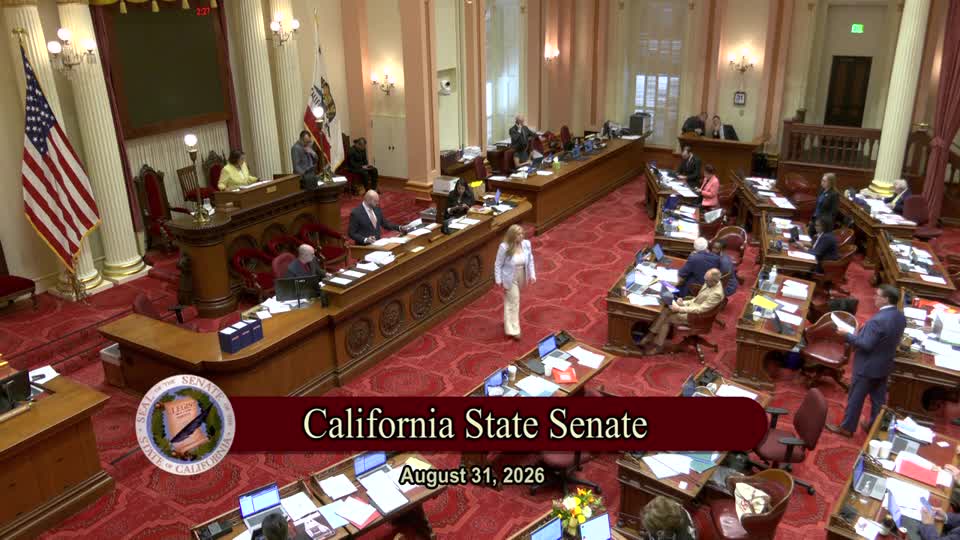 2MIN
Senate Floor
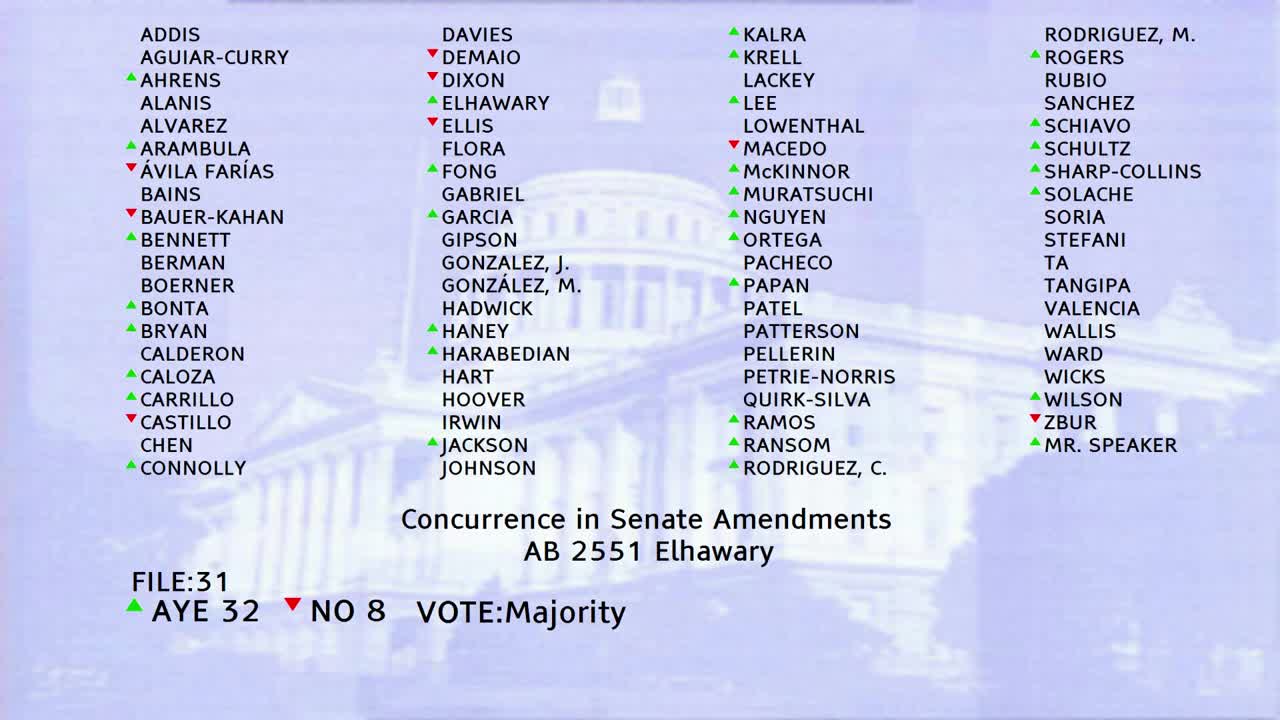 1MIN
Assembly Floor
 8MIN
Assembly Standing Committee on Human Services
Bill Author

Bill Co-Author(s):