SB 1371: Solid waste handling services: labor dispute.
- Session Year: 2025-2026
- House: Senate
- Latest Version Date: 2026-09-27
Current Status:
Passed
(2026-09-27: Chaptered by Secretary of State. Chapter 704, Statutes of 2026.)
Introduced
In Committee
Awaiting First Chamber Vote
Passed First Chamber
In Committee
Awaiting Second Chamber Vote
Passed Second Chamber
Enacted
Existing law contains various provisions relating to franchise agreements between a local jurisdiction and a service provider for the provision of services such as utilities, waste hauling, and cable television.
This bill would prohibit any franchise contracts, licenses, or permits for solid waste handling services, as defined, entered into or substantially amended, as defined, by a local agency on or after January 1, 2027, from including a force majeure provision that excuses or suspends the service providers obligation to perform under the franchise contract, license, or permit in the event of a work stoppage arising out of or in connection with a labor dispute, as defined. The bill would also provide that any force majeure provision in a franchise contract, license, or permit for solid waste handling services is void and unenforceable to the extent that it excuses or suspends performance due to a work stoppage arising out of or in connection with a labor dispute. By imposing new duties on local governments with respect to the franchise contracts, licenses, or permits for solid waste handling services, the bill would impose a state-mandated local program.
This bill would provide that its provisions are severable.
The bill would include findings that changes proposed by this bill address a matter of statewide concern rather than a municipal affair and, therefore, apply to all cities, including charter cities.
The California Constitution requires the state to reimburse local agencies and school districts for certain costs mandated by the state. Statutory provisions establish procedures for making that reimbursement.
This bill would provide that, if the Commission on State Mandates determines that the bill contains costs mandated by the state, reimbursement for those costs shall be made pursuant to the statutory provisions noted above.
Existing law contains various provisions relating to franchise agreements between a local jurisdiction and a service provider for the provision of services such as utilities, waste hauling, and cable television.
This bill would prohibit any franchise contracts, licenses, or permits for solid waste handling services, as defined, entered into or substantially amended, as defined, by a local agency on or after January 1, 2027, from including a force majeure provision that excuses or suspends the service providers obligation to perform under the franchise contract, license, or permit in the event of a work stoppage arising out of or in connection with a labor dispute, as defined. The bill would also provide that any force majeure provision in a franchise contract, license, or permit for solid waste handling services is void and unenforceable, regardless of the date on which the contract, license, or permit was entered into, unenforceable to the extent that it excuses or suspends performance due to a work stoppage arising out of or in connection with a labor dispute. By imposing new duties on local governments with respect to the franchise contracts, licenses, or permits for solid waste handling services, the bill would impose a state-mandated local program.
This bill would provide that its provisions are severable.
The bill would include findings that changes proposed by this bill address a matter of statewide concern rather than a municipal affair and, therefore, apply to all cities, including charter cities.
The California Constitution requires the state to reimburse local agencies and school districts for certain costs mandated by the state. Statutory provisions establish procedures for making that reimbursement.
This bill would provide that, if the Commission on State Mandates determines that the bill contains costs mandated by the state, reimbursement for those costs shall be made pursuant to the statutory provisions noted above.
Existing law contains various provisions relating to franchise agreements between a local jurisdiction and a service provider for the provision of services such as utilities, waste hauling, and cable television.
This bill would prohibit any franchise contracts, licenses, or permits for solid waste handling services, as defined, entered into or substantially amended, as defined, by a local agency on or after January 1, 2027, from including a force majeure provision that excuses or suspends the service providers obligation to perform under the franchise contract, license, or permit in the event of a work stoppage arising out of or in connection with a labor dispute, as defined. The bill would also provide that any force majeure provision in a franchise contract, license, or permit for solid waste handling services is void and unenforceable, regardless of the date on which the contract, license, or permit was entered into, to the extent that it excuses or suspends performance due to a work stoppage arising out of or in connection with a labor dispute is void and unenforceable, regardless of the date on which the contract, license, or permit was entered into. dispute. By imposing new duties on local governments with respect to the franchise contracts, licenses, or permits for solid waste handling services, the bill would impose a state-mandated local program.
This bill would prohibit a local agency and an employer from issuing, requesting, inducing, relying upon, or causing to be issued, a sanitation, health, or safety order, directive, or determination for the purpose or effect of compelling the performance of work during a lawful labor dispute involving solid waste handling services, unless specified conditions are satisfied.This bill would provide that its provisions are severable.
The bill would include findings that changes proposed by this bill address a matter of statewide concern rather than a municipal affair and, therefore, apply to all cities, including charter cities.
The California Constitution requires the state to reimburse local agencies and school districts for certain costs mandated by the state. Statutory provisions establish procedures for making that reimbursement.
This bill would provide that, if the Commission on State Mandates determines that the bill contains costs mandated by the state, reimbursement for those costs shall be made pursuant to the statutory provisions noted above.
Existing law contains various provisions relating to franchise agreements between a local jurisdiction and a service provider for the provision of services such as utilities, waste hauling, and cable television.
This bill would prohibit any franchise contracts, licenses, or permits for solid waste handling services, as defined, entered into or substantially amended, as defined, by a local agency on or after January 1, 2027, from including a force majeure provision that excuses or suspends the service providers obligation to perform under the franchise contract, license, or permit in the event of a work stoppage arising out of or in connection with a labor dispute, as defined. The bill would also provide that any force majeure provision in a franchise contract, license, or permit for solid waste handling services that excuses or suspends performance due to a work stoppage arising out of or in connection with a labor dispute is void and unenforceable, regardless of the date on which the contract, license, or permit was entered into. By imposing new duties on local governments with respect to the franchise contracts, licenses, or permits for solid waste handling services, the bill would impose a state-mandated local program.
This bill would prohibit a local agency and an employer from issuing, requesting, inducing, relying upon, or causing to be issued, a sanitation, health, or safety order, directive, or determination for the purpose or effect of compelling the performance of work during a lawful labor dispute involving solid waste handling services, unless specified conditions are satisfied.
This bill would provide that its provisions are severable.
The bill would include findings that changes proposed by this bill address a matter of statewide concern rather than a municipal affair and, therefore, apply to all cities, including charter cities.
The California Constitution requires the state to reimburse local agencies and school districts for certain costs mandated by the state. Statutory provisions establish procedures for making that reimbursement.
This bill would provide that, if the Commission on State Mandates determines that the bill contains costs mandated by the state, reimbursement for those costs shall be made pursuant to the statutory provisions noted above.
(a)To promote the public health, safety, and general welfare, a franchise contract, license, or permit for solid waste handling services that is entered into or substantially amended by a local agency on or after January 1, 2027, shall not include a force majeure provision that excuses or suspends the service providers obligation to perform under the franchise contract, license, or permit in the event of a work stoppage arising out of or in connection with a labor dispute.
(b)Any force majeure provision in a franchise contract, license, or permit for solid waste handling services is void and unenforceable to the extent that it excuses or suspends performance due to a work stoppage arising out of or in connection with a labor dispute.
(c)For purposes of this section, the following terms have the following meanings:
(1)Solid waste handling services has the same meaning as solid waste handling as defined in Section 40195 of the Public Resources Code.
(2)Substantially amended means a mutually agreed upon change to a majority of the material terms of a franchise contract, license, or permit for solid waste handling services.
(3)Labor dispute has the same meaning as defined in clause (iii) of paragraph (4) of subdivision (b) of Section 527.3 of the Code of Civil Procedure.
SEC. 2.The provisions of this act are severable. If any provision of this act or its application is held invalid, that invalidity shall not affect other provisions or applications that can be given effect without the invalid provision or application.
SEC. 3.The Legislature finds and declares that the uninterrupted provision of solid waste handling services during labor disputes, and the prevention of misuse of emergency sanitation, health, or safety authority to interfere with lawful labor activity, are matters of statewide concern and are not municipal affairs as that term is used in Section 5 of Article XI of the California Constitution. Therefore, Section 1 of this act adding Section 53064.3 to the Government Code applies to all cities, including charter cities.
SEC. 4.If the Commission on State Mandates determines that this act contains costs mandated by the state, reimbursement to local agencies and school districts for those costs shall be made pursuant to Part 7 (commencing with Section 17500) of Division 4 of Title 2 of the Government Code.
(a)To promote the public health, safety, and general welfare, a franchise contract, license, or permit for solid waste handling services that is entered into or substantially amended by a local agency on or after January 1, 2027, shall not include a force majeure provision that excuses or suspends the service providers obligation to perform under the franchise contract, license, or permit in the event of a work stoppage arising out of or in connection with a labor dispute.
(b)Any force majeure provision in a franchise contract, license, or permit for solid waste handling services is void and unenforceable, regardless of the date on which the contract, license, or permit was entered into, unenforceable to the extent that it excuses or suspends performance due to a work stoppage arising out of or in connection with a labor dispute.
(c)For purposes of this section, the following terms have the following meanings:
(1)Solid waste handling services has the same meaning as solid waste handling as defined in Section 40195 of the Public Resources Code.
(2)Substantially amended means a mutually agreed upon change to a majority of the material terms of a franchise contract, license, or permit for solid waste handling services.
(3)Labor dispute has the same meaning as defined in clause (iii) of paragraph (4) of subdivision (b) of Section 527.3 of the Code of Civil Procedure.
SEC. 2.The provisions of this act are severable. If any provision of this act or its application is held invalid, that invalidity shall not affect other provisions or applications that can be given effect without the invalid provision or application.
SEC. 3.The Legislature finds and declares that the uninterrupted provision of solid waste handling services during labor disputes, and the prevention of misuse of emergency sanitation, health, or safety authority to interfere with lawful labor activity, are matters of statewide concern and are not municipal affairs as that term is used in Section 5 of Article XI of the California Constitution. Therefore, Section 1 of this act adding Section 53064.3 to the Government Code applies to all cities, including charter cities.
SEC. 4.If the Commission on State Mandates determines that this act contains costs mandated by the state, reimbursement to local agencies and school districts for those costs shall be made pursuant to Part 7 (commencing with Section 17500) of Division 4 of Title 2 of the Government Code.
(a)To promote the public health, safety, and general welfare, a franchise contract, license, or permit for solid waste handling services that is entered into or substantially amended by a local agency on or after January 1, 2027, shall not include a force majeure provision that excuses or suspends the service providers obligation to perform under the franchise contract, license, or permit in the event of a work stoppage arising out of or in connection with a labor dispute.
(b)Any force majeure provision in a franchise contract, license, or permit for solid waste handling services is void and unenforceable, regardless of the date on which the contract, license, or permit was entered into, to the extent that it excuses or suspends performance due to a work stoppage arising out of or in connection with a labor dispute is void and unenforceable, regardless of the date on which the contract, license, or permit was entered into. dispute.
(c)A local agency shall not issue, and an employer shall not request, induce, rely upon, or cause to be issued, a sanitation, health, or safety order, directive, or determination for the purpose or effect of compelling the performance of work during a lawful labor dispute involving solid waste handling services, except as provided in subdivision (d).(d)A sanitation, health, or safety order, directive, or determination may require the performance of services during a labor dispute only if all of the following conditions are satisfied:(1)The order, directive, or determination is issued pursuant to the independent exercise of the issuing agencys statutory authority and not at the request, direction, or urging of the employer that is a party to the labor dispute.(2)The order, directive, or determination is issued in writing by the agency head or the agencys designated health or safety officer.(3)The order, directive, or determination includes specific written findings establishing the existence of an imminent and substantial threat to public health or safety that cannot be reasonably abated through alternatives that do not require the performance of work by employees engaged in the labor dispute.(4)The scope and duration of the required services are limited to those strictly necessary to abate the identified threat.(5)The employer provides written notice of the order, directive, or determination to the exclusive bargaining representative contemporaneously with receipt of the order, directive, or determination.(e)(c)For purposes of this section, the following terms have the following meanings:
(1)Solid waste handling services has the same meaning as solid waste handling as defined in Section 40195 of the Public Resources Code.
(2)Substantially amended means a mutually agreed upon change to a majority of the material terms of a franchise contract, license, or permit for solid waste handling services.
(3)Labor dispute has the same meaning as defined in clause (iii) of paragraph (4) of subdivision (b) of Section 527.3 of the Code of Civil Procedure.
SEC. 2.The provisions of this act are severable. If any provision of this act or its application is held invalid, that invalidity shall not affect other provisions or applications that can be given effect without the invalid provision or application.
SEC. 3.The Legislature finds and declares that the uninterrupted provision of solid waste handling services during labor disputes, and the prevention of misuse of emergency sanitation, health, or safety authority to interfere with lawful labor activity, are matters of statewide concern and are not municipal affairs as that term is used in Section 5 of Article XI of the California Constitution. Therefore, Section 1 of this act adding Section 53064.3 to the Government Code applies to all cities, including charter cities.
SEC. 4.If the Commission on State Mandates determines that this act contains costs mandated by the state, reimbursement to local agencies and school districts for those costs shall be made pursuant to Part 7 (commencing with Section 17500) of Division 4 of Title 2 of the Government Code.
(a)To promote the public health, safety, and general welfare, a franchise contract, license, or permit for solid waste handling services that is entered into or substantially amended by a local agency on or after January 1, 2027, shall not include a force majeure provision that excuses or suspends the service providers obligation to perform under the franchise contract, license, or permit in the event of a work stoppage arising out of or in connection with a labor dispute.
(b)Any force majeure provision in a franchise contract, license, or permit for solid waste handling services that excuses or suspends performance due to a work stoppage arising out of or in connection with a labor dispute is void and unenforceable, regardless of the date on which the contract, license, or permit was entered into.
(c)A local agency shall not issue, and an employer shall not request, induce, rely upon, or cause to be issued, a sanitation, health, or safety order, directive, or determination for the purpose or effect of compelling the performance of work during a lawful labor dispute involving solid waste handling services, except as provided in subdivision (d).
(d)A sanitation, health, or safety order, directive, or determination may require the performance of services during a labor dispute only if all of the following conditions are satisfied:
(1)The order, directive, or determination is issued pursuant to the independent exercise of the issuing agencys statutory authority and not at the request, direction, or urging of the employer that is a party to the labor dispute.
(2)The order, directive, or determination is issued in writing by the agency head or the agencys designated health or safety officer.
(3)The order, directive, or determination includes specific written findings establishing the existence of an imminent and substantial threat to public health or safety that cannot be reasonably abated through alternatives that do not require the performance of work by employees engaged in the labor dispute.
(4)The scope and duration of the required services are limited to those strictly necessary to abate the identified threat.
(5)The employer provides written notice of the order, directive, or determination to the exclusive bargaining representative contemporaneously with receipt of the order, directive, or determination.
(e)For purposes of this section, the following terms have the following meanings:
(1)Solid waste handling services has the same meaning as solid waste handling as defined in Section 40195 of the Public Resources Code.
(2)Substantially amended means a mutually agreed upon change to a majority of the material terms of a franchise contract, license, or permit for solid waste handling services.
(3)Labor dispute has the same meaning as defined in clause (iii) of paragraph (4) of subdivision (b) of Section 527.3 of the Code of Civil Procedure.
SEC. 2.The provisions of this act are severable. If any provision of this act or its application is held invalid, that invalidity shall not affect other provisions or applications that can be given effect without the invalid provision or application.
SEC. 3.The Legislature finds and declares that the uninterrupted provision of solid waste handling services during labor disputes, and the prevention of misuse of emergency sanitation, health, or safety authority to interfere with lawful labor activity, are matters of statewide concern and are not municipal affairs as that term is used in Section 5 of Article XI of the California Constitution. Therefore, Section 1 of this act adding Section 53064.3 to the Government Code applies to all cities, including charter cities.
SEC. 4.If the Commission on State Mandates determines that this act contains costs mandated by the state, reimbursement to local agencies and school districts for those costs shall be made pursuant to Part 7 (commencing with Section 17500) of Division 4 of Title 2 of the Government Code.
|
Date
|
Status
|
|---|---|
| Sep 27, 2026 | Chaptered by Secretary of State. Chapter 704, Statutes of 2026. |
| Sep 27, 2026 | Approved by the Governor. |
| Aug 31, 2026 | Enrolled and presented to the Governor at 6 p.m. |
| Aug 26, 2026 | Assembly amendments concurred in. (Ayes 28. Noes 10. Page 5913.) Ordered to engrossing and enrolling. |
| Aug 26, 2026 | Assembly amendments concurred in. (Ayes 28. Noes 10.) Ordered to engrossing and enrolling. |
| Aug 19, 2026 | In Senate. Concurrence in Assembly amendments pending. |
| Aug 19, 2026 | Read third time. Passed. (Ayes 58. Noes 17. Page 6262.) Ordered to the Senate. |
| Aug 19, 2026 | Read third time. Passed. Ordered to the Senate. |
| Aug 10, 2026 | Read second time. Ordered to third reading. |
| Aug 6, 2026 | Read second time and amended. Ordered to second reading. |
| Aug 5, 2026 | From committee: Do pass as amended. (Ayes 11. Noes 3.) (August 5). |
| Jun 16, 2026 | From committee: Do pass and re-refer to Com. on APPR. (Ayes 9. Noes 3.) (June 16). Re-referred to Com. on APPR. |
| Jun 8, 2026 | Referred to Com. on JUD. |
| May 20, 2026 | In Assembly. Read first time. Held at Desk. |
| May 19, 2026 | Read third time. Passed. (Ayes 29. Noes 9. Page 4338.) Ordered to the Assembly. |
| May 19, 2026 | Read third time. Passed. (Ayes 29. Noes 9.) Ordered to the Assembly. |
| May 5, 2026 | Read second time. Ordered to third reading. |
| May 4, 2026 | From committee: Be ordered to second reading pursuant to Senate Rule 28.8. |
| Apr 24, 2026 | Set for hearing May 4. |
| Apr 22, 2026 | From committee: Do pass and re-refer to Com. on APPR. (Ayes 5. Noes 2. Page 4015.) (April 22). Re-referred to Com. on APPR. |
| Apr 22, 2026 | From committee: Do pass and re-refer to Com. on APPR. (Ayes 5. Noes 2.) (April 22). Re-referred to Com. on APPR. |
| Apr 13, 2026 | From committee with author's amendments. Read second time and amended. Re-referred to Com. on L. GOV. |
| Apr 9, 2026 | Set for hearing April 22. |
| Mar 4, 2026 | Referred to Com. on L. GOV. |
| Feb 23, 2026 | Read first time. |
| Feb 23, 2026 | From printer. May be acted upon on or after March 23. |
| Feb 20, 2026 | Introduced. To Com. on RLS. for assignment. To print. |
|
Date
|
Description
|
Location
|
Votes
|
|
|---|---|---|---|---|
| Aug 26, 2026 | Unfinished Business SB1371 Durazo Concurrence | Senate Floor |
Passed |
|
| Aug 19, 2026 | SB 1371 Durazo Senate Third Reading By Harabedian | Assembly Floor |
Passed |
|
| Aug 5, 2026 | Do pass as amended. | Assembly Standing Committee on Appropriations |
Passed |
|
| Jun 16, 2026 | Do pass and be re-referred to the Committee on [Appropriations] | Assembly Standing Committee on Judiciary |
Passed |
|
| May 19, 2026 | Senate 3rd Reading SB1371 Durazo | Senate Floor |
Passed |
|
| Apr 22, 2026 | Do pass, but first be re-referred to the Committee on [Appropriations] | Senate Standing Committee on Local Government |
Passed |
This list shows positions taken on this bill by organizations on the date displayed, which is linked to the original source.
Positions by individuals are not included.
|
Organization
|
Position
|
Date
|
|---|---|---|
| ABORN POWERS, INC. | ** Against | |
| Apartment Association of Greater Los Angeles | ** Against | |
| Apartment Association Of Orange County | ** Against | |
| Apartment Owners Association of California | ** Against | |
| Apartment Owners Association of California | ** Support | |
| Brea Chamber of Commerce | ** Against | |
| California Federation of Labor Unions, Afl-cio | ** Support | |
| California Hispanic Chamber Of Commerce | ** Against | |
| California Rental Housing Association | ** Against | |
| Glendora Chamber of Commerce | ** Support | |
| Greater Bakersfield Chamber of Commerce | ** Against | |
| Greater High Desert Chamber of Commerce | ** Against | |
| Greater San Fernando Valley Chamber of Commerce | ** Against | |
| Institute of Real Estate Management - Southern California Inland Empire | ** Against | |
| North San Diego Business Chamber | ** Against | |
| Recology | ** Against | |
| Republic Services | ** Against | |
| Republic Services Inc. | ** Against | |
| Resource Recovery Coalition Of California | ** Against | |
| Santa Ana Chamber of Commerce | ** Against | |
| Teamsters California | ** Support | |
| Waste Connections, Inc. | ** Against | |
| Waste Management | ** Against | |
| Waste Management & Affiliated Entities | ** Against | |
| West Los Angeles Chamber of Commerce | ** Against | |
| Yuba Sutter Chamber of Commerce | ** Against |
SENATE RULES COMMITTEE Office of Senate Floor Analyses (916) 651-4171 | SB 1371 |
UNFINISHED BUSINESS
Bill No: SB 1371
Author: Durazo (D)
Amended: 8/6/26
Vote: 21
SENATE LOCAL GOVERNMENT COMMITTEE: 5-2, 4/22/26
AYES: Durazo, Arreguín, Ashby, Cervantes, Laird
NOES: Choi, Seyarto
SENATE APPROPRIATIONS COMMITTEE: Senate Rule 28.8
SENATE FLOOR: 29-9, 5/19/26
AYES: Allen, Archuleta, Arreguín, Ashby, Becker, Blakespear, Caballero, Cervantes, Cortese, Durazo, Gonzalez, Grayson, Hurtado, Laird, Limón, McGuire, McNerney, Menjivar, Padilla, Pérez, Reyes, Richardson, Rubio, Smallwood-Cuevas, Stern, Umberg, Wahab, Weber Pierson, Wiener
NOES: Alvarado-Gil, Choi, Dahle, Grove, Jones, Ochoa Bogh, Seyarto, Strickland, Valladares
NO VOTE RECORDED: Cabaldon, Niello
ASSEMBLY FLOOR: 58-17, 8/19/26 - See last page for vote
SUBJECT: Solid waste handling services: labor dispute
SOURCE: Teamsters California
DIGEST:
This bill prohibits a city or county from entering into or amending a solid waste hauling agreement if it excuses the service provider from performing its duties in the event of a labor dispute.
Assembly Amendments
makes the bill prospective for labor contracts, licenses or permits.
ANALYSIS:
Existing law:
- Allows a city or county to “make and enforce within its limits, all local, police, sanitary and other ordinances and regulations not in conflict with general laws,” known as the police power. It is from this fundamental power that local governments derive their authority to regulate behaviors, business operations, and land uses. Local agencies also use this police power to abate nuisances and protect public health, safety, and welfare. Cities exercise their police power within their jurisdictions, where not in conflict with state law, and counties exercise this power in unincorporated areas.
- Allows cities that adopt charters to control their own “municipal affairs.” In all other matters, charter cities must follow the general, statewide laws.
- Requires local agencies to provide solid waste handling services, or contract with another local agency or solid waste enterprise. These provisions declare certain decisions regarding solid waste handling to be local agencies’ responsibility.
This bill:
- Provides that, to promote public health, safety, and well-being, a franchise contract, license, or permit for solid waste handling services that a local agency enters into or amends on or after January 1, 2027, must not include a force majeure provision that excuses or suspends the service provider’s from performing their duties in the event of a labor dispute.
- Provides that any force majeure provision in a franchise contract, license, or permit for solid waste handling services is void and unenforceable, to the extent that it excuses or suspends performance due to a work stoppage arising out of or in connection with a labor dispute.
- Includes a severability clause and defines its terms.
Background
Waste handling franchise agreements. State law requires cities and counties to provide solid waste handling services, or contract with another local agency or solid waste enterprise. These provisions declare certain decisions regarding solid waste handling to be cities and counties responsibility, including:
- Frequency of collection;
- Means of collection;
- Level of service;
- Charges and fees;
- Nature, location, and extent of providing the services; and
- Whether to provide services through franchise agreements (either nonexclusive or exclusive), contracts, licenses, permits, other approvals, or a combination.
Most jurisdictions in the state operate with some form of “franchise,” or contract, that limits solid waste hauling within the jurisdiction to one or more specified companies. Under these agreements, the city or county charges the franchisee for the benefit of operating within the public right-of-way. The franchisee then charges customers for providing waste hauling services. Jurisdictions can enter into franchises with waste haulers, with or without competitive bidding. Exclusive franchises authorize a single hauler to operate within a jurisdiction. Non-exclusive franchises allow for more than one hauler, but establish specific requirements for hauling within the jurisdiction. Some communities in California do not have franchise agreements. In those jurisdictions, solid waste businesses compete for service contracts with individual waste generators. For example, the City of Sacramento does not provide commercial collection services. Businesses and commercials properties may contact various franchise haulers to select the hauler whose services and cost best meets their need.
Force majeure. Some franchise agreements include “force majeure” provisions, which free the parties to the agreement from performing their respective duties if extraordinary events directly prevent the parties from doing so. Such an extraordinary event is often referred to as an “act of God,” but can include both natural and human-made events, including fires, floods, storms, and labor disputes.
City of Chula Vista. In 2014, the City of Chula Vista renewed a ten-year franchise agreement with Republic Services, a waste hauler provider, that included a force majeure provision that shielded both parties from fulfilling their obligations under certain extraordinary events, including strikes or work stoppages. In December 2021, during stalled labor negotiations, Republic Services relied on this provision to halt some waste collection services. The strike lasted a month, during which the company was shielded from liability due to their franchise agreement that included a force majeure that covered a work stoppage. Because Republic Services could not be held liable due to this provision, they did not collect waste during the stoppage. However, Republic Services allowed customers to drop off waste at their landfill free of charge. The City used its own staff and contracted with nonprofits to make up for lost or reduced services.
Comments
According to the author, “Solid waste handling services are essential to public health and environmental protection. California law allows local governments to grant exclusive or nonexclusive franchises to private haulers for waste collection and disposal. Many of these franchise agreements include force majeure clauses. Traditionally, force majeure provisions excuse performance when extraordinary events beyond the control of the parties—such as natural disasters—make compliance impossible. However, some contracts now treat labor disputes as force majeure events, allowing companies to suspend services during strikes or other lawful labor activity.
SB 1371 clarifies that lawful labor disputes are not “acts of God” and should not automatically relieve companies of their contractual obligations to provide essential services. SB 1371 ensures that solid waste companies cannot use force majeure clauses to suspend service during a labor dispute and cannot misuse emergency health or sanitation orders to undermine lawful worker strikes.”
Forces of nature. Force majeure provisions generally are used to not subject a party to the contract if something outside of their control happens. For example, during a sale proceeding of a property, if an act of force majeure prevents access to the location, the sale is postponed at no fault of the owner. When the franchise agreement is up for renewal and the parties don’t agree on terms, the waste hauler company could invoke a force majeure if their franchise agreement is included, resulting in service being halted for waste pick-up. SB 1371 eliminates the ability for waste haulers providers to invoke force majeure due to labor disputes. While this bill preserves the use of force majeure for traditional, unforeseeable events beyond a franchisee’s control, it narrows its application by excluding labor-related disruptions. The question remains if SB 1371 appropriately distinguishes between avoidable and unavoidable service interruptions, as labor disputes may still be outside the immediate control of a franchisee and could render performance impracticable though not unforeseeable.
Previous legislation. To address the waste hauling disruptions, the Legislature passed SB 751 (Padilla) of 2023 which limited the use of force majeure provisions during labor disputes and shielding the company from liability following the prolonged service interruptions in Chula Vista. Governor Newsom vetoed the legislation with the following message:
“This bill prohibits franchise agreements for solid waste handling services entered into or substantially amended by a city or county on or after January 1, 2024, from containing a "force majeure" provision that excuses the service provider from complying with the agreement in the event of a work stoppage associated with a labor dispute.”
“While I appreciate the author's intent to prevent disruptions in local waste hauling services, I do not believe a change to state law is necessary. Local jurisdictions voluntarily enter into franchise agreements and currently have the ability to negotiate amendments to such contracts without legislation.”
Charter city. The California Constitution allows cities that adopt charters to control their own “municipal affairs.” In all other matters, charter cities must follow the general, statewide laws. Because the Constitution does not define “municipal affairs,” the courts determine whether a topic is a municipal affair or an issue of statewide concern. SB 1371 says its statutory provisions apply to charter cities. To support this assertion, this bill includes a legislative finding that the prevention of misuse of emergency sanitation, health, or safety authority to interfere with lawful labor activity is a matter of statewide concern.
Mandate. The California Constitution requires the state to reimburse local governments for the costs of new or expanded state mandated local programs. Because SB 1371 expands the definition of a crime, Legislative Counsel says that this bill imposes a new state mandate. SB 1371 disclaims the state’s responsibility for providing reimbursement because the costs are due to expanding a crime.
FISCAL EFFECT: Appropriation: No Fiscal Com.: Yes Local: Yes
According to the Assembly Appropriations Committee:
- Potentially reimbursable state-mandated local program costs (General Fund), to the extent the Commission on State Mandates determines the bill imposes a reimbursable mandate. The bill includes the standard subvention clause, so if the commission finds that the prohibition on labor-dispute force majeure provisions imposes a new program or higher level of service on local agencies, the state would be required to reimburse those costs. Whether the bill creates a reimbursable mandate, and in what amount, is unknown.
- Potential cost pressure on the courts to adjudicate claims (Trial Court Trust Fund, General Fund). To the extent the void-and-unenforceable provision generates contract disputes between local agencies and haulers, the courts could experience minor cost pressures. Actual costs will depend on the number of cases filed and the amount of court time needed to resolve each case. It generally costs approximately $1,000 to operate a courtroom for one hour. Although courts are not funded on the basis of workload, increased pressure on the Trial Court Trust Fund may create a demand for increased funding for courts from the General Fund. The state budget provides annual General Fund backfills to the Trial Court Trust Fund to offset revenue reductions, totaling approximately $117.3 million in 2025-26.
SUPPORT: (Verified 8/19/26)
Teamsters California (Source)
Apartment Owners Association of California,
California Federation of Labor Unions, Afl-cio
Glendora Chamber of Commerce
OPPOSITION: (Verified 8/19/26)
Aborn Powers, INC.
Apartment Association of Greater Los Angeles
Apartment Association of Orange County
Apartment Owners Association of California
Brea Chamber of Commerce
California Hispanic Chamber of Commerce
California Rental Housing Association
Greater Bakersfield Chamber of Commerce
Greater High Desert Chamber of Commerce
Greater San Fernando Valley Chamber of Commerce
Institute of Real Estate Management - Southern California Inland Empire
North San Diego Business Chamber
Recology
Republic Services
Republic Services INC.
Resource Recovery Coalition of California
Santa Ana Chamber of Commerce
Waste Connections, INC.
Waste Management
Waste Management & Affiliated Entities
West Los Angeles Chamber of Commerce
Yuba Sutter Chamber of Commerce
ASSEMBLY FLOOR: 58-17 8/19/26
AYES: Addis, Aguiar-Curry, Ahrens, Alvarez, Arambula, Ávila Farías, Bains, Bauer-Kahan, Bennett, Berman, Boerner, Bonta, Bryan, Calderon, Caloza, Carrillo, Connolly, Elhawary, Fong, Gabriel, Garcia, Gipson, Mark González, Haney, Harabedian, Hart, Irwin, Jackson, Kalra, Krell, Lee, Lowenthal, McKinnor, Muratsuchi, Nguyen, Ortega, Pacheco, Papan, Patel, Pellerin, Petrie-Norris, Quirk-Silva, Ramos, Ransom, Celeste Rodriguez, Michelle Rodriguez, Rogers, Schiavo, Schultz, Sharp-Collins, Solache, Soria, Stefani, Ward, Wicks, Wilson, Zbur, Rivas
NOES: Alanis, Castillo, Chen, Davies, DeMaio, Dixon, Ellis, Flora, Jeff Gonzalez, Hadwick, Hoover, Johnson, Macedo, Patterson, Sanchez, Tangipa, Wallis
NO VOTE RECORDED: Lackey, Blanca Rubio, Ta, Valencia
Prepared by: Itzel Vargas / L. GOV. / (916) 651-4119
8/19/26 14:40:30
**** END ****
SENATE THIRD READING
STR Bill Id:SB 1371
Author:(Durazo)
As Amended Ver:August 6, 2026
Majority vote
SUMMARY
Prohibits and deems any force majeure provisions in a franchise contract, license, or permit for solid waste handling services void and unenforceable to the extent that it excuses or suspends performance due to a work stoppage arising out of or in connection with a labor dispute.
Major Provisions
- Prohibits, in order to promote the public health, safety, and general welfare, a franchise contract, license, or permit for solid waste handling services that is entered into or substantially amended by a local agency on or after January 1, 2027, from including a force majeure provision that excuses or suspends the service provider′s obligation to perform under the franchise contract, license, or permit in the event of a work stoppage arising out of or in connection with a labor dispute.
- Defines the following terms:
- ″Substantially amended″ means a mutually agreed upon change to a majority of the material terms of a franchise contract, license, or permit for solid waste handling services;
- ″Solid waste handling services″ has the same meaning as provided in the Public Resources Code related to resource recovery and waste management; and
- ″Labor dispute″ has the same meaning as defined in the Code of Civil Procedure provisions related to collective bargaining.
- Adopts a severability clause.
- Adopts various findings and declarations.
COMMENTS
In recent years several cities across California have seen their solid waste collections temporarily cease as a result of labor disputes between the local agency′s contracted solid waste collection and handling services provider and the unions representing the provider′s employees. In several of these instances, the solid waste handling services used the cessation of services, and corresponding accumulation of trash, to mount public relations campaigns to pressure the union into relenting and agreeing to a less favorable labor agreement. Underlying the cessation of services are force majeure provisions embedded within the contacts between the waste services provider and a local government deeming a labor dispute a force majeure thus permitting the cessation of waste hauling services.
Seeking to ensure that the trash is collected, this bill would ban future force majeure provisions in waste contracts.
For most Californians, solid waste collection is little more than an afterthought – they place trash bins on the curb once a week and the trash is picked up by their local government or a waste services provider hired by the local government to do the work. However, when trash collection ceases, the implications for public health can accumulate quickly. Unless collected and properly disposed of in an appropriate manner, deteriorating food and other waste can attract vermin and the stench can quickly overpower the environment. Unsurprisingly, residents can quickly turn on local officials when basic services cease to operate.
While many of California′s large jurisdictions manage solid waste services within city government, most smaller cities contract the services to one of several large national waste collection providers. In recent years it has come to light that some of these contracts contain force majeure provisions that permit the private company to cease waste collection services should the company and its labor force reach an impasse on a contract. Indeed, in 2022, the City of Chula Vista saw trash go uncollected and public health conditions deteriorate significantly when 250 employees of its contracted waste services provider, Republic Services, went on strike. (Tammy Mugra, Proposed legislation inspired by Chula Vista trash strike would make companies, not cities, liable during walkouts, San Diego Union Tribune (Mar. 26, 2023) available at: https://www.sandiegouniontribune.com/2023/03/26/proposed-legislation-inspired-by-chula-vista-trash-strike-would-make-companies-not-cities-liable-during-walkouts/.) Similarly, last summer the City of Stockton saw waste collection services interrupted for nearly two weeks when another set of Republic Services employees went on strike seeking fair pay and benefits. (Chris Woodward, Feasting rats, legal threats: Stockton′s not alone in Republic Services trash strike, Stocktonia (July 16, 2025) available at: https://stocktonia.org/news/business/2025/07/16/stocktons-not-alone-in-republic-services-trash-strike/.) In Stockton, some media reports indicated the company seemed to try and blame the City and the workers for the fiasco. (Ibid.)
In both Chula Vista and Stockton, angry members of the public prompted local officials to act. The Stockton worker′s dispute with Republic Services appears to have been resolved only after the City′s mayor sought to publicly shame the company and demand compensation for residents. (Anahita Jaffery, Stockton residents face trash pile-up amid garbage collection strike, KCRA News (July 15, 2025) https://www.kcra.com/article/stockton-trash-pile-up-garbage-collection-strike/65418743.) Regardless of the reasonableness of any of the parties in either of the above discussed disputes, the experience in both Chula Vista and Stockton demonstrate the significant adverse impacts to public health posed by uncollected refuse.
Seeking to ensure that labor disputes do not impact trash collection, this bill bans the inclusion of force majeure clauses in contracts between local governments and waste service companies that list a ″labor dispute″ as a condition for the cessation of trash collection. The bill applies to all new agreements. The bill cross references several definitions for ″labor dispute″ and ″solid waste handling services″ found elsewhere in state law to ensure consistency. The bill adopts a severability clause and makes the necessary findings such that the bill applies to all local governments across the state, including charter cities.
Prior attempts to address the issue faced opposition from the governor. In response to the Chula Vista strike, the Legislature passed SB 751 (Padilla, 2023). However, that bill was ultimately vetoed by Governor Newsom who argued:
While I appreciate the author′s intent to prevent disruptions in local waste hauling services, I do not believe a change to state law is necessary. Local jurisdictions voluntarily enter into franchise agreements and currently have the ability to negotiate amendments to such contracts without legislation.
For this reason, I cannot sign this bill.
It should be noted that this bill is slightly more narrow than SB 751, and the aforementioned Stockton strike occurred following the veto of SB 751. Both factors may demonstrate to the Governor that statewide action is now necessary and that this bill is a more appropriately scoped measure. However, it remains unclear if the Governor′s view of this being a wholly local issue remains unchanged.
According to the Author
SB 1371 closes the gap in existing law by prohibiting solid waste franchise contracts, permits, and licenses from including force majeure provisions that excuse or suspend a waste hauler′s obligations during a work stoppage arising out of a labor dispute. The bill applies this prohibition prospectively to contracts entered into or amended on or after January 1, 2027. It also provides that any such provision in an existing contract is void and unenforceable to the extent it excuses or suspends performance due to a labor dispute, regardless of when the contract was executed. This ensures that companies entrusted with providing essential public health services remain accountable for meeting their contractual obligations during labor disputes. The bill narrowly targets force majeure provisions invoked in the context of labor disputes only, preserving force majeure protections for traditional, unforeseeable events beyond a party′s control, such as natural disasters. By rendering labor-dispute force majeure provisions void as a matter of state law, SB 1371 removes the ability of waste haulers to shift the operational and public health consequences of a labor dispute onto local governments and the communities they serve.
Arguments in Support
This bill is sponsored by Teamsters California and is supported by the California Federation of Labor Unions and a local chamber of commerce. In support of the bill the Teamsters write:
Solid waste collection is an essential public health service relied upon by communities every day. Yet some solid waste companies insert force majeure provisions into franchise contracts that allow them to suspend service obligations during a work stoppage connected to a labor dispute. These provisions undermine workers′ collective bargaining rights while also placing local governments and the public in an untenable position when service disruptions occur.
The consequences of this problem were illustrated during the 2023 Republic Services labor dispute affecting Chula Vista and other San Diego communities. During that dispute, sanitation workers honored picket lines as part of a broader labor action, and trash collection in Chula Vista was significantly delayed while negotiations continued. As a result, trash accumulated in neighborhoods across the city and local officials were forced to convene emergency meetings to address the growing sanitation concerns and community frustration. Because most cities operate under exclusive franchise agreements with a single waste hauler, local governments have limited options when service stops. If a contract allows a company to invoke force majeure during a labor dispute, the contractor may be relieved of its service obligations at precisely the moment when reliable waste collection is most critical to public health.
When franchise agreements contain these provisions, local governments are left with little practical leverage to ensure service continues. Cities cannot easily bring in a replacement hauler under an exclusive franchise structure, yet they remain responsible for addressing the public health consequences of accumulating waste. In effect, force majeure provisions shift the operational and political consequences of a labor dispute away from the company responsible for providing the service and onto local governments and the communities they serve.
This measure focuses solely on clarifying that force majeure provisions cannot be used to excuse performance during a labor dispute. The bill does not require cities or waste haulers to reopen or renegotiate existing franchise agreements and instead simply provides that contractual provisions inconsistent with this rule are void and unenforceable. SB 1371 addresses the underlying policy concern while minimizing disruption to existing municipal franchise agreements.
Arguments in Opposition
This bill is opposed, unless amended, by a coalition of waste service providers including Waste Management, Republic Services, and Recology. A coalition letter submitted by the industry state:
These undersigned organizations oppose SB 1371 unless it is amended with clear language that allows for the establishment of mechanisms that provide a roadmap to address a work stoppage associated with a labor dispute.
Flexibility in contract terms is an important state principle as it allows for the creation of mechanisms to manage risks that are beyond the reasonable control of the parties. Flexibility does not in and of itself provide a ″pass″ or ″get out of jail free″ card to the obligor. The obligor must still make contractually obligated efforts to perform.
SB 1371 as currently drafted would create an unlevel playing field, resulting in significant cost burdens for local municipalities as the current balance in negotiation leverages would undoubtedly change, leading to increases in garbage bills for California residents.
Additionally, several regional and ethnic chambers of commerce oppose the measure. A coalition of these groups write:
Small businesses depend on reliable trash service to keep their properties clean, safe, and open for customers, workers, and the public. When waste collection is disrupted, the impacts are immediate. Overflowing dumpsters and trash enclosures can lead to odors, pests, sanitation concerns, blocked access, illegal dumping, customer complaints, employee frustration, and added cleanup costs. For restaurants, retailers, grocers, office buildings, and other high-volume businesses, even a short interruption in service can create real operational and financial harm.
SB 1371 would make trash service disruptions during labor disputes harder to prevent and harder to manage. The bill would invalidate certain existing contract protections related to labor-dispute-related work stoppages, prohibit those provisions in future or substantially amended solid waste contracts, and limit when local governments may issue sanitation, health, or safety orders requiring service during a lawful labor dispute.
FISCAL COMMENTS
According to the Assembly Appropriations Committee:
- Potentially reimbursable state-mandated local program costs (General Fund), to the extent the Commission on State Mandates determines the bill imposes a reimbursable mandate. The bill includes the standard subvention clause, so if the commission finds that the prohibition on labor-dispute force majeure provisions imposes a new program or higher level of service on local agencies, the state would be required to reimburse those costs. Whether the bill creates a reimbursable mandate, and in what amount, is unknown.
- Potential cost pressure on the courts to adjudicate claims (Trial Court Trust Fund, General Fund). To the extent the void-and-unenforceable provision generates contract disputes between local agencies and haulers, the courts could experience minor cost pressures. Actual costs will depend on the number of cases filed and the amount of court time needed to resolve each case. It generally costs approximately $1,000 to operate a courtroom for one hour. Although courts are not funded on the basis of workload, increased pressure on the Trial Court Trust Fund may create a demand for increased funding for courts from the General Fund. The state budget provides annual General Fund backfills to the Trial Court Trust Fund to offset revenue reductions, totaling approximately $117.3 million in 2025-26.
VOTES
SENATE FLOOR: 29-9-2
YES: Allen, Archuleta, Arreguín, Ashby, Becker, Blakespear, Caballero, Cervantes, Cortese, Durazo, Gonzalez, Grayson, Hurtado, Laird, Limón, McGuire, McNerney, Menjivar, Padilla, Pérez, Reyes, Richardson, Rubio, Smallwood-Cuevas, Stern, Umberg, Wahab, Weber Pierson, Wiener
NO: Alvarado-Gil, Choi, Dahle, Grove, Jones, Ochoa Bogh, Seyarto, Strickland, Valladares
ABS, ABST OR NV: Cabaldon, Niello
ASM JUDICIARY: 9-3-0
YES: Kalra, Bauer-Kahan, Bryan, Connolly, Harabedian, Pacheco, Papan, Stefani, Zbur
NO: Macedo, Dixon, Sanchez
ASM APPROPRIATIONS: 11-3-1
YES: Wicks, Arambula, Calderon, Caloza, Fong, Mark González, Krell, Pacheco, Pellerin, Sharp-Collins, Solache
NO: Hoover, Dixon, Tangipa
ABS, ABST OR NV: Ta
UPDATED
VERSION: August 6, 2026
CONSULTANT: Nicholas Liedtke / JUD. / (916) 319-2334 FN: 0003363
Date of Hearing: August 5, 2026
ASSEMBLY COMMITTEE ON APPROPRIATIONS
Buffy Wicks, Chair
SBPCA Bill Id:SB 1371
Author:(Durazo) – As Amended Ver:April 13, 2026
Policy Committee: | Judiciary | Vote: | 9 - 3 |
|
| ||
|
|
Urgency: No State Mandated Local Program: Yes Reimbursable: Yes
SUMMARY:
This bill prohibits a franchise contract, license, or permit for solid waste handling services entered into or substantially amended by a local agency from including a force majeure provision that excuses or suspends a service provider’s obligation to perform during a work stoppage arising out of a labor dispute, and renders any such provision void and unenforceable regardless of when the contract was entered into.
FISCAL EFFECT:
- Potentially reimbursable state-mandated local program costs (General Fund), to the extent the Commission on State Mandates determines the bill imposes a reimbursable mandate. The bill includes the standard subvention clause, so if the commission finds that the prohibition on labor-dispute force majeure provisions imposes a new program or higher level of service on local agencies, the state would be required to reimburse those costs. Whether the bill creates a reimbursable mandate, and in what amount, is unknown.
- Potential cost pressure on the courts to adjudicate claims (Trial Court Trust Fund, General Fund). To the extent the void-and-unenforceable provision generates contract disputes between local agencies and haulers, the courts could experience minor cost pressures. Actual costs will depend on the number of cases filed and the amount of court time needed to resolve each case. It generally costs approximately $1,000 to operate a courtroom for one hour. Although courts are not funded on the basis of workload, increased pressure on the Trial Court Trust Fund may create a demand for increased funding for courts from the General Fund. The state budget provides annual General Fund backfills to the Trial Court Trust Fund to offset revenue reductions, totaling approximately $117.3 million in 2025-26.
COMMENTS:
- Purpose. According to the author, SB 1371 closes a gap in existing law by prohibiting solid waste franchise contracts from including force majeure provisions that excuse a hauler’s obligations during a work stoppage arising out of a labor dispute, applying prospectively to contracts entered into or amended on or after January 1, 2027, and rendering existing provisions of that kind void and unenforceable. The author states that the bill narrowly targets labor-dispute force majeure provisions while preserving force majeure protections for traditional unforeseeable events, and removes the ability of haulers to shift the operational and public health consequences of a labor dispute onto local governments and communities.
- Background. Local agencies are required to make adequate provisions for solid waste handling within their jurisdictions, and many smaller cities contract that work to large national waste collection providers under exclusive franchise agreements. Some of these contracts include force majeure provisions that treat a labor dispute as an event excusing the provider’s obligation to collect waste. The committee analysis recounts that in 2022 trash went uncollected in Chula Vista when employees of the contracted provider went on strike, and that in 2025 collection in Stockton was significantly curtailed during a similar dispute. Because a city operating under an exclusive franchise cannot easily substitute another hauler, the analysis notes, the local agency bears the public health consequences of accumulating waste while having limited leverage to compel service. This bill bars labor-dispute force majeure provisions in future or substantially amended contracts and voids existing provisions to that extent.
Retroactivity and Contract Clause. The committee analysis discusses whether the bill’s retroactivity provision implicates the Contract Clause of the federal constitution, which bars state laws substantially impairing contractual obligations. Applying the governing substantial-impairment test, the analysis concludes the bill is unlikely to effect a substantial impairment, in part because some local officials were reportedly unaware the force majeure provisions existed, suggesting the terms were not central to the bargain, and that, even if a court found substantial impairment, the bill is likely drawn in an appropriate and reasonable way to advance a significant and legitimate public purpose. The Assembly Judiciary analysis notes the author may nonetheless wish to consider making the measure prospective, which the author has agreed to do in this committee, as described below.
- Prior Legislation. The committee analysis notes that the Legislature passed SB 751 (Padilla) of the 2023-24 Legislative Session, in response to the Chula Vista strike, and that Governor Newsom vetoed the measure, stating that a change to state law was unnecessary because local jurisdictions voluntarily enter into franchise agreements and can negotiate amendments without legislation. The analysis observes that this bill is narrower than SB 751 and that the subsequent Stockton strike occurred after the veto.
- Support and Opposition. The bill is sponsored by Teamsters California and supported by the California Federation of Labor Unions and a local chamber of commerce, who argue that solid waste collection is an essential public health service, that labor-dispute force majeure provisions undermine workers’ collective bargaining rights while shifting consequences onto local governments, and that the bill voids inconsistent provisions without requiring cities or haulers to renegotiate agreements. A coalition of waste service providers, including Waste Management, Republic Services, and Recology, opposes the bill unless amended to allow contract mechanisms establishing a roadmap to address work stoppages, arguing that the bill alters negotiating leverage and could raise costs to municipalities and ratepayers. Several regional and ethnic chambers of commerce also oppose the bill, citing the operational and financial harm to small businesses from service disruptions.
- Proposed Amendments. The committee and the author have agreed to amend the bill to strike the retroactivity provision:
Section 53064.3(b) Any force majeure provision in a franchise contract, license, or permit for solid waste handling services is void and unenforceable, regardless of the date on which the contract, license, or permit was entered into, to the extent that it excuses or suspends performance due to a work stoppage arising out of or in connection with a labor dispute.
Analysis Prepared by: Shiran Zohar / APPR. / (916) 319-2081
Date of Hearing: June 16, 2026
ASSEMBLY COMMITTEE ON JUDICIARY
Ash Kalra, Chair
SBPCA Bill Id:SB 1371
Author:(Durazo) – As Amended Ver:April 13, 2026
SENATE VOTE: 29-9
SUBJECT: Solid waste handling services: labor dispute
SYNOPSIS
In 2022, portions of San Diego County, including the entirety of Chula Vista, were without waste collection services during the pendency of a labor dispute between the region’s contracted waste hauler, Republic Services, and the company’s unions. This was not an isolated incident. In July 2025, waste collection services were significantly impacted in the City of Stockton where residents and small businesses saw dramatic reductions in waste collection when Republic Services and its union operating in the Stockton area were in the midst of a labor dispute. Both incidents were the result of force majeure provisions in the contracts between Republic Services and the impacted municipalities that essentially waived any responsibility for the company to provide waste collection services during a labor dispute. Beyond the sanitation and public health impacts, some of the proponents contend that these provisions unfairly increase public pressure on everyday working Californians seeking to avail themselves of their rights to negotiate fair pay and benefits.
To ensure that the trash is actually picked up, this bill would ban new force majeure provisions related to labor disputes in all future franchise agreements entered into between local governments and waste handling service providers. The bill would also render any existing force majeure provisions of this nature void and unenforceable.
This bill is sponsored by Teamsters California and is supported by the California Federation of Labor Unions and a local chamber of commerce. The proponents note that the impacts of delayed or discontinued waste collection services can quickly escalate from a minor inconvenience to a public health crisis. The proponents argue that by requiring waste collection service providers to maintain service during a labor dispute, the risk to the public will not unreasonably impact labor negotiations. This bill is opposed, unless amended, by several of the nation’s largest waste collection service providers who would prefer the adoption of a statutory outline of how local governments are to respond during a discontinuation of waste collection services. The bill is also opposed by several regional business organizations who fear the impact to small businesses from labor disputes between waste haulers and their employees.
SUMMARY: Prohibits and deems any force majeure provisions in a franchise contract, license, or permit for solid waste handling services void and unenforceable to the extent that it excuses or suspends performance due to a work stoppage arising out of or in connection with a labor dispute. Specifically, this bill:
- Prohibits, in order to promote the public health, safety, and general welfare, a franchise contract, license, or permit for solid waste handling services that is entered into or substantially amended by a local agency on or after January 1, 2027, from including a force majeure provision that excuses or suspends the service provider’s obligation to perform under the franchise contract, license, or permit in the event of a work stoppage arising out of or in connection with a labor dispute.
- Provides that any force majeure provision in a franchise contract, license, or permit for solid waste handling services is void and unenforceable, regardless of the date on which the contract, license, or permit was entered into, to the extent that it excuses or suspends performance due to a work stoppage arising out of or in connection with a labor dispute.
- Defines the following terms:
- “Substantially amended” means a mutually agreed upon change to a majority of the material terms of a franchise contract, license, or permit for solid waste handling services;
- “Solid waste handling services” has the same meaning as provided in the Public Resources Code related to resource recovery and waste management; and
- “Labor dispute” has the same meaning as defined in the Code of Civil Procedure provisions related to collective bargaining.
- Adopts a severability clause.
- Adopts various findings and declarations.
EXISTING LAW:
- Authorizes cities and counties to make and enforce within its limits all local, police, sanitary, and other ordinances and regulations not in conflict with general laws. (Cal. Const. article XI, Section 7.)
- Requires local agencies to make adequate provision for solid waste handling within their jurisdictions and in response to regional needs, consistent with state policies, standards, and requirements. (Public Resources Code Section 40002.)
- Authorizes a local agency to make the following determinations related to solid waste handling:
- Aspects of solid waste handling which are of local concern, including frequency of collection, means of collection and transportation, level of services, charges and fees, and nature, location, and extent of providing services; and
- Whether services are provided by nonexclusive, partially exclusive, or wholly exclusive franchise, contract, license, permit, or otherwise, either with or without competitive bidding. (Public Resources Code Section 40059.)
- Authorizes the legislative body of any public or municipal corporation or district to contract with and employ any persons for the furnishing to the corporation or district special services and advice in financial, economic, accounting, engineering, legal, or administrative matters if such persons are specially trained and experienced and competent to perform the special services required. (Government Code Section 53060.)
- Defines “labor dispute” as any controversy concerning terms or conditions of employment, or concerning the association or representation of persons in negotiating, fixing, maintaining, changing, or seeking to arrange terms or conditions of employment regardless of whether or not the disputants stand in the proximate relation of employer and employee. (Code of Civil Procedure Section 527.3.)
- Defines “solid waste handling services” as the collection, transportation, storage, transfer, or processing of solid waste. (Public Resources Code Section 40195.)
- Defines, in the context of mortgages, “force majeure” to mean an event that was unforeseeable at the time the sale was scheduled that is outside of the trustee’s control and renders completion of the sale impossible or impractical. (Civil Code Section 2924g (f).)
FISCAL EFFECT: As currently in print this bill is keyed fiscal.
COMMENTS: In recent years several cities across California have seen their solid waste collections temporarily cease as a result of labor disputes between the local agency’s contracted solid waste collection and handling services provider and the unions representing the provider’s employees. In several of these instances, the solid waste handling services used the cessation of services, and corresponding accumulation of trash, to mount public relations campaigns to pressure the union into relenting and agreeing to a less favorable labor agreement. Underlying the cessation of services are force majeure provisions embedded within the contacts between the waste services provider and a local government deeming a labor dispute a force majeure thus permitting the cessation of waste hauling services.
Seeking to ensure that the trash is collected, this bill would ban future force majeure provisions in waste contracts and deem any existing provisions void and unenforceable. In support of this bill, the author states:
SB 1371 closes the gap in existing law by prohibiting solid waste franchise contracts, permits, and licenses from including force majeure provisions that excuse or suspend a waste hauler’s obligations during a work stoppage arising out of a labor dispute. The bill applies this prohibition prospectively to contracts entered into or amended on or after January 1, 2027. It also provides that any such provision in an existing contract is void and unenforceable to the extent it excuses or suspends performance due to a labor dispute, regardless of when the contract was executed. This ensures that companies entrusted with providing essential public health services remain accountable for meeting their contractual obligations during labor disputes. The bill narrowly targets force majeure provisions invoked in the context of labor disputes only, preserving force majeure protections for traditional, unforeseeable events beyond a party’s control, such as natural disasters. By rendering labor-dispute force majeure provisions void as a matter of state law, SB 1371 removes the ability of waste haulers to shift the operational and public health consequences of a labor dispute onto local governments and the communities they serve.
Using force majeure provisions several waste services providers have sought to leverage the public relations nightmare that results from a cessation of trash collection services to leverage gains in employment negotiations. For most Californians, solid waste collection is little more than an afterthought – they place trash bins on the curb once a week and the trash is picked up by their local government or a waste services provider hired by the local government to do the work. However, when trash collection ceases, the implications for public health can accumulate quickly. Unless collected and properly disposed of in an appropriate manner, deteriorating food and other waste can attract vermin and the stench can quickly overpower the environment. Unsurprisingly, residents can quickly turn on local officials when basic services cease to operate.
While many of California’s large jurisdictions manage solid waste services within city government, most smaller cities contract the services to one of several large national waste collection providers. In recent years it has come to light that some of these contracts contain force majeure provisions that permit the private company to cease waste collection services should the company and its labor force reach an impasse on a contract. Indeed, in 2022, the City of Chula Vista saw trash go uncollected and public health conditions deteriorate significantly when 250 employees of its contracted waste services provider, Republic Services, went on strike. (Tammy Mugra, Proposed legislation inspired by Chula Vista trash strike would make companies, not cities, liable during walkouts, San Diego Union Tribune (Mar. 26, 2023) available at: https://www.sandiegouniontribune.com/2023/03/26/proposed-legislation-inspired-by-chula-vista-trash-strike-would-make-companies-not-cities-liable-during-walkouts/.) Similarly, last summer the City of Stockton saw waste collection services interrupted for nearly two weeks when another set of Republic Services employees went on strike seeking fair pay and benefits. (Chris Woodward, Feasting rats, legal threats: Stockton’s not alone in Republic Services trash strike, Stocktonia (July 16, 2025) available at: https://stocktonia.org/news/business/2025/07/16/stocktons-not-alone-in-republic-services-trash-strike/.) In Stockton, some media reports indicated the company seemed to try and blame the City and the workers for the fiasco. (Ibid.)
In both Chula Vista and Stockton, angry members of the public prompted local officials to act. The Stockton worker’s dispute with Republic Services appears to have been resolved only after the City’s mayor sought to publicly shame the company and demand compensation for residents. (Anahita Jaffery, Stockton residents face trash pile-up amid garbage collection strike, KCRA News (July 15, 2025) https://www.kcra.com/article/stockton-trash-pile-up-garbage-collection-strike/65418743.) Regardless of the reasonableness of any of the parties in either of the above discussed disputes, the experience in both Chula Vista and Stockton demonstrate the significant adverse impacts to public health posed by uncollected refuse.
This bill seeks to maintain public health by requiring that waste service providers continue to collect solid waste despite labor disputes. Seeking to ensure that labor disputes do not impact trash collection, this bill would ban the inclusion of force majeure clauses in contracts between local governments and waste service companies that list a “labor dispute” as a condition for the cessation of trash collection. The bill would apply to all new agreements and subsequently render existing provisions void and unenforceable. The bill cross references several definitions for “labor dispute” and “solid waste handling services” found elsewhere in state law to ensure consistency. The bill adopts a severability clause and makes the necessary findings such that the bill applies to all local governments across the state, including charter cities.
Maintaining waste services appears possible despite labor disputes. The measure is opposed, unless amended, by several waste service providers. The opposition seeks amendments to establish a “roadmap” for handling labor disputes within waste service providing companies. Those amendments would essentially require the local agency and waste service provider to adopt a contingency plan should a work stoppage occur that ensures that the trash is still picked up. The proponents of this measure, the advocates for the waste service workers, argue the “roadmap” is really a scheme for authorizing so called “scab” workers, or the use of non-union workers to replace union employees conducting an employment action.
The proponents contend that the large national companies can manage work stoppages without the “roadmap” or the need to halt service. This point appears to have merit. In conversations with committee staff, the large waste services providers all noted that during times of labor strife staff from outside of California can be brought in to maintain service. Indeed, given California’s size some companies’ staff can even be reallocated from other areas of the state. This appears to be what occurred in Stockton. Although the service was dramatically curtailed and delayed it does not appear to have wholly ceased. (Anahita Jaffery, Stockton residents face trash pile-up amid garbage collection strike, supra.) Accordingly, while not ideal for the waste service providers, the bill in its current form appears to be logistically feasible.
The bill’s retroactivity provisions may implicate Contract Clause concerns. The opposition to this measure also objects to the retroactivity provisions and argue they violate the Contract Clause of the federal constitution. Article 1 Section 10 of the United States Constitution prohibits states from enacting laws, “impairing the Obligation of Contracts.” Despite the apparently hard and fast rule, case law provides state’s significant leeway to pass legislation impacting contracts through the valid use of state police powers.
The United States Supreme Court has held that as a threshold inquiry, the court must evaluate, “whether the state law "has 'operated as a substantial impairment of a contractual relationship.” (Home Building & Loan Association v. Blaisdell (1934) 290 U.S. 398, 411.) To determine substantial impairment the court employs a three-part test, “whether there is a contractual relationship, whether a change in law impairs that contractual relationship, and whether the impairment is substantial.” (General Motors Corp. v. Romein (1992) 503 U.S. 181, 186.) As it relates to the first part of the test the court requires the dispute to surround whether there is a “contractual agreement regarding the specific . . . terms allegedly at issue.” (Id. at 187.) While several local officials, including those in Chula Vista, contend they were unaware of the force majeure’s presence (Tammy Mugra, Proposed legislation inspired by Chula Vista trash strike would make companies, not cities, liable during walkouts, supra.), such ignorance on the part of local officials is not likely to be an excuse to the first prong of test. However, it may shed light onto the second and the third. If the terms were so inconsequential that one party to the contract was not even aware of their existence, then their nullification may not impair the contract. Additionally, when looking at the third prong of the test of substantial impairment, the lack of a force majeure clause certainly appears to be of little consequence if one party was unaware. This is likely because the parties spent significantly more time focused on contract terms like duration, payments, and other critical issues to the waste service providers and the taxpayer’s bottom lines.
While the bill is unlikely to impose a substantial impairment on the contract, in the event the court were to find otherwise, a court would then determine if the bill, “is drawn in an appropriate and reasonable way to advance a significant and legitimate public purpose.” (Sveen v. Melin (2018) 138 S.Ct. 1815, 1821-1822.) Again, this bill appears to pass legal scrutiny, as one would assume protecting the public from trash collecting in the streets unabated is a legitimate public purpose. Although the bill almost certainly passes legal muster, and as a result evaluation under the final aspect of a Contract Clause analysis appears wholly unnecessary, the author may nevertheless wish to consider an amendment to the bill to make the measure prospective.
The Governor’s veto of prior efforts to ensure waste services can continue despite labor strife. While the bill appears legally sound, it may face political challenges. In response to the Chula Vista strike, the Legislature passed SB 751 (Padilla, 2023). However, that bill was ultimately vetoed by Governor Newsom who argued:
While I appreciate the author's intent to prevent disruptions in local waste hauling services, I do not believe a change to state law is necessary. Local jurisdictions voluntarily enter into franchise agreements and currently have the ability to negotiate amendments to such contracts without legislation.
For this reason, I cannot sign this bill.
It should be noted that this bill is slightly more narrow than SB 751, and the aforementioned Stockton strike occurred following the veto of SB 751. Both factors may demonstrate to the Governor that statewide action is now necessary and that this bill is a more appropriately scoped measure. However, it remains unclear if the Governor’s view of this being a wholly local issue remains unchanged.
ARGUMENTS IN SUPPORT: This bill is sponsored by Teamsters California and is supported by the California Federation of Labor Unions and a local chamber of commerce. In support of the bill the Teamsters write:
Solid waste collection is an essential public health service relied upon by communities every day. Yet some solid waste companies insert force majeure provisions into franchise contracts that allow them to suspend service obligations during a work stoppage connected to a labor dispute. These provisions undermine workers’ collective bargaining rights while also placing local governments and the public in an untenable position when service disruptions occur.
The consequences of this problem were illustrated during the 2023 Republic Services labor dispute affecting Chula Vista and other San Diego communities. During that dispute, sanitation workers honored picket lines as part of a broader labor action, and trash collection in Chula Vista was significantly delayed while negotiations continued. As a result, trash accumulated in neighborhoods across the city and local officials were forced to convene emergency meetings to address the growing sanitation concerns and community frustration. Because most cities operate under exclusive franchise agreements with a single waste hauler, local governments have limited options when service stops. If a contract allows a company to invoke force majeure during a labor dispute, the contractor may be relieved of its service obligations at precisely the moment when reliable waste collection is most critical to public health.
When franchise agreements contain these provisions, local governments are left with little practical leverage to ensure service continues. Cities cannot easily bring in a replacement hauler under an exclusive franchise structure, yet they remain responsible for addressing the public health consequences of accumulating waste. In effect, force majeure provisions shift the operational and political consequences of a labor dispute away from the company responsible for providing the service and onto local governments and the communities they serve.
This measure focuses solely on clarifying that force majeure provisions cannot be used to excuse performance during a labor dispute. The bill does not require cities or waste haulers to reopen or renegotiate existing franchise agreements and instead simply provides that contractual provisions inconsistent with this rule are void and unenforceable. SB 1371 addresses the underlying policy concern while minimizing disruption to existing municipal franchise agreements.
ARGUMENTS IN OPPOSITION: This bill is opposed, unless amended, by a coalition of waste service providers including Waste Management, Republic Services, and Recology. A coalition letter submitted by the industry state:
These undersigned organizations oppose SB 1371 unless it is amended with clear language that allows for the establishment of mechanisms that provide a roadmap to address a work stoppage associated with a labor dispute.
Flexibility in contract terms is an important state principle as it allows for the creation of mechanisms to manage risks that are beyond the reasonable control of the parties. Flexibility does not in and of itself provide a “pass” or “get out of jail free” card to the obligor. The obligor must still make contractually obligated efforts to perform.
SB 1371 as currently drafted would create an unlevel playing field, resulting in significant cost burdens for local municipalities as the current balance in negotiation leverages would undoubtedly change, leading to increases in garbage bills for California residents.
Additionally, several regional and ethnic chambers of commerce oppose the measure. A coalition of these groups write:
Small businesses depend on reliable trash service to keep their properties clean, safe, and open for customers, workers, and the public. When waste collection is disrupted, the impacts are immediate. Overflowing dumpsters and trash enclosures can lead to odors, pests, sanitation concerns, blocked access, illegal dumping, customer complaints, employee frustration, and added cleanup costs. For restaurants, retailers, grocers, office buildings, and other high-volume businesses, even a short interruption in service can create real operational and financial harm.
SB 1371 would make trash service disruptions during labor disputes harder to prevent and harder to manage. The bill would invalidate certain existing contract protections related to labor-dispute-related work stoppages, prohibit those provisions in future or substantially amended solid waste contracts, and limit when local governments may issue sanitation, health, or safety orders requiring service during a lawful labor dispute.
REGISTERED SUPPORT / OPPOSITION:
Support
Teamsters California (sponsor)
California Federation of Labor Unions, AFL-CIO
Glendora Chamber of Commerce
Opposition
Aborn Powers, Inc.
Apartment Association of Greater Los Angeles
Apartment Association of Orange County
Apartment Owners Association of California
California Hispanic Chamber of Commerce
California Rental Housing Association
Greater Bakersfield Chamber of Commerce
Greater High Desert Chamber of Commerce
Greater San Fernando Valley Chamber of Commerce
Institute of Real Estate Management - Southern California Inland Empire
Santa Ana Chamber of Commerce
West Los Angeles Chamber of Commerce
Yuba Sutter Chamber of Commerce
Opposition (unless amended)
North San Diego Business Chamber
Recology
Republic Services
Resource Recovery Coalition of California
Waste Connections, Inc.
Waste Management
Analysis Prepared by: Nicholas Liedtke / JUD. / (916) 319-2334
SENATE RULES COMMITTEE Office of Senate Floor Analyses (916) 651-4171 | SB 1371 |
THIRD READING
Bill No: SB 1371
Author: Durazo (D)
Amended: 4/13/26
Vote: 21
SENATE LOCAL GOVERNMENT COMMITTEE: 5-2, 4/22/26
AYES: Durazo, Arreguín, Ashby, Cervantes, Laird
NOES: Choi, Seyarto
SENATE APPROPRIATIONS COMMITTEE: Senate Rule 28.8
SUBJECT: Solid waste handling services: labor dispute
SOURCE: Teamsters California
DIGEST:
This bill prohibits a city or county from entering into or amending a solid waste hauling agreement if it excuses the service provider from performing its duties in the event of a labor dispute.
ANALYSIS:
Existing law:
- Allows a city or county to “make and enforce within its limits, all local, police, sanitary and other ordinances and regulations not in conflict with general laws,” known as the police power. It is from this fundamental power that local governments derive their authority to regulate behaviors, business operations, and land uses. Local agencies also use this police power to abate nuisances and protect public health, safety, and welfare. Cities exercise their police power within their jurisdictions, where not in conflict with state law, and counties exercise this power in unincorporated areas.
- Allows cities that adopt charters to control their own “municipal affairs.” In all other matters, charter cities must follow the general, statewide laws.
- Requires local agencies to provide solid waste handling services, or contract with another local agency or solid waste enterprise. These provisions declare certain decisions regarding solid waste handling to be local agencies’ responsibility.
This bill:
- Provides that, to promote public health, safety, and well-being, a franchise contract, license, or permit for solid waste handling services that a local agency enters into or amends on or after January 1, 2027, must not include a force majeure provision that excuses or suspends the service provider’s from performing their duties in the event of a labor dispute.
- Provides that any force majeure provision in a franchise contract, license, or permit for solid waste handling services is void and unenforceable, regardless of the date on which the contract, license, or permit was entered into, to the extent that it excuses or suspends performance due to a work stoppage arising out of or in connection with a labor dispute.
- Includes a severability clause and defines its terms.
Background
Waste handling franchise agreements. State law requires cities and counties to provide solid waste handling services, or contract with another local agency or solid waste enterprise. These provisions declare certain decisions regarding solid waste handling to be cities and counties responsibility, including:
- Frequency of collection;
- Means of collection;
- Level of service;
- Charges and fees;
- Nature, location, and extent of providing the services; and
- Whether to provide services through franchise agreements (either nonexclusive or exclusive), contracts, licenses, permits, other approvals, or a combination.
Most jurisdictions in the state operate with some form of “franchise,” or contract, that limits solid waste hauling within the jurisdiction to one or more specified companies. Under these agreements, the city or county charges the franchisee for the benefit of operating within the public right-of-way. The franchisee then charges customers for providing waste hauling services. Jurisdictions can enter into franchises with waste haulers, with or without competitive bidding. Exclusive franchises authorize a single hauler to operate within a jurisdiction. Non-exclusive franchises allow for more than one hauler, but establish specific requirements for hauling within the jurisdiction. Some communities in California do not have franchise agreements. In those jurisdictions, solid waste businesses compete for service contracts with individual waste generators. For example, the City of Sacramento does not provide commercial collection services. Businesses and commercials properties may contact various franchise haulers to select the hauler whose services and cost best meets their need.
Force majeure. Some franchise agreements include “force majeure” provisions, which free the parties to the agreement from performing their respective duties if extraordinary events directly prevent the parties from doing so. Such an extraordinary event is often referred to as an “act of God,” but can include both natural and human-made events, including fires, floods, storms, and labor disputes.
City of Chula Vista. In 2014, the City of Chula Vista renewed a ten-year franchise agreement with Republic Services, a waste hauler provider, that included a force majeure provision that shielded both parties from fulfilling their obligations under certain extraordinary events, including strikes or work stoppages. In December 2021, during stalled labor negotiations, Republic Services relied on this provision to halt some waste collection services. The strike lasted a month, during which the company was shielded from liability due to their franchise agreement that included a force majeure that covered a work stoppage. Because Republic Services could not be held liable due to this provision, they did not collect waste during the stoppage. However, Republic Services allowed customers to drop off waste at their landfill free of charge. The City used its own staff and contracted with nonprofits to make up for lost or reduced services.
Comments
According to the author, “Solid waste handling services are essential to public health and environmental protection. California law allows local governments to grant exclusive or nonexclusive franchises to private haulers for waste collection and disposal. Many of these franchise agreements include force majeure clauses. Traditionally, force majeure provisions excuse performance when extraordinary events beyond the control of the parties—such as natural disasters—make compliance impossible. However, some contracts now treat labor disputes as force majeure events, allowing companies to suspend services during strikes or other lawful labor activity.
SB 1371 clarifies that lawful labor disputes are not “acts of God” and should not automatically relieve companies of their contractual obligations to provide essential services. SB 1371 ensures that solid waste companies cannot use force majeure clauses to suspend service during a labor dispute and cannot misuse emergency health or sanitation orders to undermine lawful worker strikes.”
Forces of nature. Force majeure provisions generally are used to not subject a party to the contract if something outside of their control happens. For example, during a sale proceeding of a property, if an act of force majeure prevents access to the location, the sale is postponed at no fault of the owner. When the franchise agreement is up for renewal and the parties don’t agree on terms, the waste hauler company could invoke a force majeure if their franchise agreement is included, resulting in service being halted for waste pick-up. SB 1371 eliminates the ability for waste haulers providers to invoke force majeure due to labor disputes. While the bill preserves the use of force majeure for traditional, unforeseeable events beyond a franchisee’s control, it narrows its application by excluding labor-related disruptions. The question remains if SB 1371 appropriately distinguishes between avoidable and unavoidable service interruptions, as labor disputes may still be outside the immediate control of a franchisee and could render performance impracticable though not unforeseeable.
Previous legislation. To address the waste hauling disruptions, the Legislature passed SB 751 (Padilla) of 2023 which limited the use of force majeure provisions during labor disputes and shielding the company from liability following the prolonged service interruptions in Chula Vista. Governor Newsom vetoed the legislation with the following message:
“This bill prohibits franchise agreements for solid waste handling services entered into or substantially amended by a city or county on or after January 1, 2024, from containing a "force majeure" provision that excuses the service provider from complying with the agreement in the event of a work stoppage associated with a labor dispute.”
“While I appreciate the author's intent to prevent disruptions in local waste hauling services, I do not believe a change to state law is necessary. Local jurisdictions voluntarily enter into franchise agreements and currently have the ability to negotiate amendments to such contracts without legislation.”
Charter city. The California Constitution allows cities that adopt charters to control their own “municipal affairs.” In all other matters, charter cities must follow the general, statewide laws. Because the Constitution does not define “municipal affairs,” the courts determine whether a topic is a municipal affair or an issue of statewide concern. SB 1371 says its statutory provisions apply to charter cities. To support this assertion, this bill includes a legislative finding that the prevention of misuse of emergency sanitation, health, or safety authority to interfere with lawful labor activity is a matter of statewide concern.
Mandate. The California Constitution requires the state to reimburse local governments for the costs of new or expanded state mandated local programs. Because SB 1371 expands the definition of a crime, Legislative Counsel says that this bill imposes a new state mandate. SB 1371 disclaims the state’s responsibility for providing reimbursement because the costs are due to expanding a crime.
FISCAL EFFECT: Appropriation: No Fiscal Com.: Yes Local: Yes
SUPPORT: (Verified 5/6/26)
Teamsters California (Source)
California Federation of Labor Unions, Afl-cio
OPPOSITION: (Verified 5/6/26)
Recology
Republic Services
Resource Recovery Coalition of California
Waste Connections, INC.
Waste Management & Affiliated Entities
Prepared by: Itzel Vargas / L. GOV. / (916) 651-4119
5/6/26 13:50:34
**** END ****
SENATE COMMITTEE ON LOCAL GOVERNMENT
Senator María Elena Durazo, Chair
2025 - 2026 Regular
Bill No: | SB 1371 | Hearing Date: | 4/22/26 |
Author: | Durazo | Fiscal: | Yes |
Version: | 4/13/26 | Consultant: | Vargas |
Solid waste handling services: labor dispute
Prohibits a city or county from entering into or amending a solid waste hauling agreement if it excuses the service provider from performing its duties in the event of a labor dispute.
Background
Police power. The California Constitution allows a city or county to “make and enforce within its limits, all local, police, sanitary and other ordinances and regulations not in conflict with general laws,” known as the police power. It is from this fundamental power that local governments derive their authority to regulate behaviors, business operations, and land uses. Local agencies also use this police power to abate nuisances and protect public health, safety, and welfare. Cities exercise their police power within their jurisdictions, where not in conflict with state law, and counties exercise this power in unincorporated areas.
The California Constitution allows cities that adopt charters to control their own “municipal affairs.” In all other matters, charter cities must follow the general, statewide laws. Because the Constitution does not define “municipal affairs,” the courts determine whether a topic is a municipal affair or an issue of statewide concern.
Waste handling franchise agreements. State law requires cities and counties to provide solid waste handling services, or contract with another local agency or solid waste enterprise. These provisions declare certain decisions regarding solid waste handling to be cities and counties responsibility, including:
- Frequency of collection;
- Means of collection;
- Level of service;
- Charges and fees;
- Nature, location, and extent of providing the services; and
- Whether to provide services through franchise agreements (either nonexclusive or exclusive), contracts, licenses, permits, other approvals, or a combination.
Most jurisdictions in the state operate with some form of “franchise,” or contract, that limits solid waste hauling within the jurisdiction to one or more specified companies. Under these agreements, the city or county charges the franchisee for the benefit of operating within the public right-of-way. The franchisee then charges customers for providing waste hauling services. Jurisdictions can enter into franchises with waste haulers, with or without competitive bidding. Exclusive franchises authorize a single hauler to operate within a jurisdiction. Non-exclusive franchises allow for more than one hauler, but establish specific requirements for hauling within the jurisdiction. Some communities in California do not have franchise agreements. In those jurisdictions, solid waste businesses compete for service contracts with individual waste generators. For example, the City of Sacramento does not provide commercial collection services. Businesses and commercials properties may contact various franchise haulers to select the hauler whose services and cost best meets their need.
Force majeure. Some franchise agreements include “force majeure” provisions, which free the parties to the agreement from performing their respective duties if extraordinary events directly prevent the parties from doing so. Such an extraordinary event is often referred to as an “act of God,” but can include both natural and human-made events, including fires, floods, storms, and labor disputes.
City of Chula Vista. In 2014, the City of Chula Vista renewed a ten-year franchise agreement with Republic Services, a waste hauler provider, that included a force majeure provision that shielded both parties from fulfilling their obligations under certain extraordinary events, including strikes or work stoppages. In December 2021, during stalled labor negotiations, Republic Services relied on this provision to halt some waste collection services. The strike lasted a month, during which the company was shielded from liability due to their franchise agreement that included a force majeure that covered a work stoppage. Because Republic Services could not be held liable due to this provision, they did not collect waste during the stoppage. However, Republic Services allowed customers to drop off waste at their landfill free of charge. The City used its own staff and contracted with nonprofits to make up for lost or reduced services.
Teamsters California wants the Legislature to ensure waste hauling companies continue to provide services during a labor dispute.
Proposed Law
Senate Bill 1371 provides that, to promote public health, safety, and well-being, a franchise contract, license, or permit for solid waste handling services that a local agency enters into or amends on or after January 1, 2027, must not include a force majeure provision that excuses or suspends the service provider’s from performing their duties in the event of a labor dispute.
SB 1371 also provides that any force majeure provision in a franchise contract, license, or permit for solid waste handling services is void and unenforceable, regardless of the date on which the contract, license, or permit was entered into, to the extent that it excuses or suspends performance due to a work stoppage arising out of or in connection with a labor dispute.
SB 1371 includes a severability clause and defines its terms.
Comments
1. Purpose of the bill. According to the author, “Solid waste handling services are essential to public health and environmental protection. California law allows local governments to grant exclusive or nonexclusive franchises to private haulers for waste collection and disposal. Many of these franchise agreements include force majeure clauses. Traditionally, force majeure provisions excuse performance when extraordinary events beyond the control of the parties—such as natural disasters—make compliance impossible. However, some contracts now treat labor disputes as force majeure events, allowing companies to suspend services during strikes or other lawful labor activity.
SB 1371 clarifies that lawful labor disputes are not “acts of God” and should not automatically relieve companies of their contractual obligations to provide essential services. SB 1371 ensures that solid waste companies cannot use force majeure clauses to suspend service during a labor dispute and cannot misuse emergency health or sanitation orders to undermine lawful worker strikes.”
2. Forces of nature. Force majeure provisions generally are used to not subject a party to the contract if something outside of their control happens. For example, during a sale proceeding of a property, if an act of force majeure prevents access to the location, the sale is postponed at no fault of the owner. When the franchise agreement is up for renewal and the parties don’t agree on terms, the waste hauler company could invoke a force majeure if their franchise agreement is included, resulting in service being halted for waste pick-up. SB 1371 eliminates the ability for waste haulers providers to invoke force majeure due to labor disputes. While the bill preserves the use of force majeure for traditional, unforeseeable events beyond a franchisee’s control, it narrows its application by excluding labor-related disruptions. The question remains if SB 1371 appropriately distinguishes between avoidable and unavoidable service interruptions, as labor disputes may still be outside the immediate control of a franchisee and could render performance impracticable though not unforeseeable.
3. Previous legislation. To address the waste hauling disruptions, the Legislature passed SB 751 (Padilla, 2023) which limited the use of force majeure provisions during labor disputes and shielding the company from liability following the prolonged service interruptions in Chula Vista. Governor Newsom vetoed the legislation with the following message:
“This bill prohibits franchise agreements for solid waste handling services entered into or substantially amended by a city or county on or after January 1, 2024, from containing a "force majeure" provision that excuses the service provider from complying with the agreement in the event of a work stoppage associated with a labor dispute.”
“While I appreciate the author's intent to prevent disruptions in local waste hauling services, I do not believe a change to state law is necessary. Local jurisdictions voluntarily enter into franchise agreements and currently have the ability to negotiate amendments to such contracts without legislation.”
4. Charter city. The California Constitution allows cities that adopt charters to control their own “municipal affairs.” In all other matters, charter cities must follow the general, statewide laws. Because the Constitution does not define “municipal affairs,” the courts determine whether a topic is a municipal affair or an issue of statewide concern. SB 1371 says its statutory provisions apply to charter cities. To support this assertion, the bill includes a legislative finding that the prevention of misuse of emergency sanitation, health, or safety authority to interfere with lawful labor activity is a matter of statewide concern.
5. Mandate. The California Constitution requires the state to reimburse local governments for the costs of new or expanded state mandated local programs. Because SB 1371 expands the definition of a crime, Legislative Counsel says that the bill imposes a new state mandate. SB 1371 disclaims the state’s responsibility for providing reimbursement because the costs are due to expanding a crime.
Support and Opposition
(4/17/2026)
Support: Teamsters California (Sponsor)
California Federation of Labor Unions, Afl-cio
Opposition: Recology
Republic Services INC.
Resource Recovery Coalition of California
Waste Management
-- END --
Discussed in Hearing
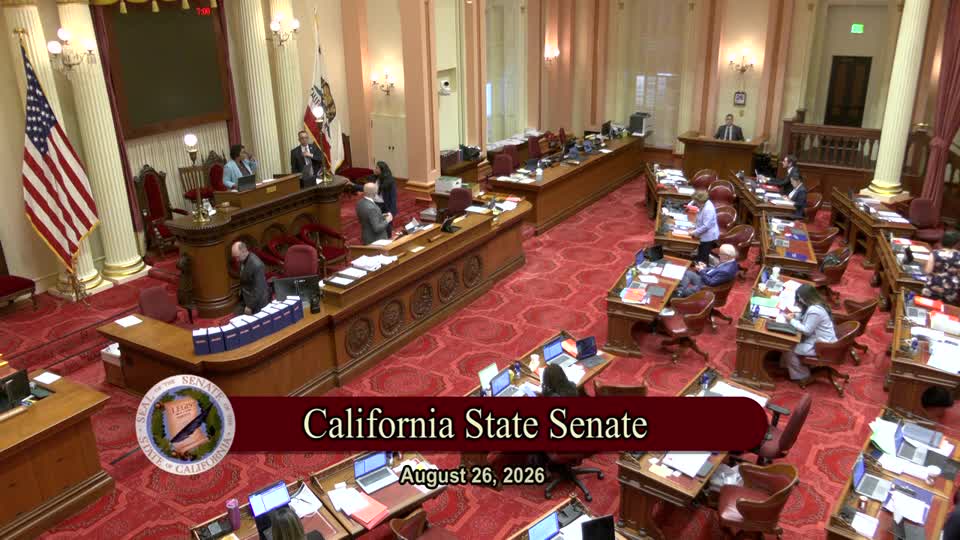 3MIN
Senate Floor
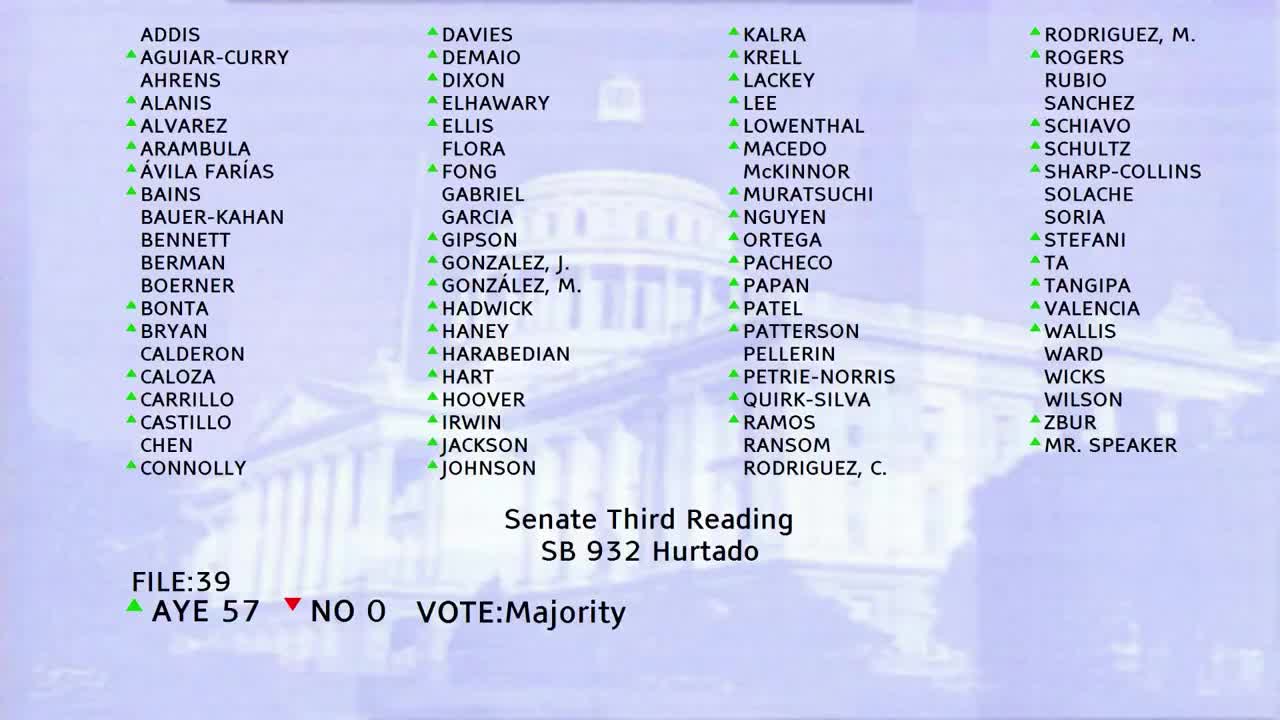 5MIN
Assembly Floor
 1MIN
Assembly Standing Committee on Appropriations
 18MIN
Assembly Standing Committee on Judiciary
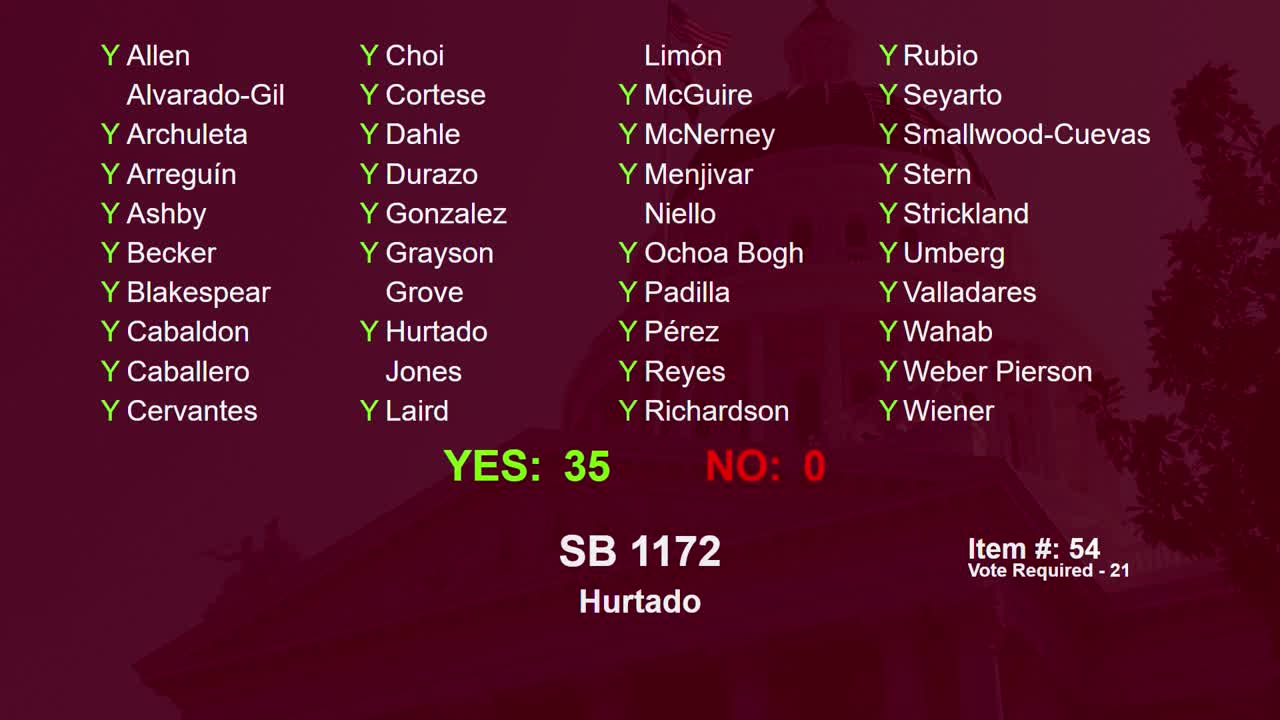 2MIN
Senate Floor
 21MIN
Senate Standing Committee on Local Government
Bill Author

Bill Co-Author(s):