SB 1392: Smog check: exemption: collector motor vehicles.
- Session Year: 2025-2026
- House: Senate
- Latest Version Date: 2026-09-16
Current Status:
Passed
(2026-09-16: Chaptered by Secretary of State. Chapter 245, Statutes of 2026.)
Introduced
In Committee
Awaiting First Chamber Vote
Passed First Chamber
In Committee
Awaiting Second Chamber Vote
Passed Second Chamber
Enacted
Existing law establishes a motor vehicle inspection and maintenance (smog check) program that is administered by the Department of Consumer Affairs. The smog check program requires inspection of motor vehicles upon initial registration, biennially upon renewal of registration, upon transfer of ownership, and in certain other circumstances. Existing law requires all motor vehicles to biennially obtain a certificate of compliance or noncompliance, as provided. Existing law exempts specified vehicles from obtaining the certificate of compliance or noncompliance, including, among others, all motor vehicles manufactured before the 1976 model year. Existing law also exempts from a specified portion of the smog test, both biennially and at transfer, a collector motor vehicle that is insured as a collector motor vehicle, is at least 35 model years old, complies with the exhaust emissions standards for that motor vehicles class and model year as prescribed by the department, and passes a functional inspection of the fuel cap and a visual inspection for liquid fuel leaks. Existing law defines collector motor vehicle for this purpose to mean a motor vehicle owned by a collector, as defined, used primarily in shows, parades, charitable functions, and historical exhibitions for display, maintenance, preservation, and not used primarily for transportation.
This bill would expand the definition of a collector motor vehicle to include a motor vehicle that is at least 35 model years old and complies with certain regulations that are required to be adopted by the Bureau of Automotive Repair, as specified. The bill would, beginning January 1, 2028, exempt specified collector motor vehicles manufactured before the 1981 model year from the requirement to obtain a certificate of compliance or noncompliance upon initial registration, biennially upon renewal of registration, or upon transfer of ownership. The bill would extend the applicability of this exemption by one model year each year until the final extension takes effect on and after January 1, 2033, that would exempt specified collector motor vehicles manufactured before the 1986 model year from the requirement to obtain the certificate of compliance or noncompliance. The bill would be known, and may be cited, as Jay Lenos Law.
Existing law establishes a motor vehicle inspection and maintenance (smog check) program that is administered by the Department of Consumer Affairs. The smog check program requires inspection of motor vehicles upon initial registration, biennially upon renewal of registration, upon transfer of ownership, and in certain other circumstances. Existing law requires all motor vehicles to biennially obtain a certificate of compliance or noncompliance, as provided. Existing law exempts specified vehicles from obtaining the certificate of compliance or noncompliance, including, among others, all motor vehicles manufactured before the 1976 model year. Existing law also exempts from specified portions a specified portion of the smog test, both biennially and at transfer, a collector motor vehicle that is insured as a collector motor vehicle, is at least 35 model years old, complies with the exhaust emissions standards for that motor vehicles class and model year as prescribed by the department, and passes a functional inspection of the fuel cap and a visual inspection for liquid fuel leaks. Existing law defines collector motor vehicle for this purpose to mean a motor vehicle owned by a collector, as defined, used primarily in shows, parades, charitable functions, and historical exhibitions for display, maintenance, preservation, and not used primarily for transportation.
This bill would expand the definition of a collector motor vehicle to include a motor vehicle that is at least 35 model years old and meets other criteria, complies with certain regulations that are required to be adopted by the Bureau of Automotive Repair, as specified. This bill would The bill would, beginning January 1, 2028, exempt specified collector motor vehicles manufactured before the 1981 model year from the requirement to obtain a certificate of compliance or noncompliance upon initial registration, biennially upon renewal of registration, or upon transfer of ownership. The bill would extend the applicability of this exemption by one model year each year, beginning on and after January 1, 2028, year until the final extension takes effect on and after January 1, 2032, 2033, that would exempt specified collector motor vehicles manufactured before the 1986 model year from the requirement to obtain the certificate of compliance or noncompliance. This The bill would be known, and may be cited, as Jay Lenos Law.
Existing law establishes a motor vehicle inspection and maintenance (smog check) program that is administered by the Department of Consumer Affairs. The smog check program requires inspection of motor vehicles upon initial registration, biennially upon renewal of registration, upon transfer of ownership, and in certain other circumstances. Existing law requires all motor vehicles to biennially obtain a certificate of compliance or noncompliance, as provided. Existing law exempts specified vehicles from obtaining the certificate of compliance or noncompliance, including, among others, all motor vehicles manufactured before the 1976 model year. Existing law also exempts from specified portions of the smog test, both biennially and at transfer, a collector motor vehicle that is insured as a collector motor vehicle, is at least 35 model years old, complies with the exhaust emissions standards for that motor vehicles class and model year as prescribed by the department, and passes a functional inspection of the fuel cap and a visual inspection for liquid fuel leaks. Existing law defines collector motor vehicle for this purpose to mean a motor vehicle owned by a collector, as defined, used primarily in shows, parades, charitable functions, and historical exhibitions for display, maintenance, preservation, and not used primarily for transportation.
This bill would redefine expand the definition of a collector motor vehicle to mean include a motor vehicle that is at least 35 model years old, is used primarily in shows, parades, charitable functions, and historical exhibitions, as provided, is not used as the owners primary mode of transportation, and is either insured as a collector motor vehicle, as specified, or determined, as specified, to be driven fewer than 1,000 miles per calendar year. old and meets other criteria, as specified. This bill would exempt a collector motor vehicle specified collector motor vehicles manufactured before the 1981 model year from the requirement to obtain a certificate of compliance or noncompliance biennially. upon initial registration, biennially upon renewal of registration, or upon transfer of ownership. The bill would extend the applicability of this exemption by one model year each year, beginning on and after January 1, 2028, until the final extension takes effect on and after January 1, 2032, that would exempt a collector motor vehicle specified collector motor vehicles manufactured before the 1986 model year from the requirement to obtain the certificate of compliance or noncompliance. This bill would be known, and may be cited, as Jay Lenos Law.
Existing law establishes a motor vehicle inspection and maintenance (smog check) program that is administered by the Department of Consumer Affairs. The smog check program requires inspection of motor vehicles upon initial registration, biennially upon renewal of registration, upon transfer of ownership, and in certain other circumstances. Existing law requires all motor vehicles to biennially obtain a certificate of compliance or noncompliance, as provided. Existing law exempts specified vehicles from obtaining the certificate of compliance or noncompliance, including, among others, all motor vehicles manufactured before the 1976 model year. Existing law also exempts from specified portions of the smog test, both biennially and at transfer, a collector motor vehicle that is insured as a collector motor vehicle, is at least 35 model years old, complies with the exhaust emissions standards for that motor vehicles class and model year as prescribed by the department, and passes a functional inspection of the fuel cap and a visual inspection for liquid fuel leaks. Existing law defines collector motor vehicle for this purpose to mean a motor vehicle owned by a collector, as defined, used primarily in shows, parades, charitable functions, and historical exhibitions for display, maintenance, preservation, and not used primarily for transportation.
This bill would redefine collector motor vehicle to mean a vehicle that is at least 35 years old, is used primarily in shows, parades, charitable functions, and historical exhibitions, as provided, and is not used as the owners primary mode of transportation. transportation, and is either insured as a collector motor vehicle, as specified, or determined, as specified, to be driven fewer than 1,000 miles per calendar year. This bill would exempt a collector motor vehicle manufactured before the 1981 model year from the requirement to obtain a certificate of compliance or noncompliance biennially. The bill would extend the applicability of this exemption by one model year each year, beginning on and after January 1, 2028, until the final extension takes effect on and after January 1, 2032, that would exempt a collector motor vehicle manufactured before the 1986 model year from the requirement to obtain the certificate of compliance or noncompliance. This bill would be known, and may be cited, as Jay Lenos Law.
Existing law establishes a motor vehicle inspection and maintenance (smog check) program that is administered by the Department of Consumer Affairs. The smog check program requires inspection of motor vehicles upon initial registration, biennially upon renewal of registration, upon transfer of ownership, and in certain other circumstances. Existing law requires all motor vehicles to biennially obtain a certificate of compliance or noncompliance, as provided. Existing law exempts specified vehicles from obtaining the certificate of compliance or noncompliance, including, among others, all motor vehicles manufactured before the 1976 model year. Existing law also exempts from specified portions of the smog test, both biennially and at transfer, a collector motor vehicle that is insured as a collector motor vehicle, is at least 35 model years old, complies with the exhaust emissions standards for that motor vehicles class and model year as prescribed by the department, and passes a functional inspection of the fuel cap and a visual inspection for liquid fuel leaks. Existing law defines collector motor vehicle for this purpose to mean a motor vehicle owned by a collector, as defined, used primarily in shows, parades, charitable functions, and historical exhibitions for display, maintenance, preservation, and not used primarily for transportation.
This bill would redefine collector motor vehicle to mean a vehicle that is at least 35 years old, is used primarily in shows, parades, charitable functions, and historical exhibitions, as provided, and is not used as the owners primary mode of transportation, and is insured as a collector motor vehicle, as specified. The transportation. This bill would exempt a collector motor vehicle manufactured before the 1981 model year from the requirement to obtain a certificate of compliance or noncompliance. noncompliance biennially. The bill would extend the applicability of this exemption by one model year each year, beginning on and after January 1, 2028, until the final extension takes effect on and after January 1, 2032, that would exempt a collector motor vehicle manufactured before the 1986 model year from the requirement to obtain the certificate of compliance or noncompliance. This bill would be known, and may be cited, as Jay Lenos Law.
Existing law establishes a motor vehicle inspection and maintenance (smog check) program that is administered by the Department of Consumer Affairs. The smog check program requires inspection of motor vehicles upon initial registration, biennially upon renewal of registration, upon transfer of ownership, and in certain other circumstances. Existing law requires all motor vehicles to biennially obtain a certificate of compliance or noncompliance, as provided. Existing law exempts specified vehicles from obtaining the certificate of compliance or noncompliance, including, among others, all motor vehicles manufactured before the 1976 model year. Existing law also exempts from specified portions of the smog test, both biennially and at transfer, a collector motor vehicle that is insured as a collector motor vehicle, is at least 35 model years old, complies with the exhaust emissions standards for that motor vehicles class and model year as prescribed by the department, and passes a functional inspection of the fuel cap and a visual inspection for liquid fuel leaks. Existing law defines collector motor vehicle for this purpose to mean a motor vehicle owned by a collector, as defined, used primarily in shows, parades, charitable functions, and historical exhibitions for display, maintenance, preservation, and not used primarily for transportation.
This bill would redefine collector motor vehicle to mean a vehicle that is at least 35 years old, is used primarily in shows, parades, charitable functions, and historical exhibitions, as provided, and is not used as the owners primary mode of transportation, and is insured as a collector motor vehicle, as specified. The bill would exempt a collector motor vehicle manufactured before the 1981 model year from the requirement to obtain a certificate of compliance or noncompliance. The bill would extend the applicability of this exemption by one model year each year, beginning on and after January 1, 2028, until the final extension takes effect on and after January 1, 2032, that would exempt a collector motor vehicle manufactured before the 1986 model year from the requirement to obtain the certificate of compliance or noncompliance.
This act shall be known, and may be cited, as Jay Lenos Law.
SEC. 2.Section 44011 of the Health and Safety Code is amended to read:44011.(a)All motor vehicles powered by internal combustion engines that are registered within an area designated for program coverage shall be required biennially to obtain a certificate of compliance or noncompliance, except for the following:
(1)All motorcycles until the department, pursuant to Section 44012, implements test procedures applicable to motorcycles.
(2)All motor vehicles that have been issued a certificate of compliance or noncompliance or a repair cost waiver upon a change of ownership or initial registration in this state during the preceding six months.
(3)All motor vehicles manufactured before the 1976 model year.
(4)(A)Except as provided in subparagraph (B), all motor vehicles four or less model years old.
(B)(i)Beginning January 1, 2005, all motor vehicles six or less model years old, unless the state board finds that providing an exception for these vehicles will prohibit the state from meeting the requirements of Section 176(c) of the federal Clean Air Act (42 U.S.C. Sec. 7401 et seq.) or the states commitments with respect to the state implementation plan required by the federal Clean Air Act.
(ii)Notwithstanding clause (i), beginning January 1, 2019, all motor vehicles eight or less model years old, unless the state board finds that providing an exception for these vehicles will prohibit the state from meeting the requirements of Section 176(c) of the federal Clean Air Act (42 U.S.C. Sec. 7401 et seq.) or the states commitments with respect to the state implementation plan required by the federal Clean Air Act.
(iii)Clause (ii) does not apply to a motor vehicle that is seven model years old in year 2018 for which a certificate of compliance has been obtained.
(C)All motor vehicles excepted by this paragraph shall be subject to testing and to certification requirements as determined by the department, if any of the following apply:
(i)The department determines through remote sensing activities or other means that there is a substantial probability that the vehicle has a tampered emission control system or would fail for other cause a smog check test as specified in Section 44012.
(ii)The vehicle was previously registered outside this state and is undergoing initial registration in this state.
(iii)The vehicle is being registered as a specially constructed vehicle.
(iv)The vehicle has been selected for testing pursuant to Section 44014.7 or any other provision of this chapter authorizing out-of-cycle testing.
(D)This paragraph does not apply to diesel-powered vehicles.
(5)In addition to the vehicles exempted pursuant to paragraph (4), any motor vehicle or class of motor vehicles exempted pursuant to subdivision (c) of Section 44024.5. It is the intent of the Legislature that the department, pursuant to the authority granted by this paragraph, exempt at least 15 percent of the lowest emitting motor vehicles from the biennial smog check inspection.
(6)All motor vehicles that the department determines would present prohibitive inspection or repair problems.
(7)Any vehicle registered to the owner of a fleet licensed pursuant to Section 44020 if the vehicle is garaged exclusively outside the area included in program coverage, and is not primarily operated inside the area included in program coverage.
(8)(A)All diesel-powered vehicles manufactured before the 1998 model year.
(B)All diesel-powered vehicles that have a gross vehicle weight rating of 8,501 to 10,000 pounds, inclusive, until the department, in consultation with the state board, pursuant to Section 44012, implements test procedures applicable to these vehicles.
(C)All diesel-powered vehicles that have a gross vehicle weight rating from 10,001 pounds to 14,000 pounds, inclusive, until the state board and the Department of Motor Vehicles determine the best method for identifying these vehicles, and until the department, in consultation with the state board, pursuant to Section 44012, implements test procedures applicable to these vehicles.
(D)All diesel-powered vehicles that have a gross vehicle weight rating of 14,001 pounds or greater.
(9)(A)On and after January 1, 2028, a collector motor vehicle that meets the criteria of paragraph (1) of subdivision (a) of Section 259 of the Vehicle Code manufactured before the 1981 model year.
(B)On and after January 1, 2029, a collector motor vehicle that meets the criteria of paragraph (1) of subdivision (a) of Section 259 of the Vehicle Code manufactured before the 1982 model year.
(C)On and after January 1, 2030, a collector motor vehicle that meets the criteria of paragraph (1) of subdivision (a) of Section 259 of the Vehicle Code manufactured before the 1983 model year.
(D)On and after January 1, 2031, a collector motor vehicle that meets the criteria of paragraph (1) of subdivision (a) of Section 259 of the Vehicle Code manufactured before the 1984 model year.
(E)On and after January 1, 2032, a collector motor vehicle that meets the criteria of paragraph (1) of subdivision (a) of Section 259 of the Vehicle Code manufactured before the 1985 model year.
(F)On and after January 1, 2033, a collector motor vehicle that meets the criteria of paragraph (1) of subdivision (a) of Section 259 of the Vehicle Code manufactured before the 1986 model year.
(b)Vehicles designated for program coverage in enhanced areas shall be required to obtain inspections from appropriate smog check stations operating in enhanced areas.
(c)For purposes of subdivision (a), a collector motor vehicle that meets the criteria of paragraph (2) or (3) of subdivision (a) of Section 259 of the Vehicle Code is exempt from those portions of the test required by subdivision (f) of Section 44012 if the collector motor vehicle meets all of the following criteria:
(1)Submission of proof that the motor vehicle is insured as a collector motor vehicle, as shall be required by regulation of the bureau.
(2)The motor vehicle is at least 35 model years old.
(3)The motor vehicle complies with the exhaust emissions standards for that motor vehicles class and model year as prescribed by the department, and the motor vehicle passes a functional inspection of the fuel cap and a visual inspection for liquid fuel leaks.
SEC. 3.Section 259 of the Vehicle Code is amended to read:259.Collector motor vehicle means a motor vehicle that meets both of the following criteria:
(a)The motor vehicle is one of the following:
(1)At least 35 model years old and complies with the regulations adopted pursuant to Section 5040 that require a motor vehicle to be insured as a collector motor vehicle with proof of insurance submitted to the Bureau of Automotive Repair or determined, through a process developed by the Bureau of Automotive Repair, to be driven fewer than 1,000 miles per calendar year.
(2)Described in subdivision (a) of Section 5004.
(3)A special interest vehicle, as defined in Section 5051.
(b)The motor vehicle is used primarily in shows, parades, charitable functions, and historical exhibitions for display, maintenance, and preservation, and is not used as the owners primary mode of transportation.
SEC. 4.Section 4000.1 of the Vehicle Code is amended to read:4000.1.(a)Except as otherwise provided in subdivision (b), (c), or (d) of this section, or subdivision (b) of Section 43654 of the Health and Safety Code, the department shall require upon initial registration, and upon transfer of ownership and registration, of any motor vehicle subject to Part 5 (commencing with Section 43000) of Division 26 of the Health and Safety Code, a valid certificate of compliance or a certificate of noncompliance, as appropriate, issued in accordance with Section 44015 of the Health and Safety Code.
(b)With respect to new motor vehicles certified pursuant to Chapter 2 (commencing with Section 43100) of Part 5 of Division 26 of the Health and Safety Code, the department shall accept a statement completed pursuant to subdivision (b) of Section 24007 in lieu of the certificate of compliance.
(c)For purposes of determining the validity of a certificate of compliance or noncompliance submitted in compliance with the requirements of this section, the definitions of new and used motor vehicle contained in Chapter 2 (commencing with Section 39010) of Part 1 of Division 26 of the Health and Safety Code shall control.
(d)Subdivision (a) does not apply to a transfer of ownership and registration under any of the following circumstances:
(1)The initial application for transfer is submitted within the 90-day validity period of a smog certificate as specified in Section 44015 of the Health and Safety Code.
(2)The transferor is the parent, grandparent, sibling, child, grandchild, or spouse of the transferee.
(3)A motor vehicle registered to a sole proprietorship is transferred to the proprietor as owner.
(4)The transfer is between companies the principal business of which is leasing motor vehicles, if there is no change in the lessee or operator of the motor vehicle or between the lessor and the person who has been, for at least one year, the lessees operator of the motor vehicle.
(5)The transfer is between the lessor and lessee of the motor vehicle, if there is no change in the lessee or operator of the motor vehicle.
(6)The motor vehicle was manufactured prior to the 1976 model year.
(7)Except for diesel-powered vehicles, the transfer is for a motor vehicle that is four or less model years old. The department shall impose a fee of eight dollars ($8) on the transferee of a motor vehicle that is four or less model years old. Revenues generated from the imposition of that fee shall be deposited into the Vehicle Inspection and Repair Fund.
(8)(A)On and after January 1, 2028, the motor vehicle is a collector motor vehicle that meets the criteria of paragraph (1) of subdivision (a) of Section 259 and that is manufactured before the 1981 model year.
(B)On and after January 1, 2029, the motor vehicle is a collector motor vehicle that meets the criteria of paragraph (1) of subdivision (a) of Section 259 and that is manufactured before the 1982 model year.
(C)On and after January 1, 2030, the motor vehicle is a collector motor vehicle that meets the criteria of paragraph (1) of subdivision (a) of Section 259 and that is manufactured before the 1983 model year.
(D)On and after January 1, 2031, the motor vehicle is a collector motor vehicle that meets the criteria of paragraph (1) of subdivision (a) of Section 259 and that is manufactured before the 1984 model year.
(E)On and after January 1, 2032, the motor vehicle is a collector motor vehicle that meets the criteria of paragraph (1) of subdivision (a) of Section 259 and that is manufactured before the 1985 model year.
(F)On and after January 1, 2033, the motor vehicle is a collector motor vehicle that meets the criteria of paragraph (1) of subdivision (a) of Section 259 and that is manufactured before the 1986 model year.
(e)The State Air Resources Board, under Part 5 (commencing with Section 43000) of Division 26 of the Health and Safety Code, may exempt designated classifications of motor vehicles from subdivision (a) as it deems necessary, and shall notify the department of that action.
(f)Subdivision (a) does not apply to a motor vehicle when an additional individual is added as a registered owner of the motor vehicle.
(g)For purposes of subdivision (a), a collector motor vehicle that meets the criteria of paragraph (2) or (3) of subdivision (a) of Section 259 is exempt from those portions of the test required by subdivision (f) of Section 44012 of the Health and Safety Code if the collector motor vehicle meets all of the following criteria:
(1)Submission of proof that the motor vehicle is insured as a collector motor vehicle, as shall be required by regulation of the Bureau of Automotive Repair.
(2)The motor vehicle is at least 35 model years old.
(3)The motor vehicle complies with the exhaust emissions standards for that motor vehicles class and model year as prescribed by the Department of Consumer Affairs, and the motor vehicle passes a functional inspection of the fuel cap and a visual inspection for liquid fuel leaks.
SEC. 5.Article 8.2 (commencing with Section 5040) is added to Chapter 1 of Division 3 of the Vehicle Code, to read:8.2.Collector Motor Vehicles Exemptions5040.The Bureau of Automotive Repair, in consultation with the department, shall adopt regulations to implement paragraph (9) of subdivision (a) of Section 44011 of the Health and Safety Code and paragraph (8) of subdivision (d) of Section 4000.1, as follows:
(a)On and after January 1, 2028, a motor vehicle that meets the criteria described in subdivision (b) of Section 259 that is insured as a collector motor vehicle, if proof of that insurance is submitted to the Bureau of Automotive Repair, shall be exempt from the smog check requirements, if the motor vehicle meets any applicable criterion in paragraph (9) of subdivision (a) of Section 44011 of the Health and Safety Code and in paragraph (8) of subdivision (d) of Section 4000.1.
(b)On and after January 1, 2030, a motor vehicle that meets the criteria described in subdivision (b) of Section 259 that is driven fewer than 1,000 miles per calendar year shall be exempt from the smog check requirements if the motor vehicle meets any applicable criterion in subparagraphs (C) to (F), inclusive, of paragraph (9) of subdivision (a) of Section 44011 of the Health and Safety Code and in subparagraphs (C) to (F), inclusive, of paragraph (8) of subdivision (d) of Section 4000.1.
5041.The Bureau of Automotive Repair and the department may exchange information as necessary to determine the eligibility of a motor vehicle to qualify as a collector motor vehicle consistent with the regulations adopted pursuant to this article.
5042.The regulations adopted pursuant to this article shall include any forms, procedures, and other requirements necessary for their implementation.
5043.(a)The regulations adopted pursuant to this article shall provide for the collection of fees to recover the reasonable administrative costs incurred by the Bureau of Automotive Repair.
(b)Any fees collected pursuant to subdivision (a) of Section 5040 shall not be more than twice the amount of the annual smog abatement fee specified in subparagraph (B) of paragraph (1) of subdivision (d) of Section 44060 of the Health and Safety Code.
This act shall be known, and may be cited, as Jay Lenos Law.
SEC. 2.Section 44011 of the Health and Safety Code is amended to read:44011.(a)All motor vehicles powered by internal combustion engines that are registered within an area designated for program coverage shall be required biennially to obtain a certificate of compliance or noncompliance, except for the following:
(1)All motorcycles until the department, pursuant to Section 44012, implements test procedures applicable to motorcycles.
(2)All motor vehicles that have been issued a certificate of compliance or noncompliance or a repair cost waiver upon a change of ownership or initial registration in this state during the preceding six months.
(3)All motor vehicles manufactured before the 1976 model year.
(4)(A)Except as provided in subparagraph (B), all motor vehicles four or less model years old.
(B)(i)Beginning January 1, 2005, all motor vehicles six or less model years old, unless the state board finds that providing an exception for these vehicles will prohibit the state from meeting the requirements of Section 176(c) of the federal Clean Air Act (42 U.S.C. Sec. 7401 et seq.) or the states commitments with respect to the state implementation plan required by the federal Clean Air Act.
(ii)Notwithstanding clause (i), beginning January 1, 2019, all motor vehicles eight or less model years old, unless the state board finds that providing an exception for these vehicles will prohibit the state from meeting the requirements of Section 176(c) of the federal Clean Air Act (42 U.S.C. Sec. 7401 et seq.) or the states commitments with respect to the state implementation plan required by the federal Clean Air Act.
(iii)Clause (ii) does not apply to a motor vehicle that is seven model years old in year 2018 for which a certificate of compliance has been obtained.
(C)All motor vehicles excepted by this paragraph shall be subject to testing and to certification requirements as determined by the department, if any of the following apply:
(i)The department determines through remote sensing activities or other means that there is a substantial probability that the vehicle has a tampered emission control system or would fail for other cause a smog check test as specified in Section 44012.
(ii)The vehicle was previously registered outside this state and is undergoing initial registration in this state.
(iii)The vehicle is being registered as a specially constructed vehicle.
(iv)The vehicle has been selected for testing pursuant to Section 44014.7 or any other provision of this chapter authorizing out-of-cycle testing.
(D)This paragraph does not apply to diesel-powered vehicles.
(5)In addition to the vehicles exempted pursuant to paragraph (4), any motor vehicle or class of motor vehicles exempted pursuant to subdivision (c) of Section 44024.5. It is the intent of the Legislature that the department, pursuant to the authority granted by this paragraph, exempt at least 15 percent of the lowest emitting motor vehicles from the biennial smog check inspection.
(6)All motor vehicles that the department determines would present prohibitive inspection or repair problems.
(7)Any vehicle registered to the owner of a fleet licensed pursuant to Section 44020 if the vehicle is garaged exclusively outside the area included in program coverage, and is not primarily operated inside the area included in program coverage.
(8)(A)All diesel-powered vehicles manufactured before the 1998 model year.
(B)All diesel-powered vehicles that have a gross vehicle weight rating of 8,501 to 10,000 pounds, inclusive, until the department, in consultation with the state board, pursuant to Section 44012, implements test procedures applicable to these vehicles.
(C)All diesel-powered vehicles that have a gross vehicle weight rating from 10,001 pounds to 14,000 pounds, inclusive, until the state board and the Department of Motor Vehicles determine the best method for identifying these vehicles, and until the department, in consultation with the state board, pursuant to Section 44012, implements test procedures applicable to these vehicles.
(D)All diesel-powered vehicles that have a gross vehicle weight rating of 14,001 pounds or greater.
(9)A (A)On and after January 1, 2028, a collector motor vehicle that meets the criteria of paragraph (1) of subdivision (a) of Section 259 of the Vehicle Code manufactured before the 1981 model year.
(10)(B)On and after January 1, 2028, 2029, a collector motor vehicle that meets the criteria of paragraph (1) of subdivision (a) of Section 259 of the Vehicle Code manufactured before the 1982 model year.
(11)(C)On and after January 1, 2029, 2030, a collector motor vehicle that meets the criteria of paragraph (1) of subdivision (a) of Section 259 of the Vehicle Code manufactured before the 1983 model year.
(12)(D)On and after January 1, 2030, 2031, a collector motor vehicle that meets the criteria of paragraph (1) of subdivision (a) of Section 259 of the Vehicle Code manufactured before the 1984 model year.
(13)(E)On and after January 1, 2031, 2032, a collector motor vehicle that meets the criteria of paragraph (1) of subdivision (a) of Section 259 of the Vehicle Code manufactured before the 1985 model year.
(14)(F)On and after January 1, 2032, 2033, a collector motor vehicle that meets the criteria of paragraph (1) of subdivision (a) of Section 259 of the Vehicle Code manufactured before the 1986 model year.
(b)Vehicles designated for program coverage in enhanced areas shall be required to obtain inspections from appropriate smog check stations operating in enhanced areas.
(c)For purposes of subdivision (a), any a collector motor vehicle, as defined in vehicle that meets the criteria of paragraph (2) or (3) of subdivision (a) of Section 259 of the Vehicle Code, Code is exempt from those portions of the test required by subdivision (f) of Section 44012 if the collector motor vehicle meets all of the following criteria:
(1)Submission of proof that the motor vehicle is insured as a collector motor vehicle, as shall be required by regulation of the bureau.
(2)The motor vehicle is at least 35 model years old.
(3)The motor vehicle complies with the exhaust emissions standards for that motor vehicles class and model year as prescribed by the department, and the motor vehicle passes a functional inspection of the fuel cap and a visual inspection for liquid fuel leaks.
SEC. 3.Section 259 of the Vehicle Code is amended to read:259.Collector motor vehicle means a motor vehicle that meets both of the following criteria:
(a)The motor vehicle is one of the following:
(1)At least 35 model years old and is either and complies with the regulations adopted pursuant to Section 5040 that require a motor vehicle to be insured as a collector motor vehicle with proof of insurance submitted to the department at the time of registration as a collector motor vehicle Bureau of Automotive Repair or determined, through a process developed by the department, Bureau of Automotive Repair, to be driven fewer than 1,000 miles per calendar year.
(2)Described in subdivision (a) of Section 5004.
(3)A special interest vehicle, as defined in Section 5051.
(b)The motor vehicle is used primarily in shows, parades, charitable functions, and historical exhibitions for display, maintenance, and preservation, and is not used as the owners primary mode of transportation.
SEC. 4.Section 4000.1 of the Vehicle Code is amended to read:4000.1.(a)Except as otherwise provided in subdivision (b), (c), or (d) of this section, or subdivision (b) of Section 43654 of the Health and Safety Code, the department shall require upon initial registration, and upon transfer of ownership and registration, of any motor vehicle subject to Part 5 (commencing with Section 43000) of Division 26 of the Health and Safety Code, a valid certificate of compliance or a certificate of noncompliance, as appropriate, issued in accordance with Section 44015 of the Health and Safety Code.
(b)With respect to new motor vehicles certified pursuant to Chapter 2 (commencing with Section 43100) of Part 5 of Division 26 of the Health and Safety Code, the department shall accept a statement completed pursuant to subdivision (b) of Section 24007 in lieu of the certificate of compliance.
(c)For purposes of determining the validity of a certificate of compliance or noncompliance submitted in compliance with the requirements of this section, the definitions of new and used motor vehicle contained in Chapter 2 (commencing with Section 39010) of Part 1 of Division 26 of the Health and Safety Code shall control.
(d)Subdivision (a) does not apply to a transfer of ownership and registration under any of the following circumstances:
(1)The initial application for transfer is submitted within the 90-day validity period of a smog certificate as specified in Section 44015 of the Health and Safety Code.
(2)The transferor is the parent, grandparent, sibling, child, grandchild, or spouse of the transferee.
(3)A motor vehicle registered to a sole proprietorship is transferred to the proprietor as owner.
(4)The transfer is between companies the principal business of which is leasing motor vehicles, if there is no change in the lessee or operator of the motor vehicle or between the lessor and the person who has been, for at least one year, the lessees operator of the motor vehicle.
(5)The transfer is between the lessor and lessee of the motor vehicle, if there is no change in the lessee or operator of the motor vehicle.
(6)The motor vehicle was manufactured prior to the 1976 model year.
(7)Except for diesel-powered vehicles, the transfer is for a motor vehicle that is four or less model years old. The department shall impose a fee of eight dollars ($8) on the transferee of a motor vehicle that is four or less model years old. Revenues generated from the imposition of that fee shall be deposited into the Vehicle Inspection and Repair Fund.
(8)The (A)On and after January 1, 2028, the motor vehicle is a collector motor vehicle that meets the criteria of paragraph (1) of subdivision (a) of Section 259 and that is manufactured before the 1981 model year.
(9)(B)On and after January 1, 2028, 2029, the motor vehicle is a collector motor vehicle that meets the criteria of paragraph (1) of subdivision (a) of Section 259 and that is manufactured before the 1982 model year.
(10)(C)On and after January 1, 2029, 2030, the motor vehicle is a collector motor vehicle that meets the criteria of paragraph (1) of subdivision (a) of Section 259 and that is manufactured before the 1983 model year.
(11)(D)On and after January 1, 2030, 2031, the motor vehicle is a collector motor vehicle that meets the criteria of paragraph (1) of subdivision (a) of Section 259 and that is manufactured before the 1984 model year.
(12)(E)On and after January 1, 2031, 2032, the motor vehicle is a collector motor vehicle that meets the criteria of paragraph (1) of subdivision (a) of Section 259 and that is manufactured before the 1985 model year.
(13)(F)On and after January 1, 2032, 2033, the motor vehicle is a collector motor vehicle that meets the criteria of paragraph (1) of subdivision (a) of Section 259 and that is manufactured before the 1986 model year.
(e)The State Air Resources Board, under Part 5 (commencing with Section 43000) of Division 26 of the Health and Safety Code, may exempt designated classifications of motor vehicles from subdivision (a) as it deems necessary, and shall notify the department of that action.
(f)Subdivision (a) does not apply to a motor vehicle when an additional individual is added as a registered owner of the motor vehicle.
(g)For purposes of subdivision (a), any a collector motor vehicle, as defined in vehicle that meets the criteria of paragraph (2) or (3) of subdivision (a) of Section 259, 259 is exempt from those portions of the test required by subdivision (f) of Section 44012 of the Health and Safety Code, Code if the collector motor vehicle meets all of the following criteria:
(1)Submission of proof that the motor vehicle is insured as a collector motor vehicle, as shall be required by regulation of the bureau. Bureau of Automotive Repair.
(2)The motor vehicle is at least 35 model years old.
(3)The motor vehicle complies with the exhaust emissions standards for that motor vehicles class and model year as prescribed by the department, Department of Consumer Affairs, and the motor vehicle passes a functional inspection of the fuel cap and a visual inspection for liquid fuel leaks.
SEC. 5.Article 8.2 (commencing with Section 5040) is added to Chapter 1 of Division 3 of the Vehicle Code, to read:8.2.Collector Motor Vehicles Exemptions5040.The Bureau of Automotive Repair, in consultation with the department, shall adopt regulations to implement paragraph (9) of subdivision (a) of Section 44011 of the Health and Safety Code and paragraph (8) of subdivision (d) of Section 4000.1, as follows:
(a)On and after January 1, 2028, a motor vehicle that meets the criteria described in subdivision (b) of Section 259 that is insured as a collector motor vehicle, if proof of that insurance is submitted to the Bureau of Automotive Repair, shall be exempt from the smog check requirements, if the motor vehicle meets any applicable criterion in paragraph (9) of subdivision (a) of Section 44011 of the Health and Safety Code and in paragraph (8) of subdivision (d) of Section 4000.1.
(b)On and after January 1, 2030, a motor vehicle that meets the criteria described in subdivision (b) of Section 259 that is driven fewer than 1,000 miles per calendar year shall be exempt from the smog check requirements if the motor vehicle meets any applicable criterion in subparagraphs (C) to (F), inclusive, of paragraph (9) of subdivision (a) of Section 44011 of the Health and Safety Code and in subparagraphs (C) to (F), inclusive, of paragraph (8) of subdivision (d) of Section 4000.1.
5041.The Bureau of Automotive Repair and the department may exchange information as necessary to determine the eligibility of a motor vehicle to qualify as a collector motor vehicle consistent with the regulations adopted pursuant to this article.
5042.The regulations adopted pursuant to this article shall include any forms, procedures, and other requirements necessary for their implementation.
5043.(a)The regulations adopted pursuant to this article shall provide for the collection of fees to recover the reasonable administrative costs incurred by the Bureau of Automotive Repair.
(b)Any fees collected pursuant to subdivision (a) of Section 5040 shall not be more than twice the amount of the annual smog abatement fee specified in subparagraph (B) of paragraph (1) of subdivision (d) of Section 44060 of the Health and Safety Code.
This act shall be known, and may be cited, as Jay Lenos Law.
SEC. 2.Section 44011 of the Health and Safety Code is amended to read:44011.(a)All motor vehicles powered by internal combustion engines that are registered within an area designated for program coverage shall be required biennially to obtain a certificate of compliance or noncompliance, except for the following:
(1)All motorcycles until the department, pursuant to Section 44012, implements test procedures applicable to motorcycles.
(2)All motor vehicles that have been issued a certificate of compliance or noncompliance or a repair cost waiver upon a change of ownership or initial registration in this state during the preceding six months.
(3)All motor vehicles manufactured before the 1976 model year.
(4)(A)Except as provided in subparagraph (B), all motor vehicles four or less model years old.
(B)(i)Beginning January 1, 2005, all motor vehicles six or less model years old, unless the state board finds that providing an exception for these vehicles will prohibit the state from meeting the requirements of Section 176(c) of the federal Clean Air Act (42 U.S.C. Sec. 7401 et seq.) or the states commitments with respect to the state implementation plan required by the federal Clean Air Act.
(ii)Notwithstanding clause (i), beginning January 1, 2019, all motor vehicles eight or less model years old, unless the state board finds that providing an exception for these vehicles will prohibit the state from meeting the requirements of Section 176(c) of the federal Clean Air Act (42 U.S.C. Sec. 7401 et seq.) or the states commitments with respect to the state implementation plan required by the federal Clean Air Act.
(iii)Clause (ii) does not apply to a motor vehicle that is seven model years old in year 2018 for which a certificate of compliance has been obtained.
(C)All motor vehicles excepted by this paragraph shall be subject to testing and to certification requirements as determined by the department, if any of the following apply:
(i)The department determines through remote sensing activities or other means that there is a substantial probability that the vehicle has a tampered emission control system or would fail for other cause a smog check test as specified in Section 44012.
(ii)The vehicle was previously registered outside this state and is undergoing initial registration in this state.
(iii)The vehicle is being registered as a specially constructed vehicle.
(iv)The vehicle has been selected for testing pursuant to Section 44014.7 or any other provision of this chapter authorizing out-of-cycle testing.
(D)This paragraph does not apply to diesel-powered vehicles.
(5)In addition to the vehicles exempted pursuant to paragraph (4), any motor vehicle or class of motor vehicles exempted pursuant to subdivision (c) of Section 44024.5. It is the intent of the Legislature that the department, pursuant to the authority granted by this paragraph, exempt at least 15 percent of the lowest emitting motor vehicles from the biennial smog check inspection.
(6)All motor vehicles that the department determines would present prohibitive inspection or repair problems.
(7)Any vehicle registered to the owner of a fleet licensed pursuant to Section 44020 if the vehicle is garaged exclusively outside the area included in program coverage, and is not primarily operated inside the area included in program coverage.
(8)(A)All diesel-powered vehicles manufactured before the 1998 model year.
(B)All diesel-powered vehicles that have a gross vehicle weight rating of 8,501 to 10,000 pounds, inclusive, until the department, in consultation with the state board, pursuant to Section 44012, implements test procedures applicable to these vehicles.
(C)All diesel-powered vehicles that have a gross vehicle weight rating from 10,001 pounds to 14,000 pounds, inclusive, until the state board and the Department of Motor Vehicles determine the best method for identifying these vehicles, and until the department, in consultation with the state board, pursuant to Section 44012, implements test procedures applicable to these vehicles.
(D)All diesel-powered vehicles that have a gross vehicle weight rating of 14,001 pounds or greater.
(9)A collector motor vehicle that meets the criteria of paragraph (1) of subdivision (a) of Section 259 of the Vehicle Code manufactured before the 1981 model year.
(10)On and after January 1, 2028, a collector motor vehicle that meets the criteria of paragraph (1) of subdivision (a) of Section 259 of the Vehicle Code manufactured before the 1982 model year.
(11)On and after January 1, 2029, a collector motor vehicle that meets the criteria of paragraph (1) of subdivision (a) of Section 259 of the Vehicle Code manufactured before the 1983 model year.
(12)On and after January 1, 2030, a collector motor vehicle that meets the criteria of paragraph (1) of subdivision (a) of Section 259 of the Vehicle Code manufactured before the 1984 model year.
(13)On and after January 1, 2031, a collector motor vehicle that meets the criteria of paragraph (1) of subdivision (a) of Section 259 of the Vehicle Code manufactured before the 1985 model year.
(14)On and after January 1, 2032, a collector motor vehicle that meets the criteria of paragraph (1) of subdivision (a) of Section 259 of the Vehicle Code manufactured before the 1986 model year.
(b)Vehicles designated for program coverage in enhanced areas shall be required to obtain inspections from appropriate smog check stations operating in enhanced areas.
(c)For purposes of subdivision (a), a any collector motor vehicle vehicle, as defined in Section 259 of the Vehicle Code, is exempt from those portions of the test required by subdivision (f) of Section 44012 if the collector motor vehicle meets all of the following criteria:
(1)Submission of proof that the motor vehicle is insured as a collector motor vehicle, as shall be required by regulation of the bureau.
(2)The motor vehicle is at least 35 model years old.
(3)The motor vehicle complies with the exhaust emissions standards for that motor vehicles class and model year as prescribed by the department, and the motor vehicle passes a functional inspection of the fuel cap and a visual inspection for liquid fuel leaks.
(d)For purposes of this section, collector motor vehicle has the same meaning as defined in Section 259 of the Vehicle Code.SEC. 3.Section 259 of the Vehicle Code is amended to read:259.Collector motor vehicle means a motor vehicle that meets all both of the following criteria:
(a)The motor vehicle is at one of the following:
(1)At least 35 model years old. old and is either insured as a collector motor vehicle with proof of insurance submitted to the department at the time of registration as a collector motor vehicle or determined, through a process developed by the department, to be driven fewer than 1,000 miles per calendar year.
(2)Described in subdivision (a) of Section 5004.
(3)A special interest vehicle, as defined in Section 5051.
(b)The motor vehicle is used primarily in shows, parades, charitable functions, and historical exhibitions for display, maintenance, and preservation, and is not used as the owners primary mode of transportation.
(c)The motor vehicle is either insured as a collector motor vehicle with proof of insurance submitted to the department at the time of registration or determined, through a process developed by the department, to be driven fewer than 1,000 miles per calendar year.SEC. 4.Section 4000.1 of the Vehicle Code is amended to read:4000.1.(a)Except as otherwise provided in subdivision (b), (c), or (d) of this section, or subdivision (b) of Section 43654 of the Health and Safety Code, the department shall require upon initial registration, and upon transfer of ownership and registration, of any motor vehicle subject to Part 5 (commencing with Section 43000) of Division 26 of the Health and Safety Code, a valid certificate of compliance or a certificate of noncompliance, as appropriate, issued in accordance with Section 44015 of the Health and Safety Code.
(b)With respect to new motor vehicles certified pursuant to Chapter 2 (commencing with Section 43100) of Part 5 of Division 26 of the Health and Safety Code, the department shall accept a statement completed pursuant to subdivision (b) of Section 24007 in lieu of the certificate of compliance.
(c)For purposes of determining the validity of a certificate of compliance or noncompliance submitted in compliance with the requirements of this section, the definitions of new and used motor vehicle contained in Chapter 2 (commencing with Section 39010) of Part 1 of Division 26 of the Health and Safety Code shall control.
(d)Subdivision (a) does not apply to a transfer of ownership and registration under any of the following circumstances:
(1)The initial application for transfer is submitted within the 90-day validity period of a smog certificate as specified in Section 44015 of the Health and Safety Code.
(2)The transferor is the parent, grandparent, sibling, child, grandchild, or spouse of the transferee.
(3)A motor vehicle registered to a sole proprietorship is transferred to the proprietor as owner.
(4)The transfer is between companies the principal business of which is leasing motor vehicles, if there is no change in the lessee or operator of the motor vehicle or between the lessor and the person who has been, for at least one year, the lessees operator of the motor vehicle.
(5)The transfer is between the lessor and lessee of the motor vehicle, if there is no change in the lessee or operator of the motor vehicle.
(6)The motor vehicle was manufactured prior to the 1976 model-year. model year.
(7)Except for diesel-powered vehicles, the transfer is for a motor vehicle that is four or less model-years model years old. The department shall impose a fee of eight dollars ($8) on the transferee of a motor vehicle that is four or less model-years model years old. Revenues generated from the imposition of that fee shall be deposited into the Vehicle Inspection and Repair Fund.
(8)The motor vehicle is a collector motor vehicle that meets the criteria of paragraph (1) of subdivision (a) of Section 259 and that is manufactured before the 1981 model year.
(9)On and after January 1, 2028, the motor vehicle is a collector motor vehicle that meets the criteria of paragraph (1) of subdivision (a) of Section 259 and that is manufactured before the 1982 model year.
(10)On and after January 1, 2029, the motor vehicle is a collector motor vehicle that meets the criteria of paragraph (1) of subdivision (a) of Section 259 and that is manufactured before the 1983 model year.
(11)On and after January 1, 2030, the motor vehicle is a collector motor vehicle that meets the criteria of paragraph (1) of subdivision (a) of Section 259 and that is manufactured before the 1984 model year.
(12)On and after January 1, 2031, the motor vehicle is a collector motor vehicle that meets the criteria of paragraph (1) of subdivision (a) of Section 259 and that is manufactured before the 1985 model year.
(13)On and after January 1, 2032, the motor vehicle is a collector motor vehicle that meets the criteria of paragraph (1) of subdivision (a) of Section 259 and that is manufactured before the 1986 model year.
(e)The State Air Resources Board, under Part 5 (commencing with Section 43000) of Division 26 of the Health and Safety Code, may exempt designated classifications of motor vehicles from subdivision (a) as it deems necessary, and shall notify the department of that action.
(f)Subdivision (a) does not apply to a motor vehicle when an additional individual is added as a registered owner of the motor vehicle.
(g)For purposes of subdivision (a), any collector motor vehicle, as defined in Section 259, is exempt from those portions of the test required by subdivision (f) of Section 44012 of the Health and Safety Code, if the collector motor vehicle meets all of the following criteria:
(1)Submission of proof that the motor vehicle is insured as a collector motor vehicle, as shall be required by regulation of the bureau.
(2) The motor vehicle is at least 35 model-years model years old.
(3) The motor vehicle complies with the exhaust emissions standards for that motor vehicles class and model year as prescribed by the department, and the motor vehicle passes a functional inspection of the fuel cap and a visual inspection for liquid fuel leaks.
This act shall be known, and may be cited, as Jay Lenos Law.
SEC. 2.Section 44011 of the Health and Safety Code is amended to read:44011.(a)All motor vehicles powered by internal combustion engines that are registered within an area designated for program coverage shall be required biennially to obtain a certificate of compliance or noncompliance, except for the following:
(1)All motorcycles until the department, pursuant to Section 44012, implements test procedures applicable to motorcycles.
(2)All motor vehicles that have been issued a certificate of compliance or noncompliance or a repair cost waiver upon a change of ownership or initial registration in this state during the preceding six months.
(3)All motor vehicles manufactured before the 1976 model year.
(4)(A)Except as provided in subparagraph (B), all motor vehicles four or less model years old.
(B)(i)Beginning January 1, 2005, all motor vehicles six or less model years old, unless the state board finds that providing an exception for these vehicles will prohibit the state from meeting the requirements of Section 176(c) of the federal Clean Air Act (42 U.S.C. Sec. 7401 et seq.) or the states commitments with respect to the state implementation plan required by the federal Clean Air Act.
(ii)Notwithstanding clause (i), beginning January 1, 2019, all motor vehicles eight or less model years old, unless the state board finds that providing an exception for these vehicles will prohibit the state from meeting the requirements of Section 176(c) of the federal Clean Air Act (42 U.S.C. Sec. 7401 et seq.) or the states commitments with respect to the state implementation plan required by the federal Clean Air Act.
(iii)Clause (ii) does not apply to a motor vehicle that is seven model years old in year 2018 for which a certificate of compliance has been obtained.
(C)All motor vehicles excepted by this paragraph shall be subject to testing and to certification requirements as determined by the department, if any of the following apply:
(i)The department determines through remote sensing activities or other means that there is a substantial probability that the vehicle has a tampered emission control system or would fail for other cause a smog check test as specified in Section 44012.
(ii)The vehicle was previously registered outside this state and is undergoing initial registration in this state.
(iii)The vehicle is being registered as a specially constructed vehicle.
(iv)The vehicle has been selected for testing pursuant to Section 44014.7 or any other provision of this chapter authorizing out-of-cycle testing.
(D)This paragraph does not apply to diesel-powered vehicles.
(5)In addition to the vehicles exempted pursuant to paragraph (4), any motor vehicle or class of motor vehicles exempted pursuant to subdivision (c) of Section 44024.5. It is the intent of the Legislature that the department, pursuant to the authority granted by this paragraph, exempt at least 15 percent of the lowest emitting motor vehicles from the biennial smog check inspection.
(6)All motor vehicles that the department determines would present prohibitive inspection or repair problems.
(7)Any vehicle registered to the owner of a fleet licensed pursuant to Section 44020 if the vehicle is garaged exclusively outside the area included in program coverage, and is not primarily operated inside the area included in program coverage.
(8)(A)All diesel-powered vehicles manufactured before the 1998 model year.
(B)All diesel-powered vehicles that have a gross vehicle weight rating of 8,501 to 10,000 pounds, inclusive, until the department, in consultation with the state board, pursuant to Section 44012, implements test procedures applicable to these vehicles.
(C)All diesel-powered vehicles that have a gross vehicle weight rating from 10,001 pounds to 14,000 pounds, inclusive, until the state board and the Department of Motor Vehicles determine the best method for identifying these vehicles, and until the department, in consultation with the state board, pursuant to Section 44012, implements test procedures applicable to these vehicles.
(D)All diesel-powered vehicles that have a gross vehicle weight rating of 14,001 pounds or greater.
(9)A collector motor vehicle manufactured before the 1981 model year.
(10)On and after January 1, 2028, a collector motor vehicle manufactured before the 1982 model year.
(11)On and after January 1, 2029, a collector motor vehicle manufactured before the 1983 model year.
(12)On and after January 1, 2030, a collector motor vehicle manufactured before the 1984 model year.
(13)On and after January 1, 2031, a collector motor vehicle manufactured before the 1985 model year.
(14)On and after January 1, 2032, a collector motor vehicle manufactured before the 1986 model year.
(b)Vehicles designated for program coverage in enhanced areas shall be required to obtain inspections from appropriate smog check stations operating in enhanced areas.
(c)For purposes of subdivision (a), a collector motor vehicle is exempt from those portions of the test required by subdivision (f) of Section 44012 if the collector motor vehicle meets all of the following criteria:
(1)Submission of proof that the motor vehicle is insured as a collector motor vehicle, as shall be required by regulation of the bureau.
(2)The motor vehicle is at least 35 model years old.
(3)The motor vehicle complies with the exhaust emissions standards for that motor vehicles class and model year as prescribed by the department, and the motor vehicle passes a functional inspection of the fuel cap and a visual inspection for liquid fuel leaks.
(d)For purposes of this section, collector motor vehicle has the same meaning as defined in Section 259 of the Vehicle Code.
SEC. 3.Section 259 of the Vehicle Code is amended to read:259.Collector motor vehicle means a motor vehicle that meets both all of the following criteria:
(a)The motor vehicle is at least 35 model years old.
(b)The motor vehicle is used primarily in shows, parades, charitable functions, and historical exhibitions for display, maintenance, and preservation, and is not used as the owners primary mode of transportation.
(c)The motor vehicle is either insured as a collector motor vehicle with proof of insurance submitted to the department at the time of registration or determined, through a process developed by the department, to be driven fewer than 1,000 miles per calendar year.
This act shall be known, and may be cited, as Jay Lenos Law.
SECTION 1.SEC. 2.Section 44011 of the Health and Safety Code is amended to read:44011.(a)All motor vehicles powered by internal combustion engines that are registered within an area designated for program coverage shall be required biennially to obtain a certificate of compliance or noncompliance, except for the following:
(1)All motorcycles until the department, pursuant to Section 44012, implements test procedures applicable to motorcycles.
(2)All motor vehicles that have been issued a certificate of compliance or noncompliance or a repair cost waiver upon a change of ownership or initial registration in this state during the preceding six months.
(3)All motor vehicles manufactured before the 1976 model year.
(4)(A)Except as provided in subparagraph (B), all motor vehicles four or less model years old.
(B)(i)Beginning January 1, 2005, all motor vehicles six or less model years old, unless the state board finds that providing an exception for these vehicles will prohibit the state from meeting the requirements of Section 176(c) of the federal Clean Air Act (42 U.S.C. Sec. 7401 et seq.) or the states commitments with respect to the state implementation plan required by the federal Clean Air Act.
(ii)Notwithstanding clause (i), beginning January 1, 2019, all motor vehicles eight or less model years old, unless the state board finds that providing an exception for these vehicles will prohibit the state from meeting the requirements of Section 176(c) of the federal Clean Air Act (42 U.S.C. Sec. 7401 et seq.) or the states commitments with respect to the state implementation plan required by the federal Clean Air Act.
(iii)Clause (ii) does not apply to a motor vehicle that is seven model years old in year 2018 for which a certificate of compliance has been obtained.
(C)All motor vehicles excepted by this paragraph shall be subject to testing and to certification requirements as determined by the department, if any of the following apply:
(i)The department determines through remote sensing activities or other means that there is a substantial probability that the vehicle has a tampered emission control system or would fail for other cause a smog check test as specified in Section 44012.
(ii)The vehicle was previously registered outside this state and is undergoing initial registration in this state.
(iii)The vehicle is being registered as a specially constructed vehicle.
(iv)The vehicle has been selected for testing pursuant to Section 44014.7 or any other provision of this chapter authorizing out-of-cycle testing.
(D)This paragraph does not apply to diesel-powered vehicles.
(5)In addition to the vehicles exempted pursuant to paragraph (4), any motor vehicle or class of motor vehicles exempted pursuant to subdivision (c) of Section 44024.5. It is the intent of the Legislature that the department, pursuant to the authority granted by this paragraph, exempt at least 15 percent of the lowest emitting motor vehicles from the biennial smog check inspection.
(6)All motor vehicles that the department determines would present prohibitive inspection or repair problems.
(7)Any vehicle registered to the owner of a fleet licensed pursuant to Section 44020 if the vehicle is garaged exclusively outside the area included in program coverage, and is not primarily operated inside the area included in program coverage.
(8)(A)All diesel-powered vehicles manufactured before the 1998 model year.
(B)All diesel-powered vehicles that have a gross vehicle weight rating of 8,501 to 10,000 pounds, inclusive, until the department, in consultation with the state board, pursuant to Section 44012, implements test procedures applicable to these vehicles.
(C)All diesel-powered vehicles that have a gross vehicle weight rating from 10,001 pounds to 14,000 pounds, inclusive, until the state board and the Department of Motor Vehicles determine the best method for identifying these vehicles, and until the department, in consultation with the state board, pursuant to Section 44012, implements test procedures applicable to these vehicles.
(D)All diesel-powered vehicles that have a gross vehicle weight rating of 14,001 pounds or greater.
(9)A collector motor vehicle manufactured before the 1981 model year.
(10)On and after January 1, 2028, a collector motor vehicle manufactured before the 1982 model year.
(11)On and after January 1, 2029, a collector motor vehicle manufactured before the 1983 model year.
(12)On and after January 1, 2030, a collector motor vehicle manufactured before the 1984 model year.
(13)On and after January 1, 2031, a collector motor vehicle manufactured before the 1985 model year.
(14)On and after January 1, 2032, a collector motor vehicle manufactured before the 1986 model year.
(b)Vehicles designated for program coverage in enhanced areas shall be required to obtain inspections from appropriate smog check stations operating in enhanced areas.
(c)For purposes of subdivision (a), a collector motor vehicle is exempt from those portions of the test required by subdivision (f) of Section 44012 if the collector motor vehicle meets all of the following criteria:
(1)Submission of proof that the motor vehicle is insured as a collector motor vehicle, as shall be required by regulation of the bureau.
(2)The motor vehicle is at least 35 model years old.
(3)The motor vehicle complies with the exhaust emissions standards for that motor vehicles class and model year as prescribed by the department, and the motor vehicle passes a functional inspection of the fuel cap and a visual inspection for liquid fuel leaks.
(d)For purposes of this section, collector motor vehicle has the same meaning as defined in Section 259 of the Vehicle Code.
SEC. 2.SEC. 3.Section 259 of the Vehicle Code is amended to read:259.Collector motor vehicle means a motor vehicle that meets all both of the following criteria:
(a)Is The motor vehicle is at least 35 model years old.
(b)Is The motor vehicle is used primarily in shows, parades, charitable functions, and historical exhibitions for display, maintenance, and preservation, and is not used as the owners primary mode of transportation.
(c)Is insured as a collector motor vehicle with proof of insurance submitted to the department at the time of registration.(a)All motor vehicles powered by internal combustion engines that are registered within an area designated for program coverage shall be required biennially to obtain a certificate of compliance or noncompliance, except for the following:
(1)All motorcycles until the department, pursuant to Section 44012, implements test procedures applicable to motorcycles.
(2)All motor vehicles that have been issued a certificate of compliance or noncompliance or a repair cost waiver upon a change of ownership or initial registration in this state during the preceding six months.
(3)All motor vehicles manufactured prior to before the 1976 model-year. model year.
(4)(A)Except as provided in subparagraph (B), all motor vehicles four or less model-years model years old.
(B)(i)Beginning January 1, 2005, all motor vehicles six or less model-years model years old, unless the state board finds that providing an exception for these vehicles will prohibit the state from meeting the requirements of Section 176(c) of the federal Clean Air Act (42 U.S.C. Sec. 7401 et seq.) or the states commitments with respect to the state implementation plan required by the federal Clean Air Act.
(ii)Notwithstanding clause (i), beginning January 1, 2019, all motor vehicles eight or less model-years model years old, unless the state board finds that providing an exception for these vehicles will prohibit the state from meeting the requirements of Section 176(c) of the federal Clean Air Act (42 U.S.C. Sec. 7401 et seq.) or the states commitments with respect to the state implementation plan required by the federal Clean Air Act.
(iii)Clause (ii) does not apply to a motor vehicle that is seven model-years model years old in year 2018 for which a certificate of compliance has been obtained.
(C)All motor vehicles excepted by this paragraph shall be subject to testing and to certification requirements as determined by the department, if any of the following apply:
(i)The department determines through remote sensing activities or other means that there is a substantial probability that the vehicle has a tampered emission control system or would fail for other cause a smog check test as specified in Section 44012.
(ii)The vehicle was previously registered outside this state and is undergoing initial registration in this state.
(iii)The vehicle is being registered as a specially constructed vehicle.
(iv)The vehicle has been selected for testing pursuant to Section 44014.7 or any other provision of this chapter authorizing out-of-cycle testing.
(D)This paragraph does not apply to diesel-powered vehicles.
(5)In addition to the vehicles exempted pursuant to paragraph (4), any motor vehicle or class of motor vehicles exempted pursuant to subdivision (c) of Section 44024.5. It is the intent of the Legislature that the department, pursuant to the authority granted by this paragraph, exempt at least 15 percent of the lowest emitting motor vehicles from the biennial smog check inspection.
(6)All motor vehicles that the department determines would present prohibitive inspection or repair problems.
(7)Any vehicle registered to the owner of a fleet licensed pursuant to Section 44020 if the vehicle is garaged exclusively outside the area included in program coverage, and is not primarily operated inside the area included in program coverage.
(8)(A)All diesel-powered vehicles manufactured prior to before the 1998 model-year. model year.
(B)All diesel-powered vehicles that have a gross vehicle weight rating of 8,501 to 10,000 pounds, inclusive, until the department, in consultation with the state board, pursuant to Section 44012, implements test procedures applicable to these vehicles.
(C)All diesel-powered vehicles that have a gross vehicle weight rating from 10,001 pounds to 14,000 pounds, inclusive, until the state board and the Department of Motor Vehicles determine the best method for identifying these vehicles, and until the department, in consultation with the state board, pursuant to Section 44012, implements test procedures applicable to these vehicles.
(D)All diesel-powered vehicles that have a gross vehicle weight rating of 14,001 pounds or greater.
(9)A collector motor vehicle manufactured before the 1981 model year.
(10)On and after January 1, 2028, a collector motor vehicle manufactured before the 1982 model year.
(11)On and after January 1, 2029, a collector motor vehicle manufactured before the 1983 model year.
(12)On and after January 1, 2030, a collector motor vehicle manufactured before the 1984 model year.
(13)On and after January 1, 2031, a collector motor vehicle manufactured before the 1985 model year.
(14)On and after January 1, 2032, a collector motor vehicle manufactured before the 1986 model year.
(b)Vehicles designated for program coverage in enhanced areas shall be required to obtain inspections from appropriate smog check stations operating in enhanced areas.
(c)For purposes of subdivision (a), a collector motor vehicle, as defined in Section 259 of the Vehicle Code, vehicle is exempt from those portions of the test required by subdivision (f) of Section 44012 if the collector motor vehicle meets all of the following criteria:
(1)Submission of proof that the motor vehicle is insured as a collector motor vehicle, as shall be required by regulation of the bureau.
(2)The motor vehicle is at least 35 model-years model years old.
(3)The motor vehicle complies with the exhaust emissions standards for that motor vehicles class and model-year model year as prescribed by the department, and the motor vehicle passes a functional inspection of the fuel cap and a visual inspection for liquid fuel leaks.
(d)For purposes of this section, collector motor vehicle has the same meaning as defined in Section 259 of the Vehicle Code.
SEC. 2.Section 259 of the Vehicle Code is amended to read:259.Collector motor vehicle means a motor vehicle owned by a collector, as defined in subdivision (a) of Section 5051, and the motor vehicle is used primarily in shows, parades, charitable functions, and historical exhibitions for display, maintenance, and preservation, and is not used primarily for transportation. that meets all of the following criteria:
(a)Is at least 35 model years old.
(b)Is used primarily in shows, parades, charitable functions, and historical exhibitions for display, maintenance, and preservation, and is not used as the owners primary mode of transportation.
(c)Is insured as a collector motor vehicle with proof of insurance submitted to the department at the time of registration.
|
Date
|
Status
|
|---|---|
| Sep 16, 2026 | Chaptered by Secretary of State. Chapter 245, Statutes of 2026. |
| Sep 16, 2026 | Approved by the Governor. |
| Sep 9, 2026 | Enrolled and presented to the Governor at 2 p.m. |
| Aug 31, 2026 | Assembly amendments concurred in. (Ayes 30. Noes 4.) Ordered to engrossing and enrolling. |
| Aug 31, 2026 | In Senate. Concurrence in Assembly amendments pending. |
| Aug 31, 2026 | Read third time. Passed. (Ayes 55. Noes 4. Page 6990.) Ordered to the Senate. |
| Aug 31, 2026 | Read third time. Passed. Ordered to the Senate. |
| Aug 19, 2026 | Ordered to third reading. |
| Aug 19, 2026 | Read third time and amended. |
| Aug 13, 2026 | Read second time. Ordered to third reading. |
| Aug 13, 2026 | From committee: Do pass. (Ayes 15. Noes 0.) (August 13). |
| Aug 13, 2026 | Assembly Rule 63 suspended. |
| Aug 5, 2026 | August 5 set for first hearing. Placed on suspense file. |
| Jun 30, 2026 | From committee: Do pass and re-refer to Com. on APPR. (Ayes 13. Noes 0.) (June 29). Re-referred to Com. on APPR. |
| Jun 24, 2026 | From committee with author's amendments. Read second time and amended. Re-referred to Com. on TRANS. |
| May 26, 2026 | Referred to Com. on TRANS. |
| May 20, 2026 | In Assembly. Read first time. Held at Desk. |
| May 19, 2026 | Read third time. Passed. (Ayes 29. Noes 5. Page 4366.) Ordered to the Assembly. |
| May 19, 2026 | Reconsideration granted. (Ayes 39. Noes 0. Page 4366.) |
| May 19, 2026 | Read third time. Passed. (Ayes 30. Noes 6. Page 4360.) Ordered to the Assembly. |
| May 19, 2026 | Read third time. Passed. (Ayes 29. Noes 5.) Ordered to the Assembly. |
| May 19, 2026 | Reconsideration granted. (Ayes 39. Noes 0.) |
| May 19, 2026 | Motion to reconsider made by Senator Cortese. |
| May 19, 2026 | Read third time. Passed. (Ayes 30. Noes 6.) Ordered to the Assembly. |
| May 18, 2026 | Read second time. Ordered to third reading. |
| May 14, 2026 | From committee: Do pass as amended. (Ayes 6. Noes 0. Page 4275.) (May 14). |
| May 14, 2026 | Read second time and amended. Ordered to second reading. |
| May 14, 2026 | From committee: Do pass as amended. (Ayes 6. Noes 0.) (May 14). |
| May 8, 2026 | Set for hearing May 14. |
| May 4, 2026 | May 4 hearing: Placed on APPR. suspense file. |
| Apr 24, 2026 | Set for hearing May 4. |
| Apr 22, 2026 | From committee: Do pass and re-refer to Com. on APPR. (Ayes 10. Noes 2. Page 3985.) (April 21). Re-referred to Com. on APPR. |
| Apr 22, 2026 | From committee: Do pass and re-refer to Com. on APPR. (Ayes 10. Noes 2.) (April 21). Re-referred to Com. on APPR. |
| Apr 15, 2026 | From committee with author's amendments. Read second time and amended. Re-referred to Com. on TRANS. |
| Apr 10, 2026 | Set for hearing April 21. |
| Apr 9, 2026 | April 14 set for first hearing canceled at the request of author. |
| Mar 26, 2026 | Set for hearing April 14. |
| Mar 4, 2026 | Referred to Com. on TRANS. |
| Feb 23, 2026 | Read first time. |
| Feb 23, 2026 | From printer. May be acted upon on or after March 23. |
| Feb 20, 2026 | Introduced. To Com. on RLS. for assignment. To print. |
|
Date
|
Description
|
Location
|
Votes
|
|
|---|---|---|---|---|
| Aug 31, 2026 | Unfinished Business SB1392 Cortese et al. Concurrence | Senate Floor |
Passed |
|
| Aug 31, 2026 | SB 1392 Cortese Senate Third Reading By Ramos | Assembly Floor |
Passed |
|
| Aug 13, 2026 | Do pass. | Assembly Standing Committee on Appropriations |
Passed |
|
| Jun 29, 2026 | Do pass and be re-referred to the Committee on [Appropriations] | Assembly Standing Committee on Transportation |
Passed |
|
| May 19, 2026 | Senate 3rd Reading SB1392 Cortese et al. | Senate Floor |
Passed |
|
| May 19, 2026 | Senate 3rd Reading SB1392 Cortese et al. Reconsider | Senate Floor |
Passed |
|
| May 19, 2026 | Senate 3rd Reading SB1392 Cortese et al. | Senate Floor |
Passed |
|
| May 14, 2026 | Do pass as amended | Senate Standing Committee on Appropriations |
Passed |
|
| May 4, 2026 | Placed on suspense file | Senate Standing Committee on Appropriations |
Passed |
|
| Apr 21, 2026 | Do pass, but first be re-referred to the Committee on [Appropriations] | Senate Standing Committee on Transportation |
Passed |
This list shows positions taken on this bill by organizations on the date displayed, which is linked to the original source.
Positions by individuals are not included.
|
Organization
|
Position
|
Date
|
|---|---|---|
| 7th Generation Advisors | ** Against | |
| Active San Gabriel Valley | ** Against | |
| Alliance of Nurses for Healthy Environments | ** Against | |
| American Lung Association | ** Against | |
| American Lung Association in California | ** Against | |
| Antique Automobile Club of America | ** Support | |
| Association of California Car Clubs (ACCC) | ** Support | |
| Bay Area Air Quality Management District | ** Against | |
| Boulevard Kings Car Club of San Jose | ** Support | |
| California Air Pollution Control Officers Association | ** Against | |
| California Air Pollution Control Officers Associations | ** Against | |
| California Automotive Wholesalers' Association | ** Support | |
| California Environmental Voters | ** Against | |
| Californians for Classic Car Exemptions | ** Support | |
| Californians for Classic Car Smog Exemptions | ** Support | |
| Center For Environmental Health | ** Against | |
| Clean Earth 4 Kids | ** Against | |
| cleanearth4kids.org | ** Against | |
| Coalition For Clean Air | ** Against | |
| Environmental Protection Information Center | ** Against | |
| Facts Families Advocating for Chemical and Toxics Safety | ** Against | |
| Families Advocating for Chemical and Toxics Safety | ** Against | |
| Golden West Chevelles and El Caminos Car Club | ** Support | |
| Monterey County Office of Supervisor Luis A. Alejo | ** Support | |
| National Resources Defense Council | ** Against | |
| Natural Resources Defense Council | ** Against | |
| Over the Hill Gang San Diego | ** Support | |
| Petersen Automotive Museum | ** Support | |
| Peterson Automotive Museum | ** Support | |
| Physicians for Social Responsibility - San Francisco Bay | ** Against | |
| Regional Asthma Management & Prevention | ** Against | |
| San Francisco Bay Physicians for Social Responsibility | ** Against | |
| San Joaquin County Board of Supervisors | ** Support | |
| San Joaquin County Supervisor Mario Gardea | ** Support | |
| San Joaquin County Supervisor Robert Rickman | ** Support | |
| Sierra Club | ** Against | |
| Six Individuals | ** Support | |
| Specialty Equipment Market Association | ** Support | |
| Specialty Equipment Market Association (Sponsor) | ** Support | |
| The Lowrider Grind Podcast | ** Support | |
| Union Of Concerned Scientists | ** Against | |
| Valley CAN | ** Support | |
| Valley Can (Clean Air Now) | ** Support |
SENATE RULES COMMITTEE Office of Senate Floor Analyses (916) 651-4171 | SB 1392 |
UNFINISHED BUSINESS
Bill No: SB 1392
Author: Cortese (D) and Grove (R), et al.
Amended: 8/19/26
Vote: 21
SENATE TRANSPORTATION COMMITTEE: 10-2, 4/21/26
AYES: Cortese, Strickland, Archuleta, Arreguín, Dahle, Gonzalez, Grayson, Richardson, Seyarto, Valladares
NOES: Blakespear, Wiener
NO VOTE RECORDED: Menjivar
SENATE APPROPRIATIONS COMMITTEE: 6-0, 5/14/26
AYES: Cervantes, Seyarto, Cabaldon, Dahle, Grayson, Richardson
NO VOTE RECORDED: Wahab
SENATE FLOOR: 29-5, 5/19/26
AYES: Alvarado-Gil, Archuleta, Arreguín, Ashby, Becker, Caballero, Cervantes, Choi, Cortese, Dahle, Durazo, Gonzalez, Grayson, Grove, Hurtado, Jones, Laird, Limón, McGuire, McNerney, Ochoa Bogh, Reyes, Richardson, Rubio, Seyarto, Smallwood-Cuevas, Strickland, Umberg, Valladares
NOES: Blakespear, Menjivar, Padilla, Stern, Wiener
NO VOTE RECORDED: Allen, Cabaldon, Niello, Pérez, Wahab, Weber Pierson
ASSEMBLY FLOOR: Passed, 8/31/26
SUBJECT: Smog check: exemption: collector motor vehicles
SOURCE: Specialty Equipment Market Association
DIGEST:
This bill exempts "collector motor vehicles", as defined, that are model years (MY) that are at least 35 years or older from smog check requirements, as specified.
Assembly Amendments
delays implementation to January 1, 2028, modifies the five-year tiered exemption timeline to align with the delayed implementation, and directs the Bureau of Automotive Repair (BAR) to establish a process for exemptions when a collector motor vehicle meets certain criteria, as specified.
ANALYSIS:
Existing law:
- Establishes a motor vehicle inspection and maintenance (smog check) program that is administered by the Department of Consumer Affairs.
- Requires smog check inspection of motor vehicles upon initial registration, biennially upon renewal of registration, upon transfer of ownership, and in certain other circumstances, as specified.
- Exempts certain vehicles from being inspected biennially upon renewal of registration, including, among others, all motor vehicles manufactured prior to the 1976 model year.
- Exempts a collector motor vehicle that is insured as a collector motor vehicle, from certain portions of the smog test, both biennially and at transfer, including the vehicle is at least 35 model years old, complies with the exhaust emissions standards for that motor vehicle’s class and model year, as prescribed, and that also passes a functional inspection of the fuel cap and a visual inspection for liquid fuel leaks.
- Defines “collector motor vehicle” as a vehicle that is owned by a collector, is of historical value or considered a “special interest vehicle,” as specified, and is used primarily in shows, parades, charitable functions, and historical exhibitions for display, maintenance, and preservation, and is not used primarily for transportation.
This bill:
- Beginning on January 1, 2028, exempts a "collector motor vehicle" manufactured before MY 1981 from the requirement to obtain a smog check certificate of compliance or noncompliance for initial registration, renewal every two years, or transfer of ownership if the collector motor vehicle is at least 35 MYs old and either insured as a collector motor vehicle with proof of insurance submitted to BAR, or determined to be driven fewer than 1,000 miles per calendar year.
- Beginning January 1, 2029, the MY collector motor vehicle exemption extends by one additional MY each year until January 1, 2033, when the exemption applies to qualifying collector motor vehicles manufactured before MY 1986, as specified.
- Redefines "collector motor vehicle" to mean a motor vehicle that meets the following criteria:
- At least 35 model years old, complies specific criteria developed by BAR that requires a motor vehicle to be insured as a collector motor vehicle with proof of insurance submitted to BAR or is driven fewer than 1,000 miles per calendar year as determined through a process developed by BAR.
- A historical motor vehicle, as defined.
- A special interest vehicle, as defined.
- The motor vehicle is used primarily in shows, parades, charitable functions, and historical exhibitions for display, maintenance, and preservation, and is not used as the owner's primary mode of transportation.
- Requires BAR, in consultation with the Department of Motor Vehicles (DMV), to adopt regulations to implement provisions specified in this bill.
Comments:
- Purpose of the bill. According to the author, "SB 1392 makes a narrow adjustment to California’s SMOG program for a small, declining class of collector vehicles built between 1976 and 1985. These are not daily drivers. They are historic vehicles that are rarely driven, carefully maintained, and used primarily for shows, parades, charitable events, exhibitions, display, maintenance, and preservation.
“This bill reflects proportional regulation. Pre-1986 vehicles represent a very small (and declining) share of California’s overall fleet and contribute minimally to statewide emissions compared with high-use commuter and commercial vehicles. At the same time, the testing infrastructure, replacement parts, and technical expertise needed to maintain compliance for these late-1970s and early-1980s vehicles are becoming harder to access due to attrition. SB 1392 does not weaken the broader SMOG program. It provides a tailored exemption for a limited, well-defined class of historic collector cars while preserving the integrity of California’s emissions framework.”
- What are mobile source emissions? Mobile sources of air pollution are vehicles or equipment that can be moved from place to place and emit pollutants as they operate. These sources include on-road vehicles like cars, trucks, and buses, as well as non-road vehicles such as aircraft, construction equipment, and marine vessels. Mobile sources and the fossil fuels that power them are a major contributor to the formation of ozone, greenhouse gas (GHG) emissions, fine particulate matter (PM2.5), and toxic diesel particulate matter (DPM). Statewide, more than 21 million out of over 39 million Californians live in areas that exceed the federal ozone standards; within these areas, there are many low-income and disadvantaged communities that are exposed to not only ozone, but also particulate and toxic, pollutant levels significantly higher than the federal standards which are known to have negative health effects.
In California, mobile sources are responsible for approximately 60% of smog-forming nitrogen oxide (NOx) emissions, and overall, approximately 40% of the state’s GHG emissions are derived from mobile sources.
- Background on smog check exemptions. Prior to 1998, vehicles MY 1973 and earlier were exempt from smog check. Subsequently, SB 42 (Kopp, Chapter 801, Statutes of 1997) established the “30-year rolling exemption,” allowing vehicles to “graduate” from smog check once they reached 30 years of age. The Department of Consumer Affairs opposed SB 42, stating that while the initial number of vehicles exempted by the bill was modest, that number was responsible for a significant share of the smog test failure rate of the entire fleet. The California Air Resources Board (CARB) also opposed the bill, arguing that it would make it even more difficult to attain federal air quality standards in areas such as the South Coast Air Quality Management District. In 2004, the Legislature passed, and the Governor signed AB 2683 (Lieber, Chapter 704, Statutes of 2004). AB 2683 repealed the 30-year rolling exemption and instead applied the smog check exemption strictly to vehicles manufactured prior to MY 1976.
- Pre-1976 exemption vs. collector car partial exemption. Existing law includes two separate types of smog check exemptions relating to older cars. First, collector cars are exempted from some portions of smog check, provided they meet certain criteria: the owner must be able to demonstrate that the vehicle is insured as a collector vehicle; the vehicle must be at least 35 years old; the vehicle must comply with exhaust emissions standards for that vehicle’s class and MY; and the vehicle must pass a functional inspection of the fuel cap and a visual inspection for liquid fuel leaks. A collector vehicle meeting these requirements is exempt from the visual or functional check of emission control devices, including the catalytic converter, but must undergo the other portions of the smog test. The visual check is important because it is generally much easier to tamper with older vehicles’ emissions controls — e.g., to increase engine performance — because older systems are much less sophisticated.
- Full exemption for certain collector vehicles. This bill proposes to remove the existing partial smog check inspection process for collector motor vehicles manufactured before MY 1981. This bill further proposes to extend the exemption over a five-year period starting on January 1, 2028, ultimately exempting collector motor vehicles manufactured before MY 1986 from the smog check inspection process. This bill builds off last year’s measure, SB 712 (Grove), which similarly aimed to provide a smog check exemption for certain types of collector / historical vehicles.
This bill further modifies the definition of “collector motor vehicle” in the Vehicle Code to eliminate cross references to other sections of the Vehicle Code aiming to provide greater clarification on what can be considered a collector motor vehicle in California.
FISCAL EFFECT: Appropriation: No Fiscal Com.: Yes Local: No
According to the Assembly Appropriations Committee:
Because this bill exempts certain vehicles from the need to undergo smog checks and pay associated fees, it will result in foregone state revenue of an unknown but potentially significant amount. In addition, the bill requires significant administrative work of BAR and DMV, with initial and ongoing costs to each agency likely in the hundreds of thousands of dollars annually. Finally, the bill may create cost pressure on the Air Resources Board (ARB) to quantify foregone emission reductions as a result of this bill.
Costs to affected agencies are as follows:
1) DMV anticipates one-time and ongoing costs of an unknown amount, potentially in the hundreds of thousands of dollars, to promulgate regulations; update its forms, publications, and web content; process smog check waivers for collector motor vehicles; and make information technology (IT) system changes to allow for the modification of its vehicle registration and vehicle transfer systems to allow a registered owner to certify that the vehicle is identified as a collector motor vehicle and to create a method of tracking annual mileage (Motor Vehicle Account (MVA)). DMV notes that given the scope of its ongoing IT modernization effort, it would not be able to make the programming or regulatory changes required by this bill by January 1, 2027. The department further notes the MVA is projected to become insolvent as early as fiscal year (FY) 2028–29.
2) BAR anticipates potentially significant ongoing costs of an unknown amount for Referee facilities – facilities that provide an abbreviated and specialized inspection process for qualifying collector cars – to determine smog check exemption eligibility and conduct a greater number of abbreviated inspections, which may require additional facilities, equipment, staffing, and operational support. In addition, BAR has a no-cost-to-the-state contract that provides IT services at all smog check stations. However, this contract requires BAR to cover the difference if revenue drops beyond a designated amount. As a consequence of lost revenue from smog check and change of ownership transaction fees, BAR projects it will owe approximately $10,000 the first year after the bill takes effect, with that amount increasing gradually year after year as additional vehicles become eligible (Vehicle Inspection and Repair Fund (VIRF)).
BAR additionally anticipates ongoing annual revenue losses of an unknown amount from a reduction in transaction and change of ownership fees. Existing law requires a vehicle owner subject to smog check requirements to pay a fee of $8.25 upon passage of a smog test. This bill will likely result in an annual loss of smog certification fee revenue of an unknown amount. This amount would likely increase annually for five years as an additional MY would be eligible for the “rolling” exemption each year until January 1, 2032. Eventually, annual revenue losses would likely be in the low hundreds of thousands of dollars (VIRF). It is unclear how many vehicle owners would claim the exemption when a vehicle is registered or upon transfer of ownership, so the magnitude of the revenue loss is unknown. The VIRF had a reserve of over $140 million at the end of the current FY, but expenditures have exceeded new revenues by over $30 million annually in recent years, so the fund is in a declining condition.
3) ARB is likely to incur some costs to quantify foregone emission reductions as a result of this bill. While the smog check program is under the jurisdiction of BAR, ARB relies on the program to meet federal Clean Air Act requirements for areas of the state with unhealthy levels of criteria pollutants. Therefore, the bill may result in cost pressures to ARB to achieve emissions reductions from other sectors to make up for foregone emissions reductions.
For its part, ARB estimates ongoing annual costs of approximately $1.3 million to hire about seven staff (VIRF) to develop an extensive test program to evaluate emission impacts, coordinate with BAR, DMV, and local air districts, incorporate data into air quality models, revise federally required plans, and other tasks.
SUPPORT: (Verified 8/30/26)
Specialty Equipment Market Association (Sponsor)
Antique Automobile Club of America
California Automotive Wholesalers' Association
Californians for Classic Car Exemptions
Californians for Classic Car Smog Exemptions
Monterey County Office of Supervisor Luis A. Alejo
Petersen Automotive Museum
San Joaquin County Board of Supervisors
San Joaquin County Supervisor Mario Gardea
San Joaquin County Supervisor Robert Rickman
The Lowrider Grind Podcast
Valley Can (clean Air Now)
OPPOSITION: (Verified 8/30/26)
7th Generation Advisors
Active San Gabriel Valley
Alliance of Nurses for Healthy Environments
American Lung Association
American Lung Association in California
Bay Area Air Quality Management District
California Air Pollution Control Officers Association
California Environmental Voters
Center for Environmental Health
Clean Earth 4 Kids
Cleanearth4kids.org
Coalition for Clean Air
Environmental Protection Information Center
Environmental Protection Information Center
Facts Families Advocating for Chemical and Toxics Safety
Families Advocating for Chemical and Toxics Safety
National Resources Defense Council
Natural Resources Defense Council
Physicians for Social Responsibility - San Francisco Bay
Regional Asthma Management & Prevention
San Francisco Bay Physicians for Social Responsibility
Sierra Club
Union of Concerned Scientists
Prepared by: Manny Leon / TRANS. / (916) 651-4121
8/31/26 14:25:55
**** END ****
SENATE THIRD READING
STR Bill Id:SB 1392
Author:(Cortese and Grove)
As Amended Ver:August 19, 2026
Majority vote
SUMMARY
Exempts "collector motor vehicles", as defined, and includes model years (MY) that are at least 35 years or older from smog check requirements, as specified.
Major Provisions
- Beginning on January 1, 2028, exempts a "collector motor vehicle" manufactured before model year (MY) 1981 from the requirement to obtain a smog check certificate of compliance or noncompliance for initial registration, renewal every two years, or transfer of ownership if the vehicle is at least 35 MYs old and either insured as a collector motor vehicle with proof of insurance submitted to the Department of Motor Vehicles (DMV) at the time of registration, or determined, through a process developed by DMV, to be driven fewer than 1,000 miles per calendar year.
- Beginning January 1, 2029, the MY cutoff expands by one additional MY each year until January 1, 2033, when the exemption applies to qualifying collector motor vehicles manufactured before MY 1986.
- Additionally exempts the above vehicles from portions of the test required by subdivision (f) of Section 44012 of the Health and Safety Code if the collector motor vehicle meets one of the following criteria:
- A motor vehicle with an engine of 16 or more cylinders manufactured prior to 1965; a motor vehicle manufactured in the year 1922 or prior thereto; a vehicle which was manufactured after 1922, is at least 25 years old, and is of historic interest.
- A vehicle of an age that is unaltered from the manufacturer's original specifications and, because of its significance, including, but not limited to, an out-of-production vehicle or a model of less than 2,000 sold in California in a MY, is collected, preserved, restored, or maintained by a hobbyist as a leisure pursuit.
- Redefines "collector motor vehicle" to mean a motor vehicle that meets both of the following criteria:
- The motor vehicle is one of the following:
- At least 35 model years old and complies with the regulations adopted pursuant to section 5040 of the Vehicle Code that require a motor vehicle to be insured as a collector motor vehicle with proof of insurance submitted to the Bureau of Automotive Repair (BAR) or is driven fewer than 1,000 miles per calendar year as determined through a process developed by BAR.
- A motor vehicle with an engine of 16 or more cylinders manufactured prior to 1965.
- A motor vehicle manufactured in the year 1922 or prior thereto.
- A vehicle which was manufactured after 1922, is at least 25 years old, and is of historic interest.
- A vehicle of an age that is unaltered from the manufacturer's original specifications and, because of its significance, including, but not limited to, an out-of-production vehicle or a model of less than 2,000 sold in California in a MY, is collected, preserved, restored, or maintained by a hobbyist as a leisure pursuit.
- The motor vehicle is used primarily in shows, parades, charitable functions, and historical exhibitions for display, maintenance, and preservation, and is not used as the owner's primary mode of transportation.
- The motor vehicle is one of the following:
- Requires BAR, in consultation with the DMV, to adopt regulations to implement paragraph (9) of subdivision (a) of Section 44011 of the Health and Safety Code and paragraph (8) of subdivision (d) of Section 4000.1 as follows:
- On and after January 1, 2028, a motor vehicle that meets the criteria described in subdivision (b) of Section 259 of the Vehicle Code that is insured as a collector motor vehicle, if proof of that insurance is submitted to BAR< shall be exempt from the smog check requirements, if the motor vehicle meets any applicable criterion in paragraph (9) of subdivision (a) of Section 44011 of the Health and Safety Code and paragraph (8) of subdivision (d) of Section 4000.1.
- On and after January 1, 2030, a motor vehicle that meets the criteria described in subdivision (b) of Section 259 that is driven fewer than 1,000 miles per calendar year shall be exempt from smog check requirements if the motor vehicle meets any applicable criterion in subparagraphs (C) to (F), inclusive, of paragraph (9) of subdivision (a) of Section 44011 of the Health and Safety Code and in subparagraphs (C) to (F), inclusive, of paragraph (8) of subdivision (d) of Section 4000.1.
- Allows BAR and DMV to exchange information as necessary to determine the eligibility of a motor vehicle to qualify as a collector motor vehicle consistent with the adopted regulations.
- Requires the regulations to include any forms, procedures, and other requirements necessary for their implementation.
- Provides for the collection of fees to recover the reasonable administrative costs incurred by BAR.
- Limits the fees to be no more than twice the annual smog abatement fee specified in subparagraph (B) of paragraph (1) of subdivision (d) of Section 44060 of the Health and Safety Code.
COMMENTS
Mobile source emissions. Mobile sources of air pollution are vehicles or equipment that can be moved from place to place and emit pollutants as they operate. These sources include on-road vehicles like cars, trucks, and buses, as well as non-road vehicles such as aircraft, construction equipment, and marine vessels. Mobile sources and the fossil fuels that power them are the largest contributors to the formation of ozone, greenhouse gas (GHG) emissions, fine particulate matter (PM2.5), and toxic diesel particulate matter (DPM). Statewide, more than 21 million out of over 39 million Californians live in areas that exceed the federal ozone standards; within these areas, there are many low-income and disadvantaged communities that are exposed to not only ozone, but also particulate and toxic, pollutant levels significantly higher than the federal standards which have immediate and detrimental health effects.
In California, mobile sources are responsible for approximately 80% of smog-forming nitrogen oxide (NOx) emissions. They also represent about 50% of GHG emissions when including emissions from fuel production, and more than 95% of toxic DPM emissions.
The National Ambient Air Quality Standard (NAAQS). The Clean Air Act of 1970 instructs the U.S. Environmental Protection Agency (US EPA) to set primary NAAQS to protect public health, and secondary NAAQS to protect plants, forests, crops and materials from damage due to exposure to six criteria air pollutants. These pollutants include: particulate matter, ozone, nitrogen oxides, sulfur oxides, carbon monoxide, and lead.
Federal law (42 United States Code 7409 and 7410) requires that all states attain the NAAQS and develop State Implementation Plans (SIP) for nonattainment areas to attain the NAAQS, and attainment areas to maintain attainment. Failure of a state to reach attainment of the NAAQS by the target date can trigger penalties, including withholding of federal highway funds.
State law (HSC 39602) requires the California Air Resources Board (CARB) to develop SIP emission reduction strategies for cars, trucks, and other mobile sources to meet the requirements in the Clean Air Act. Local air districts are primarily responsible for controlling emissions from stationary sources such as factories and power plants. CARB coordinates closely with local air districts (such as SCAQMD) in the development of attainment plans which are then incorporated into the SIP.
Older vehicles emit more air pollution. According to the 2024 Bureau of Automotive Repair's (BAR) Smog Check Executive Summary Report, 935,694 vehicles failed their initial smog check tests, which accounts for 8.6% of the total initial tests conducted. The failure rate for all tests combined was slightly higher at 9.1%. For vehicles 35 years or older (i.e. 1990 or older), the failure rate was 5.6% of the total smog check failures, which translates to approximately 51,935 vehicles.
Older vehicles tend to have higher failure rates due to outdated emissions technology and wear. Furthermore, the US EPA's 2020 Automotive Trends report notes "vehicles from model year 1990 or older emit significantly more GHG compared to 2020 model-year vehicles. On average, older vehicles can emit up to 10 times more GHG per mile than modern vehicles, depending on maintenance and driving conditions." The report notes this disparity is due to advancements in emissions control technologies, fuel efficiency, and stricter environmental regulations implemented over the years. Lastly, according to CARB, in 2025, a MY 1982 vehicle (with 43 years of deterioration) in compliance with a smog check will have 123 times greater NOx emissions than a MY 2025 vehicle (0 age).
Smog check and exemptions. Prior to 1998, vehicles MY 1973 and earlier were exempt from smog check. Subsequently, SB 42 (Kopp), Chapter 801, Statutes of 1997 established the "30-year rolling exemption," allowing vehicles to be exempt from smog check once they reached 30 years of age. The Department of Consumer Affairs opposed SB 42, stating that while the initial number of vehicles exempted by the bill was modest, that number was responsible for a significant share of the smog test failure rate of the entire fleet. CARB also opposed the bill, arguing that it would make it even more difficult to attain federal air quality standards in areas such as the South Coast Air Quality Management District. AB 2683 (Lieber), Chapter 704, Statutes of 2004 repealed the 30-year rolling exemption and instead applied the smog check exemption to vehicles manufactured prior to MY 1976.
Pre-1976 exemption vs. collector car exemption. Current law exempts older cars from smog checks in two ways. First, collector cars are exempted from some portions of smog check, provided they meet the following criteria:
- The owner must be able to demonstrate that the vehicle is insured as a collector vehicle;
- The vehicle must be at least 35 years old;
- The vehicle must comply with exhaust emissions standards for that vehicle's class and MY; and,
- The vehicle must pass a functional inspection of the fuel cap and a visual inspection for liquid fuel leaks.
Second, a collector vehicle meeting these requirements is exempt from the visual or functional check of emission control devices, including the catalytic converter, but must undergo the other portions of the smog test. The visual check is important because it is generally much easier to tamper with older vehicles' emissions controls (e.g., to increase engine performance) because older systems are less sophisticated.
Committee comments. There have been many legislative attempts to exempt certain vehicles from smog check. Last year, SB 712 (Grove) was held under suspense in the Assembly Appropriations Committee. This bill takes the lessons learned from past attempts to provide a narrow definition for newly defined collector vehicles. Incorporating the structure that the Assembly Transportation Committee set up in 2025 for SB 712, this bill provides for a narrowed smog exemption, only applying to specified vehicles, and does not allow for exempting additional model years after 2032.
According to the Author
"SB 1392 provides a tailored exemption for a limited pool of pre-1986 vehicles. To qualify, a vehicle must be between the model years of 1976 and 1985, meet the statutory definition of a collector motor vehicle, and either have collector vehicle insurance or be driven less than 1,000 miles annually. The bill does not create a permanent rolling exemption or alter the broader smog program. This measure reflects proportional regulation. It maintains the integrity of California's emissions program while aligning the treatment of late-1970s and early-1980s vehicles with their actual use and impact."
Arguments in Support
The Specialty Equipment Market Association, the sponsors of this bill, writes, "California has a thriving specialty automotive aftermarket industry. This industry significantly contributes to the state's economy, generating $40.44 billion in economic impact. This translates to supporting 149,325 jobs, $13.47 billion in total wages and benefits, and $6.16 billion in taxes paid.
"SB 1392 lowers the bar of entry for prospective car collectors by reducing costs and regulatory burdens. A small fraction of the vehicles on California roads currently meet the age requirement in this bill. Owners of older cars have a hard time finding smog stations with the proper BAR-97 equipment and at a reasonable price, because maintaining the equipment required to test these cars is costly and rarely used.
"Cost is also a significant barrier. According to BAR's statewide survey2, customers can end up paying over $200 for a BAR-97 inspection. This is a heavy burden for classic car owners and working-class enthusiasts, particularly younger individuals seeking to enter the car restoration community. The alternative to these increasing barriers is a sensible exemption process, which SB 1392 provides, ensuring only historically recognized and properly insured vehicles qualify."
Arguments in Opposition
The California Air Pollution Control Officers Associations writes, "While we understand and appreciate California's rich automotive heritage, the overwhelming majority of Californians breathe air that does not meet federal or state health-based standards. Many California residents live in areas with unhealthy air quality during certain times of the year, which can lead to severe medical conditions including asthma, lung cancer, and heart disease. Emissions from cars and trucks are primarily responsible for our air quality problems and Smog Check is crucial for reducing these emissions and meeting federal health-based air quality attainment standards. It is an equitable and cost-effective way to cut air pollution. This bill comes at a time when numerous federal actions have undermined California's ability to meet healthful air quality attainment standards and protect public health. During its March 26, 2026 meeting, California Air Resources Board (CARB) staff apprised the CARB Board that a 165 ton per day NOx deficit has been created due to these federal rollbacks. Passing this bill would be a self-inflicted impediment to California's clean air goals by adding to that significant deficit."
"Further, current law allows collector motor vehicles meeting specific criteria to forego the visual equipment inspection portion of smog check as long as the vehicle continues to meet emissions standards. Changing the definition of collector motor vehicle in the manner that SB 1392 proposes significantly expands the universe of vehicles eligible for the abbreviated smog check inspection because it no longer requires that a vehicle be unaltered from the manufacturer's original specifications, or meet other criteria intended to ensure the vehicle is actually a collector. In effect, if a vehicle is at least 35 MY old and the owner obtains collector car insurance, the owner can pursue the exemption, meaning vehicles whose emissions control equipment has been tampered with can bypass this important review. This expanded rolling exemption is unwise and will harm air quality."
FISCAL COMMENTS
According to the Senate Appropriations Committee:
"Because this bill exempts certain vehicles from the need to undergo smog checks and pay associated fees, it will result in foregone state revenue of an unknown but potentially significant amount. In addition, the bill requires significant administrative work of the Bureau of Automotive Repair (BAR) and DMV, with initial and ongoing costs to each agency likely in the hundreds of thousands of dollars annually. Finally, the bill may create cost pressure on the Air Resources Board (ARB) to quantify foregone emission reductions as a result of this bill.
"Costs to affected agencies are as follows:
1) "DMV anticipates one-time and ongoing costs of an unknown amount, potentially in the hundreds of thousands of dollars, to promulgate regulations; update its forms, publications, and web content; process smog check waivers for collector motor vehicles; and make information technology (IT) system changes to allow for the modification of its vehicle registration and vehicle transfer systems to allow a registered owner to certify that the vehicle is identified as a collector motor vehicle and to create a method of tracking annual mileage (Motor Vehicle Account (MVA)). DMV notes that given the scope of its ongoing IT modernization effort, it would not be able to make the programming or regulatory changes required by this bill by January 1, 2027. The department further notes the MVA is projected to become insolvent as early as fiscal year (FY) 2028–29.
2) "BAR anticipates potentially significant ongoing costs of an unknown amount for Referee facilities – facilities that provide an abbreviated and specialized inspection process for qualifying collector cars – to determine smog check exemption eligibility and conduct a greater number of abbreviated inspections, which may require additional facilities, equipment, staffing, and operational support. In addition, BAR has a no-cost-to-the-state contract that provides IT services at all smog check stations. However, this contract requires BAR to cover the difference if revenue drops beyond a designated amount. As a consequence of lost revenue from smog check and change of ownership transaction fees, BAR projects it will owe approximately $10,000 the first year after the bill takes effect, with that amount increasing gradually year after year as additional vehicles become eligible (Vehicle Inspection and Repair Fund (VIRF)).
"BAR additionally anticipates ongoing annual revenue losses of an unknown amount from a reduction in transaction and change of ownership fees. Existing law requires a vehicle owner subject to smog check requirements to pay a fee of $8.25 upon passage of a smog test. This bill will likely result in an annual loss of smog certification fee revenue of an unknown amount. This amount would likely increase annually for five years as an additional MY would be eligible for the "rolling" exemption each year until January 1, 2032. Eventually, annual revenue losses would likely be in the low hundreds of thousands of dollars (VIRF). It is unclear how many vehicle owners would claim the exemption when a vehicle is registered or upon transfer of ownership, so the magnitude of the revenue loss is unknown. The VIRF had a reserve of over $140 million at the end of the current FY, but expenditures have exceeded new revenues by over $30 million annually in recent years, so the fund is in a declining condition.
3) "[C]ARB is likely to incur some costs to quantify foregone emission reductions as a result of this bill. While the smog check program is under the jurisdiction of BAR, [C]ARB relies on the program to meet federal Clean Air Act requirements for areas of the state with unhealthy levels of criteria pollutants. Therefore, the bill may result in cost pressures to [C]ARB to achieve emissions reductions from other sectors to make up for foregone emissions reductions.
"For its part, [C]ARB estimates ongoing annual costs of approximately $1.3 million to hire about seven staff (VIRF) to develop an extensive test program to evaluate emission impacts, coordinate with BAR, DMV, and local air districts, incorporate data into air quality models, revise federally required plans, and other tasks.
VOTES
SENATE FLOOR: 30-6-4
YES: Alvarado-Gil, Archuleta, Arreguín, Ashby, Becker, Caballero, Cervantes, Choi, Cortese, Dahle, Durazo, Gonzalez, Grayson, Grove, Hurtado, Jones, Laird, Limón, McGuire, McNerney, Ochoa Bogh, Padilla, Reyes, Richardson, Rubio, Seyarto, Smallwood-Cuevas, Strickland, Umberg, Valladares
NO: Allen, Blakespear, Cabaldon, Menjivar, Stern, Wiener
ABS, ABST OR NV: Niello, Pérez, Wahab, Weber Pierson
ASM TRANSPORTATION: 13-0-3
YES: Wilson, Davies, Aguiar-Curry, Ahrens, Carrillo, Harabedian, Hoover, Jackson, Macedo, Papan, Ransom, Sharp-Collins, Ward
ABS, ABST OR NV: Hart, Lackey, Rogers
ASM APPROPRIATIONS: 15-0-0
YES: Wicks, Hoover, Arambula, Calderon, Caloza, Dixon, Fong, Mark González, Krell, Pacheco, Pellerin, Sharp-Collins, Solache, Ta, Tangipa
SENATE FLOOR: 39-0-1
YES: Allen, Alvarado-Gil, Archuleta, Arreguín, Ashby, Becker, Blakespear, Cabaldon, Caballero, Cervantes, Choi, Cortese, Dahle, Durazo, Gonzalez, Grayson, Grove, Hurtado, Jones, Laird, Limón, McGuire, McNerney, Menjivar, Ochoa Bogh, Padilla, Pérez, Reyes, Richardson, Rubio, Seyarto, Smallwood-Cuevas, Stern, Strickland, Umberg, Valladares, Wahab, Weber Pierson, Wiener
ABS, ABST OR NV: Niello
SENATE FLOOR: 29-5-6
YES: Alvarado-Gil, Archuleta, Arreguín, Ashby, Becker, Caballero, Cervantes, Choi, Cortese, Dahle, Durazo, Gonzalez, Grayson, Grove, Hurtado, Jones, Laird, Limón, McGuire, McNerney, Ochoa Bogh, Reyes, Richardson, Rubio, Seyarto, Smallwood-Cuevas, Strickland, Umberg, Valladares
NO: Blakespear, Menjivar, Padilla, Stern, Wiener
ABS, ABST OR NV: Allen, Cabaldon, Niello, Pérez, Wahab, Weber Pierson
UPDATED
VERSION: August 19, 2026
CONSULTANT: Aaron Kurz / TRANS. / (916) 319-2093 FN: 0003790
SENATE THIRD READING
STR Bill Id:SB 1392
Author:(Cortese and Grove)
As Amended Ver:June 24, 2026
Majority vote
SUMMARY
Exempts "collector motor vehicles", as defined, and includes model years (MY) that are at least 35 years or older from smog check requirements, as specified.
Major Provisions
- Provides that this act may be cited as "Jay Leno's Law."
- Exempts a "collector motor vehicle" manufactured before model year (MY) 1981 from the requirement to obtain a smog check certificate of compliance or noncompliance for initial registration, renewal every two years, or transfer of ownership if the vehicle is at least 35 MYs old and either insured as a collector motor vehicle with proof of insurance submitted to the Department of Motor Vehicles (DMV) at the time of registration, or determined, through a process developed by DMV, to be driven fewer than 1,000 miles per calendar year.
- Beginning January 1, 2028, the MY cutoff expands by one additional MY each year until January 1, 2032, when the exemption applies to qualifying collector motor vehicles manufactured before MY 1986.
- Redefines "collector motor vehicle" to mean a motor vehicle that meets both of the following criteria:
- The motor vehicle is one of the following:
- At least 35 model years old and is either insured as a collector motor vehicle with proof of insurance submitted to the Department of Motor Vehicles (DMV) at the time of registration as a collector motor vehicle or is driven fewer than 1,000 miles per calendar year as determined through a process developed by the DMV.
- A motor vehicle with an engine of 16 or more cylinders manufactured prior to 1965.
- A motor vehicle manufactured in the year 1922 or prior thereto.
- A vehicle which was manufactured after 1922, is at least 25 years old, and is of historic interest.
- A vehicle of an age that is unaltered from the manufacturer's original specifications and, because of its significance, including, but not limited to, an out-of-production vehicle or a model of less than 2,000 sold in California in a MY, is collected, preserved, restored, or maintained by a hobbyist as a leisure pursuit.
- The motor vehicle is used primarily in shows, parades, charitable functions, and historical exhibitions for display, maintenance, and preservation, and is not used as the owner’s primary mode of transportation.
- The motor vehicle is one of the following:
COMMENTS
Mobile source emissions. Mobile sources of air pollution are vehicles or equipment that can be moved from place to place and emit pollutants as they operate. These sources include on-road vehicles like cars, trucks, and buses, as well as non-road vehicles such as aircraft, construction equipment, and marine vessels. Mobile sources and the fossil fuels that power them are the largest contributors to the formation of ozone, greenhouse gas (GHG) emissions, fine particulate matter (PM2.5), and toxic diesel particulate matter (DPM). Statewide, more than 21 million out of over 39 million Californians live in areas that exceed the federal ozone standards; within these areas, there are many low-income and disadvantaged communities that are exposed to not only ozone, but also particulate and toxic, pollutant levels significantly higher than the federal standards which have immediate and detrimental health effects.
In California, mobile sources are responsible for approximately 80% of smog-forming nitrogen oxide (NOx) emissions. They also represent about 50% of GHG emissions when including emissions from fuel production, and more than 95% of toxic DPM emissions.
The National Ambient Air Quality Standard (NAAQS). The Clean Air Act of 1970 instructs the U.S. Environmental Protection Agency (US EPA) to set primary NAAQS to protect public health, and secondary NAAQS to protect plants, forests, crops and materials from damage due to exposure to six criteria air pollutants. These pollutants include: particulate matter, ozone, nitrogen oxides, sulfur oxides, carbon monoxide, and lead.
Federal law (42 United States Code 7409 and 7410) requires that all states attain the NAAQS and develop State Implementation Plans (SIP) for nonattainment areas to attain the NAAQS, and attainment areas to maintain attainment. Failure of a state to reach attainment of the NAAQS by the target date can trigger penalties, including withholding of federal highway funds.
State law (HSC 39602) requires the California Air Resources Board (CARB) to develop SIP emission reduction strategies for cars, trucks, and other mobile sources to meet the requirements in the Clean Air Act. Local air districts are primarily responsible for controlling emissions from stationary sources such as factories and power plants. CARB coordinates closely with local air districts (such as SCAQMD) in the development of attainment plans which are then incorporated into the SIP.
Older vehicles emit more air pollution. According to the 2024 Bureau of Automotive Repair’s (BAR) Smog Check Executive Summary Report, 935,694 vehicles failed their initial smog check tests, which accounts for 8.6% of the total initial tests conducted. The failure rate for all tests combined was slightly higher at 9.1%. For vehicles 35 years or older (i.e. 1990 or older), the failure rate was 5.6% of the total smog check failures, which translates to approximately 51,935 vehicles.
Older vehicles tend to have higher failure rates due to outdated emissions technology and wear. Furthermore, the US EPA’s 2020 Automotive Trends report notes “vehicles from model year 1990 or older emit significantly more GHG compared to 2020 model-year vehicles. On average, older vehicles can emit up to 10 times more GHG per mile than modern vehicles, depending on maintenance and driving conditions.” The report notes this disparity is due to advancements in emissions control technologies, fuel efficiency, and stricter environmental regulations implemented over the years. Lastly, according to CARB, in 2025, a MY 1982 vehicle (with 43 years of deterioration) in compliance with a smog check will have 123 times greater NOx emissions than a MY 2025 vehicle (0 age).
Smog check and exemptions. Prior to 1998, vehicles MY 1973 and earlier were exempt from smog check. Subsequently, SB 42 (Kopp), Chapter 801, Statutes of 1997 established the "30-year rolling exemption," allowing vehicles to be exempt from smog check once they reached 30 years of age. The Department of Consumer Affairs opposed SB 42, stating that while the initial number of vehicles exempted by the bill was modest, that number was responsible for a significant share of the smog test failure rate of the entire fleet. CARB also opposed the bill, arguing that it would make it even more difficult to attain federal air quality standards in areas such as the South Coast Air Quality Management District. AB 2683 (Lieber), Chapter 704, Statutes of 2004 repealed the 30-year rolling exemption and instead applied the smog check exemption to vehicles manufactured prior to MY 1976.
Pre-1976 exemption vs. collector car exemption. Current law exempts older cars from smog checks in two ways. First, collector cars are exempted from some portions of smog check, provided they meet the following criteria:
- The owner must be able to demonstrate that the vehicle is insured as a collector vehicle;
- The vehicle must be at least 35 years old;
- The vehicle must comply with exhaust emissions standards for that vehicle’s class and MY; and,
- The vehicle must pass a functional inspection of the fuel cap and a visual inspection for liquid fuel leaks.
Second, a collector vehicle meeting these requirements is exempt from the visual or functional check of emission control devices, including the catalytic converter, but must undergo the other portions of the smog test. The visual check is important because it is generally much easier to tamper with older vehicles’ emissions controls (e.g., to increase engine performance) because older systems are less sophisticated.
Committee comments. There have been many legislative attempts to exempt certain vehicles from smog check. Last year, SB 712 (Grove) was held under suspense in the Assembly Appropriations Committee. This bill takes the lessons learned from past attempts to provide a narrow definition for newly defined collector vehicles. Incorporating the structure that the Assembly Transportation Committee set up in 2025 for SB 712, this bill provides for a narrowed smog exemption, only applying to specified vehicles, and does not allow for exempting additional model years after 2032.
According to the Author
"SB 1392 provides a tailored exemption for a limited pool of pre-1986 vehicles. To qualify, a vehicle must be between the model years of 1976 and 1985, meet the statutory definition of a collector motor vehicle, and either have collector vehicle insurance or be driven less than 1,000 miles annually. The bill does not create a permanent rolling exemption or alter the broader smog program. This measure reflects proportional regulation. It maintains the integrity of California’s emissions program while aligning the treatment of late-1970s and early-1980s vehicles with their actual use and impact."
Arguments in Support
The Specialty Equipment Market Association, the sponsors of this bill, writes, "California has a thriving specialty automotive aftermarket industry. This industry significantly contributes to the state's economy, generating $40.44 billion in economic impact. This translates to supporting 149,325 jobs, $13.47 billion in total wages and benefits, and $6.16 billion in taxes paid.
"SB 1392 lowers the bar of entry for prospective car collectors by reducing costs and regulatory burdens. A small fraction of the vehicles on California roads currently meet the age requirement in this bill. Owners of older cars have a hard time finding smog stations with the proper BAR-97 equipment and at a reasonable price, because maintaining the equipment required to test these cars is costly and rarely used.
"Cost is also a significant barrier. According to BAR's statewide survey2, customers can end up paying over $200 for a BAR-97 inspection. This is a heavy burden for classic car owners and working-class enthusiasts, particularly younger individuals seeking to enter the car restoration community. The alternative to these increasing barriers is a sensible exemption process, which SB 1392 provides, ensuring only historically recognized and properly insured vehicles qualify."
Arguments in Opposition
The California Air Pollution Control Officers Associations writes, "While we understand and appreciate California's rich automotive heritage, the overwhelming majority of Californians breathe air that does not meet federal or state health-based standards. Many California residents live in areas with unhealthy air quality during certain times of the year, which can lead to severe medical conditions including asthma, lung cancer, and heart disease. Emissions from cars and trucks are primarily responsible for our air quality problems and Smog Check is crucial for reducing these emissions and meeting federal health-based air quality attainment standards. It is an equitable and cost-effective way to cut air pollution. This bill comes at a time when numerous federal actions have undermined California's ability to meet healthful air quality attainment standards and protect public health. During its March 26, 2026 meeting, California Air Resources Board (CARB) staff apprised the CARB Board that a 165 ton per day NOx deficit has been created due to these federal rollbacks. Passing this bill would be a self-inflicted impediment to California's clean air goals by adding to that significant deficit."
"Further, current law allows collector motor vehicles meeting specific criteria to forego the visual equipment inspection portion of smog check as long as the vehicle continues to meet emissions standards. Changing the definition of collector motor vehicle in the manner that SB 1392 proposes significantly expands the universe of vehicles eligible for the abbreviated smog check inspection because it no longer requires that a vehicle be unaltered from the manufacturer’s original specifications, or meet other criteria intended to ensure the vehicle is actually a collector. In effect, if a vehicle is at least 35 MY old and the owner obtains collector car insurance, the owner can pursue the exemption, meaning vehicles whose emissions control equipment has been tampered with can bypass this important review. This expanded rolling exemption is unwise and will harm air quality."
FISCAL COMMENTS
According to the Assembly Appropriations Committee:
"Because this bill exempts certain vehicles from the need to undergo smog checks and pay associated fees, it will result in foregone state revenue of an unknown but potentially significant amount. In addition, the bill requires significant administrative work of the Bureau of Automotive Repair (BAR) and DMV, with initial and ongoing costs to each agency likely in the hundreds of thousands of dollars annually. Finally, the bill may create cost pressure on the Air Resources Board (ARB) to quantify foregone emission reductions as a result of this bill.
Costs to affected agencies are as follows:
1) DMV anticipates one-time and ongoing costs of an unknown amount, potentially in the hundreds of thousands of dollars, to promulgate regulations; update its forms, publications, and web content; process smog check waivers for collector motor vehicles; and make information technology (IT) system changes to allow for the modification of its vehicle registration and vehicle transfer systems to allow a registered owner to certify that the vehicle is identified as a collector motor vehicle and to create a method of tracking annual mileage (Motor Vehicle Account (MVA)). DMV notes that given the scope of its ongoing IT modernization effort, it would not be able to make the programming or regulatory changes required by this bill by January 1, 2027. The department further notes the MVA is projected to become insolvent as early as fiscal year (FY) 2028–29.
2) BAR anticipates potentially significant ongoing costs of an unknown amount for Referee facilities – facilities that provide an abbreviated and specialized inspection process for qualifying collector cars – to determine smog check exemption eligibility and conduct a greater number of abbreviated inspections, which may require additional facilities, equipment, staffing, and operational support. In addition, BAR has a no-cost-to-the-state contract that provides IT services at all smog check stations. However, this contract requires BAR to cover the difference if revenue drops beyond a designated amount. As a consequence of lost revenue from smog check and change of ownership transaction fees, BAR projects it will owe approximately $10,000 the first year after the bill takes effect, with that amount increasing gradually year after year as additional vehicles become eligible (Vehicle Inspection and Repair Fund (VIRF)).
BAR additionally anticipates ongoing annual revenue losses of an unknown amount from a reduction in transaction and change of ownership fees. Existing law requires a vehicle owner subject to smog check requirements to pay a fee of $8.25 upon passage of a smog test. This bill will likely result in an annual loss of smog certification fee revenue of an unknown amount. This amount would likely increase annually for five years as an additional MY would be eligible for the "rolling" exemption each year until January 1, 2032. Eventually, annual revenue losses would likely be in the low hundreds of thousands of dollars (VIRF). It is unclear how many vehicle owners would claim the exemption when a vehicle is registered or upon transfer of ownership, so the magnitude of the revenue loss is unknown. The VIRF had a reserve of over $140 million at the end of the current FY, but expenditures have exceeded new revenues by over $30 million annually in recent years, so the fund is in a declining condition.
3) ARB is likely to incur some costs to quantify foregone emission reductions as a result of this bill. While the smog check program is under the jurisdiction of BAR, ARB relies on the program to meet federal Clean Air Act requirements for areas of the state with unhealthy levels of criteria pollutants. Therefore, the bill may result in cost pressures to ARB to achieve emissions reductions from other sectors to make up for foregone emissions reductions.
For its part, ARB estimates ongoing annual costs of approximately $1.3 million to hire about seven staff (VIRF) to develop an extensive test program to evaluate emission impacts, coordinate with BAR, DMV, and local air districts, incorporate data into air quality models, revise federally required plans, and other tasks."
VOTES
SENATE FLOOR: 30-6-4
YES: Alvarado-Gil, Archuleta, Arreguín, Ashby, Becker, Caballero, Cervantes, Choi, Cortese, Dahle, Durazo, Gonzalez, Grayson, Grove, Hurtado, Jones, Laird, Limón, McGuire, McNerney, Ochoa Bogh, Padilla, Reyes, Richardson, Rubio, Seyarto, Smallwood-Cuevas, Strickland, Umberg, Valladares
NO: Allen, Blakespear, Cabaldon, Menjivar, Stern, Wiener
ABS, ABST OR NV: Niello, Pérez, Wahab, Weber Pierson
ASM TRANSPORTATION: 13-0-3
YES: Wilson, Davies, Aguiar-Curry, Ahrens, Carrillo, Harabedian, Hoover, Jackson, Macedo, Papan, Ransom, Sharp-Collins, Ward
ABS, ABST OR NV: Hart, Lackey, Rogers
ASM APPROPRIATIONS: 15-0-0
YES: Wicks, Hoover, Arambula, Calderon, Caloza, Dixon, Fong, Mark González, Krell, Pacheco, Pellerin, Sharp-Collins, Solache, Ta, Tangipa
SENATE FLOOR: 39-0-1
YES: Allen, Alvarado-Gil, Archuleta, Arreguín, Ashby, Becker, Blakespear, Cabaldon, Caballero, Cervantes, Choi, Cortese, Dahle, Durazo, Gonzalez, Grayson, Grove, Hurtado, Jones, Laird, Limón, McGuire, McNerney, Menjivar, Ochoa Bogh, Padilla, Pérez, Reyes, Richardson, Rubio, Seyarto, Smallwood-Cuevas, Stern, Strickland, Umberg, Valladares, Wahab, Weber Pierson, Wiener
ABS, ABST OR NV: Niello
SENATE FLOOR: 29-5-6
YES: Alvarado-Gil, Archuleta, Arreguín, Ashby, Becker, Caballero, Cervantes, Choi, Cortese, Dahle, Durazo, Gonzalez, Grayson, Grove, Hurtado, Jones, Laird, Limón, McGuire, McNerney, Ochoa Bogh, Reyes, Richardson, Rubio, Seyarto, Smallwood-Cuevas, Strickland, Umberg, Valladares
NO: Blakespear, Menjivar, Padilla, Stern, Wiener
ABS, ABST OR NV: Allen, Cabaldon, Niello, Pérez, Wahab, Weber Pierson
UPDATED
VERSION: June 24, 2026
CONSULTANT: Aaron Kurz / TRANS. / (916) 319-2093 FN: 0003585
Date of Hearing: August 5, 2026
ASSEMBLY COMMITTEE ON APPROPRIATIONS
Buffy Wicks, Chair
SBPCA Bill Id:SB 1392
Author:(Cortese) – As Amended Ver:June 24, 2026
Policy Committee: | Transportation | Vote: | 13 - 0 |
|
| ||
|
|
Urgency: No State Mandated Local Program: No Reimbursable: No
SUMMARY:
This bill exempts certain collector motor vehicles from smog check requirements.
More specifically, this bill:
1) Exempts a “collector motor vehicle” manufactured before model year (MY) 1981 from the requirement to obtain a smog check certificate of compliance or noncompliance for initial registration, renewal every two years, or transfer of ownership if the vehicle is at least 35 MYs old and either insured as a collector motor vehicle with proof of insurance submitted to the Department of Motor Vehicles (DMV) at the time of registration, or determined, through a process developed by DMV, to be driven fewer than 1,000 miles per calendar year.
2) Beginning January 1, 2028, expands the MY cutoff by one additional MY each year until January 1, 2032, when the exemption applies to qualifying collector motor vehicles manufactured before MY 1986.
FISCAL EFFECT:
Because this bill exempts certain vehicles from the need to undergo smog checks and pay associated fees, it will result in foregone state revenue of an unknown but potentially significant amount. In addition, the bill requires significant administrative work of the Bureau of Automotive Repair (BAR) and DMV, with initial and ongoing costs to each agency likely in the hundreds of thousands of dollars annually. Finally, the bill may create cost pressure on the Air Resources Board (ARB) to quantify foregone emission reductions as a result of this bill.
Costs to affected agencies are as follows:
1) DMV anticipates one-time and ongoing costs of an unknown amount, potentially in the hundreds of thousands of dollars, to promulgate regulations; update its forms, publications, and web content; process smog check waivers for collector motor vehicles; and make information technology (IT) system changes to allow for the modification of its vehicle registration and vehicle transfer systems to allow a registered owner to certify that the vehicle is identified as a collector motor vehicle and to create a method of tracking annual mileage (Motor Vehicle Account (MVA)). DMV notes that given the scope of its ongoing IT modernization effort, it would not be able to make the programming or regulatory changes required by this bill by January 1, 2027. The department further notes the MVA is projected to become insolvent as early as fiscal year (FY) 2028–29.
2) BAR anticipates potentially significant ongoing costs of an unknown amount for Referee facilities – facilities that provide an abbreviated and specialized inspection process for qualifying collector cars – to determine smog check exemption eligibility and conduct a greater number of abbreviated inspections, which may require additional facilities, equipment, staffing, and operational support. In addition, BAR has a no-cost-to-the-state contract that provides IT services at all smog check stations. However, this contract requires BAR to cover the difference if revenue drops beyond a designated amount. As a consequence of lost revenue from smog check and change of ownership transaction fees, BAR projects it will owe approximately $10,000 the first year after the bill takes effect, with that amount increasing gradually year after year as additional vehicles become eligible (Vehicle Inspection and Repair Fund (VIRF)).
BAR additionally anticipates ongoing annual revenue losses of an unknown amount from a reduction in transaction and change of ownership fees. Existing law requires a vehicle owner subject to smog check requirements to pay a fee of $8.25 upon passage of a smog test. This bill will likely result in an annual loss of smog certification fee revenue of an unknown amount. This amount would likely increase annually for five years as an additional MY would be eligible for the “rolling” exemption each year until January 1, 2032. Eventually, annual revenue losses would likely be in the low hundreds of thousands of dollars (VIRF). It is unclear how many vehicle owners would claim the exemption when a vehicle is registered or upon transfer of ownership, so the magnitude of the revenue loss is unknown. The VIRF had a reserve of over $140 million at the end of the current FY, but expenditures have exceeded new revenues by over $30 million annually in recent years, so the fund is in a declining condition.
3) ARB is likely to incur some costs to quantify foregone emission reductions as a result of this bill. While the smog check program is under the jurisdiction of BAR, ARB relies on the program to meet federal Clean Air Act requirements for areas of the state with unhealthy levels of criteria pollutants. Therefore, the bill may result in cost pressures to ARB to achieve emissions reductions from other sectors to make up for foregone emissions reductions.
For its part, ARB estimates ongoing annual costs of approximately $1.3 million to hire about seven staff (VIRF) to develop an extensive test program to evaluate emission impacts, coordinate with BAR, DMV, and local air districts, incorporate data into air quality models, revise federally required plans, and other tasks.
COMMENTS:
1) Purpose. According to the author:
SB 1392 provides a tailored exemption for a limited pool of pre-1986 vehicles…The bill does not create a permanent rolling exemption or alter the broader smog program. This measure reflects proportional regulation. It maintains the integrity of California’s emissions program while aligning the treatment of late-1970s and early-1980s vehicles with their actual use and impact.
2) Background. Under current law, vehicles MY 1975 and older are exempt from smog check requirements. Older vehicles tend to have higher smog check failure rates due to outdated emissions technology and wear. Furthermore, the U.S. Environmental Protection Agency’s 2020 Automotive Trends report notes, “Vehicles from [MY] 1990 or older emit significantly more [greenhouse gases (GHG)] compared to 2020 [MY] vehicles. On average, older vehicles can emit up to 10 times more GHG per mile than modern vehicles, depending on maintenance and driving conditions.” The report notes this disparity is due to advancements in emissions control technologies, fuel efficiency, and stricter environmental regulations implemented over the years. Lastly, according to ARB, in 2025, a 43-year-old MY 1982 vehicle in compliance with smog check had 123 times greater NOx emissions than a MY 2025 vehicle.
The Specialty Equipment Market Association (SEMA), one of the sponsors of this bill, argues this bill “lowers the bar of entry for prospective car collectors by reducing costs and regulatory burdens.” SEMA argues only a small fraction of vehicles on California roads meet the bill’s age requirements and that owners of older cars “have a hard time finding smog stations with the proper BAR-97 equipment and at a reasonable price, because maintaining the equipment required to test these cars is costly and rarely used.” SEMA contends classic and collector cars are a cherished part of the state’s automotive heritage and are well-maintained, infrequently driven, and often showcased at car shows and events celebrating automotive history. SEMA asserts this bill provides a sensible exemption process for these vehicles, “ensuring only historically recognized and properly insured vehicles qualify.”
The bill is opposed by several environmental groups and local air districts. The Bay Area Air District (BAAD) argues this bill will increase air pollution and is detrimental to air quality and public health, particularly as the current federal administration continues to thwart the state’s clean air programs. BAAD argues, among other things, that collector car insurance includes little accountability, and the bill creates “a massive loophole that non-hobbyists will exploit to avoid smog check for their older, higher emitting vehicles.” BAAD further asserts the 1,000-mile threshold and certain other guardrails in the bill will be challenging to enforce. BAAD writes:
Current law allows collector motor vehicles meeting specific criteria to forego the visual equipment inspection portion of smog check as long as the vehicle continues to meet emissions standards. Changing the definition of collector motor vehicle in the manner that SB 1392 proposes significantly expands the universe of vehicles eligible for the abbreviated smog check inspection because it no longer requires that a vehicle be unaltered from the manufacturer’s original specifications, or meet other criteria intended to ensure the vehicle is actually a collector. In effect, if a vehicle is at least 35 MY old and the owner obtains collector car insurance, a vehicle owner can pursue the exemption, which means vehicles whose emissions control equipment have been tampered with can bypass this important review.
3) Related Legislation. SB 712 (Grove) of the current legislative session exempts classic or collector vehicles that meet specified criteria from smog check requirements. SB 712 was held on this committee’s suspense file.
Analysis Prepared by: Nikita Koraddi / APPR. / (916) 319-2081
Date of Hearing: June 29, 2026
ASSEMBLY COMMITTEE ON TRANSPORTATION
Lori D. Wilson, Chair
SBPCA Bill Id:SB 1392
Author:(Cortese) – As Amended Ver:June 24, 2026
SENATE VOTE: 29-5
SUBJECT: Smog check: exemption: collector motor vehicles
SUMMARY: Exempts “collector motor vehicles”, as defined, and includes model years (MY) that are at least 35 years or older from smog check requirements, as specified. Specifically, this bill:
- Provides that this act may be cited as “Jay Leno’s Law.”
- Exempts a collector motor vehicle manufactured before MY 1981 from smog check requirements, as specified.
- Exempts collector motor vehicles from: (1) biennial smog check requirements and (2) smog check requirements upon transfer of the vehicle, by one subsequent model year beginning on or after January 1, 2028, until the final extension takes effect on or after January 1, 2032 (i.e. MY 1982-1986).
- Redefines “collector motor vehicle” to mean one of the following:
- A vehicle that is at least 35 model years old, is either insured as a collector motor vehicle with proof of insurance submitted to the Department of Motor Vehicles (DMV) or a vehicle driven fewer than 1,000 miles per calendar year, as specified.
- A motor vehicle with an engine of 16 or more cylinders manufactured prior to 1965.
- A motor vehicle manufactured in the year 1922 or prior thereto.
- A vehicle which was manufactured after 1922, is at least 25 years old, and is of historic interest.
- “Special interest vehicle” is a vehicle of an age that is unaltered from the manufacturer’s original specifications and, because of its significance, including, but not limited to, an out-of-production vehicle or a model of less than 2,000 sold in California in a model-year, is collected, preserved, restored, or maintained by a hobbyist as a leisure pursuit.
EXISTING LAW:
- Establishes a motor vehicle inspection and maintenance (smog check) program that the Department of Consumer Affairs administers. (Health and Safety Code (HSC) §44003)
- Requires smog check inspection of motor vehicles upon initial registration, biennially upon renewal of registration, upon transfer of ownership, and in certain other circumstances. (HSC §44011)
- Exempts certain vehicles from being inspected biennially upon renewal of registration, including all motor vehicles manufactured prior to the 1976 model year. (HSC §44011(a)(3))
- Exempts a collector motor vehicle that is insured as a collector motor vehicle from certain portions of the smog test, both biennially and at transfer, if the vehicle is at least 35 model years old, complies with the exhaust emissions standards for that motor vehicle’s class and model year, and that also passes a functional inspection of the fuel cap and a visual inspection for liquid fuel leaks. (HSC §44011(c))
- Defines collector motor vehicle as a vehicle that is operated or moved over the highway primarily for the purpose of historical exhibition or other similar purposes. (Vehicle Code (VC) §259)
FISCAL EFFECT: According to the Senate Appropriations Committee:
- “DMV would incur unknown one-time costs, likely in the mid- to high-hundreds of thousands of dollars, to make IT system changes to allow for the modification of vehicle registration and vehicle transfer service channels to allow a registered owner to certify that the vehicle is identified as a “collector motor vehicle,” as specified. DMV is currently unable to provide a precise cost estimate because implementation efforts would overlap with the rollout of current IT modernization efforts. Staff notes that DMV would be unable to make the necessary programming changes by the operative date of this bill. (Motor Vehicle Account)
- Unknown ongoing DMV workload costs, likely in the low hundreds of thousands of dollars annually, to process smog check waivers for collector motor vehicles. (Motor Vehicle Account)
- Unknown annual loss of smog certification fee revenues, depending on the number of vehicles that are designated as collector motor vehicles eligible for the smog check exemption established by this bill. This amount would grow annually thereafter for five years as an additional model year would be eligible for the “rolling” exemption each year until January 1, 2032. Eventually the annual revenue losses would likely be in the low hundreds of thousands of dollars. (Vehicle Inspection and Repair Fund -- VIRF)
- CARB could incur costs to quantify foregone emission reductions as a result of this bill, and it may result in cost pressures of an unknown, but potentially significant amount, to the extent CARB needs to achieve emissions reductions from other sectors to make up for foregone emissions reductions. (VIRF)”
COMMENTS: Mobile source emissions. Mobile sources of air pollution are vehicles or equipment that can be moved from place to place and emit pollutants as they operate. These sources include on-road vehicles like cars, trucks, and buses, as well as non-road vehicles such as aircraft, construction equipment, and marine vessels. Mobile sources and the fossil fuels that power them are the largest contributors to the formation of ozone, greenhouse gas (GHG) emissions, fine particulate matter (PM2.5), and toxic diesel particulate matter (DPM). Statewide, more than 21 million out of over 39 million Californians live in areas that exceed the federal ozone standards; within these areas, there are many low-income and disadvantaged communities that are exposed to not only ozone, but also particulate and toxic, pollutant levels significantly higher than the federal standards which have immediate and detrimental health effects.
In California, mobile sources are responsible for approximately 80% of smog-forming nitrogen oxide (NOx) emissions. They also represent about 50% of GHG emissions when including emissions from fuel production, and more than 95% of toxic DPM emissions.
The National Ambient Air Quality Standard (NAAQS). The Clean Air Act of 1970 instructs the U.S. Environmental Protection Agency (US EPA) to set primary NAAQS to protect public health, and secondary NAAQS to protect plants, forests, crops and materials from damage due to exposure to six criteria air pollutants. These pollutants include: particulate matter, ozone, nitrogen oxides, sulfur oxides, carbon monoxide, and lead.
Federal law (42 United States Code 7409 and 7410) requires that all states attain the NAAQS and develop State Implementation Plans (SIP) for nonattainment areas to attain the NAAQS, and attainment areas to maintain attainment. Failure of a state to reach attainment of the NAAQS by the target date can trigger penalties, including withholding of federal highway funds.
State law (HSC 39602) requires the California Air Resources Board (CARB) to develop SIP emission reduction strategies for cars, trucks, and other mobile sources to meet the requirements in the Clean Air Act. Local air districts are primarily responsible for controlling emissions from stationary sources such as factories and power plants. CARB coordinates closely with local air districts (such as SCAQMD) in the development of attainment plans which are then incorporated into the SIP.
Older vehicles emit more air pollution. According to the 2024 Bureau of Automotive Repair’s (BAR) Smog Check Executive Summary Report, 935,694 vehicles failed their initial smog check tests, which accounts for 8.6% of the total initial tests conducted. The failure rate for all tests combined was slightly higher at 9.1%. For vehicles 35 years or older (i.e. 1990 or older), the failure rate was 5.6% of the total smog check failures, which translates to approximately 51,935 vehicles.
Older vehicles tend to have higher failure rates due to outdated emissions technology and wear. Furthermore, the US EPA’s 2020 Automotive Trends report notes “vehicles from model year 1990 or older emit significantly more GHG compared to 2020 model-year vehicles. On average, older vehicles can emit up to 10 times more GHG per mile than modern vehicles, depending on maintenance and driving conditions.” The report notes this disparity is due to advancements in emissions control technologies, fuel efficiency, and stricter environmental regulations implemented over the years. Lastly, according to CARB, in 2025, a MY 1982 vehicle (with 43 years of deterioration) in compliance with a smog check will have 123 times greater NOx emissions than a MY 2025 vehicle (0 age).
Smog check and exemptions. Prior to 1998, vehicles MY 1973 and earlier were exempt from smog check. Subsequently, SB 42 (Kopp), Chapter 801, Statutes of 1997 established the “30-year rolling exemption,” allowing vehicles to be exempt from smog check once they reached 30 years of age. The Department of Consumer Affairs opposed SB 42, stating that while the initial number of vehicles exempted by the bill was modest, that number was responsible for a significant share of the smog test failure rate of the entire fleet. CARB also opposed the bill, arguing that it would make it even more difficult to attain federal air quality standards in areas such as the South Coast Air Quality Management District. AB 2683 (Lieber), Chapter 704, Statutes of 2004 repealed the 30-year rolling exemption and instead applied the smog check exemption to vehicles manufactured prior to MY 1976.
Pre-1976 exemption vs. collector car exemption. Current law exempts older cars from smog checks in two ways. First, collector cars are exempted from some portions of smog check, provided they meet the following criteria:
- The owner must be able to demonstrate that the vehicle is insured as a collector vehicle;
- The vehicle must be at least 35 years old;
- The vehicle must comply with exhaust emissions standards for that vehicle’s class and MY; and,
- The vehicle must pass a functional inspection of the fuel cap and a visual inspection for liquid fuel leaks.
Second, a collector vehicle meeting these requirements is exempt from the visual or functional check of emission control devices, including the catalytic converter, but must undergo the other portions of the smog test. The visual check is important because it is generally much easier to tamper with older vehicles’ emissions controls (e.g., to increase engine performance) because older systems are less sophisticated.
Committee comments. There have been many legislative attempts to exempt certain vehicles from smog check. Last year, SB 712 (Grove)was held under suspense in the Assembly Appropriations Committee. This bill takes the lessons learned from past attempts to provide a narrow definition for newly defined collector vehicles. Incorporating the structure that the Assembly Transportation Committee set up in 2025 for SB 712, this bill provides for a narrowed smog exemption, only applying to specified vehicles, and does not allow for exempting additional model years after 2032.
The Committee recommends the author amend Section 259 of the Vehicle Code as follows:
“Collector motor vehicle” means a motor vehicle that meets both of the following criteria:
(a) The motor vehicle is one of the following:
(1) At least 35 model years old and is either insured as a collector motor vehicle with proof of insurance submitted to the department at the time of registration as a collector motor vehicle or determined, through a process developed by the department, to be driven fewer than 1,000 miles per calendar year. proof is submitted to the department that the motor vehicle is insured under an insurance policy that limits the maximum number of miles the motor vehicle may be driven to 1,000 miles per year.
According to the author. “SB 1392 provides a tailored exemption for a limited pool of pre-1986 vehicles. To qualify, a vehicle must be between the model years of 1976 and 1985, meet the statutory definition of a collector motor vehicle, and either have collector vehicle insurance or be driven less than 1,000 miles annually. The bill does not create a permanent rolling exemption or alter the broader smog program. This measure reflects proportional regulation. It maintains the integrity of California’s emissions program while aligning the treatment of late-1970s and early-1980s vehicles with their actual use and impact.”
Arguments in support. The Specialty Equipment Market Association, the sponsors of this bill, writes, “California has a thriving specialty automotive aftermarket industry. This industry significantly contributes to the state's economy, generating $40.44 billion in economic impact. This translates to supporting 149,325 jobs, $13.47 billion in total wages and benefits, and $6.16 billion in taxes paid.
“SB 1392 lowers the bar of entry for prospective car collectors by reducing costs and regulatory burdens. A small fraction of the vehicles on California roads currently meet the age requirement in this bill. Owners of older cars have a hard time finding smog stations with the proper BAR-97 equipment and at a reasonable price, because maintaining the equipment required to test these cars is costly and rarely used.
“Cost is also a significant barrier. According to BAR’s statewide survey2, customers can end up paying over $200 for a BAR-97 inspection. This is a heavy burden for classic car owners and working-class enthusiasts, particularly younger individuals seeking to enter the car restoration community. The alternative to these increasing barriers is a sensible exemption process, which SB 1392 provides, ensuring only historically recognized and properly insured vehicles qualify.”
Arguments in opposition. The California Air Pollution Control Officers Associations writes, “While we understand and appreciate California’s rich automotive heritage, the overwhelming majority of Californians breathe air that does not meet federal or state health-based standards. Many California residents live in areas with unhealthy air quality during certain times of the year, which can lead to severe medical conditions including asthma, lung cancer, and heart disease. Emissions from cars and trucks are primarily responsible for our air quality problems and Smog Check is crucial for reducing these emissions and meeting federal health-based air quality attainment standards. It is an equitable and cost-effective way to cut air pollution. This bill comes at a time when numerous federal actions have undermined California’s ability to meet healthful air quality attainment standards and protect public health. During its March 26, 2026 meeting, California Air Resources Board (CARB) staff apprised the CARB Board that a 165 ton per day NOx deficit has been created due to these federal rollbacks. Passing this bill would be a self-inflicted impediment to California’s clean air goals by adding to that significant deficit.”
“Further, current law allows collector motor vehicles meeting specific criteria to forego the visual equipment inspection portion of smog check as long as the vehicle continues to meet emissions standards. Changing the definition of collector motor vehicle in the manner that SB 1392 proposes significantly expands the universe of vehicles eligible for the abbreviated smog check inspection because it no longer requires that a vehicle be unaltered from the manufacturer’s original specifications, or meet other criteria intended to ensure the vehicle is actually a collector. In effect, if a vehicle is at least 35 MY old and the owner obtains collector car insurance, the owner can pursue the exemption, meaning vehicles whose emissions control equipment has been tampered with can bypass this important review. This expanded rolling exemption is unwise and will harm air quality.”
Previous and related legislation. SB 712 (Grove) 2025, would have exempted vehicles smog check requirements that are 35 years old and have both a historical license plate and collector car insurance commencing January 1, 2027. The bill was held in the Assembly Appropriations Committee.
AB 467 (Grayson) 2022, would have exempted a collector of special interest vehicles with designated specialty plates, as provided, from the smog check requirements, as specified, if certain criteria were met, including a requirement that proof that the motor vehicle is insured as a collector motor vehicle is submitted to the Department of Motor Vehicles. This bill was held in the Assembly Transportation Committee.
SB 1239 (Gaines) 2016, would have expanded the existing smog check exemption from pre-1976 model year vehicles to pre-1981 model year vehicles, as specified. This bill was held on the Senate floor.
AB 2683 (Lieber), Chapter 704, Statutes of 2004, repealed the 30-year rolling exemption and instead applied the smog check exemption strictly to vehicles manufactured prior to MY 1976.
SB 42 (Kopp), Chapter 801, Statutes of 1997, established a 30-year rolling exemption, as specified, allowing vehicles to be exempt from smog check tests once the vehicle reached 30 years of age.
REGISTERED SUPPORT / OPPOSITION:
Support
Specialty Equipment Market Association (sponsor)
Antique Automobile Club of America
Californians for Classic Car Smog Exemptions
The Lowrider Grind Podcast
Monterey County Supervisor Luis A. Alejo
Peterson Automotive Museum
San Joaquin County Board of Supervisors
Six Individuals
Oppose
7th Generation Advisors
Active San Gabriel Valley
Alliance of Nurses for Healthy Environments
American Lung Association
Bay Area Air Quality Management District
California Air Pollution Control Officers Association
California Environmental Voters
Center for Environmental Health
Clean Earth 4 Kids
Coalition for Clean Air
Environmental Protection Information Center (EPIC)
Facts Families Advocating for Chemical and Toxics Safety
Natural Resources Defense Council
Regional Asthma Management & Prevention
San Francisco Bay Physicians for Social Responsibility
Sierra Club
Union of Concerned Scientists
Analysis Prepared by: Aaron Kurz / TRANS. / (916) 319-2093
SENATE RULES COMMITTEE Office of Senate Floor Analyses (916) 651-4171 | SB 1392 |
THIRD READING
Bill No: SB 1392
Author: Cortese (D) and Grove (R), et al.
Amended: 4/15/26
Vote: 21
SENATE TRANSPORTATION COMMITTEE: 10-2, 4/21/26
AYES: Cortese, Strickland, Archuleta, Arreguín, Dahle, Gonzalez, Grayson, Richardson, Seyarto, Valladares
NOES: Blakespear, Wiener
NO VOTE RECORDED: Menjivar
SENATE APPROPRIATIONS COMMITTEE: 6-0, 5/14/26
AYES: Cervantes, Seyarto, Cabaldon, Dahle, Grayson, Richardson
NO VOTE RECORDED: Wahab
SUBJECT: Smog check: exemption: collector motor vehicles
SOURCE: Specialty Equipment Market Association
DIGEST:
This bill exempts collector motor vehicles, as defined, of certain model years (MY) from smog check requirements, as specified.
ANALYSIS:
Existing law:
- Establishes a motor vehicle inspection and maintenance (smog check) program that is administered by the Department of Consumer Affairs.
- Requires smog check inspection of motor vehicles upon initial registration, biennially upon renewal of registration, upon transfer of ownership, and in certain other circumstances, as specified.
- Exempts certain vehicles from being inspected biennially upon renewal of registration, including, among others, all motor vehicles manufactured prior to the 1976 model year.
- Exempts a collector motor vehicle that is insured as a collector motor vehicle, from certain portions of the smog test, both biennially and at transfer, including the vehicle is at least 35 model years old, complies with the exhaust emissions standards for that motor vehicle’s class and model year, as prescribed, and that also passes a functional inspection of the fuel cap and a visual inspection for liquid fuel leaks.
- Defines “collector motor vehicle” as a vehicle that is owned by a collector, is of historical value or considered a “special interest vehicle,” as specified, and is used primarily in shows, parades, charitable functions, and historical exhibitions for display, maintenance, and preservation, and is not used primarily for transportation.
This bill:
- Provides that this act may be cited as “Jay Leno’s Law.”
- Exempts a collector motor vehicle manufactured before MY 1981 from smog check requirements, as specified.
- Further exempts collector motor vehicles from smog check requirements by one subsequent model year beginning on or after January 1, 2028, until the final extension takes effect on or after January 1, 2032 (i.e. MY 1982-1986).
- Redefines “collector motor vehicle” to mean a vehicle that is at least 35 model years old, is used primarily in shows, parades, charitable functions, and historical exhibitions for display, maintenance, and preservation, is not used as the owner’s primary mode of transportation, and is either insured as a collector motor vehicle with proof of insurance submitted to the Department of Motor Vehicles (DMV) or a vehicle driven fewer than 1,000 miles per calendar year, as specified.
Comments
- Purpose of the bill. According to the author, "SB 1392 makes a narrow adjustment to California’s SMOG program for a small, declining class of collector vehicles built between 1976 and 1985. These are not daily drivers. They are historic vehicles that are rarely driven, carefully maintained, and used primarily for shows, parades, charitable events, exhibitions, display, maintenance, and preservation.
“This bill reflects proportional regulation. Pre-1986 vehicles represent a very small (and declining) share of California’s overall fleet and contribute minimally to statewide emissions compared with high-use commuter and commercial vehicles. At the same time, the testing infrastructure, replacement parts, and technical expertise needed to maintain compliance for these late-1970s and early-1980s vehicles are becoming harder to access due to attrition. SB 1392 does not weaken the broader SMOG program. It provides a tailored exemption for a limited, well-defined class of historic collector cars while preserving the integrity of California’s emissions framework.”
- What are mobile source emissions? Mobile sources of air pollution are vehicles or equipment that can be moved from place to place and emit pollutants as they operate. These sources include on-road vehicles like cars, trucks, and buses, as well as non-road vehicles such as aircraft, construction equipment, and marine vessels. Mobile sources and the fossil fuels that power them are a major contributor to the formation of ozone, greenhouse gas (GHG) emissions, fine particulate matter (PM2.5), and toxic diesel particulate matter (DPM). Statewide, more than 21 million out of over 39 million Californians live in areas that exceed the federal ozone standards; within these areas, there are many low-income and disadvantaged communities that are exposed to not only ozone, but also particulate and toxic, pollutant levels significantly higher than the federal standards which are known to have negative health effects.
In California, mobile sources are responsible for approximately 60% of smog-forming nitrogen oxide (NOx) emissions, and overall, approximately 40% of the state’s GHG emissions are derived from mobile sources.
- Background on smog check exemptions. Prior to 1998, vehicles MY 1973 and earlier were exempt from smog check. Subsequently, SB 42 (Kopp, Chapter 801, Statutes of 1997) established the “30-year rolling exemption,” allowing vehicles to “graduate” from smog check once they reached 30 years of age. The Department of Consumer Affairs opposed SB 42, stating that while the initial number of vehicles exempted by the bill was modest, that number was responsible for a significant share of the smog test failure rate of the entire fleet. The California Air Resources Board (CARB) also opposed the bill, arguing that it would make it even more difficult to attain federal air quality standards in areas such as the South Coast Air Quality Management District. In 2004, the Legislature passed and the Governor signed AB 2683 (Lieber, Chapter 704, Statutes of 2004). AB 2683 repealed the 30-year rolling exemption and instead applied the smog check exemption strictly to vehicles manufactured prior to MY 1976.
- Pre-1976 exemption vs. collector car partial exemption. Existing law includes two separate types of smog check exemptions relating to older cars. First, collector cars are exempted from some portions of smog check, provided they meet certain criteria: the owner must be able to demonstrate that the vehicle is insured as a collector vehicle; the vehicle must be at least 35 years old; the vehicle must comply with exhaust emissions standards for that vehicle’s class and MY; and the vehicle must pass a functional inspection of the fuel cap and a visual inspection for liquid fuel leaks. A collector vehicle meeting these requirements is exempt from the visual or functional check of emission control devices, including the catalytic converter, but must undergo the other portions of the smog test. The visual check is important because it is generally much easier to tamper with older vehicles’ emissions controls — e.g., to increase engine performance — because older systems are much less sophisticated.
- Full exemption for certain collector vehicles. This bill proposes to remove the existing partial smog check inspection process for collector motor vehicles manufactured before MY 1981. This bill further proposes to extend the exemption over a five-year period starting on January 1, 2028, ultimately exempting collector motor vehicles manufactured before MY 1986 from the smog check inspection process. This bill builds off last year’s measure, SB 712 (Grove), which similarly aimed to provide a smog check exemption for certain types of collector / historical vehicles.
This bill further modifies the definition of “collector motor vehicle” in the Vehicle Code to eliminate cross references to other sections of the Vehicle Code aiming to provide greater clarification on what can be considered a collector motor vehicle in California.
FISCAL EFFECT: Appropriation: No Fiscal Com.: Yes Local: No
According to the Senate Appropriations Committee:
- DMV would incur unknown one-time costs, likely in the mid- to high-hundreds of thousands of dollars, to make IT system changes to allow for the modification of vehicle registration and vehicle transfer service channels to allow a registered owner to certify that the vehicle is identified as a “collector motor vehicle,” as specified. DMV is currently unable to provide a precise cost estimate because implementation efforts would overlap with the rollout of current IT modernization efforts. Staff notes that DMV would be unable to make the necessary programming changes by the operative date of this bill. (Motor Vehicle Account)
- Unknown ongoing DMV workload costs, likely in the low hundreds of thousands of dollars annually, to process smog check waivers for collector motor vehicles. (Motor Vehicle Account)
- Unknown annual loss of smog certification fee revenues, depending on the number of vehicles that are designated as collector motor vehicles eligible for the smog check exemption established by this bill. This amount would grow annually thereafter for five years as an additional model year would be eligible for the “rolling” exemption each year until January 1, 2032. Eventually the annual revenue losses would likely be in the low hundreds of thousands of dollars. (Vehicle Inspection and Repair Fund -- VIRF)
- CARB could incur costs to quantify foregone emission reductions as a result of this bill, and it may result in cost pressures of an unknown, but potentially significant amount, to the extent CARB needs to achieve emissions reductions from other sectors to make up for foregone emissions reductions. (VIRF)
SUPPORT: (Verified 5/14/26)
Specialty Equipment Market Association (SEMA) (Source)
Antique Automobile Club of America
California Automotive Wholesalers' Association
Californians for Classic Car Exemptions
Californians for Classic Car Smog Exemptions
Monterey County Office of Supervisor Luis A. Alejo
Petersen Automotive Museum
San Joaquin County Supervisor Mario Gardea
San Joaquin County Supervisor Robert Rickman
The Lowrider Grind Podcast
Valley Can
210 Individual various car club members
1,503 Individuals
OPPOSITION: (Verified 5/14/26)
7th Generation Advisors
Active San Gabriel Valley
Alliance of Nurses for Healthy Environments
American Lung Association in California
Bay Area Air Quality Management District
California Air Pollution Control Officers Association
California Environmental Voters
Center for Environmental Health
Cleanearth4kids.org
Coalition for Clean Air
Environmental Protection Information Center
Families Advocating for Chemical and Toxics Safety
National Resources Defense Council
Physicians for Social Responsibility - San Francisco Bay
Regional Asthma Management & Prevention
Sierra Club
Union of Concerned Scientists
Prepared by: Manny Leon / TRANS. / (916) 651-4121
5/18/26 15:28:55
**** END ****
SENATE COMMITTEE ON
Senator Sabrina Cervantes, Chair
2025 - 2026 Regular Session
SB 1392 (Cortese) - Smog check: exemption: collector motor vehicles
Version: | Policy Vote: |
Urgency: | Mandate: |
Hearing Date: | Consultant: |
Bill Summary:
SB 1392 would provide a full exemption from smog check requirements for collector motor vehicles manufactured before the 1981 model year, and extend the applicability of this exemption by one model year each year, from 2028 through 2032, such that the exemption would eventually apply to collector vehicles manufactured before the 1986 model year. The bill would also change the definition of “collector vehicle” to remove the requirement that the vehicle be owned by a collector, as specified.
*********** ANALYSIS ADDENDUM – SUSPENSE FILE ***********
The following information is revised to reflect amendments
adopted by the committee on May 14, 2026
Fiscal Impact:
- The Department of Motor Vehicles (DMV) would incur unknown one-time costs, likely in the mid- to high-hundreds of thousands of dollars, to make IT system changes to allow for the modification of vehicle registration and vehicle transfer service channels to allow a registered owner to certify that the vehicle is identified as a “collector motor vehicle,” as specified. DMV is currently unable to provide a precise cost estimate because implementation efforts would overlap with the rollout of current IT modernization efforts. Staff notes that DMV would be unable to make the necessary programming changes by the operative date of this bill. (Motor Vehicle Account)
- Unknown ongoing DMV workload costs, likely in the low hundreds of thousands of dollars annually, to process smog check waivers for collector motor vehicles. (Motor Vehicle Account)
- Unknown annual loss of smog certification fee revenues, depending on the number of vehicles that are designated as collector motor vehicles eligible for the smog check exemption established by this bill. This amount would grow annually thereafter for five years as an additional model year would be eligible for the “rolling” exemption each year until January 1, 2032. Eventually the annual revenue losses would likely be in the low hundreds of thousands of dollars. (Vehicle Inspection and Repair Fund -- VIRF)
- The California Air Resources Board (CARB) could incur costs to quantify foregone emission reductions as a result of this bill, and it may result in cost pressures of an unknown, but potentially significant amount, to the extent CARB needs to achieve emissions reductions from other sectors to make up for foregone emissions reductions. (VIRF)
Committee Amendments:
Revise the definition of “collector vehicle” to require that the vehicle is either insured as a collector motor vehicle with proof of insurance submitted to DMV at the time of registration, or determined through a process developed by DMV to be driven fewer than 1,000 miles per calendar year in California.
-- END --
SENATE COMMITTEE ON
Senator Sabrina Cervantes, Chair
2025 - 2026 Regular Session
SB 1392 (Cortese) - Smog check: exemption: collector motor vehicles
Version: | Policy Vote: |
Urgency: | Mandate: |
Hearing Date: | Consultant: |
Bill Summary:
SB 1392 would provide a full exemption from smog check requirements for collector motor vehicles manufactured before the 1981 model year, and extend the applicability of this exemption by one model year each year, from 2028 through 2032, such that the exemption would eventually apply to collector vehicles manufactured before the 1986 model year. The bill would also change the definition of “collector vehicle” to remove the requirement that the vehicle be owned by a collector, as specified.
Fiscal Impact:
- The Department of Motor Vehicles (DMV) would incur unknown one-time costs, likely in the mid- to high-hundreds of thousands of dollars, to make IT system changes to allow for the modification of vehicle registration and vehicle transfer service channels to allow a registered owner to certify that the vehicle is identified as a “collector motor vehicle,” as specified. DMV is currently unable to provide a precise cost estimate because implementation efforts would overlap with the rollout of current IT modernization efforts. Staff notes that DMV would be unable to make the necessary programming changes by the operative date of this bill. See Staff Comments. (Motor Vehicle Account)
- Unknown ongoing DMV workload costs, likely in the low hundreds of thousands of dollars annually, to process smog check waivers for collector motor vehicles. (Motor Vehicle Account)
- Unknown annual loss of smog certification fee revenues, depending on the number of vehicles that are designated as collector motor vehicles eligible for the smog check exemption established by this bill. This amount would grow annually thereafter for five years as an additional model year would be eligible for the “rolling” exemption each year until January 1, 2032. Eventually the annual revenue losses would likely be in the low hundreds of thousands of dollars. See Staff Comments. (Vehicle Inspection and Repair Fund -- VIRF)
- The California Air Resources Board (CARB) could incur costs to quantify foregone emission reductions as a result of this bill, and it may result in cost pressures of an unknown, but potentially significant amount, to the extent CARB needs to achieve emissions reductions from other sectors to make up for foregone emissions reductions. (VIRF) See Staff Comments.
Background:
Existing law establishes the Motor Vehicle Inspection Program, commonly known as the smog check program, as a means to measure motor vehicle related pollutants. The program is administered by the Bureau of Automotive Repair (BAR) and generally requires gas-powered motor vehicles to pass a biennial smog check inspection with specified exceptions, such as vehicles manufactured prior to the 1976 model year, alternative fuel vehicles, and vehicles eight model years old or newer. An $8.25 smog check certificate fee is assessed on vehicles once they pass a smog check. As a condition of initial registration, upon change of ownership, and biennially upon renewal of vehicle registration, the vehicle owner must submit to DMV a valid certificate of compliance indicating that the vehicle has passed its smog inspection.
Existing law defines a “collector” as the owner of one or more vehicles of historic value, as specified, or one or more special interest vehicles, who collects, purchases, acquires, trades, or disposes of the vehicle, or parts thereof, for his or her own use, in order to preserve, restore, and maintain the vehicle for hobby or historical purposes. Existing law defines a “collector motor vehicle” as a motor vehicle owned by a collector, and that is used primarily in shows, parades, charitable functions, and historical exhibitions for display, maintenance, and preservation, and is not used primarily for transportation. Existing law provides a partial smog check exemption for some collector vehicles. Specifically, a collector motor vehicle is exempt from the visual and functional inspection of emission controls if it is at least 35 years old, and the owner can demonstrate that the vehicle is insured as a collector vehicle. These vehicles must still pass a functional inspection of the fuel cap, a visual inspection for liquid fuel leaks, and a tailpipe emissions test to ensure compliance with the exhaust emission standards for that vehicle’s class and model year.
Prior to 1998, vehicles with a 1973 model year and older were exempt from smog check requirements. Subsequently, SB 42 (Kopp), Chap. 801/1997 established a “rolling exemption” for vehicles that were 30 years of age and older. This rolling exemption was repealed with the passage of AB 2683 (Lieber), Chap. 704/2004, which instead established the current standing exemption for vehicles that are manufactured prior to the 1976 model year. Opponents of the prior “rolling exemption” expressed concerns about the significant impacts to air quality, noting that the relatively small number of older vehicles qualifying for the exemption were responsible for a disproportionate share of vehicle emissions.
The United States Environmental Protection Agency’s 2020 Automotive Trends report notes “vehicles from model year 1990 or older emit significantly more greenhouse gases (GHG) compared to 2020 model-year vehicles. On average, older vehicles can emit up to 10 times more GHGs per mile than modern vehicles, depending on maintenance and driving conditions.” The report notes this disparity is due to advancements in emissions control technologies, fuel efficiency, and stricter environmental regulations implemented over the years. The California Air Resources Board (CARB) noted in 2025 that a model year 1982 vehicle (with 43 years of deterioration), will have 123 times higher nitrogen oxides (NOx) emissions than a new model year 2025 vehicle.
Proposed Law:
SB 1392 would provide a full exemption from smog check requirements for collector motor vehicles manufactured before the 1981 model year. For each year from 2028 until 2032, the exemption would be extended to an additional model year collector vehicle, such that the exemption would eventually apply to all collector vehicles manufactured before the 1986 model year by 2032.
The bill would also revise the definition of “collector vehicle” to delete the requirement that the vehicle be owned by a collector, as defined, and specify that the vehicle is not used as the owner’s primary mode of transportation (rather than used primarily for transportation).
Related Legislation:
SB 712 (Grove), which was held on the Assembly Appropriations Committee’s Suspense File last year, would have exempted classic or collector vehicles from smog check requirements beginning in 2027 if the vehicle was manufactured prior to 1981 and has been assigned a historical vehicle license plate, and it is insured as a collector motor vehicle, as specified. The bill would have extended the exemption by one model year each year until 2032, at which time it would apply to vehicles with a model year manufactured before 1986.
AB 467 (Grayson), which was referred to the Assembly Transportation Committee in 2022 but never heard, would have exempted a collector/special interest vehicle with designated specialty plates from smog check requirements, if certain criteria were met, including submission of proof that the vehicle is insured as a collector motor vehicle to DMV.
SB 1239 (Gaines), which failed passage on the Senate Floor in 2016, would have provided an exemption from smog check requirements for motor vehicles with a model year of 1976-1980 until January 1, 2019, if the owner submits proof that the vehicle is insured as a collector car.
AB 2683 (Lieber), Chap. 704/2002, repealed a “rolling” smog check exemption for vehicles that were 30 years of age and older, and established an exemption for vehicles manufactured prior to 1976.
SB 42 (Kopp), Chap. 801/1997, established a “rolling” smog check exemption for vehicles that were 30 years of age or older, as specified.
Staff Comments:
BAR data indicates that approximately 108,000 vehicles with a 1976-1985 model year were given smog check tests over the past two years. Approximately 23,000 of those vehicles, or 21% of all vehicles with those model years, failed the smog check. Staff notes that the bill does not specify any requirements for certification or attestation that a vehicle meets the requirements to be designated as a collector motor vehicle, but it is likely that the bill would create an incentive for vehicle owners to self-certify and designate their vehicles as collector motor vehicles to avoid smog check requirements.
Staff notes that a “collector motor vehicle” is not a permanent vehicle characteristic, but rather depends upon its intended use, as indicated in the bill’s revised definition. As such, DMV indicates that the bill would require the department to modify its vehicle registration renewal and transfer service channels to allow the registered owner to certify that the vehicle will be used as a “collector motor vehicle.” DMV would incur one-time IT programming costs to modify the vehicle registration records to collect and maintain this status, and provide for a process to validate this status biennially for registration renewals and upon transfer of ownership. DMV is currently unable to provide a precise cost estimate because implementation efforts would overlap with the rollout of current IT modernization efforts, but staff estimates these one-time costs could be in the hundreds of thousands of dollars, considering the number of service channels that must be modified (online, mail, self-service kiosks, and in-person).
The DMV indicates that it would not be able to complete the necessary automation workload in advance of the bill’s January 1, 2027 operative date given its current modernization priorities. Specifically, the vehicle registration component of the Digital eXperience Platform Project (DXP) is expected to be ready for rollout in the fall of 2026 and there would be insufficient time before this bill’s effective date to complete necessary programming related to this bill. As noted above, DMV is unable to predict the costs of this effort given the overlap in timeframes with the systems rollout, and this project is not within the scope of the DXP.
DMV indicates that it would also incur ongoing workload costs to process smog check waivers for vehicles designated as collector motor vehicles. The magnitude of this workload is under development, but anticipated to be in the low hundreds of thousands of dollars annually. Staff notes that the bill does not include any cost recovery mechanism to offset DMV costs, such as a fee to process transactions certifying eligibility for the smog check exemption.
The Motor Vehicle Account (MVA) is the primary funding source for the California Highway Patrol and DMV. The MVA has had a structural deficit since the 2021-22 fiscal year, with expenditures exceeding revenues by approximately $60 million in the current year, and approximately $112 million in the budget year (projected). Absent further actions to address the MVA fund condition, approving any new proposals that increase MVA expenditures would exacerbate the current structural imbalance of the fund. The Budget Summary published for the Governor’s proposed 2026-27 Budget notes that “the MVA will be insolvent as soon as 2028-29. Given the ongoing fiscal constraints in the MVA, the Administration will continue to limit new workload or initiatives, including those with delayed implementation dates that would create additional cost pressures over time.”
Existing law requires a vehicle owner subject to smog check requirements to pay a fee of $8.25, upon passage of a smog test. Over the past two years, an average of approximately 54,000 vehicles with a 1976-1985 model year were subject to the smog check testing requirements annually. By creating a new exemption from smog check requirements for collector motor vehicles with specified model years, the bill would result in a loss of smog certificate revenues, depending on the number of vehicles that would be subject to the bill’s exemption. It is unclear how many vehicle owners would claim the exemption when a vehicle is registered or upon transfer of ownership, so the magnitude of the revenue losses is unknown. As an illustrative example, if a smog check exemption were claimed for 20% of 1976-1980 model year vehicles, the initial revenue losses would be $38,000 in the first year (or $95,000 if 50% claim the exemption). Smog certificate revenue losses would grow annually as an additional model year vehicle would be eligible for the “rolling” exemption each year through 2032, reaching approximately $89,000 if the exemption is claimed on 20% of the 1976-1985 model year vehicles (or $223,000 if 50% claim the exemption).
Smog certificate revenues are deposited into the Vehicle Inspection and Repair Fund (VIRF, Fund #0421). According to the Fund Condition Statement for the VIRF, the fund has a healthy reserve of over $140 million at the end of the current fiscal year, but expenditures have exceeded new revenues by over $30 million annually in recent years, so the fund is in a declining condition. Staff notes that the VIRF has been the source of numerous loans to other special funds and the General Fund in recent budget years, including $46 million to other licensing boards under the Department of Consumer Affairs, and $30 million to the General Fund, all of which have been recently repaid.
As noted above, older vehicles are typically higher polluters and have a disproportionate impact on air quality, even though they make up a very small percentage of the registered vehicles in the state. The smog check program is a measure included in the State Implementation Plan to achieve federal ozone and particulate matter standards in non-attainment areas. To the extent this bill’s initial and “rolling” exemption for collector vehicles with a model year of 1976-1986 results in a significant loss of emission reductions, CARB would need to conduct analysis to identify, develop, and implement substitute emission control measures to make up for those lost emission reductions. Costs to complete that work would be significant. CARB estimates costs of approximately $1.59 million annually for 7.2 PY of staff to develop an extensive test program to evaluate emission impacts, coordinate with BAR, DMV, and local air districts, incorporate the data into air quality models, revise federally required plans, and other tasks.
-- END --
SENATE COMMITTEE ON TRANSPORTATION
Senator Dave Cortese, Chair
2025 - 2026 Regular
Bill No: Hearing Date: 4/21/2026
Author: | Cortese | ||
Version: | 4/15/2026 Amended | ||
Urgency: | No | Fiscal: | Yes |
Consultant: | Manny Leon | ||
SUBJECT:
DIGEST: This bill exempts collector motor vehicles, as defined, of certain model years (MY) from smog check requirements, as specified.
ANALYSIS:
Existing law:
- Establishes a motor vehicle inspection and maintenance (smog check) program that is administered by the Department of Consumer Affairs.
- Requires smog check inspection of motor vehicles upon initial registration, biennially upon renewal of registration, upon transfer of ownership, and in certain other circumstances, as specified.
- Exempts certain vehicles from being inspected biennially upon renewal of registration, including, among others, all motor vehicles manufactured prior to the 1976 model year.
- Exempts a collector motor vehicle that is insured as a collector motor vehicle, from certain portions of the smog test, both biennially and at transfer, including the vehicle is at least 35 model years old, complies with the exhaust emissions standards for that motor vehicle’s class and model year, as prescribed, and that also passes a functional inspection of the fuel cap and a visual inspection for liquid fuel leaks.
- Defines “collector motor vehicle” as a vehicle that is owned by a collector, is of historical value or considered a “special interest vehicle,” as specified, and is used primarily in shows, parades, charitable functions, and historical exhibitions for display, maintenance, and preservation, and is not used primarily for transportation.
This bill:
- Provides that this act may be cited as “Jay Leno’s Law.”
- Exempts a collector motor vehicle manufactured before MY 1981 from smog check requirements, as specified.
- Further exempts collector motor vehicles from smog check requirements by one subsequent model year beginning on or after January 1, 2028, until the final extension takes effect on or after January 1, 2032 (i.e. MY 1982-1986).
- Redefines “collector motor vehicle” to mean a vehicle that is at least 35 model years old, is used primarily in shows, parades, charitable functions, and historical exhibitions for display, maintenance, and preservation, and is not used as the owner’s primary mode of transportation, as specified.
COMMENTS:
- Purpose of the bill. According to the author, "SB 1392 makes a narrow adjustment to California’s SMOG program for a small, declining class of collector vehicles built between 1976 and 1985. These are not daily drivers. They are historic vehicles that are rarely driven, carefully maintained, and used primarily for shows, parades, charitable events, exhibitions, display, maintenance, and preservation.
“This bill reflects proportional regulation. Pre-1986 vehicles represent a very small (and declining) share of California’s overall fleet and contribute minimally to statewide emissions compared with high-use commuter and commercial vehicles. At the same time, the testing infrastructure, replacement parts, and technical expertise needed to maintain compliance for these late-1970s and early-1980s vehicles are becoming harder to access due to attrition. SB 1392 does not weaken the broader SMOG program. It provides a tailored exemption for a limited, well-defined class of historic collector cars while preserving the integrity of California’s emissions framework.”
- What are mobile source emissions? Mobile sources of air pollution are vehicles or equipment that can be moved from place to place and emit pollutants as they operate. These sources include on-road vehicles like cars, trucks, and buses, as well as non-road vehicles such as aircraft, construction equipment, and marine vessels. Mobile sources and the fossil fuels that power them are a major contributor to the formation of ozone, greenhouse gas (GHG) emissions, fine particulate matter (PM2.5), and toxic diesel particulate matter (DPM). Statewide, more than 21 million out of over 39 million Californians live in areas that exceed the federal ozone standards; within these areas, there are many low-income and disadvantaged communities that are exposed to not only ozone, but also particulate and toxic, pollutant levels significantly higher than the federal standards which are known to have negative health effects.
In California, mobile sources are responsible for approximately 60% of smog-forming nitrogen oxide (NOx) emissions, and overall, approximately 40% of the state’s GHG emissions are derived from mobile sources.
- Background on smog check exemptions. Prior to 1998, vehicles MY 1973 and earlier were exempt from smog check. Subsequently, SB 42 (Kopp, Chapter 801, Statutes of 1997) established the “30-year rolling exemption,” allowing vehicles to “graduate” from smog check once they reached 30 years of age. The Department of Consumer Affairs opposed SB 42, stating that while the initial number of vehicles exempted by the bill was modest, that number was responsible for a significant share of the smog test failure rate of the entire fleet. The California Air Resources Board (CARB) also opposed the bill, arguing that it would make it even more difficult to attain federal air quality standards in areas such as the South Coast Air Quality Management District. In 2004, the Legislature passed and the Governor signed AB 2683 (Lieber, Chapter 704, Statutes of 2004). AB 2683 repealed the 30-year rolling exemption and instead applied the smog check exemption strictly to vehicles manufactured prior to MY 1976.
- Pre-1976 exemption vs. collector car partial exemption. Existing law includes two separate types of smog check exemptions relating to older cars. First, collector cars are exempted from some portions of smog check, provided they meet certain criteria: the owner must be able to demonstrate that the vehicle is insured as a collector vehicle; the vehicle must be at least 35 years old; the vehicle must comply with exhaust emissions standards for that vehicle’s class and MY; and the vehicle must pass a functional inspection of the fuel cap and a visual inspection for liquid fuel leaks. A collector vehicle meeting these requirements is exempt from the visual or functional check of emission control devices, including the catalytic converter, but must undergo the other portions of the smog test. The visual check is important because it is generally much easier to tamper with older vehicles’ emissions controls — e.g., to increase engine performance — because older systems are much less sophisticated.
- Full exemption for certain collector vehicles. This bill proposes to remove the existing partial smog check inspection process for collector motor vehicles manufactured before MY 1981. This bill further proposes to extend the exemption over a five-year period starting on January 1, 2028, ultimately exempting collector motor vehicles manufactured before MY 1986 from the smog check inspection process. This bill builds off last year’s measure, SB 712 (Grove), which similarly aimed to provide a smog check exemption for certain types of collector / historical vehicles. SB 712 was held on the Assembly Appropriations Committee’s suspense file.
This bill further modifies the definition of “collector motor vehicle” in the Vehicle Code to eliminate cross references to other sections of the Vehicle Code aiming to provide greater clarification on what can be considered a collector motor vehicle in California.
Related/previous Legislation:
SB 712 (Grove, 2025) – Would have exempted smog check requirements for certain vehicles that are 35 years old and have both a historical license plate and collector car insurance commencing January 1, 2027. This bill was held on the suspense file in the Assembly Appropriations Committee.
AB 467 (Grayson, 2022) – Would have exempted a collector / special interest vehicles with designated specialty plates, as provided, from the smog check requirements, as specified, if certain criteria were met, including a requirement that proof that the motor vehicle is insured as a collector motor vehicle is submitted to the Department of Motor Vehicles. This bill was held in the Assembly Transportation Committee.
SB 1239 (Gaines, 2016) – Would have expanded the existing smog check exemption from pre-1976 model year vehicles to pre-1981 model year vehicles, as specified. This bill was held on the Senate floor.
AB 2683 (Lieber, Chapter 704, Statutes of 2004) – Repealed the 30-year rolling exemption and instead applied the smog check exemption strictly to vehicles manufactured prior to MY 1976.
SB 42 (Kopp, Chapter 801, Statutes of 1997) – Established a 30-year rolling exemption, as specified, allowing vehicles to be exempt from smog check tests once the vehicle reached 30 years of age.
FISCAL EFFECT: Appropriation: Fiscal Com.: Local:
POSITIONS: (Communicated to the committee before noon on Wednesday,
April 15, 2026.)
SUPPORT:
Specialty Equipment Market Association (SEMA) (Sponsor)
Antique Automobile Club of America
Association of California Car Clubs (ACCC)
Boulevard Kings Car Club of San Jose
Californians for Classic Car Smog Exemptions
Golden West Chevelles and El Caminos Car Club
Monterey County Office of Supervisor Luis A. Alejo
Over the Hill Gang San Diego
Petersen Automotive Museum
San Joaquin County Supervisor Mario Gardea
San Joaquin County Supervisor Robert Rickman
The Lowrider Grind Podcast
Valley Can (clean Air Now)
210 Individual various car club members
1,503 Individuals
OPPOSITION:
7th Generation Advisors
Active San Gabriel Valley
Alliance of Nurses for Healthy Environments
American Lung Association in California
Bay Area Air Quality Management District
California Air Pollution Control Officers Association
California Environmental Voters
Center for Environmental Health
Cleanearth4kids.org
Coalition for Clean Air
Environmental Protection Information Center
Families Advocating for Chemical and Toxics Safety
National Resources Defense Council
Physicians for Social Responsibility - San Francisco Bay
Regional Asthma Management & Prevention
Sierra Club
Union of Concerned Scientists
1 Individual
ARGUMENTS IN SUPPORT: The Specialty Equipment Market Association writes, “SB 1392 lowers the bar of entry for prospective car collectors by reducing costs and regulatory burdens. A small fraction of the vehicles on California roads currently meet the age requirement in this bill. Owners of older cars have a hard time finding smog stations with the proper BAR-97 equipment and at a reasonable price, because maintaining the equipment required to test these cars is costly and rarely used.
“In a 2025 presentation, the Bureau of Automotive Repair (BAR) found that over 87 percent of smog stations perform one or fewer BAR-97 tests per day, and more than half perform just one or fewer tests per week. Forty-four percent of STAR stations said they would stop maintaining BAR-97 equipment if it were no longer required for certification, and BAR itself acknowledged that current trends “exacerbate challenges for owners of older vehicles seeking BAR-97 inspections.” These challenges will only worsen as BAR transitions 1996–1999 vehicles to the newer OIS testing system, further reducing the demand and economic incentive for stations to maintain legacy equipment.”
ARGUMENTS IN OPPOSITION: The California Air Pollution Control Officers Association writes, “We are concerned that the bill will result in a significant increase in the number of vehicles exempt from Smog Check, leading to substantial emissions of criteria pollutants, toxic air contaminants, and greenhouse gases. For example, CARB data shows a new 1982 passenger car has approximately 97 times higher NOx emissions than a new 2025 model year passenger car. In the current calendar year, assuming the 1982 vehicle complies with Smog Check, it would emit approximately 123 times the NOx emissions of a 2025 passenger car. This increase is due to the expected degradation of the vehicle’s emissions control systems, which the Smog Check Program takes into consideration. Assuming the 1982 car is driven just 3,000 miles per year, at 123 times the NOx emissions, it is equivalent to a 2025 passenger car being driven 369,000 miles per year. For vehicles driven at or near maximum collector car insurance mileage limits, the emissions data is even more astonishing. Using the same emissions numbers as above, a single 1982 car with expected degradation of its pollution control equipment, driven to Hagerty’s 7,500-mile limit, is equivalent to 922,500 miles of NOx emissions from a 2025 car.
“Without regular inspections through Smog Check, vehicle emissions control systems can degrade to the point of being entirely ineffective, be tampered with, or removed altogether, which will result in untold air pollution impacts even greater than illustrated above, making California’s already challenging air quality issues even more difficult to address. Again, older vehicles are not held to the same emissions standards as newer vehicles. In fact, they are not even held to the emissions standards they achieved when they were new many years ago. This is because Smog Check takes into consideration factors such as the age, make, and model of each vehicle, and allows for the expected deterioration of the vehicle’s emissions controls over time. It is therefore important to ensure that the emissions control systems of significantly older vehicles are still operating as intended.”
-- END --
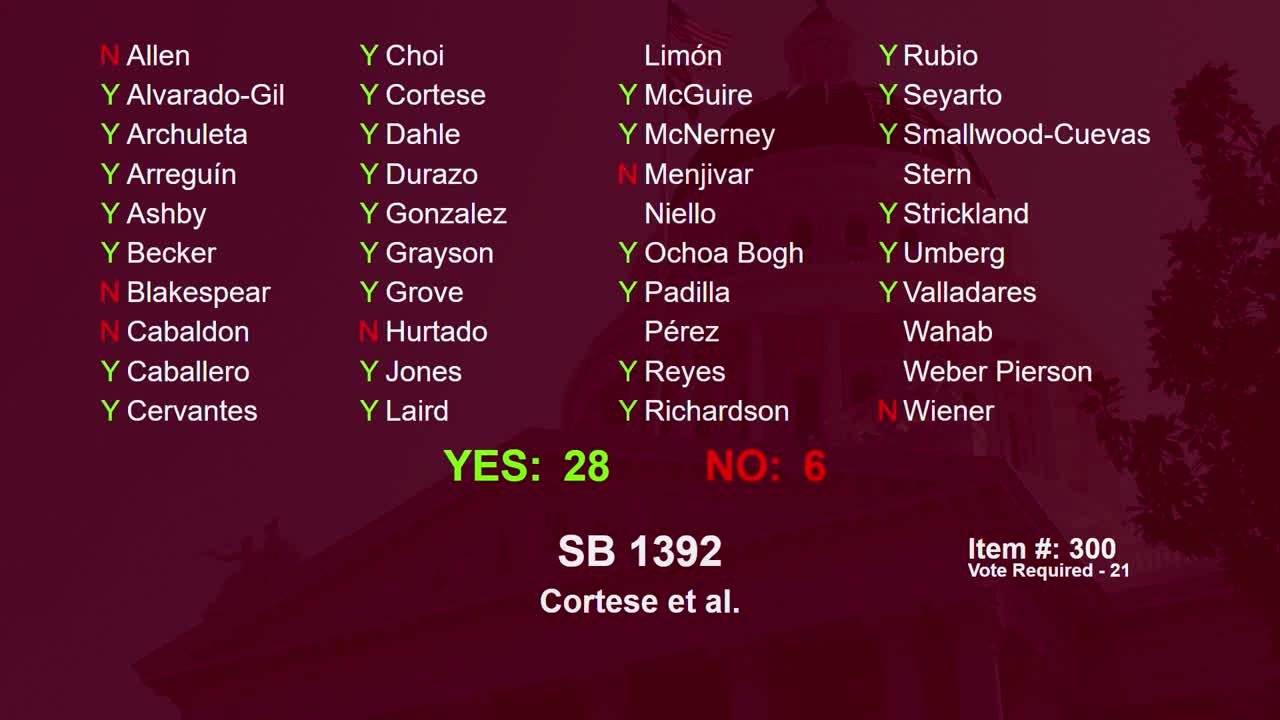


Bill Co-Author(s):