SB 1399: Locked detention facilities: civil immigration: reviews.
- Session Year: 2025-2026
- House: Senate
- Latest Version Date: 2026-09-29
Current Status:
Passed
(2026-09-29: Chaptered by Secretary of State. Chapter 759, Statutes of 2026.)
Introduced
In Committee
Awaiting First Chamber Vote
Passed First Chamber
In Committee
Awaiting Second Chamber Vote
Passed Second Chamber
Enacted
Existing law requires, until July 1, 2027, the Attorney General, or their designee, to engage in reviews of county, local, or private locked detention facilities in which noncitizens are being housed or detained for purposes of civil immigration proceedings in California, and, on or before March 1, 2019, to conduct a review of these facilities, as specified, including a review of the circumstances of apprehension and transfer. Existing law also requires the Department of Justice to provide, during the budget process, updates and information to the Legislature and the Governor, concerning the reviews, as provided and pursuant to a specified date. Existing law requires the comprehensive report to be completed by March 1, 2019, and to be posted on the Attorney Generals internet website and made available to the public, as provided. Existing law makes these provisions inoperative on July 1, 2027, and repeals those provisions January 1, 2028.
This bill would delete all dates specified above, including inoperative and repeal provisions, thereby indefinitely extending those provisions, and would delete the requirement for the review to include an individuals circumstances of apprehension and transfer. The bill would also make nonsubstantive changes.
Existing law requires, until July 1, 2027, the Attorney General, or their designee, to engage in reviews of county, local, or private locked detention facilities in which noncitizens are being housed or detained for purposes of civil immigration proceedings in California, and, on or before March 1, 2019, to conduct a review of these facilities, as specified, including a review of the circumstances of apprehension and transfer. Existing law also requires the Department of Justice to provide, during the budget process, updates and information to the Legislature and the Governor, concerning the reviews, as provided and pursuant to a specified date. Existing law requires the comprehensive report to be completed by March 1, 2019, and to be posted on the Attorney Generals internet website and made available to the public, as provided. Existing law makes these provisions inoperative on July 1, 2027, and repeals those provisions January 1, 2028.
This bill would delete all dates specified above, including inoperative and repeal provisions, thereby indefinitely extending those provisions. The bill provisions, and would also delete the requirement for the review to include an individuals circumstances of apprehension and transfer. The bill would also make nonsubstantive changes.
Existing law requires, until July 1, 2027, the Attorney General, or their designee, to engage in reviews of county, local, or private locked detention facilities in which noncitizens are being housed or detained for purposes of civil immigration proceedings in California, and, on or before March 1, 2019, to conduct a review of these facilities, as specified. specified, including a review of the circumstances of apprehension and transfer. Existing law also requires the Department of Justice to provide, during the budget process, updates and information to the Legislature and the Governor, concerning the reviews, as provided and pursuant to a specified date. Existing law requires the comprehensive report to be completed by March 1, 2019, and to be posted on the Attorney Generals internet website and made available to the public, as provided. Existing law makes these provisions inoperative on July 1, 2027, and repeals those provisions January 1, 2028.
This bill would delete all dates specified above, including inoperative and repeal provisions, thereby indefinitely extending those provisions. The bill would also delete the requirement for the review to include an individuals circumstances of apprehension and transfer.
Existing law requires, until July 1, 2027, the Attorney General, or their designee, to engage in reviews of county, local, or private locked detention facilities in which noncitizens are being housed or detained for purposes of civil immigration proceedings in California, and, on or before March 1, 2019, to conduct a review of these facilities, as specified. Existing law also requires the Department of Justice to provide, during the budget process, updates and information to the Legislature and the Governor, concerning the reviews, as provided and pursuant to a specified date. Existing law requires the comprehensive report to be completed by March 1, 2019, and to be posted on the Attorney Generals internet website and made available to the public, as provided. Existing law makes these provisions inoperative on July 1, 2027, and repeals those provisions January 1, 2028.
This bill would delete all dates specified above, including inoperative and repeal provisions, thereby indefinitely extending those provisions.
(a)The Attorney General, or the Attorney Generals designee, shall engage in reviews of county, local, or private locked detention facilities in which noncitizens are being housed or detained for purposes of civil immigration proceedings in California, including any county, local, or private locked detention facility in which an accompanied or unaccompanied minor is housed or detained on behalf of, or pursuant to a contract with, the federal Office of Refugee Resettlement or the United States Immigration and Customs Enforcement. The Department of Justice shall determine the order and number of facilities to be reviewed. The Attorney General, or the Attorney Generals designee, shall have authority over which facilities may be reviewed and when. The Department of Justice shall provide, during the budget process, updates and information to the Legislature and the Governor, including a written summary of findings, if appropriate, regarding the progress of these reviews and any relevant findings.
(b)The Attorney General, or the Attorney Generals designee, shall conduct a review of county, local, or private locked detention facilities in which noncitizens are being housed or detained for purposes of civil immigration proceedings in California, including any county, local, or private locked detention facility in which an accompanied or unaccompanied minor is housed or detained on behalf of, or pursuant to a contract with, the federal Office of Refugee Resettlement or the United States Immigration and Customs Enforcement. The Department of Justice shall determine the order and number of facilities to be reviewed.
(1)This review shall include, but not be limited to, the following:
(A)A review of the conditions of confinement.
(B)A review of the standard of care and due process provided to the individuals described in subdivision (a).
(2)The Attorney General, or the Attorney Generals designee, shall provide the Legislature and the Governor with a comprehensive report outlining the findings of the review described in this subdivision, which shall be posted on the Attorney Generals internet website and otherwise made available to the public upon its release to the Legislature and the Governor. The Department of Justice shall provide, during the budget process, updates and information to the Legislature and the Governor, including a written summary of findings, if appropriate, regarding the progress of the review described in this subdivision and any relevant findings.
(c)The Attorney General, or the Attorney Generals designee, shall be provided all necessary access for the observations necessary to effectuate reviews required pursuant to this section, including, but not limited to, access to detainees, officials, personnel, and records.
(a)The Attorney General, or the Attorney Generals designee, shall engage in reviews of county, local, or private locked detention facilities in which noncitizens are being housed or detained for purposes of civil immigration proceedings in California, including any county, local, or private locked detention facility in which an accompanied or unaccompanied minor is housed or detained on behalf of, or pursuant to a contract with, the federal Office of Refugee Resettlement or the United States Immigration and Customs Enforcement. The Department of Justice shall determine the order and number of facilities to be reviewed shall be determined by the Department of Justice. reviewed. The Attorney General, or the Attorney Generals designee, shall have authority over which facilities may be reviewed and when. The Department of Justice shall provide, during the budget process, updates and information to the Legislature and the Governor, including a written summary of findings, if appropriate, regarding the progress of these reviews and any relevant findings.
(b)The Attorney General, or the Attorney Generals designee, shall conduct a review of county, local, or private locked detention facilities in which noncitizens are being housed or detained for purposes of civil immigration proceedings in California, including any county, local, or private locked detention facility in which an accompanied or unaccompanied minor is housed or detained on behalf of, or pursuant to a contract with, the federal Office of Refugee Resettlement or the United States Immigration and Customs Enforcement. The Department of Justice shall determine the order and number of facilities to be reviewed shall be determined by the Department of Justice. reviewed.
(1)This review shall include, but not be limited to, the following:
(A)A review of the conditions of confinement.
(B)A review of the standard of care and due process provided to the individuals described in subdivision (a).
(2)The Attorney General, or the Attorney Generals designee, shall provide the Legislature and the Governor with a comprehensive report outlining the findings of the review described in this subdivision, which shall be posted on the Attorney Generals internet website and otherwise made available to the public upon its release to the Legislature and the Governor. The Department of Justice shall provide, during the budget process, updates and information to the Legislature and the Governor, including a written summary of findings, if appropriate, regarding the progress of the review described in this subdivision and any relevant findings.
(c)The Attorney General, or the Attorney Generals designee, shall be provided all necessary access for the observations necessary to effectuate reviews required pursuant to this section, including, but not limited to, access to detainees, officials, personnel, and records.
REVISIONS: HeadingLines 4 and 5.(a)The Attorney General, or the Attorney Generals designee, shall engage in reviews of county, local, or private locked detention facilities in which noncitizens are being housed or detained for purposes of civil immigration proceedings in California, including any county, local, or private locked detention facility in which an accompanied or unaccompanied minor is housed or detained on behalf of, or pursuant to a contract with, the federal Office of Refugee Resettlement or the United States Immigration and Customs Enforcement. The order and number of facilities to be reviewed shall be determined by the Department of Justice. The Attorney General, or the Attorney Generals designee, shall have authority over which facilities may be reviewed and when. The Department of Justice shall provide, during the budget process, updates and information to the Legislature and the Governor, including a written summary of findings, if appropriate, regarding the progress of these reviews and any relevant findings.
(b)The Attorney General, or the Attorney Generals designee, shall conduct a review of county, local, or private locked detention facilities in which noncitizens are being housed or detained for purposes of civil immigration proceedings in California, including any county, local, or private locked detention facility in which an accompanied or unaccompanied minor is housed or detained on behalf of, or pursuant to a contract with, the federal Office of Refugee Resettlement or the United States Immigration and Customs Enforcement. The order and number of facilities to be reviewed shall be determined by the Department of Justice.
(1)This review shall include, but not be limited to, the following:
(A)A review of the conditions of confinement.
(B)A review of the standard of care and due process provided to the individuals described in subdivision (a).
(C)A review of the circumstances around their apprehension and transfer to the facility.(2)The Attorney General, or the Attorney Generals designee, shall provide the Legislature and the Governor with a comprehensive report outlining the findings of the review described in this subdivision, which shall be posted on the Attorney Generals internet website and otherwise made available to the public upon its release to the Legislature and the Governor. The Department of Justice shall provide, during the budget process, updates and information to the Legislature and the Governor, including a written summary of findings, if appropriate, regarding the progress of the review described in this subdivision and any relevant findings.
(c)The Attorney General, or the Attorney Generals designee, shall be provided all necessary access for the observations necessary to effectuate reviews required pursuant to this section, including, but not limited to, access to detainees, officials, personnel, and records.
(a)Until July 1, 2027, the The Attorney General, or the Attorney Generals designee, shall engage in reviews of county, local, or private locked detention facilities in which noncitizens are being housed or detained for purposes of civil immigration proceedings in California, including any county, local, or private locked detention facility in which an accompanied or unaccompanied minor is housed or detained on behalf of, or pursuant to a contract with, the federal Office of Refugee Resettlement or the United States Immigration and Customs Enforcement. The order and number of facilities to be reviewed shall be determined by the Department of Justice. The Attorney General, or the Attorney Generals designee, shall have authority over which facilities may be reviewed and when. The Department of Justice shall provide, during the budget process, updates and information to the Legislature and the Governor, including a written summary of findings, if appropriate, regarding the progress of these reviews and any relevant findings.
(b)The Attorney General, or the Attorney Generals designee, shall, on or before March 1, 2019, shall conduct a review of county, local, or private locked detention facilities in which noncitizens are being housed or detained for purposes of civil immigration proceedings in California, including any county, local, or private locked detention facility in which an accompanied or unaccompanied minor is housed or detained on behalf of, or pursuant to a contract with, the federal Office of Refugee Resettlement or the United States Immigration and Customs Enforcement. The order and number of facilities to be reviewed shall be determined by the Department of Justice.
(1)This review shall include, but not be limited to, the following:
(A)A review of the conditions of confinement.
(B)A review of the standard of care and due process provided to the individuals described in subdivision (a).
(C)A review of the circumstances around their apprehension and transfer to the facility.
(2)The Attorney General, or the Attorney Generals designee, shall provide, on or before March 1, 2019, provide the Legislature and the Governor with a comprehensive report outlining the findings of the review described in this subdivision, which shall be posted on the Attorney Generals internet website and otherwise made available to the public upon its release to the Legislature and the Governor. The Department of Justice shall provide, during the budget process, updates and information to the Legislature and the Governor, including a written summary of findings, if appropriate, regarding the progress of the review described in this subdivision and any relevant findings.
(c)The Attorney General, or the Attorney Generals designee, shall be provided all necessary access for the observations necessary to effectuate reviews required pursuant to this section, including, but not limited to, access to detainees, officials, personnel, and records.
(d)This section shall become inoperative on July 1, 2027, and, as of January 1, 2028, is repealed.|
Date
|
Status
|
|---|---|
| Sep 29, 2026 | Chaptered by Secretary of State. Chapter 759, Statutes of 2026. |
| Sep 29, 2026 | Approved by the Governor. |
| Sep 8, 2026 | Enrolled and presented to the Governor at 4 p.m. |
| Aug 30, 2026 | In Senate. Ordered to engrossing and enrolling. |
| Aug 30, 2026 | Read third time. Passed. (Ayes 59. Noes 19. Page 6905.) Ordered to the Senate. |
| Aug 30, 2026 | Read third time. Passed. Ordered to the Senate. |
| Aug 13, 2026 | Read second time. Ordered to third reading. |
| Aug 13, 2026 | From committee: Do pass. (Ayes 11. Noes 4.) (August 13). |
| Aug 13, 2026 | Assembly Rule 63 suspended. |
| Aug 5, 2026 | August 5 set for first hearing. Placed on suspense file. |
| Jun 16, 2026 | Coauthors revised. |
| Jun 16, 2026 | From committee: Do pass and re-refer to Com. on APPR. (Ayes 9. Noes 3.) (June 16). Re-referred to Com. on APPR. |
| Jun 1, 2026 | Referred to Com. on JUD. |
| May 26, 2026 | In Assembly. Read first time. Held at Desk. |
| May 26, 2026 | Read third time. Passed. (Ayes 29. Noes 7. Page 4442.) Ordered to the Assembly. |
| May 26, 2026 | Read third time. Passed. (Ayes 29. Noes 7.) Ordered to the Assembly. |
| May 19, 2026 | Read second time. Ordered to third reading. |
| May 18, 2026 | Ordered to second reading. |
| May 18, 2026 | Read third time and amended. |
| May 14, 2026 | From committee: Do pass. (Ayes 5. Noes 1. Page 4276.) (May 14). |
| May 14, 2026 | Read second time. Ordered to third reading. |
| May 14, 2026 | From committee: Do pass. (Ayes 5. Noes 1.) (May 14). |
| May 8, 2026 | Set for hearing May 14. |
| Apr 20, 2026 | April 20 hearing: Placed on APPR. suspense file. |
| Apr 10, 2026 | Set for hearing April 20. |
| Apr 8, 2026 | From committee: Do pass and re-refer to Com. on APPR. (Ayes 10. Noes 0. Page 3758.) (April 7). Re-referred to Com. on APPR. |
| Apr 8, 2026 | From committee: Do pass and re-refer to Com. on APPR. (Ayes 10. Noes 0.) (April 7). Re-referred to Com. on APPR. |
| Mar 23, 2026 | Set for hearing April 7. |
| Mar 23, 2026 | From committee with author's amendments. Read second time and amended. Re-referred to Com. on JUD. |
| Mar 4, 2026 | Referred to Com. on JUD. |
| Feb 23, 2026 | Read first time. |
| Feb 23, 2026 | From printer. May be acted upon on or after March 23. |
| Feb 20, 2026 | Introduced. To Com. on RLS. for assignment. To print. |
|
Date
|
Description
|
Location
|
Votes
|
|
|---|---|---|---|---|
| Aug 30, 2026 | SB 1399 Durazo Senate Third Reading By Calderon | Assembly Floor |
Passed |
|
| Aug 13, 2026 | Do pass. | Assembly Standing Committee on Appropriations |
Passed |
|
| Jun 16, 2026 | Do pass and be re-referred to the Committee on [Appropriations] | Assembly Standing Committee on Judiciary |
Passed |
|
| May 26, 2026 | Senate 3rd Reading SB1399 Durazo et al. | Senate Floor |
Passed |
|
| May 14, 2026 | Do pass | Senate Standing Committee on Appropriations |
Passed |
|
| Apr 20, 2026 | Placed on suspense file | Senate Standing Committee on Appropriations |
Passed |
|
| Apr 7, 2026 | Do pass, but first be re-referred to the Committee on [Appropriations] | Senate Standing Committee on Judiciary |
Passed |
This list shows positions taken on this bill by organizations on the date displayed, which is linked to the original source.
Positions by individuals are not included.
|
Organization
|
Position
|
Date
|
|---|---|---|
| Acacia Center for Justice | ** Support | |
| Attorney General Rob Bonta | ** Support | |
| California Collaborative for Immigrant Justice | ** Support | |
| California Department of Justice (Co-Sponsor) | ** Support | |
| California Immigrant Policy Center | ** Support | |
| Center for Gender & Refugee Studies–California | ** Support | |
| Central American Resource Center (CARECEN) | ** Support | |
| Central Valley Immigrant Integration Collaborative | ** Support | |
| centro binacional para el desarrollo indigena oaxaqueno | ** Support | |
| Centro Binacional Para El Desarrollo Indigena Oaxaqueño (CBDIO) | ** Support | |
| County of Santa Clara | ** Support | |
| Immigrant Defenders Law Center | ** Support | |
| Immigrant Defense Advocates | ** Support | |
| Immigrant Defense Advocates (co-sponsor) | ** Support | |
| Immigrant Legal Defense | ** Support | |
| Lawyers Committee for Civil Rights of the San Francisco Bay Area | ** Support | |
| Lawyers’ Committee for Civil Rights of the San Francisco Bay Area | ** Support | |
| Oasis Legal Services | ** Support | |
| Office of the Attorney General | ** Support | |
| Office of the Attorney General Rob Bonta | ** Support | |
| Open Immigration Legal Services | ** Support | |
| Public Counsel | ** Support | |
| Riverside Sheriffs' Association | ** Support | |
| SOLEDAD; CITY OF | ** Support | |
| South Asian Network | ** Support | |
| Unidosus | ** Support | |
| Vital Immigrant Defense Advocacy and Services | ** Support | |
| Werner-Kohnstamm Family Giving Fund | ** Support |
SENATE THIRD READING
STR Bill Id:SB 1399
Author:(Durazo)
As Amended Ver:May 18, 2026
Majority vote
SUMMARY
Removes a sunset clause repealing the requirement that the Attorney General (AG) engage in reviews of county, local, or private locked detention facilities in California in which noncitizens are being detained for purposes of civil immigration enforcement and issue a report on their findings, and deletes a requirement that the AG's review include a review of the circumstances around their apprehension and transfer to the facility.
Major Provisions
COMMENTS
As part of its response to the first Trump Administration, the Legislature approved AB 103 (Committee on Public Safety) Chapter 17, Statutes of 2017, which, in part, required the Attorney General to conduct oversight and reviews of private detention facilities, including "any county, local, or private locked detention facility," in which noncitizens are being detained for purposes of civil immigration proceedings. More specifically, AB 103 required the AG to include in its review 1) a review of the conditions of confinement, 2) a review of the standard of care and due process provided to the individuals detained, and 3) a review of the circumstances around their apprehension and transfer to the facility. This requirement was enacted in addition to the previously existing responsibility for the Board of State and Community Corrections to establish minimum standards for local correctional facilities and inspect local detention facilities at least biennially. (Penal Code Sections 6030, 6031.) Additionally, the statute required the AG to provide a report to the Legislature and Governor by March 1, 2019 outlining their findings of the review.
Of additional note, Government Code Section 12532, the statute enacted via AB 103, only required the AG to conduct a review on or before March 1, 2019. The statute does not mandate any additional review or require that review occur on a particular timeline, instead it only requires the AG to engage in reviews until July 1, 2027, at which point the statute sunsets. The statute also required the AG to provide a report to the Governor and Legislature detailing findings of the review by March 1, 2019, but does not require any subsequent report. Despite the lack of a clear statutory mandate to do so, the California Department of Justice (DOJ) has completed nearly annual oversight and reviews of private detention facilities, and published reports in 2019, 2021, 2022, 2025, and most recently in May 2026.
In its most recent report, the DOJ found that conditions in seven private detention centers across California had worsened since its 2025 report. The report points to six deaths, four at Adelanto ICE Processing Center and two at the Imperial Regional Center, that "raise serious concerns about these facilities' ability to safely detain a growing detainee population and highlight the need for greater accountability and oversight." (Cal. Department of Justice, 2026 Immigration Detention in California: A Review of Conditions of Confinement (2026) Executive Summary, p. 4, available at: https://oag.ca.gov/system/files/media/immigration-detention-2026.pdf.)
Shortly after AB 103 was enacted, the Trump Administration challenged its provisions along with various other statutes enacted that same year, all of which sought to protect California's immigrant communities from the federal administration's immigration enforcement efforts. On appeal before the Ninth Circuit, the Trump administration argued that AB 103 violated the doctrine of intergovernmental immunity by impermissibly imposing a burden on the federal government. The Ninth Circuit agreed in part that "provisions that impose an additional economic burden exclusively on the federal government are invalid under the doctrine of intergovernmental immunity." (United States v. California (2019) 921 F. 3d 865, 884.) The circuit court ultimately determined that the provision of AB 103 requiring the AG to conduct a "review of the circumstances around [detainees] apprehension and transfer to the facility" imposed an unconstitutional burden on the federal government because, unlike the other two requirements, "[t]his [was] a novel requirement, apparently distinct from any other inspection requirements imposed by California law." (Id. at 885.) As a result, subdivision (b)(1)(C) was preempted, but the remaining provisions were left intact.
This bill removes the sunset in Section 12532 effectively making permanent the AG's obligation to review and report on private immigration detention facilities in the state. Additionally, the bill strikes subdivision (b)(1)(C) thereby removing the language found unconstitutional by the Ninth Circuit.
According to the Author
California has a responsibility to understand and protect the dignity and safety of all residents, including individuals in immigration detention. The poor health and safety conditions in detention facilities are documented in numerous investigations that report incidents of sexual assault, use of force, inadequate medical and mental health care, and solitary confinement. Inspections continue to reveal that long-standing problems persist, and new findings show these facilities urgently need major improvements to meet ICE's own standards for health and safety. The federal government's elimination of any meaningful oversight of these facilities and increased immigration enforcement risk worsening already inhumane conditions, endangering lives, and deepening suffering through overcrowding and neglect.
California took a definitive stance to provide public transparency by passing Government Code section 12532 which requires inspections of these facilities. Since 2017, the California Department of Justice has reported on detention facilities and the treatment of thousands of detainees under this law. The reports have covered critical observations related to pat downs, medical health records, suicide and intervention, use of force practices, discipline, solitary confinement, medical care, and due process.
SB 1399 removes the sunset provision from Section 12532 and a requirement that was invalidated by the courts, and preserves public transparency by sustaining Cal DOJ’s reporting framework to ensure that the truth about conditions inside detention facilities are revealed.
Arguments in Support
This bill is sponsored by the Office of the Attorney General Rob Bonta and Immigrant Defense Advocates. It is additionally supported by a number of immigrant rights and civil rights advocates, legal service providers, and local government entities. In support of the measure, Immigrant Defense Advocates submit:
California has a responsibility to understand and protect the dignity, health, and safety of all residents—including individuals held in immigration detention. California's existing detention-facility review framework, established under AB 103 (2017), requires the California Department of Justice (Cal DOJ) through July 1, 2027 to report on conditions of confinement as well as the standard of care and due process provided to detained individuals. SB 1399 is necessary because it removes the sunset provisions and sustains Cal DOJ’s reporting authority so these critical reports continue beyond 2027.
Recent Cal DOJ reporting underscores why ongoing oversight is essential. Since AB 103’s implementation, Cal DOJ has published reports in 2019, 2021, 2022, and 2025, based on facility visits, review of logs, policies, and detainee records, and interviews with staff and detained individuals. The 2025 report placed a particular focus on mental health needs, examining the availability and quality of care, the prevalence of mental health conditions, and how conditions of confinement affect well-being and due process rights. Cal DOJ's findings highlight inadequate mental health services and medical care, as well as due process violations—failures that can be life-threatening for a population already facing high rates of depression, anxiety, PTSD, and self-harm.
These reports are a vital public accountability tool—especially as the detained population grows and federal oversight has become increasingly insufficient. Without continued state reporting, serious health and safety concerns risk remaining hidden from the public and policymakers, even as overcrowding and neglect worsen conditions inside facilities. The state must be able to document and publicly report what is happening inside detention centers, including whether facilities are meeting basic health and safety standards and whether detained people are receiving appropriate medical and mental health care.
SB 1399 will ensure continued, independent reporting on detention conditions by sustaining Cal DOJ's authority to conduct and publish reviews, including—at minimum—(1) review of conditions of confinement and (2) review of the standard of care and due process provided to individuals held at these facilities. This transparency is essential for protecting health and safety, informing legislative oversight, and preventing recurring harms.
Arguments in Opposition
None on file
FISCAL COMMENTS
According to the Assembly Appropriations Committee, ongoing costs to the Department of Justice (DOJ) (General Fund), of at least $1 million annually, to continue conducting facility reviews and issuing reports after the requirement would otherwise sunset on July 1, 2027. By removing the sunset, the bill extends in perpetuity a review-and-report obligation the department currently performs on a nearly annual basis. The costs reflect a continuation of existing departmental workload rather than a new activity; however, the workload would otherwise end in 2027, so removing the sunset avoids the elimination of that cost and instead extends the cost indefinitely. Deleting the preempted apprehension-and-transfer review provision reduces the required scope of each review marginally, but the department's continued performance of the two remaining review components is the operative cost driver. For its part, the DOJ reports that in the 2025-2026 fiscal year, DOJ's Civil Rights Enforcement Section (CRES) has spent 6,698 attorney hours and 7,532 total hours on AB 103-related work, for a total staff-time expenditure of $1,695,757 in this fiscal year. CRES has also contracted experts in immigration detention and in medical care in detention facilities to support its AB 103-related work.
VOTES
SENATE FLOOR: 29-7-4
YES: Allen, Archuleta, Arreguín, Ashby, Becker, Blakespear, Cabaldon, Caballero, Cervantes, Cortese, Durazo, Grayson, Hurtado, Laird, Limón, McGuire, McNerney, Menjivar, Padilla, Pérez, Reyes, Richardson, Rubio, Smallwood-Cuevas, Stern, Umberg, Wahab, Weber Pierson, Wiener
NO: Alvarado-Gil, Choi, Grove, Jones, Ochoa Bogh, Seyarto, Strickland
ABS, ABST OR NV: Dahle, Gonzalez, Niello, Valladares
ASM JUDICIARY: 9-3-0
YES: Kalra, Bauer-Kahan, Bryan, Connolly, Harabedian, Pacheco, Papan, Stefani, Zbur
NO: Macedo, Dixon, Sanchez
ASM APPROPRIATIONS: 11-4-0
YES: Wicks, Arambula, Calderon, Caloza, Fong, Mark González, Krell, Pacheco, Pellerin, Sharp-Collins, Solache
NO: Hoover, Dixon, Ta, Tangipa
UPDATED
VERSION: May 18, 2026
CONSULTANT: Manuela Boucher-de la Cadena / JUD. / (916) 319-2334 FN: 0003463
Date of Hearing: August 5, 2026
ASSEMBLY COMMITTEE ON APPROPRIATIONS
Buffy Wicks, Chair
SBPCA Bill Id:SB 1399
Author:(Durazo) – As Amended Ver:May 18, 2026
Policy Committee: | Judiciary | Vote: | 9 - 3 |
|
| ||
|
|
Urgency: No State Mandated Local Program: No Reimbursable: No
SUMMARY:
This bill removes the sunset clause that repeals, on January 1, 2028, the requirement that the Attorney General review county, local, or private locked detention facilities in California in which noncitizens are detained for purposes of civil immigration proceedings and report findings, thereby making permanent the review-and-report requirement in AB 103 (Committee on Public Safety), Chapter 17, Statutes of 2017. The bill also deletes the requirement that the review include the circumstances around detainees’ apprehension and transfer to the facility — a provision a federal court found preempted.
FISCAL EFFECT:
Ongoing costs to the Department of Justice (DOJ) (General Fund), of at least $1 million annually, to continue conducting facility reviews and issuing reports after the requirement would otherwise sunset on July 1, 2027. By removing the sunset, the bill extends in perpetuity a review-and-report obligation the department currently performs on a nearly annual basis. The costs reflect a continuation of existing departmental workload rather than a new activity; however, the workload would otherwise end in 2027, so removing the sunset avoids the elimination of that cost and instead extends the cost indefinitely. Deleting the preempted apprehension-and-transfer review provision reduces the required scope of each review marginally, but the department’s continued performance of the two remaining review components is the operative cost driver. For its part, the DOJ reports that in the 2025-2026 fiscal year, DOJ’s Civil Rights Enforcement Section (CRES) has spent 6,698 attorney hours and 7,532 total hours on AB 103-related work, for a total staff-time expenditure of $1,695,757 in this fiscal year. CRES has also contracted experts in immigration detention and in medical care in detention facilities to support its AB 103-related work.
COMMENTS:
- Purpose. According to the author, California has a responsibility to understand and protect the dignity and safety of all residents, including individuals in immigration detention, and the poor health and safety conditions in these facilities are documented in numerous investigations. The author states that SB 1399 removes the sunset from Section 12532 and the requirement invalidated by the courts, and preserves public transparency by sustaining the Department of Justice’s reporting framework so that conditions inside detention facilities continue to be revealed.
- Background. AB 103 (Committee on Public Safety), Chapter 17, Statutes of 2017, required the Attorney General to review county, local, and private locked detention facilities housing noncitizens for civil immigration proceedings, to examine the conditions of confinement, the standard of care and due process, and the circumstances of apprehension and transfer, and to report findings to the Legislature and Governor. The statute included a sunset repealing the requirement effective January 1, 2028. In United States v. California (2019), the Ninth Circuit held that the apprehension-and-transfer review component imposed an impermissible burden on the federal government under the doctrine of intergovernmental immunity and was preempted, while leaving the remaining review requirements intact. Although Section 12532 expressly mandates only a single review on or before March 1, 2019, the Department of Justice has conducted nearly annual reviews and published reports in 2019, 2021, 2022, 2025, and May 2026. This bill removes the sunset, making the review-and-report requirement permanent, and strikes the preempted apprehension-and-transfer component.
- Related Legislation. SB 942 (Caballero), of this legislative session, establishes the Civil Detainees’ Bill of Rights Act of 2026, enumerating the rights of persons detained for purposes of civil immigration proceedings at any state, county, local, or private locked detention facility, requiring facility operators to ensure those rights are protected, and authorizing the Attorney General to bring civil actions for injunctive relief and civil penalties. SB 942 is pending in this committee.
Analysis Prepared by: Shiran Zohar / APPR. / (916) 319-2081
Date of Hearing: June 16, 2026
ASSEMBLY COMMITTEE ON JUDICIARY
Ash Kalra, Chair
SBPCA Bill Id:SB 1399
Author:(Durazo) – As Amended Ver:May 18, 2026
SENATE VOTE: 29-7
SUBJECT: LOCKED DETENTION FACILITIES: CIVIL IMMIGRATION: REVIEWS
SYNOPSIS
In 2017 the Legislature granted the Attorney General (AG) oversight of private detention facilities in the state that housed noncitizens for the purpose of civil immigration proceedings. That statute, enacted via AB 103 (Committee on Public Safety) Chap. 17, Stats. 2017, required the AG to conduct reviews of those private detention facilities and specifically report on the conditions of confinement, the standard of care and due process provided to detained individuals, and the circumstances around detainees’ apprehension and transfer to the private detention facility. Potentially considering the possibility of two consecutive Trump administrations, the bill included a sunset clause which repeals the statute in July 2027. Additionally, in 2019, the Ninth Circuit held that the provision requiring the AG to review the circumstances around detainees’ apprehension and transfer was preempted. This bill addresses both elements by removing the sunset clause, thereby imposing the statute’s oversight responsibility on the AG in perpetuity, and removing the provision deemed unconstitutional by the Ninth Circuit.
This bill is sponsored by the Office of Attorney General Rob Bonta and Immigrant Defense Advocates who contend the statute provides a vital tool for accountability and oversight. It is additionally supported by a number of immigrant rights and civil rights advocates, legal service providers, and local government entities. There is no known opposition.
SUMMARY: Removes a sunset clause repealing the requirement that the Attorney General engage in reviews of county, local, or private locked detention facilities in California in which noncitizens are being detained for purposes of civil immigration enforcement and issue a report on their findings, and deletes a requirement that the AG’s review include a review of the circumstances around their apprehension and transfer to the facility.
EXISTING LAW:
- Requires, until July 1, 2027, the Attorney General or the Attorney General’s designee to engage in reviews of county, local, or private locked detention facilities in which noncitizens are being housed or detained for purposes of civil immigration proceedings in California, including any county, local, or private locked detention facility in which an accompanied or unaccompanied minor is housed or detained on behalf of, or pursuant to a contract with, the federal Office of Refugee Resettlement or the United States Immigration and Customs Enforcement. Requires the Department of Justice to determine the order and number of facilities to be reviewed, and grants the Attorney General or their designee the authority over which facilities may be reviewed and when. Requires the Department of Justice to provide, during the budget process, updates and information to the Legislature and the Governor, including a written summary of findings, if appropriate, regarding the progress of these reviews and relevant findings. (Government Code Section 12532 (a). All further statutory references are to the Government Code unless otherwise specified.)
- Requires the Attorney General, or their designee, on or before March 1, 2019, to conduct a review of county, local, or private locked detention facilities in which noncitizens are being housed or detained for purposes of civil immigration proceedings in California, including any county, local, or private locked detention facility in which an accompanied or unaccompanied minor is housed or detained on behalf of, or pursuant to a contract with, the federal Office of Refugee Resettlement or the United States Immigration and Customs Enforcement. Requires the Department of Justice to determine the order and number of facilities to be reviewed. (Section 12532 (b).)
- Requires the review to include, but not be limited to, the following:
- The review of the conditions of confinement, standard of care and due process provided to the individuals detained in the facilities for purposes of civil immigration proceedings;
- A review of the circumstances around their apprehension and transfer to the facility. (Section 12532 (b)(1).)
- Requires the Attorney General, or their designee, to provide, on or before March 1, 2019, the Legislature and the Governor with a comprehensive report outlining the findings of the review, and requires the report to be posted on the Attorney General’s internet website and otherwise made available to the public upon its release to the Legislature and the Governor. Requires the Department of Justice to provide, during the budget process, updates and information to the Legislature and the Governor, including a written summary of findings, if appropriate, regarding the progress of the review and any relevant findings. (Section 12532 (b)(2).)
- Requires the Attorney General, or the Attorney General’s designee, to be provided all necessary access for the observations necessary to effectuate reviews required, including, but not limited to, access to detainees, officials, personnel, and records. (Section 12532 (c).)
- Sunsets the section on July 1, 2027, and repeals it on January 1, 2028. (Section 12532 (d).)
FISCAL EFFECT: As currently in print this bill is keyed fiscal.
COMMENTS: As part of its response to the first Trump Administration, the Legislature approved AB 103 (Committee on Public Safety) Chap. 17, Stats. 2017, which, in part, required the Attorney General to conduct oversight and reviews of private detention facilities, including “any county, local, or private locked detention facility,” in which noncitizens are being detained for purposes of civil immigration proceedings. More specifically, AB 103 required the AG to include in its review 1) a review of the conditions of confinement, 2) a review of the standard of care and due process provided to the individuals detained, and 3) a review of the circumstances around their apprehension and transfer to the facility. This requirement was enacted in addition to the previously existing responsibility for the Board of State and Community Corrections to establish minimum standards for local correctional facilities and inspect local detention facilities at least biennially. (Penal Code Sections 6030, 6031.) Additionally, the statute required the AG to provide a report to the Legislature and Governor by March 1, 2019 outlining their findings of the review.
Of additional note, Government Code Section 12532, the statute enacted via AB 103, only required the AG to conduct a review on or before March 1, 2019. The statute does not mandate any additional review or require that review occur on a particular timeline, instead it only requires the AG to engage in reviews until July 1, 2027, at which point the statute sunsets. The statute also required the AG to provide a report to the Governor and Legislature detailing findings of the review by March 1, 2019, but does not require any subsequent report. Despite the lack of a clear statutory mandate to do so, the California Department of Justice (DOJ) has completed nearly annual oversight and reviews of private detention facilities, and published reports in 2019, 2021, 2022, 2025, and most recently in May 2026.
In its most recent report, the DOJ found that conditions in seven private detention centers across California had worsened since its 2025 report. The report points to six deaths, four at Adelanto ICE Processing Center and two at the Imperial Regional Center, that “raise serious concerns about these facilities’ ability to safely detain a growing detainee population and highlight the need for greater accountability and oversight.” (Cal. Department of Justice, 2026 Immigration Detention in California: A Review of Conditions of Confinement (2026) Executive Summary, p. 4, available at: https://oag.ca.gov/system/files/media/immigration-detention-2026.pdf.)
Shortly after AB 103 was enacted, the Trump Administration challenged its provisions along with various other statutes enacted that same year, all of which sought to protect California’s immigrant communities from the federal administration’s immigration enforcement efforts. On appeal before the Ninth Circuit, the Trump administration argued that AB 103 violated the doctrine of intergovernmental immunity by impermissibly imposing a burden on the federal government. The Ninth Circuit agreed in part that “provisions that impose an additional economic burden exclusively on the federal government are invalid under the doctrine of intergovernmental immunity.” (United States v. California (2019) 921 F. 3d 865, 884.) The circuit court ultimately determined that the provision of AB 103 requiring the AG to conduct a “review of the circumstances around [detainees] apprehension and transfer to the facility” imposed an unconstitutional burden on the federal government because, unlike the other two requirements, “[t]his [was] a novel requirement, apparently distinct from any other inspection requirements imposed by California law.” (Id. at 885.) As a result, subdivision (b)(1)(C) was preempted, but the remaining provisions were left intact.
According to the author:
California has a responsibility to understand and protect the dignity and safety of all residents, including individuals in immigration detention. The poor health and safety conditions in detention facilities are documented in numerous investigations that report incidents of sexual assault, use of force, inadequate medical and mental health care, and solitary confinement. Inspections continue to reveal that long-standing problems persist, and new findings show these facilities urgently need major improvements to meet ICE’s own standards for health and safety. The federal government’s elimination of any meaningful oversight of these facilities and increased immigration enforcement risk worsening already inhumane conditions, endangering lives, and deepening suffering through overcrowding and neglect.
California took a definitive stance to provide public transparency by passing Government Code section 12532 which requires inspections of these facilities. Since 2017, the California Department of Justice has reported on detention facilities and the treatment of thousands of detainees under this law. The reports have covered critical observations related to pat downs, medical health records, suicide and intervention, use of force practices, discipline, solitary confinement, medical care, and due process.
SB 1399 removes the sunset provision from Section 12532 and a requirement that was invalidated by the courts, and preserves public transparency by sustaining Cal DOJ’s reporting framework to ensure that the truth about conditions inside detention facilities are revealed.
This bill removes the sunset in Section 12532 effectively making permanent the AG’s obligation to review and report on private immigration detention facilities in the state. Additionally, the bill strikes subdivision (b)(1)(C) thereby removing the language found unconstitutional by the Ninth Circuit. The initial sunset date may have been appropriate in 2017 contemplating the potential for two consecutive Trump administrations. However, given that Donald Trump did not serve two consecutive terms and his administration will instead control immigration policy through 2028, terminating the DOJ’s oversight in 2027 seems ill-advised. As evidenced by the DOJ’s reports issued as a result of their oversight authority, it is clear that both the public and the detainees housed in these detention centers would benefit from continued oversight.
ARGUMENTS IN SUPPORT: This bill is sponsored by the Office of the Attorney General Rob Bonta and Immigrant Defense Advocates. It is additionally supported by a number of immigrant rights and civil rights advocates, legal service providers, and local government entities. In support of the measure, Immigrant Defense Advocates submit:
California has a responsibility to understand and protect the dignity, health, and safety of all residents—including individuals held in immigration detention. California’s existing detention-facility review framework, established under AB 103 (2017), requires the California Department of Justice (Cal DOJ) through July 1, 2027 to report on conditions of confinement as well as the standard of care and due process provided to detained individuals. SB 1399 is necessary because it removes the sunset provisions and sustains Cal DOJ’s reporting authority so these critical reports continue beyond 2027.
Recent Cal DOJ reporting underscores why ongoing oversight is essential. Since AB 103’s implementation, Cal DOJ has published reports in 2019, 2021, 2022, and 2025, based on facility visits, review of logs, policies, and detainee records, and interviews with staff and detained individuals. The 2025 report placed a particular focus on mental health needs, examining the availability and quality of care, the prevalence of mental health conditions, and how conditions of confinement affect well-being and due process rights. Cal DOJ’s findings highlight inadequate mental health services and medical care, as well as due process violations—failures that can be life-threatening for a population already facing high rates of depression, anxiety, PTSD, and self-harm.
These reports are a vital public accountability tool—especially as the detained population grows and federal oversight has become increasingly insufficient. Without continued state reporting, serious health and safety concerns risk remaining hidden from the public and policymakers, even as overcrowding and neglect worsen conditions inside facilities. The state must be able to document and publicly report what is happening inside detention centers, including whether facilities are meeting basic health and safety standards and whether detained people are receiving appropriate medical and mental health care.
SB 1399 will ensure continued, independent reporting on detention conditions by sustaining Cal DOJ’s authority to conduct and publish reviews, including—at minimum—(1) review of conditions of confinement and (2) review of the standard of care and due process provided to individuals held at these facilities. This transparency is essential for protecting health and safety, informing legislative oversight, and preventing recurring harms.
REGISTERED SUPPORT / OPPOSITION:
Support
California Department of Justice (co-sponsor)
Immigrant Defense Advocates (co-sponsor)
Acacia Center for Justice
California Collaborative for Immigrant Justice
California Immigrant Policy Center
Center for Gender & Refugee Studies–California
Central American Resource Center (CARECEN)
Central Valley Immigrant Integration Collaborative
Centro Binacional Para El Desarrollo Indigena Oaxaqueño (CBDIO)
County of Santa Clara
Immigrant Defenders Law Center
Immigrant Legal Defense
Lawyers Committee for Civil Rights of the San Francisco Bay Area
Oasis Legal Services
Open Immigration Legal Services
Public Counsel
Riverside Sheriffs' Association
Soledad; City of
South Asian Network
Unidosus
Vital Immigrant Defense Advocacy and Services
Werner-Kohnstamm Family Giving Fund
Opposition
None on file
Analysis Prepared by: Manuela Boucher-de la Cadena / JUD. / (916) 319-2334
SENATE RULES COMMITTEE Office of Senate Floor Analyses (916) 651-4171 | SB 1399 |
THIRD READING
Bill No: SB 1399
Author: Durazo (D), et al.
Amended: 5/18/26
Vote: 21
SENATE JUDICIARY COMMITTEE: 10-0, 4/7/26
AYES: Umberg, Allen, Ashby, Caballero, Durazo, Reyes, Stern, Wahab, Weber Pierson, Wiener
NO VOTE RECORDED: Niello, Laird, Valladares
SUBJECT: Locked detention facilities: civil immigration: reviews
SOURCE: Attorney General Rob Bonta
Immigrant Defense Advocates
DIGEST:
This bill removes the July 1, 2027, sunset date from the statute permitting the Attorney General to engage in reviews of local, county, or private locked detention facilities in which noncitizens are housed for immigration purposes in California.
Senate Floor Amendments of 5/18/26 add a co-author and make nonsubstantive grammatical changes.
ANALYSIS:
Existing law:
- Requires the Attorney General or their designee, until July 1, 2027, to engage in reviews of county, local, or private locked detention facilities in which noncitizens are being housed or detained for purposes of civil immigration proceedings in California, including any county, local, or private locked detention facility in which an accompanied or unaccompanied minor is housed or detained on behalf of, or pursuant to a contract with, the federal Office of Refugee Resettlement (ORR) or the United States Immigration and Customs Enforcement (ICE).
- The order and number of facilities to be reviewed shall be determined by the Department of Justice (DOJ).
- The Attorney General or their designee shall have authority over which facilities may be reviewed and when.
- The DOJ shall provide, during the budget process, updates and information to the Legislature and the Governor, including a written summary of findings, if appropriate, regarding the progress of these reviews and any relevant findings. (Government Code (GOV) § 12532(a).)
- Required the Attorney General or their designee, on or before March 1, 2019, to conduct a review of county, local, or private locked detention facilities listed above in 1), with the DOJ determining the order and number of facilities to be determined by the DOJ.
- The review must have included (1) a review of the conditions of confinement, and (2) a review of the standard of care and due process provided to the individuals housed or detained in the facilities.[1]
- The Attorney General or their designee must have provided, on or before March 1, 2019, a comprehensive report of their findings to the Legislature and the Governor, and made that report publicly available, as specified. (GOV § 12532(b).)
- Provides that the Attorney General or their designee shall be provided all necessary access for the observations necessary to effectuate the reviews in 1) and 2), including, but not limited to, access to detainees, officials, personnel, and records. (GOV § 12532(c).)
- Provides that 1)-3) shall become inoperative on July 1, 2027, and shall be repealed on January 1, 2028. (GOV § 12532(d).)
This bill:
- Removes the July 1, 2027, sunset on the provisions requiring the Attorney General or their designee to review and report on county, local, or private locked detention facilities in which noncitizens are being housed or detained.
- Deletes a provision of the statute that was enjoined by the United States Court of Appeals for the Ninth Circuit.
- Makes nonsubstantive technical and conforming changes.
Comments
Current law provides for the inspection and review of detention facilities in the state and allocates responsibility for those reviews to a variety of agencies. The Bureau of Corrections reviews state, local, and private detention facilities; county health officials investigate local and county facilities for health and safety purposes; and the Attorney General, until July 1, 2027, is authorized to conduct reviews of local, county, or private locked detention facilities in which noncitizens are housed for immigration purposes in California. Any such review by the Attorney General must include a review of the conditions of confinement and the standard of care and due process provided to the individuals detained for immigration purposes.
This bill removes the July 1, 2027, sunset date on the Attorney General’s authorization to review detention facilities in which people are detained for immigration purposes. Additionally, this bill removes a provision of the existing statute that was enjoined in a federal lawsuit,[2] so that the statute in print reflects the current state of the law, and makes nonsubstantive conforming changes.
FISCAL EFFECT: Appropriation: No Fiscal Com.: Yes Local: No
According to the Senate Committee on Appropriations, the bill presents a fiscal impact of estimated $1 million annually to continue Department of Justice (DOJ) reviews of detention facilities. Unknown, increasing costs to the extent federal immigration enforcement actions are resulting in more incarcerations of noncitizens. The order and number of facilities reviewed shall be determined by DOJ (General Fund).
SUPPORT: (Verified 5/18/26)
Attorney General Rob Bonta (co-source)
Immigrant Defense Advocates (co-source)
Acacia Center for Justice
California Collaborative for Immigrant Justice
California Immigrant Policy Center
Center for Gender & Refugee Studies-California
Central American Resource Center of California
Central Valley Immigrant Integration Collaborative
Centro Binacional Para el Desarrollo Indígena Oaxaqueño
City of Soledad
Immigrant Legal Defense
Lawyers’ Committee for Civil Rights of the San Francisco Bay Area
Oasis Legal Services
Open Immigration Legal Services
Public Counsel
South Asian Network
UnidosUS
Vital Immigrant Defense Advocacy and Services
Werner-Kohnstamm Family Giving Fund
OPPOSITION: (Verified 5/18/26)
None received
ARGUMENTS IN SUPPORT: According to Attorney General Rob Bonta:
California’s existing detention-facility review framework, established under AB 103 (2017), requires the California Department of Justice (Cal DOJ) to report on conditions of confinement as well as the standard of care and due process provided to detained individuals through July 1, 2027. SB 1399 removes the sunset provision in AB 103 (2017) and sustains Cal DOJ’s reporting requirement, so these critical reports continue beyond 2027.
Since AB 103 took effect, the Cal DOJ has published four reports on conditions at California facilities, including Adelanto, finding substandard conditions in a number of areas that fail to meet ICE’s own detention standards.
Attorney General Bonta is committed to providing members of the public and policymakers with critical information about the conditions that people in civil immigration detention in California are subjected to, and as such is proud to sponsor SB 1399.
Prepared by: Allison Whitt Meredith / JUD. / (916) 651-4113
5/19/26 17:12:30
**** END ****
The statute currently lists a third required element for the review, “[a] review of the circumstances around [the detainees’] apprehension and transfer to the facility.” (Gov. Code, § 12532(b)(1)(C).) This provision was enjoined by the United States Court of Appeal for the Ninth Circuit in 2019 as unconstitutional under the doctrine of intergovernmental immunity. (See United States v. California (2019) 921 F.3d 865, 885, cert. denied (2020) 590 U.S. 1015.) This bill, among other things, removes the enjoined element from the law. ↑
See United States v. California (2019) 921 F.3d 865, 885, cert. denied (2020) 590 U.S. 1015 (enjoining subparagraph (C) of paragraph (1) of subdivision (b) of Section 12532 of the Government Code). ↑
SENATE RULES COMMITTEE Office of Senate Floor Analyses (916) 651-4171 | SB 1399 |
THIRD READING
Bill No: SB 1399
Author: Durazo (D), et al.
Amended: 3/23/26
Vote: 21
SENATE JUDICIARY COMMITTEE: 10-0, 4/7/26
AYES: Umberg, Allen, Ashby, Caballero, Durazo, Reyes, Stern, Wahab, Weber Pierson, Wiener
NO VOTE RECORDED: Niello, Laird, Valladares
SENATE APPROPRIATIONS COMMITTEE: 5-1, 5/14/26
AYES: Cervantes, Cabaldon, Grayson, Richardson, Wahab
NOES: Seyarto
NO VOTE RECORDED: Dahle
SUBJECT: Locked detention facilities: civil immigration: reviews
SOURCE: Attorney General Rob Bonta
Immigrant Defense Advocates
DIGEST:
This bill removes the July 1, 2027, sunset date from the statute permitting the Attorney General to engage in reviews of local, county, or private locked detention facilities in which noncitizens are housed for immigration purposes in California.
ANALYSIS:
Existing law:
- Requires the Attorney General or their designee, until July 1, 2027, to engage in reviews of county, local, or private locked detention facilities in which noncitizens are being housed or detained for purposes of civil immigration proceedings in California, including any county, local, or private locked detention facility in which an accompanied or unaccompanied minor is housed or detained on behalf of, or pursuant to a contract with, the federal Office of Refugee Resettlement (ORR) or the United States Immigration and Customs Enforcement (ICE).
- The order and number of facilities to be reviewed shall be determined by the Department of Justice (DOJ).
- The Attorney General or their designee shall have authority over which facilities may be reviewed and when.
- The DOJ shall provide, during the budget process, updates and information to the Legislature and the Governor, including a written summary of findings, if appropriate, regarding the progress of these reviews and any relevant findings. (Government Code (GOV) § 12532(a).)
- Required the Attorney General or their designee, on or before March 1, 2019, to conduct a review of county, local, or private locked detention facilities listed above in 1), with the DOJ determining the order and number of facilities to be determined by the DOJ.
- The review must have included (1) a review of the conditions of confinement, and (2) a review of the standard of care and due process provided to the individuals housed or detained in the facilities.[1]
- The Attorney General or their designee must have provided, on or before March 1, 2019, a comprehensive report of their findings to the Legislature and the Governor, and made that report publicly available, as specified. (GOV § 12532(b).)
- Provides that the Attorney General or their designee shall be provided all necessary access for the observations necessary to effectuate the reviews in 1) and 2), including, but not limited to, access to detainees, officials, personnel, and records. (GOV § 12532(c).)
- Provides that 1)-3) shall become inoperative on July 1, 2027, and shall be repealed on January 1, 2028. (GOV § 12532(d).)
This bill:
- Removes the July 1, 2027, sunset on the provisions requiring the Attorney General or their designee to review and report on county, local, or private locked detention facilities in which noncitizens are being housed or detained.
- Deletes a provision of the statute that was enjoined by the United States Court of Appeals for the Ninth Circuit.
Comments
Current law provides for the inspection and review of detention facilities in the state and allocates responsibility for those reviews to a variety of agencies. The Bureau of Corrections reviews state, local, and private detention facilities; county health officials investigate local and county facilities for health and safety purposes; and the Attorney General, until July 1, 2027, is authorized to conduct reviews of local, county, or private locked detention facilities in which noncitizens are housed for immigration purposes in California. Any such review by the Attorney General must include a review of the conditions of confinement and the standard of care and due process provided to the individuals detained for immigration purposes.
This bill removes the July 1, 2027, sunset date on the Attorney General’s authorization to review detention facilities in which people are detained for immigration purposes. Additionally, this bill removes a provision of the existing statute that was enjoined in a federal lawsuit,[2] so that the statute in print reflects the current state of the law.
FISCAL EFFECT: Appropriation: No Fiscal Com.: Yes Local: No
According to the Senate Committee on Appropriations:
Estimated $1 million annually to continue Department of Justice (DOJ) reviews of detention facilities. Unknown, increasing costs to the extent federal immigration enforcement actions are resulting in more incarcerations of noncitizens. The order and number of facilities reviewed shall be determined by DOJ (General Fund).
SUPPORT: (Verified 5/14/26)
Attorney General Rob Bonta (Co-source)
Immigrant Defense Advocates (Co-source)
Acacia Center for Justice
California Collaborative for Immigrant Justice
California Immigrant Policy Center
Center for Gender & Refugee Studies-California
Central American Resource Center of California
Central Valley Immigrant Integration Collaborative
Centro Binacional Para el Desarrollo Indígena Oaxaqueño
City of Soledad
Immigrant Legal Defense
Lawyers’ Committee for Civil Rights of the San Francisco Bay Area
Oasis Legal Services
Open Immigration Legal Services
Public Counsel
South Asian Network
UnidosUS
Vital Immigrant Defense Advocacy and Services
Werner-Kohnstamm Family Giving Fund
OPPOSITION: (Verified 5/14/26)
None received
ARGUMENTS IN SUPPORT: According to Attorney General Rob Bonta:
California’s existing detention-facility review framework, established under AB 103 (2017), requires the California Department of Justice (Cal DOJ) to report on conditions of confinement as well as the standard of care and due process provided to detained individuals through July 1, 2027. SB 1399 removes the sunset provision in AB 103 (2017) and sustains Cal DOJ’s reporting requirement, so these critical reports continue beyond 2027.
Since AB 103 took effect, the Cal DOJ has published four reports on conditions at California facilities, including Adelanto, finding substandard conditions in a number of areas that fail to meet ICE’s own detention standards.
Attorney General Bonta is committed to providing members of the public and policymakers with critical information about the conditions that people in civil immigration detention in California are subjected to, and as such is proud to sponsor SB 1399.
Prepared by: Allison Whitt Meredith / JUD. / (916) 651-4113
5/16/26 11:39:51
The statute currently lists a third required element for the review, “[a] review of the circumstances around [the detainees’] apprehension and transfer to the facility.” (Gov. Code, § 12532(b)(1)(C).) This provision was enjoined by the United States Court of Appeal for the Ninth Circuit in 2019 as unconstitutional under the doctrine of intergovernmental immunity. (See United States v. California (2019) 921 F.3d 865, 885, cert. denied (2020) 590 U.S. 1015.) This bill, among other things, removes the enjoined element from the law. ↑
See United States v. California (2019) 921 F.3d 865, 885, cert. denied (2020) 590 U.S. 1015 (enjoining subparagraph (C) of paragraph (1) of subdivision (b) of Section 12532 of the Government Code). ↑
SENATE COMMITTEE ON
Senator Sabrina Cervantes, Chair
2025 - 2026 Regular Session
SB 1399 (Durazo) - Locked detention facilities: civil immigration: reviews
Version: | Policy Vote: |
Urgency: | Mandate: |
Hearing Date: | Consultant: |
Bill Summary:
SB 1399 would remove the July 1, 2027 statutory sunset permitting the Attorney General to engage in reviews of local, county or private locked detention facilities in which noncitizens are housed for immigration purposes in the state.
Fiscal Impact:
Estimated $1 million annually to continue Department of Justice (DOJ) reviews of detention facilities. Unknown, increasing costs to the extent federal immigration enforcement actions are resulting in more incarcerations of noncitizens. The order and number of facilities reviewed shall be determined by DOJ (General Fund).
Background:
State law provides for the inspection of all state, local, and private facilities used to detain individuals. The Bureau of State and Community Corrections (BSCC) inspects local detention facilities on at least a biannual basis. The Attorney General engages in reviews of county, local, or private locked detention facilities in which noncitizens are being housed or detained for purposes of civil immigration proceedings in California, including such facilities where accompanied or unaccompanied minors are housed or detained on behalf of, or pursuant to a contract with, the Office of Refugee Resettlement or Immigration and Customs Enforcement. County health officers investigate health and sanitary conditions in county jails, publicly operated detention facilities in the county (which can include immigration detention centers), and private work furlough facilities in the county at least annually, as well as at the request of the sheriff, chief of police, local legislative body, or BSCC.
The Attorney General’s obligation to inspect civil immigration detention facilities does not require the Attorney General to conduct inspections on a particular timeline. The statute includes a one-time requirement that the Attorney General conduct inspections and issue a public report on or before March 1, 2019, but there is no further formal reporting requirement. In 2019, the United States Court of Appeals for the Ninth Circuit declined to enjoin the Attorney General’s inspection authority as unconstitutional, except for one minor provision in the statute that will be removed by this bill, the United States Supreme Court declined to review that holding. The statute was also amended nonsubstantively in 2021 to remove gendered language. The Attorney General’s inspection authority is currently set to end on July 1, 2027, and the statute will be repealed on January 1, 2028.
Government Code 12532, which established the Attorney General’s inspection program, was implemented by AB 103 (Ting), Chapter 17, Statutes of 2017, a public safety omnibus trailer bill.
Staff Comments:
SB 1399 (Durazo) would remove the July 1, 2027 statutory sunset permitting the Attorney General to engage in reviews of local, county or private locked detention facilities in which noncitizens are housed for immigration purposes in the state. Removing a sunset makes a program and any funding obligations permanent.
Senator Thomas Umberg, Chair
2025-2026 Regular Session
Bill No: SB 1399 (Author:Durazo)
Version: March 23, 2026
Hearing Date: April 7, 2026
Fiscal: Yes
Urgency: No
Consultant: AWM
SUBJECT
Locked detention facilities: civil immigration: reviews
DIGEST
This bill removes the July 1, 2027, sunset date from the statute permitting the Attorney General to engage in reviews of local, county, or private locked detention facilities in which noncitizens are housed for immigration purposes in California.
EXECUTIVE SUMMARY
Current law provides for the inspection and review of detention facilities in the state and allocates responsibility for those reviews to a variety of agencies. The Bureau of Corrections reviews state, local, and private detention facilities; county health officials investigate local and county facilities for health and safety purposes; and the Attorney General, until July 1, 2027, is authorized to conduct reviews of local, county, or private locked detention facilities in which noncitizens are housed for immigration purposes in California. Any such review by the Attorney General must include a review of the conditions of confinement and the standard of care and due process provided to the individuals detained for immigration purposes.
This bill removes the July 1, 2027, sunset date on the Attorney General’s authorization to review detention facilities in which people are detained for immigration purposes. Additionally, this bill removes a provision of the existing statute that was enjoined in a federal lawsuit, so that the statute in print reflects the state of the law.
This bill is sponsored by Attorney General Rob Bonta and is supported by the South Asian Network and UnidosUS. The Committee has not received timely opposition to this bill.
PROPOSED CHANGES TO THE LAW
Existing law:
- Requires the Attorney General or their designee, until July 1, 2027, to engage in reviews of county, local, or private locked detention facilities in which noncitizens are being housed or detained for purposes of civil immigration proceedings in California, including any county, local, or private locked detention facility in which an accompanied or unaccompanied minor is housed or detained on behalf of, or pursuant to a contract with, the federal Office of Refugee Resettlement (ORR) or the United States Immigration and Customs Enforcement (ICE).
- The order and number of facilities to be reviewed shall be determined by the Department of Justice (DOJ).
- The Attorney General or their designee shall have authority over which facilities may be reviewed and when.
- The DOJ shall provide, during the budget process, updates and information to the Legislature and the Governor, including a written summary of findings, if appropriate, regarding the progress of these reviews and any relevant findings. (Gov. Code, § 12532(a).)
- Required the Attorney General or their designee, on or before March 1, 2019, to conduct a review of county, local, or private locked detention facilities listed above in 1), with the DOJ determining the order and number of facilities to be determined by the DOJ.
- The review must have included (1) a review of the conditions of confinement, and (2) a review of the standard of care and due process provided to the individuals housed or detained in the facilities.[1]
- The Attorney General or their designee must have provided, on or before March 1, 2019, a comprehensive report of their findings to the Legislature and the Governor, and made that report publicly available, as specified. (Gov. Code, § 12532(b).)
- Provides that the Attorney General or their designee shall be provided all necessary access for the observations necessary to effectuate the reviews in 1) and 2), including, but not limited to, access to detainees, officials, personnel, and records. (Gov. Code, § 12532(c).)
- Provides that 1)-3) shall become inoperative on July 1, 2027, and shall be repealed on January 1, 2028. (Gov. Code, § 12532(d).)
This bill:
- Removes the July 1, 2027, sunset on the provisions requiring the Attorney General or their designee to review and report on county, local, or private locked detention facilities in which noncitizens are being housed or detained.
- Removes the listed requirement that the Attorney General’s review of county, local, or private locked detention facilities include a review of the circumstances around the detainees’ apprehension and transfer to the facility.
COMMENTS
- Author’s comment
According to the author:
California has a responsibility to understand and protect the dignity and safety of all residents, including individuals in immigration detention.
The poor health and safety conditions in detention facilities are documented in numerous investigations that report incidents of sexual assault, physical and mental abuse, inadequate medical care, and solitary confinement. Inspections continue to reveal that long-standing problems persist, and new findings show these facilities urgently need major improvements to meet ICE’s own standards for health and safety. The federal government’s elimination of any meaningful oversight of these facilities and increased immigration enforcement risk worsening already inhumane conditions, endangering lives, and deepening suffering through overcrowding and neglect.
California took a definitive stance to provide public transparency by passing Government Code section 12532 which requires inspections of these facilities. Since 2017, the California Department of Justice has had the authority to report on detention facilities and the treatment of thousands of detainees under this law. The reports have covered critical observations related to pat downs, medical health records, suicide and intervention, use of force practices, discipline, solitary confinement, medical care, and due process.
SB 1399 removes the sunset provision from Section 12532 and a requirement that was invalidated by the courts, and preserves public transparency by sustaining Cal DOJ’s reporting authority to ensure that the truth about conditions inside detention facilities are revealed.
2. Background on the Attorney General’s authority to review county, local, or private locked detention facilities used for civil immigration enforcement
State law provides for the inspection of all state, local, and private facilities used to detain individuals. The Bureau of State and Community Corrections inspects local detention facilities on at least a biannual basis.[2] The Attorney General, or their designee, engages in reviews of county, local, or private locked detention facilities in which noncitizens are being housed or detained for purposes of civil immigration proceedings in California, including such facilities where accompanied or unaccompanied minors are housed or detained on behalf of, or pursuant to a contract with, the ORR or ICE.[3] County health officers investigate health and sanitary conditions in county jails, publicly operated detention facilities in the county (which can include immigration detention centers), and private work furlough facilities in the county at least annually, as well as at the request of the sheriff, chief of police, local legislative body, or Board of State and Community Corrections.[4]
The Attorney General’s obligation to inspect civil immigration detention facilities does not require the Attorney General to conduct inspections on a particular timeline.[5] The statute includes a one-time requirement that the Attorney General conduct inspections and issue a public report on or before March 1, 2019, but there is no further formal reporting requirement.[6] In 2019, the United States Court of Appeals for the Ninth Circuit declined to enjoin the Attorney General’s inspection authority as unconstitutional, except for one minor provision in the statute that will be removed by this bill (discussed further in Comment 3, below); the United States Supreme Court declined to review that holding.[7] The statute was also amended nonsubstantively in 2021 to remove gendered language.[8] The Attorney General’s inspection authority is currently set to end on July 1, 2027, and the statute will be repealed on January 1, 2028.[9]
3. This bill removes the sunset on the Attorney General’s authority to review county, local, or private locked immigration detention facilities and makes minor additional changes
The primary purpose of this bill is to remove the sunset on the Attorney General’s authority to review facilities in which individuals are being held for immigration purposes. The removal of the sunset preserves the consistent approach the state applies to detention facilities within the state, i.e., requiring all such facilities to be subjected to review by a state-level entity. Additionally, this bill removes the provision of the law that was enjoined by the United States Court of Appeals for the Ninth Circuit, thereby clarifying and streamlining the statute.
4. Arguments in support
According to Attorney General Rob Bonta:
California’s existing detention-facility review framework, established under AB 103 (2017), requires the California Department of Justice (Cal DOJ) to report on conditions of confinement as well as the standard of care and due process provided to detained individuals through July 1, 2027. SB 1399 removes the sunset provision in AB 103 (2017) and sustains Cal DOJ’s reporting requirement, so these critical reports continue beyond 2027.
Since AB 103 took effect, the Cal DOJ has published four reports on conditions at California facilities, including Adelanto, finding substandard conditions in a number of areas that fail to meet ICE’s own detention standards.
Attorney General Bonta is committed to providing members of the public and policymakers with critical information about the conditions that people in civil immigration detention in California are subjected to, and as such is proud to sponsor SB 1399.
SUPPORT
Attorney General Rob Bonta (sponsor)
South Asian Network
UnidosUS
OPPOSITION
None received
RELATED LEGISLATION
Pending legislation: SB 995 (Perez, 2026) authorizes a number of specified state agencies to inspect involuntary residential facilities, as defined, to evaluate compliance with applicable health, safety, building, environmental, and labor standards. SB 995 is pending before the Senate Health Committee.
Prior legislation: AB 103 (Assembly Committee on Budget, Ch. 17, Stats. 2017) among other things, enacted the inspection statute at issue in this bill.
**************
The statute currently lists a third required element for the review, “[a] review of the circumstances around [the detainees’] apprehension and transfer to the facility.” (Gov. Code, § 12532(b)(1)(C).) This provision was enjoined by the United States Court of Appeal for the Ninth Circuit in 2019 as unconstitutional under the doctrine of intergovernmental immunity. (See United States v. California (2019) 921 F.3d 865, 885, cert. denied (2020) 590 U.S. 1015.) This bill, among other things, removes the enjoined element from the law. ↑
Pen. Code, §§ 6030, 6031.1. ↑
Gov. Code, § 12532. ↑
Health & Saf. Code, § 101045. ↑
Ibid. ↑
Ibid. ↑
See United States v. California (2019) 921 F.3d 865, 885, cert. denied (2020) 590 U.S. 1015. ↑
AB 378 (Bauer-Kahan, Ch. 50, Stats. 2021). ↑
Gov. Code, § 12532. ↑
Discussed in Hearing
 2MIN
Assembly Floor
 8MIN
Assembly Standing Committee on Judiciary
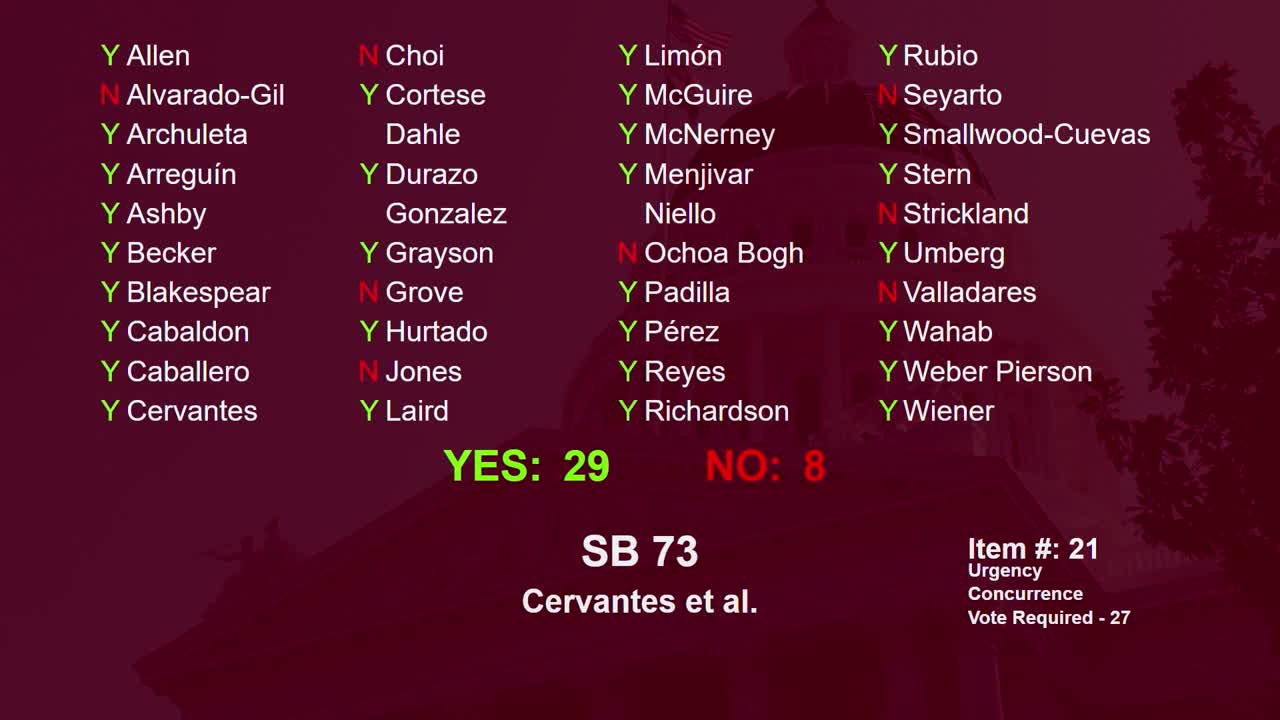 3MIN
Senate Floor
 9MIN