SB 1415: Real property tax: welfare exemption: moderate-income housing.
- Session Year: 2025-2026
- House: Senate
- Latest Version Date: 2026-02-20
Current Status:
In Progress
(2026-05-14: May 14 hearing: Held in committee and under submission.)
Introduced
In Committee
Awaiting First Chamber Vote
Passed First Chamber
In Committee
Awaiting Second Chamber Vote
Passed Second Chamber
Enacted
Existing property tax law, pursuant to constitutional authorization, provides for a welfare exemption for property used exclusively for religious, hospital, scientific, or charitable purposes and that is owned or operated by certain types of nonprofit entities, if certain qualifying criteria are met. That law provides a partial welfare exemption in the case of residential rental property used for lower income households, as specified, calculated as that percentage of the value of the property that is equal to the percentage that the number of units serving lower income households represents of the total number of residential units.
This bill would provide a partial welfare exemption in the case of certain residential rental property used for low- and moderate-income households. The partial exemption would be equal to that percentage of the value of the property that is equal to the percentage that the number of units serving low- and moderate-income households, as defined, represents of the total number of residential units, as provided. The bill would require an owner to make specified certifications relating to the use of the property. By expanding the duties of local tax officials, and by expanding the crime of perjury, the bill would impose a state-mandated local program.
This bill would declare that its provisions are severable.
The California Constitution requires the state to reimburse local agencies and school districts for certain costs mandated by the state. Statutory provisions establish procedures for making that reimbursement.
This bill would provide that with regard to certain mandates no reimbursement is required by this act for a specified reason.
With regard to any other mandates, this bill would provide that, if the Commission on State Mandates determines that the bill contains costs so mandated by the state, reimbursement for those costs shall be made pursuant to the statutory provisions noted above.
Existing law requires the state to reimburse local agencies annually for certain property tax revenues lost as a result of any exemption or classification of property for purposes of ad valorem property taxation.
This bill would provide that, notwithstanding those provisions, no appropriation is made and the state shall not reimburse local agencies for property tax revenues lost by them pursuant to the bill.
This bill would take effect immediately as a tax levy.
(a)Property used exclusively for religious, hospital, scientific, or charitable purposes owned and operated by community chests, funds, foundations, limited liability companies, or corporations organized and operated for religious, hospital, scientific, or charitable purposes is exempt from taxation, including ad valorem taxes to pay the interest and redemption charges on any indebtedness approved by the voters prior to July 1, 1978, or any bonded indebtedness for the acquisition or improvement of real property approved on or after July 1, 1978, by two-thirds of the votes cast by the voters voting on the proposition, if:
(1)The owner is not organized or operated for profit. However, in the case of hospitals, the organization shall not be deemed to be organized or operated for profit if, during the immediately preceding fiscal year, operating revenues, exclusive of gifts, endowments, and grants-in-aid, did not exceed operating expenses by an amount equivalent to 10 percent of those operating expenses. As used herein, operating expenses include depreciation based on cost of replacement and amortization of, and interest on, indebtedness.
(2)No part of the net earnings of the owner inures to the benefit of any private shareholder or individual.
(3)The property is used for the actual operation of the exempt activity, and does not exceed an amount of property reasonably necessary to the accomplishment of the exempt purpose.
(A)For the purposes of determining whether the property is used for the actual operation of the exempt activity, consideration shall not be given to use of the property for either or both of the following described activities if that use is occasional:
(i)The owner conducts fundraising activities on the property and the proceeds derived from those activities are not unrelated business taxable income, as defined in Section 512 of the Internal Revenue Code, of the owner and are used to further the exempt activity of the owner.
(ii)The owner permits any other organization that meets all of the requirements of this subdivision, other than ownership of the property, to conduct fundraising activities on the property and the proceeds derived from those activities are not unrelated business taxable income, as defined in Section 512 of the Internal Revenue Code, of the organization, are not subject to the tax on unrelated business taxable income that is imposed by Section 511 of the Internal Revenue Code, and are used to further the exempt activity of the organization.
(B)For purposes of subparagraph (A):
(i)Occasional use means use of the property on an irregular or intermittent basis by the qualifying owner or any other qualifying organization described in clause (ii) of subparagraph (A) that is incidental to the primary activities of the owner or the other organization.
(ii)Fundraising activities means both activities involving the direct solicitation of money or other property and the anticipated exchange of goods or services for money between the soliciting organization and the organization or person solicited.
(C)Subparagraph (A) shall have no application in determining whether paragraph (3) has been satisfied unless the owner of the property and any other organization using the property as provided in subparagraph (A) have filed with the assessor a valid organizational clearance certificate issued pursuant to Section 254.6.
(D)For the purposes of determining whether the property is used for the actual operation of the exempt activity, consideration shall not be given to the use of the property for meetings conducted by any other organization if the meetings are incidental to the other organizations primary activities, are not fundraising meetings or activities as defined in subparagraph (B), are held no more than once per week, and the other organization and its use of the property meet all other requirements of paragraphs (1) to (5), inclusive, of this subdivision. The owner or the other organization also shall file with the assessor a copy of a valid, unrevoked letter or ruling from the Internal Revenue Service or the Franchise Tax Board stating that the other organization, or the national organization of which it is a local chapter or affiliate, qualifies as an exempt organization under Section 501(c)(3) or 501(c)(4) of the Internal Revenue Code or Section 23701d, 23701f, or 23701w.
(E)Subparagraph (A), (B), (C), or (D) shall not be construed to either enlarge or restrict the exemption provided for in subdivision (b) of Section 4 and Section 5 of Article XIII of the California Constitution and this section.
(4)The property is not used or operated by the owner or by any other person so as to benefit any officer, trustee, director, shareholder, member, employee, contributor, or bondholder of the owner or operator, or any other person, through the distribution of profits, payment of excessive charges or compensations, or the more advantageous pursuit of their business or profession.
(5)The property is not used by the owner or members thereof for fraternal or lodge purposes, or for social club purposes except where that use is clearly incidental to a primary religious, hospital, scientific, or charitable purpose.
(6)The property is irrevocably dedicated to religious, charitable, scientific, or hospital purposes and, upon the liquidation, dissolution, or abandonment of the owner, will not inure to the benefit of any private person except a fund, foundation, or corporation organized and operated for religious, hospital, scientific, or charitable purposes.
(7)The property, if used exclusively for scientific purposes, is used by a foundation or institution that, in addition to complying with the foregoing requirements for the exemption of charitable organizations in general, has been chartered by the Congress of the United States (except that this requirement shall not apply when the scientific purposes are medical research), and whose objects are the encouragement or conduct of scientific investigation, research, and discovery for the benefit of the community at large.
The exemption provided for herein shall be known as the welfare exemption. This exemption is in addition to any other exemption now provided by law, and the existence of the exemption provision in paragraph (2) of subdivision (a) of Section 202 does not preclude the exemption under this section for museum or library property. Except as provided in subdivision (e), this section shall not be construed to enlarge the college exemption.
(b)Property used exclusively for school purposes of less than collegiate grade and owned and operated by religious, hospital, or charitable funds, foundations, limited liability companies, or corporations, which property and funds, foundations, limited liability companies, or corporations meet all of the requirements of subdivision (a), shall be deemed to be within the exemption provided for in subdivision (b) of Section 4 and Section 5 of Article XIII of the California Constitution and this section.
(c)Property used exclusively for nursery school purposes and owned and operated by religious, hospital, or charitable funds, foundations, limited liability companies, or corporations, which property and funds, foundations, limited liability companies, or corporations meet all the requirements of subdivision (a), shall be deemed to be within the exemption provided for in subdivision (b) of Section 4 and Section 5 of Article XIII of the California Constitution and this section.
(d)Property used exclusively for a noncommercial educational FM broadcast station or an educational television station, and owned and operated by religious, hospital, scientific, or charitable funds, foundations, limited liability companies, or corporations meeting all of the requirements of subdivision (a), shall be deemed to be within the exemption provided for in subdivision (b) of Section 4 and Section 5 of Article XIII of the California Constitution and this section.
(e)Property used exclusively for religious, charitable, scientific, or hospital purposes and owned and operated by religious, hospital, scientific, or charitable funds, foundations, limited liability companies, or corporations or educational institutions of collegiate grade, as defined in Section 203, which property and funds, foundations, limited liability companies, corporations, or educational institutions meet all of the requirements of subdivision (a), shall be deemed to be within the exemption provided for in subdivision (b) of Section 4 and Section 5 of Article XIII of the California Constitution and this section. As to educational institutions of collegiate grade, as defined in Section 203, the requirements of paragraph (6) of subdivision (a) shall be deemed to be met if both of the following are met:
(1)The property of the educational institution is irrevocably dedicated in its articles of incorporation to charitable and educational purposes, to religious and educational purposes, or to educational purposes.
(2)The articles of incorporation of the educational institution provide for distribution of its property upon its liquidation, dissolution, or abandonment to a fund, foundation, or corporation organized and operated for religious, hospital, scientific, charitable, or educational purposes meeting the requirements for exemption provided by Section 203 or this section.
(f)Property used exclusively for housing and related facilities for elderly or handicapped families and financed by, including, but not limited to, the federal government pursuant to Section 202 of Public Law 86-372 (12 U.S.C. Sec. 1701q), as amended, Section 231 of Public Law 73-479 (12 U.S.C. Sec. 1715v), Section 236 of Public Law 90-448 (12 U.S.C. Sec. 1715z), or Section 811 of Public Law 101-625 (42 U.S.C. Sec. 8013), and owned and operated by religious, hospital, scientific, or charitable funds, foundations, limited liability companies, or corporations meeting all of the requirements of this section shall be deemed to be within the exemption provided for in subdivision (b) of Section 4 and Section 5 of Article XIII of the California Constitution and this section.
The amendment of this paragraph made by Chapter 1102 of the Statutes of 1984 does not constitute a change in, but is declaratory of, existing law. However, no refund of property taxes shall be required as a result of this amendment for any fiscal year prior to the fiscal year in which the amendment takes effect.
Property used exclusively for housing and related facilities for elderly or handicapped families at which supplemental care or services designed to meet the special needs of elderly or handicapped residents are not provided, or that is not financed by the federal government pursuant to Section 202 of Public Law 86-372 (12 U.S.C. Sec. 1701q), as amended, Section 231 of Public Law 73-479 (12 U.S.C. Sec. 1715v), Section 236 of Public Law 90-448 (12 U.S.C. Sec. 1715z), or Section 811 of Public Law 101-625 (42 U.S.C. Sec. 8013), shall not be entitled to exemption pursuant to this subdivision unless the property is used for housing and related facilities for low- and moderate-income elderly or handicapped families. Property that would otherwise be exempt pursuant to this subdivision, except that it includes some housing and related facilities for other than low- or moderate-income elderly or handicapped families, shall be entitled to a partial exemption. The partial exemption shall be equal to that percentage of the value of the property that is equal to the percentage that the number of low- and moderate-income elderly and handicapped families represents of the total number of families occupying the property.
As used in this subdivision, low and moderate income has the same meaning as the term persons and families of low or moderate income as defined by Section 50093 of the Health and Safety Code.
(g)(1)Property used exclusively for rental housing and related facilities and owned and operated by religious, hospital, scientific, or charitable funds, foundations, limited liability companies, or corporations, including limited partnerships in which the managing general partner is an eligible nonprofit corporation or eligible limited liability company, meeting all of the requirements of this section, or by veterans organizations, as described in Section 215.1, meeting all the requirements of paragraphs (1) to (7), inclusive, of subdivision (a), shall be deemed to be within the exemption provided for in subdivision (b) of Section 4 and Section 5 of Article XIII of the California Constitution and this section and shall be entitled to a partial exemption equal to that percentage of the value of the property that is equal to the percentage that the number of units serving lower income households represents of the total number of residential units in any year in which any of the following criteria applies:
(A)The acquisition, rehabilitation, development, or operation of the property, or any combination of these factors, is financed with tax-exempt mortgage revenue bonds, qualified 501(c)(3) bonds, as that term is defined in Section 145 of Title 26 of the United States Code, or general obligation bonds, or is financed by local, state, or federal loans or grants and the rents of the occupants who are lower income households do not exceed those prescribed by deed restrictions or regulatory agreements pursuant to the terms of the financing or financial assistance.
(B)The owner of the property is eligible for and receives low-income housing tax credits pursuant to Section 42 of the Internal Revenue Code of 1986, as added by Public Law 99-514.
(C)In the case of a claim, other than a claim with respect to property owned by a limited partnership in which the managing general partner is an eligible nonprofit corporation, that is filed for the 200001 fiscal year or any fiscal year thereafter, 90 percent or more of the occupants of the property are lower income households whose rent does not exceed the rent prescribed by Section 50053 of the Health and Safety Code. The total exemption amount allowed under this subdivision to a taxpayer, with respect to a single property or multiple properties for any fiscal year on the sole basis of the application of this subparagraph, may not exceed twenty million dollars ($20,000,000) in assessed value.
(D)(i)The property was previously purchased and owned by the Department of Transportation pursuant to a consent decree requiring housing mitigation measures relating to the construction of a freeway and is now solely owned by an organization that qualifies as an exempt organization under Section 501(c)(3) of the Internal Revenue Code.
(ii)This subparagraph does not apply to property owned by a limited partnership in which the managing partner is an eligible nonprofit corporation.
(2)In order to be eligible for the exemption provided by this subdivision, the owner of the property shall do both of the following:
(A)(i)For any claim filed for the 200001 fiscal year or any fiscal year thereafter, certify and ensure, subject to the limitation in clause (ii), that there is an enforceable and verifiable agreement with a public agency, a recorded deed restriction, or other legal document that restricts the projects usage and that provides that the units designated for use by lower income households are continuously available to or occupied by lower income households, subject to the exception in clause (iii), at rents that do not exceed those prescribed by Section 50053 of the Health and Safety Code, or, to the extent that the terms of federal, state, or local financing or financial assistance conflicts with Section 50053 of the Health and Safety Code, rents that do not exceed those prescribed by the terms of the financing or financial assistance.
(ii)In the case of a limited partnership in which the managing general partner is an eligible nonprofit corporation, the restriction and provision specified in clause (i) shall be contained in an enforceable and verifiable agreement with a public agency, or in a recorded deed restriction to which the limited partnership certifies.
(iii)(I)(ia)In the case of an owner of property that is eligible for and receives a low-income housing tax credit pursuant to Section 42 of the Internal Revenue Code, relating to low-income housing credit, a unit shall continue to be treated as occupied by a lower income household if the occupants were lower income households on the lien date in the fiscal year in which their occupancy of the unit commenced and the unit continues to be rent restricted, notwithstanding an increase in the income of the occupants of the unit to 140 percent of area median income, adjusted for family size. However, the unit shall cease to be treated as a lower income unit if the income of the occupants of the unit increases above 140 percent of area median income, adjusted for family size.
(ib)This subclause shall only be operative from the 201819 fiscal year through the 202728 fiscal year.
(II)(ia)In the case of an owner of property, other than a property described in subclause (I), that is subject to an enforceable and verifiable agreement with a public agency, a unit shall continue to be treated as occupied by a lower income household if the occupants were lower income households on the lien date in the fiscal year in which their occupancy of the unit commenced and the unit continues to be rent restricted, notwithstanding an increase in the income of the occupants of the unit to 100 percent of area median income, adjusted for family size. However, the unit shall cease to be treated as a lower income unit if the income of the occupants of the unit increases above 100 percent of area median income, adjusted for family size.
(ib)This subclause shall only be operative from the 202425 fiscal year through the 202829 fiscal year.
(iv)(I)In the case of an owner of property that is a community land trust and whose property is leased to a lower income household, a unit shall continue to be treated as occupied by a lower income household if the occupants were lower income households on the lien date in the fiscal year in which their occupancy of the unit commenced and the unit continues to be rent restricted, notwithstanding an increase in the income of the occupants of the unit to 140 percent of area median income, adjusted for family size. However, the unit shall cease to be treated as a lower income unit if the income of the occupants of the unit increases above 140 percent of area median income, adjusted for family size.
(II)This clause shall only be operative from the 202223 fiscal year through the 202728 fiscal year.
(B)Certify that the funds that would have been necessary to pay property taxes are used to maintain the affordability of, or reduce rents otherwise necessary for, the units occupied by lower income households.
(3)As used in this subdivision:
(A)Community land trust has the same meaning as defined in Section 402.1.
(B)Lower income households has the same meaning as the term lower income households as defined by Section 50079.5 of the Health and Safety Code.
(C)Related facilities means any managers units and any and all common area spaces that are included within the physical boundaries of the rental housing development, including, but not limited to, common area space, walkways, balconies, patios, clubhouse space, meeting rooms, laundry facilities, and parking areas, except any portions of the overall development that are nonexempt commercial space.
(D)(i)Units serving lower income households shall mean units that are occupied by lower income households at an affordable rent, as defined in Section 50053 of the Health and Safety Code or, to the extent that the terms of federal, state, or local financing or financial assistance conflicts with Section 50053 of the Health and Safety Code, rents that do not exceed those prescribed by the terms of the financing or financial assistance. Units reserved for lower income households at an affordable rent that are temporarily vacant due to tenant turnover or repairs shall be counted as occupied.
(ii)(I)Units serving lower income households shall also mean units specified in clause (iii) or (iv) of subparagraph (A) of paragraph (2).
(II)This clause shall only be operative from the 201819 fiscal year through the 202728 fiscal year.
(iii)(I)Units serving lower income households shall also mean units specified in clause (iv) of subparagraph (A) of paragraph (2).
(II)This clause shall only be operative from the 202223 fiscal year through the 202728 fiscal year.
(h)(1)Property used exclusively for rental housing and related facilities and owned and operated by religious, hospital, scientific, or charitable funds, foundations, limited liability companies, or corporations, including limited partnerships in which the managing partner is an eligible nonprofit corporation or eligible limited liability company, meeting all of the requirements of this section, or by veterans organizations, as described in Section 215.1, meeting all of the requirements of paragraphs (1) to (7), inclusive, of subdivision (a), shall be deemed to be within the exemption provided for in Sections 4 and 5 of Article XIII of the California Constitution and this section and shall be entitled to a partial exemption equal to the percentage of the value of the property that is equal to the percentage that the number of units serving low- and moderate-income households represents of the total number of residential units in any year in which all of the following conditions are met:
(A)The owner of the property certifies and ensures all of the following:
(i)That there is an enforceable and verifiable agreement with a public agency, a recorded deed restriction, or other legal document that restricts the applicable projects usage and that provides that the units designated for use by low- and moderate-income households are continuously available to, or occupied by, low- and moderate-income households for a period of not less than 55 years.
(I)A unit shall continue to be treated as occupied by a low- or moderate-income household if the occupants were a low- or moderate-income household on the lien date in the fiscal year in which their occupancy of the unit commenced and the unit continues to be rent restricted, notwithstanding an increase in the income of the occupants of the unit to 200 percent of area median income, adjusted for family size. However, the unit shall cease to be treated as a unit serving low- and moderate-income households if the income of the occupants of the unit increases above 200 percent of area median income, adjusted for family size.
(II)In the case of a limited partnership in which the managing general partner is an eligible nonprofit corporation, the restriction and provision specified in this clause shall be contained in an enforceable and verifiable agreement with a public agency or in a recorded deed restriction to which the limited partnership certifies.
(ii)That the initial rent charged upon occupancy for each unit designated for low- and moderate-income housing pursuant to clause (i) is below the fair market rent for the unit type in comparable properties within the geographic submarket in which the property is located, as determined by a market study to be conducted by the owner of the property in general conformance with the standards of the most recently published California Tax Credit Allocation Committee Market Study Guidelines, as updated periodically.
(I)The market study shall be conducted at the time the first low- or moderate-income household designated unit on the property is initially leased and updated at least every five years thereafter.
(II)While the same low- or moderate-income household remains in occupancy of the unit, the rent charged shall not be increased by more than the percent by which the Area Median Income for the County in which the property is located, as published in the State Income Limits adopted by the Department of Housing and Community Development, was increased between the two most recent publications.
(III)If the fair market rent determined by the market study is less than or equal to the rent deemed affordable to moderate-income households, the initial rent charged upon occupancy for each unit designated for low- or moderate-income housing pursuant to clause (i) shall be at least 10 percent below the fair market rent for the unit type in comparable properties within the geographic submarket in which the property is located.
(iii)That the funds that would have been necessary to pay property taxes are used to maintain the affordability of, or reduce rents otherwise necessary for, the units occupied by low- and moderate-income households.
(B)This subdivision shall apply only with respect to properties on which residential units were newly constructed, or where existing commercial uses were converted into new residential units, on or after January 1, 2027, and shall apply only for a period of 20 years from the date of the initial filing of the exemption.
(2)For purposes of this subdivision, the following definitions apply:
(A)Low- and moderate-income households shall have the same meaning as persons and families of low or moderate income as defined by Section 50093 of the Health and Safety Code.
(B)Related facilities means any managers units and all common area spaces that are included within the physical boundaries of the rental housing development, including, but not limited to, common area space, walkways, balconies, patios, clubhouse space, meeting rooms, laundry facilities, and parking areas, except any portions of the overall development that are nonexempt commercial spaces.
(C)Units serving low- and moderate-income households means units that are occupied by low- and moderate-income households at an affordable rent, as defined in Section 50053 of the Health and Safety Code or, to the extent that the terms of federal, state, or local financing or financial assistance conflict with Section 50053 of the Health and Safety Code, rents that do not exceed those prescribed by the terms of the financing or financial assistance. Units reserved for low- and moderate-income households at an affordable rent that are temporarily vacant due to tenant turnover or repairs shall be considered occupied.
(3)This subdivision shall apply with respect to lien dates occurring on or after January 1, 2027.
(4)The provisions of this subdivision are severable. If any provision of this subdivision or its application is held invalid, that invalidity shall not affect other provisions or applications that can be given effect without the invalid provision or application.
(h)(i)Property used exclusively for an emergency or temporary shelter and related facilities for homeless persons and families and owned and operated by religious, hospital, scientific, or charitable funds, foundations, limited liability companies, or corporations meeting all of the requirements of this section shall be deemed to be within the exemption provided for in subdivision (b) of Section 4 and Section 5 of Article XIII of the California Constitution and this section. Property that otherwise would be exempt pursuant to this subdivision, except that it includes housing and related facilities for other than an emergency or temporary shelter, shall be entitled to a partial exemption.
As used in this subdivision, emergency or temporary shelter means a facility that would be eligible for funding pursuant to Chapter 11 (commencing with Section 50800) of Part 2 of Division 31 of the Health and Safety Code.
(i)(j)Property used exclusively for housing and related facilities for employees of religious, charitable, scientific, or hospital organizations that meet all the requirements of subdivision (a) and owned and operated by funds, foundations, limited liability companies, or corporations that meet all the requirements of subdivision (a) shall be deemed to be within the exemption provided for in subdivision (b) of Section 4 and Section 5 of Article XIII of the California Constitution and this section to the extent the residential use of the property is institutionally necessary for the operation of the organization.
(j)(k)For purposes of this section, charitable purposes include educational purposes. For purposes of this subdivision, educational purposes means those educational purposes and activities for the benefit of the community as a whole or an unascertainable and indefinite portion thereof, and do not include those educational purposes and activities that are primarily for the benefit of an organizations shareholders. Educational activities include the study of relevant information, the dissemination of that information to interested members of the general public, and the participation of interested members of the general public.
(k)(l)In the case of property used exclusively for the exempt purposes specified in this section, owned and operated by limited liability companies that are organized and operated for those purposes, the State Board of Equalization shall adopt regulations to specify the ownership, organizational, and operational requirements for those companies to qualify for the exemption provided by this section.
(l)(m)The amendments made by Chapter 354 of the Statutes of 2004 apply with respect to lien dates occurring on and after January 1, 2005.
(m)(n)The amendments made by Chapter 836 of the Statutes of 2016 apply with respect to lien dates occurring on and after January 1, 2017.
(n)(o)The amendments made by Chapter 694 of the Statutes of 2018 apply with respect to lien dates occurring on and after January 1, 2019.
(o)(p)Notwithstanding Section 20 or any other law, the State Board of Equalization is responsible for administering the welfare exemption provided by this section, except where the law places responsibility for administering that exemption with the county assessor.
SEC. 2.No reimbursement is required by this act pursuant to Section 6 of Article XIIIB of the California Constitution for certain costs that may be incurred by a local agency or school district because, in that regard, this act creates a new crime or infraction, eliminates a crime or infraction, or changes the penalty for a crime or infraction, within the meaning of Section 17556 of the Government Code, or changes the definition of a crime within the meaning of Section 6 of Article XIIIB of the California Constitution.
However, if the Commission on State Mandates determines that this act contains other costs mandated by the state, reimbursement to local agencies and school districts for those costs shall be made pursuant to Part 7 (commencing with Section 17500) of Division 4 of Title 2 of the Government Code.
SEC. 3.Notwithstanding Section 2229 of the Revenue and Taxation Code, no appropriation is made by this act and the state shall not reimburse any local agency for any property tax revenues lost by it pursuant to this act.
SEC. 4.This act provides for a tax levy within the meaning of Article IV of the California Constitution and shall go into immediate effect.
|
Date
|
Status
|
|---|---|
| May 14, 2026 | May 14 hearing: Held in committee and under submission. |
| May 12, 2026 | Set for hearing May 14. |
| May 11, 2026 | May 11 hearing: Placed on APPR. suspense file. |
| May 7, 2026 | Set for hearing May 11. |
| May 6, 2026 | From committee: Do pass and re-refer to Com. on APPR. (Ayes 4. Noes 1. Page 4154.) (May 6). Re-referred to Com. on APPR. |
| May 6, 2026 | From committee: Do pass and re-refer to Com. on APPR. (Ayes 4. Noes 1.) (May 6). Re-referred to Com. on APPR. |
| Apr 9, 2026 | Set for hearing May 6. |
| Mar 4, 2026 | Referred to Com. on REV. & TAX. |
| Feb 23, 2026 | Read first time. |
| Feb 23, 2026 | From printer. May be acted upon on or after March 23. |
| Feb 20, 2026 | Introduced. To Com. on RLS. for assignment. To print. |
|
Date
|
Description
|
Location
|
Votes
|
|
|---|---|---|---|---|
| May 11, 2026 | Placed on suspense file | Senate Standing Committee on Appropriations |
Passed |
|
| May 6, 2026 | Do pass, but first be re-referred to the Committee on [Appropriations] | Senate Standing Committee on Revenue and Taxation |
Passed |
This list shows positions taken on this bill by organizations on the date displayed, which is linked to the original source.
Positions by individuals are not included.
|
Organization
|
Position
|
Date
|
|---|---|---|
| California Assessors' Association | ** Against | |
| California Association Of Realtors | ** Against | |
| California Teachers Association | ** Against | |
| California YIMBY | ** Support | |
| Circulate Planning & Policy | ** Support | |
| Housing Accelerator Fund | ** Support | |
| Housing Action Coalition | ** Support | |
| LeadingAge California | ** Support | |
| Mayor Daniel Lurie, City and County of San Francisco | ** Support | |
| Related California Affordable | ** Support | |
| San Diego Housing Commission | ** Support | |
| San Francisco Bay Area Planning and Urban Research Association | ** Support |
SENATE COMMITTEE ON
Senator Sabrina Cervantes, Chair
2025 - 2026 Regular Session
SB 1415 (Arreguín) - Real property tax: welfare exemption: moderate-income housing
Version: | Policy Vote: |
Urgency: | Mandate: |
Hearing Date: | Consultant: |
Bill Summary:
SB 1415 would create an alternate welfare exemption equal to the percentage that the number of units serving low- and moderate-income households represents out of the total number of residential units.
Fiscal Impact:
- The Board of Equalization (BOE) estimates that this bill would reduce annual property tax revenues in the range of $93 million to $151 million (see Staff Comments). Reductions in local property tax revenues, in turn, can increase General Fund Proposition 98 spending by up to roughly 50 percent (the exact amount depends on the specific amount of the annual Proposition 98 guarantee, which in turn depends upon a variety of economic, demographic and budgetary factors). BOE would incur minor administrative costs to implement the provisions of the bill.
- By changing the duties of local tax officials, this bill creates a state-mandated local program. To the extent the Commission on State Mandates determines that the provisions of this bill create a new program or impose a higher level of service on local agencies, local agencies could claim reimbursement of those costs. The magnitude is unknown (General Fund).
Background:
California’s Constitution generally requires all property to be taxed based on its fair market value, but it authorizes the Legislature to exempt property used exclusively for charitable purposes when owned and operated by qualifying nonprofit organizations. Pursuant to this authority, the Legislature established the “welfare exemption,” which applies to property owned by nonprofit organizations organized for religious, hospital, scientific, or charitable purposes. The exemption reflects the longstanding public policy rationale that taxing charitable organizations diverts resources away from activities that provide a broader public benefit. Depending on the extent to which a property is used for qualifying activities, the exemption may apply either fully or partially.
The welfare exemption also extends to certain affordable rental housing developments. To qualify, the property generally must be subject to enforceable affordability restrictions through regulatory agreements, deed restrictions, or other legal instruments that limit rents and occupancy to lower-income households. The exemption commonly applies to developments financed through public subsidies, including tax-exempt bonds, government grants, or federal and state Low-Income Housing Tax Credits (LIHTCs). In mixed-income developments, the exemption is typically prorated based on the share of units reserved for lower-income tenants.
Obtaining and maintaining the welfare exemption requires approvals from both BOE and the county assessor. Nonprofit organizations must first secure an Organizational Clearance Certificate (OCC) from BOE and, in some cases, supplemental certification for affiliated partnerships or limited liability companies. Property owners must then annually apply to county assessors and demonstrate continued compliance with affordability, rent, occupancy, and use restrictions. Assessors retain discretion to deny or reduce exemptions if a property fails to satisfy statutory requirements, including where tenant incomes or rents exceed allowable limits. Affordable housing providers have long expressed concerns that the annual compliance and tenant income verification process is administratively burdensome, inconsistent across counties, and intrusive for tenants.
These issues arise amid California’s broader housing affordability crisis. California continues to face some of the highest housing costs in the nation and a severe shortage of housing production, particularly for lower-income households. State housing officials estimate that California must plan for more than 2.5 million new homes over the next eight years, including at least one million affordable units for low- and very low-income residents. Although the state continues to finance thousands of affordable housing units annually, housing advocates report that existing funding levels remain far below what is necessary to meet demand. At the same time, rents have significantly outpaced income growth, placing increasing financial pressure on renters across the State.
Under current law, nonprofit affordable housing developers that utilize public subsidies such as LIHTCs may qualify for the welfare exemption, while market-rate developers providing housing affordable to moderate-income households generally do not.
Proposed Law:
This bill, among other things, would do the following:
- Create an alternate welfare exemption from property tax equal to the percentage that the number of units serving low- and moderate-income households (as defined) represents out of the total number of residential units. The bill would apply many of the same requirements as the exemption in current law for units serving low- or very-low-income units, including:
- The property is owned and operated by religious, hospital, scientific, or charitable funds, foundations, limited liability companies, or corporations, including limited partnerships in which the managing partner is an eligible nonprofit corporation or eligible limited liability company.
- The organization meets the requirements in the Constitution for an organization to claim the welfare exemption.
- The property owner certifies that the funds that would have been necessary to pay property taxes are used to maintain the affordability of, or reduce rents otherwise necessary for, the units occupied by low- and moderate-income households.
- Add modified requirements on property owners to qualify:
- The property owner certifies that there is an enforceable and verifiable agreement with a public agency, a recorded deed restriction, or other legal document that restricts the applicable project’s usage and that provides that the units designated for use by low- and moderate-income households are continuously available to, or occupied by, low- and moderate-income households, for a period of not less than 55 years. When the property owner is a limited partnership in which the managing general partner is a nonprofit corporation, the restriction must be contained in an enforceable and verifiable agreement with a public agency or in a recorded deed restriction.
- The initial rent charged upon occupancy of each exempt unit is below fair market for that unit type for that geographic submarket, as determined by a market study conducted by the property owner in “general conformance” with California Tax Credit Allocation Committee guidelines. The study must be conducted when the first exempt unit is leased, and updated every five years. The property owner cannot increase this rent amount more than the percent set by HCD limits.
- The initial rent charged upon occupancy for each unit designated for low- or moderate income housing pursuant must be at least 10% below the fair market rent for the unit type in comparable properties within the geographic submarket in which the property is located, but only if the fair market rent determined by the market study is less than or equal to the rent deemed affordable to moderate-income households.
- Apply similar treatment to units exempt under its provisions as to units exempt as affordable for tenants of low- or very-low-income, as specified.
- Apply commencing on the January 1, 2026, lien date, and only to units newly constructed or converted on or after that date, but ends after 20 years.
Related Legislation:
- SB 336 (Wiener, 2025) was very similar to this bill, and was held under submission on the Suspense File of this Committee.
- SB 1227 (Wiener, 2024), among other provisions, would have allowed a welfare exemption for rental housing units occupied by or available to those of moderate income within a specified area in the City and County of San Francisco. The bill was held under submission on the Suspense File of this Committee.
Staff Comments: BOE’s revenue estimate for this bill utilizes (1) production goals put forth by the Regional Housing Needs Allocation (RHNA), and (2) permit data from the Department of Housing and Community Development. The higher bound of BOE’s range of revenue loss ($151 million) assumes that every rental unit (100 percent of the RHNA goal) will be built under the 6th cycle plan. The lower bound of the range ($93 million) assumes that the permitting rate from 5th cycle would apply to the 6th cycle goal.
-- END --
SENATE COMMITTEE ON REVENUE AND TAXATION
Senator Jerry McNerney, Chair
2025 - 2026 Regular
Bill No: | SB 1415 | Hearing Date: | 5/6/26 |
Author: | Arreguín | Tax Levy: | Yes |
Version: | 2/20/26 | Fiscal: | Yes |
Consultant: | Grinnell | ||
Real property tax: welfare exemption: moderate-income housing
Creates an alternate welfare exemption equal to the percentage that the number of units serving low- and moderate-income households represents out of the total number of residential units.
Background
Welfare exemption. The California Constitution provides that all property is taxable and shall be assessed as a percentage of fair market value. The Constitution allows the Legislature to exempt property used exclusively for charitable purposes, so long as it is owned by non-profit entities organized and operated for charitable purposes, such as universities, hospitals, and libraries. The Legislature enacted this exemption, which is commonly known as the “welfare exemption.” The welfare exemption has a similar policy rationale as tax-exempt status for charitable groups: revenues paid in tax to the government divert needed resources away from the organization’s good works.
To qualify for the welfare exemption, the organization’s primary purpose must be either religious, hospital, scientific, or charitable. Whether its operations are for one of these purposes is determined by its activities. A qualifying organization’s property may be exempted fully or partially from property taxes, depending on how much of the property is used for qualifying purposes and activities. Assessors can require specified information as part of a welfare exemption claim, which can vary based on the category of the exemption. State law also requires a property owner claiming an exemption to annually supply an affidavit to the assessor with any information required by the Board of Equalization (BOE).
The welfare exemption also applies property used for rental housing, if it meets several requirements, including that there is an enforceable and verifiable agreement with a public agency, a recorded deed restriction, or other legal document that restricts the project’s usage. The exemption also provides that the units designated for use by lower-income households must be continuously available to or occupied by lower-income households. The exemption can include property used for rental housing when the housing is financed by tax-exempt mortgage revenue bonds; general obligation bonds; federal, state, or local grants; or federal Low Income Housing Tax Credits (LIHTCs). For projects with both low-income and market-rate units, the owner can claim a partial exemption equal to the percentage of the value of the number of units serving lower-income households.
To receive a welfare exemption, both the organization and the use of the property must be approved. Nonprofit organizations must apply to BOE for an Organizational Clearance Certificate (OCC) using form BOE-277 and provide the specified requisite documentation. While a nonprofit organization may possess a valid OCC, once they form a limited partnership, the partnership itself must then apply for a supplemental OCC and supply additional information.
Once BOE has certified the OCC and supplemental OCC, the nonprofit must also file a claim for a welfare exemption with the county assessor, using BOE-267. Assessors generally verify that each property meets all of the following conditions:
- Government assistance: The property owner receives low-income housing tax credits or government financing on the property.
- Use restriction: The property is subject to a recorded deed restriction, regulatory agreement, or other legal document restricting its use for low-income housing purposes at specified rents (80% of Area Median Income).
- Rents charged: The rents charged to lower-income household occupants do not exceed the rent prescribed by the deed restrictions or regulatory agreement.
- Property tax savings: The owner certifies that the funds otherwise spent to pay taxes are instead used to maintain the affordability for, or reduce rents of units occupied by, the lower-income households.
- Occupancy: While there is generally no minimum percentage of units that must be occupied by lower-income households, the exemption only extends to the units serving lower-income households.
- Limited partnership: In the case of housing owned by a limited partnership in which the managing general partner is an eligible nonprofit organization or an eligible limited liability company, use and rent restrictions must be contained in an enforceable and verifiable agreement with a public agency or in a recorded deed restriction to which the limited partnership certifies.
Assessors can still deny an exemption claim based on non-qualifying use of the property, even if BOE has issued an OCC and supplemental OCC. Assessors may do so when rent levels or tenant household incomes are higher than the prescribed limits set forth in regulatory agreements or by statutory. Property owners must file an annual claim listing the household income of the tenants for each exempt unit, which is based on information provided to the property owner by tenant-completed worksheets. For many years, affordable housing developers have been frustrated that the claim process is slow and cumbersome in some counties, and that obtaining income information from tenants necessary to maintain the exemption each year is intrusive and difficult.
California’s housing crisis. California has highest housing costs in the nation, with the average home value in California at $775,000, about twice as expensive as the typical mid-tier home.[1] To keep up with demand, the Department of Housing and Community Development (HCD) estimates that California must plan for the development of more than 2.5 million homes over the next eight years, and no less than one million of those homes must meet the needs of lower-income households (more than 640,000 very-low-income and 385,000 low-income units are needed). For decades, not enough housing has been constructed to meet demand, resulting in a severe undersupply of housing.
According to the California Housing Partnership Corporation, California funded upwards of 23,000 new affordable homes in 2025, yet the state is only funding 20% of what is needed to meet its goals. California spends nearly twice as much supporting homeowners than renters and
only 20% of renter resources are permanent compared to 97% of the support for homeowners. Median rent in California has increased 44% since 2000, while median renter household
income has only increased 11% (adjusted for inflation). Renters need to earn 2.8 times the state
minimum wage to afford average asking rent in California, which increased by 1.8% from
last year.
In California, affordable housing developers specialize in using subsidies – usually state LIHTCs, but also other forms of state or local assistance – to construct projects with affordable units. While these projects are eligible for the welfare exemption, market-rate developers who provide units affordable to tenants of moderate income are not. These units likely provide lower returns than market rate ones. Seeking to encourage market-rate developers to construct and make available moderate-income housing to complement the existing network of nonprofit developers who build subsidized LIHTC projects, the author wants to allow a similar welfare exemption for units affordable to tenants of moderate income.
Proposed Law
Senate Bill 1415 creates an alternate welfare exemption from property tax equal to the percentage that the number of units serving low- and moderate-income households represents out of the total number of residential units. SB 1415 applies many of the same requirements as the exemption in current law for units serving low- or very-low-income units, including:
- The property is owned and operated by religious, hospital, scientific, or charitable funds, foundations, limited liability companies, or corporations, including limited partnerships in which the managing partner is an eligible nonprofit corporation or eligible limited liability company.
- The organization meets the requirements in the Constitution for an organization to claim the welfare exemption.
- The property owner certifies that the funds that would have been necessary to pay property taxes are used to maintain the affordability of, or reduce rents otherwise necessary for, the units occupied by low- and moderate-income households.
To implement its exemption, SB 1415 adds modified requirements on property owners to qualify:
- The property owner certifies that there is an enforceable and verifiable agreement with a public agency, a recorded deed restriction, or other legal document that restricts the applicable project’s usage and that provides that the units designated for use by low- and moderate-income households are continuously available to, or occupied by, low- and moderate-income households, for a period of not less than 55 years. When the property owner is a limited partnership in which the managing general partner is a nonprofit corporation, the restriction must be contained in an enforceable and verifiable agreement with a public agency or in a recorded deed restriction.
- The initial rent charged upon occupancy of each exempt unit is below fair market for that unit type for that geographic submarket, as determined by a market study conducted by the property owner in “general conformance” with California Tax Credit Allocation Committee guidelines. The study must be conducted when the first exempt unit is leased, and updated every five years. The property owner cannot increase this rent amount more than the percent set by HCD limits.
- The initial rent charged upon occupancy for each unit designated for low- or moderate-income housing pursuant must be at least 10% below the fair market rent for the unit type in comparable properties within the geographic submarket in which the property is located, but only if the fair market rent determined by the market study is less than or equal to the rent deemed affordable to moderate-income households.
Additionally, SB 1415 applies similar treatment to units exempt under its provisions as to units exempt as affordable for tenants of low- or very-low-income. Specifically, a tenant’s income can grow from 120% of Average Medium Income (AMI) to 200% of AMI while continuing to qualify the owner for an exemption; income can increase up from 80% to 140% when LIHTCs are used (AB 1193, Gloria, 2017) or a Community Land Trust owns the property (AB 1206, Bennett, 2022), or to 100% for other owners (AB 84, Ward, 2023).
SB 1415 applies commencing on the January 1, 2026, lien date, and only to units newly constructed or converted on or after that date, but ends after 20 years. The measure also defines “low and moderate income households” by reference to the Health and Safety Code. The bill also includes a severability clause.
State Revenue Impact
A revenue estimate for SB 1415 from the Board of Equalization is pending. However, BOE’s revenue estimate for a similar bill (SB 336, Wiener, 2025) states: “The expansion of the welfare tax by SB 336 to include new moderate-income rental units would result in annual revenue estimate loss in the range of $93 million to $151 million.”
Comments
1. Purpose of the bill. According to the author, “SB 1415 expands the welfare tax exemption for new low-income affordable rental housing units at or below 80% of Area Median Income (AMI) to include moderate-income rental units up to 120% of AMI for a period of 20 years. The bill provides desperately needed financial support for “missing middle” housing for moderate income Californians such as teachers, firefighters, police officers, nurses, and construction workers. Unlike low-income housing projects, those serving moderate-income households (up to 120% of AMI) do not benefit from the welfare tax exemption or most sources of public subsidy, even though such projects fall well below the rent levels market-rate housing projects command in many California jurisdictions. This dynamic creates a “barbell effect” in housing delivery; many California jurisdictions build both low-income affordable and market-rate housing at higher rates than it does middle income housing. SB 1415 will help address this issue by providing a partial property tax exemption which will allow moderate income units to pencil, leading to an increase of this essential housing stock.”
2. Moderate too. Clearly, California’s housing crisis is dire, with low production levels exacerbated by growing income and wealth disparities. For the most part, the state’s efforts to directly finance or encourage housing are directed towards persons of low-, very-low-, and extremely-low-income, defined as those who make less than 80% of AMI. Most notably, the current welfare exemption from property tax applies only to units restricted to low-income persons. Given that the units are rent-restricted, the exemption tries to compensate property owners for reserving units that by definition generate lower rental revenues than market rate units, with the tradeoff of potentially lower property tax revenues for schools and local agencies. SB 1415 would allow a new welfare exemption for rental housing units occupied by or available to moderate-income (120% of AMI) persons as well. With rents at this level, property owners should have a higher ability to pay property taxes than owners of projects with units reserved as low-income. So why should the public subsidize this form of housing at the cost of less revenue for public services? SB 1415 supporters argue that rents are exorbitantly high in many parts of California, and little to no housing is being constructed for those of moderate income, so the bill’s exemption could be the difference between new workforce housing and no development at all. Any new development or substantial rehabilitation will generally increase property tax revenues on aggregate, and only restricted units qualify owners for exemptions. Supporters add that government funding for housing for low- and very-low-income housing vastly exceed that for “missing middle” housing, and SB 1415’s property tax savings may be worth it for developers to charge less than market rate rents.
3. Community benefit? The welfare exemption has two explicit Constitutional requirements: The property must be owned by charitable organizations, and must be used exclusively for exempt purposes. The welfare exemption applies to many forms of properties, but generally requires the activity on the property to “benefit the community as a whole or an unascertainable and indefinite portion thereof” (Stockton Civic Theatre v. Board of Supervisors, 66 Cal.2d. 13, 1967). However, it is unclear whether newly constructed rental housing units made affordable to those earning up to 119% of AMI is charitable or provides a community benefit; Californians with less income paying imputed property taxes through rents or directly when owning a home will subsidize the construction of units occupied by more affluent persons. However, SB 1415 follows other precedents: The state offers a welfare exemption from property tax for vacant land that is subsequently improved for sale by a Community Land Trust, and for properties that house elderly or disabled persons and their families, which applies when those families are of low- to moderate-income.
4. Buying up. The current welfare exemption from property tax for rental units available to or occupied by tenants of very-low- or low-income generally requires some form of public subsidy to qualify for the exemption. SB 1415 does not contain a similar requirement because projects with units affordable to those of moderate income are usually not eligible for traditional forms of public assistance. However, SB 1415 does not preclude those forms of assistance as a condition of its exemption. Why would a property owner choose lower rents paid by very-low- or low-income tenants if they can receive the same property tax exemption and higher rents from units leased to moderate-income tenants instead?
5. Upward mobility. SB 1415 applies similar treatment to units exempt under its provisions that apply to units exempt for low-income tenants. Specifically, a tenant’s income can grow from 120% of AMI to 200% of AMI while continuing to qualify the owner for an exemption. While this provision is consistent with precedent by allowing household income to grow for an exempt unit, without which a property owner would have to evict a tenant to maintain the exemption, a person of moderate income in the City and County of San Francisco can make in excess of $200,000 annually, depending on household size. Should a tenant with scant, if any, economic hardship still qualify a property owner for the same exemption as someone who has no income?
6. Still nonprofits. SB 1415 expands the welfare exemption from property tax to property owners who charge higher rents than those currently eligible for the exemption. With that said, it does not change the Constitutional requirement to claim the welfare exemption, which is that it is “owned and held in trust by corporations or other entities (1) that are organized and operating for [charitable] purposes, (2) that are nonprofit, and (3) no part of whose net earnings inures to the benefit of any private shareholder or individual.” While the exemption for affordable rental housing allows different corporate forms than current exemptions, BOE can only grant a supplemental OCC when the nonprofit corporation, or eligible limited liability company, and all general partners of the limited partnership certify that the limited partnership agreement provides sufficient management authority and duties to qualify the nonprofit corporation or eligible limited liability company as the managing general partner of the limited partnership.
7. The rent I pay. The current welfare exemption from property tax for affordable rental housing requires property owners to certify and ensure rents charged to lower-income households do not exceed those set in the Health and Safety Code or those prescribed by deed restrictions or regulatory agreements that are attached to the public subsidy that qualifies the housing for the exemption. SB 1415 provides that the initial rent of any unit exempt under the bill not exceed the fair market rent for the unit type in the comparable properties within the geographic subregion in which the property is located, with growth capped by a specified percentage. However, the initial rent is determined by a study conducted by the developer. While the measure does require the study to be conducted in accordance with California Tax Credit Allocation Commission guidelines, should developers be able to determine the rent that qualifies them for a publicly-subsidized exemption? Is the assessor or another party responsible for ensuring the rents set in the study are determined correctly?
8. Mandate. The California Constitution requires the state to reimburse local governments for the costs of new or expanded state mandated local programs. Because SB 1415 changes the way assessors value real property, Legislative Counsel says that this bill imposes a new state mandate. The measure also provides that the state shall not reimburse local agencies for property tax revenue losses, instead stating that, should the Commission on State Mandates determine that the bill imposes a reimbursable mandate, reimbursement must be made pursuant to existing statutory provisions.
9. Related legislation. Last year, the Committee approved SB 336 (Wiener), very similar to this bill, but the measure died on the Senate Appropriations Committee’s Suspense File. In 2024, the Committee approved SB 1227 (Wiener), which, among other provisions, would have allowed a welfare exemption for rental housing units occupied by or available to those of moderate income within a specified area in the City and County of San Francisco. That measure also died on the Senate Appropriations Committee’s Suspense File.
Support and Opposition
(5/1/26)
Support: Mayor Daniel Lurie, City and County of San Francisco
California YIMBY
Circulate Planning & Policy
Housing Accelerator Fund
Housing Action Coalition
LeadingAge California
Related California Affordable
San Diego Housing Commission
San Francisco Bay Area Planning and Urban Research Association
Opposition: California Assessors' Association
California Association of Realtors
California Teachers Association
-- END --
https://lao.ca.gov/LAOEconTax/Article/Detail/793 ↑
Discussed in Hearing
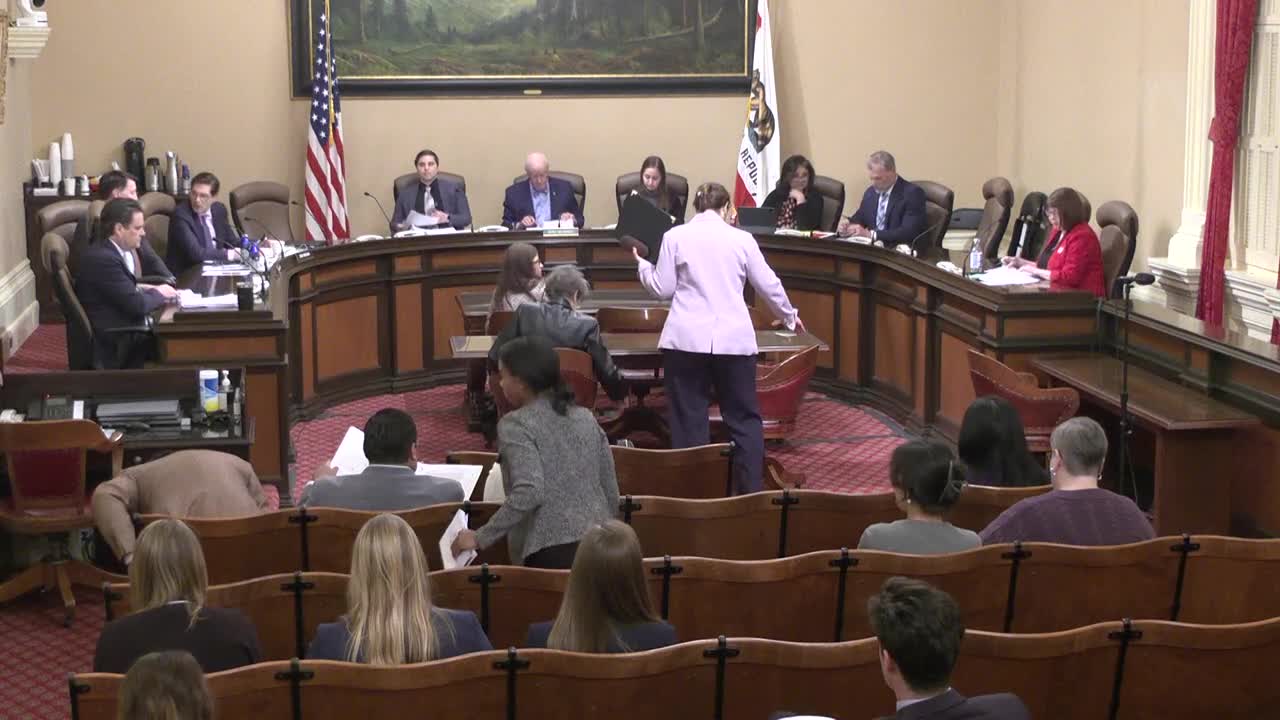 9MIN
Senate Standing Committee on Revenue and Taxation


Bill Co-Author(s):