SB 1416: Physicians and surgeons: dentists: unprofessional conduct.
- Session Year: 2025-2026
- House: Senate
- Latest Version Date: 2026-02-20
Current Status:
In Progress
(2026-06-30: From committee: Do pass and re-refer to Com. on APPR. with recommendation: To consent calendar. (Ayes 17. Noes 0.) (June 30). Re-referred to Com. on APPR.)
Introduced
In Committee
Awaiting First Chamber Vote
Passed First Chamber
In Committee
Awaiting Second Chamber Vote
Passed Second Chamber
Enacted
Existing law establishes various healing arts boards within the Department of Consumer Affairs, including the Medical Board of California and the Dental Board of California, that license and regulate various healing arts licensees. Existing law, including the Medical Practice Act and the Dental Practice Act, deem certain violations by licensees to be unprofessional conduct subject to discipline by the licensees licensing board.
Existing law requires a physician and surgeon or dentist to refund to a patient any amount paid by the patient for services rendered that was subsequently paid to the physician and surgeon or dentist by a third-party payor and that constitutes a duplicate payment, as prescribed. Existing law requires that the above-described duplicate payment refund be paid, if requested by the patient, either within 30 days of that request or, if the duplicate payment has not been received, within 30 days of receipt of the duplicate payment by the physician and surgeon or dentist. Existing law requires, if the patient does not request a refund, a physician and surgeon or dentist who knows, or should have known, of the receipt of the duplicate payment to notify the patient, as prescribed, and to refund the payment within 30 days of that notification, except as specified. Existing law makes a violation of the above requirements unprofessional conduct subject to disciplinary proceedings as described above.
This bill would reduce the duration for a physician and surgeon or dentist to refund a duplicate payment following patient request or patient notification to 21 days.
(a)A physician and surgeon and a dentist shall refund any amount that a patient has paid for services rendered that has subsequently been paid to the physician and surgeon or dentist by a third-party payor and that constitutes a duplicate payment. The refund shall be made as follows:
(1)If the patient requests a refund, within 30 21 days following the request from that patient for a refund if the duplicate payment has been received, or within 30 21 days of receipt of the duplicate payment if the duplicate payment has not been received.
(2)If the patient does not request a refund, within 90 days of the date the physician and surgeon or dentist knows, or should have known, of the receipt of the duplicate payment, the physician and surgeon or dentist shall notify the patient of the duplicate payment, and the duplicate payment shall be refunded within 30 21 days unless the patient requests that a credit balance be retained.
(b)Violation of this section shall constitute unprofessional conduct. Disciplinary proceedings shall be conducted in accordance with the Medical Practice Act (Chapter 5 (commencing with Section 2000)) or the Dental Practice Act (Chapter 4 (commencing with Section 1600)), as applicable.
|
Date
|
Status
|
|---|---|
| Jun 30, 2026 | From committee: Do pass and re-refer to Com. on APPR. with recommendation: To consent calendar. (Ayes 17. Noes 0.) (June 30). Re-referred to Com. on APPR. |
| May 11, 2026 | Referred to Com. on B. & P. |
| May 4, 2026 | In Assembly. Read first time. Held at Desk. |
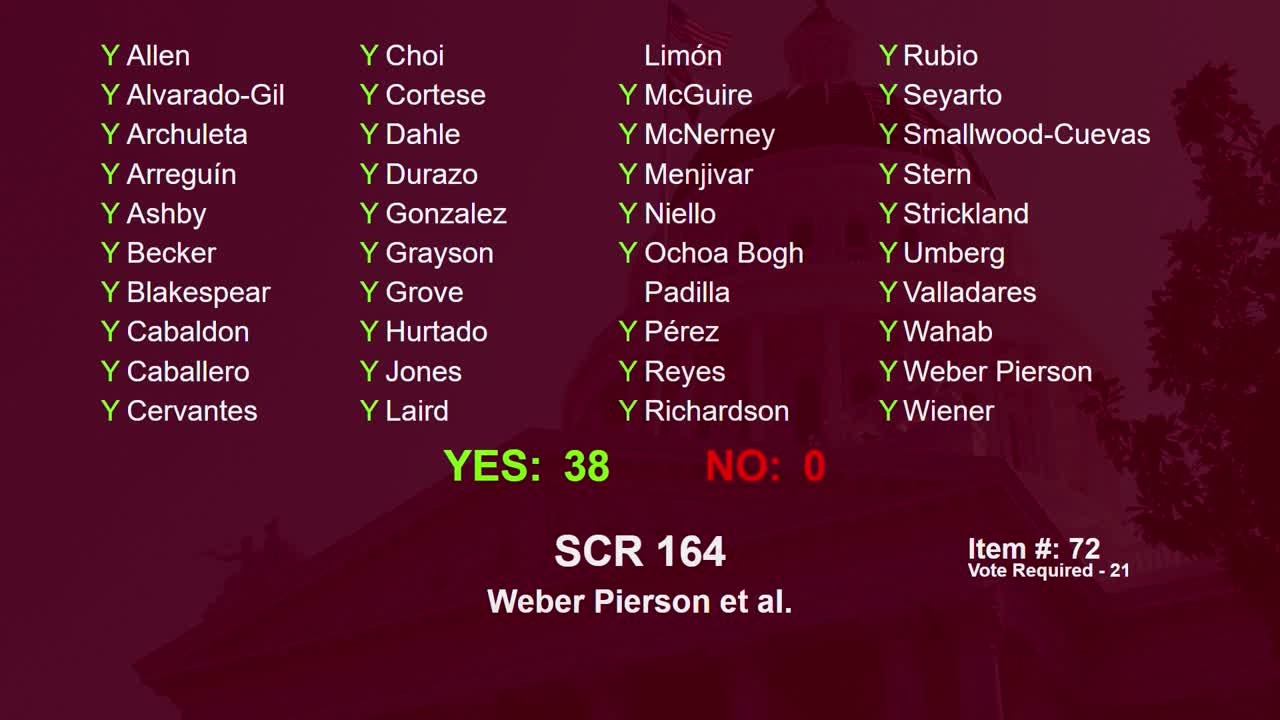
| May 4, 2026 | Read third time. Passed. (Ayes 40. Noes 0. Page 4130.) Ordered to the Assembly. |
| May 4, 2026 | Read third time. Passed. (Ayes 40. Noes 0.) Ordered to the Assembly. |
| Apr 14, 2026 | Read second time. Ordered to third reading. |
| Apr 13, 2026 | From committee: Be ordered to second reading pursuant to Senate Rule 28.8. |
| Mar 27, 2026 | Set for hearing April 13. |
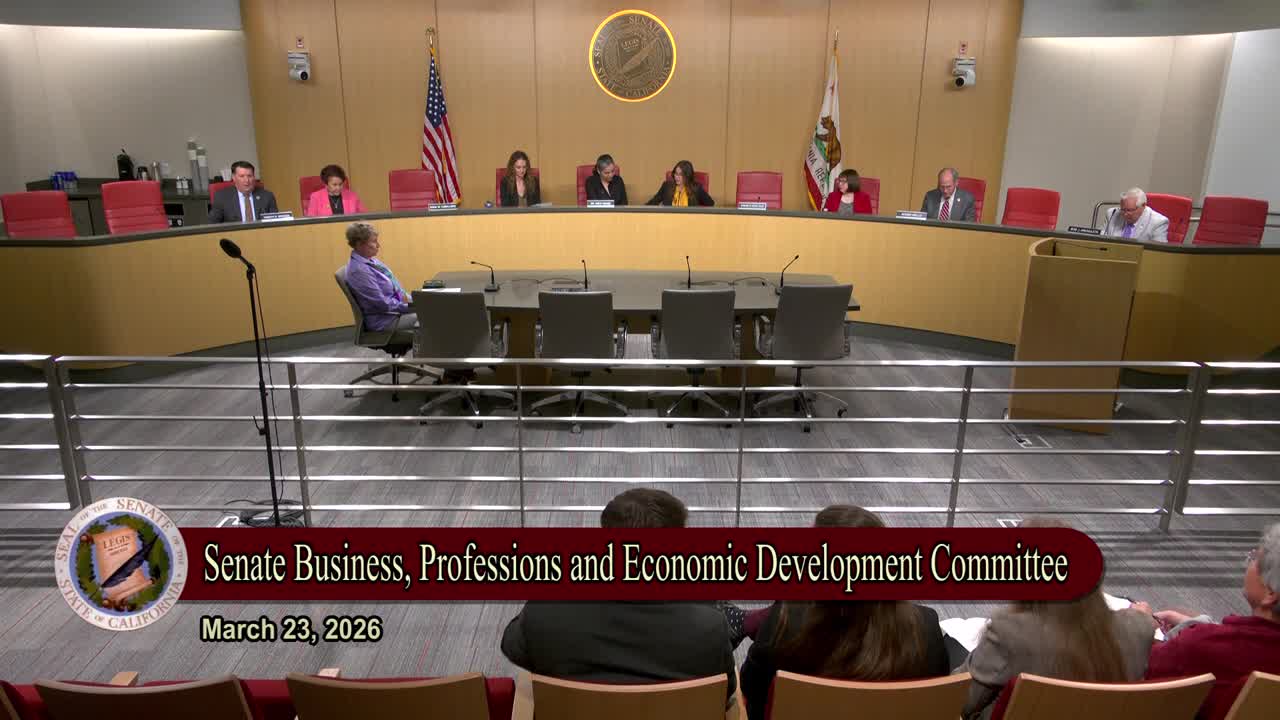
| Mar 23, 2026 | From committee: Do pass and re-refer to Com. on APPR. (Ayes 9. Noes 0. Page 3639.) (March 23). Re-referred to Com. on APPR. |
| Mar 23, 2026 | From committee: Do pass and re-refer to Com. on APPR. (Ayes 9. Noes 0.) (March 23). Re-referred to Com. on APPR. |
| Mar 16, 2026 | Set for hearing March 23. |
| Mar 4, 2026 | Referred to Com. on B. P. & E.D. |
| Feb 23, 2026 | Read first time. |
| Feb 23, 2026 | From printer. May be acted upon on or after March 23. |
| Feb 20, 2026 | Introduced. To Com. on RLS. for assignment. To print. |
|
Date
|
Description
|
Location
|
Votes
|
|
|---|---|---|---|---|
| Jun 30, 2026 | Do pass and be re-referred to the Committee on [Appropriations] with recommendation: To Consent Calendar | Assembly Standing Committee on Business and Professions |
Passed |
|
| May 4, 2026 | Senate 3rd Reading SB1416 Wahab | Senate Floor |
Passed |
|
| Mar 23, 2026 | Do pass, but first be re-referred to the Committee on [Appropriations] | Senate Standing Committee on Business, Professions and Economic Development |
Passed |
This list shows positions taken on this bill by organizations on the date displayed, which is linked to the original source.
Positions by individuals are not included.
|
Organization
|
Position
|
Date
|
|---|---|---|
| California Association Of Oral And Maxillofacial Surgeons | ** Support | |
| California Association of Oral & Maxillofacial Solutions | ** Support |
Date of Hearing: June 30, 2026
ASSEMBLY COMMITTEE ON BUSINESS AND PROFESSIONS
Marc Berman, Chair
SBPCA Bill Id:SB 1416
Author:(Wahab) – As Introduced Ver:February 20, 2026
SENATE VOTE: 40-0
SUBJECT: Physicians and surgeons: dentists: unprofessional conduct
SUMMARY: Shortens the timeframes in which a physician and surgeon or dentist must refund a payment made by a patient for services that is duplicative of payments subsequently made by a third-party payor.
EXISTING LAW:
- Establishes the Department of Consumer Affairs (DCA) within the Business, Consumer Services, and Housing Agency. (Business and Professions Code (BPC) § 100)
- Establishes the Medical Board of California (MBC) within the DCA to license and regulate physicians and surgeons under the Medical Practice Act. (BPC §§ 2000 et seq.)
- Establishes the Osteopathic Medical Board of California (OMBC) within the DCA to license and regulate physicians and surgeons under the Osteopathic Act. (BPC §§ 2450 et seq.)
- Provides that references to the MBC or the term “board” refer to the OMBC where that board exercises the functions granted to it by the Osteopathic Act. (BPC § 2451)
- Requires the MBC to take action against any licensee who is charged with unprofessional conduct, including, but not limited to, the following:
- Violations of the Medical Practice Act.
- Gross negligence.
- Repeated negligent acts.
- Incompetence.
- Acts of dishonesty or corruption that are substantially related to the practice of medicine.
- Any action or conduct that would have warranted the denial of a certificate.
- Failure to attend and participate in an interview by the MBC.
(BPC § 2234)
- Provides that numerous inappropriate activities or violations of the law constitute unprofessional conduct for physicians and surgeons. (BPC §§ 2237 – 2318)
- Establishes the Dental Board of California (DBC) within the DCA to license and regulate dentists under the Dental Practice Act. (BPC §§ 1600 et seq.)
- Authorizes the DBC to revoke, suspend, or discipline a licensee for unprofessional conduct, incompetence, gross negligence, or other specified reasons. (BPC § 1670)
- Provides that unprofessional conduct by a licensee of the DBC includes, but is not limited to, various inappropriate activities or violations of the law. (BPC § 1680)
- Requires a physician and surgeon or a dentist to refund any amount that a patient has paid for services rendered that has subsequently been paid to the physician and surgeon or dentist by a third-party payor and that constitutes a duplicate payment, as follows:
- If the patient requests a refund, within 30 days following the request from that patient for a refund if the duplicate payment has been received, or within 30 days of receipt of the duplicate payment if the duplicate payment has not been received.
- If the patient does not request a refund, within 90 days of the date the physician and surgeon or dentist knows, or should have known, of the receipt of the duplicate payment, the physician and surgeon or dentist shall notify the patient of the duplicate payment, and the duplicate payment shall be refunded within 30 days unless the patient requests that a credit balance be retained.
(BPC § 732)
THIS BILL:
- Requires a physician and surgeon or dentist to process a refund for a duplicate payment within 21 days, rather than 30 days, following a request from a patient or receipt of the duplicate payment.
- Requires a duplicate payment to be refunded within 21 days, rather than 30 days, in cases where a patient does not request a refund but the physician and surgeon knows or should have known of the duplicate patient.
FISCAL EFFECT: Pursuant to Senate Rule 28.8, negligible state costs.
COMMENTS:
Purpose. This bill is sponsored by the author. According to the author:
SB 1416 reduces the refund window for duplicate medical payments from 30 days to 21 days to ensure patients regain access to their own funds sooner, which can be especially meaningful for families managing tight household budgets or ongoing medical expenses. The modest change in this bill recognizes that healthcare billing systems have evolved significantly since the law was enacted and allows patients to receive their money back in a timeframe that reflects today’s faster, more digital administrative processes, while preserving the same basic compliance framework providers already operate under.
Background.
Medical Board of California. The MBC is primarily responsible for licensing and regulating physicians and surgeons, whose certificates authorize the plenary practice of all recognized fields of medicine. The MBC also has jurisdiction over special program registrants and organizations and special faculty permits, which allow those who are not MBC licensees but who meet certain licensure exemption criteria to perform duties in specified settings. The MBC also has authority over licensed midwives, medical assistants, and registered polysomnographic professionals. The MBC additionally approves accreditation agencies that accredit outpatient surgery settings and issues fictitious name permits to physicians practicing under a name other than their own.
Dental Board of California. The DBC is responsible for licensing and regulating dental professionals in California. As of the DBC’s most recent sunset review in 2024, the DBC licenses an estimated 112,000 dental professionals, of which approximately 43,500 are licensed dentists. The DBC is also responsible for licensing registered dental assistants and setting the duties and functions of unlicensed dental assistants.
Refund Requirements for Duplicate Payments. In some instances, a patient will make a payment directly to a physician and surgeon or dentist for care they received in the form of a copay, coinsurance estimate, or invoice for the cost of the visit. After the physician or dentist receives that payment, a second payment is subsequently received from a health plan, insurer, or other third party payor. When this occurs, statute requires that the physician or dentist refund the payment originally made by the patient.
When the patient requests a refund, statute requires the physician or dentist to return the duplicate payment within 30 days. If the patient does not request a refund, the physician or dentist must notify the patient and refund the patient within 30 days if they learn or should have known about the duplicative payment within 90 days. The patient also has the option of keeping the payment amount as an account credit for future services.
This bill would speed up that timeline and require refunds currently required to be made within 30 days to instead be made within 21 days. The author contends that this change would help alleviate affordability challenges faced by California families, including those caused or exacerbated by health care costs. The author further points out that the current refund requirements were first enacted in the 1990s, prior to the health care industry’s shift to electronic health record systems, automated billing software, and other technologies, making the process of issuing a refund much faster and simpler.
ARGUMENTS IN SUPPORT:
The California Association of Oral and Maxillofacial Surgeons (CALAOMS) supports this bill, writing: “Oral and maxillofacial surgeons are committed to delivering high-quality, patient-centered care, which includes clear and timely financial practices. This measure aligns with those values by ensuring patients receive funds owed to them more quickly, without imposing significant administrative burden on providers who already maintain systems to track and process such payments.” CALAOMS further writes: “CALAOMS supports policies that improve patient experience while maintaining practical and efficient standards for providers. This bill strikes that balance and represents a reasonable improvement to existing law.”
ARGUMENTS IN OPPOSITION:
There is no opposition on file.
REGISTERED SUPPORT:
California Association of Oral and Maxillofacial Surgeons
REGISTERED OPPOSITION:
None on file
Analysis Prepared by: Robert Sumner / B. & P. / (916) 319-3301
SENATE RULES COMMITTEE Office of Senate Floor Analyses (916) 651-4171 | SB 1416 |
THIRD READING
Bill No: SB 1416
Author: Wahab (D)
Introduced: 2/20/26
Vote: 21
SENATE BUS., PROF. & ECON. DEV. COMMITTEE: 9-0, 3/23/26
AYES: Wahab, Choi, Archuleta, Caballero, Grayson, Niello, Smallwood-Cuevas, Strickland, Umberg
NO VOTE RECORDED: Arreguín, Menjivar
SENATE APPROPRIATIONS COMMITTEE: Senate Rule 28.8
SUBJECT: Physicians and surgeons: dentists: unprofessional conduct
SOURCE: Author
DIGEST:
This bill revises the timeframe from 30-days to 21-days by which a patient must be refunded payment for services, if a physician or dentist receives duplicate payment for those services from a third-party payor.
ANALYSIS:
Existing law:
- Establishes various practice acts in the Business and Professions Code (BPC) governed by various boards within the Department of Consumer Affairs (DCA) which provide for the licensing and regulation of health care professionals including dentists (under the Dental Practice Act), physicians and surgeons (under the Medical Practice Act by the Medical Board of California), and osteopathic physicians and surgeons (under the Osteopathic Medical Practice Act by the Osteopathic Medical Board of California), among others.
- Requires a physician and dentist to refund any amount a patient has paid for services that has subsequently been paid to that provider by a third-party payor which constitutes a duplicate payment. Specifies that if a patient requests a refund, it must be paid within 30 days following the request (if the duplicate payment has been received by the provider) or within 30 days of the provider receiving the duplicate payment. Specifies that if a patient does not request a refund but a provider knows, or should have known, they received a duplicate payment, the provider must, within 90 days of the date they knew or should have known, notify that patient of the duplicate payment and refund the patient within 30 days, unless the patient requests a credit balance be retained. (Business and Professions Code § 732)
This bill changes the refund timeframe from 30-days to 21-days.
Background
Current law says that if a doctor or dentist gets paid twice for the same service, once by a patient and again by an insurance company or other third-party payer, they must return the extra payment. If the patient asks for a refund, the doctor or dentist must return the duplicate payment within 30 days. Even if the patient does not ask for a refund, the doctor or dentist still has a responsibility to fix the mistake. If, within 90 days, they know or reasonably should know that they received a duplicate payment, they must notify the patient and issue the refund within 30 days. However, if the patient prefers, they can ask the doctor or dentist to keep the amount as a credit on their account for future services instead of receiving a refund.
Duplicate payments often occur when a patient pays upfront for care, such as a copay, coinsurance estimate, or the full cost of a visit, but the doctor or dentist later receives payment for the same service from an insurer or other third-party payer. When BPC § 732 was enacted in the early 1990s, billing reconciliation and claims processing were largely manual. Today, most medical and dental practices rely on electronic health records, automated billing software, and even insurer remittance systems that quickly identify duplicate payments or credit balances. While not all providers utilize them, modern practice-management systems can generate credit-balance reports in real time, and electronic refunds can be processed quickly. The obligation to refund duplicate payments under BPC § 732 is still largely triggered by a patient request, meaning the consumer must first ask for the refund.
According to a 2025 report from the Public Policy Institute of California Californians and Their Economic Well-Being, affordability challenges across the state extend beyond housing and reflect widespread strain on household finances, as rising costs for essentials like food, health care, and everyday expenses continue to impact residents’ ability to get ahead. The report finds that many Californians are experiencing real financial hardship, with three in ten reporting they cut back on food to save money, more than one in five delaying medical care or struggling to pay bills, and about one in five saying they would have difficulty covering a $1,000 emergency expense. These findings underscore that affordability pressures are cumulative across multiple sectors of daily life, leaving many households “just getting by” or financially stressed despite being employed.
FISCAL EFFECT: Appropriation: No Fiscal Com.: Yes Local: No
SUPPORT: (Verified 4/14/26)
California Association of Oral & Maxillofacial Solutions
OPPOSITION: (Verified 4/14/26)
None received
ARGUMENTS IN SUPPORT: The California Association of Oral & Maxillofacial Surgeons writes in support, “By expediting refunds, the bill promotes timely financial reconciliation for patients and enhances transparency and trust in the health care system.”
Prepared by: Anna Billy / B., P. & E.D. /
4/14/26 16:16:14
**** END ****
SENATE COMMITTEE ON
BUSINESS, PROFESSIONS AND ECONOMIC DEVELOPMENT
Senator Aisha Wahab, Chair
2025 - 2026 Regular
Bill No: Hearing Date: March 23, 2026
Author: | |||
Version: |
| ||
Urgency: | Fiscal: | ||
Consultant: | |||
Subject:
SUMMARY:
Speeds up the timeframe from 30-days to 21-days by which a patient must be refunded payment for services if they paid, in the event that a physician or dentist receives duplicate payment for those services from a third-party payor.
Existing law:
- Establishes various practice acts in the Business and Professions Code (BPC) governed by various boards within the Department of Consumer Affairs (DCA) which provide for the licensing and regulation of health care professionals including dentists (under the Dental Practice Act), physicians and surgeons (under the Medical Practice Act by MBC), and osteopathic physicians and surgeons (under the Osteopathic Medical Practice Act by the Osteopathic Medical Board of California (OMBC)), among others.
- Requires a physician and dentist to refund any amount a patient has paid for services that has subsequently been paid to that provider by a third-party payor which constitutes a duplicate payment. Specifies that if a patient requests a refund, it must be paid within 30 days following the request (if the duplicate payment has been received by the provider) or within 30 days of the provider receiving the duplicate payment. Specifies that if a patient does not request a refund but a provider knows, or should have known, they received a duplicate payment, the provider must, within 90 days of the date they knew or should have known, notify that patient of the duplicate payment and refund the patient within 30 days, unless the patient requests a credit balance be retained. (Business and Professions Code § 732)
This bill changes the refund timeframe from 30-days to 21-days.
FISCAL EFFECT:
Unknown. This bill is keyed fiscal by Legislative Counsel.
COMMENTS:
- Purpose. The Author is the Sponsor of this bill. According to the Author, SB 1416 reduces the refund window for duplicate medical payments from 30 days to 21 days to ensure patients regain access to their own funds sooner, which can be especially meaningful for families managing tight household budgets or ongoing medical expenses. The modest change in this bill recognizes that healthcare billing systems have evolved significantly since the law was enacted and allows patients to receive their money back in a timeframe that reflects today’s faster, more digital administrative processes, while preserving the same basic compliance framework providers already operate under.
- Background. Business and Professions Code Section 732 says that if a doctor or dentist gets paid twice for the same service, once by a patient and again by an insurance company or other third-party payer, they must return the extra payment. If the patient asks for a refund, the doctor or dentist must return the duplicate payment within 30 days. Even if the patient does not ask for a refund, the doctor or dentist still has a responsibility to fix the mistake. If, within 90 days, they know or reasonably should know that they received a duplicate payment, they must notify the patient and issue the refund within 30 days. However, if the patient prefers, they can ask the doctor or dentist to keep the amount as a credit on their account for future services instead of receiving a refund.
Duplicate payments often occur when a patient pays upfront for care, such as a copay, coinsurance estimate, or the full cost of a visit, but the doctor or dentist later receives payment for the same service from an insurer or other third-party payer. When BPC § 732 was enacted in the early 1990s, billing reconciliation and claims processing were largely manual. Today, most medical and dental practices rely on electronic health records, automated billing software, and even insurer remittance systems that quickly identify duplicate payments or credit balances. While not all providers utilize them, modern practice-management systems can generate credit-balance reports in real time, and electronic refunds can be processed quickly. The obligation to refund duplicate payments under BPC § 732 is still largely triggered by a patient request, meaning the consumer must first ask for the refund.
According to a 2025 report from the Public Policy Institute of California Californians and Their Economic Well-Being, affordability challenges across the state extend beyond housing and reflect widespread strain on household finances, as rising costs for essentials like food, health care, and everyday expenses continue to impact residents’ ability to get ahead. The report finds that many Californians are experiencing real financial hardship, with three in ten reporting they cut back on food to save money, more than one in five delaying medical care or struggling to pay bills, and about one in five saying they would have difficulty covering a $1,000 emergency expense. These findings underscore that affordability pressures are cumulative across multiple sectors of daily life, leaving many households “just getting by” or financially stressed despite being employed.
SUPPORT AND OPPOSITION:
Support:
None received
Opposition:
None received
-- END --
Discussed in Hearing
 49SEC
Senate Floor
 2MIN
Senate Standing Committee on Business, Professions and Economic Development
Bill Author

Bill Co-Author(s):