SB 1420: Vote by mail ballots and early voting.
- Session Year: 2025-2026
- House: Senate
- Latest Version Date: 2026-09-19
Current Status:
Passed
(2026-09-19: Chaptered by Secretary of State. Chapter 342, Statutes of 2026.)
Introduced
In Committee
Awaiting First Chamber Vote
Passed First Chamber
In Committee
Awaiting Second Chamber Vote
Passed Second Chamber
Enacted
Existing law provides that no later than 29 days before the day of an election, a voter using a vote by mail ballot may, before the polls close, vote the ballot at the office of the elections official or a satellite location. Existing law provides that a voter may vote their vote by mail ballot, without the identification envelope, in person at the office of the county elections official, a satellite location, the polling place designated for the voters home precinct, or a vote center, as specified. Existing law provides that for a statewide election, a county that does not conduct an all-mailed ballot election must provide at least one early voting location for at least 6 hours on the Saturday before election day. Existing law requires the Secretary of State to prepare and publish the state voter information guide containing specified information.
This bill would require the Secretary of State to promulgate, and post on its internet website, regulations setting forth specified procedures that would allow a voter to vote their vote by mail ballot in person, including procedures to check in a voter, procedures to verify that the voters vote by mail ballot is the correct ballot, procedures to ensure the secrecy of the voters ballot, and procedures to ensure that a voter does not submit more than one vote by mail ballot without the identification envelope. The bill would require the Secretary of State, in promulgating these regulations, to take into consideration different voting technologies and systems used in other counties, and to consult with county registrars of voters and other election stakeholders. The bill would require the Secretary of State to include information about these vote by mail and early voting procedures in the state voter information guide.
By imposing new duties on county elections officials, this bill would impose a state-mandated local program.
The California Constitution requires the state to reimburse local agencies and school districts for certain costs mandated by the state. Statutory provisions establish procedures for making that reimbursement.
This bill would provide that, if the Commission on State Mandates determines that the bill contains costs mandated by the state, reimbursement for those costs shall be made pursuant to the statutory provisions noted above.
This bill would declare that it is to take effect immediately as an urgency statute.
Existing law provides that no later than 29 days before the day of an election, a voter using a vote by mail ballot may, before the polls close, vote the ballot at the office of the elections official or a satellite location. Existing law provides that a voter may vote their vote by mail ballot, without the identification envelope, in person at the office of the county elections official, a satellite location, the polling place designated for the voters home precinct, or a vote center, as specified. Existing law provides that for a statewide election, a county that does not conduct an all-mailed ballot election must provide at least one early voting location for at least 6 hours on the Saturday before election day. Existing law requires the Secretary of State to prepare and publish the state voter information guide containing specified information.
This bill would require the Secretary of State to promulgate, and post on its internet website, regulations setting forth specified procedures that would allow a voter to vote their vote by mail ballot in person, including procedures to check in a voter, procedures to verify that the voters vote by mail ballot is the correct ballot, procedures to ensure the secrecy of the voters ballot, and procedures to ensure that a voter does not submit more than one vote by mail ballot without the identification envelope. In promulgating these regulations, the The bill would require the Secretary of State State, in promulgating these regulations, to take into consideration different voting technologies and systems used in other counties, and to consult with county registrars of voters and other election stakeholders. The bill would require the Secretary of State to include information about these vote by mail and early voting procedures in the state voter information guide.
By imposing new duties on county elections officials, this bill would impose a state-mandated local program.
The California Constitution requires the state to reimburse local agencies and school districts for certain costs mandated by the state. Statutory provisions establish procedures for making that reimbursement.
This bill would provide that, if the Commission on State Mandates determines that the bill contains costs mandated by the state, reimbursement for those costs shall be made pursuant to the statutory provisions noted above.
This bill would declare that it is to take effect immediately as an urgency statute.
Existing law provides that no later than 29 days before the day of an election, a voter using a vote by mail ballot may, before the polls close, vote the ballot at the office of the elections official or a satellite location. Existing law provides that a voter may vote their vote by mail ballot, without the identification envelope, in person at the office of the county elections official, a satellite location, the polling place designated for the voters home precinct, or a vote center, as specified. Existing law provides that for a statewide election, a county that does not conduct an all-mailed ballot election must provide at least one early voting location for at least 6 hours on the Saturday before election day. Existing law requires the Secretary of State to prepare and publish the state voter information guide containing specified information.
This bill would require the Secretary of State to promulgate, and post on its internet website, regulations setting forth procedures that a county elections official must follow to implement voter education and outreach initiatives to inform the public about the vote by mail and early voting procedures described above. specified procedures that would allow a voter to vote their vote by mail ballot in person, including procedures to check in a voter, procedures to verify that the voters vote by mail ballot is the correct ballot, procedures to ensure the secrecy of the voters ballot, and procedures to ensure that a voter does not submit more than one vote by mail ballot without the identification envelope. In promulgating these regulations, the bill would require the Secretary of State to take into consideration different voting technologies and systems used in other counties, and to consult with county registrars of voters and other election stakeholders. The bill would require the Secretary of State to include information about these vote by mail and early voting procedures in the state voter information guide.
By imposing new duties on county elections officials, this bill would impose a state-mandated local program.
The California Constitution requires the state to reimburse local agencies and school districts for certain costs mandated by the state. Statutory provisions establish procedures for making that reimbursement.
This bill would provide that, if the Commission on State Mandates determines that the bill contains costs mandated by the state, reimbursement for those costs shall be made pursuant to the statutory provisions noted above.
This bill would declare that it is to take effect immediately as an urgency statute.
Existing law provides that no later than 29 days before the day of an election, a voter using a vote by mail ballot may, before the polls close, vote the ballot at the office of the elections official or a satellite location. Existing law provides that a voter may vote their vote by mail ballot, without the identification envelope, in person at the office of the county elections official, a satellite location, the polling place designated for the voters home precinct, or a vote center, as specified. Existing law provides that for a statewide election, a county that does not conduct an all-mailed ballot election must provide at least one early voting location for at least 6 hours on the Saturday before election day. Existing law requires the Secretary of State to prepare and publish the state voter information guide containing specified information.
This bill would require the Secretary of State to promulgate, and post on its internet website, regulations setting forth procedures that a county elections official must follow to implement voter education and outreach initiatives to inform the public about the vote by mail and early voting procedures described above. The bill would require the Secretary of State to include information about these vote by mail and early voting procedures in the state voter information guide.
By imposing new duties on county elections officials, this bill would impose a state-mandated local program.
The California Constitution requires the state to reimburse local agencies and school districts for certain costs mandated by the state. Statutory provisions establish procedures for making that reimbursement.
This bill would provide that, if the Commission on State Mandates determines that the bill contains costs mandated by the state, reimbursement for those costs shall be made pursuant to the statutory provisions noted above.
This bill would declare that it is to take effect immediately as an urgency statute.
(a)The Secretary of State shall promulgate regulations setting forth procedures that a county elections official shall follow to allow a voter to vote their vote by mail ballot in person pursuant to subparagraph (B) of paragraph (1) of subdivision (c) of Section 3016.3 and Section 3016.5. Those procedures shall include, but are not limited to, all of the following:
(1)Procedures to check in a voter pursuant to the requirements of Section 14216.
(2)Procedures to verify that the voters vote by mail ballot is the correct ballot.
(3)Procedures to ensure the secrecy of the voters ballot.
(4)Procedures to ensure that a voter does not submit more than one vote by mail ballot without the identification envelope.
(b)In promulgating the regulations pursuant to subdivision (a), the Secretary of State shall take into consideration different voting technologies and systems used in other counties, and shall consult with county registrars of voters and other election stakeholders.
(c)In preparing voter education and outreach plans and the templates for those plans pursuant to Section 2105, counties and the Secretary of State shall include information about opportunities for early voting and for voting and casting a vote by mail ballot in person as described in Sections 3016.3 and 3016.5.
(d)The Secretary of State shall post regulations adopted or promulgated under this section on its internet website.
SEC. 2.Section 9084 of the Elections Code is amended to read:9084.The state voter information guide shall contain all of the following:
(a)A complete copy of each state measure.
(b)(1)Except as provided in paragraph (2), before each state measure, a conspicuous notice that identifies the location on the Secretary of States internet website of the specific constitutional or statutory provision that the state measure would repeal or revise.
(2)The text of a measure relating to debts and liabilities, including a bond measure, shall be printed in the state voter information guide as required by Section 1 of Article XVI of the California Constitution.
(c)A copy of the arguments and rebuttals for and against each state measure.
(d)A copy of the analysis of each state measure.
(e)Tables of contents, indexes, artwork, graphics, and other materials that the Secretary of State determines will make the state voter information guide easier to understand or more useful for the average voter.
(f)A notice, conspicuously printed on the cover of the state voter information guide, indicating that additional copies of the state voter information guide will be mailed by the county elections official upon request.
(g)A written explanation of the judicial retention procedure as required by Section 9083.
(h)The Voter Bill of Rights pursuant to Section 2300.
(i)If the ballot contains an election for the office of United States Senator, information on candidates for United States Senator. A candidate for United States Senator may purchase the space to place a statement in the state voter information guide that does not exceed 250 words. The statement shall not make any reference to any opponent of the candidate. The statement shall be submitted in accordance with timeframes and procedures set forth by the Secretary of State for the preparation of the state voter information guide.
(j)If the ballot contains a question on the confirmation or retention of a justice of the Supreme Court, information on justices of the Supreme Court who are subject to confirmation or retention.
(k)If the ballot contains an election for the offices of President and Vice President of the United States, a notice that refers voters to the Secretary of States internet website for information about candidates for the offices of President and Vice President of the United States.
(l)A written explanation of the appropriate election procedures for party-nominated, voter-nominated, and nonpartisan offices as required by Section 9083.5.
(m)A written explanation of the top 10 contributor lists required by Section 84223 of the Government Code, including a description of the internet websites where those lists are available to the public.
(n)An explanation of a voters right to vote their vote by mail ballot in either of the following manners:
(1)No later than 29 days before the day of the election, at the office of the elections official or a satellite location, pursuant to subdivision (a) of Section 3016.3.
(2)Without the identification envelope, in person at the office of the elections official, a satellite location, the polling place designated for the voters home precinct, or a vote center established under Section 4005, pursuant to Section 3016.5.
(o)A notice explaining that, for a statewide election, a county that does not conduct an all-mailed ballot election under Section 4005 must provide at least one early voting location on the Saturday before the day of the election that is open for a minimum of six hours, as required by subdivision (b) of Section 3016.3.
SEC. 3.If the Commission on State Mandates determines that this act contains costs mandated by the state, reimbursement to local agencies and school districts for those costs shall be made pursuant to Part 7 (commencing with Section 17500) of Division 4 of Title 2 of the Government Code.
SEC. 4.This act is an urgency statute necessary for the immediate preservation of the public peace, health, or safety within the meaning of Article IV of the California Constitution and shall go into immediate effect. The facts constituting the necessity are:
In order to incorporate information about these provisions into the state voter information guide before the next statewide general election on November 3, 2026, it is necessary for this act to take effect immediately.
(a)The Secretary of State shall promulgate regulations setting forth procedures that a county elections official shall follow to allow a voter to vote their vote by mail ballot in person pursuant to Sections 3016.3 and subparagraph (B) of paragraph (1) of subdivision (c) of Section 3016.3 and Section 3016.5. Those procedures must shall include, but are not limited to, all of the following:
(1)Procedures to check in a voter pursuant to the requirements of Section 14216.
(2)Procedures to verify that the voters vote by mail ballot is the correct ballot.
(3)Procedures to ensure the secrecy of the voters ballot.
(4)Procedures to ensure that a voter does not submit more than one vote by mail ballot without the identification envelope.
(b)In promulgating the regulations pursuant to subdivision (a), the Secretary of State shall take into consideration different voting technologies and systems used in other counties, and shall consult with county registrars of voters and other election stakeholders.
(c)In preparing voter education and outreach plans and the templates for those plans pursuant to Section 2105, counties and the Secretary of State shall include information about opportunities for early voting and for voting and casting a vote by mail ballot in person as described in Sections 3016.3 and 3016.5.
(d)The Secretary of State shall post regulations adopted or promulgated under this section on its internet website.
SEC. 2.Section 9084 of the Elections Code is amended to read:9084.The state voter information guide shall contain all of the following:
(a)A complete copy of each state measure.
(b)(1)Except as provided in paragraph (2), before each state measure, a conspicuous notice that identifies the location on the Secretary of States internet website of the specific constitutional or statutory provision that the state measure would repeal or revise.
(2)The text of a measure relating to debts and liabilities, including a bond measure, shall be printed in the state voter information guide as required by Section 1 of Article XVI of the California Constitution.
(c)A copy of the arguments and rebuttals for and against each state measure.
(d)A copy of the analysis of each state measure.
(e)Tables of contents, indexes, artwork, graphics, and other materials that the Secretary of State determines will make the state voter information guide easier to understand or more useful for the average voter.
(f)A notice, conspicuously printed on the cover of the state voter information guide, indicating that additional copies of the state voter information guide will be mailed by the county elections official upon request.
(g)A written explanation of the judicial retention procedure as required by Section 9083.
(h)The Voter Bill of Rights pursuant to Section 2300.
(i)If the ballot contains an election for the office of United States Senator, information on candidates for United States Senator. A candidate for United States Senator may purchase the space to place a statement in the state voter information guide that does not exceed 250 words. The statement shall not make any reference to any opponent of the candidate. The statement shall be submitted in accordance with timeframes and procedures set forth by the Secretary of State for the preparation of the state voter information guide.
(j)If the ballot contains a question on the confirmation or retention of a justice of the Supreme Court, information on justices of the Supreme Court who are subject to confirmation or retention.
(k)If the ballot contains an election for the offices of President and Vice President of the United States, a notice that refers voters to the Secretary of States internet website for information about candidates for the offices of President and Vice President of the United States.
(l)A written explanation of the appropriate election procedures for party-nominated, voter-nominated, and nonpartisan offices as required by Section 9083.5.
(m)A written explanation of the top 10 contributor lists required by Section 84223 of the Government Code, including a description of the internet websites where those lists are available to the public.
(n)An explanation of a voters right to vote their vote by mail ballot in either of the following manners:
(1)No later than 29 days before the day of the election, at the office of the elections official or a satellite location, pursuant to subdivision (a) of Section 3016.3.
(2)Without the identification envelope, in person at the office of the elections official, a satellite location, the polling place designated for the voters home precinct, or a vote center established under Section 4005, pursuant to Section 3016.3. 3016.5.
(o)A notice explaining that, for a statewide election, a county that does not conduct an all-mailed ballot election under Section 4005 must provide at least one early voting location on the Saturday before the day of the election that is open for a minimum of six hours, as required by subdivision (b) of Section 3016.3.
SEC. 3.If the Commission on State Mandates determines that this act contains costs mandated by the state, reimbursement to local agencies and school districts for those costs shall be made pursuant to Part 7 (commencing with Section 17500) of Division 4 of Title 2 of the Government Code.
SEC. 4.This act is an urgency statute necessary for the immediate preservation of the public peace, health, or safety within the meaning of Article IV of the California Constitution and shall go into immediate effect. The facts constituting the necessity are:
In order to incorporate information about these provisions into the state voter information guide before the next statewide general election on November 3, 2026, it is necessary for this act to take effect immediately.
(a)The Secretary of State shall promulgate regulations setting forth procedures that a county elections official shall follow to implement voter education and outreach initiatives to provide information to the public about all of the following: allow a voter to vote their vote by mail ballot in person pursuant to Sections 3016.3 and 3016.5. Those procedures must include, but are not limited to, all of the following:
(1)Procedures to check in a voter pursuant to the requirements of Section 14216.
(2)Procedures to verify that the voters vote by mail ballot is the correct ballot.
(3)Procedures to ensure the secrecy of the voters ballot.
(4)Procedures to ensure that a voter does not submit more than one vote by mail ballot without the identification envelope.
(b)In promulgating the regulations pursuant to subdivision (a), the Secretary of State shall take into consideration different voting technologies and systems used in other counties, and shall consult with county registrars of voters and other election stakeholders.
(c)In preparing voter education and outreach plans and the templates for those plans pursuant to Section 2105, counties and the Secretary of State shall include information about opportunities for early voting and for voting and casting a vote by mail ballot in person as described in Sections 3016.3 and 3016.5.
(1)The process by which a voter may, no later than 29 days before the day of an election, vote their vote by mail ballot at the office of the elections official or a satellite location, pursuant to subdivision (a) of Section 3016.3.(2)For a statewide election, the process by which a county that does not conduct an election pursuant to Section 4005 shall provide at least one early voting location on the Saturday before the day of the election, pursuant to subdivision (b) of Section 3016.3.(3)The process by which a voter may vote their vote by mail ballot, without the identification envelope, in person at the office of the elections official, a satellite location, the polling place designated for the voters home precinct, or a vote center established under Section 4005, pursuant to Section 3016.5. (b)(d)The Secretary of State shall post regulations adopted or promulgated under this section on its internet website.
SEC. 2.Section 9084 of the Elections Code is amended to read:9084.The state voter information guide shall contain all of the following:
(a)A complete copy of each state measure.
(b)(1)Except as provided in paragraph (2), before each state measure, a conspicuous notice that identifies the location on the Secretary of States internet website of the specific constitutional or statutory provision that the state measure would repeal or revise.
(2)The text of a measure relating to debts and liabilities, including a bond measure, shall be printed in the state voter information guide as required by Section 1 of Article XVI of the California Constitution.
(c)A copy of the arguments and rebuttals for and against each state measure.
(d)A copy of the analysis of each state measure.
(e)Tables of contents, indexes, art work, artwork, graphics, and other materials that the Secretary of State determines will make the state voter information guide easier to understand or more useful for the average voter.
(f)A notice, conspicuously printed on the cover of the state voter information guide, indicating that additional copies of the state voter information guide will be mailed by the county elections official upon request.
(g)A written explanation of the judicial retention procedure as required by Section 9083.
(h)The Voter Bill of Rights pursuant to Section 2300.
(i)If the ballot contains an election for the office of United States Senator, information on candidates for United States Senator. A candidate for United States Senator may purchase the space to place a statement in the state voter information guide that does not exceed 250 words. The statement shall not make any reference to any opponent of the candidate. The statement shall be submitted in accordance with timeframes and procedures set forth by the Secretary of State for the preparation of the state voter information guide.
(j)If the ballot contains a question on the confirmation or retention of a justice of the Supreme Court, information on justices of the Supreme Court who are subject to confirmation or retention.
(k)If the ballot contains an election for the offices of President and Vice President of the United States, a notice that refers voters to the Secretary of States internet website for information about candidates for the offices of President and Vice President of the United States.
(l)A written explanation of the appropriate election procedures for party-nominated, voter-nominated, and nonpartisan offices as required by Section 9083.5.
(m)A written explanation of the top 10 contributor lists required by Section 84223 of the Government Code, including a description of the internet websites where those lists are available to the public.
(n)An explanation of a voters right to vote their vote by mail ballot in either of the following manners:
(1)No later than 29 days before the day of the election, at the office of the elections official or a satellite location, pursuant to subdivision (a) of Section 3016.3.
(2)Without the identification envelope, in person at the office of the elections official, a satellite location, the polling place designated for the voters home precinct, or a vote center established under Section 4005, pursuant to Section 3016.3.
(o)A notice explaining that, for a statewide election, a county that does not conduct an all-mailed ballot election under Section 4005 must provide at least one early voting location on the Saturday before the day of the election that is open for a minimum of six hours, as required by subdivision (b) of Section 3016.3.
SEC. 3.If the Commission on State Mandates determines that this act contains costs mandated by the state, reimbursement to local agencies and school districts for those costs shall be made pursuant to Part 7 (commencing with Section 17500) of Division 4 of Title 2 of the Government Code.
SEC. 4.This act is an urgency statute necessary for the immediate preservation of the public peace, health, or safety within the meaning of Article IV of the California Constitution and shall go into immediate effect. The facts constituting the necessity are:
In order to incorporate information about these provisions into the state voter information guide before the next statewide general election on November 3, 2026, it is necessary for this act to take effect immediately.
(a)The Secretary of State shall promulgate regulations setting forth procedures that a county elections official shall follow to implement voter education and outreach initiatives to provide information to the public about all of the following:
(1)The process by which a voter may, no later than 29 days before the day of an election, vote their vote by mail ballot at the office of the elections official or a satellite location, pursuant to subdivision (a) of Section 3016.3.
(2)For a statewide election, the process by which a county that does not conduct an election pursuant to Section 4005 shall provide at least one early voting location on the Saturday before the day of the election, pursuant to subdivision (b) of Section 3016.3.
(3)The process by which a voter may vote their vote by mail ballot, without the identification envelope, in person at the office of the elections official, a satellite location, the polling place designated for the voters home precinct, or a vote center established under Section 4005, pursuant to Section 3016.5.
(b)The Secretary of State shall post regulations adopted or promulgated under this section on its internet website.
SEC. 2.Section 9084 of the Elections Code is amended to read:9084.The state voter information guide shall contain all of the following:
(a)A complete copy of each state measure.
(b)(1)Except as provided in paragraph (2), before each state measure, a conspicuous notice that identifies the location on the Secretary of States internet website of the specific constitutional or statutory provision that the state measure would repeal or revise.
(2)The text of a measure relating to debts and liabilities, including a bond measure, shall be printed in the state voter information guide as required by Section 1 of Article XVI of the California Constitution.
(c)A copy of the arguments and rebuttals for and against each state measure.
(d)A copy of the analysis of each state measure.
(e)Tables of contents, indexes, art work, graphics, and other materials that the Secretary of State determines will make the state voter information guide easier to understand or more useful for the average voter.
(f)A notice, conspicuously printed on the cover of the state voter information guide, indicating that additional copies of the state voter information guide will be mailed by the county elections official upon request.
(g)A written explanation of the judicial retention procedure as required by Section 9083.
(h)The Voter Bill of Rights pursuant to Section 2300.
(i)If the ballot contains an election for the office of United States Senator, information on candidates for United States Senator. A candidate for United States Senator may purchase the space to place a statement in the state voter information guide that does not exceed 250 words. The statement shall not make any reference to any opponent of the candidate. The statement shall be submitted in accordance with timeframes and procedures set forth by the Secretary of State for the preparation of the state voter information guide.
(j)If the ballot contains a question on the confirmation or retention of a justice of the Supreme Court, information on justices of the Supreme Court who are subject to confirmation or retention.
(k)If the ballot contains an election for the offices of President and Vice President of the United States, a notice that refers voters to the Secretary of States internet website for information about candidates for the offices of President and Vice President of the United States.
(l)A written explanation of the appropriate election procedures for party-nominated, voter-nominated, and nonpartisan offices as required by Section 9083.5.
(m)A written explanation of the top 10 contributor lists required by Section 84223 of the Government Code, including a description of the internet websites where those lists are available to the public.
(n)An explanation of a voters right to vote their vote by mail ballot in either of the following manners:
(1)No later than 29 days before the day of the election, at the office of the elections official or a satellite location, pursuant to subdivision (a) of Section 3016.3.
(2)Without the identification envelope, in person at the office of the elections official, a satellite location, the polling place designated for the voters home precinct, or a vote center established under Section 4005, pursuant to Section 3016.3.
(o)A notice explaining that, for a statewide election, a county that does not conduct an all-mailed ballot election under Section 4005 must provide at least one early voting location on the Saturday before the day of the election that is open for a minimum of six hours, as required by subdivision (b) of Section 3016.3.
SEC. 3.If the Commission on State Mandates determines that this act contains costs mandated by the state, reimbursement to local agencies and school districts for those costs shall be made pursuant to Part 7 (commencing with Section 17500) of Division 4 of Title 2 of the Government Code.
SEC. 4.This act is an urgency statute necessary for the immediate preservation of the public peace, health, or safety within the meaning of Article IV of the California Constitution and shall go into immediate effect. The facts constituting the necessity are:
In order for the Secretary of State to promulgate regulations setting forth procedures for county elections officials to implement voter education and outreach initiatives to inform the public about the early voting and vote by mail provisions added by Assembly Bill 1249 of the 202526 Regular Session of the Legislature, and to incorporate information about these provisions into the state voter information guide, guide before the next statewide general election on November 3, 2026, it is necessary for this act to take effect immediately.
(a)The Secretary of State shall promulgate regulations setting forth procedures that a county elections official shall follow to implement voter education and outreach initiatives to provide information to the public about all of the following:
(1)The process by which a voter may, no later than 29 days before the day of an election, vote their vote by mail ballot at the office of the elections official or a satellite location, pursuant to subdivision (a) of Section 3016.3.
(2)For a statewide election, the process by which a county that does not conduct an election pursuant to Section 4005 shall provide at least one early voting location on the Saturday before the day of the election, pursuant to subdivision (b) of Section 3016.3.
(3)The process by which a voter may vote their vote by mail ballot, without the identification envelope, in person at the office of the elections official, a satellite location, the polling place designated for the voters home precinct, or a vote center established under Section 4005, pursuant to Section 3016.5.
(b)The Secretary of State shall post regulations adopted or promulgated under this section on its internet website.
SEC. 2.Section 9084 of the Elections Code is amended to read:9084.The state voter information guide shall contain all of the following:
(a)A complete copy of each state measure.
(b)(1)Except as provided in paragraph (2), before each state measure, a conspicuous notice that identifies the location on the Secretary of States internet website of the specific constitutional or statutory provision that the state measure would repeal or revise.
(2)The text of a measure relating to debts and liabilities, including a bond measure, shall be printed in the state voter information guide as required by Section 1 of Article XVI of the California Constitution.
(c)A copy of the arguments and rebuttals for and against each state measure.
(d)A copy of the analysis of each state measure.
(e)Tables of contents, indexes, art work, graphics, and other materials that the Secretary of State determines will make the state voter information guide easier to understand or more useful for the average voter.
(f)A notice, conspicuously printed on the cover of the state voter information guide, indicating that additional copies of the state voter information guide will be mailed by the county elections official upon request.
(g)A written explanation of the judicial retention procedure as required by Section 9083.
(h)The Voter Bill of Rights pursuant to Section 2300.
(i)If the ballot contains an election for the office of United States Senator, information on candidates for United States Senator. A candidate for United States Senator may purchase the space to place a statement in the state voter information guide that does not exceed 250 words. The statement shall not make any reference to any opponent of the candidate. The statement shall be submitted in accordance with timeframes and procedures set forth by the Secretary of State for the preparation of the state voter information guide.
(j)If the ballot contains a question on the confirmation or retention of a justice of the Supreme Court, information on justices of the Supreme Court who are subject to confirmation or retention.
(k)If the ballot contains an election for the offices of President and Vice President of the United States, a notice that refers voters to the Secretary of States internet website for information about candidates for the offices of President and Vice President of the United States.
(l)A written explanation of the appropriate election procedures for party-nominated, voter-nominated, and nonpartisan offices as required by Section 9083.5.
(m)A written explanation of the top 10 contributor lists required by Section 84223 of the Government Code, including a description of the internet websites where those lists are available to the public.
(n)An explanation of a voters right to vote their vote by mail ballot in either of the following manners:
(1)No later than 29 days before the day of the election, at the office of the elections official or a satellite location, pursuant to subdivision (a) of Section 3016.3.
(2)Without the identification envelope, in person at the office of the elections official, a satellite location, the polling place designated for the voters home precinct, or a vote center established under Section 4005, pursuant to Section 3016.3.
(o)A notice explaining that, for a statewide election, a county that does not conduct an all-mailed ballot election under Section 4005 must provide at least one early voting location on the Saturday before the day of the election that is open for a minimum of six hours, as required by subdivision (b) of Section 3016.3.
SEC. 3.If the Commission on State Mandates determines that this act contains costs mandated by the state, reimbursement to local agencies and school districts for those costs shall be made pursuant to Part 7 (commencing with Section 17500) of Division 4 of Title 2 of the Government Code.
SEC. 4.This act is an urgency statute necessary for the immediate preservation of the public peace, health, or safety within the meaning of Article IV of the California Constitution and shall go into immediate effect. The facts constituting the necessity are:
In order for the Secretary of State to promulgate regulations setting forth procedures for county elections officials to implement voter education and outreach initiatives to inform the public about the early voting and vote by mail provisions added by Assembly Bill 1249 of the 202526 Regular Session of the Legislature, and to incorporate information about these provisions into the state voter information guide, before the next statewide general election on November 3, 2026, it is necessary for this act to take effect immediately.
|
Date
|
Status
|
|---|---|
| Sep 19, 2026 | Chaptered by Secretary of State. Chapter 342, Statutes of 2026. |
| Sep 19, 2026 | Approved by the Governor. |
| Sep 4, 2026 | Enrolled and presented to the Governor at 2 p.m. |
| Aug 27, 2026 | Assembly amendments concurred in. (Ayes 40. Noes 0. Page 5982.) Ordered to engrossing and enrolling. |
| Aug 27, 2026 | Assembly amendments concurred in. (Ayes 39. Noes 0.) Ordered to engrossing and enrolling. |
| Aug 25, 2026 | Ordered to special consent calendar. |
| Aug 13, 2026 | In Senate. Concurrence in Assembly amendments pending. |
| Aug 13, 2026 | Read third time. Urgency clause adopted. Passed. (Ayes 72. Noes 0. Page 6159.) Ordered to the Senate. |
| Aug 13, 2026 | Read third time. Urgency clause adopted. Passed. Ordered to the Senate. |
| Aug 6, 2026 | Read second time. Ordered to consent calendar. |
| Aug 5, 2026 | From committee: Do pass. Ordered to consent calendar. (Ayes 15. Noes 0.) (August 5). |
| Jun 18, 2026 | Read second time and amended. Re-referred to Com. on APPR. |
| Jun 17, 2026 | From committee: Do pass as amended and re-refer to Com. on APPR. with recommendation: To consent calendar. (Ayes 7. Noes 0.) (June 17). |
| May 26, 2026 | Referred to Com. on ELECTIONS. |
| May 20, 2026 | In Assembly. Read first time. Held at Desk. |
| May 19, 2026 | Read third time. Urgency clause adopted. Passed. (Ayes 39. Noes 0. Page 4365.) Ordered to the Assembly. |
| May 19, 2026 | Read third time. Urgency clause adopted. Passed. (Ayes 39. Noes 0.) Ordered to the Assembly. |
| May 18, 2026 | Read second time. Ordered to third reading. |
| May 14, 2026 | From committee: Do pass as amended. (Ayes 7. Noes 0. Page 4276.) (May 14). |
| May 14, 2026 | Read second time and amended. Ordered to second reading. |
| May 14, 2026 | From committee: Do pass as amended. (Ayes 7. Noes 0.) (May 14). |
| May 8, 2026 | Set for hearing May 14. |
| Apr 20, 2026 | April 20 hearing: Placed on APPR. suspense file. |
| Apr 10, 2026 | Set for hearing April 20. |
| Apr 7, 2026 | From committee: Do pass and re-refer to Com. on APPR. (Ayes 5. Noes 0. Page 3755.) (April 7). Re-referred to Com. on APPR. |
| Apr 7, 2026 | From committee: Do pass and re-refer to Com. on APPR. (Ayes 5. Noes 0.) (April 7). Re-referred to Com. on APPR. |
| Mar 26, 2026 | From committee with author's amendments. Read second time and amended. Re-referred to Com. on E. & C.A. |
| Mar 16, 2026 | Set for hearing April 7. |
| Mar 4, 2026 | Referred to Com. on E. & C.A. |
| Feb 23, 2026 | Read first time. |
| Feb 23, 2026 | From printer. May be acted upon on or after March 23. |
| Feb 20, 2026 | Introduced. To Com. on RLS. for assignment. To print. |
|
Date
|
Description
|
Location
|
Votes
|
|
|---|---|---|---|---|
| Aug 27, 2026 | Special Consent SB1420 Richardson Urgency Clause | Senate Floor |
Passed |
|
| Aug 13, 2026 | SB 1420 Richardson Consent Calendar Second Day Regular Session | Assembly Floor |
Passed |
|
| Aug 5, 2026 | Do pass. To Consent Calendar. | Assembly Standing Committee on Appropriations |
Passed |
|
| Jun 17, 2026 | Do pass as amended, and be re-referred to the Committee on [Appropriations] with recommendation: To Consent Calendar | Assembly Standing Committee on Elections |
Passed |
|
| May 19, 2026 | Senate 3rd Reading SB1420 Richardson Urgency Clause | Senate Floor |
Passed |
|
| May 14, 2026 | Do pass as amended | Senate Standing Committee on Appropriations |
Passed |
|
| Apr 20, 2026 | Placed on suspense file | Senate Standing Committee on Appropriations |
Passed |
|
| Apr 7, 2026 | Do pass, but first be re-referred to the Committee on [Appropriations] | Senate Standing Committee on Elections and Constitutional Amendments |
Passed |
This list shows positions taken on this bill by organizations on the date displayed, which is linked to the original source.
Positions by individuals are not included.
|
Organization
|
Position
|
Date
|
|---|---|---|
| California Association of Clerks and Election Officials | ** Support | |
| California Voter Foundation | ** Support | |
| Campaign Legal Center | ** Support | |
| CPCA Advocates | ** Support | |
| Human Rights First | ** Support | |
| League Of Women Voters Of California | ** Support | |
| NAACP California-Hawaii State Conference | ** Support | |
| NextGen California | ** Support | |
| Protect Democracy United | ** Support | |
| Responsive Gov Action | ** Support | |
| Verified Voting | ** Support |
SENATE RULES COMMITTEE Office of Senate Floor Analyses (916) 651-4171 | SB 1420 |
UNFINISHED BUSINESS
Bill No: SB 1420
Author: Richardson (D)
Amended: 6/18/26
Vote: 27 - Urgency
SENATE ELECTIONS & C.A. COMMITTEE: 5-0, 4/7/26
AYES: Wiener, Choi, Allen, Cervantes, Umberg
SENATE APPROPRIATIONS COMMITTEE: 7-0, 5/14/26
AYES: Cervantes, Seyarto, Cabaldon, Dahle, Grayson, Richardson, Wahab
SENATE FLOOR: 39-0, 5/19/26
AYES: Allen, Alvarado-Gil, Archuleta, Arreguín, Ashby, Becker, Blakespear, Cabaldon, Caballero, Cervantes, Choi, Cortese, Dahle, Durazo, Gonzalez, Grayson, Grove, Hurtado, Jones, Laird, Limón, McGuire, McNerney, Menjivar, Ochoa Bogh, Padilla, Pérez, Reyes, Richardson, Rubio, Seyarto, Smallwood-Cuevas, Stern, Strickland, Umberg, Valladares, Wahab, Weber Pierson, Wiener
NO VOTE RECORDED: Niello
ASSEMBLY FLOOR: 72-0, 8/13/26 (Consent) - See last page for vote
SUBJECT: Vote by mail ballots and early voting
SOURCE: California Voter Foundation
Protect Democracy United
DIGEST:
This bill 1) requires the Secretary of State (SOS) to promulgate regulations establishing uniform procedures for election officials that allow a voter to vote their vote by mail (VBM) ballot at a polling location without the VBM ballot’s identification envelope; and 2) requires information to be included in the state voter information guide (VIG) about early in-person voting opportunities.
Assembly Amendments
of 6/18/26 make technical and clarifying changes.
ANALYSIS:
Existing law:
- Requires every active registered voter to receive a VBM ballot for any election. Election officials must begin mailing a VBM ballot no later than 29 days before Election Day.
- Authorizes any county, pursuant to the Voter’s Choice Act (VCA), to conduct elections where polling locations, called vote centers, and a required number of VBM ballot drop-off locations are available prior to and on Election Day.
- Requires non-VCA counties to provide at least one early voting location on the Saturday before Election Day. Non-VCA counties must also provide a required number of VBM ballot drop-off locations available prior to and on Election Day.
- Permits a voter to vote their VBM ballot in person, without the identification envelope, if the polling location has real-time access to the county’s election management system, verifies the voter has not returned their VBM ballot, and changes the status of the voter to an in-person voter. The voter must provide their name, their address, and sign the roster for the voting location. The county elections official must establish procedures to ensure that a voter who casts a ballot does not submit more than one VBM ballot without the identification envelope, and the precinct board or vote center election board must comply with those procedures.
- Requires the state VIG to provide voters with information about an upcoming statewide election, such as information regarding each state ballot measure, specified candidate information, and the rights of voters.
This bill:
- Requires the SOS to promulgate regulations establishing uniform procedures for election officials that allow a voter to vote their VBM ballot in person at a polling location without the VBM ballot’s identification envelope. Among other specific procedures, the SOS must also consider different voting technologies and systems used in other counties and consult county election officials and election stakeholders when promulgating these regulations. These regulations must also be posted online.
- Requires the SOS to include information about early voting opportunities, voting, and casting a VBM ballot in person when preparing voter education and outreach plans and templates for county voter education and outreach plans.
- Require the state VIG to include information about in-person voting opportunities on the Saturday before Election Day and the process by which a voter may vote their VBM ballot in person at a voting location.
- Contains an urgency clause to take effect immediately.
Background
Assembly Bill 626 (Pellerin). AB 626 (Pellerin, Chapter 661, Statutes of 2023) responded to the high volume of VBM ballots arriving in the final days before an election and the desire to have faster election results. AB 626 allowed voters to vote using their VBM ballot at a polling location if the poll worker is able to determine the voter has not already submitted a VBM ballot and changes the voter’s status from a VBM voter to an in-person voter. If the voter has not already voted, then the voter provides their name and address, signs the roster, and uses their VBM ballot to vote at the polling location.
Placer County, a VCA county, provides this service at all of its vote centers. Known as “Sign, Scan, and Go,” the service was offered during the statewide elections in 2024. This process allows voters to have their VBM ballots scanned and counted at vote centers instead of waiting until after the VBM ballot has been processed and counted. This resulted in Placer County lowering its processing time by about three to four days in 2024 compared to previous elections. According to the Placer County Registrar of Voters, elections conducted in 2025 had similar processing times to elections conducted in 2024.
Comments
Author’s Statement. Long delays in calling the results of elections in California leave candidates and voters unsure of important outcomes and opens our state up to bad-faith attacks by election deniers. Recent legislation meant to address these delays created several new voting options that will help speed up how long it takes to process ballots. While counties that have already adopted these new methods have shown improvements in post-election processing time, such as with Placer County’s adoption of accepting mail-in ballots at physical voting locations, widespread adoption remains slow and fragmented due to counties’ elections officials lack of confidence in how to securely and efficiently implement the new methods. By directing the Secretary of State to share information with officials on how to implement these options and promote them through voter education and outreach plans, California can make full use of the voting methods crafted to improve our elections system.
Related/Prior Legislation
AB 626 (Pellerin, Chapter 661, Statutes of 2023) allowed voters to vote their VBM ballot at a polling location if the poll worker has the ability to determine if the voter has already submitted a VBM ballot and changes the voter from a VBM voter to an in-person voter.
SB 1249 (Wilson, Chapter 296, Statutes of 2025) allowed voters to vote their VBM ballot at the county elections office or at a satellite location prior to the close of the polls on Election Day. The bill also required counties who do not conduct their elections pursuant to the VCA to provide at least one early voting location on the Saturday before Election Day.
FISCAL EFFECT: Appropriation: No Fiscal Com.: Yes Local: Yes
According to the Assembly Committee on Appropriations:
- One-time costs of approximately $55,000 to the SOS to consult with specified stakeholders and promulgate VBM regulations (General Fund). The SOS notes that the procedures required by this bill are already addressed through existing Elections Code provisions, constitutional ballot secrecy requirements, county election administration practices, and SOS guidance documents, resulting in a “definite redundancy to these regulations.” Additionally, minor and absorbable costs to the SOS to post the regulations online and update the VIG.
- By requiring a county elections official to follow certain in-person VBM procedures, this bill may create a state-mandated local program. If the Commission on State Mandates determines the provisions of this bill create a new program or impose a higher level of service for which the state must reimburse local costs, the county may seek reimbursement from the state (General Fund). However, any such costs would likely be minor and absorbable, as the specified procedures generally follow existing law.
SUPPORT: (Verified 8/14/26)
California Voter Foundation (source)
Protect Democracy United (source)
Campaign Legal Center
CPCA Advocates
Human Rights First
League of Women Voters of California
NAACP California-Hawaii State Conference
NextGen California
Responsive Gov Action
Verified Voting
OPPOSITION: (Verified 8/14/26)
5 individuals
ASSEMBLY FLOOR: 72-0, 8/13/26
AYES: Addis, Aguiar-Curry, Ahrens, Alanis, Arambula, Ávila Farías, Bains, Bauer-Kahan, Bennett, Boerner, Bryan, Calderon, Caloza, Carrillo, Castillo, Chen, Connolly, Davies, DeMaio, Dixon, Elhawary, Ellis, Fong, Gabriel, Garcia, Gipson, Jeff Gonzalez, Mark González, Hadwick, Haney, Harabedian, Hart, Hoover, Irwin, Jackson, Johnson, Kalra, Krell, Lackey, Lee, Lowenthal, Macedo, McKinnor, Muratsuchi, Nguyen, Ortega, Pacheco, Papan, Patel, Patterson, Pellerin, Quirk-Silva, Ramos, Ransom, Michelle Rodriguez, Rogers, Blanca Rubio, Sanchez, Schiavo, Sharp-Collins, Solache, Soria, Stefani, Ta, Tangipa, Valencia, Wallis, Ward, Wicks, Wilson, Zbur, Rivas
NO VOTE RECORDED: Alvarez, Berman, Bonta, Flora, Petrie-Norris, Celeste Rodriguez, Schultz
Prepared by: Scott Matsumoto / E. & C.A. / (916) 651-4106
8/14/26 17:12:59
**** END ****
Date of Hearing: August 5, 2026
ASSEMBLY COMMITTEE ON APPROPRIATIONS
Buffy Wicks, Chair
SBPCA Bill Id:SB 1420
Author:(Richardson) – As Amended Ver:June 18, 2026
Policy Committee: | Elections | Vote: | 7 - 0 |
|
| ||
|
|
Urgency: Yes State Mandated Local Program: Yes Reimbursable: Yes
SUMMARY:
This bill requires the Secretary of State (SOS) to promulgate regulations to allow a voter to cast their vote-by-mail (VBM) ballot in person following certain procedures.
Specifically, this bill:
- Requires the SOS to promulgate regulations that a county elections official must follow to allow a voter to cast their VBM ballot in person, without the VBM identification envelope, following certain procedures.
- Requires the SOS to consider different voting technologies and systems used in other counties and consult with county registrars of voters and other election stakeholders when promulgating the regulations.
- Requires the SOS to post the regulations online and include information about existing in-person VBM and early voting procedures in the state voter information guide (VIG).
FISCAL EFFECT:
- One-time costs of approximately $55,000 to the SOS to consult with specified stakeholders and promulgate VBM regulations (General Fund). The SOS notes that the procedures required by this bill are already addressed through existing Elections Code provisions, constitutional ballot secrecy requirements, county election administration practices, and SOS guidance documents, resulting in a “definite redundancy to these regulations.” Additionally, minor and absorbable costs to the SOS to post the regulations online and update the VIG.
- By requiring a county elections official to follow certain in-person VBM procedures, this bill may create a state-mandated local program. If the Commission on State Mandates determines the provisions of this bill create a new program or impose a higher level of service for which the state must reimburse local costs, the county may seek reimbursement from the state (General Fund). However, any such costs would likely be minor and absorbable, as the specified procedures generally follow existing law.
COMMENTS:
- Purpose. The author notes that the practice of accepting VBM ballots at physical voting locations pursuant to AB 626 (Pellerin), Chapter 661, Statutes of 2023, in Placer County improved ballot processing time by three to four days. According to the author:
However, widespread adoption of this new voting method has remained slow and fragmented across California. By increasing voters’ awareness of new voting methods and creating statewide guidelines to address implementation and security, California can quickly expand its use of these new voting options and better address the long delays that surround our elections.
This bill is co-sponsored by Protect Democracy United and the California Voter Foundation and supported by other voter empowerment groups and the California Association of Clerks and Election Officials.
- VBM Ballots. AB 626 permits a voter to return their VBM ballot, without the identification envelope, in person at the polling place designated for the voter’s home precinct or at a vote center, if the election board: (a) has real-time access to the county elections official’s election management system to verify that the voter has not already returned a VBM ballot for that election, and (b) changes the status of the voter in the system from a VBM voter to an in-person voter. AB 1249 (Wilson), Chapter 296, Statutes of 2025, builds on AB 626 by requiring a non-Voter’s Choice Act (VCA) county to provide at least one early voting location open for at least six hours on the Saturday before a statewide election where the voter may return their VBM ballot in person without the identification envelope.
As noted in the Assembly Elections Committee’s analysis of this bill:
According to the author and sponsor, approximately 30 counties allow a person to cast their VBM ballot in-person without the identification envelope. It is unclear, however, how widely available throughout the county this option is offered as a county must have real-time access to their election management system in order to verify that a voter has not already returned their ballot. Due to this condition, it may be more feasible for a VCA county to implement this process as they are already linked to their county’s voter database in real-time. A non-VCA county may only offer this voting option at their elections office, unless their polling places are equipped with technology, such as e-pollbooks, to verify a voter’s status in real time.
The author contends that widespread adoption of this new voting option has remained slow and increased awareness is needed. Others argue that this option is already offered where feasible and requiring the SOS to develop regulations will not necessarily increase its usage.
Analysis Prepared by: Irene Ho / APPR. / (916) 319-2081
Date of Hearing: June 17, 2026
ASSEMBLY COMMITTEE ON ELECTIONS
Gail Pellerin, Chair
SBPCA Bill Id:SB 1420
Author:(Richardson) – As Amended Ver:May 14, 2026
SENATE VOTE: 39-0
SUBJECT: Vote by mail ballots and early voting.
SUMMARY: Requires the Secretary of State (SOS) to develop regulations setting forth procedures that allow a person to cast their vote by mail (VBM) ballot in-person without the VBM ballot identification envelope. Requires the SOS to include information about voting in person without a VBM envelope and early voting procedures in the state voter information guide (VIG). Specifically, this bill:
- Requires the SOS to promulgate regulations setting forth procedures that a county elections official shall follow to allow a person to cast their VBM ballot in person without the VBM ballot identification envelope. Requires these procedures to include, but not be limited to, the following:
- Procedures to check in a voter at a polling location.
- Procedures to verify that the voter’s VBM ballot is the correct ballot.
- Procedures to ensure the secrecy of the voter’s ballot.
- Procedures to ensure that a voter does not submit more than one VBM ballot without the identification envelope.
- Procedures to check in a voter at a polling location.
- Requires the SOS, in promulgating the regulations in #1, to take into consideration different voting technologies and systems used in counties, and to consult with county registrars of voters and other election stakeholders.
- Requires counties and the SOS, in preparing voter education and outreach plans and the templates for those plans to identify and register qualified electors, to include information about opportunities for early voting and for casting a VBM ballot in-person without the VBM ballot identification envelope.
- Requires the SOS to post the regulations required by this bill on its internet website.
- Requires the state VIG to include the following:
- An explanation of a voter’s right to vote their VBM ballot in either of the following manners:
- No later than 29 days before the day of the election, at the office of the elections official or a satellite location, pursuant to existing law.
- Without a VBM ballot identification envelope, in person at the office of the elections official, a satellite location, the polling place designated for the voter’s home precinct, or a vote center pursuant to existing law.
- No later than 29 days before the day of the election, at the office of the elections official or a satellite location, pursuant to existing law.
- A notice explaining that, for a statewide election, a non-Voter’s Choice Act (VCA) county must provide at least one early voting location on the Saturday before the day of the election that is open for a minimum of six hours.
- An explanation of a voter’s right to vote their VBM ballot in either of the following manners:
- Contains an urgency clause, allowing this bill to take effect immediately upon enactment. Specifies that the need for the urgency clause is to allow information to be incorporated into the state VIG before the next statewide general election on November 3, 2026.
EXISTING LAW:
- Requires an elections official to mail a ballot to every active registered voter for every election in which the voter is eligible to participate. Requires the elections official to begin mailing VBM ballots not later than 29 days before the election, as specified. (Elections Code §§3000.5, 3001, 3010)
- Permits a person to cast their VBM ballot, without the identification envelope, in person at the office of the county elections official, a satellite location, the polling place designated for the voter’s home precinct, or a vote center, if all the following conditions are met:
- The county elections official or their staff has real-time access to the county elections official’s election management system, and does both of the following:
- Verifies that the voter has not returned a VBM ballot for that election.
- Changes the status of the voter in the election management system from a VBM voter to an in-person voter.
- After the voter’s status has been changed, the voter provides their name, address, and signature pursuant to existing law.
- The county elections official has established procedures to ensure that a voter who casts a ballot does not submit more than one VBM ballot without the identification envelope, and the precinct board or vote center election board complies with those procedures. (Elections Code §3016.5(a))
- The county elections official or their staff has real-time access to the county elections official’s election management system, and does both of the following:
- Requires a ballot cast pursuant #2 to be processed and counted in the same manner as a nonprovisional ballot cast in person at the polling place or vote center. (Elections Code §3016.5(b))
- Permits, no later than 29 days before the day of the election, any voter using a VBM ballot to, prior to the close of the polls on election day, vote the ballot at the office of the elections official or a satellite location. Requires a non-VCA county, for a statewide election, to provide at least one early voting location on the Saturday before the day of the election that is open for a minimum of six hours, and permits a voter to vote their VBM ballot in person without the VBM ballot identification envelope. (Elections Code §3016.3(c)(1)(B))
- Requires an elections official, upon receiving a VBM ballot, to compare the signature on the identification envelope to determine if the signatures compare, as specified. (Elections Code §3019(a)) Requires an elections official who determines that the signature on a VBM ballot identification envelope compares to a signature in the voter’s registration record to deposit the ballot, still in the identification envelope, in a ballot container in the official’s office. (Elections Code §3019(b))
- Requires the SOS to prepare and provide a state VIG to every registered voter that contains information about the upcoming statewide election, such as information regarding each state ballot measure, specified candidate information, and the rights of voters. (Elections Code §§9081, 9082.7)
- Requires a person who desires to vote in person at an in-person voting location to provide the person’s name and address. Requires the person, upon the precinct officers finding the name in the roster, to sign the person’s name in the space provided or, if the voter is unable to sign, to have the voter’s name signed by another person on the roster provided for that purpose. (Elections Code §14216)
- Requires a non-VCA county to design and implement a voter education and outreach plan to identify and register qualified electors who are not registered to vote and to encourage participation in the electoral process. Requires each voter education and outreach plan, at a minimum, to provide information to the public about online voter registration, preregistration opportunities, VBM procedures, ballot tracking services, options for military and overseas voters, options for voters with disabilities, options for in-person voting opportunities, language accessibility, and key election dates and deadlines. Requires the SOS to provide county elections officials a template for their voter education and outreach plans and requires the plans to be available on the SOS and county elections officials’ internet websites. (Elections Code §2105)
- Authorizes any county, pursuant to the VCA, to conduct elections in which every registered voter is mailed a ballot and vote centers and ballot drop-off locations are available prior to and on Election Day, in lieu of operating polling places for the election, subject to certain conditions. Provides a number of planning and outreach requirements for counties adopting and conducting elections pursuant to the VCA, as specified. (Elections Code §4005)
FISCAL EFFECT: According to the Senate Appropriations Committee:
- SOS would incur a one-time cost of $55,000 to promulgate regulations (General Fund). Additionally, SOS indicates that any costs related to the VIG would be minor.
- The California Association of County Elections Clerks indicates that any costs from resulting from the mandate in the bill would be minor and absorbable.
COMMENTS:
- Purpose of the Bill: According to the author:
The long delays in calling the results of elections in California leave candidates and voters unsure of important outcomes and open our state up to bad-faith attacks by election deniers. Recent legislation has created several new voting options that will help speed up how long it takes to process ballots, with the adoption of accepting mail-in ballots at physical voting locations, as implemented by AB 626 (2023), in Placer County improving processing time by three to four days. However, widespread adoption of this new voting method has remained slow and fragmented across California. By increasing voters’ awareness of new voting methods and creating statewide guidelines to address implementation and security, California can quickly expand its use of these new voting options and better address the long delays that surround our elections.
- Voter’s Choice Act and Previous Legislation: In 2016, the Legislature passed and Governor Brown signed SB 450 (Allen), Chapter 832, Statutes of 2016, which established the VCA and provided a new model for counties to administer elections. This election model was based off of a Colorado election model where every registered voter is mailed a ballot and may visit any voting location, known as a vote center, within the voter’s county prior to and on Election Day to vote or seek assistance with voting.
Following the enactment of SB 450, five counties elected to change their election model to the VCA for the 2018 elections. In 2020, 10 counties made the switch and in 2022, 12 more counties opted to conduct their elections using the VCA model. For the November 5, 2024, statewide presidential general election, 29 counties conducted their elections using the VCA model. The remaining 29 counties are non-VCA counties, also referred to as traditional polling place counties.
- Previous Legislation: Last session, AB 626 (Pellerin), Chapter 661, Statutes of 2023, was signed into law and permits a voter to return their VBM ballot, without the identification envelope, in person at the polling place designated for the voter's home precinct or at a vote center, if the election board has real-time access to the county elections official's election management system to verify that the voter has not returned a VBM ballot for that election and changes the status of the voter in the system from a VBM voter to an in-person voter. After the voter's status has been changed, the voter must provide their name and address and sign the roster for the voting location, and a county elections official must establish procedures to ensure that a voter who casts a ballot does not submit more than one VBM ballot without the identification envelope.
AB 1249 (Wilson), Chapter 296, Statutes of 2025, expands on AB 626 and requires a non-VCA county to provide at least one early voting location on the Saturday before a statewide election that is open for at least six hours, and requires that location to permit a voter to return their VBM ballot in person without the identification envelope. - Placer County: “Sign, Scan & Go” is Placer County’s implementation of AB 626. Placer County first offered the voting method to voters during the 2024 statewide primary and general elections. According to Placer County, voters in the county appreciated the experience of seeing their ballot scanned in front of them, rather than waiting for days to know that it was accepted and this solution saved each voter approximately 7 minutes at the vote center, compared to traditional in-person voting. Additionally, Placer County stated that the process helped voters avoid issues that might otherwise require later signature curing. It also immediately flagged mismarked ballots, preventing overvoting and reducing the need for election staff to remake ballots due to stray marks. Moreover, this program saved roughly 3.5 days of post-election counting process for the county in November 2024 because these ballots could be processed quickly and included in the Election Day count, rather than being processed later as VBM ballots. The following data from Placer County shows that many voters have utilized this option:
- In March 2024, 55% of in-person voters used Sign, Scan & Go (constituting 6% of all voters).
- In November 2024, 65% of in-person voters used it (14% of all voters).
- In November 2025, 61% of in-person voters used it.
According to the author and sponsor, approximately 30 counties allow a person to cast their VBM ballot in-person without the identification envelope. It is unclear, however, how widely available throughout the county this option is offered as a county must have real-time access to their election management system in order to verify that a voter has not already returned their ballot. Due to this condition, it may be more feasible for a VCA county to implement this process as they are already linked to their county’s voter database in real-time. A non-VCA county may only offer this voting option at their elections office, unless their polling places are equipped with technology, such as e-pollbooks, to verify a voter’s status in real time.
The author contends that widespread adoption of this new voting option has remained slow and increased awareness is needed. Others argue that this option is already offered where feasible and requiring the SOS to develop regulations will not necessarily increase its usage.
- Vote by Mail Usage in California: Californians have increasingly relied on VBM ballots to cast a vote. According to the SOS’s office, the 1962 general election saw 2.63% of California voters vote by mail. For the 2024 statewide presidential general election, 80.76% of California voters voted by mail, and in the 2025 statewide special election, 88.89% of California voters voted by mail. This increase in mail voting over the past 60 years is a result of many factors ranging from legislation expanding access to VBM ballots, paid postage on return envelopes, and additional elected offices resulting in longer, sometimes more complicated, and time-consuming ballots
- Suggested Amendments: Committee staff recommends the following technical amendments to clarify the bill’s intent:
On page 2, lines 7-8, strike out “Sections 3016.3 and 3016.5” and insert: “subparagraph (B) of paragraph (1) of subdivision (c) of Section 3016.3 and Section 3016.5.”
On page 5, in line 7, delete “Section 3016.3” and insert “Section 3016.5”
- Arguments in Support: In support of this bill, the League of Women Voters of California, writes:
This voting method offers clear benefits for both voters and election administrators. It can reduce ballot rejection by allowing voters to return their vote-by-mail ballots in person without going through the envelope-based signature verification process that causes thousands of ballots to go uncounted each election cycle, often disproportionately affecting younger and first-time voters. In counties where voters scan their ballots on site, it can also help voters catch and correct mistakes such as overvotes before the ballot is cast. It can also improve efficiency by reducing envelope processing, signature review, and ballot remakes, helping speed ballot counting after Election Day.
SB 1420 addresses the public education side of these reforms. It requires the Secretary of State to adopt statewide regulations guiding county voter education and outreach on these options, and it ensures that voters receive information about them through the official State Voter Information Guide, including notice of Saturday early voting in counties that are required to provide it for statewide elections. New voting options are only useful if voters know they exist and understand how to use them.
REGISTERED SUPPORT / OPPOSITION:
Support
California Voter Foundation (Co-Sponsor)
Protect Democracy United (Co-Sponsor)
California Association of Clerks & Election Officials
California-Hawaii State Conference of the NAACP
Campaign Legal Center
CPCA Advocates, Subsidiary of the California Primary Care Association
Human Rights First
League of Women Voters of California
Nextgen California
Responsive Gov Action
Verified Voting
Opposition
None on file.
Analysis Prepared by: Nichole Becker / ELECTIONS / (916) 319-2094
SENATE RULES COMMITTEE Office of Senate Floor Analyses (916) 651-4171 | SB 1420 |
THIRD READING
Bill No: SB 1420
Author: Richardson (D)
Amended: 5/14/26
Vote: 27 - Urgency
SENATE ELECTIONS & C.A. COMMITTEE: 5-0, 4/7/26
AYES: Wiener, Choi, Allen, Cervantes, Umberg
SENATE APPROPRIATIONS COMMITTEE: 7-0, 5/14/26
AYES: Cervantes, Seyarto, Cabaldon, Dahle, Grayson, Richardson, Wahab
SUBJECT: Vote by mail ballots and early voting
SOURCE: California Voter Foundation
Protect Democracy United
DIGEST:
This bill 1) requires the Secretary of State (SOS) to promulgate regulations establishing uniform procedures for election officials that allow a voter to vote their vote by mail (VBM) ballot at a polling location; and 2) requires information to be included in the state voter information guide (VIG) about early in-person voting opportunities.
ANALYSIS:
Existing law:
- Requires every active registered voter to receive a VBM ballot for any election. Election officials must begin mailing a VBM ballot no later than 29 days before Election Day.
- Authorizes any county, pursuant to the Voter’s Choice Act (VCA), to conduct elections where polling locations, called vote centers, and a required number of VBM ballot drop-off locations are available prior to and on Election Day.
- Requires non-VCA counties to provide at least one early voting location on the Saturday before Election Day. Non-VCA counties must also provide a required number of VBM ballot drop-off locations available prior to and on Election Day.
- Permits a voter to vote their VBM ballot in person, without the identification envelope, if the polling location has real-time access to the county’s election management system, verifies the voter has not returned their VBM ballot, and changes the status of the voter to an in-person voter. The voter must provide their name, their address, and sign the roster for the voting location. The county elections official must establish procedures to ensure that a voter who casts a ballot does not submit more than one VBM ballot without the identification envelope, and the precinct board or vote center election board must comply with those procedures.
- Requires the state VIG to provide voters with information about an upcoming statewide election, such as information regarding each state ballot measure, specified candidate information, and the rights of voters.
This bill:
- Requires the SOS to promulgate regulations establishing uniform procedures for election officials that allow a voter to vote their VBM ballot in person at a polling location. The SOS must consider different voting technologies and systems used in other counties and consult county election officials and election stakeholders when promulgating these regulations. These regulations must also be posted online.
- Requires the SOS to include information about early voting opportunities, voting, and casting a VBM ballot in person when preparing voter education and outreach plans and templates for county voter education and outreach plans.
- Require the state VIG to include information about in-person voting opportunities on the Saturday before Election Day and the process by which a voter may vote their VBM ballot in person at a voting location.
- Contains an urgency clause to take effect immediately.
Background
Assembly Bill 626 (Pellerin). AB 626 (Pellerin, Chapter 661, Statutes of 2023) responded to the high volume of VBM ballots arriving in the final days before an election and the desire to have faster election results. AB 626 allowed voters to vote using their VBM ballot at a polling location if the poll worker is able to determine the voter has not already submitted a VBM ballot and changes the voter’s status from a VBM voter to an in-person voter. If the voter has not already voted, then the voter provides their name and address, signs the roster, and uses their VBM ballot to vote at the polling location.
Placer County, a VCA county, provides this service at all its vote centers. Known as “Sign, Scan, and Go,” the service was offered during the statewide elections in 2024. This process allows voters to have their VBM ballots scanned and counted at vote centers instead of waiting until after the VBM ballot has been processed and counted. This resulted in Placer County lowering its processing time by about three to four days in 2024 compared to previous elections. According to the Placer County Registrar of Voters, elections conducted in 2025 had similar processing times to elections conducted in 2024.
Comments
Author’s Statement. Long delays in calling the results of elections in California leave candidates and voters unsure of important outcomes and opens our state up to bad-faith attacks by election deniers. Recent legislation meant to address these delays created several new voting options that will help speed up how long it takes to process ballots. While counties that have already adopted these new methods have shown improvements in post-election processing time, such as with Placer County’s adoption of accepting mail-in ballots at physical voting locations, widespread adoption remains slow and fragmented due to counties’ elections officials lack of confidence in how to securely and efficiently implement the new methods. By directing the Secretary of State to share information with officials on how to implement these options and promote them through voter education and outreach plans, California can make full use of the voting methods crafted to improve our elections system.
Related/Prior Legislation
AB 626 (Pellerin, Chapter 661, Statutes of 2023) allowed voters to vote their VBM ballot at a polling location if the poll worker has the ability to determine if the voter has already submitted a VBM ballot and changes the voter from a VBM voter to an in-person voter.
SB 1249 (Wilson, Chapter 296, Statutes of 2025) allowed voters to vote their VBM ballot at the county elections office or at a satellite location prior to the close of the polls on Election Day. The bill also required counties who do not conduct their elections pursuant to the VCA to provide at least one early voting location on the Saturday before Election Day.
FISCAL EFFECT: Appropriation: No Fiscal Com.: Yes Local: Yes
According to the Senate Committee on Appropriations:
- SOS would incur a one-time cost of $55,000 to promulgate regulations (General Fund). Additionally, SOS indicates that any costs related to the VIG would be minor.
- The California Association of County Elections Clerks indicates that any costs from resulting from the mandate in the bill would be minor and absorbable.
SUPPORT: (Verified 5/14/26)
California Voter Foundation (source)
Protect Democracy United (source)
Campaign Legal Center
CPCA Advocates
Human Rights First
League of Women Voters of California
NAACP California-Hawaii State Conference
NextGen California
Responsive Gov Action
Verified Voting
OPPOSITION: (Verified 5/14/26)
5 individuals
Prepared by: Scott Matsumoto / E. & C.A. / (916) 651-4106
5/18/26 15:28:57
**** END ****
SENATE COMMITTEE ON
Senator Sabrina Cervantes, Chair
2025 - 2026 Regular Session
SB 1420 (Richardson) - Vote by mail ballots and early voting
Version: | Policy Vote: |
Urgency: | Mandate: |
Hearing Date: | Consultant: |
Bill Summary:
SB 1420 would require the Secretary of State (SOS) to promulgate regulations and provide information in the state voter information guide (VIG) about early in-person voting opportunities and voting vote by mail (VBM) ballots at voting locations.
*********** ANALYSIS ADDENDUM – SUSPENSE FILE ***********
The following information is revised to reflect amendments
adopted by the committee on May 14, 2026
Fiscal Impact:
- SOS would incur a one-time cost of $55,000 to promulgate regulations (General Fund). Additionally, SOS indicates that any costs related to the VIG would be minor.
- The California Association of County Elections Clerks indicates that any costs from resulting from the mandate in the bill would be minor and absorbable.
Author Amendments:
Modify the scope of the regulations, as specified.
-- END --
SENATE COMMITTEE ON
Senator Sabrina Cervantes, Chair
2025 - 2026 Regular Session
SB 1420 (Richardson) - Vote by mail ballots and early voting
Version: | Policy Vote: |
Urgency: | Mandate: |
Hearing Date: | Consultant: |
Bill Summary:
SB 1420 would require the Secretary of State (SOS) to promulgate regulations and provide information in the state voter information guide (VIG) about early in-person voting opportunities and voting vote by mail (VBM) ballots at voting locations.
Fiscal Impact:
- SOS would incur a one-time cost of $55,000 to promulgate regulations (General Fund). Additionally, SOS indicates that any costs related to the VIG would be minor.
- The California Association of County Elections Clerks indicates that any costs from resulting from the mandate in the bill would be minor and absorbable.
Background:
California voters have increasingly relied on VBM ballots to cast a vote. SOS data indicate that, for the 1962 general election 2.6 percent of the state’s voters did so by mail. That percentage rose to 81 percent for the 2024 General Election, and 89 percent for the statewide special election in 2025. This increase reflects many factors, including (1) legislation expanding access to VBM ballots, (2) paid postage on return envelopes, and (3) additional elected offices resulting in longer, sometimes more complicated, and time-consuming ballots.
AB 626 (Pellerin, 2023) responded to the high volume of VBM ballots arriving in the final days before an election and the desire to have faster election results. Specifically, AB 626 allowed voters to vote their VBM ballot at a polling location if the poll worker (1) has the ability to determine the voter has not already submitted a VBM ballot, and (2) changes the voter from a VBM voter to an in-person voter. If the voter has not already voted, then the voter is able to use their VBM ballot to vote at the polling location after providing their name, their address, and signing the roster.
Proposed Law:
This bill, among other things, would do the following:
- Require SOS to promulgate regulations setting procedures for election officials to follow and implement voter education and outreach initiatives that provide the public with information about the processes by which a voter may vote their VBM ballot in-person at a voting location and in-person voting opportunities on the Saturday before Election Day. These regulations would be required to be posted online.
- Require the VIG to include information about in-person voting opportunities on the Saturday before Election Day and the process by which a voter may vote their VBM ballot in person at a voting location.
Related Legislation:
- AB 626 (Pellerin, Chapter 661, Statutes of 2023) allowed voters to vote their VBM ballot at a polling location if the poll worker has the ability to determine if the voter has already submitted a VBM ballot and changes the voter from a VBM voter to an in-person voter.
- SB 1249 (Wilson, Chapter 296, Statutes of 2025) allowed voters to vote their VBM ballot at the county elections office or at a satellite location prior to the close of the polls on Election Day. The bill also required counties who do not conduct their elections pursuant to the Voter Choice Act to provide at least one early voting location on the Saturday before Election Day.
Staff Comments: Placer County offers a program known as “Sign, Scan, and Go.” It was offered during the statewide elections in 2024, and allows voters who drop off their VBM ballots at vote centers to have them scanned and counted at the voting location instead of having to wait until after the VBM ballot has been transported to the main election processing site for signature verification and ballot processing. This resulted in Placer County lowering its processing time by about three or four days in 2024 compared to previous elections.
-- END --
SENATE COMMITTEE ON
ELECTIONS AND CONSTITUTIONAL AMENDMENTS
Senator Scott Wiener, Chair
2025 - 2026 Regular
Bill No: Hearing Date: 4/7/26
Author: | |||
Version: |
| ||
Urgency: | Fiscal: | ||
Consultant: | |||
Subject:
DIGEST
This bill requires the Secretary of State (SOS) to promulgate regulations and provide information in the state voter information guide (VIG) about early in-person voting opportunities and voting vote by mail (VBM) ballots at voting locations.
ANALYSIS
Existing law:
- Requires every active registered voter to receive a VBM ballot for any election. Election officials must begin mailing a VBM ballot no later than 29 days before Election Day.
- Authorizes any county, pursuant to the Voter’s Choice Act (VCA), to conduct elections where polling locations, called vote centers, and ballot drop-off locations are available prior to and on Election Day.
- Requires non-VCA counties to provide at least one early voting location on the Saturday before Election Day.
- Permits a voter to vote their VBM ballot, without the identification envelope, in person if the polling location has real-time access to the county’s election management system, verifies the voter has not returned their VBM ballot, changes the status of the voter to an in-person voter, and the voter provides their name, their address, and signs the roster for the voting location. The county elections official must establish procedures to ensure that a voter who casts a ballot does not submit more than one VBM ballot without the identification envelope, and the precinct board or vote center election board must comply with those procedures.
- Requires the state VIG to provide voters with information about an upcoming statewide election, such as information regarding each state ballot measure, specified candidate information, and the rights of voters.
This bill:
- Requires the SOS to promulgate regulations setting procedures for election officials to follow and implement voter education and outreach initiatives that provide the public with information about the processes by which a voter may vote their VBM ballot in-person at a voting location and in-person voting opportunities on the Saturday before Election Day. These regulations must be posted online.
- Require the state VIG to include information about in-person voting opportunities on the Saturday before Election Day and the process by which a voter may vote their VBM ballot in person at a voting location.
- Contains an urgency clause to take effect immediately.
BACKGROUND
Vote by Mail Usage in California. Californians have increasingly relied on VBM ballots to cast a vote. According to the SOS’ office, the 1962 general election saw 2.63% of California voters vote by mail. For the 2024 presidential general election, 80.76% of California voters voted by mail. For the 2025 statewide special election, 88.89% of California voters voted by mail. This increase in mail voting over the past 60 years is a result of many factors ranging from legislation expanding access to VBM ballots, paid postage on return envelopes, and additional elected offices resulting in longer, sometimes more complicated, and time-consuming ballots.
Assembly Bill 626 (Pellerin). AB 626 (Pellerin), Chapter 661, Statutes of 2023, responded to the high volume of VBM ballots arriving in the final days before an election and the desire to have faster election results. AB 626 allowed voters to vote their VBM ballot at a polling location if the poll worker has the ability to determine the voter has not already submitted a VBM ballot and changes the voter from a VBM voter to an in-person voter. If the voter has not already voted, then the voter is able to use their VBM ballot to vote at the polling location after providing their name, their address, and signing the roster.
Placer County, a VCA county, provides this service at all its vote centers. Known as “Sign, Scan, and Go,” the service was offered during the statewide elections in 2024. The process allowed voters who drop off their VBM ballots at vote centers to have them scanned and counted at the voting location instead of having to wait until after the VBM ballot has been transported to the main election processing site for signature verification and ballot processing. This resulted in Placer County lowering its processing time by about three or four days in 2024 compared to previous elections. According to the Placer County Registrar of Voters, in 2025, the processing time was similar to the elections in 2024.
COMMENTS
Author’s Statement. The long delays in calling the results of elections in California leave candidates and voters unsure of important outcomes and open our state up to bad-faith attacks by election deniers. Recent legislation has created several new voting options that will help speed up how long it takes to process ballots. With the adoption of accepting mail-in ballots at physical voting locations, as implemented by AB 626, in Placer County processing time improved by three to four days, but widespread adoption of new voting options remains slow and fragmented across California. By increasing voters’ knowledge and creating statewide guidelines to address implementation and security, California can quickly expand its use of these methods and better address the long delays that surround our elections.
RELATED/PRIOR LEGISLATION
AB 626 (Pellerin), Chapter 661, Statutes of 2023, allowed voters to vote their VBM ballot at a polling location if the poll worker has the ability to determine if the voter has already submitted a VBM ballot and changes the voter from a VBM voter to an in-person voter.
SB 1249 (Wilson), Chapter 296, Statutes of 2025, allowed voters to vote their VBM ballot at the county elections office or at a satellite location prior to the close of the polls on Election Day. The bill also required counties who do not conduct their elections pursuant to the VCA to provide at least one early voting location on the Saturday before Election Day.
POSITIONS
Sponsor: California Voter Foundation
Protect Democracy United
Support: Campaign Legal Center
CPCA Advocates
Human Rights First
League of Women Voters of California
NAACP California-Hawaii State Conference
NextGen California
Verified Voting
Oppose: Five individuals
-- END --
Discussed in Hearing
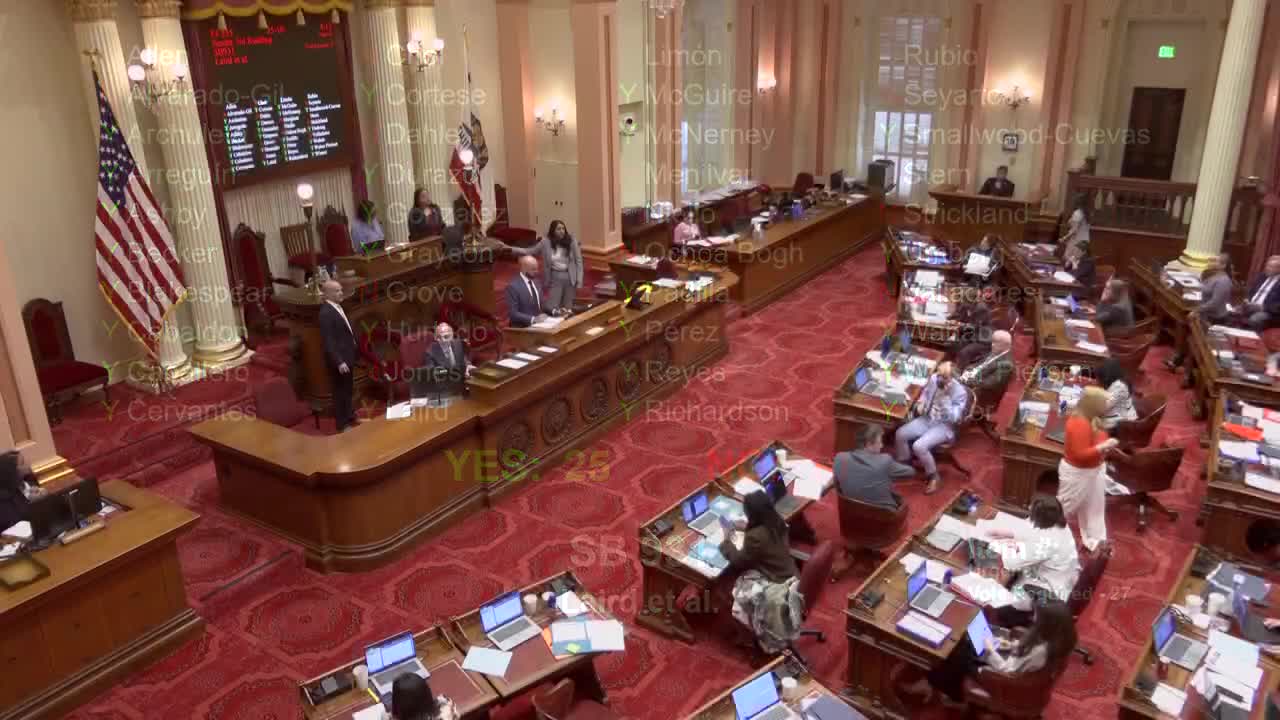 2MIN
Senate Floor
 13MIN
Senate Standing Committee on Elections and Constitutional Amendments
Bill Author

Bill Co-Author(s):