SB 20: Occupational safety: high-exposure trigger tasks on artificial stone.
- Session Year: 2025-2026
- House: Senate
- Latest Version Date: 2025-10-13
Current Status:
Passed
(2025-10-13: Chaptered by Secretary of State. Chapter 734, Statutes of 2025.)
Introduced
In Committee
Awaiting First Chamber Vote
Passed First Chamber
In Committee
Awaiting Second Chamber Vote
Passed Second Chamber
Enacted
Existing law establishes the Department of Industrial Relations in the Labor and Workforce Development Agency and requires the department to be conducted under the control of an executive officer known as the Director of Industrial Relations. Existing law states that the function of the department, among other things, is to foster, promote, and develop the welfare of the wage earners of California, to improve their working conditions, and to advance their opportunities for profitable employment and vests the department with responsibility for administering the state plan for the development and enforcement of occupational safety and health standards relating to issues covered by corresponding standards adopted pursuant to federal law.
Existing law establishes the Occupational Safety and Health Standards Board within the department to adopt occupational safety and health standards for the state, including standards dealing with exposure to harmful airborne contaminants. Existing law requires the Division of Occupational Safety and Health within the department to enforce all occupational safety and health standards, as specified. A violation of these standards and regulations under specific circumstances is a crime.
Existing law, the California Occupational Safety and Health Act of 1973 (OSHA), requires employers to comply with certain safety and health standards, as specified, and charges the Division of Occupational Safety and Health with enforcement of the act. OSHA defines serious injury or illness for purposes of the act to mean any injury or illness occurring in a place of employment or in connection with any employment that results in one of a list of conditions, including inpatient hospitalization, as provided, the loss of a member of the body, any serious degree of permanent disfigurement, and impairment sufficient to cause a part of the body or the function of an organ to become permanently and significantly reduced in efficiency on or off the job, as specified. Under OSHA, certain knowing, negligent, or willful violations of safety and health standards are punishable as a misdemeanor.
This bill would add silicosis and silica-related lung cancer to the list of conditions that, if resulting from an injury or illness occurring in a place of employment or in connection with an employment, would constitute a serious injury or illness. By expanding the scope of a crime under OSHA, the bill would impose a state-mandated local program.
OSHA creates a rebuttable presumption that a serious violation exists in a place of employment if the division demonstrates that there is a realistic possibility that death or serious physical harm could result from the actual hazard created by the violation. OSHA defines serious physical harm for purposes of that provision.
This bill would expand that definition of serious physical harm to include silicosis and silica-related lung cancer.
The bill would impose restrictions on specified high-exposure trigger tasks on artificial stone, as those terms are defined. Specifically, a person or entity engaged in high-exposure trigger tasks would be prohibited from using dry methods, and would be required to use effective wet methods when engaging in any high-exposure trigger tasks. The bill would make a violation of these provisions grounds for, among other disciplinary action, an immediate order by the division prohibiting continued work. The bill would require the division to enforce these provisions by issuing a citation alleging a violation and a notice of civil penalty.
The bill would require the owner or operator of a fabrication shop, or any individual who will employ another individual to perform high-exposure trigger tasks in a fabrication shop, to ensure that an employee who will perform high-exposure tasks receives specified training and, beginning on July 1, 2026, and annually thereafter, to attest to the division that these employees have been trained. The bill would require the division to enforce these provisions by issuing a citation alleging a violation and a notice of civil penalty.
The bill would require the State Department of Public Health to consider a report of silicosis related to occupational exposure to artificial stone a serious illness and to report that case to the division. The bill would require the division, if it receives such a report, to subject the employer or place of employment to investigation, as specified. The bill would require the division to notify the State Department of Public Health of any cases of silicosis related to artificial stone identified through enforcement activities. The bill would require the State Department of Public Health to conduct specified activities to address silicosis risk exposure in fabrication shops, including providing technical assistance to local health jurisdictions engaged in silicosis surveillance and prevention activities.
The bill would define various terms for these purposes. The bill would make findings and declarations related to these provisions.
Existing constitutional provisions require that a statute that limits the right of access to the meetings of public bodies or the writings of public officials and agencies be adopted with findings demonstrating the interest protected by the limitation and the need for protecting that interest. This bill would make legislative findings to that effect.
The California Constitution requires the state to reimburse local agencies and school districts for certain costs mandated by the state. Statutory provisions establish procedures for making that reimbursement.
This bill would provide that no reimbursement is required by this act for a specified reason.
Existing law establishes the Department of Industrial Relations in the Labor and Workforce Development Agency and requires the department to be conducted under the control of an executive officer known as the Director of Industrial Relations. Existing law states that the function of the department, among other things, is to foster, promote, and develop the welfare of the wage earners of California, to improve their working conditions, and to advance their opportunities for profitable employment and vests the department with responsibility for administering the state plan for the development and enforcement of occupational safety and health standards relating to issues covered by corresponding standards adopted pursuant to federal law.
Existing law establishes the Occupational Safety and Health Standards Board within the department to adopt occupational safety and health standards for the state, including standards dealing with exposure to harmful airborne contaminants. Existing law requires the Division of Occupational Safety and Health within the department to enforce all occupational safety and health standards, as specified. A violation of these standards and regulations under specific circumstances is a crime.
Existing law, the California Occupational Safety and Health Act of 1973 (OSHA), requires employers to comply with certain safety and health standards, as specified, and charges the Division of Occupational Safety and Health with enforcement of the act. OSHA defines serious injury or illness for purposes of the act to mean any injury or illness occurring in a place of employment or in connection with any employment that results in one of a list of conditions, including inpatient hospitalization, as provided, the loss of a member of the body, any serious degree of permanent disfigurement, and impairment sufficient to cause a part of the body or the function of an organ to become permanently and significantly reduced in efficiency on or off the job, as specified. Under OSHA, certain knowing, negligent, or willful violations of safety and health standards are punishable as a misdemeanor.
This bill would add silicosis and silica-related lung cancer to the list of conditions that, if resulting from an injury or illness occurring in a place of employment or in connection with an employment, would constitute a serious injury or illness. By expanding the scope of a crime under OSHA, the bill would impose a state-mandated local program.
OSHA creates a rebuttable presumption that a serious violation exists in a place of employment if the division demonstrates that there is a realistic possibility that death or serious physical harm could result from the actual hazard created by the violation. OSHA defines serious physical harm for purposes of that provision.
This bill would expand that definition of serious physical harm to include silicosis and silica-related lung cancer.
ThisThe bill would impose restrictions on specified fabrication activities on certain slab solid surface products that are used for countertop installation or customization and surface applications. high-exposure trigger tasks on artificial stone, as those terms are defined. Specifically, a person or entity engaged in those fabrication activities high-exposure trigger tasks would be prohibited from using dry methods, and would be required to use effective wet methods, as specified. methods when engaging in any high-exposure trigger tasks. The bill would make a violation of these provisions grounds for, among other disciplinary action, an immediate order by the division prohibiting continued fabrication activities on those stone slab products, but would specify that violation is not a crime. work. The bill would require the division to enforce these provisions by issuing a citation alleging a violation and a notice of civil penalty.
The bill would require, on or before July 1, 2026, the department to adopt a training curriculum regarding the safe performance of fabrication activities on stone slab products that meets specified requirements, including classroom instruction, and to verify that an individual has completed that curriculum. Beginning July 1, 2027, the bill would require certain individuals, including an owner or operator of a slab solid surface product fabrication shop, to be enrolled in or have completed the training curriculum, except as specified, before fabrication activity or employment begins, as described.The bill would require, on or before January 1, 2027, the department to develop an application and certification process for fabrication shops to lawfully engage in stone slab product fabrication activities. The bill would authorize fabrication shops to engage in those fabrication activities during the pendency of the application development and certification process. The bill would require the department to develop an initial deposit process for fabrication shops to, during the pendency of the application development and certification process, submit a deposit fee for the application and certification subject to specified requirements, including that the deposit amount goes towards the initial certification fee collected by the department.The bill would require, beginning July 1, 2027, the department to grant a 3-year certification to a fabrication shop that demonstrates satisfaction of specified criteria involving workplace safety conditions and precautions, and would authorize certification renewal, as specified. Among other conditions, the bill would establish certain regulatory fees in amounts to be determined and adjusted by the department, as specified, for the certification and renewal thereof. The bill would authorize the department to suspend or revoke a certification in certain cases, including for gross negligence, as specified. The bill would require the department, in consultation with the Division of Occupational Safety and Health and the State Department of Public Health, to track and keep a record of specified information on fabrication shops, including the number of citations issued to any of the fabrication shops for failure to comply with any temporary or future standards relating to respirable crystalline silica, as specified. The bill would prohibit a person or entity, or an employee thereof, from engaging in fabrication activities on slab solid surface products unless they conduct the fabrication activities at a fabrication shop that has submitted a valid initial deposit to the department, or, after July 1, 2027, has submitted an application for initial certification or renewal and the application is pending or that has a valid certification, as provided. The bill would specify that a violation of that prohibition may be reported to the Division of Labor Standards Enforcement, but is not a crime.The bill would prohibit, beginning July 1, 2027, a person from supplying a slab solid surface product directly to a person, entity, or business engaged in fabrication activities on those products if the person, entity, or business does not have a valid, or pending application for, certification. The bill would require a person that supplies a slab solid surface product to a person, entity, or business engaged in fabrication activities on those products to verify that the person, entity, or business has a certification, as specified. The bill would require a person that supplies a slab solid surface product to a person, entity, or business that is not engaged in fabrication activities to rely on written certification issued under penalty of perjury that, among other things, they will not directly engage in fabrication activities with the product without a certification. By expanding the scope of the crime of perjury, the bill would impose a state-mandated local program. The bill would require a person that seeks services that require fabrication activities and enters into a contract with a person, entity, or business to undertake fabrication activities to verify that the person, entity, or business has a valid certificate before engaging with and providing slab solid surface products to that person, entity, or business. The bill would specify that a violation of the above-described restrictions on supplying a slab solid surface product may be grounds for penalties as determined by the division, as specified, but is not a crime.The bill would establish the Slab Fabrication Activity Account in the Occupational Safety and Health Fund in the State Treasury, and require all fees, penalties, or other moneys collected by the department under the above-described provisions to be deposited into the account. The bill would authorize moneys in the account to be expended by the department for the purposes of administering the above-described provisions, and would make that authorization contingent on an appropriation of funds for that express purpose.The bill would require the owner or operator of a fabrication shop, or any individual who will employ another individual to perform high-exposure trigger tasks in a fabrication shop, to ensure that an employee who will perform high-exposure tasks receives specified training and, beginning on July 1, 2026, and annually thereafter, to attest to the division that these employees have been trained. The bill would require the division to enforce these provisions by issuing a citation alleging a violation and a notice of civil penalty.
The bill would require the State Department of Public Health to consider a report of silicosis related to occupational exposure to artificial stone a serious illness and to report that case to the division. The bill would require the division, if it receives such a report, to subject the employer or place of employment to investigation, as specified. The bill would require the division to notify the State Department of Public Health of any cases of silicosis related to artificial stone identified through enforcement activities. The bill would require the State Department of Public Health to conduct specified activities to address silicosis risk exposure in fabrication shops, including providing technical assistance to local health jurisdictions engaged in silicosis surveillance and prevention activities.
The bill would define various terms for these purposes. The bill would make findings and declarations related to these provisions.
Existing constitutional provisions require that a statute that limits the right of access to the meetings of public bodies or the writings of public officials and agencies be adopted with findings demonstrating the interest protected by the limitation and the need for protecting that interest.
The California Constitution requires the state to reimburse local agencies and school districts for certain costs mandated by the state. Statutory provisions establish procedures for making that reimbursement.
This bill would provide that no reimbursement is required by this act for a specified reason.
This bill would make legislative findings to that effect.
Existing law establishes the Department of Industrial Relations in the Labor and Workforce Development Agency and requires the department to be conducted under the control of an executive officer known as the Director of Industrial Relations. Existing law states that the function of the department, among other things, is to foster, promote, and develop the welfare of the wage earners of California, to improve their working conditions, and to advance their opportunities for profitable employment and vests the department with responsibility for administering the state plan for the development and enforcement of occupational safety and health standards relating to issues covered by corresponding standards adopted pursuant to federal law.
Existing law establishes the Occupational Safety and Health Standards Board within the department to promulgate adopt occupational safety and health standards for the state, including standards dealing with exposure to harmful airborne contaminants. Existing law requires the Division of Occupational Safety and Health within the department to enforce all occupational safety and health standards, as specified. A violation of these standards and regulations under specific circumstances is a crime.
This bill would impose restrictions on specified fabrication activities on certain stone slab solid surface products that are used for countertop installation or customization. customization and surface applications. Specifically, a person or entity engaged in those fabrication activities would be prohibited from using dry methods, and would be required to use effective wet methods, as specified. The bill would make a violation of these provisions grounds for, among other disciplinary action, an immediate order by the division prohibiting continued fabrication activities on those stone slab products, but would specify that violation is not a crime.
The bill would require, on or before July 1, 2026, the department to adopt a training curriculum regarding the safe performance of fabrication activities on stone slab products that meets specified requirements, including classroom instruction, and to certify verify that an individual who has completed that curriculum. Beginning July 1, 2027, the bill would require certain individuals, including an owner or operator of a stone slab solid surface product fabrication shop, to be enrolled in or have completed the training curriculum, except as specified, before fabrication activity or employment begins, as described.
The bill would require, on or before January 1, 2027, the department to develop an application and certification process for fabrication shops to lawfully engage in stone slab product fabrication activities. The bill would authorize fabrication shops to engage in those fabrication activities during the pendency of the application development and certification process. The bill would require the department to develop an initial deposit process for fabrication shops to, during the pendency of the application development and certification process, submit a deposit fee for the application and certification subject to specified requirements, including that the deposit amount goes towards the initial certification fee collected by the department.
The bill would require, beginning July 1, 2027, the department to grant a 3-year certification to a fabrication shop that demonstrates satisfaction of specified criteria involving workplace safety conditions and precautions, and would authorize certification renewal, as specified. Among other conditions, the bill would establish certain regulatory fees in amounts to be determined and adjusted by the department, as specified, for the certification and renewal thereof. The bill would authorize the department to suspend or revoke a certification in certain cases, including for gross negligence, as specified. The bill would require the department, in consultation with the Division of Occupational Safety and Health and the State Department of Public Health, to track and keep a record of specified information on fabrication shops, including the number of citations issued to any of the fabrication shops for failure to comply with any temporary or future standards relating to respirable crystalline silica, as specified. The bill would prohibit a person or entity, or an employee thereof, from engaging in fabrication activities on stone slab solid surface products without a certification. unless they conduct the fabrication activities at a fabrication shop that has submitted a valid initial deposit to the department, or, after July 1, 2027, has submitted an application for initial certification or renewal and the application is pending or that has a valid certification, as provided. The bill would specify that a violation of that prohibition may be reported to the Division of Labor Standards Enforcement, but is not a crime.
The bill would prohibit, beginning July 1, 2027, a person from supplying a slab solid surface product directly to a person or entity person, entity, or business engaged in fabrication activities on those products if the person or entity person, entity, or business does not have a valid valid, or pending application for, certification. The bill would require a person that supplies a slab solid surface product to a person or entity person, entity, or business engaged in fabrication activities on those products to verify that the person or entity person, entity, or business has a certification, as specified. The bill would require a person that supplies a slab solid surface product to a person or entity person, entity, or business that is not engaged in fabrication activities to rely on written certification issued under penalty of perjury that, among other things, they will not directly engage in fabrication activities with the product without a certification. By expanding the scope of the crime of perjury, the bill would impose a state-mandated local program. The bill would require a person that seeks services that require fabrication activities and enters into a contract with a person or entity person, entity, or business to undertake fabrication activities to verify that the person or entity person, entity, or business has a valid certificate before engaging with and providing slab solid surface products to that person or entity. person, entity, or business. The bill would specify that a violation of the above-described restrictions on supplying a slab solid surface product may be grounds for penalties as determined by the division, as specified, but is not a crime.
The bill would establish the Slab Fabrication Activity Account in the Occupational Safety and Health Fund in the State Treasury, and require all fees, penalties, or other moneys collected by the department under the above-described provisions to be deposited into the account. The bill would authorize moneys in the account to be expended by the department for the purposes of administering the above-described provisions, and would make that authorization contingent on an appropriation of funds for that express purpose.
The bill would require, beginning January 1, 2027, the Director of Industrial Relations to maintain on the departments internet website an online tool to report suspected or alleged violations of the bills provisions and a publicly accessible database that includes information on, among other things, any active orders issued by the department in the prior 12 months prohibiting an activity at a fabrication shop, as specified.The bill would define various terms for these purposes. The bill would make findings and declarations related to these provisions.
The California Constitution requires the state to reimburse local agencies and school districts for certain costs mandated by the state. Statutory provisions establish procedures for making that reimbursement.
This bill would provide that no reimbursement is required by this act for a specified reason.
Existing law establishes the Department of Industrial Relations in the Labor and Workforce Development Agency and requires the department to be conducted under the control of an executive officer known as the Director of Industrial Relations. Existing law states that the function of the department, among other things, is to foster, promote, and develop the welfare of the wage earners of California, to improve their working conditions, and to advance their opportunities for profitable employment and vests the department with responsibility for administering the state plan for the development and enforcement of occupational safety and health standards relating to issues covered by corresponding standards adopted pursuant to federal law.
Existing law establishes the Occupational Safety and Health Standards Board within the department to promulgate occupational safety and health standards for the state, including standards dealing with exposure to harmful airborne contaminants. Existing law requires the Division of Occupational Safety and Health within the department to enforce all occupational safety and health standards, as specified. A violation of these standards and regulations under specific circumstances is a crime.
This bill would impose restrictions on specified fabrication activities on certain stone slab products that are used for countertop installation or customization. Specifically, a person or entity engaged in those fabrication activities would be prohibited from using dry methods, and would be required to use effective wet methods, as specified. The bill would make a violation of these provisions grounds for, among other disciplinary action, an immediate order by the division prohibiting continued fabrication activities on those stone slab products, but would specify that violation is not a crime.
The bill would require, on or before July 1, 2026, the department to consult with representatives of approved apprenticeship programs to adopt a training curriculum regarding the safe performance of fabrication activities on stone slab products that meets specified requirements, including classroom instruction, and to certify an individual who has completed that curriculum. Beginning July 1, 2027, the bill would require certain individuals, including an owner or operator of a stone slab product fabrication shop, to be enrolled in or have completed the training curriculum, except as specified, before fabrication activity or employment begins, as described.
The bill would require, on or before January 1, 2027, the department to develop an application and certification process for fabrication shops to lawfully engage in stone slab product fabrication activities. The bill would authorize fabrication shops to engage in those fabrication activities during the pendency of the application development and certification process. The bill would require the department to develop an initial deposit process for fabrication shops to, during the pendency of the application development and certification process, submit a deposit fee for the application and certification subject to specified requirements, including that the deposit amount goes towards the initial certification fee collected by the department. The bill would require the department to create a statewide tracking system to track the number of fabrication shops that have submitted a deposit subject to specified requirements, including that the statewide tracking system is posted on the departments internet website and is made available to the public.
The bill would require, beginning January July 1, 2027, the department to grant a 3-year certification to a fabrication shop that demonstrates satisfaction of specified criteria involving workplace safety conditions and precautions, and would authorize certification renewal, as specified. Among other conditions, the bill would establish certain regulatory fees in amounts to be determined and adjusted by the department, as specified, for the certification and renewal thereof. The bill would authorize the department to suspend or revoke a certification in certain cases, including for gross negligence, as specified. The bill would require the department, in consultation with the Division of Occupational Safety and Health and the State Department of Public Health, to track and keep a record of specified information on fabrication shops, including the number of citations issued to any of the fabrication shops for failure to comply with any temporary or future standards relating to respirable crystalline silica, as specified. The bill would prohibit a person or entity, or an employee thereof, from engaging in fabrication activities on stone slab products without a certification. The bill would specify that a violation of that prohibition may be reported to the Division of Labor Standards Enforcement, but is not a crime.
The bill would prohibit, beginning January July 1, 2027, a person from supplying a slab solid surface product directly to a person or entity engaged in fabrication activities on those products if the person or entity does not have a valid certification. The bill would require a person that supplies a slab solid surface product to a person or entity engaged in fabrication activities on those products to verify the person or entity has a certification, as specified. The bill would require a person that supplies a slab solid surface product to a person or entity that is not engaged in fabrication activities to rely on written certification issued under penalty of perjury that, among other things, they will not directly engage in fabrication activities with the product without a certification. By expanding the scope of the crime of perjury, the bill would impose a state-mandated local program. The bill would require a person that seeks services that require fabrication activities and enters into a contract with a person or entity to undertake fabrication activities to verify that the person or entity has a valid certificate before engaging with and providing slab solid surface products to that person or entity. The bill would specify that a violation of the above-described restrictions on supplying a slab solid surface product may be grounds for penalties as determined by the division, as specified, but is not a crime.
The bill would establish the Slab Fabrication Activity Account in the Occupational Safety and Health Fund in the State Treasury, and require all fees, penalties, or other moneys collected by the department under the above-described provisions to be deposited into the account. The bill would authorize moneys in the account to be expended by the department for the purposes of administering the above-described provisions, and would make that authorization contingent on an appropriation of funds for that express purpose.
The bill would require, beginning January 1, 2027, the Director of Industrial Relations to maintain a publicly accessible database on the departments internet website an online tool to report suspected or alleged violations of the bills provisions and a publicly accessible database that includes, among other things, information on includes information on, among other things, any active orders issued by the department in the prior 12 months prohibiting an activity at a fabrication shop, as specified.
The bill would define various terms for these purposes. The bill would make findings and declarations related to these provisions.
The California Constitution requires the state to reimburse local agencies and school districts for certain costs mandated by the state. Statutory provisions establish procedures for making that reimbursement.
This bill would provide that no reimbursement is required by this act for a specified reason.
Existing law establishes the Department of Industrial Relations in the Labor and Workforce Development Agency and requires the department to be conducted under the control of an executive officer known as the Director of Industrial Relations. Existing law states that the function of the department, among other things, is to foster, promote, and develop the welfare of the wage earners of California, to improve their working conditions, and to advance their opportunities for profitable employment and vests the department with responsibility for administering the state plan for the development and enforcement of occupational safety and health standards relating to issues covered by corresponding standards adopted pursuant to federal law.
Existing law establishes the Occupational Safety and Health Standards Board within the Department of Industrial Relations department to promulgate and enforce occupational safety and health standards for the state, including standards dealing with exposure to harmful airborne contaminants. Existing law requires the Division of Occupational Safety and Health within the department to enforce all occupational safety and health standards, as specified. A violation of these standards and regulations under specific circumstances is a crime.
This bill would impose restrictions on specified fabrication activities on certain stone slab products that are used for countertop installation or customization. Specifically, a person or entity engaged in those fabrication activities would be prohibited from using dry methods, and would be required to use effective wet methods, as specified. The bill would make a violation of these provisions grounds for, among other disciplinary action, an immediate order by the Division of Occupational Safety and Health division prohibiting continued fabrication activities on those stone slab products. products, but would specify that violation is not a crime.
Existing law establishes the State Department of Public Health, which is led by the State Public Health Officer, within the California Health and Human Services Agency. Existing law vests the department with certain duties, powers, functions, jurisdiction, and responsibilities over specified public health programs.The bill would require, on or before July 1, 2026, the State Department of Public Health department to consult with representatives of approved apprenticeship programs to adopt a training curriculum regarding the safe performance of fabrication activities on stone slab products that meets specified requirements, including classroom instruction, and to certify an individual who has completed that curriculum. Beginning July 1, 2027, the bill would require certain individuals, including an owner or operator of a stone slab product fabrication shop, to be enrolled in or have completed the training curriculum, except as specified, before fabrication activity or employment begins, as described.
The bill would require, on or before January 1, 2027, the department to develop an application and certification process for fabrication shops to lawfully engage in stone slab product fabrication activities. The bill would authorize fabrication shops to engage in those fabrication activities during the pendency of the application development and licensing certification process. The bill would require the department to develop an initial deposit process for fabrication shops to, during the pendency of the application development and certification process, submit a deposit fee for the application and certification subject to specified requirements, including that the deposit amount goes towards the initial certification fee collected by the department. The bill would require the department to create a statewide tracking system to track the number of fabrication shops that have submitted a deposit subject to specified requirements, including that the statewide tracking system is posted on the departments internet website and is made available to the public.
The bill would require, beginning January 1, 2027, the department to grant a 3-year certification to a fabrication shop that demonstrates satisfaction of specified criteria involving workplace safety conditions and precautions, and would authorize certification renewal, as specified. Among other conditions, the bill would establish certain regulatory fees in amounts to be determined and adjusted by the department, as specified, for the certification and renewal thereof. The bill would authorize the department to suspend or revoke a certification in certain cases, including for gross negligence, as specified. The bill would require the department, in consultation with the Division of Occupational Safety and Health, to track and keep a record of specified information on fabrication shops, including the number of violations citations issued to any of the fabrication shops for failure to comply with any temporary or future standards relating to respirable crystalline silica, as specified. The bill would prohibit a person or entity, or an employee thereof, from engaging in fabrication activities on stone slab products unless the person or entity has without a certification. The bill would specify that a violation of that prohibition may be reported to the Division of Labor Standards Enforcement, but is not a crime.
The bill would prohibit, beginning January 1, 2027, a person from supplying a slab solid surface product directly to a person or entity engaged in fabrication activities on those products if the person or entity does not have a valid certification. The bill would require a person that, among other things, that supplies a slab solid surface product to a person or entity engaged in fabrication activities on those products to verify the person or entity has a certification, as specified. The bill would require a person that supplies a slab solid surface product to a person or entity that is not engaged in fabrication activities to rely on written certification issued under penalty of perjury that, among other things, they will not directly engage in fabrication activities with the product without a certification. By expanding the scope of the crime of perjury, the bill would impose a state-mandated local program. The bill would require a person that seeks services that require fabrication activities and enters into a contract with a person or entity to undertake fabrication activities to verify that the person or entity has a valid certificate before engaging with and providing slab solid surface products to that person or entity. The bill would specify that a violation of the above-described restrictions on supplying a slab solid surface product may be grounds for penalties as determined by the division, as specified, but is not a crime.
The bill would specify that a violation of any of the above-described provisions may be grounds for disciplinary action, as specified, but is not a crime. TheThe bill would establish the Slab Fabrication Activity Account in the Occupational Safety and Health Fund in the State Treasury, and require all fees, penalties, or other moneys collected by the department under the above-described provisions to be deposited into the account. The bill would authorize moneys in the account to be expended by the department for the purposes of administering the above-described provisions, and would make that authorization contingent on an appropriation of funds for that express purpose.
The bill would require, beginning January 1, 2027, the State Public Health Officer Director of Industrial Relations to maintain a publicly accessible database on the departments internet website that includes, among other things, information on any active orders issued by the department in the prior 12 months prohibiting an activity at a fabrication shop, as specified.
The bill would define various terms for these purposes. The bill would make findings and declarations related to these provisions.
The California Constitution requires the state to reimburse local agencies and school districts for certain costs mandated by the state. Statutory provisions establish procedures for making that reimbursement.
This bill would provide that no reimbursement is required by this act for a specified reason.
Existing law establishes the Occupational Safety and Health Standards Board within the Department of Industrial Relations to promulgate and enforce occupational safety and health standards for the state, including standards dealing with exposure to harmful airborne contaminants. Existing law requires the Division of Occupational Safety and Health within the department to enforce all occupational safety and health standards, as specified. A violation of these standards and regulations under specific circumstances is a crime.
This bill would impose restrictions on specified fabrication activities on certain stone slab products that are used for countertop installation or customization. Specifically, a person or entity engaged in those fabrication activities would be prohibited from using dry methods, and would be required to use effective wet methods, as specified. The bill would make a violation of these provisions grounds for, among other disciplinary action, an immediate order by the Division of Occupational Safety and Health prohibiting continued fabrication activities on those stone slab products.
Existing law establishes the State Department of Public Health, which is led by the State Public Health Officer, within the California Health and Human Services Agency. Existing law vests the department with certain duties, powers, functions, jurisdiction, and responsibilities over specified public health programs.
The bill would require, on or before July 1, 2026, the State Department of Public Health to consult with representatives of approved apprenticeship programs to adopt a training curriculum regarding the safe performance of fabrication activities on stone slab products that meets specified requirements, including classroom instruction, and to certify an individual who has completed that curriculum. Beginning July 1, 2027, the bill would require certain individuals, including an owner or operator of a stone slab product fabrication shop, to be enrolled in or have completed the training curriculum, except as specified, before fabrication activity or employment begins, as described.
The bill would require, on or before January 1, 2027, the department to develop an application and certification process for fabrication shops to lawfully engage in stone slab product fabrication activities. The bill would authorize fabrication shops to engage in those fabrication activities during the pendency of the application development and licensing process. The bill would require the department to develop an initial deposit process for fabrication shops to, during the pendency of the application development and certification process, submit a deposit fee for the application and certification subject to specified requirements, including that the deposit amount goes towards the initial certification fee collected by the department. The bill would require the department to create a statewide tracking system to track the number of fabrication shops that have submitted a deposit subject to specified requirements, including that the statewide tracking system is posted on the departments internet website and is made available to the public.
The bill would require, beginning January 1, 2027, the department to grant a 3-year certification to a fabrication shop that demonstrates satisfaction of specified criteria involving workplace safety conditions and precautions, and would authorize certification renewal, as specified. Among other conditions, the bill would establish certain regulatory fees in amounts to be determined and adjusted by the department, as specified, for the certification and renewal thereof. The bill would authorize the department to suspend or revoke a certification in certain cases, including for gross negligence, as specified. The bill would require the department, in consultation with the Division of Occupational Safety and Health, to track and keep a record of specified information on fabrication shops, including the number of violations issued to any of the fabrication shops for failure to comply with any temporary or future standards relating to respirable crystalline silica, as specified. The bill would prohibit a person or entity, or an employee thereof, from engaging in fabrication activities on stone slab products unless the person or entity has a certification.
The bill would prohibit, beginning January 1, 2027, a person from supplying a slab solid surface product directly to a person or entity engaged in fabrication activities on those products if the person or entity does not have a valid certification. The bill would require a person that, among other things, supplies a slab solid surface product to a person or entity engaged in fabrication activities on those products to verify the person or entity has a certification, as specified. The bill would require a person that supplies a slab solid surface product to a person or entity that is not engaged in fabrication activities to rely on written certification issued under penalty of perjury that, among other things, they will not directly engage in fabrication activities with the product without a certification. By expanding the scope of the crime of perjury, the bill would impose a state-mandated local program.
The bill would specify that a violation of any of the above-described provisions may be grounds for disciplinary action, as specified, but is not a crime. The bill would establish the Slab Fabrication Activity Account in the Occupational Safety and Health Fund in the State Treasury, and require all fees, penalties, or other moneys collected by the department under the above-described provisions to be deposited into the account. The bill would authorize moneys in the account to be expended by the department for the purposes of administering the above-described provisions, and would make that authorization contingent on an appropriation of funds for that express purpose.
The bill would require, beginning January 1, 2027, the State Public Health Officer to maintain a publicly accessible database on the departments internet website that includes, among other things, information on any active orders issued by the department in the prior 12 months prohibiting an activity at a fabrication shop, as specified.
The bill would define various terms for these purposes. The bill would make findings and declarations related to these provisions.
The California Constitution requires the state to reimburse local agencies and school districts for certain costs mandated by the state. Statutory provisions establish procedures for making that reimbursement.
This bill would provide that no reimbursement is required by this act for a specified reason.
(a)The Legislature finds and declares all of the following regarding silicosis and its associated health impacts:
(1)According to the federal Centers for Disease Control and Prevention (CDC), silicosis is an occupational lung disease caused by the inhalation of respirable dust containing crystalline silica.
(2)According to the State Department of Public Health, crystalline silica is found in many materials, including sand, concrete, glass, natural stone, and engineered stone. Small silica dust particles are created when workers cut, saw, grind, drill, or crush these materials. When these small particles of silica dust get in the air, they can be breathed into the lungs and cause silicosis.
(3)When small particles of silica get into the lungs, they can cause permanent scarring and difficulty breathing and can also cause lung cancer, kidney damage, and several autoimmune diseases. Initial symptoms of silicosis can include shortness of breath, cough, and fatigue. Workers can die from silica dust overexposure.
(4)Many cases of incurable and fatal lung problems from exposure to silica dust in stone slab fabrication workers have been reported around the world and in the United States, including several cases among relatively young workers in California. Workers who cut, grind, and polish stone slabs containing crystalline silica are at risk if appropriate measures are not taken.
(5)According to the Los Angeles County Department of Public Health, silicosis is irreversible and can progress even if a person is no longer exposed to silica dust, but with the right measures in place, it is preventable. It can take a person 10 to 30 years to develop silicosis, but a person who is exposed to high levels of silica dust can develop silicosis faster.
(b)The Legislature finds and declares both of the following regarding the increase in the number of cases of silicosis in California:
(1)Since 2010, more than 1,000 cases of silicosis in workers who fabricate countertops and other surface applications containing crystalline silica have been reported worldwide. The first cases of silicosis were reported in Spain in 2010 and in Israel in 2012. The first case of silicosis reported in the United States was in Texas in 2015.
(2)According to the State Department of Public Health, there are 370 workers who fabricate, install, or fabricate and install countertops and other stone products identified as of August 22, 2025, with silicosis in California. At least 21 workers have died, most of whom were 30 to 40 years of age, inclusive, and at least 44 workers have received lung transplants.
(c)The Legislature finds and declares all of the following regarding the use of silica in products:
(1)Crystalline silica is a common mineral found in the earths crust. Materials like sand, stone, concrete, and mortar contain crystalline silica. Stone slabs containing crystalline silica such as quartz are becoming increasingly popular for kitchen countertops and for use on a variety of surfaces.
(2)Workers who cut, polish, or grind products that contain crystalline silica can be exposed to hazardous levels of silica dust.
(3)In 1938, United States Secretary of Labor Frances Perkins declared that silicosis can be prevented.
(d)The Legislature finds and declares both of the following regarding the impact of silicosis on undocumented workers:
(1)The demographic for workers contracting silicosis are typically young, immigrant workers, are all males with a median of 46 years of age at diagnosis, with 98 percent originating from Mexico or Central America, and are mostly reliant on public insurance or uninsured.
(2)Physicians at Olive View-UCLA Medical Center in the County of Los Angeles identified a cluster of patients with a rare occupational lung disease called pulmonary silicosis and played a key role in bringing their cases to light. The patients identified are predominantly Mexican and Latin American immigrant men who work as stonecutters in the San Fernando Valley, cutting synthetic stone kitchen and bathroom countertops that contain crystalline silica. According to a State Department of Public Health directory, there are over 100 stone slab fabrication shops in the centers catchment area in the San Fernando Valley and over 1,000 within the state, and many other at-risk workers in the County of Los Angeles and throughout the state.
(e)The Legislature finds and declares both of the following regarding the impact of silicosis worldwide:
(1)The New Zealand Council of Trade Unions (NZCTU) Te Kauae Kaimahi advanced a call for a total ban on engineered stone in New Zealand. According to the NZCTU President, Richard Wagstaff, the evidence of the harm caused by engineered stone is overwhelming. It is clear to us that a ban on this product is the only option.
(2)On July 1, 2024, Australia became the first country to institute a ban on engineered stone and follows a surge in hundreds of workers developing silicosis from working on engineered stone, a popular material mostly used for kitchen benches and bathroom vanities. When the ban was announced, the Australian Council of Trade Unions Assistant Secretary, Liam OBrien, said, Engineered stone is a fashion product that is killing the workers who make it. With alternatives readily available, why are we risking the lives of tradies for a fashionable finish in our kitchens?
(f)Therefore, it is the intent of the Legislature to enact legislation that would help protect and prevent worker overexposure to respirable crystalline silica by imposing all of the following requirements:
(1)Prohibiting the undertaking of fabrication activities without the use of effective wet methods that effectively suppress dust.
(2)Requiring more reporting and tracking of silicosis cases.
(3)Closing gaps in current law to allow for more effective enforcement.
SEC. 2.Section 6302 of the Labor Code is amended to read:6302.As used in this division:
(a)Director means the Director of Industrial Relations.
(b)Department means the Department of Industrial Relations.
(c)Insurer includes the State Compensation Insurance Fund and any private company, corporation, mutual association, and reciprocal or interinsurance exchange, authorized under the laws of this state to insure employers against liability for compensation under this part and under Division 4 (commencing with Section 3201), and any employer to whom a certificate of consent to self-insure has been issued.
(d)Division means the Division of Occupational Safety and Health.
(e)Standards board means the Occupational Safety and Health Standards Board, within the department.
(f)Appeals board means the Occupational Safety and Health Appeals Board, within the department.
(g)Aquaculture means a form of agriculture as defined in Section 17 of the Fish and Game Code.
(h)Serious injury or illness means any injury or illness occurring in a place of employment or in connection with any employment that requires inpatient hospitalization, for other than medical observation or diagnostic testing, or in which an employee suffers an amputation, the loss of an eye, or any serious degree of permanent disfigurement, but does not include any injury or illness or death caused by an accident on a public street or highway, unless the accident occurred in a construction zone. Serious injury or illness includes silicosis and silica-related lung cancer.
(i)Serious exposure means any exposure of an employee to a hazardous substance when the exposure occurs as a result of an incident, accident, emergency, or exposure over time and is in a degree or amount sufficient to create a realistic possibility that death or serious physical harm in the future could result from the actual hazard created by the exposure.
SEC. 3.Chapter 2.2 (commencing with Section 6359.1) is added to Part 1 of Division 5 of the Labor Code, to read:2.2.Artificial Stone; Occupational Exposure to Respirable Crystalline Silica6359.1.For purposes of this chapter, the following definitions apply:
(a)Artificial stone means any reconstituted, artificial, synthetic, composite, engineered, or manufactured stone product. It is commonly made by combining natural stone or other crystalline silica-containing materials with adhesives, polymers, epoxies, resins, or other binding materials to form a slab. Fired ceramic and porcelain tiles and panels are not artificial stone.
(b)Department means the Department of Industrial Relations.
(c)Director means the Director of Industrial Relations.
(d)Division means the Division of Occupational Safety & Health.
(e)Dry methods means the undertaking of high-exposure trigger tasks without the use of wet methods that effectively suppress dust.
(f)(1)Fabrication shop means a person, entity, business, or location where high-exposure trigger tasks are undertaken.
(2)Fabrication shop does not include quarries, concrete and cement manufacturing facilities, or fired ceramic or fired porcelain tiles or panels manufacturing facilities that do not manufacture, fabricate, or finish artificial stone products.
(g)High-exposure trigger task means machining, crushing, cutting, drilling, abrading, abrasive blasting, grinding, chiseling, carving, gouging, polishing, buffing, fracturing, intentional breaking, or intentional chipping of artificial stone that contains more than 0.1 percent by weight crystalline silica, or other silica containing products, including natural stone, that contain more than 10 percent by weight crystalline silica. High-exposure trigger tasks also include clean up, disturbing, or handling of wastes, dusts, residues, debris, or other materials created during the above-listed tasks. High-exposure trigger tasks do not include tasks other than the fabrication of countertops, backsplashes, walls, flooring, waterfall countertop edges, and other products from slabs or panels.
(h)Respirable crystalline silica means quartz, cristobalite, or tridymite contained in airborne particles that are determined to be respirable by a sampling device designed to meet the characteristics for respirable-particle-size-selective samplers specified in the International Organization for Standardization (ISO) 7708:1995 Air Quality Particle Size Fraction Definitions for Health-Related Sampling.
(i)Wet methods means effectively suppressing dust by one of the methods listed below, such that exposures do not exceed the action level at any time. Regardless of the method used, water shall cover the entire surface of the work object where a tool, equipment, or machine contacts the work object.
(1)Applying a constant, continuous, and appropriate volume of running water directly onto the surface of the work object. When water flow is integrated with a tool, machine, or equipment, water flow rates shall equal or exceed manufacturer recommendations and specifications to ensure effective dust suppression. Any water that is recycled must be filtered to remove silica prior to reuse.
(2)Submersing the work object underwater.
(3)Water jet cutting or the use of high-pressure water to cut material.
6359.1.5.(a)A person or entity engaged in high-exposure trigger tasks shall not use dry methods when engaging in any high-exposure trigger tasks.
(b)A person or entity engaged in high-exposure trigger tasks shall use effective wet methods when engaging in any high-exposure trigger tasks.
(c)A violation of this section shall be grounds for an immediate order by the division prohibiting continued work and shall be grounds for penalties as set forth in Division 5 and Chapters 3.2, 3.3, 3.5, 4, and 7 of Division 1 of Title 8 of the California Code of Regulations.
(d)The division shall enforce this section by issuing a citation alleging a violation of this section and a notice of civil penalty in a manner consistent with Section 6317. Any person who receives a citation and penalty may appeal the citation and penalty to the appeals board in a manner consistent with Section 6319.
6359.2.(a)The owner or operator of a fabrication shop, or any individual who will employ another individual to perform high-exposure trigger tasks in a fabrication shop, shall do both of the following:
(1)Ensure that any employee who performs high-exposure trigger tasks receives training as required pursuant to Section 5204 of Title 8 of the California Code of Regulations.
(2)(A)Beginning on July 1, 2026, and annually thereafter, provide to the division through electronic submission a written attestation that each employee who performs high-exposure trigger tasks has received training as required pursuant to Section 5204 of Title 8 of the California Code of Regulations.
(B)It shall be unlawful for any person to make a false statement, representation, or certification on the written attestation described in subparagraph (A).
(b)The division shall enforce this section by issuing a citation alleging a violation of this section and a notice of a civil penalty in a manner that is consistent with Section 6317. Any person who receives a citation and penalty may appeal the citation and penalty to the appeals board in a manner consistent with Section 6319.
6359.3.This part, or any related health and safety standard, does not prevent or limit an employer, contractor, or fabrication shop from adopting stricter safety standards.
6359.4.(a)The State Department of Public Health shall consider a report of silicosis related to occupational exposure to artificial stone as a serious illness and shall report that case to the division within three business days of receiving the report. The report shall include, if available, the name and contact information for the worker with silicosis and the name and address of their workplace or workplaces.
(b)If the division receives a report of silicosis related to artificial stone from the State Department of Public Health, the report shall constitute a complaint from a government agency representative charging a serious violation and shall subject the employer or place of employment to the requirements of subdivision (a) of Section 6309 for the division to initiate an investigation within three business days.
(c)The division shall notify the State Department of Public Health of any cases of silicosis related to artificial stone identified through enforcement activities within five business days of case identification. The notification shall include, if available, the name and contact information for the worker with silicosis and the name and address of their workplace or workplaces. The division shall also share results of silica exposure assessments performed as part of its enforcement activities and the names and addresses of fabrication shops where the assessments were conducted and associated silica sampling data, including information about the composition of the slabs that were being fabricated during sampling. Silica exposure assessment results shall be shared by the division with the State Department of Public Health within 30 days of receipt of the results by the division.
(d)Information shared pursuant to this section regarding individual cases of silicosis, including personal information contained in assessment results, is confidential, shall be exempt from disclosure pursuant to the California Public Records Act (Division 10 (commencing with Section 7920.000) of Title 1 of the Government Code), and shall be used by the receiving party only for surveillance, investigation, or case management. The State Department of Public Health may share confidential information with the appropriate local health officer only for the purposes of surveillance, investigation, or case management.
(e)The State Department of Public Health may share the deidentified confidential information to entities conducting scientific research, if the request for information is approved by the Committee for the Protection of Human Subjects (CPHS) for the California Health and Human Services Agency, the requesting entity provides documentation to the department that demonstrates, to the departments satisfaction, that the entity has established the procedures and ability to maintain the confidentiality of the information, and the requesting entity has agreed, in writing, to maintain the confidentiality of the information.
6359.5.The State Department of Public Health shall conduct all of the following activities to address silicosis risk exposure in fabrication shops:
(a)Identify businesses that conduct high-exposure trigger activities.
(b)Provide outreach and education about silicosis prevention and diagnosis to workers, employers, and healthcare providers.
(c)Provide technical assistance to local health jurisdictions engaged in silicosis surveillance and prevention activities.
SEC. 4.Section 6432 of the Labor Code is amended to read:6432.(a)There shall be a rebuttable presumption that a serious violation exists in a place of employment if the division demonstrates that there is a realistic possibility that death or serious physical harm could result from the actual hazard created by the violation. The demonstration of a violation by the division is not sufficient by itself to establish that the violation is serious. The actual hazard may consist of, among other things:
(1)A serious exposure exceeding an established permissible exposure limit.
(2)The existence in the place of employment of one or more unsafe or unhealthful practices, means, methods, operations, or processes that have been adopted or are in use.
(b)(1)Before issuing a citation alleging that a violation is serious, the division shall make a reasonable attempt to determine and consider, among other things, all of the following:
(A)Training for employees and supervisors relevant to preventing employee exposure to the hazard or to similar hazards.
(B)Procedures for discovering, controlling access to, and correcting the hazard or similar hazards.
(C)Supervision of employees exposed or potentially exposed to the hazard.
(D)Procedures for communicating to employees about the employers health and safety rules and programs.
(E)Information that the employer wishes to provide, at any time before citations are issued, including, any of the following:
(i)The employers explanation of the circumstances surrounding the alleged violative events.
(ii)Why the employer believes a serious violation does not exist.
(iii)Why the employer believes its actions related to the alleged violative events were reasonable and responsible so as to rebut, pursuant to subdivision (c), any presumption established pursuant to subdivision (a).
(iv)Any other information that the employer wishes to provide.
(2)The division shall satisfy its requirement to determine and consider the facts specified in paragraph (1) if, not less than 15 days prior to issuing a citation for a serious violation, the division delivers to the employer a standardized form containing the alleged violation descriptions (AVD) it intends to cite as serious and clearly soliciting the information specified in this subdivision. The director shall prescribe the form for the alleged violation descriptions and solicitation of information. Any forms issued pursuant to this section shall be exempt from the rulemaking provisions of the Administrative Procedure Act (Chapter 3.5 (commencing with Section 11340) of Part 1 of Division 3 of Title 2 of the Government Code).
(c)If the division establishes a presumption pursuant to subdivision (a) that a violation is serious, the employer may rebut the presumption and establish that a violation is not serious by demonstrating that the employer did not know and could not, with the exercise of reasonable diligence, have known of the presence of the violation. The employer may accomplish this by demonstrating both of the following:
(1)The employer took all the steps a reasonable and responsible employer in like circumstances should be expected to take, before the violation occurred, to anticipate and prevent the violation, taking into consideration the severity of the harm that could be expected to occur and the likelihood of that harm occurring in connection with the work activity during which the violation occurred. Factors relevant to this determination include, but are not limited to, those listed in subdivision (b).
(2)The employer took effective action to eliminate employee exposure to the hazard created by the violation as soon as the violation was discovered.
(d)If the employer does not provide information in response to a division inquiry made pursuant to subdivision (b), the employer shall not be barred from presenting that information at the hearing and no negative inference shall be drawn. The employer may offer different information at the hearing than what was provided to the division and may explain any inconsistency, but the trier of fact may draw a negative inference from the prior inconsistent factual information. The trier of fact may also draw a negative inference from factual information offered at the hearing by the division that is inconsistent with factual information provided to the employer pursuant to subdivision (b), or from a failure by the division to provide the form setting forth the descriptions of the alleged violation and soliciting information pursuant to subdivision (b).
(e)Serious physical harm, as used in this part, means any injury or illness, specific or cumulative, occurring in the place of employment or in connection with any employment, that results in any of the following:
(1)Inpatient hospitalization for purposes other than medical observation.
(2)The loss of any member of the body.
(3)Any serious degree of permanent disfigurement.
(4)Impairment sufficient to cause a part of the body or the function of an organ to become permanently and significantly reduced in efficiency on or off the job, including, but not limited to, depending on the severity, second-degree or worse burns, crushing injuries including internal injuries even though skin surface may be intact, respiratory illnesses, or broken bones.
(5)Silicosis or silica-related lung cancer.
(f)Serious physical harm may be caused by a single, repetitive practice, means, method, operation, or process.
(g)A division safety engineer or industrial hygienist who can demonstrate, at the time of the hearing, that their division-mandated training is current shall be deemed competent to offer testimony to establish each element of a serious violation, and may offer evidence on the custom and practice of injury and illness prevention in the workplace that is relevant to the issue of whether the violation is a serious violation.
(h)This section shall become operative on January 1, 2023.
SEC. 5.The Legislature finds and declares that Section 3 of this act, which adds Section 6359.4 to the Labor Code, imposes a limitation on the publics right of access to the meetings of public bodies or the writings of public officials and agencies within the meaning of Section 3 of Article I of the California Constitution. Pursuant to that constitutional provision, the Legislature makes the following findings to demonstrate the interest protected by this limitation and the need for protecting that interest:
In order to protect the personal information of individuals suffering silicosis it is necessary that specified assessment results be confidential, exempt from disclosure, and used only for surveillance, investigation, or case management by the Division of Occupational Safety and Health, the State Department of Public Health, and appropriate local health officers.
SEC. 6.No reimbursement is required by this act pursuant to Section 6 of Article XIIIB of the California Constitution because the only costs that may be incurred by a local agency or school district will be incurred because this act creates a new crime or infraction, eliminates a crime or infraction, or changes the penalty for a crime or infraction, within the meaning of Section 17556 of the Government Code, or changes the definition of a crime within the meaning of Section 6 of Article XIIIB of the California Constitution.
(a)The Legislature finds and declares all of the following regarding silicosis and its associated health impacts:
(1)According to the federal Centers for Disease Control and Prevention (CDC), silicosis is an occupational lung disease caused by the inhalation of respirable dust containing crystalline silica.
(2)According to the State Department of Public Health, crystalline silica is found in many materials, including sand, concrete, glass, natural stone, and engineered stone. Small silica dust particles are created when workers cut, saw, grind, drill, or crush these materials. When these small particles of silica dust get in the air, they can be breathed into the lungs and cause silicosis.
(3)When small particles of silica get into the lungs, they can cause permanent scarring and difficulty breathing and can also cause lung cancer, kidney damage, and several autoimmune diseases. Initial symptoms of silicosis can include shortness of breath, cough, and fatigue. Workers can die from silica dust overexposure.
(4)Many cases of incurable and fatal lung problems from exposure to silica dust in stone slab fabrication workers have been reported around the world and in the United States, including several cases among relatively young workers in California. Workers who cut, grind, and polish stone slabs containing crystalline silica are at risk if appropriate measures are not taken.
(5)According to the Los Angeles County Department of Public Health, silicosis is irreversible and can progress even if a person is no longer exposed to silica dust, but with the right measures in place, it is preventable. It can take a person 10 to 30 years to develop silicosis, but a person who is exposed to high levels of silica dust can develop silicosis faster.
(b)The Legislature finds and declares both of the following regarding the increase in the number of cases of silicosis in California:
(1)Since 2010, more than 1,000 cases of silicosis in workers who fabricate countertops and other surface applications containing crystalline silica have been reported worldwide. The first cases of silicosis were reported in Spain in 2010 and in Israel in 2012. The first case of silicosis reported in the United States was in Texas in 2015.
(2)According to the State Department of Public Health, there are 301 370 workers who fabricate, install, or fabricate and install countertops and other stone products identified to date as of August 22, 2025, with silicosis in California. At least 15 21 workers have died, most of whom were 30 to 40 years of age, inclusive, and at least 30 44 workers have received lung transplants.
(c)The Legislature finds and declares all of the following regarding the use of silica in products:
(1)Crystalline silica is a common mineral found in the earths crust. Materials like sand, stone, concrete, and mortar contain crystalline silica. Stone slabs containing crystalline silica such as quartz are becoming increasingly popular for kitchen countertops and for use on a variety of surfaces.
(2)Workers who cut, polish, or grind products that contain crystalline silica can be exposed to hazardous levels of silica dust.
(3)In 1938, United States Secretary of Labor Frances Perkins declared that silicosis can be prevented.
(d)The Legislature finds and declares both of the following regarding the impact of silicosis on undocumented workers:
(1)The demographic for workers contracting silicosis are typically young, immigrant workers, are all males with a median age of 45 of 46 years of age at diagnosis, with 98 percent originating from Mexico or Central America, and are mostly reliant on public insurance or uninsured.
(2)Physicians at Olive View-UCLA Medical Center in the County of Los Angeles identified a cluster of patients with a rare occupational lung disease called pulmonary silicosis and played a key role in bringing their cases to light. The patients identified are predominantly Mexican and Latin American immigrant men who work as stonecutters in the San Fernando Valley, cutting synthetic stone kitchen and bathroom countertops that contain crystalline silica. According to a State Department of Public Health directory, there are over 100 stone slab fabrication shops in the centers catchment area in the San Fernando Valley and over 1,000 within the state, and many other at-risk workers in the County of Los Angeles and throughout the state.
(e)The Legislature finds and declares both of the following regarding the impact of silicosis worldwide:
(1)The New Zealand Council of Trade Unions (NZCTU) Te Kauae Kaimahi advanced a call for a total ban on engineered stone in New Zealand. According to the NZCTU President, Richard Wagstaff, the evidence of the harm caused by engineered stone is overwhelming. It is clear to us that a ban on this product is the only option.
(2)On July 1, 2024, Australia became the first country to institute a ban on engineered stone and follows a surge in hundreds of workers developing silicosis from working on engineered stone, a popular material mostly used for kitchen benches and bathroom vanities. When the ban was announced, the Australian Council of Trade Unions Assistant Secretary, Liam OBrien, said, Engineered stone is a fashion product that is killing the workers who make it. With alternatives readily available, why are we risking the lives of tradies for a fashionable finish in our kitchens?
(f)The Legislature finds and declares that California must use the information described in these findings to determine the cost-benefit ratio to workers and whether existing regulations adequately protect workers from contracting silicosis.(g)(f)Therefore, it is the intent of the Legislature to enact legislation that would help protect and prevent worker overexposure to respirable crystalline silica by imposing all of the following requirements:
(1)Prohibiting the undertaking of fabrication activities without the use of effective wet methods that effectively suppress dust.
(2)Requiring a slab solid surface product fabrication activity certification for fabrication shops to engage in fabrication activities involving a slab solid surface product that contains crystalline silica.(3)Prohibiting a person or entity from directly or indirectly supplying a slab solid surface product to a person or entity engaged in fabrication activities that is not associated with a valid slab solid surface product fabrication activity certification.(2)Requiring more reporting and tracking of silicosis cases.
(3)Closing gaps in current law to allow for more effective enforcement.
SEC. 2.Section 6302 of the Labor Code is amended to read:6302.As used in this division:
(a)Director means the Director of Industrial Relations.
(b)Department means the Department of Industrial Relations.
(c)Insurer includes the State Compensation Insurance Fund and any private company, corporation, mutual association, and reciprocal or interinsurance exchange, authorized under the laws of this state to insure employers against liability for compensation under this part and under Division 4 (commencing with Section 3201), and any employer to whom a certificate of consent to self-insure has been issued.
(d)Division means the Division of Occupational Safety and Health.
(e)Standards board means the Occupational Safety and Health Standards Board, within the department.
(f)Appeals board means the Occupational Safety and Health Appeals Board, within the department.
(g)Aquaculture means a form of agriculture as defined in Section 17 of the Fish and Game Code.
(h)Serious injury or illness means any injury or illness occurring in a place of employment or in connection with any employment that requires inpatient hospitalization, for other than medical observation or diagnostic testing, or in which an employee suffers an amputation, the loss of an eye, or any serious degree of permanent disfigurement, but does not include any injury or illness or death caused by an accident on a public street or highway, unless the accident occurred in a construction zone. Serious injury or illness includes silicosis and silica-related lung cancer.
(i)Serious exposure means any exposure of an employee to a hazardous substance when the exposure occurs as a result of an incident, accident, emergency, or exposure over time and is in a degree or amount sufficient to create a realistic possibility that death or serious physical harm in the future could result from the actual hazard created by the exposure.
SEC. 2.SEC. 3.Chapter 2.2 (commencing with Section 6359.1) is added to Part 1 of Division 5 of the Labor Code, to read:2.2.Fabrication Activities on Slab Solid Surface Products Artificial Stone; Occupational Exposure to Respirable Crystalline Silica6359.1.For purposes of this chapter, the following definitions apply:
(a)Certification means a slab solid surface product fabrication activity certification to engage in fabrication activities that is issued to a fabrication shop by the department pursuant to this chapter.(a)Artificial stone means any reconstituted, artificial, synthetic, composite, engineered, or manufactured stone product. It is commonly made by combining natural stone or other crystalline silica-containing materials with adhesives, polymers, epoxies, resins, or other binding materials to form a slab. Fired ceramic and porcelain tiles and panels are not artificial stone.
(b)Department means the Department of Industrial Relations.
(c)Director means the Director of Industrial Relations.
(d)Division means the Division of Occupational Safety & Health.
(e)Dry methods means the undertaking of fabrication activities high-exposure trigger tasks without the use of effective wet methods that effectively suppress dust.
(f)Effective wet methods means suppressing dust by one or more of the methods identified below, which ensure that water covers the entire surface of the work object where a tool, equipment, or machine contacts the work object:(1)Applying a constant, continuous, and appropriate volume of running water directly onto the surface of the work object. When water flow is integrated with a tool, machine, or equipment, water flow rates shall equal or exceed manufacturer recommendations and specifications to ensure effective dust suppression. Any water that is recycled shall be filtered to remove silica before reuse.(2)Submersing the work object under water.(3)Water-jet cutting or using high-pressure water to cut material.(g)(1)Fabrication activities means machining, crushing, cutting, drilling, abrading, abrasive blasting, grinding, chiseling, carving, gouging, polishing, buffing, fracturing, intentional breaking, or intentional chipping of slab solid surface products.(2)Fabrication activities does not include onsite construction work covered by Section 1532.3 of Title 8 of the California Code of Regulations or facilities where slab solid surface products are manufactured, including, but not limited to, quarries, concrete manufacturing facilities, or fired ceramic or fired porcelain tiles or panels manufacturing facilities. (h)(f)(1)Fabrication shop means a person, entity, business, or location where fabrication activities high-exposure trigger tasks are undertaken.
(2)Fabrication shop does not include facilities where slab solid surface products are manufactured, including, but not limited to, quarries, concrete and cement manufacturing facilities, or fired ceramic or fired porcelain tiles or panels manufacturing facilities. facilities that do not manufacture, fabricate, or finish artificial stone products.
(g)High-exposure trigger task means machining, crushing, cutting, drilling, abrading, abrasive blasting, grinding, chiseling, carving, gouging, polishing, buffing, fracturing, intentional breaking, or intentional chipping of artificial stone that contains more than 0.1 percent by weight crystalline silica, or other silica containing products, including natural stone, that contain more than 10 percent by weight crystalline silica. High-exposure trigger tasks also include clean up, disturbing, or handling of wastes, dusts, residues, debris, or other materials created during the above-listed tasks. High-exposure trigger tasks do not include tasks other than the fabrication of countertops, backsplashes, walls, flooring, waterfall countertop edges, and other products from slabs or panels.
(i)(h)Respirable crystalline silica means quartz, cristobalite, or tridymite contained in airborne particles that are determined to be respirable by a sampling device designed to meet the characteristics for respirable-particle-size-selective samplers specified in the International Organization for Standardization (ISO) 7708:1995 Air Quality Particle Size Fraction Definitions for Health-Related Sampling.
(j)(1)Slab solid surface product means a hard stone-like substance containing crystalline silica, including, but not limited to, artificial, engineered, or natural stone, including granite or marble, that is used for countertop installation or customization and surface applications.(2)For purposes of paragraph (1), artificial stone means any reconstituted, artificial, synthetic, composite, engineered, or manufactured stone product. It is commonly made by combining natural stone or other crystalline silica-containing materials with adhesives, polymers, epoxies, resins, or other binding materials to form a slab. Fired ceramic and porcelain tiles and panels are not artificial stone.(i)Wet methods means effectively suppressing dust by one of the methods listed below, such that exposures do not exceed the action level at any time. Regardless of the method used, water shall cover the entire surface of the work object where a tool, equipment, or machine contacts the work object.
(1)Applying a constant, continuous, and appropriate volume of running water directly onto the surface of the work object. When water flow is integrated with a tool, machine, or equipment, water flow rates shall equal or exceed manufacturer recommendations and specifications to ensure effective dust suppression. Any water that is recycled must be filtered to remove silica prior to reuse.
(2)Submersing the work object underwater.
(3)Water jet cutting or the use of high-pressure water to cut material.
6359.15.(a)The Slab Fabrication Activity Account is hereby created in the Occupational Safety and Health Fund, as established pursuant to Section 62.5, in the State Treasury.(b)All fees, penalties, or other moneys collected by the department under this chapter shall be deposited in the Slab Fabrication Activity Account.(c)Upon appropriation by the Legislature for this express purpose, moneys in the account may be expended by the department for the purposes of administering this chapter.6359.2.6359.1.5.(a)A person or entity engaged in fabrication activities high-exposure trigger tasks shall not use dry methods when engaging in any fabrication activities. high-exposure trigger tasks.
(b)A person or entity engaged in fabrication activities high-exposure trigger tasks shall use effective wet methods when engaging in any fabrication activities. high-exposure trigger tasks.
(c)(1)A violation of this section shall be grounds for an immediate order by the division prohibiting continued fabrication activities by the division and may work and shall be grounds for additional fines and penalties, as determined by the division or the director to further the purposes of this chapter. penalties as set forth in Division 5 and Chapters 3.2, 3.3, 3.5, 4, and 7 of Division 1 of Title 8 of the California Code of Regulations.
(2)Notwithstanding any provision of this division to the contrary, a violation of this section is not a crime.(d)A violation of this section may be reported to the Division of Labor Standards Enforcement.(d)The division shall enforce this section by issuing a citation alleging a violation of this section and a notice of civil penalty in a manner consistent with Section 6317. Any person who receives a citation and penalty may appeal the citation and penalty to the appeals board in a manner consistent with Section 6319.
6359.3.(a)On or before July 1, 2026, the department shall adopt a training curriculum regarding the safe performance of fabrication activities.(1)The training curriculum shall satisfy both of the following requirements:(A)The training curriculum shall cover applicable occupational safety and health standards.(B)The training curriculum shall include classroom instruction and supervised hands-on activities.(2)An apprenticeship program approved by the Division of Apprenticeship Standards may provide the training curriculum. The department shall approve alternative providers if apprenticeship programs approved by the Division of Apprenticeship Standards do not offer training programs sufficient to meet the needs of the industry.(3)The department shall enact regulations or update existing regulations related to this chapter to further develop the training program described in paragraph (1) and shall consult and confer with representatives of apprenticeship programs approved by the Division of Apprenticeship Standards, applicable trade associations, and affected slab solid surface product producers, manufacturers, and fabricators during the regulatory process. (b)Beginning on July 1, 2027, an owner or operator of a fabrication shop, any individual that will employ another individual to perform work on the shop floor of a fabrication shop, and any individual that will perform fabrication activities shall be enrolled in or have completed the training curriculum described in this section before that fabrication activity or employment begins. An individual shall complete the training curriculum within one year of their enrollment.(1)The owner or operator of a fabrication shop shall be responsible for paying for the costs of the training curriculum of its employees.(2)The department shall, as soon as is practicable, obtain written verification from an owner or operator of a fabrication shop, or any individual that will employ another individual to perform work on the shop floor of a fabrication shop, that an individual whom they have employed or will employ has completed the approved training curriculum.(3)This subdivision shall not apply to an individual who is enrolled in, or who has graduated from, an apprenticeship program that covers fabrication activities and is approved by the Division of Apprenticeship Standards.6359.4.(a)(1)On or before January 1, 2027, the department shall do all of the following:(A)Develop an application and certification process for a slab solid surface product fabrication activity certification to authorize fabrication shops to engage in fabrication activities.(B)Develop an initial deposit process for fabrication shops to, during the pendency of the application development and certification process, submit a deposit fee for the application and initial certification subject to all of the following requirements:(i)The deposit fee amount shall be in an amount as the department deems necessary to implement this chapter and shall not exceed the reasonable regulatory cost.(ii)The deposit fee amount collected by the department shall be used towards the initial certification fee collected pursuant to subdivision (b), and the applicable amount shall be returned to a fabrication shop if the deposit amount exceeds the initial certification fee or if the application is denied.(C)(i)Determine the initial certification fee and the renewal fee to be collected pursuant to subdivision (b), which shall be in amounts as the department deems necessary to implement this chapter and shall not exceed the reasonable regulatory cost.(ii)The department, in determining the fee amounts described in clause (i), may establish different fees for large or small fabrication shops in the state as the department deems necessary for regulatory purposes. The department shall, in determining the sizes of the fabrication shops and the fee amounts, consult with relevant stakeholders, including owners and operators of fabrication shops.(2)(A)Notwithstanding any provision of this chapter to the contrary, a fabrication shop may continue to engage in fabrication activities during the pendency of the application development and certification process.(B)This paragraph shall become inoperative on July 1, 2027.(b)(1)Commencing July 1, 2027, the department shall accept an application for and grant a certification to a fabrication shop that demonstrates to the departments satisfaction of all of the following workplace safety conditions and precautions:(A)Evidence of a legally obtained and valid business license and applicable state contractors license.(B)Evidence of satisfactory workers compensation insurance coverage.(C)Documentation of compliance with Section 6359.3.(D)Implementation of an air quality monitoring program and documentation of certified air quality monitoring results consistent with any occupational safety and health standards and orders that are adopted by the Occupational Safety and Health Standards Board pursuant to Section 142.3.(2)The department, or a third party certified by the department for this purpose, shall inspect a fabrication shop before the issuance of the certification to verify that the equipment and procedures of the fabrication shop are in compliance with any occupational safety and health standards and orders that are adopted by the Occupational Safety and Health Standards Board pursuant to Section 142.3.(3)(A)An applicant for a certification shall submit to the department an initial certification application, including an initial certification fee in the amounts determined by the department, which shall be deposited in the Slab Fabrication Activity Account in the Occupational Safety and Health Fund for the purposes of administering this chapter.(B)Notwithstanding any provision of this chapter to the contrary, a fabrication shop may continue to engage in fabrication activities if it has submitted an initial certification application and the application fee pursuant to subparagraph (A) while it awaits inspection pursuant to paragraph (2) during the pendency of the certification application.(4)Each certification granted by the department shall be for a three-year period.(5)(A)The department shall accept a renewal application for and grant a certification renewal to a fabrication shop that demonstrates to the department continued compliance with all of the following workplace safety conditions and precautions:(i)Evidence of compliance with the requirements of any occupational safety and health standards and orders that are adopted by the Occupational Safety and Health Standards Board pursuant to Section 142.3.(ii)Evidence of a legally maintained business license and applicable state contractors license.(iii)Evidence of satisfactory workers compensation insurance coverage. (iv)Documentation of certified air quality monitoring results consistent with any occupational safety and health standards and orders that are adopted by the Occupational Safety and Health Standards Board pursuant to Section 142.3 over the prior three years.(v)Documentation of information related to employee-reported silicosis cases since previous certification.(vi)Documentation of compliance with Section 6359.3.(B)The department, or a third party certified by the department for this purpose, shall inspect a fabrication shop before the issuance of a certification renewal to verify that the equipment and procedures of the fabrication shop are in compliance with any occupational safety and health standards and orders that are adopted by the Occupational Safety and Health Standards Board pursuant to Section 142.3.(C)An applicant for a certification renewal shall submit to the department a certification renewal fee in the amount determined by the department, which shall be deposited in the Slab Fabrication Activity Account in the Occupational Safety and Health Fund for the purposes of administering this chapter.(D)A fabrication shop with a previous certification may continue to engage in fabrication activities during the pendency of the certification renewal application.(6)The department may suspend or revoke a certification issued pursuant to this section if the department finds that the fabrication shop has engaged in gross negligence, gross incompetence, or willful or repeated disregard of any emergency or other occupational safety and health standards, occupational safety and health standards orders, any provision of this chapter, or any other related provision of law.(7)(A)The department, in consultation with the division and the State Department of Public Health, shall track and keep a record of information on fabrication shops regarding all of the following:(i)The number of citations issued to any of the fabrication shops for failure to comply with any temporary or future standards relating to respirable crystalline silica adopted by the Occupational Safety and Health Standards Board, and the geographic areas in the state with the highest numbers of those citations.(ii)The number of new cases of silicosis identified in any of the fabrication shops since the passage of any temporary or future standards relating to respirable crystalline silica adopted by the Occupational Safety and Health Standards Board.(iii)The number of notices issued to fabrication shops found to be in noncompliance with department regulations relating to respirable crystalline silica. (B)The department shall provide the information described in subparagraph (A) to, or otherwise assist as applicable, local prosecutors in seeking civil or criminal action against fabrication shops in violation of any applicable provisions.(C)The division may use the information described in subparagraph (A) in seeking enforcement against fabrication shops in violation of any applicable provisions.(8)(A)A person or entity, or an employee of a person or entity, shall not engage in fabrication activities unless they conduct the fabrication activities at a fabrication shop that has done either of the following:(i)During the period of January 1, 2027, until July 1, 2027, submitted a valid initial deposit to the department pursuant to this chapter.(ii)After July 1, 2027, has submitted an application for initial certification or renewal pursuant to this chapter and the application is pending or has a valid certification issued by the department pursuant to this chapter.(B)A violation of this paragraph may be reported to the Division of Labor Standards Enforcement.(C)Notwithstanding any provision of this division to the contrary, a violation of this paragraph is not a crime.(c)Commencing January 1, 2028, the department shall evaluate the cost of implementation of this chapter and may adjust the amounts of the initial certification fee and the renewal certification fee, which shall be in reasonable amounts as the department deems necessary to implement this chapter and shall not exceed the reasonable regulatory cost.6359.5.(a)A person shall not supply a slab solid surface product directly to a person, entity, or business engaged in fabrication activities if the person, entity, or business engaged in fabrication activities does not have a valid, or a pending application for, certification as provided in this chapter.(1)A person that supplies a slab solid surface product to a person, entity, or business engaged in fabrication activities shall verify that the person, entity, or business has a valid, or a pending application for, certification as provided in this chapter before providing the slab solid surface product to that person, entity, or business.(2)A person that supplies a slab solid surface product to a person, entity, or business that is not engaged in fabrication activities shall rely on a written verification issued under penalty of perjury from that person, entity, or business that they will not directly engage in fabrication activities on the product without a valid, or pending application for, certification as provided in this chapter and that, if the person, entity, or business resells the product, they will resell it to a person, entity, or business with a valid, or pending application for, certification as provided in this chapter.(b)A person that seeks services that require fabrication activities and enters into a contract with a person, entity, or business to undertake fabrication activities shall verify that the person, entity, or business has a valid, or pending application for, certification as provided in this chapter before engaging with or providing slab solid surface products to that person, entity, or business.(c)(1)A violation of this section may be grounds for penalties as determined by the division to further the purposes of this chapter.(2)Notwithstanding any provision of this division to the contrary, a violation of this section is not a crime.(d)This section shall become operative on July 1, 2027.6359.2.(a)The owner or operator of a fabrication shop, or any individual who will employ another individual to perform high-exposure trigger tasks in a fabrication shop, shall do both of the following:
(1)Ensure that any employee who performs high-exposure trigger tasks receives training as required pursuant to Section 5204 of Title 8 of the California Code of Regulations.
(2)(A)Beginning on July 1, 2026, and annually thereafter, provide to the division through electronic submission a written attestation that each employee who performs high-exposure trigger tasks has received training as required pursuant to Section 5204 of Title 8 of the California Code of Regulations.
(B)It shall be unlawful for any person to make a false statement, representation, or certification on the written attestation described in subparagraph (A).
(b)The division shall enforce this section by issuing a citation alleging a violation of this section and a notice of a civil penalty in a manner that is consistent with Section 6317. Any person who receives a citation and penalty may appeal the citation and penalty to the appeals board in a manner consistent with Section 6319.
6359.3.This part, or any related health and safety standard, does not prevent or limit an employer, contractor, or fabrication shop from adopting stricter safety standards.
6359.4.(a)The State Department of Public Health shall consider a report of silicosis related to occupational exposure to artificial stone as a serious illness and shall report that case to the division within three business days of receiving the report. The report shall include, if available, the name and contact information for the worker with silicosis and the name and address of their workplace or workplaces.
(b)If the division receives a report of silicosis related to artificial stone from the State Department of Public Health, the report shall constitute a complaint from a government agency representative charging a serious violation and shall subject the employer or place of employment to the requirements of subdivision (a) of Section 6309 for the division to initiate an investigation within three business days.
(c)The division shall notify the State Department of Public Health of any cases of silicosis related to artificial stone identified through enforcement activities within five business days of case identification. The notification shall include, if available, the name and contact information for the worker with silicosis and the name and address of their workplace or workplaces. The division shall also share results of silica exposure assessments performed as part of its enforcement activities and the names and addresses of fabrication shops where the assessments were conducted and associated silica sampling data, including information about the composition of the slabs that were being fabricated during sampling. Silica exposure assessment results shall be shared by the division with the State Department of Public Health within 30 days of receipt of the results by the division.
(d)Information shared pursuant to this section regarding individual cases of silicosis, including personal information contained in assessment results, is confidential, shall be exempt from disclosure pursuant to the California Public Records Act (Division 10 (commencing with Section 7920.000) of Title 1 of the Government Code), and shall be used by the receiving party only for surveillance, investigation, or case management. The State Department of Public Health may share confidential information with the appropriate local health officer only for the purposes of surveillance, investigation, or case management.
(e)The State Department of Public Health may share the deidentified confidential information to entities conducting scientific research, if the request for information is approved by the Committee for the Protection of Human Subjects (CPHS) for the California Health and Human Services Agency, the requesting entity provides documentation to the department that demonstrates, to the departments satisfaction, that the entity has established the procedures and ability to maintain the confidentiality of the information, and the requesting entity has agreed, in writing, to maintain the confidentiality of the information.
6359.5.The State Department of Public Health shall conduct all of the following activities to address silicosis risk exposure in fabrication shops:
(a)Identify businesses that conduct high-exposure trigger activities.
(b)Provide outreach and education about silicosis prevention and diagnosis to workers, employers, and healthcare providers.
(c)Provide technical assistance to local health jurisdictions engaged in silicosis surveillance and prevention activities.
SEC. 4.Section 6432 of the Labor Code is amended to read:6432.(a)There shall be a rebuttable presumption that a serious violation exists in a place of employment if the division demonstrates that there is a realistic possibility that death or serious physical harm could result from the actual hazard created by the violation. The demonstration of a violation by the division is not sufficient by itself to establish that the violation is serious. The actual hazard may consist of, among other things:
(1)A serious exposure exceeding an established permissible exposure limit.
(2)The existence in the place of employment of one or more unsafe or unhealthful practices, means, methods, operations, or processes that have been adopted or are in use.
(b)(1)Before issuing a citation alleging that a violation is serious, the division shall make a reasonable attempt to determine and consider, among other things, all of the following:
(A)Training for employees and supervisors relevant to preventing employee exposure to the hazard or to similar hazards.
(B)Procedures for discovering, controlling access to, and correcting the hazard or similar hazards.
(C)Supervision of employees exposed or potentially exposed to the hazard.
(D)Procedures for communicating to employees about the employers health and safety rules and programs.
(E)Information that the employer wishes to provide, at any time before citations are issued, including, any of the following:
(i)The employers explanation of the circumstances surrounding the alleged violative events.
(ii)Why the employer believes a serious violation does not exist.
(iii)Why the employer believes its actions related to the alleged violative events were reasonable and responsible so as to rebut, pursuant to subdivision (c), any presumption established pursuant to subdivision (a).
(iv)Any other information that the employer wishes to provide.
(2)The division shall satisfy its requirement to determine and consider the facts specified in paragraph (1) if, not less than 15 days prior to issuing a citation for a serious violation, the division delivers to the employer a standardized form containing the alleged violation descriptions (AVD) it intends to cite as serious and clearly soliciting the information specified in this subdivision. The director shall prescribe the form for the alleged violation descriptions and solicitation of information. Any forms issued pursuant to this section shall be exempt from the rulemaking provisions of the Administrative Procedure Act (Chapter 3.5 (commencing with Section 11340) of Part 1 of Division 3 of Title 2 of the Government Code).
(c)If the division establishes a presumption pursuant to subdivision (a) that a violation is serious, the employer may rebut the presumption and establish that a violation is not serious by demonstrating that the employer did not know and could not, with the exercise of reasonable diligence, have known of the presence of the violation. The employer may accomplish this by demonstrating both of the following:
(1)The employer took all the steps a reasonable and responsible employer in like circumstances should be expected to take, before the violation occurred, to anticipate and prevent the violation, taking into consideration the severity of the harm that could be expected to occur and the likelihood of that harm occurring in connection with the work activity during which the violation occurred. Factors relevant to this determination include, but are not limited to, those listed in subdivision (b).
(2)The employer took effective action to eliminate employee exposure to the hazard created by the violation as soon as the violation was discovered.
(d)If the employer does not provide information in response to a division inquiry made pursuant to subdivision (b), the employer shall not be barred from presenting that information at the hearing and no negative inference shall be drawn. The employer may offer different information at the hearing than what was provided to the division and may explain any inconsistency, but the trier of fact may draw a negative inference from the prior inconsistent factual information. The trier of fact may also draw a negative inference from factual information offered at the hearing by the division that is inconsistent with factual information provided to the employer pursuant to subdivision (b), or from a failure by the division to provide the form setting forth the descriptions of the alleged violation and soliciting information pursuant to subdivision (b).
(e)Serious physical harm, as used in this part, means any injury or illness, specific or cumulative, occurring in the place of employment or in connection with any employment, that results in any of the following:
(1)Inpatient hospitalization for purposes other than medical observation.
(2)The loss of any member of the body.
(3)Any serious degree of permanent disfigurement.
(4)Impairment sufficient to cause a part of the body or the function of an organ to become permanently and significantly reduced in efficiency on or off the job, including, but not limited to, depending on the severity, second-degree or worse burns, crushing injuries including internal injuries even though skin surface may be intact, respiratory illnesses, or broken bones.
(5)Silicosis or silica-related lung cancer.
(f)Serious physical harm may be caused by a single, repetitive practice, means, method, operation, or process.
(g)A division safety engineer or industrial hygienist who can demonstrate, at the time of the hearing, that their division-mandated training is current shall be deemed competent to offer testimony to establish each element of a serious violation, and may offer evidence on the custom and practice of injury and illness prevention in the workplace that is relevant to the issue of whether the violation is a serious violation.
(h)This section shall become operative on January 1, 2023.
SEC. 5.The Legislature finds and declares that Section 3 of this act, which adds Section 6359.4 to the Labor Code, imposes a limitation on the publics right of access to the meetings of public bodies or the writings of public officials and agencies within the meaning of Section 3 of Article I of the California Constitution. Pursuant to that constitutional provision, the Legislature makes the following findings to demonstrate the interest protected by this limitation and the need for protecting that interest:
In order to protect the personal information of individuals suffering silicosis it is necessary that specified assessment results be confidential, exempt from disclosure, and used only for surveillance, investigation, or case management by the Division of Occupational Safety and Health, the State Department of Public Health, and appropriate local health officers.
SEC. 3.SEC. 6.No reimbursement is required by this act pursuant to Section 6 of Article XIIIB of the California Constitution because the only costs that may be incurred by a local agency or school district will be incurred because this act creates a new crime or infraction, eliminates a crime or infraction, or changes the penalty for a crime or infraction, within the meaning of Section 17556 of the Government Code, or changes the definition of a crime within the meaning of Section 6 of Article XIIIB of the California Constitution.
(a)The Legislature finds and declares all of the following regarding silicosis and its associated health impacts:
(1)According to the federal Centers for Disease Control and Prevention (CDC), silicosis is an occupational lung disease caused by the inhalation of respirable dust containing crystalline silica.
(2)According to the State Department of Public Health, crystalline silica is in engineered stone, quartz, granite, and other stones. Cutting, grinding, chipping, sanding, drilling, and polishing these products can release hazardous levels of small silica particles into the air that workers breathe. found in many materials, including sand, concrete, glass, natural stone, and engineered stone. Small silica dust particles are created when workers cut, saw, grind, drill, or crush these materials. When these small particles of silica dust get in the air, they can be breathed into the lungs and cause silicosis.
(3)When small particles of silica get into the lungs, they can cause permanent scarring and difficulty breathing and can also cause lung cancer, kidney damage, and several autoimmune diseases. Initial symptoms of silicosis can include shortness of breath, cough, and fatigue. Workers can die from silica dust overexposure.
(4)Many cases of incurable and fatal lung problems from exposure to silica dust in stone slab fabrication workers have been reported around the world and in the United States, including several cases among relatively young workers in California. Workers who cut, grind, and polish engineered stone slabs containing crystalline silica are at risk. risk if appropriate measures are not taken.
(5)According to the Los Angeles County Department of Public Health, silicosis is irreversible and can progress even if a person is no longer exposed to silica dust, but with the right measures in place, it is preventable. It can take a person 10 to 30 years to develop silicosis, but a person who is exposed to high levels of silica dust can develop silicosis faster.
(b)The Legislature finds and declares both of the following regarding the increase in the number of cases of silicosis in California:
(1)Since 2010, more than 1,000 cases of silicosis in workers who fabricate countertops and other stone surface applications containing crystalline silica have been reported worldwide. The first cases of silicosis were reported in Spain in 2010 and in Israel in 2012. The first case of silicosis reported in the United States was in Texas in 2015.
(2)According to the State Department of Public Health, there are 258 301 workers who fabricate, install, or fabricate and install countertops and other stone products identified to date with silicosis in California. At least 15 workers have died, most of whom were 30 to 40 years of age, inclusive, and at least 30 workers have received lung transplants.
(c)The Legislature finds and declares all of the following regarding the increased use of silica in products:
(1)Crystalline silica is a common mineral found in the earths crust. Materials like sand, stone, concrete, and mortar contain crystalline silica. Stone slabs containing crystalline silica such as quartz are becoming increasingly popular for kitchen countertops and for use on a variety of surfaces.
(2)Workers who cut, polish, or grind products that contain crystalline silica can be exposed to hazardous levels of silica dust.
(3)In 1938, United States Secretary of Labor Frances Perkins declared that silicosis can be prevented.
(d)The Legislature finds and declares both of the following regarding the impact of silicosis on undocumented workers:
(1)The demographic for workers contracting silicosis are typically young, immigrant workers, are all males with a median age of 45 years of age at diagnosis, with 98 percent originating from Mexico or Central America, and are mostly reliant on public insurance or uninsured.
(2)Physicians at Olive View-UCLA Medical Center in the County of Los Angeles identified a cluster of patients with a rare occupational lung disease called pulmonary silicosis and played a key role in bringing their cases to light. The patients identified are predominantly Mexican and Latin American immigrant men who work as stonecutters in the San Fernando Valley, cutting synthetic stone kitchen and bathroom countertops. countertops that contain crystalline silica. According to a State Department of Public Health directory, there are over 100 stone slab fabrication shops in the centers catchment area in the San Fernando Valley and over 1,000 within the state, and many other at-risk workers in the County of Los Angeles and throughout the state.
(e)The Legislature finds and declares both of the following regarding the impact of silicosis worldwide:
(1)The New Zealand Council of Trade Unions (NZCTU) Te Kauae Kaimahi advanced a call for a total ban on engineered stone in New Zealand. According to the NZCTU President, Richard Wagstaff, the evidence of the harm caused by engineered stone is overwhelming. It is clear to us that a ban on this product is the only option.
(2)On July 1, 2024, Australia became the first country to institute a ban on engineered stone and follows a surge in hundreds of workers developing silicosis from working on engineered stone, a popular material mostly used for kitchen benches and bathroom vanities. When the ban was announced, the Australian Council of Trade Unions Assistant Secretary, Liam OBrien, said, Engineered stone is a fashion product that is killing the workers who make it. With alternatives readily available, why are we risking the lives of tradies for a fashionable finish in our kitchens?
(f)The Legislature finds and declares that California must use the information described in these findings to determine the cost-benefit ratio to workers and whether existing regulations adequately protect workers from contracting silicosis.
(g)Therefore, it is the intent of the Legislature to enact legislation that would help protect and prevent worker overexposure to respirable crystalline silica by imposing all of the following requirements:
(1)Prohibiting the undertaking of fabrication activities without the use of effective wet methods that effectively suppress dust.
(2)Requiring a slab solid surface product fabrication activity certification for fabrication shops to engage in fabrication activities involving a stone slab solid surface product that contains crystalline silica.
(3)Prohibiting a person or entity from directly or indirectly supplying a slab solid surface product to a person or entity engaged in fabrication activities that is not associated with a valid slab solid surface product fabrication activity certification.
(4)Requiring the Department of Industrial Relations to maintain a publicly accessible database on its internet website that includes, but is not limited to, a list of fabrication shops and workplaces with any enforcement actions pending at those workplaces.SEC. 2.Chapter 2.2 (commencing with Section 6359.1) is added to Part 1 of Division 5 of the Labor Code, to read:2.2.Fabrication Activities on Stone Slab Solid Surface Products6359.1.For purposes of this chapter, the following definitions apply:
(a)Certification means a slab solid surface product fabrication activity certification to engage in fabrication activities that is issued to a fabrication shop by the department pursuant to this chapter.
(b)Department means the Department of Industrial Relations.
(c)Director means the Director of Industrial Relations.
(d)Division means the Division of Occupational Safety & Health.
(e)Dry methods means the undertaking of fabrication activities without the use of effective wet methods that effectively suppress dust.
(f)Effective wet methods means suppressing dust by one or more of the methods identified below, which ensure that water covers the entire surface of the work object where a tool, equipment, or machine contacts the work object:
(1)Applying a constant, continuous, and appropriate volume of running water directly onto the surface of the work object. When water flow is integrated with a tool, machine, or equipment, water flow rates shall equal or exceed manufacturer recommendations and specifications to ensure effective dust suppression. Any water that is recycled shall be filtered to remove silica before reuse.
(2)Submersing the work object under water.
(3)Water-jet cutting or using high-pressure water to cut material.
(g)(1)Fabrication activities means machining, crushing, cutting, drilling, abrading, abrasive blasting, grinding, chiseling, carving, gouging, polishing, buffing, fracturing, intentional breaking, or intentional chipping of slab solid surface products.
(2)Fabrication activities does not include onsite construction work covered by Section 1532.3 of Title 8 of the California Code of Regulations. Regulations or facilities where slab solid surface products are manufactured, including, but not limited to, quarries, concrete manufacturing facilities, or fired ceramic or fired porcelain tiles or panels manufacturing facilities.
(h)(1)Fabrication shop means a person, entity, business, or location where fabrication activities are undertaken.
(2)Fabrication shop does not include facilities where slab solid surface products are manufactured, including, but not limited to, quarries, concrete manufacturing facilities, or tile fired ceramic or fired porcelain tiles or panels manufacturing facilities.
(i)Respirable crystalline silica means quartz, cristobalite, or tridymite contained in airborne particles that are determined to be respirable by a sampling device designed to meet the characteristics for respirable-particle-size-selective samplers specified in the Air Quality Particle Size Fraction Definitions for Health-Related Sampling in Report 7708 completed by the International Organization for Standardization in 1995. International Organization for Standardization (ISO) 7708:1995 Air Quality Particle Size Fraction Definitions for Health-Related Sampling.
(j)(1)Slab solid surface product means a hard stone-like substance, substance containing crystalline silica, including, but not limited to, artificial, engineered, or natural stone, including granite or marble, that is used for countertop installation or customization. customization and surface applications.
(2)For purposes of paragraph (1), artificial stone means any reconstituted, artificial, synthetic, composite, engineered, or manufactured stone. stone product. It is commonly made by binding crushed or pulverized stone, quartz, porcelain, or combining natural stone or other crystalline silica-containing materials with adhesives, polymers, epoxies, resins, or other binding materials to form a slab. Fired ceramic and porcelain tiles and panels are not artificial stone.
6359.15.(a)The Slab Fabrication Activity Account is hereby created in the Occupational Safety and Health Fund, as established pursuant to Section 62.5, in the State Treasury.
(b)All fees, penalties, or other moneys collected by the department under this chapter shall be deposited in the Slab Fabrication Activity Account.
(c)Upon appropriation by the Legislature for this express purpose, moneys in the account may be expended by the department for the purposes of administering this chapter.
6359.2.(a)A person or entity engaged in fabrication activities shall not use dry methods in any fabrication activities.
(b)A person or entity engaged in fabrication activities shall use effective wet methods in any fabrication activities.
(c)(1)A violation of this section shall be grounds for an immediate order prohibiting continued fabrication activities by the division and may be grounds for additional fines and penalties, as determined by the division or the director to further the purposes of this chapter.
(2)Notwithstanding any provision of this division to the contrary, a violation of this section is not a crime.
(d)A violation of this section may be reported to the Division of Labor Standards Enforcement.
6359.3.(a)On or before July 1, 2026, the department shall adopt a training curriculum regarding the safe performance of fabrication activities.
(1)The training curriculum shall satisfy both of the following requirements:
(A)The training curriculum shall cover applicable occupational safety and health standards.
(B)The training curriculum shall include classroom instruction and supervised hands-on activities.
(2)An apprenticeship program approved by the Division of Apprenticeship Standards may provide the training curriculum. The department shall approve alternative providers if apprenticeship programs approved by the Division of Apprenticeship Standards do not offer training programs sufficient to meet the needs of the industry.
(3)The department shall enact regulations or update existing regulations related to this chapter to further develop the training program described in paragraph (1) and shall consult and confer with representatives of apprenticeship programs approved by the Division of Apprenticeship Standards, applicable trade associations, and affected slab solid surface product producers, manufacturers, and fabricators during the regulatory process.
(b)Beginning on July 1, 2027, an owner or operator of a fabrication shop, any individual that will employ another individual to perform work on the shop floor of a fabrication shop, and any individual that will perform fabrication activities shall be enrolled in or have completed the training curriculum described in this section before that fabrication activity or employment begins. An individual shall complete the training curriculum within one year of their enrollment.
(1)The owner or operator of a fabrication shop shall be responsible for paying for the costs of the training curriculum of its employees.
(2)The department shall certify shall, as soon as is practicable, obtain written verification from an owner or operator of a fabrication shop, or any individual that will employ another individual to perform work on the shop floor of a fabrication shop, that an individual who whom they have employed or will employ has completed the approved training curriculum immediately upon completion. curriculum.
(3)This subdivision shall not apply to an individual who is enrolled in, or who has graduated from, an apprenticeship program that covers fabrication activities and is approved by the Division of Apprenticeship Standards.
6359.4.(a)(1)On or before January 1, 2027, the department shall do all of the following:
(A)Develop an application and certification process for a slab solid surface product fabrication activity certification to authorize fabrication shops to engage in fabrication activities.
(B)Develop an initial deposit process for fabrication shops to, during the pendency of the application development and certification process, submit a deposit fee for the application and initial certification subject to all of the following requirements:
(i)The deposit fee amount shall be in an amount as the department deems necessary to implement this chapter and shall not exceed the reasonable regulatory cost.
(ii)The deposit fee amount collected by the department shall be used towards the initial certification fee collected pursuant to subdivision (b), and the applicable amount shall be returned to a fabrication shop if the deposit amount exceeds the initial certification fee or if the application is denied.
(C)(i)Determine the initial certification fee and the renewal fee to be collected pursuant to subdivision (b), which shall be in amounts as the department deems necessary to implement this chapter and shall not exceed the reasonable regulatory cost.
(ii)The department, in determining the fee amounts described in clause (i), may establish different fees for large or small fabrication shops in the state as the department deems necessary for regulatory purposes. The department shall, in determining the sizes of the fabrication shops and the fee amounts, consult with relevant stakeholders, including owners and operators of fabrication shops.
(2)(A)Notwithstanding any provision of this chapter to the contrary, a fabrication shop may continue to engage in fabrication activities during the pendency of the application development and certification process.
(B)This paragraph shall become inoperative on July 1, 2027.
(b)(1)Commencing July 1, 2027, the department shall accept an application for and grant a certification to a fabrication shop that demonstrates to the departments satisfaction of all of the following workplace safety conditions and precautions:
(A)Evidence of a legally obtained and valid business license and applicable state contractors license.
(B)Evidence of satisfactory workers compensation insurance coverage.
(C)Documentation of completion by applicable individuals of the training curriculum required by Section 6359.3 within one year of enrollment. compliance with Section 6359.3.
(D)Implementation of an air quality monitoring program and documentation of certified air quality monitoring results consistent with any occupational safety and health standards and orders that are adopted by the Occupational Safety and Health Standards Board pursuant to Section 142.3.
(2)The department, or a third party certified by the department for this purpose, shall inspect a fabrication shop before the issuance of the certification to verify that the equipment and procedures of the fabrication shop are in compliance with any occupational safety and health standards and orders that are promulgated adopted by the Occupational Safety and Health Standards Board pursuant to Section 142.3.
(3)(A)An applicant for a certification shall submit to the department an initial certification application, including an application fee and an initial certification fee in the amounts determined by the department, which shall be deposited in the Slab Fabrication Activity Account in the Occupational Safety and Health Fund for the purposes of administering this chapter.
(B)Notwithstanding any provision of this chapter to the contrary, a fabrication shop may continue to engage in fabrication activities if it has submitted an initial certification application and the application fee pursuant to subparagraph (A) while it awaits inspection pursuant to paragraph (2) during the pendency of the certification application.
(4)Each certification granted by the department shall be for a three-year period.
(5)(A)The department shall accept a renewal application for and grant a certification renewal to a fabrication shop that demonstrates to the department continued compliance with all of the following workplace safety conditions and precautions:
(i)Evidence of compliance with the requirements of any occupational safety and health standards and orders that are promulgated adopted by the Occupational Safety and Health Standards Board pursuant to Section 142.3.
(ii)Evidence of a legally maintained business license and applicable state contractors license.
(iii)Evidence of satisfactory workers compensation insurance coverage.
(ii)(iv)Documentation of certified air quality monitoring results consistent with any occupational safety and health standards and orders that are promulgated adopted by the Occupational Safety and Health Standards Board pursuant to Section 142.3 over the prior three years.
(iii)(v)Documentation of information related to employee-reported silicosis cases. cases since previous certification.
(iv)Beginning July 1, 2027, documentation that all individuals who perform fabrication activities or perform work on a shop floor of a fabrication shop have been certified, or are exempt from certification, pursuant to subdivision (b) of(vi)Documentation of compliance with Section 6359.3.
(B)The department, or a third party certified by the department for this purpose, shall inspect a fabrication shop before the issuance of a certification renewal to verify that the equipment and procedures of the fabrication shop are in compliance with any occupational safety and health standards and orders that are promulgated adopted by the Occupational Safety and Health Standards Board pursuant to Section 142.3.
(C)An applicant for a certification renewal shall submit to the department a certification renewal fee in the amount determined by the department, which shall be deposited in the Slab Fabrication Activity Account in the Occupational Safety and Health Fund for the purposes of administering this chapter.
(D)A fabrication shop with a previous certification may continue to engage in fabrication activities during the pendency of the certification renewal application.
(6)The department may suspend or revoke a certificate certification issued pursuant to this section if the department finds that the fabrication shop has engaged in gross negligence, gross incompetence, or willful or repeated disregard of any emergency or other occupational safety and health standards, occupational safety and health standards orders, any provision of this chapter, or any other related provision of law.
(7)(A)The department, in consultation with the division and the State Department of Public Health, shall track and keep a record of information on fabrication shops regarding all of the following:
(i)The number of citations issued to any of the fabrication shops for failure to comply with any temporary or future standards relating to respirable crystalline silica adopted by the Occupational Safety and Health Standards Board, and the geographic areas in the state with the highest numbers of those citations.
(ii)The number of new cases of silicosis identified in any of the fabrication shops since the passage of any temporary or future standards relating to respirable crystalline silica adopted by the Occupational Safety and Health Standards Board.
(iii)The number of notices issued to fabrication shops found to be in noncompliance with department regulations relating to respirable crystalline silica.
(B)The department shall provide the information described in subparagraph (A) to, or otherwise assist as applicable, local prosecutors in seeking civil or criminal action against fabrication shops in violation of any applicable provisions.
(C)The division may use the information described in subparagraph (A) in seeking enforcement against fabrication shops in violation of any applicable provisions.
(8)(A)A person or entity, or an employee of a person or entity, shall not engage in fabrication activities without a certificate issued by the department pursuant to this chapter. unless they conduct the fabrication activities at a fabrication shop that has done either of the following:
(i)During the period of January 1, 2027, until July 1, 2027, submitted a valid initial deposit to the department pursuant to this chapter.
(ii)After July 1, 2027, has submitted an application for initial certification or renewal pursuant to this chapter and the application is pending or has a valid certification issued by the department pursuant to this chapter.
(B)A violation of this paragraph may be reported to the Division of Labor Standards Enforcement.
(C)Notwithstanding any provision of this division to the contrary, a violation of this paragraph is not a crime.
(c)Commencing January 1, 2028, the department shall evaluate the cost of implementation of this chapter and may adjust the amounts of the initial certification fee and the renewal certification fee, which shall be in reasonable amounts as the department deems necessary to implement this chapter and shall not exceed the reasonable regulatory cost.
6359.5.(a)A person shall not supply a slab solid surface product directly to a person or entity person, entity, or business engaged in fabrication activities if the person or entity person, entity, or business engaged in fabrication activities does not have a valid certification. valid, or a pending application for, certification as provided in this chapter.
(1)A person that supplies a slab solid surface product to a person or entity person, entity, or business engaged in fabrication activities shall verify that the person or entity person, entity, or business has a valid certificate valid, or a pending application for, certification as provided in this chapter before providing the slab solid surface product to the person or entity. that person, entity, or business.
(2)A person that supplies a slab solid surface product to a person or entity person, entity, or business that is not engaged in fabrication activities shall rely on a written certification verification issued under penalty of perjury from the person that person, entity, or business that the person they will not directly engage in fabrication activities on the product without a certificate valid, or pending application for, certification as provided in this chapter and that, if the person person, entity, or business resells the product, the person they will resell it to a person or entity person, entity, or business with a certification. valid, or pending application for, certification as provided in this chapter.
(b)A person that seeks services that require fabrication activities and enters into a contract with a person or entity person, entity, or business to undertake fabrication activities shall verify that the person or entity person, entity, or business has a valid certificate valid, or pending application for, certification as provided in this chapter before engaging with and or providing slab solid surface products to that person or entity. person, entity, or business.
(c)(1)A violation of this section may be grounds for penalties as determined by the division to further the purposes of this chapter.
(2)Notwithstanding any provision of this division to the contrary, a violation of this section is not a crime.
(d)This section shall become operative on July 1, 2027.
6359.6.(a)Beginning January 1, 2027, the director shall maintain a publicly accessible database on the departments internet website that includes, but is not limited to, information on all of the following:(1)The names and total number of fabrication shops that have submitted a deposit for an application for certification.(2)The status of the certification process for the fabrication shops that have submitted a deposit for the application and certification process.(3)Any pending enforcement actions against certified fabrication shops.(4)Any active orders issued by the department in the prior 12 months prohibiting an activity at a fabrication shop pursuant to this chapter.(b)The database shall not include any personally identifiable information.(c)The department shall, to the extent feasible, update and upload the information described in subdivision (a) to the public database when new information becomes available.(d)Beginning January 1, 2027, the director shall maintain on the departments internet website an online tool to report suspected or alleged violations of this chapter.SEC. 3.No reimbursement is required by this act pursuant to Section 6 of Article XIIIB of the California Constitution because the only costs that may be incurred by a local agency or school district will be incurred because this act creates a new crime or infraction, eliminates a crime or infraction, or changes the penalty for a crime or infraction, within the meaning of Section 17556 of the Government Code, or changes the definition of a crime within the meaning of Section 6 of Article XIIIB of the California Constitution.
REVISIONS: HeadingLine 3.(a)The Legislature finds and declares all of the following regarding silicosis and its associated health impacts:
(1)According to the federal Centers for Disease Control and Prevention (CDC), silicosis is an occupational lung disease caused by the inhalation of respirable dust containing crystalline silica.
(2)According to the State Department of Public Health, crystalline silica is in engineered stone, quartz, granite, and other stones. Cutting, grinding, chipping, sanding, drilling, and polishing these products can release hazardous levels of small silica particles into the air that workers breathe.
(3)When small particles of silica get into the lungs, they can cause permanent scarring and difficulty breathing and can also cause lung cancer, kidney damage, and several autoimmune diseases. Initial symptoms of silicosis can include shortness of breath, cough, and fatigue. Workers can die from silica dust overexposure.
(4)Many cases of incurable and fatal lung problems from exposure to silica dust in stone fabrication workers have been reported around the world and in the United States, including several cases among relatively young workers in California. Workers who cut, grind, and polish engineered stone slabs are at risk.
(5)According to the Los Angeles County Department of Public Health, silicosis is irreversible and can progress even if a person is no longer exposed to silica dust, but with the right measures in place, it is preventable. It can take a person 10 to 30 years to develop silicosis, but a person who is exposed to high levels of silica dust can develop silicosis faster.
(b)The Legislature finds and declares both of the following regarding the increase in the number of cases of silicosis in California:
(1)Since 2010, more than 1,000 cases of silicosis in workers who fabricate countertops and other stone have been reported worldwide. The first cases of silicosis were reported in Spain in 2010 and in Israel in 2012. The first case of silicosis reported in the United States was in Texas in 2015.
(2)According to the State Department of Public Health, there are 132 258 workers who fabricate, install, or fabricate and install countertops and other stone products identified to date with silicosis in California. At least 10 15 workers have died, most of whom were 30 to 40 years of age, inclusive, and at least 12 30 workers have received lung transplants.
(c)The Legislature finds and declares all of the following regarding the increased use of silica in products:
(1)Crystalline silica is a common mineral found in the earths crust. Materials like sand, stone, concrete, and mortar contain crystalline silica. Stone slabs containing crystalline silica such as quartz are becoming increasingly popular for kitchen countertops and for use on a variety of surfaces.
(2)Workers who cut, polish, or grind products that contain crystalline silica can be exposed to hazardous levels of silica dust.
(3)In 1938, United States Secretary of Labor Frances Perkins declared that silicosis can be prevented.
(d)The Legislature finds and declares both of the following regarding the impact of silicosis on undocumented workers:
(1)The demographic for workers contracting silicosis are typically young, immigrant workers, are all males with a median age of 45 years of age at diagnosis, with 98 percent originating from Mexico or Central America, and are mostly reliant on public insurance or uninsured.
(2)Physicians at Olive View-UCLA Medical Center in the County of Los Angeles identified a cluster of patients with a rare occupational lung disease called pulmonary silicosis and played a key role in bringing their cases to light. The patients identified are predominantly Mexican and Latin American immigrant men who work as stonecutters in the San Fernando Valley, cutting synthetic stone kitchen and bathroom countertops. According to a State Department of Public Health directory, there are over 100 stone fabrication shops in the centers catchment area in the San Fernando Valley and over 1,000 within the state, and many other at-risk workers in the County of Los Angeles and throughout the state.
(e)The Legislature finds and declares both of the following regarding the impact of silicosis worldwide:
(1)The New Zealand Council of Trade Unions (NZCTU) Te Kauae Kaimahi advanced a call for a total ban on engineered stone in New Zealand. According to the NZCTU President, Richard Wagstaff, the evidence of the harm caused by engineered stone is overwhelming. It is clear to us that a ban on this product is the only option.
(2)On July 1, 2024, Australia became the first country to institute a ban on engineered stone and follows a surge in hundreds of workers developing silicosis from working on engineered stone, a popular material mostly used for kitchen benches and bathroom vanities. When the ban was announced, the Australian Council of Trade Unions Assistant Secretary, Liam OBrien, said, Engineered stone is a fashion product that is killing the workers who make it. With alternatives readily available, why are we risking the lives of tradies for a fashionable finish in our kitchens?
(f)The Legislature finds and declares that California must use the information described in these findings to determine the cost-benefit ratio to workers and whether existing regulations adequately protect workers from contracting silicosis.
(g)Therefore, it is the intent of the Legislature to enact legislation that would help protect and prevent worker overexposure to respirable crystalline silica by imposing all of the following requirements:
(1)Prohibiting the undertaking of fabrication activities without the use of effective wet methods that effectively suppress dust.
(2)Requiring a slab solid surface product fabrication activity certification for fabrication shops to engage in fabrication activities involving a stone slab solid surface product that contains crystalline silica.
(3)Prohibiting a person or entity from directly or indirectly supplying a slab solid surface product to a person or entity engaged in fabrication activities that is not associated with a valid slab solid surface product fabrication activity certification.
(4)Requiring the Department of Industrial Relations to maintain a publicly accessible database on its internet website that includes, but is not limited to, a list of fabrication shops and workplaces with any enforcement actions pending at those workplaces.
SEC. 2.Chapter 2.2 (commencing with Section 6359.1) is added to Part 1 of Division 5 of the Labor Code, to read:2.2.Fabrication Activities on Stone Slab Products6359.1.For purposes of this chapter, the following definitions apply:
(a)Certification means a slab solid surface product fabrication activity certification to engage in fabrication activities that is issued to a fabrication shop by the department pursuant to this chapter.
(b)Department means the Department of Industrial Relations.
(c)Director means the Director of Industrial Relations.
(d)Division means the Division of Occupational Safety & Health.
(e)Dry methods means the undertaking of fabrication activities without the use of effective wet methods that effectively suppress dust.
(f)Effective wet methods means suppressing dust by one of the methods identified below, which ensure that water covers the entire surface of the work object where a tool, equipment, or machine contacts the work object:
(1)Applying a constant, continuous, and appropriate volume of running water directly onto the surface of the work object. When water flow is integrated with a tool, machine, or equipment, water flow rates shall equal or exceed manufacturer recommendations and specifications to ensure effective dust suppression.
(2)Submersing the work object under water.
(3)Water-jet cutting or using high-pressure water to cut material.
(g)(1)Fabrication activities means machining, crushing, cutting, drilling, abrading, abrasive blasting, grinding, chiseling, carving, gouging, polishing, buffing, fracturing, intentional breaking, or intentional chipping of slab solid surface products.
(2)Fabrication activities does not include onsite construction work covered by Section 1532.3 of Title 8 of the California Code of Regulations.
(h)(1)Fabrication shop means a location where fabrication activities are undertaken.
(2)Fabrication shop does not include facilities where slab solid surface products are manufactured, including, but not limited to, quarries, concrete manufacturing facilities, or tile manufacturing facilities.
(i)Respirable crystalline silica means quartz, cristobalite, or tridymite contained in airborne particles that are determined to be respirable by a sampling device designed to meet the characteristics for respirable-particle-size-selective samplers specified in the Air Quality Particle Size Fraction Definitions for Health-Related Sampling in Report 7708 completed by the International Organization for Standardization in 1995.
(j)(1)Slab solid surface product means a hard stone-like substance, including, but not limited to, artificial, engineered, or natural stone, including granite or marble, that is used for countertop installation or customization.
(2)For purposes of paragraph (1), artificial stone means any reconstituted, artificial, synthetic, composite, engineered, or manufactured stone. It is commonly made by binding crushed or pulverized stone, quartz, porcelain, or other crystalline silica-containing materials with adhesives, polymers, epoxies, resins, or other binding materials to form a slab.
6359.15.(a)The Slab Fabrication Activity Account is hereby created in the Occupational Safety and Health Fund, as established pursuant to Section 62.5, in the State Treasury.
(b)All fees, penalties, or other moneys collected by the department under this chapter shall be deposited in the Slab Fabrication Activity Account.
(c)Upon appropriation by the Legislature for this express purpose, moneys in the account may be expended by the department for the purposes of administering this chapter.
6359.2.(a)A person or entity engaged in fabrication activities shall not use dry methods in any fabrication activities.
(b)A person or entity engaged in fabrication activities shall use effective wet methods in any fabrication activities.
(c)(1)A violation of this section shall be grounds for an immediate order prohibiting continued fabrication activities by the division and may be grounds for additional fines and penalties, as determined by the division or the director to further the purposes of this chapter.
(2)Notwithstanding any provision of this division to the contrary, a violation of this section is not a crime.
(d)A violation of this section may be reported to the Division of Labor Standards Enforcement.
6359.3.(a)On or before July 1, 2026, the department shall consult with representatives of approved apprenticeship programs to adopt a training curriculum regarding the safe performance of fabrication activities.
(1)The training curriculum shall satisfy both of the following requirements:
(A)The training curriculum shall cover applicable occupational safety and health standards.
(B)The training curriculum shall include classroom instruction and supervised hands-on activities.
(2)An approved apprenticeship program approved by the Division of Apprenticeship Standards may provide the training curriculum. The department shall approve alternative providers if approved apprenticeship programs approved by the Division of Apprenticeship Standards do not offer training programs sufficient to meet the needs of the industry.
(3)It is the intent of the Legislature in enacting this subdivision that the The department shall enact regulations or update existing regulations related to this chapter to further develop the training program described in paragraph (1) and shall consult and confer with representatives of approved apprenticeship programs, programs approved by the Division of Apprenticeship Standards, applicable trade associations, and affected slab solid surface product producers, manufacturers, and fabricators during the regulatory process.
(b)Beginning on July 1, 2027, an owner or operator of a fabrication shop, any individual that will employ another individual to perform work on the shop floor of a fabrication shop, and any individual that will perform fabrication activities shall be enrolled in or have completed the training curriculum described in this section before that fabrication activity or employment begins.
(1)The owner or operator of a fabrication shop shall be responsible for paying for the costs of the training curriculum of its employees.
(2)The department shall certify an individual who has completed the approved training curriculum immediately upon completion.
(3)This subdivision shall not apply to an individual who is enrolled in, or who has graduated from, an apprenticeship program that covers fabrication activities and is approved by the Division of Apprenticeship Standards.
6359.4.(a)(1)On or before January 1, 2027, the department shall do all of the following:
(A)Develop an application and certification process for a slab solid surface product fabrication activity certification to authorize fabrication shops to engage in fabrication activities.
(B)Develop an initial deposit process for fabrication shops to, during the pendency of the application development and certification process, submit a deposit fee for the application and initial certification subject to all of the following requirements:
(i)The deposit fee amount shall be in an amount as the department deems necessary to implement this chapter and shall not exceed the reasonable regulatory cost.
(ii)The deposit fee amount collected by the department shall be used towards the initial certification fee collected pursuant to subdivision (b), and the applicable amount shall be returned to a fabrication shop if the deposit amount exceeds the initial certification fee or if the application is denied.
(C)(i)Determine the initial certification fee and the renewal fee to be collected pursuant to subdivision (b), which shall be in amounts as the department deems necessary to implement this chapter and shall not exceed the reasonable regulatory cost.
(ii)The department, in determining the fee amounts described in clause (i), may establish different fees for large or small fabrication shops in the state as the department deems necessary for regulatory purposes. The department shall, in determining the sizes of the fabrication shops and the fee amounts, consult with relevant stakeholders, including owners and operators of fabrication shops.
(D)Create a statewide tracking system to track the number of and progress of fabrication shops that have submitted a deposit for the application and certification process subject to all of the following requirements:(i)The statewide tracking system shall be posted on the departments internet website and be made available to the public.(ii)The statewide tracking system shall include, but not be limited to, both of the following information:(I)The names and total number of the fabrication shops that have submitted a deposit for the application and certification process.(II)The status of the certification process for the fabrication shops that have submitted a deposit for the application and certification process.(iii)The statewide tracking system shall not include any identifiable personal information.(iv)The department shall, to the extent feasible, update the information described in clause (ii) to the statewide tracking system when new information becomes available.(2)(A)Notwithstanding any provision of this chapter to the contrary, a fabrication shop may continue to engage in fabrication activities during the pendency of the application development and certification process.
(B)This paragraph shall become inoperative on January July 1, 2027.
(b)(1)Commencing January July 1, 2027, the department shall accept an application for and grant a certification to a fabrication shop that demonstrates to the departments satisfaction of all of the following workplace safety conditions and precautions:
(A)Evidence of a legally obtained and valid business license and applicable state contractors license.
(B)Evidence of satisfactory workers compensation insurance coverage.
(C)Documentation of completion by applicable individuals of the training curriculum required by Section 6359.3 within one year of enrollment.
(2)The department, or a third party certified by the department for this purpose, shall inspect a fabrication shop before the issuance of the certification to verify that the equipment and procedures of the fabrication shop are in compliance with any occupational safety and health standards and orders that are promulgated by the Occupational Safety and Health Standards Board pursuant to Section 142.3.
(3)(A)An applicant for a certification shall submit to the department an initial certification application, including an application fee and an initial certification fee in the amounts determined by the department, which shall be deposited in the Slab Fabrication Activity Account in the Occupational Safety and Health Fund for the purposes of administering this chapter.
(B)Notwithstanding any provision of this chapter to the contrary, a fabrication shop may continue to engage in fabrication activities if it has submitted an initial certification application and the application fee pursuant to subparagraph (A) while it awaits inspection pursuant to paragraph (2) during the pendency of the certification application.
(4)Each certification granted by the department shall be for a three-year period.
(5)(A)The department shall accept a renewal application for and grant a certification renewal to a fabrication shop that demonstrates to the department continued compliance with all of the following workplace safety conditions and precautions:
(i)Evidence of compliance with the requirements of any occupational safety and health standards and orders that are promulgated by the Occupational Safety and Health Standards Board pursuant to Section 142.3.
(ii)Documentation of certified air quality monitoring results consistent with any occupational safety and health standards and orders that are promulgated by the Occupational Safety and Health Standards Board pursuant to Section 142.3 over the prior three years.
(iii)Documentation of information related to employee-reported silicosis cases.
(iv)Beginning July 1, 2027, documentation that all individuals who perform fabrication activities or perform work on a shop floor of a fabrication shop have been certified, or are exempt from certification, pursuant to subdivision (b) of Section 6359.3.
(B)The department, or a third party certified by the department for this purpose, shall inspect a fabrication shop before the issuance of a certification renewal to verify that the equipment and procedures of the fabrication shop are in compliance with any occupational safety and health standards and orders that are promulgated by the Occupational Safety and Health Standards Board pursuant to Section 142.3.
(C)An applicant for a certification renewal shall submit to the department a certification renewal fee in the amount determined by the department, which shall be deposited in the Slab Fabrication Activity Account in the Occupational Safety and Health Fund for the purposes of administering this chapter.
(D)A fabrication shop with a previous certification may continue to engage in fabrication activities during the pendency of the certification renewal application.
(6)The department may suspend or revoke a certificate issued pursuant to this section if the department finds that the fabrication shop has engaged in gross negligence, gross incompetence, or willful or repeated disregard of any emergency or other occupational safety and health standards, occupational safety and health standards orders, any provision of this chapter, or any other related provision of law.
(7)(A)The department, in consultation with the division, division and the State Department of Public Health, shall track and keep a record of information on fabrication shops regarding all of the following:
(i)The number of citations issued to any of the fabrication shops for failure to comply with any temporary or future standards relating to respirable crystalline silica adopted by the Occupational Safety and Health Standards Board, and the geographic areas in the state with the highest numbers of those citations.
(ii)The number of new cases of silicosis identified in any of the fabrication shops since the passage of any temporary or future standards relating to respirable crystalline silica adopted by the Occupational Safety and Health Standards Board.
(iii)The number of notices issued to fabrication shops found to be in noncompliance with department regulations relating to respirable crystalline silica.
(B)The department shall provide the information described in subparagraph (A) to the division. (C)(B)The department shall provide the information described in subparagraph (A) to, or otherwise assist as applicable, local prosecutors in seeking civil or criminal action against fabrication shops in violation of any applicable provisions.
(D)(C)The division may use the information described in subparagraph (A) in seeking enforcement against fabrication shops in violation of any applicable provisions.
(8)(A)A person or entity, or an employee of a person or entity, shall not engage in fabrication activities without a certificate issued by the department pursuant to this chapter.
(B)A violation of this paragraph may be reported to the Division of Labor Standards Enforcement.
(C)Notwithstanding any provision of this division to the contrary, a violation of this paragraph is not a crime.
(c)Commencing January 1, 2028, the department shall evaluate the cost of implementation of this chapter and may adjust the amounts of the initial certification fee and the renewal certification fee, which shall be in reasonable amounts as the department deems necessary to implement this chapter and shall not exceed the reasonable regulatory cost.
6359.5.(a)A person shall not supply a slab solid surface product directly to a person or entity engaged in fabrication activities if the person or entity engaged in fabrication activities does not have a valid certification.
(1)A person that supplies a slab solid surface product to a person or entity engaged in fabrication activities shall verify that the person or entity has a valid certificate before providing the slab solid surface product to the person or entity.
(2)A person that supplies a slab solid surface product to a person or entity that is not engaged in fabrication activities shall rely on a written certification issued under penalty of perjury from the person that the person will not directly engage in fabrication activities on the product without a certificate and that, if the person resells the product, the person will resell to a person or entity with a certification.
(b)A person that seeks services that require fabrication activities and enters into a contract with a person or entity to undertake fabrication activities shall verify that the person or entity has a valid certificate before engaging with and providing slab solid surface products to that person or entity.
(c)(1)A violation of this section may be grounds for penalties as determined by the division to further the purposes of this chapter.
(2)Notwithstanding any provision of this division to the contrary, a violation of this section is not a crime.
(d)This section shall become operative on January July 1, 2027.
6359.6.(a)Beginning January 1, 2027, the director shall maintain a publicly accessible database on the departments internet website that includes all of the following: includes, but is not limited to, information on all of the following:
(a)Information on any active orders issued by the department in the prior 12 months prohibiting an activity at a fabrication shop pursuant to this chapter.(b)Information on fabrication shops in the state certified pursuant to this chapter and on any pending enforcement actions against those certified fabrication shops.(1)The names and total number of fabrication shops that have submitted a deposit for an application for certification.
(2)The status of the certification process for the fabrication shops that have submitted a deposit for the application and certification process.
(3)Any pending enforcement actions against certified fabrication shops.
(4)Any active orders issued by the department in the prior 12 months prohibiting an activity at a fabrication shop pursuant to this chapter.
(b)The database shall not include any personally identifiable information.
(c)The department shall, to the extent feasible, update and upload the information described in subdivision (a) to the public database when new information becomes available.
(c)An(d)Beginning January 1, 2027, the director shall maintain on the departments internet website an online tool to report suspected or alleged violations of this chapter.
SEC. 3.No reimbursement is required by this act pursuant to Section 6 of Article XIIIB of the California Constitution because the only costs that may be incurred by a local agency or school district will be incurred because this act creates a new crime or infraction, eliminates a crime or infraction, or changes the penalty for a crime or infraction, within the meaning of Section 17556 of the Government Code, or changes the definition of a crime within the meaning of Section 6 of Article XIIIB of the California Constitution.
(a)The Legislature finds and declares all of the following regarding silicosis and its associated health impacts:
(1)According to the federal Centers for Disease Control and Prevention (CDC), silicosis is an occupational lung disease caused by the inhalation of respirable dust containing crystalline silica.
(2)According to the State Department of Public Health, crystalline silica is in engineered stone, quartz, granite, and other stones. Cutting, grinding, chipping, sanding, drilling, and polishing these products can release hazardous levels of small silica particles into the air that workers breathe.
(3)When small particles of silica get into the lungs, they can cause permanent scarring and difficulty breathing and can also cause lung cancer, kidney damage, and several autoimmune diseases. Initial symptoms of silicosis can include shortness of breath, cough, and fatigue. Workers can die from silica dust overexposure.
(4)Many cases of incurable and fatal lung problems from exposure to silica dust in stone fabrication workers have been reported around the world and in the United States, including several cases among relatively young workers in California. Workers who cut, grind, and polish engineered stone slabs are at risk.
(5)According to the Los Angeles County Department of Public Health, silicosis is irreversible and can progress even if a person is no longer exposed to silica dust, but with the right measures in place, it is preventable. It can take a person 10 to 30 years to develop silicosis, but a person who is exposed to high levels of silica dust can develop silicosis faster.
(b)The Legislature finds and declares both of the following regarding the increase in the number of cases of silicosis in California:
(1)Since 2010, more than 1,000 cases of silicosis in workers who fabricate countertops and other stone have been reported worldwide. The first cases of silicosis were reported in Spain in 2010 and in Israel in 2012. The first case of silicosis reported in the United States was in Texas in 2015.
(2)According to the State Department of Public Health, there are 132 workers who fabricate, install, or fabricate and install countertops and other stone products identified to date with silicosis in California. At least 10 workers have died, most of whom were 30 to 40 years of age, inclusive, and at least 12 workers have received lung transplants.
(c)The Legislature finds and declares all of the following regarding the increased use of silica in products:
(1)Crystalline silica is a common mineral found in the earths crust. Materials like sand, stone, concrete, and mortar contain crystalline silica. Stone slabs containing crystalline silica such as quartz are becoming increasingly popular for kitchen countertops and for use on a variety of surfaces.
(2)Workers who cut, polish, or grind products that contain crystalline silica can be exposed to hazardous levels of silica dust.
(3)In 1938, United States Secretary of Labor Frances Perkins declared that silicosis can be prevented.
(d)The Legislature finds and declares both of the following regarding the impact of silicosis on undocumented workers:
(1)The demographic for workers contracting silicosis are typically young, immigrant workers, are all males with a median age of 45 years of age at diagnosis, with 98 percent originating from Mexico or Central America, and are mostly reliant on public insurance or uninsured.
(2)Physicians at Olive View-UCLA Medical Center in the County of Los Angeles identified a cluster of patients with a rare occupational lung disease called pulmonary silicosis and played a key role in bringing their cases to light. The patients identified are predominantly Mexican and Latin American immigrant men who work as stonecutters in the San Fernando Valley, cutting synthetic stone kitchen and bathroom countertops. According to a State Department of Public Health directory, there are over 100 stone fabrication shops in the centers catchment area in the San Fernando Valley and over 1,000 within the state, and many other at-risk workers in the County of Los Angeles and throughout the state.
(e)The Legislature finds and declares both of the following regarding the impact of silicosis worldwide:
(1)The New Zealand Council of Trade Unions (NZCTU) Te Kauae Kaimahi advanced a call for a total ban on engineered stone in New Zealand. According to the NZCTU President, Richard Wagstaff, the evidence of the harm caused by engineered stone is overwhelming. It is clear to us that a ban on this product is the only option.
(2)On July 1, 2024, Australia became the first country to institute a ban on engineered stone and follows a surge in hundreds of workers developing silicosis from working on engineered stone, a popular material mostly used for kitchen benches and bathroom vanities. When the ban was announced, the Australian Council of Trade Unions Assistant Secretary, Liam OBrien, said, Engineered stone is a fashion product that is killing the workers who make it. With alternatives readily available, why are we risking the lives of tradies for a fashionable finish in our kitchens?
(f)The Legislature finds and declares that California must use the information described in these findings to determine the cost-benefit ratio to workers and whether existing regulations adequately protect workers from contracting silicosis.
(g)Therefore, it is the intent of the Legislature to enact legislation that would help protect and prevent worker overexposure to respirable crystalline silica by imposing all of the following requirements:
(1)Prohibiting the undertaking of fabrication activities without the use of effective wet methods that effectively suppress dust.
(2)Requiring a slab solid surface product fabrication activity certification for fabrication shops to engage in fabrication activities involving a stone slab solid surface product that contains crystalline silica.
(3)Prohibiting a person or entity from directly or indirectly supplying a slab solid surface product to a person or entity engaged in fabrication activities that is not associated with a valid slab solid surface product fabrication activity certification.
(4)Requiring the State Department of Public Health Industrial Relations to maintain a publicly accessible database on its internet website that includes, but is not limited to, a list of fabrication shops and workplaces with any enforcement actions pending at those workplaces.
SEC. 2.Chapter 2.2 (commencing with Section 6359.1) is added to Part 1 of Division 5 of the Labor Code, to read:2.2.Fabrication Activities on Stone Slab Products6359.1.For purposes of this chapter, the following definitions apply:
(a)Certification means a slab solid surface product fabrication activity certification to engage in fabrication activities that is issued to a fabrication shop by the department pursuant to this chapter.
(b)Department means the State Department of Public Health. Industrial Relations.
(c)Director means the State Public Health Officer. Director of Industrial Relations.
(d)Division means the Division of Occupational Safety & Health.
(e)Dry methods means the undertaking of fabrication activities without the use of effective wet methods that effectively suppress dust.
(f)Effective wet methods means suppressing dust by one of the methods identified below, which ensure that water covers the entire surface of the work object where a tool, equipment, or machine contacts the work object:
(1)Applying a constant, continuous, and appropriate volume of running water directly onto the surface of the work object. When water flow is integrated with a tool, machine, or equipment, water flow rates shall equal or exceed manufacturer recommendations and specifications to ensure effective dust suppression.
(2)Submersing the work object under water.
(3)Water-jet cutting or using high-pressure water to cut material.
(g)(1)Fabrication activities means machining, crushing, cutting, drilling, abrading, abrasive blasting, grinding, chiseling, carving, gouging, polishing, buffing, fracturing, intentional breaking, or intentional chipping of slab solid surface products.
(2)Fabrication activities does not include onsite construction work covered by Section 1532.3 of Title 8 of the California Code of Regulations.
(h)(1)Fabrication shop means a location where fabrication activities are undertaken.
(2)Fabrication shop does not include facilities where slab solid surface products are manufactured, including, but not limited to, quarries, concrete manufacturing facilities, or tile manufacturing facilities.
(i)Respirable crystalline silica means quartz, cristobalite, or tridymite contained in airborne particles that are determined to be respirable by a sampling device designed to meet the characteristics for respirable-particle-size-selective samplers specified in the Air Quality Particle Size Fraction Definitions for Health-Related Sampling in Report 7708 completed by the International Organization for Standardization in 1995.
(j)(1)Slab solid surface product means a hard stone-like substance, including, but not limited to, artificial, engineered, or natural stone, including granite or marble, that is used for countertop installation or customization.
(2)For purposes of paragraph (1), artificial stone means any reconstituted, artificial, synthetic, composite, engineered, or manufactured stone. It is commonly made by binding crushed or pulverized stone, quartz, porcelain, or other crystalline silica-containing materials with adhesives, polymers, epoxies, resins, or other binding materials to form a slab.
6359.15.(a)The Slab Fabrication Activity Account is hereby created in the Occupational Safety and Health Fund, as established pursuant to Section 62.5, in the State Treasury.
(b)All fees, penalties, or other moneys collected by the department under this chapter shall be deposited in the Slab Fabrication Activity Account.
(c)Upon appropriation by the Legislature for this express purpose, moneys in the account may be expended by the department for the purposes of administering this chapter.
6359.2.(a)A person or entity engaged in fabrication activities shall not use dry methods in any fabrication activities.
(b)A person or entity engaged in fabrication activities shall use effective wet methods in any fabrication activities.
(c)(1)A violation of this section shall be grounds for an immediate order prohibiting continued fabrication activities by the division and may be grounds for additional fines and penalties, as determined by the division or the director to further the purposes of this chapter.
(2)Notwithstanding any provision of this division to the contrary, a violation of this section is not a crime.
(d)A violation of this section may be reported to the Division of Labor Standards Enforcement.
6359.3.(a)On or before July 1, 2026, the department shall consult with representatives of approved apprenticeship programs to adopt a training curriculum regarding the safe performance of fabrication activities.
(1)The training curriculum shall satisfy both of the following requirements:
(A)The training curriculum shall cover applicable occupational safety and health standards.
(B)The training curriculum shall include classroom instruction and supervised hands-on activities.
(2)An approved apprenticeship program may provide the training curriculum. The department shall approve alternative providers if approved apprenticeship programs do not offer training programs sufficient to meet the needs of the industry.
(3)It is the intent of the Legislature in enacting this subdivision that the Department of Industrial Relations department shall enact regulations or update existing regulations related to this chapter to further develop the training program described in paragraph (1) and shall consult and confer representatives of approved apprenticeship programs, applicable trade associations, and affected slab solid surface product producers, manufacturers, and fabricators during the regulatory process.
(b)Beginning on July 1, 2027, an owner or operator of a fabrication shop, any individual that will employ another individual to perform work on the shop floor of a fabrication shop, and any individual that will perform fabrication activities shall be enrolled in or have completed the training curriculum described in this section before that fabrication activity or employment begins.
(1)The owner or operator of a fabrication shop shall be responsible for paying for the costs of the training curriculum of its employees.
(2)The department shall certify an individual who has completed the approved training curriculum immediately upon completion.
(3)This subdivision shall not apply to an individual who is enrolled in, or who has graduated from, an apprenticeship program that covers fabrication activities and is approved by the Division of Apprenticeship Standards.
6359.4.(a)(1)On or before January 1, 2027, the department shall do all of the following:
(A)Develop an application and certification process for a slab solid surface product fabrication activity certification to authorize fabrication shops to engage in fabrication activities.
(B)Develop an initial deposit process for fabrication shops to, during the pendency of the application development and certification process, submit a deposit fee for the application and initial certification subject to all of the following requirements:
(i)The deposit fee amount shall be in an amount as the department deems necessary to implement this chapter and shall not exceed the reasonable regulatory cost.
(ii)The deposit fee amount collected by the department shall be used towards the initial certification fee collected pursuant to subdivision (b), and the applicable amount shall be returned to a fabrication shop if the deposit amount exceeds the initial certification fee or if the application is denied.
(C)(i)Determine the initial certification fee and the renewal fee to be collected pursuant to subdivision (b), which shall be in amounts as the department deems necessary to implement this chapter and shall not exceed the reasonable regulatory cost.
(ii)The department, in determining the fee amounts described in clause (i), may establish different fees for large or small fabrication shops in the state as the department deems necessary for regulatory purposes. The department shall, in determining the sizes of the fabrication shops and the fee amounts, consult with relevant stakeholders, including owners and operators of fabrication shops.
(D)Create a statewide tracking system to track the number of and progress of fabrication shops that have submitted a deposit for the application and certification process subject to all of the following requirements:
(i)The statewide tracking system shall be posted on the departments internet website and be made available to the public.
(ii)The statewide tracking system shall include, but not be limited to, both of the following information:
(I)The names and total number of the fabrication shops that have submitted a deposit for the application and certification process.
(II)The status of the certification process for the fabrication shops that have submitted a deposit for the application and certification process.
(iii)The statewide tracking system shall not include any identifiable personal information.
(iv)The department shall, to the extent feasible, update the information described in clause (ii) to the statewide tracking system when new information becomes available.
(2)(A)Notwithstanding any provision of this chapter to the contrary, a fabrication shop may continue to engage in fabrication activities during the pendency of the application development and certification process.
(B)This paragraph shall become inoperative on January 1, 2027.
(b)(1)Commencing January 1, 2027, the department shall accept an application for and grant a certification to a fabrication shop that demonstrates to the departments satisfaction of all of the following workplace safety conditions and precautions:
(A)Evidence of a legally obtained and valid business license and applicable state contractors license.
(B)Evidence of satisfactory workers compensation insurance coverage.
(C)Documentation of completion by applicable individuals of the training curriculum required by Section 6359.3 within one year of enrollment.
(2)The department, or a third party certified by the department for this purpose, shall inspect a fabrication shop before the issuance of the certification to verify that the equipment and procedures of the fabrication shop are in compliance with any occupational safety and health standards and orders that are promulgated by the Occupational Safety and Health Standards Board pursuant to Section 142.3.
(3)An applicant for a certification shall submit to the department an initial certification application, including an application fee and an initial certification fee in the amounts determined by the department, which shall be deposited in the Slab Fabrication Activity Account in the Occupational Safety and Health Fund for the purposes of administering this chapter.
(4)Each certification granted by the department shall be for a three-year period.
(5)(A)The department shall accept a renewal application for and grant a certification renewal to a fabrication shop that demonstrates to the department continued compliance with all of the following workplace safety conditions and precautions:
(i)Evidence of compliance with the requirements of any occupational safety and health standards and orders that are promulgated by the Occupational Safety and Health Standards Board pursuant to Section 142.3.
(ii)Documentation of certified air quality monitoring results consistent with any occupational safety and health standards and orders that are promulgated by the Occupational Safety and Health Standards Board pursuant to Section 142.3 over the prior three years.
(iii)Documentation of information related to employee-reported silicosis cases.
(iv)Beginning July 1, 2027, documentation that all individuals who perform fabrication activities or perform work on a shop floor of a fabrication shop have been certified, or are exempt from certification, pursuant to subdivision (b) of Section 6359.3.
(B)The department, or a third party certified by the department for this purpose, shall inspect a fabrication shop before the issuance of a certification renewal to verify that the equipment and procedures of the fabrication shop are in compliance with any occupational safety and health standards and orders that are promulgated by the Occupational Safety and Health Standards Board pursuant to Section 142.3.
(C)An applicant for a certification renewal shall submit to the department a certification renewal fee in the amount determined by the department, which shall be deposited in the Slab Fabrication Activity Account in the Occupational Safety and Health Fund for the purposes of administering this chapter.
(D)A fabrication shop with a previous certification may continue to engage in fabrication activities during the pendency of the certification renewal application.
(6)The department may suspend or revoke a certificate issued pursuant to this section if the department finds that the fabrication shop has engaged in gross negligence, gross incompetence, or willful or repeated disregard of any emergency or other occupational safety and health standards, occupational safety and health standards orders, any provision of this chapter, or any other related provision of law.
(7)(A)The department, in consultation with the division, shall track and keep a record of information on fabrication shops regarding all of the following:
(i)The number of violations citations issued to any of the fabrication shops for failure to comply with any temporary or future standards relating to respirable crystalline silica adopted by the Occupational Safety and Health Standards Board, and the geographic areas in the state with the highest numbers of those violations. citations.
(ii)The number of new cases of silicosis identified in any of the fabrication shops since the passage of any temporary or future standards relating to respirable crystalline silica adopted by the Occupational Safety and Health Standards Board.
(iii)The number of notices issued to fabrication shops found to be in noncompliance with department regulations relating to respirable crystalline silica.
(B)The department shall provide the information described in subparagraph (A) to the Department of Industrial Relations. division.
(C)The department shall provide the information described in subparagraph (A) to, or otherwise assist as applicable, local prosecutors in seeking civil or criminal action against fabrication shops in violation of any applicable provisions.
(D)The division may use the information described in subparagraph (A) in seeking enforcement against fabrication shops in violation of any applicable provisions.
(8)(A)A person or entity, or an employee of a person or entity, shall not engage in fabrication activities without a certificate issued by the department pursuant to this chapter.
(B)A violation of this paragraph may be reported to the Division of Labor Standards Enforcement.
(C)Notwithstanding any provision of this division to the contrary, a violation of this paragraph is not a crime.
(c)Commencing January 1, 2028, the department shall evaluate the cost of implementation of this chapter and may adjust the amounts of the initial certification fee and the renewal certification fee, which shall be in reasonable amounts as the department deems necessary to implement this chapter and shall not exceed the reasonable regulatory cost.
6359.5.(a)A person shall not supply a slab solid surface product directly to a person or entity engaged in fabrication activities if the person or entity engaged in fabrication activities does not have a valid certification.
(1)A person that supplies a slab solid surface product to a person or entity engaged in fabrication activities shall verify that the person or entity has a valid certificate before providing the slab solid surface product to the person or entity.
(2)A person that supplies a slab solid surface product to a person or entity that is not engaged in fabrication activities shall rely on a written certification issued under penalty of perjury from the person that the person will not directly engage in fabrication activities on the product without a certificate and that, if the person resells the product, the person will resell to a person or entity with a certification.
(b)A person that seeks services that require fabrication activities and enters into a contract with a person or entity to undertake fabrication activities shall verify that the person or entity has a valid certificate before engaging with and providing slab solid surface products to that person or entity.
(c)(1)A violation of this subdivision section may be grounds for penalties as determined by the division to further the purposes of this chapter.
(2)Notwithstanding any provision of this division to the contrary, a violation of this section is not a crime.
(d)This section shall become operative on January 1, 2027.
6359.6.Beginning January 1, 2027, the director shall maintain a publicly accessible database on the departments internet website that includes all of the following:
(a)Information on any active orders issued by the department in the prior 12 months prohibiting an activity at a fabrication shop pursuant to this chapter.
(b)Information on fabrication shops in the state certified pursuant to this chapter and on any pending enforcement actions against those certified fabrication shops.
(c)An online tool to report suspected or alleged violations of this chapter.
SEC. 3.No reimbursement is required by this act pursuant to Section 6 of Article XIIIB of the California Constitution because the only costs that may be incurred by a local agency or school district will be incurred because this act creates a new crime or infraction, eliminates a crime or infraction, or changes the penalty for a crime or infraction, within the meaning of Section 17556 of the Government Code, or changes the definition of a crime within the meaning of Section 6 of Article XIIIB of the California Constitution.
(a)The Legislature finds and declares all of the following regarding silicosis and its associated health impacts:
(1)According to the federal Centers for Disease Control and Prevention (CDC), silicosis is an occupational lung disease caused by the inhalation of respirable dust containing crystalline silica.
(2)According to the State Department of Public Health, crystalline silica is in engineered stone, quartz, granite, and other stones. Cutting, grinding, chipping, sanding, drilling, and polishing these products can release hazardous levels of small silica particles into the air that workers breathe.
(3)When small particles of silica get into the lungs, they can cause permanent scarring and difficulty breathing and can also cause lung cancer, kidney damage, and several autoimmune diseases. Initial symptoms of silicosis can include shortness of breath, cough, and fatigue. Workers can die from silica dust overexposure.
(4)Many cases of incurable and fatal lung problems from exposure to silica dust in stone fabrication workers have been reported around the world and in the United States, including several cases among relatively young workers in California. Workers who cut, grind, and polish engineered stone slabs are at risk.
(5)According to the Los Angeles County Department of Public Health, silicosis is irreversible and can progress even if a person is no longer exposed to silica dust, but with the right measures in place, it is preventable. It can take a person 10 to 30 years to develop silicosis, but a person who is exposed to high levels of silica dust can develop silicosis faster.
(b)The Legislature finds and declares both of the following regarding the increase in the number of cases of silicosis in California:
(1)Since 2010, more than 1,000 cases of silicosis in workers who fabricate countertops and other stone have been reported worldwide. The first cases of silicosis were reported in Spain in 2010 and in Israel in 2012. The first case of silicosis reported in the United States was in Texas in 2015.
(2)According to the State Department of Public Health, there are 132 workers who fabricate, install, or fabricate and install countertops and other stone products identified to date with silicosis in California. At least 10 workers have died, most of whom were 30 to 40 years of age, inclusive, and at least 12 workers have received lung transplants.
(c)The Legislature finds and declares all of the following regarding the increased use of silica in products:
(1)Crystalline silica is a common mineral found in the earths crust. Materials like sand, stone, concrete, and mortar contain crystalline silica. Stone slabs containing crystalline silica such as quartz are becoming increasingly popular for kitchen countertops and for use on a variety of surfaces.
(2)Workers who cut, polish, or grind products that contain crystalline silica can be exposed to hazardous levels of silica dust.
(3)In 1938, United States Secretary of Labor Frances Perkins declared that silicosis can be prevented.
(d)The Legislature finds and declares both of the following regarding the impact of silicosis on undocumented workers:
(1)The demographic for workers contracting silicosis are typically young, immigrant workers, are all males with a median age of 45 years of age at diagnosis, with 98 percent originating from Mexico or Central America, and are mostly reliant on public insurance or uninsured.
(2)Physicians at Olive View-UCLA Medical Center in the County of Los Angeles identified a cluster of patients with a rare occupational lung disease called pulmonary silicosis and played a key role in bringing their cases to light. The patients identified are predominantly Mexican and Latin American immigrant men who work as stonecutters in the San Fernando Valley, cutting synthetic stone kitchen and bathroom countertops. According to a State Department of Public Health directory, there are over 100 stone fabrication shops in the centers catchment area in the San Fernando Valley and over 1,000 within the state, and many other at-risk workers in the County of Los Angeles and throughout the state.
(e)The Legislature finds and declares both of the following regarding the impact of silicosis worldwide:
(1)The New Zealand Council of Trade Unions (NZCTU) Te Kauae Kaimahi advanced a call for a total ban on engineered stone in New Zealand. According to the NZCTU President, Richard Wagstaff, the evidence of the harm caused by engineered stone is overwhelming. It is clear to us that a ban on this product is the only option.
(2)On July 1, 2024, Australia became the first country to institute a ban on engineered stone and follows a surge in hundreds of workers developing silicosis from working on engineered stone, a popular material mostly used for kitchen benches and bathroom vanities. When the ban was announced, the Australian Council of Trade Unions Assistant Secretary, Liam OBrien, said, Engineered stone is a fashion product that is killing the workers who make it. With alternatives readily available, why are we risking the lives of tradies for a fashionable finish in our kitchens?
(f)The Legislature finds and declares that California must use the information described in these findings to determine the cost-benefit ratio to workers and whether existing regulations adequately protect workers from contracting silicosis.
(g)Therefore, it is the intent of the Legislature to enact legislation that would help protect and prevent worker overexposure to respirable crystalline silica by imposing all of the following requirements:
(1)Prohibiting the undertaking of fabrication activities without the use of effective wet methods that effectively suppress dust.
(2)Requiring a slab solid surface product fabrication activity certification for fabrication shops to engage in fabrication activities involving a stone slab solid surface product that contains crystalline silica.
(3)Prohibiting a person or entity from directly or indirectly supplying a slab solid surface product to a person or entity engaged in fabrication activities that is not associated with a valid slab solid surface product fabrication activity certification.
(4)Requiring the State Department of Public Health to maintain a publicly accessible database on its internet website that includes, but is not limited to, a list of fabrication shops and workplaces with any enforcement actions pending at those workplaces.
SEC. 2.Chapter 2.2 (commencing with Section 6359.1) is added to Part 1 of Division 5 of the Labor Code, to read:2.2.Fabrication Activities on Stone Slab Products6359.1.For purposes of this chapter, the following definitions apply:
(a)Certification means a slab solid surface product fabrication activity certification to engage in fabrication activities that is issued to a fabrication shop by the department pursuant to this chapter.
(b)Department means the State Department of Public Health.
(c)Director means the State Public Health Officer.
(d)Division means the Division of Occupational Safety & Health.
(e)Dry methods means the undertaking of fabrication activities without the use of effective wet methods that effectively suppress dust.
(f)Effective wet methods means suppressing dust by one of the methods identified below, which ensure that water covers the entire surface of the work object where a tool, equipment, or machine contacts the work object:
(1)Applying a constant, continuous, and appropriate volume of running water directly onto the surface of the work object. When water flow is integrated with a tool, machine, or equipment, water flow rates shall equal or exceed manufacturer recommendations and specifications to ensure effective dust suppression.
(2)Submersing the work object under water.
(3)Water-jet cutting or using high-pressure water to cut material.
(g)(1)Fabrication activities means machining, crushing, cutting, drilling, abrading, abrasive blasting, grinding, chiseling, carving, gouging, polishing, buffing, fracturing, intentional breaking, or intentional chipping of slab solid surface products.
(2)Fabrication activities does not include onsite construction work covered by Section 1532.3 of Title 8 of the California Code of Regulations.
(h)(1)Fabrication shop means a location where fabrication activities are undertaken.
(2)Fabrication shop does not include facilities where slab solid surface products are manufactured, including, but not limited to, quarries, concrete manufacturing facilities, or tile manufacturing facilities.
(i)Respirable crystalline silica means quartz, cristobalite, or tridymite contained in airborne particles that are determined to be respirable by a sampling device designed to meet the characteristics for respirable-particle-size-selective samplers specified in the Air Quality Particle Size Fraction Definitions for Health-Related Sampling in Report 7708 completed by the International Organization for Standardization in 1995.
(j)(1)Slab solid surface product means a hard stone-like substance, including, but not limited to, artificial, engineered, or natural stone, including granite or marble, that is used for countertop installation or customization.
(2)For purposes of paragraph (1), artificial stone means any reconstituted, artificial, synthetic, composite, engineered, or manufactured stone. It is commonly made by binding crushed or pulverized stone, quartz, porcelain, or other crystalline silica-containing materials with adhesives, polymers, epoxies, resins, or other binding materials to form a slab.
6359.15.(a)The Slab Fabrication Activity Account is hereby created in the Occupational Safety and Health Fund, as established pursuant to Section 62.5, in the State Treasury.
(b)All fees, penalties, or other moneys collected by the department under this chapter shall be deposited in the Slab Fabrication Activity Account.
(c)Upon appropriation by the Legislature for this express purpose, moneys in the account may be expended by the department for the purposes of administering this chapter.
6359.2.(a)A person or entity engaged in fabrication activities shall not use dry methods in any fabrication activities.
(b)A person or entity engaged in fabrication activities shall use effective wet methods in any fabrication activities.
(c)(1)A violation of this section shall be grounds for an immediate order prohibiting continued fabrication activities by the division and may be grounds for additional fines and penalties, as determined by the division or the director to further the purposes of this chapter.
(2)Notwithstanding any provision of this division to the contrary, a violation of this section is not a crime.
(d)A violation of this section may be reported to the Division of Labor Standards Enforcement.
6359.3.(a)On or before July 1, 2026, the department shall consult with representatives of approved apprenticeship programs to adopt a training curriculum regarding the safe performance of fabrication activities.
(1)The training curriculum shall satisfy both of the following requirements:
(A)The training curriculum shall cover applicable occupational safety and health standards.
(B)The training curriculum shall include classroom instruction and supervised hands-on activities.
(2)An approved apprenticeship program may provide the training curriculum. The department shall approve alternative providers if approved apprenticeship programs do not offer training programs sufficient to meet the needs of the industry.
(3)It is the intent of the Legislature in enacting this subdivision that the Department of Industrial Relations shall enact regulations or update existing regulations related to this chapter to further develop the training program described in paragraph (1) and shall consult and confer representatives of approved apprenticeship programs, applicable trade associations, and affected slab solid surface product producers, manufacturers, and fabricators during the regulatory process.
(b)Beginning on July 1, 2027, an owner or operator of a fabrication shop, any individual that will employ another individual to perform work on the shop floor of a fabrication shop, and any individual that will perform fabrication activities shall be enrolled in or have completed the training curriculum described in this section before that fabrication activity or employment begins.
(1)The owner or operator of a fabrication shop shall be responsible for paying for the costs of the training curriculum of its employees.
(2)The department shall certify an individual who has completed the approved training curriculum immediately upon completion.
(3)This subdivision shall not apply to an individual who is enrolled in, or who has graduated from, an apprenticeship program that covers fabrication activities and is approved by the Division of Apprenticeship Standards.
6359.4.(a)(1)On or before January 1, 2027, the department shall do all of the following:
(A)Develop an application and certification process for a slab solid surface product fabrication activity certification to authorize fabrication shops to engage in fabrication activities.
(B)Develop an initial deposit process for fabrication shops to, during the pendency of the application development and certification process, submit a deposit fee for the application and initial certification subject to all of the following requirements:
(i)The deposit fee amount shall be in an amount as the department deems necessary to implement this chapter and shall not exceed the reasonable regulatory cost.
(ii)The deposit fee amount collected by the department shall be used towards the initial certification fee collected pursuant to subdivision (b), and the applicable amount shall be returned to a fabrication shop if the deposit amount exceeds the initial certification fee or if the application is denied.
(C)(i)Determine the initial certification fee and the renewal fee to be collected pursuant to subdivision (b), which shall be in amounts as the department deems necessary to implement this chapter and shall not exceed the reasonable regulatory cost.
(ii)The department, in determining the fee amounts described in clause (i), may establish different fees for large or small fabrication shops in the state as the department deems necessary for regulatory purposes. The department shall, in determining the sizes of the fabrication shops and the fee amounts, consult with relevant stakeholders, including owners and operators of fabrication shops.
(D)Create a statewide tracking system to track the number of and progress of fabrication shops that have submitted a deposit for the application and certification process subject to all of the following requirements:
(i)The statewide tracking system shall be posted on the departments internet website and be made available to the public.
(ii)The statewide tracking system shall include, but not be limited to, both of the following information:
(I)The names and total number of the fabrication shops that have submitted a deposit for the application and certification process.
(II)The status of the certification process for the fabrication shops that have submitted a deposit for the application and certification process.
(iii)The statewide tracking system shall not include any identifiable personal information.
(iv)The department shall, to the extent feasible, update the information described in clause (ii) to the statewide tracking system when new information becomes available.
(2)(A)Notwithstanding any provision of this chapter to the contrary, a fabrication shop may continue to engage in fabrication activities during the pendency of the application development and certification process.
(B)This paragraph shall become inoperative on January 1, 2027.
(b)(1)Commencing January 1, 2027, the department shall accept an application for and grant a certification to a fabrication shop that demonstrates to the departments satisfaction of all of the following workplace safety conditions and precautions:
(A)Evidence of a legally obtained and valid business license and applicable state contractors license.
(B)Evidence of satisfactory workers compensation insurance coverage.
(C)Documentation of completion by applicable individuals of the training curriculum required by Section 6359.3 within one year of enrollment.
(2)The department, or a third party certified by the department for this purpose, shall inspect a fabrication shop before the issuance of the certification to verify that the equipment and procedures of the fabrication shop are in compliance with any occupational safety and health standards and orders that are promulgated by the Occupational Safety and Health Standards Board pursuant to Section 142.3.
(3)An applicant for a certification shall submit to the department an initial certification application, including an application fee and an initial certification fee in the amounts determined by the department, which shall be deposited in the Slab Fabrication Activity Account in the Occupational Safety and Health Fund for the purposes of administering this chapter.
(4)Each certification granted by the department shall be for a three-year period.
(5)(A)The department shall accept a renewal application for and grant a certification renewal to a fabrication shop that demonstrates to the department continued compliance with all of the following workplace safety conditions and precautions:
(i)Evidence of compliance with the requirements of any occupational safety and health standards and orders that are promulgated by the Occupational Safety and Health Standards Board pursuant to Section 142.3.
(ii)Documentation of certified air quality monitoring results consistent with any occupational safety and health standards and orders that are promulgated by the Occupational Safety and Health Standards Board pursuant to Section 142.3 over the prior three years.
(iii)Documentation of information related to employee-reported silicosis cases.
(iv)Beginning July 1, 2027, documentation that all individuals who perform fabrication activities or perform work on a shop floor of a fabrication shop have been certified, or are exempt from certification, pursuant to subdivision (b) of Section 6359.3.
(B)The department, or a third party certified by the department for this purpose, shall inspect a fabrication shop before the issuance of a certification renewal to verify that the equipment and procedures of the fabrication shop are in compliance with any occupational safety and health standards and orders that are promulgated by the Occupational Safety and Health Standards Board pursuant to Section 142.3.
(C)An applicant for a certification renewal shall submit to the department a certification renewal fee in the amount determined by the department, which shall be deposited in the Slab Fabrication Activity Account in the Occupational Safety and Health Fund for the purposes of administering this chapter.
(D)A fabrication shop with a previous certification may continue to engage in fabrication activities during the pendency of the certification renewal application.
(6)The department may suspend or revoke a certificate issued pursuant to this section if the department finds that the fabrication shop has engaged in gross negligence, gross incompetence, or willful or repeated disregard of any emergency or other occupational safety and health standards, occupational safety and health standards orders, any provision of this chapter, or any other related provision of law.
(7)(A)The department, in consultation with the division, shall track and keep a record of information on fabrication shops regarding all of the following:
(i)The number of violations issued to any of the fabrication shops for failure to comply with any temporary or future standards relating to respirable crystalline silica adopted by the Occupational Safety and Health Standards Board, and the geographic areas in the state with the highest numbers of those violations.
(ii)The number of new cases of silicosis identified in any of the fabrication shops since the passage of any temporary or future standards relating to respirable crystalline silica adopted by the Occupational Safety and Health Standards Board.
(iii)The number of notices issued to fabrication shops found to be in noncompliance with department regulations relating to respirable crystalline silica.
(B)The department shall provide the information described in subparagraph (A) to the Department of Industrial Relations.
(C)The department shall provide the information described in subparagraph (A) to, or otherwise assist as applicable, local prosecutors in seeking civil or criminal action against fabrication shops in violation of any applicable provisions.
(D)The division may use the information described in subparagraph (A) in seeking enforcement against fabrication shops in violation of any applicable provisions.
(8)(A)A person or entity, or an employee of a person or entity, shall not engage in fabrication activities without a certificate issued by the department pursuant to this chapter.
(B)A violation of this paragraph may be reported to the Division of Labor Standards Enforcement.
(C)Notwithstanding any provision of this division to the contrary, a violation of this paragraph is not a crime.
(c)Commencing January 1, 2028, the department shall evaluate the cost of implementation of this chapter and may adjust the amounts of the initial certification fee and the renewal certification fee, which shall be in reasonable amounts as the department deems necessary to implement this chapter and shall not exceed the reasonable regulatory cost.
6359.5.(a)A person shall not supply a slab solid surface product directly to a person or entity engaged in fabrication activities if the person or entity engaged in fabrication activities does not have a valid certification.
(1)A person that supplies a slab solid surface product to a person or entity engaged in fabrication activities shall verify that the person or entity has a valid certificate before providing the slab solid surface product to the person or entity.
(2)A person that supplies a slab solid surface product to a person or entity that is not engaged in fabrication activities shall rely on a written certification issued under penalty of perjury from the person that the person will not directly engage in fabrication activities on the product without a certificate and that, if the person resells the product, the person will resell to a person or entity with a certification.
(b)A person that seeks services that require fabrication activities and enters into a contract with a person or entity to undertake fabrication activities shall verify that the person or entity has a valid certificate before engaging with and providing slab solid surface products to that person or entity.
(c)(1)A violation of this subdivision may be grounds for penalties as determined by the division to further the purposes of this chapter.
(2)Notwithstanding any provision of this division to the contrary, a violation of this section is not a crime.
(d)This section shall become operative on January 1, 2027.
6359.6.Beginning January 1, 2027, the director shall maintain a publicly accessible database on the departments internet website that includes all of the following:
(a)Information on any active orders issued by the department in the prior 12 months prohibiting an activity at a fabrication shop pursuant to this chapter.
(b)Information on fabrication shops in the state certified pursuant to this chapter and on any pending enforcement actions against those certified fabrication shops.
(c)An online tool to report suspected or alleged violations of this chapter.
SEC. 3.No reimbursement is required by this act pursuant to Section 6 of Article XIIIB of the California Constitution because the only costs that may be incurred by a local agency or school district will be incurred because this act creates a new crime or infraction, eliminates a crime or infraction, or changes the penalty for a crime or infraction, within the meaning of Section 17556 of the Government Code, or changes the definition of a crime within the meaning of Section 6 of Article XIIIB of the California Constitution.
|
Date
|
Status
|
|---|---|
| Oct 13, 2025 | Chaptered by Secretary of State. Chapter 734, Statutes of 2025. |
| Oct 13, 2025 | Approved by the Governor. |
| Sep 16, 2025 | Enrolled and presented to the Governor at 3 p.m. |
| Sep 9, 2025 | Assembly amendments concurred in. (Ayes 40. Noes 0. Page 2707.) Ordered to engrossing and enrolling. |
| Sep 8, 2025 | In Senate. Concurrence in Assembly amendments pending. |
| Sep 8, 2025 | Read third time. Passed. (Ayes 77. Noes 0. Page 2998.) Ordered to the Senate. |
| Sep 3, 2025 | Read second time. Ordered to third reading. |
| Sep 2, 2025 | Read second time and amended. Ordered to second reading. |
| Aug 29, 2025 | From committee: Do pass as amended. (Ayes 11. Noes 0.) (August 29). |
| Aug 20, 2025 | August 20 set for first hearing. Placed on APPR. suspense file. |
| Jul 10, 2025 | From committee: Do pass and re-refer to Com. on APPR. (Ayes 6. Noes 0.) (July 9). Re-referred to Com. on APPR. |
| Jul 10, 2025 | Coauthors revised. |
| Jun 9, 2025 | Referred to Com. on L. & E. |
| Jun 3, 2025 | In Assembly. Read first time. Held at Desk. |
| Jun 2, 2025 | Read third time. Passed. (Ayes 38. Noes 0. Page 1371.) Ordered to the Assembly. |
| May 27, 2025 | Read second time. Ordered to third reading. |
| May 23, 2025 | Read second time and amended. Ordered to second reading. |
| May 23, 2025 | From committee: Do pass as amended. (Ayes 6. Noes 0. Page 1187.) (May 23). |
| May 16, 2025 | Set for hearing May 23. |
| Apr 21, 2025 | April 21 hearing: Placed on APPR. suspense file. |
| Apr 4, 2025 | Set for hearing April 21. |
| Apr 1, 2025 | Re-referred to Com. on APPR. |
| Apr 1, 2025 | Withdrawn from committee. |
| Mar 27, 2025 | Read second time and amended. Re-referred to Com. on HEALTH. |
| Mar 26, 2025 | From committee: Do pass as amended and re-refer to Com. on HEALTH. (Ayes 5. Noes 0. Page 567.) (March 26). |
| Mar 18, 2025 | Set for hearing March 26. |
| Mar 13, 2025 | From committee with author's amendments. Read second time and amended. Re-referred to Com. on L., P.E. & R. |
| Jan 29, 2025 | Referred to Coms. on L., P.E. & R. and HEALTH. |
| Dec 3, 2024 | From printer. May be acted upon on or after January 2. |
| Dec 2, 2024 | Introduced. Read first time. To Com. on RLS. for assignment. To print. |
|
Date
|
Description
|
Location
|
Votes
|
|
|---|---|---|---|---|
| Sep 9, 2025 | Unfinished Business SB20 Menjivar et al. Concurrence | Senate Floor |
Passed |
|
| Sep 8, 2025 | SB 20 Menjivar Senate Third Reading By Celeste Rodriguez | Assembly Floor |
Passed |
|
| Aug 29, 2025 | Do pass as amended. | Assembly Standing Committee on Appropriations |
Passed |
|
| Jul 9, 2025 | Do pass and be re-referred to the Committee on [Appropriations] | Assembly Standing Committee on Labor and Employment |
Passed |
|
| Jun 2, 2025 | Senate 3rd Reading SB20 Menjivar et al. | Senate Floor |
Passed |
|
| May 23, 2025 | Do pass as amended | Senate Standing Committee on Appropriations |
Passed |
|
| Apr 21, 2025 | Placed on suspense file | Senate Standing Committee on Appropriations |
Passed |
|
| Mar 26, 2025 | Do pass as amended, but first amend, and re-refer to the Committee on [Health] | Senate Standing Committee on Labor, Public Employment and Retirement |
Passed |
This list shows positions taken on this bill by organizations on the date displayed, which is linked to the original source.
Positions by individuals are not included.
|
Organization
|
Position
|
Date
|
|---|---|---|
| Agglomerated Stone Manufacturers Association | ** Against | |
| American Lung Association in California | ** Support | |
| Breathe California | ** Support | |
| California Federation of Labor Unions | ** Support | |
| California Latino Legislative Caucus | ** Support | |
| Insurance Commissioner Ricardo Lara / California Department of Insurance | ** Support | |
| Latino Legislative Caucus | ** Support | |
| other labor organizations | ** Support | |
| public health groups | ** Support | |
| Silica Safety Coalition | ** Support | |
| State Building and Construction Trades Council of California | ** Support | |
| Western Occupational & Environmental Medical Association | ** Support |
SENATE RULES COMMITTEE Office of Senate Floor Analyses (916) 651-1520 Fax: (916) 327-4478 | SB 20 |
UNFINISHED BUSINESS
Bill No: SB 20
Author: Menjivar (D), et al.
Amended: 9/2/25
Vote: 21
SENATE LABOR, PUB. EMP. & RET. COMMITTEE: 5-0, 3/26/25
AYES: Smallwood-Cuevas, Strickland, Cortese, Durazo, Laird
SENATE APPROPRIATIONS COMMITTEE: 6-0, 5/23/25
AYES: Caballero, Seyarto, Cabaldon, Grayson, Richardson, Wahab
NO VOTE RECORDED: Dahle
SENATE FLOOR: 38-0, 6/2/25
AYES: Allen, Alvarado-Gil, Archuleta, Arreguín, Ashby, Becker, Blakespear, Cabaldon, Caballero, Cervantes, Choi, Cortese, Dahle, Durazo, Gonzalez, Grayson, Grove, Jones, Laird, Limón, McGuire, McNerney, Menjivar, Niello, Ochoa Bogh, Padilla, Pérez, Richardson, Rubio, Seyarto, Smallwood-Cuevas, Stern, Strickland, Umberg, Valladares, Wahab, Weber Pierson, Wiener
NO VOTE RECORDED: Hurtado, Reyes
ASSEMBLY FLOOR: 77-0, 9/8/25 - See last page for vote
SUBJECT: Occupational safety: high-exposure trigger tasks on artificial stone
SOURCE: State Building and Construction Trades Council of California
DIGEST:
This bill addresses, among other things, worker safety in the artificial stone fabrication industry by 1) prohibiting a person or entity engaged in “high-exposure trigger tasks” from using dry methods when engaging in those tasks; 2) requiring an owner or operator of a fabrication shop, or any individual who employs another individual to perform high-exposure trigger tasks in a fabrication shop, to ensure that any employee who performs those tasks receives training and to provide to Cal/OSHA a written attestation of that training, as specified; and 3) requiring the State Department of Public Health (CDPH) to conduct outreach.
Assembly Amendments:
- Strike provisions of the bill that: established the Slab Fabrication Activity Account, directed the Department of Industrial Relations to develop and adopt a training curriculum, created an application and certification process for fabrication shops, prohibited the supply of a slab solid surface product to an uncertified person, entity, or business, and required DIR and CDPH to track fabrication shops.
- Include silicosis and silica-related lung cancer in the list of conditions that constitute a “serious injury or illness” and in the definition of “serious physical harm.”
- Align the bill’s definitions with those used in the Respirable Crystalline Silica Standard (CCR §5204).
- Require the owner or operator of a fabrication shop, or any individual who employs another individual to perform high-exposure trigger tasks in a fabrication shop, to ensure that any employee who performs those tasks receives training and to provide to Cal/OSHA a written attestation of that training, as specified.
- Require Cal/OSHA and CDPH to collaborate to report, track, and investigate silicosis cases, as specified.
- Authorize CDPH to share deidentified confidential silicosis information to entities conducting scientific research, if specified conditions are met.
- Require CDPH to identify businesses engaged in high-exposure trigger tasks, conduct outreach about silicosis, and provide technical assistance to local health jurisdictions engaged in silicosis surveillance and prevention activities.
Existing law:
- Requires, under the California Occupational Safety and Health Act, an employer to:
- Furnish employment and a place of employment that is safe and healthful.
- Furnish and use safety devices and safeguards, as well as adopt and use practices, means, methods, operations, and processes that are reasonably adequate to render employment and the place of employment safe and healthful.
- Do everything reasonably necessary to protect the life, safety, and health of employees. (Labor Code §6300 et seq.)
- Establishes the Department of Industrial Relations (DIR) in the Labor and Workforce Development Agency (LWDA) and vests it with various powers and duties to foster, promote, and develop the welfare of the wage earners of California, to improve their working conditions, and to advance their opportunities for profitable employment. (Labor Code §50.5)
- Establishes the Division of Occupational Safety and Health (known as Cal/OSHA) within DIR to, among other things, propose, administer, and enforce occupational safety and health standards. (Labor Code §6300 et seq.)
- Establishes the Occupational Safety and Health Standards Board (Board), within DIR, to promote, adopt, and maintain reasonable and enforceable standards that will ensure a safe and healthful workplace for workers. (Labor Code §140-147.6)
- Requires the Board to adopt standards for carcinogens at least as restrictive as the federal requirements for use of carcinogens promulgated under Section 6 of the Occupational Safety and Health Act of 1970. (Labor Code §9020)
- Requires covered employers to develop, among other things, exposure controls, a written exposure control plan, employee communication and training, respirator protection, and employee exposure monitoring to protect employees from respirable crystalline silica (RCS). (CCR, Title 8, §5204)
This bill:
- Makes various findings and declarations regarding silicosis and its associated health impacts.
- Defines the following terms:
- “Artificial stone” as any reconstituted, artificial, synthetic, composite, engineered, or manufactured stone product. It is commonly made by combining natural stone or other crystalline silica-containing materials with adhesives, polymers, epoxies, resins, or other binding materials to form a slab. Fired ceramic and porcelain tiles and panels are not artificial stone.
- “Department” as the Department of Industrial Relations (DIR) and provides that “Director” is the Director of DIR.
- “Division” as the Division of Occupational Safety and Health (Cal/OSHA).
- “Dry Methods” as the undertaking of high-exposure trigger tasks without the use of wet methods that effectively suppress dust.
- “Fabrication shop” as a person, entity, business, or location where high-exposure trigger tasks are undertaken. Fabrication shop does not include quarries, concrete and cement manufacturing facilities, or fired ceramic or fired porcelain tiles or panels manufacturing facilities that do not manufacture, fabricate, or finish artificial stone products.
- “High-exposure trigger task” as machining, crushing, cutting, drilling, abrading, abrasive blasting, grinding, chiseling, carving, gouging, polishing, buffing, fracturing, intentional breaking, or intentional chipping of artificial stone that contains more than 0.1 percent by weight crystalline silica, or other silica containing products, including natural stone, that contain more than 10 percent by weight crystalline silica. High-exposure trigger tasks also include clean up, disturbing, or handling of wastes, dusts, residues, debris, or other materials created during the above-listed tasks. High-exposure trigger tasks do not include tasks other than the fabrication of countertops, backsplashes, walls, flooring, waterfall countertop edges, and other products from slabs or panels.
- “Respirable crystalline silica” as quartz, cristobalite, or tridymite contained in airborne particles that are determined to be respirable by a sampling device designed to meet the characteristics for respirable-particle-size-selective samplers specified in the International Organization for Standardization (ISO) 7708:1995 Air Quality — Particle Size Fraction Definitions for Health-Related Sampling.
- “Wet methods” as effectively suppressing dust by one of the methods listed below, such that exposures do not exceed the action level at any time. Regardless of the method used, water must cover the entire surface of the work object where a tool, equipment, or machine contacts the work object.
- Applying a constant, continuous, and appropriate volume of running water directly onto the surface of the work object. When water flow is integrated with a tool, machine, or equipment, water flow rates shall equal or exceed manufacturer recommendations and specifications to ensure effective dust suppression. Any water that is recycled must be filtered to remove silica prior to reuse.
- Submersing the work object underwater.
- Water jet cutting or the use of high-pressure water to cut material.
- Prohibits a person or entity engaged in high-exposure trigger tasks from using dry methods when engaging in any high-exposure trigger tasks.
- Requires a person or entity engaged in high-exposure trigger tasks to use effective wet methods when engaging in any high-exposure trigger tasks.
- Provides that a violation of 3) and 4), above, is grounds for an immediate order prohibiting use by Cal/OSHA and is grounds for further penalties, as specified.
- Requires the owner or operator of a fabrication shop, or any individual who will employ another individual to perform high-exposure trigger tasks in a fabrication shop, to do both of the following:
- Ensure that any employee who performs high-exposure trigger tasks receives training as required pursuant to Section 5204 of Title 8 of the California Code of Regulations.
- Beginning on July 1, 2026, and annually thereafter, provide to Cal/OSHA through electronic submission a written attestation that each employee who performs high-exposure trigger tasks has received training as required pursuant to Section 5204 of Title 8 of the California Code of Regulations.
- Provides that it is unlawful for any person to make a false statement, representation, or certification on the written attestation described in 6), above.
- Requires Cal/OSHA to enforce the provisions in 3) through 7), above, by issuing a citation alleging a violation and a notice of civil penalty, as specified. Any person who receives a citation and penalty may appeal to the Occupational Safety and Health Appeals Board.
- Provides that these provisions, or any related health and safety standard, do not prevent or limit an employer, contractor, or fabrication shop from adopting stricter standards.
- Requires the CDPH to consider a report of silicosis related to occupational exposure to artificial stone as a serious illness and to report that case to Cal/OSHA within three business days of receiving the report. The report shall include, if available, the name and contact information for the worker with silicosis and the name and address of their workplace or workplaces.
- Requires Cal/OSHA to consider a report of silicosis related to artificial stone from CDPH as a complaint from a government agency representative charging a serious violation and to initiate an investigation within three business days, as specified.
- Requires Cal/OSHA to notify CDPH of any cases of silicosis related to artificial stone identified through enforcement activities within five business days of case identification. The notification shall include, if available, the name and contact information for the worker with silicosis and the name and address of their workplace or workplaces.
- Requires Cal/OSHA to share results of silica exposure assessments performed as part of its enforcement activities and the names and addresses of fabrication shops where the assessments were conducted and associated silica sampling data, including information about the composition of the slabs that were being fabricated during sampling. Silica exposure assessment results shall be shared by Cal/OSHA with CDPH within 30 days of receipt of the results by the division.
- Provides that information shared pursuant to these provisions regarding individual cases of silicosis, including personal information contained in assessment results, is confidential, shall be exempt from disclosure pursuant to the California Public Records Act (Division 10 (commencing with Section 7920.000) of Title 1 of the Government Code), and shall be used by the receiving party only for surveillance, investigation, or case management.
- Authorizes CDPH to share confidential information with the appropriate local health officer only for the purposes of surveillance, investigation, or case management.
- Authorizes CDPH to share deidentified confidential information to entities conducting scientific research, if the request for information is approved by the Committee for the Protection of Human Subjects (CPHS) for the California Health and Human Services Agency, the requesting entity provides documentation to CDPH that demonstrates, to CDPH’s satisfaction, that the entity has established the procedures and ability to maintain the confidentiality of the information, and the requesting entity has agreed, in writing, to maintain the confidentiality of the information.
- Requires CDPH to conduct all of the following activities to address silicosis risk exposure in fabrication shops:
- Identify businesses that conduct high-exposure trigger activities.
- Provide outreach and education about silicosis prevention and diagnosis to workers, employers, and healthcare providers.
- Provide technical assistance to local health jurisdictions engaged in silicosis surveillance and prevention activities.
- Includes silicosis and silica-related lung cancer in the list of conditions that constitute a “serious injury or illness” and in the definition of “serious physical harm,” as used in Division 5, Part 1 of the Labor Code.
Background
Silica is a common mineral found in soil, sand, granite, and most other types of rock. In its crystalline form, the mineral is hazardous and creates a respirable dust that is easy to inhale. Artificial stone, used for countertops, contains more than 93 percent crystalline silica, in combination with adhesives and pigments. When artificial stone is cut or manipulated, RCS releases into the air. Prolonged exposure to RCS produces an aggressive form of silicosis, a progressive, disabling, and often fatal lung disease. RCS particles travel deep into the lungs where they cause inflammation and eventually scarring. This scarring in turn makes breathing difficult. Ultimately, silicosis is incurable and typically leads to an early death.
Although silicosis is centuries old, the disease is just now surging across the United States and in California. Approximately 2.3 million workers in the U.S. are exposed to RCS in the workplace each year. In California, the number of reported silicosis cases began increasing in 2019, with the Department of Health and the Occupational Health Branch describing the rise as an epidemic. DIR estimates that stone fabrication shops employ around 4,040 workers in the state. Based on a silicosis prevalence rate of 12 percent to 21 percent and a fatality rate of 19 percent, Cal/OSHA estimates that between 500 and 850 cases of silicosis will occur among these workers, and between 90 to 160 will likely die. Prior to the adoption of an emergency temporary standard by the Board, discussed below, an existing standard did regulate occupational exposure to RCS. However, when Cal/OSHA examined the slab fabrication industry in 2019 and 2020, it found that 72 percent of shops were in violation of silica regulations.
The troubling rise in silicosis cases can be traced to the increasing popularity of artificial stone countertops. Artificial stone has dominated the market in the last 10 to 15 years primarily because of its affordability, low maintenance, and high resistance to scratches, stains, and heat. In 2021, it surpassed all other materials to become the predominant countertop product in the U.S. for residential and commercial applications, with a market size of $17.7 billion. Demand for artificial stone countertops is expected to continue growing at 9.6 percent annually through 2026, solidifying the material's position as the most popular type of countertop in the country.
Cal/OSHA Updated Permanent Regulation on Respirable Crystalline Silica (RCS)
On December 19, 2024, the Board approved updated permanent standards on RCS. These standards became effective on February 5, 2024 and replaced emergency temporary standards. Prior to the emergency standards, the existing standard was designed to monitor silicosis in large industries. This made its application to the slab fabrication industry, which primarily consists of small shops, difficult. Additionally, the old standard contained three loopholes, 1) it allowed employers to avoid implementing key protections by claiming they were infeasible; 2) it allowed employers to exempt themselves by claiming RCS exposure was below the allowable level; and 3) it allowed employers to conduct air monitoring on a single day and exempt themselves from the standard if the results showed exposures below the allowable level.
The updated permanent RCS standard (CCR §5204) includes important revisions to protect workers. Most importantly, the standard applies to high-exposure trigger tasks regardless of employee exposures, exposure assessments, or objective data. Below is a brief overview of the updated requirements.
[Note: Please see the Senate Labor, Public Employment and Retirement Committee analysis for more information.]
FISCAL EFFECT: Appropriation: No Fiscal Com.: Yes Local: Yes
According to the Assembly Appropriations Committee:
- Costs of an unknown amount to Cal/OSHA to provide enforcement for violations of high-exposure trigger task restrictions and training requirements and investigate a workplace following a report of silicosis.
- Costs of an unknown amount to CDPH to report silicosis cases to Cal/OSHA and conduct specified activities to address silicosis risk exposure in fabrication shops (GF).
SUPPORT: (Verified 9/8/25)
State Building and Construction Trades Council of California (Source)
American Lung Association in California
Breathe California
California Federation of Labor Unions
California Latino Legislative Caucus
Insurance Commissioner Ricardo Lara / California Department of Insurance
Latino Legislative Caucus
Western Occupational & Environmental Medical Association
OPPOSITION: (Verified 9/8/25)
None received
ARGUMENTS IN SUPPORT: According to the sponsors, the State Building and Construction Trades:
“SB 20 is a step in the right direction to assist regulators in preventing workers from catching silicosis. This bill strengthens this framework by codifying a ban on dry cutting of artificial stone and requiring the use of effective wet methods to suppress silica dust during fabrication. It requires fabrication shop owners to provide annual attestations that employees performing high-risk tasks have received Cal/OSHA-compliant training, and it gives Cal/OSHA new enforcement tools, including the ability to issue immediate stop-work orders and penalties against violators. The bill improves reporting and surveillance by directing the Department of Public Health to treat silicosis as a serious illness, to report cases to Cal/OSHA within three business days, and to coordinate with regulators by sharing exposure data and workplace information. It also expands outreach and education so workers, employers, and healthcare providers can better recognize hazardous practices and diagnose silicosis early, and it formally classifies silicosis and silica-related lung cancer as serious illnesses under the Labor Code to ensure stronger enforcement and accountability for bad actors.”
ASSEMBLY FLOOR 9/8/25:
Ayes: Addis, Aguiar-Curry, Ahrens, Alanis, Alvarez, Arambula, Ávila Farías, Bains, Bauer-Kahan, Bennett, Berman, Boerner, Bonta, Bryan, Calderon, Caloza, Carrillo, Chen, Connolly, Davies, DeMaio, Dixon, Elhawary, Ellis, Flora, Fong, Gabriel, Gallagher, Garcia, Gipson, Jeff Gonzalez, Mark González, Hadwick, Haney, Harabedian, Hart, Hoover, Irwin, Jackson, Johnson, Kalra, Krell, Lee, Lowenthal, Macedo, McKinnor, Muratsuchi, Ortega, Pacheco, Papan, Patel, Patterson, Pellerin, Petrie-Norris, Quirk-Silva, Ramos, Ransom, Celeste Rodriguez, Michelle Rodriguez, Rogers, Blanca Rubio, Sanchez, Schiavo, Schultz, Sharp-Collins, Solache, Soria, Stefani, Ta, Tangipa, Valencia, Wallis, Ward, Wicks, Wilson, Zbur, Rivas
No Vote Recorded: Castillo, Lackey, Nguyen
Prepared by: Emma Bruce / L., P.E. & R. / (916) 651-1556
9/8/25 19:46:27
**** END ****
SENATE THIRD READING
STR Bill Id:SB 20
Author:(Menjivar)
As Amended Ver: September 02, 2025
Majority vote
SUMMARY
Prohibits a person or entity engaged in high-exposure trigger tasks with artificial stone from using dry methods when engaging in those tasks and requires the owner or operator of a fabrication shop, or any individual who will employ another individual to perform high-exposure trigger tasks in a fabrication shop, to ensure that their employees receive training on exposure to respirable crystalline silica.
Major Provisions
- Defines ″high-exposure trigger task″ to mean machining, crushing, cutting, drilling, abrading, abrasive blasting, grinding, chiseling, carving, gouging, polishing, buffing, fracturing, intentional breaking, or intentional chipping of artificial stone that contains more than 0.1 percent by weight crystalline silica, or other silica containing products, including natural stone, that contain more than 10% by weight crystalline silica. High-exposure trigger tasks also include clean up, disturbing, or handling of wastes, dusts, residues, debris, or other materials created during the above-listed tasks.
- Defines ″respirable crystalline silica″ to mean quartz, cristobalite, or tridymite contained in airborne particles that are determined to be respirable by a sampling device designed to meet the characteristics for respirable-particle-size-selective samplers specified in the International Organization for Standardization (ISO) 7708:1995 Air Quality — Particle Size Fraction Definitions for Health-Related Sampling.
- Defines ″wet methods″ to mean effectively suppressing dust by one of the methods listed below, such that exposures do not exceed the action level at any time. Regardless of the method used, water shall cover the entire surface of the work object where a tool, equipment, or machine contacts the work object.
- Applying a constant, continuous, and appropriate volume of running water directly onto the surface of the work object. When water flow is integrated with a tool, machine, or equipment, water flow rates shall equal or exceed manufacturer recommendations and specifications to ensure effective dust suppression. Any water that is recycled must be filtered to remove silica prior to reuse.
- Submersing the work object underwater.
- Water jet cutting or the use of high-pressure water to cut material.
- Prohibits a person or entity engaged in high-exposure trigger tasks from using dry methods when engaging in any high-exposure trigger tasks.
- States that a violation of 4) shall be grounds for an immediate order by the Division of Occupational Safety and Health (division) prohibiting continued work and for specified penalties.
- Provides a process for enforcement by the division through the issuance of a citation and notice of civil penalty with a right to appeal to the Occupational Safety and Health Appeals Board (appeals board).
- Requires the owner or operator of a fabrication shop, or any individual who will employ another individual to perform high-exposure trigger tasks in a fabrication shop, to:
- Ensure that any employee who performs high-exposure trigger tasks receives training, as specified.
- Provide to the division through electronic submission each year a written attestation that each employee who performs high-exposure trigger tasks has received the training, beginning July 1, 2026.
- States that it shall be unlawful for any person to make a false statement, representation, or certification on the written attestation.
- Requires the division to enforce 7)-8) above by issuing a citation alleging a violation and a notice of civil penalty, as specified. Any person who receives a citation and penalty may appeal the citation and penalty to the appeals board, as specified.
- Requires the State Department of Public Health (DPH) to consider a report of silicosis related to occupational exposure to artificial stone as a serious illness and to report that case, with specified information, within three business days of receiving the report to the division.
- States that when the division receives a report of silicosis related to artificial stone from the DPH, the report shall constitute a complaint from a government agency representative charging a serious violation and shall subject the employer or place of employment to requirements triggering an investigation by the division within three business days.
- Requires the division to notify the DPH of any cases of silicosis related to artificial stone identified through enforcement activities, within five business days of case identification. The division shall also share results of silica exposure assessments, as specified, performed as part of its enforcement activities, within 30 days of receipt of the results by the division. Provides that information shared regarding individual cases of silicosis, including personal information contained in assessment results, is confidential, and shall be exempt from disclosure under the California Public Records Act. The information shall be used by the receiving party only for surveillance, investigation, or case management. The DPH may share confidential information with the appropriate local health officer only for the purposes of surveillance, investigation, or case management.
- Authorizes the DPH to share the de-identified confidential information to entities conducting scientific research, if the request for information is approved by the Committee for the Protection of Human Subjects for the California Health and Human Services Agency and other specified conditions are met.
- Requires the DPH to conduct the following activities to address silicosis exposure in fabrication shops:
- Identify businesses that conduct high-exposure trigger tasks.
- Provide outreach and education about silicosis prevention and diagnosis to workers, employers, and healthcare providers.
- Provide technical assistance to local health jurisdictions engaged in silicosis surveillance and prevention activities.
- Provides that the definition of ″serious injury or illness″ includes silicosis and silica-related lung cancer.
- Adds silicosis or silica-related lung cancer to the conditions produced by workplace injury or illness that constitute serious physical harm.
COMMENTS
In January 2019, Cal/OSHA initiated a Special Emphasis Program (SEP) in the artificial stone fabrication industry to enforce compliance with the health and safety standard known as ″Occupational Exposures to Respirable Crystalline Silica,″ and interviewed over 150 workers who work with silica at 33 shops. The interviews revealed large-scale employer non-compliance with the exposure standard.
On December 14, 2023, the Respirable Crystalline Silica standard was amended on an emergency temporary basis to address additional employee protection requirements.[1] That temporary standard was made permanent around January 2025. The standard includes a number of employer obligations to protect their employees from occupational silica, including the implementation of exposure controls, a written exposure control plan, employee communication and training, respirator protection, and employee exposure monitoring. This bill would build upon those protections.
According to the Author
According to the author, ″Silicosis is a fatal occupational disease afflicting fathers, husbands, sons, and neighbors of all communities in California. Even after Cal/OSHA adopted new permanent rules, cases continue to be on the rise and while my district is the epicenter of this crisis, we know this issue is spreading all throughout California. Shameful industry practices neglect to protect workers or even educate them on safety standards, exploit those who cannot afford to leave their jobs, and callously puts undue strain on our local community health clinics and hospitals. While silicosis is fatal, it is also fully preventable. That is why it is imperative to adopt the common sense standards outlined in SB 20 to truly ensure safety for all fabrication workers in California.″
Arguments in Support
The State Building and Construction Trades Council of California, sponsor of the bill, states, ″SB 20 is a step in the right direction to assist regulators in preventing workers from catching silicosis. This bill strengthens this framework by codifying a ban on dry cutting of artificial stone and requiring the use of effective wet methods to suppress silica dust during fabrication. It requires fabrication shop owners to provide annual attestations that employees performing high-risk tasks have received Cal/OSHA-compliant training, and it gives Cal/OSHA new enforcement tools, including the ability to issue immediate stop-work orders and penalties against violators. The bill improves reporting and surveillance by directing the Department of Public Health to treat silicosis as a serious illness, to report cases to Cal/OSHA within three business days, and to coordinate with regulators by sharing exposure data and workplace information. It also expands outreach and education so workers, employers, and healthcare providers can better recognize hazardous practices and diagnose silicosis early, and it formally classifies silicosis and silica-related lung cancer as serious illnesses under the Labor Code to ensure stronger enforcement and accountability for bad actors.″
Arguments in Opposition
None on file.
FISCAL COMMENTS
According to the Assembly Appropriations Committee,
- Costs of an unknown amount to Cal/OSHA to provide enforcement for violations of high-exposure trigger task restrictions and training requirements and investigate a workplace following a report of silicosis.
- Costs of an unknown amount to CDPH to report silicosis cases to Cal/OSHA and conduct specified activities to address silicosis risk exposure in fabrication shops (GF).
VOTES
SENATE FLOOR: 38-0-2
YES: Allen, Alvarado-Gil, Archuleta, Arreguín, Ashby, Becker, Blakespear, Cabaldon, Caballero, Cervantes, Choi, Cortese, Dahle, Durazo, Gonzalez, Grayson, Grove, Jones, Laird, Limón, McGuire, McNerney, Menjivar, Niello, Ochoa Bogh, Padilla, Pérez, Richardson, Rubio, Seyarto, Smallwood-Cuevas, Stern, Strickland, Umberg, Valladares, Wahab, Weber Pierson, Wiener
ABS, ABST OR NV: Hurtado, Reyes
ASM LABOR AND EMPLOYMENT: 6-0-1
YES: Ortega, Chen, Elhawary, Kalra, Lee, Ward
ABS, ABST OR NV: Flora
ASM APPROPRIATIONS: 11-0-4
YES: Wicks, Arambula, Calderon, Caloza, Elhawary, Fong, Mark González, Ahrens, Pacheco, Pellerin, Solache
ABS, ABST OR NV: Sanchez, Dixon, Ta, Tangipa
UPDATED
VERSION: September 02, 2025
CONSULTANT: Megan Lane / L. & E. / (916) 319-2091 FN: 0001405
See Frequently Asked Question about Respirable Crystalline Silica Standards and Resources. ↑
SENATE THIRD READING
STR Bill Id:SB 20
Author:(Menjivar)
As Amended Ver: August 29, 2025
Majority vote
SUMMARY
Prohibits a person or entity engaged in high-exposure trigger tasks with artificial stone from using dry methods when engaging in those tasks and requires the owner or operator of a fabrication shop, or any individual who will employ another individual to perform high-exposure trigger tasks in a fabrication shop, to ensure that their employees receive training on exposure to respirable crystalline silica.
Major Provisions
- Defines ″high-exposure trigger task″ to mean machining, crushing, cutting, drilling, abrading, abrasive blasting, grinding, chiseling, carving, gouging, polishing, buffing, fracturing, intentional breaking, or intentional chipping of artificial stone that contains more than 0.1 percent by weight crystalline silica, or other silica containing products, including natural stone, that contain more than 10 percent by weight crystalline silica. High-exposure trigger tasks also include clean up, disturbing, or handling of wastes, dusts, residues, debris, or other materials created during the above-listed tasks.
- Defines ″respirable crystalline silica″ to mean quartz, cristobalite, or tridymite contained in airborne particles that are determined to be respirable by a sampling device designed to meet the characteristics for respirable-particle-size-selective samplers specified in the International Organization for Standardization (ISO) 7708:1995 Air Quality — Particle Size Fraction Definitions for Health-Related Sampling.
- Defines ″wet methods″ to mean effectively suppressing dust by one of the methods listed below, such that exposures do not exceed the action level at any time. Regardless of the method used, water shall cover the entire surface of the work object where a tool, equipment, or machine contacts the work object.
- Applying a constant, continuous, and appropriate volume of running water directly onto the surface of the work object. When water flow is integrated with a tool, machine, or equipment, water flow rates shall equal or exceed manufacturer recommendations and specifications to ensure effective dust suppression. Any water that is recycled must be filtered to remove silica prior to reuse.
- Submersing the work object underwater.
- Water jet cutting or the use of high-pressure water to cut material.
- Prohibits a person or entity engaged in high-exposure trigger tasks from using dry methods when engaging in any high-exposure trigger tasks.
- States that a violation of 4) shall be grounds for an immediate order by the Division of Occupational Safety and Health (division) prohibiting continued work and for specified penalties.
- Provides a process for enforcement by the division through the issuance of a citation and notice of civil penalty with a right to appeal to the Occupational Safety and Health Appeals Board (appeals board).
- Requires the owner or operator of a fabrication shop, or any individual who will employ another individual to perform high-exposure trigger tasks in a fabrication shop, to:
- Ensure that any employee who performs high-exposure trigger tasks receives training, as specified.
- Provide to the division through electronic submission each year a written attestation that each employee who performs high-exposure trigger tasks has received the training, beginning July 1, 2026.
- States that it shall be unlawful for any person to make a false statement, representation, or certification on the written attestation.
- Requires the division to enforce 7)-8) above by issuing a citation alleging a violation and a notice of civil penalty, as specified. Any person who receives a citation and penalty may appeal the citation and penalty to the appeals board, as specified.
- Requires the State Department of Public Health (DPH) to consider a report of silicosis related to occupational exposure to artificial stone as a serious illness and to report that case, with specified information, within three business days of receiving the report to the division.
- States that when the division receives a report of silicosis related to artificial stone from the DPH, the report shall constitute a complaint from a government agency representative charging a serious violation and shall subject the employer or place of employment to requirements triggering an investigation by the division within three business days.
- Requires the division to notify the DPH of any cases of silicosis related to artificial stone identified through enforcement activities, within 5 business days of case identification. The division shall also share results of silica exposure assessments, as specified, performed as part of its enforcement activities, within 30 days of receipt of the results by the division. Provides that information shared regarding individual cases of silicosis, including personal information contained in assessment results, is confidential, and shall be exempt from disclosure under the California Public Records Act. The information shall be used by the receiving party only for surveillance, investigation, or case management. The DPH may share confidential information with the appropriate local health officer only for the purposes of surveillance, investigation, or case management.
- Authorizes the DPH to share the de-identified confidential information to entities conducting scientific research, if the request for information is approved by the Committee for the Protection of Human Subjects for the California Health and Human Services Agency and other specified conditions are met.
- Requires the DPH to conduct the following activities to address silicosis exposure in fabrication shops:
- Identify businesses that conduct high-exposure trigger tasks.
- Provide outreach and education about silicosis prevention and diagnosis to workers, employers, and healthcare providers.
- Provide technical assistance to local health jurisdictions engaged in silicosis surveillance and prevention activities.
- Provides that the definition of ″serious injury or illness″ includes silicosis and silica-related lung cancer.
- Adds silicosis or silica-related lung cancer to the conditions produced by workplace injury or illness that constitute serious physical harm.
COMMENTS
In January 2019, Cal/OSHA initiated a Special Emphasis Program (SEP) in the artificial stone fabrication industry to enforce compliance with the health and safety standard known as ″Occupational Exposures to Respirable Crystalline Silica,″ and interviewed over 150 workers who work with silica at 33 shops. The interviews revealed large-scale employer non-compliance with the exposure standard.
On December 14, 2023, the Respirable Crystalline Silica standard was amended on an emergency temporary basis to address additional employee protection requirements.[1] That temporary standard was made permanent around January 2025. The standard includes a number of employer obligations to protect their employees from occupational silica, including the implementation of exposure controls, a written exposure control plan, employee communication and training, respirator protection, and employee exposure monitoring. This bill would build upon those protections.
According to the Author
According to the author, ″Silicosis is a fatal occupational disease afflicting fathers, husbands, sons, and neighbors of all communities in California. Even after Cal/OSHA adopted new permanent rules, cases continue to be on the rise and while my district is the epicenter of this crisis, we know this issue is spreading all throughout California. Shameful industry practices neglect to protect workers or even educate them on safety standards, exploit those who cannot afford to leave their jobs, and callously puts undue strain on our local community health clinics and hospitals. While silicosis is fatal, it is also fully preventable. That is why it is imperative to adopt the common sense standards outlined in SB 20 to truly ensure safety for all fabrication workers in California.″
Arguments in Support
The State Building and Construction Trades Council of California, sponsor of the bill, states, ″SB 20 is a step in the right direction to assist regulators in preventing workers from catching silicosis. This bill strengthens this framework by codifying a ban on dry cutting of artificial stone and requiring the use of effective wet methods to suppress silica dust during fabrication. It requires fabrication shop owners to provide annual attestations that employees performing high-risk tasks have received Cal/OSHA-compliant training, and it gives Cal/OSHA new enforcement tools, including the ability to issue immediate stop-work orders and penalties against
violators. The bill improves reporting and surveillance by directing the Department of Public Health to treat silicosis as a serious illness, to report cases to Cal/OSHA within three business days, and to coordinate with regulators by sharing exposure data and workplace information. It also expands outreach and education so workers, employers, and healthcare providers can better recognize hazardous practices and diagnose silicosis early, and it formally classifies silicosis and silica-related lung cancer as serious illnesses under the Labor Code to ensure stronger enforcement and accountability for bad actors.″
Arguments in Opposition
The Agglomerated Stone Manufacturers Association is opposed and states that the bill would ″increase demands on the Department of Public Health (DPH) by requiring additional reporting and investigation obligations of DPH. These additional demands will further increase the cost of the bill to the state and do nothing to prevent silica exposure. Furthermore, the proposed reporting would only address silicosis linked to a single category of products, despite the fact that silicosis is associated with all materials containing silica. Workers in the fabrication industry are exposed to a wide range of such products, making it impractical to determine whether silicosis resulted from exposure to respirable crystalline silica from any specific product. Focusing reporting on one subset of silica containing products is misleading and risks undermining the very purpose of the bill as it was originally conceived.″
FISCAL COMMENTS
According to the Assembly Appropriations Committee,
- Costs of an unknown amount to Cal/OSHA to provide enforcement for violations of high-exposure trigger task restrictions and training requirements and investigate a workplace following a report of silicosis.
- Costs of an unknown amount to CDPH to report silicosis cases to Cal/OSHA and conduct specified activities to address silicosis risk exposure in fabrication shops (GF).
VOTES
SENATE FLOOR: 38-0-2
YES: Allen, Alvarado-Gil, Archuleta, Arreguín, Ashby, Becker, Blakespear, Cabaldon, Caballero, Cervantes, Choi, Cortese, Dahle, Durazo, Gonzalez, Grayson, Grove, Jones, Laird, Limón, McGuire, McNerney, Menjivar, Niello, Ochoa Bogh, Padilla, Pérez, Richardson, Rubio, Seyarto, Smallwood-Cuevas, Stern, Strickland, Umberg, Valladares, Wahab, Weber Pierson, Wiener
ABS, ABST OR NV: Hurtado, Reyes
ASM LABOR AND EMPLOYMENT: 6-0-1
YES: Ortega, Chen, Elhawary, Kalra, Lee, Ward
ABS, ABST OR NV: Flora
ASM APPROPRIATIONS: 11-0-4
YES: Wicks, Arambula, Calderon, Caloza, Elhawary, Fong, Mark González, Ahrens, Pacheco, Pellerin, Solache
ABS, ABST OR NV: Sanchez, Dixon, Ta, Tangipa
UPDATED
VERSION: August 29, 2025
CONSULTANT: Megan Lane / L. & E. / (916) 319-2091 FN: 0001405
See Frequently Asked Question about Respirable Crystalline Silica Standards and Resources. ↑
Date of Hearing: August 20, 2025
ASSEMBLY COMMITTEE ON APPROPRIATIONS
Buffy Wicks, Chair
SBPCA Bill Id:SB 20
Author:(Menjivar) – As Amended Ver:May 23, 2025
Policy Committee: | Labor and Employment | Vote: | 6 - 0 |
|
| ||
|
|
Urgency: No State Mandated Local Program: Yes Reimbursable: No
SUMMARY:
This bill requires the Department of Industrial Relations (DIR) to develop a certification process for stone slab product fabrication shops and imposes restrictions on fabrication activities.
Specifically, this bill:
- Establishes the Slab Fabrication Activity Account in the Occupational Safety and Health Fund in the State Treasury for fees, penalties, and other moneys collected by DIR under the below-described provisions, and authorizes, upon appropriation, the expenditure of account funds by DIR to administer these provisions.
- Prohibits the use of dry methods and requires the use of effective wet methods in fabrication activities. A violation constitutes grounds for the Division of Occupational Safety and Health (Cal/OSHA) to issue an immediate order prohibiting continued fabrication activities and may lead to additional fines and penalties.
- Requires, by July 1, 2026, DIR to adopt a training curriculum regarding the safe performance of fabrication activities, which may be provided by an apprenticeship program approved by the Division of Apprenticeship Standards. DIR must approve alternative training providers if there are not sufficient apprenticeship programs offering the training to meet industry needs. Beginning July 1, 2027, fabrication shop operators and workers must be enrolled in or have completed the training curriculum.
- Requires DIR to develop, by January 1, 2027, and implement, by July 1, 2027, an application and certification process to authorize a fabrication shop to engage in fabrication activities, including a deposit fee, initial certification fee, and renewal fee not to exceed the reasonable regulatory cost. DIR must inspect a fabrication shop before certification to verify the equipment and procedures of the shop comply with occupational safety and health standards. A person is prohibited from engaging in fabrication activities or supplying a slab solid surface product to an entity engaged in fabrication activities unless such activity is conducted at a shop that is certified or undergoing certification.
- Requires DIR to consult with Cal/OSHA and the Department of Public Health (CDPH) to track and record information regarding the number of citations and notices issued to a fabrication shop for failure to comply with silica standards and the number of new cases of silicosis identified in fabrication shops. DIR must assist and provide this information to local prosecutors seeking civil or criminal action against fabrication shops violating the law.
FISCAL EFFECT:
- Costs of approximately $35 million in the first year and $32.2 million annually thereafter across DIR’s divisions to develop and implement a training curriculum, certification process, and data tracking system for fabrication activities (various special funds). DIR notes that the fee structure outlined in this bill is insufficient to cover the costs of implementation.
- Annual costs of approximately $739,000 to CDPH for three positions to conduct silicosis surveillance (GF, with ongoing activity funded by fees deposited into the Slab Fabrication Activity Account once sufficient revenue is collected).
- Annual cost pressures (General Fund (GF) or Trial Court Trust Fund (TCTF)) of an unknown, but potentially significant amount, to the courts in additional workload by requiring DIR to track specified information and report the information to local prosecutors to help enforce fabrication activity requirements, which may result in an increased number of civil or criminal actions. It is unclear how many additional actions may be filed statewide, but the estimated workload cost of one hour of court time is $1,000. Although courts are not funded on the basis of workload, increased pressure on staff and the TCTF may create a demand for increased court funding from the GF to perform existing duties. The Budget Act of 2025 provides $82 million ongoing GF to the TCTF for court operations.
COMMENTS:
- Purpose. According to the author:
Even after Cal/OSHA adopted new permanent rules, [silicosis] cases continue to be on the rise and while my district is the epicenter of this crisis, we know this issue is spreading all throughout California. Shameful industry practices neglect to protect workers or even educate them on safety standards, exploit those who cannot afford to leave their jobs, and callously puts undue strain on our local community health clinics and hospitals. While silicosis is fatal, it is also fully preventable. That is why it is imperative to adopt the common sense standards outlined in SB 20 to truly ensure safety for all fabrication workers in California.
This bill is sponsored by the State Building and Construction Trades Council of California and supported by other labor organizations, the California Latino Legislative Caucus, and public health groups.
- Silicosis. Silica is a naturally occurring substance that is commonly found in quartz and used in a variety of products, such as bricks, glass, plaster, and granite. Thus, silica is commonly found in countertops for residential properties. However, silica can be dangerous to a worker who cuts and manufactures these countertops when the dust produced by cutting into the stone is inhaled and embeds into the worker’s lungs.
In January 2019, Cal/OSHA initiated a Special Emphasis Program in the artificial stone fabrication industry to enforce compliance with regulations regarding occupational exposures to respirable crystalline silica. As part of this effort, Cal/OSHA interviewed over 150 workers at 33 shops and identified significant employer non-compliance with the exposure standard. On December 14, 2023, the Occupational Safety and Health Standards Board amended the Respirable Crystalline Silica standard on an emergency temporary basis to include additional employer obligations to protect employees from occupational silica, such as employee communication and training, respirator protection, and employee exposure monitoring. The standard was made permanent in January 2025. This bill proposes a framework to further regulate the silica industry, including a prohibition on dry fabrication, safety training curriculum for workers, certification of fabrication shops, and reporting requirements to monitor health and safety outcomes.
- Prior Legislation. AB 3043 (Luz Rivas), of the 2023-24 Legislative Session, was similar to this bill, except AB 3043 would have required DIR to establish a licensing program instead of certification, included different data reporting requirements, and required the payment of prevailing wage to a fabrication worker. AB 3043’s hearing in the Senate Labor, Public Employment, and Retirement Committee was canceled at the request of the author.
Analysis Prepared by: Irene Ho / APPR. / (916) 319-2081
Date of Hearing: July 9, 2025
ASSEMBLY COMMITTEE ON LABOR AND EMPLOYMENT
Liz Ortega, Chair
SBPCA Bill Id:SB 20
Author:(Menjivar) – As Amended Ver:May 23, 2025
SENATE VOTE: 38-0
SUBJECT: Occupational safety: fabrication activities on slab solid surface products
SUMMARY: Prohibits the use of dry methods in any slab product fabrication activities, establishes certification, renewal of certification, and training requirements for those engaged in fabrication activities, and provides for tracking of enforcement activities. Specifically, this bill:
Definitions
- Makes findings and declarations regarding the extent of silicosis and its significant health impacts.
- Defines “effective wet methods” to mean suppressing dust by one or more of the methods identified below, which ensure that water covers the entire surface of the work object where a tool, equipment, or machine contacts the work object:
- Applying a constant, continuous, and appropriate volume of running water directly onto the surface of the work object. When water flow is integrated with a tool, machine, or equipment, water flow rates shall equal or exceed manufacturer recommendations and specifications to ensure effective dust suppression.
- Submersing the work object under water.
- Water-jet cutting or use of high-pressure water to cut material.
- Defines “fabrication activities” as machining, crushing, cutting, drilling, abrading, abrasive blasting, grinding, chiseling, carving, gouging, polishing, buffing, fracturing, intentional breaking, or intentional chipping of slab products. “Fabrication activities” does not include onsite construction work, as defined.
- Defines “fabrication shop” as a person, entity, business, or location where fabrication activities are undertaken. “Fabrication shop” does not include facilities where slab products are manufactured, including, but not limited to, quarries, concrete manufacturing facilities, or fired ceramic or fired porcelain tiles or panels manufacturing facilities.
- Defines “respirable crystalline silica” to mean quartz, cristobalite, or tridymite contained in airborne particles that are determined to be respirable by a sampling device designed to meet the characteristics for respirable-particle-size-selective samplers specified in the Air Quality – Particle Size Fraction Definitions for Health-Related Sampling in Report 7708 completed by the International Organization for Standardization in 1995.
Slab Fabrication Activity Account
- Creates the Slab Fabrication Activity Account in the Occupational Safety and Health Fund and requires all fees, penalties, or other moneys collected by the Department of Industrial Relations (DIR) under these provisions to be deposited into it.
Fabrication Activities
- Prohibits a person or entity engaged in fabrication activities from using dry methods in any fabrication activities.
- Requires a person or entity engaged in fabrication activities to use effective wet methods in any fabrication activities.
- Provides that a violation of 7) and 8) above shall be grounds for an immediate order prohibiting continued fabrication activities by the Division of Occupational Safety and Health (Cal/OSHA) and may be grounds for additional fines and penalties, as determined by Cal/OSHA or the Director of the DIR, as specified. These violations may be reported to the Division of Labor Standards Enforcement (DLSE).
Training
- Requires, on or before July 1, 2026, the DIR to adopt a training curriculum for the safe performance of fabrication activities.
- Requires the training curriculum to satisfy both of the following requirements:
- The training curriculum shall cover applicable occupational safety and health standards.
- The training curriculum shall include classroom instruction and supervised hands-on activities.
- Requires the training curriculum to satisfy both of the following requirements:
- Authorizes the training curriculum to be provided by an apprenticeship program approved by the Division of Apprenticeship Standards (DAS). If apprenticeship programs approved by the DAS are not sufficient to meet the needs of the industry, the DIR shall approve alternative providers.
- Provides that, beginning on June 1, 2027, the owner or operator of a fabrication shop, any individual that will employ another individual to perform work on the shop floor of a fabrication shop, and any individual that will perform fabrication activities shall be enrolled in or have completed the training curriculum described above before that fabrication activity or employment begins.
- States that the owner or operator of a fabrication shop shall be responsible for paying for the costs of the training curriculum.
- Requires the DIR, as soon as is practicable, to obtain written verification from an owner or operator of a fabrication shop, or any individual that will employ another individual to perform work on the shop floor of a fabrication shop, that an individual whom they have employed or will employ has completed the approved training curriculum.
- Provides that the training requirements do not apply to an individual who is enrolled in, or who has graduated from, an apprenticeship program that covers fabrication activities and is approved by the DAS.
Certification Requirements
- Requires the DIR, on or before January 1, 2027, to do, among other things:
- Develop an application and certification process for a “slab solid surface product fabrication activity” certification to authorize fabrication shops to engage in fabrication activities.
- Develop an initial deposit process for fabrication shops to, during the pendency of the application development and certification process, submit a deposit fee for the application and initial certification subject to all of the following requirements:
- The deposit fee amount shall be in an amount as the DIR deems necessary to implement these provisions and shall not exceed the reasonable regulatory cost.
- The deposit fee amount collected by the DIR shall be used towards the initial certification fee and the applicable amount shall be returned to a fabrication shop if the deposit amount exceeds the initial certification fee or if the application is denied.
- Determine the initial certification fee and the renewal fee which shall be in amounts as the DIR deems necessary to implement these provisions and shall not exceed the reasonable regulatory cost.
- Provides that a fabrication shop may continue to engage in fabrication activities during the pendency of the application development and certification process. This provision shall become inoperative on July 1, 2027.
- Requires the DIR, commencing January 1, 2027, to accept an application for and grant a certification to a fabrication shop that demonstrates to DIR’s satisfaction of all of the following workplace safety conditions and precautions, including, among other things:
- Evidence of a legally obtained and valid business license and applicable state contractor’s license.
- Evidence of satisfactory workers’ compensation insurance coverage.
- Documentation of completion by applicable individuals of the training curriculum within one year of enrollment.
- Requires the DIR or a specified third party to inspect a fabrication shop before the issuance of the certification to verify that the equipment and procedures of the fabrication shop comply with any occupational safety and health standards and orders that are promulgated by the Occupational Safety and Health Standards Board (Board).
- Requires an applicant for a certification to submit to the DIR an initial certification application, including an initial certification fee in the amounts determined by the DIR, to be deposited in the Slab Fabrication Activity Account in the Occupational Safety and Health Fund. Each certification shall be for a three-year period.
Certification renewal
- Requires the DIR to accept a renewal application for and grant a certification renewal to a fabrication shop that demonstrates to the DIR continued compliance with workplace safety conditions and precautions, including, among other things:
- Evidence of compliance with the requirements of any occupational safety and health standards and orders that are promulgated by the Board.
- Evidence of a legally maintained business license and applicable state contractor’s license.
- Documentation of information related to employee-reported silicosis cases.
- Requires the DIR or a specified third party to inspect a fabrication shop before the issuance of a certification renewal to verify that the equipment and procedures of the fabrication shop comply with any occupational safety and health standards and orders that are adopted by the Board.
- Requires an applicant for a certification renewal to submit to the DIR a certification renewal fee in the amount determined by the DIR, which shall be deposited in the Slab Fabrication Activity Account.
- Permits a fabrication shop with a previous certification to continue to engage in fabrication activities during the pendency of the certification renewal application.
- Authorizes the DIR to suspend or revoke a certificate issued pursuant to the above if the DIR finds that the fabrication shop has engaged in gross negligence, gross incompetence, or willful or repeated disregard of any emergency or other occupational safety and health standard or order, any provision of this chapter, or any other related law.
- Prohibits a person or entity, or an employee of a person or entity, from engaging in fabrication activities unless they conduct the fabrication activities at a fabrication shop that has done either of the following:
- During the period of January 1, 2027, until July 1, 2027, submitted a valid initial deposit to the DIR pursuant to this chapter.
- After July 1, 2027, has submitted an application for initial certification or renewal pursuant to this chapter and the application is pending or has a valid certification issued by the DIR.
- States that a violation of the certification renewal requirements may be reported to the DLSE.
Tracking of enforcement activities
- Requires the DIR, in consultation with Cal/OSHA and the Department of Public Health, to track and keep a record of information on fabrication shops regarding all of the following:
- The number of citations issued to fabrication shops for failure to comply with any temporary or future standards relating to respirable crystalline silica adopted by the Board, and the geographic areas in the state with the highest numbers of those citations.
- The number of new cases of silicosis identified in any fabrication shops since the passage of any temporary or future standards relating to respirable crystalline silica adopted by the Board.
- The number of notices issued to fabrication shops found to be in noncompliance with DIR regulations relating to respirable crystalline silica.
- Requires the DIR to provide the information described in 28) above to, or otherwise assist as applicable, local prosecutors in seeking civil or criminal action against fabrication shops in violation of any applicable provisions. Cal/OSHA may also use this information in seeking enforcement against noncompliant fabrication shops.
Suppliers
- Prohibits a person from supplying a slab solid surface product directly to a person, entity, or business engaged in fabrication activities if the person, entity, or business engaged in fabrication activities does not have a valid, or a pending application for, certification.
- Requires a person that supplies a slab solid surface product to a person, entity, or business engaged in fabrication activities to verify that the person, entity, or business has a valid, or pending application for, certification before providing the slab solid surface product to the person, entity, or business.
- Requires a person that supplies a slab solid product to a person, entity, or business that is not engaged in fabrication activities to rely on a written verification issued under penalty of perjury from the person, entity, or business that they will not directly engage in fabrication activities on the product without a valid, or pending application for, certification and that, if the person, entity, or business resells the product, they will resell to a person, entity, or business with a valid, or pending application for, certification.
- Requires a person that seeks services that require fabrication activities and enters into a contract with a person, entity, or business to undertake fabrication activities to verify that the person, entity, or business has a valid, or pending application for, certification before engaging with or providing slab solid surface products to the person, entity, or business.
- Provides that a violation of the suppliers’ provisions regarding suppliers may be grounds for penalties as determined by Cal/OSHA.
- States that the provisions regarding suppliers become operative on July 1, 2027.
EXISTING LAW:
- Establishes the DIR within the Labor Workforce and Development Agency and vests it with various powers and duties to foster, promote, and develop the welfare of the wage earners of California, to improve their working conditions, and to advance their opportunities for profitable employment. Labor Code §50.5.
- Establishes the Cal/OSHA within the DIR to, among other things, propose, administer, and enforce occupational safety and health standards. Labor Code §6308.
- Requires, under the California Occupational Safety and Health Act, an employer to: a) Furnish employment and a place of employment that is safe and healthful for its employees. b) Furnish and use safety devices and safeguards, and to adopt and use practices, means, methods, operations, and processes, which are reasonably adequate to render employment and the place of employment safe and healthful. c) Do everything reasonably necessary to protect the life, safety, and health of employees. Lab. Code, § 6300 et seq.
- Establishes the Board within DIR, to promote, adopt, and maintain reasonable and enforceable standards that will ensure a safe and healthful workplace for workers. Labor Code, § 140 et seq.
STATE REGULATIONS:
Provides, under the Standard on Occupational Exposures to Respirable Crystalline Silica (General Industry), that covered employers must develop, among other things, exposure controls, a written exposure control plan, employee communication and training, respirator protection, and employee exposure monitoring to protect employees from respirable crystalline silica. CCR, Title 8, section 5204.
FISCAL EFFECT: According to the Senate Appropriations Committee,
- Costs to the Department of Industrial Relations (DIR) would minimally be in the hundreds of thousands of dollars annually.
- Administrative costs to the California Department of Public Health have yet to be identified.
COMMENTS: In January 2019, Cal/OSHA initiated a Special Emphasis Program (SEP) in the artificial stone fabrication industry to enforce compliance with the health and safety standard known as “Occupational Exposures to Respirable Crystalline Silica,” and interviewed over 150 workers who work with silica at 33 shops. The interviews revealed large-scale employer non-compliance with the exposure standard. For example, “84 of 92 workers (91%) reported performing tasks with artificial stone that generate respirable crystalline silica including cutting, grinding, laminating and polishing. Sixty-nine workers (75%) reported wearing disposable, filtering facepiece respirators and/or half-face elastomeric respirators for more than 30 days within the past year. Furthermore, 63 workers (68%) reported that their employer had not informed them of the results of silica air monitoring performed at their workplace.”[1]
On December 14, 2023, the Respirable Crystalline Silica standard was amended on an emergency temporary basis to address additional employee protection requirements.[2] That temporary standard was made permanent around January 2025. The standard includes a number of employer obligations to protect their employees from occupational silica, including the implementation of exposure controls, a written exposure control plan, employee communication and training, respirator protection, and employee exposure monitoring. This bill would build upon those protections.
According to the author, “Silicosis is a fatal occupational disease afflicting fathers, husbands, sons, and neighbors of all communities in California. Even after Cal/OSHA adopted new permanent rules, cases continue to be on the rise and while my district is the epicenter of this crisis, we know this issue is spreading all throughout California. Shameful industry practices neglect to protect workers or even educate them on safety standards, exploit those who cannot afford to leave their jobs, and callously puts undue strain on our local community health clinics and hospitals. While silicosis is fatal, it is also fully preventable. That is why it is imperative to adopt the common sense standards outlined in SB 20 to truly ensure safety for all fabrication workers in California.”
The author also contends that the bill promotes equity because it “seeks to establish a comprehensive plan to protect the safety of workers in the stone fabrication industry, an industry predominantly comprised of undocumented, young Latino men. According to the Department of Public Health, as of June 2025, there have been 327 confirmed silicosis cases and 15 deaths from this incurable disease. Additionally, 98% of all the cases are Latino patients. SB 20 fills oversight gaps over these fabrication shops to ensure workers are trained and utilizing best practices to protect their lives, because these men are dying.”
Arguments in Support
The California Federation of Labor Unions, AFL-CIO, is in support and states, “With the right measures in place, silicosis can be prevented, and SB 20 will help reduce the number of suffering workers by getting non-certified stone fabrication shops out of the unregulated market. Fabrication is a highly mobile and unregulated industry. SB 20 seeks to only allow those certified by the state to obtain and cut engineered stone. Fabrication shops will be required to pay a fee and register with the state and provide state-approved training to fabricators to obtain state certification. This fee seeks to provide fabricators with the privilege to continue operating, while providing funding to the Department of Industrial Relations (DIR) to develop a tracking system to keep tabs on fabrication shops and worker exposures…The goal is that with a robust registration, certification, and training system in place, Cal/OSHA will be able to focus on the parts of the industry that remain underground and refuse to get certified and help reduce the deaths caused by this preventable disease.”
Arguments in Opposition
None on file.
Prior Legislation
AB 3043 (Luz Rivas) of 2024 was nearly identical to this bill and died in the Senate Labor, Public Employment and Retirement Committee.
REGISTERED SUPPORT / OPPOSITION:
Support
American Lung Association in California
Breathe California
California Federation of Labor Unions, Afl-cio
California Latino Legislative Caucus
State Building & Construction Trades Council of California
Western Occupational & Environmental Medical Association
Support if Amended
Silica Safety Coalition
Opposition
None on file.
Analysis Prepared by: Megan Lane / L. & E. /
SENATE RULES COMMITTEE Office of Senate Floor Analyses (916) 651-1520 Fax: (916) 327-4478 | SB 20 |
THIRD READING
Bill No: SB 20
Author: Menjivar (D), et al.
Amended: 5/23/25
Vote: 21
SENATE LABOR, PUB. EMP. & RET. COMMITTEE: 5-0, 3/26/25
AYES: Smallwood-Cuevas, Strickland, Cortese, Durazo, Laird
SENATE APPROPRIATIONS COMMITTEE:
SENATE APPROPRIATIONS COMMITTEE: 6-0, 5/23/25
AYES: Caballero, Seyarto, Cabaldon, Grayson, Richardson, Wahab
NO VOTE RECORDED: Dahle
SUBJECT: Occupational safety: fabrication activities on slab solid surface products
SOURCE: State Building and Construction Trades Council of California
DIGEST:
This bill addresses worker safety in the stone fabrication industry by, among other things, 1) prohibiting the use of “dry methods” in fabrication; 2) establishing worker training and fabrication shop certification requirements; and 3) prohibiting suppliers from providing slabs to unlicensed people and entities.
ANALYSIS:
Existing law:
- Requires, under the California Occupational Safety and Health Act, an employer to:
- Furnish employment and a place of employment that is safe and healthful.
- Furnish and use safety devices and safeguards, as well as adopt and use practices, means, methods, operations, and processes that are reasonably adequate to render employment and the place of employment safe and healthful.
- Do everything reasonably necessary to protect the life, safety, and health of employees. (Labor Code §6300 et seq.)
- Establishes the Department of Industrial Relations (DIR) in the Labor and Workforce Development Agency (LWDA) and vests it with various powers and duties to foster, promote, and develop the welfare of the wage earners of California, to improve their working conditions, and to advance their opportunities for profitable employment. (Labor Code §50.5)
- Establishes within DIR the Division of Labor Standards Enforcement (DLSE) under the direction of the LC, and empowers the LC to ensure a just day’s pay in every work place and to promote justice through robust enforcement of labor laws. (Labor Code §79-107)
- Establishes apprenticeship and preapprenticeship programs in various trades and requires the Chief of the Division of Apprenticeship Standards (DAS) within DIR to approve such programs in any trade in the state, city, or geographic area whenever the apprentice training needs justify the establishment. (Labor Code §3070-3098)
- Establishes the Division of Occupational Safety and Health (known as Cal/OSHA) within DIR to, among other things, propose, administer, and enforce occupational safety and health standards. (Labor Code §6300 et seq.)
- Establishes the Occupational Safety and Health Standards Board (Board), within DIR, to promote, adopt, and maintain reasonable and enforceable standards that will ensure a safe and healthful workplace for workers. (Labor Code §140-147.6)
- Requires the Board to adopt standards for carcinogens at least as restrictive as the federal requirements for use of carcinogens promulgated under Section 6 of the Occupational Safety and Health Act of 1970. (Labor Code §9020)
- Requires the Board to adopt one or more standards requiring each employer which uses any carcinogen, including asbestos and vinyl chloride, to submit a written report regarding the use or any incident which results in the release of a potentially hazardous amount of a carcinogen into any area where employees may be exposed. (Labor Code §9030)
- Prohibits an employee from being laid off or discharged for refusing to perform work in violation of prescribed safety standards, where the violation would create a real and apparent hazard to the employee or his or her fellow employees. Any employee who is laid off or discharged in violation of this right shall have a right of action for lost wages for the time the employee is without work as a result of the layoff or discharge. (Labor Code §6311)
- Require covered employers to develop, among other things, exposure controls, a written exposure control plan, employee communication and training, respirator protection, and employee exposure monitoring to protect employees from respirable crystalline silica (RCS). (CCR, Title 8, §5204)
This bill:
- Makes various findings and declarations regarding silicosis and its associated health impacts.
- Defines “department” as the Department of Industrial Relations (DIR) and provides that “Director” is the Director of DIR.
- Defines “division” as the Division of Occupational Safety and Health (Cal/OSHA).
- Defines “Certification” as a slab solid surface product fabrication activity certification to engage in fabrication activities that is issued to a fabrication shop by DIR pursuant to these provisions.
- Defines “dry methods” as the undertaking of fabrication activities without the use of effective wet methods that effectively suppress dust.
- Defines “effective wet methods” as suppressing dust by one or more of the methods identified below, which ensure that water covers the entire surface of the work object where a tool, equipment, or machine contacts the work object:
- Applying a constant, continuous, and appropriate volume of running water directly onto the surface of the work object. When water flow is integrated with a tool, machine, or equipment, water flow rates shall equal or exceed manufacturer recommendations and specifications to ensure effective dust suppression. Any water that is recycled must be filtered to remove silica before reuse.
- Submersing the work object under water.
- Water-jet cutting or using high-pressure water to cut material.
- Defines “fabrication activities” as the machining, crushing, cutting, drilling, abrading, abrasive blasting, grinding, chiseling, carving, gouging, polishing, buffing, fracturing, intentional breaking, or intentional chipping of slab solid surface products. Fabrication activities excludes onsite construction work covered by Section 1532.3 of Title 8 of the California Code of Regulations or facilities where slab solid surface products are manufactured, including, but not limited to, quarries, concrete manufacturing facilities, or fired ceramic or fired porcelain tiles or panels manufacturing facilities.
- Defines “fabrication shop” as a person, entity, business, or location where fabrication activities are undertaken. Fabrication shop excludes facilities where slab solid surface products are manufactured, including, but not limited to, quarries, concrete manufacturing facilities, or fired ceramic or fired porcelain tiles or panels manufacturing facilities.
- Defines “respirable crystalline silica (RCS)” as quartz, cristobalite, or tridymite contained in airborne particles that are determined to be respirable by a sampling device designed to meet the characteristics for respirable-particle-size-selective samplers specified in the International Organization for Standardization (ISO) 7708:1995 Air Quality — Particle Size Fraction Definitions for Health-Related Sampling.
- Defines “slab solid surface product” as a hard stone-like substance containing crystalline silica, including, but not limited to, artificial, engineered, or natural stone, such as granite or marble, that is used for countertop installation or customization and surface applications.
- Defines, for purposes of 10), above, “artificial stone” as any reconstituted, artificial, synthetic, composite, engineered, or manufactured stone product. It is commonly made by combining natural stone or other crystalline silica-containing materials with adhesives, polymers, epoxies, resins, or other binding materials to form a slab. Fired ceramic and porcelain tiles and panels are not artificial stone.
- Establishes the Slab Fabrication Activity Account (Account) in the Occupational Safety and Health Fund.
- Requires all fees, penalties, or other moneys collected by the department under this chapter to be deposited in the Account and specifies moneys in the account may be expended by DIR, upon appropriation of the Legislature, to administer these provisions.
- Prohibits any person or entity engaged in fabrication activities from using dry methods and instead requires the use of effective wet methods.
- Provides that a violation of 14), above, is grounds for an immediate order prohibiting continued fabrication activities by Cal/OSHA and may be grounds for additional fines and penalties, as determined by Cal/OSHA or the Director. These violations may be reported to the Division of Labor Standards Enforcement (DLSE).
- Provides that notwithstanding any provision of Division 5 of the Labor Code to the contrary, a violation of 14) above is not a crime.
- Requires DIR, on or before July 1, 2026, to consult with representatives of approved apprenticeship programs to adopt a training curriculum regarding the safe performance of fabrication activities.
- Requires the training curriculum to cover applicable safety and health standards and include classroom instruction and supervised hands-on activities.
- Authorizes an apprenticeship program approved by DAS to provide the training curriculum and requires DIR to approve alternative providers if apprenticeship programs approved by DAS do not offer programs sufficient to meet the needs of the industry.
- Requires DIR to enact regulations or update existing regulations related to these provisions to further develop the training program described in 17), above, and to consult and confer with representatives of apprenticeship programs approved by the DAS, applicable trade associations, and affected slab solid surface product producers, manufacturers, and fabricators during the regulatory process.
- Requires, beginning on July 1, 2027, an owner or operator of a fabrication shop, any individual that will employ another individual to perform work on the shop floor of a fabrication shop, and any individual that will perform fabrication activities to be enrolled in or have completed the training curriculum described in 17), above, before that fabrication activity or employment begins. An individual shall complete the training curriculum within one year of their enrollment.
- Requires the owner or operator of a fabrication shop to pay for the costs of the training curriculum of its employees.
- Requires DIR to, as soon as practicable, obtain written verification from an owner or operator of a fabrication shop, or any individual that will employ another individual to perform work on the shop floor of a fabrication shop, that an individual whom they have employed or will employ has completed the approved training curriculum.
- Provides that above training provisions do not apply to an individual who is enrolled in, or who has graduated from, an apprenticeship program that covers fabrication activities and is approved by DAS.
- Requires DIR, on or before January 1, 2027, to do all of the following:
- Develop an application and certification process for a “slab solid surface product fabrication activity” certification to authorize fabrication shops to engage in fabrication activities. Provides that each certification granted by DIR is valid for a three-year period.
- Develop an initial deposit process for fabrication shops to, during the pendency of the application development and certification process, submit a deposit fee for the application and initial certification, as specified.
- Determine the initial certification fee and the renewal fee to be collected, which shall be in amounts as the department deems necessary to implement this chapter and shall not exceed the reasonable regulatory cost.
- Authorizes DIR, in determining the fee amounts, to establish different fees for large or small fabrication shops in the state as necessary for regulatory purposes. In determining the sizes of the fabrication shops and the fee amounts, DIR shall consult with relevant stakeholders, including owners and operators of fabrication shops.
- Authorizes a fabrication shop to continue to engage in fabrication activities during the pendency of the application development and certification process. Revokes this authorization on July 1, 2027.
- Requires DIR, on July 1, 2027, to accept an application for and grant a certification to a fabrication shop that demonstrates to DIR’s satisfaction all of the following:
- Evidence of a legally obtained and valid business license and applicable state contractor’s license.
- Evidence of satisfactory workers’ compensation insurance coverage.
- Documentation of completion by applicable individuals of the training curriculum required by 21), above, within one year of enrollment.
- Implementation of an air quality monitoring program and documentation of certified air quality monitoring results consistent with any occupational safety and health standards and orders that are adopted by the Occupational Safety and Health Standards Board pursuant to Section 142.3.
- Requires DIR, or a third party certified by DIR, to inspect a fabrication shop before the issuance or renewal of a certification to verify that the equipment and procedures of the fabrication shop comply with any occupational safety and health standards and orders that are adopted by the Occupational Safety and Health Standards Board (Board).
- Requires an applicant for a certification to submit to DIR an initial certification application, including an initial certification fee, as specified.
- Requires DIR to accept a renewal application for and grant a certification renewal to a fabrication shop that submits a certification renewal fee, as specified, and demonstrates to the department continued compliance with all of the following:
- Evidence of compliance with the requirements of any occupational safety and health standards and orders adopted by the Board.
- Evidence of a legally maintained business license and applicable state contractor’s license.
- Evidence of satisfactory workers’ compensation insurance coverage.
- Documentation of certified air quality monitoring results consistent with any occupational safety and health standards and orders adopted by the Board, as specified.
- Documentation of information related to employee-reported silicosis cases since previous certification.
- Documentation of compliance with the training curriculum required in 21), above.
- Authorizes DIR to suspend or revoke a certification issued if the fabrication shop has engaged in gross negligence, gross incompetence, or willful or repeated disregard of any emergency or other occupational safety and health standards, occupational safety and health standards orders, provisions of SB 20, or any other related provision of law.
- Prohibits a person or entity, or an employee of a person or entity, from engaging in fabrication activities unless they conduct the fabrication activities at a fabrication shop that has done either of the following:
- During the period of January 1, 2027, until July 1, 2027, submitted a valid initial deposit to the department pursuant to this chapter.
- After July 1, 2027, has submitted an application for initial certification or renewal pursuant to these provisions and the application is pending or has a valid certification issued by DIR.
- Requires DIR, commencing January 1, 2028, to evaluate the cost of implementation of these provisions and, if necessary, adjust the amounts of the initial certification fee and the renewal certification fee, as specified.
- Requires DIR, in consultation with Cal/OSHA, to track and keep a record of information on fabrication shops regarding all of the following:
- The number of citations issued to any of the fabrication shops for failure to comply with any temporary or future standards adopted by the Board relating to RCS, and track the geographic areas in the state with the highest numbers of those citations.
- The number of new cases of silicosis identified in any of the fabrication shops since the passage of any temporary or future standards by the Board relating to RCS.
- The number of notices issued to fabrication shops found to be in noncompliance with DIR regulations relating to RCS.
- Requires DIR to provide the information in 35), above, to, or otherwise assist as applicable, local prosecutors in seeking civil or criminal action against fabrication shops in violation of any applicable provisions.
- Authorizes Cal/OSHA to use the information described in 36), above, for enforcement, as specified.
- Prohibits a person from supplying a slab product directly to a person, entity, or business engaged in fabrication activities if that person, entity, or business engaged in fabrication activities does not have a valid, or a pending application for, certification.
- Requires a person that supplies a slab solid surface product to a person, entity, or business engaged in fabrication activities to verify that the person, entity, or business has a valid, or a pending application for, certification as provided in this chapter before providing the slab solid surface product to that person, entity, or business.
- Requires a person that supplies a slab solid surface product to a person, entity, or business that is not engaged in fabrication activities shall rely on a written verification issued under penalty of perjury from that person, entity, or business that they will not directly engage in fabrication activities on the product without a valid, or pending application for, certification and that, if the person, entity, or business resells the product, they will resell it to a person, entity, or business with a valid, or pending application for, certification.
- Requires a person that seeks services that require fabrication activities and enters into a contract with a person, entity, or business to undertake fabrication activities shall verify that the person, entity, or business has a valid, or pending application for, certification before engaging with or providing slab solid surface products to that person, entity, or business.
- Provides that a violation of 38) through 41), above, may be grounds for penalties as determined by Cal/OSHA. Notwithstanding any provision of Division 5 of the Labor Code to the contrary, a violation of these provisions is not a crime.
Background
Silica is a common mineral found in soil, sand, granite, and most other types of rock. In its crystalline form, the mineral is hazardous and creates a respirable dust that is easy to inhale. Artificial stone, used for countertops, contains more than 93 percent crystalline silica, in combination with adhesives and pigments. When artificial stone is cut or manipulated, RCS releases into the air. Prolonged exposure to RCS produces an aggressive form of silicosis, a progressive, disabling, and often fatal lung disease. RCS particles travel deep into the lungs where they cause inflammation and eventually scarring. This scarring in turn makes breathing difficult. Ultimately, silicosis is incurable and typically leads to an early death.
Although silicosis is centuries old, the disease is just now surging across the United States and in California. Approximately 2.3 million workers in the U.S. are exposed to RCS in the workplace each year. In California, the number of reported silicosis cases began increasing in 2019, with the Department of Health and the Occupational Health Branch describing the rise as an epidemic. DIR estimates that stone fabrication shops employ around 4,040 workers in the state. Based on a silicosis prevalence rate of 12 percent to 21 percent and a fatality rate of 19 percent, Cal/OSHA estimates that between 500 and 850 cases of silicosis will occur among these workers, and between 90 to 160 will likely die. Prior to the adoption of an emergency temporary standard by the Board, discussed below, an existing standard did regulate occupational exposure to RCS. However, when Cal/OSHA examined the slab fabrication industry in 2019 and 2020, it found that 72 percent of shops were in violation of silica regulations.
The troubling rise in silicosis cases can be traced to the increasing popularity of artificial stone countertops. Artificial stone has dominated the market in the last 10 to 15 years primarily because of its affordability, low maintenance, and high resistance to scratches, stains, and heat. In 2021, it surpassed all other materials to become the predominant countertop product in the U.S. for residential and commercial applications, with a market size of $17.7 billion. Demand for artificial stone countertops is expected to continue growing at 9.6 percent annually through 2026, solidifying the material's position as the most popular type of countertop in the country.
Cal/OSHA Updated Permanent Regulation on Respirable Crystalline Silica (RCS)
On December 19, 2024, the Board approved updated permanent standards on RCS. These standards became effective on February 5, 2024 and replaced emergency temporary standards. Prior to the emergency standards, the existing standard was designed to monitor silicosis in large industries. This made its application to the slab fabrication industry, which primarily consists of small shops, difficult. Additionally, the old standard contained three loopholes, 1) it allowed employers to avoid implementing key protections by claiming they were infeasible; 2) it allowed employers to exempt themselves by claiming RCS exposure was below the allowable level; and 3) it allowed employers to conduct air monitoring on a single day and exempt themselves from the standard if the results showed exposures below the allowable level.
The updated permanent RCS standard (CCR §5204) includes important revisions to protect workers. Most importantly, the standard applies to high-exposure trigger tasks regardless of employee exposures, exposure assessments, or objective data. Below is a brief overview of the updated requirements.
[Note: Please see the Senate Labor, Public Employment and Retirement Committee analysis for more information.]
Comments
Silicosis is a deadly disease that disproportionately affects young, Latino immigrants. The actions taken by the state thus far are the first steps in a larger effort to ensure the slab fabrication industry is safe. Having said that, the committee raises the following concerns:
- Within one year of DIR developing and adopting a training curriculum, all employees in a slab shop are required to have completed or be enrolled in DIR’s training or be a graduate of a DAS approved apprenticeship program that covers fabrication activities. DIR’s approved training curriculum requires classroom instruction and supervised hands-on activities. Is one year enough time to train all 4,000 plus workers in the slab fabrication industry when classroom instruction and hands-on activities are required?
- Prior to a fabrication shop receiving a certification, DIR, or a third party certified by DIR, must inspect the shop to verify that its equipment and procedures comply with any occupational safety and health standards and orders. Given DIR’s staffing difficulties and the number of small fabrication shops throughout the state, is this requirement feasible?
Related Legislation
AB 3043 (Luz Rivas, 2024) was nearly identical to SB 20 and would have addressed worker safety in the stone fabrication industry by, among other things, 1) prohibiting the use of dry methods in fabrication; 2) establishing training, certification, and licensing requirements; 3) prohibiting suppliers from providing slabs to unlicensed people and entities; and 4) creating an online database to track violations of health and safety orders and licensing requirements. This bill was held in the Senate Labor, Public Employment and Retirement Committee at the request of the author.
FISCAL EFFECT: Appropriation: No Fiscal Com.: Yes Local: Yes
According to the Senate Appropriations Committee:
- Costs to the Department of Industrial Relations (DIR) would minimally be in the hundreds of thousands of dollars annually.
- Administrative costs to the California Department of Public Health have yet to be identified.
SUPPORT: (Verified 5/23/25)
State Building and Construction Trades Council of California (Source)
American Lung Association
Breathe California
California Federation of Labor Unions
Silica Safety Coalition
Western Occupational and Environmental Medical Association
OPPOSITION: (Verified 5/23/25)
None received
ARGUMENTS IN SUPPORT:
According to the sponsors, the State Building and Construction Trades:
“In January 2025, California adopted the respirable crystalline silica (RCS) regulation, which went into effect February 5, 2025. The RCS regulation requires exposure assessments for employees, engineering and work practice controls, medical surveillance and medical removal, a written exposure control plan, and record keeping. While we applaud Cal/OSHA for adopting the RCS regulation, regulators cannot provide for meaningful enforcement if the state lacks a tracking system on where the certificated fabrication shops are located…State law is necessary to assist Cal/OSHA to combat the effects of this global epidemic.
Fabrication is by-in-large a highly mobile and unregulated industry. Anyone can obtain and hire workers to cut this engineered stone, and skirt enforcement by simply relocating which spreads this epidemic throughout California. SB 20 seeks to only allow those certified by the state to obtain and cut engineered stone. Fabrication shops will be required to pay a fee and register with the state and provide state-approved training to fabricators to obtain state certification. This fee seeks to provide fabricators with the privilege to continue operating, while providing funding to the Department of Industrial Relations (DIR) to develop a tracking system to keep tabs on fabrication shops and worker exposures. Most importantly, this bill requires the DIR to consult with representatives of state-approved apprenticeship programs to adopt a training curriculum regarding the safe performance of fabrication activities.”
Click here to enter text.
Prepared by: Emma Bruce / L., P.E. & R. / (916) 651-1556
5/27/25 11:12:36
**** END ****
SENATE COMMITTEE ON
Senator Anna Caballero, Chair
2025 - 2026 Regular Session
SB 20 (Menjivar) - Occupational safety: fabrication activities on stone slab products
Version: | Policy Vote: |
Urgency: | Mandate: |
Hearing Date: | Consultant: |
Bill Summary:
SB 20 would make specified changes related to the stone fabrication industry.
*********** ANALYSIS ADDENDUM – SUSPENSE FILE ***********
The following information is revised to reflect amendments
adopted by the committee on May 23, 2025
Fiscal Impact:
- Costs to the Department of Industrial Relations (DIR) would minimally be in the hundreds of thousands of dollars annually.
- Administrative costs to the California Department of Public Health have yet to be identified.
Author Amendments:
Remove the requirement for DIR to maintain a public database containing information on fabrication shops, remove the online reporting tool for alleged violations of the bill, and make clarifying changes.
-- END --
SENATE COMMITTEE ON
Senator Anna Caballero, Chair
2025 - 2026 Regular Session
SB 20 (Menjivar) - Occupational safety: fabrication activities on stone slab products
Version: | Policy Vote: |
Urgency: | Mandate: |
Hearing Date: | Consultant: |
Bill Summary:
SB 20 would make specified changes related to the stone fabrication industry.
Fiscal Impact:
- The Department of Industrial Relations (DIR) has yet to finalize the costs it would incur to develop and administer the regulatory structure contained in the bill. However, DIR preliminarily indicates that such costs would be in the millions of dollars annually (special fund). Cost drivers would include (1) enforcing the prohibition on dry fabrication, (2) implementing a training curriculum and certification process, (3) promulgating regulations, and (4) maintaining both the online tool to report suspected or alleged violations and the specified database. The bill would authorize DIR to collect fees and impose penalties for violations; however, the revenue generated may not be sufficient to support DIR’s new regulatory costs.
- Administrative costs to the California Department of Public Health (CDPH) have yet to be identified.
Background:
Silica is a naturally occurring substance that is (1) commonly found in soil, sand, granite, quartz, and most other types of rock, and (2) used in a variety of products, such as bricks, glass, plaster, and granite. Thus, silica is commonly found in countertops for residential properties. Artificial stone, used for countertops, contains more than 93 percent crystalline silica, in combination with adhesives and pigments. When artificial stone is cut or manipulated, respirable crystalline silica (RCS) releases into the air. Prolonged exposure to RCS produces an aggressive form of silicosis, a progressive, disabling, and often fatal lung disease. RCS particles travel deep into the lungs where they cause inflammation and eventually scarring. This scarring in turn makes breathing difficult. Ultimately, silicosis is incurable and typically leads to an early death. Thus, silica can be dangerous to a worker who cuts and manufactures these countertops when the dust produced by cutting into the stone is inhaled and embeds into the worker’s lungs.
About 2.3 million workers nationally are reportedly exposed to RCS in the workplace each year. Although silicosis is centuries old, caseloads are increasing. In California, the number of reported silicosis cases began increasing in 2019; DIR characterized the rise as an epidemic. DIR estimates that stone fabrication shops employ around 4,040 workers in the State. Based on a silicosis prevalence rate of 12 percent to 21 percent and a fatality rate of 19 percent, DIR’s Division of Occupational Safety and Health (Cal/OSHA) estimates that between 500 and 850 cases of silicosis will occur among these workers, and between 90 to 160 will likely die. Prior to the adoption of an emergency temporary standard by the Board, discussed below, an existing standard did regulate occupational exposure to RCS. However, when Cal/OSHA examined the slab fabrication industry in 2019 and 2020, it found that 72 percent of shops were in violation of silica regulations.
In December 2023, the Cal/OSHA Board approved updated permanent standards on RCS. These standards became effective on February 5, 2024 and replaced emergency temporary standards. Prior to the emergency standards, the existing standard was designed to monitor silicosis in large industries. This made its application to the slab fabrication industry, which primarily consists of small shops, difficult. Additionally, the old standard (1) allowed employers to avoid implementing key protections by claiming they were infeasible, (2) allowed employers to exempt themselves by claiming RCS exposure was below the allowable level, and (3) allowed employers to conduct air monitoring on a single day and exempt themselves from the standard if the results showed exposures below the allowable level.
The updated permanent RCS standard (CCR §5204) includes several revisions, and, among other things, does the following:
- Requires employers to assess an employee’s exposure to RCS, monitor the workplace, and notify each affected employee in writing of the corrective actions taken to reduce exposure.
- Prescribes specified engineering controls and work practices for all high-exposure trigger tasks, including effective wet methods and respirators.
- Provides that failure to comply with engineering controls shall be considered an imminent hazard and is subject to an Order Prohibiting Use (OPU) by Cal/OSHA. The OPU allows Cal/OSHA to take immediate steps to stop a hazardous process or close the facility.
- Requires employers to develop a written exposure control plan, as specified, and requires the plan to be available to employees.
- Requires employers to provide medical surveillance at no cost to the employee, as specified.
- Requires employers to ensure that each employee covered by the standard can demonstrate knowledge and understanding of, among other things, the health hazards and symptoms of silicosis, tasks that may result in exposure to RCS, and how to properly use and implement engineering controls.
- Requires employers, within 24 hours of receiving information regarding a confirmed silicosis case or lung cancer related to RCS exposure, to report specified information to the California Department of Public Health (CDPH) and Cal/OSHA.
- Requires employers to maintain an accurate record of all exposure measurements taken to assess employee exposure, of all objective data relied upon to comply with the standard, and of all employees covered by the medical surveillance requirement, as specified.
Since December 29, 2023, Cal/OSHA has conducted 29 inspections of artificial stone fabrication shops and issued 13 OPUs. Previously, it took several months to open an investigation and issue citations before an employer was required to reduce RCS exposure.
Proposed Law:
This bill would, among other things, do the following:
- Impose restrictions on specified fabrication activities on certain stone slab products that are used for countertop installation or customization. Specifically, a person or entity engaged in those fabrication activities would be prohibited from using dry methods, and would be required to use effective wet methods, as specified. A violation of these provisions would be grounds for, among other disciplinary action, an immediate order by DIR prohibiting continued fabrication activities on those stone slab products, but would specify that violation is not a crime.
- Require, on or before July 1, 2026, DIR to adopt a training curriculum regarding the safe performance of fabrication activities on stone slab products that meets specified requirements, including classroom instruction, and to certify an individual who has completed that curriculum.
- Require, beginning July 1, 2027, certain individuals, including an owner or operator of a stone slab product fabrication shop, to be enrolled in or have completed the training curriculum, except as specified, before fabrication activity or employment begins, as specified.
- Require DIR, on or before January 1, 2027, to develop an application and certification process for fabrication shops to lawfully engage in stone slab product fabrication activities.
- Authorize fabrication shops to engage in those fabrication activities during the pendency of the application development and certification process.
- Require DIR to develop an initial deposit process for fabrication shops to, during the pendency of the application development and certification process, submit a deposit fee for the application and certification subject to specified requirements, including that the deposit amount goes towards the initial certification fee collected.
- Require DIR, beginning July 1, 2027, to grant a 3-year certification to a fabrication shop that demonstrates satisfaction of specified criteria involving workplace safety conditions and precautions, and would authorize certification renewal, as specified.
- Among other conditions, establish certain regulatory fees in amounts to be determined and adjusted by DIR, as specified, for the certification and renewal thereof.
- Authorize DIR to suspend or revoke a certification in certain cases, including for gross negligence, as specified.
- Require DIR, in consultation with its Division of Occupational Safety and Health and CDPH, to track and keep a record of specified information on fabrication shops, including the number of citations issued to any of the fabrication shops for failure to comply with any temporary or future standards relating to RCS, as specified.
- Prohibit a person or entity, or an employee thereof, from engaging in fabrication activities on stone slab products without a certification.
- Specify that a violation of that prohibition may be reported to DIR’s Division of Labor Standards Enforcement, but is not a crime.
- Prohibit, beginning July 1, 2027, a person from supplying a slab solid surface product directly to a person or entity engaged in fabrication activities on those products if the person or entity does not have a valid certification.
- Require a person that supplies a slab solid surface product to a person or entity engaged in fabrication activities on those products to verify the person or entity has a certification, as specified.
- Require a person that supplies a slab solid surface product to a person or entity that is not engaged in fabrication activities to rely on written certification issued under penalty of perjury that, among other things, they will not directly engage in fabrication activities with the product without a certification.
- Require a person that seeks services that require fabrication activities and enters into a contract with a person or entity to undertake fabrication activities to verify that the person or entity has a valid certificate before engaging with and providing slab solid surface products to that person or entity. Specify that a violation of the above-described restrictions on supplying a slab solid surface product may be grounds for penalties as determined by DIR, as specified, but is not a crime.
- Establish the Slab Fabrication Activity Account in the Occupational Safety and Health Fund in the State Treasury, and require all fees, penalties, or other moneys collected by DIR to be deposited into the account. Authorize moneys in the account to be expended by DIR for the purposes of administering the bill’s specified provisions, and would make that authorization contingent on an appropriation of funds for that express purpose.
- Require DIR, beginning January 1, 2027, to maintain on its internet website an online tool to report suspected or alleged violations of the bill’s provisions and a publicly accessible database that includes information on, among other things, any active orders issued by the department in the prior 12 months prohibiting an activity at a fabrication shop, as specified.
Related Legislation:
AB 3043 (Luz Rivas, 2024) was nearly identical to this bill, and would have addressed worker safety in the stone fabrication industry by, among other things, (1) prohibiting the use of dry methods in fabrication, (2) establishing training, certification, and licensing requirements, (3) prohibiting suppliers from providing slabs to unlicensed people and entities, and (4) creating an online database to track violations of health and safety orders and licensing requirements. The bill was held in the Senate Labor, Public Employment and Retirement Committee at the request of the author.
Staff Comments:
Any local government costs resulting from the mandate in this measure are not state-reimbursable because the mandate only involves the definition of a crime or the penalty for conviction of a crime.
-- END --
SENATE COMMITTEE ON LABOR, PUBLIC EMPLOYMENT AND RETIREMENT
Senator Lola Smallwood-Cuevas, Chair
2025 - 2026 Regular
Bill No: SB 20 Hearing Date: March 26, 2025
Author: | Menjivar | ||
Version: | March 13, 2025 | ||
Urgency: | No | Fiscal: | Yes |
Consultant: | Emma Bruce | ||
SUBJECT: Occupational safety: fabrication activities on stone slab products
KEY ISSUE
This bill addresses worker safety in the stone fabrication industry by, among other things, 1) prohibiting the use of “dry methods” in fabrication; 2) establishing worker training and fabrication shop certification requirements; 3) prohibiting suppliers from providing slabs to unlicensed people and entities; and 4) creating an online database to track violations of health and safety orders.
ANALYSIS
Existing law:
- Requires, under the California Occupational Safety and Health Act, an employer to:
- Furnish employment and a place of employment that is safe and healthful.
- Furnish and use safety devices and safeguards, as well as adopt and use practices, means, methods, operations, and processes that are reasonably adequate to render employment and the place of employment safe and healthful.
- Do everything reasonably necessary to protect the life, safety, and health of employees.
(Labor Code §6300 et seq.)
- Establishes the Labor and Workforce Development Agency (LWDA) to serve California workers and businesses by improving access to employment and training programs; enforcing California labor laws to protect workers and create an even playing field for employers; and administering benefits that include workers’ compensation, unemployment insurance, disability insurance, and paid family leave. (Government Code §15550 et seq.)
- Establishes DIR in the LWDA and vests it with various powers and duties to foster, promote, and develop the welfare of the wage earners of California, to improve their working conditions, and to advance their opportunities for profitable employment. (Labor Code §50.5)
- Establishes within DIR the Division of Labor Standards Enforcement (DLSE) under the direction of the LC, and empowers the LC to ensure a just day’s pay in every work place and to promote justice through robust enforcement of labor laws. (Labor Code §79-107)
- Establishes apprenticeship and preapprenticeship programs in various trades and requires the Chief of the Division of Apprenticeship Standards (DAS) within DIR to approve such programs in any trade in the state, city, or geographic area whenever the apprentice training needs justify the establishment. (Labor Code §3070-3098)
- Establishes the Division of Occupational Safety and Health (known as Cal/OSHA) within DIR to, among other things, propose, administer, and enforce occupational safety and health standards. (Labor Code §6300 et seq.)
- Establishes the Occupational Safety and Health Standards Board (Board), within DIR, to promote, adopt, and maintain reasonable and enforceable standards that will ensure a safe and healthful workplace for workers. (Labor Code §140-147.6)
- Requires the Board to adopt standards for carcinogens at least as restrictive as the federal requirements for use of carcinogens promulgated under Section 6 of the Occupational Safety and Health Act of 1970. (Labor Code §9020)
- Requires the Board to adopt one or more standards requiring each employer which uses any carcinogen, including asbestos and vinyl chloride, to submit a written report regarding the use or any incident which results in the release of a potentially hazardous amount of a carcinogen into any area where employees may be exposed. (Labor Code §9030)
- Prohibits an employee from being laid off or discharged for refusing to perform work in violation of prescribed safety standards, where the violation would create a real and apparent hazard to the employee or his or her fellow employees. Any employee who is laid off or discharged in violation of this right shall have a right of action for lost wages for the time the employee is without work as a result of the layoff or discharge. (Labor Code §6311)
Existing State Regulations:
- Require covered employers to develop, among other things, exposure controls, a written exposure control plan, employee communication and training, respirator protection, and employee exposure monitoring to protect employees from respirable crystalline silica (RCS). (CCR, Title 8, §5204)
This bill:
- Makes various findings and declarations regarding silicosis and its associated health impacts.
Definitions
- Defines “department” as the Department of Industrial Relations (DIR) and provides that “Director” is the Director of DIR.
- Defines “division” as the Division of Occupational Safety and Health (Cal/OSHA).
- Defines “certification” as a slab solid surface product fabrication activity certification to engage in fabrication activities that is issued to a fabrication shop by the department pursuant to these provisions.
- Defines “dry methods” as the undertaking of fabrication activities without the use of effective wet methods that effectively suppress dust.
- Defines “effective wet methods” as suppressing dust by one of the methods identified below, which ensure that water covers the entire surface of the work object where a tool, equipment, or machine contacts the work object:
- Applying a constant, continuous, and appropriate volume of running water directly onto the surface of the work object. When water flow is integrated with a tool, machine, or equipment, water flow rates shall equal or exceed manufacturer recommendations and specifications to ensure effective dust suppression.
- Submersing the work object under water.
- Water-jet cutting or using high-pressure water to cut material.
- Defines “fabrication activities” as the machining, crushing, cutting, drilling, abrading, abrasive blasting, grinding, chiseling, carving, gouging, polishing, buffing, fracturing, intentional breaking, or intentional chipping of slab solid surface products. Excludes onsite construction work covered by Section 1532.3 of Title 8 of the California Code of Regulations.
- Defines “fabrication shop” as a location where fabrication activities are undertaken. Excludes facilities where slab solid surface products are manufactured, including, but not limited to, quarries, concrete manufacturing facilities, or tile manufacturing facilities.
- Defines “respirable crystalline silica (RCS)” as quartz, cristobalite, or tridymite contained in airborne particles that are determined to be respirable by a sampling device designed to meet the characteristics for respirable-particle-size-selective samplers specified in the Air Quality – Particle Size Fraction Definitions for Health-Related Sampling in Report 7708 completed by the International Organization for Standardization in 1995.
- Defines “slab solid surface product” as a hard stone-like substance, including, but not limited to, artificial, engineered, or natural stone, such as granite or marble, that is used for countertop installation or customization.
- Defines, for purposes of 10), above, “artificial stone” as any reconstituted, artificial, synthetic, composite, engineered, or manufactured stone.
Slab Fabrication Activity Account
- Establishes the Slab Fabrication Activity Account (Account) in the Occupational Safety and Health Fund.
- Requires all fees, penalties, or other moneys collected by the department under this chapter to be deposited in the Account and specifies moneys in the account may be expended by DIR, upon appropriation of the Legislature, to administer these provisions.
Fabrication Activities
- Prohibits any person or entity engaged in fabrication activities from using dry methods and instead requires the use of effective wet methods.
- Provides that a violation of 14), above, is grounds for an immediate order prohibiting continued fabrication activities by Cal/OSHA and may be grounds for additional fines and penalties, as determined by Cal/OSHA or the Director. These violations may be reported to the Division of Labor Standards Enforcement (DLSE).
- Provides that notwithstanding any provision of Division 5 of the Labor Code to the contrary, a violation of 14) above is not a crime.
Training
- Requires DIR, on or before July 1, 2026, to consult with representatives of approved apprenticeship programs to adopt a training curriculum regarding the safe performance of fabrication activities.
- Requires the training curriculum to cover applicable safety and health standards and include classroom instruction and supervised hands-on activities.
- Authorizes an approved apprenticeship program to provide the training curriculum and requires DIR to approve alternative providers if approved apprenticeship programs do not offer programs sufficient to meet the needs of the industry.
- Provides that it is the intent of the Legislature that DIR enact regulations or update existing regulations related to these provisions to further develop the training program described in 17), above, and consult and confer with representatives of approved apprenticeship programs, applicable trade associations, and affected slab solid surface product producers, manufacturers, and fabricators during the regulatory process.
- Requires on July 1, 2027, an owner or operator of a fabrication shop, any individual that will employ another individual to perform work on the shop floor of a fabrication shop, and any individual that will perform fabrication activities to be enrolled in or have completed the training curriculum described in 17), above, before that fabrication activity or employment begins.
- Requires the owner or operator of a fabrication shop to pay for the costs of the training curriculum of its employees.
- Requires DIR to certify an individual who has completed the approved training curriculum immediately upon completion.
- Provides that above training provisions do not apply to an individual who is enrolled in, or who has graduated from, an apprenticeship program that covers fabrication activities and is approved by the Division of Apprenticeship Standards (DAS).
Application and Certification Process
- Requires DIR, on or before January 1, 2027, to do all of the following:
- Develop an application and certification process for a “slab solid surface product fabrication activity” certification to authorize fabrication shops to engage in fabrication activities. Provides that each certification granted by DIR is valid for a three-year period.
- Develop an initial deposit process for fabrication shops to, during the pendency of the application development and certification process, submit a deposit fee for the application and initial certification, as specified.
- Determine the initial certification fee and the renewal fee to be collected, which shall be in amounts as the department deems necessary to implement this chapter and shall not exceed the reasonable regulatory cost.
- Authorizes DIR, in determining the fee amounts, to establish different fees for large or small fabrication shops in the state as necessary for regulatory purposes. In determining the sizes of the fabrication shops and the fee amounts, DIR shall consult with relevant stakeholders, including owners and operators of fabrication shops.
- Authorizes a fabrication shop to continue to engage in fabrication activities during the pendency of the application development and certification process. Revokes this authorization on January 1, 2027.
- Requires DIR, on January 1, 2027, to accept an application for and grant a certification to a fabrication shop that demonstrates to DIR’s satisfaction all of the following:
- Evidence of a legally obtained and valid business license and applicable state contractor’s license.
- Evidence of satisfactory workers’ compensation insurance coverage.
- Documentation of completion by applicable individuals of the training curriculum required by 21), above, within one year of enrollment.
- Requires DIR, or a third party certified by DIR, to inspect a fabrication shop before the issuance or renewal of a certification to verify that the equipment and procedures of the fabrication shop comply with any occupational safety and health standards and orders that are promulgated by the Occupational Safety and Health Standards Board (Board).
- Requires an applicant for a certification to submit to DIR an initial certification application, including an application fee and an initial certification fee, as specified.
- Requires DIR to accept a renewal application for and grant a certification renewal to a fabrication shop that submits a certification renewal fee, as specified, and demonstrates to the department continued compliance with all of the following:
- Evidence of compliance with the requirements of any occupational safety and health standards and orders promulgated by the Board.
- Documentation of certified air quality monitoring results consistent with any occupational safety and health standards and orders promulgated by the Board, as specified.
- Documentation of information related to employee-reported silicosis cases.
- Beginning July 1, 2027, documentation that all individuals who perform fabrication activities or perform work on a shop floor of a fabrication shop are certified, or are exempt from certification.
- Authorizes DIR to suspend or revoke a certificate issued if the fabrication shop has engaged in gross negligence, gross incompetence, or willful or repeated disregard of any emergency or other occupational safety and health standards, occupational safety and health standards orders, provisions of SB 20, or any other related provision of law.
- Prohibits a person or entity, or an employee of a person or entity, from engaging in fabrication activities without a certificate issued by DIR. Provides that violations may be reported to DLSE and that notwithstanding any provision of Division 5 of the Labor Code to the contrary, a violation is not a crime.
- Requires DIR, commencing January 1, 2028, to evaluate the cost of implementation of these provisions and, if necessary, adjust the amounts of the initial certification fee and the renewal certification fee, as specified.
Records Collection
- Requires DIR, in consultation with Cal/OSHA, to track and keep a record of information on fabrication shops regarding all of the following:
- The number of citations issued to any of the fabrication shops for failure to comply with any temporary or future standards adopted by the Board relating to RCS, and track the geographic areas in the state with the highest numbers of those citations.
- The number of new cases of silicosis identified in any of the fabrication shops since the passage of any temporary or future standards by the Board relating to RCS.
- The number of notices issued to fabrication shops found to be in noncompliance with DIR regulations relating to RCS.
- Requires DIR to provide the information in 35), above, to, or otherwise assist as applicable, local prosecutors in seeking civil or criminal action against fabrication shops in violation of any applicable provisions.
- Authorizes Cal/OSHA to use the information described in 36), above, for enforcement, as specified.
Statewide Tracking System
- Requires DIR, on or before January 1, 2027, to create a statewide tracking system to track the number and progress of fabrication shops that have submitted a deposit for the application and certification process subject to all of the following requirements:
- The statewide tracking system shall be posted on the department’s internet website and be made available to the public.
- The statewide tracking system shall include, but not be limited to, both of the following information:
- The names and total number of the fabrication shops that have submitted a deposit for the application and certification process.
- The status of the certification process for the fabrication shops that have submitted a deposit for the application and certification process.
- The statewide tracking system shall not include any identifiable personal information.
- The department shall, to the extent feasible, update the information in the tracking system when new information becomes available.
Public Database
- Requires the Director, on January 1, 2027, to maintain a publicly accessible database on DIR’s internet website that includes all of the following:
- Information on any active orders issued by DIR in the prior 12 months prohibiting an activity at a fabrication shop pursuant to these provisions.
- Information on fabrication shops in the state certified pursuant to these provisions and on any pending enforcement actions against those certified fabrication shops.
- An online tool to report suspected or alleged violations of this chapter.
Suppliers
- Prohibits a person, after January 1, 2027, from supplying a slab product directly to a person or entity engaged in fabrication activities if that person or entity engaged in fabrication activities does not have a valid certification.
- Requires a person that supplies slab products to a person or entity engaged in fabrication activities to verify that the person or entity has a valid license before providing the slab product; and requires the supplier to rely on a written certification issued under penalty of perjury from the person that the person will not directly engage in fabrication activities with the product without a license and that, if the person resells the product, the person will resell to a person or entity with a license.
- Requires a person that seeks services that require fabrication activities and enters into a contract with a person or entity to undertake fabrication activities to verify that the person or entity has a valid license before engaging with and providing slab products to that person or entity.
- Provides that a violation of 40) through 42), above, may be grounds for penalties as determined by Cal/OSHA. Notwithstanding any provision of Division 5 of the Labor Code to the contrary, a violation of these provisions is not a crime.
COMMENTS
1. Background:
Silica is a common mineral found in soil, sand, granite, and most other types of rock. In its crystalline form, the mineral is hazardous and creates a respirable dust that is easy to inhale.[1] Artificial stone, used for countertops, contains more than 93 percent crystalline silica, in combination with adhesives and pigments.[2] When artificial stone is cut or manipulated, RCS releases into the air. Prolonged exposure to RCS produces an aggressive form of silicosis, a progressive, disabling, and often fatal lung disease. RCS particles travel deep into the lungs where they cause inflammation and eventually scarring. This scarring in turn makes breathing difficult. Ultimately, silicosis is incurable and typically leads to an early death.
Although silicosis is centuries old, the disease is just now surging across the United States and in California. Approximately 2.3 million workers in the U.S. are exposed to RCS in the workplace each year. In California, the number of reported silicosis cases began increasing in 2019, with the Department of Health and the Occupational Health Branch describing the rise as an epidemic. DIR estimates that stone fabrication shops employ around 4,040 workers in the state. Based on a silicosis prevalence rate of 12 percent to 21 percent and a fatality rate of 19 percent, Cal/OSHA estimates that between 500 and 850 cases of silicosis will occur among these workers, and between 90 to 160 will likely die.[3] Prior to the adoption of an emergency temporary standard by the Board, discussed below, an existing standard did regulate occupational exposure to RCS. However, when Cal/OSHA examined the slab fabrication industry in 2019 and 2020, it found that 72 percent of shops were in violation of silica regulations.
The troubling rise in silicosis cases can be traced to the increasing popularity of artificial stone countertops. Artificial stone has dominated the market in the last 10 to 15 years primarily because of its affordability, low maintenance, and high resistance to scratches, stains, and heat. In 2021, it surpassed all other materials to become the predominant countertop product in the U.S. for residential and commercial applications, with a market size of $17.7 billion. Demand for artificial stone countertops is expected to continue growing at 9.6 percent annually through 2026, solidifying the material's position as the most popular type of countertop in the country.
2. Cal/OSHA Updated Permanent Regulation on Respirable Crystalline Silica (RCS):
On December 19, 2024, the Board approved updated permanent standards on RCS. These standards became effective on February 5, 2024 and replaced emergency temporary standards. Prior to the emergency standards, the existing standard was designed to monitor silicosis in large industries. This made its application to the slab fabrication industry, which primarily consists of small shops, difficult. Additionally, the old standard contained three loopholes, 1) it allowed employers to avoid implementing key protections by claiming they were infeasible; 2) it allowed employers to exempt themselves by claiming RCS exposure was below the allowable level; and 3) it allowed employers to conduct air monitoring on a single day and exempt themselves from the standard if the results showed exposures below the allowable level.
The updated permanent RCS standard (CCR §5204) includes important revisions to protect workers. Most importantly, the standard applies to high-exposure trigger tasks regardless of employee exposures, exposure assessments, or objective data. Below is a brief overview of the updated requirements.
Definitions and General Safety Requirements
- Defines a “high-exposure trigger task” as machining, crushing, cutting, drilling, abrading, abrasive blasting, grinding, chiseling, carving, gouging, polishing, buffing, fracturing, intentional breaking, or intentional chipping of artificial stone that contains more than 0.1 percent by weight crystalline silica, or natural stone that contains more than 10 percent by weight crystalline silica. High-exposure trigger tasks also includes clean up, disturbing, or handling of wastes, dusts, residues, debris, or other materials created during the above-listed tasks.
- Requires employers to assess an employee’s exposure to RCS, monitor the workplace, and notify each affected employee in writing of the corrective actions taken to reduce exposure.
- Prescribes specified engineering controls and work practices for all high-exposure trigger tasks, including effective wet methods and respirators.
- Provides that failure to comply with engineering controls shall be considered an imminent hazard and is subject to an Order Prohibiting Use (OPU) by Cal/OSHA. The OPU allows Cal/OSHA to take immediate steps to stop a hazardous process or close the facility.
Exposure Plan and Medical Surveillance
- Requires employers to develop a written exposure control plan, as specified, and requires the plan to be available to employees.
- Requires employers to provide medical surveillance at no cost to the employee, as specified.
Training Requirements
- Requires employers to ensure that each employee covered by the standard can demonstrate knowledge and understanding of, among other things, the health hazards and symptoms of silicosis, tasks that may result in exposure to RCS, and how to properly use and implement engineering controls.
- Requires employers to make a copy of the standard readily available to each employee.
Reporting and Recordkeeping
- Requires employers, within 24 hours of receiving information regarding a confirmed silicosis case or lung cancer related to RCS exposure, to report specified information to the California Department of Public Health (CDPH) and Cal/OSHA.
- Requires employers to maintain an accurate record of all exposure measurements taken to assess employee exposure, of all objective data relied upon to comply with the standard, and of all employees covered by the medical surveillance requirement, as specified.
- Whenever an employee or designated representative requests access to a record, the employer shall assure that access is provided in a reasonable time, place, and manner, but in no event later than fifteen days after the request for access is made.
Impact of the Updated Permanent RCS Standard
Since December 29, 2023, Cal/OSHA has conducted 29 inspections of artificial stone fabrication shops and issued 13 OPUs. Previously, it took several months to open an investigation and issue citations before an employer was required to reduce RCS exposure.
3. Committee Comments:
Silicosis is a deadly disease that disproportionately affects young, Latino immigrants.[4] The actions taken by the state thus far are the first steps in a larger effort to ensure the slab fabrication industry is safe. Having said that, the committee raises the following concerns:
- Within one year of DIR developing and adopting a training curriculum, all employees in a slab shop are required to have completed or be enrolled in DIR’s training or be a graduate of a DAS approved apprenticeship program that covers fabrication activities. DIR’s approved training curriculum requires classroom instruction and supervised hands-on activities. Is one year enough time to train all 4,000 plus workers in the slab fabrication industry when classroom instruction and hands-on activities are required?
- Prior to a fabrication shop receiving a certification, DIR, or a third party certified by DIR, must inspect the shop to verify that its equipment and procedures comply with any occupational safety and health standards and orders. Given DIR’s staffing difficulties and the number of small fabrication shops throughout the state, is this requirement feasible?
4. Committee Amendments:
Amendments taken in committee will do the following:
- Add Assemblymember Celeste Rodriguez as a principal coauthor.
- Update the number of silicosis cases under findings and declarations.
- Revise the timeline within the bill so that the dates for various requirements do not conflict. Specifically, the date for DIR to develop an application and certification process, as specified, would remain January 1, 2027. However, the date for DIR to begin accepting applications for and granting a certification to a fabrication shop would be delayed until July 1, 2027. This aligns with the July 1, 2027 deadline for all workers engaged in fabrication activities to complete or be enrolled in the required training course.
- Specify that references to “approved apprenticeship programs” means apprenticeship programs approved by the Division of Apprenticeship Standards.
- Add a provision authorizing a fabrication shop to engage in fabrication activities if it has submitted an initial certification application and the application fee, as specified, while it awaits inspection by DIR, or a third party certified by DIR.
- Enable DIR and Cal/OSHA to consult with CDPH to track and keep a record of information on fabrication shops.
- Consolidate the statewide tracking system and public database into one database that DIR would maintain beginning January 1, 2027.
5. Double Referral:
SB 20, as introduced, would have required CDPH and the State Public Health Officer to execute the provisions of the bill. The inclusion of CDPH required SB 20 to be referred to the Senate Health Committee. Amendments to the bill, taken on March 13, struck references to CDPH and the State Public Health Officer and replaced them with references to DIR and the Director of DIR. Should this bill be approved by the Committee, it will be withdrawn from the Senate Health Committee and referred to the Appropriations Committee.
6. Need for this bill?
According to the author:
“Over the course of last year, California has experienced an alarmingly high rate of silicosis cases, a fatal occupational lung disease, in the fabrication industry. To date, there are 253 cases and 15 deaths. In the fabrication industry, workers are exposed to silica dust when handling countertops with high concentrations of silica, causing silicosis. Silicosis is often a death sentence with a lung transplant only extending life expectancy by 3-5 years. This workforce is primarily undocumented, Latino, and uninsured.
This bill seeks to expand on the work Cal/OSHA has done in updating their silica workplace exposure standards by establishing a comprehensive safety plan that includes increased workers’ education and oversight over these fabrication shops.”
7. Proponent Arguments:
According to the sponsors, the State Building and Construction Trades:
“In January 2025, California adopted the respirable crystalline silica (RCS) regulation, which went into effect February 5, 2025. The RCS regulation requires exposure assessments for employees, engineering and work practice controls, medical surveillance and medical removal, a written exposure control plan, and record keeping. While we applaud Cal/OSHA for adopting the RCS regulation, regulators cannot provide for meaningful enforcement if the state lacks a tracking system on where the certificated fabrication shops are located. Additionally, Cal/OSHA has historically and continues to be critically understaffed while trying to keep 18 million workers safe. According to a February 2024 story from the Sacramento Bee, Cal/OSHA suffers from a 34% vacancy rate with a 37% vacancy rate among health and safety inspectors. The Cal/OSHA Bureau of Investigations, charged with investigating every workplace fatality, is operating with two investigators for the whole state. State law is necessary to assist Cal/OSHA to combat the effects of this global epidemic.
SB 20 will not remedy those inadequate statistics; however, it will help staunch the number of workers getting sick by getting non-certified stone fabrication shops out of the unregulated market. Fabrication is by-in-large a highly mobile and unregulated industry. Anyone can obtain and hire workers to cut this engineered stone, and skirt enforcement by simply relocating which spreads this epidemic throughout California. SB 20 seeks to only allow those certified by the state to obtain and cut engineered stone. Fabrication shops will be required to pay a fee and register with the state and provide state-approved training to fabricators to obtain state certification. This fee seeks to provide fabricators with the privilege to continue operating, while providing funding to the Department of Industrial Relations (DIR) to develop a tracking system to keep tabs on fabrication shops and worker exposures. Most importantly, this bill requires the DIR to consult with representatives of state-approved apprenticeship programs to adopt a training curriculum regarding the safe performance of fabrication activities. The goal is that with a robust registration, certification, and training system in place, Cal/OSHA will be able to focus on the parts of the industry that remain underground and refuse to get certified. In short, it will allow Cal/OSHA to go after the bad actors.”
8. Opponent Arguments:
None received.
9. Prior Legislation:
AB 3043 (Luz Rivas, 2024) was nearly identical to SB 20 and would have addressed worker safety in the stone fabrication industry by, among other things, 1) prohibiting the use of dry methods in fabrication; 2) establishing training, certification, and licensing requirements; 3) prohibiting suppliers from providing slabs to unlicensed people and entities; and 4) creating an online database to track violations of health and safety orders and licensing requirements.
This bill was held in the Senate Labor, Public Employment and Retirement Committee at the request of the author.
SUPPORT
State Building and Construction Trades (Sponsor)
American Lung Association in California
California Federation of Labor Unions
Silica Safety Coalition
Western Occupational & Environmental Medical Association
OPPOSITION
None received.
-- END --
“Silicosis: An Industry Guide to Awareness and Prevention,” Natural Stone Institute, 2020, 2020_Silicosis_Tech_Module_UPDATE.indd (naturalstoneinstitute.org) ↑
“Hazard Alert: Worker Exposure to Silica during Countertop Manufacturing, Finishing and Installation,” Occupational Safety and Health Administration (OHSA) and National Institute for Occupational Safety and Health (NIOSH) 2015, https://www.osha.gov/sites/default/files/publications/OSHA3768.pdf. ↑
DIR, Finding of Emergency, Occupational Exposures to Respirable Crystalline Silica, https://www.dir.ca.gov/oshsb/documents/Respirable-Crystalline-Silica-Emergency-FOE.pdf ↑
Reyes and Carcamo, “California workers who cut countertops are dying of an incurable disease,” LA Times, September 24, 2023, California workers who cut countertops are dying of silicosis - Los Angeles Times (latimes.com) ↑
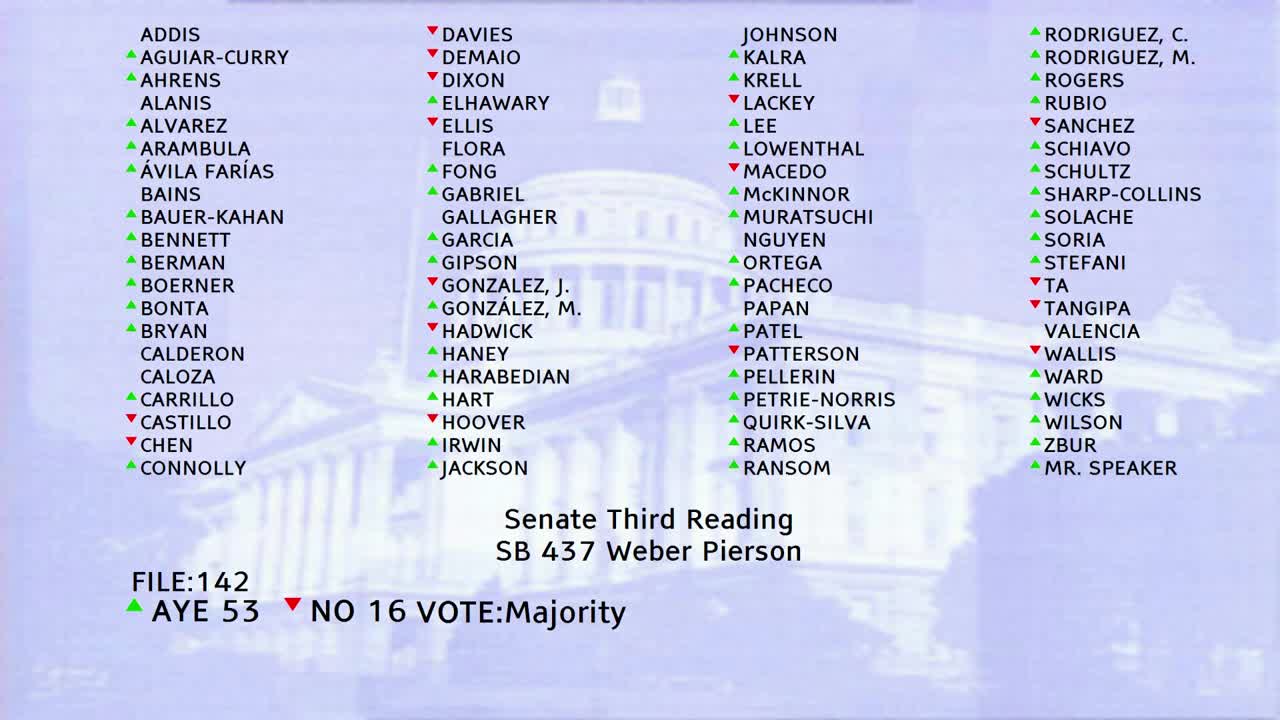
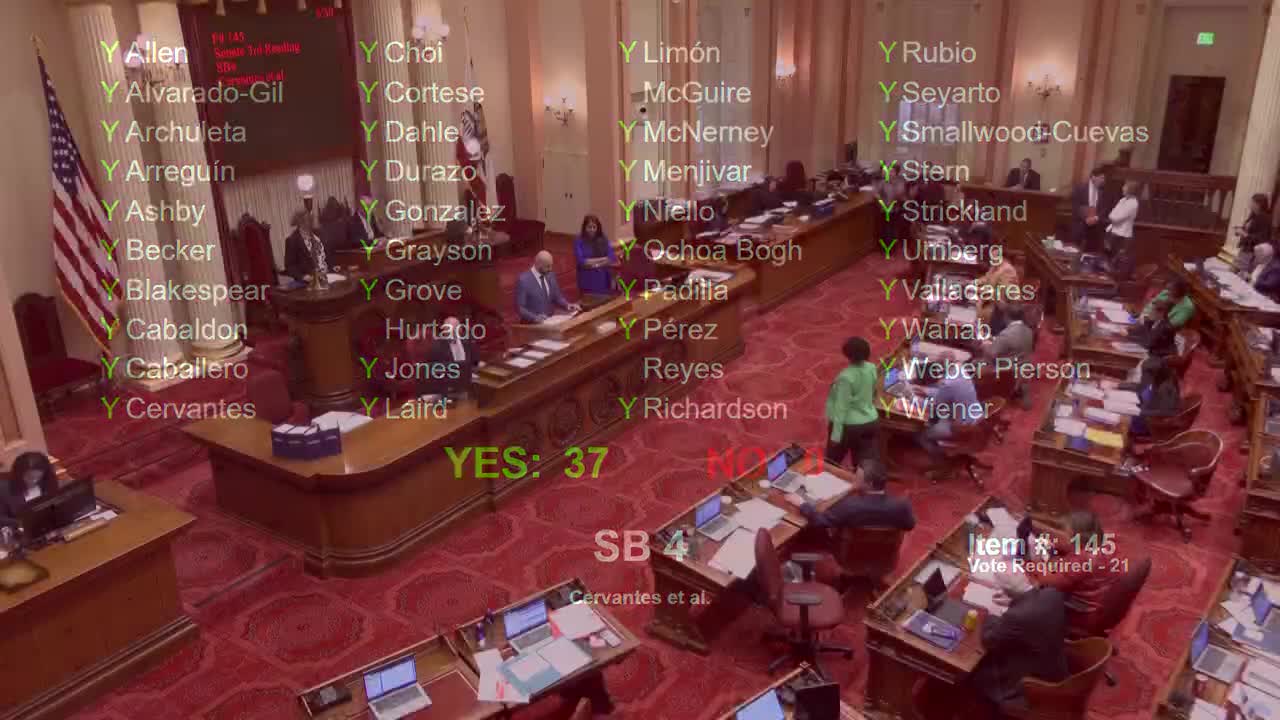

Bill Author