SB 22: Gift certificates.
- Session Year: 2025-2026
- House: Senate
- Latest Version Date: 2025-10-01
Current Status:
Passed
(2025-10-01: Chaptered by Secretary of State. Chapter 207, Statutes of 2025.)
Introduced
In Committee
Awaiting First Chamber Vote
Passed First Chamber
In Committee
Awaiting Second Chamber Vote
Passed Second Chamber
Enacted
Existing law provides that a gift certificate, sold after January 1, 1997, is redeemable in cash or subject to replacement with a new gift certificate except that a gift certificate with a cash value of less than $10 is redeemable in cash for its cash value. For purposes of these provisions, existing law defines gift certificate to include gift cards.
This bill would, instead, make a gift certificate with a cash value of less than $15 redeemable in cash for its cash value, exempt from that redemption provision certain gift certificates that are donated to a nonprofit or a charitable organization, as provided, and make these provisions operative on April 1, 2026. The bill would expand the definition of gift certificate to include electronic gift cards. The bill would also make conforming changes.
Existing law provides that a gift certificate, sold after January 1, 1997, is redeemable in cash or subject to replacement with a new gift certificate except that a gift certificate with a cash value of less than $10 is redeemable in cash for its cash value. For purposes of these provisions, existing law defines gift certificate to include gift cards.
This bill would instead would, instead, make a gift certificate with a cash value of less than $25, rounded to the nearest whole dollar amount, $15 redeemable in cash for its cash value and would require an issuer of gift certificates with a physical location to display at the point-of-sale device a notice of the right of the holder to redeem a gift certificate for cash pursuant to that provision. value, exempt from that redemption provision certain gift certificates that are donated to a nonprofit or a charitable organization, as provided, and make these provisions operative on April 1, 2026. The bill would expand the definition of gift certificate to include electronic gift cards. The bill would also make conforming changes.
Existing law provides that a gift certificate, sold after January 1, 1997, is redeemable in cash or subject to replacement with a new gift certificate except that a gift certificate with a cash value of less than $10 is redeemable in cash for its cash value. For purposes of these provisions, existing law defines gift certificate to include gift cards.
This bill would instead make a gift certificate with a cash value of less than $25, rounded to the nearest whole dollar amount, redeemable in cash for its cash value and would require an issuer of gift certificates with a physical location to display at the cash register point-of-sale device a notice of the right of the holder to redeem a gift certificate for cash pursuant to that provision. provision. The bill would expand the definition of gift certificate to include electronic gift cards.
Existing law provides that a gift certificate, sold after January 1, 1997, is redeemable in cash or subject to replacement with a new gift certificate except that a gift certificate with a cash value of less than $10 is redeemable in cash for its cash value.
This bill would instead make a gift certificate with a cash value of less than $25, adjusted annually for inflation based on the California Consumer Price Index and rounded to the nearest whole dollar amount, redeemable in cash for its cash value and would require an issuer of gift certificates to display at the cash register a notice of the right of the holder to redeem a gift certificate for cash pursuant to that provision.
(a)As used in this title, gift certificate includes gift cards and electronic gift cards, but does not include any gift card usable with multiple sellers of goods or services, provided the expiration date, if any, is printed on the card. This exemption does not apply to a gift card usable only with affiliated sellers of goods or services.
(b)Nothing in this title prohibits those fees or practices expressly permitted by Section 17538.9 of the Business and Professions Code with respect to a prepaid calling card, as defined in that section, that is issued solely to provide an access number and authorization code for prepaid calling services.
SEC. 2.Section 1749.5 of the Civil Code is amended to read:1749.5.(a)It is unlawful for any person or entity to sell a gift certificate to a purchaser that contains any of the following:
(1)An expiration date.
(2)A service fee, including, but not limited to, a service fee for dormancy, except as provided in subdivision (e).
(b)(1)Any gift certificate sold after January 1, 1997, is redeemable in cash for its cash value, or subject to replacement with a new gift certificate at no cost to the purchaser or holder.
(2)Notwithstanding paragraph (1), any gift certificate with a cash value of less than ten dollars ($10) is redeemable in cash for its cash value.
(c)A gift certificate sold without an expiration date is valid until redeemed or replaced.
(d)This section does not apply to any of the following gift certificates issued on or after January 1, 1998, provided the expiration date appears in capital letters in at least 10-point font on the front of the gift certificate:
(1)Gift certificates that are distributed by the issuer to a consumer pursuant to an awards, loyalty, or promotional program without any money or other thing of value being given in exchange for the gift certificate by the consumer.
(2)Gift certificates that are donated or sold below face value at a volume discount to employers or to nonprofit and charitable organizations for fundraising purposes if the expiration date on those gift certificates is not more than 30 days after the date of sale.
(3)Gift certificates that are issued for perishable food products.
(e)Paragraph (2) of subdivision (a) does not apply to a dormancy fee on a gift card that meets all of the following criteria:
(1)The remaining value of the gift card is five dollars ($5) or less each time the fee is assessed.
(2)The fee does not exceed one dollar ($1) per month.
(3)There has been no activity on the gift card for 24 consecutive months, including, but not limited to, purchases, the adding of value, or balance inquiries.
(4)The holder may reload or add value to the gift card.
(5)A statement is printed on the gift card in at least 10-point font stating the amount of the fee, how often the fee will occur, that the fee is triggered by inactivity of the gift card, and at what point the fee will be charged. The statement may appear on the front or back of the gift card, but shall appear in a location where it is visible to any purchaser prior to the purchase thereof.
(f)An issuer of gift certificates may accept funds from one or more contributors toward the purchase of a gift certificate intended to be a gift for a recipient, provided that each contributor is provided with a full refund of the amount that he or she paid toward the purchase of the gift certificate upon the occurrence of all of the following:
(1)The funds are contributed for the purpose of being redeemed by the recipient by purchasing a gift certificate.
(2)The time in which the recipient may redeem the funds by purchasing a gift certificate is clearly disclosed in writing to the contributors and the recipient.
(3)The recipient does not redeem the funds within the time described in paragraph (2).
(g)The changes made to this section by the act adding this subdivision shall apply only to gift certificates issued on or after January 1, 2004.
(h)For purposes of this section, cash includes, but is not limited to, currency or check. If accepted by both parties, an electronic funds transfer or an application of the balance to a subscribers wireless telecommunications account is permissible.
(i)This section shall remain in effect only until April 1, 2026, and as of that date is repealed.
SEC. 3.Section 1749.5 is added to the Civil Code, to read:1749.5.(a)It is unlawful for any person or entity to sell a gift certificate to a purchaser that contains any of the following:
(1)An expiration date.
(2)A service fee, including, but not limited to, a service fee for dormancy, except as provided in subdivision (f).
(b)(1)A gift certificate sold after January 1, 1997, is redeemable in cash for its cash value or subject to replacement with a new gift certificate at no cost to the purchaser or holder.
(2)Notwithstanding paragraph (1), a gift certificate with a cash value of less than fifteen dollars ($15) is redeemable in cash for its cash value.
(c)Paragraph (2) of subdivision (b) shall not apply to a gift certificate that is donated to a nonprofit or a charitable organization without any money or other thing of value being given in exchange if the gift certificate has a disclaimer in at least 10-point font that the card is not redeemable for cash under California state law.
(d)A gift certificate sold without an expiration date is valid until redeemed or replaced.
(e)This section does not apply to any of the following gift certificates issued on or after January 1, 1998, if the expiration date appears in capital letters in at least 10-point font on the front of the gift certificate:
(1)A gift certificate that is distributed by the issuer to a consumer pursuant to an awards, loyalty, or promotional program without any money or other thing of value being given in exchange for the gift certificate by the consumer.
(2)A gift certificate that is donated or sold below face value at a volume discount to an employer or to a nonprofit or a charitable organization for fundraising purposes if the expiration date on that gift certificate is not more than 30 days after the date of sale.
(3)A gift certificate that is issued for perishable food products.
(f)Paragraph (2) of subdivision (a) does not apply to a dormancy fee on a gift card that meets all of the following criteria:
(1)The remaining value of the gift card is five dollars ($5) or less each time the fee is assessed.
(2)The fee does not exceed one dollar ($1) per month.
(3)There has been no activity on the gift card for 24 consecutive months, including, but not limited to, purchases, the adding of value, or balance inquiries.
(4)The holder may reload or add value to the gift card.
(5)A statement is printed on the gift card in at least 10-point font stating the amount of the fee, how often the fee will occur, that the fee is triggered by inactivity of the gift card, and at what point the fee will be charged. The statement may appear on the front or back of the gift card, but shall appear in a location where it is visible to any purchaser prior to the purchase thereof.
(g)An issuer of gift certificates may accept funds from one or more contributors toward the purchase of a gift certificate intended to be a gift for a recipient if each contributor is provided with a full refund of the amount that the contributor paid toward the purchase of the gift certificate upon the occurrence of all of the following:
(1)The funds are contributed for the purpose of being redeemed by the recipient by purchasing a gift certificate.
(2)The time in which the recipient may redeem the funds by purchasing a gift certificate is clearly disclosed in writing to the contributors and the recipient.
(3)The recipient does not redeem the funds within the time described in paragraph (2).
(h)The prohibition described in paragraph (2) of subdivision (a), and the exemption from that prohibition described in subdivision (f), shall apply only to gift certificates issued on or after January 1, 2004.
(i)For purposes of this section, cash includes, but is not limited to, currency or check. If accepted by both parties, an electronic funds transfer or an application of the balance to a subscribers wireless telecommunications account is permissible.
(j)This section shall become operative on April 1, 2026.
(a)As used in this title, gift certificate includes gift cards and electronic gift cards, but does not include any gift card usable with multiple sellers of goods or services, provided the expiration date, if any, is printed on the card. This exemption does not apply to a gift card usable only with affiliated sellers of goods or services.
(b)Nothing in this title prohibits those fees or practices expressly permitted by Section 17538.9 of the Business and Professions Code with respect to a prepaid calling card, as defined in that section, that is issued solely to provide an access number and authorization code for prepaid calling services.
SEC. 2.Section 1749.5 of the Civil Code is amended to read:1749.5.(a)It is unlawful for any person or entity to sell a gift certificate to a purchaser that contains any of the following:(1)An expiration date.(2)A service fee, including, but not limited to, a service fee for dormancy, except as provided in subdivision (e).(b)(1)(A)A gift certificate sold after January 1, 1997, is redeemable in cash for its cash value or subject to replacement with a new gift certificate at no cost to the purchaser or holder.(B)Notwithstanding paragraph (1), a gift certificate with a cash value of less than twenty-five dollars ($25), rounded to the nearest whole dollar amount, is redeemable in cash for its cash value.(2)An issuer of gift certificates with a physical location shall display at the point-of-sale device a notice of the right of the holder to redeem a gift certificate for cash pursuant to this subdivision.(c)A gift certificate sold without an expiration date is valid until redeemed or replaced.(d)This section does not apply to any of the following gift certificates issued on or after January 1, 1998, if the expiration date appears in capital letters in at least 10-point font on the front of the gift certificate:(1)A gift certificate that is distributed by the issuer to a consumer pursuant to an awards, loyalty, or promotional program without any money or other thing of value being given in exchange for the gift certificate by the consumer.(2)A gift certificate that is donated or sold below face value at a volume discount to an employer or to a nonprofit or a charitable organization for fundraising purposes if the expiration date on that gift certificate is not more than 30 days after the date of sale.(3)A gift certificate that is issued for perishable food products.(e)Paragraph (2) of subdivision (a) does not apply to a dormancy fee on a gift card that meets all of the following criteria:(1)The remaining value of the gift card is five dollars ($5) or less each time the fee is assessed.(2)The fee does not exceed one dollar ($1) per month.(3)There has been no activity on the gift card for 24 consecutive months, including, but not limited to, purchases, the adding of value, or balance inquiries.(4)The holder may reload or add value to the gift card.(5)A statement is printed on the gift card in at least 10-point font stating the amount of the fee, how often the fee will occur, that the fee is triggered by inactivity of the gift card, and at what point the fee will be charged. The statement may appear on the front or back of the gift card, but shall appear in a location where it is visible to any purchaser prior to the purchase thereof.(f)An issuer of gift certificates may accept funds from one or more contributors toward the purchase of a gift certificate intended to be a gift for a recipient if each contributor is provided with a full refund of the amount that the contributor paid toward the purchase of the gift certificate upon the occurrence of all of the following:(1)The funds are contributed for the purpose of being redeemed by the recipient by purchasing a gift certificate.(2)The time in which the recipient may redeem the funds by purchasing a gift certificate is clearly disclosed in writing to the contributors and the recipient.(3)The recipient does not redeem the funds within the time described in paragraph (2).(g)The changes made to this section by the act adding this subdivision shall apply only to gift certificates issued on or after January 1, 2004.(h)For purposes of this section, cash includes, but is not limited to, currency or check. If accepted by both parties, an electronic funds transfer or an application of the balance to a subscribers wireless telecommunications account is permissible.SEC. 2.Section 1749.5 of the Civil Code is amended to read:1749.5.(a)It is unlawful for any person or entity to sell a gift certificate to a purchaser that contains any of the following:
(1)An expiration date.
(2)A service fee, including, but not limited to, a service fee for dormancy, except as provided in subdivision (e).
(b)(1)Any gift certificate sold after January 1, 1997, is redeemable in cash for its cash value, or subject to replacement with a new gift certificate at no cost to the purchaser or holder.
(2)Notwithstanding paragraph (1), any gift certificate with a cash value of less than ten dollars ($10) is redeemable in cash for its cash value.
(c)A gift certificate sold without an expiration date is valid until redeemed or replaced.
(d)This section does not apply to any of the following gift certificates issued on or after January 1, 1998, provided the expiration date appears in capital letters in at least 10-point font on the front of the gift certificate:
(1)Gift certificates that are distributed by the issuer to a consumer pursuant to an awards, loyalty, or promotional program without any money or other thing of value being given in exchange for the gift certificate by the consumer.
(2)Gift certificates that are donated or sold below face value at a volume discount to employers or to nonprofit and charitable organizations for fundraising purposes if the expiration date on those gift certificates is not more than 30 days after the date of sale.
(3)Gift certificates that are issued for perishable food products.
(e)Paragraph (2) of subdivision (a) does not apply to a dormancy fee on a gift card that meets all of the following criteria:
(1)The remaining value of the gift card is five dollars ($5) or less each time the fee is assessed.
(2)The fee does not exceed one dollar ($1) per month.
(3)There has been no activity on the gift card for 24 consecutive months, including, but not limited to, purchases, the adding of value, or balance inquiries.
(4)The holder may reload or add value to the gift card.
(5)A statement is printed on the gift card in at least 10-point font stating the amount of the fee, how often the fee will occur, that the fee is triggered by inactivity of the gift card, and at what point the fee will be charged. The statement may appear on the front or back of the gift card, but shall appear in a location where it is visible to any purchaser prior to the purchase thereof.
(f)An issuer of gift certificates may accept funds from one or more contributors toward the purchase of a gift certificate intended to be a gift for a recipient, provided that each contributor is provided with a full refund of the amount that he or she paid toward the purchase of the gift certificate upon the occurrence of all of the following:
(1)The funds are contributed for the purpose of being redeemed by the recipient by purchasing a gift certificate.
(2)The time in which the recipient may redeem the funds by purchasing a gift certificate is clearly disclosed in writing to the contributors and the recipient.
(3)The recipient does not redeem the funds within the time described in paragraph (2).
(g)The changes made to this section by the act adding this subdivision shall apply only to gift certificates issued on or after January 1, 2004.
(h)For purposes of this section, cash includes, but is not limited to, currency or check. If accepted by both parties, an electronic funds transfer or an application of the balance to a subscribers wireless telecommunications account is permissible.
(i)This section shall remain in effect only until April 1, 2026, and as of that date is repealed.
SEC. 3.Section 1749.5 is added to the Civil Code, to read:1749.5.(a)It is unlawful for any person or entity to sell a gift certificate to a purchaser that contains any of the following:
(1)An expiration date.
(2)A service fee, including, but not limited to, a service fee for dormancy, except as provided in subdivision (f).
(b)(1)A gift certificate sold after January 1, 1997, is redeemable in cash for its cash value or subject to replacement with a new gift certificate at no cost to the purchaser or holder.
(2)Notwithstanding paragraph (1), a gift certificate with a cash value of less than fifteen dollars ($15) is redeemable in cash for its cash value.
(c)Paragraph (2) of subdivision (b) shall not apply to a gift certificate that is donated to a nonprofit or a charitable organization without any money or other thing of value being given in exchange if the gift certificate has a disclaimer in at least 10-point font that the card is not redeemable for cash under California state law.
(d)A gift certificate sold without an expiration date is valid until redeemed or replaced.
(e)This section does not apply to any of the following gift certificates issued on or after January 1, 1998, if the expiration date appears in capital letters in at least 10-point font on the front of the gift certificate:
(1)A gift certificate that is distributed by the issuer to a consumer pursuant to an awards, loyalty, or promotional program without any money or other thing of value being given in exchange for the gift certificate by the consumer.
(2)A gift certificate that is donated or sold below face value at a volume discount to an employer or to a nonprofit or a charitable organization for fundraising purposes if the expiration date on that gift certificate is not more than 30 days after the date of sale.
(3)A gift certificate that is issued for perishable food products.
(f)Paragraph (2) of subdivision (a) does not apply to a dormancy fee on a gift card that meets all of the following criteria:
(1)The remaining value of the gift card is five dollars ($5) or less each time the fee is assessed.
(2)The fee does not exceed one dollar ($1) per month.
(3)There has been no activity on the gift card for 24 consecutive months, including, but not limited to, purchases, the adding of value, or balance inquiries.
(4)The holder may reload or add value to the gift card.
(5)A statement is printed on the gift card in at least 10-point font stating the amount of the fee, how often the fee will occur, that the fee is triggered by inactivity of the gift card, and at what point the fee will be charged. The statement may appear on the front or back of the gift card, but shall appear in a location where it is visible to any purchaser prior to the purchase thereof.
(g)An issuer of gift certificates may accept funds from one or more contributors toward the purchase of a gift certificate intended to be a gift for a recipient if each contributor is provided with a full refund of the amount that the contributor paid toward the purchase of the gift certificate upon the occurrence of all of the following:
(1)The funds are contributed for the purpose of being redeemed by the recipient by purchasing a gift certificate.
(2)The time in which the recipient may redeem the funds by purchasing a gift certificate is clearly disclosed in writing to the contributors and the recipient.
(3)The recipient does not redeem the funds within the time described in paragraph (2).
(h)The prohibition described in paragraph (2) of subdivision (a), and the exemption from that prohibition described in subdivision (f), shall apply only to gift certificates issued on or after January 1, 2004.
(i)For purposes of this section, cash includes, but is not limited to, currency or check. If accepted by both parties, an electronic funds transfer or an application of the balance to a subscribers wireless telecommunications account is permissible.
(j)This section shall become operative on April 1, 2026.
(a)As used in this title, gift certificate includes gift cards, cards and electronic gift cards, but does not include any gift card usable with multiple sellers of goods or services, provided the expiration date, if any, is printed on the card. This exemption does not apply to a gift card usable only with affiliated sellers of goods or services.
(b)Nothing in this title prohibits those fees or practices expressly permitted by Section 17538.9 of the Business and Professions Code with respect to a prepaid calling card, as defined in that section, that is issued solely to provide an access number and authorization code for prepaid calling services.
SECTION 1.SEC. 2.Section 1749.5 of the Civil Code is amended to read:1749.5.(a)It is unlawful for any person or entity to sell a gift certificate to a purchaser that contains any of the following:
(1)An expiration date.
(2)A service fee, including, but not limited to, a service fee for dormancy, except as provided in subdivision (e).
(b)(1)(A)A gift certificate sold after January 1, 1997, is redeemable in cash for its cash value or subject to replacement with a new gift certificate at no cost to the purchaser or holder.
(B)Notwithstanding paragraph (1), a gift certificate with a cash value of less than twenty-five dollars ($25), rounded to the nearest whole dollar amount, is redeemable in cash for its cash value.
(2)An issuer of gift certificates with a physical location shall display at the cash register point-of-sale device a notice of the right of the holder to redeem a gift certificate for cash pursuant to this subdivision.
(c)A gift certificate sold without an expiration date is valid until redeemed or replaced.
(d)This section does not apply to any of the following gift certificates issued on or after January 1, 1998, if the expiration date appears in capital letters in at least 10-point font on the front of the gift certificate:
(1)A gift certificate that is distributed by the issuer to a consumer pursuant to an awards, loyalty, or promotional program without any money or other thing of value being given in exchange for the gift certificate by the consumer.
(2)A gift certificate that is donated or sold below face value at a volume discount to an employer or to a nonprofit or a charitable organization for fundraising purposes if the expiration date on that gift certificate is not more than 30 days after the date of sale.
(3)A gift certificate that is issued for perishable food products.
(e)Paragraph (2) of subdivision (a) does not apply to a dormancy fee on a gift card that meets all of the following criteria:
(1)The remaining value of the gift card is five dollars ($5) or less each time the fee is assessed.
(2)The fee does not exceed one dollar ($1) per month.
(3)There has been no activity on the gift card for 24 consecutive months, including, but not limited to, purchases, the adding of value, or balance inquiries.
(4)The holder may reload or add value to the gift card.
(5)A statement is printed on the gift card in at least 10-point font stating the amount of the fee, how often the fee will occur, that the fee is triggered by inactivity of the gift card, and at what point the fee will be charged. The statement may appear on the front or back of the gift card, but shall appear in a location where it is visible to any purchaser prior to the purchase thereof.
(f)An issuer of gift certificates may accept funds from one or more contributors toward the purchase of a gift certificate intended to be a gift for a recipient if each contributor is provided with a full refund of the amount that the contributor paid toward the purchase of the gift certificate upon the occurrence of all of the following:
(1)The funds are contributed for the purpose of being redeemed by the recipient by purchasing a gift certificate.
(2)The time in which the recipient may redeem the funds by purchasing a gift certificate is clearly disclosed in writing to the contributors and the recipient.
(3)The recipient does not redeem the funds within the time described in paragraph (2).
(g)The changes made to this section by the act adding this subdivision shall apply only to gift certificates issued on or after January 1, 2004.
(h)For purposes of this section, cash includes, but is not limited to, currency or check. If accepted by both parties, an electronic funds transfer or an application of the balance to a subscribers wireless telecommunications account is permissible.
(a)It is unlawful for any person or entity to sell a gift certificate to a purchaser that contains any of the following:
(1)An expiration date.
(2)A service fee, including, but not limited to, a service fee for dormancy, except as provided in subdivision (e).
(b)(1)(A)A gift certificate sold after January 1, 1997, is redeemable in cash for its cash value or subject to replacement with a new gift certificate at no cost to the purchaser or holder.
(B)Notwithstanding paragraph (1), a gift certificate with a cash value of less than twenty-five dollars ($25), adjusted annually for inflation based on the California Consumer Price Index and rounded to the nearest whole dollar amount, is redeemable in cash for its cash value.
(2)An issuer of gift certificates shall display at the cash register a notice of the right of the holder to redeem a gift certificate for cash pursuant to this subdivision.
(c)A gift certificate sold without an expiration date is valid until redeemed or replaced.
(d)This section does not apply to any of the following gift certificates issued on or after January 1, 1998, if the expiration date appears in capital letters in at least 10-point font on the front of the gift certificate:
(1)A gift certificate that is distributed by the issuer to a consumer pursuant to an awards, loyalty, or promotional program without any money or other thing of value being given in exchange for the gift certificate by the consumer.
(2)A gift certificate that is donated or sold below face value at a volume discount to an employer or to a nonprofit or a charitable organization for fundraising purposes if the expiration date on that gift certificate is not more than 30 days after the date of sale.
(3)A gift certificate that is issued for perishable food products.
(e)Paragraph (2) of subdivision (a) does not apply to a dormancy fee on a gift card that meets all of the following criteria:
(1)The remaining value of the gift card is five dollars ($5) or less each time the fee is assessed.
(2)The fee does not exceed one dollar ($1) per month.
(3)There has been no activity on the gift card for 24 consecutive months, including, but not limited to, purchases, the adding of value, or balance inquiries.
(4)The holder may reload or add value to the gift card.
(5)A statement is printed on the gift card in at least 10-point font stating the amount of the fee, how often the fee will occur, that the fee is triggered by inactivity of the gift card, and at what point the fee will be charged. The statement may appear on the front or back of the gift card, but shall appear in a location where it is visible to any purchaser prior to the purchase thereof.
(f)An issuer of gift certificates may accept funds from one or more contributors toward the purchase of a gift certificate intended to be a gift for a recipient if each contributor is provided with a full refund of the amount that the contributor paid toward the purchase of the gift certificate upon the occurrence of all of the following:
(1)The funds are contributed for the purpose of being redeemed by the recipient by purchasing a gift certificate.
(2)The time in which the recipient may redeem the funds by purchasing a gift certificate is clearly disclosed in writing to the contributors and the recipient.
(3)The recipient does not redeem the funds within the time described in paragraph (2).
(g)The changes made to this section by the act adding this subdivision shall apply only to gift certificates issued on or after January 1, 2004.
(h)For purposes of this section, cash includes, but is not limited to, currency or check. If accepted by both parties, an electronic funds transfer or an application of the balance to a subscribers wireless telecommunications account is permissible.
(a)It is unlawful for any person or entity to sell a gift certificate to a purchaser that contains any of the following:
(1)An expiration date.
(2)A service fee, including, but not limited to, a service fee for dormancy, except as provided in subdivision (e).
(b)(1)Any (A)A gift certificate sold after January 1, 1997, is redeemable in cash for its cash value, value or subject to replacement with a new gift certificate at no cost to the purchaser or holder.
(2)(B)Notwithstanding paragraph (1), any a gift certificate with a cash value of less than ten dollars ($10) twenty-five dollars ($25), adjusted annually for inflation based on the California Consumer Price Index and rounded to the nearest whole dollar amount, is redeemable in cash for its cash value.
(2)An issuer of gift certificates shall display at the cash register a notice of the right of the holder to redeem a gift certificate for cash pursuant to this subdivision.
(c)A gift certificate sold without an expiration date is valid until redeemed or replaced.
(d)This section does not apply to any of the following gift certificates issued on or after January 1, 1998, provided if the expiration date appears in capital letters in at least 10-point font on the front of the gift certificate:
(1)Gift certificates A gift certificate that are is distributed by the issuer to a consumer pursuant to an awards, loyalty, or promotional program without any money or other thing of value being given in exchange for the gift certificate by the consumer.
(2)Gift certificates A gift certificate that are is donated or sold below face value at a volume discount to employers an employer or to a nonprofit and or a charitable organizations organization for fundraising purposes if the expiration date on those gift certificates that gift certificate is not more than 30 days after the date of sale.
(3)Gift certificates A gift certificate that are is issued for perishable food products.
(e)Paragraph (2) of subdivision (a) does not apply to a dormancy fee on a gift card that meets all of the following criteria:
(1)The remaining value of the gift card is five dollars ($5) or less each time the fee is assessed.
(2)The fee does not exceed one dollar ($1) per month.
(3)There has been no activity on the gift card for 24 consecutive months, including, but not limited to, purchases, the adding of value, or balance inquiries.
(4)The holder may reload or add value to the gift card.
(5)A statement is printed on the gift card in at least 10-point font stating the amount of the fee, how often the fee will occur, that the fee is triggered by inactivity of the gift card, and at what point the fee will be charged. The statement may appear on the front or back of the gift card, but shall appear in a location where it is visible to any purchaser prior to the purchase thereof.
(f)An issuer of gift certificates may accept funds from one or more contributors toward the purchase of a gift certificate intended to be a gift for a recipient, provided that recipient if each contributor is provided with a full refund of the amount that he or she the contributor paid toward the purchase of the gift certificate upon the occurrence of all of the following:
(1)The funds are contributed for the purpose of being redeemed by the recipient by purchasing a gift certificate.
(2)The time in which the recipient may redeem the funds by purchasing a gift certificate is clearly disclosed in writing to the contributors and the recipient.
(3)The recipient does not redeem the funds within the time described in paragraph (2).
(g)The changes made to this section by the act adding this subdivision shall apply only to gift certificates issued on or after January 1, 2004.
(h)For purposes of this section, cash includes, but is not limited to, currency or check. If accepted by both parties, an electronic funds transfer or an application of the balance to a subscribers wireless telecommunications account is permissible.
|
Date
|
Status
|
|---|---|
| Oct 1, 2025 | Chaptered by Secretary of State. Chapter 207, Statutes of 2025. |
| Oct 1, 2025 | Approved by the Governor. |
| Sep 23, 2025 | Enrolled and presented to the Governor at 2 p.m. |
| Sep 12, 2025 | Assembly amendments concurred in. (Ayes 37. Noes 0. Page 2964.) Ordered to engrossing and enrolling. |
| Sep 12, 2025 | In Senate. Concurrence in Assembly amendments pending. |
| Sep 11, 2025 | Read third time. Passed. (Ayes 58. Noes 16. Page 3281.) Ordered to the Senate. |
| Sep 2, 2025 | Ordered to third reading. |
| Sep 2, 2025 | Read third time and amended. |
| Jul 3, 2025 | Read second time. Ordered to third reading. |
| Jul 2, 2025 | Read second time and amended. Ordered to second reading. |
| Jul 1, 2025 | From committee: Do pass as amended. (Ayes 9. Noes 4.) (June 24). |
| Jun 9, 2025 | Referred to Com. on P. & C.P. |
| Jun 3, 2025 | In Assembly. Read first time. Held at Desk. |
| Jun 2, 2025 | Read third time. Passed. (Ayes 27. Noes 10. Page 1384.) Ordered to the Assembly. |
| Apr 21, 2025 | Read second time. Ordered to third reading. |
| Apr 10, 2025 | Read second time and amended. Ordered to second reading. |
| Apr 10, 2025 | From committee: Do pass as amended. (Ayes 11. Noes 2. Page 704.) (April 8). |
| Apr 3, 2025 | Set for hearing April 8. |
| Jan 29, 2025 | Referred to Com. on JUD. |
| Dec 3, 2024 | From printer. May be acted upon on or after January 2. |
| Dec 2, 2024 | Introduced. Read first time. To Com. on RLS. for assignment. To print. |
|
Date
|
Description
|
Location
|
Votes
|
|
|---|---|---|---|---|
| Sep 12, 2025 | Unfinished Business SB22 Laird Concurrence | Senate Floor |
Passed |
|
| Sep 11, 2025 | SB 22 Laird Senate Third Reading By Bauer-Kahan | Assembly Floor |
Passed |
|
| Jun 24, 2025 | Do pass as amended. | Assembly Standing Committee on Privacy and Consumer Protection |
Passed |
|
| Jun 2, 2025 | Senate 3rd Reading SB22 Laird | Senate Floor |
Passed |
|
| Apr 8, 2025 | Do pass as amended | Senate Standing Committee on Judiciary |
Passed |
This list shows positions taken on this bill by organizations on the date displayed, which is linked to the original source.
Positions by individuals are not included.
|
Organization
|
Position
|
Date
|
|---|---|---|
| Association of National Advertisers | ** Against | |
| CalAsian Chamber of Commerce | ** Against | |
| California Chamber Of Commerce | ** Against | |
| California Fuels And Convenience Alliance | ** Against | |
| California Grocers Association | ** Against | |
| California Hispanic Chamber Of Commerce | ** Against | |
| California Low-Income Consumer Coalition | ** Support | |
| California Restaurant Association | ** Against | |
| California Retailers Association | ** Against | |
| Consumer Attorneys Of California | ** Support | |
| Consumer Watchdog | ** Support | |
| Family Business Association of California | ** Against | |
| National Association of Theater Owners | ** Against | |
| Retail Gift Card Association | ** Against | |
| Technet-Technology Network | ** Against | |
| VALLEY INDUSTRY AND COMMERCE ASSOCIATION | ** Against |
SENATE RULES COMMITTEE Office of Senate Floor Analyses (916) 651-1520 Fax: (916) 327-4478 | SB 22 |
UNFINISHED BUSINESS
Bill No: SB 22
Author: Laird (D)
Amended: 10/1/25
Vote: 21
SENATE JUDICIARY COMMITTEE: 11-2, 4/8/25
AYES: Umberg, Allen, Arreguín, Ashby, Caballero, Durazo, Laird, Stern, Wahab, Weber Pierson, Wiener
NOES: Niello, Valladares
SENATE FLOOR: 27-10, 6/2/25
AYES: Allen, Arreguín, Ashby, Becker, Blakespear, Cabaldon, Caballero, Cervantes, Cortese, Durazo, Gonzalez, Grayson, Laird, Limón, McGuire, McNerney, Menjivar, Padilla, Pérez, Richardson, Rubio, Smallwood-Cuevas, Stern, Umberg, Wahab, Weber Pierson, Wiener
NOES: Alvarado-Gil, Choi, Dahle, Grove, Jones, Niello, Ochoa Bogh, Seyarto, Strickland, Valladares
NO VOTE RECORDED: Archuleta, Hurtado, Reyes
ASSEMBLY FLOOR: 58-16, 9/11/25 - See last page for vote
SUBJECT: Gift certificates
SOURCE: Author
DIGEST:
This bill provides that a gift certificate with a cash value less than $15 must be redeemable in cash, increasing that threshold from $10, but exempting application of the redemption right for donated gift certificates.
Assembly Amendments
of 9/2/25 lower the amount to $15, create an exemption from the statute for donated gift certificates, and clarify that electronic gift cards are considered “gift certificates.”
ANALYSIS:
Existing law:
- Makes it unlawful for any person or entity to sell a gift certificate to a purchaser that contains any of the following:
- An expiration date.
- A service fee, including, but not limited to, a service fee for dormancy, except as provided. (Civil (Civ.) Code § 1749.5(a).)
- Provides that any gift certificate sold after January 1, 1997, is redeemable in cash for its cash value, or subject to replacement with a new gift certificate at no cost to the purchaser or holder. Notwithstanding that provision, any gift certificate with a cash value of less than $10 is redeemable in cash for its cash value. (Civ. Code § 1749.5(b).)
- Provides that the above provisions do not apply to any of the following gift certificates issued on or after January 1, 1998, if the expiration date appears in capital letters in at least 10-point font on the front of the gift certificate:
- Gift certificates that are distributed by the issuer to a consumer pursuant to an awards, loyalty, or promotional program without any money or other thing of value being given in exchange for the gift certificate by the consumer.
- Gift certificates that are donated or sold below face value at a volume discount to employers or to nonprofit and charitable organizations for fundraising purposes if the expiration date on those gift certificates is not more than 30 days after the date of sale.
- Gift certificates that are issued for perishable food products. (Civ. Code § 1749.5(d).)
- Provides that a “gift certificate” includes gift cards, but does not include any gift card usable with multiple sellers of goods or services, as provided. This exemption does not apply to a gift card usable only with affiliated sellers of goods or services. (Civ. Code § 1749.45.)
- Provides that if a legal obligation requires the performance of one of two acts, in the alternative, the party required to perform has the right of selection, unless it is otherwise provided by the terms of the obligation. (Civ. Code § 1448.)
This bill:
- Raises the threshold for eligibility for a cash redemption to less than $15.
- Creates an exemption from the statute for a gift certificate that is donated to a nonprofit or a charitable organization, as provided, and the relevant certificate has a disclaimer indicating it is not redeemable in cash.
- Clarifies that electronic gift cards are considered “gift certificates” for the relevant laws.
Background
Existing law makes it unlawful to sell a gift certificate or gift card that contains an expiration date or service fee, except as specified. A gift certificate sold after January 1, 1997, is redeemable in cash or subject to replacement with a new gift certificate. However, where the cash value is less than $10, the gift certificate must be redeemable in cash for its cash value.
Given the concerns with the amount of unused gift certificates that consumers are unable to meaningfully use, this bill provides that the gift certificate must be redeemable in cash if the cash value is less than $15. The author’s goal is to “put more money back in the pockets of consumers.” However, this bill also exempts from the statute gift certificates that are donated and include a relevant disclaimer, as provided. This bill also makes clear that electronic gift cards are included within the definition of “gift certificate.”
This bill is author-sponsored. It is supported by Consumer Watchdog and the Consumer Attorneys of California. All opposition has been removed from this bill.
Comments
This bill deals with consumer rights in connection with gift certificates and gift cards that have gone unused. According to a CNN report:
Almost two-thirds of American consumers have at least one unspent gift card tucked away in a drawer, pocket, wallet or purse. And at least half of those consumers lose a gift card before they use it, according to a new report from Credit Summit, an online provider of financial advisory services.
The report said there is as much as $21 billion of unspent money tied up in unused and lost gift cards. Of those surveyed, a majority of respondents said their unredeemed cards were worth $200 or less.[1]
Current law prohibits such cards from having an expiration date and provides a means for redeeming the cards. A gift certificate is redeemable in cash for its cash value, or subject to replacement with a new gift certificate at no cost to the purchaser or holder. The general rule of law is that where a legal obligation requires the performance of one of two acts, in the alternative, the party required to perform has the right of selection, unless it is otherwise provided by the terms of the obligation. (Civ. Code § 1448.) Therefore, the issuer of the gift certificate could choose whether to provide a consumer a cash refund or simply issue a new card.[2]
To provide consumers more rights with respect to gift certificates with lower remaining values, SB 250 (Corbett, Chapter 640, Statutes 2007) amended that law providing that notwithstanding the existing provision, any gift certificate with a cash value of less than $10 is redeemable in cash for its cash value. This allows consumers the ability to get the value of their cards where the remaining balance is extremely low.
That amount has not changed in the 17 years since. In fact, the original version of SB 250 sought to make the threshold $20 but lowered it in response to opposition.
This bill makes the first change to that threshold, providing consumers the right to redeem for cash value gift certificates of less than $15, except as provided.
According to the author:
SB 22, the Consumer Access to Stored Holdings Act or CASH Act, will raise the maximum dollar amount on a gift card a consumer can redeem for cash and ensures consumers are notified of their right to redeem. The current limit of $9.99 was set over 15 years ago and an increase is long overdue. This increase will put more cash back in the wallets of Californians at a time when every penny truly counts.
FISCAL EFFECT: Appropriation: No Fiscal Com.: No Local: No
Consumer Attorneys of California
Consumer Watchdog
OPPOSITION: (Verified 9/11/25)
None received
ARGUMENTS IN SUPPORT: The Consumer Attorneys of California write:
The gift card industry is a multi-billion dollar industry, valued at $899.3 billion in 2023, with expectations of reaching a value of $2.3 trillion by 2030. There is up to $21 billion of unspent money estimated to be sitting on unused gift cards, according to a 2023 report by Credit Summit. 47% of Americans have unused gift cards, wasted in wallets and junk drawers. Many consumers feel it is not worth the hassle to cash out less than $10, while even more are completely unaware of their right to redeem gift certificates for cash. This leaves millions of dollars meant to be redeemed for services and goods unspent, a major loss for consumers. In an attempt to use the entirety of a gift card, a consumer will likely spend beyond the remaining amount, also leading to a loss.
ASSEMBLY FLOOR: 58-16, 9/11/25
AYES: Addis, Aguiar-Curry, Ahrens, Alvarez, Arambula, Ávila Farías, Bains, Bauer-Kahan, Bennett, Berman, Boerner, Bonta, Bryan, Calderon, Carrillo, Connolly, Elhawary, Fong, Garcia, Gipson, Mark González, Haney, Harabedian, Hart, Irwin, Jackson, Kalra, Krell, Lee, Lowenthal, McKinnor, Muratsuchi, Nguyen, Ortega, Pacheco, Papan, Patel, Pellerin, Quirk-Silva, Ramos, Ransom, Celeste Rodriguez, Michelle Rodriguez, Rogers, Blanca Rubio, Schiavo, Schultz, Sharp-Collins, Solache, Soria, Stefani, Ta, Valencia, Ward, Wicks, Wilson, Zbur, Rivas
NOES: Alanis, Chen, Davies, DeMaio, Dixon, Ellis, Gallagher, Jeff Gonzalez, Hadwick, Hoover, Lackey, Macedo, Patterson, Sanchez, Tangipa, Wallis
NO VOTE RECORDED: Caloza, Castillo, Flora, Gabriel, Johnson, Petrie-Norris
Prepared by: Christian Kurpiewski / JUD/ (916) 651-4113
7/15/26 11:20:44
**** END ****
Parija Kavilanz, Americans have a collective $21 billion in unspent gift cards (February 23, 2023) CNN, https://www.cnn.com/2023/02/23/business/gift-cards-unused/index.html [as of Mar. 31, 2025]. ↑
See also Marilao v. McDonald's Corp. (S.D. Cal. 2009) 632 F. Supp. 2d 1008, 1012 (“it is the vendor who holds the right to select whether to redeem a gift card in cash for its cash value or to provide a replacement card at no cost to the purchaser or holder”). ↑
SENATE RULES COMMITTEE Office of Senate Floor Analyses (916) 651-1520 Fax: (916) 327-4478 | SB 22 |
UNFINISHED BUSINESS
Bill No: SB 22
Author: Laird (D)
Amended: 9/2/25 in Assembly
Vote: 21
SENATE JUDICIARY COMMITTEE: 11-2, 4/8/25
AYES: Umberg, Allen, Arreguín, Ashby, Caballero, Durazo, Laird, Stern, Wahab, Weber Pierson, Wiener
NOES: Niello, Valladares
SENATE FLOOR: 27-10, 6/2/25
AYES: Allen, Arreguín, Ashby, Becker, Blakespear, Cabaldon, Caballero, Cervantes, Cortese, Durazo, Gonzalez, Grayson, Laird, Limón, McGuire, McNerney, Menjivar, Padilla, Pérez, Richardson, Rubio, Smallwood-Cuevas, Stern, Umberg, Wahab, Weber Pierson, Wiener
NOES: Alvarado-Gil, Choi, Dahle, Grove, Jones, Niello, Ochoa Bogh, Seyarto, Strickland, Valladares
NO VOTE RECORDED: Archuleta, Hurtado, Reyes
ASSEMBLY FLOOR: 48-13, 9/11/25 – Roll call not available.
SUBJECT: Gift certificates
SOURCE: Author
DIGEST:
This bill provides that a gift certificate with a cash value less than $15 must be redeemable in cash, increasing that threshold from $10, but exempting application of the redemption right for donated gift certificates.
Assembly Amendments
of 9/2/25 lower the amount to $15, create an exemption from the statute for donated gift certificates, and clarify that electronic gift cards are considered “gift certificates.”
ANALYSIS:
Existing law:
- Makes it unlawful for any person or entity to sell a gift certificate to a purchaser that contains any of the following:
- An expiration date.
- A service fee, including, but not limited to, a service fee for dormancy, except as provided. (Civil (Civ.) Code § 1749.5(a).)
- Provides that any gift certificate sold after January 1, 1997, is redeemable in cash for its cash value, or subject to replacement with a new gift certificate at no cost to the purchaser or holder. Notwithstanding that provision, any gift certificate with a cash value of less than $10 is redeemable in cash for its cash value. (Civ. Code § 1749.5(b).)
- Provides that the above provisions do not apply to any of the following gift certificates issued on or after January 1, 1998, if the expiration date appears in capital letters in at least 10-point font on the front of the gift certificate:
- Gift certificates that are distributed by the issuer to a consumer pursuant to an awards, loyalty, or promotional program without any money or other thing of value being given in exchange for the gift certificate by the consumer.
- Gift certificates that are donated or sold below face value at a volume discount to employers or to nonprofit and charitable organizations for fundraising purposes if the expiration date on those gift certificates is not more than 30 days after the date of sale.
- Gift certificates that are issued for perishable food products. (Civ. Code § 1749.5(d).)
- Provides that a “gift certificate” includes gift cards, but does not include any gift card usable with multiple sellers of goods or services, as provided. This exemption does not apply to a gift card usable only with affiliated sellers of goods or services. (Civ. Code § 1749.45.)
- Provides that if a legal obligation requires the performance of one of two acts, in the alternative, the party required to perform has the right of selection, unless it is otherwise provided by the terms of the obligation. (Civ. Code § 1448.)
This bill:
- Raises the threshold for eligibility for a cash redemption to less than $15.
- Creates an exemption from the statute for a gift certificate that is donated to a nonprofit or a charitable organization, as provided, and the relevant certificate has a disclaimer indicating it is not redeemable in cash.
- Clarifies that electronic gift cards are considered “gift certificates” for the relevant laws.
Background
Existing law makes it unlawful to sell a gift certificate or gift card that contains an expiration date or service fee, except as specified. A gift certificate sold after January 1, 1997, is redeemable in cash or subject to replacement with a new gift certificate. However, where the cash value is less than $10, the gift certificate must be redeemable in cash for its cash value.
Given the concerns with the amount of unused gift certificates that consumers are unable to meaningfully use, this bill provides that the gift certificate must be redeemable in cash if the cash value is less than $15. The author’s goal is to “put more money back in the pockets of consumers.” However, this bill also exempts from the statute gift certificates that are donated and include a relevant disclaimer, as provided. This bill also makes clear that electronic gift cards are included within the definition of “gift certificate.”
This bill is author-sponsored. It is supported by Consumer Watchdog and the Consumer Attorneys of California. All opposition has been removed from this bill.
Comments
This bill deals with consumer rights in connection with gift certificates and gift cards that have gone unused. According to a CNN report:
Almost two-thirds of American consumers have at least one unspent gift card tucked away in a drawer, pocket, wallet or purse. And at least half of those consumers lose a gift card before they use it, according to a new report from Credit Summit, an online provider of financial advisory services.
The report said there is as much as $21 billion of unspent money tied up in unused and lost gift cards. Of those surveyed, a majority of respondents said their unredeemed cards were worth $200 or less.[1]
Current law prohibits such cards from having an expiration date and provides a means for redeeming the cards. A gift certificate is redeemable in cash for its cash value, or subject to replacement with a new gift certificate at no cost to the purchaser or holder. The general rule of law is that where a legal obligation requires the performance of one of two acts, in the alternative, the party required to perform has the right of selection, unless it is otherwise provided by the terms of the obligation. (Civ. Code § 1448.) Therefore, the issuer of the gift certificate could choose whether to provide a consumer a cash refund or simply issue a new card.[2]
To provide consumers more rights with respect to gift certificates with lower remaining values, SB 250 (Corbett, Chapter 640, Statutes 2007) amended that law providing that notwithstanding the existing provision, any gift certificate with a cash value of less than $10 is redeemable in cash for its cash value. This allows consumers the ability to get the value of their cards where the remaining balance is extremely low.
That amount has not changed in the 17 years since. In fact, the original version of SB 250 sought to make the threshold $20 but lowered it in response to opposition.
This bill makes the first change to that threshold, providing consumers the right to redeem for cash value gift certificates of less than $15, except as provided.
According to the author:
SB 22, the Consumer Access to Stored Holdings Act or CASH Act, will raise the maximum dollar amount on a gift card a consumer can redeem for cash and ensures consumers are notified of their right to redeem. The current limit of $9.99 was set over 15 years ago and an increase is long overdue. This increase will put more cash back in the wallets of Californians at a time when every penny truly counts.
FISCAL EFFECT: Appropriation: No Fiscal Com.: No Local: No
Consumer Attorneys of California
Consumer Watchdog
OPPOSITION: (Verified 9/11/25)
None received
ARGUMENTS IN SUPPORT: The Consumer Attorneys of California write:
The gift card industry is a multi-billion dollar industry, valued at $899.3 billion in 2023, with expectations of reaching a value of $2.3 trillion by 2030. There is up to $21 billion of unspent money estimated to be sitting on unused gift cards, according to a 2023 report by Credit Summit. 47% of Americans have unused gift cards, wasted in wallets and junk drawers. Many consumers feel it is not worth the hassle to cash out less than $10, while even more are completely unaware of their right to redeem gift certificates for cash. This leaves millions of dollars meant to be redeemed for services and goods unspent, a major loss for consumers. In an attempt to use the entirety of a gift card, a consumer will likely spend beyond the remaining amount, also leading to a loss.
Prepared by: Christian Kurpiewski / JUD. / (916) 651-4113
9/11/25 12:55:06
**** END ****
Parija Kavilanz, Americans have a collective $21 billion in unspent gift cards (February 23, 2023) CNN, https://www.cnn.com/2023/02/23/business/gift-cards-unused/index.html [as of Mar. 31, 2025]. ↑
See also Marilao v. McDonald's Corp. (S.D. Cal. 2009) 632 F. Supp. 2d 1008, 1012 (“it is the vendor who holds the right to select whether to redeem a gift card in cash for its cash value or to provide a replacement card at no cost to the purchaser or holder”). ↑
SENATE THIRD READING
STR Bill Id:SB 22
Author:(Laird)
As Amended Ver:September 2, 2025
Majority vote
SUMMARY
This bill makes a gift certificate with a cash value of less than $15, and rounded to the nearest whole dollar amount, redeemable in cash for its cash value and would require an issuer of gift certificates to display at the cash register a notice of the right of the holder to redeem a gift certificate for cash pursuant to that provision, as of April 1, 2026.
Major Provisions
- Raises the amount of a gift certificate that is redeemable for its cash value to $15 or less.
- Updates the definition of “gift certificate” to include an e-gift card.
- Exempts from cash value redemption a gift certificate that is donated to a charitable organization without any money or other thing of value being given in return.
- Delays implementation until April 1, 2026.
COMMENTS
Gift certificates make gift giving easy for purchasers, either in-store or online, and allow flexibility for recipients to choose their own gift. Retailers benefit from the sale of gift certificates, increased foot traffic, and potential additional spending beyond the value of the original gift certificate purchase. The global gift card industry was valued at $1.24 trillion dollars in 2024 and is expected to reach approximately $2.31 trillion by 2030.[1] The U.S. gift card market was approximately $397.65 billion in 2024 and is predicted to grow to almost $1.2 trillion by 2034.[2]
In 2007, SB 250, (Ellen Corbett) Chapter 640, Statutes of 2007, amended California law to provide consumers with greater rights concerning gift certificates with low remaining balances. Specifically, it stipulated that any gift certificate with a cash value of less than $10 must be redeemable in cash for its full value. This legislation aimed to ensure that consumers could access the remaining value of their gift certificates, even when the balance was minimal. That threshold has remained unchanged for 17 years. Notably, the original version of SB 250 proposed increasing the threshold to $20, but this amount was reduced in response to opposition.
Recent estimates indicate that approximately $23 billion is currently sitting unused on gift cards nationwide.[3] A survey found that 43% of Americans have at least one unredeemed gift card, with an average value of $244 per person.[4] This unspent money represents a significant amount of consumer funds that have been paid to retailers without the corresponding delivery of goods or services. Many large companies calculate a “spillage” amount each year. Spillage refers to the dollar amount of gift cards sold that a company estimates will ultimately not be redeemed, based on historical averages. This unredeemed value often contributes to windfall profits for businesses. For instance, Starbucks reported $212 million in spillage revenue in 2022.[5]
The author of the proposed legislation argues that, under current law, gift cards can only be redeemed for cash if the remaining balance is less than $10—a threshold set in 2008 and unchanged since. Raising the cash redemption limit could help return more money to consumers, rather than allowing corporations to retain funds for goods and services never received. Given that businesses have collected $23 billion for unredeemed products and services, and considering that the threshold has remained stagnant for 17 years, increasing the limit to $15 is a reasonable step toward stronger consumer protection.
As a result of the recent amendments, the California Retailers Association has removed their opposition.
According to the Author
SB 22, the Consumer Access to Stored Holdings Act or CASH Act, will raise the maximum dollar amount on a gift card a consumer can redeem for cash and ensures consumers are notified of their right to redeem. The current limit of $9.99 was set over 15 years ago and an increase is long overdue. This increase will put more cash back in the wallets of Californians at a time when every penny truly counts.
Arguments in Support
Consumer Watchdog writes in support:
Our organization has long advocated for measures that enhance consumer protections and ensure fairness in commercial transactions. Senate Bill 22 addresses a significant issue in the gift card industry, where billions of dollars remain unused on gift cards each year, primarily benefiting the issuing companies. By increasing the cash redeemable amount on a gift certificate, this legislation will enable consumers to access the full value of their gift cards, aligning with Consumer Watchdog's goal of empowering consumers and promoting economic fairness.
Once purchased, the profit from the sale of a gift card is immediately available to the issuing company. There is a nearly 100% profit margin if the consumer does not use the gift card. Every cent of unspent gift cards adds up to hundreds of millions of dollars captured by companies every single year with no exchange for goods or services. Gift certificates are gifted with the intention of being entirely spent by the receiver, and the law should allow them to do so.
Arguments in Opposition
Writing in opposition to the previous version of the bill, the California Grocers Association argues:
Gift cards are offered to consumers for three basic reasons:
- As a gift, purchased by one consumer for another.
- Offered by a grocer when a customer returns an item to the store; or
- As part of a donation to community groups or to individuals and families in need, purchased individually or in bulk at a reduced price
In each of these scenarios, the gift cards provided by the grocer (either purchased or donated) were intended to be used by the recipient for the purchase of food items offered at that store. In the first instance where a gift card has been purchased and “gifted” to another, there is clear intent the donor intended the recipient return to that store or grocery operator and use that card to purchase grocery goods from that market rather than redeem that card for cash back. This is even more likely considering the prevalence of prepaid cards or open-loop gift cards (like Visa or Mastercard) that are frequently sold at grocery stores. These are separate and distinct from grocery store specific gift cards.
Requiring a grocer to provide a cash return on a grocery gift card will also undermine stores’ existing policies. CGA’s member stores have generous return policies. Most stores do not require proof of purchase or receipt as a condition of returning items, and in return, customers receive a store gift card with the understanding they will use it to purchase grocery items. And if returns include food, these items cannot be re-stocked and resold, leaving the grocer at a loss. By requiring grocers to then redeem these gift cards for cash, when the returned items totaling $25 or less, as specified in SB 22, will amplify these losses.
FISCAL COMMENTS
This bill is keyed non-fiscal.
VOTES
SENATE FLOOR: 27-10-3
YES: Allen, Arreguín, Ashby, Becker, Blakespear, Cabaldon, Caballero, Cervantes, Cortese, Durazo, Gonzalez, Grayson, Laird, Limón, McGuire, McNerney, Menjivar, Padilla, Pérez, Richardson, Rubio, Smallwood-Cuevas, Stern, Umberg, Wahab, Weber Pierson, Wiener
NO: Alvarado-Gil, Choi, Dahle, Grove, Jones, Niello, Ochoa Bogh, Seyarto, Strickland, Valladares
ABS, ABST OR NV: Archuleta, Hurtado, Reyes
ASM PRIVACY AND CONSUMER PROTECTION: 9-4-2
YES: Bennett, Bryan, Irwin, Lowenthal, Ortega, Pellerin, Ward, Wicks, Wilson
NO: Dixon, DeMaio, Hoover, Patterson
ABS, ABST OR NV: McKinnor, Petrie-Norris
UPDATED
VERSION: September 2, 2025
CONSULTANT: Julie Salley / P. & C.P. / (916) 319-2200 FN: 0001546
Gift Card Statistics, Capital One Shopping Research (May 6, 2025) https://capitaloneshopping.com/research/gift-card-statistics/. ↑
Precedence Research, Gift Cards Market Size, Share, and Trends 2025 to 2034. (Apr. 4, 2025) https://www.precedenceresearch.com/gift-cards-market. ↑
Ibid, ↑
Ibid. ↑
Durbin, Dee-Ann. “The dark side of the $30 billion holiday gift card industry: So much money unspent,” Fortune (Dec. 26, 2023), https://fortune.com/2023/12/26/how-many-gift-cards-unspent-holiday-christmas-season-30-billion-industry/. ↑
Date of Hearing: June 24, 2025
Fiscal: No
ASSEMBLY COMMITTEE ON PRIVACY AND CONSUMER PROTECTION
Rebecca Bauer-Kahan, Chair
SBPCA Bill Id:SB 22
Author:(Laird) – As Amended Ver:April 10, 2025
SENATE VOTE: 27-10
SUBJECT: Gift certificates
SYNOPSIS
The global gift card industry was valued at over $1.24 trillion in 2024 and is projected to grow to $3.8 trillion by 2034, driven by increasing consumer demand and the rise of digital payment solutions. The United States constitutes 36.1% of the global market, accounting for nearly $400 billion in gift card spending in 2024.
Despite their popularity, a significant portion of gift certificates go wholly or partially unused. Reasons include:
- Not shopping at the designated store or dining at the specified restaurant.
- Using part of the balance but leaving a small amount that isn't worth the inconvenience to redeem.
- Needing to add personal funds to the gift certificate balance to make a purchase.
Unused balances on gift certificates represent 100% profit for retailers—money paid for no service or product. Data indicates that there is over $23 billion in unused gift cards in the United States. Fortunately, California law protects consumers by ensuring that gift certificates cannot contain an expiration date. Additionally, any gift certificate with a value or balance under $10 is redeemable for cash.
This bill proposes increasing the cash-redeemable amount from $10 to $25. The suggested Committee amendments update the definition of “gift certificate” to include “electronic gift cards” and clarifies that the notice requirements apply only to businesses with physical store fronts.
In support are Consumer Watchdog and California Low-Income Consumer Coalition. California Retailers Association, California Restaurant Association, and the California Chamber of Commerce are among those in opposition.
THIS BILL:
- Raises the amount of a gift certificate that is redeemable for its cash value to $25 or less.
- Requires an issuer of gift certificates to display at the cash register a notice of the right of the holder to redeem a gift certificate for cash.
EXISTING LAW:
- Makes it unlawful for any person or entity to sell a gift certificate to a purchaser that contains any of the following:
- An expiration date.
- A service fee, including, but not limited to, a service fee for dormancy, except as provided. (Civ. Code § 1749.5(a).)
- Provides that any gift certificate sold after January 1, 1997, is redeemable in cash for its cash value, or subject to replacement with a new gift certificate at no cost to the purchaser or holder. Notwithstanding that provision, any gift certificate with a cash value of less than $10 is redeemable in cash for its cash value. (Civ. Code § 1749.5(b).)
- Provides that the above provisions do not apply to any of the following gift certificates issued on or after January 1, 1998, if the expiration date appears in capital letters in at least 10-point font on the front of the gift certificate:
- Gift certificates that are distributed by the issuer to a consumer pursuant to an awards, loyalty, or promotional program without any money or other thing of value being given in exchange for the gift certificate by the consumer.
- Gift certificates that are donated or sold below face value at a volume discount to employers or to nonprofit and charitable organizations for fundraising purposes if the expiration date on those gift certificates is not more than 30 days after the date of sale.
- Gift certificates that are issued for perishable food products. (Civ. Code § 1749.5(d).)
- Provides that a “gift certificate” includes gift cards, but does not include any gift card usable with multiple sellers of goods or services, as provided. This exemption does not apply to a gift card usable only with affiliated sellers of goods or services. (Civ. Code § 1749.45.)
- Provides that if a legal obligation requires the performance of one of two acts, in the alternative, the party required to perform has the right of selection, unless it is otherwise provided by the terms of the obligation. (Civ. Code § 1448.)
COMMENTS:
1) Author’s statement. According to the author:
SB 22, the Consumer Access to Stored Holdings Act or CASH Act, will raise the maximum dollar amount on a gift card a consumer can redeem for cash and ensures consumers are notified of their right to redeem. The current limit of $9.99 was set over 15 years ago and an increase is long overdue. This increase will put more cash back in the wallets of Californians at a time when every penny truly counts.
2) Background. Gift certificates make gift giving easy for purchasers, either in-store or online, and allow flexibility for recipients to choose their own gift. Retailers benefit from the sale of gift certificates, increased foot traffic, and potential additional spending beyond the value of the original gift certificate purchase. The global gift card industry was valued at $1.24 trillion dollars in 2024 and is expected to reach approximately $2.31 trillion by 2030.[1] The U.S. gift card market was approximately $397.65 billion in 2024 and is predicted to grow to almost $1.2 trillion by 2034.[2]
Data shows that the amount that people are putting on gift cards remains close to what it was 17 years ago, and eight cents more than what it was a decade ago. In 2008, the average value of a gift card that was given to someone else as a gift was $40.54. That figure appears to vary considerably each year. For example, according to the available data, that average was $47.87 in 2014, but dipped to $44.83 the next year.[3] Currently, the average is $47.91.[4]
California currently has the highest cashback threshold for gift cards in the United States, set at $9.99. According to information provided by the author, this makes California the most generous state in terms of allowing consumers to redeem remaining gift card balances for cash. The next highest threshold is $5.00, shared by Colorado and Massachusetts. Most states, however, do not require businesses to offer cash back on unused gift card balances. Among those that do, Vermont and Rhode Island have the lowest thresholds, allowing cash redemption for balances of 99 cents or less.
3) The need for the bill. In 2007, Senate Bill 250 (SB 250), authored by Senator Ellen Corbett and enacted as Chapter 640 of the Statutes of 2007, amended California law to provide consumers with greater rights concerning gift certificates with low remaining balances. Specifically, it stipulated that any gift certificate with a cash value of less than $10 must be redeemable in cash for its full value. This legislation aimed to ensure that consumers could access the remaining value of their gift certificates, even when the balance was minimal. That threshold has remained unchanged for 17 years. Notably, the original version of SB 250 proposed increasing the threshold to $20, but this amount was reduced in response to opposition.
Recent estimates indicate that approximately $23 billion is currently sitting unused on gift cards nationwide.[5] A survey found that 43% of Americans have at least one unredeemed gift card, with an average value of $244 per person.[6] This unspent money represents a significant amount of consumer funds that have been paid to retailers without the corresponding delivery of goods or services. Many large companies calculate a “spillage” amount each year. Spillage refers to the dollar amount of gift cards sold that a company estimates will ultimately not be redeemed, based on historical averages. This unredeemed value often contributes to windfall profits for businesses. For instance, Starbucks reported $212 million in spillage revenue in 2022.[7]
The author of the proposed legislation argues that, under current law, gift cards can only be redeemed for cash if the remaining balance is less than $10—a threshold set in 2008 and unchanged since. Most consumers are unaware of this right, which limits its effectiveness. Raising the cash redemption limit and requiring businesses to post clear notices about this option could help return more money to consumers, rather than allowing corporations to retain funds for goods and services never received. Given that businesses have collected $23 billion for unredeemed products and services, and considering that the threshold has remained stagnant for 17 years, increasing the limit to $25 and mandating consumer notification are reasonable steps toward stronger consumer protection.
4) Previous legislation. This bill is substantially similar to SB 1272 (Laird, 2024), with the exception of the notification requirements and an amendment requested by this Committee that expanded the definition of gift certificate to include electronic gift cards. That bill was later amended into a bill relating to the California Environmental Quality Act.
5) Amendments. The author agrees to an amendment updating the current definition of “gift certificate” to include electronic gift cards. The amendment is as follows:
1749.45. (a) As used in this title, “gift certificate” includes gift cards and electronic gift cards, but does not include any gift card usable with multiple sellers of goods or services, provided the expiration date, if any, is printed on the card. This exemption does not apply to a gift card usable only with affiliated sellers of goods or services.
In order to clarify that the notice requirements apply only to physical shopping locations, the author has also agreed to the following:
1749.45. (b) (2) An issuer of gift certificates, with a physical location, shall display at the cash register point of sale device a notice of the right of the holder to redeem a gift certificate for cash pursuant to this subdivision.
ARGUMENTS IN SUPPORT: The California Low-Income Consumer Coalition writes in support:
The gift card industry is a multi-billion dollar industry, valued at $899.3 billion in 2023, with expectations of reaching a value of $2.3 trillion by 2030. There is up to $21 billion of unspent money estimated to be sitting on unused gift cards, according to a 2023 report by Credit Summit. 47% of Americans have unused gift cards, wasted in wallets and junk drawers.
Once purchased, the profit from the sale of a gift card is immediately available to the issuing company. There is a nearly 100[%] profit margin if the consumer does not use the gift card. Every cent of unspent gift cards adds up to hundreds of millions of dollars captured by companies every single year with no exchange for goods or services. Gift certificates are gifted with the intention of being entirely spent by the receiver, and the law should allow them to do so.
Many consumers feel it is not worth the hassle to cash out less than $10, while even more are completely unaware of their right to redeem gift certificates for cash. This leaves millions of dollars meant to be redeemed for services and goods unspent, a major loss for consumers. In an attempt to use the entirety of a gift card, a consumer will likely spend beyond the remaining amount, also leading to a loss.
ARGUMENTS IN OPPOSITION: Writing in opposition, the California Grocers Association argues:
Gift cards are offered to consumers for three basic reasons:
- As a gift, purchased by one consumer for another.
- Offered by a grocer when a customer returns an item to the store; or
- As part of a donation to community groups or to individuals and families in need, purchased individually or in bulk at a reduced price
In each of these scenarios, the gift cards provided by the grocer (either purchased or donated) were intended to be used by the recipient for the purchase of food items offered at that store. In the first instance where a gift card has been purchased and “gifted” to another, there is clear intent the donor intended the recipient return to that store or grocery operator and use that card to purchase grocery goods from that market rather than redeem that card for cash back. This is even more likely considering the prevalence of prepaid cards or open-loop gift cards (like Visa or Mastercard) that are frequently sold at grocery stores. These are separate and distinct from grocery store specific gift cards.
Requiring a grocer to provide a cash return on a grocery gift card will also undermine stores’ existing policies. CGA’s member stores have generous return policies. Most stores do not require proof of purchase or receipt as a condition of returning items, and in return, customers receive a store gift card with the understanding they will use it to purchase grocery items. And if returns include food, these items cannot be re-stocked and resold, leaving the grocer at a loss. By requiring grocers to then redeem these gift cards for cash, when the returned items totaling $25 or less, as specified in SB 22, will amplify these losses.
Additionally, grocery stores also provide many gift cards to non-profit associations, such as food banks and food pantries, throughout the year for distribution to those suffering from food insecurity. We are proud to provide a lifeline to provide those in need with necessary staple food items. Charitable gift cards generally range from $20 to $25, but in the aggregate, equate to thousands in philanthropic offerings by each store. During the most recent Los Angeles fires, grocery retailers have donated more than $1 million gift cards to help those in the recovery efforts so far. These cards are meant to provide community members with access to fresh, healthy food. Whereas impacted residents rely on state agencies, FEMA and other non-profits entities to receive durable necessities and cash assistance. Implementing the policy as proposed in SB 22 will have wide sweeping consequences on charitable actions of the grocery industry.
A coalition of business associations notes:
The Financial Crimes Enforcement Network (FinCEN) established rules in 2011 to prevent the misuse of prepaid products like gift cards for money laundering. Retailers selling closed-loop gift cards are currently exempt from these burdensome requirements—as long as they keep the cash-back threshold low. California’s $10 limit sets the national standard for that exemption.
SB 22 threatens this regulatory safe harbor. If the threshold increases to $25, FinCEN could determine that cash-outs are no longer de minimis, forcing retailers into federal compliance. This could mean tracking customer information and reporting suspicious activity for routine gift card sales.
REGISTERED SUPPORT / OPPOSITION:
Support
California Low-income Consumer Coalition
Consumer Watchdog
Oppose
Association of National Advertisers
CalAsian Chamber of Commerce
California Chamber of Commerce
California Fuels and Convenience Alliance
California Grocers Association
California Hispanic Chamber of Commerce
California Restaurant Association
California Retailers Associaiton
Family Business Association of California
National Association of Theater Owners
Retail Gift Card Association
Technet-technology Network
Valley Industry and Commerce Association (VICA)
Analysis Prepared by: Julie Salley / P. & C.P. / (916) 319-2200
Gift Card Statistics, Capital One Shopping Research (May 6, 2025) https://capitaloneshopping.com/research/gift-card-statistics/. ↑
Precedence Research, Gift Cards Market Size, Share, and Trends 2025 to 2034. (Apr. 4, 2025) https://www.precedenceresearch.com/gift-cards-market. ↑
Adam McCann, Gift Card Market Size, WalletHub Statistics (Mar. 3, 2025) https://wallethub.com/edu/gift-card-market-size/25590. ↑
Capitol One Shopping Research. ↑
Ibid, ↑
Ibid. ↑
Durbin, Dee-Ann. “The dark side of the $30 billion holiday gift card industry: So much money unspent,” Fortune (Dec. 26, 2023), https://fortune.com/2023/12/26/how-many-gift-cards-unspent-holiday-christmas-season-30-billion-industry/. ↑
SENATE RULES COMMITTEE Office of Senate Floor Analyses (916) 651-1520 Fax: (916) 327-4478 | SB 22 |
THIRD READING
Bill No: SB 22
Author: Laird (D)
Amended: 4/10/25
Vote: 21
SENATE JUDICIARY COMMITTEE: 11-2, 4/8/25
AYES: Umberg, Allen, Arreguín, Ashby, Caballero, Durazo, Laird, Stern, Wahab, Weber Pierson, Wiener
NOES: Niello, Valladares
SUBJECT: Gift certificates
SOURCE: Author
DIGEST:
This bill provides that a gift certificate with a cash value less than or equal to $25 must be redeemable in cash, increasing that threshold from $10. This bill further requires an issuer of gift certificates to display at the cash register a notice of this right of the holder to redeem a gift certificate for cash.
ANALYSIS:
Existing law:
- Makes it unlawful for any person or entity to sell a gift certificate to a purchaser that contains any of the following:
- An expiration date.
- A service fee, including, but not limited to, a service fee for dormancy, except as provided. (Civil (Civ.) Code § 1749.5(a).)
- Provides that any gift certificate sold after January 1, 1997, is redeemable in cash for its cash value, or subject to replacement with a new gift certificate at no cost to the purchaser or holder. Notwithstanding that provision, any gift certificate with a cash value of less than $10 is redeemable in cash for its cash value. (Civ. Code § 1749.5(b).)
- Provides that the above provisions do not apply to any of the following gift certificates issued on or after January 1, 1998, if the expiration date appears in capital letters in at least 10-point font on the front of the gift certificate:
- Gift certificates that are distributed by the issuer to a consumer pursuant to an awards, loyalty, or promotional program without any money or other thing of value being given in exchange for the gift certificate by the consumer.
- Gift certificates that are donated or sold below face value at a volume discount to employers or to nonprofit and charitable organizations for fundraising purposes if the expiration date on those gift certificates is not more than 30 days after the date of sale.
- Gift certificates that are issued for perishable food products. (Civ. Code § 1749.5(d).)
- Provides that a “gift certificate” includes gift cards, but does not include any gift card usable with multiple sellers of goods or services, as provided. This exemption does not apply to a gift card usable only with affiliated sellers of goods or services. (Civ. Code § 1749.45.)
- Provides that if a legal obligation requires the performance of one of two acts, in the alternative, the party required to perform has the right of selection, unless it is otherwise provided by the terms of the obligation. (Civ. Code § 1448.)
This bill:
- Raises the threshold for eligibility for a cash redemption to $25 or less.
- Requires an issuer of gift certificates to display at the cash register a notice of the right of the holder to redeem a gift certificate for cash.
Background
Existing law makes it unlawful to sell a gift certificate or gift card that contains an expiration date or service fee, except as specified. A gift certificate sold after January 1, 1997, is redeemable in cash or subject to replacement with a new gift certificate. However, where the cash value is less than $10, the gift certificate must be redeemable in cash for its cash value.
Given the concerns with the amount of unused gift certificates that consumers are unable to meaningfully use, this bill provides that the gift certificate must be redeemable in cash if the cash value is less than or equal to $25. The author’s goal is to “put more money back in the pockets of consumers.” To ensure consumers are aware of this right, an issuer of gift certificates must display at the cash register a notice of the right of the holder to redeem a gift certificate for cash.
The bill is author-sponsored. It is supported by Consumer Watchdog and the Consumer Attorneys of California. It is opposed by a number of industry groups, including the California Grocers Association and the Association of National Advertisers.
Comments
This bill deals with consumer rights in connection with gift certificates and gift cards that have gone unused. According to a CNN report:
Almost two-thirds of American consumers have at least one unspent gift card tucked away in a drawer, pocket, wallet or purse. And at least half of those consumers lose a gift card before they use it, according to a new report from Credit Summit, an online provider of financial advisory services.
The report said there is as much as $21 billion of unspent money tied up in unused and lost gift cards. Of those surveyed, a majority of respondents said their unredeemed cards were worth $200 or less.[1]
Current law prohibits such cards from having an expiration date and provides a means for redeeming the cards. A gift certificate is redeemable in cash for its cash value, or subject to replacement with a new gift certificate at no cost to the purchaser or holder. The general rule of law is that where a legal obligation requires the performance of one of two acts, in the alternative, the party required to perform has the right of selection, unless it is otherwise provided by the terms of the obligation. (Civ. Code § 1448.) Therefore, the issuer of the gift certificate could choose whether to provide a consumer a cash refund or simply issue a new card.[2]
To provide consumers more rights with respect to gift certificates with lower remaining values, SB 250 (Corbett, Chapter 640, Statutes 2007) amended that law providing that notwithstanding the existing provision, any gift certificate with a cash value of less than $10 is redeemable in cash for its cash value. This allows consumers the ability to get the value of their cards where the remaining balance is extremely low.
That amount has not changed in the 17 years since. In fact, the original version of SB 250 sought to make the threshold $20 but lowered it in response to opposition.
This bill makes the first change to that threshold, providing consumers the right to redeem for cash value gift certificates of $25 or less, adjusted annually for inflation. According to the author:
SB 22, the Consumer Access to Stored Holdings Act or CASH Act, will raise the maximum dollar amount on a gift card a consumer can redeem for cash and ensures consumers are notified of their right to redeem. The current limit of $9.99 was set over 15 years ago and an increase is long overdue. This increase will put more cash back in the wallets of Californians at a time when every penny truly counts.
To ensure consumers are made aware of this exchange right, issuers of gift certificates are required to display at the cash register a notice of the right of the holder to redeem a gift certificate for cash pursuant to this law.
Concerns were also raised by those in opposition that raising the threshold for cash redemption would jeopardize a federal exemption and require collection of personal information from consumers when selling gift cards pursuant to the federal Bank Secrecy Act. The United States Department of Treasury’s Financial Crimes Enforcement Network (FinCEN) issued regulations regarding compliance with that Act. Relevant here:
Closed loop prepaid access is a type of prepaid access that can be used for goods or services. See 31 CFR 1010.100(kkk). The regulations exclude from the definition of a prepaid program an arrangement that provides closed loop prepaid access to funds limited to $2,000 or less that can be associated with a prepaid access device or vehicle on any day. See 31 CFR 1010.100(ff)(4)(iii)(A).[3]
Essentially, gift cards for $2,000 or less that can only be used in a closed universe do not need to comply with all the regulatory requirements at issue. Relevant to the money laundering concern as well, in its rulemaking process, FinCEN responded to comments from retailers that these programs should be exempted given that they are commonly issued in denominations of $500 or less by stating: “Such low dollar limits and the inability, except under rare, de minimis situations, to convert closed loop prepaid access to cash make it an inefficient, cumbersome tool for use by money launderers.”[4]
While there is claim that raising the redeemable amount from $10 to $25 will affect the determination that this is no longer de minimis, subsequent guidance from FinCEN states: “As FinCEN has explained, refunds of de minimis amounts required by applicable state law are consistent with the definition of ‘closed loop prepaid access’ and do not negate the exclusion of closed loop prepaid access from the definition of a prepaid program.”[5]
Also of note, is FinCEN’s discussion in that guidance of a Massachusetts law that could provide cash redemption well in excess of $25, as proposed by this bill:
We understand that Massachusetts law concerning non-reloadable closed loop prepaid access is structured differently than the laws of other states requiring refunds on closed loop prepaid access. Massachusetts law requires that for such products a consumer be provided cash redemption when 90% or more of the initial prepaid access value has been depleted. Depending on the original value, this may significantly exceed the fixed amount currently required by any other state law. When Massachusetts law applies to closed loop prepaid access, but only when Massachusetts law applies, FinCEN deems a refund required by Massachusetts law to be de minimis for purposes of determining whether closed loop prepaid access exception applies.[6]
Therefore, it is unlikely that California raising their threshold to $25 will impact the calculus of what is deemed de minimis given the Massachusetts law provides for much higher cash redemption and is still considered below the threshold. It also would not likely change the equation from a money-laundering perspective given the suspicious activity reporting threshold is $2,000.
FISCAL EFFECT: Appropriation: No Fiscal Com.: No Local: No
SUPPORT: (Verified 4/9/25)
Consumer Attorneys of California
Consumer Watchdog
OPPOSITION: (Verified 4/9/25)
Association of National Advertisers
CalAsian Chamber of Commerce
California Chamber of Commerce
California Fuels and Convenience Alliance
California Grocers Association
California Hispanic Chambers of Commerce
California Restaurant Association
California Retailers Association
National Association of Theatre Owners of California
ARGUMENTS IN SUPPORT: The Consumer Attorneys of California write:
The gift card industry is a multi-billion dollar industry, valued at $899.3 billion in 2023, with expectations of reaching a value of $2.3 trillion by 2030. There is up to $21 billion of unspent money estimated to be sitting on unused gift cards, according to a 2023 report by Credit Summit. 47% of Americans have unused gift cards, wasted in wallets and junk drawers. Many consumers feel it is not worth the hassle to cash out less than $10, while even more are completely unaware of their right to redeem gift certificates for cash. This leaves millions of dollars meant to be redeemed for services and goods unspent, a major loss for consumers. In an attempt to use the entirety of a gift card, a consumer will likely spend beyond the remaining amount, also leading to a loss.
ARGUMENTS IN OPPOSITION: The California Grocers Association writes:
Requiring a grocer to provide a cash return (and one with an inflationary component) on a grocery gift card will also undermine stores’ existing policies. CGA’s member stores have generous return policies. Most stores do not require proof of purchase or receipt as a condition of returning items, and in return, customers receive a store gift card with the understanding they will use it to purchase grocery items. And if returns include food, these items cannot be re-stocked and resold, leaving the grocer at a loss. By requiring grocers to then redeem these gift cards for cash, when the returned items totaling $25 or less, as specified in SB 22, will amplify these losses.
Additionally, grocery stores also provide many gift cards to non-profit associations, such as food banks and food pantries, throughout the year for distribution to those suffering from food insecurity. We are proud to provide a lifeline to provide those in need with necessary staple food items. Charitable gift cards generally range from $20 to $25, but in the aggregate, equate to thousands in philanthropic offerings by each store. During the most recent Los Angeles fires, grocery retailers have donated more than $1 million gift cards to help those in the recovery efforts so far. These cards are meant to provide community members with access to fresh, healthy food. Whereas impacted residents rely on state agencies, FEMA and other non-profits entities to receive durable necessities and cash assistance. Implementing the policy as proposed in SB 22 will have wide sweeping consequences on charitable actions of the grocery industry.
Prepared by: Christian Kurpiewski / JUD. / (916) 651-4113
4/22/25 15:55:05
**** END ****
Parija Kavilanz, Americans have a collective $21 billion in unspent gift cards (February 23, 2023) CNN, https://www.cnn.com/2023/02/23/business/gift-cards-unused/index.html [as of Mar. 31, 2025]. ↑
See also Marilao v. McDonald's Corp. (S.D. Cal. 2009) 632 F. Supp. 2d 1008, 1012 (“it is the vendor who holds the right to select whether to redeem a gift card in cash for its cash value or to provide a replacement card at no cost to the purchaser or holder”). ↑
Frequently Asked Questions regarding Prepaid Access (March 24, 20216) FinCEN, https://www.fincen.gov/resources/statutes-regulations/guidance/frequently-asked-questions-regarding-prepaid-access. ↑
76 Fed. Reg. 45403, 45407. ↑
See fn 3. ↑
Ibid (emphasis added). See also, Mass. Ann. Laws ch. 200A, § 5D. ↑
Senator Thomas Umberg, Chair
2025-2026 Regular Session
Bill No: SB 22 (Author:Laird)
Version: December 2, 2024
Hearing Date: April 8, 2025
Fiscal: No
Urgency: No
Consultant: CK
SUBJECT
Gift certificates
DIGEST
This bill provides that a gift certificate with a cash value less than or equal to $25 must be redeemable in cash, increasing that threshold from $10. This bill further requires an issuer of gift certificates to display at the cash register a notice of this right of the holder to redeem a gift certificate for cash.
EXECUTIVE SUMMARY
Existing law makes it unlawful to sell a gift certificate or gift card that contains an expiration date or service fee, except as specified. A gift certificate sold after January 1, 1997, is redeemable in cash or subject to replacement with a new gift certificate. However, where the cash value is less than $10, the gift certificate must be redeemable in cash for its cash value.
Given the concerns with the amount of unused gift certificates that consumers are unable to meaningfully use, this bill provides that the gift certificate must be redeemable in cash if the cash value is less than or equal to $25, adjusted annually for inflation based on the California Consumer Price Index. The author’s goal is to “put more money back in the pockets of consumers.” To ensure consumers are aware of this right, an issuer of gift certificates must display at the cash register a notice of the right of the holder to redeem a gift certificate for cash.
The bill is author-sponsored. It is supported by Consumer Watchdog and the Consumer Attorneys of California. It is opposed by a number of industry groups, including the California Grocers Association and the Association of National Advertisers.
PROPOSED CHANGES TO THE LAW
Existing law:
- Makes it unlawful for any person or entity to sell a gift certificate to a purchaser that contains any of the following:
- An expiration date.
- A service fee, including, but not limited to, a service fee for dormancy, except as provided. (Civ. Code § 1749.5(a).)
- Provides that any gift certificate sold after January 1, 1997, is redeemable in cash for its cash value, or subject to replacement with a new gift certificate at no cost to the purchaser or holder. Notwithstanding that provision, any gift certificate with a cash value of less than $10 is redeemable in cash for its cash value. (Civ. Code § 1749.5(b).
- Provides that the above provisions do not apply to any of the following gift certificates issued on or after January 1, 1998, if the expiration date appears in capital letters in at least 10-point font on the front of the gift certificate:
- Gift certificates that are distributed by the issuer to a consumer pursuant to an awards, loyalty, or promotional program without any money or other thing of value being given in exchange for the gift certificate by the consumer.
- Gift certificates that are donated or sold below face value at a volume discount to employers or to nonprofit and charitable organizations for fundraising purposes if the expiration date on those gift certificates is not more than 30 days after the date of sale.
- Gift certificates that are issued for perishable food products. (Civ. Code § 1749.5(d).)
- Provides that a “gift certificate” includes gift cards, but does not include any gift card usable with multiple sellers of goods or services, as provided. This exemption does not apply to a gift card usable only with affiliated sellers of goods or services. (Civ. Code § 1749.45.)
- Provides that if a legal obligation requires the performance of one of two acts, in the alternative, the party required to perform has the right of selection, unless it is otherwise provided by the terms of the obligation. (Civ. Code § 1448.)
This bill:
- Raises the threshold for eligibility for a cash redemption to $25 or less, adjusted annually for inflation based on the California Consumer Price Index and rounded to the nearest whole dollar amount.
- Requires an issuer of gift certificates to display at the cash register a notice of the right of the holder to redeem a gift certificate for cash.
COMMENTS
- Consumer rights in connection with gift certificates
This bill deals with consumer rights in connection with gift certificates and gift cards that have gone unused. According to a CNN report:
Almost two-thirds of American consumers have at least one unspent gift card tucked away in a drawer, pocket, wallet or purse. And at least half of those consumers lose a gift card before they use it, according to a new report from Credit Summit, an online provider of financial advisory services.
The report said there is as much as $21 billion of unspent money tied up in unused and lost gift cards. Of those surveyed, a majority of respondents said their unredeemed cards were worth $200 or less.[1]
Current law prohibits such cards from having an expiration date and provides a means for redeeming the cards. A gift certificate is redeemable in cash for its cash value, or subject to replacement with a new gift certificate at no cost to the purchaser or holder. The general rule of law is that where a legal obligation requires the performance of one of two acts, in the alternative, the party required to perform has the right of selection, unless it is otherwise provided by the terms of the obligation. (Civ. Code § 1448.) Therefore, the issuer of the gift certificate could choose whether to provide a consumer a cash refund or simply issue a new card.[2]
To provide consumers more rights with respect to gift certificates with lower remaining values, SB 250 (Corbett, Ch. 640, Stats. 2007) amended that law providing that notwithstanding the existing provision, any gift certificate with a cash value of less than $10 is redeemable in cash for its cash value. This allows consumers the ability to get the value of their cards where the remaining balance is extremely low.
That amount has not changed in the 17 years since. In fact, the original version of SB 250 sought to make the threshold $20 but lowered it in response to opposition.
This bill makes the first change to that threshold, providing consumers the right to redeem for cash value gift certificates of $25 or less, adjusted annually for inflation. According to the author:
SB 22, the Consumer Access to Stored Holdings Act or CASH Act, will raise the maximum dollar amount on a gift card a consumer can redeem for cash and ensures consumers are notified of their right to redeem. The current limit of $9.99 was set over 15 years ago and an increase is long overdue. This increase will put more cash back in the wallets of Californians at a time when every penny truly counts.
To ensure consumers are made aware of this exchange right, issuers of gift certificates are required to display at the cash register a notice of the right of the holder to redeem a gift certificate for cash pursuant to this law.
- Stakeholder positions
The Consumer Attorneys of California write in support:
The gift card industry is a multi-billion dollar industry, valued at $899.3 billion in 2023, with expectations of reaching a value of $2.3 trillion by 2030. There is up to $21 billion of unspent money estimated to be sitting on unused gift cards, according to a 2023 report by Credit Summit. 47% of Americans have unused gift cards, wasted in wallets and junk drawers. Many consumers feel it is not worth the hassle to cash out less than $10, while even more are completely unaware of their right to redeem gift certificates for cash. This leaves millions of dollars meant to be redeemed for services and goods unspent, a major loss for consumers. In an attempt to use the entirety of a gift card, a consumer will likely spend beyond the remaining amount, also leading to a loss.
The California Grocers Association writes in opposition:
Requiring a grocer to provide a cash return (and one with an inflationary component) on a grocery gift card will also undermine stores’ existing policies. CGA’s member stores have generous return policies. Most stores do not require proof of purchase or receipt as a condition of returning items, and in return, customers receive a store gift card with the understanding they will use it to purchase grocery items. And if returns include food, these items cannot be re-stocked and resold, leaving the grocer at a loss. By requiring grocers to then redeem these gift cards for cash, when the returned items totaling $25 or less, as specified in SB 22, will amplify these losses.
Additionally, grocery stores also provide many gift cards to non-profit associations, such as food banks and food pantries, throughout the year for distribution to those suffering from food insecurity. We are proud to provide a lifeline to provide those in need with necessary staple food items. Charitable gift cards generally range from $20 to $25, but in the aggregate, equate to thousands in philanthropic offerings by each store. During the most recent Los Angeles fires, grocery retailers have donated more than $1 million gift cards to help those in the recovery efforts so far. These cards are meant to provide community members with access to fresh, healthy food. Whereas impacted residents rely on state agencies, FEMA and other non-profits entities to receive durable necessities and cash assistance. Implementing the policy as proposed in SB 22 will have wide sweeping consequences on charitable actions of the grocery industry.
A coalition of groups in opposition, including the California Chamber of Commerce, argue:
Tying California’s cash-back threshold to the CPI is unworkable due to the implementation problems it would create for retailers. Unlike a fixed amount, a CPI-based adjustment would lead to continuous increases in the cash-back limit, making compliance incredibly burdensome. Business owners would struggle to update systems and train employees as amounts change every few years.
In response to these concerns, the author has agreed to an amendment to remove the CPI adjustment provision from the bill.
SUPPORT
Consumer Attorneys of California
Consumer Watchdog
OPPOSITION
Association of National Advertisers
CalAsian Chamber of Commerce
California Chamber of Commerce
California Fuels and Convenience Alliance
California Grocers Association
California Hispanic Chambers of Commerce
California Restaurant Association
California Retailers Association
National Association of Theatre Owners of California
RELATED LEGISLATION
Pending Legislation: None known.
Prior Legislation:
SB 1272 (Laird, 2024) was substantially similar to this bill, and would have raised the threshold to $25. SB 1272 was gutted and amended subsequent to passing out of this Committee and died on the Assembly Floor.
SB 250 (Corbett, Ch. 640, Stats. 2007) See Comment 1.
**************
Parija Kavilanz, Americans have a collective $21 billion in unspent gift cards (February 23, 2023) CNN, https://www.cnn.com/2023/02/23/business/gift-cards-unused/index.html [as of Mar. 31, 2025]. ↑
See also Marilao v. McDonald's Corp. (S.D. Cal. 2009) 632 F. Supp. 2d 1008, 1012 (“it is the vendor who holds the right to select whether to redeem a gift card in cash for its cash value or to provide a replacement card at no cost to the purchaser or holder”). ↑
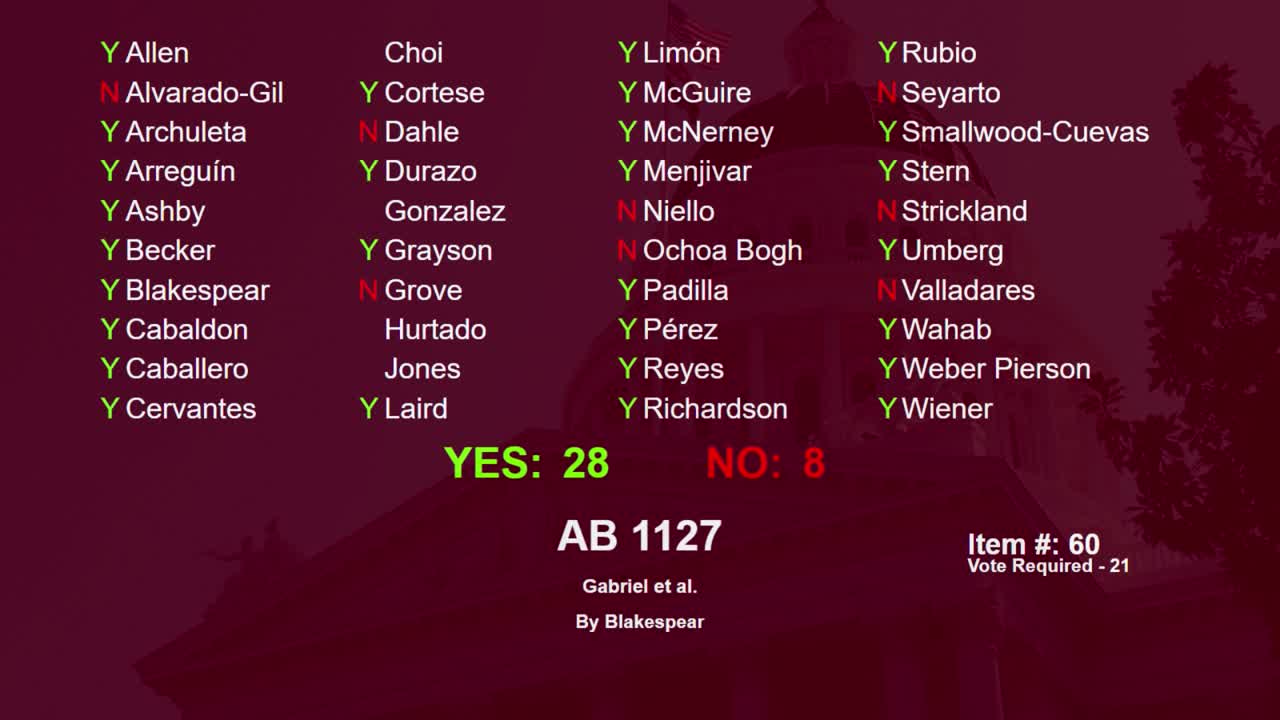
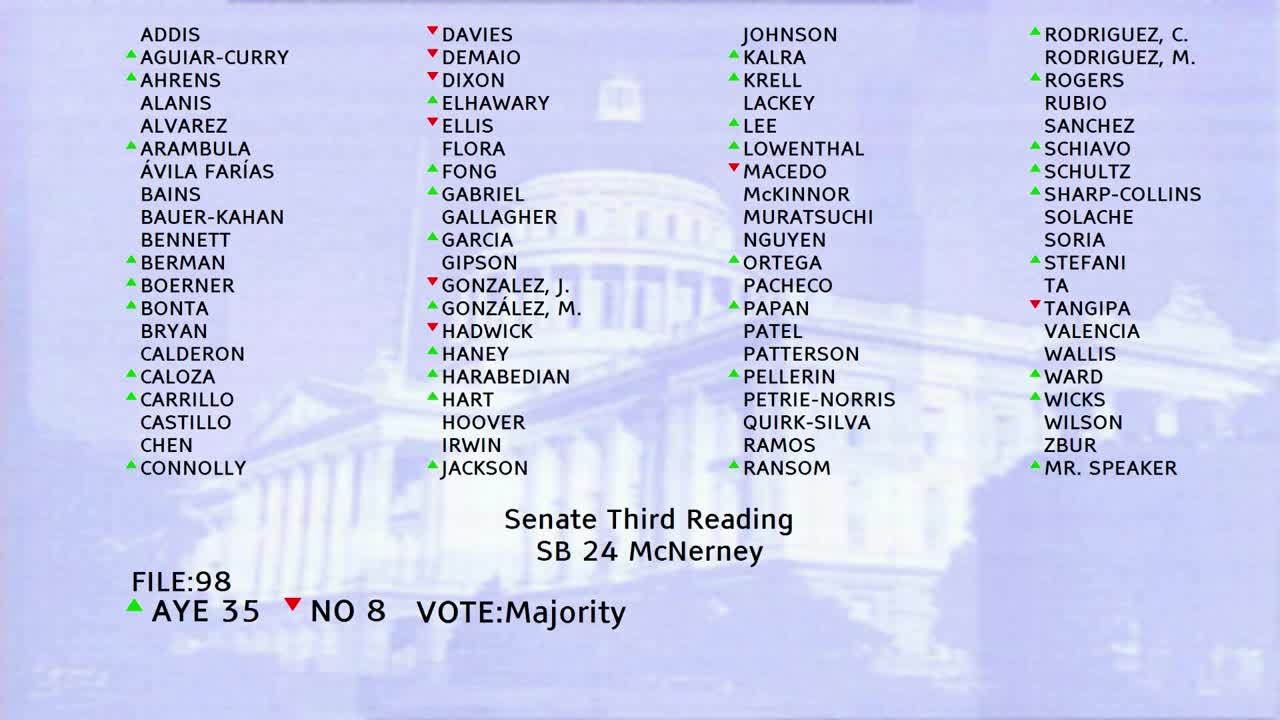

Bill Author

Bill Co-Author(s):