SB 222: Residential heat pump water heater or heat pump HVAC systems.
- Session Year: 2025-2026
- House: Senate
- Latest Version Date: 2026-09-28
Current Status:
Passed
(2026-09-28: Chaptered by Secretary of State. Chapter 738, Statutes of 2026.)
Introduced
In Committee
Awaiting First Chamber Vote
Passed First Chamber
In Committee
Awaiting Second Chamber Vote
Passed Second Chamber
Enacted
(1)Existing law establishes the State Energy Resources Conservation and Development Commission and prescribes the authorities, duties, and responsibilities of the commission pertaining to energy matters. Existing law requires the commission, on or before January 1, 2019, in consultation with the Contractors State License Board, local building officials, and other stakeholders, to approve a plan that promotes compliance with specified regulations relating to building energy efficiency standards in the installation of central air-conditioning and heat pumps, as specified. Existing law authorizes the commission to adopt regulations to increase compliance with permitting and inspection requirements for central air-conditioning and heat pumps, and associated sales and installations, consistent with the above-described plan.
This bill would establish various requirements and authorizations for the installation of a residential heat pump water heater or heat pump HVAC system, as defined, by, among other things, requiring a city, county, or city and county, beginning July 1, 2027, to adopt and offer asynchronous inspections for installations that do not require a licensed contractor and building inspector to be simultaneously present during the inspection. The bill would additionally require a city, county, or city and county, except as specified, to post specific information online, and on or before July 1, 2028, to implement an online automated permitting process for the installation of a residential heat pump water heater or heat pump HVAC system that issues permits in real time to a licensed contractor that meets certain criteria. The bill would require the criteria to include, among others, that the licensed contractor certify under penalty of perjury that they have performed a load calculation to properly size the new equipment, as specified. By expanding the crime of perjury, the bill would impose a state-mandated local program. By imposing these various new duties on the described local entities, the bill would impose a state-mandated local program.
The bill would authorize a city, county, or city and county, except as specified, to require up to one nondiscretionary permit per installation of a residential heat pump water heater or heat pump HVAC system in which the local entity administratively approves an application to install the residential heat pump water heater or heat pump HVAC system.
The bill would additionally authorize a city, county, or city and county to apply only certain planning or zoning or workforce labor standards on the installation of a residential heat pump water heater or heat pump HVAC system that are in addition to any state-level requirements. The bill would prohibit a local entity described above from requiring a permit or inspection for plug-in ready window air-conditioner or window heat pump HVAC systems, provided that certain requirements are met, including that the appliance has a voltage rating of 120 volts or less and the appliance is a self-contained unit. The bill would limit the amount a city, county, or city and county may charge as a permit fee for a residential heat pump water heater or heat pump HVAC system, as specified.
The bill would require a local entity described above that applies to receive any funding from the commission to self-certify to the commission its compliance with any applicable portions of the bills provisions.
The above provisions would not apply to new residential construction.
The bill would include findings and declarations related to these provisions.
(2)Existing law, the Davis-Stirling Common Interest Development Act, defines and regulates common interest developments. Among other things, the act makes a provision of the governing document or architectural or landscaping guidelines or policies void and unenforceable if, among other things, the provision prohibits, or includes conditions that have the effect of prohibiting, the use of low water-using plants as a group or as a replacement of existing turf.
This bill would additionally make any provision of the governing documents, architectural guidelines, or policies void and unenforceable if the provision prevents the replacement of a fuel-gas-burning appliance with an electric appliance. The bill would also make any covenant, restriction, or condition contained in any, among other specified agreements, deed, and any provision of a governing document, that effectively prohibits or restricts the installation or use of a residential heat pump water heater or heat pump HVAC system, void and unenforceable. The bill would prohibit an association, among other things, from prohibiting or restricting a member from installing, upgrading, replacing, or using a residential heat pump water heater or heat pump HVAC system in the members separate interest, except as specified.
(3)The bill would include findings that changes proposed by this bill address a matter of statewide concern rather than a municipal affair and, therefore, apply to all cities, including charter cities.
(4)The California Constitution requires the state to reimburse local agencies and school districts for certain costs mandated by the state. Statutory provisions establish procedures for making that reimbursement.
This bill would provide that, with regard to certain mandates, no reimbursement is required by this act for a specified reason.
With regard to any other mandates, this bill would provide that, if the Commission on State Mandates determines that the bill contains costs so mandated by the state, reimbursement for those costs shall be made pursuant to the statutory provisions noted above.
(1)Existing law establishes the State Energy Resources Conservation and Development Commission and prescribes the authorities, duties, and responsibilities of the commission pertaining to energy matters. Existing law requires the commission, on or before January 1, 2019, in consultation with the Contractors State License Board, local building officials, and other stakeholders, to approve a plan that promotes compliance with specified regulations relating to building energy efficiency standards in the installation of central air-conditioning and heat pumps, as specified. Existing law authorizes the commission to adopt regulations to increase compliance with permitting and inspection requirements for central air-conditioning and heat pumps, and associated sales and installations, consistent with the above-described plan.
This bill would establish various requirements and authorizations for the installation of a residential heat pump water heater or heat pump HVAC system, as defined, by, among other things, requiring a city, county, or city and county, beginning July 1, 2027, to adopt and offer asynchronous inspections for installations that do not require a licensed contractor and building inspector to be simultaneously present during the inspection. The bill would additionally require a city, county, or city and county, except as specified, to post specific information online, and on or before July 1, 2028, to implement an online automated permitting process for the installation of a residential heat pump water heater or residential heat pump HVAC system that issues permits in real time to a licensed contractor that meets certain criteria. The bill would require the criteria to include, among others, that the licensed contractor certify under penalty of perjury that they have performed a load calculation to properly size the new equipment, as specified. By expanding the crime of perjury, the bill would impose a state-mandated local program. By imposing these various new duties on the described local entities, the bill would impose a state-mandated local program.
The bill would authorize a city, county, or city and county, except as specified, to require up to one nondiscretionary permit per installation of a residential heat pump water heater or heat pump HVAC system in which the local entity administratively approves an application to install the residential heat pump water heater or heat pump HVAC system.
The bill would additionally authorize a city, county, or city and county to apply only certain planning or zoning or workforce labor standards on the installation of a residential heat pump water heater or heat pump HVAC system that are in addition to any state-level requirements. The bill would prohibit a local entity described above from requiring a permit or inspection for plug-in ready window air-conditioner or window heat pump HVAC systems, provided that certain requirements are met, including that the appliance has a voltage rating of 120 volts or less and the appliance is a self-contained unit. The bill would limit the amount a city, county, or city and county may charge as a permit fee for a residential heat pump water heater or heat pump HVAC system, as specified.
The bill would require a local entity described above that applies to receive any funding from the commission to self-certify to the commission its compliance with any applicable portions of the bills provisions.
The above provisions would not apply to new residential construction.
The bill would include findings and declarations related to these provisions.
(2)Existing law, the Davis-Stirling Common Interest Development Act, defines and regulates common interest developments. Among other things, the act makes a provision of the governing document or architectural or landscaping guidelines or policies void and unenforceable if, among other things, the provision prohibits, or includes conditions that have the effect of prohibiting, the use of low water-using plants as a group or as a replacement of existing turf.
This bill would additionally make any provision of the governing documents, architectural guidelines, or policies void and unenforceable if the provision prevents the replacement of a fuel-gas-burning appliance with an electric appliance. The bill would also make any covenant, restriction, or condition contained in any, among other specified agreements, deed, and any provision of a governing document, that effectively prohibits or restricts the installation or use of a residential heat pump water heater or heat pump HVAC system, void and unenforceable. The bill would prohibit an association, among other things, from prohibiting or restricting a member from installing, upgrading, replacing, or using a residential heat pump water heater or heat pump HVAC system in the members separate interest, except as specified.
(3)The bill would include findings that changes proposed by this bill address a matter of statewide concern rather than a municipal affair and, therefore, apply to all cities, including charter cities.
(4)The California Constitution requires the state to reimburse local agencies and school districts for certain costs mandated by the state. Statutory provisions establish procedures for making that reimbursement.
This bill would provide that, with regard to certain mandates, no reimbursement is required by this act for a specified reason.
With regard to any other mandates, this bill would provide that, if the Commission on State Mandates determines that the bill contains costs so mandated by the state, reimbursement for those costs shall be made pursuant to the statutory provisions noted above.
(1)Existing law establishes the State Energy Resources Conservation and Development Commission and prescribes the authorities, duties, and responsibilities of the commission pertaining to energy matters. Existing law requires the commission, on or before January 1, 2019, in consultation with the Contractors State License Board, local building officials, and other stakeholders, to approve a plan that promotes compliance with specified regulations relating to building energy efficiency standards in the installation of central air-conditioning and heat pumps, as specified. Existing law authorizes the commission to adopt regulations to increase compliance with permitting and inspection requirements for central air-conditioning and heat pumps, and associated sales and installations, consistent with the above-described plan.
The bill would require aThis bill would establish various requirements and authorizations for the installation of a residential heat pump water heater or heat pump HVAC system, as defined, by, among other things, requiring a city, county, or city and county, beginning July 1, 2027, to adopt and offer asynchronous inspections for installations of residential heat pump water heater or heat pump HVAC systems, as defined, that do not require a licensed contractor and building inspector to be simultaneously present during the inspection. The bill would authorize a building inspector to contact the licensed contractor who performed the installation by telephone call or real-time video conferencing during their inspection, and, if the building inspector determines during an asynchronous inspection that there is an issue with an installation of the heat pump water heater or heat pump HVAC system and that the licensed contractor who performed the installation must be present to perform tests or cure the installation, to require the licensed contractor who performed the installation to schedule an additional inspection in which the building inspector and the licensed contractor who performed the installation are required to be simultaneously present during the additional inspection. The bill would specify that these provisions do not require a local entity described above to discontinue offering inspections for the installation of a residential heat pump water heater or heat pump HVAC system where in a building inspector and licensed contractor who performed the installation are simultaneously present. The bill would additionally require a city, county, or city and county, except as specified, to post specific information online, and on or before July 1, 2028, to implement an online automated permitting process for the installation of a residential heat pump water heater or residential heat pump HVAC system that issues permits in real time to a licensed contractor that meets certain criteria. The bill would require the criteria to include, among others, that the licensed contractor certify under penalty of perjury that they have performed a load calculation to properly size the new equipment, as specified. By expanding the crime of perjury, the bill would impose a state-mandated local program. By imposing these various new duties on the described local entities, the bill would impose a state-mandated local program.
The bill would authorize a city, county, or city and county, on or before July 1, 2028, and except as specified, to issue require up to one nondiscretionary permit per installation of a residential heat pump water heater or heat pump HVAC system in which the local entity administratively approves an application to install the residential heat pump water heater or heat pump HVAC system. The bill would specify that nothing in that provision is to be construed to prevent a local entity described above from issuing separate permits for a panel replacement or demolition work conducted as part of the residential heat pump installation.
The bill would additionally authorize a city, county, or city and county to apply only certain planning or zoning or workforce labor standards on the installation of a residential heat pump water heater or residential heat pump HVAC system that are in addition to any state-level requirements, including additional standards that conform to local laws, including reach codes, designed to encourage the adoption of zero-emission equipment or improvement of building efficiency. requirements. The bill would prohibit a local entity described above from requiring a permit or inspection for plug-in ready window air-conditioner or window heat pump HVAC systems, provided that certain requirements are met, including that the appliance has a voltage rating of 120 volts or less and the appliance is a self-contained unit. The bill would limit the amount a city, county, or city and county may charge as a permit fee for a residential heat pump water heater or heat pump HVAC system, as specified.
The bill would require a city, county, or city and county, on or before July 1, 2028, to implement an online, automated permitting process that issues permits in real time to a licensed contractor for the installation of a residential heat pump water heater or residential heat pump HVAC system that meets certain criteria, including that the installation is for a residential heat pump water heater or heat pump HVAC system that does not require installation of a new electrical panel or structural work, and if the installation is for a residential heat pump HVAC system, that the licensed contractor certifies under penalty of perjury that they have performed a load calculation to properly size the new residential heat pump HVAC equipment per certain provisions and provides the load calculation to the local authority having jurisdiction upon request. By expanding the crime of perjury, the bill would impose a state-mandated local program. The bill would specify the methods that a local entity described above may use to comply with the above-described requirement, including, among other things, an automated platform that can issue permits in real time. The bill would require, for an installation of a residential heat pump water heater or heat pump HVAC system, the local entity to publish and make publicly available, among other things, any required permitting documentation, on their internet website. The bill would require the local entity to allow an applicant to, among other things, submit a permit application and associated documentation electronically. The bill would exempt from these provisions a city with a population of fewer than 5,000 persons or a county with a population of fewer than 150,000 persons, as specified.The bill would, except as provided, prohibit a city, county, or city and county from charging a permit fee for a residential heat pump water heater and heat pump HVAC system that exceeds the estimated reasonable cost of providing the service for which the fee is charged, subject to specified requirements, including that the permit fee for a residential heat pump water heater system does not exceed $150. The bill would, notwithstanding that provision, authorize a local entity described above to charge a permit fee, as specified, for the installation of a residential heat pump water heater or heat pump HVAC system that exceeds the above-described fee limit, as specified, if the local entity, as part of a written finding and an adopted resolution or ordinance, provides substantial evidence of the reasonable cost to issue the permit, and would prohibit a local entity described above from applying additional charges above the publicly listed fee.The bill would require a local entity described above that applies to receive any funding from the commission to self-certify to the commission its compliance with any applicable portions of the bills provisions. By imposing additional duties on local entities described above, the bill would impose a state-mandated local program.
The above provisions would not apply to new residential construction.
The bill would include findings and declarations related to these provisions.
(2)Existing law, the Davis-Stirling Common Interest Development Act, defines and regulates common interest developments. Among other things, the act makes a provision of the governing document or architectural or landscaping guidelines or policies void and unenforceable if, among other things, the provision prohibits, or includes conditions that have the effect of prohibiting, the use of low water-using plants as a group or as a replacement of existing turf.
This bill would additionally make any provision of the governing documents, architectural guidelines, or policies void and unenforceable if the provision prevents the replacement of a fuel-gas-burning appliance with an electric appliance. The bill would also make any covenant, restriction, or condition contained in any, among other specified agreements, deed, and any provision of a governing document, that effectively prohibits or restricts the installation or use of a residential heat pump water heater or heat pump HVAC system, void and unenforceable. The bill would prohibit an association, among other things, from prohibiting or restricting a member from installing, upgrading, replacing, or using a residential heat pump water heater or heat pump HVAC system in the members separate interest, except as specified.
(3)The bill would include findings that changes proposed by this bill address a matter of statewide concern rather than a municipal affair and, therefore, apply to all cities, including charter cities.
(4)The California Constitution requires the state to reimburse local agencies and school districts for certain costs mandated by the state. Statutory provisions establish procedures for making that reimbursement.
This bill would provide that, with regard to certain mandates, no reimbursement is required by this act for a specified reason.
With regard to any other mandates, this bill would provide that, if the Commission on State Mandates determines that the bill contains costs so mandated by the state, reimbursement for those costs shall be made pursuant to the statutory provisions noted above.
(1)Existing law establishes the State Energy Resources Conservation and Development Commission and prescribes the authorities, duties, and responsibilities of the commission pertaining to energy matters. Existing law requires the commission, on or before January 1, 2019, in consultation with the Contractors State License Board, local building officials, and other stakeholders, to approve a plan that promotes compliance with specified regulations relating to building energy efficiency standards in the installation of central air-conditioning and heat pumps, as specified. Existing law authorizes the commission to adopt regulations to increase compliance with permitting and inspection requirements for central air-conditioning and heat pumps, and associated sales and installations, consistent with the above-described plan.
The bill would require a city, county, or city and county, beginning July 1, 2027, to adopt and offer asynchronous inspections for installations of residential heat pump water heater or heat pump HVAC systems, as defined, that do not require a licensed contractor and building inspector to be simultaneously present during the inspection. The bill would authorize a building inspector to contact the licensed contractor who performed the installation by telephone call or real-time video conferencing during their inspection, and, if the building inspector determines during an asynchronous inspection that there is an issue with an installation of the heat pump water heater or heat pump HVAC system and that the licensed contractor who performed the installation must be present to perform tests or cure the installation, to require the licensed contractor who performed the installation to schedule an additional inspection in which the building inspector and the licensed contractor who performed the installation are required to be simultaneously present during the additional inspection. The bill would specify that these provisions do not require a local entity described above to discontinue offering inspections for the installation of a residential heat pump water heater or heat pump HVAC system where in a building inspector and licensed contractor who performed the installation are simultaneously present.
The bill would authorize a city, county, or city and county, on or before July 1, 2028, and except as specified, to issue up to one nondiscretionary permit per installation of a residential heat pump water heater or heat pump HVAC system in which the local entity administratively approves an application to install the residential heat pump water heater or heat pump HVAC system. The bill would specify that nothing in that provision is to be construed to prevent a local entity described above from issuing separate permits for a panel replacement or demolition work conducted as part of the residential heat pump installation.
The bill would authorize a city, county, or city and county to apply only certain planning or zoning or workforce labor standards on the installation of a residential heat pump water heater or residential heat pump HVAC system that are in addition to any state-level requirements, including additional standards that conform to local laws, including reach codes, designed to encourage the adoption of zero-emission equipment or improvement of building efficiency. The bill would prohibit a local entity described above from requiring a permit or inspection for plug-in ready window air-conditioner or window heat pump HVAC systems, provided that certain requirements are met, including that the appliance has a voltage rating of 120 volts or less and the appliance is a self-contained unit.
The bill would require a city, county, or city and county, on or before July 1, 2028, to implement an online, instant automated permitting process that issues permits in real time to a licensed contractor for the installation of a residential heat pump water heater or residential heat pump HVAC system that meets certain criteria, including that the installation is for a residential heat pump water heater or heat pump HVAC system that does not require installation of a new electrical panel, or demolition panel or structural work. work, and if the installation is for a residential heat pump HVAC system, that the licensed contractor certifies under penalty of perjury that they have performed a load calculation to properly size the new residential heat pump HVAC equipment per certain provisions and provides the load calculation to the local authority having jurisdiction upon request. By expanding the crime of perjury, the bill would impose a state-mandated local program. The bill would authorize specify the methods that a local entity described above to may use to comply with the above-described requirement by using, requirement, including, among other things, an automated platform that can issue permits in real time. The bill would require require, for an installation of a residential heat pump water heater or heat pump HVAC system, the local entity to publish and make publicly available, among other things, any required permitting documentation, on their internet website. The bill would require the local entity to allow an applicant to, among other things, submit a permit application and associated documentation electronically. The bill would require a local entity described above that applies to receive any funding from the commission to self-certify to the commission its compliance with any applicable portions of the bills provisions. The bill would exempt from these provisions a city with a population of fewer than 5,000 persons or a county with a population of fewer than 150,000 persons, as specified.
The bill would, except as provided, prohibit a city, county, or city and county from charging a permit fee for a residential heat pump water heater and heat pump HVAC system that exceeds the estimated reasonable cost of providing the service for which the fee is charged, subject to specified requirements, including that the permit fee for a residential heat pump water heater system does not exceed $150. The bill would, notwithstanding that provision, authorize a local entity described above to charge a permit fee, as specified, for the installation of a residential heat pump water heater or heat pump HVAC system that exceeds the above-described fee limit, as specified, if the local entity, as part of a written finding and an adopted resolution or ordinance, provides substantial evidence of the reasonable cost to issue the permit, and would prohibit a local entity described above from applying additional charges above the publicly listed fee.
The bill would require a local entity described above that applies to receive any funding from the commission to self-certify to the commission its compliance with any applicable portions of the bills provisions. By imposing additional duties on local entities described above, the bill would impose a state-mandated local program.
The bill would include findings and declarations related to these provisions.
(2)Existing law, the Davis-Stirling Common Interest Development Act, defines and regulates common interest developments. Among other things, the act makes a provision of the governing document or architectural or landscaping guidelines or policies void and unenforceable if, among other things, the provision prohibits, or includes conditions that have the effect of prohibiting, the use of low water-using plants as a group or as a replacement of existing turf.
This bill would additionally make any provision of the governing documents, architectural guidelines, or policies void and unenforceable if the provision prevents the replacement of a fuel-gas-burning appliance with an electric appliance. The bill would also make any covenant, restriction, or condition contained in any, among other specified agreements, deed, and any provision of a governing document, that effectively prohibits or restricts the installation or use of a residential heat pump water heater or heat pump HVAC system, void and unenforceable.
(3)The bill would include findings that changes proposed by this bill address a matter of statewide concern rather than a municipal affair and, therefore, apply to all cities, including charter cities.
(4)The California Constitution requires the state to reimburse local agencies and school districts for certain costs mandated by the state. Statutory provisions establish procedures for making that reimbursement.This bill would provide that, if the Commission on State Mandates determines that the bill contains costs mandated by the state, reimbursement for those costs shall be made pursuant to the statutory provisions noted above.(4)The California Constitution requires the state to reimburse local agencies and school districts for certain costs mandated by the state. Statutory provisions establish procedures for making that reimbursement.
This bill would provide that, with regard to certain mandates, no reimbursement is required by this act for a specified reason.
With regard to any other mandates, this bill would provide that, if the Commission on State Mandates determines that the bill contains costs so mandated by the state, reimbursement for those costs shall be made pursuant to the statutory provisions noted above.
(1)Existing law establishes the State Energy Resources Conservation and Development Commission and prescribes the authorities, duties, and responsibilities of the commission pertaining to energy matters. Existing law requires the commission, on or before January 1, 2019, in consultation with the Contractors State License Board, local building officials, and other stakeholders, to approve a plan that promotes compliance with specified regulations relating to building energy efficiency standards in the installation of central air-conditioning and heat pumps, as specified. Existing law authorizes the commission to adopt regulations to increase compliance with permitting and inspection requirements for central air-conditioning and heat pumps, and associated sales and installations, consistent with the above-described plan.
The bill would require a city, county, or city and county, beginning July 1, 2027, to adopt and offer asynchronous inspections for installations of residential heat pump water heater or heat pump HVAC systems, as defined, that do not require a licensed contractor and building inspector to be simultaneously present during the inspection. The bill would authorize a building inspector to contact the licensed contractor who performed the installation by telephone call or real-time video conferencing during their inspection, and, if the building inspector determines during an asynchronous inspection that there is an issue with an installation of the heat pump water heater or heat pump HVAC system and that the licensed contractor who performed the installation must be present to perform tests or cure the installation, to require the licensed contractor who performed the installation to schedule an additional inspection in which the building inspector and the licensed contractor who performed the installation are required to be simultaneously present during the additional inspection. The bill would specify that these provisions do not require a local entity described above to discontinue offering inspections for the installation of a residential heat pump water heater or heat pump HVAC system where in a building inspector and licensed contractor who performed the installation are simultaneously present.
The bill would authorize a city, county, or city and county, on or before July 1, 2028, to issue up to one nondiscretionary permit per installation of a residential heat pump water heater or heat pump HVAC system in which the local entity administratively approves an application to install the residential heat pump water heater or heat pump HVAC system. The bill would specify that nothing in that provision is to be construed to prevent a local entity described above from issuing separate permits for a panel replacement or demolition work conducted as part of the residential heat pump installation.
The bill would authorize a city, county, or city and county to apply only certain planning or zoning or workforce labor standards on the installation of a residential heat pump water heater or residential heat pump HVAC system that are in addition to any state-level requirements, including additional standards that conform to local laws, including reach codes, designed to encourage the adoption of zero-emission equipment or improvement of building efficiency. The bill would prohibit a local entity described above from requiring a permit or inspection for plug-in ready window air-conditioner or window heat pump HVAC systems, provided that certain requirements are met, including that the appliance has a voltage rating of 120 volts or less and the appliance is a self-contained unit.
The bill would require a city, county, or city and county, on or before July 1, 2028, to implement an online, instant permitting process that issues permits in real time to a licensed contractor for the installation of a residential heat pump water heater or residential heat pump HVAC system that meets certain criteria, including that the installation is for a residential heat pump water heater or heat pump HVAC system that does not require installation of a new electrical panel, or demolition or structural work. The bill would authorize a local entity described above to comply with the above-described requirement by using, among other things, an automated platform that can issue permits in real time. The bill would require the local entity to publish and make publicly available, among other things, any required permitting documentation, on their internet website. The bill would require the local entity to allow an applicant to, among other things, submit a permit application and associated documentation electronically. The bill would require a local entity described above that applies to receive any funding from the commission to self-certify to the commission its compliance with any applicable portions of the bills provisions. The bill would exempt from these provisions a city with a population of fewer than 5,000 persons or a county with a population of fewer than 150,000 persons, as specified.
The bill would, except as provided, prohibit a city, county, or city and county from charging a permit fee for a residential heat pump water heater and heat pump HVAC system that exceeds the estimated reasonable cost of providing the service for which the fee is charged, subject to specified requirements, including that the permit fee for a residential heat pump water heater system does not exceed $150. The bill would, notwithstanding that provision, authorize a local entity described above to charge a permit fee, as specified, for the installation of a residential heat pump water heater or heat pump HVAC system that exceeds the above-described fee limit, as specified, if the local entity, as part of a written finding and an adopted resolution or ordinance, provides substantial evidence of the reasonable cost to issue the permit, and would prohibit a local entity described above from applying additional charges above the publicly listed fee.
The bill would include findings and declarations related to these provisions.
(2)Existing law, the Davis-Stirling Common Interest Development Act, defines and regulates common interest developments. Among other things, the act makes a provision of the governing document or architectural or landscaping guidelines or policies void and unenforceable if, among other things, the provision prohibits, or includes conditions that have the effect of prohibiting, the use of low water-using plants as a group or as a replacement of existing turf.
This bill would additionally make any provision of the governing documents, architectural guidelines, or policies void and unenforceable if the provision prevents the replacement of a fuel-gas-burning appliance with an electric appliance. The bill would also make any covenant, restriction, or condition contained in any, among other specified agreements, deed, and any provision of a governing document, that effectively prohibits or restricts the installation or use of a residential heat pump water heater or heat pump HVAC system, void and unenforceable.
(3)The bill would include findings that changes proposed by this bill address a matter of statewide concern rather than a municipal affair and, therefore, apply to all cities, including charter cities.
(4)The California Constitution requires the state to reimburse local agencies and school districts for certain costs mandated by the state. Statutory provisions establish procedures for making that reimbursement.
This bill would provide that, if the Commission on State Mandates determines that the bill contains costs mandated by the state, reimbursement for those costs shall be made pursuant to the statutory provisions noted above.
(1)Existing law gives a person the right of protection from bodily harm and the right to possess and use property. If a person suffers bodily harm or a loss of their property because of the unlawful act or omission of another, existing law authorizes them to recover compensation from the person at fault, which is known as damages.This bill would authorize a person who suffered physical harm to their person or property totaling at least $10,000 to bring a civil action against a party responsible for a climate disaster to recover damages, restitution, specified costs, and other appropriate relief. The bill would make responsible parties jointly, severally, and strictly liable to a plaintiff for damages and restitution. The bill would require an action to be filed within 3 years of the date that the harm was or should have been discovered.(2)Existing law generally regulates the business of insurance in the state. The California FAIR Plan Association is a joint reinsurance association in which all insurers licensed to write basic property insurance participate in administering a program for the equitable apportionment of basic property insurance for persons who are unable to obtain that coverage through normal channels. Under existing law, a member insurer participates in the writings, expenses, and profits and losses of the association in proportion to its written premiums, as specified. Existing law authorizes the association, with the Insurance Commissioners approval, to assess member insurers in amounts sufficient to operate the association.This bill would specify that an insurer has a right of subrogation against a responsible party and would authorize an insurer to seek damages against a responsible party for a climate disaster, pursuant to the above-described provisions. The bill would require the association to exercise its right of subrogation against a responsible party for a climate disaster if the association pays claims and receives a policyholder petition, as specified. The bill would require the association to notify the petitioners of a deficiency in the petition within 30 days of receipt, would authorize the petitioners to respond to a notice in accordance with specified procedures, and would require the association to file a lawsuit within 90 days of a court-ordered or statutory determination of completeness, as prescribed. The bill would require the association to assess member insurers based on each insurers market share if the claims paid after a climate disaster exhaust the associations claims-paying capacity, but would provide for adjusting an assessment amount if the insurer has or has not filed a subrogation lawsuit in response to a climate change disaster for which the association has also filed a lawsuit against a responsible party.(3)This bill would declare that it is to take effect immediately as an urgency statute.(1)Existing law gives a person the right of protection from bodily harm and the right to possess and use property. If a person suffers bodily harm or a loss of their property because of the unlawful act or omission of another, existing law authorizes them to recover compensation from the person at fault, which is known as damages.
This bill would authorize a person who suffered physical harm to their person or property totaling at least $10,000 to bring a civil action, if specified criteria are met, including damages of $10,000 or more, action against a party responsible for a climate disaster or extreme weather or other events attributable to climate change due to the responsible partys misleading and deceptive practices or the provision of misinformation or disinformation about the connection between its fossil fuel products and climate change and extreme weather or other events attributable to climate change. to recover damages, restitution, specified costs, and other appropriate relief. The bill would make responsible parties jointly, severally, and strictly liable to a plaintiff for the climate disaster or extreme weather or other events attributable to climate change. The bill would set forth venue requirements and prohibited defenses for that action, and would require the court to award a prevailing plaintiff the full extent of noneconomic, compensatory, and punitive damages allowable, as specified. The bill would provide that the connection of a climate disaster, extreme weather or other events attributable to climate change, or harms resulting from long-term changes to the climate system to alleged injuries are an injury in fact for all residents of the state harmed by the event and would give those persons standing to bring a civil action pursuant to the above-described provisions. The bill would also make a person who seeks declaratory or injunctive relief to prevent enforcement of the above-described provisions or any other related law, as specified, jointly and severally liable to pay the attorneys fees and costs of the prevailing party, as specified. damages and restitution. The bill would require an action to be filed within 3 years of the date that the harm was or should have been discovered.
(2)Existing law generally regulates the business of insurance in the state. The California FAIR Plan Association is a joint reinsurance association in which all insurers licensed to write basic property insurance participate in administering a program for the equitable apportionment of basic property insurance for persons who are unable to obtain that coverage through normal channels. Under existing law, a member insurer participates in the writings, expenses, and profits and losses of the association in proportion to its written premiums, as specified. Existing law authorizes the association, with the Insurance Commissioners approval, to assess member insurers in amounts sufficient to operate the association.
This bill would specify that an insurer has a right of subrogation against a responsible party and would authorize an insurer to seek damages against a responsible party for a climate disaster, pursuant to the above-described provisions. Within 90 calendar days of its operative date, the bill would require the commissioner to establish an independent advisory body of industry experts to conduct cost-benefit analyses of the effect of a climate disaster, or extreme weather or other events attributable to climate change, on the association. The bill would require the association to exercise its right of subrogation against a responsible party for a climate disaster or extreme weather or other events attributable to climate change, if the association pays claims and the independent advisory body determines the benefits of subrogation outweigh the costs. receives a policyholder petition, as specified. The bill would require the association to notify the petitioners of a deficiency in the petition within 30 days of receipt, would authorize the petitioners to respond to a notice in accordance with specified procedures, and would require the association to file a lawsuit within 90 days of a court-ordered or statutory determination of completeness, as prescribed. The bill would authorize require the association to assess member insurers in amounts based on each insurers market share if the claims paid after a climate disaster or extreme weather or other events attributable to climate change exhaust the associations claims-paying capacity, but would provide for adjusting an assessment amount if the insurer does or does not exercise its right of subrogation has or has not filed a subrogation lawsuit in response to a climate change disaster for which the association has also filed a lawsuit against a responsible party.
(3)This bill would declare that it is to take effect immediately as an urgency statute.
(1)Existing law gives a person the right of protection from bodily harm and the right to possess and use property. If a person suffers bodily harm or a loss of their property because of the unlawful act or omission of another, existing law authorizes them to recover compensation from the person at fault, which is known as damages.
This bill would authorize a person to bring a civil action, if specified criteria are met, including damages of $10,000 or more, against a party responsible for a climate disaster or extreme weather or other events attributable to climate change due to the responsible partys misleading and deceptive practices or the provision of misinformation or disinformation about the connection between its fossil fuel products and climate change and extreme weather or other events attributable to climate change. The bill would make responsible parties jointly, severally, and strictly liable to a plaintiff for the climate disaster or extreme weather or other events attributable to climate change. The bill would set forth venue requirements and prohibited defenses for that action, and would require the court to award a prevailing plaintiff the full extent of noneconomic, compensatory, and punitive damages allowable, as specified. The bill would provide that the connection of a climate disaster, extreme weather or other events attributable to climate change, or harms resulting from long-term changes to the climate system to alleged injuries are an injury in fact for all residents of the state harmed by the event and would give those persons standing to bring a civil action pursuant to the above-described provisions. The bill would also make a person who seeks declaratory or injunctive relief to prevent enforcement of the above-described provisions or any other related law, as specified, jointly and severally liable to pay the attorneys fees and costs of the prevailing party, as specified.
(2)Existing law generally regulates the business of insurance in the state. The California FAIR Plan Association is a joint reinsurance association in which all insurers licensed to write basic property insurance participate in administering a program for the equitable apportionment of basic property insurance for persons who are unable to obtain that coverage through normal channels. Under existing law, a member insurer participates in the writings, expenses, and profits and losses of the association in proportion to its written premiums, as specified. Existing law authorizes the association, with the Insurance Commissioners approval, to assess member insurers in amounts sufficient to operate the association.
This bill would authorize an insurer to seek damages against a responsible party for a climate disaster, pursuant to the above-described provisions. Within 90 calendar days of its operative date, the bill would require the commissioner to establish an independent advisory body of industry experts to conduct cost-benefit analyses of the effect of a climate disaster, or extreme weather or other events attributable to climate change, on the association. The bill would require the association to exercise its right of subrogation against a responsible party for a climate disaster or extreme weather or other events attributable to climate change, if the association pays claims and the independent advisory body determines the benefits of subrogation outweigh the costs. The bill would authorize the association to assess member insurers in amounts if the claims paid after a climate disaster or extreme weather or other events attributable to climate change exhaust the associations claims-paying capacity, but would provide for adjusting an assessment amount if the insurer does or does not exercise its right of subrogation against a responsible party.
(3)This bill would declare that it is to take effect immediately as an urgency statute.
(a)Notwithstanding any other law, any provision of the governing documents, architectural guidelines, or policies shall be void and unenforceable if the provision prevents the replacement of a fuel-gas-burning appliance with an electric appliance that complies with all applicable state and local building codes.
(b)(1)Any covenant, restriction, or condition contained in any deed, contract, security instrument, or other instrument affecting the transfer or sale of, or any interest in, real property, and any provision of a governing document, that effectively prohibits or restricts the installation or use of a residential heat pump water heater or heat pump HVAC system, as defined in Section 51297.51 of the Government Code, is void and unenforceable.
(2)Subject to paragraph (3), an association shall not prohibit or restrict a member from installing, upgrading, replacing, or using a residential heat pump water heater or heat pump HVAC system in the members separate interest. The association shall not do any of the following:
(A)Charge any fee to a member in connection with the installation, upgrade, replacement, or use of a residential heat pump water heater or heat pump HVAC system.
(B)Require a member to use a specific residential heat pump water heater or heat pump HVAC system contractor or product.
(C)Claim to receive any rebate, credit, or commission in connection with a members installation, upgrade, replacement, or use of a residential heat pump water heater or heat pump HVAC system.
(D)Require a member to remove a residential heat pump water heater or heat pump HVAC system or prevent the replacement or upgrade of an existing residential heat pump water heater or heat pump HVAC system.
(3)Paragraph (2) shall not apply if the association establishes either of the following:
(A)The installation, upgrade, replacement, or use of the residential heat pump water heater or heat pump HVAC system would violate federal, state, or local law.
(B)A permit from a designated permitting authority is required for the installation, upgrade, replacement, or use of the residential heat pump water heater or heat pump HVAC system, and that permit is not granted.
(c)A residential heat pump water heater or heat pump HVAC system shall meet applicable health and safety standards and requirements imposed by law.
(d)Nothing in this section shall be construed to limit or restrict the ability of an association to require a member whose installation, upgrade, replacement, or use of a residential heat pump water heater or heat pump HVAC system affects the common area or an exclusive use common area to be responsible for the repair of any damage to the common area or an exclusive use common area, or to another members separate interest, that is caused by the installation, operation, maintenance, or removal of that residential heat pump water heater or heat pump HVAC system.
SEC. 2.Chapter 7.5 (commencing with Section 51297.50) is added to Part 1 of Division 1 of Title 5 of the Government Code, to read:7.5.Residential Heat Pump System Installation51297.50.The Legislature finds and declares all of the following:
(a)The oversight of permitting for residential heat pump water heater and heat pump heating, ventilation, and air-conditioning (HVAC) systems is a matter of statewide concern and not a municipal affair. Therefore, this chapter shall apply to all cities and counties, including a charter city.
(b)Nothing in this chapter is intended to imply the approval of any other local fees for heat pump permitting not specified in this chapter.
(c)It is the intent of the Legislature that local agencies do not adopt ordinances that create unreasonable barriers to the installation of heat pumps and not unreasonably restrict the ability of home and residential property owners to install heat pumps.
(d)It is the policy of the state to promote and encourage the use of zero-emission water heating and space heating and cooling systems, and to limit obstacles to their use.
(e)It is the intent of the Legislature that local agencies comply not only with provisions declared in this section, but also the legislative intent to encourage the installation of residential heat pump systems by removing obstacles to, and minimizing costs of, permitting, so long as the action does not supersede the building officials authority to identify and address higher priority life-safety situations.
(f)Each state entity, including the commission and the Department of Housing and Community Development, should streamline codes and standards compliance processes with the intent of increasing permitted work without undermining the integrity of the code measures, especially when it comes to appliance retrofits.
51297.51.For purposes of this chapter, the following definitions apply:
(a)Commission means the State Energy Resources Conservation and Development Commission, which is also known as the Energy Commission.
(b)HVAC means heating, ventilation, and air-conditioning.
(c)Residential heat pump water heater or heat pump HVAC system means a single heat pump water heater or heat pump HVAC system that serves one residential dwelling unit.
(d)(1)Swapout means a residential heat pump water heater or heat pump HVAC system installation where a new heat pump water heater or HVAC air handler and outdoor coil is being installed in the same location on a property as the prior water heater or air handler and condenser that it is replacing.
(2)Swapout does not include either of the following:
(A)An installation that requires modification, replacement, or installation of more than 25 linear feet of ductwork.
(B)An installation that replaces a package unit with a split system or a split system with a package unit.
51297.52.(a)Beginning July 1, 2027, a city, county, or city and county shall adopt and offer asynchronous inspections for installations of residential heat pump water heater or heat pump HVAC systems that do not require a licensed contractor and building inspector to be simultaneously present during the inspection of an installation of a residential heat pump water heater or heat pump HVAC system.
(b)A building inspector may contact the licensed contractor who performed the installation of the heat pump water heater or heat pump HVAC system by telephone call or real-time video conferencing during their inspection.
(c)If a building inspector determines during an asynchronous inspection that there is an issue with an installation of the heat pump water heater or heat pump HVAC system and that the licensed contractor who performed the installation must be present to perform tests or cure the installation, the building inspector may require the licensed contractor who performed the installation to schedule an additional inspection in which the building inspector and the licensed contractor who performed the installation are both required to be simultaneously present during the additional inspection.
(d)If a building inspector determines during an asynchronous inspection that a contractor must be onsite in order to allow the building inspector into a place that needs to be inspected, the building inspector may require the licensed contractor who performed the installation to schedule an additional inspection in which the building inspector and the licensed contractor who performed the installation are both required to be simultaneously present during the additional inspection, if deemed necessary by the building inspector.
(e)Nothing in this section shall be construed to require a city, county, or city and county to discontinue offering inspection options for the installation of a residential heat pump water heater or heat pump HVAC system wherein a building inspector and licensed contractor who performed the installation are simultaneously present.
(f)A city or county may adopt and offer remote inspections, consistent with applicable law, for a heat pump water heater or heat pump HVAC system in lieu of an asynchronous inspection pursuant to this section.
51297.53.(a)On or before January 1, 2028, a city, county, or city and county may require up to one nondiscretionary permit per installation of a residential heat pump water heater or heat pump HVAC system in which the city, county, or city and county administratively approves an application to install the residential heat pump water heater or heat pump HVAC system.
(b)This section shall not be construed to prevent a city, county, or city and county from issuing separate permits for a panel replacement or structural work conducted as part of the residential heat pump installation.
(c)Notwithstanding subdivision (a), a city, county, or city and county may require more than one nondiscretionary permit requested by a licensed contractor per installation of a residential heat pump water heater or heat pump HVAC system if the building official makes written findings based upon substantial evidence that the proposed installation would have a specific, adverse impact on public health or safety, and there is no feasible method to satisfactorily mitigate or avoid the specific, adverse impact.
51297.54.(a)A city, county, or city and county may apply only any of the following planning or zoning or workforce labor standards on the installation of a residential heat pump water heater or heat pump HVAC system, in addition to any state-level requirements:
(1)Additional standards for setbacks for installations not to exceed 3 feet in side yards and backyards or 10 feet in front yards. If a city, county, or city and county requires the submission of site plans for applications for permits for installations of residential heat pump water heater or heat pump HVAC systems, the city, county, or city and county shall require only site plan information directly relevant to the installation or to determining setback compliance. Site plans shall not be required for applications for permits for a swapout.
(2)Additional standards that conform to local laws, including reach codes, designed to encourage the adoption of zero-emission equipment or improvement of building efficiency.
(3)Additional planning or zoning standards relating to the installation of a residential heat pump water heater or heat pump HVAC system if the city, county, or city and county adopts an ordinance that includes substantial evidence that the standard is designed to mitigate the specific, adverse impact on the public health or safety at the lowest cost possible.
(4)Additional standards to regulate noise in a residential setting for inverter-based heat pump technologies, not to be less than 15 decibels higher than any statutory maximum regulating decibel limits for noninverter-based technologies.
(5)Any additional workforce labor standards. For purposes of this subdivision, workforce labor standards include, but are not limited to, the payment of prevailing wages and the employment of apprentices from apprenticeship programs approved by the Division of Apprenticeship Standards.
(b)A city, county, or city and county shall not require a permit or inspection for plug-in ready window air-conditioner or window heat pump HVAC systems, provided that all of the following requirements are met:
(1)The appliance has a voltage rating of 120 volts or less.
(2)The appliance is a self-contained unit.
(3)The installation of the appliance does not require the installation of a dedicated circuit for the appliance.
(4)The installation of the appliance does not require an upgrade to the electrical panel to accommodate the additional load of the appliance.
(5)The installation of the appliance does not require the installation of drainage or structural modifications.
51297.55.(a)On or before July 1, 2028, a city, county, or city and county, other than a city, county, or city and county described in subdivision (c), shall, consistent with the goals and intent of this chapter, implement an online, automated permitting process that issues permits in real time to a licensed contractor for the installation of a residential heat pump water heater or heat pump HVAC system that meets all of the following criteria:
(1)The installation is for a residential heat pump water heater or heat pump HVAC system that does not require installation of a new electrical panel or structural work.
(2)The installation is a swapout.
(3)If the installation is for a residential heat pump HVAC system, the licensed contractor certifies under penalty of perjury that they have performed a load calculation to properly size the new residential heat pump HVAC equipment per the Air Conditioning Contractors of America Association, Inc. Manual J Residential Load Calculation, the Sheet Metal and Air Conditioning Contractors National Association Residential Comfort Systems Installation Standards Manual, the California Mechanical Code, or successor provisions, and provides the load calculation to the local authority having jurisdiction upon request.
(b)(1)The methods that a city, county, or city and county may use to comply with the requirements described in subdivision (a) may include, but are not limited to, an automated platform that can issue permits in real time or using an online form-based system that can instantly issue permits upon completion of the online form.
(2)If a city, county, or city and county requires a CF1R form at the time of the permit application, the city, county, or city and county shall not otherwise require information duplicative to and supplied on the CF1R form provided by the applicant, except for the applicants name and the residential address of the project.
(c)All liabilities and immunities, including, but not limited to, the immunities provided in Sections 818.4, 818.6, and 821.2, applicable to cities, counties, and cities and counties shall apply to any permits issued through an online, automated permitting platform and any inspections conducted in connection with those permits.
(d)This section shall not apply to a city with a population of fewer than 5,000 persons or a county with a population of fewer than 150,000 persons, including each city within that county.
51297.56.(a)For an installation of a residential heat pump water heater or heat pump HVAC system, a city, county, or city and county, other than a city, county, or city and county described in subdivision (c), shall publish and make publicly available a list of the requirements adopted pursuant to Section 51297.54, any required permitting documentation, and a list of all relevant fees and fee amounts that may be imposed by the city, county, or city and county on a residential heat pump water heater or heat pump HVAC system, including, but not limited to, permit fees and inspection fees, on their internet website.
(b)The city, county, or city and county shall allow an applicant to submit a permit application and associated documentation electronically, and shall allow the applicant to submit an electronic signature on all forms, applications, and other documentation instead of a wet signature by an applicant.
(c)This section shall not apply to a city with a population of fewer than 5,000 persons or a county with a population of fewer than 150,000 persons, including each city within that county.
51297.57.(a)(1)A city, county, or city and county, except as provided in subdivision (b), shall not charge a permit fee for a residential heat pump water heater or heat pump HVAC system that exceeds the estimated reasonable cost of providing the service for which the fee is charged, subject to the following limitations:
(A)The permit fee for a residential heat pump water heater system shall not exceed one hundred fifty dollars ($150).
(B)The permit fee for a residential heat pump HVAC system shall not exceed two hundred dollars ($200).
(2)Paragraph (1) shall not apply to a city with a population of fewer than 5,000 persons and a county with a population of fewer than 150,000 persons, including each city within that county.
(3)The limitations imposed by paragraph (1) shall not be construed to apply to technology fees charged by third-party vendors for services adopted by jurisdictions to process compliance checks and issue permits.
(b)(1)Notwithstanding subdivision (a), a city, county, or city and county may charge a permit fee for the installation of a residential heat pump water heater or a heat pump HVAC system that exceeds the fee limits specified in subdivision (a) if the city, county, or city and county, as part of a written finding and an adopted resolution or ordinance, provides substantial evidence of the reasonable cost to issue the permit.
(2)A permit fee described in paragraph (1) shall be subject to all of the following requirements:
(A)The fee shall correspond to the typical reasonable cost demonstrated by the city, county, or city and county for the equipment type.
(B)The fee shall be set at a regular fixed amount per appliance type.
(C)The fee shall be listed publicly.
(c)A city, county, or city and county shall not apply additional charges above the publicly listed fee.
51297.58.If a city, county, or city and county applies to receive any funding from the State Energy Resources Conservation and Development Commission, the city, county, or city and county shall self-certify to the commission its compliance with any applicable provisions of this chapter.
51297.59.This chapter does not apply to new residential construction.
SEC. 3.The Legislature finds and declares that the oversight of permitting for residential heat pump water heater and heat pump heating, ventilation, and air-conditioning (HVAC) systems is a matter of statewide concern and is not a municipal affair as that term is used in Section 5 of Article XI of the California Constitution. Therefore, Section 2 of this act, adding Chapter 7.5 (commencing with Section 51297.50) to Part 1 of Division 1 of Title 5 of the Government Code, applies to all cities, including charter cities.
SEC. 4.No reimbursement is required by this act pursuant to Section 6 of Article XIIIB of the California Constitution for certain costs that may be incurred by a local agency or school district because, in that regard, this act creates a new crime or infraction, eliminates a crime or infraction, or changes the penalty for a crime or infraction, within the meaning of Section 17556 of the Government Code, or changes the definition of a crime within the meaning of Section 6 of Article XIIIB of the California Constitution.
However, if the Commission on State Mandates determines that this act contains other costs mandated by the state, reimbursement to local agencies and school districts for those costs shall be made pursuant to Part 7 (commencing with Section 17500) of Division 4 of Title 2 of the Government Code.
(a)Notwithstanding any other law, any provision of the governing documents, architectural guidelines, or policies shall be void and unenforceable if the provision prevents the replacement of a fuel-gas-burning appliance with an electric appliance. appliance that complies with all applicable state and local building codes.
(b)(1)Any covenant, restriction, or condition contained in any deed, contract, security instrument, or other instrument affecting the transfer or sale of, or any interest in, real property, and any provision of a governing document, that effectively prohibits or restricts the installation or use of a residential heat pump water heater or heat pump heating, ventilation, and air-conditioning (HVAC) system HVAC system, as defined in Section 51297.51 of the Government Code, is void and unenforceable.
(2)Subject to paragraph (3), an association shall not prohibit or restrict a member from installing, upgrading, replacing, or using a residential heat pump water heater or heat pump HVAC system in the members separate interest. The association shall not do any of the following:
(A)Charge any fee to a member in connection with the installation, upgrade, replacement, or use of a residential heat pump water heater or heat pump HVAC system.
(B)Require a member to use a specific residential heat pump water heater or heat pump HVAC system contractor or product.
(C)Claim to receive any rebate, credit, or commission in connection with a members installation, upgrade, replacement, or use of a residential heat pump water heater or heat pump HVAC system.
(D)Require a member to remove a residential heat pump water heater or heat pump HVAC system or prevent the replacement or upgrade of an existing residential heat pump water heater or heat pump HVAC system.
(3)Paragraph (2) shall not apply if the association establishes either of the following:
(A)The installation, upgrade, replacement, or use of the residential heat pump water heater or heat pump HVAC system would violate federal, state, or local law.
(B)A permit from a designated permitting authority is required for the installation, upgrade, replacement, or use of the residential heat pump water heater or heat pump HVAC system, and that permit is not granted.
(c)A residential heat pump water heater or heat pump HVAC system shall meet applicable health and safety standards and requirements imposed by law.
(d)Nothing in this section shall be construed to limit or restrict the ability of an association to require a member whose installation, upgrade, replacement, or use of a residential heat pump water heater or heat pump HVAC system affects the common area or an exclusive use common area to be responsible for the repair of any damage to the common area or an exclusive use common area, or to another members separate interest, that is caused by the installation, operation, maintenance, or removal of that residential heat pump water heater or heat pump HVAC system.
SEC. 2.Chapter 7.5 (commencing with Section 51297.50) is added to Part 1 of Division 1 of Title 5 of the Government Code, to read:7.5.Residential Heat Pump System Installation51297.50.The Legislature finds and declares all of the following:
(a)The oversight of permitting for residential heat pump water heater and heat pump heating, ventilation, and air-conditioning (HVAC) systems is a matter of statewide concern and not a municipal affair. Therefore, this chapter shall apply to all cities and counties, including a charter city.
(b)Nothing in this chapter is intended to imply the approval of any other local fees for heat pump permitting not specified in this chapter.
(c)It is the intent of the Legislature that local agencies do not adopt ordinances that create unreasonable barriers to the installation of heat pumps and not unreasonably restrict the ability of home and residential property owners to install heat pumps.
(d)It is the policy of the state to promote and encourage the use of zero-emission water heating and space heating and cooling systems, and to limit obstacles to their use.
(e)It is the intent of the Legislature that local agencies comply not only with provisions declared in this section, but also the legislative intent to encourage the installation of residential heat pump systems by removing obstacles to, and minimizing costs of, permitting, so long as the action does not supersede the building officials authority to identify and address higher priority life-safety situations.
(f)Each state entity, including the commission and the Department of Housing and Community Development, should streamline codes and standards compliance processes with the intent of increasing permitted work without undermining the integrity of the code measures, especially when it comes to appliance retrofits.
51297.51.For purposes of this chapter, the following definitions apply:
(a)Commission means the State Energy Resources Conservation and Development Commission, which is also known as the Energy Commission.
(b)HVAC means heating, ventilation, and air-conditioning.
(c)Residential heat pump water heater or heat pump HVAC system means a single heat pump water heater or heat pump HVAC system that serves one residential dwelling unit.
(d)(1)Swapout means a residential heat pump water heater or residential heat pump HVAC system installation where a new heat pump water heater or HVAC air handler and outdoor coil is being installed in the same location on a property as the prior water heater or air handler and condenser that it is replacing.
(2)Swapout does not include either of the following:
(A)An installation that requires modification, replacement, or installation of more than 25 linear feet of ductwork.
(B)An installation that replaces a package unit with a split system or a split system with a package unit.
51297.52.(a)Beginning July 1, 2027, a city, county, or city and county shall adopt and offer asynchronous inspections for installations of residential heat pump water heater or heat pump HVAC systems that do not require a licensed contractor and building inspector to be simultaneously present during the inspection of an installation of a residential heat pump water heater or heat pump HVAC system.
(b)A building inspector may contact the licensed contractor who performed the installation of the heat pump water heater or heat pump HVAC system by telephone call or real-time video conferencing during their inspection.
(c)If a building inspector determines during an asynchronous inspection that there is an issue with an installation of the heat pump water heater or heat pump HVAC system and that the licensed contractor who performed the installation must be present to perform tests or cure the installation, the building inspector may require the licensed contractor who performed the installation to schedule an additional inspection in which the building inspector and the licensed contractor who performed the installation are both required to be simultaneously present during the additional inspection.
(d)If a building inspector determines during an asynchronous inspection that a contractor must be onsite in order to allow the building inspector into a place that needs to be inspected, the building inspector may require the licensed contractor who performed the installation to schedule an additional inspection in which the building inspector and the licensed contractor who performed the installation are both required to be simultaneously present during the additional inspection, if deemed necessary by the building inspector.
(d)(e)Nothing in this section shall be construed to require a city, county, or city and county to discontinue offering inspection options for the installation of a residential heat pump water heater or heat pump HVAC system where in wherein a building inspector and licensed contractor who performed the installation are simultaneously present.
51297.53.(a)On or before January 1, 2028, a city, county, or city and county may issue require up to one nondiscretionary permit per installation of a residential heat pump water heater or heat pump HVAC system in which the city, county, or city and county administratively approves an application to install the residential heat pump water heater or heat pump HVAC system.
(b)This section shall not be construed to prevent a city, county, or city and county from issuing separate permits for a panel replacement or structural work conducted as part of the residential heat pump installation.
(c)Notwithstanding subdivision (a), a city, county, or city and county may issue require more than one nondiscretionary permit requested by a licensed contractor per installation of a residential heat pump water heater or heat pump HVAC system if the building official makes written findings based upon substantial evidence that the proposed installation would have a specific, adverse impact on public health or safety, and there is no feasible method to satisfactorily mitigate or avoid the specific, adverse impact.
51297.54.(a)A city, county, or city and county may apply only any of the following planning or zoning or workforce labor standards on the installation of a residential heat pump water heater or residential heat pump HVAC system that are system, in addition to any state-level requirements:
(1)Additional standards for setbacks for installations not to exceed 3 feet in side yards and backyards or 10 feet in front yards. If a city, county, or city and county requires the submission of site plans for applications for permits for installations of residential heat pump water heater or residential heat pump HVAC systems, the city, county, or city and county shall require only site plan information directly relevant to the installation or to determining setback compliance. Site plans shall not be required for applications for permits for a swapout.
(2)Additional standards that conform to local laws, including reach codes, designed to encourage the adoption of zero-emission equipment or improvement of building efficiency.
(3)Additional planning or zoning standards relating to the installation of a residential heat pump water heater or heat pump HVAC system if the city, county, or city and county adopts an ordinance that includes substantial evidence that the standard is designed to mitigate the specific, adverse impact on the public health or safety at the lowest cost possible.
(4)Additional standards to regulate noise in a residential setting for inverter-based heat pump technologies, not to be less than 15 decibels higher than any statutory maximum regulating decibel limits for noninverter-based technologies.
(5)Any additional standards, including workforce labor standards, on an installation of a residential heat pump water heater or heat pump HVAC system that receives public subsidies or other public funding. workforce labor standards. For purposes of this paragraph, subdivision, workforce labor standards include, but are not limited to, the payment of prevailing wages and the employment of apprentices from apprenticeship programs approved by the Division of Apprenticeship Standards.
(b)A city, county, or city and county shall not require a permit or inspection for plug-in ready window air-conditioner or window heat pump HVAC systems, provided that all of the following requirements are met:
(1)The appliance has a voltage rating of 120 volts or less.
(2)The appliance is a self-contained unit.
(3)The installation of the appliance does not require the installation of a dedicated circuit for the appliance.
(4)The installation of the appliance does not require an upgrade to the electrical panel to accommodate the additional load of the appliance.
(5)The installation of the appliance does not require the installation of drainage or structural modifications.
51297.55.(a)On or before July 1, 2028, a city, county, or city and county, other than a city, county, or city and county described in subdivision (c), shall, consistent with the goals and intent of this chapter, implement an online, automated permitting process that issues permits in real time to a licensed contractor for the installation of a residential heat pump water heater or heat pump HVAC system that meets all of the following criteria:
(1)The installation is for a residential heat pump water heater or heat pump HVAC system that does not require installation of a new electrical panel or structural work.
(2)The installation is a swapout.
(3)If the installation is for a residential heat pump HVAC system, the licensed contractor certifies under penalty of perjury that they have performed a load calculation to properly size the new residential heat pump HVAC equipment per the Air Conditioning Contractors of America Association, Inc. Manual J Residential Load Calculation, the Sheet Metal and Air Conditioning Contractors National Association Residential Comfort Systems Installation Standards Manual, the California Mechanical Code, or successor provisions, and provides the load calculation to the local authority having jurisdiction upon request.
(b)(1)The methods that a city, county, or city and county may use to comply with the requirements described in subdivision (a) may include, but are not limited to, an automated platform that can issue permits in real time or using an online form-based system that can instantly issue permits upon completion of the online form.
(2)If a city, county, or city and county requires a CF1R form at the time of the permit application, the city, county, or city and county shall not otherwise require information duplicative to and supplied on the CF1R form provided by the applicant, except for the applicants name and the residential address of the project.
(c)All liabilities and immunities, including, but not limited to, the immunities provided in Sections 818.4, 818.6, and 821.2, applicable to cities, counties, and cities and counties shall apply to any permits issued through an online, automated permitting platform and any inspections conducted in connection with those permits.
(c)(d)This section shall not apply to a city with a population of fewer than 5,000 persons or a county with a population of fewer than 150,000 persons, including each city within that county.
51297.56.(a)For an installation of a residential heat pump water heater or heat pump HVAC system, a city, county, or city and county, other than a city, county, or city and county described in subdivision (c), shall publish and make publicly available a list of the requirements adopted pursuant to Section 51297.54, any required permitting documentation, and a list of all relevant fees and fee amounts that may be imposed by the city, county, or city and county on a residential heat pump water heater or heat pump HVAC system, including, but not limited to, permit fees and inspection fees, on their internet website.
(b)The city, county, or city and county shall allow an applicant to submit a permit application and associated documentation electronically, and shall allow the applicant to submit an electronic signature on all forms, applications, and other documentation instead of a wet signature by an applicant.
(c)This section shall not apply to a city with a population of fewer than 5,000 persons or a county with a population of fewer than 150,000 persons, including each city within that county.
51297.57.(a)(1)A city, county, or city and county, except as provided in subdivision (b), shall not charge a permit fee for a residential heat pump water heater or heat pump HVAC system that exceeds the estimated reasonable cost of providing the service for which the fee is charged, subject to the following limitations:
(A)The permit fee for a residential heat pump water heater system shall not exceed one hundred fifty dollars ($150).
(B)The permit fee for a residential heat pump HVAC system shall not exceed two hundred dollars ($200).
(2)Paragraph (1) shall not apply to a city with a population of fewer than 5,000 persons and a county with a population of fewer than 150,000 persons, including each city within that county.
(3)The limitations imposed by paragraph (1) shall not be construed to apply to technology fees charged by third-party vendors for services adopted by jurisdictions to process compliance checks and issue permits.
(b)(1)Notwithstanding subdivision (a), a city, county, or city and county may charge a permit fee for the installation of a residential heat pump water heater or a heat pump HVAC system that exceeds the fee limits specified in subdivision (a) if the city, county, or city and county, as part of a written finding and an adopted resolution or ordinance, provides substantial evidence of the reasonable cost to issue the permit.
(2)A permit fee described in paragraph (1) shall be subject to all of the following requirements:
(A)The fee shall correspond to the typical reasonable cost demonstrated by the city, county, or city and county for the equipment type.
(B)The fee shall be set at a regular fixed amount per appliance type.
(C)The fee shall be listed publicly.
(c)A city, county, or city and county shall not apply additional charges above the publicly listed fee.
51297.58.If a city, county, or city and county applies to receive any funding from the State Energy Resources Conservation and Development Commission, the city, county, or city and county shall self-certify to the commission its compliance with any applicable provisions of this chapter.
51297.59.This chapter does not apply to new residential construction.
SEC. 3.The Legislature finds and declares that the oversight of permitting for residential heat pump water heater and heat pump heating, ventilation, and air-conditioning (HVAC) systems is a matter of statewide concern and is not a municipal affair as that term is used in Section 5 of Article XI of the California Constitution. Therefore, Section 2 of this act, adding Chapter 7.5 (commencing with Section 51297.50) to Part 1 of Division 1 of Title 5 of the Government Code, applies to all cities, including charter cities.
SEC. 4.No reimbursement is required by this act pursuant to Section 6 of Article XIIIB of the California Constitution for certain costs that may be incurred by a local agency or school district because, in that regard, this act creates a new crime or infraction, eliminates a crime or infraction, or changes the penalty for a crime or infraction, within the meaning of Section 17556 of the Government Code, or changes the definition of a crime within the meaning of Section 6 of Article XIIIB of the California Constitution.
However, if the Commission on State Mandates determines that this act contains other costs mandated by the state, reimbursement to local agencies and school districts for those costs shall be made pursuant to Part 7 (commencing with Section 17500) of Division 4 of Title 2 of the Government Code.
(a)Notwithstanding any other law, any provision of the governing documents, architectural guidelines, or policies shall be void and unenforceable if the provision prevents the replacement of a fuel-gas-burning appliance with an electric appliance.
(b)Any covenant, restriction, or condition contained in any deed, contract, security instrument, or other instrument affecting the transfer or sale of, or any interest in, real property, and any provision of a governing document, that effectively prohibits or restricts the installation or use of a residential heat pump water heater or heat pump heating, ventilation, and air-conditioning (HVAC) system is void and unenforceable.
SEC. 2.Chapter 7.5 (commencing with Section 51297.50) is added to Part 1 of Division 1 of Title 5 of the Government Code, to read:7.5.Residential Heat Pump System Installation51297.50.The Legislature finds and declares all of the following:
(a)The oversight of permitting for residential heat pump water heater and heat pump heating, ventilation, and air-conditioning (HVAC) systems is a matter of statewide concern and not a municipal affair. Therefore, this chapter shall apply to all cities and counties, including a charter city.
(b)Nothing in this chapter is intended to imply the approval of any other local fees for heat pump permitting not specified in this chapter.
(c)It is the intent of the Legislature that local agencies do not adopt ordinances that create unreasonable barriers to the installation of heat pumps and not unreasonably restrict the ability of home and residential property owners to install heat pumps.
(d)It is the policy of the state to promote and encourage the use of zero-emission water heating and space heating and cooling systems, and to limit obstacles to their use.
(e)It is the intent of the Legislature that local agencies comply not only with provisions declared in this section, but also the legislative intent to encourage the installation of residential heat pump systems by removing obstacles to, and minimizing costs of, permitting, so long as the action does not supersede the building officials authority to identify and address higher priority life-safety situations.
(f)Each state entity, including the commission and the Department of Housing and Community Development, should streamline codes and standards compliance processes with the intent of increasing permitted work without undermining the integrity of the code measures, especially when it comes to appliance retrofits.
51297.51.For purposes of this chapter, the following definitions apply:
(a)Commission means the State Energy Resources Conservation and Development Commission, which is also known as the Energy Commission.
(b)HVAC means heating, ventilation, and air-conditioning.
(c)Residential heat pump water heater or heat pump HVAC system means a single heat pump water heater or heat pump HVAC system that serves one residential dwelling unit.
(d)(1)Swapout means a residential heat pump water heater or residential heat pump HVAC system installation where a new heat pump water heater or HVAC air handler and outdoor coil is being installed in the same location on a property as the prior water heater or air handler and condenser that it is replacing.
(2)Swapout does not include either of the following:
(A)An installation that requires modification, replacement, or installation of more than 25 linear feet of ductwork.
(B)An installation that replaces a package unit with a split system or a split system with a package unit.
51297.52.(a)Beginning July 1, 2027, a city, county, or city and county shall adopt and offer asynchronous inspections for installations of residential heat pump water heater or heat pump HVAC systems that do not require a licensed contractor and building inspector to be simultaneously present during the inspection of an installation of a residential heat pump water heater or heat pump HVAC system.
(b)A building inspector may contact the licensed contractor who performed the installation of the heat pump water heater or heat pump HVAC system by telephone call or real-time video conferencing during their inspection.
(c)If a building inspector determines during an asynchronous inspection that there is an issue with an installation of the heat pump water heater or heat pump HVAC system and that the licensed contractor who performed the installation must be present to perform tests or cure the installation, the building inspector may require the licensed contractor who performed the installation to schedule an additional inspection in which the building inspector and the licensed contractor who performed the installation are both required to be simultaneously present during the additional inspection.
(d)Nothing in this section shall be construed to require a city, county, or city and county to discontinue offering inspection options for the installation of a residential heat pump water heater or heat pump HVAC system where in a building inspector and licensed contractor who performed the installation are simultaneously present.
51297.53.(a)On or before January 1, 2028, a city, county, or city and county may issue up to one nondiscretionary permit per installation of a residential heat pump water heater or heat pump HVAC system in which the city, county, or city and county administratively approves an application to install the residential heat pump water heater or heat pump HVAC system.
(b)This section shall not be construed to prevent a city, county, or city and county from issuing separate permits for a panel replacement or demolition structural work conducted as part of the residential heat pump installation.
(c)Notwithstanding subdivision (a), a city, county, or city and county may issue more than one nondiscretionary permit requested by a licensed contractor per installation of a residential heat pump water heater or heat pump HVAC system if the building official makes written findings based upon substantial evidence that the proposed installation would have a specific, adverse impact on public health or safety, and there is no feasible method to satisfactorily mitigate or avoid the specific, adverse impact.
51297.54.(a)A city, county, or city and county may apply only any of the following planning or zoning or workforce labor standards on the installation of a residential heat pump water heater or residential heat pump HVAC system that are in addition to any state-level requirements:
(1)Additional standards for setbacks for installations not to exceed 3 feet in side yards and backyards or 10 feet in front yards. If a city, county, or city and county requires the submission of site plans for applications for permits for installations of residential heat pump water heater or residential heat pump HVAC systems, the city, county, or city and county shall require only site plan information directly relevant to the installation or to determining setback compliance. Site plans shall not be required for applications for permits for same-place swapout installations of residential heat pump water heater or residential heat pump HVAC systems, when those installations are replacing equipment in the same location that performed the same purpose. a swapout.
(2)Additional standards that conform to local laws, including reach codes, designed to encourage the adoption of zero-emission equipment or improvement of building efficiency.
(3)Additional planning or zoning standards relating to the installation of a residential heat pump water heater or heat pump HVAC system if the city, county, or city and county adopts an ordinance that includes substantial evidence that the standard is designed to mitigate the specific, adverse impact on the public health or safety at the lowest cost possible.
(4)Additional standards to regulate noise in a residential setting for inverter-based heat pump technologies, not to be less than 15 decibels higher than any statutory maximum regulating decibel limits for noninverter-based technologies.
(5)Any additional standards, including workforce labor standards, on an installation of a residential heat pump water heater or heat pump HVAC system that receives public subsidies or other public funding. For purposes of this paragraph, workforce labor standards include, but are not limited to, the payment of prevailing wages and the employment of apprentices from apprenticeship programs approved by the Division of Apprenticeship Standards.
(b)A city, county, or city and county shall not require a permit or inspection for plug-in ready window air-conditioner or window heat pump HVAC systems, provided that all of the following requirements are met:
(1)The appliance has a voltage rating of 120 volts or less.
(2)The appliance is a self-contained unit.
(3)The installation of the appliance does not require the installation of a dedicated circuit for the appliance.
(4)The installation of the appliance does not require an upgrade to the electrical panel to accommodate the additional load of the appliance.
(5)The installation of the appliance does not require the installation of drainage or structural modifications.
51297.55.(a)On or before July 1, 2028, a city, county, or city and county, other than a city, county, or city and county described in subdivision (f), (c), shall, consistent with the goals and intent of this chapter, implement an online, instant automated permitting process that issues permits in real time to a licensed contractor in real time for the installation of a residential heat pump water heater or heat pump HVAC system that meets both all of the following criteria:
(1)The installation is for a residential heat pump water heater or heat pump HVAC system that does not require installation of a new electrical panel, or demolition panel or structural work.
(2)The installation is for a residential heat pump water heater or heat pump HVAC system swapout, and either of the following apply, as applicable:(A)The new residential heat pump water heater is being installed in the same location as the prior water heater that it is being replacing.(B)The new residential heat pump HVAC system is being installed in the same location as the prior furnace or air conditioning system that it is replacing.(2)The installation is a swapout.
(3)If the installation is for a residential heat pump HVAC system, the licensed contractor certifies under penalty of perjury that they have performed a load calculation to properly size the new residential heat pump HVAC equipment per the Air Conditioning Contractors of America Association, Inc. Manual J Residential Load Calculation, the Sheet Metal and Air Conditioning Contractors National Association Residential Comfort Systems Installation Standards Manual, the California Mechanical Code, or successor provisions, and provides the load calculation to the local authority having jurisdiction upon request.
(b)(1)A The methods that a city, county, or city and county may use to comply with the requirements described in subdivision (a) by using may include, but are not limited to, an automated platform that can issue permits in real time or using an online form-based system that can instantly issue permits upon completion of the online form.
(2)If a city, county, or city and county requires a CF1R form at the time of the permit application, the city, county, or city and county shall not otherwise require information duplicative to and supplied on the CF1R form provided by the applicant, except for the applicants name and the residential address of the project.
(c)The city, county, or city and county shall publish and make publicly available a list of the requirements adopted pursuant to Section 51297.54, any required permitting documentation, and a list of all relevant fees and fee amounts that may be imposed by the city, county, or city and county on a residential heat pump water heater or heat pump HVAC system, including, but not limited to, permit fees and inspection fees, on their internet website.(d)The city, county, or city and county shall allow an applicant to submit a permit application and associated documentation electronically, and shall allow the applicant to submit an electronic signature on all forms, applications, and other documentation instead of a wet signature by an applicant.(e)If a city, county, or city and county applies to receive any funding from the State Energy Resources Conservation and Development Commission, the city, county, or city and county shall self-certify to the commission its compliance with any applicable provisions of this chapter, including subdivision (b). (f)(c)This section shall not apply to a city with a population of fewer than 5,000 persons or a county with a population of fewer than 150,000 persons, including each city within that county.
51297.56.(a)For an installation of a residential heat pump water heater or heat pump HVAC system, a city, county, or city and county, other than a city, county, or city and county described in subdivision (c), shall publish and make publicly available a list of the requirements adopted pursuant to Section 51297.54, any required permitting documentation, and a list of all relevant fees and fee amounts that may be imposed by the city, county, or city and county on a residential heat pump water heater or heat pump HVAC system, including, but not limited to, permit fees and inspection fees, on their internet website.
(b)The city, county, or city and county shall allow an applicant to submit a permit application and associated documentation electronically, and shall allow the applicant to submit an electronic signature on all forms, applications, and other documentation instead of a wet signature by an applicant.
(c)This section shall not apply to a city with a population of fewer than 5,000 persons or a county with a population of fewer than 150,000 persons, including each city within that county.
51297.56.51297.57.(a)(1)A city, county, or city and county, except as provided in subdivision (b), shall not charge a permit fee for a residential heat pump water heater or heat pump HVAC system that exceeds the estimated reasonable cost of providing the service for which the fee is charged, subject to the following limitations:
(A)The permit fee for a residential heat pump water heater system shall not exceed one hundred fifty dollars ($150).
(B)The permit fee for a residential heat pump HVAC system shall not exceed two hundred dollars ($200).
(2)Paragraph (1) shall not apply to a city with a population of fewer than 5,000 persons and a county with a population of fewer than 150,000 persons, including each city within that county.
(3)The limitations imposed by paragraph (1) shall not be construed to apply to technology fees charged by third-party vendors for services adopted by jurisdictions to process compliance checks and issue permits.
(b)(1)Notwithstanding subdivision (a), a city, county, or city and county may charge a permit fee for the installation of a residential heat pump water heater or a heat pump HVAC system that exceeds the fee limits specified in subdivision (a) if the city, county, or city and county, as part of a written finding and an adopted resolution or ordinance, provides substantial evidence of the reasonable cost to issue the permit.
(2)A permit fee described in paragraph (1) shall be subject to all of the following requirements:
(A)The fee shall correspond to the typical reasonable cost demonstrated by the city, county, or city and county for the equipment type.
(B)The fee shall be set at a regular fixed amount per appliance type.
(C)The fee shall be listed publicly.
(c)A city, county, or city and county shall not apply additional charges above the publicly listed fee.
51297.58.If a city, county, or city and county applies to receive any funding from the State Energy Resources Conservation and Development Commission, the city, county, or city and county shall self-certify to the commission its compliance with any applicable provisions of this chapter.
SEC. 3.The Legislature finds and declares that the oversight of permitting for residential heat pump water heater and heat pump heating, ventilation, and air-conditioning (HVAC) systems is a matter of statewide concern and is not a municipal affair as that term is used in Section 5 of Article XI of the California Constitution. Therefore, Section 2 of this act, adding Chapter 7.5 (commencing with Section 51297.50) to Part 1 of Division 1 of Title 5 of the Government Code, applies to all cities, including charter cities.
SEC. 4.If the Commission on State Mandates determines that this act contains costs mandated by the state, reimbursement to local agencies and school districts for those costs shall be made pursuant to Part 7 (commencing with Section 17500) of Division 4 of Title 2 of the Government Code.SEC. 4.No reimbursement is required by this act pursuant to Section 6 of Article XIIIB of the California Constitution for certain costs that may be incurred by a local agency or school district because, in that regard, this act creates a new crime or infraction, eliminates a crime or infraction, or changes the penalty for a crime or infraction, within the meaning of Section 17556 of the Government Code, or changes the definition of a crime within the meaning of Section 6 of Article XIIIB of the California Constitution.
However, if the Commission on State Mandates determines that this act contains other costs mandated by the state, reimbursement to local agencies and school districts for those costs shall be made pursuant to Part 7 (commencing with Section 17500) of Division 4 of Title 2 of the Government Code.
(a)Notwithstanding any other law, any provision of the governing documents, architectural guidelines, or policies shall be void and unenforceable if the provision prevents the replacement of a fuel-gas-burning appliance with an electric appliance.
(b)Any covenant, restriction, or condition contained in any deed, contract, security instrument, or other instrument affecting the transfer or sale of, or any interest in, real property, and any provision of a governing document, that effectively prohibits or restricts the installation or use of a residential heat pump water heater or heat pump heating, ventilation, and air-conditioning (HVAC) system is void and unenforceable.
SEC. 2.Chapter 7.5 (commencing with Section 51297.50) is added to Part 1 of Division 1 of Title 5 of the Government Code, to read:7.5.Residential Heat Pump System Installation51297.50.The Legislature finds and declares all of the following:
(a)The oversight of permitting for residential heat pump water heater and heat pump heating, ventilation, and air-conditioning (HVAC) systems is a matter of statewide concern and not a municipal affair. Therefore, this chapter shall apply to all cities and counties, including a charter city.
(b)Nothing in this chapter is intended to imply the approval of any other local fees for heat pump permitting not specified in this chapter.
(c)It is the intent of the Legislature that local agencies do not adopt ordinances that create unreasonable barriers to the installation of heat pumps and not unreasonably restrict the ability of home and residential property owners to install heat pumps.
(d)It is the policy of the state to promote and encourage the use of zero-emission water heating and space heating and cooling systems, and to limit obstacles to their use.
(e)It is the intent of the Legislature that local agencies comply not only with provisions declared in this section, but also the legislative intent to encourage the installation of residential heat pump systems by removing obstacles to, and minimizing costs of, permitting, so long as the action does not supersede the building officials authority to identify and address higher priority life-safety situations.
(f)Each state entity, including the commission and the Department of Housing and Community Development, should streamline codes and standards compliance processes with the intent of increasing permitted work without undermining the integrity of the code measures, especially when it comes to appliance retrofits.
51297.51.For purposes of this chapter, the following definitions apply:
(a)Commission means the State Energy Resources Conservation and Development Commission, which is also known as the Energy Commission.
(b)HVAC means heating, ventilation, and air-conditioning.
(c)Residential heat pump water heater or heat pump HVAC system means a single heat pump water heater or heat pump HVAC system that serves one residential dwelling unit.
51297.52.(a)Beginning July 1, 2027, a city, county, or city and county shall adopt and offer asynchronous inspections for installations of residential heat pump water heater or heat pump HVAC systems that do not require a licensed contractor and building inspector to be simultaneously present during the inspection of an installation of a residential heat pump water heater or heat pump HVAC system.
(b)A building inspector may contact the licensed contractor who performed the installation of the heat pump water heater or heat pump HVAC system by telephone call or real-time video conferencing during their inspection.
(c)If a building inspector determines during an asynchronous inspection that there is an issue with an installation of the heat pump water heater or heat pump HVAC system and that the licensed contractor who performed the installation must be present to perform tests or cure the installation, the building inspector may require the licensed contractor who performed the installation to schedule an additional inspection in which the building inspector and the licensed contractor who performed the installation are both required to be simultaneously present during the additional inspection.
(d)Nothing in this section shall be construed to require a city, county, or city and county to discontinue offering inspection options for the installation of a residential heat pump water heater or heat pump HVAC system where in a building inspector and licensed contractor who performed the installation are simultaneously present.
51297.53.(a)On or before January 1, 2028, a city, county, or city and county may issue up to one nondiscretionary permit per installation of a residential heat pump water heater or heat pump HVAC system in which the city, county, or city and county administratively approves an application to install the residential heat pump water heater or heat pump HVAC system.
(b)This section shall not be construed to prevent a city, county, or city and county from issuing separate permits for a panel replacement or demolition work conducted as part of the residential heat pump installation.
51297.54.(a)A city, county, or city and county may apply only any of the following planning or zoning or workforce labor standards on the installation of a residential heat pump water heater or residential heat pump HVAC system that are in addition to any state-level requirements:
(1)Additional standards for setbacks for installations not to exceed 3 feet in side yards and backyards or 10 feet in front yards. If a city, county, or city and county requires the submission of site plans for applications for permits for installations of residential heat pump water heater or residential heat pump HVAC systems, the city, county, or city and county shall require only site plan information directly relevant to the installation or to determining setback compliance. Site plans shall not be required for applications for permits for same-place swapout installations of residential heat pump water heater or residential heat pump HVAC systems, when those installations are replacing equipment in the same location that performed the same purpose.
(2)Additional standards that conform to local laws, including reach codes, designed to encourage the adoption of zero-emission equipment or improvement of building efficiency.
(3)Additional planning or zoning standards relating to the installation of a residential heat pump water heater or heat pump HVAC system if the city, county, or city and county adopts an ordinance that includes substantial evidence that the standard is designed to mitigate the specific, adverse impact on the public health or safety at the lowest cost possible.
(4)Additional standards to regulate noise in a residential setting for inverter-based heat pump technologies, not to be less than 15 decibels higher than any statutory maximum regulating decibel limits for noninverter-based technologies.
(5)Any additional standards, including workforce labor standards, on an installation of a residential heat pump water heater or heat pump HVAC system that receives public subsidies or other public funding. For purposes of this paragraph, workforce labor standards include, but are not limited to, the payment of prevailing wages and the employment of apprentices from apprenticeship programs approved by the Division of Apprenticeship Standards.
(b)A city, county, or city and county shall not require a permit or inspection for plug-in ready window air-conditioner or window heat pump HVAC systems, provided that all of the following requirements are met:
(1)The appliance has a voltage rating of 120 volts or less.
(2)The appliance is a self-contained unit.
(3)The installation of the appliance does not require the installation of a dedicated circuit for the appliance.
(4)The installation of the appliance does not require an upgrade to the electrical panel to accommodate the additional load of the appliance.
(5)The installation of the appliance does not require the installation of drainage or structural modifications.
51297.55.(a)On or before July 1, 2028, a city, county, or city and county, other than a city, county, or city and county described in subdivision (f), shall, consistent with the goals and intent of this chapter, implement an online, instant permitting process that issues permits to a licensed contractor in real time for the installation of a residential heat pump water heater or heat pump HVAC system that meets both of the following criteria:
(1)The installation is for a residential heat pump water heater or heat pump HVAC system that does not require installation of a new electrical panel, or demolition or structural work.
(2)The installation is for a residential heat pump water heater or heat pump HVAC system swapout, and either of the following apply, as applicable:
(A)The new residential heat pump water heater is being installed in the same location as the prior water heater that it is being replacing.
(B)The new residential heat pump HVAC system is being installed in the same location as the prior furnace or air conditioning system that it is replacing.
(b)(1)A city, county, or city and county may comply with the requirements described in subdivision (a) by using an automated platform that can issue permits in real time or using an online form-based system that can instantly issue permits upon completion of the online form.
(2)If a city, county, or city and county requires a CF1R form at the time of the permit application, the city, county, or city and county shall not otherwise require information duplicative to and supplied on the CF1R form provided by the applicant, except for the applicants name and the residential address of the project.
(c)The city, county, or city and county shall publish and make publicly available a list of the requirements adopted pursuant to Section 51297.54, any required permitting documentation, and a list of all relevant fees and fee amounts that may be imposed by the city, county, or city and county on a residential heat pump water heater or heat pump HVAC system, including, but not limited to, permit fees and inspection fees, on their internet website.
(d)The city, county, or city and county shall allow an applicant to submit a permit application and associated documentation electronically, and shall allow the applicant to submit an electronic signature on all forms, applications, and other documentation instead of a wet signature by an applicant.
(e)If a city, county, or city and county applies to receive any funding from the State Energy Resources Conservation and Development Commission, the city, county, or city and county shall self-certify to the commission its compliance with any applicable provisions of this chapter, including subdivision (b).
(f)This section shall not apply to a city with a population of fewer than 5,000 persons or a county with a population of fewer than 150,000 persons, including each city within that county.
51297.56.(a)(1)A city, county, or city and county, except as provided in subdivision (b), shall not charge a permit fee for a residential heat pump water heater or heat pump HVAC system that exceeds the estimated reasonable cost of providing the service for which the fee is charged, subject to the following limitations:
(A)The permit fee for a residential heat pump water heater system shall not exceed one hundred fifty dollars ($150).
(B)The permit fee for a residential heat pump HVAC system shall not exceed two hundred dollars ($200).
(2)Paragraph (1) shall not apply to a city with a population of fewer than 5,000 persons and a county with a population of fewer than 150,000 persons, including each city within that county.
(3)The limitations imposed by paragraph (1) shall not be construed to apply to technology fees charged by third-party vendors for services adopted by jurisdictions to process compliance checks and issue permits.
(b)(1)Notwithstanding subdivision (a), a city, county, or city and county may charge a permit fee for the installation of a residential heat pump water heater or a heat pump HVAC system that exceeds the fee limits specified in subdivision (a) if the city, county, or city and county, as part of a written finding and an adopted resolution or ordinance, provides substantial evidence of the reasonable cost to issue the permit.
(2)A permit fee described in paragraph (1) shall be subject to all of the following requirements:
(A)The fee shall correspond to the typical reasonable cost demonstrated by the city, county, or city and county for the equipment type.
(B)The fee shall be set at a regular fixed amount per appliance type.
(C)The fee shall be listed publicly.
(c)A city, county, or city and county shall not apply additional charges above the publicly listed fee.
SEC. 3.The Legislature finds and declares that the oversight of permitting for residential heat pump water heater and heat pump heating, ventilation, and air-conditioning (HVAC) systems is a matter of statewide concern and is not a municipal affair as that term is used in Section 5 of Article XI of the California Constitution. Therefore, Section 2 of this act, adding Chapter 7.5 (commencing with Section 51297.50) to Part 1 of Division 1 of Title 5 of the Government Code, applies to all cities, including charter cities.
SEC. 4.If the Commission on State Mandates determines that this act contains costs mandated by the state, reimbursement to local agencies and school districts for those costs shall be made pursuant to Part 7 (commencing with Section 17500) of Division 4 of Title 2 of the Government Code.
All matter omitted in this version of the bill appears in the bill as amended in the Senate, March 28, 2025. (JR11)The Legislature finds and declares all of the following:
(a)Climate disasters threaten the health, safety, and security of all residents of, and visitors to, California.
(b)Climate disasters pose many costly risks to California residents, including loss of life and property, injury, and the destabilization and potential collapse of the regular insurance marketplace and the California FAIR Plan Association.
(c)The costs of climate disasters should be borne by those responsible in whole or in part for causing climate disasters, rather than taxpayers, insurance policyholders, and those harmed economically and personally by climate disasters.
(d)Major fossil fuel companies have known for decades that their products cause global warming and increase the frequency and severity of climate disasters. Despite this knowledge, they have not disclosed, have attempted to conceal, and have failed to warn of the climate dangers their products cause and have caused.
(e)Fossil fuel companies products, acts, and omissions have contributed to concrete and particularized injuries in this state from climate disasters. Fossil fuel companies products, acts, and omissions continue to pose a threat to the health, safety, and security of the residents, citizens, businesses, and visitors to this state.
(f)(1)Responsible parties are large companies in the fossil fuel industry. Large fossil fuel companies have known since at least the 1960s that fossil fuel products produce carbon dioxide and other greenhouse gas pollution that warm the planet and change our climate in potentially catastrophic ways. Responsible parties knew they were producing harmful products. The large fossil fuel companies own scientists knew as early as the 1950s that these climate impacts would be catastrophic, and that there was only a narrow window of time in which action could be taken before the consequences became catastrophic.
(2)Responsible parties concealed their knowledge about the dangers of fossil fuel products, discredited the burgeoning scientific consensus on climate change, created doubt in the minds of consumers about the impacts of burning fossil fuels, and ultimately delayed the transition to a lower carbon, lower harm future.
(3)While responsible parties have promoted and profited from fossil fuel products, the state and its residents have spent, and will spend in the future, billions of dollars to recover from past and future climate disasters and extreme weather.
(g)Scientists, through the use of scientific methods generally accepted by the scientific community, have and can determine when anthropogenic climate change altered the severity, likelihood, or risk of an extreme weather event.
(h)California has a compelling state interest in empowering those harmed, economically and otherwise, by climate disasters to recover from losses attributable to or exacerbated by anthropogenic climate change.
(i)California has a compelling state interest in empowering the California FAIR Plan Association and insurers to recover from responsible parties for money paid out for events attributable to or exacerbated by anthropogenic climate change.
(j)Therefore, it is the intent of this state to provide a cause of action for the efficient and just resolution of claims for damages stemming from climate disasters, as defined in this act, against responsible parties.
SECTION 1.SEC. 2.Part 3.5 (commencing with Section 3508.5) is added to Division 4 of the Civil Code, to read:3.5.CLIMATE DISASTER ACTIONS3508.5.For purposes of this part:
(a)Climate disaster means an event that meets any of the following threshold qualifications and is determined by impact attribution science or extreme event attribution science to be substantially worsened or caused by climate change from responsible parties fossil fuel products, or extreme weather or other events attributable to climate change from responsible parties fossil fuel products:(1)A natural catastrophe, including a hurricane, tornado, storm, high water, wind-driven water, tidal wave, tsunami, earthquake, volcanic eruption, landslide, mudslide, snowstorm, or drought, or, regardless of cause, a fire, flood, or explosion, that, in the determination of the President of the United States causes damage of sufficient severity and magnitude to warrant major disaster assistance under the federal Robert T. Stafford Disaster Relief and Emergency Assistance Act, as amended (Public Law 93-288) to supplement the efforts and available resources of states, local governments, and disaster relief organizations in alleviating the damage, loss, hardship, or suffering caused by the catastrophe.(2)A catastrophic incident that is a natural or manmade incident that results in extraordinary levels of mass casualties, damage, or disruption severely affecting the population, infrastructure, environment, economy, national morale, or government functions. A catastrophic incident could result in sustained national impacts over a prolonged period of time, almost immediately exceeds resources normally available to local, state, tribal, and private sector authorities in the impacted area, and significantly interrupts governmental operations and emergency services to such an extent that national security could be threatened. A catastrophic incident does not include an event linked to terrorism.(3)An event that qualifies, or would have qualified, for inclusion on the federal National Centers for Environmental Informations Billion-Dollar Weather and Climate Disasters program and data list as it existed in December 2024.(4)A state of emergency or local emergency as defined in Section 8558 of the Government Code.(5)An event or occurrence linked to extreme weather or other events attributable to climate change for which insurer losses in the aggregate across carriers in this state exceed one hundred million dollars ($100,000,000).(b)Extreme event attribution science means research aimed at understanding how human-induced changes in the global climate system affect the probability, severity, and other characteristics of extreme weather events, such as wildfires and flooding. Often, this is done by determining the likelihood of the particular event happening today compared to how it might have unfolded without human-caused increase in concentration of greenhouse gasses in the atmosphere.(c)Extreme weather or other events attributable to climate change means weather, climate, or environmental conditions, including temperature, precipitation, drought, flooding, or wildfires, that are consistent with impacts or events that are attributable to climate change and in which the intensity, magnitude, location, timing, or extent of the event are shown by peer-reviewed studies or assessments using peer-reviewed methods, to be attributable in part to climate change. These events include those that extreme event attribution science determines were made more likely or severe by climate change.(a)Climate disaster means any of the following, provided that climate change was a contributing factor in the events frequency, severity, location, timing, or extent:
(1)An extreme weather event, including a wildfire, heatwave, drought, windstorm, hurricane, tornado, or other storm.
(2)An event attributable to climate change, including a consequence connected to an extreme weather event, such as fire, flood, landslide, extreme temperature, precipitation, or air pollution.
(3)An event triggering the declaration of a state of emergency or local emergency, as defined in Section 8558 of the Government Code.
(d)(b)Fossil fuel product includes crude petroleum oil and all other hydrocarbons, regardless of gravity, that are produced at the wellhead in liquid form by ordinary production methods, natural, manufactured, mixed, and byproduct hydrocarbon gas, refined crude oil, crude tops, topped crude, processed crude, processed crude petroleum, residue from crude petroleum, cracking stock, uncracked fuel oil, fuel oil, treated crude oil, residuum, gas oil, casinghead gasoline, natural-gas gasoline, kerosene, benzine, wash oil, waste oil, blended gasoline, lubricating oil, and blends or mixtures of oil with one or more liquid products or byproducts derived from oil or gas.
(e)Impact attribution science means research aimed at understanding how global climate change affects human and natural systems, including localized physical impacts, such as floods, droughts, and sea level rise, and the corresponding effects on infrastructure, public health, ecosystems, agriculture, and economies.(c)Person means a natural person, corporation, government or governmental subdivision or agency, business trust, estate, trust, partnership, limited liability company, association, or other entity.
(f)(d)(1)Responsible party means a firm, corporation, company, partnership, society, joint stock company, or any other entity or association that engaged in misleading and deceptive practices, including intentional lies, or the provision of misinformation or disinformation about the connection between its fossil fuel products and climate change and extreme weather or other events attributable to climate change. Responsible that meets all of the following criteria:
(A)Has an aggregate market capitalization or worldwide annual revenue across the parent entity and all affiliated entities of at least five hundred million dollars ($500,000,000), determined by an average capitalization or revenue over the preceding three years. For purposes of this subparagraph, affiliated entities include a parent or subsidiary corporation, as well as any other business entities that are related through common ownership or control, if the relationships are established for financial purposes, including consolidated financial reporting or the enhancement of profitability for the parent entity.
(B)Engaged in the extraction, production, manufacture, marketing, or sale of fossil fuel products.
(C)Did business in the state, was registered to do business in the state, was appointed an agent of the state, or otherwise had sufficient contacts with the state to be subject to the states jurisdiction.
(2)Responsible party does not include the federal government, tribal governments, the state, a political subdivision of the federal, tribal, or state government, or an employee of the federal, tribal, or state government on the basis of acts or omissions in the course of official duties.
3508.5.1.(a)A person, other than an officer or employee of a state or local governmental entity, may bring a civil action against a responsible party when the following conditions are met:(1)The person has damages of at least ten thousand dollars ($10,000) as a result of a climate disaster or extreme weather or other events attributable to climate change. Multiple plaintiffs, regardless of association in a class action, may aggregate claims with a common injury and connection to a climate disaster or extreme weather or other events attributable to climate change to reach this amount in controversy threshold.(2)During any time since the year 1965, the responsible party did business in the state, was registered to do business in the state, was appointed an agent of the state, or otherwise had sufficient contacts with the state to give the state jurisdiction over the responsible party.(3)Notwithstanding any other applicable statute of limitations, the action is filed within three years of the date that the injury was or should have been discovered.(b)A person may bring a civil action pursuant to subdivision (a) in any of the following:(1)The county in which all or a substantial part of the events giving rise to the action occurred.(2)The county of residence for any one of the natural person defendants at the time the cause of action accrued.(3)The county of the principal office in this state of any one of the defendants that is not a natural person.(4)The county of residence for a plaintiff if the plaintiff is a natural person residing in this state.(c)Responsible parties are jointly, severally, and strictly liable to a plaintiff for the climate disaster or extreme weather or other events attributable to climate change.(d)The connection of a climate disaster, extreme weather or other events attributable to climate change, or harms resulting from long-term changes to the climate system to alleged injuries shall be deemed an injury in fact for all residents of this state who are harmed by that event. Those persons shall have standing to bring a civil action pursuant to this section.(e)Notwithstanding any other law, none of the following is a defense to an action brought pursuant to this section:(1)A defendants ignorance or mistake of law.(2)A defendants belief that the requirements of this act are unconstitutional or were unconstitutional.(3)A defendants reliance on a court decision that has been overruled on appeal or by a subsequent court, even if that court decision had not been overruled when the defendant engaged in conduct that gave rise to an action brought pursuant to this section.(4)A defendants reliance on a state or federal court decision that is not binding on the court in which the action has been brought.(5)Nonmutual issue preclusion or nonmutual claim preclusion.(6)A claim that the enforcement of this section or the imposition of civil liability against the defendant will violate a constitutional right of a third party.(7)A defendants assertion that this section proscribes conduct that is separately prohibited by any other law of this state.(8)A claim that defendants fossil fuel products were not misused, or were not intended to be misused, in an unlawful manner.(9)A defendants assertion that state or federal laws relating to fossil fuel products and a responsible partys operations displace, abrogate, or supersede the actions authorized by this section, the authority of the courts of this state to provide a forum for the action, or the authority of the courts of this state to provide a remedy to plaintiffs.(10)A defendants assertion that a choice-of-law or choice-of-forum clause governs the action, regardless of whether the clause applies to a plaintiff on the basis of consumer transactions.(11)A defendants assertion that the plaintiff assumed a risk of harm through the use of their products.(12)A defendants assertion that the forum is inconvenient, if the jurisdictional requirements of this section are satisfied.(f)(1)The state, a political subdivision, a district attorney, a county or city counsel, or an executive or administrative officer or employee of the state or a political subdivision shall not bring a civil action pursuant to this section or take action to enforce this part.(2)Notwithstanding any other law, the state, a state official, or a public prosecutor shall not intervene in a civil action brought pursuant to this section. However, this paragraph does not prohibit the state, a state official, or a public prosecutor from filing an amicus curiae brief in the action.3508.5.2.(a)If appropriate, the court is encouraged to process actions brought pursuant to Section 3508.5.1 in limited civil cases with simplified procedural rules and streamlined enforcement and remedial mechanisms. Allegations of the amount in controversy at the pleading stage shall be afforded judicial deference.(b)(1)If a plaintiff prevails in an action brought pursuant to Section 3508.5.1, the court shall award all of the following:(A)The full extent of noneconomic, compensatory, and punitive damages allowable.(B)Compensatory damages in an amount of not less than the fair market value of recovering, recouping, rebuilding, or remediating the value of lost, damaged, and destroyed property.(C)Compensatory damages in an amount not less than the cost of the natural persons injuries, including medical care, mental and behavioral health care, past and present pain and suffering, or emotional distress.(2)Notwithstanding any other law, a court shall not award attorneys fees or costs to a defendant in an action brought pursuant to this section, unless the plaintiff was represented by counsel in the action and plaintiffs counsel is found by the court or the State Bar to be in violation of applicable rules of professional conduct or rules of civil procedure.(c)Damages awarded pursuant to this section may be offset by any of the following:(1)Payments made to a harmed party pursuant to a contract of insurance. In addition to an action brought pursuant to Section 3508.5.1, an insurer may bring a subrogation action against a responsible party for recovery of payments made to insureds harmed by the responsible party pursuant to a contract of insurance, regardless of whether or not the insured has been made whole.(2)Evidence that a plaintiff fully recovered from a public body for their alleged injuries.3508.5.3.(a)Notwithstanding any other law, a person, including an entity, attorney, or law firm, who seeks declaratory or injunctive relief to prevent this state, a political subdivision of this state, a governmental entity or public official in this state, or a person in this state from enforcing any portion of this part, state rules of civil procedure, or any other related law that promotes consumer protection and remedies for injuries from climate disasters, extreme weather or other events attributable to climate change, or harms resulting from long-term changes to the climate system, or that represents any litigant seeking that relief, is jointly and severally liable to pay the attorneys fees and costs of the prevailing party.(b)Regardless of whether or not a prevailing party sought to recover attorneys fees or costs in the underlying civil action, a prevailing party may bring a civil action to recover attorneys fees and costs against a person, including an entity, attorney, or law firm, that sought declaratory or injunctive relief described by subdivision (a) no later than three years after the date that either of the following occurs:(1)The action is dismissed or the judgment becomes final after appellate review.(2)The time for seeking appellate review expires.(c)None of the following are a defense to an action brought by a prevailing party:(1)The prevailing party failed to seek recovery of attorneys fees or costs in the underlying action.(2)The court in the underlying action declined to recognize or enforce the requirements of this section.(3)The court in the underlying action held that a provision of this section is invalid, unconstitutional, or preempted by federal law, notwithstanding the doctrines of issue or claim preclusion.(d)(1)For purposes of this section, a party is considered a prevailing party if a court does either of the following:(A)Dismisses a claim or cause of action brought by the party seeking the declaratory or injunctive relief described in subdivision (a), regardless of the reason for the dismissal.(B)Enters judgment in favor of the party that opposed the declaratory or injunctive relief described in subdivision (a) on a claim or cause of action.(2)A person, including an entity, attorney, or law firm, who seeks declaratory or injunctive relief as described in subdivision (a), shall not be deemed a prevailing party pursuant to this section or this part.3508.5.4.The existence of a civil action against a responsible party pursuant to Section 3508.5.1 is not an independent basis for enforcement of any other law, the denial, revocation, suspension, or withholding of a right or privilege conferred by the state or a political subdivision, or a threat of the denial, revocation, suspension, or withholding of a right or privilege conferred by the state, a political subdivision, a district attorney, a county or city counsel, an executive or administrative officer or employee of the state or a political subdivision, or a board, commission, or similar body with relevant authority.3508.5.1.(a)A person who suffered physical harm to their person or property alleged to be of at least ten thousand dollars ($10,000) in damages as a result of a climate disaster may bring a civil action against a responsible party to recover or obtain all of the following:
(1)All damages to the person or property sustained in connection to the climate disaster.
(2)Restitution.
(3)Court costs, litigation expenses, and reasonable attorneys fees.
(4)Any other relief that the court or jury deems proper.
(b)Responsible parties shall be strictly and jointly and severally liable for the damages or restitution afforded under this section.
(c)A person entitled to bring an action under this section may bring an action on behalf of themselves and other persons to recover damages or obtain other relief as provided for in this section.
(d)A person entitled to bring an action under this section has the right to request a jury trial.
(e)None of the rights assigned by this section may be waived.
(f)Notwithstanding any other applicable statute of limitations, the action shall be filed within three years of the date that the physical harm to the person or property was or should have been discovered.
3508.5.5.This part does not do any of the following:
(a)Limit the enforceability of existing laws concerning consumer protection, climate, environment, energy, or natural resources.
(b)Limit the enforceability of existing laws that regulate or prohibit conduct relating to climate disasters, extreme weather, greenhouse gas emissions, or consumer protection.
(c)Replace legally mandated disaster recovery funds, designated disaster recovery funds established via legislation or administrative rule, or contractually obligated or court-ordered insurance claim payouts.
(d)Relieve the liability of an entity for damages resulting from climate change, as provided by any other law.
(e)Preempt, displace, or restrict any rights or remedies of a person, the state, local government entities, or a tribal government pursuant to law relating to a past, present, or future allegation of any of the following:(1)Deception concerning the effect of fossil fuels on climate change.(2)Damage or injury resulting from the role of fossil fuels in contributing to climate change.(3)Failure to avoid damage or injury related to climate change, including claims for nuisance, trespass, design defect, negligence, failure to warn, or deceptive on unfair practices or claims for injunctive, declaratory, monetary, or other relief.(f)Preempt, supersede, or displace any state law or local ordinance, regulation, policy, or program that does any of the following:(1)Limit, set, or enforce standards for emissions of greenhouse gasses.(2)Monitor, report, or keep records of emissions of greenhouse gases.(3)Collect revenue through fees or levy taxes.(4)Conduct or support investigations.(g)(e)Impose liability on speech or conduct protected by the First Amendment to the United States Constitution, as made applicable to the states through the Fourteenth Amendment to the United States Constitution, or by Section 2 of Article I of the California Constitution.
SEC. 2.SEC. 3.Section 540 is added to the Insurance Code, immediately following Section 533.7, to read:540.An insurer has a right of subrogation against a responsible party, regardless of whether or not the insured has been made whole. In addition to its right of subrogation, an insurer may seek damages against a responsible party for a climate disaster or extreme weather or other events attributable to climate change pursuant to Part 3.5 (commencing with Section 3508.5) of Division 4 of the Civil Code. Code to recover money paid for claims of a person resulting from a covered event. For purposes of this section, climate disaster and responsible party have the same meanings as defined in Section 3508.5 of the Civil Code.
SEC. 3.SEC. 4.Section 10100.3 is added to the Insurance Code, immediately following Section 10100.2, to read:10100.3.(a)If claims are paid by the association, it shall exercise its right of subrogation against a responsible party if the independent advisory body established pursuant to subdivision (c) determines that the benefits of subrogation outweigh the costs. Subrogation shall be pursued in good faith and with a fiduciarys level of care. pursuant to Section 540 upon receipt of a policyholder petition, a copy of which shall be sent to the commissioner, that contains all of the following information:
(1)A written request for the association to subrogate signed by at least 25 policyholders.
(2)Evidence of a rate increase or assessment by the association against policyholders following a climate disaster.
(3)Evidence that claims paid exceed the minimum amount in controversy pursuant to Part 3.5 (commencing with Section 3508.5) of Division 4 of the Civil Code.
(4)Identification of potentially responsible parties pursuant to Part 3.5 (commencing with Section 3508.5) of Division 4 of the Civil Code.
(5)Evidence that the event causing the damage for which the association paid claims was a climate disaster pursuant to Part 3.5 (commencing with Section 3508.5) of Division 4 of the Civil Code.
(b)The association shall notify the petitioners of a deficiency in the petition within 30 days of receipt. The petitioners may respond to a notice of deficiency by amending the petition to provide additional information or by filing a lawsuit in state court seeking a declaratory judgment that the petition satisfies this section. If the association does not notify the petitioners of a deficiency within 30 days of receipt of an original or amended petition, the petition shall be determined complete and any objection to the contrary shall be waived.
(c)The association shall file a lawsuit within 90 days of a court-ordered or statutory determination of completeness unless the petitioners agree to an extension in writing. The petitioners may file a lawsuit in state court to compel the action if the association does not meet this deadline. The association shall litigate subrogation claims in good faith and with a fiduciarys level of care. If the association prevails in a subrogation action initiated pursuant to this section, the association shall request, and the court shall award, reasonable attorneys fees for the attorney submitting the underlying petition.
(b)(d)If the claims paid after a climate disaster or extreme weather or other events attributable to climate change exhaust the associations claims-paying capacity, the association shall assess member insurers based on each insurers market share and pursuant to subdivision (c) of Section 10094. A member insurers share of the assessment shall be reduced by 10 percent if the insurer exercises its right of subrogation has filed a subrogation lawsuit in response to a climate disaster for which the association has also filed a lawsuit against a responsible party. A member insurers share of the assessment shall be increased by 10 percent if the insurer does not exercise its right of subrogation has not filed a subrogation lawsuit in response to a climate disaster for which the association has also filed a lawsuit against a responsible party. Assessment reductions for insurers utilizing subrogation shall be covered by remaining insurers who do not utilize their right of subrogation.
(c)Within 90 calendar days of the operative date of this section, the commissioner shall establish an independent advisory body of industry experts to conduct cost-benefit analyses of the effect of a climate disaster, or extreme weather or other events attributable to climate change, on the association.(d)(e)For purposes of this section, climate disaster, extreme weather or other events attributable to climate change, disaster and responsible party have the same meanings as defined in Section 3508.5 of the Civil Code.
SEC. 4.SEC. 5.The provisions of this act are severable. If any provision of this act or its application is held invalid, that invalidity shall not affect other provisions or applications that can be given effect without the invalid provision or application.
SEC. 5.SEC. 6.This act is an urgency statute necessary for the immediate preservation of the public peace, health, or safety within the meaning of Article IV of the California Constitution and shall go into immediate effect. The facts constituting the necessity are:
(a)The deaths of at least 24 people, with many more unaccounted for or missing, in the January 2025 fires.
(b)Estimated losses of at least twenty billion dollars ($20,000,000,000) across the insured marketplace, at least fifty billion dollars ($50,000,000,000) in economic damages, and up to one hundred fifty billion dollars ($150,000,000,000) in total damages as a result of numerous fires in January 2025.
(c)The destruction of at least 12,000 structures in the greater Los Angeles metropolitan region as of January 13, 2025.
(d)More than 10,000 homes, businesses, and other buildings that have been destroyed by fire since 2020, according to data from the Department of Forestry and Fire Protection.
(e)Growing nonrenewal rates for property and casualty insurance across the state.
(f)Increasing premiums for property and casualty insurance across the state.
(g)Sharp increases in the price of reinsurance for insurers operating in the state.
(h)The number of FAIR Plan policies has grown by more than 40 percent since late 2023, and the value of the residential properties insured by the FAIR Plan Association is 300 percent higher than in 2020.
For purposes of this part:
(a)Climate disaster means an event that meets any of the following threshold qualifications and is determined by impact attribution science or extreme event attribution science to be substantially worsened or caused by climate change from responsible parties fossil fuel products, or extreme weather or other events attributable to climate change from responsible parties fossil fuel products:
(1)A natural catastrophe, including a hurricane, tornado, storm, high water, wind-driven water, tidal wave, tsunami, earthquake, volcanic eruption, landslide, mudslide, snowstorm, or drought, or, regardless of cause, a fire, flood, or explosion, that, in the determination of the President of the United States causes damage of sufficient severity and magnitude to warrant major disaster assistance under the federal Robert T. Stafford Disaster Relief and Emergency Assistance Act, as amended (Public Law 93-288) to supplement the efforts and available resources of states, local governments, and disaster relief organizations in alleviating the damage, loss, hardship, or suffering caused by the catastrophe.
(2)A catastrophic incident that is a natural or manmade incident that results in extraordinary levels of mass casualties, damage, or disruption severely affecting the population, infrastructure, environment, economy, national morale, or government functions. A catastrophic incident could result in sustained national impacts over a prolonged period of time, almost immediately exceeds resources normally available to local, state, tribal, and private sector authorities in the impacted area, and significantly interrupts governmental operations and emergency services to such an extent that national security could be threatened. A catastrophic incident does not include an event linked to terrorism.
(3)An event that qualifies, or would have qualified, for inclusion on the federal National Centers for Environmental Informations Billion-Dollar Weather and Climate Disasters program and data list as it existed in December 2024.
(4)A state of emergency or local emergency as defined in Section 8558 of the Government Code.
(5)An event or occurrence linked to extreme weather or other events attributable to climate change for which insurer losses in the aggregate across carriers in this state exceed one hundred million dollars ($100,000,000).
(b)Extreme event attribution science means research aimed at understanding how human-induced changes in the global climate system affect the probability, severity, and other characteristics of extreme weather events, such as wildfires and flooding. Often, this is done by determining the likelihood of the particular event happening today compared to how it might have unfolded without human-caused increase in concentration of greenhouse gasses in the atmosphere.
(c)Extreme weather or other events attributable to climate change means weather, climate, or environmental conditions, including temperature, precipitation, drought, flooding, or wildfires, that are consistent with impacts or events that are attributable to climate change and in which the intensity, magnitude, location, timing, or extent of the event are shown by peer-reviewed studies or assessments using peer-reviewed methods, to be attributable in part to climate change. These events include those that extreme event attribution science determines were made more likely or severe by climate change.
(d)Fossil fuel product includes crude petroleum oil and all other hydrocarbons, regardless of gravity, that are produced at the wellhead in liquid form by ordinary production methods, natural, manufactured, mixed, and byproduct hydrocarbon gas, refined crude oil, crude tops, topped crude, processed crude, processed crude petroleum, residue from crude petroleum, cracking stock, uncracked fuel oil, fuel oil, treated crude oil, residuum, gas oil, casinghead gasoline, natural-gas gasoline, kerosene, benzine, wash oil, waste oil, blended gasoline, lubricating oil, and blends or mixtures of oil with one or more liquid products or byproducts derived from oil or gas.
(e)Impact attribution science means research aimed at understanding how global climate change affects human and natural systems, including localized physical impacts, such as floods, droughts, and sea level rise, and the corresponding effects on infrastructure, public health, ecosystems, agriculture, and economies.
(f)Responsible party means a firm, corporation, company, partnership, society, joint stock company, or any other entity or association that engaged in misleading and deceptive practices, including intentional lies, or the provision of misinformation or disinformation about the connection between its fossil fuel products and climate change and extreme weather or other events attributable to climate change. Responsible party does not include the federal government, tribal governments, the state, a political subdivision of the federal, tribal, or state government, or an employee of the federal, tribal, or state government on the basis of acts or omissions in the course of official duties.
3508.5.1.(a)A person, other than an officer or employee of a state or local governmental entity, may bring a civil action against a responsible party when the following conditions are met:
(1)The person has damages of at least ten thousand dollars ($10,000) as a result of a climate disaster or extreme weather or other events attributable to climate change. Multiple plaintiffs, regardless of association in a class action, may aggregate claims with a common injury and connection to a climate disaster or extreme weather or other events attributable to climate change to reach this amount in controversy threshold.
(2)During any time since the year 1965, the responsible party did business in the state, was registered to do business in the state, was appointed an agent of the state, or otherwise had sufficient contacts with the state to give the state jurisdiction over the responsible party.
(3)Notwithstanding any other applicable statute of limitations, the action is filed within three years of the date that the injury was or should have been discovered.
(b)A person may bring a civil action pursuant to subdivision (a) in any of the following:
(1)The county in which all or a substantial part of the events giving rise to the action occurred.
(2)The county of residence for any one of the natural person defendants at the time the cause of action accrued.
(3)The county of the principal office in this state of any one of the defendants that is not a natural person.
(4)The county of residence for a plaintiff if the plaintiff is a natural person residing in this state.
(c)Responsible parties are jointly, severally, and strictly liable to a plaintiff for the climate disaster or extreme weather or other events attributable to climate change.
(d)The connection of a climate disaster, extreme weather or other events attributable to climate change, or harms resulting from long-term changes to the climate system to alleged injuries shall be deemed an injury in fact for all residents of this state who are harmed by that event. Those persons shall have standing to bring a civil action pursuant to this section.
(e)Notwithstanding any other law, none of the following is a defense to an action brought pursuant to this section:
(1)A defendants ignorance or mistake of law.
(2)A defendants belief that the requirements of this act are unconstitutional or were unconstitutional.
(3)A defendants reliance on a court decision that has been overruled on appeal or by a subsequent court, even if that court decision had not been overruled when the defendant engaged in conduct that gave rise to an action brought pursuant to this section.
(4)A defendants reliance on a state or federal court decision that is not binding on the court in which the action has been brought.
(5)Nonmutual issue preclusion or nonmutual claim preclusion.
(6)A claim that the enforcement of this section or the imposition of civil liability against the defendant will violate a constitutional right of a third party.
(7)A defendants assertion that this section proscribes conduct that is separately prohibited by any other law of this state.
(8)A claim that defendants fossil fuel products were not misused, or were not intended to be misused, in an unlawful manner.
(9)A defendants assertion that state or federal laws relating to fossil fuel products and a responsible partys operations displace, abrogate, or supersede the actions authorized by this section, the authority of the courts of this state to provide a forum for the action, or the authority of the courts of this state to provide a remedy to plaintiffs.
(10)A defendants assertion that a choice-of-law or choice-of-forum clause governs the action, regardless of whether the clause applies to a plaintiff on the basis of consumer transactions.
(11)A defendants assertion that the plaintiff assumed a risk of harm through the use of their products.
(12)A defendants assertion that the forum is inconvenient, if the jurisdictional requirements of this section are satisfied.
(f)(1)The state, a political subdivision, a district attorney, a county or city counsel, or an executive or administrative officer or employee of the state or a political subdivision shall not bring a civil action pursuant to this section or take action to enforce this part.
(2)Notwithstanding any other law, the state, a state official, or a public prosecutor shall not intervene in a civil action brought pursuant to this section. However, this paragraph does not prohibit the state, a state official, or a public prosecutor from filing an amicus curiae brief in the action.
3508.5.2.(a)If appropriate, the court is encouraged to process actions brought pursuant to Section 3508.5.1 in limited civil cases with simplified procedural rules and streamlined enforcement and remedial mechanisms. Allegations of the amount in controversy at the pleading stage shall be afforded judicial deference.
(b)(1)If a plaintiff prevails in an action brought pursuant to Section 3508.5.1, the court shall award all of the following:
(A)The full extent of noneconomic, compensatory, and punitive damages allowable.
(B)Compensatory damages in an amount of not less than the fair market value of recovering, recouping, rebuilding, or remediating the value of lost, damaged, and destroyed property.
(C)Compensatory damages in an amount not less than the cost of the natural persons injuries, including medical care, mental and behavioral health care, past and present pain and suffering, or emotional distress.
(2)Notwithstanding any other law, a court shall not award attorneys fees or costs to a defendant in an action brought pursuant to this section, unless the plaintiff was represented by counsel in the action and plaintiffs counsel is found by the court or the State Bar to be in violation of applicable rules of professional conduct or rules of civil procedure.
(c)Damages awarded pursuant to this section may be offset by any of the following:
(1)Payments made to a harmed party pursuant to a contract of insurance. In addition to an action brought pursuant to Section 3508.5.1, an insurer may bring a subrogation action against a responsible party for recovery of payments made to insureds harmed by the responsible party pursuant to a contract of insurance, regardless of whether or not the insured has been made whole.
(2)Evidence that a plaintiff fully recovered from a public body for their alleged injuries.
3508.5.3.(a)Notwithstanding any other law, a person, including an entity, attorney, or law firm, who seeks declaratory or injunctive relief to prevent this state, a political subdivision of this state, a governmental entity or public official in this state, or a person in this state from enforcing any portion of this part, state rules of civil procedure, or any other related law that promotes consumer protection and remedies for injuries from climate disasters, extreme weather or other events attributable to climate change, or harms resulting from long-term changes to the climate system, or that represents any litigant seeking that relief, is jointly and severally liable to pay the attorneys fees and costs of the prevailing party.
(b)Regardless of whether or not a prevailing party sought to recover attorneys fees or costs in the underlying civil action, a prevailing party may bring a civil action to recover attorneys fees and costs against a person, including an entity, attorney, or law firm, that sought declaratory or injunctive relief described by subdivision (a) no later than three years after the date that either of the following occurs:
(1)The action is dismissed or the judgment becomes final after appellate review.
(2)The time for seeking appellate review expires.
(c)None of the following are a defense to an action brought by a prevailing party:
(1)The prevailing party failed to seek recovery of attorneys fees or costs in the underlying action.
(2)The court in the underlying action declined to recognize or enforce the requirements of this section.
(3)The court in the underlying action held that a provision of this section is invalid, unconstitutional, or preempted by federal law, notwithstanding the doctrines of issue or claim preclusion.
(d)(1)For purposes of this section, a party is considered a prevailing party if a court does either of the following:
(A)Dismisses a claim or cause of action brought by the party seeking the declaratory or injunctive relief described in subdivision (a), regardless of the reason for the dismissal.
(B)Enters judgment in favor of the party that opposed the declaratory or injunctive relief described in subdivision (a) on a claim or cause of action.
(2)A person, including an entity, attorney, or law firm, who seeks declaratory or injunctive relief as described in subdivision (a), shall not be deemed a prevailing party pursuant to this section or this part.
3508.5.4.The existence of a civil action against a responsible party pursuant to Section 3508.5.1 is not an independent basis for enforcement of any other law, the denial, revocation, suspension, or withholding of a right or privilege conferred by the state or a political subdivision, or a threat of the denial, revocation, suspension, or withholding of a right or privilege conferred by the state, a political subdivision, a district attorney, a county or city counsel, an executive or administrative officer or employee of the state or a political subdivision, or a board, commission, or similar body with relevant authority.
3508.5.5.This part does not do any of the following:
(a)Limit the enforceability of existing laws concerning consumer protection, climate, environment, energy, or natural resources.
(b)Limit the enforceability of existing laws that regulate or prohibit conduct relating to climate disasters, extreme weather, greenhouse gas emissions, or consumer protection.
(c)Replace legally mandated disaster recovery funds, designated disaster recovery funds established via legislation or administrative rule, or contractually obligated or court-ordered insurance claim payouts.
(d)Relieve the liability of an entity for damages resulting from climate change, as provided by any other law.
(e)Preempt, displace, or restrict any rights or remedies of a person, the state, local government entities, or a tribal government pursuant to law relating to a past, present, or future allegation of any of the following:
(1)Deception concerning the effect of fossil fuels on climate change.
(2)Damage or injury resulting from the role of fossil fuels in contributing to climate change.
(3)Failure to avoid damage or injury related to climate change, including claims for nuisance, trespass, design defect, negligence, failure to warn, or deceptive on unfair practices or claims for injunctive, declaratory, monetary, or other relief.
(f)Preempt, supersede, or displace any state law or local ordinance, regulation, policy, or program that does any of the following:
(1)Limit, set, or enforce standards for emissions of greenhouse gasses.
(2)Monitor, report, or keep records of emissions of greenhouse gases.
(3)Collect revenue through fees or levy taxes.
(4)Conduct or support investigations.
(g)Impose liability on speech or conduct protected by the First Amendment to the United States Constitution, as made applicable to the states through the Fourteenth Amendment to the United States Constitution, or by Section 2 of Article I of the California Constitution.
SEC. 2.Section 540 is added to the Insurance Code, immediately following Section 533.7, to read:540.In addition to its right of subrogation, an insurer may seek damages against a responsible party for a climate disaster or extreme weather or other events attributable to climate change pursuant to Part 3.5 (commencing with Section 3508.5) of Division 4 of the Civil Code.
SEC. 3.Section 10100.3 is added to the Insurance Code, immediately following Section 10100.2, to read:10100.3.(a)If claims are paid by the association, it shall exercise its right of subrogation against a responsible party if the independent advisory body established pursuant to subdivision (c) determines that the benefits of subrogation outweigh the costs. Subrogation shall be pursued in good faith and with a fiduciarys level of care.
(b)If the claims paid after a climate disaster or extreme weather or other events attributable to climate change exhaust the associations claims-paying capacity, the association shall assess member insurers based on each insurers market share and pursuant to subdivision (c) of Section 10094. A member insurers share of the assessment shall be reduced by 10 percent if the insurer exercises its right of subrogation against a responsible party. A member insurers share of the assessment shall be increased by 10 percent if the insurer does not exercise its right of subrogation against a responsible party. Assessment reductions for insurers utilizing subrogation shall be covered by remaining insurers who do not utilize their right of subrogation.
(c)Within 90 calendar days of the operative date of this section, the commissioner shall establish an independent advisory body of industry experts to conduct cost-benefit analyses of the effect of a climate disaster, or extreme weather or other events attributable to climate change, on the association.
(d)For purposes of this section, climate disaster, extreme weather or other events attributable to climate change, and responsible party have the same meanings as defined in Section 3508.5 of the Civil Code.
SEC. 4.The provisions of this act are severable. If any provision of this act or its application is held invalid, that invalidity shall not affect other provisions or applications that can be given effect without the invalid provision or application.
SEC. 5.This act is an urgency statute necessary for the immediate preservation of the public peace, health, or safety within the meaning of Article IV of the California Constitution and shall go into immediate effect. The facts constituting the necessity are:
(a)The deaths of at least 24 people, with many more unaccounted for or missing, in the January 2025 fires.
(b)Estimated losses of at least twenty billion dollars ($20,000,000,000) across the insured marketplace, at least fifty billion dollars ($50,000,000,000) in economic damages, and up to one hundred fifty billion dollars ($150,000,000,000) in total damages as a result of numerous fires in January 2025.
(c)The destruction of at least 12,000 structures in the greater Los Angeles metropolitan region as of January 13, 2025.
(d)More than 10,000 homes, businesses, and other buildings that have been destroyed by fire since 2020, according to data from the Department of Forestry and Fire Protection.
(e)Growing nonrenewal rates for property and casualty insurance across the state.
(f)Increasing premiums for property and casualty insurance across the state.
(g)Sharp increases in the price of reinsurance for insurers operating in the state.
(h)The number of FAIR Plan policies has grown by more than 40 percent since late 2023, and the value of the residential properties insured by the FAIR Plan Association is 300 percent higher than in 2020.
|
Date
|
Status
|
|---|---|
| Sep 28, 2026 | Chaptered by Secretary of State. Chapter 738, Statutes of 2026. |
| Sep 28, 2026 | Approved by the Governor. |
| Aug 30, 2026 | Enrolled and presented to the Governor at 6 p.m. |
| Aug 25, 2026 | Assembly amendments concurred in. (Ayes 32. Noes 5. Page 5739.) Ordered to engrossing and enrolling. |
| Aug 25, 2026 | Assembly amendments concurred in. (Ayes 32. Noes 5.) Ordered to engrossing and enrolling. |
| Aug 24, 2026 | In Senate. Concurrence in Assembly amendments pending. |
| Aug 24, 2026 | Read third time. Passed. (Ayes 60. Noes 8. Page 6385.) Ordered to the Senate. |
| Aug 24, 2026 | Read third time. Passed. Ordered to the Senate. |
| Aug 17, 2026 | Ordered to third reading. |
| Aug 17, 2026 | Read third time and amended. |
| Aug 13, 2026 | Read second time. Ordered to third reading. |
| Aug 13, 2026 | From committee: Do pass. (Ayes 13. Noes 1.) (August 13). |
| Aug 13, 2026 | Assembly Rule 63 suspended. |
| Aug 5, 2026 | August 5 set for first hearing. Placed on suspense file. |
| Jul 2, 2026 | From committee: Do pass and re-refer to Com. on APPR. (Ayes 8. Noes 0.) (July 1). Re-referred to Com. on APPR. |
| Jun 24, 2026 | From committee: Do pass and re-refer to Com. on L. GOV. (Ayes 10. Noes 0.) (June 24). Re-referred to Com. on L. GOV. |
| Jun 17, 2026 | June 17 hearing postponed by committee. |
| Jun 15, 2026 | From committee with author's amendments. Read second time and amended. Re-referred to Com. on H. & C.D. |
| Jun 9, 2026 | June 10 hearing postponed by committee. |
| May 18, 2026 | Referred to Coms. on H. & C.D. and L. GOV. |
| Jan 26, 2026 | In Assembly. Read first time. Held at Desk. |
| Jan 26, 2026 | Read third time. Passed. (Ayes 29. Noes 8. Page 3279.) Ordered to the Assembly. |
| Jan 21, 2026 | Read second time. Ordered to third reading. |
| Jan 20, 2026 | From committee: Be ordered to second reading pursuant to Senate Rule 28.8. |
| Jan 15, 2026 | Set for hearing January 20. |
| Jan 15, 2026 | Read second time and amended. Re-referred to Com. on APPR. |
| Jan 14, 2026 | From committee: Do pass as amended and re-refer to Com. on APPR. (Ayes 4. Noes 1. Page 3224.) (January 14). |
| Jan 8, 2026 | Set for hearing January 14. |
| Jan 7, 2026 | From committee: Do pass and re-refer to Com. on L. GOV. (Ayes 10. Noes 0. Page 3183.) (January 6). Re-referred to Com. on L. GOV. |
| Jan 5, 2026 | Re-referred to Coms. on HOUSING and L. GOV. |
| Jan 5, 2026 | Re-referred to Com. on RLS. |
| Jan 5, 2026 | Withdrawn from committee. |
| Jan 5, 2026 | From committee with author's amendments. Read second time and amended. Re-referred to Com. on JUD. |
| Jan 5, 2026 | Set for hearing January 6 in HOUSING pending receipt. |
| Apr 8, 2025 | April 8 set for first hearing. Failed passage in committee. (Ayes 5. Noes 2. Page 705.) Reconsideration granted. |
| Mar 28, 2025 | From committee with author's amendments. Read second time and amended. Re-referred to Com. on JUD. |
| Mar 25, 2025 | Set for hearing April 8. |
| Feb 5, 2025 | Referred to Coms. on JUD. and INS. |
| Jan 28, 2025 | From printer. May be acted upon on or after February 27. |
| Jan 27, 2025 | Introduced. Read first time. To Com. on RLS. for assignment. To print. |
|
Date
|
Description
|
Location
|
Votes
|
|
|---|---|---|---|---|
| Aug 25, 2026 | Unfinished Business SB222 Wiener et al. Concurrence | Senate Floor |
Passed |
|
| Aug 24, 2026 | SB 222 Wiener Senate Third Reading By Bennett | Assembly Floor |
Passed |
|
| Aug 13, 2026 | Do pass. | Assembly Standing Committee on Appropriations |
Passed |
|
| Jul 1, 2026 | Do pass and be re-referred to the Committee on [Appropriations] | Assembly Standing Committee on Local Government |
Passed |
|
| Jun 24, 2026 | Do pass and be re-referred to the Committee on [Local Government] | Assembly Standing Committee on Housing and Community Development |
Passed |
|
| Jan 26, 2026 | Senate 3rd Reading SB222 Wiener et al. | Senate Floor |
Passed |
|
| Jan 14, 2026 | Do pass as amended, but first amend, and re-refer to the Committee on [Appropriations] | Senate Standing Committee on Local Government |
Passed |
|
| Jan 6, 2026 | Do pass, but first be re-referred to the Committee on [Local Government] | Senate Standing Committee on Housing |
Passed |
|
| Apr 8, 2025 | [First] hearing set for [04-09-2025]: Failed passage in Committee. Reconsideration granted | Senate Standing Committee on Judiciary |
Passed |
|
| Apr 8, 2025 | Do pass, but first be re-referred to the Committee on [Insurance] | Senate Standing Committee on Judiciary |
Failed |
This list shows positions taken on this bill by organizations on the date displayed, which is linked to the original source.
Positions by individuals are not included.
|
Organization
|
Position
|
Date
|
|---|---|---|
| 350 Humboldt County | ** Support | |
| 350 Sacramento | ** Support | |
| Action for the Climate Emergency | ** Support | |
| Activesgv | ** Support | |
| ACT Now Bay Area | ** Support | |
| Agricultural Energy Consumers Association | ** Against | |
| Air-Conditioning Heating And Refrigeration Institute | ** Support | |
| Alameda County Waste Management Authority | ** Support | |
| American Chemistry Council | ** Against | |
| American Pistachio Growers | ** Against | |
| American Property Casualty Insurance Association | ** Against | |
| Americans for Financial Reform | ** Support | |
| American Tort Reform Association | ** Against | |
| A. O. Smith Corporation | ** Support | |
| Applied Building Science | ** Support | |
| Asian Pacific Environmental Network | ** Support | |
| association for energy affordability | ** Support | |
| Ava Community Energy | ** Support | |
| Azul | ** Support | |
| Ban SUP | ** Support | |
| Bauhaus Productions Consulting | ** Support | |
| Bay Area Air Quality Management District | ** Support | |
| Bay Area Council | ** Against | |
| Bdc Action Fund | ** Support | |
| Berkeley City Councilmember Igor Tregub | ** Support | |
| Building Decarbonization Coalition | ** Support | |
| Building Owners and Managers Association of California | ** Against | |
| California Building Industry Association | ** Against | |
| California Building Officials | ** Against | |
| California Business Properties Association | ** Against | |
| California Business Roundtable | ** Against | |
| California Center For Sustainable Energy | ** Support | |
| California Chamber Of Commerce | ** Against | |
| California Conference of Carpenters | ** Against | |
| California Contract Cities Association | ** Against | |
| California Environmental Voters | ** Support | |
| California Fresh Fruit Association | ** Against | |
| California Fuels And Convenience Alliance | ** Against | |
| California Hispanic Chambers Of Commerce | ** Against | |
| California Independent Petroleum Association | ** Against | |
| California Interfaith Power & Light | ** Support | |
| California Manufacturers And Technology Association | ** Against | |
| California Nightlife Association | ** Support | |
| California Nurses for Environmental Health & Justice | ** Support | |
| California Renewable Transportation Alliance | ** Against | |
| California Retailers Association | ** Against | |
| California Rice Commission | ** Against | |
| California State Association Of Counties | ** Against | |
| California State Association Of Electrical Workers | ** Against | |
| California State Pipe Trades Council | ** Against | |
| California Taxpayers Association | ** Against | |
| California Voices for Progress | ** Support | |
| Carbon Free Palo Alto | ** Support | |
| Carbon Free Silicon Valley | ** Support | |
| Carrier Global Corporation | ** Support | |
| Catholic Charities of Stockton | ** Support | |
| Center For Biological Diversity | ** Support | |
| Center for Climate Integrity | ** Support | |
| Center for International Environmental Law | ** Support | |
| Center on Race, Poverty & the Environment | ** Support | |
| Central California Environmental Justice Alliance | ** Support | |
| Central California Environmental Justice Network | ** Support | |
| Central Valley Business Federation | ** Against | |
| Ceres | ** Support | |
| CFT- a Union of Educators & Classified Professionals, Aft, Afl-cio | ** Support | |
| Chair, Board of Equalization Sally Lieber | ** Support | |
| Citizens Climate Lobby Long Beach | ** Support | |
| City and County of San Francisco | ** Support | |
| City of Berkeley | ** Support | |
| City of Camarillo | ** Against | |
| City Of Lancaster | ** Support | |
| City of San Jose | ** Support | |
| City of San Jose Councilmember David Cohen | ** Support | |
| City of Thousand Oaks | ** Against | |
| City of Tulare | ** Against | |
| City of Walnut Creek Mayor Kevin Wilk | ** Support | |
| Civil Justice Association Of California | ** Against | |
| cleanearth4kids.org | ** Support | |
| Clean Water Action | ** Support | |
| Climabridge | ** Support | |
| Climate Action California | ** Support | |
| Climate Equity Policy Center | ** Support | |
| Climate First: Replacing Oil & Gas | ** Support | |
| Climate Future California | ** Support | |
| Climate Hawks Vote | ** Support | |
| Climate Health Now Action Fund | ** Support | |
| Climate Reality Project, Orange County | ** Support | |
| Climate Resolve | ** Support | |
| Community Action to Fight Asthma | ** Support | |
| Community Associations Institute - California Legislative Action Committee | ** Against | |
| Community Associations Institute's California Legislative Action Committee | ** Against | |
| Community Water Center | ** Support | |
| Consumer Federation Of California | ** Support | |
| Consumer Watchdog | ** Support | |
| Cool the Earth | ** Support | |
| Councilmember Alison Hicks, City of Mountain View | ** Support | |
| Council of Industries | ** Against | |
| County Of Kern | ** Against | |
| Courage California | ** Support | |
| Daikin U.S. Corporation | ** Support | |
| Dayenu: A Jewish Call to Climate Action | ** Support | |
| Democrats of Rossmoor | ** Support | |
| Earthjustice | ** Support | |
| East Bay Leadership Council | ** Against | |
| Edlers Climate Action Northern CA Chapter | ** Support | |
| Efficiency First California | ** Support | |
| Elders Climate Action Nor Cal | ** Support | |
| Elders Climate Action Socal Chapter | ** Support | |
| Elders Climate Action, Southern California Chapter | ** Support | |
| Electrify My Home | ** Support | |
| Electrify My Home | ** Support | |
| Evergreen Action | ** Support | |
| Extreme Weather Survivors | ** Support | |
| Family Business Association of California | ** Against | |
| Food and Water Watch | ** Support | |
| Fossil Free California | ** Support | |
| Friends Committee On Legislation Of California | ** Support | |
| Garden Grove Chamber Of Commerce | ** Against | |
| Gradient | ** Support | |
| Green America | ** Support | |
| Green Building Initiative | ** Support | |
| Green Latinos | ** Support | |
| Greenpeace Usa | ** Support | |
| Grower-Shipper Association of Central California | ** Against | |
| Harbor Association of Industry and Commerce | ** Against | |
| Howard Jarvis Taxpayers Association | ** Against | |
| Industrial Association of Contra Costa County | ** Against | |
| Kern Citizens For Energy | ** Against | |
| League Of California Cities | ** Against | |
| League Of Women Voters Of California | ** Support | |
| Lg Electronics USA | ** Support | |
| Long Beach Alliance for Clean Energy | ** Support | |
| Los Angeles County Business Federation | ** Against | |
| Lutheran Office Of Public Policy - California | ** Support | |
| Mothers Out Front Silicon Valley | ** Support | |
| National Association of Consumer Advocates | ** Support | |
| National Association of Mutual Insurance Companies | ** Against | |
| National Community Reinvestment Coalition | ** Support | |
| National Federation Of Independent Business | ** Against | |
| Natural Resources Defense Council | ** Support | |
| NextGen California | ** Support | |
| Nisei Farmers League | ** Against | |
| Norcal Elder Climate Action | ** Support | |
| Oil Change International | ** Support | |
| Orange County Business Council | ** Against | |
| Otto Lee, County of Santa Clara Supervisor, Third District | ** Support | |
| Personal Insurance Federation Of California | ** Against | |
| Planning And Conservation League | ** Support | |
| Public Citizen | ** Support | |
| Quitcarbon | ** Support | |
| Redondo Beach Chamber of Commerce | ** Against | |
| Redwood Energy | ** Support | |
| Regional Asthma Management and Prevention (RAMP) | ** Support | |
| Resource Renewal Institute | ** Support | |
| Rewiring America | ** Support | |
| Rise Economy | ** Support | |
| Rising Sun Center for Opportunity | ** Support | |
| Rural County Representatives of California | ** Against | |
| SanDiego350 | ** Support | |
| San Diego Building Electrification Coalition | ** Support | |
| San Francisco Bay Area Planning and Urban Research Association (SPUR) | ** Support | |
| San Francisco Baykeeper | ** Support | |
| San Francisco Bay Physicians for Social Responsibility | ** Support | |
| San Francisco Cannabis Retailers Alliance | ** Support | |
| San Francisco City Attorney's Office | ** Support | |
| San Francisco Climate Emergency Coalition | ** Support | |
| San Gabriel Valley Economic Partnership | ** Against | |
| San Jose Clean Energy | ** Support | |
| Santa Cruz Climate Action Network | ** Support | |
| Santa Monica Democratic Club | ** Support | |
| Sierra Business Council | ** Support | |
| Sierra Club California | ** Support | |
| Sierra Nevada Alliance | ** Support | |
| Smart Western States Council | ** Support | |
| Solano County Democratic Central Committee | ** Support | |
| South Bay Association of Chambers of Commerce | ** Against | |
| Southern California Leadership Council | ** Against | |
| State Building & Construction Trades Council Of California | ** Against | |
| StopWaste | ** Support | |
| Sustainable Rossmoor | ** Support | |
| The Climate Center | ** Support | |
| The Climate Reality Project, California State Coalition | ** Support | |
| The Climate Reality Project, Los Angeles Chapter | ** Support | |
| The Climate Reality Project Orange County Chapter | ** Support | |
| The Climate Reality Project, Sacramento Chapter | ** Support | |
| The Climate Reality Project, San Diego Chapter | ** Support | |
| The Climate Reality Project, San Fernando Valley CA Chapter | ** Support | |
| The Climate Reality Project: Silicon Valley | ** Support | |
| The Democrats of Rossmoor | ** Support | |
| Transform | ** Support | |
| Union Of Concerned Scientists | ** Support | |
| U.S. Chamber of Commerce | ** Against | |
| U.S. Green Building Council | ** Support | |
| VALLEY INDUSTRY AND COMMERCE ASSOCIATION | ** Against | |
| Vice Mayor City of Menlo Park Jennifer Wise | ** Support | |
| Voices for Progress | ** Support | |
| Western Plant Health Association | ** Against | |
| Western Propane Gas Association | ** Against | |
| Western States Petroleum Association | ** Against | |
| Worksafe | ** Support |
SENATE RULES COMMITTEE Office of Senate Floor Analyses (916) 651-4171 | SB 222 |
UNFINISHED BUSINESS
Bill No: SB 222
Author: Wiener (D), et al.
Amended: 8/17/26
Vote: 21
SENATE JUDICIARY COMMITTEE: 5-2, 4/8/25
AYES: Allen, Laird, Stern, Weber Pierson, Wiener
NOES: Niello, Caballero
NO VOTE RECORDED: Umberg, Arreguín, Ashby, Durazo, Valladares, Wahab
SENATE HOUSING COMMITTEE: 10-0, 1/6/26
AYES: Wahab, Seyarto, Arreguín, Cabaldon, Caballero, Cortese, Durazo, Grayson, Padilla, Reyes
NO VOTE RECORDED: Ochoa Bogh
SENATE LOCAL GOVERNMENT COMMITTEE: 4-1, 1/14/26
AYES: Durazo, Arreguín, Laird, Wiener
NOES: Seyarto
NO VOTE RECORDED: Choi, Cabaldon
SENATE APPROPRIATIONS COMMITTEE: Senate Rule 28.8
SENATE FLOOR: 29-8, 1/26/26
AYES: Allen, Archuleta, Arreguín, Ashby, Becker, Blakespear, Caballero, Cervantes, Choi, Cortese, Durazo, Grayson, Hurtado, Jones, Laird, Limón, McGuire, McNerney, Menjivar, Padilla, Pérez, Reyes, Richardson, Smallwood-Cuevas, Stern, Umberg, Wahab, Weber Pierson, Wiener
NOES: Alvarado-Gil, Dahle, Grove, Niello, Rubio, Seyarto, Strickland, Valladares
NO VOTE RECORDED: Cabaldon, Gonzalez, Ochoa Bogh
ASSEMBLY FLOOR: 60-8, 8/24/26 - See last page for vote
SUBJECT: Residential heat pump water heater or heat pump HVAC systems
SOURCE: Author
DIGEST:
This bill establishes requirements for cities and counties related to the installation of residential heat pump water heater or heat pump heating, ventilation, and air-conditioning (HVAC) system (residential heat pump systems). Makes void and unenforceable any covenants, conditions, or restrictions (CC&Rs) of a common interest development (CID) and any provision of the governing documents of a homeowners′ association (HOA) that prohibits or restricts the installation or use of residential heat pump systems within the CID.
Assembly Amendments
Outlines limited circumstances under which an HOA can condition the approval of residential heat pump system, authorizes a local agency building inspector conducting an asynchronous inspection to determine that an inspection needs to be performed alongside the licensed contractor, authorizes a local agency to offer remote inspections in lieu of asynchronous inspections, and specifies that the provisions of this bill are not applicable to new residential construction.
ANALYSIS:
Existing law:
- Establishes, within the Davis-Stirling Common Interest Development Act, rules and regulations governing the operation of CIDs and the respective rights and duties of a HOA and its members. Requires the governing documents of a CID, and any amendments to the governing documents, to be adopted through HOA elections in accordance with specified procedures.
- Deems void and unenforceable any covenant, condition, or restriction (CC&R) contained in any deed, contract, security instrument, or other instrument affecting the transfer of, or any interest in, real property, and any provision of the CID governing documents, that effectively prohibits or restricts:
- Installation of a solar energy system.
- Installation or use of a video or television antenna.
- Installation of low-water using plants, artificial turf, and other synthetic surface that resembles grass.
- Installation or use of an EV charging station within the owner’s unit or designated parking space.
- Display or affixation of one or more religious items on any entry door frame to a dwelling.
- Construction or use of an accessory dwelling unit (ADU) or junior accessory dwelling unit (JADU) on a lot zoned for single-family residential use that meets the requirements of existing law regarding ADUs and JADUs.
This bill:
- Deems the following policies void and unenforceable:
- Any provision of HOA governing documents that prevent the replacement of a fuel-gas burning appliance with an electric appliance.
- Any covenant, restriction, or other instrument that effectively prohibits or restricts the installation or use of a residential heat pump system.
- Prohibits HOAs from restricting members from installing, upgrading or replacing a residential heat pump system in an association members separate interest except under limited circumstances.
- Requires cities and counties, beginning July 1, 2027, to offer an asynchronous inspection that does not require a licensed contractor and building inspector to be present for the inspection of the installation of residential heat pump systems.
- Provides that on or before January 1, 2028, a city or county may require up to one nondiscretionary permit per installation of a residential heat pump system. Allows more than one nondiscretionary permit to be required by a city or county if specified findings are made.
- Limits the local planning, zoning, and workforce labor criteria a city or county may apply to the installation of a residential heat pump system.
- Prohibits cities and counties from requiring a permit or inspection for plug-in ready window air conditioners or window heat pump HVAC systems that do not require an electrical panel upgrade.
- Requires counties with a population of greater than 150,000, cities located in a county with a population of greater than 150,000, or any city with a population greater than 5,000, to do the following:
- Implement an online permitting process for residential heat pump systems by January 1, 2028.
- Publish on their internet website a list of any of the planning and zoning standards as well as any required permitting documentation and relevant fees that may be imposed on a residential heat pump system installation.
- Abide statutory caps on permit fees residential heat pump systems that a city or county may only exceed if they may specify findings.
- Requires a city or county that seeks funding from the CEC to self-certify to the CEC its compliance with applicable requirements of this bill.
- Provides that all liabilities and immunities applicable to cities, counties, and city and counties shall apply to any permits issued through an online, automated permitting platform and any inspections conducted in connection with those permits.
- Provides that this bill is not applicable to new residential construction.
Background
Reducing emissions from the building sector. Residential and commercial buildings are responsible for roughly 25% of California’s greenhouse gas (GHG) emissions when accounting for electricity demand, fossil fuels consumed onsite, and refrigerants, according to California Air Resources Board (CARB). Of the 25%, roughly 10% of emissions are attributable to fossil fuel combustion, including natural gas, with residential buildings accounting for slightly more of those emissions than commercial buildings. However, CARB has noted that these emissions numbers can vary from year-to-year.
CIDs and Restrictions on CID Governing documents. A CID is a form of real estate in which each homeowner has an exclusive interest in a unit or lot and a shared or undivided interest in common-area property. Condominiums, planned unit developments, stock cooperatives, community apartments, and many resident-owned mobilehome parks all fall under the umbrella of CIDs. There are more than 50,000 CIDs in California comprising over 4.8 million housing units, or approximately one-quarter of the state’s housing stock. CIDs are governed by HOAs. The Davis-Stirling Common Interest Development Act provides the legal framework under which CIDs are established and operate. In addition to the requirements of the Act, each CID is governed according to the recorded declarations, bylaws, and operating rules of the association, collectively referred to as the governing documents.
Comments
- Author’s Statement. “Californians need relief from sky-high energy costs and the extreme temperature changes driven by climate change, and heat pumps are an essential solution to both problems. Unfortunately, the permitting process for heat pumps is deeply broken, making homeowners suffer long waits, high fees, and needless hoops just to install a heat pump. SB 222, The Heat Pump Access Act, will create a standardized permitting process across the state that is faster, simpler, and cheaper for homeowners and contractors. Making these dual-use, zero-pollution air filtration and HVAC systems more accessible will help Californians build climate resilience and speed the recovery of communities impacted from climate disasters, such as Los Angeles. Updating the permitting process is also an essential step to help the state meet its goals of installing 6 million heat pumps by 2030, and achieving carbon neutrality by 2045.”
- Allowing electric appliances in HOAs. HOAs can limit the ability of homeowners to make certain changes to their home, including the installation or replacement of existing appliance through their governing documents. For example, HOA architectural review requirements could create installation delays for homeowners or, HOAs could prohibit installation of a residential heat pump system entirely. While the issue of HOAs prohibiting installation of residential heat pump systems does not appear to be widespread, this bill addresses this uncertainty by voiding any policy that would prohibit the installation of a residential heat pump system.
- Barriers to installing heat pump equipment. According to this bill proponents, there are local barriers to installing heat pump equipment. Interviews with heat pump installers point to a number of barriers to installing heat pump equipment, including costs compared to gas systems, inspection wait times, local architectural requirements, wide variations in requirements across jurisdictions, and the need to obtain multiple permit types for a water heater installation. Overburdensome requirements and delays can drive up the cost of installations, and limit the time that qualified contractors have to work on other projects, further tightening the supply of labor available to meet increasing demand for heat pump appliances. Contractors and consumers report that the requirements and cost for installing a permitted heat pump vary from jurisdiction to jurisdiction. In some jurisdictions, the process may take as little as 48 hours to replace a water heater with a minimal fee. In others, however, securing a permit can take significant back-and-forth with a city, and cost several thousand dollars.
FISCAL EFFECT: Appropriation: No Fiscal Com.: Yes Local: Yes
According to the Assembly Committee on Appropriations:
Ongoing and one-time General Fund costs to impacted cities and counties are of an unknown amount, but likely significant and greater than $150,000 statewide with respect to offering asynchronous inspections, establishing automated permitting systems, updating and maintaining website information, establishing permitting fee structures, and accepting electronic applications and signatures. Some costs associated with these activities may not be state-reimbursable because cities and counties may adjust permitting fees to cover associated administrative costs. Other costs, particularly information technology (IT), implementation, training, and maintenance costs to establish and maintain new automated structures and electronic capabilities, will be borne by the local jurisdiction and are potentially reimbursable by the state, subject to a determination by the Commission on State Mandates.
Notably, this bill exempts from the online permitting, fee limitations, and electronic application provisions a city with a population of fewer than 5,000 persons or a county with a population of fewer than 150,000 persons, including each city within that county.
SUPPORT: (Verified 8/24/26)
350 Humboldt County
350 Sacramento
A. O. Smith Corporation
ACT Now Bay Area
Activesgv
Air-conditioning Heating and Refrigeration Institute
Alameda County Waste Management Authority
Applied Building Science
Association for Energy Affordability
Ava Community Energy
Bauhaus Productions Consulting
Bay Area Air Quality Management District
Bdc Action Fund
Berkeley City Councilmember Igor Tregub
Building Decarbonization Coalition
California Environmental Voters
California Interfaith Power & Light
Carbon Free Palo Alto
Carbon Free Silicon Valley
Carrier Global Corporation
Catholic Charities of Stockton
Center for Biological Diversity
Ceres
Chair, Board of Equalization Sally Lieber
Citizens Climate Lobby Long Beach
City and County of San Francisco
City of Berkeley
City of Lancaster
City of San Jose
City of San Jose, Councilmember David Cohen,
City of Walnut Creek Mayor Kevin Wilk
Climabridge
Climate Action California
Climate Future California
Climate Health Now Action Fund
Climate Reality Project, Orange County
Climate Resolve
Community Action to Fight Asthma
Cool the Earth
Councilmember Alison Hicks, City of Mountain View
Daikin U.s. Corporation
Dayenu: a Jewish Call to Climate Action
Earthjustice
Efficiency First California
Electrify My Home
Evergreen Action
Friends Committee on Legislation of California
Gradient
Green Building Initiative
League of Women Voters of California
Lg Electronics USA
Lutheran Office of Public Policy - California
Mothers Out Front Silicon Valley
Natural Resources Defense Council
Quitcarbon
Redwood Energy
Regional Asthma Management and Prevention (RAMP)
Resource Renewal Institute
Rewiring America
Rising Sun Center for Opportunity
San Diego Building Electrification Coalition
San Francisco Bay Area Planning and Urban Research Association (SPUR)
San Francisco Bay Physicians for Social Responsibility
San Francisco Climate Emergency Coalition
San Jose Clean Energy
San Jose; City of
Sandiego350
Sierra Business Council
Smart Western States Council
Solano County Democratic Central Committee
Stopwaste
The Climate Center
The Climate Reality Project Orange County Chapter
The Climate Reality Project, California State Coalition
The Climate Reality Project, Los Angeles Chapter
The Climate Reality Project, Sacramento Chapter
The Climate Reality Project, San Diego Chapter
The Climate Reality Project, San Fernando Valley CA Chapter
The Climate Reality Project: Silicon Valley
U.s. Green Building Council
Vice Mayor City of Menlo Park Jennifer Wise
OPPOSITION: (Verified 8/24/26)
California Contract Cities Association
California State Association of Counties
City of Camarillo
City of Thousand Oaks
City of Tulare
Community Associations Institute - California Legislative Action Committee
League of California Cities
Rural County Representatives of California
ARGUMENTS IN SUPPORT: A variety of environmental organizations, green building advocates, and local agencies support this bill. They argue that SB 222 will help California meet its building electrification goals. The City of San Jose also notes that this bill will help accelerate local efforts to meet ambitious climate goals.
ARGUMENTS IN OPPOSITION: A coalition of local government associations, and representatives of HOA management associations are opposed to the bill. They note that higher up-front capital costs are a larger barrier to the installation of heat pump systems than permitting and approval processes. They advocate for greater state incentives in lieu of placing new approval requirements on local agencies and HOAs.
Assembly Floor: 60 8 11
Ayes: Addis, Aguiar-Curry, Ahrens, Alvarez, Arambula, Ávila Farías, Bains, Bauer-Kahan, Bennett, Berman, Boerner, Bonta, Bryan, Calderon, Caloza, Carrillo, Connolly, Elhawary, Fong, Gabriel, Garcia, Gipson, Mark González, Haney, Harabedian, Hart, Hoover, Irwin, Jackson, Kalra, Krell, Lee, Lowenthal, Muratsuchi, Nguyen, Ortega, Pacheco, Papan, Patel, Pellerin, Quirk-Silva, Ramos, Ransom, Celeste Rodriguez, Michelle Rodriguez, Rogers, Blanca Rubio, Schultz, Sharp-Collins, Solache, Soria, Stefani, Ta, Valencia, Wallis, Ward, Wicks, Wilson, Zbur, Rivas
Noes: Davies, DeMaio, Dixon, Ellis, Jeff Gonzalez, Hadwick, Macedo, Sanchez
No Vote Recorded: Alanis, Castillo, Chen, Flora, Johnson, Lackey, McKinnor, Patterson, Petrie-Norris, Schiavo, Tangipa
Prepared by: Hank Brady / HOUSING / (916) 651-4124
10/20/26 12:10:03
**** END ****
SENATE RULES COMMITTEE Office of Senate Floor Analyses (916) 651-4171 | SB 222 |
UNFINISHED BUSINESS
Bill No: SB 222
Author: Wiener (D), et al.
Amended: 8/17/26
Vote: 21
SENATE JUDICIARY COMMITTEE: 5-2, 4/8/25
AYES: Allen, Laird, Stern, Weber Pierson, Wiener
NOES: Niello, Caballero
NO VOTE RECORDED: Umberg, Arreguín, Ashby, Durazo, Valladares, Wahab
SENATE HOUSING COMMITTEE: 10-0, 1/6/26
AYES: Wahab, Seyarto, Arreguín, Cabaldon, Caballero, Cortese, Durazo, Grayson, Padilla, Reyes
NO VOTE RECORDED: Ochoa Bogh
SENATE LOCAL GOVERNMENT COMMITTEE: 4-1, 1/14/26
AYES: Durazo, Arreguín, Laird, Wiener
NOES: Seyarto
NO VOTE RECORDED: Choi, Cabaldon
SENATE APPROPRIATIONS COMMITTEE: Senate Rule 28.8
SENATE FLOOR: 29-8, 1/26/26
AYES: Allen, Archuleta, Arreguín, Ashby, Becker, Blakespear, Caballero, Cervantes, Choi, Cortese, Durazo, Grayson, Hurtado, Jones, Laird, Limón, McGuire, McNerney, Menjivar, Padilla, Pérez, Reyes, Richardson, Smallwood-Cuevas, Stern, Umberg, Wahab, Weber Pierson, Wiener
NOES: Alvarado-Gil, Dahle, Grove, Niello, Rubio, Seyarto, Strickland, Valladares
NO VOTE RECORDED: Cabaldon, Gonzalez, Ochoa Bogh
ASSEMBLY FLOOR: Passed, 8/24/26
SUBJECT: Residential heat pump systems: water heaters and HVAC: installations
SOURCE: Author
DIGEST:
Establishes requirements for cities and counties related to the installation of residential heat pump water heater or heat pump heating, ventilation, and air-conditioning (HVAC) system (residential heat pump systems). Makes void and unenforceable any covenants, conditions, or restrictions (CC&Rs) of a common interest development (CID) and any provision of the governing documents of a homeowners′ association (HOA) that prohibits or restricts the installation or use of residential heat pump systems within the CID.
Assembly Amendments
Outlines limited circumstances under which an HOA can condition the approval of residential heat pump system, authorizes a local agency building inspector conducting an asynchronous inspection to determine that an inspection needs to be performed alongside the licensed contractor, authorizes a local agency to offer remote inspections in lieu of asynchronous inspections, and specifies that the provisions of this bill are not applicable to new residential construction.
ANALYSIS:
Existing law:
- Establishes, within the Davis-Stirling Common Interest Development Act, rules and regulations governing the operation of CIDs and the respective rights and duties of a HOA and its members. Requires the governing documents of a CID, and any amendments to the governing documents, to be adopted through HOA elections in accordance with specified procedures.
- Deems void and unenforceable any covenant, condition, or restriction (CC&R) contained in any deed, contract, security instrument, or other instrument affecting the transfer of, or any interest in, real property, and any provision of the CID governing documents, that effectively prohibits or restricts:
- Installation of a solar energy system.
- Installation or use of a video or television antenna.
- Installation of low-water using plants, artificial turf, and other synthetic surface that resembles grass.
- Installation or use of an EV charging station within the owner’s unit or designated parking space.
- Display or affixation of one or more religious items on any entry door frame to a dwelling.
- Construction or use of an accessory dwelling unit (ADU) or junior accessory dwelling unit (JADU) on a lot zoned for single-family residential use that meets the requirements of existing law regarding ADUs and JADUs.
This bill:
- Deems the following policies void and unenforceable:
- Any provision of HOA governing documents that prevent the replacement of a fuel-gas burning appliance with an electric appliance.
- Any covenant, restriction, or other instrument that effectively prohibits or restricts the installation or use of a residential heat pump system.
- Prohibits HOAs from restricting members from installing, upgrading or replacing a residential heat pump system in an association members separate interest except under limited circumstances.
- Requires cities and counties, beginning July 1, 2027, to offer an asynchronous inspection that does not require a licensed contractor and building inspector to be present for the inspection of the installation of residential heat pump systems.
- Provides that on or before January 1, 2028, a city or county may require up to one nondiscretionary permit per installation of a residential heat pump system. Allows more than one nondiscretionary permit to be required by a city or county if specified findings are made.
- Limits the local planning, zoning, and workforce labor criteria a city or county may apply to the installation of a residential heat pump system.
- Prohibits cities and counties from requiring a permit or inspection for plug-in ready window air conditioners or window heat pump HVAC systems that do not require an electrical panel upgrade.
- Requires counties with a population of greater than 150,000, cities located in a county with a population of greater than 150,000, or any city with a population greater than 5,000, to do the following:
- Implement an online permitting process for residential heat pump systems by January 1, 2028.
- Publish on their internet website a list of any of the planning and zoning standards as well as any required permitting documentation and relevant fees that may be imposed on a residential heat pump system installation.
- Abide statutory caps on permit fees residential heat pump systems that a city or county may only exceed if they may specify findings.
- Requires a city or county that seeks funding from the CEC to self-certify to the CEC its compliance with applicable requirements of this bill.
- Provides that all liabilities and immunities applicable to cities, counties, and city and counties shall apply to any permits issued through an online, automated permitting platform and any inspections conducted in connection with those permits.
- Provides that this bill is not applicable to new residential construction.
Background
Reducing emissions from the building sector. Residential and commercial buildings are responsible for roughly 25% of California’s greenhouse gas (GHG) emissions when accounting for electricity demand, fossil fuels consumed onsite, and refrigerants, according to California Air Resources Board (CARB). Of the 25%, roughly 10% of emissions are attributable to fossil fuel combustion, including natural gas, with residential buildings accounting for slightly more of those emissions than commercial buildings. However, CARB has noted that these emissions numbers can vary from year-to-year.
CIDs and Restrictions on CID Governing documents. A CID is a form of real estate in which each homeowner has an exclusive interest in a unit or lot and a shared or undivided interest in common-area property. Condominiums, planned unit developments, stock cooperatives, community apartments, and many resident-owned mobilehome parks all fall under the umbrella of CIDs. There are more than 50,000 CIDs in California comprising over 4.8 million housing units, or approximately one-quarter of the state’s housing stock. CIDs are governed by HOAs. The Davis-Stirling Common Interest Development Act provides the legal framework under which CIDs are established and operate. In addition to the requirements of the Act, each CID is governed according to the recorded declarations, bylaws, and operating rules of the association, collectively referred to as the governing documents.
Comments
- Author’s Statement. “Californians need relief from sky-high energy costs and the extreme temperature changes driven by climate change, and heat pumps are an essential solution to both problems. Unfortunately, the permitting process for heat pumps is deeply broken, making homeowners suffer long waits, high fees, and needless hoops just to install a heat pump. SB 222, The Heat Pump Access Act, will create a standardized permitting process across the state that is faster, simpler, and cheaper for homeowners and contractors. Making these dual-use, zero-pollution air filtration and HVAC systems more accessible will help Californians build climate resilience and speed the recovery of communities impacted from climate disasters, such as Los Angeles. Updating the permitting process is also an essential step to help the state meet its goals of installing 6 million heat pumps by 2030, and achieving carbon neutrality by 2045.”
- Allowing electric appliances in HOAs. HOAs can limit the ability of homeowners to make certain changes to their home, including the installation or replacement of existing appliance through their governing documents. For example, HOA architectural review requirements could create installation delays for homeowners or, HOAs could prohibit installation of a residential heat pump system entirely. While the issue of HOAs prohibiting installation of residential heat pump systems does not appear to be widespread, this bill addresses this uncertainty by voiding any policy that would prohibit the installation of a residential heat pump system.
- Barriers to installing heat pump equipment. According to this bill proponents, there are local barriers to installing heat pump equipment. Interviews with heat pump installers point to a number of barriers to installing heat pump equipment, including costs compared to gas systems, inspection wait times, local architectural requirements, wide variations in requirements across jurisdictions, and the need to obtain multiple permit types for a water heater installation. Overburdensome requirements and delays can drive up the cost of installations, and limit the time that qualified contractors have to work on other projects, further tightening the supply of labor available to meet increasing demand for heat pump appliances. Contractors and consumers report that the requirements and cost for installing a permitted heat pump vary from jurisdiction to jurisdiction. In some jurisdictions, the process may take as little as 48 hours to replace a water heater with a minimal fee. In others, however, securing a permit can take significant back-and-forth with a city, and cost several thousand dollars.
FISCAL EFFECT: Appropriation: No Fiscal Com.: Yes Local: Yes
According to the Assembly Committee on Appropriations:
Ongoing and one-time General Fund costs to impacted cities and counties are of an unknown amount, but likely significant and greater than $150,000 statewide with respect to offering asynchronous inspections, establishing automated permitting systems, updating and maintaining website information, establishing permitting fee structures, and accepting electronic applications and signatures. Some costs associated with these activities may not be state-reimbursable because cities and counties may adjust permitting fees to cover associated administrative costs. Other costs, particularly information technology (IT), implementation, training, and maintenance costs to establish and maintain new automated structures and electronic capabilities, will be borne by the local jurisdiction and are potentially reimbursable by the state, subject to a determination by the Commission on State Mandates.
Notably, this bill exempts from the online permitting, fee limitations, and electronic application provisions a city with a population of fewer than 5,000 persons or a county with a population of fewer than 150,000 persons, including each city within that county.
SUPPORT: (Verified 8/24/26)
350 Humboldt County
350 Sacramento
A. O. Smith Corporation
ACT Now Bay Area
Activesgv
Air-conditioning Heating and Refrigeration Institute
Alameda County Waste Management Authority
Applied Building Science
Association for Energy Affordability
Ava Community Energy
Bauhaus Productions Consulting
Bay Area Air Quality Management District
Bdc Action Fund
Berkeley City Councilmember Igor Tregub
Building Decarbonization Coalition
California Environmental Voters
California Interfaith Power & Light
Carbon Free Palo Alto
Carbon Free Silicon Valley
Carrier Global Corporation
Catholic Charities of Stockton
Center for Biological Diversity
Ceres
Chair, Board of Equalization Sally Lieber
Citizens Climate Lobby Long Beach
City and County of San Francisco
City of Berkeley
City of Lancaster
City of San Jose
City of San Jose, Councilmember David Cohen,
City of Walnut Creek Mayor Kevin Wilk
Climabridge
Climate Action California
Climate Future California
Climate Health Now Action Fund
Climate Reality Project, Orange County
Climate Resolve
Community Action to Fight Asthma
Cool the Earth
Councilmember Alison Hicks, City of Mountain View
Daikin U.s. Corporation
Dayenu: a Jewish Call to Climate Action
Earthjustice
Efficiency First California
Electrify My Home
Evergreen Action
Friends Committee on Legislation of California
Gradient
Green Building Initiative
League of Women Voters of California
Lg Electronics USA
Lutheran Office of Public Policy - California
Mothers Out Front Silicon Valley
Natural Resources Defense Council
Quitcarbon
Redwood Energy
Regional Asthma Management and Prevention (RAMP)
Resource Renewal Institute
Rewiring America
Rising Sun Center for Opportunity
San Diego Building Electrification Coalition
San Francisco Bay Area Planning and Urban Research Association (SPUR)
San Francisco Bay Physicians for Social Responsibility
San Francisco Climate Emergency Coalition
San Jose Clean Energy
San Jose; City of
Sandiego350
Sierra Business Council
Smart Western States Council
Solano County Democratic Central Committee
Stopwaste
The Climate Center
The Climate Reality Project Orange County Chapter
The Climate Reality Project, California State Coalition
The Climate Reality Project, Los Angeles Chapter
The Climate Reality Project, Sacramento Chapter
The Climate Reality Project, San Diego Chapter
The Climate Reality Project, San Fernando Valley CA Chapter
The Climate Reality Project: Silicon Valley
U.s. Green Building Council
Vice Mayor City of Menlo Park Jennifer Wise
OPPOSITION: (Verified 8/24/26)
California Contract Cities Association
California State Association of Counties
City of Camarillo
City of Thousand Oaks
City of Tulare
Community Associations Institute - California Legislative Action Committee
League of California Cities
Rural County Representatives of California
ARGUMENTS IN SUPPORT: A variety of environmental organizations, green building advocates, and local agencies support this bill. They argue that SB 222 will help California meet its building electrification goals. The City of San Jose also notes that this bill will help accelerate local efforts to meet ambitious climate goals.
ARGUMENTS IN OPPOSITION: A coalition of local government associations, and representatives of HOA management associations are opposed to the bill. They note that higher up-front capital costs are a larger barrier to the installation of heat pump systems than permitting and approval processes. They advocate for greater state incentives in lieu of placing new approval requirements on local agencies and HOAs.
Prepared by: Hank Brady / HOUSING / (916) 651-4124
8/24/26 17:09:31
**** END ****
SENATE THIRD READING
STR Bill Id:SB 222
Author:(Wiener)
As Amended Ver:August 17, 2026
Majority vote
SUMMARY
Establishes requirements for cities and counties related to the installation of residential heat pump water heater or heat pump heating, ventilation, and air-conditioning (HVAC) system (residential heat pump systems). Makes void and unenforceable any covenants, conditions, or restrictions (CC&Rs) of a common interest development (CID) and any provision of the governing documents of a homeowners′ association (HOA) that prohibits or restricts the installation or use of residential heat pump systems within the CID.
Major Provisions
- Includes the following definitions:
- ″Residential heat pump water heater or heat pump HVAC system″ means a single heat pump water heater or heat pump HVAC system that serves one residential dwelling unit.
- ″Swapout″ means a residential heat pump water heater or residential heat pump HVAC system installation where a new heat pump water or HVAC air handler or outdoor coil is being installed in the same location on a property as the prior water heater or air handler and condenser that it is replacing. ″Swapout″ does not include either of the following:
- An installation that requires modification, replacement, or installation of more than 25 linear feet of ductwork.
- An installation that replaces a package unit with a split system or a split system with a package unit.
Provisions related to CIDs and HOAs:
- Makes void and unenforceable any provision of the governing documents, architectural guidelines, or policies of a CID if the provision prevents the replacement of a fuel-gas burning appliance with an electric appliance.
- Makes void and unenforceable any CC&R contained in any deed, contract, security instrument, other instrument affecting the transfer or sale of, or any interest in, real property, and any provision of a governing document, of a CID that effectively prohibits or restricts the installation or use of a residential heat pump water heater or heat pump HVAC system.
- Provides that an HOA shall not prohibit or restrict a member from installing, upgrading, replacing, or using a residential heat pump system in the member′s separate interest. Prohibits an HOA from doing any of the following:
- Charge a fee to any member in connection with the installation, upgrade, replacement, or use of a residential heat pump system;
- Require a member to use a specific residential heat pump system contractor or product;
- Claim to receive any rebate, credit, or commission in connection with a member′s installation, upgrade, replacement, or use of a residential heat pump system; and
- Require a member to remove a residential heat pump system or prevent the replacement or upgrade of an existing residential heat pump system.
- Specifies a) above shall not apply if the HOA establishes either of the following:
- The installation, upgrade, replacement, or use of the residential heat pump system would violate federal, state, or local law; or
- A permit from a designated permitting authority is required for the installation, upgrade, replacement, or use of the residential heat pump system, and that permit is not granted.
- Provides that nothing in 2) and 3) above shall be construed to limit or restrict the ability of an HOA to require a member whose installation, upgrade, replacement, or use of a residential heat pump system affects the common area or an exclusive use common area to be responsible for the repair of any damage to the common area or an exclusive use common area, or to another member′s separate interest, that is caused by the installation, operation, maintenance, or removal of that residential heat pump system.
- Provides that an HOA shall not prohibit or restrict a member from installing, upgrading, replacing, or using a residential heat pump system in the member′s separate interest. Prohibits an HOA from doing any of the following:
Provisions related to inspections:
- Beginning July 1, 2027, requires a city, county, or city and county (cities and counties) to offer asynchronous inspections for installations of residential heat pump water heaters and heat pump HVAC systems that do not require a licensed contractor and building inspector to be simultaneously present during the inspection of an installation of a residential heat pump water heater or heat pump HVAC system.
- Authorizes a building inspector to contact the licensed contractor who performed the installation by telephone call or real-time video conferencing during their inspection.
- Provides that a building inspector may require the licensed contractor who performed the installation to schedule an additional inspection in which the building inspector and the licensed contractor who performed the installation must be simultaneously present during the additional inspection if, during the asynchronous inspection, the building inspector determines that there is an issue with an installation and that the licensed contractor who performed the installation must be present to perform tests or cure the installation.
- Specifies that, if a building inspector determines during an asynchronous inspection that a contractor must be onsite in order to allow the building inspector into a place that needs to be inspected, the building inspector may require the licensed contractor who performed the installation to schedule an additional inspection in which the building inspector and the licensed contractor who performed the installation are both required to be simultaneously present during the additional inspection, if deemed necessary by the building inspector.
- Provides that nothing in this section shall be construed to require a city or county to discontinue offering inspection options for the installation of residential heat pump water heater or heat pump HVAC system where a building inspector and licensed contractor, who performed the installation, are simultaneously present. Provides that a city or county may adopt and offer remote inspections, consistent with applicable law, for a residential heat pump system in lieu of an asynchronous inspection.
Provisions related to permitting:
- Specifies cities and counties may require up to one nondiscretionary permit per installation of a residential heat pump system in which the city or county administratively approves an application to install the residential heat pump system.
- Provides that a city or county is not prohibited from issuing separate permits for a panel replacement or structural work conducted as part of the residential heat pump installation.
- Provides that, notwithstanding 8) above, a city or county may require more than one nondiscretionary permit requested by a licensed contractor per installation if the building official makes written findings based upon substantial evidence that the proposed installation would have a specific, adverse impact on public health or safety, and there is no feasible method to satisfactorily mitigate or avoid the specific, adverse impact.
Provisions related to standards:
- Limits the planning or zoning or workforce labor standards that a city or county may apply, in addition to any state-level requirements, on the installation of a residential heat pump system to the following:
- Additional standards for setbacks for installations not to exceed three feet in side yards and backyards or 10 feet in front yards;
- If the city or county requires the submission of site plans for applications for permits for installations of residential heat pump systems, the city or county shall require only site plan information directly relevant to the installation or to determining setback compliance. Site plans shall not be required for applications for permits for a swapout.
- Additional standards that conform to local laws, including reach codes, designed to encourage the adoption of zero-emission equipment or improvement of building efficiency.
- Additional planning or zoning standards related to the installation of a residential heat pump system if the city or county adopts an ordinance that includes substantial evidence that the standard is designed to mitigate the specific, adverse impact on the public health or safety at the lowest cost possible.
- Additional standards that regulate noise in a residential setting for inverter-based heat pump technologies, not to be less than 15 decibels higher than any statutory maximum regulating decibel limits for non-inverter-based technologies.
- Any additional workforce labor standards. Specifies ″workforce labor standards″ includes, but are not limited to, the payment of prevailing wages and the employment of apprentices from apprenticeship programs approved by the Division of Apprenticeship Standards.
- Additional standards for setbacks for installations not to exceed three feet in side yards and backyards or 10 feet in front yards;
- Prohibits a city or county from requiring a permit or inspection for plug-in ready window air conditioner or window heat pump HVAC systems, provided that all of the following requirements are met:
- The appliance has a voltage rating of 120 volts or less;
- The appliance is a self-contained unit;
- The installation of the appliance does not require the installation of a dedicated circuit for the appliance;
- The installation of the appliance does not require an upgrade to the electrical panel to accommodate the additional load of the appliance; and
- The installation of the appliance does not require the installation of drainage or structural modifications.
Provisions related to automated, online permit processing:
- Requires a city or county to implement an online automated permitting process that issues permits in real time to a licensed contractor for the installation of a residential heat pump system, on or before July 1, 2028, that meets all of the following:
- The installation of the residential heat pump system does not require installation of a new electrical panel or structural work;
- The installation is a swapout; and
- The licensed contractor certifies under penalty of perjury that they have performed a load calculation to properly size the new residential heat pump HVAC equipment as specified.
- Provides that the methods that a city or county may use to comply with the requirements in 13) above may include, but are not limited to, an automated platform that can issue permits in real time or using an online form-based system that can instantly issue permits upon completion of the online form.
- Provides that, if the city or county requires a CF1R form at the time of the permit application, the city or county shall not otherwise require information duplicative to and supplied on the CF1R form provided by the applicant, except for the applicant′s name and the residential address of the project.
- Provides that all liabilities and immunities applicable to cities, counties, and city and counties shall apply to any permits issued through an online, automated permitting platform and any inspections conducted in connection with those permits.
Provisions related to public posting and electronic submissions:
- Requires a city or county to publish and make publicly available a list of the requirements adopted pursuant to 11) and 12) above, any required permitting documentation, and a list of all relevant fees or fee amounts that may be imposed by the city or county on a residential heat pump system, including, but not limited to, permit fees and inspection fees, on their internet website.
- Requires a city or county to allow an applicant to submit a permit application and associated documentation electronically, and allow the applicant to submit an electronic signature on all forms, applications, and other documentation instead of a wet signature by an applicant.
Provisions related to permit fees:
- Prohibits a city or county from charging a permit fee for a residential heat pump system that exceeds the reasonable cost of providing the service for which the fee is charged, subject to the following limitations:
- The permit fee for a residential heat pump water heater system shall not exceed $150.
- The permit fee for a residential heat pump HVAC system shall not exceed $200.
- Provides that the limitations in 19) above shall not be construed to apply to technology fees charged by third-party vendors for services adopted by jurisdictions to process compliance checks and issue permits.
- Authorizes a city or county to charge a permit fee for the installation of a residential heat pump system that exceeds the fee limits in 19) above if the city or county, as part of a written finding and an adopted resolution or ordinance, provides substantial evidence of the reasonable cost to issue the permit.
- Provides that a permit fee authorized in 21) shall be subject to all of the following requirements:
- The fee shall correspond to the typical reasonable cost demonstrated by the city or county for the equipment type;
- The fee shall be set at a regular fixed amount per appliance type; and
- The fee shall be listed publicly.
- Prohibits a city or county from applying additional charges above the publicly listed fee.
Small population exemption
- Exempts cities with a population of fewer than 5,000 persons and counties with a population of fewer than 150,000 persons, including each city within that county, from the online automated permit issuance provisions in 13) above, the public posting and electronic submission provisions in 17) and 18) above, and the permit fee cap provisions in 19) above.
Provision related to the California Energy Commission (CEC):
- Requires a city or county to self-certify to the CEC its compliance with any applicable provisions in 4) through 23) above if a city or county applies to receive any funding from the CEC.
COMMENTS
This bill: This bill establishes several requirements of, and places a number of limitations on, local governments and CIDs to increase the number of residential heat pump systems installations statewide. Certain provisions of this bill are modeled after other permit streamlining legislation, including residential solar system installations and electric vehicle charging station installations. Other provisions are modeled after certain local jurisdictions′ existing permitting programs for similar installation projects. Please see the policy committee analysis for a full discussion of this bill.
According to the Author
″Californians need relief from sky-high energy costs and the extreme temperature changes driven by climate change, and heat pumps are an essential solution to both problems. Unfortunately, the permitting process for heat pumps is deeply broken, making homeowners suffer long waits, high fees, and needless hoops just to install a heat pump. SB 222, The Heat Pump Access Act, will create a standardized permitting process across the state that is faster, simpler, and cheaper for homeowners and contractors. Making these dual-use, zero-pollution air filtration and HVAC systems more accessible will help Californians build climate resilience and speed the recovery of communities impacted from climate disasters, such as Los Angeles. Updating the permitting process is also an essential step to help the state meet its goals of installing six million heat pumps by 2030, and achieving carbon neutrality by 2045.″
Arguments in Support
According to the Building Decarbonization Coalition, SPUR, and the Bay Area Air District, the co-sponsors of this bill, ″California has set some of the nation′s most ambitious targets to reduce carbon emissions, including a goal to install six million heat pumps statewide. This leaves five years to deploy over four million heat pumps – which will require quadrupling the current rate of installation. A heat pump installed in California today will cut emissions from space heating by 93% over the lifetime of the equipment compared to a gas furnace. In order to meet our climate and clean air targets, the state must make it easy, fast, and affordable for customers to install heat pump appliances.″ ″Long timelines for permit approval can also drive up soft costs and push customers towards unpermitted work. While jurisdictions are able to turn around heat pump permits and installations within 48 hours (such as through the City of Palo Alto′s emergency water heater replacement program), contractors have cited waiting for months to receive permits in other municipalities due to extensive plan review and multiple inspections. After the permit is approved, installers also cited long time windows for scheduling inspections, often leading to significant lost labor hours.″ ″The Heat Pump Access Act will take a comprehensive approach to standardizing the permitting process for heat pump installations statewide, reducing time constraints and lowering costs for contractors and consumers alike.″
The Green Building Initiative writes in a support position: ″With Californians facing increasing energy costs, worsening climate-driven temperature extremes, and greater focus on the efficiency and sustainability of our homes and infrastructure, heat pumps offer a critical solution. Unfortunately, however, current permitting processes result in significant delays, high fees, and unnecessary barriers for homeowners and other asset classes alike. SB 222 is an important step towards streamlining and standardizing permitting processes statewide, that while focused in this bill on heat pumps, will inevitably serve as a model for greater efficiencies that expedite installations, provides a simpler approach, and is more cost effective on all fronts.″
Arguments in Opposition
According to the League of California Cities, ″Local permitting is not a barrier to electrification; rather, it is the mechanism through which cities ensure installations are safe, code-compliant, and appropriate for local conditions. Establishing a state-dictated permitting framework for HVAC systems sets a troubling precedent for future preemption of local building, zoning, and land-use authority.″ ″Asynchronous inspections fundamentally alter established inspection workflows and labor practices and increase municipal liability exposure. In-person inspections – where inspectors and contractors are present simultaneously allow for immediate clarification, real-time problem-solving, and verification of compliance with approved plans and applicable codes, reducing the risk of errors, rework, or future disputes.″ ″This bill establishes caps of $150 for heat pump water heaters and $200 for HVAC systems, regardless of the actual costs incurred by local agencies to conduct plan review, inspections, compliance verification, and enforcement. Over time, particularly over a 20-to-30-year horizon, these static caps will increasingly fail to cover local costs, effectively forcing cities to subsidize state-mandated activities with scarce general fund resources.″
According to the Community Associations Institute′s California Legislative Action Committee, ″SB 222 creates a conflict with AB 1684 (Ward) passed by this committee earlier this session. While AB 1684 only speaks to cooling systems that conflict needs to be addressed. We recommend SB 222 be amended to delete HVAC systems and only focus on heat pump water heaters. If that change is made, we then request language like AB 1684 to be added to SB 222 requiring, among other things, owners to use licensed contractors, obtain necessary permits and provide for responsibility of any damage that might occur to the common area or exclusive use common area during installation. Finally, successive owners need to be made aware of the installation and held responsible for ongoing maintenance that might be needed.″
FISCAL COMMENTS
According to the Assembly Committee on Appropriations:
Ongoing and one-time General Fund costs to impacted cities and counties are of an unknown amount, but likely significant and greater than $150,000 statewide with respect to offering asynchronous inspections, establishing automated permitting systems, updating and maintaining website information, establishing permitting fee structures, and accepting electronic applications and signatures. Some costs associated with these activities may not be state-reimbursable because cities and counties may adjust permitting fees to cover associated administrative costs. Other costs, particularly information technology (IT), implementation, training, and maintenance costs to establish and maintain new automated structures and electronic capabilities, will be borne by the local jurisdiction and are potentially reimbursable by the state, subject to a determination by the Commission on State Mandates.
Notably, the bill exempts from the online permitting, fee limitations, and electronic application provisions a city with a population of fewer than 5,000 persons or a county with a population of fewer than 150,000 persons, including each city within that county.
VOTES
SENATE FLOOR: 29-8-3
YES: Allen, Archuleta, Arreguín, Ashby, Becker, Blakespear, Caballero, Cervantes, Choi, Cortese, Durazo, Grayson, Hurtado, Jones, Laird, Limón, McGuire, McNerney, Menjivar, Padilla, Pérez, Reyes, Richardson, Smallwood-Cuevas, Stern, Umberg, Wahab, Weber Pierson, Wiener
NO: Alvarado-Gil, Dahle, Grove, Niello, Rubio, Seyarto, Strickland, Valladares
ABS, ABST OR NV: Cabaldon, Gonzalez, Ochoa Bogh
ASM HOUSING AND COMMUNITY DEVELOPMENT: 10-0-2
YES: Haney, Ávila Farías, Caloza, Garcia, Kalra, Lee, Ward, Ta, Wicks, Wilson
ABS, ABST OR NV: Patterson, Tangipa
ASM LOCAL GOVERNMENT: 8-0-2
YES: Carrillo, Ta, Ramos, Ransom, Blanca Rubio, Stefani, Ward, Wilson
ABS, ABST OR NV: Johnson, Pacheco
ASM APPROPRIATIONS: 13-1-1
YES: Wicks, Hoover, Arambula, Calderon, Caloza, Fong, Mark González, Krell, Pacheco, Pellerin, Sharp-Collins, Solache, Ta
NO: Dixon
ABS, ABST OR NV: Tangipa
UPDATED
VERSION: August 17, 2026
CONSULTANT: Juan Reyes / H. & C.D. / (916) 319-2085 FN: 0003719
SENATE THIRD READING
STR Bill Id:SB 222
Author:(Wiener)
As Amended Ver:June 15, 2026
Majority vote
SUMMARY
Establishes requirements for cities and counties related to the installation of residential heat pump water heater or heat pump heating, ventilation, and air-conditioning (HVAC) system (residential heat pump systems). Makes void and unenforceable any covenants, conditions, or restrictions (CC&Rs) of a common interest development (CID) and any provision of the governing documents of a homeowners′ association (HOA) that prohibits or restricts the installation or use of residential heat pump systems within the CID.
Major Provisions
- Includes the following definitions:
- ″Residential heat pump water heater or heat pump HVAC system″ means a single heat pump water heater or heat pump HVAC system that serves one residential dwelling unit.
- ″Swapout″ means a residential heat pump water heater or residential heat pump HVAC system installation where a new heat pump water or HVAC air handler or outdoor coil is being installed in the same location on a property as the prior water heater or air handler and condenser that it is replacing. ″Swapout″ does not include either of the following:
- An installation that requires modification, replacement, or installation of more than 25 linear feet of ductwork.
- An installation that replaces a package unit with a split system or a split system with a package unit.
Provisions related to CIDs and HOAs:
- Makes void and unenforceable any provision of the governing documents, architectural guidelines, or policies of a CID if the provision prevents the replacement of a fuel-gas burning appliance with an electric appliance.
- Makes void and unenforceable any CC&R contained in any deed, contract, security instrument, other instrument affecting the transfer or sale of, or any interest in, real property, and any provision of a governing document, of a CID that effectively prohibits or restricts the installation or use of a residential heat pump water heater or heat pump HVAC system.
- Provides that an HOA shall not prohibit or restrict a member from installing, upgrading, replacing, or using a residential heat pump system in the member′s separate interest. Prohibits an HOA from doing any of the following:
- Charge a fee to any member in connection with the installation, upgrade, replacement, or use of a residential heat pump system;
- Require a member to use a specific residential heat pump system contractor or product;
- Claim to receive any rebate, credit, or commission in connection with a member′s installation, upgrade, replacement, or use of a residential heat pump system; and
- Require a member to remove a residential heat pump system or prevent the replacement or upgrade of an existing residential heat pump system.
- Specifies a) above shall not apply if the HOA establishes either of the following:
- The installation, upgrade, replacement, or use of the residential heat pump system would violate federal, state, or local law; or
- A permit from a designated permitting authority is required for the installation, upgrade, replacement, or use of the residential heat pump system, and that permit is not granted.
- Provides that nothing in 2) and 3) above shall be construed to limit or restrict the ability of an HOA to require a member whose installation, upgrade, replacement, or use of a residential heat pump system affects the common area or an exclusive use common area to be responsible for the repair of any damage to the common area or an exclusive use common area, or to another member′s separate interest, that is caused by the installation, operation, maintenance, or removal of that residential heat pump system.
- Provides that an HOA shall not prohibit or restrict a member from installing, upgrading, replacing, or using a residential heat pump system in the member′s separate interest. Prohibits an HOA from doing any of the following:
Provisions related to inspections:
- Beginning July 1, 2027, requires a city, county, or city and county (cities and counties) to offer asynchronous inspections for installations of residential heat pump water heaters and heat pump HVAC systems that do not require a licensed contractor and building inspector to be simultaneously present during the inspection of an installation of a residential heat pump water heater or heat pump HVAC system.
- Authorizes a building inspector to contact the licensed contractor who performed the installation by telephone call or real-time video conferencing during their inspection.
- Provides that a building inspector may require the licensed contractor who performed the installation to schedule an additional inspection in which the building inspector and the licensed contractor who performed the installation must be simultaneously present during the additional inspection if, during the asynchronous inspection, the building inspector determines that there is an issue with an installation and that the licensed contractor who performed the installation must be present to perform tests or cure the installation.
- Specifies that, if a building inspector determines during an asynchronous inspection that a contractor must be onsite in order to allow the building inspector into a place that needs to be inspected, the building inspector may require the licensed contractor who performed the installation to schedule an additional inspection in which the building inspector and the licensed contractor who performed the installation are both required to be simultaneously present during the additional inspection, if deemed necessary by the building inspector.
- Provides that nothing in this section shall be construed to require a city or county to discontinue offering inspection options for the installation of residential heat pump water heater or heat pump HVAC system where a building inspector and licensed contractor, who performed the installation, are simultaneously present.
Provisions related to permitting:
- Specifies cities and counties may require up to one nondiscretionary permit per installation of a residential heat pump system in which the city or county administratively approves an application to install the residential heat pump system.
- Provides that a city or county is not prohibited from issuing separate permits for a panel replacement or structural work conducted as part of the residential heat pump installation.
- Provides that, notwithstanding 8) above, a city or county may require more than one nondiscretionary permit requested by a licensed contractor per installation if the building official makes written findings based upon substantial evidence that the proposed installation would have a specific, adverse impact on public health or safety, and there is no feasible method to satisfactorily mitigate or avoid the specific, adverse impact.
Provisions related to standards:
- Limits the planning or zoning or workforce labor standards that a city or county may apply, in addition to any state-level requirements, on the installation of a residential heat pump system to the following:
- Additional standards for setbacks for installations not to exceed 3 feet in side yards and backyards or 10 feet in front yards;
- If the city or county requires the submission of site plans for applications for permits for installations of residential heat pump systems, the city or county shall require only site plan information directly relevant to the installation or to determining setback compliance. Site plans shall not be required for applications for permits for a swapout.
- Additional standards that conform to local laws, including reach codes, designed to encourage the adoption of zero-emission equipment or improvement of building efficiency.
- Additional planning or zoning standards related to the installation of a residential heat pump system if the city or county adopts an ordinance that includes substantial evidence that the standard is designed to mitigate the specific, adverse impact on the public health or safety at the lowest cost possible.
- Additional standards that regulate noise in a residential setting for inverter-based heat pump technologies, not to be less than 15 decibels higher than any statutory maximum regulating decibel limits for non-inverter-based technologies.
- Any additional workforce labor standards. Specifies ″workforce labor standards″ includes, but are not limited to, the payment of prevailing wages and the employment of apprentices from apprenticeship programs approved by the Division of Apprenticeship Standards.
- Additional standards for setbacks for installations not to exceed 3 feet in side yards and backyards or 10 feet in front yards;
- Prohibits a city or county from requiring a permit or inspection for plug-in ready window air conditioner or window heat pump HVAC systems, provided that all of the following requirements are met:
- The appliance has a voltage rating of 120 volts or less;
- The appliance is a self-contained unit;
- The installation of the appliance does not require the installation of a dedicated circuit for the appliance;
- The installation of the appliance does not require an upgrade to the electrical panel to accommodate the additional load of the appliance; and
- The installation of the appliance does not require the installation of drainage or structural modifications.
Provisions related to automated, online permit processing:
- Requires a city or county to implement an online automated permitting process that issues permits in real time to a licensed contractor for the installation of a residential heat pump system, on or before July 1, 2028, that meets all of the following:
- The installation of the residential heat pump system does not require installation of a new electrical panel or structural work;
- The installation is a swapout; and
- The licensed contractor certifies under penalty of perjury that they have performed a load calculation to properly size the new residential heat pump HVAC equipment as specified.
- Provides that the methods that a city or county may use to comply with the requirements in 13) above may include, but are not limited to, an automated platform that can issue permits in real time or using an online form-based system that can instantly issue permits upon completion of the online form.
- Provides that, if the city or county requires a CF1R form at the time of the permit application, the city or county shall not otherwise require information duplicative to and supplied on the CF1R form provided by the applicant, except for the applicant′s name and the residential address of the project.
- Provides that all liabilities and immunities applicable to cities, counties, and city and counties shall apply to any permits issued through an online, automated permitting platform and any inspections conducted in connection with those permits.
Provisions related to public posting and electronic submissions:
- Requires a city or county to publish and make publicly available a list of the requirements adopted pursuant to 11) and 12) above, any required permitting documentation, and a list of all relevant fees or fee amounts that may be imposed by the city or county on a residential heat pump system, including, but not limited to, permit fees and inspection fees, on their internet website.
- Requires a city or county to allow an applicant to submit a permit application and associated documentation electronically, and allow the applicant to submit an electronic signature on all forms, applications, and other documentation instead of a wet signature by an applicant.
Provisions related to permit fees:
- Prohibits a city or county from charging a permit fee for a residential heat pump system that exceeds the reasonable cost of providing the service for which the fee is charged, subject to the following limitations:
- The permit fee for a residential heat pump water heater system shall not exceed $150.
- The permit fee for a residential heat pump HVAC system shall not exceed $200.
- Provides that the limitations in 19) above shall not be construed to apply to technology fees charged by third-party vendors for services adopted by jurisdictions to process compliance checks and issue permits.
- Authorizes a city or county to charge a permit fee for the installation of a residential heat pump system that exceeds the fee limits in 19) above if the city or county, as part of a written finding and an adopted resolution or ordinance, provides substantial evidence of the reasonable cost to issue the permit.
- Provides that a permit fee authorized in 21) shall be subject to all of the following requirements:
- The fee shall correspond to the typical reasonable cost demonstrated by the city or county for the equipment type;
- The fee shall be set at a regular fixed amount per appliance type; and
- The fee shall be listed publicly.
- Prohibits a city or county from applying additional charges above the publicly listed fee.
Small population exemption
- Exempts cities with a population of fewer than 5,000 persons and counties with a population of fewer than 150,000 persons, including each city within that county, from the online automated permit issuance provisions in 13) above, the public posting and electronic submission provisions in 17) and 18) above, and the permit fee cap provisions in 19) above.
Provision related to the California Energy Commission (CEC):
- Requires a city or county to self-certify to the CEC its compliance with any applicable provisions in 4) through 23) above if a city or county applies to receive any funding from the CEC.
COMMENTS
This bill: This bill establishes several requirements of, and places a number of limitations on, local governments and CIDs to increase the number of residential heat pump systems installations statewide. Certain provisions of this bill are modeled after other permit streamlining legislation, including residential solar system installations and electric vehicle charging station installations. Other provisions are modeled after certain local jurisdictions′ existing permitting programs for similar installation projects. Please see the policy committee analysis for a full discussion of this bill.
According to the Author
″Californians need relief from sky-high energy costs and the extreme temperature changes driven by climate change, and heat pumps are an essential solution to both problems. Unfortunately the permitting process for heat pumps is deeply broken, making homeowners suffer long waits, high fees, and needless hoops just to install a heat pump. SB 222, The Heat Pump Access Act, will create a standardized permitting process across the state that is faster, simpler, and cheaper for homeowners and contractors. Making these dual-use, zero-pollution air filtration and HVAC systems more accessible will help Californians build climate resilience and speed the recovery of communities impacted from climate disasters, such as Los Angeles. Updating the permitting process is also an essential step to help the state meet its goals of installing 6 million heat pumps by 2030, and achieving carbon neutrality by 2045.″
Arguments in Support
According to the Building Decarbonization Coalition, SPUR, and the Bay Area Air District, the co-sponsors of this bill, ″California has set some of the nation′s most ambitious targets to reduce carbon emissions, including a goal to install 6 million heat pumps statewide. This leaves 5 years to deploy over 4 million heat pumps – which will require quadrupling the current rate of installation. A heat pump installed in California today will cut emissions from space heating by 93% over the lifetime of the equipment compared to a gas furnace. In order to meet our climate and clean air targets, the state must make it easy, fast, and affordable for customers to install heat pump appliances.″ ″Long timelines for permit approval can also drive up soft costs and push customers towards unpermitted work. While jurisdictions are able to turn around heat pump permits and installations within 48 hours (such as through the City of Palo Alto′s emergency water heater replacement program), contractors have cited waiting for months to receive permits in other municipalities due to extensive plan review and multiple inspections. After the permit is approved, installers also cited long time windows for scheduling inspections, often leading to significant lost labor hours.″ ″The Heat Pump Access Act will take a comprehensive approach to standardizing the permitting process for heat pump installations statewide, reducing time constraints and lowering costs for contractors and consumers alike.″
The Green Building Initiative writes in a support position: ″With Californians facing increasing energy costs, worsening climate-driven temperature extremes, and greater focus on the efficiency and sustainability of our homes and infrastructure, heat pumps offer a critical solution. Unfortunately, however, current permitting processes result in significant delays, high fees, and unnecessary barriers for homeowners and other asset classes alike. SB 222 is an important step towards streamlining and standardizing permitting processes statewide, that while focused in this bill on heat pumps, will inevitably serve as a model for greater efficiencies that expedite installations, provides a simpler approach, and is more cost effective on all fronts.″
Arguments in Opposition
According to the League of California Cities, ″Local permitting is not a barrier to electrification; rather, it is the mechanism through which cities ensure installations are safe, code-compliant, and appropriate for local conditions. Establishing a state-dictated permitting framework for HVAC systems sets a troubling precedent for future preemption of local building, zoning, and land-use authority.″ ″Asynchronous inspections fundamentally alter established inspection workflows and labor practices and increase municipal liability exposure. In-person inspections – where inspectors and contractors are present simultaneously allow for immediate clarification, real-time problem-solving, and verification of compliance with approved plans and applicable codes, reducing the risk of errors, rework, or future disputes.″ ″This bill establishes caps of $150 for heat pump water heaters and $200 for HVAC systems, regardless of the actual costs incurred by local agencies to conduct plan review, inspections, compliance verification, and enforcement. Over time, particularly over a 20-to-30-year horizon, these static caps will increasingly fail to cover local costs, effectively forcing cities to subsidize state-mandated activities with scarce general fund resources.″
According to the Community Associations Institute′s California Legislative Action Committee, ″SB 222 creates a conflict with AB 1684 (Ward) passed by this committee earlier this session. While AB 1684 only speaks to cooling systems that conflict needs to be addressed. We recommend SB 222 be amended to delete HVAC systems and only focus on heat pump water heaters. If that change is made, we then request language like AB 1684 to be added to SB 222 requiring, among other things, owners to use licensed contractors, obtain necessary permits and provide for responsibility of any damage that might occur to the common area or exclusive use common area during installation. Finally, successive owners need to be made aware of the installation and held responsible for ongoing maintenance that might be needed.″
FISCAL COMMENTS
According to the Assembly Committee on Appropriations:
Ongoing and one-time General Fund costs to impacted cities and counties are of an unknown amount, but likely significant and greater than $150,000 statewide with respect to offering asynchronous inspections, establishing automated permitting systems, updating and maintaining website information, establishing permitting fee structures, and accepting electronic applications and signatures. Some costs associated with these activities may not be state-reimbursable because cities and counties may adjust permitting fees to cover associated administrative costs. Other costs, particularly information technology (IT), implementation, training, and maintenance costs to establish and maintain new automated structures and electronic capabilities, will be borne by the local jurisdiction and are potentially reimbursable by the state, subject to a determination by the Commission on State Mandates.
Notably, the bill exempts from the online permitting, fee limitations, and electronic application provisions a city with a population of fewer than 5,000 persons or a county with a population of fewer than 150,000 persons, including each city within that county.
VOTES
SENATE FLOOR: 29-8-3
YES: Allen, Archuleta, Arreguín, Ashby, Becker, Blakespear, Caballero, Cervantes, Choi, Cortese, Durazo, Grayson, Hurtado, Jones, Laird, Limón, McGuire, McNerney, Menjivar, Padilla, Pérez, Reyes, Richardson, Smallwood-Cuevas, Stern, Umberg, Wahab, Weber Pierson, Wiener
NO: Alvarado-Gil, Dahle, Grove, Niello, Rubio, Seyarto, Strickland, Valladares
ABS, ABST OR NV: Cabaldon, Gonzalez, Ochoa Bogh
ASM HOUSING AND COMMUNITY DEVELOPMENT: 10-0-2
YES: Haney, Ávila Farías, Caloza, Garcia, Kalra, Lee, Ward, Ta, Wicks, Wilson
ABS, ABST OR NV: Patterson, Tangipa
ASM LOCAL GOVERNMENT: 8-0-2
YES: Carrillo, Ta, Ramos, Ransom, Blanca Rubio, Stefani, Ward, Wilson
ABS, ABST OR NV: Johnson, Pacheco
ASM APPROPRIATIONS: 13-1-1
YES: Wicks, Hoover, Arambula, Calderon, Caloza, Fong, Mark González, Krell, Pacheco, Pellerin, Sharp-Collins, Solache, Ta
NO: Dixon
ABS, ABST OR NV: Tangipa
UPDATED
VERSION: June 15, 2026
CONSULTANT: Juan Reyes / H. & C.D. / (916) 319-2085 FN: 0003583
Date of Hearing: August 5, 2026
ASSEMBLY COMMITTEE ON APPROPRIATIONS
Buffy Wicks, Chair
SBPCA Bill Id:SB 222
Author:(Wiener) – As Amended Ver:June 15, 2026
Policy Committee: | Housing and Community Development | Vote: | 10 - 0 |
Local Government | 8 - 0 | ||
|
|
Urgency: No State Mandated Local Program: Yes Reimbursable: Yes
SUMMARY:
This bill establishes requirements for and places limitations on cities and counties and common interest developments (CIDs) regarding the installation of residential heat pump water heater or heat pump heating, ventilation, and air-conditioning (HVAC) systems (residential heat pump systems).
Among its major provisions, this bill:
- Beginning July 1, 2027, requires a city, county, or city and county (city or county) to adopt and offer asynchronous inspections for installations of residential heat pump systems that do not require a licensed contractor and building inspector to be simultaneously present during the inspection, but allows a building inspector to schedule an additional inspection requiring the contractor to be simultaneously present, if deemed necessary by the building inspector.
- Until January 1, 2028, allows a city or county to require up to one (or more, as specified) nondiscretionary permit per installation of a residential heat pump system in which the city or county administratively approves an application to install the residential heat pump system.
- Limits local standards a city or county may apply, in addition to state-level requirements, on the installation of a residential heat pump system to standards (a) for installation setbacks, (b) to encourage building efficiency, (c) to mitigate adverse impacts on public health and safety, (d) to regulate noise, and (e) for payment of prevailing wages and the employment of apprentices, as specified.
- Prohibits a city or county from requiring a permit or inspection for a plug-in ready window air conditioner or a window heat pump HVAC system, if certain requirements are met.
- Requires, by July 1, 2028, a city or county to implement an online, automated permitting process that issues a permit in real time for the installation of a “swapout,” as defined, that does not require the installation of a new electrical panel or structural work.
- Requires a city or county to make publicly available on its website a list of the local standards adopted pursuant to item 3, above, any required permitting documentation and a list of all relevant fees or fee amounts a city or county may impose on the installation of a residential heat pump system.
- Requires a city or county to allow an applicant to submit a permit application electronically and submit an electronic signature on all forms, applications, and other documentation.
- Prohibits a city or county from charging a permit fee for a residential heat pump system that exceeds the reasonable cost of providing the service, not to exceed $150 for a residential heat pump water heater system or $200 for a residential heat pump HVAC system.
- Authorizes a city or county to charge a permit fee that exceeds the fee limits above if the city or county, as part of a written finding and an adopted resolution or ordinance, provides substantial evidence of the reasonable cost to issue the permit, as specified.
- Exempts small cities and counties, as defined, from items 5 through 8, above.
- Requires a city or county that applies to receive funding from the State Energy Resources Conservation and Development Commission (California Energy Commission or CEC), to self-certify to the CEC its compliance with any applicable provisions of this bill.
- Provides none of the above provisions applies to new residential construction.
- Makes void and unenforceable any provision of the governing documents, architectural guidelines, or policies of a CID that prevents the replacement of a fuel-gas burning appliance with an electric appliance that complies with all applicable state and local building codes.
- Makes void and unenforceable any covenant or restriction and any provision of a governing document of a CID that effectively prohibits or restricts the installation or use of a residential heat pump system.
FISCAL EFFECT:
Ongoing and one-time General Fund costs to impacted cities and counties are of an unknown amount, but likely significant and greater than $150,000 statewide with respect to offering asynchronous inspections, establishing automated permitting systems, updating and maintaining website information, establishing permitting fee structures, and accepting electronic applications and signatures. Some costs associated with these activities may not be state-reimbursable because cities and counties may adjust permitting fees to cover associated administrative costs. Other costs, particularly information technology (IT), implementation, training, and maintenance costs to establish and maintain new automated structures and electronic capabilities, will be borne by the local jurisdiction and are potentially reimbursable by the state, subject to a determination by the Commission on State Mandates.
Notably, the bill exempts from the online permitting, fee limitations, and electronic application provisions a city with a population of fewer than 5,000 persons or a county with a population of fewer than 150,000 persons, including each city within that county.
COMMENTS:
- Purpose. According to the author:
Unfortunately, the permitting process for heat pumps is deeply broken, making homeowners suffer long waits, high fees, and needless hoops just to install a heat pump. [This bill] will create a standardized permitting process across the state that is faster, simpler, and cheaper for homeowners and contractors. Making these dual-use, zero-pollution air filtration and HVAC systems more accessible will help Californians build climate resilience and speed the recovery of communities impacted from climate disasters, such as Los Angeles. Updating the permitting process is also an essential step to help the state meet its goals of installing 6 million heat pumps by 2030 and achieving carbon neutrality by 2045.
This bill is cosponsored by the Bay Area Air Quality Management District, the Building Decarbonization Coalition Action Fund, and the San Francisco Bay Area Planning and Urban Research Association (SPUR) and has extensive support from clean energy interests.
- Background. Heat pump technology offers a fossil fuel-free alternative to traditional gas water heaters and HVAC systems. Unlike gas appliances that generate heat directly, heat pump equipment uses electricity to move heat from one place to another. In 2022, Governor Newsom established a goal of installing six million heat pumps in California by 2030. As of December 2024, the state had an estimated 1.9 million heat pumps installed, according to a 2025 report by the California Heat Pump Partnership. That report noted, “at the current rate of heat pump adoption, the state is projected to reach only 4 million heat pumps by 2030.”
Residential heat pump system permitting procedures vary by jurisdiction but are generally similar to the permitting process for other types of HVAC systems or water heaters, with some local governments offering instant online permitting of certain installations. Reports by the California Heat Pump Partnership and SPUR cite permitting as one obstacle to installing residential heat pump systems, including differing approval processes, timelines, and costs for permit approval.
In recent years, the Legislature has supported electrification efforts by enacting a series of bills to ease the permitting process of solar energy systems and electric vehicle charging systems. This bill standardizes and streamlines the permitting process for residential heat pump system installations.
- Opposition. This bill is opposed by the League of California Cities, California State Association of Counties, the Rural County Representatives of California, and others who assert that affordability, not local permitting, is the barrier to electrification. They cite a California Public Utilities Commission (CPUC) study that identifies emergency replacement circumstances, high upfront costs of residential heat pump systems, electrical upgrades, and installation costs as the primary barriers to consumer decisions to install these systems, not local permitting processes and fees. The opposition further asserts, if the Legislature's goal is to accelerate adoption, then instead of imposing new mandates on local governments, the Legislature should expand consumer incentives to install these systems.
- Related Legislation. SB 282 (Wiener), of this legislative session, among other provisions, contains provisions similar to those in this bill. SB 282 was held on the Senate Appropriations Committee’s suspense file.
Analysis Prepared by: Jennifer Swenson / APPR. / (916) 319-2081
Date of Hearing: July 1, 2026
ASSEMBLY COMMITTEE ON LOCAL GOVERNMENT
Juan Carrillo, Chair
SBPCA Bill Id:SB 222
Author:(Wiener) – As Amended Ver:June 15, 2026
SENATE VOTE: 29-8
SUBJECT: Residential heat pump water heater or heat pump HVAC systems
SUMMARY: Establishes limitations on, and requirements for, local agency permitting, inspections and other processes that apply to residential heat pump heating, ventilation, and air conditioning (HVAC) systems and heat pump water heaters, and imposes limitations on common interest developments (CIDs)/homeowners’ associations (HOAs) regarding these systems. Specifically, this bill:
Provides the following regarding local permitting and inspection processes and other local requirements:
Asynchronous inspections
- Requires, beginning July 1, 2027, a city, county, or city and county to adopt and offer asynchronous inspections for installations of residential heat pump water heater or heat pump HVAC systems that do not require a licensed contractor and building inspector to be simultaneously present during the inspection.
- Allows a building inspector to contact the licensed contractor who performed the installation of the heat pump water heater or heat pump HVAC system by telephone call or real-time video conferencing during their inspection.
- Provides that, if a building inspector determines during an asynchronous inspection that there is an issue with an installation of the heat pump water heater or heat pump HVAC system and that the licensed contractor who performed the installation must be present to perform tests or cure the installation, the building inspector may require the licensed contractor who performed the installation to schedule an additional inspection in which the building inspector and the licensed contractor who performed the installation are both required to be simultaneously present during the additional inspection.
- Provides that, if a building inspector determines during an asynchronous inspection that a contractor must be onsite in order to allow the building inspector into a place that needs to be inspected, the building inspector may require the licensed contractor who performed the installation to schedule an additional inspection in which the building inspector and the licensed contractor who performed the installation are both required to be simultaneously present during the additional inspection, if deemed necessary by the building inspector.
- Provides that nothing in this bill’s provisions regarding asynchronous inspections shall be construed to require a city, county, or city and county to discontinue offering inspection options for the installation of a residential heat pump water heater or heat pump HVAC system wherein a building inspector and licensed contractor who performed the installation are simultaneously present.
Nondiscretionary permitting and administrative approvals
- Provides that, on or before January 1, 2028, a city, county, or city and county may require up to one nondiscretionary permit per installation of a residential heat pump water heater or heat pump HVAC system in which the city, county, or city and county administratively approves an application to install the residential heat pump water heater or heat pump HVAC system. This provision shall not be construed to prevent a city, county, or city and county from issuing separate permits for a panel replacement or structural work conducted as part of the residential heat pump installation.
- Provides that a city, county, or city and county may require more than one nondiscretionary permit requested by a licensed contractor per installation of a residential heat pump water heater or heat pump HVAC system if the building official makes written findings based upon substantial evidence that the proposed installation would have a specific, adverse impact on public health or safety, and there is no feasible method to satisfactorily mitigate or avoid the specific, adverse impact.
Planning, zoning, and workforce labor standards
- Provides that a city, county, or city and county may apply only any of the following planning or zoning or workforce labor standards on the installation of a residential heat pump water heater or heat pump HVAC system, in addition to any state-level requirements:
- Additional standards for setbacks for installations not to exceed 3 feet in side yards and backyards or 10 feet in front yards. If a city, county, or city and county requires the submission of site plans for applications for permits for installations of residential heat pump water heater or heat pump HVAC systems, the city, county, or city and county shall require only site plan information directly relevant to the installation or to determining setback compliance. Site plans shall not be required for applications for permits for a swapout.
- Additional standards that conform to local laws, including reach codes, designed to encourage the adoption of zero-emission equipment or improvement of building efficiency.
- Additional planning or zoning standards relating to the installation of a residential heat pump water heater or heat pump HVAC system if the city, county, or city and county adopts an ordinance that includes substantial evidence that the standard is designed to mitigate the specific, adverse impact on the public health or safety at the lowest cost possible.
- Additional standards to regulate noise in a residential setting for inverter-based heat pump technologies, not to be less than 15 decibels higher than any statutory maximum regulating decibel limits for noninverter-based technologies.
- Any additional workforce labor standards. For purposes of this provision, “workforce labor standards” include, but are not limited to, the payment of prevailing wages and the employment of apprentices from apprenticeship programs approved by the Division of Apprenticeship Standards.
Plug-in ready systems
- Prohibits a city, county, or city and county from requiring a permit or inspection for plug-in ready window air-conditioner or window heat pump HVAC systems, provided that all of the following requirements are met:
- The appliance has a voltage rating of 120 volts or less.
- The appliance is a self-contained unit.
- The installation of the appliance does not require the installation of a dedicated circuit for the appliance.
- The installation of the appliance does not require an upgrade to the electrical panel to accommodate the additional load of the appliance.
- The installation of the appliance does not require the installation of drainage or structural modifications.
Automated permitting for swapouts
- Requires, on or before July 1, 2028, a city, county, or city and county, to implement an online, automated permitting process that issues permits in real time to a licensed contractor for the installation of a residential heat pump water heater or heat pump HVAC system that meets all of the following criteria:
- The installation is for a residential heat pump water heater or heat pump HVAC system that does not require installation of a new electrical panel or structural work.
- The installation is a swapout.
- If the installation is for a residential heat pump HVAC system, the licensed contractor certifies under penalty of perjury that they have performed a load calculation to properly size the new residential heat pump HVAC equipment per the Air Conditioning Contractors of America Association, Inc. Manual J Residential Load Calculation, the Sheet Metal and Air Conditioning Contractors’ National Association Residential Comfort Systems Installation Standards Manual, the California Mechanical Code, or successor provisions, and provides the load calculation to the local authority having jurisdiction upon request.
- Provides that the methods that a city, county, or city and county may use to comply with the requirements described above regarding swapouts may include, but are not limited to, an automated platform that can issue permits in real time or using an online form-based system that can instantly issue permits upon completion of the online form.
- Provides that, if a city, county, or city and county requires a CF1R form at the time of the permit application, the city, county, or city and county shall not otherwise require information duplicative to and supplied on the CF1R form provided by the applicant, except for the applicant’s name and the residential address of the project.
- Provides that all liabilities and immunities applicable to cities, counties, and cities and counties shall apply to any permits issued through an online, automated permitting platform and any inspections conducted in connection with those permits, as specified.
- Provides that this bill’s provisions that apply to automated permits for swapouts shall not apply to a city with a population of fewer than 5,000 persons or a county with a population of fewer than 150,000 persons, including each city within that county.
Website posting and electronic permit application requirements
- Provides that, for an installation of a residential heat pump water heater or heat pump HVAC system, a city, county, or city and county shall publish and make publicly available a list of the requirements adopted pursuant to 8) above, any required permitting documentation, and a list of all relevant fees and fee amounts that may be imposed by the city, county, or city and county on a residential heat pump water heater or heat pump HVAC system, including, but not limited to, permit fees and inspection fees, on their internet website.
- Requires a city, county, or city and county to allow an applicant to submit a permit application and associated documentation electronically and submit an electronic signature on all forms, applications, and other documentation instead of a wet signature.
- Provides that this bill’s website posting and electronic permit application requirements shall not apply to a city with a population of fewer than 5,000 persons or a county with a population of fewer than 150,000 persons, including each city within that county.
Permit fees
- Provides that a city, county, or city and county shall not charge a permit fee for a residential heat pump water heater or heat pump HVAC system that exceeds the estimated reasonable cost of providing the service for which the fee is charged, subject to the following limitations:
- The permit fee for a residential heat pump water heater system shall not exceed $150.
- The permit fee for a residential heat pump HVAC system shall not exceed $200.
- Provides that this bills requirements regarding permit fees shall not apply to a city with a population of fewer than 5,000 persons and a county with a population of fewer than 150,000 persons, including each city within that county.
- Provides that the limitations on permit fees imposed by this bill shall not be construed to apply to technology fees charged by third-party vendors for services adopted by jurisdictions to process compliance checks and issue permits.
- Allows a city, county, or city and county to charge a permit fee for the installation of a residential heat pump water heater or a heat pump HVAC system that exceeds the fee limits in this bill if the city, county, or city and county, as part of a written finding and an adopted resolution or ordinance, provides substantial evidence of the reasonable cost to issue the permit.
- Requires a permit fee described in this bill to be subject to all of the following requirements:
- The fee shall correspond to the typical reasonable cost demonstrated by the city, county, or city and county for the equipment type.
- The fee shall be set at a regular fixed amount per appliance type.
- The fee shall be listed publicly. A city, county, or city and county shall not apply additional charges above the publicly listed fee.
Other provisions applicable to local governments
- Provides that, if a city, county, or city and county applies to receive any funding from the State Energy Resources Conservation and Development Commission (Energy Commission), the city, county, or city and county shall self-certify to the commission its compliance with any applicable provisions of this bill.
- Provides that all of the provisions outlined above do not apply to new residential construction.
- Provides the following definitions:
- “Commission” means the State Energy Resources Conservation and Development Commission, which is also known as the Energy Commission.
- “HVAC” means heating, ventilation, and air-conditioning.
- “Residential heat pump water heater or heat pump HVAC system” means a single heat pump water heater or heat pump HVAC system that serves one residential dwelling unit.
- “Swapout” means a residential heat pump water heater or heat pump HVAC system installation where a new heat pump water heater or HVAC air handler and outdoor coil is being installed in the same location on a property as the prior water heater or air handler and condenser that it is replacing. “Swapout” does not include either of the following:
- An installation that requires modification, replacement, or installation of more than 25 linear feet of ductwork.
- An installation that replaces a package unit with a split system or a split system with a package unit.
Provides the following regarding CIDs/HOAs:
- Provides that any provision of the governing documents, architectural guidelines, or policies shall be void and unenforceable if the provision prevents the replacement of a fuel-gas-burning appliance with an electric appliance that complies with all applicable state and local building codes.
- Provides that any covenant, restriction, or condition contained in any deed, contract, security instrument, or other instrument affecting the transfer or sale of, or any interest in, real property, and any provision of a governing document, that effectively prohibits or restricts the installation or use of a residential heat pump water heater or heat pump HVAC system is void and unenforceable.
- Provides that an association shall not prohibit or restrict a member from installing, upgrading, replacing, or using a residential heat pump water heater or heat pump HVAC system in the member’s separate interest. The association shall not do any of the following:
- Charge any fee to a member in connection with the installation, upgrade, replacement, or use of a residential heat pump water heater or heat pump HVAC system.
- Require a member to use a specific residential heat pump water heater or heat pump HVAC system contractor or product.
- Claim to receive any rebate, credit, or commission in connection with a member’s installation, upgrade, replacement, or use of a residential heat pump water heater or heat pump HVAC system.
- Require a member to remove a residential heat pump water heater or heat pump HVAC system or prevent the replacement or upgrade of an existing residential heat pump water heater or heat pump HVAC system.
- Provides that 28), above, shall not apply if the association establishes either of the following:
- The installation, upgrade, replacement, or use of the residential heat pump water heater or heat pump HVAC system would violate federal, state, or local law.
- A permit from a designated permitting authority is required for the installation, upgrade, replacement, or use of the residential heat pump water heater or heat pump HVAC system, and that permit is not granted.
- Requires a residential heat pump water heater or heat pump HVAC system to meet applicable health and safety standards and requirements imposed by law.
- Provides that nothing in this bill’s provision’s regarding CIDs/HOAs shall be construed to limit or restrict the ability of an association to require a member whose installation, upgrade, replacement, or use of a residential heat pump water heater or heat pump HVAC system affects the common area or an exclusive use common area to be responsible for the repair of any damage to the common area or an exclusive use common area, or to another member’s separate interest, that is caused by the installation, operation, maintenance, or removal of that residential heat pump water heater or heat pump HVAC system.
Provides the following additional provisions:
- Finds and declares that the oversight of permitting for residential heat pump water heater and heat pump HVAC systems is a matter of statewide concern and is not a municipal affair as that term is used in Section 5 of Article XI of the California Constitution. Therefore, this bill applies to all cities, including charter cities.
- Contains additional findings and declarations regarding its purpose.
- Provides that no reimbursement is required by this bill pursuant to Section 6 of Article XIII B of the California Constitution for certain costs that may be incurred by a local agency or school district because, in that regard, this bill creates a new crime or infraction, eliminates a crime or infraction, or changes the penalty for a crime or infraction, or changes the definition of a crime within the meaning of Section 6 of Article XIII B of the California Constitution. However, if the Commission on State Mandates determines that this bill contains other costs mandated by the state, reimbursement to local agencies and school districts for those costs shall be made, as specified.
FISCAL EFFECT: According to the Senate Appropriations Committee, pursuant to Senate Rule 28.8, negligible state costs.
COMMENTS:
- Author’s Statement. According to the author, “Californians need relief from sky-high energy costs and the extreme temperature changes driven by climate change, and heat pumps are an essential solution to both problems. Unfortunately, the permitting process for heat pumps is deeply broken, making homeowners suffer long waits, high fees, and needless hoops just to install a heat pump.
“SB 222, The Heat Pump Access Act, will create a standardized permitting process across the state that is faster, simpler, and cheaper for homeowners and contractors. Making these dual-use, zero-pollution air filtration and HVAC systems more accessible will help Californians build climate resilience and speed the recovery of communities impacted from climate disasters, such as Los Angeles. Updating the permitting process is also an essential step to help the state meet its goals of installing 6 million heat pumps by 2030, and achieving carbon neutrality by 2045.”
- Background. Heat pump technology offers fossil fuel-free alternatives to traditional gas water heaters and HVAC systems. Heat pumps operate like a refrigerator or standard air-conditioner unit by moving heat contained in the air from one place to another by compressing fluid to heat it up, then pumping it away. Heat pump HVAC units operate in two directions, so that heat can be transferred away when cooling is desired or brought inside when heating is needed. Heat pump water heaters operate similarly to transfer heat from the air around the unit into the tank where water is heated.
In 2022, Governor Gavin Newsom established a goal of installing six million heat pumps in California by 2030. As of December 2024, the state had an estimated 1.9 million heat pumps installed, according to a 2025 report by the California Heat Pump Partnership. That report noted, “at the current rate of heat pump adoption, the state is projected to reach only 4 million heat pumps by 2030, falling 2 million units short of the state’s 6 million heat pump target.”
- Heat Pump Permitting. Although specific procedures vary by jurisdiction, the process for approving a permit to install a heat pump water heater or heat pump HVAC system is similar to the process for approving a permit for other types of HVAC systems or water heaters. Typically, the installer submits information regarding the mechanical equipment that will be installed and an electrical diagram to the city or county building department. If the plan is approved, the installer or customer pays a permit fee, receives a permit, and starts the installation project.
Some local governments currently offer instant online permitting of certain installations water heaters or HVAC systems, including, among others, the Cities of Belmont, Irvine, Lancaster, Modesto, Oakland, San Francisco, San Jose, Santa Clarita, and Vacaville. These jurisdictions use software platforms developed by private third parties.
Reports by the California Heat Pump Partnership and the San Francisco Bay Area Planning and Urban Research Association (SPUR) cite permitting as one obstacle to installing heat pump water heaters or HVAC systems. These reports name permitting issues that include differing approval processes, timelines, and costs for approval of permits for heat pump water heaters and HVAC systems across California. For example, according to SPUR, “more than half of California’s jurisdictions took an average of 5.9 days to issue heat pump water heater permits statewide, though nearly half of jurisdictions issued most permits within a day. Post-installation inspections can be a time suck because in some cities contractors may end up waiting on-site for the inspector to arrive within a four-hour window.”
These reports note that heat pump water heaters and HVAC systems face unique permitting obstacles relative to gas-fueled appliances because they are often partially paid for by rebates or other funding programs that require a permit, whereas gas appliances that do not benefit from these programs may be installed illegally without permits.
- Permit Streamlining for Solar Energy Systems. In recent years, the Legislature has enacted numerous laws to remove permitting barriers to electrification efforts, including a series of bills to ease the permitting process of solar energy systems, such as solar photovoltaic (PV) systems, that collect, store, and distribute solar energy for heating, cooling, and electricity generation.
In 2014, the Legislature required local governments to streamline their permitting processes for certain solar systems (AB 2188, Muratsuchi). AB 2188 requires every city and county, including charter cities, to adopt an ordinance that creates an expedited, streamlined permitting process for small residential rooftop solar energy systems.
AB 2188 requires each city and county to develop a checklist of all requirements that allow rooftop solar energy systems to be eligible for expedited review and requires them to approve all complete applications that meet the requirements of the checklist. A city or county must publish its application checklist and document requirements on a publicly accessible Internet Web site if the local agency maintains one, and to allow for the electronic signature on all forms, applications and other documents unless the city or county determines that it is unable to accept electronic signatures. Cities and counties must accept permit applications and all associated documents via email, the internet, or fax.
AB 2188 also limits local governments to administrative—nondiscretionary—review of solar energy system permits. Local governments cannot review permits based on standards other than health or safety, so they cannot require design review. Under AB 2188, only one inspection may be required for small residential rooftop solar energy systems that qualify for expedited review. Local officials must permit the system unless they find a specific, adverse impact on public health or safety that cannot be mitigated.
State law also requires cities and counties to make all documentation and forms associated with the permitting of advanced energy storage, such as battery systems, available online (AB 546, Chiu, 2017). The city or county must also allow for electronic submittal and signatures of a permit application, much as is required for solar energy system permitting.
Additionally, state law caps the fees that cities and counties may charge to permit solar energy systems at $450 plus $15 per each kilowatt (kW) above 15 kW for residential systems and $1,000 plus $5-7 per each kW over 50 kW for commercial systems. These fee caps were most recently extended through January 1, 2034 by AB 1132 (Friedman, 2023).
Finally, in 2022, the Legislature required cities and counties to implement an online, automated permitting platform that verifies code compliance and issues permits in real time to a licensed contractor for specified solar energy systems (SB 379, Wiener, 2022). SB 379 exempted cities with populations of fewer than 5,000 and counties with a population of fewer than 150,000. As of September 30, 2024, all other cities and counties were required to comply with SB 379.
- Bill Summary. This bill establishes several requirements for, and places a number of limitations on, local governments and CIDs regarding residential heat pump installations. These include:
- Asynchronous Inspections. This bill requires a city or county to adopt and offer asynchronous inspections for installations of residential heat pump systems that do not require the contractor and building inspector to be simultaneously present during the inspection. The building inspector may contact the contractor by phone call or real-time video conferencing during the inspection. The building inspector may require the contractor to schedule an additional inspection in which the building inspector and the contractor are simultaneously present if the building inspector determines there is an issue that requires the contractor to be present to remedy the issue or to allow the building inspector into an area that needs to be inspected.
- Non-discretionary Permitting and Approvals. This bill provides that, beginning January 1, 2028, a city or county may require up to one nondiscretionary permit per installation of a residential heat pump system in which the city or county administratively approves an application to install the residential heat pump system. A city or county may still require separate permits for a panel replacement or structural work conducted as part of the residential heat pump system installation. A city or county may also require more than one nondiscretionary permit requested by a licensed contractor per installation if the building official makes written findings that the proposed installation would have a specific, adverse impact on public health or safety and there is no feasible method to satisfactorily mitigate or avoid the adverse impact.
- Planning, Zoning, and Workforce Labor Standards. This bill limits a city or county’s application of planning or zoning or workforce labor standards on the installation of a residential heat pump system that are in addition to any state-level requirements to the following:
- Additional standards for setbacks for installations not to exceed 3 feet in side yards and backyards or 10 feet in front yards. Any site plans required by the city or county must be limited to information directly relevant to the installation or to determine setback requirements. Site plans shall not be required for swapouts.
- Additional standards that conform to local laws, including reach codes, designed to encourage the adoption of zero-emission equipment or improvement of building efficiency.
- Additional planning or zoning standards relating to the installation of a residential heat pump system if the city or county adopts an ordinance that includes substantial evidence that the standard is designed to mitigate the specific, adverse impact on the public health or safety at the lowest cost possible.
- Additional standards to regulate noise in a residential setting for inverter-based heat pump technologies, as specified.
- Any additional workforce labor standards (e.g., payment of prevailing wages, employment of apprentices from apprenticeship programs, etc.).
- Plug-in Ready Systems. This bill prohibits a city or county from requiring a permit or inspection for plug-in ready window air conditioners or window heat pump HVAC systems that meet specified requirements for voltage and self-containment, and that do not require dedicated circuits, electrical panel upgrades, or installation of drainage or structural modifications.
- Automated Permitting for Swapouts. This bill requires cities and counties exceeding specified population thresholds to implement an online, automated permitting process by July 1, 2028, that issues permits in real time to a licensed contractor for the installation of swapouts that do not require new electrical panel or structural work and that meet additional conditions regarding certification of load calculations. Cities and counites cannot require information duplicative to a CF1R form except the applicant’s name and the address of the project. The bill provides certain liability and immunity protections to cities and counties for these permits and related inspections.
- Website Posting and Electronic Permit Applications. This bill requires cities and counties exceeding specified population thresholds to publish and make publicly available a list of the required planning or zoning or workforce standards, any required permitting documentation, and a list of all relevant fees and fee amounts that may be imposed by the city or county on a residential heat pump system installation on their internet website. These cities and counties must also accept permit applications electronically.
- Permit Fees. This bill limits the permit fees that cities and counties exceeding specified population thresholds may impose to $150 for a residential heat pump water heater system and $200 for a residential heat pump HVAC system. A city or county may charge a permit fee that exceeds these limits if it provides substantial evidence of the reasonable cost to issue the permit as part of a written finding and an adopted resolution. Permit fee caps do not apply to technology fees charged by third parties for services to process compliance checks and issue permits. The bill outlines additional parameters for permit fees, as specified.
- Exemptions. This bill exempts cities with a population of fewer than 5,000 persons and a county with a population of fewer than 150,000 persons, including each city within that county, from the online automated permit issuance provisions, the permit fee cap provisions, and the public posting provisions outlined above. This bill also specifies that its requirements and limitations related to residential heat pump systems do not apply to new residential construction.
- Energy Commission Funding. This bill requires a city or county to self-certify to the Energy Commission its compliance with any applicable provisions outlined above if a city or county applies to receive any funding from the Energy Commission.
- Requirements for CIDs/HOAs. This bill provides the following for CIDs/HOAs:
- Any provision of the governing documents, architectural guidelines, or policies shall be void and unenforceable if the provision prevents the replacement of a fuel-gas-burning appliance with an electric appliance that complies with all applicable state and local building codes.
- Any covenant, restriction, or condition contained in any deed, contract, security instrument, or other instrument affecting the transfer or sale of, or any interest in, real property, and any provision of a governing document, that effectively prohibits or restricts the installation or use of a residential heat pump water heater or heat pump HVAC system is void and unenforceable.
- An association shall not prohibit or restrict a member from installing, upgrading, replacing, or using a residential heat pump water heater or heat pump HVAC system in the member’s separate interest. The association shall not do any of the following:
- Charge any fee to a member in connection with the installation, upgrade, replacement, or use of a residential heat pump water heater or heat pump HVAC system.
- Require a member to use a specific residential heat pump water heater or heat pump HVAC system contractor or product.
- Claim to receive any rebate, credit, or commission in connection with a member’s installation, upgrade, replacement, or use of a residential heat pump water heater or heat pump HVAC system.
- Require a member to remove a residential heat pump water heater or heat pump HVAC system or prevent the replacement or upgrade of an existing residential heat pump water heater or heat pump HVAC system.
- Provides that iii) shall not apply if the association establishes either of the following:
- The installation, upgrade, replacement, or use of the residential heat pump water heater or heat pump HVAC system would violate federal, state, or local law.
- A permit from a designated permitting authority is required for the installation, upgrade, replacement, or use of the residential heat pump water heater or heat pump HVAC system, and that permit is not granted.
- Requires a residential heat pump water heater or heat pump HVAC system to meet applicable health and safety standards and requirements imposed by law.
- Provides that nothing in this bill’s provision’s regarding CIDs/HOAs shall be construed to limit or restrict the ability of an association to require a member whose installation, upgrade, replacement, or use of a residential heat pump water heater or heat pump HVAC system affects the common area or an exclusive use common area to be responsible for the repair of any damage to the common area or an exclusive use common area, or to another member’s separate interest, that is caused by the installation, operation, maintenance, or removal of that residential heat pump water heater or heat pump HVAC system.
This bill is sponsored by the Bay Area Air District, the Building Decarbonization Coalition Action Fund (BDC), and the San Francisco Bay Area Planning and Urban Research Association (SPUR).
- Arguments in Support. The Bay Area Air District, the Building Decarbonization Coalition Action Fund (BDC), and the San Francisco Bay Area Planning and Urban Research Association (SPUR), co-sponsors of this bill, write, “California has set some of the nation’s most ambitious targets to reduce carbon emissions, including a goal to install 6 million heat pumps statewide. This leaves 5 years to deploy over 4 million heat pumps––which will require quadrupling the current rate of installation. A heat pump installed in California today will cut emissions from space heating by 93% over the lifetime of the equipment compared to a gas furnace. In order to meet our climate and clean air targets, the state must make it easy, fast, and affordable for customers to install heat pump appliances. Additionally, heat pumps are a critical solution to the state’s energy affordability crisis…
“In the spirit of meeting these goals, California has dedicated hundreds of millions of dollars to incentive programs, such as TECH Clean California, and the Equitable Building Decarbonization program, to reduce the up-front cost of electric appliances. These programs require applicants to secure an installation permit in order to be eligible for a rebate or direct install.
“Unfortunately, the process for securing building permits in California is notoriously complex. Installation standards can vary significantly by jurisdiction, creating a patchwork of confusing and opaque requirements that are difficult for contractors and consumers to comply with. California has taken steps to standardize and clarify the permitting process for many industries, including housing (SB 35, Wiener), rooftop solar (SB 379, Wiener; AB 1132, Friedman), and electric vehicle charging (AB 1236, Chiu; AB 970, McCarty). However, beyond state building code, no such clarity exists for permitting heat pump water heaters and heat pump HVAC systems.
“Permitting adds to an installation’s total price in a number of ways. Interviews with heat pump installers point to permitting and inspection fees that can range from as low as fifty dollars to as high as several thousand, depending on both the jurisdiction and the size of the project. Completing the documentation required to secure a permit can also significantly drive up an installation’s soft costs. Extensive plan review, site maps, unit specifications, and property surveys can add thousands of dollars to the customer’s bill, even for simple appliance swapouts.
“Long timelines for permit approval can also drive up soft costs and push customers towards unpermitted work. While some jurisdictions are able to turn around heat pump permits and installations within 48 hours (such as through the City of Palo Alto’s emergency water heater replacement program), contractors have cited waiting for months to receive permits in other municipalities due to extensive plan review and multiple inspections. After the permit is approved, installers also cited long time windows for scheduling inspections, often leading to significant lost labor hours.
“Homeowners typically replace a water heater or HVAC system only when their old one breaks. Onerous permitting timelines or costs can drive many to install an appliance unpermitted, rather than go without hot water, heating, or cooling for weeks or months at a time. To drive electric appliance adoption and achieve cost-parity with fossil fuel appliances, California must address heat pump permitting.
“The Heat Pump Access Act will take a comprehensive approach to standardizing the permitting process for heat pump installations statewide, reducing time constraints and lowering costs for contractors and consumers alike. SB 222 will limit the ability of local jurisdictions to impose code conditions or excessive cost on heat pump installations that go beyond state building standards; require maximum one permit for heat pump water heater installations; and prohibit HOAs from imposing architectural review standards that will prevent clean appliance adoption. SB 222 also requires jurisdictions to put in place an automated permitting process for standard heat pump swapouts, in line with previous efforts by the state to require automated permitting for solar and EV charging installations.
“SB 222 does not preclude local jurisdictions from recovering the costs of implementing this measure. Under SB 222, jurisdictions are permitted to exceed fee caps if necessary, as long as the new fee is a flat fee that is clearly posted online. Some automated permitting services, such as Symbium, provide their services to cities completely free. These measures will give Californians clarity and consistency as to the cost required to install a heat pump, without posing an undue burden on cities.”
- Arguments in Opposition. The League of California Cities (Cal Cities), the California State Association of Counties (CSAC), and the Rural County Representatives of California (RCRC), in opposition, write, “Our members are actively working with their communities to improve energy efficiency and encourage the adoption of advanced water heating technologies. While we appreciate the recent amendments to SB 222, specifically allowing local building inspectors to determine the appropriateness of an asynchronous inspection, the legislation remains premised on the notion that local permitting is a significant barrier to adoption. The state's own research demonstrates otherwise.
“The California Public Utilities Commission (CPUC) commissioned California Water Heating Market Study identified two primary barriers to homeowner adoption of heat pump water heaters: emergency replacement situations and high upfront costs. Notably, local permitting did not emerge as a significant barrier to consumer adoption.
“According to the study, installers reported that nearly half of all water heater replacements occur during emergency failures, while other research cited in the report estimates the share may be as high as 90 percent. When a household loses hot water, homeowners are understandably focused on restoring service as quickly as possible. Faced with the prospect of electrical upgrades, retrofit work, contractor coordination, and higher equipment costs, many consumers choose the fastest and least expensive replacement option available.
“The study further found that installers consistently identified the higher upfront cost of heat pump water heater systems as a major obstacle. Industry sources similarly report installation costs for energy efficient HVAC and heat pump systems ranging from $5,000 to $15,000 or more, often excluding necessary electrical upgrades (new panel). For many older homes, panel upgrades and dedicated circuits can add thousands of dollars to the total project cost. These costs, not permit fees, are what drive consumer decisions.
“Local permitting is not a barrier to electrification; rather, it is the mechanism through which cities ensure installations are safe, code-compliant, and appropriate for local conditions. Establishing a state-dictated permitting framework for HVAC systems sets a troubling precedent for future preemption of local building, zoning, and land-use authority. Moreover, permit fees are already limited by law. Cities and counties may only charge fees that reflect the reasonable cost of providing the service, a principle reaffirmed by Proposition 26. A permitting authority that exceeds a reasonable amount or who cannot justify their fee amount is already against the law so additional safety guardrails are unnecessary.
“If the Legislature's goal is to accelerate adoption, it should focus on the barriers identified by its own research. The California Energy Commission's Home Electrification and Appliance Rebates (HEEHRA) program demonstrated substantial consumer demand for financial assistance ($8,000 rebates) but has exhausted available funding. Expanding rebate and incentive programs would directly address the primary obstacle identified by homeowners and contractors alike: affordability.
“Finally, SB 222 would impose new mandates on local governments by requiring automated permitting systems regardless of whether a jurisdiction already processes these permits efficiently. Many cities currently issue these permits over the counter or through expedited review. The bill would nevertheless require local agencies to incur new software, implementation, training, maintenance, and administrative costs without evidence that such expenditures will materially increase adoption rates.
“SB 222 seeks to solve an affordability problem through a permitting mandate. The state's own research demonstrates that homeowners are constrained primarily by the high upfront costs of equipment, electrical upgrades, and emergency replacement circumstances, not local permitting processes. Rather than imposing new mandates on local governments, the Legislature should focus its efforts on expanding consumer incentives and rebate programs that directly address the barriers identified by contractors, homeowners, and the CPUC itself.”
- Double-Referral. This bill is double-referred to the Housing and Community Development Committee, where it passed on a 10-0 vote on June 24, 2026.
REGISTERED SUPPORT / OPPOSITION:
Support
Bay Area Air Quality Management District [CO-SPONSOR]
Building Decarbonization Coalition Action Fund [CO-SPONSOR]
San Francisco Bay Area Planning and Urban Research Association [CO-SPONSOR]
350 Humboldt County
350 Sacramento
ACT Now Bay Area
Activesgv
Air-conditioning Heating and Refrigeration Institute
Applied Building Science
Association for Energy Affordability
Ava Community Energy
Bauhaus Productions Consulting
Berkeley City Councilmember Igor Tregub
California Environmental Voters
California Interfaith Power & Light
Carbon Free Palo Alto
Carbon Free Silicon Valley
Catholic Charities of Stockton
Center for Biological Diversity
Ceres
Chair, Board of Equalization Sally Lieber
Citizens Climate Lobby Long Beach
City of San Jose
City of San Jose Councilmember David Cohen,
City of Walnut Creek Mayor Kevin Wilk
Climabridge
Climate Action California
Climate Future California
Climate Health Now Action Fund
Climate Reality Project, Orange County Chapter
Climate Resolve
Community Action to Fight Asthma
Councilmember Alison Hicks, City of Mountain View
Daikin U.S. Corporation
Dayenu: a Jewish Call to Climate Action
Earthjustice
Efficiency First California
Electrify My Home
Evergreen Action
Friends Committee on Legislation of California
Gradient
Green Building Initiative
League of Women Voters of California
Lutheran Office of Public Policy - California
Mothers Out Front Silicon Valley
Natural Resources Defense Council
Quitcarbon
Redwood Energy
Regional Asthma Management and Prevention (RAMP)
Resource Renewal Institute
Rewiring America
Rising Sun Center for Opportunity
San Diego Building Electrification Coalition
San Francisco Climate Emergency Coalition
Sierra Business Council
Smart Western States Council
Solano County Democratic Central Committee
Stopwaste
The Climate Center
The Climate Reality Project Orange County Chapter
The Climate Reality Project, California State Coalition
The Climate Reality Project, Los Angeles Chapter
The Climate Reality Project, Sacramento Chapter
The Climate Reality Project, San Diego Chapter
The Climate Reality Project, San Fernando Valley CA Chapter
The Climate Reality Project: Silicon Valley
US Green Building Council California
Vice Mayor City of Menlo Park Jennifer Wise
Opposition
California State Association of Counties
City of Camarillo
City of Thousand Oaks
Community Associations Institute - California Legislative Action Committee (unless amended)
League of California Cities
Rural County Representatives of California
Analysis Prepared by: Angela Mapp / L. GOV. / (916) 319-3958
Date of Hearing: July 1, 2026
ASSEMBLY COMMITTEE ON LOCAL GOVERNMENT
Juan Carrillo, Chair
SBPCA Bill Id:SB 222
Author:(Wiener) – As Amended Ver:June 15, 2026
SENATE VOTE: 29-8
SUBJECT: Residential heat pump water heater or heat pump HVAC systems
SUMMARY: Establishes limitations on, and requirements for, local agency permitting, inspections and other processes that apply to residential heat pump heating, ventilation, and air conditioning (HVAC) systems and heat pump water heaters, and imposes limitations on common interest developments (CIDs)/homeowners’ associations (HOAs) regarding these systems. Specifically, this bill:
Provides the following regarding local permitting and inspection processes and other local requirements:
Asynchronous inspections
- Requires, beginning July 1, 2027, a city, county, or city and county to adopt and offer asynchronous inspections for installations of residential heat pump water heater or heat pump HVAC systems that do not require a licensed contractor and building inspector to be simultaneously present during the inspection.
- Allows a building inspector to contact the licensed contractor who performed the installation of the heat pump water heater or heat pump HVAC system by telephone call or real-time video conferencing during their inspection.
- Provides that, if a building inspector determines during an asynchronous inspection that there is an issue with an installation of the heat pump water heater or heat pump HVAC system and that the licensed contractor who performed the installation must be present to perform tests or cure the installation, the building inspector may require the licensed contractor who performed the installation to schedule an additional inspection in which the building inspector and the licensed contractor who performed the installation are both required to be simultaneously present during the additional inspection.
- Provides that, if a building inspector determines during an asynchronous inspection that a contractor must be onsite in order to allow the building inspector into a place that needs to be inspected, the building inspector may require the licensed contractor who performed the installation to schedule an additional inspection in which the building inspector and the licensed contractor who performed the installation are both required to be simultaneously present during the additional inspection, if deemed necessary by the building inspector.
- Provides that nothing in this bill’s provisions regarding asynchronous inspections shall be construed to require a city, county, or city and county to discontinue offering inspection options for the installation of a residential heat pump water heater or heat pump HVAC system wherein a building inspector and licensed contractor who performed the installation are simultaneously present.
Nondiscretionary permitting and administrative approvals
- Provides that, on or before January 1, 2028, a city, county, or city and county may require up to one nondiscretionary permit per installation of a residential heat pump water heater or heat pump HVAC system in which the city, county, or city and county administratively approves an application to install the residential heat pump water heater or heat pump HVAC system. This provision shall not be construed to prevent a city, county, or city and county from issuing separate permits for a panel replacement or structural work conducted as part of the residential heat pump installation.
- Provides that a city, county, or city and county may require more than one nondiscretionary permit requested by a licensed contractor per installation of a residential heat pump water heater or heat pump HVAC system if the building official makes written findings based upon substantial evidence that the proposed installation would have a specific, adverse impact on public health or safety, and there is no feasible method to satisfactorily mitigate or avoid the specific, adverse impact.
Planning, zoning, and workforce labor standards
- Provides that a city, county, or city and county may apply only any of the following planning or zoning or workforce labor standards on the installation of a residential heat pump water heater or heat pump HVAC system, in addition to any state-level requirements:
- Additional standards for setbacks for installations not to exceed 3 feet in side yards and backyards or 10 feet in front yards. If a city, county, or city and county requires the submission of site plans for applications for permits for installations of residential heat pump water heater or heat pump HVAC systems, the city, county, or city and county shall require only site plan information directly relevant to the installation or to determining setback compliance. Site plans shall not be required for applications for permits for a swapout.
- Additional standards that conform to local laws, including reach codes, designed to encourage the adoption of zero-emission equipment or improvement of building efficiency.
- Additional planning or zoning standards relating to the installation of a residential heat pump water heater or heat pump HVAC system if the city, county, or city and county adopts an ordinance that includes substantial evidence that the standard is designed to mitigate the specific, adverse impact on the public health or safety at the lowest cost possible.
- Additional standards to regulate noise in a residential setting for inverter-based heat pump technologies, not to be less than 15 decibels higher than any statutory maximum regulating decibel limits for noninverter-based technologies.
- Any additional workforce labor standards. For purposes of this provision, “workforce labor standards” include, but are not limited to, the payment of prevailing wages and the employment of apprentices from apprenticeship programs approved by the Division of Apprenticeship Standards.
Plug-in ready systems
- Prohibits a city, county, or city and county from requiring a permit or inspection for plug-in ready window air-conditioner or window heat pump HVAC systems, provided that all of the following requirements are met:
- The appliance has a voltage rating of 120 volts or less.
- The appliance is a self-contained unit.
- The installation of the appliance does not require the installation of a dedicated circuit for the appliance.
- The installation of the appliance does not require an upgrade to the electrical panel to accommodate the additional load of the appliance.
- The installation of the appliance does not require the installation of drainage or structural modifications.
Automated permitting for swapouts
- Requires, on or before July 1, 2028, a city, county, or city and county, to implement an online, automated permitting process that issues permits in real time to a licensed contractor for the installation of a residential heat pump water heater or heat pump HVAC system that meets all of the following criteria:
- The installation is for a residential heat pump water heater or heat pump HVAC system that does not require installation of a new electrical panel or structural work.
- The installation is a swapout.
- If the installation is for a residential heat pump HVAC system, the licensed contractor certifies under penalty of perjury that they have performed a load calculation to properly size the new residential heat pump HVAC equipment per the Air Conditioning Contractors of America Association, Inc. Manual J Residential Load Calculation, the Sheet Metal and Air Conditioning Contractors’ National Association Residential Comfort Systems Installation Standards Manual, the California Mechanical Code, or successor provisions, and provides the load calculation to the local authority having jurisdiction upon request.
- Provides that the methods that a city, county, or city and county may use to comply with the requirements described above regarding swapouts may include, but are not limited to, an automated platform that can issue permits in real time or using an online form-based system that can instantly issue permits upon completion of the online form.
- Provides that, if a city, county, or city and county requires a CF1R form at the time of the permit application, the city, county, or city and county shall not otherwise require information duplicative to and supplied on the CF1R form provided by the applicant, except for the applicant’s name and the residential address of the project.
- Provides that all liabilities and immunities applicable to cities, counties, and cities and counties shall apply to any permits issued through an online, automated permitting platform and any inspections conducted in connection with those permits, as specified.
- Provides that this bill’s provisions that apply to automated permits for swapouts shall not apply to a city with a population of fewer than 5,000 persons or a county with a population of fewer than 150,000 persons, including each city within that county.
Website posting and electronic permit application requirements
- Provides that, for an installation of a residential heat pump water heater or heat pump HVAC system, a city, county, or city and county shall publish and make publicly available a list of the requirements adopted pursuant to 8) above, any required permitting documentation, and a list of all relevant fees and fee amounts that may be imposed by the city, county, or city and county on a residential heat pump water heater or heat pump HVAC system, including, but not limited to, permit fees and inspection fees, on their internet website.
- Requires a city, county, or city and county to allow an applicant to submit a permit application and associated documentation electronically and submit an electronic signature on all forms, applications, and other documentation instead of a wet signature.
- Provides that this bill’s website posting and electronic permit application requirements shall not apply to a city with a population of fewer than 5,000 persons or a county with a population of fewer than 150,000 persons, including each city within that county.
Permit fees
- Provides that a city, county, or city and county shall not charge a permit fee for a residential heat pump water heater or heat pump HVAC system that exceeds the estimated reasonable cost of providing the service for which the fee is charged, subject to the following limitations:
- The permit fee for a residential heat pump water heater system shall not exceed $150.
- The permit fee for a residential heat pump HVAC system shall not exceed $200.
- Provides that this bills requirements regarding permit fees shall not apply to a city with a population of fewer than 5,000 persons and a county with a population of fewer than 150,000 persons, including each city within that county.
- Provides that the limitations on permit fees imposed by this bill shall not be construed to apply to technology fees charged by third-party vendors for services adopted by jurisdictions to process compliance checks and issue permits.
- Allows a city, county, or city and county to charge a permit fee for the installation of a residential heat pump water heater or a heat pump HVAC system that exceeds the fee limits in this bill if the city, county, or city and county, as part of a written finding and an adopted resolution or ordinance, provides substantial evidence of the reasonable cost to issue the permit.
- Requires a permit fee described in this bill to be subject to all of the following requirements:
- The fee shall correspond to the typical reasonable cost demonstrated by the city, county, or city and county for the equipment type.
- The fee shall be set at a regular fixed amount per appliance type.
- The fee shall be listed publicly. A city, county, or city and county shall not apply additional charges above the publicly listed fee.
Other provisions applicable to local governments
- Provides that, if a city, county, or city and county applies to receive any funding from the State Energy Resources Conservation and Development Commission (Energy Commission), the city, county, or city and county shall self-certify to the commission its compliance with any applicable provisions of this bill.
- Provides that all of the provisions outlined above do not apply to new residential construction.
- Provides the following definitions:
- “Commission” means the State Energy Resources Conservation and Development Commission, which is also known as the Energy Commission.
- “HVAC” means heating, ventilation, and air-conditioning.
- “Residential heat pump water heater or heat pump HVAC system” means a single heat pump water heater or heat pump HVAC system that serves one residential dwelling unit.
- “Swapout” means a residential heat pump water heater or heat pump HVAC system installation where a new heat pump water heater or HVAC air handler and outdoor coil is being installed in the same location on a property as the prior water heater or air handler and condenser that it is replacing. “Swapout” does not include either of the following:
- An installation that requires modification, replacement, or installation of more than 25 linear feet of ductwork.
- An installation that replaces a package unit with a split system or a split system with a package unit.
Provides the following regarding CIDs/HOAs:
- Provides that any provision of the governing documents, architectural guidelines, or policies shall be void and unenforceable if the provision prevents the replacement of a fuel-gas-burning appliance with an electric appliance that complies with all applicable state and local building codes.
- Provides that any covenant, restriction, or condition contained in any deed, contract, security instrument, or other instrument affecting the transfer or sale of, or any interest in, real property, and any provision of a governing document, that effectively prohibits or restricts the installation or use of a residential heat pump water heater or heat pump HVAC system is void and unenforceable.
- Provides that an association shall not prohibit or restrict a member from installing, upgrading, replacing, or using a residential heat pump water heater or heat pump HVAC system in the member’s separate interest. The association shall not do any of the following:
- Charge any fee to a member in connection with the installation, upgrade, replacement, or use of a residential heat pump water heater or heat pump HVAC system.
- Require a member to use a specific residential heat pump water heater or heat pump HVAC system contractor or product.
- Claim to receive any rebate, credit, or commission in connection with a member’s installation, upgrade, replacement, or use of a residential heat pump water heater or heat pump HVAC system.
- Require a member to remove a residential heat pump water heater or heat pump HVAC system or prevent the replacement or upgrade of an existing residential heat pump water heater or heat pump HVAC system.
- Provides that 28), above, shall not apply if the association establishes either of the following:
- The installation, upgrade, replacement, or use of the residential heat pump water heater or heat pump HVAC system would violate federal, state, or local law.
- A permit from a designated permitting authority is required for the installation, upgrade, replacement, or use of the residential heat pump water heater or heat pump HVAC system, and that permit is not granted.
- Requires a residential heat pump water heater or heat pump HVAC system to meet applicable health and safety standards and requirements imposed by law.
- Provides that nothing in this bill’s provision’s regarding CIDs/HOAs shall be construed to limit or restrict the ability of an association to require a member whose installation, upgrade, replacement, or use of a residential heat pump water heater or heat pump HVAC system affects the common area or an exclusive use common area to be responsible for the repair of any damage to the common area or an exclusive use common area, or to another member’s separate interest, that is caused by the installation, operation, maintenance, or removal of that residential heat pump water heater or heat pump HVAC system.
Provides the following additional provisions:
- Finds and declares that the oversight of permitting for residential heat pump water heater and heat pump HVAC systems is a matter of statewide concern and is not a municipal affair as that term is used in Section 5 of Article XI of the California Constitution. Therefore, this bill applies to all cities, including charter cities.
- Contains additional findings and declarations regarding its purpose.
- Provides that no reimbursement is required by this bill pursuant to Section 6 of Article XIII B of the California Constitution for certain costs that may be incurred by a local agency or school district because, in that regard, this bill creates a new crime or infraction, eliminates a crime or infraction, or changes the penalty for a crime or infraction, or changes the definition of a crime within the meaning of Section 6 of Article XIII B of the California Constitution. However, if the Commission on State Mandates determines that this bill contains other costs mandated by the state, reimbursement to local agencies and school districts for those costs shall be made, as specified.
FISCAL EFFECT: According to the Senate Appropriations Committee, pursuant to Senate Rule 28.8, negligible state costs.
COMMENTS:
- Author’s Statement. According to the author, “Californians need relief from sky-high energy costs and the extreme temperature changes driven by climate change, and heat pumps are an essential solution to both problems. Unfortunately, the permitting process for heat pumps is deeply broken, making homeowners suffer long waits, high fees, and needless hoops just to install a heat pump.
“SB 222, The Heat Pump Access Act, will create a standardized permitting process across the state that is faster, simpler, and cheaper for homeowners and contractors. Making these dual-use, zero-pollution air filtration and HVAC systems more accessible will help Californians build climate resilience and speed the recovery of communities impacted from climate disasters, such as Los Angeles. Updating the permitting process is also an essential step to help the state meet its goals of installing 6 million heat pumps by 2030, and achieving carbon neutrality by 2045.”
- Background. Heat pump technology offers fossil fuel-free alternatives to traditional gas water heaters and HVAC systems. Heat pumps operate like a refrigerator or standard air-conditioner unit by moving heat contained in the air from one place to another by compressing fluid to heat it up, then pumping it away. Heat pump HVAC units operate in two directions, so that heat can be transferred away when cooling is desired or brought inside when heating is needed. Heat pump water heaters operate similarly to transfer heat from the air around the unit into the tank where water is heated.
In 2022, Governor Gavin Newsom established a goal of installing six million heat pumps in California by 2030. As of December 2024, the state had an estimated 1.9 million heat pumps installed, according to a 2025 report by the California Heat Pump Partnership. That report noted, “at the current rate of heat pump adoption, the state is projected to reach only 4 million heat pumps by 2030, falling 2 million units short of the state’s 6 million heat pump target.”
- Heat Pump Permitting. Although specific procedures vary by jurisdiction, the process for approving a permit to install a heat pump water heater or heat pump HVAC system is similar to the process for approving a permit for other types of HVAC systems or water heaters. Typically, the installer submits information regarding the mechanical equipment that will be installed and an electrical diagram to the city or county building department. If the plan is approved, the installer or customer pays a permit fee, receives a permit, and starts the installation project.
Some local governments currently offer instant online permitting of certain installations water heaters or HVAC systems, including, among others, the Cities of Belmont, Irvine, Lancaster, Modesto, Oakland, San Francisco, San Jose, Santa Clarita, and Vacaville. These jurisdictions use software platforms developed by private third parties.
Reports by the California Heat Pump Partnership and the San Francisco Bay Area Planning and Urban Research Association (SPUR) cite permitting as one obstacle to installing heat pump water heaters or HVAC systems. These reports name permitting issues that include differing approval processes, timelines, and costs for approval of permits for heat pump water heaters and HVAC systems across California. For example, according to SPUR, “more than half of California’s jurisdictions took an average of 5.9 days to issue heat pump water heater permits statewide, though nearly half of jurisdictions issued most permits within a day. Post-installation inspections can be a time suck because in some cities contractors may end up waiting on-site for the inspector to arrive within a four-hour window.”
These reports note that heat pump water heaters and HVAC systems face unique permitting obstacles relative to gas-fueled appliances because they are often partially paid for by rebates or other funding programs that require a permit, whereas gas appliances that do not benefit from these programs may be installed illegally without permits.
- Permit Streamlining for Solar Energy Systems. In recent years, the Legislature has enacted numerous laws to remove permitting barriers to electrification efforts, including a series of bills to ease the permitting process of solar energy systems, such as solar photovoltaic (PV) systems, that collect, store, and distribute solar energy for heating, cooling, and electricity generation.
In 2014, the Legislature required local governments to streamline their permitting processes for certain solar systems (AB 2188, Muratsuchi). AB 2188 requires every city and county, including charter cities, to adopt an ordinance that creates an expedited, streamlined permitting process for small residential rooftop solar energy systems.
AB 2188 requires each city and county to develop a checklist of all requirements that allow rooftop solar energy systems to be eligible for expedited review and requires them to approve all complete applications that meet the requirements of the checklist. A city or county must publish its application checklist and document requirements on a publicly accessible Internet Web site if the local agency maintains one, and to allow for the electronic signature on all forms, applications and other documents unless the city or county determines that it is unable to accept electronic signatures. Cities and counties must accept permit applications and all associated documents via email, the internet, or fax.
AB 2188 also limits local governments to administrative—nondiscretionary—review of solar energy system permits. Local governments cannot review permits based on standards other than health or safety, so they cannot require design review. Under AB 2188, only one inspection may be required for small residential rooftop solar energy systems that qualify for expedited review. Local officials must permit the system unless they find a specific, adverse impact on public health or safety that cannot be mitigated.
State law also requires cities and counties to make all documentation and forms associated with the permitting of advanced energy storage, such as battery systems, available online (AB 546, Chiu, 2017). The city or county must also allow for electronic submittal and signatures of a permit application, much as is required for solar energy system permitting.
Additionally, state law caps the fees that cities and counties may charge to permit solar energy systems at $450 plus $15 per each kilowatt (kW) above 15 kW for residential systems and $1,000 plus $5-7 per each kW over 50 kW for commercial systems. These fee caps were most recently extended through January 1, 2034 by AB 1132 (Friedman, 2023).
Finally, in 2022, the Legislature required cities and counties to implement an online, automated permitting platform that verifies code compliance and issues permits in real time to a licensed contractor for specified solar energy systems (SB 379, Wiener, 2022). SB 379 exempted cities with populations of fewer than 5,000 and counties with a population of fewer than 150,000. As of September 30, 2024, all other cities and counties were required to comply with SB 379.
- Bill Summary. This bill establishes several requirements for, and places a number of limitations on, local governments and CIDs regarding residential heat pump installations. These include:
- Asynchronous Inspections. This bill requires a city or county to adopt and offer asynchronous inspections for installations of residential heat pump systems that do not require the contractor and building inspector to be simultaneously present during the inspection. The building inspector may contact the contractor by phone call or real-time video conferencing during the inspection. The building inspector may require the contractor to schedule an additional inspection in which the building inspector and the contractor are simultaneously present if the building inspector determines there is an issue that requires the contractor to be present to remedy the issue or to allow the building inspector into an area that needs to be inspected.
- Non-discretionary Permitting and Approvals. This bill provides that, beginning January 1, 2028, a city or county may require up to one nondiscretionary permit per installation of a residential heat pump system in which the city or county administratively approves an application to install the residential heat pump system. A city or county may still require separate permits for a panel replacement or structural work conducted as part of the residential heat pump system installation. A city or county may also require more than one nondiscretionary permit requested by a licensed contractor per installation if the building official makes written findings that the proposed installation would have a specific, adverse impact on public health or safety and there is no feasible method to satisfactorily mitigate or avoid the adverse impact.
- Planning, Zoning, and Workforce Labor Standards. This bill limits a city or county’s application of planning or zoning or workforce labor standards on the installation of a residential heat pump system that are in addition to any state-level requirements to the following:
- Additional standards for setbacks for installations not to exceed 3 feet in side yards and backyards or 10 feet in front yards. Any site plans required by the city or county must be limited to information directly relevant to the installation or to determine setback requirements. Site plans shall not be required for swapouts.
- Additional standards that conform to local laws, including reach codes, designed to encourage the adoption of zero-emission equipment or improvement of building efficiency.
- Additional planning or zoning standards relating to the installation of a residential heat pump system if the city or county adopts an ordinance that includes substantial evidence that the standard is designed to mitigate the specific, adverse impact on the public health or safety at the lowest cost possible.
- Additional standards to regulate noise in a residential setting for inverter-based heat pump technologies, as specified.
- Any additional workforce labor standards (e.g., payment of prevailing wages, employment of apprentices from apprenticeship programs, etc.).
- Plug-in Ready Systems. This bill prohibits a city or county from requiring a permit or inspection for plug-in ready window air conditioners or window heat pump HVAC systems that meet specified requirements for voltage and self-containment, and that do not require dedicated circuits, electrical panel upgrades, or installation of drainage or structural modifications.
- Automated Permitting for Swapouts. This bill requires cities and counties exceeding specified population thresholds to implement an online, automated permitting process by July 1, 2028, that issues permits in real time to a licensed contractor for the installation of swapouts that do not require new electrical panel or structural work and that meet additional conditions regarding certification of load calculations. Cities and counites cannot require information duplicative to a CF1R form except the applicant’s name and the address of the project. The bill provides certain liability and immunity protections to cities and counties for these permits and related inspections.
- Website Posting and Electronic Permit Applications. This bill requires cities and counties exceeding specified population thresholds to publish and make publicly available a list of the required planning or zoning or workforce standards, any required permitting documentation, and a list of all relevant fees and fee amounts that may be imposed by the city or county on a residential heat pump system installation on their internet website. These cities and counties must also accept permit applications electronically.
- Permit Fees. This bill limits the permit fees that cities and counties exceeding specified population thresholds may impose to $150 for a residential heat pump water heater system and $200 for a residential heat pump HVAC system. A city or county may charge a permit fee that exceeds these limits if it provides substantial evidence of the reasonable cost to issue the permit as part of a written finding and an adopted resolution. Permit fee caps do not apply to technology fees charged by third parties for services to process compliance checks and issue permits. The bill outlines additional parameters for permit fees, as specified.
- Exemptions. This bill exempts cities with a population of fewer than 5,000 persons and a county with a population of fewer than 150,000 persons, including each city within that county, from the online automated permit issuance provisions, the permit fee cap provisions, and the public posting provisions outlined above. This bill also specifies that its requirements and limitations related to residential heat pump systems do not apply to new residential construction.
- Energy Commission Funding. This bill requires a city or county to self-certify to the Energy Commission its compliance with any applicable provisions outlined above if a city or county applies to receive any funding from the Energy Commission.
- Requirements for CIDs/HOAs. This bill provides the following for CIDs/HOAs:
- Any provision of the governing documents, architectural guidelines, or policies shall be void and unenforceable if the provision prevents the replacement of a fuel-gas-burning appliance with an electric appliance that complies with all applicable state and local building codes.
- Any covenant, restriction, or condition contained in any deed, contract, security instrument, or other instrument affecting the transfer or sale of, or any interest in, real property, and any provision of a governing document, that effectively prohibits or restricts the installation or use of a residential heat pump water heater or heat pump HVAC system is void and unenforceable.
- An association shall not prohibit or restrict a member from installing, upgrading, replacing, or using a residential heat pump water heater or heat pump HVAC system in the member’s separate interest. The association shall not do any of the following:
- Charge any fee to a member in connection with the installation, upgrade, replacement, or use of a residential heat pump water heater or heat pump HVAC system.
- Require a member to use a specific residential heat pump water heater or heat pump HVAC system contractor or product.
- Claim to receive any rebate, credit, or commission in connection with a member’s installation, upgrade, replacement, or use of a residential heat pump water heater or heat pump HVAC system.
- Require a member to remove a residential heat pump water heater or heat pump HVAC system or prevent the replacement or upgrade of an existing residential heat pump water heater or heat pump HVAC system.
- Provides that iii) shall not apply if the association establishes either of the following:
- The installation, upgrade, replacement, or use of the residential heat pump water heater or heat pump HVAC system would violate federal, state, or local law.
- A permit from a designated permitting authority is required for the installation, upgrade, replacement, or use of the residential heat pump water heater or heat pump HVAC system, and that permit is not granted.
- Requires a residential heat pump water heater or heat pump HVAC system to meet applicable health and safety standards and requirements imposed by law.
- Provides that nothing in this bill’s provision’s regarding CIDs/HOAs shall be construed to limit or restrict the ability of an association to require a member whose installation, upgrade, replacement, or use of a residential heat pump water heater or heat pump HVAC system affects the common area or an exclusive use common area to be responsible for the repair of any damage to the common area or an exclusive use common area, or to another member’s separate interest, that is caused by the installation, operation, maintenance, or removal of that residential heat pump water heater or heat pump HVAC system.
This bill is sponsored by the Bay Area Air District, the Building Decarbonization Coalition Action Fund (BDC), and the San Francisco Bay Area Planning and Urban Research Association (SPUR).
- Arguments in Support. The Bay Area Air District, the Building Decarbonization Coalition Action Fund (BDC), and the San Francisco Bay Area Planning and Urban Research Association (SPUR), co-sponsors of this bill, write, “California has set some of the nation’s most ambitious targets to reduce carbon emissions, including a goal to install 6 million heat pumps statewide. This leaves 5 years to deploy over 4 million heat pumps––which will require quadrupling the current rate of installation. A heat pump installed in California today will cut emissions from space heating by 93% over the lifetime of the equipment compared to a gas furnace. In order to meet our climate and clean air targets, the state must make it easy, fast, and affordable for customers to install heat pump appliances. Additionally, heat pumps are a critical solution to the state’s energy affordability crisis…
“In the spirit of meeting these goals, California has dedicated hundreds of millions of dollars to incentive programs, such as TECH Clean California, and the Equitable Building Decarbonization program, to reduce the up-front cost of electric appliances. These programs require applicants to secure an installation permit in order to be eligible for a rebate or direct install.
“Unfortunately, the process for securing building permits in California is notoriously complex. Installation standards can vary significantly by jurisdiction, creating a patchwork of confusing and opaque requirements that are difficult for contractors and consumers to comply with. California has taken steps to standardize and clarify the permitting process for many industries, including housing (SB 35, Wiener), rooftop solar (SB 379, Wiener; AB 1132, Friedman), and electric vehicle charging (AB 1236, Chiu; AB 970, McCarty). However, beyond state building code, no such clarity exists for permitting heat pump water heaters and heat pump HVAC systems.
“Permitting adds to an installation’s total price in a number of ways. Interviews with heat pump installers point to permitting and inspection fees that can range from as low as fifty dollars to as high as several thousand, depending on both the jurisdiction and the size of the project. Completing the documentation required to secure a permit can also significantly drive up an installation’s soft costs. Extensive plan review, site maps, unit specifications, and property surveys can add thousands of dollars to the customer’s bill, even for simple appliance swapouts.
“Long timelines for permit approval can also drive up soft costs and push customers towards unpermitted work. While some jurisdictions are able to turn around heat pump permits and installations within 48 hours (such as through the City of Palo Alto’s emergency water heater replacement program), contractors have cited waiting for months to receive permits in other municipalities due to extensive plan review and multiple inspections. After the permit is approved, installers also cited long time windows for scheduling inspections, often leading to significant lost labor hours.
“Homeowners typically replace a water heater or HVAC system only when their old one breaks. Onerous permitting timelines or costs can drive many to install an appliance unpermitted, rather than go without hot water, heating, or cooling for weeks or months at a time. To drive electric appliance adoption and achieve cost-parity with fossil fuel appliances, California must address heat pump permitting.
“The Heat Pump Access Act will take a comprehensive approach to standardizing the permitting process for heat pump installations statewide, reducing time constraints and lowering costs for contractors and consumers alike. SB 222 will limit the ability of local jurisdictions to impose code conditions or excessive cost on heat pump installations that go beyond state building standards; require maximum one permit for heat pump water heater installations; and prohibit HOAs from imposing architectural review standards that will prevent clean appliance adoption. SB 222 also requires jurisdictions to put in place an automated permitting process for standard heat pump swapouts, in line with previous efforts by the state to require automated permitting for solar and EV charging installations.
“SB 222 does not preclude local jurisdictions from recovering the costs of implementing this measure. Under SB 222, jurisdictions are permitted to exceed fee caps if necessary, as long as the new fee is a flat fee that is clearly posted online. Some automated permitting services, such as Symbium, provide their services to cities completely free. These measures will give Californians clarity and consistency as to the cost required to install a heat pump, without posing an undue burden on cities.”
- Arguments in Opposition. The League of California Cities (Cal Cities), the California State Association of Counties (CSAC), and the Rural County Representatives of California (RCRC), in opposition, write, “Our members are actively working with their communities to improve energy efficiency and encourage the adoption of advanced water heating technologies. While we appreciate the recent amendments to SB 222, specifically allowing local building inspectors to determine the appropriateness of an asynchronous inspection, the legislation remains premised on the notion that local permitting is a significant barrier to adoption. The state's own research demonstrates otherwise.
“The California Public Utilities Commission (CPUC) commissioned California Water Heating Market Study identified two primary barriers to homeowner adoption of heat pump water heaters: emergency replacement situations and high upfront costs. Notably, local permitting did not emerge as a significant barrier to consumer adoption.
“According to the study, installers reported that nearly half of all water heater replacements occur during emergency failures, while other research cited in the report estimates the share may be as high as 90 percent. When a household loses hot water, homeowners are understandably focused on restoring service as quickly as possible. Faced with the prospect of electrical upgrades, retrofit work, contractor coordination, and higher equipment costs, many consumers choose the fastest and least expensive replacement option available.
“The study further found that installers consistently identified the higher upfront cost of heat pump water heater systems as a major obstacle. Industry sources similarly report installation costs for energy efficient HVAC and heat pump systems ranging from $5,000 to $15,000 or more, often excluding necessary electrical upgrades (new panel). For many older homes, panel upgrades and dedicated circuits can add thousands of dollars to the total project cost. These costs, not permit fees, are what drive consumer decisions.
“Local permitting is not a barrier to electrification; rather, it is the mechanism through which cities ensure installations are safe, code-compliant, and appropriate for local conditions. Establishing a state-dictated permitting framework for HVAC systems sets a troubling precedent for future preemption of local building, zoning, and land-use authority. Moreover, permit fees are already limited by law. Cities and counties may only charge fees that reflect the reasonable cost of providing the service, a principle reaffirmed by Proposition 26. A permitting authority that exceeds a reasonable amount or who cannot justify their fee amount is already against the law so additional safety guardrails are unnecessary.
“If the Legislature's goal is to accelerate adoption, it should focus on the barriers identified by its own research. The California Energy Commission's Home Electrification and Appliance Rebates (HEEHRA) program demonstrated substantial consumer demand for financial assistance ($8,000 rebates) but has exhausted available funding. Expanding rebate and incentive programs would directly address the primary obstacle identified by homeowners and contractors alike: affordability.
“Finally, SB 222 would impose new mandates on local governments by requiring automated permitting systems regardless of whether a jurisdiction already processes these permits efficiently. Many cities currently issue these permits over the counter or through expedited review. The bill would nevertheless require local agencies to incur new software, implementation, training, maintenance, and administrative costs without evidence that such expenditures will materially increase adoption rates.
“SB 222 seeks to solve an affordability problem through a permitting mandate. The state's own research demonstrates that homeowners are constrained primarily by the high upfront costs of equipment, electrical upgrades, and emergency replacement circumstances, not local permitting processes. Rather than imposing new mandates on local governments, the Legislature should focus its efforts on expanding consumer incentives and rebate programs that directly address the barriers identified by contractors, homeowners, and the CPUC itself.”
- Double-Referral. This bill is double-referred to the Housing and Community Development Committee, where it passed on a 10-0 vote on June 24, 2026.
REGISTERED SUPPORT / OPPOSITION:
Support
Bay Area Air Quality Management District [CO-SPONSOR]
Building Decarbonization Coalition Action Fund [CO-SPONSOR]
San Francisco Bay Area Planning and Urban Research Association [CO-SPONSOR]
350 Humboldt County
350 Sacramento
ACT Now Bay Area
Activesgv
Air-conditioning Heating and Refrigeration Institute
Applied Building Science
Association for Energy Affordability
Ava Community Energy
Bauhaus Productions Consulting
Berkeley City Councilmember Igor Tregub
California Environmental Voters
California Interfaith Power & Light
Carbon Free Palo Alto
Carbon Free Silicon Valley
Catholic Charities of Stockton
Center for Biological Diversity
Ceres
Chair, Board of Equalization Sally Lieber
Citizens Climate Lobby Long Beach
City of San Jose
City of San Jose Councilmember David Cohen,
City of Walnut Creek Mayor Kevin Wilk
Climabridge
Climate Action California
Climate Future California
Climate Health Now Action Fund
Climate Reality Project, Orange County Chapter
Climate Resolve
Community Action to Fight Asthma
Councilmember Alison Hicks, City of Mountain View
Daikin U.S. Corporation
Dayenu: a Jewish Call to Climate Action
Earthjustice
Efficiency First California
Electrify My Home
Evergreen Action
Friends Committee on Legislation of California
Gradient
Green Building Initiative
League of Women Voters of California
Lutheran Office of Public Policy - California
Mothers Out Front Silicon Valley
Natural Resources Defense Council
Quitcarbon
Redwood Energy
Regional Asthma Management and Prevention (RAMP)
Resource Renewal Institute
Rewiring America
Rising Sun Center for Opportunity
San Diego Building Electrification Coalition
San Francisco Climate Emergency Coalition
Sierra Business Council
Smart Western States Council
Solano County Democratic Central Committee
Stopwaste
The Climate Center
The Climate Reality Project Orange County Chapter
The Climate Reality Project, California State Coalition
The Climate Reality Project, Los Angeles Chapter
The Climate Reality Project, Sacramento Chapter
The Climate Reality Project, San Diego Chapter
The Climate Reality Project, San Fernando Valley CA Chapter
The Climate Reality Project: Silicon Valley
US Green Building Council California
Vice Mayor City of Menlo Park Jennifer Wise
Opposition
California State Association of Counties
California State Pipe Trades Council
City of Camarillo
City of Thousand Oaks
Community Associations Institute - California Legislative Action Committee (unless amended)
League of California Cities
Rural County Representatives of California
Analysis Prepared by: Angela Mapp / L. GOV. / (916) 319-3958
Date of Hearing: June 24, 2026
ASSEMBLY COMMITTEE ON HOUSING AND COMMUNITY DEVELOPMENT
Matt Haney, Chair
SBPCA Bill Id:SB 222
Author:(Wiener) – As Amended Ver:June 15, 2026
SENATE VOTE: 29-8
SUBJECT: Residential heat pump water heater or heat pump HVAC systems
SUMMARY: Establishes requirements for cities and counties related to the installation of residential heat pump water heater or heat pump heating, ventilation, and air-conditioning (HVAC) system (residential heat pump systems). Makes void and unenforceable any covenants, conditions, or restrictions (CC&Rs) of a common interest development (CID) and any provision of the governing documents of a homeowners’ association (HOA) that prohibits or restricts the installation or use of residential heat pump systems within the CID. Specifically, this bill:
- Includes the following definitions:
- “Residential heat pump water heater or heat pump HVAC system” means a single heat pump water heater or heat pump HVAC system that serves one residential dwelling unit.
- “Swapout” means a residential heat pump water heater or residential heat pump HVAC system installation where a new heat pump water or HVAC air handler or outdoor coil is being installed in the same location on a property as the prior water heater or air handler and condenser that it is replacing. “Swapout” does not include either of the following:
- An installation that requires modification, replacement, or installation of more than 25 linear feet of ductwork.
- An installation that replaces a package unit with a split system or a split system with a package unit.
Provisions related to CIDs and HOAs:
- Makes void and unenforceable any provision of the governing documents, architectural guidelines, or policies of a CID if the provision prevents the replacement of a fuel-gas burning appliance with an electric appliance.
- Makes void and unenforceable any covenant, restriction, or condition contained in any deed, contract, security instrument, other instrument affecting the transfer or sale of, or any interest in, real property, and any provision of a governing document, of a CID that effectively prohibits or restricts the installation or use of a residential heat pump water heater or heat pump HVAC system.
- Provides that an HOA shall not prohibit or restrict a member from installing, upgrading, replacing, or using a residential heat pump system in the member’s separate interest. Prohibits an HOA from doing any of the following:
- Charge a fee to any member in connection with the installation, upgrade, replacement, or use of a residential heat pump system;
- Require a member to use a specific residential heat pump system contractor or product;
- Claim to receive any rebate, credit, or commission in connection with a member’s installation, upgrade, replacement, or use of a residential heat pump system; and
- Require a member to remove a residential heat pump system or prevent the replacement or upgrade of an existing residential heat pump system.
- Specifies a) above shall not apply if the HOA establishes either of the following:
- The installation, upgrade, replacement, or use of the residential heat pump system would violate federal, state, or local law; or
- A permit from a designated permitting authority is required for the installation, upgrade, replacement, or use of the residential heat pump system, and that permit is not granted.
- Provides that nothing in 2) and 3) above shall be construed to limit or restrict the ability of an HOA to require a member whose installation, upgrade, replacement, or use of a residential heat pump system affects the common area or an exclusive use common area to be responsible for the repair of any damage to the common area or an exclusive use common area, or to another member’s separate interest, that is caused by the installation, operation, maintenance, or removal of that residential heat pump system.
- Provides that an HOA shall not prohibit or restrict a member from installing, upgrading, replacing, or using a residential heat pump system in the member’s separate interest. Prohibits an HOA from doing any of the following:
Provisions related to inspections:
- Beginning July 1, 2027, requires a city, county, or city and county (cities and counties) to offer asynchronous inspections for installations of residential heat pump water heaters and heat pump HVAC systems that do not require a licensed contractor and building inspector to be simultaneously present during the inspection of an installation of a residential heat pump water heater or heat pump HVAC system.
- Authorizes a building inspector to contact the licensed contractor who performed the installation by telephone call or real-time video conferencing during their inspection.
- Provides that a building inspector may require the licensed contractor who performed the installation to schedule an additional inspection in which the building inspector and the licensed contractor who performed the installation must be simultaneously present during the additional inspection if, during the asynchronous inspection, the building inspector determines that there is an issue with an installation and that the licensed contractor who performed the installation must be present to perform tests or cure the installation.
- Specifies that, if a building inspector determines during an asynchronous inspection that a contractor must be onsite in order to allow the building inspector into a place that needs to be inspected, the building inspector may require the licensed contractor who performed the installation to schedule an additional inspection in which the building inspector and the licensed contractor who performed the installation are both required to be simultaneously present during the additional inspection, if deemed necessary by the building inspector.
- Provides that nothing in this section shall be construed to require a city or county to discontinue offering inspection options for the installation of residential heat pump water heater or heat pump HVAC system where a building inspector and licensed contractor, who performed the installation, are simultaneously present.
Provisions related to permitting:
- Specifies cities and counties may require up to one nondiscretionary permit per installation of a residential heat pump system in which the city or county administratively approves an application to install the residential heat pump system.
- Provides that a city or county is not prohibited from issuing separate permits for a panel replacement or structural work conducted as part of the residential heat pump installation.
- Provides that, notwithstanding 8) above, a city or county may require more than one nondiscretionary permit requested by a licensed contractor per installation if the building official makes written findings based upon substantial evidence that the proposed installation would have a specific, adverse impact on public health or safety, and there is no feasible method to satisfactorily mitigate or avoid the specific, adverse impact.
Provisions related to standards:
- Limits the planning or zoning or workforce labor standards that a city or county may apply, in addition to any state-level requirements, on the installation of a residential heat pump system to the following:
- Additional standards for setbacks for installations not to exceed 3 feet in side yards and backyards or 10 feet in front yards;
- If the city or county requires the submission of site plans for applications for permits for installations of residential heat pump systems, the city or county shall require only site plan information directly relevant to the installation or to determining setback compliance. Site plans shall not be required for applications for permits for a swapout.
- Additional standards that conform to local laws, including reach codes, designed to encourage the adoption of zero-emission equipment or improvement of building efficiency.
- Additional planning or zoning standards related to the installation of a residential heat pump system if the city or county adopts an ordinance that includes substantial evidence that the standard is designed to mitigate the specific, adverse impact on the public health or safety at the lowest cost possible.
- Additional standards that regulate noise in a residential setting for inverter-based heat pump technologies, not to be less than 15 decibels higher than any statutory maximum regulating decibel limits for non-inverter-based technologies.
- Any additional workforce labor standards. Specifies “workforce labor standards” includes, but are not limited to, the payment of prevailing wages and the employment of apprentices from apprenticeship programs approved by the Division of Apprenticeship Standards.
- Additional standards for setbacks for installations not to exceed 3 feet in side yards and backyards or 10 feet in front yards;
- Prohibits a city or county from requiring a permit or inspection for plug-in ready window air conditioner or window heat pump HVAC systems, provided that all of the following requirements are met:
- The appliance has a voltage rating of 120 volts or less;
- The appliance is a self-contained unit;
- The installation of the appliance does not require the installation of a dedicated circuit for the appliance;
- The installation of the appliance does not require an upgrade to the electrical panel to accommodate the additional load of the appliance; and
- The installation of the appliance does not require the installation of drainage or structural modifications.
Provisions related to automated, online permit processing:
- Requires a city or county to implement an online automated permitting process that issues permits in real time to a licensed contractor for the installation of a residential heat pump system, on or before July 1, 2028, that meets all of the following:
- The installation of the residential heat pump system does not require installation of a new electrical panel or structural work;
- The installation is a swapout; and
- The licensed contractor certifies under penalty of perjury that they have performed a load calculation to properly size the new residential heat pump HVAC equipment as specified.
- Provides that the methods that a city or county may use to comply with the requirements in 13) above may include, but are not limited to, an automated platform that can issue permits in real time or using an online form-based system that can instantly issue permits upon completion of the online form.
- Provides that, if the city or county requires a CF1R form at the time of the permit application, the city or county shall not otherwise require information duplicative to and supplied on the CF1R form provided by the applicant, except for the applicant’s name and the residential address of the project.
- Provides that all liabilities and immunities applicable to cities, counties, and city and counties shall apply to any permits issued through an online, automated permitting platform and any inspections conducted in connection with those permits.
Provisions related to public posting and electronic submissions:
- Requires a city or county to publish and make publicly available a list of the requirements adopted pursuant to 11) and 12) above, any required permitting documentation, and a list of all relevant fees or fee amounts that may be imposed by the city or county on a residential heat pump system, including, but not limited to, permit fees and inspection fees, on their internet website.
- Requires a city or county to allow an applicant to submit a permit application and associated documentation electronically, and allow the applicant to submit an electronic signature on all forms, applications, and other documentation instead of a wet signature by an applicant.
Provisions related to permit fees:
- Prohibits a city or county from charging a permit fee for a residential heat pump system that exceeds the reasonable cost of providing the service for which the fee is charged, subject to the following limitations:
- The permit fee for a residential heat pump water heater system shall not exceed $150.
- The permit fee for a residential heat pump HVAC system shall not exceed $200.
- Provides that the limitations in 19) above shall not be construed to apply to technology fees charged by third-party vendors for services adopted by jurisdictions to process compliance checks and issue permits.
- Authorizes a city or county to charge a permit fee for the installation of a residential heat pump system that exceeds the fee limits in 19) above if the city or county, as part of a written finding and an adopted resolution or ordinance, provides substantial evidence of the reasonable cost to issue the permit.
- Provides that a permit fee authorized in 21) shall be subject to all of the following requirements:
- The fee shall correspond to the typical reasonable cost demonstrated by the city or county for the equipment type;
- The fee shall be set at a regular fixed amount per appliance type; and
- The fee shall be listed publicly.
- Prohibits a city or county from applying additional charges above the publicly listed fee.
Small population exemption
- Exempts cities with a population of fewer than 5,000 persons and counties with a population of fewer than 150,000 persons, including each city within that county, from the online automated permit issuance provisions in 13) above, the public posting and electronic submission provisions in 17) and 18) above, and the permit fee cap provisions in 19) above.
Provision related to the California Energy Commission (CEC):
- Requires a city or county to self-certify to the CEC its compliance with any applicable provisions in 4) through 23) above if a city or county applies to receive any funding from the CEC.
EXISTING LAW:
- Establishes the Davis-Stirling Common Interest Development Act which governs the creation and operation of CIDs, including HOAs. (Civil Code 4000 et seq.)
- Declares it is the established policy of the state that all dwelling units be able to attain and maintain a safe maximum indoor temperature, as specified, and provided that it does not expand any obligation of the state to provide a safe maximum indoor temperature or require the expenditure of additional state resources to develop infrastructure beyond the obligations that exist under existing program requirements. (Health and Safety Code 17914)
- Establishes the CEC’s authority to adopt cost-effective building and appliance standards to promote the conservation of energy and water. (Public Resources Code 25402)
FISCAL EFFECT: Unknown.
COMMENTS:
Author’s statement: According to the author, “Californians need relief from sky-high energy costs and the extreme temperature changes driven by climate change, and heat pumps are an essential solution to both problems. Unfortunately the permitting process for heat pumps is deeply broken, making homeowners suffer long waits, high fees, and needless hoops just to install a heat pump. SB 222, The Heat Pump Access Act, will create a standardized permitting process across the state that is faster, simpler, and cheaper for homeowners and contractors. Making these dual-use, zero-pollution air filtration and HVAC systems more accessible will help Californians build climate resilience and speed the recovery of communities impacted from climate disasters, such as Los Angeles. Updating the permitting process is also an essential step to help the state meet its goals of installing 6 million heat pumps by 2030, and achieving carbon neutrality by 2045.”
Climate action in California: Climate change continues to pose significant risks to California, including more extreme heat events, larger wildfires, prolonged droughts, flooding, and other climate-related impacts. Over the last twenty years, California has taken significant steps to mitigate the impacts of severe climate events. The California Global Warming Solutions Act of 2006 was passed as AB 32 (Núñez), Chapter 488, Statutes 2006 and established California’s core climate framework by requiring the state to reduce greenhouse gas emissions to 1990 levels by 2020, and an additional 80% reduction below 1990 levels by 2050. Later, SB 32 (Pavley), Chapter 249, Statutes of 2016, strengthened the framework by setting a new target of reducing emissions to 40% below 1990 levels by 2030. More recently, AB 1279 (Muratsuchi), Chapter 337, Statutes of 2022, added a long-term goal of requiring the state to achieve carbon neutrality by 2045 and maintain net negative emissions, extending the state’s climate policy beyond fixed percentage reductions toward a net-zero emissions framework.
Building decarbonization: According to the CEC, residential and commercial buildings produce 25% of the state’s greenhouse gas emissions.[1] Direct emissions from the combustion of fossil fuels in buildings, primarily for space and water heating, account for 10% of all emissions of greenhouse gases in California. As a significant source of greenhouse gas emissions, residential and commercial buildings serve vital roles in allowing the state to meet its emissions reduction and carbon neutrality targets. The Legislature approved and former Governor Brown enacted AB 3232 (Friedman), Chapter 373, Statutes of 2018, which required the CEC to prepare the California Building Decarbonization Assessment. This assessment evaluated the potential to reduce greenhouse gas emissions by the state’s residential and commercial building stock by at least 40% below 1990 levels by 2030 and identified strategies to achieve those reductions. In partnership with the California Public Utilities Commission and the California Air Resources Board (CARB), the assessment included among other provisions, the cost-effectiveness of strategies to reduce greenhouse gas emissions from space heating and water heating in both new and existing residential and commercial buildings. The assessment was published in August 2021, and identified seven strategies to decarbonize a building, including fostering energy efficiency through incentive programs, appliance standards, building standards, research, and financing. The assessment identified widespread electrification of space conditioning and water heating as a key strategy for reducing greenhouse gas emissions in residential and commercial buildings.
In a July 2022 letter to CARB, Governor Newsom identified several goals and actions to cut emissions in every sector to achieve both the 2030 climate goals and 2045 carbon neutrality target. Among other actions, Governor Newsom established a goal of 3 million climate-ready and climate-friendly homes by 2030 and 7 million homes by 2035, including the deployment of 6 million heat pumps statewide by 2030. According to the California Heat Pump Partnership, a public-private collective of state officials, heat pump manufacturers, retailers, distributors, utilities, and other stakeholders, an estimated 2.3 million heat pumps have been deployed throughout California as of January 2026.[2]
CEC’s Title 24 Building Code Authority: Existing law establishes the CEC’s authority to adopt cost-effective building and appliance standards to promote the conservation of energy and water. Title 20 of the California Code of Regulations includes the CEC’s appliance standards and Title 24 includes the CEC’s Building Energy Efficiency Standards. California’s 2025 Building Energy Efficiency Standards, or Energy Code, was updated for newly constructed, renovated buildings, and certain other existing buildings to encourage heat pump installations.
Residential heat pump systems: Heat pumps systems that are used to heat water and regulate the temperature in residential spaces utilize the same technology. Unlike gas appliances that generate heat directly, heat pump equipment uses electricity to move heat from one place to another. Heat pumps can transfer heat from inside a home to the outside during the warmer months and can transfer heat into the home during the cooler months. Heat pumps are considered one of the most energy-efficient methods for heating and cooling a home and can play a critical role in achieving multiple priorities of the state. The deployment of heat pump systems can both significantly reduce greenhouse gas emissions and offer a pathway to safer indoor temperatures as the state experiences more dangerous heat events.
CIDs: There are over 50,000 CIDs in the state, ranging in size from three to 27,000 units, with the average CID having 286 residents. CIDs make up roughly 4.7 million housing units, and 36% of Californians (over 14 million Californians) live in a CID. These rates are even higher for homeowners, with approximately 65% of homeowners living in a CID. CIDs include condominiums, community apartment projects, housing cooperatives, and planned unit developments. They are characterized by a separate ownership of dwelling space coupled with an undivided interest in a common property, restricted by covenants and conditions that limit the use of common area, and the separate ownership interests and the management of common property and enforcement of restrictions by an HOA. CIDs are governed by the Davis-Stirling Common Interest Development Act (the Act) as well as the governing documents of the association, including bylaws, declaration, and operating rules.
Davis-Stirling Common Interest Development Act: The Act went into effect in 1986 and is the primary body of law governing CIDs in California. The Act provides the legal framework for the creation and management of HOAs, including rules related to governance, assessments, dispute resolution, maintenance responsibilities, and member rights. The Act aims to balance the authority of HOAs with the rights of individual property owners, ensuring that communities are managed efficiently and fairly.
Over time, the Act has been amended to address the evolving needs of CIDs and to increase transparency, accountability, and consumer protection. Key provisions include requirements for open meetings, financial disclosures, election procedures, and architectural review processes. The Act also provides mechanisms for resolving disputes, including internal dispute resolution and alternative dispute resolution, before certain legal actions can proceed. As CIDs continue to represent a significant portion of California’s housing stock, the Act play as critical role in shaping the living environment and governance of millions of residents across the state.
This bill: This bill establishes several requirements of, and places a number of limitations on, local governments and CIDs to increase the number of residential heat pump systems installations statewide. Certain provisions of this bill are modeled after other permit streamlining legislation, including residential solar system installations and electric vehicle charging station installations. Other provisions are modeled after certain local jurisdictions’ existing permitting programs for similar installation projects.
Asynchronous inspections: This bill requires a city or county to adopt and offer asynchronous inspections for installations of residential heat pump systems that do not require a licensed contractor and building inspector to be simultaneously present during the inspection of an installation. The building inspector may contact the licensed contractor by phone call or real-time video conferencing during their inspection. This bill allows the building inspector to require the licensed contractor to schedule an additional inspection in which both the building inspector and the contractor are simultaneously present during the additional inspection if the building inspector determines that there is an issue during the asynchronous inspection.
Permitting standards and procedures: This bill provides that, beginning January 1, 2028, a city or county may require up to one nondiscretionary permit installation of a residential heat pump system per installation in which the city or county administratively approves an application to install the residential heat pump system. A city or county may still require separate permits for a panel replacement or structural work conducted as part of the residential heat pump system installation. A city or county may also require more than one nondiscretionary permit requested by a licensed contractor per installation if the building official makes written findings that the proposed installation would have a specific, adverse impact on public health or safety and there is no feasible method to satisfactorily mitigate or avoid the adverse impact.
According to the author, heat pump installers say that a number of barriers at the local level are slowing installations of heat pump equipment, including local architectural requirements and wide variations in requirements across local jurisdictions. In an effort to standardize the requirements that may be applied across the state, this bill limits a city or county’s application of planning or zoning or workforce labor standards on the installation of a residential heat pump system, that are in addition to any state-level requirements, to the following:
- Additional standards for setbacks for installations not to exceed 3 feet in side yards and backyards or 10 feet in front yards;
- Additional standards that conform to local laws, including reach codes, designed to encourage the adoption of zero-emission equipment or improvement of building efficiency;
- Additional planning or zoning standards relating to the installation of a residential heat pump system if the city or county adopts an ordinance that includes substantial evidence that the standard is designed to mitigate the specific, adverse impact of the public health or safety at the lowest cost possible;
- Additional standards to regulate noise in a residential setting for inverter-based heat pump technologies, not to be less than 15 decibels higher than any statutory maximum regulating decibel limits for non-inverter-based technologies; and,
- Any additional workforce labor standards (e.g., payment of prevailing wage, employment of apprentices from apprenticeship programs, etc.).
Online, automated permit issuance: Some local governments currently offer instant online permitting of certain installations of water heaters or HVAC systems, including the Cities of Belmont, Irvine, Lancaster, Modesto, Oakland, San Francisco, San Jose, Santa Clarita, and Vacaville. These jurisdictions use software platforms developed by private-third parties. This bill would similarly require cities and counties exceeding specified population thresholds to implement an online, automated permitting process that issues permits in real time to a licensed contractor for the installation of a residential heat pump system that meets specified criteria. One criterion requires the installation to be a swapout. This bill defines “swapout” to mean a residential heat pump system installation here a new heat pump water heater or HVAC air handler and outdoor coil is being installed in the same location on a property as the prior water heater or air handler and condenser that it is replacing, with some exceptions. Recent amendments specify all liabilities and immunities applicable to a city or county shall apply to any permits issued through an online, automated permitting platform and any inspections conducted in connection with those permits. Some of these immunities includes Government Code sections 818.4, 818.6, and 821.2, which specify when a public entity or public employee may not be held liable for actions related to permit issuance and inspection.
Permit fee caps: Like the fee caps for residential solar system permits, this bill provides that a permit fee for a residential heat pump water heater system shall not exceed $150 and that a permit fee for a residential heat pump HVAC system shall not exceed $200. A city or county may charge a permit fee that exceeds the established limits if, by resolution or ordinance, it provides substantial evidence of the reasonable cost to issue the permit.
Public posting: This bill requires cities and counties of specified population sizes to publish and make publicly available a list of the required planning or zoning or workforce standards, any required permitting documentation, and a list of all relevant fees and fee amounts that may be imposed by the city or county on a residential heat pump system installation on their internet website.
Exemptions: This bill exempts cities with a population of fewer than 5,000 persons and a county with a population of fewer than 150,000 persons, including each city within that county, from the online automated permit issuance provisions, the permit fee cap provisions, and the public posting provisions detailed above. This bill also specifies that these requirements and limitations related to residential heat pump systems do not apply to new residential construction.
CEC funding: This bill requires a city or county to self-certify to the CEC its compliance with any applicable provisions above if a city or county applies to receive any funding from the CEC.
Arguments in support: According to the Building Decarbonization Coalition, SPUR, and the Bay Area Air District, the co-sponsors of this bill, “California has set some of the nation’s most ambitious targets to reduce carbon emissions, including a goal to install 6 million heat pumps statewide. This leaves 5 years to deploy over 4 million heat pumps – which will require quadrupling the current rate of installation. A heat pump installed in California today will cut emissions from space heating by 93% over the lifetime of the equipment compared to a gas furnace. In order to meet our climate and clean air targets, the state must make it easy, fast, and affordable for customers to install heat pump appliances. In the spirit of meeting these goals, California has dedicated hundreds of millions of dollars to incentive programs, such as TECH Clean California, and the Equitable Building Decarbonization program, to reduce the up-front cost of electric appliances. These programs require applicants to secure an installation permit in order to be eligible for a rebate or direct install. Unfortunately, the process for securing building permits in California is notoriously complex. Installation standards can vary significantly by jurisdiction, creating a patchwork of confusing and opaque requirements that are difficult for contractors and consumers to comply with. California has taken steps to standardize and clarify the permitting process for many industries, including housing (SB 35, Wiener), rooftop solar (SB 379, Wiener; AB 1132, Friedman), and electric vehicle charging (AB 1236, Chiu; AB 970, McCarty). However, beyond state building code, no such clarity exists for permitting heat pump water heaters and heat pump HVAC systems” “Long timelines for permit approval can also drive up soft costs and push customers towards unpermitted work. While jurisdictions are able to turn around heat pump permits and installations within 48 hours (such as through the City of Palo Alto’s emergency water heater replacement program), contractors have cited waiting for months to receive permits in other municipalities due to extensive plan review and multiple inspections. After the permit is approved, installers also cited long time windows for scheduling inspections, often leading to significant lost labor hours.” “The Heat Pump Access Act will take a comprehensive approach to standardizing the permitting process for heat pump installations statewide, reducing time constraints and lowering costs for contractors and consumers alike.”
The Green Building Initiative writes in a support position: “With Californians facing increasing energy costs, worsening climate-driven temperature extremes, and greater focus on the efficiency and sustainability of our homes and infrastructure, heat pumps offer a critical solution. Unfortunately, however, current permitting processes result in significant delays, high fees, and unnecessary barriers for homeowners and other asset classes alike. SB 222 is an important step towards streamlining and standardizing permitting processes statewide, that while focused in this bill on heat pumps, will inevitably serve as a model for greater efficiencies that expedite installations, provides a simpler approach, and is more cost effective on all fronts.”
Arguments in opposition: The League of California Cities writes in an opposed position: “Local permitting is not a barrier to electrification; rather, it is the mechanism through which cities ensure installations are safe, code-compliant, and appropriate for local conditions. Establishing a state-dictated permitting framework for HVAC systems sets a troubling precedent for future preemption of local building, zoning, and land-use authority.” “Asynchronous inspections fundamentally alter established inspection workflows and labor practices and increase municipal liability exposure. In-person inspections – where inspectors and contractors are present simultaneously allow for immediate clarification, real-time problem-solving, and verification of compliance with approved plans and applicable codes, reducing the risk of errors, rework, or future disputes.” “This bill establishes caps of $150 for heat pump water heaters and $200 for HVAC systems, regardless of the actual costs incurred by local agencies to conduct plan review, inspections, compliance verification, and enforcement. Over time, particularly over a 20-to-30-year horizon, these static caps will increasingly fail to cover local costs, effectively forcing cities to subsidize state-mandated activities with scarce general fund resources.”
The Community Associations Institute’s California Legislative Action Committee writes in an opposed unless amended position: “SB 222 creates a conflict with AB 1684 (Ward) passed by this committee earlier this session. While AB 1684 only speaks to cooling systems that conflict needs to be addressed. We recommend SB 222 be amended to delete HVAC systems and only focus on heat pump water heaters. If that change is made, we then request language like AB 1684 to be added to SB 222 requiring, among other things, owners to use licensed contractors, obtain necessary permits and provide for responsibility of any damage that might occur to the common area or exclusive use common area during installation. Finally, successive owners need to be made aware of the installation and held responsible for ongoing maintenance that might be needed.”
Related legislation:
AB 1684 (Ward, 2026), makes any provisions of an HOA’s governing documents, architectural guidelines, or policies, as well as any deed restrictions for properties in an HOA, null and void if they prevent a homeowner from installing, upgrading, replacing, or using a cooling system, including a heat pump, that complies with all applicable state and local buildings codes in their home. AB 1684 is pending in the Senate Housing Committee.
SB 282 (Wiener, 2025), which was substantially similar to this bill, would, for the installation of residential heat pump HVAC systems and heat pump water heaters, require the CEC to develop standardized permitting checklists, establish limits and requirements for local agency permitting, and cap permit fees, among other provisions. SB 282 was held on the Senate Appropriations Committee’s suspense file.
SB 655 (Stern), Chapter 522, Statutes of 2025, declared it is the established policy of the state that all dwelling units be able to attain and maintain a safe maximum indoor temperature, as specified, and provided that it does not expand any obligation of the state to provide a safe maximum indoor temperature or require the expenditure of additional state resources to develop infrastructure beyond the obligations that exist under existing program requirements.
SB 1095 (Becker, 2024), would make specified changes to the Manufactured Housing Act, State Housing Law, and the Davis-Sterling Common Interest Development Act to facilitate the installation of electric water heaters, space heating systems, and appliances in manufactured homes, mobileomes, and homes within a CID, as specified. SB 1095 was held on the Senate Appropriations Committee’s suspense file.
AB 1132 (Friedman), Chapter 357, Statutes of 2023, extended the sunset date of the AB 1414 (Friedman, 2017) solar permit fee caps from January 1, 2025, to January 1, 2034.
SB 379 (Wiener), Chapter 356, Statutes of 2022, required counties and cities to implement an online, automated permitting platform for residential solar energy systems, and provided a procedure for counties and cities to report compliance and related information to the CEC.
AB 209 (Committee on Budget), Chapter 251, Statutes of 2022, required HCD to submit policy recommendations to the Legislature by January 1, 2025 to help ensure that residential dwelling units can maintain safe indoor temperature, as specified.
AB 1414 (Friedman), Chapter 849, Statutes of 2017, extended the sunset on the SB 1222 (Leno) solar permit fee caps to January 1, 2025, reduced the fee cap for residential solar to $450, and expanded the cap to include solar thermal systems, among other provisions.
AB 634 (Eggman), Chapter 818, Statutes of 2017, prohibited HOAs from requiring approval of the membership of the CID for installation of a solar energy system in specified locations, and clarified provisions that allow the imposition of reasonable restrictions on solar energy systems.
AB 1236 (Chiu), Chapter 598, Statutes of 2015, required cities and counties, including charter cities, to create an expedited permitting and inspection process for electric vehicle charging stations.
AB 2188 (Muratsuchi), Chapter 521, Statutes of 2014, required every city or county to adopt an ordinance that creates an expedited permitting process for small, residential rooftop solar energy systems, among other provisions.
SB 1222 (Leno) Chapter 614, Statutes of 2012, capped the permit fee for a residential solar system at $500 (plus $15 per kilowatt (kW) for each kW above 15kW) and for a commercial solar system at $1,000 (plus $7 kW for each kW between 51kW and 250 kW, and $5 per kW for each kW above 250 kW). SB 1222 disconnected the cap when local governments made a written finding and adopted a resolution or ordinance showing substantial evidence of the need to charge more than what the cap allows to issue the permit. SB 1222 contained a sunset date of January 1, 2018.
Double-referred: This bill was also referred to the Assembly Local Government Committee, where it will be heard should it pass out of this Committee.
REGISTERED SUPPORT / OPPOSITION:
Support
Bay Area Air Quality Management District (Sponsor)
Building Decarbonization Coalition Action Fund (Sponsor)
San Francisco Bay Area Planning and Urban Research Association (Sponsor)
350 Humboldt County
350 Sacramento
ACT Now Bay Area
ActiveSGV
Air-conditioning Heating and Refrigeration Institute
Applied Building Science
Association for Energy Affordability
Ava Community Energy
Bauhaus Productions Consulting
California Environmental Voters
California Interfaith Power & Light
Carbon Free Palo Alto
Carbon Free Silicon Valley
Catholic Charities of Stockton
Center for Biological Diversity
Ceres
Citizens Climate Lobby Long Beach
City of San Jose
ClimaBridge
Climate Action California
Climate Future California
Climate Health Now Action Fund
Climate Reality Project, Orange County Chapter
Climate Resolve
Community Action to Fight Asthma
Daikin U.S. Corporation
Dayenu: A Jewish Call to Climate Action
Earthjustice
Efficiency First California
Electrify My Home
Evergreen Action
Friends Committee on Legislation of California
Gradient
Green Building Initiative
League of Women Voters of California
Lutheran Office of Public Policy - California
Mothers Out Front Silicon Valley
Natural Resources Defense Council
Otto Lee, County of Santa Clara Supervisor, Third District
QuitCarbon
Redwood Energy
Regional Asthma Management and Prevention
Resource Renewal Institute
Rewiring America
Rising Sun Center for Opportunity
San Diego Building Electrification Coalition
San Francisco Climate Emergency Coalition
San Jose Clean Energy
Sierra Business Council
Solano County Democratic Central Committee
StopWaste
The Climate Center
The Climate Reality Project Orange County Chapter
The Climate Reality Project, California State Coalition
The Climate Reality Project, Los Angeles Chapter
The Climate Reality Project, Sacramento Chapter
The Climate Reality Project, San Diego Chapter
The Climate Reality Project, San Fernando Valley CA Chapter
The Climate Reality Project: Silicon Valley
US Green Building Council California
Opposition
California State Association of Counties
City of Camarillo
City of Thousand Oaks
League of California Cities
Rural County Representatives of California
Individuals (6)
Oppose Unless Amended
Community Associations Institute - California Legislative Action Committee
Analysis Prepared by: Juan Reyes / H. & C.D. / (916) 319-2085
SENATE RULES COMMITTEE Office of Senate Floor Analyses (916) 651-4171 | SB 222 |
THIRD READING
Bill No: SB 222
Author: Wiener (D), et al.
Amended: 1/15/26
Vote: 21
SENATE JUDICIARY COMMITTEE: 5-2, 4/8/25
AYES: Allen, Laird, Stern, Weber Pierson, Wiener
NOES: Niello, Caballero
NO VOTE RECORDED: Umberg, Arreguín, Ashby, Durazo, Valladares, Wahab
SENATE HOUSING COMMITTEE: 10-0, 1/6/26
AYES: Wahab, Seyarto, Arreguín, Cabaldon, Caballero, Cortese, Durazo, Grayson, Padilla, Reyes
NO VOTE RECORDED: Ochoa Bogh
SENATE LOCAL GOVERNMENT COMMITTEE: 4-1, 1/14/26
AYES: Durazo, Arreguín, Laird, Wiener
NOES: Seyarto
NO VOTE RECORDED: Choi, Cabaldon
SENATE APPROPRIATIONS COMMITTEE: Senate Rule 28.8
SUBJECT: Residential heat pump systems: water heaters and HVAC: installations
SOURCE: Author
DIGEST:
This bill voids any policy in the governing documents of a homeowner’s association (HOA) that would prevent replacing a gas appliance with an electrical appliance and specifically voids any covenants or other instruments that effectively prohibit the installation of residential heat pump water heater or heating, ventilation, and air conditioning (HVAC) systems (hereinafter, collectively: residential heat pump systems). This bill also requires specified streamlining of local permitting for residential heat pump systems.
ANALYSIS:
Existing law:
- Establishes, within the Davis-Stirling Common Interest Development Act, rules and regulations governing the operation of common interest developments (CIDs) and the respective rights and duties of a HOA and its members. Requires the governing documents of a CID, and any amendments to the governing documents, to be adopted through HOA elections in accordance with specified procedures.
- Deems void and unenforceable any covenant, condition, or restriction (CC&R) contained in any deed, contract, security instrument, or other instrument affecting the transfer of, or any interest in, real property, and any provision of the CID governing documents, that effectively prohibits or restricts:
- Installation of a solar energy system.
- Installation or use of a video or television antenna.
- Installation of low-water using plants, artificial turf, and other synthetic surface that resembles grass.
- Installation or use of an EV charging station within the owner’s unit or designated parking space.
- Display or affixation of one or more religious items on any entry door frame to a dwelling.
- Construction or use of an accessory dwelling unit (ADU) or junior accessory dwelling unit (JADU) on a lot zoned for single-family residential use that meets the requirements of existing law regarding ADUs and JADUs.
This bill:
- Deems the following policies void and unenforceable:
- Any provision of HOA governing documents that prevent the replacement of a fuel-gas burning appliance with an electric appliance.
- Any covenant, restriction, or other instrument that effectively prohibits or restricts the installation or use of a residential heat pump system.
- Requires cities and counties, beginning July 1, 2027, to offer an asynchronous inspection that does not require a licensed contractor and building inspector to be present for the inspection of the installation of residential heat pump systems.
- Provides that on or before January 1, 2028, a city or county may require up to one nondiscretionary permit per installation of a residential heat pump system. Allows more than one nondiscretionary permit to be required by a city or county if specified findings are made.
- Limits the local planning, zoning, and workforce labor criteria a city or county may apply to the installation of a residential heat pump system.
- Prohibits cities and counties from requiring a permit or inspection for plug-in ready window air conditioners or window heat pump HVAC systems that do not require an electrical panel upgrade.
- Requires counties with a population of greater than 150,000, cities located in a county with a population of greater than 150,000, or any city with a population greater than 5,000, to do the following:
- Implement an online permitting process for residential heat pump systems by January 1, 2028.
- Publish on their internet website a list of any of the planning and zoning standards as well as any required permitting documentation and relevant fees that may be imposed on a residential heat pump system installation.
- Abide statutory caps on permit fees residential heat pump systems that a city or county may only exceed if they may specify findings.
- Requires a city or county that seeks funding from the CEC to self-certify to the CEC its compliance with applicable requirements of this bill.
Background
Reducing emissions from the building sector. Residential and commercial buildings are responsible for roughly 25% of California’s greenhouse gas (GHG) emissions when accounting for electricity demand, fossil fuels consumed onsite, and refrigerants, according to California Air Resources Board (CARB). Of the 25%, roughly 10% of emissions are attributable to fossil fuel combustion, including natural gas, with residential buildings accounting for slightly more of those emissions than commercial buildings. However, CARB has noted that these emissions numbers can vary from year-to-year.
CIDs and Restrictions on CID Governing documents. A CID is a form of real estate in which each homeowner has an exclusive interest in a unit or lot and a shared or undivided interest in common-area property. Condominiums, planned unit developments, stock cooperatives, community apartments, and many resident-owned mobilehome parks all fall under the umbrella of CIDs. There are more than 50,000 CIDs in California comprising over 4.8 million housing units, or approximately one-quarter of the state’s housing stock. CIDs are governed by HOAs. The Davis-Stirling Common Interest Development Act provides the legal framework under which CIDs are established and operate. In addition to the requirements of the Act, each CID is governed according to the recorded declarations, bylaws, and operating rules of the association, collectively referred to as the governing documents.
Comments
- Author’s Statement. “Californians need relief from sky-high energy costs and the extreme temperature changes driven by climate change, and heat pumps are an essential solution to both problems. Unfortunately, the permitting process for heat pumps is deeply broken, making homeowners suffer long waits, high fees, and needless hoops just to install a heat pump. SB 222, The Heat Pump Access Act, will create a standardized permitting process across the state that is faster, simpler, and cheaper for homeowners and contractors. Making these dual-use, zero-pollution air filtration and HVAC systems more accessible will help Californians build climate resilience and speed the recovery of communities impacted from climate disasters, such as Los Angeles. Updating the permitting process is also an essential step to help the state meet its goals of installing 6 million heat pumps by 2030, and achieving carbon neutrality by 2045.”
- Allowing electric appliances in HOAs. HOAs can limit the ability of homeowners to make certain changes to their home, including the installation or replacement of existing appliance through their governing documents. For example, HOA architectural review requirements could create installation delays for homeowners or, HOAs could prohibit installation of a residential heat pump system entirely. While the committee is not aware of any widespread prohibitions on residential heat pump systems imposed by HOAs, this bill addresses this uncertainty by voiding any policy that would prohibit the installation of a residential heat pump system.
- Barriers to installing heat pump equipment. According to this bill proponents, there are local barriers to installing heat pump equipment. Interviews with heat pump installers point to a number of barriers to installing heat pump equipment, including costs compared to gas systems, inspection wait times, local architectural requirements, wide variations in requirements across jurisdictions, and the need to obtain multiple permit types for a water heater installation. Overburdensome requirements and delays can drive up the cost of installations, and limit the time that qualified contractors have to work on other projects, further tightening the supply of labor available to meet increasing demand for heat pump appliances. Contractors and consumers report that the requirements and cost for installing a permitted heat pump vary from jurisdiction to jurisdiction. In some jurisdictions, the process may take as little as 48 hours to replace a water heater with a minimal fee. In others, however, securing a permit can take significant back-and-forth with a city, and cost several thousand dollars.
FISCAL EFFECT: Appropriation: No Fiscal Com.: Yes Local: Yes
SUPPORT: (Verified 1/21/26)
A. O. Smith Corporation
Bay Area Air Quality Management District
Building Decarbonization Coalition
Carrier Global Corporation
Efficiency First California
Green Building Initiative
Lg Electronics USA
Natural Resources Defense Council
Rewiring America
San Francisco Bay Area Planning and Urban Research Association
U.S. Green Building Council, California
OPPOSITION: (Verified 1/21/26)
Community Associations Institute - California Legislative Action Committee
League of California Cities
Prepared by: Hank Brady / HOUSING / (916) 651-4124
1/21/26 16:05:19
**** END ****
SENATE COMMITTEE ON LOCAL GOVERNMENT
Senator María Elena Durazo, Chair
2025 - 2026 Regular
Bill No: | SB 222 | Hearing Date: | 1/14/26 |
Author: | Wiener | Fiscal: | Yes |
Version: | 1/5/26 | Consultant: | Favorini-Csorba |
Residential heat pump systems: water heaters and HVAC: installations
Establishes limitations and requirements for local agency permitting of residential heat pump heating, ventilation, and air conditioning (HVAC) systems and heat pump water heaters.
Background
Residential and commercial buildings are responsible for 25% of California’s greenhouse gas (GHG) emissions when accounting for electricity demand, fossil fuels consumed onsite, and refrigerants, according to California Air Resources Board (CARB). Of the 25%, 10% of emissions are attributable to fossil fuel combustion, including natural gas, with residential buildings accounting for slightly more of those emissions than commercial buildings.
There are several strategies that can be employed to reduce GHG emissions from the building sector, which include improved energy efficiency of buildings and appliances, reducing carbon emissions from fossil fuel sources, ensuring cleaner sources of energy to operate buildings and associated appliances, addressing methane leaks, and others. According to a 2021 California Public Utilities Commission (CPUC) report, most gas used by the residential sector is for space and water heating.
Heat pump technology offers fossil fuel-free alternative to traditional gas water heaters and HVAC systems. Heat pumps operate like a refrigerator or standard air-conditioner unit by moving heat contained in the air from one place to another by compressing fluid to heat it up, then pumping it away. Heat pump HVAC units operate in two directions, so that heat can be transferred away when cooling is desired or brought inside when heating is needed. Heat pump water heaters operate similarly to transfer heat from the air around the unit into the tank where water is heated.
In 2022, Governor Gavin Newsom established a goal of installing six million heat pumps in California by 2030. As of December 2024, the state had an estimated 1.9 million heat pumps installed, according to a 2025 report by the California Heat Pump Partnership. That report noted, “at the current rate of heat pump adoption, the state is projected to reach only 4 million heat pumps by 2030, falling 2 million units short of the state’s 6 million heat pump target.”
Heat pump permitting. Although exact procedures vary by jurisdiction, the procedure for approving a permit to install a heat pump water heater or heat pump HVAC system is similar to the procedure for approving a permit for other types of HVAC systems or water heaters. Typically, the installer submits information regarding the mechanical equipment that will be installed and an electrical diagram to the city or county building department. If the plan is approved, the installer or customer pays a permit fee, receives a permit, and starts the installation project.
Some local governments currently offer instant online permitting of certain installations water heaters or HVAC systems, including, among others, the Cities of Belmont, Irvine, Lancaster, Modesto, Oakland, San Francisco, San Jose, Santa Clarita, and Vacaville. These jurisdictions use software platforms developed by private third-parties.
Reports by the California Heat Pump Partnership and the San Francisco Bay Area Planning and Urban Research Association (SPUR) cite permitting as one obstacle to installing heat pump water heaters or HVAC systems. These reports name permitting issues that include differing approval processes, timelines, and costs for approval of permits for heat pump water heater and HVAC systems across California. For example, according to SPUR, “more than half of California’s jurisdictions took an average of 5.9 days to issue heat pump water heater permits statewide, though nearly half of jurisdictions issued most permits within a day. Post-installation inspections can be a time suck because in some cities contractors may end up waiting on-site for the inspector to arrive within a four-hour window.”
These reports note that heat pump water heaters and HVAC systems face unique permitting obstacles relative to gas-fueled appliances because they are often partially paid for by rebates or other funding programs that require a permit, whereas gas appliances that do not benefit from these programs may be installed illegally without permits.
Permit streamlining for solar energy systems. In recent years, the Legislature has enacted numerous laws to remove permitting barriers to electrification efforts, including a series of bills to ease the permitting process of solar energy systems, such as solar photovoltaic (PV) systems, that collect, store, and distribute solar energy for heating, cooling, and electricity generation.
In 2014, the Legislature required local governments to streamline their permitting processes for certain solar systems (AB 2188, Muratsuchi). AB 2188 requires every city and county, including charter cities, to adopt an ordinance that creates an expedited, streamlined permitting process for small residential rooftop solar energy systems, defined as systems that:
- Are no larger than 10 kW for PV systems or 30 kWth for thermal systems;
- Meet all building and safety codes as well as local building height requirements, and;
- Are installed on a single family or duplex family dwelling.
AB 2188 requires each city and county to develop a checklist of all requirements that allow rooftop solar energy systems to be eligible for expedited review, and requires them to approve all complete applications that meet the requirements of the checklist. A city or county must publish its application checklist and document requirements on a publicly accessible Internet Web site if the local agency maintains one, and to allow for the electronic signature on all forms, applications and other documents unless the city or county determines that it is unable to accept electronic signatures. Cities and counties must accept permit applications and all associated documents via email, the internet, or fax.
AB 2188 also limits local governments to administrative—nondiscretionary—review of solar energy system permits. Local governments cannot review permits based on standards other than health or safety, so they cannot require design review. Under AB 2188, only one inspection may be required for small residential rooftop solar energy systems that qualify for expedited review. Local officials must permit the system unless they find a specific, adverse impact on the public health or safety that cannot be mitigated.
State law also requires cities and counties to make all documentation and forms associated with the permitting of advanced energy storage, such as battery systems, available online (AB 546, Chiu, 2017). The city or county must also allow for electronic submittal and signatures of a permit application, much as is required for solar energy system permitting.
Additionally, state law caps the fees that cities and counties may charge to permit solar energy systems at $450 plus $15 per each kilowatt (kW) above 15 kW for residential systems and $1,000 plus $5-7 per each kW over 50 kW for commercial systems. These fee caps were most recently extended through January 1, 2034 by AB 1132 (Friedman, 2023).
Finally, in 2022, the Legislature required cities and counties to implement an online, automated permitting platform that verifies code compliance and issues permits in real time to a licensed contractor for specified solar energy systems (SB 379, Wiener, 2022). SB 379 exempted cities with populations of fewer than 5,000 and counties with a population of fewer than 150,000. As of September 30, 2024, all other cities and counties were required to comply with SB 379.
The Bay Area Air Quality Management District, the Building Decarbonization Coalition, and SPUR want the Legislature to streamline permitting processes for heat pump water heaters and HVAC systems similar to the way state law streamlines permits for solar energy systems.
Proposed Law
Senate Bill 222 establishes limitations and requirements for local agency permitting and inspection of residential heat pump HVAC systems and heat pump water heaters.
Inspection processes. Beginning July 1, 2027, SB 222 requires all cities and counties to adopt and offer asynchronous inspections for installations of heat pump water heater or HVAC systems that do not require a licensed contractor and a building inspector to be simultaneously present for an inspection. The bill allows a building inspector to contact the installer by phone call or video conferencing during their inspection, and to require the installer to be present with the inspector for an additional inspection if there is an issue with the installation identified during the first inspection. However, the bill provides that it doesn’t require a city or county to discontinue offering inspection options for the installation of a heat pump water heater or HVAC system wherein a building inspector and installer are simultaneously present.
Permitting standards and procedures. SB 222 limits a city or county to applying only the following planning or zoning standards on the installation of a residential heat pump water heater or HVAC system that go beyond state-level requirements:
- Side or rear setbacks of up to three feet, or front setbacks of up to 10 feet. A city or county cannot require a site plan for a system installed in the same location that perform the same purpose, and for other installations may only require site plan information directly relevant to the installation or setbacks;
- Standards that encourage the adoption of zero-emission equipment or improvement of building efficiency, such as reach codes;
- Standards to regulate noise in a residential setting for inverter-based heat pump technologies, not to be less than 15 decibels higher than any statutory maximum regulating decibel limits for noninverter-based technologies;
- Additional standards on any installation that receives public subsidies or other public funding, including labor standards; and
- Additional planning or zoning standards if the city, county, or city and county adopts an ordinance that includes substantial evidence that the standard is designed to mitigate the specific, adverse impact on the public health or safety at the lowest cost possible.
A city or county cannot require any permit or inspection for a window air-conditioner or window heat pump unit if it meets specified requirements.
Beginning January 1, 2028, SB 222 limits a city or county to issuing one nondiscretionary permit for an installation of a residential heat pump water heater or HVAC system. The city or county must approve the installation administratively. However, a city or county may require separate permits for panel replacements or structural work conducted as part of the installation.
Automated permit processing. On or before July 1, 2028, SB 222 requires cities or counties to implement an online, instant permitting process that issues permits in real time for residential heat pump water heaters or heat pump HVAC systems that meet both of the following criteria:
- The installation is for a residential heat pump water heater or heat pump HVAC system that does not require installation of a new electrical panel, or demolition or structural work; and
- The installation is for a residential heat pump water heater or heat pump HVAC system swapout where the new heat pump water heater or heat pump HVAC system is installed in the same location as the prior water heater or HVAC system.
A city or county may comply with this requirement by using an automated platform that can issue permits in real time or using an online form-based system that can instantly issue permits upon completion of the online form.
A city or county must publish online any additional standards that it adopts consistent with the bill, any required permitting documentation, and a list of all relevant fees that may be imposed by the city or county on a heat pump water heater or HVAC system installation. If a city, county, or city and county requires a specified energy efficiency compliance form (known as a CF1R form) at the time of the permit application, the city, county, or city and county cannot separately require duplicative information.
A city or county must also allow an applicant to submit a permit application electronically, with an electronic signature instead of a wet signature.
The bill requires a city or county to self-certify that it is in compliance with the above permit processing requirements when applying for any funding from the California Energy Commission (CEC). However, it exempts cities with a population of fewer than 5,000 or counties with a population of 150,000 or less, including the cities in those counties, from these requirements.
Fee limitations. SB 222 limits the permit fees that a local agency can charge to $150 for a heat pump water heater or $200 for a heat pump HVAC system. These fee limits do not apply to the same cities and counties that are exempt from the automated permitting requirements of the bill, and the fees limitations do not apply to technology fees charged by third-party vendors for services adopted by jurisdictions to process compliance checks and issue permits.
A city or county can exceed these permit fees if they adopt a resolution or ordinance that provides substantial evidence of the reasonable cost to issue the permit.
The bill also requires permit fees to:
- Correspond to the typical reasonable cost demonstrated by the city, county, or city and county for the equipment type;
- Be set at a regular fixed amount per appliance type; and
- Be listed publicly and not include additional charges above the publicly listed fee.
Covenants and restrictions. SB 222 also declares void and unenforceable:
- Any provision of governing documents of a homeowner’s association that prevents the replacement of a fuel-gas-burning appliance with an electric appliance; and
- Any deed restriction or condition that effectively prohibits or restricts the installation or use of a heat pump HVAC system or water heater.
SB 222 defines certain terms and includes findings and declarations to support its purposes.
Comments
1. Purpose of the bill. According to the author, “Californians need relief from sky-high energy costs and the extreme temperature changes driven by climate change, and heat pumps are an essential solution to both problems. Unfortunately, the permitting process for heat pumps is deeply broken, making homeowners suffer long waits, high fees, and needless hoops just to install a heat pump.
“SB 222, the Heat Pump Access Act, will create a standardized permitting process across the state that is faster, simpler, and cheaper for homeowners and contractors. Making these dual-use, zero-pollution air filtration and HVAC systems more accessible will help Californians build climate resilience and speed the recovery of communities impacted from climate disasters, such as Los Angeles. Updating the permitting process is also an essential step to help the state meet its goals of installing 6 million heat pumps by 2030, and achieving carbon neutrality by 2045.”
2. What’s the problem? California has established goals for heat pump adoption in the state, but barriers exist. A 2024 study by the University of California, Davis, Western Cooling Efficiency Center, listed many barriers to heat pump adoption, primarily the higher initial cost of heat pump HVAC systems relative to gas furnaces, the complexity of installation in older homes, lack of awareness of what heat pumps are, and perceptions about unreliability or noise. SB 222 combines numerous permit streamlining efforts into a single bill, including requirements to adopt automated permitting, fee caps, and limitations on what local governments can consider in permitting. Taken together, these changes significantly constrain local governments’ ability to tailor their permitting programs to local conditions and may create significant cost pressures. Given that other major barriers to heat pump installation exist, the Committee may wish to consider whether the benefits of SB 222 outweigh its effects on the ability of local governments to respond to their communities’ needs.
3. Looking out for the public. Building officials are public employees of cities or counties who review building permits to ensure that structures are built in compliance with the building code. Their overriding goal and motivation in doing so is to ensure the safety of the people that occupy homes and other structures. SB 222 requires most cities and counties in the state to adopt an automated permitting system for some installations of heat pump water heaters and HVAC systems, without review by building officials. Removing the building official’s review through an automated permit process developed may result in improper permit approvals, with potential public safety consequences. Prior streamlining legislation in the energy space has allowed a building official to require other permits if they identify a specific, adverse impact to public health or safety from a project, including for electric vehicle charging stations and solar energy systems. SB 222 does not contain a similar provision. To provide an opportunity to address public health or safety impacts from unusual installations, the Committee may wish to consider amending SB 222 to allow a building official to require additional permits if they identify public health or safety issues, consistent with other legislation.
4. Not my fault. California law generally provides public entities, including cities and counties, with broad immunity that insulates them from civil liability for “torts”—acts, or failures to act, that result in harm to another. The Government Claims Act provides that “a public entity is not liable for an injury, whether such injury arises out of an act or omission of the public entity or a public employee or any other person” unless otherwise provided by statute. However, exceptions abound and litigating these disputes can be costly. The law requiring local agencies to automate permitting of solar energy systems, SB 379, included provisions explicitly limiting local government liability, since those permitting decisions must be made by software programs, not local officials. SB 222 also requires automated permitting, but does not include liability protection. To avoid penalizing local governments for the consequences of permits that were issued by a third party, the Committee may wish to consider amending SB 222 to include liability protections as are contained in SB 379.
5. Let’s be clear. The Committee may wish to consider the following amendments to clarify SB 222’s provisions:
- SB 222 refers to swapouts of water heaters and HVAC systems, but doesn’t explicitly define the term, leaving room for differing interpretations across the state. For example, some installers might consider a swapout to include replacing a “split” HVAC system that includes an indoor and outdoor component with a package unit that is located entirely outside. Similarly, it is unclear if replacing a unit with a larger capacity heat pump HVAC system would qualify as a swapout. To avoid confusion for local agencies and installers as the bill is implemented, the Committee may wish to consider amending SB 222 to define the term swapout to mean an installation in the same location as a prior water heater or HVAC system, exclude installations that would change a split system to a package unit or vice versa, and require the system to be properly sized for the building it is installed in.
- SB 222 allows a city or county to apply additional standards to installations that require demolition, but demolition is only one kind of structural change that can make an installation more complicated. The Committee may wish to consider amending SB 222 to replace references to “demolition” with “structural work.”
- SB 222 requires automated processing of swapouts but also requires a city or county to accept a permit application electronically. The electronic submission is intended to apply to all permits for residential heat pump water heaters and HVAC systems, but as currently written, the bill is unclear. The Committee may wish to consider amending SB 222 to clearly separate the permit processing requirements that apply to all residential heat pump water heaters and HVAC systems from those that apply only to swapouts.
- SB 222 requires a city or county to certify compliance with the permit processing requirements when it applies for funding from the CEC. However, it does not require certification of compliance with the fee caps or requirement to issue only a single nondiscretionary permit. To ensure that local governments comply with all of the requirements in the bill, the Committee may wish to consider amending SB 222 to require certification of any applicable provisions of the bill when applying for funding from the CEC.
6. Charter city. The California Constitution allows cities that adopt charters to control their own “municipal affairs.” In all other matters, charter cities must follow the general, statewide laws. Because the Constitution doesn’t define “municipal affairs,” the courts determine whether a topic is a municipal affair or whether it’s an issue of statewide concern. SB 222 says that it applies to all cities, including charter cities. To support this assertion, the bill includes a legislative finding and declaration that the oversight of permitting for residential heat pump water heater and HVAC systems is a matter of statewide concern.
7. Mandate. The California Constitution requires the state to reimburse local governments for the costs of new or expanded state mandated local programs. Because SB 222 imposes new duties on local officials with respect to permitting heat pump water heaters and HVAC systems, Legislative Counsel says it imposes a new state mandate. The measure states that if the Commission on State Mandates determines that the bill imposes a reimbursable mandate, then reimbursement must be made pursuant to existing statutory provisions.
8. Gut and amend. As introduced, SB 222 contained provisions relating to climate disasters. On January 5, 2026, the author amended SB 222 to delete its contents and insert the current provisions relating to residential heat pump systems.
9. Related legislation. SB 222 is substantially similar to SB 282 (Wiener), which the Committee approved at its April 23, 2025, hearing on a vote of 5-0, with certain differences. Specifically, SB 222:
- Delays the bill’s requirements to use an automated permitting system by an additional year (to July 1, 2028) relative to SB 282, delays the requirement to offer asynchronous inspections until July 1, 2027, and delays the requirement to issue only a single non-discretionary permit to January 1, 2028;
- Does not allow a building official to require additional permits if they make findings that the proposed installation would have a specific, adverse impact on public health or safety, and instead authorizes separate permits for a panel replacement or demolition work;
- Adds limitations that prohibit a local government from requiring site plans for swapouts or noise regulations for inverter-based heat pump technologies, and prohibits a city or county from requiring information that is duplicative of information supplied on a CF1R form;
- Does not include a requirement that the CEC promulgate checklists that local governments must use when permitting heat pump water heaters or HVAC systems;
- Requires instant permitting, rather than automated permitting that issues permits within the same day, and specifies options that local governments can use to meet the requirements of the bill;
- Increases the permit fee caps to $150 for a heat pump water heater and $250 for a heat pump HVAC system, and clarifies that the fee caps do not apply to technology fees charged by third-party vendors of systems to permit installations; and
- Requires a local government to self-certify that it is in compliance with the bill when applying for any funding from the CEC.
10. Incoming! The Senate Rules Committee has ordered a double referral of SB 222: first to the Committee on Housing, which approved SB 222 at its January 6th hearing on a vote of 10-0, and second to the Committee on Local Government.
Support and Opposition
(1/9/2026)
Support: Bay Area Air Quality Management District (Co-Sponsor)
Building Decarbonization Coalition (Co-Sponsor)
San Francisco Bay Area Planning & Urban Research Association (SPUR) (Co-Sponsor)
350 Humboldt
350 Sacramento
A. O. Smith Corporation
Activesgv
California Center for Sustainable Energy
California Climate Action
California Environmental Voters
Carbon Free Palo Alto
Carbon Free Silicon Valley
Citizens Climate Lobby Long Beach
Climabridge
Climate Action California
Climate Health Now Action Fund
Climate Resolve
Earthjustice
Efficiency First California
Evergreen Action
Green Building Initiative
Mothers Out Front Silicon Valley
National Resources Defense Council
Natural Resources Defense Council (NRDC)
Quitcarbon
Redwood Energy
Regional Asthma Management and Prevention (RAMP)
Resource Renewal Institute
Rewiring America
San Diego Building Electrification Coalition
San Francisco Climate Emergency Coalition
Stopwaste
The Climate Center
U.s. Green Building Council, California
Opposition: California Building Officials
California State Association of Counties (CSAC)
Community Associations Institute - California Legislative Action Committee
League of California Cities
Rural County Representatives of California (RCRC)
-- END --
SENATE COMMITTEE ON HOUSING
Senator Aisha Wahab, Chair
2025 - 2026 Regular
Bill No: SB 222 Hearing Date: 1/6/2026
Author: | Wiener | ||
Version: | 1/5/2026 Amended | ||
Urgency: | Yes | Fiscal: | Yes |
Consultant: | Hank Brady | ||
SUBJECT: Residential heat pump systems: water heaters and HVAC: installations.
DIGEST: This bill voids any policy in the governing documents of a homeowner’s association (HOA) that would prevent replacing a gas appliance with an electrical appliance and specifically voids any covenants or other instruments that effectively prohibit the installation of residential heat pump water heater or heating, ventilation, and air conditioning (HVAC) systems (hereinafter, collectively: residential heat pump systems). This bill also requires specified streamlining of local permitting for residential heat pump systems.
ANALYSIS:
Existing law:
- Establishes, within the Davis-Stirling Common Interest Development Act, rules and regulations governing the operation of common interest developments (CIDs) and the respective rights and duties of a HOA and its members. Requires the governing documents of a CID, and any amendments to the governing documents, to be adopted through HOA elections in accordance with specified procedures.
- Deems void and unenforceable any covenant, condition, or restriction (CC&R) contained in any deed, contract, security instrument, or other instrument affecting the transfer of, or any interest in, real property, and any provision of the CID governing documents, that effectively prohibits or restricts:
- Installation of a solar energy system.
- Installation or use of a video or television antenna.
- Installation of low-water using plants, artificial turf, and other synthetic surface that resembles grass.
- Installation or use of an EV charging station within the owner’s unit or designated parking space.
- Display or affixation of one or more religious items on any entry door frame to a dwelling.
- Construction or use of an accessory dwelling unit (ADU) or junior accessory dwelling unit (JADU) on a lot zoned for single-family residential use that meets the requirements of existing law regarding ADUs and JADUs.
- Establishes the California Energy Commission’s (CEC’s) authority to adopt cost-effective building and appliance standards to promote the conservation of energy and water (Energy Code). Title 20 of the California Code of Regulations includes the CEC’s appliance standards and Title 24 includes the CEC’s Energy Efficiency Standards.
- Establishes an Energy Code Compliance (ECC) Program for the purposes of verifying that projects comply with the Energy Code. Compliance verification includes the submission of compliance documentation including a Certificate of Compliance for Energy Efficiency Standards for Residential Buildings (CF1R).
This bill:
HOA policies and covenants
- Makes several findings and declarations concerning the intent of the Legislature to encourage the installation of residential heat pump systems by removing obstacles to and minimizing costs of permitting.
- Deems the following policies void and unenforceable:
- Any provision of HOA governing documents that prevent the replacement of a fuel-gas burning appliance with an electric appliance.
- Any covenant, restriction, or other instrument that effectively prohibits or restricts the installation or use of a residential heat pump system.
Asynchronous inspections
- Requires cities and counties, beginning July 1, 2027, to offer an asynchronous inspection that does not require a licensed contractor and building inspector to be present for the inspection of the installation of residential heat pump systems.
- Specifies that a building inspector may contact the licensed contractor that installed the system by telephone call or real-time video during their inspection.
- Specifies that if a building inspector determines that there is an issue with the system installation the building inspector may require an additional inspection where both the building inspector and the licensed contractor are present.
- Specifies that nothing shall be construed to require a city or county to discontinue offering inspections of residential heat pump system installations where both the inspector and the license contractor are present.
Nondiscretionary permits
- Provides that on or before January 1, 2028, a city or county may issue up to one nondiscretionary permit per installation of a residential heat pump system.
- Provides that these permits may be issued administratively.
- Provides that nothing shall be construed as preventing a city or county from issuing separate permits for a panel replacement or demolition work conducted as a part of the installation of a residential heat pump system.
Planning and zoning standards.
- Limits the local planning, zoning, and workforce labor criteria a city or county may apply to the installation of a residential heat pump system as follows:
- Setbacks shall not exceed 3 feet for side yards and backyards or 10 feet in front yards.
- Site plans shall not be required for systems that are installed in the same place as the existing system.
- Site plans for applications to install a system in a new location shall only require information directly relevant to the installation or to determine compliance with setback requirements.
- Application of standards that are necessary to conform to local laws designed to encourage the adoption of zero-emission equipment or to improve building efficiency.
- Application of additional standards adopted via ordinance provided that a city or county finds substantial evidence that the standard is necessary to mitigate a specific adverse impact on public health or safety at the lowest cost possible.
- Applications of standard to regulate noise in a residential setting. Noise standards may not require inverter-based heat pump technologies to be less than 15 decibels higher than any statutory maximum regulating decibel limits for noninverter-based technologies.
- Workforce labor standards for residential heat pump systems that receive public subsidies or funding, including but not limited to a requirement for payment of prevailing wages and the employment of apprentices, as specified.
- Prohibits cities and counties from requiring a permit or inspection for plug-in ready window air conditioners or window heat pump HVAC systems that do not require an electrical panel upgrade.
Online permitting & positing requirements
- Requires, by July 1, 2028, cities and counites that exceed specified population thresholds to implement an online instant permitting process for residential heat pump systems that are installed in the same place as the existing system and do not require an electrical panel upgrade.
- Allows cities and counties to comply with the online permitting requirements by establishing an automated platform or using an online form-based system.
- Prohibits a city or county from requiring information duplicative of the information contained in a CF1R form if the city or county requires a CF1R to be submitted as a part of the applicants permit application.
- Requires cities and counties to allow an electronic signature on all forms, applications, and other documentation, instead of a wet signature.
- Requires a city or county that seeks funding from the CEC to self-certify to the CEC its compliance with applicable requirements of this bill.
- Requires cities and counties to publish on their internet website a list of any of the planning and zoning standards as well as any required permitting documentation and relevant fees that may be imposed on a residential heat pump system installation.
Permit fee limitations
- Imposes the following statutory caps on permit fees for residential heal pump systems:
- $150 for a residential heat pump water heater.
- $200 for a residential heat pump HVAC system.
- Exempts technology fees charged by third-party vendors from the permit fee cap that applies to cities and counites.
- Allows a city or county to charge a permit fee that exceeds the permit fee cap if the city or county makes written findings demonstrating substantial evidence of the reasonable cost to issue the permit.
- Requires a permit fee that exceeds the permit fee cap to be set at a regular fixed amount per appliance type.
- Requires fees that exceed the permit cap to be listed publicly.
- Prohibits a city or county from applying additional charges above the publicly listed fee.
Small population exemption.
- Specifies that the online permitting and posting requirements specified in 8), and the permit fee caps in 16) do not apply to counties with a population of fewer than 150,000, or to cities located in a county with a population of fewer than 150,000, or any city with populations of fewer than 5,000.
Background.
Reducing emissions from the building sector. Residential and commercial buildings are responsible for roughly 25% of California’s greenhouse gas (GHG) emissions when accounting for electricity demand, fossil fuels consumed onsite, and refrigerants, according to California Air Resources Board (CARB). Of the 25%, roughly 10% of emissions are attributable to fossil fuel combustion, including natural gas, with residential buildings accounting for slightly more of those emissions than commercial buildings. However, CARB has noted that these emissions numbers can vary from year-to-year.
According to a 2021 California Public Utilities Commission (CPUC) Staff Proposal, most gas used by the residential sector is for space and water heating, with smaller percentages used for cooking, fireplaces, clothes drying, and a few other functions. Dual fuel homes – those using both gas and electricity – are the dominant type of home in California. There are several strategies that can be employed to reduce GHG emissions from the building sector, these include: improved energy efficiency of buildings and appliances, reducing carbon emissions from fossil fuel sources, ensuring cleaner sources of energy to operate buildings and associated appliances (including electric heat pumps for water heating and HVAC uses), addressing methane leaks, and others. CARB has noted that refrigerants used for space-cooling and refrigeration systems also contribute directly to building-related GHG emissions; these are a growing source of GHGs from buildings that must also be reduced.
CIDs and Restrictions on CID Governing documents. A CID is a form of real estate in which each homeowner has an exclusive interest in a unit or lot and a shared or undivided interest in common-area property. Condominiums, planned unit developments, stock cooperatives, community apartments, and many resident-owned mobilehome parks all fall under the umbrella of CIDs. There are more than 50,000 CIDs in California comprising over 4.8 million housing units, or approximately one-quarter of the state’s housing stock. CIDs are governed by HOAs. The Davis-Stirling Common Interest Development Act provides the legal framework under which CIDs are established and operate. In addition to the requirements of the Act, each CID is governed according to the recorded declarations, bylaws, and operating rules of the association, collectively referred to as the governing documents.
With respect to allowable activities within a CID, state law generally defers to CID governing documents; however, there are several cases where the law imposes limits on CID authority. For example, existing law deems void and unenforceable any CID governing provision that effectively prohibits any of the following:
- Installation of a solar energy system by an HOA member;
- Installation of low-water using plants, artificial turf, or other synthetic surface that resembles grass;
- Installation of an EV charging station; or
- Construction or use of an ADU.
CEC’s Title 24 Building Code Authority. Existing law establishes the CEC’s authority to adopt cost-effective building and appliance standards to promote the conservation of energy and water. Title 20 of the California Code of Regulations includes the CEC’s appliance standards and Title 24 includes the CEC’s Building Energy Efficiency Standards. While the CEC establishes the Building Energy Efficiency Standards, enforcement of these standards rests with local building officials. Existing building codes require the completion of compliance documents and testing to demonstrate that certain installations are correctly installed and functioning.
Comments
- Author’s Statement. “Californians need relief from sky-high energy costs and the extreme temperature changes driven by climate change, and heat pumps are an essential solution to both problems. Unfortunately the permitting process for heat pumps is deeply broken, making homeowners suffer long waits, high fees, and needless hoops just to install a heat pump. SB 222, The Heat Pump Access Act, will create a standardized permitting process across the state that is faster, simpler, and cheaper for homeowners and contractors. Making these dual-use, zero-pollution air filtration and HVAC systems more accessible will help Californians build climate resilience and speed the recovery of communities impacted from climate disasters, such as Los Angeles. Updating the permitting process is also an essential step to help the state meet its goals of installing 6 million heat pumps by 2030, and achieving carbon neutrality by 2045.”
- Allowing electric appliances in HOAs. HOAs can limit the ability of homeowners to make certain changes to their home, including the installation or replacement of existing appliance through their governing documents. For example, HOA architectural review requirements could create installation delays for homeowners or, HOAs could prohibit installation of a residential heat pump system entirely. While the committee is not aware of any widespread prohibitions on residential heat pump systems imposed by HOAs, this bill addresses this uncertainty by voiding any policy that would prohibit the installation of a residential heat pump system.
- Barriers to installing heat pump equipment. According to this bill proponents, there are local barriers to installing heat pump equipment. Interviews with heat pump installers point to a number of barriers to installing heat pump equipment, including costs compared to gas systems, inspection wait times, local architectural requirements, wide variations in requirements across jurisdictions, and the need to obtain multiple permit types for a water heater installation. Overburdensome requirements and delays can drive up the cost of installations, and limit the time that qualified contractors have to work on other projects, further tightening the supply of labor available to meet increasing demand for heat pump appliances. Contractors and consumers report that the requirements and cost for installing a permitted heat pump vary from jurisdiction to jurisdiction. In some jurisdictions, the process may take as little as 48 hours to replace a water heater with a minimal fee. In others, however, securing a permit can take significant back-and-forth with a city, and cost several thousand dollars.
- Local permitting. SB 222 combines numerous permit streamlining efforts into a single bill, including automated permitting, fee caps, and limitations on what local governments can consider in permitting.
- Double referral. This bill was also referred to the Local Government Committee.
- Opposition. Several business, labor, and local government groups opposed a previous version of this bill.
Related/Prior Legislation:
SB 282 (Weiner, 2025) — contained provisions permitting provisions substantially similar to this bill. This bill also would have required the CEC to support training and certification of contractors and installations of heat pump systems. This bill was held on suspense in the Senate Appropriations Committee.
SB 1095 (Becker, 2024) — would void any CID governing document that prevents the replacement of a fuel-gas burning appliance with an electric appliance, and provide that nothing shall prohibit replacement of fuel-gas burning appliances with electric appliance in manufactured homes or mobilehomes. This bill was held on suspense in the Senate Appropriations Committee.
SB 1016 (Allen, Chapter 376, Statutes of 2018) — prohibited any unreasonable restriction that effectively prohibits or restricts the installation or use of an EV charging station meter, as defined, CIDs.
FISCAL EFFECT: Appropriation: Fiscal Com.: Local:
POSITIONS: (Communicated to the committee before noon on Tuesday December 30th.)
SUPPORT:
Bay Area Air Quality Management District (Sponsor)
Building Decarbonization Coalition (Sponsor)
San Francisco Bay Area Planning and Urban Research Association (Sponsor)
Efficiency First California
Natural Resources Defense Council (NRDC)
Rewiring America
U.S. Green Building Council, California
OPPOSITION:
None received (on current version).
-- END --
Senator Thomas Umberg, Chair
2025-2026 Regular Session
Bill No: SB 222 (Author:Wiener)
Version: March 28, 2025
Hearing Date: April 8, 2025
Fiscal: Yes
Urgency: Yes
Consultant: CK
SUBJECT
Climate disasters: civil actions
DIGEST
This bill establishes a cause of action against “responsible parties” for harms suffered as the result of “climate disasters.” This bill specifies that insurers, including the California FAIR Plan Association, have a right of subrogation against these responsible parties.
EXECUTIVE SUMMARY
According to California’s Fourth Climate Change Assessment, by 2100, the average annual maximum daily temperature is projected to increase by 5.6 to 8.8°F, water supply from snowpack is projected to decline by two-thirds, the average area burned in more frequent wildfires could increase by 77 percent with wildfire insurance estimated to see costs rise by 18 percent by 2055, and 31 to 67 percent of Southern California beaches may completely erode without large-scale human intervention, all under business-as-usual and moderate greenhouse gas (GHG) emissions. According to the United Nations, fossil fuels – coal, oil, and gas – are by far the largest contributor to global climate change, accounting for over 75 percent of global GHG emissions and nearly 90 percent of all carbon dioxide emissions.
This bill creates a cause of action for those harmed by “climate disasters,” storms, wildfires, and other events caused in part by climate change, against “responsible parties,” large companies engaged in the extraction, production, manufacture, marketing, or sale of fossil fuel products. Responsible parties are jointly, severally, and strictly liable for all associated damages and costs. The bill also provides insurers a right of subrogation against a responsible party and the right to bring an action pursuant to the above. The bill requires the California FAIR Plan Association to exercise this right of subrogation against a responsible party as provided.
This bill is sponsored by the Center for Climate Integrity, California Environmental Voters, and Extreme Weather Survivors. It is supported by a number of environmental and consumer advocacy groups, including Consumer Watchdog and Sierra Club California. It is opposed by a wide variety of business associations, labor groups, and oil and gas representatives, including the Western States Petroleum Association and the State Building and Construction Trades Council of California. Should this bill pass out of this Committee, it will next be heard in the Senate Insurance Committee.
PROPOSED CHANGES TO THE LAW
Existing constitutional law:
- Provides that no person shall be deprived of life, liberty, or property without due process of law. (U.S. Const., 5th & 14th Amends.; Cal. Const., art. I, § 7.)
Existing federal law:
- Establishes the Comprehensive Environmental Response, Compensation, and Liability Act, which provides for the cleanup of hazardous substances, as defined, and establishes a process for obtaining contribution from parties liable for the release or threatened release of those substances. (42 U.S.C., ch. 85, §§ 9601 et seq.)
Existing state law:
- Establishes the California Global Warming Solutions Act of 2006, which declares that global warming poses a serious threat to the economic well-being, public health, natural resources, and environment of California, and that action taken by California to reduce emissions of greenhouse gases will have far-reaching effects by encouraging other states, the federal government, and other countries to act. (Health & Saf. Code, div. 25.5, §§ 38500 et seq.)
- Requires, as part of the California Global Warming Solutions Act of 2006, the California Air Resources Board (CARB) to determine the 1990 statewide GHG emissions level and approve a statewide GHG emissions limit that is equivalent to that level to be achieved by 2020. (Health & Saf. Code, § 38550.)
- Requires CARB to ensure that statewide GHG emissions are reduced to at least 40 percent below the 1990 level by December 31, 2030, and allows CARB, until December 31, 2030, to adopt regulations that utilize market-based compliance mechanisms (i.e., the cap-and-trade program) to reduce GHG emissions. (Health & Saf. Code, §§ 38562, 38566.)
This bill:
- Authorizes a person who suffered physical harm to their person or property alleged to be of at least $10,000 in damages as a result of a “climate disaster” may bring a civil action, on behalf of themselves and other persons, against a “responsible party” to recover or obtain all of the following:
- All damages to the person or property sustained in connection to the climate disaster.
- Restitution.
- Court costs, litigation expenses, and reasonable attorney’s fees.
- Any other relief that the court or jury deems proper.
- Defines the relevant terms, including:
- “Climate disaster” means any of the following, provided that climate change was a contributing factor in the event’s frequency, severity, location, timing, or extent:
- An extreme weather event, including a wildfire, heatwave, drought, windstorm, hurricane, tornado, or other storm.
- An event attributable to climate change, including a consequence connected to an extreme weather event, such as fire, flood, landslide, extreme temperature, precipitation, or air pollution.
- An event triggering the declaration of a state of emergency or local emergency, as defined in Section 8558 of the Government Code.
- “Responsible party” means a firm, corporation, company, partnership, society, joint stock company, or any other entity or association, but excludes governmental entities, as provided, that meets all of the following criteria:
- Has an aggregate market capitalization or worldwide annual revenue across the parent entity and all affiliated entities of at least $500,000,000, as provided.
- Engaged in the extraction, production, manufacture, marketing, or sale of fossil fuel products.
- Did business in the state, was registered to do business in the state, was appointed an agent of the state, or otherwise had sufficient contacts with the state to be subject to the state’s jurisdiction.
- “Climate disaster” means any of the following, provided that climate change was a contributing factor in the event’s frequency, severity, location, timing, or extent:
- Provides that responsible parties shall be strictly, jointly, and severally liable for the damages or restitution afforded under this section.
- Provides that the action shall be filed within three years of the date that the physical harm to the person or property was or should have been discovered. Prohibits waiver of these rights.
- Clarifies that it does not limit the enforceability of other specified laws, replace specified funds and payouts, and does not relieve the liability of an entity for damages resulting from climate change, as provided by any other law. It further provides that it does not impose liability on speech or conduct protected by the First Amendment to the United States Constitution or by the California Constitution.
- Provides that an insurer has a right of subrogation against a responsible party, regardless of whether or not the insured has been made whole. In addition to its right of subrogation, an insurer may seek damages against a responsible party for a climate disaster pursuant to the above provisions to recover money paid for claims of a person resulting from a covered event.
- Requires the California FAIR Plan Association to exercise its right of subrogation against a responsible party for a climate disaster, as provided.
- Includes severability and urgency clauses.
COMMENTS
Climate change and fossil fuel companies
According to a recent report, it is estimated that Los Angeles County alone must invest at least $12.5 billion through 2040 to protect residents from worsening climate hazards, including extreme heat, increasing precipitation, worsening wildfires, rising sea levels and climate-induced public health threats, which will largely be borne by local governmental entities. This does not include the costs of recovering from the disasters themselves, such as costs to fight fires, rebuilding infrastructure, and other personal and property damage. Furthermore, massive climate disasters are only on the rise. According to research conducted through the National Oceanic and Atmospheric Administration (NOAA), climate disasters in California have skyrocketed:
From 1980-2024, there were 46 confirmed weather/climate disaster events with losses exceeding $1 billion each to affect California. These events included 14 drought events, 6 flooding events, 3 freeze events, 4 severe storm events, and 19 wildfire events. The 1980–2024 annual average is 1.0 event (CPI-adjusted); the annual average for the most recent 5 years (2020–2024) is 1.6 events (CPI-adjusted).[1]
As stated, fossil fuels and those responsible for extracting and manufacturing them, are at the heart of the problem:
Fossil fuels – coal, oil and gas – are by far the largest contributor to global climate change, accounting for over 75 per cent of global greenhouse gas emissions and nearly 90 per cent of all carbon dioxide emissions.
As greenhouse gas emissions blanket the Earth, they trap the sun’s heat. This leads to global warming and climate change. The world is now warming faster than at any point in recorded history. Warmer temperatures over time are changing weather patterns and disrupting the usual balance of nature. This poses many risks to human beings and all other forms of life on Earth.[2]
The findings and declarations in the bill focus on this impact and the role fossil fuel companies have played:
- Major fossil fuel companies have known for decades that their products cause global warming and increase the frequency and severity of climate disasters. Despite this knowledge, they have not disclosed, have attempted to conceal, and have failed to warn of the climate dangers their products cause and have caused.
- Fossil fuel companies’ products, acts, and omissions have contributed to concrete and particularized injuries in this state from climate disasters. Fossil fuel companies’ products, acts, and omissions continue to pose a threat to the health, safety, and security of the residents, citizens, businesses, and visitors to this state.
- Responsible parties are large companies in the fossil fuel industry. Large fossil fuel companies have known since at least the 1960s that fossil fuel products produce carbon dioxide and other greenhouse gas pollution that warm the planet and change our climate in potentially catastrophic ways. Responsible parties knew they were producing harmful products. The large fossil fuel companies’ own scientists knew as early as the 1950s that these climate impacts would be catastrophic, and that there was only a narrow window of time in which action could be taken before the consequences became catastrophic.
A report from the Los Angeles Times chronicles some of this history:
Throughout much of the 1980s, Exxon earned a public reputation as a pioneer in climate change research. It sponsored workshops, funded academic research and conducted its own high-tech experiments exploring the science behind global warming.
But by 1990, the company, in public, took a different posture.
While still funding select research, it poured millions into a campaign that questioned climate change. Over the next 15 years, it took out prominent ads in the Washington Post, the Wall Street Journal and the New York Times, contending climate change science was murky and uncertain. And it argued regulations aimed at curbing global warming were ill-considered and premature.
How did one of the world’s largest oil companies, a leader in climate research, become one of its biggest public skeptics?
The answer, gleaned from a trove of archived company documents and the recollections of former employees, is that Exxon, now known as Exxon Mobil, feared a growing public consensus would lead to financially burdensome policies.
Duane LeVine, Exxon’s manager of science and strategy development, gave a primer to the company’s board of directors in 1989, noting that scientists generally agreed gases released by burning fossil fuels could raise global temperatures significantly by the middle of the 21st century — between 2.7 and 8.1 degrees Fahrenheit — causing glaciers to melt and sea levels to rise, “with generally negative consequences.”
But he also made it clear the company was facing another threat as well — from public policymakers.
“Arguments that we can’t tolerate delay and must act now can lead to irreversible and costly Draconian steps,” LeVine said.[3]
However, the connection between specific companies’ emissions and specific disasters is complex, making legal liability difficult to establish. This is especially challenging given that emissions cause impacts over decades, exacerbating these attribution challenges. The concern is that these companies are privatizing profits while socializing the costs of climate impacts such as worsening and more frequent wildfires.
This bill attempts to bridge that gap and hold large fossil fuel companies liable—jointly, severally, and strictly liable—for the damages that are caused by climate disasters.
Charging large fossil fuel companies with the costs of climate change
This bill creates a cause of action for anyone that faces damages of at least $10,000 as a result of a climate disaster, which includes a wide variety of occurrences, including weather events, or any event triggering a state of emergency so long as it is proven that climate change was a contributing factor in the event’s frequency, severity, location, timing, or extent. These actions can be brought against “responsible parties,” which are non-governmental entities that meet three criteria: they must have a market cap or annual revenue of at least $500 million, as provided; have engaged in the extraction, production, manufacture, marketing, or sale of fossil fuel products at some point; and did, or registered to do, business in the state, or otherwise had sufficient contacts therein to be subject to the jurisdiction of California courts.
Plaintiffs in such actions are entitled to all damages sustained in connection with the climate disaster, along with restitution and costs and fees. The bill makes responsible parties jointly, severally, and strictly liable in such cases. This means that any qualified defendant may be held liable for the total amount of damages without needing to establish a failure to meet a standard of care or any specific intent on the part of the defendant. Plaintiffs need not produce evidence of a direct link between a company’s actions and the plaintiff’s harms.
To summarize, in order to succeed on a claim, a plaintiff would need to establish the following:
- That they suffered harm of at least $10k within the previous three years (or discovered it within that timeframe).
- That the harm was a result of a qualifying event (storm, wildfire, etc.) for which climate change was a contributing factor.
- That the named company meets the market capitalization or revenue threshold; engaged, at any point, in any location, in the extraction, production, manufacture, marketing, or sale of fossil fuel products; and has contacts sufficient to exercise jurisdiction over them.
For illustrative purposes, if it is proven that climate change was a contributing factor to the frequency, severity, location, timing, or extent of the recent fires in Southern California, as scientific studies have already concluded,[4] all affected residents, property owners, and local governments would be authorized to recoup all damages to person and property associated with the wildfire, and any consequence thereof, from any individual massive oil or gas company that has done business in California. Of course, defendants in such cases are still eligible to seek indemnity and contribution from other liable parties.
The bill also authorizes insurers to seek damages through such actions and grants them a right of subrogation against a responsible party. It further requires the California FAIR Plan to exercise this right of subrogation if certain conditions are met. These elements of the bill will be discussed more thoroughly in the Senate Insurance Committee should the bill pass out of this Committee.
According to the author:
Californians are paying a devastating price for the climate crisis, as escalating disasters destroy entire communities and drive insurance costs through the roof. Containing these costs is critical to our recovery and to the future of our state. By forcing the fossil fuel companies driving the climate crisis to pay their fair share, we can help stabilize our insurance market and help the victims of climate disasters recover. SB 222 provides a specific cause of action for ratepayers and insurers, including the FAIR Plan, to recover damages from responsible parties. If successful, these lawsuits will improve insurance affordability in California by shifting the burden of increased insurance costs away from California ratepayers to the fossil fuel companies driving the climate crisis. Major fossil fuel companies intentionally misled the public for decades about the impacts of their products, and now Californians are paying the price with devastating wildfires, mud slides, sea level rise, and skyrocketing insurance costs.
Legal concerns with the bill
Pointing to the fact that the bill charges a select number of fossil fuel companies with billions in potential liability based on past conduct and holds only one contributor to climate change, albeit one of the largest, responsible for all the damage, opposition to the bill asserts that the bill suffers from a number of legal infirmities.
A coalition of groups in opposition, including the Civil Justice Association of California and the California Fresh Fruit Association, argue the bill is unconstitutional and will lead to lengthy litigation challenges:
Even with amendments, SB 222 is still riddled with legal issues, including the following Constitutional violations:
- Violates due process: The bill would apply billions in liability related to climate-related disasters to energy companies, using vague and retroactive standards without requiring proof of causation. The bill also would still prevent energy companies from limiting liability to intentional conduct or in proportion to fault, by making them jointly, severally, and strictly liable.
- Violates equal protection: The bill would hold a single industry responsible for all the costs associated with climate-related disasters, ignoring the global nature of climate change and the multitude of sources contributing to the global issue.
- Violates the Fifth, Fourteenth, and potentially the Eighth Amendment. The bill would levy excessive fines by creating billions in retroactive liability.
As a result of these substantial legal flaws, SB 222 would still generate a host of costly legal challenges to its provisions that would last for decades.
As to the issue of holding these companies liable for damages based on their past conduct, it is “well established that legislative Acts adjusting the burdens and benefits of economic life come to the Court with a presumption of constitutionality, and that the burden is on one complaining of a due process violation to establish that the legislature has acted in an arbitrary and irrational way.”[5] That deference “is no less applicable” to legislation in the field of economic policy “when that legislation is applied retroactively.”[6] “This is true even though the effect of the legislation is to impose a new duty or liability based on past acts.”[7] To satisfy the demands of due process, the retroactive application of the legislation must be “justified by a rational legislative purpose.”[8] Under this approach, the Court upheld a federal statute requiring mine operators to compensate coal miners who were employees and contracted black lung disease in the mines before the enactment of the statute.[9] The Court found “that the imposition of liability for the effects of disabilities bred in the past is justified as a rational measure to spread the costs of the employees’ disabilities to those who have profited from the fruits of their labor[:] the operators and the coal consumers.”[10]
The Federal Circuit, after reviewing the case law on retroactivity, articulated the test as follows:
[W]e perceive that the imposition of even severe retroactive obligations for past acts will be found rational and will be held constitutional under the Due Process Clause if two conditions are satisfied: (1) Congress reasonably concluded that the party subjected to retroactive obligations benefited from activity that contributed to a societal problem, and liability is not disproportionately imposed on that party; and (2) the imposition of retroactive liability would not be contrary to that party's reasonable expectations.[11]
Applying those conditions here, the Legislature could easily conclude that fossil fuel companies benefitted from the activity that contributed to the climate crisis. It is also probably fair to say that fossil fuel companies should have a reasonable expectation of being required to pay something to help affected parties cover the massive damages resulting from the climate crisis. Less clear, however, is whether holding a handful of fossil fuel companies liable for the full amount of damages resulting from every climate disaster is (1) proportionate, or (2) contrary to a fossil fuel company’s reasonable expectations.
In response to some of these concerns, the author states:
One key difference between retroactive liability laws that violate the Due Process Clause and those that do not is whether the government has shown that such application has a “legitimate legislative purpose furthered by rational means.”
Here, the state of California has the legitimate legislative purpose of addressing the costs and impacts of climate disasters, and that purpose is addressed by a rational means, the use of the courts to consider complex questions of liability and causation.
Furthermore, courts have repeatedly found in the hazardous waste context that the imposition of financial liability on parties that caused past environmental harm does not violate due process.
While the temporal and geographic scope of the harm here is more expansive, the principles and objectives of strict, joint, and several liability can operate in the same manner.
Similarly, the goal of remediating the damage suffered during climate disasters is legitimate.
The author also argues that the equal protection claims are misplaced:
It is true that equal protection of the law under the 14th Amendment to the US Constitution applies to a broad range of corporate entities, and can be invoked by corporate litigants.[12] However, “The Fourteenth Amendment guarantee of equal protection of the laws does not… require that all persons be dealt with identically. Rather, when distinctions are drawn, the Constitution mandates that the state justify them by showing either a rational relationship between the classification and the state interest to be served thereby, or, in certain limited situations, by showing a compelling state interest.” Burgener v. California Adult Auth., 407 F. Supp. 561, 565 (N.D. Cal. 1976).
Stakeholder positions
The sponsors of the bill, the Center for Climate Integrity, California Environmental Voters, and Extreme Weather Survivors, write:
SB 222’s requirement that the FAIR Plan exercise its right of subrogation against oil and gas companies to recover claims paid toward large climate-driven events such as catastrophic wildfires will help save the FAIR Plan from insolvency, stop costly rate hikes for Californians who have no other insurance options, and limit long-term state subsidies or bonding that will saddle taxpayers with costs for decades. SB 222 also gives the Californians who are now suffering from the aftermath of this deception, in the form of loss of property and life from climate disasters and extreme weather events, a critical tool to recover their losses from the very companies most responsible for their injuries. Finally, SB 222 measurably addresses California’s climate-driven insurance crisis by providing insurers a direct cause of action to recover for harms to their business that result from climate-related impacts and increase insurance costs for Californians.
A coalition of environmental and consumer advocacy groups, including the Center on Race, Poverty & the Environment and the Consumer Federation of California, make the case for the bill:
Climate catastrophes are already beginning to ravage landscapes across the globe and California is no different. In 2020 alone, California saw five of its twenty largest wildfires on record and this trend is only projected to get worse. California is currently grappling with this crisis as fires continue to erupt across Los Angeles. Further, while wildfires have certainly been the face of California’s climate struggles, the state is no stranger to drought and loss of snowpack, sea level rise, diminishing agricultural return in certain areas, and innumerable other impacts that often compound on one another. All of this is due to excessive pollution of greenhouse gases (GHG) into our atmosphere. What may be worse still – we know many of the common culprits of this pollution are oil and gas companies who for decades knew about the impacts of their fossil fuel products and the resulting pollution that would warm the planet and contribute to climate change. Despite this knowledge, oil and gas companies willfully engaged in an effort to deceive the public.
Writing in opposition, the California State Association of Electrical Workers and the California State Pipe Trades Council assert:
As unions representing skilled construction workers across California, we have long been at the forefront of our state's response to climate change. Our members have built and maintained the infrastructure supporting California’s ambitious renewable energy goals, including solar farms, wind installations, clean hydrogen projects, and advanced energy storage projects. At the same time, we also represent thousands of highly trained professionals who work in the energy sector, ensuring that California’s power plants, refineries, and industrial infrastructure remain safe and operational. California’s energy transition is a complex, multi-decade effort that cannot be achieved overnight, and our state still relies on oil and gas to function.
SB 222 unfairly targets the oil and gas industry while ignoring the broader systemic factors that contribute to climate change. If the goal is to reduce emissions and protect Californians from climate-related disasters, then solutions must be comprehensive, science-based, and equitable—not politically motivated attacks on a single sector.
This legislation will also have far-reaching economic consequences. The uncertainty created by decades of litigation against a legal industry that provides tens of thousands of good-paying, unionized jobs in California will lead to more industrial closures and job losses.
SUPPORT
Center for Climate Integrity (sponsor)
California Environmental Voters (sponsor)
Extreme Weather Survivors (sponsor)
350 Bay Area Action
350 Conejo / San Fernando Valley
350 Humboldt
350 Sacramento
Action for The Climate Emergency
Active San Gabriel Valley
Americans for Financial Reform
Asian Pacific Environmental Network (APEN)
Azul
Ban Sup (single Use Plastic)
California Climate Action
California Nightlife Association (CALNIGHT)
California Nurses for Environmental Health & Justice
California Voices for Progress
Center for International Environmental Law
Center on Race, Poverty & the Environment
Central California Environmental Justice Alliance
Central California Environmental Justice Network
CFT- a Union of Educators & Classified Professionals, AFT, AFL-CIO
Clean Water Action
Cleanearth4kids.org
Climate Action California
Climate Equity Policy Center
Climate First: Replacing Oil & Gas (CFROG)
Climate Hawks Vote
Climate Reality Project
Climate Reality Project, San Fernando Valley
Community Water Center
Consumer Federation of California
Consumer Watchdog
Courage California
Democrats of Rossmoor
Elder's Climate Action Norcal
Elders Climate Action (ECA) Northern CA Chapter
Elders Climate Action Socal Chapter
Elders Climate Action Southern California Chapter
Extreme Weather Survivors
Food and Water Watch
Fossil Free California
Friends Committee on Legislation of California
Green America
Green Latinos
Greenpeace USA
Long Beach Alliance for Clean Energy
Mothers Out Front
National Association of Consumer Advocates
National Community Reinvestment Coalition
Natural Resources Defense Council
Nextgen California
Norcal Elder Climate Action
Oil Change International
Planning and Conservation League
Public Citizen
Rise Economy
San Diego 350
San Francisco Baykeeper
San Francisco Cannabis Retailers Alliance
San Francisco City Attorney's Office (UNREG)
Santa Cruz Climate Action Network
Santa Monica Democratic Club
Sierra Club California
Sierra Nevada Alliance
Sustainable Rossmoor
The Climate Center
The Climate Reality Project California
The Democrats of Rossmoor
Transform
Union of Concerned Scientists
Voices for Progress
Worksafe
OPPOSITION
Agricultural Energy Consumers Association
American Chemistry Council
American Pistachio Growers
American Property Casualty Insurance Association
American Tort Reform Association
Bay Area Council
Building Owners and Managers Association of California
California Building Industry Association
California Business Properties Association
California Business Roundtable
California Chamber of Commerce
California Conference of Carpenters
California Fresh Fruit Association
California Fuels and Convenience Alliance
California Hispanic Chambers of Commerce
California Independent Petroleum Association (CIPA)
California Manufacturers and Technology Association
California Renewable Transportation Alliance
California Retailers Association
California Rice Commission
California State Association of Electrical Workers
California State Pipe Trades Council
California Taxpayers Association (CALTAX)
Central Valley Business Federation
Civil Justice Association of California (CJAC)
Council of Industries
County of Kern
East Bay Leadership Council
Family Business Association of California
Garden Grove Chamber of Commerce
Grower-shipper Association of Central California
Harbor Association of Industry and Commerce (HAIC)
Howard Jarvis Taxpayers Association
Industrial Association of Contra Costa County
Kern Citizens for Energy
Los Angeles County Business Federation (BIZFED)
National Association of Mutual Insurance Companies
National Federation of Independent Business (NFIB)
Nisei Farmers League
Orange County Business Council
Personal Insurance Federation of California
Redondo Beach Chamber of Commerce
San Gabriel Valley Economic Partnership
South Bay Association of Chambers of Commerce
Southern California Leadership Council
State Building & Construction Trades Council of California
U.S. Chamber of Commerce
Valley Industry and Commerce Association (VICA)
Western Plant Health Association
Western Propane Gas Association
Western States Petroleum Association
RELATED LEGISLATION
Pending Legislation: SB 684 (Menjivar, 2025) establishes the Polluters Pay Climate Superfund Act of 2025, which requires fossil fuel companies that meet specified criteria to pay to the state the costs incurred from 1990 to 2045 as a result of climate change caused by emissions from 1990-2024, based on the company’s proportional share of global fossil fuel emissions in that period. This bill is currently in this Committee.
Prior Legislation:
SB 1497 (Menjivar, 2024) was substantially similar to SB 684 (Menjivar, 2025), except that it sought to recover damages for harms caused by emissions from 2000 through 2020. SB 1497 died on the Senate Floor.
SB 253 (Wiener, Ch. 382, Stats. 2023) required any partnership, corporation, limited liability company, or other U.S. business entity with total annual revenues in excess of $1 billion and that does business in California to publicly report their annual GHG emissions, as specified by CARB, beginning January 1, 2026.
SB 1327 (Hertzberg, Ch. 146, Stats. 2022) established privately-enforced civil causes of action against persons who manufacture or cause to be manufactured, distribute, transport, or import into the state, or cause to be distributed or transported or imported into the state, keep for sale or offer or expose for sale, or give or lend certain firearms.
**************
Billion-Dollar Weather and Climate Disasters: California Summary, National Centers for Environmental Information, https://www.ncei.noaa.gov/access/billions/state-summary/CA. All internet citations are current as of March 31, 2025. ↑
Causes and Effects of Climate Change, United Nations, https://www.un.org/en/climatechange/science/causes-effects-climate-change#:~:text=Fossil%20fuels%20%E2%80%93%20coal%2C%20oil%20and%20gas,per%20cent%20of%20all%20carbon%20dioxide%20emissions.. ↑
Katie Jennings, Dino Grandoni & Susanne Rust, How Exxon went from leader to skeptic on climate change research (October 23, 2015) Los Angeles Times, https://graphics.latimes.com/exxon-research/. ↑
Matt McGrath, Climate change made LA fires worse, scientists say (January 28, 2025) BBC, https://www.bbc.com/news/articles/cd9qy4knd8wo (“Climate change was a major factor behind the hot, dry weather that gave rise to the devastating LA fires, a scientific study has confirmed”). ↑
Pension Ben. Guar. Corp. v. R.A. Gray & Co. (1984) 467 U.S. 717, 729. ↑
Ibid. ↑
Id. at p. 730. ↑
Ibid. ↑
Usery v. Turner Elkhorn Mining Co. (1976) 428 U.S. 1, 6. ↑
Id. at p. 18. ↑
Commonwealth Edison Co. v. U.S. (Fed. Cir. 2001) 271 F.3d 1327, 1346. ↑
See Metro. Life Ins. Co. v. Ward, 470 U.S. 869, 881 n.9 (1985) (citing the “well established” Equal Protection Clause rights of corporations); Santa Clara Cnty. v. S. Pac. R.R. Co., 118 U.S. 394, 396 (1886) (noting that the Court agreed that the Equal Protection Clause applied to corporations at issue). ↑
Discussed in Hearing
 1MIN
Senate Floor
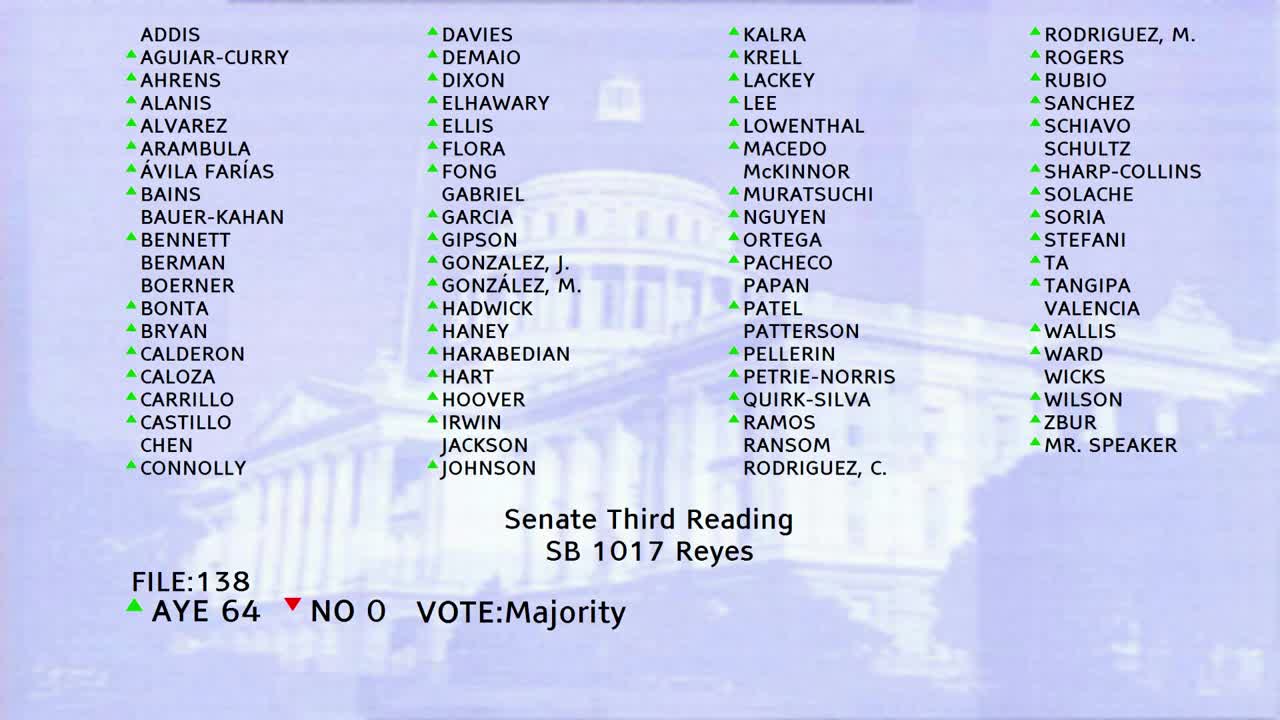 2MIN
Assembly Floor
 10MIN
Assembly Standing Committee on Local Government
 13MIN
Assembly Standing Committee on Housing and Community Development
 3MIN
Senate Floor
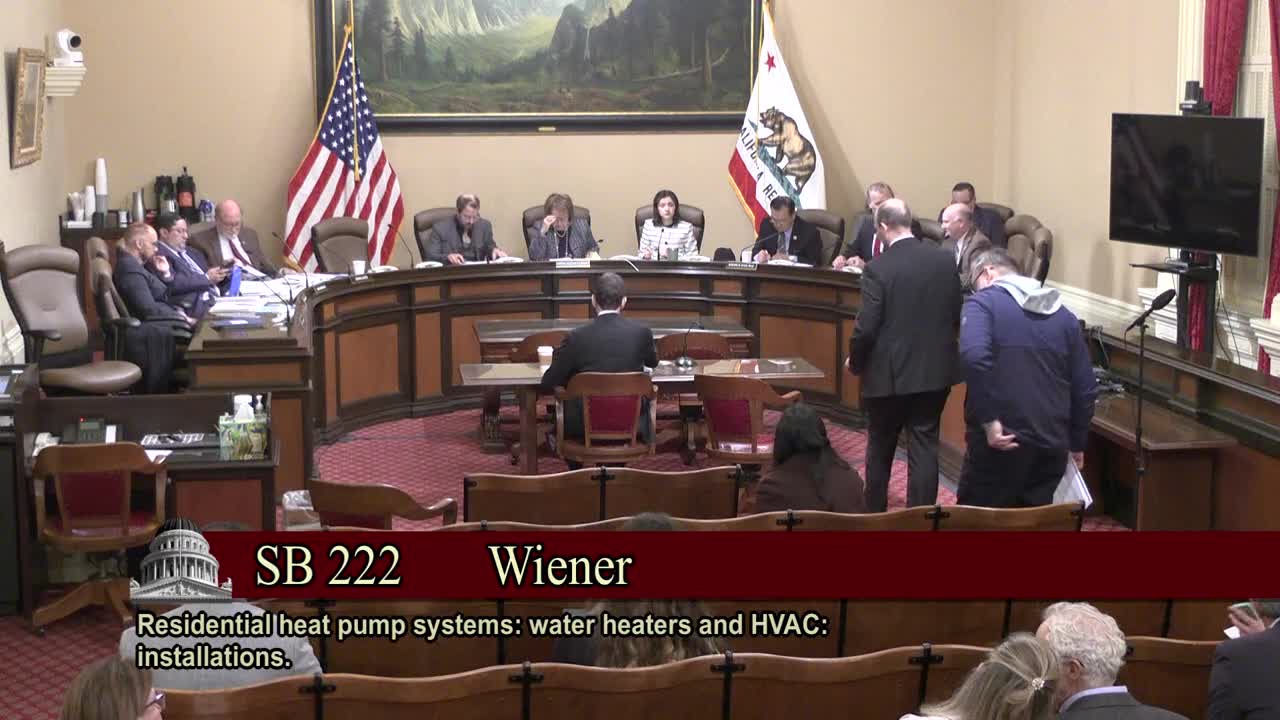 33MIN
Senate Standing Committee on Local Government
 26MIN
Senate Standing Committee on Housing
 1H
Senate Standing Committee on Judiciary
Bill Author