SB 233: Regional housing need: determination: consultation with councils of governments.
- Session Year: 2025-2026
- House: Senate
- Latest Version Date: 2025-10-10
Current Status:
Passed
(2025-10-10: Chaptered by Secretary of State. Chapter 577, Statutes of 2025.)
Introduced
In Committee
Awaiting First Chamber Vote
Passed First Chamber
In Committee
Awaiting Second Chamber Vote
Passed Second Chamber
Enacted
The Planning and Zoning Law requires each county and city to adopt a comprehensive, long-term general plan for the physical development of the county or city, which includes, among other mandatory elements, a housing element. Existing law requires, for the 4th and subsequent revisions of the housing element, the Department of Housing and Community Development, in consultation with each council of governments, where applicable, to determine the existing and projected need for housing for each region, as prescribed. Existing law requires, among other things, the department to meet and consult with the council of governments regarding the assumptions and methodology to be used by the department to determine the regions housing needs at least 26 months prior to the scheduled revision of the housing element and before developing the existing and projected housing need for a region.
This bill would require the department to meet and consult with the council of governments, as described above, pursuant to prescribed deadlines. For the 7th revision of the housing element, the bill would require the department to meet and consult with each council of governments at least 38 months prior to the scheduled revision, except for specified councils of governments. For the 8th and subsequent revision of the housing element, the bill would require the department to meet and consult with each council of governments at least 38 months prior to the scheduled revision.
This bill would incorporate additional changes to Section 65584.01 of the Government Code proposed by SB 486 to be operative only if this bill and SB 486 are enacted and this bill is enacted last.
The Planning and Zoning Law requires each county and city to adopt a comprehensive, long-term general plan for the physical development of the county or city, which includes, among other mandatory elements, a housing element. Existing law requires, for the 4th and subsequent revisions of the housing element, the Department of Housing and Community Development, in consultation with each council of governments, where applicable, to determine the existing and projected need for housing for each region, as prescribed. Existing law requires, among other things, the department to meet and consult with the council of governments regarding the assumptions and methodology to be used by the department to determine the regions housing needs at least 26 months prior to the scheduled revision of the housing element and before developing the existing and projected housing need for a region.
This bill would require the department to meet and consult with the council of governments, as described above, pursuant to prescribed deadlines. For the 7th revision of the housing element, the bill would require the department to meet and consult with each council of governments at least 38 months prior to the scheduled revision, except for specified councils of governments. For the 8th and subsequent revision of the housing element, the bill would require the department to meet and consult with each council of governments at least 38 months prior to the scheduled revision.
For the fourth and subsequent revision of the housing element pursuant to Section 65588, the department, in consultation with each council of governments, where applicable, shall determine the existing and projected need for housing for each region in the following manner:
(a)The departments determination shall be based upon population projections produced by the Department of Finance and regional population forecasts used in preparing regional transportation plans, in consultation with each council of governments. If the total regional population forecast for the projection year, developed by the council of governments and used for the preparation of the regional transportation plan, is within a range of 1.5 percent of the total regional population forecast for the projection year by the Department of Finance, then the population forecast developed by the council of governments shall be the basis from which the department determines the existing and projected need for housing in the region. If the difference between the total population projected by the council of governments and the total population projected for the region by the Department of Finance is greater than 1.5 percent, then the department and the council of governments shall meet to discuss variances in methodology used for population projections and seek agreement on a population projection for the region to be used as a basis for determining the existing and projected housing need for the region. If agreement is not reached, then the population projection for the region shall be the population projection for the region prepared by the Department of Finance as may be modified by the department as a result of discussions with the council of governments.
(b)(1)Subject to the applicable deadline specified in paragraph (2), and prior to developing the existing and projected housing need for a region, the department shall meet and consult with the council of governments regarding the assumptions and methodology to be used by the department to determine the regions housing needs. The council of governments shall provide data assumptions from the councils projections, including, if available, the following data for the region:
(A)Anticipated household growth associated with projected population increases.
(B)Household size data and trends in household size.
(C)The percentage of households that are overcrowded within the region and the percentage of households that are overcrowded throughout the nation. For purposes of this subparagraph, the term overcrowded means more than one resident per room in each room in a dwelling.
(D)The rate of household formation, or headship rates, based on age, gender, ethnicity, or other established demographic measures.
(E)The vacancy rates in existing housing stock, and the vacancy rates for healthy housing market functioning and regional mobility, as well as housing replacement needs. For purposes of this subparagraph, the vacancy rate for a healthy rental housing market shall be considered no less than 5 percent.
(F)Other characteristics of the composition of the projected population.
(G)The relationship between jobs and housing, including any imbalance between jobs and housing.
(H)The percentage of households that are cost burdened within the region and the percentage of households that are cost burdened throughout the nation. For the purposes of this subparagraph, the term cost burdened means the share of very low, low-, moderate-, and above moderate-income households that are paying more than 30 percent of household income on housing costs.
(I)The loss of units during a state of emergency that was declared by the Governor pursuant to the California Emergency Services Act (Chapter 7 (commencing with Section 8550) of Division 1 of Title 2), during the planning period immediately preceding the relevant revision pursuant to Section 65588 that have yet to be rebuilt or replaced at the time of the data request.
(J)The housing needs of individuals and families experiencing homelessness.
(i)The data utilized by the council of governments shall align with homelessness data best practices as determined by the department.
(ii)Sources of homelessness data may include the Homeless Data Integration System administered by the Interagency Council on Homelessness, the homeless point-in-time count, or other sources deemed appropriate by the department.
(2)The deadline for the department to meet and consult with each council of governments pursuant to paragraph (1) shall be as follows:
(A)For the fourth, fifth, and sixth revisions of the housing element, at least 26 months prior to the scheduled revision pursuant to Section 65588.
(B)For the seventh revision of the housing element, the applicable of the following:
(i)With respect to the following councils of governments, at least 26 months prior to the scheduled revision pursuant to Section 65588:
(I)The Humboldt County Association of Governments.
(II)The Lake Area Planning Council.
(III)The Mendocino Council of Governments.
(IV)The County of Nevada.
(ii)With respect to the following councils of governments, at least 34 months prior to the scheduled revision pursuant to Section 65588:
(I)The San Luis Obispo Council of Governments.
(II)The Sacramento Area Council of Governments.
(iii)With respect to all councils of governments other than those specified in clauses (i) and (ii), at least 38 months prior to the scheduled revision pursuant to Section 65588.
(C)For the eighth and subsequent revisions of the housing element, at least 38 months prior to the scheduled revision pursuant to Section 65588.
(3)The department may accept or reject the information provided by the council of governments or modify its own assumptions or methodology based on this information. After consultation with the council of governments, the department shall make determinations in writing on the assumptions for each of the factors listed in subparagraphs (A) to (I), inclusive, of paragraph (1) and the methodology it shall use and shall provide these determinations to the council of governments. The methodology submitted by the department may make adjustments based on the regions total projected households, which includes existing households as well as projected households.
(c)(1)After consultation with the council of governments, the department shall make a determination of the regions existing and projected housing need based upon the assumptions and methodology determined pursuant to subdivision (b). The regions existing and projected housing need shall reflect the achievement of a feasible balance between jobs and housing within the region using the regional employment projections in the applicable regional transportation plan. Within 30 days following notice of the determination from the department, the council of governments may file an objection to the departments determination of the regions existing and projected housing need with the department.
(2)The objection shall be based on and substantiate either of the following:
(A)The department failed to base its determination on the population projection for the region established pursuant to subdivision (a), and shall identify the population projection which the council of governments believes should instead be used for the determination and explain the basis for its rationale.
(B)The regional housing need determined by the department is not a reasonable application of the methodology and assumptions determined pursuant to subdivision (b). The objection shall include a proposed alternative determination of its regional housing need based upon the determinations made in subdivision (b), including analysis of why the proposed alternative would be a more reasonable application of the methodology and assumptions determined pursuant to subdivision (b).
(3)If a council of governments files an objection pursuant to this subdivision and includes with the objection a proposed alternative determination of its regional housing need, it shall also include documentation of its basis for the alternative determination. Within 45 days of receiving an objection filed pursuant to this section, the department shall consider the objection and make a final written determination of the regions existing and projected housing need that includes an explanation of the information upon which the determination was made.
(4)In regions in which the department is required to distribute the regional housing need pursuant to Section 65584.06, no city or county may file an objection to the regional housing need determination.
(d)Statutory changes enacted after the date the department issued a final determination pursuant to this section shall not be a basis for a revision of the final determination.
SEC. 1.5.Section 65584.01 of the Government Code, as amended by Section 9 of Chapter 22 of the Statutes of 2025, is amended to read:65584.01.For the fourth and subsequent revision of the housing element pursuant to Section 65588, the department, in consultation with each council of governments, where applicable, shall determine the existing and projected need for housing for each region in the following manner:
(a)The departments determination shall be based upon population projections produced by the Department of Finance and regional population forecasts used in preparing regional transportation plans, in consultation with each council of governments. If the total regional population forecast for the projection year, developed by the council of governments and used for the preparation of the regional transportation plan, is within a range of 1.5 percent of the total regional population forecast for the projection year by the Department of Finance, then the population forecast developed by the council of governments shall be the basis from which the department determines the existing and projected need for housing in the region. If the difference between the total population projected by the council of governments and the total population projected for the region by the Department of Finance is greater than 1.5 percent, then the department and the council of governments shall meet to discuss variances in methodology used for population projections and seek agreement on a population projection for the region to be used as a basis for determining the existing and projected housing need for the region. If agreement is not reached, then the population projection for the region shall be the population projection for the region prepared by the Department of Finance as may be modified by the department as a result of discussions with the council of governments.
(b)(1)Subject to the applicable deadline specified in paragraph (2), and prior to developing the existing and projected housing need for a region, the department shall meet and consult with the council of governments regarding the assumptions and methodology to be used by the department to determine the regions housing needs. The council of governments shall provide data assumptions from the councils projections, including, if available, the following data for the region:
(A)(i)Anticipated household growth associated with projected population increases.
(ii)The Department of Finance shall consider changes in enrollment levels at campuses of the University of California or the California State University in the region, as forecasted by the University of California and the California State University pursuant to paragraph (9) of subdivision (e) of Section 65584.04, when preparing the anticipated household growth associated with projected population increases.
(B)Household size data and trends in household size.
(C)The percentage of households that are overcrowded within the region and the percentage of households that are overcrowded throughout the nation. For purposes of this subparagraph, the term overcrowded means more than one resident per room in each room in a dwelling.
(D)The rate of household formation, or headship rates, based on age, gender, ethnicity, or other established demographic measures.
(E)The vacancy rates in existing housing stock, and the vacancy rates for healthy housing market functioning and regional mobility, as well as housing replacement needs. For purposes of this subparagraph, the vacancy rate for a healthy rental housing market shall be considered no less than 5 percent.
(F)Other characteristics of the composition of the projected population.
(G)The relationship between jobs and housing, including any imbalance between jobs and housing.
(H)The percentage of households that are cost burdened within the region and the percentage of households that are cost burdened throughout the nation. For the purposes of this subparagraph, the term cost burdened means the share of very low, low-, moderate-, and above moderate-income households that are paying more than 30 percent of household income on housing costs.
(I)The loss of units during a state of emergency that was declared by the Governor pursuant to the California Emergency Services Act (Chapter 7 (commencing with Section 8550) of Division 1 of Title 2), during the planning period immediately preceding the relevant revision pursuant to Section 65588 that have yet to be rebuilt or replaced at the time of the data request.
(J)The housing needs of individuals and families experiencing homelessness.
(i)The data utilized by the council of governments shall align with homelessness data best practices as determined by the department.
(ii)Sources of homelessness data may include the Homeless Data Integration System administered by the Interagency Council on Homelessness, the homeless point-in-time count, or other sources deemed appropriate by the department.
(2)The deadline for the department to meet and consult with each council of governments pursuant to paragraph (1) shall be as follows:
(A)For the fourth, fifth, and sixth revisions of the housing element, at least 26 months prior to the scheduled revision pursuant to Section 65588.
(B)For the seventh revision of the housing element, the applicable of the following:
(i)With respect to the following councils of governments, at least 26 months prior to the scheduled revision pursuant to Section 65588:
(I)The Humboldt County Association of Governments.
(II)The Lake Area Planning Council.
(III)The Mendocino Council of Governments.
(IV)The County of Nevada.
(ii)With respect to the following councils of governments, at least 34 months prior to the scheduled revision pursuant to Section 65588:
(I)The San Luis Obispo Council of Governments.
(II)The Sacramento Area Council of Governments.
(iii)With respect to all councils of governments other than those specified in clauses (i) and (ii), at least 38 months prior to the scheduled revision pursuant to Section 65588.
(C)For the eighth and subsequent revisions of the housing element, at least 38 months prior to the scheduled revision pursuant to Section 65588.
(3)The department may accept or reject the information provided by the council of governments or modify its own assumptions or methodology based on this information. After consultation with the council of governments, the department shall make determinations in writing on the assumptions for each of the factors listed in subparagraphs (A) to (I), inclusive, of paragraph (1) and the methodology it shall use and shall provide these determinations to the council of governments. The methodology submitted by the department may make adjustments based on the regions total projected households, which includes existing households as well as projected households.
(c)(1)After consultation with the council of governments, the department shall make a determination of the regions existing and projected housing need based upon the assumptions and methodology determined pursuant to subdivision (b). The regions existing and projected housing need shall reflect the achievement of a feasible balance between jobs and housing within the region using the regional employment projections in the applicable regional transportation plan. Within 30 days following notice of the determination from the department, the council of governments may file an objection to the departments determination of the regions existing and projected housing need with the department.
(2)The objection shall be based on and substantiate either of the following:
(A)The department failed to base its determination on the population projection for the region established pursuant to subdivision (a), and shall identify the population projection which the council of governments believes should instead be used for the determination and explain the basis for its rationale.
(B)The regional housing need determined by the department is not a reasonable application of the methodology and assumptions determined pursuant to subdivision (b). The objection shall include a proposed alternative determination of its regional housing need based upon the determinations made in subdivision (b), including analysis of why the proposed alternative would be a more reasonable application of the methodology and assumptions determined pursuant to subdivision (b).
(3)If a council of governments files an objection pursuant to this subdivision and includes with the objection a proposed alternative determination of its regional housing need, it shall also include documentation of its basis for the alternative determination. Within 45 days of receiving an objection filed pursuant to this section, the department shall consider the objection and make a final written determination of the regions existing and projected housing need that includes an explanation of the information upon which the determination was made.
(4)In regions in which the department is required to distribute the regional housing need pursuant to Section 65584.06, no city or county may file an objection to the regional housing need determination.
(d)Statutory changes enacted after the date the department issued a final determination pursuant to this section shall not be a basis for a revision of the final determination.
SEC. 2.Section 1.5 of this bill incorporates amendments to Section 65584.01 of the Government Code proposed by both this bill and Senate Bill 486. That section of this bill shall only become operative if (1) both bills are enacted and become effective on or before January 1, 2026, (2) each bill amends Section 65584.01 of the Government Code, and (3) this bill is enacted after Senate Bill 486, in which case Section 1 of this bill shall not become operative.
For the fourth and subsequent revision of the housing element pursuant to Section 65588, the department, in consultation with each council of governments, where applicable, shall determine the existing and projected need for housing for each region in the following manner:
(a)The departments determination shall be based upon population projections produced by the Department of Finance and regional population forecasts used in preparing regional transportation plans, in consultation with each council of governments. If the total regional population forecast for the projection year, developed by the council of governments and used for the preparation of the regional transportation plan, is within a range of 1.5 percent of the total regional population forecast for the projection year by the Department of Finance, then the population forecast developed by the council of governments shall be the basis from which the department determines the existing and projected need for housing in the region. If the difference between the total population projected by the council of governments and the total population projected for the region by the Department of Finance is greater than 1.5 percent, then the department and the council of governments shall meet to discuss variances in methodology used for population projections and seek agreement on a population projection for the region to be used as a basis for determining the existing and projected housing need for the region. If agreement is not reached, then the population projection for the region shall be the population projection for the region prepared by the Department of Finance as may be modified by the department as a result of discussions with the council of governments.
(b)(1)At least 26 months prior to the scheduled revision pursuant to Section 65588 Subject to the applicable deadline specified in paragraph (2), and prior to developing the existing and projected housing need for a region, the department shall meet and consult with the council of governments regarding the assumptions and methodology to be used by the department to determine the regions housing needs. The council of governments shall provide data assumptions from the councils projections, including, if available, the following data for the region:
(A)Anticipated household growth associated with projected population increases.
(B)Household size data and trends in household size.
(C)The percentage of households that are overcrowded within the region and the percentage of households that are overcrowded throughout the nation. For purposes of this subparagraph, the term overcrowded means more than one resident per room in each room in a dwelling.
(D)The rate of household formation, or headship rates, based on age, gender, ethnicity, or other established demographic measures.
(E)The vacancy rates in existing housing stock, and the vacancy rates for healthy housing market functioning and regional mobility, as well as housing replacement needs. For purposes of this subparagraph, the vacancy rate for a healthy rental housing market shall be considered no less than 5 percent.
(F)Other characteristics of the composition of the projected population.
(G)The relationship between jobs and housing, including any imbalance between jobs and housing.
(H)The percentage of households that are cost burdened within the region and the percentage of households that are cost burdened throughout the nation. For the purposes of this subparagraph, the term cost burdened means the share of very low, low-, moderate-, and above moderate-income households that are paying more than 30 percent of household income on housing costs.
(I)The loss of units during a state of emergency that was declared by the Governor pursuant to the California Emergency Services Act (Chapter 7 (commencing with Section 8550) of Division 1 of Title 2), during the planning period immediately preceding the relevant revision pursuant to Section 65588 that have yet to be rebuilt or replaced at the time of the data request.
(J)The housing needs of individuals and families experiencing homelessness.
(i)The data utilized by the council of governments shall align with homelessness data best practices as determined by the department.
(ii)Sources of homelessness data may include the Homeless Data Integration System administered by the Interagency Council on Homelessness, the homeless point-in-time count, or other sources deemed appropriate by the department.
(2)The deadline for the department to meet and consult with each council of governments pursuant to paragraph (1) shall be as follows:
(A)For the fourth, fifth, and sixth revisions of the housing element, at least 26 months prior to the scheduled revision pursuant to Section 65588.
(B)For the seventh revision of the housing element, the applicable of the following:
(i)With respect to the following councils of governments, at least 26 months prior to the scheduled revision pursuant to Section 65588:
(I)The Humboldt County Association of Governments.
(II)The Lake Area Planning Council.
(III)The Mendocino Council of Governments.
(IV)The County of Nevada.
(ii)With respect to the following councils of governments, at least 34 months prior to the scheduled revision pursuant to Section 65588:
(I)The San Luis Obispo Council of Governments.
(II)The Sacramento Area Council of Governments.
(iii)With respect to all councils of governments other than those specified in clauses (i) and (ii), at least 38 months prior to the scheduled revision pursuant to Section 65588.
(C)For the eighth and subsequent revisions of the housing element, at least 38 months prior to the scheduled revision pursuant to Section 65588.
(2)(3)The department may accept or reject the information provided by the council of governments or modify its own assumptions or methodology based on this information. After consultation with the council of governments, the department shall make determinations in writing on the assumptions for each of the factors listed in subparagraphs (A) to (I), inclusive, of paragraph (1) and the methodology it shall use and shall provide these determinations to the council of governments. The methodology submitted by the department may make adjustments based on the regions total projected households, which includes existing households as well as projected households.
(c)(1)After consultation with the council of governments, the department shall make a determination of the regions existing and projected housing need based upon the assumptions and methodology determined pursuant to subdivision (b). The regions existing and projected housing need shall reflect the achievement of a feasible balance between jobs and housing within the region using the regional employment projections in the applicable regional transportation plan. Within 30 days following notice of the determination from the department, the council of governments may file an objection to the departments determination of the regions existing and projected housing need with the department.
(2)The objection shall be based on and substantiate either of the following:
(A)The department failed to base its determination on the population projection for the region established pursuant to subdivision (a), and shall identify the population projection which the council of governments believes should instead be used for the determination and explain the basis for its rationale.
(B)The regional housing need determined by the department is not a reasonable application of the methodology and assumptions determined pursuant to subdivision (b). The objection shall include a proposed alternative determination of its regional housing need based upon the determinations made in subdivision (b), including analysis of why the proposed alternative would be a more reasonable application of the methodology and assumptions determined pursuant to subdivision (b).
(3)If a council of governments files an objection pursuant to this subdivision and includes with the objection a proposed alternative determination of its regional housing need, it shall also include documentation of its basis for the alternative determination. Within 45 days of receiving an objection filed pursuant to this section, the department shall consider the objection and make a final written determination of the regions existing and projected housing need that includes an explanation of the information upon which the determination was made.
(4)In regions in which the department is required to distribute the regional housing need pursuant to Section 65584.06, no city or county may file an objection to the regional housing need determination.
(d)Statutory changes enacted after the date the department issued a final determination pursuant to this section shall not be a basis for a revision of the final determination.
SEC. 1.5.Section 65584.01 of the Government Code, as amended by Section 9 of Chapter 22 of the Statutes of 2025, is amended to read:65584.01.For the fourth and subsequent revision of the housing element pursuant to Section 65588, the department, in consultation with each council of governments, where applicable, shall determine the existing and projected need for housing for each region in the following manner:
(a)The departments determination shall be based upon population projections produced by the Department of Finance and regional population forecasts used in preparing regional transportation plans, in consultation with each council of governments. If the total regional population forecast for the projection year, developed by the council of governments and used for the preparation of the regional transportation plan, is within a range of 1.5 percent of the total regional population forecast for the projection year by the Department of Finance, then the population forecast developed by the council of governments shall be the basis from which the department determines the existing and projected need for housing in the region. If the difference between the total population projected by the council of governments and the total population projected for the region by the Department of Finance is greater than 1.5 percent, then the department and the council of governments shall meet to discuss variances in methodology used for population projections and seek agreement on a population projection for the region to be used as a basis for determining the existing and projected housing need for the region. If agreement is not reached, then the population projection for the region shall be the population projection for the region prepared by the Department of Finance as may be modified by the department as a result of discussions with the council of governments.
(b)(1)At least 26 months prior to the scheduled revision pursuant to Section 65588 Subject to the applicable deadline specified in paragraph (2), and prior to developing the existing and projected housing need for a region, the department shall meet and consult with the council of governments regarding the assumptions and methodology to be used by the department to determine the regions housing needs. The council of governments shall provide data assumptions from the councils projections, including, if available, the following data for the region:
(A)(i)Anticipated household growth associated with projected population increases.
(ii)The Department of Finance shall consider changes in enrollment levels at campuses of the University of California or the California State University in the region, as forecasted by the University of California and the California State University pursuant to paragraph (9) of subdivision (e) of Section 65584.04, when preparing the anticipated household growth associated with projected population increases.
(B)Household size data and trends in household size.
(C)The percentage of households that are overcrowded within the region and the percentage of households that are overcrowded throughout the nation. For purposes of this subparagraph, the term overcrowded means more than one resident per room in each room in a dwelling.
(D)The rate of household formation, or headship rates, based on age, gender, ethnicity, or other established demographic measures.
(E)The vacancy rates in existing housing stock, and the vacancy rates for healthy housing market functioning and regional mobility, as well as housing replacement needs. For purposes of this subparagraph, the vacancy rate for a healthy rental housing market shall be considered no less than 5 percent.
(F)Other characteristics of the composition of the projected population.
(G)The relationship between jobs and housing, including any imbalance between jobs and housing.
(H)The percentage of households that are cost burdened within the region and the percentage of households that are cost burdened throughout the nation. For the purposes of this subparagraph, the term cost burdened means the share of very low, low-, moderate-, and above moderate-income households that are paying more than 30 percent of household income on housing costs.
(I)The loss of units during a state of emergency that was declared by the Governor pursuant to the California Emergency Services Act (Chapter 7 (commencing with Section 8550) of Division 1 of Title 2), during the planning period immediately preceding the relevant revision pursuant to Section 65588 that have yet to be rebuilt or replaced at the time of the data request.
(J)The housing needs of individuals and families experiencing homelessness.
(i)The data utilized by the council of governments shall align with homelessness data best practices as determined by the department.
(ii)Sources of homelessness data may include the Homeless Data Integration System administered by the Interagency Council on Homelessness, the homeless point-in-time count, or other sources deemed appropriate by the department.
(2)The deadline for the department to meet and consult with each council of governments pursuant to paragraph (1) shall be as follows:
(A)For the fourth, fifth, and sixth revisions of the housing element, at least 26 months prior to the scheduled revision pursuant to Section 65588.
(B)For the seventh revision of the housing element, the applicable of the following:
(i)With respect to the following councils of governments, at least 26 months prior to the scheduled revision pursuant to Section 65588:
(I)The Humboldt County Association of Governments.
(II)The Lake Area Planning Council.
(III)The Mendocino Council of Governments.
(IV)The County of Nevada.
(ii)With respect to the following councils of governments, at least 34 months prior to the scheduled revision pursuant to Section 65588:
(I)The San Luis Obispo Council of Governments.
(II)The Sacramento Area Council of Governments.
(iii)With respect to all councils of governments other than those specified in clauses (i) and (ii), at least 38 months prior to the scheduled revision pursuant to Section 65588.
(C)For the eighth and subsequent revisions of the housing element, at least 38 months prior to the scheduled revision pursuant to Section 65588.
(2)(3)The department may accept or reject the information provided by the council of governments or modify its own assumptions or methodology based on this information. After consultation with the council of governments, the department shall make determinations in writing on the assumptions for each of the factors listed in subparagraphs (A) to (I), inclusive, of paragraph (1) and the methodology it shall use and shall provide these determinations to the council of governments. The methodology submitted by the department may make adjustments based on the regions total projected households, which includes existing households as well as projected households.
(c)(1)After consultation with the council of governments, the department shall make a determination of the regions existing and projected housing need based upon the assumptions and methodology determined pursuant to subdivision (b). The regions existing and projected housing need shall reflect the achievement of a feasible balance between jobs and housing within the region using the regional employment projections in the applicable regional transportation plan. Within 30 days following notice of the determination from the department, the council of governments may file an objection to the departments determination of the regions existing and projected housing need with the department.
(2)The objection shall be based on and substantiate either of the following:
(A)The department failed to base its determination on the population projection for the region established pursuant to subdivision (a), and shall identify the population projection which the council of governments believes should instead be used for the determination and explain the basis for its rationale.
(B)The regional housing need determined by the department is not a reasonable application of the methodology and assumptions determined pursuant to subdivision (b). The objection shall include a proposed alternative determination of its regional housing need based upon the determinations made in subdivision (b), including analysis of why the proposed alternative would be a more reasonable application of the methodology and assumptions determined pursuant to subdivision (b).
(3)If a council of governments files an objection pursuant to this subdivision and includes with the objection a proposed alternative determination of its regional housing need, it shall also include documentation of its basis for the alternative determination. Within 45 days of receiving an objection filed pursuant to this section, the department shall consider the objection and make a final written determination of the regions existing and projected housing need that includes an explanation of the information upon which the determination was made.
(4)In regions in which the department is required to distribute the regional housing need pursuant to Section 65584.06, no city or county may file an objection to the regional housing need determination.
(d)Statutory changes enacted after the date the department issued a final determination pursuant to this section shall not be a basis for a revision of the final determination.
SEC. 2.Section 1.5 of this bill incorporates amendments to Section 65584.01 of the Government Code proposed by both this bill and Senate Bill 486. That section of this bill shall only become operative if (1) both bills are enacted and become effective on or before January 1, 2026, (2) each bill amends Section 65584.01 of the Government Code, and (3) this bill is enacted after Senate Bill 486, in which case Section 1 of this bill shall not become operative.
SECTION 1.Section 65584.01 of the Government Code is amended to read:65584.01.For the fourth and subsequent revision of the housing element pursuant to Section 65588, the department, in consultation with each council of governments, where applicable, shall determine the existing and projected need for housing for each region in the following manner:(a)The departments determination shall be based upon population projections produced by the Department of Finance and regional population forecasts used in preparing regional transportation plans, in consultation with each council of governments. If the total regional population forecast for the projection year, developed by the council of governments and used for the preparation of the regional transportation plan, is within a range of 1.5 percent of the total regional population forecast for the projection year by the Department of Finance, then the population forecast developed by the council of governments shall be the basis from which the department determines the existing and projected need for housing in the region. If the difference between the total population projected by the council of governments and the total population projected for the region by the Department of Finance is greater than 1.5 percent, then the department and the council of governments shall meet to discuss variances in methodology used for population projections and seek agreement on a population projection for the region to be used as a basis for determining the existing and projected housing need for the region. If agreement is not reached, then the population projection for the region shall be the population projection for the region prepared by the Department of Finance as may be modified by the department as a result of discussions with the council of governments.(b)(1)Subject to the applicable deadline specified in paragraph (2), and prior to developing the existing and projected housing need for a region, the department shall meet and consult with the council of governments regarding the assumptions and methodology to be used by the department to determine the regions housing needs. The council of governments shall provide data assumptions from the councils projections, including, if available, the following data for the region:(A)Anticipated household growth associated with projected population increases.(B)Household size data and trends in household size.(C)The percentage of households that are overcrowded and the overcrowding rate for a comparable housing market. For purposes of this subparagraph:(i)The term overcrowded means more than one resident per room in each room in a dwelling.(ii)The term overcrowded rate for a comparable housing market means that the overcrowding rate is no more than the average overcrowding rate in comparable regions throughout the nation, as determined by the council of governments.(D)The rate of household formation, or headship rates, based on age, gender, ethnicity, or other established demographic measures.(E)The vacancy rates in existing housing stock, and the vacancy rates for healthy housing market functioning and regional mobility, as well as housing replacement needs. For purposes of this subparagraph, the vacancy rate for a healthy rental housing market shall be considered no less than 5 percent.(F)Other characteristics of the composition of the projected population.(G)The relationship between jobs and housing, including any imbalance between jobs and housing.(H)The percentage of households that are cost burdened and the rate of housing cost burden for a healthy housing market. For the purposes of this subparagraph:(i)The term cost burdened means the share of very low, low-, moderate-, and above moderate-income households that are paying more than 30 percent of household income on housing costs.(ii)The term rate of housing cost burden for a healthy housing market means that the rate of households that are cost burdened is no more than the average rate of households that are cost burdened in comparable regions throughout the nation, as determined by the council of governments.(I)The loss of units during a state of emergency that was declared by the Governor pursuant to the California Emergency Services Act (Chapter 7 (commencing with Section 8550) of Division 1 of Title 2), during the planning period immediately preceding the relevant revision pursuant to Section 65588 that have yet to be rebuilt or replaced at the time of the data request.(J)The housing needs of individuals and families experiencing homelessness.(i)The data utilized by the council of governments shall align with homelessness data best practices as determined by the department.(ii)Sources of homelessness data may include the Homeless Data Integration System administered by the Interagency Council on Homelessness, the homeless point-in-time count, or other sources deemed appropriate by the department.(2)The deadline for the department to meet and consult with each council of governments pursuant to paragraph (1) shall be as follows:(A)For the fourth, fifth, and sixth revisions of the housing element, at least 26 months prior to the scheduled revision pursuant to Section 65588.(B)For the seventh revision of the housing element, the applicable of the following:(i)With respect to the following councils of governments, at least 26 months prior to the scheduled revision pursuant to Section 65588:(I)The Humboldt County Association of Governments.(II)The Lake Area Planning Council.(III)The Mendocino Council of Governments.(IV)The County of Nevada.(ii)With respect to the following councils of governments, at least 34 months prior to the scheduled revision pursuant to Section 65588:(I)The San Luis Obispo Council of Governments.(II)The Sacramento Area Council of Governments.(iii)With respect to all councils of governments other than those specified in clauses (i) and (ii), at least 38 months prior to the scheduled revision pursuant to Section 65588.(C)For the eighth and subsequent revisions of the housing element, at least 38 months prior to the scheduled revision pursuant to Section 65588.(3)The department may accept or reject the information provided by the council of governments or modify its own assumptions or methodology based on this information. After consultation with the council of governments, the department shall make determinations in writing on the assumptions for each of the factors listed in subparagraphs (A) to (I), inclusive, of paragraph (1) and the methodology it shall use and shall provide these determinations to the council of governments. The methodology submitted by the department may make adjustments based on the regions total projected households, which includes existing households as well as projected households.(c)(1)After consultation with the council of governments, the department shall make a determination of the regions existing and projected housing need based upon the assumptions and methodology determined pursuant to subdivision (b). The regions existing and projected housing need shall reflect the achievement of a feasible balance between jobs and housing within the region using the regional employment projections in the applicable regional transportation plan. Within 30 days following notice of the determination from the department, the council of governments may file an objection to the departments determination of the regions existing and projected housing need with the department.(2)The objection shall be based on and substantiate either of the following:(A)The department failed to base its determination on the population projection for the region established pursuant to subdivision (a), and shall identify the population projection which the council of governments believes should instead be used for the determination and explain the basis for its rationale.(B)The regional housing need determined by the department is not a reasonable application of the methodology and assumptions determined pursuant to subdivision (b). The objection shall include a proposed alternative determination of its regional housing need based upon the determinations made in subdivision (b), including analysis of why the proposed alternative would be a more reasonable application of the methodology and assumptions determined pursuant to subdivision (b).(3)If a council of governments files an objection pursuant to this subdivision and includes with the objection a proposed alternative determination of its regional housing need, it shall also include documentation of its basis for the alternative determination. Within 45 days of receiving an objection filed pursuant to this section, the department shall consider the objection and make a final written determination of the regions existing and projected housing need that includes an explanation of the information upon which the determination was made.(4)In regions in which the department is required to distribute the regional housing need pursuant to Section 65584.06, no city or county may file an objection to the regional housing need determination.(d)Statutory changes enacted after the date the department issued a final determination pursuant to this section shall not be a basis for a revision of the final determination.For the fourth and subsequent revision of the housing element pursuant to Section 65588, the department, in consultation with each council of governments, where applicable, shall determine the existing and projected need for housing for each region in the following manner:
(a)The departments determination shall be based upon population projections produced by the Department of Finance and regional population forecasts used in preparing regional transportation plans, in consultation with each council of governments. If the total regional population forecast for the projection year, developed by the council of governments and used for the preparation of the regional transportation plan, is within a range of 1.5 percent of the total regional population forecast for the projection year by the Department of Finance, then the population forecast developed by the council of governments shall be the basis from which the department determines the existing and projected need for housing in the region. If the difference between the total population projected by the council of governments and the total population projected for the region by the Department of Finance is greater than 1.5 percent, then the department and the council of governments shall meet to discuss variances in methodology used for population projections and seek agreement on a population projection for the region to be used as a basis for determining the existing and projected housing need for the region. If agreement is not reached, then the population projection for the region shall be the population projection for the region prepared by the Department of Finance as may be modified by the department as a result of discussions with the council of governments.
(b)(1)Subject to the applicable deadline specified in paragraph (2), and prior to developing the existing and projected housing need for a region, the department shall meet and consult with the council of governments regarding the assumptions and methodology to be used by the department to determine the regions housing needs. The council of governments shall provide data assumptions from the councils projections, including, if available, the following data for the region:
(A)Anticipated household growth associated with projected population increases.
(B)Household size data and trends in household size.
(C)The percentage of households that are overcrowded and the overcrowding rate for a comparable housing market. For purposes of this subparagraph:
(i)The term overcrowded means more than one resident per room in each room in a dwelling.
(ii)The term overcrowded rate for a comparable housing market means that the overcrowding rate is no more than the average overcrowding rate in comparable regions throughout the nation, as determined by the council of governments.
(D)The rate of household formation, or headship rates, based on age, gender, ethnicity, or other established demographic measures.
(E)The vacancy rates in existing housing stock, and the vacancy rates for healthy housing market functioning and regional mobility, as well as housing replacement needs. For purposes of this subparagraph, the vacancy rate for a healthy rental housing market shall be considered no less than 5 percent.
(F)Other characteristics of the composition of the projected population.
(G)The relationship between jobs and housing, including any imbalance between jobs and housing.
(H)The percentage of households that are cost burdened and the rate of housing cost burden for a healthy housing market. For the purposes of this subparagraph:
(i)The term cost burdened means the share of very low, low-, moderate-, and above moderate-income households that are paying more than 30 percent of household income on housing costs.
(ii)The term rate of housing cost burden for a healthy housing market means that the rate of households that are cost burdened is no more than the average rate of households that are cost burdened in comparable regions throughout the nation, as determined by the council of governments.
(I)The loss of units during a state of emergency that was declared by the Governor pursuant to the California Emergency Services Act (Chapter 7 (commencing with Section 8550) of Division 1 of Title 2), during the planning period immediately preceding the relevant revision pursuant to Section 65588 that have yet to be rebuilt or replaced at the time of the data request.
(J)The housing needs of individuals and families experiencing homelessness.
(i)The data utilized by the council of governments shall align with homelessness data best practices as determined by the department.
(ii)Sources of homelessness data may include the Homeless Data Integration System administered by the Interagency Council on Homelessness, the homeless point-in-time count, or other sources deemed appropriate by the department.
(2)The deadline for the department to meet and consult with each council of governments pursuant to paragraph (1) shall be as follows:
(A)For the fourth, fifth, and sixth revisions of the housing element, at least 26 months prior to the scheduled revision pursuant to Section 65588.
(B)For the seventh revision of the housing element, the applicable of the following:
(i)With respect to the following councils of governments, at least 26 months prior to the scheduled revision pursuant to Section 65588:
(I)The Humboldt County Association of Governments.
(II)The Lake Area Planning Council.
(III)The Mendocino Council of Governments.
(IV)The San Luis Obispo Council of Governments. County of Nevada.
(ii)With respect to the following councils of governments, at least 34 months prior to the scheduled revision pursuant to Section 65588:
(I)The San Luis Obispo Council of Governments.
(II)The Sacramento Area Council of Governments.
(ii)(iii)With respect to all councils of governments other than those specified in clause (i), clauses (i) and (ii), at least 38 months prior to the scheduled revision pursuant to Section 65588.
(C)For the eighth and subsequent revisions of the housing element, at least 38 months prior to the scheduled revision pursuant to Section 65588.
(3)The department may accept or reject the information provided by the council of governments or modify its own assumptions or methodology based on this information. After consultation with the council of governments, the department shall make determinations in writing on the assumptions for each of the factors listed in subparagraphs (A) to (I), inclusive, of paragraph (1) and the methodology it shall use and shall provide these determinations to the council of governments. The methodology submitted by the department may make adjustments based on the regions total projected households, which includes existing households as well as projected households.
(c)(1)After consultation with the council of governments, the department shall make a determination of the regions existing and projected housing need based upon the assumptions and methodology determined pursuant to subdivision (b). The regions existing and projected housing need shall reflect the achievement of a feasible balance between jobs and housing within the region using the regional employment projections in the applicable regional transportation plan. Within 30 days following notice of the determination from the department, the council of governments may file an objection to the departments determination of the regions existing and projected housing need with the department.
(2)The objection shall be based on and substantiate either of the following:
(A)The department failed to base its determination on the population projection for the region established pursuant to subdivision (a), and shall identify the population projection which the council of governments believes should instead be used for the determination and explain the basis for its rationale.
(B)The regional housing need determined by the department is not a reasonable application of the methodology and assumptions determined pursuant to subdivision (b). The objection shall include a proposed alternative determination of its regional housing need based upon the determinations made in subdivision (b), including analysis of why the proposed alternative would be a more reasonable application of the methodology and assumptions determined pursuant to subdivision (b).
(3)If a council of governments files an objection pursuant to this subdivision and includes with the objection a proposed alternative determination of its regional housing need, it shall also include documentation of its basis for the alternative determination. Within 45 days of receiving an objection filed pursuant to this section, the department shall consider the objection and make a final written determination of the regions existing and projected housing need that includes an explanation of the information upon which the determination was made.
(4)In regions in which the department is required to distribute the regional housing need pursuant to Section 65584.06, no city or county may file an objection to the regional housing need determination.
(d)Statutory changes enacted after the date the department issued a final determination pursuant to this section shall not be a basis for a revision of the final determination.
For the fourth and subsequent revision of the housing element pursuant to Section 65588, the department, in consultation with each council of governments, where applicable, shall determine the existing and projected need for housing for each region in the following manner:
(a)The departments determination shall be based upon population projections produced by the Department of Finance and regional population forecasts used in preparing regional transportation plans, in consultation with each council of governments. If the total regional population forecast for the projection year, developed by the council of governments and used for the preparation of the regional transportation plan, is within a range of 1.5 percent of the total regional population forecast for the projection year by the Department of Finance, then the population forecast developed by the council of governments shall be the basis from which the department determines the existing and projected need for housing in the region. If the difference between the total population projected by the council of governments and the total population projected for the region by the Department of Finance is greater than 1.5 percent, then the department and the council of governments shall meet to discuss variances in methodology used for population projections and seek agreement on a population projection for the region to be used as a basis for determining the existing and projected housing need for the region. If agreement is not reached, then the population projection for the region shall be the population projection for the region prepared by the Department of Finance as may be modified by the department as a result of discussions with the council of governments.
(b)(1)At least 26 months prior to the scheduled revision pursuant to Section 65588 Subject to the applicable deadline specified in paragraph (2), and prior to developing the existing and projected housing need for a region, the department shall meet and consult with the council of governments regarding the assumptions and methodology to be used by the department to determine the regions housing needs. The council of governments shall provide data assumptions from the councils projections, including, if available, the following data for the region:
(A)Anticipated household growth associated with projected population increases.
(B)Household size data and trends in household size.
(C)The percentage of households that are overcrowded and the overcrowding rate for a comparable housing market. For purposes of this subparagraph:
(i)The term overcrowded means more than one resident per room in each room in a dwelling.
(ii)The term overcrowded rate for a comparable housing market means that the overcrowding rate is no more than the average overcrowding rate in comparable regions throughout the nation, as determined by the council of governments.
(D)The rate of household formation, or headship rates, based on age, gender, ethnicity, or other established demographic measures.
(E)The vacancy rates in existing housing stock, and the vacancy rates for healthy housing market functioning and regional mobility, as well as housing replacement needs. For purposes of this subparagraph, the vacancy rate for a healthy rental housing market shall be considered no less than 5 percent.
(F)Other characteristics of the composition of the projected population.
(G)The relationship between jobs and housing, including any imbalance between jobs and housing.
(H)The percentage of households that are cost burdened and the rate of housing cost burden for a healthy housing market. For the purposes of this subparagraph:
(i)The term cost burdened means the share of very low, low-, moderate-, and above moderate-income households that are paying more than 30 percent of household income on housing costs.
(ii)The term rate of housing cost burden for a healthy housing market means that the rate of households that are cost burdened is no more than the average rate of households that are cost burdened in comparable regions throughout the nation, as determined by the council of governments.
(I)The loss of units during a state of emergency that was declared by the Governor pursuant to the California Emergency Services Act (Chapter 7 (commencing with Section 8550) of Division 1 of Title 2), during the planning period immediately preceding the relevant revision pursuant to Section 65588 that have yet to be rebuilt or replaced at the time of the data request.
(J)The housing needs of individuals and families experiencing homelessness.
(i)The data utilized by the council of governments shall align with homelessness data best practices as determined by the department.
(ii)Sources of homelessness data may include the Homeless Data Integration System administered by the Interagency Council on Homelessness, the homeless point-in-time count, or other sources deemed appropriate by the department.
(2)The deadline for the department to meet and consult with each council of governments pursuant to paragraph (1) shall be as follows:
(A)For the fourth, fifth, and sixth revisions of the housing element, at least 26 months prior to the scheduled revision pursuant to Section 65588.
(B)For the seventh revision of the housing element, the applicable of the following:
(i)With respect to the following councils of governments, at least 26 months prior to the scheduled revision pursuant to Section 65588:
(I)The Humboldt County Association of Governments.
(II)The Lake Area Planning Council.
(III)The Mendocino Council of Governments.
(IV)The San Luis Obispo Council of Governments.
(ii)With respect to all councils of governments other than those specified in clause (i), at least 38 months prior to the scheduled revision pursuant to Section 65588.
(C)For the eighth and subsequent revisions of the housing element, at least 38 months prior to the scheduled revision pursuant to Section 65588.
(2)(3)The department may accept or reject the information provided by the council of governments or modify its own assumptions or methodology based on this information. After consultation with the council of governments, the department shall make determinations in writing on the assumptions for each of the factors listed in subparagraphs (A) to (I), inclusive, of paragraph (1) and the methodology it shall use and shall provide these determinations to the council of governments. The methodology submitted by the department may make adjustments based on the regions total projected households, which includes existing households as well as projected households.
(c)(1)After consultation with the council of governments, the department shall make a determination of the regions existing and projected housing need based upon the assumptions and methodology determined pursuant to subdivision (b). The regions existing and projected housing need shall reflect the achievement of a feasible balance between jobs and housing within the region using the regional employment projections in the applicable regional transportation plan. Within 30 days following notice of the determination from the department, the council of governments may file an objection to the departments determination of the regions existing and projected housing need with the department.
(2)The objection shall be based on and substantiate either of the following:
(A)The department failed to base its determination on the population projection for the region established pursuant to subdivision (a), and shall identify the population projection which the council of governments believes should instead be used for the determination and explain the basis for its rationale.
(B)The regional housing need determined by the department is not a reasonable application of the methodology and assumptions determined pursuant to subdivision (b). The objection shall include a proposed alternative determination of its regional housing need based upon the determinations made in subdivision (b), including analysis of why the proposed alternative would be a more reasonable application of the methodology and assumptions determined pursuant to subdivision (b).
(3)If a council of governments files an objection pursuant to this subdivision and includes with the objection a proposed alternative determination of its regional housing need, it shall also include documentation of its basis for the alternative determination. Within 45 days of receiving an objection filed pursuant to this section, the department shall consider the objection and make a final written determination of the regions existing and projected housing need that includes an explanation of the information upon which the determination was made.
(4)In regions in which the department is required to distribute the regional housing need pursuant to Section 65584.06, no city or county may file an objection to the regional housing need determination.
(d)Statutory changes enacted after the date the department issued a final determination pursuant to this section shall not be a basis for a revision of the final determination.
SECTION 1.Section 65584.01 of the Government Code, as amended by Section 1.5 of Chapter 283 of the Statutes of 2024, is amended to read:65584.01.For the fourth and subsequent revision of the housing element pursuant to Section 65588, the department, in consultation with each council of governments, where applicable, shall determine the existing and projected need for housing for each region in the following manner:(a)The departments determination shall be based upon population projections produced by the Department of Finance and regional population forecasts used in preparing regional transportation plans, in consultation with each council of governments. If the total regional population forecast for the projection year, developed by the council of governments and used for the preparation of the regional transportation plan, is within a range of 1.5 percent of the total regional population forecast for the projection year by the Department of Finance, then the population forecast developed by the council of governments shall be the basis from which the department determines the existing and projected need for housing in the region. If the difference between the total population projected by the council of governments and the total population projected for the region by the Department of Finance is greater than 1.5 percent, then the department and the council of governments shall meet to discuss variances in methodology used for population projections and seek agreement on a population projection for the region to be used as a basis for determining the existing and projected housing need for the region. If agreement is not reached, then the population projection for the region shall be the population projection for the region prepared by the Department of Finance as may be modified by the department as a result of discussions with the council of governments.(b)(1)Subject to the applicable deadline specified in paragraph (2), and prior to developing the existing and projected housing need for a region, the department shall meet and consult with the council of governments regarding the assumptions and methodology to be used by the department to determine the regions housing needs. The council of governments shall provide data assumptions from the councils projections, including, if available, the following data for the region:(A)Anticipated household growth associated with projected population increases.(B)Household size data and trends in household size.(C)The percentage of households that are overcrowded and the overcrowding rate for a comparable housing market. For purposes of this subparagraph:(i)The term overcrowded means more than one resident per room in each room in a dwelling.(ii)The term overcrowded rate for a comparable housing market means that the overcrowding rate is no more than the average overcrowding rate in comparable regions throughout the nation, as determined by the council of governments.(D)The rate of household formation, or headship rates, based on age, gender, ethnicity, or other established demographic measures.(E)The vacancy rates in existing housing stock, and the vacancy rates for healthy housing market functioning and regional mobility, as well as housing replacement needs. For purposes of this subparagraph, the vacancy rate for a healthy rental housing market shall be considered no less than 5 percent.(F)Other characteristics of the composition of the projected population.(G)The relationship between jobs and housing, including any imbalance between jobs and housing.(H)The percentage of households that are cost burdened and the rate of housing cost burden for a healthy housing market. For the purposes of this subparagraph:(i)The term cost burdened means the share of very low, low-, moderate-, and above moderate-income households that are paying more than 30 percent of household income on housing costs.(ii)The term rate of housing cost burden for a healthy housing market means that the rate of households that are cost burdened is no more than the average rate of households that are cost burdened in comparable regions throughout the nation, as determined by the council of governments.(I)The loss of units during a state of emergency that was declared by the Governor pursuant to the California Emergency Services Act (Chapter 7 (commencing with Section 8550) of Division 1 of Title 2), during the planning period immediately preceding the relevant revision pursuant to Section 65588 that have yet to be rebuilt or replaced at the time of the data request.(J)The housing needs of individuals and families experiencing homelessness.(i)The data utilized by the council of governments shall align with homelessness data best practices as determined by the department.(ii)Sources of homelessness data may include the Homeless Data Integration System administered by the Interagency Council on Homelessness, the homeless point-in-time count, or other sources deemed appropriate by the department.(2)The deadline for the department to meet and consult with each council of governments pursuant to paragraph (1) shall be as follows:(A)For the fourth, fifth, and sixth revisions of the housing element, at least 26 months prior to the scheduled revision pursuant to Section 65588.(B)For the seventh revision of the housing element, the applicable of the following:(i)With respect to the following councils of governments, at least 26 months prior to the scheduled revision pursuant to Section 65588:(I)The Humboldt County Association of Governments.(II)The Lake Area Planning Council.(III)The Mendocino Council of Governments.(IV)The San Luis Obispo Council of Governments.(V)The San Diego Association of Governments.(ii)With respect to all councils of governments other than those specified in clause (i), at least 38 months prior to the scheduled revision pursuant to Section 65588.(C)For the eighth and subsequent revisions of the housing element, at least 38 months prior to the scheduled revision pursuant to Section 65588.(3)The department may accept or reject the information provided by the council of governments or modify its own assumptions or methodology based on this information. After consultation with the council of governments, the department shall make determinations in writing on the assumptions for each of the factors listed in subparagraphs (A) to (I), inclusive, of paragraph (1) and the methodology it shall use and shall provide these determinations to the council of governments. The methodology submitted by the department may make adjustments based on the regions total projected households, which includes existing households as well as projected households.(c)(1)After consultation with the council of governments, the department shall make a determination of the regions existing and projected housing need based upon the assumptions and methodology determined pursuant to subdivision (b). The regions existing and projected housing need shall reflect the achievement of a feasible balance between jobs and housing within the region using the regional employment projections in the applicable regional transportation plan. Within 30 days following notice of the determination from the department, the council of governments may file an objection to the departments determination of the regions existing and projected housing need with the department.(2)The objection shall be based on and substantiate either of the following:(A)The department failed to base its determination on the population projection for the region established pursuant to subdivision (a), and shall identify the population projection which the council of governments believes should instead be used for the determination and explain the basis for its rationale.(B)The regional housing need determined by the department is not a reasonable application of the methodology and assumptions determined pursuant to subdivision (b). The objection shall include a proposed alternative determination of its regional housing need based upon the determinations made in subdivision (b), including analysis of why the proposed alternative would be a more reasonable application of the methodology and assumptions determined pursuant to subdivision (b).(3)If a council of governments files an objection pursuant to this subdivision and includes with the objection a proposed alternative determination of its regional housing need, it shall also include documentation of its basis for the alternative determination. Within 45 days of receiving an objection filed pursuant to this section, the department shall consider the objection and make a final written determination of the regions existing and projected housing need that includes an explanation of the information upon which the determination was made.(4)In regions in which the department is required to distribute the regional housing need pursuant to Section 65584.06, no city or county may file an objection to the regional housing need determination.(d)Statutory changes enacted after the date the department issued a final determination pursuant to this section shall not be a basis for a revision of the final determination.For the fourth and subsequent revision of the housing element pursuant to Section 65588, the department, in consultation with each council of governments, where applicable, shall determine the existing and projected need for housing for each region in the following manner:
(a)The departments determination shall be based upon population projections produced by the Department of Finance and regional population forecasts used in preparing regional transportation plans, in consultation with each council of governments. If the total regional population forecast for the projection year, developed by the council of governments and used for the preparation of the regional transportation plan, is within a range of 1.5 percent of the total regional population forecast for the projection year by the Department of Finance, then the population forecast developed by the council of governments shall be the basis from which the department determines the existing and projected need for housing in the region. If the difference between the total population projected by the council of governments and the total population projected for the region by the Department of Finance is greater than 1.5 percent, then the department and the council of governments shall meet to discuss variances in methodology used for population projections and seek agreement on a population projection for the region to be used as a basis for determining the existing and projected housing need for the region. If agreement is not reached, then the population projection for the region shall be the population projection for the region prepared by the Department of Finance as may be modified by the department as a result of discussions with the council of governments.
(b)(1)At least 26 months prior to the scheduled revision pursuant to Section 65588 Subject to the applicable deadline specified in paragraph (2), and prior to developing the existing and projected housing need for a region, the department shall meet and consult with the council of governments regarding the assumptions and methodology to be used by the department to determine the regions housing needs. The council of governments shall provide data assumptions from the councils projections, including, if available, the following data for the region:
(A)Anticipated household growth associated with projected population increases.
(B)Household size data and trends in household size.
(C)The percentage of households that are overcrowded and the overcrowding rate for a comparable housing market. For purposes of this subparagraph:
(i)The term overcrowded means more than one resident per room in each room in a dwelling.
(ii)The term overcrowded rate for a comparable housing market means that the overcrowding rate is no more than the average overcrowding rate in comparable regions throughout the nation, as determined by the council of governments.
(D)The rate of household formation, or headship rates, based on age, gender, ethnicity, or other established demographic measures.
(E)The vacancy rates in existing housing stock, and the vacancy rates for healthy housing market functioning and regional mobility, as well as housing replacement needs. For purposes of this subparagraph, the vacancy rate for a healthy rental housing market shall be considered no less than 5 percent.
(F)Other characteristics of the composition of the projected population.
(G)The relationship between jobs and housing, including any imbalance between jobs and housing.
(H)The percentage of households that are cost burdened and the rate of housing cost burden for a healthy housing market. For the purposes of this subparagraph:
(i)The term cost burdened means the share of very low, low-, moderate-, and above moderate-income households that are paying more than 30 percent of household income on housing costs.
(ii)The term rate of housing cost burden for a healthy housing market means that the rate of households that are cost burdened is no more than the average rate of households that are cost burdened in comparable regions throughout the nation, as determined by the council of governments.
(I)The loss of units during a state of emergency that was declared by the Governor pursuant to the California Emergency Services Act (Chapter 7 (commencing with Section 8550) of Division 1 of Title 2), during the planning period immediately preceding the relevant revision pursuant to Section 65588 that have yet to be rebuilt or replaced at the time of the data request.
(J)The housing needs of individuals and families experiencing homelessness.
(i)The data utilized by the council of governments shall align with homelessness data best practices as determined by the department.
(ii)Sources of homelessness data may include the Homeless Data Integration System administered by the Interagency Council on Homelessness, the homeless point-in-time count, or other sources deemed appropriate by the department.
(2)The deadline for the department to meet and consult with each council of governments pursuant to paragraph (1) shall be as follows:
(A)For the fourth, fifth, and sixth revisions of the housing element, at least 26 months prior to the scheduled revision pursuant to Section 65588.
(B)For the seventh revision of the housing element, the applicable of the following:
(i)With respect to the following councils of governments, at least 26 months prior to the scheduled revision pursuant to Section 65588:
(I)The Humboldt County Association of Governments.
(II)The Lake Area Planning Council.
(III)The Mendocino Council of Governments.
(IV)The San Luis Obispo Council of Governments.
(V)The San Diego Association of Governments.
(ii)With respect to all councils of governments other than those specified in clause (i), at least 38 months prior to the scheduled revision pursuant to Section 65588.
(C)For the eighth and subsequent revisions of the housing element, at least 38 months prior to the scheduled revision pursuant to Section 65588.
(2)(3)The department may accept or reject the information provided by the council of governments or modify its own assumptions or methodology based on this information. After consultation with the council of governments, the department shall make determinations in writing on the assumptions for each of the factors listed in subparagraphs (A) to (I), inclusive, of paragraph (1) and the methodology it shall use and shall provide these determinations to the council of governments. The methodology submitted by the department may make adjustments based on the regions total projected households, which includes existing households as well as projected households.
(c)(1)After consultation with the council of governments, the department shall make a determination of the regions existing and projected housing need based upon the assumptions and methodology determined pursuant to subdivision (b). The regions existing and projected housing need shall reflect the achievement of a feasible balance between jobs and housing within the region using the regional employment projections in the applicable regional transportation plan. Within 30 days following notice of the determination from the department, the council of governments may file an objection to the departments determination of the regions existing and projected housing need with the department.
(2)The objection shall be based on and substantiate either of the following:
(A)The department failed to base its determination on the population projection for the region established pursuant to subdivision (a), and shall identify the population projection which the council of governments believes should instead be used for the determination and explain the basis for its rationale.
(B)The regional housing need determined by the department is not a reasonable application of the methodology and assumptions determined pursuant to subdivision (b). The objection shall include a proposed alternative determination of its regional housing need based upon the determinations made in subdivision (b), including analysis of why the proposed alternative would be a more reasonable application of the methodology and assumptions determined pursuant to subdivision (b).
(3)If a council of governments files an objection pursuant to this subdivision and includes with the objection a proposed alternative determination of its regional housing need, it shall also include documentation of its basis for the alternative determination. Within 45 days of receiving an objection filed pursuant to this section, the department shall consider the objection and make a final written determination of the regions existing and projected housing need that includes an explanation of the information upon which the determination was made.
(4)In regions in which the department is required to distribute the regional housing need pursuant to Section 65584.06, no city or county may file an objection to the regional housing need determination.
(d)Statutory changes enacted after the date the department issued a final determination pursuant to this section shall not be a basis for a revision of the final determination.
|
Date
|
Status
|
|---|---|
| Oct 10, 2025 | Chaptered by Secretary of State. Chapter 577, Statutes of 2025. |
| Oct 10, 2025 | Approved by the Governor. |
| Sep 22, 2025 | Enrolled and presented to the Governor at 11 a.m. |
| Sep 11, 2025 | Assembly amendments concurred in. (Ayes 40. Noes 0. Page 2897.) Ordered to engrossing and enrolling. |
| Sep 8, 2025 | In Senate. Concurrence in Assembly amendments pending. |
| Sep 8, 2025 | Read third time. Passed. (Ayes 78. Noes 0. Page 2983.) Ordered to the Senate. |
| Sep 4, 2025 | Ordered to third reading. |
| Sep 4, 2025 | Read third time and amended. |
| Aug 21, 2025 | Read second time. Ordered to third reading. |
| Aug 20, 2025 | From committee: Do pass. (Ayes 15. Noes 0.) (August 20). |
| Jul 17, 2025 | From committee: Do pass and re-refer to Com. on APPR. (Ayes 10. Noes 0.) (July 16). Re-referred to Com. on APPR. |
| Jun 19, 2025 | Read second time and amended. Re-referred to Com. on L. GOV. |
| Jun 18, 2025 | From committee: Do pass as amended and re-refer to Com. on L. GOV. with recommendation: To consent calendar. (Ayes 11. Noes 0.) (June 18). |
| May 12, 2025 | Referred to Coms. on H. & C.D. and L. GOV. |
| Apr 10, 2025 | In Assembly. Read first time. Held at Desk. |
| Apr 10, 2025 | Read third time. Passed. (Ayes 35. Noes 0. Page 750.) Ordered to the Assembly. |
| Apr 8, 2025 | Read second time. Ordered to consent calendar. |
| Apr 7, 2025 | From committee: Be ordered to second reading pursuant to Senate Rule 28.8 and ordered to consent calendar. |
| Mar 28, 2025 | Set for hearing April 7. |
| Mar 18, 2025 | From committee: Do pass and re-refer to Com. on APPR. with recommendation: To consent calendar. (Ayes 10. Noes 0. Page 411.) (March 18). Re-referred to Com. on APPR. |
| Mar 6, 2025 | Set for hearing March 18. |
| Mar 3, 2025 | From committee with author's amendments. Read second time and amended. Re-referred to Com. on HOUSING. |
| Feb 5, 2025 | Referred to Com. on HOUSING. |
| Jan 29, 2025 | From printer. May be acted upon on or after February 28. |
| Jan 28, 2025 | Introduced. Read first time. To Com. on RLS. for assignment. To print. |
|
Date
|
Description
|
Location
|
Votes
|
|
|---|---|---|---|---|
| Sep 11, 2025 | Unfinished Business SB233 Seyarto et al. Concurrence | Senate Floor |
Passed |
|
| Sep 8, 2025 | SB 233 Seyarto Senate Third Reading By Alanis | Assembly Floor |
Passed |
|
| Aug 20, 2025 | Do pass. | Assembly Standing Committee on Appropriations |
Passed |
|
| Jul 16, 2025 | Do pass and be re-referred to the Committee on [Appropriations] | Assembly Standing Committee on Local Government |
Passed |
|
| Jun 18, 2025 | Do pass as amended, and be re-referred to the Committee on [Local Government] with recommendation: To Consent Calendar | Assembly Standing Committee on Housing and Community Development |
Passed |
|
| Apr 10, 2025 | Consent Calendar 2nd SB233 Seyarto et al. | Senate Floor |
Passed |
|
| Mar 18, 2025 | Do pass, but first be re-referred to the Committee on [Appropriations] with the recommendation: To Consent Calendar | Senate Standing Committee on Housing |
Passed |
This list shows positions taken on this bill by organizations on the date displayed, which is linked to the original source.
Positions by individuals are not included.
|
Organization
|
Position
|
Date
|
|---|---|---|
| Association of California Cities - Orange County | ** Support | |
| California Apartment Association | ** Support | |
| City of Los Alamitos | ** Support | |
| Housing Action Coalition | ** Support | |
| New Livable California Dba Livable California | ** Support | |
| Orange County Council of Governments | ** Support | |
| San Diego Association Of Governments | ** Support | |
| Southern California Association Of Governments | ** Support |
SENATE RULES COMMITTEE Office of Senate Floor Analyses (916) 651-1520 Fax: (916) 327-4478 | SB 233 |
UNFINISHED BUSINESS
Bill No: SB 233
Author: Seyarto (R), et al.
Amended: 9/4/25
Vote: 21
SENATE HOUSING COMMITTEE: 10-0, 3/18/25
AYES: Wahab, Seyarto, Arreguín, Cabaldon, Cortese, Durazo, Gonzalez, Grayson, Ochoa Bogh, Padilla
NO VOTE RECORDED: Caballero
SENATE APPROPRIATIONS COMMITTEE: Senate Rule 28.8
SENATE FLOOR: 35-0, 4/10/25 (Consent)
AYES: Allen, Alvarado-Gil, Archuleta, Arreguín, Ashby, Becker, Blakespear, Cabaldon, Caballero, Cervantes, Choi, Cortese, Dahle, Durazo, Gonzalez, Grayson, Grove, Hurtado, Jones, Laird, Limón, McGuire, McNerney, Menjivar, Padilla, Pérez, Richardson, Rubio, Stern, Strickland, Umberg, Valladares, Wahab, Weber Pierson, Wiener
NO VOTE RECORDED: Niello, Ochoa Bogh, Reyes, Seyarto, Smallwood-Cuevas
ASSEMBLY FLOOR: 78-0, 9/8/25 - See last page for vote
SUBJECT: Regional housing need: determination: consultation with councils of governments
SOURCE: Author
DIGEST:
This bill revises deadlines for the Department of Housing and Community Development (HCD) to meet and consult with each council of governments (COG) in the regional housing needs determination (RHND) process.
Assembly Amendments
address chaptering conflicts with AB 650 (Papan), AB 1275 (Elhawary), and SB 486 (Cabaldon); additional amendments add the County of Nevada, and the Sacramento Area Council of Governments, to the list of jurisdictions that HCD must consult with on an alternative timeframe in the seventh housing element cycle.
ANALYSIS:
Existing law:
- Provides that each community’s fair share of housing be determined through the RHND and the subsequent Regional Housing Needs Allocation (RHNA) plan for the region. Establishes the RHND/RHNA process as follows: (a) Department of Finance (DOF) and HCD develop regional housing needs estimates; (b) COGs allocate housing within each region based on these determinations, and where a COG does not exist, HCD conducts the allocations; and (c) cities and counties incorporate these allocations into their housing elements.
- Requires HCD, in consultation with each COG, to determine the RHND for each region using population projections produced by DOF and regional population forecasts used in preparing Regional Transportation Plan (RTP) updates, in consultation with each COG.
- Requires HCD, at least 26 months prior to the housing element adoption deadline for the region and prior to developing the existing and projected housing need for a region, to meet and consult with the COG regarding the assumptions and methodology to be used by HCD to develop the RHND. Requires the COG to provide data assumptions from their projections, as specified.
- Requires HCD, after consultation with the COG, to make a determination of the region’s existing and projected housing need based upon the assumptions and methodology determined in 3). Requires the RHND to reflect the achievement of a feasible balance between jobs and housing within the region using the regional employment projections in the applicable regional transportation plan.
- Requires each COG or delegate subregion, at least two years before a scheduled revision of the housing element, to develop, in consultation with HCD, a proposed methodology for distributing the RHNA to cities, counties, and cities and counties within the region or subregion.
- Requires each COG or delegate subregion, at least one and one-half years before a scheduled revision of the housing element, to distribute a draft RHNA allocation plan to each local government in the region or subregion, and HCD, based on the methodology in 5) above, and publish the draft allocation on its website.
This bill:
- Requires HCD, commencing with the seventh housing element cycle, to meet with COGs at least 38 months rather than 26 months prior to the housing element due date for jurisdictions within that COG.
- For COGs that have a seventh housing element revision due in 2028 or earlier, provides an alternative schedule for HCD consultation until the eight housing element cycle.
Background
Housing elements. Every city and county in California is required to develop a general plan that outlines the community’s vision of future development through a series of policy statements and goals. A community’s general plan lays the foundation for all future land use decisions, as these decisions must be consistent with the plan. General plans are comprised of several elements that address various land use topics. State law mandates seven elements: land use, circulation (e.g., traffic), housing conservation, open-space, noise, and safety.
Each community’s general plan must include a housing element, which outlines a long-term plan for meeting the community’s existing and projected housing needs. The housing element demonstrates how the community plans to accommodate its “fair share” of its region’s housing needs. In general, a housing element must identify and analyze existing and project housing needs, identify adequate sites with appropriate zoning to meet its share of the RHNA, and ensure that regulatory systems provide opportunities for, and do not unduly constrain, housing development.
RHND/RHNA Methodology. The RHND/RHNA process is used to determine how many new homes, and the affordability level of those homes, each local government must plan for in its housing element to cover the duration of the next eight-year planning cycle. The RHND is assigned at the COG level, while RHNA is allocated to subregions of the COG or directly to local governments.
Comments
Author’s Statement. “California is currently in the midst of a crippling housing affordability crisis. According to the Legislative Analyst’s Office, in December 2024 monthly payments for a mid-tier home and bottom-tier home had increased by 84% and 88% respectively since January 2020. That is more than 5 times the rate of inflation. Consequently, polling done in September 2024 showed 56% of Californians have considered leaving the state due to high cost of living. Clearly, this affordability crisis demands the Legislature’s immediate attention and urgent action. Over the last several years, California has aggressively expanded housing production goals as well as various mandates on local governments to achieve them. However, these local jurisdictions have seen little added support in complying with the state’s new housing aspirations. SB 233 recognizes the myriad of recent changes to housing element requirements and seeks to help local government’s better plan to meet our state’s housing goals by requiring the state to provide regional need information 12 months earlier than current practice.”
California’s Housing Future 2040. Last year, HCD published California’s Housing Future 2040: The Next Regional Housing Needs Allocation pursuant to statutory directive to develop recommendations to improve the RHNA process and methodology that promotes and streamlines housing development and substantially addresses California’s housing shortage following a stakeholder engagement process. One of the recommendations HCD adopted in the report recommends moving up the RHND consultation process by one year. Specifically, HCD includes a recommendation in the report that recommends, “Moving up the date by which the RHND must be provided by one year.” HCD additionally noted in its report that requiring the consultation to take place three years prior to the housing element due date will foster more alignment between the housing element cycle and the RTP and Sustainable Community Strategy planning cycles.
FISCAL EFFECT: Appropriation: No Fiscal Com.: Yes Local: No
According to the Assembly Committee on Appropriations:
HCD anticipates minor and absorbable costs to meet and consult one year earlier with each COG during the RHND process.
SUPPORT: (Verified 9/8/25)
Association of California Cities - Orange County
California Apartment Association
City of Los Alamitos
Housing Action Coalition
New Livable California Dba Livable California
Orange County Council of Governments
San Diego Association of Governments
Southern California Association of Governments
OPPOSITION: (Verified 9/8/25)
Ayes: Addis, Aguiar-Curry, Ahrens, Alanis, Alvarez, Arambula, Ávila Farías, Bains, Bauer-Kahan, Bennett, Berman, Boerner, Bonta, Bryan, Calderon, Caloza, Carrillo, Castillo, Chen, Connolly, Davies, DeMaio, Dixon, Elhawary, Ellis, Flora, Fong, Gabriel, Gallagher, Garcia, Gipson, Jeff Gonzalez, Mark González, Hadwick, Haney, Harabedian, Hart, Hoover, Irwin, Jackson, Johnson, Kalra, Krell, Lackey, Lowenthal, Macedo, McKinnor, Muratsuchi, Ortega, Pacheco, Papan, Patel, Patterson, Pellerin, Petrie-Norris, Quirk-Silva, Ramos, Ransom, Celeste Rodriguez, Michelle Rodriguez, Rogers, Blanca Rubio, Sanchez, Schiavo, Schultz, Sharp-Collins, Solache, Soria, Stefani, Ta, Tangipa, Valencia, Wallis, Ward, Wicks, Wilson, Zbur, Rivas
Noes:
No Vote Recorded: Lee, Nguyen
Prepared by: Hank Brady / HOUSING / (916) 651-4124
9/8/25 19:36:04
**** END ****
SENATE THIRD READING
STR Bill Id:SB 233
Author:(Seyarto)
As Amended Ver:September 4, 2025
Majority vote
SUMMARY
Revises deadlines for the Department of Housing and Community Development (HCD) to meet and consult with each council of governments (COG) in the regional housing needs determination (RHND) process.
Major Provisions
- Revises the deadline for HCD to meet and consult with each COG from at least 26 months prior to the scheduled housing element revision due date for the region, to the following:
- For the seventh revision of the housing element, the applicable of the following:
- At least 26 months prior to the scheduled revision for the Humboldt County Association of Governments, the Lake Area Planning Council, the Mendocino Council of Governments, and the County of Nevada;
- At least 34 months prior to the scheduled revision for the San Luis Obispo Council of Governments and the Sacramento Area Council of Governments; and
- For all other COGs other than those in i) and ii) above, at least 38 months prior to the scheduled revision.
- For the eighth and subsequent revisions of the housing element, at least 38 months prior to the scheduled revision of the housing element for the region.
- For the seventh revision of the housing element, the applicable of the following:
COMMENTS
RHNA and Housing Elements: The regional housing needs assessment (RHNA) process is used to determine how many new homes, and the affordability level of those homes, each local government must plan for in its housing element to cover the duration of the next planning cycle. The state is currently in the sixth housing element cycle. The RHND is assigned at the COG level, while RHNA is suballocated to subregions of the COG or directly to local governments. RHNA is currently assigned via six income categories: very low-income (0-50% of area median income (AMI)), low-income (50-80% of AMI), moderate income (80-120% of AMI), and above moderate income (120% or more of AMI). Beginning with the seventh cycle, two new income categories will be incorporated for acutely low-income (0-15% of AMI) and extremely low-income (15-30% of AMI).
The cycle begins with HCD and the Department of Finance (DOF) projecting new RHND numbers every five or eight years, depending on the region. DOF produces population projections and the COG also develops projections during its Regional Transportation Plan update. Then, 26 months before the housing element due date for the region, HCD must meet and consult with the COG and share the data assumptions and methodology that they will use to produce the RHND. The COG provides HCD with its own regional data on several criteria, including:
- Anticipated household growth associated with projected population increases;
- Household size data and trends in household size;
- The percentage of households that are overcrowded, as defined, and the overcrowding rate for a comparable housing market, as defined;
- The rate of household formation, or headship rates, based on age, gender, ethnicity, or other established demographic measures;
- The vacancy rates in existing housing stock, and the vacancy rates for healthy housing market functioning and regional mobility, as well as housing replacement needs, as specified;
- Other characteristics of the composition of the projected population;
- The relationship between jobs and housing, including any imbalance between jobs and housing;
- The percentage of households that are cost burdened and the rate of housing cost burden for a healthy housing market, as defined; and
- The loss of units during a declared state of emergency during the planning period immediately preceding the relevant housing element cycle that have yet to be rebuilt or replaced at the time of the data request.
HCD can take this information and use it to modify its own methodology, if it agrees with the data the COG produced, or can reject it if there are other factors or data that HCD feels are better or more accurate. Then, after a consultation with the COG, HCD makes written determinations on the data it is using for each of the factors bulleted above, and provides that information in writing to the COG. HCD uses that data to produce the final RHND, which must be distributed at least two years prior to the region's expected housing element due date. The COG must then take the RHND and create an allocation methodology that distributes the housing need equitably amongst all the local governments in its region. The RHNA methodology is statutorily obligated to further all of the following objectives:
- Increase the housing supply and mix of housing types, tenure, and affordability in all cities and counties within the regional in an equitable manner, which must result in each jurisdiction receiving an allocation of units for low- and very low-income households;
- Promote infill development, socioeconomic equity, the protection of environmental and agricultural resources, and achievement of regional climate change reduction targets;
- Promote an improved intraregional relationship between jobs and housing, including an improved balance between the number of low-wage jobs and the number of housing units affordable to low-wage workers in each jurisdiction;
- Allocate a lower proportion of housing need to an income category when a jurisdiction already has a disproportionately high share of households in that income category; and
- Affirmatively further fair housing.
This bill would generally require HCD to complete its consultation with each COG before producing the region's RHND figures at least 38 months prior to the housing element due date, or one year earlier than required in current law. For the Humboldt County Association of Governments, the Lake Area Planning Council, the Mendocino Council of Governments, and Nevada County, the existing 26-month deadline prior to the housing element due date would remain the same, as their HCD consultations are due to be completed this year before the effective date of this bill.
According to the Author
"California is currently in the midst of a crippling housing affordability crisis. According to the Legislative Analyst's Office, in December 2024 monthly payments for a mid-tier home and bottom-tier home had increased by 84% and 88% respectively since January 2020. That is more than 5 times the rate of inflation. Consequently, polling done in September 2024 showed 56% of Californians have considered leaving the state due to high cost of living. Clearly, this affordability crisis demands the Legislature's immediate attention and urgent action. Over the last several years, California has aggressively expanded housing production goals as well as various mandates on local governments to achieve them. However, these local jurisdictions have seen little added support in complying with the state's new housing aspirations. SB 233 recognizes the myriad of recent changes to housing element requirements and seeks to help local governments better plan to meet our state's housing goals by requiring the state to conduct regional need consultation 12 months earlier than current practice."
Arguments in Support
According to the Southern California Association of Governments (SCAG), "Under current law, HCD is required to provide a regional determination to a COG at least 26 months before a housing element due date. As such, SB 233 would provide an additional 12 months for COGs to begin working on the Regional Housing Needs Allocation (RHNA) process. This bill would apply to all jurisdictions statewide for their 7th cycle RHNA with the exception of those who have already begun their 7th cycle, including the Humboldt County Association of Governments, the Lake Area Planning Council, the Mendocino Council of Governments, the San Luis Obispo Council of Governments, and the San Diego Association of Governments. It will then apply to all jurisdictions for the 8th and all subsequent cycles. SB 233 would ensure that there is more time available to coordinate with the concurrent Sustainable Communities Strategy, prepare the RHNA methodology, increase local engagement, and allow for additional time for the appeals process."
Arguments in Opposition
None on file.
FISCAL COMMENTS
According to the Assembly Committee on Appropriations:
HCD anticipates minor and absorbable costs to meet and consult one year earlier with each COG during the RHND process.
VOTES
SENATE FLOOR: 35-0-5
YES: Allen, Alvarado-Gil, Archuleta, Arreguín, Ashby, Becker, Blakespear, Cabaldon, Caballero, Cervantes, Choi, Cortese, Dahle, Durazo, Gonzalez, Grayson, Grove, Hurtado, Jones, Laird, Limón, McGuire, McNerney, Menjivar, Padilla, Pérez, Richardson, Rubio, Stern, Strickland, Umberg, Valladares, Wahab, Weber Pierson, Wiener
ABS, ABST OR NV: Niello, Ochoa Bogh, Reyes, Seyarto, Smallwood-Cuevas
ASM HOUSING AND COMMUNITY DEVELOPMENT: 11-0-1
YES: Haney, Patterson, Ávila Farías, Caloza, Garcia, Lee, Quirk-Silva, Ta, Tangipa, Wicks, Wilson
ABS, ABST OR NV: Kalra
ASM LOCAL GOVERNMENT: 10-0-0
YES: Carrillo, Ta, Hoover, Pacheco, Ramos, Ransom, Blanca Rubio, Stefani, Ward, Wilson
ASM APPROPRIATIONS: 15-0-0
YES: Wicks, Arambula, Calderon, Caloza, Dixon, Elhawary, Fong, Mark González, Hart, Pacheco, Pellerin, Jeff Gonzalez, Solache, Ta, Tangipa
UPDATED
VERSION: September 4, 2025
CONSULTANT: Nicole Restmeyer / H. & C.D. / (916) 319-2085 FN: 0001682
SENATE THIRD READING
STR Bill Id:SB 233
Author:(Seyarto)
As Amended Ver:June 19, 2025
Majority vote
SUMMARY
Revises deadlines for the Department of Housing and Community Development (HCD) to meet and consult with each council of governments (COG) in the regional housing needs determination (RHND) process.
Major Provisions
- Revises the deadline for HCD to meet and consult with each COG from at least 26 months prior to the scheduled housing element revision due date for the region, to the following:
- For the seventh revision of the housing element, the applicable of the following:
- At least 26 months prior to the scheduled revision for the Humboldt County Association of Governments, the Lake Area Planning Council, the Mendocino Council of Governments, and the County of Nevada;
- At least 34 months prior to the scheduled revision for the San Luis Obispo Council of Governments and the Sacramento Area Council of Governments; and
- For all other COGs other than those in i) and ii) above, at least 38 months prior to the scheduled revision.
- For the eighth and subsequent revisions of the housing element, at least 38 months prior to the scheduled revision of the housing element for the region.
- For the seventh revision of the housing element, the applicable of the following:
COMMENTS
RHNA and Housing Elements: The regional housing needs assessment (RHNA) process is used to determine how many new homes, and the affordability level of those homes, each local government must plan for in its housing element to cover the duration of the next planning cycle. The state is currently in the sixth housing element cycle. The RHND is assigned at the COG level, while RHNA is suballocated to subregions of the COG or directly to local governments. RHNA is currently assigned via six income categories: very low-income (0-50% of area median income (AMI)), low-income (50-80% of AMI), moderate income (80-120% of AMI), and above moderate income (120% or more of AMI). Beginning with the seventh cycle, two new income categories will be incorporated for acutely low-income (0-15% of AMI) and extremely low-income (15-30% of AMI).
The cycle begins with HCD and the Department of Finance (DOF) projecting new RHND numbers every five or eight years, depending on the region. DOF produces population projections and the COG also develops projections during its Regional Transportation Plan update. Then, 26 months before the housing element due date for the region, HCD must meet and consult with the COG and share the data assumptions and methodology that they will use to produce the RHND. The COG provides HCD with its own regional data on several criteria, including:
- Anticipated household growth associated with projected population increases;
- Household size data and trends in household size;
- The percentage of households that are overcrowded, as defined, and the overcrowding rate for a comparable housing market, as defined;
- The rate of household formation, or headship rates, based on age, gender, ethnicity, or other established demographic measures;
- The vacancy rates in existing housing stock, and the vacancy rates for healthy housing market functioning and regional mobility, as well as housing replacement needs, as specified;
- Other characteristics of the composition of the projected population;
- The relationship between jobs and housing, including any imbalance between jobs and housing;
- The percentage of households that are cost burdened and the rate of housing cost burden for a healthy housing market, as defined; and
- The loss of units during a declared state of emergency during the planning period immediately preceding the relevant housing element cycle that have yet to be rebuilt or replaced at the time of the data request.
HCD can take this information and use it to modify its own methodology, if it agrees with the data the COG produced, or can reject it if there are other factors or data that HCD feels are better or more accurate. Then, after a consultation with the COG, HCD makes written determinations on the data it is using for each of the factors bulleted above, and provides that information in writing to the COG. HCD uses that data to produce the final RHND, which must be distributed at least two years prior to the region's expected housing element due date. The COG must then take the RHND and create an allocation methodology that distributes the housing need equitably amongst all the local governments in its region. The RHNA methodology is statutorily obligated to further all of the following objectives:
- Increase the housing supply and mix of housing types, tenure, and affordability in all cities and counties within the regional in an equitable manner, which must result in each jurisdiction receiving an allocation of units for low- and very low-income households;
- Promote infill development, socioeconomic equity, the protection of environmental and agricultural resources, and achievement of regional climate change reduction targets;
- Promote an improved intraregional relationship between jobs and housing, including an improved balance between the number of low-wage jobs and the number of housing units affordable to low-wage workers in each jurisdiction;
- Allocate a lower proportion of housing need to an income category when a jurisdiction already has a disproportionately high share of households in that income category; and
- Affirmatively further fair housing.
This bill would generally require HCD to complete its consultation with each COG before producing the region's RHND figures at least 38 months prior to the housing element due date, or one year earlier than required in current law. For the Humboldt County Association of Governments, the Lake Area Planning Council, the Mendocino Council of Governments, and Nevada County, the existing 26-month deadline prior to the housing element due date would remain the same, as their HCD consultations are due to be completed this year before the effective date of this bill.
According to the Author
"California is currently in the midst of a crippling housing affordability crisis. According to the Legislative Analyst's Office, in December 2024 monthly payments for a mid-tier home and bottom-tier home had increased by 84% and 88% respectively since January 2020. That is more than 5 times the rate of inflation. Consequently, polling done in September 2024 showed 56% of Californians have considered leaving the state due to high cost of living. Clearly, this affordability crisis demands the Legislature's immediate attention and urgent action. Over the last several years, California has aggressively expanded housing production goals as well as various mandates on local governments to achieve them. However, these local jurisdictions have seen little added support in complying with the state's new housing aspirations. SB 233 recognizes the myriad of recent changes to housing element requirements and seeks to help local governments better plan to meet our state's housing goals by requiring the state to conduct regional need consultation 12 months earlier than current practice."
Arguments in Support
According to the Southern California Association of Governments (SCAG), "Under current law, HCD is required to provide a regional determination to a COG at least 26 months before a housing element due date. As such, SB 233 would provide an additional 12 months for COGs to begin working on the Regional Housing Needs Allocation (RHNA) process. This bill would apply to all jurisdictions statewide for their 7th cycle RHNA with the exception of those who have already begun their 7th cycle, including the Humboldt County Association of Governments, the Lake Area Planning Council, the Mendocino Council of Governments, the San Luis Obispo Council of Governments, and the San Diego Association of Governments. It will then apply to all jurisdictions for the 8th and all subsequent cycles. SB 233 would ensure that there is more time available to coordinate with the concurrent Sustainable Communities Strategy, prepare the RHNA methodology, increase local engagement, and allow for additional time for the appeals process."
Arguments in Opposition
None on file.
FISCAL COMMENTS
According to the Assembly Committee on Appropriations:
HCD anticipates minor and absorbable costs to meet and consult one year earlier with each COG during the RHND process.
VOTES
SENATE FLOOR: 35-0-5
YES: Allen, Alvarado-Gil, Archuleta, Arreguín, Ashby, Becker, Blakespear, Cabaldon, Caballero, Cervantes, Choi, Cortese, Dahle, Durazo, Gonzalez, Grayson, Grove, Hurtado, Jones, Laird, Limón, McGuire, McNerney, Menjivar, Padilla, Pérez, Richardson, Rubio, Stern, Strickland, Umberg, Valladares, Wahab, Weber Pierson, Wiener
ABS, ABST OR NV: Niello, Ochoa Bogh, Reyes, Seyarto, Smallwood-Cuevas
ASM HOUSING AND COMMUNITY DEVELOPMENT: 11-0-1
YES: Haney, Patterson, Ávila Farías, Caloza, Garcia, Lee, Quirk-Silva, Ta, Tangipa, Wicks, Wilson
ABS, ABST OR NV: Kalra
ASM LOCAL GOVERNMENT: 10-0-0
YES: Carrillo, Ta, Hoover, Pacheco, Ramos, Ransom, Blanca Rubio, Stefani, Ward, Wilson
ASM APPROPRIATIONS: 15-0-0
YES: Wicks, Arambula, Calderon, Caloza, Dixon, Elhawary, Fong, Mark González, Hart, Pacheco, Pellerin, Jeff Gonzalez, Solache, Ta, Tangipa
UPDATED
VERSION: June 19, 2025
CONSULTANT: Nicole Restmeyer / H. & C.D. / (916) 319-2085 FN: 0001203
Date of Hearing: August 20, 2025
ASSEMBLY COMMITTEE ON APPROPRIATIONS
Buffy Wicks, Chair
SBPCA Bill Id:SB 233
Author:(Seyarto) – As Amended Ver:June 19, 2025
Policy Committee: | Housing and Community Development | Vote: | 11 - 0 |
Local Government | 10 - 0 | ||
|
|
Urgency: No State Mandated Local Program: No Reimbursable: No
SUMMARY:
This bill, as part of the regional housing needs determination (RHND) process, requires the Department of Housing and Community Development (HCD) to consult with each council of governments (COG) 38 months prior to the region’s housing element due date, as specified, rather than 26 months prior, as required by existing law.
Specifically, this bill:
- Revises the deadline for HCD to meet and consult with each COG from at least 26 months prior to the scheduled housing element revision due date for the region, to the following:
- For the seventh revision of the housing element, the applicable of the following:
- At least 26 months prior to the scheduled revision for the Humboldt County Association of Governments, the Lake Area Planning Council, the Mendocino Council of Governments, and the County of Nevada.
- At least 34 months prior to the scheduled revision for the San Luis Obispo Council of Governments and the Sacramento Area Council of Governments.
- For all COGs not specified above, at least 38 months prior to the scheduled revision.
- For the eighth and subsequent revisions of the housing element, at least 38 months prior to the scheduled revision of the housing element for the region.
- For the seventh revision of the housing element, the applicable of the following:
FISCAL EFFECT:
HCD anticipates minor and absorbable costs to meet and consult one year earlier with each COG during the RHND process.
COMMENTS:
- Purpose. According to the author:
Over the last several years, California has aggressively expanded housing production goals as well as various mandates on local governments to achieve them. However, these local jurisdictions have seen little added support in complying with the state’s new housing aspirations. [This bill] recognizes the myriad of recent changes to housing element requirements and seeks to help local governments better plan to meet our state’s housing goals by requiring the state to conduct regional need consultation 12 months earlier than current practice.
- Background. Existing law requires each city and county to prepare a general plan that includes, among other things, a housing element detailing existing housing conditions within the jurisdiction, the need for new housing and the strategy the jurisdiction will use to address that need. Local governments must adopt a new housing element every eight years, although some rural jurisdictions must do so every five years. Each local agency must plan for the amount of housing established by the state’s RHND process and the COG’s regional housing needs allocation (RHNA), which the COG (or in some areas, HCD acting directly as the COG) provides to each local government within the COG’s jurisdiction. Each jurisdiction uses its housing element to show how it will accommodate its allocated share of new housing units at each income level.
HCD and the Department of Finance determine the RHND through a demographic analysis of housing needs and population projections. Existing law requires HCD to meet and consult with the COG 26 months before a region’s housing element due date, to share the data assumptions and methodology HCD will use to produce the RHND. After consultation with the COG, HCD determines the data it will use to produce the final RHND and provides that information in writing to the COG. Existing law requires HCD provide the final RHND at least two years prior to the region’s expected housing element due date. Based on the RHND, the COG creates a RHNA methodology to equitably distribute the housing need amongst the local governments in its region.
This bill requires HCD to consult with each COG before producing the region’s final RHND figures at least 38 months prior to the housing element due date, one year earlier than required under existing law. The bill provides exceptions in the seventh housing element cycle for jurisdictions that have already started the seventh cycle.
According to the Southern California Association of Governments (SCAG), supporters of the bill, “[This bill] would ensure that there is more time available to coordinate with the concurrent Sustainable Communities Strategy, prepare the RHNA methodology, increase local engagement, and allow for additional time for the appeals process.”
- Related Legislation. AB 650 (Papan), of this legislative session, among other provisions, extends various timelines for determining and allocating regional housing needs. AB 650 is pending in the Senate Appropriations Committee.
AB 1275 (Elhawary), of this legislative session, among other provisions, extends the timeline for HCD to meet and consult with a COG from at least 26 months prior to at least 38 months prior to the scheduled revision of the housing element. AB 1275 is pending on the Senate Floor.
Analysis Prepared by: Jennifer Swenson / APPR. / (916) 319-2081
Date of Hearing: July 16, 2025
ASSEMBLY COMMITTEE ON LOCAL GOVERNMENT
Juan Carrillo, Chair
SBPCA Bill Id:SB 233
Author:(Seyarto) – As Amended Ver:June 19, 2025
SENATE VOTE: 35-0
SUBJECT: Regional housing need: determination: consultation with councils of governments
SUMMARY: Revises deadlines for the Department of Housing and Community Development (HCD) to meet and consult with each council of governments (COG) in the regional housing needs determination (RHND) process. Specifically, this bill:
- Revises the deadline for HCD to meet and consult with each COG from at least 26 months prior to the scheduled housing element revision due date for the region, to the following:
- For the seventh revision of the housing element, the applicable of the following:
- At least 26 months prior to the scheduled revision for the Humboldt County Association of Governments, the Lake Area Planning Council, the Mendocino Council of Governments, Nevada County, and the San Luis Obispo Council of Governments.
- At least 34 months prior to the scheduled revision for the San Luis Obispo Council of Governments and the Sacramento Area Council of Governments.
- For all other COGs other than those in i) and ii) above, at least 38 months prior to the scheduled revision.
- For the eighth and subsequent revisions of the housing element, at least 38 months prior to the scheduled revision of the housing element for the region.
- For the seventh revision of the housing element, the applicable of the following:
EXISTING LAW:
- Provides that each community’s fair share of housing be determined through the RHND/regional housing needs allocation (RHNA) process. Sets out the process as follows: (a) Department of Finance (DOF) and HCD develop RHNDs; (b) COGs allocate housing via RHNA within each region based on these determinations, and where a COG does not exist, HCD conducts the allocations; and (c) cities and counties incorporate these allocations into their housing elements. [Government Code (GOV) §65584 and 65584.01]
- Requires HCD, in consultation with each COG, to determine each region’s RHND at least two years prior to the scheduled revision of the housing element, as provided, and requires the COG or HCD to adopt a final RHNA that allocates a share of the regional housing need to each city or county at least one year prior to the housing element due date for the region. [GOV §65584(b)]
- Requires HCD to meet and consult with each COG regarding the assumptions and methodology to be used in determining the region’s housing needs at least 26 months prior to the housing element due date for the region. [GOV §65584.01(b)(1)]
- Requires each COG or delegate subregion to develop, in consultation with HCD, a proposed methodology for distributing the RHNA to local governments within the region or subregion at least two years prior to the housing element due date for the region. [GOV §65584.04(a)]
FISCAL EFFECT: According to the Senate Appropriations Committee, pursuant to Senate Rule 28.8, negligible state costs.
COMMENTS:
- Bill Summary. This bill requires HCD, for the 7th housing element cycle, to consult with the Humboldt County Association of Governments, the Lake Area Planning Council, the Mendocino Council of Governments, and Nevada County at least 26 months before the revision of the housing element and 34 months San Luis Obispo Council of Governments and the Sacramento Area Council of Governments. HCD is required to meet and consult with all other regional COGs regarding the RHND for that COG 38 months rather than 26 months prior to the due date for housing element revisions.
Beginning the 8th cycle revision of the housing element, HCD shall consult the regional COGs at least 38 months prior to the scheduled revision of the housing element.
This bill is author sponsored.
- Author’s Statement. According to the author, “California is currently in the midst of a crippling housing affordability crisis. According to the Legislative Analyst’s Office, in December 2024 monthly payments for a mid-tier home and bottom-tier home had increased by 84% and 88% respectively since January 2020. That is more than 5 times the rate of inflation. Consequently, polling done in September 2024 showed 56% of Californians have considered leaving the state due to high cost of living. Clearly, this affordability crisis demands the Legislature’s immediate attention and urgent action. Over the last several years, California has aggressively expanded housing production goals as well as various mandates on local governments to achieve them. However, these local jurisdictions have seen little added support in complying with the state’s new housing aspirations. SB 233 recognizes the myriad of recent changes to housing element requirements and seeks to help local governments better plan to meet our state’s housing goals by requiring the state to conduct regional need consultation 12 months earlier than current practice.”
- Planning for Housing. The California Constitution allows cities and counties to “make and enforce within its limits, all local, police, sanitary and other ordinances and regulations not in conflict with general laws.” It is from this fundamental power (commonly called the police power) that cities and counties derive their authority to regulate behavior to preserve the health, safety, and welfare of the public—including land use authority.
Cities and counties use their police power to enact zoning ordinances that shape development, such as setting maximum heights and densities for housing units, minimum numbers of required parking spaces, setbacks to preserve privacy, lot coverage ratios to increase open space, and others. These ordinances can also include conditions on development to address aesthetics, community impacts, or other particular site-specific consideration. Zoning ordinances and other development decisions must be consistent with the city or county’s general plan. - Adoption and Implementation of Housing Elements. One important tool in addressing the state’s housing crisis is to ensure that all of the state’s cities and counties appropriately plan for new housing. Such planning is required through the housing element of each community’s General Plan, which outlines a long-term plan for meeting the community’s existing and projected housing needs. Cities and counties are required to update their housing elements every eight years in most of the high population parts of the state, and five years in areas with smaller populations. Localities must adopt a legally valid housing element by their statutory deadline for adoption. Failure to do so can result in certain escalating penalties, including exposure to the “builder’s remedy” as well as public or private lawsuits, financial penalties, potential loss of permitting authority, or even court receivership. Localities that do not adopt a compliant housing element within 120 days from their statutory deadline also must complete any rezones within one year of their deadline, rather than the three years afforded to on-time adopters.
Among other things, the housing element must demonstrate how the community plans to accommodate its share of its RHNA which is a figure determined by HCD through a demographic analysis of housing needs and population projections, also known as the regional housing need determination (RHND). HCD establishes its determination of each COG’s regional housing targets across the state for the next five- or eight-year planning cycle. Each COG (or in some areas, HCD acting directly as COG) then sub-allocates the RHNA to each local government within the COG’s jurisdiction, and in turn each jurisdiction uses its housing element to show how it will accommodate that number of new housing units, split out by income level and with a focus on certain special needs housing types and on affirmatively furthering fair housing.
Adequate zoning, removal of regulatory barriers, protection of existing stock and targeting of resources are essential to obtaining a sufficient permanent supply of housing affordable to all economic segments of the community. Although not requiring the community to develop the housing, housing element law requires the community to plan for housing. Recognizing that local governments may lack adequate resources to house all those in need, the law nevertheless mandates that the community do all that it can and not engage in exclusionary zoning practices.
- Related Legislation. SB 507 (Limon) authorizes a local government in the same county as a tribe to enter into a voluntary agreement with a tribe to allow new tribal housing development projects, as defined, to count toward the locality’s share of the RHNA if certain conditions are met. This bill is pending in this Committee.
AB 650 (Papan) extends a number of timelines in the process of determining regional housing needs and RHNA and housing element revisions, and requires HCD to provide specific analysis or text to local governments to remedy deficiencies in their draft housing element revisions. This bill is in the Senate Appropriations Committee.
AB 1275 (Elhawary) extends timelines for determining RHNA and RHND for each region and requires each region to incorporate elements of its sustainable communities strategy (SCS) into its RHNA methodology and allocation plan, as specified. This bill is in the Senate Appropriations Committee.
- Arguments in Support. According to the Southern California Association of Governments (SCAG), “Under current law, HCD is required to provide a regional determination to a COG at least 26 months before a housing element due date. As such, SB 233 would provide an additional 12 months for COGs to begin working on the Regional Housing Needs Allocation (RHNA) process. This bill would apply to all jurisdictions statewide for their 7th cycle RHNA with the exception of those who have already begun their 7th cycle, including the Humboldt County Association of Governments, the Lake Area Planning Council, the Mendocino Council of Governments, the San Luis Obispo Council of Governments, and the San Diego Association of Governments. It will then apply to all jurisdictions for the 8th and all subsequent cycles. SB 233 would ensure that there is more time available to coordinate with the concurrent Sustainable Communities Strategy, prepare the RHNA methodology, increase local engagement, and allow for additional time for the appeals process.”
- Arguments in Opposition. None on file.
- Double-Referral. This bill is double-referred to the Assembly Housing and Community Development Committee, where it passed on an 11-0 vote on June 18, 2025.
REGISTERED SUPPORT / OPPOSITION:
Support
California Apartment Association
City of Los Alamitos
Housing Action Coalition
New Livable California Dba Livable California
Orange County Council of Governments
San Diego Association of Governments
Southern California Association of Governments (SCAG)
Opposition
None on file
Analysis Prepared by: Linda Rios / L. GOV. / (916) 319-3958
Date of Hearing: June 18, 2025
ASSEMBLY COMMITTEE ON HOUSING AND COMMUNITY DEVELOPMENT
Matt Haney, Chair
SBPCA Bill Id:SB 233
Author:(Seyarto) – As Amended Ver:March 3, 2025
SENATE VOTE: 35-0
SUBJECT: Regional housing need: determination: consultation with councils of governments
SUMMARY: Revises deadlines for the Department of Housing and Community Development (HCD) to meet and consult with each council of governments (COG) in the regional housing needs determination (RHND) process. Specifically, this bill:
- Revises the deadline for HCD to meet and consult with each COG from at least 26 months prior to the scheduled housing element revision due date for the region, to the following:
- For the seventh revision of the housing element, the applicable of the following:
- At least 26 months prior to the scheduled revision for the Humboldt County Association of Governments, the Lake Area Planning Council, the Mendocino Council of Governments, and the San Luis Obispo Council of Governments; and
- For all other COGs other than those in i) above, at least 38 months prior to the scheduled revision.
- For the eighth and subsequent revisions of the housing element, at least 38 months prior to the scheduled revision of the housing element for the region.
- For the seventh revision of the housing element, the applicable of the following:
EXISTING LAW:
- Provides that each community’s fair share of housing be determined through the RHND/regional housing needs allocation (RHNA) process. Sets out the process as follows: (a) Department of Finance (DOF) and HCD develop RHNDs; (b) COGs allocate housing via RHNA within each region based on these determinations, and where a COG does not exist, HCD conducts the allocations; and (c) cities and counties incorporate these allocations into their housing elements. (Government Code (GOV) 65584 and 65584.01)
- Requires HCD, in consultation with each COG, to determine each region’s RHND at least two years prior to the scheduled revision of the housing element, as provided, and requires the COG or HCD to adopt a final RHNA that allocates a share of the regional housing need to each city or county at least one year prior to the housing element due date for the region. (GOV 65584(b))
- Requires HCD to meet and consult with each COG regarding the assumptions and methodology to be used in determining the region’s housing needs at least 26 months prior to the housing element due date for the region. (GOV 65584.01(b)(1))
- Requires each COG or delegate subregion to develop, in consultation with HCD, a proposed methodology for distributing the RHNA to local governments within the region or subregion at least two years prior to the housing element due date for the region. (GOV 65584.04(a))
FISCAL EFFECT: Unknown.
COMMENTS:
Author’s Statement: According to the author, “California is currently in the midst of a crippling housing affordability crisis. According to the Legislative Analyst’s Office, in December 2024 monthly payments for a mid-tier home and bottom-tier home had increased by 84% and 88% respectively since January 2020. That is more than 5 times the rate of inflation. Consequently, polling done in September 2024 showed 56% of Californians have considered leaving the state due to high cost of living. Clearly, this affordability crisis demands the Legislature’s immediate attention and urgent action. Over the last several years, California has aggressively expanded housing production goals as well as various mandates on local governments to achieve them. However, these local jurisdictions have seen little added support in complying with the state’s new housing aspirations. SB 233 recognizes the myriad of recent changes to housing element requirements and seeks to help local governments better plan to meet our state’s housing goals by requiring the state to conduct regional need consultation 12 months earlier than current practice.”
RHNA and Housing Elements: The RHNA process is used to determine how many new homes, and the affordability level of those homes, each local government must plan for in its housing element to cover the duration of the next planning cycle. The state is currently in the sixth housing element cycle. The RHND is assigned at the COG level, while RHNA is suballocated to subregions of the COG or directly to local governments. RHNA is currently assigned via six income categories: very low-income (0-50% of AMI), low-income (50-80% of AMI), moderate income (80-120% of AMI), and above moderate income (120% or more of AMI). Beginning with the seventh cycle, two new income categories will be incorporated for acutely low-income (0-15% of AMI) and extremely low-income (15-30% of AMI).
The cycle begins with HCD and DOF projecting new RHND numbers every five or eight years, depending on the region. DOF produces population projections and the COG also develops projections during its Regional Transportation Plan update. Then, 26 months before the housing element due date for the region, HCD must meet and consult with the COG and share the data assumptions and methodology that they will use to produce the RHND. The COG provides HCD with its own regional data on several criteria, including:
- Anticipated household growth associated with projected population increases;
- Household size data and trends in household size;
- The percentage of households that are overcrowded, as defined, and the overcrowding rate for a comparable housing market, as defined;
- The rate of household formation, or headship rates, based on age, gender, ethnicity, or other established demographic measures;
- The vacancy rates in existing housing stock, and the vacancy rates for healthy housing market functioning and regional mobility, as well as housing replacement needs, as specified;
- Other characteristics of the composition of the projected population;
- The relationship between jobs and housing, including any imbalance between jobs and housing;
- The percentage of households that are cost burdened and the rate of housing cost burden for a healthy housing market, as defined; and
- The loss of units during a declared state of emergency during the planning period immediately preceding the relevant housing element cycle that have yet to be rebuilt or replaced at the time of the data request.
HCD can take this information and use it to modify its own methodology, if it agrees with the data the COG produced, or can reject it if there are other factors or data that HCD feels are better or more accurate. Then, after a consultation with the COG, HCD makes written determinations on the data it is using for each of the factors bulleted above, and provides that information in writing to the COG. HCD uses that data to produce the final RHND, which must be distributed at least two years prior to the region’s expected housing element due date. The COG must then take the RHND and create an allocation methodology that distributes the housing need equitably amongst all the local governments in its region. The RHNA methodology is statutorily obligated to further all of the following objectives:
- Increase the housing supply and mix of housing types, tenure, and affordability in all cities and counties within the regional in an equitable manner, which must result in each jurisdiction receiving an allocation of units for low- and very low-income households;
- Promote infill development, socioeconomic equity, the protection of environmental and agricultural resources, and achievement of regional climate change reduction targets;
- Promote an improved intraregional relationship between jobs and housing, including an improved balance between the number of low-wage jobs and the number of housing units affordable to low-wage workers in each jurisdiction;
- Allocate a lower proportion of housing need to an income category when a jurisdiction already has a disproportionately high share of households in that income category; and
- Affirmatively further fair housing.
This bill would generally require HCD to complete its consultation with each COG before producing the region’s RHND figures at least 38 months prior to the housing element due date, or one year earlier than required in current law. For the Humboldt County Association of Governments, the Lake Area Planning Council, the Mendocino Council of Governments, and the San Luis Obispo Council of Governments, the existing 26-month deadline prior to the housing element due date would remain the same, as their HCD consultations are due to be completed this year before the effective date of this bill.
Arguments in Support: According to the Southern California Association of Governments (SCAG), “Under current law, HCD is required to provide a regional determination to a COG at least 26 months before a housing element due date. As such, SB 233 would provide an additional 12 months for COGs to begin working on the Regional Housing Needs Allocation (RHNA) process. This bill would apply to all jurisdictions statewide for their 7th cycle RHNA with the exception of those who have already begun their 7th cycle, including the Humboldt County Association of Governments, the Lake Area Planning Council, the Mendocino Council of Governments, the San Luis Obispo Council of Governments, and the San Diego Association of Governments. It will then apply to all jurisdictions for the 8th and all subsequent cycles. SB 233 would ensure that there is more time available to coordinate with the concurrent Sustainable Communities Strategy, prepare the RHNA methodology, increase local engagement, and allow for additional time for the appeals process.”
Arguments in Opposition: None on file.
Committee Amendments: Multiple bills this legislative session propose to modify timelines in the RHND/RHNA process. Previous bills heard in this committee, specifically AB 650 (Papan) and AB 1275 (Elhawary), were amended by this committee to harmonize the various timeline changes. This bill proposes to modify the COG consultation deadline for HCD in a similar, yet slightly different manner than AB 650 (Papan), with the main difference being the phasing of consultation deadlines for the COGs with housing element (and therefore consultation) deadlines at the beginning of the seventh cycle. Thus, the committee may wish to consider harmonizing the COG consultation portions of the bills as follows:
GOV 65584.01. (b) (2) The deadline for the department to meet and consult with each council of governments pursuant to paragraph (1) shall be as follows:
(A) For the fourth, fifth, and sixth revisions of the housing element, at least 26 months prior to the scheduled revision pursuant to Section 65588.
(B) For the seventh revision of the housing element, the applicable of the following:
(i) With respect to the following councils of governments, at least 26 months prior to the scheduled revision pursuant to Section 65588:
(I) The Humboldt County Association of Governments.
(II) The Lake Area Planning Council.
(III) The Mendocino Council of Governments.
(IV) The San Luis Obispo Council of Governments County of Nevada.
(ii) With respect to the following councils of governments, at least 34 months prior to the scheduled revision pursuant to Section 65588:
- The San Luis Obispo Council of Governments.
- The Sacramento Area Council of Governments.
(iii) With respect to all councils of governments other than those specified in clause (i) and (ii), at least 38 months prior to the scheduled revision pursuant to Section 65588.
(C) For the eighth and subsequent revisions of the housing element, at least 38 months prior to the scheduled revision pursuant to Section 65588.
Related Legislation:
AB 650 (Papan) of the current legislative session would extend various timelines in the RHNA and housing element process, and would require HCD to provide specific analysis or text to local governments to remedy deficiencies in their draft housing elements. This bill passed the Assembly Floor on a vote of 79-0 and is pending before the Senate Housing Committee.
AB 1275 (Elhawary) of the current legislative session would require HCD to determine the existing and projected housing need for each region with COG three years prior to the region’s housing element due date, instead of two years prior, among other changes. This bill passed the Assembly Floor on a vote of 71-0 and is pending before the Senate Housing Committee.
Double Referred: This bill was also referred to the Assembly Committee on Local Government, where it will be heard should it pass out of this committee.
REGISTERED SUPPORT / OPPOSITION:
Support
Association of California Cities - Orange County
California Apartment Association
City of Los Alamitos
Housing Action Coalition
New Livable California Dba Livable California
Orange County Council of Governments
San Diego Association of Governments
Southern California Association of Governments
Opposition
None on file.
Analysis Prepared by: Nicole Restmeyer / H. & C.D. / (916) 319-2085
SENATE RULES COMMITTEE Office of Senate Floor Analyses (916) 651-1520 Fax: (916) 327-4478 | SB 233 |
CONSENT
Bill No: SB 233
Author: Seyarto (R), et al.
Amended: 3/3/25
Vote: 21
SENATE HOUSING COMMITTEE: 10-0, 3/18/25
AYES: Wahab, Seyarto, Arreguín, Cabaldon, Cortese, Durazo, Gonzalez, Grayson, Ochoa Bogh, Padilla
NO VOTE RECORDED: Caballero
SENATE APPROPRIATIONS COMMITTEE: Senate Rule 28.8
SUBJECT: Regional housing need: determination: consultation with councils of governments
SOURCE: Author
DIGEST:
This bill requires the Department of Housing and Community Development (HCD) beginning in the seventh housing element cycle to meet and consult with regional Councils of Government (COGs) regarding the Regional Housing Needs Determination (RHND) for that COG 38 months rather than 26 months prior to the due date for housing element revisions.
ANALYSIS:
Existing law:
- Provides that each community’s fair share of housing be determined through the RHND and the subsequent Regional Housing Needs Allocation (RHNA) plan for the region. Establishes the RHND/RHNA process as follows: (a) Department of Finance (DOF) and HCD develop regional housing needs estimates; (b) COGs allocate housing within each region based on these determinations, and where a COG does not exist, HCD conducts the allocations; and (c) cities and counties incorporate these allocations into their housing elements.
- Requires HCD, in consultation with each COG, to determine the RHND for each region using population projections produced by DOF and regional population forecasts used in preparing Regional Transportation Plan (RTP) updates, in consultation with each COG.
- Requires HCD, at least 26 months prior to the housing element adoption deadline for the region and prior to developing the existing and projected housing need for a region, to meet and consult with the COG regarding the assumptions and methodology to be used by HCD to develop the RHND. Requires the COG to provide data assumptions from their projections, as specified.
- Requires HCD, after consultation with the COG, to make a determination of the region’s existing and projected housing need based upon the assumptions and methodology determined in 3). Requires the RHND to reflect the achievement of a feasible balance between jobs and housing within the region using the regional employment projections in the applicable regional transportation plan.
- Requires each COG or delegate subregion, at least two years before a scheduled revision of the housing element, to develop, in consultation with HCD, a proposed methodology for distributing the RHNA to cities, counties, and cities and counties within the region or subregion.
- Requires each COG or delegate subregion, at least one and one-half years before a scheduled revision of the housing element, to distribute a draft RHNA allocation plan to each local government in the region or subregion, and HCD, based on the methodology in 5) above, and publish the draft allocation on its website.
This bill:
- Requires HCD, commencing with the seventh housing element cycle, to meet with COGs at least 38 months rather than 26 months prior to the housing element due date for jurisdictions within that COG.
- Delays the requirement for HCD to meet with COGs that have a seventh housing element revision due in 2028 or earlier until the eight housing element cycle.
Background
Housing elements. Every city and county in California is required to develop a general plan that outlines the community’s vision of future development through a series of policy statements and goals. A community’s general plan lays the foundation for all future land use decisions, as these decisions must be consistent with the plan. General plans are comprised of several elements that address various land use topics. State law mandates seven elements: land use, circulation (e.g., traffic), housing conservation, open-space, noise, and safety.
Each community’s general plan must include a housing element, which outlines a long-term plan for meeting the community’s existing and projected housing needs. The housing element demonstrates how the community plans to accommodate its “fair share” of its region’s housing needs. In general, a housing element must identify and analyze existing and project housing needs, identify adequate sites with appropriate zoning to meet its share of the RHNA, and ensure that regulatory systems provide opportunities for, and do not unduly constrain, housing development.
RHND/RHNA Methodology. The RHND/RHNA process is used to determine how many new homes, and the affordability level of those homes, each local government must plan for in its housing element to cover the duration of the next eight-year planning cycle. The RHND is assigned at the COG level, while RHNA is allocated to subregions of the COG or directly to local governments.
Comments
Author’s Statement. “California is currently in the midst of a crippling housing affordability crisis. According to the Legislative Analyst’s Office, in December 2024 monthly payments for a mid-tier home and bottom-tier home had increased by 84% and 88% respectively since January 2020. That is more than 5 times the rate of inflation. Consequently, polling done in September 2024 showed 56% of Californians have considered leaving the state due to high cost of living. Clearly, this affordability crisis demands the Legislature’s immediate attention and urgent action. Over the last several years, California has aggressively expanded housing production goals as well as various mandates on local governments to achieve them. However, these local jurisdictions have seen little added support in complying with the state’s new housing aspirations. SB 233 recognizes the myriad of recent changes to housing element requirements and seeks to help local government’s better plan to meet our state’s housing goals by requiring the state to provide regional need information 12 months earlier than current practice.”
California’s Housing Future 2040. Last year, HCD published California’s Housing Future 2040: The Next Regional Housing Needs Allocation pursuant to statutory directive to develop recommendations to improve the RHNA process and methodology that promotes and streamlines housing development and substantially addresses California’s housing shortage following a stakeholder engagement process. One of the recommendations HCD adopted in the report recommends moving up the RHND consultation process by one year. Specifically, HCD includes a recommendation in the report that recommends, “Moving up the date by which the RHND must be provided by one year.” HCD additionally noted in its report that requiring the consultation to take place three years prior to the housing element due date will foster more alignment between the housing element cycle and the RTP and Sustainable Community Strategy planning cycles.
FISCAL EFFECT: Appropriation: No Fiscal Com.: Yes Local: No
SUPPORT: (Verified 4/8/25)
Association of California Cities – Orange County
OPPOSITION: (Verified 4/8/25)
Prepared by: Hank Brady / HOUSING / (916) 651-4124
4/9/25 15:50:10
**** END ****
SENATE COMMITTEE ON HOUSING
Senator Aisha Wahab, Chair
2025 - 2026 Regular
Bill No: SB 233 Hearing Date: 3/18/2025
Author: | Seyarto | ||
Version: | 3/3/2025 Amended | ||
Urgency: | No | Fiscal: | Yes |
Consultant: | Hank Brady | ||
SUBJECT: Regional housing need: determination: consultation with councils of governments.
DIGEST: This bill requires the Department of Housing and Community Development (HCD) beginning in the seventh housing element cycle to meet and consult with regional Councils of Government (COGs) regarding the Regional Housing Needs Determination (RHND) for that COG 38 months rather than 26 months prior to the due date for housing element revisions.
ANALYSIS:
Existing law:
- Provides that each community’s fair share of housing be determined through the RHND and the subsequent Regional Housing Needs Allocation (RHNA) plan for the region. Establishes the RHND/RHNA process as follows: (a) Department of Finance (DOF) and HCD develop regional housing needs estimates; (b) COGs allocate housing within each region based on these determinations, and where a COG does not exist, HCD conducts the allocations; and (c) cities and counties incorporate these allocations into their housing elements.
- Requires HCD, in consultation with each COG, to determine the RHND for each region using population projections produced by DOF and regional population forecasts used in preparing RTP updates, in consultation with each COG.
- Requires HCD, at least 26 months prior to the housing element adoption deadline for the region and prior to developing the existing and projected housing need for a region, to meet and consult with the COG regarding the assumptions and methodology to be used by HCD to develop the RHND. Requires the COG to provide data assumptions from their projections, as specified.
- Requires HCD, after consultation with the COG, to make a determination of the region’s existing and projected housing need based upon the assumptions and methodology determined in 3). Requires the RHND to reflect the achievement of a feasible balance between jobs and housing within the region using the regional employment projections in the applicable regional transportation plan.
- Requires each COG or delegate subregion, at least two years before a scheduled revision of the housing element, to develop, in consultation with HCD, a proposed methodology for distributing the RHNA to cities, counties, and cities and counties within the region or subregion.
- Requires each COG or delegate subregion, at least one and one-half years before a scheduled revision of the housing element, to distribute a draft RHNA allocation plan to each local government in the region or subregion, and HCD, based on the methodology in 5) above, and publish the draft allocation on its website.
This bill:
- Requires HCD, commencing with the seventh housing element cycle, to meet with COGs at least 38 months rather than 26 months prior to the housing element due date for jurisdictions within that COG.
- Delays the requirement for HCD to meet with COGs that have a seventh housing element revision due in 2028 or earlier until the eight housing element cycle. Specifically, HCD is required to meet the following COGS 26 months before revisions for the seventh the housing element cycle is due for the following COGs:
- The Humboldt County Association of Governments.
- The Lake Area Planning Council.
- The Mendocino Council of Governments.
- The San Luis Obispo Council of Governments.
Background
- Housing elements. Every city and county in California is required to develop a general plan that outlines the community’s vision of future development through a series of policy statements and goals. A community’s general plan lays the foundation for all future land use decisions, as these decisions must be consistent with the plan. General plans are comprised of several elements that address various land use topics. State law mandates seven elements: land use, circulation (e.g., traffic), housing conservation, open-space, noise, and safety.
Each community’s general plan must include a housing element, which outlines a long-term plan for meeting the community’s existing and projected housing needs. The housing element demonstrates how the community plans to accommodate its “fair share” of its region’s housing needs. In general, a housing element must identify and analyze existing and project housing needs, identify adequate sites with appropriate zoning to meet its share of the RHNA, and ensure that regulatory systems provide opportunities for, and do not unduly constrain, housing development.
- RHND/RHNA Methodology. The RHND/RHNA process is used to determine how many new homes, and the affordability level of those homes, each local government must plan for in its housing element to cover the duration of the next eight-year planning cycle. The RHND is assigned at the COG level, while RHNA is allocated to subregions of the COG or directly to local governments.
The cycle begins with HCD and the DOF projecting new RHND numbers every five or eight years, depending on the region. DOF produces population projections and the COG also develops projections during its RTP forecast. Then, 26 months before the housing element due date for the region, HCD must meet and consult with the COG and share the data assumptions and methodology that they will use to produce the RHND. The COG provides HCD with its own regional data on several criteria, including projected population increases; household size data; percentage of overcrowded households; the rate of household formation, or headship rates, based on age, gender, ethnicity, or other established demographic measures; vacancy rates; relationship between jobs and housing; percentage of households that are cost burdened; loss of units during a declared state of emergency that have yet to be rebuilt or replaced.
HCD can take this information and use it to modify its own methodology, if it agrees with the data the COG produced, or can reject it if there are other factors or data that HCD feels is better or more accurate. Then, after a consultation with the COG, HCD makes written determinations on the data it is using for each of the factors bulleted above, and provides that information in writing to the COG. HCD uses that data to produce the final RHND. The COG must then take the RHND and create an allocation methodology that distributes the housing need equitably amongst all the local governments in its region this is the COG’s RHNA plan.
Comments
- Author’s Statement. “California is currently in the midst of a crippling housing affordability crisis. According to the Legislative Analyst’s Office, in December 2024 monthly payments for a mid-tier home and bottom-tier home had increased by 84% and 88% respectively since January 2020. That is more than 5 times the rate of inflation. Consequently, polling done in September 2024 showed 56% of Californians have considered leaving the state due to high cost of living. Clearly, this affordability crisis demands the Legislature’s immediate attention and urgent action. Over the last several years, California has aggressively expanded housing production goals as well as various mandates on local governments to achieve them. However, these local jurisdictions have seen little added support in complying with the state’s new housing aspirations. SB 233 recognizes the myriad of recent changes to housing element requirements and seeks to help local government’s better plan to meet our state’s housing goals by requiring the state to provide regional need information 12 months earlier than current practice.”
- Regional Housing Needs Determination Process in the sixth housing element cycle. Prior to COGs allocating units to each city and county within their jurisdiction, HCD and the COG determine the total need (RHND) for the region. Once the RHND is finalized, COGs can propose and adopt a RHNA plan allocating units to each jurisdiction. In areas where there is not a COG, HCD prepares the RHND and the RHNA plan. Once a RHNA plan is adopted local agencies can update their housing element to reflect the number of units allocated to them in the RHNA plan. This bill requires HCD to consult with COGs 38 months prior to the due date for housing element revisions for jurisdictions located in that COG. While existing law requires HCD to consult at least 26 months prior to the housing element revision due date, HCD often meets with COGs earlier in the process. The table below outlines the sixth cycle timelines associated with the RHND process for three of the largest COGS: The Association of Bay Area Governments (ABAG), The San Diego Association of Governments (SANDAG, and the Southern California Associations of Governments (SCAG).
Sixth Housing Element Cycle RHND Dates | |||||
Regional Council of Government | HCD Initial Consultation with COG on RHND | HCD Issued RHND | COG Adopts HCD approved RHNA Plan | Housing Element Revision Due Date | Total Time from Initial HCD Consult to Housing Element Date |
ABAG[1] | Nov 2019 | June 2020 | Dec 2021 | Jan 2023 | 38 Months |
SANDAG[2] | Mar 2018 | July 2018 | July 2020 | April 2021 | 38 Months |
SCAG[3] | Oct 2018 | Oct 2019 | Mar 2021 | Oct 2021 | 36 months |
Early adoption of RHND is critical to ensuring that adequate time is available for COGs to propose and adopt a RHNA allocation plan that allocates housing units to cities and counties within the COG. Allocating housing units provides a critical input that local agencies need in order to update their housing element as required by law.
- Seventh Housing Element Cycle. This bill will take effect in the seventh housing element cycle for most regions in the state. There are several jurisdictions where the housing element revision for the seventh cycle will be due less than 38 months after date this bill would take effect. For those jurisdictions, the 38-month consultation timeline will not take effect until the eight cycle. The chart below illustrates how this bill will affect the consultation dates for the largest COGs in the state in the seventh housing element cycle.
Seventh Housing Element Cycle RHND Dates | |||
ABAG | SANDAG | SCAG | |
Estimated Housing Element Due Date1 | Jan 2031 | April 2029 | Oct 2029 |
HCD/COG RHND Consult Date (Current Law) (26 months) | Nov 2030 | Feb2027 | Aug 2027 |
HCD/COG RHND Consult Date (As Proposed in SB 233) | Nov 2029 | Feb 2026 | Aug 2026 |
1Estimated dates are based on required MPO/RTPA 12-month notice to HCD and any subsequent required notices from changes to the estimated RTP adoption date. | |||
- California’s Housing Future 2040. Last year, HCD published California’s Housing Future 2040: The Next Regional Housing Needs Allocation pursuant to statutory directive to develop recommendations to improve the RHNA process and methodology that promotes and streamlines housing development and substantially addresses California’s housing shortage following a stakeholder engagement process. One of the recommendations HCD adopted in the report recommends moving up the RHND consultation process by one year. Specifically, HCD includes a recommendation in the report that recommends, “Moving up the date by which the RHND must be provided by one year.” HCD additionally noted in its report that requiring the consultation to take place three years prior to the housing element due date will foster more alignment between the housing element cycle and the Regional Transportation Plan (RTP) and Sustainable Community Strategy (SCS) planning cycles.
Related/Prior Legislation
SB 486 (Cabaldon, 2025) — details information public institutions of higher education provide to transportation planning agencies and COGS during the RTP and the RHND processes, and exempts certain actions taken by these institutions from the California Environmental Quality Act. This bill is pending in this Committee.
SB 7 (Blakespear, Chapter 283, Statutes of 2024) —made a number of technical changes to the RHND process conducted by the HCD and the RHNA process conducted by HCD or COGs.
FISCAL EFFECT: Appropriation: No Fiscal Com.: Yes Local: No
POSITIONS: (Communicated to the committee before noon on Wednesday,
March 12, 2025.)
SUPPORT:
None received.
OPPOSITION:
None received.
-- END --
https://abag.ca.gov/sites/default/files/documents/2022-12/Final%20RHNA%20Methodology%20Report%202023-2031_update_11-22.pdf ↑
6th Cycle Regional Housing Needs Assesment Plan. SANDAG. 10 July 2020; https://www.sandag.org/-/media/SANDAG/Documents/PDF/projects-and-programs/regional-initiatives/housing-land-use/regional-housing-needs-assessment/6th-cycle-regional-housing-needs-assessment-fact-sheet-2020-02-01.pdf ↑
https://scag.ca.gov/sites/main/files/file-attachments/rhna-2020-timeline.pdf ↑
Discussed in Hearing
 1MIN
Senate Floor
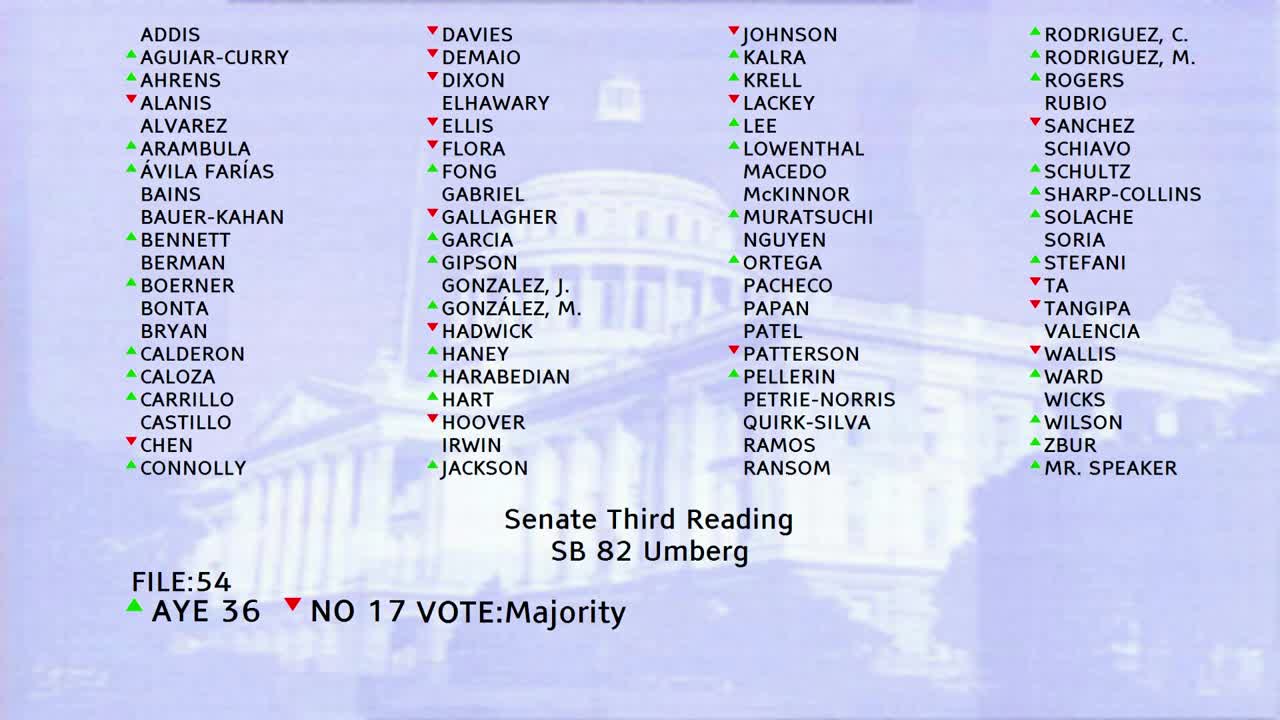 1MIN
Assembly Floor
 2MIN
Assembly Standing Committee on Local Government
Bill Author

Bill Co-Author(s):