SB 25: Antitrust: premerger notification.
- Session Year: 2025-2026
- House: Senate
- Latest Version Date: 2026-02-10
Current Status:
Passed
(2026-02-10: Chaptered by Secretary of State. Chapter 3, Statutes of 2026.)
Introduced
In Committee
Awaiting First Chamber Vote
Passed First Chamber
In Committee
Awaiting Second Chamber Vote
Passed Second Chamber
Enacted
Existing law generally prohibits restraints on competition and authorizes the Attorney General to bring an action on behalf of the state or of any of its political subdivisions or public agencies, as specified. Existing federal law, the Hart-Scott-Rodino Antitrust Improvements Act of 1976 (15 U.S.C. Sec. 18a), before an acquisition of voting securities or assets, requires both parties to file notification of the acquisition and additional documentary material with the Federal Trade Commission and the federal Department of Justice, if, as a result of the acquisition, the acquiring person would hold voting securities or assets in excess of a specified value, except as specified. Existing federal law prohibits disclosure of the filed information, except as relevant to an administrative or judicial action or proceeding.
This bill, the California Uniform Antitrust Premerger Notification Act, would require any person who is required to file a notification pursuant to the Hart-Scott-Rodino Antitrust Improvements Act of 1976 to additionally file a copy of the federal form with the Attorney General if the person has its principal place of business in this state or has annual net sales in this state of the goods or services involved in the transaction of at least 20% of the above-described filing threshold. The bill would also require the person to file or provide the additional documentary material required under federal law, as specified. The bill would prohibit the Attorney General from disclosing the filed information, as specified, and would authorize the Attorney General to impose a civil penalty for a violation of the filing requirement. The bill would provide that its provisions only apply to premerger notifications filed on or after January 1, 2027.
Existing constitutional provisions require that a statute that limits the right of access to the meetings of public bodies or the writings of public officials and agencies be adopted with findings demonstrating the interest protected by the limitation and the need for protecting that interest.
This bill would make legislative findings to that effect.
Existing law generally prohibits restraints on competition and authorizes the Attorney General to bring an action on behalf of the state or of any of its political subdivisions or public agencies, as specified. Existing federal law, the Hart-Scott-Rodino Antitrust Improvements Act of 1976 (15 U.S.C. Sec. 18a), before an acquisition of voting securities or assets, requires both parties to file notification of the acquisition and additional documentary material with the Federal Trade Commission and the federal Department of Justice, if, as a result of the acquisition, the acquiring person would hold voting securities or assets in excess of a specified value, except as specified. Existing federal law prohibits disclosure of the filed information, except as relevant to an administrative or judicial action or proceeding.
This bill, the California Uniform Antitrust Premerger Notification Act, would require any person who is required to file a notification pursuant to the Hart-Scott-Rodino Antitrust Improvements Act of 1976 to additionally file a copy of the federal form with the Attorney General if the person has its principal place of business in this state or has annual net sales in this state of the goods or services involved in the transaction of at least 20% of the above-described filing threshold. The bill would also require the person to file or provide the additional documentary material required under federal law, as specified. The bill would prohibit the Attorney General from disclosing the filed information, as specified, and would authorize the Attorney General to impose a civil penalty for a violation of the filing requirement. The bill would provide that its provisions only apply to premerger notifications filed on or after January 1, 2026. 2027.
Existing constitutional provisions require that a statute that limits the right of access to the meetings of public bodies or the writings of public officials and agencies be adopted with findings demonstrating the interest protected by the limitation and the need for protecting that interest.
This bill would make legislative findings to that effect.
Existing law generally prohibits restraints on competition and authorizes the Attorney General to bring an action on behalf of the state or of any of its political subdivisions or public agencies, as specified. Existing federal law, the Hart-Scott-Rodino Antitrust Improvements Act of 1976 (15 U.S.C. Sec. 18a), before an acquisition of voting securities or assets, requires both parties to file notification of the acquisition and additional documentary material with the Federal Trade Commission and the federal Department of Justice, if, as a result of the acquisition, the acquiring person would hold voting securities or assets in excess of a specified value, except as specified. Existing federal law prohibits disclosure of the filed information, except as relevant to an administrative or judicial action or proceeding.
This bill, the Uniform Antitrust Premerger Notification Act, would require any person who is required to file a notification pursuant to the Hart-Scott-Rodino Antitrust Improvements Act of 1976 to additionally file a copy of the federal form with the Attorney General if the person has its principal place of business in this state or has annual net sales in this state of the goods or services involved in the transaction of at least 20% of the above-described filing threshold. The bill would also require the person to file or provide the additional documentary material required under federal law, as specified. The bill would prohibit the Attorney General from disclosing the filed information, as specified, and would authorize the Attorney General to impose a civil penalty for a violation of the filing requirement. The bill would provide that its provisions only apply to premerger notifications filed on or after January 1, 2026.
Existing constitutional provisions require that a statute that limits the right of access to the meetings of public bodies or the writings of public officials and agencies be adopted with findings demonstrating the interest protected by the limitation and the need for protecting that interest.
This bill would make legislative findings to that effect.
This act may be cited as the California Uniform Antitrust Premerger Notification Act.
16781.For purposes of this act, the following definitions apply:
(a)Additional documentary material means the additional documentary material filed with a Hart-Scott-Rodino form.
(b)Electronic means relating to technology having electrical, digital, magnetic, wireless, optical, electromagnetic, or similar capabilities.
(c)Filing threshold means the minimum size of a transaction that requires the transaction to be reported under the Hart-Scott-Rodino Act in effect when a person files a premerger notification.
(d)Hart-Scott-Rodino Act means Section 201 of the Hart-Scott-Rodino Antitrust Improvements Act of 1976 (15 U.S.C. Sec. 18a), as amended.
(e)Hart-Scott-Rodino form means the form filed with a premerger notification, excluding additional documentary material.
(f)Person means an individual, estate, business or nonprofit entity, government or governmental subdivision, agency, or instrumentality, or other legal entity.
(g)Premerger notification means a notification filed under the Hart-Scott-Rodino Act with the Federal Trade Commission or the United States Department of Justice Antitrust Division, or a successor agency.
(h)State means a state of the United States, the District of Columbia, Puerto Rico, the United States Virgin Islands, or any other territory or possession subject to the jurisdiction of the United States.
(i)Uniform Antitrust Premerger Notification Act means the Uniform Antitrust Pre-Merger Notification Act drafted by the National Conference of Commissioners on Uniform State Laws.
16782.(a)A person filing a premerger notification shall file a complete electronic copy of the Hart-Scott-Rodino form with the Attorney General within one business day of filing with the federal government if either of the following applies:
(1)The person has its principal place of business in this state.
(2)The person or a person it controls directly or indirectly had annual net sales in this state of the goods or services involved in the transaction of at least 20 percent of the filing threshold.
(b)A person that files a form under paragraph (1) of subdivision (a) shall include with the filing a complete electronic copy of the additional documentary material.
(c)Upon request of the Attorney General, a person that filed a form under paragraph (2) of subdivision (a) shall provide a complete electronic copy of the additional documentary material to the Attorney General not later than seven business days after receipt of the request.
(d)The Attorney General shall provide a secure means to receive and store the materials required to be submitted to the Attorney General by this section.
(e)(1)The Attorney General shall not charge a fee connected with the filing or providing the form or additional documentary material under this section, except as follows:
(A)The Attorney General may impose a fee of one thousand dollars ($1,000) for filings under paragraph (1) of subdivision (a).
(B)The Attorney General may impose a fee of five hundred dollars ($500) for filings under paragraph (2) of subdivision (a) or subdivision (c).
(2)Any fees collected pursuant to this subdivision shall be deposited in the Attorney General antitrust account.
(3)The Attorney General may adjust the amount of the fees authorized by this subdivision not more than once every five years to reflect changes in the California Consumer Price Index.
16783.(a)Except as provided in subdivision (c) or Section 16784, the Attorney General shall not make public or disclose any of the following:
(1)A Hart-Scott-Rodino form filed under Section 16782.
(2)The additional documentary material filed or provided under Section 16782.
(3)A Hart-Scott-Rodino form or additional documentary material provided by the attorney general of another state.
(4)That the form or additional documentary material were filed or provided under Section 16782, or provided by the attorney general of another state.
(5)The merger proposed in the form.
(b)A form, additional documentary material, and other information listed in subdivision (a) are exempt from disclosure under the California Public Records Act (Division 10 (commencing with Section 7920.000) of Title 1 of the Government Code).
(c)Subject to a protective order entered by an agency, court, or judicial officer, the Attorney General may disclose a form, additional documentary material, or other information listed in subdivision (a) in an administrative proceeding or judicial action if the proposed merger is relevant to the proceeding or action.
(d)This act does not do any of the following:
(1)Limit any other confidentiality or information-security obligation of the Attorney General.
(2)Preclude the Attorney General from sharing information with the Federal Trade Commission or the United States Department of Justice Antitrust Division, or a successor agency.
(3)Preclude the Attorney General from sharing information with the attorney general of another state that has enacted the Uniform Antitrust Premerger Notification Act or a substantively equivalent act. The other states act must include confidentiality provisions at least as protective as the confidentiality provisions of the Uniform Antitrust Premerger Notification Act and the other state must provide assurances to the Attorney General that it agrees to maintain the confidentiality of the documents or information received.
(e)Except as otherwise provided by court order or law, the Attorney General shall destroy or return the materials submitted pursuant to Section 16782 within 120 days after the later of the following:
(1)The close of the transaction subject to disclosure under Section 16782.
(2)The conclusion of any legal proceedings directly related the transaction subject to disclosure under Section 16782.
16784.(a)The Attorney General may disclose a Hart-Scott-Rodino form and additional documentary material filed or provided under Section 16782 to the attorney general of another state that enacts the Uniform Antitrust Premerger Notification Act or a substantively equivalent act. The other states act must include confidentiality provisions at least as protective as the confidentiality provisions of the Uniform Antitrust Premerger Notification Act and the other state must provide assurances to the Attorney General that it agrees to maintain the confidentiality of the documents or information received.
(b)At least five business days before making a disclosure under subdivision (a), the Attorney General shall give notice of the disclosure to the person filing or providing the form or additional documentary material under Section 16782.
16785.After written notice and a three business day period to cure, the Attorney General may impose a civil penalty of not more than twenty-five thousand dollars ($25,000) per day of noncompliance on a person that fails to comply with subdivisions (a), (b), or (c) of Section 16782.
16786.In applying and construing this act, a court shall consider the promotion of uniformity of the law among jurisdictions that enact it.
16787.This act applies only to a premerger notification filed on or after January 1, 2027.
SEC. 2.The Legislature finds and declares that Section 1 of this act, which adds Chapter 2.1 (commencing with Section 16780) to Part 2 of Division 7 of the Business and Professions Code, imposes a limitation on the publics right of access to the meetings of public bodies or the writings of public officials and agencies within the meaning of Section 3 of Article I of the California Constitution. Pursuant to that constitutional provision, the Legislature makes the following findings to demonstrate the interest protected by this limitation and the need for protecting that interest:
The premerger notification information and materials subject to this act are highly sensitive, future-looking business information. Release of these materials outside of law enforcement and investigatory purposes could cause material harm to the filing companies and foster securities law violations and anticompetitive conduct by third parties. This is why these filings are confidential at the federal level and must remain confidential at the state level.
This act may be cited as the California Uniform Antitrust Premerger Notification Act.
16781.For purposes of this act, the following definitions apply:
(a)Additional documentary material means the additional documentary material filed with a Hart-Scott-Rodino form.
(b)Electronic means relating to technology having electrical, digital, magnetic, wireless, optical, electromagnetic, or similar capabilities.
(c)Filing threshold means the minimum size of a transaction that requires the transaction to be reported under the Hart-Scott-Rodino Act in effect when a person files a premerger notification.
(d)Hart-Scott-Rodino Act means Section 201 of the Hart-Scott-Rodino Antitrust Improvements Act of 1976 (15 U.S.C. Sec. 18a), as amended.
(e)Hart-Scott-Rodino form means the form filed with a premerger notification, excluding additional documentary material.
(f)Person means an individual, estate, business or nonprofit entity, government or governmental subdivision, agency, or instrumentality, or other legal entity.
(g)Premerger notification means a notification filed under the Hart-Scott-Rodino Act with the Federal Trade Commission or the United States Department of Justice Antitrust Division, or a successor agency.
(h)State means a state of the United States, the District of Columbia, Puerto Rico, the United States Virgin Islands, or any other territory or possession subject to the jurisdiction of the United States.
(i)Uniform Antitrust Premerger Notification Act means the Uniform Antitrust Pre-Merger Notification Act drafted by the National Conference of Commissioners on Uniform State Laws.
16782.(a)A person filing a premerger notification shall file a complete electronic copy of the Hart-Scott-Rodino form with the Attorney General within one business day of filing with the federal government if either of the following apply: applies:
(1)The person has its principal place of business in this state.
(2)The person or a person it controls directly or indirectly had annual net sales in this state of the goods or services involved in the transaction of at least 20 percent of the filing threshold.
(b)A person that files a form under paragraph (1) of subdivision (a) shall include with the filing a complete electronic copy of the additional documentary material.
(c)Upon request of the Attorney General, a person that filed a form under paragraph (2) of subdivision (a) shall provide a complete electronic copy of the additional documentary material to the Attorney General not later than seven business days after receipt of the request.
(d)The Attorney General shall provide a secure means to receive and store the materials required to be submitted to the Attorney General by this section.
(d)(e)(1)The Attorney General shall not charge a fee connected with the filing or providing the form or additional documentary material under this section, except as follows:
(A)The Attorney General may impose a fee of one thousand dollars ($1,000) for filings under paragraph (1) of subdivision (a).
(B)The Attorney General may impose a fee of five hundred dollars ($500) for filings under paragraph (2) of subdivision (a) or subdivision (c).
(2)Any fees collected pursuant to this subdivision shall be deposited in the Attorney General antitrust account.
(3)The Attorney General may adjust the amount of the fees authorized by this subdivision not more than once every five years to reflect changes in the California Consumer Price Index.
16783.(a)Except as provided in subdivision (c) or Section 16784, the Attorney General shall not make public or disclose any of the following:
(1)A Hart-Scott-Rodino form filed under Section 16782.
(2)The additional documentary material filed or provided under Section 16782.
(3)A Hart-Scott-Rodino form or additional documentary material provided by the attorney general of another state.
(4)That the form or additional documentary material were filed or provided under Section 16782, or provided by the attorney general of another state.
(5)The merger proposed in the form.
(b)A form, additional documentary material, and other information listed in subdivision (a) are exempt from disclosure under the California Public Records Act (Division 10 (commencing with Section 7920.000) of Title 1 of the Government Code).
(c)Subject to a protective order entered by an agency, court, or judicial officer, the Attorney General may disclose a form, additional documentary material, or other information listed in subdivision (a) in an administrative proceeding or judicial action if the proposed merger is relevant to the proceeding or action.
(d)This act does not do any of the following:
(1)Limit any other confidentiality or information-security obligation of the Attorney General.
(2)Preclude the Attorney General from sharing information with the Federal Trade Commission or the United States Department of Justice Antitrust Division, or a successor agency.
(3)Preclude the Attorney General from sharing information with the attorney general of another state that has enacted the Uniform Antitrust Premerger Notification Act or a substantively equivalent act. The other states act must include confidentiality provisions at least as protective as the confidentiality provisions of the Uniform Antitrust Premerger Notification Act. Act and the other state must provide assurances to the Attorney General that it agrees to maintain the confidentiality of the documents or information received.
(e)Except as otherwise provided by court order or law, the Attorney General shall destroy or return the materials submitted pursuant to Section 16782 within 120 days after the later of the following:
(1)The close of the transaction subject to disclosure under Section 16782.
(2)The conclusion of any legal proceedings directly related the transaction subject to disclosure under Section 16782.
16784.(a)The Attorney General may disclose a Hart-Scott-Rodino form and additional documentary material filed or provided under Section 16782 to the attorney general of another state that enacts the Uniform Antitrust Premerger Notification Act or a substantively equivalent act. The other states act must include confidentiality provisions at least as protective as the confidentiality provisions of the Uniform Antitrust Premerger Notification Act. Act and the other state must provide assurances to the Attorney General that it agrees to maintain the confidentiality of the documents or information received.
(b)At least two five business days before making a disclosure under subdivision (a), the Attorney General shall give notice of the disclosure to the person filing or providing the form or additional documentary material under Section 16782.
16785.The After written notice and a three business day period to cure, the Attorney General may impose a civil penalty of not more than ten twenty-five thousand dollars ($10,000) ($25,000) per day of noncompliance on a person that fails to comply with subdivisions (a), (b), or (c) of Section 16782.
16786.In applying and construing this act, a court shall consider the promotion of uniformity of the law among jurisdictions that enact it.
16787.This act applies only to a premerger notification filed on or after January 1, 2026. 2027.
SEC. 2.The Legislature finds and declares that Section 1 of this act, which adds Chapter 2.1 (commencing with Section 16780) to Part 2 of Division 7 of the Business and Professions Code, imposes a limitation on the publics right of access to the meetings of public bodies or the writings of public officials and agencies within the meaning of Section 3 of Article I of the California Constitution. Pursuant to that constitutional provision, the Legislature makes the following findings to demonstrate the interest protected by this limitation and the need for protecting that interest:
The premerger notification information and materials subject to this act are highly sensitive, future-looking business information. Release of these materials outside of law enforcement and investigatory purposes could cause material harm to the filing companies and foster securities law violations and anticompetitive conduct by third parties. This is why these filings are confidential at the federal level and must remain confidential at the state level.
This act may be cited as the Uniform Antitrust Premerger Notification Act.
16781.For purposes of this act, the following definitions apply:
(a)Additional documentary material means the additional documentary material filed with a Hart-Scott-Rodino form.
(b)Electronic means relating to technology having electrical, digital, magnetic, wireless, optical, electromagnetic, or similar capabilities.
(c)Filing threshold means the minimum size of a transaction that requires the transaction to be reported under the Hart-Scott-Rodino Act in effect when a person files a premerger notification.
(d)Hart-Scott-Rodino Act means Section 201 of the Hart-Scott-Rodino Antitrust Improvements Act of 1976 (15 U.S.C. Sec. 18a), as amended.
(e)Hart-Scott-Rodino form means the form filed with a premerger notification, excluding additional documentary material.
(f)Person means an individual, estate, business or nonprofit entity, government or governmental subdivision, agency, or instrumentality, or other legal entity.
(g)Premerger notification means a notification filed under the Hart-Scott-Rodino Act with the Federal Trade Commission or the United States Department of Justice Antitrust Division, or a successor agency.
(h)State means a state of the United States, the District of Columbia, Puerto Rico, the United States Virgin Islands, or any other territory or possession subject to the jurisdiction of the United States.
16782.(a)A person filing a premerger notification shall file a complete electronic copy of the Hart-Scott-Rodino form with the Attorney General within one business day of filing with the federal government if either of the following apply:
(1)The person has its principal place of business in this state.
(2)The person or a person it controls directly or indirectly had annual net sales in this state of the goods or services involved in the transaction of at least 20 percent of the filing threshold.
(b)A person that files a form under paragraph (1) of subdivision (a) shall include with the filing a complete electronic copy of the additional documentary material.
(c)Upon request of the Attorney General, a person that filed a form under paragraph (2) of subdivision (a) shall provide a complete electronic copy of the additional documentary material to the Attorney General not later than seven business days after receipt of the request.
(d)(1)The Attorney General shall not charge a fee connected with the filing or providing the form or additional documentary material under this section. section, except as follows:
(A)The Attorney General may impose a fee of one thousand dollars ($1,000) for filings under paragraph (1) of subdivision (a).
(B)The Attorney General may impose a fee of five hundred dollars ($500) for filings under paragraph (2) of subdivision (a) or subdivision (c).
(2)Any fees collected pursuant to this subdivision shall be deposited in the Attorney General antitrust account.
(3)The Attorney General may adjust the amount of the fees authorized by this subdivision not more than once every five years to reflect changes in the California Consumer Price Index.
16783.(a)Except as provided in subdivision (c) or Section 16784, the Attorney General shall not make public or disclose any of the following:
(1)A Hart-Scott-Rodino form filed under Section 16782.
(2)The additional documentary material filed or provided under Section 16782.
(3)A Hart-Scott-Rodino form or additional documentary material provided by the attorney general of another state.
(4)That the form or additional documentary material were filed or provided under Section 16782, or provided by the attorney general of another state.
(5)The merger proposed in the form.
(b)A form, additional documentary material, and other information listed in subdivision (a) are exempt from disclosure under the California Public Records Act (Division 10 (commencing with Section 7920.000) of Title 1 of the Government Code).
(c)Subject to a protective order entered by an agency, court, or judicial officer, the Attorney General may disclose a form, additional documentary material, or other information listed in subdivision (a) in an administrative proceeding or judicial action if the proposed merger is relevant to the proceeding or action.
(d)This act does not do any of the following:
(1)Limit any other confidentiality or information-security obligation of the Attorney General.
(2)Preclude the Attorney General from sharing information with the Federal Trade Commission or the United States Department of Justice Antitrust Division, or a successor agency.
(3)Preclude the Attorney General from sharing information with the attorney general of another state that has enacted the Uniform Antitrust Premerger Notification Act or a substantively equivalent act. The other states act must include confidentiality provisions at least as protective as the confidentiality provisions of the Uniform Antitrust Premerger Notification Act.
16784.(a)The Attorney General may disclose a Hart-Scott-Rodino form and additional documentary material filed or provided under Section 16782 to the attorney general of another state that enacts the Uniform Antitrust Premerger Notification Act or a substantively equivalent act. The other states act must include confidentiality provisions at least as protective as the confidentiality provisions of the Uniform Antitrust Premerger Notification Act.
(b)At least two business days before making a disclosure under subdivision (a), the Attorney General shall give notice of the disclosure to the person filing or providing the form or additional documentary material under Section 16782.
16785.The Attorney General may impose a civil penalty of not more than ten thousand dollars ($10,000) per day of noncompliance on a person that fails to comply with subdivisions (a), (b), or (c) of Section 16782.
16786.In applying and construing this act, a court shall consider the promotion of uniformity of the law among jurisdictions that enact it.
16787.This act applies only to a premerger notification filed on or after January 1, 2026.
SEC. 2.The Legislature finds and declares that Section 1 of this act, which adds Chapter 2.1 (commencing with Section 16780) to Part 2 of Division 7 of the Business and Professions Code, imposes a limitation on the publics right of access to the meetings of public bodies or the writings of public officials and agencies within the meaning of Section 3 of Article I of the California Constitution. Pursuant to that constitutional provision, the Legislature makes the following findings to demonstrate the interest protected by this limitation and the need for protecting that interest:
The premerger notification information and materials subject to this act are highly sensitive, future-looking business information. Release of these materials outside of law enforcement and investigatory purposes could cause material harm to the filing companies and foster securities law violations and anticompetitive conduct by third parties. This is why these filings are confidential at the federal level and must remain confidential at the state level.
This act may be cited as the Uniform Antitrust Premerger Notification Act.
16781.For purposes of this act, the following definitions apply:
(a)Additional documentary material means the additional documentary material filed with a Hart-Scott-Rodino form.
(b)Electronic means relating to technology having electrical, digital, magnetic, wireless, optical, electromagnetic, or similar capabilities.
(c)Filing threshold means the minimum size of a transaction that requires the transaction to be reported under the Hart-Scott-Rodino Act in effect when a person files a premerger notification.
(d)Hart-Scott-Rodino Act means Section 201 of the Hart-Scott-Rodino Antitrust Improvements Act of 1976 (15 U.S.C. Sec. 18a), as amended.
(e)Hart-Scott-Rodino form means the form filed with a premerger notification, excluding additional documentary material.
(f)Person means an individual, estate, business or nonprofit entity, government or governmental subdivision, agency, or instrumentality, or other legal entity.
(g)Premerger notification means a notification filed under the Hart-Scott-Rodino Act with the Federal Trade Commission or the United States Department of Justice Antitrust Division, or a successor agency.
(h)State means a state of the United States, the District of Columbia, Puerto Rico, the United States Virgin Islands, or any other territory or possession subject to the jurisdiction of the United States.
16782.(a)A person filing a premerger notification shall file contemporaneously a complete electronic copy of the Hart-Scott-Rodino form with the Attorney General within one business day of filing with the federal government if either of the following apply:
(1)The person has its principal place of business in this state.
(2)The person or a person it controls directly or indirectly had annual net sales in this state of the goods or services involved in the transaction of at least 20 percent of the filing threshold.
(b)A person that files a form under paragraph (1) of subdivision (a) shall include with the filing a complete electronic copy of the additional documentary material.
(c)Upon request of the Attorney General, a person that filed a form under paragraph (2) of subdivision (a) shall provide a complete electronic copy of the additional documentary material to the Attorney General not later than seven business days after receipt of the request.
(d)The Attorney General shall not charge a fee connected with the filing or providing the form or additional documentary material under this section.
16783.(a)Except as provided in subdivision (c) or Section 16784, the Attorney General shall not make public or disclose any of the following:
(1)A Hart-Scott-Rodino form filed under Section 16782.
(2)The additional documentary material filed or provided under Section 16782.
(3)A Hart-Scott-Rodino form or additional documentary material provided by the attorney general of another state.
(4)That the form or additional documentary material were filed or provided under Section 16782, or provided by the attorney general of another state.
(5)The merger proposed in the form.
(b)A form, additional documentary material, and other information listed in subdivision (a) are exempt from disclosure under the California Public Records Act (Division 10 (commencing with Section 7920.000) of Title 1 of the Government Code).
(c)Subject to a protective order entered by an agency, court, or judicial officer, the Attorney General may disclose a form, additional documentary material, or other information listed in subdivision (a) in an administrative proceeding or judicial action if the proposed merger is relevant to the proceeding or action.
(d)This act does not do any of the following:
(1)Limit any other confidentiality or information-security obligation of the Attorney General.
(2)Preclude the Attorney General from sharing information with the Federal Trade Commission or the United States Department of Justice Antitrust Division, or a successor agency.
(3)Preclude the Attorney General from sharing information with the attorney general of another state that has enacted the Uniform Antitrust Premerger Notification Act or a substantively equivalent act. The other states act must include confidentiality provisions at least as protective as the confidentiality provisions of the Uniform Antitrust Premerger Notification Act.
16784.(a)The Attorney General may disclose a Hart-Scott-Rodino form and additional documentary material filed or provided under Section 16782 to the attorney general of another state that enacts the Uniform Antitrust Premerger Notification Act or a substantively equivalent act. The other states act must include confidentiality provisions at least as protective as the confidentiality provisions of the Uniform Antitrust Premerger Notification Act.
(b)At least two business days before making a disclosure under subdivision (a), the Attorney General shall give notice of the disclosure to the person filing or providing the form or additional documentary material under Section 16782.
16785.The Attorney General may impose a civil penalty of not more than ten thousand dollars ($10,000) per day of noncompliance on a person that fails to comply with subdivisions (a), (b), or (c) of Section 16782.
16786.In applying and construing this act, a court shall consider the promotion of uniformity of the law among jurisdictions that enact it.
16787.This act applies only to a premerger notification filed on or after January 1, 2026.
SEC. 2.The Legislature finds and declares that Section 1 of this act, which adds Chapter 2.1 (commencing with Section 16780) to Part 2 of Division 7 of the Business and Professions Code, imposes a limitation on the publics right of access to the meetings of public bodies or the writings of public officials and agencies within the meaning of Section 3 of Article I of the California Constitution. Pursuant to that constitutional provision, the Legislature makes the following findings to demonstrate the interest protected by this limitation and the need for protecting that interest:
The premerger notification information and materials subject to this act are highly sensitive, future-looking business information. Release of these materials outside of law enforcement and investigatory purposes could cause material harm to the filing companies and foster securities law violations and anticompetitive conduct by third parties. This is why these filings are confidential at the federal level and must remain confidential at the state level.
This act may be cited as the Uniform Antitrust Premerger Notification Act.
16781.For purposes of this act, the following definitions apply:
(a)Additional documentary material means the additional documentary material filed with a Hart-Scott-Rodino form.
(b)Electronic means relating to technology having electrical, digital, magnetic, wireless, optical, electromagnetic, or similar capabilities.
(c)Filing threshold means the minimum size of a transaction that requires the transaction to be reported under the Hart-Scott-Rodino Act in effect when a person files a premerger notification.
(d)Hart-Scott-Rodino Act means Section 201 of the Hart-Scott-Rodino Antitrust Improvements Act of 1976 (15 U.S.C. Sec. 18a), as amended.
(e)Hart-Scott-Rodino form means the form filed with a premerger notification, excluding additional documentary material.
(f)Person means an individual, estate, business or nonprofit entity, government or governmental subdivision, agency, or instrumentality, or other legal entity.
(g)Premerger notification means a notification filed under the Hart-Scott-Rodino Act with the Federal Trade Commission or the United States Department of Justice Antitrust Division, or a successor agency.
(h)State means a state of the United States, the District of Columbia, Puerto Rico, the United States Virgin Islands, or any other territory or possession subject to the jurisdiction of the United States.
16782.(a)A person filing a premerger notification shall file contemporaneously a complete electronic copy of the Hart-Scott-Rodino form with the Attorney General if either of the following apply:
(1)The person has its principal place of business in this state.
(2)The person or a person it controls directly or indirectly had annual net sales in this state of the goods or services involved in the transaction of at least 20 percent of the filing threshold.
(b)A person that files a form under paragraph (1) of subdivision (a) shall include with the filing a complete electronic copy of the additional documentary material.
(c)Upon request of the Attorney General, a person that filed a form under paragraph (2) of subdivision (a) shall provide a complete electronic copy of the additional documentary material to the Attorney General not later than seven days after receipt of the request.
(d)The Attorney General shall not charge a fee connected with the filing or providing the form or additional documentary material under this section.
16783.(a)Except as provided in subdivision (c) or Section 16784, the Attorney General shall not make public or disclose any of the following:
(1)A Hart-Scott-Rodino form filed under Section 16782.
(2)The additional documentary material filed or provided under Section 16782.
(3)A Hart-Scott-Rodino form or additional documentary material provided by the attorney general of another state.
(4)That the form or additional documentary material were filed or provided under Section 16782, or provided by the attorney general of another state.
(5)The merger proposed in the form.
(b)A form, additional documentary material, and other information listed in subdivision (a) are exempt from disclosure under the California Public Records Act (Division 10 (commencing with Section 7920.000) of Title 1 of the Government Code).
(c)Subject to a protective order entered by an agency, court, or judicial officer, the Attorney General may disclose a form, additional documentary material, or other information listed in subdivision (a) in an administrative proceeding or judicial action if the proposed merger is relevant to the proceeding or action.
(d)This act does not do any of the following:
(1)Limit any other confidentiality or information-security obligation of the Attorney General.
(2)Preclude the Attorney General from sharing information with the Federal Trade Commission or the United States Department of Justice Antitrust Division, or a successor agency.
(3)Preclude the Attorney General from sharing information with the attorney general of another state that has enacted the Uniform Antitrust Premerger Notification Act or a substantively equivalent act. The other states act must include confidentiality provisions at least as protective as the confidentiality provisions of the Uniform Antitrust Premerger Notification Act.
16784.(a)The Attorney General may disclose a Hart-Scott-Rodino form and additional documentary material filed or provided under Section 16782 to the attorney general of another state that enacts the Uniform Antitrust Premerger Notification Act or a substantively equivalent act. The other states act must include confidentiality provisions at least as protective as the confidentiality provisions of the Uniform Antitrust Premerger Notification Act.
(b)At least two business days before making a disclosure under subdivision (a), the Attorney General shall give notice of the disclosure to the person filing or providing the form or additional documentary material under Section 16782.
16785.The Attorney General may impose a civil penalty of not more than ten thousand dollars ($10,000) per day of noncompliance on a person that fails to comply with subdivisions (a), (b), or (c) of Section 16782. A civil penalty imposed under this section is subject to procedural requirements applicable to the Attorney General, including the requirements of due process.
16786.In applying and construing this act, a court shall consider the promotion of uniformity of the law among jurisdictions that enact it.
16787.This act applies only to a premerger notification filed on or after January 1, 2026.
SEC. 2.The Legislature finds and declares that Section 1 of this act, which adds Chapter 2.1 (commencing with Section 16780) to Part 2 of Division 7 of the Business and Professions Code, imposes a limitation on the publics right of access to the meetings of public bodies or the writings of public officials and agencies within the meaning of Section 3 of Article I of the California Constitution. Pursuant to that constitutional provision, the Legislature makes the following findings to demonstrate the interest protected by this limitation and the need for protecting that interest:
The premerger notification information and materials subject to this act are highly sensitive, future-looking business information. Release of these materials outside of law enforcement and investigatory purposes could cause material harm to the filing companies and foster securities law violations and anticompetitive conduct by third parties. This is why these filings are confidential at the federal level and must remain confidential at the state level.
|
Date
|
Status
|
|---|---|
| Feb 10, 2026 | Chaptered by Secretary of State. Chapter 3, Statutes of 2026. |
| Feb 10, 2026 | Approved by the Governor. |
| Feb 5, 2026 | Enrolled and presented to the Governor at 3 p.m. |
| Feb 2, 2026 | Assembly amendments concurred in. (Ayes 33. Noes 0. Page 3336.) Ordered to engrossing and enrolling. |
| Jan 22, 2026 | In Senate. Concurrence in Assembly amendments pending. |
| Jan 22, 2026 | Read third time. Passed. (Ayes 52. Noes 17. Page 3808.) Ordered to the Senate. |
| Jan 14, 2026 | Ordered to third reading. |
| Jan 14, 2026 | Read third time and amended. |
| Jan 13, 2026 | Ordered to third reading. |
| Jan 13, 2026 | From inactive file. |
| Jan 12, 2026 | Notice of intention to remove from inactive file given by Assembly Member Aguiar-Curry. |
| Sep 8, 2025 | Ordered to inactive file on request of Assembly Member Aguiar-Curry. |
| Sep 2, 2025 | Read second time. Ordered to third reading. |
| Aug 29, 2025 | From committee: Do pass. (Ayes 11. Noes 1.) (August 29). |
| Jul 9, 2025 | July 9 set for first hearing. Placed on APPR. suspense file. |
| Jun 24, 2025 | From committee: Do pass and re-refer to Com. on APPR. (Ayes 10. Noes 0.) (June 24). Re-referred to Com. on APPR. |
| Jun 9, 2025 | Referred to Com. on JUD. |
| Jun 3, 2025 | In Assembly. Read first time. Held at Desk. |
| Jun 2, 2025 | Read third time. Passed. (Ayes 36. Noes 1. Page 1378.) Ordered to the Assembly. |
| May 28, 2025 | Read second time. Ordered to third reading. |
| May 27, 2025 | Ordered to second reading. |
| May 27, 2025 | Read third time and amended. |
| May 23, 2025 | Read second time. Ordered to third reading. |
| May 23, 2025 | From committee: Do pass. (Ayes 6. Noes 0. Page 1187.) (May 23). |
| May 16, 2025 | Set for hearing May 23. |
| Apr 28, 2025 | April 28 hearing: Placed on APPR. suspense file. |
| Apr 17, 2025 | Set for hearing April 28. |
| Apr 10, 2025 | Read second time and amended. Re-referred to Com. on APPR. |
| Apr 9, 2025 | From committee: Do pass as amended and re-refer to Com. on APPR. (Ayes 12. Noes 0. Page 704.) (April 8). |
| Mar 25, 2025 | From committee with author's amendments. Read second time and amended. Re-referred to Com. on JUD. |
| Mar 20, 2025 | Set for hearing April 8. |
| Jan 29, 2025 | Referred to Com. on JUD. |
| Dec 3, 2024 | From printer. May be acted upon on or after January 2. |
| Dec 2, 2024 | Introduced. Read first time. To Com. on RLS. for assignment. To print. |
|
Date
|
Description
|
Location
|
Votes
|
|
|---|---|---|---|---|
| Feb 2, 2026 | The committee(s) on EDU recommend(s) that the measure be PASSED, WITH AMENDMENTS | Senate Floor |
Passed |
|
| Jan 22, 2026 | SB 25 Umberg Senate Third Reading By Aguiar-Curry | Assembly Floor |
Passed |
|
| Aug 29, 2025 | Do pass. | Assembly Standing Committee on Appropriations |
Passed |
|
| Jun 24, 2025 | Do pass and be re-referred to the Committee on [Appropriations] | Assembly Standing Committee on Judiciary |
Passed |
|
| Jun 2, 2025 | Senate 3rd Reading SB25 Umberg | Senate Floor |
Passed |
|
| May 23, 2025 | Do pass | Senate Standing Committee on Appropriations |
Passed |
|
| Apr 28, 2025 | Placed on suspense file | Senate Standing Committee on Appropriations |
Passed |
|
| Apr 8, 2025 | Do pass as amended, but first amend, and re-refer to the Committee on [Appropriations] | Senate Standing Committee on Judiciary |
Passed |
This list shows positions taken on this bill by organizations on the date displayed, which is linked to the original source.
Positions by individuals are not included.
|
Organization
|
Position
|
Date
|
|---|---|---|
| Asian Business Association of San Diego | ** Against | |
| California African American Chamber Of Commerce | ** Against | |
| California Chamber Of Commerce | ** Support | |
| California Commission On Uniform State Laws | ** Support | |
| California Hispanic Chamber Of Commerce | ** Against | |
| CTIA | ** Against | |
| CTIA (the trade association for the wireless communications industry) | ** Against | |
| Media Alliance | ** Support | |
| uniform law commission | ** Support |
SENATE RULES COMMITTEE Office of Senate Floor Analyses (916) 651-4171 | SB 25 |
UNFINISHED BUSINESS
Bill No: SB 25
Author: Umberg (D)
Amended: 1/14/26 in Assembly
Vote: 21
SENATE JUDICIARY COMMITTEE: 12-0, 4/8/25
AYES: Umberg, Niello, Allen, Arreguín, Ashby, Caballero, Durazo, Laird, Stern, Wahab, Weber Pierson, Wiener
NO VOTE RECORDED: Valladares
SENATE APPROPRIATIONS COMMITTEE: 6-0, 5/23/25
AYES: Caballero, Seyarto, Cabaldon, Grayson, Richardson, Wahab
NO VOTE RECORDED: Dahle
SENATE FLOOR: 36-1, 6/2/25
AYES: Allen, Alvarado-Gil, Archuleta, Arreguín, Ashby, Becker, Blakespear, Cabaldon, Caballero, Cervantes, Choi, Cortese, Dahle, Durazo, Gonzalez, Grayson, Grove, Jones, Laird, Limón, McGuire, McNerney, Menjivar, Niello, Ochoa Bogh, Padilla, Pérez, Richardson, Rubio, Seyarto, Smallwood-Cuevas, Stern, Umberg, Wahab, Weber Pierson, Wiener
NOES: Strickland
NO VOTE RECORDED: Hurtado, Reyes, Valladares
ASSEMBLY FLOOR: 52-17, 1/22/26 - See last page for vote
SUBJECT: Antitrust: premerger notification
SOURCE: California Commission on Uniform State Laws
DIGEST:
This bill (1) requires a person who is obligated to file a notification pursuant to the federal Hart-Scott-Rodino Antitrust Improvements Act of 1976 (HSR Act) to file a copy of that form and any additional documentation, as specified, with the Attorney General (AG) if the person meets certain requirements; (2) prohibits the AG from disclosing the information received, with limited exceptions, and (3) authorizes the AG to impose a civil penalty for a violation of the filing requirement.
Assembly Amendments
of 1/14/26 change the date this bill would apply to only premerger notifications filed on or after January 1, 2027.
ANALYSIS:
Existing federal law:
- Establishes the Sherman Antitrust Act of 1890 (Sherman Act). (15 United States Code (U.S.C.) §§ 1-7.) Makes illegal, under the Sherman Act, every contract, combination in the form of trust or otherwise, or conspiracy, in restraint of trade or commerce among the states or with foreign nations. (15 U.S.C. § 1.) Authorizes a state attorney general to bring a civil action in the name of the state in any district court of the United States having jurisdiction over the defendant to secure monetary relief, as provided, for violations of the Sherman Act. (15 U.S.C. § 15c.)
- Establishes the Clayton Act. (15 U.S.C. §§ 12-27.) Defines “antitrust laws” to include the Sherman Act, certain provisions of the Wilson Tariff Act, and the Clayton Act, as amended. (15 U.S.C. § 12). Makes illegal the acquiring, by a person engaged in commerce, of stock or other share capital or assets of another person also engaged in commerce or in any activity affecting commerce, where the effect of such acquisition may be substantially to lessen competition or to tend to create a monopoly. (15 U.S.C § 18.)
- Establishes the HSR Act to require businesses to file pre-merger notifications for certain transactions with the Federal Trade Commission (FTC), as specified, and provides a waiting period before the merger may be commenced. (15 U.S.C. § 18a.) Declares unfair methods of competition in or affecting commerce and unfair or deceptive acts or practices in or affecting commerce to be unlawful, and authorizes the FTC to enforce these provisions, with certain exceptions. (15 U.S.C. § 45.)
Existing state law:
- Establishes the Cartwright Act as California’s antitrust law that prohibits anticompetitive activity. (Business (Bus.) & Professions (Prof.) Code §§ 16700 et. seq.) Provides that, except as expressly provided, every trust is unlawful, against public policy, and void. (Bus. & Prof. Code § 16726.) Authorizes the AG to bring an action on behalf of the state or any of its political subdivisions or public agencies for a violation of the Cartwright Act or any comparable federal law, as provided. (Bus. & Prof. Code §§ 16750 et. seq.) Makes every trust unlawful, against public policy, and void, except as exempted under the Cartwright Act. (Bus. & Prof. Code, § 16726.)
- Establishes the Unfair Competition Law, which provides for a civil penalty for unfair competition, defined to include any unlawful, unfair, or fraudulent business act or practice and any unfair, deceptive, untrue, or misleading advertising. (Bus. & Prof. Code §§ 17200 et. seq.)
- Prohibits, under the Unfair Practices Act, acts which injure competition, including sales below cost, locality discrimination, and secret rebates or unearned discounts. (Bus. & Prof. Code §§ 17000 et. seq.)
This bill:
- Enacts the Uniform Antitrust Premerger Notification Act (Act), and provides that the Act only apply to a premerger notification filed on or after January 1, 2026.
- Requires a person who files a pre-merger notification form under the HSR Act to file that form with the AG within one business day of filing that from if either of the following apply:
- the person has its principal place of business in this state; or
- the person or a person it controls directly or indirectly had annual net sales in this state of the goods or services involved in the transaction of at least 20% of the filing threshold.
- Requires a person filing under 2)a), above, to include a copy of any additional documentary material when filing with the AG.
- Provides that, upon request of the AG, a person filing under 2)b), above, must also file a copy of any additional documentary material to the AG within seven business days after receipt of the request.
- Prohibits the AG from charging a fee connected with the filing of the initial form or any additional documentary material, except as specified.
- Prohibits the AG from disclosing or making public any of the following:
- an HSR Act form filed pursuant to 2), above;
- any additional documentary material filed pursuant to 2), above;
- an HSR Act form or additional documentary material provided by the attorney general of another state;
- the fact that a form or additional documentary material was filed or provided by the attorney general of another state; and
- the merger proposed in the form.
- Provides that a form, additional documentary material, and other information listed in 6), above, are exempt from disclosure under the California Public Records Act (CPRA).
- Authorizes the AG to disclose the information listed in 6), above, subject to a protective order entered by an agency, court, or judicial officer in an administrative proceeding or judicial action, if the proposed merger is relevant to the proceeding or action.
- Specifies that the bill does not do any of the following:
- limit any other confidentiality or information-security obligation of the AG;
- preclude the AG from sharing information with the FTC or the U. S. Department of Justice Antitrust Division, or a successor agency; or
- share information with the attorney general of another state, as provided in 10), below.
- Authorizes the AG to disclose an HSR Act form and additional documentary information with the attorney general of another state that enacts the Uniform Antitrust Premerger Notification Act or a substantively equivalent act, so long as the other state’s act includes confidentiality provisions at least as protective as the confidentiality provisions of the Uniform Antitrust Premerger Notification Act. Requires the AG to give at least two business days-notice to the filer before making a disclosure to the attorney general of another state.
- Authorizes the AG to impose a civil penalty of not more than $10,000 per day of noncompliance on a person that fails to comply with 2) through 4), above.
- Provides that in applying and construing the Act a court is to consider the promotion of uniformity of the law among jurisdictions that enact it.
- Defines various terms under the Act.
- States that the Legislature finds and declares that the premerger notification information and materials subject to this act are highly sensitive, future-looking business information. Release of these materials outside of law enforcement and investigatory purposes could cause material harm to the filing companies and foster securities law violations and anticompetitive conduct by third parties. This is why these filings are confidential at the federal level and must remain confidential at the state level.
Comments
The HSR Act amended the Clayton Act to require businesses to file notifications with the FTC and the Antitrust Division of the federal Department of Justice before a merger of significant size occurs so that the transaction can be reviewed to ensure it will not violate federal antitrust laws – i.e. may substantially lessen competition or tend to create a monopoly.[1] A waiting period applies after the filing of an HSR Act form before the transaction can be completed. If federal regulators require further information or documentation to assess the merger, the waiting period can be extended or the federal regulators can file an injunction to stop the transaction from occurring. As of February 2025, a transaction that exceeds $126.4 million must be reported under the HSR Act, and filers must pay a filing fee that ranges from $30,000 (for transactions under $179.4 million) to $2,390,000 (for transaction $5.555 billion or more).[2] All information and documents submitted to the federal government under the HSR Act are confidential and exempt from disclosure to the public under the Freedom of Information Act, with specified exceptions including in certain judicial or administrative proceedings.
In 2022, the California Law Revision Commission (CLRC) was granted approval by the Legislature to study topics relating to antitrust law and its enforcement. (ACR 95 (Cunningham, Chapter 147, Statutes of 2022)) As a result of this, the CLRC formed eight working groups to study various topics related to antitrust law, including mergers and acquisitions.[3] In the CLRC’s report on mergers and acquisitions it was noted that at the time of the report being written that “the California Attorney General’s office reviews only about five mergers per year, most of them in conjunction with the relevant federal agency.”[4]
The Uniform Law Commission (ULC) provides non-partisan legislation to states with the goal of offering uniform rules and procedures on various legal issues. The Uniform Antitrust Premerger Notification Act was drafted and proposed by the ULC in 2024. The ULC states that the uniform act: improves state attorneys general’s ability to investigate potential mergers; places no significant new burdens on business or state attorneys generals; provides strong confidentiality protections; and offers the potential for cooperation between enacting states.[5] As of the time this analysis was written, seven states—California, Colorado, Hawaii, New Mexico, Washington, West Virginia, and Utah—and the District of Columbia have introduced legislation to enact the uniform act.[6]
This bill is substantially similar to the ULC’s Uniform Antitrust Premerger Notification Act. This bill requires a person who is obligated to file a pre-merger notification under the HSR Act to file a copy of that notice with the AG if: (1) the person has its principal place of business in California, or (2) the person or a person it controls directly or indirectly had annual net sales in this state of the goods or services involved in the transaction of at least 20% of the filing threshold. In order to protect the sensitive business information included in the filing, this bill makes that information confidential and not subject to disclosure under the CPRA. The only exceptions to this are: (1) the information can be released subject to a protective order entered by an agency, court, or judicial officer in an administrative proceeding or judicial action if the proposed merger is relevant to the proceeding or action, and (2) to the attorney general of another state that enacts the Uniform Antitrust Premerger Notification Act, so long as the other state’s act includes confidentiality provisions that are as protective as the confidentiality provisions of the Act. The bill also authorizes the AG to impose a civil penalty of not more than $10,000 per day for noncompliance of the filing requirement.
California generally recognizes that public access to information concerning the conduct of the people’s business is a fundamental and necessary right. At the same time, the state recognizes that this right must be balanced against the right to privacy. The general right of access to public records may, therefore, be limited where the Legislature finds a public policy reason necessitating the limit on access. In light of the proprietary and sensitive nature of the information contained in an HSR Act filing form and additional documentary information, this bill’s finding on the need for limiting access to this information seems warranted.
FISCAL EFFECT: Appropriation: No Fiscal Com.: Yes Local: No
The Senate Appropriations Committee writes:
Unknown, potentially significant costs to the DOJ, resulting from the implementation of this bill, with annual costs potentially reaching into the millions of dollars (General Fund). These costs would be associated with the development, implementation, and maintenance of a secure electronic filing system capable of preventing the inadvertent disclosure of confidential or sensitive information. Additional ongoing expenditures would be required for staff to review submitted notices for statutory compliance and for legal costs for associated litigation. Notably, this bill prohibits the imposition of filing fees, thereby removing the DOJ’s ability to offset expenditures.
Cost pressures to the state funded trial court system (Trial Court Trust Fund, General Fund) by allowing the Attorney General to bring civil penalties for violations of this bill and by authorizing disclosure of specified materials pursuant to a protective order. Cost pressures may also arise to the extent that this bill contributes to litigation regarding potential business mergers that otherwise would not have been brought. It is unclear how many proceedings would actually be commenced that otherwise would not have as a result of this bill. The fiscal impact of this bill to the courts will depend on many unknown factors, including the number or proceedings and the factors unique to each case. An eight-hour court day costs approximately $10,500 in staff workload. The Governor’s 2025-26 budget proposes a $40 million ongoing increase in discretionary funding from the General Fund to help pay for increased trial court operation costs beginning in 2025-26. Although courts are not funded on the basis of workload, increased pressure on the Trial Court Trust Fund may create a need for increased funding for courts from the General Fund to fund additional staff and resources and to increase the amount appropriated to backfill for trial court operations. If funding is not provided for the new workload created by this bill, it may result in delays and prioritization of court cases.
SUPPORT: (Verified 2/2/26)
California Commission on Uniform State Laws (sponsor)
California Chamber of Commerce
Media Alliance
Uniform Law Commission
OPPOSITION: (Verified 2/2/26)
None received
ARGUMENTS IN SUPPORT: The author writes:
SB 25 aims to make the merger review process more efficient to the benefit of both the California Attorney General (AG) and merging parties. Federal anti-trust law, namely the Hart-Scott-Rodino Antitrust Improvements Act of 1976 (“HSR”), requires that companies proposing to engage in most significant mergers and acquisitions file a notice to the Federal Trade Commission and the Justice Department’s Antitrust Division. These notices detail information such as corporate structure and presentations about the merger presented to the company’s board of directors. HSR filings enable federal antitrust agencies to efficiently engage with merging parties by allowing the agencies to scrutinize and challenge mergers and acquisitions before they are finalized.
However, state AGs do not have access to these filings because of the HSR’s strict confidentiality requirement. The subpoena process for the filings is time-consuming and disadvantages state AGs during merger review. Furthermore, the subpoena process for HSR filings creates additional uncertainty for the merging parties, causing them to experience further costs in time and resources to address the state AGs concerns on top of the federal concerns. This creates a dragged out merger process that is not desirable for both state AGs and businesses.
SB 25 attempts to solve this issue that hampers the merger review process by providing the AG with earlier access to HSR filings. This would not only give the AG more time to object to anticompetitive mergers, but also give businesses more timely warnings to address concerns from the AG.
The California Commission on Uniform State Laws, the sponsor of the bill, writes that the notifications provided to the federal government under the HSR:
[…] provide substantial information about the proposed merger, and allow federal agencies to timely determine if there are any potential antitrust issues. However, under current state law, businesses are not required to provide the premerger notifications to the State of California. As a result, the state often does not timely learn of the details of a proposed merger deal that could have a substantial impact on local competition. This often leads to delayed subpoenas and duplicative and unnecessary expenses for the state and the business parties.
SB 25 solves this problem. […] SB 25 will allow for California to make timely decisions on proposed merger deals, thereby reducing unnecessary litigation and providing businesses with enhanced certainty about the mergers in a timely manner.
ASSEMBLY FLOOR: 52-17, 1/22/26
AYES: Aguiar-Curry, Ahrens, Alvarez, Ávila Farías, Bains, Bauer-Kahan, Bennett, Berman, Boerner, Bryan, Calderon, Caloza, Carrillo, Connolly, Elhawary, Fong, Gabriel, Garcia, Gipson, Mark González, Haney, Harabedian, Hart, Irwin, Jackson, Kalra, Krell, Lee, Lowenthal, McKinnor, Ortega, Pacheco, Papan, Patel, Pellerin, Petrie-Norris, Ramos, Ransom, Michelle Rodriguez, Rogers, Blanca Rubio, Schultz, Sharp-Collins, Solache, Soria, Stefani, Valencia, Ward, Wicks, Wilson, Zbur, Rivas
NOES: Alanis, Castillo, Chen, Davies, DeMaio, Dixon, Ellis, Gallagher, Jeff Gonzalez, Hadwick, Hoover, Johnson, Macedo, Patterson, Ta, Tangipa, Wallis
NO VOTE RECORDED: Addis, Arambula, Bonta, Flora, Lackey, Muratsuchi, Nguyen, Quirk-Silva, Celeste Rodriguez, Sanchez, Schiavo
Prepared by: Amanda Mattson / JUD. / (916) 651-4113
2/2/26 11:28:32
**** END ****
15 U.S.C. § 18. ↑
New HSR threshold and filing fees for 2025, FTC, (Feb. 6, 2025), available at https://www.ftc.gov/enforcement/competition-matters/2025/02/new-hsr-thresholds-filing-fees-2025. ↑
Antitrust Law – Study B-750, Cal. Law Rev. Comm., (rev. Mar. 25, 2025) available at https://clrc.ca.gov/B750.html. ↑
California Antirust Law and Mergers, Cal. Law Rev. Comm. fn. 30, at p. 16, available at https://clrc.ca.gov/pub/Misc-Report/ExRpt-B750-Grp2.pdf. ↑
Why Your State Should Adopt the Uniform Antitrust Pre-Merger Notification Act, Uniform Law Comm., available at https://www.uniformlaws.org/HigherLogic/System/DownloadDocumentFile.ashx?DocumentFileKey=334dd57b-7d3f-0524-acc0-9256891a4cc2&forceDialog=0. ↑
2024 Antitrust Pre-Merger Notification Act: Legislative Bill Tracking, Uniform Law Comm. available at https://www.uniformlaws.org/committees/community-home?communitykey=6bf5d101-d698-4c72-b7c1-0191302a6a95#LegBillTrackingAnchor. ↑
SENATE RULES COMMITTEE Office of Senate Floor Analyses (916) 651-4171 | SB 25 |
UNFINISHED BUSINESS
Bill No: SB 25
Author: Umberg (D)
Amended: 1/14/26 in Assembly
Vote: 21
SENATE JUDICIARY COMMITTEE: 12-0, 4/8/25
AYES: Umberg, Niello, Allen, Arreguín, Ashby, Caballero, Durazo, Laird, Stern, Wahab, Weber Pierson, Wiener
NO VOTE RECORDED: Valladares
SENATE APPROPRIATIONS COMMITTEE: 6-0, 5/23/25
AYES: Caballero, Seyarto, Cabaldon, Grayson, Richardson, Wahab
NO VOTE RECORDED: Dahle
SENATE FLOOR: 36-1, 6/2/25
AYES: Allen, Alvarado-Gil, Archuleta, Arreguín, Ashby, Becker, Blakespear, Cabaldon, Caballero, Cervantes, Choi, Cortese, Dahle, Durazo, Gonzalez, Grayson, Grove, Jones, Laird, Limón, McGuire, McNerney, Menjivar, Niello, Ochoa Bogh, Padilla, Pérez, Richardson, Rubio, Seyarto, Smallwood-Cuevas, Stern, Umberg, Wahab, Weber Pierson, Wiener
NOES: Strickland
NO VOTE RECORDED: Hurtado, Reyes, Valladares
ASSEMBLY FLOOR: 52-17, 1/22/26 - See last page for vote
SUBJECT: Antitrust: premerger notification
SOURCE: California Commission on Uniform State Laws
DIGEST:
This bill (1) requires a person who is obligated to file a notification pursuant to the federal Hart-Scott-Rodino Antitrust Improvements Act of 1976 (HSR Act) to file a copy of that form and any additional documentation, as specified, with the Attorney General (AG) if the person meets certain requirements; (2) prohibits the AG from disclosing the information received, with limited exceptions, and (3) authorizes the AG to impose a civil penalty for a violation of the filing requirement.
Assembly Amendments
of 1/14/26 change the date this bill would apply to only premerger notifications filed on or after January 1, 2027.
ANALYSIS:
Existing federal law:
- Establishes the Sherman Antitrust Act of 1890 (Sherman Act). (15 United States Code (U.S.C.) §§ 1-7.) Makes illegal, under the Sherman Act, every contract, combination in the form of trust or otherwise, or conspiracy, in restraint of trade or commerce among the states or with foreign nations. (15 U.S.C. § 1.) Authorizes a state attorney general to bring a civil action in the name of the state in any district court of the United States having jurisdiction over the defendant to secure monetary relief, as provided, for violations of the Sherman Act. (15 U.S.C. § 15c.)
- Establishes the Clayton Act. (15 U.S.C. §§ 12-27.) Defines “antitrust laws” to include the Sherman Act, certain provisions of the Wilson Tariff Act, and the Clayton Act, as amended. (15 U.S.C. § 12). Makes illegal the acquiring, by a person engaged in commerce, of stock or other share capital or assets of another person also engaged in commerce or in any activity affecting commerce, where the effect of such acquisition may be substantially to lessen competition or to tend to create a monopoly. (15 U.S.C § 18.)
- Establishes the HSR Act to require businesses to file pre-merger notifications for certain transactions with the Federal Trade Commission (FTC), as specified, and provides a waiting period before the merger may be commenced. (15 U.S.C. § 18a.) Declares unfair methods of competition in or affecting commerce and unfair or deceptive acts or practices in or affecting commerce to be unlawful, and authorizes the FTC to enforce these provisions, with certain exceptions. (15 U.S.C. § 45.)
Existing state law:
- Establishes the Cartwright Act as California’s antitrust law that prohibits anticompetitive activity. (Business (Bus.) & Professions (Prof.) Code §§ 16700 et. seq.) Provides that, except as expressly provided, every trust is unlawful, against public policy, and void. (Bus. & Prof. Code § 16726.) Authorizes the AG to bring an action on behalf of the state or any of its political subdivisions or public agencies for a violation of the Cartwright Act or any comparable federal law, as provided. (Bus. & Prof. Code §§ 16750 et. seq.) Makes every trust unlawful, against public policy, and void, except as exempted under the Cartwright Act. (Bus. & Prof. Code, § 16726.)
- Establishes the Unfair Competition Law, which provides for a civil penalty for unfair competition, defined to include any unlawful, unfair, or fraudulent business act or practice and any unfair, deceptive, untrue, or misleading advertising. (Bus. & Prof. Code §§ 17200 et. seq.)
- Prohibits, under the Unfair Practices Act, acts which injure competition, including sales below cost, locality discrimination, and secret rebates or unearned discounts. (Bus. & Prof. Code §§ 17000 et. seq.)
This bill:
- Enacts the Uniform Antitrust Premerger Notification Act (Act), and provides that the Act only apply to a premerger notification filed on or after January 1, 2026.
- Requires a person who files a pre-merger notification form under the HSR Act to file that form with the AG within one business day of filing that from if either of the following apply:
- the person has its principal place of business in this state; or
- the person or a person it controls directly or indirectly had annual net sales in this state of the goods or services involved in the transaction of at least 20% of the filing threshold.
- Requires a person filing under 2)a), above, to include a copy of any additional documentary material when filing with the AG.
- Provides that, upon request of the AG, a person filing under 2)b), above, must also file a copy of any additional documentary material to the AG within seven business days after receipt of the request.
- Prohibits the AG from charging a fee connected with the filing of the initial form or any additional documentary material, except as specified.
- Prohibits the AG from disclosing or making public any of the following:
- an HSR Act form filed pursuant to 2), above;
- any additional documentary material filed pursuant to 2), above;
- an HSR Act form or additional documentary material provided by the attorney general of another state;
- the fact that a form or additional documentary material was filed or provided by the attorney general of another state; and
- the merger proposed in the form.
- Provides that a form, additional documentary material, and other information listed in 6), above, are exempt from disclosure under the California Public Records Act (CPRA).
- Authorizes the AG to disclose the information listed in 6), above, subject to a protective order entered by an agency, court, or judicial officer in an administrative proceeding or judicial action, if the proposed merger is relevant to the proceeding or action.
- Specifies that the bill does not do any of the following:
- limit any other confidentiality or information-security obligation of the AG;
- preclude the AG from sharing information with the FTC or the U. S. Department of Justice Antitrust Division, or a successor agency; or
- share information with the attorney general of another state, as provided in 10), below.
- Authorizes the AG to disclose an HSR Act form and additional documentary information with the attorney general of another state that enacts the Uniform Antitrust Premerger Notification Act or a substantively equivalent act, so long as the other state’s act includes confidentiality provisions at least as protective as the confidentiality provisions of the Uniform Antitrust Premerger Notification Act. Requires the AG to give at least two business days-notice to the filer before making a disclosure to the attorney general of another state.
- Authorizes the AG to impose a civil penalty of not more than $10,000 per day of noncompliance on a person that fails to comply with 2) through 4), above.
- Provides that in applying and construing the Act a court is to consider the promotion of uniformity of the law among jurisdictions that enact it.
- Defines various terms under the Act.
- States that the Legislature finds and declares that the premerger notification information and materials subject to this act are highly sensitive, future-looking business information. Release of these materials outside of law enforcement and investigatory purposes could cause material harm to the filing companies and foster securities law violations and anticompetitive conduct by third parties. This is why these filings are confidential at the federal level and must remain confidential at the state level.
Comments
The HSR Act amended the Clayton Act to require businesses to file notifications with the FTC and the Antitrust Division of the federal Department of Justice before a merger of significant size occurs so that the transaction can be reviewed to ensure it will not violate federal antitrust laws – i.e. may substantially lessen competition or tend to create a monopoly.[1] A waiting period applies after the filing of an HSR Act form before the transaction can be completed. If federal regulators require further information or documentation to assess the merger, the waiting period can be extended or the federal regulators can file an injunction to stop the transaction from occurring. As of February 2025, a transaction that exceeds $126.4 million must be reported under the HSR Act, and filers must pay a filing fee that ranges from $30,000 (for transactions under $179.4 million) to $2,390,000 (for transaction $5.555 billion or more).[2] All information and documents submitted to the federal government under the HSR Act are confidential and exempt from disclosure to the public under the Freedom of Information Act, with specified exceptions including in certain judicial or administrative proceedings.
In 2022, the California Law Revision Commission (CLRC) was granted approval by the Legislature to study topics relating to antitrust law and its enforcement. (ACR 95 (Cunningham, Chapter 147, Statutes of 2022)) As a result of this, the CLRC formed eight working groups to study various topics related to antitrust law, including mergers and acquisitions.[3] In the CLRC’s report on mergers and acquisitions it was noted that at the time of the report being written that “the California Attorney General’s office reviews only about five mergers per year, most of them in conjunction with the relevant federal agency.”[4]
The Uniform Law Commission (ULC) provides non-partisan legislation to states with the goal of offering uniform rules and procedures on various legal issues. The Uniform Antitrust Premerger Notification Act was drafted and proposed by the ULC in 2024. The ULC states that the uniform act: improves state attorneys general’s ability to investigate potential mergers; places no significant new burdens on business or state attorneys generals; provides strong confidentiality protections; and offers the potential for cooperation between enacting states.[5] As of the time this analysis was written, seven states—California, Colorado, Hawaii, New Mexico, Washington, West Virginia, and Utah—and the District of Columbia have introduced legislation to enact the uniform act.[6]
This bill is substantially similar to the ULC’s Uniform Antitrust Premerger Notification Act. This bill requires a person who is obligated to file a pre-merger notification under the HSR Act to file a copy of that notice with the AG if: (1) the person has its principal place of business in California, or (2) the person or a person it controls directly or indirectly had annual net sales in this state of the goods or services involved in the transaction of at least 20% of the filing threshold. In order to protect the sensitive business information included in the filing, this bill makes that information confidential and not subject to disclosure under the CPRA. The only exceptions to this are: (1) the information can be released subject to a protective order entered by an agency, court, or judicial officer in an administrative proceeding or judicial action if the proposed merger is relevant to the proceeding or action, and (2) to the attorney general of another state that enacts the Uniform Antitrust Premerger Notification Act, so long as the other state’s act includes confidentiality provisions that are as protective as the confidentiality provisions of the Act. The bill also authorizes the AG to impose a civil penalty of not more than $10,000 per day for noncompliance of the filing requirement.
California generally recognizes that public access to information concerning the conduct of the people’s business is a fundamental and necessary right. At the same time, the state recognizes that this right must be balanced against the right to privacy. The general right of access to public records may, therefore, be limited where the Legislature finds a public policy reason necessitating the limit on access. In light of the proprietary and sensitive nature of the information contained in an HSR Act filing form and additional documentary information, this bill’s finding on the need for limiting access to this information seems warranted.
FISCAL EFFECT: Appropriation: No Fiscal Com.: Yes Local: No
The Senate Appropriations Committee writes:
Unknown, potentially significant costs to the DOJ, resulting from the implementation of this bill, with annual costs potentially reaching into the millions of dollars (General Fund). These costs would be associated with the development, implementation, and maintenance of a secure electronic filing system capable of preventing the inadvertent disclosure of confidential or sensitive information. Additional ongoing expenditures would be required for staff to review submitted notices for statutory compliance and for legal costs for associated litigation. Notably, this bill prohibits the imposition of filing fees, thereby removing the DOJ’s ability to offset expenditures.
Cost pressures to the state funded trial court system (Trial Court Trust Fund, General Fund) by allowing the Attorney General to bring civil penalties for violations of this bill and by authorizing disclosure of specified materials pursuant to a protective order. Cost pressures may also arise to the extent that this bill contributes to litigation regarding potential business mergers that otherwise would not have been brought. It is unclear how many proceedings would actually be commenced that otherwise would not have as a result of this bill. The fiscal impact of this bill to the courts will depend on many unknown factors, including the number or proceedings and the factors unique to each case. An eight-hour court day costs approximately $10,500 in staff workload. The Governor’s 2025-26 budget proposes a $40 million ongoing increase in discretionary funding from the General Fund to help pay for increased trial court operation costs beginning in 2025-26. Although courts are not funded on the basis of workload, increased pressure on the Trial Court Trust Fund may create a need for increased funding for courts from the General Fund to fund additional staff and resources and to increase the amount appropriated to backfill for trial court operations. If funding is not provided for the new workload created by this bill, it may result in delays and prioritization of court cases.
SUPPORT: (Verified 1/22/26)
California Commission on Uniform State Laws (sponsor)
Media Alliance
Uniform Law Commission
OPPOSITION: (Verified 1/22/2026)
None received
ARGUMENTS IN SUPPORT: The author writes:
SB 25 aims to make the merger review process more efficient to the benefit of both the California Attorney General (AG) and merging parties. Federal anti-trust law, namely the Hart-Scott-Rodino Antitrust Improvements Act of 1976 (“HSR”), requires that companies proposing to engage in most significant mergers and acquisitions file a notice to the Federal Trade Commission and the Justice Department’s Antitrust Division. These notices detail information such as corporate structure and presentations about the merger presented to the company’s board of directors. HSR filings enable federal antitrust agencies to efficiently engage with merging parties by allowing the agencies to scrutinize and challenge mergers and acquisitions before they are finalized.
However, state AGs do not have access to these filings because of the HSR’s strict confidentiality requirement. The subpoena process for the filings is time-consuming and disadvantages state AGs during merger review. Furthermore, the subpoena process for HSR filings creates additional uncertainty for the merging parties, causing them to experience further costs in time and resources to address the state AGs concerns on top of the federal concerns. This creates a dragged out merger process that is not desirable for both state AGs and businesses.
SB 25 attempts to solve this issue that hampers the merger review process by providing the AG with earlier access to HSR filings. This would not only give the AG more time to object to anticompetitive mergers, but also give businesses more timely warnings to address concerns from the AG.
The California Commission on Uniform State Laws, the sponsor of the bill, writes that the notifications provided to the federal government under the HSR:
[…] provide substantial information about the proposed merger, and allow federal agencies to timely determine if there are any potential antitrust issues. However, under current state law, businesses are not required to provide the premerger notifications to the State of California. As a result, the state often does not timely learn of the details of a proposed merger deal that could have a substantial impact on local competition. This often leads to delayed subpoenas and duplicative and unnecessary expenses for the state and the business parties.
SB 25 solves this problem. […] SB 25 will allow for California to make timely decisions on proposed merger deals, thereby reducing unnecessary litigation and providing businesses with enhanced certainty about the mergers in a timely manner.
ASSEMBLY FLOOR: 52-17, 1/22/26
AYES: Aguiar-Curry, Ahrens, Alvarez, Ávila Farías, Bains, Bauer-Kahan, Bennett, Berman, Boerner, Bryan, Calderon, Caloza, Carrillo, Connolly, Elhawary, Fong, Gabriel, Garcia, Gipson, Mark González, Haney, Harabedian, Hart, Irwin, Jackson, Kalra, Krell, Lee, Lowenthal, McKinnor, Ortega, Pacheco, Papan, Patel, Pellerin, Petrie-Norris, Ramos, Ransom, Michelle Rodriguez, Rogers, Blanca Rubio, Schultz, Sharp-Collins, Solache, Soria, Stefani, Valencia, Ward, Wicks, Wilson, Zbur, Rivas
NOES: Alanis, Castillo, Chen, Davies, DeMaio, Dixon, Ellis, Gallagher, Jeff Gonzalez, Hadwick, Hoover, Johnson, Macedo, Patterson, Ta, Tangipa, Wallis
NO VOTE RECORDED: Addis, Arambula, Bonta, Flora, Lackey, Muratsuchi, Nguyen, Quirk-Silva, Celeste Rodriguez, Sanchez, Schiavo
Prepared by: Amanda Mattson / JUD. / (916) 651-4113
1/23/26 15:39:07
**** END ****
15 U.S.C. § 18. ↑
New HSR threshold and filing fees for 2025, FTC, (Feb. 6, 2025), available at https://www.ftc.gov/enforcement/competition-matters/2025/02/new-hsr-thresholds-filing-fees-2025. ↑
Antitrust Law – Study B-750, Cal. Law Rev. Comm., (rev. Mar. 25, 2025) available at https://clrc.ca.gov/B750.html. ↑
California Antirust Law and Mergers, Cal. Law Rev. Comm. fn. 30, at p. 16, available at https://clrc.ca.gov/pub/Misc-Report/ExRpt-B750-Grp2.pdf. ↑
Why Your State Should Adopt the Uniform Antitrust Pre-Merger Notification Act, Uniform Law Comm., available at https://www.uniformlaws.org/HigherLogic/System/DownloadDocumentFile.ashx?DocumentFileKey=334dd57b-7d3f-0524-acc0-9256891a4cc2&forceDialog=0. ↑
2024 Antitrust Pre-Merger Notification Act: Legislative Bill Tracking, Uniform Law Comm. available at https://www.uniformlaws.org/committees/community-home?communitykey=6bf5d101-d698-4c72-b7c1-0191302a6a95#LegBillTrackingAnchor. ↑
SENATE THIRD READING
STR Bill Id:SB 25
Author:(Umberg)
As Amended Ver:January 14, 2026
Majority vote
SUMMARY
Establishes the Uniform Antitrust Premerger Notification Act, requiring certain merger notifications to be filed with the Attorney General (AG) and protecting the confidentiality of those filings.
Major Provisions
- Enacts the California Uniform Antitrust Premerger Notification Act and provides that the Act applies only to premerger notifications filed on or after January 1, 2027.
- Requires a person who files a premerger notification under the Hart-Scott-Rodino Antitrust Improvements Act of 1976 (15 U.S.C. Section 18a) to electronically file a copy of the Hart-Scott-Rodino (HSR) form with the California Attorney General within one business day of filing with federal authorities, if either of the following conditions are met:
- The person has its principal place of business in California; or
- The person, or a person it directly or indirectly controls, had annual net sales in California of the goods or services involved in the transaction of at least 20 percent of the applicable HSR filing threshold.
- Requires the Attorney General to create a secure repository for documents submitted pursuant to 2).
- Requires any person who files pursuant to 2a) to include with the HSR form a complete electronic copy of any additional documentary material submitted in the federal filing.
- Authorizes the Attorney General to request additional documentary material from a person filing pursuant to 2b), and requires that material to be submitted within seven business days after the request is received.
- Prohibits the Attorney General from charging a fee for filing the initial form or additional materials, except as specified, and authorizes the Attorney General to charge:
- A $1,000 fee for filings under 2a); and
- A $500 fee for filings under 2b) or pursuant to a request under 5).
- Provides that such fees be deposited into the Attorney General Antitrust Account, and permits fee adjustments every five years based on changes to the California Consumer Price Index.
- Prohibits the Attorney General from publicly disclosing:
- Any HSR form or additional documentary material filed under the Act;
- Any HSR form or additional material received from another state attorney general;
- The fact that a filing or disclosure occurred; or
- The existence of the proposed merger itself.
- Exempts all forms and materials filed or disclosed pursuant to the Act from disclosure under the California Public Records Act.
- Permits the Attorney General to disclose the above confidential materials subject to a protective order entered in a judicial or administrative proceeding where the proposed merger is relevant to the matter.
- Clarifies that the Act does not:
- Limit any other confidentiality or information-security obligation of the Attorney General;
- Preclude sharing information with the Federal Trade Commission or U.S. Department of Justice Antitrust Division; or
- Preclude the Attorney General from sharing information with the attorney general of another state that has enacted the Uniform Antitrust Premerger Notification Act or a substantively equivalent act. Requires that the other state's act include confidentiality provisions at least as protective as those under the Uniform Antitrust Premerger Notification Act.
- Requires the Attorney General to provide at least two business days' advance notice to the filer before making any such disclosure proved in 11).
- Authorizes the Attorney General to impose a civil penalty of up to $25,000 per day for each day of noncompliance with the filing requirements, following a three day cure period.
- Directs courts to construe the Act in a manner that promotes uniformity among jurisdictions that adopt similar legislation.
- Defines key terms, including "premerger notification," "filing threshold," "Hart-Scott-Rodino form," "additional documentary material," "electronic," and "person."
- Finds and declares that premerger filings contain highly sensitive, forward-looking business information, the public disclosure of which could cause material harm, facilitate insider trading, or enable anticompetitive behavior.
- Requires the Attorney General to destroy documents within 120 days of the close of the transaction or at the conclusion of any legal proceedings regarding the transaction.
COMMENTS
Under current law, California has no statutory requirement that merging parties submit Hart-Scott-Rodino (HSR) premerger notification filings to the Attorney General. As a result, California's Attorney General lacks timely access to HSR forms and accompanying documentary material filed with the Federal Trade Commission and the U.S. Department of Justice under the Hart-Scott-Rodino Antitrust Improvements Act of 1976 (15 U.S.C. Section 18a). These filings are categorically exempt from disclosure under the federal Freedom of Information Act (FOIA) (15 U.S.C. Section 18a(h)) and cannot be accessed by state AGs unless provided voluntarily or through subpoena. This legal structure leaves California and other states dependent on time-consuming and uncertain subpoena processes to obtain merger-related information. By the time the AG issues and enforces a subpoena, the federal waiting period may be close to expiring, potentially hampering the AG's ability to conduct a meaningful, contemporaneous antitrust review of mergers with state-level competitive impacts.
From the perspective of merging parties, this reactive approach is also inefficient. Responding to state subpoenas creates costly delays and uncertainty, requiring parties to duplicate their efforts in addressing both federal and state concerns without a streamlined or coordinated process. The result is a dragged-out and duplicative merger review process that disadvantages both enforcers and businesses alike. This bill addresses this enforcement gap by requiring parties that file under the HSR Act to submit those same filings to the California Attorney General if they have sufficient nexus to the state. This ensures that the AG can concurrently review merger filings alongside federal authorities, rather than being relegated to a secondary position after key federal deadlines have passed.
In adopting this framework, this bill aligns California with the Uniform Antitrust Premerger Notification Act developed by the Uniform Law Commission and enacted in states such as Washington and Colorado. Section 16786 of the bill explicitly directs courts to promote uniformity with other jurisdictions adopting the Act, supporting consistency in multistate merger oversight while preserving strong confidentiality protections equivalent to federal law. By establishing a modest and narrowly-tailored filing requirement, this bill enhances the Attorney General's ability to protect competition and consumers in California markets—especially in sectors such as healthcare, retail, and technology—without imposing burdensome new obligations on businesses already filing under federal law.
The Public Records Act exemption in this bill aligns with federal law and complies with California's constitutional open records provisions by balancing transparency with the need to protect competitively sensitive premerger information. Proposed Business and Professions Code Section 16783 prohibits the Attorney General from publicly disclosing HSR forms, additional documentary material, and related information submitted under the bill's filing requirements. It further exempts such information from disclosure under the California Public Records Act (CPRA), consistent with the structure of 15 U.S.C. Section 18a(h). Like the federal provision this bill allows disclosure only under a protective order issued in a judicial or administrative proceeding if the proposed merger is relevant to that proceeding.
This exemption also complies with the California Constitution. Article I, section 3(b)(1) of the California Constitution establishes a general right of public access to the meetings and records of public agencies, but expressly permits the Legislature to enact statutes that limit this right so long as the limitation is accompanied by findings demonstrating the interest protected and the need for that protection. This bill includes such findings in Section 2 of the bill, which states that premerger notification materials are "highly sensitive, future-looking business information" and that public release "could cause material harm to the filing companies and foster securities law violations and anticompetitive conduct by third parties." These findings justify the confidentiality provision as a narrowly drawn exception that serves a compelling governmental interest in protecting the integrity of antitrust enforcement and the confidentiality of proprietary business information.
This bill provides the California Attorney General with both enforcement authority and limited cost-recovery mechanisms to support the administration of the state's new premerger notification framework. A person who fails to comply with the filing requirements—by not submitting the HSR forms or any required additional documentary material as set forth in Business and Professions Code Section 16782—is subject to a civil penalty of up to $25,000 per day of noncompliance. This penalty aligns with the federal enforcement structure under 15 U.S.C. Section 18a(g)(1), which authorizes the federal government to impose daily fines for violations of the HSR Act, and is intended to deter noncompliance and ensure that the Attorney General receives timely notice of covered transactions.
In addition to enforcement authority, this bill permits the Attorney General to collect modest filing fees to offset administrative costs. All collected fees must be deposited into the Attorney General Antitrust Account, and the bill authorizes the Attorney General to adjust the fee levels no more than once every five years to reflect changes in the California Consumer Price Index. These limited fees, combined with meaningful civil penalties, provide a balanced approach that enables effective oversight while minimizing burdens on businesses already subject to federal merger review.
According to the Author
SB 25 aims to make the merger review process more efficient to the benefit of both the California Attorney General and merging parties. Federal anti-trust law, namely the Hart-Scott-Rodino Antitrust Improvements Act of 1976 ("HSR"), requires that companies proposing to engage in most significant mergers and acquisitions file a notice to the Federal Trade Commission and the Justice Department's Antitrust Division. These notices detail information such as corporate structure and presentations about the merger presented to the company's board of directors. HSR filings enable federal anti-trust agencies to efficiently engage with merging parties by allowing the agencies to scrutinize and challenge mergers and acquisitions before they are finalized.
However, state AGs do not have access to these filings because of the HSR's strict confidentiality requirement. The subpoena process for the filings is time-consuming and disadvantages state AGs during merger review. Furthermore, the subpoena process for HSR filings creates additional uncertainty for the merging parties, causing them to experience further costs in time and resources to address the state AGs concerns on top of the federal concerns. This creates a dragged out merger process that is not desirable for both state AGs and businesses.
SB 25 attempts to solve this issue that hampers the merger review process by providing the AG with earlier access to HSR filings. This would not only give the AG more time to object to anti-competitive mergers, but also give businesses more timely warnings to address concerns from the AG.
Arguments in Support
The California Commission on Uniform State Laws, the sponsor of the bill, writes that the notifications provided to the federal government under the HSR:
[…] provide substantial information about the proposed merger, and allow federal agencies to timely determine if there are any potential antitrust issues. However, under current state law, businesses are not required to provide the premerger notifications to the State of California. As a result, the state often does not timely learn of the details of a proposed merger deal that could have a substantial impact on local competition. This often leads to delayed subpoenas and duplicative and unnecessary expenses for the state and the business parties.
SB 25 solves this problem. […] SB 25 will allow for California to make timely decisions on proposed merger deals, thereby reducing unnecessary litigation and providing businesses with enhanced certainty about the mergers in a timely manner.
Arguments in Opposition
A coalition of business communities, including the California African American Chamber of Commerce, the California Hispanic Chamber of Commerce, and the Asian Business Association of San Diego, submitted a letter opposing this measure long after policy committees finished hearing this bill. They argue:
SB 25 unnecessarily allows the sharing of merger documents between states without confidentiality protections that the merging parties can review and imposes costs and administrative burden on transactions. Under the status quo, the Attorney General already has the power to obtain merger filings from the federal government and regularly does so upon request and upon entering into direct confidentiality agreements with the merging parties. The Attorney General already can review transactions and raise competition related concerns and claims. SB 25 simply adds administrative and legal costs by duplicating the federal process unnecessarily.
In practice, the administrative and legal costs and lack of sufficient confidentiality protections could place California at a competitive disadvantage, undermining our state's ability to attract new industries, foster innovation, and remain a leader in national and global markets.
SB 25 imposes unnecessary burdens on businesses that represent the future of California's inclusive economy. Instead of encouraging responsible growth and innovation, it would penalize good-faith efforts to build, invest, and scale in California.
CTIA, the trade association for the wireless communications industry raise concerns about this bill, opposing unless amended. Specific concerns include:
- Attorneys general are allowed to share merger documents with another state that has enacted the Uniform Antitrust Premerger Notification Act, or a substantively equivalent act, leaving to interpretation the level of confidentiality protection that would be afforded and without the engagement of the merging parties.
- The timeframes for filing the Hart-Scott-Rodino forms with an attorney general, as well as for submission of additional documents, are unrealistic given the administrative effort it would entail.
- There is no obligation for merger documents to be returned or destroyed after review by an attorney general.
- Civil penalties can be assessed without providing an opportunity to cure.
FISCAL COMMENTS
According to the Assembly Appropriations Committee:
- Ongoing costs (AG Antitrust Account Fund) to the Department of Justice (DOJ), likely in the hundreds of thousands of dollars annually, for additional staffing to review premerger notifications, review proposed mergers, and enforce the bill's filing requirements. DOJ anticipates costs of $516,000 in fiscal year (FY) 2025-26 and $921,000 annually thereafter for software licensing and four staff positions: a deputy attorney general, senior legal analyst, legal secretary, and research data specialist. The bill may result in additional long term costs to DOJ if the department pursues more antitrust enforcement actions based on premerger filings. DOJ's costs may be offset to some extent by the fees the bill authorizes the department to collect and any civil penalties collected by the department through enforcement actions.
- Possible cost pressures (Trial Court Trust Fund, General Fund) of an unknown but potentially significant amount to the courts to adjudicate enforcement actions relating to the bill's filing requirements and antitrust enforcement actions. Actual costs will depend on the number of actions filed and the amount of court time needed for each action. Court costs may be offset to some extent by the expected decrease in court workload related to DOJ subpoenas for premerger information. It generally costs approximately $1,000 to operate a courtroom for one hour. Although courts are not funded on the basis of workload, increased pressure on the Trial Court Trust Fund may create a demand for increased funding for courts from the General Fund. The fiscal year 2025-26 state budget provides $82 million ongoing General Fund to the Trial Court Trust Fund for court operations.
VOTES
SENATE FLOOR: 36-1-3
YES: Allen, Alvarado-Gil, Archuleta, Arreguín, Ashby, Becker, Blakespear, Cabaldon, Caballero, Cervantes, Choi, Cortese, Dahle, Durazo, Gonzalez, Grayson, Grove, Jones, Laird, Limón, McGuire, McNerney, Menjivar, Niello, Ochoa Bogh, Padilla, Pérez, Richardson, Rubio, Seyarto, Smallwood-Cuevas, Stern, Umberg, Wahab, Weber Pierson, Wiener
NO: Strickland
ABS, ABST OR NV: Hurtado, Reyes, Valladares
ASM JUDICIARY: 10-0-2
YES: Kalra, Dixon, Garcia, Bryan, Connolly, Harabedian, Pacheco, Papan, Lee, Zbur
ABS, ABST OR NV: Tangipa, Sanchez
ASM APPROPRIATIONS: 11-1-3
YES: Wicks, Arambula, Calderon, Caloza, Elhawary, Fong, Mark González, Ahrens, Pacheco, Pellerin, Solache
NO: Dixon
ABS, ABST OR NV: Sanchez, Ta, Tangipa
UPDATED
VERSION: January 14, 2026
CONSULTANT: Nicholas Liedtke / JUD. / (916) 319-2334 FN: 0002210
SENATE THIRD READING
STR Bill Id:SB 25
Author:(Umberg)
As Amended Ver:May 27, 2025
Majority vote
SUMMARY
Establishes the Uniform Antitrust Premerger Notification Act, requiring certain merger notifications to be filed with the Attorney General (AG) and protecting the confidentiality of those filings.
Major Provisions
- Enacts the Uniform Antitrust Premerger Notification Act and provides that the Act applies only to premerger notifications filed on or after January 1, 2026.
- Requires a person who files a premerger notification under the Hart-Scott-Rodino Antitrust Improvements Act of 1976 (15 U.S.C. Section 18a) to electronically file a copy of the Hart-Scott-Rodino (HSR) form with the California Attorney General within one business day of filing with federal authorities, if either of the following conditions are met:
- The person has its principal place of business in California; or
- The person, or a person it directly or indirectly controls, had annual net sales in California of the goods or services involved in the transaction of at least 20 percent of the applicable HSR filing threshold.
- Requires any person who files pursuant to 2a) to include with the HSR form a complete electronic copy of any additional documentary material submitted in the federal filing.
- Authorizes the Attorney General to request additional documentary material from a person filing pursuant to 2b), and requires that material to be submitted within seven business days after the request is received.
- Prohibits the Attorney General from charging a fee for filing the initial form or additional materials, except as specified, and authorizes the Attorney General to charge:
- A $1,000 fee for filings under 2a); and
- A $500 fee for filings under 2b) or pursuant to a request under 4).
- Provides that such fees be deposited into the Attorney General Antitrust Account, and permits fee adjustments every five years based on changes to the California Consumer Price Index.
- Prohibits the Attorney General from publicly disclosing:
- Any HSR form or additional documentary material filed under the Act;
- Any HSR form or additional material received from another state attorney general;
- The fact that a filing or disclosure occurred; or
- The existence of the proposed merger itself.
- Exempts all forms and materials filed or disclosed pursuant to the Act from disclosure under the California Public Records Act.
- Permits the Attorney General to disclose the above confidential materials subject to a protective order entered in a judicial or administrative proceeding where the proposed merger is relevant to the matter.
- Clarifies that the Act does not:
- Limit any other confidentiality or information-security obligation of the Attorney General;
- Preclude sharing information with the Federal Trade Commission or U.S. Department of Justice Antitrust Division; or
- Preclude the Attorney General from sharing information with the attorney general of another state that has enacted the Uniform Antitrust Premerger Notification Act or a substantively equivalent act. Requires that the other state's act include confidentiality provisions at least as protective as those under the Uniform Antitrust Premerger Notification Act.
- Requires the Attorney General to provide at least two business days' advance notice to the filer before making any such disclosure proved in 10).
- Authorizes the Attorney General to impose a civil penalty of up to $10,000 per day for each day of noncompliance with the filing requirements, as provided.
- Directs courts to construe the Act in a manner that promotes uniformity among jurisdictions that adopt similar legislation.
- Defines key terms, including "premerger notification," "filing threshold," "Hart-Scott-Rodino form," "additional documentary material," "electronic," and "person."
- Finds and declares that premerger filings contain highly sensitive, forward-looking business information, the public disclosure of which could cause material harm, facilitate insider trading, or enable anticompetitive behavior.
- Justifies the confidentiality provisions of the Act as consistent with analogous protections under federal antitrust law.
COMMENTS
Under current law, California has no statutory requirement that merging parties submit Hart-Scott-Rodino (HSR) premerger notification filings to the Attorney General. As a result, California's Attorney General lacks timely access to HSR forms and accompanying documentary material filed with the Federal Trade Commission and the U.S. Department of Justice under the Hart-Scott-Rodino Antitrust Improvements Act of 1976 (15 U.S.C. Section 18a). These filings are categorically exempt from disclosure under the federal Freedom of Information Act (FOIA) (15 U.S.C. Section 18a(h)) and cannot be accessed by state AGs unless provided voluntarily or through subpoena. This legal structure leaves California and other states dependent on time-consuming and uncertain subpoena processes to obtain merger-related information. By the time the AG issues and enforces a subpoena, the federal waiting period may be close to expiring, potentially hampering the AG's ability to conduct a meaningful, contemporaneous antitrust review of mergers with state-level competitive impacts.
From the perspective of merging parties, this reactive approach is also inefficient. Responding to state subpoenas creates costly delays and uncertainty, requiring parties to duplicate their efforts in addressing both federal and state concerns without a streamlined or coordinated process. The result is a dragged-out and duplicative merger review process that disadvantages both enforcers and businesses alike. SB 25 addresses this enforcement gap by requiring parties that file under the HSR Act to submit those same filings to the California Attorney General if they have sufficient nexus to the state. This ensures that the AG can concurrently review merger filings alongside federal authorities, rather than being relegated to a secondary position after key federal deadlines have passed.
In adopting this framework, SB 25 aligns California with the Uniform Antitrust Premerger Notification Act developed by the Uniform Law Commission and enacted in states such as Washington and Colorado. Section 16786 of the bill explicitly directs courts to promote uniformity with other jurisdictions adopting the Act, supporting consistency in multistate merger oversight while preserving strong confidentiality protections equivalent to federal law.
By establishing a modest and narrowly-tailored filing requirement, SB 25 enhances the Attorney General's ability to protect competition and consumers in California markets—especially in sectors such as healthcare, retail, and technology—without imposing burdensome new obligations on businesses already filing under federal law.
Public Records Act exemption. The Public Records Act exemption in SB 25 aligns with federal law and complies with California's constitutional open records provisions by balancing transparency with the need to protect competitively sensitive premerger information.
Proposed Business and Professions Code Section 16783 prohibits the Attorney General from publicly disclosing HSR forms, additional documentary material, and related information submitted under the bill's filing requirements. It further exempts such information from disclosure under the California Public Records Act (CPRA), consistent with the structure of 15 U.S.C. Section 18a(h). Like the federal provision, SB 25 allows disclosure only under a protective order issued in a judicial or administrative proceeding if the proposed merger is relevant to that proceeding.
This exemption also complies with the California Constitution. Article I, section 3(b)(1) of the California Constitution establishes a general right of public access to the meetings and records of public agencies, but expressly permits the Legislature to enact statutes that limit this right so long as the limitation is accompanied by findings demonstrating the interest protected and the need for that protection. SB 25 includes such findings in Section 2 of the bill, which states that premerger notification materials are "highly sensitive, future-looking business information" and that public release "could cause material harm to the filing companies and foster securities law violations and anticompetitive conduct by third parties." These findings justify the confidentiality provision as a narrowly drawn exception that serves a compelling governmental interest in protecting the integrity of antitrust enforcement and the confidentiality of proprietary business information.
Enforcement. SB 25 provides the California Attorney General with both enforcement authority and limited cost-recovery mechanisms to support the administration of the state's new premerger notification framework. A person who fails to comply with the filing requirements—by not submitting the HSR forms or any required additional documentary material as set forth in Business and Professions Code Section 16782—is subject to a civil penalty of up to $10,000 per day of noncompliance. This penalty aligns with the federal enforcement structure under 15 U.S.C. Section 18a(g)(1), which authorizes the federal government to impose daily fines for violations of the HSR Act, and is intended to deter noncompliance and ensure that the Attorney General receives timely notice of covered transactions.
In addition to enforcement authority, SB 25 permits the Attorney General to collect modest filing fees to offset administrative costs. A $1,000 fee may be charged for filings by parties with their principal place of business in California and a $500 fee may be charged for filings based on substantial in-state sales or in response to a request for additional documents. All collected fees must be deposited into the Attorney General Antitrust Account, and the bill authorizes the Attorney General to adjust the fee levels no more than once every five years to reflect changes in the California Consumer Price Index. These limited fees, combined with meaningful civil penalties, provide a balanced approach that enables effective oversight while minimizing burdens on businesses already subject to federal merger review.
According to the Author
SB 25 aims to make the merger review process more efficient to the benefit of both the California Attorney General and merging parties. Federal anti-trust law, namely the Hart-Scott-Rodino Antitrust Improvements Act of 1976 ("HSR"), requires that companies proposing to engage in most significant mergers and acquisitions file a notice to the Federal Trade Commission and the Justice Department's Antitrust Division. These notices detail information such as corporate structure and presentations about the merger presented to the company's board of directors. HSR filings enable federal anti-trust agencies to efficiently engage with merging parties by allowing the agencies to scrutinize and challenge mergers and acquisitions before they are finalized.
However, state AGs do not have access to these filings because of the HSR's strict confidentiality requirement. The subpoena process for the filings is time-consuming and disadvantages state AGs during merger review. Furthermore, the subpoena process for HSR filings creates additional uncertainty for the merging parties, causing them to experience further costs in time and resources to address the state AGs concerns on top of the federal concerns. This creates a dragged out merger process that is not desirable for both state AGs and businesses.
SB 25 attempts to solve this issue that hampers the merger review process by providing the AG with earlier access to HSR filings. This would not only give the AG more time to object to anti-competitive mergers, but also give businesses more timely warnings to address concerns from the AG.
Arguments in Support
The California Commission on Uniform State Laws, the sponsor of the bill, writes that the notifications provided to the federal government under the HSR:
[…] provide substantial information about the proposed merger, and allow federal agencies to timely determine if there are any potential antitrust issues. However, under current state law, businesses are not required to provide the premerger notifications to the State of California. As a result, the state often does not timely learn of the details of a proposed merger deal that could have a substantial impact on local competition. This often leads to delayed subpoenas and duplicative and unnecessary expenses for the state and the business parties.
SB 25 solves this problem. […] SB 25 will allow for California to make timely decisions on proposed merger deals, thereby reducing unnecessary litigation and providing businesses with enhanced certainty about the mergers in a timely manner.
Arguments in Opposition
A coalition of business communities, including the California African American Chamber of Commerce, the California Hispanic Chamber of Commerce, and the Asian Business Association of San Diego, submitted a letter opposing this measure long after policy committees finished hearing this bill. They argue:
SB 25 unnecessarily allows the sharing of merger documents between states without confidentiality protections that the merging parties can review and imposes costs and administrative burden on transactions. Under the status quo, the Attorney General already has the power to obtain merger filings from the federal government and regularly does so upon request and upon entering into direct confidentiality agreements with the merging parties. The Attorney General already can review transactions and raise competition related concerns and claims. SB 25 simply adds administrative and legal costs by duplicating the federal process unnecessarily.
In practice, the administrative and legal costs and lack of sufficient confidentiality protections could place California at a competitive disadvantage, undermining our state's ability to attract new industries, foster innovation, and remain a leader in national and global markets.
SB 25 imposes unnecessary burdens on businesses that represent the future of California's inclusive economy. Instead of encouraging responsible growth and innovation, it would penalize good-faith efforts to build, invest, and scale in California.
CTIA, the trade association for the wireless communications industry raise concerns about this bill, opposing unless amended. Specific concerns include:
- Attorneys general are allowed to share merger documents with another state that has enacted the Uniform Antitrust Premerger Notification Act, or a substantively equivalent act, leaving to interpretation the level of confidentiality protection that would be afforded and without the engagement of the merging parties.
- The timeframes for filing the Hart-Scott-Rodino forms with an attorney general, as well as for submission of additional documents, are unrealistic given the administrative effort it would entail.
- There is no obligation for merger documents to be returned or destroyed after review by an attorney general.
- Civil penalties can be assessed without providing an opportunity to cure.
FISCAL COMMENTS
According to the Assembly Appropriations Committee:
- Ongoing costs (AG Antitrust Account Fund) to the Department of Justice (DOJ), likely in the hundreds of thousands of dollars annually, for additional staffing to review premerger notifications, review proposed mergers, and enforce the bill's filing requirements. DOJ anticipates costs of $516,000 in fiscal year (FY) 2025-26 and $921,000 annually thereafter for software licensing and four staff positions: a deputy attorney general, senior legal analyst, legal secretary, and research data specialist. The bill may result in additional long term costs to DOJ if the department pursues more antitrust enforcement actions based on premerger filings. DOJ's costs may be offset to some extent by the fees the bill authorizes the department to collect and any civil penalties collected by the department through enforcement actions.
- Possible cost pressures (Trial Court Trust Fund, General Fund) of an unknown but potentially significant amount to the courts to adjudicate enforcement actions relating to the bill's filing requirements and antitrust enforcement actions. Actual costs will depend on the number of actions filed and the amount of court time needed for each action. Court costs may be offset to some extent by the expected decrease in court workload related to DOJ subpoenas for premerger information. It generally costs approximately $1,000 to operate a courtroom for one hour. Although courts are not funded on the basis of workload, increased pressure on the Trial Court Trust Fund may create a demand for increased funding for courts from the General Fund. The fiscal year 2025-26 state budget provides $82 million ongoing General Fund to the Trial Court Trust Fund for court operations.
VOTES
SENATE FLOOR: 36-1-3
YES: Allen, Alvarado-Gil, Archuleta, Arreguín, Ashby, Becker, Blakespear, Cabaldon, Caballero, Cervantes, Choi, Cortese, Dahle, Durazo, Gonzalez, Grayson, Grove, Jones, Laird, Limón, McGuire, McNerney, Menjivar, Niello, Ochoa Bogh, Padilla, Pérez, Richardson, Rubio, Seyarto, Smallwood-Cuevas, Stern, Umberg, Wahab, Weber Pierson, Wiener
NO: Strickland
ABS, ABST OR NV: Hurtado, Reyes, Valladares
ASM JUDICIARY: 10-0-2
YES: Kalra, Dixon, Garcia, Bryan, Connolly, Harabedian, Pacheco, Papan, Lee, Zbur
ABS, ABST OR NV: Tangipa, Sanchez
ASM APPROPRIATIONS: 11-1-3
YES: Wicks, Arambula, Calderon, Caloza, Elhawary, Fong, Mark González, Ahrens, Pacheco, Pellerin, Solache
NO: Dixon
ABS, ABST OR NV: Sanchez, Ta, Tangipa
UPDATED
VERSION: May 27, 2025
CONSULTANT: Shiran Zohar / JUD. / (916) 319-2334 FN: 0001301
Date of Hearing: July 9, 2025
ASSEMBLY COMMITTEE ON APPROPRIATIONS
Buffy Wicks, Chair
SBPCA Bill Id:SB 25
Author:(Umberg) – As Amended Ver:May 27, 2025
Policy Committee: | Judiciary | Vote: | 10 - 0 |
|
| ||
|
|
Urgency: No State Mandated Local Program: No Reimbursable: No
SUMMARY:
This bill requires a person who files a federal premerger notification to provide a copy of the notification to the California Attorney General (AG), authorizes the AG to request additional documentation, and governs confidentiality of records received by the AG.
Specifically, this bill:
- Requires a person who files (“filer”) a specified federal premerger notification to electronically file a copy of the form, and a copy of any additional material included in the federal filing, with the AG, as specified, if one of the following conditions is met:
- The filer has its principal place of business in California.
- The filer, or a person it directly or indirectly controls, had annual net sales in California of the goods or services involved in the transaction of at least 20% of the applicable filing threshold.
- Authorizes the AG to request additional documentary material from a filer and requires a filer to submit the requested material within seven business days.
- Authorizes the AG to charge a filer specified filing fees, authorizes the AG to adjust the fee levels periodically to reflect changes in the California Consumer Price Index, and requires any fees collected be deposited into the AG Antitrust Account.
- Exempts forms and materials filed under this bill from disclosure under the California Public Records Act, and prohibits the AG from publicly disclosing specified forms and information.
- Permits the AG to disclose the above confidential materials subject to a protective order entered in a judicial or administrative proceeding where the proposed merger is relevant to the matter.
- Authorizes the AG to impose on a filer a civil penalty of up to $10,000 per day for each day of noncompliance with the filing requirements.
FISCAL EFFECT:
- Ongoing costs (AG Antitrust Account Fund) to the Department of Justice (DOJ), likely in the hundreds of thousands of dollars annually, for additional staffing to review premerger notifications, review proposed mergers, and enforce the bill’s filing requirements. DOJ anticipates costs of $516,000 in fiscal year (FY) 2025-26 and $921,000 annually thereafter for software licensing and four staff positions: a deputy attorney general, senior legal analyst, legal secretary, and research data specialist. The bill may result in additional long term costs to DOJ if the department pursues more antitrust enforcement actions based on premerger filings. DOJ’s costs may be offset to some extent by the fees the bill authorizes the department to collect and any civil penalties collected by the department through enforcement actions.
- Possible cost pressures (Trial Court Trust Fund, General Fund) of an unknown but potentially significant amount to the courts to adjudicate enforcement actions relating to the bill’s filing requirements and antitrust enforcement actions. Actual costs will depend on the number of actions filed and the amount of court time needed for each action. Court costs may be offset to some extent by the expected decrease in court workload related to DOJ subpoenas for premerger information. It generally costs approximately $1,000 to operate a courtroom for one hour. Although courts are not funded on the basis of workload, increased pressure on the Trial Court Trust Fund may create a demand for increased funding for courts from the General Fund. The fiscal year 2025-26 state budget provides $82 million ongoing General Fund to the Trial Court Trust Fund for court operations.
COMMENTS:
- Background. As discussed in more detail in the analysis of this bill by the Assembly Committee on Judiciary, federal law requires a business contemplating a merger or acquisition above a certain size to file a notification and supporting information with the Federal Trade Commission (FTC) and federal DOJ. Although the California DOJ is authorized by law to ensure proposed mergers and acquisitions comply with state antitrust law, existing law does not require a business to provide the department with the business’s federal filing information. As a result, to investigate pending mergers, DOJ must file subpoenas to obtain the same information that filers must provide directly to the federal authorities.
- Purpose. This bill requires a filer to provide the California DOJ with a copy of its federal premerger or acquisition filings so DOJ can review them without a subpoena, allowing DOJ’s review to take place at the same time as review by the federal authorities. The bill is sponsored by the California Commission on Uniform State Laws. According to the sponsor:
SB 25 will allow for California to make timely decisions on proposed merger deals, thereby reducing unnecessary litigation and providing businesses with enhanced certainty about the mergers in a timely manner. The language of SB 25 is the product of substantial consensus building with affected parties to ensure that the authorities that oversee mergers have the necessary information to protect the public while business interests are not unduly burdened.
This bill is based on the Uniform Antitrust Premerger Notification Act, a model law developed by the Uniform Law Commission. Colorado and Washington have enacted similar laws, and similar legislation has been introduced in several other states.
Analysis Prepared by: Annika Carlson / APPR. / (916) 319-2081
Date of Hearing: June 24, 2025
ASSEMBLY COMMITTEE ON JUDICIARY
Ash Kalra, Chair
SBPCA Bill Id:SB 25
Author:(Umberg) – As Amended Ver:May 27, 2025
SENATE VOTE: 36-1
SUBJECT: ANTITRUST: PREMERGER NOTIFICATION
KEY ISSUE: SHOULD CALIFORNIA ADOPT THE UNIFORM ANTITRUST PREMERGER NOTIFICATION ACT, THEREBY REQUIRING CERTAIN PREMERGER NOTIFICATIONS TO BE FILED WITH THE ATTORNEY GENERAL?
SYNOPSIS
Federal antitrust law, the Hart-Scott-Rodino (HSR) Antitrust Improvements Act of 1976, requires that companies proposing to engage in the most significant mergers and acquisitions file a notice to the Federal Trade Commission and the Justice Department’s Antitrust Division. The purpose of this federal filing requirement is to ensure that large transactions are subject to antitrust review before they are consummated, enabling federal regulators to assess whether the proposed transaction “may substantially lessen competition, or tend to create a monopoly” in violation of federal antitrust law. These filings are categorically exempt from disclosure under the federal Freedom of Information Act (FOIA) and cannot be accessed by state AGs unless provided voluntarily or through subpoena. This legal structure leaves California and other states dependent on time-consuming and uncertain subpoena processes to obtain merger-related information. By the time the AG issues and enforces a subpoena, the federal waiting period may be close to expiring, potentially hampering the AG’s ability to conduct a meaningful, contemporaneous antitrust review of mergers with state-level competitive impacts. This is inefficient for both regulators and businesses. SB 25 addresses this enforcement gap by requiring parties that file under the HSR Act to submit those same filings to the California Attorney General if they have sufficient nexus to the state. This ensures that the AG can concurrently review merger filings alongside federal authorities, rather than being relegated to a secondary position after key federal deadlines have passed. In adopting this framework, SB 25 aligns California with a Uniform Antitrust Premerger Notification Act developed by the Uniform Law Commission and enacted in states such as Washington and Colorado. This measure is sponsored by the California Commission on Uniform State Laws and is supported by Media Alliance and the Uniform Law Commission. It has no known opposition.
SUMMARY: Establishes the Uniform Antitrust Premerger Notification Act, requiring certain merger notifications to be filed with the Attorney General and protecting the confidentiality of those filings. Specifically, this bill:
- Enacts the Uniform Antitrust Premerger Notification Act and provides that the Act applies only to premerger notifications filed on or after January 1, 2026.
- Requires a person who files a premerger notification under the Hart-Scott-Rodino Antitrust Improvements Act of 1976 (15 U.S.C. Section 18a) to electronically file a copy of the Hart-Scott-Rodino (HSR) form with the California Attorney General within one business day of filing with federal authorities, if either of the following conditions are met:
- The person has its principal place of business in California; or
- The person, or a person it directly or indirectly controls, had annual net sales in California of the goods or services involved in the transaction of at least 20 percent of the applicable HSR filing threshold.
- Requires any person who files pursuant to 2a) to include with the HSR form a complete electronic copy of any additional documentary material submitted in the federal filing.
- Authorizes the Attorney General to request additional documentary material from a person filing pursuant to 2b), and requires that material to be submitted within seven business days after the request is received.
- Prohibits the Attorney General from charging a fee for filing the initial form or additional materials, except as specified, and authorizes the Attorney General to charge:
- A $1,000 fee for filings under 2a); and
- A $500 fee for filings under 2b) or pursuant to a request under 4).
- Provides that such fees be deposited into the Attorney General Antitrust Account, and permits fee adjustments every five years based on changes to the California Consumer Price Index.
- Prohibits the Attorney General from publicly disclosing:
- Any HSR form or additional documentary material filed under the Act;
- Any HSR form or additional material received from another state attorney general;
- The fact that a filing or disclosure occurred; or
- The existence of the proposed merger itself.
- Exempts all forms and materials filed or disclosed pursuant to the Act from disclosure under the California Public Records Act.
- Permits the Attorney General to disclose the above confidential materials subject to a protective order entered in a judicial or administrative proceeding where the proposed merger is relevant to the matter.
- Clarifies that the Act does not:
- Limit any other confidentiality or information-security obligation of the Attorney General;
- Preclude sharing information with the Federal Trade Commission or U.S. Department of Justice Antitrust Division; or
- Preclude the Attorney General from sharing information with the attorney general of another state that has enacted the Uniform Antitrust Premerger Notification Act or a substantively equivalent act. Requires that the other state’s act include confidentiality provisions at least as protective as those under the Uniform Antitrust Premerger Notification Act.
- Requires the Attorney General to provide at least two business days’ advance notice to the filer before making any such disclosure proved in 10).
- Authorizes the Attorney General to impose a civil penalty of up to $10,000 per day for each day of noncompliance with the filing requirements, as provided.
- Directs courts to construe the Act in a manner that promotes uniformity among jurisdictions that adopt similar legislation.
- Defines key terms, including “premerger notification,” “filing threshold,” “Hart-Scott-Rodino form,” “additional documentary material,” “electronic,” and “person.”
- Finds and declares that premerger filings contain highly sensitive, forward-looking business information, the public disclosure of which could cause material harm, facilitate insider trading, or enable anticompetitive behavior.
- Justifies the confidentiality provisions of the Act as consistent with analogous protections under federal antitrust law.
EXISTING STATE LAW:
- Establishes the Cartwright Act (Business and Professions Code Sections 16700 et seq.) as California’s principal state antitrust law, modeled on the Sherman Act, to prohibit anticompetitive combinations and restraints of trade.
- Declares that every trust—defined as certain combinations of capital, skill, or acts that restrain trade—is unlawful, against public policy, and void, unless expressly exempted. (Business and Professions Code Section 16726.)
- Defines a “trust” to include agreements between two or more persons that restrain trade, limit production, raise prices, suppress competition, or pool competitive interests. (Business and Professions Code Section 16720.)
- Authorizes the Attorney General to bring a civil action on behalf of the state, its political subdivisions, or public agencies to enforce the Cartwright Act or comparable federal antitrust laws. (Business and Professions Code Sections 16750 et seq.)
- Establishes the Unfair Competition Law (UCL) which prohibits unlawful, unfair, or fraudulent business acts or practices, including misleading advertising, and provides for civil penalties and restitution. (Business and Professions Code Sections 17200 et seq.)
- Establishes the Unfair Practices Act, which prohibits specified anticompetitive conduct that injures competition, including sales below cost, locality discrimination, and secret rebates or unearned discounts. (Business and Professions Code Sections 17000 et seq.)
- Requires a nonprofit corporation that operates or controls a health facility to provide written notice to, and obtain the prior written consent of, the Attorney General before entering into certain transactions involving the facility. (Corporations Code Section 5914 (a).)
- Requires any person seeking to acquire the voting securities or assets of a retail grocery or retail drug firm to provide written notice to the Attorney General at least 180 days before the proposed acquisition. (Corporations Code Sections 14700 et seq.)
- Establishes a constitutional right of public access to information concerning the conduct of the people’s business. (California Constitution, Article I, Section 3(b)(1).)
- Mandates that statutes furthering access be construed broadly, and statutes limiting access be construed narrowly.
- Requires that any statute limiting access must include express legislative findings demonstrating the interest protected and the necessity of the limitation.
- Governs the disclosure of information held by public agencies pursuant to the California Public Records Act (CPRA). (Government Code Section 7920.000 et seq.)
- Declares that access to information concerning public business is a fundamental and necessary right of every person in the state, consistent with the right to privacy. (Government Code Section 7921.000.)
- Defines “public records” to include any writing relating to public business prepared, owned, used, or retained by any state or local agency, regardless of form. (Government Code Section 7920.530.)
- Provides that public records are subject to disclosure upon request unless specifically exempt. (Government Code Section 7922.530 (a).)
EXISTING FEDERAL LAW:
- Establishes the Hart-Scott-Rodino Antitrust Improvements Act of 1976 (HSR Act) to require parties to certain mergers, acquisitions, and transfers of voting securities or assets to file premerger notification forms with the Federal Trade Commission (FTC) and the United States Department of Justice Antitrust Division (DOJ) before consummating the transaction.
- Applies the premerger notification requirement when the transaction meets certain size-of-transaction and size-of-person thresholds, as adjusted annually pursuant to 15 United States Code Section 18a(a)–(a)(5).
- Requires the filing parties to observe a waiting period (typically 30 days) after filing before closing the transaction, during which time the FTC or DOJ may review the proposed merger for antitrust concerns. (15 United States Code Section 18a(b).)
- Authorizes the federal enforcement agencies to issue a “second request” for additional documentary material relevant to assessing whether the merger may substantially lessen competition. (15 United States Code Section 18a(e).)
- Prohibits public disclosure of any HSR filing or additional documentary material, and exempts all such information from public disclosure under the Freedom of Information Act (FOIA). (15 United States Code Section 18a(h).)
- Authorizes the FTC and DOJ to enforce the HSR Act and impose civil penalties on parties that fail to comply with its requirements, including failure to file, failure to observe the waiting period, or failure to respond to a second request. (15 United States Code Section 18a(g).)
- Establishes exemptions from the filing requirements for certain categories of transactions, such as acquisitions made solely for investment or transactions that fall below specified monetary thresholds. (16 Code of Federal Regulations Sections 802.1–802.70.)
FISCAL EFFECT: As currently in print this bill is keyed fiscal.
COMMENTS: Under current law, California has no statutory requirement that merging parties submit Hart-Scott-Rodino (HSR) premerger notification filings to the Attorney General. As a result, California’s Attorney General lacks timely access to HSR forms and accompanying documentary material filed with the Federal Trade Commission and the U.S. Department of Justice under the Hart-Scott-Rodino Antitrust Improvements Act of 1976 (15 U.S.C. Section 18a). These filings are categorically exempt from disclosure under the federal Freedom of Information Act (FOIA) (15 U.S.C. Section 18a(h)) and cannot be accessed by state AGs unless provided voluntarily or through subpoena. This legal structure leaves California and other states dependent on time-consuming and uncertain subpoena processes to obtain merger-related information. By the time the AG issues and enforces a subpoena, the federal waiting period may be close to expiring, potentially hampering the AG’s ability to conduct a meaningful, contemporaneous antitrust review of mergers with state-level competitive impacts.
From the perspective of merging parties, this reactive approach is also inefficient. Responding to state subpoenas creates costly delays and uncertainty, requiring parties to duplicate their efforts in addressing both federal and state concerns without a streamlined or coordinated process. The result is a dragged-out and duplicative merger review process that disadvantages both enforcers and businesses alike. SB 25 addresses this enforcement gap by requiring parties that file under the HSR Act to submit those same filings to the California Attorney General if they have sufficient nexus to the state. This ensures that the AG can concurrently review merger filings alongside federal authorities, rather than being relegated to a secondary position after key federal deadlines have passed.
In adopting this framework, SB 25 aligns California with the Uniform Antitrust Premerger Notification Act developed by the Uniform Law Commission and enacted in states such as Washington and Colorado. Section 16786 of the bill explicitly directs courts to promote uniformity with other jurisdictions adopting the Act, supporting consistency in multistate merger oversight while preserving strong confidentiality protections equivalent to federal law.
By establishing a modest and narrowly-tailored filing requirement, SB 25 enhances the Attorney General’s ability to protect competition and consumers in California markets—especially in sectors such as healthcare, retail, and technology—without imposing burdensome new obligations on businesses already filing under federal law. As explained by the author:
SB 25 aims to make the merger review process more efficient to the benefit of both the California Attorney General and merging parties. Federal anti-trust law, namely the Hart-Scott-Rodino Antitrust Improvements Act of 1976 (“HSR”), requires that companies proposing to engage in most significant mergers and acquisitions file a notice to the Federal Trade Commission and the Justice Department’s Antitrust Division. These notices detail information such as corporate structure and presentations about the merger presented to the company’s board of directors. HSR filings enable federal anti-trust agencies to efficiently engage with merging parties by allowing the agencies to scrutinize and challenge mergers and acquisitions before they are finalized.
However, state AGs do not have access to these filings because of the HSR’s strict confidentiality requirement. The subpoena process for the filings is time-consuming and disadvantages state AGs during merger review. Furthermore, the subpoena process for HSR filings creates additional uncertainty for the merging parties, causing them to experience further costs in time and resources to address the state AGs concerns on top of the federal concerns. This creates a dragged out merger process that is not desirable for both state AGs and businesses.
SB 25 attempts to solve this issue that hampers the merger review process by providing the AG with earlier access to HSR filings. This would not only give the AG more time to object to anti-competitive mergers, but also give businesses more timely warnings to address concerns from the AG.
HSR Act. The Hart-Scott-Rodino Antitrust Improvements Act of 1976 (HSR Act) amended Section 7A of the Clayton Act (15 U.S.C. Section 18a) to require businesses contemplating mergers or acquisitions above a certain size to file premerger notifications with both the Federal Trade Commission (FTC) and the Antitrust Division of the U.S. Department of Justice (DOJ). The purpose of this federal filing requirement is to ensure that large transactions are subject to antitrust review before they are consummated, enabling federal regulators to assess whether the proposed transaction “may substantially lessen competition, or tend to create a monopoly” in violation of Section 7 of the Clayton Act (15 U.S.C. Section 18).
Under the HSR Act, once parties file the required notification forms—commonly referred to as HSR filings—a mandatory waiting period applies during which the transaction may not be completed. The default waiting period is 30 days (or 15 days for cash tender offers), but if the reviewing agency issues a request for additional documentary material or information, the waiting period is extended 30 days (10 days for cash tender offer) after the additional information is provided. (15 U.S.C. Section 18a(e)(2).) Failure to comply with these requirements subjects a party to civil penalty of up to $10,000 per day. (Id. at Section (g)(1).) In the event the parties did not “substantially” meet the filing or document submission requirements (even if a formal filing occurred) within the waiting period, a federal court may intervene to order compliance or other equitable relief. (Id. at Section (g)(2).) Importantly, all information and documentary material filed under the HSR Act is confidential and statutorily exempt from public disclosure under the Freedom of Information Act (FOIA). (Id. at Section (h).) This strict confidentiality rule protects sensitive forward-looking business information and is a core feature of the federal merger review regime.
Uniform Antitrust Premerger Notification Act. The Uniform Antitrust Premerger Notification Act (Uniform Act) was developed by the Uniform Law Commission (ULC) and finalized in 2022 to provide a model legal framework allowing state attorneys general to receive timely notice of mergers that may substantially affect competition within their jurisdictions. The Uniform Act is designed to complement, rather than supplant, the federal HSR Act, and incorporates many of the same core principles—notification, confidentiality, and waiting periods—while tailoring them to the needs of state-level antitrust enforcement.
Under the Uniform Act, a person or entity that is required to file a premerger notification under the HSR Act must also file a copy of that form with the attorney general of a state where the merging parties have sufficient economic nexus—such as principal place of business or substantial sales activity. The Act permits the Attorney General to request additional materials from filers and expressly prohibits public disclosure of any filed materials, closely tracking the federal confidentiality provision found in 15 U.S.C. Section 18a(h). It also authorizes states to impose modest civil penalties for failure to comply and allows courts to interpret the Act to promote uniformity across adopting jurisdictions.
Unlike the HSR Act, which imposes premerger filing obligations nationwide based on federal statutory thresholds, the Uniform Act operates only within states that choose to adopt it. This decentralized structure reflects federalism principles and recognizes the importance of state-specific antitrust concerns—particularly in regional healthcare markets, agriculture, and other localized industries that may escape federal scrutiny.
As of mid-2025, Washington and Colorado have enacted versions of the Uniform Antitrust Premerger Notification Act, and legislation has been introduced or publicly considered in Nevada, Utah, and Hawaii. These laws ensure that state attorneys general receive concurrent notice of HSR-reportable transactions and can evaluate their potential anticompetitive effects without relying on subpoenas or voluntary disclosures.
Why does the Attorney General need access to pre-merger information? Under existing law, the California Attorney General lacks any statutory mechanism to receive advance notice of mergers that may substantially lessen competition in state markets. Unlike federal enforcers—the Federal Trade Commission and the Department of Justice Antitrust Division—who receive premerger notification filings under the HSR Act, the California Attorney General has no corresponding right to receive those materials. Because the HSR Act contains an express confidentiality provision exempting such filings from disclosure under FOIA, federal agencies are barred from sharing HSR materials with state attorneys general. As a result, the California Attorney General is forced to initiate a separate investigative process—typically through subpoenas—in order to review mergers that may harm competition within the state. This reactive posture puts California at a distinct disadvantage in merger oversight.
From an enforcement perspective, this information gap prevents the Attorney General from conducting timely and informed antitrust review. In regional markets such as healthcare, retail, or agriculture, the effects of consolidation may be acute—even where federal authorities decline to act because of limited nationwide impact. Without early access to HSR filings and supporting documentation, the Attorney General may be unable to assess the likely competitive effects of a transaction until the federal review is complete and the waiting period has expired. By that point, the merger may have closed, rendering enforcement efforts more difficult, costly, and disruptive.
Moreover, the current reliance on subpoenas adds friction for both the state and merging parties. Companies must respond to duplicative document requests and legal process after already complying with federal notification obligations. State enforcement is often delayed, and the overlapping—but uncoordinated—timelines increase uncertainty for the businesses involved. As a result, the absence of a streamlined state notification process imposes avoidable costs on both regulators and industry, dragging out the merger timeline and creating unpredictability in the regulatory environment.
Public Records Act exemption. The Public Records Act exemption in SB 25 aligns with federal law and complies with California’s constitutional open records provisions by balancing transparency with the need to protect competitively sensitive premerger information.
Proposed Business and Professions Code Section 16783 prohibits the Attorney General from publicly disclosing HSR forms, additional documentary material, and related information submitted under the bill’s filing requirements. It further exempts such information from disclosure under the California Public Records Act (CPRA), consistent with the structure of 15 U.S.C. Section 18a(h). Like the federal provision, SB 25 allows disclosure only under a protective order issued in a judicial or administrative proceeding if the proposed merger is relevant to that proceeding.
This exemption also complies with the California Constitution. Article I, section 3(b)(1) of the California Constitution establishes a general right of public access to the meetings and records of public agencies, but expressly permits the Legislature to enact statutes that limit this right so long as the limitation is accompanied by findings demonstrating the interest protected and the need for that protection. SB 25 includes such findings in Section 2 of the bill, which states that premerger notification materials are “highly sensitive, future-looking business information” and that public release “could cause material harm to the filing companies and foster securities law violations and anticompetitive conduct by third parties.” These findings justify the confidentiality provision as a narrowly drawn exception that serves a compelling governmental interest in protecting the integrity of antitrust enforcement and the confidentiality of proprietary business information.
Enforcement. SB 25 provides the California Attorney General with both enforcement authority and limited cost-recovery mechanisms to support the administration of the state’s new premerger notification framework. A person who fails to comply with the filing requirements—by not submitting the HSR forms or any required additional documentary material as set forth in Business and Professions Code Section 16782—is subject to a civil penalty of up to $10,000 per day of noncompliance. This penalty aligns with the federal enforcement structure under 15 U.S.C. Section 18a(g)(1), which authorizes the federal government to impose daily fines for violations of the HSR Act, and is intended to deter noncompliance and ensure that the Attorney General receives timely notice of covered transactions.
In addition to enforcement authority, SB 25 permits the Attorney General to collect modest filing fees to offset administrative costs. A $1,000 fee may be charged for filings by parties with their principal place of business in California and a $500 fee may be charged for filings based on substantial in-state sales or in response to a request for additional documents. All collected fees must be deposited into the Attorney General Antitrust Account, and the bill authorizes the Attorney General to adjust the fee levels no more than once every five years to reflect changes in the California Consumer Price Index. These limited fees, combined with meaningful civil penalties, provide a balanced approach that enables effective oversight while minimizing burdens on businesses already subject to federal merger review.
ARGUMENTS IN SUPPORT: The California Commission on Uniform State Laws, the sponsor of the bill, writes that the notifications provided to the federal government under the HSR:
[…] provide substantial information about the proposed merger, and allow federal agencies to timely determine if there are any potential antitrust issues. However, under current state law, businesses are not required to provide the premerger notifications to the State of California. As a result, the state often does not timely learn of the details of a proposed merger deal that could have a substantial impact on local competition. This often leads to delayed subpoenas and duplicative and unnecessary expenses for the state and the business parties.
SB 25 solves this problem. […] SB 25 will allow for California to make timely decisions on proposed merger deals, thereby reducing unnecessary litigation and providing businesses with enhanced certainty about the mergers in a timely manner.
REGISTERED SUPPORT / OPPOSITION:
Support
California Commission on Uniform State Laws (sponsor)
Media Alliance
Uniform Law Commission
Opposition
None on file
Analysis Prepared by: Shiran Zohar / JUD. / (916) 319-2334
SENATE RULES COMMITTEE Office of Senate Floor Analyses (916) 651-1520 Fax: (916) 327-4478 | SB 25 |
THIRD READING
Bill No: SB 25
Author: Umberg (D)
Amended: 5/27/25
Vote: 21
SENATE JUDICIARY COMMITTEE: 12-0, 4/8/25
AYES: Umberg, Niello, Allen, Arreguín, Ashby, Caballero, Durazo, Laird, Stern, Wahab, Weber Pierson, Wiener
NO VOTE RECORDED: Valladares
SENATE APPROPRIATIONS COMMITTEE: 6-0, 5/23/25
AYES: Caballero, Seyarto, Cabaldon, Grayson, Richardson, Wahab
NO VOTE RECORDED: Dahle
SUBJECT: Antitrust: premerger notification
SOURCE: California Commission on Uniform State Laws
DIGEST:
This bill requires a person who is obligated to file a notification pursuant to the federal Hart-Scott-Rodino Antitrust Improvements Act of 1976 (HSR Act) to file a copy of that form and any additional documentation, as specified, with the Attorney General (AG) if the person meets certain requirements. This bill prohibits the AG from disclosing the information received, with limited exceptions, and authorizes the AG to impose a civil penalty for a violation of the filing requirement.
Senate floor amendments of 5/27/25 authorize the AG to impose a filing fee of: $1,000 for a person who has its principal place of business in this state; $500 for a person or person that controls the business directly or indirectly that had annual net sales in this state of the goods or services involved in the transaction of at least 20 percent of the filing threshold; and $500 for providing an electronic copy of additional documentary material upon request of the AG, as specified.
ANALYSIS:
Existing federal law:
- Establishes the Sherman Antitrust Act of 1890 (Sherman Act). (15 U.S.C. §§ 1-7.) Makes illegal, under the Sherman Act, every contract, combination in the form of trust or otherwise, or conspiracy, in restraint of trade or commerce among the states or with foreign nations. (15 U.S.C. § 1.) Authorizes a state attorney general to bring a civil action in the name of the state in any district court of the United States having jurisdiction over the defendant to secure monetary relief, as provided, for violations of the Sherman Act. (15 U.S.C. § 15c.)
- Establishes the Clayton Act. (15 U.S.C. §§ 12-27.) Defines “antitrust laws” to include the Sherman Act, certain provisions of the Wilson Tariff Act, and the Clayton Act, as amended. (15 U.S.C. § 12). Makes illegal the acquiring, by a person engaged in commerce, of stock or other share capital or assets of another person also engaged in commerce or in any activity affecting commerce, where the effect of such acquisition may be substantially to lessen competition or to tend to create a monopoly. (15 U.S.C § 18.)
- Establishes the HSR Act to require businesses to file pre-merger notifications for certain transactions with the Federal Reade Commission (FTC), as specified, and provides a waiting period before the merger may be commenced. (15 U.S.C. § 18a.) Declares unfair methods of competition in or affecting commerce and unfair or deceptive acts or practices in or affecting commerce to be unlawful, and authorizes the FTC to enforce these provisions, with certain exceptions. (15 U.S.C. § 45.)
Existing state law:
- Establishes the Cartwright Act as California’s antitrust law that prohibits anticompetitive activity. (Business & Professions Code (Bus. & Prof. Code) §§ 16700 et. seq.) Provides that, except as expressly provided, every trust is unlawful, against public policy, and void. (Bus. & Prof. Code § 16726.) Authorizes the AG to bring an action on behalf of the state or any of its political subdivisions or public agencies for a violation of the Cartwright Act or any comparable federal law, as provided. (Bus. & Prof. Code §§ 16750 et. seq.) Makes every trust unlawful, against public policy, and void, except as exempted under the Cartwright Act. (Bus. & Prof. Code, § 16726.)
- Establishes the Unfair Competition Law, which provides for a civil penalty for unfair competition, defined to include any unlawful, unfair, or fraudulent business act or practice and any unfair, deceptive, untrue, or misleading advertising. (Bus. & Prof. Code §§ 17200 et. seq.)
- Prohibits, under the Unfair Practices Act, acts which injure competition, including sales below cost, locality discrimination, and secret rebates or unearned discounts. (Bus. & Prof. Code §§ 17000 et. seq.)
This bill:
- Enacts the Uniform Antitrust Premerger Notification Act (Act), and provides that the Act only apply to a premerger notification filed on or after January 1, 2026.
- Requires a person who files a pre-merger notification form under the HSR Act to file that form with the AG within one business day of filing that from if either of the following apply:
- The person has its principal place of business in this state; or
- The person or a person it controls directly or indirectly had annual net sales in this state of the goods or services involved in the transaction of at least 20 percent of the filing threshold.
- Requires a person filing under 2) a), above, to include a copy of any additional documentary material when filing with the AG.
- Provides that, upon request of the AG, a person filing under 2) b), above, must also file a copy of any additional documentary material to the AG within seven business days after receipt of the request.
- Prohibits the AG from charging a fee connected with the filing of the initial form or any additional documentary material, except as specified.
- Prohibits the AG from disclosing or making public any of the following:
- An HSR Act form filed pursuant to 2), above;
- Any additional documentary material filed pursuant to 2), above;
- An HSR Act form or additional documentary material provided by the attorney general of another state;
- The fact that a form or additional documentary material was filed or provided by the attorney general of another state; and
- The merger proposed in the form.
- Provides that a form, additional documentary material, and other information listed in 6), above, are exempt from disclosure under the California Privacy Rights Act (CPRA).
- Authorizes the AG to disclose the information listed in 6), above, subject to a protective order entered by an agency, court, or judicial officer in an administrative proceeding or judicial action, if the proposed merger is relevant to the proceeding or action.
- Specifies that this bill does not do any of the following:
- Limit any other confidentiality or information-security obligation of the AG;
- Preclude the AG from sharing information with the FTC or the U. S. Department of Justice Antitrust Division, or a successor agency; or
- Share information with the attorney general of another state, as provided in 10), below.
- Authorizes the AG to disclose an HSR Act form and additional documentary information with the attorney general of another state that enacts the Uniform Antitrust Premerger Notification Act or a substantively equivalent act, so long as the other state’s act includes confidentiality provisions at least as protective as the confidentiality provisions of the Uniform Antitrust Premerger Notification Act. Requires the AG to give at least two business days-notice to the filer before making a disclosure to the attorney general of another state.
- Authorizes the AG to impose a civil penalty of not more than $10,000 per day of noncompliance on a person that fails to comply with 2) through 4), above.
- Provides that in applying and construing the Act a court is to consider the promotion of uniformity of the law among jurisdictions that enact it.
- Defines various terms under the Act.
- States that the Legislature finds and declares that the premerger notification information and materials subject to this act are highly sensitive, future-looking business information. Release of these materials outside of law enforcement and investigatory purposes could cause material harm to the filing companies and foster securities law violations and anticompetitive conduct by third parties. This is why these filings are confidential at the federal level and must remain confidential at the state level.
Comments
The HSR Act amended the Clayton Act to require businesses to file notifications with the FTC and the Antitrust Division of the federal Department of Justice before a merger of significant size occurs so that the transaction can be reviewed to ensure it will not violate federal antitrust laws – i.e. may substantially lessen competition or tend to create a monopoly.[1] A waiting period applies after the filing of an HSR Act form before the transaction can be completed. If federal regulators require further information or documentation to assess the merger, the waiting period can be extended or the federal regulators can file an injunction to stop the transaction from occurring. As of February 2025, a transaction that exceeds $126.4 million must be reported under the HSR Act, and filers must pay a filing fee that ranges from $30,000 (for transactions under $179.4 million) to $2,390,000 (for transaction $5.555 billion or more).[2] All information and documents submitted to the federal government under the HSR Act are confidential and exempt from disclosure to the public under the Freedom of Information Act, with specified exceptions including in certain judicial or administrative proceedings.
In 2022, the California Law Revision Commission (CLRC) was granted approval by the Legislature to study topics relating to antitrust law and its enforcement. ACR 95 (Cunningham, Chapter 147, Statutes 2022) As a result of this, the CLRC formed eight working groups to study various topics related to antitrust law, including mergers and acquisitions.[3] In the CLRC’s report on mergers and acquisitions it was noted that at the time of the report being written that “the California Attorney General’s office reviews only about five mergers per year, most of them in conjunction with the relevant federal agency.”[4]
The Uniform Law Commission (ULC) provides non-partisan legislation to states with the goal of offering uniform rules and procedures on various legal issues. The Uniform Antitrust Premerger Notification Act was drafted and proposed by the ULC in 2024. The ULC states that the uniform act: improves state attorneys general’s ability to investigate potential mergers; places no significant new burdens on business or state attorneys generals; provides strong confidentiality protections; and offers the potential for cooperation between enacting states.[5] As of the time this analysis was written, seven states—California, Colorado, Hawaii, New Mexico, Washington, West Virginia, and Utah—and the District of Columbia have introduced legislation to enact the uniform act.[6]
This bill is substantially similar to the ULC’s Uniform Antitrust Premerger Notification Act. This bill requires a person who is obligated to file a pre-merger notification under the HSR Act to file a copy of that notice with the AG if: (1) the person has its principal place of business in California, or (2) the person or a person it controls directly or indirectly had annual net sales in this state of the goods or services involved in the transaction of at least 20 percent of the filing threshold. In order to protect the sensitive business information included in the filing, this bill makes that information confidential and not subject to disclosure under the CPRA. The only exceptions to this are: (1) the information can be released subject to a protective order entered by an agency, court, or judicial officer in an administrative proceeding or judicial action if the proposed merger is relevant to the proceeding or action, and (2) to the attorney general of another state that enacts the Uniform Antitrust Premerger Notification Act, so long as the other state’s act includes confidentiality provisions that are as protective as the confidentiality provisions of the Act. This bill also authorizes the AG to impose a civil penalty of not more than $10,000 per day for noncompliance of the filing requirement.
California generally recognizes that public access to information concerning the conduct of the people’s business is a fundamental and necessary right. At the same time, the state recognizes that this right must be balanced against the right to privacy. The general right of access to public records may, therefore, be limited where the Legislature finds a public policy reason necessitating the limit on access. In light of the proprietary and sensitive nature of the information contained in an HSR Act filing form and additional documentary information, this bill’s finding on the need for limiting access to this information seems warranted.
FISCAL EFFECT: Appropriation: No Fiscal Com.: Yes Local: No
The Senate Appropriations Committee writes:
Unknown, potentially significant costs to the DOJ, resulting from the implementation of this bill, with annual costs potentially reaching into the millions of dollars (General Fund). These costs would be associated with the development, implementation, and maintenance of a secure electronic filing system capable of preventing the inadvertent disclosure of confidential or sensitive information. Additional ongoing expenditures would be required for staff to review submitted notices for statutory compliance and for legal costs for associated litigation. Notably, this bill prohibits the imposition of filing fees, thereby removing the DOJ’s ability to offset expenditures.
Cost pressures to the state funded trial court system (Trial Court Trust Fund, General Fund) by allowing the Attorney General to bring civil penalties for violations of this bill and by authorizing disclosure of specified materials pursuant to a protective order. Cost pressures may also arise to the extent that this bill contributes to litigation regarding potential business mergers that otherwise would not have been brought. It is unclear how many proceedings would actually be commenced that otherwise would not have as a result of this bill. The fiscal impact of this bill to the courts will depend on many unknown factors, including the number or proceedings and the factors unique to each case. An eight-hour court day costs approximately $10,500 in staff workload. The Governor’s 2025-26 budget proposes a $40 million ongoing increase in discretionary funding from the General Fund to help pay for increased trial court operation costs beginning in 2025-26. Although courts are not funded on the basis of workload, increased pressure on the Trial Court Trust Fund may create a need for increased funding for courts from the General Fund to fund additional staff and resources and to increase the amount appropriated to backfill for trial court operations. If funding is not provided for the new workload created by this bill, it may result in delays and prioritization of court cases.
SUPPORT: (Verified 5/27/25)
California Commission on Uniform State Laws (source)
Media Alliance
Uniform Law Commission
OPPOSITION: (Verified 5/27/25)
None received
ARGUMENTS IN SUPPORT: The author writes:
SB 25 aims to make the merger review process more efficient to the benefit of both the California Attorney General (AG) and merging parties. Federal anti-trust law, namely the Hart-Scott-Rodino Antitrust Improvements Act of 1976 (“HSR”), requires that companies proposing to engage in most significant mergers and acquisitions file a notice to the Federal Trade Commission and the Justice Department’s Antitrust Division. These notices detail information such as corporate structure and presentations about the merger presented to the company’s board of directors. HSR filings enable federal antitrust agencies to efficiently engage with merging parties by allowing the agencies to scrutinize and challenge mergers and acquisitions before they are finalized.
However, state AGs do not have access to these filings because of the HSR’s strict confidentiality requirement. The subpoena process for the filings is time-consuming and disadvantages state AGs during merger review. Furthermore, the subpoena process for HSR filings creates additional uncertainty for the merging parties, causing them to experience further costs in time and resources to address the state AGs concerns on top of the federal concerns. This creates a dragged out merger process that is not desirable for both state AGs and businesses.
SB 25 attempts to solve this issue that hampers the merger review process by providing the AG with earlier access to HSR filings. This would not only give the AG more time to object to anticompetitive mergers, but also give businesses more timely warnings to address concerns from the AG.
The California Commission on Uniform State Laws, the sponsor of the bill, writes that the notifications provided to the federal government under the HSR:
[…] provide substantial information about the proposed merger, and allow federal agencies to timely determine if there are any potential antitrust issues. However, under current state law, businesses are not required to provide the premerger notifications to the State of California. As a result, the state often does not timely learn of the details of a proposed merger deal that could have a substantial impact on local competition. This often leads to delayed subpoenas and duplicative and unnecessary expenses for the state and the business parties.
SB 25 solves this problem. […] SB 25 will allow for California to make timely decisions on proposed merger deals, thereby reducing unnecessary litigation and providing businesses with enhanced certainty about the mergers in a timely manner.
Prepared by: Amanda Mattson / JUD. / (916) 651-4113
5/28/25 17:34:39
**** END ****
15 U.S.C. § 18. ↑
New HSR threshold and filing fees for 2025, FTC, (Feb. 6, 2025), available at https://www.ftc.gov/enforcement/competition-matters/2025/02/new-hsr-thresholds-filing-fees-2025. ↑
Antitrust Law – Study B-750, Cal. Law Rev. Comm., (rev. Mar. 25, 2025) available at https://clrc.ca.gov/B750.html. ↑
California Antirust Law and Mergers, Cal. Law Rev. Comm. fn. 30, at p. 16, available at https://clrc.ca.gov/pub/Misc-Report/ExRpt-B750-Grp2.pdf. ↑
Why Your State Should Adopt the Uniform Antitrust Pre-Merger Notification Act, Uniform Law Comm., available at https://www.uniformlaws.org/HigherLogic/System/DownloadDocumentFile.ashx?DocumentFileKey=334dd57b-7d3f-0524-acc0-9256891a4cc2&forceDialog=0. ↑
2024 Antitrust Pre-Merger Notification Act: Legislative Bill Tracking, Uniform Law Comm. available at https://www.uniformlaws.org/committees/community-home?communitykey=6bf5d101-d698-4c72-b7c1-0191302a6a95#LegBillTrackingAnchor. ↑
SENATE RULES COMMITTEE Office of Senate Floor Analyses (916) 651-1520 Fax: (916) 327-4478 | SB 25 |
THIRD READING
Bill No: SB 25
Author: Umberg (D)
Amended: 4/10/25
Vote: 21
SENATE JUDICIARY COMMITTEE: 12-0, 4/8/25
AYES: Umberg, Niello, Allen, Arreguín, Ashby, Caballero, Durazo, Laird, Stern, Wahab, Weber Pierson, Wiener
NO VOTE RECORDED: Valladares
SENATE APPROPRIATIONS COMMITTEE: 6-0, 5/23/25
AYES: Caballero, Seyarto, Cabaldon, Grayson, Richardson, Wahab
NO VOTE RECORDED: Dahle
SUBJECT: Antitrust: premerger notification
SOURCE: California Commission on Uniform State Laws
DIGEST:
This bill requires a person who is obligated to file a notification pursuant to the federal Hart-Scott-Rodino Antitrust Improvements Act of 1976 (HSR Act) to file a copy of that form and any additional documentation, as specified, with the Attorney General (AG) if the person meets certain requirements. This bill prohibits the AG from disclosing the information received, with limited exceptions, and authorizes the AG to impose a civil penalty for a violation of the filing requirement.
ANALYSIS:
Existing federal law:
- Establishes the Sherman Antitrust Act of 1890 (Sherman Act). (Title 15 United States Code (U.S.C.) §§ 1-7.) Makes illegal, under the Sherman Act, every contract, combination in the form of trust or otherwise, or conspiracy, in restraint of trade or commerce among the states or with foreign nations. (15 U.S.C. § 1.) Authorizes a state attorney general to bring a civil action in the name of the state in any district court of the United States having jurisdiction over the defendant to secure monetary relief, as provided, for violations of the Sherman Act. (15 U.S.C. § 15c.)
- Establishes the Clayton Act. (15 U.S.C. §§ 12-27.) Defines “antitrust laws” to include the Sherman Act, certain provisions of the Wilson Tariff Act, and the Clayton Act, as amended. (15 U.S.C. § 12). Makes illegal the acquiring, by a person engaged in commerce, of stock or other share capital or assets of another person also engaged in commerce or in any activity affecting commerce, where the effect of such acquisition may be substantially to lessen competition or to tend to create a monopoly. (15 U.S.C § 18.)
- Establishes the HSR Act to require businesses to file pre-merger notifications for certain transactions with the Federal Trade Commission (FTC), as specified, and provides a waiting period before the merger may be commenced. (15 U.S.C. § 18a.) Declares unfair methods of competition in or affecting commerce and unfair or deceptive acts or practices in or affecting commerce to be unlawful, and authorizes the FTC to enforce these provisions, with certain exceptions. (15 U.S.C. § 45.)
Existing state law:
- Establishes the Cartwright Act as California’s antitrust law that prohibits anticompetitive activity. (Business & Professions Code (BPC) §§ 16700 et. seq.) Provides that, except as expressly provided, every trust is unlawful, against public policy, and void. (BPC § 16726.) Authorizes the AG to bring an action on behalf of the state or any of its political subdivisions or public agencies for a violation of the Cartwright Act or any comparable federal law, as provided. (BPC §§ 16750 et. seq.) Makes every trust unlawful, against public policy, and void, except as exempted under the Cartwright Act. (BPC § 16726.)
- Establishes the Unfair Competition Law, which provides for a civil penalty for unfair competition, defined to include any unlawful, unfair, or fraudulent business act or practice and any unfair, deceptive, untrue, or misleading advertising. (BPC §§ 17200 et. seq.)
- Prohibits, under the Unfair Practices Act, acts which injure competition, including sales below cost, locality discrimination, and secret rebates or unearned discounts. (BPC §§ 17000 et. seq.)
This bill:
- Enacts the Uniform Antitrust Premerger Notification Act (Act), and provides that the Act only apply to a premerger notification filed on or after January 1, 2026.
- Requires a person who files a pre-merger notification form under the HSR Act to file that form with the AG within one business day of filing that from if either of the following apply:
- the person has its principal place of business in this state; or
- the person or a person it controls directly or indirectly had annual net sales in this state of the goods or services involved in the transaction of at least 20 percent of the filing threshold.
- Requires a person filing under 2)a), above, to include a copy of any additional documentary material when filing with the AG.
- Provides that, upon request of the AG, a person filing under 2)b), above, must also file a copy of any additional documentary material to the AG within seven business days after receipt of the request.
- Prohibits the AG from charging a fee connected with the filing of the initial form or any additional documentary material.
- Prohibits the AG from disclosing or making public any of the following:
- an HSR Act form filed pursuant to 2), above;
- any additional documentary material filed pursuant to 2), above;
- an HSR Act form or additional documentary material provided by the attorney general of another state;
- the fact that a form or additional documentary material was filed or provided by the attorney general of another state; and
- the merger proposed in the form.
- Provides that a form, additional documentary material, and other information listed in 6), above, are exempt from disclosure under the California Public Records Act (CPRA).
- Authorizes the AG to disclose the information listed in 6), above, subject to a protective order entered by an agency, court, or judicial officer in an administrative proceeding or judicial action, if the proposed merger is relevant to the proceeding or action.
- Specifies that this bill does not do any of the following:
- limit any other confidentiality or information-security obligation of the AG;
- preclude the AG from sharing information with the FTC or the U. S. Department of Justice Antitrust Division, or a successor agency; or
- share information with the attorney general of another state, as provided in 10), below.
- Authorizes the AG to disclose an HSR Act form and additional documentary information with the attorney general of another state that enacts the Act or a substantively equivalent act, so long as the other state’s act includes confidentiality provisions at least as protective as the confidentiality provisions of the Act. Requires the AG to give at least two business days-notice to the filer before making a disclosure to the attorney general of another state.
- Authorizes the AG to impose a civil penalty of not more than $10,000 per day of noncompliance on a person that fails to comply with 2) through 4), above.
- Provides that in applying and construing the Act a court is to consider the promotion of uniformity of the law among jurisdictions that enact it.
- Defines various terms under the Act.
- States that the Legislature finds and declares that the premerger notification information and materials subject to this act are highly sensitive, future-looking business information. Release of these materials outside of law enforcement and investigatory purposes could cause material harm to the filing companies and foster securities law violations and anticompetitive conduct by third parties. This is why these filings are confidential at the federal level and must remain confidential at the state level.
Comments
The HSR Act amended the Clayton Act to require businesses to file notifications with the FTC and the Antitrust Division of the federal Department of Justice before a merger of significant size occurs so that the transaction can be reviewed to ensure it will not violate federal antitrust laws – i.e. may substantially lessen competition or tend to create a monopoly.[1] A waiting period applies after the filing of an HSR Act form before the transaction can be completed. If federal regulators require further information or documentation to assess the merger, the waiting period can be extended or the federal regulators can file an injunction to stop the transaction from occurring. As of February 2025, a transaction that exceeds $126.4 million must be reported under the HSR Act, and filers must pay a filing fee that ranges from $30,000 (for transactions under $179.4 million) to $2,390,000 (for transaction $5.555 billion or more).[2] All information and documents submitted to the federal government under the HSR Act are confidential and exempt from disclosure to the public under the Freedom of Information Act, with specified exceptions including in certain judicial or administrative proceedings.
In 2022, the California Law Revision Commission (CLRC) was granted approval by the Legislature to study topics relating to antitrust law and its enforcement. (ACR 95 (Cunningham, Chapter 147, Statutes of 2022)) As a result of this, the CLRC formed eight working groups to study various topics related to antitrust law, including mergers and acquisitions.[3] In the CLRC’s report on mergers and acquisitions it was noted that at the time of the report being written that “the California Attorney General’s office reviews only about five mergers per year, most of them in conjunction with the relevant federal agency.”[4]
The Uniform Law Commission (ULC) provides non-partisan legislation to states with the goal of offering uniform rules and procedures on various legal issues. The Act was drafted and proposed by the ULC in 2024. The ULC states that the uniform act: improves state attorneys general’s ability to investigate potential mergers; places no significant new burdens on business or state attorneys generals; provides strong confidentiality protections; and offers the potential for cooperation between enacting states.[5] As of the time this analysis was written, seven states—California, Colorado, Hawaii, New Mexico, Washington, West Virginia, and Utah—and the District of Columbia have introduced legislation to enact the uniform act.[6]
This bill is substantially similar to the ULC’s Uniform Antitrust Premerger Notification Act. This bill requires a person who is obligated to file a pre-merger notification under the HSR Act to file a copy of that notice with the AG if: (1) the person has its principal place of business in California, or (2) the person or a person it controls directly or indirectly had annual net sales in this state of the goods or services involved in the transaction of at least 20 percent of the filing threshold. In order to protect the sensitive business information included in the filing, this bill makes that information confidential and not subject to disclosure under the CPRA. The only exceptions to this are: (1) the information can be released subject to a protective order entered by an agency, court, or judicial officer in an administrative proceeding or judicial action if the proposed merger is relevant to the proceeding or action, and (2) to the attorney general of another state that enacts the Uniform Antitrust Premerger Notification Act, so long as the other state’s act includes confidentiality provisions that are as protective as the confidentiality provisions of the Act. This bill also authorizes the AG to impose a civil penalty of not more than $10,000 per day for noncompliance of the filing requirement.
California generally recognizes that public access to information concerning the conduct of the people’s business is a fundamental and necessary right. At the same time, the state recognizes that this right must be balanced against the right to privacy. The general right of access to public records may, therefore, be limited where the Legislature finds a public policy reason necessitating the limit on access. In light of the proprietary and sensitive nature of the information contained in an HSR Act filing form and additional documentary information, this bill’s finding on the need for limiting access to this information seems warranted.
FISCAL EFFECT: Appropriation: No Fiscal Com.: Yes Local: No
According to the Senate Appropriations Committee:
Unknown, potentially significant costs to the DOJ, resulting from the implementation of this bill, with annual costs potentially reaching into the millions of dollars (General Fund). These costs would be associated with the development, implementation, and maintenance of a secure electronic filing system capable of preventing the inadvertent disclosure of confidential or sensitive information. Additional ongoing expenditures would be required for staff to review submitted notices for statutory compliance and for legal costs for associated litigation. Notably, this bill prohibits the imposition of filing fees, thereby removing the DOJ’s ability to offset expenditures.
Cost pressures to the state funded trial court system (Trial Court Trust Fund, General Fund) by allowing the Attorney General to bring civil penalties for violations of this bill and by authorizing disclosure of specified materials pursuant to a protective order. Cost pressures may also arise to the extent that this bill contributes to litigation regarding potential business mergers that otherwise would not have been brought. It is unclear how many proceedings would actually be commenced that otherwise would not have as a result of this bill. The fiscal impact of this bill to the courts will depend on many unknown factors, including the number or proceedings and the factors unique to each case. An eight-hour court day costs approximately $10,500 in staff workload. The Governor’s 2025-26 budget proposes a $40 million ongoing increase in discretionary funding from the General Fund to help pay for increased trial court operation costs beginning in 2025-26. Although courts are not funded on the basis of workload, increased pressure on the Trial Court Trust Fund may create a need for increased funding for courts from the General Fund to fund additional staff and resources and to increase the amount appropriated to backfill for trial court operations. If funding is not provided for the new workload created by this bill, it may result in delays and prioritization of court cases.
SUPPORT: (Verified 5/23/25)
California Commission on Uniform State Laws (source)
Media Alliance
Uniform Law Commission
OPPOSITION: (Verified 5/23/25)
None received
ARGUMENTS IN SUPPORT: The author writes:
SB 25 aims to make the merger review process more efficient to the benefit of both the California Attorney General (AG) and merging parties. Federal anti-trust law, namely the Hart-Scott-Rodino Antitrust Improvements Act of 1976 (“HSR”), requires that companies proposing to engage in most significant mergers and acquisitions file a notice to the Federal Trade Commission and the Justice Department’s Antitrust Division. These notices detail information such as corporate structure and presentations about the merger presented to the company’s board of directors. HSR filings enable federal antitrust agencies to efficiently engage with merging parties by allowing the agencies to scrutinize and challenge mergers and acquisitions before they are finalized.
However, state AGs do not have access to these filings because of the HSR’s strict confidentiality requirement. The subpoena process for the filings is time-consuming and disadvantages state AGs during merger review. Furthermore, the subpoena process for HSR filings creates additional uncertainty for the merging parties, causing them to experience further costs in time and resources to address the state AGs concerns on top of the federal concerns. This creates a dragged out merger process that is not desirable for both state AGs and businesses.
SB 25 attempts to solve this issue that hampers the merger review process by providing the AG with earlier access to HSR filings. This would not only give the AG more time to object to anticompetitive mergers, but also give businesses more timely warnings to address concerns from the AG.
The California Commission on Uniform State Laws, the sponsor of the bill, writes that the notifications provided to the federal government under the HSR:
[…] provide substantial information about the proposed merger, and allow federal agencies to timely determine if there are any potential antitrust issues. However, under current state law, businesses are not required to provide the premerger notifications to the State of California. As a result, the state often does not timely learn of the details of a proposed merger deal that could have a substantial impact on local competition. This often leads to delayed subpoenas and duplicative and unnecessary expenses for the state and the business parties.
SB 25 solves this problem. […] SB 25 will allow for California to make timely decisions on proposed merger deals, thereby reducing unnecessary litigation and providing businesses with enhanced certainty about the mergers in a timely manner.
Prepared by: Amanda Mattson / JUD. / (916) 651-4113
5/24/25 23:44:18
**** END ****
15 U.S.C. § 18. ↑
New HSR threshold and filing fees for 2025, FTC, (Feb. 6, 2025), available at https://www.ftc.gov/enforcement/competition-matters/2025/02/new-hsr-thresholds-filing-fees-2025. ↑
Antitrust Law – Study B-750, Cal. Law Rev. Comm., (rev. Mar. 25, 2025) available at https://clrc.ca.gov/B750.html. ↑
California Antirust Law and Mergers, Cal. Law Rev. Comm. fn. 30, at p. 16, available at https://clrc.ca.gov/pub/Misc-Report/ExRpt-B750-Grp2.pdf. ↑
Why Your State Should Adopt the Uniform Antitrust Pre-Merger Notification Act, Uniform Law Comm., available at https://www.uniformlaws.org/HigherLogic/System/DownloadDocumentFile.ashx?DocumentFileKey=334dd57b-7d3f-0524-acc0-9256891a4cc2&forceDialog=0. ↑
2024 Antitrust Pre-Merger Notification Act: Legislative Bill Tracking, Uniform Law Comm. available at https://www.uniformlaws.org/committees/community-home?communitykey=6bf5d101-d698-4c72-b7c1-0191302a6a95#LegBillTrackingAnchor. ↑
SENATE COMMITTEE ON
Senator Anna Caballero, Chair
2025 - 2026 Regular Session
SB 25 (Umberg) - Antitrust: premerger notification
Version: | Policy Vote: |
Urgency: | Mandate: |
Hearing Date: | Consultant: |
Bill Summary:
SB 25 requires a person who is required to file a Hart-Scott-Rodino Antitrust notification with the Federal Trade Commission and the federal Department of Justice to also file a copy with the California Attorney General.
Fiscal Impact:
- Department of Justice (DOJ): Unknown, potentially significant costs to the DOJ, resulting from the implementation of this bill, with annual costs potentially reaching into the millions of dollars (General Fund). These costs would be associated with the development, implementation, and maintenance of a secure electronic filing system capable of preventing the inadvertent disclosure of confidential or sensitive information. Additional ongoing expenditures would be required for staff to review submitted notices for statutory compliance and for legal costs for associated litigation. Notably, this bill prohibits the imposition of filing fees, thereby removing the DOJ’s ability to offset expenditures.
- Trial Courts: Cost pressures to the state funded trial court system (Trial Court Trust Fund, General Fund) by allowing the Attorney General to bring civil penalties for violations of this bill and by authorizing disclosure of specified materials pursuant to a protective order. Cost pressures may also arise to the extent that this bill contributes to litigation regarding potential business mergers that otherwise would not have been brought. It is unclear how many proceedings would actually be commenced that otherwise would not have as a result of this bill. The fiscal impact of this bill to the courts will depend on many unknown factors, including the number or proceedings and the factors unique to each case. An eight-hour court day costs approximately $10,500 in staff workload. The Governor’s 2025-26 budget proposes a $40 million ongoing increase in discretionary funding from the General Fund to help pay for increased trial court operation costs beginning in 2025-26. Although courts are not funded on the basis of workload, increased pressure on the Trial Court Trust Fund may create a need for increased funding for courts from the General Fund to fund additional staff and resources and to increase the amount appropriated to backfill for trial court operations. If funding is not provided for the new workload created by this bill, it may result in delays and prioritization of court cases.
Background:
The federal Hart-Scott-Rodino Antitrust Improvements Act requires businesses to file notifications before a merger with the Federal Trade Commission (FTC) and the Antitrust Division of the federal Department of Justice for certain acquisitions. The required forms are relatively straightforward. Sample forms and filing instructions can be found on FTC’s website.[1]
In 2024, the Uniform Law Commission (UCL) drafted a Uniform Antitrust Premerger Notification Act. To date, seven states—California, Colorado, Hawaii, New Mexico, Washington, West Virginia, and Utah—and the District of Columbia have introduced legislation to enact the uniform act. This bill is substantially similar to ULC’s uniform act.
Proposed Law:
This bill does all of the following:
- Requires a person to file a complete electronic copy of the Hart-Scott-Rodino form with the Attorney General within one business day of filing the form with the federal government, if either of the following apply:
- The person has its principal place of business in this state; or,
- The person had annual net sales in this state of at least 20 percent of the filing threshold, as specified.[2]
- Requires the filing to include a complete electronic copy of additional documentary material filed with the federal government. Upon request of the Attorney General, a person shall provide a complete electronic copy of the additional documentary material no later than seven business days.
- Prohibits the Attorney General from charging a fee connected with the filing, providing the form, or additional documentary material.
- Prohibits the Attorney General from making public or disclosing any of the following, information and exempts all of the following information from disclosure under the California Public Records Act:
- A Hart-Scott-Rodino form filed pursuant to these provisions;
- Additional documentary material filed pursuant to these provisions;
- A Hart-Scott-Rodino form or additional documentary material provided by the attorney general of another state;
- That the form or additional documentary material were filed or provided under these provisions or by an attorney general of another state; and,
- The proposed merger.
- Allows disclosure of the above-listed information subject to a protective order entered by an agency, court, or judicial officer. The Attorney General may disclose this information in an administrative proceeding or judicial action if the proposed merger is relevant. The Attorney General must give at least two business days notice of the disclosure to the person filing or providing the form or additional documentary material.
- Clarifies that these provisions do not do any of the following:
- Limit any other confidentiality or information-security obligation of the Attorney General;
- Preclude the Attorney General from sharing information with the FTC or the U.S. Department of Justice, or a successor agency; and,
- Preclude the Attorney General from sharing information with the attorney general of another state that has enacted UCL’s Uniform Antitrust Premerger Notification Act or a substantively equivalent act, provided that the other state’s act includes confidentiality provisions at least as protective as the confidentiality provisions of the UCL act.
- Authorizes the Attorney General to impose a civil penalty of up to $10,000 per day of noncompliance on a person that fails to comply with the filing requirements.
- States that, in applying and construing these provisions, a court shall consider the promotion of uniformity of the law among jurisdictions that enact it.
- Provides that these provisions apply to premerger notifications filed on or after January 1, 2026.
- Defines all of the following:
- “Additional documentary material” as “the additional documentary material filed with a Hart-Scott-Rodino form”;
- “Electronic” as “relating to technology having electrical, digital, magnetic, wireless, optical, electromagnetic, or similar capabilities”;
- “Filing threshold” as “the minimum size of a transaction that requires the transaction to be reported under the Hart-Scott-Rodino Act in effect when a person files a premerger notification”;
- “Hart-Scott-Rodino Act” as “Section 201 of the Hart-Scott-Rodino Antitrust Improvements Act of 1976 (15 U.S.C. Sec. 18a), as amended”;
- “Hart-Scott-Rodino form” as “the form filed with a premerger notification, excluding additional documentary material”;
- “Person” as “an individual, estate, business or nonprofit entity, government or governmental subdivision, agency, or instrumentality, or other legal entity”;
- “Premerger notification” as “a notification filed under the Hart-Scott-Rodino Act with the Federal Trade Commission or the United States Department of Justice Antitrust Division, or a successor agency”; and,
- “State” as “a state of the United States, the District of Columbia, Puerto Rico, the United States Virgin Islands, or any other territory or possession subject to the jurisdiction of the United States”.
- States that these provisions may be cited as the Uniform Antitrust Premerger Notification Act.
Related Legislation:
- AB 3129 (Wood, 2024) would have required a private equity group or hedge fund to provide written notice to, and obtain the written consent of, the Attorney General prior to certain transaction with various health care facilities or providers, as specified. AB 3129 was vetoed.
- AB 853 (Maienschein, Ch. 457, Stats. 2023) prohibits a person from acquiring any voting securities or assets of a retail grocery firm or retail drug firm unless both parties give, or in the case of a tender offer, the acquiring party gives, written notice to the Attorney General no less than 180 days before the merger, as specified.
Staff Comments: This bill authorizes the Attorney General to bring substantial civil penalties against a “person” who fails to comply with the requirements in this bill. While this bill defines “person” as “an individual, estate, business or nonprofit entity, government or governmental subdivision, agency, or instrumentality, or other legal entity” it does not clarify who should be held accountable on behalf of the entity—for example, an officer, director, partner, agent, or employee of the entity. In addition, given the strict requirements of this bill (filing within one-business day, for example) the civil penalty, which accumulates daily, is considerable for those who make a concerted effort to fulfill their legal obligations. Requiring substantial compliance will allow for inadvertent mistakes, miscalculations, or clerical errors. This would be consistent with federal law, which authorizes civil enforcement against any “person, or any officer, director, partner, agent, or employee thereof, who fails substantially to comply with the notification requirement.” (15 U.S. Code § 18a, subd. (g)(1) & (2).)
-- END --
FTC, HSR Notification Forms, Instructions and Guidance. Available at: https://www.ftc.gov/enforcement/premerger-notification-program/hsr-notification-forms-instructions-guidance. ↑
The FTC annually adjusts the minimum dollar jurisdictional thresholds that determine reportability under the Hart-Scott-Rodino Act based on the change in gross national product in the prior year. The FTC recently announced the updated jurisdictional thresholds, which became effective on February 21, 2025.
The most significant threshold in determining reportability is the minimum size of transaction threshold. For 2025, that threshold is $126.4 million. (FTC, New HSR Thresholds and Filing Fees for 2025. Available at: https://www.ftc.gov/enforcement/competition-matters/2025/02/new-hsr-thresholds-filing-fees-2025.) ↑
Senator Thomas Umberg, Chair
2025-2026 Regular Session
Bill No: SB 25 (Author:Umberg)
Version: March 25, 2025
Hearing Date: April 8, 2025
Fiscal: Yes
Urgency: No
Consultant: AM
SUBJECT
Antitrust: premerger notification
DIGEST
The bill requires a person who is obligated to file a notification pursuant to the federal Hart-Scott-Rodino Antitrust Improvements Act of 1976 to file a copy of that form and any additional documentation, as specified, with the Attorney General (AG) if the person meets certain requirements. The bill prohibits the AG from disclosing the information received, with limited exceptions, and authorizes the AG to impose a civil penalty for a violation of the filing requirement.
EXECUTIVE SUMMARY
The Hart-Scott-Rodino Antitrust Improvements Act of 1976 (HSR Act) requires businesses to file notifications before a merger with the Federal Trade Commission (FTC) and the Antitrust Division of the federal Department of Justice for certain acquisitions. This bill enacts the Uniform Antitrust Premerger Notification Act, which requires any person who must file a notification under the HSR Act to additionally file a copy of the notice with the AG if that person has its principal place of business in this state or has annual net sales in this state of the goods or services involved in the transaction of at least 20 percent of the federal filing threshold. The bill is sponsored by the California Commission on Uniform State Laws and supported by Media Alliance and the Uniform Law Commission. No timely opposition was received by the Committee.
PROPOSED CHANGES TO THE LAW
Existing federal law:
- Establishes the Sherman Antitrust Act of 1890 (Sherman Act). (15 U.S.C. §§ 1-7.)
- Makes illegal, under the Sherman Act, every contract, combination in the form of trust or otherwise, or conspiracy, in restraint of trade or commerce among the states or with foreign nations. (15 U.S.C. § 1.)
- Authorizes a state attorney general to bring a civil action in the name of the state in any district court of the United States having jurisdiction over the defendant to secure monetary relief, as provided, for violations of the Sherman Act. (15 U.S.C. § 15c.)
- Establishes the Clayton Act. (15 U.S.C. §§ 12-27.)
- Defines “antitrust laws” to include the Sherman Act, certain provisions of the Wilson Tariff Act, and the Clayton Act, as amended. (15 U.S.C. § 12).
- Makes illegal the acquiring, by a person engaged in commerce, of stock or other share capital or assets of another person also engaged in commerce or in any activity affecting commerce, where the effect of such acquisition may be substantially to lessen competition or to tend to create a monopoly. (15 U.S.C § 18.)
- Establishes the HSR Act to require businesses to file pre-merger notifications for certain transactions with the FTC, as specified, and provides a waiting period before the merger may be commenced. (15 U.S.C. § 18a.)
- Declares unfair methods of competition in or affecting commerce and unfair or deceptive acts or practices in or affecting commerce to be unlawful, and authorizes the FTC to enforce these provisions, with certain exceptions. (15 U.S.C. § 45.)
Existing state law:
- Establishes the Cartwright Act as California’s antitrust law that prohibits anticompetitive activity. (Bus. & Prof. Code §§ 16700 et. seq.)
- Provides that, except as expressly provided, every trust is unlawful, against public policy, and void. (Bus. & Prof. Code § 16726.)
- Authorizes the AG to bring an action on behalf of the state or any of its political subdivisions or public agencies for a violation of the Cartwright Act or any comparable federal law, as provided. (Bus. & Prof. Code §§ 16750 et. seq.)
- Makes every trust unlawful, against public policy, and void, except as exempted under the Cartwright Act. (Bus. & Prof. Code, § 16726.)
- Defines a “trust” to mean a combination of capital, skill, or acts by two or more persons to create or carry out restrictions in trade or commerce, to limit or reduce the production or increase the price of merchandise or of any commodity, to prevent competition in manufacturing, making, transportation, sale, or purchase of merchandise, produce, or any commodity, and to enter into contracts or agreements that agree to pool, combine, or directly or indirectly unite any interests that they may have connected with the sale or transportation of any article or commodity, that its price might in any manner be affected. (Bus. & Prof. Code § 16720.)
- Establishes the Unfair Competition Law, which provides for a civil penalty for unfair competition, defined to include any unlawful, unfair, or fraudulent business act or practice and any unfair, deceptive, untrue, or misleading advertising. (Bus. & Prof. Code §§ 17200 et. seq.)
- Prohibits, under the Unfair Practices Act, acts which injure competition, including sales below cost, locality discrimination, and secret rebates or unearned discounts. (Bus. & Prof. Code §§ 17000 et. seq.)
- Requires any nonprofit corporation that operates or controls a health facility, or operates or controls a facility that provides similar health care, to provide written notice to, and to obtain the written consent of, the AG prior to entering into any agreement or transaction, as provided. (Corp. Code § 5914(a).)
- Prohibits a person from acquiring any voting securities or assets of a retail grocery firm or retail drug firm unless both parties give, or in the case of a tender offer, the acquiring party gives, written notice to the AG no less than 180 days before the merger, as specified. (Corp. Code §§ 14700 et. seq.)
- Provides, pursuant to the California Constitution, that the people have the right of access to information concerning the conduct of the people’s business, and, therefore, the meetings of public bodies and the writings of public officials and agencies are required to be open to public scrutiny. (Cal. const. art. I, § 3(b)(1).)
- Requires a statute to be broadly construed if it furthers the people’s right of access, and narrowly construed if it limits the right of access. (Cal. const. art. I, § 3(b)(1).)
- Requires a statute that limits the public’s right of access to be adopted with findings demonstrating the interest protected by the limitation and the need for protecting that interest. (Cal. const. art. I, § 3(b)(1).)
- Governs the disclosure of information collected and maintained by public agencies pursuant to the California Public Records Act (CPRA). (Gov. Code §§ 7920.000 et. seq.)
- States that the Legislature, mindful of the individual right to privacy, finds and declares that access to information concerning the conduct of the people’s business is a fundamental and necessary right of every person in this state. (Gov. Code § 7921.000.)
- Defines “public records” as any writing containing information relating to the conduct of the public’s business prepared, owned, used, or retained by any state or local agency regardless of physical form or characteristics. (Gov. Code § 7920.530.)
- Provides that all public records are accessible to the public upon request, unless the record requested is exempt from public disclosure. (Gov. Code § 7922.530(a).)
This bill:
- Enacts the Uniform Antitrust Premerger Notification Act (Act), and provides that the Act only apply to a premerger notification filed on or after January 1, 2026.
- Requires a person who files a pre-merger notification form under the HSR Act to contemporaneously file that form with the AG if either of the following apply:
- the person has its principal place of business in this state; or
- the person or a person it controls directly or indirectly had annual net sales in this state of the goods or services involved in the transaction of at least 20 percent of the filing threshold.
- Requires a person filing under 2)a), above, to include a copy of any additional documentary material when filing with the AG.
- Provides that, upon request of the AG, a person filing under 2)b), above, must also file a copy of any additional documentary material to the AG within seven days after receipt of the request.
- Prohibits the AG from charging a fee connected with the filing of the initial form or any additional documentary material.
- Prohibits the AG from disclosing or making public any of the following:
- an HSR Act form filed pursuant to 2), above;
- any additional documentary material filed pursuant to 2), above;
- an HSR Act form or additional documentary material provided by the attorney general of another state;
- the fact that a form or additional documentary material was filed or provided by the attorney general of another state; and
- the merger proposed in the form.
- Provides that a form, additional documentary material, and other information listed in 6), above, are exempt from disclosure under the CPRA.
- Authorizes the AG to disclose the information listed in 6), above, subject to a protective order entered by an agency, court, or judicial officer in an administrative proceeding or judicial action, if the proposed merger is relevant to the proceeding or action.
- Specifies that the bill does not do any of the following:
- limit any other confidentiality or information-security obligation of the AG;
- preclude the AG from sharing information with the FTC or the U. S. Department of Justice Antitrust Division, or a successor agency; or
- share information with the attorney general of another state, as provided in 10), below.
- Authorizes the AG to disclose an HSR Act form and additional documentary information with the attorney general of another state that enacts the Uniform Antitrust Premerger Notification Act or a substantively equivalent act, so long as the other state’s act includes confidentiality provisions at least as protective as the confidentiality provisions of the Uniform Antitrust Premerger Notification Act.
- Requires the AG to give at least two business days-notice to the filer before making a disclosure to the attorney general of another state.
- Authorizes the AG to impose a civil penalty of not more than $10,000 per day of noncompliance on a person that fails to comply with 2) through 4), above.
- Provides that in applying and construing the Act a court is to consider the promotion of uniformity of the law among jurisdictions that enact it.
- Defines various terms under the Act.
- “Additional documentary material” means the additional documentary material filed with an HSR Act form.
- “Electronic” means relating to technology having electrical, digital, magnetic, wireless, optical, electromagnetic, or similar capabilities.
- “Filing threshold” means the minimum size of a transaction that requires the transaction to be reported under the HSR Act in effect when a person files a premerger notification.
- “Hart-Scott-Rodino Act” means Section 201 of the Hart-Scott-Rodino Antitrust Improvements Act of 1976 (15 U.S.C. § 18a), as amended.
- “Hart-Scott-Rodino form” means the form filed with a premerger notification, excluding additional documentary material.
- “Person” means an individual, estate, business or nonprofit entity, government or governmental subdivision, agency, or instrumentality, or other legal entity.
- “Premerger notification” means a notification filed under the HSR Act with the FTC or the U. S. Department of Justice Antitrust Division, or a successor agency.
- “State” means a state of the United States, the District of Columbia, Puerto Rico, the United States Virgin Islands, or any other territory or possession subject to the jurisdiction of the United States.
- States that the Legislature finds and declares that the premerger notification information and materials subject to this act are highly sensitive, future-looking business information. Release of these materials outside of law enforcement and investigatory purposes could cause material harm to the filing companies and foster securities law violations and anticompetitive conduct by third parties. This is why these filings are confidential at the federal level and must remain confidential at the state level.
COMMENTS
- Stated need for the bill
The author writes:
SB 25 aims to make the merger review process more efficient to the benefit of both the California Attorney General (AG) and merging parties. Federal anti-trust law, namely the Hart-Scott-Rodino Antitrust Improvements Act of 1976 (“HSR”), requires that companies proposing to engage in most significant mergers and acquisitions file a notice to the Federal Trade Commission and the Justice Department’s Antitrust Division. These notices detail information such as corporate structure and presentations about the merger presented to the company’s board of directors. HSR filings enable federal antitrust agencies to efficiently engage with merging parties by allowing the agencies to scrutinize and challenge mergers and acquisitions before they are finalized.
However, state AGs do not have access to these filings because of the HSR’s strict confidentiality requirement. The subpoena process for the filings is time-consuming and disadvantages state AGs during merger review. Furthermore, the subpoena process for HSR filings creates additional uncertainty for the merging parties, causing them to experience further costs in time and resources to address the state AGs concerns on top of the federal concerns. This creates a dragged out merger process that is not desirable for both state AGs and businesses.
SB 25 attempts to solve this issue that hampers the merger review process by providing the AG with earlier access to HSR filings. This would not only give the AG more time to object to anticompetitive mergers, but also give businesses more timely warnings to address concerns from the AG.
- The HSR Act
The HSR Act amended the Clayton Act to require businesses to file notifications with the FTC and the Antitrust Division of the federal Department of Justice before a merger of significant size occurs so that the transaction can be reviewed to ensure it will not violate federal antitrust laws – i.e. may substantially lessen competition or tend to create a monopoly.[1] A waiting period applies after the filing of an HSR Act form before the transaction can be completed. If federal regulators require further information or documentation to assess the merger, the waiting period can be extended or the federal regulators can file an injunction to stop the transaction from occurring. As of February 2025, a transaction that exceeds $126.4 million must be reported under the HSR Act, and filers must pay a filing fee that ranges from $30,000 (for transactions under $179.4 million) to $2,390,000 (for transaction $5.555 billion or more).[2] All information and documents submitted to the federal government under the HSR Act are confidential and exempt from disclosure to the public under the Freedom of Information Act, with specified exceptions including in certain judicial or administrative proceedings.
- California Law Revision Commission – antitrust law and its enforcement
In 2022, the California Law Revision Commission (CLRC) was granted approval by the Legislature to study topics relating to antitrust law and its enforcement. (ACR 95 (Cunningham, Ch. 147, Stat. 2022)) As a result of this, the CLRC formed eight working groups to study various topics related to antitrust law, including mergers and acquisitions.[3] In the CLRC’s report on mergers and acquisitions it was noted that at the time of the report being written that “the California Attorney General’s office reviews only about five mergers per year, most of them in conjunction with the relevant federal agency.”[4]
- Uniform Antitrust Premerger Notification Act
The Uniform Law Commission (ULC) provides non-partisan legislation to states with the goal of offering uniform rules and procedures on various legal issues. The Uniform Antitrust Premerger Notification Act was drafted and proposed by the ULC in 2024. The ULC states that the uniform act:
- improves state attorneys general’s ability to investigate potential mergers;
- places no significant new burdens on business or state attorneys generals;
- provides strong confidentiality protections; and
- offers the potential for cooperation between enacting states.[5]
As of the time this analysis was written, seven states—California, Colorado, Hawaii, New Mexico, Washington, West Virginia, and Utah—and the District of Columbia have introduced legislation to enact the uniform act.[6]
This bill is substantially similar to the ULC’s Uniform Antitrust Premerger Notification Act. The bill requires a person who is obligated to file a pre-merger notification under the HSR Act to file a copy of that notice with the AG if: (1) the person has its principal place of business in California, or (2) the person or a person it controls directly or indirectly had annual net sales in this state of the goods or services involved in the transaction of at least 20 percent of the filing threshold. A person with their principal place of business in California is required to also include all additional documentary material submitted to the federal government when filing with the AG, whereas all other filers are only required to submit that information upon request of the AG. In order to protect the sensitive business information included in the filing, the bill makes that information confidential and not subject to disclosure under the CPRA. The only exceptions to this are: (1) the information can be released subject to a protective order entered by an agency, court, or judicial officer in an administrative proceeding or judicial action if the proposed merger is relevant to the proceeding or action, and (2) to the attorney general of another state that enacts the Uniform Antitrust Premerger Notification Act, so long as the other state’s act includes confidentiality provisions that are as protective as the confidentiality provisions of the Act. The bill also authorizes the AG to impose a civil penalty of not more than $10,000 per day for noncompliance of the filing requirement.
- Limiting disclosure of a public record
Access to information concerning the conduct of the people’s business is a fundamental and necessary right of every person in this state. (Gov. Cod § 7921.000.) In 2004, the right of public access was enshrined in the California Constitution with the passage of Proposition 59 (Nov. 3, 2004, statewide general election),[7] which amended the California Constitution to specifically protect the right of the public to access and obtain government records: “The people have the right of access to information concerning the conduct of the people’s business, and therefore . . . the writings of public officials and agencies shall be open to public scrutiny.” (Cal. Const., art. I, sec. 3 (b)(1).) In 2014, voters approved Proposition 42 (Jun. 3, 2014, statewide direct primary election)[8] to further increase public access to government records by requiring local agencies to comply with the CPRA and the Ralph M. Brown Act[9], and with any subsequent statutory enactment amending either act, as provided. (Cal. Const., art. I, sec. 3 (b)(7).)
Under the CPRA, public records are open to inspection by the public at all times during the office hours of the agency, unless they are exempt from disclosure. (Gov. Cod § 7922.525.) A public record is defined as any writing containing information relating to the conduct of the public’s business that is prepared, owned, used, or retained by any public agency regardless of physical form or characteristics. (Gov. Code § 7920.530.) There are several general categories of documents or information that are permissively exempt from disclosure under the CPRA essentially due to the character of the information. The exempt information can be withheld by the public agency with custody of the information, but it also may be disclosed if it is shown that the public’s interest in disclosure outweighs the public’s interest in non-disclosure of the information. (CBS, Inc. v. Block (1986) 42 Cal.3d 646, at 652.). Additionally, some records are prohibited from disclosure or are specifically stated to not be public records. (see Gov. Code § 7924.110(a).)
California generally recognizes that public access to information concerning the conduct of the people’s business is a fundamental and necessary right. At the same time, the state recognizes that this right must be balanced against the right to privacy. The general right of access to public records may, therefore, be limited where the Legislature finds a public policy reason necessitating the limit on access. In light of the proprietary and sensitive nature of the information contained in an HSR Act filing form and additional documentary information, the bill’s finding on the need for limiting access to this information seems warranted.
- Amendments
The bill currently references “business days” in one place and “days” in another. In order to be consistent, the author has agreed to amend the bill to say “business days” throughout. Additionally, the bill requires a person to contemporaneously file a copy of the HSR Act form with the AG. For ease of enforcement, the author has agreed to amend the bill to require a copy of the HSR Act form be filed within one business day of filing with the federal government.
The specific amendments are as follows:
Amendment 1
On page 3, in line 15, strike out “contemporaneously”
Amendment 2
On page 3, in line 16, after “General” insert:
Within one business day of filing with the federal government
Amendment 3
On page 3, in line 28, after “seven” insert:
business
- Statements in support
The California Commission on Uniform State Laws, the sponsor of the bill, writes that the notifications provided to the federal government under the HSR:
[…] provide substantial information about the proposed merger, and allow federal agencies to timely determine if there are any potential antitrust issues. However, under current state law, businesses are not required to provide the premerger notifications to the State of California. As a result, the state often does not timely learn of the details of a proposed merger deal that could have a substantial impact on local competition. This often leads to delayed subpoenas and duplicative and unnecessary expenses for the state and the business parties.
SB 25 solves this problem. […] SB 25 will allow for California to make timely decisions on proposed merger deals, thereby reducing unnecessary litigation and providing businesses with enhanced certainty about the mergers in a timely manner.
SUPPORT
California Commission on Uniform State Laws (sponsor)
Media Alliance
Uniform Law Commission
OPPOSITION
None received
RELATED LEGISLATION
Pending Legislation: None known.
Prior Legislation:
AB 3129 (Wood, 2024) would have required a private equity group or hedge fund to provide written notice to, and obtain the written consent of, the Attorney General prior to certain transaction with various health care facilities or providers, as specified. AB 3129 was vetoed by Governor Newsom stating the Office of Health Care Affordability (OHCA) “was created as the responsible state entity to review proposed health care transactions, and it would be more appropriate for the OHCA to oversee these consolidation issues as it is already doing much of this work.”
AB 853 (Maienschein, Ch. 457, Stats. 2023) prohibits a person from acquiring any voting securities or assets of a retail grocery firm or retail drug firm unless both parties give, or in the case of a tender offer, the acquiring party gives, written notice to the AG no less than 180 days before the merger, as specified.
ACR 95 (Cunningham, Ch. 147, Stat. 2022) granted the California Law Revision Commission approval to study topics relating to antitrust law and its enforcement.
**************
15 U.S.C. § 18. ↑
New HSR threshold and filing fees for 2025, FTC, (Feb. 6, 2025), available at https://www.ftc.gov/enforcement/competition-matters/2025/02/new-hsr-thresholds-filing-fees-2025. ↑
Antitrust Law – Study B-750, Cal. Law Rev. Comm., (rev. Mar. 25, 2025) available at https://clrc.ca.gov/B750.html. ↑
California Antirust Law and Mergers, Cal. Law Rev. Comm. fn. 30, at p. 16, available at https://clrc.ca.gov/pub/Misc-Report/ExRpt-B750-Grp2.pdf. ↑
Why Your State Should Adopt the Uniform Antitrust Pre-Merger Notification Act, Uniform Law Comm., available at https://www.uniformlaws.org/HigherLogic/System/DownloadDocumentFile.ashx?DocumentFileKey=334dd57b-7d3f-0524-acc0-9256891a4cc2&forceDialog=0. ↑
2024 Antitrust Pre-Merger Notification Act: Legislative Bill Tracking, Uniform Law Comm. available at https://www.uniformlaws.org/committees/community-home?communitykey=6bf5d101-d698-4c72-b7c1-0191302a6a95#LegBillTrackingAnchor. ↑
Prop. 59 was placed on the ballot by a unanimous vote of both houses of the Legislature. (SCA 1 (Burton, Ch. 1, Stats. 2004)) ↑
Prop. 42 was placed on the ballot by a unanimous vote of both houses of the Legislature. (SCA 3 (Leno, Ch. 123, Stats. 2013)) ↑
The Ralph M. Brown Act is the open meetings laws that applies to local agencies. (Gov. Code §§ 59450 et. seq.) ↑
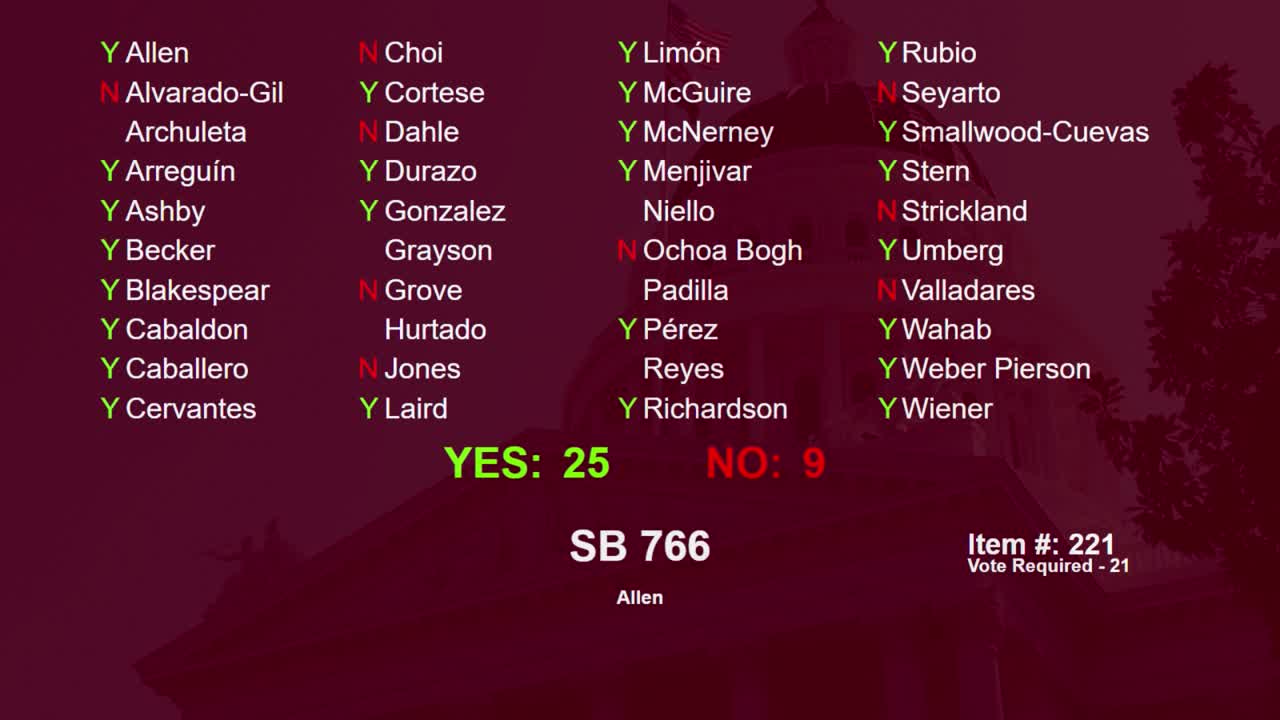
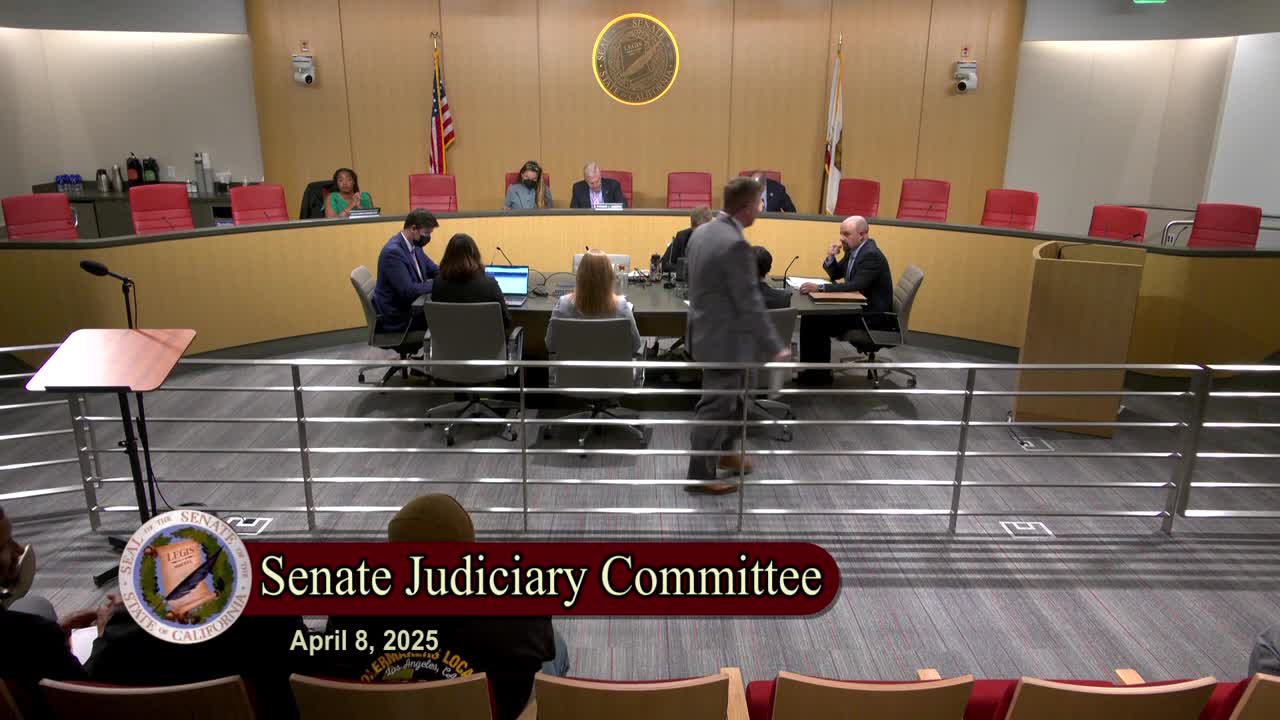
Bill Author

Bill Co-Author(s):