SB 263: International trade: tariffs: impact study.
- Session Year: 2025-2026
- House: Senate
- Latest Version Date: 2025-09-12
Current Status:
Failed
(2026-03-02: Veto sustained.)
Introduced
In Committee
Awaiting First Chamber Vote
Passed First Chamber
In Committee
Awaiting Second Chamber Vote
Passed Second Chamber
Enacted
Existing law establishes the Governors Office of Business and Economic Development (GO-Biz) to, among other duties, serve the Governor as the lead entity for economic strategy and the marketing of California on issues relating to business development, private sector investment, and economic growth. Existing law requires the Transportation Agency to establish a freight advisory committee to, among other things, participate in the development of the state freight plan.
This bill would require GO-Biz, in consultation with the Department of Finance and the Transportation Agency, to conduct a study on the impacts that increases in tariffs and reciprocal tariffs have on the states international trade of imports and exports, as specified. The bill would also require GO-Biz to provide resources to support the international trade activities of California small businesses. The bill would require the agency to convene the freight advisory committee to discuss the scope of the study upon GO-Biz initiating the study. On or before January 1, 2029, the bill would require GO-Biz, to submit the study to the Legislature, as specified.
Existing law establishes the Governors Office of Business and Economic Development (GO-Biz) to, among other duties, serve the Governor as the lead entity for economic strategy and the marketing of California on issues relating to business development, private sector investment, and economic growth. Existing law requires the agency Transportation Agency to establish a freight advisory committee to, among other things, participate in the development of the state freight plan.
This bill would require the agency, GO-Biz, in consultation with the Department of Finance and the Governors Office of Business and Economic Development, Transportation Agency, to conduct a study on the impacts that potential future increases in tariffs and reciprocal tariffs have on the states international trade of imports and exports might have on, among other things, Californias economic output, exports, as specified. The bill would also require GO-Biz to provide resources to support the international trade activities of California small businesses. The bill would require the agency to convene the freight advisory committee to discuss the scope of the study upon GO-Biz initiating the study. On or before January 1, 2026, 2029, the bill would require the Transportation Agency GO-Biz, to submit the study to the Legislature, as specified.
This bill would declare that it is to take effect immediately as an urgency statute.Existing law requires the Transportation Agency to prepare a state freight plan that provides a comprehensive plan to govern the immediate and long-range planning activities and capital investments of the state with respect to the movement of freight, as provided. Existing law requires the agency to establish a freight advisory committee to, among other things, participate in the development of the state freight plan.
This bill would require the agency, in consultation with the Department of Finance and the Governors Office of Business and Economic Development, to conduct a study on the impacts that potential future increases in tariffs and reciprocal tariffs on international trade of imports and exports might have on, among other things, Californias economic output, as specified. The bill would require the agency to convene the freight advisory committee to discuss the scope of the study upon initiating the study. On or before January 1, 2026, the bill would require the Transportation Agency to submit the study to the Legislature, as specified. The bill would appropriate $500,000 from the General Fund to the agency, department, and office, as specified, for purposes of conducting the study.
This bill would declare that it is to take effect immediately as an urgency statute.
Existing law requires the Transportation Agency to prepare a state freight plan that provides a comprehensive plan to govern the immediate and long-range planning activities and capital investments of the state with respect to the movement of freight, as provided. Existing law requires the agency to establish a freight advisory committee to, among other things, participate in the development of the state freight plan.
This bill would require the agency, in consultation with the Department of Finance and the Governors Office of Business and Economic Development, to conduct a study on the impacts that potential future increases in tariffs and reciprocal tariffs on international trade of imports and exports might have on, among other things, Californias economic output, as specified. The bill would require the agency to convene the freight advisory committee to discuss the scope of the study upon initiating the study. On or before January 1, 2026, the bill would require the Transportation Agency to submit the study to the Legislature, as specified. The bill would appropriate $500,000 from the General Fund to the agency, department, and office, as specified, for purposes of conducting the study.
This bill would declare that it is to take effect immediately as an urgency statute.
The Legislature finds and declares all of the following:
(a)Californias public seaports exist on granted state tidelands held in trust for the people of the state and managed for the benefit of all of the people of California as a statewide interest, and the seaports exist on property managed by a local government or a local port or harbor district as a dedicated use of publicly owned and operated property.
(b)Californias public seaports are enterprise agencies that rely on revenues from cargo volumes and long-term lease revenues to underwrite revenue bonds that finance the infrastructure necessary to facilitate the states and the nations commerce and trade. These infrastructure investments also include improvements to real property, which are necessary to improve the environment. Many of these improvements are necessary in order to execute and administer the policies, statutes, ordinances, rules, and regulations of the state, which is also the grantor and trustor public owner of the property.
(c)Investments in public seaport property generate substantial property taxes.
(d)Higher tax burdens, in the form of higher tariffs or other barriers to trade, including, but not limited to, quotas on specific imports and unreasonable or undefined limits on customs reviews of products, on the cargo destined for California and on the cargo-owner customers of the tenants at public seaports, cargo airports, and Californias land ports of entry are likely to create substantial direct and indirect increases in the costs of living for Californians, costs of doing business for California companies, and costs on cargo movements, upon which improvement of the states infrastructure, for purposes of improving transportation and environmental outcomes, relies.
(e)The imposition of higher federal tariffs or higher taxes on the seaborne commerce at Californias public ports may increase costs to cargo owners and lead to shifting trade routes, which may lead to loss of cargo at California ports and diversion to other gateways. This diversion of intermodal cargo may, in turn, both increase emissions of greenhouse gases and reduce seaport revenues. These revenues are necessary to fund and finance public seaports infrastructure improvements, which better public transportation assets and improve Californias environmental quality.
(f)It is imperative that state government has the ability, capacity, and capability to properly assess the impacts that potential increases in the costs of international trade will have on California families, economic development, jobs, affordability, business costs, workers, and the financing and funding of infrastructure development and environmental improvements that rely on trade volumes.
(g)As California residents are facing higher costs of living and rising prices for consumer goods, state policy makers must know whether the imposition of higher federal tariffs may result in increased prices for consumer goods and necessities, putting additional financial burdens on Californians.
(h)The imposition of higher federal tariffs may increase the costs of doing business for California companies, which may result in decreased employment opportunities for Californians and a decrease in Californias economic output.
SEC. 2.Section 12096.3.9 is added to the Government Code, to read:12096.3.9.(a)The office, in consultation with the Department of Finance and the Transportation Agency, shall conduct a study on the impacts that increases in tariffs and reciprocal tariffs have on the states international trade of imports and exports, generally, and provide resources to support the international trade activities of California small businesses. The study may consider the impact that increases in tariffs and reciprocal tariffs have on all of the following:
(1)Californias economic output.
(2)Employment of Californians, both direct and indirect.
(3)Affordability of goods for California consumers.
(4)State and local tax revenues.
(5)Revenues at California airports, land ports of entry, and seaports, and the costs and availability of funding, financing, and underwriting of nonrevenue-based expenses, including environmental improvements, at these locations.
(6)Specific sector-related impacts, including on manufacturing and agriculture, from both tariffs imposed by the United States on imports and reciprocal tariffs imposed by foreign countries on exports from California.
(b)Upon the office initiating the study, the Transportation Agency shall, within one calendar quarter, convene the California Freight Advisory Committee to discuss the scope of the study. For purposes of this subdivision, California Freight Advisory Committee means the freight advisory committee established by Section 13978.8.
(c)The study shall describe the analysis and its related methodologies.
(d)(1)On or before January 1, 2029, the office shall submit the study and related materials to the Legislature.
(2)The study to be submitted pursuant to this subdivision shall be submitted in compliance with Section 9795.
(3)Pursuant to Section 10231.5, this section is repealed on January 1, 2031.
The Legislature finds and declares all of the following:
(a)This act is necessary to provide additional funding to the Transportation Agency, the Department of Finance, and the Governors Office of Business and Economic Development to investigate and identify the impacts of potential actions taken to increase federal tariffs on international trade, which is a major component of the California economy, and which is conducted at all 11 of Californias publicly owned seaports, each of Californias airports that maintain cargo operations, and occurs at Californias land ports of entry with Mexico.(b)(a)Californias public seaports exist on granted state tidelands held in trust for the people of the state and managed for the benefit of all of the people of California as a statewide interest, and the seaports exist on property managed by a local government or a local port or harbor district as a dedicated use of publicly owned and operated property.
(c)(b)Californias public seaports are enterprise agencies that rely on revenues from cargo volumes and long-term lease revenues to underwrite revenue bonds that finance the infrastructure necessary to facilitate the states and the nations commerce and trade. These infrastructure investments also include improvements to real property, which are necessary to improve the environment. Many of these improvements are necessary in order to execute and administer the policies, statutes, ordinances, rules, and regulations of the state, which is also the grantor and trustor public owner of the property.
(d)(c)Investments in public seaport property generate substantial property taxes.
(e)(d)Higher tax burdens, in the form of higher tariffs or other barriers to trade, including, but not limited to, quotas on specific imports and unreasonable or undefined limits on customs reviews of products, on the cargo destined for California and on the cargo-owner customers of the tenants at public seaports, cargo airports, and Californias land ports of entry are likely to create substantial direct and indirect increases in the costs of living for Californians, costs of doing business for California companies, and costs on cargo movements, upon which improvement of the states infrastructure, for purposes of improving transportation and environmental outcomes, relies.
(f)(e)The imposition of higher federal tariffs or higher taxes on the seaborne commerce at Californias public ports may increase costs to cargo owners and lead to shifting trade routes, which may lead to loss of cargo at California ports and diversion to other gateways. This diversion of intermodal cargo may, in turn, both increase emissions of greenhouse gases and reduce seaport revenues. These revenues are necessary to fund and finance public seaports infrastructure improvements, which better public transportation assets and improve Californias environmental quality.
(g)(f)It is imperative that state government has the ability, capacity, and capability to properly assess the impacts that potential increases in the costs of international trade will have on California families, economic development, jobs, affordability, business costs, workers, and the financing and funding of infrastructure development and environmental improvements that rely on trade volumes.
(h)(g)As California residents are facing higher costs of living and rising prices for consumer goods, state policy makers must know whether the imposition of higher federal tariffs may result in increased prices for consumer goods and necessities, putting additional financial burdens on Californians.
(i)(h)The imposition of higher federal tariffs may increase the costs of doing business for California companies, which may result in decreased employment opportunities for Californians and a decrease in Californias economic output.
SEC. 2.(a)The Transportation Agency, in consultation with the Department of Finance and the Governors Office of Business and Economic Development, shall conduct a study on the impacts that potential future increases in tariffs and reciprocal tariffs on international trade of imports and exports, generally, and on trade specifically occurring at Californias public seaports, cargo airports, and land ports of entry, specifically, might have on all of the following:(1)Californias economic output.(2)Employment of Californians, both direct and indirect.(3)Affordability of goods for California consumers.(4)State and local tax revenues.(5)Revenues at California airports, land ports of entry, and seaports, and the costs and availability of funding, financing, and underwriting of nonrevenue-based expenses, including environmental improvements, at these locations.(6)Specific sector-related impacts, including on manufacturing and agriculture, from both tariffs imposed by the United States on imports and reciprocal tariffs imposed by foreign countries on exports from California.(b)Upon initiating the study, the Transportation Agency shall, within one calendar quarter, convene the California Freight Advisory Committee to discuss the scope of the study. For purposes of this subdivision, California Freight Advisory Committee means the freight advisory committee established by Section 13978.8 of the Government Code.(c)The study shall provide both of the following:(1)The model and bases for the assessment of the potential tariffs and other nontariff-based barriers to trade.(2)The ability to assess the impacts of other levels of tariffs and other nontariff-based barriers to trade that are imposed on California.(d)(1)On or before January 1, 2026, the Transportation Agency shall submit the study to the Legislature.(2)The study to be submitted pursuant to this subdivision shall be submitted in compliance with Section 9795 of the Government Code.(3)Pursuant to Section 10231.5 of the Government Code, this section is repealed on January 1, 2030.SEC. 3.This act is an urgency statute necessary for the immediate preservation of the public peace, health, or safety within the meaning of Article IV of the California Constitution and shall go into immediate effect. The facts constituting the necessity are:To rapidly implement data-driven actions and measures to address the immediate and ongoing threats to Californias economy, employment, affordability, and other factors critical to the people and the economy of the State of California, it is necessary for this act to take effect immediately.SEC. 2.Section 12096.3.9 is added to the Government Code, to read:12096.3.9.(a)The office, in consultation with the Department of Finance and the Transportation Agency, shall conduct a study on the impacts that increases in tariffs and reciprocal tariffs have on the states international trade of imports and exports, generally, and provide resources to support the international trade activities of California small businesses. The study may consider the impact that increases in tariffs and reciprocal tariffs have on all of the following:
(1)Californias economic output.
(2)Employment of Californians, both direct and indirect.
(3)Affordability of goods for California consumers.
(4)State and local tax revenues.
(5)Revenues at California airports, land ports of entry, and seaports, and the costs and availability of funding, financing, and underwriting of nonrevenue-based expenses, including environmental improvements, at these locations.
(6)Specific sector-related impacts, including on manufacturing and agriculture, from both tariffs imposed by the United States on imports and reciprocal tariffs imposed by foreign countries on exports from California.
(b)Upon the office initiating the study, the Transportation Agency shall, within one calendar quarter, convene the California Freight Advisory Committee to discuss the scope of the study. For purposes of this subdivision, California Freight Advisory Committee means the freight advisory committee established by Section 13978.8.
(c)The study shall describe the analysis and its related methodologies.
(d)(1)On or before January 1, 2029, the office shall submit the study and related materials to the Legislature.
(2)The study to be submitted pursuant to this subdivision shall be submitted in compliance with Section 9795.
(3)Pursuant to Section 10231.5, this section is repealed on January 1, 2031.
The Legislature finds and declares all of the following:
(a)This act is necessary to provide additional funding to the Transportation Agency, the Department of Finance, and the Governors Office of Business and Economic Development to investigate and identify the impacts of potential actions taken to increase federal tariffs on international trade, which is a major component of the California economy, and which is conducted at all 11 of Californias publicly owned seaports, each of Californias airports that maintain cargo operations, and occurs at Californias land ports of entry with Mexico.
(b)Californias public seaports exist on granted state tidelands held in trust for the people of the state and managed for the benefit of all of the people of California as a statewide interest, and the seaports exist on property managed by a local government or a local port or harbor district as a dedicated use of publicly owned and operated property.
(c)Californias public seaports are enterprise agencies that rely on revenues from cargo volumes and long-term lease revenues to underwrite revenue bonds that finance the infrastructure necessary to facilitate the states and the nations commerce and trade. These infrastructure investments also include improvements to real property, which are necessary to improve the environment. Many of these improvements are necessary in order to execute and administer the policies, statutes, ordinances, rules, and regulations of the state, which is also the grantor and trustor public owner of the property.
(d)Investments in public seaport property generate substantial property taxes.
(e)Higher tax burdens, in the form of higher tariffs or other barriers to trade, including, but not limited to, quotas on specific imports and unreasonable or undefined limits on customs reviews of products, on the cargo destined for California and on the cargo-owner customers of the tenants at public seaports, cargo airports, and Californias land ports of entry are likely to create substantial direct and indirect increases in the costs of living for Californians, costs of doing business for California companies, and costs on cargo movements, upon which improvement of the states infrastructure, for purposes of improving transportation and environmental outcomes, relies.
(f)The imposition of higher federal tariffs or higher taxes on the seaborne commerce at Californias public ports may increase costs to cargo owners and lead to shifting trade routes, which may lead to loss of cargo at California ports and diversion to other gateways. This diversion of intermodal cargo may, in turn, both increase emissions of greenhouse gases and reduce seaport revenues. These revenues are necessary to fund and finance public seaports infrastructure improvements, which better public transportation assets and improve Californias environmental quality.
(g)It is imperative that state government has the ability, capacity, and capability to properly assess the impacts that potential increases in the costs of international trade will have on California families, economic development, jobs, affordability, business costs, workers, and the financing and funding of infrastructure development and environmental improvements that rely on trade volumes.
(h)As California residents are facing higher costs of living and rising prices for consumer goods, state policy makers must know whether the imposition of higher federal tariffs may result in increased prices for consumer goods and necessities, putting additional financial burdens on Californians.
(i)The imposition of higher federal tariffs may increase the costs of doing business for California companies, which may result in decreased employment opportunities for Californians and a decrease in Californias economic output.
SEC. 2.(a)The Transportation Agency, in consultation with the Department of Finance and the Governors Office of Business and Economic Development, shall conduct a study on the impacts that potential future increases in tariffs and reciprocal tariffs on international trade of imports and exports, generally, and on trade specifically occurring at Californias public seaports, cargo airports, and land ports of entry, specifically, might have on all of the following:
(1)Californias economic output.
(2)Employment of Californians, both direct and indirect.
(3)Affordability of goods for California consumers.
(4)State and local tax revenues.
(5)Revenues at California airports, land ports of entry, and seaports, and the costs and availability of funding, financing, and underwriting of nonrevenue-based expenses, including environmental improvements, at these locations.
(6)Specific sector-related impacts, including on manufacturing and agriculture, from both tariffs imposed by the United States on imports and reciprocal tariffs imposed by foreign countries on exports from California.
(b)Upon initiating the study, the Transportation Agency shall, within one calendar quarter, convene the California Freight Advisory Committee to discuss the scope of the study. For purposes of this subdivision, California Freight Advisory Committee means the freight advisory committee established by Section 13978.8 of the Government Code.
(c)The study shall provide both of the following:
(1)The model and bases for the assessment of the potential tariffs and other nontariff-based barriers to trade.
(2)The ability to assess the impacts of other levels of tariffs and other nontariff-based barriers to trade that are imposed on California.
(d)(1)On or before January 1, 2026, the Transportation Agency shall submit the study to the Legislature.
(2)The study to be submitted pursuant to this subdivision shall be submitted in compliance with Section 9795 of the Government Code.
(3)Pursuant to Section 10231.5 of the Government Code, this section is repealed on January 1, 2030.
SEC. 3.The sum of five hundred thousand dollars ($500,000) is hereby appropriated from the General Fund for purposes of carrying out the study described in Section 2 of this act, to be allocated in accordance with the following schedule:(a)Three hundred thousand dollars ($300,000) to the Transportation Agency.(b)One hundred fifty thousand dollars ($150,000) to the Department of Finance.(c)Fifty thousand dollars ($50,000) to the Governors Office of Business and Economic Development.SEC. 4.SEC. 3.This act is an urgency statute necessary for the immediate preservation of the public peace, health, or safety within the meaning of Article IV of the California Constitution and shall go into immediate effect. The facts constituting the necessity are:
To rapidly fund and implement data-driven actions and measures to address the immediate and ongoing threats to Californias economy, employment, affordability, and other factors critical to the people and the economy of the State of California, it is necessary for this act to take effect immediately.
The Legislature finds and declares all of the following:
(a)This act is necessary to provide additional funding to the Transportation Agency, the Department of Finance, and the Governors Office of Business and Economic Development to investigate and identify the impacts of potential actions taken to increase federal tariffs on international trade, which is a major component of the California economy, and which is conducted at all 11 of Californias publicly owned seaports, each of Californias airports that maintain cargo operations, and occurs at Californias land ports of entry with Mexico.
(b)Californias public seaports exist on granted state tidelands held in trust for the people of the state and managed for the benefit of all of the people of California as a statewide interest, and the seaports exist on property managed by a local government or a local port or harbor district as a dedicated use of publicly owned and operated property.
(c)Californias public seaports are enterprise agencies that rely on revenues from cargo volumes and long-term lease revenues to underwrite revenue bonds that finance the infrastructure necessary to facilitate the states and the nations commerce and trade. These infrastructure investments also include improvements to real property, which are necessary to improve the environment. Many of these improvements are necessary in order to execute and administer the policies, statutes, ordinances, rules, and regulations of the state, which is also the grantor and trustor public owner of the property.
(d)Investments in public seaport property generate substantial property taxes.
(e)Higher tax burdens, in the form of higher tariffs or other barriers to trade, including, but not limited to, quotas on specific imports and unreasonable or undefined limits on customs reviews of products, on the cargo destined for California and on the cargo-owner customers of the tenants at public seaports, cargo airports, and Californias land ports of entry are likely to create substantial direct and indirect increases in the costs of living for Californians, costs of doing business for California companies, and costs on cargo movements, upon which improvement of the states infrastructure, for purposes of improving transportation and environmental outcomes, relies.
(f)The imposition of higher federal tariffs or higher taxes on the seaborne commerce at Californias public ports may increase costs to cargo owners and lead to shifting trade routes, which may lead to loss of cargo at California ports and diversion to other gateways. This diversion of intermodal cargo may, in turn, both increase emissions of greenhouse gases and reduce seaport revenues. These revenues are necessary to fund and finance public seaports infrastructure improvements, which better public transportation assets and improve Californias environmental quality.
(g)It is imperative that state government has the ability, capacity, and capability to properly assess the impacts that potential increases in the costs of international trade will have on California families, economic development, jobs, affordability, business costs, workers, and the financing and funding of infrastructure development and environmental improvements that rely on trade volumes.
(h)As California residents are facing higher costs of living and rising prices for consumer goods, state policy makers must know whether the imposition of higher federal tariffs may result in increased prices for consumer goods and necessities, putting additional financial burdens on Californians.
(i)The imposition of higher federal tariffs may increase the costs of doing business for California companies, which may result in decreased employment opportunities for Californians and a decrease in Californias economic output.
SEC. 2.(a)The Transportation Agency, in consultation with the Department of Finance and the Governors Office of Business and Economic Development, shall conduct a study on the impacts that potential future increases in tariffs and reciprocal tariffs on international trade of imports and exports, generally, and on trade specifically occurring at Californias public seaports, cargo airports, and land ports of entry, specifically, might have on all of the following:
(1)Californias economic output.
(2)Employment of Californians, both direct and indirect.
(3)Affordability of goods for California consumers.
(4)State and local tax revenues.
(5)Costs and availability of financing and funding of infrastructure projects at California seaports, airports, and land ports of entry.(6)(5)Revenues at California airports, land ports of entry, and seaports, and the costs and availability of funding, financing, and underwriting of nonrevenue-based expenses, including environmental improvements, at these locations.
(7)(6)Specific sector-related impacts, including on manufacturing and agriculture, from both tariffs imposed by the United States on imports and reciprocal tariffs imposed by foreign countries on exports from California.
(b)Upon initiating the study, the Transportation Agency shall, within one calendar quarter, convene the California Freight Advisory Committee to discuss the scope of the study. For purposes of this subdivision, California Freight Advisory Committee means the freight advisory committee established by Section 13978.8 of the Government Code.
(c)The study shall provide both of the following:
(1)The model and bases for the assessment of the potential tariffs and other nontariff-based barriers to trade.
(2)The ability to assess the impacts of other levels of tariffs and other nontariff-based barriers to trade that are imposed on California.
(d)(1)On or before January 1, 2026, the Transportation Agency shall submit the study to the Legislature.
(2)The study to be submitted pursuant to this subdivision shall be submitted in compliance with Section 9795 of the Government Code.
(3)Pursuant to Section 10231.5 of the Government Code, this section is repealed on January 1, 2030.
SEC. 3.The sum of five hundred thousand dollars ($500,000) is hereby appropriated from the General Fund for purposes of carrying out the study described in Section 2 of this act, to be allocated in accordance with the following schedule:
(a)Three hundred thousand dollars ($300,000) to the Transportation Agency.
(b)One hundred fifty thousand dollars ($150,000) to the Department of Finance.
(c)Fifty thousand dollars ($50,000) to the Governors Office of Business and Economic Development.
SEC. 4.This act is an urgency statute necessary for the immediate preservation of the public peace, health, or safety within the meaning of Article IV of the California Constitution and shall go into immediate effect. The facts constituting the necessity are:
To rapidly fund and implement data-driven actions and measures to address the immediate and ongoing threats to Californias economy, employment, affordability, and other factors critical to the people and the economy of the State of California, it is necessary for this act to take effect immediately.
REVISIONS: HeadingLine 3.The Legislature finds and declares all of the following:
(a)This act is necessary to provide additional funding to the Transportation Agency, the Department of Finance, and the Governors Office of Business and Economic Development to investigate and identify the impacts of potential actions taken to increase federal tariffs on international trade, which is a major component of the California economy, and which is conducted at all 11 of Californias publicly owned seaports, each of Californias airports that maintain cargo operations, and occurs at Californias land ports of entry with Mexico.
(b)Californias public seaports exist on granted state tidelands held in trust for the people of the state and managed for the benefit of all of the people of California as a statewide interest, and the seaports exist on property managed by a local government or a local port or harbor district as a dedicated use of publicly owned and operated property.
(c)Californias public seaports are enterprise agencies that rely on revenues from cargo volumes and long-term lease revenues to underwrite revenue bonds that finance the infrastructure necessary to facilitate the states and the nations commerce and trade. These infrastructure investments also include improvements to real property, which are necessary to improve the environment. Many of these improvements are necessary in order to execute and administer the policies, statutes, ordinances, rules, and regulations of the state, which is also the grantor and trustor public owner of the property.
(d)Investments in public seaport property generate substantial property taxes.
(e)Higher tax burdens, in the form of higher tariffs or other barriers to trade, including, but not limited to, quotas on specific imports and unreasonable or undefined limits on customs reviews of products, on the cargo destined for California and on the cargo-owner customers of the tenants at public seaports, cargo airports, and Californias land ports of entry are likely to create substantial direct and indirect increases in the costs of living for California citizens, Californians, costs of doing business for California companies, and costs on cargo movements, upon which improvement of the states infrastructure, for purposes of improving transportation and environmental outcomes, relies.
(f)The imposition of higher federal tariffs or higher taxes on the seaborne commerce at Californias public ports may increase costs on discretionary intermodal cargo, which may lead to its diversion to another maritime gateway. to cargo owners and lead to shifting trade routes, which may lead to loss of cargo at California ports and diversion to other gateways. This diversion of intermodal cargo may, in turn, both increase emissions of greenhouse gases and reduce seaport revenues. These revenues are necessary to fund and finance public seaports infrastructure improvements, which better public transportation assets and improve Californias environmental quality.
(g)It is imperative that state government has the ability, capacity, and capability to properly assess the impacts that potential increases in the costs of international trade will have on California families, economic development, jobs, affordability, business costs, workers, and the financing and funding of infrastructure development and environmental improvements that rely on trade volumes.
(h)As California residents are facing higher costs of living and rising prices for consumer goods, state policy makers must know whether the imposition of higher federal tariffs may result in increased prices for consumer goods and necessities, putting additional financial burdens on Californians.
(i)The imposition of higher federal tariffs may increase the costs of doing business for California companies, which may result in decreased employment opportunities for Californians and a decrease in Californias economic output.
SEC. 2.(a)The Transportation Agency, in consultation with the Department of Finance and the Governors Office of Business and Economic Development, shall conduct a study on the impacts that potential future increases in tariffs and reciprocal tariffs on international trade of imports and exports, generally, and on trade specifically occurring at Californias public seaports, cargo airports, and land ports of entry, specifically, might have on all of the following:
(1)Californias economic output.
(2)Employment of Californians, both direct and indirect.
(3)Affordability of goods for California consumers.
(4)State and local tax revenues.
(5)Costs and availability of financing and funding of infrastructure projects at California seaports, airports, and land ports of entry.
(6)Revenues at California airports, land ports of entry, and seaports, and the costs and availability of funding, financing, and underwriting of nonrevenue-based expenses at California seaports, airports, and land ports of entry, expenses, including environmental improvements. improvements, at these locations.
(7)Specific sector-related impacts, including on manufacturing and agriculture, from both tariffs imposed by the United States on imports and reciprocal tariffs imposed by foreign countries on exports from California.
(b)Upon initiating the study, the Transportation Agency shall, within one calendar quarter, convene the California Freight Advisory Committee to discuss the scope of the study. For purposes of this subdivision, California Freight Advisory Committee means the freight advisory committee established by Section 13978.8 of the Government Code.
(c)The study shall identify the bases provide both of the following:
(1)The model and bases for the assessment of the potential tariffs and other nontariff-based barriers to trade upon which the model for the assessments are based, so that assessments with trade.
(2)The ability to assess the impacts of other levels of tariffs or and other nontariff-based barriers to trade that are imposed on Californias economy and economic factors may be replicated. California.
(d)(1)On or before January 1, 2026, the Transportation Agency shall submit the study to the Legislature.
(2)The study to be submitted pursuant to this subdivision shall be submitted in compliance with Section 9795 of the Government Code.
(3)Pursuant to Section 10231.5 of the Government Code, this section is repealed on January 1, 2030.
SEC. 3.The sum of five hundred thousand dollars ($500,000) is hereby appropriated from the General Fund for purposes of carrying out the study described in Section 2 of this act, to be allocated in accordance with the following schedule:
(a)Three hundred thousand dollars ($300,000) to the Transportation Agency.
(b)One hundred fifty thousand dollars ($150,000) to the Department of Finance.
(c)Fifty thousand dollars ($50,000) to the Governors Office of Business and Economic Development.
SEC. 4.This act is an urgency statute necessary for the immediate preservation of the public peace, health, or safety within the meaning of Article IV of the California Constitution and shall go into immediate effect. The facts constituting the necessity are:
To rapidly fund and implement data-driven actions and measures to address the immediate and ongoing threats to the public safety, health, and welfare of Californias economy, employment, affordability, and other factors critical to the people and environment the economy of the State of California from climate change, California, it is necessary for this act to take effect immediately.
The Legislature finds and declares all of the following:
(a)This act is necessary to provide additional funding to the Transportation Agency, the Department of Finance, and the Governors Office of Business and Economic Development to investigate and identify the impacts of potential actions taken to increase federal tariffs on international trade, which is a major component of the California economy, and which is conducted at all 11 of Californias publicly owned seaports, each of Californias airports that maintain cargo operations, and occurs at Californias land ports of entry with Mexico.
(b)Californias public seaports exist on granted state tidelands held in trust for the people of the state and managed for the benefit of all of the people of California as a statewide interest, and the seaports exist on property managed by a local government or a local port or harbor district as a dedicated use of publicly owned and operated property.
(c)Californias public seaports are enterprise agencies that rely on revenues from cargo volumes and long-term lease revenues to underwrite revenue bonds that finance the infrastructure necessary to facilitate the states and the nations commerce and trade. These infrastructure investments also include improvements to real property, which are necessary to improve the environment. Many of these improvements are necessary in order to execute and administer the policies, statutes, ordinances, rules, and regulations of the state, which is also the grantor and trustor public owner of the property.
(d)Investments in public seaport property generate substantial property taxes.
(e)Higher tax burdens, in the form of higher tariffs or other barriers to trade, on the cargo destined for California and on the cargo-owner customers of the tenants at public seaports, cargo airports, and Californias land ports of entry are likely to create substantial direct and indirect increases in the costs of living for California citizens, costs of doing business for California companies, and costs on cargo movements, upon which improvement of the states infrastructure, for purposes of improving transportation and environmental outcomes, relies.
(f)The imposition of higher federal tariffs or higher taxes on the seaborne commerce at Californias public ports may increase costs on discretionary intermodal cargo, which may lead to its diversion to another maritime gateway. This diversion of intermodal cargo may, in turn, both increase emissions of greenhouse gases and reduce seaport revenues. These revenues are necessary to fund and finance public seaports infrastructure improvements, which better public transportation assets and improve Californias environmental quality.
(g)It is imperative that state government has the ability, capacity, and capability to properly assess the impacts that potential increases in the costs of international trade will have on California families, economic development, jobs, affordability, business costs, workers, and the financing and funding of infrastructure development and environmental improvements that rely on trade volumes.
(h)As California residents are facing higher costs of living and rising prices for consumer goods, state policy makers must know whether the imposition of higher federal tariffs may result in increased prices for consumer goods and necessities, putting additional financial burdens on Californians.
(i)The imposition of higher federal tariffs may increase the costs of doing business for California companies, which may result in decreased employment opportunities for Californians and a decrease in Californias economic output.
SEC. 2.(a)The Transportation Agency, in consultation with the Department of Finance and the Governors Office of Business and Economic Development, shall conduct a study on the impacts that potential future increases in tariffs and reciprocal tariffs on international trade of imports and exports, generally, and on trade specifically occurring at Californias public seaports, cargo airports, and land ports of entry, specifically, might have on all of the following:
(1)Californias economic output.
(2)Employment of Californians, both direct and indirect.
(3)Affordability of goods for California consumers.
(4)State and local tax revenues.
(5)Costs and availability of financing and funding of infrastructure projects at California seaports, airports, and land ports of entry.
(6)Revenues and the costs and availability of funding, financing, and underwriting of nonrevenue-based expenses at California seaports, airports, and land ports of entry, including environmental improvements.
(7)Specific sector-related impacts, including on manufacturing and agriculture, from both tariffs imposed by the United States on imports and reciprocal tariffs imposed by foreign countries on exports from California.
(b)Upon initiating the study, the Transportation Agency shall, within one calendar quarter, convene the California Freight Advisory Committee to discuss the scope of the study. For purposes of this subdivision, California Freight Advisory Committee means the freight advisory committee established by Section 13978.8 of the Government Code.
(c)The study shall identify the bases for the assessment of the potential tariffs and other nontariff-based barriers to trade upon which the model for the assessments are based, so that assessments with other levels of tariffs or other nontariff-based barriers to trade that are imposed on Californias economy and economic factors may be replicated.
(d)(1)On or before January 1, 2026, the Transportation Agency shall submit the study to the Legislature.
(2)The study to be submitted pursuant to this subdivision shall be submitted in compliance with Section 9795 of the Government Code.
(3)Pursuant to Section 10231.5 of the Government Code, this section is repealed on January 1, 2030.
SEC. 3.The sum of five hundred thousand dollars ($500,000) is hereby appropriated from the General Fund for purposes of carrying out the study described in Section 2 of this act, to be allocated in accordance with the following schedule:
(a)Three hundred thousand dollars ($300,000) to the Transportation Agency.
(b)One hundred fifty thousand dollars ($150,000) to the Department of Finance.
(c)Fifty thousand dollars ($50,000) to the Governors Office of Business and Economic Development.
SEC. 4.This act is an urgency statute necessary for the immediate preservation of the public peace, health, or safety within the meaning of Article IV of the California Constitution and shall go into immediate effect. The facts constituting the necessity are:
To fund and implement measures to address the immediate and ongoing threats to the public safety, health, and welfare of the people and environment of the State of California from climate change, it is necessary for this act to take effect immediately.
|
Date
|
Status
|
|---|---|
| Mar 2, 2026 | Veto sustained. |
| Mar 2, 2026 | Stricken from file. |
| Oct 11, 2025 | In Senate. Consideration of Governor's veto pending. |
| Oct 11, 2025 | Vetoed by the Governor. |
| Sep 17, 2025 | Enrolled and presented to the Governor at 2 p.m. |
| Sep 10, 2025 | Assembly amendments concurred in. (Ayes 40. Noes 0. Page 2820.) Ordered to engrossing and enrolling. |
| Sep 9, 2025 | In Senate. Concurrence in Assembly amendments pending. |
| Sep 9, 2025 | Read third time. Passed. (Ayes 69. Noes 5. Page 3082.) Ordered to the Senate. |
| Sep 4, 2025 | Ordered to third reading. |
| Sep 4, 2025 | Read third time and amended. |
| Sep 3, 2025 | Read second time. Ordered to third reading. |
| Sep 2, 2025 | Read second time and amended. Ordered to second reading. |
| Aug 29, 2025 | From committee: Do pass as amended. (Ayes 11. Noes 1.) (August 29). |
| Aug 20, 2025 | August 20 set for first hearing. Placed on APPR. suspense file. |
| Jul 8, 2025 | From committee: Do pass and re-refer to Com. on APPR. (Ayes 7. Noes 0.) (July 8). Re-referred to Com. on APPR. |
| Jul 8, 2025 | From committee: Do pass and re-refer to Com. on E.D., G., & H.I. (Ayes 14. Noes 0.) (July 7). Re-referred to Com. on E.D., G., & H.I. |
| Jul 8, 2025 | Coauthors revised. |
| Jul 7, 2025 | Assembly Rule 56 suspended. |
| Jul 7, 2025 | Joint Rule 62(a) suspended. |
| Jun 5, 2025 | Referred to Coms. on TRANS. and E.D., G., & H.I. |
| May 28, 2025 | In Assembly. Read first time. Held at Desk. |
| May 28, 2025 | Read third time. Urgency clause adopted. Passed. (Ayes 35. Noes 1. Page 1282.) Ordered to the Assembly. |
| May 27, 2025 | Read second time. Ordered to third reading. |
| May 23, 2025 | Read second time and amended. Ordered to second reading. |
| May 23, 2025 | From committee: Do pass as amended. (Ayes 6. Noes 0. Page 1193.) (May 23). |
| May 16, 2025 | Set for hearing May 23. |
| May 12, 2025 | May 12 hearing: Placed on APPR. suspense file. |
| May 2, 2025 | Set for hearing May 12. |
| Apr 28, 2025 | From committee: Do pass and re-refer to Com. on APPR. (Ayes 11. Noes 0. Page 916.) (April 28). Re-referred to Com. on APPR. |
| Apr 3, 2025 | Set for hearing April 28. |
| Mar 26, 2025 | From committee: Do pass and re-refer to Com. on B. P. & E.D. (Ayes 14. Noes 0. Page 534.) (March 25). Re-referred to Com. on B. P. & E.D. |
| Mar 17, 2025 | Set for hearing March 25. |
| Mar 13, 2025 | From committee with author's amendments. Read second time and amended. Re-referred to Com. on TRANS. |
| Feb 14, 2025 | Referred to Coms. on TRANS. and B. P. & E.D. |
| Feb 4, 2025 | From printer. May be acted upon on or after March 6. |
| Feb 3, 2025 | Introduced. Read first time. To Com. on RLS. for assignment. To print. |
|
Date
|
Description
|
Location
|
Votes
|
|
|---|---|---|---|---|
| Sep 10, 2025 | Unfinished Business SB263 Gonzalez et al. Concurrence | Senate Floor |
Passed |
|
| Sep 9, 2025 | SB 263 Gonzalez Senate Third Reading By Lowenthal | Assembly Floor |
Passed |
|
| Aug 29, 2025 | Do pass as amended. | Assembly Standing Committee on Appropriations |
Passed |
|
| Jul 7, 2025 | Do pass and be re-referred to the Committee on [Economic Development, Growth, and Household Impact] | Assembly Standing Committee on Transportation |
Passed |
|
| May 28, 2025 | Senate 3rd Reading SB263 Gonzalez et al. Urgency Clause | Senate Floor |
Passed |
|
| May 23, 2025 | Do pass as amended | Senate Standing Committee on Appropriations |
Passed |
|
| May 12, 2025 | Placed on suspense file | Senate Standing Committee on Appropriations |
Passed |
|
| Apr 28, 2025 | Do pass, but first be re-referred to the Committee on [Appropriations] | Senate Standing Committee on Business, Professions and Economic Development |
Passed |
|
| Mar 25, 2025 | Do pass, but first be re-referred to the Committee on [Business, Professions and Economic Development] | Senate Standing Committee on Transportation |
Passed |
This list shows positions taken on this bill by organizations on the date displayed, which is linked to the original source.
Positions by individuals are not included.
|
Organization
|
Position
|
Date
|
|---|---|---|
| Associated General Contractors Of California | ** Support | |
| Associated General Contractors-San Diego Chapter | ** Support | |
| California Association Of Port Authorities | ** Support | |
| California Building Industry Association | ** Support | |
| California Chamber Of Commerce | ** Support | |
| California Grocers Association | ** Support | |
| California Manufacturers And Technology Association | ** Support | |
| California Retailers Association | ** Support | |
| California Trucking Association | ** Support | |
| California YIMBY | ** Support | |
| City of Long Beach | ** Support | |
| Consumers For Auto Reliability & Safety | ** Support | |
| Consumer Watchdog | ** Support | |
| Harbor Association of Industry and Commerce | ** Support | |
| Inland Empire Economic Partnership | ** Support | |
| International Longshore And Warehouse Union Local 13 | ** Support | |
| Long Beach Area Chamber of Commerce | ** Support | |
| Los Angeles Area Chamber Of Commerce | ** Support | |
| Los Angeles County Business Federation | ** Support | |
| Pacific Maritime Association | ** Support | |
| Pacific Merchant Shipping Association | ** Support | |
| Port of Long Beach | ** Support | |
| Port Of Oakland | ** Support | |
| San Francisco Bar Pilots | ** Support | |
| Supply Chain Federation | ** Support | |
| Western Growers Association | ** Support |
SENATE RULES COMMITTEE Office of Senate Floor Analyses (916) 651-1520 Fax: (916) 327-4478 | SB 263 |
VETO
Bill No: SB 263
Author: Gonzalez (D), et al.
Enrolled: 9/12/25
Vote: 27
SENATE TRANSPORTATION COMMITTEE: 14-0, 3/25/25
AYES: Cortese, Strickland, Archuleta, Arreguín, Blakespear, Cervantes, Gonzalez, Grayson, Limón, Menjivar, Richardson, Seyarto, Umberg, Valladares
NO VOTE RECORDED: Dahle
SENATE BUS., PROF. & ECON. DEV. COMMITTEE: 11-0, 4/28/25
AYES: Ashby, Choi, Archuleta, Arreguín, Grayson, Menjivar, Niello, Smallwood-Cuevas, Strickland, Umberg, Weber Pierson
SENATE APPROPRIATIONS COMMITTEE: 6-0, 5/23/25
AYES: Caballero, Seyarto, Cabaldon, Grayson, Richardson, Wahab
NO VOTE RECORDED: Dahle
SENATE FLOOR: 35-1, 5/28/25
AYES: Allen, Archuleta, Arreguín, Ashby, Becker, Blakespear, Cabaldon, Caballero, Choi, Cortese, Dahle, Durazo, Gonzalez, Grayson, Hurtado, Jones, Laird, McGuire, McNerney, Menjivar, Niello, Ochoa Bogh, Padilla, Pérez, Richardson, Rubio, Seyarto, Smallwood-Cuevas, Stern, Strickland, Umberg, Valladares, Wahab, Weber Pierson, Wiener
NOES: Alvarado-Gil
NO VOTE RECORDED: Cervantes, Grove, Limón, Reyes
SENATE FLOOR: 40-0, 9/10/25
AYES: Allen, Alvarado-Gil, Archuleta, Arreguín, Ashby, Becker, Blakespear, Cabaldon, Caballero, Cervantes, Choi, Cortese, Dahle, Durazo, Gonzalez, Grayson, Grove, Hurtado, Jones, Laird, Limón, McGuire, McNerney, Menjivar, Niello, Ochoa Bogh, Padilla, Pérez, Reyes, Richardson, Rubio, Seyarto, Smallwood-Cuevas, Stern, Strickland, Umberg, Valladares, Wahab, Weber Pierson, Wiener
ASSEMBLY FLOOR: 69-5, 9/9/25 - See last page for vote
SUBJECT: International trade: tariffs: impact study
SOURCE: Author
DIGEST:
This bill requires the Governor′s Office of Business and Economic Development (GOBiz) in consultation with the California State Transportation Agency (CalSTA) and the Department of Finance (DOF), to conduct a study on the impacts that increases in tariffs and reciprocal tariffs have on the state’s international trade of imports and exports.
ANALYSIS:
Existing law:
- Establishes GOBiz to, amongst other duties, serve as the lead agency for the state’s economic strategy and the marketing of California on issues relating to business development, private sector investment, and economic growth, as specified.
- Requires CalSTA to prepare a state freight plan that directs the immediate and long-range planning activities and capital investments of the state with respect to the movement of freight, as provided.
- Requires CalSTA to establish a freight advisory committee to, among other responsibilities, participate in the development of the state freight plan.
This bill:
- Requires GOBiz, in consultation with the DOF and CalSTA, to conduct a study on the impacts that potential future increases in tariffs and reciprocal tariffs on international trade of imports and exports, generally, and on trade specifically occurring at California's public seaports, cargo airports, and land ports of entry, might have on the following:
- California's economic output;
- Employment of Californians, both direct and indirect;
- Affordability of goods for California consumers;
- State and local tax revenues;
- Revenues at California airports, land ports of entry, and seaports, and the costs and availability of funding, financing, and underwriting of nonrevenue-based expenses, including environmental improvements, at these locations; and,
- Specific sector-related impacts, including on manufacturing and agriculture, from both tariffs imposed by the United States on imports and reciprocal tariffs imposed by foreign countries on exports from California.
- Requires CalSTA to convene the California Freight Advisory Committee to discuss the scope of the study within one calendar quarter of initiating the study.
- Requires GOBiz to submit the study to the Legislature on or before January 1, 2029.
Comments
- Purpose of this bill. According to the author, “In January 2025, President Trump announced his intention to impose tariffs of 25% on goods from Canada and Mexico, raise tariffs on China, and consider imposing tariffs on other goods and nations. China, Canada, and Mexico are California’s three largest trade partners, and international trade accounts for a significant portion of California’s economy – it supports millions of jobs, is critical to California’s key industries, and produces billions of dollars in tax revenue. The proposed tariffs, some of which have already gone into effect, could have serious impacts on California’s economic output, the affordability of consumer goods, employment, tax revenues, and financing for infrastructure and environmental improvements at California’s sea ports, cargo airports, and land ports of entry. SB 263 will direct specified state agencies to conduct a study, which will inform policy decisions that promote California’s trade competitiveness, address affordability concerns, protect California jobs, and continue funding critical clean energy infrastructure projects to reduce emissions related to the goods movement industry.”
- Seaports in California. California has 12 seaports (11 public, 1 private), through which large volumes of goods are both imported and exported internationally. The 12 seaports vary in size, operations, and finances. For example, California contains the nation’s two largest seaports, the Port of Los Angeles (POLA) and the Port of Long Beach (POLB)—both operated by public entities—as well as a smaller ports, such as the Port of Benicia (private).
With respects to international commerce and volume, according to a 2022 report by the Legislative Analyst Office (LAO), “ports are facilities where goods are loaded and unloaded from ships, as well as where goods are processed and prepared for further distribution to retailers and consumers.” LAO further notes, ports handle a significant portion of international commerce. For example, waterborne vessels were the leading transportation mode for international freight in 2020, moving 40 percent of U.S. international freight value (worth more than $1.5 trillion) and 70 percent of freight by weight (almost 1.5 trillion tons).
- Economic Impacts. While significant fluctuation with the Trump Administration’s tariffs currently exists, tariffs are widely viewed to have negative economic impacts, such as increasing the costs of certain goods, causing economic slowdowns, and potentially raising unemployment. Considering the number of California ports and the volume of goods processed / transported annually, the rapid implementation of federal tariffs and reciprocal tariffs on imports and exports will have an impact on California’s economy. However, it is currently unclear on what the comprehensive economic impacts of the fluctuating tariffs will be for the state. This bill directs GOBiz, in consultation with other relevant state departments, to conduct a study on the state’s economic and labor impacts associated with the implementation of increased federal tariffs.
FISCAL EFFECT: Appropriation: No Fiscal Com.: Yes Local: No
According to the Assembly Appropriations Committee:
- Cost pressure of a significant amount, likely in the high hundreds of thousands of dollars to low millions of dollars, one time, to fund the study (General Fund and special funds).
SUPPORT: (Verified 10/16/25)
Associated General Contractors of California
Associated General Contractors-San Diego Chapter
California Association of Port Authorities
California Building Industry Association
California Chamber of Commerce
California Grocers Association
California Retailers Association
California Trucking Association
California Yimby
City of Long Beach
Consumer Watchdog
Consumers for Auto Reliability & Safety
Harbor Association of Industry and Commerce
Inland Empire Economic Partnership
International Longshore and Warehouse Union, Local 13
Long Beach Area Chamber of Commerce
Los Angeles Area Chamber of Commerce
Los Angeles County Business Federation
Pacific Maritime Association
Pacific Merchant Shipping Association
Port of Long Beach
Port of Oakland
San Francisco Bar Pilots
Supply Chain Federation
Western Growers Association
OPPOSITION: (Verified 10/16/25)
None received
GOVERNOR'S VETO MESSAGE:
This bill requires the Governor's Office of Business and Economic Development (GOBiz), in consultation with the California State Transportation Agency (CalSTA) and the Department of Finance, to conduct a study on how increases in tariffs and reciprocal tariffs affect the state's international trade of imports and exports.
The chaos brought by the Trump administration's trade policy is undisputed. California is pushing back through all avenues available, including challenging the legality of these actions in court. In addition to taking legal action, my Administration is actively assessing and responding to the impact of tariffs through various initiatives. GO-Biz's International Affairs and Trade Unit has produced a "Tariff Resource Guide" for businesses, and CalSTA's Freight Policy Team has developed a supply chain dashboard as they continuously coordinate with stakeholders from the logistics and supply chain community. We are also investing in improving and modernizing our own systems, including $27 million in Go-Biz's Containerized Ports Interoperability Program and CalSTA's $1.5 billion investment to build a more efficient, sustainable, and resilient supply chain across the state.
While I appreciate the author's intent to study the impacts of tariffs, this bill is duplicative of ongoing work; another study is not needed to understand the economic chaos created by the Trump administration.
For this reason, I cannot sign this bill.
ASSEMBLY FLOOR: 69-5, 9/9/25
AYES: Addis, Aguiar-Curry, Ahrens, Alanis, Alvarez, Arambula, Ávila Farías, Bains, Bauer-Kahan, Bennett, Berman, Boerner, Bonta, Bryan, Calderon, Caloza, Carrillo, Castillo, Connolly, Davies, Dixon, Elhawary, Fong, Gabriel, Garcia, Gipson, Jeff Gonzalez, Mark González, Haney, Harabedian, Hart, Hoover, Irwin, Jackson, Kalra, Krell, Lackey, Lee, Lowenthal, McKinnor, Muratsuchi, Nguyen, Ortega, Pacheco, Papan, Patel, Pellerin, Petrie-Norris, Quirk-Silva, Ramos, Ransom, Celeste Rodriguez, Michelle Rodriguez, Rogers, Blanca Rubio, Schiavo, Schultz, Sharp-Collins, Solache, Soria, Stefani, Ta, Valencia, Wallis, Ward, Wicks, Wilson, Zbur, Rivas
NOES: DeMaio, Ellis, Macedo, Patterson, Tangipa
NO VOTE RECORDED: Chen, Flora, Gallagher, Hadwick, Johnson, Sanchez
Prepared by: Manny Leon / TRANS. / (916) 651-4121
10/17/25 9:49:36
**** END ****
SENATE THIRD READING
STR Bill Id:SB 263
Author:(Gonzalez)
As Amended Ver:September 4, 2025
Majority vote
SUMMARY
Requires the Governor's office of Business and Economic Development (GOBiz), in consultation with the Department of Finance (DOF) and the California State Transportation Agency (CalSTA) to conduct a study on the impacts of potential future increases in tariffs and reciprocal tariffs on international trade.
Major Provisions
- Requires GOBiz, in consultation with the DOF and CalSTA, to conduct a study on the impacts that potential future increases in tariffs and reciprocal tariffs on international trade of imports and exports, generally, and on trade specifically occurring at California's public seaports, cargo airports, and land ports of entry, might have on the following:
- California's economic output;
- Employment of Californians, both direct and indirect;
- Affordability of goods for California consumers;
- State and local tax revenues;
- Revenues at California airports, land ports of entry, and seaports, and the costs and availability of funding, financing, and underwriting of nonrevenue-based expenses, including environmental improvements, at these locations; and,
- Specific sector-related impacts, including on manufacturing and agriculture, from both tariffs imposed by the United States on imports and reciprocal tariffs imposed by foreign countries on exports from California.
- Requires CalSTA to convene the California Freight Advisory Committee to discuss the scope of the study within one calendar quarter of initiating the study.
- Requires CalSTA to submit the study to the Legislature on or before January 1, 2029.
COMMENTS
California has 12 seaports (11 public and one private), 12 airports with major cargo operations, and three existing (Otay Mesa, Calexico East, and Tecate) and one future (Otay Mesa East) commercial land border ports of entry with Mexico. The Port of Los Angeles (POLA) and the Port of Long Beach rank number one and number two in national container volume and together make up the largest port complex in the US. Additionally, California is home to two of the top ten cargo airports (Los Angeles International Airport and Ontario International Airport) by landed weight, and the third busiest commercial land port of entry (Otay Mesa) in the US. In short, these facilities are critical components of California's economy, accounting for an estimated $664 billion of international goods movement in 2024 according to the Bureau of Transportation Statistic's Freight Analysis Framework.
2025 Federal Tariffs. Since taking office, President Trump has enacted tariffs on various countries and commodities. Implementation of the tariffs is in flux as negotiations with trading partners continue. However, below is a snapshot of the current tariff landscape.
- 10% universal baseline tariff.
- Imports from Canada and Mexico must be United States-Mexico-Canada compliant to avoid new 25% import tariffs.
- Canada implemented a 25% retaliatory tariff on some US products.
- 50% steel and aluminum tariff. Additional steel derivative products including washing machines, dishwashers, and cooking stoves will be subject to the tariff (announced by the Department of Commerce on June 16, 2025).
- 25% auto tariff.
- 10% tariff on China plus 20% tariff imposed in response to the fentanyl national emergency invoked pursuant to the International Emergency Economic Powers Act.
Economic impacts. The currently implemented and proposed tariffs have caused major disruptions at California's ports. Gene Seroka, Executive Director of POLA said, "May marked our lowest monthly volume in over two years." Since this statement, the US and China agreed to maintain lower tariff rates, providing some reprieve to the ports and consumers. An additional wrinkle is highlighted by the American Association of Port Authorities (AAPA) sounding the alarm over a proposed 100% tariff on Chinese-manufactured ship-to-shore (STS) cranes, warning it could impose billions in additional costs on US ports. The on-again-off-again nature of this current trade war highlights the uncertainty ahead for the US freight industry and the business and consumers downstream.
Tariffs are widely viewed to have negative economic impacts, such as increasing the costs of certain goods, causing economic slowdowns, and potentially raising unemployment. Considering the number of California trade facilities and the annual throughput of goods, the rapid implementation of federal tariffs and reciprocal tariffs on imports and exports will have an impact on California's economy. However, it is currently unclear what the comprehensive economic impacts of the fluctuating tariffs will be for the state.
According to the Author
"Since taking office, President Trump has announced -- and in many cases later paused, retracted, or changed – numerous sweeping tariffs on other nations, including some of our allies and main trading partners. International trade accounts for a significant portion of California's economy – it supports millions of jobs, is critical to California's key industries, and produces billions of dollars in tax revenue. The proposed tariffs, some of which have already gone into effect, are already having serious impacts on California's economic output, the affordability of consumer goods, employment, tax revenues, and revenues at California's sea ports, cargo airports, and land ports of entry. SB 263 will direct specified state agencies to conduct a study on the impacts of tariffs, which will inform policy decisions that promote California's trade competitiveness, address affordability concerns, protect California jobs, and prioritize protecting key state programs in the face of lower-than-expected revenues."
Arguments in Support
According to the Pacific Merchant Shipping Association, supporters of this bill, "International trade plays a major role in California's economy. Roughly 40% of containerized imports entering the United States and 30% of U.S. exports are shipped through California ports, generating an estimated $38.1 billion in tax revenue and 3.1 million jobs. Recent federal trade policy changes are jeopardizing these essential underpinnings of California's economy.
Given these profound economic impacts posed to befall the state, it is imperative that the state have a clear picture of what is at risk. This study is needed to provide a clear picture of the role of trade for the state and how trade policy changes can impact California positively or negatively. This critical information will enable more advance economic planning, budgeting, and agility in responding to trade policy changes, volatility and to evaluate future proposals and fluctuations. It is a prudent investment in protecting the state and will ultimately provide California with a stronger foundation for policy and fiscal decision making."
Arguments in Opposition
None on file.
FISCAL COMMENTS
According to the Assembly Appropriations Committee, "Cost pressure of a significant amount, likely in the high hundreds of thousands of dollars to low millions of dollars, one time, to fund the study (General Fund and special funds)."
VOTES
SENATE FLOOR: 35-1-4
YES: Allen, Archuleta, Arreguín, Ashby, Becker, Blakespear, Cabaldon, Caballero, Choi, Cortese, Dahle, Durazo, Gonzalez, Grayson, Hurtado, Jones, Laird, McGuire, McNerney, Menjivar, Niello, Ochoa Bogh, Padilla, Pérez, Richardson, Rubio, Seyarto, Smallwood-Cuevas, Stern, Strickland, Umberg, Valladares, Wahab, Weber Pierson, Wiener
NO: Alvarado-Gil
ABS, ABST OR NV: Cervantes, Grove, Limón, Reyes
ASM TRANSPORTATION: 14-0-2
YES: Wilson, Davies, Ahrens, Bennett, Caloza, Hart, Hoover, Jackson, Lackey, Lowenthal, Papan, Ransom, Rogers, Ward
ABS, ABST OR NV: Carrillo, Macedo
ASM ECONOMIC DEVELOPMENT, GROWTH, AND HOUSEHOLD IMPACT: 7-0-1
YES: Solache, Castillo, Patel, Petrie-Norris, Soria, Stefani, Wallis
ABS, ABST OR NV: Bonta
ASM APPROPRIATIONS: 11-1-3
YES: Wicks, Arambula, Calderon, Caloza, Elhawary, Fong, Mark González, Ahrens, Pacheco, Pellerin, Solache
NO: Tangipa
ABS, ABST OR NV: Sanchez, Dixon, Ta
UPDATED
VERSION: September 4, 2025
CONSULTANT: Aaron Kurz / TRANS. / (916) 319-2093 FN: 0001716
SENATE RULES COMMITTEE Office of Senate Floor Analyses (916) 651-1520 Fax: (916) 327-4478 | SB 263 |
UNFINISHED BUSINESS
Bill No: SB 263
Author: Gonzalez (D), et al.
Amended: 9/4/25 in Assembly
Vote: 21
SENATE TRANSPORTATION COMMITTEE: 14-0, 3/25/25
AYES: Cortese, Strickland, Archuleta, Arreguín, Blakespear, Cervantes, Gonzalez, Grayson, Limón, Menjivar, Richardson, Seyarto, Umberg, Valladares
NO VOTE RECORDED: Dahle
SENATE BUS., PROF. & ECON. DEV. COMMITTEE: 11-0, 4/28/25
AYES: Ashby, Choi, Archuleta, Arreguín, Grayson, Menjivar, Niello, Smallwood-Cuevas, Strickland, Umberg, Weber Pierson
SENATE APPROPRIATIONS COMMITTEE: 6-0, 5/23/25
AYES: Caballero, Seyarto, Cabaldon, Grayson, Richardson, Wahab
NO VOTE RECORDED: Dahle
SENATE FLOOR: 35-1, 5/28/25
AYES: Allen, Archuleta, Arreguín, Ashby, Becker, Blakespear, Cabaldon, Caballero, Choi, Cortese, Dahle, Durazo, Gonzalez, Grayson, Hurtado, Jones, Laird, McGuire, McNerney, Menjivar, Niello, Ochoa Bogh, Padilla, Pérez, Richardson, Rubio, Seyarto, Smallwood-Cuevas, Stern, Strickland, Umberg, Valladares, Wahab, Weber Pierson, Wiener
NOES: Alvarado-Gil
NO VOTE RECORDED: Cervantes, Grove, Limón, Reyes
ASSEMBLY FLOOR: 52-5, 9/9/25 – Roll call not available.
SUBJECT: International trade: tariffs: impact study
SOURCE: Author
DIGEST:
Requires the Governor′s Office of Business and Economic Development (GOBiz) in consultation with the California State Transportation Agency (CalSTA) and the Department of Finance (DOF), to conduct a study on the impacts that increases in tariffs and reciprocal tariffs have on the state’s international trade of imports and exports.
Assembly Amendments
of 9/4/25 reassign the lead agency to the Governor’s Office of Business and Economic Development (GOBiz), changes the study completion date to January 1, 2029, removes the General Fund appropriation, and deletes the urgency provision.
ANALYSIS:
Existing law:
- Establishes GOBiz to, amongst other duties, serve as the lead agency for the state’s economic strategy and the marketing of California on issues relating to business development, private sector investment, and economic growth, as specified.
- Requires CalSTA to prepare a state freight plan that directs the immediate and long-range planning activities and capital investments of the state with respect to the movement of freight, as provided.
- Requires CalSTA to establish a freight advisory committee to, among other responsibilities, participate in the development of the state freight plan.
This bill:
- Requires GOBiz, in consultation with the DOF and CalSTA, to conduct a study on the impacts that potential future increases in tariffs and reciprocal tariffs on international trade of imports and exports, generally, and on trade specifically occurring at California's public seaports, cargo airports, and land ports of entry, might have on the following:
- California's economic output;
- Employment of Californians, both direct and indirect;
- Affordability of goods for California consumers;
- State and local tax revenues;
- Revenues at California airports, land ports of entry, and seaports, and the costs and availability of funding, financing, and underwriting of nonrevenue-based expenses, including environmental improvements, at these locations; and,
- Specific sector-related impacts, including on manufacturing and agriculture, from both tariffs imposed by the United States on imports and reciprocal tariffs imposed by foreign countries on exports from California.
- Requires CalSTA to convene the California Freight Advisory Committee to discuss the scope of the study within one calendar quarter of initiating the study.
- Requires GOBiz to submit the study to the Legislature on or before January 1, 2029.
Comments
- Purpose of this bill. According to the author, “In January 2025, President Trump announced his intention to impose tariffs of 25% on goods from Canada and Mexico, raise tariffs on China, and consider imposing tariffs on other goods and nations. China, Canada, and Mexico are California’s three largest trade partners, and international trade accounts for a significant portion of California’s economy – it supports millions of jobs, is critical to California’s key industries, and produces billions of dollars in tax revenue. The proposed tariffs, some of which have already gone into effect, could have serious impacts on California’s economic output, the affordability of consumer goods, employment, tax revenues, and financing for infrastructure and environmental improvements at California’s sea ports, cargo airports, and land ports of entry. SB 263 will direct specified state agencies to conduct a study, which will inform policy decisions that promote California’s trade competitiveness, address affordability concerns, protect California jobs, and continue funding critical clean energy infrastructure projects to reduce emissions related to the goods movement industry.”
- Seaports in California. California has 12 seaports (11 public, 1 private), through which large volumes of goods are both imported and exported internationally. The 12 seaports vary in size, operations, and finances. For example, California contains the nation’s two largest seaports, the Port of Los Angeles (POLA) and the Port of Long Beach (POLB)—both operated by public entities—as well as a smaller ports, such as the Port of Benicia (private).
With respects to international commerce and volume, according to a 2022 report by the Legislative Analyst Office (LAO), “ports are facilities where goods are loaded and unloaded from ships, as well as where goods are processed and prepared for further distribution to retailers and consumers.” LAO further notes, ports handle a significant portion of international commerce. For example, waterborne vessels were the leading transportation mode for international freight in 2020, moving 40 percent of U.S. international freight value (worth more than $1.5 trillion) and 70 percent of freight by weight (almost 1.5 trillion tons).
- Economic Impacts. While significant fluctuation with the Trump Administration’s tariffs currently exists, tariffs are widely viewed to have negative economic impacts, such as increasing the costs of certain goods, causing economic slowdowns, and potentially raising unemployment. Considering the number of California ports and the volume of goods processed / transported annually, the rapid implementation of federal tariffs and reciprocal tariffs on imports and exports will have an impact on California’s economy. However, it is currently unclear on what the comprehensive economic impacts of the fluctuating tariffs will be for the state. This bill directs GOBiz, in consultation with other relevant state departments, to conduct a study on the state’s economic and labor impacts associated with the implementation of increased federal tariffs.
FISCAL EFFECT: Appropriation: No Fiscal Com.: Yes Local: No
According to the Assembly Appropriations Committee:
- Cost pressure of a significant amount, likely in the high hundreds of thousands of dollars to low millions of dollars, one time, to fund the study (General Fund and special funds).
SUPPORT: (Verified 9/9/25)
Associated General Contractors of California
Associated General Contractors-San Diego Chapter
California Association of Port Authorities
California Building Industry Association
California Chamber of Commerce
California Grocers Association
California Retailers Association
California Trucking Association
California Yimby
City of Long Beach
Consumer Watchdog
Consumers for Auto Reliability & Safety
Harbor Association of Industry and Commerce
Inland Empire Economic Partnership
International Longshore and Warehouse Union, Local 13
Long Beach Area Chamber of Commerce
Los Angeles Area Chamber of Commerce
Los Angeles County Business Federation (BIZ-FED)(if amended)
Pacific Maritime Association
Pacific Merchant Shipping Association
Port of Long Beach
Port of Oakland
San Francisco Bar Pilots
Supply Chain Federation
Western Growers Association
OPPOSITION: (Verified 9/9/25)
None received
Prepared by: Manny Leon / TRANS. / (916) 651-4121
9/9/25 14:40:39
**** END ****
SENATE THIRD READING
STR Bill Id:SB 263
Author:(Gonzalez)
As Amended Ver:September 4, 2025
2/3 vote. Urgency
SUMMARY
Requires the Governor's office of Business and Economic Development (GOBiz), in consultation with the Department of Finance (DOF) and the California State Transportation Agency (CalSTA) to conduct a study on the impacts of potential future increases in tariffs and reciprocal tariffs on international trade.
Major Provisions
- Requires GOBiz, in consultation with the DOF and CalSTA, to conduct a study on the impacts that potential future increases in tariffs and reciprocal tariffs on international trade of imports and exports, generally, and on trade specifically occurring at California's public seaports, cargo airports, and land ports of entry, might have on the following:
- California's economic output;
- Employment of Californians, both direct and indirect;
- Affordability of goods for California consumers;
- State and local tax revenues;
- Revenues at California airports, land ports of entry, and seaports, and the costs and availability of funding, financing, and underwriting of nonrevenue-based expenses, including environmental improvements, at these locations; and,
- Specific sector-related impacts, including on manufacturing and agriculture, from both tariffs imposed by the United States on imports and reciprocal tariffs imposed by foreign countries on exports from California.
- Requires CalSTA to convene the California Freight Advisory Committee to discuss the scope of the study within one calendar quarter of initiating the study.
- Requires CalSTA to submit the study to the Legislature on or before January 1, 2029.
COMMENTS
California has 12 seaports (11 public and one private), 12 airports with major cargo operations, and three existing (Otay Mesa, Calexico East, and Tecate) and one future (Otay Mesa East) commercial land border ports of entry with Mexico. The Port of Los Angeles (POLA) and the Port of Long Beach rank number one and number two in national container volume and together make up the largest port complex in the US. Additionally, California is home to two of the top ten cargo airports (Los Angeles International Airport and Ontario International Airport) by landed weight, and the third busiest commercial land port of entry (Otay Mesa) in the US. In short, these facilities are critical components of California's economy, accounting for an estimated $664 billion of international goods movement in 2024 according to the Bureau of Transportation Statistic's Freight Analysis Framework.
2025 Federal Tariffs. Since taking office, President Trump has enacted tariffs on various countries and commodities. Implementation of the tariffs is in flux as negotiations with trading partners continue. However, below is a snapshot of the current tariff landscape.
- 10% universal baseline tariff.
- Imports from Canada and Mexico must be United States-Mexico-Canada compliant to avoid new 25% import tariffs.
- Canada implemented a 25% retaliatory tariff on some US products.
- 50% steel and aluminum tariff. Additional steel derivative products including washing machines, dishwashers, and cooking stoves will be subject to the tariff (announced by the Department of Commerce on June 16, 2025).
- 25% auto tariff.
- 10% tariff on China plus 20% tariff imposed in response to the fentanyl national emergency invoked pursuant to the International Emergency Economic Powers Act.
Economic impacts. The currently implemented and proposed tariffs have caused major disruptions at California's ports. Gene Seroka, Executive Director of POLA said, "May marked our lowest monthly volume in over two years." Since this statement, the US and China agreed to maintain lower tariff rates, providing some reprieve to the ports and consumers. An additional wrinkle is highlighted by the American Association of Port Authorities (AAPA) sounding the alarm over a proposed 100% tariff on Chinese-manufactured ship-to-shore (STS) cranes, warning it could impose billions in additional costs on US ports. The on-again-off-again nature of this current trade war highlights the uncertainty ahead for the US freight industry and the business and consumers downstream.
Tariffs are widely viewed to have negative economic impacts, such as increasing the costs of certain goods, causing economic slowdowns, and potentially raising unemployment. Considering the number of California trade facilities and the annual throughput of goods, the rapid implementation of federal tariffs and reciprocal tariffs on imports and exports will have an impact on California's economy. However, it is currently unclear what the comprehensive economic impacts of the fluctuating tariffs will be for the state.
According to the Author
"Since taking office, President Trump has announced -- and in many cases later paused, retracted, or changed – numerous sweeping tariffs on other nations, including some of our allies and main trading partners. International trade accounts for a significant portion of California's economy – it supports millions of jobs, is critical to California's key industries, and produces billions of dollars in tax revenue. The proposed tariffs, some of which have already gone into effect, are already having serious impacts on California's economic output, the affordability of consumer goods, employment, tax revenues, and revenues at California's sea ports, cargo airports, and land ports of entry. SB 263 will direct specified state agencies to conduct a study on the impacts of tariffs, which will inform policy decisions that promote California's trade competitiveness, address affordability concerns, protect California jobs, and prioritize protecting key state programs in the face of lower-than-expected revenues."
Arguments in Support
According to the Pacific Merchant Shipping Association, supporters of this bill, "International trade plays a major role in California's economy. Roughly 40% of containerized imports entering the United States and 30% of U.S. exports are shipped through California ports, generating an estimated $38.1 billion in tax revenue and 3.1 million jobs. Recent federal trade policy changes are jeopardizing these essential underpinnings of California's economy.
Given these profound economic impacts posed to befall the state, it is imperative that the state have a clear picture of what is at risk. This study is needed to provide a clear picture of the role of trade for the state and how trade policy changes can impact California positively or negatively. This critical information will enable more advance economic planning, budgeting, and agility in responding to trade policy changes, volatility and to evaluate future proposals and fluctuations. It is a prudent investment in protecting the state and will ultimately provide California with a stronger foundation for policy and fiscal decision making."
Arguments in Opposition
None on file.
FISCAL COMMENTS
According to the Assembly Appropriations Committee, "Cost pressure of a significant amount, likely in the high hundreds of thousands of dollars to low millions of dollars, one time, to fund the study (General Fund and special funds)."
VOTES
SENATE FLOOR: 35-1-4
YES: Allen, Archuleta, Arreguín, Ashby, Becker, Blakespear, Cabaldon, Caballero, Choi, Cortese, Dahle, Durazo, Gonzalez, Grayson, Hurtado, Jones, Laird, McGuire, McNerney, Menjivar, Niello, Ochoa Bogh, Padilla, Pérez, Richardson, Rubio, Seyarto, Smallwood-Cuevas, Stern, Strickland, Umberg, Valladares, Wahab, Weber Pierson, Wiener
NO: Alvarado-Gil
ABS, ABST OR NV: Cervantes, Grove, Limón, Reyes
ASM TRANSPORTATION: 14-0-2
YES: Wilson, Davies, Ahrens, Bennett, Caloza, Hart, Hoover, Jackson, Lackey, Lowenthal, Papan, Ransom, Rogers, Ward
ABS, ABST OR NV: Carrillo, Macedo
ASM ECONOMIC DEVELOPMENT, GROWTH, AND HOUSEHOLD IMPACT: 7-0-1
YES: Solache, Castillo, Patel, Petrie-Norris, Soria, Stefani, Wallis
ABS, ABST OR NV: Bonta
ASM APPROPRIATIONS: 11-1-3
YES: Wicks, Arambula, Calderon, Caloza, Elhawary, Fong, Mark González, Ahrens, Pacheco, Pellerin, Solache
NO: Tangipa
ABS, ABST OR NV: Sanchez, Dixon, Ta
UPDATED
VERSION: September 4, 2025
CONSULTANT: Aaron Kurz / TRANS. / (916) 319-2093 FN: 0001716
SENATE THIRD READING
STR Bill Id:SB 263
Author:(Gonzalez)
As Amended Ver:September 02, 2025
2/3 vote. Urgency
SUMMARY
Requires the California State Transportation Agency (CalSTA), in consultation with the Department of Finance (DOF) and the Governor′s office of Business and Economic Development (GOBiz) to conduct a study on the impacts of potential future increases in tariffs and reciprocal tariffs on international trade.
Major Provisions
- Requires CalSTA, in consultation with the DOF and GOBiz, conduct a study on the impacts that potential future increases in tariffs and reciprocal tariffs on international trade of imports and exports, generally, and on trade specifically occurring at California′s public seaports, cargo airports, and land ports of entry, might have on the following:
- California′s economic output;
- Employment of Californians, both direct and indirect;
- Affordability of goods for California consumers;
- State and local tax revenues;
- Revenues at California airports, land ports of entry, and seaports, and the costs and availability of funding, financing, and underwriting of nonrevenue-based expenses, including environmental improvements, at these locations; and,
- Specific sector-related impacts, including on manufacturing and agriculture, from both tariffs imposed by the United States on imports and reciprocal tariffs imposed by foreign countries on exports from California.
- Requires CalSTA to convene the California Freight Advisory Committee to discuss the scope of the study.
- Requires CalSTA to submit the study to the Legislature on or before January 1, 2026.
- Includes an urgency provision.
COMMENTS
California has 12 seaports (11 public and one private), 12 airports with major cargo operations, and three existing (Otay Mesa, Calexico East, and Tecate) and one future (Otay Mesa East) commercial land border ports of entry with Mexico. The Port of Los Angeles (POLA) and the Port of Long Beach rank number one and number two in national container volume and together make up the largest port complex in the US. Additionally, California is home to two of the top ten cargo airports (Los Angeles International Airport and Ontario International Airport) by landed weight, and the third busiest commercial land port of entry (Otay Mesa) in the US. In short, these facilities are critical components of California′s economy, accounting for an estimated $664 billion of international goods movement in 2024 according to the Bureau of Transportation Statistic′s Freight Analysis Framework.
2025 Federal Tariffs. Since taking office, President Trump has enacted tariffs on various countries and commodities. Implementation of the tariffs is in flux as negotiations with trading partners continue. However, below is a snapshot of the current tariff landscape.
- 10% universal baseline tariff.
- Imports from Canada and Mexico must be United States-Mexico-Canada compliant to avoid new 25% import tariffs.
- Canada implemented a 25% retaliatory tariff on some US products.
- 50% steel and aluminum tariff. Additional steel derivative products including washing machines, dishwashers, and cooking stoves will be subject to the tariff (announced by the Department of Commerce on June 16, 2025).
- 25% auto tariff.
- 10% tariff on China plus 20% tariff imposed in response to the fentanyl national emergency invoked pursuant to the International Emergency Economic Powers Act.
Economic impacts. The currently implemented and proposed tariffs have caused major disruptions at California′s ports. Gene Seroka, Executive Director of POLA said, ″May marked our lowest monthly volume in over two years.″ Since this statement, the US and China agreed to maintain lower tariff rates, providing some reprieve to the ports and consumers. An additional wrinkle is highlighted by the American Association of Port Authorities (AAPA) sounding the alarm over a proposed 100% tariff on Chinese-manufactured ship-to-shore (STS) cranes, warning it could impose billions in additional costs on US ports. The on-again-off-again nature of this current trade war highlights the uncertainty ahead for the US freight industry and the business and consumers downstream.
Tariffs are widely viewed to have negative economic impacts, such as increasing the costs of certain goods, causing economic slowdowns, and potentially raising unemployment. Considering the number of California trade facilities and the annual throughput of goods, the rapid implementation of federal tariffs and reciprocal tariffs on imports and exports will have an impact on California′s economy. However, it is currently unclear what the comprehensive economic impacts of the fluctuating tariffs will be for the state.
According to the Author
″Since taking office, President Trump has announced -- and in many cases later paused, retracted, or changed – numerous sweeping tariffs on other nations, including some of our allies and main trading partners. International trade accounts for a significant portion of California′s economy – it supports millions of jobs, is critical to California′s key industries, and produces billions of dollars in tax revenue. The proposed tariffs, some of which have already gone into effect, are already having serious impacts on California′s economic output, the affordability of consumer goods, employment, tax revenues, and revenues at California′s sea ports, cargo airports, and land ports of entry. SB 263 will direct specified state agencies to conduct a study on the impacts of tariffs, which will inform policy decisions that promote California′s trade competitiveness, address affordability concerns, protect California jobs, and prioritize protecting key state programs in the face of lower-than-expected revenues.″
Arguments in Support
According to the Pacific Merchant Shipping Association, supporters of this bill, ″International trade plays a major role in California′s economy. Roughly 40% of containerized imports entering the United States and 30% of U.S. exports are shipped through California ports, generating an estimated $38.1 billion in tax revenue and 3.1 million jobs. Recent federal trade policy changes are jeopardizing these essential underpinnings of California′s economy.
Given these profound economic impacts posed to befall the state, it is imperative that the state have a clear picture of what is at risk. This study is needed to provide a clear picture of the role of trade for the state and how trade policy changes can impact California positively or negatively. This critical information will enable more advance economic planning, budgeting, and agility in responding to trade policy changes, volatility and to evaluate future proposals and fluctuations. It is a prudent investment in protecting the state and will ultimately provide California with a stronger foundation for policy and fiscal decision making.″
Arguments in Opposition
No opposition on file.
FISCAL COMMENTS
According to the Assembly Appropriations Committee, ″Cost pressure of a significant amount, likely in the high hundreds of thousands of dollars to low millions of dollars, one time, to fund the study (General Fund and special funds).″
VOTES
SENATE FLOOR: 35-1-4
YES: Allen, Archuleta, Arreguín, Ashby, Becker, Blakespear, Cabaldon, Caballero, Choi, Cortese, Dahle, Durazo, Gonzalez, Grayson, Hurtado, Jones, Laird, McGuire, McNerney, Menjivar, Niello, Ochoa Bogh, Padilla, Pérez, Richardson, Rubio, Seyarto, Smallwood-Cuevas, Stern, Strickland, Umberg, Valladares, Wahab, Weber Pierson, Wiener
NO: Alvarado-Gil
ABS, ABST OR NV: Cervantes, Grove, Limón, Reyes
ASM TRANSPORTATION: 14-0-2
YES: Wilson, Davies, Ahrens, Bennett, Caloza, Hart, Hoover, Jackson, Lackey, Lowenthal, Papan, Ransom, Rogers, Ward
ABS, ABST OR NV: Carrillo, Macedo
ASM ECONOMIC DEVELOPMENT, GROWTH, AND HOUSEHOLD IMPACT: 7-0-1
YES: Solache, Castillo, Patel, Petrie-Norris, Soria, Stefani, Wallis
ABS, ABST OR NV: Bonta
ASM APPROPRIATIONS: 11-1-3
YES: Wicks, Arambula, Calderon, Caloza, Elhawary, Fong, Mark González, Ahrens, Pacheco, Pellerin, Solache
NO: Tangipa
ABS, ABST OR NV: Sanchez, Dixon, Ta
UPDATED
VERSION: September 02, 2025
CONSULTANT: Aaron Kurz / TRANS. / (916) 319-2093 FN: 0001427
Date of Hearing: August 20, 2025
ASSEMBLY COMMITTEE ON APPROPRIATIONS
Buffy Wicks, Chair
SBPCA Bill Id:SB 263
Author:(Gonzalez) – As Amended Ver:May 23, 2025
Policy Committee: | Transportation | Vote: | 14 - 0 |
Economic Development, Growth, and Household Impact | 7 - 0 | ||
|
|
Urgency: Yes State Mandated Local Program: No Reimbursable: No
SUMMARY:
This bill directs the California State Transportation Agency (CalSTA), in consultation with the Department of Finance (DOF) and the Governor’s Office of Business and Economic Development (GoBiz), to conduct a study on the possible effects of potential future increases in tariffs and reciprocal tariffs on international trade of imports and exports, generally, and on trade occurring at California’s public seaports, cargo airports, and land ports of entry, specifically. The bill also appropriates $500,000 from the General Fund (GF) for this purpose, as follows:
- $300,000 to CalSTA.
- $150,000 to DOF.
- $50,000 to GoBiz.
FISCAL EFFECT:
- One-time $500,000 appropriation from the GF—$300,000 to CalSTA, $150,000 to DOF and $50,000 to GoBiz.
- Possible GF cost pressure of an unknown amount in the tens of thousands to hundreds of thousands of dollars to the extent the $500,000 appropriation is not enough to cover the costs of the study.
COMMENTS:
California has some of the busiest land, air and sea ports in the world, through which massive volumes of goods pass annually. Many observers assume imposition of tariffs on foreign-made products will diminish the movement of goods coming through California’s ports, with resulting economic harm to the state.
The author describes this bill as a response to actions by the Trump administration regarding tariffs—some proposed, others imposed—characterizing those actions as “already having serious impacts on California’s economic output, the affordability of consumer goods, employment, tax revenues, and revenues at California’s sea ports, cargo airports, and land ports of entry.” According to the author, SB 263 “will direct specified state agencies to conduct a study on the impacts of tariffs, which will inform policy decisions that promote California’s trade competitiveness, address affordability concerns, protect California jobs.”
Both CalSTA and GoBiz undertake planning related to the movement of goods in California and trade more generally, and DOF conducts economic forecasting that informs development of the annual state budget. More specifically, existing law requires CalSTA, every five years, to prepare a state freight plan that “provides a comprehensive plan to govern the immediate and long-range planning activities and capital investments of the state with respect to the movement of freight.” Similarly, existing law requires GoBiz, at least every five years, to provide to the Legislature a strategy for international trade and investment that includes, among other things, policy goals, objectives and recommendations necessary to implement a comprehensive international trade and investment program. And DOF’s Economic Research Unit regularly produces forecasts of the national and state economies and of the consumer price index.
It seems reasonable, therefore, to assume these three state agencies are adequately prepared to undertake the study required by this bill, or to oversee contracts with third-party experts to do so on the state’s behalf. It is unclear, however, whether the amounts this bill appropriates for the study are adequate to achieve the bill’s goals, or whether the Legislature would appropriate these funds for this purpose in the context of the state’s other priorities and its always-limited budget resources.
Analysis Prepared by: Jay Dickenson / APPR. / (916) 319-2081
Date of Hearing: July 8, 2025
ASSEMBLY COMMITTEE ON ECONOMIC DEVELOPMENT, GROWTH, AND HOUSEHOLD IMPACT
José Luis Solache, Jr., Chair
SBPCA Bill Id:SB 263
Author:(Gonzalez) – As Amended Ver:May 23, 2025
SENATE VOTE: 35-1
SUBJECT: International trade: tariffs: impact study
SUMMARY: This bill directs the California State Transportation Agency (CalSTA), in coordination with the Department of Finance (DOF) and the Governor’s Office of Business and Economic Development (GO-Biz), to conduct a comprehensive study on how potential future increases in tariffs and reciprocal tariffs may affect California’s economy, infrastructure, employment, and affordability. This bill has an urgency clause.
Specifically, this bill:
1) Provides findings and declarations regarding the economic significance of California’s ports, as specified.
2) Requires CalSTA, in consultation with the Department of Finance (DOF) and the Governor’s office of Business and Economic Development, to conduct a study on the potential economic impacts associated with increases in federal tariffs and reciprocal tariffs on international trade imports and exports transporting through California’s ports of entry, as specified.
3) Requires CalSTA to convene the freight advisory committee to discuss the scope of the study upon enactment and further require CalSTA to submit the economic study to the Legislature on or before January 1, 2026.
4) Requires the study to include both the modeling data / framework that is used for the tariff assessments and data that may be used for future assessments of tariffs / economic barriers to California’s economy.
5) Appropriates $500,000 in General Fund revenue to fund the study, as specified.
6) Includes an urgency provision.
EXISTING LAW:
1) Requires CalSTA to prepare a state freight plan that directs the immediate and long-range planning activities and capital investments of the state with respect to the movement of freight, as provided.
2) Requires CalSTA to establish a freight advisory committee to, among other responsibilities, participate in the development of the state freight plan.
3) Requires CalSTA to prepare a state freight plan, which includes a comprehensive plan to govern the immediate and long-range planning activities and capital investments of the state with respect to the movement of freight.
4) Requires Go-Biz to develop and implement California’s international trade and investment policy, coordinate export promotion, foreign direct investment, and international trade development. Represent the state in trade negotiations and foreign engagement.
5) Requires Go-Biz to identify economic risks tied to federal policies, including tariffs and supporting resilience in critical infrastructure, including public seaports, cargo airports and border trade corridors.
6) Requires the Department of Finance to advise the Governor and the Legislature on economic conditions affecting state revenues and expenditures including trade impacts. This includes conducting revenue forecasting tied to international trade trends, port activity, and tax effects of federal policy changes.
FISCAL EFFECT: According to the Senate Appropriations Committee:
One-time General Fund appropriation of $500,000 in 2026-27 to be allocated as follows: $300,000 to CalSTA; $150,000 to DOF; and $50,000 to GO-Biz.
There could be additional one-time General Fund cost pressures, potentially in the hundreds of thousands of dollars; to the extent, the funds appropriated to each state entity are insufficient to cover their costs.
COMMENTS: California is highly dependent on international trade through its 11 public seaports, major cargo airports, and land ports of entry. The state’s economy, environmental improvements and infrastructure development rely on stable trade volumes. In 2020, California ports handled $416 billion in waterborne trade value, supporting 3.1 million jobs (800K export-related; 2.3M import-related) and generating $38.1 billion in tax revenue nationwide. California Ports account for approximately 38% of U.S. container imports and 28% of exports. Statewide, ports support 3.1 million jobs and move over $400 billion in goods annually.
According to UC Davis Economics Professor Katheryn Russ, impacts of rising tariffs include:
- Increase costs for consumers and businesses: A recent study from the Peterson Institute for International Economics shows that the costs of tariffs already adopted for Canada, Mexico, and China would cost the typical household $1,200 per year.
- Reduce port revenues and investment capacity: research shows that the 2018-2019 waves of tariffs reduced the number of manufacturing jobs in the United States by more than 300,000, mostly from increased costs of inputs, but also from retaliation by other countries against US exports.
- Shift trade routes to other states, causing job losses and environmental setbacks: California goods exports are $183 billion a year and account for close to 5 percent of
the state’s total economic activity (GDP). California goods exports support close to
600,000 jobs. Nearly 64,000 companies export from California, 95 percent of them small and medium sized enterprises with less than 500 employees.
SB 263 is a proactive measure to analyze and prepare for economic shocks tied to international trade disruptions. It equips state leaders with data-driven insight to anticipate the effects of federal tariff policies and ensure California’s trade infrastructure and economy remain resilient.
Author’s Statement: “Since taking office, President Trump has announced -- and in many cases later paused, retracted, or changed – numerous sweeping tariffs on other nations, including some of our allies and main trading partners. International trade accounts for a significant portion of California’s economy – it supports millions of jobs, is critical to California’s key industries, and produces billions of dollars in tax revenue. The proposed tariffs, some of which have already gone into effect, are already having serious impacts on California’s economic output, the affordability of consumer goods, employment, tax revenues, and revenues at California’s sea ports, cargo airports, and land ports of entry. SB 263 will direct specified state agencies to conduct a study on the impacts of tariffs, which will inform policy decisions that promote California’s trade competitiveness, address affordability concerns, protect California jobs, and prioritize protecting key state programs in the face of lower-than-expected revenues”.
REGISTERED SUPPORT / OPPOSITION:
Support
Associated General Contractors, California Chapters
California Association of Port Authorities
California Building Industry Association
California Chamber of Commerce
California Grocers Association
California Manufacturers and Technology Association
California Retailers Association
California Trucking Association
California Yimby
City of Long Beach
Consumer Watchdog
Consumers for Auto Reliability & Safety
Harbor Association of Industry and Commerce (HAIC)
Inland Empire Economic Partnership
International Longshore and Warehouse Union, Local 13
Long Beach Area Chamber of Commerce
Long Beach; Port of
Pacific Maritime Association
Pacific Merchant Shipping Association
Port of Oakland
San Francisco Bar Pilots
Supply Chain Federation
Western Growers Association
Support If Amended
Los Angeles County Business Federation (BIZ-FED)
Opposition
None on file.
Analysis Prepared by: Carla Castilla / E.D., G., & H.I. / (916) 319-2090
SENATE RULES COMMITTEE Office of Senate Floor Analyses (916) 651-1520 Fax: (916) 327-4478 | SB 263 |
THIRD READING
Bill No: SB 263
Author: Gonzalez (D), et al.
Amended: 5/23/25
Vote: 27 - Urgency
SENATE TRANSPORTATION COMMITTEE: 14-0, 3/25/25
AYES: Cortese, Strickland, Archuleta, Arreguín, Blakespear, Cervantes, Gonzalez, Grayson, Limón, Menjivar, Richardson, Seyarto, Umberg, Valladares
NO VOTE RECORDED: Dahle
SENATE BUS., PROF. & ECON. DEV. COMMITTEE: 11-0, 4/28/25
AYES: Ashby, Choi, Archuleta, Arreguín, Grayson, Menjivar, Niello, Smallwood-Cuevas, Strickland, Umberg, Weber Pierson
SENATE APPROPRIATIONS COMMITTEE: 6-0, 5/23/25
AYES: Caballero, Seyarto, Cabaldon, Grayson, Richardson, Wahab
NO VOTE RECORDED: Dahle
SUBJECT: International trade: tariffs: impact study
SOURCE: Author
DIGEST:
This bill requires the California State Transportation Agency (CalSTA) to conduct a study on the impacts of federal tariff increases and reciprocal tariffs on California’s economy, as specified.
ANALYSIS:
Existing law:
- Requires CalSTA to prepare a state freight plan that directs the immediate and long-range planning activities and capital investments of the state with respect to the movement of freight, as provided.
- Requires CalSTA to establish a freight advisory committee to, among other responsibilities, participate in the development of the state freight plan.
- Requires CalSTA to prepare a state freight plan, which includes a comprehensive plan to govern the immediate and long-range planning activities and capital investments of the state with respect to the movement of freight.
This bill:
- Provides findings and declarations regarding the economic significance of California’s ports, as specified.
- Requires CalSTA, in consultation with the Department of Finance (DOF) and the Governor’s office of Business and Economic Development, to conduct a study on the potential economic impacts associated with increases in federal tariffs and reciprocal tariffs on international trade imports and exports transporting through California’s ports of entry, as specified.
- Requires CalSTA to convene the freight advisory committee to discuss the scope of the study upon enactment and further require CalSTA to submit the economic study to the Legislature on or before January 1, 2026.
- Requires the study to include both the modeling data / framework that is used for the tariff assessments and also data that may be used for future assessments of tariffs / economic barriers to California’s economy.
- Appropriates $500,000 in General Fund revenue to fund the study, as specified.
- Includes an urgency provision.
Comments
- Purpose of this bill. According to the author, “In January 2025, President Trump announced his intention to impose tariffs of 25% on goods from Canada and Mexico, raise tariffs on China, and consider imposing tariffs on other goods and nations. China, Canada, and Mexico are California’s three largest trade partners, and international trade accounts for a significant portion of California’s economy – it supports millions of jobs, is critical to California’s key industries, and produces billions of dollars in tax revenue. The proposed tariffs, some of which have already gone into effect, could have serious impacts on California’s economic output, the affordability of consumer goods, employment, tax revenues, and financing for infrastructure and environmental improvements at California’s sea ports, cargo airports, and land ports of entry. SB 263 will direct specified state agencies to conduct a study, which will inform policy decisions that promote California’s trade competitiveness, address affordability concerns, protect California jobs, and continue funding critical clean energy infrastructure projects to reduce emissions related to the goods movement industry.”
- Seaports in California. California has 12 seaports (11 public, 1 private), through which large volumes of goods are both imported and exported internationally. The 12 seaports vary in size, operations, and finances. For example, California contains the nation’s two largest seaports, the Port of Los Angeles (POLA) and the Port of Long Beach (POLB)—both operated by public entities—as well as a smaller ports, such as the Port of Benicia (private).
With respects to international commerce and volume, according to a 2022 report by the Legislative Analyst Office (LAO), “ports are facilities where goods are loaded and unloaded from ships, as well as where goods are processed and prepared for further distribution to retailers and consumers.” LAO further notes, ports handle a significant portion of international commerce. For example, waterborne vessels were the leading transportation mode for international freight in 2020, moving 40 percent of U.S. international freight value (worth more than $1.5 trillion) and 70 percent of freight by weight (almost 1.5 trillion tons).
- Economic Impacts. While significant fluctuation with the Trump Administration’s tariffs currently exists, tariffs are widely viewed to have negative economic impacts, such as increasing the costs of certain goods, causing economic slowdowns, and potentially raising unemployment. Considering the number of California ports and the volume of goods processed / transported annually, the rapid implementation of federal tariffs and reciprocal tariffs on imports and exports will have an impact on California’s economy. However, it is currently unclear on what the comprehensive economic impacts of the fluctuating tariffs will be for the state. This bill directs CalSTA to conduct a study on the state’s economic and labor impacts associated with the implementation of increased federal tariffs and aims to develop a process / model that will allow CalSTA to assess potential future tariff augmentations as they pertain to California’s economy and labor force.
FISCAL EFFECT: Appropriation: Yes Fiscal Com.: Yes Local: No
According to the Senate Appropriations Committee:
- One-time General Fund appropriation of $500,000 in 2026-27 to be allocated as follows: $300,000 to CalSTA; $150,000 to DOF; and $50,000 to GO-Biz.
- There could be additional one-time General Fund cost pressures, potentially in the hundreds of thousands of dollars, to the extent the funds appropriated to each state entity are insufficient to cover their costs.
SUPPORT: (Verified 5/23/25)
California Association of Port Authorities
California Building Industry Association
California Chamber of Commerce
California Grocers Association
California Retailers Association
California Trucking Association
California Yimby
City of Long Beach
Consumer Watchdog
Consumers for Auto Reliability & Safety
Harbor Association of Industry and Commerce
Inland Empire Economic Partnership
International Longshore and Warehouse Union, Local 13
Long Beach Area Chamber of Commerce
Long Beach; Port of
Los Angeles County Business Federation
Pacific Maritime Association
Pacific Merchant Shipping Association
Port of Oakland
San Francisco Bar Pilots
Supply Chain Federation
Western Growers Association
OPPOSITION: (Verified 5/23/25)
Prepared by: Manny Leon / TRANS. / (916) 651-4121
5/27/25 11:17:08
SENATE COMMITTEE ON APPROPRIATIONS
Senator Anna Caballero, Chair
2025 - 2026 Regular Session
SB 263 (Gonzalez) - International trade: tariffs: impact study
Version: March 13, 2025 | Policy Vote: TRANS. 14 - 0, B., P. & E.D. 11 - 0 |
Urgency: Yes | Mandate: No |
Hearing Date: May 23, 2025 | Consultant: Mark McKenzie |
Bill Summary:
SB 263, an urgency measure, would require the Transportation Agency (CalSTA), in consultation with the Department of Finance (DOF) and the Governor’s Office of Business and Economic Development (GO-Biz), to conduct a study on the impacts that potential future increases in tariffs and reciprocal tariffs on international trade, as specified. The bill would appropriate $500,000 from the General Fund for that purpose and require CalSTA to submit the study to the Legislature by January 1, 2026.
*********** ANALYSIS ADDENDUM – SUSPENSE FILE ***********
The following information is revised to reflect amendments
adopted by the committee on May 23, 2025
Fiscal Impact:
- One-time General Fund appropriation of $500,000 in 2026-27 to be allocated as follows: $300,000 to CalSTA; $150,000 to DOF; and $50,000 to GO-Biz.
- There could be additional one-time General Fund cost pressures, potentially in the hundreds of thousands of dollars, to the extent the funds appropriated to each state entity are insufficient to cover their costs.
Author Amendments:
Strike one provision of the study regarding the impacts that tariffs may have on the costs and availability of financing and funding of infrastructure projects at California seaports, airports, and land ports of entry.
-- END --
SENATE COMMITTEE ON
Senator Anna Caballero, Chair
2025 - 2026 Regular Session
SB 263 (Gonzalez) - International trade: tariffs: impact study
Version: | Policy Vote: |
Urgency: | Mandate: |
Hearing Date: | Consultant: |
Bill Summary:
SB 263, an urgency measure, would require the Transportation Agency (CalSTA), in consultation with the Department of Finance (DOF) and the Governor’s Office of Business and Economic Development (GO-Biz), to conduct a study on the impacts that potential future increases in tariffs and reciprocal tariffs on international trade, as specified. The bill would appropriate $500,000 from the General Fund for that purpose and require CalSTA to submit the study to the Legislature by January 1, 2026.
Fiscal Impact:
- One-time General Fund appropriation of $500,000 in 2026-27 to be allocated as follows: $300,000 to CalSTA; $150,000 to DOF; and $50,000 to GO-Biz.
- There could be additional General Fund cost pressures to the extent the funds appropriated to each state entity are insufficient to cover their costs. See Staff Comments.
Background:
Existing law requires CalSTA to prepare a State Freight Plan every five years that provides a comprehensive plan to govern the state’s short- and long-term planning activities and capital investments relating to freight movement. Existing law requires CalSTA to establish a Freight Advisory Committee consisting of a representative cross section of public and private freight sector stakeholders, as specified. The Freight Advisory Committee’s duties include participating in the development of the freight advisory plan and advising CalSTA on freight-related priorities, issues, projects, and funding needs.
Existing law establishes GO-Biz within the Governor’s Office to serve as the lead state entity for economic strategy and marketing of California on issues related to business development, private sector investment, and economic growth.
According to the Office of the U.S. Trade Representative, industrial goods encompass all non-agricultural goods and include products such as machinery, autos and transportation equipment, information technology products, minerals and metals, petroleum, chemicals, textiles and clothing, leather and footwear, consumer goods, wood products, and fish and fish products. Industrial tariffs are customs duties on non-agricultural merchandise imports, levied either as a percentage of the value or on a specific basis.
According to February 2025 information from the Public Policy Institute of California (PPIC), “In 2024, California’s total merchandise trade reached $675 billion—close to 16% of state GDP. California imports 2.7 times more goods than it exports, reflecting the purchasing power of the state’s market. However, imports also include intermediate goods used in the manufacturing of California products that could eventually be exported. In this way, tariffs on imported goods may have direct effects on consumers, producers, and exporters in the state. Manufactured goods dominate California exports at 87% ($159 billion)—computer equipment, semiconductors, instruments, and aerospace products and parts are at the top of manufacturing exports. The state also leads the nation in agricultural exports ($15 billion), with products like nuts, processed and fresh fruits, and processed vegetables generating an important revenue stream for California farmers.”
PPIC noted that “tariffs imposed in 2018 and 2019 led to higher prices across the country for consumer goods—like washing machines and solar panels, and for intermediate goods—like aluminum and steel. Higher costs were largely paid by American consumers and firms. In manufacturing sectors, such as aluminum production and household appliances, lower employment and output in the short-term were due to rising costs of imported materials necessary for production and retaliatory tariffs.”
The current federal Administration has implemented a series of tariffs aimed at various countries and products. These proposed tariffs have led to a series of trade disputes and negotiations, impacting global trade dynamics and causing fluctuations in U.S. markets and consumer prices. The comprehensive economic impacts of the fluctuating federal tariffs on imports and reciprocal tariffs on exports are unknown at this time.
Proposed Law:
SB 263, an urgency measure, would require CalSTA, in consultation with DOF and GO-Biz, to conduct a study on the impacts that potential future increases in tariffs and reciprocal tariffs on international trade of imports and exports, generally, and on trade specifically occurring at California’s public seaports, cargo airports, and land ports of entry, might have on all of the following:
- California’s economic output.
- Direct and indirect employment of Californians.
- Affordability of goods for California consumers.
- State and local tax revenues.
- Costs and availability of financing and funding of infrastructure projects at California seaports, airports, and land ports of entry.
- Revenues at California seaports, airports, and land ports of entry, and the costs and availability of funding, financing, and underwriting nonrevenue-based expenses, including environmental improvements at these locations.
- Specific sector-related impacts, including manufacturing and agriculture, from both tariffs imposed by the United States, and reciprocal tariffs imposed by foreign countries on California exports.
The bill would require CalSTA to convene the California Freight Advisory Committee to discuss the study, and require CalSTA to submit the study to the Legislature by January 1, 2026. The study must provide both the model and bases for the assessment of potential tariffs and other nontariff-based barriers to trade, and the ability to assess the impacts of other levels of tariffs and nontariff-based barriers to trade that are imposed on California.
SB 263 would appropriate $500,000 from the General Fund for purposes of conducting the study, and allocate the funds as follows: $300,000 to CalSTA; $150,000 to DOF; and $50,000 to GO-Biz.
Staff Comments:
There is considerable uncertainty regarding the resources necessary to conduct a robust study regarding the impacts that tariffs would have on import and export trades, and the specific impacts to California’s land, air, and maritime ports. For example, CalSTA indicates that it is likely to enter into contracts for the study workload, and true costs are unknown until the Agency can solicit feedback from relevant research institutions. GO-Biz indicates that previous contracts for sector-specific research in the past has ranged from $500,000 - $700,000, and that it would also need to hire a limited-term position at a cost of $105,000 - $131,000 to oversee the contract and engage with CalSTA and DOF on their portions of the study. DOF indicates that its costs would be dependent upon the overall scope of the study and the level of engagement that is expected in its consultation role. The bill provides $150,000 to DOF, which would likely be used to cover overtime costs for current staff to participate in reviewing the report and providing feedback, considering the timeframes specified in the bill. Staff notes that the bill could create additional General Fund cost pressures to the extent the appropriated amounts are insufficient to cover CalSTA, GO-Biz, and DOF costs.
-- END --
SENATE COMMITTEE ON
BUSINESS, PROFESSIONS AND ECONOMIC DEVELOPMENT
Senator Angelique Ashby, Chair
2025 - 2026 Regular
Bill No: SB 263 Hearing Date: April 28, 2025
Author: | Gonzalez | ||
Version: |
| ||
Urgency: | Fiscal: | ||
Consultant: | |||
Subject: International trade: tariffs: impact study
SUMMARY:
An urgency measure that requires the Transportation Agency (CSTA) to conduct a study on the impacts of potential future increases in tariffs and reciprocal tariffs on international trade.
NOTE: This bill was heard in the Senate Committee on Transportation on March 25, 2025 and passed on a 14-0 vote.
Existing law:
- Establishes the Governor’s Office of Business and Economic Development (GO-Biz) for the purpose of serving as the lead state entity for economic strategy and marketing of California on issues relating to business development, private sector investment and economic growth. (Government Code (GC) §§ 12096 – 12098.7)
- Authorizes GO-Biz as the lead entity for economic strategy and the marketing of California on issues relating to business development, private sector investment, and economic growth. Authorizes GO-Biz, in this capacity, to coordinate the development of policies and criteria to ensure that federal grants administered or directly expended by state government advance statewide economic goals and objectives. Authorizes GO-Biz to market the business and investment opportunities available in California by working in partnership with local, regional, federal, and other state public and private institutions to encourage business development and investment in the state. Authorizes GO-Biz to support small businesses by providing information about accessing capital, complying with regulations, and supporting state initiatives that support small business. (GC § 12096.3)
- Specifies that GO-Biz is the primary state agency authorized to attract foreign investments, cooperate in international public infrastructure projects, and support California businesses in accessing markets, and requires the Director of GO-Biz to develop an international trade and investment program (ITI Program) attracting employment-producing direct foreign investment to the state and providing support for California businesses in accessing international markets and increasing exports. (GC § 13996.41)
- Authorizes GO-Biz to establish ITI offices outside of the U.S. according to certain requirements. (GC § 13996.42)
- Requires GO-Biz to provide a ITI strategy to the Legislature based on current and emerging market conditions and that identifies the process GO-Biz will use for ongoing evaluation of needs. The strategy, required to be updated once every five years, includes: (GC § 13996.55)
- Policy goals, objectives and recommendations necessary to implement a comprehensive international trade and investment program.
- Measurable outcomes and timelines for the goals, objectives and actions for the program.
- Impediments to achieving goals and objectives.
- Key stakeholder partnerships that will be used to implement the strategy.
- Options for funding.
- An organizational structure for state administration of international trade and investment policies, programs and services.
- Requires CSTA to establish a freight advisory committee (Freight Committee) with various responsibilities. Requires the CSTA to prepare a state freight plan with specified elements to govern the immediate and long-range planning activities and capital investments of the state with respect to the movement of freight. The initial state freight plan would be submitted to the Legislature, the Governor, and certain state agencies by December 31, 2014, and updated every 5 years thereafter. (GC § 13978.8)
This bill:
- An urgency measure that requires CSTA, in consultation with the Department of Finance and GO-Biz, to conduct a study on the impacts that potential future increases in tariffs and reciprocal tariffs on international trade of imports and exports, generally, and on trade specifically occurring at California’s public seaports, cargo airports, and land ports of entry, specifically, might have on all of the following:
- California’s economic output.
- Employment of Californians, both direct and indirect.
- Affordability of goods for California consumers.
- State and local tax revenues.
- Costs and availability of financing and funding of infrastructure projects at California seaports, airports, and land ports of entry.
- Revenues at California airports, land ports of entry, and seaports, and the costs and availability of funding, financing, and underwriting of nonrevenue-based expenses, including environmental improvements, at these locations.
- Specific sector-related impacts, including on manufacturing and agriculture, from both tariffs imposed by the United States on imports and reciprocal tariffs imposed by foreign countries on exports from California.
- Requires CSTA to convene the Freight Committee to discuss the scope of the study.
- Requires the study to contain the model and basis for the assessment of the potential tariffs and other nontariff-based barriers to trade and the ability to assess the impacts of other levels of tariffs and other nontariff-based barriers to trade that are imposed on California. Requires CSTA to submit the study to the Legislature on or before January 1, 2026. Provides $300,000 in General Fund (GF) monies to CSTA, $150,000 to the Department of Finance, and $50,000 to GO-Biz for purposes of carrying out the study.
- States the urgency of this bill in order to rapidly fund and implement data-driven actions and measures to address the immediate and ongoing threats to California’s economy, employment, affordability, and other factors critical to the people and the economy of the State of California.
FISCAL EFFECT:
Unknown. This bill is keyed fiscal by Legislative Counsel.
COMMENTS:
- Purpose. The Author is the Sponsor of this bill. According to the Author, “In January 2025, President Trump announced his intention to impose tariffs of 25% on goods from Canada and Mexico, raise tariffs on China, and consider imposing tariffs on other goods and nations. China, Canada, and Mexico are California' three largest trade partners, and international trade accounts for a significant portion of California's economy - it supports millions of jobs, is critical to California's key industries, and produces billions of dollars in tax revenue. The proposed tariffs, some of which have already gone into effect, could have serious impacts on California's economic output, the affordability of consumer goods, employment, tax revenues, and financing for infrastructure and environmental improvements at California's sea ports, cargo airports, and land ports of entry. SB 263 will direct specified state agencies to conduct a study, which will inform policy decisions that promote California's trade competitiveness, address affordability concerns, protect California jobs, and continue funding critical clean energy infrastructure projects to reduce emissions related to the goods movement industry…Currently, the state does not have comprehensive, statewide data on the impacts of tariffs on California's economy. As the federal government imposes new tariffs and undergoes trade negotiations with foreign nations, this bill will help California prepare for and understand the impacts of tariffs on our economy. The measure will also provide the bases for assessment upon which the model for the assessments are based, so that stakeholders can replicate the assessments with other levels of tariffs or nontariff-based barriers to trade, allowing California to be better prepared for future changes to international trade policies.”
- Background.
GO-Biz. In February 2010, the Little Hoover Commission undertook a review of the state's economic and workforce development programs. In its final report, Making up for Lost Ground: Creating a Governor's Office of Economic Development, it analyzed the status and effectiveness of current programs since the 2003 demise of the Technology, Trade and Commerce Agency (TTCA) and recommended the creation of a new governmental entity to fill the void left by the dismantled agency.
The report called for a single entity that would promote greater economic development, foster job creation, serve as a policy advisor and deliver specific services (i.e., permitting, tax, regulatory, and other information) directly to the California business community. In April 2010, Governor Schwarzenegger issued Executive Order S-05-10 as a means to operationalize the report recommendations including the creation of the Governor's Office of Economic Development (GOED).
In October 2011, the Governor signed AB 29 (John A. Pérez, Chapter 475, Statutes of 2011), which effectively codified GOED and changed its name to GO-Biz. Since its inception, the office has served thousands of businesses, 95 percent of which are small businesses. The most frequent types of assistance include help with permit streamlining, starting a business, relocation and expansion of businesses, and regulatory challenges.
In March 2012, Governor Brown initiated a reorganization process to realign the state's administrative structure. Key changes include dismantling of the Business, Transportation and Housing Agency and the shifting of a number of key programs to GO-Biz including the Small Business Loan Guarantee Program, the California Travel and Tourism Commission, the California Film Commission, the Film California First Program, and the Infrastructure and Economic Development Bank (IBank). Currently, GO-Biz administers the following programs and units:
- Made In California program for the purpose of encouraging consumer product awareness and to foster the purchases of products manufactured in California.
- The California Inclusive Innovation Hub Program (iHub2) to incubate and/or accelerate technology and science-based firms, with a focus on underserved regions and communities.
- The California Competes Tax Credit Program under which “businesses who want to come to California or stay and grow in California” can receive an income tax credit.
- The California Business Investment Services Unit, which provides no-fee, tailored site selection services to employers and others who may be considering California for relocation or expansion.
- The California Business Portal, which provides information to California businesses about common questions, permitting, financial options, and more.
- The California Community Reinvestment Grants Program, which was included in Proposition 64, authorized GO-Biz to award grants to local health departments and certain nonprofit organizations to support communities disproportionately affected by the War on Drugs.
- Office of the Small Business Advocate which provides information and assistance to small businesses.
- The Zero Emission Vehicles (ZEV) Infrastructure Unit which works to accelerate the deployment of ZEV infrastructure.
- The International Affairs and Business Development Unit, which serves as California’s primary point of contact for expanding international trade and investment relations. This unit focuses on foreign direct investment (services for foreign investors, foreign investment technical assistance, and the EB-5 Investor Visa Program), international trade promotion (STEP program, trade missions, export assistance, and the California-China Trade Office), and international agreements.
GO-Biz currently has authority for undertaking international trade and foreign investment activities. The International Affairs and Trade Program prepared by GO-Biz in 2023 notes that the International Affairs and Trade team (IAT) advises the Governor on international affairs and trade issues, implements strategies to develop and grow partnerships and engagement with foreign partners, and provides recommendations to promote and expand California’s trade and foreign direct investment. According to the report, IAT works with a robust network of international partners to promote California exports, support small businesses in accessing global markets, and attract inward investment that brings high-quality jobs to Californians. IAT executed several major international events, including a Clean Energy Trade Mission to Japan with over 100 delegates from California’s public and private sectors, a climate-focused gubernatorial visit to China, and a California pavilion at the annual Asia Pacific Economic Cooperation Summit. IAT also successfully implemented trade missions to key markets such as Mexico, China, Japan, and Germany in a variety of strategic sectors, among other efforts and activities.
According to the Office of the U.S. Trade Representative, industrial goods encompass all non-agricultural goods and include products such as machinery, autos and transportation equipment, information technology products, minerals and metals, petroleum, chemicals, textiles and clothing, leather and footwear, consumer goods, wood products, and fish and fish products. Industrial tariffs are customs duties on non-agricultural merchandise imports, levied either as a percentage of the value or on a specific basis (e.g., $1 per 100 pounds).
According to February 2025 information from the Public Policy Institute of California, “In 2024, California’s total merchandise trade reached $675 billion—close to 16% of state GDP. California imports 2.7 times more goods than it exports, reflecting the purchasing power of the state’s market. However, imports also include intermediate goods used in the manufacturing of California products that could eventually be exported. In this way, tariffs on imported goods may have direct effects on consumers, producers, and exporters in the state.
Manufactured goods dominate California exports at 87% ($159 billion)—computer equipment, semiconductors, instruments, and aerospace products and parts are at the top of manufacturing exports. The state also leads the nation in agricultural exports ($15 billion), with products like nuts, processed and fresh fruits, and processed vegetables generating an important revenue stream for California farmers.”
PPIC noted that “tariffs imposed in 2018 and 2019 led to higher prices across the country for consumer goods—like washing machines and solar panels, and for intermediate goods—like aluminum and steel. Higher costs were largely paid by American consumers and firms. At the time, these higher prices didn’t necessarily impact overall prices—that is, inflation—in a major way. In manufacturing sectors, such as aluminum production and household appliances, lower employment and output in the short-term were due to rising costs of imported materials necessary for production and retaliatory tariffs.”
- Arguments in Support. According to supporters, the proposed federal tariffs on goods from various countries and the additional “at berth” fee on ships that call on U.S. Ports would have a particularly devastating impact on California’s smaller ports. Ports such as Oakland, San Diego, Hueneme, Stockton, and West Sacramento are already competing with larger gateways and out-of-state alternatives. These new trade barriers would drive cargo away from California, reducing port revenues, increasing costs for local businesses, and ultimately jeopardizing jobs in port-dependent communities. Moreover, cargo diversion to other states or countries would result in lost state and local tax revenue, diminished infrastructure investments, and setbacks in critical environmental improvements. Supporters state that SB 263 is essential to ensure California has the data necessary to assess the full economic impact of these tariffs and fees. A comprehensive study will provide legislators with the insight needed to craft policies that maintain California’s competitive trade position while mitigating the unintended consequences on affordability, employment, and port sustainability. When new tariffs are imposed on global trade, they raise costs and uncertainty for businesses and consumers, and impact trade volumes. California’s ports, which handle 40% of U.S. imports and 30% of exports, are particularly vulnerable to tariffs which may slow trans-Pacific trade. Increased tariffs can disrupt efficient utilization of intermodal supply chains, drive up prices of core consumer goods and manufacturing components, and worsen affordability challenges nationwide.
Supporters note that by assessing vulnerabilities and opportunities in the California trade infrastructure and relationships, SB 263 can help ensure California businesses remain globally competitive, sustaining jobs and fostering continued growth. And at a time when Californians are facing significant affordability challenges, understanding how tariffs affect consumer prices can help identify pathways to mitigating cost-of-living pressures and supporting economic growth.
SUPPORT AND OPPOSITION:
Support:
California Association of Port Authorities
California Building Industry Association
California Chamber of Commerce
California Grocers Association
California Retailers Association
California Trucking Association
California Yimby
Consumer Watchdog
Consumers for Auto Reliability & Safety
Harbor Association of Industry and Commerce (HAIC)
Inland Empire Economic Partnership
International Longshore and Warehouse Union, Local 13
Long Beach Area Chamber of Commerce
Los Angeles County Business Federation (BIZ-FED)
Pacific Maritime Association
Pacific Merchant Shipping Association
Port of Long Beach
Port of Oakland
San Francisco Bar Pilots
Supply Chain Federation
Western Growers Association
Opposition:
None received
-- END --
SENATE COMMITTEE ON TRANSPORTATION
Senator Dave Cortese, Chair
2025 - 2026 Regular
Bill No: Hearing Date: 3/25/25
Author: | Gonzalez | ||
Version: | 3/13/2025 Amended | ||
Urgency: | Yes | Fiscal: | Yes |
Consultant: | Manny Leon | ||
SUBJECT:
DIGEST: This bill requires the California State Transportation Agency (CalSTA) to conduct a study on the impacts of federal tariff increases and reciprocal tariffs on California’s economy, as specified.
ANALYSIS:
Existing law:
- Requires CalSTA to prepare a state freight plan that directs the immediate and long-range planning activities and capital investments of the state with respect to the movement of freight, as provided.
- Requires CalSTA to establish a freight advisory committee to, among other responsibilities, participate in the development of the state freight plan.
- Requires CalSTA to prepare a state freight plan, which includes a comprehensive plan to govern the immediate and long-range planning activities and capital investments of the state with respect to the movement of freight.
This bill:
- Provides findings and declarations regarding the economic significance of California’s ports, as specified.
- Requires CalSTA, in consultation with the Department of Finance and the Governor’s office of Business and Economic Development, to conduct a study on the potential economic impacts associated with increases in federal tariffs and reciprocal tariffs on international trade imports and exports transporting through California’s ports of entry, as specified.
- Requires CalSTA to convene the freight advisory committee to discuss the scope of the study upon enactment and further require CalSTA to submit the economic study to the Legislature on or before January 1, 2026.
- Appropriates $500,000 in General Fund revenue to fund the study, as specified.
- Includes an urgency provision.
COMMENTS:
- Purpose of the bill. According to the author, “In January 2025, President Trump announced his intention to impose tariffs of 25% on goods from Canada and Mexico, raise tariffs on China, and consider imposing tariffs on other goods and nations. China, Canada, and Mexico are California’s three largest trade partners, and international trade accounts for a significant portion of California’s economy – it supports millions of jobs, is critical to California’s key industries, and produces billions of dollars in tax revenue. The proposed tariffs, some of which have already gone into effect, could have serious impacts on California’s economic output, the affordability of consumer goods, employment, tax revenues, and financing for infrastructure and environmental improvements at California’s sea ports, cargo airports, and land ports of entry. SB 263 will direct specified state agencies to conduct a study, which will inform policy decisions that promote California’s trade competitiveness, address affordability concerns, protect California jobs, and continue funding critical clean energy infrastructure projects to reduce emissions related to the goods movement industry.”
- 2025 Federal Tariffs: Since President Trump took office in January of this year, the Trump administration has implemented a series of tariffs aimed at various countries and products. Below is a brief overview of several of the tariffs proposed / executed up to date:
- Steel and Aluminum Tariffs: A 25% tariff on steel and a 10% tariff on aluminum were imposed on imports from most countries, including countries such as Canada, Mexico, and the European Union.
- China Tariffs: A number of the tariffs are levied on China, with multiple rounds of tariffs on hundreds of billions of dollars' worth of goods. These tariffs were in response to allegations of unfair trade practices and intellectual property theft.
- Tariffs in Northern and Central America: Additional tariffs were placed on imports from Canada and Mexico, including a 25% tariff on all imports from these countries.
- Reciprocal Tariffs: In response to U.S. tariffs, several countries, including China, Canada, and the European Union, imposed their own tariffs on American goods, affecting products like soybeans, pork, and whiskey.
These proposed tariffs have led to a series of trade disputes and negotiations, impacting global trade dynamics and causing fluctuations in U.S. markets and consumer prices.
- California’s Ports: California has 12 seaports, through which large volumes of goods are both imported and exported internationally. The 12 seaports vary in size, operations, and finances. For example, California contains the nation’s two largest seaports, the Port of Los Angeles and the Port of Long Beach—both operated by public entities—as well as a smaller ports such as the Port of Benicia.
With respects to international commerce, according to a 2022 report by the Legislative Analyst Office, “ports are facilities where goods are loaded and unloaded from ships, as well as where goods are processed and prepared for further distribution to retailers and consumers. Ports handle a significant portion of international commerce. For example, waterborne vessels were the leading transportation mode for international freight in 2020, moving 40 percent of U.S. international freight value (worth more than $1.5 trillion) and 70 percent of freight by weight (almost 1.5 trillion tons).” Specifically, for 2023, the Port of Los Angeles alone processed 8.6 million twenty-foot equivalent (TEU) containers with its top five trading partners including China (#1), Japan, Vietnam, and Taiwan.
At California’s southern border, land ports play a vital role in the transport of goods from Mexico and Central America. For example, Otay Mesa Port of Entry is the third-busiest commercial port of entry on the Mexico–United States border and slightly south of the City of San Diego.
- Economic Impacts: While significant fluctuation with the Trump Administration’s tariffs currently exists, tariffs are widely viewed to have negative economic impacts, such as increasing the costs of certain goods, causing economic slowdowns, and potentially raising unemployment. Considering the number of California ports and the volume of goods processed / transported annually, the rapid implementation of federal tariffs and reciprocal tariffs on imports and exports will have an impact on California’s economy. However, it is currently unclear on what the comprehensive economic impacts of the fluctuating tariffs will be for the state. This bill directs CalSTA to conduct a study on the state’s economic and labor impacts associated with the implementation of increased federal tariffs and aims to develop a process / model that will allow CalSTA to assess potential future tariff augmentations as they pertain to California’s economy and labor force.
Related/PREVIOUS Legislation:
SB 671 (Gonzalez, Chapter 769, Statutes of 2021). Required CalSTA to prepare a state freight plan, which includes a comprehensive plan to govern the immediate and long-range planning activities and capital investments of the state with respect to the movement of freight.
FISCAL EFFECT: Appropriation: Yes Fiscal Com.: Yes Local: No
POSITIONS: (Communicated to the committee before noon on Wednesday,
March 19, 2025.)
SUPPORT:
California Association of Port Authorities
California Chamber of Commerce
California Retailers Association
California Trucking Association
Consumer Watchdog
International Longshore and Warehouse Union, Local 13
Port of Long Beach
Pacific Merchant Shipping Association
Port of Oakland
OPPOSITION:
None on file
-- END --
Discussed in Hearing
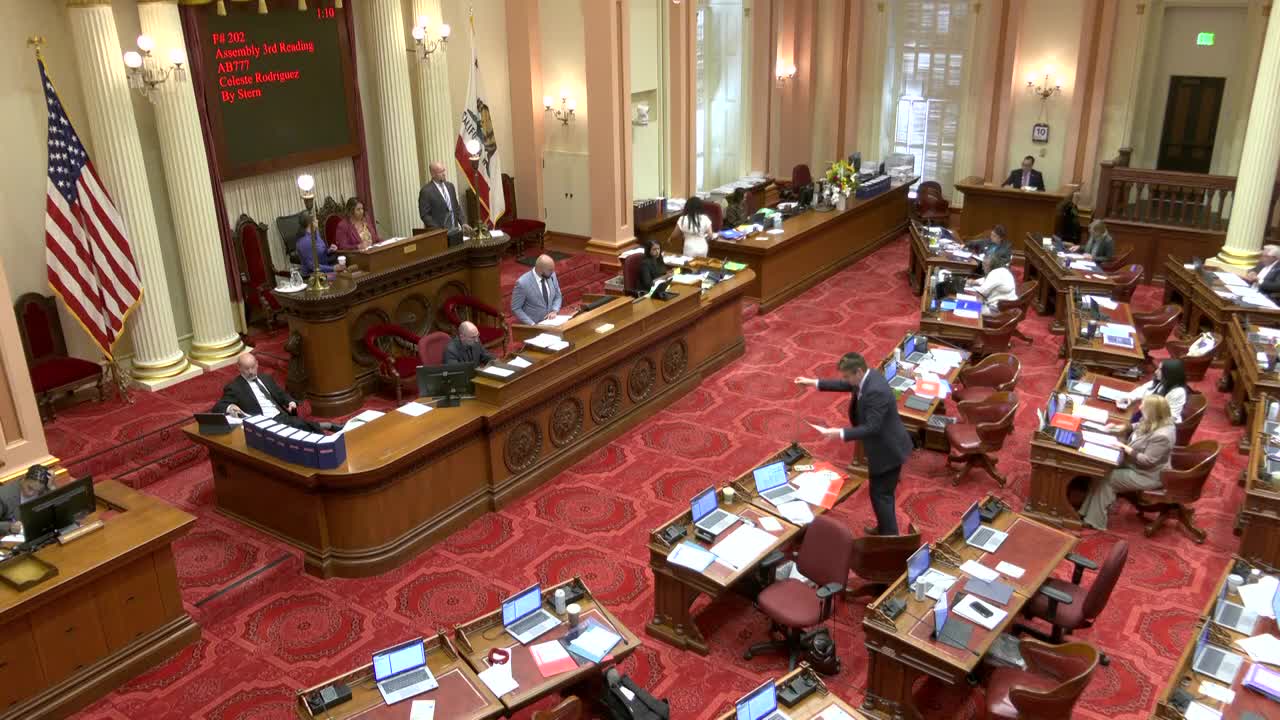 1MIN
Senate Floor
 1MIN
Assembly Floor
 7MIN
Assembly Standing Committee on Economic Development, Growth, and Household Impact
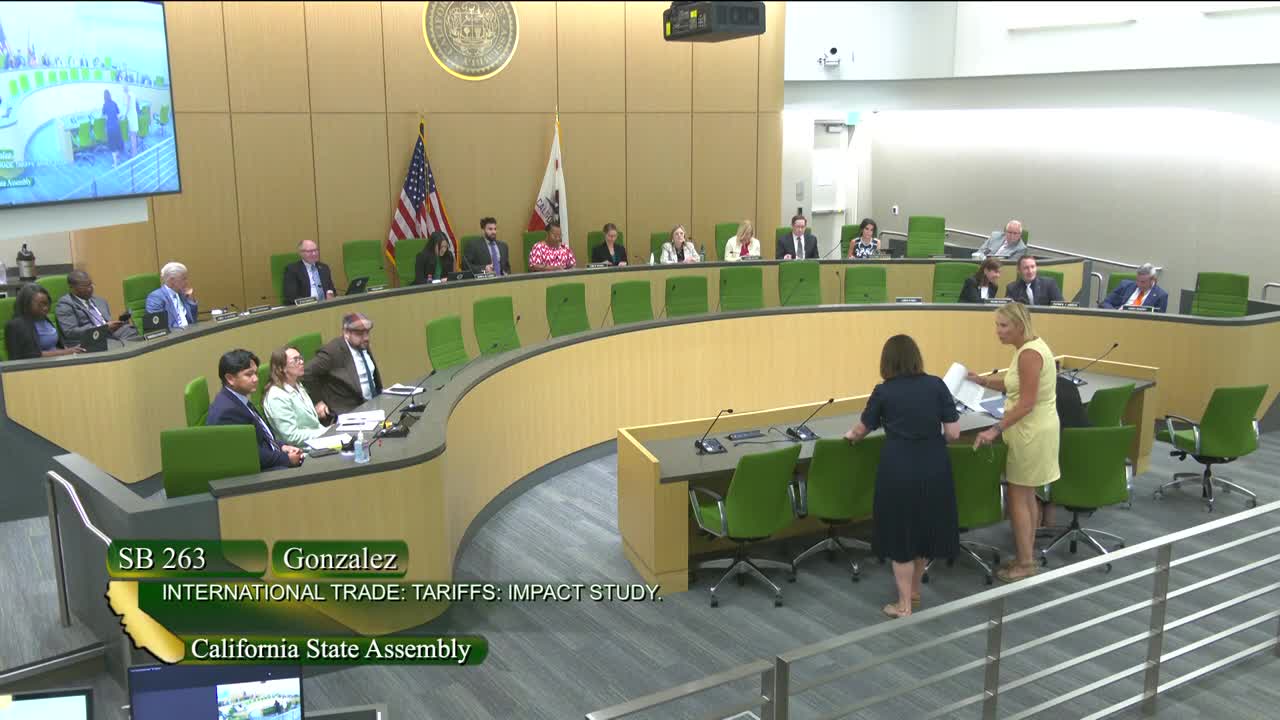 16MIN
Assembly Standing Committee on Transportation
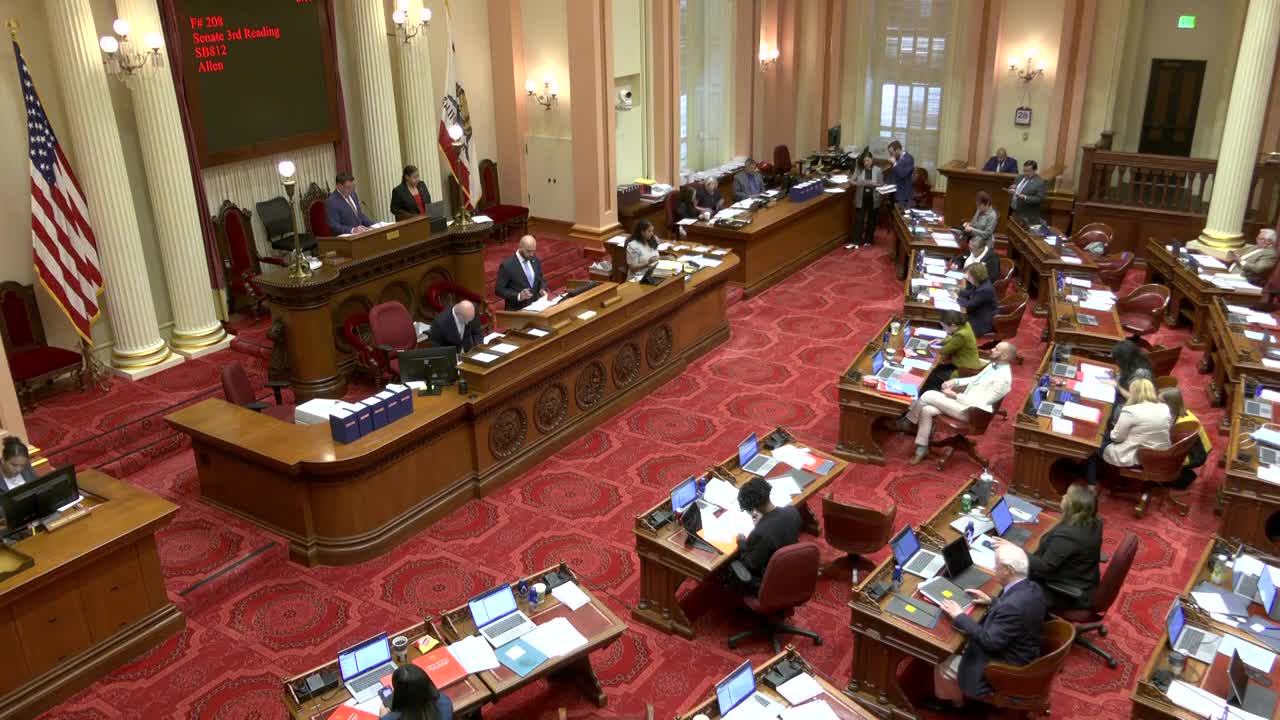 3MIN
Senate Floor
 24MIN
Senate Standing Committee on Business, Professions and Economic Development
 13MIN
Senate Standing Committee on Transportation
Bill Author

Bill Co-Author(s):