SB 275: Eligible training provider list.
- Session Year: 2025-2026
- House: Senate
- Latest Version Date: 2025-09-12
Current Status:
Failed
(2026-03-02: Veto sustained.)
Introduced
In Committee
Awaiting First Chamber Vote
Passed First Chamber
In Committee
Awaiting Second Chamber Vote
Passed Second Chamber
Enacted
Existing law provides that the California Workforce Development Board is responsible for assisting the Governor in the development, oversight, and continuous improvement of Californias workforce investment system, including the development of a state plan to serve as a framework for, among other things, training programs to address the states economic, demographic, and workforce needs. Existing law, in order to support the plan, requires the board to, among other things, establish initial and subsequent eligibility criteria for an eligible training provider list, in accordance with specified federal law.
This bill would prohibit an approved training provider from being removed from the eligible training provider list if the provider has submitted verification of completion of continued eligibility requirements through a local workforce development board, except as provided. The bill would require continued eligibility review to be conducted once every 2 fiscal years, in a manner determined by the Employment Development Department.
Existing law provides that the California Workforce Development Board is responsible for assisting the Governor in the development, oversight, and continuous improvement of Californias workforce investment system, including the development of a state plan to serve as a framework for, among other things, training programs to address the states economic, demographic, and workforce needs. Existing law, in order to support the plan, requires the board to, among other things, establish initial and subsequent eligibility criteria for an eligible training provider list, in accordance with specified federal law.
This bill would prohibit an approved training provider from being removed from the eligible training provider list if the provider has submitted verification of completion of continued eligibility requirements through a local workforce development board, except as provided. The bill would require continued eligibility review to be conducted once every two 2 fiscal years, and would require local workforce development boards to submit continued eligibility reviews to the Employment Development Department, in the form and manner prescribed by the department, no later than September 30 of each even numbered year for the prior two fiscal years, as provided. By expanding the duties of local workforce development boards, this bill would impose a state-mandated local program. years, in a manner determined by the Employment Development Department.
The California Constitution requires the state to reimburse local agencies and school districts for certain costs mandated by the state. Statutory provisions establish procedures for making that reimbursement.This bill would provide that, if the Commission on State Mandates determines that the bill contains costs mandated by the state, reimbursement for those costs shall be made pursuant to the statutory provisions noted above.Existing law provides that the California Workforce Development Board is responsible for assisting the Governor in the development, oversight, and continuous improvement of Californias workforce investment system, including the development of a state plan to serve as a framework for, among other things, training programs to address the states economic, demographic, and workforce needs. Existing law, in order to support the plan, requires the board to, among other things, establish initial and subsequent eligibility criteria for an eligible training provider list, in accordance with specified federal law.
This bill would prohibit an approved training provider from being removed from the eligible training provider list if the provider has submitted verification of completion of continued eligibility requirements through a local workforce development board, except as provided. The bill would require continued eligibility review to be conducted once every two fiscal years, and would require local workforce development boards to submit continued eligibility reviews to the board, Employment Development Department, in the form and manner prescribed by the board, department, no later than September 30 of each even numbered year for the prior two fiscal years, as provided. By expanding the duties of local workforce development boards, this bill would impose a state-mandated local program.
The California Constitution requires the state to reimburse local agencies and school districts for certain costs mandated by the state. Statutory provisions establish procedures for making that reimbursement.
This bill would provide that, if the Commission on State Mandates determines that the bill contains costs mandated by the state, reimbursement for those costs shall be made pursuant to the statutory provisions noted above.
Existing law provides that the California Workforce Development Board is responsible for assisting the Governor in the development, oversight, and continuous improvement of Californias workforce investment system, including the development of a state plan to serve as a framework for, among other things, training programs to address the states economic, demographic, and workforce needs. Existing law, in order to support the plan, requires the board to, among other things, establish initial and subsequent eligibility criteria for an eligible training provider list, in accordance with specified federal law.
This bill would prohibit an approved training provider from being removed from the eligible training provider list if the provider has submitted verification of completion of continued eligibility requirements through a local workforce development board, except as provided. The bill would require continued eligibility review to be conducted once every two fiscal years, and would require local workforce development boards to submit continued eligibility reviews to the board, in the form and manner prescribed by the board, no later than September 30 of each even numbered year for the prior two fiscal years, as provided. By expanding the duties of local workforce development boards, this bill would impose a state-mandated local program.
The California Constitution requires the state to reimburse local agencies and school districts for certain costs mandated by the state. Statutory provisions establish procedures for making that reimbursement.
This bill would provide that, if the Commission on State Mandates determines that the bill contains costs mandated by the state, reimbursement for those costs shall be made pursuant to the statutory provisions noted above.
(a)The California Workforce Development Board, in collaboration with state and local partners, including the Chancellor of the California Community Colleges, the State Department of Education, other appropriate state agencies, and local workforce development boards, shall develop the State Plan to serve as a framework for the development of public policy, employment services, fiscal investment, and operation of all state labor exchange, workforce education, and training programs to address the states economic, demographic, and workforce needs. The strategic workforce plan shall be prepared in a manner consistent with the requirements of the federal Workforce Innovation and Opportunity Act of 2014.
(b)Consistent with the federal Workforce Innovation and Opportunity Act, the State Plan shall provide a framework for state workforce policies and support sector strategies.
(c)The California Workforce Development Board shall work collaboratively with state and local partners to identify ways to eliminate systemwide barriers and better align and leverage federal, state, and local Workforce Innovation and Opportunity Act funding streams, and other funding streams, and policies to develop, support, and sustain regional alliances of employers and workforce and education professionals who are working to improve the educational pipeline, establish well-articulated career pathways, provide industry-recognized credentials, certificates, and recognized postsecondary credentials, and address the career advancement needs of current and future workers in competitive and emergent industry sectors and clusters. The California Workforce Development Board and its partners shall work collaboratively to maximize state and local investments and pursue other resources to address the skills-gap needs identified pursuant to paragraph (3) of subdivision (d).
(d)In order to support the requirement of the plans in subdivision (a), the California Workforce Development Board shall do all of the following:
(1)Identify industry sectors and industry clusters that have a competitive economic advantage and demonstrated economic importance to the state and its regional economies. In developing this analysis, the California Workforce Development Board shall consider the expertise of local workforce development boards in the states respective regional economies and shall encourage the local workforce development boards to identify industry sectors and industry clusters that have a competitive economic advantage and demonstrated economic importance in their respective local workforce development areas.
(2)Identify new dynamic emergent industry sectors and industry clusters with substantial potential to generate new jobs and income growth for the state and its regional economies. In developing this analysis, the California Workforce Development Board shall consider the expertise of local workforce development boards in the states respective regional economies and shall encourage the local workforce development boards to identify new dynamic emergent industry sectors and industry clusters with substantial potential to generate new jobs and income growth in their respective local workforce development areas.
(3)Provide a skills-gap analysis enumerating occupational and skills shortages in the industry sectors and industry clusters identified as having strategic importance to the states economy and its regional economies. In developing this analysis, the California Workforce Development Board shall consider the expertise of local workforce development boards in the states respective regional economies and shall encourage the local workforce development boards to conduct skills-gap analysis for their respective local workforce development areas. Skills-gap analysis for the state and its regional economies shall use labor market data to specify a list of high-priority, in-demand occupations for the state and its regional economies. This list shall be used to inform investment decisions and eligible training provider policies.
(4)Establish, with input from local workforce development boards and other stakeholders, initial and subsequent eligibility criteria for the federal Workforce Innovation and Opportunity Act of 2014 eligible training provider list that effectively directs training resources into training programs leading to employment in high-demand, high-priority, and occupations that provide economic security, particularly those facing a shortage of skilled workers. The subsequent eligibility criteria, to the extent feasible, shall use performance and outcome measures to determine whether a provider is qualified to remain on the list. At a minimum, initial and subsequent eligibility criteria shall consider all of the following:
(A)The relevance of the training program to the workforce needs of the states strategic industry sectors and industry clusters.
(B)The need to plug skills gaps and skills shortages in the economy, including skills gaps and skills shortages at the state and regional level.
(C)The need to plug skills gaps and skills shortages in local workforce development areas.
(D)The likelihood that the training program will lead to job placement in a job providing economic security or job placement in an entry-level job that has a well-articulated career pathway or career ladder to a job providing economic security.
(E)The need for basic skills in combination with programs that provide occupational skills training for individuals with barriers to employment and those who would otherwise be unable to enter occupational skills training.
(F)To the extent feasible, utilize criteria that measure training and education provider performance, including, but not limited to, the following:
(i)Measures of skills or competency attainment.
(ii)Measures relevant to program completion, including measures of course, certificate, degree, licensure, and program of study rate of completion.
(iii)For those entering the labor market, measures of employment placement and retention.
(iv)For those continuing in training or education, measures of educational or training progression.
(v)For those who have entered the labor market, measures of income, including wage measures.
(G)The division of labor for making initial and subsequent eligibility determinations under this division shall be modeled on the division of labor envisioned in the federal Workforce Innovation and Opportunity Act of 2014.
(H)If the state receives a waiver from the federal subsequent eligibility provisions specified in the federal Workforce Innovation and Opportunity Act of 2014, the state workforce development board shall establish its own subsequent eligibility criteria that take into account all of the criteria specified in subparagraphs (A) to (G), inclusive.
(e)(1)(A)An approved training provider who has submitted verification of completion of continued eligibility requirements through a local workforce development board shall not be removed from the eligible training provider list, as specified in paragraph (4) of subdivision (d), until a determination has been made that the provider or program does not meet eligibility requirements.
(B)Continued eligibility review shall be conducted once every two fiscal years in a manner determined by the Employment Development Department.
(2)It is the intent of the Legislature in enacting this subdivision to streamline the continued eligibility process for trainees, trainers, local workforce development boards, and the Employment Development Department.
(a)The California Workforce Development Board, in collaboration with state and local partners, including the Chancellor of the California Community Colleges, the State Department of Education, other appropriate state agencies, and local workforce development boards, shall develop the State Plan to serve as a framework for the development of public policy, employment services, fiscal investment, and operation of all state labor exchange, workforce education, and training programs to address the states economic, demographic, and workforce needs. The strategic workforce plan shall be prepared in a manner consistent with the requirements of the federal Workforce Innovation and Opportunity Act of 2014.
(b)Consistent with the federal Workforce Innovation and Opportunity Act, the State Plan shall provide a framework for state workforce policies and support sector strategies.
(c)The California Workforce Development Board shall work collaboratively with state and local partners to identify ways to eliminate systemwide barriers and better align and leverage federal, state, and local Workforce Innovation and Opportunity Act funding streams, and other funding streams, and policies to develop, support, and sustain regional alliances of employers and workforce and education professionals who are working to improve the educational pipeline, establish well-articulated career pathways, provide industry-recognized credentials, certificates, and recognized postsecondary credentials, and address the career advancement needs of current and future workers in competitive and emergent industry sectors and clusters. The California Workforce Development Board and its partners shall work collaboratively to maximize state and local investments and pursue other resources to address the skills-gap needs identified pursuant to paragraph (3) of subdivision (d).
(d)In order to support the requirement of the plans in subdivision (a), the California Workforce Development Board shall do all of the following:
(1)Identify industry sectors and industry clusters that have a competitive economic advantage and demonstrated economic importance to the state and its regional economies. In developing this analysis, the California Workforce Development Board shall consider the expertise of local workforce development boards in the states respective regional economies and shall encourage the local workforce development boards to identify industry sectors and industry clusters that have a competitive economic advantage and demonstrated economic importance in their respective local workforce development areas.
(2)Identify new dynamic emergent industry sectors and industry clusters with substantial potential to generate new jobs and income growth for the state and its regional economies. In developing this analysis, the California Workforce Development Board shall consider the expertise of local workforce development boards in the states respective regional economies and shall encourage the local workforce development boards to identify new dynamic emergent industry sectors and industry clusters with substantial potential to generate new jobs and income growth in their respective local workforce development areas.
(3)Provide a skills-gap analysis enumerating occupational and skills shortages in the industry sectors and industry clusters identified as having strategic importance to the states economy and its regional economies. In developing this analysis, the California Workforce Development Board shall consider the expertise of local workforce development boards in the states respective regional economies and shall encourage the local workforce development boards to conduct skills-gap analysis for their respective local workforce development areas. Skills-gap analysis for the state and its regional economies shall use labor market data to specify a list of high-priority, in-demand occupations for the state and its regional economies. This list shall be used to inform investment decisions and eligible training provider policies.
(4)Establish, with input from local workforce development boards and other stakeholders, initial and subsequent eligibility criteria for the federal Workforce Innovation and Opportunity Act of 2014 eligible training provider list that effectively directs training resources into training programs leading to employment in high-demand, high-priority, and occupations that provide economic security, particularly those facing a shortage of skilled workers. The subsequent eligibility criteria, to the extent feasible, shall use performance and outcome measures to determine whether a provider is qualified to remain on the list. At a minimum, initial and subsequent eligibility criteria shall consider all of the following:
(A)The relevance of the training program to the workforce needs of the states strategic industry sectors and industry clusters.
(B)The need to plug skills gaps and skills shortages in the economy, including skills gaps and skills shortages at the state and regional level.
(C)The need to plug skills gaps and skills shortages in local workforce development areas.
(D)The likelihood that the training program will lead to job placement in a job providing economic security or job placement in an entry-level job that has a well-articulated career pathway or career ladder to a job providing economic security.
(E)The need for basic skills in combination with programs that provide occupational skills training for individuals with barriers to employment and those who would otherwise be unable to enter occupational skills training.
(F)To the extent feasible, utilize criteria that measure training and education provider performance, including, but not limited to, the following:
(i)Measures of skills or competency attainment.
(ii)Measures relevant to program completion, including measures of course, certificate, degree, licensure, and program of study rate of completion.
(iii)For those entering the labor market, measures of employment placement and retention.
(iv)For those continuing in training or education, measures of educational or training progression.
(v)For those who have entered the labor market, measures of income, including wage measures.
(G)The division of labor for making initial and subsequent eligibility determinations under this division shall be modeled on the division of labor envisioned in the federal Workforce Innovation and Opportunity Act of 2014.
(H)If the state receives a waiver from the federal subsequent eligibility provisions specified in the federal Workforce Innovation and Opportunity Act of 2014, the state workforce development board shall establish its own subsequent eligibility criteria that take into account all of the criteria specified in subparagraphs (A) to (G), inclusive.
(e)(1)(A)An approved training provider who has submitted verification of completion of continued eligibility requirements through a local workforce development board shall not be removed from the eligible training provider list, as specified in paragraph (4) of subdivision (d), until a determination has been made that the provider or program does not meet eligibility requirements.
(2)(B)Continued eligibility review shall be conducted once every two fiscal years. Local workforce development boards shall submit continued eligibility reviews of providers on the eligible training provider list to the Employment Development Department, in the form and manner prescribed by the department, no later than September 30 of each even numbered year for the prior two fiscal years concluding June 30. years in a manner determined by the Employment Development Department.
(2)It is the intent of the Legislature in enacting this subdivision to streamline the continued eligibility process for trainees, trainers, local workforce development boards, and the Employment Development Department.
SEC. 2.If the Commission on State Mandates determines that this act contains costs mandated by the state, reimbursement to local agencies and school districts for those costs shall be made pursuant to Part 7 (commencing with Section 17500) of Division 4 of Title 2 of the Government Code.(a)The California Workforce Development Board, in collaboration with state and local partners, including the Chancellor of the California Community Colleges, the State Department of Education, other appropriate state agencies, and local workforce development boards, shall develop the State Plan to serve as a framework for the development of public policy, employment services, fiscal investment, and operation of all state labor exchange, workforce education, and training programs to address the states economic, demographic, and workforce needs. The strategic workforce plan shall be prepared in a manner consistent with the requirements of the federal Workforce Innovation and Opportunity Act of 2014.
(b)Consistent with the federal Workforce Innovation and Opportunity Act, the State Plan shall provide a framework for state workforce policies and support sector strategies.
(c)The California Workforce Development Board shall work collaboratively with state and local partners to identify ways to eliminate systemwide barriers and better align and leverage federal, state, and local Workforce Innovation and Opportunity Act funding streams, and other funding streams, and policies to develop, support, and sustain regional alliances of employers and workforce and education professionals who are working to improve the educational pipeline, establish well-articulated career pathways, provide industry-recognized credentials, certificates, and recognized postsecondary credentials, and address the career advancement needs of current and future workers in competitive and emergent industry sectors and clusters. The California Workforce Development Board and its partners shall work collaboratively to maximize state and local investments and pursue other resources to address the skills-gap needs identified pursuant to paragraph (3) of subdivision (d).
(d)In order to support the requirement of the plans in subdivision (a), the California Workforce Development Board shall do all of the following:
(1)Identify industry sectors and industry clusters that have a competitive economic advantage and demonstrated economic importance to the state and its regional economies. In developing this analysis, the California Workforce Development Board shall consider the expertise of local workforce development boards in the states respective regional economies and shall encourage the local workforce development boards to identify industry sectors and industry clusters that have a competitive economic advantage and demonstrated economic importance in their respective local workforce development areas.
(2)Identify new dynamic emergent industry sectors and industry clusters with substantial potential to generate new jobs and income growth for the state and its regional economies. In developing this analysis, the California Workforce Development Board shall consider the expertise of local workforce development boards in the states respective regional economies and shall encourage the local workforce development boards to identify new dynamic emergent industry sectors and industry clusters with substantial potential to generate new jobs and income growth in their respective local workforce development areas.
(3)Provide a skills-gap analysis enumerating occupational and skills shortages in the industry sectors and industry clusters identified as having strategic importance to the states economy and its regional economies. In developing this analysis, the California Workforce Development Board shall consider the expertise of local workforce development boards in the states respective regional economies and shall encourage the local workforce development boards to conduct skills-gap analysis for their respective local workforce development areas. Skills-gap analysis for the state and its regional economies shall use labor market data to specify a list of high-priority, in-demand occupations for the state and its regional economies. This list shall be used to inform investment decisions and eligible training provider policies.
(4)Establish, with input from local workforce development boards and other stakeholders, initial and subsequent eligibility criteria for the federal Workforce Innovation and Opportunity Act of 2014 eligible training provider list that effectively directs training resources into training programs leading to employment in high-demand, high-priority, and occupations that provide economic security, particularly those facing a shortage of skilled workers. The subsequent eligibility criteria, to the extent feasible, shall use performance and outcome measures to determine whether a provider is qualified to remain on the list. At a minimum, initial and subsequent eligibility criteria shall consider all of the following:
(A)The relevance of the training program to the workforce needs of the states strategic industry sectors and industry clusters.
(B)The need to plug skills gaps and skills shortages in the economy, including skills gaps and skills shortages at the state and regional level.
(C)The need to plug skills gaps and skills shortages in local workforce development areas.
(D)The likelihood that the training program will lead to job placement in a job providing economic security or job placement in an entry-level job that has a well-articulated career pathway or career ladder to a job providing economic security.
(E)The need for basic skills in combination with programs that provide occupational skills training for individuals with barriers to employment and those who would otherwise be unable to enter occupational skills training.
(F)To the extent feasible, utilize criteria that measure training and education provider performance, including, but not limited to, the following:
(i)Measures of skills or competency attainment.
(ii)Measures relevant to program completion, including measures of course, certificate, degree, licensure, and program of study rate of completion.
(iii)For those entering the labor market, measures of employment placement and retention.
(iv)For those continuing in training or education, measures of educational or training progression.
(v)For those who have entered the labor market, measures of income, including wage measures.
(G)The division of labor for making initial and subsequent eligibility determinations under this division shall be modeled on the division of labor envisioned in the federal Workforce Innovation and Opportunity Act of 2014.
(H)If the state receives a waiver from the federal subsequent eligibility provisions specified in the federal Workforce Innovation and Opportunity Act of 2014, the state workforce development board shall establish its own subsequent eligibility criteria that take into account all of the criteria specified in subparagraphs (A) to (G), inclusive.
(e)(1)An approved training provider who has submitted verification of completion of continued eligibility requirements through a local workforce development board shall not be removed from the eligible training provider list, as specified in paragraph (4) of subdivision (d), until a determination has been made that the provider or program does not meet eligibility requirements.
(2)Continued eligibility review shall be conducted once every two fiscal years. Local workforce development boards shall submit continued eligibility reviews of providers on the eligible training provider list to the California Workforce Development Board, Employment Development Department, in the form and manner prescribed by the California Workforce Development Board, department, no later than September 30 of each even numbered year for the prior two fiscal years concluding June 30.
SEC. 2.If the Commission on State Mandates determines that this act contains costs mandated by the state, reimbursement to local agencies and school districts for those costs shall be made pursuant to Part 7 (commencing with Section 17500) of Division 4 of Title 2 of the Government Code.
REVISIONS: HeadingLine 2.(a)The California Workforce Development Board, in collaboration with state and local partners, including the Chancellor of the California Community Colleges, the State Department of Education, other appropriate state agencies, and local workforce development boards, shall develop the State Plan to serve as a framework for the development of public policy, employment services, fiscal investment, and operation of all state labor exchange, workforce education, and training programs to address the states economic, demographic, and workforce needs. The strategic workforce plan shall be prepared in a manner consistent with the requirements of the federal Workforce Innovation and Opportunity Act of 2014.
(b)Consistent with the federal Workforce Innovation and Opportunity Act, the State Plan shall provide a framework for state workforce policies and support sector strategies.
(c)The California Workforce Development Board shall work collaboratively with state and local partners to identify ways to eliminate systemwide barriers and better align and leverage federal, state, and local Workforce Innovation and Opportunity Act funding streams, and other funding streams, and policies to develop, support, and sustain regional alliances of employers and workforce and education professionals who are working to improve the educational pipeline, establish well-articulated career pathways, provide industry-recognized credentials, certificates, and recognized postsecondary credentials, and address the career advancement needs of current and future workers in competitive and emergent industry sectors and clusters. The California Workforce Development Board and its partners shall work collaboratively to maximize state and local investments and pursue other resources to address the skills-gap needs identified pursuant to paragraph (3) of subdivision (d).
(d)In order to support the requirement of the plans in subdivision (a), the California Workforce Development Board shall do all of the following:
(1)Identify industry sectors and industry clusters that have a competitive economic advantage and demonstrated economic importance to the state and its regional economies. In developing this analysis, the California Workforce Development Board shall consider the expertise of local workforce development boards in the states respective regional economies and shall encourage the local workforce development boards to identify industry sectors and industry clusters that have a competitive economic advantage and demonstrated economic importance in their respective local workforce development areas.
(2)Identify new dynamic emergent industry sectors and industry clusters with substantial potential to generate new jobs and income growth for the state and its regional economies. In developing this analysis, the California Workforce Development Board shall consider the expertise of local workforce development boards in the states respective regional economies and shall encourage the local workforce development boards to identify new dynamic emergent industry sectors and industry clusters with substantial potential to generate new jobs and income growth in their respective local workforce development areas.
(3)Provide a skills-gap analysis enumerating occupational and skills shortages in the industry sectors and industry clusters identified as having strategic importance to the states economy and its regional economies. In developing this analysis, the California Workforce Development Board shall consider the expertise of local workforce development boards in the states respective regional economies and shall encourage the local workforce development boards to conduct skills-gap analysis for their respective local workforce development areas. Skills-gap analysis for the state and its regional economies shall use labor market data to specify a list of high-priority, in-demand occupations for the state and its regional economies. This list shall be used to inform investment decisions and eligible training provider policies.
(4)Establish, with input from local workforce development boards and other stakeholders, initial and subsequent eligibility criteria for the federal Workforce Innovation and Opportunity Act of 2014 eligible training provider list that effectively directs training resources into training programs leading to employment in high-demand, high-priority, and occupations that provide economic security, particularly those facing a shortage of skilled workers. The subsequent eligibility criteria, to the extent feasible, shall use performance and outcome measures to determine whether a provider is qualified to remain on the list. At a minimum, initial and subsequent eligibility criteria shall consider all of the following:
(A)The relevance of the training program to the workforce needs of the states strategic industry sectors and industry clusters.
(B)The need to plug skills gaps and skills shortages in the economy, including skills gaps and skills shortages at the state and regional level.
(C)The need to plug skills gaps and skills shortages in local workforce development areas.
(D)The likelihood that the training program will lead to job placement in a job providing economic security or job placement in an entry-level job that has a well-articulated career pathway or career ladder to a job providing economic security.
(E)The need for basic skills in combination with programs that provide occupational skills training for individuals with barriers to employment and those who would otherwise be unable to enter occupational skills training.
(F)To the extent feasible, utilize criteria that measure training and education provider performance, including, but not limited to, the following:
(i)Measures of skills or competency attainment.
(ii)Measures relevant to program completion, including measures of course, certificate, degree, licensure, and program of study rate of completion.
(iii)For those entering the labor market, measures of employment placement and retention.
(iv)For those continuing in training or education, measures of educational or training progression.
(v)For those who have entered the labor market, measures of income, including wage measures.
(G)The division of labor for making initial and subsequent eligibility determinations under this division shall be modeled on the division of labor envisioned in the federal Workforce Innovation and Opportunity Act of 2014.
(H)If the state receives a waiver from the federal subsequent eligibility provisions specified in the federal Workforce Innovation and Opportunity Act of 2014, the state workforce development board shall establish its own subsequent eligibility criteria that take into account all of the criteria specified in subparagraphs (A) to (G), inclusive.
(e)(1)An approved training provider who has submitted verification of completion of continued eligibility requirements through a local workforce development board shall not be removed from the eligible training provider list, as specified in paragraph (4) of subdivision (d), until a determination has been made that the provider or program does not meet eligibility requirements.
(2)Continued eligibility review shall be conducted once every two fiscal years. Local workforce development boards shall submit continued eligibility reviews of providers on the eligible training provider list to the California Workforce Development Board, in the form and manner prescribed by the California Workforce Development Board, no later than September 30 of each even numbered year for the prior two fiscal years concluding June 30.
SEC. 2.If the Commission on State Mandates determines that this act contains costs mandated by the state, reimbursement to local agencies and school districts for those costs shall be made pursuant to Part 7 (commencing with Section 17500) of Division 4 of Title 2 of the Government Code.
|
Date
|
Status
|
|---|---|
| Mar 2, 2026 | Veto sustained. |
| Mar 2, 2026 | Stricken from file. |
| Oct 1, 2025 | In Senate. Consideration of Governor's veto pending. |
| Oct 1, 2025 | Vetoed by the Governor. |
| Sep 16, 2025 | Enrolled and presented to the Governor at 3 p.m. |
| Sep 9, 2025 | Assembly amendments concurred in. (Ayes 40. Noes 0. Page 2741.) Ordered to engrossing and enrolling. |
| Sep 8, 2025 | In Senate. Concurrence in Assembly amendments pending. |
| Sep 8, 2025 | Read third time. Passed. (Ayes 78. Noes 1. Page 2998.) Ordered to the Senate. |
| Sep 3, 2025 | Read second time. Ordered to third reading. |
| Sep 2, 2025 | Read second time and amended. Ordered to second reading. |
| Aug 29, 2025 | From committee: Do pass as amended. (Ayes 11. Noes 0.) (August 29). |
| Aug 20, 2025 | July 16 set for first hearing. Placed on APPR. suspense file. |
| Jun 26, 2025 | From committee: Do pass and re-refer to Com. on APPR. with recommendation: To consent calendar. (Ayes 7. Noes 0.) (June 25). Re-referred to Com. on APPR. |
| Jun 26, 2025 | Coauthors revised. |
| Jun 5, 2025 | Referred to Com. on L. & E. |
| May 29, 2025 | In Assembly. Read first time. Held at Desk. |
| May 29, 2025 | Read third time. Passed. (Ayes 38. Noes 0. Page 1323.) Ordered to the Assembly. |
| May 27, 2025 | Ordered to special consent calendar. |
| May 23, 2025 | Read second time. Ordered to third reading. |
| May 23, 2025 | From committee: Do pass. (Ayes 6. Noes 0. Page 1194.) (May 23). |
| May 16, 2025 | Set for hearing May 23. |
| Apr 7, 2025 | April 7 hearing: Placed on APPR. suspense file. |
| Mar 28, 2025 | Set for hearing April 7. |
| Mar 26, 2025 | From committee: Do pass and re-refer to Com. on APPR. with recommendation: To consent calendar. (Ayes 5. Noes 0. Page 567.) (March 26). Re-referred to Com. on APPR. |
| Mar 18, 2025 | Set for hearing March 26. |
| Mar 11, 2025 | From committee with author's amendments. Read second time and amended. Re-referred to Com. on L., P.E. & R. |
| Feb 14, 2025 | Referred to Com. on L., P.E. & R. |
| Feb 5, 2025 | From printer. May be acted upon on or after March 7. |
| Feb 4, 2025 | Introduced. Read first time. To Com. on RLS. for assignment. To print. |
|
Date
|
Description
|
Location
|
Votes
|
|
|---|---|---|---|---|
| Sep 9, 2025 | Unfinished Business SB275 Smallwood-Cuevas Concurrence | Senate Floor |
Passed |
|
| Sep 8, 2025 | SB 275 Smallwood-Cuevas Senate Third Reading By Ortega | Assembly Floor |
Passed |
|
| Aug 29, 2025 | Do pass as amended. | Assembly Standing Committee on Appropriations |
Passed |
|
| Jun 25, 2025 | Do pass and be re-referred to the Committee on [Appropriations] with recommendation: To Consent Calendar | Assembly Standing Committee on Labor and Employment |
Passed |
|
| May 29, 2025 | Special Consent SB275 Smallwood-Cuevas | Senate Floor |
Passed |
|
| May 23, 2025 | Do pass | Senate Standing Committee on Appropriations |
Passed |
|
| Apr 7, 2025 | Placed on suspense file | Senate Standing Committee on Appropriations |
Passed |
|
| Mar 26, 2025 | Do pass, but first be re-referred to the Committee on [Appropriations] with the recommendation: To Consent Calendar | Senate Standing Committee on Labor, Public Employment and Retirement |
Passed |
This list shows positions taken on this bill by organizations on the date displayed, which is linked to the original source.
Positions by individuals are not included.
|
Organization
|
Position
|
Date
|
|---|---|---|
| Alameda County Workforce Development Board | ** Support | |
| Apple Valley Adult School | ** Support | |
| Association Of Community And Continuing Education | ** Support | |
| Bakersfield Adult School | ** Support | |
| Bay Area Community College Consortium | ** Support | |
| Beaumont Adult School | ** Support | |
| Butte Community College | ** Support | |
| Cabrillo Community College District | ** Support | |
| California Adult Education Administrators Association | ** Support | |
| California Council For Adult Education | ** Support | |
| California EDGE Coalition | ** Support | |
| California Workforce Association | ** Support | |
| Capital Adult Education Regional Consortium | ** Support | |
| Castro Valley Adult and Career Education | ** Support | |
| CAUSE Impacts | ** Support | |
| Chaffey Community College District | ** Support | |
| Citrus College | ** Support | |
| City of Riverside | ** Support | |
| Coast Community College District | ** Support | |
| College of the Siskiyous | ** Support | |
| Consumnes River College Franklin Career Center | ** Support | |
| Copper Mountain College | ** Support | |
| County Of Kern | ** Support | |
| County of Los Angeles Board of Supervisors | ** Support | |
| Cuesta Community College | ** Support | |
| Eastbay Works | ** Support | |
| Elk Grove Adult and Community Education | ** Support | |
| Escondido Adult School | ** Support | |
| Fairfield-suisun Adult School | ** Support | |
| Fontana Adult School | ** Support | |
| Foothill Workforce Development Board | ** Support | |
| Fresno City College | ** Support | |
| Fresno Regional Workforce Development Board | ** Support | |
| Golden Sierra Workforce Development Board | ** Support | |
| Grossmont Community College | ** Support | |
| Hartnell Community College District | ** Support | |
| Imperial County Workforce Development Board | ** Support | |
| Lake Elsinore Unified School District | ** Support | |
| Lake Elsinore Valley Adult School | ** Support | |
| Laney College | ** Support | |
| Laney Community College | ** Support | |
| Lassen Community College | ** Support | |
| L. M. Lewis Consulting | ** Support | |
| Los Angeles Cleantech Incubator | ** Support | |
| Los Angeles Valley College | ** Support | |
| Martinez Adult Education | ** Support | |
| Mendocino College | ** Support | |
| Mendocino Community College District | ** Support | |
| Mendocino-lake Adult and Career Education Consortium | ** Support | |
| Merritt Community College | ** Support | |
| Mid-alameda County Consortium for Adult Education | ** Support | |
| MiraCosta College | ** Support | |
| Mira Costa Community College District | ** Support | |
| Modesto Junior College | ** Support | |
| Monterey County Workforce Development Board | ** Support | |
| Moreno Valley Community College | ** Support | |
| Mother Lode Job Training | ** Support | |
| Mt. Diablo Adult Education | ** Support | |
| Mt. Sac School of Continuing Education | ** Support | |
| Mt. San Antonio College | ** Support | |
| Mt. San Jacinto Community College District | ** Support | |
| Murrieta Valley Adult School | ** Support | |
| Norco Community College | ** Support | |
| North Orange County Community College District | ** Support | |
| North Orange County Regional Occupational Program | ** Support | |
| North Orange County ROP | ** Support | |
| North Orange County ROP Education Center | ** Support | |
| Novaworks | ** Support | |
| Oakland Adult and Career Education | ** Support | |
| Oakland Private Industry Council | ** Support | |
| Oakland Workforce Development Board | ** Support | |
| Opportunity Junction | ** Support | |
| Oxnard Community College | ** Support | |
| Palo Verde College | ** Support | |
| Palo Verde Community College District | ** Support | |
| Pittsburg Adult Education Center | ** Support | |
| Pittsburg Adult School | ** Support | |
| Placer School for Adults | ** Support | |
| Redlands Adult School | ** Support | |
| Richmond Workforce Development Board | ** Support | |
| Richmond Works | ** Support | |
| Rio Hondo College | ** Support | |
| Rio Hondo Community College | ** Support | |
| Riverside Adult School | ** Support | |
| Riverside Community College | ** Support | |
| Riverside Community College District | ** Support | |
| Rubicon Programs | ** Support | |
| Saddleback College | ** Support | |
| Salinas Adult School | ** Support | |
| San Benito County Workforce Development Board | ** Support | |
| San Bernardino Community College District | ** Support | |
| SAN BERNARDINO VALLEY COLLEGE | ** Support | |
| San Bernardino Valley Community College Applied Technology Center | ** Support | |
| San Diego Community College District | ** Support | |
| San Diego & Imperial Counties Community Colleges Regional Consortium | ** Support | |
| San Francisco Office of Economic & Workforce Development | ** Support | |
| San Juan Adult Education | ** Support | |
| San Mateo Adult and Career Education | ** Support | |
| Santa Barbara Community College District | ** Support | |
| Santiago Canyon Community College | ** Support | |
| Shasta Community College | ** Support | |
| South Bay Workforce Investment Board | ** Support | |
| Southwestern Community College District | ** Support | |
| Southwest Riverside Adult Education Consortium | ** Support | |
| Taft Community College | ** Support | |
| The Anaheim Workforce Development Board | ** Support | |
| The League Xs | ** Support | |
| The Unity Council | ** Support | |
| Tri-valley Career Center | ** Support | |
| Unite-la, INC. | ** Support | |
| Visalia Adult School | ** Support | |
| Vista Adult School | ** Support | |
| West Contra Costa Adult Education | ** Support | |
| West Hills College Lemoore | ** Support | |
| West Valley Community College | ** Support | |
| Whittier Union Adult School | ** Support | |
| Woodland Adult Education | ** Support | |
| Workforce Alliance Of The North Bay | ** Support | |
| Workforce Development Board of Madera County | ** Support | |
| Workforce Development Board of Solano County | ** Support |
SENATE RULES COMMITTEE Office of Senate Floor Analyses (916) 651-1520 Fax: (916) 327-4478 | SB 275 |
VETO
Bill No: SB 275
Author: Smallwood-Cuevas (D), et al.
Enrolled: 9/12/25
Vote: 27
SENATE LABOR, PUB. EMP. & RET. COMMITTEE: 5-0, 3/26/25
AYES: Smallwood-Cuevas, Strickland, Cortese, Durazo, Laird
SENATE APPROPRIATIONS COMMITTEE: 6-0, 5/23/25
AYES: Caballero, Seyarto, Cabaldon, Grayson, Richardson, Wahab
NO VOTE RECORDED: Dahle
SENATE FLOOR: 40-0, 9/9/25
AYES: Allen, Alvarado-Gil, Archuleta, Arreguín, Ashby, Becker, Blakespear, Cabaldon, Caballero, Cervantes, Choi, Cortese, Dahle, Durazo, Gonzalez, Grayson, Grove, Hurtado, Jones, Laird, Limón, McGuire, McNerney, Menjivar, Niello, Ochoa Bogh, Padilla, Pérez, Reyes, Richardson, Rubio, Seyarto, Smallwood-Cuevas, Stern, Strickland, Umberg, Valladares, Wahab, Weber Pierson, Wiener
ASSEMBLY FLOOR: 78-1, 9/8/25 - See last page for vote
SUBJECT: Eligible training provider list
SOURCE: California Workforce Association
DIGEST:
This bill prohibits an approved training provider from being removed from the eligible training provider list (ETPL), if the provider has submitted verification of completion of continued eligibility requirements through a local workforce development board, as specified, and requires continued eligibility reviews to be conducted once every two fiscal years, as specified.
ANALYSIS:
Existing federal law establishes the Workforce Innovation and Opportunity Act (WIOA) to help job seekers access employment, education, training, and support services to succeed in the labor market and to match employers with the skilled workers they need to compete in the global economy. (Title 29 United States Code (U.S.C.) §3101-3361)
Existing state law:
- Establishes the California Workforce Development Board (CWDB), under the purview of the Labor and Workforce Development Agency, as the body responsible for assisting the Governor in the development, oversight, and continuous improvement of California’s workforce system, including its alignment to the needs of the economy and the workforce. (Unemployment Insurance Code (UIC) §14010 et seq.)
- Provides that the CWDB, in collaboration with state and local partners, including the California Community Colleges Chancellor, the State Department of Education, other appropriate state agencies, and local workforce development boards must develop the State Plan to serve as a framework for the development of public policy, employment services, fiscal investment, and operation of all state labor exchange, workforce education, and training programs to address the state’s economic, demographic, and workforce needs. The strategic workforce plan must be prepared in a manner consistent with the requirement of the federal WIOA of 2014. (UIC §14020)
- Requires CWDB to do the following in order to support the requirement of the State Plan:
- Identify industry sectors and industry clusters that have a competitive economic advantage and demonstrated economic importance to the state and its regional economies.
- Identify industry sectors and industry clusters with substantial potential to generate new jobs and income growth for the state and its regional economies.
- Provide a skills-gap analysis enumerating occupation and skills shortages in the industry sectors and industry clusters as having strategic importance to the state’s economy and its regional economies. Skills-gap analysis for the state and its regional economies must use labor market data to specify a list of high-priority, in-demand occupations for the state and its regional economies. This list must be used to inform investment decisions and eligible training provider policies.
- Establish, with input from local workforce development boards and other stakeholders, initial and subsequent eligibility criteria for the federal WIOA of 2014 eligible training provider list that effectively directs training resources into training programs leading to employment in high-demand, high-priority, and occupations that provide economic security, particularly those facing a shortage of skilled workers. (UIC §14020(d))
- Establishes eligibility criteria, to the extent feasible, which must use performance and outcome measures to determine whether a provider is qualified to remain on the eligibility list. At a minimum, initial and subsequent eligibility criteria shall consider the following:
- The relevance of the training program to the workforce needs of the state’s strategic industry sectors and industry clusters.
- The need to plug skills gaps and skills shortages in the economy, including skills gaps and skills shortages at the state and regional level.
- The need to plug skills gaps and skills shortages in local workforce development areas.
- The likelihood that the training program will lead to job placement in a job providing economic security or job placement in an entry-level job that has a well-articulated career pathway or career ladder to a job providing economic security.
- The need for basic skills in combination with programs that provide occupational skills training for individuals with barriers to employment and those who would otherwise be unable to enter occupational skills training.
- To the extent feasible, local boards must utilize criteria that measure training and education provider performance, including, but not limited to, the following:
- Measures of skills or competency attainment.
- Measures relevant to program completion, including measures of course, certificate, degree, licensure, and program of study rate of completion.
- For those entering the labor market, measures of employment placement and retention.
- For those continuing in training or education, measures of educational or training progression.
- For those who have entered the labor market, measures of income, including wage measures. (UIC §14020 (d)(4))
This bill:
- Prohibits an approved training provider who has submitted verification of completion of continued eligibility though a local workforce development board from being removed from the eligible training provider list (ETPL) until a determination has been made that the provider or program does not meet eligibility requirements.
- Requires continued eligibility review to be conducted once every two fiscal years in a manner determined by EDD.
- Provides that it is the intent of the Legislature in enacting this is to streamline the continued eligibility process for trainees, trainers, local workforce development boards, and EDD.
Background
California Workforce Development Board and the State Plan. The CWDB was established in 1998, as outlined in the federal Workforce Investment Act. In 2014, the Workforce Investment Act was replaced by the WIOA, which outlined the vision and structure through which state workforce training and education programs are funded and administered regionally and locally. WIOA mandates the creation of a statewide strategic workforce plan. Every few years, the CWDB, in conjunction with its statewide partners, releases the Unified Strategic State Plan (State Plan).
In order to support the requirement of the State Plan, CWDB was required to establish initial eligibility criteria for the federal WIOA eligible training provider list that directs training resources into training programs leading to high-demand, high-priority employment, and occupations that provide economic security, particularly those facing a shortage of skilled workers. CWDB also established eligibility criteria, to the extent feasible, which used performance and outcome measures to determine whether a provider is qualified to remain on the eligibility list.
California Eligible Training Provider List. The California Eligible Training Provider List (ETPL) helps adults and people who have lost their jobs find training programs. The ETPL includes approved places that offer different types of training, including classes, online courses, and apprenticeships. The ETPL was created by the Workforce Investment Act of 1998 and updated by the WIOA of 2014. The training providers on this list are funded through WIOA to help cover training costs.
Training providers who would like to be added to the ETPL, must register by creating an account on CalJOBS. After registering, the local workforce development boards will review the application. If the training providers are approved as an eligible training provider, they can submit training programs to be listed on the ETPL.
The Employment Development Department (EDD) is the entity responsible for publishing, disseminating, and maintaining the comprehensive ETPL with performance and cost information. In addition, EDD is responsible for ensuring programs meet the eligibility criteria and performance levels established by the CWDB; removing programs that do not meet the program criteria or performance levels established; and taking enforcement actions against providers that intentionally provide inaccurate information, or that substantially violate the requirements of WIOA.
Prior/Related Legislation
SB 1270 (Eduardo Garcia, Chapter 94, Statutes of 2015) made necessary changes to existing workforce development statutes to conform to the new federal guidelines under the Workforce Innovation and Opportunity Act (WIOA) while preserving core elements of California's workforce development policies. This bill updated statutory references to the Workforce Investment Act of 1998 to instead refer to the WIOA and make related conforming changes. This bill also renamed the California Workforce Investment Board (CWIB) the California Workforce Development Board and revised the membership of the board. Finally, this bill renamed the local boards as local workforce development boards and revised their duties consistent with the federal WIOA.
SB 118 (Lieu, Chapter 562, Statues of 2013) required the former California Workforce Investment Board (CWIB), now called the California Workforce Development Board (CWDB), to incorporate specific principles into the State Plan that align the education and workforce investment systems of the state to the needs of the 21st century economy and promotes a well-educated and highly skilled workforce to meet the future workforce needs. SB 118 also established, with input from local workforce development boards and other stakeholders, initial and subsequent eligibility criteria for the WIOA Eligible Training Provider List (ETPL) that effectively directs training resources into training programs leading to employment in high-demand, high-priority, and high-wage occupations, as specified.
FISCAL EFFECT: Appropriation: No Fiscal Com.: Yes Local: No
According to the Assembly Appropriations Committee:
- One-time costs of approximately $500,000 (Contingent Fund) and ongoing costs of approximately $500,000 (Consolidated Work Program Fund) to EDD to: (a) update ETPL policy and procedures impacting the initial and subsequent eligibility review processes, including publishing guidance for LWDBs, (b) update information technology systems to support such changes, and (c) hire additional staff to review provider applications and meet applicable federal deadlines within this bill’s compressed timeline. EDD notes that a prior similar ETPL program revision required approximately two years to complete, and estimates needing up to 30 months to implement this bill.
- Minor and absorbable costs across the 45 LWDBs to submit the required ETPL reviews to EDD every two years. The sponsor of this bill notes that EDD currently requires LWDBs to submit reviews annually and reducing report frequency will alleviate related staff workload costs for LWDBs. If the Commission on State Mandates determines this bill’s requirements to be a reimbursable state mandate, the state would need to reimburse these costs to local agencies.
SUPPORT: (Verified 10/8/25)
California Workforce Association (Source)
Association of Community and Continuing Education
Alameda County Workforce Development Board
Apple Valley Adult School
Association of Community and Continuing Education
Bakersfield Adult School
Bay Area Community College Consortium
Beaumont Adult School
Butte Community College
Cabrillo Community College District
California Adult Education Administrators Association
California Council for Adult Education
California Edge Coalition
Capital Adult Education Regional Consortium
Castro Valley Adult and Career Education
CAUSE Impacts
Chaffey Community College District
Citrus College
City of Riverside
Coast Community College District
College of the Siskiyous
Consumnes River College Franklin Career Center
Copper Mountain College
County of Kern
County of Los Angeles Board of Supervisors
Cuesta Community College
Eastbay Works
Elk Grove Adult and Community Education
Escondido Adult School
Fairfield-Suisun Adult School
Fontana Adult School
Foothill Workforce Development Board
Fresno City College
Fresno Regional Workforce Development Board
Golden Sierra Workforce Development Board
Grossmont Community College
Hartnell Community College District
Imperial County Workforce Development Board
L. M. Lewis Consulting
Lake Elsinore Unified School District
Lake Elsinore Valley Adult School
Laney College
Laney Community College
Lassen Community College
Los Angeles Cleantech Incubator
Los Angeles Valley College
Martinez Adult Education
Mendocino College
Mendocino Community College District
Mendocino-lake Adult and Career Education Consortium
Merritt Community College
Mid-alameda County Consortium for Adult Education
Mira Costa Community College District
Miracosta College
Modesto Junior College
Monterey County Workforce Development Board
Moreno Valley Community College
Mother Lode Job Training
Mt. Diablo Adult Education
Mt. Sac School of Continuing Education
Mt. San Antonio College
Mt. San Jacinto Community College District
Murrieta Valley Adult School
Norco Community College
North Orange County Community College District
North Orange County Regional Occupational Program
North Orange County ROP Education Center
Novaworks
Oakland Adult and Career Education
Oakland Private Indistry Council
Oakland Workforce Development Board
Opportunity Junction
Oxnard Community College
Palo Verde College
Palo Verde Community College District
Pittsburg Adult Education Center
Pittsburg Adult School
Placer School for Adults
Redlands Adult School
Richmond Workforce Development Board
Richmond Works
Rio Hondo College
Rio Hondo Community College
Riverside Adult School
Riverside Community College
Riverside Community College District
Rubicon Programs
Saddleback College
Salinas Adult School
San Benito County Workforce Development Board
San Bernardino Community College District
San Bernardino Valley College
San Bernardino Valley Community College Applied Technology Center
San Diego & Imperial Counties Community Colleges Regional Consortium
San Diego Community College District
San Francisco Office of Economic & Workforce Development
San Juan Adult Education
San Mateo Adult and Career Education
Santa Barbara Community College District
Santiago Canyon Community College
Shasta Community College
South Bay Workforce Investment Board
Southwest Riverside Adult Education Consortium
Southwestern Community College District
Taft Community College
The Anaheim Workforce Development Board
The League Xs
The Unity Council
Tri-valley Career Center
Unite-la, INC.
Visalia Adult School
Vista Adult School
West Contra Costa Adult Education
West Hills College Lemoore
West Valley Community College
Whittier Union Adult School
Woodland Adult Education
Workforce Alliance of The North Bay
Workforce Development Board of Madera County
Workforce Development Board of Solano County
OPPOSITION: (Verified 10/8/25)
None received
ARGUMENTS IN SUPPORT: According to the sponsors, the California Workforce Association: “As the sponsor of SB 275, we recognize the critical role that the [California Eligible Training Provider List (ETPL)] plays in providing job seekers with access to high-quality training programs that align with California’s workforce needs. However, the current requirement that training providers submit continued eligibility documentation every 365 days—rather than on a biannual basis, as permitted under federal guidelines—creates an unnecessary administrative burden for providers, local workforce boards, and EDD staff. One of the challenges with the 365-day cycle is limited access to employment and wage data, which may disqualify eligible providers due to underreported performance metrics.
The EDD states in its directive that, when reviewing continued eligibility submissions, it will review and render a decision within 30 days of receiving the continued eligibility application. Due to staffing shortages and other constraints, this is not happening. When this happens, providers fall off the ETPL. This has resulted in providers being removed from the list simply due to administrative delays rather than noncompliance. In some areas, this has resulted in 100% of providers falling off the list.
SB 275 offers a practical solution by allowing providers to submit continued eligibility documents biannually and ensuring that they remain on the ETPL while their applications are under review. These changes will enhance efficiency, reduce administrative bottlenecks, and prevent disruptions in workforce training services that are essential to California’s economic growth and workforce development goals.”
GOVERNOR'S VETO MESSAGE:
This bill would ease the eligibility review process for training providers on the Eligible Training Provider List (EPTL) under the Workforce Innovation and Opportunity Act of 2014 by establishing a uniform two-year review window.
I share the author’s commitment to expanding access to high-quality training programs and preventing unnecessary disruptions in the eligibility review process. As part of that commitment, my administration established an advisory group earlier this year to engage in a collaborative, bottom-up approach to improving the ETPL process. The work of the advisory group, which includes representatives from local workforce boards, training providers, community organizations, community colleges, and adult education programs, is ongoing.
This bill undermines the advisory group’s effort and could delay necessary reforms. Moreover, this measure may conflict with federal rules that require the first continued eligibility review to occur within one year of a provider’s initial approval, rather than two.
For these reasons, I cannot sign this bill.
ASSEMBLY FLOOR: 78-1, 9/8/25
AYES: Addis, Aguiar-Curry, Ahrens, Alanis, Alvarez, Arambula, Ávila Farías, Bains, Bauer-Kahan, Bennett, Berman, Boerner, Bonta, Bryan, Calderon, Caloza, Carrillo, Castillo, Chen, Connolly, Davies, Dixon, Elhawary, Ellis, Flora, Fong, Gabriel, Gallagher, Garcia, Gipson, Jeff Gonzalez, Mark González, Hadwick, Haney, Harabedian, Hart, Hoover, Irwin, Jackson, Johnson, Kalra, Krell, Lackey, Lee, Lowenthal, Macedo, McKinnor, Muratsuchi, Ortega, Pacheco, Papan, Patel, Patterson, Pellerin, Petrie-Norris, Quirk-Silva, Ramos, Ransom, Celeste Rodriguez, Michelle Rodriguez, Rogers, Blanca Rubio, Sanchez, Schiavo, Schultz, Sharp-Collins, Solache, Soria, Stefani, Ta, Tangipa, Valencia, Wallis, Ward, Wicks, Wilson, Zbur, Rivas
NOES: DeMaio
NO VOTE RECORDED: Nguyen
Prepared by: Jazmin Marroquin / L., P.E. & R. / (916) 651-1556
10/8/25 14:26:42
**** END ****
SENATE RULES COMMITTEE Office of Senate Floor Analyses (916) 651-1520 Fax: (916) 327-4478 | SB 275 |
UNFINISHED BUSINESS
Bill No: SB 275
Author: Smallwood-Cuevas (D), et al.
Amended: 9/2/25 in Assembly
Vote: 21
SENATE LABOR, PUB. EMP. & RET. COMMITTEE: 5-0, 3/26/25
AYES: Smallwood-Cuevas, Strickland, Cortese, Durazo, Laird
SENATE APPROPRIATIONS COMMITTEE: 6-0, 5/23/25
AYES: Caballero, Seyarto, Cabaldon, Grayson, Richardson, Wahab
NO VOTE RECORDED: Dahle
SENATE FLOOR: 38-0, 5/29/25
AYES: Allen, Alvarado-Gil, Archuleta, Arreguín, Ashby, Becker, Blakespear, Cabaldon, Caballero, Cervantes, Choi, Cortese, Dahle, Durazo, Gonzalez, Grayson, Grove, Hurtado, Jones, Laird, McGuire, McNerney, Menjivar, Niello, Ochoa Bogh, Padilla, Pérez, Richardson, Rubio, Seyarto, Smallwood-Cuevas, Stern, Strickland, Umberg, Valladares, Wahab, Weber Pierson, Wiener
NO VOTE RECORDED: Limón, Reyes
ASSEMBLY FLOOR: 78-1, 9/8/25 - See last page for vote
SUBJECT: Eligible training provider list
SOURCE: California Workforce Association
DIGEST:
This bill prohibits an approved training provider from being removed from the eligible training provider list (ETPL), if the provider has submitted verification of completion of continued eligibility requirements through a local workforce development board, as specified, and requires continued eligibility reviews to be conducted once every two fiscal years, as specified.
Assembly Amendments
of 9/2/25 removed the requirement for local workforce development boards to submit continued eligibility reviews of providers on the ETPL to the Employment Development Department (EDD), as specified.
ANALYSIS:
Existing federal law establishes the Workforce Innovation and Opportunity Act (WIOA) to help job seekers access employment, education, training, and support services to succeed in the labor market and to match employers with the skilled workers they need to compete in the global economy. (Title 29 United States Code (U.S.C.) §3101-3361)
Existing state law:
- Establishes the California Workforce Development Board (CWDB), under the purview of the Labor and Workforce Development Agency, as the body responsible for assisting the Governor in the development, oversight, and continuous improvement of California’s workforce system, including its alignment to the needs of the economy and the workforce. (Unemployment Insurance Code (UIC) §14010 et seq.)
- Provides that the CWDB, in collaboration with state and local partners, including the California Community Colleges Chancellor, the State Department of Education, other appropriate state agencies, and local workforce development boards must develop the State Plan to serve as a framework for the development of public policy, employment services, fiscal investment, and operation of all state labor exchange, workforce education, and training programs to address the state’s economic, demographic, and workforce needs. The strategic workforce plan must be prepared in a manner consistent with the requirement of the federal WIOA of 2014. (UIC §14020)
- Requires CWDB to do the following in order to support the requirement of the State Plan:
- Identify industry sectors and industry clusters that have a competitive economic advantage and demonstrated economic importance to the state and its regional economies.
- Identify industry sectors and industry clusters with substantial potential to generate new jobs and income growth for the state and its regional economies.
- Provide a skills-gap analysis enumerating occupation and skills shortages in the industry sectors and industry clusters as having strategic importance to the state’s economy and its regional economies. Skills-gap analysis for the state and its regional economies must use labor market data to specify a list of high-priority, in-demand occupations for the state and its regional economies. This list must be used to inform investment decisions and eligible training provider policies.
- Establish, with input from local workforce development boards and other stakeholders, initial and subsequent eligibility criteria for the federal WIOA of 2014 eligible training provider list that effectively directs training resources into training programs leading to employment in high-demand, high-priority, and occupations that provide economic security, particularly those facing a shortage of skilled workers. (UIC §14020(d))
- Establishes eligibility criteria, to the extent feasible, which must use performance and outcome measures to determine whether a provider is qualified to remain on the eligibility list. At a minimum, initial and subsequent eligibility criteria shall consider the following:
- The relevance of the training program to the workforce needs of the state’s strategic industry sectors and industry clusters.
- The need to plug skills gaps and skills shortages in the economy, including skills gaps and skills shortages at the state and regional level.
- The need to plug skills gaps and skills shortages in local workforce development areas.
- The likelihood that the training program will lead to job placement in a job providing economic security or job placement in an entry-level job that has a well-articulated career pathway or career ladder to a job providing economic security.
- The need for basic skills in combination with programs that provide occupational skills training for individuals with barriers to employment and those who would otherwise be unable to enter occupational skills training.
- To the extent feasible, local boards must utilize criteria that measure training and education provider performance, including, but not limited to, the following:
- Measures of skills or competency attainment.
- Measures relevant to program completion, including measures of course, certificate, degree, licensure, and program of study rate of completion.
- For those entering the labor market, measures of employment placement and retention.
- For those continuing in training or education, measures of educational or training progression.
- For those who have entered the labor market, measures of income, including wage measures. (UIC §14020 (d)(4))
This bill:
- Prohibits an approved training provider who has submitted verification of completion of continued eligibility though a local workforce development board from being removed from the eligible training provider list (ETPL) until a determination has been made that the provider or program does not meet eligibility requirements.
- Requires continued eligibility review to be conducted once every two fiscal years in a manner determined by EDD.
- Provides that it is the intent of the Legislature in enacting this is to streamline the continued eligibility process for trainees, trainers, local workforce development boards, and EDD.
Background
California Workforce Development Board and the State Plan. The CWDB was established in 1998, as outlined in the federal Workforce Investment Act. In 2014, the Workforce Investment Act was replaced by the WIOA, which outlined the vision and structure through which state workforce training and education programs are funded and administered regionally and locally. WIOA mandates the creation of a statewide strategic workforce plan. Every few years, the CWDB, in conjunction with its statewide partners, releases the Unified Strategic State Plan (State Plan).
In order to support the requirement of the State Plan, CWDB was required to establish initial eligibility criteria for the federal WIOA eligible training provider list that directs training resources into training programs leading to high-demand, high-priority employment, and occupations that provide economic security, particularly those facing a shortage of skilled workers. CWDB also established eligibility criteria, to the extent feasible, which used performance and outcome measures to determine whether a provider is qualified to remain on the eligibility list.
California Eligible Training Provider List. The ETPL helps adults and people who have lost their jobs find training programs. The ETPL includes approved places that offer different types of training, including classes, online courses, and apprenticeships. The ETPL was created by the Workforce Investment Act of 1998 and updated by the WIOA of 2014. The training providers on this list are funded through WIOA to help cover training costs.
Training providers who would like to be added to the ETPL, must register by creating an account on CalJOBS. After registering, the local workforce development boards will review the application. If the training providers are approved as an eligible training provider, they can submit training programs to be listed on the ETPL.
EDD is the entity responsible for publishing, disseminating, and maintaining the comprehensive ETPL with performance and cost information. In addition, EDD is responsible for ensuring programs meet the eligibility criteria and performance levels established by the CWDB; removing programs that do not meet the program criteria or performance levels established; and taking enforcement actions against providers that intentionally provide inaccurate information, or that substantially violate the requirements of WIOA.
Prior/Related Legislation
SB 1270 (Eduardo Garcia, Chapter 94, Statutes of 2015) made necessary changes to existing workforce development statutes to conform to the new federal guidelines under the WIOA while preserving core elements of California's workforce development policies. This bill updated statutory references to the Workforce Investment Act of 1998 to instead refer to the WIOA and make related conforming changes. This bill also renamed the CWIB the CWDB and revised the membership of the board. Finally, this bill renamed the local boards as local workforce development boards and revised their duties consistent with the federal WIOA.
SB 118 (Lieu, Chapter 562, Statues of 2013) required the former CWIB, now called the CWDB, to incorporate specific principles into the State Plan that align the education and workforce investment systems of the state to the needs of the 21st century economy and promotes a well-educated and highly skilled workforce to meet the future workforce needs. SB 118 also established, with input from local workforce development boards and other stakeholders, initial and subsequent eligibility criteria for the WIOA ETPL that effectively directs training resources into training programs leading to employment in high-demand, high-priority, and high-wage occupations, as specified.
FISCAL EFFECT: Appropriation: No Fiscal Com.: Yes Local: No
According to the Assembly Appropriations Committee:
- One-time costs of approximately $500,000 (Contingent Fund) and ongoing costs of approximately $500,000 (Consolidated Work Program Fund) to EDD to: (a) update ETPL policy and procedures impacting the initial and subsequent eligibility review processes, including publishing guidance for LWDBs, (b) update information technology systems to support such changes, and (c) hire additional staff to review provider applications and meet applicable federal deadlines within this bill’s compressed timeline. EDD notes that a prior similar ETPL program revision required approximately two years to complete, and estimates needing up to 30 months to implement this bill.
- Minor and absorbable costs across the 45 LWDBs to submit the required ETPL reviews to EDD every two years. The sponsor of this bill notes that EDD currently requires LWDBs to submit reviews annually and reducing report frequency will alleviate related staff workload costs for LWDBs. If the Commission on State Mandates determines this bill’s requirements to be a reimbursable state mandate, the state would need to reimburse these costs to local agencies.
SUPPORT: (Verified 9/8/25)
California Workforce Association (Source)
Association of Community and Continuing Education
Alameda County Workforce Development Board
Apple Valley Adult School
Association of Community and Continuing Education
Bakersfield Adult School
Bay Area Community College Consortium
Beaumont Adult School
Butte Community College
Cabrillo Community College District
California Adult Education Administrators Association
California Council for Adult Education
California Edge Coalition
Capital Adult Education Regional Consortium
Castro Valley Adult and Career Education
CAUSE Impacts
Chaffey Community College District
Citrus College
City of Riverside
Coast Community College District
College of the Siskiyous
Consumnes River College Franklin Career Center
Copper Mountain College
County of Kern
County of Los Angeles Board of Supervisors
Cuesta Community College
Eastbay Works
Elk Grove Adult and Community Education
Escondido Adult School
Fairfield-Suisun Adult School
Fontana Adult School
Foothill Workforce Development Board
Fresno City College
Fresno Regional Workforce Development Board
Golden Sierra Workforce Development Board
Grossmont Community College
Hartnell Community College District
Imperial County Workforce Development Board
L. M. Lewis Consulting
Lake Elsinore Unified School District
Lake Elsinore Valley Adult School
Laney College
Laney Community College
Lassen Community College
Los Angeles Cleantech Incubator
Los Angeles Valley College
Martinez Adult Education
Mendocino College
Mendocino Community College District
Mendocino-lake Adult and Career Education Consortium
Merritt Community College
Mid-alameda County Consortium for Adult Education
Mira Costa Community College District
Miracosta College
Modesto Junior College
Monterey County Workforce Development Board
Moreno Valley Community College
Mother Lode Job Training
Mt. Diablo Adult Education
Mt. Sac School of Continuing Education
Mt. San Antonio College
Mt. San Jacinto Community College District
Murrieta Valley Adult School
Norco Community College
North Orange County Community College District
North Orange County Regional Occupational Program
North Orange County ROP Education Center
Novaworks
Oakland Adult and Career Education
Oakland Private Indistry Council
Oakland Workforce Development Board
Opportunity Junction
Oxnard Community College
Palo Verde College
Palo Verde Community College District
Pittsburg Adult Education Center
Pittsburg Adult School
Placer School for Adults
Redlands Adult School
Richmond Workforce Development Board
Richmond Works
Rio Hondo College
Rio Hondo Community College
Riverside Adult School
Riverside Community College
Riverside Community College District
Rubicon Programs
Saddleback College
Salinas Adult School
San Benito County Workforce Development Board
San Bernardino Community College District
San Bernardino Valley College
San Bernardino Valley Community College Applied Technology Center
San Diego & Imperial Counties Community Colleges Regional Consortium
San Diego Community College District
San Francisco Office of Economic & Workforce Development
San Juan Adult Education
San Mateo Adult and Career Education
Santa Barbara Community College District
Santiago Canyon Community College
Shasta Community College
South Bay Workforce Investment Board
Southwest Riverside Adult Education Consortium
Southwestern Community College District
Taft Community College
The Anaheim Workforce Development Board
The League Xs
The Unity Council
Tri-valley Career Center
Unite-la, INC.
Visalia Adult School
Vista Adult School
West Contra Costa Adult Education
West Hills College Lemoore
West Valley Community College
Whittier Union Adult School
Woodland Adult Education
Workforce Alliance of The North Bay
Workforce Development Board of Madera County
Workforce Development Board of Solano County
OPPOSITION: (Verified 9/8/25)
None received
ARGUMENTS IN SUPPORT:
According to the sponsors, the California Workforce Association: “As the sponsor of SB 275, we recognize the critical role that the [California Eligible Training Provider List (ETPL)] plays in providing job seekers with access to high-quality training programs that align with California’s workforce needs. However, the current requirement that training providers submit continued eligibility documentation every 365 days—rather than on a biannual basis, as permitted under federal guidelines—creates an unnecessary administrative burden for providers, local workforce boards, and EDD staff. One of the challenges with the 365-day cycle is limited access to employment and wage data, which may disqualify eligible providers due to underreported performance metrics.
The EDD states in its directive that, when reviewing continued eligibility submissions, it will review and render a decision within 30 days of receiving the continued eligibility application. Due to staffing shortages and other constraints, this is not happening. When this happens, providers fall off the ETPL. This has resulted in providers being removed from the list simply due to administrative delays rather than noncompliance. In some areas, this has resulted in 100% of providers falling off the list.
SB 275 offers a practical solution by allowing providers to submit continued eligibility documents biannually and ensuring that they remain on the ETPL while their applications are under review. These changes will enhance efficiency, reduce administrative bottlenecks, and prevent disruptions in workforce training services that are essential to California’s economic growth and workforce development goals.”
ASSEMBLY FLOOR: 78-1, 9/8/25
AYES: Addis, Aguiar-Curry, Ahrens, Alanis, Alvarez, Arambula, Ávila Farías, Bains, Bauer-Kahan, Bennett, Berman, Boerner, Bonta, Bryan, Calderon, Caloza, Carrillo, Castillo, Chen, Connolly, Davies, Dixon, Elhawary, Ellis, Flora, Fong, Gabriel, Gallagher, Garcia, Gipson, Jeff Gonzalez, Mark González, Hadwick, Haney, Harabedian, Hart, Hoover, Irwin, Jackson, Johnson, Kalra, Krell, Lackey, Lee, Lowenthal, Macedo, McKinnor, Muratsuchi, Ortega, Pacheco, Papan, Patel, Patterson, Pellerin, Petrie-Norris, Quirk-Silva, Ramos, Ransom, Celeste Rodriguez, Michelle Rodriguez, Rogers, Blanca Rubio, Sanchez, Schiavo, Schultz, Sharp-Collins, Solache, Soria, Stefani, Ta, Tangipa, Valencia, Wallis, Ward, Wicks, Wilson, Zbur, Rivas
NOES: DeMaio
NO VOTE RECORDED: Nguyen
Prepared by: Jazmin Marroquin / L., P.E. & R. / (916) 651-1556
9/8/25 19:44:51
**** END ****
SENATE THIRD READING
STR Bill Id:SB 275
Author:(Smallwood-Cuevas)
As Amended Ver:September 2, 2025
Majority vote
SUMMARY
Modifies the eligibility review process for training providers that are on the Workforce Innovation and Opportunity Act of 2014 (WIOA) eligible training provider list (ETPL).
Major Provisions
- Prohibits an approved training provider who has submitted verification of completion of continued eligibility requirements through a local workforce development board (LWDB) from being removed from the ETPL until a determination has been made that the provider or program does not meet eligibility requirements.
- Requires continued eligibility reviews to be conducted once every two fiscal years in a manner determined by the Employment Development Department (EDD).
- Declares that it is the intent of the Legislature in enacting this bill to streamline the continued eligibility process for trainees, trainers, LWDBs and the EDD.
COMMENTS
The federal WIOA requires states to establish and maintain a list of training providers that are eligible to receive WIOA funds for training services, including classes, online courses, apprenticeships and more. This list is known as the ETPL. There is a statewide California ETPL as well as local ETPLs.
California ETPL vs. Local ETPLs:
LWDBs and the EDD are responsible for working together to identify providers for the California ETPL. This statewide list creates a pool of providers that local workforce development boards can utilize to establish their local ETPL.
LWDBs may have additional requirements for their local ETPL on top of those for the California ETPL (except for apprenticeships – LWDBs must include all California ETPL-approved apprenticeship programs on their local ETPL). Those LWDBs that have additional local requirements may result in providers that are on the California ETPL that are not eligible for inclusion on the local ETPL. However, LWDBs cannot include training providers on their list that are not approved for the California ETPL.[1]
Roles of state entities in establishing and maintaining the California ETPL:
The CWDB is required to establish initial and subsequent eligibility criteria for the California ETPL using specified considerations (see existing law above).
The EDD is responsible for publishing, disseminating, and maintaining the California ETPL with performance and cost information. The EDD is also responsible for ensuring programs meet the eligibility criteria and performance levels established by the CWDB; removing programs that do not meet the program criteria or performance levels; and taking enforcement actions against providers that intentionally provide inaccurate information, or that substantially violate the requirements of the WIOA.
Eligibility review process:
To be added to the California ETPL, training providers must meet the below eligibility requirements. Once the Local Area ETPL Coordinator confirms the applicant as an eligible training provider, providers can submit their training programs for the California ETPL.
- Be accredited through a U.S. Department of Education-recognized accrediting body.
- Program(s) must lead to either a credential or training-related employment.
- Provide training in "in-demand" occupations, as defined.
- Not debarred from doing business with the federal government.
- Provide all required documentation and follow ETPL Policy and Procedures.
- Program(s) must be able to report at least one year of performance information.
Currently, continued eligibility is verified on a 365-day cycle, rather than on a biannual basis, as permitted under federal guidelines. The author argues that this creates an unnecessary administrative burden for providers, LWDBs, and EDD staff. Additionally, the author argues that the 365-day cycle results in limited access to employment and wage data, which may disqualify eligible providers due to underreported performance metrics.
According to the Author
"Federal guidance permits states to collect continued eligibility data of training providers at an interval not to exceed two years. In most states, coordinators submit continued eligibility information on a biannual basis. In California, this data needs to be submitted not on an annual basis, but on a rigid 365-day cycle, meaning that providers, coordinators, and EDD staff are required to process this information to the day. In addition to allowing these groups workflow freedom, switching to a biannual reporting cycle allows parties more time to accurately collect, report, and transmit data without sacrificing quality of services and programs provided.
When continued eligibility data is submitted, EDD, according to their self-published directive, should review these applications and render a decision within 30 days of receiving. Due to staffing shortages, this is not currently happening. Unfortunately, if a provider is not reviewed within 30 days, they are removed from the ETPL. In some local areas, this has resulted in 100% of providers falling off the list.
SB 275 eases undue reporting burdens on the California ETPL for career training providers, local workforce coordinators, and the EDD by allowing providers to submit continued eligibility documents on a biannual basis, instead of a 365 day basis, and to allow EDD to keep providers on the list if EDD has not been able to review their continued eligibility within 30 days."
Arguments in Support
The California Workforce Association, cosponsor of this bill, states "The EDD states in its directive that, when reviewing continued eligibility submissions, it will review and render a decision within 30 days of receiving the continued eligibility application. Due to staffing shortages and other constraints, this is not happening. When this happens, providers fall off the ETPL. This has resulted in providers being removed from the list simply due to administrative delays rather than noncompliance. In some areas, this has resulted in 100% of providers falling off the list. SB 275 offers a practical solution by allowing providers to submit continued eligibility documents biannually and ensuring that they remain on the ETPL while their applications are under review. These changes will enhance efficiency, reduce administrative bottlenecks, and prevent disruptions in workforce training services that are essential to California’s economic growth and workforce development goals."
Arguments in Opposition
None on file.
FISCAL COMMENTS
According to the Assembly Appropriations Committee, one-time costs of approximately $500,000 (Contingent Fund) to EDD to: (a) update ETPL policy and procedures impacting the initial and subsequent eligibility review processes, including publishing guidance for LWDBs, (b) update information technology systems to support such changes. EDD notes that a prior similar ETPL program revision required approximately two years to complete, and estimates needing up to 30 months to implement this bill.
VOTES
SENATE FLOOR: 38-0-2
YES: Allen, Alvarado-Gil, Archuleta, Arreguín, Ashby, Becker, Blakespear, Cabaldon, Caballero, Cervantes, Choi, Cortese, Dahle, Durazo, Gonzalez, Grayson, Grove, Hurtado, Jones, Laird, McGuire, McNerney, Menjivar, Niello, Ochoa Bogh, Padilla, Pérez, Richardson, Rubio, Seyarto, Smallwood-Cuevas, Stern, Strickland, Umberg, Valladares, Wahab, Weber Pierson, Wiener
ABS, ABST OR NV: Limón, Reyes
ASM LABOR AND EMPLOYMENT: 7-0-0
YES: Ortega, Flora, Chen, Elhawary, Kalra, Lee, Ward
ASM APPROPRIATIONS: 11-0-4
YES: Wicks, Arambula, Calderon, Caloza, Elhawary, Fong, Mark González, Ahrens, Pacheco, Pellerin, Solache
ABS, ABST OR NV: Sanchez, Dixon, Ta, Tangipa
UPDATED
VERSION: September 2, 2025
CONSULTANT: Erin Hickey / L. & E. / (916) 319-2091 FN: 0001444
ETPL Policy and Procedures. Employment Development Department. wsd21-03att1.docx ↑
Date of Hearing: July 16, 2025
ASSEMBLY COMMITTEE ON APPROPRIATIONS
Buffy Wicks, Chair
SBPCA Bill Id:SB 275
Author:(Smallwood-Cuevas) – As Amended Ver:March 11, 2025
Policy Committee: | Labor and Employment | Vote: | 7 - 0 |
|
| ||
|
|
Urgency: No State Mandated Local Program: Yes Reimbursable: Yes
SUMMARY:
This bill modifies the continued eligibility review process for the eligibility training provider list (ETPL) maintained by the Employment Development Department (EDD).
Specifically, this bill:
- Prohibits EDD from removing an approved training provider that has submitted verification of completion of continued eligibility requirements through a local workforce development board (LWDB) from the ETPL, unless EDD determines the provider does not meet eligibility requirements.
- Requires EDD to conduct the continued eligibility review once every two fiscal years and requires LWDBs to submit continued eligibility reviews to EDD by September 30 of each even numbered year for the prior two fiscal years.
FISCAL EFFECT:
- One-time costs of approximately $500,000 (Contingent Fund) and ongoing costs of approximately $500,000 (Consolidated Work Program Fund) to EDD to: (a) update ETPL policy and procedures impacting the initial and subsequent eligibility review processes, including publishing guidance for LWDBs, (b) update information technology systems to support such changes, and (c) hire additional staff to review provider applications and meet applicable federal deadlines within this bill’s compressed timeline. EDD notes that a prior similar ETPL program revision required approximately two years to complete, and estimates needing up to 30 months to implement this bill.
- Minor and absorbable costs across the 45 LWDBs to submit the required ETPL reviews to EDD every two years. The sponsor of this bill notes that EDD currently requires LWDBs to submit reviews annually and reducing report frequency will alleviate related staff workload costs for LWDBs. If the Commission on State Mandates determines this bill’s requirements to be a reimbursable state mandate, the state would need to reimburse these costs to local agencies.
COMMENTS:
- Purpose. According to the author:
SB 275 eases undue reporting burdens on the California ETPL for career training providers, local workforce coordinators, and the EDD by allowing providers to submit continued eligibility documents on a biannual basis, instead of a 365 day basis, and to allow EDD to keep providers on the list if EDD has not been able to review their continued eligibility within 30 days.
This bill is sponsored by the California Workforce Association and supported by local LWDBs, community college districts, and adult education providers.
- ETPL. The federal Workforce Innovation and Opportunity Act of 2014 (WIOA) requires states to establish and maintain an ETPL of training providers eligible to receive WIOA funds for training services, including classes, apprenticeships, and more. The California Workforce Development Board (CWDB) establishes the initial and subsequent eligibility criteria for the state ETPL. EDD and LWDBs then work together to identify providers for the state ETPL, which creates of pool of providers that LWDBs may utilize to establish their own local ETPLs. EDD also ensures providers continue to meet the eligibility criteria set by the CWDB and removes providers that do not meet the criteria from the list.
EDD administers the ETPL through a Directive, which provides policy and guidance for EDD’s Workforce Services staff and partners about workforce program requirements, funding, and activities. Pursuant to the Directive:
A training provider’s initial and continued eligibility is valid for 365 days after the provider is approved for the ETPL. Since providers can be reviewed year-round, all active training providers on the [state] ETPL will be evaluated annually by the EDD no earlier than 60 days, and no later than 30 days prior to the provider’s eligibility expiration date to ensure they continue to meet eligibility to be retained on the [state] ETPL.
This bill prohibits EDD from removing a provider from the ETPL if 365 days have passed, but EDD’s review of the provider is still ongoing. This bill also requires EDD’s review process be conducted once every two fiscal years within a specified timeframe for all providers, instead of the current 365-day staggered cycle for each provider. Although this change to the review cycle would streamline reporting for providers and LWDBs, the shift would require EDD to review the eligibility of thousands of providers within a relatively short period of time.
Analysis Prepared by: Irene Ho / APPR. / (916) 319-2081
Date of Hearing: June 25, 2025
ASSEMBLY COMMITTEE ON LABOR AND EMPLOYMENT
Liz Ortega, Chair
SBPCA Bill Id:SB 275
Author:(Smallwood-Cuevas) – As Amended Ver:March 11, 2025
SENATE VOTE: 38-0
SUBJECT: Eligible training provider list
SUMMARY: Revises the eligibility review process for training providers that are on the Workforce Innovation and Opportunity Act of 2014 (WIOA) eligible training provider list (ETPL). Specifically, this bill:
- Prohibits an approved training provider who has submitted verification of completion of continued eligibility requirements through a local workforce development board (LWDB) from being removed from the ETPL until a determination has been made that the provider or program does not meet eligibility requirements.
- Requires continued eligibility reviews to be conducted once every two fiscal years.
- Requires LWDBs to submit continued eligibility reviews of providers on the ETPL to the Employment Development Department (EDD), in the form and manner prescribed by the department, no later than September 30 of each even numbered year for the prior two fiscal years concluding June 30.
- Provides for reimbursement to local agencies and school districts for costs, if applicable and as specified.
EXISTING FEDERAL LAW:
- Enacts the WIOA in order to help job seekers access employment, education, training, and support services to succeed in the labor market and to match employers with skilled workers. WIOA coordinates employment and training services for adults, dislocated workers, and youth through grants that are implemented at the state and local level. 29 U.S.C. § 3101 et seq.
EXISTING STATE LAW:
- Establishes the California Workforce Development Board (CWDB) to assist the Governor in the development, oversight, and continuous improvement of California’s workforce investment system and the alignment of the education and workforce investment systems to the needs of the 21st century economy and workforce. Unemployment Insurance Code § 14010 et seq.
- Establishes the EDD within the Labor and Workforce Development Agency, and defines its role in administering the unemployment insurance system, as well as tasks it with, among other things, administering job creation activities. Unemployment Insurance Code § 301 et seq.
- Requires the establishment of a LWDB in each local workforce development area of the state to, among other things, plan and oversee the workforce investment system. Unemployment Insurance Code § 14201.
- Requires the CWDB and specified entities to develop the State Plan to serve as a framework for the development of public policy, employment services, fiscal investment, and operation of all state labor exchange, workforce education, and training programs to address the state’s economic, demographic, and workforce needs; requires the strategic workforce plan to be prepared in a manner consistent with the requirements of the federal WIOA. Unemployment Insurance Code § 14020(a).
- Requires the CWDB to do all of the following to support the requirements of the State Plan:
- Identify industry sectors and industry clusters that have a competitive economic advantage and demonstrated economic importance to the state and its regional economies, as specified.
- Identify new dynamic emergent industry sectors and industry clusters with substantial potential to generate new jobs and income growth for the state and its regional economies, as specified.
- Provide a skills-gap analysis enumerating occupational and skills shortages in the industry sectors and industry clusters identified as having strategic importance to the state’s economy and its regional economies, as specified. This list shall be used to inform investment decisions and eligible training provider policies.
- Establish, with input from LWDBs and other stakeholders, initial and subsequent eligibility criteria for the federal WIOA ETPL, as specified. Unemployment Insurance Code § 14020(d).
- Requires subsequent eligibility criteria for the ETPL, to the extent feasible, to use performance and outcome measures to determine whether a provider is qualified to remain on the list.
- Requires, at a minimum, initial and subsequent eligibility criteria for the ETPL to consider the following:
- The relevance of the training program to the workforce needs of the state’s strategic industry sectors and industry clusters.
- The need to plug skills gaps and skills shortages in the economy, including skills gaps and skills shortages at the state and regional level.
- The need to plug skills gaps and skills shortages in local workforce development areas.
- The likelihood that the training program will lead to job placement in a job providing economic security or job placement in an entry-level job that has a well-articulated career pathway or career ladder to a job providing economic security.
- The need for basic skills in combination with programs that provide occupational skills training for individuals with barriers to employment and those who would otherwise be unable to enter occupational skills training.
- To the extent feasible, utilize criteria that measure training and education provider performance, including, but not limited to, the following:
- Measures of skills or competency attainment.
- Measures relevant to program completion, including measures of course, certificate, degree, licensure, and program of study rate of completion.
- For those entering the labor market, measures of employment placement and retention.
- For those continuing in training or education, measures of educational or training progression.
- For those who have entered the labor market, measures of income, including wage measures.
- Requires the division of labor for making initial and subsequent eligibility determinations to be modeled on the division of labor envisioned in the federal WIOA.
- Requires, if the state receives a waiver from the federal subsequent eligibility provisions specified in the federal WIOA, the CWDB to establish its own subsequent eligibility criteria that take into account all of the criteria specified in subparagraphs (a)-(g). Unemployment Insurance Code § 14020(d)(4).
FISCAL EFFECT: According to the Senate Appropriations Committee, “EDD indicates that, minimally, it would incur annual costs of $500,000 to implement the provisions of the bill (EDD Contingent Fund and Consolidated Work Program Fund).”
COMMENTS: The federal WIOA requires states to establish and maintain a list of training providers that are eligible to receive WIOA funds for training services, including classes, online courses, apprenticeships and more. This list is known as the ETPL. There is a statewide California ETPL as well as local ETPLs.
California ETPL vs. Local ETPLs:
LWDBs and the EDD are responsible for working together to identify providers for the California ETPL. This statewide list creates a pool of providers that local workforce development boards can utilize to establish their local ETPL.
LWDBs may have additional requirements for their local ETPL on top of those for the California ETPL (except for apprenticeships – LWDBs must include all California ETPL-approved apprenticeship programs on their local ETPL). Those LWDBs that have additional local requirements may result in providers that are on the California ETPL that are not eligible for inclusion on the local ETPL. However, LWDBs cannot include training providers on their list that are not approved for the California ETPL.[1]
Roles of state entities in establishing and maintaining the California ETPL:
The CWDB is required to establish initial and subsequent eligibility criteria for the California ETPL using specified considerations (see existing law above).
The EDD is responsible for publishing, disseminating, and maintaining the California ETPL with performance and cost information. The EDD is also responsible for ensuring programs meet the eligibility criteria and performance levels established by the CWDB; removing programs that do not meet the program criteria or performance levels; and taking enforcement actions against providers that intentionally provide inaccurate information, or that substantially violate the requirements of the WIOA.
Eligibility review process:
To be added to the California ETPL, training providers must meet the below eligibility requirements. Once the Local Area ETPL Coordinator confirms the applicant as an eligible training provider, providers can submit their training programs for the California ETPL.
- Be accredited through a U.S. Department of Education-recognized accrediting body.
- Program(s) must lead to either a credential or training-related employment.
- Provide training in “in-demand” occupations, as defined.
- Not debarred from doing business with the federal government.
- Provide all required documentation and follow ETPL Policy and Procedures.
- Program(s) must be able to report at least one year of performance information.
Currently, continued eligibility is verified on a 365-day cycle, rather than on a biannual basis, as permitted under federal guidelines. The author argues that this creates an unnecessary administrative burden for providers, LWDBs, and EDD staff. Additionally, the author argues that the 365-day cycle results in limited access to employment and wage data, which may disqualify eligible providers due to underreported performance metrics.
Author’s Statements:
“Federal guidance permits states to collect continued eligibility data of training providers at an interval not to exceed two years. In most states, coordinators submit continued eligibility information on a biannual basis. In California, this data needs to be submitted not on an annual basis, but on a rigid 365-day cycle, meaning that providers, coordinators, and EDD staff are required to process this information to the day. In addition to allowing these groups workflow freedom, switching to a biannual reporting cycle allows parties more time to accurately collect, report, and transmit data without sacrificing quality of services and programs provided.
When continued eligibility data is submitted, EDD, according to their self-published directive, should review these applications and render a decision within 30 days of receiving. Due to staffing shortages, this is not currently happening. Unfortunately, if a provider is not reviewed within 30 days, they are removed from the ETPL. In some local areas, this has resulted in 100% of providers falling off the list.
SB 275 eases undue reporting burdens on the California ETPL for career training providers, local workforce coordinators, and the EDD by allowing providers to submit continued eligibility documents on a biannual basis, instead of a 365 day basis, and to allow EDD to keep providers on the list if EDD has not been able to review their continued eligibility within 30 days.”
The author adds that the bill promotes equity in that “SB 275 is a measure that at its core, is about equity. Seventy percent of individuals in California don’t get a bachelor’s degree, and the people who are not able to often suffer the consequences through working low wage jobs. The Eligible Training Providers List is a part of how the state pulls down federal WIOA dollars. These dollars eventually get invested in training individuals new skills that can provide new opportunity that they otherwise might not have been able to seize.”
Arguments in Support
The California Workforce Association, cosponsor of this bill, states “The EDD states in its directive that, when reviewing continued eligibility submissions, it will review and render a decision within 30 days of receiving the continued eligibility application. Due to staffing shortages and other constraints, this is not happening. When this happens, providers fall off the ETPL. This has resulted in providers being removed from the list simply due to administrative delays rather than noncompliance. In some areas, this has resulted in 100% of providers falling off the list. SB 275 offers a practical solution by allowing providers to submit continued eligibility documents biannually and ensuring that they remain on the ETPL while their applications are under review. These changes will enhance efficiency, reduce administrative bottlenecks, and prevent disruptions in workforce training services that are essential to California’s economic growth and workforce development goals.”
Arguments in Opposition
None on file.
Prior and Related Legislation
AB 1270 (E. Garcia), Chapter 94, Statutes of 2015, made necessary changes to existing workforce development statutes to conform to the new federal guidelines under the WIOA while preserving core elements of California's workforce development policies; updated statutory references to the Workforce Investment Act of 1998 to instead refer to the WIOA and make related conforming changes; renamed the California Workforce Investment Board the California Workforce Development Board and revised the board’s membership; renamed the local boards as local workforce development boards and revised their duties consistent with the federal WIOA.
SB 118 (Lieu), Chapter 562, Statues of 2013, required the California Workforce Investment Board to incorporate specific principles into the state’s strategic plan that align the education and workforce investment systems of the state to the needs of the 21st century economy and promotes a well-educated and highly skilled workforce to meet the future workforce needs.
REGISTERED SUPPORT / OPPOSITION:
Support
Alameda County Workforce Development Board
Apple Valley Adult School
Association of Community and Continuing Education
Bakersfield Adult School
Bay Area Community College Consortium
Beaumont Adult School
Butte Community College
CA Edge Coalition
Cabrillo Community College District
California Adult Education Administrators Association
California Council for Adult Education
California Edge Coalition
California Workforce Association
Capital Adult Education Regional Consortium
Castro Valley Adult and Career Education
CAUSE Impacts
Chaffey Community College District
Citrus College
City of Riverside
Coast Community College District
College of the Siskiyous
Consumnes River College Franklin Career Center
Copper Mountain College
County of Kern
County of Los Angeles Board of Supervisors
Cuesta Community College
Eastbay Works
Elk Grove Adult and Community Education
Escondido Adult School
Fairfield-suisun Adult School
Fontana Adult School
Foothill Workforce Development Board
Fresno City College
Fresno Regional Workforce Development Board
Golden Sierra Workforce Development Board
Grossmont Community College
Hartnell Community College District
Imperial County Workforce Development Board
L. M. Lewis Consulting
Lake Elsinore Unified School District
Lake Elsinore Valley Adult School
Laney College
Laney Community College
Lassen Community College
Los Angeles Cleantech Incubator
Los Angeles Valley College
Martinez Adult Education
Mendocino College
Mendocino Community College District
Mendocino-lake Adult and Career Education Consortium
Merritt Community College
Mid-alameda County Consortium for Adult Education
Mira Costa Community College District
Miracosta College
Modesto Junior College
Monterey County Workforce Development Board
Moreno Valley Community College
Mother Lode Job Training
Mt. Diablo Adult Education
Mt. Sac School of Continuing Education
Mt. San Antonio College
Mt. San Jacinto Community College District
Murrieta Valley Adult School
Norco Community College
North Orange County Community College District
North Orange County Regional Occupational Program
North Orange County Rop
Novaworks
Oakland Adult and Career Education
Oakland Private Indistry Council
Oakland Workforce Development Board
Opportunity Junction
Oxnard Community College
Palo Verde College
Palo Verde Community College District
Pittsburg Adult Education Center
Pittsburg Adult School
Placer School for Adults
Redlands Adult School
Richmond Workforce Development Board
Richmond Works
Rio Hondo College
Rio Hondo Community College
Riverside Adult School
Riverside Community College
Riverside Community College District
Rubicon Programs
Saddleback College
Salinas Adult School
San Benito County Workforce Development Board
San Bernardino Community College District
San Bernardino Valley College
San Bernardino Valley Community College Applied Technology Center
San Diego & Imperial Counties Community Colleges Regional Consortium
San Diego Community College District
San Francisco Office of Economic & Workforce Development
San Juan Adult Education
San Mateo Adult and Career Education
Santa Barbara Community College District
Santiago Canyon Community College
Shasta Community College
South Bay Workforce Investment Board
Southwest Riverside Adult Education Consortium
Southwestern Community College District
Taft Community College
The Anaheim Workforce Development Board
The League Xs
The Unity Council
Tri-valley Career Center
Visalia Adult School
Vista Adult School
West Contra Costa Adult Education
West Hills College Lemoore
West Valley Community College
Whittier Union Adult School
Woodland Adult Education
Workforce Alliance of the North Bay
Workforce Development Board of Madera County
Workforce Development Board of Solano County
Analysis Prepared by: Erin Hickey / L. & E. /
ETPL Policy and Procedures. Employment Development Department. wsd21-03att1.docx ↑
SENATE RULES COMMITTEE Office of Senate Floor Analyses (916) 651-1520 Fax: (916) 327-4478 | SB 275 |
THIRD READING
Bill No: SB 275
Author: Smallwood-Cuevas (D)
Amended: 3/11/25
Vote: 21
SENATE LABOR, PUB. EMP. & RET. COMMITTEE: 5-0, 3/26/25
AYES: Smallwood-Cuevas, Strickland, Cortese, Durazo, Laird
SENATE APPROPRIATIONS COMMITTEE: 6-0, 5/23/25
AYES: Caballero, Seyarto, Cabaldon, Grayson, Richardson, Wahab
NO VOTE RECORDED: Dahle
SUBJECT: Eligible training provider list
SOURCE: California Workforce Association
DIGEST:
This bill 1) prohibits an approved training provider from being removed from the eligible training provider list (ETPL), if the provider has submitted verification of completion of continued eligibility requirements through a local workforce development board, as specified, 2) requires continued eligibility reviews to be conducted once every two fiscal years, and 3) requires local workforce development boards to submit continued eligibility reviews of providers on the ETPL to the Employment Development Department (EDD), as specified.
ANALYSIS:
Existing federal law:
- Establishes the Workforce Innovation and Opportunity Act (WIOA) to help job seekers access employment, education, training, and support services to succeed in the labor market and to match employers with the skilled workers they need to compete in the global economy. (Title 29 United States Code (U.S.C.) §3101-3361)
Existing state law:
- Establishes the California Workforce Development Board (CWDB), under the purview of the Labor and Workforce Development Agency, as the body responsible for assisting the Governor in the development, oversight, and continuous improvement of California’s workforce system, including its alignment to the needs of the economy and the workforce. (Unemployment Insurance Code (UIC) §14010 et seq.)
- Provides that the CWDB, in collaboration with state and local partners, including the California Community Colleges Chancellor, the State Department of Education, other appropriate state agencies, and local workforce development boards must develop the State Plan to serve as a framework for the development of public policy, employment services, fiscal investment, and operation of all state labor exchange, workforce education, and training programs to address the state’s economic, demographic, and workforce needs. The strategic workforce plan must be prepared in a manner consistent with the requirement of the federal WIOA of 2014. (UIC §14020)
- Requires CWDB to do the following in order to support the requirement of the State Plan:
- Identify industry sectors and industry clusters that have a competitive economic advantage and demonstrated economic importance to the state and its regional economies.
- Identify industry sectors and industry clusters with substantial potential to generate new jobs and income growth for the state and its regional economies.
- Provide a skills-gap analysis enumerating occupation and skills shortages in the industry sectors and industry clusters as having strategic importance to the state’s economy and its regional economies. Skills-gap analysis for the state and its regional economies must use labor market data to specify a list of high-priority, in-demand occupations for the state and its regional economies. This list must be used to inform investment decisions and eligible training provider policies.
- Establish, with input from local workforce development boards and other stakeholders, initial and subsequent eligibility criteria for the federal WIOA of 2014 eligible training provider list that effectively directs training resources into training programs leading to employment in high-demand, high-priority, and occupations that provide economic security, particularly those facing a shortage of skilled workers. (UIC §14020(d))
- Establishes eligibility criteria, to the extent feasible, which must use performance and outcome measures to determine whether a provider is qualified to remain on the eligibility list. At a minimum, initial and subsequent eligibility criteria shall consider the following:
- The relevance of the training program to the workforce needs of the state’s strategic industry sectors and industry clusters.
- The need to plug skills gaps and skills shortages in the economy, including skills gaps and skills shortages at the state and regional level.
- The need to plug skills gaps and skills shortages in local workforce development areas.
- The likelihood that the training program will lead to job placement in a job providing economic security or job placement in an entry-level job that has a well-articulated career pathway or career ladder to a job providing economic security.
- The need for basic skills in combination with programs that provide occupational skills training for individuals with barriers to employment and those who would otherwise be unable to enter occupational skills training.
- To the extent feasible, local boards must utilize criteria that measure training and education provider performance, including, but not limited to, the following:
- Measures of skills or competency attainment.
- Measures relevant to program completion, including measures of course, certificate, degree, licensure, and program of study rate of completion.
- For those entering the labor market, measures of employment placement and retention.
- For those continuing in training or education, measures of educational or training progression.
- For those who have entered the labor market, measures of income, including wage measures. (UIC §14020 (d)(4))
This bill:
- Prohibits an approved training provider from being removed from the eligible training provider list (ETPL) if the provider has submitted verification of completion of continued eligibility requirements through a local workforce development board until a determination has been made that the provider or program does not meet eligibility requirements.
- Requires continued eligibility review to be conducted once every two fiscal years.
- Requires local workforce development boards to submit continued eligibility reviews of providers on the ETPL to the EDD in the form and manner prescribed by the department, no later than September 30 of each even numbered year for the prior two fiscal years concluding, June 30.
- Provides that, if the Commission on State Mandates determines that this bill contains costs mandated by the state, reimbursement for those costs shall be made pursuant to the statutory provisions, as specified.
Background
California Workforce Development Board and the State Plan. The California Workforce Development Board (CWDB) was established in 1998, as outlined in the federal Workforce Investment Act. In 2014, the Workforce Investment Act was replaced by the WIOA, which outlined the vision and structure through which state workforce training and education programs are funded and administered regionally and locally. WIOA mandates the creation of a statewide strategic workforce plan. Every few years, the CWDB, in conjunction with its statewide partners, releases the Unified Strategic State Plan (State Plan).
In order to support the requirement of the State Plan, CWDB was required to establish initial eligibility criteria for the federal WIOA eligible training provider list that directs training resources into training programs leading to high-demand, high-priority employment, and occupations that provide economic security, particularly those facing a shortage of skilled workers. CWDB also established eligibility criteria, to the extent feasible, which used performance and outcome measures to determine whether a provider is qualified to remain on the eligibility list.
California Eligible Training Provider List. The California Eligible Training Provider List (ETPL) helps adults and people who have lost their jobs find training programs. The ETPL includes approved places that offer different types of training, including classes, online courses, and apprenticeships. The ETPL was created by the Workforce Investment Act of 1998 and updated by the WIOA of 2014. The training providers on this list are funded through WIOA to help cover training costs.
Training providers who would like to be added to the ETPL, must register by creating an account on CalJOBS. After registering, the local workforce development boards will review the application. If the training providers are approved as an eligible training provider, they can submit training programs to be listed on the ETPL.
EDD is the entity responsible for publishing, disseminating, and maintaining the comprehensive ETPL with performance and cost information. In addition, EDD is responsible for ensuring programs meet the eligibility criteria and performance levels established by the CWDB; removing programs that do not meet the program criteria or performance levels established; and taking enforcement actions against providers that intentionally provide inaccurate information, or that substantially violate the requirements of WIOA.
Prior/Related Legislation
SB 1270 (Eduardo Garcia, Chapter 94, Statutes of 2015) made necessary changes to existing workforce development statutes to conform to the new federal guidelines under the Workforce Innovation and Opportunity Act (WIOA) while preserving core elements of California's workforce development policies. This bill updated statutory references to the Workforce Investment Act of 1998 to instead refer to the WIOA and make related conforming changes. This bill also renamed the California Workforce Investment Board (CWIB) the California Workforce Development Board and revised the membership of the board. Finally, this bill renamed the local boards as local workforce development boards and revised their duties consistent with the federal WIOA.
SB 118 (Lieu, Chapter 562, Statues of 2013) required the former California Workforce Investment Board (CWIB), now called the California Workforce Development Board (CWDB), to incorporate specific principles into the State Plan that align the education and workforce investment systems of the state to the needs of the 21st century economy and promotes a well-educated and highly skilled workforce to meet the future workforce needs. SB 118 also established, with input from local workforce development boards and other stakeholders, initial and subsequent eligibility criteria for the WIOA Eligible Training Provider List (ETPL) that effectively directs training resources into training programs leading to employment in high-demand, high-priority, and high-wage occupations, as specified.
FISCAL EFFECT: Appropriation: No Fiscal Com.: Yes Local: Yes
According to the Senate Appropriations Committee:
- EDD indicates that, minimally, it would incur annual costs of $500,000 to implement the provisions of the bill (EDD Contingent Fund and Consolidated Work Program Fund).
SUPPORT: (Verified 5/23/25)
California Workforce Association (Source)
Alameda County Workforce Development Board
Apple Valley Adult School
Association of Community and Continuing Education
Bakersfield Adult School
Bay Area Community College Consortium
Beaumont Adult School
Butte Community College
Cabrillo Community College District
California Adult Education Administrators Association
California Council for Adult Education
California Edge Coalition
Capital Adult Education Regional Consortium
Castro Valley Adult and Career Education
CAUSE Impacts
Chaffey Community College District
Citrus College
City of Riverside
Coast Community College District
College of the Siskiyous
Consumnes River College Franklin Career Center
Copper Mountain College
County of Kern
Cuesta Community College
Eastbay Works
Elk Grove Adult and Community Education
Escondido Adult School
Fairfield-suisun Adult School
Fontana Adult School
Foothill Workforce Development Board
Fresno City College
Fresno Regional Workforce Development Board
Golden Sierra Workforce Development Board
Grossmont Community College
Hartnell Community College District
Imperial County Workforce Development Board
L. M. Lewis Consulting
Lake Elsinore Unified School District
Lake Elsinore Valley Adult School
Laney College
Laney Community College
Lassen Community College
Los Angeles Cleantech Incubator
Los Angeles Valley College
Martinez Adult Education
Mendocino College
Mendocino Community College District
Mendocino-lake Adult and Career Education Consortium
Merritt Community College
Mid-alameda County Consortium for Adult Education
Mira Costa Community College District
Miracosta College
Modesto Junior College
Monterey County Workforce Development Board
Moreno Valley Community College
Mother Lode Job Training
Mt. Diablo Adult Education
Mt. Sac School of Continuing Education
Mt. San Antonio College
Mt. San Jacinto Community College District
Murrieta Valley Adult School
Norco Community College
North Orange County Community College District
North Orange County Regional Occupational Program
North Orange County Rop
Novaworks
Oakland Adult and Career Education
Oakland Private Indistry Council
Oakland Workforce Development Board
Opportunity Junction
Oxnard Community College
Palo Verde College
Palo Verde Community College District
Pittsburg Adult Education Center
Pittsburg Adult School
Placer School for Adults
Redlands Adult School
Richmond Workforce Development Board
Richmond Works
Rio Hondo College
Rio Hondo Community College
Riverside Adult School
Riverside Community College
Riverside Community College District
Rubicon Programs
Saddleback College
Salinas Adult School
San Benito County Workforce Development Board
San Bernardino Community College District
San Bernardino Valley College
San Bernardino Valley Community College Applied Technology Center
San Diego & Imperial Counties Community Colleges Regional Consortium
San Diego Community College District
San Francisco Office of Economic & Workforce Development
San Juan Adult Education
San Mateo Adult and Career Education
Santa Barbara Community College District
Santiago Canyon Community College
Shasta Community College
South Bay Workforce Investment Board
Southwest Riverside Adult Education Consortium
Southwestern Community College District
Taft Community College
The Anaheim Workforce Development Board
The League Xs
The Unity Council
Tri-valley Career Center
Visalia Adult School
Vista Adult School
West Contra Costa Adult Education
West Hills College Lemoore
West Valley Community College
Whittier Union Adult School
Woodland Adult Education
Workforce Alliance of The North Bay
Workforce Development Board of Madera County
Workforce Development Board of Solano County
OPPOSITION: (Verified 5/23/25)
None received
ARGUMENTS IN SUPPORT:
According to the sponsors, the California Workforce Association:
“As the sponsor of SB 275, we recognize the critical role that the [California Eligible Training Provider List (ETPL)] plays in providing job seekers with access to high-quality training programs that align with California’s workforce needs. However, the current requirement that training providers submit continued eligibility documentation every 365 days—rather than on a biannual basis, as permitted under federal guidelines—creates an unnecessary administrative burden for providers, local workforce boards, and EDD staff. One of the challenges with the 365-day cycle is limited access to employment and wage data, which may disqualify eligible providers due to underreported performance metrics.
The EDD states in its directive that, when reviewing continued eligibility submissions, it will review and render a decision within 30 days of receiving the continued eligibility application. Due to staffing shortages and other constraints, this is not happening. When this happens, providers fall off the ETPL. This has resulted in providers being removed from the list simply due to administrative delays rather than noncompliance. In some areas, this has resulted in 100% of providers falling off the list.
SB 275 offers a practical solution by allowing providers to submit continued eligibility documents biannually and ensuring that they remain on the ETPL while their applications are under review. These changes will enhance efficiency, reduce administrative bottlenecks, and prevent disruptions in workforce training services that are essential to California’s economic growth and workforce development goals.”
Prepared by: Jazmin Marroquin / L., P.E. & R. / (916) 651-1556
5/25/25 14:42:09
**** END ****
SENATE COMMITTEE ON APPROPRIATIONS
Senator Anna Caballero, Chair
2025 - 2026 Regular Session
SB 275 (Smallwood-Cuevas) - Eligible training provider list
Version: March 11, 2025 | Policy Vote: L., P.E. & R. 5 - 0 |
Urgency: No | Mandate: Yes |
Hearing Date: April 7, 2025 | Consultant: Robert Ingenito |
Bill Summary:
SB 275 would (1) prohibit an approved training provider from being removed from the Eligible Training Provider List (ETPL), if the provider has submitted verification of completion of continued eligibility requirements through a local workforce development board, as specified, (2) require continued eligibility reviews to be conducted biennially, and (3) require local workforce development boards to submit continued eligibility reviews of providers on the ETPL to the Employment Development Department (EDD), as specified.
Fiscal Impact:
EDD indicates that, minimally, it would incur annual costs of $500,000 to implement the provisions of the bill (EDD Contingent Fund and Consolidated Work Program Fund).
Background:
The California Workforce Development Board (CWDB) was established in 1998, in the wake of the federal Workforce Investment Act. In 2014, the Workforce Investment Act (WIA) was replaced by the Workforce Innovation and Opportunity Act (WIOA), which outlined the way state workforce training and education programs are funded and administered regionally and locally. WIOA mandates the creation of a statewide strategic workforce plan. CWDB, in conjunction with its statewide partners, periodically releases the Unified Strategic State Plan (State Plan).
In order to support the requirement of the State Plan, CWDB was required to establish initial eligibility criteria for the federal WIOA eligible training provider list that directs training resources into training programs leading to high-demand, high-priority employment, and occupations that provide economic security, particularly those facing a shortage of skilled workers. CWDB also established eligibility criteria, to the extent feasible, which used performance and outcome measures to determine whether a provider is qualified to remain on the eligibility list.
The ETPL helps adults and people who have lost their jobs find training programs. The ETPL includes approved places that offer different types of training, including classes, online courses, and apprenticeships. The ETPL was created by WIA, and updated by WIOA. The training providers on this list are funded through WIOA to help cover training costs.
Training providers who would like to be added to the ETPL must register by creating an account on CalJOBS. After registering, the local workforce development boards review the application. If the training providers are approved as an eligible training provider, they can submit training programs to be listed on the ETPL.
EDD is the entity responsible for publishing, disseminating, and maintaining the comprehensive ETPL with performance and cost information. In addition, EDD is responsible for (1) ensuring programs meet the eligibility criteria and performance levels established by CWDB, (2) removing programs that do not meet the program criteria or performance levels established, and (3) taking enforcement actions against providers that intentionally provide inaccurate information, or that substantially violate the requirements of WIOA.
Proposed Law:
This bill would do the following:
- Prohibit an approved training provider from being removed from the ETPL if the provider has submitted verification of completion of continued eligibility requirements through a local workforce development board until a determination has been made that the provider or program does not meet eligibility requirements.
- Require continued eligibility review to be conducted biennially.
- Require local workforce development boards to submit continued eligibility reviews of providers on the ETPL to EDD in the form and manner prescribed by the department, no later than September 30 of each even numbered year, as specified.
Related Legislation:
- SB 1270 (Eduardo Garcia, Chapter, 94, Statutes of 2015) made necessary changes to existing workforce development statutes to conform to the new federal guidelines under the Workforce Innovation and Opportunity Act (WIOA) while preserving core elements of California's workforce development policies. This bill updated statutory references to the Workforce Investment Act of 1998 to instead refer to the WIOA and make related conforming changes. This bill also renamed the California Workforce Investment Board (CWIB) the California Workforce Development Board and revised the membership of the board. Finally, this bill renamed the local boards as local workforce development boards and revised their duties consistent with the federal WIOA.
- SB 118 (Lieu, Chapter 562, Statues of 2013) required the former California Workforce Investment Board (CWIB), now called the California Workforce Development Board (CWDB), to incorporate specific principles into the State Plan that align the education and workforce investment systems of the state to the needs of the 21st century economy and promotes a well-educated and highly skilled workforce to meet the future workforce needs. SB 118 also established, with input from local workforce development boards and other stakeholders, initial and subsequent eligibility criteria for the WIOA Eligible Training Provider List (ETPL) that effectively directs training resources into training programs leading to employment in high-demand, high-priority, and high-wage occupations, as specified.
Staff Comments:
EDD indicates that this bill would minimally result in both one-time (Contingent Fund) and annual (Consolidated Work Program Fund) administrative costs of $500,000. The department estimates it would take up to 30 months to implement this bill, including publishing guidance for Local Workforce Development Boards.
-- END --
SENATE COMMITTEE ON LABOR, PUBLIC EMPLOYMENT AND RETIREMENT
Senator Lola Smallwood-Cuevas, Chair
2025 - 2026 Regular
Bill No: SB 275 Hearing Date: March 26, 2025
Author: | Smallwood-Cuevas | ||
Version: | March 11, 2025 | ||
Urgency: | No | Fiscal: | Yes |
Consultant: | Jazmin Marroquin | ||
SUBJECT: Eligible training provider list
KEY ISSUE
This bill 1) prohibits an approved training provider from being removed from the eligible training provider list (ETPL), if the provider has submitted verification of completion of continued eligibility requirements through a local workforce development board, as specified, 2) requires continued eligibility reviews to be conducted once every two fiscal years, and 3) requires local workforce development boards to submit continued eligibility reviews of providers on the ETPL to the Employment Development Department (EDD), as specified.
ANALYSIS
Existing federal law:
- Establishes the Workforce Innovation and Opportunity Act (WIOA) to help job seekers access employment, education, training, and support services to succeed in the labor market and to match employers with the skilled workers they need to compete in the global economy. (29 USC §3101-3361)
Existing law:
- Establishes the California Workforce Development Board (CWDB), under the purview of the Labor and Workforce Development Agency, as the body responsible for assisting the Governor in the development, oversight, and continuous improvement of California’s workforce system, including its alignment to the needs of the economy and the workforce. (Unemployment Insurance Code §14010 et seq.)
- Provides that the CWDB, in collaboration with state and local partners, including the California Community Colleges Chancellor, the State Department of Education, other appropriate state agencies, and local workforce development boards must develop the State Plan to serve as a framework for the development of public policy, employment services, fiscal investment, and operation of all state labor exchange, workforce education, and training programs to address the state’s economic, demographic, and workforce needs. The strategic workforce plan must be prepared in a manner consistent with the requirement of the federal WIOA of 2014. (Unemployment Insurance Code §14020)
- Requires CWDB to do the following in order to support the requirement of the State Plan:
- Identify industry sectors and industry clusters that have a competitive economic advantage and demonstrated economic importance to the state and its regional economies.
- Identify industry sectors and industry clusters with substantial potential to generate new jobs and income growth for the state and its regional economies.
- Provide a skills-gap analysis enumerating occupation and skills shortages in the industry sectors and industry clusters as having strategic importance to the state’s economy and its regional economies. Skills-gap analysis for the state and its regional economies must use labor market data to specify a list of high-priority, in-demand occupations for the state and its regional economies. This list must be used to inform investment decisions and eligible training provider policies.
- Establish, with input from local workforce development boards and other stakeholders, initial and subsequent eligibility criteria for the federal WIOA of 2014 eligible training provider list that effectively directs training resources into training programs leading to employment in high-demand, high-priority, and occupations that provide economic security, particularly those facing a shortage of skilled workers. (Unemployment Insurance Code §14020(d))
- Establishes eligibility criteria, to the extent feasible, which must use performance and outcome measures to determine whether a provider is qualified to remain on the eligibility list. At a minimum, initial and subsequent eligibility criteria shall consider the following:
- The relevance of the training program to the workforce needs of the state’s strategic industry sectors and industry clusters.
- The need to plug skills gaps and skills shortages in the economy, including skills gaps and skills shortages at the state and regional level.
- The need to plug skills gaps and skills shortages in local workforce development areas.
- The likelihood that the training program will lead to job placement in a job providing economic security or job placement in an entry-level job that has a well-articulated career pathway or career ladder to a job providing economic security.
- The need for basic skills in combination with programs that provide occupational skills training for individuals with barriers to employment and those who would otherwise be unable to enter occupational skills training.
- To the extent feasible, local boards must utilize criteria that measure training and education provider performance, including, but not limited to, the following:
- Measures of skills or competency attainment.
- Measures relevant to program completion, including measures of course, certificate, degree, licensure, and program of study rate of completion.
- For those entering the labor market, measures of employment placement and retention.
- For those continuing in training or education, measures of educational or training progression.
- For those who have entered the labor market, measures of income, including wage measures. (Unemployment Insurance Code §14020 (d)(4))
This bill:
- Prohibits an approved training provider from being removed from the eligible training provider list (ETPL) if the provider has submitted verification of completion of continued eligibility requirements through a local workforce development board until a determination has been made that the provider or program does not meet eligibility requirements.
- Requires continued eligibility review to be conducted once every two fiscal years.
- Requires local workforce development boards to submit continued eligibility reviews of providers on the ETPL to the EDD in the form and manner prescribed by the department, no later than September 30 of each even numbered year for the prior two fiscal years concluding, June 30.
- Provides that, if the Commission on State Mandates determines that the bill contains costs mandated by the state, reimbursement for those costs shall be made pursuant to the statutory provisions, as specified.
COMMENTS
1. Background
California Workforce Development Board and the State Plan
The California Workforce Development Board (CWDB) was established in 1998, as outlined in the federal Workforce Investment Act. In 2014, the Workforce Investment Act was replaced by the WIOA, which outlined the vision and structure through which state workforce training and education programs are funded and administered regionally and locally. WIOA mandates the creation of a statewide strategic workforce plan. Every few years, the CWDB, in conjunction with its statewide partners, releases the Unified Strategic State Plan (State Plan).
In order to support the requirement of the State Plan, CWDB was required to establish initial eligibility criteria for the federal WIOA eligible training provider list that directs training resources into training programs leading to high-demand, high-priority employment, and occupations that provide economic security, particularly those facing a shortage of skilled workers. CWDB also established eligibility criteria, to the extent feasible, which used performance and outcome measures to determine whether a provider is qualified to remain on the eligibility list.
California Eligible Training Provider List
The California Eligible Training Provider List (ETPL) helps adults and people who have lost their jobs find training programs. The ETPL includes approved places that offer different types of training, including classes, online courses, and apprenticeships. The ETPL was created by the Workforce Investment Act of 1998 and updated by the WIOA of 2014. The training providers on this list are funded through WIOA to help cover training costs.
Training providers who would like to be added to the ETPL, must register by creating an account on CalJOBS. After registering, the local workforce development boards will review the application. If the training providers are approved as an eligible training provider, they can submit training programs to be listed on the ETPL.
EDD is the entity responsible for publishing, disseminating, and maintaining the comprehensive ETPL with performance and cost information. In addition, EDD is responsible for ensuring programs meet the eligibility criteria and performance levels established by the CWDB; removing programs that do not meet the program criteria or performance levels established; and taking enforcement actions against providers that intentionally provide inaccurate information, or that substantially violate the requirements of WIOA.
2. Need for this bill?
According to the author:
“Federal guidance permits states to collect continued eligibility data of training providers at an interval not to exceed two years. In most states, coordinators submit continued eligibility information on a biannual basis. In California, this data needs to be submitted not on an annual basis, but on a rigid 365-day cycle, meaning that providers, coordinators, and EDD staff are required to process this information to the day. In addition to allowing these groups workflow freedom, switching to a biannual reporting cycle allows parties more time to accurately collect, report, and transmit data without sacrificing quality of services and programs provided.
When continued eligibility data is submitted, EDD, according to their self-published directive, should review these applications and render a decision within 30 days of receiving. Due to staffing shortages, this is not currently happening. Unfortunately, if a provider is not reviewed within 30 days, they are removed from the ETPL. In some local areas, this has resulted in 100% of providers falling off the list.
SB 275 eases undue reporting burdens on the California Eligible Training Provider List (ETPL) for career training providers, local workforce coordinators, and the Employment Development Department (EDD) by allowing providers to submit continued eligibility documents on a biannual basis, instead of a 365 day basis, and to allow EDD to keep providers on the list if EDD has not been able to review their continued eligibility within 30 days.”
3. Proponent Arguments
According to the sponsors, the California Workforce Association:
“As the sponsor of SB 275, we recognize the critical role that the [California Eligible Training Provider List (ETPL)] plays in providing job seekers with access to high-quality training programs that align with California’s workforce needs. However, the current requirement that training providers submit continued eligibility documentation every 365 days—rather than on a biannual basis, as permitted under federal guidelines—creates an unnecessary administrative burden for providers, local workforce boards, and EDD staff. One of the challenges with the 365-day cycle is limited access to employment and wage data, which may disqualify eligible providers due to underreported performance metrics.
The EDD states in its directive that, when reviewing continued eligibility submissions, it will review and render a decision within 30 days of receiving the continued eligibility application. Due to staffing shortages and other constraints, this is not happening. When this happens, providers fall off the ETPL. This has resulted in providers being removed from the list simply due to administrative delays rather than noncompliance. In some areas, this has resulted in 100% of providers falling off the list.
SB 275 offers a practical solution by allowing providers to submit continued eligibility documents biannually and ensuring that they remain on the ETPL while their applications are under review. These changes will enhance efficiency, reduce administrative bottlenecks, and prevent disruptions in workforce training services that are essential to California’s economic growth and workforce development goals.”
4. Opponent Arguments:
None received.
5. Prior Legislation:
SB 1270 (Eduardo Garcia, Chapter, 94, Statutes of 2015) made necessary changes to existing workforce development statutes to conform to the new federal guidelines under the Workforce Innovation and Opportunity Act (WIOA) while preserving core elements of California's workforce development policies. This bill updated statutory references to the Workforce Investment Act of 1998 to instead refer to the WIOA and make related conforming changes. This bill also renamed the California Workforce Investment Board (CWIB) the California Workforce Development Board and revised the membership of the board. Finally, this bill renamed the local boards as local workforce development boards and revised their duties consistent with the federal WIOA.
SB 118 (Lieu, Chapter 562, Statues of 2013) required the former California Workforce Investment Board (CWIB), now called the California Workforce Development Board (CWDB), to incorporate specific principles into the State Plan that align the education and workforce investment systems of the state to the needs of the 21st century economy and promotes a well-educated and highly skilled workforce to meet the future workforce needs. SB 118 also established, with input from local workforce development boards and other stakeholders, initial and subsequent eligibility criteria for the WIOA Eligible Training Provider List (ETPL) that effectively directs training resources into training programs leading to employment in high-demand, high-priority, and high-wage occupations, as specified.
SUPPORT
California Workforce Association (Sponsor)
Alameda County Workforce Development Board
Bay Area Community College Consortium
California Council for Adult Education
Capital Adult Education Regional Consortium
Eastbay Works
Foothill Workforce Development Board
Fresno Regional Workforce Development Board
Golden Sierra Workforce Development Board
Imperial County Workforce Development Board
L. M. Lewis Consulting
Lake Elsinore Unified School District
Laney College
Los Angeles Cleantech Incubator
Martinez Adult Education
Mendocino College
Mid-alameda County Consortium for Adult Education
Miracosta College
Modesto Junior College
Monterey County Workforce Development Board
Mother Lode Job Training
Mt. Sac School of Continuing Education
North Orange County Rop
Novaworks
Oakland Adult and Career Education
Oakland Workforce Development Board
Opportunity Junction
Palo Verde College
Pittsburg Adult Education Center
Placer School for Adults
Richmond Workforce Development Board
Rio Hondo College
Riverside Adult School
Riverside Community College District
Saddleback College
Salinas Adult School
San Benito County Workforce Development Board
San Bernardino Community College District
San Diego & Imperial Counties Community Colleges Regional Consortium
San Francisco Office of Economic & Workforce Development
San Mateo Adult and Career Education
South Bay Workforce Investment Board
Southwest Riverside Adult Education Consortium
The Anaheim Workforce Development Board
The League Xs
Tri-valley Career Center
West Contra Costa Adult Education
Woodland Adult Education
Workforce Alliance of The North Bay
Workforce Development Board of Madera County
Workforce Development Board of Solano County
OPPOSITION
None received.
-- END --
Discussed in Hearing
View Older Hearings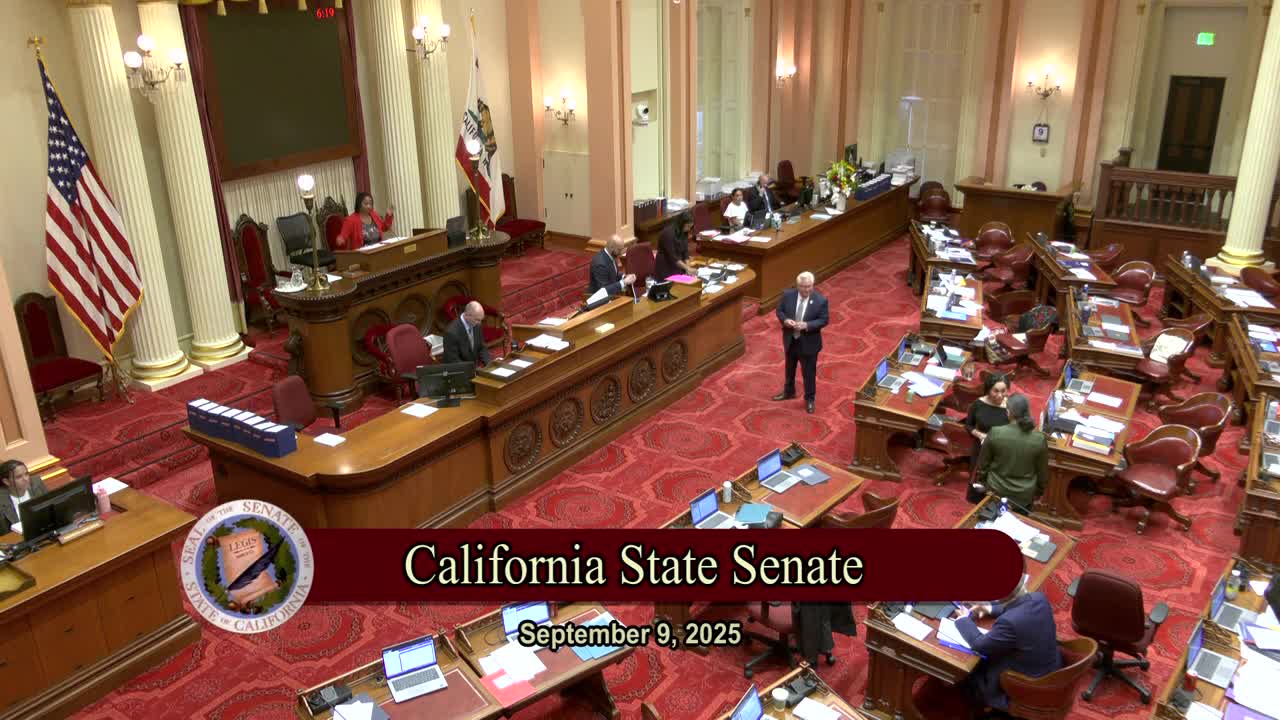
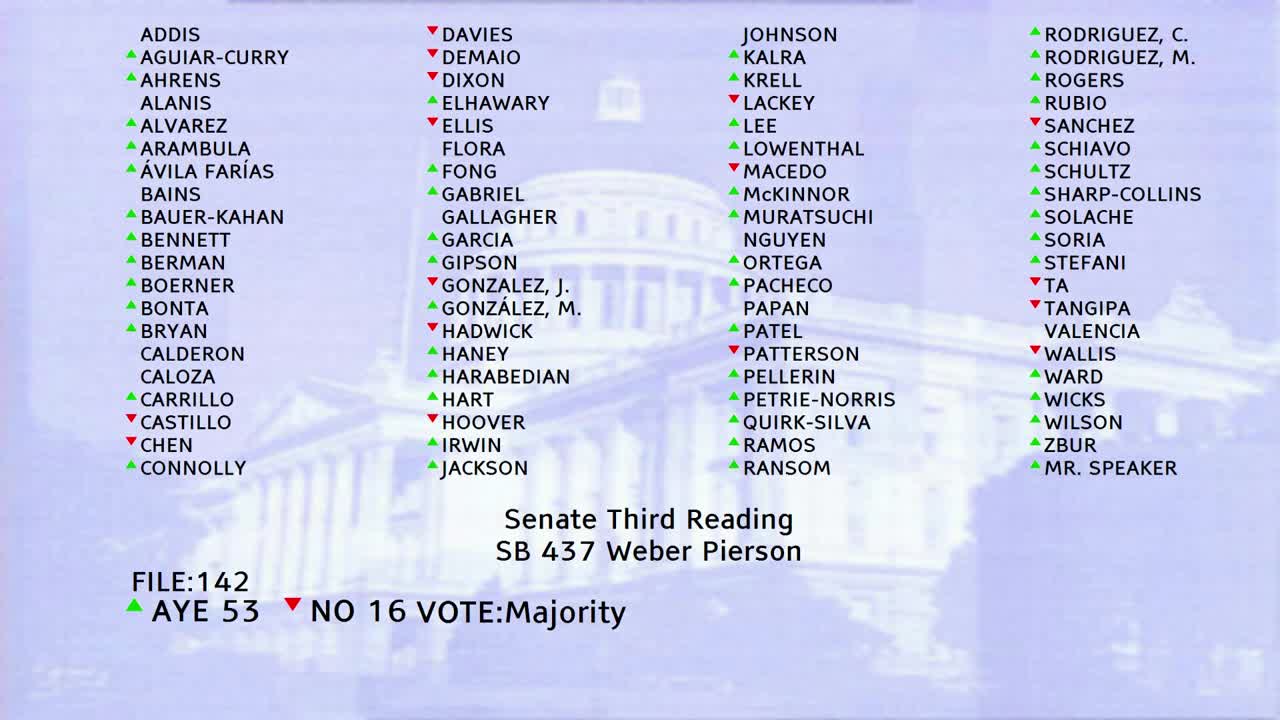
Bill Author

Bill Co-Author(s):
