SB 280: Elections.
- Session Year: 2025-2026
- House: Senate
- Latest Version Date: 2025-08-21
Current Status:
Passed
(2025-08-21: Chaptered by Secretary of State. Chapter 97, Statutes of 2025.)
Introduced
In Committee
Awaiting First Chamber Vote
Passed First Chamber
In Committee
Awaiting Second Chamber Vote
Passed Second Chamber
Enacted
(1)Existing law authorizes a candidate for elective office to submit a petition containing a specified number of signatures in lieu of all or part of the fee for filing nomination papers. Existing law requires the Secretary of State to make forms for securing signatures available to each candidate commencing 60 days before the first day for circulating nomination papers, except as specified, and requires candidates to file in-lieu-filing-fee petitions at least 30 days before the close of the nomination period.
This bill, for the June 2, 2026, statewide direct primary election, would require the Secretary of State to make those forms available beginning December 19, 2025. This bill would require the Secretary of State to prepare a calendar of key election dates and deadlines and requirements for the nomination of candidates by the date that the in-lieu-filing-fee petition forms are made available.
(2)Existing law requires each county elections official to provide the Secretary of State with specified information regarding the number of voters and their party preferences in the county and each supervisorial, Congressional, Senate, Assembly, and Board of Equalization district in the county on the 135th day before each direct primary election, with respect to all voters who are registered voters on the 154th day before the primary election. Existing law requires the Secretary of State to compile a statewide list of this information within 30 days after receiving it from each county elections official.
This bill would require the Secretary of State to determine, by December 19, 2025, whether it is feasible to include in the statewide list described above the number of voters by party preference in each congressional district with respect to all voters who are registered voters on the 154th day before the June 2, 2026, statewide direct primary election. If the Secretary of State determines it is not feasible, the bill would not require that information to be included in the information provided by the counties and the compiled statewide list. The bill would require the Secretary of State to prepare a supplemental statewide list showing that information on a date specified by the Secretary of State, but not later than the 88th day before the June 2, 2026, statewide direct primary election.
(3)Existing law authorizes a candidate for elective office to designate that certain specified words appear below the candidates name on the ballot, including, among others, the word incumbent.
This bill, for the June 2, 2026, statewide direct primary election, would prohibit a candidate for the office of Representative in Congress from choosing the word incumbent as a designation to appear on the ballot. The bill would make conforming changes relating to the deadline for a person to file nomination documents for an office if a current holder of the office does not file nomination documents. These provisions would become operative only if ACA 8 of the 202526 Regular Session is approved by the voters and another state adopts a new congressional district map that takes effect after August 1, 2025.
(4)The bill would repeal the provisions described in paragraphs (1) to (3) above on January 1, 2027.
(5)Existing law requires a constitutional amendment submitted to the people by the Legislature to appear on the ballot of the first statewide election occurring at least 131 days after the adoption of the proposal.
This bill would call a special election to be held throughout the state on November 4, 2025, and, notwithstanding the 131-day requirement, would require the submission of ACA 8 of the 202526 Regular Session to the voters at that special election. The bill would authorize a local election called on or before August 8, 2025, and scheduled to be held on November 4, 2025, to be consolidated with the statewide special election. The bill would require that the impartial analysis prepared by the Legislative Analyst for the state voter information guide for the special election include specified content regarding 2021 and 2025 congressional district maps.
The bill would specify the procedures under which the special election would be conducted. Counties that conduct all-mailed ballot elections using vote centers would be required to maintain at least one vote center for every 30,000 registered voters from November 1, 2025, to November 4, 2025, and at least one vote center for every 60,000 registered voters from October 25, 2025, through October 31, 2025. Other counties would be authorized to consolidate polling places at a maximum ratio of one for every 10,000 registered voters.
The bill would appropriate an amount from the General Fund to the Controller for the actual and reasonably necessary costs for counties to conduct the special election, as determined by the Director of Finance. The bill would also appropriate an amount from the General Fund to the Secretary of State for the actual and reasonably necessary costs for the Secretary of State to administer the special election, as determined by the Director of Finance.
This bill would declare that it is to take effect immediately as an urgency statute.
The Political Reform Act of 1974 comprehensively regulates political campaigns, including campaign contributions. The act prohibits the receipt, delivery, or attempted delivery of a contribution in the State Capitol, any state office building, or any office for which the state pays the majority of the rent other than a legislative district office.This bill would expand that prohibition to apply to local government office buildings and offices for which the state or a local government pays rent. The bill would also eliminate the exception for legislative district offices.A violation of the act is punishable as a misdemeanor. By expanding the scope of restrictions on contributions, this bill would expand the scope of an existing crime, and therefore would impose a state-mandated local program.The California Constitution requires the state to reimburse local agencies and school districts for certain costs mandated by the state. Statutory provisions establish procedures for making that reimbursement.This bill would provide that no reimbursement is required by this act for a specified reason.The Political Reform Act of 1974, an initiative measure, provides that the Legislature may amend the act to further the acts purposes upon a 2/3 vote of each house of the Legislature and compliance with specified procedural requirements.This bill would declare that it furthers the purposes of the act.The Political Reform Act of 1974 comprehensively regulates political campaigns, including campaign contributions. The act prohibits the receipt, delivery, or attempted delivery of a contribution in the State Capitol, any state office building, or any office for which the state pays the majority of the rent other than a legislative district office.
This bill would expand that prohibition to apply to local government office buildings and offices for which the state or a local government pays rent. The bill would also eliminate the exception for legislative district offices.
A violation of the act is punishable as a misdemeanor. By expanding the scope of restrictions on contributions, this bill would expand the scope of an existing crime, and therefore would impose a state-mandated local program.
The California Constitution requires the state to reimburse local agencies and school districts for certain costs mandated by the state. Statutory provisions establish procedures for making that reimbursement.
This bill would provide that no reimbursement is required by this act for a specified reason.
The Political Reform Act of 1974, an initiative measure, provides that the Legislature may amend the act to further the acts purposes upon a 2/3 vote of each house of the Legislature and compliance with specified procedural requirements.
This bill would declare that it furthers the purposes of the act.
The Political Reform Act of 1974 comprehensively regulates political campaigns, including campaign contributions. The act prohibits the receipt, delivery, or attempted delivery of a contribution in the State Capitol, any state office building, or any office for which the state pays the majority of the rent other than a legislative district office.
This bill would expand that prohibition to apply to local government office buildings and offices for which the state or a local government pays rent. The bill would also eliminate the exception for legislative district offices.
A violation of the act is punishable as a misdemeanor. By expanding the scope of restrictions on contributions, this bill would expand the scope of an existing crime, and therefore would impose a state-mandated local program.
The California Constitution requires the state to reimburse local agencies and school districts for certain costs mandated by the state. Statutory provisions establish procedures for making that reimbursement.
This bill would provide that no reimbursement is required by this act for a specified reason.
The Political Reform Act of 1974, an initiative measure, provides that the Legislature may amend the act to further the acts purposes upon a 2/3 vote of each house of the Legislature and compliance with specified procedural requirements.
This bill would declare that it furthers the purposes of the act.
This chapter applies only to the June 2, 2026, statewide direct primary election.
8161.For purposes of this chapter, statewide direct primary election means the June 2, 2026, statewide direct primary election.
8162.(a)Notwithstanding subdivision (b) of Section 8106, forms for securing signatures on an in-lieu-filing-fee petition shall be made available beginning December 19, 2025.
(b)Notwithstanding subdivision (a) of Section 8106, the elections official shall reduce the required number of signatures on an in-lieu-filing-fee petition by the same proportion as the reduction in the number of days for the candidate to collect signatures on such a petition compared to the number of days for a candidate to collect signatures on a petition, as provided by subdivision (b) of Section 8106.
8163.Not later than December 19, 2025, the Secretary of State shall determine whether it is feasible to include the number of voters, by party preferences, in each congressional district in the state in the statewide list compiled by the Secretary of State pursuant to subdivision (b) of Section 2187 with respect to all voters who are registered voters on the 154th day before the statewide direct primary election in accordance with paragraph (1) of subdivision (c) of Section 2187, and shall publicly announce that determination. If the Secretary of State determines that it is not feasible to include that information, all of the following apply:
(a)Notwithstanding paragraph (5) of subdivision (a) of Section 2187, the information provided by the county elections official pursuant to paragraph (1) of subdivision (c) of Section 2187 is not required to include the number of voters by political party preferences in congressional districts located in whole or in part within the county.
(b)Notwithstanding subdivision (b) of Section 2187, the statewide list compiled by the Secretary of State pursuant to that subdivision with respect to all voters who are registered voters on the 154th day before the statewide direct primary election shall not include the number of voters, by party preferences, in each congressional district in the state.
(c)(1)The Secretary of State shall prepare a supplemental statewide list showing the number of voters, by party preference, in the state and in each county, city, supervisorial district, Assembly district, Senate district, and congressional district in the state with respect to all voters who are registered voters on a date specified by the Secretary of State. The date specified by the Secretary of State shall be as soon as is feasible, as determined by the Secretary of State, but not later than the 88th day before the statewide direct primary election. The Secretary of State shall compile this list within 30 days of receiving the information specified in paragraph (2). A copy of this list shall be made available, upon request, to any elector in this state.
(2)For the purpose of preparing the supplemental statewide list required by paragraph (1), each county elections official shall prepare the information referenced in subdivision (a) of Section 2187 and provide notice to the Secretary of State by a date specified by the Secretary of State.
8164.Not later than the date that forms for securing signatures on an in-lieu-filing-fee petition are made available in accordance with Section 8162, the Secretary of State shall prepare a calendar of key election dates and deadlines and requirements for the nomination and election of candidates pursuant to California law, including this chapter.
8165.(a)Notwithstanding paragraph (2) of subdivision (a) of Section 13107, a candidate for the office of Representative in Congress shall not choose the word incumbent as a designation to appear on the ballot. This subdivision shall not be construed to prevent a candidate from choosing a designation of the elective office which the candidate holds at the time of filing the nomination documents, to which the candidate was elected by vote of the people in accordance with paragraph (1) of subdivision (a) of Section 13107.
(b)(1)Section 8022, as it pertains to the office of Representative in Congress, shall not be operative.
(2)Notwithstanding Section 8020 or any other law, a person shall have until 5 p.m. on the 83rd day before the statewide direct primary election to file nomination documents for the office of Representative in Congress, if either of the following is true:
(A)No person who currently holds the office of Representative in Congress delivered nomination documents for that district by 5 p.m. on the 88th day before the statewide direct primary election.
(B)Every person who currently holds the office of Representative in Congress who delivered nomination documents for that district by 5 p.m. on the 88th day before the statewide direct primary election also withdrew those nomination documents before 5 p.m. on the 88th day before the statewide direct primary election.
(c)This section shall become operative only if Assembly Constitutional Amendment 8 of the 202526 Regular Session is approved by the voters and takes effect, and subdivision (b) of Section 4 of Article XXI of the California Constitution, as added by that constitutional amendment, becomes operative.
8166.This chapter shall remain in effect only until January 1, 2027, and as of that date is repealed.
SEC. 2.(a)(1)A special election is hereby called to be held throughout the state on November 4, 2025.
(2)Notwithstanding Sections 10403 and 10406 of the Elections Code or any other law, a regular or special local election for the submission of any question, proposition, or office to be filled, which was called by a district, city, or other political subdivision on or before August 8, 2025, and scheduled to be held on November 4, 2025, may be consolidated with the statewide special election. A district, city, or other political subdivision shall not call a special election to be held on November 4, 2025, after the effective date of this act.
(b)(1)Notwithstanding Sections 9040, 9043, 9044, 9061, 9082, and 9094 of the Elections Code or any other law, the Secretary of State shall submit Assembly Constitutional Amendment 8 of the 202526 Regular Session to the voters at the November 4, 2025, statewide special election.
(2)Notwithstanding Section 13117 of the Elections Code, the measure described in paragraph (1) shall be designated as Proposition 50.
(c)Notwithstanding Section 9054 of the Elections Code or any other law, if a city, county, or city and county is required to provide a translation of ballot materials in a language other than English, the Secretary of State shall provide a translation of the ballot title and summary and the ballot label for the measure described in subdivision (b) to the city, county, or city and county not later than a date determined by the Secretary of State. The Secretary of State is not required to consult with an advisory body of language experts and nonpartisan organizations that advocate on behalf of, or provide services to, individuals that speak that language for these purposes. The translations of the ballot title and summary and the ballot label may be made available for public examination at a later date than the start of the public examination period for the state voter information guide, provided that the translations of the ballot title and summary and the ballot label shall remain available for public examination for eight days. A voter may seek a writ of mandate for the purpose of requiring the translations, or portions thereof, to be amended or deleted only within that eight-day period.
(d)Notwithstanding Section 13282 of the Elections Code or any other law, the public shall be permitted to examine the condensed ballot title and summary of the measure described in subdivision (b) for eight days. A voter may seek a writ of mandate for the purpose of requiring the condensed ballot title and summary, or portions thereof, to be amended or deleted only within that eight-day period.
(e)Notwithstanding Sections 303, 9050, and 9051 of the Elections Code or any other law, the ballot label for the measure described in subdivision (b) shall not include a list of supporters and opponents.
(f)The impartial analysis prepared by the Legislative Analyst pursuant to Section 9087 of the Elections Code for inclusion in the state voter information guide prepared by the Secretary of State pursuant to Section 9081 of the Elections Code for the statewide special election called by paragraph (1) of subdivision (a) of this section shall include all of the following:
(1)A hyperlink to the text of Assembly Bill 604 of the 202526 Regular Session.
(2)One or more visual depictions of the geographic map or maps of the congressional districts that were certified by the Citizens Redistricting Commission in 2021.
(3)One or more visual depictions of the geographic map or maps of the congressional districts that are created by Assembly Bill 604 of the 202526 Regular Session. For the purpose of complying with this requirement, the Legislative Analyst may use the geographic map or maps of the congressional districts that are displayed on the webpage of the Assembly Committee on Elections or of the Senate Committee on Elections and Constitutional Amendments.
SEC. 3.(a)This section applies only to the statewide special election held on November 4, 2025.
(b)(1)A county that does not conduct the statewide special election pursuant to Section 4005 of the Elections Code shall provide at least two vote by mail ballot drop-off locations within the county or at least one vote by mail ballot drop-off location for every 30,000 registered voters within the county, as determined by the last report of registration issued by the Secretary of State pursuant to Section 2187 of the Elections Code, whichever results in more vote by mail ballot drop-off locations. For a county with fewer than 30,000 registered voters, at least one vote by mail ballot drop-off location shall be provided.
(2)A county that conducts the statewide special election pursuant to Section 4005 of the Elections Code shall provide at least two ballot drop-off locations within the county or at least one ballot drop-off location provided for every 15,000 registered voters within the county, as determined by the last report of registration issued by the Secretary of State pursuant to Section 2187 of the Elections Code, whichever results in more ballot drop-off locations.
(3)A ballot drop-off location provided for under this subdivision consists of a secure, accessible, and locked ballot box located as near as possible to established public transportation routes and that is able to receive voted ballots. All ballot drop-off locations shall be open at least during regular business hours beginning not later than October 7, 2025, through November 4, 2025. At least one ballot drop-off location shall be an accessible, secured, exterior drop box that is available for a minimum of 12 hours per day including regular business hours.
(c)A county that conducts the statewide special election pursuant to Section 4005 of the Elections Code may choose to have its vote centers open in accordance with the following provisions, in lieu of the requirements of paragraph (3) of, and subparagraphs (A) and (B) of paragraph (4) of, subdivision (a) of Section 4005 of the Elections Code:
(1)From November 1, 2025, to November 3, 2025, inclusive, for a minimum of eight hours per day at regular hours convenient for members of the public, and on November 4, 2025, from 7 a.m. to 8 p.m., inclusive, at least one vote center shall be provided for every 30,000 registered voters within the county, as determined by the most recent report of registration issued by the Secretary of State pursuant to Section 2187 of the Elections Code. For a county with fewer than 30,000 registered voters, a minimum of one vote center shall be provided.
(2)Beginning October 25, 2025, and continuing daily up to and including October 31, 2025, for a minimum of eight hours per day at regular hours convenient for members of the public, at least one vote center shall be provided for every 60,000 registered voters within the county, as determined by the most recent report of registration issued by the Secretary of State pursuant to Section 2187 of the Elections Code. For a county with fewer than 60,000 registered voters, a minimum of one vote center shall be provided.
(d)(1)A county that does not conduct the statewide special election pursuant to Section 4005 of the Elections Code may choose to follow the procedures described in this subdivision as an alternative to procedures that would otherwise be applicable in that county.
(2)(A)While maintaining separate geographical precincts under the existing limits on number of voters provided in Section 12223 of the Elections Code, the elections official may establish consolidated precinct boards, located within the same physical polling place, serving the voters residing in multiple adjacent precincts established pursuant to Section 12223 of the Elections Code at a maximum ratio of one consolidated precinct board location for every 10,000 registered voters. These consolidated polling locations shall be open from November 1, 2025, through November 3, 2025, for at least eight hours each day at regular hours convenient for members of the public. On November 4, 2025, the consolidated polling location shall be open from 7 a.m. to 8 p.m.
(B)In establishing the consolidated polling places, the elections official shall take into consideration the boundaries of state legislative, congressional, county supervisorial, and any other affected local legislative districts.
(C)The elections official shall ensure that the consolidated polling places are equitably distributed across the county to afford maximally convenient options for all voters and are established at accessible locations as near as possible to established public transportation routes. A consolidated polling place shall be located within the boundary of one of the precincts it serves.
(D)(i)The consolidated polling places shall be equipped with voting units or systems that are accessible to individuals with disabilities and provide the same opportunity for access and participation as is provided to voters who are not disabled, including the ability to vote privately and independently, in accordance with Sections 12280 and 19240 of the Elections Code. Each consolidated polling place shall have at least three voting machines that are accessible to voters with disabilities.
(ii)The consolidated polling places shall comply with the accessibility requirements described in Article 5 (commencing with Section 12280) of Chapter 3 of Division 12 of the Elections Code, the federal Americans with Disabilities Act of 1990 (42 U.S.C. Sec. 12101 et seq.), the federal Help America Vote Act of 2002 (52 U.S.C. Sec. 20901 et seq.), and the federal Voting Rights Act of 1965 (52 U.S.C. Sec. 10101 et seq.).
(E)The elections official shall provide each consolidated polling place with enough ballots, provisional ballots, and provisional ballot envelopes to ensure every voter can be accommodated, as necessary.
(3)In a county with consolidated polling places as described in this subdivision, the elections official shall provide at least one location, open at least during regular business hours beginning not later than October 7, 2025, at which a voter may do any of the following:
(A)Return, or vote and return, the voters vote by mail ballot.
(B)Register to vote, update the voters voter registration, and vote pursuant to Section 2170 of the Elections Code.
(C)Receive and vote a provisional ballot pursuant to Section 3016 of the Elections Code or Article 5 (commencing with Section 14310) of Chapter 3 of Division 14 of the Elections Code.
(D)Receive a replacement ballot after submitting a valid replacement ballot request as provided for in Section 3014 of the Elections Code.
(E)Vote a regular, provisional, or replacement ballot using accessible voting equipment that provides for a private and independent voting experience.
(4)In determining the locations of consolidated polling places pursuant to this subdivision, the county elections official shall consider consolidated polling place location proximity to communities with historically low vote by mail usage. County elections officials shall also consider the other criteria described in subparagraph (B) of paragraph (10) of subdivision (a) of Section 4005 of the Elections Code, to the extent data is readily available.
(5)After finalizing the locations of consolidated polling places, the county elections official shall provide public notice, in all legally required languages for that county, of the proposed consolidated polling place locations, post a copy of those locations on the county elections officials internet website, and accept public comments on the final locations. The county elections official shall accept public comment for at least 48 hours after providing public notice of the proposed locations. Following the public comment period, the county elections official shall consider any comments the official receives from the public and shall adjust consolidated polling place locations in response to the public comments to the extent the official deems appropriate. Notice of any adjustments shall be immediately posted on the county election officials internet website and social media platforms.
(e)(1)The Secretary of State shall establish a process to consider requests from counties to adjust or partially waive the minimally required number, location, or operational duration of consolidated polling places described in subdivision (d), or to partially waive the provisions regarding the maximum number of voters in a precinct as required by Section 12223 of the Elections Code. The process shall include, but not be limited to, review and modification, denial, or granting of a countys request in a timeframe to be determined by the Secretary of State. The Secretary of State shall not grant a county a complete waiver of the minimally required number, location, or operational duration of consolidated polling places described in subdivision (d), and shall not grant a county a waiver of the provisions regarding the maximum number of voters in a precinct as required by Section 12223 of the Elections Code that would result in more than 3,000 voters being assigned to any single precinct.
(2)(A)The Secretary of State shall not grant a partial waiver or modification to a county unless the elections official in that county demonstrates all of the following:
(i)The official made best efforts to secure the required in-person voting locations.
(ii)The plan will not have a negative disparate impact on disabled voters or any protected class of voters.
(iii)The plan will not reduce in-person voting locations below a number of locations necessary to safely and efficiently accommodate the anticipated demand for in-person voting services.
(B)For the purposes of this paragraph, protected class means a class of voters who are members of a race, color, or language minority group, as referenced and defined in the federal Voting Rights Act of 1965 (52 U.S.C. Sec. 10101 et seq.).
(f)(1)Notwithstanding Section 15301 or 15372 of the Elections Code, or any other law, the elections official shall not certify the results of the November 4, 2025, statewide special election prior to the 28th calendar day following the election.
(2)Notwithstanding paragraph (1), if during the official canvass there are no vote by mail ballots remaining for which a voter has the opportunity either to verify their signature pursuant to subdivision (d) of Section 3019 of the Elections Code or to provide their signature pursuant to subdivision (e) of Section 3019 of the Elections Code and has not already done so, the elections official may certify the results of the November 4, 2025, statewide special election prior to the 28th calendar day following the election.
(g)Notwithstanding Section 3019 of the Elections Code, the elections official shall accept a completed signature verification statement, unsigned identification envelope statement, or a combined vote by mail ballot signature verification statement and unsigned identification envelope statement until 5 p.m. on the 26th calendar day following the November 4, 2025, statewide special election.
(h)Notwithstanding Section 15301 of the Elections Code, if the only ballots that the elections official has left to count as part of the official canvass are vote by mail ballots for which a voter has the opportunity either to verify their signature pursuant to subdivision (d) of Section 3019 of the Elections Code or to provide their signature pursuant to subdivision (e) of Section 3019 of the Elections Code, and the elections official does not need to continue the official canvass for at least six hours per day in order to complete the official canvass by the 28th calendar day following the election, the official canvass may be continued for fewer than six hours per day until completion.
SEC. 4.(a)It is the intent of the Legislature to ensure counties have sufficient funding to effectuate the November 4, 2025, statewide special election. An amount is hereby appropriated from the General Fund to the Controller for the actual and reasonably necessary costs, as determined by the Director of Finance, for the counties to conduct the November 4, 2025, statewide special election.
(b)Notwithstanding any other law, the Controller shall allocate these funds to counties according to a schedule provided by the Director of Finance. Any excess funds received by the county shall be used to offset state costs for the next statewide election conducted by the county. Each county shall report its final total cost to administer the statewide special election to the Secretary of State in a manner and by a date determined by the Secretary of State.
(c)An amount is hereby appropriated from the General Fund to the Secretary of State for the actual and reasonably necessary costs, as determined by the Director of Finance, for the Secretary of State to administer the November 4, 2025, statewide special election.
(d)No later than April 1, 2026, the Secretary of State shall report on the final costs of the statewide special election to the Director of Finance and the Joint Legislative Budget Committee. The report shall include all of the following:
(1)The total cost of the statewide special election by county.
(2)The costs broken out by category for each county.
(3)Any funds remaining, by county, that can be used to offset state costs for the next election conducted by the county.
SEC. 5.The provisions of this act are severable. If any provision of this act or its application is held invalid, that invalidity shall not affect other provisions or applications that can be given effect without the invalid provision or application.
SEC. 6.This act is an urgency statute necessary for the immediate preservation of the public peace, health, or safety within the meaning of Article IV of the California Constitution and shall go into immediate effect. The facts constituting the necessity are:
In order to hold a statewide special election on November 4, 2025, so that congressional district boundaries can be adjusted and implemented in time for the June 2, 2026, statewide direct primary election, it is necessary that this act take effect immediately.
SECTION 1.Section 84309 of the Government Code is amended to read:84309.(a)A person shall not receive or personally deliver or attempt to deliver a contribution in the State Capitol, any state or local government office building, or any office for which the state or a local government pays rent.(b)For purposes of this section:(1)Personally deliver means delivery of a contribution in person or causing a contribution to be delivered in person by an agent or intermediary.(2)Receive includes the receipt of a campaign contribution delivered in person.(3)State or local government office building means any building owned by the state or a local government in which more than 50 percent of the total floor area is used as office space for government employees.SEC. 2.No reimbursement is required by this act pursuant to Section 6 of Article XIIIB of the California Constitution because the only costs that may be incurred by a local agency or school district will be incurred because this act creates a new crime or infraction, eliminates a crime or infraction, or changes the penalty for a crime or infraction, within the meaning of Section 17556 of the Government Code, or changes the definition of a crime within the meaning of Section 6 of Article XIIIB of the California Constitution.SEC. 3.The Legislature finds and declares that this bill furthers the purposes of the Political Reform Act of 1974 within the meaning of subdivision (a) of Section 81012 of the Government Code.(a)A person shall not receive or personally deliver or attempt to deliver a contribution in the State Capitol, any state or local government office building, or any office for which the state or a local government pays rent.
(b)For purposes of this section:
(1)Personally deliver means delivery of a contribution in person or causing a contribution to be delivered in person by an agent or intermediary.
(2)Receive includes the receipt of a campaign contribution delivered in person.
(3)State or local government office building means any state-owned or local government-owned building building owned by the state or a local government in which more than 50 percent of the total floor area is used as office space for government employees.
SEC. 2.No reimbursement is required by this act pursuant to Section 6 of Article XIIIB of the California Constitution because the only costs that may be incurred by a local agency or school district will be incurred because this act creates a new crime or infraction, eliminates a crime or infraction, or changes the penalty for a crime or infraction, within the meaning of Section 17556 of the Government Code, or changes the definition of a crime within the meaning of Section 6 of Article XIIIB of the California Constitution.
SEC. 3.The Legislature finds and declares that this bill furthers the purposes of the Political Reform Act of 1974 within the meaning of subdivision (a) of Section 81012 of the Government Code.
REVISIONS: HeadingLine 2.(a)A person shall not receive or personally deliver or attempt to deliver a contribution in the State Capitol, any state or local government office building, or any office for which the state or a local government pays rent.
(b)For purposes of this section:
(1)Personally deliver means delivery of a contribution in person or causing a contribution to be delivered in person by an agent or intermediary.
(2)Receive includes the receipt of a campaign contribution delivered in person.
(3)State or local government office building means any state-owned or local government-owned building in which more than 50 percent of the total floor area is used as office space for government employees.
SEC. 2.No reimbursement is required by this act pursuant to Section 6 of Article XIIIB of the California Constitution because the only costs that may be incurred by a local agency or school district will be incurred because this act creates a new crime or infraction, eliminates a crime or infraction, or changes the penalty for a crime or infraction, within the meaning of Section 17556 of the Government Code, or changes the definition of a crime within the meaning of Section 6 of Article XIIIB of the California Constitution.
SEC. 3.The Legislature finds and declares that this bill furthers the purposes of the Political Reform Act of 1974 within the meaning of subdivision (a) of Section 81012 of the Government Code.
(a)No A person shall not receive or personally deliver or attempt to deliver a contribution in the State Capitol, in any state or local government office building, or in any office for which the state pays the majority of the rent other than a legislative district office. or a local government pays rent.
(b)For purposes of this section:
(1)Personally deliver means delivery of a contribution in person or causing a contribution to be delivered in person by an agent or intermediary.
(2)Receive includes the receipt of a campaign contribution delivered in person.
SEC. 2.No reimbursement is required by this act pursuant to Section 6 of Article XIIIB of the California Constitution because the only costs that may be incurred by a local agency or school district will be incurred because this act creates a new crime or infraction, eliminates a crime or infraction, or changes the penalty for a crime or infraction, within the meaning of Section 17556 of the Government Code, or changes the definition of a crime within the meaning of Section 6 of Article XIIIB of the California Constitution.
SEC. 3.The Legislature finds and declares that this bill furthers the purposes of the Political Reform Act of 1974 within the meaning of subdivision (a) of Section 81012 of the Government Code.
|
Date
|
Status
|
|---|---|
| Aug 21, 2025 | Chaptered by Secretary of State. Chapter 97, Statutes of 2025. |
| Aug 21, 2025 | Approved by the Governor. |
| Aug 21, 2025 | Enrolled and presented to the Governor at 3:45 p.m. |
| Aug 21, 2025 | Assembly amendments concurred in. (Ayes 30. Noes 8. Page 2232.) Ordered to engrossing and enrolling. |
| Aug 21, 2025 | Urgency clause adopted. |
| Aug 21, 2025 | In Senate. Concurrence in Assembly amendments pending. |
| Aug 21, 2025 | Senate Rule 29.10(d) suspended. (Ayes 30. Noes 9. Page 2226.) |
| Aug 21, 2025 | Amendments by Assembly Member Gallagher tabled on motion by Assembly Member Aguiar-Curry. (Ayes 56. Noes 19. Page 2691.) |
| Aug 21, 2025 | Amendments by Assembly Member Castillo tabled on motion by Assembly Member Aguiar-Curry. (Ayes 56. Noes 19. Page 2690.) |
| Aug 21, 2025 | Amendments by Assembly Member Gallagher tabled on motion by Assembly Member Aguiar-Curry. (Ayes 54. Noes 19. Page 2689.) |
| Aug 21, 2025 | Read third time. Urgency clause adopted. Passed. (Ayes 57. Noes 20. Page 2693.) Ordered to the Senate. |
| Aug 21, 2025 | Amendments by Assembly Member Tangipa tabled on motion by Assembly Member Aguiar-Curry. (Ayes 54. Noes 19. Page 2692.) |
| Aug 20, 2025 | Read second time. Ordered to third reading. |
| Aug 20, 2025 | From committee: Do pass. (Ayes 11. Noes 4.) (August 20). |
| Aug 19, 2025 | From committee: Do pass and re-refer to Com. on APPR. (Ayes 5. Noes 2.) (August 19). Re-referred to Com. on APPR. |
| Aug 18, 2025 | Joint Rule 62(a) suspended. (Ayes 27. Noes 10. Page 2188.) |
| Aug 18, 2025 | Assembly Rule 63 and 66 suspended. (Ayes 57. Noes 18. Page 2647.) |
| Aug 18, 2025 | Joint Rule 62(a) suspended. (Ayes 57. Noes 18. Page 2646.) |
| Aug 18, 2025 | Assembly Rule 56 suspended. (Ayes 57. Noes 18. Page 2646.) |
| Aug 18, 2025 | Joint Rule 62(a) suspended. (Ayes 58. Noes 18. Page 2645.) |
| Aug 18, 2025 | Re-referred to Coms. on ELECTIONS and APPR. pursuant to Assembly Rule 77.2. |
| Aug 18, 2025 | Read third time and amended. |
| Aug 18, 2025 | Ordered to third reading. |
| Aug 18, 2025 | From consent calendar on motion of Assembly Member Pellerin. |
| Jul 17, 2025 | Read second time. Ordered to consent calendar. |
| Jul 16, 2025 | From committee: Do pass. Ordered to consent calendar. (Ayes 13. Noes 0.) (July 16). |
| Jul 2, 2025 | From committee: Do pass and re-refer to Com. on APPR. with recommendation: To consent calendar. (Ayes 7. Noes 0.) (July 2). Re-referred to Com. on APPR. |
| Jul 2, 2025 | Coauthors revised. |
| Jun 5, 2025 | Referred to Com. on ELECTIONS. |
| May 29, 2025 | In Assembly. Read first time. Held at Desk. |
| May 29, 2025 | Read third time. Passed. (Ayes 38. Noes 0. Page 1332.) Ordered to the Assembly. |
| Apr 22, 2025 | Read second time. Ordered to third reading. |
| Apr 21, 2025 | From committee: Be ordered to second reading pursuant to Senate Rule 28.8. |
| Apr 10, 2025 | From committee with author's amendments. Read second time and amended. Re-referred to Com. on APPR. |
| Apr 4, 2025 | Set for hearing April 21. |
| Apr 1, 2025 | From committee: Do pass and re-refer to Com. on APPR. (Ayes 5. Noes 0. Page 609.) (April 1). Re-referred to Com. on APPR. |
| Mar 25, 2025 | From committee with author's amendments. Read second time and amended. Re-referred to Com. on E. & C.A. |
| Mar 20, 2025 | Set for hearing April 1. |
| Feb 14, 2025 | Referred to Com. on E. & C.A. |
| Feb 6, 2025 | From printer. May be acted upon on or after March 8. |
| Feb 5, 2025 | Introduced. Read first time. To Com. on RLS. for assignment. To print. |
|
Date
|
Description
|
Location
|
Votes
|
|
|---|---|---|---|---|
| Aug 21, 2025 | Unfinished Business SB280 Cervantes et al. Urgency Clause Concurrence | Senate Floor |
Passed |
|
| Aug 21, 2025 | SB 280 Cervantes Third Reading Urgency By Pellerin | Assembly Floor |
Passed |
|
| Aug 21, 2025 | SB 280 Cervantes Third Reading Urgency By Pellerin Amend By TANGIPA Set #4 Motion to Lay on the Table By AGUIAR-CURRY | Assembly Floor |
Passed |
|
| Aug 21, 2025 | SB 280 Cervantes Third Reading Urgency By Pellerin Amend By GALLAGHER Set #3 Motion to Lay on the Table By AGUIAR-CURRY | Assembly Floor |
Passed |
|
| Aug 21, 2025 | SB 280 Cervantes Third Reading Urgency By Pellerin Amend By CASTILLO Set #1 Motion to Lay on the Table By AGUIAR-CURRY | Assembly Floor |
Passed |
|
| Aug 21, 2025 | SB 280 Cervantes Third Reading Urgency By Pellerin Amend By GALLAGHER Set #2 Motion to Lay on the Table By AGUIAR-CURRY | Assembly Floor |
Passed |
|
| Aug 20, 2025 | Do pass. | Assembly Standing Committee on Appropriations |
Passed |
|
| Aug 19, 2025 | Do pass and be re-referred to the Committee on [Appropriations] | Assembly Standing Committee on Elections |
Passed |
|
| Jul 16, 2025 | Do pass. To Consent Calendar. | Assembly Standing Committee on Appropriations |
Passed |
|
| Jul 2, 2025 | Do pass and be re-referred to the Committee on [Appropriations] with recommendation: To Consent Calendar | Assembly Standing Committee on Elections |
Passed |
|
| May 29, 2025 | Senate 3rd Reading SB280 Cervantes et al. | Senate Floor |
Passed |
|
| Apr 1, 2025 | Do pass, but first be re-referred to the Committee on [Appropriations] | Senate Standing Committee on Elections and Constitutional Amendments |
Passed |
This list shows positions taken on this bill by organizations on the date displayed, which is linked to the original source.
Positions by individuals are not included.
|
Organization
|
Position
|
Date
|
|---|---|---|
| AAPI Equity Alliance | ** Support | |
| AFSCME California | ** Support | |
| Alliance for A Better Community | ** Support | |
| Alliance San Diego | ** Against | |
| Altadena Chamber of Commerce | ** Support | |
| Arab Resource & Organizing Center Action | ** Support | |
| Asian American Drug Abuse Program | ** Support | |
| Battleground California | ** Support | |
| Black Women Organizing for Political Action | ** Support | |
| Borderlands for Equity | ** Support | |
| CA Church IMPACT | ** Support | |
| California Business Roundtable | ** Against | |
| California Common Cause | ** Against | |
| California Consumer Advocates for Affordability and Safety | ** Against | |
| California Donor Table | ** Support | |
| California Federation of Labor Unions, Afl-cio | ** Support | |
| California Hispanic Chamber Of Commerce | ** Against | |
| California Manufacturers And Technology Association | ** Against | |
| California Nurses Association | ** Support | |
| California Professional Firefighters | ** Support | |
| California Teachers Association | ** Support | |
| CalTax | ** Against | |
| CAUSE Action Fund | ** Support | |
| Central Valley Immigrant Integration Collaborative | ** Support | |
| Child Care Providers United | ** Support | |
| Climate Action Campaign | ** Support | |
| Compass Family Services | ** Support | |
| Costa Mesa Democrats | ** Support | |
| Democracy Strategy Partners | ** Support | |
| Democratic Party of Orange County | ** Support | |
| DEMOCRATIC PARTY OF SAN FERNANDO VALLEY | ** Support | |
| El Concilio California | ** Support | |
| Eleni Kounalakis, California Lieutenant Governor | ** Support | |
| Fair Political Practices Commission | ** Support | |
| Govern for California | ** Against | |
| Greater High Desert Chamber of Commerce | ** Against | |
| Greater San Fernando Valley Chamber of Commerce | ** Against | |
| HB Huddle | ** Support | |
| Imperial Valley Equity and Justice | ** Support | |
| Independent Voter Education | ** Against | |
| Independent Voter Project | ** Against | |
| Indivisible California: Statestrong | ** Support | |
| Indivisible El Dorado | ** Support | |
| Indivisible Stanislaus | ** Support | |
| Inland Empire United | ** Support | |
| Jose Medina, Riverside County Supervisor, District 1 | ** Support | |
| Little Manila Rising | ** Support | |
| LOS ANGELES COUNTY YOUNG DEMOCRATS | ** Support | |
| NFIB | ** Against | |
| Outdoor Outreach | ** Support | |
| Paloma Aguirre, San Diego County Supervisor, District 1 | ** Support | |
| Planned Parenthood Affiliates Of California | ** Support | |
| Protect the Voters FIRST Act | ** Against | |
| Reproductive Freedom for All California | ** Support | |
| San Francisco Democratic Party | ** Support | |
| Search To Involve Pilipino Americans | ** Support | |
| SEIU California | ** Support | |
| Simi Valley Chamber of Commerce | ** Against | |
| South Asian Network | ** Support | |
| Starting Over Strong | ** Support | |
| Teamsters California | ** Support | |
| Terra Lawson-Remer, San Diego County Supervisor, District 3 | ** Support | |
| The Two Hundred for Homeownership | ** Against | |
| The Unity Council | ** Support | |
| Thousands of individuals | ** Against | |
| Thousands of individuals | ** Support | |
| TruEvolution | ** Support | |
| UDW/AFSCME Local 3930 | ** Support | |
| United Food And Commercial Workers Western States Council | ** Support | |
| United Latinos Action | ** Against | |
| United Way Santa Cruz County | ** Support | |
| Unity Party of California | ** Against | |
| Voices for Progress | ** Support | |
| WDN Action | ** Support | |
| Women’s March Foundation | ** Support |
SENATE RULES COMMITTEE Office of Senate Floor Analyses (916) 651-1520 Fax: (916) 327-4478 | SB 280 |
UNFINISHED BUSINESS
Bill No: SB 280
Author: Cervantes (D) and Pellerin (D), et al.
Amended: 8/18/25
Vote: 27- Urgency
SENATE ELECTIONS & C.A. COMMITTEE: 5-0, 4/1/25
AYES: Cervantes, Choi, Allen, Limón, Umberg
ASSEMBLY ELECTIONS & C.A. COMMITTEE: 5-2, 8/19/25
AYES: Pellerin, Bennett, Berman, Solache, Stefani
NOES: Macedo, Tangipa
ASSEMBLY APPROPRIATIONS COMMITTEE: 11-4, 8/20/25
AYES: Wicks, Arambula, Calderon, Caloza, Elhawary, Fong, Mark Gonzalez, Hart, Pacheco, Pellerin, Solache
NOES: Dixon, Jeff Gonzalez, Ta, Tangipa
ASSEMBLY FLOOR: 57-20, 8/21/25 - See last page for vote
SUBJECT: Elections
SOURCE: Author
DIGEST:
This bill calls a special statewide election for November 4, 2025, requires the Secretary of State (SOS) to submit ACA 8 (Rivas and McGuire) of 2025 to the voters for their consideration, and provides for the conduct of the election. This bill also provides modifications for the June 2, 2026, statewide primary election if ACA 8 is approved by voters.
ANALYSIS:
Existing law:
- Provides that every constitutional amendment, bond measure, or other legislative measure submitted to the people by the Legislature must appear on the ballot of the first statewide election occurring at least 131 days after the adoption of the proposal by the Legislature.
- Requires all state measures in all elections at which state measures are submitted to a vote of the voters be numbered in a continuous sequence, commencing with the number “1” and continuing in numerical sequence for a period of 10 years from the year of commencement.
- Requires the SOS to provide a translation of the ballot title and summary and the ballot label in specific languages to a city, county, or city and county for each state measure submitted to the voters in a statewide election not later than 68 days before that election. The SOS must consult with an advisory body consisting of language experts and nonpartisan organizations that advocate on behalf of, or provide services to, individuals that speak that language. These translations must be made available for public examination in the same time and manner, as the state voter information guide is made available for public examination.
- Requires the public be permitted to examine the condensed ballot title and summary for at least 20 days and permits a voter to seek a writ of mandate requiring a condensed ballot title and summary, or portion thereof, to be amended or deleted, as specified.
- Provides various requirements for the creation and format of the ballot label, including listing supporters and opponents on the ballot.
- Requires every active registered voter to receive a vote by mail (VBM) ballot for any election and after it is voted, provides a process for voters to cure a missing or noncomparing signature on their VBM ballot envelope.
- Authorizes any county, pursuant to the Voter’s Choice Act (VCA), to conduct elections using vote centers and have ballot drop-off locations available prior to and on Election Day, instead of operating traditional polling places.
- Requires a precinct boundary to be fixed in a manner so that the number of voters in the precinct does not exceed 1,000 on the 88th day prior to Election Day, except as otherwise provided. If certain conditions are met, election officials must divide the territory within which the election is to be held into special election or consolidated election precincts by consolidating existing precincts.
- Requires candidates for certain offices to pay a filing fee at the time the candidate obtains nomination forms from the elections official. A candidate who is running for an office for which there is a filing fee is permitted to submit a petition containing signatures of registered voters to reduce or waive the filing fee. These are known as the signatures-in-lieu of filing fees petitions (SIL petitions).
- Requires SIL petitions to be made available beginning 60 days before the first day for circulating nomination papers. SIL petitions must be filed at least 30 days before the close of the nomination period.
- Requires the SOS to prepare and release certain preelection reports and notices by a certain number of days before an election, as specified.
This bill:
- Calls a special statewide election to held on November 4, 2025, requires the SOS to submit ACA 8 to the voters, and designates it as Proposition 50.
- Permits a local district, city, or other political subdivision that is scheduled to have an election on November 4, 2025, to consolidate that election with the special statewide election if the election was called by the local jurisdiction on or before August 8, 2025. A district, city, or other political subdivision is prohibited from calling a special election to be held on November 4, 2025, after the effective date of this bill.
- Requires the SOS to provide a translation of the ballot title and summary and the ballot label for Proposition 50 at a date determined by the SOS. The SOS is not required to consult with an advisory body of language experts and nonpartisan organizations that advocate on behalf of individuals that speak that language for these translations.
- Permits translations of the ballot title and summary and the ballot label may be made available for public examination at a date later than the start of the public examination period for the state voter information guide, provided that the translations remain available for public examination for eight days. The public is permitted to examine the condensed ballot title and summary of Proposition 50 for eight days.
- Permits a voter to seek a writ of mandate for the purposes of requiring the condensed ballot title and summary, or portions thereof, to be amended or deleted only within that eight-day period.
- Specifies that the ballot label for Proposition 50 does not include a list of supporters and opponents.
- Requires the impartial analysis prepared by the Legislative Analyst’s Office in the state voter information guide prepared by the SOS for the November 4, 2025, statewide special election called by this bill to include all of the following:
- A hyperlink to the text of AB 604 (Aguiar-Curry and Gonzalez) of 2025.
- One or more visual depictions of the geographic map or maps of the congressional districts that were certified by the Citizens Redistricting Commission in 2021.
- One or more visual depictions of the geographic map or maps of the congressional districts that are created by AB 604.
- Provides for the conduct of the November 4, 2025, statewide special election, as follows:
- Polling Locations:
- Provides the following for counties that conduct the special statewide election using the VCA:
- Permits counties to provide at least one vote center for every 60,000 registered voters within the county beginning October 25, 2025, and continuing daily up to and including October 31, 2025, for a minimum of eight hours per day at regular hours convenient for the public. For a county with fewer than 60,000 registered voters, a minimum of one vote center must be provided.
- At least one vote center must be provided for every 30,000 registered voters within the county, as determined by the most recent report of registration issued by the SOS, from November 1, 2025, to November 3, 2025, and on November 4, 2025, from 7 a.m. to 8 p.m. For counties with fewer than 30,000 registered voters, a minimum of one vote center must be provided.
- Provides the following for counties that do not conduct the special statewide election using the VCA:
- Permits counties to provide one consolidated polling location for every 10,000 registered voters using specified criteria. These consolidated polling locations must be open from November 1, 2025, through November 3, 2025, for at least eight hours each day at the regular hours convenient for the public, and on November 4, 2025, from 7 a.m. to 8 p.m.
- Requires counties using consolidated polling locations to provide at least one early voting polling location to be open during regular business hours not later than October 7, 2025. These early voting polling locations must allow voters to register to vote, update their voter registration, vote, return a VBM ballot, receive a provisional ballot, receive a replacement ballot, and vote using accessible voting equipment.
- Requires county election officials to provide public notice of the proposed consolidated polling locations and ballot drop-off locations and accept public comments for at least 48 hours after providing notifications of these locations, as specified.
- Provides the following for counties that conduct the special statewide election using the VCA:
- Ballot Drop-off Locations:
- Requires counties that do not conduct the special statewide election using the VCA to provide at least two VBM ballot drop-off locations within the county or at least one VBM ballot drop-off location for every 30,000 registered voters within the county, as determined by the last report of registration issued by the SOS, whichever results in more VBM ballot drop-off locations. For counties with fewer than 30,000 registered voters, at least one VBM ballot drop-off location must be provided.
- Requires counties that conduct the special statewide election using the VCA to provide at least two VBM ballot drop-off locations within the county or at least one VBM ballot drop-off location provided for every 15,000 registered voters within the county, as determined by the last report of registration issued by the SOS, whichever results in more VBM ballot drop-off locations.
- Requires a VBM ballot drop-off location to consist of a secure, accessible, and locked ballot box located as near as possible to established public transportation routes and that is able to receive voted ballots. All VBM ballot drop-off locations must be open at least during regular business hours beginning not later than October 7, 2025, through November 4, 2025. At least one VBM ballot drop-off location must be an accessible, secured, exterior drop box that is available for a minimum of 12 hours per day including regular business hours.
- Requires the SOS to establish a process to consider requests from counties to adjust or partially waive the minimally required number, location, or operational duration of consolidated polling locations, or to partially waive the requirements in existing law regarding the maximum number of voters in a precinct, as specified. This process includes, but is not limited to, review and modification, denial, or granting of a county’s request in a timeframe determined by the SOS.
- Prohibits election officials from certifying the results of the November 4, 2025 statewide special election prior to the 28th calendar day following the election unless there are no more VBM ballots remaining where the voter has the opportunity to provide or verify their signature.
- Requires election officials to accept a completed signature verification statement, unsigned identification envelope statement, or a combined VBM ballot signature verification statement until 5:00 p.m. on the 26th calendar day following the election. In cases where the only ballots left to count as part of the official canvass are VBM ballots for which a voter has the opportunity to either verify their signature or provide their signature, the official canvass does not have to be conducted at least six hours per day, as specified.
- Polling Locations:
- Declares that it is the intent of the Legislature to ensure counties have sufficient funding to effectuate the November 4, 2025, statewide special election and appropriates an amount, as determined by the Director of Finance, from the General Fund to conduct the November 4, 2025, statewide special election, as specified. Counties must report its final costs to administer the statewide special election to the SOS and the SOS must report the final costs to the Department of Finance and the Joint Legislative Budget Committee.
- Makes the following changes for the purposes of the June 2, 2026, statewide direct primary election and will be repealed on January 1, 2027. These changes will become operative only if ACA 8 takes effect and AB 604 become operative:
- Requires, for purposes of candidate nomination and filing procedures, SIL petitions to be made available beginning December 19, 2025, instead of December 11, 2025. Election officials must reduce the required number of signatures on a SIL petition by the same proportion as the reduction in the number of days for the candidate to gather signatures on such a petition compared to the number of days for a candidate to collect signatures on a petition.
- Changes to Preelection Reports and Notices:
- Requires the SOS to determine and publically announce not later than December 19, 2025, whether it is feasible to include the number of voters, by party preferences, in each congressional district in the state in the first statewide preelection report of registration that reflects the number of registered voters on the 154th day before the election. If the SOS determines that it is not feasible to include that information in the report of registration, then the following applies:
- Prepare the first preelection report of registration in accordance with existing law, but not include the number of voters by political party preferences in congressional districts located in whole or in part within the county.
- Prepare a supplemental report of registration containing the same information that is required to appear in reports of registration pursuant to existing law with respect to all voters who are registered voters on a date specified by the SOS. The date specified by the SOS must be as soon as is feasible, as determined by the SOS, but not later than the 88th day before the June 2, 2026, statewide direct primary election.
- Requires the SOS to determine and publically announce not later than December 19, 2025, whether it is feasible to include the number of voters, by party preferences, in each congressional district in the state in the first statewide preelection report of registration that reflects the number of registered voters on the 154th day before the election. If the SOS determines that it is not feasible to include that information in the report of registration, then the following applies:
- Requires the SOS to prepare a calendar of key dates, deadlines, and requirements for the nomination of candidates by the date that the SIL petition forms are made available.
- Prohibits a candidate for the office of Representative in Congress from choosing the word “incumbent” as a ballot designation.
- Provides that a person has until 5 p.m. on the 83rd day before the statewide direct primary election to file nomination documents for the office of Representative in Congress, if either of the following is true:
- No person who currently holds the office of the Representative in Congress delivered nomination documents for that district by 5 p.m. on the 88th day before the statewide direct primary election.
- Every person who currently holds the office of the Representative in Congress who delivered nomination documents for that district by 5 p.m. on the 88th day before the direct primary election withdrew those nomination documents before 5 p.m. on the 88th day before the statewide direct primary election.
- Contains an urgency clause and a severability clause.
Background
Voter’s Choice Act. SB 450 (Allen, Chapter 832, Statutes of 2016) enacted the VCA and provided an additional model for counties to administer elections. This election model provides every registered voter a VBM ballot and allows a voter to visit any voting location, known as vote centers, within the voter’s county prior to and on Election Day to vote or seek assistance with voting.
As part of the VCA, for regularly scheduled elections, one vote center is required for every 50,000 registered voters and needs to be open from the 10th day to the 4th day prior to the election. One vote center needs to be open for every 10,000 registered voters from the 3rd day prior to the election through Election Day. A minimum of two vote centers are required in jurisdictions with a population below 50,000 and 10,000, respectively. For special elections, one vote center is required for every 60,000 registered voters from the 10th day to the day prior to the election, and one vote center for every 30,000 registered voters on Election Day.
Voters may visit any vote center in the voter’s county to return a VBM ballot, register to vote, and vote. Vote centers also need to be accessible to voters with disabilities and provide language assistance in a way consistent with current state and federal law. Finally, SB 450 required a VBM ballot drop-off location for every 15,000 registered voters and available from the 28th day before the election through Election Day.
Polling Place Counties. Existing law requires a precinct boundary to be fixed in a manner so that the number of voters in the precinct does not exceed 1,000 on the 88th day prior to Election Day, except as otherwise provided.
If certain conditions are met, election officials divide the territory within which the election is to be held into special election or consolidated election precincts by consolidating existing precincts. An elections official may change and alter the precincts for those elections as often as required. No more than six existing precincts may be consolidated into one special election or consolidated election precinct. The polling place used for a consolidated precinct must be located within the boundaries of the consolidated precinct.
Signature Curing. Under California law, election officials must verify a VBM ballot before it can be counted. This verification includes a comparison of the signature on the VBM ballot envelope with the signature(s) that are part of the voter’s registration record to confirm that the voter who issued the VBM ballot is the voter who returned the ballot. Additionally, election officials are not required to certify election results on a specific day, but instead must certify results no later than a specified deadline. As a result, the deadline for a voter to complete this cure process varies from county-to-county, depending when each county certifies its election results.
When a voter’s signature does not compare to the signature on file or the voter’s signature is missing from the voter’s VBM ballot envelope, the county elections official is required to mail a notice to the voter of the issue and how the voter can remedy or “cure” their ballot. Depending on the county, this results in two different forms. The voter is required to submit their signature verification statement or provide a signature no later than 5 p.m., two days prior to the certification of the election.
Comments
- Author’s Statement. California cannot stand idly by while Republicans rig the rules in Texas and other GOP states undermine fair representation in Congress, effectively silencing our state’s voters.
The bill provides the necessary steps and funding to conduct a statewide special election on November 4 to allow the Legislature to redraw California’s congressional districts if Texas and other GOP states pursue partisan gerrymanders to eliminate seats now held by Democrats. Following the 2030 Census, as already scheduled, the California Citizens Redistricting Commission would then redraw new congressional maps. SB 280 also makes changes to the June 2026 statewide primary that will go into effect if ACA 8 is approved by California voters and AB 604 becomes operative.
- Redistricting Measures. The California Constitution provides for the California Citizens Redistricting Commission, an independent redistricting commission tasked with creating district boundaries in the year following the national census for congressional, State Senatorial, Assembly, and Board of Equalization districts. One way to allow for new maps mid-decade is to amend the California Constitution. ACA 8 proposes that new district maps be permitted and produced from the Legislature. Additionally, AB 604 describes these maps for California’s allocation of 52 seats in the House of Representatives
In order for the California Constitution to be amended, a proposal must be submitted to voters for their approval. This occurs at a statewide election. In order for a statewide election to take place this November, a bill is needed to waive deadlines and provide an appropriate solution for a condensed election timeline. This bill calls for the election and makes the necessary changes to the election timeline and the conduct of the election in order to hold a special statewide election on November 4, 2025.
- Redistricting and the 2026 Primary Election Calendar. The special statewide election has the potential to conflict with the elections calendar for the June 2, 2026 statewide direct primary election. For example, existing law requires SIL petitions to be made available beginning 173 days before the election, or December 11, 2025. New congressional district boundaries may not be finalized by that date. If approved by voters, the provisions of Proposition 50 will not take effect until December 17, 2025, at the latest. As a result, the elections calendar would need to be adjusted to ensure that election officials have sufficient time to complete various administrative tasks in advance of the primary election, including implementing the new district boundaries.
This bill proposes a number of adjustments to the candidate nomination and filing process for the 2026 statewide direct primary election to accommodate the potential adoption of new congressional district lines. Because Proposition 50 is contingent on the actions of other states, the operative date might not be completely known if and when voters approve Proposition 50 and effectively adopting new district lines. This bill provides changes for potential scenarios relating to filing periods and reports. In particular, these changes will compress the SIL petition period. The delay in the adoption of district lines does not directly affect offices that are not elected by district (e.g., statewide or countywide office), for consistency this bill changes the SIL petition and nomination periods for all offices (federal, state, and local) that will appear on the ballot at the 2026 statewide direct primary election, except as specified.
- Fiscal Comment. This bill appropriates an amount, as determined by the Director of Finance, from the General Fund for the SOS and counties to conduct the November 4, 2025, statewide special election. This bill also provides a reporting requirement on the final costs of the statewide special election that includes the total costs of the election by county, a breakdown of the costs for each county, and any funds remaining, by county that can be used to offset state costs for the next election conducted by the county. This report would be due by April 1, 2026.
The previous special statewide election was a gubernatorial recall election held on September 14, 2021, and can serve as a guide to the total costs of this special election. According to a report on the costs of the gubernatorial recall election, the total statewide cost of the gubernatorial recall election was approximately $200 million, which includes $174 million in county costs and $26 million in SOS costs.
- Support and Opposition. Communications of support and opposition received relate to mid-decade redistricting in general, and not to a specific measure within this legislative package. Supporters in general assert that this legislation is a needed response to the actions others states, specifically Texas, are taking at the urging of President Trump. They also point out that this legislation asks the voters of the state to decide on whether to approve new congressional districts, rather than politicians making the decision. Supporters further note that the legislation reaffirms California’s support of independent redistricting commissions both here and nationwide.
Opponents’ concerns center on the financial burden of the special election, the short timeframe for public comment on this legislative package, and that California’s congressional delegation already includes relatively few Republican members. The League of Women Voters of California (LWV) notes that it stands “entirely apart from political parties on mid-cycle redistricting and squarely in the fight against President Trump’s authoritarian and dangerous policies that threaten the civil rights and liberties of all Americans.” The LWV here and in other states, however, opposes all attempts to gerrymander congressional lines on a partisan basis.
Related/Prior Legislation
ACA 8 (Rivas and McGuire) of 2025 would, if approved by the voters, implement new congressional districts pursuant to AB 604 that could take effect as soon as the 2026 elections. These districts would remain in force until the 2032 election.
AB 604 (Aguiar-Curry and Gonzalez) of 2025 contains the legal descriptions of California congressional districts that would be adopted pursuant to ACA 8.
FISCAL EFFECT: Appropriation: Yes Fiscal Com.: Yes Local: No
SUPPORT: (Verified 8/21/25)
Please see comment #5 for more details about support and opposition.
Eleni Kounalakis, California Lieutenant Governor
Jose Medina, Riverside County Supervisor, District 1
Paloma Aguirre, San Diego County Supervisor, District 1
Terra Lawson-Remer, San Diego County Supervisor, District 3
AAPI Equity Alliance
AFSCME California
Alliance for a Better Community
Altadena Chamber of Commerce
Arab Resource & Organizing Center Action
Asian American Drug Abuse Program
Battleground California
Black Women Organizing for Political Action
Borderlands for Equity
CA Church IMPACT
CAUSE Action Fund
California Donor Table
California Federation of Labor Unions, AFL-CIO
California Nurses Association
California Professional Firefighters
California Teachers Association
Central Valley Immigrant Integration Collaborative
Child Care Providers United
Climate Action Campaign
Compass Family Services
Costa Mesa Democrats
Democracy Strategy Partners
Democratic Party of Orange County
Democratic Party of San Fernando Valley
El Concilio California
HB Huddle
Imperial Valley Equity and Justice
Indivisible California: StateStrong
Indivisible El Dorado
Indivisible Stanislaus
Inland Empire United
Little Manila Rising
Los Angeles County Young Democrats
Outdoor Outreach
Planned Parenthood Affiliates of California
Reproductive Freedom for All California
San Francisco Democratic Party
Search to Involve Pilipino Americans
SEIU California
South Asian Network
Starting Over Strong
Teamsters California
TruEvolution
UDW/AFSCME Local 3930
United Food and Commercial Workers Western States Council
United Way Santa Cruz County
The Unity Council
Voices for Progress
WDN Action
Women’s March Foundation
Thousands of individuals
OPPOSITION: (Verified 8/21/25)
Please see comment #5 for more details about support and opposition.
Alliance San Diego
California Business Roundtable
California Common Cause
California Consumer Advocates for Affordability and Safety
California Hispanic Chamber of Commerce
California Manufacturers and Technology Association
CalTax
Greater High Desert Chamber of Commerce
Govern for California
Greater San Fernando Valley Chamber of Commerce
Independent Voter Education
Independent Voter Project
NFIB
Protect the Voters FIRST Act
Simi Valley Chamber of Commerce
The Two Hundred for Homeownership
United Latinos Action
Unity Party of California
Thousands of individuals
ASSEMBLY FLOOR: 57-20, 8/21/25
AYES: Aguiar-Curry, Ahrens, Alvarez, Arambula, Ávila Farías, Bauer-Kahan, Bennett, Berman, Boerner, Bonta, Bryan, Calderon, Caloza, Carrillo, Connolly, Elhawary, Fong, Gabriel, Garcia, Gipson, Mark González, Haney, Harabedian, Hart, Irwin, Jackson, Kalra, Krell, Lowenthal, McKinnor, Muratsuchi, Nguyen, Ortega, Pacheco, Papan, Patel, Pellerin, Petrie-Norris, Quirk-Silva, Ramos, Ransom, Celeste Rodriguez, Michelle Rodriguez, Rogers, Blanca Rubio, Schiavo, Schultz, Sharp-Collins, Solache, Soria, Stefani, Valencia, Ward, Wicks, Wilson, Zbur, Rivas
NOES: Alanis, Bains, Castillo, Chen, Davies, DeMaio, Dixon, Ellis, Flora, Gallagher, Jeff Gonzalez, Hadwick, Hoover, Lackey, Macedo, Patterson, Sanchez, Ta, Tangipa, Wallis
NO VOTE RECORDED: Addis, Lee
Prepared by: Scott Matsumoto / E. & C.A. / (916) 651-4106
9/14/26 12:16:04
**** END ****
SENATE RULES COMMITTEE Office of Senate Floor Analyses (916) 651-1520 Fax: (916) 327-4478 | SB 280 |
UNFINISHED BUSINESS
Bill No: SB 280
Author: Cervantes (D) and Pellerin (D), et al.
Amended: 8/18/25 in Assembly
Vote: 27 - Urgency
SENATE ELECTIONS & C.A. COMMITTEE: 5-0, 4/1/25
AYES: Cervantes, Choi, Allen, Limón, Umberg
ASSEMBLY ELECTIONS & C.A. COMMITTEE: 5-2, 8/19/25
AYES: Pellerin, Bennett, Berman, Solache, Stefani
NOES: Macedo, Tangipa
ASSEMBLY APPROPRIATIONS COMMITTEE: 11-4, 8/20/25
AYES: Wicks, Arambula, Calderon, Caloza, Elhawary, Fong, Mark Gonzalez, Hart, Pacheco, Pellerin, Solache
NOES: Dixon, Jeff Gonzalez, Ta, Tangipa
ASSEMBLY FLOOR: 57-20, 8/21/25 – Roll call not available.
SUBJECT: Elections
SOURCE: Author
DIGEST:
This bill calls a special statewide election for November 4, 2025, requires the Secretary of State (SOS) to submit ACA 8 (Rivas and McGuire) of 2025 to the voters for their consideration, and provides for the conduct of the election. This bill also provides modifications for the June 2, 2026, statewide primary election if ACA 8 is approved by voters.
ANALYSIS:
Existing law:
- Provides that every constitutional amendment, bond measure, or other legislative measure submitted to the people by the Legislature must appear on the ballot of the first statewide election occurring at least 131 days after the adoption of the proposal by the Legislature.
- Requires all state measures in all elections at which state measures are submitted to a vote of the voters be numbered in a continuous sequence, commencing with the number “1” and continuing in numerical sequence for a period of 10 years from the year of commencement.
- Requires the SOS to provide a translation of the ballot title and summary and the ballot label in specific languages to a city, county, or city and county for each state measure submitted to the voters in a statewide election not later than 68 days before that election. The SOS must consult with an advisory body consisting of language experts and nonpartisan organizations that advocate on behalf of, or provide services to, individuals that speak that language. These translations must be made available for public examination in the same time and manner, as the state voter information guide is made available for public examination.
- Requires the public be permitted to examine the condensed ballot title and summary for at least 20 days and permits a voter to seek a writ of mandate requiring a condensed ballot title and summary, or portion thereof, to be amended or deleted, as specified.
- Provides various requirements for the creation and format of the ballot label, including listing supporters and opponents on the ballot.
- Requires every active registered voter to receive a vote by mail (VBM) ballot for any election and after it is voted, provides a process for voters to cure a missing or noncomparing signature on their VBM ballot envelope.
- Authorizes any county, pursuant to the Voter’s Choice Act (VCA), to conduct elections using vote centers and have ballot drop-off locations available prior to and on Election Day, instead of operating traditional polling places.
- Requires a precinct boundary to be fixed in a manner so that the number of voters in the precinct does not exceed 1,000 on the 88th day prior to Election Day, except as otherwise provided. If certain conditions are met, election officials must divide the territory within which the election is to be held into special election or consolidated election precincts by consolidating existing precincts.
- Requires candidates for certain offices to pay a filing fee at the time the candidate obtains nomination forms from the elections official. A candidate who is running for an office for which there is a filing fee is permitted to submit a petition containing signatures of registered voters to reduce or waive the filing fee. These are known as the signatures-in-lieu of filing fees petitions (SIL petitions).
- Requires SIL petitions to be made available beginning 60 days before the first day for circulating nomination papers. SIL petitions must be filed at least 30 days before the close of the nomination period.
- Requires the SOS to prepare and release certain preelection reports and notices by a certain number of days before an election, as specified.
This bill:
- Calls a special statewide election to held on November 4, 2025, requires the SOS to submit ACA 8 to the voters, and designates it as Proposition 50.
- Permits a local district, city, or other political subdivision that is scheduled to have an election on November 4, 2025, to consolidate that election with the special statewide election if the election was called by the local jurisdiction on or before August 8, 2025. A district, city, or other political subdivision is prohibited from calling a special election to be held on November 4, 2025, after the effective date of this bill.
- Requires the SOS to provide a translation of the ballot title and summary and the ballot label for Proposition 50 at a date determined by the SOS. The SOS is not required to consult with an advisory body of language experts and nonpartisan organizations that advocate on behalf of individuals that speak that language for these translations.
- Permits translations of the ballot title and summary and the ballot label may be made available for public examination at a date later than the start of the public examination period for the state voter information guide, provided that the translations remain available for public examination for eight days. The public is permitted to examine the condensed ballot title and summary of Proposition 50 for eight days.
- Permits a voter to seek a writ of mandate for the purposes of requiring the condensed ballot title and summary, or portions thereof, to be amended or deleted only within that eight-day period.
- Specifies that the ballot label for Proposition 50 does not include a list of supporters and opponents.
- Requires the impartial analysis prepared by the Legislative Analyst’s Office in the state voter information guide prepared by the SOS for the November 4, 2025, statewide special election called by this bill to include all of the following:
- A hyperlink to the text of AB 604 (Aguiar-Curry and Gonzalez) of 2025.
- One or more visual depictions of the geographic map or maps of the congressional districts that were certified by the Citizens Redistricting Commission in 2021.
- One or more visual depictions of the geographic map or maps of the congressional districts that are created by AB 604.
- Provides for the conduct of the November 4, 2025, statewide special election, as follows:
- Polling Locations:
- Provides the following for counties that conduct the special statewide election using the VCA:
- Permits counties to provide at least one vote center for every 60,000 registered voters within the county beginning October 25, 2025, and continuing daily up to and including October 31, 2025, for a minimum of eight hours per day at regular hours convenient for the public. For a county with fewer than 60,000 registered voters, a minimum of one vote center must be provided.
- At least one vote center must be provided for every 30,000 registered voters within the county, as determined by the most recent report of registration issued by the SOS, from November 1, 2025, to November 3, 2025, and on November 4, 2025, from 7 a.m. to 8 p.m. For counties with fewer than 30,000 registered voters, a minimum of one vote center must be provided.
- Provides the following for counties that do not conduct the special statewide election using the VCA:
- Permits counties to provide one consolidated polling location for every 10,000 registered voters using specified criteria. These consolidated polling locations must be open from November 1, 2025, through November 3, 2025, for at least eight hours each day at the regular hours convenient for the public, and on November 4, 2025, from 7 a.m. to 8 p.m.
- Requires counties using consolidated polling locations to provide at least one early voting polling location to be open during regular business hours not later than October 7, 2025. These early voting polling locations must allow voters to register to vote, update their voter registration, vote, return a VBM ballot, receive a provisional ballot, receive a replacement ballot, and vote using accessible voting equipment.
- Requires county election officials to provide public notice of the proposed consolidated polling locations and ballot drop-off locations and accept public comments for at least 48 hours after providing notifications of these locations, as specified.
- Provides the following for counties that conduct the special statewide election using the VCA:
- Ballot Drop-off Locations:
- Requires counties that do not conduct the special statewide election using the VCA to provide at least two VBM ballot drop-off locations within the county or at least one VBM ballot drop-off location for every 30,000 registered voters within the county, as determined by the last report of registration issued by the SOS, whichever results in more VBM ballot drop-off locations. For counties with fewer than 30,000 registered voters, at least one VBM ballot drop-off location must be provided.
- Requires counties that conduct the special statewide election using the VCA to provide at least two VBM ballot drop-off locations within the county or at least one VBM ballot drop-off location provided for every 15,000 registered voters within the county, as determined by the last report of registration issued by the SOS, whichever results in more VBM ballot drop-off locations.
- Requires a VBM ballot drop-off location to consist of a secure, accessible, and locked ballot box located as near as possible to established public transportation routes and that is able to receive voted ballots. All VBM ballot drop-off locations must be open at least during regular business hours beginning not later than October 7, 2025, through November 4, 2025. At least one VBM ballot drop-off location must be an accessible, secured, exterior drop box that is available for a minimum of 12 hours per day including regular business hours.
- Requires the SOS to establish a process to consider requests from counties to adjust or partially waive the minimally required number, location, or operational duration of consolidated polling locations, or to partially waive the requirements in existing law regarding the maximum number of voters in a precinct, as specified. This process includes, but is not limited to, review and modification, denial, or granting of a county’s request in a timeframe determined by the SOS.
- Prohibits election officials from certifying the results of the November 4, 2025 statewide special election prior to the 28th calendar day following the election unless there are no more VBM ballots remaining where the voter has the opportunity to provide or verify their signature.
- Requires election officials to accept a completed signature verification statement, unsigned identification envelope statement, or a combined VBM ballot signature verification statement until 5:00 p.m. on the 26th calendar day following the election. In cases where the only ballots left to count as part of the official canvass are VBM ballots for which a voter has the opportunity to either verify their signature or provide their signature, the official canvass does not have to be conducted at least six hours per day, as specified.
- Polling Locations:
- Declares that it is the intent of the Legislature to ensure counties have sufficient funding to effectuate the November 4, 2025, statewide special election and appropriates an amount, as determined by the Director of Finance, from the General Fund to conduct the November 4, 2025, statewide special election, as specified. Counties must report its final costs to administer the statewide special election to the SOS and the SOS must report the final costs to the Department of Finance and the Joint Legislative Budget Committee.
- Makes the following changes for the purposes of the June 2, 2026, statewide direct primary election and will be repealed on January 1, 2027. These changes will become operative only if ACA 8 takes effect and AB 604 become operative:
- Requires, for purposes of candidate nomination and filing procedures, SIL petitions to be made available beginning December 19, 2025, instead of December 11, 2025. Election officials must reduce the required number of signatures on a SIL petition by the same proportion as the reduction in the number of days for the candidate to gather signatures on such a petition compared to the number of days for a candidate to collect signatures on a petition.
- Changes to Preelection Reports and Notices:
- Requires the SOS to determine and publically announce not later than December 19, 2025, whether it is feasible to include the number of voters, by party preferences, in each congressional district in the state in the first statewide preelection report of registration that reflects the number of registered voters on the 154th day before the election. If the SOS determines that it is not feasible to include that information in the report of registration, then the following applies:
- Prepare the first preelection report of registration in accordance with existing law, but not include the number of voters by political party preferences in congressional districts located in whole or in part within the county.
- Prepare a supplemental report of registration containing the same information that is required to appear in reports of registration pursuant to existing law with respect to all voters who are registered voters on a date specified by the SOS. The date specified by the SOS must be as soon as is feasible, as determined by the SOS, but not later than the 88th day before the June 2, 2026, statewide direct primary election.
- Requires the SOS to determine and publically announce not later than December 19, 2025, whether it is feasible to include the number of voters, by party preferences, in each congressional district in the state in the first statewide preelection report of registration that reflects the number of registered voters on the 154th day before the election. If the SOS determines that it is not feasible to include that information in the report of registration, then the following applies:
- Requires the SOS to prepare a calendar of key dates, deadlines, and requirements for the nomination of candidates by the date that the SIL petition forms are made available.
- Prohibits a candidate for the office of Representative in Congress from choosing the word “incumbent” as a ballot designation.
- Provides that a person has until 5 p.m. on the 83rd day before the statewide direct primary election to file nomination documents for the office of Representative in Congress, if either of the following is true:
- No person who currently holds the office of the Representative in Congress delivered nomination documents for that district by 5 p.m. on the 88th day before the statewide direct primary election.
- Every person who currently holds the office of the Representative in Congress who delivered nomination documents for that district by 5 p.m. on the 88th day before the direct primary election withdrew those nomination documents before 5 p.m. on the 88th day before the statewide direct primary election.
- Contains an urgency clause and a severability clause.
Background
Voter’s Choice Act. SB 450 (Allen, Chapter 832, Statutes of 2016) enacted the VCA and provided an additional model for counties to administer elections. This election model provides every registered voter a VBM ballot and allows a voter to visit any voting location, known as vote centers, within the voter’s county prior to and on Election Day to vote or seek assistance with voting.
As part of the VCA, for regularly scheduled elections, one vote center is required for every 50,000 registered voters and needs to be open from the 10th day to the 4th day prior to the election. One vote center needs to be open for every 10,000 registered voters from the 3rd day prior to the election through Election Day. A minimum of two vote centers are required in jurisdictions with a population below 50,000 and 10,000, respectively. For special elections, one vote center is required for every 60,000 registered voters from the 10th day to the day prior to the election, and one vote center for every 30,000 registered voters on Election Day.
Voters may visit any vote center in the voter’s county to return a VBM ballot, register to vote, and vote. Vote centers also need to be accessible to voters with disabilities and provide language assistance in a way consistent with current state and federal law. Finally, SB 450 required a VBM ballot drop-off location for every 15,000 registered voters and available from the 28th day before the election through Election Day.
Polling Place Counties. Existing law requires a precinct boundary to be fixed in a manner so that the number of voters in the precinct does not exceed 1,000 on the 88th day prior to Election Day, except as otherwise provided.
If certain conditions are met, election officials divide the territory within which the election is to be held into special election or consolidated election precincts by consolidating existing precincts. An elections official may change and alter the precincts for those elections as often as required. No more than six existing precincts may be consolidated into one special election or consolidated election precinct. The polling place used for a consolidated precinct must be located within the boundaries of the consolidated precinct.
Signature Curing. Under California law, election officials must verify a VBM ballot before it can be counted. This verification includes a comparison of the signature on the VBM ballot envelope with the signature(s) that are part of the voter’s registration record to confirm that the voter who issued the VBM ballot is the voter who returned the ballot. Additionally, election officials are not required to certify election results on a specific day, but instead must certify results no later than a specified deadline. As a result, the deadline for a voter to complete this cure process varies from county-to-county, depending when each county certifies its election results.
When a voter’s signature does not compare to the signature on file or the voter’s signature is missing from the voter’s VBM ballot envelope, the county elections official is required to mail a notice to the voter of the issue and how the voter can remedy or “cure” their ballot. Depending on the county, this results in two different forms. The voter is required to submit their signature verification statement or provide a signature no later than 5 p.m., two days prior to the certification of the election.
Comments
- Author’s Statement. California cannot stand idly by while Republicans rig the rules in Texas and other GOP states undermine fair representation in Congress, effectively silencing our state’s voters.
The bill provides the necessary steps and funding to conduct a statewide special election on November 4 to allow the Legislature to redraw California’s congressional districts if Texas and other GOP states pursue partisan gerrymanders to eliminate seats now held by Democrats. Following the 2030 Census, as already scheduled, the California Citizens Redistricting Commission would then redraw new congressional maps. SB 280 also makes changes to the June 2026 statewide primary that will go into effect if ACA 8 is approved by California voters and AB 604 becomes operative.
- Redistricting Measures. The California Constitution provides for the California Citizens Redistricting Commission, an independent redistricting commission tasked with creating district boundaries in the year following the national census for congressional, State Senatorial, Assembly, and Board of Equalization districts. One way to allow for new maps mid-decade is to amend the California Constitution. ACA 8 proposes that new district maps be permitted and produced from the Legislature. Additionally, AB 604 describes these maps for California’s allocation of 52 seats in the House of Representatives
In order for the California Constitution to be amended, a proposal must be submitted to voters for their approval. This occurs at a statewide election. In order for a statewide election to take place this November, a bill is needed to waive deadlines and provide an appropriate solution for a condensed election timeline. This bill calls for the election and makes the necessary changes to the election timeline and the conduct of the election in order to hold a special statewide election on November 4, 2025.
- Redistricting and the 2026 Primary Election Calendar. The special statewide election has the potential to conflict with the elections calendar for the June 2, 2026 statewide direct primary election. For example, existing law requires SIL petitions to be made available beginning 173 days before the election, or December 11, 2025. New congressional district boundaries may not be finalized by that date. If approved by voters, the provisions of Proposition 50 will not take effect until December 17, 2025, at the latest. As a result, the elections calendar would need to be adjusted to ensure that election officials have sufficient time to complete various administrative tasks in advance of the primary election, including implementing the new district boundaries.
This bill proposes a number of adjustments to the candidate nomination and filing process for the 2026 statewide direct primary election to accommodate the potential adoption of new congressional district lines. Because Proposition 50 is contingent on the actions of other states, the operative date might not be completely known if and when voters approve Proposition 50 and effectively adopting new district lines. This bill provides changes for potential scenarios relating to filing periods and reports. In particular, these changes will compress the SIL petition period. The delay in the adoption of district lines does not directly affect offices that are not elected by district (e.g., statewide or countywide office), for consistency this bill changes the SIL petition and nomination periods for all offices (federal, state, and local) that will appear on the ballot at the 2026 statewide direct primary election, except as specified.
- Fiscal Comment. This bill appropriates an amount, as determined by the Director of Finance, from the General Fund for the SOS and counties to conduct the November 4, 2025, statewide special election. This bill also provides a reporting requirement on the final costs of the statewide special election that includes the total costs of the election by county, a breakdown of the costs for each county, and any funds remaining, by county that can be used to offset state costs for the next election conducted by the county. This report would be due by April 1, 2026.
The previous special statewide election was a gubernatorial recall election held on September 14, 2021, and can serve as a guide to the total costs of this special election. According to a report on the costs of the gubernatorial recall election, the total statewide cost of the gubernatorial recall election was approximately $200 million, which includes $174 million in county costs and $26 million in SOS costs.
- Support and Opposition. Communications of support and opposition received relate to mid-decade redistricting in general, and not to a specific measure within this legislative package. Supporters in general assert that this legislation is a needed response to the actions others states, specifically Texas, are taking at the urging of President Trump. They also point out that this legislation asks the voters of the state to decide on whether to approve new congressional districts, rather than politicians making the decision. Supporters further note that the legislation reaffirms California’s support of independent redistricting commissions both here and nationwide.
Opponents’ concerns center on the financial burden of the special election, the short timeframe for public comment on this legislative package, and that California’s congressional delegation already includes relatively few Republican members. The League of Women Voters of California (LWV) notes that it stands “entirely apart from political parties on mid-cycle redistricting and squarely in the fight against President Trump’s authoritarian and dangerous policies that threaten the civil rights and liberties of all Americans.” The LWV here and in other states, however, opposes all attempts to gerrymander congressional lines on a partisan basis.
Related/Prior Legislation
ACA 8 (Rivas and McGuire) of 2025 would, if approved by the voters, implement new congressional districts pursuant to AB 604 that could take effect as soon as the 2026 elections. These districts would remain in force until the 2032 election.
AB 604 (Aguiar-Curry and Gonzalez) of 2025 contains the legal descriptions of California congressional districts that would be adopted pursuant to ACA 8.
FISCAL EFFECT: Appropriation: Yes Fiscal Com.: Yes Local: No
SUPPORT: (Verified 8/21/25)
Please see comment #5 for more details about support and opposition.
Eleni Kounalakis, California Lieutenant Governor
Jose Medina, Riverside County Supervisor, District 1
Paloma Aguirre, San Diego County Supervisor, District 1
Terra Lawson-Remer, San Diego County Supervisor, District 3
AAPI Equity Alliance
AFSCME California
Alliance for a Better Community
Altadena Chamber of Commerce
Arab Resource & Organizing Center Action
Asian American Drug Abuse Program
Battleground California
Black Women Organizing for Political Action
Borderlands for Equity
CA Church IMPACT
CAUSE Action Fund
California Donor Table
California Federation of Labor Unions, AFL-CIO
California Nurses Association
California Professional Firefighters
California Teachers Association
Central Valley Immigrant Integration Collaborative
Child Care Providers United
Climate Action Campaign
Compass Family Services
Costa Mesa Democrats
Democracy Strategy Partners
Democratic Party of Orange County
Democratic Party of San Fernando Valley
El Concilio California
HB Huddle
Imperial Valley Equity and Justice
Indivisible California: StateStrong
Indivisible El Dorado
Indivisible Stanislaus
Inland Empire United
Little Manila Rising
Los Angeles County Young Democrats
Outdoor Outreach
Planned Parenthood Affiliates of California
Reproductive Freedom for All California
San Francisco Democratic Party
Search to Involve Pilipino Americans
SEIU California
South Asian Network
Starting Over Strong
Teamsters California
TruEvolution
UDW/AFSCME Local 3930
United Food and Commercial Workers Western States Council
United Way Santa Cruz County
The Unity Council
Voices for Progress
WDN Action
Women’s March Foundation
Thousands of individuals
OPPOSITION: (Verified 8/21/25)
Please see comment #5 for more details about support and opposition.
Alliance San Diego
California Business Roundtable
California Common Cause
California Consumer Advocates for Affordability and Safety
California Hispanic Chamber of Commerce
California Manufacturers and Technology Association
CalTax
Greater High Desert Chamber of Commerce
Govern for California
Greater San Fernando Valley Chamber of Commerce
Independent Voter Education
Independent Voter Project
NFIB
Protect the Voters FIRST Act
Simi Valley Chamber of Commerce
The Two Hundred for Homeownership
United Latinos Action
Unity Party of California
Thousands of individuals
Prepared by: Scott Matsumoto / E. & C.A. / (916) 651-4106
8/21/25 13:39:56
**** END ****
SENATE THIRD READING
STR Bill Id:SB 280
Author:(Cervantes and Pellerin)
As Amended Ver:August 18, 2025
2/3 vote. Urgency
SUMMARY
Calls a statewide special election to be held on November 4, 2025 (2025 special election), and requires ACA 8 (Rivas and McGuire) of the current legislative session to be submitted to the voters at that election. Specifies procedures for conducting the 2025 special election. Appropriates funds from the General Fund (GF) to the Secretary of State (SOS) and to counties for 2025 special election costs. Makes various changes to state law governing candidate filing for the June 2, 2026, statewide primary election (2026 primary election).
Major Provisions
- Calls the 2025 special election to be held on November 4, 2025, requires the SOS to submit ACA 8 (Rivas and McGuire) of the current legislative session to the voters at that election, and requires ACA 8 to be designated as Proposition 50 on the ballot. Authorizes a local election called on or before August 8, 2025, and scheduled to be held on November 4, 2025, to be consolidated with the statewide special election.
- Requires the impartial analysis of Proposition 50 prepared by the Legislative Analyst for the state voter guide to include visual depictions of the 2021 congressional district maps and the congressional maps created by AB 604 (Aguiar-Curry and Lena Gonzalez) of the current legislative session.
- Provides certain procedures the SOS and local elections officials must follow for the 2025 special election regarding the translation of ballot materials, examination of the condensed ballot title and summary, availability of vote by mail ballot drop-off locations, certification of results, and curing of signatures. Permits a county to make adjustments to in-person voting requirements for the purposes of the 2025 special election, as specified.
- Declares the intent of the Legislature to ensure counties have sufficient funding to effectuate the 2025 special election. Appropriates an amount from the GF to the Controller for the actual and reasonably necessary costs, as determined by the Department of Finance (DOF) director, for the counties to conduct the 2025 special election, and appropriates an amount from the GF to the SOS for the actual and reasonably necessary costs, as determined by the DOF director, for the SOS to administer the 2025 special election.
- Requires the SOS to make forms for securing signatures on an in-lieu-filing-fee petition (SIL petition) for the 2026 primary election available beginning December 19, 2025, and requires a local elections official to reduce the required number of signatures on the SIL petition by the same proportion as the reduction in the number of days the candidate has to collect signatures.
- Requires the SOS to prepare a calendar of key election dates and deadlines and candidate nomination and election requirements for the 2026 primary election by December 19, 2025.
- Prohibits a congressional candidate from choosing the word "incumbent" as their ballot designation for the 2026 primary election and makes related changes to candidate filing deadlines if the maps created by AB 604 (Aguiar-Curry and Lena Gonzalez), of the current legislative session, become operative.
- Contains a severability clause, and contains an urgency clause, allowing this bill to take effect immediately upon enactment.
COMMENTS
If this bill is signed into law, a county elections official will have a short timeframe to prepare for the 2025 special election. In order to accommodate the condensed timeframe, this bill proposes adjustments to the conduct of the statewide special election that are similar to previous bills calling statewide special elections. For instance, this bill provides counties with the option to choose to provide reduced in-person voting locations in lieu of the procedures for in-person voting that would otherwise be applicable in that county under existing law. These are similar to provisions that were included in SB 152 (Committee on Budget and Fiscal Review), Chapter 34, Statutes of 2021, which established procedures for the conduct of the 2021 gubernatorial recall election.
If this bill is signed into law, the elections calendar for the 2025 special election may create conflicts with the 2026 primary election calendar. For example, existing law requires SIL petitions to be made available beginning 173 days before the election, or December 11, 2025. That date falls before the statutory deadline for the SOS to issue final election results for the 2025 special election. To ensure that the results of the 2025 special election are clear when the candidate filing process begins for the 2026 primary election, this bill proposes adjustments to the candidate filing process. The changes this bill proposes are similar to changes that SB 594 (Glazer), Chapter 320, Statutes of 2021, made to state law governing candidate filing for the 2022 statewide primary election due to COVID-related delays in the release of census data and the adoption of new district lines by the CRC.
Please see the policy committee analysis for a full discussion of this bill.
According to the Author
"California cannot stand idly by while Republicans rig the rules in Texas and other GOP states to undermine fair representation in Congress and silence our state's voters. Senate Bill 280 provides the necessary steps and funding to conduct a statewide special election on November 4 to allow the Legislature to redraw California's congressional districts if Texas and other GOP states pursue partisan gerrymanders to eliminate seats now held by Democrats. Following the 2030 Census, as already scheduled, the California Citizens Redistricting Commission would then redraw new congressional maps.
"SB 280 also makes changes to the June 2026 statewide primary that will go into effect if Assembly Constitutional Amendment 8 is approved by California voters and Assembly Bill 604 becomes operative."
Arguments in Support
In support of this bill, Planned Parenthood Affiliates of California, writes: "At President Trump's urging, Texas Republicans plan to redraw their Congressional district map in an unprecedented attempt to 'rig' the election in their favor before voting even begins. This dangerous election gaming puts politics over people and California must fight back. This is California's opportunity to 'check' the Trump administration's abuses of power to restrict civil rights and attack individual freedoms. SB 280 makes necessary changes that will allow California elections officials to administer the special election on November 4, and give voters time to review and vote on the state's proposal to redraw its own maps in response to gerrymandering in other states."
Arguments in Opposition
In opposition to this bill, California Common Cause, writes: "The changes to the Elections Code proposed in SB 280 would hinder full voter participation, with likely disproportionate harm falling to already underrepresented Californians. In particular, we are opposed to the following election administration rollbacks in SB 280:
"1. Reduced in-person voting: By reducing the required number of in-person voting locations, as well as early voting options, this bill would undermine voting rights that California has worked hard to establish. Many underrepresented communities prefer to or need to vote in person, and we cannot allow those voters to be left behind in this election.
"2. Reduced opportunity for public input: SB 280 requires the Secretary of State to translate the proposed ballot measure into all required languages, but it removes the requirement to consult the state's established panel of language experts. It also provides only eight days for public examination of the translations and minimal opportunity to seek amendments for translation errors.
"3. Potentially insufficient funding: The provisions of SB 280 providing funding for the proposed November 4th election are crafted so narrowly, including with a requirement that excess funding be tracked and rolled over to future elections, that they may be read not to include the ample voter outreach and education needed to ensure fair and representative turnout."
FISCAL COMMENTS
According to the Assembly Appropriations Committee:
- Costs of unknown amount, likely in the low hundreds of millions of dollars, to the state to appropriate upfront payments to counties and the SOS for administration of the 2025 special election (GF). For reference, pursuant to AB 128 (Ting), Chapter 21, Statutes of 2021, and SB 152 (Committee on Budget and Fiscal Review), Chapter 34, Statutes of 2021, DOF allocated approximately $243.6 million to the state's 58 counties and $35 million to the SOS to conduct the 2021 gubernatorial recall election.
- Costs of an unknown amount to the SOS for workload related to the 2026 primary election (GF). The magnitude of such costs depend on whether the AB 604 maps become operative. Related costs to local elections officials are likely non-reimbursable by the state because such workload would result from a voter-approved state initiative.
VOTES
SENATE FLOOR: Vote not relevant
YES:
ABS, ABST OR NV:
ASM ELECTIONS: Vote not relevant
YES:
ASM APPROPRIATIONS: Vote not relevant
YES:
ABS, ABST OR NV:
ASM ELECTIONS: 5-2-0
YES: Pellerin, Bennett, Berman, Solache, Stefani
NO: Macedo, Tangipa
ASM APPROPRIATIONS: 11-4-0
YES: Wicks, Arambula, Calderon, Caloza, Elhawary, Fong, Mark González, Hart, Pacheco, Pellerin, Solache
NO: Dixon, Jeff Gonzalez, Ta, Tangipa
UPDATED
VERSION: August 18, 2025
CONSULTANT: Nichole Becker / ELECTIONS / (916) 319-2094 FN: 0001181
Date of Hearing: August 20, 2025
ASSEMBLY COMMITTEE ON APPROPRIATIONS
Buffy Wicks, Chair
SBPCA Bill Id:SB 280
Author:(Cervantes) – As Amended Ver:August 18, 2025
Policy Committee: | Elections | Vote: | 5-2 |
|
| ||
|
|
Urgency: Yes State Mandated Local Program: No Reimbursable: No
SUMMARY:
This bill calls a statewide special election on November 4, 2025 (2025 special election) and requires ACA 8 (Rivas), of the 2025-26 Legislative Session, be submitted to voters at that election as Proposition 50. This bill also appropriates funds to effectuate the 2025 special election and provides certain requirements for the administration of the 2025 special election and the June 2, 2026, statewide direct primary election (2026 primary election).
Specifically, this bill:
- Requires the Secretary of State (SOS) to make forms for securing signatures on an in-lieu-filing-fee petition for the 2026 primary election available beginning December 19, 2025. A local elections official must reduce the required number of signatures on the petition by the same proportion as the reduction in the number of days the candidate has to collect signatures.
- If the SOS determines by December 19, 2025, it is not feasible to update a statewide list to include specified information about registered voters in each congressional district by the 154th day before the 2026 primary election, requires the SOS to instead prepare a supplemental statewide list with such information as soon as feasible, but no later than the 88th day before the 2026 primary election. A local elections official must prepare certain information for the supplemental statewide list by a date to be specified by the SOS.
- Requires the SOS prepare a calendar of key election dates and deadlines and candidate nomination and election requirements for the 2026 primary election by December 19, 2025.
- Prohibits a congressional candidate from choosing the word “incumbent” as their ballot designation for the 2026 primary election and makes related changes to candidate filing deadlines if the maps created by AB 604 (Aguiar-Curry), of the 2025-26 Legislative Session, become operative.
- Calls a special statewide election to be held on November 4, 2025, and requires the submission of Proposition 50 to voters at that special election. A local election called on or before August 8, 2025, and scheduled to be held on November 4, 2025, may be consolidated with the statewide special election.
- Requires the impartial analysis of Proposition 50 prepared by the Legislative Analyst for the state voter guide to include visual depictions of the 2021 congressional district maps and the AB 604 maps.
- Provides certain procedures the SOS and local elections officials must follow for the 2025 special election regarding the translation of ballot materials, examination of the condensed ballot title and summary, availability of vote by mail ballot drop-off locations and vote centers, consolidation of precinct boards, certification of results, and curing of signatures.
- Declares the intent of the Legislature to ensure counties have sufficient funding to effectuate the 2025 special election and appropriates an amount from the General Fund (GF) to the State Controller for the actual and reasonably necessary costs for counties to conduct the special election, as determined by the Department of Finance (DOF) director.
- Appropriates an amount from the GF to the SOS for the actual and reasonably necessary costs to the SOS to administer the special election, as determined by the DOF director, and requires the SOS to report, by April 1, 2026, the final costs of the 2025 special election to the DOF director and Joint Legislative Budget Committee.
FISCAL EFFECT:
- Costs of unknown amount, likely in the low hundreds of millions of dollars, to the state to appropriate upfront payments to counties and the SOS for administration of the 2025 special election (GF). For reference, pursuant to AB 128 (Ting), Chapter 21, Statutes of 2021, and SB 152 (Committee on Budget and Fiscal Review), Chapter 34, Statutes of 2021, DOF allocated approximately $243.6 million to the state’s 58 counties and $35 million to the SOS to conduct the 2021 gubernatorial recall election.
- Costs of an unknown amount to the SOS for workload related to the 2026 primary election (GF). The magnitude of such costs depend on whether the AB 604 maps become operative. Related costs to local elections officials are likely non-reimbursable by the state because such workload would result from a voter-approved state initiative.
COMMENTS:
- Purpose. According to the author:
California cannot stand idly by while Republicans rig the rules in Texas and other GOP states to undermine fair representation in Congress and silence our state’s voters.
[SB 280] provides the necessary steps and funding to conduct a statewide special election on November 4 to allow the Legislature to redraw California’s congressional districts if Texas and other GOP states pursue partisan gerrymanders to eliminate seats now held by Democrats. Following the 2030 Census, as already scheduled, the California Citizens Redistricting Commission would then redraw new congressional maps.
- Background. Redistricting. Redistricting is the process by which a governmental body’s district boundaries are adjusted. Redistricting generally occurs at the beginning of each decade following the decennial federal census to ensure the population of each district remains roughly equal.
Proposition 11 (2008) created the California Redistricting Commission (CRC) to draw district lines for the state Senate, Assembly, and Board of Equalization. Proposition 20 (2010) expanded the CRC’s duties to include drawing congressional district lines. Under current law, the districts most recently drawn by the CRC after the 2020 census are scheduled to remain in place until the CRC adopts new maps following the 2030 census, with new district maps taking effect in 2032.
Elections Administration. This bill calls a statewide special election on November 4, 2025, and requires ACA 8 be submitted to voters at that election as Proposition 50. If this bill is signed into law, a local elections official will have a short timeframe to prepare for the election. In order to accommodate the condensed timeframe, this bill proposes certain adjustments to the conduct of the 2025 special election that are similar to previous legislation calling for statewide special elections, such as SB 152 for the 2021 gubernatorial recall election. This bill also appropriates funds to counties and the SOS for the actual and reasonably necessary costs to administer the special election.
If voters approve Proposition 50, and if another state voluntarily conducts mid-decade congressional redistricting, the congressional district maps specified in AB 604 become operative. The use of such maps and the calendaring of the 2025 special election so close to the 2026 primary election present challenges for the administration of the 2026 primary election. Accordingly, this bill proposes certain adjustments to the administration of the 2026 primary election.
- Related Legislation. AB 604 (Aguiar-Curry) specifies the boundaries for California’s congressional districts that would take effect if voters approve ACA 8 and if another state voluntarily conducts mid-decade congressional redistricting. AB 604 is pending hearing by the Senate Appropriations Committee.
ACA 8 (Rivas), if approved by voters, requires the state to temporarily use certain new congressional district maps for each congressional election if another state voluntarily conducts mid-decade congressional redistricting. ACA 8 is pending hearing by this committee.
Analysis Prepared by: Irene Ho / APPR. / (916) 319-2081
Date of Hearing: August 19, 2025
ASSEMBLY COMMITTEE ON ELECTIONS
Gail Pellerin, Chair
SBPCA Bill Id:SB 280
Author:(Cervantes and Pellerin) – As Amended Ver:August 18, 2025
SENATE VOTE: [not relevant]
SUBJECT: Elections.
SUMMARY: Calls a statewide special election to be held on November 4, 2025 (2025 special election), and requires ACA 8 (Rivas and McGuire) of the current legislative session to be submitted to the voters at that election. Specifies procedures for conducting the 2025 special election. Appropriates funds from the General Fund (GF) to the Secretary of State (SOS) and to counties for 2025 special election costs. Makes various changes to state law governing candidate filing for the June 2, 2026, statewide primary election (2026 primary election). Specifically, this bill:
- Calls the 2025 special election to be held on November 4, 2025, and requires the SOS to submit ACA 8 (Rivas and McGuire) of the current legislative session to the voters at that election, notwithstanding specified provisions of existing law. Requires ACA 8 to be designated as Proposition 50 on the ballot.
- States the intent of the Legislature to ensure counties have sufficient funding to effectuate the 2025 special election. Appropriates an amount from the GF to the Controller for the actual and reasonably necessary costs, as determined by the Director of the Department of Finance (Finance Director), for the counties to conduct the 2025 special election. Requires the Controller to allocate these funds to counties according to a schedule provided by the Finance Director, and requires any excess funds received by a county to be used to offset state costs for the next statewide election conducted by the county. Requires each county to report its final total cost to administer the 2025 special election to the SOS in a manner and by a date determined by the SOS. Appropriates an amount from the GF to the SOS for the actual and reasonably necessary costs, as determined by the Finance Director, for the SOS to administer the 2025 special election, and requires the SOS, no later than April 1, 2026, to report on the final costs of the statewide special election to the Finance Director and the Joint Legislative Budget Committee, as specified.
- Authorizes a district, city, or other political subdivision that called a regular or special local election on or before August 8, 2025, and scheduled to be held on November 4, 2025, to consolidate that local election with the 2025 special election. Prohibits a district, city, or other political subdivision from calling a special election to be held on November 4, 2025, after the effective date of this bill.
- Requires the SOS, if a city, county, or city and county is required to provide a translation of ballot materials in a language other than English, to provide a translation of the ballot title and summary and the ballot label of Proposition 50 to the city, county, or city and county not later than a date determined by the SOS. Provides that the SOS is not required to consult with an advisory body of language experts and nonpartisan organizations that advocate on behalf of, or provide services to, individuals that speak that language for these purposes.
- Allows the translations of the ballot title and summary and the ballot label to be made available for public examination at a later date than the start of the public examination period for the state voter information guide, provided that the translations of the ballot title and summary and the ballot label remain available for public examination for eight days. Permits a voter to seek a writ of mandate for the purpose of requiring the translations, or portions thereof, to be amended or deleted only within that eight-day period. Requires the public to be permitted to examine the condensed ballot title and summary of the measure for eight days. Permits a voter to seek a writ of mandate for the purpose of requiring the condensed ballot title and summary, or portions thereof, to be amended or deleted only within that eight-day period. Provides that the ballot label for the measure shall not include a list of supporters and opponents, notwithstanding specified provisions of existing law.
- Requires the impartial analysis of Proposition 50 prepared by the Legislative Analyst for inclusion in the state voter information guide for the 2025 special election to include all of the following:
- A hyperlink to the text of AB 604 (Aguiar-Curry and Lena Gonzalez) of the current legislative session.
- One or more visual depictions of the geographic map or maps of the congressional districts that were certified by the Citizens Redistricting Commission (CRC) in 2021.
- One or more visual depictions of the geographic map or maps of the congressional districts that are created by AB 604. Permits the Legislative Analyst, for the purpose of complying with this requirement, to use the geographic map or maps of the congressional districts that are displayed on the webpage of the Assembly Committee on Elections or of the Senate Committee on Elections and Constitutional Amendments.
- A hyperlink to the text of AB 604 (Aguiar-Curry and Lena Gonzalez) of the current legislative session.
- Permits the following adjustments to in-person voting requirements for the purposes of the 2025 special election:
- Permits a county that conducts the 2025 special election pursuant to the Voter’s Choice Act (VCA) to choose to comply with the following procedures in lieu of the procedures for in-person voting that would otherwise be applicable in that county under existing law:
- From November 1, 2025 to November 3, 2025, for a minimum of eight hours per day, and on Election Day from 7 a.m. to 8 p.m., provide at least one vote center for every 30,000 registered voters within the county, as specified; and,
- From October 25, 2025 through October 31, 2025, for a minimum of eight hours per day, provide at least one vote center for every 60,000 registered voters, as specified.
- From November 1, 2025 to November 3, 2025, for a minimum of eight hours per day, and on Election Day from 7 a.m. to 8 p.m., provide at least one vote center for every 30,000 registered voters within the county, as specified; and,
- Authorizes a county that does not conduct the 2025 special election pursuant to the VCA to choose to comply with the following procedures in lieu of the procedures for in-person voting that would otherwise be applicable in that county under existing law:
- While maintaining separate geographical precincts under the existing limits on number of voters provided in existing law, establish consolidated precinct boards, located within the same physical polling place, serving voters residing in multiple adjacent precincts, at a maximum ratio of one consolidated precinct board location for every 10,000 registered voters.
- Require the consolidated polling locations to be open from November 1, 2025 through November 3, 2025, for at least eight hours each day, and from 7 a.m. to 8 p.m. on the day of the election, as specified.
- Require the county to provide at least one location, open during regular business hours beginning October 7, 2025, at which a voter may vote, register to vote, or receive a replacement ballot, as specified. Making these services available at the permanent office of the county elections official would satisfy this requirement.
- While maintaining separate geographical precincts under the existing limits on number of voters provided in existing law, establish consolidated precinct boards, located within the same physical polling place, serving voters residing in multiple adjacent precincts, at a maximum ratio of one consolidated precinct board location for every 10,000 registered voters.
- Permits a county that conducts the 2025 special election pursuant to the Voter’s Choice Act (VCA) to choose to comply with the following procedures in lieu of the procedures for in-person voting that would otherwise be applicable in that county under existing law:
- Specifies that the number of ballot drop-off locations that a county is required to provide for the 2025 special election shall be determined based on the number of registered voters in the county as of the last report of registration issued by the SOS.
- Requires the SOS to establish a process for the 2025 special election to consider requests from counties that do not conduct that election pursuant to the VCA to adjust or partially waive the minimally required number, location, or operational duration of consolidated polling places, or to partially waive the provisions regarding the maximum number of voters in a precinct, as specified.
- Prohibits an elections official from certifying the results of the 2025 special election prior to the 28th calendar day following the election. Permits an elections official, if during the official canvass there are no vote by mail (VBM) ballots remaining for which a voter has the opportunity either to verify their signature or to provide their signature and has not already done so, to certify the results of the statewide special election prior to the 28th calendar day following the election.
- Requires an elections official to accept a completed signature verification statement, unsigned identification envelope statement, or a combined VBM ballot signature verification statement and unsigned identification envelope statement until 5 p.m. on the 26th calendar day following the 2025 special election.
- Permits an elections official, if the only ballots that the elections official has left to count as part of the official canvass for the 2025 special election are VBM ballots for which a voter has the opportunity either to verify their signature or to provide their signature, and the elections official does not need to continue the official canvass for at least six hours per day in order to complete the official canvass by the 28th calendar day following the election, to continue the official canvass for fewer than six hours per day until completion.
- Makes the following changes for the purposes of the 2026 primary election only, and requires these change to be automatically repealed on January 1, 2027:
- Changes to Candidate Nomination and Filing Processes:
- Requires petitions for collecting signatures-in-lieu of paying a filing fee (SIL petitions) to be made available beginning December 19, 2025, instead of December 11, 2025.
- Requires the number of signatures needed on an SIL petition to be reduced proportionately to the reduced number of days to collect signatures on an SIL petition for the same office under existing law.
- Provides the following changes to be made for the purposes of the 2026 primary election only if ACA 8 is approved by the voters and takes effect, and the congressional maps in AB 604 become operative, as specified:
- Prohibits a candidate for the office of Representative in Congress from using the word "incumbent" as a ballot designation in the 2026 primary election. Specifies that this provision does not prevent a candidate from using the title of the office that the candidate holds as the ballot designation (e.g., "Member of the Assembly," or "United States Representative").
- Provides that an existing five-day extension of the candidate filing period that occurs when an eligible incumbent does not file for reelection by the candidate filing deadline does not apply to the offices of Representative in Congress. Provides, instead, that the candidate filing period for the office of Representative in Congress shall be extended by five days if no person who currently holds the office of Representative in Congress files as a candidate in that district by the candidate filing deadline, or if every person who currently holds that office and who files in that district subsequently withdraws those nomination documents before the candidate filing deadline, as specified.
- Requires petitions for collecting signatures-in-lieu of paying a filing fee (SIL petitions) to be made available beginning December 19, 2025, instead of December 11, 2025.
- Changes to Preelection Reports and Notices:
- Requires the SOS to determine and publically announce not later than December 19, 2025, whether it is feasible to include the number of voters, by party preferences, in each congressional district in the state in the first statewide preelection report of registration that reflects all voters who are registered voters on the 154th day before the election, and specifies how the SOS provides the report if the SOS determines that it is not feasible to include the information.
- Requires the SOS, not later than December 19, 2025, to prepare a calendar of key election dates and deadlines and requirements for the nomination and election of candidates pursuant to state law, including the provisions of this bill.
- Requires the SOS to determine and publically announce not later than December 19, 2025, whether it is feasible to include the number of voters, by party preferences, in each congressional district in the state in the first statewide preelection report of registration that reflects all voters who are registered voters on the 154th day before the election, and specifies how the SOS provides the report if the SOS determines that it is not feasible to include the information.
- Changes to Candidate Nomination and Filing Processes:
- Contains a severability clause.
- Contains an urgency clause, allowing this bill to take effect immediately upon enactment.
EXISTING LAW:
- Requires every constitutional amendment, bond measure, or other legislative measure submitted to the people by the Legislature to appear on the ballot of the first statewide election occurring at least 131 days after the adoption of the proposal by the Legislature, except as specified. (Elections Code §9040)
- Requires the Legislative Analyst to prepare an impartial analysis of each state ballot measure describing the measure and including a fiscal analysis of the measure, as specified. Requires the title and summary of any measure that appears on the ballot to be amended to contain a summary of the Legislative Analyst’s fiscal analysis. (Elections Code §9087)
- Requires the Attorney General to provide to the SOS a ballot title and summary and a condensed ballot title and summary (also known as a ballot label), and requires the SOS to make a copy of ballot labels for the statewide ballot measures available for public examination prior to printing on any ballot. Requires the ballot label to include a listing of supporters and opponents of the measure, as specified. (Elections Code §§303, 9050, 9051, 13247)
- Requires the public to be permitted to examine the condensed ballot title and summary for at least 20 days, and permits a voter to seek a writ of mandate requiring a condensed ballot title and summary, or portion thereof, to be amended or deleted, as specified. (Elections Code §13282)
- Requires the SOS, whenever a city, county, or city and county is required by federal law to provide translated ballot materials, to provide a translation of the ballot title and summary and of the ballot label in that language to the city, county, or city and county for each state measure submitted to the voters in a statewide election not later than 68 days before that election. Requires the SOS, when preparing a translation, to consult with an advisory body consisting of language experts and nonpartisan organizations that advocate on behalf of, or provide services to, individuals that speak that language. Requires all translations to be made available for public examination in the same time and manner as the state voter information guide is made available for public examination. (Elections Code §9054)
- Requires a precinct boundary to be fixed in a manner so that the number of voters in the precinct does not exceed 1,000 on the 88th day prior to the day of election, unless otherwise provided by law. (Elections Code §12223) Permits an elections official conducting local, special, or consolidated elections, or statewide elections other than the direct primary, presidential primary, or general election, to divide the territory within which the election is to be held into special election or consolidated election precincts by consolidating existing precincts. Provides that not more than six existing precincts may be consolidated into one special election or consolidated election precinct. (Elections Code §12241)
- Authorizes any county, pursuant to the VCA, to conduct elections in which vote centers and ballot drop-off locations are available prior to and on election day, in lieu of operating polling places for the election, subject to certain conditions. (Elections Code §§4005 et seq.)
- Requires a county elections official, upon receiving a VBM ballot, to compare the signature on the VBM ballot identification envelope with a signature appearing on any affidavit of registration of the voter, or on any form issued by an elections official that contains the voter's signature and is part of the voter's registration record. (Elections Code §3019(a)(1))
- Requires, in the case of a VBM ballot identification envelope that was not signed by the voter, or in the case of an identification envelope that was signed but where the signature on the envelope did not compare to the signatures on file for the voter, that the voter be sent a statement by which the voter may verify under penalty of perjury that the voter completed and returned the VBM ballot in question, as specified. Requires this notice to be sent not later than eight days prior to the certification of the election. Requires the elections official to post the statement for verifying a voter’s VBM ballot on the elections official’s website. Provides that a voter’s VBM ballot shall not be rejected if the voter submits a completed statement by 5 p.m. two days prior to the certification of the election and the signature on that statement compares to a signature on file in the voter’s registration record, as specified. (Elections Code §§3019(d), 3019(e))
- Provides, generally, that if an incumbent who is eligible to run for reelection does not file nomination documents by the 88th day before the election, as specified, that any person other than the incumbent shall have until the 83rd day before the election to file nomination documents for that office. (Elections Code §8020)
- Permits a candidate who is running for an office for which there is a filing fee to submit a petition containing signatures of registered voters to reduce or waive the filing fee, commonly referred to as an SIL petition. (Elections Code §§8061, 8105, 8106) Requires SIL petitions to be made available beginning 60 days before the first day for circulating nomination papers, except as specified, and requires SIL petitions to be filed at least 30 days before the close of the nomination period. (Elections Code §8106 (b)(2) &(b)(3))
FISCAL EFFECT: Unknown
COMMENTS:
- Purpose of the Bill: According to the author:
California cannot stand idly by while Republicans rig the rules in Texas and other GOP states to undermine fair representation in Congress and silence our state’s voters.
Senate Bill 280 provides the necessary steps and funding to conduct a statewide special election on November 4 to allow the Legislature to redraw California’s congressional districts if Texas and other GOP states pursue partisan gerrymanders to eliminate seats now held by Democrats. Following the 2030 Census, as already scheduled, the California Citizens Redistricting Commission would then redraw new congressional maps.
SB 280 also makes changes to the June 2026 statewide primary that will go into effect if Assembly Constitutional Amendment 8 is approved by California voters and Assembly Bill 604 becomes operative.
- Voter’s Choice Act and Previous Legislation: In 2016, the Legislature passed and Governor Brown signed SB 450 (Allen), Chapter 832, Statutes of 2016, which established the VCA and provided a new model for counties to administer elections. Counties that conduct elections pursuant to the VCA are not required to establish polling places for elections, but instead must establish vote centers. Vote centers are polling locations at which any registered voter in a county can return their ballot, register to vote, and vote, regardless of the voter's precinct. VCA counties must open some vote centers beginning 10 days before the election, and generally must open a larger number of vote centers from the third day before the election through Election Day. The VCA also requires counties to establish a specified number of ballot drop-off locations that are available beginning 28 days before each election, and requires counties to conduct robust voter education and outreach campaigns to educate voters about their options for voting under the VCA.
Following the enactment of SB 450 in 2016, five counties elected to change their election model to the VCA for the 2018 elections. In 2020, 10 counties made the switch and in 2022, 12 more counties opted to conduct their elections using the VCA model. For the November 2024 statewide presidential general election, 29 counties conducted their elections using the VCA model. The remaining 29 counties that conduct their elections using traditional neighborhood polling places. - Elections Procedures: If this bill is signed into law, a county elections official will have a short timeframe to prepare for the 2025 special election. In order to accommodate the condensed timeframe, this bill proposes adjustments to the conduct of the statewide special election that are similar to previous bills calling statewide special elections. For instance, this bill provides counties with the option to choose to provide reduced in-person voting locations in lieu of the procedures for in-person voting that would otherwise be applicable in that county under existing law. Additionally, this bill requires the SOS to establish a process to consider requests from non-VCA counties to adjust or partially waive the minimally required number, location, or operational duration of consolidated polling places, or to partially waive the maximum number of voters in a precinct, as specified. These are similar to provisions that were included in SB 152 (Committee on Budget and Fiscal Review), Chapter 34, Statutes of 2021, which established procedures for the conduct of the 2021 gubernatorial recall election.
- 2026 Primary Election Calendar and Previous Legislation: If this bill is signed into law, the elections calendar for the 2025 special election may create conflicts with the 2026 primary election calendar. For example, existing law requires SIL petitions to be made available beginning 173 days before the election, or December 11, 2025. That date falls before the statutory deadline for the SOS to issue final election results for the 2025 special election. To ensure that the results of the 2025 special election are clear when the candidate filing process begins for the 2026 primary election, this bill proposes adjustments to the candidate filing process. For instance, this bill requires SIL petitions for the 2026 primary election to be made available beginning December 19, 2025, instead of December 11, 2025, and requires the number of signatures needed on an SIL petition to be reduced proportionately to the reduced number of days to collect signatures on an SIL petition. The changes this bill proposes are similar to changes that SB 594 (Glazer), Chapter 320, Statutes of 2021, made to state law governing candidate filing for the 2022 statewide primary election due to COVID-related delays in the release of census data and the adoption of new district lines by the CRC.
- Ballot Cure and Previous Legislation: Under California law, a VBM ballot must be verified by an elections official before it can be counted. That verification includes a comparison of the signature on the VBM ballot identification envelope with the signatures that are part of the voter’s registration record to confirm that the voter who was issued the VBM ballot is the voter who completed and returned the ballot.
It is not uncommon for a VBM ballot to be returned in an envelope that is missing the voter’s signature or with a signature that doesn’t compare to signatures in the voter’s record. There are processes under existing law for a voter to verify their VBM ballot if the voter failed to sign the VBM ballot return envelope, or if the signature on that envelope did not compare to the signatures in the voter’s registration record. These processes are commonly referred to as “cure processes,” and the forms used by voters to verify their ballots as a part of these processes are commonly referred to as “cure forms.” Existing law provides that a voter must be permitted to complete either cure process until at least 5 p.m. two days prior to the certification of the election.
Elections officials are not required to certify elections results on a specific day, but instead must certify results no later than a specified deadline. As a result, the deadline for a voter to complete these cure processes varies from county to county, depending on when each county certifies its election results. Last year, AB 3184 (Berman), Chapter 437, Statues of 2024, provided a uniform certification deadline—and a uniform deadline for voters to complete the cure process—in all California counties for the 2024 presidential general election only. This bill similarly requires voters to be given until the 26th day after the 2025 special election to resolve specified issues with their VBM ballots, and prohibits an elections official from certifying the results of that election prior to the 28th calendar day following the election, except as specified.
- Support and Opposition: At the time this analysis was prepared, the committee had not received position letters specifically addressing this bill. However, the committee has received significant public input through a Redistricting Public Comment portal that was made available on the Committee’s website on August 13, 2025. Those public comments generally were focused on the proposal for California to use new congressional district maps for elections through 2030 if Texas, Florida, or other states voluntarily implement new congressional maps. For a discussion of the comments received through the portal, please see this committee’s analysis of ACA 8 (Rivas and McGuire).
- Related Legislation: ACA 8 (Rivas and McGuire), which is also being heard in this committee today, provides for the use of new congressional district maps for elections held through 2030 if Texas, Florida, or other states voluntarily put a new congressional map into effect, as specified.
AB 604 (Aguiar-Curry and Lena Gonzalez), which is pending in the Senate Elections & Constitutional Amendments Committee, and which this committee is discussing as an informational item at today’s hearing, specifies the boundaries for California’s congressional districts that will take effect if the voters approve ACA 8 and if another state voluntary engages in mid-decade congressional redistricting, as specified.
REGISTERED SUPPORT / OPPOSITION:
See comment #6 above for an explanation about support for and opposition to this bill.
Analysis Prepared by: Nichole Becker / ELECTIONS / (916) 319-2094
SENATE COMMITTEE ON
ELECTIONS AND CONSTITUTIONAL AMENDMENTS
Senator Sabrina Cervantes, Chair
2025 - 2026 Regular
Bill No: 280 Hearing Date: 8/19/25
Author: | Cervantes and Pellerin | ||
Version: |
| ||
Urgency: | Fiscal: | ||
Consultant: | Scott Matsumoto | ||
Subject: Elections
DIGEST
This bill calls a special statewide election for November 4, 2025, requires the Secretary of State (SOS) to submit ACA 8 (Rivas and McGuire) of 2025 to the voters for their consideration, and provides for the conduct of the election. This bill also provides modifications for the June 2, 2026, statewide primary election if ACA 8 is approved by voters.
ANALYSIS
Existing law:
- Provides that every constitutional amendment, bond measure, or other legislative measure submitted to the people by the Legislature must appear on the ballot of the first statewide election occurring at least 131 days after the adoption of the proposal by the Legislature.
- Requires all state measures in all elections at which state measures are submitted to a vote of the voters be numbered in a continuous sequence, commencing with the number “1” and continuing in numerical sequence for a period of 10 years from the year of commencement.
- Requires the SOS to provide a translation of the ballot title and summary and the ballot label in specific languages to a city, county, or city and county for each state measure submitted to the voters in a statewide election not later than 68 days before that election. The SOS must consult with an advisory body consisting of language experts and nonpartisan organizations that advocate on behalf of, or provide services to, individuals that speak that language. These translations must be made available for public examination in the same time and manner, as the state voter information guide is made available for public examination.
- Requires the public be permitted to examine the condensed ballot title and summary for at least 20 days and permits a voter to seek a writ of mandate requiring a condensed ballot title and summary, or portion thereof, to be amended or deleted, as specified.
- Provides various requirements for the creation and format of the ballot label, including listing supporters and opponents on the ballot.
- Requires every active registered voter to receive a vote by mail (VBM) ballot for any election and after it is voted, provides a process for voters to cure a missing or noncomparing signature on their VBM ballot envelope.
- Authorizes any county, pursuant to the Voter’s Choice Act (VCA), to conduct elections using vote centers and have ballot drop-off locations available prior to and on Election Day, instead of operating traditional polling places.
- Requires a precinct boundary to be fixed in a manner so that the number of voters in the precinct does not exceed 1,000 on the 88th day prior to Election Day, except as otherwise provided. If certain conditions are met, election officials must divide the territory within which the election is to be held into special election or consolidated election precincts by consolidating existing precincts.
- Requires candidates for certain offices to pay a filing fee at the time the candidate obtains nomination forms from the elections official. A candidate who is running for an office for which there is a filing fee is permitted to submit a petition containing signatures of registered voters to reduce or waive the filing fee. These are known as the signatures-in-lieu of filing fees petitions (SIL petitions).
- Requires SIL petitions to be made available beginning 60 days before the first day for circulating nomination papers. SIL petitions must be filed at least 30 days before the close of the nomination period.
- Requires the SOS to prepare and release certain preelection reports and notices by a certain number of days before an election, as specified.
This bill:
- Calls a special statewide election to held on November 4, 2025, requires the SOS to submit ACA 8 to the voters, and designates it as Proposition 50.
- Permits a local district, city, or other political subdivision that is scheduled to have an election on November 4, 2025, to consolidate that election with the special statewide election if the election was called by the local jurisdiction on or before August 8, 2025. A district, city, or other political subdivision is prohibited from calling a special election to be held on November 4, 2025, after the effective date of this bill.
- Requires the SOS to provide a translation of the ballot title and summary and the ballot label for Proposition 50 at a date determined by the SOS. The SOS is not required to consult with an advisory body of language experts and nonpartisan organizations that advocate on behalf of individuals that speak that language for these translations.
- Permits translations of the ballot title and summary and the ballot label may be made available for public examination at a date later than the start of the public examination period for the state voter information guide, provided that the translations remain available for public examination for eight days. The public is permitted to examine the condensed ballot title and summary of Proposition 50 for eight days.
- Permits a voter to seek a writ of mandate for the purposes of requiring the condensed ballot title and summary, or portions thereof, to be amended or deleted only within that eight-day period.
- Specifies that the ballot label for Proposition 50 does not include a list of supporters and opponents.
- Requires the impartial analysis prepared by the Legislative Analyst’s Office in the state voter information guide prepared by the SOS for the November 4, 2025, statewide special election called by this bill to include all of the following:
- A hyperlink to the text of AB 604 (Aguiar-Curry and Gonzalez) of 2025.
- One or more visual depictions of the geographic map or maps of the congressional districts that were certified by the Citizens Redistricting Commission in 2021.
- One or more visual depictions of the geographic map or maps of the congressional districts that are created by AB 604.
- Provides for the conduct of the November 4, 2025, statewide special election, as follows:
- Polling Locations:
- Provides the following for counties that conduct the special statewide election using the VCA:
- Permits counties to provide at least one vote center for every 60,000 registered voters within the county beginning October 25, 2025, and continuing daily up to and including October 31, 2025, for a minimum of eight hours per day at regular hours convenient for the public. For a county with fewer than 60,000 registered voters, a minimum of one vote center must be provided.
- At least one vote center must be provided for every 30,000 registered voters within the county, as determined by the most recent report of registration issued by the SOS, from November 1, 2025, to November 3, 2025, and on November 4, 2025, from 7 a.m. to 8 p.m. For counties with fewer than 30,000 registered voters, a minimum of one vote center must be provided.
- Provides the following for counties that do not conduct the special statewide election using the VCA:
- Permits counties to provide one consolidated polling location for every 10,000 registered voters using specified criteria. These consolidated polling locations must be open from November 1, 2025, through November 3, 2025, for at least eight hours each day at the regular hours convenient for the public, and on November 4, 2025, from 7 a.m. to 8 p.m.
- Requires counties using consolidated polling locations to provide at least one early voting polling location to be open during regular business hours not later than October 7, 2025. These early voting polling locations must allow voters to register to vote, update their voter registration, vote, return a VBM ballot, receive a provisional ballot, receive a replacement ballot, and vote using accessible voting equipment.
- Requires county election officials to provide public notice of the proposed consolidated polling locations and ballot drop-off locations and accept public comments for at least 48 hours after providing notifications of these locations, as specified.
- Provides the following for counties that conduct the special statewide election using the VCA:
- Ballot Drop-off Locations:
- Requires counties that do not conduct the special statewide election using the VCA to provide at least two VBM ballot drop-off locations within the county or at least one VBM ballot drop-off location for every 30,000 registered voters within the county, as determined by the last report of registration issued by the SOS, whichever results in more VBM ballot drop-off locations. For counties with fewer than 30,000 registered voters, at least one VBM ballot drop-off location must be provided.
- Requires counties that conduct the special statewide election using the VCA to provide at least two VBM ballot drop-off locations within the county or at least one VBM ballot drop-off location provided for every 15,000 registered voters within the county, as determined by the last report of registration issued by the SOS, whichever results in more VBM ballot drop-off locations.
- Requires a VBM ballot drop-off location to consist of a secure, accessible, and locked ballot box located as near as possible to established public transportation routes and that is able to receive voted ballots. All VBM ballot drop-off locations must be open at least during regular business hours beginning not later than October 7, 2025, through November 4, 2025. At least one VBM ballot drop-off location must be an accessible, secured, exterior drop box that is available for a minimum of 12 hours per day including regular business hours.
- Requires the SOS to establish a process to consider requests from counties to adjust or partially waive the minimally required number, location, or operational duration of consolidated polling locations, or to partially waive the requirements in existing law regarding the maximum number of voters in a precinct, as specified. This process includes, but is not limited to, review and modification, denial, or granting of a county’s request in a timeframe determined by the SOS.
- Prohibits election officials from certifying the results of the November 4, 2025 statewide special election prior to the 28th calendar day following the election unless there are no more VBM ballots remaining where the voter has the opportunity to provide or verify their signature.
- Requires election officials to accept a completed signature verification statement, unsigned identification envelope statement, or a combined VBM ballot signature verification statement until 5:00 p.m. on the 26th calendar day following the election. In cases where the only ballots left to count as part of the official canvass are VBM ballots for which a voter has the opportunity to either verify their signature or provide their signature, the official canvass does not have to be conducted at least six hours per day, as specified.
- Polling Locations:
- Declares that it is the intent of the Legislature to ensure counties have sufficient funding to effectuate the November 4, 2025, statewide special election and appropriates an amount, as determined by the Director of Finance, from the General Fund to conduct the November 4, 2025, statewide special election, as specified. Counties must report its final costs to administer the statewide special election to the SOS and the SOS must report the final costs to the Department of Finance and the Joint Legislative Budget Committee.
- Makes the following changes for the purposes of the June 2, 2026, statewide direct primary election and will be repealed on January 1, 2027. These changes will become operative only if ACA 8 takes effect and AB 604 become operative:
- Requires, for purposes of candidate nomination and filing procedures, SIL petitions to be made available beginning December 19, 2025, instead of December 11, 2025. Election officials must reduce the required number of signatures on a SIL petition by the same proportion as the reduction in the number of days for the candidate to gather signatures on such a petition compared to the number of days for a candidate to collect signatures on a petition.
- Changes to Preelection Reports and Notices:
- Requires the SOS to determine and publically announce not later than December 19, 2025, whether it is feasible to include the number of voters, by party preferences, in each congressional district in the state in the first statewide preelection report of registration that reflects the number of registered voters on the 154th day before the election. If the SOS determines that it is not feasible to include that information in the report of registration, then the following applies:
- Prepare the first preelection report of registration in accordance with existing law, but not include the number of voters by political party preferences in congressional districts located in whole or in part within the county.
- Prepare a supplemental report of registration containing the same information that is required to appear in reports of registration pursuant to existing law with respect to all voters who are registered voters on a date specified by the SOS. The date specified by the SOS must be as soon as is feasible, as determined by the SOS, but not later than the 88th day before the June 2, 2026, statewide direct primary election.
- Requires the SOS to determine and publically announce not later than December 19, 2025, whether it is feasible to include the number of voters, by party preferences, in each congressional district in the state in the first statewide preelection report of registration that reflects the number of registered voters on the 154th day before the election. If the SOS determines that it is not feasible to include that information in the report of registration, then the following applies:
- Requires the SOS to prepare a calendar of key dates, deadlines, and requirements for the nomination of candidates by the date that the SIL petition forms are made available.
- Prohibits a candidate for the office of Representative in Congress from choosing the word “incumbent” as a ballot designation.
- Provides that a person has until 5 p.m. on the 83rd day before the statewide direct primary election to file nomination documents for the office of Representative in Congress, if either of the following is true:
- No person who currently holds the office of the Representative in Congress delivered nomination documents for that district by 5 p.m. on the 88th day before the statewide direct primary election.
- Every person who currently holds the office of the Representative in Congress who delivered nomination documents for that district by 5 p.m. on the 88th day before the direct primary election withdrew those nomination documents before 5 p.m. on the 88th day before the statewide direct primary election.
- Provides that a person has until 5 p.m. on the 83rd day before the statewide direct primary election to file nomination documents for the office of Representative in Congress, if either of the following is true:
- Contains an urgency clause and a severability clause.
BACKGROUND
Voter’s Choice Act. SB 450 (Allen), Chapter 832, Statutes of 2016, enacted the VCA and provided an additional model for counties to administer elections. This election model provides every registered voter a VBM ballot and allows a voter to visit any voting location, known as vote centers, within the voter’s county prior to and on Election Day to vote or seek assistance with voting.
As part of the VCA, for regularly scheduled elections, one vote center is required for every 50,000 registered voters and needs to be open from the 10th day to the 4th day prior to the election. One vote center needs to be open for every 10,000 registered voters from the 3rd day prior to the election through Election Day. A minimum of two vote centers are required in jurisdictions with a population below 50,000 and 10,000, respectively. For special elections, one vote center is required for every 60,000 registered voters from the 10th day to the day prior to the election, and one vote center for every 30,000 registered voters on Election Day.
Voters may visit any vote center in the voter’s county to return a VBM ballot, register to vote, and vote. Vote centers also need to be accessible to voters with disabilities and provide language assistance in a way consistent with current state and federal law. Finally, SB 450 required a VBM ballot drop-off location for every 15,000 registered voters and available from the 28th day before the election through Election Day.
Polling Place Counties. Existing law requires a precinct boundary to be fixed in a manner so that the number of voters in the precinct does not exceed 1,000 on the 88th day prior to Election Day, except as otherwise provided.
If certain conditions are met, election officials divide the territory within which the election is to be held into special election or consolidated election precincts by consolidating existing precincts. An elections official may change and alter the precincts for those elections as often as required. No more than six existing precincts may be consolidated into one special election or consolidated election precinct. The polling place used for a consolidated precinct must be located within the boundaries of the consolidated precinct.
Signature Curing. Under California law, election officials must verify a VBM ballot before it can be counted. This verification includes a comparison of the signature on the VBM ballot envelope with the signature(s) that are part of the voter’s registration record to confirm that the voter who issued the VBM ballot is the voter who returned the ballot. Additionally, election officials are not required to certify election results on a specific day, but instead must certify results no later than a specified deadline. As a result, the deadline for a voter to complete this cure process varies from county-to-county, depending when each county certifies its election results.
When a voter’s signature does not compare to the signature on file or the voter’s signature is missing from the voter’s VBM ballot envelope, the county elections official is required to mail a notice to the voter of the issue and how the voter can remedy or “cure” their ballot. Depending on the county, this results in two different forms. The voter is required to submit their signature verification statement or provide a signature no later than 5 p.m., two days prior to the certification of the election.
COMMENTS
- Author’s Statement. California cannot stand idly by while Republicans rig the rules in Texas and other GOP states undermine fair representation in Congress, effectively silencing our state’s voters.
The bill provides the necessary steps and funding to conduct a statewide special election on November 4 to allow the Legislature to redraw California’s congressional districts if Texas and other GOP states pursue partisan gerrymanders to eliminate seats now held by Democrats. Following the 2030 Census, as already scheduled, the California Citizens Redistricting Commission would then redraw new congressional maps. SB 280 also makes changes to the June 2026 statewide primary that will go into effect if ACA 8 is approved by California voters and AB 604 becomes operative.
- Redistricting Measures. This committee is hearing multiple measures relating to mid-decade redistricting of California’s congressional districts. The California Constitution provides for the California Citizens Redistricting Commission, an independent redistricting commission tasked with creating district boundaries in the year following the national census for congressional, State Senatorial, Assembly, and Board of Equalization districts. One way to allow for new maps mid-decade is to amend the California Constitution. ACA 8 proposes that new district maps be permitted and produced from the Legislature. Additionally, AB 604 describes these maps for California’s allocation of 52 seats in the House of Representatives.
In order for the California Constitution to be amended, a proposal must be submitted to voters for their approval. This occurs at a statewide election. In order for a statewide election to take place this November, a bill is needed to waive deadlines and provide an appropriate solution for a condensed election timeline. This bill calls for the election and makes the necessary changes to the election timeline and the conduct of the election in order to hold a special statewide election on November 4, 2025.
- Redistricting and the 2026 Primary Election Calendar. The special statewide election has the potential to conflict with the elections calendar for the June 2, 2026 statewide direct primary election. For example, existing law requires SIL petitions to be made available beginning 173 days before the election, or December 11, 2025. New congressional district boundaries may not be finalized by that date. If approved by voters, the provisions of Proposition 50 will not take effect until December 17, 2025, at the latest. As a result, the elections calendar would need to be adjusted to ensure that election officials have sufficient time to complete various administrative tasks in advance of the primary election, including implementing the new district boundaries.
This bill proposes a number of adjustments to the candidate nomination and filing process for the 2026 statewide direct primary election to accommodate the potential adoption of new congressional district lines. Because Proposition 50 is contingent on the actions of other states, the operative date might not be completely known if and when voters approve Proposition 50 and effectively adopting new district lines. This bill provides changes for potential scenarios relating to filing periods and reports. In particular, these changes will compress the SIL petition period. The delay in the adoption of district lines does not directly affect offices that are not elected by district (e.g., statewide or countywide office), for consistency this bill changes the SIL petition and nomination periods for all offices (federal, state, and local) that will appear on the ballot at the 2026 statewide direct primary election, except as specified.
- Fiscal Comment. This bill appropriates an amount, as determined by the Director of Finance, from the General Fund for the SOS and counties to conduct the November 4, 2025, statewide special election. The bill also provides a reporting requirement on the final costs of the statewide special election that includes the total costs of the election by county, a breakdown of the costs for each county, and any funds remaining, by county, that can be used to offset state costs for the next election conducted by the county. This report would be due by April 1, 2026.
The previous special statewide election was a gubernatorial recall election held on September 14, 2021, and can serve as a guide to the total costs of this special election. According to a report on the costs of the gubernatorial recall election, the total statewide cost of the gubernatorial recall election was $200,241,680, which includes $174,059,031 in county costs and $26,182,649 in SOS costs.
- Support and Opposition. Communications of support and opposition received relate to mid-decade redistricting in general, and not to a specific measure within this legislative package. Supporters in general assert that this legislation is a needed response to the actions others states, specifically Texas, are taking at the urging of President Trump. They also point out that this legislation asks the voters of the state to decide on whether to approve new congressional districts, rather than politicians making the decision. Supporters further note that the legislation reaffirms California’s support of independent redistricting commissions both here and nationwide.
Opponents’ concerns center on the financial burden of the special election, the short timeframe for public comment on this legislative package, and that California’s congressional delegation already includes relatively few Republican members. The League of Women Voters of California (LWV) notes that it stands “entirely apart from political parties on mid-cycle redistricting and squarely in the fight against President Trump’s authoritarian and dangerous policies that threaten the civil rights and liberties of all Americans.” The LWV here and in other states, however, opposes all attempts to gerrymander congressional lines on a partisan basis.
RELATED/PRIOR LEGISLATION
ACA 8 (Rivas and McGuire) of 2025 would, if approved by the voters, implement new congressional districts pursuant to AB 604 that could take effect as soon as the 2026 elections, if Texas or another state redistricts its congressional seats absent a court order to do so. These districts would remain in force until the 2032 election.
AB 604 (Aguiar-Curry and Gonzalez) of 2025 contains the legal descriptions of California congressional districts that would be adopted pursuant to ACA 8.
POSITIONS
Please see comment #5 for more details about support and opposition.
Support: AAPI Equity Alliance
AFSCME California
Alliance for a Better Community
Altadena Chamber of Commerce
Arab Resource & Organizing Center Action
Asian American Drug Abuse Program
Battleground California
CA Church IMPACT
CAUSE Action Fund
California Donor Table
California Federation of Labor Unions, AFL-CIO
California Professional Firefighters
California Teachers Association
Central Valley Immigrant Integration Collaborative
Climate Action Campaign
Democracy Strategy Partners
Democratic Party of Orange County
Democratic Party of San Fernando Valley
Indivisible California: StateStrong (CASS)
Little Manila Rising
Los Angeles County Young Democrats
Outdoor Outreach
Planned Parenthood Affiliates of California
Reproductive Freedom for All California
San Francisco Democratic Party
SEIU California
TruEvolution
UDW/AFSCME Local 3930
United Way Santa Cruz County
The Unity Council
Voices for Progress
WDN Action
Women’s March Foundation
Thousands of individuals
Oppose: California Business Roundtable
California Consumer Advocates for Affordability and Safety
California Hispanic Chamber of Commerce
California Manufacturers and Technology Association
Govern for California
Greater San Fernando Valley Chamber of Commerce
Independent Voter Education
Independent Voter Project
NFIB
Protect the Voters FIRST Act
Simi Valley Chamber of Commerce
The Two Hundred for Homeownership
United Latinos Action
Unity Party of California
Thousands of individuals
-- END --
Date of Hearing: July 16, 2025
ASSEMBLY COMMITTEE ON APPROPRIATIONS
Buffy Wicks, Chair
SBPCA Bill Id:SB 280
Author:(Cervantes) – As Amended Ver:April 10, 2025
Policy Committee: | Elections | Vote: | 7 - 0 |
|
| ||
|
|
Urgency: No State Mandated Local Program: Yes Reimbursable: No
SUMMARY:
This bill expands the prohibition on the receipt or delivery of a campaign contribution at a state government building by eliminating the existing exception for a legislative district office and including a local government office building.
FISCAL EFFECT:
Minor and absorbable costs to the Fair Political Practices Commission (FPPC).
COMMENTS:
- Purpose. According to the author:
District offices exist to assist constituents in dealing with government agencies and facilitate representation by the Legislature, not provide an avenue for political fundraising. This bill closes this long-standing loophole by prohibiting campaign contributions in legislative district offices and in local government offices. By creating a clear line of separation between the work of government and political campaigns, this bill will help rebuild public trust in government and reaffirm California’s commitment to transparency, accountability, and ethical governance.
This bill is sponsored by the FPPC and supported by California Common Cause.
- Political Reform Act (PRA). Voters enacted the PRA in 1974 in the aftermath of the Watergate scandal and other campaign finance scandals, including the delivery of campaign contributions in the offices of elected officials at the State Capitol. However, the PRA did not originally include prohibitions on receiving campaign contributions in an elected official’s office or in the State Capitol. AB 3502 (Agnos), Chapter 920, Statutes of 1982, subsequently amended the PRA to prohibit a person from receiving, delivering, or attempting to deliver a campaign contribution in the State Capitol, a state office building, or an office for which the state pays the majority of the rent, other than a legislative district office. According to the Assembly Elections Committee’s analysis of this bill, “It is unclear, however, why AB 3502 exempted legislative district offices.” This bill expands the existing prohibition to apply to legislative district offices and local government office buildings.
Analysis Prepared by: Irene Ho / APPR. / (916) 319-2081
SENATE RULES COMMITTEE Office of Senate Floor Analyses (916) 651-1520 Fax: (916) 327-4478 | SB 280 |
THIRD READING
Bill No: SB 280
Author: Cervantes (D) and Dahle (R)
Amended: 4/10/25
Vote: 27
SENATE ELECTIONS & C.A. COMMITTEE: 5-0, 4/1/25
AYES: Cervantes, Choi, Allen, Limón, Umberg
SENATE APPROPRIATIONS COMMITTEE: Senate Rule 28.8
SUBJECT: Political Reform Act of 1974: prohibition on contributions in state and local government office buildings
SOURCE: Fair Political Practices Commission
DIGEST:
This bill includes local government offices and legislative district offices among the locations where a person cannot receive nor deliver a campaign contribution.
ANALYSIS: Existing law prohibits a person from receiving, delivering, or attempting to deliver a campaign contribution in the State Capitol, any state office building, or any office for which the state pays the majority of the rent other than a legislative district office.
This bill:
- Expands that prohibition to include any local government office building, any office for which a local government pays the rent, and any legislative district office.
- Defines a state or local office building as one owned by either the State of California or a local government in which 50% or more of the floor space is used as office space for government employees.
Background
Proposition 9, which appeared on the June 1974 ballot, created the California Political Reform Act (PRA) and established California’s campaign finance and disclosure laws for state and local campaigns, candidates, officeholders, and ballot measures. Proposition 9 also created the Fair Political Practices Commission to implement, administer, and enforce the PRA.
The voters adopted Proposition 9 partly in reaction to scandals involving campaign finance, including the delivery of campaign contributions in the offices of elected officials, particularly in the State Capitol. Despite that, the PRA did not include a prohibition on receiving contributions in state office buildings, including the Capitol, until 1983, when AB 3502 (Agnos, Chapter 920, Statutes of 1982), took effect. That bill prohibited receiving, delivering, or attempting to deliver a campaign contribution in the State Capitol, any state office building, or any office for which the state pays the majority of the rent other than a legislative district office. It is unclear why the Legislature made an exception for district offices, as that amendment was added after the Senate Elections and Reapportionment Committee analyzed the bill.
Comments
Author’s Statement. The integrity of our democratic institutions depends on maintaining a clear separation between government functions that serve the public and political fundraising. In 1982, the Legislature prohibited the receipt or delivery of campaign contributions at the State Capitol, in any state office building, or any office in which the State of California pays the majority of the rent, but it made an explicit exception for legislative district offices.
District offices exist to assist constituents in dealing with government agencies and facilitate representation by the Legislature, not provide an avenue for political fundraising. This bill closes this long-standing loophole by prohibiting campaign contributions in legislative district offices and in local government offices. By creating a clear line of separation between the work of government and political campaigns, this bill will help rebuild public trust in government and reaffirm California’s commitment to transparency, accountability, and ethical governance.
FISCAL EFFECT: Appropriation: No Fiscal Com.: Yes Local: Yes
SUPPORT: (Verified 4/22/25)
Fair Political Practices Commission (source)
California Common Cause
OPPOSITION: (Verified 4/22/25)
Prepared by: Carrie Cornwell / E. & C.A. / (916) 651-4106
4/23/25 16:26:24
**** END ****
SENATE COMMITTEE ON
ELECTIONS AND CONSTITUTIONAL AMENDMENTS
Senator Sabrina Cervantes, Chair
2025 - 2026 Regular
Bill No: 280 Hearing Date: 4/1/25
Author: | Cervantes | ||
Version: | 3 Amended | ||
Urgency: | Fiscal: | ||
Consultant: | |||
Subject:
DIGEST
This bill includes local government offices and legislative district offices among the locations where a person cannot receive nor deliver a campaign contribution.
ANALYSIS
Existing law prohibits a person from receiving, delivering, or attempting to deliver a campaign contribution in the State Capitol, any state office building, or any office for which the state pays the majority of the rent other than a legislative district office.
This bill:
- Expands that prohibition to include any local government office building, any office for which a local government pays the rent, and any legislative district office.
- Defines a state or local office building as one owned by either the State of California or a local government in which 50 percent or more of the floor space is used as office space for government employees.
BACKGROUND
Proposition 9, which appeared on the June 1974 ballot, created the California Political Reform Act (PRA) and established California’s campaign finance and disclosure laws for state and local campaigns, candidates, officeholders, and ballot measures. Proposition 9 also created the Fair Political Practices Commission to implement, administer, and enforce the PRA.
The voters adopted Proposition 9 partly in reaction to scandals involving campaign finance, including the delivery of campaign contributions in the offices of elected officials, particularly in the State Capitol. Despite that, the PRA did not include a prohibition on receiving contributions in state office buildings, including the Capitol, until 1983, when AB 3502 (Agnos), Chapter 920, Statutes of 1982, took effect. That bill prohibited receiving, delivering, or attempting to deliver a campaign contribution in the State Capitol, any state office building, or any office for which the state pays the majority of the rent other than a legislative district office. It is unclear why the Legislature made an exception for district offices, as that amendment was added after the Senate Elections Committee analyzed the bill.
COMMENTS
Author’s Statement. The integrity of our democratic institutions depends on maintaining a clear separation between government functions that serve the public and political fundraising. In 1982, the Legislature prohibited the receipt or delivery of campaign contributions at the State Capitol, in any state office building, or any office in which the State of California pays the majority of the rent, but it made an explicit exception for legislative district offices.
District offices exist to assist constituents in dealing with government agencies and facilitate representation by the Legislature, not provide an avenue for political fundraising. This bill closes this long-standing loophole by prohibiting campaign contributions in legislative district offices and in local government offices. By creating a clear line of separation between the work of government and political campaigns, the bill will help rebuild public trust in government and reaffirm California’s commitment to transparency, accountability, and ethical governance.
POSITIONS
Sponsor: Fair Political Practices Commission
Support: None received
Oppose: None received
-- END --
Discussed in Hearing
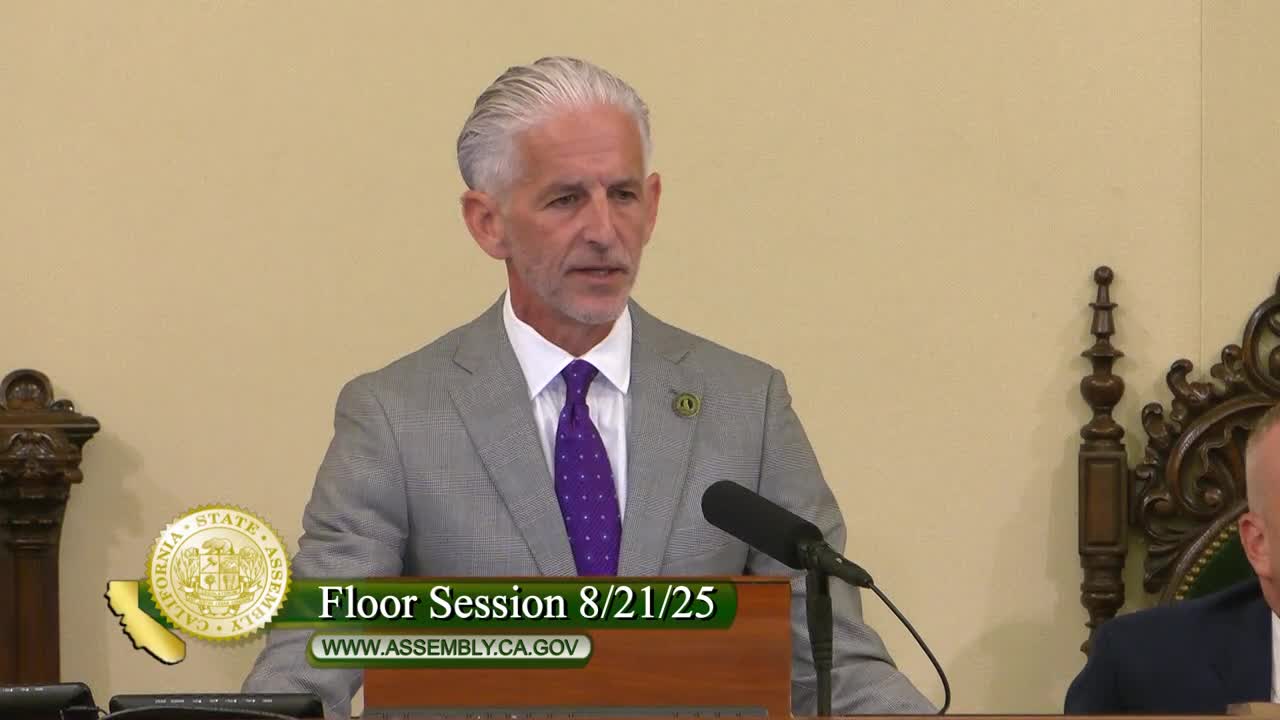 1H
Assembly Floor
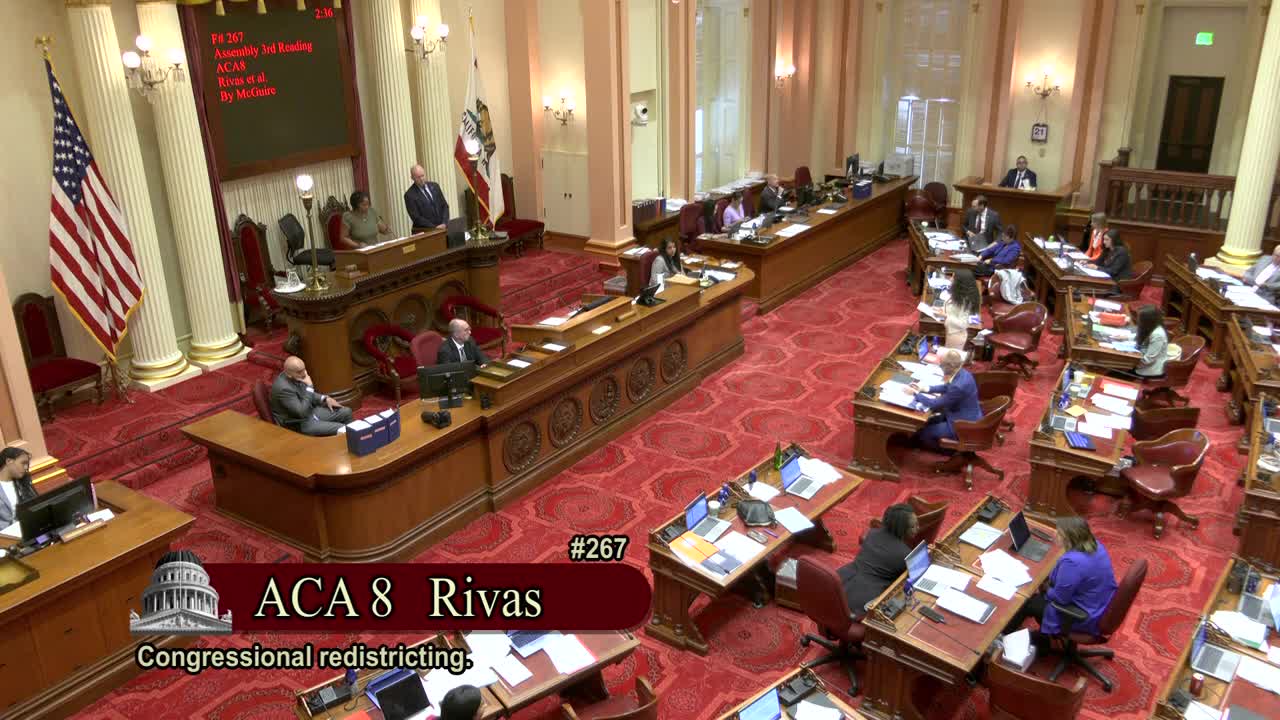 10MIN
Senate Floor
 22MIN
Assembly Standing Committee on Appropriations
 30MIN
Senate Standing Committee on Elections and Constitutional Amendments
 56MIN
Assembly Standing Committee on Elections
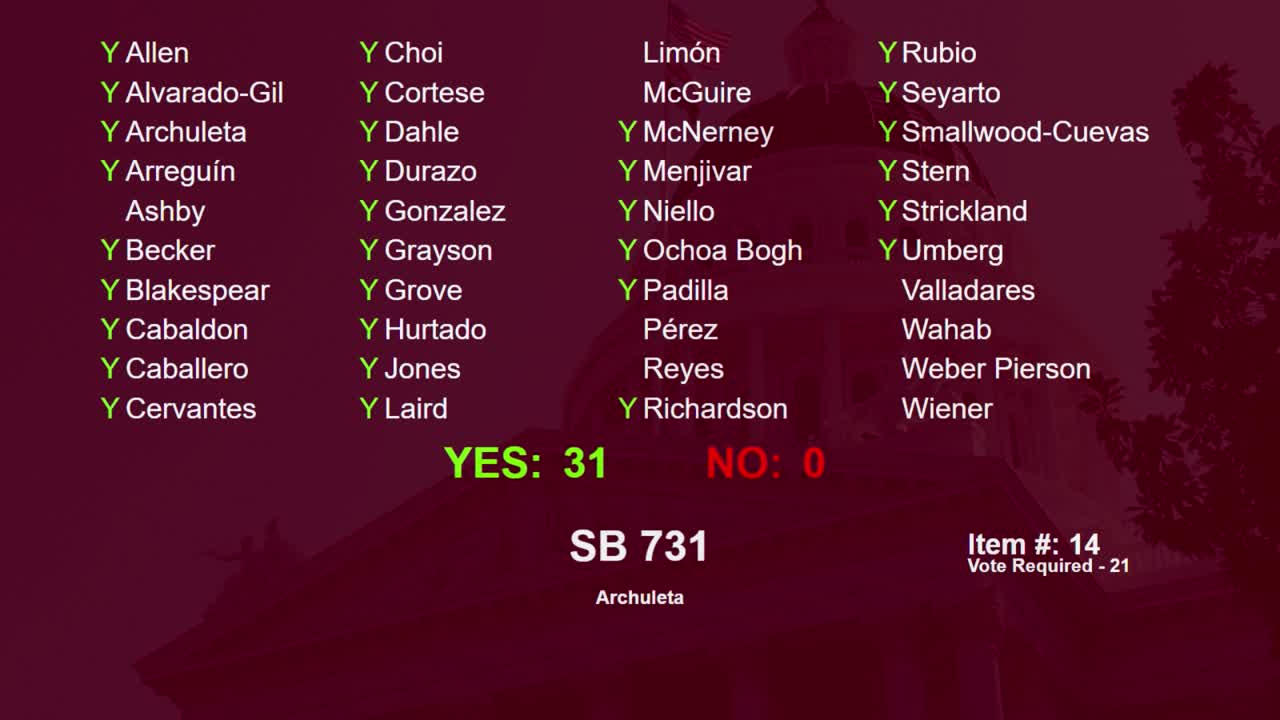 2MIN
Senate Floor
 4MIN
Senate Standing Committee on Elections and Constitutional Amendments


Bill Co-Author(s):