SB 284: Property taxation: change in ownership: family homes and farms.
- Session Year: 2025-2026
- House: Senate
- Latest Version Date: 2025-06-25
Current Status:
In Progress
(2025-07-14: Set, final hearing. Held in committee and under submission.)
Introduced
In Committee
Awaiting First Chamber Vote
Passed First Chamber
In Committee
Awaiting Second Chamber Vote
Passed Second Chamber
Enacted
The California Constitution limits the amount of ad valorem taxes on real property to 1% of the full cash value of that property, defined as the county assessors valuation of real property as shown on the 197576 tax bill and, thereafter, the appraised value of the real property when purchased, newly constructed, or a change in ownership occurs after the 1975 assessment, subject to an annual inflation adjustment not to exceed 2%.
Pursuant to constitutional authorization, existing property tax law, on and after February 16, 2021, excludes from classification as a change in ownership the purchase or transfer of a family home or family farm, as those terms are defined, of the transferor in the case of a transfer between parents and their children, or between grandparents and their grandchildren if all the parents of those grandchildren are deceased, if the property continues as the family home or family farm of the transferee, as specified. For purposes of the transfer of a family home, that law requires the transfer to be of a principal residence of the transferor and to become the principal residence of the transferee within one year of the transfer. That law also requires the transferee to file for the homeowners or disabled veterans exemption within a year of the transfer, as described.
This bill would expand the above-described exclusion to include, in the case of the purchase or transfer of a family home or a family farm, as applicable, a purchase or transfer of that family home or family farm between eligible transferees, as specified. The bill would also specify that, in the event of a transfer by certain judicial decrees, the transfer commencing either of the above-described one-year periods shall be deemed to occur as of the effective date of the final judicial decree. decree, as specified. The bill would require a transferee to notify the assessor of the county in which the property is located of their intention to claim the exclusion, as specified. By expanding the duties of local tax officials, the bill would impose a state-mandated local program.
The California Constitution requires the state to reimburse local agencies and school districts for certain costs mandated by the state. Statutory provisions establish procedures for making that reimbursement.
This bill would provide that, if the Commission on State Mandates determines that the bill contains costs mandated by the state, reimbursement for those costs shall be made pursuant to the statutory provisions noted above.
Existing law requires the state to reimburse local agencies annually for certain property tax revenues lost as a result of any exemption or classification of property for purposes of ad valorem property taxation.
This bill would provide that, notwithstanding those provisions, no appropriation is made and the state shall not reimburse local agencies for property tax revenues lost by them pursuant to the bill.
This bill would take effect immediately as a tax levy.
The California Constitution limits the amount of ad valorem taxes on real property to 1% of the full cash value of that property, defined as the county assessors valuation of real property as shown on the 197576 tax bill and, thereafter, the appraised value of the real property when purchased, newly constructed, or a change in ownership occurs after the 1975 assessment, subject to an annual inflation adjustment not to exceed 2%.
Pursuant to constitutional authorization, existing property tax law, on and after February 16, 2021, excludes from classification as a change in ownership the purchase or transfer of a family home or family farm, as those terms are defined, of the transferor in the case of a transfer between parents and their children, or between grandparents and their grandchildren if all the parents of those grandchildren are deceased, if the property continues as the family home or family farm of the transferee, as specified. For purposes of the transfer of a family home, that law requires the transfer to be of a principal residence of the transferor and to become the principal residence of the transferee within one year of the transfer. That law also requires the transferee to file for the homeowners or disabled veterans exemption within a year of the transfer, as described.
This bill would expand the above-described exclusion to include, in the case of the death of an eligible transferor preceding the purchase or transfer of real property a family home or a family farm, as applicable, a purchase or transfer of that real property family home or family farm between eligible transferees. transferees, as specified. The bill would also specify that, in the event of a transfer by certain judicial decrees, the transfer commencing either of the above-described one-year periods shall be deemed to occur as of the effective date of the final judicial decree.
Existing law requires the state to reimburse local agencies annually for certain property tax revenues lost as a result of any exemption or classification of property for purposes of ad valorem property taxation.
This bill would provide that, notwithstanding those provisions, no appropriation is made and the state shall not reimburse local agencies for property tax revenues lost by them pursuant to the bill.
This bill would take effect immediately as a tax levy.
The California Constitution limits the amount of ad valorem taxes on real property to 1% of the full cash value of that property, defined as the county assessors valuation of real property as shown on the 197576 tax bill and, thereafter, the appraised value of the real property when purchased, newly constructed, or a change in ownership occurs after the 1975 assessment, subject to an annual inflation adjustment not to exceed 2%.
Pursuant to constitutional authorization, existing property tax law, on and after February 16, 2021, excludes from classification a change in ownership the purchase or transfer of a family home or family farm, as those terms are defined, of the transferor in the case of a transfer between parents and their children, or between grandparents and their grandchildren if all the parents of those grandchildren are deceased, if the property continues as the family home or family farm of the transferee, as specified. For purposes of the transfer of a family home, that law requires the transfer to be of a principal residence of the transferor and to become the principal residence of the transferee within one year of the transfer. That law also requires the transferee to file for the homeowners or disabled veterans exemption within a year of the transfer, as described.
This bill would expand the above-described exclusion to include, in the case of the death of an eligible transferor preceding the purchase or transfer of real property or a family farm, as applicable, a purchase or transfer of that real property or family farm between eligible transferees.
Existing law requires the state to reimburse local agencies annually for certain property tax revenues lost as a result of any exemption or classification of property for purposes of ad valorem property taxation.
This bill would provide that, notwithstanding those provisions, no appropriation is made and the state shall not reimburse local agencies for property tax revenues lost by them pursuant to the bill.
This bill would take effect immediately as a tax levy.
Existing law provides that property that constitutes the principal place of residency of a veteran, that is owned by the veteran, the veterans spouse, or the veteran and the veterans spouse jointly, is exempted from taxation on that part of the full value of the residence that does not exceed $100,000, as provided, if the veteran is blind in both eyes, has lost the use of 2 or more limbs, or if the veteran is totally disabled as a result of injury or disease incurred in military service.This bill would make nonsubstantive changes to that provision.Existing law provides that property that constitutes the principal place of residency of a veteran, that is owned by the veteran, the veterans spouse, or the veteran and the veterans spouse jointly, is exempted from taxation on that part of the full value of the residence that does not exceed $100,000, as provided, if the veteran is blind in both eyes, has lost the use of 2 or more limbs, or if the veteran is totally disabled as a result of injury or disease incurred in military service.
This bill would make nonsubstantive changes to that provision.
(a)Notwithstanding any provision of this chapter, beginning on and after February 16, 2021, a change in ownership shall not include, in whole or in part, any of the following purchases or transfers for which a claim is filed:
(1)The purchase or transfer of real property that is the principal residence of an eligible transferor in the case of a purchase or transfer between parents and their children or between grandparents and their grandchildren, if all of the parents, other than stepparents, of that grandchild or those grandchildren, who qualify as the children of the grandparents, are deceased as of the date of purchase or transfer.
(A)The transfer is required to be of a principal residence of the transferor, and become the principal residence of the transferee within one year of the transfer.
(B)The transferee shall file for the homeowners or disabled veterans exemption within a year of the transfer, and the exclusion shall be removed on the date an eligible transferee, or a subsequent eligible transferee who files for the homeowners or disabled veterans exemption within one year, is no longer eligible for either the homeowners or disabled veterans exemption.
(C)If applicable, as of the lien date immediately following the date the eligible transferee or subsequent eligible transferee no longer qualifies for the exclusion provided by this section, the base year value established as of the change in ownership date to which the exclusion applied, adjusted annually in accordance with paragraph (1) of subdivision (a) of Section 51, shall be enrolled.
(D)Notwithstanding any other law, in the event of a transfer by judicial decree issued pursuant to Section 11640 of the Probate Code, and only for purposes of the one-year period described in subparagraph (A) or (B), the transfer commencing a that one-year period as described in subparagraph (A) or (B) shall be deemed to occur as of the effective date of the final judicial decree.
(i)This section shall not be construed to alter the durations provided for correction of property tax assessments described in either Section 51.5 or 4831.(ii)The transferee shall, within one year of the death of the transferor, notify the assessor of the county in which the property is located of their intention to claim the exclusion provided by this section.(2)The purchase or transfer is of a family farm of an eligible transferor in the case of a purchase or transfer between parents and their children or between grandparents and their grandchildren, if all of the parents, other than stepparents, of that grandchild or those grandchildren, who qualify as the children of the grandparents, are deceased as of the date of purchase or transfer.
(A)This exclusion shall apply separately to the transfer of each legal parcel that makes up a family farm.
(B)For purposes of this section, each legal parcel that makes up a family farm shall be deemed to itself be a family farm, except for a legal parcel containing a family home.
(C)A legal parcel containing a family home as described in subparagraph (B) may qualify separately for exclusion under paragraph (1).
(b)The exclusions provided for in this section shall not be allowed unless a claim for the exclusion sought, pursuant to subdivision (f), is filed with the assessor.
(c)A claim filed under this section is not a public document and is not subject to public inspection, except that a claim shall be available for inspection by the transferee and the transferor or their respective spouse, the transferees legal representative, the transferors legal representative, the trustee of the transferees trust, the trustee of the transferors trust, and the executor or administrator of the transferees or transferors estate.
(d)The new taxable value of the family home or family farm shall be the sum of both of the following:
(1)The taxable value of the family home or family farm as determined in accordance with Section 110.1, with the adjustments permitted by subdivision (b) of Section 2 of Article XIIIA of the California Constitution and subdivision (f) of Section 110.1, determined as of the date immediately prior to the date the principal residence or family farm is purchased or transferred to the transferee.
(2)The applicable of the following amounts:
(A)If the fair market value, as defined in subdivision (a) of Section 110, of the family home or family farm upon purchase by, or transfer to, the transferee is less than the sum of the taxable value described in paragraph (1) plus one million dollars ($1,000,000), then zero dollars ($0).
(B)If the fair market value, as defined in subdivision (a) of Section 110, of the family home or family farm upon purchase by, or transfer to, the transferee is equal to or more than the sum of the taxable value described in paragraph (1) plus one million dollars ($1,000,000), an amount equal to the fair market value of the family home upon purchase by, or transfer to, the transferee, minus the sum of the taxable value described in paragraph (1) and one million dollars ($1,000,000).
(e)As used in this section, the following terms have the following meanings:
(1)Children means any of the following:
(A)Any child born of the parent or parents, except a child, as defined in subparagraph (D), who has been adopted by another person or persons.
(B)Any stepchild of the parent or parents and the spouse of that stepchild while the relationship of stepparent and stepchild exists. For purposes of this paragraph, the relationship of stepparent and stepchild shall be deemed to exist until the marriage on which the relationship is based is terminated by divorce, or, if the relationship is terminated by death, until the remarriage of the surviving stepparent.
(C)Any son-in-law or daughter-in-law of the parent or parents. For the purposes of this paragraph, the relationship of parent and son-in-law or daughter-in-law shall be deemed to exist until the marriage on which the relationship is based is terminated by divorce, or, if the relationship is terminated by death, until the remarriage of the surviving son-in-law or daughter-in-law.
(D)Any child adopted by the parent or parents pursuant to statute, other than an individual adopted after reaching 18 years of age.
(E)Any foster child of a state-licensed foster parent, if that child was not, because of a legal barrier, adopted by the foster parent or foster parents before the child aged out of the foster care system. For purposes of this paragraph, the relationship between a foster child and foster parent shall be deemed to exist until terminated by death. However, for purposes of a transfer that occurs on the date of death, the relationship shall be deemed to exist on the date of death.
(2)Eligible transferee means a parent, child, grandparent, or grandchild of an eligible transferor.
(3)Eligible transferor means a grandparent, parent, grandchild, or child of an eligible transferee.
(4)Family farm means any real property under cultivation or which is being used for pasture or grazing, or that is used to produce any agricultural commodity, as that term is defined in Section 51201 of the Government Code as that section read on January 1, 2020.
(5)Family home or principal place of residence means a dwelling that is eligible for a homeowners exemption or a disabled veterans exemption as a result of the transferors ownership and occupation of the dwelling. Family home or principal residence includes only that portion of the land underlying the residence that consists of an area of reasonable size that is used as a site for the residence.
(6)Full cash value means full cash value, as defined in Section 2 of Article XIIIA of the California Constitution and Section 110.1, with any adjustments authorized by those sections, and the full value of any new construction in progress, determined as of the date immediately prior to the date of a purchase by or transfer to an eligible transferee of real property subject to this section.
(7)Grandchild or grandchildren means any child or children of the child or children of the grandparent or grandparents.
(8)Real property means real property as defined in Section 104. Real property does not include any interest in a legal entity. For purposes of this section, real property includes any of the following:
(A)An interest in a unit or lot within a cooperative housing corporation, as defined in subdivision (i) of Section 61.
(B)A pro rata ownership interest in a mobilehome park, as defined in subdivision (b) of Section 62.1.
(C)A pro rata ownership in a floating home marina, as defined in subdivision (c) of Section 62.5.
(9)Transfer includes, and is not limited to, any transfer of the present beneficial ownership of property from an eligible transferor to an eligible transferee through the medium of an inter vivos or testamentary trust.
(f)(1)The State Board of Equalization shall prescribe, after consultation with the California Assessors Association, a form for claiming eligibility. Except as provided in paragraph (2), any claim under this section shall be filed as follows:
(A)Within three years after the date of the purchase or transfer of real property for which the claim is filed, or prior to the transfer of the real property to a third party, or an eligible transferee no longer occupies the residence, whichever is earlier.
(B)Notwithstanding subparagraph (A), a claim shall be deemed to be timely filed if it is filed within six months after the date of mailing of a notice of supplemental or escape assessment, issued as a result of the purchase or transfer of real property for which the claim is filed.
(2)In the case in which the real property subject to purchase or transfer has not been transferred to a third party, a claim for exclusion under this section that is filed subsequent to the expiration of the filing periods set forth in paragraph (1) shall be considered by the assessor, subject to both of the following conditions:
(A)Any exclusion granted pursuant to that claim shall apply, commencing with the lien date of the assessment year in which the claim is filed.
(B)Under any exclusion granted pursuant to that claim, the adjusted full cash value of the subject real property in the assessment year described in subparagraph (A) shall be the adjusted base year value of the subject real property in the assessment year in which the excluded purchase or transfer took place, factored to the assessment year described in subparagraph (A) for both of the following:
(i)Inflation as annually determined in accordance with paragraph (1) of subdivision (a) of Section 51.
(ii)Any subsequent new construction occurring with respect to the subject real property.
(g)(1)If the assessor notifies the transferee in writing of potential eligibility for exclusion from change in ownership under this section, a certified claim for exclusion shall be filed with the assessor within 45 days of the date of the notice of potential eligibility. If a certified claim for exclusion is not filed within 45 days, the assessor may send a second notice of potential eligibility for exclusion, notifying the transferee that a certified claim for exclusion has not been received and that reassessment of the property will commence unless a certified claim for exclusion is filed within 60 days of the date of the second notice of potential eligibility. The second notice of potential eligibility shall indicate whether a certified claim for exclusion that is not filed within 60 days will be subject to a processing fee as provided in paragraph (2).
(2)If a certified claim for exclusion is not filed within 60 days of the date of the second notice of potential eligibility and an eligible transferee subsequently files a claim and qualifies for the exclusion, the assessor may, upon authorization by a county board of supervisors, require an eligible transferee to pay a one-time processing fee, collected at the time the claim is submitted, and reimbursed by the assessor if the claim is ineligible. The fee shall be subject to the provisions of Chapter 12.5 (commencing with Section 54985) of Part 1 of Division 2 of Title 5 of the Government Code and shall not exceed the amount of the actual and reasonable costs incurred by the assessor for reassessment work done due to failure to file the claim for exclusion or one hundred seventy-five dollars ($175), whichever is less.
(h)(1)After consultation with the California Assessors Association, the board shall, by emergency regulation, adopt regulations and produce claim forms and instructions necessary to implement this section and Section 2.1 of Article XIIIA of the California Constitution.
(2)Any emergency regulation prescribed, adopted, or enforced pursuant to this section shall be adopted in accordance with Chapter 3.5 (commencing with Section 11340) of Part 1 of Division 3 of Title 2 of the Government Code, and, for purposes of that chapter, including Section 11349.6 of the Government Code, the adoption of the regulation is an emergency and shall be considered by the Office of Administrative Law as necessary for the immediate preservation of the public peace, health and safety, and general welfare.
SEC. 2.Section 63.2.1 is added to the Revenue and Taxation Code, to read:63.2.1.A change in ownership shall not include a transfer of real property described in paragraph (1) or (2) of subdivision (a) of Section 63.2 between eligible transferees, as defined by paragraph (7) of subdivision (c) of Section 63.1, within the one-year period described in subparagraph (A) of paragraph (1) of subdivision (a) of Section 63.2.
SEC. 3.If the Commission on State Mandates determines that this act contains costs mandated by the state, reimbursement to local agencies and school districts for those costs shall be made pursuant to Part 7 (commencing with Section 17500) of Division 4 of Title 2 of the Government Code.
SEC. 3.SEC. 4.Notwithstanding Section 2229 of the Revenue and Taxation Code, no appropriation is made by this act and the state shall not reimburse any local agency for any property tax revenues lost by it pursuant to this act.
SEC. 4.SEC. 5.This act provides for a tax levy within the meaning of Article IV of the California Constitution and shall go into immediate effect.
A change in ownership shall not include a transfer of real property described in paragraph (1) or (2) of subdivision (a) of Section 63.2 between eligible transferees, as defined by paragraph (7) of subdivision (c) of Section 63.1, within the one-year period described in subparagraph (A) of paragraph (1) of subdivision (a) of Section 63.2.
SEC. 2.SEC. 3.Notwithstanding Section 2229 of the Revenue and Taxation Code, no appropriation is made by this act and the state shall not reimburse any local agency for any property tax revenues lost by it pursuant to this act.
SEC. 3.SEC. 4.This act provides for a tax levy within the meaning of Article IV of the California Constitution and shall go into immediate effect.
(a)Notwithstanding any provision of this chapter, beginning on and after February 16, 2021, a change in ownership shall not include, in whole or in part, any of the following purchases or transfers for which a claim is filed:
(1)The purchase or transfer of real property that is the principal residence of an eligible transferor in the case of a purchase or transfer between parents and their children or between grandparents and their grandchildren, if all of the parents, other than stepparents, of that grandchild or those grandchildren, who qualify as the children of the grandparents, are deceased as of the date of purchase or transfer.
(A)The transfer is required to be of a principal residence of the transferor, and become the principal residence of the transferee within one year of the transfer.
(B)The transferee shall file for the homeowners or disabled veterans exemption within a year of the transfer, and the exclusion shall be removed on the date an eligible transferee, or a subsequent eligible transferee who files for the homeowners or disabled veterans exemption within one year, is no longer eligible for either the homeowners or disabled veterans exemption.
(C)If applicable, as of the lien date immediately following the date the eligible transferee or subsequent eligible transferee no longer qualifies for the exclusion provided by this section, the base year value established as of the change in ownership date to which the exclusion applied, adjusted annually in accordance with paragraph (1) of subdivision (a) of Section 51, shall be enrolled.
(2)The purchase or transfer is of a family farm of an eligible transferor in the case of a purchase or transfer between parents and their children or between grandparents and their grandchildren, if all of the parents, other than stepparents, of that grandchild or those grandchildren, who qualify as the children of the grandparents, are deceased as of the date of purchase or transfer.
(A)This exclusion shall apply separately to the transfer of each legal parcel that makes up a family farm.
(B)For purposes of this section, each legal parcel that makes up a family farm shall be deemed to itself be a family farm, except for a legal parcel containing a family home.
(C)A legal parcel containing a family home as described in subparagraph (B) may qualify separately for exclusion under paragraph (1).
(b)(1)The exclusions provided for in this section shall not be allowed unless a claim for the exclusion sought, pursuant to subdivision (f), is filed with the assessor.
(2)The exclusions provided for in this section shall include, in the case of the death of an eligible transferor preceding the purchase or transfer of real property or a family farm, as applicable, a purchase or transfer of that real property or family farm between eligible transferees.
(c)A claim filed under this section is not a public document and is not subject to public inspection, except that a claim shall be available for inspection by the transferee and the transferor or their respective spouse, the transferees legal representative, the transferors legal representative, the trustee of the transferees trust, the trustee of the transferors trust, and the executor or administrator of the transferees or transferors estate.
(d)The new taxable value of the family home or family farm shall be the sum of both of the following:
(1)The taxable value of the family home or family farm as determined in accordance with Section 110.1, with the adjustments permitted by subdivision (b) of Section 2 of Article XIIIA of the California Constitution and subdivision (f) of Section 110.1, determined as of the date immediately prior to the date the principal residence or family farm is purchased or transferred to the transferee.
(2)The applicable of the following amounts:
(A)If the fair market value, as defined in subdivision (a) of Section 110, of the family home or family farm upon purchase by, or transfer to, the transferee is less than the sum of the taxable value described in paragraph (1) plus one million dollars ($1,000,000), then zero dollars ($0).
(B)If the fair market value, as defined in subdivision (a) of Section 110, of the family home or family farm upon purchase by, or transfer to, the transferee is equal to or more than the sum of the taxable value described in paragraph (1) plus one million dollars ($1,000,000), an amount equal to the fair market value of the family home upon purchase by, or transfer to, the transferee, minus the sum of the taxable value described in paragraph (1) and one million dollars ($1,000,000).
(e)As used in this section, the following terms have the following meanings:
(1)Children means any of the following:
(A)Any child born of the parent or parents, except a child, as defined in subparagraph (D), who has been adopted by another person or persons.
(B)Any stepchild of the parent or parents and the spouse of that stepchild while the relationship of stepparent and stepchild exists. For purposes of this paragraph, the relationship of stepparent and stepchild shall be deemed to exist until the marriage on which the relationship is based is terminated by divorce, or, if the relationship is terminated by death, until the remarriage of the surviving stepparent.
(C)Any son-in-law or daughter-in-law of the parent or parents. For the purposes of this paragraph, the relationship of parent and son-in-law or daughter-in-law shall be deemed to exist until the marriage on which the relationship is based is terminated by divorce, or, if the relationship is terminated by death, until the remarriage of the surviving son-in-law or daughter-in-law.
(D)Any child adopted by the parent or parents pursuant to statute, other than an individual adopted after reaching 18 years of age.
(E)Any foster child of a state-licensed foster parent, if that child was not, because of a legal barrier, adopted by the foster parent or foster parents before the child aged out of the foster care system. For purposes of this paragraph, the relationship between a foster child and foster parent shall be deemed to exist until terminated by death. However, for purposes of a transfer that occurs on the date of death, the relationship shall be deemed to exist on the date of death.
(2)Eligible transferee means a parent, child, grandparent, or grandchild of an eligible transferor.
(3)Eligible transferor means a grandparent, parent, grandchild, or child of an eligible transferee.
(4)Family farm means any real property under cultivation or which is being used for pasture or grazing, or that is used to produce any agricultural commodity, as that term is defined in Section 51201 of the Government Code as that section read on January 1, 2020.
(5)Family home or principal place of residence means a dwelling that is eligible for a homeowners exemption or a disabled veterans exemption as a result of the transferors ownership and occupation of the dwelling. Family home or principal residence includes only that portion of the land underlying the residence that consists of an area of reasonable size that is used as a site for the residence.
(6)Full cash value means full cash value, as defined in Section 2 of Article XIIIA of the California Constitution and Section 110.1, with any adjustments authorized by those sections, and the full value of any new construction in progress, determined as of the date immediately prior to the date of a purchase by or transfer to an eligible transferee of real property subject to this section.
(7)Grandchild or grandchildren means any child or children of the child or children of the grandparent or grandparents.
(8)Real property means real property as defined in Section 104. Real property does not include any interest in a legal entity. For purposes of this section, real property includes any of the following:
(A)An interest in a unit or lot within a cooperative housing corporation, as defined in subdivision (i) of Section 61.
(B)A pro rata ownership interest in a mobilehome park, as defined in subdivision (b) of Section 62.1.
(C)A pro rata ownership in a floating home marina, as defined in subdivision (c) of Section 62.5.
(9)Transfer includes, and is not limited to, any transfer of the present beneficial ownership of property from an eligible transferor to an eligible transferee through the medium of an inter vivos or testamentary trust.
(f)(1)The State Board of Equalization shall prescribe, after consultation with the California Assessors Association, a form for claiming eligibility. Except as provided in paragraph (2), any claim under this section shall be filed as follows:
(A)Within three years after the date of the purchase or transfer of real property for which the claim is filed, or prior to the transfer of the real property to a third party, or an eligible transferee no longer occupies the residence, whichever is earlier.
(B)Notwithstanding subparagraph (A), a claim shall be deemed to be timely filed if it is filed within six months after the date of mailing of a notice of supplemental or escape assessment, issued as a result of the purchase or transfer of real property for which the claim is filed.
(2)In the case in which the real property subject to purchase or transfer has not been transferred to a third party, a claim for exclusion under this section that is filed subsequent to the expiration of the filing periods set forth in paragraph (1) shall be considered by the assessor, subject to both of the following conditions:
(A)Any exclusion granted pursuant to that claim shall apply, commencing with the lien date of the assessment year in which the claim is filed.
(B)Under any exclusion granted pursuant to that claim, the adjusted full cash value of the subject real property in the assessment year described in subparagraph (A) shall be the adjusted base year value of the subject real property in the assessment year in which the excluded purchase or transfer took place, factored to the assessment year described in subparagraph (A) for both of the following:
(i)Inflation as annually determined in accordance with paragraph (1) of subdivision (a) of Section 51.
(ii)Any subsequent new construction occurring with respect to the subject real property.
(g)(1)If the assessor notifies the transferee in writing of potential eligibility for exclusion from change in ownership under this section, a certified claim for exclusion shall be filed with the assessor within 45 days of the date of the notice of potential eligibility. If a certified claim for exclusion is not filed within 45 days, the assessor may send a second notice of potential eligibility for exclusion, notifying the transferee that a certified claim for exclusion has not been received and that reassessment of the property will commence unless a certified claim for exclusion is filed within 60 days of the date of the second notice of potential eligibility. The second notice of potential eligibility shall indicate whether a certified claim for exclusion that is not filed within 60 days will be subject to a processing fee as provided in paragraph (2).
(2)If a certified claim for exclusion is not filed within 60 days of the date of the second notice of potential eligibility and an eligible transferee subsequently files a claim and qualifies for the exclusion, the assessor may, upon authorization by a county board of supervisors, require an eligible transferee to pay a one-time processing fee, collected at the time the claim is submitted, and reimbursed by the assessor if the claim is ineligible. The fee shall be subject to the provisions of Chapter 12.5 (commencing with Section 54985) of Part 1 of Division 2 of Title 5 of the Government Code and shall not exceed the amount of the actual and reasonable costs incurred by the assessor for reassessment work done due to failure to file the claim for exclusion or one hundred seventy-five dollars ($175), whichever is less.
(h)(1)After consultation with the California Assessors Association, the board shall, by emergency regulation, adopt regulations and produce claim forms and instructions necessary to implement this section and Section 2.1 of Article XIIIA of the California Constitution.
(2)Any emergency regulation prescribed, adopted, or enforced pursuant to this section shall be adopted in accordance with Chapter 3.5 (commencing with Section 11340) of Part 1 of Division 3 of Title 2 of the Government Code, and, for purposes of that chapter, including Section 11349.6 of the Government Code, the adoption of the regulation is an emergency and shall be considered by the Office of Administrative Law as necessary for the immediate preservation of the public peace, health and safety, and general welfare.
SEC. 2.Notwithstanding Section 2229 of the Revenue and Taxation Code, no appropriation is made by this act and the state shall not reimburse any local agency for any property tax revenues lost by it pursuant to this act.
SEC. 3.This act provides for a tax levy within the meaning of Article IV of the California Constitution and shall go into immediate effect.
SECTION 1.Section 205.5 of the Revenue and Taxation Code is amended to read:205.5.(a)Property that constitutes the principal place of residence of a veteran, that is owned by the veteran, the veterans spouse, or the veteran and the veterans spouse jointly, is exempted from taxation on that part of the full value of the residence that does not exceed one hundred thousand dollars ($100,000), as adjusted for the relevant assessment year as provided in subdivision (i), if the veteran is blind in both eyes, has lost the use of two or more limbs, or if the veteran is totally disabled as a result of injury or disease incurred in military service. The one hundred thousand dollar ($100,000) exemption shall be one hundred fifty thousand dollars ($150,000), as adjusted for the relevant assessment year as provided in subdivision (i), in the case of an eligible veteran whose household income does not exceed the amount of forty thousand dollars ($40,000), as adjusted for the relevant assessment year as provided in subdivision (h).(b)(1)For purposes of this section, veteran means either of the following:(A)A person who is serving in or has served in and has been discharged under other than dishonorable conditions from service in the United States Army, Navy, Air Force, Marine Corps, Space Force, or Coast Guard, and served either in time of war or in time of peace in a campaign or expedition for which a medal has been issued by Congress, or in time of peace and because of a service-connected disability was released from active duty, and who has been determined by the United States Department of Veterans Affairs to be eligible for federal veterans health and medical benefits.(B)Any person who would qualify as a veteran pursuant to subparagraph (A) except that they have, as a result of a service-connected injury or disease, died while on active duty in military service. The United States Department of Veterans Affairs shall determine whether an injury or a disease is service connected.(2)For purposes of this section, property is deemed to be the principal place of residence of a veteran, disabled as described in subdivision (a), who is confined to a hospital or other care facility, if that property would be that veterans principal place of residence were it not for their confinement to a hospital or other care facility, provided that the residence is not rented or leased to a third party. For purposes of this paragraph, a family member who resides at the residence is not a third party.(c)(1)Property that is owned by, and that constitutes the principal place of residence of, the unmarried surviving spouse of a deceased veteran is exempt from taxation on that part of the full value of the residence that does not exceed one hundred thousand dollars ($100,000), as adjusted for the relevant assessment year as provided in subdivision (i), in the case of a veteran who was blind in both eyes, had lost the use of two or more limbs, or was totally disabled provided that either of the following conditions is met:(A)The deceased veteran during their lifetime qualified for the exemption pursuant to subdivision (a), or would have qualified for the exemption under the laws effective on January 1, 1977, except that the veteran died prior to January 1, 1977.(B)The veteran died from a disease that was service connected as determined by the United States Department of Veterans Affairs.(2)The one hundred thousand dollar ($100,000) exemption shall be one hundred fifty thousand dollars ($150,000), as adjusted for the relevant assessment year as provided in subdivision (i), in the case of an eligible unmarried surviving spouse whose household income does not exceed the amount of forty thousand dollars ($40,000), as adjusted for the relevant assessment year as provided in subdivision (h).(3)Commencing with the 199495 fiscal year, property that is owned by, and that constitutes the principal place of residence of, the unmarried surviving spouse of a veteran as described in subparagraph (B) of paragraph (1) of subdivision (b) is exempt from taxation on that part of the full value of the residence that does not exceed one hundred thousand dollars ($100,000), as adjusted for the relevant assessment year as provided in subdivision (h). The one hundred thousand dollar ($100,000) exemption shall be one hundred fifty thousand dollars ($150,000), as adjusted for the relevant assessment year as provided in subdivision (i), in the case of an eligible unmarried surviving spouse whose household income does not exceed the amount of forty thousand dollars ($40,000), as adjusted for the relevant assessment year as provided in subdivision (h).(4)Beginning with the 201213 fiscal year and for each fiscal year thereafter, property is deemed to be the principal place of residence of the unmarried surviving spouse of a deceased veteran, who is confined to a hospital or other care facility, if that property would be the unmarried surviving spouses principal place of residence were it not for their confinement to a hospital or other care facility, provided that the residence is not rented or leased to a third party. For purposes of this paragraph, a family member who resides at the residence is not a third party.(d)As used in this section, property that is owned by a veteran or property that is owned by the veterans unmarried surviving spouse includes all of the following:(1)Property owned by the veteran with the veterans spouse as a joint tenancy, tenancy in common, or as community property.(2)Property owned by the veteran or the veterans spouse as separate property.(3)Property owned with one or more other persons to the extent of the interest owned by the veteran, the veterans spouse, or both the veteran and the veterans spouse.(4)Property owned by the veterans unmarried surviving spouse with one or more other persons to the extent of the interest owned by the veterans unmarried surviving spouse.(5)So much of the property of a corporation as constitutes the principal place of residence of a veteran or a veterans unmarried surviving spouse when the veteran, or the veterans spouse, or the veterans unmarried surviving spouse is a shareholder of the corporation and the rights of shareholding entitle one to the possession of property, legal title to which is owned by the corporation. The exemption provided by this paragraph shall be shown on the local roll and shall reduce the full value of the corporate property. Notwithstanding any law or articles of incorporation or bylaws of a corporation described in this paragraph, any reduction of property taxes paid by the corporation shall reflect an equal reduction in any charges by the corporation to the person who, by reason of qualifying for the exemption, made possible the reduction for the corporation.(e)For purposes of this section, being blind in both eyes means having a visual acuity of 5/200 or less, or concentric contraction of the visual field to 5 degrees or less; losing the use of a limb means that the limb has been amputated or its use has been lost by reason of ankylosis, progressive muscular dystrophies, or paralysis; and being totally disabled means that the United States Department of Veterans Affairs or the military service from which the veteran was discharged has rated the disability at 100 percent or has rated the disability compensation at 100 percent by reason of being unable to secure or follow a substantially gainful occupation.(f)(1)The county assessor shall accept an electronically generated letter of service-connected disability in lieu of an original letter of service-connected disability, at the discretion of the claimant, for purposes of verifying eligibility for an exemption pursuant to this section.(2)For purposes of this subdivision, letter of service-connected disability means a letter from the United States Department of Veterans Affairs that provides a benefit summary of the claimants service-connected disability for purposes of claiming disabled veterans exemptions.(g)An exemption granted to a claimant pursuant to this section shall be in lieu of the veterans exemption provided by subdivisions (o), (p), (q), and (r) of Section 3 of Article XIII of the California Constitution and any other real property tax exemption to which the claimant may be entitled. Other real property tax exemptions shall not be granted to any other person with respect to the same residence for which an exemption has been granted pursuant to this section. However, if two or more veterans qualified pursuant to this section coown a property in which they reside, each is entitled to the exemption to the extent of their interest.(h)Commencing on January 1, 2002, and for each assessment year thereafter, the household income limit shall be compounded annually by an inflation factor that is the annual percentage change, measured from February to February of the two previous assessment years, rounded to the nearest one-thousandth of 1 percent, in the California Consumer Price Index for all items, as determined by the California Department of Industrial Relations.(i)Commencing on January 1, 2006, and for each assessment year thereafter, the exemption amounts set forth in subdivisions (a) and (c) shall be compounded annually by an inflation factor that is the annual percentage change, measured from February to February of the two previous assessment years, rounded to the nearest one-thousandth of 1 percent, in the California Consumer Price Index for all items, as determined by the California Department of Industrial Relations.(j)The amendments made to this section by Chapter 871 of the Statutes of 2016 shall apply for property tax lien dates for the 201718 fiscal year and for each fiscal year thereafter.(k)The county assessor may provide written or electronic determination of preliminary eligibility for an exemption under this section.(a)Property that constitutes the principal place of residence of a veteran, that is owned by the veteran, the veterans spouse, or the veteran and the veterans spouse jointly, is exempted from taxation on that part of the full value of the residence that does not exceed one hundred thousand dollars ($100,000), as adjusted for the relevant assessment year as provided in subdivision (i), if the veteran is blind in both eyes, has lost the use of two or more limbs, or if the veteran is totally disabled as a result of injury or disease incurred in military service. The one hundred thousand dollar ($100,000) exemption shall be one hundred fifty thousand dollars ($150,000), as adjusted for the relevant assessment year as provided in subdivision (i), in the case of an eligible veteran whose household income does not exceed the amount of forty thousand dollars ($40,000), as adjusted for the relevant assessment year as provided in subdivision (h).
(b)(1)For purposes of this section, veteran means either of the following:
(A)A person who is serving in or has served in and has been discharged under other than dishonorable conditions from service in the United States Army, Navy, Air Force, Marine Corps, Space Force, or Coast Guard, and served either in time of war or in time of peace in a campaign or expedition for which a medal has been issued by Congress, or in time of peace and because of a service-connected disability was released from active duty, and who has been determined by the United States Department of Veterans Affairs to be eligible for federal veterans health and medical benefits.
(B)Any person who would qualify as a veteran pursuant to subparagraph (A) except that they have, as a result of a service-connected injury or disease, died while on active duty in military service. The United States Department of Veterans Affairs shall determine whether an injury or a disease is service connected.
(2)For purposes of this section, property is deemed to be the principal place of residence of a veteran, disabled as described in subdivision (a), who is confined to a hospital or other care facility, if that property would be that veterans principal place of residence were it not for their confinement to a hospital or other care facility, provided that the residence is not rented or leased to a third party. For purposes of this paragraph, a family member who resides at the residence is not a third party.
(c)(1)Property that is owned by, and that constitutes the principal place of residence of, the unmarried surviving spouse of a deceased veteran is exempt from taxation on that part of the full value of the residence that does not exceed one hundred thousand dollars ($100,000), as adjusted for the relevant assessment year as provided in subdivision (i), in the case of a veteran who was blind in both eyes, had lost the use of two or more limbs, or was totally disabled provided that either of the following conditions is met:
(A)The deceased veteran during their lifetime qualified for the exemption pursuant to subdivision (a), or would have qualified for the exemption under the laws effective on January 1, 1977, except that the veteran died prior to January 1, 1977.
(B)The veteran died from a disease that was service connected as determined by the United States Department of Veterans Affairs.
The
(2)The one hundred thousand dollar ($100,000) exemption shall be one hundred fifty thousand dollars ($150,000), as adjusted for the relevant assessment year as provided in subdivision (i), in the case of an eligible unmarried surviving spouse whose household income does not exceed the amount of forty thousand dollars ($40,000), as adjusted for the relevant assessment year as provided in subdivision (h).
(2)(3)Commencing with the 199495 fiscal year, property that is owned by, and that constitutes the principal place of residence of, the unmarried surviving spouse of a veteran as described in subparagraph (B) of paragraph (1) of subdivision (b) is exempt from taxation on that part of the full value of the residence that does not exceed one hundred thousand dollars ($100,000), as adjusted for the relevant assessment year as provided in subdivision (h). The one hundred thousand dollar ($100,000) exemption shall be one hundred fifty thousand dollars ($150,000), as adjusted for the relevant assessment year as provided in subdivision (i), in the case of an eligible unmarried surviving spouse whose household income does not exceed the amount of forty thousand dollars ($40,000), as adjusted for the relevant assessment year as provided in subdivision (h).
(3)(4)Beginning with the 201213 fiscal year and for each fiscal year thereafter, property is deemed to be the principal place of residence of the unmarried surviving spouse of a deceased veteran, who is confined to a hospital or other care facility, if that property would be the unmarried surviving spouses principal place of residence were it not for their confinement to a hospital or other care facility, provided that the residence is not rented or leased to a third party. For purposes of this paragraph, a family member who resides at the residence is not a third party.
(d)As used in this section, property that is owned by a veteran or property that is owned by the veterans unmarried surviving spouse includes all of the following:
(1)Property owned by the veteran with the veterans spouse as a joint tenancy, tenancy in common, or as community property.
(2)Property owned by the veteran or the veterans spouse as separate property.
(3)Property owned with one or more other persons to the extent of the interest owned by the veteran, the veterans spouse, or both the veteran and the veterans spouse.
(4)Property owned by the veterans unmarried surviving spouse with one or more other persons to the extent of the interest owned by the veterans unmarried surviving spouse.
(5)So much of the property of a corporation as constitutes the principal place of residence of a veteran or a veterans unmarried surviving spouse when the veteran, or the veterans spouse, or the veterans unmarried surviving spouse is a shareholder of the corporation and the rights of shareholding entitle one to the possession of property, legal title to which is owned by the corporation. The exemption provided by this paragraph shall be shown on the local roll and shall reduce the full value of the corporate property. Notwithstanding any law or articles of incorporation or bylaws of a corporation described in this paragraph, any reduction of property taxes paid by the corporation shall reflect an equal reduction in any charges by the corporation to the person who, by reason of qualifying for the exemption, made possible the reduction for the corporation.
(e)For purposes of this section, being blind in both eyes means having a visual acuity of 5/200 or less, or concentric contraction of the visual field to 5 degrees or less; losing the use of a limb means that the limb has been amputated or its use has been lost by reason of ankylosis, progressive muscular dystrophies, or paralysis; and being totally disabled means that the United States Department of Veterans Affairs or the military service from which the veteran was discharged has rated the disability at 100 percent or has rated the disability compensation at 100 percent by reason of being unable to secure or follow a substantially gainful occupation.
(f)(1)The county assessor shall accept an electronically generated letter of service-connected disability in lieu of an original letter of service-connected disability, at the discretion of the claimant, for purposes of verifying eligibility for an exemption pursuant to this section.
(2)For purposes of this subdivision, letter of service-connected disability means a letter from the United States Department of Veterans Affairs that provides a benefit summary of the claimants service-connected disability for purposes of claiming disabled veterans exemptions.
(g)An exemption granted to a claimant pursuant to this section shall be in lieu of the veterans exemption provided by subdivisions (o), (p), (q), and (r) of Section 3 of Article XIII of the California Constitution and any other real property tax exemption to which the claimant may be entitled. Other real property tax exemptions shall not be granted to any other person with respect to the same residence for which an exemption has been granted pursuant to this section. However, if two or more veterans qualified pursuant to this section coown a property in which they reside, each is entitled to the exemption to the extent of their interest.
(h)Commencing on January 1, 2002, and for each assessment year thereafter, the household income limit shall be compounded annually by an inflation factor that is the annual percentage change, measured from February to February of the two previous assessment years, rounded to the nearest one-thousandth of 1 percent, in the California Consumer Price Index for all items, as determined by the California Department of Industrial Relations.
(i)Commencing on January 1, 2006, and for each assessment year thereafter, the exemption amounts set forth in subdivisions (a) and (c) shall be compounded annually by an inflation factor that is the annual percentage change, measured from February to February of the two previous assessment years, rounded to the nearest one-thousandth of 1 percent, in the California Consumer Price Index for all items, as determined by the California Department of Industrial Relations.
(j)The amendments made to this section by Chapter 871 of the Statutes of 2016 shall apply for property tax lien dates for the 201718 fiscal year and for each fiscal year thereafter.
(k)The county assessor may provide written or electronic determination of preliminary eligibility for an exemption under this section.
|
Date
|
Status
|
|---|---|
| Jul 14, 2025 | Set, final hearing. Held in committee and under submission. |
| Jul 7, 2025 | July 7 set for second hearing. Placed on APPR. suspense file. |
| Jun 25, 2025 | From committee with author's amendments. Read second time and amended. Re-referred to Com. on REV. & TAX. |
| Jun 24, 2025 | June 23 set for first hearing canceled at the request of author. |
| Jun 5, 2025 | Referred to Com. on REV. & TAX. |
| May 29, 2025 | In Assembly. Read first time. Held at Desk. |
| May 29, 2025 | Read third time. Passed. (Ayes 38. Noes 0. Page 1324.) Ordered to the Assembly. |
| May 27, 2025 | Ordered to special consent calendar. |
| May 23, 2025 | Read second time. Ordered to third reading. |
| May 23, 2025 | From committee: Do pass. (Ayes 6. Noes 0. Page 1194.) (May 23). |
| May 20, 2025 | Set for hearing May 23. |
| May 19, 2025 | May 19 hearing: Placed on APPR. suspense file. |
| May 15, 2025 | Set for hearing May 19. |
| May 14, 2025 | From committee: Do pass and re-refer to Com. on APPR. (Ayes 5. Noes 0. Page 1082.) (May 14). Re-referred to Com. on APPR. |
| May 7, 2025 | From committee with author's amendments. Read second time and amended. Re-referred to Com. on REV. & TAX. |
| Mar 24, 2025 | Set for hearing May 14. |
| Mar 19, 2025 | Re-referred to Com. on REV. & TAX. |
| Mar 10, 2025 | From committee with author's amendments. Read second time and amended. Re-referred to Com. on RLS. |
| Feb 14, 2025 | Referred to Com. on RLS. |
| Feb 6, 2025 | From printer. May be acted upon on or after March 8. |
| Feb 5, 2025 | Introduced. Read first time. To Com. on RLS. for assignment. To print. |
|
Date
|
Description
|
Location
|
Votes
|
|
|---|---|---|---|---|
| May 29, 2025 | Special Consent SB284 Seyarto | Senate Floor |
Passed |
|
| May 23, 2025 | Do pass | Senate Standing Committee on Appropriations |
Passed |
|
| May 19, 2025 | Placed on suspense file | Senate Standing Committee on Appropriations |
Passed |
|
| May 14, 2025 | Do pass, but first be re-referred to the Committee on [Appropriations] | Senate Standing Committee on Revenue and Taxation |
Passed |
This list shows positions taken on this bill by organizations on the date displayed, which is linked to the original source.
Positions by individuals are not included.
|
Organization
|
Position
|
Date
|
|---|---|---|
| California Alliance Of Taxpayer Advocates | ** Support | |
| California Assessors' Association | ** Against | |
| California Association Of Realtors | ** Support | |
| Southwest California Legislative Council | ** Support |
Date of Hearing: July 14, 2025
ASSEMBLY COMMITTEE ON REVENUE AND TAXATION
Mike Gipson, Chair
SBPCA Bill Id:SB 284
Author:(Seyarto) – As Amended Ver:June 25, 2025
SUSPENSE
Majority vote. Tax levy. Fiscal Committee.
SENATE VOTE: 38-0
SUBJECT: Property taxation: change in ownership: family homes and farms
SUMMARY: Provides that a decedent's property does not transfer ownership to an eligible transferee until a specified judicial decree. Specifically, this bill:
- Provides that the one-year period to transfer the base year value of a decedent's property to an eligible child or grandchild commences on the effective date of a judicial decree ordering the final distribution of an estate, only if the eligible child or grandchild notify the assessor of the county in which the property is located of the eligible child or grandchild's intention to claim the intergenerational transfer exclusion. This authorization is not to be construed to alter the periods in existing law providing for correction of property tax assessments.
- Excludes from the definition of a change in ownership property that was subject to the intergenerational transfer that is subsequently transferred between eligible transferees, as defined, within one year of the initial transfer.
- Requires the state to reimburse local agencies and school districts, if the Commission on State Mandates determines that this bill contains costs mandated by the state.
- Provides that no appropriation is made, and that the state shall not reimburse any local agency for any property tax revenues lost.
- Takes immediate effect as a tax levy.
EXISTING LAW:
- Provides that all property is taxable unless otherwise provided by the California Constitution or the laws of the United States. (California Constitution, Article XIII, Section 1.)
- Limits the maximum amount of ad valorem property taxation to 1% of the full cash value of the property. Generally, the Constitution restricts the full cash value of a property to the assessed value upon a change of ownership in, or new construction on, the property. This is referred to as the base year value, which may be adjusted upwards for inflation at no more than 2% annually. (California Constitution, Article XIIIA, Sections 1 and 2.)
- Excludes from the definition of change in ownership the purchase or transfer of a family home or family farm to a decedent's eligible child or grandchild. The exclusion is limited to $1 million of the increase in assessed value upon the purchase or transfer over the property's base year value; any additional assessed value is subject to taxation pursuant to existing law. To qualify, a decedent's child or grandchild must claim the homeowner's or disabled veteran's exemption upon purchase or transfer. This exclusion applies to both voluntary transfers, and transfers resulting from a court order or judicial decree. (California Constitution, Article XIIIA, Section 2.1. and Revenue and Taxation Code (R&TC) Section 63.2.)
- Provides four years for an assessor to correct an error or omission in the valuation of a property if the error or omission is not due to the assessor's value judgment. (R&TC Sections 51.5 and 4831.)
- Provides for the process of final distribution of a decedent's estate. (Probate Code Section 11640.)
FISCAL EFFECT: The Senate Committee on Appropriations, in its analysis of this bill, states the following:
The [State] Board of Equalization's (BOE) revenue estimate for this bill has yet to be determined. However, this bill would result in reduced annual property tax revenues, minimally in the hundreds of thousands of dollars. Reductions in local property tax revenues, in turn, can increase General Fund Proposition 98 spending by up to roughly 50 percent (the exact amount depends on the specific amount of the annual Proposition 98 guarantee, which in turn depends upon a variety of economic, demographic and budgetary factors). BOE would incur minor administrative costs to implement the provisions of the bill.
By changing the duties of local tax officials, this bill creates a state-mandated local program. To the extent the Commission on State Mandates determines that the provisions of this bill create a new program or impose a higher level of service on local agencies, local agencies could claim reimbursement of those costs. The magnitude is unknown (General Fund).
COMMENTS:
- The author has provided the following statement in support of this bill:
SB 284 will clarify that eligible family members who inherit a family home can consolidate ownership under the one-year timeline of Proposition (Prop.) 19. This measure will also provide protections for individuals who are not able to take ownership of a home because of a probate process. By adding clarity to Prop. 19 this measure ensures that families preserve a valuable asset and are not unduly burdened by a tax reassessment.
- The California Alliance of Taxpayer Advocates, writing in support of this bill, states, in part:
As currently interpreted, Prop. 19 has led to unexpected property tax reassessments for families inheriting homes or farms, particularly when estates are subject to lengthy probate proceedings or when multiple eligible heirs wish to consolidate ownership. Under existing law, a beneficiary must move into the inherited home and claim the homeowners' or disabled veterans' exemption within one year of the decedent’s death – timelines that are often unworkable when probate delays ownership or when subsequent transfers among heirs are necessary to settle an estate.
- The California Assessors' Association, writing in opposition to a previous, but substantially similar version of this bill, states, in part:
We request the removal of newly proposed [R&TC] Section 63.2.1. This section introduces an alternate exclusion timeline and procedural track, which would significantly complicate assessor workflows, reduce processing efficiency, and create uncertainty across counties. The administrative burden of this section outweighs its intended benefit and should not be included in this bill.
[R&TC] Section 63.2.1 also introduces the possibility of consolidating ownership among siblings or other relatives during probate, including subsequent transfers after an initial intergenerational exclusion. This creates a new mechanism that allows a series of exclusions, contrary to the one-time nature intended under Prop. 19., and expands the scope of eligible transferees in a way that undermines the law's original framework.
- Committee Staff Comments:
- ACA 11/Proposition 19: In 2020, the Legislature enacted ACA 11, which voters subsequently approved in November of that year as Prop. 19. Prop. 19 dramatically restructured a number of provisions related to the retention of base year values for properties with certain eligible owners. Prior to Prop. 19, intergenerational base year value transfers were far more generous, allowing the base year value of a decedent's property to transfer to their qualifying child or grandchild, regardless of the property's fair market value, if the property was used as the principal place of residence for both the transferor and transferee. Additionally, $1 million of the aggregate full cash value of all other real property could be excluded from assessment resulting from a change in ownership. Prop. 19 restricted this exclusion, such that only $1 million above the principal residence's fair market value just prior to transfer is excluded. Prop. 19 also required that a qualifying transferee must claim the homeowners' or disabled veterans' exemptions within one year of the transfer to qualify for the intergenerational exclusion.
- Disposition of a decedent's estate: Generally, a deceased person's assets are distributed through a will or by intestate succession. Usually, assets are subject to probate administration, though there are various mechanisms that allow for the transfer of property without undergoing the formal process. These include trusts and small estates, among others. If, however, assets are required to be processed through standard probate administration, it may take years to fully adjudicate the ownership of the assets.
- This bill: As currently drafted, this bill makes two changes to existing law. The first change would establish that the one-year period to claim an intergenerational transfer exclusion begins on the effective date of a judicial decree ordering final distribution of the estate. This authorization is prohibited from being construed to alter the four-year statute of limitations for an assessor to correct the property tax rolls.
The second change would provide that a property which has undergone an intergenerational transfer may within one-year transfer the property between eligible transferees, without undergoing a change in ownership.
- Too specific? Commenting on the provisions related to the disposition of a property subject to certain procedures in the Probate Code, the Trusts and Estates Section Executive Committee of the California Lawyers Association (Executive Committee) notes that this bill may be too restrictive in its reference to a specific provision of the Probate Code. Stating that "there are other circumstances in which the ownership of property passing as a result of the decedent's death may not be certain until a court order is issued directing the distribution of property," the Executive Committee suggests amending this bill to provide that any court order entered pursuant to the Probate Code be eligible for this bill's treatment of transfer resulting from probate administration. Committee staff notes that neither the Executive Committee nor the California Lawyers Association have taken a position on this bill.
- Legislative authority: This bill's authorization to transfer property between the eligible transferees of a decedent whose property was subject to an intergenerational transfer may be subject to legal challenge. While Prop. 19 permitted the Legislature to define an eligible transferee, Prop. 19 also made clear that the transfer must be between eligible parents or grandparents, and their children or grandchildren, respectively. Thus, it is unclear whether the Legislature has the authority to exclude from the definition of a change-in-ownership the transfer of a property between eligible transferees, and this provision may be subject to legal challenge.
- BOE concerns: The BOE, in its analysis of a previous, but substantially similar version of this bill, notes a number of concerns:
- Administrative concerns: How will a County Assessor be notified when an affidavit of death is filed which will trigger a change in ownership? Will the Assessor, under the new provision, hold a reassessment in abeyance until an intergenerational transfer is filed and notified of the completion of probate, or will the Assessor reassess the property and then undo the reassessment if the intergenerational transfer is granted?
- Other concerns: Proposed R&TC Section 63.2(a)(1)(D) appears to only apply to family homes, and would not apply to family farms. Is this the author's intent?
- SB 293 (Perez): This bill and SB 293 (Perez) propose to amend the same section of the R&TC. Should both these bills pass this Committee, these bills would need to be amended to ensure no conflict occurs.
- Related legislation: SB 293 (Perez) would provide that the intergenerational transfer exclusion is timely filed if filed within three years after the date of a mailing of supplemental or escape assessment, as specified. SB 293 is currently on this Committee's Suspense File.
REGISTERED SUPPORT / OPPOSITION:
Support
California Alliance of Taxpayer Advocates
California Association of Realtors
Opposition
California Assessors' Association
Analysis Prepared by: Harrison Bowlby / REV. & TAX. / (916) 319-2098
SENATE RULES COMMITTEE Office of Senate Floor Analyses (916) 651-1520 Fax: (916) 327-4478 | SB 284 |
THIRD READING
Bill No: SB 284
Author: Seyarto (R)
Amended: 5/7/25
Vote: 21
SENATE REVENUE AND TAXATION COMMITTEE: 5-0, 5/14/25
AYES: McNerney, Valladares, Ashby, Grayson, Umberg
SENATE APPROPRIATIONS COMMITTEE: 6-0, 5/23/25
AYES: Caballero, Seyarto, Cabaldon, Grayson, Richardson, Wahab
NO VOTE RECORDED: Dahle
SUBJECT: Property taxation: change in ownership: family homes and farms
SOURCE: Author
DIGEST:
This bill makes two changes to property tax law to assist taxpayers who have inherited property.
ANALYSIS:
Existing law:
- Provides that all property is taxable unless explicitly exempted by the Constitution or federal law (California Constitution, Article XIII, Section One).
- Limits the maximum amount of any ad valorem tax on real property at 1% of full cash value, plus any locally-authorized bonded indebtedness, and caps a property’s annual inflationary increase in taxable value to 2%. Provides that assessors reappraise property whenever it is purchased, newly constructed, or when ownership changes (California Constitution, Article XIIIA, as added by Proposition 13, 1978).
- Defines a change in ownership as a transfer of a present interest in real property, including the beneficial use thereof, the value of which is substantially equal to the value of the fee interest.
- Provides that a change in ownership results in the establishment of a new base year value for the portion of a property that has undergone such change in ownership, unless an exclusion applies.
- Recognizes sole property ownership, as well as joint forms of ownership such as tenants in common, joint tenancy, and community property. The general rule provides that the creation, transfer, or termination of a tenancy in common interest or a joint tenancy interest is a change in ownership in the interest transferred, unless an exclusion applies.
- Enacts change in ownership exclusions for transfers of property transfers from one generation to the next, specifically:
- Transfers of property from parents to children from change in ownership (Proposition 58, 1986).
- Transfers of property to grandchildren, so long as the parents are deceased (Proposition 193, 1996).
- Enacts the Home Protection for Seniors, Severely Disabled, Families, and Victims of Wildfire or Natural Disasters Act, which limits the above exclusions solely to the transfer of a principal residence when the property continues as the primary residence of the transferee, and requires the transferee to claim the homeowner’s exemption from property tax at the time of transfer or within one year to apply the exclusion, among other limitations (Proposition 19, 2020).
This bill:
- Enacts a new change in ownership exclusion for transfers between eligible transferees (parent, child, or grandchild) during the one year period that Proposition 19 sets for an eligible transferee to reside in the property to be eligible for the exclusion.
- Resets the start date for the one year period under Prop. 19 to establish residency in the transferred property to the effective date of the final judicial decree in a Probate case, notwithstanding any other law.
Background
While Proposition 19 significantly limited the exclusion established by Propositions 58 and 193, eligible transferees can still carry over the base year value of property inherited from previous generations. However, if eligible transferees under Proposition 19 subsequently sell property tax interest to each other, the law considers those transfers changes in ownership, subject to reassessment based on the percentage interest sold. SB 284 enacts a new change in ownership exclusion to exclude this form of subsequent transfer; however, in doing so it would create an inconsistency by treating a subsequent transfer between two siblings (or cousins in the case of a grandparent-grandchild transfer) who could apply another transfer exclusion after applying the intergenerational transfer exclusion. The same transfer of property between siblings or cousins with living parents could not claim an exclusion.
A Probate process generally takes 9 to 18 months from beginning to end, and can sometimes take even longer. While beneficiaries can occupy a property under certain circumstances, they cannot take ownership until the Probate Court issues its order. As a result, many beneficiaries cannot claim the homeowners’ exemption within one year, so therefore cannot claim a Proposition 19 intergenerational change in ownership exclusion. SB 284 would commence the one year period at the time of the final judicial decree, notwithstanding any other law, thereby allowing those inheriting property from parents or grandparents in Probate to claim an exclusion.
FISCAL EFFECT: Appropriation: No Fiscal Com.: Yes Local: No
According to the Senate Appropriations Committee:
- The Board of Equalization’s (BOE) revenue estimate for this bill has yet to be determined. However, this bill would result in reduced annual property tax revenues, minimally in the hundreds of thousands of dollars. Reductions in local property tax revenues, in turn, can increase General Fund Proposition 98 spending by up to roughly 50 percent (the exact amount depends on the specific amount of the annual Proposition 98 guarantee, which in turn depends upon a variety of economic, demographic and budgetary factors). BOE would incur minor administrative costs to implement the provisions of the bill.
- By changing the duties of local tax officials, this bill creates a state-mandated local program. To the extent the Commission on State Mandates determines that the provisions of this bill create a new program or impose a higher level of service on local agencies, local agencies could claim reimbursement of those costs. The magnitude is unknown (General Fund).
SUPPORT: (Verified 5/22/25)
California Alliance of Taxpayer Advocates
California Association of Realtors
Southwest California Legislative Council
OPPOSITION: (Verified 5/22/25)
None received
ARGUMENTS IN SUPPORT: According to the author, “SB 284 will clarify that eligible family members who inherit a family home can consolidate ownership under the one year timeline of Prop 19. This measure will also provide protections for individuals who are not able to take ownership of a home because of a probate process. By adding clarity to Prop 19 this measure ensures that families preserve a valuable asset and are not unduly burdened by a tax reassessment.”
Prepared by: Colin Grinnell / REV. & TAX. / (916) 651-4117
5/25/25 14:55:52
**** END ****
SENATE COMMITTEE ON
Senator Anna Caballero, Chair
2025 - 2026 Regular Session
SB 284 (Seyarto) - Property taxation: change in ownership: family homes and farms
Version: | Policy Vote: |
Urgency: | Mandate: |
Hearing Date: | Consultant: |
Bill Summary:
SB 284 would make two changes to property tax law related to inheritance.
Fiscal Impact:
- The Board of Equalization’s (BOE) revenue estimate for this bill has yet to be determined. However, this bill would result in reduced annual property tax revenues, minimally in the hundreds of thousands of dollars. Reductions in local property tax revenues, in turn, can increase General Fund Proposition 98 spending by up to roughly 50 percent (the exact amount depends on the specific amount of the annual Proposition 98 guarantee, which in turn depends upon a variety of economic, demographic and budgetary factors). BOE would incur minor administrative costs to implement the provisions of the bill.
- By changing the duties of local tax officials, this bill creates a state-mandated local program. To the extent the Commission on State Mandates determines that the provisions of this bill create a new program or impose a higher level of service on local agencies, local agencies could claim reimbursement of those costs. The magnitude is unknown (General Fund).
Background:
Under the California Constitution, all property is taxable unless explicitly exempted by itself or federal law. The Constitution limits the maximum amount of any ad valorem tax on real property at one percent of full cash value, plus any locally-authorized bonded indebtedness (Proposition 13, 1978). Assessors reappraise property whenever it is purchased, newly constructed, or when ownership changes (as defined by both statute and the Constitution). Current law generally sets a property’s value as its sales price when purchased or, when there is no sales price, at its fair market value when ownership changes (base year value). Thereafter, existing law requires an annual inflation adjustment to that value that cannot exceed 2 percent (factored base year value).
As part of Proposition 13’s implementation, the Legislature defined “change in ownership” as “a transfer of a present interest in real property, including the beneficial use thereof, the value of which is substantially equal to the value of the fee interest.” Two change in ownership exclusions for property transfers from one generation to the next were subsequently enacted: (1) Proposition 58 (1986) excluded transfers of property from parents to children from change in ownership, and (2) Proposition 193 extended the exclusion to transfers of property to grandchildren, if the parents are deceased. These exclusions applied to (1) all inherited primary residences, regardless of value or number of transfers, and (2) up to $1 million in aggregate value of all other types of property, such as second homes or business properties.
Among other things, Proposition 19 (2020) limits the parent-child and grandparent-grandchild exclusion enacted by Propositions 58 and 193 to apply solely to the transfer of a principal residence when the property continues as the primary residence of the transferee. Proposition 19 further repeals the parent-child, grandparent-grandchild exclusion for up to $1 million in aggregate value of all other types of property that is not the principal residence entirely. Among other requirements, transferees are required to claim the homeowners’ or disabled veteran’s exemption at the time of transfer to apply the exclusion. Finally, Proposition 19 caps the amount of value that can be excluded to $1 million, or $10,000 in tax at the basic 1 percent rate, even if the transfer meets all other requirements. These changes became effective February 15, 2021.
The Legislature subsequently enacted an omnibus Proposition 19 implementation bill (SB 539, Hertzberg) to resolve several administrative uncertainties, largely based on similar law implementing Propositions 58 and 193. Among other requirements, SB 539 codified Proposition 19’s requirement that the transferee claim the homeowners’ or disabled veteran’s exemption at the time of transfer to apply the exclusion. SB 539 also established definitions for “eligible transferor” and “eligible transferee,” which includes a parent, child, grandparent, or grandchild of an eligible transferor.
Thus, Proposition 19 significantly limited the exclusion established by Propositions 58 and 193; however, eligible transferees can still carry over the base-year value of property inherited from previous generations. However, if eligible transferees under Proposition 19 subsequently sell property tax interest to each other, current law considers those transfers changes in ownership, subject to reassessment based on the percentage interest sold.
Upon death, a person’s assets are generally distributed through a will or by intestate succession, and are usually subject to probate administration. There are various other ways to transfer property outside of formal probate administration, such as trusts, payable on death accounts, revocable transfer on death deeds, joint tenancy with right of survivorship, community property with right of survivorship, and small estates.
Initially, a Court will appoint a personal representative, who is the person responsible for representing the estate in the probate process. The personal representative collects all the property of the person who died, pays their bills, and then distributes any remaining property to the people with a legal right to receive the property (called heirs or beneficiaries). When the personal representative has finished administering the estate and is ready to distribute the remaining assets to beneficiaries, they will file a final report, final account, and petition for final distribution. The Court then sets a hearing date for the judge to make a decision about distribution. At the hearing, the judge will decide whether to approve the final distribution of the remaining assets to the beneficiaries.
The entire Probate process generally lasts from 9 to 18 months, but can sometimes take even longer. While beneficiaries can occupy a property under certain circumstances, they cannot take ownership until the Probate Court issues its order. Consequently, many beneficiaries cannot claim the homeowners’ exemption within one year, so therefore cannot claim a Proposition 19 intergenerational change in ownership exclusion.
Proposed Law:
This bill would (1) enact a new change in ownership exclusion for transfers between eligible transferees (parent, child, or grandchild) during the one year period that Proposition 19 sets for an eligible transferee to reside in the property to be eligible for the exclusion, and (2) reset the start date for the one year period under Proposition 19 to establish residency in the transferred property to the effective date of the final judicial decree in a Probate case.
-- END --
SENATE COMMITTEE ON REVENUE AND TAXATION
Senator Jerry McNerney, Chair
2025 - 2026 Regular
Bill No: | SB 284 | Hearing Date: | 5/14/25 |
Author: | Seyarto | Tax Levy: | Yes |
Version: | 5/7/25 Amended | Fiscal: | Yes |
Consultant: | Grinnell | ||
Property taxation: change in ownership: family homes and farms
Makes two changes to property tax law to assist taxpayers who have inherited property.
Background
Section One of Article XIII of the California Constitution provides that all property is taxable unless explicitly exempted by the Constitution or federal law. The Constitution limits the maximum amount of any ad valorem tax on real property at 1% of full cash value, plus any locally authorized bonded indebtedness, and caps a property’s annual inflationary increase in taxable value to 2% (Article XIIIA, as added by Proposition 13 of 1978). Assessors reappraise property whenever it is purchased, newly constructed, or when there is a change in ownership. The Constitution and statute define those terms.
Change in ownership. State law defines a change in ownership as a transfer of a present interest in real property, including the beneficial use thereof, the value of which is substantially equal to the value of the fee interest. A change in ownership results in the establishment of a new base year value for the portion of a property that has undergone such change in ownership, unless an exclusion applies. State law recognizes sole property ownership, as well as joint forms of ownership such as tenants in common, joint tenancy, and community property. The general rule provides that the creation, transfer, or termination of a tenancy in common interest or a joint tenancy interest is a change in ownership in the interest transferred, unless an exclusion applies. For example, if two siblings own a property together equally, and one sells to the other, the selling sibling’s share is reassessed to fair market value, and added to the purchasing sibling’s previous base year value, to determine its taxable value after the transfer.
Change in ownership exclusions. Since voters approved Proposition 13, either voters or the Legislature (or both together) have enacted changes in ownership exclusions for certain transfers. Among these, the Legislature enacted, and voters approved, two changes in ownership exclusions for transfers of property from one generation to the next, known as “intergenerational transfers.” Proposition 58 (1986) excluded transfers of property from parents to children from change in ownership (ACA 2, Hannigan). Ten years later, Proposition 193 extended the exclusion to transfers of property to grandchildren, so long as the parents are deceased (ACA 17, Knowles). These two changes created an exclusion to the requirement that property be reassessed when a change in ownership occurs, and apply when property is passed down (parent to child; grandparent to grandchild) or passed up (child to parent). These exclusions applied to all inherited primary residences, regardless of value or number of transfers, and to up to $1 million in aggregate value of all other types of property, such as second homes or business properties.
ACA 11/Proposition 19. In 2020, the Legislature enacted, and voters approved as Proposition 19, the Home Protection for Seniors, Severely Disabled, Families, and Victims of Wildfire or Natural Disasters Act (ACA 11, Mullin). Among other provisions, the Act added a new section of the California Constitution to limit the parent-child and grandparent-grandchild exclusion enacted by Propositions 58 and 193. Specifically, the exclusion now applies only to the transfer of a principal residence when the property continues as the primary residence of the transferee. The transferee has one year from the date of transfer to reside in the home to be eligible for the exclusion. The Act further repeals the parent-child, grandparent-grandchild exclusion for up to $1 million in aggregate value of all other types of property that is not the principal residence entirely. Among other requirements, the Act requires the transferee to claim the homeowners’ or disabled veteran’s exemption at the time of transfer to apply the exclusion. Lastly, Proposition 19 caps the amount of value that can be excluded to $1 million, or $10,000 in tax at the 1% rate, even if the transfer meets all other requirements. These changes became effective February 15, 2021.
After the enactment of Proposition 19, the Legislature enacted an omnibus implementation bill to resolve several administrative uncertainties, largely based on similar law implementing Propositions 58 and 193 (SB 539, Hertzberg). Among other requirements, SB 539 codified Proposition 19’s requirement that the transferee claim the homeowners’ or disabled veteran’s exemption at the time of transfer to apply the exclusion. SB 539 also established definitions for “eligible transferor” and “eligible transferee,” which includes a parent, child, grandparent, or grandchild of an eligible transferor.
While Prop. 19 significantly limited the exclusion established by Propositions 58 and 193, eligible transferees can still carry over the base year value of property inherited from previous generations. However, if eligible transferees under Proposition 19 subsequently sell property tax interest to each other, the law considers those transfers changes in ownership, subject to reassessment based on the percentage interest sold.
Probate. When a person dies, their assets are generally distributed through a will or by intestate succession, and are usually subject to probate administration. There are various other ways to transfer property outside of formal probate administration, such as trusts, payable on death accounts, revocable transfer on death deeds, joint tenancy with right of survivorship, community property with right of survivorship, and small estates.
The first step in probate is for a Court to appoint a personal representative, who is the person responsible for representing the estate in the probate process. The personal representative collects all the property of the person who died, pays their bills, and then distributes any remaining property to the people with a legal right to receive the property (called heirs or beneficiaries). When the personal representative has finished administering the estate and is ready to distribute the remaining assets to beneficiaries, they will file a final report, final account, and petition for final distribution. The Court then sets a hearing date for the judge to make a decision about distribution. At the hearing, the judge will decide whether to approve the final distribution of the remaining assets to the beneficiaries.
The entire Probate process generally takes 9 to 18 months from beginning to end, and can sometimes take even longer. While beneficiaries can occupy a property under certain circumstances, they cannot take ownership until the Probate Court issues its order. As a result, many beneficiaries cannot claim the homeowners’ exemption within one year, so therefore cannot claim a Proposition 19 intergenerational change in ownership exclusion.
The author wants to make two changes to assist taxpayers who have inherited property: First, to provide a change in ownership exclusion between eligible transferees under Proposition 19 within one year of the date of the initial transfer, and second, to provide that the one-year period for a eligible transferee commences on the date of the Probate Court’s final order for purposes of claiming the intergenerational transfer exclusion.
Proposed Law
Senate Bill 284 makes two changes. First, the bill enacts a new change in ownership exclusion for transfers between eligible transferees (parent, child, or grandchild) during the one year period that Proposition 19 sets for an eligible transferee to reside in the property to be eligible for the exclusion. Second, the measure resets the start date for the one year period under Prop. 19 to establish residency in the transferred property to the effective date of the final judicial decree in a Probate case. SB 284 states that the second change applies notwithstanding any other law.
State Revenue Impact
Pending.
Comments
1. Purpose of the bill. According to the author, “SB 284 will clarify that eligible family members who inherit a family home can consolidate ownership under the one year timeline of Prop 19. This measure will also provide protections for individuals who are not able to take ownership of a home because of a probate process. By adding clarity to Prop 19 this measure ensures that families preserve a valuable asset and are not unduly burdened by a tax reassessment.”
2. Inconsistency. Proposition 19 made some of the most significant changes to property taxes in California since Proposition 13, with effective dates only months after voters approved the initiative. These changes caught many taxpayers unaware, upset estate planning, and forced many taxpayers to either move from their current residence into the family home or sell it. Many affected taxpayers only became aware of Proposition 19’s changes while grieving the death of a parent or grandparent that resulted in the inheritance. With that said, SB 284 would create an inconsistency by treating a subsequent transfer between two siblings (or cousins in the case of a grandparent-grandchild transfer) who could apply another transfer exclusion after applying the intergenerational transfer exclusion. The same transfer of property between siblings or cousins with living parents could not claim an exclusion. While Proposition 19 upended the plans of many taxpayers inheriting property, the Committee may wish to consider whether creating another exclusion is merited in this case.
3. Dating problems. Generally, property tax determines that a transfer occurs as of the date of death of the previous owner, even if subsequent ownership is unclear. Revenue & Taxation Code Section §60 and BOE Rule §462 states that a change in ownership occurs whenever a present interest in the property transfers, regardless of whether the transfer is voluntary or involuntary. Board of Equalization Rule §462.260(c) specifies that in the case of inheritance, the date of transfer is the decedent’s date of death. SB 284 departs from this general application to specify a different date for Proposition 19 intergenerational transfers when assets are distributed subject to Probate proceedings, which could be months if not years after the date of death. Furthermore, many taxpayers who would otherwise be eligible for a Proposition 19 transfer may not be able to claim one solely because their parents’ or grandparents’ estates were settled in Probate, and not a trust agreement, a more common path for those who can afford sophisticated estate planning. Additionally, SB 293 (Perez), which the Committee approved at its April 9th hearing, alters the date of transfer in a similar way to assist taxpayers affected by the 2025 Los Angeles Fires claim an intergenerational transfer exclusion.
4. Mandate. The California Constitution requires the state to reimburse local governments for the costs of new or expanded state mandated local programs. Because SB 284 changes the way that assessors value real property, Legislative Counsel says that this bill imposes a new state mandate. The measure provides that the state shall not reimburse local agencies for property tax revenue losses, instead stating that, should the Commission on State Mandates determine that the bill imposes a reimbursable mandate, reimbursement must be made pursuant to existing statutory provisions.
Support and Opposition
(5/9/25)
Support: California Association of Realtors
Southwest California Legislative Council
Opposition: None received.
-- END --
Discussed in Hearing
 11MIN
Assembly Standing Committee on Revenue and Taxation
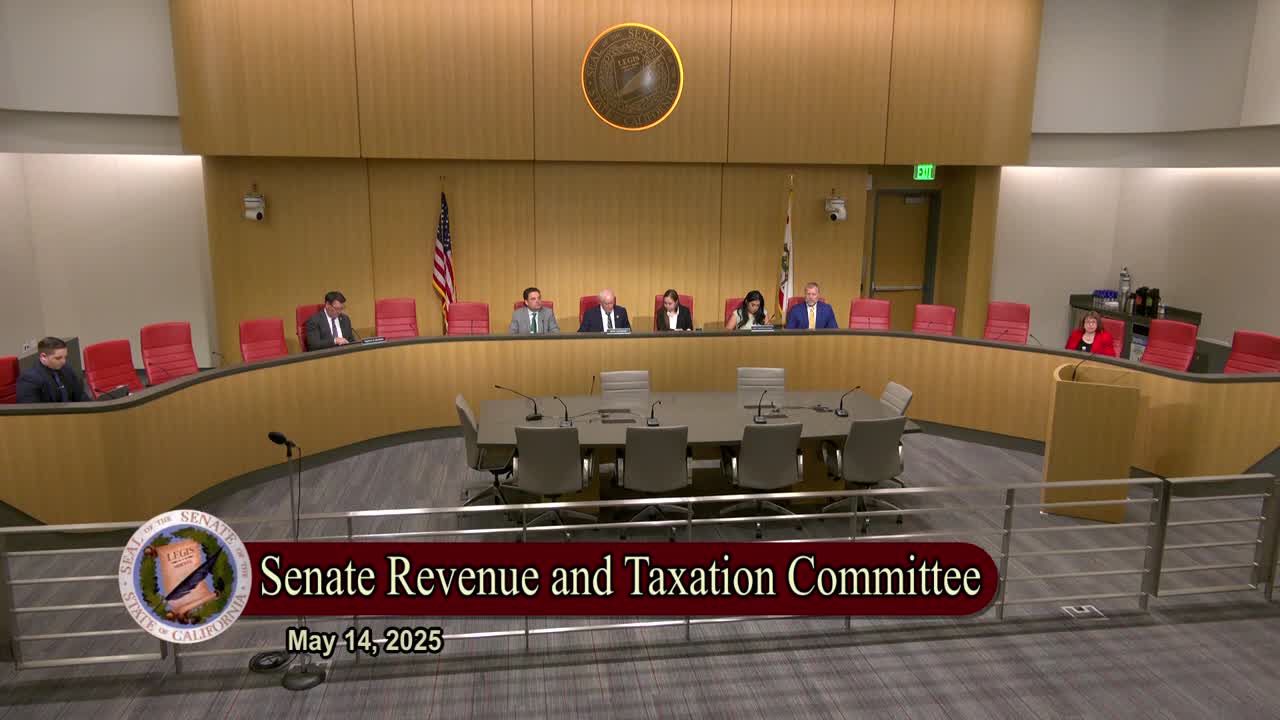 3MIN
Senate Standing Committee on Revenue and Taxation
Bill Author

Bill Co-Author(s):