SB 298: State Energy Resources Conservation and Development Commission: seaports: plan: alternative fuels.
- Session Year: 2025-2026
- House: Senate
- Latest Version Date: 2025-09-13
Current Status:
Failed
(2026-03-02: Veto sustained.)
Introduced
In Committee
Awaiting First Chamber Vote
Passed First Chamber
In Committee
Awaiting Second Chamber Vote
Passed Second Chamber
Enacted
Existing law requires the State Air Resources Board to adopt rules and regulations that will achieve ambient air quality standards required by the federal Clean Air Act, as specified. Existing law requires the state board, following a noticed public hearing, to adopt airborne toxic control measures to reduce emissions of toxic air contaminants from nonvehicular sources. Pursuant to this authority, the state board has adopted the Airborne Toxic Control Measure for Fuel Sulfur and Other Operational Requirements for Ocean-Going Vessels within California Waters and 24 Nautical Miles of the California Baseline regulation to require the use of low-sulfur marine distillate fuels in order to reduce emissions of particulate matter, diesel particulate matter, nitrogen oxides, and sulfur oxides from the use of auxiliary diesel and diesel-electric engines, main propulsion diesel engines, and auxiliary boilers on oceangoing vessels.
This bill would require the State Energy Resources Conservation and Development Commission (Energy Commission), in coordination with the State Lands Commission, the Transportation Agency, and the state board, to develop a plan on or before December 31, 2030, for the alternative fuel needs of oceangoing vessels that call at Californias public seaports and that enables the seaports to meet their emission reduction goals. The bill would require that the plan do specified things, including, among other things, identify barriers to permitting alternative fuel facilities at seaports and opportunities to address those barriers. The bill would require the Energy Commission to convene a working group to advise the Energy Commission on the development of the information required to be included in the plan, as specified. The bill would require the state board to provide the Energy Commission with information regarding fuels for oceangoing vessels that comply with the state boards regulations for those vessels.
Existing law requires the State Air Resources Board to adopt rules and regulations that will achieve ambient air quality standards required by the federal Clean Air Act, as specified. Existing law requires the state board, following a noticed public hearing, to adopt airborne toxic control measures to reduce emissions of toxic air contaminants from nonvehicular sources. Pursuant to this authority, the state board has adopted the Airborne Toxic Control Measure for Fuel Sulfur and Other Operational Requirements for Ocean-Going Vessels within California Waters and 24 Nautical Miles of the California Baseline regulation to require the use of low-sulfur marine distillate fuels in order to reduce emissions of particulate matter, diesel particulate matter, nitrogen oxides, and sulfur oxides from the use of auxiliary diesel and diesel-electric engines, main propulsion diesel engines, and auxiliary boilers on oceangoing vessels.
This bill would require the State Energy Resources Conservation and Development Commission (Energy Commission), in coordination with the State Lands Commission, the Transportation Agency, and the state board, to develop a plan on or before December 31, 2030, for the alternative fuel needs of oceangoing vessels that call at Californias public seaports and that enables the seaports to meet their emissions emission reduction goals. The bill would require that the plan to do specified things, including, among other things, identifying identify barriers to permitting alternative fuel facilities at seaports and opportunities to address those barriers. The bill would require the Energy Commission to convene a working group to advise the Energy Commission on the development of the information required by to be included in the plan, as specified. The bill would require the state board to provide the Energy Commission with information regarding fuels for oceangoing vessels that comply with the state boards regulations for those vessels.
Existing law requires the State Air Resources Board to adopt rules and regulations that will achieve ambient air quality standards required by the federal Clean Air Act, as specified. Existing law requires the state board, following a noticed public hearing, to adopt airborne toxic control measures to reduce emissions of toxic air contaminants from nonvehicular sources. Pursuant to this authority, the state board has adopted the Airborne Toxic Control Measure for Fuel Sulfur and Other Operational Requirements for Ocean-Going Vessels within California Waters and 24 Nautical Miles of the California Baseline regulation to require the use of low-sulfur marine distillate fuels in order to reduce emissions of particulate matter, diesel particulate matter, nitrogen oxides, and sulfur oxides from the use of auxiliary diesel and diesel-electric engines, main propulsion diesel engines, and auxiliary boilers on oceangoing vessels.
This bill would require the State Energy Resources Conservation and Development Commission (Energy Commission), in coordination with the State Lands Commission, the Transportation Agency, and the state board, to develop a plan on or before December 31, 2030, for the alternative fuel needs of oceangoing vessels that call at Californias public seaports that will enable and that enables the seaports to meet their emissions reduction goals. The bill would require the plan to do specified things, including, among other things, identifying barriers to permitting alternative fuel facilities at seaports and opportunities to address those barriers. The bill would require the Energy Commission to convene a working group to advise the Energy Commission on the development of information required by the plan, as specified. The bill would require the state board to provide the Energy Commission with information regarding fuels for oceangoing vessels that comply with the state boards regulations for those vessels.
Existing law requires the State Air Resources Board to adopt rules and regulations that will achieve ambient air quality standards required by the federal Clean Air Act, as specified. Existing law requires the state board, following a noticed public hearing, to adopt airborne toxic control measures to reduce emissions of toxic air contaminants from nonvehicular sources. Pursuant to this authority, the state board has adopted the Airborne Toxic Control Measure for Fuel Sulfur and Other Operational Requirements for Ocean-Going Vessels within California Waters and 24 Nautical Miles of the California Baseline regulation to require the use of low-sulfur marine distillate fuels in order to reduce emissions of particulate matter, diesel particulate matter, nitrogen oxides, and sulfur oxides from the use of auxiliary diesel and diesel-electric engines, main propulsion diesel engines, and auxiliary boilers on ocean-going oceangoing vessels.
This bill would require the State Energy Resources Conservation and Development Commission (Energy Commission), in coordination with the State Lands Commission, the Transportation Agency Agency, and the state board, to develop a plan on or before December 31, 2030, for the use and deployment of alternative fuels at Californias public seaports, as provided. alternative fuel needs of oceangoing vessels at Californias public seaports that will enable the seaports to meet their emissions reduction goals. The bill would require the plan to do specified things, including, among other things, identifying barriers to permitting alternative fuel facilities at seaports and opportunities to address those barriers. The bill would require the Energy Commission to convene a working group to advise the Energy Commission on the development of information required by the plan, as specified. The bill would require the state board to provide the Energy Commission with information regarding fuels for oceangoing vessels that comply with the state boards regulations for those vessels.
Existing law requires the State Air Resources Board to adopt rules and regulations that will achieve ambient air quality standards required by the federal Clean Air Act, as specified. Existing law requires the state board, following a noticed public hearing, to adopt airborne toxic control measures to reduce emissions of toxic air contaminants from nonvehicular sources. Pursuant to this authority, the state board has adopted the Airborne Toxic Control Measure for Fuel Sulfur and Other Operational Requirements for Ocean-Going Vessels within California Waters and 24 Nautical Miles of the California Baseline regulation to require the use of low-sulfur marine distillate fuels in order to reduce emissions of particulate matter, diesel particulate matter, nitrogen oxides, and sulfur oxides from the use of auxiliary diesel and diesel-electric engines, main propulsion diesel engines, and auxiliary boilers on ocean-going vessels.
This bill would require the State Energy Resources Conservation and Development Commission (Energy Commission), in coordination with the Transportation Agency and the state board, to develop a plan on or before December 31, 2030, for the use and deployment of alternative fuels at Californias public seaports, as provided. The bill would require the Energy Commission to convene a working group to advise the Energy Commission on the development of information required by the plan, as specified.
(a)The Legislature finds and declares all of the following:
(1)Assembly Bill 14 (Chapter 223 of the Statutes of 2013) required the Transportation Agency to develop a state freight plan that provides for governance of the immediate and long-range planning activities and capital investments of the state with respect to the movement of freight.
(2)No plan exists that provides for the provision of alternative fuels for oceangoing vessels at Californias seaports.
(3)The International Maritime Organization (IMO) regulations aim for an 11-percent carbon intensity reduction in 2026, a 40-percent reduction in 2030, and a 70-percent reduction in 2050.
(4)The 2023 IMO greenhouse gas (GHG) strategy includes the uptake of zero or near-zero GHG emission technologies, fuels, or energy sources to represent at least 5 percent, striving for 10 percent, of the energy used by international shipping by 2030.
(5)Improving the efficiency of Californias freight transport system is vital to the states economy.
(6)Traditional routes of moving freight face increasing global competition, and Californias system should anticipate and stay ahead of these changes.
(7)California is the nations largest gateway for international trade and domestic commerce, with an interconnected system of ports, railroads, highways, and roads that allow freight from around the world to move throughout the state and nation.
(8)Despite this, Californias freight transport system is under pressure to serve our growing population and satisfy dynamic market demands, while other locations in the United States and across the world are fiercely competing for this economic activity.
(9)Maintaining the states cargo competitiveness is not just an imperative for the economic health of California, but is necessary to preserve reductions in GHG emissions.
(10)Studies have demonstrated that when California loses market share and volumes of imports to other ports and gateways on the Gulf and Atlantic coasts, GHG emissions associated with this diversion are on average 19 percent higher when cargo that originates in Asia is diverted from West Coast ports in favor of East Coast and Gulf coast ports.
(b)(1)It is the intent of the Legislature that the plan developed pursuant to Section 39633 of the Health and Safety Code, as added by this act, support the development and deployment of alternative fuels for maritime vessels at Californias seaports.
(2)It is the intent of the Legislature that the plan developed pursuant to Section 39633 of the Health and Safety Code, as added by this act, not promote or direct the development, implementation, or expansion of fully automated cargo handling equipment or of infrastructure that is intended to support fully automated cargo handling equipment.
SEC. 2.Section 39633 is added to the Health and Safety Code, immediately following Section 39632, to read:39633.(a)On or before December 31, 2030, the State Energy Resources Conservation and Development Commission, in coordination with the State Lands Commission, the Transportation Agency, and the state board, shall develop a plan for the alternative fuel needs of oceangoing vessels that call at Californias public seaports and that enables the public seaports to meet their emissions reduction goals.
(b)The plan developed pursuant to this section shall do all of the following:
(1)Identify significant alternative fuel infrastructure and equipment trends, needs, and issues.
(2)Identify barriers to permitting alternative fuel facilities at seaports and opportunities to address those barriers.
(3)Describe seaport facilities that are available and feasible for the development or redevelopment of infrastructure and operations to support the deployment of alternative fuels to oceangoing vessels and related support purposes.
(4)Provide a forecast of the estimated demand and supply of alternative fuels needed to transition oceangoing vessels to lower emission fuels and, to the extent feasible, provide estimated costs and timelines for this transition.
(c)(1)In developing the information described in subdivision (b), the State Energy Resources Conservation and Development Commission shall convene a working group to advise the commission on the development of this information.
(2)The working group shall consist of representatives of, but not be limited to, seaports, marine terminal operators, ocean carriers, waterfront labor, cargo owners, environmental and community advocacy groups, fuel providers, fuel suppliers, fuel producers, barge operators, storage terminal operators, the Transportation Agency, the state board, the Public Utilities Commission, the State Lands Commission, and air quality management and air pollution control districts.
(d)The state board shall provide the State Energy Resources Conservation and Development Commission with information regarding fuels for oceangoing vessels that comply with the state boards regulations for those vessels.
(e)The plan developed pursuant to this section shall be limited exclusively to alternative fuels for oceangoing vessels and shall not consider, evaluate, plan, opine on, address, nor, in any other manner, include any reference to any cargo handling or usage of any cargo handling equipment at any port.
(a)The Legislature finds and declares all of the following:
(a)(1)Assembly Bill 14 (Chapter 223 of the Statutes of 2013) required the Transportation Agency to develop a state freight plan that provides for governance of the immediate and long-range planning activities and capital investments of the state with respect to the movement of freight.
(b)(2)No plan exists that provides for the provision of alternative fuels for oceangoing vessels at Californias seaports.
(c)(3)The International Maritime Organization (IMO) regulations aim for an 11-percent carbon intensity reduction in 2026, a 40-percent reduction in 2030, and a 70-percent reduction in 2050.
(d)(4)The 2023 IMO greenhouse gas (GHG) strategy includes the uptake of zero or near-zero GHG emissions emission technologies, fuels, or energy sources to represent at least 5 percent, striving for 10 percent, of the energy used by international shipping by 2030.
(e)(5)Improving the efficiency of Californias freight transport system is vital to the states economy.
(f)(6)Traditional routes of moving freight face increasing global competition, and Californias system should anticipate and stay ahead of these changes.
(g)(7)California is the nations largest gateway for international trade and domestic commerce, with an interconnected system of ports, railroads, highways, and roads that allow freight from around the world to move throughout the state and nation.
(h)(8)Despite this, Californias freight transport system is under pressure to serve our growing population and satisfy dynamic market demands, while other locations in the United States and across the world are fiercely competing for this economic activity.
(i)(9)Maintaining the states cargo competitiveness is not just an imperative for the economic health of California, but is necessary to preserve reductions in GHG emissions.
(j)(10)Studies have demonstrated that when California loses market share and volumes of imports to other ports and gateways on the Gulf and Atlantic coasts, GHG emissions associated with this diversion are on average 19 percent higher when cargo that originates in Asia is diverted from West Coast ports in favor of East Coast and Gulf coast ports.
(b)(1)It is the intent of the Legislature that the plan developed pursuant to Section 39633 of the Health and Safety Code, as added by this act, support the development and deployment of alternative fuels for maritime vessels at Californias seaports.
(2)It is the intent of the Legislature that the plan developed pursuant to Section 39633 of the Health and Safety Code, as added by this act, not promote or direct the development, implementation, or expansion of fully automated cargo handling equipment or of infrastructure that is intended to support fully automated cargo handling equipment.
SEC. 2.Section 39633 is added to the Health and Safety Code, immediately following Section 39632, to read:39633.(a)On or before December 31, 2030, the State Energy Resources Conservation and Development Commission, in coordination with the State Lands Commission, the Transportation Agency, and the state board, shall develop a plan for the alternative fuel needs of oceangoing vessels that call at Californias public seaports and that enables the public seaports to meet their emissions reduction goals.
(b)The plan developed pursuant to this section shall do all of the following:
(1)Identify significant alternative fuel infrastructure and equipment trends, needs, and issues.
(2)Identify barriers to permitting alternative fuel facilities at seaports and opportunities to address those barriers.
(3)Describe seaport facilities that are available and feasible for the development or redevelopment of infrastructure and operations to support the deployment of alternative fuels to oceangoing vessels and related support purposes.
(4)Provide a forecast of the estimated demand and supply of alternative fuels needed to transition oceangoing vessels to lower emissions emission fuels and, to the extent feasible, provide estimated costs and timelines for this transition.
(c)(1)In developing the information described in subdivision (b), the State Energy Resources Conservation and Development Commission shall convene a working group to advise the commission on the development of this information.
(2)The working group shall consist of representatives of, but not be limited to, seaports, marine terminal operators, ocean carriers, waterfront labor, cargo owners, environmental and community advocacy groups, fuel providers, fuel suppliers, fuel producers, barge operators, storage terminal operators, the Transportation Agency, the state board, the Public Utilities Commission, the State Lands Commission, and air quality management and air pollution control districts.
(d)The state board shall provide the State Energy Resources Conservation and Development Commission with information regarding fuels for oceangoing vessels that comply with the state boards regulations for those vessels.
(e)The plan developed pursuant to this section shall be limited exclusively to alternative fuels for oceangoing vessels and shall not consider, evaluate, plan, opine on, address, nor, in any other manner, include any reference to any cargo handling or usage of any cargo handling equipment at any port.
The Legislature finds and declares all of the following:
(a)Assembly Bill 14 (Chapter 223 of the Statutes of 2013) required the Transportation Agency to develop a state freight plan that provides for governance of the immediate and long-range planning activities and capital investments of the state with respect to the movement of freight.
(b)No plan exists that provides for the provision of alternative fuels for oceangoing vessels at Californias seaports.
(c)The International Maritime Organization (IMO) regulations aim for an 11-percent carbon intensity reduction in 2026, a 40-percent reduction in 2030, and a 70-percent reduction in 2050.
(d)The 2023 IMO greenhouse gas (GHG) strategy includes the uptake of zero or near-zero GHG emissions technologies, fuels, or energy sources to represent at least 5 percent, striving for 10 percent, of the energy used by international shipping by 2030.
(e)Improving the efficiency of Californias freight transport system is vital to the states economy.
(f)Traditional routes of moving freight face increasing global competition, and Californias system should anticipate and stay ahead of these changes.
(g)California is the nations largest gateway for international trade and domestic commerce, with an interconnected system of ports, railroads, highways, and roads that allow freight from around the world to move throughout the state and nation.
(h)Despite this, Californias freight transport system is under pressure to serve our growing population and satisfy dynamic market demands, while other locations in the United States and across the world are fiercely competing for this economic activity.
(i)Maintaining the states cargo competitiveness is not just an imperative for the economic health of California, but is necessary to preserve reductions in GHG emissions.
(j)Studies have demonstrated that when California loses market share and volumes of imports to other ports and gateways on the Gulf and Atlantic coasts, GHG emissions associated with this diversion are on average 19 percent higher when cargo that originates in Asia is diverted from West Coast ports in favor of East Coast and Gulf coast ports.
SEC. 2.Section 39633 is added to the Health and Safety Code, immediately following Section 39632, to read:39633.(a)On or before December 31, 2030, the State Energy Resources Conservation and Development Commission, in coordination with the State Lands Commission, the Transportation Agency, and the state board, shall develop a plan for the alternative fuel needs of oceangoing vessels that call at Californias public seaports that will enable and that enables the public seaports to meet their emissions reduction goals.
(b)The plan developed pursuant to this section shall do all of the following:
(1)Identify significant alternative fuel infrastructure and equipment trends, needs, and issues.
(2)Identify barriers to permitting alternative fuel facilities at seaports and opportunities to address those barriers.
(3)Describe seaport facilities that are available and feasible for the development or redevelopment of infrastructure and operations to support the deployment of alternative fuels to oceangoing vessels and related support purposes.
(4)Provide a forecast of the estimated demand and supply of alternative fuels needed to transition oceangoing vessels to lower emissions fuels and, to the extent feasible, provide estimated costs and timelines for this transition.
(c)(1)In developing the information described in subdivision (b), the State Energy Resources Conservation and Development Commission shall convene a working group to advise the commission on the development of this information.
(2)The working group shall consist of representatives of of, but not be limited to, seaports, marine terminal operators, ocean carriers, waterfront labor, cargo owners, environmental and community advocacy groups, fuel providers, fuel suppliers, fuel producers, barge operators, storage terminal operators, the Transportation Agency, the state board, the Public Utilities Commission, the State Lands Commission, and air quality management and air pollution control districts.
(d)The state board shall provide the State Energy Resources Conservation and Development Commission with information regarding fuels for oceangoing vessels that comply with the state boards regulations for those vessels.
The Legislature finds and declares all of the following:
(a)Assembly Bill 14 (Chapter 223 of the Statutes of 2013) required the Transportation Agency to develop a state freight plan that provides for governance of the immediate and long-range planning activities and capital investments of the state with respect to the movement of freight.
(b)No plan exists that provides for the provision of alternative fuels for ocean-going oceangoing vessels at Californias seaports.
(c)The International Maritime Organization (IMO) regulations aim for an 11-percent carbon intensity reduction in 2026, a 40-percent reduction in 2030, and a 70-percent reduction in 2050.
(d)The 2023 IMO greenhouse gas (GHG) strategy includes the uptake of zero or near-zero GHG emission emissions technologies, fuels, or energy sources to represent at least 5 percent, striving for 10 percent, of the energy used by international shipping by 2030.
(e)Improving the efficiency of Californias freight transport system is vital to the states economy.
(f)Traditional routes of moving freight face increasing global competition, and Californias system should anticipate and stay ahead of these changes.
(g)California is the nations largest gateway for international trade and domestic commerce, with an interconnected system of ports, railroads, highways, and roads that allow freight from around the world to move throughout the state and nation.
(h)Despite this, Californias freight transport system is under pressure to serve our growing population and satisfy dynamic market demands, while other locations in the United States and across the world are fiercely competing for this economic activity.
(i)Maintaining the states cargo competitiveness is not just an imperative for the economic health of California, but is necessary to preserve reductions in GHG emissions.
(j)Studies have demonstrated that when California loses market share and volumes of imports to other ports and gateways on the Gulf and Atlantic coasts, GHG emissions associated with this diversion are on average 19 percent higher when cargo that originates in Asia is diverted from West Coast ports in favor of East Coast and Gulf coast ports.
SEC. 2.Section 39633 is added to the Health and Safety Code, immediately following Section 39632, to read:39633.(a)On or before December 31, 2030, the State Energy Resources Conservation and Development Commission, in coordination with the State Lands Commission, the Transportation Agency Agency, and the state board, shall develop a plan for the use and deployment of alternative fuels at Californias public seaports. alternative fuel needs of oceangoing vessels at Californias public seaports that will enable the public seaports to meet their emissions reduction goals.
(b)The plan developed pursuant to this section shall do all of the following:
(1)Identify significant alternative fuel infrastructure and equipment trends, needs, and issues.
(2)Describe how the state will facilitate permitting and construction of infrastructure to support alternative fuels.(2)Identify barriers to permitting alternative fuel facilities at seaports and opportunities to address those barriers.
(3)(A)Describe which locations seaport facilities that are available and feasible for the development or redevelopment of infrastructure and operations to support the deployment of alternative fuels to ocean-going oceangoing vessels and related support purposes.
(B)The description required pursuant to subparagraph (A) shall specifically address all lifecycle manufacturing and distribution, including where alternative fuels will be created, procured, transported, stored, distributed, and delivered to oceangoing vessels calling at California seaports.(4)Describe a reasonable timeline for all tasks described in this subdivision.(5)Estimate and account for the costs of the development of all alternative fuels infrastructure and operations described in this subdivision, including public or private financing opportunities.(4)Provide a forecast of the estimated demand and supply of alternative fuels needed to transition oceangoing vessels to lower emissions fuels and, to the extent feasible, provide estimated costs and timelines for this transition.
(c)(1)In developing the information described in subdivision (b), the State Energy Resources Conservation and Development Commission shall convene a working group to advise the commission on the development of this information.
(2)The working group shall consist of representatives of seaports, marine terminal operators, ocean carriers, waterfront labor, cargo owners, environmental and community advocacy groups, the Transportation Agency, the state board, the Public Utilities Commission, the State Lands Commission, and air quality management and air pollution control districts.
(d)The state board shall provide the State Energy Resources Conservation and Development Commission with information regarding fuels for oceangoing vessels that comply with the state boards regulations for those vessels.
The Legislature finds and declares all of the following:
(a)Assembly Bill 14 (Chapter 223 of the Statutes of 2013) required the Transportation Agency to develop a state freight plan that provides for governance of the immediate and long-range planning activities and capital investments of the state with respect to the movement of freight.
(b)No plan exists that provides for the provision of alternative fuels for ocean-going vessels at Californias seaports.
(c)The International Maritime Organization (IMO) regulations aim for an 11-percent carbon intensity reduction in 2026, a 40-percent reduction in 2030, and a 70-percent reduction in 2050.
(d)The 2023 IMO greenhouse gas (GHG) strategy includes the uptake of zero or near-zero GHG emission technologies, fuels, or energy sources to represent at least 5 percent, striving for 10 percent, of the energy used by international shipping by 2030.
(e)Improving the efficiency of Californias freight transport system is vital to the states economy.
(f)Traditional routes of moving freight face increasing global competition, and Californias system should anticipate and stay ahead of these changes.
(g)California is the nations largest gateway for international trade and domestic commerce, with an interconnected system of ports, railroads, highways, and roads that allow freight from around the world to move throughout the state and nation.
(h)Despite this, Californias freight transport system is under pressure to serve our growing population and satisfy dynamic market demands, while other locations in the United States and across the world are fiercely competing for this economic activity.
(i)Maintaining the states cargo competitiveness is not just an imperative for the economic health of California, but is necessary to preserve reductions in GHG emissions.
(j)Studies have demonstrated that when California loses market share and volumes of imports to other ports and gateways on the Gulf and Atlantic coasts, GHG emissions associated with this diversion are on average 19 percent higher when cargo that originates in Asia is diverted from West Coast ports in favor of East Coast and Gulf coast ports.
SEC. 2.Section 39633 is added to the Health and Safety Code, immediately following Section 39632, to read:39633.(a)On or before December 31, 2030, the State Energy Resources Conservation and Development Commission, in coordination with the Transportation Agency and the state board, shall develop a plan for the use and deployment of alternative fuels at Californias public seaports.
(b)The plan developed pursuant to this section shall do all of the following:
(1)Identify significant alternative fuel infrastructure and equipment trends, needs, and issues.
(2)Describe how the state will facilitate permitting and construction of infrastructure to support alternative fuels.
(3)(A)Describe which locations are available and feasible for the development or redevelopment of infrastructure and operations to support the deployment of alternative fuels to ocean-going vessels and related support purposes.
(B)The description required pursuant to subparagraph (A) shall specifically address all lifecycle manufacturing and distribution, including where alternative fuels will be created, procured, transported, stored, distributed, and delivered to oceangoing vessels calling at California seaports.
(4)Describe a reasonable timeline for all tasks described in this subdivision.
(5)Estimate and account for the costs of the development of all alternative fuels infrastructure and operations described in this subdivision, including public or private financing opportunities.
(c)(1)In developing the information described in subdivision (b), the State Energy Resources Conservation and Development Commission shall convene a working group to advise the commission on the development of this information.
(2)The working group shall consist of representatives of seaports, marine terminal operators, ocean carriers, waterfront labor, cargo owners, environmental and community advocacy groups, the Transportation Agency, the state board, the Public Utilities Commission, and air quality management and air pollution control districts.
|
Date
|
Status
|
|---|---|
| Mar 2, 2026 | Veto sustained. |
| Mar 2, 2026 | Stricken from file. |
| Oct 13, 2025 | In Senate. Consideration of Governor's veto pending. |
| Oct 13, 2025 | Vetoed by the Governor. |
| Sep 22, 2025 | Enrolled and presented to the Governor at 11 a.m. |
| Sep 11, 2025 | Assembly amendments concurred in. (Ayes 38. Noes 0. Page 2873.) Ordered to engrossing and enrolling. |
| Sep 9, 2025 | In Senate. Concurrence in Assembly amendments pending. |
| Sep 9, 2025 | Read third time. Passed. (Ayes 80. Noes 0. Page 3073.) Ordered to the Senate. |
| Sep 2, 2025 | Ordered to third reading. |
| Sep 2, 2025 | Read third time and amended. |
| Sep 2, 2025 | Read second time. Ordered to third reading. |
| Aug 29, 2025 | From committee: Do pass. (Ayes 15. Noes 0.) (August 29). |
| Aug 20, 2025 | August 20 set for first hearing. Placed on APPR. suspense file. |
| Jul 15, 2025 | From committee: Do pass and re-refer to Com. on APPR. (Ayes 12. Noes 0.) (July 14). Re-referred to Com. on APPR. |
| Jul 8, 2025 | From committee: Do pass and re-refer to Com. on NAT. RES. with recommendation: To consent calendar. (Ayes 16. Noes 0.) (July 7). Re-referred to Com. on NAT. RES. |
| Jun 27, 2025 | From committee with author's amendments. Read second time and amended. Re-referred to Com. on TRANS. |
| Jun 16, 2025 | Referred to Coms. on TRANS. and NAT. RES. |
| Jun 3, 2025 | In Assembly. Read first time. Held at Desk. |
| Jun 2, 2025 | Read third time. Passed. (Ayes 34. Noes 0. Page 1392.) Ordered to the Assembly. |
| May 23, 2025 | Read second time. Ordered to third reading. |
| May 23, 2025 | From committee: Do pass. (Ayes 6. Noes 0. Page 1195.) (May 23). |
| May 16, 2025 | Set for hearing May 23. |
| May 12, 2025 | May 12 hearing: Placed on APPR. suspense file. |
| May 2, 2025 | Set for hearing May 12. |
| May 1, 2025 | From committee: Do pass and re-refer to Com. on APPR. (Ayes 8. Noes 0. Page 963.) (April 30). Re-referred to Com. on APPR. |
| Apr 17, 2025 | Set for hearing April 30. |
| Apr 10, 2025 | Read second time and amended. Re-referred to Com. on E.Q. |
| Apr 9, 2025 | From committee: Do pass as amended and re-refer to Com. on E.Q. (Ayes 14. Noes 0. Page 681.) (April 7). |
| Mar 24, 2025 | Set for hearing April 7. |
| Feb 19, 2025 | Referred to Coms. on E., U & C. and E.Q. |
| Feb 11, 2025 | From printer. May be acted upon on or after March 13. |
| Feb 10, 2025 | Introduced. Read first time. To Com. on RLS. for assignment. To print. |
|
Date
|
Description
|
Location
|
Votes
|
|
|---|---|---|---|---|
| Sep 11, 2025 | Unfinished Business SB298 Caballero et al. Concurrence | Senate Floor |
Passed |
|
| Sep 9, 2025 | SB 298 Caballero Senate Third Reading By Ransom | Assembly Floor |
Passed |
|
| Aug 29, 2025 | Do pass. | Assembly Standing Committee on Appropriations |
Passed |
|
| Jul 14, 2025 | Do pass and be re-referred to the Committee on [Appropriations] | Assembly Standing Committee on Natural Resources |
Passed |
|
| Jul 7, 2025 | Do pass and be re-referred to the Committee on [Natural Resources] with recommendation: To Consent Calendar | Assembly Standing Committee on Transportation |
Passed |
|
| Jun 2, 2025 | Senate 3rd Reading SB298 Caballero et al. | Senate Floor |
Passed |
|
| May 23, 2025 | Do pass | Senate Standing Committee on Appropriations |
Passed |
|
| May 12, 2025 | Placed on suspense file | Senate Standing Committee on Appropriations |
Passed |
|
| Apr 30, 2025 | Do pass, but first be re-referred to the Committee on [Appropriations] | Senate Standing Committee on Environmental Quality |
Passed |
|
| Apr 7, 2025 | Do pass as amended, but first amend, and re-refer to the Committee on [Environmental Quality] | Senate Standing Committee on Energy, Utilities and Communications |
Passed |
This list shows positions taken on this bill by organizations on the date displayed, which is linked to the original source.
Positions by individuals are not included.
|
Organization
|
Position
|
Date
|
|---|---|---|
| California Council For Environmental & Economic Balance | ** Support | |
| Cruise Lines International Association | ** Support | |
| International Longshore and Warehouse Union (ILWU) Locals 13, 63, and 94 | ** Against | |
| Invenergy, LLC | ** Support | |
| Los Angeles County Business Federation | ** Support | |
| Los Angeles County Business Federation Bizfed | ** Support | |
| Pacific Merchant Shipping Association | ** Support | |
| Port of Long Beach | ** Support | |
| San Francisco Bar Pilots Association | ** Support | |
| Supply Chain Federation | ** Support |
SENATE RULES COMMITTEE Office of Senate Floor Analyses (916) 651-1520 Fax: (916) 327-4478 | SB 298 |
VETO
Bill No: SB 298
Author: Caballero (D), et al.
Enrolled: 9/13/25
Vote: 27
SENATE ENERGY, U. & C. COMMITTEE: 14-0, 4/7/25
AYES: Becker, Allen, Archuleta, Arreguín, Ashby, Caballero, Gonzalez, Grove, Hurtado, Limón, McNerney, Rubio, Stern, Wahab
NO VOTE RECORDED: Ochoa Bogh, Dahle, Strickland
SENATE ENVIRONMENTAL QUALITY COMMITTEE: 8-0, 4/30/25
AYES: Blakespear, Valladares, Dahle, Gonzalez, Hurtado, Menjivar, Padilla, Pérez
SENATE APPROPRIATIONS COMMITTEE: 6-0, 5/23/25
AYES: Caballero, Seyarto, Cabaldon, Grayson, Richardson, Wahab
NO VOTE RECORDED: Dahle
SENATE FLOOR: 34-0, 6/2/25
AYES: Allen, Archuleta, Arreguín, Ashby, Becker, Blakespear, Cabaldon, Caballero, Cervantes, Cortese, Dahle, Durazo, Gonzalez, Grayson, Grove, Laird, Limón, McGuire, McNerney, Menjivar, Niello, Padilla, Pérez, Richardson, Rubio, Seyarto, Smallwood-Cuevas, Stern, Strickland, Umberg, Valladares, Wahab, Weber Pierson, Wiener
NO VOTE RECORDED: Alvarado-Gil, Choi, Hurtado, Jones, Ochoa Bogh, Reyes
SENATE FLOOR: 38-0, 9/11/25
AYES: Allen, Archuleta, Arreguín, Ashby, Becker, Blakespear, Cabaldon, Caballero, Cervantes, Cortese, Dahle, Durazo, Gonzalez, Grayson, Grove, Hurtado, Jones, Laird, Limón, McGuire, McNerney, Menjivar, Niello, Ochoa Bogh, Padilla, Pérez, Reyes, Richardson, Rubio, Seyarto, Smallwood-Cuevas, Stern, Strickland, Umberg, Valladares, Wahab, Weber Pierson, Wiener
NO VOTE RECORDED: Alvarado-Gil, Choi
ASSEMBLY FLOOR: 80-0, 9/9/25 - See last page for vote
SUBJECT: State Energy Resources Conservation and Development Commission: seaports: plan: alternative fuels
SOURCE: Pacific Merchant Shipping Association
DIGEST:
This bill requires the California Energy Commission (CEC) to develop a specified plan for oceangoing vessels’ alternative fuel needs at California’s public seaports.
ANALYSIS:
Existing law:
- Establishes the CEC as a five-member body appointed by the Governor and specifies the duties of the CEC, which includes, but is not limited to assessing trends in energy consumption and forecasting the demand and supply for certain fuels in the states. (Public Resources Code §25200 et. seq.)
- Establishes the Clean Transportation Program (CTP), which is administered by the CEC to provide incentives for the development and deployment of innovative fuel and vehicle technologies that support California’s climate change policies. Existing law specifies the types of projects eligible for CTP funding and sets prioritization criteria for receiving incentives from the CTP. Existing law requires the CEC to allocate no less than 15% of the CTP’s annual funding to deploy hydrogen refueling stations. (Health and Safety Code §44272 et. seq. and §43018.9)
- Establishes the California Air Resources Board (CARB) as the state agency responsible for the preparation and implementation of state plans pursuant to the federal Clean Air Act. Existing law provides CARB with broad authority to adopt regulations to meet air quality standards under the Clean Air Act. (Health and Safety Code §39600 et. seq.)
- Establishes the State Lands Commission to manage sovereign and public trust lands, which includes, but is not limited to, waterfront lands, coastal waters and the land underlying the state’s major ports. (Public Resources Code §6101 et. seq.)
This bill:
- Requires the CEC to work with the California State Lands Commission, California State Transportation Agency (CalSTA) and CARB to develop a plan by December 31, 2030, for alternative fuel needs of oceangoing vessels at California’s public seaports that will enable public seaports to meet their emissions reduction goals.
- Requires the plan developed pursuant to this bill to do the following:
- Identify significant alternative fuel infrastructure and equipment trends, needs, and issues.
- Identify barriers to permitting alternative fuel facilities at seaports and opportunities to address those barriers.
- Describe seaport facilities that are available and feasible for the development or redevelopment of infrastructure and operations to support the deployment of alternative fuels for oceangoing vessels.
- Include a forecast of the estimated demand and supply of alternative fuels needed to transition oceangoing vessels to lower emissions fuels, and to the extent feasible, provide estimated costs for this transition.
- Requires the CEC to convene a working group to advise the CEC. This bill specifies that this working group must consist of representatives from seaports, marine terminal operators, ocean carriers, waterfront labor, cargo owners, environmental and community advocacy groups, fuel providers, fuel suppliers, fuel producers, barge operators, storage terminal operators, the State Lands Commission, CalSTA, CARB, the California Public Utilities Commission, and local air districts.
- Requires CARB to provide the CEC with information regarding fuels for oceangoing vessels that comply with CARB’s regulations for those vessels.
- Clarifies that the plan developed pursuant to this bill shall be solely limited to alternative fuels for oceangoing vessels and shall not include references to aspects of cargo handling at ports.
- States that it is the intent of the Legislature that the plan developed pursuant to this bill not promote the development, implementation, or expansion of fully automated cargo handling.
Background
Bill pertains to ships’ mobile source emissions, which are subject to CARB regulations. Emissions from commercial shipping are internationally regulated by several entities, including the International Maritime Organization (IMO), United States Environmental Protection Agency and the Coast Guard. In 2023, the IMO member states adopted goals to reach net-zero emissions from international shipping by 2050, with an uptake in zero or near-zero greenhouse gas (GHG) fuels by 2030. The United States is an IMO member state. While IMO and other agencies set standards for international shipping, CARB sets emissions standards for shipping that impacts California ports and California air quality. CARB has adopted several regulations to limit oceangoing vessels’ pollution impacting California. Between 2007 and 2008, CARB adopted pollution limits for vessels at berth in California ports and fuel specifications for those vessels within California waters and 24 nautical miles from the state’s coast. CARB continues to update these regulations. While CARB has temporarily paused development of an update to its mobile source strategy, the draft strategy notes that oceangoing vessels are one of several mobile sources of emissions that still contribute significantly to air and climate pollution despite existing regulations. CARB also notes that these vessels will need to substantially decrease their emissions to meet air quality standards. In the 2025 draft Mobile Source Strategy, CARB states the following regarding efforts to further reduce emissions from these types of mobile sources: “The 2025 Mobile Source Strategy (2025 MSS) is being developed to describe an integrated approach for meeting California’s clean air mandates by identifying the technology pathways and programmatic concepts needed for the numerous mobile source sectors into the future.”
CEC funds hydrogen refueling infrastructure and maintains authority over fuel demand and supply forecasting. This bill requires the CEC to develop a specified plan for the deployment and use of alternative fuels at seaports for the purpose of lowering mobile source emissions from oceangoing vessels. However, the CEC has not historically maintained authority over developing mobile source strategies for specific sectors. While CARB and local air districts regulate emissions from mobile sources and can limit the use of certain fuels that impact air quality, the CEC conducts regular analyses of fuel supplies, including transportation fuel supplies. Generally, these analyses are used for policy-setting and monitoring fuel demand and supply throughout the state.
Under existing law, the CEC administers the CTP, which provides funding opportunities to develop and deploy zero-emission fuels, technology and infrastructure. At least 15% of these funds are used to support hydrogen infrastructure deployment, and seaports have received funding for electric vehicle (EV) charging and hydrogen refueling infrastructure through the CTP. For example, the Port of Long Beach received $8 million from the CTP to deploy a hydrogen refueling stations for medium and heavy-duty freight vehicles.
The CEC has provided incentives to ports for zero-emission vehicle infrastructure deployment and conducts regular assessments of fuel demand and supply; however, the CEC has not developed state plans for mobile source emissions reduction or plans to help seaports meet their emissions reduction goals. As a result, the CEC will likely require significant assistance from other agencies to complete the plan required by this bill. The CEC may be able to assess the electricity supply needed to electrify certain power operations and assess the demand for hydrogen for use at ports, including for fueling ships. However, upstream fuel development largely falls under the jurisdiction of the California Geologic Energy Management Division (CalGEM) and the California Department of Conservation. Multiple state agencies and the federal government play a role in overseeing fuel pipelines, depending on the type of pipeline. The State Lands Commission is primarily responsible for permitting activities regarding California seaports, and CARB maintains much of the state’s data regarding mobile and stationary emissions.
Prior/Related Legislation
SB 34 (Richardson) of 2025, would have established, until January 1, 2036, limitations on and requirements Southern California Air Quality Management District regulations on regarding mobile source pollution at seaports. The bill was vetoed.
AB 1250 (Papan, Chapter 725, Statues of 2025) would have clarified that any alternative fuel with a lower carbon intensity than any marine diesel oil, marine gas oil, or petroleum fuel as specified shall be presumed to meet or exceed the 2010 international organization for standardization requirements for distillate and residual marine fuels.
SB 983 (Wahab) of 2024, would have required the CEC to form the Alternative Fuels Infrastructure Taskforce upon appropriation by the Legislature. The bill would have required the taskforce to make recommendations for deploying alternative fueling infrastructure at retail gasoline stations in California. The bill was vetoed.
AB 126 (Reyes, Chapter 319, Statutes of 2023) among other provisions, the bill extended the operation and funding for the CTP and required the CEC to allocate at least 15% of annual CTP funding for hydrogen refueling infrastructure.
FISCAL EFFECT: Appropriation: No Fiscal Com.: Yes Local: No
According to the Assembly Appropriations Committee:
- CEC’s fuels and transportation division estimates annual costs of approximately $337,000 to hire two air pollution specialists, as well as annual contracting costs of approximately $300,000, until 2030 (Alternative and Renewable Fuel and Vehicle Technology Fund). Tasks include convening and facilitating the working group and conducting the necessary research and analysis to develop the required plan.
- ARB estimates annual contracting costs of approximately $100,000 from fiscal year (FY) 2026-27 to FY 2028-29 (Air Quality Improvement Fund) to assist CEC and research and analyze potential alternative fuels likely to be used in California ports, fuel availability, infrastructure needs, emissions profiles, feasibility, and expected timelines for adoption, among other relevant topics.
- SLC estimates minor and absorbable costs.
- Costs of an unknown, likely minor and absorbable, amount for CalSTA.
SUPPORT: (Verified 10/13/25)
Pacific Merchant Shipping Association (Source)
California Council for Environmental & Economic Balance
Cruise Lines International Association
Invenergy, LLC
Los Angeles County Business Federation (BizFed)
Port of Long Beach
San Francisco Bar Pilots Association
Supply Chain Federation
OPPOSITION: (Verified 10/13/25)
None received
ARGUMENTS IN SUPPORT: According to the author:
SB 298 will strengthen California's position as a global leader in both environmental sustainability, economic growth, and workforce training by incentivizing the affordability and availability of alternative fuels for maritime vessels. This bill will help to transition the maritime industry from using diesel products to alternative fuels to reduce harmful emissions and improve air quality along California’s coastline, ensuring healthier communities and a cleaner future. The bill creates a path to deploy infrastructure to support the development of fueling facilities for alternative fuels at the ports by 2030. This collaborative effort will not only support California’s ambitious climate goals but also ensure the state’s ports remain competitive, foster innovation and long-term success for the maritime industry and the workforce that they employ.
GOVERNOR'S VETO MESSAGE:
This bill would require the California Energy Commission (CEC), in coordination with the State Lands Commission, California State Transportation Agency, and the California Air Resources Board (CARB), to develop a plan by December 31, 2030, for the alternative fuel needs of Ocean-Going Vessels (OGVs) at ports that will meet ports' emission reduction goals.
As the nation's premier gateway for international trade, California's ports are an essential component of the nation's economy. I strongly support efforts to plan and deploy zero-emission infrastructure and technologies at our ports. This is why CARB has already begun the informal rulemaking phase for an OGV In-Transit Regulation to reduce harmful air pollution from OGVs while transiting, maneuvering, and anchoring in waters off the California coastline.
Though well-intentioned, the plan required by this bill could complicate CARB's active OGV In-Transit rulemaking and result in costs to the CEC's primary operating fund, which is currently facing an ongoing structural deficit, thus exacerbating the fund's structural imbalance. I encourage the supporters of this measure to work with CARB through its rulemaking process to collaboratively identify solutions for deploying alternative fuels at our ports.
For these reasons, I cannot sign this bill.
ASSEMBLY FLOOR: 80-0, 9/9/25
AYES: Addis, Aguiar-Curry, Ahrens, Alanis, Alvarez, Arambula, Ávila Farías, Bains, Bauer-Kahan, Bennett, Berman, Boerner, Bonta, Bryan, Calderon, Caloza, Carrillo, Castillo, Chen, Connolly, Davies, DeMaio, Dixon, Elhawary, Ellis, Flora, Fong, Gabriel, Gallagher, Garcia, Gipson, Jeff Gonzalez, Mark González, Hadwick, Haney, Harabedian, Hart, Hoover, Irwin, Jackson, Johnson, Kalra, Krell, Lackey, Lee, Lowenthal, Macedo, McKinnor, Muratsuchi, Nguyen, Ortega, Pacheco, Papan, Patel, Patterson, Pellerin, Petrie-Norris, Quirk-Silva, Ramos, Ransom, Celeste Rodriguez, Michelle Rodriguez, Rogers, Blanca Rubio, Sanchez, Schiavo, Schultz, Sharp-Collins, Solache, Soria, Stefani, Ta, Tangipa, Valencia, Wallis, Ward, Wicks, Wilson, Zbur, Rivas
Prepared by: Sarah Smith / E., U. & C. / (916) 651-4107
10/15/25 12:43:29
**** END ****
SENATE RULES COMMITTEE Office of Senate Floor Analyses (916) 651-1520 Fax: (916) 327-4478 | SB 298 |
UNFINISHED BUSINESS
Bill No: SB 298
Author: Caballero (D), et al.
Amended: 9/2/25 in Assembly
Vote: 21
SENATE ENERGY, U. & C. COMMITTEE: 14-0, 4/7/25
AYES: Becker, Allen, Archuleta, Arreguín, Ashby, Caballero, Gonzalez, Grove, Hurtado, Limón, McNerney, Rubio, Stern, Wahab
NO VOTE RECORDED: Ochoa Bogh, Dahle, Strickland
SENATE ENVIRONMENTAL QUALITY COMMITTEE: 8-0, 4/30/25
AYES: Blakespear, Valladares, Dahle, Gonzalez, Hurtado, Menjivar, Padilla, Pérez
SENATE APPROPRIATIONS COMMITTEE: 6-0, 5/23/25
AYES: Caballero, Seyarto, Cabaldon, Grayson, Richardson, Wahab
NO VOTE RECORDED: Dahle
SENATE FLOOR: 34-0, 6/2/25
AYES: Allen, Archuleta, Arreguín, Ashby, Becker, Blakespear, Cabaldon, Caballero, Cervantes, Cortese, Dahle, Durazo, Gonzalez, Grayson, Grove, Laird, Limón, McGuire, McNerney, Menjivar, Niello, Padilla, Pérez, Richardson, Rubio, Seyarto, Smallwood-Cuevas, Stern, Strickland, Umberg, Valladares, Wahab, Weber Pierson, Wiener
NO VOTE RECORDED: Alvarado-Gil, Choi, Hurtado, Jones, Ochoa Bogh, Reyes
ASSEMBLY FLOOR: 65/0, 9/9/25 – Roll call not available
SUBJECT: State Energy Resources Conservation and Development Commission: seaports: plan: alternative fuels
SOURCE: Pacific Merchant Shipping Association
DIGEST:
This bill requires the California Energy Commission (CEC) to develop a specified plan for oceangoing vessels’ alternative fuel needs at California’s public seaports.
Assembly Amendments
add legislative findings, modify the membership of the working group established by this bill, and clarify that any fuels plan developed pursuant to this bill shall be limited solely to alternative fuels for oceangoing vessels.
ANALYSIS:
Existing law:
- Establishes the CEC as a five-member body appointed by the Governor and specifies the duties of the CEC, which includes, but is not limited to assessing trends in energy consumption and forecasting the demand and supply for certain fuels in the states. (Public Resources Code §25200 et. seq.)
- Establishes the Clean Transportation Program (CTP), which is administered by the CEC to provide incentives for the development and deployment of innovative fuel and vehicle technologies that support California’s climate change policies. Existing law specifies the types of projects eligible for CTP funding and sets prioritization criteria for receiving incentives from the CTP. Existing law requires the CEC to allocate no less than 15% of the CTP’s annual funding to deploy hydrogen refueling stations.(Health and Safety Code §44272 et. seq. and §43018.9)
- Establishes the California Air Resources Board (CARB) as the state agency responsible for the preparation and implementation of state plans pursuant to the federal Clean Air Act. Existing law provides CARB with broad authority to adopt regulations to meet air quality standards under the Clean Air Act. (Health and Safety Code §39600 et. seq.)
- Establishes the State Lands Commission to manage sovereign and public trust lands, which includes, but is not limited to, waterfront lands, coastal waters and the land underlying the state’s major ports. (Public Resources Code §6101 et. seq.)
This bill:
- Requires the CEC to work with the California State Lands Commission, California State Transportation Agency (CalSTA) and CARB to develop a plan by December 31, 2030, for alternative fuel needs of oceangoing vessels at California’s public seaports that will enable public seaports to meet their emissions reduction goals.
- Requires the plan developed pursuant to this bill to do the following:
- Identify significant alternative fuel infrastructure and equipment trends, needs, and issues.
- Identify barriers to permitting alternative fuel facilities at seaports and opportunities to address those barriers.
- Describe seaport facilities that are available and feasible for the development or redevelopment of infrastructure and operations to support the deployment of alternative fuels for oceangoing vessels.
- Include a forecast of the estimated demand and supply of alternative fuels needed to transition oceangoing vessels to lower emissions fuels, and to the extent feasible, provide estimated costs for this transition.
- Requires the CEC to convene a working group to advise the CEC. This bill specifies that this working group must consist of representatives from seaports, marine terminal operators, ocean carriers, waterfront labor, cargo owners, environmental and community advocacy groups, fuel providers, fuel suppliers, fuel producers, barge operators, storage terminal operators, the State Lands Commission, CalSTA, CARB, the California Public Utilities Commission, and local air districts.
- Requires CARB to provide the CEC with information regarding fuels for oceangoing vessels that comply with CARB’s regulations for those vessels.
- Clarifies that the plan developed pursuant to this bill shall be solely limited to alternative fuels for oceangoing vessels and shall not include references to aspects of cargo handling at ports.
- States that it is the intent of the Legislature that the plan developed pursuant to this bill not promote the development, implementation, or expansion of fully automated cargo handling.
Background
Bill pertains to ships’ mobile source emissions, which are subject to CARB regulations. Emissions from commercial shipping are internationally regulated by several entities, including the International Maritime Organization (IMO), United States Environmental Protection Agency and the Coast Guard. In 2023, the IMO member states adopted goals to reach net-zero emissions from international shipping by 2050, with an uptake in zero or near-zero greenhouse gas (GHG) fuels by 2030. The United States is an IMO member state. While IMO and other agencies set standards for international shipping, CARB sets emissions standards for shipping that impacts California ports and California air quality. CARB has adopted several regulations to limit oceangoing vessels’ pollution impacting California. Between 2007 and 2008, CARB adopted pollution limits for vessels at berth in California ports and fuel specifications for those vessels within California waters and 24 nautical miles from the state’s coast. CARB continues to update these regulations. While CARB has temporarily paused development of an update to its mobile source strategy, the draft strategy notes that oceangoing vessels are one of several mobile sources of emissions that still contribute significantly to air and climate pollution despite existing regulations. CARB also notes that these vessels will need to substantially decrease their emissions to meet air quality standards. In the 2025 draft Mobile Source Strategy, CARB states the following regarding efforts to further reduce emissions from these types of mobile sources: “The 2025 Mobile Source Strategy (2025 MSS) is being developed to describe an integrated approach for meeting California’s clean air mandates by identifying the technology pathways and programmatic concepts needed for the numerous mobile source sectors into the future.”
CEC funds hydrogen refueling infrastructure and maintains authority over fuel demand and supply forecasting. This bill requires the CEC to develop a specified plan for the deployment and use of alternative fuels at seaports for the purpose of lowering mobile source emissions from oceangoing vessels. However, the CEC has not historically maintained authority over developing mobile source strategies for specific sectors. While CARB and local air districts regulate emissions from mobile sources and can limit the use of certain fuels that impact air quality, the CEC conducts regular analyses of fuel supplies, including transportation fuel supplies. Generally, these analyses are used for policy-setting and monitoring fuel demand and supply throughout the state.
Under existing law, the CEC administers the CTP, which provides funding opportunities to develop and deploy zero-emission fuels, technology and infrastructure. At least 15% of these funds are used to support hydrogen infrastructure deployment, and seaports have received funding for electric vehicle (EV) charging and hydrogen refueling infrastructure through the CTP. For example, the Port of Long Beach received $8 million from the CTP to deploy a hydrogen refueling stations for medium and heavy-duty freight vehicles.
The CEC has provided incentives to ports for zero-emission vehicle infrastructure deployment and conducts regular assessments of fuel demand and supply; however, the CEC has not developed state plans for mobile source emissions reduction or plans to help seaports meet their emissions reduction goals. As a result, the CEC will likely require significant assistance from other agencies to complete the plan required by this bill. The CEC may be able to assess the electricity supply needed to electrify certain power operations and assess the demand for hydrogen for use at ports, including for fueling ships. However, upstream fuel development largely falls under the jurisdiction of the California Geologic Energy Management Division (CalGEM) and the California Department of Conservation. Multiple state agencies and the federal government play a role in overseeing fuel pipelines, depending on the type of pipeline. The State Lands Commission is primarily responsible for permitting activities regarding California seaports, and CARB maintains much of the state’s data regarding mobile and stationary emissions.
Prior/Related Legislation
SB 34 (Richardson) of 2025, establishes, until January 1, 2036, limitations on and requirements Southern California Air Quality Management District regulations on regarding mobile source pollution at seaports. The bill is pending in the Assembly.
AB 1250 (Papan) of 2025, clarifies that any alternative fuel with a lower carbon intensity than any marine diesel oil, marine gas oil, or petroleum fuel as specified shall be presumed to meet or exceed the 2010 international organization for standardization requirements for distillate and residual marine fuels. The bill is pending in the Senate.
SB 983 (Wahab) of 2024, would have required the CEC to form the Alternative Fuels Infrastructure Taskforce upon appropriation by the Legislature. The bill would have required the taskforce to make recommendations for deploying alternative fueling infrastructure at retail gasoline stations in California. The bill was vetoed.
AB 126 (Reyes, Chapter 319, Statutes of 2023) among other provisions, the bill extended the operation and funding for the CTP and required the CEC to allocate at least 15% of annual CTP funding for hydrogen refueling infrastructure.
FISCAL EFFECT: Appropriation: No Fiscal Com.: Yes Local: No
According to the Assembly Appropriations Committee:
- CEC’s fuels and transportation division estimates annual costs of approximately $337,000 to hire two air pollution specialists, as well as annual contracting costs of approximately $300,000, until 2030 (Alternative and Renewable Fuel and Vehicle Technology Fund). Tasks include convening and facilitating the working group and conducting the necessary research and analysis to develop the required plan.
2) ARB estimates annual contracting costs of approximately $100,000 from fiscal year (FY) 2026-27 to FY 2028-29 (Air Quality Improvement Fund) to assist CEC and research and analyze potential alternative fuels likely to be used in California ports, fuel availability, infrastructure needs, emissions profiles, feasibility, and expected timelines for adoption, among other relevant topics.
3) SLC estimates minor and absorbable costs.
4) Costs of an unknown, likely minor and absorbable, amount for CalSTA.
SUPPORT: (Verified 9/8/25)
Pacific Merchant Shipping Association (Source)
California Council for Environmental & Economic Balance
Cruise Lines International Association
Invenergy, LLC
Los Angeles County Business Federation (BizFed)
Port of Long Beach
San Francisco Bar Pilots Association
Supply Chain Federation
OPPOSITION: (Verified 9/8/25)
None received
ARGUMENTS IN SUPPORT: According to the author:
SB 298 will strengthen California's position as a global leader in both environmental sustainability, economic growth, and workforce training by incentivizing the affordability and availability of alternative fuels for maritime vessels. This bill will help to transition the maritime industry from using diesel products to alternative fuels to reduce harmful emissions and improve air quality along California’s coastline, ensuring healthier communities and a cleaner future. The bill creates a path to deploy infrastructure to support the development of fueling facilities for alternative fuels at the ports by 2030. This collaborative effort will not only support California’s ambitious climate goals but also ensure the state’s ports remain competitive, foster innovation and long-term success for the maritime industry and the workforce that they employ.
Prepared by: Sarah Smith / E., U. & C. / (916) 651-4107
9/9/25 12:37:03
**** END ****
SENATE THIRD READING
STR Bill Id:SB 298
Author:(Caballero)
As Amended Ver:June 27, 2025
Majority vote
SUMMARY
Requires the State Energy Resources Conservation and Development Commission (CEC) in coordination with the State Lands Commission, the Transportation Agency (CalSTA), and the California Air Resources Board (CARB) to develop a plan alternative fuel needs for oceangoing vessels at California's public seaports to meet emissions goals.
Major Provisions
- Requires CEC, in coordination with the State Lands Commission, CalSTA, and CARB to develop a plan on or before December 31, 2030 to assess the fuel needs of oceangoing vessels at California's public seaports that will enable the public seaports to meet their emissions reduction goals.
- The required plan will:
- Identify significant alternative fuel infrastructure and equipment trends, needs, and issues;
- Identify barriers to permitting alternative fuel facilities at seaports and opportunities to address those barriers;
- Describe seaport facilities that are available and feasible for the development or redevelopment of infrastructure and operations to support the deployment of alternative fuels to oceangoing vessels and related support purposes; and,
- Provide a forecast of the estimated demand and supply of alternative fuels needed to transition oceangoing vessels to lower emissions fuels and, to the extent feasible, provide estimated costs and timelines for transition.
- Requires CEC to convene working group to advise on the development of the information.
- The working group is required to consist of representatives of seaports, marine terminal operators, ocean carriers, waterfront labor, cargo owners, environmental and community advocacy groups, fuel providers, fuel suppliers, fuel producers, barge operators, storage terminal operators, CalSTA, CARB, the Public Utilities Commission, the State Lands Commission, and air quality management and air pollution control districts.
- Requires CARB to provide CEC with information regarding fuels for oceangoing vessels to comply with CARB regulations for those vessels.
COMMENTS
Mobile sources of air pollution are vehicles or equipment that can be moved from place to place and emit pollutants as they operate. These sources include on-road vehicles like cars, trucks, and buses, as well as non-road vehicles such as aircraft, construction equipment, and marine vessels. Mobile sources and the fossil fuels that power them are the largest contributors to the formation of ozone, GHG emissions, fine particulate matter (PM2.5), and toxic diesel particulate matter. Statewide, more than 21 million out of over 39 million Californians live in areas that exceed the federal ozone standards; within these areas, there are many low-income and disadvantaged communities that are exposed to not only ozone, but also particulate and toxic, pollutant levels significantly higher than the federal standards which have immediate and detrimental health effects.
In California, mobile sources are responsible for approximately 80% of smog-forming nitrogen oxide (NOx) emissions. They also represent about 50% of GHG emissions when including emissions from fuel production, and more than 95% of toxic diesel particulate matter emissions.
Vessels make up a relatively small portion of the transportation sector's GHG emissions, about 3%. A 2021 CARB emissions inventory of ocean-going vessels found that they were responsible for about 20% of statewide NOX emissions and that this would grow to 30% by 2037, unless regulatory action was taken to improve emissions.
The National Ambient Air Quality Standard (NAAQS). The Clean Air Act of 1970 instructs the U.S. Environmental Protection Agency (US EPA) to set primary NAAQS to protect public health, and secondary NAAQS to protect plants, forests, crops and materials from damage due to exposure to six criteria air pollutants. These pollutants include: particulate matter, ozone, nitrogen oxides, sulfur oxides, carbon monoxide, and lead.
Federal law (42 United States Code 7409 and 7410) requires that all states attain the NAAQS and develop State Implementation Plans (SIP) for nonattainment areas to attain the NAAQS, and attainment areas to maintain attainment. Failure of a state to reach attainment of the NAAQS by the target date can trigger penalties, including withholding of federal highway funds.
State law (Health and Safety Code (HSC) 39602), requires CARB to develop SIP emission reduction strategies for cars, trucks, and other mobile sources to meet the requirements in the Clean Air Act. Local air districts are primarily responsible for controlling emissions from stationary sources such as factories and power plants. CARB coordinates closely with local air districts in the development of attainment plans which are then incorporated into the SIP.
GHG reduction goals. The Legislature has set a number of goals to reduce GHG emissions and address climate change. The Global Warming Solutions Act of 2006, AB 32 (Nuñez), Chapter 488, Statutes of 2006 and subsequent companion legislation SB 32 (Pavley), Chapter 249, Statutes of 2016, requires California to reduce statewide GHG emissions to 40% below the 1990 level by 2030. AB 1279 (Muratsuchi), Chapter 337, Statutes of 2022 establishes the policy of the state to achieve carbon neutrality as soon as possible, but no later than 2045. CARB is responsible for developing a Scoping Plan to detail how the state will achieve its GHG emissions reduction targets mandated by law.
Regulation and alternative shipping fuels. The International Maritime Organization (IMO) is the United Nations specialized agency with responsibility for the safety and security of shipping and the prevention of marine and atmospheric pollution by ships. As such, the IMO adopted the International Convention for the Prevention of Pollution from Ships, known as MARPOL. The MARPOL Convention addresses pollution from ships through adopted regulations, guidelines, emissions standards, and protocols and applies to 99% of the world's merchant tonnage. In 2023, the IMO released a Strategy on Reduction of GHG Emissions from Ships which represents a framework for member states (including the US), setting out a future vision for international shipping. The strategy identifies barriers and supportive measures including capacity building, technical cooperation and research and development. This document signals that the international shipping industry is moving towards alternative fuels to decarbonize shipping operations.
The IMO established engine standards for vessels that categorize NOx emissions standards in three tiers. Tier I vessels release the most NOx and are older vessels, while Tier III vessels release significantly less NOx (80% reduction compared to Tier I) and were constructed after 2016. Less than 5% of California vessel visits meet Tier III standards.
CARB regulates emissions from oceangoing vessels within California waters i.e. within 24 nautical miles of the California baseline. CARB's Ocean-Going Vessel Regulation specifies allowable fuels and the sulfur content of those fuels. Currently, allowable alternative fuels include natural gas, propane, ethanol, methanol, hydrogen, electricity, or fuel cells. Data documenting the emissions profiles, including criteria pollutants, of alternative fuel use under real world conditions is sparse. Additionally, the well-to-wake lifecycle emissions are determined by the pathways with which the fuels are produced.
Committee comments. This bill develops a plan for the alternative fuel needs of oceangoing vessels at California seaports to meet emissions reductions goals. Given that California is federally mandated to meet the NAAQS, it would be important to understand the impacts of oceangoing vessels transitioning to alternative fuels in California. However, there is no requirement in this bill to assess the emissions benefits or drawbacks of oceangoing vessels at public seaports transitioning to alternative fuels. The author may wish to consider including requirements for an assessment of the changes in emissions that may result from the plan.
According to the Author
"SB 298 will strengthen California's position as a global leader in environmental sustainability and support economic growth by ensuring the availability of alternative fuels for maritime vessels calling at California ports. The bill creates a plan to develop the infrastructure and support needed to facilitate the use of alternative fuels at the state's seaports by 2030. This collaborative effort will not only support California's ambitious climate goals and align with international efforts but will also ensure the state's ports remain competitive and do not lose the economic benefits (jobs, tax revenue, investment) of trade to locations with alternative fueling infrastructure. Transitioning ocean going vessels away from diesel products and towards alternative fuels will reduce harmful emissions and improve air quality along California's coastline, ensuring healthier communities and sustained economic growth."
Arguments in Support
According to the California Council for Environmental & Economic Balance, "SB 298 would require the State Energy Resources Conservation and Development Commission ("CEC"), in coordination with the State Lands Commission, the Transportation Agency, and the California Air Resources Board ("CARB"), to develop a plan on or before December 31, 2030, for the alternative fuel needs of oceangoing vessels at California's public seaports that will enable the seaports to meet their emissions reduction goals. SB 298 would require the plan to, among other things, identify barriers to permitting alternative fuel facilities at seaports and outline opportunities to address those barriers. SB 298 would, among other things, require the State Energy Resources Conservation and Development Commission to convene a working group to advise the CEC on the development of information required by the plan.
California Council for Environmental & Economic Balance (CCEEB) appreciates the maritime industry's strong commitment to maintaining pathways to vessel use of alternative fuels in order to reduce the carbon intensity of vessel emissions throughout the world. The maritime industry is actively exploring and testing these alternative fuels, developing infrastructure, and investing in technologies to facilitate their use."
Arguments in Opposition
No opposition on file.
FISCAL COMMENTS
According to the Assembly Appropriations Committee:
1) CEC's fuels and transportation division estimates annual costs of approximately $337,000 to hire two air pollution specialists, as well as annual contracting costs of approximately $300,000, until 2030 (Alternative and Renewable Fuel and Vehicle Technology Fund). Tasks include convening and facilitating the working group and conducting the necessary research and analysis to develop the required plan.
2) ARB estimates annual contracting costs of approximately $100,000 from fiscal year (FY) 2026-27 to FY 2028-29 (Air Quality Improvement Fund) to assist CEC and research and analyze potential alternative fuels likely to be used in California ports, fuel availability, infrastructure needs, emissions profiles, feasibility, and expected timelines for adoption, among other relevant topics.
3) SLC estimates minor and absorbable costs.
4) Costs of an unknown, likely minor and absorbable, amount for CalSTA.
VOTES
SENATE FLOOR: 34-0-6
YES: Allen, Archuleta, Arreguín, Ashby, Becker, Blakespear, Cabaldon, Caballero, Cervantes, Cortese, Dahle, Durazo, Gonzalez, Grayson, Grove, Laird, Limón, McGuire, McNerney, Menjivar, Niello, Padilla, Pérez, Richardson, Rubio, Seyarto, Smallwood-Cuevas, Stern, Strickland, Umberg, Valladares, Wahab, Weber Pierson, Wiener
ABS, ABST OR NV: Alvarado-Gil, Choi, Hurtado, Jones, Ochoa Bogh, Reyes
ASM TRANSPORTATION: 16-0-0
YES: Wilson, Davies, Ahrens, Bennett, Caloza, Carrillo, Hart, Hoover, Jackson, Lackey, Lowenthal, Macedo, Papan, Ransom, Rogers, Ward
ASM NATURAL RESOURCES: 12-0-2
YES: Bryan, Alanis, Connolly, Ellis, Flora, Garcia, Haney, Hoover, Kalra, Pellerin, Schultz, Zbur
ABS, ABST OR NV: Muratsuchi, Wicks
ASM APPROPRIATIONS: 15-0-0
YES: Wicks, Sanchez, Arambula, Calderon, Caloza, Dixon, Elhawary, Fong, Mark González, Ahrens, Pacheco, Pellerin, Solache, Ta, Tangipa
UPDATED
VERSION: June 27, 2025
CONSULTANT: Aaron Kurz / TRANS. / (916) 319-2093 FN: 0001312
SENATE THIRD READING
STR Bill Id:SB 298
Author:(Caballero)
As Amended Ver:September 2, 2025
Majority vote
SUMMARY
Requires the State Energy Resources Conservation and Development Commission (CEC) in coordination with the State Lands Commission, the Transportation Agency (CalSTA), and the California Air Resources Board (CARB) to develop a plan alternative fuel needs for oceangoing vessels at California's public seaports to meet emissions goals.
Major Provisions
Requires CEC, in coordination with the State Lands Commission, CalSTA, and CARB to develop a plan on or before December 31, 2030 to assess the fuel needs of oceangoing vessels at California's public seaports that will enable the public seaports to meet their emissions reduction goals.
- The required plan will:
- Identify significant alternative fuel infrastructure and equipment trends, needs, and issues;
- Identify barriers to permitting alternative fuel facilities at seaports and opportunities to address those barriers;
- Describe seaport facilities that are available and feasible for the development or redevelopment of infrastructure and operations to support the deployment of alternative fuels to oceangoing vessels and related support purposes; and,
- Provide a forecast of the estimated demand and supply of alternative fuels needed to transition oceangoing vessels to lower emissions fuels and, to the extent feasible, provide estimated costs and timelines for transition.
- Requires CEC to convene working group to advise on the development of the information.
- The working group is required to consist of representatives of seaports, marine terminal operators, ocean carriers, waterfront labor, cargo owners, environmental and community advocacy groups, fuel providers, fuel suppliers, fuel producers, barge operators, storage terminal operators, CalSTA, CARB, the Public Utilities Commission, the State Lands Commission, and air quality management and air pollution control districts.
- Requires CARB to provide CEC with information regarding fuels for oceangoing vessels to comply with CARB regulations for those vessels.
- Prohibits the study from considering, evaluating, planning, opining on, or addressing in any other manner including any reference to any cargo handling or usage of cargo handling equipment at any port.
COMMENTS
Mobile sources of air pollution are vehicles or equipment that can be moved from place to place and emit pollutants as they operate. These sources include on-road vehicles like cars, trucks, and buses, as well as non-road vehicles such as aircraft, construction equipment, and marine vessels. Mobile sources and the fossil fuels that power them are the largest contributors to the formation of ozone, GHG emissions, fine particulate matter (PM2.5), and toxic diesel particulate matter. Statewide, more than 21 million out of over 39 million Californians live in areas that exceed the federal ozone standards; within these areas, there are many low-income and disadvantaged communities that are exposed to not only ozone, but also particulate and toxic, pollutant levels significantly higher than the federal standards which have immediate and detrimental health effects.
In California, mobile sources are responsible for approximately 80% of smog-forming nitrogen oxide (NOx) emissions. They also represent about 50% of GHG emissions when including emissions from fuel production, and more than 95% of toxic diesel particulate matter emissions.
Vessels make up a relatively small portion of the transportation sector's GHG emissions, about 3%. A 2021 CARB emissions inventory of ocean-going vessels found that they were responsible for about 20% of statewide NOX emissions and that this would grow to 30% by 2037, unless regulatory action was taken to improve emissions.
The National Ambient Air Quality Standard (NAAQS). The Clean Air Act of 1970 instructs the U.S. Environmental Protection Agency (US EPA) to set primary NAAQS to protect public health, and secondary NAAQS to protect plants, forests, crops and materials from damage due to exposure to six criteria air pollutants. These pollutants include: particulate matter, ozone, nitrogen oxides, sulfur oxides, carbon monoxide, and lead.
Federal law (42 United States Code 7409 and 7410) requires that all states attain the NAAQS and develop State Implementation Plans (SIP) for nonattainment areas to attain the NAAQS, and attainment areas to maintain attainment. Failure of a state to reach attainment of the NAAQS by the target date can trigger penalties, including withholding of federal highway funds.
State law (Health and Safety Code (HSC) 39602), requires CARB to develop SIP emission reduction strategies for cars, trucks, and other mobile sources to meet the requirements in the Clean Air Act. Local air districts are primarily responsible for controlling emissions from stationary sources such as factories and power plants. CARB coordinates closely with local air districts in the development of attainment plans which are then incorporated into the SIP.
GHG reduction goals. The Legislature has set a number of goals to reduce GHG emissions and address climate change. The Global Warming Solutions Act of 2006, AB 32 (Nuñez), Chapter 488, Statutes of 2006 and subsequent companion legislation SB 32 (Pavley), Chapter 249, Statutes of 2016, requires California to reduce statewide GHG emissions to 40% below the 1990 level by 2030. AB 1279 (Muratsuchi), Chapter 337, Statutes of 2022 establishes the policy of the state to achieve carbon neutrality as soon as possible, but no later than 2045. CARB is responsible for developing a Scoping Plan to detail how the state will achieve its GHG emissions reduction targets mandated by law.
Regulation and alternative shipping fuels. The International Maritime Organization (IMO) is the United Nations specialized agency with responsibility for the safety and security of shipping and the prevention of marine and atmospheric pollution by ships. As such, the IMO adopted the International Convention for the Prevention of Pollution from Ships, known as MARPOL. The MARPOL Convention addresses pollution from ships through adopted regulations, guidelines, emissions standards, and protocols and applies to 99% of the world's merchant tonnage. In 2023, the IMO released a Strategy on Reduction of GHG Emissions from Ships which represents a framework for member states (including the US), setting out a future vision for international shipping. The strategy identifies barriers and supportive measures including capacity building, technical cooperation and research and development. This document signals that the international shipping industry is moving towards alternative fuels to decarbonize shipping operations.
The IMO established engine standards for vessels that categorize NOx emissions standards in three tiers. Tier I vessels release the most NOx and are older vessels, while Tier III vessels release significantly less NOx (80% reduction compared to Tier I) and were constructed after 2016. Less than 5% of California vessel visits meet Tier III standards.
CARB regulates emissions from oceangoing vessels within California waters i.e. within 24 nautical miles of the California baseline. CARB's Ocean-Going Vessel Regulation specifies allowable fuels and the sulfur content of those fuels. Currently, allowable alternative fuels include natural gas, propane, ethanol, methanol, hydrogen, electricity, or fuel cells. Data documenting the emissions profiles, including criteria pollutants, of alternative fuel use under real world conditions is sparse. Additionally, the well-to-wake lifecycle emissions are determined by the pathways with which the fuels are produced.
Committee comments. This bill develops a plan for the alternative fuel needs of oceangoing vessels at California seaports to meet emissions reductions goals. Given that California is federally mandated to meet the NAAQS, it would be important to understand the impacts of oceangoing vessels transitioning to alternative fuels in California. However, there is no requirement in this bill to assess the emissions benefits or drawbacks of oceangoing vessels at public seaports transitioning to alternative fuels. The author may wish to consider including requirements for an assessment of the changes in emissions that may result from the plan.
According to the Author
"SB 298 will strengthen California's position as a global leader in environmental sustainability and support economic growth by ensuring the availability of alternative fuels for maritime vessels calling at California ports. The bill creates a plan to develop the infrastructure and support needed to facilitate the use of alternative fuels at the state's seaports by 2030. This collaborative effort will not only support California's ambitious climate goals and align with international efforts but will also ensure the state's ports remain competitive and do not lose the economic benefits (jobs, tax revenue, investment) of trade to locations with alternative fueling infrastructure. Transitioning ocean going vessels away from diesel products and towards alternative fuels will reduce harmful emissions and improve air quality along California's coastline, ensuring healthier communities and sustained economic growth."
Arguments in Support
According to the California Council for Environmental & Economic Balance, "SB 298 would require the State Energy Resources Conservation and Development Commission ("CEC"), in coordination with the State Lands Commission, the Transportation Agency, and the California Air Resources Board ("CARB"), to develop a plan on or before December 31, 2030, for the alternative fuel needs of oceangoing vessels at California's public seaports that will enable the seaports to meet their emissions reduction goals. SB 298 would require the plan to, among other things, identify barriers to permitting alternative fuel facilities at seaports and outline opportunities to address those barriers. SB 298 would, among other things, require the State Energy Resources Conservation and Development Commission to convene a working group to advise the CEC on the development of information required by the plan.
California Council for Environmental & Economic Balance (CCEEB) appreciates the maritime industry's strong commitment to maintaining pathways to vessel use of alternative fuels in order to reduce the carbon intensity of vessel emissions throughout the world. The maritime industry is actively exploring and testing these alternative fuels, developing infrastructure, and investing in technologies to facilitate their use."
Arguments in Opposition
No opposition on file.
FISCAL COMMENTS
According to the Assembly Appropriations Committee:
1) CEC's fuels and transportation division estimates annual costs of approximately $337,000 to hire two air pollution specialists, as well as annual contracting costs of approximately $300,000, until 2030 (Alternative and Renewable Fuel and Vehicle Technology Fund). Tasks include convening and facilitating the working group and conducting the necessary research and analysis to develop the required plan.
2) ARB estimates annual contracting costs of approximately $100,000 from fiscal year (FY) 2026-27 to FY 2028-29 (Air Quality Improvement Fund) to assist CEC and research and analyze potential alternative fuels likely to be used in California ports, fuel availability, infrastructure needs, emissions profiles, feasibility, and expected timelines for adoption, among other relevant topics.
3) SLC estimates minor and absorbable costs.
4) Costs of an unknown, likely minor and absorbable, amount for CalSTA.
VOTES
SENATE FLOOR: 34-0-6
YES: Allen, Archuleta, Arreguín, Ashby, Becker, Blakespear, Cabaldon, Caballero, Cervantes, Cortese, Dahle, Durazo, Gonzalez, Grayson, Grove, Laird, Limón, McGuire, McNerney, Menjivar, Niello, Padilla, Pérez, Richardson, Rubio, Seyarto, Smallwood-Cuevas, Stern, Strickland, Umberg, Valladares, Wahab, Weber Pierson, Wiener
ABS, ABST OR NV: Alvarado-Gil, Choi, Hurtado, Jones, Ochoa Bogh, Reyes
ASM TRANSPORTATION: 16-0-0
YES: Wilson, Davies, Ahrens, Bennett, Caloza, Carrillo, Hart, Hoover, Jackson, Lackey, Lowenthal, Macedo, Papan, Ransom, Rogers, Ward
ASM NATURAL RESOURCES: 12-0-2
YES: Bryan, Alanis, Connolly, Ellis, Flora, Garcia, Haney, Hoover, Kalra, Pellerin, Schultz, Zbur
ABS, ABST OR NV: Muratsuchi, Wicks
ASM APPROPRIATIONS: 15-0-0
YES: Wicks, Sanchez, Arambula, Calderon, Caloza, Dixon, Elhawary, Fong, Mark González, Ahrens, Pacheco, Pellerin, Solache, Ta, Tangipa
UPDATED
VERSION: September 2, 2025
CONSULTANT: Aaron Kurz / TRANS. / (916) 319-2093 FN: 0001520
Date of Hearing: August 20, 2025
ASSEMBLY COMMITTEE ON APPROPRIATIONS
Buffy Wicks, Chair
SBPCA Bill Id:SB 298
Author:(Caballero) – As Amended Ver:June 27, 2025
Policy Committee: | Transportation | Vote: | 16 - 0 |
Natural Resources | 12 - 0 | ||
|
|
Urgency: No State Mandated Local Program: No Reimbursable: No
SUMMARY:
This bill requires the California Energy Commission (CEC) to develop a plan for the alternative fuel needs of oceangoing vessels (OGVs) at the state’s public seaports to enable the seaports to meet their emissions reduction goals.
Specifically, this bill, among other things:
- Requires CEC, by December 31, 2030, in coordination with the State Lands Commission (SLC), the California Transportation Agency (CalSTA), and the Air Resources Board (ARB), to develop a plan for the alternative fuel needs of OGVs that call at California’s public seaports and that enables the public seaports to meet their emissions reduction goals.
- Requires the plan to do all of the following:
- Identify significant alternative fuel infrastructure and equipment trends, needs, and issues.
- Identify barriers to permitting alternative fuel facilities at seaports and opportunities to address those barriers.
- Describe seaport facilities that are available and feasible for the development or redevelopment of infrastructure and operations to support the deployment of alternative fuels to OGVs and related support purposes.
- Provide a forecast of the estimated demand and supply of alternative fuels needed to transition OGVs to lower emissions fuels and, to the extent feasible, provide estimated costs and timelines for this transition.
- Requires CEC to convene a working group with specified representatives to advise CEC on the development of this information.
- Requires ARB to provide CEC with information regarding fuels for OGVs that comply with ARB’s regulations for those vessels.
FISCAL EFFECT:
1) CEC’s fuels and transportation division estimates annual costs of approximately $337,000 to hire two air pollution specialists, as well as annual contracting costs of approximately $300,000, until 2030 (Alternative and Renewable Fuel and Vehicle Technology Fund). Tasks include convening and facilitating the working group and conducting the necessary research and analysis to develop the required plan.
2) ARB estimates annual contracting costs of approximately $100,000 from fiscal year (FY) 2026-27 to FY 2028-29 (Air Quality Improvement Fund) to assist CEC and research and analyze potential alternative fuels likely to be used in California ports, fuel availability, infrastructure needs, emissions profiles, feasibility, and expected timelines for adoption, among other relevant topics.
3) SLC estimates minor and absorbable costs.
4) Costs of an unknown, likely minor and absorbable, amount for CalSTA.
COMMENTS:
1) Purpose. According to the author:
SB 298 will strengthen California's position as a global leader in both environmental sustainability, economic growth, and workforce training by incentivizing the affordability and availability of alternative fuels for maritime vessels. This bill will help to transition the maritime industry from using diesel products to alternative fuels to reduce harmful emissions and improve air quality along California’s coastline, ensuring healthier communities and a cleaner future.
2) Background. According to ARB, California's ports and coastal communities face ongoing air quality challenges due to emissions from OGVs. Despite existing regulations designed to reduce emissions from OGVs, ARB projects OGVs will be one of the largest contributors to mobile source emissions in California by 2037.
ARB’s At-Berth Regulation, which was first adopted in 2007 and later updated in 2020, is to reduce pollution from OGVs docked at California’s busiest ports. The regulation requires that vessels coming into a regulated California port either use shore power (that is, plug into the local electrical grid) or an ARB-approved control technology to reduce harmful emissions like a capture-and-control technology (a duct that connects to a vessel’s exhaust and “captures” emissions). According to a 2023 press release by ARB, from 2014 to 2020, the 2007 rule had achieved an 80% reduction in emissions from more than 13,000 vessel visits. ARB estimates the 2020 regulation, once fully implemented, will deliver a 90% reduction in pollution from vessels at berth.
In 2008, ARB adopted the regulation, “Fuel Sulfur and Other Operational Requirements for Ocean-Going Vessels within California Waters and 24 Nautical Miles of the California Baseline,” which was later amended in 2011. This regulation requires the use of cleaner marine distillate fuels and reduces emissions of particulate matter, oxides of nitrogen, and sulfur oxide emissions from OGVs.
ARB is exploring regulatory and voluntary measures that could achieve additional emissions reductions from OGVs while in-transit, maneuvering, and at anchor in regulated California waters. ARB held a workshop in December 2024 on its plans to develop an in-transit regulation for OGVs. Given ARB’s ongoing efforts to reduce emissions from OGVs and given it is in the early stages of developing an OGV in-transit regulation, it is not clear to this committee if CEC is the appropriate entity to take the lead on developing the plan required by this bill.
This bill is sponsored by the Pacific Merchant Shipping Association (PMSA), which writes:
Alternative-fueled ocean-going vessels are rapidly being deployed around the world to facilitate international commitments to decarbonize ocean shipping. The International Maritime Organization (IMO) has set a target of net carbon zero by 2050. Accordingly, PMSA members are already investing billions of dollars in the construction of new, cleaner, alternative-fueled and alternative fuel capable vessels and supporting fueling infrastructure. Currently there are over 900 alternative fueled ships on the water, including 4.5% of containerships, but 83% of the total orderbook for the world’s largest containerships are alternatively-fueled… Other major global ports are already advancing multi-fuel operations and it is critical that California not forego this opportunity to support decarbonization and support alternative fuel supply chain development.
Writing in an oppose-unless-amended position, the International Longshore and Warehouse Union (ILWU) Locals 13, 63, and 94, contend this bill “allows for state planning and potential future public investment in automated marine terminals—facilities that have displaced workers, eliminated jobs, and undermined economic equity.” ILWU requests the following amendment to the bill:
Section 2 shall apply only to non-automated marine terminals. Automated terminals shall be excluded from the scope of this planning effort. No public funds or planning activities authorized by this section shall be directed toward, or provide direct or indirect benefit to, automated terminals.
Analysis Prepared by: Nikita Koraddi / APPR. / (916) 319-2081
Date of Hearing: July 14, 2025
ASSEMBLY COMMITTEE ON NATURAL RESOURCES
Isaac G. Bryan, Chair
SBPCA Bill Id:SB 298
Author:(Caballero) – As Amended Ver:June 27, 2025
SENATE VOTE: 34-0
SUBJECT: State Energy Resources Conservation and Development Commission: seaports: plan: alternative fuels
SUMMARY: Requires the State Energy Resources Conservation and Development Commission (CEC), in coordination with the State Lands Commission (SLC), the State Transportation Agency (CalSTA), and the Air Resources Board (ARB), to develop a plan on or before December 31, 2030, for the alternative fuel needs of oceangoing vessels that call at California’s public seaports and that enables the seaports to meet their emissions reduction goals.
EXISTING LAW:
- Establishes the CEC and specifies the duties of the CEC, which include, but are not limited to assessing trends in energy consumption and forecasting the demand and supply for certain fuels in the states. (Public Resources Code (PRC) 25200 et seq.)
- Establishes the Clean Transportation Program (CTP), which is administered by the CEC, to provide incentives for the development and deployment of innovative fuel and vehicle technologies that support California’s climate change policies. (Health and Safety Code (HSC) 44272 and 43018.9)
- Requires ARB to adopt rules and regulations that will achieve ambient air quality standards required by the federal Clean Air Act. (HSC 39602)
- Requires ARB, following a noticed public hearing, to adopt airborne toxic control measures to reduce emissions of toxic air contaminants from nonvehicular sources. (HSC 39607)
- Requires, pursuant to the Airborne Toxic Control Measure (ATCM) for Fuel Sulfur and Other Operational Requirements for Ocean-Going Vessels within California Waters and 24 Nautical Miles of the California Baseline regulation the use of low-sulfur marine distillate fuels in order to reduce emissions of particulate matter (PM), diesel particulate matter, nitrogen oxides (NOx), and sulfur oxides from the use of auxiliary diesel and diesel-electric engines, main propulsion diesel engines, and auxiliary boilers on ocean-going vessels. (Title 17 California Code of Regulations 93118.2)
THIS BILL:
- Requires, on or before December 31, 2030, the CEC, in coordination with SLC, the STA, and ARB, to develop a plan for the alternative fuel needs of oceangoing vessels that call at California’s public seaports and that enables the public seaports to meet their emissions reduction goals.
- Requires the plan to do all of the following:
- Identify significant alternative fuel infrastructure and equipment trends, needs, and issues;
- Identify barriers to permitting alternative fuel facilities at seaports and opportunities to address those barriers;
- Describe seaport facilities that are available and feasible for the development or redevelopment of infrastructure and operations to support the deployment of alternative fuels to oceangoing vessels and related support purposes; and,
- Provide a forecast of the estimated demand and supply of alternative fuels needed to transition oceangoing vessels to lower emissions fuels and, to the extent feasible, provide estimated costs and timelines for this transition.
- Requires the CEC to convene a working group to advise SLC on the development of this information.
- Requires the working group to consist of, but not be limited to, representatives of seaports, marine terminal operators, ocean carriers, waterfront labor, cargo owners, environmental and community advocacy groups, fuel providers, fuel suppliers, fuel producers, barge operators, storage terminal operators, STA, ARB, the Public Utilities Commission, SLC, and air quality management and air pollution control districts.
- Requires ARB to provide CEC with information regarding fuels for oceangoing vessels that comply with ARB’s regulations for those vessels.
FISCAL EFFECT: According to the Senate Appropriations Committee, the CEC estimates costs of at least $636,000 per year over the next five years (Alternative and Renewable Fuel and Vehicle Technology Fund) to convene a working group as well as research, develop, and draft the plan.
COMMENTS:
- Author’s statement:
SB 298 will strengthen California's position as a global leader in both environmental sustainability, economic growth, and workforce training by incentivizing the affordability and availability of alternative fuels for maritime vessels. This bill will help to transition the maritime industry from using diesel products to alternative fuels to reduce harmful emissions and improve air quality along California’s coastline, ensuring healthier communities and a cleaner future. The bill creates a path to deploy infrastructure to support the development of fueling facilities for alternative fuels at the ports by 2030. This collaborative effort will not only support California’s ambitious climate goals but also ensure the state’s ports remain competitive, foster innovation and long-term success for the maritime industry and the workforce that they employ.
- Port emissions. California has 12 ports, through which large volumes of goods are both imported and exported internationally. These ports process about 40% of all containerized imports and 30% of all exports in the United States. Marine ports are a major source of air pollution and pose a health risk to surrounding communities. Emission sources located at ports such as ocean-going vessels, commercial vessels, cargo handling equipment, and locomotives are soon slated to pass on-road vehicles as the largest mobile source of NOx emissions in the state. The Ports of Los Angeles and Long Beach remain some of the largest sources of air pollution in the South Coast Air Basin. These ports are responsible for about 10% of the basin’s total NOx emissions. Communities that neighbor ports face the highest exposure of air pollutants from port operations. As a result, these communities tend to experience a disproportionate share of the pollution burden in the state. For example, nearly all of the census tracts that surround the Ports of Long Beach and Los Angeles are ranked in the top one-third of the most pollution burdened in the state, according to the California Communities Environmental Health Screening Tool, a tool which assesses communities’ pollution burden and vulnerability.
- ARB regulation. ARB’s existing regulations aimed at reducing emissions from oceangoing vessels. California’s At-Berth Regulation (also known as the Shore Power Regulation) targets NOx and diesel PM emissions from certain types of ocean-going vessels including container, refrigerated cargo, and cruise ships at California’s six largest ports. The regulation has been phased in over time with regulated fleets currently required to reduce their annual power generation by 80% and operate their engines for three hours during 80% of their visits. Options for vessel operators include shutting down a vessel’s engines and plugging into the cleaner electric power grid or using an ARB approved alternative technology such as a barge-based capture and control system that reduces an equivalent amount of vessel emissions. According to ARB, the At-Berth Regulation has shown a medium to high compliance rate since implementation, with between 90 to 97% of fleets complying each year since 2015.
- In 2020, ARB amended the At-Berth Regulation to expand the requirements to additional types of vessels, include more ports along the coastline, and require the use of an ARB Approved Emission Control Strategy (CAECS) while visiting a port. Potential CAECS technologies may include, but are not limited to: capture and control systems, batteries, fuel cells, and alternative fuels. There are alternative compliance mechanisms for vessels that are unable to use CAECS due to various circumstances. The compliance dates for the amended regulations are staggered by vessel type, starting in 2023 and throughout 2027.
Under the Ocean-Going Vessel Fuels Enforcement (known as ATCM), ARB requires ocean-going vessels to use 0.1% sulfur, distillate grade fuel within Regulated California Waters (RCW), or 24 nautical miles off shore. According to ARB’s 2021 Annual Enforcement Report, staff found a small, yet significant percentage of vessels that enter RCW operating on contaminated fuels that may comply with this sulfur limit, but do not meet the specifications of a distillate grade fuel, resulting in increased emissions of toxic PM from these engines. Certain alternative fuels are exempt from the regulation’s requirements. The regulation defines alternative fuels as natural gas, propane, ethanol, methanol, hydrogen, electricity, or fuel cells, including any mixture composed only of these fuels. Ocean-going vessels using these fuels within RCWs waters remain in compliance.
- Alternative fuels. The International Maritime Organization (IMO) set a target of net carbon zero by 2050. The IMO established engine standards for vessels that categorize NOx emissions standards in three tiers based on the vessel’s construction date and the engine’s rated speed. Tier III requires cleaner vessels in Emission Control Areas (specific geographic areas across the world designated by international regulation) for vessels built after 2016. Less than 5% of California vessel visits meet Tier III standards.
According to ARB’s Draft Technology Assessment: Ocean-Going Vessels (May 2018), ocean-going vessel operators are subject to the availability of fuels at the ports where they travel, and there are more than 400 ports around the world that have marine fuel bunkering operations. A vessel operator that wants to use a cleaner or alternative fuel needs to ensure that the fuel is available at all or most of the ports that it may use for bunkering. Fuel is the biggest operating expense -- by some estimates about 80% of a cargo vessel operating cost, dwarfing crew labor costs and even the annualized capital cost of purchasing the vessel. As a result, emission reduction technologies that involve more expensive cleaner fuels can have a significant impact on operating costs.
The Pacific Merchant Shipping Association, sponsor of this bill, notes that “there are currently more than 900 alternative fueled ships on the water, including 4.5% of containerships, but 83% of the total orderbook for the world’s largest containerships are alternatively-fueled.” The Supply Chain Federation explains that “California’s ports face mounting pressures from global competition and increasingly stringent emissions regulations. A clear, actionable plan for alternative fuel infrastructure—developed in collaboration with public agencies, port authorities, marine terminal operators, labor, cargo owners, and environmental advocates—is essential to maintaining the state’s cargo competitiveness while meeting international climate goals. Moreover, studies show that cargo diversion away from California ports increases global greenhouse gas emissions, further underscoring the importance of preserving our role as a leading gateway for international trade.”
- This bill. SB 298 requires the CEC, in coordination with SLC, the STA, and ARB, to develop a plan for the alternative fuel needs of oceangoing vessels that call at California’s public seaports and that enables the public seaports to meet their emissions reduction goals, and requires ARB to provide CEC with information regarding fuels for oceangoing vessels that comply with ARB’s regulations for those vessels.
- Double referral. This bill was heard in the Assembly Transportation Committee on July 7 and approved 16-0.
REGISTERED SUPPORT / OPPOSITION:
Support
California Council for Environmental & Economic Balance
Invenergy, LLC
Port of Long Beach
Los Angeles County Business Federation
Pacific Merchant Shipping Association
San Francisco Bar Pilots
Opposition
None on file
Analysis Prepared by: Paige Brokaw / NAT. RES. /
SENATE RULES COMMITTEE Office of Senate Floor Analyses (916) 651-1520 Fax: (916) 327-4478 | SB 298 |
THIRD READING
Bill No: SB 298
Author: Caballero (D), et al.
Amended: 4/10/25
Vote: 21
SENATE ENERGY, U. & C. COMMITTEE: 14-0, 4/7/25
AYES: Becker, Allen, Archuleta, Arreguín, Ashby, Caballero, Gonzalez, Grove, Hurtado, Limón, McNerney, Rubio, Stern, Wahab
NO VOTE RECORDED: Ochoa Bogh, Dahle, Strickland
SENATE ENVIRONMENTAL QUALITY COMMITTEE: 8-0, 4/30/25
AYES: Blakespear, Valladares, Dahle, Gonzalez, Hurtado, Menjivar, Padilla, Pérez
SENATE APPROPRIATIONS COMMITTEE: 6-0, 5/23/25
AYES: Caballero, Seyarto, Cabaldon, Grayson, Richardson, Wahab
NO VOTE RECORDED: Dahle
SUBJECT: State Energy Resources Conservation and Development Commission: seaports: plan: alternative fuels
SOURCE: Pacific Merchant Shipping Association
DIGEST:
This bill requires the California Energy Commission (CEC) to develop a specified plan for oceangoing vessels’ alternative fuel needs at California’s public seaports.
ANALYSIS:
Existing law:
- Establishes the CEC as a five-member body appointed by the Governor and specifies the duties of the CEC, which includes, but is not limited to assessing trends in energy consumption and forecasting the demand and supply for certain fuels in the states. (Public Resources Code §25200 et. seq.)
- Establishes the Clean Transportation Program (CTP), which is administered by the CEC to provide incentives for the development and deployment of innovative fuel and vehicle technologies that support California’s climate change policies. Existing law specifies the types of projects eligible for CTP funding and sets prioritization criteria for receiving incentives from the CTP. Existing law requires the CEC to allocate no less than 15% of the CTP’s annual funding to deploy hydrogen refueling stations. (Health and Safety Code §44272 et. seq. and §43018.9)
- Establishes the California Air Resources Board (CARB) as the state agency responsible for the preparation and implementation of state plans pursuant to the federal Clean Air Act. Existing law provides CARB with broad authority to adopt regulations to meet air quality standards under the Clean Air Act. (Health and Safety Code §39600 et. seq.)
- Establishes the State Lands Commission to manage sovereign and public trust lands, which includes, but is not limited to, waterfront lands, coastal waters and the land underlying the state’s major ports. (Public Resources Code §6101 et. seq.)
This bill:
- Requires the CEC to work with the California State Lands Commission, California State Transportation Agency (CalSTA) and CARB to develop a plan by December 31, 2030, for alternative fuel needs of oceangoing vessels at California’s public seaports that will enable public seaports to meet their emissions reduction goals.
- Requires the plan developed pursuant to this bill to do the following:
- Identify significant alternative fuel infrastructure and equipment trends, needs, and issues.
- Identify barriers to permitting alternative fuel facilities at seaports and opportunities to address those barriers.
- Describe seaport facilities that are available and feasible for the development or redevelopment of infrastructure and operations to support the deployment of alternative fuels for oceangoing vessels.
- Include a forecast of the estimated demand and supply of alternative fuels needed to transition oceangoing vessels to lower emissions fuels, and to the extent feasible, provide estimated costs for this transition.
- Requires the CEC to convene a working group to advise the CEC. This bill specifies that this working group must consist of representatives from seaports, marine terminal operators, ocean carriers, waterfront labor, cargo owners, environmental and community advocacy groups, the State Lands Commission, CalSTA, CARB, the California Public Utilities Commission, and local air districts.
- Requires CARB to provide the CEC with information regarding fuels for oceangoing vessels that comply with CARB’s regulations for those vessels.
Background
Bill pertains to ships’ mobile source emissions, which are subject to CARB regulations. Emissions from commercial shipping are internationally regulated by several entities, including the International Maritime Organization (IMO), United States Environmental Protection Agency and the Coast Guard. In 2023, the IMO member states adopted goals to reach net-zero emissions from international shipping by 2050, with an uptake in zero or near-zero greenhouse gas (GHG) fuels by 2030. The United States is an IMO member state. While IMO and other agencies set standards for international shipping, CARB sets emissions standards for shipping that impacts California ports and California air quality. CARB has adopted several regulations to limit oceangoing vessels’ pollution impacting California. Between 2007 and 2008, CARB adopted pollution limits for vessels at berth in California ports and fuel specifications for those vessels within California waters and 24 nautical miles from the state’s coast. CARB continues to update these regulations. While CARB has temporarily paused development of an update to its mobile source strategy, the draft strategy notes that oceangoing vessels are one of several mobile sources of emissions that still contribute significantly to air and climate pollution despite existing regulations. CARB also notes that these vessels will need to substantially decrease their emissions to meet air quality standards. In the 2025 draft Mobile Source Strategy, CARB states the following regarding efforts to further reduce emissions from these types of mobile sources: “The 2025 Mobile Source Strategy (2025 MSS) is being developed to describe an integrated approach for meeting California’s clean air mandates by identifying the technology pathways and programmatic concepts needed for the numerous mobile source sectors into the future.”
CEC funds hydrogen refueling infrastructure and maintains authority over fuel demand and supply forecasting. This bill requires the CEC to develop a specified plan for the deployment and use of alternative fuels at seaports for the purpose of lowering mobile source emissions from oceangoing vessels. However, the CEC has not historically maintained authority over developing mobile source strategies for specific sectors. While CARB and local air districts regulate emissions from mobile sources and can limit the use of certain fuels that impact air quality, the CEC conducts regular analyses of fuel supplies, including transportation fuel supplies. Generally, these analyses are used for policy-setting and monitoring fuel demand and supply throughout the state.
Under existing law, the CEC administers the CTP, which provides funding opportunities to develop and deploy zero-emission fuels, technology and infrastructure. At least 15% of these funds are used to support hydrogen infrastructure deployment, and seaports have received funding for electric vehicle (EV) charging and hydrogen refueling infrastructure through the CTP. For example, the Port of Long Beach received $8 million from the CTP to deploy a hydrogen refueling stations for medium and heavy-duty freight vehicles.
The CEC has provided incentives to ports for zero-emission vehicle infrastructure deployment and conducts regular assessments of fuel demand and supply; however, the CEC has not developed state plans for mobile source emissions reduction or plans to help seaports meet their emissions reduction goals. As a result, the CEC will likely require significant assistance from other agencies to complete the plan required by this bill. The CEC may be able to assess the electricity supply needed to electrify certain power operations and assess the demand for hydrogen for use at ports, including for fueling ships. However, upstream fuel development largely falls under the jurisdiction of the California Geologic Energy Management Division (CalGEM) and the California Department of Conservation. Multiple state agencies and the federal government play a role in overseeing fuel pipelines, depending on the type of pipeline. The State Lands Commission is primarily responsible for permitting activities regarding California seaports, and CARB maintains much of the state’s data regarding mobile and stationary emissions.
Prior/Related Legislation
SB 34 (Richardson) of 2025, establishes, until January 1, 2036, limitations on and requirements Southern California Air Quality Management District regulations on regarding mobile source pollution at seaports. The bill is pending in the Senate.
AB 1250 (Papan) of 2025, clarifies that any alternative fuel with a lower carbon intensity than any marine diesel oil, marine gas oil, or petroleum fuel as specified shall be presumed to meet or exceed the 2010 international organization for standardization requirements for distillate and residual marine fuels. The bill is pending in the Assembly.
SB 983 (Wahab, 2024), would have required the CEC to form the Alternative Fuels Infrastructure Taskforce upon appropriation by the Legislature. The bill would have required the taskforce to make recommendations for deploying alternative fueling infrastructure at retail gasoline stations in California. The bill was vetoed.
AB 126 (Reyes, Chapter 319, Statutes of 2023) among other provisions, the bill extended the operation and funding for the CTP and required the CEC to allocate at least 15% of annual CTP funding for hydrogen refueling infrastructure.
FISCAL EFFECT: Appropriation: No Fiscal Com.: Yes Local: No
According to the Senate Appropriations Committee, the CEC estimates costs of at least $636,000 per year over the next five years (Alternative and Renewable Fuel and Vehicle Technology Fund [ARFVTF]) to convene a working group as well as research, develop, and draft the plan.
SUPPORT: (Verified 5/22/25)
Pacific Merchant Shipping Association (Source)
California Council for Environmental & Economic Balance
Cruise Lines International Association
Invenergy, LLC
Port of Long Beach
Supply Chain Federation
OPPOSITION: (Verified 5/22/25)
None received
ARGUMENTS IN SUPPORT: According to the author:
SB 298 will strengthen California's position as a global leader in both environmental sustainability, economic growth, and workforce training by incentivizing the affordability and availability of alternative fuels for maritime vessels. This bill will help to transition the maritime industry from using diesel products to alternative fuels to reduce harmful emissions and improve air quality along California’s coastline, ensuring healthier communities and a cleaner future. The bill creates a path to deploy infrastructure to support the development of fueling facilities for alternative fuels at the ports by 2030. This collaborative effort will not only support California’s ambitious climate goals but also ensure the state’s ports remain competitive, foster innovation and long-term success for the maritime industry and the workforce that they employ.
Prepared by: Sarah Smith / E., U. & C. / (916) 651-4107
5/25/25 15:22:52
**** END ****
SENATE COMMITTEE ON
Senator Anna Caballero, Chair
2025 - 2026 Regular Session
SB 298 (Caballero) - State Energy Resources Conservation and Development Commission: seaports: plan: alternative fuels
Version: | Policy Vote: |
Urgency: | Mandate: |
Hearing Date: | Consultant: |
Bill Summary:
This bill would require the California Energy Commission (CEC) to develop a specified plan for the alternative fuel needs of oceangoing vessels that will enable public seaports to meet emission reduction goals.
Fiscal Impact:
- The CEC estimates costs of at least $636,000 per year over the next five years (Alternative and Renewable Fuel and Vehicle Technology Fund [ARFVTF]) to convene a working group as well as research, develop, and draft the plan.
Background:
Many ocean-going vessels use conventional fossil fuels that result in high emissions consisting of nitrous oxides (NOx), sulfuric oxides (SOx), reactive organic gases, particulate matter, and greenhouse gases (GHG). Many of these emissions pose a threat to the public health of communities surrounding ports and exacerbate climate change.
Emissions from commercial shipping are internationally regulated by several entities, including the International Maritime Organization (IMO), United States Environmental Protection Agency (EPA) and the Coast Guard. In 2023, the IMO member states adopted goals to reach net-zero emissions from international shipping by 2050, with an uptake in zero or near-zero greenhouse gas (GHG) fuels by 2030. The United States is an IMO member state.
California’s regulations for vessel emissions. While IMO sets emissions standards for ocean-going vessels internationally, CARB sets emissions standards that affect air quality surrounding California ports. CARB has adopted several regulations to limit oceangoing vessels’ pollution and influence activity at the ports. In 2007, CARB adopted the Ocean-Going Vessel At-Berth Regulation to reduce emissions from vessels while docked at California ports with compliance dates beginning in 2014. While vessels are docked, toxic emissions impact the surrounding communities, many of which are disadvantaged. These regulations targeted specified vessels, such as container and cruise vessels, and required those vessels to plug into shore power or utilize capture and control systems.
In 2020, CARB amended these regulations to expand the requirements to additional types of vessels, include more ports along the coastline, and require the use of a CARB Approved Emission Control Strategy (CAECS) while visiting a port. Potential CAECS technologies may include, but are not limited to: capture and control systems, batteries, fuel cells, and alternative fuels. There are alternative compliance mechanisms for vessels that are unable to use CAECS due to various circumstances. These mechanisms may include approved innovative concepts proposed by regulated entities or contributing to a remediation fund. The compliance dates for the amended regulations are staggered by vessel type, starting in 2023 and throughout 2027.
Since 2021, ports, or their terminals, have been required to submit plans detailing how they will comply with the requirements for ocean-going vessels that visit their berths. These plans include strategies for compliance, equipment or infrastructure to support compliance, and timelines for any necessary construction. They may revise their plans a year before the compliance dates for the recently amended Ocean-Going Vessels At-Berth Regulations.
Proposed Law:
This bill would:
- Require the CEC to work with the State Lands Commission, California State Transportation Agency (CalSTA), and CARB to develop a plan by December 31, 2030, for alternative fuel needs of oceangoing vessels at California’s public seaports that will enable the seaports to meet emissions reduction goals.
- Require the plan developed pursuant to this bill to do the following:
- Identify significant alternative fuel infrastructure and equipment trends, needs, and issues;
- Identify barriers to permitting alternative fuel facilities at seaports and opportunities to address those barriers;
- Describe seaport facilities that are available and feasible for infrastructure and operations related to these efforts; and
- Provide a forecast of the estimated demand and supply of alternative fuels and the estimated costs and timelines of the transition.
- Require the CEC to convene a working group to advise the CEC on developments of the information within the plan. This bill specifies that this working group must consist of representatives from seaports, marine terminal operators, ocean carriers, waterfront labor, cargo owners, environmental and community advocacy groups, the State Lands Commission, CalSTA, CARB, the California Public Utilities Commission (CPUC), and local air districts.
- Require CARB to provide the CEC with information regarding fuels for oceangoing vessels that comply with CARB’s regulations.
- Make related findings and declarations.
Related Legislation:
SB 34 (Richardson, 2025) would require the Southern California Air Quality Management District board to ensure the comprehensive plans required by Rule 2304 requires the specified ports to prepare assessments for the rule of energy demand and supply, cost estimates, and specified impacts.
SB 983 (Wahab, 2024) required the CEC to form the Alternative Fuels Infrastructure Taskforce upon appropriation by the Legislature. The bill would have required the taskforce to make recommendations for deploying alternative fueling infrastructure at retail gasoline stations in California. This bill was vetoed.
AB 126 (Reyes, Chapter 319, Statutes of 2023) among other provisions, extended the operation and funding for the CTP and required the CEC to allocate at least 15% of annual CTP funding for hydrogen refueling infrastructure.
SB 44 (Skinner, Chapter 297, Statutes of 2019) required CARB, in consultation with other agencies, to update the mobile source strategy every five years for the purpose of meeting air quality standards and reducing greenhouse gas emissions.
AB 617 (Garcia, Chapter 136, Statutes of 2017) required CARB to develop a uniform statewide system to report emissions of air pollutants and prepare a monitoring plan for monitoring the emissions of air pollutants.
Staff Comments:
The CEC notes that, because CARB is developing the Ocean-Going Vessel In-Transit Regulation, an alternative fuels plan for seaports may be premature, and that it may not be the most appropriate entity to lead on this plan.
-- END --
SENATE COMMITTEE ON ENVIRONMENTAL QUALITY
Senator Blakespear, Chair
2025 - 2026 Regular
Bill No: SB 298
Author: | Caballero | ||
Version: | 4/10/2025 | Hearing Date: | 4/30/2025 |
Urgency: | No | Fiscal: | Yes |
Consultant: | Taylor McKie | ||
SUBJECT: State Energy Resources Conservation and Development Commission: seaports: plan: alternative fuels
DIGEST: This bill requires the California Energy Commission (CEC) to develop a specified plan for the alternative fuel needs of oceangoing vessels that will enable public seaports to meet emission reduction goals.
ANALYSIS:
Existing law:
- Establishes the CEC as a five-member body appointed by the Governor and specifies the duties of the CEC, which include, but are not limited to assessing trends in energy consumption and forecasting the demand and supply for certain fuels in the states. (Public Resources Code (PRC) §25200 et. seq.)
- Establishes the Clean Transportation Program (CTP), which is administered by the CEC to provide incentives for the development and deployment of innovative fuel and vehicle technologies that support California’s climate change policies. Existing law specifies the types of projects eligible for CTP funding and sets prioritization criteria for receiving incentives from the CTP. Existing law requires the CEC to allocate no less than 15% of the CTP’s annual funding to deploy hydrogen refueling stations. (Health and Safety Code (HSC) §44272 et. seq. and §43018.9)
- Establishes the California Air Resources Board (CARB) as the state agency responsible for the preparation and implementation of state plans pursuant to the federal Clean Air Act. Existing law provides CARB with broad authority to adopt regulations to meet air quality standards under the Clean Air Act. (HSC §39600 et. seq.)
- Regulates the emissions of engines on ocean-going vessels while docked at-berth in a California port (17 California Code of Regulations (CCR) §93118.3)
- Requires CARB, in consultation with other agencies, to update the mobile source strategy every five years for the purpose of meeting air quality standards and reducing greenhouse gas emissions (HSC §43024.2)
- Establishes the State Lands Commission to manage sovereign and public trust lands, which includes, but is not limited to, waterfront lands, coastal waters and the land underlying the state’s major ports. (PRC §6101 et. seq.)
This bill:
- Requires the CEC to work with the State Lands Commission, California State Transportation Agency (CalSTA), and CARB to develop a plan by December 31, 2030, for alternative fuel needs of oceangoing vessels at California’s public seaports that will enable the seaports to meet emissions reduction goals.
- Requires the plan developed pursuant to this bill to do the following:
- Identify significant alternative fuel infrastructure and equipment trends, needs, and issues;
- Identify barriers to permitting alternative fuel facilities at seaports and opportunities to address those barriers;
- Describe seaport facilities that are available and feasible for infrastructure and operations related to these efforts; and
- Provide a forecast of the estimated demand and supply of alternative fuels and the estimated costs and timelines of the transition.
- Requires the CEC to convene a working group to advise the CEC on developments of the information within the plan. This bill specifies that this working group must consist of representatives from seaports, marine terminal operators, ocean carriers, waterfront labor, cargo owners, environmental and community advocacy groups, the State Lands Commission, CalSTA, CARB, the California Public Utilities Commission (CPUC), and local air districts.
- Requires CARB to provide the CEC with information regarding fuels for oceangoing vessels that comply with CARB’s regulations.
- Makes related findings and declarations.
Background
- Emissions from ocean-going vessels and alternative fuels. Many ocean-going vessels use conventional fossil fuels that result in high emissions consisting of nitrous oxides (NOx), sulfuric oxides (SOx), reactive organic gases, particulate matter, and greenhouse gases (GHG). Many of these emissions pose a threat to the public health of communities surrounding ports and exacerbate climate change. Several major shipping companies are working towards zero-emission vessels. This transition will involve the use of alternative fuels. There are a variety of alternative fuels that are being considered as potential fuels for ocean-going vessels including, but not limited to: biofuels, renewable hydrogen, and liquefied natural gas (LNG).[1] The emissions of these alternative fuels vary and also depend on the life cycle of the fuel. The GHG emissions of LNG during use is high, while the GHG emissions of biofuels and hydrogen during use is much lower. However, hydrogen may produce more GHG emissions during production. All of these fuels have a reduction in NOx, but some more than other, as LNG has higher reductions in NOx than hydrogen.[2],[3]
- International emissions standards for vessels. Emissions from commercial shipping are internationally regulated by several entities, including the International Maritime Organization (IMO), United States Environmental Protection Agency (EPA) and the Coast Guard. In 2023, the IMO member states adopted goals to reach net-zero emissions from international shipping by 2050, with an uptake in zero or near-zero greenhouse gas (GHG) fuels by 2030. The United States is an IMO member state.
The IMO established engine standards for vessels that categorize NOx emissions standards in three tiers. Tier I vessels release the most NOx and are older vessels, while Tier III vessels release significantly less NOx (80% reduction compared to Tier I) and were constructed after 2016. Less than 5% of California vessel visits meet Tier III standards.[4]
- California’s regulations for vessel emissions. While IMO sets emissions standards for ocean-going vessels internationally, CARB sets emissions standards that affect air quality surrounding California ports. CARB has adopted several regulations to limit oceangoing vessels’ pollution and influence activity at the ports. In 2007, CARB adopted the Ocean-Going Vessel At-Berth Regulation to reduce emissions from vessels while docked at California ports with compliance dates beginning in 2014. While vessels are docked, toxic emissions impact the surrounding communities, many of which are disadvantaged. These regulations targeted specified vessels, such as container and cruise vessels, and required those vessels to plug into shore power or utilize capture and control systems.
In 2020, CARB amended these regulations to expand the requirements to additional types of vessels, include more ports along the coastline, and require the use of a CARB Approved Emission Control Strategy (CAECS) while visiting a port. Potential CAECS technologies may include, but are not limited to: capture and control systems, batteries, fuel cells, and alternative fuels. There are alternative compliance mechanisms for vessels that are unable to use CAECS due to various circumstances. These mechanisms may include approved innovative concepts proposed by regulated entities or contributing to a remediation fund. The compliance dates for the amended regulations are staggered by vessel type, starting in 2023 and throughout 2027.
Since 2021, ports, or their terminals, have been required to submit plans detailing how they will comply with the requirements for ocean-going vessels that visit their berths. These plans include strategies for compliance, equipment or infrastructure to support compliance, and timelines for any necessary construction. They may revise their plans a year before the compliance dates for the recently amended Ocean-Going Vessels At-Berth Regulations.
- The Mobile Source Strategy. The 2016 Mobile Source Strategy assessed how California can modernize transportation infrastructure to meet air quality standards and reduce GHG emissions. SB 44 (Skinner, Chapter 297, Statutes of 2019) was passed in response to the 2016 Mobile Source Strategy, to continue to evaluate opportunities to reduce emissions from mobile sources. The statute requires a strategy to be developed every five years.
The 2020 Mobile Source Strategy highlights the need to address emissions from vessel engines during transit, anchorage, and maneuvering.1 CARB staff suggested that phasing out of older vessels is key to reducing toxic emissions, and could be encouraged by incentivizing visits from Tier III vessels or older Tier vessels that have been retrofitted. At the time of this Strategy, zero-emission technologies for vessels were at an early stage and strategies that promote the use of these technologies were not considered in the publication. CARB intended to consider such strategies in subsequent versions of the Mobile Source Strategy.
The 2025 draft Mobile Source Strategy lists available technology options for ocean-going vessels with emission reduction potential.4 While CARB has temporarily paused development of an update to its mobile source strategy, the draft strategy notes that oceangoing vessels are one of several mobile sources of emissions that still contribute significantly to air and climate pollution despite existing regulations.
Comments
- Purpose of Bill. According to the author, “SB 298 will strengthen California's position as a global leader in both environmental sustainability, economic growth, and workforce training by incentivizing the affordability and availability of alternative fuels for maritime vessels. This bill will help to transition the maritime industry from using diesel products to alternative fuels to reduce harmful emissions and improve air quality along California’s coastline, ensuring healthier communities and a cleaner future. The bill creates a path to deploy infrastructure to support the development of fueling facilities for alternative fuels at the ports by 2030. This collaborative effort will not only support California’s ambitious climate goals but also ensure the state’s ports remain competitive, foster innovation and long-term success for the maritime industry and the workforce that they employ.”
- A plan to encourage alternative fuels as a CAECS. One of the challenges for the shipping industry to transition to the use of alternative fuels is the lack of infrastructure available to support it. This bill will require agencies to identify infrastructure needs for California ports to encourage the use of alternative fuels. CARB already has a regulatory framework in place to reduce emissions, both for the vessels that visit the ports and for the ports and terminals to support their compliance. The plan proposed by this bill will align with the current regulatory framework to ensure that ports will be able to provide the infrastructure necessary for vessels to employ their CAECS through alternative fuels to comply with regulations. Without this infrastructure, it is difficult to expect vessels to utilize alternative fuels as a CAECS.
- A variety of fuels. This bill requires CARB to provide the CEC with information regarding fuels that meet CARB regulations. There are various types of alternative fuels, with their own considerations and implications for infrastructure, air pollution, and GHG emissions. The number of fuels, and their respective infrastructure needs, that could be considered in this plan is open-ended as the plan requires CARB to identify them.
CARB conducted a technology assessment for ocean-going vessels, and only considered the use of liquefied natural gas (LNG) in the category of alternative fuels. The assessment found LNG to be the most promising option due to global availability, infrastructure, safety, and other considerations. LNG may result in high reductions in NOx and SOx (~85 percent), yet a 20 percent reduction in GHG emissions relative to conventional petroleum fuels. It is unclear the extent PM will be reduced, though the amount may be considerably lower.[5] The use of LNG by vessel operators is expected to increase because of costs and ability to meet emissions standards established under the IMO. To service vessels that use LNG, ports would need to build liquefaction and storage facilities. The creation and operation of these facilities come with additional considerations that would impact air quality for the surrounding communities and GHG emissions. Because the plan proposed by this bill intends to be a stepping stone for vessels to use alternative fuels to reduce local emissions while docked, emissions generated from infrastructure created to support the use of alternative fuels could be counter-intuitive. The author may wish to consider assessing potential operating emissions of any infrastructure created to support the use of alternative fuels in the proposed plan.
It would be important for the plan proposed by this bill to consider a variety of alternative fuels and their infrastructure needs, but it is also possible that CARB may encourage the infrastructure considerations of LNG as it may be the direction industry is moving towards regarding alternative fuels. By considering various fuel options, this would broaden the scope of the plan but potentially open the door to multiple opportunities, including the creation of infrastructure with relatively lower operating emissions. There’s administrative cost benefits in limiting the scope of the plan, especially if CARB were to only recommend LNG, but this may restrict any future decisions regarding the use and supply of alternative fuels at ports. The author may wish to consider specifying the desired breadth of alternative fuels to be assessed in the plan and the tradeoffs in defining the scope.
DOUBLE REFERRAL:
This measure was heard in Senate Committee on Energy, Utilities, and Communications on April 7, 2025, and passed out of committee with a vote of 14-0.
Related/Prior Legislation
SB 34 (Richardson, 2025) would require the Southern California Air Quality Management District board to ensure the comprehensive plans required by Rule 2304 requires the specified ports to prepare assessments for the rule of energy demand and supply, cost estimates, and specified impacts. The bill is pending in the Senate Environmental Quality Committee.
SB 983 (Wahab, 2024) required the CEC to form the Alternative Fuels Infrastructure Taskforce upon appropriation by the Legislature. The bill would have required the taskforce to make recommendations for deploying alternative fueling infrastructure at retail gasoline stations in California. This bill was vetoed.
AB 126 (Reyes, Chapter 319, Statutes of 2023) among other provisions, extended the operation and funding for the CTP and required the CEC to allocate at least 15% of annual CTP funding for hydrogen refueling infrastructure.
SB 44 (Skinner, Chapter 297, Statutes of 2019) required CARB, in consultation with other agencies, to update the mobile source strategy every five years for the purpose of meeting air quality standards and reducing greenhouse gas emissions.
AB 617 (Garcia, Chapter 136, Statutes of 2017) required CARB to develop a uniform statewide system to report emissions of air pollutants and prepare a monitoring plan for monitoring the emissions of air pollutants.
SOURCE:
Pacific Merchant Shipping Association
SUPPORT:
California Council for Environmental & Economic Balance (CCEEB)
Cruise Lines International Association
Invenergy, LLC
Long Beach; Port of
Pacific Merchant Shipping Association
Supply Chain Federation
OPPOSITION:
None received
-- END --
California Air Resources Board. (2021). 2020 Mobile Source Strategy. ↑
Xing, H., et. al. (2021). Alternative fuel options for low carbon maritime transportation: Pathways to 2050. ↑
dos Santos, V. A., et. al. (2022). The maritime sector and its problematic decarbonization: A systematic review of the contribution of alternative fuels. ↑
California Air Resources Board. (2024). Discussion Draft 2025 Mobile Source Strategy. ↑
California Air Resources Board. (2018). Draft Technology Assessment: Ocean-Going Vessels. ↑
SENATE COMMITTEE ON ENERGY, UTILITIES AND COMMUNICATIONS
Senator Josh Becker, Chair
2025 - 2026 Regular
Bill No: SB 298 Hearing Date: 4/7/2025
Author: | Caballero | ||
Version: | 2/10/2025 Introduced | ||
Urgency: | No | Fiscal: | Yes |
Consultant: | Sarah Smith | ||
SUBJECT: State Energy Resources Conservation and Development Commission: seaports: plan: alternative fuels
DIGEST: This bill requires the California Energy Commission (CEC) to develop a specified plan for the use and deployment of alternative fuels at California’s public seaports.
ANALYSIS:
Existing law:
- Establishes the CEC as a five-member body appointed by the Governor and specifies the duties of the CEC, which includes, but is not limited to assessing trends in energy consumption and forecasting the demand and supply for certain fuels in the states. (Public Resources Code §25200 et. seq.)
- Establishes the Clean Transportation Program (CTP), which is administered by the CEC to provide incentives for the development and deployment of innovative fuel and vehicle technologies that support California’s climate change policies. Existing law specifies the types of projects eligible for CTP funding and sets prioritization criteria for receiving incentives from the CTP. Existing law requires the CEC to allocate no less than 15% of the CTP’s annual funding to deploy hydrogen refueling stations. (Health and Safety Code §44272 et. seq. and §43018.9)
- Establishes the California Air Resources Board (CARB) as the state agency responsible for the preparation and implementation of state plans pursuant to the federal Clean Air Act. Existing law provides CARB with broad authority to adopt regulations to meet air quality standards under the Clean Air Act. (Health and Safety Code §39600 et. seq.)
- Establishes the State Lands Commission to manage sovereign and public trust lands, which includes, but is not limited to, waterfront lands, coastal waters and the land underlying the state’s major ports. (Public Resources Code §6101 et. seq.)
This bill:
- Requires the CEC to work with the California State Transportation Agency (CalSTA) and CARB to develop a plan by December 31, 2030, for the deployment and use of alternative fuels at California’s public seaports.
- Requires the plan developed pursuant to this bill to do the following:
- Identify significant alternative fuel infrastructure and equipment trends, needs, and issues.
- Describe how the state will facilitate permitting and construction of infrastructure to support alternative fuels.
- Describe which locations are available and feasible for the development or redevelopment of infrastructure and operations to support the deployment of alternative fuels for oceangoing vessels. This bill requires this description to include specific information about all the manufacturing, distribution, procurement, transportation, storage, and delivery of alternative fuels for oceangoing vessels.
- Identify a reasonable timeline for all the tasks identified pursuant to the plan required by this bill.
- Estimate the costs for developing alternative fuel infrastructure, including public and private funding opportunities.
- Requires the CEC to convene a working group to advise the CEC. This bill specifies that this working group must consist of representatives from seaports, marine terminal operators, ocean carriers, waterfront labor, cargo owners, environmental and community advocacy groups, CalSTA, CARB, the California Public Utilities Commission (CPUC), and local air districts.
Background
Bill pertains to ships’ mobile source emissions, which are subject to CARB regulations. Emissions from commercial shipping are internationally regulated by several entities, including the International Maritime Organization (IMO), United States Environmental Protection Agency (EPA) and the Coast Guard. In 2023, the IMO member states adopted goals to reach net-zero emissions from international shipping by 2050, with an uptake in zero or near-zero greenhouse gas (GHG) fuels by 2030. The United States is an IMO member state. While IMO and other agencies set standards for international shipping, CARB sets emissions standards for shipping that impacts California ports and California air quality. CARB has adopted several regulations to limit oceangoing vessels’ pollution impacting California. Between 2007 and 2008, CARB adopted pollution limits for vessels at berth in California ports and fuel specifications for those vessels within California waters and 24 nautical miles from the state’s coast. CARB continues to update these regulations. While CARB has temporarily paused development of an update to its mobile source strategy, the draft strategy notes that oceangoing vessels are one of several mobile sources of emissions that still contribute significantly to air and climate pollution despite existing regulations. CARB also notes that these vessels will need to substantially decrease their emissions to meet air quality standards. In the 2025 draft Mobile Source Strategy, CARB states the following regarding efforts to further reduce emissions from these types of mobile sources: “The 2025 Mobile Source Strategy (2025 MSS) is being developed to describe an integrated approach for meeting California’s clean air mandates by identifying the technology pathways and programmatic concepts needed for the numerous mobile source sectors into the future.”
CEC funds hydrogen refueling infrastructure and maintains authority over fuel demand and supply forecasting. This bill requires the CEC to develop a specified plan for the deployment and use of alternative fuels at seaports for the purpose of lowering mobile source emissions from oceangoing vessels. However, the CEC has not historically maintained authority over developing mobile source strategies for specific sectors. While CARB and local air districts regulate emissions from mobile sources and can limit the use of certain fuels that impact air quality, the CEC conducts regular analyses of fuel supplies, including transportation fuel supplies. Generally, these analyses are used for policy-setting and monitoring fuel demand and supply throughout the state.
Under existing law, the CEC administers the CTP, which provides funding opportunities to develop and deploy zero-emission fuels, technology and infrastructure. At least 15% of these funds are used to support hydrogen infrastructure deployment, and seaports have received funding for electric vehicle (EV) charging and hydrogen refueling infrastructure through the CTP. For example, the Port of Long Beach received $8 million from the CTP to deploy a hydrogen refueling stations for medium and heavy-duty freight vehicles. However, the CEC did not permit the hydrogen stations, develop the hydrogen that supplies the station, or estimate the costs associated with creating and operating the station. Under existing law, the ports and the State Lands Commission are responsible for permitting facilities at seaports.
Substantial portions of this bill appear to require the CEC to develop plans for permitting specific infrastructure and how the state will develop and transport a variety of alternative fuels for the purpose of fueling ocean-going vessels. However, the CEC does not permit alternative fueling infrastructure or oversee much of the fuel production and facilities that the shipping industry intends to use. The CEC may be able to assess the electricity supply needed to electrify certain power operations and assess the demand for hydrogen for use at ports, including for fueling ships. However, upstream fuel development largely falls under the jurisdiction of the California Geologic Energy Management Division (CalGEM) and the California Department of Conservation.
Need for amendments. As currently written, this bill requires the CEC to develop a plan for aspects of mobile source emissions reduction and alternative fuel deployment that more closely match the authority of other agencies. To the extent that the author and committee wish to conform this bill to the scope of the CEC’s authority over fuel assessments and zero-emission refueling infrastructure deployment, the author and committee may wish to amend the bill to do the following:
- Recast provisions of the bill regarding plans for the deployment of alternative fuels at public seaports to require CEC to create a forecast of the demand and supply for fuels that meet CARB’s specifications for oceangoing vessels.
- Require CARB to work with the CEC to provide the CEC with information on the types of fuels that meet CARB requirements for oceangoing vessels.
- Specify that the CEC’s assessment should identify barriers and opportunities for the deployment of alternative fuels at seaports.
- Modify the membership of the bill’s working group to include the State Lands Commission.
Dual Referral. Should this bill be approved by this committee, it will be re-referred to the Senate Environmental Quality Committee.
Prior/Related Legislation
SB 34 (Richardson) of the current legislative year, limits Southern California Air Quality Management District from regulating mobile source pollution at seaports that are also subject to CARB regulations. The bill is pending in the Senate Environmental Quality Committee.
AB 1250 (Papan) of the current legislative year, clarifies that any alternative fuel with a lower carbon intensity than any marine diesel oil, marine gas oil, or petroleum fuel as specified shall be presumed to meet or exceed the 2010 international organization for standardization requirements for distillate and residual marine fuels. The bill is pending in the Assembly.
SB 983 (Wahab) of 2024, would have required the CEC to form the Alternative Fuels Infrastructure Taskforce upon appropriation by the Legislature. The bill would have required the taskforce to make recommendations for deploying alternative fueling infrastructure at retail gasoline stations in California. The bill was vetoed.
AB 126 (Reyes, Chapter 319, Statutes of 2023) among other provisions, the bill extended the operation and funding for the CTP and required the CEC to allocate at least 15% of annual CTP funding for hydrogen refueling infrastructure.
FISCAL EFFECT: Appropriation: No Fiscal Com.: Yes Local: No
SUPPORT:
Pacific Merchant Shipping Association (Sponsor)
Invenergy, LLC
Port of Long Beach
OPPOSITION:
None received
ARGUMENTS IN SUPPORT: According to the author:
SB 298 will strengthen California's position as a global leader in both environmental sustainability, economic growth, and workforce training by incentivizing the affordability and availability of alternative fuels for maritime vessels. This bill will help to transition the maritime industry from using diesel products to alternative fuels to reduce harmful emissions and improve air quality along California’s coastline, ensuring healthier communities and a cleaner future. The bill creates a path to deploy infrastructure to support the development of fueling facilities for alternative fuels at the ports by 2030. This collaborative effort will not only support California’s ambitious climate goals but also ensure the state’s ports remain competitive, foster innovation and long-term success for the maritime industry and the workforce that they employ.
-- END --
Discussed in Hearing
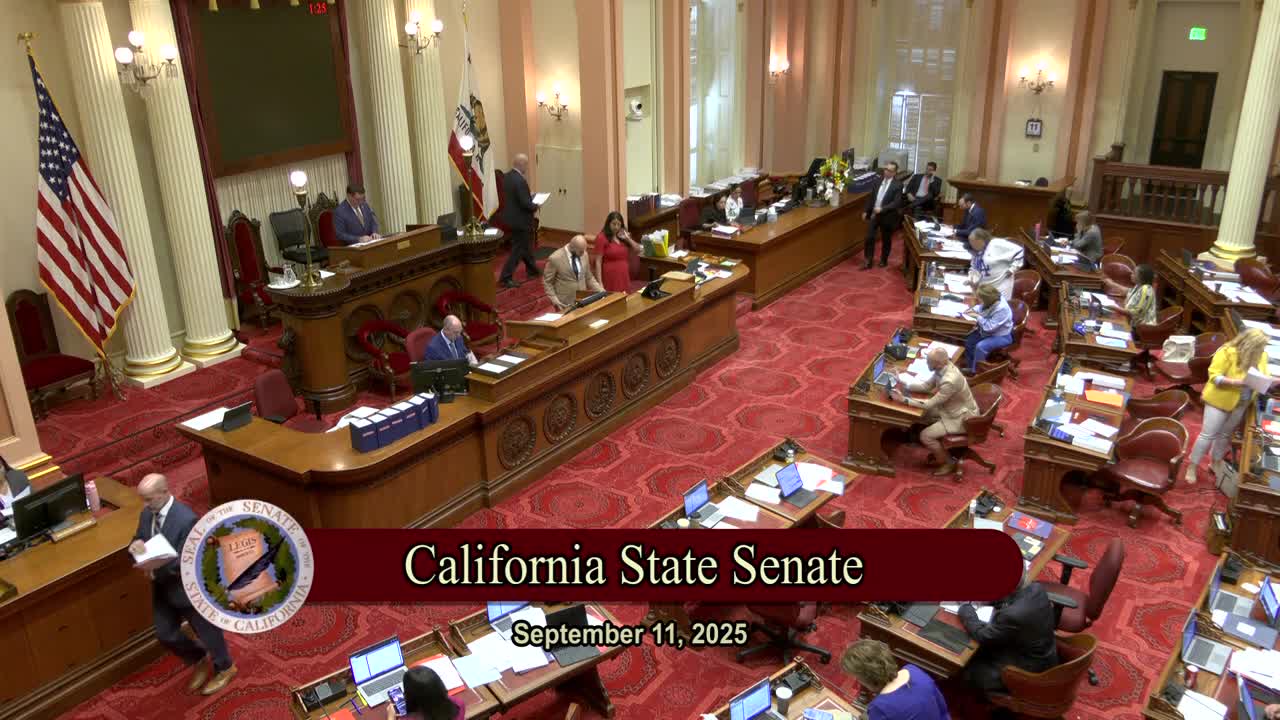 2MIN
Senate Floor
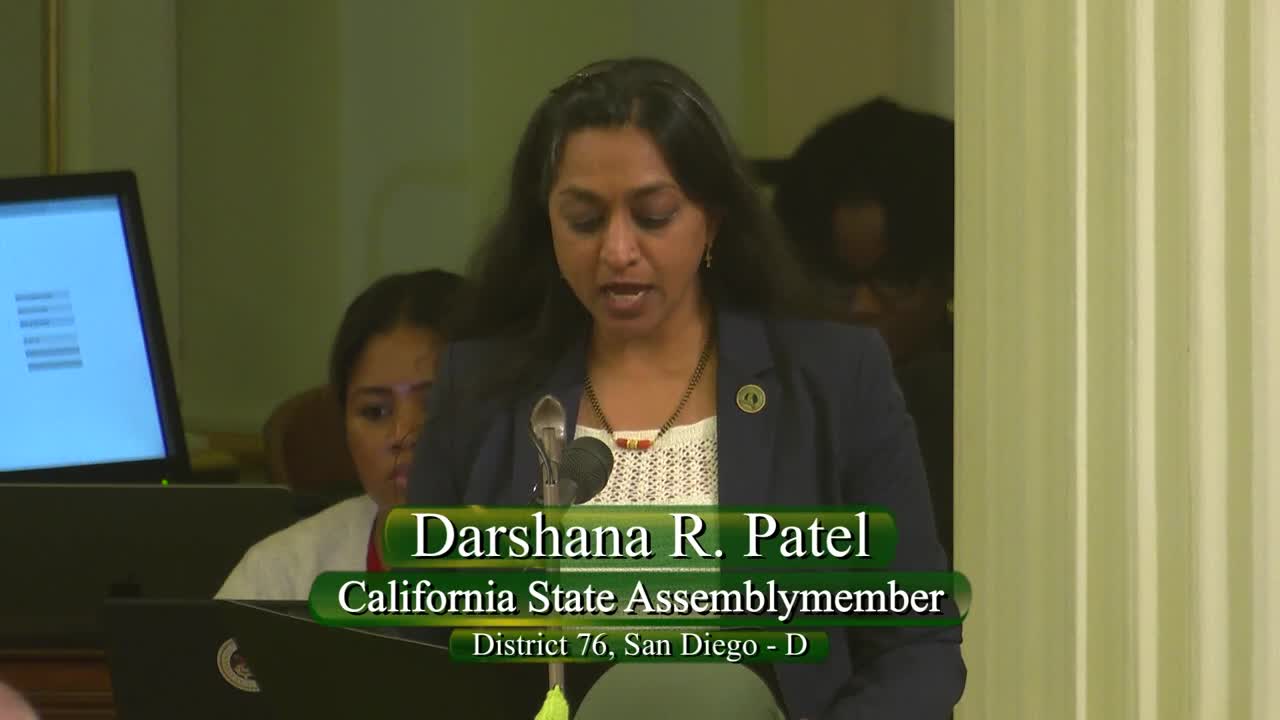 1MIN
Assembly Floor
 7MIN
Assembly Standing Committee on Natural Resources
 3MIN
Senate Floor
 10MIN
Senate Standing Committee on Environmental Quality
 8MIN
Senate Standing Committee on Energy, Utilities and Communications
Bill Author