SB 302: Personal Income Tax Law and Corporation Tax Law: exclusions: environmental credits.
- Session Year: 2025-2026
- House: Senate
- Latest Version Date: 2025-10-01
Current Status:
Passed
(2025-10-01: Chaptered by Secretary of State. Chapter 215, Statutes of 2025.)
Introduced
In Committee
Awaiting First Chamber Vote
Passed First Chamber
In Committee
Awaiting Second Chamber Vote
Passed Second Chamber
Enacted
Existing law, the Personal Income Tax Law and the Corporation Tax Law, in conformity with federal income tax law, generally defines gross income as income from whatever source derived, except as specifically excluded, and provides various exclusions from gross income. Existing federal law authorizes an applicable entity, as defined, to receive a refund for specified environmental credits against the taxes imposed under federal law and excludes a refund payment made pursuant to that law from gross income. Existing federal law also authorizes an eligible taxpayer, as defined, to transfer the value of that refundable credit and exempts from gross income payment received by the transferor as consideration for the transfer. Existing federal law prohibits the transferee from deducting the amount paid as consideration for the transfer.
This bill, in conformity with federal law, for taxable years beginning on or after January 1, 2026, and before January 1, 2031, would exclude from gross income a refund payment made for the specified federal environmental credits described above and any payment received by a transferor as consideration for a transfer, as provided. The bill would also prohibit a transferee from deducting the amount paid as consideration for the transfer, in conformity with federal law.
Existing law requires a bill authorizing a new tax expenditure to contain, among other things, specific goals, purposes, and objectives the tax expenditure will achieve, detailed performance indicators, and data collection requirements.
This bill would include additional information required for any bill authorizing a new tax expenditure.
This bill would take effect immediately as a tax levy.
Existing law, the Personal Income Tax Law and the Corporation Tax Law, in conformity with federal income tax law, generally defines gross income as income from whatever source derived, except as specifically excluded, and provides various exclusions from gross income. Existing federal law authorizes an applicable entity, as defined, to receive a refund for specified environmental credits against the taxes imposed under federal law and excludes a refund payment made pursuant to that law from gross income. Existing federal law also authorizes an eligible taxpayer, as defined, to transfer the value of that refundable credit and exempts from gross income payment received by the transferor as consideration for the transfer. Existing federal law prohibits the transferee from deducting the amount paid as consideration for the transfer.
This bill, in conformity with federal law, for taxable years beginning on or after January 1, 2026, and before January 1, 2031, would exclude from gross income a refund payment made for the specified federal environmental credits described above and any payment received by a transferor as consideration for a transfer, as provided. The bill would also prohibit a transferee from deducting the amount paid as consideration for the transfer, in conformity with federal law.
Existing law requires a bill authorizing a new tax expenditure to contain, among other things, specific goals, purposes, and objectives the tax expenditure will achieve, detailed performance indicators, and data collection requirements.
This bill would include additional information required for any bill authorizing a new tax expenditure.
This bill would take effect immediately as a tax levy.
Existing law, the Personal Income Tax Law and the Corporation Tax Law, in conformity with federal income tax law, generally defines gross income as income from whatever source derived, except as specifically excluded, and provides various exclusions from gross income. Existing federal law authorizes an applicable entity, as defined, to receive a refund for specified environmental credits against the taxes imposed under federal law and excludes a refund payment made pursuant to that law from gross income. Existing federal law also authorizes an eligible taxpayer, as defined, to transfer the value of that refundable credit and exempts from gross income payment received by the transferor as consideration for the transfer. Existing federal law prohibits the transferee from deducting the amount paid as consideration for the transfer.
This bill, in conformity with federal law, for taxable years beginning on or after January 1, 2023, 2026, and before January 1, 2031, would exclude from gross income a refund payment made for the specified federal environmental credits described above and any payment received by a transferor as consideration for a transfer, as provided. The bill would also prohibit a transferee from deducting the amount paid as consideration for the transfer, in conformity with federal law.
Existing law requires a bill authorizing a new tax expenditure to contain, among other things, specific goals, purposes, and objectives the tax expenditure will achieve, detailed performance indicators, and data collection requirements.
This bill would include additional information required for any bill authorizing a new tax expenditure.
This bill would make findings and declarations related to a gift of public funds.This bill would take effect immediately as a tax levy.
Existing law, the Personal Income Tax Law and the Corporation Tax Law, in conformity with federal income tax law, generally defines gross income as income from whatever source derived, except as specifically excluded, and provides various exclusions from gross income. Existing federal law authorizes an applicable entity, as defined, to receive a refund for specified environmental credits against the taxes imposed under federal law and excludes a refund payment made pursuant to that law from gross income. Existing federal law also authorizes an eligible taxpayer, as defined, to transfer the value of that refundable credit and exempts from gross income payment received by the transferor as consideration for the transfer. Existing federal law prohibits the transferee from deducting the amount paid as consideration for the transfer.
This bill, in conformity with federal law, for taxable years beginning on or after January 1, 2023, would exclude from gross income a refund payment made for the specified federal environmental credits described above and any payment received by a transferor as consideration for a transfer, as provided. The bill would also prohibit a transferee from deducting the amount paid as consideration for the transfer, in conformity with federal law.
Existing law requires a bill authorizing a new tax expenditure to contain, among other things, specific goals, purposes, and objectives the tax expenditure will achieve, detailed performance indicators, and data collection requirements.
This bill would include additional information required for any bill authorizing a new tax expenditure.
This bill would make findings and declarations related to a gift of public funds.
Existing law, the Personal Income Tax Law and the Corporation Tax Law, in conformity with federal income tax law, generally defines gross income as income from whatever source derived, except as specifically excluded, and provides various exclusions from gross income. Existing federal law authorizes an applicable entity, as defined, to receive a refund for specified environmental credits against the taxes imposed under federal law and excludes a refund payment made pursuant to that law from gross income. Existing federal law also authorizes an eligible taxpayer, as defined, to transfer the value of that refundable credit and exempts from gross income payment received by the transferor as consideration for the transfer. Existing federal law prohibits the transferee from deducting the amount paid as consideration for the transfer.
This bill, in conformity with federal law, for taxable years beginning on or after January 1, 2023, would exclude from gross income a refund payment made for the specified federal environmental credits described above and any payment received by a transferor as consideration for a transfer, as provided. The bill would also prohibit a transferee from deducting the amount paid as consideration for the transfer, in conformity with federal law.
Existing law requires a bill authorizing a new tax expenditure to contain, among other things, specific goals, purposes, and objectives the tax expenditure will achieve, detailed performance indicators, and data collection requirements.
This bill would include additional information required for any bill authorizing a new tax expenditure.
This bill would make findings and declarations related to a gift of public funds.
The Legislature finds and declares all of the following:
(a)It is essential that California implement all feasible measures to ensure that electric rates remain affordable throughout the clean energy transition.
(b)California has created ambitious climate and energy goals to achieve a net-zero carbon economy by 2045. The State Air Resources Board 2022 Scoping Plan calls for California to cut air pollution by 71 percent and reduce fossil fuel consumption by 86 percent.
(c)The 100 Percent Clean Energy Act of 2018 enacted by Senate Bill 100 (Chapter 312 of the Statutes of 2018) updated the California Renewables Portfolio Standard Program to ensure that by 2030, at least 60 percent of Californias electricity is renewable and for California to provide 100 percent of its retail sales from renewable zero-emission sources by 2045.
(d)The Clean Energy, Jobs and Affordability Act of 2022 enacted by Senate Bill 1020 (Chapter 351 of the Statutes of 2022) made it the policy of the state that eligible renewable energy resources and zero-carbon resources supply 90 percent of all retail sales of electricity by December 31, 2035, 95 percent of all retail sales by December 31, 2040, 100 percent of all retail sales by December 31, 2045, and 100 percent of electricity procured to serve all state agencies by December 31, 2035.
(e)The federal Inflation Reduction Act of 2022 (Public Law 117-169) represents the largest federal investment in clean energy and climate action to date. The acts goal is to accelerate the transition to clean energy, reduce greenhouse gas emissions, and support energy innovation and investment, creating jobs and improving public health outcomes.
(f)The federal Inflation Reduction Act of 2022 (Public Law 117-169) created additional toolsdirect pay and transferabilityfor clean energy tax credits that seek to expand and increase investment in the clean energy sector.
(g)Clean energy tax credits help to reduce the costs of renewable energy projects and increase investment in the clean energy sector.
(h)Californias ambitious climate and energy goals will require a massive buildout of new clean energy projects. California must nearly double its clean energy capacity over the next five years alone to stay on track with its goals.
(i)It is critical that California take full advantage of all tools and resources at its disposal to help accelerate the pace and scale of clean energy development in California.
SEC. 2.Section 17132.3 is added to the Revenue and Taxation Code, to read:17132.3.(a)For taxable years beginning on or after January 1, 2026, and before January 1, 2031, gross income does not include any payment made pursuant to Section 6417 of the Internal Revenue Code, as added by Public Law 117-169, relating to elective payment of applicable credits. Sections 6417(c)(1)(C) and 6417(c)(1)(D) of the Internal Revenue Code, as added by Public Law 117-169, shall apply.
(b)For taxable years beginning on or after January 1, 2026, and before January 1, 2031, gross income does not include any payment made pursuant to Section 6418 of the Internal Revenue Code, as added by Public Law 117-169, relating to transfer of certain credits.
(1)Sections 6418(c)(1)(A) and 6418(c)(1)(B) of the Internal Revenue Code, as added by Public Law 117-169, shall apply.
(2)No deduction shall be allowed for any amount paid in consideration of a transfer made as described in Section 6418 of the Internal Revenue Code, as added by Public Law 117-169.
(c)For purposes of this section, payment made pursuant to Section 6418 of the Internal Revenue Code includes the value of a credit received by a transferee pursuant to Section 6418 of the Internal Revenue Code, as added by Public Law 117-169.
(d)(1)For purposes of complying with Section 41, for this section and Section 24310.5, the Legislature finds and declares all of the following:
(A)The goal, purpose, and objective of the conformity to the exclusion and deduction provisions of Sections 6417 and 6418 of the Internal Revenue Code is to promote the investment and construction of clean energy projects and clean energy advanced manufacturing facilities in California.
(B)The performance indicators to measure whether the conformity meets the goal, purpose, and objective stated in subparagraph (A) are data from taxpayers utilizing credits under Sections 6417 and 6418 of the Internal Revenue Code filing in California.
(2)To assist the Legislature in determining whether the conformity fulfills the goal, purpose, and objective stated in subparagraph (A) of paragraph (1), the Franchise Tax Board shall report to the Legislature regarding the data described in subparagraph (B) of paragraph (1) on or before November 1, 2029, in compliance with Section 9795 of the Government Code.
(e)This section shall remain in effect only until December 1, 2031, and as of that date is repealed.
SEC. 3.Section 24310.5 is added to the Revenue and Taxation Code, to read:24310.5.(a)For taxable years beginning on or after January 1, 2026, and before January 1, 2031, gross income does not include any payment made pursuant to Section 6417 of the Internal Revenue Code, as added by Public Law 117-169, relating to elective payment of applicable credits. Sections 6417(c)(1)(C) and 6417(c)(1)(D) of the Internal Revenue Code, as added by Public Law 117-169, shall apply.
(b)For taxable years beginning on or after January 1, 2026, and before January 1, 2031, gross income does not include any payment made pursuant to Section 6418 of the Internal Revenue Code, as added by Public Law 117-169, relating to transfer of certain credits.
(1)Sections 6418(c)(1)(A) and 6418(c)(1)(B) of the Internal Revenue Code, as added by Public Law 117-169, shall apply.
(2)No deduction shall be allowed for any amount paid in consideration of a transfer made as described in Section 6418 of the Internal Revenue Code, as added by Public Law 117-169.
(c)For purposes of this section, payment made pursuant to Section 6418 of the Internal Revenue Code includes the value of a credit received by a transferee pursuant to Section 6418 of the Internal Revenue Code, as added by Public Law 117-169.
(d)This section shall remain in effect only until December 1, 2031, and as of that date is repealed.
SEC. 4.This act provides for a tax levy within the meaning of Article IV of the California Constitution and shall go into immediate effect.
The Legislature finds and declares all of the following:
(a)It is essential that California implement all feasible measures to ensure that electric rates remain affordable throughout the clean energy transition.
(b)California has created ambitious climate and energy goals to achieve a net-zero carbon economy by 2045. The State Air Resources Board 2022 Scoping Plan calls for California to cut air pollution by 71 percent and reduce fossil fuel consumption by 86 percent.
(c)The 100 Percent Clean Energy Act of 2018 enacted by Senate Bill 100 (Chapter 312 of the Statutes of 2018) updated the California Renewables Portfolio Standard Program to ensure that by 2030, at least 60 percent of Californias electricity is renewable and for California to provide 100 percent of its retail sales from renewable zero-emission sources by 2045.
(d)The Clean Energy, Jobs and Affordability Act of 2022 enacted by Senate Bill 1020 (Chapter 351 of the Statutes of 2022) made it the policy of the state that eligible renewable energy resources and zero-carbon resources supply 90 percent of all retail sales of electricity by December 31, 2035, 95 percent of all retail sales by December 31, 2040, 100 percent of all retail sales by December 31, 2045, and 100 percent of electricity procured to serve all state agencies by December 31, 2035.
(e)The federal Inflation Reduction Act of 2022 (Public Law 117-169) represents the largest federal investment in clean energy and climate action to date. The acts goal is to accelerate the transition to clean energy, reduce greenhouse gas emissions, and support energy innovation and investment, creating jobs and improving public health outcomes.
(f)The federal Inflation Reduction Act of 2022 (Public Law 117-169) created additional toolsdirect pay and transferabilityfor clean energy tax credits that seek to expand and increase investment in the clean energy sector.
(g)Clean energy tax credits help to reduce the costs of renewable energy projects and increase investment in the clean energy sector.
(h)Californias ambitious climate and energy goals will require a massive buildout of new clean energy projects. California must nearly double its clean energy capacity over the next five years alone to stay on track with its goals.
(i)It is critical that California take full advantage of all tools and resources at its disposal to help accelerate the pace and scale of clean energy development in California.
SEC. 2.Section 17132.3 is added to the Revenue and Taxation Code, to read:17132.3.(a)For taxable years beginning on or after January 1, 2026, and before January 1, 2031, gross income does not include any payment made pursuant to Section 6417 of the Internal Revenue Code, as added by Public Law 117-169, relating to elective payment of applicable credits. Sections 6417(c)(1)(C) and 6417(c)(1)(D) of the Internal Revenue Code, as added by Public Law 117-169, shall apply.
(b)For taxable years beginning on or after January 1, 2026, and before January 1, 2031, gross income does not include any payment made pursuant to Section 6418 of the Internal Revenue Code, as added by Public Law 117-169, relating to transfer of certain credits.
(1)Sections 6418(c)(1)(A) and 6418(c)(1)(B) of the Internal Revenue Code, as added by Public Law 117-169, shall apply.
(2)No deduction shall be allowed for any amount paid in consideration of a transfer made as described in Section 6418 of the Internal Revenue Code, as added by Public Law 117-169.
(c)For purposes of this section, payment made pursuant to Section 6418 of the Internal Revenue Code includes the value of a credit received by a transferee pursuant to Section 6418 of the Internal Revenue Code, as added by Public Law 117-169.
(d)(1)For purposes of complying with Section 41, for this section and Section 24310.5, the Legislature finds and declares all of the following:
(A)The goal, purpose, and objective of the conformity to the exclusion and deduction provisions of Sections 6417 and 6418 of the Internal Revenue Code is to promote the investment and construction of clean energy projects and clean energy advanced manufacturing facilities in California.
(B)The performance indicators to measure whether the conformity meets the goal, purpose, and objective stated in subparagraph (A) are data from taxpayers utilizing credits under Sections 6417 and 6418 of the Internal Revenue Code filing in California.
(2)To assist the Legislature in determining whether the conformity fulfills the goal, purpose, and objective stated in subparagraph (A) of paragraph (1), the Franchise Tax Board shall report to the Legislature regarding the data described in subparagraph (B) of paragraph (1) on or before November 1, 2029, in compliance with Section 9795 of the Government Code.
(e)This section shall remain in effect only until December 1, 2031, and as of that date is repealed.
SEC. 3.Section 24310.5 is added to the Revenue and Taxation Code, to read:24310.5.(a)For taxable years beginning on or after January 1, 2026, and before January 1, 2031, gross income does not include any payment made pursuant to Section 6417 of the Internal Revenue Code, as added by Public Law 117-169, relating to elective payment of applicable credits. Sections 6417(c)(1)(C) and 6417(c)(1)(D) of the Internal Revenue Code, as added by Public Law 117-169, shall apply.
(b)For taxable years beginning on or after January 1, 2026, and before January 1, 2031, gross income does not include any payment made pursuant to Section 6418 of the Internal Revenue Code, as added by Public Law 117-169, relating to transfer of certain credits.
(1)Sections 6418(c)(1)(A) and 6418(c)(1)(B) of the Internal Revenue Code, as added by Public Law 117-169, shall apply.
(2)No deduction shall be allowed for any amount paid in consideration of a transfer made as described in Section 6418 of the Internal Revenue Code, as added by Public Law 117-169.
(c)For purposes of this section, payment made pursuant to Section 6418 of the Internal Revenue Code includes the value of a credit received by a transferee pursuant to Section 6418 of the Internal Revenue Code, as added by Public Law 117-169.
(d)This section shall remain in effect only until December 1, 2031, and as of that date is repealed.
SEC. 4.This act provides for a tax levy within the meaning of Article IV of the California Constitution and shall go into immediate effect.
The Legislature finds and declares all of the following:
(a)It is essential that California implement all feasible measures to ensure that electric rates remain affordable throughout the clean energy transition.
(b)California has created ambitious climate and energy goals to achieve a net-zero carbon economy by 2045. The State Air Resources Board 2022 Scoping Plan calls for California to cut air pollution by 71 percent and reduce fossil fuel consumption by 86 percent.
(c)The 100 Percent Clean Energy Act of 2018 enacted by Senate Bill 100 (Chapter 312 of the Statutes of 2018) updated the California Renewables Portfolio Standard Program to ensure that by 2030, at least 60 percent of Californias electricity is renewable and for California to provide 100 percent of its retail sales from renewable zero-emission sources by 2045.
(d)The Clean Energy, Jobs and Affordability Act of 2022 enacted by Senate Bill 1020 (Chapter 351 of the Statutes of 2022) made it the policy of the state that eligible renewable energy resources and zero-carbon resources supply 90 percent of all retail sales of electricity by December 31, 2035, 95 percent of all retail sales by December 31, 2040, 100 percent of all retail sales by December 31, 2045, and 100 percent of electricity procured to serve all state agencies by December 31, 2035.
(e)The federal Inflation Reduction Act of 2022 (Public Law 117-169) represents the largest federal investment in clean energy and climate action to date. The acts goal is to accelerate the transition to clean energy, reduce greenhouse gas emissions, and support energy innovation and investment, creating jobs and improving public health outcomes.
(f)The federal Inflation Reduction Act of 2022 (Public Law 117-169) created additional toolsdirect pay and transferabilityfor clean energy tax credits that seek to expand and increase investment in the clean energy sector.
(g)Clean energy tax credits help to reduce the costs of renewable energy projects and increase investment in the clean energy sector.
(h)Californias ambitious climate and energy goals will require a massive buildout of new clean energy projects. California must nearly double its clean energy capacity over the next five years alone to stay on track with its goals.
(i)It is critical that California take full advantage of all tools and resources at its disposal to help accelerate the pace and scale of clean energy development in California.
SEC. 2.Section 17132.3 is added to the Revenue and Taxation Code, to read:17132.3.(a)For taxable years beginning on or after January 1, 2023, 2026, and before January 1, 2031, gross income does not include any payment made pursuant to Section 6417 of the Internal Revenue Code, as added by Public Law 117-169, relating to elective payment of applicable credits. Sections 6417(c)(1)(C) and 6417(c)(1)(D) of the Internal Revenue Code, as added by Public Law 117-169, shall apply.
(b)For taxable years beginning on or after January 1, 2023, 2026, and before January 1, 2031, gross income does not include any payment made pursuant to Section 6418 of the Internal Revenue Code, as added by Public Law 117-169, relating to transfer of certain credits.
(1)Sections 6418(c)(1)(A) and 6418(c)(1)(B) of the Internal Revenue Code, as added by Public Law 117-169, shall apply.
(2)No deduction shall be allowed for any amount paid in consideration of a transfer made as described in Section 6418 of the Internal Revenue Code, as added by Public Law 117-169.
(c)For purposes of this section, payment made pursuant to Section 6418 of the Internal Revenue Code includes the value of a credit received by a transferee pursuant to Section 6418 of the Internal Revenue Code, as added by Public Law 117-169.
(d)(1)For purposes of complying with Section 41, for this section and Section 24310.5, the Legislature finds and declares all of the following:
(A)The goal, purpose, and objective of the conformity to the exclusion and deduction provisions of Sections 6417 and 6418 of the Internal Revenue Code is to promote the investment and construction of clean energy projects and clean energy advanced manufacturing facilities in California.
(B)The performance indicators to measure whether the conformity meets the goal, purpose, and objective stated in subparagraph (A) are data from taxpayers utilizing credits under Sections 6417 and 6418 of the Internal Revenue Code filing in California.
(2)(A)To assist the Legislature in determining whether the conformity fulfills the goal, purpose, and objective stated in subparagraph (A) of paragraph (1), the Franchise Tax Board shall report to the Legislature regarding the data described in subparagraph (B) of paragraph (1) on or before November 1, 2029, in compliance with Section 9795 of the Government Code.
(B)The requirement for submitting a report imposed under this subdivision is inoperative on January 1, 2037.(e)This section shall remain in effect only until December 1, 2031, and as of that date is repealed.
SEC. 3.Section 24310.5 is added to the Revenue and Taxation Code, to read:24310.5.(a)For taxable years beginning on or after January 1, 2023, 2026, and before January 1, 2031, gross income does not include any payment made pursuant to Section 6417 of the Internal Revenue Code, as added by Public Law 117-169, relating to elective payment of applicable credits. Sections 6417(c)(1)(C) and 6417(c)(1)(D) of the Internal Revenue Code, as added by Public Law 117-169, shall apply.
(b)For taxable years beginning on or after January 1, 2023, 2026, and before January 1, 2031, gross income does not include any payment made pursuant to Section 6418 of the Internal Revenue Code, as added by Public Law 117-169, relating to transfer of certain credits.
(1)Sections 6418(c)(1)(A) and 6418(c)(1)(B) of the Internal Revenue Code, as added by Public Law 117-169, shall apply.
(2)No deduction shall be allowed for any amount paid in consideration of a transfer made as described in Section 6418 of the Internal Revenue Code, as added by Public Law 117-169.
(c)For purposes of this section, payment made pursuant to Section 6418 of the Internal Revenue Code includes the value of a credit received by a transferee pursuant to Section 6418 of the Internal Revenue Code, as added by Public Law 117-169.
(d)This section shall remain in effect only until December 1, 2031, and as of that date is repealed.
SEC. 4.The Legislature hereby finds and declares that the exclusions authorized by Sections 17132.3 and 24310.5 of the Revenue and Taxation Code, as added by this act, serve the public purpose of promoting investment and construction of clean energy projects and clean energy advanced manufacturing facilities in California and does not constitute a gift of public funds within the meaning of Section 6 of Article XVI of the California Constitution.SEC. 4.This act provides for a tax levy within the meaning of Article IV of the California Constitution and shall go into immediate effect.
The Legislature finds and declares all of the following:
(a)It is essential that California implement all feasible measures to ensure that electric rates remain affordable throughout the clean energy transition.
(b)California has created ambitious climate and energy goals to achieve a net-zero carbon economy by 2045. The State Air Resources Board 2022 Scoping Plan calls for California to cut air pollution by 71 percent and reduce fossil fuel consumption by 86 percent.
(c)The 100 Percent Clean Energy Act of 2018 enacted by Senate Bill 100 (Chapter 312 of the Statutes of 2018) updated the California Renewables Portfolio Standard Program to ensure that by 2030, at least 60 percent of Californias electricity is renewable and for California to provide 100 percent of its retail sales from renewable zero-emission sources by 2045.
(d)The Clean Energy, Jobs and Affordability Act of 2022 enacted by Senate Bill 1020 (Chapter 351 of the Statutes of 2022) made it the policy of the state that eligible renewable energy resources and zero-carbon resources supply 90 percent of all retail sales of electricity by December 31, 2035, 95 percent of all retail sales by December 31, 2040, 100 percent of all retail sales by December 31, 2045, and 100 percent of electricity procured to serve all state agencies by December 31, 2035.
(e)The federal Inflation Reduction Act of 2022 (Public Law 117-169) represent represents the largest federal investment in clean energy and climate action to date. The acts goal is to accelerate the transition to clean energy, reduce greenhouse gas emissions, and support energy innovation and investment, creating jobs and improving public health outcomes.
(f)The federal Inflation Reduction Act of 2022 (Public Law 117-169) created additional toolsdirect pay and transferabilityfor clean energy tax credits that seek to expand and increase investment in the clean energy sector.
(g)Clean energy tax credits help to reduce the costs of renewable energy projects and increase investment in the clean energy sector.
(h)Californias ambitious climate and energy goals will require a massive buildout of new clean energy projects. California must nearly double its clean energy capacity over the next five years alone to stay on track with its goals.
(i)It is critical that California take full advantage of all tools and resources at its disposal to help accelerate the pace and scale of clean energy development in California.
SEC. 2.Section 17132.3 is added to the Revenue and Taxation Code, to read:17132.3.(a)For taxable years beginning on or after January 1, 2023, gross income does not include any payment made pursuant to Section 6417 of the Internal Revenue Code, as added by Public Law 117-169, relating to elective payment of applicable credits. Sections 6417(c)(1)(C) and 6417(c)(1)(D) of the Internal Revenue Code, as added by Public Law 117-169, shall apply.
(b)For taxable years beginning on or after January 1, 2023, gross income does not include any payment made pursuant to Section 6418 of the Internal Revenue Code, as added by Public Law 117-169, relating to transfer of certain credits.
(1)Sections 6418(c)(1)(A) and 6418(c)(1)(B) of the Internal Revenue Code, as added by Public Law 117-169, shall apply.
(2)No deduction shall be allowed for any amount paid in consideration of a transfer made as described in Section 6418 of the Internal Revenue Code, as added by Public Law 117-169.
(c)For purposes of this section, payment made pursuant to Section 6418 of the Internal Revenue Code includes the value of a credit received by a transferee pursuant to Section 6418 of the Internal Revenue Code, as added by Public Law 117-169.
(d)(1)For purposes of complying with Section 41, for this section and Section 24310.5, the Legislature finds and declares all of the following:
(A)The goal, purpose, and objective of the conformity to the exclusion and deduction provisions of Sections 6417 and 6418 of the Internal Revenue Code is to promote the investment and construction of clean energy projects and clean energy advanced manufacturing facilities in California.
(B)The performance indicators to measure whether the conformity meets the goal, purpose, and objective stated in paragraph (1) are the number of applicable entities that utilize Sections 6417 and 6418 of the Internal Revenue Code for federal income tax credits in taxable years beginning on or after January 1, 2026, as compared to investment in traditional tax equity structures in taxable years ending on or before December 31, 2025. subparagraph (A) are data from taxpayers utilizing credits under Sections 6417 and 6418 of the Internal Revenue Code filing in California.
(2)(A)To assist the Legislature in determining whether the conformity fulfills the goal, purpose, and objective stated in subparagraph (A) of paragraph (1), the Franchise Tax Board shall annually collect data on the number of payments made to eligible taxpayers pursuant to Sections 6417 and 6418 of the Internal Revenue Code, relating to certain federal income tax credits, and compare the number of transactions to the investment in traditional tax equity structures in taxable years ending on or before December 31, 2025.
(B)On or before December 1, 2026, and each December 1 thereafter, the Franchise Tax Board shall submit the data required by paragraph (1) in a report to the Legislature regarding the data described in subparagraph (B) of paragraph (1) on or before November 1, 2029, in compliance with Section 9795 of the Government Code.
(C)(B)The requirement for submitting a report imposed under this subdivision is inoperative on January 1, 2037.
SEC. 3.Section 24310.5 is added to the Revenue and Taxation Code, to read:24310.5.(a)For taxable years beginning on or after January 1, 2023, gross income does not include any payment made pursuant to Section 6417 of the Internal Revenue Code, as added by Public Law 117-169, relating to elective payment of applicable credits. Sections 6417(c)(1)(C) and 6417(c)(1)(D) of the Internal Revenue Code, as added by Public Law 117-169, shall apply.
(b)For taxable years beginning on or after January 1, 2023, gross income does not include any payment made pursuant to Section 6418 of the Internal Revenue Code, as added by Public Law 117-169, relating to transfer of certain credits.
(1)Sections 6418(c)(1)(A) and 6418(c)(1)(B) of the Internal Revenue Code, as added by Public Law 117-169, shall apply.
(2)No deduction shall be allowed for any amount paid in consideration of a transfer made as described in Section 6418 of the Internal Revenue Code, as added by Public Law 117-169.
(c)For purposes of this section, payment made pursuant to Section 6418 of the Internal Revenue Code includes the value of a credit received by a transferee pursuant to Section 6418 of the Internal Revenue Code, as added by Public Law 117-169.
SEC. 4.The Legislature hereby finds and declares that the exclusions authorized by Sections 17132.3 and 24310.5 of the Revenue and Taxation Code, as added by this act, serve the public purpose of promoting investment and construction of clean energy projects and clean energy advanced manufacturing facilities in California and does not constitute a gift of public funds within the meaning of Section 6 of Article XVI of the California Constitution.
The Legislature finds and declares all of the following:
(a)It is essential that California implement all feasible measures to ensure that electric rates remain affordable throughout the clean energy transition.
(b)California has created ambitious climate and energy goals to achieve a net-zero carbon economy by 2045. The State Air Resources Board 2022 Scoping Plan calls for California to cut air pollution by 71 percent and reduce fossil fuel consumption by 86 percent.
(c)The 100 Percent Clean Energy Act of 2018 enacted by Senate Bill 100 (Chapter 312 of the Statutes of 2018) updated the California Renewables Portfolio Standard Program to ensure that by 2030, at least 60 percent of Californias electricity is renewable and for California to provide 100 percent of its retail sales from renewable zero-emission sources by 2045.
(d)The Clean Energy, Jobs and Affordability Act of 2022 enacted by Senate Bill 1020 (Chapter 351 of the Statutes of 2022) made it the policy of the state that eligible renewable energy resources and zero-carbon resources supply 90 percent of all retail sales of electricity by December 31, 2035, 95 percent of all retail sales by December 31, 2040, 100 percent of all retail sales by December 31, 2045, and 100 percent of electricity procured to serve all state agencies by December 31, 2035.
(e)The federal Inflation Reduction Act of 2022 (Public Law 117-169) represent the largest federal investment in clean energy and climate action to date. The acts goal is to accelerate the transition to clean energy, reduce greenhouse gas emissions, and support energy innovation and investment, creating jobs and improving public health outcomes.
(f)The federal Inflation Reduction Act of 2022 (Public Law 117-169) created additional toolsdirect pay and transferabilityfor clean energy tax credits that seek to expand and increase investment in the clean energy sector.
(g)Clean energy tax credits help to reduce the costs of renewable energy projects and increase investment in the clean energy sector.
(h)Californias ambitious climate and energy goals will require a massive buildout of new clean energy projects. California must nearly double its clean energy capacity over the next five years alone to stay on track with its goals.
(i)It is critical that California take full advantage of all tools and resources at its disposal to help accelerate the pace and scale of clean energy development in California.
SEC. 2.Section 17132.3 is added to the Revenue and Taxation Code, to read:17132.3.(a)For taxable years beginning on or after January 1, 2023, gross income does not include any payment made pursuant to Section 6417 of the Internal Revenue Code, as added by Public Law 117-169, relating to elective payment of applicable credits. Sections 6417(c)(1)(C) and 6417(c)(1)(D) of the Internal Revenue Code, as added by Public Law 117-169, shall apply.
(b)For taxable years beginning on or after January 1, 2023, gross income does not include any payment made pursuant to Section 6418 of the Internal Revenue Code, as added by Public Law 117-169, relating to transfer of certain credits.
(1)Sections 6418(c)(1)(A) and 6418(c)(1)(B) of the Internal Revenue Code, as added by Public Law 117-169, shall apply.
(2)No deduction shall be allowed for any amount paid in consideration of a transfer made as described in Section 6418 of the Internal Revenue Code, as added by Public Law 117-169.
(c)For purposes of this section, payment made pursuant to Section 6418 of the Internal Revenue Code includes the value of a credit received by a transferee pursuant to Section 6418 of the Internal Revenue Code, as added by Public Law 117-169.
(d)(1)For purposes of complying with Section 41, for this section and Section 24310.5, the Legislature finds and declares all of the following:
(A)The goal, purpose, and objective of the conformity to the exclusion and deduction provisions of Sections 6417 and 6418 of the Internal Revenue Code is to promote the investment and construction of clean energy projects and clean energy advanced manufacturing facilities in California.
(B)The performance indicators to measure whether the conformity meets the goal, purpose, and objective stated in paragraph (1) are the number of applicable entities that utilize Sections 6417 and 6418 of the Internal Revenue Code for federal income tax credits in taxable years beginning on or after January 1, 2026, as compared to investment in traditional tax equity structures in taxable years ending on or before December 31, 2025.
(2)(A)To assist the Legislature in determining whether the conformity fulfills the goal, purpose, and objective stated in subparagraph (A) of paragraph (1), the Franchise Tax Board shall annually collect data on the number of payments made to eligible taxpayers pursuant to Sections 6417 and 6418 of the Internal Revenue Code, relating to certain federal income tax credits, and compare the number of transactions to the investment in traditional tax equity structures in taxable years ending on or before December 31, 2025.
(B)On or before December 1, 2026, and each December 1 thereafter, the Franchise Tax Board shall submit the data required by paragraph (1) in a report to the Legislature in compliance with Section 9795 of the Government Code.
(C)The requirement for submitting a report imposed under this subdivision is inoperative on January 1, 2037.
SEC. 3.Section 24310.5 is added to the Revenue and Taxation Code, to read:24310.5.(a)For taxable years beginning on or after January 1, 2023, gross income does not include any payment made pursuant to Section 6417 of the Internal Revenue Code, as added by Public Law 117-169, relating to elective payment of applicable credits. Sections 6417(c)(1)(C) and 6417(c)(1)(D) of the Internal Revenue Code, as added by Public Law 117-169, shall apply.
(b)For taxable years beginning on or after January 1, 2023, gross income does not include any payment made pursuant to Section 6418 of the Internal Revenue Code, as added by Public Law 117-169, relating to transfer of certain credits.
(1)Sections 6418(c)(1)(A) and 6418(c)(1)(B) of the Internal Revenue Code, as added by Public Law 117-169, shall apply.
(2) No deduction shall be allowed for any amount paid in consideration of a transfer made as described in Section 6418 of the Internal Revenue Code, as added by Public Law 117-169.
(c)For purposes of this section, payment made pursuant to Section 6418 of the Internal Revenue Code includes the value of a credit received by a transferee pursuant to Section 6418 of the Internal Revenue Code, as added by Public Law 117-169.
SEC. 4.The Legislature hereby finds and declares that the exclusions authorized by Sections 17132.3 and 24310.5 of the Revenue and Taxation Code, as added by this act, serve the public purpose of promoting investment and construction of clean energy projects and clean energy advanced manufacturing facilities in California and does not constitute a gift of public funds within the meaning of Section 6 of Article XVI of the California Constitution.
|
Date
|
Status
|
|---|---|
| Oct 1, 2025 | Chaptered by Secretary of State. Chapter 215, Statutes of 2025. |
| Oct 1, 2025 | Approved by the Governor. |
| Sep 22, 2025 | Enrolled and presented to the Governor at 11 a.m. |
| Sep 11, 2025 | Assembly amendments concurred in. (Ayes 40. Noes 0. Page 2881.) Ordered to engrossing and enrolling. |
| Sep 10, 2025 | In Senate. Concurrence in Assembly amendments pending. |
| Sep 10, 2025 | Read third time. Passed. (Ayes 79. Noes 0. Page 3175.) Ordered to the Senate. |
| Sep 2, 2025 | Read second time. Ordered to third reading. |
| Aug 29, 2025 | From committee: Do pass. (Ayes 15. Noes 0.) (August 29). |
| Aug 20, 2025 | August 20 set for first hearing. Placed on APPR. suspense file. |
| Jul 17, 2025 | Read second time and amended. Re-referred to Com. on APPR. |
| Jul 17, 2025 | From committee: Do pass as amended and re-refer to Com. on APPR. (Ayes 7. Noes 0.) (July 14). |
| Jul 17, 2025 | Assembly Rule 63 suspended. (Ayes 49. Noes 15. Page 2578.) |
| Jul 15, 2025 | July 14 set for first hearing. Placed on REV. & TAX. suspense file. |
| Jul 1, 2025 | June 30 hearing postponed by committee. |
| Jun 5, 2025 | Referred to Com. on REV. & TAX. |
| May 29, 2025 | In Assembly. Read first time. Held at Desk. |
| May 29, 2025 | Read third time. Passed. (Ayes 38. Noes 0. Page 1324.) Ordered to the Assembly. |
| May 27, 2025 | Ordered to special consent calendar. |
| May 23, 2025 | Read second time. Ordered to third reading. |
| May 23, 2025 | From committee: Do pass. (Ayes 6. Noes 0. Page 1195.) (May 23). |
| May 16, 2025 | Set for hearing May 23. |
| Apr 7, 2025 | April 7 hearing: Placed on APPR. suspense file. |
| Apr 1, 2025 | Set for hearing April 7. |
| Mar 27, 2025 | Read second time and amended. Re-referred to Com. on APPR. |
| Mar 26, 2025 | From committee: Do pass as amended and re-refer to Com. on APPR. (Ayes 5. Noes 0. Page 568.) (March 26). |
| Mar 18, 2025 | Set for hearing March 26. |
| Feb 19, 2025 | Referred to Com. on REV. & TAX. |
| Feb 11, 2025 | From printer. May be acted upon on or after March 13. |
| Feb 10, 2025 | Introduced. Read first time. To Com. on RLS. for assignment. To print. |
|
Date
|
Description
|
Location
|
Votes
|
|
|---|---|---|---|---|
| Sep 11, 2025 | Unfinished Business SB302 Padilla et al. Concurrence | Senate Floor |
Passed |
|
| Sep 10, 2025 | SB 302 Padilla Senate Third Reading By Petrie-Norris | Assembly Floor |
Passed |
|
| Aug 29, 2025 | Do pass. | Assembly Standing Committee on Appropriations |
Passed |
|
| Jul 14, 2025 | Do pass as amended and be re-referred to the Committee on [Appropriations] | Assembly Standing Committee on Revenue and Taxation |
Passed |
|
| May 29, 2025 | Special Consent SB302 Padilla et al. | Senate Floor |
Passed |
|
| May 23, 2025 | Do pass | Senate Standing Committee on Appropriations |
Passed |
|
| Apr 7, 2025 | Placed on suspense file | Senate Standing Committee on Appropriations |
Passed |
|
| Mar 26, 2025 | Do pass as amended, but first amend, and re-refer to the Committee on [Appropriations] | Senate Standing Committee on Revenue and Taxation |
Passed |
This list shows positions taken on this bill by organizations on the date displayed, which is linked to the original source.
Positions by individuals are not included.
|
Organization
|
Position
|
Date
|
|---|---|---|
| A coalition of electric generation companies, business organizations, and environmental advocates | ** Support | |
| Advanced Energy United | ** Support | |
| AES Clean Energy | ** Support | |
| AES US SERVICES, LLC | ** Support | |
| American Clean Power California | ** Support | |
| American Clean Power - California | ** Support | |
| American Council on Renewable Energy | ** Support | |
| Avantus | ** Support | |
| California Chamber Of Commerce | ** Support | |
| California Community Choice Association | ** Support | |
| california efficiency + demand management council | ** Support | |
| California Energy Storage Alliance | ** Support | |
| California Independent Energy Producers Association | ** Support | |
| California Retailers Association | ** Support | |
| California Taxpayers Association | ** Support | |
| California Tax Reform Association | ** Against | |
| California Wind Energy Association | ** Support | |
| Center for Energy Efficiency and Renewable Technologies | ** Support | |
| Clean Power Campaign | ** Support | |
| CLEARWAY ENERGY GROUP, LLC | ** Support | |
| Coalition For Renewable Natural Gas | ** Support | |
| Council on State Taxation | ** Support | |
| EDF Renewables North America, Inc. | ** Support | |
| Électricité de France Renewables | ** Support | |
| Engie North America | ** Support | |
| Environmental Defense Fund | ** Support | |
| Family Business Association of California | ** Support | |
| Fluence Energy, INC. | ** Support | |
| Independent Energy Producers Association | ** Support | |
| Intersect Power | ** Support | |
| Invenergy, LLC | ** Support | |
| Kern County Taxpayers Association | ** Support | |
| Large-scale Solar Alliance | ** Support | |
| Large Scale Solar Association | ** Support | |
| Marin Clean Energy | ** Support | |
| MN8 ENERGY, LLC | ** Support | |
| Natural Resources Defense Council | ** Support | |
| NEXTERA ENERGY RESOURCES PROJECT MANAGEMENT, INC. | ** Support | |
| Orange County Taxpayers Association | ** Support | |
| RWE Clean Energy | ** Support | |
| San Diego Community Power | ** Support | |
| San Jose Clean Energy | ** Support | |
| Silicon Valley Leadership Group | ** Support | |
| Solano County Taxpayers Association | ** Support | |
| Solar Energy Industries Association | ** Support | |
| State Building & Construction Trades Council Of California | ** Support | |
| UTILITY REFORM NETWORK; THE | ** Support | |
| Wellhead Electric Company, Inc. | ** Support |
SENATE RULES COMMITTEE Office of Senate Floor Analyses (916) 651-1520 Fax: (916) 327-4478 | SB 302 |
UNFINISHED BUSINESS
Bill No: SB 302
Author: Padilla (D), et al.
Amended: 7/17/25
Vote: 21
SENATE REVENUE AND TAXATION COMMITTEE: 5-0, 3/26/25
AYES: McNerney, Valladares, Ashby, Grayson, Umberg
SENATE APPROPRIATIONS COMMITTEE: 6-0, 5/23/25
AYES: Caballero, Seyarto, Cabaldon, Grayson, Richardson, Wahab
NO VOTE RECORDED: Dahle
SENATE FLOOR: 38-0, 5/29/25
AYES: Allen, Alvarado-Gil, Archuleta, Arreguín, Ashby, Becker, Blakespear, Cabaldon, Caballero, Cervantes, Choi, Cortese, Dahle, Durazo, Gonzalez, Grayson, Grove, Hurtado, Jones, Laird, McGuire, McNerney, Menjivar, Niello, Ochoa Bogh, Padilla, Pérez, Richardson, Rubio, Seyarto, Smallwood-Cuevas, Stern, Strickland, Umberg, Valladares, Wahab, Weber Pierson, Wiener
NO VOTE RECORDED: Limón, Reyes
ASSEMBLY FLOOR: 79-0, 9/10/25 - See last page for vote
SUBJECT: Personal Income Tax Law and Corporation Tax Law: exclusions: environmental credits
SOURCE: Author
DIGEST:
This bill confirms state law to specific Internal Revenue Code sections added by the Inflation Reduction Act of 2022, relating to renewable energy development.
Assembly Amendments
(1) alter the bill’s effective dates, specifically to delete retroactive application to the 2023 taxable year, instead providing that the bill applies commencing in the 2026 taxable year and ending after the 2030 taxable year, and (2) make conforming changes.
ANALYSIS:
Existing federal law:
- Provides that gross income includes all income from any source, including compensation for services, business income, gains from property, interest, dividends, rents, and royalties, unless specifically excluded.
- Excludes some items from gross income, such as amounts received as a gift or inheritance, certain compensation for injuries and sickness, and qualified scholarships, among others.
- Generally allows business taxpayers to deduct from income for state and federal purposes the costs of carrying on a trade or business, so long as they are “ordinary and necessary.”
- Allows investment tax credit for several forms of renewable energy production, including solar energy.
- Determines the credit amount by multiplying the energy percentage, which varies over time and by energy source, by the basis of the energy property when it is placed in service.
- Restricts eligibility of the credit solely to project owners.
- Generally provides that when taxpayers claim refundable credits that exceed their tax liability, or sell credits for consideration, the part of the credit that exceeds liability is considered income.
- Treat state tax credits as assets when determining gain or loss.
- Enacts the Inflation Reduction Act of 2022 (Public Law 116-169), which enacts, among other provisions, Section 6417 of the Internal Revenue Code (IRC) to allow applicable taxpayers, such as states and local agencies, tribal governments, and other tax-exempt entities, to elect to treat certain credits as a payment against their federal income tax liabilities rather than as a nonrefundable credit. Instead of claiming a credit, it is treated as an overpayment of taxes, resulting in a direct cash refund payment to the entity regardless of whether it has a tax liability owed. Provides that these direct cash refund payments for this election are not taxable income, without which these entities may have a filing requirement when they are traditionally exempt from income tax, except on their unrelated business taxable income.
- Enacts IRC 6418, which provides that any income from transferring certain renewable energy credits must be classified as tax-exempt income. As a result, any income to the seller is excluded from tax, and the purchaser cannot claim a business expense deduction for the cost incurred to acquire the credit.
- Applies the elective payment and credit transfer provisions for the following federal tax credits:
- Energy Credit (IRC §48),
- Clean Electricity Investment Credit (IRC §48E),
- Renewable Electricity Production Credit (IRC §45),
- Clean Electricity Production Credit (IRC §45Y),
- Commercial Clean Vehicle Credit (IRC §45W, but elective pay option only),
- Zero-emission Nuclear Power Production Credit (IRC §45U),
- Advanced Manufacturing Production Credit (IRC §45X),
- Clean Hydrogen Production Credit (IRC §45V),
- Clean Fuel Production Credit (IRC §45Z),
- Carbon Oxide Sequestration Credit (IRC §45Q),
- Credit for Alternative Fuel Vehicle Refueling / Recharging Property (IRC §30C),
- Qualifying Advanced Energy Project Credit (IRC §48C).
Existing state law:
- Does not automatically conform to changes made by Congress to the Internal Revenue Code, except for changes to pension and retirement programs; instead, the Legislature must affirmatively conform state law to federal to ensure consistent treatment for the same items.
- Conforms to the Internal Revenue Code as of January 1, 2015, with modifications (AB 154, Ting, Chapter 359, Statutes of 2015).
- Does not conform to federal investment tax credits for renewable energy production.
- Does not conform to changes made by the Inflation Reduction Act (IRA) to the tax treatment of certain renewable energy credits.
This bill:
- Conforms state law to specific parts of IRC Sections 6417 and 6418, as added by the IRA.
- Excludes payments made to eligible taxpayers under IRC 6417 from income for state tax purposes, and provides that no deduction is allowed for the same payment.
- Provides that income does not include the value of a credit received by a transferee pursuant to IRC 6418.
- Applies beginning in the 2026 taxable year and ending after the 2030 taxable year, and sunsets its provisions on December 1, 2031.
- Makes legislative findings and declarations to support its purposes and to comply with Section 41 of the Revenue & Taxation Code. Specifically, this bill:
- States that its goal is to promote the investment and construction of clean energy projects and clean energy advanced manufacturing facilities in California.
- Sets as its performance indicator data from taxpayers utilizing credits under Sections 6417 and 6418 of the Internal Revenue Code filing in California.
- Directs the Franchise Tax Board (FTB) to report to the Legislature regarding the data on or before November 1, 2029.
- Provides that it takes effect immediately as a tax levy.
Background
Much like recipients of credits to construct low-income rental housing, many renewable energy developers do not have sufficient tax liability to fully utilize tax credits or depreciation deductions. As a result, they often form tax equity investment partnerships that transfer the credits and depreciation rights to investors, along with an income interest, in exchange for a cash equity investment and ownership rights.
When federal and state law allows a taxpayer a credit against state taxes, it is not considered income to the extent the taxpayer uses it to reduce their tax liability. However, when taxpayers claim refundable credits that exceed their tax liability, or sell credits for consideration, the part of the credit that exceeds liability is considered income. The IRS reasons that taxpayers have an accession to wealth when selling credits they cannot use.
Additionally, federal and state tax law treat state tax credits as assets when determining gain or loss. As with other assets, taxpayers subtract the amount realized at the sale of an asset from its adjusted basis (usually its cost). If the difference is positive, the taxpayer has a taxable capital gain equal to the difference; if negative, they have a capital loss of that amount. As a result, if a taxpayer purchases a tax credit at a discount, they generally have a taxable gain.
Because California has not yet conformed to the changes the IRA made to the tax treatment of certain renewable energy credits, renewable energy developers must include the proceeds of the sale of tax credits as income, while purchasers can claim business expense deductions for amounts paid to purchase them, which is the opposite of federal law. Additionally, the U.S. Department of Treasury issued regulations to implement IRCs 6417 and 6418 which provided that taxpayers acquiring IRA credits did not have a taxable gain when claiming a transferred credit, even if the credit was purchased at a discount. Unless and until California conforms to IRCs 6417 and 6418, purchasers and transferees must include any difference between the amount of the credit and its purchase price as a taxable gain.
Related/Prior Legislation
SB 711 (McNerney) of the current year updates the conformity date to the IRC set by the Revenue & Taxation Code from January 1, 2015, to January 1, 2025, and then either specifically decouples, or enacts modified conformity with, specific changes made by Congress to the IRC.
FISCAL EFFECT: Appropriation: No Fiscal Com.: Yes Local: No
According to the Assembly Appropriations Committee:
- This bill would result in a General Fund (GF) revenue loss of an unknown, but definitely significant, amount, the magnitude of which depends on the dollar amount and frequency of the excluded payments. By decreasing PIT and CT revenue, this bill also likely decreases Proposition 98 GF spending by approximately 40% of the GF revenue loss (the exact amount depends on the specific amount of the annual Proposition 98 guarantee).
- FTB notes that the recent creation of the federal elective payment and transferability provisions for IRA tax credits means there is little data regarding market participants and participants’ potential tax burden to the state. However, initial data suggests a market of up to $23 billion in credit transfers annually. Assuming 15% of such market transactions are completed by California businesses with varying tax attributes, FTB estimates revenue loss of up to $280 million resulting from excluding elective payments and credit transfers from gross income. However, this revenue loss is expected to decrease over time, as recent reductions to certain IRA tax credits signed into law by the Trump Administration begin to take effect.
- Costs of an unknown amount to FTB to administer the exclusion and prepare the report (GF). New tax expenditures generally result in absorbable administrative costs to FTB, but the shifting federal landscape may make this exclusion more complex to administer.
SUPPORT: (Verified 9/3/25)
Advanced Energy United
AES Clean Energy
American Clean Power - California
American Council on Renewable Energy
Avantus
California Chamber of Commerce
California Community Choice Association
California Efficiency + Demand Management Council
California Energy Storage Alliance
California Independent Energy Producers Association
California Retailers Association
California Taxpayers Association
California Wind Energy Association
Center for Energy Efficiency and Renewable Technologies
Clean Power Campaign
Clearway Energy Group, LLC
Coalition for Renewable Natural Gas
Council on State Taxation
EDF Renewables North America, Inc.
ENGIE North America
Environmental Defense Fund
Family Business Association of California
Fluence Energy, Inc.
Independent Energy Producers Association
Intersect Power
Invenergy, LLC
Kern County Taxpayers Association
Large Scale Solar Association
Marin Clean Energy
MN8 Energy, LLC
Natural Resources Defense Council
NextEra Energy Resources Project Management, Inc.
Orange County Taxpayers Association
RWE Clean Energy
San Diego Community Power
San Jose Clean Energy
Silicon Valley Leadership Group
Solano County Taxpayers Association
Solar Energy Industries Association
State Building & Construction Trades Council of California
Utility Reform Network; the
Wellhead Electric Company, Inc.
OPPOSITION: (Verified 9/3/25)
None received
ARGUMENTS IN SUPPORT: According to the author, “the Federal Inflation Reduction Act (IRA) includes several clean energy investment incentives to accelerate our transition from fossil fuels. These incentives are necessary to spur clean energy development and make renewable projects possible. Currently, California law needs to conform with the new federal tax code for project developers to access those critical federal credits. If developers are unable to fully utilize these incentives, clean energy projects in California will cost more to build leading to higher ratepayer costs. California cannot afford to put extra costs on
clean energy and ultimately to ratepayers and needs to conform our tax code with the IRA to unlock millions in federal tax incentives and bring down the costs of California’s clean energy.”
ASSEMBLY FLOOR: 79-0, 9/10/25
AYES: Addis, Aguiar-Curry, Ahrens, Alanis, Alvarez, Arambula, Ávila Farías, Bains, Bauer-Kahan, Bennett, Berman, Boerner, Bonta, Bryan, Calderon, Caloza, Carrillo, Castillo, Chen, Connolly, Davies, DeMaio, Dixon, Elhawary, Ellis, Flora, Fong, Gabriel, Gallagher, Garcia, Gipson, Jeff Gonzalez, Mark González, Hadwick, Haney, Harabedian, Hart, Hoover, Irwin, Jackson, Johnson, Kalra, Krell, Lackey, Lee, Lowenthal, Macedo, McKinnor, Muratsuchi, Nguyen, Ortega, Pacheco, Papan, Patel, Patterson, Pellerin, Petrie-Norris, Quirk-Silva, Ramos, Ransom, Celeste Rodriguez, Michelle Rodriguez, Rogers, Blanca Rubio, Sanchez, Schiavo, Schultz, Sharp-Collins, Solache, Soria, Stefani, Ta, Valencia, Wallis, Ward, Wicks, Wilson, Zbur, Rivas
NO VOTE RECORDED: Tangipa
Prepared by: Colin Grinnell / REV. & TAX. / (916) 651-4117
7/22/26 12:20:05
**** END ****
SENATE RULES COMMITTEE Office of Senate Floor Analyses (916) 651-1520 Fax: (916) 327-4478 | SB 302 |
UNFINISHED BUSINESS
Bill No: SB 302
Author: Padilla (D), et al.
Amended: 7/17/25
Vote: 21- Urgency
SENATE REVENUE AND TAXATION COMMITTEE: 5-0, 3/26/25
AYES: McNerney, Valladares, Ashby, Grayson, Umberg
SENATE APPROPRIATIONS COMMITTEE: 6-0, 5/23/25
AYES: Caballero, Seyarto, Cabaldon, Grayson, Richardson, Wahab
NO VOTE RECORDED: Dahle
SENATE FLOOR: 38-0, 5/29/25
AYES: Allen, Alvarado-Gil, Archuleta, Arreguín, Ashby, Becker, Blakespear, Cabaldon, Caballero, Cervantes, Choi, Cortese, Dahle, Durazo, Gonzalez, Grayson, Grove, Hurtado, Jones, Laird, McGuire, McNerney, Menjivar, Niello, Ochoa Bogh, Padilla, Pérez, Richardson, Rubio, Seyarto, Smallwood-Cuevas, Stern, Strickland, Umberg, Valladares, Wahab, Weber Pierson, Wiener
NO VOTE RECORDED: Limón, Reyes
ASSEMBLY FLOOR: 69-0, 9/10/25 – Roll call not available
SUBJECT: Personal Income Tax Law and Corporation Tax Law: exclusions: environmental credits
SOURCE: Author
DIGEST:
This bill confirms state law to specific Internal Revenue Code sections added by the Inflation Reduction Act of 2022, relating to renewable energy development.
Assembly Amendments
(1) alter the bill’s effective dates, specifically to delete retroactive application to the 2023 taxable year, instead providing that the bill applies commencing in the 2026 taxable year and ending after the 2030 taxable year, and (2) make conforming changes.
ANALYSIS:
Existing federal law:
- Provides that gross income includes all income from any source, including compensation for services, business income, gains from property, interest, dividends, rents, and royalties, unless specifically excluded.
- Excludes some items from gross income, such as amounts received as a gift or inheritance, certain compensation for injuries and sickness, and qualified scholarships, among others.
- Generally allows business taxpayers to deduct from income for state and federal purposes the costs of carrying on a trade or business, so long as they are “ordinary and necessary.”
- Allows investment tax credit for several forms of renewable energy production, including solar energy.
- Determines the credit amount by multiplying the energy percentage, which varies over time and by energy source, by the basis of the energy property when it is placed in service.
- Restricts eligibility of the credit solely to project owners.
- Generally provides that when taxpayers claim refundable credits that exceed their tax liability, or sell credits for consideration, the part of the credit that exceeds liability is considered income.
- Treat state tax credits as assets when determining gain or loss.
- Enacts the Inflation Reduction Act of 2022 (Public Law 116-169), which enacts, among other provisions, Section 6417 of the Internal Revenue Code (IRC) to allow applicable taxpayers, such as states and local agencies, tribal governments, and other tax-exempt entities, to elect to treat certain credits as a payment against their federal income tax liabilities rather than as a nonrefundable credit. Instead of claiming a credit, it is treated as an overpayment of taxes, resulting in a direct cash refund payment to the entity regardless of whether it has a tax liability owed. Provides that these direct cash refund payments for this election are not taxable income, without which these entities may have a filing requirement when they are traditionally exempt from income tax, except on their unrelated business taxable income.
- Enacts IRC 6418, which provides that any income from transferring certain renewable energy credits must be classified as tax-exempt income. As a result, any income to the seller is excluded from tax, and the purchaser cannot claim a business expense deduction for the cost incurred to acquire the credit.
- Applies the elective payment and credit transfer provisions for the following federal tax credits:
- Energy Credit (IRC §48),
- Clean Electricity Investment Credit (IRC §48E),
- Renewable Electricity Production Credit (IRC §45),
- Clean Electricity Production Credit (IRC §45Y),
- Commercial Clean Vehicle Credit (IRC §45W, but elective pay option only),
- Zero-emission Nuclear Power Production Credit (IRC §45U),
- Advanced Manufacturing Production Credit (IRC §45X),
- Clean Hydrogen Production Credit (IRC §45V),
- Clean Fuel Production Credit (IRC §45Z),
- Carbon Oxide Sequestration Credit (IRC §45Q),
- Credit for Alternative Fuel Vehicle Refueling / Recharging Property (IRC §30C),
- Qualifying Advanced Energy Project Credit (IRC §48C).
Existing state law:
- Does not automatically conform to changes made by Congress to the Internal Revenue Code, except for changes to pension and retirement programs; instead, the Legislature must affirmatively conform state law to federal to ensure consistent treatment for the same items.
- Conforms to the Internal Revenue Code as of January 1, 2015, with modifications (AB 154, Ting, Chapter 359, Statutes of 2015).
- Does not conform to federal investment tax credits for renewable energy production.
- Does not conform to changes made by the Inflation Reduction Act (IRA) to the tax treatment of certain renewable energy credits.
This bill:
- Conforms state law to specific parts of IRC Sections 6417 and 6418, as added by the IRA.
- Excludes payments made to eligible taxpayers under IRC 6417 from income for state tax purposes, and provides that no deduction is allowed for the same payment.
- Provides that income does not include the value of a credit received by a transferee pursuant to IRC 6418.
- Applies beginning in the 2026 taxable year and ending after the 2030 taxable year, and sunsets its provisions on December 1, 2031.
- Makes legislative findings and declarations to support its purposes and to comply with Section 41 of the Revenue & Taxation Code. Specifically, this bill:
- States that its goal is to promote the investment and construction of clean energy projects and clean energy advanced manufacturing facilities in California.
- Sets as its performance indicator data from taxpayers utilizing credits under Sections 6417 and 6418 of the Internal Revenue Code filing in California.
- Directs the Franchise Tax Board (FTB) to report to the Legislature regarding the data on or before November 1, 2029.
- Provides that it takes effect immediately as a tax levy.
Background
Much like recipients of credits to construct low-income rental housing, many renewable energy developers do not have sufficient tax liability to fully utilize tax credits or depreciation deductions. As a result, they often form tax equity investment partnerships that transfer the credits and depreciation rights to investors, along with an income interest, in exchange for a cash equity investment and ownership rights.
When federal and state law allows a taxpayer a credit against state taxes, it is not considered income to the extent the taxpayer uses it to reduce their tax liability. However, when taxpayers claim refundable credits that exceed their tax liability, or sell credits for consideration, the part of the credit that exceeds liability is considered income. The IRS reasons that taxpayers have an accession to wealth when selling credits they cannot use.
Additionally, federal and state tax law treat state tax credits as assets when determining gain or loss. As with other assets, taxpayers subtract the amount realized at the sale of an asset from its adjusted basis (usually its cost). If the difference is positive, the taxpayer has a taxable capital gain equal to the difference; if negative, they have a capital loss of that amount. As a result, if a taxpayer purchases a tax credit at a discount, they generally have a taxable gain.
Because California has not yet conformed to the changes the IRA made to the tax treatment of certain renewable energy credits, renewable energy developers must include the proceeds of the sale of tax credits as income, while purchasers can claim business expense deductions for amounts paid to purchase them, which is the opposite of federal law. Additionally, the U.S. Department of Treasury issued regulations to implement IRCs 6417 and 6418 which provided that taxpayers acquiring IRA credits did not have a taxable gain when claiming a transferred credit, even if the credit was purchased at a discount. Unless and until California conforms to IRCs 6417 and 6418, purchasers and transferees must include any difference between the amount of the credit and its purchase price as a taxable gain.
Related/Prior Legislation
SB 711 (McNerney) of the current year updates the conformity date to the IRC set by the Revenue & Taxation Code from January 1, 2015, to January 1, 2025, and then either specifically decouples, or enacts modified conformity with, specific changes made by Congress to the IRC.
FISCAL EFFECT: Appropriation: No Fiscal Com.: Yes Local: No
According to the Assembly Appropriations Committee:
- This bill would result in a General Fund (GF) revenue loss of an unknown, but definitely significant, amount, the magnitude of which depends on the dollar amount and frequency of the excluded payments. By decreasing PIT and CT revenue, this bill also likely decreases Proposition 98 GF spending by approximately 40% of the GF revenue loss (the exact amount depends on the specific amount of the annual Proposition 98 guarantee).
- FTB notes that the recent creation of the federal elective payment and transferability provisions for IRA tax credits means there is little data regarding market participants and participants’ potential tax burden to the state. However, initial data suggests a market of up to $23 billion in credit transfers annually. Assuming 15% of such market transactions are completed by California businesses with varying tax attributes, FTB estimates revenue loss of up to $280 million resulting from excluding elective payments and credit transfers from gross income. However, this revenue loss is expected to decrease over time, as recent reductions to certain IRA tax credits signed into law by the Trump Administration begin to take effect.
- Costs of an unknown amount to FTB to administer the exclusion and prepare the report (GF). New tax expenditures generally result in absorbable administrative costs to FTB, but the shifting federal landscape may make this exclusion more complex to administer.
SUPPORT: (Verified 9/3/25)
Advanced Energy United
AES Clean Energy
American Clean Power - California
American Council on Renewable Energy
Avantus
California Chamber of Commerce
California Community Choice Association
California Efficiency + Demand Management Council
California Energy Storage Alliance
California Independent Energy Producers Association
California Retailers Association
California Taxpayers Association
California Wind Energy Association
Center for Energy Efficiency and Renewable Technologies
Clean Power Campaign
Clearway Energy Group, LLC
Coalition for Renewable Natural Gas
Council on State Taxation
EDF Renewables North America, Inc.
ENGIE North America
Environmental Defense Fund
Family Business Association of California
Fluence Energy, Inc.
Independent Energy Producers Association
Intersect Power
Invenergy, LLC
Kern County Taxpayers Association
Large Scale Solar Association
Marin Clean Energy
MN8 Energy, LLC
Natural Resources Defense Council
NextEra Energy Resources Project Management, Inc.
Orange County Taxpayers Association
RWE Clean Energy
San Diego Community Power
San Jose Clean Energy
Silicon Valley Leadership Group
Solano County Taxpayers Association
Solar Energy Industries Association
State Building & Construction Trades Council of California
Utility Reform Network; the
Wellhead Electric Company, Inc.
OPPOSITION: (Verified 9/3/25)
None received
ARGUMENTS IN SUPPORT: According to the author, “the Federal Inflation Reduction Act (IRA) includes several clean energy investment incentives to accelerate our transition from fossil fuels. These incentives are necessary to spur clean energy development and make renewable projects possible. Currently, California law needs to conform with the new federal tax code for project developers to access those critical federal credits. If developers are unable to fully utilize these incentives, clean energy projects in California will cost more to build leading to higher ratepayer costs. California cannot afford to put extra costs on
clean energy and ultimately to ratepayers and needs to conform our tax code with the IRA to unlock millions in federal tax incentives and bring down the costs of California’s clean energy.”
Prepared by: Colin Grinnell / REV. & TAX. / (916) 651-4117
9/10/25 15:11:53
**** END ****
SENATE THIRD READING
STR Bill Id:SB 302
Author:(Padilla)
As Amended Ver:July 17, 2025
Majority vote
SUMMARY
Conforms to the federal treatment of certain federal emissions reduction tax credits.
Major Provisions
- Excludes from gross income, for taxable years beginning on or after January 1, 2026, and before January 1, 2031, any payment made, as provided in federal law, relating to the elective payment and the transfer of certain federal emissions reduction tax credits. The treatment of this authorization under federal law for partnerships and S corporations applies to this bill's exclusion.
- Prohibits any deduction for an amount paid in consideration of a transferred federal emissions reduction tax credit.
- Provides that, for the purposes of this bill, a payment made in consideration for the transfer of a "federal renewable resources tax credit" includes the value of the credit received by the transferee.
COMMENTS
- Federal emissions reduction tax credits: Existing federal law authorizes a series of tax credits designed to incent certain emissions reduction activities in the generation of electricity, production of low- and no-emissions fuels, development of energy storage, and the manufacturing of energy efficient upgrades and goods, among other activities. California, however, does not conform to these credits as California does not automatically conform to federal tax law changes. Rather, California conforms to federal tax law as of a certain date, January 1, 2015, with certain modifications to those provisions, and provides that no federal tax credits or their carryover apply for state tax purposes unless otherwise provided. California has not conformed to these federal credits, and they do not apply for state tax purposes.
- The Inflation Reduction Act (IRA) (Public Law 117-169): According to the United States Department of Energy, the IRA represents the single largest investment in climate and energy in the nation's history. The IRA provided numerous financial incentives for various emissions reduction projects throughout the nation. Among these authorizations, the IRA enacted monetization mechanisms for certain federal emissions reduction tax credits. The first mechanism is the election to treat certain tax credits as a refund, and the second is the authorization to transfer credits.
- Election to treat as refund: The IRC now allows certain tax filers to elect to treat their federal emissions reduction credit as a refund of overpayment. Generally, when a taxpayer fulfills their obligation to pay tax in excess of the liability, the taxpayer is entitled to a refund of the excess amount. Additionally, tax filers who generate credits, but who do not have sufficient taxable income to claim the entire amount of the credit, or who are exempt from taxation, would be unable to realize the full benefit of the tax credit generated. Thus, certain tax filers earning certain credits may elect to treat the credit as an overpayment, thereby receiving a refund from the Internal Revenue Service (IRS), generally in an amount equal to the credit. This authorization essentially makes these credits refundable, without directly authorizing refundability.
- Transferability of credits: In addition to the election authorization, the IRC allows taxpayers to transfer, or sell, credits they generate, subject to certain restrictions. In essence, this allows tax filers who have earned the credit to monetize the credit even if their tax liability is insufficient to claim a portion or all of the credit. Generally, transferable tax credits are sold at a discount of their face value. A tax credit worth $10 will be sold at a discount of, hypothetically, $9. This transaction allows the seller to gain financing immediately and provides the purchaser a decrease in tax liability. Thus, purchasers of credits are often investors seeking to offset their tax liability from other profitable ventures.
- Capital assets and their tax treatment: Capital assets are assets expected to generate revenue and be useful for longer than one year. Thus, capital assets are not subject to standard treatment of income, but have separate rules for determining the taxable value attributable to these assets. When acquiring a capital asset, the cost of the asset forms the basis. This basis is subject to adjustment, as specified. Rather than deducting the cost of the capital asset in the year of acquisition, the basis may be depreciated over the expected operating life of the asset. When the asset is disposed of, the difference in the basis and the amount exchanged for the asset constitutes the gain or loss attributable to that asset. Capital gains and losses are summed, and the resulting amount is either taxable, if there is a cumulative gain, or generally eligible for deduction as a net operating loss in a different taxable year.
- IRS Memorandum 201147024: Citing an IRS Office of Chief Counsel Memorandum issued in 2011, the FTB considers transferred credits as capital assets[1]. That memorandum addressed the tax treatment of certain Massachusetts State Tax Credits and pointed to case law justifying the IRS's treatment of these transferred credits as capital assets. The memo noted that the basis for the credit was the price paid by the purchaser, and that any difference between the price paid and the amount of the credit against tax liability was treated as a capital gain or loss, though Committee staff notes that it would be exceedingly unlikely for a purchaser to pay more than the face value of the credit.
- Public Law 119-21: Recently enacted federal legislation begins to phase out many of the credits benefitting from the transferability and elective payment provisions in the IRA over the course of the next few years. Thus, certain credits would no longer be generated after their repeal, and the provisions of this bill could potentially be irrelevant for those credits.
According to the Author
The Federal IRA includes several clean energy investment incentives to accelerate our transition from fossil fuels. These incentives are necessary to spur clean energy development and make renewable projects possible. Currently, California law needs to conform with the new federal tax code for project developers to access those critical federal credits. If developers are unable to fully utilize these incentives, clean energy projects in California will cost more to build leading to higher ratepayer costs. California cannot afford to put extra costs on clean energy and ultimately to ratepayers and needs to conform our tax code with the IRA to unlock millions in federal tax incentives and bring down the costs of California's clean energy.
Arguments in Support
A coalition of electric generation companies, business organizations, and environmental advocates, writing in support of this bill, state, in part:
In 2022, as part of the Biden administration's IRA, the federal government extended and established various tax credits to incentivize the production of clean energy and encourage businesses to develop projects that meet strong labor standards. The IRA also allowed taxpayers to transfer and sell specified federal environmental tax credits they generate, and specified income generated from the transfer of credits is not included in a taxpayer's gross income for tax purposes.
California does not conform to the federal government's treatment of environmental tax credits. Under existing law, any sales of these environmental tax credits are included in the seller's gross income and are not deductible by the purchaser. A majority of states have conformed to the federal rules regarding the non-taxability of transferred or sold environmental credits, making California's tax code particularly punitive to clean energy businesses.
Arguments in Opposition
None on file
FISCAL COMMENTS
- General Fund (GF) revenue loss of an unknown, but definitely significant amount, the magnitude of which depends on the dollar amount and frequency of the excluded payments. By decreasing Personal Income Tax and Corporation Tax revenue, this bill also likely decreases Proposition 98 GF spending by approximately 40% of the GF revenue loss (the exact amount depends on the specific amount of the annual Proposition 98 guarantee).
The Franchise Tax Board (FTB) notes that the recent creation of the federal elective payment and transferability provisions for IRA tax credits means there is little data regarding market participants and participants' potential tax burden to the state. However, initial data suggests a market of up to $23 billion in credit transfers annually. Assuming 15% of such market transactions are completed by California businesses with varying tax attributes, the FTB estimates revenue loss of up to $280 million resulting from excluding elective payments and credit transfers from gross income. However, this revenue loss is expected to decrease over time, as recent reductions to certain IRA tax credits signed into law by the Trump Administration begin to take effect.
- Costs of an unknown amount to the FTB to administer the exclusion and prepare the report (GF). New tax expenditures generally result in absorbable administrative costs to the FTB, but the shifting federal landscape may make this exclusion more complex to administer.
VOTES
SENATE FLOOR: 38-0-2
YES: Allen, Alvarado-Gil, Archuleta, Arreguín, Ashby, Becker, Blakespear, Cabaldon, Caballero, Cervantes, Choi, Cortese, Dahle, Durazo, Gonzalez, Grayson, Grove, Hurtado, Jones, Laird, McGuire, McNerney, Menjivar, Niello, Ochoa Bogh, Padilla, Pérez, Richardson, Rubio, Seyarto, Smallwood-Cuevas, Stern, Strickland, Umberg, Valladares, Wahab, Weber Pierson, Wiener
ABS, ABST OR NV: Limón, Reyes
ASM REVENUE AND TAXATION: 7-0-0
YES: Gipson, Ta, Bains, Carrillo, DeMaio, McKinnor, Quirk-Silva
ASM APPROPRIATIONS: 15-0-0
YES: Wicks, Sanchez, Arambula, Calderon, Caloza, Dixon, Elhawary, Fong, Mark González, Ahrens, Pacheco, Pellerin, Solache, Ta, Tangipa
UPDATED
VERSION: July 17, 2025
CONSULTANT: Harrison Bowlby / REV. & TAX. / (916) 319-2098 FN: 0001381
IRS Office of Chief Counsel Memorandum 201147024 (Nov. 25, 2011) ↑
Date of Hearing: August 20, 2025
ASSEMBLY COMMITTEE ON APPROPRIATIONS
Buffy Wicks, Chair
SBPCA Bill Id:SB 302
Author:(Padilla) – As Amended Ver:July 17, 2025
Policy Committee: | Revenue and Taxation | Vote: | 7 - 0 |
|
| ||
|
|
Urgency: No State Mandated Local Program: No Reimbursable: No
SUMMARY:
This bill excludes from gross income, under the Personal Income Tax (PIT) and Corporation Tax (CT) Laws, a refund or transfer payment received by a taxpayer claiming certain federal tax credits under the Inflation Reduction Act (IRA) of 2022.
Specifically, this bill:
- Excludes from gross income, in conformity with federal law, for taxable years beginning on or after January 1, 2026, and before January 1, 2031, a refund or transfer payment received by a taxpayer claiming certain IRA tax credits.
- Declares the goal of the new PIT and CT exclusion and requires the Franchise Tax Board (FTB) to report, by November 1, 2029, specified performance data to the Legislature.
FISCAL EFFECT:
- General Fund (GF) revenue loss of an unknown, but definitely significant amount, the magnitude of which depends on the dollar amount and frequency of the excluded payments. By decreasing PIT and CT revenue, this bill also likely decreases Proposition 98 GF spending by approximately 40% of the GF revenue loss (the exact amount depends on the specific amount of the annual Proposition 98 guarantee).
FTB notes that the recent creation of the federal elective payment and transferability provisions for IRA tax credits means there is little data regarding market participants and participants’ potential tax burden to the state. However, initial data suggests a market of up to $23 billion in credit transfers annually. Assuming 15% of such market transactions are completed by California businesses with varying tax attributes, FTB estimates revenue loss of up to $280 million resulting from excluding elective payments and credit transfers from gross income. However, this revenue loss is expected to decrease over time, as recent reductions to certain IRA tax credits signed into law by the Trump Administration begin to take effect.
- Costs of an unknown amount to FTB to administer the exclusion and prepare the report (GF). New tax expenditures generally result in absorbable administrative costs to FTB, but the shifting federal landscape may make this exclusion more complex to administer.
COMMENTS:
- Purpose. According to the author:
The Federal Inflation Reduction Act (IRA) includes several clean energy investment incentives to accelerate our transition from fossil fuels. These incentives are necessary to spur clean energy development and make renewable projects possible. Currently, California law needs to conform with the new federal tax code for project developers to access those critical federal credits. If developers are unable to fully utilize these incentives, clean energy projects in California will cost more to build leading to higher ratepayer costs.
- IRA. The IRA authorizes a series of tax credits designed to incentivize certain emissions reduction activities by generating electricity, producing low- and no-emissions fuels, and developing energy storage, among other activities. California, however, does not conform to these credits, as state law does not automatically conform to federal tax law changes. Rather, California conforms to federal tax law as of a certain date, January 1, 2015, with certain modifications to those provisions. Recently enacted legislation under the Trump Administration begins to phase out many of these IRA tax credits over the course of the next few years.
Under the Internal Revenue Code (IRC), certain taxpayers may elect to treat certain IRA emissions reduction credits as a refund of overpayment. In addition to this elective payment authorization, the IRC allows a taxpayer to transfer, or sell, generated credits, subject to certain restrictions. Such payments are generally excluded from federal income. This bill provides a gross income exclusion under state law for payments received pursuant to the elective payment and transferability of certain IRA emissions reductions credits, thus conforming to the federal exclusion of such payments from gross income.
- Support and Opposition. This bill is supported by a coalition of energy associations, environmental organizations, business groups, and others, arguing this bill “is not a new tax credit, but rather an opportunity to align our state tax code with the largest federal investment in climate and clean energy in U.S. history – an opportunity we are not currently maximizing.”
This bill is opposed by the California Tax Reform Association, which argues, “The $280 million loss that would be incurred by this bill is far too high in our budget-constrained environment” and this bill “should be part of a broader conformity bill which sets revenue losses against gains as a result of conformity.”
- Related Legislation. SB 711 (McNerney) conforms certain provisions of state tax law to federal tax law by adopting certain changes made to the IRC prior to January 1, 2025, with certain modifications. SB 711 is pending hearing by this committee.
Analysis Prepared by: Irene Ho / APPR. / (916) 319-2081
Date of Hearing: July 14, 2025
ASSEMBLY COMMITTEE ON REVENUE AND TAXATION
Mike Gipson, Chair
SBPCA Bill Id:SB 302
Author:(Padilla) – As Amended Ver:March 27, 2025
Majority vote. Fiscal committee.
SENATE VOTE: 38-0
SUBJECT: Personal Income Tax Law and Corporation Tax Law: exclusions: environmental credits
SUMMARY: Excludes from gross income, under the Personal Income Tax (PIT) Law and the Corporation Tax (CT) Law, any payment made relating to an elective payment and transfer of certain federal tax credits. Specifically, this bill:
- Excludes from gross income, for taxable years beginning on or after January 1, 2023, any payment made, as provided in federal law, relating to the elective payment and the transfer of "federal emissions reduction tax credits." The treatment of this authorization under federal law for partnerships and S corporations applies to this bill's exclusion.
- Prohibits any deduction for an amount paid in consideration of a transferred "federal renewable resources tax credit."
- Provides that, for the purposes of this bill, that a payment made in consideration for the transfer of a "federal renewable resources tax credit" includes the value of the credit received by the transferee.
- Finds and declares, for the purposes of complying with Revenue and Taxation Code Section 41, that the goal of this bill is to promote the investment and construction of clean energy projects and clean energy advanced manufacturing facilities in California. The Legislature may use data from taxpayers utilizing the "federal emissions reduction tax credits" and who file in California. The Franchise Tax Board (FTB) is required to report this data on or before November 1, 2029, in compliance with existing law. This reporting requirement is made inoperative on January 1, 2037.
- Further finds and declares that:
- It is essential that California implement all feasible measures to ensure that electric rates remain affordable throughout the clean energy transition;
- California has created ambitious climate and energy goals to achieve a net-zero carbon economy by 2045. The California Air Resources Board 2022 Scoping Plan calls for California to cut air pollution by 71% and reduce fossil fuel consumption by 86%;
- The 100% Clean energy Act of 2018, enacted by SB 100 (De León), Chapter 312, Statutes of 2018, updated the California Renewables Portfolio Standard program to ensure that by 2030, at least 60% of California's electricity is renewable and for California to provide 100% of its retail sales from renewable zero-emission sources by 2045;
- The Clean Energy, Jobs and Affordability Act of 2022 enacted by SB 1020 (Laird), Chapter 351, Statutes of 2022, made it the policy of the state that eligible renewable energy resources and zero-carbon resources supply 90% of all retail sales of electricity by December 31, 2035, 95% of all retail sales by December 31, 2040, 100% of all retail sales by December 31, 2045, and 100% of electricity procured to serve all state agencies by December 31, 2035;
- The federal inflation Reduction Act of 2022 (Public Law 117-169) represents the largest federal investment in clean energy and climate action to date. The act's goal is to accelerate the transition to clean energy, reduce greenhouse gas emissions, and support energy innovation and investment, creating jobs and improving public health outcomes;
- The federal Inflation Reduction Act of 2022 (Public Law 117-169) created additional tools – direct pay and transferability – for clean energy tax credits that seek to expand and increase investment in the clean energy sector;
- Clean energy tax credits help to reduce the costs of renewable energy projects and increase investment in the clean energy sector;
- California's ambitious climate and energy goals will require a massive buildout of new clean energy projects. California must nearly double its clean energy capacity over the next five years alone to stay on track with its goals; and,
- It is critical that California take full advantage of all tools and resources at its disposal to help accelerate the pace and scale of clean energy development in California.
EXISTING FEDERAL LAW:
- Imposes a tax on the adjusted gross income, with certain deductions, of every individual and corporation, as defined. (Internal Revenue Code (IRC) Section 1, et seq.)
- Authorizes various credits against income tax liability, generally designed to incent certain desirable behavior, including the following "federal emissions reduction tax credits":
- The alternative fuel vehicle refueling property credit, which provides a credit equal to 30% of the installation costs of any qualified property used to refuel vehicles with clean-burning fuel or recharge electric vehicles. (IRC Section 30C);
- The renewable electricity production credit, which provides a credit equal to $0.30 of every 1 kilowatt (kW) of electricity produced by certain renewable resources. (IRC Section 45);
- The carbon oxide sequestration credit, which provides a credit equal to $17 per metric ton of carbon oxide captured using specified equipment and disposed of in secure geological storage, and $12 per metric ton of carbon oxide captured and used as an injectant in qualified enhanced oil or natural gas recovery projects. These dollar amounts are adjusted to $36 and $26, respectively, for carbon oxide processed through a direct air capture facility. (IRC Section 45Q);
- The zero-emission nuclear power production credit, which provides a credit equal to $0.30 of every 1 kW of electricity produced at a qualified nuclear power facility, and sold to an unrelated person. This credit is reduced based on the amount of a facility's gross receipts. (IRC Section 45U);
- The clean hydrogen production credit, which provides a credit equal to the product of each kilogram of clean hydrogen produced and a percentage based on the emissions intensity of the hydrogen produced. (IRC Section 45V);
- The advanced manufacturing production credit, which provides a credit equal to certain amounts based on the type of eligible component produced and sold. (IRC Section 45X);
- The clean electricity production credit, which provides a credit equal to the product of each kW of electricity produced at a qualified facility, and specified rates based on the generation capacity of a qualified facility. (IRC Section 45Y);
- The clean fuel production credit, which provides a credit equal to the product of the per gallon amount of clean transportation fuel, and the emissions factor for said fuel. This credit is available for sustainable aviation fuel (SAF), and non-SAF transportation fuel that provides a certain equivalent amount of carbon dioxide emissions reduction. (IRC Section 45Z);
- A credit equal to the product of the basis of each qualified energy property placed in service during each taxable year, and an applicable percentage based on the method of generation. (IRC Section 48);
- The qualifying advanced energy project credit, which provides a credit equal to 30% of the basis of property used for certain purposes, including the generation of electricity from certain renewable resources, the production of certain energy conservation technologies, the production of certain renewable or low-emission fuels, among other activities. (IRC Section 48C); and,
- The clean electricity investment credit, which provides a credit equal to the product of the amount of investment in any qualified generation facility or energy storage technology, and certain percentages based on the generation or storage capacity of the facility or technology, as applicable. (IRC Section 48E.)
- Authorizes the elective payment (IRC Section 6417) and transfer (IRC Section 6418) of the above listed federal emissions reduction tax credits. The gross income derived from the elective payment or transfer of a credit by an eligible taxpayer is excluded. A purchaser of a transferred tax credit is prohibited from deducting any associated amount paid in consideration for the tax credit, and the gain associated with the difference from the discounted purchase price of the credit and the face value of the credit is excluded from gross income.
- Requires that the entire amount of the gain or loss on the sale or exchange of property be recognized, and that the basis of property is the amount paid for the property in cash or other property. (IRC Sections 1001 and 1012.) The sale or exchange of a capital asset for an amount in excess of its basis generally results in a capital gain that is subject to taxation. (IRC Section 1222.)
EXISTING STATE LAW conforms to federal tax law, with certain modifications, as of January 1, 2015, and, therefore, does not conform to any of the federal emissions reduction tax credits, nor the authorization and treatment of their elective payment and transfer.
FISCAL EFFECT: The FTB notes that the recent creation of the federal transferability and elective payment provisions for federal emissions reduction tax credits leads to little data regarding market participants and their potential tax burden in the state, but notes that initial data suggest a market up to $23 billion in credit transfers annually. The FTB, assuming that 15% of these total transaction were completed by California businesses with varying tax attributes, estimates a General Fund revenue loss of up to $280 million.
COMMENTS:
- The author has provided the following statement in support of this bill:
The Federal Inflation Reduction Act (IRA) includes several clean energy investment incentives to accelerate our transition from fossil fuels. These incentives are necessary to spur clean energy development and make renewable projects possible. Currently, California law needs to conform with the new federal tax code for project developers to access those critical federal credits. If developers are unable to fully utilize these incentives, clean energy projects in California will cost more to build leading to higher ratepayer costs. California cannot afford to put extra costs on clean energy and ultimately to ratepayers and needs to conform our tax code with the IRA to unlock millions in federal tax incentives and bring down the costs of California's clean energy.
- A coalition of electric generation companies, business organizations, and environmental advocates, writing in support of this bill, state, in part:
The 2022 IRA introduced key incentives to spur clean energy investment, including the ability to sell clean energy tax credits directly for cash, expanding access to capital beyond a small universe of financial institutions (IRC §6418). In addition, the IRA included a provision allowing certain taxpayers to receive direct payments from the Treasury (IRC §6417). By enabling a broader range of investors to participate, these provisions reduce financing barriers and lower the overall cost of clean energy projects. However, California is one of only five states that has yet to align its tax code with federal law, putting the state at risk of higher project costs and slower clean energy deployment. Failure to act would result in these costs being passed through to ratepayers.
According to an independent analysis conducted by E3, conformity would decrease residential rates for the state's investor-owned utilities by up to 3% by 2040. For a typical household consuming 850 kWh/month, this reflects savings of ~$762 over the next 15 years (or ~$48/year). That represents measurable, ongoing savings that will have a meaningful impact on ratepayers at a time when every dollar counts.
- Committee Staff Comments:
- Federal emissions reduction tax credits: Existing federal law authorizes a series of tax credits designed to incent certain emissions reduction activities in the generation of electricity, production of low- and no-emissions fuels, development of energy storage, and the manufacturing of energy efficient upgrades and goods, among other activities. California, however, does not conform to these credits as California does not automatically conform to federal tax law changes. Rather, California conforms to federal tax law as of a certain date, January 1, 2015, with certain modifications to those provisions, and provides that no federal tax credits or their carryover apply for state tax purposes unless otherwise provided. California has not conformed to these federal credits, and they do not apply for state tax purposes.
- IRA (Public Law 117-169): According to the Department of Energy, the IRA represents the single largest investment in climate and energy in the nation's history. The IRA provided numerous financial incentives for various emissions reduction projects throughout the nation. Among these authorizations, the IRA enacted monetization mechanisms for certain federal emissions reduction tax credits. The first mechanism is the election to treat certain tax credits as a refund, and the second is the authorization to transfer credits.
- Election to treat as refund: The IRC now allows certain tax filers to elect to treat their federal emissions reduction credit as a refund of overpayment. Generally, when a taxpayer fulfills their obligation to pay tax in excess of the liability, the taxpayer is entitled to a refund of the excess amount. Additionally, tax filers who generate credits, but who do not have sufficient taxable income to claim the entire amount of the credit, or who are exempt from taxation, would be unable to realize the full benefit of the tax credit generated. Thus, certain tax filers earning certain credits may elect to treat the credit as an overpayment, thereby receiving a refund from the Internal Revenue Service (IRS), generally in an amount equal to the credit. This authorization essentially makes these credits refundable, without directly authorizing refundability.
- Transferability of credits: In addition to the election authorization, the IRC allows taxpayers to transfer, or sell, credits they generate, subject to certain restrictions. In essence, this allows tax filers who have earned the credit to monetize the credit even if their tax liability is insufficient to claim a portion or all of the credit. Generally, transferable tax credits are sold at a discount of their face value. A tax credit worth $10 will be sold at a discount of, hypothetically, $9. This transaction allows the seller to gain financing immediately and provides the purchaser a decrease in tax liability. Thus, purchasers of credits are often investors seeking to offset their tax liability from other profitable ventures.
- Capital assets and their tax treatment: Capital assets are assets expected to generate revenue and be useful for longer than one year. Thus, capital assets are not subject to standard treatment of income, but have separate rules for determining the taxable value attributable to these assets. When acquiring a capital asset, the cost of the asset forms the basis. This basis is subject to adjustment, as specified. Rather than deducting the cost of the capital asset in the year of acquisition, the basis may be depreciated over the expected operating life of the asset. When the asset is disposed of, the difference in the basis and the amount exchanged for the asset constitutes the gain or loss attributable to that asset. Capital gains and losses are summed, and the resulting amount is either taxable, if there is a cumulative gain, or generally eligible for deduction as a net operating loss in a different taxable year.
- IRS Memorandum 201147024: Citing an IRS Office of Chief Counsel Memorandum issued in 2011, the FTB considers transferred credits as capital assets[1]. That memorandum addressed the tax treatment of certain Massachusetts State Tax Credits and pointed to case law justifying the IRS's treatment of these transferred credits as capital assets. The memo noted that the basis for the credit was the price paid by the purchaser, and that any difference between the price paid and the amount of the credit against tax liability was treated as a capital gain or loss, though Committee staff notes that it would be exceedingly unlikely for a purchaser to pay more than the face value of the credit.
- Public Law 119-21: Recently enacted federal legislation begins to phase out many of the credits benefitting from the transferability and elective payment provisions in the IRA over the course of the next few years. Thus, certain credits would no longer be generated after their repeal, and the provisions of this bill would be moot for those repealed credits.
- This bill: This bill would provide a gross income exclusion for payments made pursuant to the elective payment and transferability of certain federal emissions reduction credits. Thus, tax filers who have generated a credit and choose to have that credit treated as a refund of overpayment of tax, and receive a direct payment from the IRS, are not subject to taxation on that payment. Similarly, when transferring credits, this bill would exclude from the seller's gross income the discounted price paid by the purchaser, and would exclude from gross income the purchaser's gain resulting from the difference in the discounted purchase price and the credit amount available as a reduction of tax liability. A purchaser of the credit would be prohibited from taking the cost of the credit as a deduction that may otherwise be allowed.
- FTB analysis: The FTB, in its analysis of this bill, notes that this bill is retroactive to January 1, 2023. The FTB notes that is may incur additional costs to develop additional tax forms and process amended returns for taxpayers that already reported the payments addressed by this bill as income.
- Violation of Committee policy: This Committee requires that any measure authorizing a tax expenditure include an appropriate five-year sunset. As currently drafted, this bill would authorize gross income exclusions in perpetuity. The Committee should consider amending this bill to include a five-year sunset to the gross income exclusion contained in this bill.
REGISTERED SUPPORT / OPPOSITION:
Support
Advanced Energy United
AES US Services, LLC
American Clean Power, California
American Council on Renewable Energy
CalChamber
California Community Choice Association
California Efficiency + Demand Management Council
California Energy Storage Alliance
California Retailers' Association
California State Building and Construction Trades Council
California Taxpayers Association
California Wind Energy Association
Center for Energy Efficiency and Renewable Technologies
Clean Power Campaign
Council on State Taxation
EDF Renewables
Engie North America
Environmental Defense Fund
Family Business Association of California
Fluence Energy, Inc.
Independent Energy Producers Association
Intersect Power
Invenergy, LLC
Kern County Taxpayers Association
Large-scale Solar Alliance
Marine Clean Energy
National Resources Defense Council
Orange County Taxpayers Association
RWE
San Diego Community Power
San Jose Clean Energy
Silicon Valley Leadership Group
Solano county Taxpayers Association
Solar Energy Industries Association
The Utility Reform Network
Wellhead Electric Company, Inc.
Opposition
None on file
Analysis Prepared by: Harrison Bowlby / REV. & TAX. / (916) 319-2098
IRS Office of Chief Counsel Memorandum 201147024 (Nov. 25, 2011) ↑
SENATE RULES COMMITTEE Office of Senate Floor Analyses (916) 651-1520 Fax: (916) 327-4478 | SB 302 |
THIRD READING
Bill No: SB 302
Author: Padilla (D), et al.
Amended: 3/27/25
Vote: 21
SENATE REVENUE AND TAXATION COMMITTEE: 5-0, 3/26/25
AYES: McNerney, Valladares, Ashby, Grayson, Umberg
SENATE APPROPRIATIONS COMMITTEE: 6-0, 5/23/25
AYES: Caballero, Seyarto, Cabaldon, Grayson, Richardson, Wahab
NO VOTE RECORDED: Dahle
SUBJECT: Personal Income Tax Law and Corporation Tax Law: exclusions: environmental credits
SOURCE: Author
DIGEST:
This bill conforms state law to specific Internal Revenue Code sections added by the Inflation Reduction Act of 2022, relating to renewable energy development.
ANALYSIS:
Existing federal law:
- Provides that gross income includes all income from any source, including compensation for services, business income, gains from property, interest, dividends, rents, and royalties, unless specifically excluded.
- Excludes some items from gross income, such as amounts received as a gift or inheritance, certain compensation for injuries and sickness, and qualified scholarships, among others.
- Generally allows business taxpayers to deduct from income for state and federal purposes the costs of carrying on a trade or business, so long as they are “ordinary and necessary.”
- Allows investment tax credit for several forms of renewable energy production, including solar energy.
- Determines the credit amount by multiplying the energy percentage, which varies over time and by energy source, by the basis of the energy property when it is placed in service.
- Restricts eligibility of the credit solely to project owners.
- Generally provides that when taxpayers claim refundable credits that exceed their tax liability, or sell credits for consideration, the part of the credit that exceeds liability is considered income.
- Treat state tax credits as assets when determining gain or loss.
- Enacts the Inflation Reduction Act of 2022 (Public Law 116-169), which enacts, among other provisions, Section 6417 of the Internal Revenue Code (IRC) to allow applicable taxpayers, such as states and local agencies, tribal governments, and other tax-exempt entities, to elect to treat certain credits as a payment against their federal income tax liabilities rather than as a nonrefundable credit. Instead of claiming a credit, it is treated as an overpayment of taxes, resulting in a direct cash refund payment to the entity regardless of whether it has a tax liability owed. Provides that these direct cash refund payments for this election are not taxable income, without which these entities may have a filing requirement when they are traditionally exempt from income tax, except on their unrelated business taxable income.
- Enacts IRC 6418, which provides that any income from transferring certain renewable energy credits must be classified as tax-exempt income. As a result, any income to the seller is excluded from tax, and the purchaser cannot claim a business expense deduction for the cost incurred to acquire the credit.
- Applies the elective payment and credit transfer provisions for the following federal tax credits:
- Energy Credit (IRC §48),
- Clean Electricity Investment Credit (IRC §48E),
- Renewable Electricity Production Credit (IRC §45),
- Clean Electricity Production Credit (IRC §45Y),
- Commercial Clean Vehicle Credit (IRC §45W, but elective pay option only),
- Zero-emission Nuclear Power Production Credit (IRC §45U),
- Advanced Manufacturing Production Credit (IRC §45X),
- Clean Hydrogen Production Credit (IRC §45V),
- Clean Fuel Production Credit (IRC §45Z),
- Carbon Oxide Sequestration Credit (IRC §45Q),
- Credit for Alternative Fuel Vehicle Refueling / Recharging Property (IRC §30C),
- Qualifying Advanced Energy Project Credit (IRC §48C).
Existing state law:
- Does not automatically conform to changes made by Congress to the Internal Revenue Code, except for changes to pension and retirement programs; instead, the Legislature must affirmatively conform state law to federal to ensure consistent treatment for the same items.
- Conforms to the Internal Revenue Code as of January 1, 2015, with modifications (AB 154, Ting, Chapter 359, Statutes of 2015).
- Does not conform to federal investment tax credits for renewable energy production.
- Does not conform to changes the Inflation Reduction Act (IRA) made to the tax treatment of certain renewable energy credits.
This bill:
- Conforms state law to specific parts of IRC Sections 6417 and 6418, as added by the IRA.
- Excludes payments made to eligible taxpayers under IRC 6417 from income for state tax purposes, and provides that no deduction is allowed for the same payment.
- Provides that income does not include the value of a credit received by a transferee pursuant to IRC 6418.
- Applies beginning in the 2023 taxable year, similar to federal law.
Background
Much like credits to construct low-income rental housing, many renewable energy developers do not have sufficient tax liability to fully utilize tax credits or depreciation deductions. As a result, they often form tax equity investment partnerships that transfer the credits and depreciation rights to investors, along with an income interest, in exchange for a cash equity investment and ownership rights.
When federal and state law allows a taxpayer a credit against state taxes, it is not considered income to the extent the taxpayer uses it to reduce their tax liability. However, when taxpayers claim refundable credits that exceed their tax liability, or sell credits for consideration, the part of the credit that exceeds liability is considered income. The IRS reasons that taxpayers have an accession to wealth when selling credits they cannot use.
Additionally, federal and state tax law treat state tax credits as assets when determining gain or loss. As with other assets, taxpayers subtract the amount realized at the sale of an asset from its adjusted basis (usually its cost). If the difference is positive, the taxpayer has a taxable capital gain equal to the difference; if negative, the taxpayer has a capital loss of that amount. As a result, if a taxpayer purchases a tax credit at a discount, they generally have a taxable gain.
Because California has not yet conformed to the changes the IRA made to the tax treatment of certain renewable energy credits, renewable energy developers must include the proceeds of the sale of tax credits as income, while purchasers can claim business expense deductions for amounts paid to purchase them, which is the opposite of federal law. Additionally, the U.S. Department of Treasury issued regulations to implement IRCs 6417 and 6418 which provided that taxpayers acquiring IRA credits did not have a taxable gain when claiming a transferred credit, even if the credit was purchased at a discount. Unless and until California conforms to IRCs 6417 and 6418, purchasers and transferees must include any difference between the amount of the credit and its purchase price as a taxable gain.
Related/Prior legislation
Also pending on the Senate Floor, SB 711 (McNerney) of the current legislative session updates the conformity date to the IRC set by the Revenue and Taxation Code from January 1, 2015, to January 1, 2025, and then either specifically decouples, or enacts modified conformity with, specific changes made by Congress to the IRC.
FISCAL EFFECT: Appropriation: No Fiscal Com.: Yes Local: No
According to the Senate Appropriations Committee, “The Franchise Tax Board (FTB) indicates that the revenue impact from this bill cannot be predicted (and is thus unknown), as key information needed to produce an estimate cannot be known in advance (See Staff Comments). FTB’s costs to implement the bill have yet to be determined.”
SUPPORT: (Verified 5/24/25)
Advanced Energy United
American Clean Power – California
American Council on Renewable Energy
Avantus
California Chamber of Commerce
California Community Choice Association
California Efficiency + Demand Management Council
California Energy Storage Alliance
California Independent Energy Producers Association
California Retailers Association
California Taxpayers Association
California Wind Energy Association
Center for Energy Efficiency and Renewable Technologies
Clean Power Campaign
Clearway Energy Group LLC
Council on State Taxation
Électricité de France Renewables
Engie North America
Family Business Association of California
Fluence
Independent Energy Producers Association
Invenergy, LLC
Kern County Taxpayers Association
Large Scale Solar Association
Marin Clean Energy
NextEra Energy Resources Project Management, Inc.
Orange County Taxpayers Association
San Diego Community Power
Silicon Valley Leadership Group
Solano County Taxpayers Association
Solar Energy Industries Association
State Building & Construction Trades Council of California
Wellhead Electric Company, Inc.
OPPOSITION: (Verified 5/24/25)
None received
ARGUMENTS IN SUPPORT: According to the author, “the Federal Inflation Reduction Act (IRA) includes several clean energy investment incentives to accelerate our transition from fossil fuels. These incentives are necessary to spur clean energy development and make renewable projects possible. Currently, California law needs to conform with the new federal tax code for project developers to access those critical federal credits. If developers are unable to fully utilize these incentives, clean energy projects in California will cost more to build leading to higher ratepayer costs. California cannot afford to put extra costs on clean energy and ultimately to ratepayers and needs to conform our tax code with the IRA to unlock millions in federal tax incentives and bring down the costs of California’s clean energy.”
Prepared by: Colin Grinnell / REV. & TAX. / (916) 651-4117
5/25/25 15:24:47
**** END ****
SENATE COMMITTEE ON
Senator Anna Caballero, Chair
2025 - 2026 Regular Session
SB 302 (Padilla) - Personal Income Tax Law and Corporation Tax Law: exclusions: environmental credits
Version: | Policy Vote: |
Urgency: | Mandate: |
Hearing Date: | Consultant: |
Bill Summary:
SB 302 would conform state law to specific Internal Revenue Code sections relating to renewable energy development that were added by the Inflation Reduction Act of 2022.
Fiscal Impact:
The Franchise Tax Board (FTB) indicates that the revenue impact from this bill cannot be predicted (and is thus unknown), as key information needed to produce an estimate cannot be known in advance (See Staff Comments). FTB’s costs to implement the bill have yet to be determined.
Background:
State law does not automatically conform to federal changes. Instead, the Legislature must conform to federal changes. Specifically it can pass (1) an individual bill that conforms to a specific federal tax provision, or (2) an omnibus bill to conforms state law to federal law as of a specified date. Current state law generally conforms to federal tax law as of January 1, 2015.
Since 2006, federal law has allowed an investment tax credit for specified renewable energy production, including solar energy. Currently, the credit is calculated as the energy percentage, which varies over time and by energy source, multiplied by the basis of the energy property when it is placed in service. Only taxpayers who own the renewable energy system can claim the credit.
Much like credits to construct low-income rental housing, many renewable energy developers do not have sufficient tax liability against which to apply either tax credits or depreciation deductions. Consequently, they often form tax equity investment partnerships that transfer the credit and depreciation rights to investors, usually large financial institutions, in exchange for a cash equity investment and ownership stake.
The Inflation Reduction Act (IRA), enacted in August 2022, made several changes to tax incentives for producing renewable energy. Among these, the IRA added Section 6417 of the Internal Revenue Code (IRC) to allow applicable taxpayers, such as states and local agencies, tribal governments, and other tax-exempt entities, to elect to treat certain credits as a payment against their federal income tax liabilities rather than as a nonrefundable credit. Instead of claiming a credit, it is treated as an overpayment of taxes, resulting in a direct cash refund payment to the entity regardless of whether it is subject to tax. This “direct pay” election seeks to broaden the pool of potential investors able to benefit from renewable energy tax credits.
IRC 6417 provides that these cash payments are not includible in taxable income, without which these entities may have a filing requirement when they are traditionally exempt from income tax except on their unrelated business taxable income. Additionally, taxable entities can also receive directed payments for credits relating to component manufacture, carbon sequestration, and hydrogen production.
Selling a tax credit typically gives rise to taxable income for the seller while generating an equal business expense deduction for the buyer. However, the IRA also added IRC 6418, which provides that any income from transferring certain renewable energy credits must be classified as tax-exempt income. Consequently, any income to the seller is excluded from tax, and the purchaser cannot claim a business expense deduction for the cost incurred to acquire the credit.
Proposed Law:
This bill, beginning in taxable year 2023, would conform state law to specific parts of Internal Revenue Code Section 6417 and 6418, as added by the IRA. The bill explicitly would exclude payments made to eligible taxpayers under IRC from income for state tax purposes, and would provide no deduction is allowed for the same payment. It also would require FTB to report specified information to the Legislature.
Related Legislation:
SB 1191 (Padilla) was substantially similar to this measure, and was held under submission on the Suspense File of this Committee.
Staff Comments:
FTB indicates that estimating the revenue impact of this bill (conforming to gross income exclusion for the election to receive a refund payment or conforming to the exclusion from gross income for the payment received by a transferor and the related elimination of the expense deduction by the transferee) cannot be predicted. To determine the magnitude of the income exclusion and the disallowed deduction, FTB would need to know both (1) the dollar amount of future transactions, and (2) their frequency by California business. Thus, because it is difficult to predict the frequency and the value of future credit transfers, the revenue impact from this bill is unknown.
More generally, FTB indicates that the revenue impact of this bill would depend on several factors, including (1) the price of the transaction, (2) the type of businesses involved in the transaction, (3) their domicile, and (4) their profitability. If the entities involved in the transaction are both California businesses with similar attributes (profitability, apportionment factors, and marginal tax rates), then the exclusion of income for the transferor and the elimination of the business expense deduction for the transferee would cancel each other out and result in no net impact on state revenue. However, if the tax attributes on the entities involved in the transaction differ, then the transfer could result in a revenue gain or loss.
FTB notes that because these transactions are relatively new, very little data is currently available. However, its research indicates that the U.S. transfer market could result in up to $23 billion a year in credit transfers. If 15 percent of these transactions, or $3.5 billion, were completed by California businesses with differing apportionment factors or entity types, the estimated impact to the General Fund could be a revenue gain or loss of about $250 million. Moreover, because this bill is retroactive to taxable year 2023, this range initially could be even wider as taxpayers amend prior year returns.
The State of California is a natural gas and electrical customer, purchasing roughly one percent of the State’s electricity and four percent of its natural gas. As such, to the extent that it results in lower energy prices relative to what would have occurred on the natural, this bill could result in reduced state energy expenditures. The annual magnitude is unknown.
-- END --
SENATE COMMITTEE ON REVENUE AND TAXATION
Senator Jerry McNerney, Chair
2025 - 2026 Regular
Bill No: | SB 302 | Hearing Date: | 3/26/25 |
Author: | Padilla | Tax Levy: | No |
Version: | 2/10/25 | Fiscal: | Yes |
Consultant: | Grinnell | ||
Personal Income Tax Law and Corporation Tax Law: exclusions: environmental credits
Conforms state law to specific Internal Revenue Code sections added by the Inflation Reduction Act of 2022, relating to renewable energy development.
Background
Conformity. State law does not automatically conform to changes in federal tax law, except for specific retirement provisions. Instead, the Legislature must affirmatively conform to federal changes, which it can do in two different ways. First, the Legislature can pass an individual tax bill that conforms to a specific federal provision, such as the Regulated Investment Company Modernization Act (AB 1423, Perea, 2011). Second, the Legislature can pass one omnibus bill to ensure state law conforms to federal law as of a specified date. Currently, state law generally conforms to federal tax law as of January 1, 2015 (AB 154, Ting, 2015).
Income. Existing federal and state laws provide that gross income includes all income from any source, including compensation for services, business income, gains from property, interest, dividends, rents, and royalties, unless specifically excluded. Existing federal and state laws provide that certain types of income are excluded from gross income, such as amounts received as a gift or inheritance, certain compensation for injuries and sickness, and qualified scholarships, among others.
Deductions. Business taxpayers can generally deduct from income for state and federal purposes the costs of carrying on a trade or business, so long as they are “ordinary and necessary.” Generally, an ordinary expense is one that is common and accepted in the taxpayer’s industry. A necessary expense is one that is helpful and appropriate for their trade or business.
Federal renewable energy tax credit. Since 2006, federal law has allowed an investment tax credit for renewable energy production, including solar energy. Currently, the credit is calculated as the energy percentage, which varies over time and by energy source, multiplied by the basis of the energy property when it is placed in service. Only taxpayers who own the renewable energy system can claim the credit.
Much like credits to construct low-income rental housing, many renewable energy developers do not have sufficient tax liability to fully utilize tax credits or depreciation deductions. As a result, they often form tax equity investment partnerships that transfer the credits and depreciation rights to investors, along with an income interest, in exchange for a cash equity investment and ownership rights.
Tax treatment of tax credits. When state law allows a taxpayer a credit against state taxes, it is not considered income to the extent the taxpayer uses it to reduce their tax liability. However, when taxpayers claim refundable credits that exceed their tax liability, or sell credits for consideration, the part of the credit that exceeds liability is considered income.[1] The IRS reasons that taxpayers have an accession to wealth when selling credits they cannot use.
Additionally, federal and state tax law treat state tax credits as assets when determining gain or loss.[2] As with other assets, taxpayers subtract the amount realized from the sale of an asset from its adjusted basis (usually its cost). If the difference is positive, the taxpayer has a taxable capital gain equal to the difference; if negative, the taxpayer has a capital loss of that amount. As a result, if a taxpayer purchases a tax credit at a discount, they generally have a taxable gain.[3]
Inflation Reduction Act (IRA). Signed into law by President Biden in August 2022, the IRA made several changes to tax incentives for producing renewable energy. Among these, the IRA added Section 6417 of the Internal Revenue Code (IRC) to allow applicable taxpayers, such as states and local agencies, tribal governments, and other tax-exempt entities, to elect to treat certain credits as a payment against their federal income tax liabilities rather than as a nonrefundable credit. Instead of claiming a credit, it is treated as an overpayment of taxes, resulting in a direct cash refund payment to the entity regardless of whether it has a tax liability owed. This “direct pay” election seeks to broaden the pool of potential investors able to benefit from renewable energy tax credits and offer an alternative to the traditional tax equity investment structure. Furthermore, IRC 6417 provides that these direct cash refund payments for this election are not taxable income, without which these entities may have a filing requirement when they are traditionally exempt from income tax except on their unrelated business taxable income.
The IRA also added IRC 6418, which provides that any income from transferring certain renewable energy credits must be classified as tax-exempt income. As a result, any income to the seller is excluded from tax, and the purchaser cannot claim a business expense deduction for the cost incurred to acquire the credit. Additionally, the U.S. Department of Treasury issued regulations to implement IRCs 6417 and 6418 which provided that taxpayers acquiring IRA credits did not have a taxable gain when claiming a transferred credit, even if the credit was purchased at a discount. IC 6417 and 6418 apply the following federal credits:
The federal elective payment and credit transfer provisions are allowed for the following federal tax credits:
- Energy Credit (IRC §48),
- Clean Electricity Investment Credit (IRC §48E),
- Renewable Electricity Production Credit (IRC §45),
- Clean Electricity Production Credit (IRC §45Y),
- Commercial Clean Vehicle Credit (IRC §45W, but elective pay option only),
- Zero-emission Nuclear Power Production Credit (IRC §45U),
- Advanced Manufacturing Production Credit (IRC §45X),
- Clean Hydrogen Production Credit (IRC §45V),
- Clean Fuel Production Credit (IRC §45Z),
- Carbon Oxide Sequestration Credit (IRC §45Q),
- Credit for Alternative Fuel Vehicle Refueling / Recharging Property (IRC §30C),
- Qualifying Advanced Energy Project Credit (IRC §48C).
Because California has not yet conformed to the changes the IRA made to the tax treatment of certain renewable energy credits, renewable energy developers must include the proceeds of the sale of tax credits as income, while purchasers can claim business expense deductions for amounts paid to purchase them, which is the opposite of federal law. Additionally, purchasers and transferees must include any difference between the amount of the credit and its purchase price as a taxable gain. Renewable energy developers want to conform state law to federal changes made by the IRA.
Proposed Law
Senate Bill 302 conforms state law to specific parts of IRC Sections 6417 and 6418, as added by the IRA. The bill explicitly excludes payments made to eligible taxpayers under IRC 6417 from income for state tax purposes, and provides no deduction is allowed for the same payment. The measure also provides that income does not include the value of a credit received by a transferee pursuant to IRC 6418.
SB 302 applies beginning in the 2023 taxable year, similar to federal law. The measure makes legislative findings and declarations supporting its purposes, and to comply with Section 41 of the Revenue and Taxation Code.
State Revenue Impact
According to the Franchise Tax Board (FTB), “Estimating the revenue impact of conforming to the exclusion from gross income for the election to receive a refund payment or conforming to the exclusion from gross income for the payment received by a transferor and the related elimination of the expense deduction by the transferee cannot be predicted. To determine the magnitude of the income exclusion and the disallowed deduction, both the dollar amount of the transaction and the frequency of transactions by California business would need to be known. Because it is difficult to predict the frequency and the value of future credit transfers, the revenue impact is unknown. However, should 15 percent of all transactions include a California business, the estimated impact to the General Fund could be a revenue gain or loss of about $250 million. In addition, because this bill is retroactive to taxable years beginning on or after January 1, 2023, the revenue impact for the first couple of years could exceed a $250 million revenue gain or loss as taxpayers amend prior year returns.”
Comments
1. Purpose of the bill. According to the author, “the Federal Inflation Reduction Act (IRA) includes several clean energy investment incentives to accelerate our transition from fossil fuels. These incentives are necessary to spur clean energy development and make renewable projects possible. Currently, California law needs to conform with the new federal tax code for project developers to access those critical federal credits. If developers are unable to fully utilize these incentives, clean energy projects in California will cost more to build leading to higher ratepayer costs. California cannot afford to put extra costs on clean energy and ultimately to ratepayers and needs to conform our tax code with the IRA to unlock millions in federal tax incentives and bring down the costs of California’s clean energy.”
2. Precedent. While most of California’s tax credits are nonrefundable and nontransferable, state law has allowed for the sale of motion picture and television production tax credits attributable to independent films since the creation of the credit program in 2009. In 2023, the Legislature made that credit refundable (SB 132, Committee on Budget & Fiscal Review). Additionally, state law has long allowed for the sale of the state’s Low-Income Housing Tax Credit to unrelated parties. While the credits that SB 302 affects are credits against federal, not state, taxes, the measure creates a precedent that tax credit purchasers do not have a taxable gain when purchasing tax credits at a discount for state tax purposes. As a result, purchasers of state tax credits would have taxable gains when buying and claiming these other state tax credits, but not the federal ones that SB 302 affects. Additionally, most taxpayers lack the means to purchase tax credits at a discount, but SB 302 would relieve these taxpayers from having to pay tax on any gain that results from a purchase.
3. Section 41. Section 41 of the Revenue and Taxation Code requires any bill authorizing a new tax expenditure to contain, among other things, specific goals, purposes, and objectives that the tax expenditure will achieve and detailed performance indicators, along with data collection and reporting requirements (SB 1335, Leno, 2014). To satisfy these requirements, SB 302 states its goal, purpose, and objective is to promote the investment and construction of clean energy projects and clean energy advanced manufacturing facilities in California. The bill identifies the number of taxpayers who will utilize Sections 6417 and 6418 of the IRC for federal income tax credits in taxable years 2025 and later, as compared to investment in traditional tax equity structures in taxable years 2024 and before. The bill then directs the Franchise Tax Board (FTB) to annually collect data on the number of payments made to eligible taxpayers pursuant to Sections 6417 and 6418, relating to certain federal income tax credits, and compare the number of transactions to the investment in traditional tax equity structures in taxable years 2024 and before. FTB must then report this information to the Legislature on or before December 1, 2026, and each December 1 thereafter until 2036. Currently, FTB does not have the means to make this comparison because it can access neither the number of payments made to eligible taxpayers that occur after the bill becomes effective nor the number of transactions to the investment in traditional tax equity structures from prior years. Additionally, doing so by December 1, 2026, will be difficult, because most business entities won’t file returns for 2025 until October of 2026. The Committee may wish to consider revising the measure’s Section 41 findings and moving the report date requirement into the future.
4. Gift of Public Funds. Section Six of Article XVI of the California Constitution prohibits the Legislature from making a gift of public funds. By applying its provisions retroactively to the 2023 taxable year, SB 302 could be construed to constitute a gift of public funds; however, the bill includes provisions stating legislative intent that the bill serves a public purpose of promoting investment and construction of clean energy projects and clean energy advanced manufacturing facilities in California.
5. Related legislation. Last year, the Committee approved SB 1191 (Padilla), by a vote of 7 to 0, which is substantially identical to this bill. The measure was subsequently held on the Senate Appropriations Committee’s Suspense File.
Support and Opposition
(3/21/25)
Support: Advanced Energy United
American Clean Power - California
American Council on Renewable Energy (ACORE)
California Chamber of Commerce
California Efficiency Demand Management Council
California Energy Storage Alliance
California Taxpayers Association
Center for Energy Efficiency and Renewable Technologies
Clean Power Campaign
Clearway Energy Group LLC
Council on State Taxation
EDF Renewables
Family Business Association of California
Fluence
Independent Energy Producers Association
Invenergy, LLC
Kern County Taxpayers Association
Large Scale Solar Association
Marin Clean Energy (MCE)
Orange County Taxpayers Association
San Diego Community Power
Silicon Valley Leadership Group
Solano County Taxpayers Association
Solar Energy Industries Association
State Building & Construction Trades Council of California
The California Wind Energy Association (CALWEA)
Wellhead Electric Company, INC.
Opposition: None received.
-- END --
Internal Revenue Service (IRS) Office of Chief Counsel, Revenue Ruling 2024-004. November 26, 2004, citing among others, Tempel v. Commissioner,13 T.C. 341 (2011). ↑
IRS Office of Chief Counsel, Chief Counsel Advice 201147024. ↑
Alyssa McLoughlin and Kathleen M. Quinn, “A Trap for the Unwary Purchaser of an IRA Tax Credit.” Tax Notes State, April 15, 2024. ↑
Discussed in Hearing
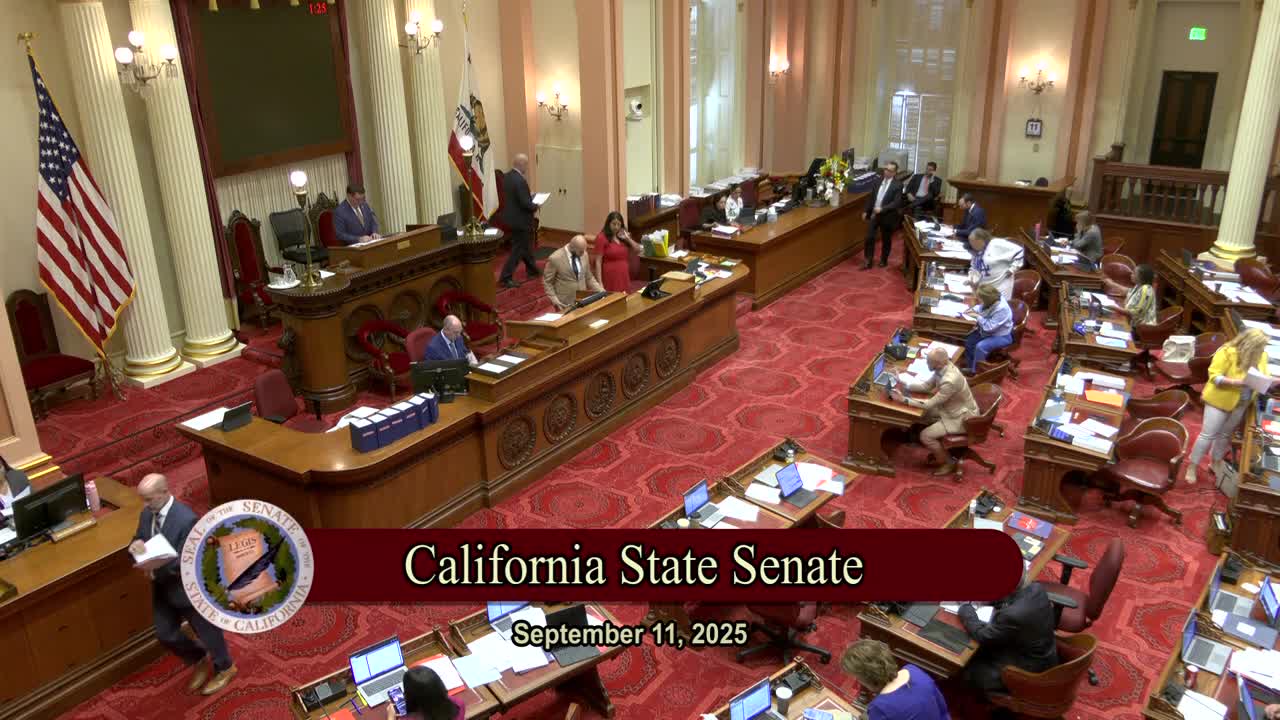 1MIN
Senate Floor
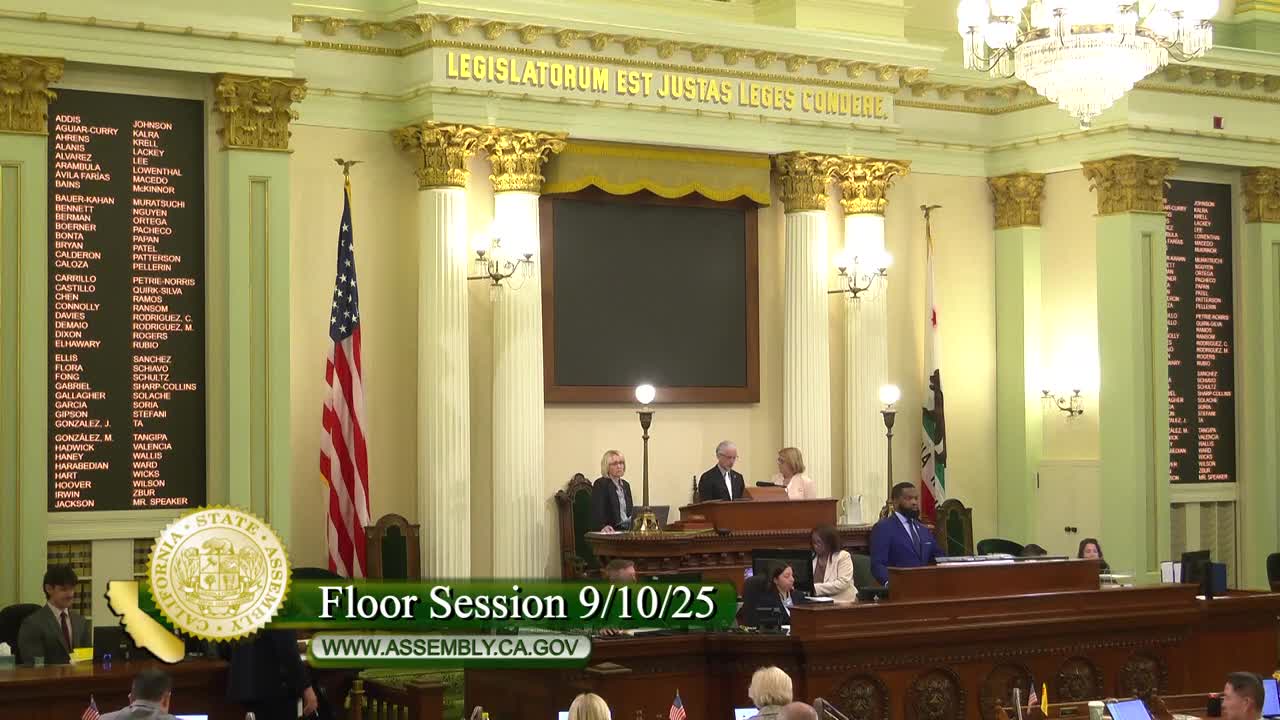 2MIN
Assembly Floor
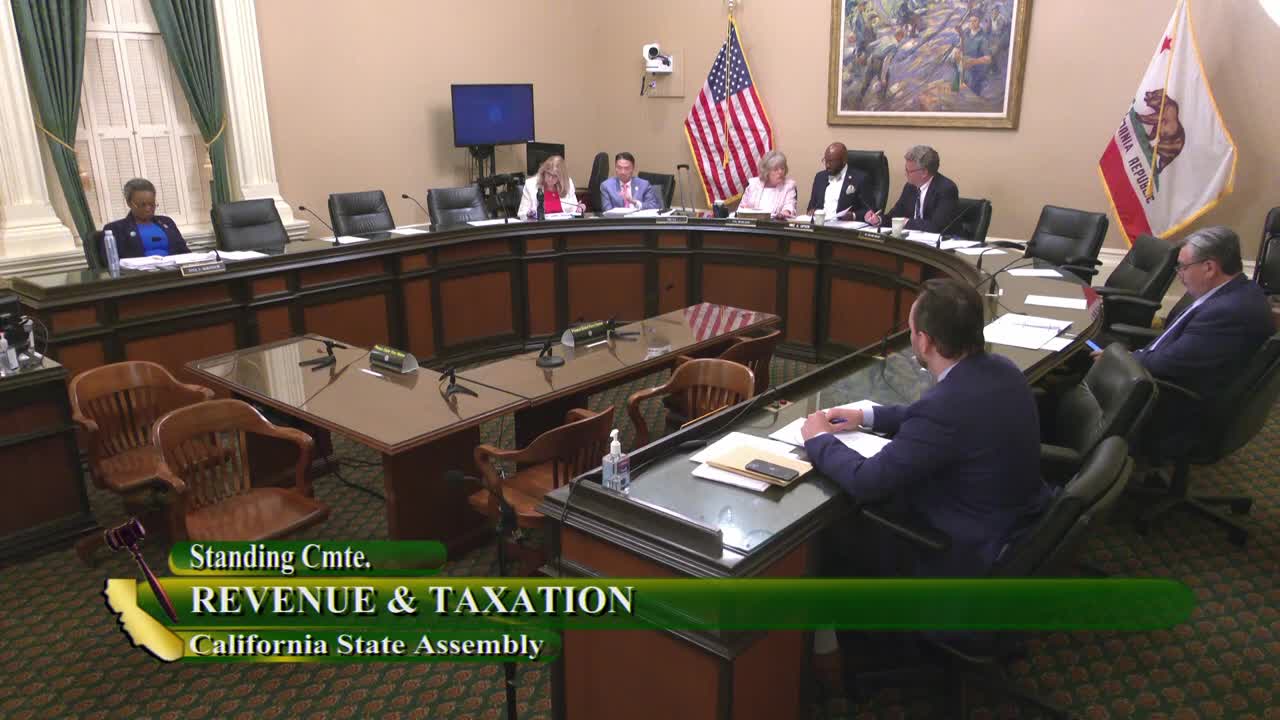 13MIN
Assembly Standing Committee on Revenue and Taxation
 45SEC
Senate Standing Committee on Appropriations
 9MIN
Senate Standing Committee on Revenue and Taxation
Bill Author