SB 303: Employment: bias mitigation training: unlawful discrimination.
- Session Year: 2025-2026
- House: Senate
- Latest Version Date: 2025-10-01
Current Status:
Passed
(2025-10-01: Chaptered by Secretary of State. Chapter 216, Statutes of 2025.)
Introduced
In Committee
Awaiting First Chamber Vote
Passed First Chamber
In Committee
Awaiting Second Chamber Vote
Passed Second Chamber
Enacted
Existing law, the California Fair Employment and Housing Act, prohibits various forms of employment and housing discrimination, including various types of discrimination because of national origin. Existing law empowers the Civil Rights Department to investigate and prosecute complaints alleging unlawful practices.
This bill would provide that an employees assessment, testing, admission, or acknowledgment of their own personal bias that was made in good faith and solicited or required as part of a bias mitigation training does not constitute unlawful discrimination, as prescribed.
Existing law makes certain evidence inadmissible in civil, criminal, and administrative proceedings.This bill would, in a civil action or a civil or administrative proceeding under the California Fair Employment and Housing Act brought against a public employee or employer, prohibit a plaintiff or complainant from introducing evidence of a public employees assessment, testing, admission, or acknowledgment of personal bias that was required or solicited as part of a bias mitigation training, as specified. The bill would not prohibit a plaintiff, complainant, or public employer from introducing, in an action under a civil anti-discrimination law, evidence of a public employees admission, acknowledgment, or commission of an act or conduct of harassment, discrimination, or retaliation that occurs during a bias mitigation training which is not evidence of a public employees assessment, testing, admission, or acknowledgment of personal bias.Existing law makes certain evidence inadmissible in civil, criminal, and administrative proceedings.
This bill would, in a civil action or a civil or administrative proceeding under the California Fair Employment and Housing Act brought against a public employee or employer, prohibit a plaintiff or complainant from introducing evidence of a public employees assessment, testing, admission, or acknowledgment of personal bias that was required or solicited as part of a bias mitigation training, as specified. The bill would not prohibit a plaintiff, complainant, or public employer from introducing, in an action under a civil anti-discrimination law, evidence of a public employees admission, acknowledgment, or commission of an act or conduct of harassment, discrimination, or retaliation that occurs during a bias mitigation training which is not evidence of a public employees assessment, testing, admission, or acknowledgment of personal bias.
(1) Existing law prescribes certain evidentiary privileges that apply to civil or criminal proceedings.This bill would provide that a public entity and public employee both have the privilege to refuse to disclose, and to prevent another from disclosing, information pertaining to a public employees bias that was obtained through or as a result of bias mitigation or elimination efforts. The bill would define bias mitigation or elimination efforts as training and education provided by a public employer that asks employees to understand, recognize, or acknowledge the influence of conscious and unconscious bias and implements strategies to mitigate the impact of such bias. The bill would prohibit the invocation of this privilege in a criminal proceeding.(2) Existing law enumerates specific evidence that is inadmissible in civil or criminal proceedings due to extrinsic policies.This bill would make evidence of a bias mitigation or elimination efforts relating to a public employee, including the results of those efforts and any specific strategies developed to address the public employees bias conducted by or on behalf of a public entity, confidential and inadmissible in a civil proceeding for any purpose.(1) Existing law prescribes certain evidentiary privileges that apply to civil or criminal proceedings.
This bill would provide that a public entity and public employee both have the privilege to refuse to disclose, and to prevent another from disclosing, information pertaining to a public employees bias that was obtained through or as a result of bias mitigation or elimination efforts. The bill would define bias mitigation or elimination efforts as training and education provided by a public employer that asks employees to understand, recognize, or acknowledge the influence of conscious and unconscious bias and implements strategies to mitigate the impact of such bias. The bill would prohibit the invocation of this privilege in a criminal proceeding.
(2) Existing law enumerates specific evidence that is inadmissible in civil or criminal proceedings due to extrinsic policies.
This bill would make evidence of a bias mitigation or elimination efforts relating to a public employee, including the results of those efforts and any specific strategies developed to address the public employees bias conducted by or on behalf of a public entity, confidential and inadmissible in a civil proceeding for any purpose.
(a)Notwithstanding any other law, an employees assessment, testing, admission, or acknowledgment of their own personal bias that was made in good faith and solicited or required as part of a bias mitigation training does not, by itself, constitute unlawful discrimination.
(b)It is the intent of the Legislature to do both of the following:
(1)Encourage employers to conduct bias mitigation trainings.
(2)Affirm that conducting a bias mitigation training does not, by itself, constitute unlawful discrimination.
(c)(1)For purposes of this section, bias mitigation training means bias mitigation or bias elimination training, education, and activities provided by an employer for the purpose of educating employees on understanding, recognizing, or acknowledging the influence of conscious and unconscious thought processes and their associated impacts. Bias mitigation training shall include implementing specific strategies to mitigate the impact of employees personal biases.
(2)For purposes of paragraph (1), specific strategies includes, but is not limited to, assessing or testing for personal bias, analyzing bias assessments or tests, conducting bias training, conducting workshops, using toolkits, and tracking bias mitigation and elimination.
SECTION 1.Section 1163 is added to the Evidence Code, to read:1163.(a)In any civil action or civil or administrative proceeding against a public employer or public employee alleging discrimination, harassment, or retaliation under the California Fair Employment and Housing Act (Part 2.8 (commencing with Section 12900) of Division 3 of Title 2 of the Government Code), any evidence of a public employees assessment, testing, or admission or acknowledgment of personal bias that was solicited or required as part of a bias mitigation training is not admissible by the plaintiff or complainant to prove that the public employer or public employee engaged in any discriminatory, harassing, or retaliatory act or conduct against the plaintiff or complainant.(b)For purposes of this section, the following terms have the following meanings:(1)Bias mitigation training means bias mitigation or bias elimination training, education, and activities provided by a public employer for the purpose of educating public employees on understanding, recognizing, or acknowledging the influence of conscious and unconscious thought processes and their associated impacts. Bias mitigation training includes implementing specific strategies to mitigate the impact of employees personal biases. Specific strategies can include assessing or testing for personal bias, analyzing bias assessments or tests, conducting bias training, conducting workshops, using toolkits, and tracking bias mitigation and elimination.(2)Personal bias means a persons thought process, attitude, or belief in favor of or against one thing, person, or group compared with another, usually in a way that is considered to be partial.(c)This section does not prevent a plaintiff, complainant, or public employer from introducing evidence of a public employees admission, acknowledgment, or commission of an act or conduct of harassment, discrimination, or retaliation under the California Fair Employment and Housing Act (Part 2.8 (commencing with Section 12900) of Division 3 of Title 2 of the Government Code) or any other civil anti-discrimination law, that occurs during a bias mitigation training and is not evidence of a public employees assessment, testing, admission, or acknowledgment of personal bias.(a)In any civil action or civil or administrative proceeding against a public employer or public employee alleging discrimination, harassment, or retaliation under the California Fair Employment and Housing Act (Part 2.8 (commencing with Section 12900) of Division 3 of Title 2 of the Government Code), any evidence of a public employees assessment, testing, or admission or acknowledgment of personal bias that was solicited or required as part of a bias mitigation training is not admissible by the plaintiff or complainant to prove that the public employer or public employee engaged in any discriminatory, harassing, or retaliatory act or conduct against the plaintiff or complainant.
(b)For purposes of this section, the following terms have the following meanings:
(1)Bias mitigation training means bias mitigation or bias elimination training, education, and activities provided by a public employer for the purpose of educating public employees on understanding, recognizing, or acknowledging the influence of conscious and unconscious thought processes and their associated impacts. Bias mitigation training includes implementing specific strategies to mitigate the impact of employees personal biases. Specific strategies can include assessing or testing for personal bias, analyzing bias assessments or tests, conducting bias training, conducting workshops, using toolkits, and tracking bias mitigation and elimination.
(2)Personal bias means a persons thought process, attitude, or belief in favor of or against one thing, person, or group compared with another, usually in a way that is considered to be partial.
(c)This section does not prevent a plaintiff, complainant, or public employer from introducing evidence of a public employees admission, acknowledgment, or commission of an act or conduct of harassment, discrimination, or retaliation under the California Fair Employment and Housing Act (Part 2.8 (commencing with Section 12900) of Division 3 of Title 2 of the Government Code) or any other civil anti-discrimination law, that occurs during a bias mitigation training and is not evidence of a public employees assessment, testing, admission, or acknowledgment of personal bias.
SECTION 1.Article 12 (commencing with Section 1064) is added to Chapter 4 of Division 8 of the Evidence Code, to read:12.Bias Mitigation1064.As used in this article, bias mitigation or elimination efforts means training and education provided by a public employer that asks employees to understand, recognize, or acknowledge the influence of conscious and unconscious bias and implements strategies to mitigate the impact of such bias. Those strategies can include testing for bias, analyzing bias tests, conducting bias training, and tracking bias mitigation and elimination.1065.A public entity, whether or not a party, has a privilege to refuse to disclose, and to prevent another from disclosing, information pertaining to a public employees bias that was obtained through or as a result of bias mitigation or elimination efforts, including either of the following:(a)An assessment, admission, or acknowledgment of bias held by a public employee.(b)A specific strategy developed to address a public employees bias.1066.A public employee, whether or not a party, has a privilege to refuse to disclose, and to prevent another from disclosing, information pertaining to the employees bias that was obtained through or as a result of bias mitigation or elimination efforts, including either of the following:(a)An assessment, admission, or acknowledgment of bias held by the public employee.(b)A specific strategy developed to address the public employees bias.1067.There is no privilege under this article in a criminal proceeding.SEC. 2.Section 1163 is added to the Evidence Code, to read:1163.(a)Evidence of bias mitigation or elimination efforts, as defined in Section 1064, relating to a public employee, including the results of those efforts and any specific strategies developed to address the public employees bias conducted by or on behalf of a public entity, is confidential and shall be inadmissible for any purpose.(b)This section does not exclude the discovery or use of relevant evidence in a criminal action.As used in this article, bias mitigation or elimination efforts means training and education provided by a public employer that asks employees to understand, recognize, or acknowledge the influence of conscious and unconscious bias and implements strategies to mitigate the impact of such bias. Those strategies can include testing for bias, analyzing bias tests, conducting bias training, and tracking bias mitigation and elimination.
1065.A public entity, whether or not a party, has a privilege to refuse to disclose, and to prevent another from disclosing, information pertaining to a public employees bias that was obtained through or as a result of bias mitigation or elimination efforts, including either of the following:
(a)An assessment, admission, or acknowledgment of bias held by a public employee.
(b)A specific strategy developed to address a public employees bias.
1066.A public employee, whether or not a party, has a privilege to refuse to disclose, and to prevent another from disclosing, information pertaining to the employees bias that was obtained through or as a result of bias mitigation or elimination efforts, including either of the following:
(a)An assessment, admission, or acknowledgment of bias held by the public employee.
(b)A specific strategy developed to address the public employees bias.
1067.There is no privilege under this article in a criminal proceeding.
SEC. 2.Section 1163 is added to the Evidence Code, to read:1163.(a)Evidence of bias mitigation or elimination efforts, as defined in Section 1064, relating to a public employee, including the results of those efforts and any specific strategies developed to address the public employees bias conducted by or on behalf of a public entity, is confidential and shall be inadmissible for any purpose.
(b)This section does not exclude the discovery or use of relevant evidence in a criminal action.
|
Date
|
Status
|
|---|---|
| Oct 1, 2025 | Chaptered by Secretary of State. Chapter 216, Statutes of 2025. |
| Oct 1, 2025 | Approved by the Governor. |
| Sep 9, 2025 | Enrolled and presented to the Governor at 2 p.m. |
| Sep 2, 2025 | Assembly amendments concurred in. (Ayes 36. Noes 0. Page 2407.) Ordered to engrossing and enrolling. |
| Aug 28, 2025 | In Senate. Concurrence in Assembly amendments pending. |
| Aug 28, 2025 | Read third time. Passed. (Ayes 72. Noes 0. Page 2769.) Ordered to the Senate. |
| Jul 10, 2025 | Read second time. Ordered to third reading. |
| Jul 9, 2025 | From committee: Do pass. (Ayes 11. Noes 0.) (July 8). |
| Jul 2, 2025 | From committee with author's amendments. Read second time and amended. Re-referred to Com. on JUD. |
| Jun 16, 2025 | June 24 hearing postponed by committee. |
| Jun 5, 2025 | Referred to Com. on JUD. |
| May 28, 2025 | In Assembly. Read first time. Held at Desk. |
| May 28, 2025 | Read third time. Passed. (Ayes 28. Noes 10. Page 1306.) Ordered to the Assembly. |
| May 1, 2025 | Read second time and amended. Ordered to third reading. |
| Apr 30, 2025 | From committee: Do pass as amended. (Ayes 5. Noes 1. Page 944.) (April 29). |
| Apr 23, 2025 | From committee: Do pass and re-refer to Com. on PUB. S. (Ayes 11. Noes 2. Page 834.) (April 22). Re-referred to Com. on PUB. S. |
| Apr 11, 2025 | Set for hearing April 29 in PUB. S. pending receipt. |
| Apr 3, 2025 | Set for hearing April 22. |
| Apr 1, 2025 | April 8 hearing postponed by committee. |
| Mar 25, 2025 | Set for hearing April 8. |
| Feb 19, 2025 | Referred to Coms. on JUD. and PUB. S. |
| Feb 11, 2025 | From printer. May be acted upon on or after March 13. |
| Feb 10, 2025 | Introduced. Read first time. To Com. on RLS. for assignment. To print. |
|
Date
|
Description
|
Location
|
Votes
|
|
|---|---|---|---|---|
| Sep 2, 2025 | The committee on FIN recommend that the measure be PASSED, UNAMENDED | Senate Floor |
Passed |
|
| Aug 28, 2025 | SB 303 Smallwood-Cuevas Senate Third Reading By Mark González | Assembly Floor |
Passed |
|
| Jul 8, 2025 | Do pass. | Assembly Standing Committee on Judiciary |
Passed |
|
| May 28, 2025 | Senate 3rd Reading SB303 Smallwood-Cuevas | Senate Floor |
Passed |
|
| Apr 29, 2025 | Do pass as amended | Senate Standing Committee on Public Safety |
Passed |
|
| Apr 22, 2025 | Do pass, but first be re-referred to the Committee on [Public Safety] | Senate Standing Committee on Judiciary |
Passed |
This list shows positions taken on this bill by organizations on the date displayed, which is linked to the original source.
Positions by individuals are not included.
|
Organization
|
Position
|
Date
|
|---|---|---|
| Associated General Contractors Of California | ** Against | |
| Associated General Contractors San Diego | ** Against | |
| California Chamber Of Commerce | ** Against | |
| California Employment Lawyers Association | ** Against | |
| California Retailers Association | ** Against | |
| Consumer Attorneys Of California | ** Against | |
| Los Angeles County Board of Supervisors | ** Support | |
| Social Justice Learning Institute | ** Support |
SENATE RULES COMMITTEE Office of Senate Floor Analyses (916) 651-1520 Fax: (916) 327-4478 | SB 303 |
UNFINISHED BUSINESS
Bill No: SB 303
Author: Smallwood-Cuevas (D)
Amended: 10/1/25
Vote: 21
SENATE JUDICIARY COMMITTEE: 11-2, 4/22/25
AYES: Umberg, Allen, Arreguín, Ashby, Caballero, Durazo, Laird, Stern, Wahab, Weber Pierson, Wiener
NOES: Niello, Valladares
SENATE PUBLIC SAFETY COMMITTEE: 5-1, 4/29/25
AYES: Arreguín, Caballero, Gonzalez, Pérez, Wiener
NOES: Seyarto
SENATE FLOOR: 28-10, 5/28/25
AYES: Allen, Archuleta, Arreguín, Ashby, Becker, Blakespear, Cabaldon, Caballero, Cervantes, Cortese, Durazo, Gonzalez, Grayson, Hurtado, Laird, McGuire, McNerney, Menjivar, Padilla, Pérez, Richardson, Rubio, Smallwood-Cuevas, Stern, Umberg, Wahab, Weber Pierson, Wiener
NOES: Alvarado-Gil, Choi, Dahle, Grove, Jones, Niello, Ochoa Bogh, Seyarto, Strickland, Valladares
NO VOTE RECORDED: Limón, Reyes
ASSEMBLY FLOOR: 72-0, 8/28/25 - See last page for vote
SUBJECT: Employment: bias mitigation training: unlawful discrimination
SOURCE: County of Los Angeles Board of Supervisors
DIGEST:
This bill provides that an employee’s assessment, testing, admission, or acknowledgment of their own personal bias that was made in good faith and solicited or required as part of a bias mitigation training does not, by itself, constitute unlawful discrimination.
Assembly Amendments
of 7/2/25 significantly narrow this bill to clarify legislative intent and what does not constitute unlawful discrimination.
ANALYSIS:
Existing law:
- States that only relevant evidence is admissible, and except as otherwise provided by statute, all relevant evidence is admissible. (Evidence (Evid.) Code §§ 350, 351.)
- Defines “relevant evidence” as evidence, including evidence relevant to the credibility of a witness or hearsay declarant, having any tendency in reason to prove or disprove any disputed fact that is of consequence to the determination of the action. (Evid. Code § 210.)
- Authorizes a court in its discretion to exclude evidence if its probative value is substantially outweighed by the probability that its admission will necessitate undue consumption of time or create substantial danger of undue prejudice, of confusing the issues, or of misleading the jury. (Evid. Code § 352.)
- Provides, through the Civil Discovery Act, procedures by which parties to a civil action conduct and obtain “discovery.” (Code of Civil Procedure § 2016.010 et seq.)
- Governs the admissibility of evidence in court proceedings and generally provides a privilege to refuse to testify or otherwise disclose confidential communications made in the course of certain relationships. (Evid. Code §§ 954, 966, 980, 994, 1014, 1033, 1034, 1035.8, 1037.5, 1038.)
- Provides that the right of a person to claim specified privileges is waived with respect to a protected communication if the holder of the privilege has disclosed a significant part of that communication or consented to disclosure, without coercion. Existing law provides that a disclosure does not constitute a waiver where it was reasonably necessary to accomplish the purposes for which the lawyer, lawyer referral service, physician, psychotherapist, sexual assault counselor, domestic violence counselor, or human trafficking caseworker was consulted. (Evid. Code § 912(a), (d).)
This bill:
- Defines “bias mitigation training” as bias mitigation or bias elimination training, education, and activities provided by an employer for the purpose of educating employees on understanding, recognizing, or acknowledging the influence of conscious and unconscious thought processes and their associated impacts. Bias mitigation training shall include implementing specific strategies to mitigate the impact of employees’ personal biases. “Specific strategies” includes, but is not limited to, assessing or testing for personal bias, analyzing bias assessments or tests, conducting bias training, conducting workshops, using toolkits, and tracking bias mitigation and elimination.
- Provides that, notwithstanding any other law, an employee’s assessment, testing, admission, or acknowledgment of their own personal bias that was made in good faith and solicited or required as part of a bias mitigation training does not, by itself, constitute unlawful discrimination.
- States the intent of the Legislature is to encourage bias mitigation trainings and to affirm that conduct such a training does not, by itself, constitute unlawful discrimination.
Background
California law requires employers to prevent discrimination in the workplace. Especially in light of the federal crackdown on diversity, equity, and inclusion efforts across the country, the need to address the root causes of discrimination and bias is of heightened importance. One measure being increasingly taken is bias mitigation and anti-discrimination programs in workplaces.
However, a concern has arisen that information regarding individuals’ bias derived from training and education programs, including the testing of unconscious bias, can be used against employees and employers alike. This can create a chilling effect in both the adoption of such programs and participation in them. This bill provides that an employee’s assessment, testing, admission, or acknowledgment of their own personal bias that was made in good faith and solicited or required as part of a bias mitigation training does not, by itself, constitute unlawful discrimination. This bill is sponsored by the County of Los Angeles Board of Supervisors. It is supported by the Social Justice Learning Institute.
Comments
According to the author: “The Public Workplace Bias Mitigation and Employee Protection Act (SB 303) would protect public employees who participate in bias mitigation programs by ensuring that their training, assessments, and strategies that address their identified implicit bias cannot be disclosed or used against them in civil lawsuits.”
FISCAL EFFECT: Appropriation: No Fiscal Com.: No Local: No
SUPPORT: (Verified 9/2/25)
Los Angeles County Board of Supervisors (Source)
Social Justice Learning Institute
OPPOSITION: (Verified 9/2/25)
None received.
ARGUMENTS IN SUPPORT: The Los Angeles County Board of Supervisors, the sponsor of this bill, writes, “SB 303 will enable public employees to participate in essential bias training and self-assessment without fear of legal repercussions. By protecting these efforts, the legislation fosters a more open and honest approach to addressing bias, ultimately enhancing public trust in government institutions. By ensuring that participation in these initiatives cannot be used against employees in civil proceedings, SB 303 eliminates a significant barrier to genuine self-reflection and proactive engagement.”
ASSEMBLY FLOOR: 8/28/25, 72-0
AYES: Addis, Aguiar-Curry, Ahrens, Alanis, Arambula, Ávila Farías, Bains, Bauer-Kahan, Bennett, Boerner, Bonta, Bryan, Calderon, Caloza, Carrillo, Chen, Connolly, Davies, Elhawary, Ellis, Flora, Fong, Gabriel, Gallagher, Garcia, Gipson, Jeff Gonzalez, Mark González, Hadwick, Haney, Harabedian, Hart, Hoover, Irwin, Jackson, Kalra, Krell, Lackey, Lee, Lowenthal, Macedo, McKinnor, Muratsuchi, Nguyen, Ortega, Pacheco, Papan, Patel, Patterson, Pellerin, Petrie-Norris, Quirk-Silva, Ramos, Ransom, Celeste Rodriguez, Michelle Rodriguez, Rogers, Blanca Rubio, Sanchez, Schiavo, Schultz, Sharp-Collins,
Solache, Soria, Stefani, Ta, Wallis, Ward, Wicks, Wilson, Zbur, Rivas
NOES:
No Vote Recorded: Alvarez, Berman, Castillo, DeMaio, Dixon, Tangipa, Valencia
Prepared by: Christian Kurpiewski / JUD. / (916) 651-4113
9/14/26 15:00:34
**** END ****
SENATE RULES COMMITTEE Office of Senate Floor Analyses (916) 651-1520 Fax: (916) 327-4478 | SB 303 |
UNFINISHED BUSINESS
Bill No: SB 303
Author: Smallwood-Cuevas (D)
Amended: 7/2/25 in Assembly
Vote: 21
SENATE JUDICIARY COMMITTEE: 11-2, 4/22/25
AYES: Umberg, Allen, Arreguín, Ashby, Caballero, Durazo, Laird, Stern, Wahab, Weber Pierson, Wiener
NOES: Niello, Valladares
SENATE PUBLIC SAFETY COMMITTEE: 5-1, 4/29/25
AYES: Arreguín, Caballero, Gonzalez, Pérez, Wiener
NOES: Seyarto
SENATE FLOOR: 28-10, 5/28/25
AYES: Allen, Archuleta, Arreguín, Ashby, Becker, Blakespear, Cabaldon, Caballero, Cervantes, Cortese, Durazo, Gonzalez, Grayson, Hurtado, Laird, McGuire, McNerney, Menjivar, Padilla, Pérez, Richardson, Rubio, Smallwood-Cuevas, Stern, Umberg, Wahab, Weber Pierson, Wiener
NOES: Alvarado-Gil, Choi, Dahle, Grove, Jones, Niello, Ochoa Bogh, Seyarto, Strickland, Valladares
NO VOTE RECORDED: Limón, Reyes
ASSEMBLY FLOOR: 72-0, 8/28/25 - See last page for vote
SUBJECT: Employment: bias mitigation training: unlawful discrimination
SOURCE: County of Los Angeles Board of Supervisors
DIGEST:
This bill provides that an employee’s assessment, testing, admission, or acknowledgment of their own personal bias that was made in good faith and solicited or required as part of a bias mitigation training does not, by itself, constitute unlawful discrimination.
Assembly Amendments
of 7/2/25 significantly narrow this bill to clarify legislative intent and what does not constitute unlawful discrimination.
ANALYSIS:
Existing law:
- States that only relevant evidence is admissible, and except as otherwise provided by statute, all relevant evidence is admissible. (Evidence (Evid.) Code §§ 350, 351.)
- Defines “relevant evidence” as evidence, including evidence relevant to the credibility of a witness or hearsay declarant, having any tendency in reason to prove or disprove any disputed fact that is of consequence to the determination of the action. (Evid. Code § 210.)
- Authorizes a court in its discretion to exclude evidence if its probative value is substantially outweighed by the probability that its admission will necessitate undue consumption of time or create substantial danger of undue prejudice, of confusing the issues, or of misleading the jury. (Evid. Code § 352.)
- Provides, through the Civil Discovery Act, procedures by which parties to a civil action conduct and obtain “discovery.” (Code of Civil Procedure § 2016.010 et seq.)
- Governs the admissibility of evidence in court proceedings and generally provides a privilege to refuse to testify or otherwise disclose confidential communications made in the course of certain relationships. (Evid. Code §§ 954, 966, 980, 994, 1014, 1033, 1034, 1035.8, 1037.5, 1038.)
- Provides that the right of a person to claim specified privileges is waived with respect to a protected communication if the holder of the privilege has disclosed a significant part of that communication or consented to disclosure, without coercion. Existing law provides that a disclosure does not constitute a waiver where it was reasonably necessary to accomplish the purposes for which the lawyer, lawyer referral service, physician, psychotherapist, sexual assault counselor, domestic violence counselor, or human trafficking caseworker was consulted. (Evid. Code § 912(a), (d).)
This bill:
- Defines “bias mitigation training” as bias mitigation or bias elimination training, education, and activities provided by an employer for the purpose of educating employees on understanding, recognizing, or acknowledging the influence of conscious and unconscious thought processes and their associated impacts. Bias mitigation training shall include implementing specific strategies to mitigate the impact of employees’ personal biases. “Specific strategies” includes, but is not limited to, assessing or testing for personal bias, analyzing bias assessments or tests, conducting bias training, conducting workshops, using toolkits, and tracking bias mitigation and elimination.
- Provides that, notwithstanding any other law, an employee’s assessment, testing, admission, or acknowledgment of their own personal bias that was made in good faith and solicited or required as part of a bias mitigation training does not, by itself, constitute unlawful discrimination.
- States the intent of the Legislature is to encourage bias mitigation trainings and to affirm that conduct such a training does not, by itself, constitute unlawful discrimination.
Background
California law requires employers to prevent discrimination in the workplace. Especially in light of the federal crackdown on diversity, equity, and inclusion efforts across the country, the need to address the root causes of discrimination and bias is of heightened importance. One measure being increasingly taken is bias mitigation and anti-discrimination programs in workplaces.
However, a concern has arisen that information regarding individuals’ bias derived from training and education programs, including the testing of unconscious bias, can be used against employees and employers alike. This can create a chilling effect in both the adoption of such programs and participation in them. This bill provides that an employee’s assessment, testing, admission, or acknowledgment of their own personal bias that was made in good faith and solicited or required as part of a bias mitigation training does not, by itself, constitute unlawful discrimination.
This bill is sponsored by the County of Los Angeles Board of Supervisors. It is supported by the Social Justice Learning Institute.
Comment
According to the author: “The Public Workplace Bias Mitigation and Employee Protection Act (SB 303) would protect public employees who participate in bias mitigation programs by ensuring that their training, assessments, and strategies that address their identified implicit bias cannot be disclosed or used against them in civil lawsuits.”
FISCAL EFFECT: Appropriation: No Fiscal Com.: No Local: No
SUPPORT: (Verified 9/2/25)
Los Angeles County Board of Supervisors (Source)
Social Justice Learning Institute
OPPOSITION: (Verified 9/2/25)
None received.
ARGUMENTS IN SUPPORT: The Los Angeles County Board of Supervisors, the sponsor of this bill, writes:
“SB 303 will enable public employees to participate in essential bias training and self-assessment without fear of legal repercussions. By protecting these efforts, the legislation fosters a more open and honest approach to addressing bias, ultimately enhancing public trust in government institutions. By ensuring that participation in these initiatives cannot be used against employees in civil proceedings, SB 303 eliminates a significant barrier to genuine self-reflection and proactive engagement.”
Prepared by: Christian Kurpiewski / JUD. / (916) 651-4113
9/2/25 9:31:01
**** END ****
SENATE RULES COMMITTEE Office of Senate Floor Analyses (916) 651-1520 Fax: (916) 327-4478 | SB 303 |
UNFINISHED BUSINESS
Bill No: SB 303
Author: Smallwood-Cuevas (D)
Amended: 7/2/25 in Assembly
Vote: 21
SENATE JUDICIARY COMMITTEE: 11-2, 4/22/25
AYES: Umberg, Allen, Arreguín, Ashby, Caballero, Durazo, Laird, Stern, Wahab, Weber Pierson, Wiener
NOES: Niello, Valladares
SENATE PUBLIC SAFETY COMMITTEE: 5-1, 4/29/25
AYES: Arreguín, Caballero, Gonzalez, Pérez, Wiener
NOES: Seyarto
SENATE FLOOR: 28-10, 5/28/25
AYES: Allen, Archuleta, Arreguín, Ashby, Becker, Blakespear, Cabaldon, Caballero, Cervantes, Cortese, Durazo, Gonzalez, Grayson, Hurtado, Laird, McGuire, McNerney, Menjivar, Padilla, Pérez, Richardson, Rubio, Smallwood-Cuevas, Stern, Umberg, Wahab, Weber Pierson, Wiener
NOES: Alvarado-Gil, Choi, Dahle, Grove, Jones, Niello, Ochoa Bogh, Seyarto, Strickland, Valladares
NO VOTE RECORDED: Limón, Reyes
ASSEMBLY FLOOR: 72-0, 8/28/25 - See last page for vote
SUBJECT: Employment: bias mitigation training: unlawful discrimination
SOURCE: County of Los Angeles Board of Supervisors
DIGEST:
This bill provides that an employee’s assessment, testing, admission, or acknowledgment of their own personal bias that was made in good faith and solicited or required as part of a bias mitigation training does not, by itself, constitute unlawful discrimination.
Assembly Amendments
of 7/2/25 significantly narrow this bill to clarify legislative intent and what does not constitute unlawful discrimination.
ANALYSIS:
Existing law:
- States that only relevant evidence is admissible, and except as otherwise provided by statute, all relevant evidence is admissible. (Evidence (Evid.) Code §§ 350, 351.)
- Defines “relevant evidence” as evidence, including evidence relevant to the credibility of a witness or hearsay declarant, having any tendency in reason to prove or disprove any disputed fact that is of consequence to the determination of the action. (Evid. Code § 210.)
- Authorizes a court in its discretion to exclude evidence if its probative value is substantially outweighed by the probability that its admission will necessitate undue consumption of time or create substantial danger of undue prejudice, of confusing the issues, or of misleading the jury. (Evid. Code § 352.)
- Provides, through the Civil Discovery Act, procedures by which parties to a civil action conduct and obtain “discovery.” (Code of Civil Procedure § 2016.010 et seq.)
- Governs the admissibility of evidence in court proceedings and generally provides a privilege to refuse to testify or otherwise disclose confidential communications made in the course of certain relationships. (Evid. Code §§ 954, 966, 980, 994, 1014, 1033, 1034, 1035.8, 1037.5, 1038.)
- Provides that the right of a person to claim specified privileges is waived with respect to a protected communication if the holder of the privilege has disclosed a significant part of that communication or consented to disclosure, without coercion. Existing law provides that a disclosure does not constitute a waiver where it was reasonably necessary to accomplish the purposes for which the lawyer, lawyer referral service, physician, psychotherapist, sexual assault counselor, domestic violence counselor, or human trafficking caseworker was consulted. (Evid. Code § 912(a), (d).)
This bill:
- Defines “bias mitigation training” as bias mitigation or bias elimination training, education, and activities provided by an employer for the purpose of educating employees on understanding, recognizing, or acknowledging the influence of conscious and unconscious thought processes and their associated impacts. Bias mitigation training shall include implementing specific strategies to mitigate the impact of employees’ personal biases. “Specific strategies” includes, but is not limited to, assessing or testing for personal bias, analyzing bias assessments or tests, conducting bias training, conducting workshops, using toolkits, and tracking bias mitigation and elimination.
- Provides that, notwithstanding any other law, an employee’s assessment, testing, admission, or acknowledgment of their own personal bias that was made in good faith and solicited or required as part of a bias mitigation training does not, by itself, constitute unlawful discrimination.
- States the intent of the Legislature is to encourage bias mitigation trainings and to affirm that conduct such a training does not, by itself, constitute unlawful discrimination.
Background
California law requires employers to prevent discrimination in the workplace. Especially in light of the federal crackdown on diversity, equity, and inclusion efforts across the country, the need to address the root causes of discrimination and bias is of heightened importance. One measure being increasingly taken is bias mitigation and anti-discrimination programs in workplaces.
However, a concern has arisen that information regarding individuals’ bias derived from training and education programs, including the testing of unconscious bias, can be used against employees and employers alike. This can create a chilling effect in both the adoption of such programs and participation in them. This bill provides that an employee’s assessment, testing, admission, or acknowledgment of their own personal bias that was made in good faith and solicited or required as part of a bias mitigation training does not, by itself, constitute unlawful discrimination.
This bill is sponsored by the County of Los Angeles Board of Supervisors. It is supported by the Social Justice Learning Institute. This bill is opposed by various industry associations, including the California Chamber of Commerce.
Comment
According to the author: “The Public Workplace Bias Mitigation and Employee Protection Act (SB 303) would protect public employees who participate in bias mitigation programs by ensuring that their training, assessments, and strategies that address their identified implicit bias cannot be disclosed or used against them in civil lawsuits.”
FISCAL EFFECT: Appropriation: No Fiscal Com.: No Local: No
SUPPORT: (Verified 8/28/25)
Los Angeles County Board of Supervisors (Source)
Social Justice Learning Institute
OPPOSITION: (Verified 8/28/25)
Associated General Contractors of California
Associated General Contractors San Diego
California Chamber of Commerce
California Retailers Association
ARGUMENTS IN SUPPORT: The Los Angeles County Board of Supervisors, the sponsor of this bill, writes:
“SB 303 will enable public employees to participate in essential bias training and self-assessment without fear of legal repercussions. By protecting these efforts, the legislation fosters a more open and honest approach to addressing bias, ultimately enhancing public trust in government institutions. By ensuring that participation in these initiatives cannot be used against employees in civil proceedings, SB 303 eliminates a significant barrier to genuine self-reflection and proactive engagement.”
ARGUMENTS IN OPPOSITION: A coalition of industry groups, including the California Retailers Association, writes in opposition: “It appears that SB 303 was written to avoid personal embarrassment or potential future litigation over a particular type of training record—bias training—when a whole range of other similar records would not be privileged and could be used in subsequent litigation.
Prepared by: Christian Kurpiewski / JUD. / (916) 651-4113
8/28/25 16:50:02
**** END ****
SENATE THIRD READING
STR Bill Id:SB 303
Author:(Smallwood-Cuevas)
As Amended Ver:July 2, 2025
Majority vote
SUMMARY
States that an employee's assessment or statement reflecting personal bias made during a bias mitigation training does not, by itself, constitute unlawful discrimination.
Major Provisions
- States that, notwithstanding any other law, an employee's assessment, testing, admission, or acknowledgment of their own personal bias that was made in good faith and solicited or required as part of a bias mitigation training does not, by itself, constitute unlawful discrimination.
- States that it is the intent of the Legislature to encourage employers to conduct bias mitigation trainings, and affirm that conducting bias mitigation training does not, by itself, constitute unlawful discrimination.
- Defines "bias mitigation training" as bias mitigation or bias elimination training, education, and activities provided by an employer for the purpose of educating employees on understanding, recognizing, or acknowledging the influence of conscious and unconscious thought processes and their associated impacts. Bias mitigation training shall include implementing specific strategies to mitigate the impact of employees' personal biases.
- Defines "specific strategies" as including, but not limited to, assessing or testing for personal bias, analyzing bias assessments or tests, conducting bias training, conducting workshops, using toolkits, and tracking bias mitigation and elimination.
COMMENTS
Implicit or unconscious bias refers to preconceived notions of other individuals, often based on stereotypes rooted in racism or sexism, that result in immediate judgments of those people without conscious thought. Existing law requires employees in various industries, particularly in the medical field, to complete implicit bias trainings. Additionally, many employers, including the Legislature, have opted to contract with companies that provide implicit bias trainings and require their employees to complete them on an annual or semi-annual basis.
This bill aims to provide assurances to both employees and employers who participate in bias mitigation training that the engagement necessary to make such trainings effective will not ultimately be used against them in a discrimination claim.
This bill does not prevent any evidence arising from a bias mitigation training from being introduced in a civil or other administrative claim against either an employee or employer. So long as it is otherwise relevant to a proceeding and where appropriate, such a statement may be introduced as evidence of either an employer or employee's wrongdoing. However, neither the administration of the training itself nor any statement made in good faith during the training could, on its own, suffice for a claim of unlawful discrimination. Moreover, the bill does not distinguish between private and public employers – the assurances the language provides extends equally to both.
The Legislature has a history of promoting bias mitigation programs, particularly in the health industry where an unaddressed implicit bias can often be a matter of a patient receiving appropriate care or not. While discrimination claims face numerous existing hurdles to success, it seems contrary to the public policy of the Legislature to open the door to litigation against either employers or employees for simply engaging in implicit bias trainings. Thus, in order to encourage both employers to engage bias mitigation trainings and employees to be open and honest in their administration, this bill would assure that no statement made in such a training, standing on its own, is sufficient to sustain a claim of discrimination under FEHA.
According to the Author
The Public Workplace Bias Mitigation and Employee Protection Act (SB 303) would protect public employees and employers by clarifying that good-faith admissions of bias are not discrimination under the Fair Employment and Housing Act. By making this clarification, SB 303 ensures that workers and employers feel safe engaging in meaningful bias-mitigation strategies to alleviate bias and discrimination in the workplace.
Arguments in Support
This bill is sponsored by Los Angeles County. It is further supported by Black Women for Wellness Action Project, the California State Association of Counties, the Los Angeles Black Worker Center, Rural County Representatives of California, Social Justice Learning Institute, and Urban Counties of California. Los Angeles County submitted the following support to the previous version of this measure:
SB 303 creates important statutory privileges and exclusions in the California Evidence Code to protect information disclosed during bias mitigation activities—such as self-assessments, admissions of bias, and strategies to address bias—from being used against public employees in civil or administrative proceedings. These protections eliminate a key barrier to honest and meaningful participation in bias training and help public employees engage in this critical work without fear of legal exposure.
By establishing these evidentiary protections, SB 303 advances a culture of learning and accountability within public institutions. It promotes a safer, more transparent path for employees to confront and correct bias, thereby strengthening public trust and improving service delivery.
Arguments in Opposition
None on file
FISCAL COMMENTS
None
VOTES
SENATE FLOOR: 28-10-2
YES: Allen, Archuleta, Arreguín, Ashby, Becker, Blakespear, Cabaldon, Caballero, Cervantes, Cortese, Durazo, Gonzalez, Grayson, Hurtado, Laird, McGuire, McNerney, Menjivar, Padilla, Pérez, Richardson, Rubio, Smallwood-Cuevas, Stern, Umberg, Wahab, Weber Pierson, Wiener
NO: Alvarado-Gil, Choi, Dahle, Grove, Jones, Niello, Ochoa Bogh, Seyarto, Strickland, Valladares
ABS, ABST OR NV: Limón, Reyes
ASM JUDICIARY: 11-0-1
YES: Kalra, Hart, Bryan, Connolly, Harabedian, Macedo, Pacheco, Papan, Sanchez, Stefani, Zbur
ABS, ABST OR NV: Dixon
UPDATED
VERSION: July 2, 2025
CONSULTANT: Manuela Boucher / JUD. / (916) 319-2334 FN: 0001089
SENATE RULES COMMITTEE Office of Senate Floor Analyses (916) 651-1520 Fax: (916) 327-4478 | SB 303 |
THIRD READING
Bill No: SB 303
Author: Smallwood-Cuevas (D)
Amended: 5/1/25
Vote: 21
SENATE JUDICIARY COMMITTEE: 11-2, 4/22/25
AYES: Umberg, Allen, Arreguín, Ashby, Caballero, Durazo, Laird, Stern, Wahab, Weber Pierson, Wiener
NOES: Niello, Valladares
SENATE PUBLIC SAFETY COMMITTEE: 5-1, 4/29/25
AYES: Arreguín, Caballero, Gonzalez, Pérez, Wiener
NOES: Seyarto
SUBJECT: Evidence: exclusions
SOURCE: Los Angeles County Board of Supervisors
DIGEST:
This bill prevents the submission of evidence of a public employee’s assessment, testing, admission, or acknowledgment of personal bias that was required or solicited as part of a bias mitigation training, as specified, in specified civil actions against a public employee or employer. This bill clarifies it does not prohibit certain other evidence from being admitted.
ANALYSIS:
Existing law:
- States that only relevant evidence is admissible, and except as otherwise provided by statute, all relevant evidence is admissible. (Evidence (Evid.) Code §§ 350, 351.)
- Defines “relevant evidence” as evidence, including evidence relevant to the credibility of a witness or hearsay declarant, having any tendency in reason to prove or disprove any disputed fact that is of consequence to the determination of the action. (Evid. Code § 210.)
- Authorizes a court in its discretion to exclude evidence if its probative value is substantially outweighed by the probability that its admission will necessitate undue consumption of time or create substantial danger of undue prejudice, of confusing the issues, or of misleading the jury. (Evid. Code § 352.)
- Provides, through the Civil Discovery Act, procedures by which parties to a civil action conduct and obtain “discovery.” (Code of Civil Procedure § 2016.010 et seq.)
- Governs the admissibility of evidence in court proceedings and generally provides a privilege to refuse to testify or otherwise disclose confidential communications made in the course of certain relationships. (Evid. Code §§ 954, 966, 980, 994, 1014, 1033, 1034, 1035.8, 1037.5, 1038.)
- Provides that the right of a person to claim specified privileges is waived with respect to a protected communication if the holder of the privilege has disclosed a significant part of that communication or consented to disclosure, without coercion. Existing law provides that a disclosure does not constitute a waiver where it was reasonably necessary to accomplish the purposes for which the lawyer, lawyer referral service, physician, psychotherapist, sexual assault counselor, domestic violence counselor, or human trafficking caseworker was consulted. (Evid. Code § 912(a), (d).)
This bill:
- Defines “bias mitigation training” as bias mitigation or bias elimination training, education, and activities provided by a public employer for the purpose of educating public employees on understanding, recognizing, or acknowledging the influence of conscious and unconscious thought processes and their associated impacts. Bias mitigation training includes implementing specific strategies to mitigate the impact of employees’ personal biases. Specific strategies can include assessing or testing for personal bias, analyzing bias assessments or tests, conducting bias training, conducting workshops, using toolkits, and tracking bias mitigation and elimination.
- Defines “personal bias” as a person’s thought process, attitude, or belief in favor of or against one thing, person, or group compared with another, usually in a way that is considered to be partial.
- Provides that in any civil action or civil or administrative proceeding against a public employer or public employee alleging discrimination, harassment, or retaliation under the California Fair Employment and Housing Act (FEHA), any evidence of a public employee’s assessment, testing, or admission or acknowledgment of personal bias that was solicited or required as part of a bias mitigation training is not admissible by the plaintiff or complainant to prove that the public employer or public employee engaged in any discriminatory, harassing, or retaliatory act or conduct against the plaintiff or complainant.
- Clarifies that it does not prevent a plaintiff, complainant, or public employer from introducing evidence of a public employee’s admission, acknowledgment, or commission of an act or conduct of harassment, discrimination, or retaliation under FEHA or any other civil anti-discrimination law, that occurs during a bias mitigation training and is not evidence of a public employee’s assessment, testing, admission, or acknowledgment of personal bias.
Background
California law requires employers to prevent discrimination in the workplace. Especially in light of the federal crackdown on diversity, equity, and inclusion efforts across the country, the need to address the root causes of discrimination and bias is of heightened importance. One measure being increasingly taken is bias mitigation and anti-discrimination programs in workplaces.
However, a concern has arisen that information regarding individuals’ bias derived from training and education programs, including the testing of unconscious bias, can be used against employees and employers alike. This can create a chilling effect in both the adoption of such programs and participation in them. This bill creates a broad prohibition on a plaintiff or complainant introducing any evidence of a public employee’s assessment, testing, or admission or acknowledgment of personal bias that was solicited or required as part of a bias mitigation training to prove that the public employer or a public employee engaged in any discriminatory, harassing, or retaliatory act or conduct against the plaintiff or complainant.
This bill is sponsored by the County of Los Angeles Board of Supervisors. It is supported by the Social Justice Learning Institute. This bill is opposed by various industry associations and organizations representing the plaintiff’s bar, including the California Chamber of Commerce and the California Employment Lawyers Association.
Comment
According to the author: “The Public Workplace Bias Mitigation and Employee Protection Act (SB 303) would protect public employees who participate in bias mitigation programs by ensuring that their training, assessments, and strategies that address their identified implicit bias cannot be disclosed or used against them in civil lawsuits.”
FISCAL EFFECT: Appropriation: No Fiscal Com.: No Local: No
SUPPORT: (Verified 5/1/25)
Los Angeles County Board of Supervisors (source)
Social Justice Learning Institute
OPPOSITION: (Verified 5/1/25)
Associated General Contractors of California
Associated General Contractors San Diego
California Chamber of Commerce
California Employment Lawyers Association
California Retailers Association
Consumer Attorneys of California
ARGUMENTS IN SUPPORT: The Los Angeles County Board of Supervisors, the sponsor of the bill, writes:
“SB 303 will enable public employees to participate in essential bias training and self-assessment without fear of legal repercussions. By protecting these efforts, the legislation fosters a more open and honest approach to addressing bias, ultimately enhancing public trust in government institutions. By ensuring that participation in these initiatives cannot be used against employees in civil proceedings, SB 303 eliminates a significant barrier to genuine self-reflection and proactive engagement.”
ARGUMENTS IN OPPOSITION: A coalition of industry groups, including the California Retailers Association, writes in opposition:
“It appears that SB 303 was written to avoid personal embarrassment or potential future litigation over a particular type of training record—bias training—when a whole range of other similar records would not be privileged and could be used in subsequent litigation.
For example: a police officer’s bias training records would be inadmissible, but personnel records related to repeatedly failing gun safety training would be admissible. For a public truck driver, records related to any training about not driving under the influence of alcohol would be admissible, but records related to bias training would not be. Obviously, in both these examples, liability or embarrassment could flow from the discussed records – for a truck driver who is sued for driving drunk, records of prior instances and repeated re-training on driving under the influence would be relevant and potentially significant in the case ... and might lead to liability for both the driver and their employer, to the extent the employer was aware of the bad conduct and continued to retain the driver. But similarly, employment records related to bias training might be relevant in a case where, for example, one employee is terminated for repeatedly using racial slurs against another employee – then sues the employer to challenge the termination.”
Prepared by: Christian Kurpiewski / JUD. / (916) 651-4113
5/2/25 10:11:02
**** END ****
SENATE COMMITTEE ON PUBLIC SAFETY
Senator Jesse Arreguín, Chair
2025 - 2026 Regular
Bill No: SB 303 Hearing Date: April 29, 2025
Author: | Smallwood-Cuevas | ||
Version: | February 10, 2025 | ||
Urgency: | No | Fiscal: | No |
Consultant: | CA | ||
Subject: Evidence: privileges and exclusions
HISTORY
Source: Los Angeles County Board of Supervisors
Prior Legislation: None known
Support: Unknown
Opposition: Associated General Contractors of California; Associated Contractors of San Diego; California Chamber of Commerce; California Employment Lawyers Association; California Retailer Association; Consumer Attorneys of California
PURPOSE
The purpose of this bill is to establish a privilege to prevent disclosure of information regarding a public employee’s bias obtained through bias mitigation or elimination efforts and to make evidence of bias mitigation or elimination efforts confidential and inadmissible for any purpose in civil actions.
Existing law defines “relevant evidence” as “evidence, including evidence relevant to the credibility of a witness or hearsay declarant, having any tendency in reason to prove or disprove any disputed fact that is of consequence to the determination of the action.” (Evid. Code, § 210.)
Existing law provides that no evidence is admissible except relevant evidence. (Evid. Code, § 350.)
Existing law provides that except as otherwise provided by statute, all relevant evidence is admissible. (Evid. Code, § 351.)
Existing law allows the court in its discretion to exclude evidence if its probative value is substantially outweighed by the probability that its admission will:
- Necessitate undue consumption of time; or,
- Create substantial danger of undue prejudice, of confusing the issues, or of misleading the jury. (Evid. Code, § 352.)
Existing law established the California Racial Justice Act (RJA) which prohibits the state from seeking or obtaining a criminal conviction or seeking, obtaining, or imposing a sentence on the basis of race, ethnicity, or national origin. (Pen. Code, § 745.)
Existing law states that a defendant may raise a violation of the RJA by filing a motion for relief, or a petition for writ of habeas corpus or a motion to vacate their conviction, in a court of competent jurisdiction. (Pen. Code, §§ 745, subd. (b) 1473, subd. (e), 1473.7, subd. (a)(3).)
Existing law allows a defendant to file a motion requesting disclosure of all evidence relevant to a potential violation of the RJA in the possession or control of the state. Requires, upon a showing of good cause, the court to order the records to be released to the defendant. (Pen. Code, § 745, subd. (d).)
This bill provides that a public entity, whether or not a party, has a privilege to refuse to disclose, and to prevent another from disclosing, information pertaining to a public employee’s bias that was obtained through or as a result of bias mitigation or elimination efforts, including either of the following:
- An assessment, admission, or acknowledgment of bias held by a public employee; or,
- A specific strategy developed to address a public employee’s bias.
This bill provides that a public employee, whether or not a party, has a privilege to refuse to disclose, and to prevent another from disclosing, information pertaining to the employee’s bias that was obtained through or as a result of bias mitigation or elimination efforts, including either of the following:
- An assessment, admission, or acknowledgment of bias held by a public employee; or,
- A specific strategy developed to address a public employee’s bias.
This bill expressly states there is no privilege under these provisions in a criminal proceeding.
This bill provides that evidence of bias mitigation or elimination efforts, as defined, relating to a public employee, including the results of those efforts and any specific strategies developed to address the public employee’s bias conducted by or on behalf of a public entity, is confidential and shall be inadmissible for any purpose. This does not exclude the discovery or use of relevant evidence in a criminal action.
This bill defines “bias mitigation or elimination efforts” as training and education provided by a public employer that asks employees to understand, recognize, or acknowledge the influence of conscious and unconscious bias and implements strategies to mitigate the impact of such bias. Those strategies can include testing for bias, analyzing bias tests, conducting bias training, and tracking bias mitigation and elimination.
COMMENTS
- Need for This Bill
According to the author:
The Public Workplace Bias Mitigation and Employee Protection Act (SB 303) would protect public employees who participate in bias mitigation programs by ensuring that their training, assessments, and strategies that address their identified implicit bias cannot be disclosed or used against them in civil lawsuits.
- Background
According to information provided by the author’s office:
Public agencies are required by State and federal law to prevent and correct workplace discrimination, often through bias mitigation and anti-discrimination programs. However, these efforts face challenges for both employers and employees. Employers fear that records from bias training—such as assessments, employee acknowledgments, or improvement strategies—could be used as evidence in civil lawsuits, creating legal risks that discourage agencies from fully implementing meaningful equity initiatives. Employee training and assessments that address and identify implicit bias are at risk of being disclosed.
For employees, participation in these programs can feel risky. Without protections, employees may hesitate to engage openly and honestly in assessments or training out of fear that their participation or admissions could later be used against them. This undermines the effectiveness of programs intended to foster growth, address bias, and create fairer workplace environments.
While federal regulations (29 CFR §1614 Federal Sector Equal Employment Opportunity) provide a framework for anti-discrimination protections within federal agencies, no such protections exist at the State level for any local public agency. Without a legal foundation that safeguards participation in bias elimination programs, both employers and employees face unnecessary risks.
- Relevant Evidence and the Right to Truth-in-Evidence
Under California law, “[a]ll relevant evidence is admissible, but only relevant evidence is admissible. (Evid. Code, §§ 350, 351.) A trial court may exclude otherwise relevant evidence if its probative value is substantially outweighed by the probability that its admission will be unduly prejudicial. (Id., § 352.) “Prejudice,” as used in Evidence Code section 352, is not synonymous with ‘damaging.’ Rather, it refers to evidence that uniquely tends to evoke an emotional bias against the defendant as an individual, and has
little to do with the legal issues raised in the trial. (People v. McCurdy (2014) 59 Cal.4th 1063, 1095 [citation omitted].)
In 1982, California voters approved Proposition 8 which amended the state Constitution. Proposition 8 contains a provision known as the Right to Truth-in-Evidence, now codified at article I, section 28(f)(2). In relevant part, the provision states: “Except as provided by statute hereafter enacted by a two-thirds vote of the membership in each house of the Legislature, relevant evidence shall not be excluded in any criminal proceeding, including pretrial and post conviction motions and hearings, or in any trial or hearing of a juvenile for a criminal offense, whether heard in juvenile or adult court. Nothing in this section shall affect any existing statutory rule of evidence relating to privilege or hearsay, or Evidence Code Sections 352, 782 or 1103.” (Art. I, § 28(f)(2) [italics added]; see also People v. Guzman (2019) 8 Cal.5th 673, 679.)
“[The California Supreme Court] and the Courts of Appeal have consistently held that in criminal proceedings, section 28(d) supersedes all California restrictions on the admission of relevant evidence except those preserved or permitted by the express words of section 28(d) itself.” (People v. Wheeler (1992) 4 Cal.4th 284, 291.)
- Relevance of Bias Evidence in Criminal and Related Civil Proceedings
Evidence of bias is a recognized factor in assessing a witness’s credibility under California’s Evidence Code. (Evid. Code, § 780.) Bias evidence is also particularly relevant in other criminal and related civil proceedings.
For example, the goal of California’s Racial Justice Act (RJA) (Ch. 317, § 1, Stats. 2020) is to “eliminate racial bias from California's criminal justice system” and “ensure that race plays no role at all in seeking or obtaining convictions or in sentencing.” (Stats. 2020, Ch. 317, § 2, subd. (i).) In passing the RJA, the Legislature recognized that racial bias “persists” in our criminal justice system “because courts generally only address racial bias in its most extreme and blatant forms.” (Id., § 2, subd. (c).) The RJA acknowledges that “all persons possess implicit biases” that “impact the criminal justice system,” and these biases “tend to disfavor people of color.” (Id., § 2, subd. (g).) The RJA authorizes a defendant to file a motion requesting disclosure of all evidence relevant to a potential violation in the possession or control of the state. (Pen. Code, § 745, subd. (d).)
Though claims of an RJA violation may be raised in criminal proceedings in the trial court or on direct appeal, they may also be raised in a habeas corpus proceeding. (Pen. Code, § 745, subd. (b).) The California Supreme Court has held that “a habeas corpus proceeding … is civil in nature for … purposes” of the rule precluding calling a criminal defendant as a trial witness. (In re Scott (2003) 29 Cal.4th 783, 815.) However, the Court did not decide whether a habeas corpus proceeding is civil or criminal for other purposes. According to the Court, “It is a special proceeding and not entirely analogous to either category.” (Id. at p. 815, fn. 6.)
The RJA is also applicable to juvenile delinquency proceedings. (See Pen. Code, § 745, subd. (f).) “An order adjudging a minor to be a ward of the juvenile court shall not be deemed a conviction of a crime. . ., nor shall a proceeding in the juvenile court be deemed a criminal proceeding." (Welf. & Inst. Code, § 203.) Courts have long held that juvenile delinquency proceedings are civil actions, not criminal in nature. (E.g., People v. Dotson (1956) 46 Cal.2d 891, 895.)
In addition to raising an RJA claim, state habeas corpus actions can be used to review the legality of prison or jail conditions. These claims can be based on any rights guaranteed by the federal or state constitutions, statutes or regulations. (file:///C:/Users/anderscr/Downloads/STATEHABEAS2008%20(4).pdf [as of April 20, 2025].) The right to be free from discrimination is explicitly stated in California Code of Regulations Title 22, Section 79799 – the right to “[t]o be free from discrimination based on sex, race, color, religion, ancestry, national origin, sexual orientation, disability, medical condition, marital status, or registered domestic partner status.”
Additionally, there are other civil commitment proceedings in which bias or discrimination are nonetheless relevant – e.g., including mentally disordered offender (MDO) proceedings and Sexually Violent Predatory (SVP) proceedings. (Pen. Code, § 2960, et seq.; Welf. & Inst. Code, § 6600 et seq.)
This bill establishes a privilege to prevent disclosure of information regarding a public employee’s bias obtained through bias mitigation or elimination efforts and makes evidence of bias mitigation or elimination efforts confidential and inadmissible for any purpose in civil actions. The bill states this privilege does not apply to criminal actions. It should be amended to clarify that is also does not apply to habeas, juvenile delinquency, and civil commitment proceedings.
- Related Legislation
AB 1109 (Kalra), of the 2025-2026 Legislative Session, creates a new evidentiary privilege for communications between union agents and represented employees and extends certain current evidentiary rules relating to existing privileged communications to the union agent-represented employee communications. AB 1109 is currently on the Assembly Floor.
- Argument in Support
According to the Los Angeles County Board of Supervisors, the sponsor of this bill:
SB 303 will enable public employees to participate in essential bias training and self-assessment without fear of legal repercussions. By protecting these efforts, the legislation fosters a more open and honest approach to addressing bias, ultimately enhancing public trust in government institutions. By ensuring that participation in these initiatives cannot be used against employees in civil proceedings, SB 303 eliminates a significant barrier to genuine self-reflection and proactive engagement.
- Argument in Opposition
According to the California Chamber of Commerce:
…California evidence law already allows courts to exclude such evidence where the information at issue might be so embarrassing as to inappropriately affect the outcome at trial. In other words: if embarrassment over potential training records related to bias is the issue – California evidence law already allows a balancing of whether such records are relevant to the case or, alternatively, if they would be unfairly prejudicial by turning the jury against a party. Specifically, California Evidence Code Section 352 already allows a court to “exclude evidence if its [relevance] is substantially outweighed by the probability that its admission will … (b) create substantial danger of undue prejudice, of confusing the issues, or of misleading the jury.” With that evidence code in place, and irrelevant but embarrassing training information shielded where appropriate, it is unclear what gap in law SB 303 is intended to fill….
-- END –
Senator Thomas Umberg, Chair
2025-2026 Regular Session
Bill No: SB 303 (Author:Smallwood-Cuevas)
Version: February 10, 2025
Hearing Date: April 22, 2025
Fiscal: No
Urgency: No
Consultant: CK
SUBJECT
Evidence: privileges and exclusions
DIGEST
This bill establishes a privilege to prevent disclosure of information regarding a public employee’s bias obtained through bias mitigation or elimination efforts and makes evidence of bias mitigation or elimination efforts confidential and inadmissible for any purpose in civil actions.
EXECUTIVE SUMMARY
California law requires employers to prevent discrimination in the workplace. Especially in light of the federal crackdown on diversity, equity, and inclusion efforts across the country, the need to address the root causes of discrimination and bias is of heightened importance. One measure being increasingly taken is bias mitigation and anti-discrimination programs in workplaces.
However, a concern has arisen that information regarding individuals’ bias derived from training and education programs, including the testing of unconscious bias, can be used against employees and employers alike. This can create a chilling effect in both the adoption of such programs and participation in them. Inspired by guidance from the United States Equal Employment Opportunity Commission, this bill creates a broad privilege for public entities and employees to refuse to disclose, and to prevent others from disclosing information pertaining to the employee’s bias that was obtained through or as a result of bias mitigation or elimination efforts. The bill further makes any evidence of bias mitigation or elimination efforts confidential and inadmissible in civil proceedings.
This bill is sponsored by the County of Los Angeles Board of Supervisors. No timely support was received. The bill is opposed by various industry associations and organizations representing the plaintiff’s bar, including the California Chamber of Commerce and the California Employment Lawyers Association. Should this bill make it out of this Committee, it will next be heard in the Senate Public Safety Committee.
PROPOSED CHANGES TO THE LAW
Existing law:
- States that only relevant evidence is admissible, and except as otherwise provided by statute, all relevant evidence is admissible. (Evid. Code §§ 350, 351.)
- Defines “relevant evidence” as evidence, including evidence relevant to the credibility of a witness or hearsay declarant, having any tendency in reason to prove or disprove any disputed fact that is of consequence to the determination of the action. (Evid. Code § 210.)
- Authorizes a court in its discretion to exclude evidence if its probative value is substantially outweighed by the probability that its admission will necessitate undue consumption of time or create substantial danger of undue prejudice, of confusing the issues, or of misleading the jury. (Evid. Code § 352.)
- Provides, through the Civil Discovery Act, procedures by which parties to a civil action conduct and obtain “discovery.” (Code Civ. Proc. § 2016.010 et seq.)
- Governs the admissibility of evidence in court proceedings and generally provides a privilege to refuse to testify or otherwise disclose confidential communications made in the course of certain relationships. (Evid. Code §§ 954, 966, 980, 994, 1014, 1033, 1034, 1035.8, 1037.5, 1038.)
- Provides that the right of a person to claim specified privileges is waived with respect to a protected communication if the holder of the privilege has disclosed a significant part of that communication or consented to disclosure, without coercion. Existing law provides that a disclosure does not constitute a waiver where it was reasonably necessary to accomplish the purposes for which the lawyer, lawyer referral service, physician, psychotherapist, sexual assault counselor, domestic violence counselor, or human trafficking caseworker was consulted. (Evid. Code § 912(a), (d).)
This bill:
- As used in this article, “bias mitigation or elimination efforts” means training and education provided by a public employer that asks employees to understand, recognize, or acknowledge the influence of conscious and unconscious bias and implements strategies to mitigate the impact of such bias. Those strategies can include testing for bias, analyzing bias tests, conducting bias training, and tracking bias mitigation and elimination.
- Grants a public entity, whether or not a party, a privilege to refuse to disclose, and to prevent another from disclosing, information pertaining to a public employee’s bias that was obtained through or as a result of bias mitigation or elimination efforts, including either of the following:
- An assessment, admission, or acknowledgment of bias held by a public employee.
- A specific strategy developed to address a public employee’s bias.
- Grants a public employee, whether or not a party, a privilege to refuse to disclose, and to prevent another from disclosing, information pertaining to the employee’s bias that was obtained through or as a result of bias mitigation or elimination efforts, including either of the following:
- An assessment, admission, or acknowledgment of bias held by the public employee.
- A specific strategy developed to address the public employee’s bias.
- Clarifies that it does not grant a privilege in criminal proceedings.
- Provides that evidence of bias mitigation or elimination efforts relating to a public employee, including the results of those efforts and any specific strategies developed to address the public employee’s bias conducted by or on behalf of a public entity, is confidential and shall be inadmissible for any purpose. This does not exclude the discovery or use of relevant evidence in a criminal action.
COMMENTS
- Evidentiary privileges and admissibility
Generally, all relevant evidence is admissible. “Relevant evidence” is defined as evidence, including evidence relevant to the credibility of a witness or hearsay declarant, having any tendency in reason to prove or disprove any disputed fact that is of consequence to the determination of the action.
An evidentiary privilege permits an otherwise competent witness to refuse to testify and/or prevent another from testifying. Privileges are policy exclusions, unrelated to the reliability of the information involved, which are granted because it is considered more important to keep that information confidential than it is to require disclosure of all the information relevant to the issues in a pending proceeding. For example, to protect the lawyer-client relationship, it is necessary to prevent disclosure of confidential communications made in the course of that relationship. (Comments to Evid. Code § 910.) Whereas privileges of a witness under the Federal Rules of Evidence are governed by the principles of common law as interpreted by United States district courts in light of “reason and experience,” the only privileges that are recognized in California are those statutory privileges expressly codified in the Evidence Code. (See Fed. Rules of Evid., Rule 501; Evid. Code § 911.)
To date, California has codified numerous evidentiary privileges, recognizing the need to protect the confidentiality of certain communications. Among those are the: lawyer-client privilege, lawyer referral service-client privilege, spousal privilege, confidential marital communications privilege, physician-patient privilege, psychotherapist-patient privilege, clergyman-penitent privilege, sexual assault counselor-victim privilege, domestic violence counselor-victim privilege, and human trafficking caseworker-victim privilege. Yet other statutory privileges protect official information acquired in confidence by a public employee and the identity of informants, protect persons from having to reveal their votes in public elections, and protect against disclosure of trade secrets. (Evid. Code § 930 et seq.)
- Preventing disclosure to prevent disincentivizing anti-discrimination programs
According to the author: “The Public Workplace Bias Mitigation and Employee Protection Act (SB 303) would protect public employees who participate in bias mitigation programs by ensuring that their training, assessments, and strategies that address their identified implicit bias cannot be disclosed or used against them in civil lawsuits.”
Bias mitigation and anti-discrimination training is used by employers, and other entities, to address some of the root causes of the unfair treatment of persons in protected classes. These programs often involve strategies to encourage employees to identify their own biases, conscious or not, and to develop strategies to mitigate the impact of them.
For instance, implicit bias training, also known as unconscious bias training or anti-bias training, focuses on helping employees recognize their own unconscious prejudices and stereotypes. These biases are automatic and unintentional, but they can still influence judgments, decisions, and behaviors.
However, fear that information regarding such strategies and biases may be used against employees or employers creates a chilling effect on their adoption. Employees may approach training with extreme caution or disengage completely if they fear their results could be used against them legally. This undermines the primary purpose of such training: honest self-reflection and growth. Organizations invest in bias training to improve workplace culture and reduce discrimination. Making certain information admissible in cases against them could also discourage companies from conducting such training at all.
This bill addresses this issue in the public employment context by preventing disclosure of information related to “bias mitigation or elimination efforts.” Those efforts are defined as training and education provided by a public employer that asks employees to understand, recognize, or acknowledge the influence of conscious and unconscious bias and implements strategies to mitigate the impact of such bias. Those strategies can include testing for bias, analyzing bias tests, conducting bias training, and tracking bias mitigation and elimination.
This bill provides public entities and public employees a privilege to refuse to disclose, and to prevent another from disclosing, information pertaining to the employee’s bias that was obtained through or as a result of bias mitigation or elimination efforts, including assessments, admissions, or acknowledgments of bias held by the public employee and specific strategies developed to address the public employee’s bias.
The bill goes even further by amending the Evidence Code to make any evidence of bias mitigation or elimination efforts relating to a public employee, including the results of those efforts and any specific strategies developed to address the public employee’s bias conducted by or on behalf of a public entity, confidential and inadmissible for any purpose. These protections only apply in the civil context, and explicitly do not apply to criminal proceedings.
Writing in an oppose unless amended position, the California Employment Lawyers Association and the Consumer Attorneys jointly argue the provisions of the bill would result in unintended consequences and therefore urges the author to consider a series of amendments:
While we understand the laudable goal of this bill is to encourage more anti-bias training for our public entities, we are concerned with significant unintended consequences. Importantly, this privilege could be used to shield bad actors and insulate public entities from necessary scrutiny and liability when they are not taking proper steps to address and prevent discriminatory and harassing conduct.
We would propose the following amendments to help mitigate these concerns:
1. The prohibition on admissibility must also apply to the public entity. Otherwise, the bill is unfairly, and potentially unconstitutionally, one-sided. Having a category of evidence that just one party can admit, but the other part cannot assess or even have access to raises a fundamental due process issue.
2. The bill should not apply to allegations of retaliation. For example, a public employee could say in an anti-bias training that they have bias against Asian people. Their manager is Asian and fires or takes retaliatory action against the employee because of their admission of bias. Or a public employee may disclose during an anti-bias training information related to discrimination that occurred in the workplace and is then retaliated against for that disclosure. (“The protected activity element may be established by evidence that the plaintiff threatened to file a discrimination charge, by a showing that the plaintiff
mistakenly, but reasonably and sincerely believed he was opposing discrimination, or by evidence an employer believed the plaintiff was a potential witness in another employee’s FEHA action.” Rope v. Auto-Chlor System of Washington, Inc. (2013) 220 Cal.App.4th 635, 652.)
3. The bill must not protect conduct that could in and of itself constitute discriminatory or harassing conduct. For example, some of our attorneys have examples of cases where an employee who did not take the bias training seriously, used the opportunity to make overtly offensive remarks during the course of the training.
4. The bill must not apply to evidence that could support a claim that the public employer did not to take all reasonable steps to prevent or remedy discrimination or harassment. For example, an employee may have had an incident involving discrimination or harassment and he is asked to take a bias mitigation training. However, he never actually takes the training or the training shows limited progress. If there is another incident of discriminatory or harassing conduct, the failure to ensure that the employee took the bias mitigation training or was acting in good faith in the bias mitigation training is evidence that the employer failed to take reasonable steps to prevent or remedy discrimination. That evidence could be excluded, however, because the employer could assert that it is “evidence of a public employee's assessment, testing, admission or acknowledgment of personal bias that was solicited or required as part of a bias mitigation training.”
Although removing barriers to comprehensive bias elimination and mitigation efforts is a strong policy aim, the breadth of these exclusions could withhold crucial evidence in civil proceedings, including discrimination or harassment cases in the workplace. The author has agreed to amendments that more narrowly tailor the evidentiary protections to ensure no unintended consequences that may actually undermine the goal of addressing discrimination and bias in the workplace. The amendments replace the contents of the bill with a more focused exclusion of evidence regarding a public employee’s “personal bias” gained from assessments, testing, admissions, or acknowledgements that was solicited or required as part of a bias mitigation training. “Personal bias” refers to a person’s thought process, attitude, or belief in favor of or against one thing, person, or group compared with another, usually in a way that is considered to be partial. The amendments will explicitly state that the bill does not prevent a plaintiff, complainant, or public employer from introducing evidence of a public employee’s admission, acknowledgement, or commission of an act or conduct of harassment, discrimination, or retaliation. Given that there remains cogent concerns about the one-sided nature of the evidentiary rule and that unintended consequences may still result, the author has also committed to continuing to work with stakeholders and this Committee on further refining the scope.
The Los Angeles County Board of Supervisors, the sponsor of the bill, writes:
SB 303 will enable public employees to participate in essential bias training and self-assessment without fear of legal repercussions. By protecting these efforts, the legislation fosters a more open and honest approach to addressing bias, ultimately enhancing public trust in government institutions. By ensuring that participation in these initiatives cannot be used against employees in civil proceedings, SB 303 eliminates a significant barrier to genuine self-reflection and proactive engagement.
- Industry opposition
A coalition of industry groups, including the California Retailers Association, writes in opposition:
It appears that SB 303 was written to avoid personal embarrassment or potential future litigation over a particular type of training record—bias training—when a whole range of other similar records would not be privileged and could be used in subsequent litigation.
For example: a police officer’s bias training records would be inadmissible, but personnel records related to repeatedly failing gun safety training would be admissible. For a public truck driver, records related to any training about not driving under the influence of alcohol would be admissible, but records related to bias training would not be. Obviously, in both these examples, liability or embarrassment could flow from the discussed records – for a truck driver who is sued for driving drunk, records of prior instances and repeated re-training on driving under the influence would be relevant and potentially significant in the case ... and might lead to liability for both the driver and their employer, to the extent the employer was aware of the bad conduct and continued to retain the driver. But similarly, employment records related to bias training might be relevant in a case where, for example, one employee is terminated for repeatedly using racial slurs against another employee – then sues the employer to challenge the termination.
SUPPORT
Los Angeles County Board of Supervisors (sponsor)
OPPOSITION
Associated General Contractors of California
Associated General Contractors San Diego
California Chamber of Commerce
California Employment Lawyers Association
California Retailers Association
Consumer Attorneys of California
RELATED LEGISLATION
Pending Legislation: AB 1109 (Kalra, 2025) creates a new evidentiary privilege for communications between union agents and represented employees and extends certain current evidentiary rules relating to existing privileged communications to the union agent-represented employee communications. AB 1109 is currently on the Assembly Floor.
Prior Legislation: None known.
**************
Discussed in Hearing
 2MIN
Senate Floor
 1MIN
Assembly Floor
 7MIN
Assembly Standing Committee on Judiciary
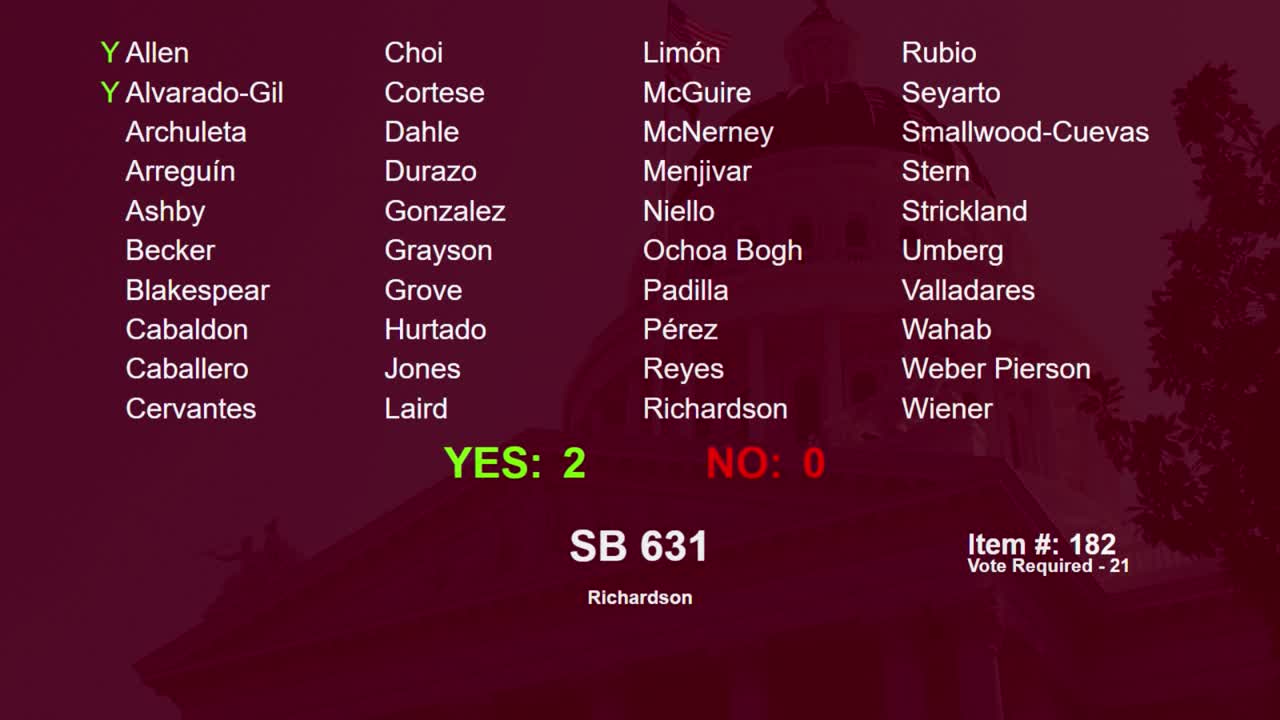 2MIN
Senate Floor
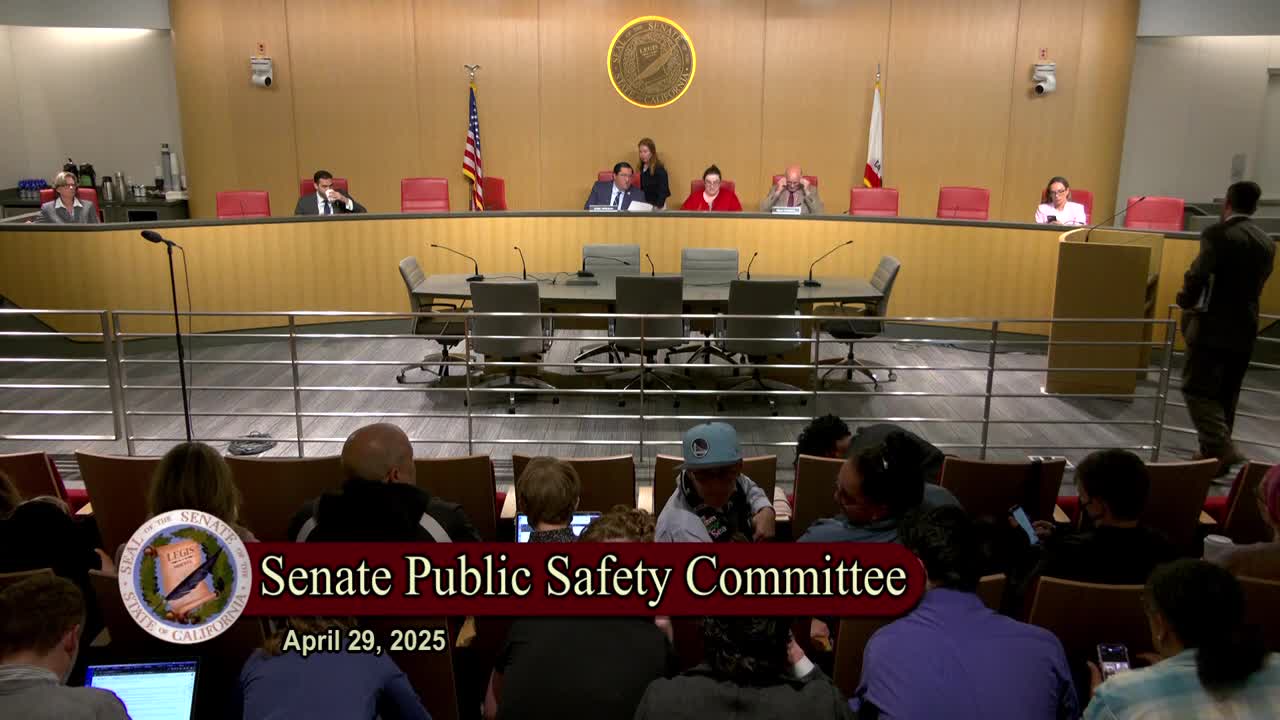 12MIN
Senate Standing Committee on Public Safety
 12MIN
Senate Standing Committee on Judiciary
Bill Author

Bill Co-Author(s):